SB 925: Foster care.
- Session Year: 2017-2018
- House: Senate
- Latest Version Date: 2018-07-20
Existing law provides for the out-of-home placement of children who are unable to remain in the custody and care of their parents, and provides for a range of child welfare and foster care services for which these children may be eligible. Under existing law, child welfare services are defined as the continuum of services provided on behalf of children alleged to be the victims of child abuse, neglect, or exploitation, as specified.
Existing law provides that child welfare services are best provided using a team-based approach, including the utilization of child and family teams, defined as a team of individuals convened by the placing agency and who are engaged through a variety of team-based processes to identify the strengths and needs of the child or youth and his or her family, and to help achieve positive outcomes for safety, permanency, and well-being. Existing law requires the child and family team process to engage the child or youth, the childs family, and other people important to the family or to the child or youth in meeting the objectives described above. Existing law also requires the team to include representatives who provide formal supports to the child or youth and family when appropriate, including, but not limited to, the caregiver and the placing agency caseworker.
This bill would also require the inclusion of the child or youths Court-Appointed Special Advocate, if one has been appointed, to the child and family team described above, unless the child or youth objects.
Existing law provides for the out-of-home placement of children who are unable to remain in the custody and care of their parents, and provides for a range of child welfare and foster care services for which these children may be eligible. Under existing law, child welfare services are defined as the continuum of services provided on behalf of children alleged to be the victims of child abuse, neglect, or exploitation, as specified.
Existing law provides that child welfare services are best provided using a team-based approach, including the utilization of child and family teams, defined as a team of individuals convened by the placing agency and who are engaged through a variety of team-based processes to identify the strengths and needs of the child or youth and his or her family, and to help achieve positive outcomes for safety, permanency, and well-being. Existing law requires the child and family team process to engage the child or youth, the childs family, and other people important to the family or to the child or youth in meeting the objectives described above. Existing law also requires the team to include representatives who provide formal supports to the child or youth and family when appropriate, including, but not limited to, the caregiver and the placing agency caseworker.
This bill would also require the inclusion of the child or youths Court-Appointed Special Advocate, if one has been appointed, to the child and family team described above. above, unless the child or youth objects.
Existing law provides for the out-of-home placement of children who are unable to remain in the custody and care of their parents, and provides for a range of child welfare and foster care services for which these children may be eligible. Under existing law, child welfare services are defined as the continuum of services provided on behalf of children alleged to be the victims of child abuse, neglect, or exploitation, as specified.
Existing law provides that child welfare services are best provided using a team-based approach, including the utilization of child and family teams, defined as a team of individuals convened by the placing agency and who are engaged through a variety of team-based processes to identify the strengths and needs of the child or youth and his or her family, and to help achieve positive outcomes for safety, permanency, and well-being. Existing law requires the child and family team process to engage the child or youth, the childs family, and other people important to the family or to the child or youth in meeting the objectives described above. Existing law also requires the team to include representatives who provide formal supports to the child or youth and family when appropriate, including, but not limited to, the caregiver and the placing agency caseworker.
This bill would also require the inclusion of the child or youths Court-Appointed Special Advocate, if one has been appointed, to the child and family team described above.
(a)(1)As used in this chapter, child welfare services means public social services that are directed toward the accomplishment of any or all of the following purposes:
(A)Protecting and promoting the welfare of all children, including disabled, homeless, dependent, or neglected children.
(B)Preventing or remedying, or assisting in the solution of problems that may result in, the neglect, abuse, exploitation, or delinquency of children.
(C)Preventing the unnecessary separation of children from their families by identifying family problems, assisting families in resolving their problems, and preventing breakup of the family where the prevention of child removal is desirable and possible.
(D)Restoring to their families children who have been removed, by the provision of services to the child and the families.
(E)Identifying children to be placed in suitable adoptive homes, in cases where restoration to the biological family is not possible or appropriate.
(F)Ensuring adequate care of children away from their homes, in cases where the child cannot be returned home or cannot be placed for adoption.
(2)Child welfare services also means services provided on behalf of children alleged to be the victims of child abuse, neglect, or exploitation. The child welfare services provided on behalf of each child represent a continuum of services, including emergency response services, family preservation services, family maintenance services, family reunification services, and permanent placement services, including supportive transition services. The individual childs case plan is the guiding principle in the provision of these services. The case plan shall be developed within a maximum of 60 days of the initial removal of the child or of the in-person response required under subdivision (f) if the child has not been removed from his or her home, or by the date of the dispositional hearing pursuant to Section 358, whichever comes first.
(3)Child welfare services are best provided in a framework that integrates service planning and delivery among multiple service systems, including the mental health system, using a team-based approach, such as a child and family team. A child and family team brings together individuals that engage with the child or youth and family in assessing, planning, and delivering services consistent with paragraph (1) of subdivision (d) of Section 16501.1. Use of a team approach increases efficiency, and thus reduces cost, by increasing coordination of formal services and integrating the natural and informal supports available to the child or youth and family.
(4)Child and family team means a group of individuals who are convened by the placing agency and who are engaged through a variety of team-based processes to identify the strengths and needs of the child or youth and his or her family, and to help achieve positive outcomes for safety, permanency, and well-being.
(A)The activities of the team shall include, but not be limited to, both of the following:
(i)Providing input into the development of a child and family plan that is strengths-based, needs-driven, and culturally relevant.
(ii)Providing input into the placement decision made by the placing agency and the services to be provided in order to support the child or youth.
(B)(i)The child and family team process shall engage the child or youth, the childs family, and other people important to the family or to the child or youth in meeting the objectives set forth in subparagraph (A). The child and family team shall also include representatives who provide formal supports to the child or youth and family when appropriate, including, but not limited to, all of the following:
(I)The caregiver.
(II)The placing agency caseworker.
(III)A representative from a foster family agency or short-term residential therapeutic program with which a child or youth is placed.
(IV)A county mental health representative.
(V)A representative from the regional center if the child is eligible for regional center services.
(VI)The child or youths Court-Appointed Special Advocate, if one has been appointed, unless the child or youth objects.
(VII)A representative of the child or youths tribe or Indian custodian, as applicable.
(ii)As appropriate, the child and family team also may include other formal supports, such as substance use disorder treatment professionals and educational professionals, providing services to the child or youth and family. For purposes of this definition, the child and family team also may include extended family and informal support persons, such as friends, coaches, faith-based connections, and tribes as identified by the child or youth and family. If placement into a short-term residential therapeutic program or a foster family agency that provides treatment services has occurred or is being considered, the mental health representative is required to be a licensed mental health professional. Any party to the childs case who is represented by an attorney may consult with his or her attorney regarding this process. The child or youth and his or her family may request specific persons to be included on the child and family team. Nothing shall preclude another agency serving the child or youth from convening a team in collaboration with the placing agency.
(5)Child welfare services may include, but are not limited to, a range of service-funded activities, including case management, counseling, emergency shelter care, emergency in-home caretakers, temporary in-home caretakers, respite care, therapeutic day services, teaching and demonstrating homemakers, parenting training, substance abuse testing, transportation, and specialized permanency services. These service-funded activities shall be available to children and their families in all phases of the child welfare program in accordance with the childs case plan and departmental regulations. Funding for services is limited to the amount appropriated in the annual Budget Act and other available county funds.
(6)Service-funded activities to be provided may be determined by each county, based upon individual child and family needs as reflected in the service plan.
(7)As used in this chapter, emergency shelter care means emergency shelter provided to children who have been removed pursuant to Section 300 from their parent or parents or their guardian or guardians. The department may establish, by regulation, the time periods for which emergency shelter care shall be funded. For the purposes of this paragraph, emergency shelter care may include transitional shelter care facilities as defined in paragraph (11) of subdivision (a) of Section 1502 of the Health and Safety Code.
(8)As used in this chapter, specialized permanency services means services to assist a child or nonminor dependent whose case plan is for permanent placement or supportive transition to adulthood in achieving a permanent family through reunification, adoption, legal guardianship, or other lifelong connection to caring adults, including at least one adult who will provide a permanent, parent-like relationship for the child or nonminor dependent. Specialized permanency services are designed for and with the child to address the childs history of trauma, separation, and loss. Specialized permanency services may include all of the following:
(A)Medically necessary mental health services, if the medical necessity criteria for Medi-Cal specialty mental health services, as described in Section 1830.205 or 1830.210 of Title 9 of the California Code of Regulations, is met, as needed to ameliorate impairments in significant areas of life functioning that may reduce the likelihood of the child or nonminor dependent achieving a permanent family, and may include other services designed to address the childs or nonminor dependents history of trauma, grief, loss, stigma, and rejection that reduce the likelihood of the child or nonminor dependent achieving a permanent family.
(B)Permanency support core services, as appropriate to achieve, stabilize, and sustain the child or nonminor dependent in a permanent family.
(C)Services designed to prepare the identified permanent family to meet the childs or nonminor dependents needs, set appropriate expectations before and after permanency is achieved, and stabilize the placement.
(b)As used in this chapter, respite care means temporary care for periods not to exceed 72 hours, and, in order to preserve the placement, may be extended up to 14 days in any one month pending the development of policies and regulations in consultation with county placing agencies and stakeholders. This care may be provided to the childs parents or guardians. This care shall not be limited by regulation to care over 24 hours. These services shall not be provided for the purpose of routine, ongoing child care.
(c)The county shall provide child welfare services as needed pursuant to an approved service plan and in accordance with regulations promulgated, in consultation with the counties, by the department. Counties may contract for service-funded activities, as defined in paragraph (1) of subdivision (a). Counties shall not contract for needs assessment, client eligibility determination, or any other activity as specified by regulations of the State Department of Social Services, except as specifically authorized in Section 16100.
(d)This chapter shall not be construed to affect duties that are delegated to probation officers pursuant to Sections 601 and 654.
(e)A county may utilize volunteer individuals to supplement professional child welfare services by providing ancillary support services in accordance with regulations adopted by the State Department of Social Services.
(f)As used in this chapter, emergency response services consist of a response system providing in-person response, 24 hours a day, seven days a week, to reports of abuse, neglect, or exploitation, as required by Article 2.5 (commencing with Section 11164) of Chapter 2 of Title 1 of Part 4 of the Penal Code for the purpose of investigation pursuant to Section 11166 of the Penal Code and to determine the necessity for providing initial intake services and crisis intervention to maintain the child safely in his or her own home or to protect the safety of the child. County welfare departments shall respond to any report of imminent danger to a child immediately and all other reports within 10 calendar days. An in-person response is not required when the county welfare department, based upon an evaluation of risk, determines that an in-person response is not appropriate. This evaluation includes collateral contacts, a review of previous referrals, and other relevant information, as indicated.
(g)As used in this chapter, family maintenance services are activities designed to provide in-home protective services to prevent or remedy neglect, abuse, or exploitation, for the purposes of preventing separation of children from their families.
(h)As used in this chapter, family reunification services are activities designed to provide time-limited foster care services to prevent or remedy neglect, abuse, or exploitation, when the child cannot safely remain at home, and needs temporary foster care, while services are provided to reunite the family.
(i)(1)As used in this chapter, permanent placement services are activities designed to provide an alternate permanent family structure for children who, because of abuse, neglect, or exploitation, cannot safely remain at home and who are unlikely to ever return home. These services shall be provided on behalf of children for whom there has been a judicial determination of a permanent plan for adoption, legal guardianship, placement with a fit and willing relative, or continued foster care placement, and, as needed, shall include supportive transition services to nonminor dependents, as described in subdivision (v) of Section 11400.
(2)For purposes of this section, another planned permanent living arrangement means a permanent plan ordered by the court for a child 16 years of age or older or a nonminor dependent, when there is a compelling reason or reasons to determine that it is not in the best interest of the child or nonminor dependent to return home, be placed for adoption, be placed for tribal customary adoption in the case of an Indian child, or be placed with a fit and willing relative. Placement in a group home, or, on and after January 1, 2017, a short-term residential therapeutic program, shall not be the identified permanent plan for any child or nonminor dependent.
(j)As used in this chapter, family preservation services include those services specified in Section 16500.5 to avoid or limit out-of-home placement of children, and may include those services specified in that section to place children in the least restrictive environment possible.
(k)(1)(A)In any county electing to implement this subdivision, all county welfare department employees who have frequent and routine contact with children shall, by February 1, 1997, and all welfare department employees who are expected to have frequent and routine contact with children and who are hired on or after January 1, 1996, and all such employees whose duties change after January 1, 1996, to include frequent and routine contact with children, shall, if the employees provide services to children who are alleged victims of abuse, neglect, or exploitation, sign a declaration under penalty of perjury regarding any prior criminal conviction, and shall provide a set of fingerprints to the county welfare director.
(B)The county welfare director shall secure from the Department of Justice a criminal record to determine whether the employee has ever been convicted of a crime other than a minor traffic violation. The Department of Justice shall deliver the criminal record to the county welfare director.
(C)If it is found that the employee has been convicted of a crime, other than a minor traffic violation, the county welfare director shall determine whether there is substantial and convincing evidence to support a reasonable belief that the employee is of good character so as to justify frequent and routine contact with children.
(D)An exemption shall not be granted pursuant to subparagraph (C) if the person has been convicted of a sex offense against a minor, or has been convicted of an offense specified in Section 220, 243.4, 264.1, 273d, 288, or 289 of the Penal Code, or in paragraph (1) of Section 273a of, or subdivision (a) or (b) of Section 368 of, the Penal Code, or has been convicted of an offense specified in subdivision (c) of Section 667.5 of the Penal Code. The county welfare director shall suspend such a person from any duties involving frequent and routine contact with children.
(E)Notwithstanding subparagraph (D), the county welfare director may grant an exemption if the employee or prospective employee, who was convicted of a crime against an individual specified in paragraph (1) or (7) of subdivision (c) of Section 667.5 of the Penal Code, has been rehabilitated as provided in Section 4852.03 of the Penal Code and has maintained the conduct required in Section 4852.05 of the Penal Code for at least 10 years and has the recommendation of the district attorney representing the employees or prospective employees county of residence, or if the employee or prospective employee has received a certificate of rehabilitation pursuant to Chapter 3.5 (commencing with Section 4852.01) of Title 6 of Part 3 of the Penal Code. In that case, the county welfare director may give the employee or prospective employee an opportunity to explain the conviction and shall consider that explanation in the evaluation of the criminal conviction record.
(F)If criminal record information has not been recorded, the county welfare director shall cause a statement of that fact to be included in that persons personnel file.
(2)For purposes of this subdivision, a conviction means a plea or verdict of guilty or a conviction following a plea of nolo contendere. An action that the county welfare director is permitted to take following the establishment of a conviction may be taken when the time for appeal has elapsed, or the judgment of conviction has been affirmed on appeal or when an order granting probation is made suspending the imposition of sentence, notwithstanding a subsequent order pursuant to Sections 1203.4 and 1203.4a of the Penal Code permitting the person to withdraw his or her plea of guilty and to enter a plea of not guilty, or setting aside the verdict of guilty, or dismissing the accusation, information, or indictment. For purposes of this subdivision, the record of a conviction, or a copy thereof certified by the clerk of the court or by a judge of the court in which the conviction occurred, shall be conclusive evidence of the conviction.
(a)(1)As used in this chapter, child welfare services means public social services that are directed toward the accomplishment of any or all of the following purposes:
(A)Protecting and promoting the welfare of all children, including disabled, homeless, dependent, or neglected children.
(B)Preventing or remedying, or assisting in the solution of problems that may result in, the neglect, abuse, exploitation, or delinquency of children.
(C)Preventing the unnecessary separation of children from their families by identifying family problems, assisting families in resolving their problems, and preventing breakup of the family where the prevention of child removal is desirable and possible.
(D)Restoring to their families children who have been removed, by the provision of services to the child and the families.
(E)Identifying children to be placed in suitable adoptive homes, in cases where restoration to the biological family is not possible or appropriate.
(F)Ensuring adequate care of children away from their homes, in cases where the child cannot be returned home or cannot be placed for adoption.
(2)Child welfare services also means services provided on behalf of children alleged to be the victims of child abuse, neglect, or exploitation. The child welfare services provided on behalf of each child represent a continuum of services, including emergency response services, family preservation services, family maintenance services, family reunification services, and permanent placement services, including supportive transition services. The individual childs case plan is the guiding principle in the provision of these services. The case plan shall be developed within a maximum of 60 days of the initial removal of the child or of the in-person response required under subdivision (f) if the child has not been removed from his or her home, or by the date of the dispositional hearing pursuant to Section 358, whichever comes first.
(3)Child welfare services are best provided in a framework that integrates service planning and delivery among multiple service systems, including the mental health system, using a team-based approach, such as a child and family team. A child and family team brings together individuals that engage with the child or youth and family in assessing, planning, and delivering services consistent with paragraph (1) of subdivision (d) of Section 16501.1. Use of a team approach increases efficiency, and thus reduces cost, by increasing coordination of formal services and integrating the natural and informal supports available to the child or youth and family.
(4)Child and family team means a group of individuals who are convened by the placing agency and who are engaged through a variety of team-based processes to identify the strengths and needs of the child or youth and his or her family, and to help achieve positive outcomes for safety, permanency, and well-being.
(A)The activities of the team shall include, but not be limited to, both of the following:
(i)Providing input into the development of a child and family plan that is strengths-based, needs-driven, and culturally relevant.
(ii)Providing input into the placement decision made by the placing agency and the services to be provided in order to support the child or youth.
(B)(i)The child and family team process shall engage the child or youth, the childs family, and other people important to the family or to the child or youth in meeting the objectives set forth in subparagraph (A). The child and family team shall also include representatives who provide formal supports to the child or youth and family when appropriate, including, but not limited to, the caregiver, the placing agency caseworker, a representative from a foster family agency or short-term residential therapeutic program with which a child or youth is placed, a county mental health representative, a representative from the regional center when the child is eligible for regional center services, the child or youths Court-Appointed Special Advocate, if one has been appointed, and a representative of the childs or youths tribe or Indian custodian, as applicable. As all of the following:
(I)The caregiver.
(II)The placing agency caseworker.
(III)A representative from a foster family agency or short-term residential therapeutic program with which a child or youth is placed.
(IV)A county mental health representative.
(V)A representative from the regional center if the child is eligible for regional center services.
(VI)The child or youths Court-Appointed Special Advocate, if one has been appointed, unless the child or youth objects.
(VII)A representative of the child or youths tribe or Indian custodian, as applicable.
(ii)As appropriate, the child and family team also may include other formal supports, such as substance use disorder treatment professionals and educational professionals, providing services to the child or youth and family. For purposes of this definition, the child and family team also may include extended family and informal support persons, such as friends, coaches, faith-based connections, and tribes as identified by the child or youth and family. If placement into a short-term residential therapeutic program or a foster family agency that provides treatment services has occurred or is being considered, the mental health representative is required to be a licensed mental health professional. Any party to the childs case who is represented by an attorney may consult with his or her attorney regarding this process. The child or youth and his or her family may request specific persons to be included on the child and family team. Nothing shall preclude another agency serving the child or youth from convening a team in collaboration with the placing agency.
(5)Child welfare services may include, but are not limited to, a range of service-funded activities, including case management, counseling, emergency shelter care, emergency in-home caretakers, temporary in-home caretakers, respite care, therapeutic day services, teaching and demonstrating homemakers, parenting training, substance abuse testing, transportation, and specialized permanency services. These service-funded activities shall be available to children and their families in all phases of the child welfare program in accordance with the childs case plan and departmental regulations. Funding for services is limited to the amount appropriated in the annual Budget Act and other available county funds.
(6)Service-funded activities to be provided may be determined by each county, based upon individual child and family needs as reflected in the service plan.
(7)As used in this chapter, emergency shelter care means emergency shelter provided to children who have been removed pursuant to Section 300 from their parent or parents or their guardian or guardians. The department may establish, by regulation, the time periods for which emergency shelter care shall be funded. For the purposes of this paragraph, emergency shelter care may include transitional shelter care facilities as defined in paragraph (11) of subdivision (a) of Section 1502 of the Health and Safety Code.
(8)As used in this chapter, specialized permanency services means services to assist a child or nonminor dependent whose case plan is for permanent placement or supportive transition to adulthood in achieving a permanent family through reunification, adoption, legal guardianship, or other lifelong connection to caring adults, including at least one adult who will provide a permanent, parent-like relationship for the child or nonminor dependent. Specialized permanency services are designed for and with the child to address the childs history of trauma, separation, and loss. Specialized permanency services may include all of the following:
(A)Medically necessary mental health services, if the medical necessity criteria for Medi-Cal specialty mental health services, as described in Section 1830.205 or 1830.210 of Title 9 of the California Code of Regulations, is met, as needed to ameliorate impairments in significant areas of life functioning that may reduce the likelihood of the child or nonminor dependent achieving a permanent family, and may include other services designed to address the childs or nonminor dependents history of trauma, grief, loss, stigma, and rejection that reduce the likelihood of the child or nonminor dependent achieving a permanent family.
(B)Permanency support core services, as appropriate to achieve, stabilize, and sustain the child or nonminor dependent in a permanent family.
(C)Services designed to prepare the identified permanent family to meet the childs or nonminor dependents needs, set appropriate expectations before and after permanency is achieved, and stabilize the placement.
(b)As used in this chapter, respite care means temporary care for periods not to exceed 72 hours, and, in order to preserve the placement, may be extended up to 14 days in any one month pending the development of policies and regulations in consultation with county placing agencies and stakeholders. This care may be provided to the childs parents or guardians. This care shall not be limited by regulation to care over 24 hours. These services shall not be provided for the purpose of routine, ongoing child care.
(c)The county shall provide child welfare services as needed pursuant to an approved service plan and in accordance with regulations promulgated, in consultation with the counties, by the department. Counties may contract for service-funded activities, as defined in paragraph (1) of subdivision (a). Counties shall not contract for needs assessment, client eligibility determination, or any other activity as specified by regulations of the State Department of Social Services, except as specifically authorized in Section 16100.
(d)This chapter shall not be construed to affect duties that are delegated to probation officers pursuant to Sections 601 and 654.
(e)A county may utilize volunteer individuals to supplement professional child welfare services by providing ancillary support services in accordance with regulations adopted by the State Department of Social Services.
(f)As used in this chapter, emergency response services consist of a response system providing in-person response, 24 hours a day, seven days a week, to reports of abuse, neglect, or exploitation, as required by Article 2.5 (commencing with Section 11164) of Chapter 2 of Title 1 of Part 4 of the Penal Code for the purpose of investigation pursuant to Section 11166 of the Penal Code and to determine the necessity for providing initial intake services and crisis intervention to maintain the child safely in his or her own home or to protect the safety of the child. County welfare departments shall respond to any report of imminent danger to a child immediately and all other reports within 10 calendar days. An in-person response is not required when the county welfare department, based upon an evaluation of risk, determines that an in-person response is not appropriate. This evaluation includes collateral contacts, a review of previous referrals, and other relevant information, as indicated.
(g)As used in this chapter, family maintenance services are activities designed to provide in-home protective services to prevent or remedy neglect, abuse, or exploitation, for the purposes of preventing separation of children from their families.
(h)As used in this chapter, family reunification services are activities designed to provide time-limited foster care services to prevent or remedy neglect, abuse, or exploitation, when the child cannot safely remain at home, and needs temporary foster care, while services are provided to reunite the family.
(i)(1)As used in this chapter, permanent placement services are activities designed to provide an alternate permanent family structure for children who, because of abuse, neglect, or exploitation, cannot safely remain at home and who are unlikely to ever return home. These services shall be provided on behalf of children for whom there has been a judicial determination of a permanent plan for adoption, legal guardianship, placement with a fit and willing relative, or continued foster care placement, and, as needed, shall include supportive transition services to nonminor dependents, as described in subdivision (v) of Section 11400.
(2)For purposes of this section, another planned permanent living arrangement means a permanent plan ordered by the court for a child 16 years of age or older or a nonminor dependent, when there is a compelling reason or reasons to determine that it is not in the best interest of the child or nonminor dependent to return home, be placed for adoption, be placed for tribal customary adoption in the case of an Indian child, or be placed with a fit and willing relative. Placement in a group home, or, on and after January 1, 2017, a short-term residential therapeutic program, shall not be the identified permanent plan for any child or nonminor dependent.
(j)As used in this chapter, family preservation services include those services specified in Section 16500.5 to avoid or limit out-of-home placement of children, and may include those services specified in that section to place children in the least restrictive environment possible.
(k)(1)(A)In any county electing to implement this subdivision, all county welfare department employees who have frequent and routine contact with children shall, by February 1, 1997, and all welfare department employees who are expected to have frequent and routine contact with children and who are hired on or after January 1, 1996, and all such employees whose duties change after January 1, 1996, to include frequent and routine contact with children, shall, if the employees provide services to children who are alleged victims of abuse, neglect, or exploitation, sign a declaration under penalty of perjury regarding any prior criminal conviction, and shall provide a set of fingerprints to the county welfare director.
(B)The county welfare director shall secure from the Department of Justice a criminal record to determine whether the employee has ever been convicted of a crime other than a minor traffic violation. The Department of Justice shall deliver the criminal record to the county welfare director.
(C)If it is found that the employee has been convicted of a crime, other than a minor traffic violation, the county welfare director shall determine whether there is substantial and convincing evidence to support a reasonable belief that the employee is of good character so as to justify frequent and routine contact with children.
(D)An exemption shall not be granted pursuant to subparagraph (C) if the person has been convicted of a sex offense against a minor, or has been convicted of an offense specified in Section 220, 243.4, 264.1, 273d, 288, or 289 of the Penal Code, or in paragraph (1) of Section 273a of, or subdivision (a) or (b) of Section 368 of, the Penal Code, or has been convicted of an offense specified in subdivision (c) of Section 667.5 of the Penal Code. The county welfare director shall suspend such a person from any duties involving frequent and routine contact with children.
(E)Notwithstanding subparagraph (D), the county welfare director may grant an exemption if the employee or prospective employee, who was convicted of a crime against an individual specified in paragraph (1) or (7) of subdivision (c) of Section 667.5 of the Penal Code, has been rehabilitated as provided in Section 4852.03 of the Penal Code and has maintained the conduct required in Section 4852.05 of the Penal Code for at least 10 years and has the recommendation of the district attorney representing the employees or prospective employees county of residence, or if the employee or prospective employee has received a certificate of rehabilitation pursuant to Chapter 3.5 (commencing with Section 4852.01) of Title 6 of Part 3 of the Penal Code. In that case, the county welfare director may give the employee or prospective employee an opportunity to explain the conviction and shall consider that explanation in the evaluation of the criminal conviction record.
(F)If criminal record information has not been recorded, the county welfare director shall cause a statement of that fact to be included in that persons personnel file.
(2)For purposes of this subdivision, a conviction means a plea or verdict of guilty or a conviction following a plea of nolo contendere. An action that the county welfare director is permitted to take following the establishment of a conviction may be taken when the time for appeal has elapsed, or the judgment of conviction has been affirmed on appeal or when an order granting probation is made suspending the imposition of sentence, notwithstanding a subsequent order pursuant to Sections 1203.4 and 1203.4a of the Penal Code permitting the person to withdraw his or her plea of guilty and to enter a plea of not guilty, or setting aside the verdict of guilty, or dismissing the accusation, information, or indictment. For purposes of this subdivision, the record of a conviction, or a copy thereof certified by the clerk of the court or by a judge of the court in which the conviction occurred, shall be conclusive evidence of the conviction.
(a)(1)As used in this chapter, child welfare services means public social services that are directed toward the accomplishment of any or all of the following purposes: protecting
(A)Protecting and promoting the welfare of all children, including disabled, homeless, dependent, or neglected children; preventing children.
(B)Preventing or remedying, or assisting in the solution of problems which that may result in, the neglect, abuse, exploitation, or delinquency of children; preventing children.
(C)Preventing the unnecessary separation of children from their families by identifying family problems, assisting families in resolving their problems, and preventing breakup of the family where the prevention of child removal is desirable and possible; restoring possible.
(D)Restoring to their families children who have been removed, by the provision of services to the child and the families; identifying families.
(E)Identifying children to be placed in suitable adoptive homes, in cases where restoration to the biological family is not possible or appropriate; and ensuring appropriate.
(F)Ensuring adequate care of children away from their homes, in cases where the child cannot be returned home or cannot be placed for adoption.
(2)Child welfare services also means services provided on behalf of children alleged to be the victims of child abuse, neglect, or exploitation. The child welfare services provided on behalf of each child represent a continuum of services, including emergency response services, family preservation services, family maintenance services, family reunification services, and permanent placement services, including supportive transition services. The individual childs case plan is the guiding principle in the provision of these services. The case plan shall be developed within a maximum of 60 days of the initial removal of the child or of the in-person response required under subdivision (f) if the child has not been removed from his or her home, or by the date of the dispositional hearing pursuant to Section 358, whichever comes first.
(3)Child welfare services are best provided in a framework that integrates service planning and delivery among multiple service systems, including the mental health system, using a team-based approach, such as a child and family team. A child and family team brings together individuals that engage with the child or youth and family in assessing, planning, and delivering services consistent with paragraph (1) of subdivision (d) of Section 16501.1. Use of a team approach increases efficiency, and thus reduces cost, by increasing coordination of formal services and integrating the natural and informal supports available to the child or youth and family.
(4)Child and family team means a group of individuals who are convened by the placing agency and who are engaged through a variety of team-based processes to identify the strengths and needs of the child or youth and his or her family, and to help achieve positive outcomes for safety, permanency, and well-being.
(A)The activities of the team shall include, but not be limited to, both of the following:
(i)Providing input into the development of a child and family plan that is strengths-based, needs-driven, and culturally relevant.
(ii)Providing input into the placement decision made by the placing agency and the services to be provided in order to support the child or youth.
(B) The child and family team process shall engage the child or youth, the childs family, and other people important to the family or to the child or youth in meeting the objectives set forth in subparagraph (A). The child and family team shall also include representatives who provide formal supports to the child or youth and family when appropriate, including, but not limited to, the caregiver, the placing agency caseworker, a representative from a foster family agency or short-term residential therapeutic program with which a child or youth is placed, a county mental health representative, a representative from the regional center when the child is eligible for regional center service, services, the child or youths Court-Appointed Special Advocate, if one has been appointed, and a representative of the childs or youths tribe or Indian custodian, as applicable. As appropriate, the child and family team also may include other formal supports, such as substance use disorder treatment professionals and educational professionals, providing services to the child or youth and family. For purposes of this definition, the child and family team also may include extended family and informal support persons, such as friends, coaches, faith-based connections, and tribes as identified by the child or youth and family. If placement into a short-term residential therapeutic program or a foster family agency that provides treatment services has occurred or is being considered, the mental health representative is required to be a licensed mental health professional. Any party to the childs case who is represented by an attorney may consult with his or her attorney regarding this process. The child or youth and his or her family may request specific persons to be included on the child and family team. Nothing shall preclude another agency serving the child or youth from convening a team in collaboration with the placing agency.
(5)Child welfare services may include, but are not limited to, a range of service-funded activities, including case management, counseling, emergency shelter care, emergency in-home caretakers, temporary in-home caretakers, respite care, therapeutic day services, teaching and demonstrating homemakers, parenting training, substance abuse testing, transportation, and specialized permanency services. These service-funded activities shall be available to children and their families in all phases of the child welfare program in accordance with the childs case plan and departmental regulations. Funding for services is limited to the amount appropriated in the annual Budget Act and other available county funds.
(6)Service-funded activities to be provided may be determined by each county, based upon individual child and family needs as reflected in the service plan.
(7)As used in this chapter, emergency shelter care means emergency shelter provided to children who have been removed pursuant to Section 300 from their parent or parents or their guardian or guardians. The department may establish, by regulation, the time periods for which emergency shelter care shall be funded. For the purposes of this paragraph, emergency shelter care may include transitional shelter care facilities as defined in paragraph (11) of subdivision (a) of Section 1502 of the Health and Safety Code.
(8)As used in this chapter, specialized permanency services means services to assist a child or nonminor dependent whose case plan is for permanent placement or supportive transition to adulthood in achieving a permanent family through reunification, adoption, legal guardianship, or other lifelong connection to caring adults, including at least one adult who will provide a permanent, parent-like relationship for the child or nonminor dependent. Specialized permanency services are designed for and with the child to address the childs history of trauma, separation, and loss. Specialized permanency services may include all of the following:
(A)Medically necessary mental health services, if the medical necessity criteria for Medi-Cal specialty mental health services, as described in Section 1830.205 or 1830.210 of Title 9 of the California Code of Regulations, is met, as needed to ameliorate impairments in significant areas of life functioning that may reduce the likelihood of the child or nonminor dependent achieving a permanent family, and may include other services designed to address the childs or nonminor dependents history of trauma, grief, loss, stigma, and rejection that reduce the likelihood of the child or nonminor dependent achieving a permanent family.
(B)Permanency support core services, as appropriate to achieve, stabilize, and sustain the child or nonminor dependent in a permanent family.
(C)Services designed to prepare the identified permanent family to meet the childs or nonminor dependents needs, set appropriate expectations before and after permanency is achieved, and stabilize the placement.
(b)As used in this chapter, respite care means temporary care for periods not to exceed 72 hours, and, in order to preserve the placement, may be extended up to 14 days in any one month pending the development of policies and regulations in consultation with county placing agencies and stakeholders. This care may be provided to the childs parents or guardians. This care shall not be limited by regulation to care over 24 hours. These services shall not be provided for the purpose of routine, ongoing child care.
(c)The county shall provide child welfare services as needed pursuant to an approved service plan and in accordance with regulations promulgated, in consultation with the counties, by the department. Counties may contract for service-funded activities activities, as defined in paragraph (1) of subdivision (a). Counties shall not contract for needs assessment, client eligibility determination, or any other activity as specified by regulations of the State Department of Social Services, except as specifically authorized in Section 16100.
(d)Nothing in this This chapter shall not be construed to affect duties which that are delegated to probation officers pursuant to Sections 601 and 654.
(e)Any A county may utilize volunteer individuals to supplement professional child welfare services by providing ancillary support services in accordance with regulations adopted by the State Department of Social Services.
(f)As used in this chapter, emergency response services consist of a response system providing in-person response, 24 hours a day, seven days a week, to reports of abuse, neglect, or exploitation, as required by Article 2.5 (commencing with Section 11164) of Chapter 2 of Title 1 of Part 4 of the Penal Code for the purpose of investigation pursuant to Section 11166 of the Penal Code and to determine the necessity for providing initial intake services and crisis intervention to maintain the child safely in his or her own home or to protect the safety of the child. County welfare departments shall respond to any report of imminent danger to a child immediately and all other reports within 10 calendar days. An in-person response is not required when the county welfare department, based upon an evaluation of risk, determines that an in-person response is not appropriate. This evaluation includes collateral contacts, a review of previous referrals, and other relevant information, as indicated.
(g)As used in this chapter, family maintenance services are activities designed to provide in-home protective services to prevent or remedy neglect, abuse, or exploitation, for the purposes of preventing separation of children from their families.
(h)As used in this chapter, family reunification services are activities designed to provide time-limited foster care services to prevent or remedy neglect, abuse, or exploitation, when the child cannot safely remain at home, and needs temporary foster care, while services are provided to reunite the family.
(i)(1)As used in this chapter, permanent placement services are activities designed to provide an alternate permanent family structure for children who who, because of abuse, neglect, or exploitation exploitation, cannot safely remain at home and who are unlikely to ever return home. These services shall be provided on behalf of children for whom there has been a judicial determination of a permanent plan for adoption, legal guardianship, placement with a fit and willing relative, or continued foster care placement, and, as needed, shall include supportive transition services to nonminor dependents, as described in subdivision (v) of Section 11400.
(2)For purposes of this section, another planned permanent living arrangement means a permanent plan ordered by the court for a child 16 years of age or older or a nonminor dependent, when there is a compelling reason or reasons to determine that it is not in the best interest of the child or nonminor dependent to return home, be placed for adoption, be placed for tribal customary adoption in the case of an Indian child, or be placed with a fit and willing relative. Placement in a group home, or, on and after January 1, 2017, a short-term residential therapeutic program, shall not be the identified permanent plan for any child or nonminor dependent.
(j)As used in this chapter, family preservation services include those services specified in Section 16500.5 to avoid or limit out-of-home placement of children, and may include those services specified in that section to place children in the least restrictive environment possible.
(k)(1)(A)In any county electing to implement this subdivision, all county welfare department employees who have frequent and routine contact with children shall, by February 1, 1997, and all welfare department employees who are expected to have frequent and routine contact with children and who are hired on or after January 1, 1996, and all such employees whose duties change after January 1, 1996, to include frequent and routine contact with children, shall, if the employees provide services to children who are alleged victims of abuse, neglect, or exploitation, sign a declaration under penalty of perjury regarding any prior criminal conviction, and shall provide a set of fingerprints to the county welfare director.
(B)The county welfare director shall secure from the Department of Justice a criminal record to determine whether the employee has ever been convicted of a crime other than a minor traffic violation. The Department of Justice shall deliver the criminal record to the county welfare director.
(C)If it is found that the employee has been convicted of a crime, other than a minor traffic violation, the county welfare director shall determine whether there is substantial and convincing evidence to support a reasonable belief that the employee is of good character so as to justify frequent and routine contact with children.
(D)No An exemption shall not be granted pursuant to subparagraph (C) if the person has been convicted of a sex offense against a minor, or has been convicted of an offense specified in Section 220, 243.4, 264.1, 273d, 288, or 289 of the Penal Code, or in paragraph (1) of Section 273a of, or subdivision (a) or (b) of Section 368 of, the Penal Code, or has been convicted of an offense specified in subdivision (c) of Section 667.5 of the Penal Code. The county welfare director shall suspend such a person from any duties involving frequent and routine contact with children.
(E)Notwithstanding subparagraph (D), the county welfare director may grant an exemption if the employee or prospective employee, who was convicted of a crime against an individual specified in paragraph (1) or (7) of subdivision (c) of Section 667.5 of the Penal Code, has been rehabilitated as provided in Section 4852.03 of the Penal Code and has maintained the conduct required in Section 4852.05 of the Penal Code for at least 10 years and has the recommendation of the district attorney representing the employees or prospective employees county of residence, or if the employee or prospective employee has received a certificate of rehabilitation pursuant to Chapter 3.5 (commencing with Section 4852.01) of Title 6 of Part 3 of the Penal Code. In that case, the county welfare director may give the employee or prospective employee an opportunity to explain the conviction and shall consider that explanation in the evaluation of the criminal conviction record.
(F)If no criminal record information has not been recorded, the county welfare director shall cause a statement of that fact to be included in that persons personnel file.
(2)For purposes of this subdivision, a conviction means a plea or verdict of guilty or a conviction following a plea of nolo contendere. Any An action that the county welfare director is permitted to take following the establishment of a conviction may be taken when the time for appeal has elapsed, or the judgment of conviction has been affirmed on appeal or when an order granting probation is made suspending the imposition of sentence, notwithstanding a subsequent order pursuant to Sections 1203.4 and 1203.4a of the Penal Code permitting the person to withdraw his or her plea of guilty and to enter a plea of not guilty, or setting aside the verdict of guilty, or dismissing the accusation, information, or indictment. For purposes of this subdivision, the record of a conviction, or a copy thereof certified by the clerk of the court or by a judge of the court in which the conviction occurred, shall be conclusive evidence of the conviction.
(a)(1)As used in this chapter, child welfare services means public social services that are directed toward the accomplishment of any or all of the following purposes: protecting and promoting the welfare of all children, including disabled, homeless, dependent, or neglected children; preventing or remedying, or assisting in the solution of problems which may result in, the neglect, abuse, exploitation, or delinquency of children; preventing the unnecessary separation of children from their families by identifying family problems, assisting families in resolving their problems, and preventing breakup of the family where the prevention of child removal is desirable and possible; restoring to their families children who have been removed, by the provision of services to the child and the families; identifying children to be placed in suitable adoptive homes, in cases where restoration to the biological family is not possible or appropriate; and ensuring adequate care of children away from their homes, in cases where the child cannot be returned home or cannot be placed for adoption.
(2)Child welfare services also means services provided on behalf of children alleged to be the victims of child abuse, neglect, or exploitation. The child welfare services provided on behalf of each child represent a continuum of services, including emergency response services, family preservation services, family maintenance services, family reunification services, and permanent placement services, including supportive transition services. The individual childs case plan is the guiding principle in the provision of these services. The case plan shall be developed within a maximum of 60 days of the initial removal of the child or of the in-person response required under subdivision (f) if the child has not been removed from his or her home, or by the date of the dispositional hearing pursuant to Section 358, whichever comes first.
(3)Child welfare services are best provided in a framework that integrates service planning and delivery among multiple service systems, including the mental health system, using a team-based approach, such as a child and family team. A child and family team brings together individuals that engage with the child or youth and family in assessing, planning, and delivering services consistent with paragraph (1) of subdivision (d) of Section 16501.1. Use of a team approach increases efficiency, and thus reduces cost, by increasing coordination of formal services and integrating the natural and informal supports available to the child or youth and family.
(4)Child and family team means a group of individuals who are convened by the placing agency and who are engaged through a variety of team-based processes to identify the strengths and needs of the child or youth and his or her family, and to help achieve positive outcomes for safety, permanency, and well-being.
(A)The activities of the team shall include, but not be limited to, both of the following:
(i)Providing input into the development of a child and family plan that is strengths-based, needs-driven, and culturally relevant.
(ii)Providing input into the placement decision made by the placing agency and the services to be provided in order to support the child or youth.
(B) The child and family team process shall engage the child or youth, the childs family, and other people important to the family or to the child or youth in meeting the objectives set forth in subparagraph (A). The child and family team shall also include representatives who provide formal supports to the child or youth and family when appropriate, including, but not limited to, the caregiver, the placing agency caseworker, a representative from a foster family agency or short-term residential therapeutic program with which a child or youth is placed, a county mental health representative, a representative from the regional center when the child is eligible for regional center service, the child or youths Court-Appointed Special Advocate, if one has been appointed, and a representative of the childs or youths tribe or Indian custodian, as applicable. As appropriate, the child and family team also may include other formal supports, such as substance use disorder treatment professionals and educational professionals, providing services to the child or youth and family. For purposes of this definition, the child and family team also may include extended family and informal support persons, such as friends, coaches, faith-based connections, and tribes as identified by the child or youth and family. If placement into a short-term residential therapeutic program or a foster family agency that provides treatment services has occurred or is being considered, the mental health representative is required to be a licensed mental health professional. Any party to the childs case who is represented by an attorney may consult with his or her attorney regarding this process. The child or youth and his or her family may request specific persons to be included on the child and family team. Nothing shall preclude another agency serving the child or youth from convening a team in collaboration with the placing agency.
(5)Child welfare services may include, but are not limited to, a range of service-funded activities, including case management, counseling, emergency shelter care, emergency in-home caretakers, temporary in-home caretakers, respite care, therapeutic day services, teaching and demonstrating homemakers, parenting training, substance abuse testing, transportation, and specialized permanency services. These service-funded activities shall be available to children and their families in all phases of the child welfare program in accordance with the childs case plan and departmental regulations. Funding for services is limited to the amount appropriated in the annual Budget Act and other available county funds.
(6)Service-funded activities to be provided may be determined by each county, based upon individual child and family needs as reflected in the service plan.
(7)As used in this chapter, emergency shelter care means emergency shelter provided to children who have been removed pursuant to Section 300 from their parent or parents or their guardian or guardians. The department may establish, by regulation, the time periods for which emergency shelter care shall be funded. For the purposes of this paragraph, emergency shelter care may include transitional shelter care facilities as defined in paragraph (11) of subdivision (a) of Section 1502 of the Health and Safety Code.
(8)As used in this chapter, specialized permanency services means services to assist a child or nonminor dependent whose case plan is for permanent placement or supportive transition to adulthood in achieving a permanent family through reunification, adoption, legal guardianship, or other lifelong connection to caring adults, including at least one adult who will provide a permanent, parent-like relationship for the child or nonminor dependent. Specialized permanency services are designed for and with the child to address the childs history of trauma, separation, and loss. Specialized permanency services may include all of the following:
(A)Medically necessary mental health services, if the medical necessity criteria for Medi-Cal specialty mental health services, as described in Section 1830.205 or 1830.210 of Title 9 of the California Code of Regulations, is met, as needed to ameliorate impairments in significant areas of life functioning that may reduce the likelihood of the child or nonminor dependent achieving a permanent family, and may include other services designed to address the childs or nonminor dependents history of trauma, grief, loss, stigma, and rejection that reduce the likelihood of the child or nonminor dependent achieving a permanent family.
(B)Permanency support core services, as appropriate to achieve, stabilize, and sustain the child or nonminor dependent in a permanent family.
(C)Services designed to prepare the identified permanent family to meet the childs or nonminor dependents needs, set appropriate expectations before and after permanency is achieved, and stabilize the placement.
(b)As used in this chapter, respite care means temporary care for periods not to exceed 72 hours, and, in order to preserve the placement, may be extended up to 14 days in any one month pending the development of policies and regulations in consultation with county placing agencies and stakeholders. This care may be provided to the childs parents or guardians. This care shall not be limited by regulation to care over 24 hours. These services shall not be provided for the purpose of routine, ongoing child care.
(c)The county shall provide child welfare services as needed pursuant to an approved service plan and in accordance with regulations promulgated, in consultation with the counties, by the department. Counties may contract for service-funded activities as defined in paragraph (1) of subdivision (a). Counties shall not contract for needs assessment, client eligibility determination, or any other activity as specified by regulations of the State Department of Social Services, except as specifically authorized in Section 16100.
(d)Nothing in this chapter shall be construed to affect duties which are delegated to probation officers pursuant to Sections 601 and 654.
(e)Any county may utilize volunteer individuals to supplement professional child welfare services by providing ancillary support services in accordance with regulations adopted by the State Department of Social Services.
(f)As used in this chapter, emergency response services consist of a response system providing in-person response, 24 hours a day, seven days a week, to reports of abuse, neglect, or exploitation, as required by Article 2.5 (commencing with Section 11164) of Chapter 2 of Title 1 of Part 4 of the Penal Code for the purpose of investigation pursuant to Section 11166 of the Penal Code and to determine the necessity for providing initial intake services and crisis intervention to maintain the child safely in his or her own home or to protect the safety of the child. County welfare departments shall respond to any report of imminent danger to a child immediately and all other reports within 10 calendar days. An in-person response is not required when the county welfare department, based upon an evaluation of risk, determines that an in-person response is not appropriate. This evaluation includes collateral contacts, a review of previous referrals, and other relevant information, as indicated.
(g)As used in this chapter, family maintenance services are activities designed to provide in-home protective services to prevent or remedy neglect, abuse, or exploitation, for the purposes of preventing separation of children from their families.
(h)As used in this chapter, family reunification services are activities designed to provide time-limited foster care services to prevent or remedy neglect, abuse, or exploitation, when the child cannot safely remain at home, and needs temporary foster care, while services are provided to reunite the family.
(i)(1)As used in this chapter, permanent placement services are activities designed to provide an alternate permanent family structure for children who because of abuse, neglect, or exploitation cannot safely remain at home and who are unlikely to ever return home. These services shall be provided on behalf of children for whom there has been a judicial determination of a permanent plan for adoption, legal guardianship, placement with a fit and willing relative, or continued foster care placement, and, as needed, shall include supportive transition services to nonminor dependents, as described in subdivision (v) of Section 11400.
(2)For purposes of this section, another planned permanent living arrangement means a permanent plan ordered by the court for a child 16 years of age or older or a nonminor dependent, when there is a compelling reason or reasons to determine that it is not in the best interest of the child or nonminor dependent to return home, be placed for adoption, be placed for tribal customary adoption in the case of an Indian child, or be placed with a fit and willing relative. Placement in a group home, or, on and after January 1, 2017, a short-term residential therapeutic program, shall not be the identified permanent plan for any child or nonminor dependent.
(j)As used in this chapter, family preservation services include those services specified in Section 16500.5 to avoid or limit out-of-home placement of children, and may include those services specified in that section to place children in the least restrictive environment possible.
(k)(1)(A)In any county electing to implement this subdivision, all county welfare department employees who have frequent and routine contact with children shall, by February 1, 1997, and all welfare department employees who are expected to have frequent and routine contact with children and who are hired on or after January 1, 1996, and all such employees whose duties change after January 1, 1996, to include frequent and routine contact with children, shall, if the employees provide services to children who are alleged victims of abuse, neglect, or exploitation, sign a declaration under penalty of perjury regarding any prior criminal conviction, and shall provide a set of fingerprints to the county welfare director.
(B)The county welfare director shall secure from the Department of Justice a criminal record to determine whether the employee has ever been convicted of a crime other than a minor traffic violation. The Department of Justice shall deliver the criminal record to the county welfare director.
(C)If it is found that the employee has been convicted of a crime, other than a minor traffic violation, the county welfare director shall determine whether there is substantial and convincing evidence to support a reasonable belief that the employee is of good character so as to justify frequent and routine contact with children.
(D)No exemption shall be granted pursuant to subparagraph (C) if the person has been convicted of a sex offense against a minor, or has been convicted of an offense specified in Section 220, 243.4, 264.1, 273d, 288, or 289 of the Penal Code, or in paragraph (1) of Section 273a of, or subdivision (a) or (b) of Section 368 of, the Penal Code, or has been convicted of an offense specified in subdivision (c) of Section 667.5 of the Penal Code. The county welfare director shall suspend such a person from any duties involving frequent and routine contact with children.
(E)Notwithstanding subparagraph (D), the county welfare director may grant an exemption if the employee or prospective employee, who was convicted of a crime against an individual specified in paragraph (1) or (7) of subdivision (c) of Section 667.5 of the Penal Code, has been rehabilitated as provided in Section 4852.03 of the Penal Code and has maintained the conduct required in Section 4852.05 of the Penal Code for at least 10 years and has the recommendation of the district attorney representing the employees or prospective employees county of residence, or if the employee or prospective employee has received a certificate of rehabilitation pursuant to Chapter 3.5 (commencing with Section 4852.01) of Title 6 of Part 3 of the Penal Code. In that case, the county welfare director may give the employee or prospective employee an opportunity to explain the conviction and shall consider that explanation in the evaluation of the criminal conviction record.
(F)If no criminal record information has been recorded, the county welfare director shall cause a statement of that fact to be included in that persons personnel file.
(2)For purposes of this subdivision, a conviction means a plea or verdict of guilty or a conviction following a plea of nolo contendere. Any action that the county welfare director is permitted to take following the establishment of a conviction may be taken when the time for appeal has elapsed, or the judgment of conviction has been affirmed on appeal or when an order granting probation is made suspending the imposition of sentence, notwithstanding a subsequent order pursuant to Sections 1203.4 and 1203.4a of the Penal Code permitting the person to withdraw his or her plea of guilty and to enter a plea of not guilty, or setting aside the verdict of guilty, or dismissing the accusation, information, or indictment. For purposes of this subdivision, the record of a conviction, or a copy thereof certified by the clerk of the court or by a judge of the court in which the conviction occurred, shall be conclusive evidence of the conviction.
|
Date
|
Status
|
|---|---|
| Jul 20, 2018 | Chaptered by Secretary of State. Chapter 151, Statutes of 2018. |
| Jul 20, 2018 | Approved by the Governor. |
| Jul 10, 2018 | Enrolled and presented to the Governor at 3:30 p.m. |
| Jul 2, 2018 | Assembly amendments concurred in. (Ayes 37. Noes 0.) Ordered to engrossing and enrolling. |
| Jun 25, 2018 | In Senate. Concurrence in Assembly amendments pending. |
| Jun 25, 2018 | Read third time. Passed. Ordered to the Senate. |
| Jun 20, 2018 | Read second time. Ordered to consent calendar. |
| Jun 19, 2018 | From committee: Do pass. Ordered to consent calendar. (Ayes 10. Noes 0.) (June 19). |
| Jun 14, 2018 | Read second time and amended. Re-referred to Com. on JUD. |
| Jun 13, 2018 | From committee: Do pass as amended and re-refer to Com. on JUD. with recommendation: To consent calendar. (Ayes 7. Noes 0.) (June 12). |
| May 10, 2018 | Referred to Coms. on HUM. S. and JUD. |
| May 3, 2018 | In Assembly. Read first time. Held at Desk. |
| May 3, 2018 | Read third time. Passed. (Ayes 38. Noes 0.) Ordered to the Assembly. |
| Apr 26, 2018 | Read second time. Ordered to consent calendar. |
| Apr 25, 2018 | From committee: Do pass. Ordered to consent calendar. (Ayes 7. Noes 0.) (April 24). |
| Apr 16, 2018 | From committee with author's amendments. Read second time and amended. Re-referred to Com. on JUD. |
| Apr 12, 2018 | Set for hearing April 24. |
| Apr 11, 2018 | From committee: Do pass and re-refer to Com. on JUD. with recommendation: To consent calendar. (Ayes 6. Noes 0.) (April 10). Re-referred to Com. on JUD. |
| Feb 6, 2018 | Set for hearing April 10. |
| Feb 1, 2018 | Referred to Coms. on HUMAN S. and JUD. |
| Jan 24, 2018 | From printer. May be acted upon on or after February 23. |
| Jan 23, 2018 | Introduced. Read first time. To Com. on RLS. for assignment. To print. |
|
Date
|
Description
|
Location
|
Votes
|
|
|---|---|---|---|---|
| Jul 2, 2018 | Unfinished Business SB925 Beall et al. Concurrence | Senate Floor |
Passed |
|
| Jun 25, 2018 | SB 925 Beall Consent Calendar Second Day Regular Session | Assembly Floor |
Passed |
|
| Jun 19, 2018 | Do pass. To Consent Calendar. | Assembly Standing Committee on Judiciary |
Passed |
|
| Jun 12, 2018 | Do pass as amended, and be re-referred to the Committee on [Judiciary] with recommendation: To Consent Calendar | Assembly Standing Committee on Human Services |
Passed |
|
| May 3, 2018 | Consent Calendar SB925 | Senate Floor |
Passed |
|
| Apr 24, 2018 | Do pass and be ordered to the Consent Calendar | Senate Standing Committee on Judiciary |
Passed |
|
| Apr 10, 2018 | Do pass, but first be re-referred to the Committee on [Judiciary] with the recommendation: To Consent Calendar | Senate Standing Committee on Human Services |
Passed |
This list shows positions taken on this bill by organizations on the date displayed, which is linked to the original source.
Positions by individuals are not included.
|
Organization
|
Position
|
Date
|
|---|---|---|
| 4 individuals | ** Support | Apr 6, 2018 |
| ASPIRANET | ** Support | Jun 8, 2018 |
| Aspirantet | ** Support | Jun 15, 2018 |
| California Alliance of Caregivers | ** Support | Jun 27, 2018 |
| California Council Of Community Behavioral Health Agencies | ** Support | Jun 8, 2018 |
| California Court Appointed Special Advocates | ** Support | Jun 27, 2018 |
| California Probation, Parole And Correctional Association | ** Support | Jun 15, 2018 |
| California State Association Of Counties | ** Support | Jun 15, 2018 |
| CASA of Alameda County | ** Support | Jun 27, 2018 |
| Casa Of Amador County | ** Support | Jun 27, 2018 |
| Casa Of Butte & Glenn Counties | ** Support | Jun 27, 2018 |
| Casa Of Calaveras County | ** Support | Jun 27, 2018 |
| Casa Of Del Norte County | ** Support | Jun 27, 2018 |
| Casa Of Humboldt County | ** Support | Jun 27, 2018 |
| Casa Of Los Angeles County | ** Support | Jun 27, 2018 |
| Casa Of Mariposa County | ** Support | Jun 27, 2018 |
| Casa Of Mendocino And Lake Counties | ** Support | Jun 27, 2018 |
| CASA of Merced County | ** Support | Jun 27, 2018 |
| Casa Of Monterey County | ** Support | Jun 27, 2018 |
| Casa Of Napa County | ** Support | Jun 15, 2018 |
| Casa Of Orange County | ** Support | Jun 27, 2018 |
| Casa Of Sacramento County | ** Support | Jun 27, 2018 |
| Casa Of San Benito County | ** Support | Jun 27, 2018 |
| Casa Of San Bernardino County | ** Support | Jun 27, 2018 |
| CASA of San Luis Obispo County | ** Support | Jun 27, 2018 |
| Casa Of Santa Barbara County | ** Support | Jun 27, 2018 |
| CASA of Santa Cruz County | ** Support | Jun 27, 2018 |
| Casa Of Shasta & Tehama Counties | ** Support | Jun 27, 2018 |
| Casa Of Solano County | ** Support | Jun 27, 2018 |
| Casa Of Stanislaus County | ** Support | Jun 27, 2018 |
| Casa Of Tulare County | ** Support | Jun 27, 2018 |
| Casa Of Ventura County | ** Support | Jun 27, 2018 |
| Casa Of Yolo County | ** Support | Jun 27, 2018 |
| Child Advocates Of Silicon Valley | ** Support | Jun 27, 2018 |
| Children Now | ** Support | Jun 27, 2018 |
| County of Santa Clara | ** Support | Jun 27, 2018 |
| County Welfare Directors Association of California | ** Support | Jun 27, 2018 |
| Grandparents As Parents | ** Support | Jun 27, 2018 |
| John Burton Advocates for Youth | ** Support | Jun 27, 2018 |
| Lassen Family Services Casa | ** Support | Jun 27, 2018 |
| Napa Casa | ** Support | Jun 27, 2018 |
| National Association of Social Workers | ** Support | Jun 27, 2018 |
| National Association Of Social Workers, California Chapter | ** Support | Jun 15, 2018 |
| National Center for Youth Law | ** Support | Jun 27, 2018 |
| San Joaquin Child Abuse Prevention Councils | ** Support | Jun 8, 2018 |
| The American Academy of Pediatrics | ** Support | Jun 27, 2018 |
| The Arc and United Cerebral Palsy California Collaboration | ** Support | Jun 27, 2018 |
| Voices For Children | ** Support | Jun 27, 2018 |
| Yolo County Casa | ** Support | Jun 8, 2018 |
Office of Senate Floor Analyses (916) 651-1520 Fax: (916) 327-4478 | SB |
UNFINISHED BUSINESS
Bill No: SB 925
:
SENATE HUMAN SERVICES COMMITTEE: 6-0, 4/10/18
AYES: Wiener, Glazer, Leyva, McGuire, Nguyen, Portantino
NO VOTE RECORDED: Berryhill
SENATE JUDICIARY COMMITTEE: 7-0, 4/24/18
AYES: Jackson, Moorlach, Anderson, Hertzberg, Monning, Stern, Wieckowski
SENATE FLOOR: 38-0, 5/3/18 (Consent)
AYES: Allen, Anderson, Atkins, Bates, Beall, Berryhill, Bradford, Cannella, Dodd, Fuller, Gaines, Galgiani, Glazer, Hernandez, Hertzberg, Hill, Hueso, Jackson, Lara, Leyva, McGuire, Mitchell, Monning, Moorlach, Morrell, Newman, Nguyen, Nielsen, Pan, Portantino, Roth, Skinner, Stern, Stone, Vidak, Wieckowski, Wiener, Wilk
NO VOTE RECORDED: De León
ASSEMBLY FLOOR: 75-0, 6/25/18 (Consent) - See last page for vote
SOURCE: California Court Appointed Special Advocates
DIGEST:
This bill requires the inclusion of the child or youth’s Court-Appointed Special Advocate (CASA), if one has been appointed, on the child and family team (CFT).
Assembly Amendments
clarify that a CASA will not be included as a member of a CFT if a child or youth objects to the inclusion of the child or youth’s CASA on the child or youth’s CFT.
- Establishes the jurisdiction of the dependency court over children who have suffered or are at substantial risk of suffering serious physical harm inflicted nonaccidentally upon the child by the child’s parent or guardian or as a the result of the failure or inability of his or her parent or guardian to provide adequate supervision.
- Defines a “child and family team” to mean a group of individuals who are convened by a child welfare placing agency and to identify the strengths and needs of the child or youth and his or her family, and to help achieve positive outcomes for safety, permanency, and well-being.
- Requires the child and family team to provide input into the development of a child and family plan that is strengths-based, needs-driven, and culturally relevant and to provide input into the placement decision made by the placing agency and the services to be provided in order to support the child or youth.
- Requires the team to include the child or youth, the child’s family and other people important to the family or to the child or youth, as specified. It also must include representatives who provide formal supports to the child or youth and family when appropriate, including, but not limited to, the caregiver, the placing agency caseworker, a representative from a foster family agency or short-term residential therapeutic program with which a child or youth is placed, a county mental health representative, a representative from the regional center when the child is eligible for regional center service, and a representative of the child’s or youth’s tribe or Indian custodian, as applicable.
- Permits, as appropriate, the child and family team to include other formal supports, such as substance use disorder treatment professionals and educational professionals, providing services to the child or youth and family, as well as extended family and informal support persons, such as friends, coaches, faith-based connections, and tribes as identified by the child or youth and family, as specified. Additionally permits the child or youth and his or her family may request specific persons to be included on the child and family team.
This bill adds the child or youth’s CASA, if one has been appointed, to the required members of the child and family team, unless the child or youth objects.
Background
According to the author, current law spells out a long list of participants who should attend the Child and Family Team meetings, including people who provide “formal supports to the child or youth and family.” The author states this would naturally include the CASA for the child. However, California law does not explicitly name the CASA as a required participant in team meetings. As a result, the author and sponsor state that CASAs are inconsistently included in child and family team meetings statewide.
“It is a CASA volunteer’s duty to learn about the child or youth in order to make recommendations to the court,” the author states. “The information they hold is critical to these (child and family team) meetings, and the discussions in the meetings will also influence the CASA reports to the court.”
Child Welfare System
Abused and neglected children who have been removed from their homes fall under the jurisdiction of the child welfare system. This system seeks to ensure the safety and protection of these children, and where possible, preserve and strengthen families through visitation and family reunification. It is the state’s goal to reunify a foster child or youth with his or her biological family whenever possible. In instances where this reunification is not possible, it is the state’s goal to provide a permanent placement alternative, such as adoption or guardianship.
California’s child welfare system is an essential component of the state’s safety net. County social workers who work within the child welfare system receive reports of abuse or neglect, investigate and resolve those reports. In 2016, the state’s child welfare agencies received nearly 500,000 reports of child abuse or neglect. When a case is substantiated, as about 14 percent are, a family is either provided with services to ensure a child’s well-being and avoid court involvement, or the child is removed and placed into foster care. About 60,000 California children are in foster care at any given time. While the state sets broad policy about the care of these children, each county is tasked with assessing children’s situations, identifying needs and creating a plan to ensure their well-being.
The Continuum of Care Reform (CCR) effort
For more than a decade, researchers have documented poor outcomes for foster children, especially for those who are placed in group care. The Continuum of Care Reform (CCR) intends to reduce the numbers of foster children placed in congregate settings by improving assessments of children and families, emphasizing home-based family placements of foster children, and changing the goals of congregate care placements.
“Children should live in their communities in home-based family care settings,” according to a 2015 report by CDSS entitled “California’s Child Welfare Continuum of Care Reform,” which forms the basis of the CCR. In 2015, the Legislature passed the first of three CDSS-sponsored bills enacting the CCR, AB 403 (Mark Stone, Chapter 773, Statutes of 2015). Among the essential components of the CCR is the establishment a child and family team for each child in foster care.
Child and Family Teams
A child and family team is convened by the child welfare placing agency because the members are invested in the family’s success. Instead of relying on a single social worker to assess, plan and coordinate care, team members are tasked with identifying the strengths and needs of the child or youth and their family. Team members include the youth, the youth’s family and extended family members, current caregiver, placing agency social worker and other individuals who are identified by the family as being important. This may include coaches, teachers, tribal members, behavioral health staff and others who have relationships with the child and can help with case planning, and placement decisions that are made to best support the family’s success.
Composition of the team is driven by the family and youth’s preferences. Families are encouraged to invite supportive adults, such as extended family, friends, neighbors, coaches, clergy, co-workers, or others who the family has identified as a potential source of support. A CDSS-issued an All County Letter that provides instructions to counties on how to implement the teams notes that, “Other professionals that may be included are: youth or parent partners, public health providers, Court Appointed Special Advocates, school personnel, or others.”
Court Appointed Special Advocates (CASAs)
A CASA is a trained volunteer appointed by a dependency court judicial officer to advocate for a child who is in the child welfare system due to abuse or neglect. The CASA serves as the “eyes and ears” of the judge for children in foster care. In some cases, CASAs are intentionally matched with youth who are harder to serve because of their age, behavior or underlying factors of their child welfare cases. CASA volunteers spend time with children, monitor the services that children receive, and provide child-focused recommendations to the court based on the best interest of the children they serve.
In 2017, there were CASA programs in 51 of California’s counties, with a total of nearly 8,000 volunteers. CASAs assisted more than 13,000 foster children statewide – this is more than one in 5 foster children. According to California CASA Association’s Impact Report for 2016-17, studies show that foster children with a CASA volunteer stand a better chance for success than their peers without a CASA. They are more likely to graduate from high school, will find a permanent home more quickly, and have a more positive attitude about life and about their future, according to the California CASA organization.
Related/Prior Legislation
AB 404 (Stone, Chapter 732, Statutes of 2017) made changes to the CCR effort, including requiring development of intensive services foster care.
AB 1997 (Stone, Chapter 612, Statutes of 2016) clarified requirements for Short Term Residential Therapeutic Programs to obtain county mental health certifications, made changes to the rates paid to foster families, and other changes to the Continuum of Care Reform.
AB 403 (Stone, Chapter 773, Statutes of 2015) established the CCR by sunsetting existing licensure, rate setting and other provisions for group homes and creating new models of care. It required implementation of child and family teams for every child in foster care statewide.
FISCAL EFFECT: Appropriation: Fiscal Com.: Local:
California Court Appointed Special Advocates (source)
California Alliance of Caregivers
CASA of Alameda County
CASA of Amador County
CASA of Butte & Glenn Counties
CASA of Calaveras County
CASA of Del Norte County
CASA of Humboldt County
CASA of Los Angeles County
CASA of Mariposa County
CASA of Mendocino and Lake Counties
CASA of Merced County
CASA of Monterey County
CASA of Orange County
CASA of Sacramento County
CASA of San Benito County
CASA of San Bernardino County
CASA of San Luis Obispo County
CASA of Santa Barbara County
CASA of Santa Cruz County
CASA of Shasta & Tehama Counties
CASA of Solano County
CASA of Stanislaus County
CASA of Tulare County
CASA of Ventura County
CASA of Yolo County
Child Advocates of Silicon Valley
Children Now
County of Santa Clara
County Welfare Directors Association of California
GJV 4 Kids (formerly: Families NOW)
Grandparents As Parents
John Burton Advocates for Youth
Lassen Family Services CASA
Napa CASA
National Association of Social Workers
National Center for Youth Law
The American Academy of Pediatrics
The Arc and United Cerebral Palsy California Collaboration
Voices for Children
5 individuals
OPPOSITION: (Verified 6/27/18)
None received
ASSEMBLY FLOOR: 75-0, 6/25/18
AYES: Acosta, Aguiar-Curry, Travis Allen, Arambula, Baker, Berman, Bigelow, Bloom, Bonta, Burke, Caballero, Calderon, Carrillo, Chau, Chávez, Chen, Chiu, Chu, Cooley, Cooper, Cunningham, Dahle, Daly, Eggman, Flora, Fong, Frazier, Friedman, Gabriel, Gallagher, Cristina Garcia, Eduardo Garcia, Gipson, Gloria, Gonzalez Fletcher, Gray, Grayson, Harper, Holden, Irwin, Jones-Sawyer, Kalra, Kiley, Lackey, Levine, Low, Maienschein, Mathis, Mayes, McCarty, Medina, Melendez, Mullin, Muratsuchi, Nazarian, Obernolte, O'Donnell, Patterson, Quirk, Quirk-Silva, Reyes, Rivas, Rodriguez, Rubio, Salas, Santiago, Steinorth, Mark Stone, Thurmond, Ting, Voepel, Waldron, Weber, Wood, Rendon
NO VOTE RECORDED: Brough, Cervantes, Choi, Kamlager-Dove, Limón
6/27/18 15:42:58
**** END ****
Date of Hearing: June 19, 2018
ASSEMBLY COMMITTEE ON
, Chair
SBPCA Bill Id:
Author:(Beall) – As Ver:
PROPOSED CONSENT
SENATE VOTE:
SUBJECT: COURT APPOINTED SPECIAL ADVOCATE: CHILD AND FAMILY TEAM
KEY ISSUE: SHOULD A foster CHILD'S CHILD AND FAMILY TEAM (CFT), WHICH helps achieve positive outcomes for the safety, permanency, and well-being of the child, include the CHILD'S COURT APPOINTED SPECIAL ADVOCATE, unless the child objects?
SYNOPSIS
Abused and neglected children who have been removed from their homes fall under the jurisdiction of the juvenile court and child welfare system. This system seeks to ensure the safety and protection of these children, and where possible, preserve and strengthen families through visitation and family reunification. In 2015, AB 403 (Stone), Chap. 773, Stats. 2015, began California’s Continuum of Care Reform (CCR) effort to better align the child welfare system with its stated goals. As part of that reform effort, CCR expanded the use of child and family collaboration and formalized the membership and role of child and family teams (CFT). The CFT is a group of individuals who are convened by the placing agency and who are engaged through a variety of team-based processes to identify the strengths and needs of the child and their family, and to help achieve positive outcomes for safety, permanency, and well-being. The make-up of these teams is driven by the child and their family, but there are certain required participants, including representatives who provide formal supports to the child when appropriate. This bill, sponsored by the California Court Appointed Special Advocate Association, would add the child’s Court Appointed Special Advocate (CASA), if one has been appointed, to the required members of the CFT, unless the child objects.
This bill is supported by, among others, CASA programs across the state, many child advocacy organizations, and the California State Association of Counties. It has no known opposition.
SUMMARY: Requires a child’s or youth’s Court-Appointed Special Advocate (CASA), if one is appointed and unless the child or youth objects, to be included on the child’s or youth’s child and family team, and makes technical changes.
EXISTING LAW:
- Provides that a juvenile court has jurisdiction over a child who is subject to abuse or neglect. (Welfare and Institutions Code Section 300. Unless stated otherwise, all further statutory references are to that code.)
- Provides that a juvenile court has jurisdiction over a child when that child has committed acts that trigger delinquency jurisdiction rendering the child a ward. (Sections 601 and 602.)
- Defines “CASA” as a Court-Appointed Special Advocate, or a Court Designated Child Advocate in programs utilizing that title, and requires a CASA to be trained by and function under the auspices of the Court-Appointed Special Advocate program, as specified. Defines a CASA, under court rules, as a volunteer who has been recruited, screened, selected, trained, is being supervised and supported by a local CASA program, and who has been appointed by the juvenile court as a sworn officer of the court to help define the best interest of a child or children in juvenile court dependency and wardship proceedings. (Section 101 (c); Cal. Rule of Court, Rule 5.655 (b).)
- Allows a judge in a dependency or delinquency juvenile court proceeding to appoint a CASA for a minor, nonminor dependent, or ward. Requires each CASA to provide the court with independent, factual information about the child or nonminor dependent, and represent the best interests of the children involved. Requires the court to determine the CASA's duties in each case that the CASA has been appointed, which may include interviewing and observing the child and reviewing appropriate reports. (Section 100 et seq.)
- Requires a CASA to report the results of any investigation to the court, and requires that otherwise confidential information reviewed by a CASA during the course of the CASA's duties remains confidential. (Sections 104, 105.)
- Declares the intent of the Legislature, to whenever possible, preserve and strengthen a child’s family ties and, when a child must be removed from the physical custody of the parents, to give preferential consideration to placement with relatives. States the intent of the Legislature to reaffirm its commitment to children who are in out-of-home placement to live in the least restrictive family setting and as close to the child’s family as possible, as specified. (Section 16000.)
- Requires out-of-home placement of a child in foster care to be based upon selection of a safe setting that is the least restrictive family setting that promotes normal childhood experiences and the most appropriate setting that meets the child’s individual needs, as specified. (Section 16501.1.)
- Requires a case plan be developed for any child receiving child welfare services within 60 days of the first removal of the child, provision of services if the child is not removed, or by the date of the dispositional hearing, whichever occurs first. (Section 16501.)
- Defines a “child and family team” as a group of individuals who are convened by the child welfare placing agency to identify the strengths and needs of the child or youth and his or her family, to help achieve positive outcomes for safety, permanency, and well-being. Requires the child and family team to provide input into the development of a child and family plan that is strengths-based, needs-driven, and culturally relevant and to provide input into the placement decision made by the placing agency and the services to be provided in order to support the child or youth. (Section 16501 (a)(4).)
- Requires that the child and family team include the child or youth, the child’s family and other people important to the family or to the child or youth, as specified. Requires the child and family team to also include representatives who provide formal supports to the child or youth and family when appropriate, including, but not limited to, the caregiver, the placing agency caseworker, a representative from a foster family agency or short-time residential therapeutic program with which a child or youth is placed, a county mental health representative, a representative from the regional center when the child is eligible for regional center services, and a representative of the child’s or youth’s tribe or Indian custodian, as applicable. As appropriate, allows the child and family team to include other formal supports, such as substance use disorder treatment professionals and educational professionals, providing services to the child or youth and family. Allows the team to also include extended family and informal support persons, such as friends, coaches, faith-based connections, and tribes as identified by the child or youth and family. (Section 16501 (a)(4)(B).)
FISCAL EFFECT: As currently in print this bill is keyed non-fiscal.
COMMENTS: Abused and neglected children who have been removed from their homes fall under the jurisdiction of the juvenile court and child welfare system. This system seeks to ensure the safety and protection of these children, and where possible, preserve and strengthen families through visitation and family reunification. It is the state’s goal to reunify foster children with their biological family whenever possible and, if not, to provide a permanent placement alternative, such as adoption or guardianship.
In 2015, AB 403 (Stone), Chap. 773, Stats. 2015, began California’s Continuum of Care Reform (CCR) effort to better align the child welfare system with the above stated goals. That legislation was a result of the California Department of Social Services’ (DSS) “California’s Child Welfare Continuum of Care Reform” report which sought to reform the programs and services provided by foster family agencies and group homes, with a focus on how to ensure the provision of needed services in family-like settings. As part of the reform efforts, CCR expanded the use of child and family collaboration and formalized the membership and role of child and family teams (CFT). The CFT is a group of individuals who are convened by the placing agency and who are engaged through a variety of team-based processes to identify the strengths and needs of the child or youth and their family, and to help achieve positive outcomes for safety, permanency, and well-being. (Section 16501 (a)(4).) The make-up of these teams is driven by the child or youth and their family, but there are certain required participants, including representatives who provide formal supports to the child when appropriate. This bill would add the child’s CASA, if one has been assigned, to the required members of the CFT, unless the child objects.
According to the author:
Foster children and youth benefit from having appointed advocates to look out for their best interests in this complex system. CASAs are well trained, screened volunteers who are appointed by dependency court judges to serve as mentors, meet with the people in the child or youth’s life, and provide the court with reports on their recommendations that best serve the youth’s needs.
The Continuum Care Reform (CCR) aims to improve the foster care system and make it more responsive to the needs of children and families. One of the provisions within CCR is the requirement that the placement agency conduct a child and family team (CFT) process to support the child or youth.
The intent of the CFT is to have child and family team members who are committed to long-term support of the child and family. The team provides support, assists in finding solutions to problems, and helps address the needs of the family. SB 925 requires that when a foster child or youth has an assigned CASA volunteer, they will be included in the child and family team meetings. Many teams already include CASA volunteers much of the time, but this bill aims to make CASA participation routine.
It is a CASA volunteer’s duty to learn about the child or youth in order to make recommendations to the court. The information they hold is critical to these meetings, and the discussions in the meetings will also influence the CASA reports to the court.
CFTs engage the child or youth, their family, and other people important to them to help achieve positive outcomes for safety, permanency and well-being. This aligns with the responsibilities of a CASA volunteer. By creating consistency in the CFT, SB 925 will ensure that children and youth in foster care consistently have the best support system possible.
Basics on the CFT. Instead of relying on a single social worker to assess, plan, and coordinate care, a child and family team is convened by the child welfare placing agency and tasked with identifying the strengths and needs of the child or youth and their family. Team members include the youth, the youth’s family and extended family members, current caregiver, placing agency social worker, and other individuals who are identified by the family as being important to the youth. These may include coaches, teachers, tribal members, behavioral health staff and others who have relationships with the child and can help with case planning, and placement decisions that are made to best support the family’s success.
The goal of the CFT is to bring to the table people with a variety of viewpoints, from formal and informal, who support and are invested in the family’s success. This allows the placing agency to utilize the knowledge of team members to identify the strengths and needs of the child or youth and their family, rather than relying on a single social worker to assess, plan, and coordinate care. The team’s composition is supposed to be driven by the family and youth’s preferences, which is why existing law provides for the inclusion of certain parties, but does not limit team membership to those individuals. Rather, families are supposed to be encouraged to invite supportive adults, such as family, friends, neighbors, coaches, members of their faith community, co-workers, and others who they have identified as a potential source of support. The DSS All County Letter on how to implement the teams notes that: “Other professionals that may be included are: youth or parent partners, public health providers, Court Appointed Special Advocates, school personnel, or others.” (DSS, All County Letter No. 16-84 (Oct. 7, 2016).)
This bill would add a child or youth’s CASA, if one has been appointed, to the list of formal supports who must be included in the CFT, unless the child objects. This last limitation helps ensure that those advocating on behalf of the child in the CFT have that child's support.
Unique role of CASAs in advocating for foster children: When children are removed from their families due to abuse or neglect, social workers with a county child welfare agency oversee their cases, dependency counsel represent them, relatives, foster parents or group homes care for them, and the court makes all key decisions. However, all too often social workers and dependency counsel have too many cases to adequately give each one the time and attention needed. In addition, foster care placements may change frequently, leaving the child without a constant adult in their life.
In an attempt to better understand the child's needs and provide some constancy for the child, the juvenile court may appoint a CASA when the court determines that a child requires CASA services. A CASA is a trained and supervised volunteer, appointed at the discretion of the juvenile court judge. CASAs make a real difference in the life of an abused or neglected child by understanding the child's needs and best interests, working with the parties and closely monitoring the case for the court. CASAs can be the one constant in the child's life, there to advocate for the child. Because CASAs usually advocate on behalf of one or two cases at a time, and commit to a minimum of a year of service to each child, they build relationships with each child, spending time with them, gathering facts about their life so they can report back to the judge, who can then, in turn, make better decisions as to what is best for the child.
CASA programs currently serve 51 of California’s 58 counties, with nearly 8,000 volunteers serving almost 13,000 foster children, one in five children in the foster care system. (California CASA Association, Impact Report 2016-2017.)
CASAs involvement in CFTs. Under existing law, members of these local programs are sometimes included in a CFT. According to a survey conducted by the California Court Appointed Special Advocate Association, the sponsor of this bill:
- Thirty-nine percent of CASA programs almost always have their CASAs included in a CFT;
- Thirty-five percent of CASA programs sometimes have their CASAs included in a CFT;
- Seventeen percent of CASA programs almost never have their CASAs included in a CFT; and
- Nine percent of CASA programs said it was too soon to know.
Based on these responses, it seems that CASAs are often, though certainly not always, included in CFTs. Existing law does not provide an exhaustive list of who should be included in CFTs, but instead lists some individuals who must be included in the CFT and a suggested list of who qualifies as a formal support that may be included in the CFT. Thus, CASAs are likely seen in some counties as other formal supports that should be included. This is further supported by the directions in DSS’s all-county letter that states that CASAs are other professionals who may be included in a child or youth’s CFT. (DSS, All County Letter No. 16-84 (Oct. 7, 2016).)
The National Center for Youth Law writes in support:
SB 925 is a technical fix, with a huge potential impact on our foster children. SB 925 would guarantee a child’s Court Appointed Special Advocate (CASA) would be a consistent member of their Child and Family Team not only to provide the youth support, but also to provide advocacy and insight that is unique to the role of a CASA. As written, CCR already includes CASAs in the CFT meetings as “formal supports,” SB 925 adds CASA by name to improve implementation and ensure more children have their advocate at these life-changing decision meetings.
The changes proposed by this bill would list a CASA as one of the formal supports that generally must be included on a CFT. This would clarify any confusion at the county level over whether CASAs are intended to be part of the composition of a CFT under existing law and instead require their inclusion. Some counties may currently be hesitant to include any individuals not listed within the language of the statute as part of the CFT. This, however, was not the intention of the original statute, since the language included in the statute specifically states that the composition of the CFT is “not limited to” those listed and the CFT may include other formal or informal supports as identified by the child, youth, or family. CASAs, when appointed, are valuable resources to the CFT process and should help amplify the voice of the child and family in this process. However, this bill, as amended in the Assembly Human Services Committee, allows the child to object to the inclusion of the CASA. If the CASA is not supportive of the child, having them as part of the CFT is likely neither helpful to the child nor productive to the process.
REGISTERED SUPPORT / OPPOSITION:
Support
California Court Appointed Special Advocate Association (sponsor)
American Academy of Pediatrics, California
Aspirantet
California Alliance of Caregivers
California Probation, Parole and Correctional Association
California State Association of Counties
CASA of Alameda County
CASA of Amador County
CASA of Butte & Glenn Counties
CASA of Calaveras County
CASA of Del Norte County
CASA of Humboldt County
CASA of Los Angeles County
CASA of Mariposa County
CASA of Mendocino and Lake Counties
CASA of Merced County
CASA of Monterey County
CASA of Napa County
CASA of Orange County
CASA of Sacramento County
CASA of San Benito County
CASA of San Bernardino County
CASA of San Luis Obispo County
CASA of Santa Barbara County
CASA of Santa Cruz County
CASA of Shasta & Tehama Counties
CASA of Solano County
CASA of Stanislaus County
CASA of Tulare County
CASA of Ventura County
CASA of Yolo County
Child Advocates of Silicon Valley
Children Now
County of Santa Clara
GJV 4 Kids (formerly: Families NOW)
Grandparents As Parents
John Burton Advocates for Youth
Lassen Family Services CASA
National Association of Social Workers, California Chapter
National Center for Youth Law
The Arc and United Cerebral Palsy California Collaboration
Voices for Children
Opposition
None on file
Analysis Prepared by:
Date of Hearing: June 12, 2018
ASSEMBLY COMMITTEE ON HUMAN SERVICES
Blanca Rubio, Chair
SBPCA Bill Id:SB 925
Author:(Beall) – As Amended Ver:April 16, 2018
SENATE VOTE: 38-0
SUBJECT: Foster care
SUMMARY: Requires a child’s or youth’s Court-Appointed Special Advocate (CASA), if one is appointed, to be included on the child’s or youth’s child and family team, and makes technical changes.
EXISTING LAW:
- States that the purpose of foster care law is to provide maximum safety and protection for children who are being physically, sexually, or emotionally abused, neglected, or exploited and to ensure the safety, protection, and physical and emotional well-being of children at risk of such harm. (WIC 300.2)
- Declares the intent of the Legislature to, whenever possible: preserve and strengthen a child's family ties, reunify a foster child with his or her relatives, or when family reunification is not possible or likely, to develop a permanent alternative. Further states the intent of the Legislature to reaffirm its commitment to children who are in out-of-home placement to live in the least restrictive family setting promoting normal childhood experiences that is suited to meet the child's or youth's needs and is as close to the child's family as possible, as specified. Further declares Legislative intent that all children live with a committed, permanent, and nurturing family and that services and supports should be tailored to meet the needs of the individual child and family being served, as specified. (WIC 16000)
- Requires placement of a child in foster care to be based upon selection of a safe setting that is the least restrictive family setting that promotes normal childhood experiences and the most appropriate setting that meets the child's individual needs and is available, in proximity to the parent's home, the child's school, and best suited to meet the child's special needs and best interests. Further requires the selection of placement to consider, in order of priority, placement with relatives, nonrelated extended family members, and tribal members; foster family homes, resource families, and approved or certified homes of foster family agencies; followed by intensive services for foster homes; or multidimensional treatment foster care homes or therapeutic foster care homes; group care placements in the order of short-term residential therapeutic programs (STRTPs), group homes, community treatment facilities, and out-of-state residential treatment, as specified. (WIC 16501.1(d)(1))
- Defines “child and family team” to mean a group of individuals convened by a placing agency who are engaged through team-based processes to identify the strengths and needs of a child or youth and his or her family, and to help achieve positive outcomes for safety, permanency, and well-being, and designates required and permitted representatives for inclusion on the child and family team, as specified. (WIC 16501 (a)(4))
- Specifies that, if placement in an STRTP is selected for a child, the case plan must justify this placement based on the child's needs and must indicate the plan and timeline for transitioning the child to a less restrictive setting. Stipulates that this section of the case plan be reviewed and updated at least semiannually. Further, requires a child and family team meeting, as specified, to be convened by the county placing agency for the purpose of identifying the supports and services needed to achieve permanency and enable the child or youth to be placed in the least restrictive family setting that promotes normal childhood experiences. (WIC 16501.1(d)(2))
- Requires the Department of Social Services (DSS), in consultation with county child welfare agencies and other identified stakeholders, to implement a unified, family friendly, and child-centered resource family approval process to replace the existing multiple processes for licensing foster family homes, certifying foster homes by licensed foster family agencies (FFAs), approving relatives and nonrelative extended family members as foster care providers, and approving guardians and adoptive families. Defines resource family as an individual or family that has successfully met both the home environment assessment standards and permanency assessment criteria, as specified, necessary for providing care for a child placed by a public or private child placement agency by court order, or voluntarily placed by a parent or legal guardian. Requires a resource family to demonstrate an understanding of the needs of the child and role of the resource family, financial stability, and an ability and willingness to provide a family setting that promotes normal childhood experiences that serves the needs of the child, as specified. (WIC 16519.5)
- Defines “CASA” to mean a Court-Appointed Special Advocate, or a Court Designated Child Advocate in programs utilizing that title, and requires a CASA to be trained by and function under the auspices of the Court-Appointed Special Advocate program, as specified. (WIC 101 (c))
- Requires the Judicial Council to establish a planning and advisory group to recommend on the development of CASA program guidelines and funding procedures and requires the Judicial Council to, at a minimum, adopt program guidelines consistent with those established by the National Court Appointed Special Advocate Association and with California law, as specified. (WIC 100)
- Requires the CASA program guidelines adopted by the Judicial Council to be adopted and incorporated into local rules of court by each participating superior court and requires the council to adopt program guidelines and criteria for funding which encourage multicounty CASA programs where appropriate, and to in no case provide for funding more than one program per county, as specified. (WIC 100)
- Requires each CASA program to, if feasible, be staffed by at least one paid administrator and to provide for volunteers to serve as CASAs at the pleasure of the court having jurisdiction over the proceedings in which a CASA has been appointed, and further, authorizes a CASA to be appointed to any dependent, nonminor dependent, or ward who is subject to the jurisdiction of the juvenile court. (WIC 102)
- Establishes rights, requirements, and restrictions for CASAs and their activities. (WIC 102 et seq.)
FISCAL EFFECT: This bill was keyed non-fiscal by the Legislative Counsel.
COMMENTS:
Child Welfare Services: California's Child Welfare Services (CWS) system exists for the protection of children from abuse and neglect and is designed to provide for their health and safety. County juvenile courts can hold legal jurisdiction over children determined to be at risk of abuse, neglect, or abandonment. These children are served by the CWS system through the appointment of a social worker. There are multiple opportunities for the custody of the child, or his or her placement outside of the home, to be evaluated, reviewed and determined by the judicial system, in consultation with the child's social worker, to help provide the best possible services to the child. Often, the goal of the CWS system is to help children who have been removed from their homes reunify with their parents or guardians, whenever appropriate. When this is not appropriate, the second highest placement priority of the CWS system is to unite children with other relatives or nonrelative extended family members. As of January 1, 2018, there were 59,988 children in foster care in the state.
Continuum of Care Reform: Child welfare services were realigned to counties with the passage of SB 1013 (Budget and Fiscal Review Committee), Chapter 35, Statutes of 2012. This bill also, among other things, called on DSS to convene a working group to examine the use of group homes in California and to report recommendations to the Legislature. This report was submitted in January 2015 and contained a number of recommendations aimed at reforming the foster care system and reducing California's reliance on group homes as a tenable placement for foster youth. Initially named "Congregate Care Reform," the resulting efforts were later renamed "Continuum of Care Reform" (CCR) to better reflect the need for a strong system of home-based care and supports to complement and support the decreased reliance on group homes. AB 403 (Stone), Chapter 773, Statutes of 2015, AB 1997 (Stone), Chapter 612, Statutes of 2016, and AB 404 (Stone), Chapter 732, Statutes of 2017, adopted many of the CCR report recommendations into law, including enacting a sunset for existing licensure, rate-setting, and other provisions for group homes and providing for a new licensure category of Short-Term Residential Therapeutic Programs (STRTPs) to offer temporary housing and intensive up-front services for youth prior to placing them with a family.
The Resource Family Approval (RFA) program is a child-centered approval process for all families seeking to care for a foster youth, regardless of whether or not the youth is related to the family. The RFA process replaces foster parent licensing and certification, relative approval, guardianship approval, and adoption. Per the RFA program, which went statewide as a part of CCR, all caregivers of children and youth will be approved to be "resource families" who can be an emergency, temporary, and/or permanent family for a youth. A key component of CCR is the recruitment and retention of a sufficient number of resource families capable of providing care and support for youth in the child welfare services system as the state moves away from use of group homes.
An important part of CCR was the formalization and clarification of the role of the “child and family team,” which includes a child or youth, family members, and other identified members of the child’s or youth’s informal and formal support network who are brought together by the placing agency to identify the strengths and needs of the child or youth and family and to help them achieve positive outcomes related to the safety, permanency, and well-being of the child or youth. Child and family teams are intended to identify and address a family’s individualized care needs and to facilitate collaboration on assessment, case planning, and placement decisions to best support the child or youth. State law (Welfare and Institutions Code Section 16501) provides guidance regarding the composition of child and family teams, including both requisite and authorized members. A child and family team is required to include representatives who provide formal supports to the child or youth and family, including, when applicable, the caregiver, placing agency caseworker, FFA or STRTP representative, county mental health representative, regional center representative, and a representative of the child’s or youth’s tribe or Indian custodian. The child and family team may also include other formal supports (such as an educational professional) that provide services to the child or youth and family. Additionally, and importantly, the child and family team may also include extended family and informal supports (such as friends, coaches, and others) as identified by the child or youth and family. The composition of the child and family team is driven by family members’ preferences and intended to be as inclusive as possible.
Court-Appointed Special Advocates (CASAs): The CASA program began as a national volunteer movement over 30 years ago. Subsequently, AB 4445 (Vasconcellos), Chapter 723, Statutes of 1988, established CASA in state law as an optional program and specified the duties and responsibilities of programs and advocates. Current law requires each CASA to serve at the pleasure of the court that has jurisdiction over the proceedings in which the CASA has been appointed. Each CASA is required to represent the best interests of the child involved and to consider the best interests of the family. CASAs are required by law to provide independent, factual information to the court regarding cases to which they are appointed and to, at the request of the judge, monitor cases to which they have been appointed to ensure that the court’s orders have been fulfilled. Today, there are almost 8,000 active CASAs throughout the state who serve almost 13,000 foster children or youth, meaning approximately one in five foster children and youth in the state have an assigned CASA. Forty-four (44) local CASA programs serve 51 of the state’s 58 counties.
California CASA recently conducted a survey of CASA programs across 24 counties regarding the inclusion of CASAs on child and family teams. While no programs reported that CASAs were “always” or “never” included on the teams, only 39% reported that CASAs were “routinely/almost always” included. Thirty-five percent (35%) reported that CASAs were “sometimes” included, 17% that they were “rarely/almost never” included, and 9% reported that it was too early to tell.
Need for this bill: According to the author:
“Foster children and youth benefit from having appointed advocates to look out for their best interests in this complex system. CASAs are well trained, screened volunteers who are appointed by dependency court judges to serve as mentors, meet with the people in the child or youth’s life, and provide the court with reports on their recommendations that best serve the youth’s needs.
The Continuum Care Reform (CCR) aims to improve the foster care system and make it more responsive to the needs of children and families. One of the provisions within CCR is the requirement that the placement agency conduct a child and family team process to provide input into 1) the development of a child and family plan that is strength-based, needs-driven, and culturally relevant, and 2) the placement decision made by the placing agency and the services to be provided in order to support the child or youth.
The intent of the CFT is to have child and family team members who are committed to long-term support of the child and family. The team provides support, assists in finding solutions to problems, and helps address the needs of the family. [This bill] requires that when a foster child or youth has an assigned CASA volunteer, they will be included in the child and family team meetings. Many teams already include CASA volunteers much of the time, but this bill aims to make CASA participation routine.
It is a CASA volunteer’s duty to learn about the child or youth in order to make recommendations to the court. The information they hold is critical to these meetings, and the discussions in the meetings will also influence the CASA reports to the court. CFTs engage the child or youth, their family, and other people important to them to help achieve positive outcomes for safety, permanency and well-being. This aligns with the responsibilities of a CASA volunteer. By creating consistency in the CFT, [this bill] will ensure that children and youth in foster care consistently have the best support system possible.”
Staff comments: A CASA can play an important role in a child’s or youth’s life, listening to and representing his or her voice during what are often stressful and confusing times. As such, the inclusion of the CASA as a formal support on a child and family team makes sense. However, given the child- and family-driven nature of the team, it is important to ensure that, in instances, however rare, where it is the child’s or youth’s preference to not include his or her CASA on the team, that the child’s or youth’s preference be honored. Below, committee staff recommends amendments to address this issue. Additionally, it is also arguably important that the child or youth objecting to inclusion of a CASA have the opportunity to make this objection in a safe, confidential manner and space; therefore, should this bill move forward, committee staff recommends that the author pursue, either through statute or consultation with DSS on development of implementing regulations or other instruction, ensuring a child’s or youth’s confidentiality in making any objection to inclusion of a CASA on the child and family team.
Recommended amendments: In order to ensure that children’s and youth’s voices are honored regarding composition of the child and family team, committee staff recommends the following amendment on line 5 of page 4 of the bill:
P4 1
with which a child or youth is placed, a county mental health
2
representative, a representative from the regional center when the
3
child is eligible for regional center service, services, the child or
4
youth’s Court-Appointed Special Advocate, if one has been
5
appointed, unless the child or youth objects, and a representative of the child’s or youth’s tribe or
6
Indian custodian, as applicable. As appropriate, the child and family
RELATED AND PRIOR LEGISLATION:
AB 1930 (Stone), 2018, will further Continuum of Care Reform efforts. It is currently scheduled to be heard in the Senate Human Services Committee on June 12, 2018.
AB 404 (Stone), Chapter 732, Statutes of 2017, furthered Continuum of Care Reform efforts adopted by AB 403 and AB 1997.
AB 1997 (Stone), Chapter 612, Statutes of 2016, furthered Continuum of Care Reform efforts adopted by AB 403.
AB 403 (Stone), Chapter 773, Statutes of 2015, implemented Continuum of Care Reform recommendations to better serve children and youth in California’s child welfare services system.
AB 4445 (Vasconcellos), Chapter 723, Statutes of 1988, established CASA in state law as an optional program and specified the duties and responsibilities of programs and advocates.
DOUBLE REFERRAL. This bill has been double-referred. Should this bill pass out of this committee, it will be referred to the Assembly Judiciary Committee.
REGISTERED SUPPORT / OPPOSITION:
Support
American Academy of Pediatrics, California
Arc and United Cerebral Palsy California Collaboration
Aspiranet
California Alliance of Caregivers
California Council of Community Behavioral Health Agencies
California Probation, Parole and Correctional Association
California State Association of Counties
CASA of Alameda County
CASA of Amador County
CASA of Butte & Glenn Counties
CASA of Calaveras County
CASA of Humboldt County
CASA of Los Angeles
CASA of Mariposa County
CASA of Mendocino and Lake Counties
CASA of Merced County
CASA of Monterey County
CASA of Orange County
CASA of Sacramento County
CASA of San Benito County
CASA of San Bernardino County
CASA of San Luis Obispo County
CASA of Santa Barbara County
CASA of Santa Cruz County
CASA of Shasta & Tehama Counties
CASA of Solano County
CASA of Stanislaus County
CASA of Tulare County
CASA of Ventura County
CASA of Yolo County
Child Advocates of Silicon Valley
Children Now
County of Santa Clara
County Welfare Directors Association
GJV 4 Kids (formerly Families NOW)
Grandparents as Parents
John Burton Advocates for Youth
Lassen Family Services CASA
Napa CASA
National Association of Social Workers, California Chapter
National Center for Youth Law
San Joaquin Child Abuse Prevention Councils (CAPC)
Voices for Children
Yolo County CASA
Opposition
None on file.
Analysis Prepared by: Daphne Hunt / HUM. S. / (916) 319-2089
Office of Senate Floor Analyses (916) 651-1520 Fax: (916) 327-4478 | SB |
CONSENT
Bill No: SB 925
:
SENATE HUMAN SERVICES COMMITTEE: 6-0, 4/10/18
AYES: Wiener, Glazer, Leyva, McGuire, Nguyen, Portantino
NO VOTE RECORDED: Berryhill
SENATE JUDICIARY COMMITTEE: 7-0, 4/24/18
AYES: Jackson, Moorlach, Anderson, Hertzberg, Monning, Stern, Wieckowski
SOURCE: California Court Appointed Special Advocates
DIGEST:
This bill requires the inclusion of the child or youth’s Court-Appointed Special Advocate (CASA), if one has been appointed, on the child and family team.
Existing law:
- Establishes the jurisdiction of the dependency court over children who have suffered or are at substantial risk of suffering serious physical harm inflicted nonaccidentally upon the child by the child’s parent or guardian or as a the result of the failure or inability of his or her parent or guardian to provide adequate supervision.
- Defines a “child and family team” to mean a group of individuals who are convened by a child welfare placing agency and to identify the strengths and needs of the child or youth and his or her family, and to help achieve positive outcomes for safety, permanency, and well-being.
- Requires the child and family team to provide input into the development of a child and family plan that is strengths-based, needs-driven, and culturally relevant and to provide input into the placement decision made by the placing agency and the services to be provided in order to support the child or youth.
- Requires the team to include the child or youth, the child’s family and other people important to the family or to the child or youth, as specified. It also must include representatives who provide formal supports to the child or youth and family when appropriate, including, but not limited to, the caregiver, the placing agency caseworker, a representative from a foster family agency or short-term residential therapeutic program with which a child or youth is placed, a county mental health representative, a representative from the regional center when the child is eligible for regional center service, and a representative of the child’s or youth’s tribe or Indian custodian, as applicable.
- Permits, as appropriate, the child and family team to include other formal supports, such as substance use disorder treatment professionals and educational professionals, providing services to the child or youth and family, as well as extended family and informal support persons, such as friends, coaches, faith-based connections, and tribes as identified by the child or youth and family, as specified. Additionally permits the child or youth and his or her family may request specific persons to be included on the child and family team.
This bill adds the child or youth’s CASA, if one has been appointed, to the required members of the child and family team.
Background
According to the author, current law spells out a long list of participants who should attend the Child and Family Team meetings, including people who provide “formal supports to the child or youth and family.” The author states this would naturally include the CASA for the child. However, California law does not explicitly name the CASA as a required participant in team meetings. As a result, the author and sponsor state that CASAs are inconsistently included in child and family team meetings statewide.
“It is a CASA volunteer’s duty to learn about the child or youth in order to make recommendations to the court,” the author states. “The information they hold is critical to these (child and family team) meetings, and the discussions in the meetings will also influence the CASA reports to the court.”
Child Welfare System
Abused and neglected children who have been removed from their homes fall under the jurisdiction of the child welfare system. This system seeks to ensure the safety and protection of these children, and where possible, preserve and strengthen families through visitation and family reunification. It is the state’s goal to reunify a foster child or youth with his or her biological family whenever possible. In instances where this reunification is not possible, it is the state’s goal to provide a permanent placement alternative, such as adoption or guardianship.
California’s child welfare system is an essential component of the state’s safety net. County social workers who work within the child welfare system receive reports of abuse or neglect, investigate and resolve those reports. In 2016, the state’s child welfare agencies received nearly 500,000 reports of child abuse or neglect. When a case is substantiated, as about 14 percent are, a family is either provided with services to ensure a child’s well-being and avoid court involvement, or the child is removed and placed into foster care. About 60,000 California children are in foster care at any given time. While the state sets broad policy about the care of these children, each county is tasked with assessing children’s situations, identifying needs and creating a plan to ensure their well-being.
The Continuum of Care Reform (CCR) effort
For more than a decade, researchers have documented poor outcomes for foster children, especially for those who are placed in group care. The Continuum of Care Reform (CCR) intends to reduce the numbers of foster children placed in congregate settings by improving assessments of children and families, emphasizing home-based family placements of foster children, and changing the goals of congregate care placements.
“Children should live in their communities in home-based family care settings,” according to a 2015 report by CDSS entitled “California’s Child Welfare Continuum of Care Reform,” which forms the basis of the CCR. In 2015, the Legislature passed the first of three CDSS-sponsored bills enacting the CCR, AB 403 (Mark Stone, Chapter 773, Statutes of 2015). Among the essential components of the CCR is the establishment a child and family team for each child in foster care.
Child and Family Teams
A child and family team is convened by the child welfare placing agency because the members are invested in the family’s success. Instead of relying on a single social worker to assess, plan and coordinate care, team members are tasked with identifying the strengths and needs of the child or youth and their family. Team members include the youth, the youth’s family and extended family members, current caregiver, placing agency social worker and other individuals who are identified by the family as being important. This may include coaches, teachers, tribal members, behavioral health staff and others who have relationships with the child and can help with case planning, and placement decisions that are made to best support the family’s success.
Composition of the team is driven by the family and youth’s preferences. Families are encouraged to invite supportive adults, such as extended family, friends, neighbors, coaches, clergy, co-workers, or others who the family has identified as a potential source of support. A CDSS-issued an All County Letter that provides instructions to counties on how to implement the teams notes that, “Other professionals that may be included are: youth or parent partners, public health providers, Court Appointed Special Advocates, school personnel, or others.”
Court Appointed Special Advocates (CASAs)
A CASA is a trained volunteer appointed by a dependency court judicial officer to advocate for a child who is in the child welfare system due to abuse or neglect. The CASA serves as the “eyes and ears” of the judge for children in foster care. In some cases, CASAs are intentionally matched with youth who are harder to serve because of their age, behavior or underlying factors of their child welfare cases. CASA volunteers spend time with children, monitor the services that children receive, and provide child-focused recommendations to the court based on the best interest of the children they serve.
In 2017, there were CASA programs in 51 of California’s counties, with a total of nearly 8,000 volunteers. CASAs assisted more than 13,000 foster children statewide – this is more than one in 5 foster children. According to California CASA Association’s Impact Report for 2016-17, studies show that foster children with a CASA volunteer stand a better chance for success than their peers without a CASA. They are more likely to graduate from high school, will find a permanent home more quickly, and have a more positive attitude about life and about their future, according to the California CASA organization.
Related/Prior Legislation
AB 404 (Stone, Chapter 732, Statutes of 2017) made changes to the CCR effort, including requiring development of intensive services foster care.
AB 1997 (Stone, Chapter 612, Statutes of 2016) clarified requirements for Short Term Residential Therapeutic Programs to obtain county mental health certifications, made changes to the rates paid to foster families, and other changes to the Continuum of Care Reform.
AB 403 (Stone, Chapter 773, Statutes of 2015) established the CCR by sunsetting existing licensure, rate setting and other provisions for group homes and creating new models of care. It required implementation of child and family teams for every child in foster care statewide.
FISCAL EFFECT: Appropriation: Fiscal Com.: Local:
California Court Appointed Special Advocates (CASA) (source)
California Alliance of Caregivers
CASA of Alameda County
CASA of Amador County
CASA of Butte & Glenn Counties
CASA of Calaveras County
CASA of Del Norte County
CASA of Humboldt County
CASA of Los Angeles County
CASA of Mariposa County
CASA of Mendocino and Lake Counties
CASA of Merced County
CASA of Monterey County
CASA of Orange County
CASA of Sacramento County
CASA of San Benito County
CASA of San Bernardino County
CASA of San Luis Obispo County
CASA of Santa Barbara County
CASA of Santa Cruz County
CASA of Shasta & Tehama Counties
CASA of Solano County
CASA of Stanislaus County
CASA of Tulare County
CASA of Ventura County
CASA of Yolo County
Child Advocates of Silicon Valley
Children Now
County of Santa Clara
County Welfare Directors Association of California
GJV 4 Kids (formerly: Families NOW)
Grandparents As Parents
John Burton Advocates for Youth
Lassen Family Services CASA
Napa CASA
National Association of Social Workers
National Center for Youth Law
The American Academy of Pediatrics
The Arc and United Cerebral Palsy California Collaboration
Voices for Children
5 individuals
OPPOSITION: (Verified 4/26/18)
None received
4/27/18 11:50:22
**** END ****
Senator Hannah-Beth Jackson, Chair
2017-2018 Regular Session
Bill No: SB 925 (Author:Beall)
Version: April 16, 2018
Hearing Date: April 24, 2018
Fiscal: No
Urgency: No
Consultant: MS
SUBJECT
Foster care
DESCRIPTION
Existing law provides that child welfare services are best provided using a team-based approach, including the utilization of child and family teams, defined as a team of individuals convened by the placing agency and who are engaged through a variety of team-based processes to identify the strengths and needs of the child or youth and their family, and to help achieve positive outcomes for safety, permanency, and well-being.
This bill would require the inclusion of the child or youth’s Court-Appointed Special Advocate (CASA), if one has been appointed, on the child and family team.
BACKGROUND
Abused and neglected children who have been removed from their homes fall under the jurisdiction of the child welfare system. This system seeks to ensure the safety and protection of these children, and where possible, preserve and strengthen families through visitation and family reunification. (Welf. & Inst. Code Sec. 300 et seq.) It is the state’s goal to reunify a foster child or youth with his or her biological family whenever possible. In instances where this reunification is not possible, it is the state’s goal to provide a permanent placement alternative, such as adoption or guardianship. (Welf. & Inst. Code Sec. 16000.)
In 2015, AB 403 (Mark Stone, Ch. 773, Stats. 2015) began California’s Continuum of Care Reform (CCR) effort, to better align the child welfare system with the above stated goals. This legislation was a result of the California Department of Social Services’ (DSS) “California’s Child Welfare Continuum of Care Reform” report which captured the results of a three-year working group process. The working group and report were required by a 2012 budget trailer bill (SB 1013, Ch. 25, Stats. 2012), which directed the working group to consider, at a minimum, ways to reform the programs and services provided by Foster Family Agencies (FFAs) and group homes, with a focus on how to ensure the provision of needed services in family-like settings.
The report linked group home care with the creation of lifelong institutionalized behaviors, an increased likelihood of being involved with the juvenile justice system and the adult correctional system, and low educational attainment. Furthermore, the report found that children who leave congregate care to return to live with their families are more likely than those who were placed in family-based care to return to the foster care system. (California’s Child Welfare Continuum of Care Reform (January 2015) <http://www.cdss.ca.gov/ cdssweb/entres/pdf/CCR_LegislativeReport.pdf> [as of July 2, 2017].)
As part of the reform efforts, CCR expanded the use of child and family teaming and formalized the membership and role of child and family teams (CFT). According to DDS, prior to CCR, many counties had been implementing various strategies that were intended to better include the child, youth, and family’s voice in the assessment, case planning, and placement decision making process. For instance, in response to the Katie A. lawsuit[1], many counties were already utilizing a child and family teaming process in the assessment and service planning activities for children with mental health needs (DSS, Continuum of Care Reform: Child & Family Teaming Fact Sheet.). CCR expanded the use of CFTs beyond children and youth with mental health needs, by instead requiring all children have a CFT within the first sixty days of entering into a child welfare or probation foster care placement. (DSS, Frequently Asked Questions for Child and Family Teams, <http://www.dhcs.ca.gov/formsandpubs/Documents/ MHSUDS%20Information%20Notices/CFT_FAQs_ACL16-84_MHSUDIN16-049(3).pdf> (as of April 8, 2018).)
Additionally, existing law now defines a CFT as a group of individuals who are convened by the placing agency and who are engaged through a variety of team-based processes to identify the strengths and needs of the child or youth and their family, and to help achieve positive outcomes for safety, permanency, and well-being. (Welf. & Inst. Code Sec. 16501(4).) Existing law further provides for the make-up of these teams, providing that the membership should be driven by the child or youth and their family, but also listing several required participants, as provided. This bill would add the child or youth’s Court Appointed Special Advocate (CASA), if one has been assigned, to the required members.
CHANGES TO EXISTING LAW
Existing law establishes a system of juvenile dependency for children who are, or are at risk of, being physically, sexually, or emotionally abused, being neglected or being exploited to ensure their safety, protection, and physical and emotional well-being. (Welf. & Inst. Code Sec. 300 et seq.)
Existing law provides that a juvenile court has jurisdiction over a child who is subject to abuse or neglect. (Welf. & Inst. Code Sec. 300.)
Existing law establishes the grounds for removal of a dependent child from the custody of his or her parents or guardian, and establishes procedures to determine placement of a dependent child. (Welf. & Inst. Code Secs. 301, 302, 306, 360 et seq.)
Existing law declares the intent of the Legislature, to whenever possible, preserve and strengthen a child’s family ties and, when a child must be removed from the physical custody of his or her parents, to give preferential consideration to placement with relatives. States the intent of the Legislature to reaffirm its commitment to children who are in out-of-home placement to live in the least restrictive family setting and as close to the child’s family as possible, as specified. Further states the intent of the Legislature that all children live with a committed, permanent, nurturing family and states that services and supports should be tailored to meet the specific needs of the individual child and family being served, as specified. (Welf. & Inst. Code Sec. 16000.)
Existing law requires out-of-home placement of a child in foster care to be based upon selection of a safe setting that is the least restrictive family setting that promotes normal childhood experiences and the most appropriate setting that meets the child’s individual needs, as specified. Further requires the selection of placement to consider, in order of priority, placement with: relatives, nonrelated extended family members, and tribal members; foster family homes, resource families, and nontreatment certified homes of foster family agencies; followed by treatment and intensive treatment certified homes of foster family agencies or multidimensional treatment foster care homes or therapeutic foster care homes; group care placements in the order of short-term residential treatment centers, group homes, community treatment facilities, and out-of-state residential treatment, as specified. (Welf. & Inst. Code Sec. 16501.1.)
Existing law establishes requirements and processes for the court, and further provides for various hearings to review the status of the dependent child during which certain case information regarding the child must be provided and reviewed, including hearings to terminate parental rights and establish alternative permanent arrangements for the child, including long-term foster care. (Welf. & Inst. Code Secs. 360-370.)
Existing law requires the Judicial Council to establish guidelines for CASA programs, as specified. (Welf. & Inst. Code Sec. 100 et seq.; Cal. Rules of Court, rule 5.655.)
Existing Rule of Court defines a CASA as a volunteer who has been recruited, screened, selected, trained, is being supervised and supported by a local CASA program, and who has been appointed by the juvenile court as a sworn officer of the court to help define the best interest of a child or children in juvenile court dependency and wardship proceedings. (Cal. Rule of Court Sec. 5.655(b).)
Existing law allows a judge in a dependency proceeding to appoint a CASA for a minor or nonminor dependent, and requires each CASA to provide the court with independent, factual information about the child or nonminor dependent, and represent the best interests of the children involved. (Welf. & Inst. Code Sec. 102.)
Existing law requires a CASA to report the results of any investigation to the court, and requires that otherwise confidential information reviewed by a CASA during the course of his or her duties remains confidential. (Welf. & Inst. Code Secs. 104, 105.)
Existing law defines a “child and family team” to mean a group of individuals who are convened by a child welfare placing agency and to identify the strengths and needs of the child or youth and his or her family, to help achieve positive outcomes for safety, permanency, and well-being. (Welf. & Inst. Code Sec. 16501(a)(4).)
Existing law requires the child and family team to provide input into the development of a child and family plan that is strengths-based, needs-driven, and culturally relevant and to provide input into the placement decision made by the placing agency and the services to be provided in order to support the child or youth. (Welf. & Inst. Code 16501(a)(4)(A).)
Existing law requires the child and family team include the child or youth, the child’s family and other people important to the family or to the child or youth, as specified. It also must include representatives who provide formal supports to the child or youth and family when appropriate, including, but not limited to, the caregiver, the placing agency caseworker, a representative from a foster family agency or short-time residential therapeutic program with which a child or youth is placed, a county mental health representative, a representative from the regional center when the child is eligible for regional center services, and a representative of the child’s or youth’s tribe or Indian custodian, as applicable. (Welf. & Inst. Code Sec. 16501(a)(4)(B).)
Existing law permits, as appropriate, the child and family team to include other formal supports, such as substance use disorder treatment professionals and educational professionals, providing services to the child or youth and family, as well as extended family and informal support persons, such as friends, coaches, faith-based connections, and tribes as identified by the child or youth and family, as specified. Additionally, provides the child or youth and his or her family may request specific persons to be included on the child and family team. (Welf. & Inst. Code Sec. 16501(a)(4)(B).)
This bill would add the child or youth’s CASA, if one has been appointed, to the required members of the child and family team.
COMMENT
- Stated need for the bill
According to the Author:
Foster children and youth benefit from having appointed advocates to look out for their best interests in this complex system. CASAs are well trained, screened volunteers who are appointed by dependency court judges to serve as mentors, meet with the people in the child or youth’s life, and provide the court with reports on their recommendations that best serve the youth’s needs. The Continuum Care Reform (CCR) aims to improve the foster care system and make it more responsive to the needs of children and families. One of the provisions within CCR is the requirement that the placement agency conduct a child and family team (CFT) process to support the child or youth.
The intent of the CFT is to have child and family team members who are committed to the long-term support of the child and family. The team provides support, assists in finding solutions to problems, and helps address the needs of the family. SB 925 requires that when a foster child or youth has an assigned CASA volunteer, they will be included in the child and family team meetings. Many teams already include CASA volunteers much of the time, but this bill aims to make CASA participation routine.
It is a CASA volunteer’s duty to learn about the child or youth in order to make recommendations to the court. The information they hold is critical to these meetings, and the discussions in the meetings will also influence the CASA reports to the court.
CFTs engage the child or youth, their family, and other people important to them to help achieve positive outcomes for safety, permanency and well-being. This aligns with the responsibilities of a CASA volunteer. By creating consistency in the CFT, SB 925 will ensure that children and youth in foster care consistently have the best support system possible.
- Current requirements for CFT membership
Existing law provides that a CFT shall provide input into the development of a child and family plan that is strengths-based, needs-driven, and culturally relevant. As well as provide input into the placement decision made by the placing agency and the services to be provided in order to support the child or youth. (Welf. & Inst. Code Sec. 16501(4)(A).) Furthermore, existing law provides criteria for the membership of CFTs, which varies from required participants to individuals who may be included. (Welf. & Inst. Code Sec. 16501(4)(B).)
Specifically, the CFT process requires that the child or youth, child’s family, and other people important to the family or to the child or youth be included in the meeting so that the child and family’s voice is a part of the planning process. Existing law goes on to state that representatives who provide formal supports to the child or youth and family shall be included. They provide the following list of such providers, with the caveat that membership is not limited to those listed:
- the caregiver;
- the placing agency caseworker;
- a representative from a foster family agency or short-term residential therapeutic program with which a child or youth is placed;
- a county mental health representative;
- a representative from the regional center when the child is eligible for a regional center service; and
- a representative of the child or youth’s tribe or Indian custodian, as applicable. (Welf. & Inst. Code Sec. 16501(4)(B).)
Additionally, existing law provides that other formal supports, such as substance use disorder treatment professionals and educational professionals, may be included as appropriate. Informal support persons, such as friends, coaches, faith-based connections, tribes, and extended family members, may also be included upon identification by the child or youth and family. Arguably, existing law relies on the child, youth or family for identification of these other supportive persons because the composition of these teams are supposed to be child, youth, and family driven.
The goal of this grouping is to bring to the table a variety of viewpoints, from formal and informal supports that are invested in the family’s success. This allows the placing agency to utilize the knowledge of team members to identify the strengths and needs of the child or youth and their family, rather than relying on a single social worker to assess, plan, and coordinate care. The team’s composition is supposed to be driven by the family and youth’s preferences, which is why existing law provides for the inclusion of certain parties, but does not limit team membership to those individuals. Rather, families are supposed to be encouraged to invite supportive adults, such as family, friends, neighbors, coaches, members of their faith community, co-workers, and others who they have identified as a potential source of support. DSS’s All County Letter (ACL) on child and family teaming further expounds upon this through its instructions to counties on how to implement CFTs. ACL 16-84 notes that “other professionals that may be included are youth or parent partners, public health providers, Court Appointed Special Advocates, school personnel, or others.” (DSS, All County Letter NO. 16-84, Oct. 7, 2016, <http://www.cdss.ca.gov/lettersnotices/EntRes/ getinfo/acl/2016/16-84.pdf> (as of Apr. 8, 2018.))
This bill would add a child or youth’s CASA, if one has been appointed, to the list of formal supports that shall be included in the CFT.
- CASAs involvement in CFTs
CASAs are well-trained and professionally supervised volunteers who are appointed by the local dependency court to act as the “eyes and ears” of the judge. CASAs also provide consistency for a dependent child as he or she moves through the system. CASAs can make a significant impact in the lives of abused or neglected children by fostering trusting relationships, working closely with various parties, and monitoring cases for the court. Because CASAs usually advocate on behalf of only one or two children at a time, they build relationships with each child by spending time with them and gathering facts about their life so they can report back to the judge, who is then able to make better decisions as to what is best for the child.
As of 2017, there are local CASA programs in 51 of California’s 58 counties, with a total of nearly 8,000 volunteers. These volunteers serve more than 13,000 foster children. (California CASA Association, Impact Report 2016-2017, <http://www.californiacasa .org/wp-content/uploads/ 2017/11/Impact-Report-2016-2017-for-web-download-11.2017.pdf> (as of Apr. 8, 2018).) Under existing law, members of these local programs are sometimes included in a CFT. According to the California Court Appointed Special Advocate Association, the Sponsor of this bill, a survey of their programs revealed the following from responding programs:
- 39 percent are almost always included in a CFT;
- 35 percent are sometimes included in a CFT;
- 17 percent are almost never included in a CFT; and
- 9 percent felt that it was too early after implementation to tell.
Based on these responses, it seems that CASAs are often included in CFTs. This suggests that they are not intended to be excluded from this teaming process. Moreover, existing law does not provide an exhaustive list, but rather individuals who must be included and a suggested list of who qualifies as the formal supports that may be included in CFTs. Thus, CASA’s are likely seen in some counties as other formal supports that shall be included, beyond those listed in the statute. This is further supported by the directions found within DSS’s ACL 16-84 that CASAs are other professionals who may be included in a child or youth’s CFT. (DSS, All County Letter NO. 16-84, Oct. 7, 2016, <http://www.cdss.ca.gov/ lettersnotices/EntRes/ getinfo/acl/2016/16-84.pdf> (as of Apr. 8, 2018.))
The National Center for Youth Law writes in support:
SB 925 is a technical fix, with a huge potential impact on our foster children. SB 925 would guarantee a child’s Court Appointed Special Advocate (CASA) would be a consistent member of their Child and Family Team not only to provide the youth support, but also to provide advocacy and insight that is unique to the role of a CASA. As written, CCR already includes CASAs in the CFT meetings as “formal supports,” SB 925 adds CASA by name to improve implementation and ensure more children have their advocate at these life-changing decision meetings.
The changes proposed by this bill would list CASAs as one of the formal supports that shall be included on a CFT. This would clarify any confusion at the county level over whether CASAs are intended to be part of the composition of a CFT under existing law and instead require their inclusion. Some counties may currently be hesitant to include any individuals not listed within the language of the statute as part of the CFT. Arguably, this was not the intention of the statute, based on the language included in the statute specifying that the composition of the CFT is “not limited to” those listed and the language that specifies that the CFT may include other formal or informal supports as identified by the child, youth or family. (Welf. & Inst. Code Sec. 16501(B).)
Going forward, the Author’s office may wish to consider whether the list of those who must be included encompasses everyone who should be included. Perhaps, further clarifications are needed to ensure counties properly implement CFTs. The number of individuals who must be included may have resulted in some counties only including those who are listed. Arguably, CASAs, when appointed, are an invaluable resource to the CFT process, which may help amplify the voice of the child and family through this process. Thus, this consideration is not to suggest that it is not important that they be included on a CFT whenever appointed, but rather that there may be other valuable supports whose counties are not currently inviting to be part of this process due to the nature of the statute, as written.
Support: California Alliance of Caregivers; CASA of Alameda County; CASA of Amador County; CASA of Butte & Glenn Counties; CASA of Calaveras County; CASA of Del Norte County; CASA of Humboldt County; CASA of Los Angeles County; CASA of Mariposa County; CASA of Mendocino and Lake Counties; CASA of Merced County; CASA of Monterey County; CASA of Orange County; CASA of Sacramento County; CASA of San Benito County; CASA of San Bernardino County; CASA of San Luis Obispo County; CASA of Santa Barbara County; CASA of Santa Cruz County; CASA of Shasta & Tehama Counties; CASA of Solano County; CASA of Stanislaus County; CASA of Tulare County; CASA of Ventura County; CASA of Yolo County; California Probation, Parole and Correctional Association; Child Advocates of Silicon Valley; Children Now; County of Santa Clara; GJV 4 Kids (formerly: Families NOW); Grandparents As Parents; John Burton Advocates for Youth; Lassen Family Services CASA; Napa CASA; National Association of Social Workers; National Center for Youth Law; The American Academy of Pediatrics; The Arc and United Cerebral Palsy California Collaboration; Voices for Children
Opposition: None Known
HISTORY
Source: California Court Appointed Special Advocate Association
Related Pending Legislation: AB 3006 (Mark Stone, 2018) would require each county welfare department and any other county entity that provides child welfare services, as defined, to ensure that a recipient of child welfare services who is deaf or hard of hearing has equal access to those services at no cost to the recipient. As well as, require the State Department of Social Services, to among other things, establish a Deaf Services Manager within the Children and Family Services Division of the department to be responsible for the statewide implementation of these provisions. This bill is in the Assembly Committee on Human Services.
Prior Legislation:
AB 404 (Stone, Ch. 732, Stats. 2017) made further changes to the CCR implementation effort, including requiring the development of intensive services foster care.
AB 1997 (Stone, Ch. 612, Stats. 2016) acted as clean up legislation, clarifying the intended implementation of CCR. Specifically, this bill clarified the requirements for Short Term Residential Therapeutic Programs to obtain county mental health certifications, and made changes to the rates paid to foster families, among other changes.
AB 403 (Mark Stone, Ch. 773, Stats. 2015) See Background.
SB 1013 (Senate Budget and Fiscal Review, Ch. 35, Stats. 2012) realigned the child welfare services system to the counties, established a moratorium on the licensing of new group homes, and required CDSS to convene a workgroup to discuss and recommend changes to the continuum of care within child welfare services and how to reform the use of congregate care.
Prior Vote: Senate Committee on Human Services (Ayes 6, Noes 0)
**************
, Katie A. et al. v. Bonta et al., refers to a class action lawsuit filed in Federal District
Court in 2002 concerning the availability of intensive mental health services to children in California who
are either in foster care or at imminent risk of coming into care. A settlement agreement was reached in
the case in December 2011, which required all counties in California to collaborate with behavioral
health agencies and to provide specific mental health assessments and services to children involved in
child welfare. ↑
SENATE COMMITTEE ON HUMAN SERVICES
Senator Wiener, Chair
2017 - 2018 Regular
Bill No: SB 925
Author: | Beall | ||
Version: | January 23, 2018 | Hearing Date: | April 10, 2018 |
Urgency: | No | Fiscal: | No |
Consultant: | Mareva Brown | ||
Subject: Foster care
SUMMARY
This bill requires the inclusion of the child’s or youth’s Court-Appointed Special Advocate (CASA), if one has been appointed, to a child and family team meeting.
ABSTRACT
Existing law:
- Establishes the jurisdiction of the dependency court over children who have suffered or are at substantial risk of suffering serious physical harm inflicted nonaccidentally upon the child by the child’s parent or guardian or as a the result of the failure or inability of his or her parent or guardian to provide adequate supervision. (WIC 300, et seq.)
- Defines a “child and family team” to mean a group of individuals who are convened by a child welfare placing agency and to identify the strengths and needs of the child or youth and his or her family, and to help achieve positive outcomes for safety, permanency, and well-being. (WIC16501 (a)(4))
- Requires the child and family team to provide input into the development of a child and family plan that is strengths-based, needs-driven, and culturally relevant and to provide input into the placement decision made by the placing agency and the services to be provided in order to support the child or youth. (WIC 16501 (a)(4)(A))
- Requires the team to include the child or youth, the child’s family and other people important to the family or to the child or youth, as specified. It also must include representatives who provide formal supports to the child or youth and family when appropriate, including, but not limited to, the caregiver, the placing agency caseworker, a representative from a foster family agency or short-term residential therapeutic program with which a child or youth is placed, a county mental health representative, a representative from the regional center when the child is eligible for regional center service, and a representative of the child’s or youth’s tribe or Indian custodian, as applicable. (WIC 16501 (a)(4)(B))
- Permits, as appropriate, the child and family team to include other formal supports, such as substance use disorder treatment professionals and educational professionals, providing services to the child or youth and family, as well as extended family and informal support persons, such as friends, coaches, faith-based connections, and tribes as identified by the child or youth and family, as specified. Additionally permits the child or youth and his or her family may request specific persons to be included on the child and family team.
This bill:
- Adds the child’s or youth’s CASA, if one has been appointed, to the required members of a child and family team.
FISCAL IMPACT
This bill has not been analyzed by a fiscal committee.
BACKGROUND AND DISCUSSION
Purpose of the bill:
According to the author, current law spells out a long list of participants who should attend the Child and Family Team meetings, including people who provide “formal supports to the child or youth and family.” The author states this would naturally include the CASA for the child. However, California law does not explicitly name the CASA as a required participant in team meetings. As a result, the author and sponsor state that CASAs are inconsistently included in child and family team meetings statewide.
“It is a CASA volunteer’s duty to learn about the child or youth in order to make recommendations to the court,” the author states. “The information they hold is critical to these (child and family team) meetings, and the discussions in the meetings will also influence the CASA reports to the court.”
Background:
California’s child welfare system is an essential component of the state’s safety net. Social workers in each county receive reports of abuse or neglect, investigate and resolve those reports. In 2016, the state’s child welfare agencies received nearly 500,000 reports of child abuse or neglect. When a case is substantiated, as about 14 percent are, a family is either provided with services to ensure a child’s well-being and avoid court involvement, or the child is removed and placed into foster care. About 60,000 California children are in foster care at any given time. While the state sets broad policy about the care of these children, each county is tasked with assessing children’s situations, identifying needs and creating a plan to ensure their well-being.
The Continuum of Care Reform (CCR) effort
For more than a decade, researchers have documented poor outcomes for foster children, especially for those who are placed in group care. The Continuum of Care Reform (CCR) intends to reduce the numbers of foster children placed in congregate settings by improving assessments of children and families, emphasizing home-based family placements of foster children, and changing the goals of congregate care placements.
“Children should live in their communities in home-based family care settings,” according to a 2015 report by CDSS entitled “California’s Child Welfare Continuum of Care Reform,” which forms the basis of the CCR. In 2015, the Legislature passed the first of three CDSS-sponsored bills enacting the CCR, AB 403 (Mark Stone, Chapter 773, Statutes of 2015). Among the essential components of the CCR is the establishment a child and family team for each child in foster care.
Child and Family Teams
A child and family team is convened by the child welfare placing agency because the members are invested in the family’s success. Instead of relying on a single social worker to assess, plan and coordinate care, team members are tasked with identifying the strengths and needs of the child or youth and their family. Team members include the youth, the youth’s family and extended family members, current caregiver, placing agency social worker and other individuals who are identified by the family as being important. This may include coaches, teachers, tribal members, behavioral health staff and others who have relationships with the child and can help with case planning, and placement decisions that are made to best support the family’s success.[1]
Composition of the team is driven by the family and youth’s preferences. Families are encouraged to invite supportive adults, such as extended family, friends, neighbors, coaches, clergy, co-workers, or others who the family has identified as a potential source of support. A CDSS-issued an All County Letter that provides instructions to counties on how to implement the teams notes that, “Other professionals that may be included are: youth or parent partners, public health providers, Court Appointed Special Advocates, school personnel, or others.”[2]
Court Appointed Special Advocates (CASAs)
A CASA is a trained volunteer appointed by a dependency court judicial officer to advocate for a child who is in the child welfare system due to abuse or neglect. The CASA serves as the “eyes and ears” of the judge for children in foster care. In some cases, CASAs are intentionally matched with youth who are harder to serve because of their age, behavior or underlying factors of their child welfare cases. CASA volunteers spend time with children, monitor the services that children receive, and provide child-focused recommendations to the court based on the best interest of the children they serve.
In 2017, there were CASA programs in 51 of California’s counties, with a total of nearly 8,000 volunteers. CASAs assisted more than 13,000 foster children statewide – this is more than one in 5 foster children. Studies show that foster children with a CASA volunteer stand a better chance for success than their peers without a CASA. They are more likely to graduate from high school, will find a permanent home more quickly, and have a more positive attitude about life and about their future, according to the California CASA organization.[3]
Related legislation:
AB 404 (Stone, Chapter 732, Statutes of 2017) made changes to the CCR effort, including requiring development of intensive services foster care.
AB 1997 (Stone, Chapter 612, Statutes of 2016) clarified requirements for Short Term Residential Therapeutic Programs to obtain county mental health certifications, made
changes to the rates paid to foster families, and other changes to the Continuum of Care Reform.
AB 403 (Stone, Chapter 773, Statutes of 2015) established the CCR by sunsetting existing licensure, rate setting and other provisions for group homes and creating new models of care. It required implementation of child and family teams for every child in foster care statewide.
POSITIONS
Support:
California Court Appointed Special Advocates (CASA) (Sponsor)
California Alliance of Caregivers
CASA of Alameda County
CASA of Amador County
CASA of Butte & Glenn Counties
CASA of Calaveras County
CASA of Del Norte County
CASA of Humboldt County
CASA of Los Angeles County
CASA of Mariposa County
CASA of Mendocino and Lake Counties
CASA of Merced County
CASA of Monterey County
CASA of Orange County
CASA of Sacramento County
CASA of San Benito County
CASA of San Bernardino County
CASA of San Luis Obispo County
CASA of Santa Barbara County
CASA of Santa Cruz County
CASA of Shasta & Tehama Counties
CASA of Solano County
CASA of Stanislaus County
CASA of Tulare County
CASA of Ventura County
CASA of Yolo County
Child Advocates of Silicon Valley
Children Now
County of Santa Clara
GJV 4 Kids (formerly: Families NOW)
Grandparents As Parents
John Burton Advocates for Youth
Lassen Family Services CASA
Napa CASA
National Association of Social Workers
National Center for Youth Law
The American Academy of Pediatrics
The Arc and United Cerebral Palsy California Collaboration
Voices for Children
4 individuals
Oppose:
None received
-- END --
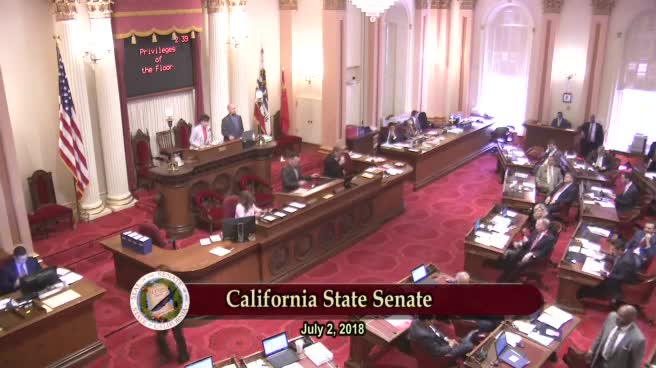
Bill Author

Bill Co-Author(s):





