SB 926: CalWORKs and CalFresh: work requirements.
- Session Year: 2017-2018
- House: Senate
- Latest Version Date: 2018-08-23
Existing law provides for the California Work Opportunity and Responsibility to Kids (CalWORKs) program, under which each county provides cash assistance and other benefits to qualified low-income families and individuals. Existing law generally requires a recipient of CalWORKs benefits to participate in welfare-to-work activities as a condition of eligibility for aid. Existing law prohibits sanctions from being applied for a failure or refusal to comply with program requirements if, among other reasons, the employment, offer of employment, activity, or other training for employment discriminates on specified bases or involves conditions that are in violation of applicable health and safety standards, or the employment or offer of employment exceeds the daily or weekly hours of work customary to the occupation.
This bill would additionally prohibit sanctions from being applied for a failure or refusal to comply with program requirements if the recipient provides documentation that the anticipated hours would be so unpredictable for that specific recipient that they would not allow the recipient to anticipate compliance with program requirements related to the job, or if the recipient provides documentation that the scheduled hours exhibit a pattern of unpredictability for that specific recipient so that he or she cannot anticipate compliance with program requirements related to the job. The bill would also prohibit sanctions from being applied if the recipient self-certifies that the employment or offer of employment fails to comply with the Healthy Workplaces, Healthy Families Act of 2014, that his or her rights under the New Parent Leave Act, the Wage Theft Prevention Act of 2011, or the Domestic Worker Bill of Rights were violated, or that he or she experienced sexual harassment or other abusive conduct at the workplace. The bill would require the county human services agency, when an applicant or recipient reports refusing any offer of employment, reducing hours, voluntarily quitting any employment, or being discharged from any employment, to provide the applicant or recipient with information regarding workplace rights generally, as specified, and would require the State Department of Social Services to convene stakeholders to develop instructions for county human services agencies on how to best inform applicants and recipients of aid of those rights and remedies, and how to document self-certification, as specified. By increasing the duties of local officials, the bill would impose a state-mandated local program.
Existing federal law provides for the federal Supplemental Nutrition Assistance Program (SNAP), known in California as CalFresh, under which supplemental nutrition assistance benefits allocated to the state by the federal government are distributed to eligible individuals by each county. Existing federal law, as a condition of eligibility for CalFresh, requires a household member who is not exempt to comply with specified work requirements, including the requirement that a member does not voluntarily and without good cause quit a job of 30 or more hours a week or reduce work effort less than 30 hours a week. Existing federal law defines good cause to include, among other things, circumstances beyond a members control, resigning from a job that is unsuitable, and discrimination by an employer based on age, race, sex, color, handicap, religious beliefs, national origin, or political beliefs.
This bill would, to the extent permitted by federal law, regulation, or waiver thereof, require that good cause exists for purposes of the above-mentioned work requirement if an applicant for, or recipient of, CalFresh benefits has voluntarily quit a job or reduced work hours based on at least one of the above-mentioned reasons for which welfare-to-work sanctions for a recipient of CalWORKs benefits shall not be applied, or because the scheduled work hours were so unpredictable that they did not allow the applicant or recipient to anticipate the amount of monthly income from the job. When the applicant or recipient reports refusing any offer of employment, reducing hours, voluntarily quitting any employment, or being discharged from any employment, the bill would require the county human services agency to provide the applicant or recipient with information regarding workplace rights generally, as specified. By increasing the duties of local officials, the bill would impose a state-mandated local program.
The bill would authorize the State Department of Social Services to implement these provisions through an all-county letter or similar instruction from the Director of Social Services, until regulations are adopted on or before October 1, 2020. The bill would require the all-county letter, or similar instruction, or regulation to provide, among other things, that an applicant or recipient of CalFresh or CalWORKs is authorized to self-certify under penalty of perjury that specified reasons qualify for a good cause exemption or a relief from sanction. By expanding the crime of perjury, the bill would impose a state-mandated local program.
Existing law continuously appropriates moneys from the General Fund to defray a portion of county costs under the CalWORKs program.
This bill would provide that the continuous appropriation would not be made for purposes of implementing the bill.
The California Constitution requires the state to reimburse local agencies and school districts for certain costs mandated by the state. Statutory provisions establish procedures for making that reimbursement.
This bill would provide that with regard to certain mandates no reimbursement is required by this act for a specified reason.
With regard to any other mandates, this bill would provide that, if the Commission on State Mandates determines that the bill contains costs so mandated by the state, reimbursement for those costs shall be made pursuant to the statutory provisions noted above.
Existing law provides for the California Work Opportunity and Responsibility to Kids (CalWORKs) program, under which each county provides cash assistance and other benefits to qualified low-income families and individuals. Existing law generally requires a recipient of CalWORKs benefits to participate in welfare-to-work activities as a condition of eligibility for aid. Existing law prohibits sanctions from being applied for a failure or refusal to comply with program requirements if, among other reasons, the employment, offer of employment, activity, or other training for employment discriminates on specified bases or involves conditions that are in violation of applicable health and safety standards, or the employment or offer of employment exceeds the daily or weekly hours of work customary to the occupation.
This bill would additionally prohibit sanctions from being applied for a failure or refusal to comply with program requirements if the recipient provides documentation that the anticipated hours would be so unpredictable for that specific recipient that they would not allow a the recipient to anticipate compliance with program requirements related to the job, or if the recipient provides documentation that the scheduled hours exhibit a pattern of unpredictability for that specific recipient so that he or she cannot anticipate compliance with program requirements related to the job. The bill would also prohibit sanctions from being applied if the recipient self-certifies that the employment or offer of employment fails to comply with the Healthy Workplaces, Healthy Families Act of 2014, that his or her rights under the New Parent Leave Act, the Wage Theft Protection Prevention Act of 2011, or the Domestic Worker Bill of Rights were violated, or that he or she experienced sexual harassment or other abusive conduct at the workplace. The bill would require the county human services agency, when an applicant or recipient reports refusing any offer of employment, reducing hours, voluntarily quitting any employment, or being discharged from any employment, to provide the applicant or recipient with information regarding workplace rights generally, as specified, and would require the State Department of Social Services to convene stakeholders to develop instructions for county human services agencies on how to best inform applicants and recipients of aid of those rights and remedies, and how to document self-certification, as specified. By increasing the duties of local officials, the bill would impose a state-mandated local program.
Existing federal law provides for the federal Supplemental Nutrition Assistance Program (SNAP), known in California as CalFresh, under which supplemental nutrition assistance benefits allocated to the state by the federal government are distributed to eligible individuals by each county. Existing federal law, as a condition of eligibility for CalFresh, requires a household member who is not exempt to comply with specified work requirements, including the requirement that a member does not voluntarily and without good cause quit a job of 30 or more hours a week or reduce work effort less than 30 hours a week. Existing federal law defines good cause to include, among other things, circumstances beyond a members control, resigning from a job that is unsuitable, and discrimination by an employer based on age, race, sex, color, handicap, religious beliefs, national origin, or political beliefs.
This bill would, to the extent permitted by federal law, regulation, or waiver thereof, require that good cause exists for purposes of the above-mentioned work requirement if an applicant for for, or recipient of, CalFresh benefits has voluntarily quit a job or reduced work hours based on at least one of the above-mentioned reasons for which welfare-to-work sanctions for a recipient of CalWORKs benefits shall not be applied, or because the scheduled work hours were so unpredictable that they did not allow an the applicant or recipient to anticipate the amount of monthly income from the job. When an the applicant or recipient reports refusing any offer of employment, reducing hours, voluntarily quitting any employment, or being discharged from any employment, the bill would require the county human services agency to provide the applicant or recipient with information regarding workplace rights generally, as specified. By increasing the duties of local officials, the bill would impose a state-mandated local program.
The bill would authorize the department State Department of Social Services to implement these provisions through an all-county letter or similar instruction from the director, Director of Social Services, until regulations are adopted on or before October 1, 2020. The bill would require the all-county letter, or similar instruction, or regulation to provide, among other things, that an applicant or recipient of CalFresh or CalWORKs is authorized to self-certify under penalty of perjury that specified reasons qualify for a good cause exemption or a relief from sanction. By expanding the crime of perjury, the bill would impose a state-mandated local program.
Existing law continuously appropriates moneys from the General Fund to defray a portion of county costs under the CalWORKs program.
This bill would provide that the continuous appropriation would not be made for purposes of implementing the bill.
The California Constitution requires the state to reimburse local agencies and school districts for certain costs mandated by the state. Statutory provisions establish procedures for making that reimbursement.This bill would provide that, if the Commission on State Mandates determines that the bill contains costs mandated by the state, reimbursement for those costs shall be made pursuant to the statutory provisions noted above.The California Constitution requires the state to reimburse local agencies and school districts for certain costs mandated by the state. Statutory provisions establish procedures for making that reimbursement.
This bill would provide that with regard to certain mandates no reimbursement is required by this act for a specified reason.
With regard to any other mandates, this bill would provide that, if the Commission on State Mandates determines that the bill contains costs so mandated by the state, reimbursement for those costs shall be made pursuant to the statutory provisions noted above.
Existing law provides for the California Work Opportunity and Responsibility to Kids (CalWORKs) program, under which each county provides cash assistance and other benefits to qualified low-income families and individuals. Existing law generally requires a recipient of CalWORKs benefits to participate in welfare-to-work activities as a condition of eligibility for aid. Existing law prohibits sanctions from being applied for a failure or refusal to comply with program requirements for, if, among other reasons, the employment, offer of employment, activity, or other training for employment discriminates on specified bases or involves conditions that are in violation of applicable health and safety standards, or the employment or offer of employment exceeds the daily or weekly hours of work customary to the occupation.
This bill would additionally prohibit sanctions from being applied for a failure or refusal to comply with program requirements if the scheduled recipient provides documentation that the anticipated hours are, or would be, be so unpredictable for that specific recipient that they do would not allow a participant recipient to anticipate compliance with program requirements. requirements related to the job, or if the recipient provides documentation that the scheduled hours exhibit a pattern of unpredictability for that specific recipient so that he or she cannot anticipate compliance with program requirements related to the job. The bill would also prohibit sanctions from being applied if the recipient certifies self-certifies that the employment or offer of employment fails to comply with the Healthy Workplaces, Healthy Families Act of 2014, that his or her rights under the New Parent Leave Act, the Wage Theft Protection Act of 2011, or the Domestic Worker Bill of Rights were violated, or that he or she experienced sexual harassment or other abusive conduct at the workplace. The bill would require the county human services agency, when an applicant or recipient reports refusing any offer of employment, reducing hours, voluntarily quitting any employment, or being discharged from any employment, to provide the recipient with information regarding workplace rights generally, as specified, and would require the State Department of Social Services to convene a workgroup, as specified, stakeholders to develop instructions for county human services agencies on how to best inform applicants and recipients of aid of those rights and remedies. remedies, and how to document self-certification, as specified. By increasing the duties of local officials, the bill would impose a state-mandated local program.
Existing federal law provides for the federal Supplemental Nutrition Assistance Program (SNAP), known in California as CalFresh, under which supplemental nutrition assistance benefits allocated to the state by the federal government are distributed to eligible individuals by each county. Existing federal law, as a condition of eligibility for CalFresh, requires a household member who is not exempt to comply with specified work requirements, including the requirement that a member does not voluntarily and without good cause quit a job of 30 or more hours a week or reduce work effort less than 30 hours a week. Existing federal law defines good cause to include, among other things, circumstances beyond a members control, resigning from a job that is unsuitable, and discrimination by an employer based on age, race, sex, color, handicap, religious beliefs, national origin, or political beliefs.
This bill would, to the extent permitted by federal law, regulation, or waiver thereof, require that good cause exists for purposes of the above-mentioned work requirement if an applicant for CalFresh benefits has voluntarily quit a job or reduced work hours based on at least one of the above-mentioned reasons for which welfare-to-work sanctions for a recipient of CalWORKs benefits shall not be applied, or because the scheduled work hours were so unpredictable that they did not allow an applicant or recipient to anticipate the amount of monthly income from the job. When an applicant or recipient reports refusing any offer of employment, reducing hours, voluntarily quitting any employment, or being discharged from any employment, the bill would require the county human services agency to provide the recipient with information regarding workplace rights generally, as specified. By increasing the duties of local officials, the bill would impose a state-mandated local program.
The bill would authorize the department to implement these provisions through an all-county letter or similar instruction from the director, until regulations are adopted on or before October 1, 2020.
Existing law continuously appropriates moneys from the General Fund to defray a portion of county costs under the CalWORKs program.
This bill would provide that the continuous appropriation would not be made for purposes of implementing the bill.
The California Constitution requires the state to reimburse local agencies and school districts for certain costs mandated by the state. Statutory provisions establish procedures for making that reimbursement.
This bill would provide that, if the Commission on State Mandates determines that the bill contains costs mandated by the state, reimbursement for those costs shall be made pursuant to the statutory provisions noted above.
Existing law provides for the California Work Opportunity and Responsibility to Kids (CalWORKs) program, under which each county provides cash assistance and other benefits to qualified low-income families and individuals. Existing law generally requires a recipient of CalWORKs benefits to participate in welfare-to-work activities as a condition of eligibility for aid. Existing law prohibits sanctions from being applied for a failure or refusal to comply with program requirements for, among other reasons, the employment, offer of employment, activity, or other training for employment discriminates on specified bases or involves conditions that are in violation of applicable health and safety standards, or the employment or offer of employment exceeds the daily or weekly hours of work customary to the occupation.
This bill would additionally prohibit sanctions from being applied for a failure or refusal to comply with program requirements if the scheduled hours are, or would be, so unpredictable that they do not allow a participant to anticipate compliance with program requirements. The bill would require the county human services agency, upon notice from the recipient of the occurrence of discrimination or existence of conditions that are in violation of applicable health and safety standards, to inform the recipient on specified rights and remedies. The bill would also prohibit sanctions from being applied if the recipient certifies that the employment or offer of employment fails to comply with the Health Healthy Workplaces, Healthy Families Act of 2014, that his or her rights under the New Parent Leave Act, the Wage Theft Prevention Protection Act of 2011, or the Domestic Worker Bill of Rights were violated, or that he or she experienced sexual harassment or other abusive conduct at the workplace. The bill would require the county human services agency, upon notice from the recipient of any of these violations, to inform the recipient of specified rights and remedies, when an applicant or recipient reports refusing any offer of employment, reducing hours, voluntarily quitting any employment, or being discharged from any employment, to provide the recipient with information regarding workplace rights generally, as specified, and would require the State Department of Social Services to convene a workgroup, as specified, to develop instructions for county human services agencies on how to best inform applicants and recipients of aid of those rights and remedies. By increasing the duties of local officials, the bill would impose a state-mandated local program.
Existing federal law provides for the federal Supplemental Nutrition Assistance Program (SNAP), known in California as CalFresh, under which supplemental nutrition assistance benefits allocated to the state by the federal government are distributed to eligible individuals by each county. Existing federal law, as a condition of eligibility for CalFresh, requires a household member who is not exempt to comply with specified work requirements, including the requirement that a member does not voluntarily and without good cause quit a job of 30 or more hours a week or reduce work effort less than 30 hours a week. Existing federal law defines good cause to include, among other things, circumstances beyond a members control, resigning from a job that is unsuitable, and discrimination by an employer based on age, race, sex, color, handicap, religious beliefs, national origin, or political beliefs.
This bill would, to the extent permitted by federal law, regulation, or waiver thereof, require that good cause exists for purposes of the above-mentioned work requirement if an applicant for CalFresh benefits has voluntarily quit a job or reduced work hours based on at least one of the above-mentioned reasons for which welfare-to-work sanctions for a recipient of CalWORKs benefits shall not be applied, or because the scheduled work hours were so unpredictable that they did not allow an applicant or recipient to anticipate the amount of monthly income from the job. The bill would also require the county human services agency to inform the recipient of specified rights and remedies if the applicant or recipient informs the county human services agency that he or she has voluntarily quit a job or reduced work hours for specified reasons. When an applicant or recipient reports refusing any offer of employment, reducing hours, voluntarily quitting any employment, or being discharged from any employment, the bill would require the county human services agency to provide the recipient with information regarding workplace rights generally, as specified. By increasing the duties of local officials, the bill would impose a state-mandated local program.
The bill would authorize the department to implement these provisions through an all-county letter or similar instruction from the director, until regulations are adopted on or before October 1, 2020.
Existing law continuously appropriates moneys from the General Fund to defray a portion of county costs under the CalWORKs program.
This bill would provide that the continuous appropriation would not be made for purposes of implementing the bill.
The California Constitution requires the state to reimburse local agencies and school districts for certain costs mandated by the state. Statutory provisions establish procedures for making that reimbursement.
This bill would provide that, if the Commission on State Mandates determines that the bill contains costs mandated by the state, reimbursement for those costs shall be made pursuant to the statutory provisions noted above.
Existing law provides for the California Work Opportunity and Responsibility to Kids (CalWORKs) program, under which each county provides cash assistance and other benefits to qualified low-income families and individuals. Existing law generally requires a recipient of CalWORKs benefits to participate in welfare-to-work activities as a condition of eligibility for aid. Existing law prohibits sanctions from being applied for a failure or refusal to comply with program requirements for, among other reasons, the employment, offer of employment, activity, or other training for employment discriminates on specified bases or involves conditions that are in violation of applicable health and safety standards, or the employment or offer of employment exceeds the daily or weekly hours of work customary to the occupation.
This bill would additionally prohibit sanctions from being applied for a failure or refusal to comply with program requirements if the scheduled hours are, or would be, so unpredictable that they do not allow a participant to anticipate compliance with program requirements. The bill would require the county human services agency, upon notice from the recipient of the occurrence of discrimination or existence of conditions that are in violation of applicable health and safety standards, to inform the recipient on specified rights and remedies. The bill would also prohibit sanctions from being applied if the recipient certifies that the employment or offer of employment fails to comply with the Health Workplaces, Healthy Families Act of 2014, that his or her rights under the New Parent Leave Act, the Wage Theft Prevention Act of 2011, or the Domestic Worker Bill of Rights were violated, or that he or she experienced sexual harassment or other abusive conduct at the workplace. The bill would require the county human services agency, upon notice from the recipient of any of these violations, to inform the recipient of specified rights and remedies. remedies, and would require the State Department of Social Services to convene a workgroup, as specified, to develop instructions for county human services agencies on how to best inform applicants and recipients of aid of those rights and remedies. By increasing the duties of local officials, the bill would impose a state-mandated local program.
Existing federal law provides for the federal Supplemental Nutrition Assistance Program (SNAP), known in California as CalFresh, under which supplemental nutrition assistance benefits allocated to the state by the federal government are distributed to eligible individuals by each county. Existing federal law, as a condition of eligibility for CalFresh, requires a household member who is not exempt to comply with specified work requirements, including the requirement that a member does not voluntarily and without good cause quit a job of 30 or more hours a week or reduce work effort less than 30 hours a week. Existing federal law defines good cause to include, among other things, circumstances beyond a members control, resigning from a job that is unsuitable, and discrimination by an employer based on age, race, sex, color, handicap, religious beliefs, national origin, or political beliefs.
This bill would, to the extent permitted by federal law, regulation, or waiver thereof, require that good cause exists for purposes of the above-mentioned work requirement if an applicant for CalFresh benefits has voluntarily quit a job or reduced work hours based on at least one of the above-mentioned reasons for which welfare-to-work sanctions for a recipient of CalWORKs benefits shall not be applied, or because the scheduled work hours were so unpredictable that they did not allow an applicant or recipient to anticipate the amount of monthly income from the job. The bill would also require the county human services agency to inform the recipient of specified rights and remedies if the applicant or recipient informs the county human services agency that he or she has voluntarily quit a job or reduced work hours for specified reasons. By increasing the duties of local officials, the bill would impose a state-mandated local program.
The bill would require the State Department of Social Services to convene a workgroup, as specified, to develop instructions for county human services agencies on how to best inform applicants and recipients of aid of the above-mentioned rights and remedies. The bill would authorize the department to implement these provisions through an all-county letter or similar instruction from the director, until regulations are adopted on or before October 1, 2020.
Existing law continuously appropriates moneys from the General Fund to defray a portion of county costs under the CalWORKs program.
This bill would provide that the continuous appropriation would not be made for purposes of implementing the bill.
The California Constitution requires the state to reimburse local agencies and school districts for certain costs mandated by the state. Statutory provisions establish procedures for making that reimbursement.
This bill would provide that, if the Commission on State Mandates determines that the bill contains costs mandated by the state, reimbursement for those costs shall be made pursuant to the statutory provisions noted above.
Existing law provides for the California Work Opportunity and Responsibility to Kids (CalWORKs) program, under which each county provides cash assistance and other benefits to qualified low-income families and individuals. Existing law generally requires a recipient of CalWORKs benefits to participate in welfare-to-work activities as a condition of eligibility for aid. Existing law prohibits sanctions from being applied for a failure or refusal to comply with program requirements for, among other reasons, the employment, offer of employment, activity, or other training for employment discriminates on specified bases or involves conditions that are in violation of applicable health and safety standards, or the employment or offer of employment exceeds the daily or weekly hours of work customary to the occupation.
This bill would additionally prohibit sanctions from being applied for a failure or refusal to comply with program requirements if the scheduled hours are, or would be, so unpredictable that they do not allow a participant to anticipate compliance with program requirements. The bill would require the county human services agency, upon notice from the recipient of the occurrence of discrimination or existence of conditions that are in violation of applicable health and safety standards, to inform the recipient on specified rights and remedies. The bill would also prohibit sanctions from being applied if the recipient certifies that the employment or offer of employment fails to comply with the Health Workplaces, Healthy Families Act of 2014, that his or her rights under the New Parent Leave Act, the Wage Theft Prevention Act of 2011, or the Domestic Worker Bill of Rights were violated, or that he or she experienced sexual harassment or other abusive conduct at the workplace. The bill would require the county human services agency, upon notice from the recipient of any of these violations, to inform the recipient of specified rights and remedies. The bill would similarly prohibit an applicant for aid from being deemed ineligible for aid for voluntarily quitting a job based on the above-mentioned reasons, and would similarly require the county human services agency to inform the recipient of specified rights and remedies. By increasing the duties of local officials, the bill would impose a state-mandated local program.
The bill would require the State Department of Social Services to convene a workgroup, as specified, to develop instructions for county human services agencies on how to best inform applicants and recipients of aid of the above-mentioned rights and remedies. The bill would authorize the department to implement these provisions through an all-county letter or similar instruction from the director, until regulations are adopted on or before October 1, 2020.
Existing law continuously appropriates moneys from the General Fund to defray a portion of county costs under the CalWORKs program.
This bill would provide that the continuous appropriation would not be made for purposes of implementing the bill.
The California Constitution requires the state to reimburse local agencies and school districts for certain costs mandated by the state. Statutory provisions establish procedures for making that reimbursement.
This bill would provide that, if the Commission on State Mandates determines that the bill contains costs mandated by the state, reimbursement for those costs shall be made pursuant to the statutory provisions noted above.
The Legislature finds and declares all of the following:
(a)Due to their precarious economic situations, low-income workers frequently have their rights violated.
(b)Low-income workers are often not scheduled enough hours to prevent poverty or to comply with public benefit work requirements.
(c)Low-income Californians should not be forced to seek employment or remain employed at a workplace that violates their basic worker rights.
(d)Low-income Californians should be informed about their worker rights when they seek public benefits or an increase in public benefits due to a loss of job or reduction in hours.
SEC. 2.Section 11320.31 of the Welfare and Institutions Code is amended to read:11320.31.(a)Sanctions shall not be applied for a failure or refusal to comply with program requirements for reasons related to employment, an offer of employment, an activity, or other training for employment including, but not limited to, the following reasons:
(1)The employment, offer of employment, activity, or other training for employment discriminates on any basis listed in subdivision (a) of Section 12940 of the Government Code, as those bases are defined in Sections 12926 and 12926.1 of the Government Code, except as otherwise provided in Section 12940 of the Government Code.
(2)The employment or offer of employment exceeds the daily or weekly hours of work customary to the occupation, the recipient provides documentation to the county human services agency that the anticipated hours would be so unpredictable for that specific recipient that they would not allow the recipient to anticipate compliance with program requirements related to the job, or the recipient provides documentation to the county human services agency that the scheduled hours exhibit a pattern of unpredictability for that specific recipient that does not allow the recipient to anticipate compliance with program requirements related to the job.
(3)The employment, offer of employment, activity, or other training for employment requires travel to and from the place of employment, activity, or other training and a recipients home that exceeds a total of two hours in round trip time, exclusive of the time necessary to transport family members to a school or place providing care, or, when walking is the only available means of transportation, the round trip is more than two miles, exclusive of the mileage necessary to accompany family members to a school or a place providing care. A recipient who fails or refuses to comply with the program requirements based on this paragraph shall be required to participate in community service activities pursuant to Section 11322.9.
(4)The employment, offer of employment, activity, or other training for employment involves conditions that are in violation of applicable health and safety standards.
(5)The employment, offer of employment, or work activity does not provide for workers compensation insurance.
(6)Accepting the employment or work activity would cause an interruption in an approved education or job training program in progress that would otherwise lead to employment and sufficient income to be self-supporting, excluding work experience or community service employment as described in subdivisions (d) and (j) of Section 11322.6 and Section 11322.9 or other community work experience assignments, except that a recipient may be required to engage in welfare-to-work activities to the extent necessary to meet the hours of participation required by Section 11322.8.
(7)Accepting the employment, offer of employment, or work activity would cause the recipient to violate the terms of the recipients union membership.
(8)The recipient self-certifies that the employment or offer of employment fails to comply with the Healthy Workplaces, Healthy Families Act of 2014 (Article 1.5 (commencing with Section 245) of Chapter 1 of Part 1 of Division 2 of the Labor Code).
(9)The recipient self-certifies that the recipient experienced sexual harassment or other abusive conduct at the workplace. For purposes of this section, abusive conduct has the same meaning as defined in paragraph (2) of subdivision (h) of Section 12950.1 of the Government Code.
(10)The recipient self-certifies that the recipients rights under the New Parent Leave Act (Section 12945.6 of the Government Code) were violated.
(11)The recipient self-certifies that the recipients rights under the Wage Theft Prevention Act of 2011 were violated.
(12)The recipient self-certifies that the recipients rights under the Domestic Worker Bill of Rights (Part 4.5 (commencing with Section 1450) of Division 2 of the Labor Code) were violated.
(b)If a recipient has received relief from a program sanction pursuant to this section, the recipient shall participate in all other welfare-to-work activities required by the recipients welfare-to-work plan, with the exception of employment requirements. This relief shall last no longer than three months from the first date of the failure or refusal to comply with program requirements.
(c)When an applicant or recipient reports refusing any offer of employment, reducing hours, voluntarily quitting any employment, or being discharged from any employment, the county human services agency shall provide the applicant or recipient with information regarding workplace rights generally, including information about how to file complaints with the Division of Labor Standards Enforcement and the Department of Fair Employment and Housing. The State Department of Social Services shall convene stakeholders to develop instructions for county human services agencies on how to best inform applicants and recipients of aid of their workplace rights and available remedies, and how to document applicants or recipients self-certification of circumstances as required by this section. Stakeholders may be convened concurrently with an existing department stakeholder meeting.
SEC. 3.Section 18929 is added to the Welfare and Institutions Code, to read:18929.To the extent permitted by federal law, regulation, or waiver thereof, a county shall determine that good cause exists for purposes of the work requirement specified in Section 273.7(a)(1)(vii) of Title 7 of the Code of Federal Regulations if an applicant or recipient has voluntarily quit a job or reduced work hours based on at least one of the reasons enumerated in subdivision (a) of Section 11320.31, or because the scheduled work hours were so unpredictable that they did not allow the applicant or recipient to anticipate the amount of monthly income from the job. When the applicant or recipient reports refusing any offer of employment, reducing hours, voluntarily quitting any employment, or being discharged from any employment, the county human services agency shall provide the applicant or recipient with information regarding workplace rights generally, including information about how to file complaints with the Division of Labor Standards Enforcement and the Department of Fair Employment and Housing. This information shall be provided pursuant to the instructions developed by the workgroup specified in subdivision (c) of Section 11320.31.
SEC. 4.Notwithstanding the rulemaking provisions of the Administrative Procedure Act (Chapter 3.5 (commencing with Section 11340) of Part 1 of Division 3 of Title 2 of the Government Code), the State Department of Social Services may implement this act through an all-county letter or similar instruction from the Director of Social Services, until regulations are adopted. The department shall adopt regulations implementing this act on or before October 1, 2020. The all-county letter, or similar instruction, or regulation shall provide all of the following:
(a)An applicant or recipient of CalFresh or CalWORKs may self-certify under penalty of perjury that the reason the applicant or recipient voluntarily quit a job or reduced work hours qualifies for a good cause exemption, as specified in Section 18929 of the Welfare and Institutions Code.
(b)A recipient of CalWORKs may self-certify under penalty of perjury that the reason the recipient failed or refused to comply with program requirements qualifies for a relief from sanction, as specified in Section 11320.31 of the Welfare and Institutions Code.
(c)Guidance on how the county shall collect verification in instances in which more than one request for a good cause exemption or relief from sanction is made.
SEC. 5.No appropriation pursuant to Section 15200 of the Welfare and Institutions Code shall be made for purposes of this act.
SEC. 6.No reimbursement is required by this act pursuant to Section 6 of Article XIIIB of the California Constitution for certain costs that may be incurred by a local agency or school district because, in that regard, this act creates a new crime or infraction, eliminates a crime or infraction, or changes the penalty for a crime or infraction, within the meaning of Section 17556 of the Government Code, or changes the definition of a crime within the meaning of Section 6 of Article XIIIB of the California Constitution.
However, if the Commission on State Mandates determines that this act contains other costs mandated by the state, reimbursement to local agencies and school districts for those costs shall be made pursuant to Part 7 (commencing with Section 17500) of Division 4 of Title 2 of the Government Code.
The Legislature finds and declares all of the following:
(a)Due to their precarious economic situations, low-income workers frequently have their rights violated.
(b)Low-income workers are often not scheduled enough hours to prevent poverty or to comply with public benefit work requirements.
(c)Low-income Californians should not be forced to seek employment or remain employed at a workplace that violates their basic worker rights.
(d)Low-income Californians should be informed about their worker rights when they seek public benefits or an increase in public benefits due to a loss of job or reduction in hours.
SEC. 2.Section 11320.31 of the Welfare and Institutions Code is amended to read:11320.31.(a)Sanctions shall not be applied for a failure or refusal to comply with program requirements for reasons related to employment, an offer of employment, an activity, or other training for employment including, but not limited to, the following reasons:
(1)The employment, offer of employment, activity, or other training for employment discriminates on any basis listed in subdivision (a) of Section 12940 of the Government Code, as those bases are defined in Sections 12926 and 12926.1 of the Government Code, except as otherwise provided in Section 12940 of the Government Code.
(2)The employment or offer of employment exceeds the daily or weekly hours of work customary to the occupation, the recipient provides documentation to the county human services agency that the anticipated hours would be so unpredictable for that specific recipient that they would not allow a the recipient to anticipate compliance with program requirements related to the job, or the recipient provides documentation to the county human services agency that the scheduled hours exhibit a pattern of unpredictability for that specific recipient that does not allow the recipient to anticipate compliance with program requirements related to the job.
(3)The employment, offer of employment, activity, or other training for employment requires travel to and from the place of employment, activity, or other training and a recipients home that exceeds a total of two hours in round trip time, exclusive of the time necessary to transport family members to a school or place providing care, or, when walking is the only available means of transportation, the round trip is more than two miles, exclusive of the mileage necessary to accompany family members to a school or a place providing care. A recipient who fails or refuses to comply with the program requirements based on this paragraph shall be required to participate in community service activities pursuant to Section 11322.9.
(4)The employment, offer of employment, activity, or other training for employment involves conditions that are in violation of applicable health and safety standards.
(5)The employment, offer of employment, or work activity does not provide for workers compensation insurance.
(6)Accepting the employment or work activity would cause an interruption in an approved education or job training program in progress that would otherwise lead to employment and sufficient income to be self-supporting, excluding work experience or community service employment as described in subdivisions (d) and (j) of Section 11322.6 and Section 11322.9 or other community work experience assignments, except that a recipient may be required to engage in welfare-to-work activities to the extent necessary to meet the hours of participation required by Section 11322.8.
(7)Accepting the employment, offer of employment, or work activity would cause the recipient to violate the terms of the recipients union membership.
(8)The recipient self-certifies that the employment or offer of employment fails to comply with the Healthy Workplaces, Healthy Families Act of 2014 (Article 1 1.5 (commencing with Section 245) of Chapter 1 of Part 1 of Division 2 of the Labor Code).
(9)The recipient self-certifies that the recipient experienced sexual harassment or other abusive conduct at the workplace. For purposes of this section, abusive conduct has the same meaning as defined in paragraph (2) of subdivision (h) of Section 12950.1 of the Government Code.
(10)The recipient self-certifies that the recipients rights under the New Parent Leave Act (Section 12945.6 of the Government Code) were violated.
(11)The recipient self-certifies that the recipients rights under the Wage Theft Protection Prevention Act of 2011 were violated.
(12)The recipient self-certifies that the recipients rights under the Domestic Worker Bill of Rights (Chapter 1 (Part 4.5 (commencing with Section 1450) of Part 4.5 of Division 2 of the Labor Code) were violated.
(b)If a recipient has received relief from a program sanction pursuant to this section, the recipient shall participate in all other welfare-to-work activities required by the recipients welfare-to-work plan, with the exception of employment requirements. This relief shall last no longer than three months from the first date of the failure or refusal to comply with program requirements.
(c)When an applicant or recipient reports refusing any offer of employment, reducing hours, voluntarily quitting any employment, or being discharged from any employment, the county human services agency shall provide the applicant or recipient with information regarding workplace rights generally, including information about how to file complaints with the Division of Labor Standards Enforcement and the Department of Fair Employment and Housing. The State Department of Social Services shall convene stakeholders to develop instructions for county human services agencies on how to best inform applicants and recipients of aid of their workplace rights and available remedies, and how to document applicants or recipients self-certification of circumstances as required by this section. Stakeholders may be convened concurrently with an existing department stakeholder meeting.
SEC. 3.Section 18928 18929 is added to the Welfare and Institutions Code, to read:18928. 18929.To the extent permitted by federal law, regulation, or waiver thereof, a county shall determine that good cause exists for purposes of the work requirement specified in Section 273.7(a)(1)(vii) of Title 7 of the Code of Federal Regulations if an applicant or recipient has voluntarily quit a job or reduced work hours based on at least one of the reasons enumerated in subdivision (a) of Section 11320.31, or because the scheduled work hours were so unpredictable that they did not allow an the applicant or recipient to anticipate the amount of monthly income from the job. When an the applicant or recipient reports refusing any offer of employment, reducing hours, voluntarily quitting any employment, or being discharged from any employment, the county human services agency shall provide the applicant or recipient with information regarding workplace rights generally, including information about how to file complaints with the Division of Labor Standards Enforcement and the Department of Fair Employment and Housing. This information shall be provided pursuant to the instructions developed by the workgroup specified in subdivision (c) of Section 11320.31.
SEC. 4.Notwithstanding the rulemaking provisions of the Administrative Procedure Act (Chapter 3.5 (commencing with Section 11340) of Part 1 of Division 3 of Title 2 of the Government Code), the State Department of Social Services may implement this act through an all-county letter or similar instruction from the director, Director of Social Services, until regulations are adopted. The department shall adopt regulations implementing this act on or before October 1, 2020. The all-county letter, or similar instruction, or regulation shall provide all of the following:
(a)An applicant or recipient of CalFresh or CalWORKs may self-certify under penalty of perjury that the reason the applicant or recipient voluntarily quit a job or reduced work hours qualifies for a good cause exemption, as specified in Section 18928. 18929 of the Welfare and Institutions Code.
(b)A recipient of CalWORKs may self-certify under penalty of perjury that the reason the recipient failed or refused to comply with program requirements qualifies for a relief from sanction, as specified in Section 11320.31. 11320.31 of the Welfare and Institutions Code.
(c)Guidance on how the county shall collect verification in instances in which more than one request for a good cause exemption or relief from sanction is made.
SEC. 5.No appropriation pursuant to Section 15200 of the Welfare and Institutions Code shall be made for purposes of this act.
SEC. 6.If the Commission on State Mandates determines that this act contains costs mandated by the state, reimbursement to local agencies and school districts for those costs shall be made pursuant to Part 7 (commencing with Section 17500) of Division 4 of Title 2 of the Government Code.SEC. 6.No reimbursement is required by this act pursuant to Section 6 of Article XIIIB of the California Constitution for certain costs that may be incurred by a local agency or school district because, in that regard, this act creates a new crime or infraction, eliminates a crime or infraction, or changes the penalty for a crime or infraction, within the meaning of Section 17556 of the Government Code, or changes the definition of a crime within the meaning of Section 6 of Article XIIIB of the California Constitution.
However, if the Commission on State Mandates determines that this act contains other costs mandated by the state, reimbursement to local agencies and school districts for those costs shall be made pursuant to Part 7 (commencing with Section 17500) of Division 4 of Title 2 of the Government Code.
The Legislature finds and declares all of the following:
(a)Due to their precarious economic situations, low-income workers frequently have their rights violated.
(b)Low-income workers are often not scheduled enough hours to prevent poverty or to comply with public benefit work requirements.
(c)Low-income Californians should not be forced to seek employment or remain employed at a workplace that violates their basic worker rights.
(d)Low-income Californians should be informed about their worker rights when they seek public benefits or an increase in public benefits due to a loss of job or reduction in hours.
SEC. 2.Section 11320.31 of the Welfare and Institutions Code is amended to read:11320.31.(a)Sanctions shall not be applied for a failure or refusal to comply with program requirements for reasons related to employment, an offer of employment, an activity, or other training for employment including, but not limited to, the following reasons:
(1)The employment, offer of employment, activity, or other training for employment discriminates on any basis listed in subdivision (a) of Section 12940 of the Government Code, as those bases are defined in Sections 12926 and 12926.1 of the Government Code, except as otherwise provided in Section 12940 of the Government Code.
(2)The employment or offer of employment exceeds the daily or weekly hours of work customary to the occupation, or the scheduled recipient provides documentation to the county human services agency that the anticipated hours are, or would be, be so unpredictable for that specific recipient that they do would not allow a recipient to anticipate compliance with program requirements. requirements related to the job, or the recipient provides documentation to the county human services agency that the scheduled hours exhibit a pattern of unpredictability for that specific recipient that does not allow the recipient to anticipate compliance with program requirements related to the job.
(3)The employment, offer of employment, activity, or other training for employment requires travel to and from the place of employment, activity, or other training and a recipients home that exceeds a total of two hours in round-trip round trip time, exclusive of the time necessary to transport family members to a school or place providing care, or, when walking is the only available means of transportation, the round trip is more than two miles, exclusive of the mileage necessary to accompany family members to a school or a place providing care. A recipient who fails or refuses to comply with the program requirements based on this paragraph shall be required to participate in community service activities pursuant to Section 11322.9.
(4)The employment, offer of employment, activity, or other training for employment involves conditions that are in violation of applicable health and safety standards.
(5)The employment, offer of employment, or work activity does not provide for workers compensation insurance.
(6)Accepting the employment or work activity would cause an interruption in an approved education or job training program in progress that would otherwise lead to employment and sufficient income to be self-supporting, excluding work experience or community service employment as described in subdivisions (d) and (j) of Section 11322.6 and Section 11322.9 or other community work experience assignments, except that a recipient may be required to engage in welfare-to-work activities to the extent necessary to meet the hours of participation required by Section 11322.8.
(7)Accepting the employment, offer of employment, or work activity would cause the recipient to violate the terms of the recipients union membership.
(8)The recipient certifies self-certifies that the employment or offer of employment fails to comply with the Healthy Workplaces, Healthy Families Act of 2014 (Article 1 (commencing with Section 245) of Chapter 1 of Part 1 of Division 2 of the Labor Code).
(9)The recipient certifies self-certifies that the recipient experienced sexual harassment or other abusive conduct at the workplace. For purposes of this section, abusive conduct has the same meaning as defined in paragraph (2) of subdivision (h) of Section 12950.1 of the Government Code.
(10)The recipient certifies self-certifies that the recipients rights under the New Parent Leave Act (Section 12945.6 of the Government Code) were violated.
(11)The recipient certifies self-certifies that the recipients rights under the Wage Theft Protection Act of 2011 were violated.
(12)The recipient certifies self-certifies that the recipients rights under the Domestic Worker Bill of Rights (Chapter 1 (commencing with Section 1450) of Part 4.5 of Division 2 of the Labor Code) were violated.
(b)If a recipient has received relief from a program sanction pursuant to this section, the recipient shall participate in all other welfare-to-work activities required by the recipients welfare-to-work plan, with the exception of employment requirements. This relief shall last no longer than three months from the first date of the failure or refusal to comply with program requirements.
(c)When an applicant or recipient reports refusing any offer of employment, reducing hours, voluntarily quitting any employment, or being discharged from any employment, the county human services agency shall provide the recipient with information regarding workplace rights generally, including information about how to file complaints with the Division of Labor Standards Enforcement and the Department of Fair Employment and Housing. The State Department of Social Services shall convene a workgroup consisting of client advocates, representatives of county human services agencies, worker rights experts, and representatives of county eligibility workers stakeholders to develop instructions for county human services agencies on how to best inform applicants and recipients of aid of their workplace rights and available remedies. remedies, and how to document recipients self-certification of circumstances as required by this section. Stakeholders may be convened concurrently with an existing department stakeholder meeting.
SEC. 3.Section 18928 is added to the Welfare and Institutions Code, to read:18928.To the extent permitted by federal law, regulation, or waiver thereof, a county shall determine that good cause exists for purposes of the work requirement specified in Section 273.7(a)(1)(vii) of Title 7 of the Code of Federal Regulations if an applicant or recipient has voluntarily quit a job or reduced work hours based on at least one of the reasons enumerated in subdivision (a) of Section 11320.31, or because the scheduled work hours were so unpredictable that they did not allow an applicant or recipient to anticipate the amount of monthly income from the job. When an applicant or recipient reports refusing any offer of employment, reducing hours, voluntarily quitting any employment, or being discharged from any employment, the county human services agency shall provide the recipient with information regarding workplace rights generally, including information about how to file complaints with the Division of Labor Standards Enforcement and the Department of Fair Employment and Housing. This information shall be provided pursuant to the instructions developed by the workgroup specified in subdivision (c) of Section 11320.31.
SEC. 4.Notwithstanding the rulemaking provisions of the Administrative Procedure Act (Chapter 3.5 (commencing with Section 11340) of Part 1 of Division 3 of Title 2 of the Government Code), the State Department of Social Services may implement this act through an all-county letter or similar instruction from the director, until regulations are adopted. The department shall adopt regulations implementing this act on or before October 1, 2020. The all-county letter, or similar instruction, or regulation shall provide all of the following:
(a)An applicant or recipient of CalFresh or CalWORKs may self-certify under penalty of perjury that the reason the applicant or recipient voluntarily quit a job or reduced work hours qualifies for a good cause exemption, as specified in Section 18928.
(b)A recipient of CalWORKs may self-certify under penalty of perjury that the reason the recipient failed or refused to comply with program requirements qualifies for a relief from sanction, as specified in Section 11320.31.
(c)Guidance on how to provide the county shall collect verification in instances in which more than one request for a good cause exemption or relief from sanction is made.
SEC. 5.No appropriation pursuant to Section 15200 of the Welfare and Institutions Code shall be made for purposes of this act.
SEC. 6.If the Commission on State Mandates determines that this act contains costs mandated by the state, reimbursement to local agencies and school districts for those costs shall be made pursuant to Part 7 (commencing with Section 17500) of Division 4 of Title 2 of the Government Code.
The Legislature finds and declares all of the following:
(a)Due to their precarious economic situations, low-income workers frequently have their rights violated.
(b)Low-income workers are often not scheduled enough hours to prevent poverty or to comply with public benefit work requirements.
(c)Low-income Californians should not be forced to seek employment or remain employed at a workplace that violates their basic worker rights.
(d)Low-income Californians should be informed about their worker rights when they seek public benefits or an increase in public benefits due to a loss of job or reduction in hours.
SEC. 2.Section 11320.31 of the Welfare and Institutions Code is amended to read:11320.31.(a)Sanctions shall not be applied for a failure or refusal to comply with program requirements for reasons related to employment, an offer of employment, an activity, or other training for employment including, but not limited to, the following reasons:
(1)The employment, offer of employment, activity, or other training for employment discriminates on any basis listed in subdivision (a) of Section 12940 of the Government Code, as those bases are defined in Sections 12926 and 12926.1 of the Government Code, except as otherwise provided in Section 12940 of the Government Code. If the recipient informs the county human services agency that the recipient witnessed or experienced discrimination prohibited under subdivision (a) of Section 12940 of the Government Code, the county human services agency shall inform the recipient of the rights provided under that provision and the remedies provided through the Department of Fair Employment and Housing, as specified in Article 1 (commencing with Section 12960) of Chapter 7 of Part 2.8 of Division 3 of Title 2 of the Government Code.
(2)The employment or offer of employment exceeds the daily or weekly hours of work customary to the occupation, or the scheduled hours are, or would be, so unpredictable that they do not allow a recipient to anticipate compliance with program requirements.
(3)The employment, offer of employment, activity, or other training for employment requires travel to and from the place of employment, activity, or other training and a recipients home that exceeds a total of two hours in round-trip time, exclusive of the time necessary to transport family members to a school or place providing care, or, when walking is the only available means of transportation, the round-trip round trip is more than two miles, exclusive of the mileage necessary to accompany family members to a school or a place providing care. A recipient who fails or refuses to comply with the program requirements based on this paragraph shall be required to participate in community service activities pursuant to Section 11322.9.
(4)The employment, offer of employment, activity, or other training for employment involves conditions that are in violation of applicable health and safety standards. If the recipient informs the county human services agency that the recipient witnessed or experienced violations of applicable health and safety standards, the county human services agency shall inform the recipient of the rights and remedies provided under the federal Occupational Safety and Health Act of 1970 (Public Law 91-596).
(5)The employment, offer of employment, or work activity does not provide for workers compensation insurance.
(6)Accepting the employment or work activity would cause an interruption in an approved education or job training program in progress that would otherwise lead to employment and sufficient income to be self-supporting, excluding work experience or community service employment as described in subdivisions (d) and (j) of Section 11322.6 and Section 11322.9 or other community work experience assignments, except that a recipient may be required to engage in welfare-to-work activities to the extent necessary to meet the hours of participation required by Section 11322.8.
(7)Accepting the employment, offer of employment, or work activity would cause the recipient to violate the terms of the recipients union membership.
(8)The recipient certifies that the employment or offer of employment fails to comply with the Healthy Workplaces, Healthy Families Act of 2014 (Article 1 (commencing with Section 245) of Chapter 1 of Part 1 of Division 2 of the Labor Code). If the recipient informs the county human services agency that the employment or offer of employment fails to comply with the act, the county human services agency shall inform the recipient of the rights and remedies provided under the act.
(9)The recipient certifies that the recipient experienced sexual harassment or other abusive conduct at the workplace. If the recipient informs the county human services agency that he or she was subject to sexual harassment or abusive conduct in the workplace, the county human services agency shall inform the recipient of the rights and remedies described in the sexual harassment and abusive conduct prevention training and education required pursuant to Section 12950.1 of the Government Code. For purposes of this section, abusive conduct has the same meaning as defined in paragraph (2) of subdivision (h) of Section 12950.1 of the Government Code.
(10)The recipient certifies that the recipients rights under the New Parent Leave Act (Section 12945.6 of the Government Code) were violated. If the recipient informs the county human services agency that the recipient was subject to a violation of the act, the county human services agency shall inform the recipient of the rights provided under the act and the remedies provided through the Department of Fair Employment and Housing, as specified in Article 1 (commencing with Section 12960) of Chapter 7 of Part 2.8 of Division 3 of Title 2 of the Government Code.
(11)The recipient certifies that the recipients rights under the Wage Theft Prevention Protection Act of 2011 were violated. If the recipient informs the county human services agency that the recipient was subject to a violation of the act, the county human services agency shall inform the recipient of the rights and remedies provided under the act.
(12)The recipient certifies that the recipients rights under the Domestic Worker Bill of Rights (Part 4.5 (Chapter 1 (commencing with Section 1450) of Part 4.5 of Division 2 of the Labor Code) were violated. If the recipient informs the county human services agency that the recipient was subject to a violation of the act, the county human services agency shall inform the recipient of the rights and remedies provided under the act.
(b)If a recipient has received relief from a program sanction pursuant to this section, the recipient shall participate in all welfare-to-work activities required by the recipients welfare-to-work plan, with the exception of employment requirements. This relief shall last no longer than three months from the first date of the failure or refusal to comply with program requirements.
(c)When an applicant or recipient reports refusing any offer of employment, reducing hours, voluntarily quitting any employment, or being discharged from any employment, the county human services agency shall provide the recipient with information regarding workplace rights generally, including information about how to file complaints with the Division of Labor Standards Enforcement and the Department of Fair Employment and Housing. The State Department of Social Services shall convene a workgroup consisting of client advocates, representatives of county human services agencies, worker rights experts, and representatives of county eligibility workers to develop instructions for county human services agencies on how to best inform applicants and recipients of aid of the rights and remedies specified in paragraphs (1), (4), (8), (9), (10), (11), and (12) of subdivision (a) when they have reported a violation of those rights. their workplace rights and available remedies.
SEC. 3.Section 18928 is added to the Welfare and Institutions Code, to read:18928.To the extent permitted by federal law, regulation, or waiver thereof, a county shall determine that good cause exists for purposes of the work requirement specified in Section 273.7(a)(1)(vii) of Title 7 of the Code of Federal Regulations if an applicant or recipient has voluntarily quit a job or reduced work hours based on at least one of the reasons enumerated in subdivision (a) of Section 11320.31, or because the scheduled work hours were so unpredictable that they did not allow an applicant or recipient to anticipate the amount of monthly income from the job. If the applicant or recipient informs the county human services agency that the applicant or recipient has voluntarily quit a job or reduced work hours for a reason specified in paragraph (1), (4), (8), (9), (10), (11), or (12) of subdivision (a) of Section 11320.31, the county human services agency shall inform the applicant or recipient of the rights and remedies specified in the applicable paragraph of that section. When an applicant or recipient reports refusing any offer of employment, reducing hours, voluntarily quitting any employment, or being discharged from any employment, the county human services agency shall provide the recipient with information regarding workplace rights generally, including information about how to file complaints with the Division of Labor Standards Enforcement and the Department of Fair Employment and Housing. This information shall be provided pursuant to the instructions developed by the workgroup specified in subdivision (c) of Section 11320.31.
SEC. 4.Notwithstanding the rulemaking provisions of the Administrative Procedure Act (Chapter 3.5 (commencing with Section 11340) of Part 1 of Division 3 of Title 2 of the Government Code), the State Department of Social Services may implement this act through an all-county letter or similar instruction from the director, until regulations are adopted. The department shall adopt regulations implementing this act on or before October 1, 2020. The all-county letter, or similar instruction, or regulation shall provide all of the following:
(a)An applicant or recipient of CalFresh or CalWORKs may self-certify under penalty of perjury that the reason the applicant or recipient voluntarily quit a job or reduced work hours qualifies for a good cause exemption, as specified in Section 18928.
(b)A recipient of CalWORKs may self-certify under penalty of perjury that the reason the recipient failed or refused to comply with program requirements qualifies for a relief from sanction, as specified in Section 11320.31.
(c)Guidance on how to provide verification in instances in which more than one request for a good cause exemption or relief from sanction is made.
SEC. 5.No appropriation pursuant to Section 15200 of the Welfare and Institutions Code shall be made for purposes of this act.
SEC. 6.If the Commission on State Mandates determines that this act contains costs mandated by the state, reimbursement to local agencies and school districts for those costs shall be made pursuant to Part 7 (commencing with Section 17500) of Division 4 of Title 2 of the Government Code.
The Legislature finds and declares all of the following:
(a)Due to their precarious economic situations, low-income workers frequently have their rights violated.
(b)Low-income workers are often not scheduled enough hours to prevent poverty or to comply with public benefit work requirements.
(c)Low-income Californians should not be forced to seek employment or remain employed at a workplace that violates their basic worker rights.
(d)Low-income Californians should be informed about their worker rights when they seek public benefits or an increase in public benefits due to a loss of job or reduction in hours.
SEC. 2.Section 11320.31 of the Welfare and Institutions Code is amended to read:11320.31.(a)Sanctions shall not be applied for a failure or refusal to comply with program requirements for reasons related to employment, an offer of employment, an activity, or other training for employment including, but not limited to, the following reasons:
(1)The employment, offer of employment, activity, or other training for employment discriminates on any basis listed in subdivision (a) of Section 12940 of the Government Code, as those bases are defined in Sections 12926 and 12926.1 of the Government Code, except as otherwise provided in Section 12940 of the Government Code. If the recipient informs the county human services agency that the recipient witnessed or experienced discrimination prohibited under subdivision (a) of Section 12940 of the Government Code, the county human services agency shall inform the recipient of the rights provided under that provision and the remedies provided through the Department of Fair Employment and Housing, as specified in Article 1 (commencing with Section 12960) of Chapter 7 of Part 2.8 of Division 3 of Title 2 of the Government Code.
(2)The employment or offer of employment exceeds the daily or weekly hours of work customary to the occupation, or the scheduled hours are, or would be, so unpredictable that they do not allow a recipient to anticipate compliance with program requirements.
(3)The employment, offer of employment, activity, or other training for employment requires travel to and from the place of employment, activity, or other training and a recipients home that exceeds a total of two hours in round-trip time, exclusive of the time necessary to transport family members to a school or place providing care, or, when walking is the only available means of transportation, the round-trip is more than two miles, exclusive of the mileage necessary to accompany family members to a school or a place providing care. A recipient who fails or refuses to comply with the program requirements based on this paragraph shall be required to participate in community service activities pursuant to Section 11322.9.
(4)The employment, offer of employment, activity, or other training for employment involves conditions that are in violation of applicable health and safety standards. If the recipient informs the county human services agency that the recipient witnessed or experienced violations of applicable health and safety standards, the county human services agency shall inform the recipient of the rights and remedies provided under the federal Occupational Safety and Health Act of 1970 (Public Law 91-596).
(5)The employment, offer of employment, or work activity does not provide for workers compensation insurance.
(6)Accepting the employment or work activity would cause an interruption in an approved education or job training program in progress that would otherwise lead to employment and sufficient income to be self-supporting, excluding work experience or community service employment as described in subdivisions (d) and (j) of Section 11322.6 and Section 11322.9 or other community work experience assignments, except that a recipient may be required to engage in welfare-to-work activities to the extent necessary to meet the hours of participation required by Section 11322.8.
(7)Accepting the employment, offer of employment, or work activity would cause the recipient to violate the terms of his or her the recipients union membership.
(8)The recipient certifies that the employment or offer of employment fails to comply with the Healthy Workplaces, Healthy Families Act of 2014 (Article 1 (commencing with Section 245) of Chapter 1 of Part 1 of Division 2 of the Labor Code). If the recipient informs the county human services agency that the employment or offer of employment fails to comply with the act, the county human services agency shall inform the recipient of the rights and remedies provided under the act.
(9)The recipient certifies that the recipient experienced sexual harassment or other abusive conduct at the employment workplace. If the recipient informs the county human services agency that he or she was subject to sexual harassment or abusive conduct in the workplace, the county human services agency shall inform the recipient of the rights and remedies described in the sexual harassment and abusive conduct prevention training and education required pursuant to Section 12950.1 of the Government Code.
(10)The recipient certifies that his or her the recipients rights under the New Parent Leave Act (Section 12945.6 of the Government Code) were violated. If the recipient informs the county human services agency that the recipient was subject to a violation of the act, the county human services agency shall inform the recipient of the rights provided under the act and the remedies provided through the Department of Fair Employment and Housing, as specified in Article 1 (commencing with Section 12960) of Chapter 7 of Part 2.8 of Division 3 of Title 2 of the Government Code.
(11)The recipient certifies that his or her the recipients rights under the Wage Theft Prevention Act of 2011 were violated. If the recipient informs the county human services agency that the recipient was subject to a violation of the act, the county human services agency shall inform the recipient of the rights and remedies provided under the act.
(12)The recipient certifies that his or her the recipients rights under the Domestic Worker Bill of Rights (Part 4.5 (commencing with Section 1450) of Division 2 of the Labor Code) were violated. If the recipient informs the county human services agency that the recipient was subject to a violation of the act, the county human services agency shall inform the recipient of the rights and remedies provided under the act.
(b)If a recipient has received relief from a program sanction pursuant to this section, the recipient shall begin participating in participate in all welfare-to-work activities no later required by the recipients welfare-to-work plan, with the exception of employment requirements. This relief shall last no longer than three months from the first date of the failure or refusal to comply with program requirements.
(c)The State Department of Social Services shall convene a workgroup consisting of client advocates, representatives of county human services agencies, worker rights experts, and representatives of county eligibility workers to develop instructions for county human services agencies on how to best inform applicants and recipients of aid of the rights and remedies specified in paragraphs (1), (4), (8), (9), (10), (11), and (12) of subdivision (a) when they have reported a violation of those rights.
SEC. 3.Section 18928 is added to the Welfare and Institutions Code, to read:18928.(a)To the extent permitted by federal law, regulation, or waiver thereof, a county shall determine that good cause exists for purposes of the work requirement specified in Section 273.7(a)(1)(vii) of Title 7 of the Code of Federal Regulations if an applicant or recipient has voluntarily quit a job or reduced work hours based on at least one of the reasons enumerated in subdivision (a) of Section 11320.31, or because the scheduled work hours were so unpredictable that they did not allow an applicant or recipient to anticipate the amount of monthly income from the job. If the applicant or recipient informs the county human services agency that the applicant or recipient has voluntarily quit a job or reduced work hours for a reason specified in paragraph (1), (4), (8), (9), (10), (11), or (12) of subdivision (a) of Section 11320.31, the county human services agency shall inform the applicant or recipient of the rights and remedies specified in the applicable paragraph of that section.
(b)If an applicant or recipient has received relief from the work requirement specified in Section 273.7(a)(1)(vii) of Title 7 of the Code of Federal Regulations pursuant to this section, the applicant or recipient shall begin participating in welfare-to-work activities no later than three months from the first date of the failure or refusal to comply with those work requirements.SEC. 4.Notwithstanding the rulemaking provisions of the Administrative Procedure Act (Chapter 3.5 (commencing with Section 11340) of Part 1 of Division 3 of Title 2 of the Government Code), the State Department of Social Services may implement this act through an all-county letter or similar instruction from the director, until regulations are adopted. The department shall adopt regulations implementing this act on or before October 1, 2020. The all-county letter, or similar instruction, or regulation shall provide that an all of the following:
(a)An applicant or recipient of CalFresh or CalWORKs may self-certify under penalty of perjury that the reason the applicant or recipient voluntarily quit a job or reduced work hours qualifies for a good cause exemption exemption, as specified in Section 18928 or 18928.
(b)A recipient of CalWORKs may self-certify under penalty of perjury that the reason the recipient failed or refused to comply with program requirements qualifies for a relief from sanction sanction, as specified in Section 11320.31. The all-county letter, or similar instruction, or regulation shall provide guidance
(c)Guidance on how to provide verification in instances in which more than one request for a good cause exemption or relief from sanction is made.
SEC. 5.No appropriation pursuant to Section 15200 of the Welfare and Institutions Code shall be made for purposes of this act.
SEC. 6.If the Commission on State Mandates determines that this act contains costs mandated by the state, reimbursement to local agencies and school districts for those costs shall be made pursuant to Part 7 (commencing with Section 17500) of Division 4 of Title 2 of the Government Code.
The Legislature finds and declares all of the following:
(a)Due to their precarious economic situations, low-income workers frequently have their rights violated.
(b)Low-income workers are often not scheduled enough hours to prevent poverty or to comply with public benefit work requirements.
(c)Low-income Californians should not be forced to seek employment or remain employed at a workplace that violates their basic worker rights.
(d)Low-income Californians should be informed about their worker rights when they seek public benefits or an increase in public benefits due to a loss of job or reduction in hours.
SEC. 3.Section 11267 is added to the Welfare and Institutions Code, to read:11267.An applicant for aid shall not be deemed ineligible for aid for voluntarily quitting a job based on at least one of the reasons enumerated in subdivision (a) of Section 11320.31. If the applicant informs the county human services agency that he or she voluntarily quit a job for the reason specified in paragraph (1), (4), (8), (9), (10), (11), or (12) of subdivision (a) of Section 11320.31, the county human services agency shall inform the applicant of the rights and remedies specified in the applicable paragraph.SEC. 4.SEC. 2.Section 11320.31 of the Welfare and Institutions Code is amended to read:11320.31.(a)Sanctions shall not be applied for a failure or refusal to comply with program requirements for reasons related to employment, an offer of employment, an activity, or other training for employment including, but not limited to, the following reasons:
(1)The employment, offer of employment, activity, or other training for employment discriminates on any basis listed in subdivision (a) of Section 12940 of the Government Code, as those bases are defined in Sections 12926 and 12926.1 of the Government Code, except as otherwise provided in Section 12940 of the Government Code. If the recipient informs the county human services agency that he or she the recipient witnessed or experienced discrimination prohibited under subdivision (a) of Section 12940 of the Government Code, the county human services agency shall inform the recipient of the rights provided under that provision and the remedies provided through the Department of Fair Employment and Housing, as specified in Article 1 (commencing with Section 12960) of Chapter 7 of Part 2.8 of Division 3 of Title 2 of the Government Code.
(2)The employment or offer of employment exceeds the daily or weekly hours of work customary to the occupation, or the scheduled hours are, or would be, so unpredictable that they do not allow a recipient to anticipate compliance with program requirements.
(3)The employment, offer of employment, activity, or other training for employment requires travel to and from the place of employment, activity, or other training and a recipients home that exceeds a total of two hours in round-trip time, exclusive of the time necessary to transport family members to a school or place providing care, or, when walking is the only available means of transportation, the round-trip is more than two miles, exclusive of the mileage necessary to accompany family members to a school or a place providing care. A recipient who fails or refuses to comply with the program requirements based on this paragraph shall be required to participate in community service activities pursuant to Section 11322.9.
(4)The employment, offer of employment, activity, or other training for employment involves conditions that are in violation of applicable health and safety standards. If the recipient informs the county human services agency that he or she the recipient witnessed violations of applicable health and safety standards, the county human services agency shall inform the recipient of the rights and remedies provided under the federal Occupational Safety and Health Act of 1970 (Public Law 91-596).
(5)The employment, offer of employment, or work activity does not provide for workers compensation insurance.
(6)Accepting the employment or work activity would cause an interruption in an approved education or job training program in progress that would otherwise lead to employment and sufficient income to be self-supporting, excluding work experience or community service employment as described in subdivisions (d) and (j) of Section 11322.6 and Section 11322.9 or other community work experience assignments, except that a recipient may be required to engage in welfare-to-work activities to the extent necessary to meet the hours of participation required by Section 11322.8.
(7)Accepting the employment, offer of employment, or work activity would cause the recipient to violate the terms of his or her union membership.
(8)The recipient certifies that the employment or offer of employment fails to comply with the Healthy Workplaces, Healthy Families Act of 2014 (Article 1 (commencing with Section 245) of Chapter 1 of Part 1 of Division 2 of the Labor Code). If the recipient informs the county human services agency that the employment or offer of employment fails to comply with the act, the county human services agency shall inform the recipient of the rights and remedies provided under the act.
(9)The recipient certifies that he or she the recipient experienced sexual harassment or other abusive conduct at the employment workplace. If the recipient informs the county human services agency that he or she was subject to sexual harassment or abusive conduct in the workplace, the county human services agency shall inform the recipient of the rights and remedies described in the sexual harassment and abusive conduct prevention training and education required pursuant to Section 12950.1 of the Government Code.
(10)The recipient certifies that his or her rights under the New Parent Leave Act (Section 12945.6 of the Government Code) were violated. If the recipient informs the county human services agency that he or she the recipient was subject to a violation of the act, the county human services agency shall inform the recipient of the rights provided under the act and the remedies provided through the Department of Fair Employment and Housing, as specified in Article 1 (commencing with Section 12960) of Chapter 7 of Part 2.8 of Division 3 of Title 2 of the Government Code.
(11)The recipient certifies that his or her rights under the Wage Theft Prevention Act of 2011 were violated. If the recipient informs the county human services agency that he or she the recipient was subject to a violation of the act, the county human services agency shall inform the recipient of the rights and remedies provided under the act.
(12)The recipient certifies that his or her rights under the Domestic Worker Bill of Rights (Part 4.5 (commencing with Section 1450) of Division 2 of the Labor Code) were violated. If the recipient informs the county human services agency that he or she the recipient was subject to a violation of the act, the county human services agency shall inform the recipient of the rights and remedies provided under the act.
(b)If a recipient has received relief from a program sanction pursuant to this section, the recipient shall begin participating in welfare-to-work activities no later than three months from the first date of the failure or refusal to comply with program requirements.
(b)(c)The State Department of Social Services shall convene a workgroup consisting of client advocates, representatives of county human services agencies, worker rights experts, and representatives of county eligibility workers, workers to develop instructions for county human services agencies on how to best inform applicants and recipients of aid of the rights and remedies specified in paragraphs (1), (4), (8), (9), (10), (11), and (12) of subdivision (a) when they have reported a violation of those rights.
SEC. 3.Section 18928 is added to the Welfare and Institutions Code, to read:18928.(a)To the extent permitted by federal law, regulation, or waiver thereof, a county shall determine that good cause exists for purposes of the work requirement specified in Section 273.7(a)(1)(vii) of Title 7 of the Code of Federal Regulations if an applicant or recipient has voluntarily quit a job or reduced work hours based on at least one of the reasons enumerated in subdivision (a) of Section 11320.31, or because the scheduled work hours were so unpredictable that they did not allow an applicant or recipient to anticipate the amount of monthly income from the job. If the applicant or recipient informs the county human services agency that the applicant or recipient has voluntarily quit a job or reduced work hours for a reason specified in paragraph (1), (4), (8), (9), (10), (11), or (12) of subdivision (a) of Section 11320.31, the county human services agency shall inform the applicant or recipient of the rights and remedies specified in the applicable paragraph of that section.
(b)If an applicant or recipient has received relief from the work requirement specified in Section 273.7(a)(1)(vii) of Title 7 of the Code of Federal Regulations pursuant to this section, the applicant or recipient shall begin participating in welfare-to-work activities no later than three months from the first date of the failure or refusal to comply with those work requirements.
SEC. 5.SEC. 4.Notwithstanding the rulemaking provisions of the Administrative Procedure Act (Chapter 3.5 (commencing with Section 11340) of Part 1 of Division 3 of Title 2 of the Government Code), the State Department of Social Services may implement this act through an all-county letter or similar instruction from the director, until regulations are adopted. The department shall adopt regulations implementing this section act on or before October 1, 2020. The all-county letter, or similar instruction, or regulation shall provide that an applicant or recipient of CalFresh or CalWORKs may self-certify under penalty of perjury that the reason the applicant or recipient voluntarily quit a job or reduced work hours qualifies for a good cause exemption specified in Section 18928 or relief from sanction as specified in Section 11320.31. The all-county letter, or similar instruction, or regulation shall provide guidance on how to provide verification in instances in which more than one request for a good cause exemption or relief from sanction is made.
SEC. 6.SEC. 5.No appropriation pursuant to Section 15200 of the Welfare and Institutions Code shall be made for purposes of this act.
SEC. 7.SEC. 6.If the Commission on State Mandates determines that this act contains costs mandated by the state, reimbursement to local agencies and school districts for those costs shall be made pursuant to Part 7 (commencing with Section 17500) of Division 4 of Title 2 of the Government Code.
This act shall be known, and may be cited, as the Low-Income Worker Rights Information Act of 2018.
SEC. 2.The Legislature finds and declares all of the following:
(a)Due to their precarious economic situations, low-income workers frequently have their rights violated.
(b)Low-income workers are often not scheduled enough hours to prevent poverty or to comply with public benefit work requirements.
(c)Low-income Californians should not be forced to seek employment or remain employed at a workplace that violates their basic worker rights.
(d)Low-income Californians should be informed about their worker rights when they seek public benefits or an increase in public benefits due to a loss of job or reduction in hours.
SEC. 3.Section 11267 is added to the Welfare and Institutions Code, to read:11267.An applicant for aid shall not be deemed ineligible for aid for voluntarily quitting a job based on at least one of the reasons enumerated in subdivision (a) of Section 11320.31. If the applicant informs the county human services agency that he or she voluntarily quit a job for the reason specified in paragraph (1), (4), (8), (9), (10), (11), or (12) of subdivision (a) of Section 11320.31, the county human services agency shall inform the applicant of the rights and remedies specified in the applicable paragraph.
SEC. 4.Section 11320.31 of the Welfare and Institutions Code is amended to read:11320.31.(a)Sanctions shall not be applied for a failure or refusal to comply with program requirements for reasons related to employment, an offer of employment, an activity, or other training for employment including, but not limited to, the following reasons:
(a)(1)The employment, offer of employment, activity, or other training for employment discriminates on any basis listed in subdivision (a) of Section 12940 of the Government Code, as those bases are defined in Sections 12926 and 12926.1 of the Government Code, except as otherwise provided in Section 12940 of the Government Code. If the recipient informs the county human services agency that he or she witnessed or experienced discrimination prohibited under subdivision (a) of Section 12940 of the Government Code, the county human services agency shall inform the recipient of the rights provided under that provision and the remedies provided through the Department of Fair Employment and Housing, as specified in Article 1 (commencing with Section 12960) of Chapter 7 of Part 2.8 of Division 3 of Title 2 of the Government Code.
(b)(2)The employment or offer of employment exceeds the daily or weekly hours of work customary to the occupation. occupation, or the scheduled hours are, or would be, so unpredictable that they do not allow a recipient to anticipate compliance with program requirements.
(c)(3)The employment, offer of employment, activity, or other training for employment requires travel to and from the place of employment, activity, or other training and ones a recipients home that exceeds a total of two hours in round-trip time, exclusive of the time necessary to transport family members to a school or place providing care, or, when walking is the only available means of transportation, the round-trip is more than two miles, exclusive of the mileage necessary to accompany family members to a school or a place providing care. An individual A recipient who fails or refuses to comply with the program requirements based on this subdivision paragraph shall be required to participate in community service activities pursuant to Section 11322.9.
(d)(4)The employment, offer of employment, activity, or other training for employment involves conditions that are in violation of applicable health and safety standards. If the recipient informs the county human services agency that he or she witnessed violations of applicable health and safety standards, the county human services agency shall inform the recipient of the rights and remedies provided under the federal Occupational Safety and Health Act of 1970 (Public Law 91-596).
(e)(5)The employment, offer of employment, or work activity does not provide for workers compensation insurance.
(f)(6)Accepting the employment or work activity would cause an interruption in an approved education or job training program in progress that would otherwise lead to employment and sufficient income to be self-supporting, excluding work experience or community service employment as described in subdivisions (d) and (j) of Section 11322.6 and Section 11322.9 or other community work experience assignments, except that a recipient may be required to engage in welfare-to-work activities to the extent necessary to meet the hours of participation required by Section 11322.8.
(g)(7)Accepting the employment, offer of employment, or work activity would cause the individual recipient to violate the terms of his or her union membership.
(8)The recipient certifies that the employment or offer of employment fails to comply with the Healthy Workplaces, Healthy Families Act of 2014 (Article 1 (commencing with Section 245) of Chapter 1 of Part 1 of Division 2 of the Labor Code). If the recipient informs the county human services agency that the employment or offer of employment fails to comply with the act, the county human services agency shall inform the recipient of the rights and remedies provided under the act.
(9)The recipient certifies that he or she experienced sexual harassment or other abusive conduct at the employment workplace. If the recipient informs the county human services agency that he or she was subject to sexual harassment or abusive conduct in the workplace, the county human services agency shall inform the recipient of the rights and remedies described in the sexual harassment and abusive conduct prevention training and education required pursuant to Section 12950.1 of the Government Code.
(10)The recipient certifies that his or her rights under the New Parent Leave Act (Section 12945.6 of the Government Code) were violated. If the recipient informs the county human services agency that he or she was subject to a violation of the act, the county human services agency shall inform the recipient of the rights provided under the act and the remedies provided through the Department of Fair Employment and Housing, as specified in Article 1 (commencing with Section 12960) of Chapter 7 of Part 2.8 of Division 3 of Title 2 of the Government Code.
(11)The recipient certifies that his or her rights under the Wage Theft Prevention Act of 2011 were violated. If the recipient informs the county human services agency that he or she was subject to a violation of the act, the county human services agency shall inform the recipient of the rights and remedies provided under the act.
(12)The recipient certifies that his or her rights under the Domestic Worker Bill of Rights (Part 4.5 (commencing with Section 1450) of Division 2 of the Labor Code) were violated. If the recipient informs the county human services agency that he or she was subject to a violation of the act, the county human services agency shall inform the recipient of the rights and remedies provided under the act.
(b)The State Department of Social Services shall convene a workgroup consisting of client advocates, representatives of county human services agencies, worker rights experts, and representatives of county eligibility workers, to develop instructions for county human services agencies on how to best inform applicants and recipients of aid of the rights and remedies specified in paragraphs (1), (4), (8), (9), (10), (11), and (12) of subdivision (a) when they have reported a violation of those rights.
SEC. 5.Notwithstanding the rulemaking provisions of the Administrative Procedure Act (Chapter 3.5 (commencing with Section 11340) of Part 1 of Division 3 of Title 2 of the Government Code), the State Department of Social Services may implement this act through an all-county letter or similar instruction from the director, until regulations are adopted. The department shall adopt regulations implementing this section on or before October 1, 2020.
SEC. 6.No appropriation pursuant to Section 15200 of the Welfare and Institutions Code shall be made for purposes of this act.
SEC. 7.If the Commission on State Mandates determines that this act contains costs mandated by the state, reimbursement to local agencies and school districts for those costs shall be made pursuant to Part 7 (commencing with Section 17500) of Division 4 of Title 2 of the Government Code.
|
Date
|
Status
|
|---|---|
| Sep 29, 2018 | In Senate. Consideration of Governor's veto pending. |
| Sep 29, 2018 | Vetoed by the Governor. |
| Aug 28, 2018 | Enrolled and presented to the Governor at 3:30 p.m. |
| Aug 21, 2018 | Assembly amendments concurred in. (Ayes 28. Noes 9.) Ordered to engrossing and enrolling. |
| Aug 21, 2018 | In Senate. Concurrence in Assembly amendments pending. |
| Aug 20, 2018 | Read third time. Passed. Ordered to the Senate. |
| Aug 9, 2018 | Read second time. Ordered to third reading. |
| Aug 8, 2018 | From committee: Do pass. (Ayes 12. Noes 5.) (August 8). |
| Jun 27, 2018 | From committee: Do pass and re-refer to Com. on APPR. (Ayes 5. Noes 2.) (June 26). Re-referred to Com. on APPR. |
| Jun 20, 2018 | From committee with author's amendments. Read second time and amended. Re-referred to Com. on HUM. S. |
| Jun 7, 2018 | Referred to Com. on HUM. S. |
| May 31, 2018 | In Assembly. Read first time. Held at Desk. |
| May 30, 2018 | Read third time. Passed. (Ayes 27. Noes 10.) Ordered to the Assembly. |
| May 29, 2018 | Read second time. Ordered to third reading. |
| May 25, 2018 | From committee: Do pass as amended. (Ayes 5. Noes 2.) (May 25). |
| May 18, 2018 | Set for hearing May 25. |
| May 14, 2018 | May 14 hearing: Placed on APPR. suspense file. |
| May 4, 2018 | Set for hearing May 14. |
| Apr 30, 2018 | Read second time and amended. Re-referred to Com. on APPR. |
| Apr 26, 2018 | April 24 set for first hearing. Reconsideration of favorable vote granted. |
| Apr 17, 2018 | Set for hearing April 24. |
| Apr 12, 2018 | Read second time and amended. Re-referred to Com. on JUD. |
| Apr 11, 2018 | From committee: Do pass as amended and re-refer to Com. on JUD. (Ayes 5. Noes 0.) (April 10). |
| Apr 3, 2018 | From committee with author's amendments. Read second time and amended. Re-referred to Com. on HUMAN S. |
| Feb 6, 2018 | Set for hearing April 10. |
| Feb 1, 2018 | Referred to Coms. on HUMAN S. and JUD. |
| Jan 25, 2018 | From printer. May be acted upon on or after February 24. |
| Jan 24, 2018 | Introduced. Read first time. To Com. on RLS. for assignment. To print. |
|
Date
|
Description
|
Location
|
Votes
|
|
|---|---|---|---|---|
| Aug 21, 2018 | Unfinished Business SB926 Skinner Concurrence | Senate Floor |
Passed |
|
| Aug 20, 2018 | SB 926 Skinner Senate Third Reading By REYES | Assembly Floor |
Passed |
|
| Aug 8, 2018 | Do pass. | Assembly Standing Committee on Appropriations |
Passed |
|
| Jun 26, 2018 | Do pass and be re-referred to the Committee on [Appropriations] | Assembly Standing Committee on Human Services |
Passed |
|
| May 30, 2018 | Senate 3rd Reading SB926 Skinner | Senate Floor |
Passed |
|
| May 25, 2018 | Do pass as amended | Senate Standing Committee on Appropriations |
Passed |
|
| May 14, 2018 | Placed on suspense file | Senate Standing Committee on Appropriations |
Passed |
|
| Apr 24, 2018 | Do pass as amended, but first amend, and re-refer to the Committee on [Appropriations] | Senate Standing Committee on Judiciary |
Passed |
|
| Apr 24, 2018 | [04-25-2018] set for [First] hearing: Reconsideration of favorable vote granted | Senate Standing Committee on Judiciary |
Passed |
|
| Apr 24, 2018 | Do pass as amended, but first amend, and re-refer to the Committee on [Appropriations] | Senate Standing Committee on Judiciary |
Passed |
|
| Apr 10, 2018 | Do pass as amended, but first amend, and re-refer to the Committee on [Judiciary] | Senate Standing Committee on Human Services |
Passed |
This list shows positions taken on this bill by organizations on the date displayed, which is linked to the original source.
Positions by individuals are not included.
Office of Senate Floor Analyses (916) 651-1520 Fax: (916) 327-4478 | SB |
VETO
Bill No: SB 926
:
SENATE HUMAN SERVICES COMMITTEE: 5-0, 4/10/18
AYES: Wiener, Leyva, McGuire, Nguyen, Portantino
NO VOTE RECORDED: Berryhill, Glazer
SENATE JUDICIARY COMMITTEE: 5-2, 4/24/18
AYES: Jackson, Hertzberg, Monning, Stern, Wieckowski
NOES: Moorlach, Anderson
SENATE APPROPRIATIONS COMMITTEE: 5-2, 5/25/18
AYES: Lara, Beall, Bradford, Hill, Wiener
NOES: Bates, Nielsen
SENATE FLOOR: 27-10, 5/30/18
AYES: Allen, Anderson, Atkins, Beall, Bradford, Cannella, Dodd, Galgiani, Glazer, Hernandez, Hertzberg, Hill, Hueso, Jackson, Leyva, McGuire, Mitchell, Monning, Newman, Nguyen, Pan, Portantino, Roth, Skinner, Stern, Wieckowski, Wiener
NOES: Bates, Berryhill, Fuller, Gaines, Moorlach, Morrell, Nielsen, Stone, Vidak, Wilk
NO VOTE RECORDED: De León, Lara
SENATE FLOOR: 28-9, 8/21/18
AYES: Allen, Anderson, Atkins, Beall, Bradford, Cannella, Delgado, Dodd, Galgiani, Glazer, Hernandez, Hertzberg, Hill, Hueso, Jackson, Lara, Leyva, McGuire, Monning, Nguyen, Pan, Portantino, Roth, Skinner, Stern, Wieckowski, Wiener, Wilk
NOES: Bates, Chang, Fuller, Gaines, Moorlach, Morrell, Nielsen, Stone, Vidak
NO VOTE RECORDED: Berryhill, De León, Mitchell
ASSEMBLY FLOOR: 55-25, 8/20/18 - See last page for vote
SOURCE: Western Center on Law and Poverty
DIGEST:
This bill creates new prohibitions for sanctioning California Work and Responsibility to Kids (CalWORKs) recipients and adds new conditions under which good cause exists for not meeting federal work requirements under the Supplemental Nutrition Assistance Program (SNAP), as specified. This bill requires the county human services agency to provide benefit recipients with information regarding workplace rights.
Existing law:
- Establishes the Temporary Assistance for Needy Families (TANF) program, which permits states to implement the program under a state plan. (42 USC 62 et seq.)
- Establishes in state law the CalWORKs program to provide cash assistance and other services for low-income families through the federal TANF program. Under CalWORKs, each county provides assistance through a combination of state, county and TANF funds. Requires a recipient of CalWORKs benefits to participate in welfare-to-work (WTW) activities as a condition of eligibility for aid, as specified. (WIC 10530 et seq., and WIC 11200 et seq.)
- Provides for the federal SNAP, known in California as CalFresh, under which supplemental nutrition assistance benefits allocated to the state by the federal government are distributed to eligible individuals by each county and establishes work requirements as a condition of receiving those benefits. (7 CFR 271.1; 7 CFR 273.7, et seq.)
- Establishes in California statute the CalFresh program to administer the provisions of federal SNAP benefits to low-income families and individuals meeting specified criteria. (WIC 18900 et seq.)
- Defines "abusive conduct" to mean conduct of an employer or employee in the workplace, with malice, that a reasonable person would find hostile, offensive, and unrelated to an employer's legitimate business interests, as specified, and stipulates that a single act shall not constitute abusive conduct, unless especially severe and egregious. (Government Code Section (GOV) 12950.1 (h)(2))
- Establishes the Healthy Workplaces, Healthy Families Act of 2014 to require employers to provide paid sick days to employees who work 30 or more days within a year from commencement of employment, as specified. (Labor Code Section (LAB) 245 et seq.)
- Establishes the New Parent Leave Act to make it an unlawful employment practice for an employer to refuse to allow an employee with more than 12 months and at least 1,250 hours of service with the employer, and who works at a worksite in which the employer employs at least 20 employees within 75 miles, to take up to 12 weeks of parental leave to bond with a new child within one year of the child's birth, adoption or foster care placement, as specified. (GOV 12945.6)
- Establishes the Wage Theft Prevention Act of 2011 to prevent and combat the intentional theft of wages by employers, as specified. (LAB 98 et seq.)
- Establishes the Domestic Worker Bill of Rights to provide protections and regulate the wages, hours, and working conditions of domestic work employees, as specified. (LAB 1450 et seq.)
This bill:
- Makes a series of legislative findings and declarations related to workplace situations that often face low-income workers, including insufficient hours scheduled and the violation of basic worker rights.
- Expands the list of reasons for which CalWORKs sanctions shall not be applied for failure or refusal to comply with program requirements to include the following reasons, as specified:
- The recipient provides documentation to the county human services agency that the anticipated hours would be so unpredictable as to not allow for anticipated compliance with program requirements related to the job;
- The recipient provides documentation to the county human services agency that the scheduled hours exhibit a pattern of unpredictability that does not allow for anticipated compliance with program requirements related to the job;
- The recipient self-certifies that the employment or offer of employment fails to comply with the Healthy Workplaces, Healthy Families Act of 2014;
- The recipient self-certifies that the recipient experienced sexual harassment or other abusive conduct, as defined in current state law, at the workplace; and
- The recipient self-certifies that the recipient's rights under the New Parent Leave Act, the Wage Theft Prevention Act of 2011, or the Domestic Worker Bill of Rights were violated.
- Requires a recipient to participate in all other required WTW activities, except for employment requirements, if the recipient has received relief from a program sanction pursuant to current law and the provisions of this bill, as specified.
- Prohibits relief from a program sanction received pursuant to current law and the provisions of this bill from lasting longer than three months from the first date of the failure or refusal to comply with program requirements.
- Requires a county human services agency to provide an applicant or recipient with information on workplace rights, including information about how to file complaints, as specified, when the applicant or recipient reports refusing any offer of employment, reducing hours, voluntarily quitting any employment, or being discharged from employment.
- Requires the California Department of Social Services (CDSS) to convene stakeholders to develop instructions for county human services agencies on how to best inform applicants and recipients of aid of their workplace rights, available remedies, and how to document self-certification of circumstances, as specified.
- Requires a county, to the extent permitted by federal law, regulation, or waiver, to determine that good cause exists for purposes of the SNAP work requirement if an applicant or recipient has voluntarily quit a job or reduced work hours based on a least one of the reasons delineated in current law or the provisions of this bill regarding CalWORKs sanction relief or if the scheduled work hours were so unpredictable that they did not allow the applicant or recipient to anticipate the amount of monthly income from the job, as specified.
- Requires the county human services agency, when an applicant or recipient reports refusing any offer of employment, reducing hours, voluntarily quitting any employment, or being discharged from any employment, to provide the applicant or recipient with information regarding workplace rights, including information about how to file complaints, as specified.
- Requires CDSS to adopt regulations implementing the provisions of this bill by October 1, 2020, and authorizes CDSS to implement the provisions of this bill through an all-county letter or similar instruction from the director of CDSS until such regulations are adopted. Further, requires the all-county letter, similar instruction, or regulation to provide all of the following:
- A CalWORKs or CalFresh applicant or recipient may self-certify under penalty of perjury that the reason the applicant or recipient voluntarily quit a job or reduced work hours qualifies for a good cause exemption, as specified by the provisions of this bill;
- A CalWORKs recipient may self-certify under penalty of perjury that the reason the recipient failed or refused to comply with program requirements qualifies for relief from sanction, as specified in current law or pursuant to the provisions of this bill; and
- Guidance on how the county shall collect verification in instances in which more than one request for a good cause exemption of relief from sanction is made.
- Stipulates that no continuous appropriation shall be made for purposes of the provisions of this bill, as specified.
- Makes technical changes.
Comments
Purpose of this bill. According to the author, “many of California’s working-poor continue to be exploited and treated unfairly in the workplace. A significant number of these working Californians are so poorly paid that they continue to be eligible for cash and food assistance through state and federal safety-net programs, including the CalWORKs program.”
Participation in CalWORKs requires the recipient to meet specified work-hour minimums. As a result, many CalWORKs participants are “forced to remain in unsafe, unreasonable, and unlawful work environments to preserve their program eligibility,” according to the author.
CalWORKs benefits can be suspended if a program participant voluntarily leaves employment. Counties are not required to exempt CalWORKs participant from these sanctions if the participant leaves a job because their worker rights were violated. There is also no requirement for counties to educate CalWORKs participants about their rights and options in the case that employment rights are violated.
While remedies for workers who experience violations of employment laws are available, these remedies are often not accessed by low income workers due to fear of retaliation and/or termination, according to the author.
“SB 926 protects program participants from undue financial penalties, under the CalWORKs program, for ‘voluntarily’ leaving a job because their employee rights were violated. SB 926 also improves awareness about workplace rights among CalWORKs program participants” the author states.
CalFresh. The CalFresh program provides qualified low-income households with EBT cards which are used to purchase food and seeds or plants that grow food for human consumption. CalFresh is administered by CDSS at the state level and 100 percent federally funded. Eligibility standards and benefit levels are established by the federal government.
In 2016, CalFresh served 4.3 people, 20 percent of which lived in households with a child, and in about half of those cases the recipient was an older adult or a person with a disability. To participate in CalFresh, households must meet defined income-eligibility standards. For most households, monthly gross income must be at or below 200 percent of the Federal Poverty Level (FPL), which is $3,404 for a family of three. If the household passes the gross income test, the net income is computed. The resulting net income amount cannot exceed 100 percent of the FPL which is $1,702 per month.
CalFresh benefit levels are based on household size and income after certain deductions. As of October 2017, the average monthly CalFresh benefit was $286 per household and $138 per person. This means a single CalFresh recipient receives less than $5.00 per day to buy food.
Federal law requires a CalFresh recipient who is not exempt to comply with specified work requirements, including the requirement that the recipient does not voluntarily and without good cause quit a job of 30 or more hours a week or reduce work effort to less than 30 hours a week. Good cause is defined to include, among other things, circumstances beyond a household member’s control, resigning from a job that is unsuitable, and discrimination by an employer based on age, race, sex, color, handicap, religious beliefs, national origin, or political beliefs.
CalWORKs. The CalWORKs program is one of California’s largest anti-poverty programs. CalWORKs provides cash assistance and other services designed to promote job readiness and self-sufficiency to more than 450,000 families. CalWORKs is funded with a mix of federal TANF money, state, and county funds. CDSS is the designated state agency responsible for program supervision at the state level. The counties are responsible for administering the program at the local level.
In order to be eligible for CalWORKs, families must meet income and asset tests. A family of three living in a higher cost of living region would qualify for CalWORKs if their monthly income is no more than $1,342. The same family living in a lower cost of living region would qualify if their monthly income is no more than $1,274. According to the CalWORKs Annual Summary dated February 2018, the average CalWORKs grant in Fiscal Year 2017-18 is projected to be $564 per month. The maximum monthly grant is $714.
CalWORKs recipients may be exempted from participating in WTW for a variety of reasons, including, but not limited to, the recipient is 16 years old or younger, is 60 years or older, has a long term disability and unable to work, or is the caregiver of an ill or incapacitated household member. CalWORKs recipients who are not exempt are required to be registered for WTW and meet the participation requirements shown below.
Adults may not receive CalWORKs benefits for more than 48 months throughout the entirety of their lifetime. During those 48 months, adults may receive a total of 24 months of WTW services and activities, if they meet program requirements. After 24 months, recipients must meet stricter federal participation requirements.
Sanctions. If a CalWORKs recipient fails or refuses to comply with program requirements, the recipient may be subject to financial sanctions. When a recipient is sanctioned, they are removed from the assistance unit and their portion of the cash benefit is reduced. Per CDSS, on average, the reduction is about $120 per month. In addition to reduced aid, recipients that are in sanction status may not receive any supportive services, including child care, transportation costs, ancillary expenses, and personal counseling.
An individual may be sanctioned because they did not agree to a WTW plan, did not show satisfactory progress in a WTW activity, or quit or refused a job without sufficient reason. WTW participants may avoid sanction by claiming good cause for their noncompliance or entering into a compliance plan. However, failure to comply with that plan or show good cause will result in sanctions.
Unpredictable hours. SB 926 creates new prohibition for sanctioning CalWORKs and CalFresh applicants and recipients. Under SB 926, if scheduled hours are, or would be, so unpredictable that they do not allow a recipient to anticipate compliance with program requirement, the recipient would be excused from meeting program employment requirements.
FISCAL EFFECT: Appropriation: Fiscal Com.: Local:
According to the Assembly Appropriations Committee:
- Minor and absorbable costs to the CDSS to accommodate the additional reasons for non-participation in program work requirements. CDSS indicates the conditions described in this bill would qualify under “good cause” in existing law.
- Unknown, but likely minor costs to CDSS to convene a work group and adopt the required regulations by October 1, 2020.
- Minor costs to counties to disseminate worker rights information.
Western Center on Law and Poverty (source)
Alameda County Community Food Bank
America Academy of Pediatrics
California Association of Food Banks
California Food Policy Advocates
California Labor Federation
California Women's Law Center
Coalition of California Welfare Rights Organizations
Equal Rights Advocates
Food Bank of Contra Costa and Solano
Food for People
Hunger Action Los Angeles
Legal Aid at Work
National Association of Social Workers
Public Interest Law Project
St. Anthony Foundation
Women’s Foundation of California
OPPOSITION: (Verified: 8/20/18)
None received
GOVERNOR'S VETO MESSAGE:
I am returning Senate Bill 926 without my signature.
This bill defines certain good cause exemptions for CalWORKs and CalFresh recipients who could otherwise be sanctioned for failing to work.
This bill is unnecessary because existing law provides county welfare departments with broad authority to grant good cause exemptions from work requirements to ensure recipients are not unjustly penalized.
ASSEMBLY FLOOR: 55-25, 8/20/18
AYES: Aguiar-Curry, Arambula, Berman, Bloom, Bonta, Burke, Caballero, Calderon, Carrillo, Cervantes, Chau, Chiu, Chu, Cooley, Cooper, Daly, Eggman, Frazier, Friedman, Gabriel, Cristina Garcia, Eduardo Garcia, Gipson, Gloria, Gonzalez Fletcher, Gray, Grayson, Holden, Irwin, Jones-Sawyer, Kalra, Kamlager-Dove, Levine, Limón, Low, McCarty, Medina, Mullin, Muratsuchi, Nazarian, O'Donnell, Quirk, Quirk-Silva, Reyes, Rivas, Rodriguez, Rubio, Salas, Santiago, Mark Stone, Thurmond, Ting, Weber, Wood, Rendon
NOES: Acosta, Travis Allen, Baker, Bigelow, Brough, Chávez, Chen, Choi, Cunningham, Dahle, Flora, Fong, Gallagher, Harper, Kiley, Lackey, Maienschein, Mathis, Mayes, Melendez, Obernolte, Patterson, Steinorth, Voepel, Waldron
10/9/18 10:57:31
**** END ****
Office of Senate Floor Analyses (916) 651-1520 Fax: (916) 327-4478 | SB |
UNFINISHED BUSINESS
Bill No: SB 926
:
SENATE HUMAN SERVICES COMMITTEE: 5-0, 4/10/18
AYES: Wiener, Leyva, McGuire, Nguyen, Portantino
NO VOTE RECORDED: Berryhill, Glazer
SENATE JUDICIARY COMMITTEE: 5-2, 4/24/18
AYES: Jackson, Hertzberg, Monning, Stern, Wieckowski
NOES: Moorlach, Anderson
SENATE APPROPRIATIONS COMMITTEE: 5-2, 5/25/18
AYES: Lara, Beall, Bradford, Hill, Wiener
NOES: Bates, Nielsen
SENATE FLOOR: 27-10, 5/30/18
AYES: Allen, Anderson, Atkins, Beall, Bradford, Cannella, Dodd, Galgiani, Glazer, Hernandez, Hertzberg, Hill, Hueso, Jackson, Leyva, McGuire, Mitchell, Monning, Newman, Nguyen, Pan, Portantino, Roth, Skinner, Stern, Wieckowski, Wiener
NOES: Bates, Berryhill, Fuller, Gaines, Moorlach, Morrell, Nielsen, Stone, Vidak, Wilk
NO VOTE RECORDED: De León, Lara
ASSEMBLY FLOOR: 55-25, 8/20/18 - See last page for vote
SOURCE: Western Center on Law and Poverty
DIGEST:
This bill creates new prohibitions for sanctioning California Work and Responsibility to Kids (CalWORKs) recipients and adds new conditions under which good cause exists for not meeting federal work requirements under the Supplemental Nutrition Assistance Program (SNAP), as specified. This bill requires the county human services agency to provide benefit recipients with information regarding workplace rights.
Assembly Amendments make provisions of the bill applicable to applicants for CalWORKs and CalFresh benefits and make other technical changes.
Existing law:
- Establishes the Temporary Assistance for Needy Families (TANF) program, which permits states to implement the program under a state plan. (42 USC 62 et seq.)
- Establishes in state law the CalWORKs program to provide cash assistance and other services for low-income families through the federal TANF program. Under CalWORKs, each county provides assistance through a combination of state, county and TANF funds. Requires a recipient of CalWORKs benefits to participate in welfare-to-work (WTW) activities as a condition of eligibility for aid, as specified. (WIC 10530 et seq., and WIC 11200 et seq.)
- Provides for the federal SNAP, known in California as CalFresh, under which supplemental nutrition assistance benefits allocated to the state by the federal government are distributed to eligible individuals by each county and establishes work requirements as a condition of receiving those benefits. (7 CFR 271.1; 7 CFR 273.7, et seq.)
- Establishes in California statute the CalFresh program to administer the provisions of federal SNAP benefits to low-income families and individuals meeting specified criteria. (WIC 18900 et seq.)
- Defines "abusive conduct" to mean conduct of an employer or employee in the workplace, with malice, that a reasonable person would find hostile, offensive, and unrelated to an employer's legitimate business interests, as specified, and stipulates that a single act shall not constitute abusive conduct, unless especially severe and egregious. (Government Code Section (GOV) 12950.1 (h)(2))
- Establishes the Healthy Workplaces, Healthy Families Act of 2014 to require employers to provide paid sick days to employees who work 30 or more days within a year from commencement of employment, as specified. (Labor Code Section (LAB) 245 et seq.)
- Establishes the New Parent Leave Act to make it an unlawful employment practice for an employer to refuse to allow an employee with more than 12 months and at least 1,250 hours of service with the employer, and who works at a worksite in which the employer employs at least 20 employees within 75 miles, to take up to 12 weeks of parental leave to bond with a new child within one year of the child's birth, adoption or foster care placement, as specified. (GOV 12945.6)
- Establishes the Wage Theft Prevention Act of 2011 to prevent and combat the intentional theft of wages by employers, as specified. (LAB 98 et seq.)
- Establishes the Domestic Worker Bill of Rights to provide protections and regulate the wages, hours, and working conditions of domestic work employees, as specified. (LAB 1450 et seq.)
This bill:
- Makes a series of legislative findings and declarations related to workplace situations that often face low-income workers, including insufficient hours scheduled and the violation of basic worker rights.
- Expands the list of reasons for which CalWORKs sanctions shall not be applied for failure or refusal to comply with program requirements to include the following reasons, as specified:
- The recipient provides documentation to the county human services agency that the anticipated hours would be so unpredictable as to not allow for anticipated compliance with program requirements related to the job;
- The recipient provides documentation to the county human services agency that the scheduled hours exhibit a pattern of unpredictability that does not allow for anticipated compliance with program requirements related to the job;
- The recipient self-certifies that the employment or offer of employment fails to comply with the Healthy Workplaces, Healthy Families Act of 2014;
- The recipient self-certifies that the recipient experienced sexual harassment or other abusive conduct, as defined in current state law, at the workplace; and
- The recipient self-certifies that the recipient's rights under the New Parent Leave Act, the Wage Theft Prevention Act of 2011, or the Domestic Worker Bill of Rights were violated.
- Requires a recipient to participate in all other required WTW activities, except for employment requirements, if the recipient has received relief from a program sanction pursuant to current law and the provisions of this bill, as specified.
- Prohibits relief from a program sanction received pursuant to current law and the provisions of this bill from lasting longer than three months from the first date of the failure or refusal to comply with program requirements.
- Requires a county human services agency to provide an applicant or recipient with information on workplace rights, including information about how to file complaints, as specified, when the applicant or recipient reports refusing any offer of employment, reducing hours, voluntarily quitting any employment, or being discharged from employment.
- Requires the California Department of Social Services (CDSS) to convene stakeholders to develop instructions for county human services agencies on how to best inform applicants and recipients of aid of their workplace rights, available remedies, and how to document self-certification of circumstances, as specified.
- Requires a county, to the extent permitted by federal law, regulation, or waiver, to determine that good cause exists for purposes of the SNAP work requirement if an applicant or recipient has voluntarily quit a job or reduced work hours based on a least one of the reasons delineated in current law or the provisions of this bill regarding CalWORKs sanction relief or if the scheduled work hours were so unpredictable that they did not allow the applicant or recipient to anticipate the amount of monthly income from the job, as specified.
- Requires the county human services agency, when an applicant or recipient reports refusing any offer of employment, reducing hours, voluntarily quitting any employment, or being discharged from any employment, to provide the applicant or recipient with information regarding workplace rights, including information about how to file complaints, as specified.
- Requires CDSS to adopt regulations implementing the provisions of this bill by October 1, 2020, and authorizes CDSS to implement the provisions of this bill through an all-county letter or similar instruction from the director of CDSS until such regulations are adopted. Further, requires the all-county letter, similar instruction, or regulation to provide all of the following:
- A CalWORKs or CalFresh applicant or recipient may self-certify under penalty of perjury that the reason the applicant or recipient voluntarily quit a job or reduced work hours qualifies for a good cause exemption, as specified by the provisions of this bill;
- A CalWORKs recipient may self-certify under penalty of perjury that the reason the recipient failed or refused to comply with program requirements qualifies for relief from sanction, as specified in current law or pursuant to the provisions of this bill; and
- Guidance on how the county shall collect verification in instances in which more than one request for a good cause exemption of relief from sanction is made.
- Stipulates that no continuous appropriation shall be made for purposes of the provisions of this bill, as specified.
- Makes technical changes.
Comments
Purpose of this bill. According to the author, “many of California’s working-poor continue to be exploited and treated unfairly in the workplace. A significant number of these working Californians are so poorly paid that they continue to be eligible for cash and food assistance through state and federal safety-net programs, including the CalWORKs program.”
Participation in CalWORKs requires the recipient to meet specified work-hour minimums. As a result, many CalWORKs participants are “forced to remain in unsafe, unreasonable, and unlawful work environments to preserve their program eligibility,” according to the author.
CalWORKs benefits can be suspended if a program participant voluntarily leaves employment. Counties are not required to exempt CalWORKs participant from these sanctions if the participant leaves a job because their worker rights were violated. There is also no requirement for counties to educate CalWORKs participants about their rights and options in the case that employment rights are violated.
While remedies for workers who experience violations of employment laws are available, these remedies are often not accessed by low income workers due to fear of retaliation and/or termination, according to the author.
“SB 926 protects program participants from undue financial penalties, under the CalWORKs program, for ‘voluntarily’ leaving a job because their employee rights were violated. SB 926 also improves awareness about workplace rights among CalWORKs program participants” the author states.
CalFresh. The CalFresh program provides qualified low-income households with EBT cards which are used to purchase food and seeds or plants that grow food for human consumption. CalFresh is administered by CDSS at the state level and 100 percent federally funded. Eligibility standards and benefit levels are established by the federal government.
In 2016, CalFresh served 4.3 people, 20 percent of which lived in households with a child, and in about half of those cases the recipient was an older adult or a person with a disability. To participate in CalFresh, households must meet defined income-eligibility standards. For most households, monthly gross income must be at or below 200 percent of the Federal Poverty Level (FPL), which is $3,404 for a family of three. If the household passes the gross income test, the net income is computed. The resulting net income amount cannot exceed 100 percent of the FPL which is $1,702 per month.
CalFresh benefit levels are based on household size and income after certain deductions. As of October 2017, the average monthly CalFresh benefit was $286 per household and $138 per person. This means a single CalFresh recipient receives less than $5.00 per day to buy food.
Federal law requires a CalFresh recipient who is not exempt to comply with specified work requirements, including the requirement that the recipient does not voluntarily and without good cause quit a job of 30 or more hours a week or reduce work effort to less than 30 hours a week. Good cause is defined to include, among other things, circumstances beyond a household member’s control, resigning from a job that is unsuitable, and discrimination by an employer based on age, race, sex, color, handicap, religious beliefs, national origin, or political beliefs.
CalWORKs. The CalWORKs program is one of California’s largest anti-poverty programs. CalWORKs provides cash assistance and other services designed to promote job readiness and self-sufficiency to more than 450,000 families. CalWORKs is funded with a mix of federal TANF money, state, and county funds. CDSS is the designated state agency responsible for program supervision at the state level. The counties are responsible for administering the program at the local level.
In order to be eligible for CalWORKs, families must meet income and asset tests. A family of three living in a higher cost of living region would qualify for CalWORKs if their monthly income is no more than $1,342. The same family living in a lower cost of living region would qualify if their monthly income is no more than $1,274. According to the CalWORKs Annual Summary dated February 2018, the average CalWORKs grant in Fiscal Year 2017-18 is projected to be $564 per month. The maximum monthly grant is $714.
CalWORKs recipients may be exempted from participating in WTW for a variety of reasons, including, but not limited to, the recipient is 16 years old or younger, is 60 years or older, has a long term disability and unable to work, or is the caregiver of an ill or incapacitated household member. CalWORKs recipients who are not exempt are required to be registered for WTW and meet the participation requirements shown below.
Adults may not receive CalWORKs benefits for more than 48 months throughout the entirety of their lifetime. During those 48 months, adults may receive a total of 24 months of WTW services and activities, if they meet program requirements. After 24 months, recipients must meet stricter federal participation requirements.
Sanctions. If a CalWORKs recipient fails or refuses to comply with program requirements, the recipient may be subject to financial sanctions. When a recipient is sanctioned, they are removed from the assistance unit and their portion of the cash benefit is reduced. Per CDSS, on average, the reduction is about $120 per month. In addition to reduced aid, recipients that are in sanction status may not receive any supportive services, including child care, transportation costs, ancillary expenses, and personal counseling.
An individual may be sanctioned because they did not agree to a WTW plan, did not show satisfactory progress in a WTW activity, or quit or refused a job without sufficient reason. WTW participants may avoid sanction by claiming good cause for their noncompliance or entering into a compliance plan. However, failure to comply with that plan or show good cause will result in sanctions.
Unpredictable Hours. SB 926 creates new prohibition for sanctioning CalWORKs and CalFresh applicants and recipients. Under SB 926, if scheduled hours are, or would be, so unpredictable that they do not allow a recipient to anticipate compliance with program requirement, the recipient would be excused from meeting program employment requirements.
FISCAL EFFECT: Appropriation: Fiscal Com.: Local:
According to the Assembly Appropriations Committee:
- Minor and absorbable costs to the CDSS to accommodate the additional reasons for non-participation in program work requirements. CDSS indicates the conditions described in this bill would qualify under “good cause” in existing law.
- Unknown, but likely minor costs to CDSS to convene a work group and adopt the required regulations by October 1, 2020.
- Minor costs to counties to disseminate worker rights information.
Western Center on Law and Poverty (source)
Alameda County Community Food Bank
America Academy of Pediatrics
California Association of Food Banks
California Food Policy Advocates
California Labor Federation
California Women's Law Center
Coalition of California Welfare Rights Organizations
Equal Rights Advocates
Food Bank of Contra Costa and Solano
Food for People
Hunger Action Los Angeles
Legal Aid at Work
National Association of Social Workers
Public Interest Law Project
St. Anthony Foundation
Women’s Foundation of California
OPPOSITION: (Verified: 8/20/18)
None receive
8/21/18 13:33:04
**** END ****
SENATE THIRD READING
STR Bill Id:SB 926
Author:(Skinner)
As Amended Ver:June 20, 2018
Majority vote
SENATE VOTE: 27-10
Committee | Votes | Ayes | Noes |
Human Services | 5-2 | Rubio, Arambula, Reyes, Mark Stone, Thurmond | Choi, Maienschein |
Appropriations | 12-5 | Gonzalez Fletcher, Bloom, Bonta, Calderon, Carrillo, Chau, Eggman, Friedman, Eduardo Garcia, Nazarian, Quirk, Reyes | Bigelow, Brough, Fong, Gallagher, Obernolte |
SUMMARY: Establishes additional reasons, related to unpredictable work schedules and workplace rights violations, for relief from California Work Opportunity and Responsibility to Kids (CalWORKs) sanctions and for good cause for non-compliance with Supplemental Nutritional Assistance Program (SNAP) work requirements, and requires provision of certain information regarding workplace rights to CalWORKs and CalFresh recipients.
Specifically, this bill:
- Makes a number of Legislative findings and declarations related to workplace situations that often face low-income workers, including insufficient hours scheduled and the violation of basic worker rights.
- Expands the list of reasons for which CalWORKs sanctions shall not be applied for failure or refusal to comply with program requirements to include the following reasons, as specified:
- The recipient provides documentation to the county human services agency that the anticipated hours would be so unpredictable as to not allow for anticipated compliance with program requirements related to the job;
- The recipient provides documentation to the county human services agency that the scheduled hours exhibit a pattern of unpredictability that does not allow for anticipated compliance with program requirements related to the job;
- The recipient self-certifies that the employment or offer of employment fails to comply with the Healthy Workplaces, Healthy Families Act of 2014;
- The recipient self-certifies that the recipient experienced sexual harassment or other abusive conduct, as defined in current state law, at the workplace; and
- The recipient self-certifies that the recipient's rights under the New Parent Leave Act, the Wage Theft Prevention Act of 2011, or the Domestic Worker Bill of Rights were violated.
- Requires a recipient to participate in all other required welfare-to-work activities, except for employment requirements, if the recipient has received relief from a program sanction pursuant to current law and the provisions of this bill, as specified.
- Prohibits relief from a program sanction received pursuant to current law and the provisions of this bill from lasting longer than three months from the first date of the failure or refusal to comply with program requirements.
- Requires a county human services agency to provide an applicant or recipient with information on workplace rights, including information about how to file complaints, as specified, when the applicant or recipient reports refusing any offer of employment, reducing hours, voluntarily quitting any employment, or being discharged from employment.
- Requires the Department of Social Services (DSS) to convene stakeholders to develop instructions for county human services agencies on how to best inform applicants and recipients of aid of their workplace rights, available remedies, and how to document self-certification of circumstances, as specified.
- Requires a county, to the extent permitted by federal law, regulation, or waiver, to determine that good cause exists for purposes of the SNAP work requirement if an applicant or recipient has voluntarily quit a job or reduced work hours based on a least one of the reasons delineated in current law or the provisions of this bill regarding CalWORKs sanction relief or if the scheduled work hours were so unpredictable that they did not allow the applicant or recipient to anticipate the amount of monthly income from the job, as specified.
- Requires the county human services agency, when an applicant or recipient reports refusing any offer of employment, reducing hours, voluntarily quitting any employment, or being discharged from any employment, to provide the applicant or recipient with information regarding workplace rights, including information about how to file complaints, as specified.
- Requires DSS to adopt regulations implementing the provisions of this bill by October 1, 2020, and authorizes DSS to implement the provisions of this bill through an all-county letter or similar instruction from the director of DSS until such regulations are adopted. Further, requires the all-county letter, similar instruction, or regulation to provide all of the following:
- A CalWORKs or CalFresh applicant or recipient may self-certify under penalty of perjury that the reason the applicant or recipient voluntarily quit a job or reduced work hours qualifies for a good cause exemption, as specified by the provisions of this bill;
- A CalWORKs recipient may self-certify under penalty of perjury that the reason the recipient failed or refused to comply with program requirements qualifies for relief from sanction, as specified in current law or pursuant to the provisions of this bill; and
- Guidance on how the county shall collect verification in instances in which more than one request for a good cause exemption of relief from sanction is made.
- Stipulates that no continuous appropriation shall be made for purposes of the provisions of this bill, as specified.
- Makes technical changes.
EXISTING LAW:
- Establishes under federal law the Temporary Assistance for Needy Families (TANF) program to provide aid and welfare-to-work services to eligible families and, in California, provides that TANF funds for welfare-to-work services are administered through the CalWORKs program. (42 United States Code Section (U.S.C.) 601 et seq., Welfare and Institutions Code Section (WIC) 11200 et seq.)
- Establishes income, asset, and real property limits used to determine eligibility for the CalWORKs program, including net income below the Maximum Aid Payment (MAP), based on family size and county of residence, which is around 40% of the Federal Poverty Level. (WIC 11150 to 11160, 11450 et seq.)
- Establishes a 48-month lifetime limit on CalWORKs benefits for eligible adults, including a period beyond the "24-month time clock" during which a recipient must meet federal work requirements in order to retain eligibility. (WIC 11454, 11322.85)
- Requires all individuals 16 years of age or older, unless they are otherwise exempt, to participate in welfare-to-work activities as a condition of eligibility for CalWORKs.
(WIC 11320.3, 11322.6)
- Establishes the number of weekly hours of welfare-to-work participation necessary to remain eligible for aid, including requirements for an unemployed parent in a two-parent assistance unit, as specified. (WIC 11322.8)
- Authorizes a CalWORKs recipient to be excused from program participation for good cause when the county has found that there is a condition or circumstance temporarily hindering the recipient's ability to be regularly employed or participate in welfare-to-work activities, and directs the county welfare department to review the good cause determination at least once every three months, as specified. (WIC 11320.3 (f))
- Establishes reasons for which failure or refusal to comply with CalWORKs program requirements shall not result in the application of a sanction, as specified. (WIC 11320.31)
- Establishes under federal law the Supplemental Nutrition Assistance Program (SNAP) in order to safeguard the health and wellbeing of individuals and families by raising levels of nutrition among low-income households and establishes, in California statute, the CalFresh program to administer the provision of federal SNAP benefits to families and individuals meeting certain criteria, as specified. (7 U.S.C. 2011 et seq., WIC 18900 et seq.)
- Requires under federal law, as a condition of eligibility for food stamps, a household member who is not otherwise exempt to comply with SNAP work requirements, including not voluntarily and without good cause quitting a job of 30 or more hours a week or reducing work effort to less than 30 hours a week, as specified. (4 Code of Federal Regulations Section (C.F.R.) 273.7 (a))
- Defines "abusive conduct" to mean conduct of an employer or employee in the workplace, with malice, that a reasonable person would find hostile, offensive, and unrelated to an employer's legitimate business interests, as specified, and stipulates that a single act shall not constitute abusive conduct, unless especially severe and egregious. (Government Code Section (GOV) 12950.1 (h)(2))
- Establishes the Healthy Workplaces, Healthy Families Act of 2014 to require employers to provide paid sick days to employees who work 30 or more days within a year from commencement of employment, as specified. (Labor Code Section (LAB) 245 et seq.)
- Establishes the New Parent Leave Act to make it an unlawful employment practice for an employer to refuse to allow an employee with more than 12 months and at least 1,250 hours of service with the employer, and who works at a worksite in which the employer employs at least 20 employees within 75 miles, to take up to 12 weeks of parental leave to bond with a new child within one year of the child's birth, adoption or foster care placement, as specified. (GOV 12945.6)
- Establishes the Wage Theft Prevention Act of 2011 to prevent and combat the intentional theft of wages by employers, as specified. (LAB 98 et seq.)
- Establishes the Domestic Worker Bill of Rights to provide protections and regulate the wages, hours, and working conditions of domestic work employees, as specified. (LAB 1450 et seq.)
FISCAL EFFECT: According to the Assembly Appropriations Committee on August 8, 2018, this bill may result in the following costs:
- Minor and absorbable costs to DSS to accommodate the additional reasons for non-participation in program work requirements. DSS indicates the conditions described in the bill would qualify under "good cause" in existing law;
- Unknown, but likely minor costs to DSS to convene a work group and adopt the required regulations by October 1, 2020; and
- Minor costs to counties to disseminate worker rights information.
COMMENTS:
CalWORKs: CalWORKs is a county-administered public assistance program that is funded in part by the federal TANF block grant and that aims to help children and families meet basic needs and move out of poverty. Families receive cash assistance and have access to a variety of services, including, where applicable, child care, as well as services aimed at addressing mental health needs, substance use disorders, instances of domestic violence, and learning disabilities, among other issues. Parents must develop and participate in a welfare-to-work plan, unless exempted or otherwise not required to participate. The maximum CalWORKs grant for a family of three living in a high cost county, if the family has no other income, is $714 per month. For Fiscal Year 2017-18, the average monthly CalWORKs cash grant is $564 per household. In Fiscal Year 2016-17, the average monthly CalWORKs caseload was 452,770 households, of which 154,005 were single-parent households and 234,766 were households where only the child or children received aid.
The CalWORKs program typically requires recipients to participate in welfare-to-work activities, which can include public or private sector subsidized or unsubsidized employment; on-the-job training; community service; secondary school, adult basic education and vocational education and training when the education is needed for the recipient to become employed; specific mental health, substance abuse, or domestic violence services if they are necessary to obtain or retain employment; and a number of other activities necessary to assist a recipient in obtaining unsubsidized employment.
Single parent adults with a child under the age of 6, unless exempt, are required to participate for 20 hours per week in welfare-to-work activities. Non-exempt single parent adults whose children are all 6 years of age or older must participate for at least 30 hours per week in welfare-to-work activities. Families with two parents that do not receive an exemption must participate 35 hours per week. SB 1041 (Senate Committee on Budget and Fiscal Review), Chapter 47, Statutes of 2012, adopted a number of changes to the CalWORKs program, including the establishment of the 24-month time clock. While most adult recipients are expected to participate in welfare-to-work activities during the up to 48 months for which they may receive assistance, those participation requirements can include a broad range of activities for 24 of those 48 months, such as employment, training, education, and mental health, domestic violence, and substance abuse services. After this 24-month time clock "runs out," recipients must meet the less-flexible federal TANF requirements in order to remain eligible for aid.
A CalWORKs recipient who does not meet his or her welfare-to-work requirements and is not exempt from them is subject to sanction, which results in that individual's portion of the family's grant being subtracted from the total grant amount provided to the family to meet basic needs. Participants facing potential sanction have the opportunity to claim good cause or enter into a compliance plan; failure to comply with that plan or show good cause results in sanction. In Federal Fiscal Year (FFY) 2016, the average CalWORKs monthly grant for households participating in welfare-to-work was $546 (and $596 for those exempt from welfare-to-work requirements), compared to an average grant of $443 for a sanctioned household.
CalFresh: CalFresh (California's SNAP program) benefits are funded entirely by the federal government, while administrative costs are shared by federal, state, and local governments. Eligibility requirements include gross and net income tests, work requirements if not exempt, and documentation requirements. While federal, state, and county governments share in the administrative costs of CalFresh, the program is administered locally by county human services agencies. An average of 4.1 million Californians living in 2 million households received CalFresh benefits each month in federal fiscal year 2017.
Benefits are made available on a monthly basis for food purchase through an ATM-like electronic benefits transfer (EBT) card. CalFresh benefits, unlike other types of benefits that may be accessed through an EBT card, cannot be withdrawn at point-of-sale terminals or at ATM machines. Only food items to be prepared and consumed at home, or seeds and plants that can be grown at home to produce food can be purchased using CalFresh benefits. The maximum monthly allotment for a three-person household, as of October 1, 2017, is $504.
CalFresh recipients are required by federal law to meet certain work requirements, provided they are not exempt. One such work requirement is that a recipient does not voluntarily and without good cause quit a job of 30 or more hours per week or reduce work effort to less than 30 hours per week. Good cause can include, among other things: circumstances beyond a household member's control, resigning from a job that is unsuitable, and discrimination by an employer based on age, race, sex, color, disability, religious beliefs, national origin, or political beliefs.
Unpredictable work schedules for low-wage workers: Individuals with lower incomes are more likely to work nontraditional and unpredictable work hours, including flexible schedules on nights and weekends. For example, United States Department of Labor data from 2013 demonstrated that four out of every 10 people classified as "working poor" – i.e., individuals spending at least 27 weeks in the labor force yet still earning incomes below the federal poverty level – worked in service occupations. Service sector jobs can often involve nontraditional and less predictable work schedules.
Need for this bill: According to the author:
"Many of California's working-poor continue to be exploited and treated unfairly in the workplace. A significant number of these working Californians are so poorly paid that they continue to be eligible for cash and food assistance through state and federal safety-net programs, including the California Work Opportunity and Responsibility to Kids (CalWORKs) program.
Participation in the CalWORKs program requires the recipient to meet specified work-hour minimums. As a result, many CalWORKs participants are forced to remain in unsafe, unreasonable, and unlawful work environments to preserve their program eligibility.
Under current state law, CalWORKs benefits can be suspended if a program participant voluntarily leaves employment. Counties are not required to exempt CalWORKs participant from these sanctions if the participant leaves a job because their worker rights were violated. There is also no requirement for counties to educate CalWORKs participants about their rights and options in the case that employment rights are violated.
While remedies for workers who experience violations of employment laws are available, they are often not accessed by low‑income workers due to fear of retaliation and/or termination.
[This bill] protects program participants from undue financial penalties, under the CalWORKs program, for "voluntarily" leaving a job because their employee rights were violated. [This bill] also improves awareness about workplace rights among CalWORKs program participants."
PRIOR LEGISLATION:
SB 63 (Jackson), Chapter 686, Statutes of 2017, enacted the New Parent Leave Act to make it an unlawful employment practice for an employer to refuse to allow an employee with more than 12 months and at least 1,250 hours of service with the employer, and who works at a worksite in which the employer employs at least 20 employees within 75 miles, to take up to 12 weeks of parental leave to bond with a new child within one year of the child's birth, adoption or foster care placement.
AB 1522 (Gonzalez), Chapter 317, Statutes of 2014, enacted the Healthy Workplaces, Healthy Families Act of 2014, which requires employers to provide paid sick days to employees who work 30 or more days within a year from commencement of employment.
AB 241 (Ammiano), Chapter 374, Statutes of 2013, enacted the Domestic Worker Bill of Rights to provide protections and regulate the wages, hours, and working conditions of domestic work employees.
AB 469 (Swanson), Chapter 655, Statutes of 2011, enacted the Wage Theft Prevention Act of 2011 to prevent and combat the intentional theft of wages by employers.
Analysis Prepared by: Daphne Hunt / HUM. S. / (916) 319-2089 FN: 0003935
Date of Hearing: August 8, 2018
ASSEMBLY COMMITTEE ON APPROPRIATIONS
Lorena Gonzalez Fletcher, Chair
SBPCA Bill Id:SB 926
Author:(Skinner) – As Amended Ver:June 20, 2018
Policy Committee: | Human Services | Vote: | 5 - 2 |
|
| ||
|
|
Urgency: No State Mandated Local Program: Yes Reimbursable: Yes
SUMMARY:
This bill establishes additional reasons, related to unpredictable work schedules and workplace rights violations, for relief from California Work Opportunity and Responsibility to Kids (CalWORKs) sanctions and for good cause for non-compliance with Supplemental Nutritional Assistance Program (SNAP) work requirements. This bill also requires certain information regarding workplace rights be provided to CalWORKs and CalFresh recipients.
FISCAL EFFECT:
- Minor and absorbable costs to the Department of Social Services (DSS) to accommodate the additional reasons for non-participation in program work requirements. DSS indicates the conditions described in the bill would qualify under “good cause” in existing law.
- Unknown, but likely minor costs to DSS to convene a work group and adopt the required regulations by October 1, 2020.
- Minor costs to counties to disseminate worker rights information.
COMMENTS:
- Purpose. This bill seeks to better protect CalWORKs and CalFresh recipients from program sanctions due to unpredictable work hours and worker rights violations. According to the author:
CalWORKs benefits can be suspended if a program participant voluntarily leaves employment. Counties are not required to exempt CalWORKs participant from these sanctions if the participant leaves a job because their worker rights were violated. There is also no requirement for counties to educate CalWORKs participants about their rights and options in the case that employment rights are violated. While remedies for workers who experience violations of employment laws are available, they are often not accessed by low‑income workers due to fear of retaliation and/or termination.
[This bill] protects program participants from undue financial penalties for “voluntarily” leaving a job because their employee rights were violated. [This bill] also improves awareness about workplace rights among program participants.
- Background. The CalWORKs program, a county-administered public assistance program that aims to help children and families meet basic needs and move out of poverty, typically requires recipients to participate in welfare-to-work activities, which can include public-or private-sector subsidized or unsubsidized employment; on-the-job training; community service; secondary school, adult basic education and vocational education and training; and a number of other activities necessary to assist a recipient in obtaining unsubsidized employment.
Single parent adults with a child under the age of six, unless exempt, are required to participate for 20 hours per week in welfare-to-work activities. Non-exempt single-parent adults whose children are all six years of age or older must participate for at least 30 hours per week, and families with two parents, unless exempt, must participate 35 hours per week.
A CalWORKs recipient who does not meet their welfare-to-work requirements is subject to sanction, which results in that individual’s portion of the cash benefit being subtracted from the total grant amount provided to the family. Participants facing potential sanction have the opportunity to claim good cause or enter into a compliance plan; failure to comply with that plan or show good cause results in sanction. According to DSS information, the average monthly cash grant for fiscal year (FY) 2107-18 is $546. The average monthly sanction is $120, plus the loss of any supportive services, including child care, transportation costs, etc. In FY 2016-17, the average monthly caseload was 452,770 households, of which 234,766 (52%) were households where only the child or children receive aid.
CalFresh (California’s SNAP program) benefits are made available on a monthly basis for food purchase through an ATM-like electronic benefits transfer (EBT) card. CalFresh recipients are required by federal law to meet certain work requirements, unless exempt. One such work requirement is that a recipient does not voluntarily and without good cause quit a job of 30 or more hours per week or reduce work effort to less than 30 hours per week. Good cause can include, among other things: circumstances beyond a household member’s control, resigning from a job that is unsuitable, and discrimination by an employer based on age, race, sex, color, disability, religious beliefs, national origin, or political beliefs. The maximum monthly allotment, as of October 1, 2017, is $504.
This bill expands the number of reasons CalWORKs and CalFresh program recipients cannot be sanctioned and better informs them of their workplace rights.
- Related Legislation. SB 1446 (Glazer), of this legislative session, effective July 1, 2019, deems a CalWORKs recipient in compliance with welfare-to-work activity requirements if the recipient is meeting federal work participation requirements. That bill is pending with this committee.
Analysis Prepared by: Jennifer Swenson / APPR. / (916) 319-2081
Date of Hearing: June 26, 2018
ASSEMBLY COMMITTEE ON HUMAN SERVICES
Blanca Rubio, Chair
SBPCA Bill Id:SB 926
Author:(Skinner) – As Amended Ver:June 20, 2018
SENATE VOTE: 27-10
SUBJECT: CalWORKs and CalFresh: work requirements
SUMMARY: Establishes additional reasons, related to unpredictable work schedules and workplace rights violations, for relief from California Work Opportunity and Responsibility to Kids (CalWORKs) sanctions and for good cause for non-compliance with Supplemental Nutritional Assistance Program (SNAP) work requirements, and requires provision of certain information regarding workplace rights to CalWORKs and CalFresh recipients.
Specifically, this bill:
- Makes a number of Legislative findings and declarations related to workplace situations that often face low-income workers, including insufficient hours scheduled and the violation of basic worker rights.
- Expands the list of reasons for which CalWORKs sanctions shall not be applied for failure or refusal to comply with program requirements to include the following reasons, as specified:
- The recipient provides documentation to the county human services agency that the anticipated hours would be so unpredictable as to not allow for anticipated compliance with program requirements related to the job;
- The recipient provides documentation to the county human services agency that the scheduled hours exhibit a pattern of unpredictability that does not allow for anticipated compliance with program requirements related to the job;
- The recipient self-certifies that the employment or offer of employment fails to comply with the Healthy Workplaces, Healthy Families Act of 2014;
- The recipient self-certifies that the recipient experienced sexual harassment or other abusive conduct, as defined in current state law, at the workplace; and
- The recipient self-certifies that the recipient’s rights under the New Parent Leave Act, the Wage Theft Prevention Act of 2011, or the Domestic Worker Bill of Rights were violated.
- Requires a recipient to participate in all other required welfare-to-work activities, except for employment requirements, if the recipient has received relief from a program sanction pursuant to current law and the provisions of this bill, as specified.
- Prohibits relief from a program sanction received pursuant to current law and the provisions of this bill from lasting longer than three months from the first date of the failure or refusal to comply with program requirements.
- Requires a county human services agency to provide an applicant or recipient with information on workplace rights, including information about how to file complaints, as specified, when the applicant or recipient reports refusing any offer of employment, reducing hours, voluntarily quitting any employment, or being discharged from employment.
- Requires the Department of Social Services (DSS) to convene stakeholders to develop instructions for county human services agencies on how to best inform applicants and recipients of aid of their workplace rights, available remedies, and how to document self-certification of circumstances, as specified.
- Requires a county, to the extent permitted by federal law, regulation, or waiver, to determine that good cause exists for purposes of the SNAP work requirement if an applicant or recipient has voluntarily quit a job or reduced work hours based on a least one of the reasons delineated in current law or the provisions of this bill regarding CalWORKs sanction relief or if the scheduled work hours were so unpredictable that they did not allow the applicant or recipient to anticipate the amount of monthly income from the job, as specified.
- Requires the county human services agency, when an applicant or recipient reports refusing any offer of employment, reducing hours, voluntarily quitting any employment, or being discharged from any employment, to provide the applicant or recipient with information regarding workplace rights, including information about how to file complaints, as specified.
- Requires DSS to adopt regulations implementing the provisions of this bill by October 1, 2020, and authorizes DSS to implement the provisions of this bill through an all-county letter or similar instruction from the director of DSS until such regulations are adopted. Further, requires the all-county letter, similar instruction, or regulation to provide all of the following:
- A CalWORKs or CalFresh applicant or recipient may self-certify under penalty of perjury that the reason the applicant or recipient voluntarily quit a job or reduced work hours qualifies for a good cause exemption, as specified by the provisions of this bill;
- A CalWORKs recipient may self-certify under penalty of perjury that the reason the recipient failed or refused to comply with program requirements qualifies for relief from sanction, as specified in current law or pursuant to the provisions of this bill; and
- Guidance on how the county shall collect verification in instances in which more than one request for a good cause exemption of relief from sanction is made.
- Stipulates that no continuous appropriation shall be made for purposes of the provisions of this bill, as specified.
- Makes technical changes.
EXISTING LAW:
- Establishes under federal law the Temporary Assistance for Needy Families (TANF) program to provide aid and welfare-to-work services to eligible families and, in California, provides that TANF funds for welfare-to-work services are administered through the CalWORKs program. (42 U.S.C. 601 et seq., WIC 11200 et seq.)
- Establishes income, asset, and real property limits used to determine eligibility for the CalWORKs program, including net income below the Maximum Aid Payment (MAP), based on family size and county of residence, which is around 40% of the Federal Poverty Level. (WIC 11150 to 11160, 11450 et seq.)
- Establishes a 48-month lifetime limit on CalWORKs benefits for eligible adults, including a period beyond the “24-month time clock” during which a recipient must meet federal work requirements in order to retain eligibility. (WIC 11454, 11322.85)
- Requires all individuals 16 years of age or older, unless they are otherwise exempt, to participate in welfare-to-work activities as a condition of eligibility for CalWORKs.
(WIC 11320.3, 11322.6)
- Establishes the number of weekly hours of welfare-to-work participation necessary to remain eligible for aid, including requirements for an unemployed parent in a two-parent assistance unit, as specified. (WIC 11322.8)
- Authorizes a CalWORKs recipient to be excused from program participation for good cause when the county has found that there is a condition or circumstance temporarily hindering the recipient’s ability to be regularly employed or participate in welfare-to-work activities, and directs the county welfare department to review the good cause determination at least once every three months, as specified. (WIC 11320.3 (f))
- Establishes reasons for which failure or refusal to comply with CalWORKs program requirements shall not result in the application of a sanction, as specified. (WIC 11320.31)
- Establishes under federal law the Supplemental Nutrition Assistance Program (SNAP) in order to safeguard the health and wellbeing of individuals and families by raising levels of nutrition among low-income households and establishes, in California statute, the CalFresh program to administer the provision of federal SNAP benefits to families and individuals meeting certain criteria, as specified. (7 U.S.C. § 2011 et seq., WIC 18900 et seq.)
- Requires under federal law, as a condition of eligibility for food stamps, a household member who is not otherwise exempt to comply with SNAP work requirements, including not voluntarily and without good cause quitting a job of 30 or more hours a week or reducing work effort to less than 30 hours a week, as specified. (4 C.F.R. 273.7 (a))
- Defines “abusive conduct” to mean conduct of an employer or employee in the workplace, with malice, that a reasonable person would find hostile, offensive, and unrelated to an employer’s legitimate business interests, as specified, and stipulates that a single act shall not constitute abusive conduct, unless especially severe and egregious. (GOV 12950.1 (h)(2))
- Establishes the Healthy Workplaces, Healthy Families Act of 2014 to require employers to provide paid sick days to employees who work 30 or more days within a year from commencement of employment, as specified. (LAB 245 et seq.)
- Establishes the New Parent Leave Act to make it an unlawful employment practice for an employer to refuse to allow an employee with more than 12 months and at least 1,250 hours of service with the employer, and who works at a worksite in which the employer employs at least 20 employees within 75 miles, to take up to 12 weeks of parental leave to bond with a new child within one year of the child’s birth, adoption or foster care placement, as specified. (GOV 12945.6)
- Establishes the Wage Theft Prevention Act of 2011 to prevent and combat the intentional theft of wages by employers, as specified. (LAB 98 et seq.)
- Establishes the Domestic Worker Bill of Rights to provide protections and regulate the wages, hours, and working conditions of domestic work employees, as specified. (LAB 1450 et seq.)
FISCAL EFFECT: According to the Senate Appropriations Committee on May 25, 2018, this bill may result in the following costs:
- Unknown costs, potentially over $50,000 for distribution of benefit payments that would have been retained from sanctioned CalWORKs recipients (TANF/General Fund);
- Unknown, potentially significant costs for providing supportive services, including child care, transportation costs, ancillary expenses, and personal counseling, which would have been retained from sanctioned CalWORKs recipients;
- Likely minor costs to DSS for convening stakeholders during an existing stakeholder meeting;
- Potentially significant costs to DSS for creating the regulations necessary to implement this bill;
- Minor and absorbable fiscal costs to DSS for producing an all-county letter; and
- Likely minor costs to counties for disseminating worker rights information.
COMMENTS:
CalWORKs: CalWORKs is a county-administered public assistance program that is funded in part by the federal TANF block grant and that aims to help children and families meet basic needs and move out of poverty. Families receive cash assistance and have access to a variety of services, including, where applicable, child care, as well as services aimed at addressing mental health needs, substance use disorders, instances of domestic violence, and learning disabilities, among other issues. Parents must develop and participate in a welfare-to-work plan, unless exempted or otherwise not required to participate. The maximum CalWORKs grant for a family of three living in a high cost county, if the family has no other income, is $714 per month. For Fiscal Year 2017-18, the average monthly CalWORKs cash grant is $564 per household. In Fiscal Year 2016-17, the average monthly CalWORKs caseload was 452,770 households, of which 154,005 were single-parent households and 234,766 were households where only the child or children received aid.
The CalWORKs program typically requires recipients to participate in welfare-to-work activities, which can include public or private sector subsidized or unsubsidized employment; on-the-job training; community service; secondary school, adult basic education and vocational education and training when the education is needed for the recipient to become employed; specific mental health, substance abuse, or domestic violence services if they are necessary to obtain or retain employment; and a number of other activities necessary to assist a recipient in obtaining unsubsidized employment.
Single parent adults with a child under the age of 6, unless exempt, are required to participate for 20 hours per week in welfare-to-work activities. Non-exempt single parent adults whose children are all 6 years of age or older must participate for at least 30 hours per week in welfare-to-work activities. Families with two parents that do not receive an exemption must participate 35 hours per week. SB 1041 (Senate Committee on Budget and Fiscal Review), Chapter 47, Statutes of 2012, adopted a number of changes to the CalWORKs program, including the establishment of the 24-month time clock. While most adult recipients are expected to participate in welfare-to-work activities during the up to 48 months for which they may receive assistance, those participation requirements can include a broad range of activities for 24 of those 48 months, such as employment, training, education, and mental health, domestic violence, and substance abuse services. After this 24-month time clock “runs out,” recipients must meet the less-flexible federal TANF requirements in order to remain eligible for aid.
A CalWORKs recipient who does not meet his or her welfare-to-work requirements and is not exempt from them is subject to sanction, which results in that individual’s portion of the family’s grant being subtracted from the total grant amount provided to the family to meet basic needs. Participants facing potential sanction have the opportunity to claim good cause or enter into a compliance plan; failure to comply with that plan or show good cause results in sanction. In Federal Fiscal Year (FFY) 2016, the average CalWORKs monthly grant for households participating in welfare-to-work was $546 (and $596 for those exempt from welfare-to-work requirements), compared to an average grant of $443 for a sanctioned household.
CalFresh: CalFresh (California’s SNAP program) benefits are funded entirely by the federal government, while administrative costs are shared by federal, state, and local governments. Eligibility requirements include gross and net income tests, work requirements if not exempt, and documentation requirements. While federal, state, and county governments share in the administrative costs of CalFresh, the program is administered locally by county human services agencies. An average of 4.1 million Californians living in 2 million households received CalFresh benefits each month in federal fiscal year 2017.
Benefits are made available on a monthly basis for food purchase through an ATM-like electronic benefits transfer (EBT) card. CalFresh benefits, unlike other types of benefits that may be accessed through an EBT card, cannot be withdrawn at point-of-sale terminals or at ATM machines. Only food items to be prepared and consumed at home, or seeds and plants that can be grown at home to produce food can be purchased using CalFresh benefits. The maximum monthly allotment for a three-person household, as of October 1, 2017, is $504.
CalFresh recipients are required by federal law to meet certain work requirements, provided they are not exempt. One such work requirement is that a recipient does not voluntarily and without good cause quit a job of 30 or more hours per week or reduce work effort to less than 30 hours per week. Good cause can include, among other things: circumstances beyond a household member’s control, resigning from a job that is unsuitable, and discrimination by an employer based on age, race, sex, color, disability, religious beliefs, national origin, or political beliefs.
Unpredictable work schedules for low-wage workers: Individuals with lower incomes are more likely to work nontraditional and unpredictable work hours, including flexible schedules on nights and weekends. For example, United States Department of Labor data from 2013 demonstrated that four out of every 10 people classified as “working poor” – i.e., individuals spending at least 27 weeks in the labor force yet still earning incomes below the federal poverty level – worked in service occupations. Service sector jobs can often involve nontraditional and less predictable work schedules.
Need for this bill: According to the author:
“Many of California’s working-poor continue to be exploited and treated unfairly in the workplace. A significant number of these working Californians are so poorly paid that they continue to be eligible for cash and food assistance through state and federal safety-net programs, including the California Work Opportunity and Responsibility to Kids (CalWORKs) program.
Participation in the CalWORKs program requires the recipient to meet specified work-hour minimums. As a result, many CalWORKs participants are forced to remain in unsafe, unreasonable, and unlawful work environments to preserve their program eligibility.
Under current state law, CalWORKs benefits can be suspended if a program participant voluntarily leaves employment. Counties are not required to exempt CalWORKs participant from these sanctions if the participant leaves a job because their worker rights were violated. There is also no requirement for counties to educate CalWORKs participants about their rights and options in the case that employment rights are violated.
While remedies for workers who experience violations of employment laws are available, they are often not accessed by low‑income workers due to fear of retaliation and/or termination.
[This bill] protects program participants from undue financial penalties, under the CalWORKs program, for “voluntarily” leaving a job because their employee rights were violated. [This bill] also improves awareness about workplace rights among CalWORKs program participants.”
PRIOR LEGISLATION:
SB 63 (Jackson), Chapter 686, Statutes of 2017, enacted the New Parent Leave Act to make it an unlawful employment practice for an employer to refuse to allow an employee with more than 12 months and at least 1,250 hours of service with the employer, and who works at a worksite in which the employer employs at least 20 employees within 75 miles, to take up to 12 weeks of parental leave to bond with a new child within one year of the child’s birth, adoption or foster care placement.
AB 1522 (Gonzalez), Chapter 317, Statutes of 2014, enacted the Healthy Workplaces, Healthy Families Act of 2014, which requires employers to provide paid sick days to employees who work 30 or more days within a year from commencement of employment.
AB 241 (Ammiano), Chapter 374, Statutes of 2013, enacted the Domestic Worker Bill of Rights to provide protections and regulate the wages, hours, and working conditions of domestic work employees.
AB 469 (Swanson), Chapter 655, Statutes of 2011, enacted the Wage Theft Prevention Act of 2011 to prevent and combat the intentional theft of wages by employers.
REGISTERED SUPPORT / OPPOSITION:
Support
Alameda County Community Food Bank
American Academy of Pediatrics
California Alternative Payment Program Association
California Association of Food Banks
California Food Policy Advocates
California Labor Federation
California Women’s Law Center
Coalition of California Welfare Rights Organization
Equal Rights Advocates
Food Bank of Contra Costa and Solano
Food for People, the Food Bank for Humboldt County
Hunger Action Los Angeles
Legal Aid at Work
National Association of Social Workers
Public Interest Law Project
St. Anthony’s Foundation
The Women’s Foundation of California
Western Center on Law and Poverty (sponsor)
Opposition
None on file.
Analysis Prepared by: Daphne Hunt / HUM. S. / (916) 319-2089
Office of Senate Floor Analyses (916) 651-1520 Fax: (916) 327-4478 | SB |
THIRD READING
Bill No: SB 926
Amended: 5/25/18
SENATE HUMAN SERVICES COMMITTEE: 5-0, 4/10/18
AYES: Wiener, Leyva, McGuire, Nguyen, Portantino
NO VOTE RECORDED: Berryhill, Glazer
SENATE JUDICIARY COMMITTEE: 5-2, 4/24/18
AYES: Jackson, Hertzberg, Monning, Stern, Wieckowski
NOES: Moorlach, Anderson
SENATE APPROPRIATIONS COMMITTEE: 5-2, 5/25/18
AYES: Lara, Beall, Bradford, Hill, Wiener
NOES: Bates, Nielsen
SOURCE: Western Center on Law and Poverty
DIGEST:
This bill creates new prohibitions for sanctioning California Work and Responsibility to Kids (CalWORKs) recipients and adds new conditions under which good cause exists for not meeting federal work requirements under the Supplemental Nutrition Assistance Program (SNAP), as specified. This bill requires the county human services agency to provide benefit recipients with information regarding workplace rights when an applicant or recipient reports refusing any offer of employment, reducing hours, voluntarily quitting any employment, or being discharged from any employment, as specified.
Existing law:
- Establishes the Temporary Assistance for Needy Families (TANF) program, which permits states to implement the program under a state plan. (42 USC 62 et seq.)
- Establishes in state law the CalWORKs program to provide cash assistance and other services for low-income families through the federal TANF program. Under CalWORKs, each county provides assistance through a combination of state, county and TANF funds. (WIC 10530, 11200)
- Establishes a 48-month lifetime limit on CalWORKs benefits for eligible adults, including a “24-month time clock” (24 cumulative, but not necessarily consecutive, months) during which a recipient has a broader range of permissible activities in which he or she can participate, and after which, a recipient must meet the more stringent federal work requirements in order to retain eligibility. (WIC 11454, 11322.85)
- Requires a recipient of CalWORKs benefits to participate in welfare-to-work (WTW) activities as a condition of eligibility for aid. (WIC 11320 et seq.)
- Requires that a CalWORKs recipient shall be excused from participation for good cause when the county has determined there is a condition or other circumstance that temporarily prevents or significantly impairs the recipient’s ability to be regularly employed or to participate in WTW activities, as specified. (WIC 11320.3 (f))
- Prohibits sanctions from being applied for a failure or refusal to comply with program requirements for reasons related to employment, an offer of employment, an activity, or other training for employment including, but not limited to, if the employment, offer of employment activity or other training discriminates on specified bases or involves conditions that are in violation of applicable health and safety standards, or the employment or offer of employment exceeds the daily or weekly hours of work customary to the occupation. (WIC 11320.31)
- Establishes qualifying WTW activities to include employment, on-the-job training, community service, adult basic education, and other specified activities, and requires a specified number of weekly hours of WTW participation to remain eligible for aid. (WIC 11322.6, WIC 11322.8)
- Requires that, whenever an individual has failed or refused to comply with program requirements without good cause in a program component to which he or she is assigned and refuses to agree to or fails, without good cause, to comply with a compliance plan agreed to between the county and the individual, that individual shall be subject to financial sanctions, as specified. (WIC 11327.4 et seq)
- Establishes income, asset and real property limits used to determine eligibility for the program, including net income below the maximum aid payment, based on family size and county of residence. (WIC 11450 et seq.)
- Provides for the federal SNAP, known in California as CalFresh, under which supplemental nutrition assistance benefits allocated to the state by the federal government are distributed to eligible individuals by each county. (7 CFR 271.1; 7 CFR 273.9)
- Requires a SNAP household member who is not exempt to comply with specified work requirements, including the requirement that a member does not voluntarily and without good cause quit a job of 30 or more hours a week or reduce work effort to less to than 30 hours a week. (7 CFR 273.7 et seq.)
- Establishes in California statute the CalFresh program to administer the provisions of federal SNAP benefits to low-income families and individuals meeting specified criteria. (WIC 18900 et seq.)
This bill:
- Makes a series of findings and declarations regarding low-income workers, frequency of violations of their workers’ rights, lack of shift hours and resulting poverty or inability to comply with public benefit work requirements, workplace working conditions, and workers’ rights.
- Prohibits the application of sanctions for a failure or refusal to comply with CalWORKs program requirements for reasons related to employment, an offer of employment, an activity, or other training for employment if recipient provides documentation to the county human services agency that the anticipated hours would be so unpredictable for that specific recipient that they would not allow a recipient to anticipate compliance with program requirements related to the job, or the recipient provides documentation to the county human services agency that the scheduled hours exhibit a pattern of unpredictability for that specific recipient that does not allow the recipient to anticipate compliance with program requirements related to the job.
- Prohibits the application of sanctions if the recipient self-certifies:
- That the employment or offer of employment fails to comply with the Health Workplaces, Healthy Families Act of 2014;
- That the recipient experienced sexual harassment or other abusive conduct at the workplace;
- That the recipient’s rights under the New Parent Leave Act were violated;
- The recipient’s rights under the Wage Theft Protection Act of 2011 were violated; or
- The recipient’s rights under the Domestic Worker Bill of Rights were violated.
- Provides that when an applicant or recipient reports refusing any offer of employment, reducing hours, voluntarily quitting any employment, or being discharged from any employment, the county human services agency shall provide the recipient with information regarding workplace rights generally, including information about how to file complaints with the Division of Labor Standards Enforcement and the Department of Fair Employment and Housing.
- Provides that California Department of Social Services (CDSS) shall convene stakeholders to develop instructions for county human services agencies on how to best inform applicants and recipients of aid of their workplace rights and available remedies, and how to document recipients’ self-certification of circumstances as required. Provides that this convening may be convened concurrently with an existing department stakeholder meeting.
- Requires that if a CalFresh applicant or recipient has received relief from federal work requirements, the applicant or recipient shall begin participating in work activities no later than three months from the first date of the failure or refusal to comply with those work requirements.
- Requires a county to determine that good cause exists for voluntarily quitting a job or reducing work hours if a CalFresh applicant or recipient has done so based on at least one of the specified reasons for which sanctions may not be applied under the CalWORKs program. If the applicant or recipient informs the county human services agency that the applicant or recipient has voluntarily quit a job or reduced work hours due to a violation of specified rights, the county human services agency shall inform the applicant or recipient of their applicable rights and remedies.
- Authorizes CDSS to implement this bill through an all-county letter or similar instruction from the director, as specified, so long as the all-county letter, or similar instruction or regulation provides that an applicant or recipient of CalFresh or CalWORKs may self-certify under penalty of perjury that the reason the applicant or recipient voluntarily quit a job or reduced work hours qualifies for a good cause exemption or relief from sanction, as specified. The all-county letter, or similar instruction, or regulation shall provide guidance on how the county shall collect verification in instances in which more than one request for a good cause exemption or relief from sanction is made.
Comments
Purpose of this bill. According to the author, “many of California’s working-poor continue to be exploited and treated unfairly in the workplace. A significant number of these working Californians are so poorly paid that they continue to be eligible for cash and food assistance through state and federal safety-net programs, including the CalWORKs program.”
Participation in CalWORKs requires the recipient to meet specified work-hour minimums. As a result, many CalWORKs participants are “forced to remain in unsafe, unreasonable, and unlawful work environments to preserve their program eligibility,” according to the author.
CalWORKs benefits can be suspended if a program participant voluntarily leaves employment. Counties are not required to exempt CalWORKs participant from these sanctions if the participant leaves a job because their worker rights were violated. There is also no requirement for counties to educate CalWORKs participants about their rights and options in the case that employment rights are violated.
While remedies for workers who experience violations of employment laws are available, these remedies are often not accessed by low income workers due to fear of retaliation and/or termination, according to the author.
“SB 926 protects program participants from undue financial penalties, under the CalWORKs program, for ‘voluntarily’ leaving a job because their employee rights were violated. SB 926 also improves awareness about workplace rights among CalWORKs program participants” the author states.
CalFresh. The CalFresh program provides qualified low-income households with EBT cards which are used to purchase food and seeds or plants that grow food for human consumption. CalFresh is administered by CDSS at the state level and 100 percent federally funded. Eligibility standards and benefit levels are established by the federal government.
In 2016, CalFresh served 4.3 people, 20 percent of which lived in households with a child, and in about half of those cases the recipient was an older adult or a person with a disability.
Federal law requires a CalFresh recipient who is not exempt to comply with specified work requirements, including the requirement that the recipient does not voluntarily and without good cause quit a job of 30 or more hours a week or reduce work effort to less than 30 hours a week. Good cause is defined to include, among other things, circumstances beyond a household member’s control, resigning from a job that is unsuitable, and discrimination by an employer based on age, race, sex, color, handicap, religious beliefs, national origin, or political beliefs.
CalWORKs. The CalWORKs program is one of California’s largest anti-poverty programs. CalWORKs provides cash assistance and other services designed to promote job readiness and self-sufficiency to more than 450,000 families. CalWORKs is funded with a mix of federal TANF money, state, and county funds. CDSS is the designated state agency responsible for program supervision at the state level. The counties are responsible for administering the program at the local level.
In order to be eligible for CalWORKs, families must meet income and asset tests. A family of three living in a higher cost of living region would qualify for CalWORKs if their monthly income is no more than $1,342. The same family living in a lower cost of living region would qualify if their monthly income is no more than $1,274. According to the CalWORKs Annual Summary dated February 2018, the average CalWORKs grant in Fiscal Year 2017-18 is projected to be $564 per month. The maximum monthly grant is $714.
CalWORKs recipients may be exempted from participating in WTW for a variety of reasons, including, but not limited to, the recipient is 16 years old or younger, is 60 years or older, has a long term disability and unable to work, or is the caregiver of an ill or incapacitated household member. CalWORKs recipients who are not exempt are required to be registered for WTW and meet the participation requirements shown below.
Adults may not receive CalWORKs benefits for more than 48 months throughout the entirety of their lifetime. During those 48 months, adults may receive a total of 24 months of WTW services and activities, if they meet program requirements. After 24 months, recipients must meet stricter federal participation requirements.
Sanctions. If a CalWORKs recipient fails or refuses to comply with program requirements, the recipient may be subject to financial sanctions. When a recipient is sanctioned, they are removed from the assistance unit and their portion of the cash benefit is reduced. Per CDSS, on average, the reduction is about $120 per month. In addition to reduced aid, recipients that are in sanction status may not receive any supportive services, including child care, transportation costs, ancillary expenses, and personal counseling.
An individual may be sanctioned because they did not agree to a WTW plan, did not show satisfactory progress in a WTW activity, or quit or refused a job without sufficient reason. WTW participants may avoid sanction by claiming good cause for their noncompliance or entering into a compliance plan. However, failure to comply with that plan or show good cause will result in sanctions.
Recent amendments. The author’s office states that amendments taken on May 25, 2018, in Senate Appropriations Committee were intended to address the oppositions’ concerns. Those amendments include changing “certify” to “self-certify” and clarifying the reference to unpredictable hours. However, the opposition has not been rescinded as of May 25, 2018.
FISCAL EFFECT: Appropriation: Fiscal Com.: Local:
According to the Senate Appropriations Committee:
- Unknown costs, potentially over $50,000 for distribution of benefit payments that would have been retained from sanctioned CalWORKs recipients (TANF/GF).
- Unknown, potentially significant costs for providing supportive services, including child care, transportation costs, ancillary expenses, and personal counseling, which would have been retained from sanctioned CalWORKs recipients.
- Likely minor costs to the CDSS for convening stakeholders during an existing stakeholder meeting.
- Potentially significant costs to CDSS for creating the regulations necessary to implement this bill.
- Minor and absorbable fiscal costs to CDSS for producing an all-county letter.
- Likely minor costs to counties for disseminating worker rights information.
Western Center on Law and Poverty (source)
Alameda County Community Food Bank
America Academy of Pediatrics
California Association of Food Banks
California Food Policy Advocates
California Labor Federation
California Women's Law Center
Coalition of California Welfare Rights Organizations
Equal Rights Advocates
Food Bank of Contra Costa and Solano
Food for People
Hunger Action Los Angeles
Legal Aid at Work
National Association of Social Workers
Public Interest Law Project
St. Anthony Foundation
The Women’s Foundation of California
OPPOSITION: (Verified 5/25/18)
California Business Properties Association
California Chamber of Commerce
California League of Food Producers
California Retailers Association
Camarillo Chamber of Commerce
Greater Coachella Valley Chamber of Commerce
North Orange County Chamber of Commerce
Oceanside Chamber of Commerce
Oxnard Chamber of Commerce
Rancho Cordova Chamber of Commerce
San Gabriel Valley Economic Partnership
Santa Maria Valley Chamber of Commerce
Victor Valley Chamber of Commerce
ARGUMENTS IN SUPPORT: The sponsor of this bill, Western Center on Law and Poverty (WCLP), asserts that SB 926 will make sure that workplace injustices do not also result in safety net injustices. SB 926 modernizes good cause protections of the voluntary quit and reduction of hours rule in the CalFresh and CalWORKs WTW programs by ensuring that those rules consider workplace rights that already exist in current law.
According to WCLP, SB 926 takes into consideration the new economy and the fact the most jobs employing low-income workers do not provide schedule predictability. “A person who is working, but unable to determine whether the hours they are working will be enough to fulfill their WTW obligations or enough to anticipate that their monthly bills will be paid should not be locked into that job for fear that they will lose their work supports through the CalWORKs or CalFresh programs.” Including unpredictable scheduling as a reason for a good cause exemption to the CalFresh and CalWORKs WTW work sanctions will accommodates this new workplace reality, per WCLP.
WCLP states that, “SB 926 recognizes that workplace violations have a better chance to be prevented and addressed when workers know their rights, including how to report violations and request penalties and lost compensation. As such, the bill would require counties to provide information to low-income workers about how to file a complaint for workplace violations.”
ARUMENTS IN OPPOSITION: The California Chamber of Commerce and 12 local chambers of commerce oppose this bill because “there is no legal or statutory standard given what shall be considered ‘so unpredictable’ with regard to a work schedule. According to the opposition, this is “merely a personal judgment by the participant.” Additionally, the opposition states that the participants should not be the individual to “certify” that a violation of other laws has occurred. According to the opposition, participants may make allegations that violations have occurred but participants are not the experts who can “certify” that a violation has occurred. Finally, the opposition asserts that the employer should have the opportunity to refute such allegations.
5/30/18 8:56:31
**** END ****
SENATE COMMITTEE ON
Senator Ricardo Lara, Chair
2017 - 2018 Regular Session
SB 926 (Skinner) - CalWORKs and CalFresh: work requirements
Version: | Policy Vote: |
Urgency: | Mandate: |
Hearing Date: | Consultant: |
Bill Summary:
SB 926 would create new prohibitions for sanctioning California Work Opportunity and Responsibility to Kids (CalWORKs) recipients and add new conditions under which good cause exists for not meeting federal work requirements under the Supplemental Nutrition Assistance Program (SNAP) program, as specified.
*********** ANALYSIS ADDENDUM – SUSPENSE FILE ***********
The following information is revised to reflect amendments
adopted by the committee on May 25, 2018
Fiscal Impact:
- Unknown costs, potentially over $50,000 for distribution of benefit payments that would have been retained from sanctioned CalWORKs recipients (TANF/GF)
- Unknown, potentially significant costs for providing supportive services, including child care, transportation costs, ancillary expenses, and personal counseling, which would have been retained from sanctioned CalWORKs recipients.
- Likely minor costs to the Department of Social Services (CDSS) for convening stakeholders during an existing stakeholder meeting.
- Potentially significant costs to CDSS for creating the regulations necessary to implement this bill.
- Minor and absorbable fiscal costs to CDSS for producing an all-county letter.
- Likely minor costs to counties for disseminating worker rights information.
Author Amendments:
Clarify “unpredictable hours,” require a recipient to self-certify rather than certify, and clarify the composition of the workgroup.
Committee Amendments:
Require a recipient to provide documentation of their unpredictable hours.
-- END --
SENATE COMMITTEE ON APPROPRIATIONS
Senator Ricardo Lara, Chair
2017 - 2018 Regular Session
SB 926 (Skinner) - CalWORKs and CalFresh: work requirements
Version: April 30, 2018 | Policy Vote: HUMAN S. 5 - 0, JUD. 5 - 1, JUD. 7 - 0, JUD. 5 - 2 |
Urgency: No | Mandate: Yes |
Hearing Date: May 14, 2018 | Consultant: Debra Cooper |
This bill meets the criteria for referral to the Suspense File.
Bill Summary:
SB 926 would create new prohibitions for sanctioning California Work Opportunity and Responsibility to Kids (CalWORKs) recipients and add new conditions under which good cause exists for not meeting federal work requirements under the Supplemental Nutrition Assistance Program (SNAP) program, as specified.
Fiscal Impact:
- Unknown costs, potentially over $50,000 for distribution of benefit payments that would have been retained from sanctioned CalWORKs recipients (TANF/GF)
- Unknown, potentially significant costs for providing supportive services, including child care, transportation costs, ancillary expenses, and personal counseling, which would have been retained from sanctioned CalWORKs recipients.
- Potentially significant costs to the Department of Social Services (CDSS) for increased workload to convene a workgroup to develop instructions on how to best inform applicants and recipients of their workplace rights and available remedies.
- Potentially significant costs to CDSS for creating the regulations necessary to implement this bill.
- Minor and absorbable fiscal costs to CDSS for producing an all-county letter.
- Likely minor costs to counties for disseminating worker rights information.
Background:
The CalWORKs program, which implements the federal Temporary Assistance for Needy Families (TANF) program, is a welfare program that gives cash aid and employment-related services to eligible California families to move them out of poverty and help families meet basic needs. In order to be eligible for CalWORKs, families must meet income and asset tests. In addition, children must be deprived of parental support and care due to the incapacity, death, or absence of a parent or unemployment of the principal wage-earner. According to a February 2018 CalWORKs Annual Summary, the average monthly cash grant for FY 2017-18 was estimated at $564 and the maximum monthly grant amount for a family of three is $714.
Adults may not receive CalWORKs benefits for more than 48-months through their lifetime. During those 48 months, adults may receive a total of 24 months of Welfare-to-Work (WTW) services and activities designed to promote job readiness and self-sufficiency. After receiving 24 months of WTW services, adult recipients may continue to receive assistance but are required to meet federal weekly requirements in core activities. If a CalWORKs recipient fails or refuses to comply with program requirements, the recipient may be subject to financial sanctions, which removes their portion of the cash benefit from the assistance unit. According to CDSS, the average reduction is $120 per month. In addition to reduced aid, recipients that are in sanction status may not receive any supportive services, including child care, transportation costs, ancillary expenses, and personal counseling.
An individual may be sanctioned because they did not agree to a WTW plan, did not show satisfactory progress in a WTW activity, or quit or refused a job without sufficient reason. Recipients can avoid sanction by entering into a compliance plan or claiming good cause for their noncompliance.
A CalWORKs recipient can avoid sanctions when there is a “good cause” for failure to meet program requirements, thereby avoiding financial penalties. Under current law, a county must excuse a recipient from participation in CalWORKs program activities for good cause when there is a condition or other circumstance that temporarily prevents, or significantly impairs, the recipient’s ability to be regularly employed or to participate in those activities. For example, a county may not sanction recipients for failing or refusing to comply with CalWORKs requirements when their employment, offer of employment, activity, or other training for employment discriminates on the basis of age, sex, race, religion, national origin, or physical or mental incapacity; exceeds the daily or weekly hours of work customary to the occupation; violates applicable health and safety standards; or does not provide workers’ compensation. Recipients could also be excused for good cause if child care is not reasonably available, if they are a victim of domestic abuse, or they have substance abuse, mental health or domestic abuse indicators. Additionally, counties have discretion to identify any other reason that temporarily prevents or significantly impairs a recipient’s ability to work regularly or go to WTW activities. When these circumstances occur, recipients can choose not to accept a job, reduce hours or quit a job without being sanctioned.
Proposed Law:
This bill would:
- Require that sanctions shall not be applied for a failure or refusal to comply with CalWORKs program requirements for the following reasons:
- If the scheduled hours are, or would be, so unpredictable that they do not allow a recipient to anticipate compliance with program requirements;
- If the recipient certifies that the employment or offer of employment fails to comply with the Healthy Workplaces, Healthy Families Act of 2014;
- If the recipient certifies that the recipient experienced sexual harassment or other abusive conduct at the workplace;
- If the recipient certifies that the recipient’s rights under the New Parent Leave Act were violated;
- If the recipient certifies that the recipient’s rights under the Wage Theft Protection Act of 2011 were violated;
- If the recipient certifies that the recipient’s rights under the Domestic Worker Bill of Rights were violated;
- Specify that if a recipient has received relief from a program sanction pursuant to this section, the recipient shall participate in all welfare-to-work activities required by the recipient’s welfare-to-work plan, with the exception of employment requirements, and that this relief shall last no longer than three months from the first date of the failure or refusal to comply with program requirements;
- Require the county human services agency to provide the recipient with information regarding workplace rights generally when an applicant or recipient reports refusing any offer of employment, reducing hours, voluntarily quitting any employment, or being discharged from any employment;
- Require CDSS to convene a workgroup consisting of client advocates, representatives of county human services agencies, worker rights experts, and representatives of county eligibility workers to develop instructions for county human services agencies on how to best inform applicants and recipients of aid of their workplace rights and available remedies;
- Require a county to determine that good cause exists for purposes of the work requirement if an applicant or recipient has voluntarily quit a job or reduced work hours based on at least one of the reasons addressed above;
- Authorize CDSS to implement this act through an all-county letter or similar instruction from the director, as specified, until regulations are adopted;
- Require CDSS to adopt regulations implementing this act on or before October 1, 2020;
- Prohibit any appropriation to be made for the provisions of this bill to be implemented.
Related Legislation:
SB 1446 (Glazer, 2018) would require the county welfare department to deem a CalWORKs recipient to be in compliance with CalWORKs’s welfare-to-work (WTW) requirements if the county knows that the recipient meets the federally required minimum average of WTW participation. This bill would also require the county to provide necessary supportive services for these recipients and exempt these recipients from sanctions for failure or refusal to comply with WTW program requirements. This bill is pending in the Senate Appropriations Committee.
Staff Comments:
Staff notes that this bill would result in fewer CalWORKs recipients being sanctioned and therefore more cash benefit being distributed (which otherwise would have been retained if recipients were sanctioned). It is unknown how many people this would affect. With an average sanction of $120 per month and relief available for up to three months, each recipient has the opportunity to retain $360 that otherwise would have been sanctioned.
-- END --
Senator Hannah-Beth Jackson, Chair
2017-2018 Regular Session
Bill No: SB 926 (Author:Skinner)
Version: April 12, 2018
Hearing Date: April 24, 2018
Fiscal: Yes
Urgency: No
Consultant: TSG
SUBJECT
CalWORKs and CalFresh: work requirements
DESCRIPTION
CalWorks and CalFresh recipients who quit their jobs or refuse an offer of employment may have their benefits reduced as a result. This bill would provide CalWorks and CalFresh recipients with additional protections against reductions in their benefits when they quit or refuse employment on account of, among other specified reasons: harassment, lack of compliance with sick leave laws, wage theft, failure to grant family leave, or because the nature of the job makes it impossible for the recipient to comply with other program requirements. The bill would also require county human services agencies to provide corresponding legal information to public benefits recipients who raise concerns about workplace violations.
BACKGROUND
In many instances, the government has made receipt of public benefits contingent on participation in the labor force. (See, e.g., 7 CFR 273.7 et seq.; Welf. & Inst. Code Sec. 11320 et seq.) If you are not working, actively seeking work, or attending some form of workforce development program, you may see your public assistance reduced or even cut altogether. The CalWorks program, which provides cash assistance to needy children and their families, and the CalFresh program, which provides food to low-income Californians more broadly, both have some form of labor force participation requirement.
This creates a particularly cruel dilemma for low-income workers who receive benefits through either CalWorks or CalFresh, when problems come up in the workplace. For all workers dealing with unlawful workplace behavior, the decision of whether to confront an employer, report violations to the authorities, sue, endure, or simply quit, is fraught. What if the employer retaliates? Will anyone believe me? How can I prove what happened? How will I put food on the table? Will I be able to find another job? Will I get blacklisted? For working people who receive public benefits, however, there is an additional, agonizing consideration: what will happen to my public benefits?
This bill is designed to ease that dilemma somewhat by expanding the category of workplace issues that a CalWorks or CalFresh recipient may rely upon to justify voluntarily leaving a job without having that decision result in reduction or elimination of their food or cash assistance. In addition to the existing justifications, this bill would add workplace sexual harassment or abusive conduct, failure to provide legally required sick or parental leave, wage theft, and a work schedule that is so unpredictable that it does not allow the recipient to anticipate compliance with program requirements.
Additionally, the bill seeks to improve awareness of workplace rights among CalWorks and CalFresh recipients by requiring human services agencies to provide know-your-rights information to those recipients if they report workplace violations.
This bill passed out of the Senate Committee on Human Services by a vote of 5-0.
CHANGES TO EXISTING LAW
Existing law establishes the federal Temporary Assistance for Needy Families (TANF) program, which permits states to implement the program under a state plan. (42 USC Sec. 601 et seq.)
Existing law establishes in state law the California Work Opportunity and Responsibility to Kids (CalWORKs) program to provide cash assistance and other services for low-income families through the federal TANF program. Under CalWORKs, each county provides assistance through a combination of state, county and TANF funds. (Welf. & Inst. Code Secs. 10530 and 11200.)
Existing law establishes a 48-month lifetime limit on CalWORKs benefits for eligible adults, including a “24-month time clock” (24 cumulative, but not necessarily consecutive, months) during which a recipient has a broader range of permissible activities in which he or she can participate, and after which, a recipient must meet the more stringent federal work requirements in order to retain eligibility. (Welf. & Inst. Code Secs. 11454 and 11322.85.)
Existing law generally requires a recipient of CalWORKs benefits to participate in welfare-to-work (WTW) activities as a condition of eligibility for aid. (Welf. & Inst. Code Sec. 11320 et seq.)
Existing law requires that a CalWORKs recipient shall be excused from participation for good cause when the county has determined there is a condition or other circumstance that temporarily prevents or significantly impairs the recipient’s ability to be regularly employed or to participate in WTW activities, as specified. (Welf. & Inst. Code Sec. 11320.3(f).)
Existing law prohibits sanctions from being applied for a failure or refusal to comply with program requirements for reasons related to employment, an offer of employment, an activity, or other training for employment including, but not limited to, if the employment, offer of employment activity or other training discriminates on specified bases or involves conditions that are in violation of applicable health and safety standards, or the employment or offer of employment exceeds the daily or weekly hours of work customary to the occupation. (Welf. & Inst. Code Sec. 11320.31.)
Existing law establishes qualifying WTW activities to include employment, on-the-job training, community service, adult basic education, and other specified activities, and requires a specified number of weekly hours of WTW participation to remain eligible for aid. (Welf. & Inst. Code Secs. 11322.6 and 11322.8.)
Existing law requires that, whenever an individual has failed or refused to comply with program requirements without good cause in a program component to which he or she is assigned and refuses to agree to or fails, without good cause, to comply with a compliance plan agreed to between the county and the individual, that individual shall be subject to financial sanctions, as specified. (Welf. & Inst. Code Sec. 11327.4 et seq.)
Existing law establishes income, asset and real property limits used to determine eligibility for the program, including net income below the maximum aid payment, based on family size and county of residence. (Welf. & Inst. Code Sec. 11450 et seq.)
Existing law provides for the federal Supplemental Nutrition Assistance Program (SNAP), known in California as CalFresh, under which supplemental nutrition assistance benefits allocated to the state by the federal government are distributed to eligible individuals by each county. (7 CFR 271.1; 7 CFR 273.9.)
Existing law requires a SNAP household member who is not exempt to comply with specified work requirements, including the requirement that a member does not voluntarily and without good cause quit a job of 30 or more hours a week or reduce work effort to less to than 30 hours a week. (7 CFR 273.7 et seq.)
Existing law establishes in California statute the CalFresh program to administer the provisions of federal SNAP benefits to low-income families and individuals meeting specified criteria. (Welf. & Inst. Code Sec. 18900 et seq.)
This bill would make a series of findings and declarations regarding low-income workers, frequency of violations of their workers’ rights, lack of shift hours and resulting poverty or inability to comply with public benefit work requirements, workplace working conditions, and workers’ rights.
This bill would prohibit the application of sanctions for a failure or refusal to comply with CalWORKs program requirements for reasons related to employment, an offer of employment, an activity, or other training for employment if the scheduled hours are, or would be, so unpredictable that they do not allow a recipient to anticipate compliance with program requirements.
This bill would provide that if a CalWORKs recipient informs the county human services agency that the recipient witnessed or experienced discrimination, as defined, the county human services agency shall inform the recipient of the rights provided under that provision and the remedies provided through the Department of Fair Employment and Housing, as specified.
This bill would establish that if a CalWORKs recipient informs the county human services agency that the recipient witnessed violations of applicable health and safety standards, the county human services agency shall inform the recipient of the rights and remedies provided under the federal Occupational Safety and Health Act of 1970.
This bill would prohibit the application of sanctions for a failure or refusal to comply with CalWORKs program requirements, as specified, if the recipient certifies that the employment or offer of employment fails to comply with the Healthy Workplaces, Healthy Families Act of 2014. If the recipient informs the county human services agency that the employment or offer of employment fails to comply with the act, the county human services agency shall inform the recipient of the rights and remedies provided under the act.
This bill would prohibit the application of sanctions for a failure or refusal to comply with CalWORKs program requirements, as specified, if the recipient certifies that the recipient experienced sexual harassment or other abusive conduct at the employment workplace. If the recipient informs the county human services agency that he or she was subject to sexual harassment or abusive conduct in the workplace, the county human services agency shall inform the recipient of the rights and remedies described in the sexual harassment and abusive conduct prevention training and education, as specified.
This bill would prohibit the application of sanctions for a failure or refusal to comply with CalWORKs program requirements, as specified, if the recipient certifies that his or her rights under the New Parent Leave Act were violated. If the recipient informs the county human services agency that the recipient was subject to a violation of the act, the county human services agency shall inform the recipient of the rights provided under the act and the remedies provided through the Department of Fair Employment and Housing, as specified.
This bill would prohibit the application of sanctions for a failure or refusal to comply with CalWORKs program requirements, as specified, if the recipient certifies that his or her rights under the Wage Theft Prevention Act of 2011 were violated. If the recipient informs the county human services agency that the recipient was subject to a violation of the act, the county human services agency shall inform the recipient of the rights and remedies provided under the act.
This bill would prohibit the application of sanctions for a failure or refusal to comply with CalWORKs program requirements, as specified, if the recipient certifies that his or her rights under the Domestic Worker Bill of Rights were violated. If the recipient informs the county human services agency that the recipient was subject to a violation of the act, the county human services agency shall inform the recipient of the rights and remedies provided under the act.
This bill would require that, if a recipient has received relief from a program sanction, the recipient shall begin participating in welfare-to-work activities no later than three months from the first date of the failure or refusal to comply with program requirements.
This bill would require the California Department of Social Services (CDSS) to convene a workgroup consisting of client advocates, representatives of county human services agencies, worker rights experts, and representatives of county eligibility workers to develop instructions for county human services agencies on how to best inform applicants and recipients of aid of their specified rights and remedies when they have reported a violation of those rights.
This bill would require a county to determine that good cause exists for voluntarily quitting a job or reducing work hours if a CalFresh applicant or recipient has done so based on at least one of the specified reasons for which sanctions may not be applied under the CalWORKs program. If the applicant or recipient informs the county human services agency that the applicant or recipient has voluntarily quit a job or reduced work hours due to a violation of specified rights, the county human services agency shall inform the applicant or recipient of their applicable rights and remedies.
This bill would require that if a CalFresh applicant or recipient has received relief from federal work requirements, the applicant or recipient shall begin participating in welfare-to-work activities no later than three months from the first date of the failure or refusal to comply with those work requirements.
This bill would authorize CDSS to implement this act through an all-county letter or similar instruction from the director, as specified, so long as the all-county letter, or similar instruction or regulation provides that an applicant or recipient of CalFresh or CalWORKs may self-certify under penalty of perjury that the reason the applicant or recipient voluntarily quit a job or reduced work hours qualifies for a good cause exemption or relief from sanction, as specified. The all-county letter, or similar instruction, or regulation shall provide guidance on how to provide verification in instances in which more than one request for a good cause exemption or relief from sanction is made.
COMMENT
1. Stated need for the bill
According to the author:
Many of California’s working-poor continue to be exploited and treated unfairly in the workplace. A significant number of these workers are so poorly paid that they are eligible for cash and food assistance through state and federal safety-net programs, including the California Work Opportunity and Responsibility to Kids (CalWORKs) and CalFresh programs.
CalWORKs and CalFresh participation requires individuals to meet specified work-hour minimums. If the individual does not meet these work minimums, they can be subject to penalties including full suspension of their benefits. As a result, CalWORKs and CalFresh participants can feel compelled to remain in unsafe, unreasonable, or unlawful work environments to preserve their program eligibility.
Under current state law, counties are not required to exempt CalWORKs or CalFresh participants from these sanctions if a participant leaves their job because their employee rights were violated. There is also no requirement for counties to educate CalWORKs and CalFresh participants about their worker rights when employment rights are violated.
Too often, workers are unaware of their employee rights and that there are administrative remedies when their workplace rights are violated. Even when remedies for workplace violations are available, low income workers often do not pursue these remedies due to fear of retaliation, termination, or losing their CalWORKs and/or CalFresh status if they leave their job.
SB 926 addresses these issues by protecting CalWORKs and/or CalFresh program participants from undue financial penalties for “voluntarily” leaving a job because their employee rights were violated. SB 926 also ensures that program participants are informed about their employment and workplace rights.
The bill’s sponsor, Western Center on Law and Poverty writes:
[C]urrent state law allows counties to deny a person CalFresh or CalWORKs aid for three months if they voluntarily leave employment. Similarly, a person’s benefits can be stalled or paused if they voluntary quit a job while on aid. There are no current requirements to exempt a person from this rule (other than good cause) if they left the job because one of their worker rights were violated and nothing requires a county to educate their recipients who identify that they have had their employment right violated how to file a complaint with appropriate state or federal entities. […]
California should not punish low-income workers for leaving a job that was discriminatory and/or exploitative, or allow these practices of employers to destabilize the income and health of public benefit recipients, low-income workers and their families.
In support of the bill, the Women’s Foundation of California writes:
Women are doubly impacted by this issue: Not only are they more vulnerable to violations of their employment rights, but according to a 2013 study by the Pew Research Center, they are about twice as likely as men to have received food stamps at some point in their lives, and women of color in particular are far more likely than their male counterparts to have used these forms of assistance. The same is true of CalWORKs recipients: High poverty rates, the persistence of the gender wage gap and high unemployment among single mothers all contribute to the fact that most of the 450,000 CalWORKs families are headed by single mothers.
2. Concerns expressed about the bill
In opposition to the bill, the California Chamber of Commerce and 15 affiliated organizations write:
[SB 926] would allow a participant in the CalWORKS program to refuse to comply with the program based on the participant’s independent determination that the employer-provided schedule is too unpredictable. […] There is no legal or statutory standard given for what shall be considered “so unpredictable”; it is merely a personal judgment by the participant. Additionally, the employer is not provided any formal notice or opportunity to rebut this determination. […]
Furthermore, SB 926 amends Section 11320.31 to allow a participant to refuse to comply if the “recipient certifies that” a violation of specific employment and safety provisions occurred. […] Again, the participant serves as the authority as to whether or not a violation has occurred without any requirement or opportunity for an employer to rebut the allegations.
The participant should not be the individual to “certify” that a violation has occurred. Participants may make the allegation that such a violation is occurring, but they are not the safety and employment experts who can “certify” that a violation has occurred. Additionally, the employer should have the opportunity to refute such an allegation and work with the CalWORKS program to determine whether or not sanctions should apply to the participant. As drafted, SB 926 will provide an open door for participants to make unsubstantiated allegations.
3. Implication of rules governing unauthorized practice of law
In California, one must have a current license in order to practice law. (Bus. & Prof. Code Sec. 6125.) The penalties for practicing law without a license are severe, and include potential criminal prosecution. (Bus. & Prof. Code Sec. 6126.) The unauthorized practice of law includes not only doing or performing services in a court of justice, but also “the giving of legal advice and counsel… although such matters may or may not be pending in a court.” (State Bar of California v. Superior Court of Los Angeles County (1929) 207 Cal. 323, 335, quoting Eley v. Miller, 7 Ind. App. 529 [34 N. E. 836].)
Nothing in this bill requires unlicensed individuals to practice law. It does, however, obligate human services agency personnel to provide clients with information about the client’s legal rights in the workplace, when the client reports certain violation of those rights. In the unlikely event that the client reports the incident as a violation of the law (“My boss refused me my right to sick leave under Article 1 of Chapter 1 of Part 1 of Division 2 of the Labor Code!”) the requirement to provide follow up legal information seems straightforward enough – though perhaps unnecessary for such a knowledgeable client. The more likely scenario seems to be that a client reports to the county human services worker that the client felt obliged to quit because, for instance, the employer had not let the client take time off to care for a cousin who was ill. In order to assess whether the client has just reported a violation of the Healthy Workplaces, Healthy Families Act, the human services worker would then have to determine whether, under the facts presented, the employer’s actions violated the law. This sort of application of facts to the law sounds very much like the practice of law. If the human services worker gets it wrong, it could impact the client’s legal rights.
It could be argued that the worst that happens under this scenario is that clients are made aware of workplace legal protections even if those protections are not applicable to the particular scenario reported. However, the bill only specifies that the human services agency shall follow up with legal information about the particular violation reported. Thus, if there was, indeed, a violation, but the human services worker misidentifies it, then the client will get the wrong information.
To avoid any suggestion that county human services personnel might be required to assess a client’s legal claims or provide legal advice, the author may wish to consider revising the bill so that, anytime a human services worker thinks, based on a client’s report, that the client may be reporting a workplace violation generally, the worker will follow up by providing the client with a general synopsis of the labor and anti-discrimination laws mentioned in this bill, as well as contact information for the Division of Labor Standards Enforcement, and the Department of Fair Employment and Housing. Any materials should also encourage the client to seek the advice of a lawyer. Such a revision would accomplish the bill’s goal of increasing awareness about workplace rights, without running into the danger that county human services workers will inadvertently engage in the unauthorized practice of law or misguide clients.
4. Lack of availability of legal counsel for these matters
A tempting alternative to having county human services personnel hand out legal information is simply to have them refer clients reporting workplace issues to nearby legal counsel. In this regard, it is essential to note that free or low cost legal services for employment matters (among others) are practically non-existent.[1] Few legal aid agencies provide assistance to workers; those that do tend to provide brief services to clients, rather than taking on the sort of full-scope representation that would be necessary, in many instances, to vindicate the workers’ rights. Private, plaintiff-side employment attorneys are sometimes an option, but as they must pick and choose cases based on the likelihood and size of the potential recovery, they tend to take on only the strongest, most valuable of cases, leaving many others unrepresented.
5. Proposed Amendments
In order to address the issues set forth in the analysis, above, the author has offered to incorporate amendments into the bill that would:
- ensure that county human services personnel are not engaging in the unauthorized practice of law in the course of distributing legal information.
The specific amendments are as follows:
Amendment 1
On page 4, in line 13, strike out “If the recipient informs the county human” and strike out lines 14 through 21 inclusive
Amendment 2
On page 5, in line 1, strike out “If the recipient informs” and strike out lines 2 through 6 inclusive
Amendment 3
On page 5, in line 25, strike out “If the” and strike out lines 26 through 29 inclusive
Amendment 4
On page 5, in line 31, after “workplace.” insert:
For purposes of this paragraph, “abusive conduct” has the same meaning as it is defined in paragraph 2 of subdivision (h) of Section 12950.1 of the Government Code.
Amendment 5
On page 5, strike out lines 32 through 37 inclusive
Amendment 6
On page 5, in line 40, strike out “If the recipient informs the”
Amendment 7
On page 6, strike out lines 1 through 7 inclusive
Amendment 8
On page 6, in line 9, strike out “If” and strike out lines 10 through 13 inclusive
Amendment 9
On page 6, strike out lines 17 through 20 inclusive
Amendment 10
On page 6, in line 28, after “(c)” insert:
When an applicant or recipient reports refusing any offer of employment, reducing hours, voluntarily quitting any employment, or being discharged from any employment, the county human services agency shall provide the recipient with information regarding workplace rights generally, including information about how to file complaints with the Division of Labor Standards Enforcement and the Department of Fair Employment and Housing.
Amendment 11
On page 6, in line 33, strike out “the” and insert:
their workplace
Amendment 12
On page 6, in line 33, strike out “remedies specified in paragraphs (1),” and insert:
available remedies.
Amendment 13
On page 6, strike out lines 34 and 35
Amendment 14
On page 7, in line 7, strike out “If the applicant or recipient informs the county human” and strike out lines 8 through 13 inclusive, and insert:
When an applicant or recipient reports refusing any offer of employment, reducing hours, voluntarily quitting any employment, or being discharged from any employment, the county human services agency shall provide the recipient with information regarding workplace rights generally, including information about how to file complaints with the Division of Labor Standards Enforcement and the Department of Fair Employment and Housing. This information shall be provided pursuant to the instructions developed by the work group specified in subdivision (c) of Section 11320.31 of the Welfare and Institutions Code.
Support: Alameda County Community Food Bank; American Academy of Pediatrics; California Alternative Payment Program Association; California Association of Food Banks; California Food Policy Advocates; California Labor Federation; Coalition of California Welfare Rights Organizations; Equal Rights Advocates; Food Bank of Contra Costa and Solano; Food for People; Hunger Action Los Angeles; Legal Aid at Work; National Association of Social Workers; Public Interest Law Project; St. Anthony’s Foundation; Western Center on Law and Poverty; the Women’s Foundation of California
Opposition: California Business Properties Association; California Chamber of Commerce; California League of Food Producers; California Retailers Association; Camarillo Chamber of Commerce; Greater Coachella Valley Chamber of Commerce; Greater Conejo Valley Chamber of Commerce; North Orange County Chamber of Commerce; Oceanside Chamber of Commerce; Oxnard Chamber of Commerce; Rancho Cordova Chamber of Commerce; San Gabriel Valley Economic Partnership; Santa Maria Valley Chamber of Commerce; Southwest California Legislative Council; Vacaville Chamber of Commerce; Victor Valley Chamber of Commerce
HISTORY
Source: Western Center on Law and Poverty
Related Pending Legislation: SB 1108 (Hernández, 2018) would prohibit the State Department of Health Care Services from seeking or obtaining a Medicaid demonstration project or waiver to require work or community engagement activities as a condition of Medi-Cal eligibility or coverage. SB 1108 is pending consideration in the Senate Committee on Appropriations.
Prior Legislation:
AB 357 (Chiu, 2015), as introduced, would have prohibited the application of sanctions against a recipient of CalWORKs for failure or refusal to comply with CalWORKs program requirements if the job or job offer involved certain workplace violations or would make it impossible for the CalWORKs recipient to comply with program requirements. AB 357 died in the Assembly Appropriations Committee.
AB 2900 (Laird, Ch. 788, Stats. 2004) changed employment antidiscrimination provisions in various codes to conform with the Fair Employment and Housing Act (FEHA) and to prohibit discrimination on the same bases as those found in FEHA.
AB 1542 (Thompson, Ch. 270, Stats. 1997) created the CalWORKs program, which imposed work participation requirements and time limits upon the receipt of aid. It also created the prohibition of sanctions under certain specified conditions.
Prior Vote: Senate Human Services Committee (Ayes 5, Noes 0)
**************
See, generally, The Path to Equal Justice: A Five-Year Status Report on Access to Justice in California (Oct. 2002) California Committee on Access to Justice <http://www.calbar.ca.gov/Portals/0/documents/
accessJustice/2002-Access-Justice-Report.pdf?ver=2017-05-19-133053-357> (as of Apr. 10, 2018). ↑
SENATE COMMITTEE ON HUMAN SERVICES
Senator Wiener, Chair
2017 - 2018 Regular
Bill No: SB 926
Author: | Skinner | ||
Version: | April 3, 2018 | Hearing Date: | April 10, 2018 |
Urgency: | No | Fiscal: | Yes |
Consultant: | Taryn Smith | ||
Subject: CalWORKs and CalFresh: work requirements
SUMMARY
This bill creates new prohibitions for sanctioning CalWORKs recipients and adds new conditions under which good cause exists for not meeting federal work requirements under the SNAP program, as specified. The bill requires the county human services agency, upon notice from a CalWORKs recipient or a CalFresh applicant or recipient of any specified violations of workers’ rights, as specified, to inform the applicant or recipient of their applicable rights and remedies.
ABSTRACT
Existing law:
- Establishes the federal Temporary Assistance for Needy Families (TANF) program, which permits states to implement the program under a state plan. (42 USC § 601 et seq.)
- Establishes in state law the California Work Opportunity and Responsibility to Kids (CalWORKs) program to provide cash assistance and other services for low-income families through the federal TANF program. Under CalWORKs, each county provides assistance through a combination of state, county and TANF funds. (WIC 10530, 11200)
- Establishes a 48-month lifetime limit on CalWORKs benefits for eligible adults, including a “24-month time clock” (24 cumulative, but not necessarily consecutive, months) during which a recipient has a broader range of permissible activities in which he or she can participate, and after which, a recipient must meet the more stringent federal work requirements in order to retain eligibility. (WIC 11454, 11322.85)
- Generally requires a recipient of CalWORKs benefits to participate in WTW activities as a condition of eligibility for aid. (WIC 11320 et seq.)
- Requires that a CalWORKs recipient shall be excused from participation for good cause when the county has determined there is a condition or other circumstance that temporarily prevents or significantly impairs the recipient’s ability to be regularly employed or to participate in WTW activities, as specified. (WIC 11320.3 (f))
- Prohibits sanctions from being applied for a failure or refusal to comply with program requirements for reasons related to employment, an offer of employment, an activity, or other training for employment including, but not limited to, if the employment, offer of employment activity or other training discriminates on specified bases or involves conditions that are in violation of applicable health and safety standards, or the employment or offer of employment exceeds the daily or weekly hours of work customary to the occupation. (WIC 11320.31)
- Establishes qualifying welfare-to-work (WTW) activities to include employment, on-the-job training, community service, adult basic education, and other specified activities, and requires a specified number of weekly hours of WTW participation to remain eligible for aid. (WIC 11322.6, WIC 11322.8)
- Requires that, whenever an individual has failed or refused to comply with program requirements without good cause in a program component to which he or she is assigned and refuses to agree to or fails, without good cause, to comply with a compliance plan agreed to between the county and the individual, that individual shall be subject to financial sanctions, as specified. (WIC 11327.4 et seq)
- Establishes income, asset and real property limits used to determine eligibility for the program, including net income below the maximum aid payment, based on family size and county of residence. (WIC 11450 et seq.)
- Provides for the federal Supplemental Nutrition Assistance Program (SNAP), known in California as CalFresh, under which supplemental nutrition assistance benefits allocated to the state by the federal government are distributed to eligible individuals by each county. (7 CFR 271.1; 7 CFR 273.9)
- Requires a SNAP household member who is not exempt to comply with specified work requirements, including the requirement that a member does not voluntarily and without good cause quit a job of 30 or more hours a week or reduce work effort to less to than 30 hours a week. (7 CFR 273.7 et seq.)
- Establishes in California statute the CalFresh program to administer the provisions of federal SNAP benefits to low-income families and individuals meeting specified criteria. (WIC 18900 et seq.)
This bill:
- Makes a series of findings and declarations regarding low-income workers, frequency of violations of their workers’ rights, lack of shift hours and resulting poverty or inability to comply with public benefit work requirements, workplace working conditions, and workers’ rights.
- Requires that sanctions shall not be applied for a failure or refusal to comply with CalWORKs program requirements for reasons related to employment, an offer of employment, an activity, or other training for employment if the scheduled hours are, or would be, so unpredictable that they do not allow a recipient to anticipate compliance with program requirements.
- Requires that if a CalWORKs recipient informs the county human services agency that the recipient witnessed or experienced discrimination, as defined, the county human services agency shall inform the recipient of the rights provided under that provision and the remedies provided through the Department of Fair Employment and Housing, as specified.
- Requires that if a CalWORKs recipient informs the county human services agency that the recipient witnessed violations of applicable health and safety standards, the county human services agency shall inform the recipient of the rights and remedies provided under the federal Occupational Safety and Health Act of 1970.
- Prohibits sanctions from being applied for a failure or refusal to comply with CalWORKs program requirements, as specified, if the recipient certifies that the employment or offer of employment fails to comply with the Healthy Workplaces, Healthy Families Act of 2014. If the recipient informs the county human services agency that the employment or offer of employment fails to comply with the act, the county human services agency shall inform the recipient of the rights and remedies provided under the act.
- Prohibits sanctions from being applied for a failure or refusal to comply with CalWORKs program requirements, as specified, if the recipient certifies that the recipient experienced sexual harassment or other abusive conduct at the employment workplace. If the recipient informs the county human services agency that he or she was subject to sexual harassment or abusive conduct in the workplace, the county human services agency shall inform the recipient of the rights and remedies described in the sexual harassment and abusive conduct prevention training and education, as specified.
- Prohibits sanctions from being applied for a failure or refusal to comply with CalWORKs program requirements, as specified, if the recipient certifies that his or her rights under the New Parent Leave Act were violated. If the recipient informs the county human services agency that the recipient was subject to a violation of the act, the county human services agency shall inform the recipient of the rights provided under the act and the remedies provided through the Department of Fair Employment and Housing, as specified.
- Prohibits sanctions from being applied for a failure or refusal to comply with CalWORKs program requirements, as specified, if the recipient certifies that his or her rights under the Wage Theft Prevention Act of 2011 were violated. If the recipient informs the county human services agency that the recipient was subject to a violation of the act, the county human services agency shall inform the recipient of the rights and remedies provided under the act.
- Prohibits sanctions from being applied for a failure or refusal to comply with CalWORKs program requirements, as specified, if the recipient certifies that his or her rights under the Domestic Worker Bill of Rights were violated. If the recipient informs the county human services agency that the recipient was subject to a violation of the act, the county human services agency shall inform the recipient of the rights and remedies provided under the act.
- Requires that, if a recipient has received relief from a program sanction, the recipient shall begin participating in welfare-to-work activities no later than three months from the first date of the failure or refusal to comply with program requirements.
- Requires CDSS to convene a workgroup consisting of client advocates, representatives of county human services agencies, worker rights experts, and representatives of county eligibility workers to develop instructions for county human services agencies on how to best inform applicants and recipients of aid of their specified rights and remedies when they have reported a violation of those rights.
- Requires a county to determine that good cause exists for voluntarily quitting a job or reducing work hours if a CalFresh applicant or recipient has done so based on at least one of the specified reasons for which sanctions may not be applied under the CalWORKs program. If the applicant or recipient informs the county human services agency that the applicant or recipient has voluntarily quit a job or reduced work hours due to a violation of specified rights, the county human services agency shall inform the applicant or recipient of their applicable rights and remedies.
- Requires that if a CalFresh applicant or recipient has received relief from federal work requirements, the applicant or recipient shall begin participating in welfare-to-work activities no later than three months from the first date of the failure or refusal to comply with those work requirements.
- Permits CDSS to implement this act through an all-county letter or similar instruction from the director, as specified. Requires the all-county letter, or similar instruction, or regulation shall provide that an applicant or recipient of CalFresh or CalWORKs may self-certify under penalty of perjury that the reason the applicant or recipient voluntarily quit a job or reduced work hours qualifies for a good cause exemption or relief from sanction, as specified. The all-county letter, or similar instruction, or regulation shall provide guidance on how to provide verification in instances in which more than one request for a good cause exemption or relief from sanction is made.
- Makes other technical changes.
FISCAL IMPACT
This bill has not been analyzed by fiscal committee.
BACKGROUND AND DISCUSSION
Purpose of the bill:
According to the author, “Many of California’s working-poor continue to be exploited and treated unfairly in the workplace. A significant number of these working Californians are so poorly paid that they continue to be eligible for cash and food assistance through state and federal safety-net programs, including the CalWORKs program.”
Participation in CalWORKs requires the recipient to meet specified work-hour minimums. As a result, many CalWORKs participants are “forced to remain in unsafe, unreasonable, and unlawful work environments to preserve their program eligibility,” according to the author.
CalWORKs benefits can be suspended if a program participant voluntarily leaves employment. Counties are not required to exempt CalWORKs participant from these sanctions if the participant leaves a job because their worker rights were violated. There is also no requirement for counties to educate CalWORKs participants about their rights and options in the case that employment rights are violated.
While remedies for workers who experience violations of employment laws are available, these remedies are often not accessed by low‑income workers due to fear of retaliation and/or termination, according to the author.
“SB 926 protects program participants from undue financial penalties, under the CalWORKs program, for “voluntarily” leaving a job because their employee rights were violated. SB 926 also improves awareness about workplace rights among CalWORKs program participants” the author states.
CalFresh
The CalFresh program provides qualified low-income households with EBT cards which are used to purchase food and seeds or plants that grow food for human consumption. CalFresh is administered by CDSS at the state level and 100 percent federally funded. Eligibility standards and benefit levels are established by the federal government.
In 2016, CalFresh served 4.3 people, 20 percent of which lived in households with a child, and in about half of those cases the recipient was an older adult or a person with a disability.
To participate in CalFresh, households must meet defined income-eligibility standards. For most households, monthly gross income must be at or below 200 percent of the Federal Poverty Level (FPL), which is $3,404 for a family of three. If the household passes the gross income test, the net income is computed. The resulting net income amount cannot exceed 100 percent of the FPL which is $1,702 per month.
CalFresh benefit levels are based on household size and income after certain deductions. As of October 2017, the average monthly CalFresh benefit was $286 per household and $138 per person. This means a single CalFresh recipient receives less than $5.00 per day to buy food.
Federal law requires a CalFresh recipient who is not exempt to comply with specified work requirements, including the requirement that the recipient does not voluntarily and without good cause quit a job of 30 or more hours a week or reduce work effort to less than 30 hours a week. Good cause is defined to include, among other things, circumstances beyond a household member’s control, resigning from a job that is unsuitable, and discrimination by an employer based on age, race, sex, color, handicap, religious beliefs, national origin, or political beliefs.
CalWORKs
The CalWORKs program is one of California’s largest anti-poverty programs. CalWORKs provides cash assistance and other services designed to promote job readiness and self-sufficiency to more than 450,000 families. CalWORKs is funded with a mix of federal TANF money, state, and county funds. CDSS is the designated state agency responsible for program supervision at the state level. The counties are responsible for administering the program at the local level.
In order to be eligible for CalWORKs, families must meet income and asset tests. A family of three living in a higher cost of living region would qualify for CalWORKs if their monthly income is no more than $1,342. The same family living in a lower cost of living region would qualify if their monthly income is no more than $1,274. According to the CalWORKs Annual Summary dated February 2018, the average CalWORKs grant in Fiscal Year 2017-18 is projected to be $564 per month. The maximum monthly grant is $714.
Adult benefits in the CalWORKs program are contingent upon participation in WTW activities, which can include job finding, job training, educational pursuits, subsidized employment or unsubsidized employment, as defined and within specific parameters. These employment-related WTW services are aimed at moving children out of poverty and helping families meet basic needs.
CalWORKs recipients may be exempted from participating in WTW for a variety of reasons, including, but not limited to, the recipient is 16 years old or younger, is 60 years or older, has a long term disability and unable to work, or is the caregiver of an ill or incapacitated household member. CalWORKs recipients who are not exempt are required to be registered for WTW and meet the participation requirements shown below.
Number of Parents in Assistance Unit | Age of Youngest Child | Average Weekly Hours of WTW Activities Required |
1 | Under 6 years old | 20 |
1 | 6 years old or older | 30 |
2 | Any age | Combined total of 35 |
Adults may not receive CalWORKs benefits for more than 48-months throughout the entirety of their lifetime. During those 48 months, adults may receive a total of 24 months of WTW services and activities, if they meet program requirements. After 24 months, recipients must meet stricter federal participation requirements.
Sanctions
If a CalWORKs recipient fails or refuses to comply with program requirements, the recipient may be subject to financial sanctions. When a recipient is sanctioned, they are removed from the assistance unit and their portion of the cash benefit is reduced. Per CDSS, on average, the reduction is about $120 per month. In addition to reduced aid, recipients that are in sanction status may not receive any supportive services, including child care, transportation costs, ancillary expenses, and personal counseling.
An individual may be sanctioned because they did not agree to a WTW plan, did not show satisfactory progress in a WTW activity, or quit or refused a job without sufficient reason. WTW participants may avoid sanction by claiming good cause for their noncompliance or entering into a compliance plan. However, failure to comply with that plan or show good cause will result in sanctions.
Good Cause
A CalWORKs recipient can avoid sanctions when there is a “good cause” for failure to meet program requirements, thereby avoiding financial penalties. Under current law, a county must excuse a recipient from participation in CalWORKs program activities for good cause when there is a condition or other circumstance that temporarily prevents, or significantly impairs, the recipient’s ability to be regularly employed or to participate in those activities. For example, a county may not sanction recipients for failing or refusing to comply with CalWORKs requirements when their employment, offer of employment, activity, or other training for employment:
- Discriminates on the basis of age, sex, race, religion, national origin, or physical or mental incapacity
- Exceeds the daily or weekly hours of work customary to the occupation
- Violates applicable health and safety standards
- Does not provide workers’ compensation
Recipients could also be excused for good cause if child care is not reasonably available, if they are a victim of domestic abuse, or they have substance abuse, mental health or domestic abuse indicators. Additionally, counties have discretion to identify any other reason that temporarily prevents or significantly impairs a recipient’s ability to work regularly or go to WTW activities. When these circumstances occur, recipients can choose not to accept a job, reduce hours or quit a job without being sanctioned.
This bill prohibits sanctions from being applied due to a recipient’s failure or refusal to comply with program requirements, if the recipient certifies that any of the following occurred:
- the employment or offer of employment fails to comply the Healthy Workplaces, Healthy Families Act of 2014
- the recipient experienced sexual harassment or other abusive conduct at the employment workplace
- the recipient’s rights under the New Parent Leave Act were violated
- the recipient’s rights under the Wage Theft Prevention Act of 2011 were violated
- the recipient’s rights under the Domestic Worker Bill of Rights were violated
This bill also requires that county workers, upon notification that a recipient was subjected to violation of certain specified rights, must inform the recipient of their rights and remedies. For example, if a recipient reports that the working conditions were in violation of applicable health and safety standards, the county worker would be required to advise the recipient of their rights, where and how to file a complaint under the federal Occupational Safety and Health Act of 1970.
Unpredictable Hours
SB 926 creates new prohibition for sanctioning CalWORKs recipients and CalFresh applicants and recipients. Under SB 926, if scheduled hours are, or would be, so unpredictable that they do not allow a recipient to anticipate compliance with program requirement, the recipient would be excused from meeting program employment requirements.
Unpredictable work schedules are common in many work settings, including retail, food service and healthcare. This is especially true for low-wage workers, regardless of whether they are receiving public benefits. A UCLA study found that eight in 10 workers in Los Angeles retail sector lack a set work schedule and their work days, shift times and number of hours can vary drastically each week. A survey conducted by the University of Chicago, School of Social Services Administration[1] showed that 16 percent of survey respondents had an “unpredictable” work schedule. Nineteen percent had a day or less notice and 12 percent had 2 or 3 days advance notice. Fifty-five percent said their hours varied weekly.
Support
The sponsor of the bill, Western Center on Law and Poverty (WCLP), asserts that SB 926 will make sure that workplace injustices do not also result in safety net injustices. SB 926 would modernize good cause protections of the voluntary quit and reduction of hours rule in the CalFresh and CalWORKs WTW programs by ensuring that those rules consider workplace rights that already exist in current law.
According to WCLP, SB 926 takes into consideration the new economy and the fact the most jobs employing low-income workers do not provide schedule predictability. “A person who is working, but unable to determine whether the hours they are working will be enough to fulfill their WTW obligations or enough to anticipate that their monthly bills will be paid should not be locked into that job for fear that they will lose their work supports through the CalWORKs or CalFresh programs.” Including unpredictable scheduling as a reason for a good cause exemption to the CalFresh and CalWORKs WTW work sanctions will accommodates this new workplace reality, per WCLP.
WCLP states that, “SB 926 recognizes that workplace violations have a better chance to be prevented and addressed when workers know their rights, including how to report violations and request penalties and lost compensation. As such, the bill would require counties to provide information to low-income workers about how to file a complaint for workplace violations.”
Opposition
The California Chamber of Commerce and 12 local chambers of commerce oppose this bill because “there is no legal or statutory standard given what shall be considered “so unpredictable” with regard to a work schedule. According to the opposition, this is “merely a personal judgment by the participant.” Additionally, the opposition states that the participants should not be the individual to “certify” that a violation of other laws has occurred. According to the opposition, participants may make allegations that violations have occurred but participants are not the experts who can “certify” that a violation has occurred. Finally, the opposition asserts that the employer should have the opportunity to refute such allegations.
Related legislation:
AB 2900 (Laird, Chapter 788, Statutes of 2004) changed employment antidiscrimination provisions in various codes to conform with the Fair Employment and Housing Act (FEHA) and to prohibit discrimination on the same bases as those found in FEHA.
AB 1542 (Thompson, Chapter Statues of 1997) created the CalWORKs program, which imposed work participation requirements and time limits upon the receipt of aid. It also created the prohibition of sanctions under certain specified conditions.
COMMENTS
The committee suggests following technical amendments in order to correct drafting errors and bring conformity to the provisions of the bill.
On page 5, line 13:
(4) The employment, offer of employment, activity, or other training for employment involves conditions that are in violation of applicable health and safety standards. If the recipient informs the county human services agency that the recipient witnessed or experienced violations of applicable health and safety standards, the county human services agency shall inform the recipient of the rights and remedies provided under the federal Occupational Safety and Health Act of 1970 (Public Law 91-596).
On page 6, line 4:
(9) The recipient certifies that that the recipient experienced sexual harassment or other abusive conduct at the employment workplace. If the recipient informs the county human services agency that he or she was subject to sexual harassment or abusive conduct in the workplace, the county human services agency shall inform the recipient of the rights and remedies described in the sexual harassment and abusive conduct prevention training and education required pursuant to Section 12950.1 of the Government Code.
On page 6, line 13:
(10) The recipient certifies that that his or her the recipient’s rights under the New Parent Leave Act (Section 12945.6 of the Government Code) were violated. If the recipient informs the county human services agency that the recipient was subject to a violation of the act, the county human services agency shall inform the recipient of the rights provided under the act and the remedies provided through the Department of Fair Employment and Housing, as specified in Article 1 (commencing with Section 12960) of Chapter 7 of Part 2.8 of Division 3 of Title 2 of the Government Code.
On page 6, line 22:
(11) The recipient certifies that his or her the recipient’s rights under the Wage Theft Prevention Act of 2011 were violated. If the recipient informs the county human services agency that the recipient was subject to a violation of the act, the county human services agency shall inform the recipient of the rights and remedies provided under the act.
On page 6, line 28:
(12) The recipient certifies that his or her the recipient’s rights under the Domestic Worker Bill of Rights (Part 4.5 (commencing with Section 1450) of Division 2 of the Labor Code) were violated. If the recipient informs the county human services agency that the recipient was subject to a violation of the act, the county human services agency shall inform the recipient of the rights and remedies provided under the act.
On page 6, line 35:
(b) If a recipient has received relief from a program sanction pursuant to this section, the recipient shall begin participating participate in all in welfare-to-work activities required by their WTW plan, with the exception of employment requirements. This relief shall last no longer no later than three months from the first date of the failure or refusal to comply with program requirements.
On page 7, line 27:
(b) If an applicant or recipient has received relief from the work requirement specified in Section 273.7(a)(1)(vii) of Title 7 of the Code of Federal Regulations pursuant to this section, the applicant or recipient shall begin participating in welfare-to-work activities no later than three months from the first date of the failure or refusal to comply with those work requirements.
On page 7, line 34:
Notwithstanding the rulemaking provisions of the Administrative Procedure Act (Chapter 3.5 (commencing with Section 11340) of Part 1 of Division 3 of Title 2 of the Government Code), the State Department of Social Services may implement this act through an all-county letter or similar instruction from the director, until regulations are adopted. The department shall adopt regulations implementing this act on or before October 1, 2020. The all-county letter, or similar instruction, or regulation shall provide that an applicant or recipient of CalFresh or CalWORKs may self-certify under penalty of perjury that the reason the applicant or recipient voluntarily quit a job or reduced work hours qualifies for a good cause exemption specified in Section 18928. The all-county letter, or similar instruction, or regulation shall also provide that CalWORKs recipients may self-certify under penalty that the reason the recipient voluntarily quit a job or reduced work hours qualifies for or relief from sanction as specified in Section 11320.31. The all-county letter, or similar instruction, or regulation shall provide guidance on how to provide verification in instances in which more than one request for a good cause exemption or relief from sanction is made.
POSITIONS
Support:
Western Center on Law and Poverty (Sponsor)
Alameda County Community Food Bank
Coalition of California Welfare Rights Organizations
Equal Rights Advocates
Food for People
Hunger Action Los Angeles
Legal Aid at Work
National Association of Social Workers
St. Anthony Foundation
The America Academy of Pediatrics
The Food Bank of Contra Costa and Solano
The Women’s Foundation of California
Oppose:
California Business Properties Association
California Chamber of Commerce
California League of Food Producers
California Retailers Association
Camarillo Chamber of Commerce
Greater Coachella Valley Chamber of Commerce
North Orange County Chamber of Commerce
Oceanside Chamber of Commerce
Oxnard Chamber of Commerce
Rancho Cordova Chamber of Commerce
San Gabriel Valley Economic Partnership
Santa Maria Valley Chamber of Commerce
Victor Valley Chamber of Commerce
-- END –
https://ssascholars.uchicago.edu/sites/default/files/einet/files/natlworkhours_toplines.pdf ↑
Discussed in Hearing
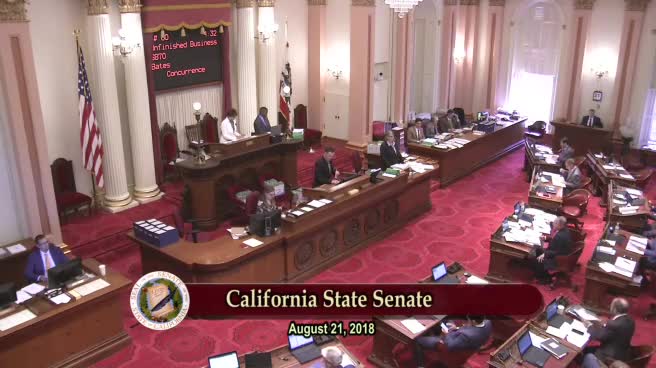 1MIN
Senate Floor
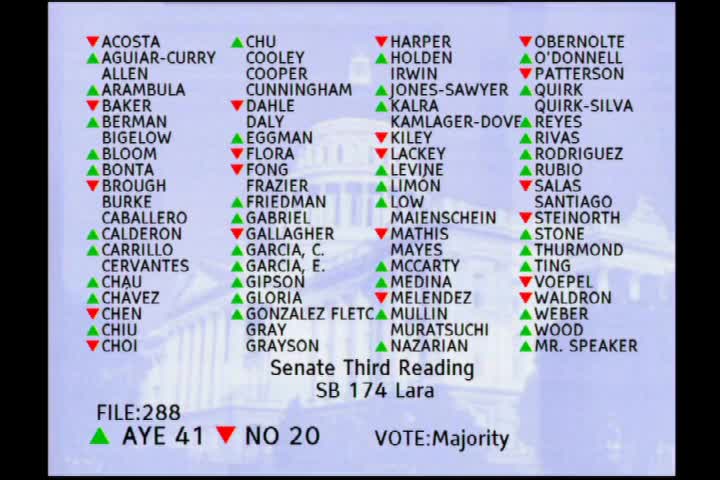 1MIN
Assembly Floor
 1MIN
Assembly Standing Committee on Appropriations
 6MIN
Assembly Standing Committee on Human Services
 2MIN
Senate Floor
 8MIN
Senate Standing Committee on Judiciary
 9MIN
Senate Standing Committee on Human Services
Bill Author

Bill Co-Author(s):