SB 947: Pupil instruction: digital citizenship and media literacy.
- Session Year: 2017-2018
- House: Senate
- Latest Version Date: 2018-08-23
Existing law provides for a system of public schools and requires the adopted course of study for grades 1 to 12, inclusive, to include instruction in specified areas of study.
This bill would require, on or before January 1, 2021, the Superintendent of Public Instruction, in consultation with the State Board of Education, to identify best practices and recommendations for instruction in digital citizenship, Internet safety, and media literacy and to report to the appropriate fiscal and policy committees of the Legislature on strategies to implement the best practices and recommendations statewide. The bill would require the Superintendent to convene and consult with an advisory committee consisting of specified representatives in developing the best practices and recommendations. The bill would require the members of the advisory committee to serve without compensation, including compensation for travel and per diem expenses.
Existing law provides for a system of public schools and requires the adopted course of study for grades 1 to 12, inclusive, to include instruction in specified areas of study.
This bill would require, on or before December 1, 2019, January 1, 2021, the Superintendent of Public Instruction, in consultation with the State Board of Education, to identify best practices and recommendations for instruction in digital citizenship, Internet safety, and media literacy and to report to the appropriate fiscal and policy committees of the Legislature on strategies to implement the best practices and recommendations statewide. The bill would require the Superintendent to convene and consult with an advisory committee consisting of specified representatives in developing the best practices and recommendations. The bill would require the members of the advisory committee to serve without compensation, including compensation for travel and per diem expenses.
Existing law provides for a system of public schools and requires the adopted course of study for grades 1 to 12, inclusive, to include instruction in specified areas of study.
This bill would require, on or before December 1, 2019, the Superintendent of Public Instruction, in consultation with the executive director of the State Board of Education, to identify best practices and recommendations for instruction in digital citizenship, Internet safety, and media literacy and to report to the appropriate fiscal and policy committees of the Legislature on strategies to implement the best practices and recommendations statewide. The bill would require the Superintendent to convene and consult with an advisory committee consisting of specified representatives in developing the best practices and recommendations. The bill would require the members of the advisory committee to serve without compensation, including compensation for travel and per diem expenses. The bill would require any meeting of the advisory committee to be audio-only recorded, and would require the Superintendent to make the audio-only recordings available to the public on the State Department of Educations Internet Web site.
Existing law provides for a system of public schools and requires the adopted course of study for grades 1 to 12, inclusive, to include instruction in specified areas of study.
This bill would require, on or before December 1, 2019, the Superintendent of Public Instruction, in consultation with the executive director of the State Board of Education, to identify best practices and recommendations for instruction in digital citizenship, Internet safety, and media literacy and to report to the appropriate fiscal and policy committees of the Legislature on strategies to implement the best practices and recommendations statewide. The bill would require the Superintendent to convene and consult with an advisory committee consisting of specified representatives in developing the best practices and recommendations.
(a)The Legislature finds and declares all of the following:
(1)Media and technology have become pervasive in all areas of our lives.
(2)In our classrooms, pupils must learn how to safely, ethically, responsibly, and effectively use media and technology resources.
(3)Kids have never had as much access to the Internet, media, and mobile technologies at home and school as they do today.
(4)Schools can play a critical role by educating, empowering, and engaging children with the best practices around technology use.
(5)While media and technology have great promise for learning, young people need support and education to learn how to make sound judgments when navigating the digital world.
(6)School administrators and educators are now faced with new and, at times, overwhelming challenges, such as those related to privacy, digital footprints, cyberbullying, and sexting.
(b)It is the intent of the Legislature to provide a process by which pupils, parents, guardians, teachers, teacher librarians, other school employees, school administrators, and community representatives will engage in an ongoing discussion on safe media and technology use, with the goal of establishing digital citizenship and media literacy as part of the states basic educational goals and essential academic learning requirements.
SEC. 2.Section 51206.5 is added to the Education Code, immediately following Section 51206, to read:51206.5.(a)(1)For purposes of this section, digital citizenship and media literacy are broad terms that encompass consumption and production of media and digital products and are defined as follows:
(A)Digital citizenship means a diverse set of skills related to current technology and social media, including the norms of appropriate, responsible, and healthy behavior. Major areas include safety concerns such as cyberbullying prevention.
(B)Media literacy means the ability to access, analyze, evaluate, develop, produce, and interpret media and encompasses the foundational skills that lead to digital citizenship.
(2)The Legislature finds and declares that digital citizenship and media literacy education provide digital technology skills essential for success in the 21st century.
(b)(1)On or before January 1, 2021, the Superintendent, in consultation with the state board, shall identify best practices and recommendations for instruction in digital citizenship, Internet safety, and media literacy and shall report to the appropriate fiscal and policy committees of the Legislature on strategies to implement the best practices and recommendations statewide.
(2)The best practices and recommendations shall be developed in consultation with the advisory committee specified in subdivision (c).
(3)The best practices and recommendations shall include instruction that provides guidance about thoughtful, safe, and strategic uses of online and other media resources and education on how to apply critical thinking skills when consuming and producing media in any form.
(4)The requirement for submitting a report imposed pursuant to this subdivision is inoperative on January 1, 2025, pursuant to Section 10231.5 of the Government Code.
(c)The Superintendent shall convene and consult with an advisory committee when developing best practices and recommendations for instruction in digital citizenship, Internet safety, and media literacy. The advisory committee shall be comprised of a majority of certificated teacher librarians and current certificated classroom teachers with experience teaching media literacy and shall include representatives from all of the following:
(1)A statewide association representing county superintendents of schools.
(2)A statewide association representing school district governing boards.
(3)Experts in digital citizenship, Internet safety, and media literacy.
(4)Other stakeholders, including pupils, certificated teacher librarians, parent organizations, diverse current classroom teachers, and school administrators.
(d)The recommendations of the advisory committee may include, but are not limited to, the following:
(1)Revisions to the state content standards and the state educational technology plan.
(2)Existing model policies and procedures on digital citizenship, Internet safety, and media literacy.
(3)School district processes necessary to develop customized school district policies and procedures on electronic resources and Internet safety that can be used within a school district technology plan.
(4)Best practices, resources, and models for instruction in digital citizenship, Internet safety, and media literacy.
(5)Best practices, resources, and models for instruction that are compliant with the federal Universal Service E-rate program and federal mandates established in the federal Childrens Internet Protection Act (Public Law 106-554).
(6)Strategies that will support school districts in local implementation of the best practices and recommendations developed by the department, including strategies for delivering professional development to educators and school administrators.
(e)The members of the advisory committee shall serve without compensation, including compensation for travel and per diem expenses. Nothing in this section shall be construed to limit the use of private funds for the compensation, travel expenses, or per diem of members of the advisory committee.
(f)Meetings of the advisory committee shall be conducted pursuant to the Bagley-Keene Open Meeting Act (Article 9 (commencing with Section 11120) of Chapter 1 of Part 1 of Division 3 of Title 2 of the Government Code).
(a)The Legislature finds and declares all of the following:
(1)Media and technology have become pervasive in all areas of our lives.
(2)In our classrooms, pupils must learn how to safely, ethically, responsibly, and effectively use media and technology resources.
(3)Kids have never had as much access to the Internet, media, and mobile technologies at home and school as they do today.
(4)Schools can play a critical role by educating, empowering, and engaging children with the best practices around technology use.
(5)While media and technology have great promise for learning, young people need support and education to learn how to make sound judgments when navigating the digital world.
(6)School administrators and educators are now faced with new and, at times, overwhelming challenges, such as those related to privacy, digital footprints, cyberbullying, and sexting.
(b)It is the intent of the Legislature to provide a process by which pupils, parents, guardians, teachers, teacher librarians, other school employees, school administrators, and community representatives will engage in an ongoing discussion on safe media and technology use, with the goal of establishing digital citizenship and media literacy as part of the states basic educational goals and essential academic learning requirements.
SEC. 2.Section 51206.5 is added to the Education Code, immediately following Section 51206, to read:51206.5.(a)(1)For purposes of this section, digital citizenship and media literacy are broad terms that encompass consumption and production of media and digital products and are defined as follows:
(A)Digital citizenship means a diverse set of skills related to current technology and social media, including the norms of appropriate, responsible, and healthy behavior. Major areas include safety concerns such as cyberbullying prevention.
(B)Media literacy means the ability to access, analyze, evaluate, develop, produce, and interpret media and encompasses the foundational skills that lead to digital citizenship.
(2)The Legislature finds and declares that digital citizenship and media literacy education provide digital technology skills essential for success in the 21st century.
(b)(1)On or before December 1, 2019, January 1, 2021, the Superintendent, in consultation with the state board, shall identify best practices and recommendations for instruction in digital citizenship, Internet safety, and media literacy and shall report to the appropriate fiscal and policy committees of the Legislature on strategies to implement the best practices and recommendations statewide.
(2)The best practices and recommendations shall be developed in consultation with the advisory committee specified in subdivision (c).
(3)The best practices and recommendations shall include instruction that provides guidance about thoughtful, safe, and strategic uses of online and other media resources and education on how to apply critical thinking skills when consuming and producing media in any form.
(4)The requirement for submitting a report imposed pursuant to this subdivision is inoperative on December 1, 2023, January 1, 2025, pursuant to Section 10231.5 of the Government Code.
(c)The Superintendent shall convene and consult with an advisory committee when developing best practices and recommendations for instruction in digital citizenship, Internet safety, and media literacy. The advisory committee shall be comprised of a majority of certificated teacher librarians and current certificated classroom teachers with experience teaching media literacy and shall include representatives from all of the following:
(1)A statewide association representing county superintendents of schools.
(2)A statewide association representing school district governing boards.
(3)Experts in digital citizenship, Internet safety, and media literacy.
(4)Other stakeholders, including pupils, certificated teacher librarians, parent organizations, diverse current classroom teachers, and school administrators.
(d)The recommendations of the advisory committee may include, but are not limited to, the following:
(1)Revisions to the state content standards and the state educational technology plan.
(2)Existing model policies and procedures on digital citizenship, Internet safety, and media literacy.
(3)School district processes necessary to develop customized school district policies and procedures on electronic resources and Internet safety that can be used within a school district technology plan.
(4)Best practices, resources, and models for instruction in digital citizenship, Internet safety, and media literacy.
(5)Best practices, resources, and models for instruction that are compliant with the federal Universal Service E-rate program and federal mandates established in the federal Childrens Internet Protection Act (Public Law 106-554).
(6)Strategies that will support school districts in local implementation of the best practices and recommendations developed by the department, including strategies for delivering professional development to educators and school administrators.
(e)The members of the advisory committee shall serve without compensation, including compensation for travel and per diem expenses. Nothing in this section shall be construed to limit the use of private funds for the compensation, travel expenses, or per diem of members of the advisory committee.
(f)Meetings of the advisory committee shall be conducted pursuant to the Bagley-Keene Open Meeting Act (Article 9 (commencing with Section 11120) of Chapter 1 of Part 1 of Division 3 of Title 2 of the Government Code).
(a)The Legislature finds and declares all of the following:
(1)Media and technology have become pervasive in all areas of our lives.
(2)In our classrooms, pupils must learn how to safely, ethically, responsibly, and effectively use media and technology resources.
(3)Kids have never had as much access to the Internet, media, and mobile technologies at home and school as they do today.
(4)Schools can play a critical role by educating, empowering, and engaging children with the best practices around technology use.
(5)While media and technology have great promise for learning, young people need support and education to learn how to make sound judgments when navigating the digital world.
(6)School administrators and educators are now faced with new and, at times, overwhelming challenges, such as those related to privacy, digital footprints, cyberbullying, and sexting.
(b)It is the intent of the Legislature to provide a process by which pupils, parents, guardians, teachers, teacher librarians, other school employees, school administrators, and community representatives will engage in an ongoing discussion on safe media and technology use, with the goal of establishing digital citizenship and media literacy as part of the states basic educational goals and essential academic learning requirements.
SEC. 2.Section 51206.5 is added to the Education Code, immediately following Section 51206, to read:51206.5.(a)(1)For purposes of this section, digital citizenship and media literacy are broad terms that encompass consumption and production of media and digital products and are defined as follows:
(A)Digital citizenship means a diverse set of skills related to current technology and social media, including the norms of appropriate, responsible, and healthy behavior. Major areas include safety concerns such as cyberbullying prevention.
(B)Media literacy means the ability to access, analyze, evaluate, develop, produce, and interpret media and encompasses the foundational skills that lead to digital citizenship.
(2)The Legislature finds and declares that digital citizenship and media literacy education provide digital technology skills essential for success in the 21st century.
(b)(1)On or before December 1, 2019, the Superintendent, in consultation with the executive director of the state board, shall identify best practices and recommendations for instruction in digital citizenship, Internet safety, and media literacy and shall report to the appropriate fiscal and policy committees of the Legislature on strategies to implement the best practices and recommendations statewide.
(2)The best practices and recommendations shall be developed in consultation with the advisory committee specified in subdivision (c).
(3)The best practices and recommendations shall include instruction that provides guidance about thoughtful, safe, and strategic uses of online and other media resources and education on how to apply critical thinking skills when consuming and producing media in any form.
(4)The requirement for submitting a report imposed pursuant to this subdivision is inoperative on December 1, 2023, pursuant to Section 10231.5 of the Government Code.
(c)The Superintendent shall convene and consult with an advisory committee when developing best practices and recommendations for instruction in digital citizenship, Internet safety, and media literacy. The advisory committee shall be comprised of a majority of certificated teacher librarians and current certificated classroom teachers with experience teaching media literacy and shall include representatives from all of the following:
(1)California County Superintendents Educational Services Association.(2)California School Boards Association.(1)A statewide association representing county superintendents of schools.
(2)A statewide association representing school district governing boards.
(3)Experts in digital citizenship, Internet safety, and media literacy.
(4)Other stakeholders, including pupils, certificated teacher librarians, parent organizations, diverse current classroom teachers, and school administrators.
(d)The recommendations of the advisory committee may include, but are not limited to, the following:
(1)Revisions to the state learning content standards and the state educational technology plan.
(2)Model Existing model policies and procedures on digital citizenship, Internet safety, and media literacy developed by the School Superintendents Association. literacy.
(3)School district processes necessary to develop customized school district policies and procedures on electronic resources and Internet safety that can be used within a school district technology plan.
(4)Best practices, resources, and models for instruction in digital citizenship, Internet safety, and media literacy.
(5)Best practices, resources, and models for instruction that are compliant with the federal Universal Service E-rate program administered by the Schools and Libraries Division of the Universal Service Administrative Company and federal mandates established in the federal Childrens Internet Protection Act (Public Law 106-554).
(6)Strategies that will support school districts in local implementation of the best practices and recommendations developed by the department, including strategies for delivering professional development to educators and school administrators.
(e)The members of the advisory committee shall serve without compensation, including compensation for travel and per diem expenses. Nothing in this section shall be construed to limit the use of private funds for the compensation, travel expenses, or per diem of members of the advisory committee.
(f)Any meeting of the advisory committee shall be audio-only recorded, and the Superintendent shall make the audio-only recordings available to the public on the departments Internet Web site.(f)Meetings of the advisory committee shall be conducted pursuant to the Bagley-Keene Open Meeting Act (Article 9 (commencing with Section 11120) of Chapter 1 of Part 1 of Division 3 of Title 2 of the Government Code).
(a)The Legislature finds and declares all of the following:
(1)Media and technology have become pervasive in all areas of our lives.
(2)In our classrooms, pupils must learn how to safely, ethically, responsibly, and effectively use media and technology resources.
(3)Kids have never had as much access to the Internet, media, and mobile technologies at home and school as they do today.
(4)Schools can play a critical role by educating, empowering, and engaging children with the best practices around technology use.
(5)While media and technology have great promise for learning, young people need support and education to learn how to make sound judgments when navigating the digital world.
(6)School administrators and educators are now faced with new and, at times, overwhelming challenges, such as those related to privacy, digital footprints, cyberbullying, and sexting.
(b)It is the intent of the Legislature to provide a process by which pupils, parents, guardians, teachers, teacher librarians, other school employees, school administrators, and community representatives will engage in an ongoing discussion on safe media and technology use, with the goal of establishing digital citizenship and media literacy as part of the states basic educational goals and essential academic learning requirements.
SEC. 2.Section 51206.5 is added to the Education Code, immediately following Section 51206, to read:51206.5.(a)(1)For purposes of this section, digital citizenship and media literacy are broad terms that encompass consumption and production of media and digital products and are defined as follows:
(A)Digital citizenship means a diverse set of skills related to current technology and social media, including the norms of appropriate, responsible, and healthy behavior. Major areas include safety concerns such as cyberbullying prevention.
(B)Media literacy means the ability to access, analyze, evaluate, develop, produce, and interpret media and encompasses the foundational skills that lead to digital citizenship.
(2)The Legislature finds and declares that digital citizenship and media literacy education provide digital technology skills essential for success in the 21st century.
(b)(1)On or before December 1, 2019, the Superintendent, in consultation with the executive director of the state board, shall identify best practices and recommendations for instruction in digital citizenship, Internet safety, and media literacy and shall report to the appropriate fiscal and policy committees of the Legislature on strategies to implement the best practices and recommendations statewide.
(2)The best practices and recommendations shall be developed in consultation with the advisory committee specified in subdivision (c).
(3)The best practices and recommendations shall include instruction that provides guidance about thoughtful, safe, and strategic uses of online and other media resources and education on how to apply critical thinking skills when consuming and producing media in any form.
(4)The requirement for submitting a report imposed pursuant to this subdivision is inoperative on December 1, 2023, pursuant to Section 10231.5 of the Government Code.
(c)The Superintendent shall convene and consult with an advisory committee when developing best practices and recommendations for instruction in digital citizenship, Internet safety, and media literacy. The advisory committee shall be comprised of a majority of certificated teacher librarians and current certificated classroom teachers with experience teaching media literacy and shall include representatives from all of the following:
(1)California County Superintendents Educational Services Association.
(2)California School Boards Association.
(3)Experts in digital citizenship, Internet safety, and media literacy.
(4)Other stakeholders, including pupils, certificated teacher librarians, parent organizations, diverse current classroom teachers, and school administrators.
(d)The recommendations of the advisory committee may include, but are not limited to, the following:
(1)Revisions to the state learning standards and the state educational technology plan.
(2)Model policies and procedures on digital citizenship, Internet safety, and media literacy developed by the School Superintendents Association.
(3)School district processes necessary to develop customized school district policies and procedures on electronic resources and Internet safety that can be used within a school district technology plan.
(4)Best practices, resources, and models for instruction in digital citizenship, Internet safety, and media literacy.
(5)Best practices, resources, and models for instruction that are compliant with the federal Universal Service E-rate program administered by the Schools and Libraries Division of the Universal Service Administrative Company and federal mandates established in the federal Childrens Internet Protection Act (Public Law 106-554).
(6)Strategies that will support school districts in local implementation of the best practices and recommendations developed by the department, including strategies for delivering professional development to educators and school administrators.
(e)The members of the advisory committee shall serve without compensation, including compensation for travel and per diem expenses.
(f)Any meeting of the advisory committee shall be audio-only recorded, and the Superintendent shall make the audio-only recordings available to the public on the departments Internet Web site.
(a)The Legislature finds and declares all of the following:
(1)Media and technology have become pervasive in all areas of our lives.
(2)In our classrooms, pupils must learn how to safely, ethically, responsibly, and effectively use media and technology resources.
(3)Kids have never had as much access to the Internet, media, and mobile technologies at home and school as they do today.
(4)Schools can play a critical role by educating, empowering, and engaging children with the best practices around technology use.
(5)While media and technology have great promise for learning, young people need support and education to learn how to make sound judgments when navigating the digital world.
(6)School administrators and educators are now faced with new and, at times, overwhelming challenges, such as those related to privacy, digital footprints, cyberbullying, and sexting.
(b)It is the intent of the Legislature to provide a process by which pupils, parents, guardians, teachers, teacher librarians, other school employees, school administrators, and community representatives will engage in an ongoing discussion on safe media and technology use, with the goal of establishing digital citizenship and media literacy as part of the states basic educational goals and essential academic learning requirements.
SEC. 2.Section 51206.5 is added to the Education Code, to read:51206.5.(a)(1)For purposes of this section, digital citizenship and media literacy are broad terms that encompass consumption and production of media and digital products and are defined as follows:
(A)Digital citizenship means a diverse set of skills related to current technology and social media, including the norms of appropriate, responsible, and healthy behavior. Major areas include safety concerns such as cyberbullying prevention.
(B)Media literacy means the ability to access, analyze, evaluate, develop, produce, and interpret media and encompasses the foundational skills that lead to digital citizenship.
(2)The Legislature finds and declares that digital citizenship and media literacy education provide digital technology skills essential for success in the 21st century.
(b)(1)On or before December 1, 2019, the Superintendent, in consultation with the executive director of the state board, shall identify best practices and recommendations for instruction in digital citizenship, Internet safety, and media literacy and shall report to the appropriate fiscal and policy committees of the Legislature on strategies to implement the best practices and recommendations statewide.
(2)The best practices and recommendations shall be developed in consultation with the advisory committee specified in subdivision (c).
(3)The best practices and recommendations shall include instruction that provides guidance about thoughtful, safe, and strategic uses of online and other media resources and education on how to apply critical thinking skills when consuming and producing media in any form.
(4)The requirement for submitting a report imposed pursuant to this subdivision is inoperative on December 1, 2023, pursuant to Section 10231.5 of the Government Code.
(c)The Superintendent shall convene and consult with an advisory committee when developing best practices and recommendations for instruction in digital citizenship, Internet safety, and media literacy. The advisory committee shall be comprised of a majority of certificated teacher librarians and current certificated classroom teachers with experience teaching media literacy and shall include representatives from all of the following:
(1)California County Superintendents Educational Services Association.
(2)California School Boards Association.
(3)Experts in digital citizenship, Internet safety, and media literacy.
(4)Other stakeholders, including pupils, certificated teacher librarians, parent organizations, diverse current classroom teachers, and school administrators.
(d)The recommendations of the advisory committee may include, but are not limited to, the following:
(1)Revisions to the state learning standards and the state educational technology plan.
(2)Model policies and procedures on digital citizenship, Internet safety, and media literacy developed by the School Superintendents Association.
(3)School district processes necessary to develop customized school district policies and procedures on electronic resources and Internet safety that can be used within a school district technology plan.
(4)Best practices, resources, and models for instruction in digital citizenship, Internet safety, and media literacy.
(5)Best practices, resources, and models for instruction that are compliant with the federal Universal Service E-rate program administered by the Schools and Libraries Division of the Universal Service Administrative Company and federal mandates established in the federal Childrens Internet Protection Act (Public Law 106-554).
(6)Strategies that will support school districts in local implementation of the best practices and recommendations developed by the department, including strategies for delivering professional development to educators and school administrators.
|
Date
|
Status
|
|---|---|
| Sep 18, 2018 | In Senate. Consideration of Governor's item veto pending. |
| Sep 18, 2018 | Vetoed by the Governor. |
| Aug 28, 2018 | Enrolled and presented to the Governor at 3:30 p.m. |
| Aug 21, 2018 | Assembly amendments concurred in. (Ayes 27. Noes 11.) Ordered to engrossing and enrolling. |
| Aug 21, 2018 | In Senate. Concurrence in Assembly amendments pending. |
| Aug 20, 2018 | Read third time. Passed. Ordered to the Senate. |
| Aug 13, 2018 | Read third time and amended. |
| Jun 28, 2018 | Read second time. Ordered to third reading. |
| Jun 27, 2018 | From committee: Do pass. (Ayes 13. Noes 3.) (June 27). |
| Jun 19, 2018 | Read second time and amended. Re-referred to Com. on APPR. |
| Jun 18, 2018 | From committee: Do pass as amended and re-refer to Com. on APPR. (Ayes 4. Noes 1.) (June 13). |
| Jun 7, 2018 | Referred to Com. on ED. |
| May 31, 2018 | In Assembly. Read first time. Held at Desk. |
| May 30, 2018 | Read third time. Passed. (Ayes 22. Noes 13.) Ordered to the Assembly. |
| May 29, 2018 | Read second time. Ordered to third reading. |
| May 25, 2018 | From committee: Do pass as amended. (Ayes 5. Noes 2.) (May 25). |
| May 18, 2018 | Set for hearing May 25. |
| Apr 16, 2018 | April 16 hearing: Placed on APPR. suspense file. |
| Apr 9, 2018 | Set for hearing April 16. |
| Mar 14, 2018 | From committee: Do pass and re-refer to Com. on APPR. (Ayes 4. Noes 2.) (March 14). Re-referred to Com. on APPR. |
| Feb 27, 2018 | Set for hearing March 14. |
| Feb 8, 2018 | Referred to Com. on ED. |
| Jan 31, 2018 | From printer. May be acted upon on or after March 2. |
| Jan 30, 2018 | Introduced. Read first time. To Com. on RLS. for assignment. To print. |
|
Date
|
Description
|
Location
|
Votes
|
|
|---|---|---|---|---|
| Aug 21, 2018 | Unfinished Business SB947 Jackson et al. Concurrence | Senate Floor |
Passed |
|
| Aug 20, 2018 | SB 947 Jackson Senate Third Reading By THURMOND | Assembly Floor |
Passed |
|
| Jun 27, 2018 | Do pass. | Assembly Standing Committee on Appropriations |
Passed |
|
| Jun 13, 2018 | Do pass as amended and be re-referred to the Committee on [Appropriations] | Assembly Standing Committee on Education |
Passed |
|
| May 30, 2018 | Senate 3rd Reading SB947 Jackson et al. | Senate Floor |
Passed |
|
| May 25, 2018 | Do pass as amended | Senate Standing Committee on Appropriations |
Passed |
|
| Apr 16, 2018 | Placed on suspense file | Senate Standing Committee on Appropriations |
Passed |
|
| Mar 14, 2018 | Do pass, but first be re-referred to the Committee on [Appropriations] | Senate Standing Committee on Education |
Passed |
This list shows positions taken on this bill by organizations on the date displayed, which is linked to the original source.
Positions by individuals are not included.
|
Organization
|
Position
|
Date
|
|---|---|---|
| California Educational Technology Professionals Association | * Support | Jun 13, 2018 |
| California Newspaper Publishers Association | ** Support | Oct 2, 2018 |
| California School Boards Association | ** Support | Oct 2, 2018 |
| California School Library Association | ** Support | Oct 2, 2018 |
| California State PTA | ** Support | Oct 2, 2018 |
| California Teachers Association | ** Support | Oct 2, 2018 |
| Center for Media Literacy | ** Support | Oct 2, 2018 |
| Common Sense Kids Action | ** Support | Oct 2, 2018 |
| Department Of Finance | * Indeterminate | Apr 16, 2018 |
| Junior Leagues of California | ** Support | Oct 2, 2018 |
| Los Angeles County Office Of Education | ** Support | Oct 2, 2018 |
| San Francisco Unified School District | * Support | Jun 13, 2018 |
| Santa Clara County Office Of Education | * Support | Jun 13, 2018 |
| School Employer's Association of California | * Support | Jun 13, 2018 |
Office of Senate Floor Analyses (916) 651-1520 Fax: (916) 327-4478 | SB |
VETO
Bill No: SB 947
:
SENATE EDUCATION COMMITTEE: 4-2, 3/14/18
AYES: Allen, Galgiani, Leyva, Pan
NOES: Wilk, Vidak
SENATE APPROPRIATIONS COMMITTEE: 5-2, 5/25/18
AYES: Lara, Beall, Bradford, Hill, Wiener
NOES: Bates, Nielsen
SENATE FLOOR: 25-13, 5/30/18
AYES: Allen, Atkins, Beall, Bradford, Dodd, Galgiani, Glazer, Hernandez, Hertzberg, Hill, Hueso, Jackson, Lara, Leyva, McGuire, Mitchell, Monning, Newman, Pan, Portantino, Roth, Skinner, Stern, Wieckowski, Wiener
NOES: Anderson, Bates, Berryhill, Cannella, Fuller, Gaines, Moorlach, Morrell, Nguyen, Nielsen, Stone, Vidak, Wilk
NO VOTE RECORDED: De León
SENATE FLOOR: 27-11, 8/21/18
AYES: Allen, Atkins, Beall, Bradford, Chang, Delgado, Dodd, Galgiani, Glazer, Hernandez, Hertzberg, Hill, Hueso, Jackson, Lara, Leyva, McGuire, Mitchell, Monning, Nguyen, Pan, Portantino, Roth, Skinner, Stern, Wieckowski, Wiener
NOES: Anderson, Bates, Cannella, Fuller, Gaines, Moorlach, Morrell, Nielsen, Stone, Vidak, Wilk
NO VOTE RECORDED: Berryhill, De León
ASSEMBLY FLOOR: 59-20, 8/20/18 - See last page for vote
SOURCE: Common Sense Kids Action
DIGEST:
This bill requires the Superintendent of Public Instruction (SPI), on or before January 1, 2021, and in consultation with the State Board of Education (SBE) and an advisory committee, to identify best practices and recommendations for instruction in digital citizenship, Internet safety, and media literacy, and to report to the appropriate fiscal and policy committees of the Legislature, by January 1, 2025, on strategies to implement the best practices and recommendations statewide.
Existing law:
- Requires the SPI to establish procedures within the California Department of Education (CDE) to accomplish, among other things, all of the following:
- Annually identify the critical needs for which effective educational programs and practices are to be identified, developed, and disseminated to public schools.
- Coordinate the identification and development of effective programs and practices with appropriate offices in the CDE, schools, school districts, county offices of education, institutions of higher education, the Legislature, business and industry, and the community.
- Ensure that all programs developed are objectively evaluated for impact on pupil learning, cost-effectiveness, and the overall instructional program.
- Develop and implement procedures to ensure that educators throughout the state are made aware of effective programs and practices.
- Establishes the Instructional Quality Commission (IQC), as an advisory body to the SBE. The IQC is responsible for recommending curriculum frameworks, developing criteria for the evaluation of instructional materials, and evaluating and recommending instructional materials adoptions.
This bill requires the SPI, on or before January 1, 2021, and in consultation with the SBE and an advisory committee, to identify best practices and recommendations for instruction in digital citizenship, Internet safety, and media literacy, and to report to the appropriate fiscal and policy committees of the Legislature, by January 1, 2025, on strategies to implement the best practices and recommendations statewide. Specifically, this bill:
- Requires the best practices and recommendations to be developed in consultation the SBE and with an advisory committee, convened by the SPI, which must include representatives from all of the following:
- A statewide association representing county superintendents of schools.
- A statewide association representing school district governing boards.
- Experts in digital citizenship, Internet safety, and media literacy.
- Other stakeholders, including pupils, certificated teacher librarians, parent organizations, diverse current classroom teachers, and administrators.
- Specifies that the advisory committee be comprised of a majority of certificated teacher librarians and current certificated classroom teachers with experience teaching media literacy.
- Specifies that recommendations from the advisory committee may include, but are not limited to:
- Revisions to the state content standards and the state educational technology plan.
- Existing model policies and procedures on digital citizenship, Internet safety, and media literacy.
- School district processes necessary to develop customized school district policies and procedures on electronic resources and Internet safety that can be used within a school district technology plan.
- Best practices, resources, and models for instruction in digital citizenship, Internet safety, and media literacy.
- Best practices, resources, and models for instruction that are compliant with the federal Universal Service E-rate program and federal mandates established in the federal Children’s Internet Protection Act.
- Strategies that will support school districts in local implementation of the best practices and recommendations developed by the department, including strategies for delivering professional development to educators and administrators.
- Specifies that members of the advisory committee shall serve without compensation, including travel and per diem expenses, but that none of its provisions shall be construed to limit the use of private funds for the compensation, travel expenses, or per diem of members of the advisory committee.
- Requires that any meeting of the advisory committee be conducted pursuant to the Bagley-Keene Open Meeting Act.
Comments
- Need for the bill. According to the author, “As kids and teens in California use the immense power of technology and digital media to explore, connect, create, and learn in ways never before imagined, they face incredible opportunities as well as potential pitfalls. By creating a pathway to incorporate instruction on digital citizenship, internet safety, and media literacy into California’s public schools, SB 947 will help our kids learn how to safely, responsibly, and effectively use the extraordinary media and technology resources available to them.
Currently, there are not standards for teaching students about aspects of digital citizenship (i.e., cyber bullying, sexting, privacy, digital footprints, and “fake news”). Educators are faced with the often-overwhelming challenges presented by technology usage by students. SB 947 would establish an advisory board comprised of education experts, working in tandem with the State Superintendent of Public Instruction’s office, to develop best practices and strategies that support school districts, including professional development for educators and administrators.”
- Digital Citizenship. According to the CDE, a digital citizen is a member of a worldwide community linked by the Internet. Digital citizenship is defined as the quality of habits, actions, and consumption patterns that impact the ecology of digital content and communities or the quality of a response to membership in a digital community.
The CDE’s report “Empowering Learning: California Education Technology Blueprint, 2014–2017” includes the following recommendation: “Ensure student safety by outlining policies and best practices to prevent cyberbullying and protect student data.
It is important to teach students about the ethical, legal, and safe use of online information and resources. It is also important to help students learn about how they can protect themselves and their personal information in online environments.
The CDE and stakeholder organizations can disseminate samples of use and safety policies, technology plans, insurance agreements, social media guidelines, anti-piracy, and acceptable use policies. The CDE and stakeholder organizations can also highlight and distribute curriculum resources, including those found in the Model School Library Standards for California Schools and the California Career Technical Education Model Curriculum Standards.”
- Media Literacy. According to the National Association for Media Literacy Education, media literacy is the ability to access, analyze, evaluate and create media in a variety of forms.
The Center for Media Literacy offers another definition: “Media literacy empowers people to be both critical thinkers and creative producers of an increasingly wide range of messages using image, language, and sound. It is the skillful application of literacy skills to media and technology messages.”
The California Model School Library Standards for California Schools, adopted by the SBE in 2011, incorporate “information literacy” skills, in which students “learn to access, evaluate, use, and integrate information and ideas found in print, media, and digital resources, enabling them to function in a knowledge-based economy and technologically oriented society.”
The state’s content standards for English Language Arts students also include at least one reference to media literacy. Students in grades 9-12 are expected to learn to “Integrate multiple sources of information presented in diverse media or formats (e.g., visually, quantitatively, orally) evaluating the credibility and accuracy of each source.”
FISCAL EFFECT: Appropriation: Fiscal Com.: Local:
According to the Assembly Appropriations Committee, “minor GF costs to the CDE to identify best practices and recommendations with an advisory group and present findings to the appropriate legislative committees.”
Common Sense Kids Action (source)
California Newspaper Publishers Association
California School Boards Association
California School Library Association
California State PTA
California Teachers Association
Center for Media Literacy
Junior Leagues of California
Los Angeles County Office of Education
OPPOSITION: (Verified 9/21/18)
None received
GOVERNOR'S VETO MESSAGE:
I am returning Senate Bill 947 without my signature.
This bill would require the State Superintendent of Public Instruction to convene a workgroup to develop best practices and recommendations for instruction in digital citizenship and media literacy.
The subject matter of this bill is more properly the responsibility of local school districts. Moreover, the topics covered here are already contained in our state's English Language and Social Science Frameworks or in the K-12 Model Library Standards.
ASSEMBLY FLOOR: 59-20, 8/20/18
AYES: Aguiar-Curry, Arambula, Baker, Berman, Bloom, Bonta, Burke, Caballero, Calderon, Carrillo, Cervantes, Chau, Chiu, Chu, Cooley, Cooper, Daly, Eggman, Frazier, Friedman, Gabriel, Cristina Garcia, Eduardo Garcia, Gipson, Gloria, Gonzalez Fletcher, Gray, Grayson, Holden, Irwin, Jones-Sawyer, Kalra, Kamlager-Dove, Levine, Limón, Low, Maienschein, Mayes, McCarty, Medina, Mullin, Muratsuchi, Nazarian, Obernolte, O'Donnell, Quirk, Quirk-Silva, Reyes, Rivas, Rodriguez, Rubio, Salas, Santiago, Mark Stone, Thurmond, Ting, Weber, Wood, Rendon
NOES: Acosta, Travis Allen, Bigelow, Brough, Chávez, Chen, Cunningham, Dahle, Flora, Fong, Gallagher, Harper, Kiley, Lackey, Mathis, Melendez, Patterson, Steinorth, Voepel, Waldron
NO VOTE RECORDED: Choi
10/2/18 14:32:25
**** END ****
Office of Senate Floor Analyses (916) 651-1520 Fax: (916) 327-4478 | SB |
UNFINISHED BUSINESS
Bill No: SB 947
:
SENATE EDUCATION COMMITTEE: 4-2, 3/14/18
AYES: Allen, Galgiani, Leyva, Pan
NOES: Wilk, Vidak
SENATE APPROPRIATIONS COMMITTEE: 5-2, 5/25/18
AYES: Lara, Beall, Bradford, Hill, Wiener
NOES: Bates, Nielsen
SENATE FLOOR: 25-13, 5/30/18
AYES: Allen, Atkins, Beall, Bradford, Dodd, Galgiani, Glazer, Hernandez, Hertzberg, Hill, Hueso, Jackson, Lara, Leyva, McGuire, Mitchell, Monning, Newman, Pan, Portantino, Roth, Skinner, Stern, Wieckowski, Wiener
NOES: Anderson, Bates, Berryhill, Cannella, Fuller, Gaines, Moorlach, Morrell, Nguyen, Nielsen, Stone, Vidak, Wilk
NO VOTE RECORDED: De León
ASSEMBLY FLOOR: 59-20, 8/20/18 - See last page for vote
SOURCE: Common Sense Kids Action
DIGEST:
This bill requires the Superintendent of Public Instruction (SPI), on or before January 1, 2021, and in consultation with the State Board of Education (SBE) and an advisory committee, to identify best practices and recommendations for instruction in digital citizenship, Internet safety, and media literacy, and to report to the appropriate fiscal and policy committees of the Legislature, by January 1, 2025, on strategies to implement the best practices and recommendations statewide.
Assembly Amendments
push back the deadline for the best practices from December 1, 2019, to January 1, 2021; require the SPI to consult with the SBE, not just the executive director of the SBE; push back the report deadline from December 1, 2023, to January 1, 2025; replace the California County Superintendents Educational Services association and the California School Boards Association with a statewide association representing county superintendents of schools and a statewide association representing school district governing boards, respectively, as advisory committee members; clarify that none of the bill’s provisions shall be construed to limit the use of private funds for the compensation, travel expenses, or per diem of members of the advisory committee; require the meetings of the advisory committee to be conducted pursuant to the Bagley-Keene Open Meeting Act instead of audio only recorded; and make other technical, nonsubstantive changes.
Existing law:
- Requires the SPI to establish procedures within the California Department of Education (CDE) to accomplish, among other things, all of the following:
- Annually identify the critical needs for which effective educational programs and practices are to be identified, developed, and disseminated to public schools.
- Coordinate the identification and development of effective programs and practices with appropriate offices in the CDE, schools, school districts, county offices of education, institutions of higher education, the Legislature, business and industry, and the community.
- Ensure that all programs developed are objectively evaluated for impact on pupil learning, cost-effectiveness, and the overall instructional program.
- Develop and implement procedures to ensure that educators throughout the state are made aware of effective programs and practices.
- Establishes the Instructional Quality Commission (IQC), as an advisory body to the SBE. The IQC is responsible for recommending curriculum frameworks, developing criteria for the evaluation of instructional materials, and evaluating and recommending instructional materials adoptions.
This bill requires the SPI, on or before January 1, 2021, and in consultation with the SBE and an advisory committee, to identify best practices and recommendations for instruction in digital citizenship, Internet safety, and media literacy, and to report to the appropriate fiscal and policy committees of the Legislature, by January 1, 2025, on strategies to implement the best practices and recommendations statewide. Specifically, this bill:
- Requires the best practices and recommendations to be developed in consultation the SBE and with an advisory committee, convened by the SPI, which must include representatives from all of the following:
- A statewide association representing county superintendents of schools.
- A statewide association representing school district governing boards.
- Experts in digital citizenship, Internet safety, and media literacy.
- Other stakeholders, including pupils, certificated teacher librarians, parent organizations, diverse current classroom teachers, and administrators.
- Specifies that the advisory committee be comprised of a majority of certificated teacher librarians and current certificated classroom teachers with experience teaching media literacy.
- Specifies that recommendations from the advisory committee may include, but are not limited to:
- Revisions to the state content standards and the state educational technology plan.
- Existing model policies and procedures on digital citizenship, Internet safety, and media literacy.
- School district processes necessary to develop customized school district policies and procedures on electronic resources and Internet safety that can be used within a school district technology plan.
- Best practices, resources, and models for instruction in digital citizenship, Internet safety, and media literacy.
- Best practices, resources, and models for instruction that are compliant with the federal Universal Service E-rate program and federal mandates established in the federal Children’s Internet Protection Act.
- Strategies that will support school districts in local implementation of the best practices and recommendations developed by the department, including strategies for delivering professional development to educators and administrators.
- Specifies that members of the advisory committee shall serve without compensation, including travel and per diem expenses, but that none of its provisions shall be construed to limit the use of private funds for the compensation, travel expenses, or per diem of members of the advisory committee.
- Requires that any meeting of the advisory committee be conducted pursuant to the Bagley-Keene Open Meeting Act.
Comments
- Need for the bill. According to the author, “As kids and teens in California use the immense power of technology and digital media to explore, connect, create, and learn in ways never before imagined, they face incredible opportunities as well as potential pitfalls. By creating a pathway to incorporate instruction on digital citizenship, internet safety, and media literacy into California’s public schools, SB 947 will help our kids learn how to safely, responsibly, and effectively use the extraordinary media and technology resources available to them.
Currently, there are not standards for teaching students about aspects of digital citizenship (i.e., cyber bullying, sexting, privacy, digital footprints, and “fake news”). Educators are faced with the often-overwhelming challenges presented by technology usage by students. SB 947 would establish an advisory board comprised of education experts, working in tandem with the State Superintendent of Public Instruction’s office, to develop best practices and strategies that support school districts, including professional development for educators and administrators.”
- Digital Citizenship. According to the CDE, a digital citizen is a member of a worldwide community linked by the Internet. Digital citizenship is defined as the quality of habits, actions, and consumption patterns that impact the ecology of digital content and communities or the quality of a response to membership in a digital community.
The CDE’s report “Empowering Learning: California Education Technology Blueprint, 2014–2017” includes the following recommendation: “Ensure student safety by outlining policies and best practices to prevent cyberbullying and protect student data.
It is important to teach students about the ethical, legal, and safe use of online information and resources. It is also important to help students learn about how they can protect themselves and their personal information in online environments.
The CDE and stakeholder organizations can disseminate samples of use and safety policies, technology plans, insurance agreements, social media guidelines, anti-piracy, and acceptable use policies. The CDE and stakeholder organizations can also highlight and distribute curriculum resources, including those found in the Model School Library Standards for California Schools and the California Career Technical Education Model Curriculum Standards.”
- Media Literacy. According to the National Association for Media Literacy Education, media literacy is the ability to access, analyze, evaluate and create media in a variety of forms.
The Center for Media Literacy offers another definition: “Media literacy empowers people to be both critical thinkers and creative producers of an increasingly wide range of messages using image, language, and sound. It is the skillful application of literacy skills to media and technology messages.”
The California Model School Library Standards for California Schools, adopted by the SBE in 2011, incorporate “information literacy” skills, in which students “learn to access, evaluate, use, and integrate information and ideas found in print, media, and digital resources, enabling them to function in a knowledge-based economy and technologically oriented society.”
The state’s content standards for English Language Arts students also include at least one reference to media literacy. Students in grades 9-12 are expected to learn to “Integrate multiple sources of information presented in diverse media or formats (e.g., visually, quantitatively, orally) evaluating the credibility and accuracy of each source.”
FISCAL EFFECT: Appropriation: Fiscal Com.: Local:
According to the Assembly Appropriations Committee, “minor GF costs to the CDE to identify best practices and recommendations with an advisory group and present findings to the appropriate legislative committees.”
Common Sense Kids Action (source)
California Newspaper Publishers Association
California School Boards Association
California School Library Association
California State PTA
California Teachers Association
Center for Media Literacy
Junior Leagues of California
Los Angeles County Office of Education
OPPOSITION: (Verified 8/20/18)
None received
ASSEMBLY FLOOR: 59-20, 8/20/18
AYES: Aguiar-Curry, Arambula, Baker, Berman, Bloom, Bonta, Burke, Caballero, Calderon, Carrillo, Cervantes, Chau, Chiu, Chu, Cooley, Cooper, Daly, Eggman, Frazier, Friedman, Gabriel, Cristina Garcia, Eduardo Garcia, Gipson, Gloria, Gonzalez Fletcher, Gray, Grayson, Holden, Irwin, Jones-Sawyer, Kalra, Kamlager-Dove, Levine, Limón, Low, Maienschein, Mayes, McCarty, Medina, Mullin, Muratsuchi, Nazarian, Obernolte, O'Donnell, Quirk, Quirk-Silva, Reyes, Rivas, Rodriguez, Rubio, Salas, Santiago, Mark Stone, Thurmond, Ting, Weber, Wood, Rendon
NOES: Acosta, Travis Allen, Bigelow, Brough, Chávez, Chen, Cunningham, Dahle, Flora, Fong, Gallagher, Harper, Kiley, Lackey, Mathis, Melendez, Patterson, Steinorth, Voepel, Waldron
NO VOTE RECORDED: Choi
8/21/18 13:33:05
**** END ****
SENATE THIRD READING
STR Bill Id:SB 947
Author:(Jackson)
As Amended Ver:August 13, 2018
Majority vote
SENATE VOTE: 25-13
Committee | Votes | Ayes | Noes |
Education | 4-1 | O'Donnell, McCarty, Thurmond, Weber | Kiley |
Appropriations | 13-3 | Gonzalez Fletcher, Bloom, Bonta, Calderon, Carrillo, Chau, Eggman, Friedman, Eduardo Garcia, Nazarian, Obernolte, Quirk, Reyes | Bigelow, Fong, Gallagher |
SUMMARY: Requires the Superintendent of Public Instruction (SPI), in consultation with an advisory committee, to identify best practices and recommendations for instruction in digital citizenship, internet safety, and media literacy. Specifically, this bill:
- Requires the SPI, on or before January 1, 2021, and in consultation with the State Board of Education (SBE) and an advisory committee, to identify best practices and recommendations for instruction in digital citizenship, internet safety, and media literacy, and to report to the appropriate fiscal and policy committees of the Legislature on strategies to implement the best practices and recommendations statewide.
- Requires the best practices and recommendations to be developed in consultation with an advisory committee, convened by the SPI, which must include representatives from all of the following:
- An association representing county superintendents of schools
- An association representing school boards
- Experts in digital citizenship, internet safety, and media literacy
- Other stakeholders, including pupils, certificated teacher librarians, parent organizations, diverse current classroom teachers, and administrators
- Requires that the advisory committee be comprised of a majority of certificated teacher librarians and current certificated classroom teachers with experience teaching media literacy.
- States that recommendations from the advisory committee may include:
- Revisions to the state content standards and the state educational technology plan.
- Existing model policies and procedures on digital citizenship, internet safety, and media literacy.
- School district processes necessary to develop customized school district policies and procedures on electronic resources and internet safety that can be used within a school district technology plan.
- Best practices, resources, and models for instruction in digital citizenship, internet safety, and media literacy.
- Best practices, resources, and models for instruction that are compliant with the federal Universal Service E-rate program.
- Strategies that will support school districts in local implementation of the best practices and recommendations developed by the department, including strategies for delivering professional development to educators and administrators.
- Requires that members of the advisory committee serve without compensation, including travel and per diem expenses, and states that nothing in the act shall be construed to limit the use of private funds for the compensation or travel and per diem expenses of members of the advisory committee.
- Requires that meetings of the advisory committee be conducted pursuant to the Bagley-Keene Open Meeting Act.
- Makes the requirement to submit the report inoperative on January 1, 2025.
FISCAL EFFECT: According to the Assembly Appropriations Committee, minor General Fund costs to the California Department of Education to identify best practices and recommendations with an advisory group and present findings to the appropriate legislative committees.
COMMENTS:
Need for the bill. The author's office states, "Media and technology have become commonplace in almost every area of modern life. Just like adults, today's kids in California have more access to media, the internet, and mobile technologies at home and in school than any previous generation. While media and technology hold great promise for enhancing how our children learn, young people need support and education regarding how to make sound judgments when navigating their digital world. Particularly in our classrooms and other school settings, today's children must learn how to safely, ethically, and responsibly interact with one another, as well as learn how to effectively use media and technology resources at their disposal.
Currently, there are no comprehensive standards for teaching students about aspects of digital citizenship (i.e., cyber bullying, sexting, privacy, digital footprints, and "fake news"). With the right tools, our schools can play a critical role in educating, empowering, and engaging children with best practices around consuming and producing media, digitally interacting with one another, and staying safe online."
What are digital citizenship and media literacy? According to the CDE, a digital citizen is a member of a worldwide community linked by the internet. Digital citizenship is defined as the quality of habits, actions, and consumption patterns that impact the ecology of digital content and communities or the quality of a response to membership in a digital community.
According to the National Association for Media Literacy Education, media literacy is the ability to access, analyze, evaluate and create media in a variety of forms. The Center for Media Literacy offers another definition: "Media literacy empowers people to be both critical thinkers and creative producers of an increasingly wide range of messages using image, language, and sound. It is the skillful application of literacy skills to media and technology messages."
Analysis Prepared by: Tanya Lieberman / ED. / (916) 319-2087 FN: 0003956
SENATE THIRD READING
STR Bill Id:SB 947
Author:(Jackson)
As Amended Ver:June 19, 2018
Majority vote
SENATE VOTE: 25-13
Committee | Votes | Ayes | Noes |
Education | 4-1 | O'Donnell, McCarty, Thurmond, Weber | Kiley |
Appropriations | 13-3 | Gonzalez Fletcher, Bloom, Bonta, Calderon, Carrillo, Chau, Eggman, Friedman, Eduardo Garcia, Nazarian, Obernolte, Quirk, Reyes | Bigelow, Fong, Gallagher |
SUMMARY: Requires the Superintendent of Public Instruction (SPI), on or before December 1, 2019, and in consultation with an advisory committee, to identify best practices and recommendations for instruction in digital citizenship, internet safety, and media literacy. Specifically, this bill:
- Requires the SPI, on or before December 1, 2019, and in consultation with the State Board of Education (SBE) and an advisory committee, to identify best practices and recommendations for instruction in digital citizenship, internet safety, and media literacy, and to report to the appropriate fiscal and policy committees of the Legislature on strategies to implement the best practices and recommendations statewide.
- Requires the best practices and recommendations to be developed in consultation with an advisory committee, convened by the SPI, which must include representatives from all of the following:
- An association representing county superintendents of schools
- An association representing school boards
- Experts in digital citizenship, internet safety, and media literacy
- Other stakeholders, including pupils, certificated teacher librarians, parent organizations, diverse current classroom teachers, and administrators
- Requires that the advisory committee be comprised of a majority of certificated teacher librarians and current certificated classroom teachers with experience teaching media literacy.
- States that recommendations from the advisory committee may include:
- Revisions to the state content standards and the state educational technology plan.
- Existing model policies and procedures on digital citizenship, internet safety, and media literacy.
- School district processes necessary to develop customized school district policies and procedures on electronic resources and internet safety that can be used within a school district technology plan.
- Best practices, resources, and models for instruction in digital citizenship, internet safety, and media literacy.
- Best practices, resources, and models for instruction that are compliant with the federal Universal Service E-rate program.
- Strategies that will support school districts in local implementation of the best practices and recommendations developed by the department, including strategies for delivering professional development to educators and administrators.
- Requires that members of the advisory committee serve without compensation, including travel and per diem expenses, and states that nothing in the act shall be construed to limit the use of private funds for the compensation or travel and per diem expenses of members of the advisory committee.
- Requires that meetings of the advisory committee be conducted pursuant to the Bagley-Keene Open Meeting Act.
FISCAL EFFECT: According to the Assembly Appropriations Committee, minor General Fund costs to the California Department of Education to identify best practices and recommendations with an advisory group and present findings to the appropriate legislative committees.
COMMENTS:
Need for the bill. The author's office states, "Media and technology have become commonplace in almost every area of modern life. Just like adults, today's kids in California have more access to media, the internet, and mobile technologies at home and in school than any previous generation. While media and technology hold great promise for enhancing how our children learn, young people need support and education regarding how to make sound judgments when navigating their digital world. Particularly in our classrooms and other school settings, today's children must learn how to safely, ethically, and responsibly interact with one another, as well as learn how to effectively use media and technology resources at their disposal.
Currently, there are no comprehensive standards for teaching students about aspects of digital citizenship (i.e., cyber bullying, sexting, privacy, digital footprints, and "fake news"). With the right tools, our schools can play a critical role in educating, empowering, and engaging children with best practices around consuming and producing media, digitally interacting with one another, and staying safe online."
What are digital citizenship and media literacy? According to the California Department of Education, a digital citizen is a member of a worldwide community linked by the internet. Digital citizenship is defined as the quality of habits, actions, and consumption patterns that impact the ecology of digital content and communities or the quality of a response to membership in a digital community.
According to the National Association for Media Literacy Education, media literacy is the ability to access, analyze, evaluate and create media in a variety of forms. The Center for Media Literacy offers another definition: "Media literacy empowers people to be both critical thinkers and creative producers of an increasingly wide range of messages using image, language, and sound. It is the skillful application of literacy skills to media and technology messages."
Analysis Prepared by: Tanya Lieberman / ED. / (916) 319-2087 FN: 0003650
Date of Hearing: June 27, 2018
ASSEMBLY COMMITTEE ON APPROPRIATIONS
Lorena Gonzalez Fletcher, Chair
SBPCA Bill Id:SB 947
Author:(Jackson) – As Amended Ver:June 19, 2018
Policy Committee: | Education | Vote: | 4 - 1 |
|
|
Urgency: No State Mandated Local Program: No Reimbursable: No
SUMMARY: This bill requires the Superintendent of Public Instruction (SPI), in consultation with an advisory committee, on or before December 1, 2019, to identify best practices and recommendations for instruction in digital citizenship, internet safety, and media literacy. The bill requires the SPI to report to the appropriate legislative committees on strategies to implement statewide the best practices and recommendations. It also specifies members of the advisory committee shall serve without compensation, including travel and per diem expenses, and requires that any meeting of the advisory committee shall be audio recorded and made available to the public on the CDE’s website and subject to open meeting laws.
FISCAL EFFECT:
Minor GF costs to the CDE to identify best practices and recommendations with an advisory group and present findings to the appropriate legislative committees.
COMMENTS:
- Purpose. According to the author, “currently, there are no comprehensive standards for teaching students about aspects of digital citizenship.”
- Related Legislation. SB 830 (Dodd), of this session, requires the Instruction Quality Commission (IQC) to develop, and the State Board of Education (SBE) to adopt, reject, or modify, a model curriculum in media literacy.
SB 135 (Dodd), of this session, would have required the IQC to develop, and the SBE to adopt, reject, or modify, a model curriculum in media literacy. The bill was held in the Assembly Appropriations Committee.
SB 203 (Jackson), of this session, would have required the CDE to identify best practices and recommendations for instruction in digital citizenship, internet safety, and media literacy, and required, beginning in the 2019-20 school year, school districts to annually review their policies on those topics. The bill was held in the Senate Appropriations Committee.
SB 155 (Gomez), of this session, would have required the IQC to develop a model curriculum in media literacy, and requires the CDE to develop an online professional development module to support the model curriculum. The bill was held in the Assembly Appropriations Committee.
Analysis Prepared by: Natasha Collins / APPR. / (916) 319-2081
Date of Hearing: June 13, 2018
ASSEMBLY COMMITTEE ON EDUCATION
Patrick O'Donnell, Chair
SBPCA Bill Id:SB 947
Author:(Jackson) – As Amended Ver:May 25, 2018
SENATE VOTE: 25-13
SUBJECT: Pupil instruction: digital citizenship and media literacy
SUMMARY: Requires the Superintendent of Public Instruction (SPI), on or before December 1, 2019, and in consultation with an advisory committee, to identify best practices and recommendations for instruction in digital citizenship, internet safety, and media literacy. Specifically, this bill:
- Requires the SPI, on or before December 1, 2019, and in consultation with the executive director of the State Board of Education (SBE) and an advisory committee, to identify best practices and recommendations for instruction in digital citizenship, internet safety, and media literacy, and to report to the appropriate fiscal and policy committees of the Legislature on strategies to implement the best practices and recommendations statewide.
- Requires the best practices and recommendations to be developed in consultation with an advisory committee, convened by the SPI, which must include representatives from all of the following:
- California County Superintendents Educational Services Association
- California School Boards Association
- Experts in digital citizenship, internet safety, and media literacy
- Other stakeholders, including pupils, certificated teacher librarians, parent organizations, diverse current classroom teachers, and administrators
- Requires that the advisory committee be comprised of a majority of certificated teacher librarians and current certificated classroom teachers with experience teaching media literacy.
- States that recommendations from the advisory committee may include:
- Revisions to the state learning standards and the state educational technology plan.
- Model policies and procedures on digital citizenship, internet safety, and media literacy developed by the School Superintendents Association.
- School district processes necessary to develop customized school district policies and procedures on electronic resources and internet safety that can be used within a school district technology plan.
- Best practices, resources, and models for instruction in digital citizenship, internet safety, and media literacy.
- Best practices, resources, and models for instruction that are compliant with the federal Universal Service E-rate program administered by the Schools and Libraries Division of the Universal Service Administrative Company and mandates established in the federal Children’s Internet Protection Act.
- Strategies that will support school districts in local implementation of the best practices and recommendations developed by the department, including strategies for delivering professional development to educators and administrators.
- States that members of the advisory committee shall serve without compensation, including travel and per diem expenses, and requires that any meeting of the advisory committee be audio-only recorded and made available to the public on the California Department of Education’s (CDE) website.
EXISTING LAW:
- Requires the SPI to establish procedures within the CDE to:
- Annually identify the critical needs for which effective educational programs and practices are to be identified, developed, and disseminated to public schools.
- Coordinate the identification and development of effective programs and practices with appropriate offices in the CDE, schools, school districts, county offices of education, institutions of higher education, the Legislature, business and industry, and the community.
- Ensure that all programs developed are objectively evaluated for impact on pupil learning, cost-effectiveness, and the overall instructional program.
- Develop and implement procedures to ensure that educators throughout the state are made aware of effective programs and practices.
- Establishes the Instructional Quality Commission (IQC), as an advisory body to the SBE. The IQC is responsible for recommending curriculum frameworks, developing criteria for the evaluation of instructional materials, and evaluating and recommending instructional materials adoptions.
FISCAL EFFECT: According to the Senate Appropriations Committee:
- Any costs to the CDE are expected to be minor and absorbable within existing resources.
- There could be local cost pressure to implement the best practices and recommendations, including new content standards. To implement any new courses, school districts would have to purchase instructional materials and either hire appropriate teachers or provide professional development to existing teachers. These costs would not be reimbursable by the state.
COMMENTS:
Need for the bill. The author’s office states, “Media and technology have become commonplace in almost every area of modern life. Just like adults, today’s kids in California have more access to media, the internet, and mobile technologies at home and in school than any previous generation. While media and technology hold great promise for enhancing how our children learn, young people need support and education regarding how to make sound judgments when navigating their digital world. Particularly in our classrooms and other school settings, today’s children must learn how to safely, ethically, and responsibly interact with one another, as well as learn how to effectively use media and technology resources at their disposal.
Currently, there are no comprehensive standards for teaching students about aspects of digital citizenship (i.e., cyber bullying, sexting, privacy, digital footprints, and “fake news”). With the right tools, our schools can play a critical role in educating, empowering, and engaging children with best practices around consuming and producing media, digitally interacting with one another, and staying safe online.”
Curriculum, standards, frameworks, and model curricula. California’s public school curriculum is based on content standards in various subjects, including English-Language Arts, Mathematics, Science, History-Social Science, Physical Education, English Language Development, Career Technical Education, Health Education, World Languages, and Visual and Performing Arts. These standards are developed by the IQC through a public process, and are adopted by the SBE.
These standards form the basis of California’s curriculum frameworks. The frameworks guide the implementation of these standards, and are used to establish criteria for the evaluation of instructional materials for state adoption for grades kindergarten through grade eight, and guide district selection of instructional materials for grades nine through twelve. In addition to developing standards in the above subject areas, the SPI is has been directed by law to develop model curricula on different topics, such as those on the life of Cesar Chavez, human rights and genocide, and ethnic studies, for voluntary use by educators.
What are digital citizenship and media literacy? According to the CDE, a digital citizen is a member of a worldwide community linked by the internet. Digital citizenship is defined as the quality of habits, actions, and consumption patterns that impact the ecology of digital content and communities or the quality of a response to membership in a digital community.
According to the National Association for Media Literacy Education, media literacy is the ability to access, analyze, evaluate and create media in a variety of forms. The Center for Media Literacy offers another definition: “Media literacy empowers people to be both critical thinkers and creative producers of an increasingly wide range of messages using image, language, and sound. It is the skillful application of literacy skills to media and technology messages.”
What does media literacy education look like? Three examples of media literacy lessons which were developed for different grades are shown below:
Through the Media Smarts curriculum (in use in Canada) students in Kindergarten to third grade can learn how to identify advertising through a lesson titled “Can you spot the ad?” with the objective of teaching students about the concept of branded content, and differences between branded and non-branded images and videos in online and offline contexts.
Through the Cyber Civics curriculum for middle school students, students learn the difference between “consuming” and “producing” media, how to read and create visual media and become less susceptible to visual manipulations, receive safety training related to the consequences of “sexting,” and learn how misinformation can spread via the internet and social media and even find its way into the news.
Through the Facing History and Ourselves media literacy unit titled “Facing Ferguson: News Literacy in a Digital Age,” high school students investigate the choices and challenges facing journalists as they report on a story, explore the impact of social media on the traditional news cycle and understand the role it can play in influencing public opinion and the press, develop critical thinking and news literacy skills to help students find reliable information to make decisions, take action, and responsibly share news through social media, and consider their role as citizens in a democracy and their responsibilities as civic participants and citizen watchdogs.
Information literacy in California Model School Library standards. The California Model School Library Standards for California Schools, adopted by the SBE in 2011, incorporate “information literacy” skills, in which students “learn to access, evaluate, use, and integrate information and ideas found in print, media, and digital resources, enabling them to function in a knowledge-based economy and technologically oriented society.” “Information” is defined broadly to include words (whether printed or spoken), visual images (including photographs and artwork), and music.
The standards are organized into four concepts (accessing, evaluating, using, and integrating information) which contain standards spanning all of the grades. In the area of evaluating information, students are expected to be able to determine the relevance of information; assess the comprehensiveness, currency, credibility, authority, and accuracy of resources; and consider the need for additional information.
The state’s content standards for English Language Arts students also include at least one reference to media literacy. In grades 9 -12 students are expected to learn to “Integrate multiple sources of information presented in diverse media or formats (e.g., visually, quantitatively, orally) evaluating the credibility and accuracy of each source.”
The model curriculum proposed by this bill would serve as a resource for educators wishing to focus on media literacy instruction, at any grade level. It would also bring more focus to media literacy as an important set of skills for students to acquire.
Media literacy legislation in other states. According to the organization Media Literacy Now, as of 2017, a number of states have adopted or are in the process of adopting legislation to address the education of students in media literacy, digital citizenship, and internet safety. They include: Arizona, New Mexico, Massachusetts, Connecticut, New York, Rhode Island, Washington, New Jersey, Utah, Florida, Ohio, and Illinois. States are adopting a variety of strategies, from incorporating media literacy content into state health or safety curricula, to creating elective courses, to making digital citizenship instruction a responsibility of school librarians.
Recommended amendments. Staff recommends the following amendments to this bill:
- Require consultation with the State Board of Education (rather than the Executive Director of the State Board of Education).
- Change the names of specific associations to references to statewide organizations.
- Change the description of model policies developed by the School Superintendents Association to “existing model policies…” with no reference to a specific organization.
- Change “learning standards” to “content standards.”
- Delete a reference to a specific company (Universal Service Administrative Company).
- State that nothing in the act shall be construed to limit the use of private funds for the compensation or travel expenses of members of the advisory committee.
- Make the meetings of the advisory committee subject to the Bagley Keene Act.
Related and prior legislation. SB 830 (Dodd) of this Session would require the IQC to develop, and the SBE to adopt, reject, or modify, a model curriculum in media literacy.
SB 135 (Dodd) of this Session would have required the IQC to develop, and the SBE to adopt, reject, or modify, a model curriculum in media literacy. This bill was held in the Assembly Appropriations Committee.
SB 203 (Jackson) of this Session would have required the CDE to identify best practices and recommendations for instruction in digital citizenship, internet safety, and media literacy, and requires, beginning in the 2019–20 school year, school districts to annually review their policies on those topics. This bill was held in the Senate Appropriations Committee.
SB 155 (Gomez) of this Session would have required the IQC to develop a model curriculum in media literacy, and requires the CDE to develop an online professional development module to support the model curriculum. This bill was held in the Assembly Appropriations Committee.
REGISTERED SUPPORT / OPPOSITION:
Support
California Newspaper Publishers Association
California School Boards Association
California School Library Association
California State PTA
California Teachers Association
Center for Media Literacy
Common Sense Kids Action
Junior Leagues of California
Los Angeles County Office of Education
Opposition
None on file
Analysis Prepared by: Tanya Lieberman / ED. / (916) 319-2087
Office of Senate Floor Analyses (916) 651-1520 Fax: (916) 327-4478 | SB |
THIRD READING
Bill No: SB 947
Amended: 5/25/18
SENATE EDUCATION COMMITTEE: 4-2, 3/14/18
AYES: Allen, Galgiani, Leyva, Pan
NOES: Wilk, Vidak
SENATE APPROPRIATIONS COMMITTEE: 5-2, 5/25/18
AYES: Lara, Beall, Bradford, Hill, Wiener
NOES: Bates, Nielsen
DIGEST:
This bill requires the Superintendent of Public Instruction (SPI), on or before December 1, 2019, and in consultation with an advisory committee, to identify best practices and recommendations for instruction in digital citizenship, Internet safety, and media literacy.
Existing law:
- Requires the SPI to establish procedures within the California Department of Education (CDE) to accomplish, among other things, all of the following:
- Annually identify the critical needs for which effective educational programs and practices are to be identified, developed, and disseminated to public schools.
- Coordinate the identification and development of effective programs and practices with appropriate offices in the CDE, schools, school districts, county offices of education, institutions of higher education, the Legislature, business and industry, and the community.
- Ensure that all programs developed are objectively evaluated for impact on pupil learning, cost-effectiveness, and the overall instructional program.
- Develop and implement procedures to ensure that educators throughout the state are made aware of effective programs and practices.
- Establishes the Instructional Quality Commission (IQC), as an advisory body to the State Board of Education (SBE). The IQC is responsible for recommending curriculum frameworks, developing criteria for the evaluation of instructional materials, and evaluating and recommending instructional materials adoptions.
This bill requires the SPI, on or before December 1, 2019, and in consultation with the executive director of the SBE and an advisory committee, to identify best practices and recommendations for instruction in digital citizenship, Internet safety, and media literacy, and report to the appropriate fiscal and policy committees of the Legislature on strategies to implement the best practices and recommendations statewide. Further, this bill:
- Requires the best practices and recommendations to be developed in consultation with an advisory committee, convened by the SPI, which must include representatives from all of the following:
- California County Superintendents Educational Services Association.
- California School Boards Association.
- Experts in digital citizenship, Internet safety, and media literacy.
- Other stakeholders, including pupils, certificated teacher librarians, parent organizations, diverse current classroom teachers, and administrators.
- Specifies that the advisory committee be comprised of a majority of certificated teacher librarians and current certificated classroom teachers with experience teaching media literacy.
- Specifies that recommendations from the advisory committee may include, but are not limited to:
- Revisions to the state learning standards and the state educational technology plan.
- Model policies and procedures on digital citizenship, Internet safety, and media literacy developed by the School Superintendents Association.
- School district processes necessary to develop customized school district policies and procedures on electronic resources and Internet safety that can be used within a school district technology plan.
- Best practices, resources, and models for instruction in digital citizenship, Internet safety, and media literacy.
- Best practices, resources, and models for instruction that are compliant with the federal Universal Service E-rate program administered by the Schools and Libraries Division of the Universal Service Administrative Company and federal mandates established in the federal Children’s Internet Protection Act.
- Strategies that will support school districts in local implementation of the best practices and recommendations developed by the department, including strategies for delivering professional development to educators and administrators.
- Specifies that members of the advisory committee shall serve without compensation, including travel and per diem expenses, and requires that any meeting of the advisory committee be audio-only recorded and made available to the public on CDE’s Web site.
Comments
- Need for the bill. According to the author, “As kids and teens in California use the immense power of technology and digital media to explore, connect, create, and learn in ways never before imagined, they face incredible opportunities as well as potential pitfalls. By creating a pathway to incorporate instruction on digital citizenship, internet safety, and media literacy into California’s public schools, SB 947 will help our kids learn how to safely, responsibly, and effectively use the extraordinary media and technology resources available to them.
Currently, there are not standards for teaching students about aspects of digital citizenship (i.e., cyber bullying, sexting, privacy, digital footprints, and “fake news”). Educators are faced with the often-overwhelming challenges presented by technology usage by students. SB 947 would establish an advisory board comprised of education experts, working in tandem with the State Superintendent of Public Instruction’s office, to develop best practices and strategies that support school districts, including professional development for educators and administrators.”
- Digital Citizenship. According to the CDE, a digital citizen is a member of a worldwide community linked by the Internet. Digital citizenship is defined as the quality of habits, actions, and consumption patterns that impact the ecology of digital content and communities or the quality of a response to membership in a digital community.
The CDE’s report “Empowering Learning: California Education Technology Blueprint, 2014–2017” includes the following recommendation: “Ensure student safety by outlining policies and best practices to prevent cyberbullying and protect student data.
It is important to teach students about the ethical, legal, and safe use of online information and resources. It is also important to help students learn about how they can protect themselves and their personal information in online environments.
The CDE and stakeholder organizations can disseminate samples of use and safety policies, technology plans, insurance agreements, social media guidelines, anti-piracy, and acceptable use policies. The CDE and stakeholder organizations can also highlight and distribute curriculum resources, including those found in the Model School Library Standards for California Schools and the California Career Technical Education Model Curriculum Standards.”
- Media Literacy. According to the National Association for Media Literacy Education, media literacy is the ability to access, analyze, evaluate and create media in a variety of forms.
The Center for Media Literacy offers another definition: “Media literacy empowers people to be both critical thinkers and creative producers of an increasingly wide range of messages using image, language, and sound. It is the skillful application of literacy skills to media and technology messages.”
The California Model School Library Standards for California Schools, adopted by the SBE in 2011, incorporate “information literacy” skills, in which students “learn to access, evaluate, use, and integrate information and ideas found in print, media, and digital resources, enabling them to function in a knowledge-based economy and technologically oriented society.”
The state’s content standards for English Language Arts students also include at least one reference to media literacy. Students in grades 9-12 are expected to learn to “Integrate multiple sources of information presented in diverse media or formats (e.g., visually, quantitatively, orally) evaluating the credibility and accuracy of each source.”
FISCAL EFFECT: Appropriation: Fiscal Com.: Local:
According to the Senate Appropriations Committee:
- Any costs to CDE are expected to be minor and absorbable within existing resources.
- There could be local cost pressure to implement the best practices and recommendations, including new content standards. To implement any new courses, school districts would have to purchase instructional materials and either hire appropriate teachers or provide professional development to existing teachers. These costs would not be reimbursable by the state.
California Newspaper Publishers Association
California School Boards Association
California School Library Association
California State PTA
California Teachers Association
Center for Media Literacy
Common Sense Kids Action
Junior Leagues of California
Los Angeles County Office of Education
OPPOSITION: (Verified 5/29/18)
5/29/18 15:43:14
**** END ****
SENATE COMMITTEE ON APPROPRIATIONS
Senator Ricardo Lara, Chair
2017 - 2018 Regular Session
SB 947 (Jackson) - Pupil instruction: digital citizenship and media literacy
Version: January 30, 2018 | Policy Vote: ED. 4 - 2 |
Urgency: No | Mandate: No |
Hearing Date: May 25, 2018 | Consultant: Lenin Del Castillo |
Bill Summary:
This bill requires the Superintendent of Public Instruction (SPI), on or before December 1, 2018 and in consultation with an advisory committee, to identify best practices and recommendations for instruction in digital citizenship, Internet safety, and media literacy.
*********** ANALYSIS ADDENDUM – SUSPENSE FILE ***********
The following information is revised to reflect amendments
adopted by the committee on May 25, 2018
Fiscal Impact:
- Any costs to the California Department of Education (CDE) are expected to be minor and absorbable within existing resources.
- There could be local cost pressure to implement the best practices and recommendations, including new content standards. To implement any new courses, school districts would have to purchase instructional materials and either hire appropriate teachers or provide professional development to existing teachers. These costs would not be reimbursable by the state.
Author Amendments:
Provide that members of the advisory committee shall serve without compensation, including travel and per diem expenses, and requires that any meeting of the advisory committee shall be audio-only recorded and made available to the public on the CDE’s web site.
-- END --
SENATE COMMITTEE ON
Senator Ricardo Lara, Chair
2017 - 2018 Regular Session
SB 947 (Jackson) - Pupil instruction: digital citizenship and media literacy
Version: | Policy Vote: |
Urgency: | Mandate: |
Hearing Date: April 16, 2018 | Consultant: |
This bill meets the criteria for referral to the Suspense File.
Bill Summary:
This bill requires the Superintendent of Public Instruction (SPI), on or before December 1, 2018 and in consultation with an advisory committee, to identify best practices and recommendations for instruction in digital citizenship, Internet safety, and media literacy.
Fiscal Impact:
- The California Department of Education (CDE) estimates General Fund costs of about $89,000 to convene the advisory committee and implement the provisions prescribed by this bill. These costs include travel reimbursement for 24 members to attend four meetings, a recording contract, press editing, and other office expenses.
- There would also be local cost pressure to implement the best practices and recommendations, including new content standards. To implement any new courses, school districts would have to purchase instructional materials and either hire appropriate teachers or provide professional development to existing teachers. These costs would not be reimbursable by the state.
Background:
Existing law requires SPI to establish procedures within the CDE to accomplish, among other things, all of the following:
- Annually identify the critical needs for which effective educational programs and practices are to be identified, developed, and disseminated to public schools.
- Coordinate the identification and development of effective programs and practices with appropriate offices in the California Department of Education, schools, school districts, county offices of education, institutions of higher education, the Legislature, business and industry, and the community.
- Ensure that all programs developed under this article are objectively evaluated for impact on pupil learning, cost effectiveness, and the overall instructional program.
- Develop and implement procedures to ensure that educators throughout the state are made aware of the effective programs and practices identified under this article.
Existing law establishes the Instructional Quality Commission (IQC) as an advisory body to the Board on curriculum and instruction. It is responsible for recommending curriculum frameworks, developing criteria for the evaluation of instructional materials, evaluating and recommending adoption of instructional materials. Further, existing law requires the IQC, on or before July 31, 2019, to consider developing and recommending to the state board computer science content standards for kindergarten and grades 1 to 12, inclusive, pursuant to recommendations developed by a group of computer science experts.
Proposed Law:
This bill requires the SPI, on or before December 1, 2019 and in consultation with the executive director of the State Board of Education, to identify best practices and recommendations for instruction in digital citizenship, Internet safety, and media literacy, and report to the appropriate fiscal and policy committees of the Legislature on strategies to implement the best practices and recommendations statewide. This bill requires the best practices and recommendations to be developed in consultation with an advisory committee, convened by the SPI, which must include representatives from all of the following: the California County Superintendents Educational Services Association, the California School Boards Association, experts in digital citizenship, Internet safety, and media literacy, and other stakeholders, including pupils, certificated teacher librarians, parent organizations, diverse current classroom teachers, and administrators. The advisory committee shall be comprised of a majority of certificated teacher librarians and current certificated classroom teachers with experience teaching media literacy.
The bill specifies that recommendations from the advisory committee may include, but are not limited to:
- Revisions to the state learning standards and the state educational technology plan.
- Model policies and procedures on digital citizenship, Internet safety, and media literacy developed by the School Superintendents Association.
- School district processes necessary to develop customized school district policies and procedures on electronic resources and Internet safety that can be used within a school district technology plan.
- Best practices, resources, and models for instruction in digital citizenship, Internet safety, and media literacy.
- Best practices, resources, and models for instruction that are compliant with the federal Universal Service E-rate program administered by the Schools and Libraries Division of the Universal Service Administrative Company and federal mandates established in the federal Children’s Internet Protection Act.
- Strategies that will support school districts in local implementation of the best practices and recommendations developed by the department, including strategies for delivering professional development to educators and administrators.
Further, the bill provides that the best practices and recommendations shall include instruction that provides guidance about thoughtful, safe, and strategic uses of online and other media resources and education on how to apply critical thinking skills when consuming and producing media in any form.
The bill includes various findings and declarations of the Legislature, as specified, and provides that the requirement for the SPI to submit a report is inoperative on December 1, 2023.
Related Legislation:
SB 830 (Dodd, 2018) requires the IQC to develop, and the SBE to adopt, modify, or revise, a model curriculum in media literacy for kindergarten and grades to 12, inclusive. This bill is scheduled to be heard by this Committee on April 16, 2018.
SB 203 (Jackson, 2017), similar to this measure, would have required the SPI to identify best practices and recommendations for instruction in digital citizenship, Internet safety, and media literacy. This bill was held on the suspense file in this Committee.
SB 135 (Dodd, 2017) would require the IQC to develop, and the SBE to adopt, modify, or revise, a model curriculum in media literacy for social sciences for grades 1 to 12, inclusive. This bill was held on the suspense file in the Assembly Appropriations Committee.
-- END --
SENATE COMMITTEE ON EDUCATION
Senator Benjamin Allen, Chair
2017 - 2018 Regular
Bill No: SB 947 Hearing Date: March 14, 2018
Author: | Jackson | ||
Version: | January 30, 2018 | ||
Urgency: | No | Fiscal: | Yes |
Consultant: | Ian Johnson | ||
Subject: Pupil instruction: digital citizenship and media literacy
SUMMARY
This bill requires the Superintendent of Public Instruction (SPI), on or before December 1, 2019, and in consultation with an advisory committee, to identify best practices and recommendations for instruction in digital citizenship, Internet safety, and media literacy.
BACKGROUND
Existing law:
- Requires the SPI to establish procedures within the California Department of Education (CDE) to accomplish, among other things, all of the following:
- Annually identify the critical needs for which effective educational programs and practices are to be identified, developed, and disseminated to public schools.
- Coordinate the identification and development of effective programs and practices with appropriate offices in the CDE, schools, school districts, county offices of education, institutions of higher education, the Legislature, business and industry, and the community.
- Ensure that all programs developed are objectively evaluated for impact on pupil learning, cost-effectiveness, and the overall instructional program.
- Develop and implement procedures to ensure that educators throughout the state are made aware of effective programs and practices.
- Establishes the Instructional Quality Commission (IQC), as an advisory body to the State Board of Education (SBE). The IQC is responsible for recommending curriculum frameworks, developing criteria for the evaluation of instructional materials, and evaluating and recommending instructional materials adoptions.
ANALYSIS
This bill requires the SPI, on or before December 1, 2019, and in consultation with the executive director of the SBE and an advisory committee, to identify best practices and recommendations for instruction in digital citizenship, Internet safety, and media literacy, and report to the appropriate fiscal and policy committees of the Legislature on strategies to implement the best practices and recommendations statewide. Further, this bill:
- Requires the best practices and recommendations to be developed in consultation with an advisory committee, convened by the Superintendent of Public Instruction, which must include representatives from all of the following:
- California County Superintendents Educational Services Association.
- California School Boards Association.
- Experts in digital citizenship, Internet safety, and media literacy.
- Other stakeholders, including pupils, certificated teacher librarians, parent organizations, diverse current classroom teachers, and administrators.
- Specifies that the advisory committee be comprised of a majority of certificated teacher librarians and current certificated classroom teachers with experience teaching media literacy.
- Specifies that recommendations from the advisory committee may include, but are not limited to:
- Revisions to the state learning standards and the state educational technology plan.
- Model policies and procedures on digital citizenship, Internet safety, and media literacy developed by the School Superintendents Association.
- School district processes necessary to develop customized school district policies and procedures on electronic resources and Internet safety that can be used within a school district technology plan.
- Best practices, resources, and models for instruction in digital citizenship, Internet safety, and media literacy.
- Best practices, resources, and models for instruction that are compliant with the federal Universal Service E-rate program administered by the Schools and Libraries Division of the Universal Service Administrative Company and federal mandates established in the federal Children’s Internet Protection Act.
- Strategies that will support school districts in local implementation of the best practices and recommendations developed by the department, including strategies for delivering professional development to educators and administrators.
STAFF COMMENTS
- Need for the bill. According to the author, “As kids and teens in California use the immense power of technology and digital media to explore, connect, create, and learn in ways never before imagined, they face incredible opportunities as well as potential pitfalls. By creating a pathway to incorporate instruction on digital citizenship, internet safety, and media literacy into California’s public schools, SB 947 will help our kids learn how to safely, responsibly, and effectively use the extraordinary media and technology resources available to them.
Currently, there are not standards for teaching students about aspects of digital citizenship (i.e., cyber bullying, sexting, privacy, digital footprints, and “fake news”). Educators are faced with the often-overwhelming challenges presented by technology usage by students. SB 947 would establish an advisory board comprised of education experts, working in tandem with the State Superintendent of Public Instruction’s office, to develop best practices and strategies that support school districts, including professional development for educators and administrators.”
- Digital Citizenship. According to the California Department of Education (CDE), a digital citizen is a member of a worldwide community linked by the Internet. Digital citizenship is defined as the quality of habits, actions, and consumption patterns that impact the ecology of digital content and communities or the quality of a response to membership in a digital community.
The CDE’s report “Empowering Learning: California Education Technology Blueprint, 2014–2017” includes the following recommendation: “Ensure student safety by outlining policies and best practices to prevent cyberbullying and protect student data.
It is important to teach students about the ethical, legal, and safe use of online information and resources. It is also important to help students learn about how they can protect themselves and their personal information in online environments.
The CDE and stakeholder organizations can disseminate samples of use and safety policies, technology plans, insurance agreements, social media guidelines, anti-piracy, and acceptable use policies. The CDE and stakeholder organizations can also highlight and distribute curriculum resources, including those found in the Model School Library Standards for California Schools and the California Career Technical Education Model Curriculum Standards.”
- Media Literacy. According to the National Association for Media Literacy Education, media literacy is the ability to access, analyze, evaluate and create media in a variety of forms.
The Center for Media Literacy offers another definition: “Media literacy empowers people to be both critical thinkers and creative producers of an increasingly wide range of messages using image, language, and sound. It is the skillful application of literacy skills to media and technology messages.”
The California Model School Library Standards for California Schools, adopted by the State Board of Education (SBE) in 2011, incorporate “information literacy” skills, in which students “learn to access, evaluate, use, and integrate information and ideas found in print, media, and digital resources, enabling them to function in a knowledge-based economy and technologically oriented society.”
The state’s content standards for English Language Arts students also include at least one reference to media literacy. Students in grades 9-12 are expected to learn to “Integrate multiple sources of information presented in diverse media or formats (e.g., visually, quantitatively, orally) evaluating the credibility and accuracy of each source.”
- Related Legislation
SB 830 (Dodd) requires the Instructional Quality Commission to develop, and the SBE to adopt, modify, or revise, a model curriculum in media literacy.
- Previous Legislation
SB 203 (Jackson, 2017) was substantially similar to this bill. The measure passed this Committee on April 19, 2017, and was held in the Senate Appropriations Committee.
SUPPORT
Common Sense Kids Action
California School Boards Association
California School Library Association
OPPOSITION
None received
-- END --
Discussed in Hearing
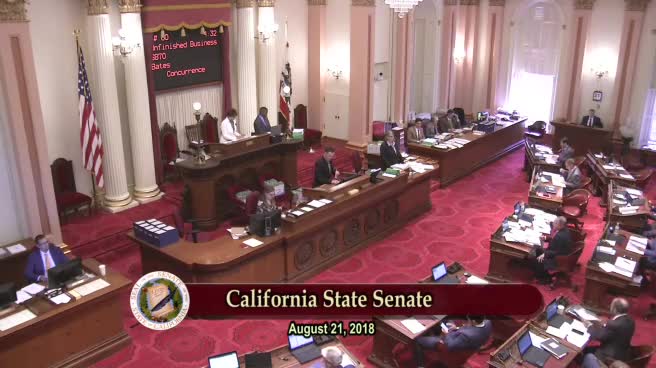 2MIN
Senate Floor
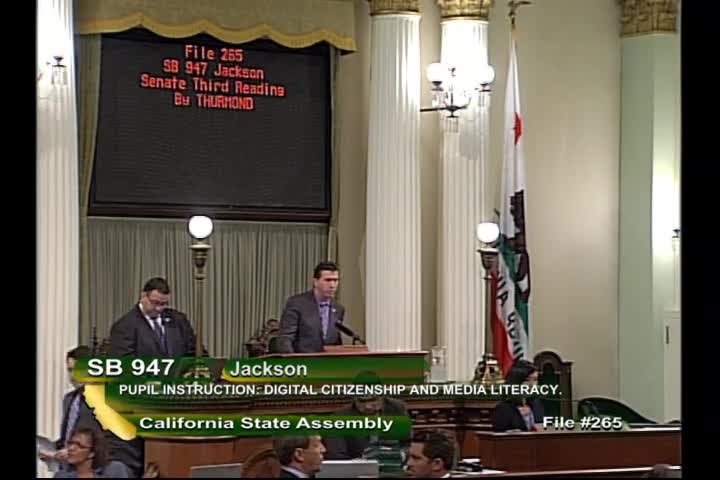 3MIN
Assembly Floor
 57SEC
Assembly Floor
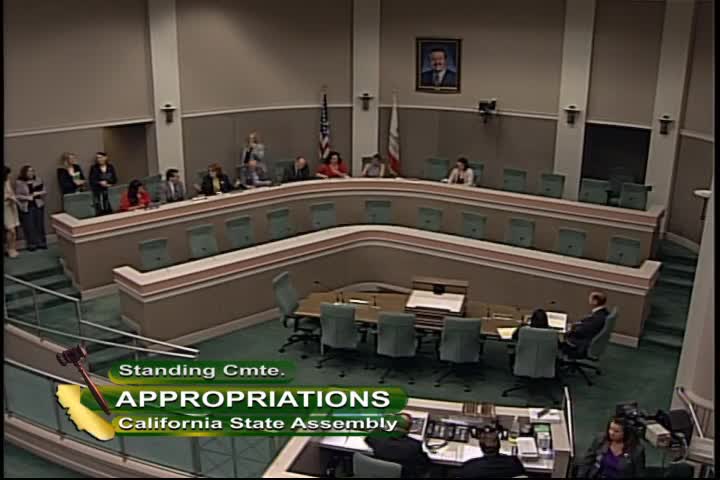 2MIN
Assembly Standing Committee on Appropriations
 7MIN
Assembly Standing Committee on Education
 5MIN
Senate Floor
 5MIN
Senate Standing Committee on Appropriations
 11MIN
Senate Standing Committee on Education
Bill Author

Bill Co-Author(s):
