SB 950: Office of Business Sustainability.
- Session Year: 2017-2018
- House: Senate
- Latest Version Date: 2018-04-12
Existing law establishes the Governors Office of Business and Economic Development, also known as GO-Biz, to serve the Governor as the lead entity for economic strategy and the marketing of California on issues relating to business development, private sector investment, and economic growth. Existing law establishes various programs and offices within GO-Biz to assist business development.
The State Contract Act governs state contracts for public works projects and generally requires that a state agency award a contract to the lowest responsible bidder. Existing law provides several bidding preferences that may affect the determination of the lowest responsible bidder.This bill would establish the Office of Business Sustainability within GO-Biz. The bill would require the Office of Business Sustainability to establish guidelines and criteria that would provide for the certification of a sustainable business operating in the state, as specified. The bill would additionally authorize the Office of Business Sustainability to award bid preferences on state solicitations to certified sustainable businesses.
Existing law establishes the Governors Office of Business and Economic Development, also known as GO-Biz, to serve the Governor as the lead entity for economic strategy and the marketing of California on issues relating to business development, private sector investment, and economic growth. Existing law establishes various programs and offices within GO-Biz to assist business development.
The State Contract Act governs state contracts for public works projects and generally requires that a state agency award a contract to the lowest responsible bidder. Existing law provides several bidding preferences that may affect the determination of the lowest responsible bidder.
This bill would establish the Office of Business Sustainability within GO-Biz. The bill would require the Office of Business Sustainability to establish guidelines and criteria that would provide for the certification of a sustainable business operating in the state, as specified. The bill would additionally authorize the Office of Business Sustainability to award bid preferences on state solicitations to certified sustainable businesses.
Existing law establishes the California Tax Credit Allocation Committee in state government to allocate authorized low-income housing tax credits to stimulate the production and rehabilitation of shelter for lower income individuals and families. Existing law requires the committee to allocate the housing tax credit on a regular basis consisting of 2 or more periods during which applications may be filed and considered. Existing law also requires the committee to submit an annual report to the Legislature by April 1 of each year containing specified information regarding its activities during the previous calendar year. This bill would, instead, require the committee to submit the annual report described above by April 15 of each year.Existing law establishes the California Tax Credit Allocation Committee in state government to allocate authorized low-income housing tax credits to stimulate the production and rehabilitation of shelter for lower income individuals and families. Existing law requires the committee to allocate the housing tax credit on a regular basis consisting of 2 or more periods during which applications may be filed and considered. Existing law also requires the committee to submit an annual report to the Legislature by April 1 of each year containing specified information regarding its activities during the previous calendar year.
This bill would, instead, require the committee to submit the annual report described above by April 15 of each year.
The Legislature finds and declares all of the following:
(a)A sustainable business gives substantial consideration to company operations, workers, impacted communities, and the environment in its practices, products, and services.
(b)The consideration that a sustainable business gives to company operations includes, but is not limited to, the following:
(1)Fair and transparent governance. The business has sustainability included in its mission, ethical and transparent governance practices within company bylaws, and processes for employee input in company decisionmaking, is employee owned employee-owned or provides employee profit sharing, and reports sustainability metrics such as metrics, including, but not limited to, climate risk to its board or its stakeholders.
(2)A culture of inclusion. The business has a diverse workforce and programs in place that ensure equity in opportunities. The company guarantees pay equity and a reasonable executive compensation ratio compared with employee compensation.
(3)Promotion of health and safety. The business implements health and safety practices that greatly exceed federal standards.
(c)The consideration that a sustainable business gives to workers includes, but is not limited to, the following:
(1)Support for employees. The business provides compensation that substantially exceeds regional wages, ensures fair compensation for freelance, contingent, and contracted workers, provides substantial benefits, including paid family and medical leave programs, paid sick days, health insurance, child care, paid time off, retirement plans, and other benefits, engages contractors or contracting services that provide benefits to their employees or provide additional stipends to nonemployees to purchase benefits, and encourages flexible scheduling, telecommuting, and predictable work hours.
(2)Development of employees. The business invests in employee growth and development through education, training, and advancement opportunities.
(d)The consideration that a sustainable business gives to impacted communities includes, but is not limited to, the following:
(1)Engagement with local communities. The business engages in local purchasing and hiring, is active in local and regional philanthropy and promotes staff volunteerism, and advocates for sustainability at city, state, and federal levels of government.
(2)Affecting change through the supply chain. The business practices and pushes promotes sustainability throughout its supply chain.
(e)The consideration that a sustainable business gives to the environment includes, but is not limited to, the following:
(1)Environmental best practices. The business demonstrates a comprehensive commitment to environmental conservation and sustainability in all company operations and facilities, including a commitment to limit or eliminate greenhouse gas emissions and the use of nonrenewable materials and energy.
(2)Environmentally sustainable products. The business manufactures or sells a clean or green product, such as including, but not limited to, renewable energy or nontoxic materials, or achieves zero waste.
12099.101.(a)The Office of Business Sustainability is hereby created within the Governors Office of Business and Economic Development.
(b)The Office of Business Sustainability shall establish guidelines and criteria that provide for the certification of a sustainable business operating in California. The office shall use the considerations set forth in subdivisions (b), (c), (d), and (e) of Section 12099.101 12099.100 in creating these guidelines and criteria.
(c)At its discretion, the Office of Business Sustainability may award sustainable businesses certified pursuant to subdivision (b) with a bid preference on state solicitations.The Legislature finds and declares all of the following:
(a)A sustainable business gives substantial consideration to company operations, workers, impacted communities, and the environment in its practices, products, and services.
(b)The consideration that a sustainable business gives to company operations includes, but is not limited to, the following:
(1)Fair and transparent governance. The business has sustainability included in its mission, ethical and transparent governance practices within company bylaws, and processes for employee input in company decisionmaking, is employee owned or provides employee profit sharing, and reports sustainability metrics such as climate risk to its board or its stakeholders.
(2)A culture of inclusion. The business has a diverse workforce and programs in place that ensure equity in opportunities. The company guarantees pay equity and a reasonable executive compensation ratio compared with employee compensation.
(3)Promotion of health and safety. The business implements health and safety practices that greatly exceed federal standards.
(c)The consideration that a sustainable business gives to workers includes, but is not limited to, the following:
(1)Support for employees. The business provides compensation that substantially exceeds regional wages, ensures fair compensation for freelance, contingent, and contracted workers, provides substantial benefits, including paid family and medical leave programs, paid sick days, health insurance, child care, paid time off, retirement plans, and other benefits, engages contractors or contracting services that provide benefits to their employees or provide additional stipends to nonemployees to purchase benefits, and encourages flexible scheduling, telecommuting, and predictable work hours.
(2)Development of employees. The business invests in employee growth and development through education, training, and advancement opportunities.
(d)The consideration that a sustainable business gives to impacted communities includes, but is not limited to, the following:
(1)Engagement with local communities. The business engages in local purchasing and hiring, is active in local and regional philanthropy and promotes staff volunteerism, and advocates for sustainability at city, state, and federal levels of government.
(2)Affecting change through the supply chain. The business practices and pushes sustainability throughout its supply chain.
(e)The consideration that a sustainable business gives the environment includes, but is not limited to, the following:
(1)Environmental best practices. The business demonstrates a comprehensive commitment to environmental conservation and sustainability in all company operations and facilities, including a commitment to limit or eliminate greenhouse gas emissions and the use of nonrenewable materials and energy.
(2)Environmentally sustainable products. The business manufactures or sells a clean or green product, such as renewable energy or nontoxic materials, or achieves zero waste.
12099.101.(a)The Office of Business Sustainability is hereby created within the Governors Office of Business and Economic Development.
(b)The Office of Business Sustainability shall establish guidelines and criteria that provide for the certification of a sustainable business operating in California. The office shall use the considerations set forth in subdivisions (b), (c), (d), and (e) of Section 12099.101 in creating these guidelines and criteria.
(c)At its discretion, the Office of Business Sustainability may award sustainable businesses certified pursuant to subdivision (b) with a bid preference on state solicitations.
SECTION 1.Section 50199.15 of the Health and Safety Code is amended to read:50199.15.(a) The committee shall annually submit to the Legislature by April 15 of each year a report specifying, with respect to its activities under this chapter during the previous calendar year, (1) the total amount of low-income housing credits allocated by the committee, (2) the total number of units assisted by the credit that are, or are to be, occupied by households whose income is 60 percent or less of area median gross income, (3) the amount of the credit allocated to each project, the other financing available to the project, and the number of units that are, or are to be, therein occupied by households whose income is 60 percent or less of area median gross income, and (4) sufficient information to identify the project.(b) The committee shall also include in its annual report to the Legislature, an aggregation of the information which shall be submitted annually by housing sponsors for all projects which have received an allocation in previous years, specifying all of the following:(1) Information sufficient to identify the project.(2) The total number of units in the project.(3) The total number of units assisted by the credit that are required to be occupied by households whose income is 60 percent or less of the area median gross income as a condition of receiving a tax credit.(4) The total number of units assisted by the credit that are occupied by households whose income is 60 percent or less of the area median gross income.(c) The committee shall also include in its annual report to the Legislature, any recommendations for improvement in the low-income housing tax credit.(a) The committee shall annually submit to the Legislature by April 1 15 of each year a report specifying, with respect to its activities under this chapter during the previous calendar year, (1) the total amount of low-income housing credits allocated by the committee, (2) the total number of units assisted by the credit that are, or are to be, occupied by households whose income is 60 percent or less of area median gross income, (3) the amount of the credit allocated to each project, the other financing available to the project, and the number of units that are, or are to be, therein occupied by households whose income is 60 percent or less of area median gross income, and (4) sufficient information to identify the project.
(b) The committee shall also include in its annual report to the Legislature, an aggregation of the information which shall be submitted annually by housing sponsors for all projects which have received an allocation in previous years, specifying all of the following:
(1) Information sufficient to identify the project.
(2) The total number of units in the project.
(3) The total number of units assisted by the credit that are required to be occupied by households whose income is 60 percent or less of the area median gross income as a condition of receiving a tax credit.
(4) The total number of units assisted by the credit that are occupied by households whose income is 60 percent or less of the area median gross income.
(c) The committee shall also include in its annual report to the Legislature, any recommendations for improvement in the low-income housing tax credit.
|
Date
|
Status
|
|---|---|
| May 25, 2018 | May 25 hearing: Held in committee and under submission. |
| May 18, 2018 | Set for hearing May 25. |
| Apr 30, 2018 | April 30 hearing: Placed on APPR. suspense file. |
| Apr 24, 2018 | Set for hearing April 30. |
| Apr 17, 2018 | Withdrawn from committee. |
| Apr 17, 2018 | From committee: Do pass and re-refer to Com. on G.O. (Ayes 7. Noes 1.) (April 16). Re-referred to Com. on G.O. |
| Apr 12, 2018 | From committee with author's amendments. Read second time and amended. Re-referred to Com. on B., P. & E.D. |
| Apr 6, 2018 | Set for hearing April 16. |
| Apr 4, 2018 | Re-referred to Coms. on B., P. & E.D. and G.O. |
| Mar 22, 2018 | From committee with author's amendments. Read second time and amended. Re-referred to Com. on RLS. |
| Feb 8, 2018 | Referred to Com. on RLS. |
| Jan 31, 2018 | From printer. May be acted upon on or after March 2. |
| Jan 30, 2018 | Introduced. Read first time. To Com. on RLS. for assignment. To print. |
|
Date
|
Description
|
Location
|
Votes
|
|
|---|---|---|---|---|
| Apr 30, 2018 | Placed on suspense file | Senate Standing Committee on Appropriations |
Passed |
|
| Apr 16, 2018 | Do pass, but first be re-referred to the Committee on [Governmental Organization] | Senate Standing Committee on Business, Professions and Economic Development |
Passed |
This list shows positions taken on this bill by organizations on the date displayed, which is linked to the original source.
Positions by individuals are not included.
SENATE COMMITTEE ON APPROPRIATIONS
Senator Ricardo Lara, Chair
2017 - 2018 Regular Session
SB 950 (Allen) - Office of Business Sustainability
Version: April 12, 2018 | Policy Vote: B., P. & E.D. 7 - 1 |
Urgency: No | Mandate: No |
Hearing Date: April 30, 2018 | Consultant: Robert Ingenito |
This bill meets the criteria for referral to the Suspense File.
Bill Summary:
SB 950 would establish the Office of Business Sustainability (Office) within the Governor’s Office of Business and Economic Development (GO-Biz), to establish guidelines to certify sustainable businesses operating in the State.
Fiscal Impact:
GO-Biz indicates that it would incur a one-time, first-year cost of $375,000 (General Fund) to create the guidelines to provide “sustainable business” certification. Additionally, GO-Biz would require annual ongoing costs of $365,000 (General Fund) to staff the Office.
Background:
The State has had various economic development offices over time. GO-Biz was established statutorily in 2011. Since then, it has been the subject of about 20 laws adding to its responsibilities. Some of GO-Biz’s key functions include:
- Policy Advisor. GO-Biz is supposed to recommend changes to state policies to advance statewide economic goals and respond to economic problems and opportunities.
- Assisting Businesses. Several small units of GO-Biz serve as points of contact for businesses considering relocating to or expanding in California. Services include resources for small businesses and assistance for international investors. Via calgold.ca.gov, GO-Biz helps businesses obtain information about the various agencies that administer and issue permits to firms.
- California Competes Tax Credit. GO-Biz helps run a program of individually negotiated tax credits for certain relocating or expanding businesses.
- Board and Commission Oversight. The Film Commission, Travel and Tourism Commission, and I-Bank have been assigned for oversight purposes to GO-Biz.
Currently, the Department of Toxic Substances Control (DTSC) is authorized to develop a California Green Business Program to support and assist programs operated by local governments which voluntarily certify small businesses that adopt environmentally preferable business practices. This program has evolved into the California Green Business Network (CGBN), a coalition of 28 Green Business Programs (GBP) in California, representing over 40 percent of the State. GPBs are voluntary, local government administered environmental recognition programs. Local government agencies that offer GBPs provide free or low cost services to participating business and have recognized nearly 4,000 businesses across California. CGBN offers an online certification program and operates an electronic system to help green businesses measure their environmental benefits. Several other local jurisdictions operate their own green business certification program independent from CGBN that provide similar benefits, such as the Sacramento Area Sustainable Business program and the Huntington Beach Sustainable Business Certification Program.
Proposed Law:
This bill would 1) establish the Office within GO-Biz, and (2) direct the Office to establish guidelines and criteria to certify sustainable businesses operating in California based upon the considerations outlined in the findings and declarations.
Related Legislation:
- AB 2293 (Garcia, 2016) would have established the Green Assistance Program in California Environmental Protection Agency and provide funding for the Program through the AB 32 Greenhouse Gas Reduction Fund (GGRF) or the Affordable Housing and Sustainable Communities Program (GGRF). The bill was held under submission on the Suspense File of the Assembly Appropriate Committee.
- AB 913 (Feuer, Chapter 578, Statutes of 2011) required DTSC to develop a California Green Business Program to provide support and assistance to a preexisting network of statewide local government programs that voluntarily certify small businesses that adopt environmentally preferable business practices.
Staff Comments:
The bill currently does not specify whether GO-Biz or another state entity would be responsible for actually doing the certifications once the guidelines have been established. However, the fiscal estimate of the bill assumes that GO-Biz would be responsible for certifying businesses.
To create the guidelines to provide “sustainable business” certification, GO-Biz would require one staff person to research and establish the parameters for the certification, one half-time attorney to draft regulations and oversee rule promulgation, and one IT staff person to create an online application necessary for businesses to apply for certification; the one-time costs total $375,000. With respect to staffing the Office, GO-Biz estimates annual ongoing costs of $365,000. This includes a manger to oversee the Office, two analysts to provide support to businesses that are seeking certification and support through the application process, and 10 percent of an IT staff person’s time to maintain and update the online application.
-- END --
SENATE COMMITTEE ON
BUSINESS, PROFESSIONS AND ECONOMIC DEVELOPMENT
Senator Jerry Hill, Chair
2017 - 2018 Regular
Bill No: SB 950 Hearing Date: April 16, 2018
Author: | Allen | ||
Version: |
| ||
Urgency: | Fiscal: | ||
Consultant: | Sarah Mason and Anissa Badea | ||
Subject: Office of Business Sustainability.
SUMMARY:
Establishes the Office of Business Sustainability (Office) within the Governor’s Office of Business and Economic Development (GO-Biz), tasked with establishing guidelines to certify sustainable businesses operating in California.
Existing law:
- Establishes GO-Biz within the Governor’s Office for the purpose of serving as the lead state entity for economic strategy and marketing of California on issues relating to business development, private sector investment, and economic growth. (Government Code (GOV) §§12096-12098.5)
- Establishes the Made in California Program within GO-Biz for the purpose of encouraging consumer awareness and foster the purchase of high-quality products made in California. (GOV § 12098.1 et. seq.)
- Authorizes the Department of Toxic Substances Control (DTSC) to develop a California Green Business Program to provide support and assistance to programs operated by local governments which certify small businesses that adopt environmentally preferable business practices. (Health and Safety Code (HSC) § 25244.17.2)
This bill:
- Makes findings and declarations stating that: (1) sustainable business give substantial consideration to company operations, workers, impacted communities, and the environment by (2) ensuring fair and transparent governance, a culture of inclusion, and health and safety for company operations; (3) prioritizing support and development of its workforce; (4) engaging with local communities and affecting change through the supply chain; and (5) following environmental best practices and using environmental sustainable products.
- Establishes the Office within GO-Biz.
- Directs the Office to establish guidelines and criteria to certify sustainable businesses operating in California based upon the considerations outlined in the findings and declarations.
FISCAL EFFECT:
Unknown. This measure is keyed “fiscal” by Legislative Counsel.
COMMENTS:
- Purpose. The Author is the sponsor of this bill. According to the Author, “Business sustainability is often defined as managing the “triple bottom line” – profits, people and planet. A sustainable business creates economic value and contributes to healthy ecosystems and strong communities. A truly sustainable economy requires business that invests in the stewardship of all types of capital resources – social, financial, intellectual and environmental. SB 950 is a small step California can take to begin to identify those companies who are making California’s economy productive, resilient, competitive, and equitable.”
- Governor’s Office of Economic Development (GO-Biz). In February 2010, the Little Hoover Commission undertook a review of the state's economic and workforce development programs. In its final report, Making up for Lost Ground: Creating a Governor's Office of Economic Development, it analyzed the status and effectiveness of current programs since the 2003 demise of the Technology, Trade and Commerce Agency and recommended the creation of a new governmental entity to fill the void left by the dismantled agency.
The report called for a single entity that would promote greater economic development, foster job creation, serve as a policy advisor, and deliver specific services directly to the California business community. In April 2010, Governor Schwarzenegger issued Executive Order S-05-10 as a means to operationalize the report recommendations, which included the creation of the Governor's Office of Economic Development (GOED).
In October 2011, the Governor signed AB 29 (Pérez, Chapter 475, Statutes of 2011), which effectively codified GOED and changed its name to GO-Biz. Since its inception, the office has served thousands of businesses, 95 percent of which are small businesses. The most frequent types of assistance include help with permit streamlining, starting a business, relocation and expansion of businesses, and regulatory challenges.
In March 2012, Governor Brown initiated a reorganization process to realign the state's administrative structure. Key changes include dismantling of the Business, Transportation and Housing Agency and the shifting of a number of key programs to GO-Biz including the Small Business Loan Guarantee Program, the California Travel and Tourism Commission, the California Film Commission, the Film California First Program, and the Infrastructure and Economic Development Bank (I-Bank). A key initiative of GO-Biz is the "strike teams" which can be mobilized to help attract and/or retain specific businesses. Among these other programs, GO-Biz also administers the Innovation Hub (iHub) program, an effort to harness and enhance California's innovative spirit. The iHubs aim to improve the state's national and global competitiveness by stimulating partnerships, economic development, and job creation around specific research clusters through state-designated iHubs.
GO-Biz also has authority for undertaking international trade and foreign investment activities, including establishing any international trade and investment office. GO-Biz has partnered with the Bay Area Council to open a California-China Trade and Investment office in Shanghai's downtown Yangpu district. GO-Biz has a Permit Assistance Unit established based on the agency’s statutory authority to provide assistance to businesses in obtaining state and local permits and support small businesses in complying with regulatory requirements, which may include permitting. Under GO-Biz, the Office of Small Business Advocate hosts a variety of summits, forums and interagency meetings designed to provide information and assistance to small businesses to help them succeed in the California marketplace.
GO-Biz administers the California Competes Tax Credit. Under the California Competes Tax Credit, “businesses who want to come, stay, or grow in California”, as noted on the GO-Biz website, can receive income tax credit. Tax credit agreements are negotiated between GO-Biz and the taxpayer, and approved by a committee, consisting of the State Treasurer, the Director of the Department of Finance, the Director of GO-Biz, and one appointee each by the Speaker of the Assembly and Senate Committee on Rules. Allocations are based on certain specified factors, but mainly focus on the amount of investment, the impact of a project, and the number of jobs the taxpayer will create or retain in California. The program is open to taxpayers of all sizes but creates preferential treatment for “small businesses”, defined as those making less than $2 million in revenue per year.
GO-Biz also administers the “Made In California” program through which businesses that meet the requirements for a “Made in U.S.A.” label, are substantially made in California, and do not produce agricultural products can apply to use the CA Made label. In order to qualify, businesses must apply for certification by a third-party and must recertify every three years. In addition to having access to the CA Made label, qualifying businesses also have their product and company bio posted on the CA Made website and gain access to marketing, networking, and technical advising opportunities.
- Other California Business Certification Programs. Currently, the DTSC is authorized to develop a California Green Business Program to support and assist programs operated by local governments which voluntarily certify small businesses that adopt environmentally preferable business practices (HSC § 25244.17.2). This program has evolved into the California Green Business Network (CGBN), a coalition of 28 Green Business Programs (GBP) in California, representing over 40% of the state. GPBs are voluntary, local government administered environmental recognition programs. Local government agencies that offer GBPs provide free or low cost services to participating business and have recognized nearly 4,000 businesses across California. CGBN offers an online certification program and operates an electronic system to help green businesses measure their environmental benefits. Several other local jurisdictions operate their own green business certification program independent from CGBN that provide similar benefits, such as the Sacramento Area Sustainable Business program and the Huntington Beach Sustainable Business Certification Program.
California also certifies small businesses and underrepresented group-owned businesses. The Office of Small Business and Disable Veteran Business Enterprise (OSDS) within DGS administers the Small Business (SB), Microbusiness (MB) and Disabled Veteran Business Enterprise (DVBE) certification programs (GOV 14839 et. seq.), which provide certified businesses with preference on state-solicitations and a streamlined contracting process with state agencies, among other benefits. The Office of Business & Economic Opportunity (OBEO) within the Department of Transportation (Caltrans) certifies Disadvantaged Business Enterprises (DBE) for federally funded contracts as well as State Minority Business Enterprises (SMBE) and State Women-Owned Business Enterprise (SWBE) for state funded contracts. The California Public Utilities Commission also certifies women-owned, minority-owned, and LGBT-owned businesses (General Order 156) and enters qualified applicants, in addition to state-certified SBs, MBs, and DVBEs, into a supplier database provided to participating utilities throughout California.
- Related Legislation This Year. AB 2211 (Limon) would establish the California Green Business Program within the California Environmental Protection Agency to provide support and assistance to green business certification programs operated by local governments that certify small- and medium-sized businesses that voluntary adopt environmentally preferable business practices. (Status: This bill is pending before in the Senate Committee on Natural Resources)
AB 2463 (Quirk-Silva), the Small Business Assistance Act of 2018, would create the California Small Business Assistance Program within GO-Biz to assist small businesses by partnering with one or more federal small business assistance center and providing grants to that center. (Status: This bill is pending before the Assembly Committee on Jobs, Economic Development and the Economy)
- Prior Related Legislation. AB 2293 (Garcia) of 2016 would have established the Green Assistance Program in California Environmental Protection Agency and provide funding for the Program through the AB 32 Greenhouse Gas Reduction Fund (GGRF) or the Affordable Housing and Sustainable Communities Program (GGRF). (Status: This bill was held on the Assembly Appropriate suspense file)
SB 12 (Corbett, Chapter 541, Statutes of 2013) established the “Made in California” program within GO-Biz.
AB 913 (Feuer, Chapter 578, Statutes of 2011) required the DTSC to develop a California Green Business Program to provide support and assistance to a preexisting network of statewide local government programs that voluntarily certify small businesses that adopt environmentally preferable business practices.
- Is GO-Biz the Appropriate Entity for the Office? GO-Biz was established to serve as California’s single point of contact for economic development and job creation efforts. There are now nine programs or units within GO-Biz and three additional affiliated programs through which it offers a range of services to business owners including: attraction, retention and expansion of services, site selection, permit streamlining, clearing of regulatory hurdles, small business assistance, international trade development, assistance with state government, and more. This bill creates yet another program under GO-Biz. While recognizing and rewarding businesses in California that undertake sustainable business practices is laudable, establishing another program within GO-Biz, which was intended to be nimble, flexible and easily able to act to attract, retain, and promote businesses in this state may not be necessary, especially since GO-Biz, DTSC, and local jurisdictions already perform some of the functions envisioned by this bill through the “Made in California” program and the green and sustainable businesses certification programs.
NOTE: Double-referral to Senate Committee on Governmental Organization, second.
SUPPORT AND OPPOSITION:
Support:
None on file as of April 10, 2018
Opposition:
None on file as of April 10, 2018
-- END –
Discussed in Hearing
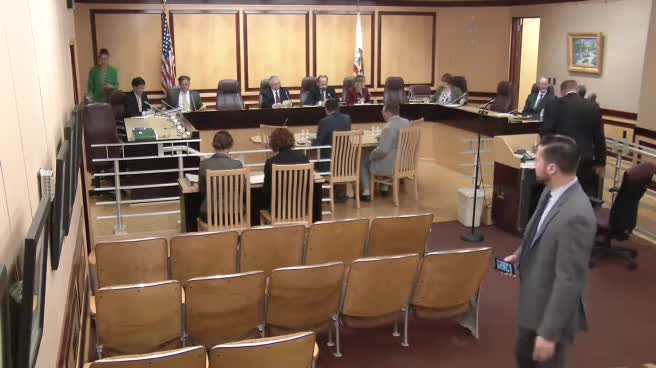 7MIN
Senate Standing Committee on Business, Professions and Economic Development
Bill Author

Bill Co-Author(s):