SB 958: Davis Joint Unified School District: special taxes: exemptions: teachers and district employees.
- Session Year: 2017-2018
- House: Senate
- Latest Version Date: 2018-09-20
Existing law authorizes school districts to impose qualified special taxes, subject to specified constitutional and statutory provisions. Existing law defines qualified special taxes as taxes that apply uniformly to all taxpayers or all real property within a school district and may include taxes that provide for an exemption from those taxes for persons who are 65 years of age or older, for persons receiving Supplemental Security Income for a disability, or for persons receiving Social Security Disability Insurance benefits, as specified.
This bill would provide that a qualified special tax imposed by the Davis Joint Unified School District in accordance with the above-described authorization may also provide an exemption for teachers and other employees of the school district for their principal place of residence located within the jurisdictional boundaries of the school district. The bill would make this authorization inoperative on January 1, 2021, but would provide that an exemption granted pursuant to this authorization remains in effect for the duration of the period for which the tax is imposed.
This bill would make legislative findings and declarations as to the necessity of a special statute for the Davis Joint Unified School District.
Existing law authorizes school districts to impose qualified special taxes, subject to specified constitutional and statutory provisions. Existing law defines qualified special taxes as taxes that apply uniformly to all taxpayers or all real property within a school district and may include taxes that provide for an exemption from those taxes for persons who are 65 years of age or older, for persons receiving Supplemental Security Income for a disability, or for persons receiving Social Security Disability Insurance benefits, as specified.
This bill would provide that a qualified special tax imposed by the Davis Joint Unified School District in accordance with the above-described authorization may also provide an exemption for teachers and other employees of the school district for their principal place of residence located within the jurisdictional boundaries of the school district. The bill would make this authorization inoperative on January 1, 2021, but would provide that an exemption granted pursuant to this authorization remains in effect for the duration of the period for which the tax is imposed.
This bill would make legislative findings and declarations as to the necessity of a special statute for the Davis Joint Unified School District.
Existing law authorizes school districts to impose qualified special taxes, subject to specified constitutional and statutory provisions. Existing law defines qualified special taxes as taxes that apply uniformly to all taxpayers or all real property within a school district and may include taxes that provide for an exemption from those taxes for persons who are 65 years of age or older, for persons receiving Supplemental Security Income for a disability, or for persons receiving Social Security Disability Insurance benefits, as specified.
This bill would provide that a qualified special tax imposed by the Davis Joint Unified School District in accordance with the above-described authorization may also provide an exemption for teachers and other employees of the school district. district for their principal place of residence located within the jurisdictional boundaries of the school district. The bill would make this authorization inoperative on January 1, 2021, but would provide that an exemption granted pursuant to this authorization remain in effect for the duration of the period for which the tax is imposed.
This bill would make legislative findings and declarations as to the necessity of a special statute for the Davis Joint Unified School District.
Existing law authorizes school districts to impose qualified special taxes, subject to specified constitutional and statutory provisions. Existing law defines qualified special taxes as taxes that apply uniformly to all taxpayers or all real property within a school district and may include taxes that provide for an exemption from those taxes for persons who are 65 years of age or older, for persons receiving Supplemental Security Income for a disability, or for persons receiving Social Security Disability Insurance benefits, as specified.
This bill would provide that qualified special taxes may include taxes that also a qualified special tax imposed by the Davis Joint Unified School District in accordance with the above-described authorization may also provide an exemption for teachers and other employees of the school district imposing the tax. district. The bill would make this authorization inoperative on January 1, 2021, but would provide that an exemption granted pursuant to this authorization remain in effect for the duration of the period for which the tax is imposed.
This bill would make legislative findings and declarations as to the necessity of a special statute for the Davis Joint Unified School District.
(1)Under existing law, a ballot measure may be placed on the ballot at a school district election by the governing board of the school district. Whenever a school district ballot measure is placed on the ballot, existing law requires the county counsel or district attorney, as applicable, to prepare an impartial analysis of the measure showing the effect of the measure on existing law and the operation of the measure.
This bill would clarify that a school district ballot measure includes an initiative measure that may be placed on the ballot pursuant to existing provisions of law. The bill would also make a legislative finding that this provision is clarifying and declaratory of existing law.
(2)Existing law authorizes school districts to impose qualified special taxes, subject to specified constitutional and statutory provisions. Existing law defines qualified special taxes as taxes that apply uniformly to all taxpayers or all real property within a school district and may include taxes that provide for an exemption from those taxes for persons who are 65 years of age or older, for persons receiving Supplemental Security Income for a disability, or for persons receiving Social Security Disability Insurance benefits, as specified.
This bill would provide that qualified special taxes may include taxes that also provide an exemption for teachers and other employees of the school district imposing the tax.
(a)In addition to those persons described in subparagraphs (A) to (C), inclusive, of paragraph (1) of subdivision (b) of Section 50079, a qualified special tax imposed by the Davis Joint Unified School District in accordance with Section 50079 may provide an exemption for teachers and other employees of the school district for their principal place of residence located within the jurisdictional boundaries of the school district.
(b)Any exemption granted pursuant to subdivision (a) shall remain in effect until the taxpayer becomes ineligible. If the taxpayer becomes ineligible for the exemption for any reason, a new exemption may be granted in the same manner.
(c)This section shall become inoperative on January 1, 2021.
(d)Notwithstanding subdivision (c), or any other law, any exemption allowed pursuant to this section shall remain in effect for the duration of the period for which the tax is imposed.
(e)Nothing in this section shall be construed to prohibit or limit the Davis Joint Unified School District from imposing, or continuing to impose, a qualified special tax authorized by Section 50079.
SEC. 2.The Legislature finds and declares that a special statute is necessary and that a general statute cannot be made applicable within the meaning of Section 16 of Article IV of the California Constitution because of the unique circumstances in the Davis Joint Unified School District.
(a)In addition to those persons described in subparagraphs (A) to (C), inclusive, of paragraph (1) of subdivision (b) of Section 50079, a qualified special tax imposed by the Davis Joint Unified School District in accordance with Section 50079 may provide an exemption for teachers and other employees of the school district for their principal place of residence located within the jurisdictional boundaries of the school district.
(b)Any exemption granted pursuant to subdivision (a) shall remain in effect until the taxpayer becomes ineligible. If the taxpayer becomes ineligible for the exemption for any reason, a new exemption may be granted in the same manner.
(c)This section shall become inoperative on January 1, 2021.
(d)Notwithstanding subdivision (c), or any other law, any exemption allowed pursuant to this section shall remain in effect for the duration of the period for which the tax is imposed.
(e)Nothing in this section shall be construed to prohibit or limit the Davis Joint Unified School District from imposing, or continuing to impose, a qualified special tax authorized by Section 50079.
SEC. 2.The Legislature finds and declares that a special statute is necessary and that a general statute cannot be made applicable within the meaning of Section 16 of Article IV of the California Constitution because of the unique circumstances in the Davis Joint Unified School District.
(a)In addition to those persons described in subparagraphs (A) to (C), inclusive, of paragraph (1) of subdivision (b) of Section 50079, a qualified special tax imposed by the Davis Joint Unified School District in accordance with Section 50079 may provide an exemption for teachers and other employees of the school district. district for their principal place of residence located within the jurisdictional boundaries of the school district.
(b)Any exemption granted pursuant to subdivision (a) shall remain in effect until the taxpayer becomes ineligible. If the taxpayer becomes ineligible for the exemption for any reason, a new exemption may be granted in the same manner.
(c)This section shall become inoperative on January 1, 2021.
(d)Notwithstanding subdivision (c), or any other law, any exemption allowed pursuant to subdivision (b) this section shall remain in effect for the duration of the period for which the tax is imposed.
(e)Nothing in this section shall be construed to prohibit or limit the Davis Joint Unified School District from imposing, or continuing to impose, a qualified special tax authorized by Section 50079.
SEC. 2.The Legislature finds and declares that a special statute is necessary and that a general statute cannot be made applicable within the meaning of Section 16 of Article IV of the California Constitution because of the unique circumstances in the Davis Joint Unified School District.
(a)In addition to those persons described in subparagraphs (A) to (C), inclusive, of paragraph (1) of subdivision (b) of Section 50079, a qualified special tax imposed by the Davis Joint Unified School District in accordance with Section 50079 may provide an exemption for teachers and other employees of the school district.
(b)Any exemption granted pursuant to subdivision (a) shall remain in effect until the taxpayer becomes ineligible. If the taxpayer becomes ineligible for the exemption for any reason, a new exemption may be granted in the same manner.
(c)This section shall become inoperative on January 1, 2021.
(d)Notwithstanding subdivision (c), or any other law, any exemption allowed pursuant to subdivision (b) shall remain in effect for the duration of the period for which the tax is imposed.
(e)Nothing in this section shall be construed to prohibit or limit the Davis Joint Unified School District from imposing, or continuing to impose, a qualified special tax authorized by Section 50079.
SEC. 2.The Legislature finds and declares that a special statute is necessary and that a general statute cannot be made applicable within the meaning of Section 16 of Article IV of the California Constitution because of the unique circumstances in the Davis Joint Unified School District.
SECTION 1.Section 9500 of the Elections Code is amended to read:9500.(a)If a school measure, including an initiative measure provided for under Article 1 (commencing with Section 9300) of Chapter 4, qualifies for a place on the ballot, the county elections official shall transmit a copy of the measure to the county counsel or to the district attorney in a county that has no county counsel.(b)The county counsel or district attorney shall prepare an impartial analysis of the measure, showing the effect of the measure on the existing law and the operation of the measure. The analysis shall include a statement indicating that the measure was placed on the ballot by the governing board of the district. The analysis shall be printed preceding the arguments for and against the measure. The analysis shall not exceed 500 words in length.SEC. 2.Section 50079 of the Government Code is amended to read:50079.(a)Subject to Section 4 of Article XIIIA of the California Constitution, any school district may impose qualified special taxes within the district pursuant to the procedures established in Article 3.5 (commencing with Section 50075) and any other applicable procedures provided by law.(b)(1)As used in this section, qualified special taxes means special taxes that apply uniformly to all taxpayers or all real property within the school district, except that qualified special taxes may include taxes that provide for an exemption from those taxes for any or all of the following taxpayers:(A)Persons who are 65 years of age or older.(B)Persons receiving Supplemental Security Income for a disability, regardless of age.(C)Persons receiving Social Security Disability Insurance benefits, regardless of age, whose yearly income does not exceed 250 percent of the 2012 federal poverty guidelines issued by the United States Department of Health and Human Services.(D)Teachers and other employees of the school district imposing the tax.(2)Qualified special taxes do not include special taxes imposed on a particular class of property or taxpayers.(c)The amendments made to this section by Chapter 81 of the Statutes of 2015 are declaratory of existing law.(d)Any exemption granted pursuant to subdivision (b) shall remain in effect until the taxpayer becomes ineligible. If the taxpayer becomes ineligible for the exemption for any reason, a new exemption may be granted in the same manner.SEC. 3.The Legislature finds and declares that the amendments made by this act to subdivision (a) of Section 9500 of the Elections Code are clarifying and declaratory of existing law.(a)Whenever If a school measure measure, including an initiative measure provided for under Article 1 (commencing with Section 9300) of Chapter 4, qualifies for a place on the ballot, the county elections official shall transmit a copy of the measure to the county counsel or to the district attorney in a county that has no county counsel.
(b)The county counsel or district attorney shall prepare an impartial analysis of the measure, showing the effect of the measure on the existing law and the operation of the measure. The analysis shall include a statement indicating that the measure was placed on the ballot by the governing board of the district. The analysis shall be printed preceding the arguments for and against the measure. The analysis shall not exceed 500 words in length.
SEC. 2.Section 50079 of the Government Code is amended to read:50079.(a)Subject to Section 4 of Article XIIIA of the California Constitution, any school district may impose qualified special taxes within the district pursuant to the procedures established in Article 3.5 (commencing with Section 50075) and any other applicable procedures provided by law.
(b)(1)As used in this section, qualified special taxes means special taxes that apply uniformly to all taxpayers or all real property within the school district, except that qualified special taxes may include taxes that provide for an exemption from those taxes for any or all of the following taxpayers:
(A)Persons who are 65 years of age or older.
(B)Persons receiving Supplemental Security Income for a disability, regardless of age.
(C)Persons receiving Social Security Disability Insurance benefits, regardless of age, whose yearly income does not exceed 250 percent of the 2012 federal poverty guidelines issued by the United States Department of Health and Human Services.
(D)Teachers and other employees of the school district imposing the tax.
(2)Qualified special taxes do not include special taxes imposed on a particular class of property or taxpayers.
(c)The amendments made to this section by Chapter 81 of the Statutes of 2015 are declaratory of existing law.
(d)Any exemption granted pursuant to subdivision (b) shall remain in effect until the taxpayer becomes ineligible. If the taxpayer becomes ineligible for the exemption for any reason, a new exemption may be granted in the same manner.
SEC. 3.The Legislature finds and declares that the amendments made by this act to subdivision (a) of Section 9500 of the Elections Code are clarifying and declaratory of existing law.
|
Date
|
Status
|
|---|---|
| Sep 20, 2018 | Chaptered by Secretary of State. Chapter 604, Statutes of 2018. |
| Sep 20, 2018 | Approved by the Governor. |
| Sep 11, 2018 | Enrolled and presented to the Governor at 4 p.m. |
| Aug 31, 2018 | Assembly amendments concurred in. (Ayes 24. Noes 12.) Ordered to engrossing and enrolling. |
| Aug 30, 2018 | In Senate. Concurrence in Assembly amendments pending. |
| Aug 30, 2018 | Read third time. Passed. Ordered to the Senate. |
| Aug 30, 2018 | Reconsideration granted. |
| Aug 28, 2018 | Read third time. Refused passage. |
| Aug 24, 2018 | Read third time and amended. |
| Jun 20, 2018 | Read second time. Ordered to third reading. |
| Jun 19, 2018 | From committee: Do pass. (Ayes 6. Noes 3.) (June 18). |
| May 31, 2018 | Referred to Com. on REV. & TAX. |
| May 21, 2018 | In Assembly. Read first time. Held at Desk. |
| May 21, 2018 | Read third time. Passed. (Ayes 24. Noes 9.) Ordered to the Assembly. |
| May 16, 2018 | Read second time and amended. Ordered to third reading. |
| May 15, 2018 | From committee: Do pass as amended. (Ayes 4. Noes 2.) (May 9). |
| May 9, 2018 | From committee: Do pass. (Ayes 4. Noes 2.) (May 9). |
| May 2, 2018 | Set for hearing May 9. |
| Apr 26, 2018 | May 2 hearing postponed by committee. |
| Apr 17, 2018 | Set for hearing May 2. |
| Feb 8, 2018 | Referred to Com. on GOV. & F. |
| Jan 31, 2018 | From printer. May be acted upon on or after March 2. |
| Jan 30, 2018 | Introduced. Read first time. To Com. on RLS. for assignment. To print. |
|
Date
|
Description
|
Location
|
Votes
|
|
|---|---|---|---|---|
| Aug 31, 2018 | Unfinished Business SB958 Dodd Concurrence | Senate Floor |
Passed |
|
| Aug 30, 2018 | SB 958 Dodd Senate Third Reading By AGUIAR-CURRY | Assembly Floor |
Passed |
|
| Aug 28, 2018 | SB 958 Dodd Senate Third Reading By AGUIAR-CURRY | Assembly Floor |
Passed |
|
| Jun 18, 2018 | Do pass. | Assembly Standing Committee on Revenue and Taxation |
Passed |
|
| May 21, 2018 | Senate 3rd Reading SB958 Dodd | Senate Floor |
Passed |
|
| May 9, 2018 | Do pass | Senate Standing Committee on Governance and Finance |
Passed |
|
| May 9, 2018 | Do pass as amended | Senate Standing Committee on Governance and Finance |
Passed |
This list shows positions taken on this bill by organizations on the date displayed, which is linked to the original source.
Positions by individuals are not included.
|
Organization
|
Position
|
Date
|
|---|---|---|
| California Association Of School Business Officials | ** Support | Aug 30, 2018 |
| California Teachers Association | ** Support | Aug 30, 2018 |
| Davis Joint Unified School District | ** Support | Aug 30, 2018 |
| Davis Jt Unified School District | * Support | May 9, 2018 |
| Howard Jarvis Taxpayers Association | ** Against | Aug 30, 2018 |
Office of Senate Floor Analyses (916) 651-1520 Fax: (916) 327-4478 | SB |
UNFINISHED BUSINESS
Bill No: SB 958
:
SENATE GOVERNANCE & FIN. COMMITTEE: 4-2, 5/9/18
AYES: McGuire, Beall, Hertzberg, Lara
NOES: Nguyen, Moorlach
NO VOTE RECORDED: Hernandez
SENATE FLOOR: 24-9, 5/21/18
AYES: Allen, Atkins, Beall, Bradford, Cannella, Dodd, Galgiani, Glazer, Hernandez, Hertzberg, Hill, Hueso, Jackson, Lara, Leyva, McGuire, Mitchell, Monning, Newman, Pan, Portantino, Skinner, Stern, Wiener
NOES: Anderson, Bates, Gaines, Moorlach, Morrell, Nguyen, Nielsen, Stone, Vidak
NO VOTE RECORDED: Berryhill, De León, Fuller, Roth, Wieckowski, Wilk
ASSEMBLY FLOOR: 37-31, 8/28/18 (FAIL) - See last page for vote
ASSEMBLY FLOOR: 41-35, 8/30/18 - See last page for vote
SUBJECT: Davis Joint Unified School District: special taxes: exemptions: teachers and district employees
SOURCE: Davis Joint Unified School District
DIGEST:
This bill allows the Davis Joint Unified School District to provide an exemption from its qualified special tax for school district employees and teachers
Assembly Amendments
specify that the bill’s exemption only applies to a teacher or school district employee’s personal place of residence within the jurisdiction of the district, and make a technical change.
Existing law:
- Requires 2/3 voter approval when a local agency wants to impose or increase a special tax (Section XIIIA of the California Constitution, as added by Proposition 13, 1978).
- Requires the Legislature to grant specific taxing power to local agencies to impose taxes (Proposition 62, 1986).
- Allows school districts to impose qualified special taxes that applied uniformly, to all taxpayers or real property within the district (AB 1440, Hannigan, Chapter 100, Statutes of 1987).
- Permits school districts to exempt from the tax any of all of the following persons:
- Over the age of 65 years (AB 1440, Hannigan, Chapter 100, Statutes of 1987).
- Receiving Supplemental Security Income (SSI) regardless of age (AB 385, Lieber, Chapter 41, Statutes of 2006).
- Receiving Social Security Disability Insurance (SSDI), whose yearly income was less than 250% of 2012 federal poverty guidelines (SB 874, Hancock, Chapter 791, Statutes of 2012).
- Requires any exemption granted to remain in effect until the taxpayer becomes ineligible.
This bill:
- Allows the Davis Joint Unified School District (DJUSD) to provide an exemption for the principal place of residence located within the jurisdictional boundaries of the district of a teacher and other employees of the school district.
- Requires that any exemption granted to remain in effect until the taxpayer becomes ineligible.
- States that its authority becomes inoperative on January 1, 2021.
- Provides that notwithstanding the bill’s inoperative date, any exemption allowed must remain in effect for the duration of the period for which the tax is imposed.
- Directs that nothing in the bill shall be construed to affect DJUSD’s authority to impose, or continue to impose, a qualified special tax.
- Contains legislative findings and declarations justifying the need for a special statute, and that a general statute cannot be made applicable.
Background
Prior to Proposition 62, school districts imposed parcel taxes to fund education; however, the initiative prompted school districts to seek specific legislative authorization to ratify the existing taxes, and clarify the authority to impose new ones. The Legislature allowed school and community college districts to impose “qualified special taxes “that applied uniformly, to all taxpayers or real property within the district, but allowed districts to exempt persons over the age of 65 from the tax. Thus far, all qualified special taxes imposed are parcel taxes.
Parcel taxes are not ad valorem or assessed based on the value of a property like property taxes; instead they are generally a flat rate assessed per parcel regardless of its size, or per square foot of a parcel or its improvements. Agencies can use revenues in almost any way that serves local needs, such as ongoing expenses, programs, or buildings. Counties collect parcel taxes with property taxes, and then remit funds to the agency imposing the tax. Property tax law generally guides parcel tax collection.
FISCAL EFFECT: Appropriation: Fiscal Com.: Local:
Davis Joint Unified School District (source)
California Association of School Business Officials
California Teachers Association
OPPOSITION: (Verified 8/30/18)
Howard Jarvis Taxpayers Association
ARGUMENTS IN SUPPORT: According to the author, “For decades, the City of Davis has approved local parcel taxes to fund the Davis Joint School District’s educational programming, reaffirming a local commitment to prioritizing high-quality education in the community. SB 958 would empower voters to support local funding of public education within their boundaries and have greater direct impact on the content of local parcel tax measures. In addition, this legislation would provide for public school employees an exemption to a school parcel tax. It is imperative that teachers are recognized for the critically important role they serve in their communities- this bill would provide an additional incentive for public educators and school staff to live in the community in which they work, despite the severe shortage of affordable housing.”
ARGUMENTS IN OPPOSITION: According to the Howard Jarvis Taxpayers Association, “SB 958 would create a local parcel tax exemption for teachers and other school district employees that is imposing the tax. This exemption would be added to existing ones for seniors and those on SSI/SSDI. Despite the fact that this bill is an opt-in proposal and at the discretion of the school district, we must oppose. This measure is being taken up solely to exempt additional classes of individuals and make it easier to approve 2/3 vote parcel taxes. School district employees, just like parents, should have ‘skin in the game’ too. If a parcel tax is too regressive for some people to pay, perhaps it’s an indication that the tax should not be on the ballot in the first place. SB 958 also establishes a dangerous slippery slope. If we adopt this bill, does it mean water and transportation employees should be exempted from special taxes that impact them? The more people that are exempted the less value that the two-thirds vote will have, and the less revenue the school district will generate.”
ASSEMBLY FLOOR: 41-35, 8/30/18
AYES: Aguiar-Curry, Arambula, Bloom, Bonta, Burke, Caballero, Carrillo, Chau, Chiu, Chu, Cooper, Eggman, Frazier, Friedman, Cristina Garcia, Eduardo Garcia, Gipson, Gonzalez Fletcher, Gray, Grayson, Holden, Jones-Sawyer, Kalra, Kamlager-Dove, Limón, Low, McCarty, Medina, Mullin, Nazarian, Reyes, Rivas, Rodriguez, Rubio, Santiago, Mark Stone, Thurmond, Ting, Weber, Wood, Rendon
NOES: Acosta, Travis Allen, Baker, Bigelow, Brough, Cervantes, Chávez, Chen, Choi, Cooley, Cunningham, Dahle, Daly, Flora, Fong, Gallagher, Harper, Irwin, Kiley, Lackey, Levine, Maienschein, Mathis, Mayes, Melendez, Muratsuchi, Obernolte, O'Donnell, Patterson, Quirk, Quirk-Silva, Salas, Steinorth, Voepel, Waldron
NO VOTE RECORDED: Berman, Calderon, Gabriel, Gloria
ASSEMBLY FLOOR: 37-31, 8/28/18 (FAIL)
AYES: Aguiar-Curry, Bonta, Burke, Caballero, Carrillo, Chau, Chiu, Chu, Cooper, Eggman, Frazier, Friedman, Cristina Garcia, Eduardo Garcia, Gipson, Gonzalez Fletcher, Gray, Holden, Jones-Sawyer, Kalra, Levine, Limón, Low, McCarty, Medina, Mullin, Reyes, Rivas, Rodriguez, Rubio, Santiago, Mark Stone, Thurmond, Ting, Weber, Wood, Rendon
NOES: Acosta, Travis Allen, Baker, Bigelow, Brough, Cervantes, Chávez, Chen, Choi, Cooley, Cunningham, Dahle, Flora, Fong, Gallagher, Harper, Irwin, Kiley, Lackey, Maienschein, Mathis, Mayes, Melendez, Obernolte, O'Donnell, Patterson, Quirk, Quirk-Silva, Steinorth, Voepel, Waldron
NO VOTE RECORDED: Arambula, Berman, Bloom, Calderon, Daly, Gabriel, Gloria, Grayson, Kamlager-Dove, Muratsuchi, Nazarian, Salas
8/30/18 20:54:32
**** END ****
SENATE THIRD READING
STR Bill Id:SB 958
Author:(Dodd)
As Amended Ver:August 24, 2018
Majority vote
SENATE VOTE: 24-9
Committee | Votes | Ayes | Noes |
Revenue & Taxation | 6-3 | Burke, Chu, Gray, Mullin, Rivas, Ting | Brough, Melendez, Voepel |
SUMMARY: Allows the Davis Joint Unified School District (DJUSD) to exempt an employee's home located within the school district from its school parcel tax. Specifically, this bill:
- Allows a DJUSD employee-exemption from the school parcel tax (i.e., "qualified special tax") limited to an employee's principal place of residence located within the school district boundaries.
- Makes the provisions inoperative January 1, 2021.
- Specifies that a granted employee-exemption remains effective throughout the DJUSD parcel tax imposition period, notwithstanding the January 1, 2021 inoperative date, or any other law.
- Declares that a special statute limited to the DJUSD parcel tax is necessary within the meaning of the California Constitution, Article IV, Section 16, because of the unique circumstances in the DJUSD.
EXISTING LAW:
- Authorizes school districts to impose qualified special taxes, in accordance with specified procedures, including the approval of two-thirds of the voters in the district. (California Constitution, Article XIII A, Section 4 and Government Code (GC).
- Provides that "qualified special taxes" must apply uniformly to all taxpayers or all real property within the school district (except for exemptions extended to persons noted below) and do not include special taxes imposed on a particular class of property or taxpayer.
- Authorizes a school district to exempt from a "qualified special tax" any or all of the following persons:
- Persons 65 years of age or older;[1]
- Persons receiving Supplemental Security Income (SSI) for a disability;[2] or,
- Persons receiving Social Security Disability Insurance (SSDI) benefits whose annual income is less than 250% of 2012 federal poverty guidelines[3] a range from $27,925 (one person household) to $97,225 (eight person household).
- Allows a person eligible for an exemption to opt out of the qualified special tax by filing a claim and providing verification documents with the school district.
- Requires exemptions, once granted to eligible persons, to remain in effect until the taxpayer becomes ineligible.
- Provides that a local or special statute is invalid if a general statute can be made applicable.
FISCAL EFFECT: None. This bill has been keyed non-fiscal by the Legislative Counsel.
COMMENTS:
- The author has provided the following statement in support of this measure:
The challenges of Davis' housing crisis are familiar to most residents, as the rental vacancy rate has hovered at 0.2% for the past two years. Teachers and school employees, the backbone of [the] Davis community, have tremendous trouble finding housing anywhere near their place of work. Giving public school teachers and employees this small incentive will make housing more affordable and encourage them to live in the community they serve. Educating our children is a top priority for me and this bill will help support the dedicated men and women we entrust with this important job.
- This bill is sponsored by the DJUSD, which in support of this bill states:
California law delineates specific exemptions that a school district may provide to any parcel tax that passes. Currently, those exemptions are limited to seniors and the disabled. This legislation would amend state law to provide for a public school employee exemption to a school parcel tax. We believe this bill will provide an additional incentive for public sector educators and staff to live in the community in which they work, despite the growing challenge of affordable housing in many California communities.
- Committee Staff Comments:
- Qualified special taxes by another name: Proposition 13 (1978) eliminated a school district's ability to levy an incremental ad valorem tax on real property. However, school districts have authority to generate tax revenue from "qualified special taxes" (school parcel taxes) with voter approval. Because Proposition 218 (1996) prohibits school districts and other special districts from imposing general taxes, any school district-levied tax is a special tax. Parcel taxes provide school districts with flexible revenue that can be used for operating expenses, such as employee compensation, unlike school bond measures. Existing law does not limit how school parcel tax proceeds may be spent. The voter-approved ballot text for the measure stipulates how the tax proceeds will be spent. For example, the funding can be used for employee salaries, books, materials and supplies, computers, arts, music, and sports programs.
- The three existing school district parcel tax exemptions: The law authorizes school districts to exempt persons over the age of 65, persons receiving SSI for a disability regardless of age, and persons receiving SSDI with a specified maximum annual income. These exemptions are permissive rather than mandatory, which allows the school district to consider the need for, and impact of, an exemption from special taxes imposed. For example, a school district may choose to exempt all three classes of individuals or may choose to exempt only seniors. Neighboring school districts may offer no exemptions. Any exemption, if provided, is stipulated in the voter-approved ballot text for the measure. Some school parcel tax measures include the senior exemption to help garner more widespread support,[4] and a small number include the disability exemption. Existing law generally does not allow exemptions for other city, county or special district-imposed parcel taxes. Generally, these parcel taxes must be applied uniformly.
In Borikas v. Alameda Unified School District (2012) 211 Cal.App.4th 833, a case involving school parcel tax amounts that differed for residential and non-residential parcels, the court overturned the different parcel charges but upheld the three currently permissible exemptions.
- What does this bill do? This bill allows one school district, the DJUSD, to exempt its employees that own and live in a home within the district boundaries from its school parcel tax. In November 2016, the voters in the DJUSD (parts of Yolo and Solano Counties) approved "Measure H", an eight-year school parcel tax of $620 per year. The existing Davis school parcel tax does not expire until after the 2025-26 fiscal year. Measure H was presented to the voters through the school board trustee approval of Resolution 59-16. The resolution's language expressly outlines the three property-owner exemption classes existing law permits (seniors, SSI-recipients, and income eligible SSDI- recipients). Thus, it appears voters will need to approve another measure to grant the employee-exemption this bill proposes to allow.
- What unique circumstances exist in Davis? This bill makes a legislative finding and declaration that a special statute specific to the DJUSD is necessary but lacks any stated supporting reason as to those circumstances. The author explains that the rental vacancy rate is exceptionally low. However, Committee staff notes that this bill would not assist employees who rent within the DJUSD. Rather, this bill would assist existing (or future) homeowners. Housing affordability is a statewide issue, particularly in the San Francisco Bay Area, which has a high concentration of school parcel taxes. School district employees are not unique among working individuals unable to afford a home in the city where they work. It is reported that DJUSD employees have a "compensation gap" in that they are paid less than their peers in surrounding school districts and have less generous health care benefits.
- About 150 other school districts also have school parcel taxes: California has 1,024 school districts, but not all have voter-approved parcel taxes. In the last 10 years, about 140 school districts have enacted parcel taxes. At the June 5, 2018, election, 12 school district parcel taxes were presented for voter approval. Parcel tax amounts vary significantly among different school districts. For example, in Santa Clara County, school parcel taxes range from $49 to $790 per parcel. School parcel taxes are particularly concentrated in the San Francisco Bay Area, where five counties (Santa Clara, San Mateo, Alameda, Marin, and Contra Costa) account for about 70% of approved school parcel taxes. Affordable housing prices in these communities are also a challenge.
- Setting a precedent to exempt other government employees from taxes: Today, all cities, counties, and at least 20 different types of special districts have the authority to levy a special tax or parcel tax. Once an "employee-exemption" precedent is set for the DJUSD, legislation could be sought for school parcel tax exemptions for other school district employees. Eventually, special exemptions could be sought for other government employees for the myriad of other special or parcel taxes currently levied. Many government employees could be offered special or parcel tax exemptions if they own homes where they work: police, firefighters, library employees, city employees, and park employees. This bill would set a tax policy that potentially creates a divisive issue.
- Why is it necessary for the state to enact special legislation given existing parcel tax revenue flexibility? It is unclear why special legislation is necessary when parcel tax revenues can be used for those purposes delineated in the ballot text presented to voters. To the extent the DJUSD voters must approve another measure to extend the exemption this bill proposes to create for school district employees, what prevents the DJUSD from instead presenting another parcel tax to fund a school district employee housing stipend program? Such an approach would avoid setting a government employee-exemption based precedent and the inherent inequities between employees based on where they live as noted below.
- Do as I ask, not as I do: Exempting school district employees from a parcel tax the school district is asking other members of the community to impose upon themselves arguably casts a cloud over the equity of the parcel tax. This contradictory tax stance sends a message that might raise questions about the proponents' commitment and support for the cause and may risk some loss of community support.
- Other school districts have provided a housing stipend to employees that are district residents: Rather than creating an exemption, the parcel tax could be designed such that tax proceeds could be spent to fund employee-housing stipend programs. For example, the Natomas Unified School District provided its new employees with a $500 housing stipend for the first 12 months if they choose to live within boundaries and commit to teaching in the district for three years. Under such a program, the school district could use parcel tax proceeds from all property owners (including its employees) to provide a housing stipend to its employees who own homes in Davis in an equivalent amount. Of course, such a program, in turn, raises a fairness concern for employees who rent in Davis. Homeowners often enjoy a fixed mortgage monthly payment (and are eventually mortgage-free). Renters lack fixed housing cost assurances. Moreover, this highlights fairness concerns for employees unable to afford (or find) rental housing in Davis and must find lower cost housing options in surrounding communities and thereby incur increased commuting costs.
- Building rental housing on school district land: In 2016 and 2017, legislation was enacted to facilitate building rental housing for school district employees on school district land as a means to address housing affordability.
- Windfall to existing Davis homeowners who are school district employees: This bill extends the parcel tax exemption to current homeowners. Consistent with the intent to offer an employee incentive to live in the district, the Committee may wish to limit the proposed exemption to an employee who buys a home within the school district for the first time after the effective date of this bill.
- No income threshold: This bill extends the parcel tax exemption to any school district employee regardless of that employee's income or household income. All employees, from the highest paid administrator to the lowest paid employee would be eligible. The Committee may wish to consider adding an annual income limit, such as the law imposes for persons receiving SSDI benefits, which is 250% of federal poverty guidelines. The federal poverty guideline for a four-person household is $23,050.
- Exemption limited to the employee's principal place of residence: This bill limits the school parcel tax exemption to an employee's principal place of residence. Thus, the exemption would not extend to any other employee-owned property, such as rental housing or commercial properties.
- "Other employees of the school district" lacks definition: Do elected school district board members (trustees) qualify as school district employees? Do part-time employees? The Committee may wish to limit the exemption to certificated and classified school-district employees.
- Extending the exemption after this bill's inoperative date: This bill states that notwithstanding its inoperative date of January 1, 2021, or any other law, employees will continue to be eligible for any exemption allowed. The purpose of the "or any other law" language is unclear. The Committee may wish to delete this language given this uncertainty.
- Local initiative voter approval threshold: Local school district parcel taxes, when placed on a ballot by school boards, require two-thirds voter approval. However, a recent court decision (Upland) has raised the possibility that a special tax placed on the ballot via a local initiative might require only majority voter approval. At the June 5, 2018 election in the City and County of San Francisco, a school parcel tax was placed on the ballot and approved with a majority vote approval-threshold. This issue may be subject to further litigation.
Analysis Prepared by: Rose Marie Kinnee / REV. & TAX. / (916) 319-2098 FN: 0004741
Available since school district parcel taxes were initially authorized post-Proposition 62 (1986) with AB 1440 (Hannigan), Chapter 100, Statutes of 1988. ↑
Beginning January 1, 2006 via AB 385 (Lieber), Chapter 41, Statutes of 2006. ↑
Beginning January 1, 2012 via SB 874 (Hancock), Chapter 791, Statutes of 2012. ↑
McGhee and Wetson, Parcel Taxes for Education in California, September 2013, Public Policy Institute of California. ↑
SENATE THIRD READING
STR Bill Id:SB 958
Author:(Dodd)
As Amended Ver:May 16, 2018
Majority vote
SENATE VOTE: 24-9
Committee | Votes | Ayes | Noes |
Revenue & Taxation | 6-3 | Burke, Chu, Gray, Mullin, Rivas, Ting | Brough, Melendez, Voepel |
SUBJECT: Davis Joint Unified School District: special taxes: exemptions: teachers and district employees
SUMMARY: Allows the Davis Joint Unified School District (DJUSD) to exempt its employees who own property within the school district from its school parcel tax. Specifically, this bill:
- Allows a DJUSD employee-exemption from the school parcel tax (i.e., "qualified special tax") imposed on other property owners within the school district.
- Makes the provisions inoperative January 1, 2021.
- Specifies that a granted employee-exemption remains effective throughout the DJUSD parcel tax imposition period, notwithstanding the January 1, 2021 inoperative date, or any other law.
- Declares that a special statute limited to the DJUSD parcel tax is necessary within the meaning of the California Constitution, Article IV, Section 16, because of the unique circumstances in the DJUSD.
EXISTING LAW:
- Authorizes school districts to impose qualified special taxes, in accordance with specified procedures, including the approval of two-thirds of the voters in the district. (California Constitution, Article XIII A, Section 4 and Government Code (GC).
- Provides that "qualified special taxes" must apply uniformly to all taxpayers or all real property within the school district (except for exemptions extended to persons noted below) and do not include special taxes imposed on a particular class of property or taxpayer.
- Authorizes a school district to exempt from a "qualified special tax" any or all of the following persons:
- Persons 65 years of age or older;[1]
- Persons receiving Supplemental Security Income (SSI) for a disability;[2] or,
- Persons receiving Social Security Disability Insurance (SSDI) benefits whose annual income is less than 250% of 2012 federal poverty guidelines[3] a range from $27,925 (one person household) to $97,225 (eight person household).
- Allows a person eligible for an exemption to opt out of the qualified special tax by filing a claim and providing verification documents with the school district.
- Requires exemptions, once granted to eligible persons, to remain in effect until the taxpayer becomes ineligible.
- Provides that a local or special statute is invalid if a general statute can be made applicable.
FISCAL EFFECT: This bill has been keyed non-fiscal by the Legislative Counsel.
COMMENTS:
- The author has provided the following statement in support of this measure:
The challenges of Davis' housing crisis are familiar to most residents, as the rental vacancy rate has hovered at 0.2% for the past two years. Teachers and school employees, the backbone of [the] Davis community, have tremendous trouble finding housing anywhere near their place of work. Giving public school teachers and employees this small incentive will make housing more affordable and encourage them to live in the community they serve. Educating our children is a top priority for me and this bill will help support the dedicated men and women we entrust with this important job.
- This bill is sponsored by the DJUSD, which in support of this bill states:
California law delineates specific exemptions that a school district may provide to any parcel tax that passes. Currently, those exemptions are limited to seniors and the disabled. This legislation would amend state law to provide for a public school employee exemption to a school parcel tax. We believe this bill will provide an additional incentive for public sector educators and staff to live in the community in which they work, despite the growing challenge of affordable housing in many California communities.
- Committee Staff Comments:
- Qualified special taxes by another name: Proposition 13 (1978) eliminated a school district's ability to levy an incremental ad valorem tax on real property. However, school districts have authority to generate tax revenue from "qualified special taxes" (school parcel taxes) with voter approval. Because Proposition 218 (1996) prohibits school districts and other special districts from imposing general taxes, any school district-levied tax is a special tax. Parcel taxes provide school districts with flexible revenue that can be used for operating expenses, such as employee compensation, unlike school bond measures. Existing law does not limit how school parcel tax proceeds may be spent. The voter-approved ballot text for the measure stipulates how the tax proceeds will be spent. For example, the funding can be used for employee salaries, books, materials and supplies, computers, arts, music, and sports programs.
- The three existing school district parcel tax exemptions: The law authorizes school districts to exempt persons over the age of 65, persons receiving SSI for a disability regardless of age, and persons receiving SSDI with a specified maximum annual income. These exemptions are permissive rather than mandatory, which allows the school district to consider the need for, and impact of, an exemption from special taxes imposed. For example, a school district may choose to exempt all three classes of individuals or may choose to exempt only seniors. Neighboring school districts may offer no exemptions. Any exemption, if provided, is stipulated in the voter-approved ballot text for the measure. Some school parcel tax measures include the senior exemption to help garner more widespread support,[4] and a small number include the disability exemption. Existing law generally does not allow exemptions for other city, county or special district-imposed parcel taxes. Generally, these parcel taxes must be applied uniformly.
In Borikas v. Alameda Unified School District (2012) 211 Cal.App.4th 833, a case involving school parcel tax amounts that differed for residential and non-residential parcels, the court overturned the different parcel charges but upheld the three currently permissible exemptions.
- What does this bill do? This bill allows one school district, the DJUSD, to exempt its employees from its school parcel tax. In November 2016, the voters in the DJUSD (parts of Yolo and Solano Counties) approved "Measure H", an eight-year school parcel tax of $620 per year. The existing Davis school parcel tax does not expire until after the 2025-26 fiscal year. Measure H was presented to the voters through the school board trustee approval of Resolution 59-16. The resolution's language expressly outlines the three property-owner exemption classes existing law permits (seniors, SSI-recipients, and income eligible SSDI- recipients). Thus, it appears voters will need to approve another measure to grant the employee-exemption this bill proposes to allow.
- What unique circumstances exist in Davis? This bill makes a legislative finding and declaration that a special statute specific to the DJUSD is necessary but lacks any stated supporting reason as to those circumstances. The author explains that the rental vacancy rate is exceptionally low. However, Committee staff notes that this bill would not assist employees who rent within the DJUSD. Rather, this bill would assist existing (or future) homeowners. Housing affordability is a statewide issue, particularly in the San Francisco Bay Area, which has a high concentration of school parcel taxes. School district employees are not unique among working individuals unable to afford a home in the city where they work. It is reported that DJUSD employees have a "compensation gap" in that they are paid less than their peers in surrounding school districts and have less generous health care benefits.
- About 150 other school districts also have school parcel taxes: California has 1,024 school districts, but not all have voter-approved parcel taxes. In the last 10 years, about 140 school districts have enacted parcel taxes. At the June 5, 2018 election, 12 school district parcel taxes were presented for voter approval. Parcel tax amounts vary significantly among different school districts. For example, in Santa Clara County, school parcel taxes range from $49 to $790 per parcel. School parcel taxes are particularly concentrated in the San Francisco Bay Area, where five counties (Santa Clara, San Mateo, Alameda, Marin, and Contra Costa) account for about 70% of approved school parcel taxes. Affordable housing prices in these communities are also a challenge.
- Setting a precedent to exempt other government employees from taxes: Today, all cities, counties, and at least 20 different types of special districts have the authority to levy a special tax or parcel tax. Once an "employee-exemption" precedent is set for the DJUSD, legislation could be sought for school parcel tax exemptions for other school district employees. Eventually, special exemptions could be sought for other government employees for the myriad of other special or parcel taxes currently levied. Many government employees could be offered special or parcel tax exemptions if they own homes where they work: police, firefighters, library employees, city employees, and park employees. This bill would set a tax policy that potentially creates a divisive issue.
- Why is it necessary for the state to enact special legislation given existing parcel tax revenue flexibility? It is unclear why special legislation is necessary when parcel tax revenues can be used for those purposes delineated in the ballot text presented to voters. To the extent the DJUSD voters must approve another measure to extend the exemption this bill proposes to create for school district employees, what prevents the DJUSD from instead presenting another parcel tax to fund a school district employee housing stipend program? Such an approach would avoid setting a government employee-exemption based precedent and the inherent inequities between employees based on where they live as noted below.
- Do as I ask, not as I do: Exempting school district employees from a parcel tax the school district is asking other members of the community to impose upon themselves arguably casts a cloud over the equity of the parcel tax. This contradictory tax stance sends a message that might raise questions about the proponents' commitment and support for the cause and may risk some loss of community support.
- Other school districts have provided a housing stipend to employees that are district residents: Rather than creating an exemption, the parcel tax could be designed such that tax proceeds could be spent to fund employee-housing stipend programs. For example, the Natomas Unified School District provided its new employees with a $500 housing stipend for the first 12 months if they choose to live within boundaries and commit to teaching in the district for three years. Under such a program, the school district could use parcel tax proceeds from all property owners (including its employees) to provide a housing stipend to its employees who own homes in Davis in an equivalent amount. Of course, such a program, in turn, raises a fairness concern for employees who rent in Davis. Homeowners often enjoy a fixed mortgage monthly payment (and are eventually mortgage-free). Renters lack fixed housing cost assurances. Moreover, this highlights fairness concerns for employees unable to afford (or find) rental housing in Davis and must find lower cost housing options in surrounding communities and thereby incur increased commuting costs.
- Building rental housing on school district land: In 2016 and 2017, legislation was enacted to facilitate building rental housing for school district employees on school district land as a means to address housing affordability.
- Windfall to existing Davis homeowners who are school district employees: This bill extends the parcel tax exemption to current homeowners. Consistent with the intent to offer an employee incentive to live in the district, the Committee may wish to limit the proposed exemption to an employee who buys a home within the school district for the first time after the effective date of this bill.
- No income threshold: This bill extends the parcel tax exemption to any school district employee regardless of that employee's income or household income. All employees, from the highest paid administrator to the lowest paid employee would be eligible. The Committee may wish to consider adding an annual income limit, such as the law imposes for persons receiving SSDI benefits, which is 250% of federal poverty guidelines. The federal poverty guideline for a four-person household is $23,050.
- Exemption need not be limited to principal residence: A school district may limit its school parcel tax exemption to principal residences in accordance with its ballot text, but the statute does not limit the exemption to homes. Thus, it is possible that the exemption could extend to employee-owned rental housing or commercial properties. The Committee may wish to limit the exemption to owner-occupied homes.
- "Other employees of the school district" lacks definition: Do elected school district board members (trustees) qualify as school district employees? Do part-time employees? The Committee may wish to limit the exemption to certificated and classified school-district employees.
- Extending the exemption after this bill's inoperative date: This bill states that notwithstanding its inoperative date of January 1, 2021, or any other law, employees will continue to be eligible for any exemption allowed. The purpose of the "or any other law" language is unclear. The Committee may wish to delete this language given this uncertainty.
- Local initiative voter approval threshold: Local school district parcel taxes, when placed on a ballot by school boards, require two-thirds voter approval. However, a recent court decision (Upland) has raised the possibility that a special tax placed on the ballot via a local initiative might require only majority voter approval. At the June 5, 2018 election in the City and County of San Francisco, a school parcel tax was placed on the ballot and approved with a majority vote approval-threshold. This issue may be subject to further litigation.
Analysis Prepared by: Rose Marie Kinnee / REV. & TAX. / (916) 319-2098 FN: 0003556
Available since school district parcel taxes were initially authorized post-Proposition 62 (1986) with AB 1440 (Hannigan), Chapter 100, Statutes of 1988. ↑
Beginning January 1, 2006 via AB 385 (Lieber), Chapter 41, Statutes of 2006. ↑
Beginning January 1, 2012 via SB 874 (Hancock), Chapter 791, Statutes of 2012. ↑
McGhee and Wetson, Parcel Taxes for Education in California, September 2013, Public Policy Institute of California. ↑
Date of Hearing: June 18, 2018
ASSEMBLY COMMITTEE ON REVENUE AND TAXATION
Autumn R. Burke, Chairwoman
SBPCA Bill Id:SB 958
Author:(Dodd) – As Amended Ver:May 16, 2018
Majority vote.
SENATE VOTE: 24-9
SUBJECT: Davis Joint Unified School District: special taxes: exemptions: teachers and district employees
SUMMARY: Allows the Davis Joint Unified School District (DJUSD) to exempt its employees who own property within the school district from its school parcel tax. Specifically, this bill:
- Allows a DJUSD employee-exemption from the school parcel tax (i.e., "qualified special tax") imposed on other property owners within the school district.
- Makes the provisions inoperative January 1, 2021.
- Specifies that a granted employee-exemption remains effective throughout the DJUSD parcel tax imposition period, notwithstanding the January 1, 2021 inoperative date, or any other law.
- Declares that a special statute limited to the DJUSD parcel tax is necessary within the meaning of Section 16 of Article IV of the California Constitution because of the unique circumstances in the DJUSD.
EXISTING LAW:
- Authorizes school districts to impose qualified special taxes, in accordance with specified procedures, including the approval of two-thirds of the voters in the district. (Article XIII A, Section 4, California Constitution and Government Code (GC) Section 50075 et seq.)
- Provides that "qualified special taxes" must apply uniformly to all taxpayers or all real property within the school district (except for exemptions extended to persons noted below) and do not include special taxes imposed on a particular class of property or taxpayers. (GC Section 50079(b)(1) and (2).)
- Authorizes a school district to exempt from a "qualified special tax" any or all of the following persons (GC Section 50079(b)):
- Persons 65 years of age or older;[1]
- Persons receiving Supplemental Security Income (SSI) for a disability;[2] or,
- Persons receiving Social Security Disability Insurance (SSDI) benefits whose annual income is less than 250% of 2012 federal poverty guidelines[3] a range from $27,925 (one person household) to $97,225 (eight person household).
- Allows a person eligible for an exemption to opt out of the qualified special tax by filing a claim and providing verification documents with the school district.
- Requires exemptions, once granted to eligible persons, to remain in effect until the taxpayer becomes ineligible. (GC Section 50079(d).)
- Provides that a local or special statute is invalid if a general statute can be made applicable. (Article IV, Section 16, California Constitution.)
FISCAL EFFECT: Unknown
COMMENTS:
- The author has provided the following statement in support of this measure:
The challenges of Davis' housing crisis are familiar to most residents, as the rental vacancy rate has hovered at 0.2 percent for the past two years. Teachers and school employees, the backbone of [the] Davis community, have tremendous trouble finding housing anywhere near their place of work. Giving public school teachers and employees this small incentive will make housing more affordable and encourage them to live in the community they serve. Educating our children is a top priority for me and this bill will help support the dedicated men and women we entrust with this important job.
- This bill is sponsored by the DJUSD, which in support of this bill states:
California law delineates specific exemptions that a school district may provide to any parcel tax that passes. Currently, those exemptions are limited to seniors and the disabled. This legislation would amend state law to provide for a public school employee exemption to a school parcel tax. We believe this bill will provide an additional incentive for public sector educators and staff to live in the community in which they work, despite the growing challenge of affordable housing in many California communities.
- Committee Staff Comments:
- Qualified special taxes by another name: Proposition 13 (1978) eliminated a school district's ability to levy an incremental ad valorem tax on real property. However, school districts have authority to generate tax revenue from "qualified special taxes" (school parcel taxes) with voter approval. Because Proposition 218 (1996) prohibits school districts and other special districts from imposing general taxes, any school district-levied tax is a special tax. Parcel taxes provide school districts with flexible revenue that can be used for operating expenses, such as employee compensation, unlike school bond measures. Existing law does not limit how school parcel tax proceeds may be spent. The voter-approved ballot text for the measure stipulates how the tax proceeds will be spent. For example, the funding can be used for employee salaries, books, materials and supplies, computers, arts, music, and sports programs.
- The three existing school district parcel tax exemptions: The law authorizes school districts to exempt persons over the age of 65, persons receiving SSI for a disability regardless of age, and persons receiving SSDI with a specified maximum annual income. These exemptions are permissive rather than mandatory, which allows the school district to consider the need for, and impact of, an exemption from special taxes imposed. For example, a school district may choose to exempt all three classes of individuals or may choose to exempt only seniors. Neighboring school districts may offer no exemptions. Any exemption, if provided, is stipulated in the voter-approved ballot text for the measure. Some school parcel tax measures include the senior exemption to help garner more widespread support,[4] and a small number include the disability exemption. Existing law generally does not allow exemptions for other city, county or special district-imposed parcel taxes. Generally, these parcel taxes must be applied uniformly.
In Borikas v. Alameda Unified School District (2012) 211 Cal.App.4th 833, a case involving school parcel tax amounts that differed for residential and non-residential parcels, the court overturned the different parcel charges but upheld the three currently permissible exemptions.
- What does this bill do? This bill allows one school district, the DJUSD, to exempt its employees from its school parcel tax. In November 2016, the voters in the DJUSD (parts of Yolo and Solano Counties) approved "Measure H", an eight-year school parcel tax of $620 per year. The existing Davis school parcel tax does not expire until after the 2025-26 fiscal year. Measure H was presented to the voters through the school board trustee approval of Resolution 59-16. The resolution's language expressly outlines the three property-owner exemption classes existing law permits (seniors, SSI-recipients, and income eligible SSDI- recipients). Thus, it appears voters will need to approve another measure to grant the employee-exemption this bill proposes to allow.
- What unique circumstances exist in Davis? This bill makes a legislative finding and declaration that a special statute specific to the DJUSD is necessary but lacks any stated supporting reason as to those circumstances. The author explains that the rental vacancy rate is exceptionally low. However, Committee staff notes that this bill would not assist employees who rent within the DJUSD. Rather, this bill would assist existing (or future) homeowners. Housing affordability is a statewide issue, particularly in the San Francisco Bay Area, which has a high concentration of school parcel taxes. School district employees are not unique among working individuals unable to afford a home in the city where they work. It is reported that DJUSD employees have a "compensation gap" in that they are paid less than their peers in surrounding school districts and have less generous health care benefits.
- About 150 other school districts also have school parcel taxes: California has 1,024 school districts, but not all have voter-approved parcel taxes. In the last 10 years, about 140 school districts have enacted parcel taxes. At the June 5, 2018 election, 12 school district parcel taxes were presented for voter approval. Parcel tax amounts vary significantly among different school districts. For example, in Santa Clara County, school parcel taxes range from $49 to $790 per parcel. School parcel taxes are particularly concentrated in the San Francisco Bay Area, where five counties (Santa Clara, San Mateo, Alameda, Marin, and Contra Costa) account for about 70% of approved school parcel taxes. Affordable housing prices in these communities are also a challenge.
- Setting a precedent to exempt other government employees from taxes: Today, all cities, counties, and at least 20 different types of special districts have the authority to levy a special tax or parcel tax. Once an "employee-exemption" precedent is set for the DJUSD, legislation could be sought for school parcel tax exemptions for other school district employees. Eventually, special exemptions could be sought for other government employees for the myriad of other special or parcel taxes currently levied. Many government employees could be offered special or parcel tax exemptions if they own homes where they work: police, firefighters, library employees, city employees, and park employees. This bill would set a tax policy that potentially creates a divisive issue.
- Why is it necessary for the state to enact special legislation given existing parcel tax revenue flexibility? It is unclear why special legislation is necessary when parcel tax revenues can be used for those purposes delineated in the ballot text presented to voters. To the extent the DJUSD voters must approve another measure to extend the exemption this bill proposes to create for school district employees, what prevents the DJUSD from instead presenting another parcel tax to fund a school district employee housing stipend program? Such an approach would avoid setting a government employee-exemption based precedent and the inherent inequities between employees based on where they live as noted below.
- Do as I ask, not as I do: Exempting school district employees from a parcel tax the school district is asking other members of the community to impose upon themselves arguably casts a cloud over the equity of the parcel tax. This contradictory tax stance sends a message that might raise questions about the proponents' commitment and support for the cause and may risk some loss of community support.
- Other school districts have provided a housing stipend to employees that are district residents: Rather than creating an exemption, the parcel tax could be designed such that tax proceeds could be spent to fund employee-housing stipend programs. For example, the Natomas Unified School District provided its new employees with a $500 housing stipend for the first 12 months if they choose to live within boundaries and commit to teaching in the district for three years. Under such a program, the school district could use parcel tax proceeds from all property owners (including its employees) to provide a housing stipend to its employees who own homes in Davis in an equivalent amount. Of course, such a program, in turn, raises a fairness concern for employees who rent in Davis. Homeowners often enjoy a fixed mortgage monthly payment (and are eventually mortgage-free). Renters lack fixed housing cost assurances. Moreover, this highlights fairness concerns for employees unable to afford (or find) rental housing in Davis and must find lower cost housing options in surrounding communities and thereby incur increased commuting costs.
- Building rental housing on school district land: In 2016 and 2017, legislation was enacted to facilitate building rental housing for school district employees on school district land as a means to address housing affordability.
- Windfall to existing Davis homeowners who are school district employees: This bill extends the parcel tax exemption to current homeowners. Consistent with the intent to offer an employee incentive to live in the district, the Committee may wish to limit the proposed exemption to an employee who buys a home within the school district for the first time after the effective date of this bill.
- No income threshold: This bill extends the parcel tax exemption to any school district employee regardless of that employee's income or household income. All employees, from the highest paid administrator to the lowest paid employee would be eligible. The Committee may wish to consider adding an annual income limit, such as the law imposes for persons receiving SSDI benefits, which is 250% of federal poverty guidelines. The federal poverty guideline for a four-person household is $23,050.
- Exemption need not be limited to principal residence: A school district may limit its school parcel tax exemption to principal residences in accordance with its ballot text, but the statute does not limit the exemption to homes. Thus, it is possible that the exemption could extend to employee-owned rental housing or commercial properties. The Committee may wish to limit the exemption to owner-occupied homes.
- "Other employees of the school district" lacks definition: Do elected school district board members (trustees) qualify as school district employees? Do part-time employees? The Committee may wish to limit the exemption to certificated and classified school-district employees.
- Extending the exemption after this bill's inoperative date: This bill states that notwithstanding its inoperative date of January 1, 2021, or any other law, employees will continue to be eligible for any exemption allowed. The purpose of the "or any other law" language is unclear. The Committee may wish to delete this language given this uncertainty.
- Local initiative voter approval threshold: Local school district parcel taxes, when placed on a ballot by school boards, require two-thirds voter approval. However, a recent court decision (Upland) has raised the possibility that a special tax placed on the ballot via a local initiative might require only majority voter approval. At the June 5, 2018 election in the City and County of San Francisco, a school parcel tax was placed on the ballot and approved with a majority vote approval-threshold. This issue may be subject to further litigation.
- Related legislation:
- AB 2458 (Weber) would require school parcel tax exemption information to be posted on the tax collectors' Web site. AB 2458 passed the Senate Governance and Finance Committee (7-0) on June 13, 2018 and is pending hearing by the Senate Appropriations Committee.
- AB 2954 (Bonta) would allow school districts to levy a parcel tax on unimproved property at a lower rate than improved property. AB 2954 passed the Senate Governance and Finance Committee (7-0) on June 13, 2018 and is pending hearing on the Senate floor.
- AB 1157 (Mullin), Chapter 717, Statutes of 2017, ensures that the public schools' property tax exemption applies to employee rental housing for public school district or community college district employees, including the employee's possessory interest in the rental housing, when located on state, county, city, school district, or community college district-owned property.
- Prior legislation:
- SB 1413 (Leno), Chapter 732, Statutes of 2016, created "The Teacher Housing Act of 2016" (Act) to authorize a school district to establish and implement programs that address affordable rental housing needs for teachers or school district employees. The Act permits school districts and developers to receive local or state funds or tax credits for affordable rental housing and restrict occupancy to teachers and school district employees on school district owned land
- AB 1891 (Dababneh), Chapter 450, Statutes of 2016, requires school district parcel tax exemptions granted to remain in effect until the taxpayer is no longer eligible, thus eliminating the need for seniors to annually reapply.
REGISTERED SUPPORT / OPPOSITION:
Support
Davis Joint Unified School District (Sponsor)
Opposition
None on file
Analysis Prepared by: Rose Marie Kinnee / REV. & TAX. / (916) 319-2098
Available since school district parcel taxes were initially authorized post-Proposition 62 (1986) with AB 1440 (Hannigan), Chapter 100, Statutes of 1988. ↑
Beginning January 1, 2006 via AB 385 (Lieber), Chapter 41, Statutes of 2006. ↑
Beginning January 1, 2012 via SB 874 (Hancock), Chapter 791, Statutes of 2012. ↑
McGhee and Wetson, Parcel Taxes for Education in California, September 2013, Public Policy Institute of California. ↑
Office of Senate Floor Analyses (916) 651-1520 Fax: (916) 327-4478 | SB |
THIRD READING
Bill No: SB 958
: 5/16/18
SENATE GOVERNANCE & FIN. COMMITTEE: 4-2, 5/9/18
AYES: McGuire, Beall, Hertzberg, Lara
NOES: Nguyen, Moorlach
NO VOTE RECORDED: Hernandez
SOURCE: Davis Joint Unified School District
DIGEST:
This bill allows the Davis Joint Unified School District to provide an exemption from its qualified special tax for school district employees and teachers.
Existing law:
- Requires 2/3 voter approval when a local agency wants to impose or increase a special tax (Section XIIIA of the California Constitution, as added by Proposition 13, 1978).
- Requires the Legislature to grant specific taxing power to local agencies to impose taxes (Proposition 62, 1986).
- Allows school districts to impose qualified special taxes that applied uniformly, to all taxpayers or real property within the district (AB 1440, Hannigan, Chapter 100, Statutes of 1987).
- Permits school districts to exempt from the tax any of all of the following persons:
- Over the age of 65 years (AB 1440, Hannigan).
- Receiving Supplemental Security Income (SSI) regardless of age (AB 385, Lieber, Chapter 41, Statutes of 2006).
- Receiving Social Security Disability Insurance (SSDI), whose yearly income was less than 250% of 2012 federal poverty guidelines (SB 874, Hancock, Chapter 791, Statutes of 2012).
- Requires any exemption granted to remain in effect until the taxpayer becomes ineligible.
This bill:
- Allows, additionally, the Davis Joint Unified School District (DJUSD) to provide an exemption for teachers and other employees of the school district.
- Requires that any exemption granted to remain in effect until the taxpayer becomes ineligible.
- States that its authority becomes inoperative on January 1, 2021.
- Provides that notwithstanding the bill’s inoperative date, any exemption allowed must remain in effect for the duration of the period for which the tax is imposed.
- Directs that nothing in the bill shall be construed to affect DJUSD’s authority to impose, or continue to impose, a qualified special tax.
- Contains legislative findings and declarations justifying the need for a special statute, and that a general statute cannot be made applicable.
Background
Prior to Proposition 62, school districts imposed parcel taxes to fund education; however, the initiative prompted school districts to seek specific legislative authorization to ratify the existing taxes, and clarify the authority to impose new ones. The Legislature allowed school and community college districts to impose “qualified special taxes “that applied uniformly, to all taxpayers or real property within the district, but allowed districts to exempt persons over the age of 65 from the tax. Thus far, all qualified special taxes imposed are parcel taxes.
Parcel taxes are not ad valorem or assessed based on the value of a property like property taxes; instead they are generally a flat rate assessed per parcel regardless of its size, or per square foot of a parcel or its improvements. Agencies can use revenues in almost any way that serves local needs, such as ongoing expenses, programs, or buildings. Counties collect parcel taxes with property taxes, and then remit funds to the agency imposing the tax. Property tax law generally guides parcel tax collection.
FISCAL EFFECT: Appropriation: Fiscal Com.: Local:
Davis Joint Unified School District (source)
California Association of School Business Officials
California Teachers Association
OPPOSITION: (Verified 5/15/18)
Howard Jarvis Taxpayers Association
ARGUMENTS IN SUPPORT: According to the author, “For decades, the City of Davis has approved local parcel taxes to fund the Davis Joint School District’s educational programming, reaffirming a local commitment to prioritizing high-quality education in the community. SB 958 would empower voters to support local funding of public education within their boundaries and have greater direct impact on the content of local parcel tax measures. In addition, this legislation would provide for public school employees an exemption to a school parcel tax. It is imperative that teachers are recognized for the critically important role they serve in their communities- this bill would provide an additional incentive for public educators and school staff to live in the community in which they work, despite the severe shortage of affordable housing.”
ARGUMENTS IN OPPOSITION: According to the Howard Jarvis Taxpayers Association, “SB 958 would create a local parcel tax exemption for teachers and other school district employees that is imposing the tax. This exemption would be added to existing ones for seniors and those on SSI/SSDI. Despite the fact that this bill is an opt-in proposal and at the discretion of the school district, we must oppose. This measure is being taken up solely to exempt additional classes of individuals and make it easier to approve 2/3 vote parcel taxes. School district employees, just like parents, should have ‘skin in the game’ too. If a parcel tax is too regressive for some people to pay, perhaps it’s an indication that the tax should not be on the ballot in the first place. SB 958 also establishes a dangerous slippery slope. If we adopt this bill, does it mean water and transportation employees should be exempted from special taxes that impact them? The more people that are exempted the less vale that the two-thirds vote will have, and the less revenue the school district will generate.”
5/16/18 15:52:20
**** END ****
SENATE COMMITTEE ON GOVERNANCE AND FINANCE
Senator Mike McGuire, Chair
2017 - 2018 Regular
Bill No: | SB 958 | Hearing Date: | 5/9/18 |
Author: | Dodd | Tax Levy: | No |
Version: | 1/30/18 | Fiscal: | No |
Consultant: | Grinnell | ||
School districts: elections: special taxes
Allows a school district to exempt teachers and school district employees from paying a parcel tax; adds a reference to law guiding special district elections to a requirement for the county elections official to transmit copies of school district ballot measures.
Background
The California Constitution states that taxes levied by local governments are either general taxes, subject to majority approval of its voters, or special taxes, subject to 2/3 vote (Article XIII C). Proposition 13 (1978) required a 2/3 vote of each house of the Legislature for state tax increases, and 2/3 vote of local voters for local special taxes. Proposition 62 (1986) prohibited local agencies from imposing general taxes without majority approval of local voters, and a 2/3 vote for special taxes. Proposition 218 (1996) extended those vote thresholds to charter cities, and limited local agencies’ powers to levy new assessments, fees, and taxes. Local agencies generally propose to increase taxes by adopting an ordinance or a resolution at a public hearing.
Parcel taxes. One common form of local tax is the parcel tax, which can be imposed by cities, counties, or special districts. Parcel taxes are not ad valorem or assessed based on the value of a property like property taxes; instead they are generally a flat rate assessed per parcel regardless of its size, or per square foot of a parcel or its improvements. Agencies can use revenues in almost any way that serves local needs, such as ongoing expenses, programs, or buildings. Counties collect parcel taxes with property taxes, and then remit funds to the agency imposing the tax. Property tax law generally guides parcel tax collection.
Prior to Proposition 62, school districts imposed parcel taxes to fund education; however, the initiative prompted school districts to seek specific legislative authorization to ratify the existing taxes, and clarify the authority to impose new ones. The Legislature allowed school and community college districts to impose qualified special taxes that applied uniformly, to all taxpayers or real property within the district, but allowed districts to exempt persons over the age of 65 from the tax (AB 1440, Hannigan, 1988). In 1991, the Legislature additionally allowed 15 types of local agencies to impose similar taxes; however, the measure allowed local agencies to tax unimproved property at a lower rate than improved property, and contained no other exemptions (SB 158, Committee on Local Government, 1991). Thus far, all qualified special taxes imposed are parcel taxes.
In 2006, the Legislature allowed school districts to also exempt persons receiving Supplemental Security Income (SSI) regardless of age (AB 385, Lieber, 2006), and then persons receiving Social Security Disability Insurance (SSDI), whose yearly income was less than 250% of 2012 federal poverty guidelines (SB 874, Hancock, 2012). The Legislature subsequently clarified that school districts can exempt any or all of the groups currently eligible for the exemption from the parcel tax (SB 371, Hancock, 2016). Special taxes, such as parcel taxes, are subject to additional accountability (SB 165, Alarcón, 2000), which requires local agencies to:
- Issue a statement indicating the specific purpose of the tax;
- Require that the proceeds be used only for the purpose in the statement;
- Create an account in which to deposit proceeds; and,
- Publish an annual report that includes the amount of funds collected and expended, along with the status of any project required or authorized by the tax measure.
School Districts and Upland. Section 11 of the California Constitution provides that initiative and referendum powers may be exercised by the voters of a city or a county, under procedures provided by the Legislature. While not explicitly mentioned in the Constitution, state law also contains procedures for the electorates of special districts to approve ordinances by initiative petition.
State law contains specific provisions that apply when school district measures qualify for the ballot, such as parcel taxes placed on the ballot by the school board. One such provision directs the county elections official to transmit a copy of the initiative to the county counsel, or to the district attorney in a county without a county counsel; however, these laws do not mention school district initiatives.
In Cal. Cannabis Coalition v. City of Upland, 3 Cal.5th 924 (2017), the California Supreme Court was asked to decide whether Article XIII C of the California Constitution, as amended by Proposition 218, restricted the ability of voters to impose taxes by initiative. Specifically, the California Cannabis Coalition challenged a determination by the City of Upland that its successfully circulated initiative petition imposing a fee and requesting consideration at a special election constituted a general tax, thereby requiring majority voter approval at a regularly scheduled general election under Section 2(b) of Article XIIIC. The Court held that the general election requirement does not apply to local tax initiatives.
This decision created significant discussion and debate. Read narrowly, City of Upland holds that when a local general tax is proposed by initiative, the tax is not governed by Section 2(b) of Article XIIIC’s procedural provisions applicable to general taxes imposed by a local government. However, some legal scholars and the City Attorney for the City and County of San Francisco argue that the Court’s decision indicates that special taxes proposed by local initiative should instead be approved by majority vote, rather than the two-thirds supermajority required by Section 2(d) of Article XIIIC for special taxes imposed by a local government. While the court does not directly address the voting threshold issue, the Court clearly distinguished local governments, which are governed by Section 2(d)’s procedural requirements, from the electorate exercising its initiative powers, which is not.
On March 7, 2018, the Committee held a joint informational hearing with the Assembly Committees on Local Government and Revenue and Taxation entitled “Uproar of Upland: Assessing the California Supreme Court’s Decision,” which convened the state’s top experts on local taxation. While experts disagreed whether the City of Upland expressly allows special taxes proposed by local initiative to be approved by majority vote, they agreed that considerable uncertainty exists regarding the conflict between the Constitution’s initiative power and voter approval requirements for taxes until the Court issues a subsequent decision, or voters change the Constitution. While Upland did not directly mention school districts, the case could present an opportunity for citizens’ groups to advance initiatives imposing special taxes with only majority voter approval. However, current law does not contain provisions that explicitly allow voters in school districts to enact initiatives.
The Davis Joint Unified School District (DJUSD) wants to amend a current requirement in school district elections for the county elections official to transmit a copy of the measure to the county counsel or to the district attorney in a county that has no county counsel to add a reference to law guiding special district initiative elections. Additionally, DJUSD wants to allow a school district to exempt teachers and school district employees from paying a parcel tax.
Proposed Law
Senate Bill 958 allows a school district to exempt teachers and school district employees from paying a parcel tax. The bill add a reference to law guiding special district initiative elections to a current requirement in school district election law directing the county elections official to transmit a copy of the measure to the county counsel or to the district attorney in a county that has no county counsel to. Additionally, the measure states that its elections law change is declaratory of existing law.
State Revenue Impact
No estimate.
Comments
1. Purpose of the bill. According to the author, “For decades, the City of Davis has approved local parcel taxes to fund the Davis Joint School District’s educational programming, reaffirming a local commitment to prioritizing high-quality education in the community. SB 958 would empower voters to support local funding of public education within their boundaries and have greater direct impact on the content of local parcel tax measures. In addition, this legislation would provide for public school employees an exemption to a school parcel tax. It is imperative that teachers are recognized for the critically important role they serve in their communities- this bill would provide an additional incentive for public educators and school staff to live in the community in which they work, despite the severe shortage of affordable housing.”
2. Who pays? An old piece of tax policy wisdom attributed to Louisiana Governor Russell Long states that, “Don’t tax you, don’t tax me, tax the man behind the tree.” Opponents of parcel taxes invoke this quote when criticizing them because residents who do not own land, such as renters, can vote in a parcel tax election and receive the benefit of the proceeds, but do not pay them except as passed through in rents. However, non-resident landowners cannot vote in the election, and don’t derive tangible benefits from the proceeds, but must pay the tax if the voters approve it. Current law allows districts to exempt taxpayers 65 years or older, which provides another class of voters who do not bear the incidence of the tax but who in most cases have the ability to pay it. SB 958 would allow a school district to expand these exemptions to allow districts to exempt from the tax any school district employees and teachers. As such, school district employee and teachers, whose salaries and benefits are already financed by taxpayers and would likely benefit from the tax, could be exempted from any parcel tax. As a result, taxpayers not employed by the district would bear an increased burden to finance the school district. Proponents argue that the exemption is necessary to ensure that school district employees and teachers can afford quality housing in school districts imposing parcel taxes, and would assist efforts recruiting quality teachers. The Committee may wish to consider whether the measure’s exemption for parcel taxes is equitable when many voters already do not directly bear the cost of the tax, and many who bear the cost cannot vote.
3. Parcel taxes in California. In April, 2015, the Public Policy Institute of California issued “Parcel Taxes as a Local Revenue Source in California,” which contained revealing data regarding the way in which local agencies use parcel taxes. Between 2003 and 2012, school districts placed 329 parcel tax measures before voters during the same period, with 60% passing. PPIC notes that only 114 of California’s 963 school districts had one or more successful parcel tax elections during this period, mostly concentrated in the Bay Area. The report argues that the higher frequency of parcel taxes in the Bay Area is partly explained by higher income levels. PPIC argues that the use of the parcel tax is growing, and that it has many advantages over other taxes: it has no deadweight loss, and assigns taxes in line with benefits. However, PPIC cautions that the tax has a major shortcoming in that many large parcels have little value, and are limited in their capacity to support a parcel tax. The California Tax Foundation in its September, 2014, report entitled “Piecing Together California’s Parcel Taxes” argues that the parcel tax needs consistency, and local governments need oversight and greater accountability to taxpayers. The Foundation suggests statewide reforms to parcel taxes in California should be standardized to provide consistency, certainty, simplicity and transparency to promote complementary tax bases among all local governments. The Foundation’s specific recommendations include to:
- Consolidate all parcel tax elections to occur with statewide elections,
- Direct local agencies to calculate inflation adjustments using an index specific to that geographic region,
- Allow the Board of Equalization an oversight role over parcel taxes,
- Standardize tax bases to reduce exemptions to ensure that parcel taxes can be deducted from federal income taxes,
- Require all parcel taxes to have sunset dates,
- Cap the combined parcel and property tax rate to no more than 1.2% of value,
- Mandate agencies imposing parcel taxes to provide consistent information regarding the tax in an annual report,
- Prohibit the use of assessors’ use codes when levying a parcel tax, and
- Allowing longer than a 60 day period to file a legal challenge over the validity of the tax.
5. Uniform. In 2013, George Borikas successfully challenged Alameda Unified School District’s Measure H, which imposed a variable rate parcel tax. The Fourth District Appellate Court determined that Alameda’s tax didn’t meet the statute’s uniformity requirement, because the school district statute didn’t also contain the language in SB 158 allowing for a lower rate on unimproved property (Borikas v. Alameda Unified School District, 214 Cal. App. 4th 135). In 2014, the Committee approved a measure that would have partially addressed the case; however, the measure died in the Assembly Revenue and Taxation Committee (SB 1021, Wolk, 2014). This year, AB 2954 (Bonta) would allow a school district to apply a lower parcel tax rate to unimproved property than improved property, which conforms school district parcel tax law with 15 other local agencies.
6. Necessary? Current law directs the county elections official to transmit a copy of a school district measure to the county counsel, or to the district attorney in a county without a county counsel. SB 958 amends this requirement to add a reference to sections of law enacting procedures for voter initiatives in special districts, and provides that its change is declaratory of existing law. The effect of this change is unclear; however, it could be interpreted to legally authorize voters to change school district policies or enact taxes by initiative, which would be a significant change in school district governance. The Committee may wish to consider amending SB 958 to delete this language.
7. Smaller scope? SB 958 would allow any school district to exempt teachers and school district employees from paying a parcel tax, stating that the exemption is necessary to ensure that school district employees and teachers can afford quality housing in school districts imposing parcel taxes. Exempting school district employees and teachers from a tax would set a significant precedent. Allowing a more limited exemption for a specified period of time in a district impacted by high housing prices would allow the Legislature to collect information before extending the authority statewide. The Committee may wish to consider limiting SB 958 to apply solely to the Davis Joint Unified School District, with language stating that the authority becomes inoperative as of a specified date.
8. Related legislation. The Committee will also consider SCA 22 (Allen) at its 5/9 hearing, which amends the California Constitution to allow school district voters to impose, extend, or increase a parcel tax with 55 percent, not 2/3, voter approval under specified circumstances.
Support and Opposition
(5/4/18)
Support: California Association of School Business Officials, Davis Joint Unified School District, California Teachers Association.
Opposition: Howard Jarvis Taxpayers Association.
-- END --
Discussed in Hearing
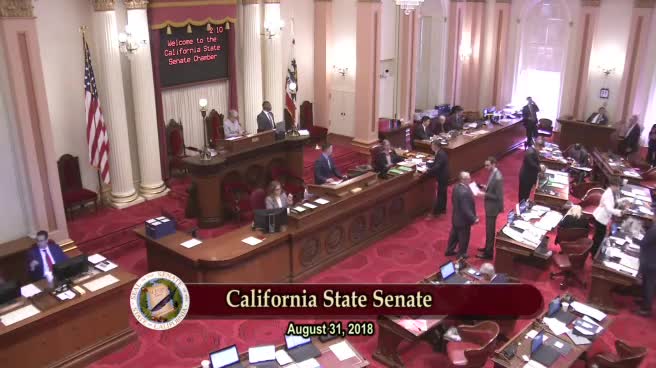 1MIN
Senate Floor
 2MIN
Assembly Floor
 47SEC
Assembly Floor
 3MIN
Assembly Floor
 7MIN
Assembly Standing Committee on Revenue and Taxation
 2MIN
Senate Floor
 9MIN
Senate Standing Committee on Governance and Finance
Bill Author

Bill Co-Author(s):