SB 963: Water replenishment districts.
- Session Year: 2017-2018
- House: Senate
- Latest Version Date: 2018-09-11
Existing law authorizes a water replenishment district, for the purposes of replenishing the groundwater supplies within the district, to buy and sell water; exchange water; distribute water to persons in exchange for ceasing or reducing groundwater extractions; spread, sink, and inject water into the underground; store, transport, recapture, recycle, purify, treat, or otherwise manage and control water for the beneficial use of persons or property within the district; and build the necessary works to achieve groundwater replenishment.
Existing law authorizes a water replenishment district to establish an annual reserve fund not to exceed $10,000,000, as adjusted annually to reflect percentage increases or decreases in the blended cost of water from district supply sources and, beginning in the 201920 fiscal year, requires a minimum of 80% of the reserve to be used for water purchases. Existing law excepts from this limitation the unexpended balance of any appropriated funds in a capital improvement project construction account established to pay the cost of a project or projects under construction.
This bill would repeal this reserve fund authorization and would make conforming changes.
Existing law requires a water replenishment district to order, review, and maintain on file an independent, audited financial statement not later than 60 days from the conclusion of the districts fiscal year and requires copies of the statements to be submitted to the Governor, the Legislature, and the California State Auditor on or before November 1 of each year. Existing law requires that the independent audited financial statement be consistent with the standards provided in the Standards for Audit of Governmental Organizations, Programs, Activities, and Functions prepared by the Comptroller General of the United States and that it include specified information.
This bill would instead require the district to order, review, and maintain the statement not later than 180 days from the conclusion of the districts fiscal year and would require the statement to be consistent with the Generally Accepted Government Auditing Standards prepared by the United States Government Accountability Office. The bill would also revise the required contents of the statement, require that copies of the statement, as described, be submitted to specified committees of the Legislature instead of the Legislature generally, and require that all copies submitted to the Governor, the California State Auditor, and the legislative committees be submitted on or before December 31 of each year. The bill would require the district to provide, in addition to the statement, information on expenditures relating to capital improvement projects planned to be undertaken by the district.
Existing law authorizes a water replenishment district, for the purposes of replenishing the groundwater supplies within the district, to buy and sell water; exchange water; distribute water to persons in exchange for ceasing or reducing groundwater extractions; spread, sink, and inject water into the underground; store, transport, recapture, recycle, purify, treat, or otherwise manage and control water for the beneficial use of persons or property within the district; and build the necessary works to achieve groundwater replenishment.
Existing law authorizes a water replenishment district to establish an annual reserve fund not to exceed $10,000,000, as adjusted annually to reflect percentage increases or decreases in the blended cost of water from district supply sources and, beginning in the 201920 fiscal year, requires a minimum of 80% of the reserve to be used for water purchases. Existing law excepts from this limitation the unexpended balance of any appropriated funds in a capital improvement project construction account established to pay the cost of a project or projects under construction.
This bill would repeal this reserve fund authorization and would make conforming changes.
Existing law requires a water replenishment district to order, review, and maintain on file an independent, audited financial statement not later than 60 days from the conclusion of the districts fiscal year and require copies of the statements to be submitted to the Governor, the Legislature, and the California State Auditor on or before November 1 of each year. Existing law requires that the independent audited financial statement be consistent with the standards provided in the Standards for Audit of Governmental Organizations, Programs, Activities, and Functions prepared by the Comptroller General of the United States and that it include specified information.
This bill would instead require the statements the district to order, review, and maintain the statement not later than 180 days from the conclusion of the districts fiscal year and would require the statement to be consistent with the Generally Accepted Government Auditing Standards prepared by the United States Government Accountability Office. The bill would also revise the required contents of the statement, require that copies of the statement, as described, be submitted to the appropriate policy specified committees of the Legislature instead of the Legislature generally. generally, and require that all copies submitted to the Governor, the State Auditor, and the legislative committees be submitted on or before December 31 of each year. The bill would require the district to provide, in addition to the statement, information on expenditures relating to capital improvement projects planned to be undertaken by the district.
Existing law authorizes a water replenishment district, for the purposes of replenishing the groundwater supplies within the district, to buy and sell water; exchange water; distribute water to persons in exchange for ceasing or reducing groundwater extractions; spread, sink, and inject water into the underground; store, transport, recapture, recycle, purify, treat, or otherwise manage and control water for the beneficial use of persons or property within the district; and build the necessary works to achieve groundwater replenishment.
Existing law authorizes a water replenishment district to establish an annual reserve fund not to exceed $10,000,000, as adjusted annually to reflect percentage increases or decreases in the blended cost of water from district supply sources and, beginning in the 201920 fiscal year, requires a minimum of 80% of the reserve to be used for water purchases. Existing law excepts from this limitation the unexpended balance of any appropriated funds in a capital improvement project construction account established to pay the cost of a project or projects under construction.
This bill would repeal this reserve fund authorization and would make conforming changes.
Existing law requires a water replenishment district to order, review, and maintain on file an independent, audited financial statement not later than 60 days from the conclusion of the districts fiscal year and require copies of the statements to be submitted to the Governor, the Legislature, and the California State Auditor on or before November 1 of each year.
This bill would repeal these requirements. require the statements to be submitted to the appropriate policy committees of the Legislature instead of the Legislature generally.
Existing law authorizes a water replenishment district, for the purposes of replenishing the groundwater supplies within the district, to buy and sell water; exchange water; distribute water to persons in exchange for ceasing or reducing groundwater extractions; spread, sink, and inject water into the underground; store, transport, recapture, recycle, purify, treat, or otherwise manage and control water for the beneficial use of persons or property within the district; and build the necessary works to achieve groundwater replenishment.
Existing law authorizes a water replenishment district to establish an annual reserve fund not to exceed $10,000,000, as adjusted annually to reflect percentage increases or decreases in the blended cost of water from district supply sources and, beginning in the 201920 fiscal year, requires a minimum of 80% of the reserve to be used for water purchases. Existing law excepts from this limitation the unexpended balance of any appropriated funds in a capital improvement project construction account established to pay the cost of a project or projects under construction.
This bill would repeal this reserve fund authorization and would make conforming changes.
Existing law requires a water replenishment district to order, review, and maintain on file an independent, audited financial statement not later than 60 days from the conclusion of the districts fiscal year and require copies of the statements to be submitted to the Governor, the Legislature, and the State Auditor on or before November 1 of each year.
This bill would repeal these requirements.
Existing law gives the Department of Transportation full possession and control of all state highways. Existing law describes the authorized routes in the state highway system and establishes a process for adoption of a highway on an authorized route by the California Transportation Commission. Existing law also provides for the commission to relinquish to local agencies state highway segments that have been deleted from the state highway system by legislative enactment, and in certain other cases.This bill would make nonsubstantive changes to these provisions.Existing law gives the Department of Transportation full possession and control of all state highways. Existing law describes the authorized routes in the state highway system and establishes a process for adoption of a highway on an authorized route by the California Transportation Commission. Existing law also provides for the commission to relinquish to local agencies state highway segments that have been deleted from the state highway system by legislative enactment, and in certain other cases.
This bill would make nonsubstantive changes to these provisions.
(a)The district shall order, review, and maintain on file an independent, audited financial statement not later than 180 days from the conclusion of the districts fiscal year. The independent audited financial statement shall be prepared by a certified public accountant or a public accountant, licensed by the California Board of Accountancy. The independent audited financial statement shall be consistent with standards provided in the Generally Accepted Government Auditing Standards prepared by the United States Government Accountability Office.
(b)Copies of the independent audited financial statement shall be submitted to the Governor, the Senate Committee on Governance and Finance or its successor, the Assembly Committee on Local Government or its successor, and the California State Auditor on or before December 31 of each year.
(1)Copies of the independent audited financial statement shall include, regardless of whether the certified public accountant or public accountant reports separately, including separate reports bound in the same document, any finding or findings involving deficiencies in internal control, fraud, noncompliance with provisions of laws, regulations, contracts, and grant agreements, and abuse. The district shall include its written comments in response to findings that provide the perspectives of the responsible officials of the district and the corrective actions they plan to take.
(2)In addition to copies of the independent audited financial statement, the district shall also provide information on expenditures relating to capital improvement projects planned to be undertaken by the district.
SEC. 4.Section 60315 of the Water Code is amended to read:60315.Upon completing the hearing, but no later than the second Tuesday in May, the board shall, by resolution, find all of the following:
(a)The annual overdraft for the preceding water year.
(b)The estimated annual overdraft for the current water year.
(c)The estimated annual overdraft for the ensuing water year.
(d)The accumulated overdraft as of the last day of the preceding water year.
(e)The estimated accumulated overdraft as of the last day of the current water year.
(f)The total production of groundwater from the groundwater supplies within the district during the preceding water year.
(g)The estimated total production of groundwater from the groundwater supplies within the district for the current water year.
(h)The estimated total production of groundwater from the groundwater supplies within the district for the ensuing water year.
(i)The changes during the preceding water year in the pressure levels or piezometric heights of the groundwater contained within pressure-level areas of the district, and the effects thereof upon the groundwater supplies within the district.
(j)The estimated changes during the current water year in the pressure levels or piezometric heights of the groundwater contained within pressure-level areas of the district, and the estimated effects thereof upon the groundwater supplies within the district.
(k)The quantity of water that should be purchased for the replenishment of the groundwater supplies of the district during the ensuing water year.
(l)The source and estimated cost of water available for the replenishment.
(m)The estimated costs of replenishing the groundwater supplies with the water so purchased.
(n)The estimated costs of purchasing, in water years succeeding the ensuing water year, that portion of the quantity of water which should be purchased for the replenishment of the groundwater supplies of the district during the ensuing water year, but which is estimated to be unavailable for purchase during the ensuing water year; estimated costs shall be based on the estimated price of water for replenishment purposes during the ensuing water year.
(o)The estimated rate of the replenishment assessment required to be levied upon the production of groundwater from the groundwater supplies within the district during the ensuing fiscal year for the purposes of accomplishing the replenishment and providing a reserve fund to purchase in future years, when available, that portion of the quantity of water which should be purchased for the replenishment of the groundwater supplies of the district during the ensuing water year, but which is estimated to be unavailable for purchase during that ensuing water year.
(p)Whether any contaminants should be removed from groundwater supplies during the ensuing fiscal year, and whether any other actions under Section 60224 should be undertaken during the ensuing fiscal year, the estimated costs thereof, and the estimated additional rate of replenishment assessment required to be levied upon the production of groundwater from the groundwater supplies within the district during the ensuing fiscal year for those purposes.
(q)Whether any program for removal of contaminants or other actions under Section 60224 should be a multiyear program or is a continuation of a previously authorized multiyear program.
SEC. 5.Section 60328.1 of the Water Code is repealed.(a)The district shall order, review, and maintain on file an independent, audited financial statement not later than 180 days from the conclusion of the districts fiscal year. The independent audited financial statement shall be prepared by a certified public accountant or a public accountant, licensed by the California Board of Accountancy. The independent audited financial statement shall be consistent with standards provided in the Generally Accepted Government Auditing Standards prepared by the United States Government Accountability Office.
(b)Copies of the independent audited financial statement shall be submitted to the Governor, the Senate Committee on Governance and Finance or its successor, the Assembly Committee on Local Government or its successor, and the California State Auditor on or before December 31 of each year.
(1)Copies of the independent audited financial statement shall include, regardless of whether the State Auditor certified public accountant or public accountant reports separately, including separate reports bound in the same document, any finding or findings involving deficiencies in internal control, fraud, noncompliance with provisions of laws, regulations, contracts, and grant agreements, and abuse. The district shall include its written comments in response to findings that provide the perspectives of the responsible officials of the district and the corrective actions they plan to take.
(2)In addition to copies of the independent audited financial statement, the district shall also provide information on expenditures relating to capital improvement projects planned to be undertaken by the district.
SEC. 4.Section 60315 of the Water Code is amended to read:60315.Upon completing the hearing, but no later than the second Tuesday in May, the board shall, by resolution, find all of the following:
(a)The annual overdraft for the preceding water year.
(b)The estimated annual overdraft for the current water year.
(c)The estimated annual overdraft for the ensuing water year.
(d)The accumulated overdraft as of the last day of the preceding water year.
(e)The estimated accumulated overdraft as of the last day of the current water year.
(f)The total production of groundwater from the groundwater supplies within the district during the preceding water year.
(g)The estimated total production of groundwater from the groundwater supplies within the district for the current water year.
(h)The estimated total production of groundwater from the groundwater supplies within the district for the ensuing water year.
(i)The changes during the preceding water year in the pressure levels or piezometric heights of the groundwater contained within pressure-level areas of the district, and the effects thereof upon the groundwater supplies within the district.
(j)The estimated changes during the current water year in the pressure levels or piezometric heights of the groundwater contained within pressure-level areas of the district, and the estimated effects thereof upon the groundwater supplies within the district.
(k)The quantity of water that should be purchased for the replenishment of the groundwater supplies of the district during the ensuing water year.
(l)The source and estimated cost of water available for the replenishment.
(m)The estimated costs of replenishing the groundwater supplies with the water so purchased.
(n)The estimated costs of purchasing, in water years succeeding the ensuing water year, that portion of the quantity of water which should be purchased for the replenishment of the groundwater supplies of the district during the ensuing water year, but which is estimated to be unavailable for purchase during the ensuing water year; estimated costs shall be based on the estimated price of water for replenishment purposes during the ensuing water year.
(o)The estimated rate of the replenishment assessment required to be levied upon the production of groundwater from the groundwater supplies within the district during the ensuing fiscal year for the purposes of accomplishing the replenishment and providing a reserve fund to purchase in future years, when available, that portion of the quantity of water which should be purchased for the replenishment of the groundwater supplies of the district during the ensuing water year, but which is estimated to be unavailable for purchase during that ensuing water year.
(p)Whether any contaminants should be removed from groundwater supplies during the ensuing fiscal year, and whether any other actions under Section 60224 should be undertaken during the ensuing fiscal year, the estimated costs thereof, and the estimated additional rate of replenishment assessment required to be levied upon the production of groundwater from the groundwater supplies within the district during the ensuing fiscal year for those purposes.
(q)Whether any program for removal of contaminants or other actions under Section 60224 should be a multiyear program or is a continuation of a previously authorized multiyear program.
SEC. 5.Section 60328.1 of the Water Code is repealed.(a)The district shall order, review, and maintain on file an independent, audited financial statement not later than 60 180 days from the conclusion of the districts fiscal year. The independent audited financial statement shall be prepared by a certified public accountant or a public accountant, licensed by the California Board of Accountancy. The independent audited financial statement shall be consistent with standards provided in the Standards for Audits of Governmental Organizations, Programs, Activities, and Functions prepared by the Comptroller General of the United States. The independent audited financial statement shall include all of the following: the Generally Accepted Government Auditing Standards prepared by the United States Government Accountability Office.
(1)The balances in all accounts established for the maintenance of the districts funds.(2)A report describing the amount of district funds to be expended for any capital improvement project authorized to be constructed or funded by the district and a detailed description of the capital improvement project.(3)A report detailing the source of funds to be expended on any authorized capital improvement project, and whether the source of funds is the water replenishment assessment levied in accordance with Part 6 (commencing with Section 60300).(4)A report describing the propriety of the districts operating expenses.(5)A summary of independent audited financial statement exceptions and management improvement recommendations.(6)A description of correction or plan of correction shall be incorporated in the independent audited financial statement, describing the specific actions that are planned to be taken, or that have been taken, to correct the problem identified by the auditor. The descriptions of specific actions to be taken or that have been taken shall not solely consist of general comments such as will implement, accepted the recommendation, or will discuss at a later date.(b)Copies of the independent audited financial statements shall be submitted to the Governor, the appropriate policy committees of the Legislature, including the Senate Committee on Governance and Finance or its successor, and the State Auditor on or before November 1 of each year.(b)Copies of the independent audited financial statement shall be submitted to the Governor, the Senate Committee on Governance and Finance or its successor, the Assembly Committee on Local Government or its successor, and the State Auditor on or before December 31 of each year.
(1)Copies of the independent audited financial statement shall include, regardless of whether the State Auditor reports separately, including separate reports bound in the same document, any finding or findings involving deficiencies in internal control, fraud, noncompliance with provisions of laws, regulations, contracts, and grant agreements, and abuse. The district shall include its written comments in response to findings that provide the perspectives of the responsible officials of the district and the corrective actions they plan to take.
(2)In addition to copies of the independent audited financial statement, the district shall also provide information on expenditures relating to capital improvement projects planned to be undertaken by the district.
SEC. 4.Section 60315 of the Water Code is amended to read:60315.Upon completing the hearing, but no later than the second Tuesday in May, the board shall, by resolution, find all of the following:
(a)The annual overdraft for the preceding water year.
(b)The estimated annual overdraft for the current water year.
(c)The estimated annual overdraft for the ensuing water year.
(d)The accumulated overdraft as of the last day of the preceding water year.
(e)The estimated accumulated overdraft as of the last day of the current water year.
(f)The total production of groundwater from the groundwater supplies within the district during the preceding water year.
(g)The estimated total production of groundwater from the groundwater supplies within the district for the current water year.
(h)The estimated total production of groundwater from the groundwater supplies within the district for the ensuing water year.
(i)The changes during the preceding water year in the pressure levels or piezometric heights of the groundwater contained within pressure-level areas of the district, and the effects thereof upon the groundwater supplies within the district.
(j)The estimated changes during the current water year in the pressure levels or piezometric heights of the groundwater contained within pressure-level areas of the district, and the estimated effects thereof upon the groundwater supplies within the district.
(k)The quantity of water that should be purchased for the replenishment of the groundwater supplies of the district during the ensuing water year.
(l)The source and estimated cost of water available for the replenishment.
(m)The estimated costs of replenishing the groundwater supplies with the water so purchased.
(n)The estimated costs of purchasing, in water years succeeding the ensuing water year, that portion of the quantity of water which should be purchased for the replenishment of the groundwater supplies of the district during the ensuing water year, but which is estimated to be unavailable for purchase during the ensuing water year; estimated costs shall be based on the estimated price of water for replenishment purposes during the ensuing water year.
(o)The estimated rate of the replenishment assessment required to be levied upon the production of groundwater from the groundwater supplies within the district during the ensuing fiscal year for the purposes of accomplishing the replenishment and providing a reserve fund to purchase in future years, when available, that portion of the quantity of water which should be purchased for the replenishment of the groundwater supplies of the district during the ensuing water year, but which is estimated to be unavailable for purchase during that ensuing water year.
(p)Whether any contaminants should be removed from groundwater supplies during the ensuing fiscal year, and whether any other actions under Section 60224 should be undertaken during the ensuing fiscal year, the estimated costs thereof, and the estimated additional rate of replenishment assessment required to be levied upon the production of groundwater from the groundwater supplies within the district during the ensuing fiscal year for those purposes.
(q)Whether any program for removal of contaminants or other actions under Section 60224 should be a multiyear program or is a continuation of a previously authorized multiyear program.
SEC. 5.Section 60328.1 of the Water Code is repealed.(a)The district shall order, review, and maintain on file an independent, audited financial statement not later than 60 days from the conclusion of the districts fiscal year. The independent audited financial statement shall be prepared by a certified public accountant or a public accountant, licensed by the California Board of Accountancy. The independent audited financial statement shall be consistent with standards provided in the Standards for Audits of Governmental Organizations, Programs, Activities, and Functions prepared by the Comptroller General of the United States. The independent audited financial statement shall include all of the following:
(1)The balances in all accounts established for the maintenance of the districts funds.
(2)A report describing the amount of district funds to be expended for any capital improvement project authorized to be constructed or funded by the district and a detailed description of the capital improvement project.
(3)A report detailing the source of funds to be expended on any authorized capital improvement project, and whether the source of funds is the water replenishment assessment levied in accordance with Part 6 (commencing with Section 60300).
(4)A report describing the propriety of the districts operating expenses.
(5)A summary of independent audited financial statement exceptions and management improvement recommendations.
(6)A description of correction or plan of correction shall be incorporated in the independent audited financial statement, describing the specific actions that are planned to be taken, or that have been taken, to correct the problem identified by the auditor. The descriptions of specific actions to be taken or that have been taken shall not solely consist of general comments such as will implement, accepted the recommendation, or will discuss at a later date.
(b)Copies of the independent audited financial statements shall be submitted to the Governor, the appropriate policy committees of the Legislature, including the Senate Committee on Governance and Finance or its successor, and the State Auditor on or before November 1 of each year.
SEC. 2.SEC. 4.Section 60315 of the Water Code is amended to read:60315.Upon completing the hearing, but no later than the second Tuesday in May, the board shall, by resolution, find all of the following:
(a)The annual overdraft for the preceding water year.
(b)The estimated annual overdraft for the current water year.
(c)The estimated annual overdraft for the ensuing water year.
(d)The accumulated overdraft as of the last day of the preceding water year.
(e)The estimated accumulated overdraft as of the last day of the current water year.
(f)The total production of groundwater from the groundwater supplies within the district during the preceding water year.
(g)The estimated total production of groundwater from the groundwater supplies within the district for the current water year.
(h)The estimated total production of groundwater from the groundwater supplies within the district for the ensuing water year.
(i)The changes during the preceding water year in the pressure levels or piezometric heights of the groundwater contained within pressure-level areas of the district, and the effects thereof upon the groundwater supplies within the district.
(j)The estimated changes during the current water year in the pressure levels or piezometric heights of the groundwater contained within pressure-level areas of the district, and the estimated effects thereof upon the groundwater supplies within the district.
(k)The quantity of water that should be purchased for the replenishment of the groundwater supplies of the district during the ensuing water year.
(l)The source and estimated cost of water available for the replenishment.
(m)The estimated costs of replenishing the groundwater supplies with the water so purchased.
(n)The estimated costs of purchasing, in water years succeeding the ensuing water year, that portion of the quantity of water which should be purchased for the replenishment of the groundwater supplies of the district during the ensuing water year, but which is estimated to be unavailable for purchase during the ensuing water year; estimated costs shall be based on the estimated price of water for replenishment purposes during the ensuing water year.
(o)The estimated rate of the replenishment assessment required to be levied upon the production of groundwater from the groundwater supplies within the district during the ensuing fiscal year for the purposes of accomplishing the replenishment and providing a reserve fund to purchase in future years, when available, that portion of the quantity of water which should be purchased for the replenishment of the groundwater supplies of the district during the ensuing water year, but which is estimated to be unavailable for purchase during that ensuing water year.
(p)Whether any contaminants should be removed from groundwater supplies during the ensuing fiscal year, and whether any other actions under Section 60224 should be undertaken during the ensuing fiscal year, the estimated costs thereof, and the estimated additional rate of replenishment assessment required to be levied upon the production of groundwater from the groundwater supplies within the district during the ensuing fiscal year for those purposes.
(q)Whether any program for removal of contaminants or other actions under Section 60224 should be a multiyear program or is a continuation of a previously authorized multiyear program.
SEC. 3.SEC. 5.Section 60328.1 of the Water Code is repealed.Upon completing the hearing, but no later than the second Tuesday in May, the board shall, by resolution, find all of the following:
(a)The annual overdraft for the preceding water year.
(b)The estimated annual overdraft for the current water year.
(c)The estimated annual overdraft for the ensuing water year.
(d)The accumulated overdraft as of the last day of the preceding water year.
(e)The estimated accumulated overdraft as of the last day of the current water year.
(f)The total production of groundwater from the groundwater supplies within the district during the preceding water year.
(g)The estimated total production of groundwater from the groundwater supplies within the district for the current water year.
(h)The estimated total production of groundwater from the groundwater supplies within the district for the ensuing water year.
(i)The changes during the preceding water year in the pressure levels or piezometric heights of the groundwater contained within pressure-level areas of the district, and the effects thereof upon the groundwater supplies within the district.
(j)The estimated changes during the current water year in the pressure levels or piezometric heights of the groundwater contained within pressure-level areas of the district, and the estimated effects thereof upon the groundwater supplies within the district.
(k)The quantity of water that should be purchased for the replenishment of the groundwater supplies of the district during the ensuing water year.
(l)The source and estimated cost of water available for the replenishment.
(m)The estimated costs of replenishing the groundwater supplies with the water so purchased.
(n)The estimated costs of purchasing, in water years succeeding the ensuing water year, that portion of the quantity of water which should be purchased for the replenishment of the groundwater supplies of the district during the ensuing water year, but which is estimated to be unavailable for purchase during the ensuing water year; estimated costs shall be based on the estimated price of water for replenishment purposes during the ensuing water year.
(o)The estimated rate of the replenishment assessment required to be levied upon the production of groundwater from the groundwater supplies within the district during the ensuing fiscal year for the purposes of accomplishing the replenishment and providing a reserve fund to purchase in future years, when available, that portion of the quantity of water which should be purchased for the replenishment of the groundwater supplies of the district during the ensuing water year, but which is estimated to be unavailable for purchase during that ensuing water year.
(p)Whether any contaminants should be removed from groundwater supplies during the ensuing fiscal year, and whether any other actions under Section 60224 should be undertaken during the ensuing fiscal year, the estimated costs thereof, and the estimated additional rate of replenishment assessment required to be levied upon the production of groundwater from the groundwater supplies within the district during the ensuing fiscal year for those purposes.
(q)Whether any program for removal of contaminants or other actions under Section 60224 should be a multiyear program or is a continuation of a previously authorized multiyear program.
(r)The amount, if any, by which the estimated reserve funds on hand at the end of the current fiscal year will exceed the annual reserve fund limit determined pursuant to Section 60290. SEC. 3.Section 60328.1 of the Water Code is repealed.60328.1.The district shall apply the estimated fiscal yearend balance in excess of the amount permitted in Section 60290 to a replenishment assessment rate reduction or to the purchase of water in the succeeding fiscal year.SECTION 1.Section 73 of the Streets and Highways Code is amended to read:73.(a)The commission shall relinquish to any county or city any portion of any state highway within the county or city that has been deleted from the state highway system by legislative enactment, and the relinquishment shall become effective upon the first day of the next calendar or fiscal year, whichever first occurs after the effective date of the legislative enactment. It may likewise relinquish any portion of any state highway that has been superseded by relocation.(b)Whenever the department and the county or city concerned have entered into an agreement providing therefor, or the legislative body of the county or city has adopted a resolution consenting thereto, the commission may relinquish, to that county or city, any frontage or service road or outer highway, within the territorial limits of the county or city, which has a right-of-way of at least 40 feet in width and which has been constructed as a part of a state highway project, but does not constitute a part of the main traveled roadway thereof. The commission may also relinquish, to a county or city within whose territorial limits it is located, any nonmotorized transportation facility, as defined in Section 887, constructed as part of a state highway project if the county or city, as the case may be, has entered into an agreement providing therefor or its legislative body has adopted a resolution consenting thereto.(c)Relinquishment shall be by resolution. A certified copy of the resolution shall be filed with the board of supervisors or the city clerk, as the case may be. A certified copy of the resolution shall also be recorded in the office of the recorder of the county where the land is located and, upon its recordation, all right, title, and interest of the state in and to that portion of any state highway shall vest in the county or city, as the case may be, and that highway or portion thereof shall thereupon constitute a county road or city street, as the case may be.(d)The vesting of all right, title, and interest of the state in and to portions of any state highways heretofore relinquished by the commission, in the county or city to which it was relinquished, is hereby confirmed.(e)Prior to relinquishing any portion of a state highway to a county or a city, except where required by legislative enactment, the department shall give 90 days notice in writing of intention to relinquish to the board of supervisors, or the city council, as the case may be. Where the resolution of relinquishment contains a recital as to the giving of the notice, adoption of the resolution of relinquishment shall be conclusive evidence that the notice has been given.(f)The commission shall not relinquish to any county or city any portion of any state highway that has been superseded by relocation until the department has placed the highway, as defined in Section 23, in a state of good repair. This requirement shall not obligate the department for widening, new construction, or major reconstruction, except as the commission may direct. A state of good repair requires maintenance, as defined in Section 27, including litter removal, weed control, and tree and shrub trimming to the time of relinquishment.(g)Within the 90-day period, the board of supervisors or the city council may protest in writing to the commission stating the reasons therefor, including, but not limited to, objections that the highway is not in a state of good repair, or is not needed for public use and should be vacated by the commission. In the event that the commission does not comply with the requests of the protesting body, it may proceed with the relinquishment only after a public hearing given to the protesting body on 10 days written notice.(a)The commission shall relinquish to any county or city any portion of any state highway within the county or city that has been deleted from the state highway system by legislative enactment, and the relinquishment shall become effective upon the first day of the next calendar or fiscal year, whichever first occurs after the effective date of the legislative enactment. It may likewise relinquish any portion of any state highway that has been superseded by relocation. Whenever
(b)Whenever the department and the county or city concerned have entered into an agreement providing therefor, or the legislative body of the county or city has adopted a resolution consenting thereto, the commission may relinquish, to that county or city, any frontage or service road or outer highway, within the territorial limits of the county or city, which has a right-of-way of at least 40 feet in width and which has been constructed as a part of a state highway project, but does not constitute a part of the main traveled roadway thereof. The commission may also relinquish, to a county or city within whose territorial limits it is located, any nonmotorized transportation facility, as defined in Section 887, constructed as part of a state highway project if the county or city, as the case may be, has entered into an agreement providing therefor or its legislative body has adopted a resolution consenting thereto.
Relinquishment(c)Relinquishment shall be by resolution. A certified copy of the resolution shall be filed with the board of supervisors or the city clerk, as the case may be. A certified copy of the resolution shall also be recorded in the office of the recorder of the county where the land is located and, upon its recordation, all right, title, and interest of the state in and to that portion of any state highway shall vest in the county or city, as the case may be, and that highway or portion thereof shall thereupon constitute a county road or city street, as the case may be.
The(d)The vesting of all right, title, and interest of the state in and to portions of any state highways heretofore relinquished by the commission, in the county or city to which it was relinquished, is hereby confirmed.
Prior(e)Prior to relinquishing any portion of a state highway to a county or a city, except where required by legislative enactment, the department shall give 90 days notice in writing of intention to relinquish to the board of supervisors, or the city council, as the case may be. Where the resolution of relinquishment contains a recital as to the giving of the notice, adoption of the resolution of relinquishment shall be conclusive evidence that the notice has been given.
The(f)The commission shall not relinquish to any county or city any portion of any state highway that has been superseded by relocation until the department has placed the highway, as defined in Section 23, in a state of good repair. This requirement shall not obligate the department for widening, new construction, or major reconstruction, except as the commission may direct. A state of good repair requires maintenance, as defined in Section 27, including litter removal, weed control, and tree and shrub trimming to the time of relinquishment.
Within(g)Within the 90-day period, the board of supervisors or the city council may protest in writing to the commission stating the reasons therefor, including, but not limited to, objections that the highway is not in a state of good repair, or is not needed for public use and should be vacated by the commission. In the event that the commission does not comply with the requests of the protesting body, it may proceed with the relinquishment only after a public hearing given to the protesting body on 10 days written notice.
|
Date
|
Status
|
|---|---|
| Sep 11, 2018 | Chaptered by Secretary of State. Chapter 351, Statutes of 2018. |
| Sep 11, 2018 | Approved by the Governor. |
| Aug 24, 2018 | Enrolled and presented to the Governor at 4 p.m. |
| Aug 20, 2018 | Assembly amendments concurred in. (Ayes 36. Noes 0.) Ordered to engrossing and enrolling. |
| Aug 16, 2018 | In Senate. Concurrence in Assembly amendments pending. |
| Aug 16, 2018 | Read third time. Passed. Ordered to the Senate. |
| Jun 19, 2018 | Read second time. Ordered to third reading. |
| Jun 18, 2018 | Read second time and amended. Ordered to second reading. |
| Jun 14, 2018 | From committee: Do pass as amended. (Ayes 7. Noes 0.) (June 13). |
| Jun 4, 2018 | From committee with author's amendments. Read second time and amended. Re-referred to Com. on L. GOV. |
| May 7, 2018 | Referred to Com. on L. GOV. |
| Apr 30, 2018 | In Assembly. Read first time. Held at Desk. |
| Apr 30, 2018 | Read third time. Passed. (Ayes 37. Noes 0.) Ordered to the Assembly. |
| Apr 17, 2018 | Read second time. Ordered to third reading. |
| Apr 16, 2018 | Ordered to second reading. |
| Apr 12, 2018 | Read second time and amended. Re-referred to Com. on APPR. |
| Apr 11, 2018 | From committee: Do pass as amended and re-refer to Com. on APPR. (Ayes 6. Noes 0.) (April 11). |
| Apr 3, 2018 | Set for hearing April 11. |
| Mar 21, 2018 | Re-referred to Com. on GOV. & F. |
| Mar 14, 2018 | From committee with author's amendments. Read second time and amended. Re-referred to Com. on RLS. |
| Feb 8, 2018 | Referred to Com. on RLS. |
| Feb 1, 2018 | From printer. May be acted upon on or after March 3. |
| Jan 31, 2018 | Introduced. Read first time. To Com. on RLS. for assignment. To print. |
|
Date
|
Description
|
Location
|
Votes
|
|
|---|---|---|---|---|
| Aug 20, 2018 | Unfinished Business SB963 Allen Concurrence | Senate Floor |
Passed |
|
| Aug 16, 2018 | SB 963 Allen Senate Third Reading By MURATSUCHI | Assembly Floor |
Passed |
|
| Jun 13, 2018 | Do pass as amended. | Assembly Standing Committee on Local Government |
Passed |
|
| Apr 30, 2018 | Senate 3rd Reading SB963 Allen | Senate Floor |
Passed |
|
| Apr 11, 2018 | Do pass as amended, but first amend, and re-refer to the Committee on [Appropriations] | Senate Standing Committee on Governance and Finance |
Passed |
This list shows positions taken on this bill by organizations on the date displayed, which is linked to the original source.
Positions by individuals are not included.
|
Organization
|
Position
|
Date
|
|---|---|---|
| Orange County Water District | ** Support | Aug 18, 2018 |
| Unknown. | ** Against | Apr 6, 2018 |
| Water Replenishment District Of Southern California | ** Support | Aug 18, 2018 |
| Water Replenishment District Of Southern California . | ** Support | Apr 6, 2018 |
| Water Replenishment District Of Southern California [Sponsor] | ** Support | Jun 12, 2018 |
Office of Senate Floor Analyses (916) 651-1520 Fax: (916) 327-4478 | SB |
UNFINISHED BUSINESS
Bill No: SB 963
:
SENATE GOVERNANCE & FIN. COMMITTEE: 6-0, 4/11/18
AYES: McGuire, Nguyen, Beall, Hernandez, Hertzberg, Moorlach
NO VOTE RECORDED: Lara
SENATE FLOOR: 37-0, 4/30/18
AYES: Allen, Anderson, Atkins, Bates, Beall, Bradford, De León, Dodd, Fuller, Gaines, Galgiani, Glazer, Hernandez, Hertzberg, Hill, Hueso, Jackson, Lara, Leyva, McGuire, Mitchell, Monning, Moorlach, Morrell, Newman, Nguyen, Nielsen, Pan, Portantino, Roth, Skinner, Stern, Stone, Vidak, Wieckowski, Wiener, Wilk
NO VOTE RECORDED: Berryhill, Cannella
ASSEMBLY FLOOR: 76-0, 8/16/18 - See last page for vote
SOURCE: Water Replenishment District of Southern California
DIGEST:
This bill repeals certain limitations on the reserve funds of the Water Replenishment District of Southern California.
Assembly Amendments
revise the reporting requirements that the Water Replenishment District of Southern California must meet to conform with current standards.
Existing law:
- Authorizes a water replenishment district, for the purposes of replenishing the groundwater supplies within the district, to:
- Buy and sell water;
- Exchange water;
- Distribute water to persons in exchange for ceasing or reducing groundwater extractions;
- Spread, sink, and inject water into the underground;
- Store, transport, recapture, recycle, purify, treat, or otherwise manage and control water for the beneficial use of persons or property within the district; and
- Build the necessary works to achieve groundwater replenishment.
- Limits the annual reserve fund of a water replenishment district to $10 million, as adjusted annually to reflect percentage increases or decreases in the blended cost of water from district supply sources.
- Requires, beginning in the 2019–20 fiscal year, a minimum of 80% of the reserve to be used for water purchases.
- Excepts from this limitation the unexpended balance of any appropriated funds in a capital improvement project construction account established to pay the cost of a project or projects under construction.
- Requires a water replenishment district to order, review, and maintain on file an independent, audited financial statement not later than 60 days from the conclusion of the district’s fiscal year and require copies of the statements to be submitted to the Governor, the Legislature, and the California State Auditor on or before November 1 of each year.
This bill:
- Repeals the limit on a water replenishment district’s reserve funds.
- Repeals the requirement that 80% of the reserve be used for water purchases.
- Revises the reporting requirements that a water replenishment district must meet to conform to the Generally Accepted Governmental Auditing Standards prepared by the United States Government Accountability Office.
- Requires the report to be accompanied by any other reports or documents describing any finding or findings involving deficiencies in internal control, fraud, noncompliance with provisions of laws, regulations, contracts, and grant agreements, and abuse, as well as written comments in response to those findings and information on expenditures relating to capital improvement projects planned to be undertaken by the district.
- Directs a water replenishment district to send the required report to the appropriate policy committees of the Legislature, including the Senate Committee on Governance and Finance and the Assembly Local Government Committee, or their successors, instead of the Legislature generally.
- Grants the district 180 days from the end of each fiscal year to distribute the report, instead of 60 days as in current law.
Background
State law allows the formation of water replenishment districts to recharge water into groundwater basins for later withdrawal by water purveyors. In 1959, the voters of Los Angeles County established the Water Replenishment District of Southern California (WRD) in 1959. The WRD is the state's sole water replenishment district. It earns revenue by charging water replenishment assessments to the agencies, utilities, and companies that pump groundwater. The District also gets property tax revenues from its share of the 1% property tax rate. The WRD uses these funds to secure water—by purchasing imported water and constructing projects that produce local water supplies—that percolates into the groundwater basin.
Fiscal controls. The WRD has been the subject of considerable local controversy over its water rates, fund balances, capital projects, and administrative practices. A December 1999 State Auditor’s report found that WRD didn’t exercise strict fiscal controls. Among other issues, the State Auditor found that the WRD had established an operating reserve of $20 million—twice what the Auditor estimated was necessary to ensure prudent reserves.
In response to the audit, the Legislature amended the Water Replenishment District Act to install a host of restrictions over the WRD’s finances. Specifically, SB 1979 (Escutia, Chapter 894, Statutes of 2000):
- Limited the WRD’s annual reserve fund to a maximum of $10 million, adjusted annually to reflect changes in the cost of purchased water. Reserves appropriated for capital improvements under construction are not subject to this limit.
- Required 80% of the WRD’s reserves to go to water purchases.
- Mandated that the WRD annually commission an independent, audited, financial statement that lists fund balances, includes specified reports on capital projects, and records the WRD’s response to any management recommendations from the State Auditor.
- Required the above financial statements to be submitted to the Governor, the Legislature, and the State Auditor annually by November 1.
The Legislature also established rules for contracting and constructing capital projects, and required follow-up audits of the WRD by the State Auditor in 2002 (AB 1834, Havice, Chapter 888, Statutes of 2000) and 2004 (AB 1163, Calderon, Chapter 941, Statutes of 2002). Those audits found that although the WRD had implemented many of the recommendations in previous audits, its reserve policies continued to raise questions.
Changing nature of replenishment. Over time, the manner by which the WRD replaces pumped groundwater has changed. When it was originally formed, the WRD purchased 100% of the water it used for replenishment from imported sources. In the 1960s, the WRD began a steady shift towards developing local sources of water, such as captured stormwater and recycled water. As a result, the WRD relied less on purchasing water and more on building its own capital projects. In 2013, the WRD sought relief from some of the fiscal controls imposed by the Legislature. The WRD argued that these controls threatened its financial viability and prevented it from investing in local sources of water. In response, the Legislature temporarily repealed the requirement that 80% of reserves must be spent on water purchases until the 2019-20 fiscal year (SB 620, Wright, Chapter 638, Statutes of 2013). In order to continue some oversight of the WRD’s reserves, SB 620 also required the establishment of a budget advisory committee, composed of the WRD’s ratepayers, to review and make recommendations on any replenishment assessment levied by the WRD and the WRD’s operating budget and reserves. SB 620 further contained intent language that records of the recommendations from the budget advisory committee should be used to evaluate the permanent repeal of the 80% requirement.
By 2015, only 20% of the water used for replenishment came from imported water purchases, and in 2018 and going forward, the District expects to rely entirely on local sources. In order to continue its independence from imported water purchases, the WRD’s officials want more flexibility to spend the District’s reserves.
Comments
- Purpose of the bill. The WRD plays an integral role in the sustainable management of water in Southern California. But because of past concerns over the WRD’s fiscal practices, it is subject to multiple restrictions on its budgeting practices that impair its effectiveness. As the WRD has shifted from purchasing imported water to producing its own from local sources, its fiscal needs have changed: it must incur larger operating expenses because its capital projects require costly replacement parts, and its need to purchase imported water has dropped dramatically. Accordingly, the WRD needs to spend more on operating expenses and less on purchased water, but the statutory restrictions on the WRD’s reserves pose a significant barrier. No other independent special district is subject to a restriction on its reserves, and in the years since these restrictions were imposed, the WRD has won multiple awards for its fiscal practices and transparency. SB 963 eliminates these restrictions, allowing the WRD to better manage its finances for changing water conditions and demands. This bill also promotes the state’s policy on reducing reliance on the state’s main source of imported water: the Sacramento-San Joaquin Delta.
- What’s changed? The Legislature established numerous fiscal controls on the WRD in response to a State Auditor’s report, which found that the District’s replenishment assessment rates were too high and that the District maintained excessive cash reserves. More recently, the Legislature loosened the 80% restriction, but only until the 2019-20 fiscal year. Simultaneously, the Legislature added additional oversight in the form of a budget advisory committee (with a 2020 sunset) while retaining the cap on reserves in existing law. The temporary nature of the reprieve from the 80% restriction promotes continued discretion on the part of the WRD—it knows it has to justify additional legislation to permanently remove that restriction. And the existing cap on reserves similarly benefits ratepayers by providing a cushion against overcharges. These requirements were installed to protect ratepayers from overcharging. SB 963 permanently repeals these controls, and the budget advisory committee sunsets on January 1, 2020. At the same time, Constitutional restrictions on the WRD’s assessments appear to be loosening. In 2017, the California Supreme Court ruled that certain groundwater augmentation charges, similar to the replenishment assessments charged by the WRD, are not “property-related fees” and therefore are not subject to Proposition 218’s proportional cost limitation (City of San Buenaventura v. United Water Conservation District, S226036). Will removing the statutory checks on the WRD allow it to overcharge ratepayers in the future?
FISCAL EFFECT: Appropriation: Fiscal Com.: Local:
Water Replenishment District of Southern California (source)
Orange County Water District
OPPOSITION: (Verified 8/16/18)
None received
ASSEMBLY FLOOR: 76-0, 8/16/18
AYES: Acosta, Aguiar-Curry, Arambula, Baker, Berman, Bigelow, Bloom, Bonta, Brough, Burke, Caballero, Calderon, Carrillo, Cervantes, Chau, Chávez, Chen, Chiu, Choi, Chu, Cooley, Cooper, Cunningham, Dahle, Daly, Eggman, Flora, Fong, Frazier, Friedman, Gabriel, Gallagher, Eduardo Garcia, Gipson, Gloria, Gonzalez Fletcher, Gray, Grayson, Holden, Irwin, Jones-Sawyer, Kalra, Kamlager-Dove, Kiley, Lackey, Levine, Limón, Low, Maienschein, Mathis, Mayes, Medina, Melendez, Mullin, Muratsuchi, Nazarian, Obernolte, O'Donnell, Patterson, Quirk, Quirk-Silva, Reyes, Rivas, Rodriguez, Rubio, Salas, Santiago, Steinorth, Mark Stone, Thurmond, Ting, Voepel, Waldron, Weber, Wood, Rendon
NO VOTE RECORDED: Travis Allen, Cristina Garcia, Harper, McCarty
8/18/18 13:25:34
**** END ****
SENATE THIRD READING
STR Bill Id:SB 963
Author:(Allen)
As Amended Ver:June 18, 2018
Majority vote
SENATE VOTE: 37-0
Committee | Votes | Ayes | Noes |
Local Government | 7-0 | Aguiar-Curry, Bloom, Gabriel, Grayson, Lackey, Rivas, Voepel |
SUMMARY: Repeals certain limitations on the reserve funds of the Water Replenishment District of Southern California (WRD). Specifically, this bill:
- Deletes provisions in existing law that require WRD to establish an annual reserve fund in an amount not to exceed $10 million commencing with the 2000-01 fiscal year (FY), and deletes provisions related to limitations on that reserve.
- Requires WRD to order, review, and maintain on file an independent, audited financial statement not later than 180 days from the conclusion of WRD's FY (instead of current law which specifies that this must happen not later than 60 days).
- Revises the requirement in existing law that requires WRD's independent audited financial statement to be consistent with certain accounting standards to reflect current standards.
- Deletes provisions that specify what must be included in the independent audited financial statement, including:
- The balances in all accounts established for the maintenance of WRD's funds;
- A report describing the amount of district funds to be expended for any capital improvement project authorized to be constructed or funded by WRD and a detailed description of the capital improvement project;
- A report detailing the source of funds to be expended on any authorized capital improvement project, and whether the source of funds is the water replenishment assessment, as specified;
- A report describing the propriety of WRD's operating expenses;
- A summary of independent audited financial statement exceptions and management improvement recommendations; and,
- A description of correction or plan of correction to be incorporated in the financial statement, describing the specific actions that are planned to be taken, or that have been taken, to correct the problem identified by the auditor, as specified.
- Requires the financial statement to include, regardless of whether the certified public accountant or public accountant reports separately, including separate reports bound in the same document, any findings or findings involving deficiencies in internal control, fraud, noncompliance with provisions of laws, regulations, contracts, and grant agreements, and abuse. Requires WRD to include its written comments in response to findings that provide the perspectives of the responsible officials of WRD and the corrective actions they plan to take.
- Requires the revised independent auditor financial statement to be submitted to the Governor, the Senate Committee on Governance and Finance or its successor, the Assembly Committee on Local Government or its successor, and the State Auditor on or before December 31 of each year.
- Requires WRD to also provide information on expenditures relating to capital improvement projects planned to be undertaken.
- Makes other conforming changes.
EXISTING LAW:
- Authorizes WRD, for the purposes of replenishing the groundwater supplies within the district, to:
- Buy and sell water;
- Exchange water;
- Distribute water to persons in exchange for ceasing or reducing groundwater extractions;
- Spread, sink, and inject water into the underground;
- Store, transport, recapture, recycle, purify, treat, or otherwise manage and control water for the beneficial use of persons or property within the district; and,
- Build the necessary works to achieve groundwater replenishment.
- Limits the annual reserve fund of WRD to $10 million, as adjusted annually to reflect percentage increases or decreases in the blended cost of water from district supply sources.
- Requires, beginning in the 2019–20 fiscal year, a minimum of 80% of the reserve to be used for water purchases.
- Excepts from this limitation the unexpended balance of any appropriated funds in a capital improvement project construction account established to pay the cost of a project or projects under construction.
- Requires WRD to order, review, and maintain on file an independent, audited financial statement not later than 60 days from the conclusion of the district's fiscal year and require copies of the statements to be submitted to the Governor, the Legislature, and the California State Auditor on or before November 1 of each year.
FISCAL EFFECT: None
COMMENTS:
- Background. State law allows the formation of water replenishment districts to recharge water into groundwater basins for later withdrawal by water purveyors. In 1959, the voters of Los Angeles County established WRD, which is the state's sole water replenishment district. It earns revenue by charging water replenishment assessments to the agencies, utilities, and companies that pump groundwater. The District also gets property tax revenues from its share of the 1% property tax rate. WRD uses these funds to secure water – by purchasing imported water and constructing projects that produce local water supplies – that percolates into the groundwater basin.
WRD has been the subject of considerable local controversy over its water rates, fund balances, capital projects, and administrative practices. A December 1999 State Auditor's report found that WRD did not exercise strict fiscal controls. Among other issues, the State Auditor found that the WRD had established an operating reserve of $20 million – twice what the Auditor estimated was necessary to ensure prudent reserves.
In response to the audit, the Legislature amended the Water Replenishment District Act to install a host of restrictions over the WRD's finances. Specifically, SB 1979 (Escutia), Chapter 894, Statutes of 2000:
- Limited the WRD's annual reserve fund to a maximum of $10 million, adjusted annually to reflect changes in the cost of purchased water. Reserves appropriated for capital improvements under construction are not subject to this limit;
- Required 80% of the WRD's reserves to go to water purchases.
- Mandated that the WRD annually commission an independent, audited financial statement that lists fund balances, includes specified reports on capital projects, and records the WRD's response to any management recommendations from the State Auditor; and,
- Required the above financial statements to be submitted to the Governor, the Legislature, and the State Auditor annually by November 1.
The Legislature also established rules for contracting and constructing capital projects, and required follow-up audits of the WRD by the State Auditor in 2002 [AB 1834, (Havice), Chapter 888, Statutes of 2000] and 2004 [AB 1163, (Calderon), Chapter 941, Statutes of 2002]. Those audits found that although the WRD had implemented many of the recommendations in previous audits, its reserve policies continued to raise questions.
Over time, the manner by which the WRD replaces pumped groundwater has changed. When it was originally formed, the WRD purchased 100% of the water it used for replenishment from imported sources. In the 1960s, the WRD began a steady shift towards developing local sources of water, such as captured stormwater and recycled water. As a result, the WRD relied less on purchasing water and more on building its own capital projects. In 2013, the WRD sought relief from some of the fiscal controls imposed by the Legislature. The WRD argued that these controls threatened its financial viability and prevented it from investing in local sources of water. In response, the Legislature temporarily repealed the requirement that 80% of reserves must be spent on water purchases until the 2019-20 fiscal year [SB 620, (Wright), Chapter 638, Statutes of 2013]. In order to continue some oversight of the WRD's reserves, SB 620 also required the establishment of a budget advisory committee, composed of the WRD's ratepayers, to review and make recommendations on any replenishment assessment levied by the WRD and the WRD's operating budget and reserves. SB 620 further contained intent language that records of the recommendations from the budget advisory committee should be used to evaluate the permanent repeal of the 80% requirement.
By 2015, only 20% of the water used for replenishment came from imported water purchases, and in 2018 and going forward, the District expects to rely entirely on local sources. In order to continue its independence from imported water purchases, the WRD's officials want more flexibility to spend the District's reserves.
- Bill Summary. This bill repeals provisions that currently require WRD to establish an annual reserve fund in an amount not to exceed $10 million, and also strikes provisions related to limitations on that reserve. This bill strikes provisions that specify what must be included in WRD's independent audited financial statement, but maintains the requirement that WRD continue to provide this audited financial statement to the Governor, State Auditor, and relevant committees in the Legislature. The financial statement must also include any findings or findings involving deficiencies in internal control, fraud, noncompliance with provisions of laws, regulations, contracts, and grant agreements, and requires WRD to include its written comments in response to the findings.
The bill is sponsored by WRD.
- Author's Statement. According to the author, "In the year 2000, responding to a State Auditor's report regarding WRD, the Legislature added language to the Water Code placing a $10 million cap on the general reserves of a water replenishment district, and requiring that a minimum of 80 percent of the reserve fund be expended specifically for water purchases.
"The reserve restrictions prevented the WRD from accumulating unnecessarily higher reserve levels, and the water purchase requirement made sense at the time. However, times and groundwater replenishment best practices have changed. Fluctuations in cost and the reliability of supply have convinced the WRD of the financial and practical need to become independent of imported water, shifting instead to the production of local, reliable supplies for purposes of replenishing the Central and West Coast groundwater basins.
"In October 2016, the WRD Board of Directors approved an agreement with the State Water Resources Control Board that provides WRD $95 million in funding for the construction of the Groundwater Reliability Improvement Project (GRIP), an advanced water treatment facility currently under construction in the City of Pico Rivera. GRIP is the final and most significant project within WRD's Water Independence Now (WIN) program that aims to eliminate WRD's need to purchase imported water from Northern California and the Colorado River for groundwater replenishment. Once built, the WRD region's groundwater basins will be completely locally sustainable.
"The move from buying to producing water means that the WRD will need additional operating reserves for issues related to managing its own facilities. Along with operations, there are large replacement costs associated with items such as microfiltration units, reverse osmosis membranes and ultra-violet light bulbs. The District will need greater reserve balances to cover these infrastructure costs when items need to be replaced.
"SB 963 gives the WRD ability to shift away from outdated reliability on water imports to a modern model of local sustainability, while planning for substantial operating costs it will incur in financing its advanced water treatment facilities. The bill will limit the ultimate price to taxpayers, by permitting costs to be addressed on a pay-as-you-go basis rather than through more expensive debt financing."
- Arguments in Support. Supporters argue that moving from purchasing water to producing water using advanced water treatment science and techniques will require greater flexibility in budget practices to enable WRD to appropriately operate and maintain its facilities.
- Arguments in Opposition. None on file.
Analysis Prepared by: Debbie Michel / L. GOV. / (916) 319-3958 FN: 0003513
Date of Hearing: June 13, 2018
ASSEMBLY COMMITTEE ON LOCAL GOVERNMENT
Cecilia Aguiar-Curry, Chair
SBPCA Bill Id:SB 963
Author:(Allen) – As Amended Ver:June 4, 2018
SENATE VOTE: 37-0
SUBJECT: Water replenishment districts.
SUMMARY: Repeals certain limitations on the reserve funds of the Water Replenishment District of Southern California (WRD). Specifically, this bill:
- Deletes provisions in existing law that require WRD to establish an annual reserve fund
in an amount not to exceed $10 million commencing with the 2000-01 fiscal year (FY),
and deletes provisions related to limitations on that reserve. - Requires WRD to order, review, and maintain on file an independent, audited financial statement not later than 180 days from the conclusion of WRD’s FY (instead of current law which specifies that this must happen not later than 60 days).
- Revises the requirement in existing law that requires WRD’s independent audited financial statement to be consistent with certain accounting standards to reflect current standards.
- Deletes provisions that specify what must be included in the independent audited financial statement, including:
- The balances in all accounts established for the maintenance of WRD’s funds;
- A report describing the amount of district funds to be expended for any capital improvement project authorized to be constructed or funded by WRD and a detailed description of the capital improvement project;
- A report detailing the source of funds to be expended on any authorized capital improvement project, and whether the source of funds is the water replenishment assessment, as specified;
- A report describing the propriety of WRD’s operating expenses;
- A summary of independent audited financial statement exceptions and management improvement recommendations; and,
- A description of correction or plan of correction to be incorporated in the financial statement, describing the specific actions that are planned to be taken, or that have been taken, to correct the problem identified by the auditor, as specified.
- Requires the financial statement to include, regardless of whether the State Auditor reports separately, including separate reports bound in the same document, any findings or findings involving deficiencies in internal control, fraud, noncompliance with provisions of laws, regulations, contracts, and grant agreements, and abuse. Requires WRD to include its written comments in response to findings that provide the perspectives of the responsible officials
of WRD and the corrective actions they plan to take. - Requires the revised independent auditor financial statement to be submitted to the Governor, the Senate Committee on Governance and Finance or its successor, the Assembly Committee on Local Government or its successor, and the State Auditor on or before December 31 of each year.
- Requires WRD to also provide information on expenditures relating to capital improvement projects planned to be undertaken.
- Makes other conforming changes.
EXISTING LAW:
- Authorizes WRD, for the purposes of replenishing the groundwater supplies within the district, to:
- Buy and sell water;
- Exchange water;
- Distribute water to persons in exchange for ceasing or reducing groundwater extractions;
- Spread, sink, and inject water into the underground;
- Store, transport, recapture, recycle, purify, treat, or otherwise manage and control water for the beneficial use of persons or property within the district; and,
- Build the necessary works to achieve groundwater replenishment.
- Limits the annual reserve fund of WRD to $10 million, as adjusted annually to reflect percentage increases or decreases in the blended cost of water from district supply sources.
- Requires, beginning in the 2019–20 fiscal year, a minimum of 80% of the reserve to be used for water purchases.
- Excepts from this limitation the unexpended balance of any appropriated funds in a capital improvement project construction account established to pay the cost of a project or projects under construction.
- Requires WRD to order, review, and maintain on file an independent, audited financial statement not later than 60 days from the conclusion of the district’s fiscal year and require copies of the statements to be submitted to the Governor, the Legislature, and the California State Auditor on or before November 1 of each year.
FISCAL EFFECT: None
COMMENTS:
- Background. State law allows the formation of water replenishment districts to recharge water into groundwater basins for later withdrawal by water purveyors. In 1959, the voters of Los Angeles County established WRD, which is the state's sole water replenishment district. It earns revenue by charging water replenishment assessments to the agencies, utilities, and companies that pump groundwater. The District also gets property tax revenues from its share of the 1% property tax rate. WRD uses these funds to secure water – by purchasing imported water and constructing projects that produce local water supplies – that percolates into the groundwater basin.
WRD has been the subject of considerable local controversy over its water rates, fund balances, capital projects, and administrative practices. A December 1999 State Auditor’s report found that WRD did not exercise strict fiscal controls. Among other issues, the State Auditor found that the WRD had established an operating reserve of $20 million – twice what the Auditor estimated was necessary to ensure prudent reserves.
In response to the audit, the Legislature amended the Water Replenishment District Act to install a host of restrictions over the WRD’s finances. Specifically, SB 1979 (Escutia), Chapter 894, Statutes of 2000:
- Limited the WRD’s annual reserve fund to a maximum of $10 million, adjusted annually to reflect changes in the cost of purchased water. Reserves appropriated for capital improvements under construction are not subject to this limit;
- Required 80% of the WRD’s reserves to go to water purchases.
- Mandated that the WRD annually commission an independent, audited financial statement that lists fund balances, includes specified reports on capital projects, and records the WRD’s response to any management recommendations from the State Auditor; and,
- Required the above financial statements to be submitted to the Governor, the Legislature, and the State Auditor annually by November 1.
The Legislature also established rules for contracting and constructing capital projects, and required follow-up audits of the WRD by the State Auditor in 2002 [AB 1834, (Havice), Chapter 888, Statutes of 2000] and 2004 [AB 1163, (Calderon), Chapter 941, Statutes of 2002]. Those audits found that although the WRD had implemented many of the recommendations in previous audits, its reserve policies continued to raise questions.
Over time, the manner by which the WRD replaces pumped groundwater has changed. When it was originally formed, the WRD purchased 100% of the water it used for replenishment from imported sources. In the 1960s, the WRD began a steady shift towards developing local sources of water, such as captured stormwater and recycled water. As a result, the WRD relied less on purchasing water and more on building its own capital projects. In 2013, the WRD sought relief from some of the fiscal controls imposed by the Legislature. The WRD argued that these controls threatened its financial viability and prevented it from investing in local sources of water. In response, the Legislature temporarily repealed the requirement that 80% of reserves must be spent on water purchases until the 2019-20 fiscal year [SB 620, (Wright), Chapter 638, Statutes of 2013]. In order
to continue some oversight of the WRD’s reserves, SB 620 also required the establishment
of a budget advisory committee, composed of the WRD’s ratepayers, to review and make recommendations on any replenishment assessment levied by the WRD and the WRD’s operating budget and reserves. SB 620 further contained intent language that records of the recommendations from the budget advisory committee should be used to evaluate the permanent repeal of the 80% requirement.
By 2015, only 20% of the water used for replenishment came from imported water purchases, and in 2018 and going forward, the District expects to rely entirely on local sources. In order to continue its independence from imported water purchases, the WRD’s officials want more flexibility to spend the District’s reserves.
- Bill Summary. This bill repeals provisions that currently require WRD to establish an annual reserve fund in an amount not to exceed $10 million, and also strikes provisions related to limitations on that reserve. The bill strikes provisions that specify what must be included in WRD’s independent audited financial statement, but maintains the requirement that WRD continue to provide this audited financial statement to the Governor, State Auditor, and relevant committees in the Legislature. The financial statement must also include any findings or findings involving deficiencies in internal control, fraud, noncompliance with provisions of laws, regulations, contracts, and grant agreements, and requires WRD to include its written comments in response to the findings.
The bill is sponsored by WRD.
- Author’s Statement. According to the author, “In the year 2000, responding to a State Auditor’s report regarding WRD, the Legislature added language to the Water Code placing a $10 million cap on the general reserves of a water replenishment district, and requiring that a minimum of 80 percent of the reserve fund be expended specifically for water purchases.
“The reserve restrictions prevented the WRD from accumulating unnecessarily higher reserve levels, and the water purchase requirement made sense at the time. However, times and groundwater replenishment best practices have changed. Fluctuations in cost and the reliability of supply have convinced the WRD of the financial and practical need to become independent of imported water, shifting instead to the production of local, reliable supplies for purposes of replenishing the Central and West Coast groundwater basins.
“In October 2016, the WRD Board of Directors approved an agreement with the State Water Resources Control Board that provides WRD $95 million in funding for the construction of the Groundwater Reliability Improvement Project (GRIP), an advanced water treatment facility currently under construction in the City of Pico Rivera. GRIP is the final and most significant project within WRD’s Water Independence Now (WIN) program that aims to eliminate WRD’s need to purchase imported water from Northern California and the Colorado River for groundwater replenishment. Once built, the WRD region’s groundwater basins will be completely locally sustainable.
“The move from buying to producing water means that the WRD will need additional operating reserves for issues related to managing its own facilities. Along with operations, there are large replacement costs associated with items such as microfiltration units, reverse osmosis membranes and ultra-violet light bulbs. The District will need greater reserve balances to cover these infrastructure costs when items need to be replaced.
“SB 963 gives the WRD ability to shift away from outdated reliability on water imports to a modern model of local sustainability, while planning for substantial operating costs it will incur in financing its advanced water treatment facilities. The bill will limit the ultimate price to taxpayers, by permitting costs to be addressed on a pay-as-you-go basis rather than through more expensive debt financing.”
- Technical Amendment. Section 3 of the bill dealing with the independent audited financial statement contains a reference to the State Auditor making findings, which is incorrect. This reference to the State Auditor should be replaced with “certified public accountant or public accountant” who prepared the audited financial statement, to ensure consistency with terminology used previously.
- Arguments in Support. Supporters argue that moving from purchasing water to producing water using advanced water treatment science and techniques will require greater flexibility in budget practices to enable WRD to appropriately operate and maintain its facilities.
- Arguments in Opposition. None on file.
REGISTERED SUPPORT / OPPOSITION:
Support
Water Replenishment District of Southern California [SPONSOR]
Orange County Water District
Budget Advisory Committee, Water Replenishment District of Southern California
Opposition
None on file
Analysis Prepared by: Debbie Michel / L. GOV. / (916) 319-3958
Office of Senate Floor Analyses (916) 651-1520 Fax: (916) 327-4478 | SB |
THIRD READING
Bill No: SB 963
:
SENATE GOVERNANCE & FIN. COMMITTEE: 6-0, 4/11/18
AYES: McGuire, Nguyen, Beall, Hernandez, Hertzberg, Moorlach
NO VOTE RECORDED: Lara
SOURCE: Water Replenishment District of Southern California
DIGEST:
This bill repeals certain limitations on the reserve funds of the Water Replenishment District of Southern California.
Existing law:
- Authorizes a water replenishment district, for the purposes of replenishing the groundwater supplies within the district, to:
- Buy and sell water;
- Exchange water;
- Distribute water to persons in exchange for ceasing or reducing groundwater extractions;
- Spread, sink, and inject water into the underground;
- Store, transport, recapture, recycle, purify, treat, or otherwise manage and control water for the beneficial use of persons or property within the district; and
- Build the necessary works to achieve groundwater replenishment.
- Limits the annual reserve fund of a water replenishment district to $10 million, as adjusted annually to reflect percentage increases or decreases in the blended cost of water from district supply sources
- Requires, beginning in the 2019–20 fiscal year, a minimum of 80% of the reserve to be used for water purchases.
- Excepts from this limitation the unexpended balance of any appropriated funds in a capital improvement project construction account established to pay the cost of a project or projects under construction.
- Requires a water replenishment district to order, review, and maintain on file an independent, audited financial statement not later than 60 days from the conclusion of the district’s fiscal year and require copies of the statements to be submitted to the Governor, the Legislature, and the California State Auditor on or before November 1 of each year.
This bill:
- Repeals the limit on a water replenishment district’s reserve funds.
- Repeals the requirement that 80% of the reserve be used for water purchases.
- Directs a water replenishment district to send the required report to the appropriate policy committees of the Legislature, including the Senate Committee on Governance and Finance, or its successor, instead of the Legislature generally.
Background
State law allows the formation of water replenishment districts to recharge water into groundwater basins for later withdrawal by water purveyors. In 1959, the voters of Los Angeles County established the Water Replenishment District of Southern California (WRD) in 1959. The WRD is the state's sole water replenishment district. It earns revenue by charging water replenishment assessments to the agencies, utilities, and companies that pump groundwater. The District also gets property tax revenues from its share of the 1% property tax rate. The WRD uses these funds to secure water—by purchasing imported water and constructing projects that produce local water supplies—that percolates into the groundwater basin.
Fiscal controls. The WRD has been the subject of considerable local controversy over its water rates, fund balances, capital projects, and administrative practices. A December 1999 State Auditor’s report found that WRD didn’t exercise strict fiscal controls. Among other issues, the State Auditor found that the WRD had established an operating reserve of $20 million—twice what the Auditor estimated was necessary to ensure prudent reserves.
In response to the audit, the Legislature amended the Water Replenishment District Act to install a host of restrictions over the WRD’s finances. Specifically, SB 1979 (Escutia, Chapter 894, Statutes of 2000):
- Limited the WRD’s annual reserve fund to a maximum of $10 million, adjusted annually to reflect changes in the cost of purchased water. Reserves appropriated for capital improvements under construction are not subject to this limit.
- Required 80% of the WRD’s reserves to go to water purchases.
- Mandated that the WRD annually commission an independent, audited, financial statement that lists fund balances, includes specified reports on capital projects, and records the WRD’s response to any management recommendations from the State Auditor.
- Required the above financial statements to be submitted to the Governor, the Legislature, and the State Auditor annually by November 1.
The Legislature also established rules for contracting and constructing capital projects, and required follow-up audits of the WRD by the State Auditor in 2002 (AB 1834, Havice, Chapter 888, Statutes of 2000) and 2004 (AB 1163, Calderon, Chapter 941, Statutes of 2002). Those audits found that although the WRD had implemented many of the recommendations in previous audits, its reserve policies continued to raise questions.
Changing nature of replenishment. Over time, the manner by which the WRD replaces pumped groundwater has changed. When it was originally formed, the WRD purchased 100% of the water it used for replenishment from imported sources. In the 1960s, the WRD began a steady shift towards developing local sources of water, such as captured stormwater and recycled water. As a result, the WRD relied less on purchasing water and more on building its own capital projects. In 2013, the WRD sought relief from some of the fiscal controls imposed by the Legislature. The WRD argued that these controls threatened its financial viability and prevented it from investing in local sources of water. In response, the Legislature temporarily repealed the requirement that 80% of reserves must be spent on water purchases until the 2019-20 fiscal year (SB 620, Wright, Chapter 638, Statutes of 2013). In order to continue some oversight of the WRD’s reserves, SB 620 also required the establishment of a budget advisory committee, composed of the WRD’s ratepayers, to review and make recommendations on any replenishment assessment levied by the WRD and the WRD’s operating budget and reserves. SB 620 further contained intent language that records of the recommendations from the budget advisory committee should be used to evaluate the permanent repeal of the 80% requirement.
By 2015, only 20% of the water used for replenishment came from imported water purchases, and in 2018 and going forward, the District expects to rely entirely on local sources. In order to continue its independence from imported water purchases, the WRD’s officials want more flexibility to spend the District’s reserves.
Comments
- Purpose of the bill. The WRD plays an integral role in the sustainable management of water in Southern California. But because of past concerns over the WRD’s fiscal practices, it is subject to multiple restrictions on its budgeting practices that impair its effectiveness. As the WRD has shifted from purchasing imported water to producing its own from local sources, its fiscal needs have changed: it must incur larger operating expenses because its capital projects require costly replacement parts, and its need to purchase imported water has dropped dramatically. Accordingly, the WRD needs to spend more on operating expenses and less on purchased water, but the statutory restrictions on the WRD’s reserves pose a significant barrier. No other independent special district is subject to a restriction on its reserves, and in the years since these restrictions were imposed, the WRD has won multiple awards for its fiscal practices and transparency. SB 963 eliminates these restrictions, allowing the WRD to better manage its finances for changing water conditions and demands. This bill also promotes the state’s policy on reducing reliance on the state’s main source of imported water: the Sacramento-San Joaquin Delta.
- What’s changed? The Legislature established numerous fiscal controls on the WRD in response to a State Auditor’s report, which found that the District’s replenishment assessment rates were too high and that the District maintained excessive cash reserves. More recently, the Legislature loosened the 80% restriction, but only until the 2019-20 fiscal year. Simultaneously, the Legislature added additional oversight in the form of a budget advisory committee (with a 2020 sunset) while retaining the cap on reserves in existing law. The temporary nature of the reprieve from the 80% restriction promotes continued discretion on the part of the WRD—it knows it has to justify additional legislation to permanently remove that restriction. And the existing cap on reserves similarly benefits ratepayers by providing a cushion against overcharges. These requirements were installed to protect ratepayers from overcharging. SB 963 permanently repeals these controls, and the budget advisory committee sunsets on January 1, 2020. At the same time, Constitutional restrictions on the WRD’s assessments appear to be loosening. In 2017, the California Supreme Court ruled that certain groundwater augmentation charges, similar to the replenishment assessments charged by the WRD, are not “property-related fees” and therefore are not subject to Proposition 218’s proportional cost limitation (City of San Buenaventura v. United Water Conservation District, S226036). Will removing the statutory checks on the WRD allow it to overcharge ratepayers in the future?
FISCAL EFFECT: Appropriation: Fiscal Com.: Local:
Water Replenishment District of Southern California (source)
OPPOSITION: (Verified 4/17/18)
None received
4/18/18 11:59:35
**** END ****
SENATE COMMITTEE ON GOVERNANCE AND FINANCE
Senator Mike McGuire, Chair
2017 - 2018 Regular
Bill No: | SB 963 | Hearing Date: | 4/11/18 |
Author: | Allen | Tax Levy: | No |
Version: | 3/14/18 | Fiscal: | Yes |
Consultant: | Favorini-Csorba | ||
Water replenishment districts
Repeals certain limitations on the reserve funds of the Water Replenishment District of Southern California.
Background
State law allows the formation of water replenishment districts to recharge water into groundwater basins for later withdrawal by water purveyors. In 1959, the voters of Los Angeles County established the Water Replenishment District of Southern California (WRD) in 1959. Created to counteract the effects of over pumping groundwater from the West Coast and Central basins, the WRD’s mission is “to provide, protect and preserve high-quality groundwater through innovative, cost-effective, and environmentally sensitive basin management practices for the benefit of residents and businesses of the Central and West Coast Basins.” The WRD is the state's sole water replenishment district. It earns revenue by charging water replenishment assessments to the agencies, utilities, and companies that pump groundwater. The district also gets property tax revenues from its share of the 1% property tax rate. The WRD uses these funds to secure water—by purchasing imported water and constructing projects that produce local water supplies—that percolates into the groundwater basin.
Fiscal controls. The WRD has been the subject of considerable local controversy over its water rates, fund balances, capital projects, and administrative practices. A December 1999 State Auditor’s report found that WRD didn’t exercise strict fiscal controls. Among other issues, the State Auditor found that the WRD had established an operating reserve of $20 million—twice what the Auditor estimated was necessary to ensure prudent reserves.
In response to the audit, the Legislature amended the Water Replenishment District Act to install a host of restrictions over the WRD’s finances. Specifically, SB 1979 (Escutia, 2000):
- Limited the WRD’s annual reserve fund to a maximum of $10 million, adjusted annually to reflect changes in the cost of purchased water. Reserves appropriated for capital improvements under construction are not subject to this limit.
- Required 80% of the WRD’s reserves to go to water purchases.
- Mandated that the WRD annually commission an independent, audited, financial statement that lists fund balances, includes specified reports on capital projects, and records the WRD’s response to any management recommendations from the auditor.
- Required the above financial statements to be submitted to the Governor, the Legislature, and the State Auditor annually by November 1.
The Legislature also established rules for contracting and constructing capital projects, and required follow-up audits of the WRD by the State Auditor in 2002 (AB 1834, Havice, 2000) and 2004 (AB 1163, Calderon, 2002). Those audits found that although the WRD had implemented many of the recommendations in previous audits, its reserve policies continued to raise questions.
Changing nature of replenishment. Over time, the manner by which the WRD replaces pumped groundwater has changed. When it was originally formed, the WRD purchased 100 percent of the water it used for replenishment from imported sources. In the 1960s, the WRD began a steady shift towards developing local sources of water, such as captured stormwater and recycled water As a result, the WRD relied less on purchasing water and more on building its own capital projects. In 2013, the WRD sought relief from some of the fiscal controls imposed by the Legislature. The WRD argued that these controls threatened its financial viability and prevented it from investing in local sources of water. In response, the Legislature temporarily repealed the requirement that 80 percent of reserves must be spent on water purchases until the 2019-20 fiscal year (SB 620, Wright, 2013). In order to continue some oversight of the WRD’s reserves, SB 620 also required the establishment of a budget advisory committee, composed of the WRD’s ratepayers, to review and make recommendations on any replenishment assessment levied by the WRD and the WRD’s operating budget and reserves. SB 620 further contained intent language that records of the recommendations from the budget advisory committee should be used to evaluate the permanent repeal of the 80 percent requirement.
By 2015, only 20 percent of the water used for replenishment came from imported water purchases, and in 2018 and going forward, the district expects to rely entirely on local sources. In order to continue its independence from imported water purchases, the WRD’s officials want more flexibility to spend the District’s reserves.
Proposed Law
Senate Bill 963 repeals the requirements that:
- The WRD’s operating reserve not exceed $10 million,
- 80 percent of the reserve be spent on water purchases beginning in fiscal year 2019-20, and
- The WRD prepare an independent, audited financial statement annually and submit it to the Governor, Legislature, and State Auditor.
The bill also makes technical and conforming changes.
State Revenue Impact
No estimate.
Comments
1. Purpose of the bill. The WRD plays an integral role in the sustainable management of water in Southern California. But because of past concerns over the WRD’s fiscal practices, it is subject to multiple restrictions on its budgeting practices that impair its effectiveness. As the WRD has shifted from purchasing imported water to producing its own from local sources, its fiscal needs have changed: it must incur larger operating expenses because its capital projects require costly replacement parts, and its need to purchase imported water has dropped dramatically. Accordingly, the WRD needs to spend more on operating expenses and less on purchased water, but the statutory restrictions on the WRD’s reserves pose a significant barrier. No other independent special district is subject to a restriction on its reserves, and in the years since these restrictions were imposed, the WRD has won multiple awards for its fiscal practices and transparency. SB 963 eliminates these restrictions, allowing the WRD to better manage its finances for changing water conditions and demands. The bill also promotes the state’s policy on reducing reliance on the state’s main source of imported water: the Sacramento-San Joaquin Delta.
2. What’s changed? The Legislature established numerous fiscal controls on the WRD in response to a State Auditor’s report, which found that the District’s replenishment assessment rates were too high and that the District maintained excessive cash reserves. More recently, the Legislature loosened the 80 percent restriction, but only until the 2019-20 fiscal year. Simultaneously, the Legislature added additional oversight in the form of a budget advisory committee (with a 2020 sunset) while retaining the cap on reserves in existing law. The temporary nature of the reprieve from the 80 percent restriction promotes continued discretion on the part of the WRD—it knows it has to justify additional legislation to permanently remove that restriction. And the existing cap on reserves similarly benefits ratepayers by providing a cushion against overcharges. These requirements were installed to protect ratepayers from overcharging. SB 963 permanently repeals these controls, and the budget advisory committee sunsets on January 1, 2020. At the same time, Constitutional restrictions on the WRD’s assessments appear to be loosening. In 2017, the California Supreme Court ruled that certain groundwater augmentation charges, similar to the replenishment assessments charged by the WRD, are not “property-related fees” and therefore are not subject to Proposition 218’s proportional cost limitation (City of San Buenaventura v. United Water Conservation District, S226036). Will removing these checks on the WRD allow it to overcharge ratepayers in the future?
3. Trust but verify. In addition to repealing the operational restrictions on the WRD, SB 963 also repeals the requirement to prepare an audit and send copies to the Governor, Legislature, and State Auditor. The WRD notes that its financial statements are readily available on its website and the Government Code already requires special districts to be audited annually. Those audits must be sent to the State Controller. However, it has not been sending out copies in accordance with statute. Repealing a duplicative auditing requirement may be warranted, but the lack of compliance by the district with the reporting requirement raises questions about its commitment to transparency. The Committee may wish to consider amending SB 963 to retain the reporting requirement and to designate specific committees within the Legislature to receive copies of the audits.
Support and Opposition
(4/4/18)
Support: Water Replenishment District of Southern California (sponsor).
Opposition: Unknown.
-- END --
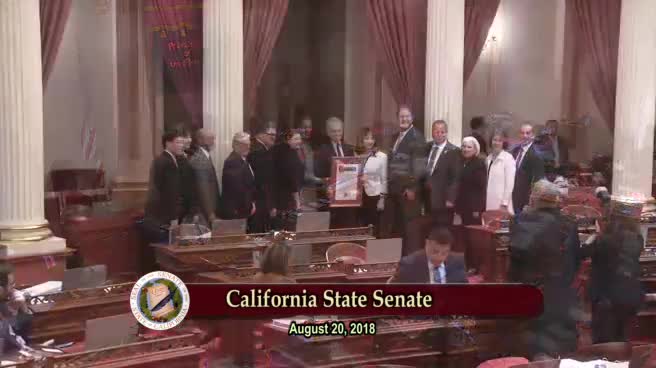
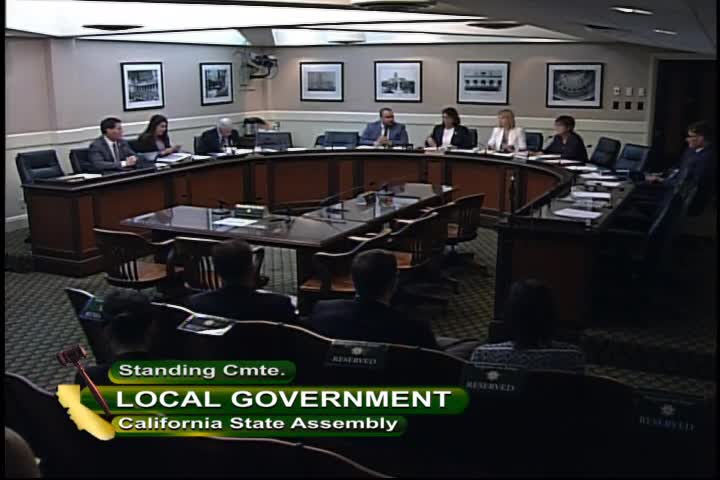
Bill Author

Bill Co-Author(s):