SB 971: Murder: special circumstances.
- Session Year: 2017-2018
- House: Senate
- Latest Version Date: 2018-03-05
Existing law imposes the penalty on a defendant found guilty of murder in the first degree of death or imprisonment in the state prison for life without the possibility of parole, if one or more enumerated special circumstances are found to be true. Existing law includes in these special circumstances, among other things, that the victim was intentionally killed because of his or her race, color, religion, nationality, or country of origin.
This bill would additionally include among those special circumstances that the victim was intentionally killed because of his or her sexual orientation or gender, as defined. By increasing the punishment for a crime, this would create a state-mandated local program.
The California Constitution requires the state to reimburse local agencies and school districts for certain costs mandated by the state. Statutory provisions establish procedures for making that reimbursement.
This bill would provide that no reimbursement is required by this act for a specified reason.
Existing law governs criminal proceedings when a person is arrested for an offense declared to be an infraction or a misdemeanor, including the circumstances under which the person may be brought before a magistrate or the juvenile court, or released upon his or her written promise to appear, as specified. Existing law states that these provisions do not apply when a person is arrested for an offense declared to be a felony.This bill would make technical, nonsubstantive changes to the latter provision.Existing law governs criminal proceedings when a person is arrested for an offense declared to be an infraction or a misdemeanor, including the circumstances under which the person may be brought before a magistrate or the juvenile court, or released upon his or her written promise to appear, as specified. Existing law states that these provisions do not apply when a person is arrested for an offense declared to be a felony.
This bill would make technical, nonsubstantive changes to the latter provision.
(a)The penalty for a defendant who is found guilty of murder in the first degree is death or imprisonment in the state prison for life without the possibility of parole if one or more of the following special circumstances has been found under Section 190.4 to be true:
(1)The murder was intentional and carried out for financial gain.
(2)The defendant was convicted previously of murder in the first or second degree. For the purpose of this paragraph, an offense committed in another jurisdiction, which if committed in California would be punishable as first or second degree murder, shall be deemed murder in the first or second degree.
(3)The defendant, in this proceeding, has been convicted of more than one offense of murder in the first or second degree.
(4)The murder was committed by means of a destructive device, bomb, or explosive planted, hidden, or concealed in any place, area, dwelling, building, or structure, and the defendant knew, or reasonably should have known, that his or her act or acts would create a great risk of death to one or more human beings.
(5)The murder was committed for the purpose of avoiding or preventing a lawful arrest, or perfecting or attempting to perfect, an escape from lawful custody.
(6)The murder was committed by means of a destructive device, bomb, or explosive that the defendant mailed or delivered, attempted to mail or deliver, or caused to be mailed or delivered, and the defendant knew, or reasonably should have known, that his or her act or acts would create a great risk of death to one or more human beings.
(7)The victim was a peace officer, as defined in Section 830.1, 830.2, 830.3, 830.31, 830.32, 830.33, 830.34, 830.35, 830.36, 830.37, 830.4, 830.5, 830.6, 830.10, 830.11, or 830.12, who, while engaged in the course of the performance of his or her duties, was intentionally killed, and the defendant knew, or reasonably should have known, that the victim was a peace officer engaged in the performance of his or her duties; or the victim was a peace officer, as defined in the above-enumerated sections, or a former peace officer under any of those sections, and was intentionally killed in retaliation for the performance of his or her official duties.
(8)The victim was a federal law enforcement officer or agent who, while engaged in the course of the performance of his or her duties, was intentionally killed, and the defendant knew, or reasonably should have known, that the victim was a federal law enforcement officer or agent engaged in the performance of his or her duties; or the victim was a federal law enforcement officer or agent, and was intentionally killed in retaliation for the performance of his or her official duties.
(9)The victim was a firefighter, as defined in Section 245.1, who, while engaged in the course of the performance of his or her duties, was intentionally killed, and the defendant knew, or reasonably should have known, that the victim was a firefighter engaged in the performance of his or her duties.
(10)The victim was a witness to a crime who was intentionally killed for the purpose of preventing his or her testimony in any criminal or juvenile proceeding, and the killing was not committed during the commission or attempted commission, of the crime to which he or she was a witness; or the victim was a witness to a crime and was intentionally killed in retaliation for his or her testimony in any criminal or juvenile proceeding. As used in this paragraph, juvenile proceeding means a proceeding brought pursuant to Section 602 or 707 of the Welfare and Institutions Code.
(11)The victim was a prosecutor or assistant prosecutor or a former prosecutor or assistant prosecutor of any local or state prosecutors office in this or any other state, or of a federal prosecutors office, and the murder was intentionally carried out in retaliation for, or to prevent the performance of, the victims official duties.
(12)The victim was a judge or former judge of any court of record in the local, state, or federal system in this or any other state, and the murder was intentionally carried out in retaliation for, or to prevent the performance of, the victims official duties.
(13)The victim was an elected or appointed official or former official of the federal government, or of any local or state government of this or any other state, and the killing was intentionally carried out in retaliation for, or to prevent the performance of, the victims official duties.
(14)The murder was especially heinous, atrocious, or cruel, manifesting exceptional depravity. As used in this section, the phrase especially heinous, atrocious, or cruel, manifesting exceptional depravity means a conscienceless or pitiless crime that is unnecessarily torturous to the victim.
(15)The defendant intentionally killed the victim by means of lying in wait.
(16)The victim was intentionally killed because of his or her race, color, religion, nationality, or country of origin. origin, or his or her sexual orientation or gender as defined in Section 422.56.
(17)The murder was committed while the defendant was engaged in, or was an accomplice in, the commission of, attempted commission of, or the immediate flight after committing, or attempting to commit, the following felonies:
(A)Robbery in violation of Section 211 or 212.5.
(B)Kidnapping in violation of Section 207, 209, or 209.5.
(C)Rape in violation of Section 261.
(D)Sodomy in violation of Section 286.
(E)The performance of a lewd or lascivious act upon the person of a child under the age of 14 years in violation of Section 288.
(F)Oral copulation in violation of Section 288a.
(G)Burglary in the first or second degree in violation of Section 460.
(H)Arson in violation of subdivision (b) of Section 451.
(I)Train wrecking in violation of Section 219.
(J)Mayhem in violation of Section 203.
(K)Rape by instrument in violation of Section 289.
(L)Carjacking, as defined in Section 215.
(M)To prove the special circumstances of kidnapping in subparagraph (B), or arson in subparagraph (H), if there is specific intent to kill, it is only required that there be proof of the elements of those felonies. If so established, those two special circumstances are proven even if the felony of kidnapping or arson is committed primarily or solely for the purpose of facilitating the murder.
(18)The murder was intentional and involved the infliction of torture.
(19)The defendant intentionally killed the victim by the administration of poison.
(20)The victim was a juror in any court of record in the local, state, or federal system in this or any other state, and the murder was intentionally carried out in retaliation for, or to prevent the performance of, the victims official duties.
(21)The murder was intentional and perpetrated by means of discharging a firearm from a motor vehicle, intentionally at another person or persons outside the vehicle with the intent to inflict death. For purposes of this paragraph, motor vehicle means any vehicle as defined in Section 415 of the Vehicle Code.
(22)The defendant intentionally killed the victim while the defendant was an active participant in a criminal street gang, as defined in subdivision (f) of Section 186.22, and the murder was carried out to further the activities of the criminal street gang.
(b)Unless an intent to kill is specifically required under subdivision (a) for a special circumstance enumerated therein, an actual killer, as to whom the special circumstance has been found to be true under Section 190.4, need not have had any intent to kill at the time of the commission of the offense which is the basis of the special circumstance in order to suffer death or confinement in the state prison for life without the possibility of parole.
(c)Every person, not the actual killer, who, with the intent to kill, aids, abets, counsels, commands, induces, solicits, requests, or assists any actor in the commission of murder in the first degree shall be punished by death or imprisonment in the state prison for life without the possibility of parole if one or more of the special circumstances enumerated in subdivision (a) has been found to be true under Section 190.4.
(d)Notwithstanding subdivision (c), every person, not the actual killer, who, with reckless indifference to human life and as a major participant, aids, abets, counsels, commands, induces, solicits, requests, or assists in the commission of a felony enumerated in paragraph (17) of subdivision (a) which results in the death of some person or persons, and who is found guilty of murder in the first degree therefor, shall be punished by death or imprisonment in the state prison for life without the possibility of parole if a special circumstance enumerated in paragraph (17) of subdivision (a) has been found to be true under Section 190.4.
The penalty shall be determined as provided in this section and Sections 190.1, 190.3, 190.4, and 190.5.
SEC. 2.No reimbursement is required by this act pursuant to Section 6 of Article XIIIB of the California Constitution because the only costs that may be incurred by a local agency or school district will be incurred because this act creates a new crime or infraction, eliminates a crime or infraction, or changes the penalty for a crime or infraction, within the meaning of Section 17556 of the Government Code, or changes the definition of a crime within the meaning of Section 6 of Article XIIIB of the California Constitution.
SECTION 1.Section 853.85 of the Penal Code is amended to read:853.85.This chapter does not apply in any case in which a person is arrested for an offense declared to be a felony.This chapter shall does not apply in any case where in which a person is arrested for an offense declared to be a felony.
|
Date
|
Status
|
|---|---|
| Apr 11, 2018 | April 10 set for first hearing. Failed passage in committee. (Ayes 2. Noes 4.) Reconsideration granted. |
| Mar 22, 2018 | Set for hearing April 10. |
| Mar 15, 2018 | Re-referred to Com. on PUB. S. |
| Mar 5, 2018 | From committee with author's amendments. Read second time and amended. Re-referred to Com. on RLS. |
| Feb 8, 2018 | Referred to Com. on RLS. |
| Feb 1, 2018 | From printer. May be acted upon on or after March 3. |
| Jan 31, 2018 | Introduced. Read first time. To Com. on RLS. for assignment. To print. |
|
Date
|
Description
|
Location
|
Votes
|
|
|---|---|---|---|---|
| Apr 10, 2018 | [04-10-2018] hearing: Motion to Reconsider. [Reconsideration Granted.] | Senate Standing Committee on Public Safety |
Passed |
|
| Apr 10, 2018 | Do pass, but first be re-referred to the Committee on [Appropriations] | Senate Standing Committee on Public Safety |
Failed |
This list shows positions taken on this bill by organizations on the date displayed, which is linked to the original source.
Positions by individuals are not included.
|
Organization
|
Position
|
Date
|
|---|---|---|
| ACLU of California | * Against | Apr 10, 2018 |
| California State Sheriffs' Association | * Support | Apr 10, 2018 |
| Ella Baker Center For Human Rights | * Against | Apr 10, 2018 |
| Orange County | * Support | Apr 10, 2018 |
| PURPOSE | ** Against | Apr 9, 2018 |
SENATE COMMITTEE ON PUBLIC SAFETY
Senator Nancy Skinner, Chair
2017 - 2018 Regular
Bill No: SB 971 Hearing Date: April 10, 2018
Author: | Nguyen | ||
Version: | March 5, 2018 | ||
Urgency: | No | Fiscal: | Yes |
Consultant: | MK | ||
Subject: Murder: Special Circumstances
HISTORY
Source: Orange County District Attorney
Prior Legislation: SB 1305 (Battin) failed Senate Public Safety, 2008
SB 817 (Ashburn) failed Senate Public Safety, 2005
AB 1022 (Walters) 2005 introduced version
SB 880 (Ashburn) failed Senate Public Safety, 2003
AB 2710 (Wyman) failed Assembly Public Safety, 2002
AB 3 (Ashburn) failed Assembly Public Safety, 1999
AB 4 (Baldwin) not heard in Assembly Public Safety, 1999
SB 1799 (Calderon) held Assembly Appropriations, 1998
AB 490 (Ashburn) held Senate Appropriations, 1998
Support: California State Sheriffs’ Association; Orange County Sheriff’s Department; Santa Ana Police Officers Association
Opposition: American Civil Liberties Union; California Council of Churches; California Public Defenders Association; Legal Services for Prisoners with Children; Root & Rebound; Transgender Gender Variant Intersex Justice Project
PURPOSE
The purpose of this bill is to add the intentional killing of a person because of his or her sexual orientation or gender to the list of special circumstances for which a person may be sentenced to the death penalty or life without parole.
Existing law provides that murder is the unlawful killing of a human being, or a fetus, with malice aforethought. (Penal Code § 187.)
Existing law provides that malice aforethought may be express or implied. Malice aforethought is expressed when the perpetrator manifests a deliberate intention to take the life of another human. Malice aforethought is implied when there was "no considerable provocation" for the killing, or when the circumstances surrounding the killing show "an abandoned and malignant heart." (Penal Code §188.)
Existing law classifies murder according to degrees, either first degree or second degree. (Penal Code § 189.)
Existing law provides that first-degree murder includes murders perpetrated by destructive device or explosive; knowing use of ammunition designed primarily to penetrate metal or armor; poison; lying in wait; torture; any kind of willful, deliberate, and premeditated killing; discharging a firearm from a motor vehicle, intentionally at another person outside of the vehicle with the intent to inflict death; and any murder committed in the perpetration of, or attempt to perpetrate:
a) Arson;
b) Rape;
c) Carjacking;
d) Robbery;
e) Burglary;
f) Mayhem;
g) Kidnapping;
h) Train wrecking;
i) Sodomy;
j) Lewd or lascivious acts on a child under age 14;
k) Oral copulation; or,
l) Penetration of genital or anal openings with a foreign object. (Penal Code §189.)
Existing law provides that second-degree murders include all murders not enumerated as first degree. (Penal Code §189.)
Existing law specifies that first-degree murder without "special circumstances" (Penal Code § 190.2) is punishable in the state prison for a term of 25-years-to-life. (Penal Code § 190.)
Existing law specifies that first-degree murder with "special circumstances" (Penal Code § 190.2) is punishable by death, or in the state prison for LWOP. (Penal Code §190.)
Existing law provides that a person who commits a first-degree murder that is a hate crime shall be punished by life in prison without the possibility of parole. (Penal Code 190.03)
Existing law limits imposition of the death penalty to those first-degree murder cases where the trial jury finds true at least one "special circumstance." Currently, the Penal Code lists 22 separate categories of "special circumstances":
a) The murder was intentional and carried out for financial gain;
b) The defendant was convicted previously of first- or second-degree murder;
c) The defendant, in the present proceeding, has been convicted of more than one offense of first- or second-degree murder;
d) The murder was committed by means of a destructive device planted, hidden or concealed in any place, area, dwelling, building or structure;
e) The murder was committed to avoid arrest or make an escape;
f) The murder was committed by means of a destructive device that the defendant mailed or delivered, or attempted to mail or deliver;
g) The victim was a peace officer who was intentionally killed while performing his or her duties and the defendant knew or should have known that; or the peace officer/former peace officer was intentionally killed in retaliation for performing his or her duties;
h) The victim was a federal law enforcement officer who was intentionally killed [the same as Item (g) above];
i) The victim was a firefighter who was intentionally killed while performing his or her duties;
j) The victim was a witness to a crime and was intentionally killed to prevent his or her testimony, or killed in retaliation for testifying;
k) The victim was a local, state or federal prosecutor murdered in retaliation for, or to prevent the performance of, official duties;
l) The victim was a local, state, or federal judge murdered in retaliation for, or to prevent the performance of, official duties;
m) The victim was an elected or appointed official of local, state or federal government murdered in retaliation for, or to prevent the performance of, official duties;
n) The murder was especially heinous, atrocious, or cruel, "manifesting exceptional depravity." "Manifesting exceptional depravity" is defined "a conscienceless or pitiless crime that is unnecessarily torturous";
o) The defendant intentionally killed the victim while lying in wait;
p) The victim was intentionally killed because of his or her race, color, religion, nationality, or country of origin;
q) The murder was committed while the defendant was engaged in, or was an accomplice in, the commission of, attempted commission of, or immediate flight after, committing or attempting to commit the following crimes: robbery; kidnapping; rape; sodomy; lewd or lascivious act on a child under age 14; oral copulation; burglary; arson; train wrecking; mayhem; rape by instrument; carjacking; torture; poison; the victim was a local, state or federal juror murdered in retaliation for, or to prevent the performance of his or her official duties; and, the murder was perpetrated by discharging a firearm from a vehicle.
r) The murder was intentional and involved the infliction of torture;
s) The defendant intentionally killed the victim by the administration of poison;
t) The victim was a juror and the murder was intentionally carried out in retaliation for, or to prevent the performance of, the victim's duties as a juror;
u) The murder was intentional and committed by discharging a firearm from a motor vehicle; or,
v) The defendant intentionally killed the victim while actively participating in a criminal street gang. (Penal Code § 190.2.)
Existing law requires three separate findings at the trial in order to qualify for the death penalty: (a) guilty of first-degree murder, (b) a finding that at least one of the charged "special circumstances" is true, and (c) the jury's determination that death is appropriate rather than LWOP. The first two findings occur when the jury deliberates at the close of the "guilt phase." (Penal Code §§ 190.1 and 190.4.) The penalty determination takes place during the "penalty phase" where the either the judge or jury considers factors in aggravation or mitigation. (Penal Code § 190.3) If the jury fixes the penalty at death, the judge still retains the power to reject the jury's penalty verdict and impose LWOP. (Penal Code §190.4(e).)
Existing law provides that during the penalty phase of a death penalty trial, the prosecution and the defendant may present evidence relevant to aggravation, mitigation, and sentence. In determining the penalty to be imposed, the trier of fact may take into account any relevant enumerated factors. Such factors in aggravation or mitigation include:
a) The circumstances of the crime and the existence of any special circumstances;
b) The presence or absence of threats or the actual use of force or violence;
c) Prior felony convictions;
d) Whether or not the offense was committed while the defendant was under the influence of extreme mental or emotional disturbance;
e) Whether or not the victim was a participant or consented to the homicidal act;
f) Whether or not the offense was committed under circumstances that the defendant believed to be a moral justification or extenuation of his or her conduct.
g) Whether or not the defendant acted under extreme duress or under the substantial domination of another person;
h) Whether or not at the time of the offense, the capacity of the defendant to appreciate the criminality of his or her conduct or to conform his or her conduct to the law was impaired as a result of mental disease, defect, or the effects of intoxication;
i) The age of the defendant at the time of the crime;
j) Whether or not the defendant was an accomplice and his or her participation in the offense was relatively minor; or,
k) Any other circumstance that extenuates the gravity of the crime, though not a legal excuse for the crime. (Penal Code Section 190.3.)
Existing law provides that “gender” means sex and includes a person’s gender identity and gender expression. “Gender expression” means a person’s gender related appearance and behavior whether or not stereotypically associated with the person’s assigned sex at birth. (Penal Code § 422.56)
This bill would add an intentional killing because of the victim’s sexual orientation or gender as defined in Penal Code Section 422.56 to the list of special circumstances which would make a person eligible for the death penalty.
COMMENTS
1. Need for This Bill
According to the author:
Although a person charged with first-degree murder who was motivated to murder by their victim’s sexual orientation or gender can be currently charged with a hate crime, the added penalty would be minor—i.e., a few extra years in prison. Without enhancements or special circumstances, those convicted of second-degree murder are subject to15 years-to-life imprisonment while those convicted of first-degree murder are subject to 25 years-to-life imprisonment. Those found guilty of murder in the first degree with a special circumstance are subject to either death or life imprisonment without the possibility of parole. While special circumstances currently include race, religion, color, nationality, and country of origin, the definition does not currently include sexual orientation or gender. In order to fill in a critical gap and ensure that justice is fully carried out in the future, both sexual orientation and gender should be included in the definition of a special circumstance enhancement for a first-degree murder conviction.
2. Murder
Under existing law, murder is the unlawful killing of a human being with malice aforethought. Without malice, an unlawful killing is manslaughter. Murder is classified as either first degree or second degree. First degree murders are murders committed by means of destructive devices, explosives, knowing use of armor piercing bullets, lying in wait, torture, or any other kind of willful, deliberate and premeditated killing, or murders committed during the commission of a list of enumerated felonies (felony-murder). All other murders are second degree murders (i.e., no premeditation or deliberation).
Murder in the first degree is punishable by imprisonment for 25-years-to-life unless specified "special circumstances" are charged and found to be true, then the punishment is either death or life imprisonment without the possibility of parole. The list of special circumstances include: murder for financial gain; the defendant was previously convicted of murder; the defendant has been convicted of more than one murder in the current proceeding; murder committed by means of a destructive devise concealed in a building; murder committed to avoid a lawful arrest; the victim was a peace officer, federal law enforcement officer, firefighter, witness to a crime, prosecutor, judge, elected official in retaliation for or to prevent the victim from carrying out his/her duties; the murder was unnecessarily torturous to the victim; the victim was killed because of their color, race, nationality, religion or country of origin; the felony was committed during the commission or attempted commission of specified felonies; the victim was poisoned; drive-by shooting; and intentional killing while a member of a street gang.
A first degree murder that is a hate crime is punishable by life without parole. This includes a first degree murder committed because of the person’s sexual orientation or gender.
3. Meaningful Basis Required for Distinguishing between Special Circumstance Crimes and Other Murders
Historically, California's special circumstance death penalty law was first enacted in 1973 by SB 450 (Deukmejian) in response to a line of U.S. Supreme Court edicts that the arbitrary imposition of the death penalty constitutes cruel and unusual punishment. It was later reenacted by Proposition 7 in 1977. Since those early conceptual stages, beginning with the first draft of SB 450, the Legislature has only considered application of the death penalty sanction to criminals who murdered under "special circumstances."
The argument was that the death penalty should be reserved for the most serious of offenses. The Eighth Amendment requires that a death penalty law "rationally distinguish between those individuals for whom death is an appropriate sanction and those for whom it is not," and establish "rational criteria that narrow the decisionmaker's judgment as to whether the circumstances of a particular defendant's case met the threshold." (People v. Holt (1997) 15 Cal.4th 619, 697) Trivializing it or applying it to general crimes could cause a diminution of its deterrent effect as well as subject it to constitutional challenge for failure to provide a "meaningful basis" for distinguishing between those who receive the sentence and those who do not. (See Godfrey v. Georgia (1980) 446 U.S. 420.)
- Murder because of victim’s sexual orientation or gender.
This bill adds to the hate crime special circumstance by including the intentional murder because of the victim’s sexual orientation or gender to the list of special circumstances.
b) Broad statutes may mean less effective death penalty.
Alex Kozinski a judge on the 9th U.S. Circuit Court of Appeal and a proponent of the death penalty argued in an editorial in the New York Times that the expansion of crimes for which the death penalty applies is a "self-defeating" tactic. He notes that it is unlikely that the backlog on death row will ever be taken care of in part because there is not enough qualified attorneys to handle the appeals. He also notes that it is unlikely that the courts will be willing to overturn years of jurisprudence on the death penalty. Judge Kozinski suggests that:
Instead of adopting a very expansive list of crimes for which the death penalty is an option, state legislatures should draft narrow statutes that reserve the death penalty for only the most heinous criminals. (Kozinski and Gallagher, "For an Honest Death Penalty", The New York Times, March 8, 1995, Section A, page 21, Column 1.)
He recognizes that differentiating between "depraved killers" is not easy; however, he argues that doing so will mean that "in a world of limited resources . . . we will sentence to death only those we intend to execute." He also believes it will also ensure that only the worst of the very bad will "suffer the death penalty."
The Governor's commission in Illinois that looked at the death penalty also recommended that the special circumstances in Illinois be "trimmed" to five in order to reduce the "seeming randomness with which some defendants appear to end up on death row . . ." (Turow, Scott "To Kill or Not to Kill" The New Yorker, January 6, 2003 pages 46-147; Recommendations 27 and 28 of the "Report of the Governor's Commission on Capital Punishment, George H. Ryan" April 2002.)
c) Arbitrary and capricious
The Supreme Court "[i]n Furman v. Georgia, . . . held that the penalty of death may not be imposed under sentencing procedures that create a substantial risk that the punishment will be inflicted in an arbitrary and capricious manner. Gregg v. Georgia, 428 U.S. 153, reaffirmed this holding: 'Where discretion is afforded a sentencing body on a matter so grave as the determination of whether a human life, should be taken or spared, that discretion must be suitably directed and limited so as to minimize the risk of wholly arbitrary and capricious action' 428 U.S. at 189 (opinion of STEWART, POWELL and STEVENS, JJ.)." (Godfrey v. Georgia, 446 U.S. 420, 427 (1979))
4. Disparity in Application
Recently, the American Civil Liberties Union (ACLU) of Northern California published a report on the death penalty, Death in Decline '09. (See <http://www.aclunc.org/docs/criminal_justice/death_penalty/death_in_decline_09.pdf>.) The report states that while the national trend has seen a reduction in the number of death sentences imposed, imposition of the death penalty in California is increasing. (Id. at page 1.) The report further found that three counties, Los Angeles, Riverside and Orange, account for the majority of the death penalty sentences. In fact, in 2009, Los Angeles County sent more people to death row than did the entire state of Texas in the same year. (Id. at pages 2-3.) The report also notes that African Americans and Latinos make up a majority of the people on death row, which raises questions about the choices prosecutors make in charging death penalty cases. (Id. at pages 8-9.) A 2005 Santa Clara Law Review article examined racial, ethnic, and geographical variations present in the imposition of the death penalty in California. [Glenn L. Pierce & Michael L. Radelet, The Impact of Legally Inappropriate Factors on Death Sentencing for California Homicides, 1990-1999, 46 SANTA CLARA L. REV. 1 (2005), <http://law.scu.edu/ lawreview/File/lawreview_46sclr001.pdf>.] The authors found that in addition to disparities based on the location of the crime, as mentioned above, a defendant was 67% less likely to be sentenced to death if the victim was non-Hispanic white than if the victim was African American or Latino. (Id. at 21).
5. Argument in Support
Orange County District Attorney Tony Rackauckas, the sponsor of this bill states:
As you well know, the tragic death of Blaze Bernstein has revealed a glaring omission with our current law. In California, sexual orientation is not a protected class of crime victims of special circumstances murder. It is time to expand the existing language of special circumstances murder to add “sexual orientation” and gender,” as described in Penal Code section 422.56, to the existing protected classes of “race, color, religion, nationality and country of origin.” I know you share my belief that, if the sexual orientation of a victim is a substantial factor in a defendant’s intent to murder, then he or she should be subject to the punishment of life without the possibility of parole and face the possibility of a death penalty.
My office strongly supports SB 971 because it will address this critical gap in current law. This legislation will send a strong and clear message to individuals who commit crimes against members of the LGBTQ community in that they will be held accountable to the fullest extent of the law.
6. Argument in Opposition
The American Civil Liberties Union opposes this bill stating:
…The list of special circumstances defines those first degree murders eligible for either the death penalty or life in prison without parole. All hate crimes, however, are already punishable by life in prison without the possibility of parole, including hate crimes based on gender and sexual orientation. (Penal Code section 190.03) Thus, the effect of SB 971 would only be to make these hate crimes newly eligible for the death penalty.
The problems with California’s death penalty are well documented. It has been more than twelve years since California carried out an execution and still the state has no legal method for doing so. The post-conviction review process continues to take more than 25 years and nearly all inmates die of natural causes before their cases are full reviewed by the courts. The Legislative Analyst Office has concluded that replacing the death penalty would save the state more than $100 million a year. More and more victims’’ families oppose seeking the death penalty, citing the long and painful process of death penalty trials and post-conviction review. California’s death penalty is already so broad that many legal scholars believe it is unconstitutional. Further expanding it will only increase the chances it will be struck down by the courts.
Perhaps most concerning, just two weeks ago the California Supreme Court reversed the conviction of Vicente Benavides Figuero because there is substantial evidence that his in fact innocent. Mr. Benavides has been on death row for more than 25 years.
-- END –
Discussed in Hearing
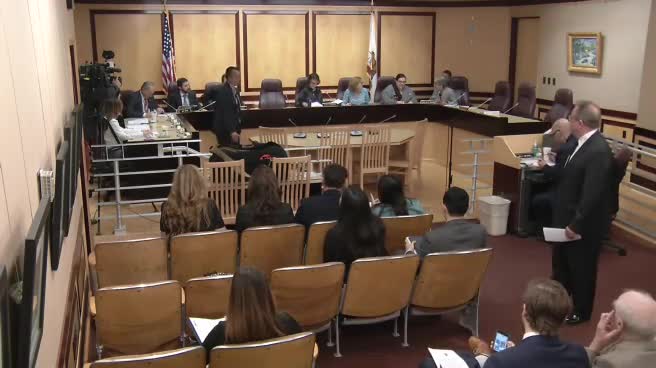 31MIN
Senate Standing Committee on Public Safety
Bill Author

Bill Co-Author(s):