SB 982: CalWORKs: maximum grant amount.
- Session Year: 2017-2018
- House: Senate
- Latest Version Date: 2018-05-25
(1)Existing law requires each county to provide cash assistance and other social services to needy families through the California Work Opportunity and Responsibility to Kids (CalWORKs) program using federal Temporary Assistance to for Needy Families block grant program, state, and county funds. Existing law requires the amount of cash aid paid each month to CalWORKs recipients to be determined by deducting the familys income, as specified, from specified sums, as adjusted for cost-of-living increases. Existing law prohibits the amount of cash aid paid each month from exceeding those sums, as adjusted for cost-of-living increases, plus any allowance for recurring special needs, as specified.
This bill would change incrementally increase over 3 years the sums from which the familys income is to be deducted to determine the amount of cash aid paid each month, as specified, and would prohibit the amount of cash aid from being more than those specified sums or less than other specified sums. The bill would require all of those specified sums to be increased each year by the same percentage as the increase in the federal poverty level for each family size, as annually updated by the United States Department of Health and Human Services, except as specified. sums.
(2)Existing law provides an annual cost-of-living adjustment to maximum aid payments provided to families under the CalWORKs program, but suspends the adjustment for certain periods, including for the 201011 fiscal year and each fiscal year thereafter.
This bill would reinstate the annual cost-of-living adjustment beginning in the 201920 fiscal year, as specified.
Existing(3)Existing law continuously appropriates moneys from the General Fund to defray a portion of county costs under the CalWORKs program. program, and requires a county share of cost to be subtracted from that General Fund appropriation.
This bill would provide that the continuous appropriation would not be made for purposes of implementing the bill. bill, and would exempt counties from being required to contribute a share of cost to cover the incremental increases to maximum aid payments described in paragraph (1).
(4)The bill would be operative only to the extent that funding is provided, by express reference, in the annual Budget Act for the purposes of the bill.
Existing law requires each county to provide cash assistance and other social services to needy families through the California Work Opportunity and Responsibility to Kids (CalWORKs) program using federal Temporary Assistance to Needy Families block grant program, state, and county funds. Existing law specifies requires the amount of cash aid to be paid each month to CalWORKs recipients, including an recipients to be determined by deducting the familys income, as specified, from specified sums, as adjusted for cost-of-living increases. Existing law prohibits the amount of cash aid paid each month from exceeding those sums, as adjusted for cost-of-living increases, plus any allowance for recurring special needs, as specified.
This bill would declare the intent of the Legislature to enact legislation relating to the CalWORKs grant amount and makes related findings and declarations. change the sums from which the familys income is to be deducted to determine the amount of cash aid paid each month, and would prohibit the amount of cash aid from being more than those specified sums or less than other specified sums. The bill would require all of those specified sums to be increased each year by the same percentage as the increase in the federal poverty level for each family size, as annually updated by the United States Department of Health and Human Services, except as specified.
Existing law continuously appropriates moneys from the General Fund to defray a portion of county costs under the CalWORKs program.
This bill would provide that the continuous appropriation would not be made for purposes of implementing the bill.
Existing law requires each county to provide cash assistance and other social services to needy families through the California Work Opportunity and Responsibility to Kids (CalWORKs) program using federal Temporary Assistance to Needy Families block grant program, state, and county funds. Existing law specifies the amount of cash aid to be paid each month to CalWORKs recipients, including an allowance for recurring special needs, as specified.
This bill would declare the intent of the Legislature to enact legislation relating to the CalWORKs grant amount and makes related findings and declarations.
The Legislature finds and declares all of the following:
(a)The California Work Opportunity and Responsibility to Kids (CalWORKs) program serves the poorest families with children in the state by providing a basic needs cash grant and support services for employment or job training.
(b)The current average CalWORKs grant for a family is 41 percent of the federal poverty level (FPL) and 23 percent of the supplemental poverty level.
(c)When children live in deep poverty, which is defined as living below 50 percent of the FPL, they endure hardships that will impair their ability to thrive by impacting their capacity to learn and develop, among many other harmful impacts.
(d)One study found that growing up in deep poverty more negatively impacts a childs life chances than neonatal exposure to cocaine.
(e)One of the reasons that deep poverty is so dangerous for families with children is because it forces them to live in households where basic needs are going unmet. Children living in these conditions experience the depravity of not having their needs met and the toxic stress that results from chronically unmet needs.
(f)The accumulated burdens of toxic stress can literally rewire childrens brains, disrupting their ability to succeed in school and in life and increasing the likelihood of low educational achievement, unstable employment, adult poverty, chronic illness, adult mental health disabilities, and involvement in the criminal justice system.
(g)Unmet basic needs not only impact the physical and mental health of a child, but also their future potential. This is, in part, because parents who lack the resources to adequately care for their children are more likely to experience maternal or parental depression, a condition associated with reduced maternal-child interaction known to undermine school readiness among poor children.
(h)Deep poverty is also known to impair the development of young childrens brains in such a way as to reduce the ability of children to cope during difficult situations. Coping is the very skill they need most as a child living in poverty or a young adult trying to exit it.
(i)Research shows deep poverty damages the chance for children to escape poverty and achieve a better future. Forty percent of those born in deep poverty are in the bottom income quintile as adults, compared to 30 percent of the poor, but not deeply poor, and 18 percent of those born in the middle.
(j)California has the moral obligation and utilitarian imperative to establish a floor to CalWORKs grants, so that no child in the program is ever forced to endure the disabling effect of deep poverty and to ensure each child has a fair chance of escaping poverty.(k)It is the intent of the Legislature to enact legislation relating to the CalWORKs grant amount.SEC. 2.Section 11450 of the Welfare and Institutions Code is amended to read:11450.(a)(1)(A)Aid shall be paid for each needy family, which shall include all eligible brothers and sisters of each eligible applicant or recipient child and the parents of the children, but shall not include unborn children, or recipients of aid under Chapter 3 (commencing with Section 12000), qualified for aid under this chapter. In determining the amount of aid paid, and notwithstanding the minimum basic standards of adequate care specified in Section 11452, the familys income, exclusive of any amounts considered exempt as income or paid pursuant to subdivision (e) or Section 11453.1, determined for the prospective semiannual period pursuant to Sections 11265.1, 11265.2, and 11265.3, and then calculated pursuant to Section 11451.5, shall be deducted from the sum specified in Table B, (A) beginning January 1, 2019, Table (B) beginning January 1, 2020, and Table (C) beginning January 1, 2021, as the sums in those tables may be adjusted pursuant to Section 11453 and paragraphs (2) and (3). paragraph (2). In no case shall the amount of aid paid for each month be less than the sum specified in Table A, as adjusted pursuant to Section 11453 and paragraphs (2) and (3), or exceed the sum specified in Table B, (A) beginning January 1, 2019, Table (B) beginning January 1, 2020, and Table (C) beginning January 1, 2021, as the sums in those tables may be adjusted pursuant to Section 11453 and paragraphs (2) and (3), paragraph (2), plus any special needs, as specified in subdivisions (c), (e), and (f):
| Table A | |
Number of | Minimum
Maximum aid |
1 | $686521 |
2 | 866722 |
3 | 1,046880 |
4 | 1,2261,039 |
5 | 1,4061,187 |
6 | 1,5861,336 |
7 | 1,7661,480 |
8 | 1,9461,623 |
9 | 2,1261,766 |
10 or more | 2,3061,908 |
| Table B | |
Number of | Maximum aid |
1 | $720603 |
2 | 909794 |
3 | 1,098963 |
4 | 1,2871,133 |
5 | 1,4761,297 |
6 | 1,6651,461 |
7 | 1,8541,623 |
8 | 2,0431,785 |
9 | 2,2321,946 |
10 or more | 2,4212,107 |
| Table A | |
Number of | Maximum aid |
1 | $686 |
2 | 866 |
3 | 1,046 |
4 | 1,226 |
5 | 1,406 |
6 | 1,586 |
7 | 1,766 |
8 | 1,946 |
9 | 2,126 |
10 or more | 2,306 |
| Table C | |
Number of | Maximum aid |
1 | $686 |
2 | 866 |
3 | 1,046 |
4 | 1,226 |
5 | 1,406 |
6 | 1,586 |
7 | 1,766 |
8 | 1,946 |
9 | 2,126 |
10 or more | 2,306 |
| Table A | |
Number of | Maximum aid |
1 | $686 |
2 | 866 |
3 | 1,046 |
4 | 1,226 |
5 | 1,406 |
6 | 1,586 |
7 | 1,766 |
8 | 1,946 |
9 | 2,126 |
10 or more | 2,306 |
(B)If, when, and during those times that the United States government increases or decreases its contributions in assistance of needy children in this state above or below the amount paid on July 1, 1972, the amounts specified in subparagraph (A) shall be increased or decreased by an amount equal to that increase or decrease by the United States government, provided that no increase or decrease shall be subject to subsequent adjustment pursuant to Section 11453.
(2)The sums formerly specified in paragraph (1) shall not be adjusted for cost of living for the 199091, 199192, 199293, 199394, 199495, 199596, 199697, and 199798 fiscal years, and through October 31, 1998, nor shall that amount be included in the base for calculating any cost-of-living increases for any fiscal year thereafter. Elimination of the cost-of-living adjustment pursuant to this paragraph shall satisfy the requirements of former Section 11453.05, and no further reduction shall be made pursuant to that section.
(3)(A)The sums specified in Tables A and B of subparagraph (A) of paragraph (1) shall be increased each year by the same percentage as the increase in the federal poverty level for each family size, as annually updated by the United States Department of Health and Human Services.(B)Notwithstanding subparagraph (A), if the annual update to the federal poverty level does not result in an increase from the previous years federal poverty level, the sums specified in Tables A and B of subparagraph (A) of paragraph (1) shall remain the same as the previous year.(3)Notwithstanding Section 15200, counties shall not be required to contribute a share of cost to cover the increases to maximum aid payments made by the amendments to this subdivision in the act that amended this subdivision during the 2018 portion of the 201718 Regular Session.
(b)(1)When the family does not include a needy child qualified for aid under this chapter, aid shall be paid to a pregnant child who is 18 years of age or younger at any time after verification of pregnancy, in the amount that would otherwise be paid to one person, as specified in subdivision (a), if the child and her child, if born, would have qualified for aid under this chapter. Verification of pregnancy shall be required as a condition of eligibility for aid under this subdivision.
(2)Notwithstanding paragraph (1), when the family does not include a needy child qualified for aid under this chapter, aid shall be paid to a pregnant woman for the month in which the birth is anticipated and for the six-month period immediately prior to the month in which the birth is anticipated, in the amount that would otherwise be paid to one person, as specified in subdivision (a), if the woman and child, if born, would have qualified for aid under this chapter. Verification of pregnancy shall be required as a condition of eligibility for aid under this subdivision.
(3)Paragraph (1) shall apply only when the Cal-Learn Program is operative.
(c)The amount of forty-seven dollars ($47) per month shall be paid to pregnant women qualified for aid under subdivision (a) or (b) to meet special needs resulting from pregnancy if the woman and child, if born, would have qualified for aid under this chapter. County welfare departments shall refer all recipients of aid under this subdivision to a local provider of the California Special Supplemental Food Program for Women, Infants, and Children. If that payment to pregnant women qualified for aid under subdivision (a) is considered income under federal law in the first five months of pregnancy, payments under this subdivision shall not apply to persons eligible under subdivision (a), except for the month in which birth is anticipated and for the three-month period immediately prior to the month in which delivery is anticipated, if the woman and child, if born, would have qualified for aid under this chapter.
(d)For children receiving AFDC-FC under this chapter, there shall be paid, exclusive of any amount considered exempt as income, an amount of aid each month that, when added to the childs income, is equal to the rate specified in Section 11460, 11461, 11462, or 11463. In addition, the child shall be eligible for special needs, as specified in departmental regulations.
(e)In addition to the amounts payable under subdivision (a) and Section 11453.1, a family shall be entitled to receive an allowance for recurring special needs not common to a majority of recipients. These recurring special needs shall include, but not be limited to, special diets upon the recommendation of a physician for circumstances other than pregnancy, and unusual costs of transportation, laundry, housekeeping services, telephone, and utilities. The recurring special needs allowance for each family per month shall not exceed that amount resulting from multiplying the sum of ten dollars ($10) by the number of recipients in the family who are eligible for assistance.
(f)After a family has used all available liquid resources, both exempt and nonexempt, in excess of one hundred dollars ($100), with the exception of funds deposited in a restricted account described in subdivision (a) of Section 11155.2, the family shall also be entitled to receive an allowance for nonrecurring special needs.
(1)An allowance for nonrecurring special needs shall be granted for replacement of clothing and household equipment and for emergency housing needs other than those needs addressed by paragraph (2). These needs shall be caused by sudden and unusual circumstances beyond the control of the needy family. The department shall establish the allowance for each of the nonrecurring special needs items. The sum of all nonrecurring special needs provided by this subdivision shall not exceed six hundred dollars ($600) per event.
(2)(A)(i)Homeless assistance is available to a homeless family seeking shelter when the family is eligible for aid under this chapter.
(ii)Homeless assistance for temporary shelter is also available to homeless families that are apparently eligible for aid under this chapter. Apparent eligibility exists when evidence presented by the applicant, or that is otherwise available to the county welfare department, and the information provided on the application documents indicate that there would be eligibility for aid under this chapter if the evidence and information were verified. However, an alien applicant who does not provide verification of his or her eligible alien status, or a woman with no eligible children who does not provide medical verification of pregnancy, is not apparently eligible for purposes of this section.
(iii)Homeless assistance for temporary shelter is also available to homeless families that would be eligible for aid under this chapter, but for the fact that the only child or children in the family are in out-of-home placement pursuant to an order of the dependency court, if the family is receiving reunification services and the county determines that homeless assistance is necessary for reunification to occur.
(B)A family is considered homeless, for the purpose of this section, when the family lacks a fixed and regular nighttime residence; or the family has a primary nighttime residence that is a supervised publicly or privately operated shelter designed to provide temporary living accommodations; or the family is residing in a public or private place not designed for, or ordinarily used as, a regular sleeping accommodation for human beings. A family is also considered homeless for the purpose of this section if the family has received a notice to pay rent or quit. The family shall demonstrate that the eviction is the result of a verified financial hardship as a result of extraordinary circumstances beyond their control, and not other lease or rental violations, and that the family is experiencing a financial crisis that could result in homelessness if preventative assistance is not provided.
(3)(A)(i)A nonrecurring special needs benefit of sixty-five dollars ($65) a day shall be available to families of up to four members for the costs of temporary shelter, subject to the requirements of this paragraph. The fifth and additional members of the family shall each receive fifteen dollars ($15) per day, up to a daily maximum of one hundred twenty-five dollars ($125). County welfare departments may increase the daily amount available for temporary shelter as necessary to secure the additional bedspace needed by the family.
(ii)This special needs benefit shall be granted or denied immediately upon the familys application for homeless assistance, and benefits shall be available for up to three working days. The county welfare department shall verify the familys homelessness within the first three working days and if the family meets the criteria of questionable homelessness established by the department, the county welfare department shall refer the family to its early fraud prevention and detection unit, if the county has such a unit, for assistance in the verification of homelessness within this period.
(iii)After homelessness has been verified, the three-day limit shall be extended for a period of time that, when added to the initial benefits provided, does not exceed a total of 16 calendar days. This extension of benefits shall be done in increments of one week and shall be based upon searching for permanent housing which shall be documented on a housing search form, good cause, or other circumstances defined by the department. Documentation of a housing search shall be required for the initial extension of benefits beyond the three-day limit and on a weekly basis thereafter as long as the family is receiving temporary shelter benefits. Good cause shall include, but is not limited to, situations in which the county welfare department has determined that the family, to the extent it is capable, has made a good faith but unsuccessful effort to secure permanent housing while receiving temporary shelter benefits or that the family is homeless as a direct and primary result of a state or federally declared natural disaster.
(iv)Notwithstanding clauses (ii) and (iii), the county may waive the three-day limit and may provide benefits in increments of more than one week for a family that becomes homeless as a direct and primary result of a state or federally declared natural disaster.
(B)(i)A nonrecurring special needs benefit for permanent housing assistance is available to pay for last months rent and security deposits when these payments are reasonable conditions of securing a residence, or to pay for up to two months of rent arrearages, when these payments are a reasonable condition of preventing eviction.
(ii)The last months rent or monthly arrearage portion of the payment (I) shall not exceed 80 percent of the familys total monthly household income without the value of CalFresh benefits or special needs benefit for a family of that size and (II) shall only be made to families that have found permanent housing costing no more than 80 percent of the familys total monthly household income without the value of CalFresh benefits or special needs benefit for a family of that size.
(iii)However, if the county welfare department determines that a family intends to reside with individuals who will be sharing housing costs, the county welfare department shall, in appropriate circumstances, set aside the condition specified in subclause (II) of clause (ii).
(C)The nonrecurring special needs benefit for permanent housing assistance is also available to cover the standard costs of deposits for utilities which are necessary for the health and safety of the family.
(D)A payment for, or denial of, permanent housing assistance shall be issued no later than one working day from the time that a family presents evidence of the availability of permanent housing. If an applicant family provides evidence of the availability of permanent housing before the county welfare department has established eligibility for aid under this chapter, the county welfare department shall complete the eligibility determination so that the payment for, or denial of, permanent housing assistance is issued within one working day from the submission of evidence of the availability of permanent housing, unless the family has failed to provide all of the verification necessary to establish eligibility for aid under this chapter.
(E)(i)Except as provided in clauses (ii) and (iii), eligibility for the temporary shelter assistance and the permanent housing assistance pursuant to this paragraph shall be limited to one period of up to 16 consecutive calendar days of temporary assistance and one payment of permanent assistance every 12 months. A person who applies for homeless assistance benefits shall be informed that the temporary shelter benefit of up to 16 consecutive days is available only once every 12 months, with certain exceptions, and that a break in the consecutive use of the benefit constitutes exhaustion of the temporary benefit for that 12-month period.
(ii)(I)A family that becomes homeless as a direct and primary result of a state or federally declared natural disaster shall be eligible for temporary and permanent homeless assistance.
(II)In the event of a state or federally declared disaster in a county, the county human services agency shall coordinate with public and private disaster response organizations and agencies to identify and inform recipients of their eligibility for temporary and permanent homeless housing assistance available pursuant to subclause (I).
(iii)A family shall be eligible for temporary and permanent homeless assistance when homelessness is a direct result of domestic violence by a spouse, partner, or roommate; physical or mental illness that is medically verified that shall not include a diagnosis of alcoholism, drug addiction, or psychological stress; or the uninhabitability of the former residence caused by sudden and unusual circumstances beyond the control of the family including natural catastrophe, fire, or condemnation. These circumstances shall be verified by a third-party governmental or private health and human services agency, except that domestic violence may also be verified by a sworn statement by the victim, as provided under Section 11495.25. Homeless assistance payments based on these specific circumstances may not be received more often than once in any 12-month period. In addition, if the domestic violence is verified by a sworn statement by the victim, the homeless assistance payments shall be limited to two periods of not more than 16 consecutive calendar days of temporary assistance and two payments of permanent assistance. A county may require that a recipient of homeless assistance benefits who qualifies under this paragraph for a second time in a 24-month period participate in a homelessness avoidance case plan as a condition of eligibility for homeless assistance benefits. The county welfare department shall immediately inform recipients who verify domestic violence by a sworn statement of the availability of domestic violence counseling and services, and refer those recipients to services upon request.
(iv)If a county requires a recipient who verifies domestic violence by a sworn statement to participate in a homelessness avoidance case plan pursuant to clause (iii), the plan shall include the provision of domestic violence services, if appropriate.
(v)If a recipient seeking homeless assistance based on domestic violence pursuant to clause (iii) has previously received homeless avoidance services based on domestic violence, the county shall review whether services were offered to the recipient and consider what additional services would assist the recipient in leaving the domestic violence situation.
(vi)The county welfare department shall report necessary data to the department through a statewide homeless assistance payment indicator system, as requested by the department, regarding all recipients of aid under this paragraph.
(F)The county welfare departments, and all other entities participating in the costs of the CalWORKs program, have the right in their share to any refunds resulting from payment of the permanent housing. However, if an emergency requires the family to move within the 12-month period specified in subparagraph (E), the family shall be allowed to use any refunds received from its deposits to meet the costs of moving to another residence.
(G)Payments to providers for temporary shelter and permanent housing and utilities shall be made on behalf of families requesting these payments.
(H)The daily amount for the temporary shelter special needs benefit for homeless assistance may be increased if authorized by the current years Budget Act by specifying a different daily allowance and appropriating the funds therefor.
(I)No payment shall be made pursuant to this paragraph unless the provider of housing is a commercial establishment, shelter, or person in the business of renting properties who has a history of renting properties.
(J)(i)Commencing July 1, 2018, a CalWORKs applicant who provides a sworn statement of past or present domestic abuse and who is fleeing his or her abuser shall be deemed to be homeless and shall be eligible for temporary homeless assistance under clause (i) of subparagraph (A) and under subparagraph (E), notwithstanding any income and assets attributable to the alleged abuser.
(ii)The homeless assistance payments issued under this subparagraph shall be granted immediately after the familys application, and benefits shall be available in increments of 16 days of temporary shelter assistance pursuant to clause (i) of subparagraph (A). The homeless assistance payments shall be limited to two consecutive periods of not more than 16 consecutive calendar days each of temporary assistance within a lifetime. The homeless assistance payments issued under this subparagraph shall be in addition to other payments for which the CalWORKS CalWORKs applicant, if he or she becomes a CalWORKS CalWORKs recipient, may later qualify under this subdivision.
(iii)For purposes of this subparagraph, the housing search documentation described in clause (iii) of subparagraph (A) shall be required only upon issuance of an immediate need payment pursuant to Section 11266 or the issuance of benefits for the month of application.
(g)The department shall establish rules and regulations ensuring the uniform statewide application of this section.
(h)The department shall notify all applicants and recipients of aid through the standardized application form that these benefits are available and shall provide an opportunity for recipients to apply for the funds quickly and efficiently.
(i)The department shall work with county human services agencies, the County Welfare Directors Association, Association of California, and advocates of CalWORKs recipients to gather information regarding the actual costs of a nightly shelter and best practices for transitioning families from a temporary shelter to a permanent shelter, and to provide that information to the Legislature, to be annually submitted in accordance with Section 9795 of the Government Code.
(j)(1)Except for the purposes of Section 15200, the amounts payable to recipients pursuant to Section 11453.1 shall not constitute part of the payment schedule set forth in subdivision (a).
(2)The amounts payable to recipients pursuant to Section 11453.1 shall not constitute income to recipients of aid under this section.
(k)For children receiving Kin-GAP pursuant to Article 4.5 (commencing with Section 11360) or Article 4.7 (commencing with Section 11385), there shall be paid, exclusive of any amount considered exempt as income, an amount of aid each month, which, when added to the childs income, is equal to the rate specified in Sections 11364 and 11387.
(l)(1)A county shall implement the semiannual reporting requirements in accordance with Chapter 501 of the Statutes of 2011 no later than October 1, 2013.
(2)Upon completion of the implementation described in paragraph (1), each county shall provide a certificate to the director certifying that semiannual reporting has been implemented in the county.
(3)Upon filing the certificate described in paragraph (2), a county shall comply with the semiannual reporting provisions of this section.
SEC. 3.Section 11453 of the Welfare and Institutions Code is amended to read:11453.(a)Except as provided in subdivision (c), the amounts set forth in Section 11452 and subdivision (a) of Section 11450 shall be adjusted annually by the department to reflect any increases or decreases in the cost of living. These adjustments shall become effective July 1 of each year, unless otherwise specified by the Legislature. For the 200001 fiscal year to the 200304 fiscal year, inclusive, these adjustments shall become effective October 1 of each year. The cost-of-living adjustment shall be calculated by the Department of Finance based on the changes in the California Necessities Index, which as used in this section means the weighted average changes for food, clothing, fuel, utilities, rent, and transportation for low-income consumers. The computation of annual adjustments in the California Necessities Index shall be made in accordance with the following steps:
(1)The base period expenditure amounts for each expenditure category within the California Necessities Index used to compute the annual grant adjustment are:
Food | $3,027 |
Clothing (apparel and upkeep) | 406 |
Fuel and other utilities | 529 |
Rent, residential | 4,883 |
Transportation | 1,757 |
Total | $10,602 |
(2)Based on the appropriate components of the Consumer Price Index for All Urban Consumers, as published by the United States Department of Labor, Bureau of Labor Statistics, the percentage change shall be determined for the 12-month period ending with the December preceding the year for which the cost-of-living adjustment will take effect, for each expenditure category specified in subdivision (a) within the following geographical areas: Los Angeles-Long Beach-Anaheim, San Francisco-Oakland, San Diego, and, to the extent statistically valid information is available from the Bureau of Labor Statistics, additional geographical areas within the state which that include not less than 80 percent of recipients of aid under this chapter.
(3)Calculate a weighted percentage change for each of the expenditure categories specified in subdivision (a) using the applicable weighting factors for each area used by the State Department of Industrial Relations to calculate the California Consumer Price Index (CCPI).
(4)Calculate a category adjustment factor for each expenditure category in subdivision (a) by (1) adding 100 to the applicable weighted percentage change as determined in paragraph (2) and (2) dividing the sum by 100.
(5)Determine the expenditure amounts for the current year by multiplying each expenditure amount determined for the prior year by the applicable category adjustment factor determined in paragraph (4).
(6)Determine the overall adjustment factor by dividing (1) the sum of the expenditure amounts as determined in paragraph (4) for the current year by (2) the sum of the expenditure amounts as determined in subdivision (d) for the prior year.
(b)The Except as provided in subdivision (e), the overall adjustment factor determined by the preceding computation steps shall be multiplied by the schedules established pursuant to Section 11452 and subdivision (a) of Section 11450 as are in effect during the month of June preceding the fiscal year in which the adjustments are to occur and the product rounded to the nearest dollar. The resultant amounts shall constitute the new schedules schedules, which shall be filed with the Secretary of State.
(c)(1)No adjustment to the maximum aid payment set forth in subdivision (a) of Section 11450 shall be made under this section for the purpose of increasing the benefits under this chapter for the 199091, 199192, 199293, 199394, 199495, 199596, 199697, and 199798 fiscal years, and through October 31, 1998, to reflect any change in the cost of living. For the 199899 fiscal year, the cost-of-living adjustment that would have been provided on July 1, 1998, pursuant to subdivision (a) shall be made on November 1, 1998. No adjustment to the maximum aid payment set forth in subdivision (a) of Section 11450 shall be made under this section for the purpose of increasing the benefits under this chapter for the 200506 and 200607 fiscal years to reflect any change in the cost of living. Elimination of the cost-of-living adjustment pursuant to this paragraph shall satisfy the requirements of former Section 11453.05, and no further reduction shall be made pursuant to that section.
(2)No adjustment to the minimum basic standard of adequate care set forth in Section 11452 shall be made under this section for the purpose of increasing the benefits under this chapter for the 199091 and 199192 fiscal years to reflect any change in the cost of living.
(3)In any fiscal year commencing with the 200001 fiscal year to the 200304 fiscal year, inclusive, when there is any increase in tax relief pursuant to the applicable paragraph of subdivision (a) of former Section 10754 of the Revenue and Taxation Code, then the increase pursuant to subdivision (a) of this section shall occur. In any fiscal year commencing with the 200001 fiscal year to the 200304 fiscal year, inclusive, when there is no increase in tax relief pursuant to the applicable paragraph of subdivision (a) of former Section 10754 of the Revenue and Taxation Code, then any increase pursuant to subdivision (a) of this section shall be suspended.
(4)Notwithstanding paragraph (3), an adjustment to the maximum aid payments set forth in subdivision (a) of Section 11450 shall be made under this section for the 200203 fiscal year, but the adjustment shall become effective June 1, 2003.
(5)No adjustment to the maximum aid payment set forth in subdivision (a) of Section 11450 shall be made under this section for the purpose of increasing benefits under this chapter for the 200708, 200809, and 200910 fiscal years.
(6)For the 201011 fiscal year and each fiscal year thereafter, to 201819 fiscal years, inclusive, no adjustment to the maximum aid payment set forth in subdivision (a) of Section 11450 shall be made under this section unless otherwise specified by statute.
(d)Adjustments for subsequent fiscal years pursuant to this section shall not include any adjustments for any fiscal year in which the cost of living was suspended pursuant to subdivision (c).
(e)(1)Commencing with the 201920 fiscal year, the adjustment to the maximum aid payment shall become effective January 1, followed by an adjustment on January 1 of each fiscal year thereafter.
(2)For the 201920 and 202021 fiscal years, the overall adjustment factor determined by the computation steps in subdivision (a) shall be multiplied by the schedules established pursuant to subdivision (a) of Section 11450 as are to take effect on January 1 of the fiscal year in which the adjustments are to occur and the product rounded to the nearest dollar. The resultant amounts shall constitute the new schedules, which shall be filed with the Secretary of State.
SEC. 3.SEC. 4.No appropriation pursuant to Section 15200 of the Welfare and Institutions Code shall be made for purposes of this act.
SEC. 5.This act shall be operative only to the extent that funding is provided, by express reference, in the annual Budget Act for the purposes of the act.
The Legislature finds and declares all of the following:
(a)The California Work Opportunity and Responsibility to Kids (CalWORKs) program serves the poorest families with children in the state by providing a basic needs cash grant and support services for employment or job training.
(b)The current average CalWORKs grant for a family is 41 percent of the federal poverty level (FPL) and 23 percent of the supplemental poverty level.
(c)When children live in deep poverty, which is defined as living below 50 percent of the FPL, they endure hardships that will impair their ability to thrive by impacting their capacity to learn and develop, among many other harmful impacts.
(d)One study found that growing up in deep poverty more negatively impacts a childs life chances than neonatal exposure to cocaine.
(e)One of the reasons that deep poverty is so dangerous for families with children is because it forces them to live in households where basic needs are going unmet. Children living in these conditions experience the depravity of not having their needs met and the toxic stress that results from chronically unmet needs.
(f)The accumulated burdens of toxic stress can literally rewire childrens brains, disrupting their ability to succeed in school and in life and increasing the likelihood of low educational achievement, unstable employment, adult poverty, chronic illness, adult mental health disabilities, and involvement in the criminal justice system.
(g)Unmet basic needs not only impact the physical and mental health of a child, but also their future potential. This is, in part, because parents who lack the resources to adequately care for their children are more likely to experience maternal or parental depression, a condition associated with reduced maternal-child interaction known to undermine school readiness among poor children.
(h)Deep poverty is also known to impair the development of young childrens brains in such a way as to reduce the ability of children to cope during difficult situations. Coping is the very skill they need most as a child living in poverty or a young adult trying to exit it.
(i)Research shows deep poverty damages the chance for children to escape poverty and achieve a better future. Forty percent of those born in deep poverty are in the bottom income quintile as adults, compared to 30 percent of the poor, but not deeply poor, and 18 percent of those born in the middle.
(j)California has the moral obligation and utilitarian imperative to establish a floor to CalWORKs grants, so that no child in the program is ever forced to endure the disabling effect of deep poverty and to ensure each child has a fair chance of escaping poverty.
(k)It is the intent of the Legislature to enact legislation relating to the CalWORKs grant amount.
SEC. 2.Section 11450 of the Welfare and Institutions Code is amended to read:11450.(a)(1)(A)Aid shall be paid for each needy family, which shall include all eligible brothers and sisters of each eligible applicant or recipient child and the parents of the children, but shall not include unborn children, or recipients of aid under Chapter 3 (commencing with Section 12000), qualified for aid under this chapter. In determining the amount of aid paid, and notwithstanding the minimum basic standards of adequate care specified in Section 11452, the familys income, exclusive of any amounts considered exempt as income or paid pursuant to subdivision (e) or Section 11453.1, determined for the prospective semiannual period pursuant to Sections 11265.1, 11265.2, and 11265.3, and then calculated pursuant to Section 11451.5, shall be deducted from the sum specified in the following table, Table B, as adjusted for cost-of-living increases pursuant to Section 11453 and paragraph (2). paragraphs (2) and (3). In no case shall the amount of aid paid for each month be less than the sum specified in Table A, as adjusted pursuant to Section 11453 and paragraphs (2) and (3), or exceed the sum specified in the following table, Table B, as adjusted for cost-of-living increases pursuant to Section 11453 and paragraph (2), paragraphs (2) and (3), plus any special needs, as specified in subdivisions (c), (e), and (f):
Number ofeligible needypersons inthe same homeMaximumaid1$326253536634788589961,01071,10981,20991,30610 or more1,403| Table A | |
Number of | Minimum aid |
1 | $686 |
2 | 866 |
3 | 1,046 |
4 | 1,226 |
5 | 1,406 |
6 | 1,586 |
7 | 1,766 |
8 | 1,946 |
9 | 2,126 |
10 or more | 2,306 |
| Table B | |
Number of | Maximum aid |
1 | $720 |
2 | 909 |
3 | 1,098 |
4 | 1,287 |
5 | 1,476 |
6 | 1,665 |
7 | 1,854 |
8 | 2,043 |
9 | 2,232 |
10 or more | 2,421 |
(B)If, when, and during those times that the United States government increases or decreases its contributions in assistance of needy children in this state above or below the amount paid on July 1, 1972, the amounts specified in the above table subparagraph (A) shall be increased or decreased by an amount equal to that increase or decrease by the United States government, provided that no increase or decrease shall be subject to subsequent adjustment pursuant to Section 11453.
(2)The sums formerly specified in paragraph (1) shall not be adjusted for cost of living for the 199091, 199192, 199293, 199394, 199495, 199596, 199697, and 199798 fiscal years, and through October 31, 1998, nor shall that amount be included in the base for calculating any cost-of-living increases for any fiscal year thereafter. Elimination of the cost-of-living adjustment pursuant to this paragraph shall satisfy the requirements of former Section 11453.05, and no further reduction shall be made pursuant to that section.
(3)(A)The sums specified in Tables A and B of subparagraph (A) of paragraph (1) shall be increased each year by the same percentage as the increase in the federal poverty level for each family size, as annually updated by the United States Department of Health and Human Services.
(B)Notwithstanding subparagraph (A), if the annual update to the federal poverty level does not result in an increase from the previous years federal poverty level, the sums specified in Tables A and B of subparagraph (A) of paragraph (1) shall remain the same as the previous year.
(b)(1)When the family does not include a needy child qualified for aid under this chapter, aid shall be paid to a pregnant child who is 18 years of age or younger at any time after verification of pregnancy, in the amount that would otherwise be paid to one person, as specified in subdivision (a), if the child and her child, if born, would have qualified for aid under this chapter. Verification of pregnancy shall be required as a condition of eligibility for aid under this subdivision.
(2)Notwithstanding paragraph (1), when the family does not include a needy child qualified for aid under this chapter, aid shall be paid to a pregnant woman for the month in which the birth is anticipated and for the six-month period immediately prior to the month in which the birth is anticipated, in the amount that would otherwise be paid to one person, as specified in subdivision (a), if the woman and child, if born, would have qualified for aid under this chapter. Verification of pregnancy shall be required as a condition of eligibility for aid under this subdivision.
(3)Paragraph (1) shall apply only when the Cal-Learn Program is operative.
(c)The amount of forty-seven dollars ($47) per month shall be paid to pregnant women qualified for aid under subdivision (a) or (b) to meet special needs resulting from pregnancy if the woman and child, if born, would have qualified for aid under this chapter. County welfare departments shall refer all recipients of aid under this subdivision to a local provider of the California Special Supplemental Food Program for Women, Infants, and Children program. Children. If that payment to pregnant women qualified for aid under subdivision (a) is considered income under federal law in the first five months of pregnancy, payments under this subdivision shall not apply to persons eligible under subdivision (a), except for the month in which birth is anticipated and for the three-month period immediately prior to the month in which delivery is anticipated, if the woman and child, if born, would have qualified for aid under this chapter.
(d)For children receiving AFDC-FC under this chapter, there shall be paid, exclusive of any amount considered exempt as income, an amount of aid each month that, when added to the childs income, is equal to the rate specified in Section 11460, 11461, 11462, 11462.1, or 11463. In addition, the child shall be eligible for special needs, as specified in departmental regulations.
(e)In addition to the amounts payable under subdivision (a) and Section 11453.1, a family shall be entitled to receive an allowance for recurring special needs not common to a majority of recipients. These recurring special needs shall include, but not be limited to, special diets upon the recommendation of a physician for circumstances other than pregnancy, and unusual costs of transportation, laundry, housekeeping services, telephone, and utilities. The recurring special needs allowance for each family per month shall not exceed that amount resulting from multiplying the sum of ten dollars ($10) by the number of recipients in the family who are eligible for assistance.
(f)After a family has used all available liquid resources, both exempt and nonexempt, in excess of one hundred dollars ($100), with the exception of funds deposited in a restricted account described in subdivision (a) of Section 11155.2, the family shall also be entitled to receive an allowance for nonrecurring special needs.
(1)An allowance for nonrecurring special needs shall be granted for replacement of clothing and household equipment and for emergency housing needs other than those needs addressed by paragraph (2). These needs shall be caused by sudden and unusual circumstances beyond the control of the needy family. The department shall establish the allowance for each of the nonrecurring special needs items. The sum of all nonrecurring special needs provided by this subdivision shall not exceed six hundred dollars ($600) per event.
(2)(A)(i)Homeless assistance is available to a homeless family seeking shelter when the family is eligible for aid under this chapter.
(ii)Homeless assistance for temporary shelter is also available to homeless families that are apparently eligible for aid under this chapter. Apparent eligibility exists when evidence presented by the applicant, or that is otherwise available to the county welfare department, and the information provided on the application documents indicate that there would be eligibility for aid under this chapter if the evidence and information were verified. However, an alien applicant who does not provide verification of his or her eligible alien status, or a woman with no eligible children who does not provide medical verification of pregnancy, is not apparently eligible for purposes of this section.
(iii)Homeless assistance for temporary shelter is also available to homeless families that would be eligible for aid under this chapter chapter, but for the fact that the only child or children in the family are in out-of-home placement pursuant to an order of the dependency court, if the family is receiving reunification services and the county determines that homeless assistance is necessary for reunification to occur.
(B)A family is considered homeless, for the purpose of this section, when the family lacks a fixed and regular nighttime residence; or the family has a primary nighttime residence that is a supervised publicly or privately operated shelter designed to provide temporary living accommodations; or the family is residing in a public or private place not designed for, or ordinarily used as, a regular sleeping accommodation for human beings. A family is also considered homeless for the purpose of this section if the family has received a notice to pay rent or quit. The family shall demonstrate that the eviction is the result of a verified financial hardship as a result of extraordinary circumstances beyond their control, and not other lease or rental violations, and that the family is experiencing a financial crisis that could result in homelessness if preventative assistance is not provided.
(3)(A)(i)A nonrecurring special needs benefit of sixty-five dollars ($65) a day shall be available to families of up to four members for the costs of temporary shelter, subject to the requirements of this paragraph. The fifth and additional members of the family shall each receive fifteen dollars ($15) per day, up to a daily maximum of one hundred twenty-five dollars ($125). County welfare departments may increase the daily amount available for temporary shelter as necessary to secure the additional bedspace needed by the family.
(ii)This special needs benefit shall be granted or denied immediately upon the familys application for homeless assistance, and benefits shall be available for up to three working days. The county welfare department shall verify the familys homelessness within the first three working days and if the family meets the criteria of questionable homelessness established by the department, the county welfare department shall refer the family to its early fraud prevention and detection unit, if the county has such a unit, for assistance in the verification of homelessness within this period.
(iii)After homelessness has been verified, the three-day limit shall be extended for a period of time that, when added to the initial benefits provided, does not exceed a total of 16 calendar days. This extension of benefits shall be done in increments of one week and shall be based upon searching for permanent housing which shall be documented on a housing search form, good cause, or other circumstances defined by the department. Documentation of a housing search shall be required for the initial extension of benefits beyond the three-day limit and on a weekly basis thereafter as long as the family is receiving temporary shelter benefits. Good cause shall include, but is not limited to, situations in which the county welfare department has determined that the family, to the extent it is capable, has made a good faith but unsuccessful effort to secure permanent housing while receiving temporary shelter benefits or that the family is homeless as a direct and primary result of a state or federally declared natural disaster.
(iv)Notwithstanding clauses (ii) and (iii), the county may waive the three-day limit and may provide benefits in increments of more than one week for a family that becomes homeless as a direct and primary result of a state or federally declared natural disaster.
(B)(i)A nonrecurring special needs benefit for permanent housing assistance is available to pay for last months rent and security deposits when these payments are reasonable conditions of securing a residence, or to pay for up to two months of rent arrearages, when these payments are a reasonable condition of preventing eviction.
(ii)The last months rent or monthly arrearage portion of the payment (I) shall not exceed 80 percent of the familys total monthly household income without the value of CalFresh benefits or special needs benefit for a family of that size and (II) shall only be made to families that have found permanent housing costing no more than 80 percent of the familys total monthly household income without the value of CalFresh benefits or special needs benefit for a family of that size.
(iii)However, if the county welfare department determines that a family intends to reside with individuals who will be sharing housing costs, the county welfare department shall, in appropriate circumstances, set aside the condition specified in subclause (II) of clause (ii).
(C)The nonrecurring special needs benefit for permanent housing assistance is also available to cover the standard costs of deposits for utilities which are necessary for the health and safety of the family.
(D)A payment for for, or denial of of, permanent housing assistance shall be issued no later than one working day from the time that a family presents evidence of the availability of permanent housing. If an applicant family provides evidence of the availability of permanent housing before the county welfare department has established eligibility for aid under this chapter, the county welfare department shall complete the eligibility determination so that the payment for, or denial of, permanent housing assistance is issued within one working day from the submission of evidence of the availability of permanent housing, unless the family has failed to provide all of the verification necessary to establish eligibility for aid under this chapter.
(E)(i)Except as provided in clauses (ii) and (iii), eligibility for the temporary shelter assistance and the permanent housing assistance pursuant to this paragraph shall be limited to one period of up to 16 consecutive calendar days of temporary assistance and one payment of permanent assistance every 12 months. A person who applies for homeless assistance benefits shall be informed that the temporary shelter benefit of up to 16 consecutive days is available only once every 12 months, with certain exceptions, and that a break in the consecutive use of the benefit constitutes exhaustion of the temporary benefit for that 12-month period.
(ii)(I)A family that becomes homeless as a direct and primary result of a state or federally declared natural disaster shall be eligible for temporary and permanent homeless assistance.
(II)In the event of a state or federally declared disaster in a county, the county human services agency shall coordinate with public and private disaster response organizations and agencies to identify and inform recipients of their eligibility for temporary and permanent homeless housing assistance available pursuant to subclause (I).
(iii)A family shall be eligible for temporary and permanent homeless assistance when homelessness is a direct result of domestic violence by a spouse, partner, or roommate; physical or mental illness that is medically verified that shall not include a diagnosis of alcoholism, drug addiction, or psychological stress; or the uninhabitability of the former residence caused by sudden and unusual circumstances beyond the control of the family including natural catastrophe, fire, or condemnation. These circumstances shall be verified by a third-party governmental or private health and human services agency, except that domestic violence may also be verified by a sworn statement by the victim, as provided under Section 11495.25. Homeless assistance payments based on these specific circumstances may not be received more often than once in any 12-month period. In addition, if the domestic violence is verified by a sworn statement by the victim, the homeless assistance payments shall be limited to two periods of not more than 16 consecutive calendar days of temporary assistance and two payments of permanent assistance. A county may require that a recipient of homeless assistance benefits who qualifies under this paragraph for a second time in a 24-month period participate in a homelessness avoidance case plan as a condition of eligibility for homeless assistance benefits. The county welfare department shall immediately inform recipients who verify domestic violence by a sworn statement of the availability of domestic violence counseling and services, and refer those recipients to services upon request.
(iv)If a county requires a recipient who verifies domestic violence by a sworn statement to participate in a homelessness avoidance case plan pursuant to clause (iii), the plan shall include the provision of domestic violence services, if appropriate.
(v)If a recipient seeking homeless assistance based on domestic violence pursuant to clause (iii) has previously received homeless avoidance services based on domestic violence, the county shall review whether services were offered to the recipient and consider what additional services would assist the recipient in leaving the domestic violence situation.
(vi)The county welfare department shall report necessary data to the department through a statewide homeless assistance payment indicator system, as requested by the department, regarding all recipients of aid under this paragraph.
(F)The county welfare departments, and all other entities participating in the costs of the CalWORKs program, have the right in their share to any refunds resulting from payment of the permanent housing. However, if an emergency requires the family to move within the 12-month period specified in subparagraph (E), the family shall be allowed to use any refunds received from its deposits to meet the costs of moving to another residence.
(G)Payments to providers for temporary shelter and permanent housing and utilities shall be made on behalf of families requesting these payments.
(H)The daily amount for the temporary shelter special needs benefit for homeless assistance may be increased if authorized by the current years Budget Act by specifying a different daily allowance and appropriating the funds therefor.
(I)No payment shall be made pursuant to this paragraph unless the provider of housing is a commercial establishment, shelter, or person in the business of renting properties who has a history of renting properties.
(J)(i)Commencing July 1, 2018, a CalWORKs applicant who provides a sworn statement of past or present domestic abuse and who is fleeing his or her abuser shall be deemed to be homeless and shall be eligible for temporary homeless assistance under clause (i) of subparagraph (A) and under subparagraph (E), notwithstanding any income and assets attributable to the alleged abuser.
(ii)The homeless assistance payments issued under this subparagraph shall be granted immediately after the familys application, and benefits shall be available in increments of 16 days of temporary shelter assistance pursuant to clause (i) of subparagraph (A). The homeless assistance payments shall be limited to two consecutive periods of not more than 16 consecutive calendar days each of temporary assistance within a lifetime. The homeless assistance payments issued under this subparagraph shall be in addition to other payments for which the CalWORKS applicant, if he or she becomes a CalWORKS recipient, may later qualify under this subdivision.
(iii)For purposes of this subparagraph, the housing search documentation described in clause (iii) of subparagraph (A) shall be required only upon issuance of an immediate need payment pursuant to Section 11266 or the issuance of benefits for the month of application.
(g)The department shall establish rules and regulations ensuring the uniform statewide application of this section.
(h)The department shall notify all applicants and recipients of aid through the standardized application form that these benefits are available and shall provide an opportunity for recipients to apply for the funds quickly and efficiently.
(i)The department shall work with county human services agencies, the County Welfare Directors Association, and advocates of CalWORKs recipients to gather information regarding the actual costs of a nightly shelter and best practices for transitioning families from a temporary shelter to a permanent shelter, and to provide that information to the Legislature, to be annually submitted in accordance with Section 9795 of the Government Code.
(j)(1)Except for the purposes of Section 15200, the amounts payable to recipients pursuant to Section 11453.1 shall not constitute part of the payment schedule set forth in subdivision (a).
(2)The amounts payable to recipients pursuant to Section 11453.1 shall not constitute income to recipients of aid under this section.
(k)For children receiving Kin-GAP pursuant to Article 4.5 (commencing with Section 11360) or Article 4.7 (commencing with Section 11385) 11385), there shall be paid, exclusive of any amount considered exempt as income, an amount of aid each month, which, when added to the childs income, is equal to the rate specified in Sections 11364 and 11387.
(l)(1)A county shall implement the semiannual reporting requirements in accordance with Chapter 501 of the Statutes of 2011 no later than October 1, 2013.
(2)Upon completion of the implementation described in paragraph (1), each county shall provide a certificate to the director certifying that semiannual reporting has been implemented in the county.
(3)Upon filing the certificate described in paragraph (2), a county shall comply with the semiannual reporting provisions of this section.
SEC. 3.No appropriation pursuant to Section 15200 of the Welfare and Institutions Code shall be made for purposes of this act.
The Legislature finds and declares all of the following:
(a)The California Work Opportunity and Responsibility to Kids (CalWORKs) program serves the poorest families with children in the state by providing a basic needs cash grant and support services for employment or job training.
(b)The current average CalWORKs grant for a family is 41 percent of the federal poverty level (FPL) and 23 percent of the supplemental poverty level.
(c)When children live in deep poverty, which is defined as living below 50 percent of the FPL, they endure hardships that will impair their ability to thrive by impacting their capacity to learn and develop, among many other harmful impacts.
(d)One study found that growing up in deep poverty more negatively impacts a childs life chances than neonatal exposure to cocaine.
(e)One of the reasons that deep poverty is so dangerous for families with children is because it forces them to live in households where basic needs are going unmet. Children living in these conditions experience the depravity of not having their needs met and the toxic stress that results from chronically unmet needs.
(f)The accumulated burdens of toxic stress can literally rewire childrens brains, disrupting their ability to succeed in school and in life and increasing the likelihood of low educational achievement, unstable employment, adult poverty, chronic illness, adult mental health disabilities, and involvement in the criminal justice system.
(g)Unmet basic needs not only impact the physical and mental health of a child, but also their future potential. This is, in part, because parents who lack the resources to adequately care for their children are more likely to experience maternal or parental depression, a condition associated with reduced maternal-child interaction known to undermine school readiness among poor children.
(h)Deep poverty is also known to impair the development of young childrens brains in such a way as to reduce the ability of children to cope during difficult situations. Coping is the very skill they need most as a child living in poverty or a young adult trying to exit it.
(i)Research shows deep poverty damages the chance for children to escape poverty and achieve a better future. Forty percent of those born in deep poverty are in the bottom income quintile as adults, compared to 30 percent of the poor, but not deeply poor, and 18 percent of those born in the middle.
(j)California has the moral obligation and utilitarian imperative to establish a floor to CalWORKs grants, so that no child in the program is ever forced to endure the disabling effect of deep poverty and to ensure each child has a fair chance of escaping poverty.
(k)It is the intent of the Legislature to enact legislation relating to the CalWORKs grant amount.
|
Date
|
Status
|
|---|---|
| Jun 27, 2018 | From committee: Do pass and re-refer to Com. on APPR. (Ayes 7. Noes 0.) (June 26). Re-referred to Com. on APPR. |
| Jun 7, 2018 | Referred to Com. on HUM. S. |
| May 31, 2018 | In Assembly. Read first time. Held at Desk. |
| May 31, 2018 | Read third time. Passed. (Ayes 39. Noes 0.) Ordered to the Assembly. |
| May 29, 2018 | Read second time. Ordered to third reading. |
| May 25, 2018 | From committee: Do pass as amended. (Ayes 6. Noes 1.) (May 25). |
| May 18, 2018 | Set for hearing May 25. |
| May 7, 2018 | May 7 hearing: Placed on APPR. suspense file. |
| Apr 27, 2018 | Set for hearing May 7. |
| Apr 24, 2018 | From committee: Do pass and re-refer to Com. on APPR. (Ayes 6. Noes 0.) (April 24). Re-referred to Com. on APPR. |
| Apr 12, 2018 | Read second time. Ordered to consent calendar. |
| Apr 6, 2018 | Set for hearing April 24. |
| Mar 15, 2018 | Re-referred to Com. on HUMAN S. |
| Mar 5, 2018 | From committee with author's amendments. Read second time and amended. Re-referred to Com. on RLS. |
| Feb 14, 2018 | Referred to Com. on RLS. |
| Feb 2, 2018 | From printer. May be acted upon on or after March 4. |
| Feb 1, 2018 | Introduced. Read first time. To Com. on RLS. for assignment. To print. |
|
Date
|
Description
|
Location
|
Votes
|
|
|---|---|---|---|---|
| Jun 26, 2018 | Do pass and be re-referred to the Committee on [Appropriations] | Assembly Standing Committee on Human Services |
Passed |
|
| May 31, 2018 | Senate 3rd Reading SB982 Mitchell et al. | Senate Floor |
Passed |
|
| May 25, 2018 | Do pass as amended | Senate Standing Committee on Appropriations |
Passed |
|
| May 7, 2018 | Placed on suspense file | Senate Standing Committee on Appropriations |
Passed |
|
| Apr 24, 2018 | Do pass, but first be re-referred to the Committee on [Appropriations] | Senate Standing Committee on Human Services |
Passed |
This list shows positions taken on this bill by organizations on the date displayed, which is linked to the original source.
Positions by individuals are not included.
Date of Hearing: June 26, 2018
ASSEMBLY COMMITTEE ON HUMAN SERVICES
Blanca Rubio, Chair
SBPCA Bill Id:SB 982
Author:(Mitchell) – As Amended Ver:May 25, 2018
SENATE VOTE: 39-0
SUBJECT: CalWORKs: maximum grant amount
SUMMARY: Raises the California Work Opportunity and Responsibility to Kids (CalWORKs) maximum aid payment (MAP) schedule incrementally over three years beginning in 2019, and reinstates the MAP cost-of-living adjustment (COLA) as of January 1, 2020, and subjects these changes to express reference to funding for these purposes in the annual Budget Act.
Specifically, this bill:
- Makes a number of Legislative findings and declarations related to the negative and long-lasting impacts that experiences of deep poverty can have on children, and states Legislative findings and declarations that the current average CalWORKs grant is 41% of the Federal Poverty Level (FPL) and 23% of the supplemental poverty level.
- Increases the CalWORKs MAP schedule incrementally over three years, beginning on January 1 of 2019, 2020, and 2021.
- Prohibits counties from being required to contribute a share of cost to cover the MAP increases proposed by this bill, as specified.
- Reinstates the cost-of-living adjustment (COLA) per the California Necessities Index (CNI), defined in current law, commencing with fiscal year (FY) 2019-20 and effective as of January 1, 2020, followed by an adjustment on January 1 of each fiscal year thereafter.
- Stipulates that, for FY 2019-20 and FY 2020-21, the overall COLA adjustment factor shall be multiplied by the applicable MAP schedule proposed by the provisions of this bill and rounded to the nearest dollar to arrive at the new MAP schedule to be filed with the Secretary of State, as specified.
- States that no continuous appropriation, as specified, shall be made for purposes of the provisions of this bill.
- Deems the provisions of this bill operative only to the extent that funding is provided by express reference in the annual Budget Act.
- Makes technical changes.
EXISTING LAW:
- Establishes under federal law the TANF program to provide aid and welfare-to-work services to eligible families and, in California, provides that TANF funds for welfare-to-work services are administered through the CalWORKs program. (42 U.S.C. 601 et seq., WIC 11200 et seq.)
- Establishes under federal TANF law mandatory work participation rate requirements that states must meet for purposes of receiving their full TANF block grant, as specified.
(42 U.S.C. 607)
- Establishes income, asset and real property limits used to determine eligibility for the program, including net income below the MAP, based on family size and county of residence. (WIC 11150 to 11160, 11450 et seq.)
- Establishes a 48-month lifetime limit on CalWORKs benefits for eligible adults, including a period beyond the “24-month time clock” during which a recipient must meet federal work requirements in order to retain eligibility. (WIC 11454, 11322.85)
- Requires all individuals over 16 years of age, unless they are otherwise exempt, to participate in welfare-to-work activities as a condition of eligibility for CalWORKs. (WIC 11320.3, 11322.6)
- Establishes the number of weekly hours of welfare-to-work participation necessary to remain eligible for aid, including requirements for an unemployed parent in a two-parent assistance unit, as specified. (WIC 11322.8)
- Requires necessary supportive services, including child care, transportation, ancillary costs and personal counseling, as specified, to be available to every CalWORKs participant in order to facilitate his or her participation in the CalWORKs program activity to which he or she is assigned or acceptance of employment. (WIC 11323.2)
- Requires aid to be paid for each needy family, to include all eligible family members, as defined. Requires, when determining the amount of aid paid, the family’s income for the prospective semiannual period to be deducted from the MAP, as specified. Further, requires that in no case shall the amount of aid paid for each month exceed the MAP, as adjusted for cost-of-living, plus any special needs, as specified. (WIC 11450)
- Requires MAPs to be adjusted annually per the California Necessities Index (CNI) to reflect any increases or decreases in the cost of living, but suspends this adjustment beginning in the 2010-11 fiscal year, as specified. (WIC 11453)
FISCAL EFFECT: According to the Senate Appropriations Committee on May 25, 2018, this bill may result in the following costs:
- Significant costs in the hundreds of millions of dollars annually for increased grant aid amount (General Fund/Federal);
- One-time significant costs to the Department of Social Services (CDSS) for increased workload to update regulations (General Fund/Federal); and
- One-time significant costs to DSS for automation (General Fund).
COMMENTS:
CalWORKs: CalWORKs is a county-administered public assistance program that is funded in part by the federal TANF block grant and that aims to help children and families meet basic needs and move out of poverty. Families receive cash assistance and have access to a variety of services, including, where applicable, child care, as well as services aimed at addressing mental health needs, substance use disorders, instances of domestic violence, and learning disabilities, among other issues. Parents must develop and participate in a welfare-to-work plan, unless exempted or otherwise not required to participate. The maximum CalWORKs grant for a family of three living in a high cost county, if the family has no other income, is $714 per month. For Fiscal Year 2017-18, the average monthly CalWORKs cash grant is $564 per household. In Fiscal Year 2016-17, the average monthly CalWORKs caseload was 452,770 households, of which 154,005 were single-parent households and 234,766 were households where only the child or children received aid.
The CalWORKs program typically requires recipients to participate in welfare-to-work activities, which can include public or private sector subsidized or unsubsidized employment; on-the-job training; community service; secondary school, adult basic education and vocational education and training when the education is needed for the recipient to become employed; specific mental health, substance abuse, or domestic violence services if they are necessary to obtain or retain employment; and a number of other activities necessary to assist a recipient in obtaining unsubsidized employment.
Single parent adults with a child under the age of 6, unless exempt, are required to participate for 20 hours per week in welfare-to-work activities. Non-exempt single parent adults whose children are all 6 years of age or older must participate for at least 30 hours per week in welfare-to-work activities. Families with two parents that do not receive an exemption must participate 35 hours per week. SB 1041 (Senate Committee on Budget and Fiscal Review), Chapter 47, Statutes of 2012, adopted a number of changes to the CalWORKs program, including the establishment of the 24-month time clock. While most adult recipients are expected to participate in welfare-to-work activities during the up to 48 months for which they may receive assistance, those participation requirements can include a broad range of activities for 24 of those 48 months, such as employment, training, education, and mental health, domestic violence, and substance abuse services. After this 24-month time clock “runs out,” recipients must meet the less-flexible federal TANF requirements in order to remain eligible for aid.
A CalWORKs recipient who does not meet his or her welfare-to-work requirements and is not exempt from them is subject to sanction, which results in that individual’s portion of the family’s grant being subtracted from the total grant amount provided to the family to meet basic needs. Participants facing potential sanction have the opportunity to claim good cause or enter into a compliance plan; failure to comply with that plan or show good cause results in sanction. In Federal Fiscal Year (FFY) 2016, the average CalWORKs monthly grant for households participating in welfare-to-work was $546 (and $596 for those exempt from welfare-to-work requirements), compared to an average grant of $443 for a sanctioned household.
Maximum Aid Payments: The CalWORKs MAP is the maximum grant level available to CalWORKs families. MAPs are set in state law and are based on the size of the assistance unit (an assistance unit is a group of related people who have been determined to be eligible for CalWORKs and for whom cash aid is authorized). There are two MAP schedules to reflect the higher cost of living in various parts of the state; Region 1 covers higher-cost counties (Alameda, Contra Costa, Los Angeles, Marin, Monterey, Napa, Orange, San Diego, San Francisco, San Luis Obispo, San Mateo, Santa Barbara, Santa Clara, Santa Cruz, Solano, Sonoma, and Ventura) and therefore has MAPs that are slightly higher than those of Region 2, which covers all other remaining counties in the state.
Need for this bill: According to the author, “[This bill] will endeavor to eliminate childhood deep poverty in the CalWORKs program by increasing the grant level to ensure no CalWORKs grant falls below 50 percent of the federal poverty line. By doing so, this bill will protect children from the worst harms of chronically unmet basic needs and better enable the CalWORKs program to achieve its goals.”
RELATED LEGISLATION:
AB 1811 (Assembly Committee on Budget), 2018, is the Human Services Trailer Bill that, among a number of other things, increases CalWORKs MAPs by 10% on April 1, 2019; states Legislative intent to, by 2020-21, incrementally close the gap between MAPs and 50% of the FPL for a family size that is one larger than the assistance unit; and adjusts MAPs annually per the CNI beginning in 2022-23. It was been passed by the Legislature and is pending the Governor’s signature.
REGISTERED SUPPORT / OPPOSITION:
Support
Alameda County Board of Supervisors
Alameda County Food Bank
Alliance for Children’s Rights
American Academy of Pediatrics
Asian Law Alliance
Black Women for Wellness
California Asset Building Coalition
California Food Policy Advocates
California Immigrant Policy Center
California Latinas for Reproductive Justice
California Partnership
California School-Based Health Alliance
California State PTA
California Women's Law Center
Center on Juvenile and Criminal Justice
Child Care Alliance of Los Angeles
Child Care Law Center
Children’s Defense Fund-California
Children Now
Coalition for Humane Immigrant Rights
Coalition of CA Welfare Rights Organizations
Commission For Public Social Services, LA County
County Behavioral Health Directors Association of CA
County of Santa Clara
County Welfare Directors Association of California, co-sponsor
Equal Rights Advocates
First 5 California
First 5 LA
Food Bank of Contra Costa and Solano
Friends Committee on Legislation of California
Jewish Public Affairs Committee of California
League of Women Voters for CA
Los Angeles County Office of Education
Lutheran Office of Public Policy CA
National Association of Social Workers
National Council of Jewish Women
National Council of Jewish Women, Long Beach
National Council of Jewish Women, Sacramento
Parent Voices California
Positive Women’s Network
Public Counsel
Stronger California Advocates Network
United Ways of California
Universal Income Project
Ventura County Board of Supervisors
Western Center on Law and Poverty
Women’s Foundation of California
Women Lawyers of Sacramento
Opposition
None on file.
Analysis Prepared by: Daphne Hunt / HUM. S. / (916) 319-2089
Office of Senate Floor Analyses (916) 651-1520 Fax: (916) 327-4478 | SB |
THIRD READING
Bill No: SB 982
Amended: 5/25/18
SENATE HUMAN SERVICES COMMITTEE: 6-0, 4/24/18
AYES: Wiener, Glazer, Leyva, McGuire, Nguyen, Portantino
NO VOTE RECORDED: Berryhill
SENATE APPROPRIATIONS COMMITTEE: 6-1, 5/25/18
AYES: Lara, Bates, Beall, Bradford, Hill, Wiener
NOES: Nielsen
SUBJECT: CalWORKs: maximum grant amount
SOURCE: Black Women for Wellness
California Interfaith Coalition
California Latinas for Reproductive Justice
California Partnership
Children’s Defense Fund-California
Coalition for Humane Immigrant Rights
Coalition of California Welfare Rights Organizations
County Welfare Directors Association of California
Friends Committee on Legislation of California
National Association of Social Workers
National Council of Jewish Women-California
Parent Voices California
Western Center on Law and Poverty
DIGEST:
This bill incrementally increases over three years the maximum aid payment (MAP) for California Work Opportunity and Responsibility to Kids (CalWORKs) recipients, reinstates the annual cost-of-living adjustment (COLA) beginning in Fiscal Year 2019-20, and exempts counties from being required to contribute a share of cost to cover the incremental increases to the MAP. This bill is operative only to the extent that funding is provided, by express reference, in the annual Budget Act.
Existing law:
- Establishes the federal Temporary Assistance for Needy Families (TANF) program, which permits states to implement the program under a state plan. (42 USC 601 et seq.)
- Establishes in state law the CalWORKs program to provide cash assistance and other services for low-income families through the federal TANF program. Under CalWORKs, each county provides assistance through a combination of state, county and federal TANF funds. (WIC 10530, 11200)
- Establishes income, asset and real property limits to determine eligibility for CalWORKs program participants, including net income below the MAP, based on family size and county of residence, which is around 40 percent of the federal poverty level (FPL). (WIC 11150 et seq., 11450 et seq.)
- Establishes a 48-month lifetime limit on CalWORKs benefits for eligible adults, including a “24-month time clock” (24 cumulative, but not necessarily consecutive, months) during which a recipient has broad range of permissible activities, and after which, a recipient must meet the more stringent federal work requirements in order to retain eligibility. (WIC 11454, 11322.85)
- Requires, generally, a recipient of CalWORKs benefits to participate in welfare-to-work (WTW) activities as a condition of eligibility for aid. (WIC 11320 et seq.)
- Requires that aid shall be paid for each needy family, which shall include all eligible family members, as defined. In determining the amount of aid paid, the family’s income for the prospective semiannual period shall be deducted from the MAP ($326 to $1,403), as specified. Further requires that in no case shall the amount of aid paid for each month exceed the MAP, as adjusted for cost-of-living, plus any special needs, as specified. (WIC 11450)
This bill:
- Makes a series of legislative findings and declarations regarding CalWORKs and the negative effects of deep poverty on children.
- Raises MAP levels in three incremental steps beginning January 1, 2019, and annually until January 1, 2021, at which point the MAP is projected to reach 50 percent of FPL.
- Reinstates the annual COLA beginning in Fiscal Year 2019-2020.
- Provides that counties shall not be required to contribute a share of cost to cover the increases to MAP, as specified.
- Provides that this bill shall be operative only to the extent that funding is provided, by express reference, in the annual Budget Act for the purposes of the act.
- Makes other technical changes.
Background
Purpose of this bill. This bill will incrementally increase over three years the MAP for CalWORKs recipients, reinstates the annual COLA beginning in the Fiscal Year 2019-20, and exempts counties from being required to contribute a share of cost to cover the incremental increases to maximum aid payments.
According to the author, “Our state has a moral and practical obligation to provide a stronger foundation for the children in the CalWORKs program and to help their families move toward greater safety, achievement, and success. Simply giving families more money, and ensuring grant levels help families rise above the harmful impact of deep poverty will produce positive results for the most impoverished in our state. We know that even if we end deep poverty among CalWORKs families, many of our recipients will still live in poverty and be unable to afford basic necessities at times; however, the impact of toxic stress on the health and well-being of impoverished children will be markedly reduced when we ensure they have a basic level of subsistence that they will not drop below.”
Deep Poverty. Deep poverty is defined as a household income at or below 50 percent of the FPL. Deep poverty impacts children’s capacity to learn, develop and thrive throughout their lifetimes. In the short-term, childhood deep poverty impacts their educational success and emotional development. Over the long-term, childhood deep poverty increases the likelihood of adult dependency on public social services, like CalWORKs.
Growing up with unmet needs due to deep poverty has negative impacts on children’s physical and mental health. Deep poverty harms children’s brains development and early functioning. This has negative impact on their ability to succeed in school and in life. The toxic stress that results from deep poverty, and accompanying chronic unmet needs, have been shown to have more negative impacts a child’s life chances than neonatal exposure to cocaine. Children who are born into deep poverty are three times more likely to be deeply poor at age 40 than those who are not born in deep poverty.
CalWORKs. Federal welfare reform of the mid-1990s created the TANF program at the federal level and led to the establishment of CalWORKs in California. When creating CalWORKs, the Legislature declared its intent that CalWORKs would reduce child poverty in the state, achieve TANF goals, and meet requirements of federal law. The CalWORKs program is funded with a mix of federal TANF money, state, and county funds. The California Department of Social Services (CDSS) is the designated state agency responsible for program supervision at the state level. The counties are responsible for administering the program at the local level.
Today, the CalWORKs program is one of California’s largest anti-poverty programs. CalWORKs provides cash assistance to more than 450,000 families and 860,000 children.
In order to be eligible for CalWORKs, families must meet income and asset tests. For example, a family of three living in a higher cost of living region could qualify to receive CalWORKs benefits if their monthly adjusted income is no more than $1,342. The same family living in a lower cost-of-living region would qualify if their monthly adjusted income is no more than $1,274.
In addition to cash assistance, CalWORKs recipients may receive employment-related services aimed at moving children out of poverty and helping families meet basic needs. These services are typically outlined in a WTW plan.
WTW Requirements. CalWORKs rules reflect a focus on work and removal of barriers to work. They require recipients to perform certain activities as a condition of receiving benefits and limit the time period adults may receive benefits. Adults may not receive CalWORKs benefits for more than 48-months throughout the entirety of their life. During those 48 months, adults may receive a total of 24 months of WTW services and activities, if they meet program requirements. These activities are designed to promote job readiness and self-sufficiency. After receiving 24 months of WTW services, adult recipients may continue to receive assistance but are required to meet federal weekly requirements in “core activities.” These federal requirements are less flexible and generally have a heavier emphasis on employment, as opposed to education, training, and other activities intended to remove barriers to employment that are permitted during the first 24 months.
CalWORKs Benefit Levels. From 1998 (the year in which welfare reform from took effect) until 2008, the maximum grant for a family of three remained just above deep-poverty. However, the state made a series of cuts to the CalWORKs program during and after the Great Recession. Those cuts include reducing grant levels and eliminating the annual state COLA.
In recent years, CalWORKs grant levels have increased incrementally, but they have not been restored to the levels prior to the cuts. In 1996-97, the MAP for a family of three was $594, or 55 percent of FPL. Today, the average grant for a family if three is $556, which is 33 percent of FPL. The MAP for a family of three in a high cost-of-living region is $714 or 41 percent of FPL. If the MAP for the same family of three was still set at 55 percent of FPL, the benefit would be $953 per month.
SB 982 Establishes New Grant Levels. This bill increases the CalWORKs MAP incrementally over the course of three years until the MAP reaches 50 percent of the FPL on January 1, 2021. SB 982 also provides an annual COLA adjustment to the new MAP.
MAP by Statute | ||||
# eligible in same home | Current | January 1, 2019 | January 1, 2020 | January 1, 2021 |
1 | $ 326 | $ 521 | $ 603 | $ 686 |
2 | $ 535 | $ 722 | $ 794 | $ 866 |
3 | $ 663 | $ 880 | $ 963 | $1,046 |
4 | $ 788 | $1,039 | $1,133 | $1,226 |
5 | $ 899 | $1,187 | $1,297 | $1,406 |
6 | $1,010 | $1,336 | $1,461 | $1,586 |
7 | $1,109 | $1,480 | $1,623 | $1,766 |
8 | $1,209 | $1,623 | $1,785 | $1,946 |
9 | $1,306 | $1,766 | $1,946 | $2,126 |
10 | $1,403 | $1,908 | $2,107 | $2,306 |
FISCAL EFFECT: Appropriation: Fiscal Com.: Local:
According to the Senate Appropriations Committee:
- Significant costs in the hundreds of millions of dollars annually for increased grant aid amount. (GF/Federal)
- One-time significant costs to CDSS for increased workload to update regulations. (GF/Federal)
- One-time significant costs to CDSS for automation. (GF)
Black Women for Wellness (co-source)
California Interfaith Coalition (co-source)
California Latinas for Reproductive Justice (co-source)
California Partnership (co-source)
Children’s Defense Fund-California (co-source)
Coalition for Humane Immigrant Rights (co-source)
Coalition of California Welfare Rights Organizations (co-source)
County Welfare Directors Association of California (co-source)
Friends Committee on Legislation of California (co-source)
National Association of Social Workers (co-source)
National Council of Jewish Women-California (co-source)
Parent Voices California (co-source)
Western Center on Law and Poverty (co-source)
A New Way of Life Re-Entry Project
ACCESS Women's Health Justice
Advokids
Alameda County Community Food Bank
Alliance for Children’s Rights
American Academy of Pediatrics, California
Asian Law Alliance
Baby2Baby
Bay Area Legal Aid
Building Healthy Communities: Long Beach
California Alternative Payment Program Association
California Asset Building Coalition
California Association of Food Banks
California Catholic Conference
California Church IMPACT
California Food Policy Advocates
California Immigrant Policy Center
California Pan-Ethnic Health Network
California Voices for Progress
California Women's Law Center
Center on Juvenile and Criminal Justice
Center on Reproductive Rights and Justice at Berkeley Law
Child Care Alliance of Los Angeles
Child Care Law Center
Children Now
Children’s Law Center
County of Santa Clara
County of Santa Cruz
Courage Campaign
Crystal Stairs
Dolores Huerta Foundation
Equal Rights Advocates
Feminist Majority
First 5 Alameda County
First 5 Association of California
First 5 Contra Costa County
First 5 Humboldt
First 5 Sacramento
First 5 San Bernardino
Food Bank of Contra Costa and Solano
Food for People
GRACE
Having Our Say Coalition
Heart of Los Angeles
Hunger Action Los Angeles
If/When/How: Lawyering for Reproductive Justice
Inland Empire-Immigrant Youth Collective
Jewish Family Services of Los Angeles
Jewish Public Affairs Committee of California
John Burton Advocates for Youth
Kern County Board of Supervisors
Lake County Department of Social Services
Latinas for Reproductive Justice
Latino Coalition for a Healthy California
Law Foundation of Silicone Valley
Legal Aid Society of Orange County
Legal Aid Society of San Mateo County
Lincoln
Lutheran Office of Public Policy – California
Martin Luther King Jr. Freedom Center
Maternal and Child Health Access
Mental Health America of San Diego County
National Center for Youth Law
National Council of Jewish Women, Long Beach
National Council of Jewish Women, Los Angeles
National Council of Jewish Women, Saddleback
Nevada County Department of Social Services
Orange County Food Access Coalition
Parent Voices San Francisco
PolicyLink
Public Interest Law Project
River City Food Bank
Riverside Temple Beth El
School on Wheels
Service Employees International Union
Solano County Department of Health and Social Services
Sonoma County Human Services Department
South Asia Network
St Anthony’s Foundation
Stronger California Advocates Network
Success In Challenges, Inc
Tradeswomen, Inc.
Trinity County Office of Education
United Way Bay Area
United Ways of California
Ventura County Board of Supervisors
Vision y Compromiso
Women Lawyers of Sacramento
Women’s Foundation of California
3 individuals
OPPOSITION: (Verified 5/25/18)
5/29/18 11:00:40
**** END ****
SENATE COMMITTEE ON
Senator Ricardo Lara, Chair
2017 - 2018 Regular Session
SB 982 (Mitchell) - CalWORKs: grant amount
Version: | Policy Vote: |
Urgency: | Mandate: |
Hearing Date: | Consultant: |
Bill Summary:
SB 982 would establish a new minimum level for California Work Opportunity and Responsibility to Kids (CalWORKs) grants, increase the maximum aid for CalWORKs grants, and establish an annual increase in grants that is tied to the federal poverty level (FPL).
*********** ANALYSIS ADDENDUM – SUSPENSE FILE ***********
The following information is revised to reflect amendments
adopted by the committee on May 25, 2018
Fiscal Impact:
- Significant costs in the hundreds of millions of dollars annually for increased grant aid amount. (GF/Federal)
- One-time significant costs to the Department of Social Services (CDSS) for increased workload to update regulations. (GF/Federal)
- One-time significant costs to DSS for automation. (GF)
Author Amendments:
Eliminate the minimum grant aid level. Establish annual maximum grant aid levels for 2019 through 2021. Eliminate the annual increase in grants that is tied to the federal poverty level. Clarify counties’ share of cost responsibility.
-- END --
SENATE COMMITTEE ON
Senator Ricardo Lara, Chair
2017 - 2018 Regular Session
SB 982 (Mitchell) - CalWORKs: grant amount
Version: | Policy Vote: |
Urgency: | Mandate: |
Hearing Date: | Consultant: |
This bill meets the criteria for referral to the Suspense File.
Bill Summary:
SB 982 would establish a new minimum level for California Work Opportunity and Responsibility to Kids (CalWORKs) grants, increase the maximum aid for CalWORKs grants, and establish an annual increase in grants that is tied to the federal poverty level (FPL).
Fiscal Impact:
- Significant costs in the hundreds of millions of dollars annually for increased grant aid amount. (GF/Federal)
- One-time significant costs to the Department of Social Services (CDSS) for increased workload to update regulations. (GF/Federal)
- One-time significant costs to DSS for automation. (GF)
Background:
The CalWORKs program, which implements the federal Temporary Assistance for Needy Families (TANF) program, is a welfare program that gives cash aid and employment-related services to eligible California families to move them out of poverty and help families meet basic needs. In order to be eligible for CalWORKs, families must meet income and asset tests. For example, a family of three living in a higher cost of living region could qualify to receive CalWORKs benefits if their monthly adjusted income is no more than $1,342. The same family living in a lower cost of living region would qualify if their monthly adjusted income is no more than $1,274. According to a February 2019 CalWORKs Annual Summary, the average monthly cash grant for FY 2017-18 was estimated at $564 and the maximum monthly grant amount for a family of three is $714. Currently, there is no minimum CalWORKs grant amount.
From 1998 (the year in which welfare reform from took effect) until 2008, the maximum grant for a family of three remained just above deep poverty (defined as at or below 50% of FPL). However, the state made a series of cuts to the CalWORKs program during and after the Great Recession. Those cuts include reducing grant levels and eliminating the annual state cost-of-living adjustment (COLA). In recent years, CalWORKs grant levels have increased incrementally, but they have not been restored to the levels prior to the cuts. In 1996-97, the MAP for a family of three was $594, or 55% of FPL. Today, the average grant for a family of three is $556, or 33% of FPL. The MAP for a family of three in a high cost of living region is $714 or 41% of FPL. If the MAP for the same family of three was still set at 55% of FPL, the benefit would be $953 per month.
Proposed Law:
This bill would:
- Make various Legislative findings and declarations regarding CalWORKs and the negative effects of deep poverty on children;
- Require that, in determining the amount of aid paid, a family’s income for the prospective semiannual period shall be deducted from the maximum aid payment (MAP) ($720 to $2,421), as specified. This bill would further require that in no case shall the amount of aid paid for each month be less than the defined minimum aid ($686 to $2,306), as specified, or exceed the MAP as adjusted plus any special needs;
- Require that the minimum and maximum aid shall be increased each year by the same percentage as the increase in the FPL for each family size, as annually updated by the United States Department of Health and Human Services;
- Require that, if the annual update to the FPL does not result in an increase from the previous year’s FPL, the minimum and maximum aid shall remain the same as the previous year;
- Prohibit any appropriation to be made for the provisions of this bill;
- Make other technical changes.
Related Legislation:
AB 1520 (Burke, Chapter 415, Statutes of 2017) created the Lifting Children and Families Out of Poverty Task Force, the purpose of which is to develop recommendations to reduce child poverty rates, especially for children living in deep poverty.
AB 1603 (Committee on Budget, Chapter 25, Statues of 2016) repealed the Maximum Family Grant and increased the MAP by 1.43%.
SB 855 (Committee on Budget and Fiscal Review, Chapter 29, Statues of 2014) increased the MAP by 5% effective April 1, 2015.
AB 85 (Committee on Budget, Chapter 24, Statutes of 2013) increased the MAP by 5% effective March 1, 2014.
SB 72 (Committee on Budget and Fiscal Review, Chapter 8, Statutes of 2011) reduced the MAP by 8% effective July 1, 2011.
SB 6 X3 (Committee on Budget and Fiscal Review, Chapter 13, Statutes of 2009) suspended the July 1, 2010 COLA and reduced the MAP by 4%.
SB 84 (Committee on Budget, Chapter 117, Statutes of 2007) suspended the COLA that would have taken effect July 1, 2007.
Staff Comments:
Currently, there is no minimum CalWORKs grant amount. This bill would establish a minimum grant level equal to 50% of FPL for a family size that is one person larger than the corresponding CalWORKs assistance unit. Establishing a minimum grant level could have unexpected impacts when considering non-disregarded income, sanctions, and penalties.
-- END --
SENATE COMMITTEE ON HUMAN SERVICES
Senator Wiener, Chair
2017 - 2018 Regular
Bill No: SB 982
Author: | Mitchell | ||
Version: | March 5, 2018 | Hearing Date: | April 24, 2018 |
Urgency: | No | Fiscal: | Yes |
Consultant: | Taryn Smith | ||
Subject: CalWORKs: grant amount
SUMMARY
This bill establishes a new minimum level for California Work Opportunity and Responsibility to Kids (CalWORKs) grants, increases the maximum aid for CalWORKs grants, and establishes an annual increase in grants, which is tied to the federal poverty level (FPL).
ABSTRACT
Existing law:
- Establishes the federal Temporary Assistance for Needy Families (TANF) program, which permits states to implement the program under a state plan. (42 USC 601 et seq.)
- Establishes in state law the CalWORKs program to provide cash assistance and other services for low-income families through the federal TANF program. Under CalWORKs, each county provides assistance through a combination of state, county and federal TANF funds. (WIC 10530, 11200)
- Establishes income, asset and real property limits to determine eligibility for CalWORKs program participants, including net income below the maximum aid payment (MAP), based on family size and county of residence, which is around 40 percent of the Federal Poverty Level. (WIC 11150 et seq., 11450 et seq.)
- Establishes a 48-month lifetime limit on CalWORKs benefits for eligible adults, including a “24-month time clock” (24 cumulative, but not necessarily consecutive, months) during which a recipient has broad range of permissible activities, and after which, a recipient must meet the more stringent federal work requirements in order to retain eligibility. (WIC 11454, 11322.85)
- Generally requires a recipient of CalWORKs benefits to participate in WTW activities as a condition of eligibility for aid. (WIC 11320 et seq.)
- Establishes qualifying WTW activities to include employment, on-the-job training, community service, adult basic education, and other specified activities, and requires a specified number of weekly hours of WTW participation to remain eligible for aid. Establishes the number of weekly hours of WTW participation necessary to remain eligible for aid, as specified. (WIC 11322.6 and WIC 11322.8)
- Requires that, whenever a WTW participant has failed or refused to comply with program requirements without good cause in a program component to which he or she is assigned and refuses to agree to or fails, without good cause, to comply with a compliance plan agreed to between the county and the participant, the individual shall be subject to financial sanctions, as specified. (WIC 11327.4 et seq.)
- Requires that aid shall be paid for each needy family, which shall include all eligible family members, as defined. In determining the amount of aid paid, the family’s income for the prospective semiannual period shall be deducted from the MAP ($326 to $1,403), as specified. Further requires that in no case shall the amount of aid paid for each month exceed the MAP, as adjusted for cost-of-living, plus any special needs, as specified. (WIC 11450)
This bill:
- Makes a series of Legislative findings and declarations regarding CalWORKs and the negative effects of deep poverty on children.
- Requires that aid shall be paid for each needy family, which shall include all eligible family members, as defined. In determining the amount of aid paid, the family’s income for the prospective semiannual period shall be deducted from the MAP ($720 to $2,421), as specified. Further requires that in no case shall the amount of aid paid for each month be less than the defined minimum aid ($686 to $2,306), as specified, or exceed the MAP as adjusted, as specified, plus any special needs.
- Requires that the minimum and maximum aid shall be increased each year by the same percentage as the increase in the FPL for each family size, as annually updated by the United States Department of Health and Human Services.
- Requires that, if the annual update to the FPL does not result in an increase from the previous year’s FPL, the minimum and maximum aid shall remain the same as the previous year.
- Makes other technical changes.
FISCAL IMPACT
This bill has not yet been analyzed by a fiscal committee.
BACKGROUND AND DISCUSSION
Purpose of the bill:
This bill will increase the MAP for CalWORKs recipients, establish an annual cost of living adjustment to CalWORKs benefits, and establish a new minimum benefit level, which would be tied to 50 percent of the FPL.
Deep poverty, defined as 50 percent of FPL, “damages a child’s chance to escape poverty and fuels an intergenerational cycle of poverty. Children who are born in deep poverty are three times as likely to be deeply poor at age 40 than children not born in deep poverty,” the author states.
According to the author, “Our state has a moral and practical obligation to provide a stronger foundation for the children in the CalWORKs program and to help their families move toward greater safety, achievement, and success. Simply giving families more money, and ensuring grant levels help families rise above the harmful impact of deep poverty will produce positive results for the most impoverished in our state. We know that even if we end deep poverty among CalWORKs families, many of our recipients will still live in poverty and be unable to afford basic necessities at times; however, the impact of toxic stress on the health and well-being of impoverished children will be markedly reduced when we ensure they have a basic level of subsistence that they will not drop below.”
Deep Childhood Poverty
Deep poverty is defined as a household income at or below 50 percent of the FPL. Deep poverty impacts children’s capacity to learn, develop and thrive throughout their lifetimes. In the short-term, childhood deep poverty impacts their educational success and emotional development. Over the long-term, childhood deep poverty increases the likelihood of adult dependency on public social services, like CalWORKs.
Growing up with unmet needs due to deep poverty has negative impacts on children’s physical and mental health. Deep poverty harms children’s brains development and early functioning. This has negative impact on their ability to succeed in school and in life. The toxic stress that results from deep poverty, and accompanying chronic unmet needs, have been shown to have more negative impacts a child’s life chances than neonatal exposure to cocaine. Children who are born into deep poverty are three times more likely to be deeply poor at age 40 than those who are not born in deep poverty.
CalWORKs
Federal welfare reform of the mid-1990s created the TANF program at the federal level and led to the establishment of CalWORKs in California. When creating CalWORKs, the Legislature declared its intent that CalWORKs would reduce child poverty in the state, achieve TANF goals, and meet requirements of federal law. The CalWORKs program is funded with a mix of federal TANF money, state, and county funds. CDSS is the designated state agency responsible for program supervision at the state level. The counties are responsible for administering the program at the local level.
Today, the CalWORKs program is one of California’s largest anti-poverty programs. CalWORKs provides cash assistance to more than 450,000 families and 860,000 children.
In order to be eligible for CalWORKs, families must meet income and asset tests. For example, a family of three living in a higher cost of living region could qualify to receive CalWORKs benefits if their monthly adjusted income is no more than $1,342. The same family living in a lower cost of living region would qualify if their monthly adjusted income is no more than $1,274.
In addition to cash assistance, CalWORKs recipients may receive employment-related services aimed at moving children out of poverty and helping families meet basic needs. These services are typically outlined in a WTW plan.
Welfare-to-Work (WTW) Requirements
CalWORKs rules reflect a focus on work and removal of barriers to work. They require recipients to perform certain activities as a condition of receiving benefits and limit the time period adults may receive benefits. Adults may not receive CalWORKs benefits for more than 48-months throughout the entirety of their life. During those 48 months, adults may receive a total of 24 months of WTW services and activities, if they meet program requirements. These activities are designed to promote job readiness and self-sufficiency. After receiving 24 months of WTW services, adult recipients may continue to receive assistance but are required to meet federal weekly requirements in “core activities.” These federal requirements are less flexible and generally have a heavier emphasis on employment, as opposed to education, training, and other activities intended to remove barriers to employment that are permitted during the first 24 months.
CalWORKs recipients may be exempted from participating in WTW for a variety of reasons, including, but not limited to, the recipient is 16 years old or younger, is 60 years or older, has a long term disability and is unable to work, or is the caregiver of an ill or incapacitated household member.
CalWORKs Benefit Levels
From 1998 (the year in which welfare reform from took effect) until 2008, the maximum grant for a family of three remained just above deep-poverty. However, the state made a series of cuts to the CalWORKs program during and after the Great Recession. Those cuts include reducing grant levels and eliminating the annual state cost-of-living adjustment (COLA).
In recent years, CalWORKs grant levels have increased incrementally, but they have not been restored to the levels prior to the cuts. In 1996-97, the MAP for a family of three was $594, or 55 percent of FPL. Today, the average grant for a family if three is $556, which is 33 percent of FPL. The MAP for a family of three in a high cost of living region is $714 or 41 percent of FPL. If the MAP for the same family of three was still set at 55 percent of FPL, the benefit would be $953 per month.
CalWORKs Assistance Unit
The number of eligible people in a CalWORKs Assistance Unit (AU), which is the group of persons in the household receiving CalWORKs aid, affects CalWORKs eligibility and grant amounts.
Many CalWORKs parents are ineligible for cash assistance. The most common reasons that parents do not receive cash aid include immigration status, receipt of Supplemental Security Income/State Supplementary Payment, sanctions due to non-compliance with welfare-to-work requirements, and having exhausted the 48-month time limit. In these cases, the other members of the family—typically children—continue to receive cash assistance. According to the Legislative Analyst Office, in about 60 percent of CalWORKs cases, only the children in the family receive cash assistance. This makes the AU size is smaller than the family size, which reduces the benefit level. For example, a family of three that includes an ineligible single-parent of two children could receive a MAP of $535. If the parent was eligible, the same three member family could receive up to $663.
SB 982 Establishes New Grant Levels
SB 982 would increase the CalWORKs MAP, to 52.5 percent of the FPL for a family size that is one person larger than the AU size. For example, the new MAP for an AU of three would be set equal to 52.5 percent of FPL for a family of four.
Currently, there is no minimum CalWORKs grant amount. Senate Bill 982 would establish a new minimum grant level equal to 50 percent of FPL for a family size that is one person larger than the corresponding CalWORKs AU. For example, a CalWORKs AU of three would receive 50 percent of the FPL for a family of four. This would have the effect of ensuring children in a CalWORKs household are receiving cash aid of at least 50 percent of FPL. Establishing a minimum grant level would also mean that an AU receiving the minimum grant amount would not have their grant incrementally reduced as their non-disregarded income increases. Currently, grant amounts are gradually reduced as family income increases until the income exceeds the MAP, making the family no longer eligible for CalWORKs. Under SB 982, this income exit threshold would also be higher to reflect the new MAP.
Senate Bill 982 would also provide an annual COLA adjustment to the new MAP levels and grant floors, equal to the annual inflation adjustment made to the FPL. The FPL is adjusted each year based on changes in the Consumer Price Index for All Urban Consumers, a commonly used measure of inflation.
Related legislation:
Assembly Bill 1520 (Chapter 415, Statutes of 2016) created the Lifting Children and Families Out of Poverty Task Force, the purpose of which is to develop recommendations to reduce child poverty rates, especially for children living in deep poverty.
AB 1603 (Committee on Budget, Chapter 25, Statues of 2016) repealed the Maximum Family Grant and increased the MAP by 1.43 percent.
SB 855 (Committee on Budget and Fiscal Review, Chapter 29, Statues of 2014) increased the MAP by 5 percent effective April 1, 2015.
AB 85 (Committee on Budget, Chapter 24, Statutes of 2013) increased the MAP by 5 percent effective March 1, 2014.
SB 72 (Committee on Budget and Fiscal Review, Chapter 8, Statutes of 2011) reduced the MAP by 8 percent effective July 1, 2011.
SB 6 X3 (Committee on Budget and Fiscal Review, Chapter 13, Statutes of 2009) suspended the July 1, 2010 COLA and reduced the MAP by 4 percent.
SB 84 (Committee on Budget, Chapter 117, Statutes of 2007) suspended the COLA that would have taken effect July 1, 2007.
COMMENTS
This bill seeks to increase CalWORKs grant amounts and ensure that no child in a CalWORKs household will be living in deep poverty.
Fiscal impact of the bill will be addressed in fiscal committees. Potential policy considerations are mostly around potential unintended consequences of implementation of the new grant levels. The author is exploring how to balance the desire to increase cash aid while protecting essential program elements, including how the proposed maximum and minimum grant levels could impact various case factors such as eligibility for other benefits, like CalFresh, and the potential impact of the minimum grant on sanctions and penalties.
A request to fund the CalWORKs grant increases has been submitted and is under consideration with Assembly and Senate Budget Committees.
POSITIONS
Support:
Coalition of CA Welfare Rights Organizations (Co-Sponsor)
Black Women for Wellness (Co-Sponsor)
California Partnership (Co-Sponsor)
California Interfaith Coalition (Co-Sponsor)
California Latinas for Reproductive Justice (Co-Sponsor)
Children’s Defense Fund-California (Co-Sponsor)
Coalition for Humane Immigrant Rights (Co-Sponsor)
County Welfare Directors Association of California (Co-Sponsor)
Coalition of CA Welfare Rights Organizations (Co-Sponsor)
Friends Committee on Legislation of California (Co-Sponsor)
National Association of Social Workers (Co-Sponsor)
National Council of Jewish Women-California (Co-Sponsor)
Parent Voices California (Co-Sponsor)
Western Center on Law and Poverty (Co-Sponsor)
ACCESS Women's Health Justice
Advokids
Alameda County Community Food Bank
Baby2Baby
Bay Area Legal Aid
Black Women for Wellness
Building Healthy Communities: Long Beach
California Alternative Payment Program Association
California Catholic Conference
California Church IMPACT
California Food Policy Advocates
California Interfaith Coalition
California Latinas for Reproductive Justice
California Partnership
California Voices for Progress
California Women's Law Center
Child Care Law Center
Children Now
Children’s Defense Fund-California
Children’s Law Center
Coalition for Humane Immigrant Rights
County Welfare Directors Association of California
Courage Campaign
Crystal Stairs
Equal Rights Advocates
Feminist Majority
First 5 Association of California
First 5 Contra Costa County
First 5 Humboldt
First 5 Sacramento
First 5 San Bernardino
Food for People
Friends Committee on Legislation of California
GRACE
Heart of Los Angeles
Hunger Action Los Angeles
If/When/How: Lawyering for Reproductive Justice
Jewish Family Services of Los Angeles
Jewish Public Affairs Committee of California
John Burton Advocates for Youth
Lake County Department of Social Services
Latinas for Reproductive Justice
Lincoln
Lutheran Office of Public Policy – California
Maternal and Child Health Access
Mental Health America of San Diego County
National Association of Social Workers
National Council of Jewish Women California
National Council of Jewish Women Long Beach
National Council of Jewish Women, Los Angeles
National Council of Jewish Women, Saddleback
Parent Voices California
Parent Voices San Francisco
PolicyLink
Riverside Temple Beth El
School on Wheels
Service Employees International Union (SEIU)
Solano County Department of Health and Social Services
Sonoma County Human Services Department
South Asia Network
St Anthony’s Foundation
Success In Challenges, Inc.
The Alliance for Children’s Rights
The American Academy of Pediatrics, California
The Asian Law Alliance
The California Association of Food Banks
The California Immigrant Policy Center (CIPC)
The California Pan-Ethnic Health Network
The Center on Juvenile and Criminal Justice
The Center on Reproductive Rights and Justice at Berkeley Law
The Child Care Alliance of Los Angeles
The County of Santa Clara
The County of Santa Cruz
The Dolores Huerta Foundation
The Food Bank of Contra Costa and Solano
The Food Bank of Contra Costa and Solano
The Having Our Say Coalition
The Inland Empire-Immigrant Youth Collective
The Latino Coalition for a Healthy California
The Law Foundation of Silicone Valley
The Legal Aid Society of Orange County
The Legal Aid Society of San Mateo County
The National Association of Social Workers
The National Center for Youth Law
The Nevada County Department of Social Services
The Orange County Food Access Coalition
The Public Interest Law Project
The Stronger California Advocates Network
The Women’s Foundation of California
Tradeswomen, Inc.
Trinity County Office of Education
United Ways of California
Ventura County Board of Supervisors
Vision y Compromiso
Western Center on Law and Poverty
Women Lawyers of Sacramento
3 Individuals.
Oppose:
None received
-- END –
Discussed in Hearing
View Older Hearings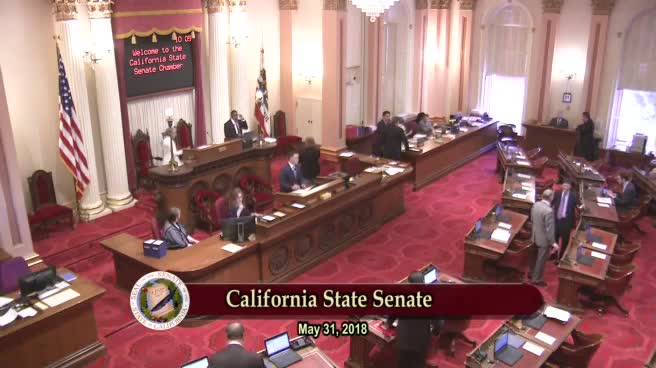
Bill Author