SCA 10: Public employee retirement benefits.
- Session Year: 2017-2018
- House: Senate
- Latest Version Date: 2017-02-17
Existing statutory law establishes various public agency retirement systems, including, among others, the Public Employees Retirement System, the State Teachers Retirement System, the Judges Retirement System II, and various county retirement systems pursuant to the County Employees Retirement Law of 1937, and these systems provide defined pension benefits to public employees based on age, service credit, and amount of final compensation. The California Constitution permits a city or county to adopt a charter for purposes of its governance that supersedes general laws of the state in regard to specified subjects, including compensation of city or county employees. The California Constitution establishes the University of California as a public trust with full powers of organization and government, subject only to specified limitations. Under their respective independent constitutional authority, charter cities and counties and the University of California may and have established retirement systems. The California Public Employees Pension Reform Act of 2013 (PEPRA) generally requires the retirement systems to which it applies to modify their provisions to conform with its requirements. PEPRA excepts from its provisions the retirement systems established by charter cities and counties and the University of California. PEPRA requires the retirement systems that it regulates and that offer defined benefit plans to provide specified defined benefit formulas, and prescribes requirements regarding employer and employee contributions to defined benefit pension plans.
This measure would prohibit a government employer from providing public employees any retirement benefit increase until that increase is approved by a 2/3 vote of the electorate of the applicable jurisdiction and that vote is certified. The measure would define retirement benefit to mean any postemployment benefit and would define benefit increase as any change that increases the value of an employees retirement benefit. The measure would define a government employer to include, among others, the state and any of its subdivisions, cities, counties, school districts, special districts, the Regents of the University of California, and the California State University.
WHEREAS, The State of California has made retirement security a priority for public employees since the early part of the 20th century by creating various state and local pension systems; and
WHEREAS, Over nearly a century of experience has shown that when planned and paid for, pensions can be useful in attracting and retaining good talent to public service. However, pension systems have also shown great weaknesses in properly accounting for their future retirement obligations, paying the normal costs of funding pension plans, and mitigating risk associated with the market, thus often shifting unfunded liabilities and other financial risks to taxpayer costs of paying retirement and pension benefits when they outstrip revenues and investment returns; and
WHEREAS, The nonpartisan Legislative Analysts Office estimates the current unfunded liabilities for the Public Employees Retirement System, the Teachers Retirement System, and the University of California Retirement System at approximately $140 billion; and
WHEREAS, The Pew Charitable Trusts, using data from 2012, found California ranked highest in the nation for unfunded pension obligations; and
WHEREAS, The unfunded public pension liabilities of California and its local governments are estimated to be over one-half trillion dollars; and
WHEREAS, Public pension debt has contributed to the bankruptcies of the cities of Stockton, Vallejo, and San Bernardino and has left other California municipalities in dire fiscal straits. As a result, several municipalities in the state now have the difficult task of balancing budgets in a way that is fair to both public employees and taxpayers, while continuing to provide basic services; and
WHEREAS, As noted by the Manhattan Institute: In recent years, California municipalities have seen retirement benefit costs grow at a rate above that of taxes, fees, and charges. Crowd-out is the term given to this condition by some public officials forced to deal with the resulting fiscal strain. Balanced budget requirements mandate that when costs grow more rapidly than revenues, something must give. All too often, this has meant reductions in core government services, most of whichpolice, fire, libraries, parks, and street and sidewalk maintenanceare delivered at the local level in California; and
WHEREAS, While state government retirees collect guaranteed pensions, young and future taxpayers will be responsible for paying the bill. Growing unfunded obligations have particularly serious ramifications for the millennial generation, who are sinking under the weight of public debts and obligations incurred years before they were even born; and
WHEREAS, While recent legislation and action by several pension boards have put the state on a more prudent financial path, much fundamental and substantial reform is still left to be done to make Californias pension systems sustainable for both employees and taxpayers; and
WHEREAS, Several recent polls, include those done by Reason Foundation and the Public Policy Institute of California, show that nearly three out of four of respondents say the amount of money spent on public employee pensions is a problem and that voters should have a great say in reforms; and
WHEREAS, Elements of true reform should make pensions fair to government workers and accountable to taxpayers in a simple and transparent manner, and include the ability for government entities to create a defined contribution plan or defined benefit/defined contribution hybrid pension plan for their current and new employees. Fundamental reforms should address the California Rule and allow the state and municipalities to modify future pension benefits for current public employees; and
WHEREAS, Local governments and the electorate should have a voice on what reforms may happen and how they may occur; and
WHEREAS, Failing now to adequately address the current pension unfunded liabilities in California and ignoring the debt pressure pension costs have on other budget priorities will only prolong the problems and delay meaningful reform. It will also endanger future pension benefits promised to public employees, risk the reduction or elimination of governmental services, and cause taxpayers to incur higher taxes to pay for unfunded liabilities; and
WHEREAS, It is in the interest of all Californians to encourage a public pension law that provides a fair, workable plan to pay down the accumulated pension debt as quickly as possible and implements processes and practices that ensure both the state and local governments adequately fund their retirement promises; now, therefore, be it
Resolved by the Senate, the Assembly concurring, That the Legislature of the State of California at its 201718 session commencing on the fifth day of December 2016, two-thirds of the membership of each house concurring, hereby proposes to the people of the State of California, that the Constitution of the State be amended as follows:
(a)A government employer shall not provide public employees any retirement benefit increase until that increase is approved by a two-thirds vote of the electorate of the applicable jurisdiction and the vote has been certified.
(b)For purposes of this section:
(1)Benefit increase means any change that increases the value of an employees retirement benefit, including, but not limited to, increasing a benefit formula, increasing the rate of cost-of-living adjustments, expanding the categories of pay included in pension calculations, reducing a vesting period, lowering the eligible retirement age, or otherwise providing a new economic advantage for the government employee.
(2)Government employer means the state, or a political subdivision of the state, including, but not limited to, counties, cities, charter counties, charter cities, a charter city and county, school districts, special districts, boards, commissions, the Regents of the University of California, the California State University, and agencies thereof.
(3)Retirement benefit means any post employment benefit, including, but not limited to, a benefit provided through a defined benefit pension plan, defined contribution plan, retiree health care plan, or any form of deferred compensation offered by government employers.
|
Date
|
Status
|
|---|---|
| Aug 14, 2018 | August 13 set for second hearing. Failed passage in committee. (Ayes 2. Noes 3.) Reconsideration granted. |
| Jun 20, 2017 | June 26 set for first hearing canceled at the request of author. |
| Jun 2, 2017 | Set for hearing June 26. |
| Mar 2, 2017 | Referred to Coms. on P.E. & R. and E. & C.A. |
| Feb 21, 2017 | From printer. May be acted upon on or after March 23. |
| Feb 17, 2017 | Introduced. Read first time. To Com. on RLS. for assignment. To print. |
|
Date
|
Description
|
Location
|
Votes
|
|
|---|---|---|---|---|
| Aug 13, 2018 | [Second] hearing set for [08-14-2018]: Failed passage in Committee. Reconsideration granted | Senate Standing Committee on Public Employment and Retirement |
Passed |
|
| Aug 13, 2018 | Be adopted, but first be re-referred to the Committee on [Elections and Constitutional Amendments] | Senate Standing Committee on Public Employment and Retirement |
Failed |
This list shows positions taken on this bill by organizations on the date displayed, which is linked to the original source.
Positions by individuals are not included.
|
Organization
|
Position
|
Date
|
|---|---|---|
| Association Of California School Administrators | * Against | Aug 13, 2018 |
| Association Of California State Supervisors | ** Against | Aug 10, 2018 |
| Cal Fire Local 2881 | ** Against | Aug 10, 2018 |
| California Association Of Highway Patrolmen | ** Against | Aug 10, 2018 |
| California Association Of Professional Scientists | ** Against | Aug 10, 2018 |
| California Faculty Association | * Against | Aug 13, 2018 |
| California Federation Of Teachers | ** Against | Aug 10, 2018 |
| California Labor Federation | * Against | Aug 13, 2018 |
| California Police Chiefs Association | ** Against | Aug 10, 2018 |
| California Professional Firefighters | ** Against | Aug 10, 2018 |
| California Retired Teachers Association | ** Against | Aug 10, 2018 |
| California School Employees Association, AFL-CIO | ** Against | Aug 10, 2018 |
| California State Retirees | ** Against | Aug 10, 2018 |
| california state teachers' retirement system | ** Against | Aug 10, 2018 |
| California Teachers Association | ** Against | Aug 10, 2018 |
| City of Costa Mesa | ** Support | Aug 10, 2018 |
| City Of Huntington Beach | ** Support | Aug 10, 2018 |
| Faculty Association Of California Community Colleges | ** Against | Aug 10, 2018 |
| Los Angeles County Employees Retirement Association | ** Against | Aug 10, 2018 |
| Los Angeles County Professional Peace Officers Association | ** Against | Aug 10, 2018 |
| Orange County Employees Association | ** Against | Aug 10, 2018 |
| Orange County Professional Firefighters Association, Local 3631 | ** Against | Aug 10, 2018 |
| Peace Officers Research Association Of California | ** Against | Aug 10, 2018 |
| Professional Engineers In California Government | ** Against | Aug 10, 2018 |
| Retired Public Employees Association | ** Against | Aug 10, 2018 |
| Riverside Sheriffs' Association | ** Against | Aug 10, 2018 |
| Service Employees International Union, Local 1000 | ** Against | Aug 10, 2018 |
| United Public Employees | ** Against | Aug 10, 2018 |
SENATE COMMITTEE ON
PUBLIC EMPLOYMENT AND RETIREMENT
Dr. Richard Pan, Chair
2017 - 2018 Regular
Bill No: SCA 10 Hearing Date: 8/13/18
Author: | Moorlach | ||
Version: | 2/17/17 As introduced | ||
Urgency: | No | Fiscal: | Yes |
Consultant: | Korinne Sugasawara | ||
Subject: Public employee retirement benefits
SOURCE: Author
DIGEST: This constitutional amendment would prevent a government employer from increasing retirement benefits for public employees unless the proposed increase is approved by two-thirds of voters in the applicable jurisdiction and that vote is certified.
ANALYSIS:
Existing law:
- Establishes various public retirement systems that provide defined benefit pension plans to civil service employees, including: the California Public Employees’ Retirement System (CalPERS), the California State Teachers’ Retirement System (CalSTRS), the Judges’ Retirement Systems I and II, the Legislators’ Retirement System, the University of California Retirement System, twenty county systems established under the provisions of the County Employees Retirement Law of 1937, and individual independent systems established by certain charter cities and counties.
- Permits a city or county to adopt a charter for purposes of governance that supersedes general state law for specified areas, including compensation of county or city employees.
- Establishes the University of California as a public trust with full powers of organization and government, subject only to specified limitations.
- Provides that the retirement systems regulated by the Public Employees’ Pension Reform Act of 2013 (PEPRA) must utilize specified defined benefit formulas, and prescribes certain employer and employee contributions to these defined benefit pension plans.
- Exempts retirement systems established by the University of California and by charter cities and counties from the provisions of PEPRA.
This bill:
- Amends the California State Constitution to prohibit a government employer from providing public employees with any retirement benefit increase until the proposed increase is approved by a two-thirds vote of the electorate of the applicable jurisdiction and the vote has been certified.
- Defines a “benefit increase” as any change that increases the value of an employee’s retirement benefit, including but not limited to:
- Increasing a benefit formula;
- Increasing the rate of cost-of-living adjustments;
- Expanding the categories of pay included in pension calculations;
- Reducing a vesting period;
- Lowering the eligible retirement age; or otherwise
- Providing a new economic advantage for the government employee.
- A “government employer” means the state or a political subdivision of the state, including but not limited to: counties, cities, charter counties and cities, school districts, special districts, boards, commissions, the Regents of the University of California, the California State University, and agencies thereof.
- A “retirement benefit” includes any post-employment benefit, including but not limited to: a benefit provided through a defined benefit pension plan; a benefit provided through a defined contribution plan; retiree health plan; or any other form of deferred compensation offered by government employers.
Background
Current law vests the retirement board of a public pension system with exclusive fiduciary responsibility over the assets of the public pension system. The board has plenary authority in administrating the system to assure prompt delivery of benefits and related services to the members and their beneficiaries.
PEPRA made a number of cost-saving changes to public retirement law, including a 50/50 normal cost split, 3 year final compensation period, and a cap on pensionable compensation. PEPRA also established certain defined retirement formulas extending the vesting schedule for new employees, effective January 1, 2013. Excluded from PEPRA requirements are: the University of California and retirement plans offered by charter cities and charter counties that do not participate in CalPERS or operate under the County Employees Retirement Law of 1937.
This constitutional amendment would prohibit any government employer from providing employees with any benefit increases until that increase has been approved by a certified 2/3 vote in the applicable jurisdiction. Additionally, it would include the Regents of the University of California and independent retirement plans offered by charter cities and counties under its provisions.
Related/Prior Legislation
SCA 15 (Yee, 2013) would have required the University of California, its employees, and the UC Retirement Plan to be subject to PEPRA. Died in Senate Rules Committee.
SCA 11 (Huff, 2012) would have made various changes to public retirement plans, including requiring each public retirement system to provide a hybrid pension plan. Died in Senate Public Employment and Retirement Committee.
FISCAL EFFECT: Appropriation: No Fiscal Com.: Yes Local: No
SUPPORT:
City of Costa Mesa
City of Huntington Beach
OPPOSITION:
American Federation of State, County and Municipal Employees, AFL-CIO
Association of California School Administrators
Association of California State Supervisors
CAL FIRE Local 2881
California Association of Highway Patrolmen
California Association of Professional Scientists
California Federation of Teachers
California Police Chiefs Association
California Professional Firefighters
California Retired Teachers Association
California School Employees Association, AFL-CIO
California State Retirees
California State Teachers’ Retirement System
California Teachers Association
Faculty Association of California Community Colleges
Laborers’ International Union of North America, Locals 777 & 792
Los Angeles County Employees Retirement Association
Los Angeles County Professional Peace Officers Association
Orange County Employees Association
Orange County Professional Firefighters Association, Local 3631
Peace Officers Research Association of California
Professional Engineers in California Government
Retired Public Employees Association
Riverside Sheriffs’ Association
Service Employees International Union, Local 1000
United Public Employees
ARGUMENTS IN SUPPORT:
According to the author’s office “growing unfunded public pension obligations will have serious ramifications for future generations unless changes are made to California’s public employee retirement systems…taxpayers who bear a significant cost of public employee pensions should have a voice if those costs are increased.”
ARGUMENTS IN OPPOSITION:
CalSTRS writes, “SCA 10 potentially provides voters in local jurisdictions with the ability to establish a myriad of funding approaches and benefit tiers…[which] not only has the potential to create an administrative burden on the system but could increase CalSTRS unfunded liability should local voters approve a retirement benefit increase without appropriating the additional contributions necessary.”
CAL FIRE notes, “Increases and decreases in retirement benefits are subject to collective bargaining, and that is where they should remain. Forcing every individual jurisdiction to require 2/3 voter approval is a one size fits all answer to a perceived problem that can be, and has been, addressed in many different ways.”
The California Association of Highway Patrolmen states, “The reforms enacted in 2012 were designed to bolster the long-term health of California’s public pension system, and they are doing exactly that.”
Discussed in Hearing
 10MIN
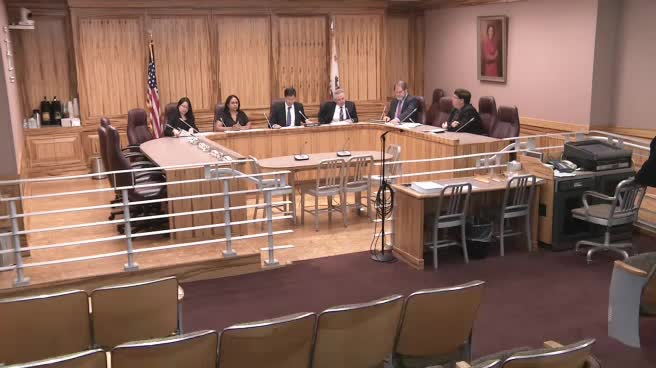
Senate Standing Committee on Public Employment and Retirement
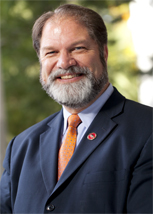
Bill Author
Bill Co-Author(s):