SCA 12: Counties: governing body: county executive.
- Session Year: 2017-2018
- House: Senate
- Latest Version Date: 2017-06-27
(1)The California Constitution requires that a county charter provide for a governing body of 5 or more members, elected by district, at large, or at large with a requirement that they reside in a district, and provide for the compensation, terms, and removal of members of the governing body. Existing law also requires a general law county to have a board of supervisors consisting of 5 members, and requires, except as provided, each member of the board of supervisors to be elected by the district which the member represents.
This measure would, commencing January 1, 2022, in a county that is found at a decennial United States census, beginning with the 2020 United States census, to have a population of more than 5,000,000, require, and deem any applicable law, including a county charter, to require, a governing body consisting of the greater of either 5 members or a sufficient number of members so as to ensure that each member represents a district containing a population equivalent to no more than 2 districts in the United States House of Representatives. The measure would require that the members of the governing body serve for a term of 4 years and limit election to the governing body to no more than 3 terms. The measure would also provide that, in such a county, the expenditures for the governing body and its staff may not exceed, for any subsequent fiscal year after the release of the census finding that the county has a population of more than 5,000,000, the amount that was allocated for the expenses of the governing body and its staff in the countys adopted budget for the fiscal year in which that same census was conducted, unless adjusted as provided.
(2)The California Constitution additionally requires that a county charter provide for an elected sheriff, an elected district attorney, an elected assessor, and other officers.
This measure would require a county that is found at a decennial United States census, beginning with the 2020 United States census, to have a population of more than 5,000,000, to have an elected county executive. The measure would provide for the election of the county executive to a term of 6 years at a general election, and would limit election to that office to no more than 2 terms. The measure would require the county executive to appoint, supervise, and dismiss any appointed department head, and to appoint the members of county commissions, subject to confirmation by the governing body of the county. The measure would additionally require the county executive to develop and submit the county budget to the governing body, for approval or amendment by that body, and to approve, with or without line-item vetoes, the budget as transmitted back by the governing body.
(3)The California Constitution provides that charter counties are subject to statutes that relate to apportioning population of governing body districts.
This measure would recast this provision to provide that charter counties are subject to federal, state, and local laws that relate to apportioning population of governing body districts.
(4)This measure would also make other technical, nonsubstantive changes.
(5)This measure would declare that its provisions are severable.
(1)The California Constitution requires that a county charter provide for a governing body of 5 or more members, elected by district, at large, or at large with a requirement that they reside in a district, and provide for the compensation, terms, and removal of members of the governing body. Existing law also requires a general law county to have a board of supervisors consisting of 5 members, and requires, except as provided, each member of the board of supervisors to be elected by the district which the member represents.
This measure would, commencing January 1, 2022, in a county that is found at a decennial United States census, beginning with the 2020 United States census, to have a population of more than 5,000,000, require, and deem any applicable law, including a county charter, to require, a governing body consisting of a sufficient number of members so as to ensure that each member represents a district containing a population equivalent to no more than 2 districts in the United States House of Representatives. The measure would require that the members of the governing body serve for a term of 4 years and limit election to the governing body to no more than 3 terms. The measure would also provide that, in such a county, the expenditures for the governing body and its staff may not exceed, for any subsequent fiscal year after the release of the census finding that the county has a population of more than 5,000,000, the amount that was allocated for the expenses of the governing body and its staff in the countys adopted budget for the fiscal year in which that same census was conducted, unless adjusted as provided.
(2)The California Constitution additionally requires that a county charter provide for an elected sheriff, an elected district attorney, an elected assessor, and other officers.
This measure would require a county that is found at a decennial United States census, beginning with the 2020 United States census, to have a population of more than 5,000,000, to have an elected county executive. The measure would provide for the election of the county executive to a term of 6 years at a general election, and would limit election to that office to no more than 2 terms. The measure would require the county executive to appoint, supervise, and dismiss any appointed department head, and to appoint the members of county commissions, subject to confirmation by the governing body of the county. The measure would additionally require the county executive to develop and submit the county budget to the governing body, for approval or amendment by that body, and to approve, with or without line-item vetoes, the budget as transmitted back by the governing body.
(3)The California Constitution provides that charter counties are subject to statutes that relate to apportioning population of governing body districts.
This measure would recast this provision to provide that charter counties are subject to federal, state, and local laws that relate to apportioning population of governing body districts.
(4)This measure would also make other technical, nonsubstantive changes.
(5)This measure would declare that its provisions are severable.
WHEREAS, Californias counties are creations of the state and their governance is mandated by the California Constitution, and changes to certain aspects of their governance require amendment of the California Constitution; and
WHEREAS, Californias counties are governed by elected members of a board of supervisors; and
WHEREAS, The number of members of the board of supervisors in most counties has remained unchanged for more than a century despite enormous increases in the countys population which, in some cases, are greater than the population of individual states in the Union; and
WHEREAS, It is a well-recognized principle that residents are more efficiently able to access their representatives for assistance for services and to hold them better accountable when the ratio of residents to each elected representative on a governing body is smaller rather than larger; and
WHEREAS, It is important to restrain the costs of governance by restricting the fiscal impact of any changes in any countys board of supervisors and the creation of an elected county executive position; and
WHEREAS, It is therefore the intent of the people, in adopting this measure, to make all of the following changes with regard to the county board of supervisors in each county having a population of more than 5,000,000 at each decennial United States census:
(a)Increase democratic representation by making an effort to substantially reduce the population in each supervisorial district to approximate the combined population of two congressional districts;
(b)Establish smaller supervisorial districts, to provide greater opportunities for public participation in local government that provide safety, health, transportation, and other vital services;
(c)By creating a county executive position to separate the legislative and executive functions of the County of Los Angeles, consistent with the Los Angeles County Civil Grand Jurys July 2016 Report recommending changes for the governance of the County of Los Angeles given the countys complexity of populations, demographics, services, and financing sources, among other matters;
(d)To control the costs and size of county government through restriction of future costs for the board of supervisors and the proposed elected county executive to current respective budgets; now, therefore, be it
Resolved by the Senate, the Assembly concurring, That the Legislature of the State of California at its 201718 Regular Session commencing on the fifth day of December 2016, two-thirds of the membership of each house concurring, hereby proposes to the people of the State of California, that the Constitution of the State be amended as follows:
County charters shall provide for:
(a)Except as otherwise provided in Section 4.5, a governing body of five or more members, elected (1) by district or, (2) at large, or (3) at large, with a requirement that each member reside in a district. Charter counties are subject to federal, state, and local laws that relate to apportioning population of governing body districts.
(b)Except as otherwise provided in Section 4.5, the compensation, terms, and removal of members of the governing body. If a county charter provides for the Legislature to prescribe the salary of the governing body, compensation shall be prescribed by the governing body by ordinance.
(c)An elected sheriff, an elected district attorney, an elected assessor, other officers, their election or appointment, compensation, terms, and removal, except as otherwise provided in Section 4.6.
(d)The performance of functions required by statute.
(e)The powers and duties of governing bodies and all other county officers, and for consolidation and segregation of county officers, and for the manner of filling all vacancies occurring in those offices.
(f)The fixing and regulation by governing bodies, by ordinance, of the appointment and number of assistants, deputies, clerks, attaches, and other persons to be employed, and for the prescribing and regulating by such bodies of the powers, duties, qualifications, and compensation of such persons, the times at which, and terms for which they shall be appointed, and the manner of their appointment and removal.
(g)Whenever any county has framed and adopted a charter, and the same shall have been approved by the Legislature as herein provided, the general laws adopted by the Legislature in pursuance of subdivision (b) of Section 1 of this article, shall, as to such county, be superseded by said charter as to matters for which, under this section it is competent to make provision in such charter, and for which provision is made therein, except as herein otherwise expressly provided.
(h)Charter counties shall have all the powers that are provided by this Constitution or by statute for counties.
(a)Commencing January 1, 2022, in a county that is found at a decennial United States census, beginning with the 2020 United States census, to have a population of more than 5,000,000, there is required, and any applicable law, including a county charter, shall be deemed to require, the following:
(1)The governing body shall consist of the greater of either five members or a sufficient number of members, elected by district, so as to ensure that each member of the governing body represents, to the extent practicable, a district containing a population approximately equivalent to no more than two districts in the United States House of Representatives. Each member of the governing body shall reside within the district that he or she represents.
(2)(A)Except as provided in subparagraph (B), the expenditures for the governing body and its staff shall not exceed, for any subsequent fiscal year after the release of the census finding a population of more than 5,000,000, the amount that was allocated for the expenses of the governing body and its staff in the countys adopted budget for the fiscal year in which that same census was conducted.
(B)Notwithstanding subparagraph (A), the expenditures for the governing body and its staff may be adjusted for either of the following reasons:
(i)To account for inflation, as reflected in annual changes in the California Consumer Price Index.
(ii)To address contingencies that were unaccounted for during or that could not have been anticipated in the fiscal year in which the census was conducted.
(3)Members of the governing body shall serve for terms of four years. A member of the governing body shall not serve more than three terms, whether or not those terms are consecutive.
(b)Any members of the governing body required by this section in addition to those required by any other law, including an existing charter, shall first be elected at a general election occurring on or after January 1, 2022. Those additional members shall serve for the same term and subject to the same provisions of the applicable law or charter to the governing body, except that no more than one-half of the additional members elected on or after January 1, 2022, may serve a shortened term so as to provide for staggered terms.
(a)(1)A county that is found at a decennial United States census beginning with the 2020 United States census to have a population of more than 5,000,000 shall have an elected county executive who shall serve a term of six years. The county executive shall not serve more than two terms, whether or not those terms are consecutive. The election of the county executive shall occur at a general election.
(2)(A)Except as provided in subparagraph (B), the budget for the county executive for the first fiscal year in which that office is in existence pursuant to this section shall be based upon the budget of the chief executive officer or his or her equivalent, if any, in the fiscal year in which this section was added.
(B)Notwithstanding subparagraph (A), the amount of expenditures for the governing body may be adjusted for any fiscal year for either of the following reasons:
(i)To account for inflation, as reflected in annual changes in the California Consumer Price Index.
(ii)To address contingencies that were unaccounted for during or that could not have been anticipated in the first fiscal year in which this section was added.
(C)The salary of the county executive shall be the same as the salary paid to the presiding judge of the superior court with jurisdiction over the county and may be adjusted in the same manner. This subparagraph shall not be construed as a limitation on the authority of the Legislature to set the compensation for judges of courts of record pursuant to Section 19 of Article VI.
(b)(1)(A)The county executive shall appoint, supervise, and dismiss any person appointed to the position of department head, or its equivalent.
(B)The governing body of the county may overrule any appointment or dismissal made pursuant to this paragraph by a two-thirds vote of its entire membership. The governing body shall notify the county executive of its intent to overrule and shall take action within 30 calendar days of the date of notification. During the 30 calendar days, the county executives appointment or dismissal action shall be suspended.
(2)The county executive shall appoint the members of any commission of the county, subject to confirmation by the governing body of the county.
(c)(1)The county executive, within 45 days of the adoption of the annual state budget pursuant to Section 12 of Article IV, On or before June 30 of each year, the county executive shall develop and submit to the governing body of the county an annual budget for the county.
(2)Within 90 60 days of receipt of the budget pursuant to paragraph (1), the governing body of the county shall review and approve the budget, with or without amendments, and transmit the budget to the county executive for review and final approval.
(3)(A)Within 15 days of receipt of the budget pursuant to paragraph (2), the county executive shall either:
(i)Approve the budget as transmitted by the board of supervisors pursuant to paragraph (2).
(ii)Approve the budget with any line-item vetoes.
(B)Upon taking an action pursuant to clause (i) or (ii), the county executive shall return the budget to the governing body of the county along with the action taken.
(4)The governing body of the county may, within 15 days of an approval of a budget with a line-item veto pursuant to clause (ii) of subparagraph (A) of paragraph (3), override the veto by a two-thirds vote of its entire membership.
(5)An approved budget may be amended as follows:
(A)By a proposal of the county executive. The county executive shall present any proposed amendments to the governing body of the county. The governing body shall review any proposed amendment presented by the county executive, and may approve any amendments by a two-thirds vote of its entire membership.
(B)By the governing body, which shall approve any amendment to an approved budget by a two-thirds vote of its entire membership.
(d)The governing body may override any action of the county executive by a two-thirds vote of its entire membership.
The provisions of this measure are severable. If any provision of this measure or its application is held invalid, that invalidity shall not affect other provisions or applications that can be given effect without the invalid provision or application.
WHEREAS, Californias counties are creations of the state and their governance is mandated by the California Constitution, and changes to certain aspects of their governance require amendment of the California Constitution; and
WHEREAS, Californias counties are governed by elected members of a board of supervisors; and
WHEREAS, The number of members of the board of supervisors in most counties has remained unchanged for more than a century despite enormous increases in the countys population which, in some cases, are greater than the population of individual states in the Union; and
WHEREAS, It is a well-recognized principle that residents are more efficiently able to access their representatives for assistance for services and to hold them better accountable when the ratio of residents to each elected representative on a governing body is smaller rather than larger; and
WHEREAS, It is important to restrain the costs of governance by restricting the fiscal impact of any changes in any countys board of supervisors and the creation of an elected county executive position; and
WHEREAS, It is therefore the intent of the people, in adopting this measure, to make all of the following changes with regard to the county board of supervisors in each county having a population of more than 5,000,000 at each decennial United States census:
(a)Increase democratic representation by making an effort to substantially reduce the population in each supervisorial district to approximate the combined population of two congressional districts;
(b)Establish smaller supervisorial districts, to provide greater opportunities for public participation in local government that provide safety, health, transportation, and other vital services;
(c)By creating a county executive position to separate the legislative and executive functions of the County of Los Angeles, consistent with the Los Angeles County Civil Grand Jurys July 2016 Report recommending changes for the governance of the County of Los Angeles given the countys complexity of populations, demographics, services, and financing sources, among other matters;
(d)To control the costs and size of county government through restriction of future costs for the board of supervisors and the proposed elected county executive to current respective budgets; now, therefore, be it
Resolved by the Senate, the Assembly concurring, That the Legislature of the State of California at its 201718 Regular Session commencing on the fifth day of December 2016, two-thirds of the membership of each house concurring, hereby proposes to the people of the State of California, that the Constitution of the State be amended as follows:
County charters shall provide for:
(a)A Except as otherwise provided in Section 4.5, a governing body of 5 five or more members, elected (1) by district or, (2) at large, or (3) at large, with a requirement that they each member reside in a district. Charter counties are subject to statutes federal, state, and local laws that relate to apportioning population of governing body districts.
(b)The Except as otherwise provided in Section 4.5, the compensation, terms, and removal of members of the governing body. If a county charter provides for the Legislature to prescribe the salary of the governing body, such compensation shall be prescribed by the governing body by ordinance.
(c)An elected sheriff, an elected district attorney, an elected assessor, other officers, their election or appointment, compensation, terms terms, and removal. removal, except as otherwise provided in Section 4.6.
(d)The performance of functions required by statute.
(e)The powers and duties of governing bodies and all other county officers, and for consolidation and segregation of county officers, and for the manner of filling all vacancies occurring therein. in those offices.
(f)The fixing and regulation by governing bodies, by ordinance, of the appointment and number of assistants, deputies, clerks, attaches, and other persons to be employed, and for the prescribing and regulating by such bodies of the powers, duties, qualifications, and compensation of such persons, the times at which, and terms for which they shall be appointed, and the manner of their appointment and removal.
(g)Whenever any county has framed and adopted a charter, and the same shall have been approved by the Legislature as herein provided, the general laws adopted by the Legislature in pursuance of Section 1(b) subdivision (b) of Section 1 of this article, shall, as to such county, be superseded by said charter as to matters for which, under this section it is competent to make provision in such charter, and for which provision is made therein, except as herein otherwise expressly provided.
(h)Charter counties shall have all the powers that are provided by this Constitution or by statute for counties.
(a)Commencing January 1, 2022, in a county that is found at a decennial United States census, beginning with the 2020 United States census, to have a population of more than 5,000,000, there is required, and any applicable law, including a county charter, shall be deemed to require, the following:
(1)The governing body shall consist of a sufficient number of members, elected by district, so as to ensure that each member of the governing body represents, to the extent practicable, a district containing a population approximately equivalent to no more than two districts in the United States House of Representatives. Each member of the governing body shall reside within the district that he or she represents.
(2)(A)Except as provided in subparagraph (B), the expenditures for the governing body and its staff shall not exceed, for any subsequent fiscal year after the release of the census finding a population of more than 5,000,000, the amount that was allocated for the expenses of the governing body and its staff in the countys adopted budget for the fiscal year in which that same census was conducted.
(B)Notwithstanding subparagraph (A), the expenditures for the governing body and its staff may be adjusted for either of the following reasons:
(i)To account for inflation, as reflected in annual changes in the California Consumer Price Index.
(ii)To address contingencies unaccounted for during the fiscal year in which the census was conducted.
(3)Members of the governing body shall serve for terms of four years. A member of the governing body shall not serve more than three terms, whether or not those terms are consecutive.
(b)Any members of the governing body required by this section in addition to those required by any other law, including an existing charter, shall first be elected at a general election occurring on or after January 1, 2022. Those additional members shall serve for the same term and subject to the same provisions of the applicable law or charter to the governing body, except that no more than one-half of the additional members elected on or after January 1, 2022, may serve a shortened term so as to provide for staggered terms.
(a)(1)A county that is found at a decennial United States census beginning with the 2020 United States census to have a population of more than 5,000,000 shall have an elected county executive who shall serve a term of six years. The county executive shall not serve more than two terms, whether or not those terms are consecutive. The election of the county executive shall occur at a general election.
(2)(A)Except as provided in subparagraph (B), the budget for the county executive for the first fiscal year in which that office is in existence pursuant to this section shall be based upon the budget of the chief executive officer or his or her equivalent, if any, in the fiscal year in which this section was added.
(B)Notwithstanding subparagraph (A), the amount of expenditures for the governing body may be adjusted for any fiscal year for either of the following reasons:
(i)To account for inflation, as reflected in annual changes in the California Consumer Price Index.
(ii)To address contingencies unaccounted for during the first fiscal year in which this section was added.
(C)The salary of the county executive shall be the same as the salary paid to the presiding judge of the superior court with jurisdiction over the county and may be adjusted in the same manner. This subparagraph shall not be construed as a limitation on the authority of the Legislature to set the compensation for judges of courts of record pursuant to Section 19 of Article VI.
(b)(1)(A)The county executive shall appoint, supervise, and dismiss any person appointed to the position of department head, or its equivalent.
(B)The governing body of the county may overrule any appointment or dismissal made pursuant to this paragraph by a two-thirds vote of its entire membership. The governing body shall notify the county executive of its intent to overrule and shall take action within 30 calendar days of the date of notification. During the 30 calendar days, the county executives appointment or dismissal action shall be suspended.
(2)The county executive shall appoint the members of any commission of the county, subject to confirmation by the governing body of the county.
(c)(1)The county executive, within 45 days of the adoption of the annual state budget pursuant to Section 12 of Article IV, shall develop and submit to the governing body of the county an annual budget for the county.
(2)Within 90 days of receipt of the budget pursuant to paragraph (1), the governing body of the county shall review and approve the budget, with or without amendments, and transmit the budget to the county executive for review and final approval.
(3)(A)Within 15 days of receipt of the budget pursuant to paragraph (2), the county executive shall either:
(i)Approve the budget as transmitted by the board of supervisors pursuant to paragraph (2).
(ii)Approve the budget with any line-item vetoes.
(B)Upon taking an action pursuant to clause (i) or (ii), the county executive shall return the budget to the governing body of the county along with the action taken.
(4)The governing body of the county may, within 15 days of an approval of a budget with a line-item veto pursuant to clause (ii) of subparagraph (A) of paragraph (3), override the veto by a two-thirds vote of its entire membership.
(5)An approved budget may be amended as follows:
(A)By a proposal of the county executive. The county executive shall present any proposed amendments to the governing body of the county. The governing body shall review any proposed amendment presented by the county executive, and may approve any amendments by a two-thirds vote of its entire membership.
(B)By the governing body, which shall approve any amendment to an approved budget by a two-thirds vote of its entire membership.
(d)The governing body may override any action of the county executive by a two-thirds vote of its entire membership.
The provisions of this measure are severable. If any provision of this measure or its application is held invalid, that invalidity shall not affect other provisions or applications that can be given effect without the invalid provision or application.
|
Date
|
Status
|
|---|---|
| Sep 14, 2017 | In Assembly. Read first time. Held at Desk. |
| Sep 14, 2017 | Read. Adopted. (Ayes 27. Noes 7.) Ordered to the Assembly. |
| Sep 12, 2017 | Read third time. Refused adoption. (Ayes 21. Noes 7.) |
| Sep 5, 2017 | Read second time. Ordered to third reading. |
| Sep 1, 2017 | From committee: Be adopted. (Ayes 5. Noes 2.) (September 1). |
| Aug 25, 2017 | Set for hearing September 1. |
| Aug 21, 2017 | August 21 hearing: Placed on APPR. suspense file. |
| Jul 20, 2017 | Set for hearing August 21. |
| Jul 13, 2017 | From committee: Be adopted and re-refer to Com. on APPR. (Ayes 4. Noes 1.) (July 12). Re-referred to Com. on APPR. |
| Jun 29, 2017 | Set for hearing July 12. |
| Jun 27, 2017 | Read second time and amended. Re-referred to Com. on E. & C.A. |
| Jun 26, 2017 | From committee: Be adopted as amended and re-refer to Com. on E. & C.A. (Ayes 5. Noes 1.) (June 21). |
| Jun 13, 2017 | Set for hearing June 21. |
| May 10, 2017 | Referred to Coms. on GOV. & F., E. & C.A., and APPR. |
| Apr 28, 2017 | From printer. May be acted upon on or after May 28. |
| Apr 27, 2017 | Introduced. Read first time. To Com. on RLS. for assignment. To print. |
|
Date
|
Description
|
Location
|
Votes
|
|
|---|---|---|---|---|
| Sep 14, 2017 | Senate 3rd Reading SCA12 Mendoza et al. | Senate Floor |
Passed |
|
| Sep 12, 2017 | Senate 3rd Reading SCA12 Mendoza et al. Reconsider | Senate Floor |
Passed |
|
| Sep 12, 2017 | Senate 3rd Reading SCA12 Mendoza et al. | Senate Floor |
Passed |
|
| Sep 1, 2017 | Be adopted | Senate Standing Committee on Appropriations |
Passed |
|
| Aug 21, 2017 | Placed on suspense file | Senate Standing Committee on Appropriations |
Passed |
|
| Jul 12, 2017 | Be adopted, but first be re-referred to the Committee on [Appropriations] | Senate Standing Committee on Elections and Constitutional Amendments |
Passed |
|
| Jun 21, 2017 | Favorable With Committee Substitute (PreK-12 Quality Subcommittee) | Senate Standing Committee on Governance and Finance |
Passed |
This list shows positions taken on this bill by organizations on the date displayed, which is linked to the original source.
Positions by individuals are not included.
|
Organization
|
Position
|
Date
|
|---|---|---|
| Advancement of Colored People | ** Against | Jul 10, 2017 |
| American Federation of State, County and Municipal Employees | ** Against | Sep 12, 2017 |
| Association For Los Angeles Deputy Sheriffs | ** Against | Sep 12, 2017 |
| California Professional Firefighters | ** Against | Sep 12, 2017 |
| California State Association Of Counties | ** Against | Sep 12, 2017 |
| chinese american citizens alliance-greater san gabriel valley lodge | ** Support | Sep 12, 2017 |
| Coalition Of County Unions, County Of Los Angeles | ** Against | Sep 12, 2017 |
| County Administrative Officers Association Of California | ** Against | Sep 12, 2017 |
| County Behavioral Health Directors Association of California | ** Against | Sep 12, 2017 |
| County Management Association | ** Against | Sep 12, 2017 |
| County Of Los Angeles | ** Against | Sep 12, 2017 |
| County of Orange | ** Against | Sep 12, 2017 |
| County of Riverside | ** Against | Sep 12, 2017 |
| county of sacramento | ** Against | Sep 12, 2017 |
| County Of San Diego | ** Against | Sep 12, 2017 |
| george runner, state board of equalization, 1st district | ** Support | Sep 12, 2017 |
| International City | ** Against | Sep 12, 2017 |
| Latino Public Defenders' Association | ** Support | Sep 12, 2017 |
| Los Angeles Area Chamber Of Commerce | ** Against | Sep 12, 2017 |
| Los Angeles County Board of Supervisors | ** Against | Jul 10, 2017 |
| Los Angeles County Chicano Employees Association | ** Support | Sep 12, 2017 |
| Los Angeles County Federation of Labor, AFL-CIO | ** Against | Sep 12, 2017 |
| Los Angeles County Hispanic Managers Association | ** Support | Sep 12, 2017 |
| Service Employees International Union | ** Against | Sep 12, 2017 |
| sheila kuehl, supervisor, county of los angeles | ** Against | Sep 12, 2017 |
| Unknown. | ** Support | Jun 21, 2017 |
| VALLEY INDUSTRY AND COMMERCE ASSOCIATION | ** Against | Sep 12, 2017 |
Office of Senate Floor Analyses (916) 651-1520 Fax: (916) 327-4478 | SCA |
THIRD READING
Bill No: SCA 12
:
SENATE GOVERNANCE & FIN. COMMITTEE: 5-1, 6/21/17
AYES: McGuire, Beall, Hernandez, Hertzberg, Lara
NOES: Moorlach
NO VOTE RECORDED: Nguyen
SENATE ELECTIONS & C.A. COMMITTEE: 4-1, 7/12/17
AYES: Anderson, Allen, Hertzberg, Leyva
NOES: Stern
SENATE APPROPRIATIONS COMMITTEE: 5-2, 9/1/17
AYES: Lara, Beall, Bradford, Hill, Wiener
NOES: Bates, Nielsen
SENATE FLOOR: 21-7, 9/12/17 (FAIL)
AYES: Anderson, Atkins, Beall, Berryhill, Bradford, Cannella, De León, Gaines, Hernandez, Hertzberg, Hill, Hueso, Leyva, McGuire, Mendoza, Nguyen, Pan, Portantino, Wieckowski, Wiener, Wilk
NOES: Dodd, Jackson, Mitchell, Moorlach, Stern, Stone, Vidak
NO VOTE RECORDED: Allen, Bates, Fuller, Galgiani, Glazer, Lara, Monning, Morrell, Newman, Nielsen, Roth, Skinner
DIGEST:
This constitutional amendment requires, upon voter approval, a county with a population greater than five million residents after the 2020 U.S. census to have an elected county executive and a larger governing body.
Existing law:
- Requires, pursuant to the California Constitution, that if a county adopts its own voter-approved charter, it must have a directly elected board of supervisors with at least five members. The Constitution allows charter counties to elect their supervisors by districts, from districts, or at large.
- Requires a general law county to have a board of supervisors consisting of five members, and requires, except under specified circumstances, each member to be elected by the district which the member represents.
- Requires all counties to elect a sheriff, district attorney, assessor, and board of supervisors. All counties elect or appoint additional county officials.
This constitutional amendment:
- Requires, upon voter approval, in a county with a population of more than five million residents at a decennial United States census, beginning with the 2020 United States census:
- The county’s governing board to consist of the greater of five members or enough members so as to ensure that each member represents a population equivalent to no more than two districts in the United States House of Representatives.
- All members of the board to be elected by district and to reside within the district that the member represents and limits board members to serving no more than three terms of four years each.
- Any additional members to be elected at a general election on or after January 1, 2022 and to follow the same terms and laws applicable to the other members, except that the terms of no more than half of the additional members can be shortened to provide for staggered terms.
- The county to have an elected executive, who may serve no more than two terms of six years each and who must be elected at a general election. SCA 12 grants that executive several powers, including to:
- Appoint, supervise, and dismiss any person appointed to the position of department head or its equivalent;
- Appoint—subject to confirmation by the governing body of the county—the members of any commission of the county, and;
- Develop and submit an annual budget to the county.
- Establishes a separate budget process for those counties, as follows:
- On or before June 30 of each year, the elected county executive must submit an annual budget to the board.
- Within 60 days of receipt, the board must review and approve the budget, with or without amendments, and transmit it to the county executive for approval.
- The county executive must, within 15 days of receipt, either approve the budget as transmitted by the board, or approve the budget with any line-item vetoes, and then return the budget to the board.
- Allows the board to override any line-item vetoes within 15 days of such vetoes with a two-thirds vote.
- Allows either the county executive or the board to propose an amendment to the budget, which must be approved by a two-thirds vote of the board.
- Allows the board, after providing 30 days’ notice, to override the hiring or dismissal of any department head with a two-thirds vote.
- Caps expenditures for the governing board and its staff at the amount budgeted for the fiscal year after the census in which the county population exceeds five million residents.
- Requires the budget for the newly-created elected county executive to be based on the budget of the county’s existing chief executive officer or equivalent in the year that SCA 12 is approved by the voters.
- Allows both the county executive and the board’s budget to subsequently be increased to account for inflation and to address contingencies that were either unaccounted for during the year the census was conducted or the year SCA 12 is approved by voters, as applicable, or could not have been anticipated.
- Establishes the compensation for the county executive at the salary paid to the presiding judge of the superior court.
- Provides that its provisions are severable and makes other technical and conforming changes to existing constitutional provisions governing: (a) governing board composition, compensation, and method of election; and (b) compensation, terms, and removal of county officers.
Background
There are 14 charter counties: Alameda, Butte, El Dorado, Fresno, Los Angeles, Orange, Placer, Sacramento, San Bernardino, San Diego, San Francisco, San Mateo, Santa Clara, and Tehama. San Francisco, a city and county, elects its 11 supervisors by districts. The other charter counties elect their five-member boards of supervisors by districts. Most large counties are charter counties: eight of the ten largest counties by population have adopted charters. Although voters can amend their county's charter to expand the number of supervisors, Los Angeles County voters have rejected those attempts.
Only Los Angeles County has more than five million residents (10.1 million). However, other counties may grow to exceed five million in the next few decades, including San Diego (currently with 3.2 million residents), Orange (3.1 million), Riverside (2.3 million), and San Bernardino (2.1 million).
County governance. The board of supervisors has the legislative power to enact ordinances and resolutions for the county. Unlike the state and federal legislatures, however, the board of supervisors also has executive and judicial powers (except in the City and County of San Francisco, which elects a mayor as the chief executive). In its executive role, the board oversees the operations and budgets of county departments, sets priorities for programs, has sole approval over the county’s budget, supervises the conduct of other officials, and controls county property. Finally, the board has quasi-judicial power to resolve claims against the county in certain circumstances and may adjudicate appeals for permits and other land use approvals.
Among other roles, the board of supervisors appoints a county administrative officer (CAO) or similarly titled position that heads the executive branch, directs the operations of county departments and performs administrative tasks. Department heads may report directly to the board of supervisors or to the CAO.
Some observers suggest that the governance structure in California’s most populous counties has not adapted to meet new challenges brought on by recent demographic changes and demands placed on those counties as populations have grown. They want the Legislature to propose an amendment to the California Constitution that, if approved by California voters, would expand the Los Angeles Board of Supervisors to at least seven members and would establish an elected county executive position.
Comments
- Purpose of the bill. In 1850, Los Angeles County’s five-member board of supervisors governed just 3,530 people. Today, five Los Angeles County Supervisors govern more than 10 million county residents, a population larger than most states’ populations. Even though charter counties can boost the size of their boards of supervisors and create numerically more representative governments, no recent ballot measure has succeeded. Massive supervisorial districts create barriers to running for a seat on a county board and make it difficult for supervisors to engage with and respond to their constituents. If county government structures don’t adapt to the enormous changes in the size, demographic composition, and service needs of their populations, some county residents may become increasingly frustrated and disengaged. The current governance structure also results in ineffectual policies and counterproductive direction to executive departments, as noted in a 2016 report by the Los Angeles County Grand Jury. SCA 12 will make county governments more responsive and representative by adding two board members and an elected county executive to California’s largest county and future-proofs the California Constitution by establishing a formula that will increase the number of seats as county populations increase. SCA 12 also ensures that taxpayer dollars go to services, not administration, by limiting the budgets of the larger board and elected executive.
- Home rule. Counties adopt voter-approved charters to gain more local control over their governance and employees. Voters in any county can adopt a charter that calls for more county supervisors or an elected county executive. But over a span of more than four decades, Los Angeles County voters have rejected multiple charter amendments that would have expanded the board of supervisors and defeated two prior proposals to elect an executive for Los Angeles County, in 1992 and 1978. If local voters don’t support these changes, why should legislators ask voters throughout California to amend the Constitution to tell Los Angeles County residents how to govern themselves? SCA 12 may not be consistent with the home-rule purpose of county charters.
- Playing politics. Every county has a CAO or equivalent that is an appointed—rather than elected—position. These staff are professional administrators, not politicians. Some counties are concerned that replacing an appointed position with an elected one may result in political dynamics taking priority over policy or administrative expertise. Others argue that a CAO that is responsible to five elected officials who may have the narrow interests of their districts in mind may be deprived of the ability to consider the needs of the entire county.
Related/Prior Legislation
SCA 8 (Mendoza, 2015) would have expanded the board of supervisors in several large counties, although it did not advance from the Senate Floor. If it had been passed by the Legislature and approved by voters at a statewide election, the final version of SCA 8 would have required counties with more than three million residents to be governed by a body of seven or more members, beginning with the 2020 decennial United States Census. SCA 8 lacked the elected county executive as proposed in SCA 12, but would have also capped expenditures for the governing body and its staff in those counties at the amount that was allocated for those purposes in the fiscal year after the release of the census finding a population of more than three million people, adjusted for inflation.
FISCAL EFFECT: Appropriation: Fiscal Com.: Local:
According to the Senate Appropriations Committee:
- One-time General Fund costs in the range of $414,000 to $552,000 to the Secretary of State, likely in 2017-18, for printing and mailing costs to place the measure on the ballot in a statewide election. Actual costs may be higher or lower, depending on the length of required elements and the overall size of the ballot.
- Unknown, likely significant local costs and cost pressures to establish supervisorial district boundaries, perform election related duties, make necessary office and facility improvements, and realign executive functions of county government under the county executive, beginning in 2021. (local funds)
Chinese American Citizens Alliance-Greater San Gabriel Valley Lodge
George Runner, State Board of Equalization, 1st District
Latino Public Defenders’ Association
Los Angeles County Chicano Employees Association
Los Angeles County Hispanic Managers Association
American Federation of State, County and Municipal Employees
Association for Los Angeles Deputy Sheriffs
California Professional Firefighters
California State Association of Counties
California State Conference of the National Association for the Advancement of Colored People
Coalition of County Unions, County of Los Angeles
County Administrative Officers Association of California
County Behavioral Health Directors Association of California
County of Los Angeles
County of Orange
County of Riverside
County of Sacramento
County of San Diego
International City/County Management Association
Los Angeles & Orange Counties Building and Construction Trades Council
Los Angeles Area Chamber of Commerce
Los Angeles County Deputy Probation Officers, AFSCME, Local 685
Los Angeles County Federation of Labor, AFL-CIO
Service Employees International Union
Sheila Kuehl, Supervisor, County of Los Angeles
Valley Industry and Commerce Association
9/12/17 21:08:51
**** END ****
SENATE COMMITTEE ON
Senator Ricardo Lara, Chair
2017 - 2018 Regular Session
SCA 12 (Mendoza) - Counties: governing body: county executive
Version: | Policy Vote: |
Urgency: No | Mandate: |
Hearing Date: | Consultant: |
This measure meets the criteria for referral to the Suspense File.
Bill Summary:
SCA 12, if approved by the voters, would amend the California Constitution to require a county with a population of over five million residents to have an elected county executive and a governing body consisting of at least five members or a sufficient number to ensure that each member represents a district with a population of no more than the equivalent of two districts in the House of Representatives, as specified. The measure would also cap expenditures for the governing body and the budget for the county executive at previous levels, with future adjustments for inflation and unanticipated contingencies, as specified.
Fiscal Impact:
- One-time General Fund costs in the range of $414,000 to $552,000 to the Secretary of State (SOS), likely in 2017-18, for printing and mailing costs to place the measure on the ballot in a statewide election. Actual costs may be higher or lower, depending on the length of required elements and the overall size of the ballot. See staff comments.
- Unknown, likely significant local costs and cost pressures to establish supervisorial district boundaries, perform election related duties, make necessary office and facility improvements, and realign executive functions of county government under the county executive, beginning in 2021. (local funds)
Background:
Existing law requires general law counties to have a board of supervisors consisting of five members, and requires each member to be elected by the district that the member represents, except as specified.
Existing law, Section 4 of Article XI of the California Constitution, requires county charters to provide for a governing body of at least five members, elected by district, or at large, as specified. Existing law authorizes a charter county to expand the number of governing body members by a simple majority vote of its residents. There have only been five attempts to expand charter county boards of supervisors, all of which failed to achieve voter-approval:
- On November 6, 1962, Los Angeles County voters rejected Proposition D, which would have expanded the Board of Supervisors from five to seven members.
- At the November 2, 1976 General Election, Los Angeles County voters rejected Proposition B, which would have expanded the Board of Supervisors from five to nine members.
- Proposition C on the November 3, 1992 ballot, would have increased the Los Angeles County Board of Supervisors from five to nine members, but the measure failed by a margin of about two-to-one.
- On the March 26, 1996 primary ballot, voters in Orange County rejected Measure U, a charter proposal to expand the board of supervisors from five to nine members.
- On November 7, 2000, more than 64% of Los Angeles County voters rejected Measure A, which would have increased the number of county supervisors from five to nine.
There are 14 charter counties in California: Alameda, Butte, El Dorado, Fresno, Los Angeles, Orange, Placer, Sacramento, San Bernardino, San Diego, San Francisco, San Mateo, Santa Clara, and Tehama. According to the most recent Department of Finance estimates, only Los Angeles County has a population of more than five million residents (10.2 million), and only four others have a population greater than two million residents: San Diego (3.3 million), Orange (3.2 million), Riverside (2.4 million), and San Bernardino (2.2 million). All counties in California currently conduct elections for county supervisors by district.
Existing law does not require that counties elect a county executive, although the City and County of San Francisco (pursuant to its charter), elects a city/countywide mayor. Typically, however, the board of supervisors appoints a county administrative officer (CAO) or similarly titled position that heads the executive branch, directs the operations of county departments and performs administrative tasks. The specific authority that the board of supervisors grants to a CAO can vary by county. The CAO generally prepares the budget and coordinates the actions of department heads but may also assist with labor negotiations on behalf of the board and act as the chief financial officer. Department heads may report directly to the board of supervisors or to the CAO. For example, under Los Angeles County’s current system, all 34 appointed department heads report directly to the board, while in Orange County, most department heads report to the CAO equivalent in that county. In addition to the previous failed attempts to expand the size of the board of supervisors, Los Angeles County voters have also defeated two prior proposals in 1978 and 1992 to elect a county executive.
Proposed Law:
SCA 12 would place a measure on the statewide ballot to amend the California Constitution to do the following:
- Require, as of January 1, 2022, a county (both general law and charter) with a population of more than five million residents at a decennial U.S. Census, beginning with the 2020 U.S. Census, to provide for a governing body of the greater of five members or a sufficient number to ensure that each member represents a district containing no more than the equivalent of two districts in the United States House of Representatives. Each member must reside in the district he or she represents.
- Limit expenditures for the governing body and its staff in a qualifying county to the amount that was allocated for governing body and staff expenses in the adopted budget for the fiscal year in which the Census was conducted, as specified. The budget could be adjusted in subsequent years to account for inflation and specified unanticipated contingencies.
- Limit the terms of service for board members to three terms of four years each, and provide for the election of additional members and staggering of terms at a general election after January 1, 2022, as specified.
- Require a county with a population of more than five million residents at a decennial U.S. Census, beginning with the 2020 U.S. Census, to have an elected county executive who would serve no more than two terms of six year each and must be elected at a general election.
- Limit the budget of the county executive for the first year in which that office exists to the amount provided for the budget of the chief executive officer or his or her equivalent in the fiscal year in which this provision is added to the Constitution. The budget could be adjusted in subsequent years to account for inflation and specified unanticipated contingencies.
- Specify that the salary of the county executive would be the same as salary paid to a superior court presiding judge in the county.
- Require the county executive to do the following:
- Appoint, supervise, and dismiss any person appointed to the position of department head, or its equivalent.
- Appoint the members of any county commission, subject to confirmation by the governing body.
- Develop an annual county budget and submit it to the governing body, as specified, and approve the budget and any governing body amendments, either as transmitted by the board, or with any line-item vetoes.
- Authorize the governing body to overrule county executive appointments or dismissals, override budget line-item vetoes, and override any action of the county executive by a two-thirds vote of its entire membership.
- Specify that its provisions are severable, and make additional non-substantive and conforming changes.
Related Legislation:
SCA 8 (Mendoza) of the 2015-16 Session, would have amended the California Constitution to require counties with a population greater than three million residents after the 2020 United States Census to have a governing body consisting of at least seven members who would be elected by district, beginning in 2021. The measure would also have capped expenditures for the governing body and its staff, and provided for an inflation adjustment. The Senate refused adoption of the measure in 2015, when it applied to counties with a population of over two million residents, but it was amended in 2016 to raise the population threshold to three million residents and died on the inactive file.
SCA 7 (Polanco) of the 1999-2000 Session, would have amended the California Constitution to require a charter county with a population of over 5 million to have a governing body of at least nine members, which only applied to Los Angeles County. The measure was approved by the Senate but held in the Assembly Elections, Redistricting, and Constitutional Amendments Committee.
Staff Comments:
This measure is intended to make California’s largest county more responsive and representative by mandating additional county supervisor seats if each board member represents more than the equivalent of two districts in the House of Representatives, as specified. Since each supervisor could not represent more than 1.4 million residents (based on the current average House district size of 704,565 people), and the current county population is over 10.2 million, staff notes that this bill would likely result in the addition of either two or three new supervisorial seats in Los Angeles County, and a seven or eight member governing body. The actual outcome would depend upon whether or not California gains any new House seats following the 2020 Census, and the impacts on the ratio of population per House seat.
SCA 12 would also cap the expenditures of the governing body and its staff, and the budget of the county executive, at a baseline level prior to increasing the size of the governing body and electing the executive, which is intended to prevent increased costs for county government operations. Staff notes, however, that freezing or reducing the total budgets for governing body members and associated staff at the 2020-21 level would likely result in reduced resources for constituent services. Despite the limits imposed on the budgets of the board of supervisors and the elected county executive, Los Angeles County would incur significant one-time costs to make necessary district boundary changes, conduct elections, make facility improvements, and realign county bureaucracy under the elected county executive. These local costs would not be state-reimbursable.
The SOS indicates that printing and mailing costs associated with placing a measure on the statewide ballot are approximately $69,000 per page, on average, depending on the length of the ballot. The fiscal estimates noted above reflect the addition of 6-8 pages in the Voter Information Guide. Actual costs would depend upon the length of the title and summary, analysis by the Legislative Analyst’s Office, proponent and opponent arguments, and text of the proposal.
-- END --
SENATE COMMITTEE ON
ELECTIONS AND CONSTITUTIONAL AMENDMENTS
Senator Henry Stern, Chair
2017 - 2018 Regular
Bill No: 12 Hearing Date: 7/12/17
Author: | Mendoza | ||
Version: |
| ||
Urgency: | Fiscal: | ||
Consultant: | |||
Subject:
DIGEST
Requires a county with a population greater than 5 million residents after the 2020 U.S. census to have an elected county executive and a larger governing body
ANALYSIS
Existing law:
- Requires, pursuant to the California Constitution, that if a county adopts its own voter-approved charter, it must have a directly elected board of supervisors with at least five members. The Constitution allows charter counties to elect their supervisors by districts, from districts, or at large.
- Requires a general law county to have a board of supervisors consisting of five members, and requires, except under specified circumstances, each member to be elected by the district which the member represents.
- Requires all counties to elect a sheriff, district attorney, assessor, and board of supervisors.
- Does not require that counties elect a county executive (although, pursuant to its charter, the City and County of San Francisco elects a city/countywide mayor).
This bill:
- Establishes a larger board of supervisors and an elected county executive in each county with a population of more than 5 million residents at a decennial United States census, beginning with the 2020 United States census (currently, only Los Angeles County would be affected).
- Provides, specifically, that by January 1, 2022 the governing board of an affected county must consist of the greater of either five members or enough members so as to ensure that each member represents a population equivalent to no more than two districts in the United States House of Representatives. This would currently mean that Los Angeles County must increase the size of its board of supervisors from five to seven.
- Requires all members of the board to be elected by district and to reside within the district that the member represents and limits board members to serving no more than 3 terms of 4 years each.
- Provides that any newly added members must be elected at a general election on or after January 1, 2022 and must follow the same terms and laws applicable to the other members, except that the terms of no more than half of the additional members can be shortened to provide for staggered terms.
- Requires a county with more than 5 million residents to have an elected executive, who may serve no more than 2 terms of 6 years each and who must be elected at a general election.
- Grants that executive several powers, including to:
- Appoint, supervise, and dismiss any person appointed to the position of department head or its equivalent;
- Appoint—subject to confirmation by the governing body of the county—the members of any commission of the county, and;
- Develop and submit an annual budget to the county.
- Requires the elected county executive to submit an annual budget to the board on or before June 30 of each year. Within 90 days of receipt, the board must review and approve the budget, with or without amendments, and transmit it to the county executive for approval. The county executive must, within 15 days, either approve the budget as transmitted by the board, or approve the budget with any line-item vetoes, and then return the budget to the board. Either the county executive or the board may propose an amendment to the budget, which must be approved by a two-thirds vote of the board. The board may override any line-item vetoes within 15 days of such vetoes with a two-thirds vote. After providing 30 days’ notice, the board may also override the hiring or dismissal of any department head with a two-thirds vote.
- Caps expenditures in an affected county for the governing board and its staff at the amount budgeted for the fiscal year after the census in which the county population exceeds 5 million residents. The budget for the newly-created elected county executive must be based on the budget of the county’s existing chief executive officer or equivalent in the year that this measure is approved by the voters. Both the county executive and the board’s budget may subsequently be increased to account for inflation and to address contingencies that were unaccounted for or that could not have been anticipated during the year the census was conducted or the year this measure is approved by voters, as applicable. The compensation for the county executive will be set at the salary paid to the presiding judge of the superior court.
- Provides that its provisions are severable and makes other technical and conforming changes to existing constitutional provisions regarding governing board composition, compensation, and method of election as well compensation, terms, and removal of county officers.
BACKGROUND
Two Types of Counties. California counties fall into two types: “general law” and “charter.” General law counties are organized according to the generally applicable laws for county governance established by the Legislature that set the number, appointment, and election procedures for county officials, including the board of supervisors. General law counties must also adhere to state laws which require county employees to perform most county functions and restrict counties’ ability to contract-out for services. In addition, the California Constitution requires all counties to elect a sheriff, district attorney, assessor, and board of supervisors. All counties elect or appoint additional county officials.
Charter counties have greater leeway to determine their own governance structure. If a county adopts its own voter-approved charter, the California Constitution requires the county to have a directly elected board of supervisors with at least five members, but a majority of voters can increase this number by amending the charter. A new charter, or the amendment of an existing charter, may be proposed by the Board of Supervisors, a charter commission, or an initiative petition. The Constitution allows charter counties to elect their supervisors by districts, from districts, or at large.
There are 14 charter counties: Alameda, Butte, El Dorado, Fresno, Los Angeles, Orange, Placer, Sacramento, San Bernardino, San Diego, San Francisco, San Mateo, Santa Clara, and Tehama. San Francisco, a city and county, elects its 11 supervisors by districts. The other charter counties also elect their five-member boards of supervisors by districts. Most large counties are charter counties: eight of the ten largest counties by population have adopted charters.
Large Counties. Five counties have populations of more than 2 million residents: Los Angeles (10.1 million), San Diego (3.2 million), Orange (3.1 million), Riverside (2.3 million), and San Bernardino (2.1 million). In large counties, some observers complain that the size of the supervisorial districts result in unrepresentative democracy. Each Los Angeles County supervisor represents nearly 2 million constituents, which is larger than the countywide population in 53 of California’s 58 counties. Some observers also suggest that five-member boards of supervisors provide few opportunities to increase the diversity of the members to better represent demographic changes in California’s most populous counties.
Although voters can amend their county's charter to expand the number of supervisors, there are no recent successes:
- On November 6, 1962, Los Angeles County voters rejected Proposition D, which would have expanded the Board of Supervisors from five members to seven members.
- At the November 2, 1976 General Election, Los Angeles County voters rejected Proposition B, which would have expanded the Board of Supervisors from five members to nine members.
- Proposition C on the November 3, 1992 ballot, would have increased the Los Angeles County Board of Supervisors from five to nine members, failed by a margin of about two-to-one.
- On the March 26, 1996 primary ballot, voters in Orange County rejected Measure U, a charter proposal to expand the board of supervisors from five members to nine members.
- On November 7, 2000, more than 64% of Los Angeles County voters rejected Measure A, which would have increased the number of county supervisors from five to nine.
County Governance. The board of supervisors has the legislative power to enact ordinances and resolutions for the county. Unlike the state and federal legislatures, however, the board of supervisors also has executive and judicial powers (except in the City and County of San Francisco, which elects a mayor as the chief executive). In its executive role, the board oversees the operations and budgets of county departments, sets priorities for programs, has sole approval over the county’s budget, supervises the conduct of other officials, and controls county property. Finally, the board has quasi-judicial power to resolve claims against the county in certain circumstances and may adjudicate appeals for permits and other land use approvals.
Among other roles, the board of supervisors appoints a county administrative officer (CAO) or similarly titled position that heads the executive branch, directs the operations of county departments and performs administrative tasks. The specific authorities that the board of supervisors grants to a CAO can vary by county. The CAO generally prepares the budget and coordinates the actions of department heads but may also assist with labor negotiations on behalf of the board and act as the chief financial officer (along with other county officers such as the treasurer-tax collector and auditor-controller). Department heads may report directly to the board of supervisors or to the CAO. For example, under Los Angeles County’s current system, all 34 appointed department heads report directly to the board, while in Orange County, most department heads report to the CAO equivalent in that county.
Joint Hearing. The Senate Governance and Finance Committee and the Senate Elections and Constitutional Amendments Committee held a joint informational hearing on October 27, 2016 to explore several issues associated with county governance, including:
- Should the size of county boards of supervisors be increased? If so, by how much, and should the county’s population or other demographics be a determining factor?
- Should counties, like some other jurisdictions, have an elected executive? If so, what should their duties and powers entail?
- Assuming changes should be made, what role should the state play in enacting those changes? Is it more appropriate for them to be addressed solely by the counties and their voters? Some observers suggest that the governance structure in California’s most populous counties has not adapted to meet new challenges brought on by recent demographic changes and demands placed on those counties as populations have grown. They want the Legislature to propose an amendment to the California Constitution that, if approved by California voters, would expand the Los Angeles Board of Supervisors to at least seven members and would establish an elected county executive position.
To view online, go to: https://www.youtube.com/watch?v=wPtVblNDmFc
COMMENTS
- According to the author: In their governance, several counties face challenges, as an elected board of supervisors’ members may represent more than two million residents. The number of members on county boards has not changed since their formation in the 1850s and 1860s, despite drastic changes in population, demographics, services, and responsibilities. For example, the number of members on the Los Angeles County Board of Supervisors has remained unchanged since the 1850s, yet the population has grown from 3,530 to over 10 million.
This bill will provide increased representation and improves access to county government for residents of counties with populations of 5 million or more by limiting the population size of supervisorial districts and adding one countywide elected County Executive Officer. - Argument in Opposition. In a letter opposing SCA 12, the Los Angeles County Board of Supervisors writes:
“... under the authority granted by the California Constitution, the Los Angeles County Charter already provides County voters with the option to expand the number of Board members. In fact, eight measures, which date back to 1926, have been placed on County ballots to give voters the choice of increasing the number of Supervisors or having an elected county executive. The voters have always rejected those ballot measures. SCA 12 removes this choice from the voters of Los Angeles County, and instead places this local governance decision with the Legislature and the electorate of California. This is contrary to the establishment of the charter county system, as defined in the California Constitution, which gives people in each county the right to make decisions about their own self-governance.
SCA 12 completely undermines the ability of County residents to self-govern. Increasing the size of the Board and creating an elected county executive position would create a bigger, but not a better, local government for those who reside in Los Angeles County.”
- Different Approach? One possible way to balance the desire of state legislators to improve the responsiveness and representativeness with local autonomy over governance structures could be to require large counties to periodically hold an election on increasing the number of county supervisors and adding an elected county executive. A recurring election requirement could ensure that the issue of modifying county governance would regularly be placed on voters’ agenda without overriding local voter preferences. SCA 17 (Marks of 1993) proposed such an approach. That measure would have required populous charter counties to hold an election on increasing the number of county supervisors -- based on the population in the county -- after each census. Under SCA 17, voters would be asked to increase the number of supervisors to seven members in counties with 1.5 million to 3 million people, nine members in counties with 3 million to 5 million people, and 11 members in counties with more than 5 million people. SCA 17 died in the Senate Local Government Committee without being heard.
- Elect or Appoint the Executive? Every California county other than San Francisco has a CAO or equivalent that is an appointed -- rather than elected -- position. These staffs are professional administrators, not politicians. Some counties are concerned that replacing an appointed position with an elected one may result in political dynamics taking priority over policy or administrative expertise. On the other hand, many levels of government function with elected executive positions. Five of California’s largest cities have mayors that serve as the head of the executive branch and are elected by a citywide vote: Los Angeles, San Diego, San Francisco, Fresno, and Oakland. Outside of California, many of the largest counties in the nation have elected county executives, including the counties that encompass the cities of Chicago, Houston, Miami, Dallas, Seattle, and Fort Worth. In addition, nearly all counties in Texas, Arkansas, Tennessee, and Kentucky elect their county executives. Some scholars further argue that a CAO that is responsible to five elected officials who may have the narrow interests of their districts in mind may be deprived of the ability to consider the needs of the entire county. A county executive that is elected county-wide may be better positioned to resist these pressures, provide consistent leadership, and implement policies to achieve long-term goals.
RELATED/PRIOR LEGISLATION
SCA 8 (Mendoza), would have required any county with a population greater than three million residents (Los Angeles County, San Diego County, and Orange County) after the 2020 U.S. census to have a governing body comprised of at least seven members. SCA 8 did not require an elected countywide executive. SCA 8 was approved by this committee but subsequently died on the Senate floor inactive file.
SCA 7 (Polanco of 1999), which was held in the Assembly Elections, Reapportionment and Constitutional Amendments Committee, would have expanded the minimum number of supervisors for Los Angeles County from five to nine.
PRIOR ACTION
Senate Governance & Finance Committee: | 5-1 |
POSITIONS
Sponsor: Author
Support: George Runner, State Board of Equalization, 1st District
Chinese American Citizens Alliance-Greater San Gabriel Valley Lodge
Los Angeles County Chicano Employees Association
Los Angeles County Hispanic Managers Association
Oppose: Sheila Kuehl, Supervisor, County of Los Angeles
American Federation of State, County and Municipal Employees
Association for Los Angeles Deputy Sheriffs
California Professional Firefighters
California State Association of Counties
California State Conference of the National Association for the
Advancement of Colored People (NAACP)
Coalition of County Unions, County of Los Angeles
County Administrative Officers Association of California
County Behavioral Health Directors Association of California
County of Los Angeles Office of the County Counsel
County of San Diego
International City/County Management Association
Los Angeles Area Chamber of Commerce
Los Angeles County Board of Supervisors
Los Angeles County Deputy Probation Officers, AFSCME, Local 685
Los Angeles & Orange Counties Building and Construction Trades Council
Los Angeles County Federation of Labor, AFL-CIO
Orange County Board of Supervisors
Riverside County Board of Supervisors
Sacramento County Board of Supervisors
Service Employees International Union
Valley Industry and Commerce Association
-- END –
SENATE COMMITTEE ON GOVERNANCE AND FINANCE
Senator Mike McGuire, Chair
2017 - 2018 Regular
Bill No: | SCA 12 | Hearing Date: | 6/21/17 |
Author: | Mendoza | Tax Levy: | No |
Version: | 4/27/17 | Fiscal: | No |
Consultant: | Favorini-Csorba | ||
Counties: governing body: county executive
Requires a county with a population greater than 5 million residents after the 2020 U.S. census to have an elected county executive and a larger governing body.
Background
Counties fall into two types: “general law” and “charter.” General law counties are organized according to the generally applicable laws for county governance established by the Legislature that set the number, appointment, and election procedures for county officials, including the board of supervisors. General law counties must also adhere to state laws which require county employees to perform most county functions and restrict counties’ ability to contract-out for services. In addition, the California Constitution requires all counties to elect a sheriff, district attorney, assessor, and board of supervisors. All counties elect or appoint additional county officials.
Charter counties have greater leeway to determine their own governance structure. If a county adopts its own voter-approved charter, the California Constitution requires the county to have a directly elected board of supervisors with at least five members, but a majority of voters can increase this number by amending the charter. A new charter, or the amendment of an existing charter, may be proposed by the Board of Supervisors, a charter commission, or an initiative petition. The Constitution allows charter counties to elect their supervisors by districts, from districts, or at large.
There are 14 charter counties: Alameda, Butte, El Dorado, Fresno, Los Angeles, Orange, Placer, Sacramento, San Bernardino, San Diego, San Francisco, San Mateo, Santa Clara, and Tehama. San Francisco, a city and county, elects its 11 supervisors by districts. The other charter counties elect their five-member boards of supervisors by districts. Most large counties are charter counties: eight of the ten largest counties by population have adopted charters.
Five counties have populations of more than 2 million residents: Los Angeles (10.1 million), San Diego (3.2 million), Orange (3.1 million), Riverside (2.3 million), and San Bernardino (2.1 million). In large counties, some observers complain that the size of the supervisorial districts result in unrepresentative democracy. Each Los Angeles County supervisor represents nearly 2 million constituents, which is larger than the countywide population in 53 of California’s 58 counties.
Although voters can amend their county's charter to expand the number of supervisors, there are no recent successes:
- On November 6, 1962, Los Angeles County voters rejected Proposition D, which would have expanded the Board of Supervisors from five members to seven members.
- At the November 2, 1976 General Election, Los Angeles County voters rejected Proposition B, which would have expanded the Board of Supervisors from five members to nine members.
- Proposition C on the November 3, 1992 ballot, would have increased the Los Angeles County Board of Supervisors from five to nine members, failed by a margin of about two-to-one.
- On the March 26, 1996 primary ballot, voters in Orange County rejected Measure U, a charter proposal to expand the board of supervisors from five members to nine members.
- On November 7, 2000, more than 64% of Los Angeles County voters rejected Measure A, which would have increased the number of county supervisors from five to nine.
County Governance. The board of supervisors has the legislative power to enact ordinances and resolutions for the county. Unlike the state and federal legislatures, however, the board of supervisors also has executive and judicial powers (except in the City and County of San Francisco, which elects a mayor as the chief executive). In its executive role, the board oversees the operations and budgets of county departments, sets priorities for programs, has sole approval over the county’s budget, supervises the conduct of other officials, and controls county property. Finally, the board has quasi-judicial power to resolve claims against the county in certain circumstances and may adjudicate appeals for permits and other land use approvals.
Among other roles, the board of supervisors appoints a county administrative officer (CAO) or similarly titled position that heads the executive branch, directs the operations of county departments and performs administrative tasks. The specific authorities that the board of supervisors grants to a CAO can vary by county. The CAO generally prepares the budget and coordinates the actions of department heads but may also assist with labor negotiations on behalf of the board and act as the chief financial officer (along with other county officers such as the treasurer-tax collector and auditor-controller). Department heads may report directly to the board of supervisors or to the CAO. For example, under Los Angeles County’s current system, all 34 appointed department heads report directly to the board, while in Orange County, most department heads report to the CAO equivalent in that county: the “County Executive Officer.”
The Senate Governance and Finance Committee and the Senate Elections and Constitutional Amendments Committee held an informational hearing on October 27, 2016 to explore several issues associated with county governance, including:
- Should the size of county boards of supervisors be increased? If so, by how much, and should the county’s population or other demographics be a determining factor?
- Should counties, like some other jurisdictions, have an elected executive? If so, what should their duties and powers entail?
- Assuming changes should be made, what role should the state play in enacting those changes? Is it more appropriate for them to be addressed solely by the counties and their voters?
Some observers suggest that the governance structure in California’s most populous counties has not adapted to meet new challenges brought on by recent demographic changes and demands placed on those counties as populations have grown. They want the Legislature to propose an amendment to the California Constitution that, if approved by California voters, would expand the Los Angeles Board of Supervisors to at least seven members and would establish an elected county executive position.
Proposed Law
Senate Constitutional Amendment 12 establishes a larger board and an elected county executive in each county with a population of more than 5 million residents at a decennial United States census, beginning with the 2020 United States census. Specifically, by January 1, 2022 the governing board of such a county must consist of enough members so as to ensure that each member represents a population equivalent to no more than two districts in the United States House of Representatives. SCA 12 requires all members of the board to be elected by district and to reside within the district that the member represents and limits board members to serving no more than 3 terms of 4 years each. Any additional members must be elected at a general election on or after January 1, 2022 and must follow the same terms and laws applicable to the other members, except that the terms of no more than half of the additional members can be shortened to provide for staggered terms.
SCA 12 also requires a county with more than 5 million residents to have an elected executive, who may serve no more than 2 terms of 6 years each and who must be elected at a general election. SCA 12 grants that executive several powers, including to:
- Appoint, supervise, and dismiss any person appointed to the position of department head or its equivalent;
- Appoint—subject to confirmation by the governing body of the county—the members of any commission of the county, and;
- Develop and submit an annual budget to the county.
SCA 12 requires the elected county executive to submit an annual budget to the board within 45 days of the adoption of the state budget. Within 90 days of receipt, the board must review and approve the budget, with or without amendments, and transmit it to the county executive for approval. The county executive must, within 15 days, either approve the budget as transmitted by the board, or approve the budget with any line-item vetoes, and then return the budget to the board. SCA 12 allows either the county executive or the board to propose an amendment to the budget, which must be approved by a two-thirds vote of the board. SCA 12 allows the board to override any line-item vetoes within 15 days of such vetoes with a two-thirds vote. SCA 12 also allows the board, after providing 30 days’ notice, to override the hiring or dismissal of any department head with a two-thirds vote.
In a county with a population of more than 5 million residents, SCA 12 caps expenditures for the governing board and its staff at the amount budgeted for the fiscal year after the census in which the county population exceeds 5 million residents. SCA 12 further requires the budget for the newly-created elected county executive to be based on the budget of the county’s existing chief executive officer or equivalent in the year that SCA 12 is approved by the voters. Both the county executive and the board’s budget may subsequently be increased to account for inflation and to address contingencies unaccounted for during the year the census was conducted or the year SCA 12 is approved by voters, as applicable. SCA 12 also sets the compensation for the county executive at the salary paid to the presiding judge of the superior court.
SCA 12 provides that its provisions are severable and makes other technical and conforming changes to existing constitutional provisions governing: (1) governing board composition, compensation, and method of election; and (2) compensation, terms, and removal of county officers.
State Revenue Impact
No estimate.
Comments
1. Purpose of the bill. In 1850, Los Angeles County’s five-member board of supervisors governed just 3,530 people. Today, five Los Angeles County Supervisors govern more than 10 million county residents, a population larger than most states’ populations. Even though charter counties can boost the size of their boards of supervisors and create numerically more representative governments, no recent ballot measure has succeeded. Massive supervisorial districts create barriers to running for a seat on a county board and make it difficult for supervisors to engage with and respond to their constituents. If county government structures don’t adapt to the enormous changes in the size, demographic composition, and service needs of their populations, some county residents may become increasingly frustrated and disengaged. The current governance structure also results in ineffectual policies and counterproductive direction to executive departments, as noted in a 2016 report by the Los Angeles County Grand Jury. SCA 12 will make county governments more responsive and representative by adding two board members and an elected county executive to California’s largest county and future-proofs the California Constitution by establishing a formula that will increase the number of seats as county populations increase. SCA 12 also ensures that taxpayer dollars go to services, not administration, by limiting the budgets of the larger board and elected executive.
2. Home rule. Counties adopt voter-approved charters to gain more local control over their governance and employees. Voters in any county can adopt a charter that calls for more county supervisors or an elected county executive. But over a span of more than four decades, Los Angeles County voters have rejected multiple charter amendments that would have expanded the board of supervisors and defeated two prior proposals to elect an executive for Los Angeles County, in 1992 and 1978. If local voters don’t support these changes, why should legislators ask voters throughout California to amend the Constitution to tell Los Angeles County residents how to govern themselves? SCA 12 may not be consistent with the home-rule purpose of county charters.
3. The magic number. The extreme ratio between constituents and supervisors can lead to political alienation and a lack of political responsiveness. As a result, large counties may be abdicating a key role of local governments: to be the government closest to the people. SCA 12 attempts to address this by requiring each supervisor to represent no more than the number of people in two congressional districts. Congressional apportionment for California’s representatives following the 2010 census resulted in an average district size of 704,565 people, meaning each supervisor in counties of greater than 5 million people could represent up to 1.4 million people. This formula raises a number of questions, including:
- Will SCA 12’s formula produce the desired improvements in responsiveness and representativeness? For example, SCA 12 would result in two new seats on the Los Angeles County Board of Supervisors, but a 2016 report by the Los Angeles County Civil Grand Jury recommended adding 6 new seats to that county’s board.
- Would a larger board slow down decision-making? A greater number of supervisors may find it more difficult to reach agreement, slowing down the policy-making process and undermining any hoped-for gains. The formula in SCA 12 could further compound these issues by potentially resulting in an even number of supervisors as counties grow.
- Is 5 million people the correct trigger for expanding the board? SCA 12’s formula presumes that one supervisor can adequately represent one million people in matters of local government—a ratio smaller than that for the California Assembly. Previous legislative attempts to increase board size (discussed below) would have affected counties with as few as 1.5 million people.
- Is basing the number of seats off of congressional districts the right metric? The House of Representatives has not increased the number of its members since 1911, at which time the average district was less than a third the size of the average district today. Over time, any gains in representativeness from SCA 12 may be eroded as populations increase. Alternative formulas based more directly on population would maintain a stable ratio between county residents and supervisors.
4. Let’s be clear. For counties of over 5 million people, SCA 12 substitutes a formula for the requirement that boards of supervisors must be composed of five or more members. But under the formula in SCA 12, only counties with over 7 million people would be required to add another seat, and counties with between 5 million and 5.6 million people could reduce their board to four and still be in compliance. While no county currently falls within this range, over time, other large counties in California may grow to reach this threshold—and this range may increase if the number of seats in the House of Representatives continues to remain flat. The Committee may wish to consider amending SCA 12 to provide that counties of over 5 million people must have no less than five supervisors or one supervisor for every two congressional districts, whichever is greater.
5. Nudge. One possible way to balance the desire of state legislators to improve the responsiveness and representativeness with local autonomy over governance structures could be to require large counties to periodically hold an election on increasing the number of county supervisors and adding an elected county executive. A recurring election requirement could ensure that the issue of modifying county governance would regularly be placed on voters’ agenda without overriding local voter preferences. SCA 17 (Marks, 1993) proposed such an approach. That measure would have required populous charter counties to hold an election on increasing the number of county supervisors—based on the population in the county—after each census. Under SCA 17, voters would be asked to increase the number of supervisors to seven members in counties with 1.5 million to 3 million people, nine members in counties with 3 million to 5 million people, and 11 members in counties with more than 5 million people. SCA 17 died in the Senate Local Government Committee without being heard.
6. Playing politics. Every county has a CAO or equivalent that is an appointed—rather than elected—position. These staff are professional administrators, not politicians. Some counties are concerned that replacing an appointed position with an elected one may result in political dynamics taking priority over policy or administrative expertise. On the other hand, many levels of government function with elected executive positions. Five of California’s largest cities have mayors that serve as the head of the executive branch and are elected by a citywide vote: Los Angeles, San Diego, San Francisco, Fresno, and Oakland. Outside of California, many of the largest counties in the nation have elected county executives, including the counties that encompass the cities of Chicago, Houston, Miami, Dallas, Seattle, and Fort Worth. In addition, nearly all counties in Texas, Arkansas, Tennessee, and Kentucky elect their county executives. Some scholars further argue that a CAO that is responsible to five elected officials who may have the narrow interests of their districts in mind may be deprived of the ability to consider the needs of the entire county. A county executive that is elected county-wide may be better positioned to resist these pressures, provide consistent leadership, and implement policies to achieve long-term goals.
7. Who’s got the power? An elected county executive could be endowed with a variety of powers, such as the ability to hire and terminate department heads and other personnel, propose a budget, spend money, enter into agreements with other governments, control county property, or veto legislation. Greater authority could enhance the ability of an elected county executive to elevate countywide concerns or break through impasses. But granting too much authority to a single individual might undermine the very separation of powers that the elected executive is intended to strengthen. SCA 12 grants the elected executive the authority to develop the budget and veto line items, and appoint department heads and members of any commissions of the county. The board of supervisors may override any of these decisions with a two-thirds vote. There are other powers that SCA 12 does not grant to the elected county executive but that are common among elected executives at the state and federal level, such as veto authority over legislation. Does this measure strike the right balance of powers for the elected executive?
8. Lean and mean. Some voters may be concerned that increasing the number of supervisors and adding an elected county executive will simply drive up administrative costs without improving service. Accordingly, SCA 12 caps the expenditures of the board and elected executive at the amounts budgeted in the year of the census that triggers SCA 12’s provisions, adjusted for inflation and taking account of any contingencies during the fiscal year in which the census was conducted. However, a larger board may incur necessary and prudent administrative costs that increase faster than the rate of inflation. Moreover, an elected county executive that is responsible for exercising the significant powers granted by the bill may reasonably require more staff and other resources than the administrative office that it replaces. These caps may therefore potentially impair county governance and reduce the service provided to county residents. The Committee may wish to consider amending SCA 12 to allow for adjustments due to unforeseen circumstances in future years as well as in the year that the additional seats and county executive are added.
9. Follow the money. The County Budget Act spells out the procedures that county officials must follow when adopting an annual budget. The Act requires counties to use a two-step process in which a board of supervisors must annually approve a recommended budget on or before June 30. The recommended budget provides interim authority for county government spending during the period of time after the fiscal year begins on July 1 and before the board of supervisors adopts a final budget, which must happen on or before October 2. The adopted final budget may be modified due to unforeseen revenues or expenditure needs with approval of four-fifths of the board of supervisors. SCA 12 establishes an alternative schedule for county budget approval in counties with over 5 million residents. This schedule differs substantially from the timeline established by the County Budget Act and could result in a final county budget not being approved until near the end of November, almost five months into the fiscal year. In order to ensure the timely adoption of a county budget, the Committee may wish to consider amending SCA 12 to align more closely with the timelines in the County Budget Act.
10. Prior legislation. In 2015, the Senate Governance and Finance Committee approved SCA 8 (Mendoza, 2015), which would have expanded the Board of Supervisors in several large counties, although it did not advance from the Senate floor. If it had been passed by the Legislature and approved by voters at a statewide election, the final version of SCA 8 would have required counties with more than three million residents to be governed by a body of seven or more members, beginning with the 2020 decennial United States Census. SCA 8 lacked the elected county executive as proposed in SCA 12, but would have also capped expenditures for the governing body and its staff in those counties at the amount that was allocated for those purposes in the fiscal year after the release of the census finding a population of more than three million people, adjusted for inflation.
SCA 12 is also similar to SCA 7 (Polanco, 1999), which would have expanded the board of supervisors in any charter county with more than 5 million residents from five members to seven members. SCA 7 was passed by the Senate, but died in an Assembly policy committee.
11. Double-referral. The Senate Rules Committee has ordered a double-referral of SCA 12—first to the Senate Governance & Finance Committee which has policy jurisdiction over county governments, and then to the Senate Elections & Constitutional Amendments Committee, which has jurisdiction over all proposed constitutional amendments.
Support and Opposition
(6/15/17)
Support: Unknown.
Opposition: AFSCME; California State Association of Counties; Coalition of County Unions, Los Angeles; County Administrative Officers Association of California; County Behavioral Health Directors Association; County of Los Angeles; County of Orange; County of Riverside; County of San Diego; Los Angeles Area Chamber of Commerce; Los Angeles County Federation of Labor; Los Angeles County Probation Officers Union; Los Angeles Supervisor Sheila Kuehl; NAACP—California; Urban Counties of California; Valley Industry and Commerce Association.
-- END --
Discussed in Hearing
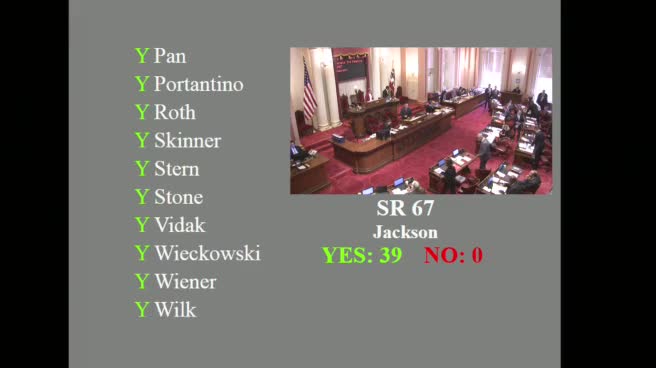 8MIN
Senate Floor
 32MIN
Senate Floor
 1H
Senate Standing Committee on Appropriations
 3MIN
Senate Standing Committee on Appropriations
 36MIN
Senate Standing Committee on Elections and Constitutional Amendments
Bill Author