SCA 3: Local government financing: public libraries: voter approval.
- Session Year: 2017-2018
- House: Senate
- Latest Version Date: 2017-03-06
The California Constitution prohibits the ad valorem tax rate on real property from exceeding 1% of the full cash value of the property, subject to certain exceptions that include a tax rate to service banded bonded indebtedness incurred by a school district, community college district, or county office of education for school facilities and approved by 55% of the voters of the district or county voting on the proposition at an election.
This measure would create an additional exception to the 1% limit for a rate imposed by a city, county, city and county, or special district to service bonded indebtedness incurred to fund public library facilities, that is approved by 55% of the voters of the city, county, city and county, or special district, as applicable. applicable, if the proposition meets specified requirements.
The California Constitution prohibits specified local government agencies from incurring any indebtedness exceeding in any year the income and revenue provided in that year, without the assent of 2/3 of the voters and subject to other conditions. In the case of a school district, community college district, or county office of education, the California Constitution permits a proposition for the incurrence of indebtedness in the form of general obligation bonds for the construction, reconstruction, rehabilitation, or replacement of school facilities, including the furnishing and equipping of school facilities, or the acquisition or lease of real property for school facilities, to be adopted upon the approval of 55% of the voters of the district or county, as appropriate, voting on the proposition at an election.
This measure would similarly lower to 55% the voter-approval threshold for a city, county, or city and county to incur bonded indebtedness, exceeding in any year the income and revenue provided in that year, that is in the form of general obligation bonds issued to fund public libraries.
The California Constitution prohibits the ad valorem tax rate on real property from exceeding 1% of the full cash value of the property, subject to certain exceptions that include a tax rate to service banded indebtedness incurred by a school district, community college district, or county office of education for school facilities and approved by 55% of the voters of the district or county voting on the proposition at an election.
This measure would create an additional exception to the 1% limit for a rate imposed by a city, county, city and county, or special district to service bonded indebtedness incurred to fund public library facilities, that is approved by 55% of the voters of the city, county, city and county, or special district, as applicable.
The California Constitution prohibits specified local government agencies from incurring any indebtedness exceeding in any year the income and revenue provided in that year, without the assent of 2/3 of the voters and subject to other conditions. In the case of a school district, community college district, or county office of education, the California Constitution permits a proposition for the incurrence of indebtedness in the form of general obligation bonds for the construction, reconstruction, rehabilitation, or replacement of school facilities, including the furnishing and equipping of school facilities, or the acquisition or lease of real property for school facilities, to be adopted upon the approval of 55% of the voters of the district or county, as appropriate, voting on the proposition at an election.
This measure would similarly lower to 55% the voter-approval threshold for a city, county, or city and county to incur bonded indebtedness, exceeding in any year the income and revenue provided in that year, that is in the form of general obligation bonds issued to fund public libraries.
Resolved by the Senate, the Assembly concurring, That the Legislature of the State of California at its 201718 Regular Session commencing on the fifth day of December 2016, two-thirds of the membership of each house concurring, hereby proposes to the people of the State of California, that the Constitution of the State be amended as follows:
(a)The maximum amount of any ad valorem tax on real property shall not exceed 1 percent of the full cash value of that property. The 1 percent tax shall be collected by the counties and apportioned according to law to the districts within the counties.
(b)The limitation provided for in subdivision (a) shall not apply to ad valorem taxes or special assessments to pay the interest and redemption charges on any of the following:
(1)Indebtedness approved by the voters prior to July 1, 1978.
(2)Bonded indebtedness for the acquisition or improvement of real property approved on or after July 1, 1978, by two-thirds of the votes cast by the voters voting on the proposition.
(3)Bonded indebtedness incurred by a school district, community college district, or county office of education to fund the construction, reconstruction, rehabilitation, or replacement of school facilities, including the furnishing and equipping of school facilities, or the acquisition or lease of real property for school facilities, approved by 55 percent of the voters of the district or county, as appropriate, voting on the proposition on or after November 8, 2000. This paragraph shall apply only if the proposition approved by the voters and resulting in the bonded indebtedness includes all of the following accountability requirements:
(A)A requirement that the proceeds from the sale of the bonds be used only for the purposes specified in this paragraph and not for any other purpose, including teacher and administrator salaries and other school operating expenses.
(B)A list of the specific school facilities projects to be funded and certification that the school district board, community college board, or county office of education has evaluated safety, class size reduction, and information technology needs in developing that list.
(C)A requirement that the school district board, community college board, or county office of education conduct an annual, independent performance audit to ensure that the funds have been expended only on the specific projects listed.
(D)A requirement that the school district board, community college board, or county office of education conduct an annual, independent financial audit of the proceeds from the sale of the bonds until all of those proceeds have been expended for the school facilities projects.
(4)(A)Bonded indebtedness, approved by 55 percent of the voters of a city, county, city and county, or special district, as applicable, voting on the proposition on or after the effective date of the measure adding this paragraph, incurred by the city, county, city and county, or special district to fund the construction, reconstruction, rehabilitation, or replacement of public library facilities, including the furnishing and equipping of public library facilities, or the acquisition or lease of real property for public library facilities.
(B)This paragraph shall apply only if the proposition approved by the voters includes all of the following accountability requirements:
(i)A requirement that the proceeds from the sale of the bonds be used only for the purposes specified in this paragraph and not for any other purpose, including personnel and operating expenses of the public library.
(ii)A list of the specific public library facilities projects to be funded and certification that the city, county, city and county, or special district has evaluated the degree to which existing public library facilities are inadequate in meeting the needs of, and the degree to which the proposed public library facilities projects respond to the needs of, the residents in the library service area, in the development of that list.
(iii)A requirement that the city, county, city and county, or special district conduct an annual, independent performance audit to ensure that the funds have been expended only on the public library facilities projects listed.
(iv)A requirement that the city, county, city and county, or special district conduct an annual, independent financial audit of the proceeds from the sale of the bonds until all of those proceeds have been expended for the public library facilities projects.
(C)For purposes of this paragraph, special district has the same meaning as that term is used in subdivision (c) of Section 1 of Article XIII C, but does not include a redevelopment agency.
(c)Notwithstanding any other provisions of law or of this Constitution, a school district, community college district, county office of education, city, county, city and county, or special district may levy a 55-percent-vote ad valorem tax pursuant to subdivision (b).
(a)A county, city, town, township, board of education, or school district shall not incur any indebtedness or liability in any manner or for any purpose exceeding in any year the income and revenue provided for that year, without the assent of two-thirds of the voters of the public entity voting at an election to be held for that purpose, except that with respect to any such public entity that is authorized to incur indebtedness for public school purposes, any proposition for the incurrence of indebtedness in the form of general obligation bonds for the purpose of repairing, reconstructing, or replacing public school buildings determined, in the manner prescribed by law, to be structurally unsafe for school use, shall be adopted upon the approval of a majority of the voters of the public entity voting on the proposition at that election; nor unless before or at the time of incurring the indebtedness, provision shall be made for the collection of an annual tax sufficient to pay the interest on the indebtedness as it falls due, and to provide for a sinking fund for the payment of the principal thereof, on or before maturity, which shall not exceed forty years from the time of contracting the indebtedness.
(b)Notwithstanding subdivision (a), on or after November 8, 2000, in the case of any school district, community college district, or county office of education, any proposition for the incurrence of indebtedness in the form of general obligation bonds for the construction, reconstruction, rehabilitation, or replacement of school facilities, including the furnishing and equipping of school facilities, or the acquisition or lease of real property for school facilities, shall be adopted upon the approval of 55 percent of the voters of the district or county, as appropriate, voting on the proposition at an election. This subdivision shall apply only to a proposition for the incurrence of indebtedness in the form of general obligation bonds for the purposes specified in this subdivision if the proposition meets all of the accountability requirements of paragraph (3) of subdivision (b) of Section 1 of Article XIIIA.
(c)Notwithstanding subdivision (a), on or after the effective date of the measure adding this subdivision, in the case of any city, county, or city and county, any proposition to incur indebtedness in the form of general obligation bonds shall be adopted by 55 percent of the voters of the city, county, or city and county, as applicable, voting on the proposition at an election, where the general obligation bonds would fund public libraries, including, but not limited to, the construction, reconstruction, rehabilitation, or replacement of public library facilities, the furnishing and equipping of public library facilities, or the acquisition or lease of real property for public library facilities.
(d)When two or more propositions for incurring any indebtedness or liability are submitted at the same election, the votes cast for and against each proposition shall be counted separately, and when two-thirds or a majority or 55 percent of the voters, as the case may be, voting on any one of those propositions, vote in favor thereof, the proposition shall be deemed adopted.
Resolved by the Senate, the Assembly concurring, That the Legislature of the State of California at its 201718 Regular Session commencing on the fifth day of December 2016, two-thirds of the membership of each house concurring, hereby proposes to the people of the State of California, that the Constitution of the State be amended as follows:
(a)The maximum amount of any ad valorem tax on real property shall not exceed One 1 percent (1%) of the full cash value of such that property. The one 1 percent (1%) tax to shall be collected by the counties and apportioned according to law to the districts within the counties.
(b)The limitation provided for in subdivision (a) shall not apply to ad valorem taxes or special assessments to pay the interest and redemption charges on any of the following:
(1)Indebtedness approved by the voters prior to July 1, 1978.
(2)Bonded indebtedness for the acquisition or improvement of real property approved on or after July 1, 1978, by two-thirds of the votes cast by the voters voting on the proposition.
(3)Bonded indebtedness incurred by a school district, community college district, or county office of education for to fund the construction, reconstruction, rehabilitation, or replacement of school facilities, including the furnishing and equipping of school facilities, or the acquisition or lease of real property for school facilities, approved by 55 percent of the voters of the district or county, as appropriate, voting on the proposition on or after the effective date of the measure adding this paragraph. November 8, 2000. This paragraph shall apply only if the proposition approved by the voters and resulting in the bonded indebtedness includes all of the following accountability requirements:
(A)A requirement that the proceeds from the sale of the bonds be used only for the purposes specified in Article XIIIA, Section 1(b)(3), this paragraph and not for any other purpose, including teacher and administrator salaries and other school operating expenses.
(B)A list of the specific school facilities projects to be funded and certification that the school district board, community college board, or county office of education has evaluated safety, class size reduction, and information technology needs in developing that list.
(C)A requirement that the school district board, community college board, or county office of education conduct an annual, independent performance audit to ensure that the funds have been expended only on the specific projects listed.
(D)A requirement that the school district board, community college board, or county office of education conduct an annual, independent financial audit of the proceeds from the sale of the bonds until all of those proceeds have been expended for the school facilities projects.
(4)Bonded indebtedness, approved by 55 percent of the voters of a city, county, city and county, or special district, as applicable, voting on the proposition on or after the effective date of the measure adding this paragraph, incurred by the city, county, city and county, or special district to fund the construction, reconstruction, rehabilitation, or replacement of public library facilities, including the furnishing and equipping of public library facilities, or the acquisition or lease of real property for public library facilities.
(c)Notwithstanding any other provisions of law or of this Constitution, a school districts, community college districts, and county offices of education district, community college district, county office of education, city, county, city and county, or special district may levy a 55 percent vote 55-percent-vote ad valorem tax pursuant to subdivision (b).
(a)No A county, city, town, township, board of education, or school district, shall district shall not incur any indebtedness or liability in any manner or for any purpose exceeding in any year the income and revenue provided for such that year, without the assent of two-thirds of the voters of the public entity voting at an election to be held for that purpose, except that with respect to any such public entity which that is authorized to incur indebtedness for public school purposes, any proposition for the incurrence of indebtedness in the form of general obligation bonds for the purpose of repairing, reconstructing reconstructing, or replacing public school buildings determined, in the manner prescribed by law, to be structurally unsafe for school use, shall be adopted upon the approval of a majority of the voters of the public entity voting on the proposition at such that election; nor unless before or at the time of incurring such indebtedness the indebtedness, provision shall be made for the collection of an annual tax sufficient to pay the interest on such the indebtedness as it falls due, and to provide for a sinking fund for the payment of the principal thereof, on or before maturity, which shall not exceed forty years from the time of contracting the indebtedness.
(b)Notwithstanding subdivision (a), on or after the effective date of the measure adding this subdivision, November 8, 2000, in the case of any school district, community college district, or county office of education, any proposition for the incurrence of indebtedness in the form of general obligation bonds for the construction, reconstruction, rehabilitation, or replacement of school facilities, including the furnishing and equipping of school facilities, or the acquisition or lease of real property for school facilities, shall be adopted upon the approval of 55 percent of the voters of the district or county, as appropriate, voting on the proposition at an election. This subdivision shall apply only to a proposition for the incurrence of indebtedness in the form of general obligation bonds for the purposes specified in this subdivision if the proposition meets all of the accountability requirements of paragraph (3) of subdivision (b) of Section 1 of Article XIIIA.
(c)Notwithstanding subdivision (a), on or after the effective date of the measure adding this subdivision, in the case of any city, county, or city and county, any proposition to incur indebtedness in the form of general obligation bonds shall be adopted by 55 percent of the voters of the city, county, or city and county, as applicable, voting on the proposition at an election, where the general obligation bonds would fund public libraries, including, but not limited to, the construction, reconstruction, rehabilitation, or replacement of public library facilities, the furnishing and equipping of public library facilities, or the acquisition or lease of real property for public library facilities.
(c)(d)When two or more propositions for incurring any indebtedness or liability are submitted at the same election, the votes cast for and against each proposition shall be counted separately, and when two-thirds or a majority or 55 percent of the voters, as the case may be, voting on any one of those propositions, vote in favor thereof, the proposition shall be deemed adopted.
|
Date
|
Status
|
|---|---|
| Sep 13, 2017 | Ordered to inactive file on request of Senator Dodd. |
| May 3, 2017 | Read second time. Ordered to third reading. |
| May 2, 2017 | From committee: Be adopted. (Ayes 4. Noes 1. Page 929.) (May 2). |
| Apr 25, 2017 | Set for hearing May 2. |
| Mar 29, 2017 | From committee: Be adopted and re-refer to Com. on E. & C.A. (Ayes 5. Noes 2. Page 538.) (March 29). Re-referred to Com. on E. & C.A. |
| Mar 8, 2017 | Set for hearing March 29. |
| Mar 6, 2017 | From committee with author's amendments. Read second time and amended. Re-referred to Com. on GOV. & F. |
| Feb 9, 2017 | Referred to Coms. on GOV. & F. and E. & C.A. |
| Jan 31, 2017 | From printer. May be acted upon on or after March 2. |
| Jan 30, 2017 | Introduced. Read first time. To Com. on RLS. for assignment. To print. |
|
Date
|
Description
|
Location
|
Votes
|
|
|---|---|---|---|---|
| May 2, 2017 | Be adopted | Senate Standing Committee on Elections and Constitutional Amendments |
Passed |
|
| Mar 29, 2017 | Be adopted, but first be re-referred to the Committee on [Elections and Constitutional Amendments] | Senate Standing Committee on Governance and Finance |
Passed |
This list shows positions taken on this bill by organizations on the date displayed, which is linked to the original source.
Positions by individuals are not included.
|
Organization
|
Position
|
Date
|
|---|---|---|
| 13 individuals | ** Support | May 3, 2017 |
| 21 Individuals | ** Against | May 3, 2017 |
| Altadena Libraries | ** Support | May 3, 2017 |
| Apartment Association Of Orange County | ** Against | Apr 28, 2017 |
| Apartment Association, California Southern Cities | ** Against | Apr 28, 2017 |
| Board of Supervisors, Solano County | * Support | May 2, 2017 |
| Calaveras County Taxpayers Association | ** Against | Apr 28, 2017 |
| California Association Of Realtors | ** Against | May 3, 2017 |
| California Library Association | ** Support | May 3, 2017 |
| California Taxpayers Association | ** Against | May 3, 2017 |
| City of Berkeley | ** Support | Apr 28, 2017 |
| City of Concord | ** Support | Apr 28, 2017 |
| City of El Cerrito | ** Support | Apr 28, 2017 |
| City Of Ontario | ** Support | May 3, 2017 |
| City of Porterville | ** Support | May 3, 2017 |
| City of Sunnyvale | ** Support | May 3, 2017 |
| Cloverdale Library Advisory Board | ** Support | Apr 28, 2017 |
| Coalition Of Sensible Taxpayers- Marin County | ** Against | Apr 28, 2017 |
| Contra Costa Library Commission | * Support | May 2, 2017 |
| Contra Costa Taxpayers' Association | ** Against | Apr 28, 2017 |
| Council Of California County Law Librarians | ** Support | Apr 28, 2017 |
| County of Contra Costa | ** Support | May 3, 2017 |
| County of Napa | ** Support | May 3, 2017 |
| County of Santa Clara | ** Support | May 3, 2017 |
| County of Yolo | ** Support | May 3, 2017 |
| East Bay Rental Housing Association | ** Against | Apr 28, 2017 |
| El Cerrito Library Foundation | ** Support | Apr 28, 2017 |
| Former Senator Lois Wolk | ** Support | May 3, 2017 |
| Friends of the Marin County Free Library | ** Support | May 3, 2017 |
| Friends of the Moraga Library | ** Support | May 3, 2017 |
| Friends of the Mt. Shasta Library | ** Support | May 3, 2017 |
| Friends of the Sacramento Public Library | ** Support | Apr 28, 2017 |
| Group 4 Architecture, Research + Planning Inc. | ** Support | Apr 28, 2017 |
| Group 4 Architecture, Research, and Planning, Inc. | ** Support | May 3, 2017 |
| Howard Jarvis Taxpayers Association | ** Against | May 3, 2017 |
| Kern County Taxpayers Association | ** Against | Apr 28, 2017 |
| League Of Women Voters Of California | ** Support | Apr 28, 2017 |
| Mono County Free Library | ** Support | May 3, 2017 |
| Mono County Superintendent of Schools | ** Support | May 3, 2017 |
| Monterey County Board of Supervisors | ** Support | Apr 28, 2017 |
| Napa County Board of Supervisors | ** Support | Apr 28, 2017 |
| Napa County Supervisor | * Support | May 2, 2017 |
| National Federation Of Independent Business | ** Against | Apr 28, 2017 |
| Noll & Tam | ** Support | Apr 28, 2017 |
| Noll and Tam Architects | ** Support | May 3, 2017 |
| North Valley Rental Property Association | ** Against | Apr 28, 2017 |
| Oakland Public Library Advisory Commission | ** Support | Apr 28, 2017 |
| Ontario City Library | ** Support | Apr 28, 2017 |
| Orange County Business Council | ** Against | Apr 28, 2017 |
| Palos Verdes Library District | ** Support | May 3, 2017 |
| Placentia Library District | ** Support | May 3, 2017 |
| Redwood City Public Library Board | ** Support | Apr 28, 2017 |
| San Diego County Apartment Association | ** Against | Apr 28, 2017 |
| Santa Clara County Board of Supervisors | * Support | May 2, 2017 |
| Senator Lois Wolk | ** Support | Apr 28, 2017 |
| Service Employees International Union | ** Support | May 3, 2017 |
| Solano County Taxpayers Association | ** Against | Apr 28, 2017 |
| Sutter County Taxpayers Association | ** Against | Apr 28, 2017 |
| Yolo County Library System | ** Support | May 3, 2017 |
Office of Senate Floor Analyses (916) 651-1520 Fax: (916) 327-4478 | SCA |
THIRD READING
Bill No: SCA 3
:
SENATE GOVERNANCE & FIN. COMMITTEE: 5-2, 3/29/17
AYES: McGuire, Beall, Hernandez, Hertzberg, Lara
NOES: Nguyen, Moorlach
SENATE ELECTIONS & C.A. COMMITTEE: 4-1, 5/2/17
AYES: Stern, Allen, Hertzberg, Leyva
NOES: Anderson
SOURCE: California Library Association
DIGEST: This bill lowers the vote threshold for cities, counties, and library districts to issue bonds for library infrastructure projects from 2/3 to 55%.
Existing law:
- Authorizes cities and counties to operate libraries, and voters to also form special districts for the express purpose providing library services.
- Prohibits specified local government agencies from incurring any indebtedness exceeding in any year the income and revenue provided in that year, without the assent of two-thirds of the voters. Except for school districts, community college districts, or county offices of education, the constitution permits a proposition for the incurrence of indebtedness in the form of general obligation bonds for the construction, reconstruction, rehabilitation, or replacement of school facilities, including the furnishing and equipping of school facilities, or the acquisition or lease of real property for school facilities, to be adopted upon the approval of 55% of the voters of the district or county, as appropriate, voting on the proposition at an election.
This bill:
- Lowers the voter approval threshold from 2/3 of voters to 55% for a local agency to issue bonded indebtedness to fund the following:
- Construction, reconstruction, rehabilitation, or replacement of library facilities.
- Furnishing and equipping of public library facilities.
- Acquisition or leasing of real property intended for library services.
- Provides that, similar to Proposition 39, the 55% threshold for bonded indebtedness for libraries only applies if the following accountability requirements are met:
- The proceeds from the sale of the bonds are used only for the specified purposes.
- A list of specific public library facility projects is provided.
- The local agency certifies that it has evaluated the degree to which existing public library facilities are inadequate to the needs of the residents in the library service area.
- The local agency conducts an annual, independent performance audit to ensure funds are being expended on the listed projects.
- The local agency conducts an annual, independent financial audit of the bond proceeds from the sale of the bonds until all proceeds have been expended.
- Makes clarifying and conforming changes to the California Constitution.
Background
Public Libraries. Cities and counties can operate libraries, and voters may also form special districts for the express purpose providing library services. According to a study conducted earlier this year by the California Research Bureau, there are 184 local public library jurisdictions throughout the state. This number of local jurisdictions includes cities, counties, special districts, and joint powers authorities. The same study identified that in 2014-2015 there were 21,622,487 registered borrowers for public libraries with a total of 159,948,707 individual visits.
Local Tax Authority. Cities and counties that operate libraries can fund them out of general tax revenue, such as utility or sales tax; library districts are often funded from a share of the property tax. Current law additionally allows cities, counties, or library districts to levy parcel taxes. The agency may implement these taxes, (for as long as it wants) spend the proceeds for any purpose, and apply any tax rate it chooses. Voters must approve parcel taxes by a 2/3 supermajority by law. Additionally, cities, counties, and special districts may form Community Facilities Districts, also known as Mello-Roos Districts, to levy special taxes (parcel taxes). A Mello-Roos Community Facilities District issues bonds against these special taxes to finance the public works projects. Like all special taxes, Mello-Roos Act special taxes require 2/3 voter approval. If there are fewer than 12 registered voters, the affected land-owners vote.
City and counties can also impose transactions and use taxes to fund libraries, provided that the combined rate in the county does not exceed two percent, upon 2/3 vote of the local agency’s governing board and 2/3 voter approval.
Bonds. The California Constitution requires counties, cities, and school districts to obtain voter approval when issuing long-term debt. Counties, cities, school districts, community college districts, and some special districts can issue general obligation (GO) bonds, secured by ad valorem property tax revenues, with 2/3-voter approval. Local GO bonds automatically trigger an increased tax to repay the bond. Allowing local agencies to issue bonds provides upfront funding to begin a construction project and the debt is repaid over an extended time period with the increased tax. The Constitution further bars school districts from imposing general taxes, but allows school districts, community college districts, and county offices of education to issue bonded indebtedness for school facilities with 55% percent approval (Proposition 39, 2000).
California’s public libraries have placed 10 bond measures on local ballots over since 2006. Out of these measures, six passed with the necessary 2/3 voter approval. Among the four bond measures that failed, three received more than 59% of the popular vote. In order to create access to as many residents as possible, the library advocates want to lower voter approval thresholds for local governments to fund library construction with bonds.
Comments
Purpose of the bill. According to the author, “Students, adults, seniors and those with hearing and visual impairments, among others, rely on public libraries more than ever before. Libraries provide a variety of services including literacy and study instruction, Internet access, and disability services. Professional librarians assist people in finding source material for research, employment training and work opportunities, reading pleasure, and more. Libraries are also an integral part of our public education system, where students receive guidance for effective study habits. This service has become even more important in light of cutbacks in school based libraries over the last 15 years. The last state library bond was approved by voters in 2000. The bond amount was $350 million. However, because the statewide need was more than $2 billion at that time, approximately three fourths of the shovel ready library projects were left unfunded. According to a needs assessment done in 2016, there are 559 California public library “immediate need” projects awaiting $4.1 billion in funds. Projects range from seismic retrofits, to addressing ADA compliance issues, to the addition of more space to meet growing demand.”
Burden of proof. Opponents of lowering the voting threshold to 55% argue ballot measures that fail to obtain a 2/3 majority are a result of an inadequate or unreasonable spending plan more often than a lack of will from the voters to approve the issuance of debt. It is the responsibility of the local agency to create and adopt a practical spending plan that convinces the voters to approve passage of a bond measure. Since 1879, most local bonds have required a supermajority of voters to approve. When voters believe a project is necessary, obtaining a 2/3 vote is not an obstacle. SCA 3 runs counter to the expressed views of Californians and, instead, allows bonded indebtedness to be incurred with a mere 55% vote.
Lessons to learn from? SCA 3 allows public libraries a lower voter threshold of 55% for bond debt issuance, similar to how the voters granted school districts and community college districts this authority in Proposition 39 (2000). Taxes and bonds are fundamentally different: a district’s voters can repeal a tax by referendum, but once an agency issues a bond, it’s irreversibly committed to pay principal and interest according to schedule until the bond is redeemed. While Proposition 39 led to more school facilities in a state with a large student population, it also led to savvy financial advisers coaxing districts into borrowing too much or using unwise debt structures. Some districts issued bonds with 30 years of deferred principal and interest payments but triggered twelve to one debt to principal ratios when repayments started becoming due in year 30. In 2013, the Legislature approved AB 182 (Buchanan, Chapter 477), which substantially reformed school bond issuance in response to the above problems, including capping the total debt service for each bond series at 4 to 1, among other limitations.
Too narrow? California has a significant need for infrastructure investment in many areas, not just libraries. For example, local governments have estimated the funding shortfall for just maintaining existing local streets, highways and bridges at $78 billion over the next 10 years. The Senate has introduced three bills to assist local governments in funding infrastructure needs using the issuance of statewide bonds: SB 3 (Beall) for affordable housing, SB 4 (Mendoza) for transportation projects, and SB 5 (De Leon) for parks and open space. Despite efforts by the Legislature to help fund local projects, local agencies must also increase revenue themselves to complement the state’s efforts if the state’s public infrastructure is going to be kept in good repair. Without sufficient funding at both the state and local levels, the shortfall will only grow. Lowering the voting threshold for all local bonds could help remedy the lack of available funding for infrastructure projects.
FISCAL EFFECT: Appropriation: Fiscal Com.: Local:
California Library Association (source)
Altadena Libraries
City of Ontario
City of Porterville
City of Sunnyvale
County of Contra Costa
County of Napa
County of Santa Clara
County of Yolo
Former Senator Lois Wolk
Friends of the Marin County Free Library
Friends of the Moraga Library
Friends of the Mt. Shasta Library
Group 4 Architecture, Research, and Planning, Inc.
Mono County Free Library
Mono County Superintendent of Schools
Noll and Tam Architects
Palos Verdes Library District
Placentia Library District
Service Employees International Union
Yolo County Library System
13 individuals
California Association of Realtors
California Taxpayers Association
Howard Jarvis Taxpayers Association
21 individuals
5/3/17 12:16:28
**** END ****
SENATE COMMITTEE ON
ELECTIONS AND CONSTITUTIONAL AMENDMENTS
Senator Henry Stern, Chair
2017 - 2018 Regular
Bill No: SCA Hearing Date: 5/2/17
Author: | |||
Version: | 3/6/17 | ||
Urgency: |
| Fiscal: | No |
Consultant: | Darren Chesin | ||
Subject: Local government financing: public libraries: voter approval
DIGEST
This measure lowers from two-thirds to 55% the threshold for voter approval for bond measures for library infrastructure projects.
ANALYSIS
Existing law:
- Prohibits specified local government agencies from incurring any indebtedness exceeding in any year the income and revenue provided in that year, without the assent of two-thirds of the voters. In the case of a school district, community college district, or county office of education, the constitution permits a proposition for the incurrence of indebtedness in the form of general obligation bonds for the construction, reconstruction, rehabilitation, or replacement of school facilities, including the furnishing and equipping of school facilities, or the acquisition or lease of real property for school facilities, to be adopted upon the approval of 55% of the voters of the district or county, as appropriate, voting on the proposition at an election.
This measure:
- Lowers the voter approval threshold from two-thirds to 55% for a local agency to issue bonded indebtedness to fund the following:
- Construction, reconstruction, rehabilitation, or replacement of library facilities.
- Furnishing and equipping of public library facilities.
- Acquisition or leasing of real property intended for library services.
- Construction, reconstruction, rehabilitation, or replacement of library facilities.
- Provides that, similar to Proposition 39 of 2000, the 55% threshold for bonded indebtedness for libraries only applies if the following accountability requirements are met:
- The proceeds from the sale of the bonds are used only for the specified purposes.
- A list of specific public library facility projects is provided.
- The local agency certifies that it has evaluated the degree to which existing public library facilities are inadequate to the needs of the residents in the library service area.
- The local agency conducts an annual, independent performance audit to ensure funds are being expended on the listed projects.
- The local agency conducts an annual, independent financial audit of the bond proceeds from the sale of the bonds until all proceeds have been expended.
- Makes additional clarifying and conforming changes to the constitution.
BACKGROUND
Public Libraries. Cities and counties can operate libraries, and voters may also form special districts for the express purpose providing library services. According to a study conducted earlier this year by the California Research Bureau (CRB), there are 184 local public library jurisdictions throughout the state. This number of local jurisdictions includes cities, counties, special districts, and joint powers authorities. The same study identified that in 2014-2015 there were 21,622,487 registered borrowers for public libraries with a total of 159,948,707 individual visits.
Local Tax Authority. Cities and counties that operate libraries can fund them out of general tax revenue, such as utility or sales tax; library districts are often funded from a share of the property tax. Current law additionally allows cities, counties, or library districts to levy parcel taxes. The agency may implement these taxes, (for as long as it wants) spend the proceeds for any purpose, and apply any tax rate it chooses. Voters must approve parcel taxes by a two-thirds threshold by law. Additionally, cities, counties, and special districts may form Community Facilities Districts (CFD), also known as Mello-Roos Districts, to levy special taxes (parcel taxes). A Mello-Roos Community Facilities District issues bonds against these special taxes to finance the public works projects. Like all special taxes, Mello-Roos Act special taxes require two-thirds voter approval.
City and counties can also impose transactions and use taxes to fund libraries, provided that the combined rate in the county does not exceed 2 percent, upon two-thirds vote of the local agency’s governing board and two-thirds voter approval.
Bonds. The California Constitution requires counties, cities, and school districts to obtain voter approval when issuing long-term debt. Counties, cities, school districts, community college districts, and some special districts can issue general obligation (GO) bonds, secured by ad valorem property tax revenues, with two-thirds voter approval. Local GO bonds automatically trigger an increased tax to repay the bond. Allowing local agencies to issue bonds provides upfront funding to begin a construction project and the debt is repaid over an extended time period with the increased tax. The constitution further bars school districts from imposing general taxes, but allows school districts, community college districts, and county offices of education to issue bonded indebtedness for school facilities with 55% percent approval per Proposition 39 of 2000.
California’s public libraries have placed 10 bond measures on local ballots since 2006. Out of these measures, six passed with the necessary two-thirds voter approval. Among the four bond measures that failed, three received more than 59% of the popular vote. In order to create access to as many residents as possible, library advocates want to lower voter approval thresholds for local governments to fund library construction with bonds.
COMMENTS
- According to the author: There are 1,114 public libraries in California. Libraries provide vital services to the state’s educational system and to communities across the state. More than 22 million people use California’s public libraries annually.
Students, adults, seniors and those with hearing and visual impairments, among others, rely on public libraries more than ever before. Libraries provide a variety of services including literacy and study instruction, Internet access, and disability services. Professional librarians assist people in finding source material for research, employment training and work opportunities, reading pleasure, and more. Libraries are also an integral part of our public education system, where students receive guidance for effective study habits. This service has become even more important in light of cutbacks in school based libraries over the last 15 years.
The last state library bond was approved by voters in 2000. The bond amount was $350 million. However, because the statewide need was more than $2 billion at that time, approximately three-fourths of the shovel ready library projects were left unfunded. According to a needs assessment done in 2016, there are 559 California public library “immediate need” projects awaiting $4.1 billion in funds. Projects range from seismic retrofits, to addressing ADA compliance issues, to the addition of more space to meet growing demand.
The California constitution requires cities, counties, and school districts to obtain voter approval for long term debt. If the debt is secured by an ad valorem tax on property, the debt must have two-thirds voter approval. The constitution however, allows school districts, community college districts, and county offices of education to issue bonded indebtedness for school facilities with 55% voter approval. Since libraries are an extension of the public education system, SCA 3 would lower the vote threshold to approve the issuance of bonds by cities, counties, and special districts for the purpose of constructing, reconstructing, rehabilitating, or replacing public libraries, to 55% instead of two-thirds of the voters voting in an election. - According to Opponents: Opponents of lowering the voting threshold to 55% argue ballot measures that fail to obtain a two-thirds majority are a result of an inadequate or unreasonable spending plan more often than a lack of will from the voters to approve the issuance of debt. It is the responsibility of the local agency to create and adopt a practical spending plan that convinces the voters to approve passage of a bond measure. Since 1879, most local bonds have required a supermajority of voters to approve. When voters believe a project is necessary, obtaining a two-thirds vote is not an obstacle. SCA 3 runs counter to the expressed views of Californians and would, instead, allow bonded indebtedness to be incurred with a mere 55% vote.
PRIOR ACTION
Senate Governance and Finance Committee: | 5-2 |
RELATED/PRIOR LEGISLATION
SCA 6 (Wiener), which is pending in the Senate Transportation and Housing Committee, would lower the vote threshold for cities, counties, or special districts to levy a special tax for transportation infrastructure projects from two-thirds to 55%.
ACA 4 (Aguiar-Curry), which is pending in the Assembly Local Government Committee, would lower the voter threshold from two-thirds to 55% for approval of bonds to fund the construction, reconstruction, rehabilitation, or replacement of public infrastructure or affordable housing.
SCA 7 (Wolk, of 2014), which was similar to this measure, was approved by this committee but was held in the Senate Appropriations Committee.
POSITIONS
Sponsor: California Library Association
Support: Senator Lois Wolk (ret.)
Altadena Libraries
City of Berkeley
City of Concord
City of El Cerrito
City of Ontario
City of Porterville
City of Sunnyvale
Cloverdale Library Advisory Board
Contra Costa County Board of Supervisors
Council of California County Law Librarians
County of Yolo
El Cerrito Library Foundation
Friends of the Marin County Free Library
Friends of the Mt. Shasta Library
Friends of the Sacramento Public Library
Group 4 Architecture, Research + Planning Inc.
League of Women Voters of California
Mono County Free Library
Monterey County Board of Supervisors
Napa County Board of Supervisors
Noll & Tam
Oakland Public Library Advisory Commission
Ontario City Library
Palos Verdes Library District
Placentia Library District
Redwood City Public Library Board
Santa Clara County Board of Supervisors
Service Employees International Union
Solano County Board of Supervisors
Oppose: Apartment Association, California Southern Cities
Apartment Association of Orange County
Calaveras County Taxpayers Association
California Association of Realtors
California Taxpayers Association
Coalition of Sensible Taxpayers- Marin County
Contra Costa Taxpayers' Association
East Bay Rental Housing Association
Howard Jarvis Taxpayer Association
Kern County Taxpayers Association
National Federation of Independent Business
North Valley Rental Property Association
Orange County Business Council
San Diego County Apartment Association
Solano County Taxpayers Association
Sutter County Taxpayers Association
-- END --
SENATE COMMITTEE ON GOVERNANCE AND FINANCE
Senator Mike McGuire, Chair
2017 - 2018 Regular
Bill No: | SCA 3 | Hearing Date: | 3/29/17 |
Author: | Dodd | Tax Levy: | No |
Version: | 3/6/17 Amended | Fiscal: | No |
Consultant: | MacDonald | ||
Local government financing: public libraries: voter approval
Lowers the vote threshold for cities, counties, or library districts to issue bonds for library infrastructure projects from 2/3 to 55%.
Background
Public Libraries. Cities and counties can operate libraries, and voters may also form special districts for the express purpose providing library services. According to a study conducted earlier this year by the California Research Bureau (CRB), there are 184 local public library jurisdictions throughout the state. This number of local jurisdictions includes cities, counties, special districts, and joint powers authorities. The same study identified that in 2014-2015 there were 21,622,487 registered borrowers for public libraries with a total of 159,948,707 individual visits.
Local Tax Authority. Cities and counties that operate libraries can fund them out of general tax revenue, such as utility or sales tax; library districts are often funded from a share of the property tax. Current law additionally allows cities, counties, or library districts to levy parcel taxes. The agency may implement these taxes, (for as long as it wants) spend the proceeds for any purpose, and apply any tax rate it chooses. Voters must approve parcel taxes by a 2/3 supermajority by law. Additionally, cities, counties, and special districts may form Community Facilities Districts, also known as Mello-Roos Districts, to levy special taxes (parcel taxes). A Mello-Roos Community Facilities District (CFD) issues bonds against these special taxes to finance the public works projects. Like all special taxes, Mello-Roos Act special taxes require 2/3 voter approval. If there are fewer than 12 registered voters, the affected land-owners vote.
City and counties can also impose transactions and use taxes to fund libraries, provided that the combined rate in the county does not exceed 2 percent, upon 2/3 vote of the local agency’s governing board and 2/3 voter approval.
Bonds. The California Constitution requires counties, cities, and school districts to obtain voter approval when issuing long-term debt. Counties, cities, school districts, community college districts, and some special districts can issue general obligation (GO) bonds, secured by ad valorem property tax revenues, with 2/3-voter approval. Local GO bonds automatically trigger an increased tax to repay the bond. Allowing local agencies to issue bonds provides upfront funding to begin a construction project and the debt is repaid over an extended time period with the increased tax. The Constitution further bars school districts from imposing general taxes, but allows school districts, community college districts, and county offices of education to issue bonded indebtedness for school facilities with 55% percent approval (Proposition 39, 2000).
California’s public libraries have placed 10 bond measures on local ballots over since 2006. Out of these measures, 6 passed with the necessary 2/3 voter approval. Among the four bond measures that failed, three received more than 59% of the popular vote. In order to create access to as many residents as possible, the library advocates want to lower voter approval thresholds for local governments to fund library construction with bonds.
Proposed Law
Senate Constitutional Amendment 3 lowers the voter approval threshold from 2/3 of voters to 55% for a local agency to issue bonded indebtedness to fund the following:
- Construction, reconstruction, rehabilitation, or replacement of library facilities.
- Furnishing and equipping of public library facilities.
- Acquisition or leasing of real property intended for library services.
Similar to Proposition 39, the 55% threshold for bonded indebtedness for libraries only applies if the following accountability requirements are met:
- The proceeds from the sale of the bonds are used only for the specified purposes.
- A list of specific public library facility projects is provided.
- The local agency certifies that it has evaluated the degree to which existing public library facilities are inadequate to the needs of the residents in the library service area.
- The local agency conducts an annual, independent performance audit to ensure funds are being expended on the listed projects.
- The local agency conducts an annual, independent financial audit of the bond proceeds from the sale of the bonds until all proceeds have been expended.
SCA 3 also makes clarifying and conforming changes to the Constitution.
State Revenue Impact
No estimate.
Comments
- Purpose of the bill. According to the author, “Students, adults, seniors and those with hearing and visual impairments, among others, rely on public libraries more than ever before. Libraries provide a variety of services including literacy and study instruction, Internet access, and disability services. Professional librarians assist people in finding source material for research, employment training and work opportunities, reading pleasure, and more. Libraries are also an integral part of our public education system, where students receive guidance for effective study habits. This service has become even more important in light of cutbacks in school based libraries over the last 15 years. The last state library bond was approved by voters in 2000. The bond amount was $350 million. However, because the statewide need was more than $2 billion at that time, approximately three fourths of the shovel ready library projects were left unfunded. According to a needs assessment done in 2016, there are 559 California public library “immediate need” projects awaiting $4.1 billion in funds. Projects range from seismic retrofits, to addressing ADA compliance issues, to the addition of more space to meet growing demand.”
- Burden of proof. Opponents of lowering the voting threshold to 55% argue ballot measures that fail to obtain a 2/3rds majority are a result of an inadequate or unreasonable spending plan more often than a lack of will from the voters to approve the issuance of debt. It is the responsibility of the local agency to create and adopt a practical spending plan that convinces the voters to approve passage of a bond measure. Since 1879, most local bonds have required a supermajority of voters to approve. When voters believe a project is necessary, obtaining a 2/3rds vote is not an obstacle. SCA 3 runs counter to the expressed views of Californians and would, instead, allow bonded indebtedness to be incurred with a mere 55% vote.
- Lessons to learn from? SCA 3 allows public libraries a lower voter threshold of 55% for bond debt issuance, similar to how the voters granted school districts and community college districts this authority in Proposition 39 (2000). Taxes and bonds are fundamentally different: a district’s voters can repeal a tax by referendum, but once an agency issues a bond, it’s irreversibly committed to pay principal and interest according to schedule until the bond is redeemed. While Proposition 39 led to more school facilities in a state with a large student population, it also led to savvy financial advisers coaxing districts into borrowing too much or using unwise debt structures. Some districts issued bonds with 30 years of deferred principal and interest payments but triggered twelve to one debt to principal ratios when repayments started becoming due in year 30. In 2013, the Legislature approved AB 182 (Buchannan), which substantially reformed school bond issuance in response to the above problems, including capping the total debt service for each bond series at 4 to 1, among other limitations. The Committee may wish to consider if SCA 3 could, without adopting similar safeguards, give rise to risky debt structures for libraries?
- Too narrow? California has a significant need for infrastructure investment in many areas, not just libraries. For example, local governments have estimated the funding shortfall for just maintaining existing local streets, highways and bridges at $78 billion over the next 10 years. The Senate has introduced two bills to assist local governments in funding infrastructure needs using the issuance of statewide bonds: SB 3 (Beall) for affordable housing, SB 4 (Mendoza) for transportation projects, and SB 5 (De Leon) for parks and open space. Despite efforts by the Legislature to help fund local projects, local agencies must also increase revenue themselves to complement the state’s efforts if the state’s public infrastructure is going to be kept in good repair. Without sufficient funding at both the state and local levels, the shortfall will only grow. Lowering the voting threshold for all local bonds could help remedy the lack of available funding for infrastructure projects. The Committee may wish to consider applying SCA 3’s reforms to any bonds issued at the lower voter threshold of 55%.
Support and Opposition (3/23/17)
Support: California Library Association (Sponsor); Altadena Libraries; City of Ontario; City of Porterville; City of Sunnyvale; County of Contra Costa; County of Napa; County of Yolo; Friends of the Marin County Free Library; Group 4 Architecture, Research, and Planning, Inc.; Honorable Lois Wolk; Mono County Free Library; Mono County Superintendent of Schools; Noll and Tam Architects; Palos Verdes Library District; Placentia Library District; Santa Clara County; Service Employees International Union; Yolo County Library System; 1 Individual.
Opposition: California Association of Realtors; California Taxpayers Association; Howard Jarvis Taxpayers Association; 21 Individuals.
-- END --
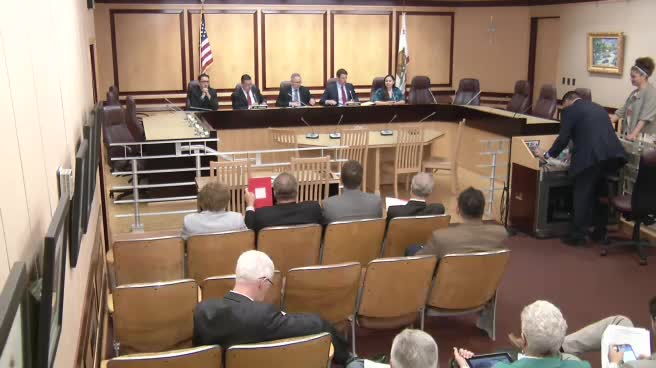
Discussed in Hearing
 12MIN
Senate Standing Committee on Elections and Constitutional Amendments
Bill Author


