SJR 29: Immigration.
- Session Year: 2017-2018
- House: Senate
- Latest Version Date: 2018-09-12
This measure would call upon the President and the United States Congress to acknowledge that the separation of immigrant children from their families at the border is detrimental to the short- and long-term physical and mental well-being of the children and incompatible with our fundamental values as a nation. The measure would also call upon the United States Congress to issue a formal apology to all child detainees who were forcibly separated from their parents and legal guardians and seized by the United States Department of Homeland Security or United States Customs and Border Protection and to the parents of those children.
This measure would call upon the President and the United States Congress to acknowledge that the separation of immigrant children from their families at the border is detrimental to the short- and long-term physical and mental well-being of the children and incompatible with our fundamental values as a nation. The measure would also call upon the United States Congress to issue a formal apology to all child detainees who were forcibly separated from their parents and legal guardians and seized by the United States Department of Homeland Security or United States Customs and Border Protection and to the parents of those children.
This measure would call upon the President and the United States Congress to acknowledge that the separation of immigrant children from their families at the border is detrimental to the short- and long-term physical and mental well-being of the children and incompatible with our fundamental values as a nation. The measure would also call upon the United States Congress to issue a formal apology to all child detainees who were forcibly separated from their parents and legal guardians and seized by the United States Department of Homeland Security or United States Customs and Border Protection and to the parents of those children.
WHEREAS, On January 25, 2017, President Trump issued Executive Order 13767 (82 FR 8793), titled Border Security and Immigration Enforcement Improvements, which is perhaps best known for proclaiming United States policy to secure the southern border of the United States through the immediate construction of a physical wall on the southern border and directing the Secretary of Homeland Security to immediately take steps to plan, design, and construct a physical wall, as well as to construct and operate detention facilities to detain aliens at or near the border with Mexico. Among other things, EO 13767 also calls for the immediate detainment and deportation of illegal immigrants and directs United States Customs and Border Protection to hire 5,000 additional border patrol agents; and
WHEREAS, United States Attorney General Jeff Sessions stated, If you are smuggling a child then we will prosecute you, and that child will be separated from you as required by law. If you dont like that, then dont smuggle children over our border, thereby establishing child separation as Trump administration policy and as an explicit part of the declared zero-tolerance policy regarding prosecuting immigrants presenting at the United States border; and
WHEREAS, The governments policy of separating children from their parents will, based on the science of brain development, cause toxic stress leading to lasting and even permanent damage to childrens emotional and intellectual development; and
WHEREAS, Research has shown that prolonged exposure to toxic stress through highly stressful situations can disrupt a childs brain architecture and affect his or her short- and long-term health. Without a parent or caregiver to mitigate these dangers, children are susceptible to learning deficits and chronic conditions such as depression, post-traumatic stress disorder, and cardiovascular disease; and
WHEREAS, The American Academy of Pediatrics has written to the Secretary of Homeland Security on at least five occasions opposing the forced separation of parents and children at the border and American Academy of Pediatrics president Colleen Kraft, MD, has stated that the policy of child separation amounts to government-sanctioned child abuse. More than 200 child welfare, juvenile justice, and child development organizations signed a letter urging the administration to abandon any plans to systematically separate children from their families; and
WHEREAS, The American Psychiatric Association spoke out against the practice, stating: As physician experts in mental health, the American Psychiatric Association opposes any policy that separates children from their parents at the United States border...The evidence is clear that this level of trauma also results in serious medical and health consequences for these children and their caregivers. Many families crossing the United States border are fleeing war and violence in their home countries and are already coping with the effects of stress and trauma.; and
WHEREAS, The Office of the United Nations High Commissioner for Human Rights has declared that the practice of separating families runs counter to human rights standards and is never in the best interests of the child and always constitutes a child rights violation.; now, therefore, be it
Resolved by the Senate and the Assembly of the State of California, jointly, That the Legislature calls upon the President and the United States Congress to acknowledge that the separation of immigrant children from their families at the border is detrimental to the short- and long-term physical and mental well-being of the children and is incompatible with our fundamental values as a nation which call upon us to uphold human rights and dignity for all people, and which allow for immigrant families to seek asylum; and be it further
Resolved, That the Legislature calls upon the United States Congress to issue a formal apology to all child detainees who were forcibly separated from their parents and legal guardians and seized by the United States Department of Homeland Security or United States Customs and Border Protection and to the parents of those children; and be it further
Resolved, That the Secretary of the Senate transmit copies of this resolution to the President and Vice President of the United States, to the Speaker of the House of Representatives, to the Majority Leader of the Senate, to each Senator and Representative from California in the Congress of the United States, and to the author for appropriate distribution.
|
Date
|
Status
|
|---|---|
| Sep 12, 2018 | Chaptered by Secretary of State. Res. Chapter 245, Statutes of 2018. |
| Sep 12, 2018 | Enrolled and filed with the Secretary of State at 2 p.m. |
| Aug 31, 2018 | In Senate. Ordered to engrossing and enrolling. |
| Aug 31, 2018 | Read. Adopted. Ordered to the Senate. |
| Aug 28, 2018 | Coauthors revised. |
| Aug 23, 2018 | Referred to Com. on JUD. |
| Aug 16, 2018 | In Assembly. Held at Desk. |
| Aug 16, 2018 | Read. Adopted. (Ayes 29. Noes 3.) Ordered to the Assembly. |
| Aug 14, 2018 | From committee: Be adopted. Ordered to third reading. (Ayes 5. Noes 0.) (August 14). |
| Aug 8, 2018 | Re-referred to Com. on HUMAN S. |
| Aug 6, 2018 | Introduced. Referred to Com. on RLS. |
|
Date
|
Description
|
Location
|
Votes
|
|
|---|---|---|---|---|
| Aug 31, 2018 | SJR 29 Pan Senate Third Reading By CARRILLO | Assembly Floor |
Passed |
|
| Aug 28, 2018 | Be adopted. To third reading. | Assembly Standing Committee on Judiciary |
Passed |
|
| Aug 16, 2018 | Senate 3rd Reading SJR29 Pan et al. | Senate Floor |
Passed |
|
| Aug 14, 2018 | Be adopted. Ordered to third reading | Senate Standing Committee on Human Services |
Passed |
This list shows positions taken on this bill by organizations on the date displayed, which is linked to the original source.
Positions by individuals are not included.
|
Organization
|
Position
|
Date
|
|---|---|---|
| Coalition for Humane Immigrant Rights of Los Angeles (CHIRLA) | * Support | Aug 28, 2018 |
| NextGen California | * Support | Aug 28, 2018 |
SENATE THIRD READING
STR Bill Id:SJR 29
Author:(Pan)
As Introduced Ver:August 6, 2018
Majority vote
SENATE VOTE: 29-3
Committee | Votes | Ayes | Noes |
Judiciary | 7-0 | Mark Stone, Chau, Chiu, Holden, Kalra, Maienschein, Reyes |
|
SUMMARY: Calls upon Congress to issue a formal apology to all child detainees and the parents of those children who were forcibly separated by the federal government in 2018 under its "zero-tolerance" border policies. Specifically, this resolution:
- Finds that Executive Order 13767, titled "Border Security and Immigration Enforcement Improvements" and issued by President Trump on January 25, 2017, calls for the construction of a wall along the southern border with Mexico, the construction and operation of new immigration detention facilities near the border, the hiring of 5,000 additional Border Patrol agents, and the immediate detainment and deportation of illegal immigrants, among other things.
- Finds that Attorney General Jeff Sessions has articulated child separation as the policy of the Trump administration, and an explicit part of the declared zero-tolerance policy regarding prosecuting immigrants presenting at the United States border.
- Finds and declares that the federal government's policy of separating children from their parents will, based on the science of brain development, cause toxic stress leading to lasting and even permanent damage to children's emotional and intellectual development.
- Finds and declares that research has shown that prolonged exposure to toxic stress through highly stressful situations can disrupt a child's brain architecture and affect his or her short- and long-term health. Further finds that without a parent or caregiver to mitigate these dangers, children are susceptible to learning deficits and chronic conditions such as depression, post-traumatic stress disorder, and cardiovascular disease.
- Finds that the American Academy of Pediatrics and the American Psychiatric Association have both issued written statements opposing the forced separation of parents and children at the border, and that more than 200 child welfare, juvenile justice, and child development organizations have signed a letter urging the Trump administration to abandon any plans to systematically separate children from their families.
- Finds that the Office of the United Nations High Commissioner for Human Rights has declared that the practice of separating families runs counter to human rights standards and "is never in the best interests of the child and always constitutes a child rights violation."
- Calls upon the President and the United States Congress to acknowledge that the separation of immigrant children from their families at the border is detrimental to the short- and long-term physical and mental well-being of the children and is incompatible with our fundamental values as a nation which call upon us to uphold human rights and dignity for all people, and which allow for immigrant families to seek asylum.
- Calls upon Congress to issue a formal apology to all child detainees who were forcibly separated from their parents and legal guardians and seized by the United States Department of Homeland Security or United States Customs and Border Protection and to the parents of those children.
FISCAL EFFECT: None
COMMENTS: This resolution calls upon President Trump and Congress to acknowledge that the separation of immigrant children from their families at the border is detrimental to the short and long-term physical and mental well-being of children, and calls upon Congress to issue a formal apology to the parents and children who have been separated by federal immigration authorities pursuant to the Trump administration's controversial "zero-tolerance" border policy.
Background on "Zero-Tolerance" policy resulting in separation of immigrant families. On January 25, 2017, President Trump issued Executive Order (EO) 13767, titled "Border Security and Immigration Enforcement Improvements," which is perhaps best known for proclaiming United States (U.S.) policy to secure the southern border of the United States through the immediate construction of a physical wall on the southern border and directing the Secretary of the Department of Homeland Security (DHS) to "immediately" take steps to plan, design, and construct a physical wall. Instead of prioritizing the removal of dangerous criminals or persons who are a threat to national security, EO 13767 encourages the apprehension of individuals for all violations of immigration law, including misdemeanor violations, as well as the detention of these individuals while their immigration proceeding is ongoing. This effectively stopped the practice commonly known as "catch and release," where the Obama administration routinely released individuals who were awaiting their immigration proceeding.
On April 6, 2018, Attorney General Jeff Sessions notified all U.S. Attorney's Offices along the Southwest Border of a new "zero-tolerance policy" for attempted illegal entry and illegal entry into the United States by any individual, as provided under 8 U.S.C. Section 1325(a). On May 7, 2018, Sessions elaborated on the policy by stating, "If you are smuggling a child then we will prosecute you, and that child will be separated from you as required by law. If you don't like that, then don't smuggle children over our border." (Citation omitted.)
Under the zero-tolerance policy, DHS officials refer all adults who are believed to have committed a crime, including the misdemeanor crime of illegal entry, to DOJ for prosecution. If the DOJ convicts these adults of a crime, they are typically sentenced to time served and transferred to the U.S. Immigration and Customs Enforcement for immigration proceedings, typically deportation proceedings. In addition, many children were taken into DHS custody, regardless of whether they were with their parents or unaccompanied minors, and transferred to the custody of the ORR within the Department of Health and Human Services. As a result of the Trump administration's zero-tolerance policy, thousands of children have been separated from their parents and housed in group facilities while their parents face prosecution for illegal entry into the United States—a crime that may ultimately result in their deportation.
Reversal of family separation policy, and ongoing efforts to reunite immigrant families. On June 20, 2018, in response to intense public outcry about large numbers of families being separated, President Trump signed Executive Order 13841 to end the policy. Instead, the Executive Order states that "it is the policy of this Administration to maintain family unity, including by detaining alien families together where appropriate and consistent with law and available resources." One exception to this policy is when there is a concern that detention of an alien child with the child's alien parent would pose a risk to the child's welfare. EO 13841 does not, however, address how the government is to reunite children and parents already separated prior to June 20, 2018, or how to care for such children in the meantime.
Subsequently, on June 26, 2018, a U.S. District Court judge issued a preliminary injunction blocking the administration from separating immigrant parents and children at the United States – Mexico border, and further ordering that previously separated parents and children must be reunited within 30 days. The court order placed additional requirements on the administration, including requirements that children under the age of five be reunified within 14 days and that children be allowed to talk with their parents within 10 days.
On July 31, 2018, the U.S. Senate Judiciary Committee conducted an oversight hearing on the family separation policy, and the progress of the administration's efforts to reunite separated families pursuant to the court's order. According to testimony by Commander Jonathan White, the DHS official spearheading reunification efforts, 559 children from separated families remain in custody, a number that includes children whose parents were deported, children whose parents were released into the interior, and children who were deemed ineligible for family reunification due to other factors. White also reported that the parents of more than 500 children from separated families may have been deported, and that 429 children who remain in custody – and 81 who have been released to other sponsors – have parents who are no longer in the United States. Finally, White stated that, as of July 31, a total of 11,316 children are currently in HHS custody, the majority of whom arrived in the United States as unaccompanied minors. (Citation omitted.) As of the date of this analysis, it was still unclear how the administration intends to handle the rest of the separated children it could not reunite.
Traumatic impact of family separation. The author notes that the traumatic impact of separation was being studied and reported before President Trump issued EO 13841 to end the policy of separating families at the border. According to Charles Nelson, a pediatrics professor at Harvard Medical School, research shows that when children are forcibly separated from their parents, it causes their bodies to release a flood of stress hormones that negatively impact the psychological and physical structure of their brains. The results of these changes can cause long-term damage to the brain, particularly when they occur in the brains of young children.
Recognizing the medical impact of this policy on children, the American Psychiatric Association (APA) has issued a statement against the policy: "As physician experts in mental health, the APA opposes any policy that separates children from their parents at the United States border. . . The evidence is clear that this level of trauma also results in serious medical and health consequences for these children and their caregivers. Many families crossing the United States border are fleeing war and violence in their home countries and are already coping with the effects of stress and trauma."
In addition, the American Academy of Pediatrics has repeatedly called for the end of the family separation policy, stating, "[I]mmigrant children seeking safe haven in the United States should never be placed in detention facilities. Studies of detained immigrants have shown that children and parents may suffer negative physical and emotional symptoms from detention, including anxiety, depression and posttraumatic stress disorder... Family detention is not the solution to address the forced separation of children and parents at the U.S. southern border. We urge our government to stop exposing children to conditions or settings that may retraumatize them, such as those that exist in immigration detention."
According to the International Society for Developmental Psychobiology (ISDP), the federal government's policy of separating children from their parents will, based on the science of brain development, cause toxic stress leading to lasting and even permanent damage to children's emotional and intellectual development.
For all of these reasons, this resolution calls upon the President and Congress to acknowledge that the separation of immigrant children from their families at the border is detrimental to the short- and long-term physical and mental well-being of the children and is incompatible with our fundamental values as a nation. This resolution also calls upon Congress to issue a formal apology to all child detainees and their parents for being forcibly separated and detained by federal immigration authorities under the current administration's policies.
Analysis Prepared by: Anthony Lew / JUD. / (916) 319-2334 FN: 0004985
Date of Hearing: August 28, 2018
ASSEMBLY COMMITTEE ON
, Chair
SBPCA Bill Id:
Author:() – As Ver:
SENATE VOTE:
SUBJECT: : CHILD SEPARATION POLICY: FORMAL APOLOGY
KEY ISSUE: should CONGRESS ISSUE A FORMAL APOLOGY TO THE IMMIGRANT PARENTS AND CHILDREN WHO have been separated—AND IN SOME CASES, STILL NOT REUNITED-- by federal immigration authorities who were CARRYING OUT the Trump administration's controversial "zero-tolerance" border policy?
SYNOPSIS
In April 2018, the Trump administration announced it would follow a so-called "zero-tolerance" border policy, which required the Department of Justice to prosecute all cases of illegal entry or attempted illegal entry over the U.S.-Mexico border that are referred from the Department of Homeland Security. Under this policy, children were taken into federal custody, regardless of whether they were with their parents or traveling as unaccompanied minors. In short, as a result of the administration's zero-tolerance policy, thousands of children have been separated from their parents and housed in group facilities under stressful conditions while their parents face prosecution for illegal entry into the U.S.—charges which may ultimately result in their deportation. Attorney General Session is on record as stating that the policy is intended to deter parents with children from presenting at the southern U.S. border—even when seeking asylum status in the U.S. In response to intense public outcry over the family separations caused by the policy, President Trump reversed the policy in June 2018, and ever since the government has been trying to comply with court-ordered deadlines to reunite all of the thousands of children it detained with their parents from whom they were separated.
According to the author, not only is the zero-tolerance policy incompatible with our fundamental values as a nation that respects human rights and abides by international law allowing immigrants to seek asylum, but medical science indicates that the separation of immigrant children from their families at the border is detrimental to the short- and long-term physical and mental well-being of children. For those reasons, more than 200 child welfare, juvenile justice, and child development organizations have signed a letter opposing border policies that cause family separation. Accordingly, this measure calls upon President Trump and Congress to acknowledge that the separation of immigrant children from their families at the border is detrimental to the short- and long-term physical and mental well-being of children, and calls upon Congress to issue a formal apology to the parents and children who have been separated by federal immigration authorities pursuant to the Trump administration's "zero-tolerance" border policy. This measure has no known opposition.
SUMMARY: Calls upon Congress to issue a formal apology to all child detainees and the parents of those children who were forcibly separated by the federal government in 2018 under its "zero-tolerance" border policies. Specifically, this measure:
- Finds that Executive Order 13767, titled “Border Security and Immigration Enforcement Improvements” and issued by President Trump on January 25, 2017, calls for the construction of a wall along the southern border with Mexico, the construction and operation of new immigration detention facilities near the border, the hiring of 5,000 additional Border Patrol agents, and the immediate detainment and deportation of illegal immigrants, among other things.
- Finds that Attorney General Jeff Sessions has articulated child separation as the policy of the Trump administration, and an explicit part of the declared zero-tolerance policy regarding prosecuting immigrants presenting at the United States border.
- Finds and declares that the federal government’s policy of separating children from their parents will, based on the science of brain development, cause toxic stress leading to lasting and even permanent damage to children’s emotional and intellectual development.
- Finds and declares that research has shown that prolonged exposure to toxic stress through highly stressful situations can disrupt a child’s brain architecture and affect his or her short- and long-term health. Further finds that without a parent or caregiver to mitigate these dangers, children are susceptible to learning deficits and chronic conditions such as depression, post-traumatic stress disorder, and cardiovascular disease.
- Finds that the American Academy of Pediatrics and the American Psychiatric Association have both issued written statements opposing the forced separation of parents and children at the border, and that more than 200 child welfare, juvenile justice, and child development organizations have signed a letter urging the Trump administration to abandon any plans to systematically separate children from their families.
- Finds that the Office of the United Nations High Commissioner for Human Rights has declared that the practice of separating families runs counter to human rights standards and “is never in the best interests of the child and always constitutes a child rights violation."
- Calls upon the President and the United States Congress to acknowledge that the separation of immigrant children from their families at the border is detrimental to the short- and long-term physical and mental well-being of the children and is incompatible with our fundamental values as a nation which call upon us to uphold human rights and dignity for all people, and which allow for immigrant families to seek asylum.
- Calls upon Congress to issue a formal apology to all child detainees who were forcibly separated from their parents and legal guardians and seized by the United States Department of Homeland Security or United States Customs and Border Protection and to the parents of those children.
EXISTING FEDERAL LAW, the Immigration and Nationality Act:
- Specifies conditions for deportability of aliens who have been admitted to the United States, including applicable waivers to these provisions. (8 U.S.C. Sec. 1227.)
- Prohibits the federal government from returning to their home countries people whose life or freedom would be threatened because of the person’s race, religion, nationality, membership in a particular social group, or political opinion. (8 U.S.C. 1231(b)(3).)
- Protects asylum seekers by prohibiting the federal government from returning to their home countries people who have fled persecution on account of race, religion, nationality, political opinion, or membership in a particular social group. (8 U.S.C. Sec. 1101(a)(42)(A).)
- Provides immigration relief that relies on a state’s interest in the welfare of children by providing for Special Immigrant Juvenile Status where a state determines that reunification with one or both of the immigrant’s parents is not viable due to abuse, neglect, abandonment, or similar basis found under state law and that it would not be in the child’s best interest to return to their home country. (8 U.S.C. Sec. 1101 (a)(27)(J).)
EXISTING STATE LAW:
- Provides that all people are by nature free and independent and have inalienable rights, including enjoying and defending life and liberty, acquiring, possessing, and protecting property, and pursuing and obtaining safety, happiness, and privacy. (Section 1 of Article 1 of the California Constitution.)
- Requires the Department of Social Services, subject to the availability of funding from the annual Budget Act, to contract with qualified nonprofit legal services organizations to provide legal services to unaccompanied undocumented minors who are transferred to the care and custody of the federal Office of Refugee Resettlement and who are present in California. (Welfare & Institutions Code Section 13300 (a).)
- Requires the Department of Social Services, subject to the availability of funding from the annual Budget Act, to contract with qualified nonprofit legal services organizations to provide legal services to Californians applying for Deferred Action for Parents of Americans (DAPA), Deferred Action for Childhood Arrivals (DACA), naturalization, and other immigration relief. (Welfare & Institutions Code Sections 13303 to 13306.)
FISCAL EFFECT: As currently in print this measure is keyed non-fiscal.
COMMENTS: This measure calls upon President Trump and Congress to acknowledge that the separation of immigrant children from their families at the border is detrimental to the short and long-term physical and mental well-being of children, and calls upon Congress to issue a formal apology to the parents and children who have been separated by federal immigration authorities pursuant to the Trump administration's controversial "zero-tolerance" border policy. According to the author:
[T]he United States Department of Justice (DOJ) and the Department of Homeland Security (DHS) have instituted a zero-tolerance policy with regards to immigration violations at our Southern border. All border violations are being prosecuted and those charged with violations have remained in custody for the duration of the proceedings. As a result of the zero-tolerance policy, infants and children are being forcibly separated and detained separately from their parents who face prosecution.
In addition to the inherent cruelty and injustice in separating young infants and children from their parents, there are significant and prolonged health risks associated with exposure to high levels of stress in childhood. The children who have been forcibly removed from the protection of their families are at risk of suffering from a range of physical and mental health consequences, even after reunification has occurred.
With SJR 29, we call upon the United States Congress to issue a formal apology to all immigrant child detainees who have been forcibly separated from their parents as a result of the implementation of zero-tolerance border policies.
Background on "Zero-Tolerance" policy resulting in separation of immigrant families. On January 25, 2017, President Trump issued Executive Order (EO) 13767, titled “Border Security and Immigration Enforcement Improvements," which is perhaps best known for proclaiming U.S. policy to secure the southern border of the United States through the immediate construction of a physical wall on the southern border and directing the Secretary of the Department of Homeland Security (DHS) to "immediately" take steps to plan, design, and construct a physical wall. Among other things, EO 13767 also directs the Secretary to: (1) construct and operate detention facilities to detain aliens at or near the border with Mexico; (2) allocate asylum officers and judges to detention facilities in order to conduct authorized removal proceedings; (3) ensure detention of aliens apprehended for violations of immigration law pending outcome of removal proceedings; and (4) hire 5,000 additional border patrol agents.
Instead of prioritizing the removal of dangerous criminals or persons who are a threat to national security, EO 13767 encourages the apprehension of individuals for all violations of immigration law, including misdemeanor violations, as well as the detention of these individuals while their immigration proceeding is ongoing. (Executive Order 13767: Border Security and Immigration Enforcement Improvements. Available at https://www.whitehouse.gov/ presidential-actions/ executive-order-border-security-immigration-enforcement-improvements.) This effectively stopped the practice commonly known as “catch and release,” where the Obama administration routinely released individuals who were awaiting their immigration proceeding.
On April 6, 2018, Attorney General Jeff Sessions notified all U.S. Attorney’s Offices along the Southwest Border of a new “zero-tolerance policy” for attempted illegal entry and illegal entry into the United States by any individual, as provided under 8 U.S.C. Section 1325(a). The zero-tolerance policy directs each U.S. Attorney’s Office along the southwest border (including specified districts in California, Arizona, New Mexico, and Texas to adopt a policy to prosecute all DHS referrals of illegal entry or attempted illegal entry to the extent practicable. (Attorney General Announces Zero-Tolerance Policy for Criminal Illegal Entry. DOJ Office of Public Affairs (April 2018). Available at https://www.justice.gov/opa/pr/attorney-general-announces-zero-tolerance-policy-criminal-illegal-entry.) On May 7, 2018, Sessions elaborated on the policy by stating, “If you are smuggling a child then we will prosecute you, and that child will be separated from you as required by law. If you don’t like that, then don’t smuggle children over our border." (Attorney General Sessions Delivers Remarks Discussing the Immigration Enforcement Actions of the Trump Administration. DOJ Office of Public Affairs (May 2018). Available at https://www.justice.gov/opa/speech/attorney-general-sessions-delivers-remarks-discussing-immigration-enforcement-actions.)
Under the zero-tolerance policy, DHS officials refer all adults who are believed to have committed a crime, including the misdemeanor crime of illegal entry, to DOJ for prosecution. If the DOJ convicts these adults of a crime, they are typically sentenced to time served and transferred to the U.S. Immigration and Customs Enforcement for immigration proceedings, typically deportation proceedings. A misdemeanor conviction of illegal entry is grounds for deportation, but those convicted may still seek asylum or other protections available under existing law. DHS notes that immigrant children may present individual claims for asylum, and may undergo separate immigration proceedings. (Fact Sheet: Zero-Tolerance Immigration Prosecutions – Families. DHS (June 15, 2018). Available at https://www.dhs.gov/news/ 2018/06/15/fact-sheet-zero-tolerance-immigration-prosecutions-families.)
Under these policies, children were taken into DHS custody, regardless of whether they were with their parents or unaccompanied minors, and transferred to the custody of the ORR within the Department of Health and Human Services. ORR is then required to care for the children in accordance with the Flores Agreement. The Flores Agreement sets the minimum nationwide standards for the detention, housing, and release of non-citizen juveniles who are detained by the government and, according to the Ninth Circuit United States Court of Appeals, “obliges the government to pursue a ‘general policy favoring release’ of such juveniles.” (Flores v. Sessions (9th Cir. 2017) 862 F.3d 863.) Flores creates a presumption in favor of release of the detained minor, and particularly favors release that results in family reunification. The agreement provides that unless INS determines the detention of the minor is required to secure their timely appearance before the INS or immigration court, or to ensure the safety of the minor or others, the INS must release the minor from their custody without unnecessary delay, to a parent, legal guardian, or other person or entity as specified. (Id.)
As a result of the Trump administration's zero-tolerance policy, thousands of children have been separated from their parents and housed in group facilities while their parents face prosecution for illegal entry into the United States—a crime that may ultimately result in their deportation.
Reversal of family separation policy, and ongoing efforts to reunite immigrant families. On June 20, 2018, in response to intense public outcry about large numbers of families being separated, President Trump signed Executive Order 13841 to end the policy. Instead, the Executive Order states that "it is the policy of this Administration to maintain family unity, including by detaining alien families together where appropriate and consistent with law and available resources." One exception to this policy is when there is a concern that detention of an alien child with the child’s alien parent would pose a risk to the child’s welfare. (Executive Order 13841: Affording Congress an Opportunity To Address Family Separation. Available at https://www.whitehouse. gov/presidential-actions/affording-congress-opportunity-address-family-separation.) EO 13841 does not, however, address how the government is to reunite children and parents already separated prior to June 20, 2018, or how to care for such children in the meantime.
Subsequently, on June 26, 2018, a U.S. District Court judge issued a preliminary injunction blocking the administration from separating immigrant parents and children at the United States – Mexico border, and further ordering that previously separated parents and children must be reunited within 30 days. The court order placed additional requirements on the administration, including requirements that children under the age of five be reunified within 14 days and that children be allowed to talk with their parents within 10 days. (Stempel, J., and Chiacu, D., U.S. Judge Orders Migrant Families to be Reunited, Reuters (June 26, 2018). Available at https://www.reuters.com/article/us-usa-immigration-judge/u-s-judge-asked-to-create-mental-health-fund-for-migrant-children-idUSKBN1K218Y)
On July 31, 2018, the U.S. Senate Judiciary Committee conducted an oversight hearing on the family separation policy, and the progress of the administration's efforts to reunite separated families pursuant to the court's order. According to testimony by Commander Jonathan White, the DHS official spearheading reunification efforts, 559 children from separated families remain in custody, a number that includes children whose parents were deported, children whose parents were released into the interior, and children who were deemed ineligible for family reunification due to other factors. White also reported that the parents of more than 500 children from separated families may have been deported, and that 429 children who remain in custody -- and 81 who have been released to other sponsors -- have parents who are no longer in the United States. Finally, White stated that, as of July 31, a total of 11,316 children are currently in HHS custody, the majority of whom arrived in the United States as unaccompanied minors. (Shoichet, C. Things We Learned from Congress' Contentious Hearing on Family Separations. CNN (June 31, 2018.) Available at https://www.cnn.com/2018/07/31/politics/family-reunification-hearing/index.html.) As of the date of this analysis, it was still unclear how the administration intended to handle the rest of the separated children it could not reunite.
Traumatic impact of family separation. The author notes that the traumatic impact of separation was being studied and reported before President Trump issued EO 13841 to end the policy of separating families at the border. According to Charles Nelson, a pediatrics professor at Harvard Medical School, research shows that when children are forcibly separated from their parents, it causes their bodies to release a flood of stress hormones that negatively impact the psychological and physical structure of their brains. The results of these changes can cause long-term damage to the brain, particularly when they occur in the brains of young children. (Wan, W. What Separation from Parents Does to Children: “The Effect is Catastrophic.” The Washington Post (June 18, 2018).)
Recognizing the medical impact of this policy on children, the American Psychiatric Association (APA) has issued a statement against the policy: "As physician experts in mental health, the APA opposes any policy that separates children from their parents at the United States border. . . The evidence is clear that this level of trauma also results in serious medical and health consequences for these children and their caregivers. Many families crossing the United States border are fleeing war and violence in their home countries and are already coping with the effects of stress and trauma.” (APA Statement Opposing Separation of Children from Parents at the Border (May 30, 2018). Available at https://www.psychiatry.org/ newsroom/news-releases/apa-statement-opposing-separation-of-children-from-parents-at-the-border.)
In addition, the American Academy of Pediatrics has repeatedly called for the end of the family separation policy, stating, "[I]mmigrant children seeking safe haven in the United States should never be placed in detention facilities. Studies of detained immigrants have shown that children and parents may suffer negative physical and emotional symptoms from detention, including anxiety, depression and posttraumatic stress disorder. . . . Family detention is not the solution to address the forced separation of children and parents at the U.S. southern border. We urge our government to stop exposing children to conditions or settings that may retraumatize them, such as those that exist in immigration detention." (AAP Statement on Executive Order on Family Separation. American Academy of Pediatrics (June 20, 2018). Available at https://www.aap.org/ en-us/about-the-aap/aap-press-room/Pages/AAP-Statement-on-Executive-Order-on-Family-Separation.aspx.)
According to the International Society for Developmental Psychobiology (ISDP), the federal government’s policy of separating children from their parents will, based on the science of brain development, cause toxic stress leading to lasting and even permanent damage to children’s emotional and intellectual development. (Scientific Statement by ISDP and ICIS on Current U.S. Government Policy of Separating Immigrant Children From Their Parents at the Border. ISDP (June 20, 2018). Available at http://isdp.org/scientific-statement-by-international-society-for-developmental-psychobiology-on-current-u-s-government-policy-of-separating-immigrant-children-from-their-parents-at-the-border.)
The resolution also reflects research showing that prolonged exposure to toxic stress through highly stressful situations can disrupt a child’s brain architecture and affect his or her health, and that, without a parent or caregiver to mitigate these dangers, children are susceptible to learning deficits and chronic conditions such as depression, post-traumatic stress disorder, and cardiovascular disease. (Toxic Stress. Center on the Developing Child, Harvard Univ. Available at https://developingchild.harvard.edu/science/key-concepts/toxic-stress.)
For all of these reasons, this measure calls upon the President and Congress to acknowledge that the separation of immigrant children from their families at the border is detrimental to the short- and long-term physical and mental well-being of the children and is incompatible with our fundamental values as a nation. The measure also calls upon Congress to issue a formal apology to all child detainees and their parents for being forcibly separated and detained by federal immigration authorities under the current administration's policies.
Related legislation. SR 114 (De Leon) was adopted by the Senate on July 3, 2018. The measure denounces the separation of immigrant families under the Trump administration's policies, and calls for just and humane immigration proceedings that protect family units, ensure the welfare of children and domestic violence survivors, and provide for an accessible asylum process.
AJR 46 (Gonzalez-Fletcher) denounces the separation of immigrant families and urges President Trump and all relevant federal agencies and departments to cease the implementation of the “zero-tolerance” federal immigration policy, and requests the administration to not propose inhumane immigration policies in the future. AJR 46 is currently on the Senate Floor.
REGISTERED SUPPORT / OPPOSITION:
Support
None on file
Opposition
None on file
Analysis Prepared by:
Office of Senate Floor Analyses (916) 651-1520 Fax: (916) 327-4478 | SJR |
THIRD READING
Bill No: SJR 29
:
SENATE HUMAN SERVICES COMMITTEE: 5-0, 8/14/18
AYES: Wiener, Glazer, Leyva, McGuire, Portantino
NO VOTE RECORDED: Berryhill, Nguyen
DIGEST:
This resolution calls upon the President of United States and the United States Congress to acknowledge that the separation of immigrant children from their families at the border is detrimental to the short- and long-term physical and mental well-being of children.
Existing federal law:
- Provides, under the Fifth Amendment to the U.S. Constitution, that a person shall not be deprived of life, liberty, or property without due process of law. (U.S. Const., 5th Amend)
- Holds that once an alien enters the country, the legal circumstance changes, for the Due Process Clause applies to all persons within the United States, including aliens, whether their presence here is lawful, unlawful, temporary, or permanent. (Zadvydas v. Davis, 533 U.S. 678 (2001))
- Prohibits the federal government from returning to their home countries people whose life or freedom would be threatened because of the person’s race, religion, nationality, membership in a particular social group, or political opinion. (8 U.S.C. 1231(b)(3))
- Provides for the protection of people who have fled persecution on account of race, religion, nationality, political opinion, or membership in a particular social group. (UN General Assembly, Universal Declaration of Human Rights, Dec. 10, 1948, 217A(III), Art. 14)
- Protects all asylum seekers by prohibiting the federal government from returning to their home countries people who have fled persecution on account of race, religion, nationality, political opinion, or membership in a particular social group. (8 U.S.C. Sec. 1101(a)(42)(A))
- Provides that victims of certain crimes may obtain immigration relief through a Victim of Crime Visa (U-Visa) and victims of human trafficking may obtain immigration relief through a Victim of Trafficking Visa (T-Visa). (8 U.S.C. Sec. 1101(a)(15)(U); 8 U.S.C. Sec. 1101(a)(15)(T))
- Provides immigration relief that relies on a state’s interest in the welfare of children by providing for Special Immigrant Juvenile Status where a state determines that reunification with one or both of the immigrant’s parents is not viable due to abuse, neglect, abandonment, or similar basis found under state law and that it would not be in the child’s best interest to return to their home country. (8 U.S.C. Sec. 1101 (a)(27)(J))
- Delineates, as part of the federal Immigration and Nationality Act, categories of deportable non-citizen or non-national of the United States who is in and admitted to the United States and provides for waivers to deportation in certain instances and under certain circumstances, as specified. (8 U.S.C. 1227)
Existing state law:
- Requires the California Department of Social Services (CDSS), subject to the availability of funding, to contract with qualified nonprofit legal services organizations to provide legal services to unaccompanied undocumented minors (UUM) who are transferred to the care and custody of the federal Office of Refugee Resettlement (ORR) and who are present in California, and stipulates requirements for the fulfillment of these contracts, as specified. (WIC 13300-13301)
- Requires CDSS, subject to the availability of funding, to provide grants to qualified organizations for the provision of services to persons residing, or who formerly resided, in California that include, but are not limited to the following services, as specified: assist initial or renewal requests of deferred action under Deferred Action for Childhood Arrivals (DACA); obtain other immigration remedies; assist with the naturalization process and related appeals; and provide legal training and technical assistance. Further, stipulates requirements for the fulfillment of these grants and requires CDSS to update the Legislature on information related to the implementation and administration of these grants, as specified. (WIC 13303-13304)
- Appropriates $20 million to CDSS in the Fiscal Year (FY) 2017-18 for immigration services funding to be available for payment to existing entities under contract for immigration services to provide services for clients involved in, applying for, or subject to federal DACA status, as specified. (WIC 13303(g))
- Authorizes CDSS to transfer funds appropriated for purposes of funding UUM and immigration services grants and contracts among services in response to the results of requests for applications received or to changing state or federal law, and requires CDSS to notify the Joint Legislative Budget Committee and, in some cases, the Department of Finance, of any such transfer, as specified. (WIC 13307)
This resolution:
- Makes the following statements:
- On January 25, 2017, President Trump issued Executive Order 13767 (82 FR 8793), titled “Border Security and Immigration Enforcement Improvements,” which is perhaps best known for proclaiming United States policy to secure the southern border of the United States through the immediate construction of a physical wall on the southern border and directing the Secretary of Homeland Security to “immediately” take steps to plan, design, and construct a physical wall, as well as to construct and operate detention facilities to detain aliens at or near the border with Mexico. Among other things, Executive Order 13767 also calls for the immediate detainment and deportation of illegal immigrants and directs United States Customs and Border Protection to hire 5,000 additional border patrol agents;
- United States Attorney General Jeff Sessions stated, “If you are smuggling a child then we will prosecute you, and that child will be separated from you as required by law. If you don’t like that, then don’t smuggle children over our border,” thereby establishing child separation as Trump administration policy and as an explicit part of the declared zero-tolerance policy regarding prosecuting immigrants presenting at the United States border;
- The government’s policy of separating children from their parents will, based on the science of brain development, cause toxic stress leading to lasting and even permanent damage to children’s emotional and intellectual development; and
- Research has shown that prolonged exposure to toxic stress through highly stressful situations can disrupt a child’s brain architecture and affect his or her short- and long-term health. Without a parent or caregiver to mitigate these dangers, children are susceptible to learning deficits and chronic conditions such as depression, post-traumatic stress disorder, and cardiovascular disease;
- The American Psychiatric Association spoke out against the practice, stating: “As physician experts in mental health, the American Psychiatric Association opposes any policy that separates children from their parents at the United States border...The evidence is clear that this level of trauma also results in serious medical and health consequences for these children and their caregivers. Many families crossing the United States border are fleeing war and violence in their home countries and are already coping with the effects of stress and trauma;”
- The Office of the United Nations High Commissioner for Human Rights has declared that the practice of separating families runs counter to human rights standards and “is never in the best interests of the child and always constitutes a child rights violation;”
- Resolves by the Senate and the Assembly of the State of California that:
- The Legislature calls upon the President and the United States Congress to acknowledge that the separation of immigrant children from their families at the border is detrimental to the short- and long-term physical and mental well-being of the children and is incompatible with our fundamental values as a nation which call upon us to uphold human rights and dignity for all people, and which allow for immigrant families to seek asylum;
- The Legislature calls upon the United States Congress to issue a formal apology to all child detainees who were forcibly separated from their parents and legal guardians and seized by the United States Department of Homeland Security or United States Customs and Border Protection and to the parents of those children; and
- The Secretary of the Senate transmit copies of this resolution to the President and Vice President of the United States, to the Speaker of the House of Representatives, to the Majority Leader of the Senate, to each Senator and Representative from California in the Congress of the United States, and to the author for appropriate distribution.
Background
Evolving Federal Immigration Policy. Under President Trump’s January 2017 Executive Order regarding border security and immigration enforcement, the federal government is no longer prioritizing the removal of dangerous criminals, gang members, or national-security threats. Instead, the administration has encouraged the apprehension of individuals for all violations of immigration law, including misdemeanor violations, and has encouraged the detention of these individuals while their immigration proceeding is ongoing. This stopped the practice commonly known as “catch and release,” where the Obama administration routinely released individuals who were awaiting their immigration proceeding.
On April 6, 2018, Attorney General Jeff Sessions notified all U.S. Attorney’s Offices along the Southwest Border of a new “zero tolerance policy” for attempted illegal entry and illegal entry into the United States by any individual, as provided under 8 U.S.C. Section 1325(a). This zero-tolerance policy directs each U.S. Attorney’s Office along the Southwest Border, including the Southern District of California, the District of Arizona, the District of New Mexico, the Western District of Texas, and the Southern District of Texas, to adopt a policy to prosecute all Department of Homeland Security referrals of for illegal entry or attempted illegal entry to the extent practicable.
According to the Washington Post, when persons are apprehended by Border Patrol, they are then taken into the DHS custody. Under the zero tolerance policy, DHS officials refer all adults who are believed to have committed a crime, including the misdemeanor crime of illegal entry, to the Department of Justice (DOJ) for prosecution. If the DOJ convicts these adults of a crime, they are typically sentenced to time served and transferred to the U.S. Immigration and Customs Enforcement for immigration proceedings, typically deportation proceedings. A misdemeanor conviction of illegal entry is grounds for deportation, but those convicted may still seek asylum or other protections available under existing law. DHS notes that immigrant children may present individual claims for asylum, and may undergo separate immigration proceedings.
Under these policies, children were taken into DHS custody, regardless of whether they were with their parents or unaccompanied minors, and transferred to the custody of the ORR within the Department of Health and Human Services. ORR is then required to care for the children in accordance with the Flores Agreement. The Flores Agreement sets the minimum nationwide standards for the detention, housing, and release of non-citizen juveniles who are detained by the government and, according to the Ninth Circuit United States Court of Appeals, “obliges the government to pursue a ‘general policy favoring release’ of such juveniles.”
The effect of the zero tolerance policy was that thousands of children have been separated from their parents while their parents were prosecuted for illegal entry or attempted illegal entry in the United States. Ultimately these parents may be deported. Meanwhile, the children were housed in congregate care settings awaiting reunification with their families or placement with relatives or sponsors inside of the United States.
On June 20, 2018, President Trump signed an Executive Order intended to end the separation of families by instead detaining parents and children together. At this time it is unclear as to whether the administration may detain families for an indefinite period or whether the limitations of the Flores Agreement will apply to children detained with their parents, thus impacting the entire family unit.
Impacted Families. Although President Trump issued an Executive Order to end separation polices on June 20, 2018, the Executive Order provided no measures to address the needs of those previously separated. U.S. District Judge Dana Sabraw issued a preliminary injunction on June 26, 2018 blocking the administration from separating immigrant parents and children at the United States – Mexico border and further ordered that those previously separated be reunited within 30 days. This order placed additional requirements on the administration, including requirements that children under the age of five be reunified within 14 days and that children be allowed to talk with their parents within 10 days.
According to the Associated Press, as of July 26, 2018 the Trump administration had identified a total of 2,551 children, aged 5 and older, who were possibly eligible for reunification with their parents under the injunction. The administration reported 1,634 parents as eligible for reunification. The administration further reported that 879 of those parents had successfully reunified as of July 26, 2018, the end of the 30 day period. 917 parents were reported as being not eligible or not yet eligible for reunification. Of those not eligible parents, the administration reported that 463 may have been deported and are thus no longer within the United States. An additional 260 were reported as undergoing review, while 130 were said to have waived reunification, and 64 were found to have “prohibitive criminal records or deemed ineligible” by the federal government. Whether reunification will occur with those parents who were deemed not eligible or not yet eligible remains unclear. Furthermore, the American Civil Liberties Union has raised concerns that some parents who waived reunification did not understand that they were waiving their rights to their child or were not informed that they had other options.
Impact of Family Separation. Before President Trump issued the Executive Order intended to stop the practice of separating families at the border, the traumatic impact of separation was being reported. Charles Nelson, a pediatrics professor at Harvard Medical School, spoke to the Washington Post sharing that medical community knows that when children are forcibly separated from their parents their bodies release a flood of stress hormones that negatively impact the psychological and physical structure of their brains. Additionally, the results of these changes can cause long-term damage to the brain, particularly when they occur in the brains of young children. An understanding of the medical impact this policy would have on children resulted in the American Academy of Pediatrics, the American College of Physicians, and the American Psychiatric Association issuing statements against the policy.
The potential long term impact of childhood trauma is well documented. From 1995 to 1997 the Centers for Disease Control and Prevention (CDC) and Kaiser Permanente completed the Adverse Childhood Experiences (ACE) Study, one of the largest investigations of childhood abuse and neglect and the impact of such abuse and neglect on later-life health and well-being. The results of this study found that childhood experiences have tremendous impact on “future violence victimization and perpetration, as well as lifelong health and opportunity.” As a result of these findings the CDC considers early experiences and ACEs an important public health issue.
For those families who have been reunited, the harm caused by separation – and ACEs resulting from separation - appears to be ongoing. Families report that upon return, their children are exhibiting behaviors that are raising concerns of potential long-term impacts. Whether their children are playing “ICE” (by patting down, handcuffing, and vaccinating people around them), bursting into tears when police officers are spotted on the street, or hiding behind sofas when there’s a knock on the door, the traumatic impact of family separation is being experienced even after reunification.
As part of their suit on behalf of separated children, the American Civil Liberties Union has asked the Federal District Court to require the federal government establish a fund to pay for professional mental health counseling to treat the trauma resulting from forcible separation. At this time it is unclear whether services are being offered by the federal government to those impacted children who remain in the United States. As Luis H. Zayas, a professor of social work and psychiatry at the University of Texas at Austin, stated to the Washington Post,
“it’s not like an auto body shop where fix the dent and everything looks like new. We’re talking about children’s minds. Our government should be paying for this. We did the harm; we should be responsible for fixing the damage. But the sad thing for most of these kids is this trauma is likely to go untreated.”
Family Separation and California. According to the Washington Post, as of June 21, 2018 at least 2,500 children had been taken from their parents and sent to shelters in at least 13 states as a result of the administration’s zero tolerance policy. California is one of the 13 states in which some of these separated children were placed, with there being four facilities in northern California, three facilities in the greater Los Angeles area, and three facilities in the greater San Diego area licensed by CDSS to accept placements from ORR. As of June 2018 CDSS has visited all California licensed facilities known to be used by ORR and found no licensing concerns. As of July 22, 2018 ORR indicated it has responsibility for 300 minors in California, inclusive of separated children and those originally arriving unaccompanied.
FISCAL EFFECT: Appropriation: No Fiscal Com.: No Local: No
None received
OPPOSITION: (Verified 8/14/18)
None received
8/15/18 11:02:11
**** END ****
SENATE COMMITTEE ON HUMAN SERVICES
Senator Wiener, Chair
2017 - 2018 Regular
Bill No: SJR 29
Author: | Pan | ||
Version: | August 6, 2018 | Hearing Date: | August 14, 2018 |
Urgency: | No | Fiscal: | No |
Consultant: | Marisa Shea | ||
Subject: Immigration
SUMMARY
This Joint Resolution calls upon the President of United States and the United States Congress to acknowledge that the separation of immigrant children from their families at the border is detrimental to the short- and long-term physical and mental well-being of children.
ABSTRACT
Existing law:
- Provides, under the Fifth Amendment to the U.S. Constitution, that a person shall not be deprived of life, liberty, or property without due process of law. (U.S. Const., 5th Amend)
- Holds that once an alien enters the country, the legal circumstance changes, for the Due Process Clause applies to all persons within the United States, including aliens, whether their presence here is lawful, unlawful, temporary, or permanent. (Zadvydas v. Davis, 533 U.S. 678 (2001))
- Prohibits the federal government from returning to their home countries people whose life or freedom would be threatened because of the person’s race, religion, nationality, membership in a particular social group, or political opinion. (8 U.S.C. 1231(b)(3))
- Provides for the protection of people who have fled persecution on account of race, religion, nationality, political opinion, or membership in a particular social group. (UN General Assembly, Universal Declaration of Human Rights, Dec. 10, 1948, 217A(III), Art. 14)
- Protects all asylum seekers by prohibiting the federal government from returning to their home countries people who have fled persecution on account of race, religion, nationality, political opinion, or membership in a particular social group. (8 U.S.C. Sec. 1101(a)(42)(A))
- Provides that victims of certain crimes may obtain immigration relief through a Victim of Crime Visa (U-Visa) and victims of human trafficking may obtain immigration relief through a Victim of Trafficking Visa (T-Visa). (8 U.S.C. Sec. 1101(a)(15)(U); 8 U.S.C. Sec. 1101(a)(15)(T))
- Provides immigration relief that relies on a state’s interest in the welfare of children by providing for Special Immigrant Juvenile Status where a state determines that reunification with one or both of the immigrant’s parents is not viable due to abuse, neglect, abandonment, or similar basis found under state law and that it would not be in the child’s best interest to return to their home country. (8 U.S.C. Sec. 1101 (a)(27)(J))
- Delineates, as part of the federal Immigration and Nationality Act, categories of deportable non-citizen or non-national of the United States who is in and admitted to the United States and provides for waivers to deportation in certain instances and under certain circumstances, as specified. (8 U.S.C. 1227)
- Requires the California Department of Social Services (CDSS), subject to the availability of funding, to contract with qualified nonprofit legal services organizations to provide legal services to unaccompanied undocumented minors who are transferred to the care and custody of the federal Office of Refugee Resettlement (ORR) and who are present in California, and stipulates requirements for the fulfillment of these contracts, as specified. (WIC 13300-13301)
- Requires CDSS, subject to the availability of funding, to provide grants to qualified organizations for the provision of services to persons residing, or who formerly resided, in California that include, but are not limited to the following services, as specified: assist initial or renewal requests of deferred action under Deferred Action for Childhood Arrivals (DACA); obtain other immigration remedies; assist with the naturalization process and related appeals; and provide legal training and technical assistance. Further, stipulates requirements for the fulfillment of these grants and requires CDSS to update the Legislature on information related to the implementation and administration of these grants, as specified. (WIC 13303-13304)
- Appropriates $20 million to CDSS in the Fiscal Year (FY) 2017-18 for immigration services funding to be available for payment to existing entities under contract for immigration services to provide services for clients involved in, applying for, or subject to federal DACA status, as specified. (WIC 13303(g))
- Authorizes CDSS to transfer funds appropriated for purposes of funding undocumented unaccompanied minors (UUM) and immigration services grants and contracts among services in response to the results of requests for applications received or to changing state or federal law, and requires CDSS to notify the Joint Legislative Budget Committee and, in some cases, the Department of Finance, of any such transfer, as specified. (WIC 13307)
This resolution:
- Makes the following statements:
- On January 25, 2017, President Trump issued Executive Order 13767 (82 FR 8793), titled “Border Security and Immigration Enforcement Improvements,” which is perhaps best known for proclaiming United States policy to secure the southern border of the United States through the immediate construction of a physical wall on the southern border and directing the Secretary of Homeland Security to “immediately” take steps to plan, design, and construct a physical wall, as well as to construct and operate detention facilities to detain aliens at or near the border with Mexico. Among other things, Executive Order 13767 also calls for the immediate detainment and deportation of illegal immigrants and directs United States Customs and Border Protection to hire 5,000 additional border patrol agents;
- United States Attorney General Jeff Sessions stated, “If you are smuggling a child then we will prosecute you, and that child will be separated from you as required by law. If you don’t like that, then don’t smuggle children over our border,” thereby establishing child separation as Trump administration policy and as an explicit part of the declared zero-tolerance policy regarding prosecuting immigrants presenting at the United States border;
- The government’s policy of separating children from their parents will, based on the science of brain development, cause toxic stress leading to lasting and even permanent damage to children’s emotional and intellectual development; and
- Research has shown that prolonged exposure to toxic stress through highly stressful situations can disrupt a child’s brain architecture and affect his or her short- and long-term health. Without a parent or caregiver to mitigate these dangers, children are susceptible to learning deficits and chronic conditions such as depression, post-traumatic stress disorder, and cardiovascular disease;
- The American Psychiatric Association spoke out against the practice, stating: “As physician experts in mental health, the American Psychiatric Association opposes any policy that separates children from their parents at the United States border...The evidence is clear that this level of trauma also results in serious medical and health consequences for these children and their caregivers. Many families crossing the United States border are fleeing war and violence in their home countries and are already coping with the effects of stress and trauma;”
- The Office of the United Nations High Commissioner for Human Rights has declared that the practice of separating families runs counter to human rights standards and “is never in the best interests of the child and always constitutes a child rights violation;”
- Resolves by the Senate and the Assembly of the State of California that:
- The Legislature calls upon the President and the United States Congress to acknowledge that the separation of immigrant children from their families at the border is detrimental to the short- and long-term physical and mental well-being of the children and is incompatible with our fundamental values as a nation which call upon us to uphold human rights and dignity for all people, and which allow for immigrant families to seek asylum;
- The Legislature calls upon the United States Congress to issue a formal apology to all child detainees who were forcibly separated from their parents and legal guardians and seized by the United States Department of Homeland Security or United States Customs and Border Protection and to the parents of those children; and
- The Secretary of the Senate transmit copies of this resolution to the President and Vice President of the United States, to the Speaker of the House of Representatives, to the Majority Leader of the Senate, to each Senator and Representative from California in the Congress of the United States, and to the author for appropriate distribution.
BACKGROUND AND DISCUSSION
Purpose of the bill:
According to the author, “with SJR 29, we call upon the United States Congress to issue a formal apology to all immigrant child detainees who have been forcibly separated from their parents as a result of the implementation of zero-tolerance border policies. In addition to the inherent cruelty and injustice in separating young infants and children from their parents, there are significant and prolonged health risks associated with exposure to high levels of stress in childhood. The children who have been forcibly removed from the protection of their families are at risk of suffering from a range of physical and mental health consequences, even after reunification has occurred.”
Evolving Federal Immigration Policy
Under President Trump’s January 2017 Executive Order regarding border security and immigration enforcement, the federal government is no longer prioritizing the removal of dangerous criminals, gang members, or national-security threats. Instead, the administration has encouraged the apprehension of individuals for all violations of immigration law, including misdemeanor violations, and has encouraged the detention of these individuals while their immigration proceeding is ongoing.[1] This stopped the practice commonly known as “catch and release,” where the Obama administration routinely released individuals who were awaiting their immigration proceeding.
On April 6, 2018, Attorney General Jeff Sessions notified all U.S. Attorney’s Offices along the Southwest Border of a new “zero tolerance policy” for attempted illegal entry and illegal entry into the United States by any individual, as provided under 8 U.S.C. Section 1325(a). This zero-tolerance policy directs each U.S. Attorney’s Office along the Southwest Border, including the Southern District of California, the District of Arizona, the District of New Mexico, the Western District of Texas, and the Southern District of Texas, to adopt a policy to prosecute all Department of Homeland Security referrals of for illegal entry or attempted illegal entry to the extent practicable.[2]
According to the Washington Post, when persons are apprehended by Border Patrol, they are then taken into the DHS custody. Under the zero tolerance policy, DHS officials refer all adults who are believed to have committed a crime, including the misdemeanor crime of illegal entry, to the Department of Justice (DOJ) for prosecution.[3] If the DOJ convicts these adults of a crime, they are typically sentenced to time served and transferred to the U.S. Immigration and Customs Enforcement for immigration proceedings, typically deportation proceedings. A misdemeanor conviction of illegal entry is grounds for deportation, but those convicted may still seek asylum or other protections available under existing law.[4] DHS notes that immigrant children may present individual claims for asylum, and may undergo separate immigration proceedings.[5]
Under these policies, children were taken into DHS custody, regardless of whether they were with their parents or unaccompanied minors, and transferred to the custody of the ORR within the Department of Health and Human Services. ORR is then required to care for the children in accordance with the Flores Agreement. The Flores Agreement sets the minimum nationwide standards for the detention, housing, and release of non-citizen juveniles who are detained by the government and, according to the Ninth Circuit United States Court of Appeals, “obliges the government to pursue a ‘general policy favoring release’ of such juveniles.”[6]
The effect of the zero tolerance policy was that thousands of children have been separated from their parents while their parents were prosecuted for illegal entry or attempted illegal entry in the United States. Ultimately these parents may be deported. Meanwhile, the children were housed in congregate care settings awaiting reunification with their families or placement with relatives or sponsors inside of the United States.
On June 20, 2018, President Trump signed an Executive Order intended to end the separation of families by instead detaining parents and children together. At this time it is unclear as to whether the administration may detain families for an indefinite period or whether the limitations of the Flores Agreement will apply to children detained with their parents, thus impacting the entire family unit.[7]
Impacted Families
Although President Trump issued an Executive Order to end separation polices on June 20, 2018, the Executive Order provided no measures to address the needs of those previously separated.[8] U.S. District Judge Dana Sabraw issued a preliminary injunction on June 26, 2018 blocking the administration from separating immigrant parents and children at the United States – Mexico border and further ordered that those previously separated be reunited within 30 days. This order placed additional requirements on the administration, including requirements that children under the age of five be reunified within 14 days and that children be allowed to talk with their parents within 10 days.[9]
According to the Associated Press, as of July 26, 2018 the Trump administration had identified a total of 2,551 children, aged 5 and older, who were possibly eligible for reunification with their parents under the injunction. The administration reported 1,634 parents as eligible for reunification. The administration further reported that 879 of those parents had successfully reunified as of July 26, 2018, the end of the 30 day period. 917 parents were reported as being not eligible or not yet eligible for reunification. Of those not eligible parents, the administration reported that 463 may have been deported and are thus no longer within the United States. An additional 260 were reported as undergoing review, while 130 were said to have waived reunification, and 64 were found to have “prohibitive criminal records or deemed ineligible” by the federal government. Whether reunification will occur with those parents who were deemed not eligible or not yet eligible remains unclear. Furthermore, the American Civil Liberties Union has raised concerns that some parents who waived reunification did not understand that they were waiving their rights to their child or were not informed that they had other options.[10]
Impact of Family Separation
Before President Trump issued the Executive Order intended to stop the practice of separating families at the border,[11] the traumatic impact of separation was being reported. Charles Nelson, a pediatrics professor at Harvard Medical School, spoke to the Washington Post sharing that medical community knows that when children are forcibly separated from their parents their bodies release a flood of stress hormones that negatively impact the psychological and physical structure of their brains. Additionally, the results of these changes can cause long-term damage to the brain, particularly when they occur in the brains of young children.[12] An understanding of the medical impact this policy would have on children resulted in the American Academy of Pediatrics, the American College of Physicians, and the American Psychiatric Association issuing statements against the policy.[13]
The potential long term impact of childhood trauma is well documented. From 1995 to 1997 the Centers for Disease Control and Prevention (CDC) and Kaiser Permanente completed the Adverse Childhood Experiences (ACE) Study, one of the largest investigations of childhood abuse and neglect and the impact of such abuse and neglect on later-life health and well-being.[14] The results of this study found that childhood experiences have tremendous impact on “future violence victimization and perpetration, as well as lifelong health and opportunity.” As a result of these findings the CDC considers early experiences and ACEs an important public health issue.[15]
For those families who have been reunited, the harm caused by separation – and ACEs resulting from separation - appears to be ongoing. Families report that upon return, their children are exhibiting behaviors that are raising concerns of potential long-term impacts. Whether their children are playing “ICE” (by patting down, handcuffing, and vaccinating people around them), bursting into tears when police officers are spotted on the street, or hiding behind sofas when there’s a knock on the door, the traumatic impact of family separation is being experienced even after reunification.
As part of their suit on behalf of separated children, the American Civil Liberties Union has asked the Federal District Court to require the federal government establish a fund to pay for professional mental health counseling to treat the trauma resulting from forcible separation.[16] At this time it is unclear whether services are being offered by the federal government to those impacted children who remain in the United States. As Luis H. Zayas, a professor of social work and psychiatry at the University of Texas at Austin, stated to the Washington Post,
“it’s not like an auto body shop where fix the dent and everything looks like new. We’re talking about children’s minds. Our government should be paying for this. We did the harm; we should be responsible for fixing the damage. But the sad thing for most of these kids is this trauma is likely to go untreated.”[17]
Family Separation and California
According to the Washington Post, as of June 21, 2018 at least 2,500 children had been taken from their parents and sent to shelters in at least 13 states as a result of the administration’s zero tolerance policy. California is one of the 13 states in which some of these separated children were placed, with there being four facilities in northern California, three facilities in the greater Los Angeles area, and three facilities in the greater San Diego area licensed by CDSS to accept placements from ORR.[18] As of June 2018 CDSS has visited all California licensed facilities known to be used by ORR and found no licensing concerns. As of July 22, 2018 ORR indicated it has responsibility for 300 minors in California, inclusive of separated children and those originally arriving unaccompanied.
Related legislation:
SR 114 (De León, 2018) expresses the Senate’s denunciation of the separation of immigrant families and calls for just and humane immigration proceedings that: protect family units; ensure the welfare of children and domestic violence survivors; and provide for an accessible asylum process.
SB 29 (Lara, Chapter 494, Statutes of 2017) established, after January 1, 2018, contracting restrictions and new notice and public hearing requirements, as specified, upon local governments and local law enforcement agencies with respect to contracts, building permits, and other official actions involving the federal government, federal agencies, or private corporations seeking to house or detain noncitizens for purposes of civil immigration custody.
SB 54 (De León, Chapter 495, Statutes of 2017) created the California Values Act that limits the involvement of state and local law enforcement agencies in federal immigration enforcement.
AJR 10 (Santiago, Chapter 143, Statutes of 2017) urged the Congress of the United States to support S. 349, the Access to Counsel Act, to ensure that those persons held or detained while attempting to enter the United States, whether at a border crossing or a port of entry, would be guaranteed access to legal counsel.
POSITIONS
Support:
None received
Oppose:
None received
-- END --
Executive Order: Border Security and Immigration Enforcement Improvements, Presidential Actions (January 25, 2017) <https://www.whitehouse.gov/presidential-actions/executive-order-border-security-immigration-enforcement-improvements/> (as of June 6, 2018). ↑
Attorney General Announces Zero-Tolerance Policy for Criminal Illegal Entry, Department of Justice, Office of Public Affairs (April 2018) <https://www.justice.gov/opa/pr/attorney-general-announces-zero-tolerance-policy-criminal-illegal-entry> (as of June 21, 2018). ↑
Rizzo, S. The Facts about Trump’s Policy of Separating Families at the Board, The Washington Post (June 19, 2018) <https://www.washingtonpost.com/news/fact-checker/wp/2018/06/19/the-facts-about-trumps-policy-of-separating-families-at-the-border/?noredirect=on&utm_term=.f5059ed8e2a5> (as of June 21, 2018). ↑
Fact Sheet: Zero Tolerance Immigration Prosecutions – Families, Homeland Security (June 15, 2018) <https://www.dhs.gov/news/2018/06/15/fact-sheet-zero-tolerance-immigration-prosecutions-families> (as of June 21, 2018) ↑
Id. ↑
For an indepth overview of the Flores Agreement see the Senate Committee on Human Services’ analysis of SR 114 (De Leó, 2018). ↑
Shear, M., Goodnough A., and Haberman M., Trump Retreats on Separating Families, but Thousands May Remain Apart, The New York Times (June 20, 2018) < https://www.nytimes.com/2018/06/20/us/politics/trump-immigration-children-executive-order.html> (as of August 7, 2018). ↑
Id. ↑
Stempel, J., and Chiacu, D., U.S. Judge Orders Migrant Families to be Reunited, Reuters (June 26, 2018) <https://www.reuters.com/article/us-usa-immigration-aclu/us-urges-judge-not-to-require-reuniting-of-immigrant-families-idUSKBN1JM2JA> (as of August 7, 2018). ↑
A Breakdown of Families Separated at the US-Mexico Border, The Associated Press (July 26, 2018) <https://www.nytimes.com/aponline/2018/07/26/us/ap-us-immigration-separating-families-numbers.html> (as of August 7, 2018). ↑
Shear, M., Goodnough A., and Haberman M., Trump Retreats on Separating Families, but Thousands May Remain Apart, The New York Times (June 20, 2018) < https://www.nytimes.com/2018/06/20/us/politics/trump-immigration-children-executive-order.html> (as of August 7, 2018). ↑
Wan, W., What Separation from Parents Does to Children: “The Effect is Catastrophic,” The Washington Post (June 18, 2018) < https://www.washingtonpost.com/national/health-science/what-separation-from-parents-does-to-children-the-effect-is-catastrophic/2018/06/18/c00c30ec-732c-11e8-805c-4b67019fcfe4_story.html?utm_term=.d03fa4ee774c> (as of August 9, 2018) ↑
Id. ↑
About the CDC-Kaiser ACE Study, CDC (June 14, 2016) <https://www.cdc.gov/violenceprevention /acestudy/about.html> (as of August 9, 2018). ↑
Adverse Childhood Experiences, CDC (April 1, 2016) <https://www.cdc.gov/violenceprevention /acestudy/index.html> (as of August 9, 2018). ↑
Hals, T., U.S. Judge Asked to Create Mental Health Fund for Migrant Children, Reuters (July 12, 2018) < https://www.reuters.com/article/us-usa-immigration-judge/u-s-judge-asked-to-create-mental-health-fund-for-migrant-children-idUSKBN1K218Y> (as of August 9, 2018). ↑
Wan, W., The Trauma of Separation Lingers Long After Children are Reunited With Parents, The Washington Post (June 20, 2018) < https://www.washingtonpost.com/national/health-science/the-trauma-of-separation-lingers-long-after-children-are-reunited-with-parents/2018/06/20/cf693440-74c6-11e8-b4b7-308400242c2e_story.html?utm_term=.b9d5e4905788> (as of August 9, 2018). ↑
Where are the migrant child facilities? Scattered Across America, Washington Post (June 21, 2018) <https://www.washingtonpost.com/graphics/2018/national/migrant-child-shelters/?utm_term=.b8bb71d35230> (as of June 21, 2018). ↑
Discussed in Hearing
 3MIN
Assembly Floor
 5MIN
Assembly Standing Committee on Judiciary
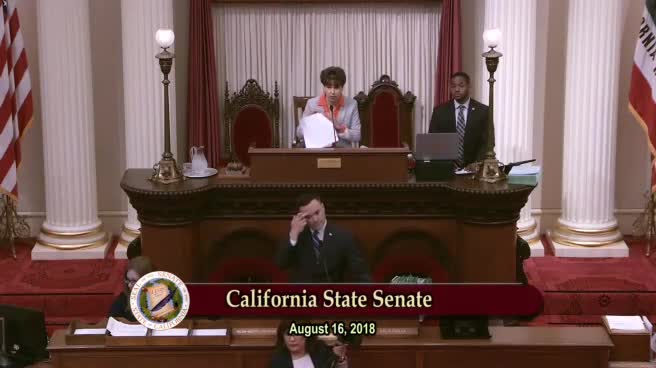 15MIN
Senate Floor
 4MIN
Senate Standing Committee on Human Services
Bill Author

Bill Co-Author(s):