AB 1006: Aging and Disability Resource Connection program: No Wrong Door System.
- Session Year: 2023-2024
- House: Assembly
- Latest Version Date: 2023-04-27
Current Status:
Failed
(2023-09-01: In committee: Held under submission.)
Introduced
In Committee
First Chamber
In Committee
Second Chamber
Enacted
What does this bill do?
The bill requires the No Wrong Door System to create a statewide respite referral registry that connects Medi‑Cal enrollees who are seniors or people with disabilities to culturally competent, prescreened respite providers, and to set up a consumer‑directed employer program to help consumers hire and manage respite workers. It also requires the Aging and Disability Resource Connection advisory committee to use staff from the California Department of Aging and expands the committee’s advisory role to state agencies on the No Wrong Door System.
The summary is provided by generative AI which can make mistakes. For original language, please view the details in the table below.
Existing law establishes an Aging and Disability Resource Connection (ADRC) program, administered by the California Department of Aging, to provide information to consumers and their families on available long-term services and supports (LTSS) programs and to assist older adults, caregivers, and persons with disabilities in accessing LTSS programs at the local level. Existing law requires the California Department of Aging to administer the Aging and Disability Resource Connection (ADRC) Infrastructure Grants Program for the purpose of implementing a No Wrong Door System, a system that enables consumers to access all long-term services and supports (LTSS) through one agency, organization, coordinated network, or portal. Existing law makes related legislative intent statements regarding the No Wrong Door System, including that it is the intent to provide consumers and their caregivers access to information and services, regardless of income or benefit level. Existing law also establishes the Aging and Disability Resource Connection Advisory Committee, within the California Department of Aging, as the primary adviser in the implementation of the No Wrong Door System. Existing law authorizes the committee to use the staff of the California Department of Aging to accomplish its purposes.
This bill would instead require the committee to use the staff of the California Department of Aging. The bill would also instead require the No Wrong Door System to serve seniors and individuals with disabilities, as specified, and would require, no later than January 1, December 31, 2025, the system to also establish a statewide respite referral registry to connect consumers enrolled in the Medi-Cal program with culturally competent, prescreened respite providers, and create and implement a consumer directed employer program to assist in the provision of the statewide respite referral system.
Existing law establishes an Aging and Disability Resource Connection (ADRC) program, administered by the California Department of Aging, to provide information to consumers and their families on available long-term services and supports (LTSS) programs and to assist older adults, caregivers, and persons with disabilities in accessing LTSS programs at the local level.Existing level. Existing law requires the California Department of Aging to administer the Aging and Disability Resource Connection (ADRC) Infrastructure Grants Program for the purpose of implementing a No Wrong Door System, a system that enables consumers to access all long-term services and supports (LTSS) through one agency, organization, coordinated network, or portal. Existing law makes related legislative intent statements regarding the No Wrong Door System, including that it is the intent to provide consumers and their caregivers access to information and services, regardless of income or benefit level. Existing law also establishes the Aging and Disability Resource Connection Advisory Committee, within the California Department of Aging, as the primary adviser in the implementation of the No Wrong Door System. Existing law authorizes the committee to use the staff of the California Department of Aging to accomplish its purposes.
This bill would instead require the committee to use the staff of the California Department of Aging. This bill would make additional legislative intent statements regarding the No Wrong Door System, including the intent to establish a statewide respite referral registry, as specified. The bill would also instead require the No Wrong Door System to serve seniors and individuals with disabilities, as specified, and would require, no later than January 1, 2025, the system to also establish a statewide respite referral registry to connect consumers enrolled in the Medi-Cal program with culturally competent, prescreened respite providers, and create and implement a consumer directed employer program to assist in the provision of the statewide respite referral system.
Existing law establishes an Aging and Disability Resource Connection (ADRC) program, administered by the California Department of Aging, to provide information to consumers and their families on available long-term services and supports (LTSS) programs and to assist older adults, caregivers, and persons with disabilities in accessing LTSS programs at the local level. Existing law requires the ADRC program to provide services within the geographic area served and provide information to the public about the services provided by the program. Existing law makes the implementation of these provisions contingent upon the appropriation of funds for that purpose.
This bill would make technical, nonsubstantive changes to those provisions.Existing law requires the California Department of Aging to administer the Aging and Disability Resource Connection (ADRC) Infrastructure Grants Program for the purpose of implementing a No Wrong Door System, a system that enables consumers to access all long-term services and supports (LTSS) through one agency, organization, coordinated network, or portal. Existing law makes related legislative intent statements regarding the No Wrong Door System, including that it is the intent to provide consumers and their caregivers access to information and services, regardless of income or benefit level. Existing law also establishes the Aging and Disability Resource Connection Advisory Committee, within the California Department of Aging, as the primary adviser in the implementation of the No Wrong Door System. Existing law authorizes the committee to use the staff of the California Department of Aging to accomplish its purposes.
This bill would instead require the committee to use the staff of the California Department of Aging. This bill would make additional legislative intent statements regarding the No Wrong Door System, including the intent to establish a statewide respite referral registry, as specified.
Existing law establishes an Aging and Disability Resource Connection (ADRC) program, administered by the California Department of Aging, to provide information to consumers and their families on available long-term services and supports (LTSS) programs and to assist older adults, caregivers, and persons with disabilities in accessing LTSS programs at the local level. Existing law requires the ADRC program to provide services within the geographic area served and provide information to the public about the services provided by the program. Existing law makes the implementation of these provisions contingent upon the appropriation of funds for that purpose.
This bill would make technical, nonsubstantive changes to those provisions.
(a)The No Wrong Door System described in Section 9121 shall serve seniors and individuals with disabilities by doing all of the following:
(1)Providing consumers and their caregivers access to information and services, regardless of income or benefit level.
(2)Enabling an Aging and Disability Resource Connection (ADRC) program to directly connect a client to appropriate local programs.
(3)Providing each consumer in California with access to individualized support and community resources to meet their needs and to enable them to continue living in their own homes, if desired.
(4)No later than January 1, December 31, 2025, establishing a statewide respite referral registry to connect consumers enrolled in the Medi-Cal program with culturally competent, prescreened respite providers. It is the intent of the Legislature for those implementing the statewide respite referral registry to consider all of the following:
(A)Accounting for consumer needs and preferences when identifying potential respite providers.
(B)Providing for reasonable standards of accountability for respite providers and prospective respite providers listed through the registry.
(C)Ensuring voluntariness for respite providers and prospective respite providers and consumers.
(D)Promoting job opportunities for respite providers and prospective respite providers.
(E)Providing access to the registry for consumers who want to query a referral independently.
(F)Increasing a consumers choice of respite providers and prospective respite providers via an established pool of available respite providers and prospective respite providers on the registry.
(5)No later than January 1, December 31, 2025, creating and implementing a consumer directed employer program to assist in the provision of the statewide respite referral system.
(b)The Aging and Disability Resource Connection Advisory Committee, which has been established within the California Department of Aging, shall serve as the primary adviser to the California Department of Aging, the Department of Rehabilitation, and the State Department of Health Care Services in the ongoing development and implementation of the No Wrong Door System described in Section 9121. The advisory committee shall utilize staff of the California Department of Aging, as needed, to accomplish its purposes. The California Department of Aging shall expand the membership of the advisory committee as necessary to include the perspective of all relevant stakeholders.
(c)The Aging and Disability Resource Connection Advisory Committee shall, upon the request of the California Department of Aging, or any task force appointed thereunder for the purpose of developing and updating a master plan on aging, consult with and offer input regarding the development and updating of that master plan.
(d)The California Department of Aging, in consultation with the advisory committee, shall do all of the following:
(1)Develop a plan for, and oversee the phased statewide implementation of, the No Wrong Door System that utilizes the ADRC program to assist older adults and people with disabilities to obtain accurate information and timely referrals to appropriate community services and supports. The plan shall include near- and long-term tactics for statewide implementation.
(2)Serve as a statewide facilitator, coordinator, and policy development resource on the ADRC program and No Wrong Door System.
(3)Identify mainstream resources, benefits, and services that can be accessed for the No Wrong Door System.
(4)Create partnerships among state agencies and departments, local government agencies, the federal Administration for Community Living, the federal Centers for Medicare and Medicaid Services, and the federal Veterans Health Administration.
(5)Coordinate existing funding and applications for competitive funding, while also exploring avenues for future funding, including, but not limited to, Medicaid and federal Veterans Health Administration funding.
(6)Make policy and procedural recommendations to the Legislature and other governmental entities.
(7)Consider the expansion of the no wrong door approach to programs and policies outside of the California Health and Human Services Agency.
(8)(A)Report to the Governor and the Legislature on the No Wrong Door System and the implementation of the system.
(B)Reports to be submitted pursuant to subparagraph (A) shall be submitted in compliance with Section 9795 of the Government Code.
(e)The implementation of this section is contingent on an appropriation in the annual Budget Act, or another act, for that express purpose.
(a)It is the intent of the Legislature that the The No Wrong Door System described in Section 9121 shall serve seniors and individuals with disabilities by doing all of the following:
(1)Providing consumers and their caregivers access to information and services, regardless of income or benefit level.
(2)Enabling an Aging and Disability Resource Connection (ADRC) program to directly connect a client to appropriate local programs.
(3)Providing each consumer in California with access to individualized support and community resources to meet their needs and to enable them to continue living in their own homes, if desired.
(4)Establishing No later than January 1, 2025, establishing a statewide respite referral registry to connect consumers enrolled in the Medi-Cal program with culturally competent, prescreened respite providers. It is the intent of the Legislature for those implementing the statewide respite referral registry to consider all of the following:
(A)Accounting for consumer needs and preferences when identifying potential respite providers.
(B)Providing for reasonable standards of accountability for respite providers and prospective respite providers listed through the registry.
(C)Ensuring voluntariness for respite providers and prospective respite providers and consumers.
(D)Promoting job opportunities for respite providers and prospective respite providers.
(E)Providing access to the registry for consumers who want to query a referral independently.
(F)Increasing a consumers choice of respite providers and prospective respite providers via an established pool of available respite providers and prospective respite providers on the registry.
(5)Creating No later than January 1, 2025, creating and implementing a consumer directed employer program to assist in the provision of the statewide respite referral system.
(b)The Aging and Disability Resource Connection Advisory Committee, which has been established within the California Department of Aging, shall serve as the primary adviser to the California Department of Aging, the Department of Rehabilitation, and the State Department of Health Care Services in the ongoing development and implementation of the No Wrong Door System described in Section 9121. The advisory committee shall utilize staff of the California Department of Aging, as needed, to accomplish its purposes. The California Department of Aging shall expand the membership of the advisory committee as necessary to include the perspective of all relevant stakeholders.
(c)The Aging and Disability Resource Connection Advisory Committee shall, upon the request of the California Department of Aging, or any task force appointed thereunder for the purpose of developing and updating a master plan on aging, consult with and offer input regarding the development and updating of that master plan.
(d)The California Department of Aging, in consultation with the advisory committee, shall do all of the following:
(1)Develop a plan for, and oversee the phased statewide implementation of, the No Wrong Door System that utilizes the ADRC program to assist older adults and people with disabilities to obtain accurate information and timely referrals to appropriate community services and supports. The plan shall include near- and long-term tactics for statewide implementation.
(2)Serve as a statewide facilitator, coordinator, and policy development resource on the ADRC program and No Wrong Door System.
(3)Identify mainstream resources, benefits, and services that can be accessed for the No Wrong Door System.
(4)Create partnerships among state agencies and departments, local government agencies, the federal Administration for Community Living, the federal Centers for Medicare and Medicaid Services, and the federal Veterans Health Administration.
(5)Coordinate existing funding and applications for competitive funding, while also exploring avenues for future funding, including, but not limited to, Medicaid and federal Veterans Health Administration funding.
(6)Make policy and procedural recommendations to the Legislature and other governmental entities.
(7)Consider the expansion of the no wrong door approach to programs and policies outside of the California Health and Human Services Agency.
(8)(A)Report to the Governor and the Legislature on the No Wrong Door System and the implementation of the system.
(B)Reports to be submitted pursuant to subparagraph (A) shall be submitted in compliance with Section 9795 of the Government Code.
(e)The implementation of this section is contingent on an appropriation in the annual Budget Act, or another act, for that express purpose.
(a)It is the intent of the Legislature that the No Wrong Door System described in Section 9121 serve seniors and individuals with disabilities by doing all of the following:
(1)Providing consumers and their caregivers access to information and services, regardless of income or benefit level.
(2)Enabling an Aging and Disability Resource Connection (ADRC) program to directly connect a client to appropriate local programs.
(3)Providing each consumer in California with access to individualized support and community resources to meet their needs and to enable them to continue living in their own homes, if desired.
(4)Establishing a statewide respite referral registry to connect consumers enrolled in the Medi-Cal program with culturally competent, prescreened respite providers. It is the intent of the Legislature for those implementing the statewide respite referral registry to consider all of the following:
(A)Accounting for consumer needs and preferences when identifying potential respite providers.
(B)Providing for reasonable standards of accountability for respite providers and prospective respite providers listed through the registry.
(C)Ensuring voluntariness for respite providers and prospective respite providers and consumers.
(D)Promoting job opportunities for respite providers and prospective respite providers.
(E)Providing access to the registry for consumers who want to query a referral independently.
(F)Increasing a consumers choice of respite providers and prospective respite providers via an established pool of available respite providers and prospective respite providers on the registry.
(5)Creating and implementing a consumer directed employer program to assist in the provision of the statewide respite referral system.
(b)The Aging and Disability Resource Connection Advisory Committee, which has been established within the California Department of Aging, shall serve as the primary adviser to the California Department of Aging, the Department of Rehabilitation, and the State Department of Health Care Services in the ongoing development and implementation of the No Wrong Door System described in Section 9121. The advisory committee may shall utilize staff of the California Department of Aging, as needed, to accomplish its purposes. The California Department of Aging shall expand the membership of the advisory committee as necessary to include the perspective of all relevant stakeholders.
(c)The Aging and Disability Resource Connection Advisory Committee shall, upon the request of the California Department of Aging, or any task force appointed thereunder for the purpose of developing and updating a master plan on aging, consult with and offer input regarding the development and updating of that master plan.
(d)The California Department of Aging, in consultation with the advisory committee, shall do all of the following:
(1)Develop a plan for, and oversee the phased statewide implementation of, the No Wrong Door System that utilizes the ADRC program to assist older adults and people with disabilities to obtain accurate information and timely referrals to appropriate community services and supports. The plan shall include near- and long-term tactics for statewide implementation.
(2)Serve as a statewide facilitator, coordinator, and policy development resource on the ADRC program and No Wrong Door System.
(3)Identify mainstream resources, benefits, and services that can be accessed for the No Wrong Door System.
(4)Create partnerships among state agencies and departments, local government agencies, the federal Administration for Community Living, the federal Centers for Medicare and Medicaid Services, and the federal Veterans Health Administration.
(5)Coordinate existing funding and applications for competitive funding, while also exploring avenues for future funding, including, but not limited to, Medicaid and federal Veterans Health Administration funding.
(6)Make policy and procedural recommendations to the Legislature and other governmental entities.
(7)Consider the expansion of the no wrong door approach to programs and policies outside of the California Health and Human Services Agency.
(8)(A)Report to the Governor and the Legislature on the No Wrong Door System and the implementation of the system.
(B)Reports to be submitted pursuant to subparagraph (A) shall be submitted in compliance with Section 9795 of the Government Code.
(e)The implementation of this section is contingent on an appropriation in the annual Budget Act, or another act, for that express purpose.
SECTION 1.Section 9120 of the Welfare and Institutions Code is amended to read:9120.(a)There is hereby established an Aging and Disability Resource Connection (ADRC) program to provide information to consumers and their families on available long-term services and supports (LTSS) programs and to assist older adults, caregivers, and persons with disabilities in accessing LTSS programs at the local level through ADRC programs operated jointly by area agencies on aging and independent living centers.(b)This article shall be administered and implemented by the California Department of Aging, in collaboration with the Department of Rehabilitation and the State Department of Health Care Services.(c)Area agencies on aging and independent living centers shall be the core local partners in developing ADRC programs. The California Department of Aging shall assist interested and qualified area agencies on aging and independent living centers in completing an application to be designated as an ADRC program.(d)An ADRC program operated by an area agency on aging and an independent living center shall provide all of the following:(1)Enhanced information and referral services and other assistance at hours that are convenient for the public.(2)Options counseling concerning available LTSS programs and public and private benefits programs.(3)Short-term service coordination.(4)Transition services from hospitals to home and from skilled nursing facilities to the community.(e)An ADRC program operated by an area agency on aging and an independent living center shall do both of the following:(1)Provide services within the geographic area served.(2)Provide information to the public about the services provided by the program.(f)(1)The California Department of Aging, in consultation with the Aging and Disability Resource Connection Advisory Committee within the California Department of Aging, shall develop a core model of ADRC best practices. These best practices shall be implemented by July 1, 2022, by all ADRC programs operated by area agencies on aging and independent living centers. To the extent feasible, the best practices shall be considered in the development and continued updating of the master plan on aging. In the development of these best practices, the department and advisory committee shall consider, at a minimum, all of the following practices:(A)A person-centered counseling process.(B)Public outreach and coordination with key referral sources, including, but not limited to, caregiver resource centers, the medical centers of the United States Department of Veterans Affairs, acute care systems, local 211 programs, local multipurpose senior service programs, Programs of All-Inclusive Care for the Elderly (PACE), adult day care services, and LTSS providers.(C)A formal followup procedure to ensure that services for which a person received a referral were received and methods for correcting service provision, if needed.(D)A model for the best ways for area agencies on aging and independent living centers to share necessary data and client information.(E)A model for the collection and reporting of data to the California Department of Aging, which shall include, but not be limited to, the demographic information for each individual counseled, the number of consumers served by category of service, and the number of caregivers served.(2)The California Department of Aging shall review implementation of the ADRC Infrastructure Grants Program described in Section 9121 for consideration in developing and updating the best practices model.(g)The implementation of this section is contingent on an appropriation in the annual Budget Act, or another act, for that express purpose.(a)There is hereby established an Aging and Disability Resource Connection (ADRC) program to provide information to consumers and their families on available long-term services and supports (LTSS) programs and to assist older adults, caregivers, and persons with disabilities in accessing LTSS programs at the local level through ADRC programs operated jointly by area agencies on aging and independent living centers.
(b)This article shall be administered and implemented by the California Department of Aging, in collaboration with the Department of Rehabilitation and the State Department of Health Care Services.
(c)Area agencies on aging and independent living centers shall be the core local partners in developing ADRC programs. The California Department of Aging shall assist interested and qualified area agencies on aging and independent living centers in completing an application to be designated as an ADRC program.
(d)An ADRC program operated by an area agency on aging and an independent living center shall provide all of the following:
(1)Enhanced information and referral services and other assistance at hours that are convenient for the public.
(2)Options counseling concerning available LTSS programs and public and private benefits programs.
(3)Short-term service coordination.
(4)Transition services from hospitals to home and from skilled nursing facilities to the community.
(e)An ADRC program operated by an area agency on aging and an independent living center shall do both of the following:
(1)Provide services within the geographic area served.
(2)Provide information to the public about the services provided by the program.
(f)(1)The California Department of Aging, in consultation with the Aging and Disability Resource Connection Advisory Committee within the California Department of Aging, shall develop a core model of ADRC best practices. These best practices shall be implemented by July 1, 2022, by all ADRC programs operated by area agencies on aging and independent living centers. To the extent feasible, the best practices shall be considered in the development and continued updating of the master plan on aging. In the development of these best practices, the department and advisory committee shall consider, at a minimum, all of the following practices:
(A)A person-centered counseling process.
(B)Public outreach and coordination with key referral sources, including, but not limited to, caregiver resource centers, the medical centers of the United States Department of Veteran Veterans Affairs, acute care systems, local 211 programs, local multipurpose senior service programs, Programs of All-Inclusive Care for the Elderly (PACE), adult day care services, and LTSS providers.
(C)A formal followup procedure to ensure that services for which a person received a referral were received and methods for correcting service provision provision, if needed.
(D)A model for the best ways for area agencies on aging and independent living centers to share necessary data and client information.
(E)A model for the collection and reporting of data to the California Department of Aging, which shall include, but not be limited to, the demographic information for each individual counseled, the number of consumers served by category of service, and the number of caregivers served.
(2)The California Department of Aging shall review implementation of the ADRC Infrastructure Grants Program described in Section 9121 for consideration in developing and updating the best practices model.
(g)The implementation of this section is contingent on an appropriation in the annual Budget Act, or another act, for that express purpose.
|
Date
|
Status
|
|---|---|
| Sep 1, 2023 | In committee: Held under submission. |
| Jul 3, 2023 | In committee: Referred to APPR suspense file. |
| Jun 20, 2023 | From committee: Do pass and re-refer to Com. on APPR. (Ayes 5. Noes 0.) (June 19). Re-referred to Com. on APPR. |
| Jun 7, 2023 | Referred to Com. on HUMAN S. |
| May 31, 2023 | In Senate. Read first time. To Com. on RLS. for assignment. |
| May 30, 2023 | Read third time. Passed. Ordered to the Senate. (Ayes 80. Noes 0. Page 1887.) |
| May 18, 2023 | Read second time. Ordered to third reading. |
| May 18, 2023 | Joint Rule 62(a), file notice suspended. (Page 1580.) |
| May 18, 2023 | From committee: Do pass. (Ayes 15. Noes 0.) (May 18). |
| May 17, 2023 | In committee: Set, first hearing. Referred to APPR. suspense file. |
| May 1, 2023 | Re-referred to Com. on APPR. |
| Apr 27, 2023 | Read second time and amended. |
| Apr 26, 2023 | From committee: Amend, and do pass as amended and re-refer to Com. on APPR. (Ayes 7. Noes 0.) (April 25). |
| Apr 17, 2023 | Re-referred to Com. on AGING & L.T.C. |
| Apr 12, 2023 | From committee chair, with author's amendments: Amend, and re-refer to Com. on AGING & L.T.C. Read second time and amended. |
| Mar 21, 2023 | Re-referred to Com. on AGING & L.T.C. |
| Mar 20, 2023 | From committee chair, with author's amendments: Amend, and re-refer to Com. on AGING & L.T.C. Read second time and amended. |
| Mar 16, 2023 | Referred to Com. on AGING & L.T.C. |
| Feb 16, 2023 | From printer. May be heard in committee March 18. |
| Feb 15, 2023 | Read first time. To print. |
|
Date
|
Description
|
Location
|
Votes
|
|
|---|---|---|---|---|
| Jul 3, 2023 | Placed on suspense file | Senate Standing Committee on Appropriations |
Passed |
|
| Jun 19, 2023 | Do pass, but first be re-referred to the Committee on [Appropriations] | Senate Standing Committee on Human Services |
Passed |
|
| May 30, 2023 | AB 1006 McKinnor Assembly Third Reading | Assembly Floor |
Passed |
|
| May 18, 2023 | Do pass. | Assembly Standing Committee on Appropriations |
Passed |
|
| Apr 25, 2023 | Do pass as amended and be re-referred to the Committee on [Appropriations] | Assembly Standing Committee on Aging and Long-Term Care |
Passed |
This list shows positions taken on this bill by organizations on the date displayed, which is linked to the original source.
Positions by individuals are not included.
|
Organization
|
Position
|
Date
|
|---|---|---|
| AARP California | * Support | Jun 19, 2023 |
| California Coalition on Family Caregiving | ** Support | |
| California Commission on Aging | ** Support | |
| Carmichael | * Support | Apr 25, 2023 |
| IHSS | * Support | Apr 25, 2023 |
| IHSS Provider | * Support | Jun 19, 2023 |
| San Jose City Of | * Support | Apr 25, 2023 |
| SEIU 2015 | * Support | Jun 19, 2023 |
| SEIU California | * Support | Jun 19, 2023 |
| Yuba County | * Support | Apr 25, 2023 |
SENATE COMMITTEE ON APPROPRIATIONS
Senator Anthony Portantino, Chair
2023 - 2024 Regular Session
AB 1006 (McKinnor) - Aging and Disability Resource Connection program: No Wrong Door System
Version: April 27, 2023 | Policy Vote: HUMAN S. 5 - 0 |
Urgency: No | Mandate: No |
Hearing Date: July 3, 2023 | Consultant: Agnes Lee |
Bill Summary:
AB 1006 would require the creation of a statewide referral registry of respite providers for Medi-Cal recipients.
Fiscal Impact:
The California Department of Aging (CDA) estimates General Fund costs of $1,598,000-$2,148,000 in 2024-25 and $1,589,000-$2,139,000 in 2025-26 and ongoing thereafter. This includes costs for staffing, registry development and maintenance ($1 million-$1.5 million), and prescreening respite providers ($50,000-$100,000).
Background:
The Aging and Disability Resource Connection (ADRC) program, administered by CDA, provides information to consumers and their families on available long-term services and supports (LTSS) programs to assist older adults, caregivers, and persons with disabilities in accessing LTSS programs at the local level through ADRC programs operated jointly by area agencies on aging and independent living centers. Current law establishes the ADRC Infrastructure Grants Program for the purpose of implementing a No Wrong Door (NWD) System, upon appropriation by the Legislature.
Current law states legislative intent of the NWD System to serve seniors and individuals with disabilities by doing all of the following:
- Providing consumers and their caregivers access to information and services, regardless of income or benefit level.
- Enabling an ADRC program to directly connect a client to appropriate local programs.
- Providing each consumer in California with access to individualized support and community resources to meet their needs and to enable them to continue living in their own homes, if desired.
Current law establishes the Aging and Disability Resource Connection Advisory Committee to serve as the primary adviser to the CDA, the Department of Rehabilitation, and the Department of Health Care Services in the ongoing development and implementation of the NWD System and permits the advisory committee to utilize staff of the CDA, as needed, to accomplish its purposes.
Proposed Law:
Specific provisions of the bill would:
- Require, rather than state legislative intent, that the NWD System serve seniors and individuals with disabilities.
- Require that the NWD System additionally:
- Establish a statewide respite referral registry to connect consumers enrolled in the Medi-Cal program with culturally competent, prescreened respite providers.
- Create and implement a consumer directed employer program to assist in the provision of the statewide respite referral system.
- Require, rather than permit, the advisory committee to utilize staff of the CDA to accomplish its purposes.
-- END --
SENATE COMMITTEE ON HUMAN SERVICES
Senator Alvarado-Gil, Chair
2023 - 2024 Regular
Bill No: | AB 1006 | ||
Author: | McKinnor | ||
Version: | April 27, 2023 | Hearing Date: | June 19, 2023 |
Urgency: | No | Fiscal: | Yes |
Consultant: | Heather Hopkins | ||
Subject: Aging and Disability Resource Connection program: No Wrong Door System
SUMMARY
This bill creates a statewide referral registry of respite providers for Medi-Cal recipients.
ABSTRACT
Existing Law:
- Establishes the Mello-Granlund Older Californians Act (Act), which establishes the California Department of Aging (CDA), and sets forth its duties and powers, including, among other things, entering into a contract for the development of information and materials to educate Californians on the concept of “aging in place.” (WIC 9100 et seq.)
- Establishes the Aging and Disability Resource Connection (ADRC) program to provide information to consumers and their families on available long-term services and supports (LTSS) programs and to assist older adults, caregivers, and persons with disabilities in accessing LTSS programs at the local level through ADRC programs operated jointly by area agencies on aging and independent living centers. (WIC 9120(a))
- Administers the ADRC Infrastructure Grants Program for the purpose of implementing a No Wrong Door (NWD) System by CDA, upon appropriation by the Legislature for this purpose. (WIC 9121)
- Details the intent of the NWD System and establishes the ADRC Advisory Committee within CDA, to serve as the primary adviser to CDA, the Department of Rehabilitation (DOR), and the State Department of Health Care Services (DHCS) in the ongoing development and implementation of the NWD System and allows for CDA to expand the membership of the Advisory Committee as necessary to include the perspective of all relevant stakeholders. (WIC 9122 (a) and (b))
- Requires CDA along with the ADRC Advisory Committee to do all of the following:
- Develop a plan for, and oversee the phased statewide implementation of the NWD System that utilizes the ADRC program to assist older adults and people with disabilities to obtain and secure information and timely referrals to appropriate community services and supports. Include near and long-term tactics for state wide implementation;
- Serve as a statewide facilitator, coordinator, and policy development resource on the ADRC program and NWD system;
- Identify mainstream resources, benefits, and services that can be accessed for the NWD System;
- Create partnerships among state agencies and departments, local government agencies, and the federal Administration on Community Living (ACL), the federal Centers for Medicare and Medicaid Services and the federal Veterans Health Administration;
- Coordinate existing funding and applications for competitive funding, while also exploring avenues for future funding, including, but not limited to Medicaid and federal Veterans Administration funding;
- Make policy ad procedural recommendations to the Legislature and other governmental entities;
- Consider the expansion of the NWD approach to programs and policies outside of the California Health and Human Services Agency; and,
- Report to the Governor and the Legislature on the NWD System and its implementation. (WIC 8122 (d))
- Develop a plan for, and oversee the phased statewide implementation of the NWD System that utilizes the ADRC program to assist older adults and people with disabilities to obtain and secure information and timely referrals to appropriate community services and supports. Include near and long-term tactics for state wide implementation;
- Vests in DOR the responsibility and authority to encourage the planning, development, and funding of ILCs, which are private, nonprofit organizations that provide specified services to individuals with disabilities, in order to assist those individuals in their attempts to live fuller and freer lives outside institutions. (WIC 19000 et seq.)
- Establishes the Medi-Cal program, administered by DHCS, under which qualified low-income individuals receive health care services. The Medi-Cal program is, in part, governed and funded by federal Medicaid program provisions. (42 USC 1396 et seq.)
- Requires AAAs and ILCs to be the core local partners in developing ADRC programs. (WIC 9120 (c))
- Requires and ADRC program to provide all of the following:
- Enhanced information and referral services and other assistance at hours convenient to the public;
- Options counseling concerning LTSS programs and public and private benefits programs;
- Short –term service coordination; and,
- Transition services from hospitals to home and from skilled nursing facilities to the community. (WIC 9120 (d))
- Enhanced information and referral services and other assistance at hours convenient to the public;
- Requires the ADRC provide services within the geographic are serviced and provide information to the public about services provided by the programs. (WIC 9120 (e))
- Requires the ADRC program to be administered by CDA, in collaboration with DOR and DHCS, and further provides provisions related to ADRCs only become operative contingent upon appropriation of funds for that purpose by the Legislature. (WIC 9120 (b) and (g))
- Defines NWD System to mean a system that enables consumers to access all LTSS through one agency, organization, coordinated network or portal and provides information regarding the availability of LTSS, how to apply for LTSS, referral services for LTSS otherwise available in the community, and either a determination of financial and functional eligibility for LTSS or assistance with assessment processes for financial and functional eligibility for LTSS. (WIC 9121 (b))
- Determines, by DHCS, in consultation with CDA, if the Medicaid administrative claiming process may be used to fund the NWD system, or activities associated with the NWD System, including, but not limited to, outreach, person-centered counseling, training, program planning, and quality improvement. (WIC 9123 (a))
- Develops a core model of ADRC best practices by CDA and the ADRC Advisory Committee to include person-centered practices; public outreach and coordination with key referral sources; formal follow up and data sharing. (WIC 9120 (f))
This Bill:
- Adds requirements to The No Wrong Door System to include by December 31, 2025 the establishment of a statewide respite referral registry to connect Medi-Cal consumers with culturally competent, prescreened respite providers.
- Provides that it is the intent of the Legislature for those implementing the statewide respite referral registry to consider all of the following:
- Accounting for consumer needs and preferences when identifying potential respite providers.
- Providing for reasonable standards of accountability for respite providers and prospective respite providers listed through the registry.
- Ensuring voluntariness for respite providers and prospective respite providers and consumers.
- Promoting job opportunities for respite providers and prospective respite providers.
- Providing access to the registry for consumers who want to query a referral independently.
- Increasing a consumer’s choice of respite providers and prospective respite providers via an established pool of available respite providers and prospective respite providers on the registry.
- No later than December 31, 2025, creating and implementing a consumer directed employer program to assist in the provision of the statewide respite referral system.
- Accounting for consumer needs and preferences when identifying potential respite providers.
FISCAL IMPACT
According to the Assembly Appropriations Committee, CDA estimates ongoing General Fund (GF) costs of approximately $1.6 million to $2.2 million annually. These costs include $1 million to $1.5 million to procure new hardware and software, approximately $548,000 for three additional CDA staff positions to develop and maintain the registry, and $50,000 to $100,000 to prescreen respite providers. The bill does not identify a funding source for this project.
BACKGROUND AND DISCUSSION
Purpose of the Bill:
According to the author, “AB 1006 would simply allow some of our most vulnerable citizens a database that can provide qualified and culturally appropriate respite workers so that they can ensure that their care continues at the same level should they need one. This would ensure that not only are they able to reach out to someone who can easily step in and give quality care in the language that the patient can understand.”
Master Plan for Aging
California is projected to be home to 10.8 million people age 60 and older in 2030. This is nearly twice as many people age 60 and older as there were in 2010. Additionally, by 2030 one out of every four Californians will be older adults. The state is making efforts to meet the needs of this growing population. In January 2021, the Newsom Administration published its Master Plan for Aging, which is intended to be a ten year blue-print for state government, local government, the private sector, and philanthropy to prepare the state for the coming demographic changes and “continue California’s leadership in aging, disability, and equity.” The Master Plan for Aging outlines five goals, twenty-three strategies, and over 100 initiatives. The five goals of the Master Plan are: housing for all ages and stages; health reimagined; inclusion and equity, not isolation; caregiving that works; and affording aging. This bill is related to Goal Four “caregiving that works” by allow people to continue to reside at home by providing respite care for their caregiver.
Aging and Disability Resource Connections
Many communities currently have multiple agencies administering long-term services and supports (LTSS) and have complex, fragmented, and often duplicative intake, assessment, and eligibility functions. Aging and Disability Resource Connections (ADRCs) are intended to act as a single coordinated system of information and access for persons seeking LTSS. The “No Wrong Door” system aims to lower the barriers that older Californians, people with disabilities, caregivers, and families face accessing the information and assistance needed to age well. ADRCs are partnerships between AAAs and Independent Living Centers (ILCs). The establishment of a statewide ADRC program was a key recommendation from the Master Plan for Aging stakeholder committee.
Through existing local ADRC programs, older adults, people with disabilities, caregivers, and families in some communities can connect to and access multiple services in their community with a single phone call, online contact, and/or walk-in. Through the person-centered care model, individuals initially meet with an ADRC navigator who seeks an individual’s needs, goals, and preferences and offers a choice of available options. The navigator/specialist then refers the individual to local programs in their area through warm handoffs and schedules regular follow-up sessions. The ADRC program enables older adults and people with disabilities to navigate and access aging and other programs that already exist in their communities, receive assistance understanding the service options, and have a person-centered professional customize a service plan specifically to meet their needs, goals, and preferences based on initial intake and ongoing follow-up sessions. The ADRC network is growing statewide. Currently, California has 15 designated ADRCs and nine emerging ADRCs. These established and emerging ADRCs cover 30 counties and cover 51 percent of the population.
Respite Care
Respite care provides caregivers with short-term relief from their caregiving duties. It can occur for hours, days or weeks. According to the National Institute on Aging, most insurance plans do not cover these costs, and Medicare will cover most of the cost of up to 5 days in a row of respite care in a hospital or skilled nursing facilities for a person receiving hospice care.
A 2018 study on impact of respite programming in dementia care[1] discussed the importance of caregiving respite as a factor in sustained resilience in caregiving. The study found, “The long-term nature of dementia caregiving requires long-term support strategies that are oriented around the various transitions that merge in the context of the caregiver career. Individuals in stressful situations, such as caregiving, may benefit from social support networks, as they can provide the resources that help them manage their situation. Without these supportive services at each transition in the continuum of care, family caregivers risk poor health outcomes as their resilience and stamina may wear down, making it harder to bounce back with each new set of caregiving responsibilities and circumstances.”
Caregiving can be an emotionally and physically demanding role. Providing respite care to caregivers allows them to have time for rest and recuperation. By providing caregivers with a database of qualified respite care providers, this bill may help to avoid burnout and allow those receiving care to stay in their homes longer.
Related/Prior Legislation:
SB 453 (Hurtado, Chapter 850, Statutes of 2019) required the CDA to develop a core model of best practices for the ADRC program, and requires these programs to implement these best practices by July 1, 2022. Further, required CDA to take specified actions with regard to the implementation of the NWD System, including, among other things, developing a plan for, overseeing the implementation of, and coordinating funding sources for the NWD System.
COMMENTS
Caregiving is a mentally and physically challenging role. Providing a registry of pre-screened respite care providers will help to connect them with qualified providers that can ensure continued quality care.
PRIOR VOTES
| |
Assembly Floor: | 80 - 0 |
Assembly Appropriations Committee: | 15 - 0 |
Assembly Aging and Long Term Care Committee: | 7 - 0 |
POSITIONS
Support:
SEIU California (Sponsor)
AARP
California Commission on Aging
Oppose:
None received
-- END --
https://www.ncbi.nlm.nih.gov/pmc/articles/PMC5808833/ ↑
ASSEMBLY THIRD READING
ATR Bill Id:AB 1006
Author:(McKinnor)
As Amended Ver:April 27, 2023
Majority vote
SUMMARY
Establishes a statewide respite referral registry to connect consumers enrolled in Medi-Cal with respite providers.
Major Provisions
- Allows the Aging and Disability Resource Connection (ADRC) Advisory Committee (Advisory Committee) to use staff from the California Department of Aging (CDA) as needed in the ongoing development of the No Wrong Door (NWD) System.
- Removes intent language and instead requires the NWD System to serve seniors and individuals with disabilities to do all of the following:
- Provides consumers and their caregivers access to information and services, regardless of income or benefit level;
- Enables an Aging and Disability Resource Connection (ADRC) program to directly connect a client to appropriate local programs;
- Provides each consumer in California with access to individualized support and community resources to meet their needs and to enable them to "age in place" as desired;
- Establishes a statewide respite referral registry to connect consumers enrolled in the Medi-Cal program with culturally competent, prescreened respite providers no later than December 31, 2025;
- Those implementing the statewide respite referral registry intends to consider all of the following:
- Accounts for consumer needs and preferences when identifying potential respite providers;
- Provides for reasonable standards of accountability for respite providers and prospective respite providers listed through the registry;
- Ensures voluntariness for respite providers and prospective respite providers and consumers;
- Promotes job opportunities for respite providers and prospective respite providers;
- Provides access to the registry for consumers who want to query a referral independently; and,
- Increases a consumer's choice of respite providers and prospective respite providers via an established pool of available respite providers and prospective respite providers on the registry.
- Creates and implements a consumer directed employer program to assist in the provision of the statewide respite referral system, no later than December 31, 2025.
- Implementation is contingent on an appropriation in the annual budget.
COMMENTS
Caregiving for older adults and people with disabilities: A recent State Auditor report detailed how respite services for caregivers of individuals with intellectual and developmental disabilities was insufficient or inaccessible. Specifically, the Department of Developmental Services has not adequately taken action to reduce barriers to some families' access to respite services. Some families were not able to access respite services because of barriers such as a lack of available respite workers and difficulty finding respite workers who speak the family's language.[1]
In California, family caregiving is often unpaid and undervalued. 4.1 million family caregivers save the state $81 billion annually. This is an $18 billion increase in unpaid contributions since 2019, the most recent year information was released. A report from AARP highlights the growing scope and complexity of family caregiving and highlights actions needed to address the many challenges of caring for parents, spouses, and other loved ones.[2] The report highlights meeting the needs of Black/African American, Hispanic/Latino, Asian American, and Native Hawaiian and Pacific Islander family caregivers; the trend of growing diversity is highly relevant to family caregiving because Black/African American, Hispanic/Latino, Asian American, Native Hawaiian and Pacific Islander, and American Indian and Alaska Native family caregivers report distinct care experiences and specific support needs.
Nationally, a recent executive order highlights the need for respite care. "Family caregivers provide informal, often unpaid, care to help loved ones live in their homes and communities, including caring for aging family members, people with disabilities, and children. At least 53 million people are family caregivers in the United States—and many face challenges due to lack of support, training, and opportunities for rest. Family caregivers include spouses, parents, siblings, adult and minor children, grandparents, and other relatives. Family caregivers reflect the diversity of America's communities, and people can assume family caregiving responsibilities at any stage of life. Without adequate resources, family caregiving can affect caregivers' own physical and emotional health and well-being and contribute to financial strain. These negative consequences are felt most acutely by women, who make up nearly two-thirds of family caregivers and drop out of the workforce at a rate three times higher than men."[3]
Master Plan for Aging: In January of 2021, the Governor released his Master Plan for Aging (MPA). The MPA prioritizes the health and well-being of older Californians and the need for policies that promote healthy aging. The MPA serves as a blueprint for state government, local government, the private sector, and philanthropy to prepare the state for the coming demographic changes and continue California's leadership in aging, disability, and equity.
The MPA outlines five bold goals, 23 strategies and currently seeks to advance 95 initiatives to build a California for All Ages by 2030. It also includes a Data Dashboard on Aging to measure progress. AB 1006, while directly linked to care can be linked to all of the five goals:
- Goal One: Housing for All Ages and Stages
- Goal Two: Health Reimagined
- Goal Three: Inclusion and Equity, Not Isolation
- Goal Four: Caregiving That Works
- Goal Five: Affording Aging
According to the Author
"AB 1006 would simply allow some of our most vulnerable citizens a database that can provide qualified and culturally appropriate respite workers so that they can ensure that their care continues at the same level should they need one. This would ensure that not only are they able to reach out to someone who can easily step in and give quality care in the language that the patient can understand."
Arguments in Support
SEIU California, a sponsor of the bill, writes in support, "Respite is designed to give primary caregivers a reprieve, ensuring the health and well-being of caregivers and their dependents by staving off burnout. As a strategy for shoring up our long-term services and supports to meet the scope of need, respite is an essential piece of the puzzle."
Arguments in Opposition
None on file.
FISCAL COMMENTS
According to the Assembly Appropriations Committee, CDA estimates ongoing General Fund (GF) costs of approximately $1.6 million to $2.2 million annually. These costs include $1 million to $1.5 million to procure new hardware and software, approximately $548,000 for three additional CDA staff positions to develop and maintain the registry, and $50,000 to $100,000 to prescreen respite providers. The bill does not identify a funding source for this project.
VOTES
ASM AGING AND LONG-TERM CARE: 7-0-1
YES: Bains, Ta, Alvarez, Haney, Stephanie Nguyen, Reyes, Blanca Rubio
ABS, ABST OR NV: Joe Patterson
ASM APPROPRIATIONS: 15-0-1
YES: Holden, Megan Dahle, Bryan, Calderon, Wendy Carrillo, Dixon, Mike Fong, Hart, Lowenthal, Mathis, Papan, Pellerin, Sanchez, Weber, Ortega
ABS, ABST OR NV: Robert Rivas
UPDATED
VERSION: April 27, 2023
CONSULTANT: Elizabeth Fuller / AGING & L.T.C. / (916) 319-3990 FN: 0000446
In-Home Respite Services: The Department of Developmental Services Has Not Adequately Reduced Barriers to Some Families' Use of In-Home Respite Services (ca.gov) ↑
https://www.aarp.org/ppi/info-2015/valuing-the-invaluable-2015-update.html ↑
Federal Register :: Increasing Access to High-Quality Care and Supporting Caregivers ↑
Date of Hearing: May 17, 2023
ASSEMBLY COMMITTEE ON APPROPRIATIONS
Chris Holden, Chair
ABPCA Bill Id:AB 1006
Author:(McKinnor) – As Amended Ver:April 27, 2023
Policy Committee: | Aging and Long Term Care | Vote: | 7 - 0 |
|
| ||
|
|
Urgency: No State Mandated Local Program: No Reimbursable: No
SUMMARY:
This bill requires the No Wrong Door (NWD) System, administered by the California Department of Aging (CDA), to provide consumers and their caregivers access to information and services, regardless of income or benefit level, and to establish a statewide respite referral registry to connect consumers enrolled in Medi-Cal with respite providers. This bill also requires the Aging and Disability Resource Connection (ADRC) Advisory Committee (advisory committee) to use staff from CDA as needed in the ongoing development of the NWD System.
Specifically, this bill:
- Requires, rather than allows, the ADRC advisory committee to use staff from the CDA as needed in the ongoing development of the NWD System.
- Removes as intent language and instead requires CDA, through the NWD System, to serve seniors and individuals with disabilities as follows:
- Provide consumers and their caregivers access to information and services, regardless of income or benefit level.
- Enable an Aging and Disability Resource Connection (ADRC) program to directly connect a client to appropriate local programs.
- Provide each consumer in California with access to individualized support and community resources to meet their needs and to enable them to “age in place” as desired.
- Requires CDA, by December 31, 2025, through the NWD System, to establish a statewide respite referral registry to connect consumers enrolled in the Medi-Cal program with culturally competent, prescreened respite providers. States intent for implementation considerations regarding the registry.
- Requires CDA, by December 31, 2025, through the NWD system, to create and implement a consumer directed employer program to assist in the provision of the statewide respite referral system.
FISCAL EFFECT:
CDA estimates ongoing General Fund (GF) costs of approximately $1.6 million to $2.2 million annually. These costs include $1 million to $1.5 million to procure new hardware and software, approximately $548,000 for three additional CDA staff positions to develop and maintain the registry, and $50,000 to $100,000 to prescreen respite providers. The bill does not identify a funding source for this project.
COMMENTS:
- Purpose. This bill is sponsored by SEIU California. According to the author:
[This bill] would simply allow some of our most vulnerable citizens a database that can provide qualified and culturally appropriate respite workers so that they can ensure that their care continues at the same level should they need one. This would ensure that not only are they able to reach out to someone who can easily step in and give quality care in the language that the patient can understand.
- Background. CDA administers funds from the Older Americans Act, the Mello-Granlund Older Californians Act and the Medi-Cal program. CDA is charged with overseeing programs that serve seniors, adults with disabilities, residents in long-term care facilities and family caregivers. CDA contracts with 33 local Area Agencies on Aging (AAAs) to provide a range of services and information to older adults and their caregivers. CDA also contracts directly with agencies to operate certain other programs serving older adults.
ADRC. ADRC is a collaboration between the federal Administration for Community Living (ACL) and the Centers for Medicare and Medicaid Services (CMS) that brings together various federal agencies to streamline access long-term supports and services (LTSS) for older adults, people with disabilities, family caregivers, veterans and providers of LTSS. Fifty-two states and territories are operating, or in the process of implementing, the core elements of an ADRC.
California’s ADRC programs provide information, advice, counseling, and other assistance to help individuals, or their families, make informed decisions about the services available to them. California has 17 ADRC programs, providing services in 22 of California’s 58 counties.
LTSS. Caregivers provide LTSS to help individuals with activities of daily living, such as eating, bathing, and dressing, housekeeping, or managing medications, that help people live independently. Licensed health professionals provide more complex medical care.
LTSS can be home based care provided by personal care aides, home health aides, and family caregivers or in community based settings, including assisted living facilities, adult day care, respite care, senior centers and meal programs. Additionally, LTSS may occur as facility based care provided in nursing homes and other 24-hour care settings. Approximately 80% of the people who need LTSS reside in private homes and residential care facilities for the elderly. For those living at home, most receive assistance from unpaid family and friends, some pay for assistance, and low-income households may qualify for Medicaid (Medi-Cal in California) services via the IHSS program. At least 53 million people are family caregivers in the United States—and many face challenges due to lack of support, training, and opportunities for rest.
The NWD initiative is a federal effort aimed at simplifying access to LTSS options for older adults and individuals with disabilities. This bill requires CDA to develop a respite referral registry as part of its NWD system.
Master Plan for Aging. California’s senior population is growing faster than any other age group. By 2030, over 25% of the population in California will be 60 and older. In January of 2021, the Governor released his Master Plan for Aging (MPA), which prioritizes the health and well-being of older Californians and the need for policies that promote healthy aging. AB 1006 supports these efforts by providing older adults with expanded access to respite caregivers to assist them with maintaining independence.
Analysis Prepared by: Jennifer Swenson / APPR. / (916) 319-2081
Date of Hearing: April 25, 2023
ASSEMBLY COMMITTEE ON AGING AND LONG-TERM CARE
Jasmeet Bains, Chair
ABPCA Bill Id:AB 1006 (
Author:McKinnor) – As Amended Ver:April 12, 2023
SUBJECT: Aging and Disability Resource Connection program: No Wrong Door System
SUMMARY: Establishes a statewide respite referral registry to connect consumers enrolled in Medi-Cal with respite providers. Specifically, this bill:
- Allows the Aging and Disability Resource Connection (ADRC) Advisory Committee (Advisory Committee) to use staff from the California Department of Aging (CDA) as needed in the ongoing development of the No Wrong Door (NWD) System.
- Removes intent language and instead requires the NWD System to serve seniors and individuals with disabilities to do all of the following:
- Provides consumers and their caregivers access to information and services, regardless of income or benefit level;
- Enables an Aging and Disability Resource Connection (ADRC) program to directly connect a client to appropriate local programs;
- Provides each consumer in California with access to individualized support and community resources to meet their needs and to enable them to “age in place” as desired;
- Establishes a statewide respite referral registry to connect consumers enrolled in the Medi-Cal program with culturally competent, prescreened respite providers no later than January 1, 2025;
- Those implementing the statewide respite referral registry intends to consider all of the following:
- Accounts for consumer needs and preferences when identifying potential respite providers;
- Provides for reasonable standards of accountability for respite providers and prospective respite providers listed through the registry;
- Ensures voluntariness for respite providers and prospective respite providers and consumers;
- Promotes job opportunities for respite providers and prospective respite providers;
- Provides access to the registry for consumers who want to query a referral independently; and,
- Increases a consumer’s choice of respite providers and prospective respite providers via an established pool of available respite providers and prospective respite providers on the registry.
- Creates and implements a consumer directed employer program to assist in the provision of the statewide respite referral system, no later than January 1, 2025.
- Implementation is contingent on an appropriation in the annual budget.
EXISTING LAW:
- Establishes the Mello-Granlund Older Californians Act (Act), which establishes CDA, and sets forth its duties and powers, including, among other things, entering into a contract for the development of information and materials to educate Californians on the concept of “aging in place.” (WIC § 9100 et seq.)
- Establishes the Aging and Disability Resource Connection (ADRC) program to provide information to consumers and their families on available long-term services and supports (LTSS) programs and to assist older adults, caregivers, and persons with disabilities in accessing LTSS programs at the local level through ADRC programs operated jointly by area agencies on aging and independent living centers. (WIC § 9120(a))
- Administers the ADRC Infrastructure Grants Program for the purpose of implementing a NWD System by CDA, upon appropriation by the Legislature for this purpose. (WIC § 9121)
- Details the intent of the NWD System and establishes the ADRC Advisory Committee within CDA, to serve as the primary adviser to CDA, the Department of Rehabilitation (DOR), and the State Department of Health Care Services (DHCS) in the ongoing development and implementation of the NWD System and allows for CDA to expand the membership of the Advisory Committee as necessary to include the perspective of all relevant stakeholders. (WIC § 9122 (a) and (b))
- Requires CDA along with the ADRC Advisory Committee to do all of the following:
- Develop a plan for, and oversee the phased statewide implementation of the NWD System that utilizes the ADRC program to assist older adults and people with disabilities to obtain and secure information and timely referrals to appropriate community services and supports. Include near and long-term tactics for state wide implementation;
- Serve as a statewide facilitator, coordinator, and policy development resource on the ADRC program and NWD system;
- Identifiy mainstream resources, benefits, and services that can be accessed for the NWD System;
- Create partnerships among state agencies and departments, local government agencies, and the federal Administration on Community Living (ACL), the federal Centers for Medicare and Medicaid Services and the federal Veterans Health Administration;
- Coordinate existing funding and applications for competitive funding, while also exploring avenues for future funding, including, but not limited to Medicaid and federal Veterans Administration funding;
- Make policy ad procedural recommendations to the Legislature and other governmental entities;
- Consider the expansion of the NWD approach to programs and policies outside of the California Health and Human Services Agency; and,
- Report to the Governor and the Legislature on the NWD System and its implementation. (WIC § 8122 (d))
- Vests in DOR the responsibility and authority to encourage the planning, development, and funding of ILCs, which are private, nonprofit organizations that provide specified services to individuals with disabilities, in order to assist those individuals in their attempts to live fuller and freer lives outside institutions. (WIC § 19000 et seq.)
- Establishes the Medi-Cal program, administered by DHCS, under which qualified low-income individuals receive health care services. The Medi-Cal program is, in part, governed and funded by federal Medicaid program provisions. (42 USC § 1396 et seq.)
- Requires AAAs and ILCs to be the core local partners in developing ADRC programs. (WIC § 9120 (c))
- Requires and ADRC program to provide all of the following:
- Enhanced information and referral services and other assistance at hours convenient to the public;
- Options counseling concerning LTSS programs and public and private benefits programs;
- Short –term service coordination; and,
- Transition services from hospitals to home and from skilled nursing facilities to the community. (WIC § 9120 (d))
- Requires the ADRC provide services within the geographic are serviced and provide information to the public about services provided by the programs. (WIC § 9120 (e))
- Requires the ADRC program to be administered by CDA, in collaboration with DOR and DHCS, and further provides provisions related to ADRCs only become operative contingent upon appropriation of funds for that purpose by the Legislature. (WIC § 9120 (b) and (g))
- Defines NWD System to mean a system that enables consumers to access all LTSS through one agency, organization, coordinated network or portal and provides information regarding the availability of LTSS, how to apply for LTSS, referral services for LTSS otherwise available in the community, and either a determination of financial and functional eligibility for LTSS or assistance with assessment processes for financial and functional eligibility for LTSS. (WIC § 9121 (b))
- Determines, by DHCS, in consultation with CDA, if the Medicaid administrative claiming process may be used to fund the NWD system, or activities associated with the NWD System, including, but not limited to, outreach, person-centered counseling, training, program planning, and quality improvement. (WIC § 9123 (a))
- Develops a core model of ADRC best practices by CDA and the ADRC Advisory Committee to include person-centered practices; public outreach and coordination with key referral sources; formal follow up and data sharing. (WIC § 9120 (f))
FISCAL EFFECT: This bill has not yet been analyzed by a fiscal committee.
COMMENTS:
Author’s Statement: “AB 1006 would simply allow some of our most vulnerable citizens a database that can provide qualified and culturally appropriate respite workers so that they can ensure that their care continues at the same level should they need one. This would ensure that not only are they able to reach out to someone who can easily step in and give quality care in the language that the patient can understand.”
BACKGROUND
California’s aging population is growing faster than any other age group. By 2030, over 25 percent of the population in California will be 60 and older.[1] The population in the state is becoming more racially and ethnically diverse, and yet the COVID-19 pandemic impacted Californians disparately.
Life expectancy continues to rise[2], however during 2019-2021 overall life expectancy for Californians fell from 81.4 years to 78.4 years. For Hispanics, life expectancy declined by nearly 6 years, a difference three times greater than their white counterparts. And the difference between those in California’s highest and lowest income brackets increased by three-and-a-half years to greater than 15 years (11.5 years before the pandemic to more than 15 years in 2021).[3]
The World Health Organization defines health as “a state of complete physical, mental and social well-being and not merely the absence of disease or infirmity.”[4]
Caregiving for older adults and people with disabilities: A recent State Auditor report detailed how respite services for caregivers of individuals with intellectual and developmental disabilities was insufficient or inaccessible. Specifically, the Department of Developmental Services has not adequately taken action to reduce barriers to some families’ access to respite services. Some families were not able to access respite services because of barriers such as a lack of available respite workers and difficulty finding respite workers who speak the family’s language.[5]
In California, family caregiving is often unpaid and undervalued. 4.1 million family caregivers save the state $81 billion annually. This is an $18 billion increase in unpaid contributions since 2019, the most recent year information was released. A report from AARP highlights the growing scope and complexity of family caregiving and highlights actions needed to address the many challenges of caring for parents, spouses, and other loved ones.[6] The report highlights meeting the needs of Black/African American, Hispanic/Latino, Asian American, and Native Hawaiian and Pacific Islander family caregivers; the trend of growing diversity is highly relevant to family caregiving because Black/African American, Hispanic/Latino, Asian American, Native Hawaiian and Pacific Islander, and American Indian and Alaska Native family caregivers report distinct care experiences and specific support needs.
Nationally, a recent executive order highlights the need for respite care. “Family caregivers provide informal, often unpaid, care to help loved ones live in their homes and communities, including caring for aging family members, people with disabilities, and children. At least 53 million people are family caregivers in the United States—and many face challenges due to lack of support, training, and opportunities for rest. Family caregivers include spouses, parents, siblings, adult and minor children, grandparents, and other relatives. Family caregivers reflect the diversity of America's communities, and people can assume family caregiving responsibilities at any stage of life. Without adequate resources, family caregiving can affect caregivers' own physical and emotional health and well-being and contribute to financial strain. These negative consequences are felt most acutely by women, who make up nearly two-thirds of family caregivers and drop out of the workforce at a rate three times higher than men.”[7]
The Aging and Disability Resource Connection (ADRC) Program: ADRC programs operate in California to provide information to older adults, individuals with disabilities, and their families on available LTSS and to assist them with accessing LTSS programs at the local level.
The ADRC program model was created at the federal level through a collaborative effort led by the ACL and Centers for Medicare and Medicaid Services (CMS). The goal of ADRCs is to streamline access to LTSS for older adults, all persons with disabilities, family caregivers, veterans, and LTSS providers. Through the federal model, ADRC programs utilize person-centered planning to connect individuals to the services that are right for them. The ACL describes person-centered planning as allowing individuals to be engaged in the decision making process about their options, preferences, values and financial resources. Utilizing this process through the ADRC model allows individuals in need of services, or those who are planning for future services, to have access to one-on-one counseling that results in them having access to the right services in the right place and at the right time.
Additionally, ADRC programs are intended to act as a No Wrong Door system. This means when a person contacts an ADRC program they are connected with what they need regardless of their age, income, or disability. ADRC programs do this by building upon the strengths of existing community service providers and removing the multiple intake and assessment processes. Additionally, any individual within the ADRC program’s geographical area may contact the ADRC program for services. There are no eligibility requirements for contacting the ADRC program, although access to specific services will be dependent upon that program’s eligibility requirements.
In California, ADRCs are formed through a partnership between a local AAA and a local ILC to serve as a single coordinated point of entry for LTSS programs. The ADRC designation is provided to qualifying programs by CDA, in partnership with DOR, DHCS, the California Foundation for Independent Living Centers, the California Association of Area Agencies on Aging, and California’s state and federal Veterans Affairs partners. The designation process requires a six month planning process and an application that meets the requirements set forth by CDA.
California’s ADRC programs connect older adults and individuals with disabilities to needed services provided by an existing service provided located within their community. ADRC programs provide information, advice, counseling, and other assistance to help individuals, or their families, make informed decisions about the services available to them. California currently only has 17 ADRC programs, providing services in 22 of California’s 58 counties. These 22 counties are: Alameda; Amador; Calaveras; Kern; Los Angeles; Mariposa; Marin; Monterey, Nevada; Orange; Placer; Riverside; San Benito; San Bernardino; San Diego; San Francisco; Sonoma; Sutter; Tuolomne; Ventura, Yolo and Yuba.[8]
Area Agencies on Aging (AAAs): An AAA is a public or private nonprofit agency designated by the state to address the needs and concerns of all older persons at the regional and local level. Each AAA typically operates in a specific geographic area, known as a planning or service area or PSA. They were established by the Older Americans Act in 1965 and either directly provide or contract with local organizations for the provision of services to seniors and adults with disabilities. The California Department of Aging has designated 33 AAAs, representing 33 PSAs that vary in size and provide services to the entire state.
AAAs implement the services and intent found within the Older Americans Act, which translates into the coordination and provision of services that help older adults stay in their homes aided by the supports needed to make independent living possible. Services provided by AAAs, or through their contracts with community providers, include: home adaptation funding; provision of assistive devices; support groups; nutrition programs, including congregate nutrition programs and home delivered meal programs; disease prevention and health promotion programs; family caregiver support programs, including training and education; and, supportive services programs. These programs receive funding from a variety of sources, including federal funding, small amounts of California General Fund dollars, and local funding.
Independent Living Centers (ILCs): ILCs are consumer-controlled, community based, nonresidential private nonprofit agencies. They are created and operated within a local community by individuals with disabilities. Each ILC provides services necessary to assist consumers to live independently and be productive in their communities. The core services provided by an ILC consist of information and referral, peer counseling, benefits advocacy, independent living skills development, housing assistance, personal assistance services, transition services to community based living, transition services to postsecondary life for youth, and person and systems change advocacy.
Long Term Services and Supports (LTSS): LTSS are the services and supports used by individuals of all ages with functional limitations and chronic illnesses who need assistance to perform routine activities of daily living such as bathing, dressing, preparing meals, and administering medications. LTSS include the wide array of medical and non-medical services provided to people of all ages with impaired mobility, impaired cognitive function, physical or mental disabilities, complex medical needs or chronic disease. Individuals may need these services on a regular or occasional basis, for a few months or a lifetime.
LTSS include personal care services, assistance with health maintenance, assistance with activities of daily living such as bathing, dressing, toileting, and cooking, adult day services, transportation, social services, in-home support care, assisted living, assistive technology, nutrition assistance, person-centered care coordination, and nursing facility services.
Caregivers provide services and supports to help individuals with activities of daily living—such as eating, bathing, and dressing—or other activities such as housekeeping or managing medications that help people live independently, while licensed health professionals provide more complex medical care.
LTSS can be home based care, which includes personal care aides, home health aides, and caregivers or in community based settings, which include assisted living facilities, adult day care, respite care, senior centers and meal programs. Additionally, LTSS may occur as facility based care provided in nursing homes, intermediate care facilities, and other 24-hour care settings.
Approximately 20 percent of the people who need LTSS live in an institutional setting. The remaining 80 percent living in the community primarily reside in private homes and residential care facilities for the elderly. For those living at home, most receive assistance from unpaid family and friends (referred to as informal caregivers), some pay for assistance, and low-income households may qualify for Medicaid (Medi-Cal in California) services via the IHSS program.
NWD Systems: Federally, the NWD System initiative is a collaborative effort between ACL, the CMS, and the Veterans Health Administration. This initiative seeks to build upon the ADRC program and CMS’s Balancing Incentive Program by promoting NWD requirements that support state efforts to streamline access to LTSS options for older adults and individuals with disabilities. The ACL states that “NWD systems simplify access to LTSS, and are a key component of LTSS systems reform.”
Master Plan for Aging: In January of 2021, the Governor released his Master Plan for Aging (MPA). The MPA prioritizes the health and well-being of older Californians and the need for policies that promote healthy aging. The MPA serves as a blueprint for state government, local government, the private sector, and philanthropy to prepare the state for the coming demographic changes and continue California’s leadership in aging, disability, and equity.
After work began on the MPA, the COVID-19 pandemic reached California. The virus disproportionately harmed older and other at-risk adults, and it strained aging and disability services that were perpetually underfunded. Worldwide, older adults have experienced unprecedented death rates. California’s diverse population saw disproportionate numbers, particularly among Latino, Black and Asian Pacific Islander communities and those living in nursing homes. The pandemic intensified social isolation.
The work plan laid out in the MPA two years after its release continues to highlight the urgent needs facing California’s older adults, people with disabilities, their families, advocates and the workforce supporting these populations.
The MPA outlines five bold goals, 23 strategies and currently seeks to advance 95 initiatives to build a California for All Ages by 2030. It also includes a Data Dashboard on Aging to measure progress. AB 1006, while directly linked to care can be linked to all of the five goals:
- Goal One: Housing for All Ages and Stages
- Goal Two: Health Reimagined
- Goal Three: Inclusion and Equity, Not Isolation
- Goal Four: Caregiving That Works
- Goal Five: Affording Aging
Committee Amendments: Establishing the statewide respite referral system to begin no later than January 1, 2025, as well as creating and implementing a consumer directed employer program to assist with the respite referral system by December 31, 2025.
Legislative History:
SB 80 (Committee on Budget, Human Services Omnibus) (Chaptered by Secretary of State. Chapter 27, Statutes of 2019), requires CDA to administer a grant program for the purpose of implementing a NWD system, subject to a sunset.
AB 1136 (Nazarian) of 2019 (Held in Assembly Appropriations Committee), establishes the California Department of Community Living within the California Health and Human Services Agency (CHHSA) to better coordinate and guide a person-centered system for delivering services to older adults, people with disabilities and caregivers. Specifically, requires CDA to establish a statewide NWD system to support seamless access to information regarding available LTSS, building upon the standards established through the ADRC program.
AB 1287 (Nazarian) (Chaptered by Secretary of State - Chapter 825, Statutes of 2019), requires the MPA, to consider the merits of utilizing a NWD System for assessing older adults, people with disabilities, and caregivers to obtain accurate information and timely referrals to community services and supports; and requires consideration of a universal tool and process that is capable of assessing individual need and determining initial eligibility for LTSS.
SB 453 (Hurtado) (Chaptered by Secretary of State. Chapter 850, Statutes of 2019.), requires CDAto develop a core model of best practices for the ADRC program, as specified and requires the Department to take specified actions with regard to the implementation of the NWD System.
AB 2952 (Nazarian) (Held in Assembly Aging & Long-Term Care Committee), requires CDA to establish a statewide NWD system to assist older adults, people with disabilities, and caregivers in obtaining accurate information and timely referrals to appropriate community services and supports.
Argument in Support: SEIU California, a sponsor of the bill, writes in support, “Respite is designed to give primary caregivers a reprieve, ensuring the health and well-being of
caregivers and their dependents by staving off burnout. As a strategy for shoring up our long-term services and supports to meet the scope of need, respite is an essential piece of the puzzle.”
The California Coalition on Family Caregiving writes in further support “We recognize the struggle that families and consumers of long-term care who are elderly or those who have special needs face in trying to find adequate respite services in California. The reasons for this struggle are many and include the time and effort it takes to navigate options for long-term care across a complex, fractured delivery system that spans departments, agencies and service categories. A connection program such as described in AB 1006 would represent a step in the right direction: it would ease the challenges families face in seeking out respite care, an endeavor that many already find daunting and troubling to even approach in light of what their caregiving duties already entail. Having a central hub to get connected to validated, trained and culturally competent respite providers will greatly facilitate family caregiver’s efforts to make use the hours of respite that they’ve been authorized for. Lifting the administrative burden for hiring and training providers with whom consumers entrust the care of their loved ones will also make respite a more accessible option, with benefits in the long run for care costs and the well-being of all involved.”
Argument in Opposition: None.
REGISTERED SUPPORT / OPPOSITION:
Support
SEIU California (sponsor)
AARP
California Coalition on Family Caregiving
California Commission on Aging
Opposition
None on file.
Analysis Prepared by: Elizabeth Fuller / AGING & L.T.C. / (916) 319-3990
https://longevity.stanford.edu/the-new-map-of-life-initiative/ ↑
https://newsroom.ucla.edu/releases/covid-life-expectancy-drops-by-race-and-income ↑
In-Home Respite Services: The Department of Developmental Services Has Not Adequately Reduced Barriers to Some Families’ Use of In-Home Respite Services (ca.gov) ↑
https://www.aarp.org/ppi/info-2015/valuing-the-invaluable-2015-update.html ↑
Federal Register :: Increasing Access to High-Quality Care and Supporting Caregivers ↑
https://aging.ca.gov/Providers_and_Partners/Aging_and_Disability_Resource_Connection/Providers_List/ ↑
Discussed in Hearing
 12MIN
Senate Standing Committee on Human Services
 1MIN
Assembly Floor
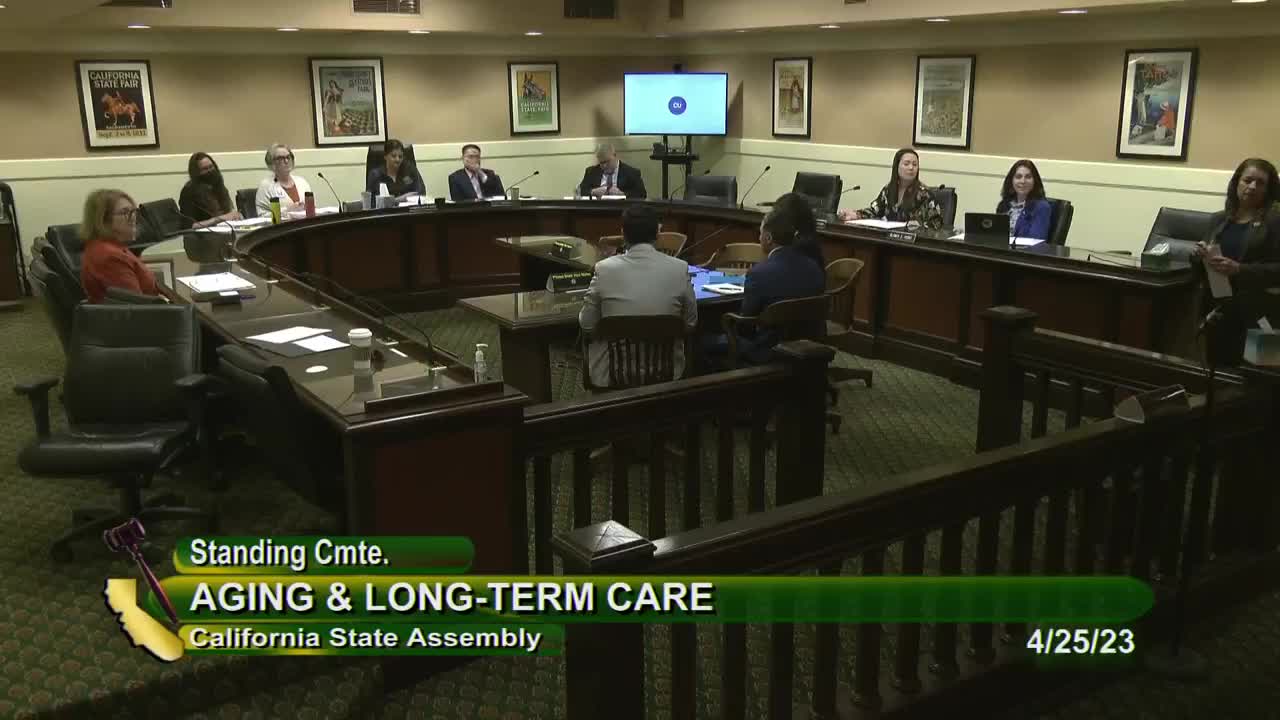 15MIN
Assembly Standing Committee on Aging and Long-Term Care
Bill Author

Bill Co-Author(s):