AB 1045: Hazardous materials: public notices.
- Session Year: 2023-2024
- House: Assembly
- Latest Version Date: 2023-03-22
Current Status:
Failed
(2024-02-01: From committee: Filed with the Chief Clerk pursuant to Joint Rule 56.)
Introduced
In Committee
First Chamber
In Committee
Second Chamber
Enacted
Existing law provides that the Department of Toxic Substances Control regulates the handling and management of hazardous substances, materials, and waste. Existing law requires the department to, among other things, issue hazardous waste facilities permits to facilities handling hazardous waste and to enforce the requirements of the hazardous waste control laws.
The Carpenter-Presley-Tanner Hazardous Substance Account Act establishes a program authorizing certain responses to releases of hazardous substances, including spills and hazardous waste disposal sites that pose a threat to the public health or the environment, and imposes liability for hazardous substance removal or remedial actions.
Existing law requires the department, a local agency, or a regional board, as applicable, to publish specified public notices in a newspaper of general circulation, as described, in connection with various proceedings governed by the hazardous waste control laws and the laws governing hazardous substances, including, among other notices, a notice of intent to file an application for a land use decision for a specified hazardous waste facility project, notice regarding a proposed agreement for a hazardous waste easement, covenant, restriction, or servitude, as described, upon the present and future uses of land, notice regarding public hearings on a proposed hazardous waste management plan, and specified notices regarding removal or remedial actions with respect to hazardous substances.
This bill would authorize require the department, a local agency, or regional board, as applicable, in lieu of addition to publishing a notice in a newspaper of general circulation, as specified, to use any other reasonable means to publicize the notices, including, but not limited to, the online versions of newspapers, community bulletin boards, civic engagement platforms, app-based platforms, or other digital platforms, if the department, local agency, or regional board determines, based on research about the affected community, as described, a baseline community survey, or interviews with affected community members, that the targeted community receives information primarily through other means. By imposing a higher level of service on local agencies, the bill would impose a state-mandated local program.
The California Constitution requires the state to reimburse local agencies and school districts for certain costs mandated by the state. Statutory provisions establish procedures for making that reimbursement.
This bill would provide that, if the Commission on State Mandates determines that the bill contains costs mandated by the state, reimbursement for those costs shall be made pursuant to the statutory provisions noted above.
Existing law provides that the Department of Toxic Substances Control regulates the handling and management of hazardous substances, materials, and waste. Existing law requires the department to, among other things, issue hazardous waste facilities permits to facilities handling hazardous waste and to enforce the requirements of the hazardous waste control laws.
The Carpenter-Presley-Tanner Hazardous Substance Account Act establishes a program authorizing certain responses to releases of hazardous substances, including spills and hazardous waste disposal sites that pose a threat to the public health or the environment, and imposes liability for hazardous substance removal or remedial actions.
Existing law requires the department, a local agency, or a regional board, as applicable, to publish specified public notices in a newspaper of general circulation, as described, in connection with various proceedings governed by the hazardous waste control laws and the laws governing hazardous substances, including, among other notices, a notice of intent to file an application for a land use decision for a specified hazardous waste facility project, notice regarding a proposed agreement for a hazardous waste easement, covenant, restriction, or servitude, as described, upon the present and future uses of land, notice regarding public hearings on a proposed hazardous waste management plan, and specified notices regarding removal or remedial actions with respect to hazardous substances.
This bill would authorize the department, a local agency, or regional board, as applicable, in lieu of publishing a notice in a newspaper of general circulation, as specified, to use any other reasonable means to publicize the notices, including, but not limited to, the online versions of newspapers, community bulletin boards, civic engagement platforms, app-based platforms, or other digital platforms, if the department, local agency, or regional board determines, based on research about the affected community, as described, a baseline community survey, or interviews with affected community members, that the targeted community receives information primarily through other means.
Existing law requires the State Air Resources Board to adopt rules and regulations relating to vehicular emissions standards, as specified, that will achieve the ambient air quality standards required by federal law in conjunction with other measures adopted by the state board, air pollution control and air quality management districts, and the United States Environmental Protection Agency. Existing law requires the state board to adopt and enforce rules and regulations that anticipate the development of new technologies or the improvement of existing technologies if necessary to carry out its duty.This bill would make a nonsubstantive change to this provision.Existing law requires the State Air Resources Board to adopt rules and regulations relating to vehicular emissions standards, as specified, that will achieve the ambient air quality standards required by federal law in conjunction with other measures adopted by the state board, air pollution control and air quality management districts, and the United States Environmental Protection Agency. Existing law requires the state board to adopt and enforce rules and regulations that anticipate the development of new technologies or the improvement of existing technologies if necessary to carry out its duty.
This bill would make a nonsubstantive change to this provision.
(a)At least 90 days before filing an application for a land use decision for a specified hazardous waste facility project with a local agency, the proponent shall file a notice of intent to make the application with the Department of Toxic Substances Control and with the applicable city or county. The notice of intent shall specify the location to which the notice of intent is applicable and shall contain a complete description of the nature, function, and scope of the project. The Department of Toxic Substances Control shall immediately notify affected state agencies of the notice of intent. The local agency shall publish a notice in a newspaper of general circulation in the area affected by the proposed project, shall post notices in the location where the proposed project is located, and shall notify, by a direct mailing, the owners of contiguous property, as shown in the latest equalized assessment roll. In lieu of addition to publishing a notice in a newspaper of general circulation in the area affected by the proposed project, the local agency may shall use any other reasonable means to provide the notice, including, but not limited to, publication in the online versions of newspapers, or on community bulletin boards, civic engagement platforms, app-based platforms, or other digital platforms, to publicize the notice if the local agency determines, based on research about the affected community, a baseline community survey, or interviews with affected community members, that the targeted community receives information primarily through other means. When researching the affected community, the local agency may consider the access and functional needs population, which may include, but is not limited to, individuals who have developmental or intellectual disabilities, physical disabilities, chronic conditions, injuries, limited English proficiency or who are non-English speaking, older adults, children, people living in institutionalized settings, or those who are low income, homeless, or transportation disadvantaged, and those who are dependent on public transit or those who are pregnant. A notice of intent filed with a local agency shall be accompanied by a fee that shall be set by the local agency in an amount equal to the local agencys cost of processing the notice of intent and carrying out the notification requirements of this subdivision. A notice of intent is not transferable to a location other than the location specified in the notice and shall remain in effect for one year from the date it is filed with a local agency or until it is withdrawn by the proponent, whichever is earlier.
(b)A notice of intent is not effective and a proponent may not file an application for a land use decision for a specified hazardous waste facility project with a local agency unless the proponent has first complied with subdivision (a).
(c)Within 90 days after a notice of intent is filed with the Department of Toxic Substances Control pursuant to subdivision (a), the department shall convene a public meeting in the affected city or county to inform the public on the nature, function, and scope of the proposed specified hazardous waste facility project and the procedures that are required for approving applications for the project.
(d)The legislative body of the affected local agency shall appoint a seven member local assessment committee to advise it in considering an application for a land use decision for a specified hazardous waste facility project. The members of the local assessment committee may be appointed at any time after the notice of intent is filed with the local agency but shall be appointed not later than 30 days after the application for the land use decision is accepted as complete by the local agency. The local agency shall charge the project proponent a fee to cover the local agencys costs of establishing and convening the local assessment committee. The fee shall accompany the application for a land use decision.
(1)The membership of the committee shall be broadly constituted to reflect the makeup of the community, and shall include three representatives of the community at large, two representatives of environmental or public interest groups, and two representatives of affected businesses and industries. Members of local assessment committees selected pursuant to this subdivision shall have no direct financial interest, as defined in Section 87103 of the Government Code, in the proposed specified hazardous waste facility project.
(2)The local assessment committee shall, as its primary function, advise the appointing legislative body of the affected local agency of the terms and conditions under which the proposed hazardous waste facility project may be acceptable to the community. To carry out this function, the local assessment committee shall do all of the following:
(A)Enter into a dialogue with the proponent for the proposed hazardous waste facility project to reach an understanding with the proponent on both of the following:
(i)The measures that should be taken by the proponent in connection with the operation of the proposed hazardous waste facility project to protect the public health, safety, and welfare, and the environment of the city or county.
(ii)The special benefits and remuneration the facility proponent will provide the city or county as compensation for the local costs associated with the operation of the facility.
(B)Represent generally, in meetings with the project proponent, the interests of the residents of the city or county and the interests of adjacent communities.
(C)Receive and expend any technical assistance grants made available pursuant to subdivision (g).
(D)Adopt rules and procedures that are necessary to perform its duties.
(E)Advise the legislative body of the city or county of the terms, provisions, and conditions for project approval that have been agreed upon by the committee and the proponent, and of any additional information that the committee deems appropriate. The legislative body of the city or county may use this advice for its independent consideration of the project.
(3)The legislative body of the affected jurisdiction shall provide staff resources to assist the local assessment committee in performing its duties.
(4)A local assessment committee established pursuant to this subdivision shall cease to exist after final administrative action by state and local agencies has been taken on the permit applications for the project for which the committee was convened.
(e)A local agency shall notify the Department of Toxic Substances Control within 10 days after an application for a land use decision for a specified hazardous waste facility project is accepted as complete by the local agency and, within 60 days after receiving this notice, the Department of Toxic Substances Control shall convene a meeting of the lead and responsible agencies for the project, the proponent, the local assessment committee, and the interested public, for the purpose of determining the issues that concern the agencies that are required to approve the project and the issues that concern the public. The meeting shall take place in the jurisdiction where the application has been filed.
(f)Following the meeting required by subdivision (e), the proponent and the local assessment committee appointed pursuant to subdivision (d) shall meet and confer on the specified hazardous waste facility project proposal for the purpose of establishing the terms and conditions under which the project will be acceptable to the community.
(g)(1)If the local assessment committee finds that it requires assistance and independent advice to adequately review a proposed hazardous waste facility project, it may request technical assistance grants from the local agency to enable the committee to hire a consultant. The committee may use technical assistance grant funds made available to it to hire a consultant to do either, or both, of the following:
(A)Assist the committee in reviewing and evaluating the application for the project, the environmental documents prepared for the project pursuant to the California Environmental Quality Act (Division 13 (commencing with Section 21000) of the Public Resources Code) and any other documents, materials, and information that are required by a public agency in connection with the application for a land use decision or a permit.
(B) Advise the local assessment committee in its meetings and discussions with the facility proponent to seek agreement on the terms and conditions under which the project will be acceptable to the community.
(2)The local agency shall require the proponent of the proposed hazardous waste facility project to pay a fee equal to the amount of any technical assistance grant provided the local assessment committee under paragraph (1). The funds received as a result of the imposition of the fee shall be used to make technical assistance grants exclusively for the purposes described in paragraph (1).
(3)The local agency shall deposit any fee imposed pursuant to paragraph (2) in an account created in the city or county treasury, maintain records of all expenditures from the account, and return any unused funds and accrued interest to the project proponent upon completion of the review of the proposed hazardous waste facility project.
(h)This section applies only to a specified hazardous waste facility project.
SEC. 2.Section 25222 of the Health and Safety Code is amended to read:25222.Public notice of an agreement proposed to be entered into pursuant to Section 25221 shall be provided by the department at least 30 days before a hearing on, or execution of, the agreement. The notice shall be given by publication once in a newspaper of general circulation published and circulated in the locale or and the notice may shall be given by any other reasonable means, including, but not limited to, publication in the online versions of newspapers or on community bulletin boards, civic engagement platforms, app-based platforms, or other digital platforms, to publicize the notice if the department determines, based on research about the affected community, a baseline community survey, or interviews with affected community members, that the targeted locale receives information primarily through other means. When researching the affected community, the department may consider the access and functional needs population, which may include, but is not limited to, individuals who have developmental or intellectual disabilities, physical disabilities, chronic conditions, injuries, limited English proficiency or who are non-English speaking, older adults, children, people living in institutionalized settings, or those who are low income, homeless, or transportation disadvantaged, and those who are dependent on public transit or those who are pregnant. In the case of a proposed agreement, the department shall also give notice to the city or county in whose jurisdiction the property is located. Public comment on the proposed agreement entered into pursuant to Section 25221 shall be submitted to the department in writing.
SEC. 3.Section 25242 of the Health and Safety Code, as amended by Section 65 of Chapter 258 of the Statutes of 2022, is amended to read:25242.(a)Any city, county, or state agency that, as owner, lessor, or lessee, knows or has probable cause to believe that a disposal of hazardous waste that is not authorized pursuant to this chapter has occurred on, under, or into the land that the city, county, or state agency owns or leases shall notify the department. Upon receiving that notice, the department shall determine if there has been a disposal of hazardous waste that is not authorized pursuant to this chapter.
(b)If the department determines that there has been a disposal of hazardous waste that is not authorized pursuant to this chapter, the department shall do all of the following:
(1)Conduct, or arrange for the conducting of, tests to determine the general chemical and mineral composition of the hazardous waste.
(2)Require the city, county, or state agency that submitted the notice pursuant to subdivision (a) to prepare a hazardous waste management plan specifying those removal or remedial actions, as defined in Sections 78125 and 78135, which are needed to be taken concerning the hazardous waste. The hazardous waste management plan shall provide for the protection of human health and the environment and minimize or eliminate the escape of hazardous waste constituents, leachate, contaminated rainfall, and waste decomposition products into ground and surface waters and into the atmosphere.
(3)Send notice of the departments findings made pursuant to paragraph (1) to the county in which the land is located, the city, if any, in which the land is located, the owner of the property, and residents living within 2,000 feet of the property line of the land on which the hazardous wastes were disposed. The department shall also post signs in the vicinity of the land that contain this information and are visible to the public. The department may also provide this notice to other persons, or post these signs in any other area, to protect the public health and safety or to provide the maximum opportunity for comment from the potentially affected public.
(4)Conduct public hearings on the proposed hazardous waste management plan during those times and at those places that are convenient to the affected public. These hearings shall be conducted even if the hazardous waste management plan provides that no removal or remedial actions will be taken. The department shall publish notice of these hearings in newspapers of general circulation, as defined in Section 6000 of the Government Code. In lieu of addition to publishing a notice in newspapers of general circulation in the area affected by the proposed project, the department may shall use any other reasonable means, including, but not limited to, the online versions of newspapers, community bulletin boards, civic engagement platforms, app-based platforms, or other digital platforms, to publicize these hearings if the department determines, based on research about the affected community, a baseline community survey, or interviews with affected community members, that the targeted community receives information primarily through other means. When researching the affected community, the department may consider the access and functional needs population, which may include, but is not limited to, individuals who have developmental or intellectual disabilities, physical disabilities, chronic conditions, injuries, limited English proficiency or who are non-English speaking, older adults, children, people living in institutionalized settings, or those who are low income, homeless, or transportation disadvantaged, and those who are dependent on public transit or those who are pregnant.
(5)Take all actions required by Section 78930 concerning any proposed removal or remedial actions.
(6)Take any other actions authorized by this chapter or Part 2 (commencing with Section 78000) of Division 45 to carry out the legislative intent specified in Section 25242.1.
(c)The city, county, or state agency that is required to prepare a hazardous waste management plan pursuant to paragraph (2) of subdivision (b) shall submit the proposed hazardous waste management plan for approval to the department or a California Regional Water Quality Control Board, whichever the department determines is appropriate. A city or state agency shall submit the plan to the county in which the land is located, and a county or state agency shall submit the plan to the city, if any, in which the land is located, for comments and recommendations. The city, county, or state agency shall also consider whether to incorporate any changes in the plan that are recommended by the county, city, and the public.
SEC. 4.Section 25395.96 of the Health and Safety Code is amended to read:25395.96.(a)If, upon review of the site assessment prepared pursuant to this article, the agency determines that a response action is necessary to prevent or eliminate an unreasonable risk, the bona fide purchaser, innocent landowner, or contiguous property owner shall submit a response plan to the agency to conduct a response action at the site, in conformance with the agreement entered into pursuant to Section 25395.92. The response plan shall include all of the following:
(1)The response plan shall provide for an opportunity for the public, other agencies, and the host jurisdiction to participate in decisions regarding the response action, taking into consideration the nature of the community interest, and shall include all of the following:
(A)Thirty days before taking action pursuant to the response plan, the agency shall take all of the following actions:
(i) Notify all other appropriate governmental entities and local agencies, including, but not limited to, the department, the regional board, or a redevelopment agency, that is not a party to the response plan regarding the proposed response plan.
(ii)Place a notice in a newspaper of general circulation, in the area of the site, including, but not limited to, a community-based newspaper, as appropriate. In lieu of addition to publishing a notice in a newspaper of general circulation in the area of the site, the agency may shall use any other reasonable means, including, but not limited to, the online versions of newspapers, community bulletin boards, civic engagement platforms, app-based platforms, or other digital platforms, to publicize the notice if the agency determines, based on research about the affected community, a baseline community survey, or interviews with affected community members, that the targeted community receives information primarily through other means. When researching the affected community, the agency may consider the access and functional needs population, which may include, but is not limited to, individuals who have developmental or intellectual disabilities, physical disabilities, chronic conditions, injuries, limited English proficiency or who are non-English speaking, older adults, children, people living in institutionalized settings, or those who are low income, homeless, or transportation disadvantaged, and those who are dependent on public transit or those who are pregnant.
(iii)Post notice of the proposed response plan on the site.
(B)All of the following methods for public participation shall be included in the response plan:
(i)Thirty days prior public notice in a factsheet format of the proposed response plan, in English and in any other language commonly spoken in the area of the site.
(ii)Access, at both the agency and at local repositories, to the proposed response plan, site assessment, addenda, and any other supporting documentation, including materials listed as references in the response plan and site assessment.
(iii)Procedures for providing a reasonable opportunity to comment on the plan and related documents specified in clause (ii).
(iv)If a public meeting is requested, the holding of a public meeting by the agency in the area to receive comments.
(v)The agencys consideration of any comments received before taking any action regarding the response plan.
(C)The response plan may also provide for, but is not limited to, proposing the use of other methods for public participation, including the use of public notices, direct notification of interested parties, electronic copies of the response plan, site assessment addenda, and other supporting documentation, including materials listed as references in the response plan and site assessment, electronic comment forms, forming advisory groups, as appropriate, to disseminate information and assist the agency in gathering public input, additional public meetings or public hearings, and an opportunity to comment on the proposed response plan prior to approval.
(D)The agency, as part of its communications with affected communities, shall provide information regarding the process by which decisions about the site are made and the recourse that is available for those who may disagree with an agency decision.
(E)The agency shall consider the issue of environmental justice, as defined in subdivision (e) of Section 65040.12 of the Government Code, for communities most impacted, including low-income and racial minority populations before taking action on the response plan.
(F)To the extent possible, the agency shall coordinate its public participation activities with those undertaken by the host jurisdiction and other agencies associated with the development of the property, to avoid duplication to the extent feasible.
(G)It is the intent of the Legislature that the public participation process established pursuant to this paragraph ensures full and robust participation of a community affected by this chapter.
(2)Identification of the release or threatened release that is the subject of the response plan and documentation that the plan is based on an adequate characterization of the site.
(3)An identification of the response plan objectives and the proposed remedy, and an identification of the reasonably anticipated future land uses of the site and of the current and projected land use and zoning designations. This identification shall include confirmation by the host jurisdiction that the anticipated future land uses and current and projected land uses and zoning designations are accurate.
(4)A description of activities that will be implemented to control any endangerment that may occur during the response action at the site.
(5)A description of any land use control that is part of the response action.
(6)A description of wastes other than hazardous materials at the site and how they will be managed in conjunction with the response action.
(7)Provisions for the removal of containment or storage vessels and other sources of contamination, including soils and free product, that cause an unreasonable risk.
(8)Provisions for the agency to require further response actions based on the discovery of hazardous materials that pose an unreasonable risk to human health and safety or the environment that are discovered during the course of the response action or subsequent development of the site.
(9)Any other information that the agency determines is necessary.
(b)The agency shall evaluate the adequacy of the plan submitted pursuant to subdivision (a) and shall approve the plan if the agency makes all of the following findings:
(1)The plan contains the information required by subdivision (a).
(2)When implemented, the plan will place the site in a condition that allows it to be used for its reasonably anticipated future land use without unreasonable risk to human health and safety and the environment.
(3)The plan addresses any public comments.
(4)If applicable, the plan provides for long-term operation and maintenance, including land use and engineering controls, that are part of the remedy contained in the response plan.
(c)(1)On or before 60 days after the date an agency receives a response plan, the agency shall make a written determination that proper completion of the response plan constitutes appropriate care for purposes of subdivision (a) of Section 25395.67.
(2)Upon approval of the response plan by the agency, the agency shall notify all appropriate persons, including the host jurisdiction.
(d)If the use of the property changes, after a response plan is approved, to a use that requires a higher level of protection, the agency may require the preparation and implementation of a new response plan pursuant to this article.
(e)The owner of a site shall not make any change in use of a site inconsistent with any land use control recorded for the site, unless the change is approved by the agency in accordance with subdivision (f) of Section 25395.99.
SEC. 5.Section 79135 of the Health and Safety Code is amended to read:79135.(a)At least 30 days before initiating removal or remedial actions, the department shall make a reasonable effort to notify the persons identified by the department as potentially responsible parties and shall also publish a notification of this action in a newspaper of general circulation pursuant to the method specified in Section 6061 of the Government Code. In lieu of addition to publishing a notice in a newspaper of general circulation in the area affected by the proposed project, the department may shall use any other reasonable means, including, but not limited to, the online versions of newspapers, community bulletin boards, civic engagement platforms, app-based platforms, or other digital platforms, to publicize the notice if the department determines that, based on research about the affected community, a baseline community survey, or interviews with affected community members, that the targeted community receives information primarily through other means. When researching the affected community, the department may consider the access and functional needs population, which may include, but is not limited to, individuals who have developmental or intellectual disabilities, physical disabilities, chronic conditions, injuries, limited English proficiency or who are non-English speaking, older adults, children, people living in institutionalized settings, or those who are low income, homeless, or transportation disadvantaged, and those who are dependent on public transit or those who are pregnant. This subdivision does not apply to actions taken pursuant to Section 78870 or immediate corrective actions taken pursuant to Section 78875. A responsible party may be held liable pursuant to this part whether or not the person was given the notice specified in this subdivision.
(b)The department shall notify the owner of the real property of the site of a hazardous substance release within 30 days after listing a site pursuant to Article 5 (commencing with Section 78760) of Chapter 4, and at least 30 days before initiating a removal or remedial action pursuant to this part, by sending the notification by certified mail to the person to whom the real property is assessed, as shown upon the last equalized assessment roll of the county, at the address shown on the assessment roll. The requirements of this subdivision do not apply to actions taken pursuant to Section 78870 or to immediate corrective actions taken pursuant to Section 78875.
SEC. 6.Section 79215 of the Health and Safety Code is amended to read:79215.(a)Before adopting a final remedial action plan, the department or the regional board shall prepare or approve a draft remedial action plan and shall do all of the following:
(1)Circulate the draft plan for at least 30 days for public comment.
(2)Notify affected local and state agencies of the removal and remedial actions proposed in the remedial action plan and publish a notice in a newspaper of general circulation in the area affected by the draft remedial action plan. The department or the regional board shall also post notices in the location where the proposed removal or remedial action would be located and shall notify, by direct mailing, the owners of property contiguous to the site addressed by the plan, as shown in the latest equalized assessment roll. In lieu of addition to publishing a notice in a newspaper of general circulation in the area affected by the draft remedial action plan, the department or regional board may shall use any other reasonable means, including, but not limited to, the online versions of newspapers, community bulletin boards, civic engagement platforms, app-based platforms, or other digital platforms, to publicize the notice if the department or regional board determines, based on research about the affected community, a baseline community survey, or interviews with affected community members, that the targeted community receives information primarily through other means. When researching the affected community, the department or regional board may consider the access and functional needs population, which may include, but is not limited to, individuals who have developmental or intellectual disabilities, physical disabilities, chronic conditions, injuries, limited English proficiency or who are non-English speaking, older adults, children, people living in institutionalized settings, or those who are low income, homeless, or transportation disadvantaged, and those who are dependent on public transit or those who are pregnant.
(3)Hold one or more meetings with the lead and responsible agencies for the removal and remedial actions, the potentially responsible parties for the removal and remedial actions, and the interested public, to provide the public with the information that is necessary to address the issues that concern the public. The information to be provided shall include an assessment of the degree of contamination, the characteristics of the hazardous substances, an estimate of the time required to carry out the removal and remedial actions, and a description of the proposed removal and remedial actions.
(4)Comply with Section 78930.
(b)After complying with subdivision (a), the department or the regional board shall review and consider any public comments, and shall revise the draft plan, if appropriate. The department or the regional board shall then issue the final remedial action plan.
SEC. 7.If the Commission on State Mandates determines that this act contains costs mandated by the state, reimbursement to local agencies and school districts for those costs shall be made pursuant to Part 7 (commencing with Section 17500) of Division 4 of Title 2 of the Government Code.
(a)At least 90 days before filing an application for a land use decision for a specified hazardous waste facility project with a local agency, the proponent shall file a notice of intent to make the application with the Department of Toxic Substances Control and with the applicable city or county. The notice of intent shall specify the location to which the notice of intent is applicable and shall contain a complete description of the nature, function, and scope of the project. The Department of Toxic Substances Control shall immediately notify affected state agencies of the notice of intent. The local agency shall publish a notice in a newspaper of general circulation in the area affected by the proposed project, shall post notices in the location where the proposed project is located, and shall notify, by a direct mailing, the owners of contiguous property, as shown in the latest equalized assessment roll. In lieu of publishing a notice in a newspaper of general circulation in the area affected by the proposed project, the local agency may use any other reasonable means to provide the notice, including, but not limited to, publication in the online versions of newspapers, or on community bulletin boards, civic engagement platforms, app-based platforms, or other digital platforms, to publicize the notice if the local agency determines, based on research about the affected community, a baseline community survey, or interviews with affected community members, that the targeted community receives information primarily through other means. When researching the affected community, the local agency may consider the access and functional needs population, which may include, but is not limited to, individuals who have developmental or intellectual disabilities, physical disabilities, chronic conditions, injuries, limited English proficiency or who are non-English speaking, older adults, children, people living in institutionalized settings, or those who are low income, homeless, or transportation disadvantaged, and those who are dependent on public transit or those who are pregnant. A notice of intent filed with a local agency shall be accompanied by a fee which that shall be set by the local agency in an amount equal to the local agencys cost of processing the notice of intent and carrying out the notification requirements of this subdivision. A notice of intent is not transferable to a location other than the location specified in the notice and shall remain in effect for one year from the date it is filed with a local agency or until it is withdrawn by the proponent, whichever is earlier.
(b)A notice of intent is not effective and a proponent may not file an application for a land use decision for a specified hazardous waste facility project with a local agency unless the proponent has first complied with subdivision (a).
(c)Within 90 days after a notice of intent is filed with the Department of Toxic Substances Control pursuant to subdivision (a), the department shall convene a public meeting in the affected city or county to inform the public on the nature, function, and scope of the proposed specified hazardous waste facility project and the procedures that are required for approving applications for the project.
(d)The legislative body of the affected local agency shall appoint a seven member local assessment committee to advise it in considering an application for a land use decision for a specified hazardous waste facility project. The members of the local assessment committee may be appointed at any time after the notice of intent is filed with the local agency but shall be appointed not later than 30 days after the application for the land use decision is accepted as complete by the local agency. The local agency shall charge the project proponent a fee to cover the local agencys costs of establishing and convening the local assessment committee. The fee shall accompany the application for a land use decision.
(1)The membership of the committee shall be broadly constituted to reflect the makeup of the community, and shall include three representatives of the community at large, two representatives of environmental or public interest groups, and two representatives of affected businesses and industries. Members of local assessment committees selected pursuant to this subdivision shall have no direct financial interest, as defined in Section 87103 of the Government Code, in the proposed specified hazardous waste facility project.
(2)The local assessment committee shall, as its primary function, advise the appointing legislative body of the affected local agency of the terms and conditions under which the proposed hazardous waste facility project may be acceptable to the community. To carry out this function, the local assessment committee shall do all of the following:
(A)Enter into a dialogue with the proponent for the proposed hazardous waste facility project to reach an understanding with the proponent on both of the following:
(i)The measures that should be taken by the proponent in connection with the operation of the proposed hazardous waste facility project to protect the public health, safety, and welfare, and the environment of the city or county.
(ii)The special benefits and remuneration the facility proponent will provide the city or county as compensation for the local costs associated with the operation of the facility.
(B)Represent generally, in meetings with the project proponent, the interests of the residents of the city or county and the interests of adjacent communities.
(C)Receive and expend any technical assistance grants made available pursuant to subdivision (g).
(D)Adopt rules and procedures which that are necessary to perform its duties.
(E)Advise the legislative body of the city or county of the terms, provisions, and conditions for project approval which that have been agreed upon by the committee and the proponent, and of any additional information which that the committee deems appropriate. The legislative body of the city or county may use this advice for its independent consideration of the project.
(3)The legislative body of the affected jurisdiction shall provide staff resources to assist the local assessment committee in performing its duties.
(4)A local assessment committee established pursuant to this subdivision shall cease to exist after final administrative action by state and local agencies has been taken on the permit applications for the project for which the committee was convened.
(e)A local agency shall notify the Department of Toxic Substances Control within 10 days after an application for a land use decision for a specified hazardous waste facility project is accepted as complete by the local agency and, within 60 days after receiving this notice, the Department of Toxic Substances Control shall convene a meeting of the lead and responsible agencies for the project, the proponent, the local assessment committee, and the interested public, for the purpose of determining the issues which that concern the agencies that are required to approve the project and the issues which that concern the public. The meeting shall take place in the jurisdiction where the application has been filed.
(f)Following the meeting required by subdivision (e), the proponent and the local assessment committee appointed pursuant to subdivision (d) shall meet and confer on the specified hazardous waste facility project proposal for the purpose of establishing the terms and conditions under which the project will be acceptable to the community.
(g)(1)If the local assessment committee finds that it requires assistance and independent advice to adequately review a proposed hazardous waste facility project, it may request technical assistance grants from the local agency to enable the committee to hire a consultant. The committee may use technical assistance grant funds made available to it to hire a consultant to do either, or both, of the following:
(A)Assist the committee in reviewing and evaluating the application for the project, the environmental documents prepared for the project pursuant to the California Environmental Quality Act (Division 13 (commencing with Section 21000) of the Public Resources Code) and any other documents, materials, and information that are required by a public agency in connection with the application for a land use decision or a permit.
(B) Advise the local assessment committee in its meetings and discussions with the facility proponent to seek agreement on the terms and conditions under which the project will be acceptable to the community.
(2)The local agency shall require the proponent of the proposed hazardous waste facility project to pay a fee equal to the amount of any technical assistance grant provided the local assessment committee under paragraph (1). The funds received as a result of the imposition of the fee shall be used to make technical assistance grants exclusively for the purposes described in paragraph (1).
(3)The local agency shall deposit any fee imposed pursuant to paragraph (2) in an account created in the city or county treasury, maintain records of all expenditures from the account, and return any unused funds and accrued interest to the project proponent upon completion of the review of the proposed hazardous waste facility project.
(h)This section applies only to a specified hazardous waste facility project.
SEC. 2.Section 25222 of the Health and Safety Code is amended to read:25222.Public notice of an agreement proposed to be entered into pursuant to Section 25221 shall be provided by the department at least 30 days before a hearing on, or execution of, the agreement. The notice shall be given by publication once in a newspaper of general circulation published and circulated in the locale or, if there is none, by posting or the notice may be given by any other reasonable means, including, but not limited to, publication in at least three the online versions of newspapers or on community bulletin boards, civic engagement platforms, app-based platforms, or other digital platforms, to publicize the notice if the department determines, based on research about the affected community, a baseline community survey, or interviews with affected community members, that the targeted locale receives information primarily through other means. When researching the affected community, the department may consider the access and functional needs population, which may include, but is not limited to, individuals who have developmental or intellectual disabilities, physical disabilities, chronic conditions, injuries, limited English proficiency or who are non-English speaking, older adults, children, people living in institutionalized settings, or those who are low income, homeless, or transportation disadvantaged, and those who are dependent on public places in the locale. transit or those who are pregnant. In the case of a proposed agreement, the department shall also give notice to the city or county in whose jurisdiction the property is located. Public comment on the proposed agreement entered into pursuant to Section 25221 shall be submitted to the department in writing.
SEC. 3.Section 25242 of the Health and Safety Code, as amended by Section 65 of Chapter 258 of the Statutes of 2022, is amended to read:25242.(a)Any city, county, or state agency which, that, as owner, lessor, or lessee, knows or has probable cause to believe that a disposal of hazardous waste which that is not authorized pursuant to this chapter has occurred on, under, or into the land which that the city, county, or state agency owns or leases shall notify the department. Upon receiving that notice, the department shall determine if there has been a disposal of hazardous waste which that is not authorized pursuant to this chapter.
(b)If the department determines that there has been a disposal of hazardous waste which that is not authorized pursuant to this chapter, the department shall do all of the following:
(1)Conduct, or arrange for the conducting of, tests to determine the general chemical and mineral composition of the hazardous waste.
(2)Require the city, county, or state agency which that submitted the notice pursuant to subdivision (a) to prepare a hazardous waste management plan specifying those removal or remedial actions, as defined in Sections 78125 and 78135, which are needed to be taken concerning the hazardous waste. The hazardous waste management plan shall provide for the protection of human health and the environment and minimize or eliminate the escape of hazardous waste constituents, leachate, contaminated rainfall, and waste decomposition products into ground and surface waters and into the atmosphere.
(3)Send notice of the departments findings made pursuant to paragraph (1) to the county in which the land is located, the city, if any, in which the land is located, the owner of the property, and residents living within 2,000 feet of the property line of the land on which the hazardous wastes were disposed. The department shall also post signs in the vicinity of the land which that contain this information and are visible to the public. The department may also provide this notice to other persons, or post these signs in any other area, to protect the public health and safety or to provide the maximum opportunity for comment from the potentially affected public.
(4)Conduct public hearings on the proposed hazardous waste management plan during those times and at those places which that are convenient to the affected public. These hearings shall be conducted even if the hazardous waste management plan provides that no removal or remedial actions will be taken. The department shall publish notice of these hearings in newspapers of general circulation, as defined in Section 6000 of the Government Code, and shall Code. In lieu of publishing a notice in newspapers of general circulation in the area affected by the proposed project, the department may use all any other reasonable means means, including, but not limited to, the online versions of newspapers, community bulletin boards, civic engagement platforms, app-based platforms, or other digital platforms, to publicize these hearings. hearings if the department determines, based on research about the affected community, a baseline community survey, or interviews with affected community members, that the targeted community receives information primarily through other means. When researching the affected community, the department may consider the access and functional needs population, which may include, but is not limited to, individuals who have developmental or intellectual disabilities, physical disabilities, chronic conditions, injuries, limited English proficiency or who are non-English speaking, older adults, children, people living in institutionalized settings, or those who are low income, homeless, or transportation disadvantaged, and those who are dependent on public transit or those who are pregnant.
(5)Take all actions required by Section 78930 concerning any proposed removal or remedial actions.
(6)Take any other actions authorized by this chapter or Part 2 (commencing with Section 78000) of Division 45 to carry out the legislative intent specified in Section 25242.1.
(c)The city, county, or state agency which that is required to prepare a hazardous waste management plan pursuant to paragraph (2) of subdivision (b) shall submit the proposed hazardous waste management plan for approval to the department or a California Regional Water Quality Control Board, whichever the department determines is appropriate. A city or state agency shall submit the plan to the county in which the land is located, and a county or state agency shall submit the plan to the city, if any, in which the land is located, for comments and recommendations. The city, county, or state agency shall also consider whether to incorporate any changes in the plan which that are recommended by the county, city, and the public.
SEC. 4.Section 25395.96 of the Health and Safety Code is amended to read:25395.96.(a)If, upon review of the site assessment prepared pursuant to this article, the agency determines that a response action is necessary to prevent or eliminate an unreasonable risk, the bona fide purchaser, innocent landowner, or contiguous property owner shall submit a response plan to the agency to conduct a response action at the site, in conformance with the agreement entered into pursuant to Section 25395.92. The response plan shall include all of the following:
(1)The response plan shall provide for an opportunity for the public, other agencies, and the host jurisdiction to participate in decisions regarding the response action, taking into consideration the nature of the community interest, and shall include all of the following:
(A)Thirty days before taking action pursuant to the response plan, the agency shall take all of the following actions:
(i) Notify all other appropriate governmental entities and local agencies, including, but not limited to, the department, the regional board, or a redevelopment agency, that is not a party to the response plan regarding the proposed response plan.
(ii)Place a notice in a newspaper of general circulation, in the area of the site, including, but not limited to, a community-based newspaper, as appropriate. In lieu of publishing a notice in a newspaper of general circulation in the area of the site, the agency may use any other reasonable means, including, but not limited to, the online versions of newspapers, community bulletin boards, civic engagement platforms, app-based platforms, or other digital platforms, to publicize the notice if the agency determines, based on research about the affected community, a baseline community survey, or interviews with affected community members, that the targeted community receives information primarily through other means. When researching the affected community, the agency may consider the access and functional needs population, which may include, but is not limited to, individuals who have developmental or intellectual disabilities, physical disabilities, chronic conditions, injuries, limited English proficiency or who are non-English speaking, older adults, children, people living in institutionalized settings, or those who are low income, homeless, or transportation disadvantaged, and those who are dependent on public transit or those who are pregnant.
(iii)Post notice of the proposed response plan on the site.
(B)All of the following methods for public participation shall be included in the response plan:
(i)Thirty days prior public notice in a factsheet format of the proposed response plan, in English and in any other language commonly spoken in the area of the site.
(ii)Access, at both the agency and at local repositories, to the proposed response plan, site assessment, addenda, and any other supporting documentation, including materials listed as references in the response plan and site assessment.
(iii)Procedures for providing a reasonable opportunity to comment on the plan and related documents specified in clause (ii).
(iv)If a public meeting is requested, the holding of a public meeting by the agency in the area to receive comments.
(v)The agencys consideration of any comments received before taking any action regarding the response plan.
(C)The response plan may also provide for, but is not limited to, proposing the use of other methods for public participation, including the use of public notices, direct notification of interested parties, electronic copies of the response plan, site assessment addenda, and other supporting documentation, including materials listed as references in the response plan and site assessment, electronic comment forms, forming advisory groups, as appropriate, to disseminate information and assist the agency in gathering public input, additional public meetings or public hearings, and an opportunity to comment on the proposed response plan prior to approval.
(D)The agency, as part of its communications with affected communities, shall provide information regarding the process by which decisions about the site are made and the recourse that is available for those who may disagree with an agency decision.
(E)The agency shall consider the issue of environmental justice, as defined in subdivision (e) of Section 65040.12 of the Government Code, for communities most impacted, including low-income and racial minority populations before taking action on the response plan.
(F)To the extent possible, the agency shall coordinate its public participation activities with those undertaken by the host jurisdiction and other agencies associated with the development of the property, to avoid duplication to the extent feasible.
(G)It is the intent of the Legislature that the public participation process established pursuant to this paragraph ensures full and robust participation of a community affected by this chapter.
(2)Identification of the release or threatened release that is the subject of the response plan and documentation that the plan is based on an adequate characterization of the site.
(3)An identification of the response plan objectives and the proposed remedy, and an identification of the reasonably anticipated future land uses of the site and of the current and projected land use and zoning designations. This identification shall include confirmation by the host jurisdiction that the anticipated future land uses and current and projected land uses and zoning designations are accurate.
(4)A description of activities that will be implemented to control any endangerment that may occur during the response action at the site.
(5)A description of any land use control that is part of the response action.
(6)A description of wastes other than hazardous materials at the site and how they will be managed in conjunction with the response action.
(7)Provisions for the removal of containment or storage vessels and other sources of contamination, including soils and free product, that cause an unreasonable risk.
(8)Provisions for the agency to require further response actions based on the discovery of hazardous materials that pose an unreasonable risk to human health and safety or the environment that are discovered during the course of the response action or subsequent development of the site.
(9)Any other information that the agency determines is necessary.
(b)The agency shall evaluate the adequacy of the plan submitted pursuant to subdivision (a) and shall approve the plan if the agency makes all of the following findings:
(1)The plan contains the information required by subdivision (a).
(2)When implemented, the plan will place the site in a condition that allows it to be used for its reasonably anticipated future land use without unreasonable risk to human health and safety and the environment.
(3)The plan addresses any public comments.
(4)If applicable, the plan provides for long-term operation and maintenance, including land use and engineering controls, that are part of the remedy contained in the response plan.
(c)(1)On or before 60 days after the date an agency receives a response plan, the agency shall make a written determination that proper completion of the response plan constitutes appropriate care for purposes of subdivision (a) of Section 25395.67.
(2)Upon approval of the response plan by the agency, the agency shall notify all appropriate persons, including the host jurisdiction.
(d)If the use of the property changes, after a response plan is approved, to a use that requires a higher level of protection, the agency may require the preparation and implementation of a new response plan pursuant to this article.
(e)The owner of a site shall not make any change in use of a site inconsistent with any land use control recorded for the site, unless the change is approved by the agency in accordance with subdivision (f) of Section 25395.99.
SEC. 5.Section 79135 of the Health and Safety Code is amended to read:79135.(a)At least 30 days before initiating removal or remedial actions, the department shall make a reasonable effort to notify the persons identified by the department as potentially responsible parties and shall also publish a notification of this action in a newspaper of general circulation pursuant to the method specified in Section 6061 of the Government Code. In lieu of publishing a notice in a newspaper of general circulation in the area affected by the proposed project, the department may use any other reasonable means, including, but not limited to, the online versions of newspapers, community bulletin boards, civic engagement platforms, app-based platforms, or other digital platforms, to publicize the notice if the department determines that, based on research about the affected community, a baseline community survey, or interviews with affected community members, that the targeted community receives information primarily through other means. When researching the affected community, the department may consider the access and functional needs population, which may include, but is not limited to, individuals who have developmental or intellectual disabilities, physical disabilities, chronic conditions, injuries, limited English proficiency or who are non-English speaking, older adults, children, people living in institutionalized settings, or those who are low income, homeless, or transportation disadvantaged, and those who are dependent on public transit or those who are pregnant. This subdivision does not apply to actions taken pursuant to Section 78870 or immediate corrective actions taken pursuant to Section 78875. A responsible party may be held liable pursuant to this part whether or not the person was given the notice specified in this subdivision.
(b)The department shall notify the owner of the real property of the site of a hazardous substance release within 30 days after listing a site pursuant to Article 5 (commencing with Section 78760) of Chapter 4, and at least 30 days before initiating a removal or remedial action pursuant to this part, by sending the notification by certified mail to the person to whom the real property is assessed, as shown upon the last equalized assessment roll of the county, at the address shown on the assessment roll. The requirements of this subdivision do not apply to actions taken pursuant to Section 78870 or to immediate corrective actions taken pursuant to Section 78875.
SEC. 6.Section 79215 of the Health and Safety Code is amended to read:79215.(a)Before adopting a final remedial action plan, the department or the regional board shall prepare or approve a draft remedial action plan and shall do all of the following:
(1)Circulate the draft plan for at least 30 days for public comment.
(2)Notify affected local and state agencies of the removal and remedial actions proposed in the remedial action plan and publish a notice in a newspaper of general circulation in the area affected by the draft remedial action plan. The department or the regional board shall also post notices in the location where the proposed removal or remedial action would be located and shall notify, by direct mailing, the owners of property contiguous to the site addressed by the plan, as shown in the latest equalized assessment roll. In lieu of publishing a notice in a newspaper of general circulation in the area affected by the draft remedial action plan, the department or regional board may use any other reasonable means, including, but not limited to, the online versions of newspapers, community bulletin boards, civic engagement platforms, app-based platforms, or other digital platforms, to publicize the notice if the department or regional board determines, based on research about the affected community, a baseline community survey, or interviews with affected community members, that the targeted community receives information primarily through other means. When researching the affected community, the department or regional board may consider the access and functional needs population, which may include, but is not limited to, individuals who have developmental or intellectual disabilities, physical disabilities, chronic conditions, injuries, limited English proficiency or who are non-English speaking, older adults, children, people living in institutionalized settings, or those who are low income, homeless, or transportation disadvantaged, and those who are dependent on public transit or those who are pregnant.
(3)Hold one or more meetings with the lead and responsible agencies for the removal and remedial actions, the potentially responsible parties for the removal and remedial actions, and the interested public, to provide the public with the information that is necessary to address the issues that concern the public. The information to be provided shall include an assessment of the degree of contamination, the characteristics of the hazardous substances, an estimate of the time required to carry out the removal and remedial actions, and a description of the proposed removal and remedial actions.
(4)Comply with Section 78930.
(b)After complying with subdivision (a), the department or the regional board shall review and consider any public comments, and shall revise the draft plan, if appropriate. The department or the regional board shall then issue the final remedial action plan.
SECTION 1.Section 39602.5 of the Health and Safety Code is amended to read:39602.5.(a)The state board shall adopt rules and regulations pursuant to Section 43013 that, in conjunction with other measures adopted by the state board, the districts, and the United States Environmental Protection Agency, will achieve the ambient air quality standards required by the federal Clean Air Act (42 U.S.C. Sec. 7401 et seq.) in all areas of the state by the applicable attainment date, and to maintain these standards thereafter. The state board shall adopt these measures if they are necessary, technologically feasible, and cost effective, consistent with Section 43013.(b)If necessary to carry out its duties under this section, the state board shall adopt and enforce rules and regulations that anticipate the development of new technologies or the improvement of existing technologies. The rules and regulations shall require standards that the state board finds and determines can likely be achieved by the compliance date set forth in the rule.(a)The state board shall adopt rules and regulations pursuant to Section 43013 that, in conjunction with other measures adopted by the state board, the districts, and the United States Environmental Protection Agency, will achieve the ambient air quality standards required by the federal Clean Air Act (42 U.S.C. Sec. 7401 et seq.) in all areas of the state by the applicable attainment date, and to maintain these standards thereafter. The state board shall adopt these measures if they are necessary, technologically feasible, and cost effective, consistent with Section 43013.
(b)If necessary to carry out its duties under this section, the state board shall adopt and enforce rules and regulations that anticipate the development of new technologies or the improvement of existing technologies. The rules and regulations shall require standards that the state board finds and determines can likely be achieved by the compliance date set forth in the rule.
|
Date
|
Status
|
|---|---|
| Feb 1, 2024 | From committee: Filed with the Chief Clerk pursuant to Joint Rule 56. |
| Jan 31, 2024 | Died pursuant to Art. IV, Sec. 10(c) of the Constitution. |
| May 18, 2023 | In committee: Held under submission. |
| Apr 19, 2023 | In committee: Set, first hearing. Referred to APPR. suspense file. |
| Mar 29, 2023 | From committee: Do pass and re-refer to Com. on APPR. (Ayes 9. Noes 0.) (March 28). Re-referred to Com. on APPR. |
| Mar 23, 2023 | Re-referred to Com. on E.S. & T.M. |
| Mar 22, 2023 | From committee chair, with author's amendments: Amend, and re-refer to Com. on E.S. & T.M. Read second time and amended. |
| Mar 6, 2023 | Re-referred to Com. on E.S. & T.M. |
| Mar 2, 2023 | From committee chair, with author's amendments: Amend, and re-refer to Com. on E.S. & T.M. Read second time and amended. |
| Mar 2, 2023 | Referred to Com. on E.S. & T.M. |
| Feb 16, 2023 | From printer. May be heard in committee March 18. |
| Feb 15, 2023 | Read first time. To print. |
|
Date
|
Description
|
Location
|
Votes
|
|
|---|---|---|---|---|
| Mar 28, 2023 | Do pass and be re-referred to the Committee on [Appropriations] | Assembly Standing Committee on Environmental Safety and Toxic Materials |
Passed |
This list shows positions taken on this bill by organizations on the date displayed, which is linked to the original source.
Positions by individuals are not included.
|
Organization
|
Position
|
Date
|
|---|---|---|
| California News Publishers Association | ** Support | |
| RCRC | * For If Amend | Mar 28, 2023 |
| Rural County Representatives of California | ** Support | |
| The Center on Race, Poverty & the Environment | * Support | Mar 28, 2023 |
Date of Hearing: April 19, 2023
ASSEMBLY COMMITTEE ON APPROPRIATIONS
Chris Holden, Chair
ABPCA Bill Id:AB 1045
Author:(Hart) – As Amended Ver:March 22, 2023
Policy Committee: | Environmental Safety and Toxic Materials | Vote: | 9 - 0 |
|
| ||
|
|
Urgency: No State Mandated Local Program: Yes Reimbursable: Yes
SUMMARY:
This bill requires the Department of Toxic Substances Control (DTSC), a local agency, or a Regional Water Quality Control Board (Regional Water Board) to provide notice of proposed actions in online platforms, community bulletin boards, and media other than print newspapers, as is required by current law.
Specifically, this bill requires DTSC, a local agency, or a Regional Water Board, when, pursuant to existing law, it provides notice of various actions related to a proposed hazardous waste facility or response action, in addition to publishing a notice in a newspaper of general circulation, to also use any other reasonable means to provide the notice. The bill states that such reasonable means include the online versions of newspapers, community bulletin boards, civic engagement platforms, app-based platforms, or other digital platforms, if DTSC, a local agency, or a Regional Water Board determines, based on research about the affected community, the targeted community receives information primarily through those other means.
FISCAL EFFECT:
1) The State Water Board estimates, at a minimum, ongoing annual costs ranging from $450,000 to $675,000 (General Fund) for the State Water Resources Control Board (State Water Board) and Regional Water Boards to implement the requirements of this bill.
2) Public noticing contract costs of an unknown but potentially significant amount, likely in the hundreds of thousands of dollars, for DTSC to implement the requirements of this bill (General Fund or special fund). DTSC notes that while initial implementation of this bill will be minor and absorbable, costs are expected to increase in future years as DTSC continues to implement nascent cleanup programs, including the Lead Acid Battery Recycling Facility Investigation and Cleanup Program, the Cleanup in Vulnerable Communities Initiative, and the Sea Level Rise Initiative. DTSC anticipates these programs will accelerate the cleanup of existing orphan sites, facilitate the discovery of new orphan sites, and require changes to remedied sites – all of which will be subject to the expanded public noticing requirements in this bill.
3) By requiring local agencies to conduct research about affected communities and provide expanded public notice, this bill imposes a state-mandated local program. To the extent the Commission on State Mandates determines this bill establishes a reimbursable mandated local program, this will would result in General Fund costs of an unknown amount for the state to provide such reimbursement.
COMMENTS:
1) Purpose. According to the author:
With the passing of AB 1045, local agencies will have the authority to post public notifications in other platforms, including online newspapers, community bulletin boards, and civic engagement platforms. AB 1045 strives to increase transparency and equity for all Californians.
2) Background. According to a 2020 Pew Research Center survey:
More than eight-in-ten U.S. adults (86%) say they get news from a smartphone, computer or tablet "often" or "sometimes," including 60% who say they do so often. This is higher than the portion who get news from television, though 68% get news from TV at least sometimes and 40% do so often. Americans turn to radio and print publications for news far less frequently, with half saying they turn to radio at least sometimes (16% do so often) and about a third (32%) saying the same of print (10% get news from print publications often). When asked which of these platforms they prefer to get news on, roughly half (52%) of Americans say they prefer a digital platform – whether it is a news website (26%), search (12%), social media (11%) or podcasts (3%). About a third say they prefer television (35%), and just 7% and 5% respectively say they prefer to get their news on the radio or via print.
Current law requires DTSC, a local agency, and a Regional Water Board, to place notices in a print newspaper regarding an application with the agency for any of the following: (a) land use decision for a specified hazardous waste facility project; (b) a proposed agreement for a hazardous waste easement, covenant, restriction, or servitude, upon the present and future uses of land; (c) a proposed hazardous waste management plan; and (d) removal or remedial actions with respect to hazardous substances.
According to the author, this bill expands noticing requirements beyond traditional print newspaper advertisements to online platforms, community bulletin boards, or other outreach methods and enhances DTSC’s ability to reach non-English speaking communities.
Analysis Prepared by: Nikita Koraddi / APPR. / (916) 319-2081
Date of Hearing: March 28, 2023
ASSEMBLY COMMITTEE ON ENVIRONMENTAL SAFETY AND TOXIC MATERIALS
Alex Lee, Chair
ABPCA Bill Id:AB 1045 (
Author:Hart) – As Amended Ver:March 22, 2023
SUBJECT: Hazardous materials: public notices
SUMMARY: Requires the Department of Toxic Substances Control (DTSC), a local agency, or a Regional Water Quality Control Board (Regional Water Board), when providing required notices regarding the cleanup of a contaminated site to, in addition to publishing a notice in a newspaper of general circulation, as specified, to use any other reasonable means to publicize the notices, including, but not limited to, the online versions of newspapers, community bulletin boards, civic engagement platforms, app-based platforms, or other digital platforms, if DTSC, a local agency, or a Regional Water Board determines, based on research about the affected community, as described, that the targeted community receives information primarily through media other than print form.
EXISTING LAW:
1) Creates, under the Comprehensive Environmental Response, Compensation, and Liability Act (CERCLA), a Federal "Superfund" to clean up uncontrolled or abandoned hazardous waste sites, as well as accidents, spills, and other emergency releases of pollutants and contaminants into the environment. Authorizes the United States Environmental Protection Agency (US EPA) to seek out those parties responsible for any release and assure their cooperation in the cleanup. (42 United States Code (U.S.C.) § 9601 et seq.)
2) Establishes, pursuant to the Carpenter-Presley-Tanner Hazardous Substance Account Act (HSAA), a program to respond to releases of hazardous substances, including spills and hazardous waste disposal sites, that pose a threat to the public health or the environment. (Health and Safety Code (HSC) § 25300 et seq.)
3) Authorizes a responsible party, whenever a release of waste occurs and remedial action is required, to request a local officer to supervise the remedial action. Authorizes the local officer to supervise the remedial action if the local officer determines that adequate staff resources and the requisite technical expertise and capabilities are available to supervise the remedial action. (HSC § 101480 (b))
4) Requires a local officer to provide written notice with specified information to DTSC and the appropriate Regional Water Board at least 10 working days prior to entering into an agreement with a responsible party. (HSC § 101487)
5) Authorizes the State Water Board to certify local agencies as qualified to clean up or oversee a responsible party to clean up soil and groundwater contamination from leaking underground storage tanks. Prohibits local agencies from overseeing the cleanup of leaking underground storage tank sites unless they have been certified by the State Water Board. (HSC § 25297.01)
FISCAL EFFECT: Unknown.
COMMENTS:
Need for the bill: According to the author, "With the passing of AB 1045, local agencies will have the authority to post public notifications in other platforms, including online newspapers, community bulletin boards, and civic engagement platforms. AB 1045 strives to increase transparency and equity for all Californians."
Remedial actions for waste releases: There are currently thousands of contaminated sites across the state, and the unauthorized releases of pollutants from those sites pose a risk to public health and the environment. These sites are complex and vary widely. They can include pesticide manufacturing facilities, rail yards, ports, dry cleaners, and refineries where pollutants were released to the soil, groundwater, surface water, and/or sediment. The types of pollutants encountered at these sites are plentiful and diverse and can include solvents, heavy metals, and petroleum. Some of these pollutants can persist in the environment, meaning that today's contaminated sites may be due to historical or recent unauthorized releases of pollutants.
The State Water Board and DTSC both have authority to remediate these sites, but have different jurisdictions. The State Water Board oversees remediation where contamination impacts surface or ground waters of the state, as well as underground storage tank contamination. DTSC oversees other contaminated cleanup sites, including contaminated soil and groundwater sites. Local agencies have varying authority to cleanup or oversee the cleanup of contaminated sites.
The federal Comprehensive Environmental Response, Compensation, and Liability Act (CERCLA): CERCLA, or Superfund, provides a Federal "Superfund" to clean up uncontrolled or abandoned hazardous waste sites as well as accidents, spills, and other emergency releases of pollutants and contaminants into the environment. Through CERCLA, the US EPA was given authority to seek out those parties responsible for any contamination and assure their cooperation in the cleanup. The US EPA cleans up orphan sites when potentially responsible parties cannot be identified or located, or when they fail to act. DTSC has authority to cleanup sites under CERCLA or under state law.
Carpenter-Presley-Tanner Hazardous Substances Account Act (HSAA): State law provides DTSC with general administrative responsibility for overseeing the state's responses to spills or releases of hazardous substances, and to oversee the cleanup of hazardous waste disposal sites that pose a threat to public health or the environment. The HSAA provides DTSC with the authority to investigate, remove, and remediate contamination at contaminated sites. Federal and state laws also authorize DTSC to recover the costs and expenses it incurs in carrying out these activities.
Site Cleanup Program (SCP): The SCP, under the State Water Board, regulates and oversees the investigation and cleanup of non-federally owned sites where recent or historical unauthorized releases of pollutants to the environment, including soil, groundwater, surface water, and sediment, have occurred. Sites in the SCP are varied and include, but are not limited to, pesticide and fertilizer facilities, rail yards, ports, equipment supply facilities, metals facilities, industrial manufacturing and maintenance sites, dry cleaners, bulk transfer facilities, refineries, and some brownfields.
Local oversight of hazardous waste cleanup: Historically, the California legislature has acknowledged that local agencies, when provided sufficient resources and information, can help the state address, through oversight or abatement efforts, contaminated sites that require cleanup.
DTSC may authorize the certified unified program agencies (CUPAs) to oversee the cleanup of contaminated sites, if DTSC determines they are qualified to do so. Under this authorization, CUPAs are certified to do corrective action on a limited number of tiered permitted hazardous waste facility sites.
The Site Designation Process, enacted by AB 2061 (Umberg, Chapter 1184, Statutes of 1993), allows a responsible party to request the California Environmental Protection Agency (CalEPA) to designate a local agency to oversee the cleanup action. AB 1248 (O'Connell, Chapter 671, Statutes of 1995) authorizes a responsible party, whenever a release of waste occurs and remedial action is required, to request the local health officer to supervise the remedial action. The law authorizes the local health officer to supervise the remedial action if the officer determines adequate staff resources and the requisite technical expertise and capabilities are available to supervise the remedial action.
AB 440 (Gatto, Chapter 588, Statutes of 2013) authorizes a local agency (a county, city, or housing authority) to take any action to remedy or remove a release of hazardous material on or under a "blighted property" within a "blighted area." AB 440 also provides immunity from further liability to the local agency, any person who enters into an agreement with that local agency to develop the property, and any future property owners.
Changing to digital media: Currently, many people get their news from digital media versus in-print newspapers. According to the Pew Research Center, "More than eight-in-ten U.S. adults (86%) say they get news from a smartphone, computer or tablet "often" or "sometimes," including 60% who say they do so often. This is higher than the portion who get news from television, though 68% get news from TV at least sometimes and 40% do so often. Americans turn to radio and print publications for news far less frequently, with half saying they turn to radio at least sometimes (16% do so often) and about a third (32%) saying the same of print (10% get news from print publications often). When asked which of these platforms they prefer to get news on, roughly half (52%) of Americans say they prefer a digital platform – whether it is a news website (26%), search (12%), social media (11%) or podcasts (3%). About a third say they prefer television (35%), and just 7% and 5% respectively say they prefer to get their news on the radio or via print."
This bill: AB 1045 helps adapt to the changing needs of California residents by requiring DTSC, the Regional Water Boards, and a local agency to research the needs of a particular community before providing notice of an action to cleanup a contaminated site. Current law requires DTSC, the Regional Water Boards, and a local agency to place a notice of a removal or remedial action in a print newspaper. However, many people get their news from online sources and those notices in the print newspapers may be missed. AB 1045 requires these agencies to use other media, in addition to print newspaper, to reach the communities where cleanup of contamination is taking place.
Arguments in Support: According to the Center on Race, Poverty, and the Environment, "AB 1045 specifically expands the ability of the DTSC to notify a community by using online versions of newspapers, community bulletin boards, civic engagement platforms or other outreach methods that are in line with the community’s preferences and needs. AB 1045 will allow for responsible parties to perform community surveys and research to determine the best digital medium for the affected locale. Impacted residents have long complained of insufficient public outreach and engagement by DTSC and responsible parties. In an effort to ensure that vulnerable communities are engaged during hazardous waste processes and decisions that most impact them, I urge your support of AB 1045."
Arguments in Opposition:
None on file.
Related legislation:
- AB 304 (Quirk, Chapter 698, Statutes of 2021). Provides state oversight and sets requirements for local officers overseeing remedial action at sites with released hazardous waste.
- AB 2333 (Quirk, 2020). Would have required local health officers who oversee contaminated sites to provide DTSC and the State Water Board with written notice detailing the technical and fiscal resources available for the cleanup. This bill was held in the Senate Environmental Quality Committee due to the COVID-19 pandemic.
- AB 432 (Quirk, 2019). Would have required the State Water Board and DTSC to develop and implement a certification program for local health officers who enter into remedial action agreements. This bill was held on suspense in the Assembly Appropriations Committee.
- AB 440 (Gatto, Chapter 588, Statutes of 2013). Authorizes a local agency to take any action, similar to that under the Polanco Redevelopment Act, to remedy or remove a release of hazardous material on or under a "blighted property" within a "blighted area."
REGISTERED SUPPORT / OPPOSITION:
Support
California News Publishers Association
Center on Race, Poverty, & the Environment
Rural County Representatives of California (RCRC)
Opposition
None on file.
Analysis Prepared by: Josh Tooker / E.S. & T.M. /
Discussed in Hearing
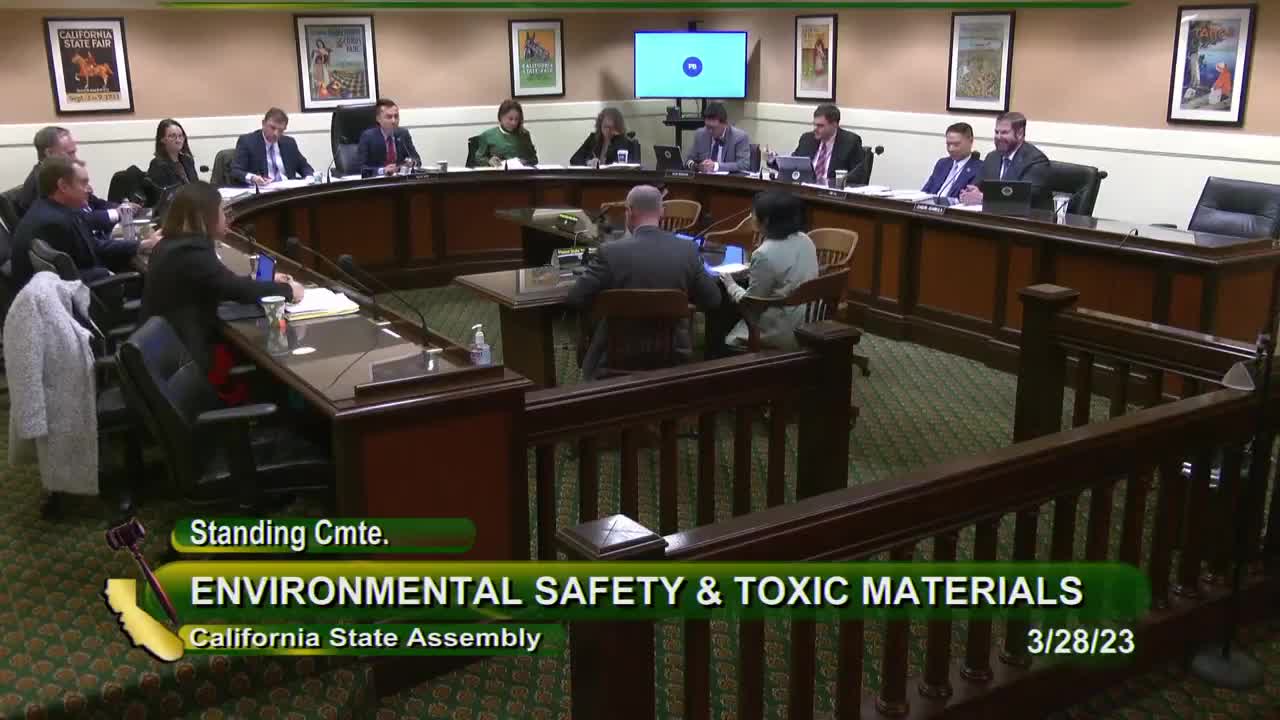 5MIN
Assembly Standing Committee on Environmental Safety and Toxic Materials
Bill Author

Bill Co-Author(s):