AB 1072: Water conservation and efficiency: low-income residential customers.
- Session Year: 2023-2024
- House: Assembly
- Latest Version Date: 2023-04-25
Current Status:
Failed
(2024-02-01: From committee: Filed with the Chief Clerk pursuant to Joint Rule 56.)
Introduced
In Committee
First Chamber
In Committee
Second Chamber
Enacted
What does this bill do?
The bill requires large urban water suppliers to offer technical help and financial incentives to low‑income households so they can install water‑saving fixtures and climate‑resilient landscaping, and it directs suppliers to allocate at least 40% of program funds to low‑income households and disadvantaged communities (or 10% if very few households qualify). It also directs state water agencies to use existing funding to support small community water systems in disadvantaged areas, prioritize systems with the greatest supply risk, and adopt reporting rules for the programs.
The summary is provided by generative AI which can make mistakes. For original language, please view the details in the table below.
Existing law sets forth general state policies regarding water resources.
This bill would declare the policy of the state that all residents have access to water conservation and efficiency programs needs to be available to all residents. programs. The bill would also set forth related findings including that reaching the states environmental justice goals and commitments requires designing climate adaptation programs so that all households may participate.
Existing law establishes in the Natural Resources Agency the Department of Water Resources. Existing law also establishes in the California Environmental Protection Agency the State Water Resources Control Board to provide for the orderly and efficient administration of the water resources of the state.
This bill would require, on and after January 1, 2025, urban wholesale water suppliers and urban water suppliers, as defined, to offer technical assistance and financial incentives, as described, to low-income residential customers to install efficient water conservation devices and climate resilient landscaping, as provided. The bill would require the department and the board to utilize, to the maximum extent allowable by law, existing funding programs to provide technical assistance and financial incentives for water conservation and efficiency to community water systems with fewer than 3,000 service connections serving disadvantaged communities, and to urban wholesale water suppliers and urban water suppliers that meet specified criteria. The bill would require the department and the board to prioritize assistance to community water systems with the greatest risks to water supply security. The bill would require the board, in cooperation with the department, prior to January 1, 2025, to hold at least one public workshop to solicit stakeholder input on technical assistance and financial incentive program design and implementation considerations. The bill would also require the board to adopt reporting requirements, as described, on or before July 1, 2026.
Existing law sets forth general state policies regarding water resources.
This bill would declare the policy of the state that access to water conservation and efficiency programs needs to be available to all residents. The bill would also set forth related findings including that reaching the states environmental justice goals and commitments requires designing climate adaptation programs so that all households may participate.
Existing law establishes in the Natural Resources Agency the Department of Water Resources. Existing law also establishes in the California Environmental Protection Agency the State Water Resources Control Board to provide for the orderly and efficient administration of the water resources of the state.
This bill would require, on and after January 1, 2025, urban wholesale water suppliers and urban water suppliers, as defined, to offer technical assistance and financial incentives, as described, to low-income residential customers to install efficient water conservation devices and climate resilient landscaping, as provided. The bill would require the department and the board to utilize, to the maximum extent allowable by law, existing funding programs to provide technical assistance and financial incentives for water conservation and efficiency to community water systems with fewer than 3,000 service connections serving disadvantaged communities, and to urban wholesale water suppliers and urban water suppliers that meet specified criteria. The bill would require the department and the board to prioritize assistance to community water systems with the greatest risks to water supply security. The bill would require the board, in cooperation with the department, prior to January 1, 2025, to hold at least one public workshop to solicit stakeholder input on technical assistance and financial incentive program design and implementation considerations. The bill would also require the board to adopt reporting requirements, as described, on or before July 1, 2026.
Existing law requires the State Water Resources Control Board, in conjunction with the Department of Water Resources, to adopt long-term standards for the efficient use of water, as provided, on or before June 30, 2022.This bill would provide that it is the intent of the Legislature to enact subsequent legislation that will address issues related to water use efficiency.Existing law requires the State Water Resources Control Board, in conjunction with the Department of Water Resources, to adopt long-term standards for the efficient use of water, as provided, on or before June 30, 2022.
This bill would provide that it is the intent of the Legislature to enact subsequent legislation that will address issues related to water use efficiency.
It is hereby declared to be the established policy of the state that all residents have access to water conservation and efficiency programs needs to be available to all residents. programs.
SEC. 2.Section 375.3 is added to the Water Code, to read:375.3.(a)The state has made significant gains in water conservation and efficiency in the residential sector, but they have not been realized by all households equally. Rebate programs for transforming landscapes and for efficient indoor plumbing fixtures and devices have primarily reached households with capital on hand to cover the initial cost of the investments.
(b)Climate change impacts require an even greater emphasis on water conservation and efficiency.
(c)Reaching the states environmental justice goals and commitments requires designing climate adaptation programs so that all households may participate.
SEC. 3.Section 375.4 is added to the Water Code, to read:375.4.For the purposes of this chapter:
(a)Area median income has the same definition as in Section 50093 of the Health and Safety Code as the median income for a geographic area of the state, as annually estimated by the United States Department of Housing and Urban Development pursuant to Section 8 of the United States Housing Act of 1937.
(b)Board means the State Water Resources Control Board.
(c)Climate resilient landscape means a landscape that can survive with limited irrigation while providing environmental and social benefits, such as shade, habitat, food production, biodiversity, and water quality. Examples include, but are not limited to, personal and community gardens, shade trees, and low water use plants that do not require application of synthetic fertilizers, pesticides, or herbicides.
(d)Community water system means a public water system that serves at least 15 service connections used by year-round residents or regularly serves at least 25 year-round residents of the area served by the system, as defined in Section 116275 of the Health and Safety Code.
(e)Department means the Department of Water Resources.
(f)Disadvantaged community means a community in which the median household income is less than 80 percent of the statewide annual median household income level, as defined in Section 189.7.
(g)Low-income household means a household with an income below 80 percent of the area median income.
(h)Residential water conservation and efficiency program means a program administered by a community water system that provides services or financial incentives for residential customers to implement water conservation and efficiency improvements to their property.
(i)Urban water supplier means a supplier, either publicly or privately owned, providing water for municipal purposes either directly or indirectly to more than 3,000 customers or supplying more than 3,000 acre-feet of water annually, as defined in Section 10617.
(j)Urban wholesale water supplier means a water supplier, either publicly or privately owned, that provides more than 3,000 acre-feet of water annually at wholesale for potable municipal purposes, as defined in Section 10608.12.
(k)Water conservation device means any fixture, appliance, system, or other technology designed for efficient indoor or outdoor water use, and that meets or exceeds current state and federal codes and standards. Examples include, but are not limited to, toilets, faucets, showerheads, washing machines, dishwashers, leak detectors, irrigation systems, and greywater systems.
SEC. 4.Section 375.7 is added to the Water Code, to read:375.7.(a)On and after January 1, 2025, urban wholesale water suppliers and urban water suppliers shall offer technical assistance and financial incentives to low-income residential customers to install efficient water conservation devices and climate resilient landscaping. Technical assistance and financial incentives may be provided as part of a residential water conservation and efficiency program; however, suppliers shall allocate a minimum of 40 percent of program funds to low-income households and disadvantaged communities within their service areas. If the urban wholesale water supplier or urban water supplier can demonstrate to the board that no more than 10 percent of households in their service area would qualify, then the board may adjust the minimum allocation to 10 percent of the total program budget.
(b)The technical assistance and financial incentives may be paid for by ratepayer and nonratepayer revenue, or by recouping the program cost by a surcharge on the program participants bill that is no larger than actual bill savings generated by the program.
(c)Technical assistance and financial incentives permissible under this section include, but are not limited to, all of the following:
(1)Discounts realized by the household or the property owner at time of purchase.
(2)Low- or no-cost installation of devices and landscapes.
(3)Technical assistance to establish and maintain climate resilient landscapes.
(4)Partnerships with energy utilities and housing providers to include installation of devices and landscapes in conjunction with energy efficiency upgrades.
(5)Regional partnerships with any entity capable of providing installation of devices or landscapes.
(d)Prior to adopting the technical assistance and financial incentives, urban wholesale water suppliers and urban water suppliers shall solicit input from disadvantaged community members and incorporate their feedback into the design of assistance and incentive programs.
(e)On and after January 1, 2025, an urban wholesale water supplier and urban water supplier that applies for financial assistance, other than emergency assistance, from the state shall be eligible only after demonstrating that the applicant meets the requirements of this section.
(f)(1)The department and the board shall, to the maximum extent allowable by law, utilize existing funding programs to provide technical assistance and financial incentives for water conservation and efficiency to community water systems with fewer than 3,000 service connections serving disadvantaged communities, and to urban wholesale water suppliers and urban water suppliers that meet the requirements of this section.
(2)Existing funding programs shall may include, but are not limited to, all of the following:
(A)Grant funds for water efficiency and conservation authorized by general obligation bonds.
(B)The revolving loan funds for drinking water and clean water administered by the board.
(C)The integrated regional water management program administered by the department.(D)(C)General fund allocations for water efficiency and conservation to either the department or the board.
(E)(D)Federal funds administered by the department or the board for environmental justice, water supply, and water efficiency.
(F)Fees collected pursuant to implementation of the Sustainable Groundwater Management Act (Part 2.74 (commencing with Section 10720) of Division 6).(g)The department and the board shall prioritize assistance to community water systems with the greatest risks to water supply security.
(h)Prior to January 1, 2025, the board, in cooperation with the department, shall hold at least one public workshop to solicit stakeholder input on technical assistance and financial incentive program design and implementation considerations.
(i)On or before July 1, 2026, the board shall adopt reporting requirements for this section. When setting reporting requirements, the board shall consider the following:
(1)Methods to identify and document disadvantaged communities and low-income households receiving assistance.
(2)Whether to use the electronic annual report process for community water systems pursuant to Section 116530 of the Health and Safety Code.
(3)Whether to set separate compliance reporting requirements for urban water suppliers pursuant to Sections 10609.15 and 10609.28.
(4)Whether to recommend to the Legislature that additional reporting requirements be added to urban water management plans pursuant to Section 10631.
It is hereby declared to be the established policy of the state that access to water conservation and efficiency programs needs to be available to all residents.
SEC. 2.Section 375.3 is added to the Water Code, to read:375.3.(a)The state has made significant gains in water conservation and efficiency in the residential sector, but they have not been realized by all households equally. Rebate programs for transforming landscapes and for efficient indoor plumbing fixtures and devices have primarily reached households with capital on hand to cover the initial cost of the investments.
(b)Climate change impacts require an even greater emphasis on water conservation and efficiency.
(c)Reaching the states environmental justice goals and commitments requires designing climate adaptation programs so that all households may participate.
SEC. 3.Section 375.4 is added to the Water Code, to read:375.4.For the purposes of this chapter:
(a)Area median income has the same definition as in Section 50093 of the Health and Safety Code as the median income for a geographic area of the state, as annually estimated by the United States Department of Housing and Urban Development pursuant to Section 8 of the United States Housing Act of 1937.
(b)Board means the State Water Resources Control Board.
(c)Climate resilient landscape means a landscape that can survive with limited irrigation while providing environmental and social benefits, such as shade, habitat, food production, biodiversity, and water quality. Examples include, but are not limited to, personal and community gardens, shade trees, and low water use plants that do not require application of synthetic fertilizers, pesticides, or herbicides.
(d)Community water system means a public water system that serves at least 15 service connections used by year-round residents or regularly serves at least 25 year-round residents of the area served by the system, as defined in Section 116275 of the Health and Safety Code.
(e)Department means the Department of Water Resources.
(f)Disadvantaged community means a community in which the median household income is less than 80 percent of the statewide annual median household income level, as defined in Section 189.7.
(g)Low-income household means a household with an income below 80 percent of the area median income.
(h)Residential water conservation and efficiency program means a program administered by a community water system that provides services or financial incentives for residential customers to implement water conservation and efficiency improvements to their property.
(i)Urban water supplier means a supplier, either publicly or privately owned, providing water for municipal purposes either directly or indirectly to more than 3,000 customers or supplying more than 3,000 acre-feet of water annually, as defined in Section 10617.
(j)Urban wholesale water supplier means a water supplier, either publicly or privately owned, that provides more than 3,000 acre-feet of water annually at wholesale for potable municipal purposes, as defined in Section 10608.12.
(k)Water conservation device means any fixture, appliance, system, or other technology designed for efficient indoor or outdoor water use, and that meets or exceeds current state and federal codes and standards. Examples include, but are not limited to, toilets, faucets, showerheads, washing machines, dishwashers, leak detectors, irrigation systems, and greywater systems.
SEC. 4.Section 375.7 is added to the Water Code, to read:375.7.(a)On and after January 1, 2025, urban wholesale water suppliers and urban water suppliers shall offer technical assistance and financial incentives to low-income residential customers to install efficient water conservation devices and climate resilient landscaping. Technical assistance and financial incentives may be provided as part of a residential water conservation and efficiency program; however, suppliers shall allocate a minimum of 40 percent of program funds to low-income households and disadvantaged communities within their service areas. If the urban wholesale water supplier or urban water supplier can demonstrate to the board that no more than 10 percent of households in their service area would qualify, then the board may adjust the minimum allocation to 10 percent of the total program budget.
(b)The technical assistance and financial incentives may be paid for by ratepayer and nonratepayer revenue, or by recouping the program cost by a surcharge on the program participants bill that is no larger than actual bill savings generated by the program.
(c)Technical assistance and financial incentives permissible under this section include, but are not limited to, all of the following:
(1)Discounts realized by the household or the property owner at time of purchase.
(2)Low- or no-cost installation of devices and landscapes.
(3)Technical assistance to establish and maintain climate resilient landscapes.
(4)Partnerships with energy utilities and housing providers to include installation of devices and landscapes in conjunction with energy efficiency upgrades.
(5)Regional partnerships with any entity capable of providing installation of devices or landscapes.
(d)Prior to adopting the technical assistance and financial incentives, urban wholesale water suppliers and urban water suppliers shall solicit input from disadvantaged community members and incorporate their feedback into the design of assistance and incentive programs.
(e)On and after January 1, 2025, an urban wholesale water supplier and urban water supplier that applies for financial assistance, other than emergency assistance, from the state shall be eligible only after demonstrating that the applicant meets the requirements of this section.
(f)(1)The department and the board shall, to the maximum extent allowable by law, utilize existing funding programs to provide technical assistance and financial incentives for water conservation and efficiency to community water systems with fewer than 3,000 service connections serving disadvantaged communities, and to urban wholesale water suppliers and urban water suppliers that meet the requirements of this section.
(2)Existing funding programs shall include, but are not limited to, all of the following:
(A)Grant funds authorized by general obligation bonds.
(B)The revolving loan funds for drinking water and clean water administered by the board.
(C)The integrated regional water management program administered by the department.
(D)General fund allocations for water efficiency and conservation to either the department or the board.
(E)Federal funds administered by the department or the board for environmental justice, water supply, and water efficiency.
(F)Fees collected pursuant to implementation of the Sustainable Groundwater Management Act (Part 2.74 (commencing with Section 10720) of Division 6).
(g)The department and the board shall prioritize assistance to community water systems with the greatest risks to water supply security.
(h)Prior to January 1, 2025, the board, in cooperation with the department, shall hold at least one public workshop to solicit stakeholder input on technical assistance and financial incentive program design and implementation considerations.
(i)On or before July 1, 2026, the board shall adopt reporting requirements for this section. When setting reporting requirements, the board shall consider the following:
(1)Methods to identify and document disadvantaged communities and low-income households receiving assistance.
(2)Whether to use the electronic annual report process for community water systems pursuant to Section 116530 of the Health and Safety Code.
(3)Whether to set separate compliance reporting requirements for urban water suppliers pursuant to Sections 10609.15 and 10609.28.
(4)Whether to recommend to the Legislature that additional reporting requirements be added to urban water management plans pursuant to Section 10631.
SECTION 1.It is the intent of the Legislature to enact subsequent legislation that will address issues related to water use efficiency.It is the intent of the Legislature to enact subsequent legislation that will address issues related to water use efficiency.
|
Date
|
Status
|
|---|---|
| Feb 1, 2024 | From committee: Filed with the Chief Clerk pursuant to Joint Rule 56. |
| Jan 31, 2024 | Died pursuant to Art. IV, Sec. 10(c) of the Constitution. |
| May 18, 2023 | In committee: Hearing postponed by committee. |
| May 18, 2023 | Joint Rule 62(a), file notice suspended. (Page 1580.) |
| May 17, 2023 | In committee: Set, first hearing. Referred to APPR. suspense file. |
| May 10, 2023 | In committee: Hearing postponed by committee. |
| Apr 26, 2023 | Re-referred to Com. on APPR. |
| Apr 25, 2023 | Read second time and amended. |
| Apr 24, 2023 | From committee: Amend, and do pass as amended and re-refer to Com. on APPR. (Ayes 10. Noes 1.) (April 24). |
| Mar 27, 2023 | Re-referred to Com. on W., P., & W. |
| Mar 23, 2023 | From committee chair, with author's amendments: Amend, and re-refer to Com. on W., P., & W. Read second time and amended. |
| Mar 23, 2023 | Referred to Com. on W., P., & W. |
| Feb 16, 2023 | From printer. May be heard in committee March 18. |
| Feb 15, 2023 | Read first time. To print. |
|
Date
|
Description
|
Location
|
Votes
|
|
|---|---|---|---|---|
| Apr 24, 2023 | Do pass as amended and be re-referred to the Committee on [Appropriations] | Assembly Standing Committee on Water, Parks, and Wildlife |
Passed |
This list shows positions taken on this bill by organizations on the date displayed, which is linked to the original source.
Positions by individuals are not included.
|
Organization
|
Position
|
Date
|
|---|---|---|
| Association Of California Water Agencies | * Against Unless Amend | Apr 24, 2023 |
| California Coastkeeper Alliance | * Support | Apr 24, 2023 |
| Clean Water Action | ** Support | |
| Community Water Center | ** Support | |
| LA Alliance for A New Economy | ** Support | |
| Leadership Counsel for Justice and Accountability | ** Support | |
| Mono Lake Committee | ** Support | |
| Natural Resources Defense Council | ** Support | |
| Physicians for Social Responsibility Los Angeles | * Support | Apr 24, 2023 |
| Plumbing Manufacturers International | * Support | Apr 24, 2023 |
| Rising Sun Center for Opportunity | ** Support | |
| San Francisco Bay Area Planning Urban Research Association Spur | * Support | Apr 24, 2023 |
Date of Hearing: May 17, 2023
ASSEMBLY COMMITTEE ON APPROPRIATIONS
Chris Holden, Chair
ABPCA Bill Id:AB 1072
Author:(Wicks) – As Amended Ver:April 25, 2023
Policy Committee: | Water, Parks and Wildlife | Vote: | 10 - 1 |
|
| ||
|
|
Urgency: No State Mandated Local Program: No Reimbursable: No
SUMMARY:
This bill requires urban water suppliers and wholesalers to offer technical assistance and financial incentives to low-income customers for water conservation and efficiency. This bill also requires the State Water Resources Control Board (State Water Board) and Department of Water Resources (DWR) to provide technical assistance and financial incentives to community water systems serving disadvantaged communities and to water suppliers.
Specifically, this bill, among other things:
- Declares it is the established policy of the state that all residents have access to water conservation and efficiency programs.
- Requires urban wholesale water suppliers and urban water suppliers, by January 1, 2025, and after soliciting and incorporating input from disadvantaged communities, to offer technical assistance and financial incentives, as specified, to low-income residential customers to install efficient water conservation devices and climate resilient landscaping.
- Provides that technical assistance and financial incentives may be provided as part of a residential water conservation and efficiency program, but requires each supplier to allocate a minimum of 40% of program funds to low-income households and disadvantaged communities within its service area.
- Provides that if a supplier can demonstrate to the State Water Board that no more than 10% of households in their service areas would qualify, the State Water Board may adjust the minimum allocation to 10% of the total program budget.
- Provides that technical assistance and financial incentives may be paid for by ratepayer and non-ratepayer revenue, or by recouping the program cost by a surcharge on the program participant’s bill that is no larger than actual bill savings generated by the program.
- Provides that after January 1, 2025 an urban water supplier or urban wholesale water supplier shall be ineligible to access state financial assistance, except for emergency assistance, unless it is in compliance with this bill.
- Requires the State Water Board and DWR to use existing funding programs to fund the technical assistance and financial incentives for water conservation and efficiency to community water systems serving disadvantaged communities and to water suppliers that meet specified requirements.
- Requires, before January 2, 2025, the State Water Board, in cooperation with DWR, to hold at least one public workshop to solicit input on program design and implementation considerations, and requires the State Water Board, by July 1, 2026, to adopt reporting requirements for this bill, as specified.
FISCAL EFFECT:
1) Costs of an unknown but likely significant amount, in excess of $150,000, for the State Water Board and DWR to hold public workshops, adopt reporting requirements, and revise and reconfigure relevant existing funding programs to prioritize the provision of technical assistance and financial incentives for water conservation and efficiency to community water systems and water suppliers that meet the requirements of this bill. The State Water Board notes it would also need to conduct a statewide assessment to identify the overall need for technical assistance and financial incentives for conservation and efficiency in disadvantaged communities that are not otherwise covered by local or regional conservation assistance programs (General Fund or special fund).
2) Cost pressure of an unknown but significant amount on existing state programs to prioritize the provision of technical and financial incentives pursuant to this bill over other eligible uses (General Fund, special funds, bond funds, and federal funds).
COMMENTS:
1) Purpose. According to the author:
Water affordability is an urgent problem in California, with water rates going up 5% in real dollars each year. California has invested heavily in rebate programs, incentivizing homeowners to make their homes more environmentally and fiscally efficient. But these programs only reach households with cash on hand. As a result, low-income families are more likely to live in homes with out-of-date plumbing fixtures and leaks and neighborhoods with fewer green spaces and less tree cover. [This bill] will encourage more efficient coordination and offer more opportunities for low-income individuals to conserve water in their homes. Along with that, [this bill] looks to strengthen and create new partnerships with local entities to streamline the coordination and completion of water projects for our low-income residents.
2) Background. According to a 2021 report by the Public Policy Institute of California (PPIC), local water agencies account for approximately 84% of the funds spent on water in California Local agencies can face impediments, however, in trying to pay for certain services. PPIC notes, “Propositions 218 and 26 impose strict cost-recovery requirements on water rates, making it challenging for public water agencies to implement conservation-oriented rates and user fees.” This bill identifies ratepayer revenue and water bill surcharges as options to fund technical assistance and financial incentive programs for water conservation and efficiency. Rates are subject to, and surcharges may be subject to, the requirements of Proposition 218 and Proposition 26.
Propositions 218 and 26. Proposition 218 amended the California Constitution by placing restrictions on how local agencies use fees, charges, or special assessments (“property-related services”) to cover the cost of providing services, including for water service. In order to assess a fee, a water agency must ensure it meets five standards under Proposition 218: that a fee or charge (a) not exceed the cost of providing the service for which it is charged or (b) be used for any purpose other than that for which it is charged; (c) that a fee not exceed the proportional cost of providing a service to an individual property; (d) that no fee be imposed for a service unless that service is actually used by or available to a property owner; and (e) that no fee or charge may be imposed for general governmental services that are available to the public in the same manner as it is to property owners. To comply with Proposition 218, a water agency must undertake a detailed cost study to establish the basis upon which the amount of a proposed fee or charge is calculated, notify customers of a proposed fee or charge, and hold a public hearing on the proposed fee or charge. If a majority of the property owners that will be subject to the proposed fee or charge protest the fee or charge, a local agency may not impose the fee or charge.
Proposition 26 broadened the definition of “tax” as “any levy, charge, or exaction of any kind” except for charges imposed to confer a specific benefit or service to the payer. It also requires a local agency, if challenged, to demonstrate that a charge is not greater than the cost of providing the relevant service.
Policy Considerations. A key policy issue raised by this bill is how to pay for the water conservation services it requires. This bill requires urban water agencies and water wholesalers to offer water conservation services to their low-income residential customers and indicates that these agencies may use ratepayer or non-ratepayer revenue, surcharges, or various state funding sources to cover the cost of providing these services. However, any use of ratepayer revenue must comply with Proposition 218.
A water agency seeking to comply with this bill and that has an existing conservation program may be at legal risk under Proposition 218, with the extent of that risk dependent on whether the cost study the agency conducted to establish the program accounted for offering conservation services to its customers. A water agency that does not have an existing water conservation program will likely not to be able to use existing ratepayer revenue or surcharges to comply with this bill if the cost study to establish them did not contemplate funding a water conservation program. Such a water agency would either have to conduct a new cost study that satisfies Proposition 218 requirements or fund the program with revenue from a source other than ratepayer funds.
In addition, this bill requires a supplier to allocate a minimum of 40% of program funds to low-income households and disadvantaged communities within its service area. This type of set-aside could also violate Proposition 218’s requirement that the services a water agency funds through rates must be available to all customers. Even if a water agency were to allocate funds proportionally to customer income demographics, there could be challenges. For example, many water agencies receive relatively less rate revenue – on a per-customer basis – from low-income customers than from other customers. Arguably, higher-income customers would pay more to get less, relative to low-income customers, presenting a potential Proposition 218 challenge.
Analysis Prepared by: Nikita Koraddi / APPR. / (916) 319-2081
Date of Hearing: April 24, 2023
ASSEMBLY COMMITTEE ON WATER, PARKS, AND WILDLIFE
Rebecca Bauer-Kahan, Chair
ABPCA Bill Id:AB 1072 (
Author:Wicks) – As Amended Ver:March 23, 2023
SUBJECT: Water conservation and efficiency: low-income residential customers
SUMMARY: Requires urban water suppliers and wholesalers to offer water conservation programs to low-income residents by January 1, 2025 and provides such programs may be offered through a residential water conservation and efficiency program so long as 40% of the funds are allocated to low-income customers and disadvantaged communities (DAC). Specifically, this bill:
- Declares that it is the established policy of the state that access to water conservation and efficiency programs needs to be available to all residents.
- Requires urban wholesale water suppliers and urban water suppliers to offer technical and financial assistance to low-income customers for the installation of water efficient fixtures and landscaping by January 1, 2025.
- Provides that technical and financial assistance may be offered through a residential water conservation and efficiency program, but requires 40% of the funds for such a program to be allocated to low-income households and disadvantaged communities (DAC) within a supplier’s service area.
- Provides that if a supplier demonstrates to the State Water Resources Control Board (State Water Board) that no more than 10% of its customers are low-income or DAC residents, the State Water Board may adjust the required funding allocation to 10% for such customers.
- Provides that conservation technical and financial assistance may be funded by ratepayer and nonratepayer revenue or by recouping the program cost by a surcharge on a program participant’s bill provided the surcharge is no greater than the bill savings generated by the conservation program.
- Specifies the type of technical and financial assistance that may be offered pursuant to this bill including discounts and low- or no-cost installation of devices and landscapes.
- Provides that after January 1, 2025 an urban water supplier or urban wholesale water supplier shall be ineligible to access state financial assistance, except for emergency assistance, unless it is in compliance with this bill.
- Requires the State Water Board and DWR to use existing funding programs to fund the technical and financial assistance programs offered by community water systems and suppliers in compliance with this bill to the maximum extent allowable by law. Such funds include general obligation bond funds, revolving loan funds, integrated regional water management funds, General Fund allocations for water efficiency and conservation, specified federal funds, and fees assessed by groundwater sustainability agencies.
- Requires the State Water Board, in cooperation with DWR, to hold at least one public workshop to solicit input on technical and financial assistance program design and implementation considerations before January 1, 2025.
- Requires the State Water Board to adopt reporting requirements for this bill by July 1, 2026 and enumerates necessary aspects of these requirements.
- Codifies findings that the state has made significant conservation gains but that these gains have not been realized uniformly across communities and income levels.
EXISTING LAW:
- Permits a water supplier to adopt and enforce a water conservation program to reduce water use (Water Code § 375).
- Permits a local agency to undertake water conservation and public education programs in conjunction with school districts, public libraries, or other local agencies (Water Code § 375.5).
- Defines “water,” for purposes of Proposition 218 implementation, as any system of public improvements intended to provide for the production, storage, supply, treatment, or distribution of water from any source (Government Code § 53750).
FISCAL EFFECT: Unknown. This bill is keyed fiscal.
COMMENTS:
- Purpose of this bill. According to the author, “water affordability is an urgent problem in California, with water rates going up 5% in real dollars each year. California has invested heavily in rebate programs, incentivizing homeowners to make their homes more environmentally and fiscally efficient. But these programs only reach households with cash on hand. As a result, low-income families are more likely to live in homes with out-of-date plumbing fixtures and leaks and neighborhoods with fewer green spaces and less tree cover. [This bill] will encourage more efficient coordination and offer more opportunities for low-income individuals to conserve water in their homes. Along with that, [this bill] looks to strengthen and create new partnerships with local entities to streamline the coordination and completion of water projects for our low-income residents. Equity will always remain crucial, especially around water efforts here in the state.”
- Background. Analysis of water sector finance by the Public Policy Institute of California (PPIC) finds that local water agencies account for approximately 84% of the funds spent on water in California (PPIC, 2021). Local agencies can face impediments, however, in trying to pay for certain services: “Propositions 218 and 26 impose strict cost-recovery requirements on water rates, making it challenging for public water agencies to implement conservation-oriented rates and user fees” (PPIC, 2021). This bill identifies ratepayer revenue and water bill surcharges as options to fund the programs it requires. Rates are subject to, and surcharges may be subject to, the requirements of Proposition 218 and Proposition 26.
Proposition 218. Enacted in November 1996, Proposition 218 amended the California Constitution by placing restrictions on how local agencies use fees, charges, or special assessments (“property-related services”) to cover the cost of providing services, including for water service. In order to assess a fee, water agencies must ensure it meets five standards under Proposition 218: that a fee or charge (1) not exceed the cost of providing the service for which it is charged or (2) be used for any purpose other than that for which it is charged; (3) that a fee not exceed the proportional cost of providing a service to an individual property; (4) that no fee be imposed for a service unless that service is actually used by or available to a property owner; and (5) that no fee or charge may be imposed for general governmental services that are available to the public in the same manner as it is to property owners. To comply with Proposition 218, water agencies have to undertake a detailed cost study to establish the basis upon which the amount of a proposed fee or charge is calculated, notify customers of a proposed fee or charge, and hold a public hearing on the proposed fee or charge. If a majority of the property owners that will be subject to the proposed fee or charge protest the fee or charge, a local agency may not impose the fee or charge.
Proposition 26. Enacted in November 2010, Proposition 26 places additional burdens on local agencies by attempting to broaden the definition of “tax” as “any levy, charge, or exaction of any kind” except for charges imposed to confer a specific benefit or service to the payer. It also places the burden of proof on a local agency to demonstrate that a charge is not greater than the cost of providing the service for which it is charged in the event of a challenge. The provisions of Proposition 26, at a minimum, set a higher bar on a local agency that uses ratepayer funds or surcharges to fund the programs required by this bill. - Policy consideration. A key policy issue raised by this bill is how to pay for the water conservation services it requires. This bill requires urban water agencies and water wholesalers to offer water conservation services to their low-income residential customers and indicates that these agencies may use ratepayer or non-ratepayer revenue, surcharges, or various state funding sources to cover the cost of providing these services. However, the use of ratepayer revenue for the purposes of this bill require compliance with Proposition 218.
If a water agency has an existing water conservation program, compliance with this bill may be less fraught than for an agency that does not have an existing program; however, there is still potential legal exposure under Proposition 218 if a water agency with an existing program uses ratepayer revenue. It depends on the extent to which the cost study used to establish a rate structure or surcharge in the first place accounted for offering conservation services to its customers; “[public retail water agencies] will have to justify water service charges that pay for water management activities that may not directly benefit some individual customers, but that provide indirect benefits to all customers by reducing either aggregate demand for freshwater supplies or the aggregate cost of providing water service.”[1]
For a water agency that does not have an existing water conservation program, compliance with this bill may be more challenging as it is very likely programs could not use existing ratepayer revenue or surcharges because the cost study to establish these sources would not have contemplated funding a water conservation program. As such, these water agencies would either have to go through a new Proposition 218 process to change their rate structures or assess surcharges or use non-ratepayer revenue and/or state funding to cover the costs of such a program. Should this bill move out of this Committee, the author may wish to further clarify how water agencies can use the funding sources identified to provide the conservation services required by this bill. - Suggested committee amendments. The broad policy directive in this bill, while laudable, is redundant and could cause confusion. To address this, the Committee may wish to ask the author to amend this bill as follows:
Amendment 1 – Amend Water Code Section 106.1 as follows:
106.1 It is hereby declared to be the established policy of the state that all residents have access to water conservation and efficiency programs needs to be available to all residents.
This bill identifies various existing state funding sources to provide water conservation services to community water systems with fewer than 3,000 connections and to urban water agencies that develop the water conservation program required by this bill. Some of the state funding sources identified by this bill, nevertheless, cannot be used to implement this bill. For example, this bills indicates “grant funds authorized by general obligation bonds” could be used to implement this bill, but this is only the case where bond funds are authorized for water conservation or efficiency programs. Proposition 1, passed in 2014, is a good illustration of this; it allocates $100 million for water conservation and water efficiency programs that could be directed to the purposes of this bill; however, the $2.7 billion for water storage projects could not. Additionally, this bill references fees collected by groundwater sustainability agencies (GSA) to achieve sustainable groundwater management as a potential revenue source that could be used by state agencies to implement this bill, but this is inappropriate and unworkable given that state agencies do not collect these fees and GSAs have a very different mandate than urban water suppliers. A similar issue applies to the reference to funds allocated for integrated regional water management planning. To eliminate confusion or ambiguity, the Committee may wish to request that the author amend this bill as follows:
Amendment 2 – Amend Water Code Section 375.7 (f) as follows:
(f) (1) The department and the board shall, to the maximum extent allowable by law, utilize existing funding programs to provide technical assistance and financial incentives for water conservation and efficiency to community water systems with fewer than 3,000 service connections serving disadvantaged communities, and to urban wholesale water suppliers and urban water suppliers that meet the requirements of this section.
(2) Existing funding programs shall may include, but are not limited to, all of the following:
(A) Grant funds for water efficiency and conservation authorized by general obligation bonds.
(B) The revolving loan funds for drinking water and clean water administered by the board.
(C) The integrated regional water management program administered by the department.
(D) General fund allocations for water efficiency and conservation to either the department or the board.
(E) (D) Federal funds administered by the department or the board for environmental justice, water supply, and water efficiency.
(F) Fees collected pursuant to implementation of the Sustainable Groundwater Management Act (Part 2.74 (commencing with Section 10720) of Division 6).
- Arguments in support. San Francisco Bay Area Planning & Urban Research Association (SPUR) is the sponsor of this bill and argues that it is necessary to ensure that all Californians have access to water conservation and efficiency programs as such services help make communities more resilient to climate change and save water and money. SPUR states “research and evaluations of conservation programs have shown that commonly used financial incentives, such as rebates, are used disproportionately by upper income households that have capital on hand to pay for upfront costs. Moreover, many lower-income neighborhoods lack adequate shade and suffer from the urban heat island effect. [This bill] would begin to address these impacts by applying an equity lens to water conservation programs.”
- Oppose unless amended. The Association of California Water Agencies (ACWA) has taken an “oppose unless amended” position on this bill arguing that the approach taken in this bill “is not workable as it potentially violates Proposition 218 requirements and directs inappropriate state funding for these purposes.” ACWA asserts that the requirement that water agencies direct 40% of the funds for a water conservation and efficiency program to one class of customers opens water agencies up to legal challenge under Proposition 218 because it is “legally challenging to allocate funding unequally among their ratepayers.” In addition, ACWA expresses concern that this bill enumerates various state funding sources that are intended to fund other priorities in the water sector that are also meritorious and maintains that “dedicating these broad funding categories for this one purpose is inappropriate.” Finally, ACWA notes that the use of surcharges to fund the services this bill requires could be challenging as many low-income populations are renters and do not directly receive a water bill.
REGISTERED SUPPORT / OPPOSITION:
Support
San Francisco Bay Area Planning & Urban Research Association (Sponsor)
California Coastkeeper Alliance
Clean Water Action
Communitiy Water Center
LA Alliance for A New Economy
Leadership Counsel for Justice and Accountability
Mono Lake Committee
Natural Resources Defense Council
Plumbing Manufacturers International
Rising Sun Center for Opportunity
Opposition Unless Amended
Association of California Water Agencies
Analysis Prepared by: Pablo Garza / W., P., & W. / (916) 319-2096
Caitrin Chappelle et al., Paying for Water in California, Technical Appendix A: The Legal Framework. (San Francisco: PPIC, 2014), 16. ↑
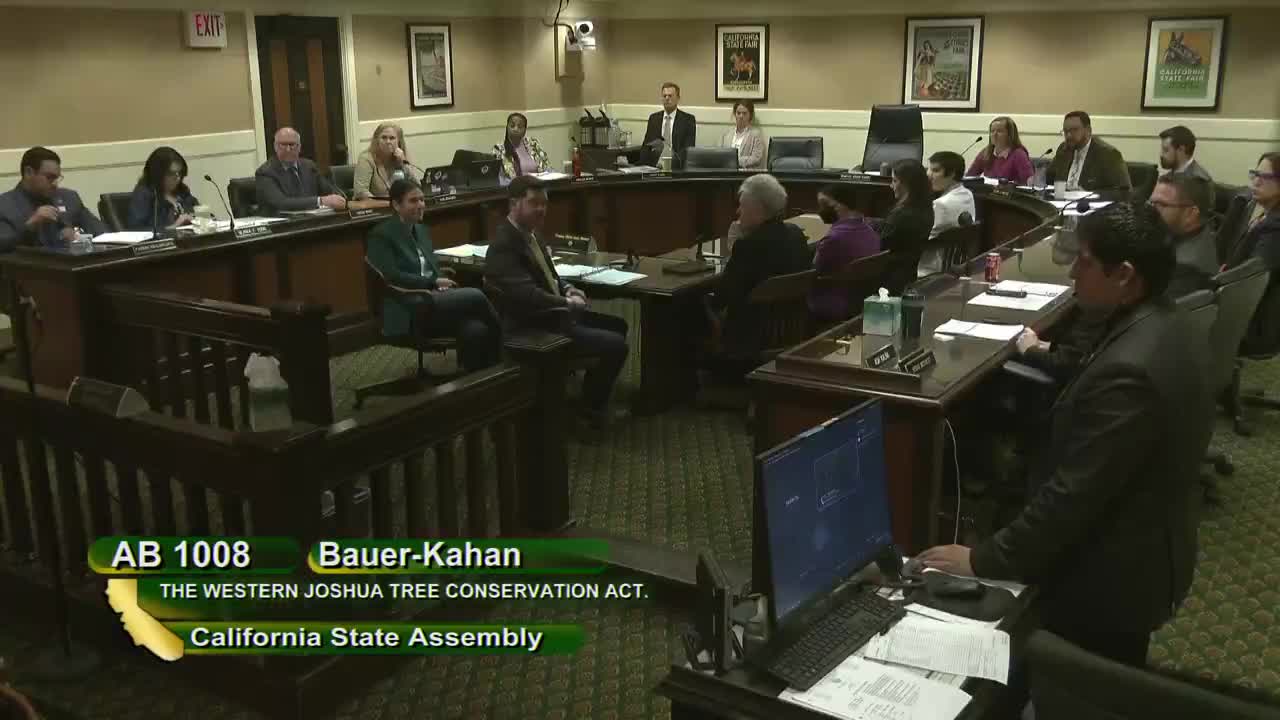
Discussed in Hearing
 13MIN
Assembly Standing Committee on Water, Parks, and Wildlife
Bill Author

Bill Co-Author(s):