AB 1076: Contracts in restraint of trade: noncompete agreements.
- Session Year: 2023-2024
- House: Assembly
- Latest Version Date: 2023-10-13
Current Status:
Passed
(2023-10-13: Chaptered by Secretary of State - Chapter 828, Statutes of 2023.)
Introduced
In Committee
First Chamber
In Committee
Second Chamber
Enacted
Existing law voids contractual provisions by which a person is restrained from engaging in a lawful profession, trade, or business of any kind, except as otherwise provided. Existing case law, as established in the case of Edwards v. Arthur Andersen LLP (2008) 44 Cal.4th 937, interprets this provision to void noncompete agreements in an employment context and noncompete clauses within employment contracts, even if that agreement is narrowly tailored, unless an exception applies.
Existing law, the Unfair Competition Law (UCL), makes various practices unlawful and makes a person who engages in unfair competition liable for a civil penalty, as specified. Existing law provides for enforcement of these provisions exclusively by the Attorney General or other specified local agency attorneys.
This bill would codify existing case law by specifying that the statutory provision voiding noncompete contracts is to be broadly construed to void the application of any noncompete agreement in an employment context, or any noncompete clause in an employment contract, no matter how narrowly tailored, that does not satisfy specified exceptions. The bill would state that this provision is declaratory of existing law. The bill would make these provisions applicable to contracts where the person being restrained is not a party to the contract.
This bill would also make it unlawful to include a noncompete clause in an employment contract, or to require an employee to enter a noncompete agreement, that does not satisfy specified exceptions. The bill would require employers to notify current and former employees in writing by February 14, 2024, that the noncompete clause or agreement is void, as specified. This bill would make a violation of these provisions an act of unfair competition pursuant to the UCL.
Existing law voids contractual provisions by which a person is restrained from engaging in a lawful profession, trade, or business of any kind, except as otherwise provided. Existing case law, as established in the case of Edwards v. Arthur Andersen LLP (2008) 44 Cal.4th 937, interprets this provision to void noncompete agreements in an employment context and noncompete clauses within employment contracts, even if that agreement is narrowly tailored, unless an exception applies. Existing
Existing law, the Unfair Competition Law (UCL), makes various practices unlawful and makes a person who engages in unfair competition liable for a civil penalty, as specified. Existing law provides for enforcement of these provisions exclusively by the Attorney General or other specified local agency attorneys.
This bill would codify existing case law by specifying that the statutory provision voiding noncompete contracts is to be broadly construed to void the application of any noncompete agreement in an employment context, or any noncompete clause in an employment contract, no matter how narrowly tailored, that does not satisfy specified exceptions. The bill would state that this provision is declaratory of existing law. The The bill would make these provisions applicable to contracts where the person being restrained is not a party to the contract.
This bill would also make it unlawful, and unfair competition pursuant to the UCL, unlawful to include a noncompete clause in an employment contract, or to require an employee to enter a noncompete agreement, that does not satisfy specified exceptions. The bill would require employers to notify current and former employees in writing by February 14, 2024, that the noncompete clause or agreement is void, as specified. This bill would make a violation of these provisions an act of unfair competition pursuant to the UCL.
Existing law voids contractual provisions by which a person is restrained from engaging in a lawful profession, trade, or business of any kind, except as otherwise provided. Existing case law, as established in the case of Edwards v. Arthur Andersen LLP (2008) 44 Cal.4th 937, interprets this provision to void noncompete agreements in an employment context and noncompete clauses within employment contracts, even if that agreement is narrowly tailored, unless an exception applies. Existing law, the Unfair Competition Law (UCL), makes various practices unlawful and makes a person who engages in unfair competition liable for a civil penalty, as specified. Existing law provides for enforcement of these provisions exclusively by the Attorney General or other specified local agency attorneys.
This bill would codify existing case law by specifying that the statutory provision voiding noncompete contracts is to be broadly construed to void the application of any noncompete agreement in an employment context, or any noncompete clause in an employment contract, no matter how narrowly tailored, that does not satisfy specified exceptions. The bill would state that this provision is declaratory of existing law. The bill would also make it unlawful unlawful, and unfair competition pursuant to the UCL, to include a noncompete clause in an employment contract, or to require an employee to enter a noncompete agreement, that does not satisfy specified exceptions.
Existing law voids contractual provisions by which a person is restrained from engaging in a lawful profession, trade, or business of any kind, except as otherwise provided. Existing case law, as established in the case of Edwards v. Arthur Andersen LLP (2008) 44 Cal.4th 937, interprets this provision to void noncompete agreements in an employment context and noncompete clauses within employment contracts, even if that agreement is narrowly tailored, unless an exception applies.
This bill would codify existing case law by specifying that the statutory provision voiding noncompete contracts is to be broadly construed to void the application of any noncompete agreement in an employment context, or any noncompete clause in an employment contract, no matter how narrowly tailored, that does not satisfy specified exceptions. The bill would state that this provision is declaratory of existing law. The bill would also make it unlawful to include a noncompete clause in an employment contract, or to require an employee to enter a noncompete agreement, that does not satisfy specified exceptions.
(a)Except as provided in this chapter, every contract by which anyone is restrained from engaging in a lawful profession, trade, or business of any kind is to that extent void.
(b)(1)This section shall be read broadly, in accordance with Edwards v. Arthur Andersen LLP (2008) 44 Cal.4th 937, to void the application of any noncompete agreement in an employment context, or any noncompete clause in an employment contract, no matter how narrowly tailored, that does not satisfy an exception in this chapter.
(2)This subdivision does not constitute a change in, but is declaratory of, existing law.
(c)This section shall not be limited to contracts where the person being restrained from engaging in a lawful profession, trade, or business is a party to the contract.
SEC. 2.Section 16600.1 is added to the Business and Professions Code, to read:16600.1.(a)It shall be unlawful to include a noncompete clause in an employment contract, or to require an employee to enter a noncompete agreement, that does not satisfy an exception in this chapter.
(b)(1)For current employees, and for former employees who were employed after January 1, 2022, whose contracts include a noncompete clause, or who were required to enter a noncompete agreement, that does not satisfy an exception to this chapter, the employer shall, by February 14, 2024, notify the employee that the noncompete clause or noncompete agreement is void.
(2)Notice made under this subdivision shall be in the form of a written individualized communication to the employee or former employee, and shall be delivered to the last known address and the email address of the employee or former employee.
(c)A violation of this section constitutes an act of unfair competition within the meaning of Chapter 5 (commencing with Section 17200).
(a)Except as provided in this chapter, every contract by which anyone is restrained from engaging in a lawful profession, trade, or business of any kind is to that extent void.
(b)(1)This section shall be read broadly, in accordance with Edwards v. Arthur Andersen LLP (2008) 44 Cal.4th 937, to void the application of any noncompete agreement in an employment context, or any noncompete clause in an employment contract, no matter how narrowly tailored, that does not satisfy an exception in this chapter.
(2)This subdivision does not constitute a change in, but is declaratory of, existing law.
(c)This section shall not be limited to contracts where the person being restrained from engaging in a lawful profession, trade, or business is a party to the contract.
SEC. 2.Section 16600.1 is added to the Business and Professions Code, to read:16600.1.(a)It shall be unlawful to include a noncompete clause in an employment contract, or to require an employee to enter a noncompete agreement, that does not satisfy an exception in this chapter.
(b)(1)For current employees, and for former employees who were employed after January 1, 2022, whose contracts include a noncompete clause, or who were required to enter a noncompete agreement, that does not satisfy an exception to this chapter, the employer shall, by February 14, 2024, notify the employee that the noncompete clause or noncompete agreement is void.
(2)Notice made under this subdivision shall be in the form of a written individualized communication to the employee or former employee. employee, and shall be delivered to the last known address and the email address of the employee or former employee.
(c)A violation of this section constitutes an act of unfair competition within the meaning of Chapter 5 (commencing with Section 17200).
(a)Except as provided in this chapter, every contract by which anyone is restrained from engaging in a lawful profession, trade, or business of any kind is to that extent void.
(b)(1)This section shall be read broadly, in accordance with Edwards v. Arthur Andersen LLP (2008) 44 Cal.4th 937, to void the application of any noncompete agreement in an employment context, or any noncompete clause in an employment contract, no matter how narrowly tailored, that does not satisfy an exception in this chapter.
(2)This subdivision does not constitute a change in, but is declaratory of, existing law.
(c)It shall be unlawful to include a noncompete clause in an employment contract, or to require an employee to enter a noncompete agreement, that does not satisfy an exception in this chapter. A violation of this subdivision is unfair competition within the meaning of Chapter 5 (commencing with Section 17200). This section shall not be limited to contracts where the person being restrained from engaging in a lawful profession, trade, or business is a party to the contract.
SEC. 2.Section 16600.1 is added to the Business and Professions Code, to read:16600.1.(a)It shall be unlawful to include a noncompete clause in an employment contract, or to require an employee to enter a noncompete agreement, that does not satisfy an exception in this chapter.
(b)(1)For current employees, and for former employees who were employed after January 1, 2022, whose contracts include a noncompete clause, or who were required to enter a noncompete agreement, that does not satisfy an exception to this chapter, the employer shall, by February 14, 2024, notify the employee that the noncompete clause or noncompete agreement is void.
(2)Notice made under this subdivision shall be in the form of a written individualized communication to the employee or former employee.
(c)A violation of this section constitutes an act of unfair competition within the meaning of Chapter 5 (commencing with Section 17200).
(a)Except as provided in this chapter, every contract by which anyone is restrained from engaging in a lawful profession, trade, or business of any kind is to that extent void.
(b)(1)This section shall be read broadly, in accordance with Edwards v. Arthur Andersen LLP (2008) 44 Cal.4th 937, to void the application of any noncompete agreement in an employment context, or any noncompete clause in an employment contract, no matter how narrowly tailored, that does not satisfy an exception in this chapter.
(2)This subdivision does not constitute a change in, but is declaratory of, existing law.
(c)It shall be unlawful to include a noncompete clause in an employment contract, or to require an employee to enter a noncompete agreement, that does not satisfy an exception in this chapter. A violation of this subdivision is unfair competition within the meaning of Chapter 5 (commencing with Section 17200).
(a)Except as provided in this chapter, every contract by which anyone is restrained from engaging in a lawful profession, trade, or business of any kind is to that extent void.
(b)(1)This section shall be read broadly, in accordance with Edwards v. Arthur Andersen LLP (2008) 44 Cal.4th 937, to void the application of any noncompete agreement in an employment context, or any noncompete clause in an employment contract, no matter how narrowly tailored, that does not satisfy an exception in this chapter.
(2)This subdivision does not constitute a change in, but is declaratory of, existing law.
(c)It shall be unlawful to include a noncompete clause in an employment contract, or to require an employee to enter a noncompete agreement, that does not satisfy an exception in this chapter.
|
Date
|
Status
|
|---|---|
| Oct 13, 2023 | Chaptered by Secretary of State - Chapter 828, Statutes of 2023. |
| Oct 13, 2023 | Approved by the Governor. |
| Sep 21, 2023 | Enrolled and presented to the Governor at 3:30 p.m. |
| Sep 13, 2023 | Senate amendments concurred in. To Engrossing and Enrolling. (Ayes 80. Noes 0. Page 3445.). |
| Sep 12, 2023 | In Assembly. Concurrence in Senate amendments pending. |
| Sep 12, 2023 | Read third time. Passed. Ordered to the Assembly. (Ayes 39. Noes 0. Page 2687.). |
| Sep 8, 2023 | Ordered to special consent calendar. |
| Sep 5, 2023 | Read second time. Ordered to third reading. |
| Sep 1, 2023 | From committee: Do pass. (Ayes 7. Noes 0.) (September 1). |
| Aug 14, 2023 | In committee: Referred to APPR suspense file. |
| Jul 10, 2023 | Read second time and amended. Re-referred to Com. on APPR. |
| Jul 6, 2023 | From committee: Amend, and do pass as amended and re-refer to Com. on APPR with recommendation: To Consent Calendar. (Ayes 11. Noes 0.) (July 6). |
| Jun 7, 2023 | Referred to Com. on JUD. |
| May 31, 2023 | In Senate. Read first time. To Com. on RLS. for assignment. |
| May 30, 2023 | Read third time. Passed. Ordered to the Senate. (Ayes 80. Noes 0. Page 1892.) |
| May 18, 2023 | Read second time. Ordered to third reading. |
| May 18, 2023 | From committee: Do pass. (Ayes 15. Noes 0.) (May 18). |
| May 10, 2023 | In committee: Set, first hearing. Referred to APPR. suspense file. |
| Apr 27, 2023 | From committee: Do pass and re-refer to Com. on APPR. (Ayes 7. Noes 0.) (April 26). Re-referred to Com. on APPR. |
| Apr 17, 2023 | Re-referred to Com. on L. & E. |
| Apr 12, 2023 | From committee chair, with author's amendments: Amend, and re-refer to Com. on L. & E. Read second time and amended. |
| Mar 27, 2023 | In committee: Set, first hearing. Hearing canceled at the request of author. |
| Mar 9, 2023 | Re-referred to Com. on L. & E. |
| Mar 8, 2023 | From committee chair, with author's amendments: Amend, and re-refer to Com. on L. & E. Read second time and amended. |
| Mar 2, 2023 | Referred to Com. on L. & E. |
| Feb 16, 2023 | From printer. May be heard in committee March 18. |
| Feb 15, 2023 | Read first time. To print. |
|
Date
|
Description
|
Location
|
Votes
|
|
|---|---|---|---|---|
| Sep 13, 2023 | AB 1076 Bauer-Kahan Concurrence in Senate Amendments | Assembly Floor |
Passed |
|
| Sep 12, 2023 | Special Consent AB1076 Bauer-Kahan By Durazo | Senate Floor |
Passed |
|
| Sep 1, 2023 | Do pass | Senate Standing Committee on Appropriations |
Passed |
|
| Aug 14, 2023 | Placed on suspense file | Senate Standing Committee on Appropriations |
Passed |
|
| Jul 6, 2023 | Do pass as amended, but first amend, and re-refer to the Committee on [Appropriations] with the recommendation: To Consent Calendar | Senate Standing Committee on Judiciary |
Passed |
|
| May 30, 2023 | AB 1076 Bauer-Kahan Assembly Third Reading | Assembly Floor |
Passed |
|
| May 18, 2023 | Do pass. | Assembly Standing Committee on Appropriations |
Passed |
|
| Apr 26, 2023 | Do pass and be re-referred to the Committee on [Appropriations] | Assembly Standing Committee on Labor and Employment |
Passed |
This list shows positions taken on this bill by organizations on the date displayed, which is linked to the original source.
Positions by individuals are not included.
|
Organization
|
Position
|
Date
|
|---|---|---|
| Attorney General Rob Bonta | ** Support | |
| California Employment Lawyers Association | ** Support | |
| California Nurses Association | ** Support | |
| California Teamsters Public Affairs Council | ** Support | |
| Economic Security Project Action | ** Support |
CONCURRENCE IN SENATE AMENDMENTS
CSA1 Bill Id:AB 1076
Author:(Bauer-Kahan)
As Amended Ver:July 10, 2023
Majority vote
SUMMARY
Codifies existing case law by specifying that the prohibition on noncompete agreements is to be broadly construed to void noncompete agreements or clauses in the employment context that do not satisfy specified exceptions. Additionally provides that a violation of the prohibition on noncompete agreements in employment constitutes unfair competition.
Senate Amendments
Specify that the written notice to an employee or former employee shall be delivered to the last known address and the email address of the employee or former employee.
COMMENTS
According to a 2019 study by the Economic Policy Institute, "Noncompete agreements are common across the country, including in California, despite noncompetes being unenforceable under California law. Even though these agreements would not stand up if challenged in California courts, businesses still can use them to pressure employees into not going to work for competitors.[1]"
In January 2023, the Federal Trade Commission (FTC) made headlines when it announced a proposed rule to ban noncompete clauses in contracts for employment. In its press release, the FTC noted that "companies use noncompetes for workers across industries and job levels, from hairstylists and warehouse workers to doctors and business executives. In many cases, employers use their outsized bargaining power to coerce workers into signing these contracts. Noncompetes harm competition in United States labor markers by blocking workers from pursuing better opportunities and by preventing employers from hiring the best available talent.[2]"
The FTC proposed rule would ban noncompetes covering both employees and independent contractors. It would also ban "de-facto" noncompetes, so that clauses with the effect of prohibiting a worker from seeking or obtaining other employment or opening up a business would be illegal. Finally, it would require employers to notify current and former employees who we were previously subject to a noncompete that it is no longer in effect.
According to the Author
"AB 1076 protects employees by prohibiting the inclusion of noncompete agreements in an employee's contract. Although noncompete agreements are not enforceable in California, employers continue to include them in contracts which misleads employees and threatens their job prospects. These noncompete agreements were originally meant to protect businesses' trade secrets, but they have disproportionately harmed women and people of color. The exploitative practice of including noncompete agreements deprives workers of fair compensation, stifles innovation, and deters entrepreneurism. This bill ensures that no employee is faced with signing away their rights as a condition of employment."
Arguments in Support
The California Nurses Association/National Nurses United (CNA) is in support and states, "While businesses with high pay or high levels of education are generally more likely to use noncompete agreements, noncompetes are also common in workplaces with low pay and where workers have fewer education credentials. According to the Economic Policy Institute approximately 30% of establishments offering an average hourly wage below $13 require non-compete agreements for all their workers."
Arguments in Opposition
None on file.
FISCAL COMMENTS
According to the Senate Appropriations Committee, the Department of Justice (DOJ) reports costs of approximately $442,000 in 2023-24 and $778,000 annually thereafter to review complaints, investigate, and litigate potential violations of the prohibition on unlawful restraints (General Fund).
Unknown court workload cost pressures to the extent this bill results in increased litigation of employment agreements and contracts that run afoul of the prohibition on noncompete agreements and clauses (Trial Court Trust Fund, General Fund).
VOTES:
ASM LABOR AND EMPLOYMENT: 7-0-0
YES: Kalra, Flora, Chen, Haney, Ortega, Reyes, Ward
ASM APPROPRIATIONS: 15-0-1
YES: Holden, Megan Dahle, Bryan, Calderon, Wendy Carrillo, Dixon, Mike Fong, Hart, Lowenthal, Mathis, Papan, Pellerin, Sanchez, Weber, Ortega
ABS, ABST OR NV: Robert Rivas
ASSEMBLY FLOOR: 80-0-0
YES: Addis, Aguiar-Curry, Alanis, Alvarez, Arambula, Bains, Bauer-Kahan, Bennett, Berman, Boerner, Bonta, Bryan, Calderon, Juan Carrillo, Wendy Carrillo, Cervantes, Chen, Connolly, Megan Dahle, Davies, Dixon, Essayli, Flora, Mike Fong, Vince Fong, Friedman, Gabriel, Gallagher, Garcia, Gipson, Grayson, Haney, Hart, Holden, Hoover, Irwin, Jackson, Jones- Sawyer, Kalra, Lackey, Lee, Low, Lowenthal, Maienschein, Mathis, McCarty, McKinnor, Muratsuchi, Stephanie Nguyen, Ortega, Pacheco, Papan, Jim Patterson, Joe Patterson, Pellerin, Petrie-Norris, Quirk-Silva, Ramos, Reyes, Luz Rivas, Robert Rivas, Rodriguez, Blanca Rubio, Sanchez, Santiago, Schiavo, Soria, Ta, Ting, Valencia, Villapudua, Waldron, Wallis, Ward, Weber, Wicks, Wilson, Wood, Zbur, Rendon
UPDATED
VERSION: July 10, 2023
CONSULTANT: Megan Lane / L. & E. / (916) 319-2091 FN: 0002248
Colvin, Alexander J.S. and Shierholz, Heidi, "Noncompete agreements: Ubiquitous, harmful to wages and to competition, and part of a growing trend of employers requiring workers to sign away their rights," Economic Policy Institute, December 10, 2019.
Federal Trade Commission, Press Release, "FTC Proposes Rule to Ban Noncompete Clauses, Which Hurt Workers and Harm Competition," January 5, 2023. ↑
SENATE RULES COMMITTEE Office of Senate Floor Analyses (916) 651-1520 Fax: (916) 327-4478 | AB 1076 |
THIRD READING
Bill No: AB 1076
Author: Bauer-Kahan (D)
Amended: 7/10/23 in Senate
Vote: 21
SENATE JUDICIARY COMMITTEE: 11-0, 7/6/23
AYES: Umberg, Wilk, Allen, Ashby, Caballero, Durazo, Laird, Min, Niello, Stern, Wiener
SENATE APPROPRIATIONS COMMITTEE: 7-0, 9/1/23
AYES: Portantino, Jones, Ashby, Bradford, Seyarto, Wahab, Wiener
ASSEMBLY FLOOR: 80-0, 5/30/23 - See last page for vote
SUBJECT: Contracts in restraint of trade: noncompete agreements
SOURCE: Author
DIGEST:
This bill strengthens the law that voids contracts which restrain anyone from engaging in a lawful profession, trade, or business of any kind.
ANALYSIS:
Existing law:
- Specifies that every contract by which anyone is restrained from engaging in a lawful profession, trade, or business of any kind is to that extent void, except as provided in Business and Professions Code sections 16601 through 16607. (Bus. & Prof. § 16600).
- Provides that section 16600 prohibits employee noncompetition agreements unless the agreement falls within a statutory exception. (Edwards v. Arthur Andersen LLP (2008) 44 Cal.4th 937, 942.)
This bill:
- Amends the provisions of law that provide that contracts are void if they restrain anyone from engaging in a lawful profession, trade, or business of any kind by specifying that these provisions of law shall be read broadly, in accordance with the California Supreme Court decision of Edwards v. Arthur Andersen LLP (2008) 44 Cal.4th 937.
- Provides that this law shall be read broadly in accordance with the Edwards decision to void the application of any noncompete agreement in an employment context, or any noncompete clause in an employment contract, no matter how narrowly tailored, that does not satisfy an exception in the chapter regarding restraints of trade (Business and Professions Code sections 16601 through 16607).
- Provides that the above does not constitute a change in, but is declaratory of, existing law.
- Provides that this section shall not be limited to contracts where the person being restrained from engaging in a lawful profession, trade, or business is a party to the contract.
- Provides that it shall be unlawful to include a noncompete clause in an employment contract, or to require an employee to enter a noncompete agreement, that does not satisfy an exception in this chapter.
- For current employees, and for former employees who were employed after January 1, 2022, whose contracts include a noncompete clause, or who were required to enter a noncompete agreement, that does not satisfy an exception to this chapter, the employer shall, by February 14, 2024, notify the employee that the noncompete clause or noncompete agreement is void.
- Requires the above notice to be in the form of a written individualized communication to the employee or former employee, and shall be delivered to the last known address and the email address of the employee or former employee.
- Provides that a violation of 5), 6), and 7), above constitute an act of unfair competition within the meaning of Chapter 5 (commencing with Section 17200).
Comments
According to the author:
AB 1076 protects employees by prohibiting the inclusion of noncompete agreements in an employee’s contract. Although noncompete agreements are not enforceable in California, employers continue to include them in contracts which misleads employees and threatens their job prospects. These noncompete agreements were originally meant to protect businesses’ trade secrets, but they have disproportionately harmed women and people of color. The exploitative practice of including noncompete agreements deprives workers of fair compensation, stifles innovation, and deters entrepreneurism. This bill ensures that no employee is faced with signing away their rights as a condition of employment.
California has a settled public policy in favor of open competition.
As explained by the California Supreme Court[1]:
Under the common law, as is still true in many states today, contractual restraints on the practice of a profession, business, or trade, were considered valid, as long as they were reasonably imposed. [citations omitted] This was true even in California. […] However, in 1872 California settled public policy in favor of open competition, and rejected the common law ”rule of reasonableness,” when the Legislature enacted the Civil Code. […]
Section 16600 states: “Except as provided in this chapter, every contract by which anyone is restrained from engaging in a lawful profession, trade, or business of any kind is to that extent void.” The chapter excepts noncompetition agreements in the sale or dissolution of corporations (§ 16601), partnerships (ibid.; § 16602), and limited liability corporations (§ 16602.5). […]
Under the statute’s plain meaning, therefore, an employer cannot by contract restrain a former employee from engaging in his or her profession, trade, or business unless the agreement falls within one of the exceptions to the rule (§ 16600.)
This bill strengthens California’s law in order to stop the use of noncompete clauses. Attorney General Rob Bonta notes that “approximately 45% of businesses still include noncompete clauses in employment contracts in the state.” The Attorney General explains that these “agreements generally require workers to refrain from accepting new employment opportunities in a similar line of work or establishing a competing business, usually for a specified period of time and within a geographic area.” The Attorney General further explains that while “Edwards confirmed that such clauses are unenforceable, putting an unenforceable term in a contract is not necessarily unlawful.”
The bill strengthens California’s restraint of trade prohibitions by making it unlawful to include a noncompete clause in an employment contract, or to require an employee to enter a noncompete agreement, that does not satisfy a statutory exception. Additionally, the bill requires employers or former employers to provide written individualized notice to current employees, and former employees who were employed after January 1, 2022, whose contracts include a noncompete clause, or who were required to enter a noncompete agreement, that does not satisfy a statutory exception, to notify the employee that the noncompete clause or noncompete agreement is void. Further, the bill provides that violations constitute an act of unfair competition within the meaning of Chapter 5 (commencing with Section 17200 of the Business and Professions Code).
The California Nurses Association/National Nurses United, writes in support that the “use of noncompete agreements is an exploitative practice that deprives workers of fair compensation, stifles innovation, and deters entrepreneurism. No employee should be faced with signing away their rights as a condition of employment.”
The California Employment Lawyers Association, in support of AB 1076, explains that “although noncompete clauses have been unlawful in California since 1872, our attorneys routinely see these clauses included in employment agreements with California employees. These clauses restrict workers from freely switching jobs, which lowers overall wages, and undermines fair competition. These clauses can have a significant chilling effect on workers who may not understand that such agreements are void under California law.”
FISCAL EFFECT: Appropriation: No Fiscal Com.: Yes Local: No
According to the Senate Appropriations Committee:
- The Department of Justice (DOJ) reports costs of approximately $442,000 in 2023-24 and $778,000 annually thereafter to review complaints, investigate, and litigate potential violations of the prohibition on unlawful restraints (General Fund).*
- Unknown court workload cost pressures to the extent this bill results in increased litigation of employment agreements and contracts that run afoul of the prohibition on noncompete agreements and clauses (Trial Court Trust Fund, General Fund).*
SUPPORT: (Verified 9/2/23)
Attorney General Rob Bonta
California Employment Lawyers Association
California Nurses Association
California Teamsters Public Affairs Council
Economic Security Project Action
OPPOSITION: (Verified 9/2/23)
None received
ASSEMBLY FLOOR: 80-0, 5/30/23
AYES: Addis, Aguiar-Curry, Alanis, Alvarez, Arambula, Bains, Bauer-Kahan, Bennett, Berman, Boerner, Bonta, Bryan, Calderon, Juan Carrillo, Wendy Carrillo, Cervantes, Chen, Connolly, Megan Dahle, Davies, Dixon, Essayli, Flora, Mike Fong, Vince Fong, Friedman, Gabriel, Gallagher, Garcia, Gipson, Grayson, Haney, Hart, Holden, Hoover, Irwin, Jackson, Jones-Sawyer, Kalra, Lackey, Lee, Low, Lowenthal, Maienschein, Mathis, McCarty, McKinnor, Muratsuchi, Stephanie Nguyen, Ortega, Pacheco, Papan, Jim Patterson, Joe Patterson, Pellerin, Petrie-Norris, Quirk-Silva, Ramos, Reyes, Luz Rivas, Robert Rivas, Rodriguez, Blanca Rubio, Sanchez, Santiago, Schiavo, Soria, Ta, Ting, Valencia, Villapudua, Waldron, Wallis, Ward, Weber, Wicks, Wilson, Wood, Zbur, Rendon
Prepared by: Margie Estrada / JUD. / (916) 651-4113
9/2/23 16:44:06
Edwards II, v. Arthur Andersen LLP (2008), 44 Cal. 4th 937, 945-46. ↑
SENATE COMMITTEE ON APPROPRIATIONS
Senator Anthony Portantino, Chair
2023 - 2024 Regular Session
AB 1076 (Bauer-Kahan) - Contracts in restraint of trade: noncompete agreements
Version: July 10, 2023 | Policy Vote: JUD. 11 - 0 |
Urgency: No | Mandate: No |
Hearing Date: August 14, 2023 | Consultant: Matthew Fleming |
Bill Summary:
AB 1076 would make it unlawful to include a noncompete clause in an employment contract, or to require an employee to enter a noncompete agreement that does not satisfy a specified exception.
Fiscal Impact:
- The Department of Justice (DOJ) reports costs of approximately $442,000 in 2023-24 and $778,000 annually thereafter to review complaints, investigate, and litigate potential violations of the prohibition on unlawful restraints (General Fund).*
- Unknown court workload cost pressures to the extent this bill results in increased litigation of employment agreements and contracts that run afoul of the prohibition on noncompete agreements and clauses (Trial Court Trust Fund, General Fund).*
*See Staff Comments for additional detail.
Background:
According to a 2019 study by the Economic Policy Institute, “Noncompete agreements are common across the country, including in California, despite noncompetes being unenforceable under California law. Even though these agreements would not stand up if challenged in California courts, businesses still can use them to pressure employees into not going to work for competitors. ”
In January 2023, the Federal Trade Commission (FTC) made headlines when it announced a proposed rule to ban noncompete clauses in contracts for employment. In its press release, the FTC noted that “companies use noncompetes for workers across industries and job levels, from hairstylists and warehouse workers to doctors and business executives. In many cases, employers use their outsized bargaining power to coerce workers into signing these contracts. Noncompetes harm competition in U.S. labor markers by blocking workers from pursuing better opportunities and by preventing employers from hiring the best available talent. ”
The FTC proposed rule would ban noncompetes covering both employees and independent contractors. It would also ban “de-facto” noncompetes, so that clauses with the effect of prohibiting a worker from seeking or obtaining other employment or opening up a business would be illegal. Finally, it would require employers to notify current and former employees who we were previously subject to a noncompete that it is no longer in effect.
Proposed Law:
- Amends the provisions of law that provide that contracts are void if they restrain anyone from engaging in a lawful profession, trade, or business of any kind by specifying that these provisions of law shall be read broadly, in accordance with the California Supreme Court decision of Edwards v. Arthur Andersen LLP (2008) 44 Cal.4th 937.
- Provides that this law shall be read broadly in accordance with the Edwards decision to void the application of any noncompete agreement in an employment context, or any noncompete clause in an employment contract, no matter how narrowly tailored, that does not satisfy an exception in the chapter regarding restraints of trade (Business and Professions Code sections 16601 through 16607).
- Provides that this section shall not be limited to contracts where the person being restrained from engaging in a lawful profession, trade, or business is a party to the contract.
- Provides that it shall be unlawful to include a noncompete clause in an employment contract, or to require an employee to enter a noncompete agreement, that does not satisfy an exception in this chapter.
- For current employees, and for former employees who were employed after January 1, 2022, whose contracts include a noncompete clause, or who were required to enter a noncompete agreement, that does not satisfy an exception to this chapter, the employer shall, by February 14, 2024, notify the employee that the noncompete clause or noncompete agreement is void.
- Requires the above notice to be in the form of a written individualized communication to the employee or former employee.
- Provides that a violation of these provisions is an act of unfair competition under the Unfair Competition Law.
Related Legislation:
- SB 699 (Caballero, 2023) modifies the law that voids contracts which restrain anyone from engaging in a lawful profession, trade, or business of any kind. SB 699 is pending on the Assembly Floor.
- AB 747 (McCarty, 2023) provides, among other things, that an employer shall not enter into, present an employee or prospective employee as a term of employment, or attempt to enforce any contract in restraint of trade that is void under the chapter regarding contracts in restrain to trade, which is Sections 16600 through 16607 of the Business and Professions Code. AB 747 was ordered to the inactive file on the Assembly floor.
Staff Comments:
It is unknown how many additional actions would be brought as a result of the implementation of this bill. The DOJ anticipates that there will be a significant increase in complaints about violations of law should AB 1076 pass. The DOJ estimates it would need 2.0 deputy attorney general positions and the complement of 2.0 legal secretaries, at an annual, ongoing rate of approximately $800,000.
It generally costs about $8,000 to operate a courtroom for one eight-hour day. Although courts are not funded on the basis of workload, increased pressure on the trial courts and staff may create a need for increased funding for courts from the General Fund (GF) to perform existing duties. Numerous trial court operations are funded through the imposition and collection of criminal fines and fees. However, the Legislature has reduced and eliminated criminal fines and fees over the past decade. As a result, the 2023-24 budget includes an ongoing annual allocation of $105.1 million backfill from the General Fund in order to address declining revenue to the Trial Court Trust Fund.
-- END --
Senator Thomas Umberg, Chair
2023-2024 Regular Session
Bill No: AB 1076 (Author:Bauer-Kahan)
Version: April 12, 2023
Hearing Date: July 6, 2023
Fiscal: Yes
Urgency: No
Consultant: ME
SUBJECT
Contracts in restraint of trade: noncompete agreements
DIGEST
This bill strengthens the law that voids contracts which restrain anyone from engaging in a lawful profession, trade, or business of any kind.
EXECUTIVE SUMMARY
California has long codified that contracts are void if they restrain anyone from engaging in a lawful profession, trade, or business of any kind. Noncompete agreements in employment contracts are void under this law. Legal scholars who wrote in support of SB 699 (Caballero, 2023) noted that studies “show that noncompetes stifle economic development, limit firms’ ability to hire and depress innovation and growth.[1]” The scholars assert that noncompetes are associated with “reduced entrepreneurship, job growth, firm entry, and innovation.” They explained that “research further shows that the harms of noncompetes extend not only to employees but to also companies and regional innovation.” Despite California’s strong public policy against noncompete agreements, companies that do business in California continue to attempt to enforce noncompete agreements against California residents. The author seeks to stop this practice by strengthening restraint of trade law and requiring specified employees and former employees whose contracts include a noncompete clause, or who were required to enter a noncompete agreement, to be given notice by February 14, 2024, by the employer, that the noncompete clause or noncompete agreement is void. A violation constitutes an act of unfair competition within the meaning of Chapter 5 (commencing with Section 17200 of the Business and Professions Code). The bill is author sponsored and is supported by Attorney General Rob Bonta, The California Employment Lawyers Association, the California Nurses Association/National Nurses United, and the California Teamsters. There is no known opposition.
PROPOSED CHANGES TO THE LAW
Existing law:
- Specifies that every contract by which anyone is restrained from engaging in a lawful profession, trade, or business of any kind is to that extent void, except as provided in Business and Professions Code sections 16601 through 16607. (Bus. & Prof. § 16600).
- Provides that section 16600 prohibits employee noncompetition agreements unless the agreement falls within a statutory exception. (Edwards v. Arthur Andersen LLP (2008) 44 Cal.4th 937, 942.)
This bill:
- Amends the provisions of law that provide that contracts are void if they restrain anyone from engaging in a lawful profession, trade, or business of any kind by specifying that these provisions of law shall be read broadly, in accordance with the California Supreme Court decision of Edwards v. Arthur Andersen LLP (2008) 44 Cal.4th 937.
- Provides that this law shall be read broadly in accordance with the Edwards decision to void the application of any noncompete agreement in an employment context, or any noncompete clause in an employment contract, no matter how narrowly tailored, that does not satisfy an exception in the chapter regarding restraints of trade (Business and Professions Code sections 16601 through 16607).
- Provides that the above does not constitute a change in, but is declaratory of, existing law.
- Provides that this section shall not be limited to contracts where the person being restrained from engaging in a lawful profession, trade, or business is a party to the contract.
- Provides that it shall be unlawful to include a noncompete clause in an employment contract, or to require an employee to enter a noncompete agreement, that does not satisfy an exception in this chapter.
- For current employees, and for former employees who were employed after January 1, 2022, whose contracts include a noncompete clause, or who were required to enter a noncompete agreement, that does not satisfy an exception to this chapter, the employer shall, by February 14, 2024, notify the employee that the noncompete clause or noncompete agreement is void.
- Requires the above notice to be in the form of a written individualized communication to the employee or former employee.
- Provides that a violation of 5), 6), and 7), above constitute an act of unfair competition within the meaning of Chapter 5 (commencing with Section 17200).
COMMENTS
- California’s settled public policy in favor of open competition
As explained by the California Supreme Court[2]:
Under the common law, as is still true in many states today, contractual restraints on the practice of a profession, business, or trade, were considered valid, as long as they were reasonably imposed. [citations omitted] This was true even in California. […] However, in 1872 California settled public policy in favor of open competition, and rejected the common law ”rule of reasonableness,” when the Legislature enacted the Civil Code. […]
Section 16600 states: “Except as provided in this chapter, every contract by which anyone is restrained from engaging in a lawful profession, trade, or business of any kind is to that extent void.” The chapter excepts noncompetition agreements in the sale or dissolution of corporations ( § 16601), partnerships (ibid.; § 16602), and limited liability corporations (§ 16602.5). […]
Under the statute’s plain meaning, therefore, an employer cannot by contract restrain a former employee from engaging in his or her profession, trade, or business unless the agreement falls within one of the exceptions to the rule (§ 16600.)
The author explains the following:
AB 1076 protects employees by prohibiting the inclusion of noncompete agreements in an employee’s contract. Although noncompete agreements are not enforceable in California, employers continue to include them in contracts which misleads employees and threatens their job prospects. These noncompete agreements were originally meant to protect businesses’ trade secrets, but they have disproportionately harmed women and people of color. The exploitative practice of including noncompete agreements deprives workers of fair compensation, stifles innovation, and deters entrepreneurism. This bill ensures that no employee is faced with signing away their rights as a condition of employment.
The California Employment Lawyers Association, in support of AB 1076, explains that “although noncompete clauses have been unlawful in California since 1872, our attorneys routinely see these clauses included in employment agreements with California employees. These clauses restrict workers from freely switching jobs, which lowers overall wages, and undermines fair competition. These clauses can have a significant chilling effect on workers who may not understand that such agreements are void under California law.”
2. Strengthening California’s law in order to stop the use of noncompete clauses
Attorney General Rob Bonta notes that “approximately 45% of businesses still include noncompete clauses in employment contracts in the state.” The Attorney General explains that these “agreements generally require workers to refrain from accepting new employment opportunities in a similar line of work or establishing a competing business, usually for a specified period of time and within a geographic area.” The Attorney General further explains that while “Edwards confirmed that such clauses are unenforceable, putting an unenforceable term in a contract is not necessarily unlawful.”
The bill strengthens California’s restraint of trade prohibitions by making it unlawful to include a noncompete clause in an employment contract, or to require an employee to enter a noncompete agreement, that does not satisfy a statutory exception. Additionally, the bill requires employers or former employers to provide written individualized notice to current employees, and former employees who were employed after January 1, 2022, whose contracts include a noncompete clause, or who were required to enter a noncompete agreement, that does not satisfy a statutory exception, to notify the employee that the noncompete clause or noncompete agreement is void. Further, the bill provides that violations constitute an act of unfair competition within the meaning of Chapter 5 (commencing with Section 17200 of the Business and Professions Code).
The California Nurses Association/National Nurses United, writes in support that the “use of noncompete agreements is an exploitative practice that deprives workers of fair compensation, stifles innovation, and deters entrepreneurism. No employee should be faced with signing away their rights as a condition of employment.”
Amendment regarding the written individualized notice
The bill is not clear regarding what steps the employer or former employer needs to take to effectuate their obligation to provide their employee or former employee with written individualized notice. The author has agreed to amend the bill to make it clear that the employer and former employer must send the written individualized notice to their employee or former employee at their last known mailing address and to their e-mail address.
Amendment
Amend the Bus. & Prof. § 16600.1 (b)(2) provision in the bill as follows:
(2) Notice made under this subdivision shall be in the form of a written individualized communication to the employee or former employee. employee, and shall be delivered to the last known address and the email address of the employee or former employee.
SUPPORT
Attorney General Rob Bonta
California Employment Lawyers Association
California Nurses Association
California Teamsters Public Affairs Council
Economic Security Project Action
OPPOSITION
None known
RELATED LEGISLATION
Pending Legislation:
SB 699 (Caballero, 2023) strengthens the law that voids contracts which restrain anyone from engaging in a lawful profession, trade, or business of any kind. SB 699 is set to be heard in the Assembly Judiciary Committee on July 5, 2023.
AB 747 (McCarty, 2023) provides, among other things, that an employer shall not enter into, present an employee or prospective employee as a term of employment, or attempt to enforce any contract in restraint of trade that is void under the chapter regarding contracts in restrain to trade, which is Sections 16600 through 16607 of the Business and Professions Code. AB 747 is on the inactive file on the Assembly floor.
Prior Legislation: None known.
PRIOR VOTES:
Assembly Floor (Ayes 80, Noes 0)
Assembly Appropriations Committee (Ayes 15, Noes 0)
Assembly Labor and Employment Committee (Ayes 7, Noes 0)
**************
ASSEMBLY THIRD READING
ATR Bill Id:AB 1076
Author:(Bauer-Kahan)
As Amended Ver:April 12, 2023
Majority vote
SUMMARY
Codifies existing case law by specifying that the prohibition on noncompete agreements is to be broadly construed to void noncompete agreements or clauses in the employment context that do not satisfy specified exceptions. Additionally provides that a violation of the prohibition on noncompete agreements in employment constitutes unfair competition.
Major Provisions
- Codifies the case of Edwards v. Arthur Andersen LLP (Edwards) (2008), 44 CAL. 4th 937, by specifying that the prohibition on noncompete agreements is to be broadly construed so as to void any noncompete agreement or noncompete clause in an employment contract, no matter how narrowly tailored, that does not satisfy a limited exception.
- States that the prohibition on noncompete agreements, as construed in Edwards, is not limited to a contract where the person being restrained from engaging in a lawful profession, trade, or business is a party to the contract.
- Provides that it is unlawful to include a noncompete clause in an employment contract, or to require an employee to enter a noncompete agreement, that does not satisfy a specified exception. A violation of this provision constitutes unfair competition.
- Requires an employer, for current employees, and for former employees who were employed after January 1, 2022, whose contracts include a noncompete clause, or who were required to enter a noncompete agreement, that does not satisfy an exception, to notify the employee by a written individualized communication, as specified, that the noncompete clause or noncompete agreement is void.
COMMENTS
According to a 2019 study by the Economic Policy Institute, "Noncompete agreements are common across the country, including in California, despite noncompetes being unenforceable under California law. Even though these agreements would not stand up if challenged in California courts, businesses still can use them to pressure employees into not going to work for competitors.[1]"
In January 2023, the Federal Trade Commission (FTC) made headlines when it announced a proposed rule to ban noncompete clauses in contracts for employment. In its press release, the FTC noted that "companies use noncompetes for workers across industries and job levels, from hairstylists and warehouse workers to doctors and business executives. In many cases, employers use their outsized bargaining power to coerce workers into signing these contracts. Noncompetes harm competition in United States labor markers by blocking workers from pursuing better opportunities and by preventing employers from hiring the best available talent.[2]"
The FTC proposed rule would ban noncompetes covering both employees and independent contractors. It would also ban "de-facto" noncompetes, so that clauses with the effect of prohibiting a worker from seeking or obtaining other employment or opening up a business would be illegal. Finally, it would require employers to notify current and former employees who we were previously subject to a noncompete that it is no longer in effect.
According to the Author
"AB 1076 protects employees by prohibiting the inclusion of noncompete agreements in an employee’s contract. Although noncompete agreements are not enforceable in California, employers continue to include them in contracts which misleads employees and threatens their job prospects. These noncompete agreements were originally meant to protect businesses' trade secrets, but they have disproportionately harmed women and people of color. The exploitative practice of including noncompete agreements deprives workers of fair compensation, stifles innovation, and deters entrepreneurism. This bill ensures that no employee is faced with signing away their rights as a condition of employment."
Arguments in Support
The California Nurses Association/National Nurses United (CNA) is in support and states, "While businesses with high pay or high levels of education are generally more likely to use noncompete agreements, noncompetes are also common in workplaces with low pay and where workers have fewer education credentials. According to the Economic Policy Institute approximately 30% of establishments offering an average hourly wage below $13 require non-compete agreements for all their workers."
Arguments in Opposition
None on file.
FISCAL COMMENTS
According to the Assembly Appropriations Committee:
- Annual cost pressures (General Fund (GF) or Trial Court Trust Fund) of an unknown amount, potentially in the low hundreds of thousands of dollars or more, to the courts in additional workload. This bill provides that an employer that does not make specified employee disclosures is in violation of the Unfair Competition Law (UCL), which is enforced by the Attorney General (AG) or local agency attorneys in a civil action. It is unclear how many actions may be filed statewide, but the estimated workload cost of one hour of court time is $1,000. If 10 cases are filed statewide resulting in 20 hours of court time for each case, costs would be approximately $200,000. Although courts are not funded on the basis of workload, increased pressure on staff and the TCTF may create a need for increased court funding from the General Fund (GF) to perform existing duties. The Governor's 2023-24 state budget already proposes $109.3 million in ongoing GF revenue to continue backfilling the TCTF for expected revenue declines.
- Costs of approximately $442,000 in fiscal year 2023-24 and $778,000 annually thereafter to the AG to investigate and potentially litigate an increase in complaints regarding unlawful restraints. The AG anticipates needing four new positions to accommodate this increased workload (GF).
VOTES
ASM LABOR AND EMPLOYMENT: 7-0-0
YES: Kalra, Flora, Chen, Haney, Ortega, Reyes, Ward
ASM APPROPRIATIONS: 15-0-1
YES: Holden, Megan Dahle, Bryan, Calderon, Wendy Carrillo, Dixon, Mike Fong, Hart, Lowenthal, Mathis, Papan, Pellerin, Sanchez, Weber, Ortega
ABS, ABST OR NV: Robert Rivas
UPDATED
VERSION: April 12, 2023
CONSULTANT: Megan Lane / L. & E. / (916) 319-2091 FN: 0000586
Colvin, Alexander J.S. and Shierholz, Heidi, "Noncompete agreements: Ubiquitous, harmful to wages and to competition, and part of a growing trend of employers requiring workers to sign away their rights," Economic Policy Institute, December 10, 2019.
Federal Trade Commission, Press Release, "FTC Proposes Rule to Ban Noncompete Clauses, Which Hurt Workers and Harm Competition," January 5, 2023. ↑
Date of Hearing: May 10, 2023
ASSEMBLY COMMITTEE ON APPROPRIATIONS
Chris Holden, Chair
ABPCA Bill Id:AB 1076
Author:(Bauer-Kahan) – As Amended Ver:April 12, 2023
Policy Committee: | Labor and Employment | Vote: | 7 - 0 |
|
| ||
|
|
Urgency: No State Mandated Local Program: No Reimbursable: No
SUMMARY:
This bill codifies the case of Edwards v. Arthur Andersen LLP (2008) 44 Cal.4th 937, which provides that noncompete agreements in an employment context and noncompete clauses within employment contracts are void, even if the agreements are narrowly tailored, unless an exception applies.
This bill states this provision is declaratory of existing law and makes the provision applicable to contracts where the person being restrained is not a party to the contract. This bill also makes noncompete clauses and agreements unlawful and requires, by February 14, 2024, an employer to notify current and former employees employed after January 1, 2022, in writing that the noncompete clause or agreement over the employee is void.
FISCAL EFFECT:
- Annual cost pressures (General Fund (GF) or Trial Court Trust Fund) of an unknown amount, potentially in the low hundreds of thousands of dollars or more, to the courts in additional workload. This bill provides that an employer that does not make specified employee disclosures is in violation of the Unfair Competition Law (UCL), which is enforced by the Attorney General (AG) or local agency attorneys in a civil action. It is unclear how many actions may be filed statewide, but the estimated workload cost of one hour of court time is $1,000. If 10 cases are filed statewide resulting in 20 hours of court time for each case, costs would be approximately $200,000. Although courts are not funded on the basis of workload, increased pressure on staff and the TCTF may create a need for increased court funding from the General Fund (GF) to perform existing duties. The Governor’s 2023-24 state budget already proposes $109.3 million in ongoing GF revenue to continue backfilling the TCTF for expected revenue declines.
- Costs of approximately $442,000 in fiscal year 2023-24 and $778,000 annually thereafter to the AG to investigate and potentially litigate an increase in complaints regarding unlawful restraints. The AG anticipates needing four new positions to accommodate this increased workload (GF).
COMMENTS:
- Purpose. According to the author:
AB 1076 protects employees by prohibiting the inclusion of noncompete agreements in an employee’s contract. Although noncompete agreements are not enforceable in California, employers continue to include them in contracts which misleads employees and threatens their job prospects. These noncompete agreements were originally meant to protect businesses’ trade secrets, but they have disproportionately harmed women and people of color.
This bill is supported by AG Rob Bonta, California Nurses Association, and Economic Security Project Action.
- Background.
- Noncompete Agreements. Noncompete agreements are contracts that prohibit an employee of or partner to a business from engaging in competition against the employer. Noncompete agreements or contracts affect nearly 20% of workers nationwide. However, noncompete agreements arising after an employee has left the employer have largely been held unenforceable under California law, recognizing the inherent power dynamic between an employee and their employer and that an employer should not be authorized to restrict an individual from engaging in what would otherwise be lawful economic activity.
Proposed Federal Trade Commission (FTC) Rule. In January 2023, the FTC announced a proposed rule to ban noncompete clauses in employment contracts covering both employees and independent contractors. The rule would also ban “de-facto” noncompetes, in which clauses with the effect of prohibiting a worker from seeking or obtaining other employment or opening up a business would be unlawful. Finally, the rule would require employers to notify current and former employees who were previously subject to a noncompete that the agreement is no longer in effect. The FTC recently extended the public comment period on the proposed rule until April 19.
This bill codifies the case of Edwards v. Arthur Andersen LLP (2008) 44 Cal.4th 937, which provides that the prohibition on noncompete agreements is to be strictly interpreted and that even noncompetes that do not totally prohibit an employee from engaging in their profession, trade, or business are illegal. This bill also mirrors the proposed FTC rule to require an employer to inform employees that the agreement is void.
- Related Legislation. AB 747 (McCarty) prohibits an employer from entering into a contract that requires a debtor to pay for a debt if the debtor’s employment or work relationship with the employer is terminated. AB 747 is pending hearing in this committee.
SB 699 (Caballero) provides that a noncompete contract is unenforceable regardless of where and when the contract was signed and subjects an employer who enters into such a contract to liability in an action brought by the AG or an employee, including a former or prospective employee. SB 699 is pending on the Senate Committee on Appropriations’ suspense file.
Analysis Prepared by: Irene Ho / APPR. / (916) 319-2081
Date of Hearing: April 26, 2023
ASSEMBLY COMMITTEE ON LABOR AND EMPLOYMENT
Ash Kalra, Chair
ABPCA Bill Id:AB 1076 (
Author:Bauer-Kahan) – As Amended Ver:April 12, 2023
SUBJECT: Contracts in restraint of trade: noncompete agreements
SUMMARY: Codifies existing case law by specifying that the prohibition on noncompete agreements is to be broadly construed to void noncompete agreements or clauses in the employment context that do not satisfy specified exceptions. Additionally provides that a violation of the prohibition on noncompete agreements in employment constitutes unfair competition. Specifically, this bill:
- Codifies the case of Edwards v. Arthur Andersen LLP (Edwards) (2008), 44 CAL. 4TH 937, by specifying that the prohibition on noncompete agreements is to be broadly construed so as to void any noncompete agreement or noncompete clause in an employment contract, no matter how narrowly tailored, that does not satisfy a limited exception.
- States that the prohibition on noncompete agreements, as construed in Edwards, is not limited to a contract where the person being restrained from engaging in a lawful profession, trade, or business is a party to the contract.
- Provides that it is unlawful to include a noncompete clause in an employment contract, or to require an employee to enter a noncompete agreement, that does not satisfy a specified exception. A violation of this provision constitutes unfair competition.
- Requires an employer, for current employees, and for former employees who were employed after January 1, 2022, whose contracts include a noncompete clause, or who were required to enter a noncompete agreement, that does not satisfy an exception, to notify the employee by a written individualized communication, as specified, that the noncompete clause or noncompete agreement is void.
EXISTING LAW:
- Provides that every contract that restrains anyone from engaging in a lawful profession, trade, or business of any kind is void, subject to limited exceptions. B&P Code § 16600.
- Defines unfair competition to mean and include any unlawful, unfair or fraudulent business act or practice and unfair, deceptive, untrue or misleading advertising and any act prohibited under the false advertising provisions of the Business and Professions Code. B&P Code §17200.
- States that any person who engages, has engaged, or proposes to engage in unfair competition shall be liable for a civil penalty not to exceed two thousand five hundred dollars ($2,500) for each violation, which shall be assessed and recovered in a civil action brought in the name of the people of the State of California by the Attorney General, by any district attorney, by any county counsel, as specified, by any city attorney, as specified, or, with the consent of the district attorney, by a city prosecutor in any city having a full-time city prosecutor, in any court of competent jurisdiction. B&P Code §17206.
EXISTING CASE LAW:
- Provides that the prohibition on noncompete agreements is to be strictly interpreted and even noncompetes that do not totally prohibit an employee from engaging in his or her profession, trade, or business are illegal. Edwards v. Arthur Andersen LLP (2008), 44 CAL. 4TH 937.
FISCAL EFFECT: Unknown
COMMENTS: According to a 2019 study by the Economic Policy Institute, “Noncompete agreements are common across the country, including in California, despite noncompetes being unenforceable under California law. Even though these agreements would not stand up if challenged in California courts, businesses still can use them to pressure employees into not going to work for competitors.[1]”
In January 2023, the Federal Trade Commission (FTC) made headlines when it announced a proposed rule to ban noncompete clauses in contracts for employment. In its press release, the FTC noted that “companies use noncompetes for workers across industries and job levels, from hairstylists and warehouse workers to doctors and business executives. In many cases, employers use their outsized bargaining power to coerce workers into signing these contracts. Noncompetes harm competition in U.S. labor markers by blocking workers from pursuing better opportunities and by preventing employers from hiring the best available talent.[2]”
The FTC proposed rule would ban noncompetes covering both employees and independent contractors. It would also ban “de-facto” noncompetes, so that clauses with the effect of prohibiting a worker from seeking or obtaining other employment or opening up a business would be illegal. Finally, it would require employers to notify current and former employees who we were previously subject to a noncompete that it is no longer in effect.
According to the author, “AB 1076 protects employees by prohibiting the inclusion of noncompete agreements in an employee’s contract. Although noncompete agreements are not enforceable in California, employers continue to include them in contracts which misleads employees and threatens their job prospects. These noncompete agreements were originally meant to protect businesses’ trade secrets, but they have disproportionately harmed women and people of color. The exploitative practice of including noncompete agreements deprives workers of fair compensation, stifles innovation, and deters entrepreneurism. This bill ensures that no employee is faced with signing away their rights as a condition of employment.”
Arguments in Support
The California Nurses Association/National Nurses United (CNA) is in support and states, “While businesses with high pay or high levels of education are generally more likely to use noncompete agreements, noncompetes are also common in workplaces with low pay and where workers have fewer education credentials. According to the Economic Policy Institute approximately 30% of establishments offering an average hourly wage below $13 require non-compete agreements for all their workers.”
Arguments in Opposition
None on file.
Related Legislation
AB 747 (McCarty) of 2023 would prohibit an employer from entering into, presenting an employee or prospective employee as a term of employment, or attempting to enforce any contract in restraint of trade that is void under the law. The measure is pending before the Assembly Judiciary Committee.
SB 699 (Caballero) of 2023 would prohibit an employer from entering into a contract that presents an employee or prospective employee as a term of employment, or attempting to enforce any contract that is void, as specified. The bill would establish that an employer who violates that provision commits a civil violation. This bill is pending a hearing in the Senate Judiciary Committee.
REGISTERED SUPPORT / OPPOSITION:
Support
Attorney General Rob Bonta
California Nurses Association
Economic Security Project Action
Opposition
None on file.
Analysis Prepared by: Megan Lane / L. & E. /
Colvin, Alexander J.S. and Shierholz, Heidi, “Noncompete agreements: Ubiquitous, harmful to wages and to competition, and part of a growing trend of employers requiring workers to sign away their rights,” Economic Policy Institute, December 10, 2019.
Federal Trade Commission, Press Release, “FTC Proposes Rule to Ban Noncompete Clauses, Which Hurt Workers and Harm Competition,” January 5, 2023. ↑
Discussed in Hearing
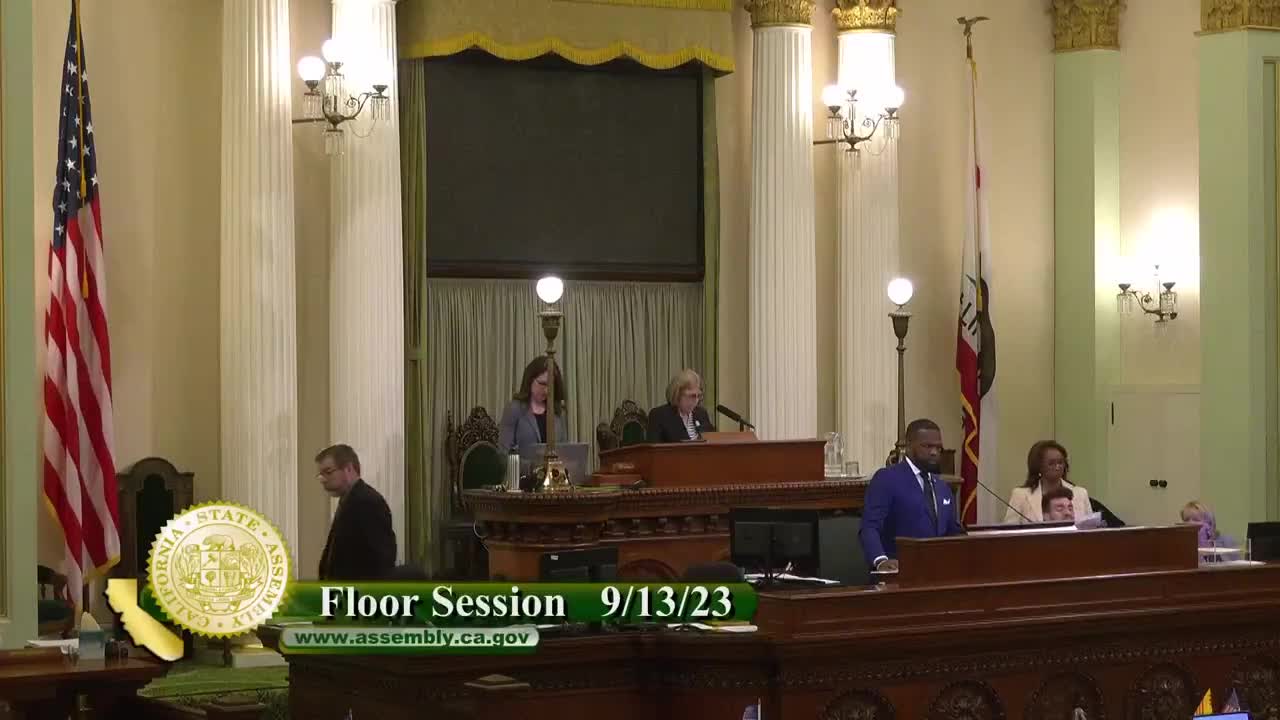 48SEC
Assembly Floor
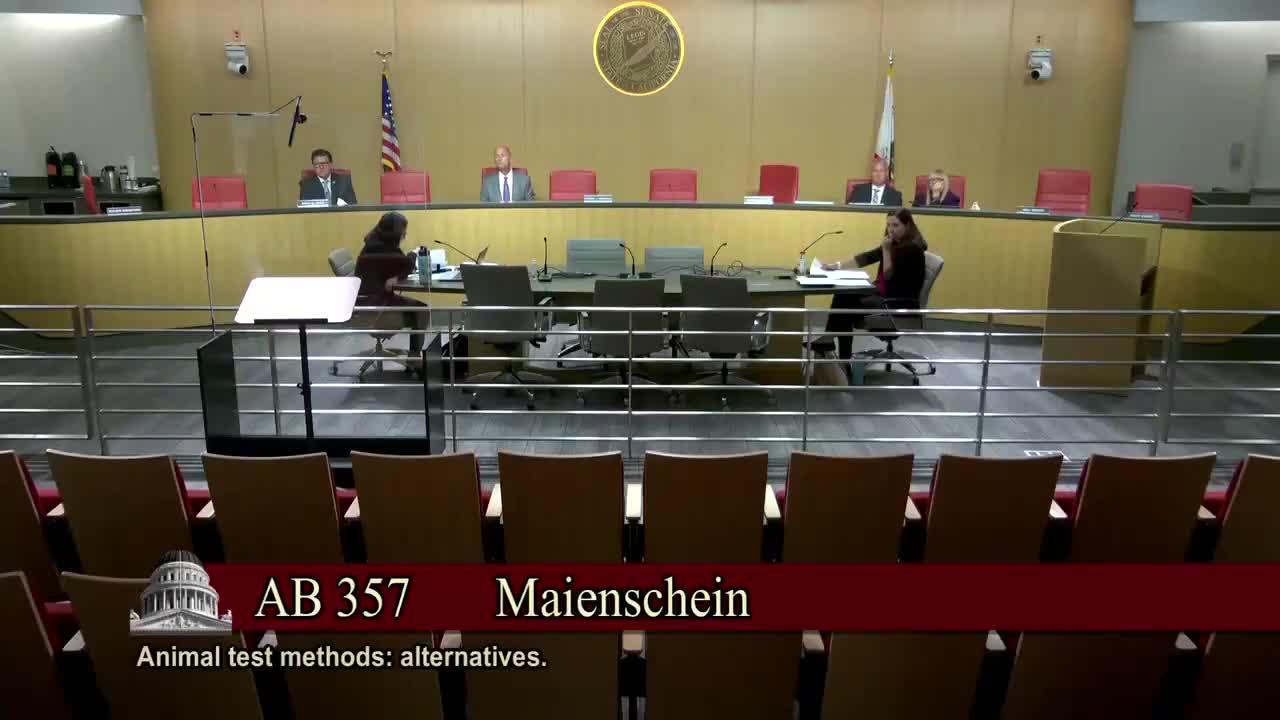 50SEC
Senate Standing Committee on Appropriations
 42SEC
Assembly Floor
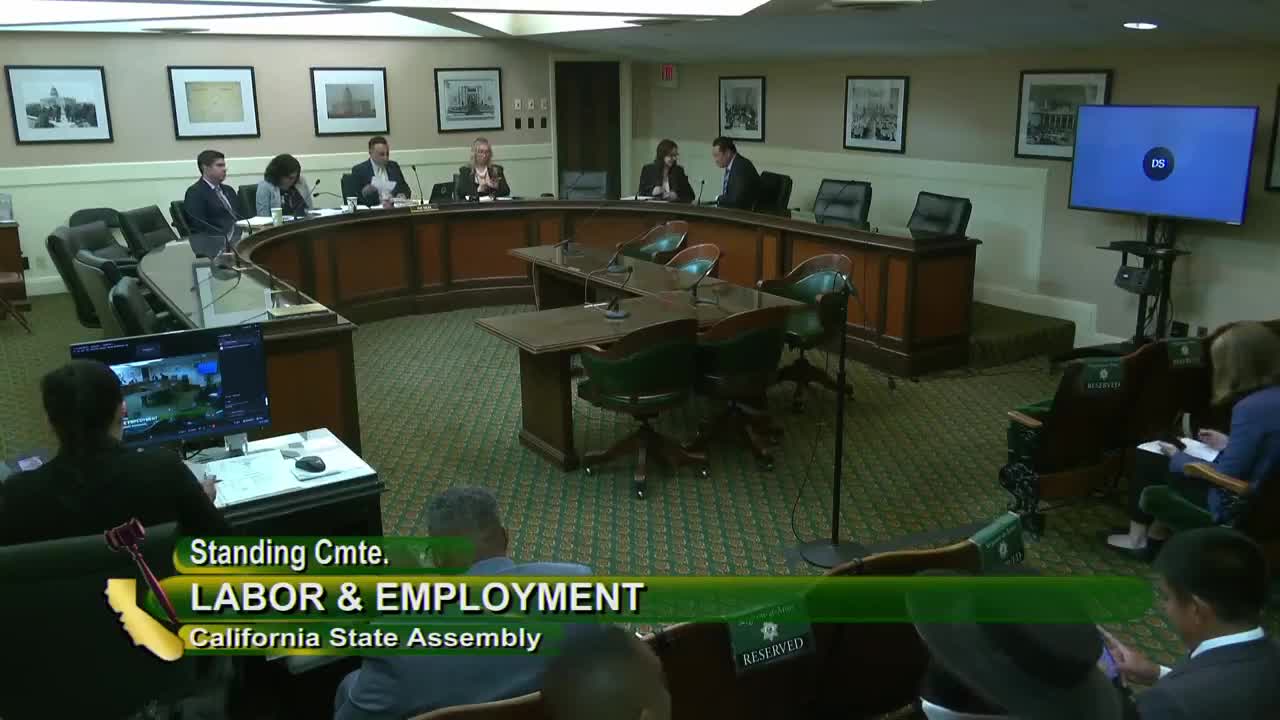 5MIN
Assembly Standing Committee on Labor and Employment
Bill Author

Bill Co-Author(s):