AB 1084: Bilingual-Oriented Social Equity Services Grant Program.
- Session Year: 2023-2024
- House: Assembly
- Latest Version Date: 2023-02-15
Current Status:
Failed
(2024-02-01: From committee: Filed with the Chief Clerk pursuant to Joint Rule 56.)
Introduced
In Committee
First Chamber
In Committee
Second Chamber
Enacted
The Dymally-Alatorre Bilingual Services Act requires a state agency that serves a substantial number of non-English-speaking people, as defined, and that finds other specific factors to exist, to distribute specified written materials in the appropriate non-English language through its statewide and local offices or facilities to those non-English-speaking persons. As an alternative, the act requires the state agency to furnish translation aids or guides, or to provide assistance, through use of a qualified bilingual person, in completing English forms or questionnaires and in understanding English forms, letters, or notices.
This bill would require the State Department of Social Services, commencing with the 202324 fiscal year, to establish and administer the Bilingual-Oriented Social Equity Services Grant Program to distribute funding to nonprofit, community-based organizations that provide social services that ensure equity in access to specified public social services. Grants awarded pursuant to the bill would be used to provide a pay differential to direct service professionals who can communicate in a language or medium other than English, as defined, as a primary part of their regular job duties. The bill would require 40% of funds appropriated for its purposes to be awarded as Multilingual Success Grants, to community-based organizations serving those non-English-speaking populations in the community that meet the threshold of substantial number of non-English-speaking people pursuant to the Dymally-Alatorre Bilingual Services Act. The bill would require 60% of the appropriated funds to be awarded as Multilingual Access Grants, to community-based organizations serving those non-English-speaking populations in the community that do not meet that threshold. The bill would establish the Bilingual-Oriented Social Equity Services Grant Program Fund, which would consist of moneys appropriated by the Legislature for purposes of providing the grants described in the bill.
The Legislature finds and declares as follows:
(a)The provision of services that are culturally and linguistically responsive to Californians is instrumental to improving access and equity in the direct services provided by both the government and community-based infrastructure.
(b)Direct service professionals are critical to the provision of services and supports to individuals with limited English proficiency.
(c)In recognition of the value of effective communication between direct service professionals and the Californians they serve, the provision of a pay differential for bilingual and multilingual direct service professionals will increase Californians access to staff who speak their preferred language.
(d)The Dymally-Alatorre Bilingual Services Act (Chapter 17.5 (commencing with Section 7290) of Division 7 of Title 1 of the Government Code) establishes the intent of the Legislature to provide effective communication between all levels of government in this state and the people of this state who are precluded from utilizing public services because of language barriers.
(e)The act establishes a standard of in-language and culturally competent services for substantial number of non-English-speaking people. A substantial number of non-English-speaking people is defined as members of a group who either do not speak English, or are unable to effectively communicate in English because it is not their native language and comprise 5 percent or more of the people served by the statewide or any local office or facility of a state agency.
(f)Statewide, most households that fall within the category of limited English proficiency or LEP speak Spanish, followed by various languages from Asia and the Pacific Islands.
10095.2.(a)(1)Commencing with the 202324 fiscal year, the State Department of Social Services shall establish and administer the Bilingual-Oriented Social Equity Services Grant Program, in accordance with this chapter.
(2)The purpose of the program is to distribute funding to community-based, nonprofit organizations that provide social services that ensure equity in access to services under this division. Grants shall be used to provide a pay differential to direct service professionals who can communicate in a language or medium other than English as a primary part of their regular job duties.
(3)The Bilingual-Oriented Social Equity Services Grant Program Fund is hereby established. The fund shall consist of moneys appropriated by the Legislature for purposes of this chapter, which shall be used solely to provide the grants described in subdivision (b).
(b)The program shall award grants as follows:
(1)(A)A grant awarded pursuant to this paragraph shall be known as a Multilingual Success Grant.
(B)The department shall allocate 40 percent of the funding appropriated for purposes of this chapter to community-based, nonprofit organizations serving non-English-speaking people and people with limited English proficiency in the state that meet the threshold of a substantial number of non-English-speaking people for purposes of the Dymally-Alatorre Bilingual Services Act (Chapter 17.5 (commencing with Section 7290) of Division 7 of Title 1 of the Government Code).
(2)(A)A grant awarded pursuant to this paragraph shall be known as the Multilingual Access Grant.
(B)The department shall allocate 60 percent of the funding appropriated for purposes of this chapter to community-based nonprofit organizations serving non-English-speaking people and people with limited English proficiency in the state that do not meet the threshold of substantial number of non-English-speaking people for purposes of the Dymally-Alatorre Bilingual Services Act (Chapter 17.5 (commencing with Section 7290) of Division 7 of Title 1 of the Government Code).
(c)Notwithstanding any other law, a direct service professional described in subdivision (b) shall be eligible for bilingual or multilingual pay if both of the following conditions are met:
(1)The duties currently assigned to the direct service professional require regular communication in a language or medium other than English with individuals seeking direct services.
(2)The employing community-based organization certifies that the direct service professional has the ability to communicate in the language or medium other than English, as defined in subdivision (d).
(d) For purposes of this section, medium other than English includes, but is not limited to, American Sign Language and other sign languages and augmentative and alternative communication.
|
Date
|
Status
|
|---|---|
| Feb 1, 2024 | From committee: Filed with the Chief Clerk pursuant to Joint Rule 56. |
| Jan 31, 2024 | Died pursuant to Art. IV, Sec. 10(c) of the Constitution. |
| May 18, 2023 | In committee: Held under submission. |
| May 10, 2023 | In committee: Set, first hearing. Referred to APPR. suspense file. |
| May 3, 2023 | In committee: Hearing postponed by committee. |
| Apr 19, 2023 | From committee: Do pass and re-refer to Com. on APPR. (Ayes 7. Noes 0.) (April 18). Re-referred to Com. on APPR. |
| Mar 2, 2023 | Referred to Com. on HUM. S. |
| Feb 16, 2023 | From printer. May be heard in committee March 18. |
| Feb 15, 2023 | Read first time. To print. |
|
Date
|
Description
|
Location
|
Votes
|
|
|---|---|---|---|---|
| Apr 18, 2023 | Do pass and be re-referred to the Committee on [Appropriations] | Assembly Standing Committee on Human Services |
Passed |
This list shows positions taken on this bill by organizations on the date displayed, which is linked to the original source.
Positions by individuals are not included.
|
Organization
|
Position
|
Date
|
|---|---|---|
| AAPI Equity Alliance | ** Support | |
| AAPIs for Civic Empowerment Education Fund | ** Support | |
| Alamako Foundation | ** Support | |
| API Equality-LA | ** Support | |
| Asian Americans Advancing Justice Southern California | * Support | Apr 18, 2023 |
| Asian Youth Center | ** Support | |
| BPSOS Center for Community Advancement | ** Support | |
| Buen Vecino | ** Support | |
| California Healthy Nail Salon Collaborative | * Support | Apr 18, 2023 |
| California Immigrant Policy Center | * Support | Apr 18, 2023 |
| Center for Asian Americans in Action | * Support | Apr 18, 2023 |
| Center for the Pacific Asian Family | ** Support | |
| Ceres Community Project | ** Support | |
| Chinatown Service Center | ** Support | |
| Coalition for Humane Immigrant Rights | ** Support | |
| Coalition to Abolish Slavery & Trafficking | ** Support | |
| Community Health Councils | ** Support | |
| Having Our Say Coalition | ** Support | |
| Immigration Resource Center of San Gabriel Valley | ** Support | |
| Jakara Movement | ** Support | |
| Korean American Coalition - Los Angeles | ** Support | |
| Korean American Coalition Los Angeles | * Support | Apr 18, 2023 |
| Korean American Family Services | ** Support | |
| Korean American Federation Of Los Angeles | ** Support | |
| My Sister's House | * Support | Apr 18, 2023 |
| National Association of Social Work California Chapter | * Support | Apr 18, 2023 |
| Orange County Asian and Pacific Islander Community Alliance, INC. | ** Support | |
| Pacific Asian Counseling Service | * Support | Apr 18, 2023 |
| pilipino workers center | ** Support | |
| Rising Communities | ** Support | |
| South Asian Network | ** Support | |
| Thai Community Development Center | ** Support | |
| The Children's Partnership | * Support | Apr 18, 2023 |
| Viet Rainbow of Orange County | * Support | Apr 18, 2023 |
| Vision y Compromiso | ** Support | |
| Young Invincibles | ** Support |
Date of Hearing: May 10, 2023
ASSEMBLY COMMITTEE ON APPROPRIATIONS
Chris Holden, Chair
ABPCA Bill Id:AB 1084
Author:(Stephanie Nguyen) – As Introduced Ver:February 15, 2023
Policy Committee: | Human Services | Vote: | 7 - 0 |
|
| ||
|
|
Urgency: No State Mandated Local Program: No Reimbursable: No
SUMMARY:
This bill establishes a grant program within the California Department of Social Services (CDSS) to provide funding to nonprofit community-based organizations (CBOs) for pay differentials to direct service professionals who communicate in a language other than English as part of their job duties.
Specifically, this bill:
- Requires CDSS to establish and administer the Bilingual-Oriented Social Equity Services (BOSES) Grant Program to distribute funding to CBOs that provide social services to provide a pay differential to direct service professionals who can communicate in a language or medium other than English as a primary part of their regular job duties.
- Establishes the BOSES Grant Program Fund (Fund) to, upon appropriation by the Legislature, award grants as follows:
- Requires 40% of the Fund to be used for “Multilingual Success Grants” to CBOs serving non-English-speaking people and people with limited English proficiency (LEP) who meet the threshold of a “substantial number of non-English-speaking people” for purposes of the Dymally-Alatorre Bilingual Services Act (Act).
- Requires 60% of the Fund to be used for “Multilingual Access Grants” to CBOs serving non-English-speaking people and people with LEP who do not meet the threshold in a) above.
- Specifies a direct service professional is eligible for bilingual or multilingual pay if their duties require regular communication in a language or medium other than English with individuals seeking direct services, and the employing CBO certifies the direct service professional has the ability to communicate in the language or medium other than English.
- Specifies “medium other than English” to include, but not be limited to, American Sign Language and other sign languages and augmentative and alternative communication.
FISCAL EFFECT:
- Ongoing General Fund (GF) cost pressures of an unknown amount, but likely in the low millions of dollars to fund the grant program. For illustration, if 1,000 full-time employees making $16 per hour received a 4% pay differential, the annual costs would be approximately $1.28 million. Actual costs would vary depending on the number of eligible employees statewide and the amount of the pay differential, which the bill doesn’t specify.
- Estimated ongoing GF costs of $170,000 annually to CDSS for one staff position to establish and administer the grant program.
(The author is also pursuing this proposal in the budget process)
COMMENTS:
- Purpose. According to the author:
Currently, the quality and extent of language accessibility and cultural competency of government services in California are inadequate for LEP community members. This bill will support and expand critically needed in-language accessibility to services.
- Background. Over 40% of Californians over the age of four live in households where a language other than English is sometimes or always spoken. According to the US Census Bureau, in 2021 statewide, most LEP households speak Spanish, followed by various languages from Asia and the Pacific Islands. There are over 200 languages spoken in California.
Existing law establishes the Dymally-Alatorre Bilingual Services Act to provide for effective communication between all levels of government in California and the people of the state who struggle to utilize public services due to language barriers. The Act requires state agencies involved in providing information or services to the public to have bilingual staff and translated documents available when the office services an area where more than 5% of the population speak a non-English language.
CBOs throughout the state often provide language services to populations that don’t meet the 5% threshold. According to advocates, most CBOs do not have the resources to competitively compensate their bilingual staff.
This bill establishes a grant program for CBOs providing direct services in a language other than English to competitively compensate their bilingual and multilingual staff with a pay differential. Under the program, CBOs that provide in-language services such as legal aid, healthcare navigation, domestic violence case management, and social service enrollment, would receive additional resources to assist with staff retention.
- Bilingual Pay. Bilingual pay is a pay supplement for bilingual employees who utilize a non-English language on a regular basis to execute their duties. For example, Los Angeles County offers full-time bilingual employees $50 per pay period or $0.57 per hour after meeting requirements of fluency and cultural competency and receiving confirmation from the employee’s department head the employee utilizes bilingual skills on a regular basis to execute their duties.
Analysis Prepared by: Jennifer Swenson / APPR. / (916) 319-2081
Date of Hearing: April 18, 2023
ASSEMBLY COMMITTEE ON HUMAN SERVICES
Corey A. Jackson, Chair
ABPCA Bill Id:AB 1084 (
Author:Stephanie Nguyen) – As Introduced Ver:February 15, 2023
SUBJECT: Bilingual-Oriented Social Equity Services Grant Program
SUMMARY: Establishes the “Bilingual-Oriented Social Equity Services (BOSES) Grant Program” within the California Department of Social Services (CDSS) to distribute funding to nonprofit community-based organizations (CBOs) to provide a pay differential to direct service professionals who communicate in a language or medium other than English as part of their job duties. Specifically, this bill:
- Requires, commencing with the 2023–24 fiscal year, CDSS to establish and administer the BOSES Grant Program for the purpose of distributing funding to CBOs that provide social services that ensure equity in access to services. Further requires grants to be used to provide a pay differential to direct service professionals who can communicate in a language or medium other than English as a primary part of their regular job duties.
- Defines, “medium other than English” to include, but not be limited to, American Sign Language, and other sign languages and augmentative and alternative communication.
- Establishes the “BOSES Grant Program Fund” to consist of moneys appropriated by the Legislature, to be used solely to award grants as follows:
- A grant known as a Multilingual Success Grant requires CDSS to allocate 40% of the funding appropriated for purposes of community language access to CBOs serving non-English-speaking people and people with limited English proficiency (LEP) in the state that meet the threshold of a “substantial number of non-English-speaking people” for purposes of the Dymally-Alatorre Bilingual Services Act (Act); and,
- A grant known as the Multilingual Access Grant requires CDSS to allocate 60% of the funding appropriated for purposes of community language access to CBOs serving non-English-speaking people and people with LEP in the state that do not meet the threshold of “substantial number of non-English-speaking people” for purposes of the Act.
- Specifies that notwithstanding any other law, a direct service professional shall be eligible for bilingual or multilingual pay if both of the following conditions are met:
- The duties currently assigned to the direct service professional require regular communication in a language or medium other than English with individuals seeking direct services; and,
- The employing CBO certifies that the direct service professional has the ability to communicate in the language or medium other than English, as defined.
- Makes findings and declarations related to the provision of services that are culturally and linguistically responsive to Californians being instrumental to improving access and equity in the direct services provided by both the government and community-based infrastructure. Further declares that direct service professionals are critical to the provision of services and supports to individuals with LEP.
EXISTING LAW:
- Establishes the “Dymally-Alatorre Bilingual Services Act” (Act) to provide for effective communication between all levels of government in California and the people of the state who are prevented from utilizing public services due to language barriers. Requires state agencies involved in providing information or services to the public, where a substantial portion is non-English-speaking (at least 5%), to provide information and services to the public in the language of the non-English-speaking person. (Government Code 7290 et seq)
- Requires CDSS, subject to the availability of funding, to contract with qualified non-profit legal services organizations to provide legal services, including culturally and linguistically appropriate services, to unaccompanied undocumented minors, as defined, who are transferred to the care and custody of the federal Office of Refugee Resettlement and who are present in the state. (Welfare and Institutions Code Section [WIC] 13300; 13301)
- States legislative intent that the provision of services that are culturally and linguistically responsive to consumers is instrumental to improving access and equity in the developmental services system. (WIC 4641.1(a)(1))
- Makes a legislative declaration that direct service professionals are critical to the provision of services and supports to individuals with intellectual and developmental disabilities and their families. Further declares, in recognition of the value of effective communication between direct service professionals and the consumers and families they serve, the provision of a pay differential for bilingual and multilingual direct service professionals will increase consumer access to staff who speak their preferred language. (WIC 4641.1(a)(2)(3))
- Requires the Department of Developmental Services (DDS), subject to an appropriation, to establish and implement a system that promotes equity in access to services for regional center consumers by providing a pay differential to direct service professionals who can communicate in a language or medium other than English as part of their regular job duties. (WIC 4641.1(b))
FISCAL EFFECT: Unknown, this bill has not been analyzed by a fiscal committee.
COMMENTS:
Background: Community-based organizations. State agencies are required to have bilingual staff and translated documents available when the office services an area where more than 5% of the population speak a non-English language. CBOs throughout the state often fill the gap by providing these essential services to populations that don’t meet the 5% threshold. However, most CBOs do not have the resources to competitively compensate their bilingual staff. The author reports that in a recent survey conducted, 27 of the 34 responding organizations answered “no” when asked if they can provide staff with bilingual pay. CBOs play an essential role in allowing more language accessibility in the provision of a variety of critical services such as Medi-Cal and Covered California Enrollment, direct legal services such as assistance with naturalization and DACA applications, as well as domestic violence case management. However, despite being the ones best positioned with the language accessibility and cultural competency to serve hard-to-reach communities, CBOs report they are often not properly resourced to do this critical work. This bill would establish a grant program to distribute funding to CBOs that provide social services that ensure equity in access to services to be used to provide a pay differential to direct service professionals.
Dymally-Alatorre Bilingual Services Act. There are over 200 languages spoken in California. Over 40% of Californians over the age of four live in households where a language other than English is sometimes or always spoken. The Act, established in 1973, states legislative intent to provide for effective communication between all levels of government and the people who are precluded from utilizing public services because of language barriers. The Act requires state agencies that are directly engaged in providing information and/or services to a “substantial number” of non-English-speaking individuals to take certain steps to ensure that information and services are provided in languages other than English. Among other things, these state agencies must translate certain materials into any non-English language spoken by a substantial number of the public served by the agency. The Act defines a “substantial number of non-English-speaking people” to mean members of a group “who either do not speak English, or who are unable to effectively communicate in English because it is not their native language, and who comprise five percent or more of the people served by the statewide or any local office or facility of a state agency.” Threshold languages refer to the languages in which materials and information must be provided to meet the standards of the Act or similar requirements. The Act further requires agencies to conduct a language survey every two years, report the results to the survey to California Department of Human Resources (CalHR), and to develop and submit an implementation plan to CalHR based on the survey results.
This bill would establish the “BOSES Grant Program Fund” to be used to provide grants to CBOs serving non-English-speaking people and people with LEP that meet the threshold of a “substantial number of non-English-speaking people” for purposes of the Act, as well as those CBOs that serve populations that don’t meet the threshold defined by the Act.
Author’s statement: According to the Author, “According to the US Census Bureau, in 2021 almost 44% of California households spoke a language other than English. Nearly seven million Californians (17.5%) report speaking English “less than very well” and 28% of limited English proficiency (LEP) Californians speak an API language. Currently, the quality and extent of language accessibility and cultural competency of government services in California are inadequate for LEP community members. An article by KQED highlighted how poor language accessibility is within government services, particularly the California Division of Occupational Safety and Health (Cal/OSHA) has only one bilingual safety inspector for Cantonese and Vietnamese out of 214 inspectors, none in any other Asian and Pacific Islander language. Consequently, millions of Californians are denied essential government services, utilization of healthcare, and safeguards from becoming victims of fraud.
“This bill will support and expand critically needed in-language accessibility to services. Specifically, [This bill] establishes the Bilingual Oriented Social Equity Services Grant Program to enhance access to in-language services such as legal aid, healthcare navigation, domestic violence case management, social service enrollment and more. This bill authorizes the Department of Social Services (CDSS) to distribute grant funding to community-based, nonprofit organizations ensuring equity in access to services for those with limited English language proficiency.”
Need for this bill: The provisions of this bill seek to create a grant program so that CBOs providing direct services in a language other than English can competitively compensate their bilingual and multilingual staff with a pay differential. This bill would establish a grant program under the purview of CDSS to distribute grants to CBOs that provide in-language services such as legal aid, healthcare navigation, domestic violence case management, and social service enrollment with additional resources to assist CBOs with staff retention.
Equity Impact: This bill seeks to address the inequities in access to services due to lacking language accessibility. As of 2021, nearly seven million Californians (17.5%) report having limited-English proficiency and 28% of LEPs speak an Asian/Pacific Islander language which makes the provision of in-language assistance an integral service in California. The demand for assisting LEP populations is high, yet there is a shortage in providing these services.
Many CBOs provide a variety of services such as healthcare, Medi-Cal and Covered California enrollment, mental health counseling, direct legal services, and other social services and are a part of the “community-based infrastructure” that is funded through a variety of private sources, local, state, and federal sources. CBOs provide both direct services and help to create greater accessibility to government services via language accessibility and cultural competency that many government institutions are unable to provide.
The recent Half Moon Bay and Monterey Park shootings underscored the importance of the services these CBOs provides, as many were the first on the ground reaching out to the victims and their families to offer in-language services and financial support. By ensuring that these infrastructures are reinforced, LEP Californians will have these organizations to rely on for help when language accessibility and cultural competency needs remain in high demand.
RELATED AND PRIOR LEGISLATION:
AB 136 (Committee on Budget), Chapter 76, Statutes of 2021, provided for the statutory changes necessary to enact developmental-services-related provisions of the 2021 Budget Act . Included provisions related to language access and required DDS to establish and implement a system that promotes equity in access to services for consumers by providing a pay differential to direct service professionals who can communicate in a language or medium other than English.
REGISTERED SUPPORT / OPPOSITION:
Support
Asian Americans Advancing Justice-Southern California (Sponsor)
AAPI Equity Alliance
AAPIs for Civic Empowerment Education Fund
Alamako Foundation
API Equality-LA
Asian Youth Center (AYC)
BPSOS Center for Community Advancement
Buen Vecino
California Healthy Nail Salon Collaborative
California Immigrant Policy Center
Center for Asian Americans in Action
Center for The Pacific Asian Family
Ceres Community Project
Chinatown Service Center
Coalition for Humane Immigrant Rights (CHIRLA)
Coalition to Abolish Slavery & Trafficking (CAST)
Community Health Councils
Having Our Say Coalition
Immigration Resource Center of San Gabriel Valley
Jakara Movement
Korean American Coalition - Los Angeles
Korean American Family Services
Korean American Federation of Los Angeles
National Association of Social Workers, California Chapter
Orange County Asian and Pacific Islander Community Alliance, INC. (OCAPICA)
Pacific Asian Counseling Services
Pilipino Workers Center
Rising Communities (formerly Community Health Councils)
South Asian Network
Thai Community Development Center
Viet Rainbow of Orange County
Vision Y Compromiso
Young Invincibles
Opposition
None on file
Analysis Prepared by: Jessica Langtry / HUM. S. / (916) 319-2089
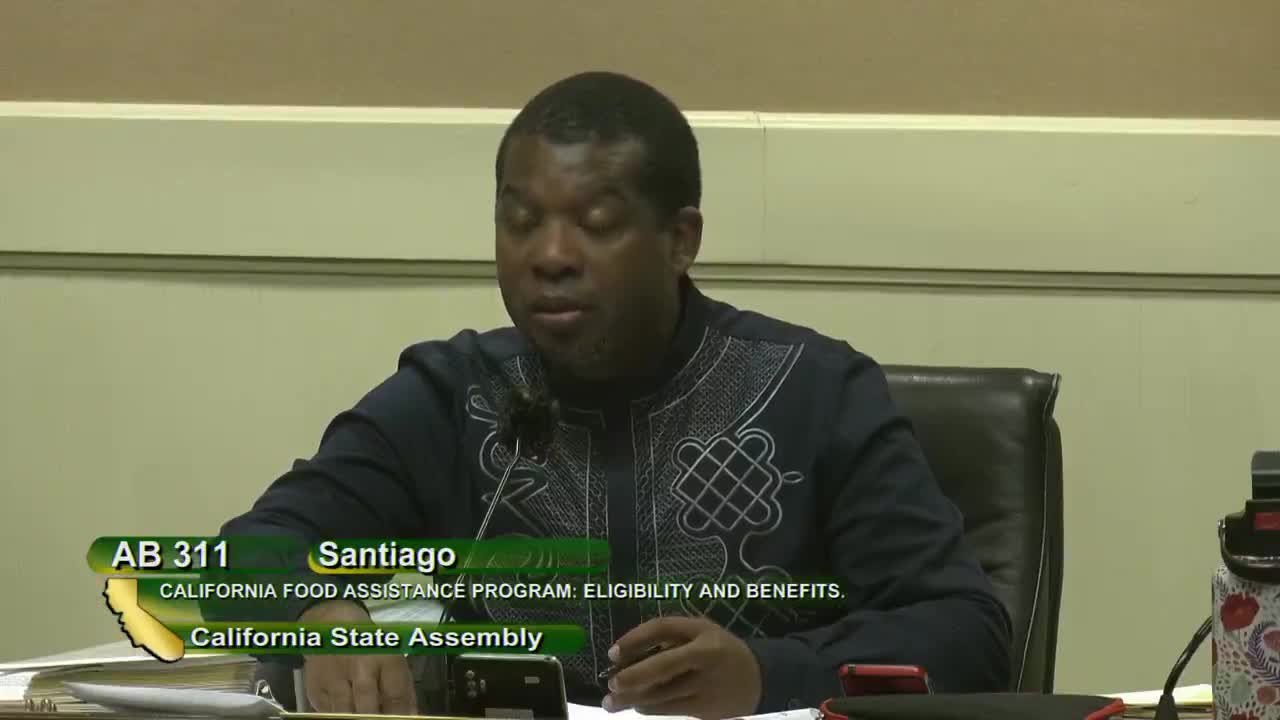
Discussed in Hearing
 9MIN
Assembly Standing Committee on Human Services
Bill Author
Bill Co-Author(s):