AB 1121: Public works: ineligibility list.
- Session Year: 2023-2024
- House: Assembly
- Latest Version Date: 2023-10-08
Current Status:
Passed
(2023-10-08: Chaptered by Secretary of State - Chapter 465, Statutes of 2023.)
Introduced
In Committee
First Chamber
In Committee
Second Chamber
Enacted
What does this bill do?
Requires public agencies that award public works contracts to annually send the Department of Industrial Relations’ project registration database a list of contractors locally debarred or suspended from bidding or working as subcontractors. The list must include each contractor’s name, state license number, the jurisdiction where the debarment or suspension applies, and the effective dates; the department will post these lists publicly but will not verify their accuracy or accept liability.
The summary is provided by generative AI which can make mistakes. For original language, please view the details in the table below.
Existing law generally requires a contractor or subcontractor to be registered with the Department of Industrial Relations to be qualified to bid on, be listed in a bid proposal, or engage in the performance of any public works contract. Existing law requires a contractor or subcontractor to meet specific conditions to qualify for this registration. Existing law requires the Department of Industrial Relations to maintain on its internet website a list of contractors that are currently registered to perform public work.
This bill would require awarding authorities to annually submit to the Department of Industrial Relations electronic project registration database a list of ineligible contractors, as specified, pursuant to local debarment or suspension processes. This bill would require the department to make the list available to the public through the electronic database.
Existing law generally requires a contractor or subcontractor to be registered with the Department of Industrial Relations to be qualified to bid on, be listed in a bid proposal, or engage in the performance of any public works contract. Existing law requires a contractor or subcontractor to meet specific conditions to qualify for this registration. Existing law requires the Department of Industrial Relations to maintain on its internet website a list of contractors that are currently registered to perform public work.
This bill would require awarding bodies to publish on authorities to submit to the Department of Industrial Relations electronic project registration database a list of ineligible contractors, as specified, pursuant to local debarment or suspension processes.
Existing law generally requires a contractor or subcontractor to be registered with the Department of Industrial Relations to be qualified to bid on, be listed in a bid proposal, or engage in the performance of any public works contract. Existing law requires a contractor or subcontractor to meet specific conditions to qualify for this registration. Existing law requires the Department of Industrial Relations to maintain on its internet website a list of contractors that are currently registered to perform public work.
This bill would require awarding bodies to publish on the Department of Industrial Relations electronic project registration database a list of ineligible contractors, as specified, pursuant to local debarment or suspension processes.
(a)A contractor or subcontractor shall not be qualified to bid on, be listed in a bid proposal, subject to the requirements of Section 4104 of the Public Contract Code, or engage in the performance of any contract for public work, as defined in this chapter, unless currently registered and qualified to perform public work pursuant to Section 1725.5. It is not a violation of this section for an unregistered contractor to submit a bid that is authorized by Section 7029.1 of the Business and Professions Code or by Section 10164 or 20103.5 of the Public Contract Code, provided the contractor is registered to perform public work pursuant to Section 1725.5 at the time the contract is awarded.
(b)Notice of the requirement described in subdivision (a) shall be included in all bid invitations and public works contracts, and a bid shall not be accepted nor any contract or subcontract entered into without proof of the contractor or subcontractors current registration to perform public work pursuant to Section 1725.5.
(c)An inadvertent error in listing a subcontractor who is not registered pursuant to Section 1725.5 in a bid proposal shall not be grounds for filing a bid protest or grounds for considering the bid nonresponsive, provided that any of the following apply:
(1)The subcontractor is registered prior to the bid opening.
(2)Within 24 hours after the bid opening, the subcontractor is registered and has paid the penalty registration fee specified in subparagraph (E) of paragraph (2) of subdivision (a) of Section 1725.5.
(3)The subcontractor is replaced by another registered subcontractor pursuant to Section 4107 of the Public Contract Code.
(d)Failure by a subcontractor to be registered to perform public work as required by subdivision (a) shall be grounds under Section 4107 of the Public Contract Code for the contractor, with the consent of the awarding authority, to substitute a subcontractor who is registered to perform public work pursuant to Section 1725.5 in place of the unregistered subcontractor.
(e)The department shall maintain on its internet website a list of contractors who are currently registered to perform public work pursuant to Section 1725.5.
(f)A contract entered into with any contractor or subcontractor in violation of subdivision (a) shall be subject to cancellation, provided that a contract for public work shall not be unlawful, void, or voidable solely due to the failure of the awarding body, contractor, or any subcontractor to comply with the requirements of Section 1725.5 or this section.
(g)If the Labor Commissioner or their designee determines that a contractor or subcontractor engaged in the performance of any public work contract without having been registered in accordance with this section, the contractor or subcontractor shall forfeit, as a civil penalty to the state, one hundred dollars ($100) for each day of work performed in violation of the registration requirement, not to exceed an aggregate penalty of eight thousand dollars ($8,000) in addition to any penalty registration fee assessed pursuant to clause (ii) of subparagraph (E) of paragraph (2) of subdivision (a) of Section 1725.5.
(h)(1)In addition to, or in lieu of, any other penalty or sanction authorized pursuant to this chapter, a higher tiered public works contractor or subcontractor who is found to have entered into a subcontract with an unregistered lower tier subcontractor to perform any public work in violation of the requirements of Section 1725.5 or this section shall be subject to forfeiture, as a civil penalty to the state, of one hundred dollars ($100) for each day the unregistered lower tier subcontractor performs work in violation of the registration requirement, not to exceed an aggregate penalty of ten thousand dollars ($10,000).
(2)The Labor Commissioner shall use the same standards specified in subparagraph (A) of paragraph (2) of subdivision (a) of Section 1775 when determining the severity of the violation and what penalty to assess, and may waive the penalty for a first time violation that was unintentional and did not hinder the Labor Commissioners ability to monitor and enforce compliance with the requirements of this chapter.
(3)A higher tiered public works contractor or subcontractor shall not be liable for penalties assessed pursuant to paragraph (1) if the lower tier subcontractors performance is in violation of the requirements of Section 1725.5 due to the revocation of a previously approved registration.
(4)A subcontractor shall not be liable for any penalties assessed against a higher tiered public works contractor or subcontractor pursuant to paragraph (1). A higher tiered public works contractor or subcontractor may not require a lower tiered subcontractor to indemnify or otherwise be liable for any penalties pursuant to paragraph (1).
(i)The Labor Commissioner or their designee shall issue a civil wage and penalty assessment, in accordance with the provisions of Section 1741, upon determination of penalties pursuant to subdivision (g) and paragraph (1) of subdivision (h). Review of a civil wage and penalty assessment issued under this subdivision may be requested in accordance with the provisions of Section 1742. The regulations of the Director of Industrial Relations, which govern proceedings for review of civil wage and penalty assessments and the withholding of contract payments under Article 1 (commencing with Section 1720) and Article 2 (commencing with Section 1770), shall apply.
(j)(1)Where a contractor or subcontractor engages in the performance of any public work contract without having been registered in violation of the requirements of Section 1725.5 or this section, the Labor Commissioner shall issue and serve a stop order prohibiting the use of the unregistered contractor or the unregistered subcontractor on all public works until the unregistered contractor or unregistered subcontractor is registered. The stop order shall not apply to work by registered contractors or subcontractors on the public work.
(2)A stop order may be personally served upon the contractor or subcontractor by either of the following methods:
(A)Manual delivery of the order to the contractor or subcontractor personally.
(B)Leaving signed copies of the order with the person who is apparently in charge at the site of the public work and by thereafter mailing copies of the order by first-class mail, postage prepaid to the contractor or subcontractor at one of the following:
(i)The address of the contractor or subcontractor on file with either the Secretary of State or the Contractors State License Board.
(ii)If the contractor or subcontractor has no address on file with the Secretary of State or the Contractors State License Board, the address of the site of the public work.
(3)The stop order shall be effective immediately upon service and shall be subject to appeal by the party contracting with the unregistered contractor or subcontractor, by the unregistered contractor or subcontractor, or both. The appeal, hearing, and any further review of the hearing decision shall be governed by the procedures, time limits, and other requirements specified in subdivision (a) of Section 238.1.
(4)Any employee of an unregistered contractor or subcontractor who is affected by a work stoppage ordered by the commissioner pursuant to this subdivision shall be paid at their regular hourly prevailing wage rate by that employer for any hours the employee would have worked but for the work stoppage, not to exceed 10 days.
(k)Failure of a contractor or subcontractor, owner, director, officer, or managing agent of the contractor or subcontractor to observe a stop order issued and served upon them pursuant to subdivision (j) is guilty of a misdemeanor punishable by imprisonment in county jail not exceeding 60 days or by a fine not exceeding ten thousand dollars ($10,000), or both.
(l)This section shall apply to any bid proposal submitted on or after March 1, 2015, and any contract for public work entered into on or after April 1, 2015. This section shall also apply to the performance of any public work, as defined in this chapter, on or after January 1, 2018, regardless of when the contract for public work was entered.
(m)Penalties received pursuant to this section shall be deposited in the State Public Works Enforcement Fund established by Section 1771.3 and shall be used only for the purposes specified in that section.
(n)This section shall not apply to work performed on a public works project of twenty-five thousand dollars ($25,000) or less when the project is for construction, alteration, demolition, installation, or repair work or to work performed on a public works project of fifteen thousand dollars ($15,000) or less when the project is for maintenance work.
(o)Awarding authorities shall annually submit to the Department of Industrial Relations electronic project registration database a list of contractors that are ineligible to bid on or be awarded a public works contract, or to perform work as a subcontractor on a public works project, pursuant to local debarment or suspension processes. The electronic database list shall contain the name of the contractor, the Contractors State License Board license number of the contractor, the specific jurisdiction where the debarment or suspension applies, and the effective period of debarment or suspension of the contractor. The electronic database list shall be updated at least annually. The department shall make the lists provided by awarding authorities available to the public through its project registration database, but shall have no responsibility for verifying or ensuring the accuracy of the information provided by awarding authorities, and shall have no liability in any respect with regard to such lists.
(a)A contractor or subcontractor shall not be qualified to bid on, be listed in a bid proposal, subject to the requirements of Section 4104 of the Public Contract Code, or engage in the performance of any contract for public work, as defined in this chapter, unless currently registered and qualified to perform public work pursuant to Section 1725.5. It is not a violation of this section for an unregistered contractor to submit a bid that is authorized by Section 7029.1 of the Business and Professions Code or by Section 10164 or 20103.5 of the Public Contract Code, provided the contractor is registered to perform public work pursuant to Section 1725.5 at the time the contract is awarded.
(b)Notice of the requirement described in subdivision (a) shall be included in all bid invitations and public works contracts, and a bid shall not be accepted nor any contract or subcontract entered into without proof of the contractor or subcontractors current registration to perform public work pursuant to Section 1725.5.
(c)An inadvertent error in listing a subcontractor who is not registered pursuant to Section 1725.5 in a bid proposal shall not be grounds for filing a bid protest or grounds for considering the bid nonresponsive, provided that any of the following apply:
(1)The subcontractor is registered prior to the bid opening.
(2)Within 24 hours after the bid opening, the subcontractor is registered and has paid the penalty registration fee specified in subparagraph (E) of paragraph (2) of subdivision (a) of Section 1725.5.
(3)The subcontractor is replaced by another registered subcontractor pursuant to Section 4107 of the Public Contract Code.
(d)Failure by a subcontractor to be registered to perform public work as required by subdivision (a) shall be grounds under Section 4107 of the Public Contract Code for the contractor, with the consent of the awarding authority, to substitute a subcontractor who is registered to perform public work pursuant to Section 1725.5 in place of the unregistered subcontractor.
(e)The department shall maintain on its internet website a list of contractors who are currently registered to perform public work pursuant to Section 1725.5.
(f)A contract entered into with any contractor or subcontractor in violation of subdivision (a) shall be subject to cancellation, provided that a contract for public work shall not be unlawful, void, or voidable solely due to the failure of the awarding body, contractor, or any subcontractor to comply with the requirements of Section 1725.5 or this section.
(g)If the Labor Commissioner or their designee determines that a contractor or subcontractor engaged in the performance of any public work contract without having been registered in accordance with this section, the contractor or subcontractor shall forfeit, as a civil penalty to the state, one hundred dollars ($100) for each day of work performed in violation of the registration requirement, not to exceed an aggregate penalty of eight thousand dollars ($8,000) in addition to any penalty registration fee assessed pursuant to clause (ii) of subparagraph (E) of paragraph (2) of subdivision (a) of Section 1725.5.
(h)(1)In addition to, or in lieu of, any other penalty or sanction authorized pursuant to this chapter, a higher tiered public works contractor or subcontractor who is found to have entered into a subcontract with an unregistered lower tier subcontractor to perform any public work in violation of the requirements of Section 1725.5 or this section shall be subject to forfeiture, as a civil penalty to the state, of one hundred dollars ($100) for each day the unregistered lower tier subcontractor performs work in violation of the registration requirement, not to exceed an aggregate penalty of ten thousand dollars ($10,000).
(2)The Labor Commissioner shall use the same standards specified in subparagraph (A) of paragraph (2) of subdivision (a) of Section 1775 when determining the severity of the violation and what penalty to assess, and may waive the penalty for a first time violation that was unintentional and did not hinder the Labor Commissioners ability to monitor and enforce compliance with the requirements of this chapter.
(3)A higher tiered public works contractor or subcontractor shall not be liable for penalties assessed pursuant to paragraph (1) if the lower tier subcontractors performance is in violation of the requirements of Section 1725.5 due to the revocation of a previously approved registration.
(4)A subcontractor shall not be liable for any penalties assessed against a higher tiered public works contractor or subcontractor pursuant to paragraph (1). A higher tiered public works contractor or subcontractor may not require a lower tiered subcontractor to indemnify or otherwise be liable for any penalties pursuant to paragraph (1).
(i)The Labor Commissioner or their designee shall issue a civil wage and penalty assessment, in accordance with the provisions of Section 1741, upon determination of penalties pursuant to subdivision (g) and paragraph (1) of subdivision (h). Review of a civil wage and penalty assessment issued under this subdivision may be requested in accordance with the provisions of Section 1742. The regulations of the Director of Industrial Relations, which govern proceedings for review of civil wage and penalty assessments and the withholding of contract payments under Article 1 (commencing with Section 1720) and Article 2 (commencing with Section 1770), shall apply.
(j)(1)Where a contractor or subcontractor engages in the performance of any public work contract without having been registered in violation of the requirements of Section 1725.5 or this section, the Labor Commissioner shall issue and serve a stop order prohibiting the use of the unregistered contractor or the unregistered subcontractor on all public works until the unregistered contractor or unregistered subcontractor is registered. The stop order shall not apply to work by registered contractors or subcontractors on the public work.
(2)A stop order may be personally served upon the contractor or subcontractor by either of the following methods:
(A)Manual delivery of the order to the contractor or subcontractor personally.
(B)Leaving signed copies of the order with the person who is apparently in charge at the site of the public work and by thereafter mailing copies of the order by first-class mail, postage prepaid to the contractor or subcontractor at one of the following:
(i)The address of the contractor or subcontractor on file with either the Secretary of State or the Contractors State License Board.
(ii)If the contractor or subcontractor has no address on file with the Secretary of State or the Contractors State License Board, the address of the site of the public work.
(3)The stop order shall be effective immediately upon service and shall be subject to appeal by the party contracting with the unregistered contractor or subcontractor, by the unregistered contractor or subcontractor, or both. The appeal, hearing, and any further review of the hearing decision shall be governed by the procedures, time limits, and other requirements specified in subdivision (a) of Section 238.1.
(4)Any employee of an unregistered contractor or subcontractor who is affected by a work stoppage ordered by the commissioner pursuant to this subdivision shall be paid at their regular hourly prevailing wage rate by that employer for any hours the employee would have worked but for the work stoppage, not to exceed 10 days.
(k)Failure of a contractor or subcontractor, owner, director, officer, or managing agent of the contractor or subcontractor to observe a stop order issued and served upon them pursuant to subdivision (j) is guilty of a misdemeanor punishable by imprisonment in county jail not exceeding 60 days or by a fine not exceeding ten thousand dollars ($10,000), or both.
(l)This section shall apply to any bid proposal submitted on or after March 1, 2015, and any contract for public work entered into on or after April 1, 2015. This section shall also apply to the performance of any public work, as defined in this chapter, on or after January 1, 2018, regardless of when the contract for public work was entered.
(m)Penalties received pursuant to this section shall be deposited in the State Public Works Enforcement Fund established by Section 1771.3 and shall be used only for the purposes specified in that section.
(n)This section shall not apply to work performed on a public works project of twenty-five thousand dollars ($25,000) or less when the project is for construction, alteration, demolition, installation, or repair work or to work performed on a public works project of fifteen thousand dollars ($15,000) or less when the project is for maintenance work.
(o)Awarding authorities shall annually submit to the Department of Industrial Relations electronic project registration database a list of contractors that are ineligible to bid on or be awarded a public works contract, or to perform work as a subcontractor on a public works project, pursuant to local debarment or suspension processes. The list shall contain the name of the contractor, the Contractors State License Board license number of the contractor, the specific jurisdiction where the debarment or suspension applies, and the effective period of debarment or suspension of the contractor. The list shall be updated at least annually. The electronic database list shall contain the name of the contractor, the Contractors State License Board license number of the contractor, the specific jurisdiction where the debarment or suspension applies, and the effective period of debarment or suspension of the contractor. The electronic database list shall be updated at least annually. The department shall make the lists provided by awarding authorities available to the public through its project registration database, but shall have no responsibility for verifying or ensuring the accuracy of the information provided by awarding authorities, and shall have no liability in any respect with regard to such lists.
(a)A contractor or subcontractor shall not be qualified to bid on, be listed in a bid proposal, subject to the requirements of Section 4104 of the Public Contract Code, or engage in the performance of any contract for public work, as defined in this chapter, unless currently registered and qualified to perform public work pursuant to Section 1725.5. It is not a violation of this section for an unregistered contractor to submit a bid that is authorized by Section 7029.1 of the Business and Professions Code or by Section 10164 or 20103.5 of the Public Contract Code, provided the contractor is registered to perform public work pursuant to Section 1725.5 at the time the contract is awarded.
(b)Notice of the requirement described in subdivision (a) shall be included in all bid invitations and public works contracts, and a bid shall not be accepted nor any contract or subcontract entered into without proof of the contractor or subcontractors current registration to perform public work pursuant to Section 1725.5.
(c)An inadvertent error in listing a subcontractor who is not registered pursuant to Section 1725.5 in a bid proposal shall not be grounds for filing a bid protest or grounds for considering the bid nonresponsive, provided that any of the following apply:
(1)The subcontractor is registered prior to the bid opening.
(2)Within 24 hours after the bid opening, the subcontractor is registered and has paid the penalty registration fee specified in subparagraph (E) of paragraph (2) of subdivision (a) of Section 1725.5.
(3)The subcontractor is replaced by another registered subcontractor pursuant to Section 4107 of the Public Contract Code.
(d)Failure by a subcontractor to be registered to perform public work as required by subdivision (a) shall be grounds under Section 4107 of the Public Contract Code for the contractor, with the consent of the awarding authority, to substitute a subcontractor who is registered to perform public work pursuant to Section 1725.5 in place of the unregistered subcontractor.
(e)The department shall maintain on its internet website a list of contractors who are currently registered to perform public work pursuant to Section 1725.5.
(f)A contract entered into with any contractor or subcontractor in violation of subdivision (a) shall be subject to cancellation, provided that a contract for public work shall not be unlawful, void, or voidable solely due to the failure of the awarding body, contractor, or any subcontractor to comply with the requirements of Section 1725.5 or this section.
(g)If the Labor Commissioner or their designee determines that a contractor or subcontractor engaged in the performance of any public work contract without having been registered in accordance with this section, the contractor or subcontractor shall forfeit, as a civil penalty to the state, one hundred dollars ($100) for each day of work performed in violation of the registration requirement, not to exceed an aggregate penalty of eight thousand dollars ($8,000) in addition to any penalty registration fee assessed pursuant to clause (ii) of subparagraph (E) of paragraph (2) of subdivision (a) of Section 1725.5.
(h)(1)In addition to, or in lieu of, any other penalty or sanction authorized pursuant to this chapter, a higher tiered public works contractor or subcontractor who is found to have entered into a subcontract with an unregistered lower tier subcontractor to perform any public work in violation of the requirements of Section 1725.5 or this section shall be subject to forfeiture, as a civil penalty to the state, of one hundred dollars ($100) for each day the unregistered lower tier subcontractor performs work in violation of the registration requirement, not to exceed an aggregate penalty of ten thousand dollars ($10,000).
(2)The Labor Commissioner shall use the same standards specified in subparagraph (A) of paragraph (2) of subdivision (a) of Section 1775 when determining the severity of the violation and what penalty to assess, and may waive the penalty for a first time violation that was unintentional and did not hinder the Labor Commissioners ability to monitor and enforce compliance with the requirements of this chapter.
(3)A higher tiered public works contractor or subcontractor shall not be liable for penalties assessed pursuant to paragraph (1) if the lower tier subcontractors performance is in violation of the requirements of Section 1725.5 due to the revocation of a previously approved registration.
(4)A subcontractor shall not be liable for any penalties assessed against a higher tiered public works contractor or subcontractor pursuant to paragraph (1). A higher tiered public works contractor or subcontractor may not require a lower tiered subcontractor to indemnify or otherwise be liable for any penalties pursuant to paragraph (1).
(i)The Labor Commissioner or their designee shall issue a civil wage and penalty assessment, in accordance with the provisions of Section 1741, upon determination of penalties pursuant to subdivision (g) and paragraph (1) of subdivision (h). Review of a civil wage and penalty assessment issued under this subdivision may be requested in accordance with the provisions of Section 1742. The regulations of the Director of Industrial Relations, which govern proceedings for review of civil wage and penalty assessments and the withholding of contract payments under Article 1 (commencing with Section 1720) and Article 2 (commencing with Section 1770), shall apply.
(j)(1)Where a contractor or subcontractor engages in the performance of any public work contract without having been registered in violation of the requirements of Section 1725.5 or this section, the Labor Commissioner shall issue and serve a stop order prohibiting the use of the unregistered contractor or the unregistered subcontractor on all public works until the unregistered contractor or unregistered subcontractor is registered. The stop order shall not apply to work by registered contractors or subcontractors on the public work.
(2)A stop order may be personally served upon the contractor or subcontractor by either of the following methods:
(A)Manual delivery of the order to the contractor or subcontractor personally.
(B)Leaving signed copies of the order with the person who is apparently in charge at the site of the public work and by thereafter mailing copies of the order by first class first-class mail, postage prepaid to the contractor or subcontractor at one of the following:
(i)The address of the contractor or subcontractor on file with either the Secretary of State or the Contractors State License Board.
(ii)If the contractor or subcontractor has no address on file with the Secretary of State or the Contractors State License Board, the address of the site of the public work.
(3)The stop order shall be effective immediately upon service and shall be subject to appeal by the party contracting with the unregistered contractor or subcontractor, by the unregistered contractor or subcontractor, or both. The appeal, hearing, and any further review of the hearing decision shall be governed by the procedures, time limits, and other requirements specified in subdivision (a) of Section 238.1.
(4)Any employee of an unregistered contractor or subcontractor who is affected by a work stoppage ordered by the commissioner pursuant to this subdivision shall be paid at their regular hourly prevailing wage rate by that employer for any hours the employee would have worked but for the work stoppage, not to exceed 10 days.
(k)Failure of a contractor or subcontractor, owner, director, officer, or managing agent of the contractor or subcontractor to observe a stop order issued and served upon them pursuant to subdivision (j) is guilty of a misdemeanor punishable by imprisonment in county jail not exceeding 60 days or by a fine not exceeding ten thousand dollars ($10,000), or both.
(l)This section shall apply to any bid proposal submitted on or after March 1, 2015, and any contract for public work entered into on or after April 1, 2015. This section shall also apply to the performance of any public work, as defined in this chapter, on or after January 1, 2018, regardless of when the contract for public work was entered.
(m)Penalties received pursuant to this section shall be deposited in the State Public Works Enforcement Fund established by Section 1771.3 and shall be used only for the purposes specified in that section.
(n)This section shall not apply to work performed on a public works project of twenty-five thousand dollars ($25,000) or less when the project is for construction, alteration, demolition, installation, or repair work or to work performed on a public works project of fifteen thousand dollars ($15,000) or less when the project is for maintenance work.
(o)Awarding bodies authorities shall publish on submit to the Department of Industrial Relations electronic project registration database a list of contractors that are ineligible to bid on or be awarded a public works contract, or to perform work as a subcontractor on a public works project, pursuant to local debarment or suspension processes. The list shall contain the name of the contractor, the Contractors State License Board license number of the contractor, the specific jurisdiction where the debarment or suspension applies, and the effective period of debarment or suspension of the contractor. The list shall be updated at least annually.
(a)A contractor or subcontractor shall not be qualified to bid on, be listed in a bid proposal, subject to the requirements of Section 4104 of the Public Contract Code, or engage in the performance of any contract for public work, as defined in this chapter, unless currently registered and qualified to perform public work pursuant to Section 1725.5. It is not a violation of this section for an unregistered contractor to submit a bid that is authorized by Section 7029.1 of the Business and Professions Code or by Section 10164 or 20103.5 of the Public Contract Code, provided the contractor is registered to perform public work pursuant to Section 1725.5 at the time the contract is awarded.
(b)Notice of the requirement described in subdivision (a) shall be included in all bid invitations and public works contracts, and a bid shall not be accepted nor any contract or subcontract entered into without proof of the contractor or subcontractors current registration to perform public work pursuant to Section 1725.5.
(c)An inadvertent error in listing a subcontractor who is not registered pursuant to Section 1725.5 in a bid proposal shall not be grounds for filing a bid protest or grounds for considering the bid nonresponsive, provided that any of the following apply:
(1)The subcontractor is registered prior to the bid opening.
(2)Within 24 hours after the bid opening, the subcontractor is registered and has paid the penalty registration fee specified in subparagraph (E) of paragraph (2) of subdivision (a) of Section 1725.5.
(3)The subcontractor is replaced by another registered subcontractor pursuant to Section 4107 of the Public Contract Code.
(d)Failure by a subcontractor to be registered to perform public work as required by subdivision (a) shall be grounds under Section 4107 of the Public Contract Code for the contractor, with the consent of the awarding authority, to substitute a subcontractor who is registered to perform public work pursuant to Section 1725.5 in place of the unregistered subcontractor.
(e)The department shall maintain on its Internet Web site internet website a list of contractors who are currently registered to perform public work pursuant to Section 1725.5.
(f)A contract entered into with any contractor or subcontractor in violation of subdivision (a) shall be subject to cancellation, provided that a contract for public work shall not be unlawful, void, or voidable solely due to the failure of the awarding body, contractor, or any subcontractor to comply with the requirements of Section 1725.5 or this section.
(g)If the Labor Commissioner or his or her their designee determines that a contractor or subcontractor engaged in the performance of any public work contract without having been registered in accordance with this section, the contractor or subcontractor shall forfeit, as a civil penalty to the state, one hundred dollars ($100) for each day of work performed in violation of the registration requirement, not to exceed an aggregate penalty of eight thousand dollars ($8,000) in addition to any penalty registration fee assessed pursuant to clause (ii) of subparagraph (E) of paragraph (2) of subdivision (a) of Section 1725.5.
(h)(1)In addition to, or in lieu of, any other penalty or sanction authorized pursuant to this chapter, a higher tiered public works contractor or subcontractor who is found to have entered into a subcontract with an unregistered lower tier subcontractor to perform any public work in violation of the requirements of Section 1725.5 or this section shall be subject to forfeiture, as a civil penalty to the state, of one hundred dollars ($100) for each day the unregistered lower tier subcontractor performs work in violation of the registration requirement, not to exceed an aggregate penalty of ten thousand dollars ($10,000).
(2)The Labor Commissioner shall use the same standards specified in subparagraph (A) of paragraph (2) of subdivision (a) of Section 1775 when determining the severity of the violation and what penalty to assess, and may waive the penalty for a first time violation that was unintentional and did not hinder the Labor Commissioners ability to monitor and enforce compliance with the requirements of this chapter.
(3)A higher tiered public works contractor or subcontractor shall not be liable for penalties assessed pursuant to paragraph (1) if the lower tier subcontractors performance is in violation of the requirements of Section 1725.5 due to the revocation of a previously approved registration.
(4)A subcontractor shall not be liable for any penalties assessed against a higher tiered public works contractor or subcontractor pursuant to paragraph (1). A higher tiered public works contractor or subcontractor may not require a lower tiered subcontractor to indemnify or otherwise be liable for any penalties pursuant to paragraph (1).
(i)The Labor Commissioner or his or her their designee shall issue a civil wage and penalty assessment, in accordance with the provisions of Section 1741, upon determination of penalties pursuant to subdivision (g) and subparagraph (B) of paragraph (1) of subdivision (h). Review of a civil wage and penalty assessment issued under this subdivision may be requested in accordance with the provisions of Section 1742. The regulations of the Director of Industrial Relations, which govern proceedings for review of civil wage and penalty assessments and the withholding of contract payments under Article 1 (commencing with Section 1720) and Article 2 (commencing with Section 1770), shall apply.
(j)(1)Where a contractor or subcontractor engages in the performance of any public work contract without having been registered in violation of the requirements of Section 1725.5 or this section, the Labor Commissioner shall issue and serve a stop order prohibiting the use of the unregistered contractor or the unregistered subcontractor on all public works until the unregistered contractor or unregistered subcontractor is registered. The stop order shall not apply to work by registered contractors or subcontractors on the public work.
(2)A stop order may be personally served upon the contractor or subcontractor by either of the following methods:
(A)Manual delivery of the order to the contractor or subcontractor personally.
(B)Leaving signed copies of the order with the person who is apparently in charge at the site of the public work and by thereafter mailing copies of the order by first class mail, postage prepaid to the contractor or subcontractor at one of the following:
(i)The address of the contractor or subcontractor on file with either the Secretary of State or the Contractors Contractors State License Board.
(ii)If the contractor or subcontractor has no address on file with the Secretary of State or the Contractors Contractors State License Board, the address of the site of the public work.
(3)The stop order shall be effective immediately upon service and shall be subject to appeal by the party contracting with the unregistered contractor or subcontractor, by the unregistered contractor or subcontractor, or both. The appeal, hearing, and any further review of the hearing decision shall be governed by the procedures, time limits, and other requirements specified in subdivision (a) of Section 238.1.
(4)Any employee of an unregistered contractor or subcontractor who is affected by a work stoppage ordered by the commissioner pursuant to this subdivision shall be paid at his or her their regular hourly prevailing wage rate by that employer for any hours the employee would have worked but for the work stoppage, not to exceed 10 days.
(k)Failure of a contractor or subcontractor, owner, director, officer, or managing agent of the contractor or subcontractor to observe a stop order issued and served upon him or her them pursuant to subdivision (j) is guilty of a misdemeanor punishable by imprisonment in county jail not exceeding 60 days or by a fine not exceeding ten thousand dollars ($10,000), or both.
(l)This section shall apply to any bid proposal submitted on or after March 1, 2015, and any contract for public work entered into on or after April 1, 2015. This section shall also apply to the performance of any public work, as defined in this chapter, on or after January 1, 2018, regardless of when the contract for public work was entered.
(m)Penalties received pursuant to this section shall be deposited in the State Public Works Enforcement Fund established by Section 1771.3 and shall be used only for the purposes specified in that section.
(n)This section shall not apply to work performed on a public works project of twenty-five thousand dollars ($25,000) or less when the project is for construction, alteration, demolition, installation, or repair work or to work performed on a public works project of fifteen thousand dollars ($15,000) or less when the project is for maintenance work.
(o)Awarding bodies shall publish on the Department of Industrial Relations electronic project registration database a list of contractors that are ineligible to bid on or be awarded a public works contract, or to perform work as a subcontractor on a public works project, pursuant to local debarment or suspension processes. The list shall contain the name of the contractor, the Contractors State License Board license number of the contractor, and the effective period of debarment or suspension of the contractor. The list shall be updated at least annually.
|
Date
|
Status
|
|---|---|
| Oct 8, 2023 | Chaptered by Secretary of State - Chapter 465, Statutes of 2023. |
| Oct 8, 2023 | Approved by the Governor. |
| Sep 21, 2023 | Enrolled and presented to the Governor at 3:30 p.m. |
| Sep 14, 2023 | Senate amendments concurred in. To Engrossing and Enrolling. (Ayes 80. Noes 0. Page 3550.). |
| Sep 13, 2023 | In Assembly. Concurrence in Senate amendments pending. |
| Sep 13, 2023 | Read third time. Passed. Ordered to the Assembly. (Ayes 39. Noes 0. Page 2766.). |
| Sep 8, 2023 | Ordered to special consent calendar. |
| Sep 5, 2023 | Read second time. Ordered to third reading. |
| Sep 1, 2023 | Read second time and amended. Ordered returned to second reading. |
| Sep 1, 2023 | From committee: Amend, and do pass as amended. (Ayes 7. Noes 0.) (September 1). |
| Jul 3, 2023 | In committee: Referred to APPR suspense file. |
| Jun 22, 2023 | From committee: Do pass and re-refer to Com. on APPR with recommendation: To Consent Calendar. (Ayes 5. Noes 0.) (June 22). Re-referred to Com. on APPR. |
| Jun 7, 2023 | Referred to Com. on L., P.E. & R. |
| May 31, 2023 | In Senate. Read first time. To Com. on RLS. for assignment. |
| May 30, 2023 | Read third time. Passed. Ordered to the Senate. (Ayes 79. Noes 0. Page 1900.) |
| May 18, 2023 | Read second time. Ordered to third reading. |
| May 18, 2023 | From committee: Do pass. (Ayes 15. Noes 0.) (May 18). |
| Apr 19, 2023 | In committee: Set, first hearing. Referred to APPR. suspense file. |
| Mar 22, 2023 | From committee: Do pass and re-refer to Com. on APPR. with recommendation: To Consent Calendar. (Ayes 7. Noes 0.) (March 22). Re-referred to Com. on APPR. |
| Mar 21, 2023 | Re-referred to Com. on L. & E. |
| Mar 20, 2023 | From committee chair, with author's amendments: Amend, and re-refer to Com. on L. & E. Read second time and amended. |
| Mar 2, 2023 | Referred to Com. on L. & E. |
| Feb 16, 2023 | From printer. May be heard in committee March 18. |
| Feb 15, 2023 | Read first time. To print. |
|
Date
|
Description
|
Location
|
Votes
|
|
|---|---|---|---|---|
| Sep 14, 2023 | AB 1121 Haney Concurrence in Senate Amendments | Assembly Floor |
Passed |
|
| Sep 13, 2023 | Special Consent AB1121 Haney By Cortese | Senate Floor |
Passed |
|
| Sep 1, 2023 | Do pass as amended | Senate Standing Committee on Appropriations |
Passed |
|
| Jul 3, 2023 | Placed on suspense file | Senate Standing Committee on Appropriations |
Passed |
|
| Jun 22, 2023 | Do pass, but first be re-referred to the Committee on [Appropriations] with the recommendation: To Consent Calendar | Senate Standing Committee on Labor, Public Employment and Retirement |
Passed |
|
| May 30, 2023 | AB 1121 Haney Assembly Third Reading | Assembly Floor |
Passed |
|
| May 18, 2023 | Do pass. | Assembly Standing Committee on Appropriations |
Passed |
|
| Mar 22, 2023 | Do pass and be re-referred to the Committee on [Appropriations] with recommendation: To Consent Calendar | Assembly Standing Committee on Labor and Employment |
Passed |
This list shows positions taken on this bill by organizations on the date displayed, which is linked to the original source.
Positions by individuals are not included.
|
Organization
|
Position
|
Date
|
|---|---|---|
| American Federation of State, County, and Municipal Employees | ** Support | |
| California Labor Federation, Afl-Cio | ** Support | |
| Construction Employers' Association | ** Support | |
| District Council 16 International Union Of Painters And Allied Trades | ** Support | |
| International Union of Operating Engineers, Cal-Nevada Conference | ** Support | |
| State Building & Construction Trades Council Of California, Afl-Cio | ** Support |
CONCURRENCE IN SENATE AMENDMENTS
CSA1 Bill Id:AB 1121
Author:(Haney)
As Amended Ver:September 1, 2023
Majority vote
SUMMARY
Requires awarding authorities to annually submit to the Department of Industrial Relations' (DIR) electronic project registration database a list of contractors, with specified information, that are ineligible to bid on or be awarded a public works contract, or to perform work as a subcontractor on a public works project, pursuant to local debarment or suspension processes.
Senate Amendments
- Add that awarding authorities shall submit the list of ineligible contractors to DIR's electronic project registration database on an annual basis.
- Add that the electronic database list shall be updated at least annually.
- Specify that DIR shall have no responsibility for verifying or ensuring the accuracy of the information provided by awarding authorities, and shall have no liability in any respect with regard to the lists.
COMMENTS
According to the Author
"The number of contractors who are suspended or debarred is widely unknown because requirements to publish a list of debarred contractors vary across localities. The inconsistent publishing of this information presents the ability for contractors who have violated labor laws to continue to bid on public works projects in jurisdictions where they haven't been found in violation yet. To ensure transparency and the protection of public dollars, AB 1121 would require awarding agencies of public works contracts to annually post to the Department of Industrial Relations a list of debarred contractors who are ineligible to bid on public works contracts."
The author further remarks on the benefits of the bill in terms of fostering equity, stating, "The State of California has long sought to ensure fair pay and benefits to all employees on public works projects by establishing what is seen by many as the "gold standard" of prevailing wage laws in the nation. AB 1121 will help promote equity and benefit underserved and marginalized communities by ensuring transparency related to contractors who have been debarred for willfully violating the state's public works labor laws. By providing this transparency, we will be taking a step toward ensuring that contractors with a history of mistreating employees are well known, and assist in ensuring that tax payer dollars are not going to contractors with egregious labor violations."
Arguments in Support
The California-Nevada Conference of Operating Engineers, sponsor of the bill, states "Under the state's debarment statute, the Labor Commissioner may prohibit contractors and subcontractors from participating in public works projects for a variety of reasons, including but not limited to, violations of public works laws with intent to defraud, committing two or more willful violations of public works laws within a three-year period, and failure to supply certified payroll records.
Similar to the labor commissioner, local awarding agencies use local level debarments as a means to ensure accountability and protect taxpayer dollars from going to contractors with egregious violations. For example, Los Angeles County currently has debarred 17 contractors, the City of San Diego has debarred 12, and the City of Irvine has debarred 2 contractors. Overall, the number of contractors who are suspended or debarred by cities, counties, or other awarding bodies is widely unknown, as requirements to publish a list of debarred contractors vary across localities.
The inconsistent publishing of this information presents the ability for contractors who have willfully violated state and local labor laws to continue to bid on public works projects in jurisdictions where they haven't been found in violation yet. This opens the door for awarding agencies to enter into public works contracts with contractors whom they have no knowledge of being debarred in other jurisdictions. The lack of publishing of this information additionally limits the Labor Commissioner’s ability to monitor these contractors and ensure that their violations don't meet the level of debarring them from participating in State level public works contracts. Legislation is needed to ensure transparency around local level debarments."
Arguments in Opposition
None on file.
FISCAL COMMENTS
DIR would incur annual costs in the hundreds of thousands of dollars to implement the provisions of the bill. (Labor Enforcement and Compliance Fund).
VOTES:
ASM LABOR AND EMPLOYMENT: 7-0-0
YES: Kalra, Flora, Chen, Haney, Ortega, Reyes, Ward
ASM APPROPRIATIONS: 15-0-1
YES: Holden, Megan Dahle, Bryan, Calderon, Wendy Carrillo, Dixon, Mike Fong, Hart, Lowenthal, Mathis, Papan, Pellerin, Sanchez, Weber, Ortega
ABS, ABST OR NV: Robert Rivas
ASSEMBLY FLOOR: 79-0-1
YES: Addis, Aguiar-Curry, Alanis, Alvarez, Arambula, Bains, Bauer-Kahan, Bennett, Berman, Boerner, Bonta, Bryan, Calderon, Juan Carrillo, Wendy Carrillo, Cervantes, Chen, Connolly, Megan Dahle, Davies, Dixon, Flora, Mike Fong, Vince Fong, Friedman, Gabriel, Gallagher, Garcia, Gipson, Grayson, Haney, Hart, Holden, Hoover, Irwin, Jackson, Jones-Sawyer, Kalra, Lackey, Lee, Low, Lowenthal, Maienschein, Mathis, McCarty, McKinnor, Muratsuchi, Stephanie Nguyen, Ortega, Pacheco, Papan, Jim Patterson, Joe Patterson, Pellerin, Petrie-Norris, Quirk-Silva, Ramos, Reyes, Luz Rivas, Robert Rivas, Rodriguez, Blanca Rubio, Sanchez, Santiago, Schiavo, Soria, Ta, Ting, Valencia, Villapudua, Waldron, Wallis, Ward, Weber, Wicks, Wilson, Wood, Zbur, Rendon
ABS, ABST OR NV: Essayli
SENATE FLOOR: 39-0-1
YES: Allen, Alvarado-Gil, Archuleta, Ashby, Atkins, Becker, Blakespear, Bradford, Cortese, Dahle, Dodd, Durazo, Eggman, Glazer, Gonzalez, Grove, Hurtado, Jones, Laird, Limón, McGuire, Menjivar, Min, Newman, Nguyen, Niello, Ochoa Bogh, Padilla, Portantino, Roth, Rubio, Seyarto, Skinner, Smallwood-Cuevas, Stern, Umberg, Wahab, Wiener, Wilk
ABS, ABST OR NV: Caballero
UPDATED
VERSION: September 1, 2023
CONSULTANT: Megan Lane / L. & E. / (916) 319-2091 FN: 0002217
SENATE RULES COMMITTEE Office of Senate Floor Analyses (916) 651-1520 Fax: (916) 327-4478 | AB 1121 |
THIRD READING
Bill No: AB 1121
Author: Haney (D)
Amended: 9/1/23 in Senate
Vote: 21
SENATE LABOR, PUB. EMP. & RET. COMMITTEE: 5-0, 6/22/23
AYES: Cortese, Wilk, Durazo, Laird, Smallwood-Cuevas
SENATE APPROPRIATIONS COMMITTEE: 7-0, 9/1/23
AYES: Portantino, Jones, Ashby, Bradford, Seyarto, Wahab, Wiener
ASSEMBLY FLOOR: 79-0, 5/30/23 - See last page for vote
SUBJECT: Public works: ineligibility list
SOURCE: International Union of Operating Engineers, CA-Nevada Conference
DIGEST:
This bill requires awarding authorities to annually submit to the Department of Industrial Relations’ (DIR) electronic project registration database a list of contractors that are ineligible to bid on or be awarded a public works contract, or to perform work as a subcontractor on a public works project, pursuant to local level debarments or suspension processes. This bill also requires DIR to make the list available to the public, but specifies that DIR shall have no responsibility for verifying or ensuring the accuracy of the information provided and shall have no liability in any respect with regard to such lists.
ANALYSIS:
Existing law:
- Requires that not less than the general prevailing rate of per diem wages, as determined by the Director of DIR, be paid to all workers employed on a "public works" project costing over $1,000 and imposes misdemeanor penalties for violation of this requirement. (Labor Code §1771)
- Defines "public work" to include, among other things, construction, alteration, demolition, installation or repair work done under contract and paid for in whole or in part out of public funds, except work done directly by a public utility company pursuant to order of the Public Utilities Commission or other public authority. (Labor Code §1720(a))
- Requires a contractor or subcontractor to be registered with the DIR to be qualified to bid on, be listed in a bid proposal, or engage in the performance of any public works contract. (Labor Code § 1771.1(a))
- Requires a contractor or subcontractor to take certain steps, including but not limited to, paying an application fee, making disclosures regarding unpaid wages, and providing evidence of workers’ compensation coverage, to qualify for this registration. (Labor Code § 1725.5)
- Requires the DIR to maintain on its internet website a list of contractors that are currently registered to perform public works. (Labor Code § 1771.1(g))
- Provides that if the Labor Commissioner or their designee determines that a contractor or subcontractor engaged in the performance of any public work contract without having been registered in accordance with the above, the contractor or subcontractor shall pay specified penalties. (Labor Code § 1771.1(g))
- Provides that whenever a contractor or subcontractor performing a public works project is found by the Labor Commissioner to be in violation of public works provisions with intent to defraud, as specified, the contractor or subcontractor or firm, corporation, partnership, or association in which the contractor or subcontractor has any interest is subject to debarment and ineligible for a period of one year to three years from doing either of the following:
- Bid on or be awarded a contract for a public works project; and
- Perform work as a subcontractor on a public works project.
(Labor Code § 1777.1)
- Requires the Labor Commissioner to publish on its Internet Website a list of contractors who are ineligible to bid on or be awarded a public works contract, or to perform work as a subcontractor on a public works project, as specified. The list shall contain the name of the contractor, the Contractors’ State License Board license number of the contractor, and the effective period of debarment of the contractor. Contractors shall be added to the list upon issuance of a debarment order and the Labor Commissioner shall also notify the Contractors’ State License Board when the list is updated. At least annually, the Labor Commissioner shall notify awarding bodies of the availability of the list of debarred contractors. (Labor Code § 1777.1(f))
This bill:
- Requires awarding authorities to annually submit to the DIR’s electronic project registration database, a list of contractors that are ineligible to bid on or be awarded a public works contract, or to perform work as a subcontractor on a public works project, pursuant to local debarment or suspension processes.
- Requires the electronic database list to contain:
- the name of the contractor;
- the Contractors State License Board license number of the contractor;
- the specific jurisdiction where the debarment or suspension applies; and
- the effective period of debarment or suspension of the contractor.
- Requires that the electronic database list be updated at least annually.
- Requires DIR to make the lists provided by awarding authorities available to the public through its project registration database, but specifies that DIR shall have no responsibility for verifying or ensuring the accuracy of the information provided and shall have no liability in any respect with regard to such lists.
Background
Prevailing Wages and Payroll Records: In general, "public works" is defined to include construction, alteration, demolition, installation or repair work done under contract and "paid for in whole or in part out of public funds." The determination of whether a project is deemed to constitute a "public work" is important because the Labor Code requires (except for projects of $1,000 or less) that the "prevailing wage," as determined by the DIR, be paid to all workers employed on public works projects. The prevailing wage rate is the basic hourly rate paid on public works projects to a majority of workers engaged in a particular craft, classification or type of work within the locality and in the nearest labor market area.
California's prevailing wage laws ensure that the ability to get a public works contract is not based on paying lower wage rates than a competitor. All bidders are required to use the same wage rates when bidding on a public works project, creating a level playing field for all. Current law requires that DIR maintain on its internet website a list of contractors that are currently registered to perform public works. Additionally, existing law gives the Labor Commissioner the authority to bar ineligible contractors from bidding on projects for a period of one to three years, depending on the severity of their public works violations. The Labor Commissioner is also required to publish on its internet website, a list of contractors who are ineligible to bid on or be awarded a public works contract, or to perform work as a subcontractor on a public works project, as specified. Similarly, violators of public works laws can be debarred by cities, counties and awarding bodies, however, they are not currently required to notify the DIR of such debarments for inclusion on the online ineligible contractors list.
By requiring that locally debarred contractors and subcontractors be listed on the DIR’s project registration database, awarding bodies, labor compliance entities, and prime contractors will be better equipped to ensure that locally debarred contractors do not attempt to bid on public works projects in areas where they are not allowed to do so, and assist in ensuring that taxpayer dollars are not going to contractors with egregious labor violations.
Comments
Need for this bill? According to the author, “The number of contractors who are suspended or debarred is widely unknown because requirements to publish a list of debarred contractors varies across localities. The inconsistent publishing of this information presents the ability for contractors who have violated labor laws to continue to bid on public works projects in jurisdictions where they haven’t been found in violation yet. To ensure transparency and the protection of public dollars, AB 1121 would require awarding agencies of public works contracts to annually post to the Department of Industrial Relations a list of debarred contractors who are ineligible to bid on public works contracts.”
FISCAL EFFECT: Appropriation: No Fiscal Com.: Yes Local: No
According to Senate Appropriations Committee, DIR would incur annual costs in the hundreds of thousands of dollars to implement the provisions of this bill. (Labor Enforcement and Compliance Fund).
SUPPORT: (Verified 9/1/23)
International Union of Operating Engineers, CA-Nevada Conference (source)
American Federation of State, County, and Municipal Employees
California Labor Federation, AFL-CIO
Construction Employers' Association
District Council 16, International Union of Painters and Allied Trades
State Building and Construction Trades Council of California, AFL-CIO
OPPOSITION: (Verified 9/1/23)
None received
ARGUMENTS IN SUPPORT: According to the sponsors, the International Union of Operating Engineers, CA-Nevada Conference, “while existing federal and state law mandates that a list maintained of debarred or suspended contractors be made public, this only includes contractors that have state or federal suspensions. Cities and counties also rely on contractors to support public works projects in their jurisdictions. Contractors who are debarred or suspended by local authorities are not included in existing lists published by state or federal authorities, thus leaving a gap in transparency surrounding public works contractors. This undermines the state’s ability to hold violators accountable and undermines justice for workers who are directly impacted by the violations.
“Assembly Bill 1121 would require bodies that award public works contracts to publish and annually update a list of contractors who are ineligible to contract or subcontract on a public works project because of debarment or suspension by local authorities. This bill will eliminate the lack of communication between local jurisdictions and the state regarding contractors who have a record of violating workers’ rights as well as state and federal law.”
ASSEMBLY FLOOR: 79-0, 5/30/23
AYES: Addis, Aguiar-Curry, Alanis, Alvarez, Arambula, Bains, Bauer-Kahan, Bennett, Berman, Boerner, Bonta, Bryan, Calderon, Juan Carrillo, Wendy Carrillo, Cervantes, Chen, Connolly, Megan Dahle, Davies, Dixon, Flora, Mike Fong, Vince Fong, Friedman, Gabriel, Gallagher, Garcia, Gipson, Grayson, Haney, Hart, Holden, Hoover, Irwin, Jackson, Jones-Sawyer, Kalra, Lackey, Lee, Low, Lowenthal, Maienschein, Mathis, McCarty, McKinnor, Muratsuchi, Stephanie Nguyen, Ortega, Pacheco, Papan, Jim Patterson, Joe Patterson, Pellerin, Petrie-Norris, Quirk-Silva, Ramos, Reyes, Luz Rivas, Robert Rivas, Rodriguez, Blanca Rubio, Sanchez, Santiago, Schiavo, Soria, Ta, Ting, Valencia, Villapudua, Waldron, Wallis, Ward, Weber, Wicks, Wilson, Wood, Zbur, Rendon
NO VOTE RECORDED: Essayli
Prepared by: Alma Perez-Schwab / L., P.E. & R. / (916) 651-1556
9/4/23 9:19:21
**** END ****
SENATE COMMITTEE ON APPROPRIATIONS
Senator Anthony Portantino, Chair
2023 - 2024 Regular Session
AB 1121 (Haney) - Public works: ineligibility list
Version: March 20, 2023 | Policy Vote: L., P.E. & R. 5 - 0 |
Urgency: No | Mandate: No |
Hearing Date: September 1, 2023 | Consultant: Robert Ingenito |
Bill Summary:
AB 1121 would require awarding authorities to submit to the Department of Industrial Relations (DIR) electronic project registration database a list of contractors that are ineligible to bid on or be awarded a public works contract, or to perform work as a subcontractor on a public works project, as specified.
*********** ANALYSIS ADDENDUM – SUSPENSE FILE ***********
The following information is revised to reflect amendments
adopted by the committee on September 1, 2023
Fiscal Impact:
DIR would incur annual costs in the hundreds of thousands of dollars to implement the provisions of the bill. (Labor Enforcement and Compliance Fund).
Author Amendments:
Specify (1) that the electronic database shall contain the name of the contractor, its Contractors State Licensing Board license number, the specific jurisdiction where the debarment or suspension applies, and the effective time period, (2) that DIR shall update the database list on an annual basis, and (2) that DIR has no responsibility for verifying or ensuring the accuracy of the information provided to it. DIR also would have no liability in any respect with regard to the lists.
-- END --
SENATE COMMITTEE ON APPROPRIATIONS
Senator Anthony Portantino, Chair
2023 - 2024 Regular Session
AB 1121 (Haney) - Public works: ineligibility list
Version: March 20, 2023 | Policy Vote: L., P.E. & R. 5 - 0 |
Urgency: No | Mandate: No |
Hearing Date: July 3, 2023 | Consultant: Robert Ingenito |
Bill Summary:
AB 1121 would require awarding authorities to submit to the Department of Industrial Relations (DIR) electronic project registration database a list of contractors that are ineligible to bid on or be awarded a public works contract, or to perform work as a subcontractor on a public works project, as specified.
Fiscal Impact:
DIR indicates that it would incur first-year costs of $910,000, and $399,000 annually thereafter, to update its database to publish local debarment information (Labor Enforcement and Compliance Fund).
Background:
Current law requires that not less than the general prevailing wage rate of per diem wages, as determined by DIR, be paid to all workers employed on a “public works” projects. The prevailing wage rate is the basic hourly rate paid on public works projects to a majority of workers engaged in a particular craft, classification or type of work within the locality and in the nearest labor market area. The determination of whether a project is deemed a "public work" is important because the Labor Code requires (except for projects of $1,000 or less) that the prevailing wage be paid to all workers employed on public works projects.
In general, the term "public works" is defined to include construction, alteration, demolition, installation or repair work done under contract and "paid for in whole or in part out of public funds." About twenty years ago, there was much administrative and legislative action over what constituted the term "paid for in whole or in part out of public funds." These debates culminated in the enactment of SB 975 (Alarcón, Chapter 938, Statutes of 2001), which codified a definition of "paid for in whole or in part out of public funds" as well as exempted certain affordable housing, residential and private development projects, as specified. Currently, “paid for in whole or in part out of public funds” is defined as, among other things, “fees, costs, rents, insurance or bond premiums, loans, interest rates, or other obligations normally required in the execution of a contract that are paid, reduced, charged at less than fair market value, waived or forgiven.”
California's prevailing wage laws ensure that the ability to get a public works contract is not based on paying lower wage rates than a competitor. All bidders are required to use the same wage rates when bidding on a public works project. Current law requires that DIR maintain on its internet website a list of contractors that are currently registered to perform public works. Additionally, existing law gives the Labor Commissioner (LC) the authority to bar ineligible contractors from bidding on projects for a period of one to three years, depending on the severity of their public works violations. The LC is also required to publish on its internet website, a list of contractors who are ineligible to bid on or be awarded a public works contract, or to perform work as a subcontractor on a public works project, as specified. Similarly, violators of public works laws can be debarred by cities, counties and awarding bodies, however, they are not currently required to notify the DIR of such debarments for inclusion on the online ineligible contractors list.
Proposed Law:
This bill would do the following:
- Require awarding authorities to submit to the DIR electronic project registration database, a list of contractors that are ineligible to bid on or be awarded a public works contract, or to perform work as a subcontractor on a public works project, pursuant to local debarment or suspension processes.
- Require the list to contain the name of the contractor, the Contractors State License Board license number of the contractor, the specific jurisdiction where the debarment or suspension applies, and the effective period of debarment or suspension of the contractor.
- Require that the list be updated at least annually.
-- END --
SENATE COMMITTEE ON LABOR, PUBLIC EMPLOYMENT AND RETIREMENT
Senator Dave Cortese, Chair
2023 - 2024 Regular
Bill No: AB 1121 Hearing Date: June 22, 2023
Author: | Haney | ||
Version: | March 20, 2023 | ||
Urgency: | No | Fiscal: | Yes |
Consultant: | Alma Perez-Schwab | ||
SUBJECT: Public works: ineligibility list
KEY ISSUE
Should awarding authorities be required to submit to the Department of Industrial Relations’ (DIR) electronic project registration database a list of contractors that are ineligible to bid on or be awarded a public works contract, or to perform work as a subcontractor on a public works project, pursuant to local level debarments or suspension processes?
ANALYSIS
Existing law:
- Requires that not less than the general prevailing rate of per diem wages, as determined by the Director of Department of Industrial Relations (DIR), be paid to all workers employed on a "public works" project costing over $1,000 dollars and imposes misdemeanor penalties for violation of this requirement. (Labor Code §1771)
- Defines "public work" to include, among other things, construction, alteration, demolition, installation or repair work done under contract and paid for in whole or in part out of public funds, except work done directly by a public utility company pursuant to order of the Public Utilities Commission or other public authority. (Labor Code §1720(a))
- Requires a contractor or subcontractor to be registered with the DIR to be qualified to bid on, be listed in a bid proposal, or engage in the performance of any public works contract. (Labor Code § 1771.1(a))
- Requires a contractor or subcontractor to take certain steps, including but not limited to, paying an application fee, making disclosures regarding unpaid wages, and providing evidence of workers’ compensation coverage, to qualify for this registration. (Labor Code § 1725.5)
- Requires the DIR to maintain on its internet website a list of contractors that are currently registered to perform public works. (Labor Code § 1771.1(g))
- Provides that if the Labor Commissioner or their designee determines that a contractor or subcontractor engaged in the performance of any public work contract without having been registered in accordance with the above, the contractor or subcontractor shall pay specified penalties. (Labor Code § 1771.1(g))
- Provides that whenever a contractor or subcontractor performing a public works project is found by the Labor Commissioner to be in violation of public works provisions with intent to defraud, as specified, the contractor or subcontractor or firm, corporation, partnership, or association in which the contractor or subcontractor has any interest is subject to debarment and ineligible for a period of one year to three years from doing either of the following:
- Bid on or be awarded a contract for a public works project;
- Perform work as a subcontractor on a public works project.
(Labor Code § 1777.1)
- Requires the Labor Commissioner to publish on its Internet Website a list of contractors who are ineligible to bid on or be awarded a public works contract, or to perform work as a subcontractor on a public works project, as specified. The list shall contain the name of the contractor, the Contractors’ State License Board license number of the contractor, and the effective period of debarment of the contractor. Contractors shall be added to the list upon issuance of a debarment order and the commissioner shall also notify the Contractors’ State License Board when the list is updated. At least annually, the commissioner shall notify awarding bodies of the availability of the list of debarred contractors. (Labor Code § 1777.1(f))
This bill:
- Requires awarding authorities to submit to the Department of Industrial Relations’ electronic project registration database, a list of contractors that are ineligible to bid on or be awarded a public works contract, or to perform work as a subcontractor on a public works project, pursuant to local debarment or suspension processes.
- Requires the list to contain the name of the contractor, the Contractors State License Board license number of the contractor, the specific jurisdiction where the debarment or suspension applies, and the effective period of debarment or suspension of the contractor.
- Requires that the list be updated at least annually.
COMMENTS
1. Background: Prevailing Wages and Payroll Records
In general, "public works" is defined to include construction, alteration, demolition, installation or repair work done under contract and "paid for in whole or in part out of public funds." The determination of whether a project is deemed to constitute a "public work" is important because the Labor Code requires (except for projects of $1,000 or less) that the "prevailing wage," as determined by the Department of Industrial Relations (DIR), be paid to all workers employed on public works projects. The prevailing wage rate is the basic hourly rate paid on public works projects to a majority of workers engaged in a particular craft, classification or type of work within the locality and in the nearest labor market area.
California's prevailing wage laws ensure that the ability to get a public works contract is not based on paying lower wage rates than a competitor. All bidders are required to use the same wage rates when bidding on a public works project, creating a level playing field for all. Current law requires that DIR maintain on its internet website a list of contractors that are currently registered to perform public works. Additionally, existing law gives the Labor Commissioner (LC) the authority to bar ineligible contractors from bidding on projects for a period of one to three years, depending on the severity of their public works violations. The LC is also required to publish on its internet website, a list of contractors who are ineligible to bid on or be awarded a public works contract, or to perform work as a subcontractor on a public works project, as specified. Similarly, violators of public works laws can be debarred by cities, counties and awarding bodies, however, they are not currently required to notify the DIR of such debarments for inclusion on the online ineligible contractors list.
By requiring that locally debarred contractors and subcontractors be listed on the DIR’s project registration database, awarding bodies, labor compliance entities, and prime contractors will be better equipped to ensure that locally debarred contractors do not attempt to bid on public works projects in areas where they are not allowed to do so, and assist in ensuring that taxpayer dollars are not going to contractors with egregious labor violations.
2. Need for this bill?
According to the author, “The number of contractors who are suspended or debarred is widely unknown because requirements to publish a list of debarred contractors varies across localities. The inconsistent publishing of this information presents the ability for contractors who have violated labor laws to continue to bid on public works projects in jurisdictions where they haven’t been found in violation yet. To ensure transparency and the protection of public dollars, AB 1121 would require awarding agencies of public works contracts to annually post to the Department of Industrial Relations a list of debarred contractors who are ineligible to bid on public works contracts.”
3. Proponent Arguments:
According to the sponsors, the International Union of Operating Engineers, “Similar to the labor commissioner, local awarding agencies use local level debarments as a means to ensure accountability and protect taxpayer dollars from going to contractors with egregious violations. For example, Los Angeles County currently has debarred 17 contractors, the City of San Diego has debarred 12, and the City of Irvine has debarred 2 contractors. Overall, the number of contractors who are suspended or debarred by cities, counties, or other awarding bodies is widely unknown, as requirements to publish a list of debarred contractors vary across localities.”
As noted by proponents, “While existing federal and state law mandates that a list maintained of debarred or suspended contractors be made public, this only includes contractors that have state or federal suspensions. Cities and counties also rely on contractors to support public works projects in their jurisdictions. Contractors who are debarred or suspended by local authorities are not included in existing lists published by state or federal authorities, thus leaving a gap in transparency surrounding public works contractors. This undermines the state’s ability to hold violators accountable and undermines justice for workers who are directly impacted by the violations.
Assembly Bill 1121 would require bodies that award public works contracts to publish and annually update a list of contractors who are ineligible to contract or subcontract on a public works project because of debarment or suspension by local authorities. This bill will eliminate the lack of communication between local jurisdictions and the state regarding contractors who have a record of violating workers’ rights as well as state and federal law.”
4. Opponent Arguments:
None received.
SUPPORT
International Union of Operating Engineers, California-Nevada Conference (Sponsor)
American Federation of State, County, and Municipal Employees (AFSCME)
California Labor Federation, AFL-CIO
Construction Employers' Association
District Council 16, International Union of Painters and Allied Trades
State Building and Construction Trades Council of California, AFL-CIO
OPPOSITION
None received
-- END --
ASSEMBLY THIRD READING
ATR Bill Id:AB 1121
Author:(Haney)
As Amended Ver:March 20, 2023
Majority vote
SUMMARY
Requires awarding authorities to submit to the Department of Industrial Relations' (DIR) electronic project registration database a list of contractors with specified information that are ineligible to bid on or be awarded a public works contract, or to perform work as a subcontractor on a public works project, pursuant to local debarment or suspension processes.
Major Provisions
- Requires awarding authorities to submit to the DIR's electronic project registration database a list of contractors that are ineligible to bid on or be awarded a public works contract, or to perform work as a subcontractor on a public works project, pursuant to local debarment or suspension processes.
- Requires the list to contain the name of the contractor, the Contractors State License Board license number of the contractor, the jurisdiction where the debarment or suspension applies, and the effective period of debarment or suspension of the contractor.
- States that the list shall be updated at least annually.
COMMENTS
None.
According to the Author
"The number of contractors who are suspended or debarred is widely unknown because requirements to publish a list of debarred contractors vary across localities. The inconsistent publishing of this information presents the ability for contractors who have violated labor laws to continue to bid on public works projects in jurisdictions where they haven't been found in violation yet. To ensure transparency and the protection of public dollars, AB 1121 would require awarding agencies of public works contracts to annually post to the Department of Industrial Relations a list of debarred contractors who are ineligible to bid on public works contracts."
The author further remarks on the benefits of the bill in terms of fostering equity, stating, "The State of California has long sought to ensure fair pay and benefits to all employees on public works projects by establishing what is seen by many as the "gold standard" of prevailing wage laws in the nation. AB 1121 will help promote equity and benefit underserved and marginalized communities by ensuring transparency related to contractors who have been debarred for willfully violating the state's public works labor laws. By providing this transparency, we will be taking a step toward ensuring that contractors with a history of mistreating employees are well known, and assist in ensuring that tax payer dollars are not going to contractors with egregious labor violations."
Arguments in Support
The California-Nevada Conference of Operating Engineers, sponsor of the bill, states "Under the state's debarment statute, the Labor Commissioner may prohibit contractors and subcontractors from participating in public works projects for a variety of reasons, including but not limited to, violations of public works laws with intent to defraud, committing two or more willful violations of public works laws within a three-year period, and failure to supply certified payroll records.
Similar to the labor commissioner, local awarding agencies use local level debarments as a means to ensure accountability and protect taxpayer dollars from going to contractors with egregious violations. For example, Los Angeles County currently has debarred 17 contractors, the City of San Diego has debarred 12, and the City of Irvine has debarred two contractors. Overall, the number of contractors who are suspended or debarred by cities, counties, or other awarding bodies is widely unknown, as requirements to publish a list of debarred contractors vary across localities.
The inconsistent publishing of this information presents the ability for contractors who have willfully violated state and local labor laws to continue to bid on public works projects in jurisdictions where they haven't been found in violation yet. This opens the door for awarding agencies to enter into public works contracts with contractors whom they have no knowledge of being debarred in other jurisdictions. The lack of publishing of this information additionally limits the Labor Commissioner's ability to monitor these contractors and ensure that their violations don't meet the level of debarring them from participating in State level public works contracts. Legislation is needed to ensure transparency around local level debarments."
Arguments in Opposition
None on file.
FISCAL COMMENTS
According to the Assembly Appropriations Committee, costs of approximately $910,000 in the first year and $399,000 ongoing to DIR to update the database to publish local debarment information. (State Public Works Enforcement Fund).
VOTES
ASM LABOR AND EMPLOYMENT: 7-0-0
YES: Kalra, Flora, Chen, Haney, Ortega, Reyes, Ward
ASM APPROPRIATIONS: 15-0-1
YES: Holden, Megan Dahle, Bryan, Calderon, Wendy Carrillo, Dixon, Mike Fong, Hart, Lowenthal, Mathis, Papan, Pellerin, Sanchez, Weber, Ortega
ABS, ABST OR NV: Robert Rivas
UPDATED
VERSION: March 20, 2023
CONSULTANT: Megan Lane / L. & E. / (916) 319-2091 FN: 0000588
Date of Hearing: April 19, 2023
ASSEMBLY COMMITTEE ON APPROPRIATIONS
Chris Holden, Chair
ABPCA Bill Id:AB 1121
Author:(Haney) – As Amended Ver:March 20, 2023
Policy Committee: | Labor and Employment | Vote: | 7 - 0 |
|
| ||
|
|
Urgency: No State Mandated Local Program: No Reimbursable: No
SUMMARY:
This bill requires an awarding authority of a public works contract to submit a list of ineligible contractors to the Department of Industrial Relations’ (DIR’s) electronic project registration database.
The list must be updated annually and contain the contractor’s name and Contractors State License Board (CSLB) license number, as well as the specific jurisdiction and effective period of the debarment or suspension.
FISCAL EFFECT:
Costs of approximately $910,000 in the first year and $399,000 ongoing to DIR to update the database to publish local debarment information (Labor Enforcement and Compliance Fund).
COMMENTS:
- Purpose. According to the author:
The number of contractors who are suspended or debarred is widely unknown because requirements to publish a list of debarred contractors vary across localities. The inconsistent publishing of this information presents the ability for contractors who have violated labor laws to continue to bid on public works projects in jurisdictions where they haven’t been found in violation yet.
This bill is sponsored by the California-Nevada Conference of Operating Engineers and supported by other labor organizations.
- Registration of Public Works Contractors. Existing law requires a contractor to register with DIR as a qualification to bid on and execute a public works contract. The contractor must pay an application fee, make disclosures regarding unpaid wages, and provide evidence of workers’ compensation coverage, amongst other qualifications. DIR maintains an online list of registered contractors. If the Labor Commissioner (LC) determines an unregistered contractor performs a public works contract, the contractor is subject to penalties and a stop order, with a contractor failing observe a stop order guilty of a misdemeanor. Additionally, a contractor is ineligible to bid on or be awarded a public works contract for up to three years, if the LC finds the contractor has committed intent to defraud, failed to provide timely certified payroll records, or committed other violations. The LC must publish online a list of contractors ineligible to bid on or be awarded a public works contract, or perform work as a subcontractor, containing the contractor’s name, CSLB license number, and effective period of debarment. The LC must annually notify awarding bodies of this list’s availability and place advertisements disclosing debarred contractors in construction industry publications.
According to this bill’s sponsor, local agencies have their own debarment process as a means to ensure accountability and protect taxpayer dollars from going to contractors with egregious violations. For example, the sponsor notes Los Angeles County has debarred 17 contractors and the City of Irvine has debarred two contractors. Unless the contractor is also debarred by the state, however, a contractor solely debarred by Los Angeles County may still legally bid on and be awarded a contract in the City of Irvine, for example. This bill requires local agencies to submit their lists of debarred contractors to DIR’s electronic project registration database.
- Implementation Considerations. Presumably, the author’s intent in requiring submission of local debarment lists to DIR is for DIR to publish the information alongside DIR’s list of contractors debarred by the state. As suggested in the Committee on Labor and Employment’s analysis of this bill, the author may wish to clarify how this bill’s requirements will be enforced or overseen by DIR.
Analysis Prepared by: Irene Ho / APPR. / (916) 319-2081
Date of Hearing: March 22, 2023
ASSEMBLY COMMITTEE ON LABOR AND EMPLOYMENT
Ash Kalra, Chair
ABPCA Bill Id:AB 1121 (
Author:Haney) – As Amended Ver:March 20, 2023
SUBJECT: Public works: ineligibility list
SUMMARY: Requires awarding authorities to submit to the Department of Industrial Relations’ (DIR) electronic project registration database a list of contractors with specified information that are ineligible to bid on or be awarded a public works contract, or to perform work as a subcontractor on a public works project, pursuant to local debarment or suspension processes. Specifically, this bill:
- Requires awarding authorities to submit to the DIR’s electronic project registration database a list of contractors that are ineligible to bid on or be awarded a public works contract, or to perform work as a subcontractor on a public works project, pursuant to local debarment or suspension processes.
- Requires the list to contain the name of the contractor, the Contractors State License Board license number of the contractor, the jurisdiction where the debarment or suspension applies, and the effective period of debarment or suspension of the contractor.
- States that the list shall be updated at least annually.
EXISTING LAW:
- Requires a contractor or subcontractor to be registered with the DIR to be qualified to bid on, be listed in a bid proposal, or engage in the performance of any public works contract. Labor Code § 1771.1(a).
- Defines public works, to include among other things, construction, alteration, demolition, installation, or repair work done under contract and paid for in whole or in part out of public funds, except as specified. Labor Code, § 1720 (a).
- Requires a contractor or subcontractor to take certain steps, including but not limited to, paying an application fee, making disclosures regarding unpaid wages, and providing evidence of workers’ compensation coverage, to qualify for this registration. Labor Code § 1725.5.
- Requires the DIR to maintain on its internet website a list of contractors that are currently registered to perform public works. Labor Code § 1771.1(g).
- Provides that if the Labor Commissioner or their designee determines that a contractor or subcontractor engaged in the performance of any public work contract without having been registered in accordance with 1) above, the contractor or subcontractor shall pay specified penalties. Labor Code § 1771.1(g).
FISCAL EFFECT: Unknown
COMMENTS: According to the author, “The number of contractors who are suspended or debarred is widely unknown because requirements to publish a list of debarred contractors vary across localities. The inconsistent publishing of this information presents the ability for contractors who have violated labor laws to continue to bid on public works projects in jurisdictions where they haven’t been found in violation yet. To ensure transparency and the protection of public dollars, AB 1121 would require awarding agencies of public works contracts to annually post to the Department of Industrial Relations a list of debarred contractors who are ineligible to bid on public works contracts.”
The author further remarks on the benefits of the bill in terms of fostering equity, stating, “The State of California has long sought to ensure fair pay and benefits to all employees on public works projects by establishing what is seen by many as the “gold standard” of prevailing wage laws in the nation. AB 1121 will help promote equity and benefit underserved and marginalized communities by ensuring transparency related to contractors who have been debarred for willfully violating the state’s public works labor laws. By providing this transparency, we will be taking a step toward ensuring that contractors with a history of mistreating employees are well known, and assist in ensuring that tax payer dollars are not going to contractors with egregious labor violations.”
Committee Comments
The author may wish to clarify in the future how the new requirements in the bill will be enforced or add some level of oversight by the DIR.
Arguments in Support
The California-Nevada Conference of Operating Engineers, sponsor of the bill, states “Under the state’s debarment statute, the Labor Commissioner may prohibit contractors and subcontractors from participating in public works projects for a variety of reasons, including but not limited to, violations of public works laws with intent to defraud, committing two or more willful violations of public works laws within a three-year period, and failure to supply certified payroll records.
Similar to the labor commissioner, local awarding agencies use local level debarments as a means to ensure accountability and protect taxpayer dollars from going to contractors with egregious violations. For example, Los Angeles County currently has debarred 17 contractors, the City of San Diego has debarred 12, and the City of Irvine has debarred 2 contractors. Overall, the number of contractors who are suspended or debarred by cities, counties, or other awarding bodies is widely unknown, as requirements to publish a list of debarred contractors vary across localities.
The inconsistent publishing of this information presents the ability for contractors who have willfully violated state and local labor laws to continue to bid on public works projects in jurisdictions where they haven’t been found in violation yet. This opens the door for awarding agencies to enter into public works contracts with contractors whom they have no knowledge of being debarred in other jurisdictions. The lack of publishing of this information additionally limits the Labor Commissioner’s ability to monitor these contractors and ensure that their violations don’t meet the level of debarring them from participating in State level public works contracts. Legislation is needed to ensure transparency around local level debarments.”
Arguments in Opposition
None on file.
REGISTERED SUPPORT / OPPOSITION:
Support
International Union of Operating Engineers, Cal-Nevada Conference (Sponsor)
AFSCME
California Labor Federation
Opposition
None on file.
Analysis Prepared by: Megan Lane / L. & E. /
Discussed in Hearing
View Older Hearings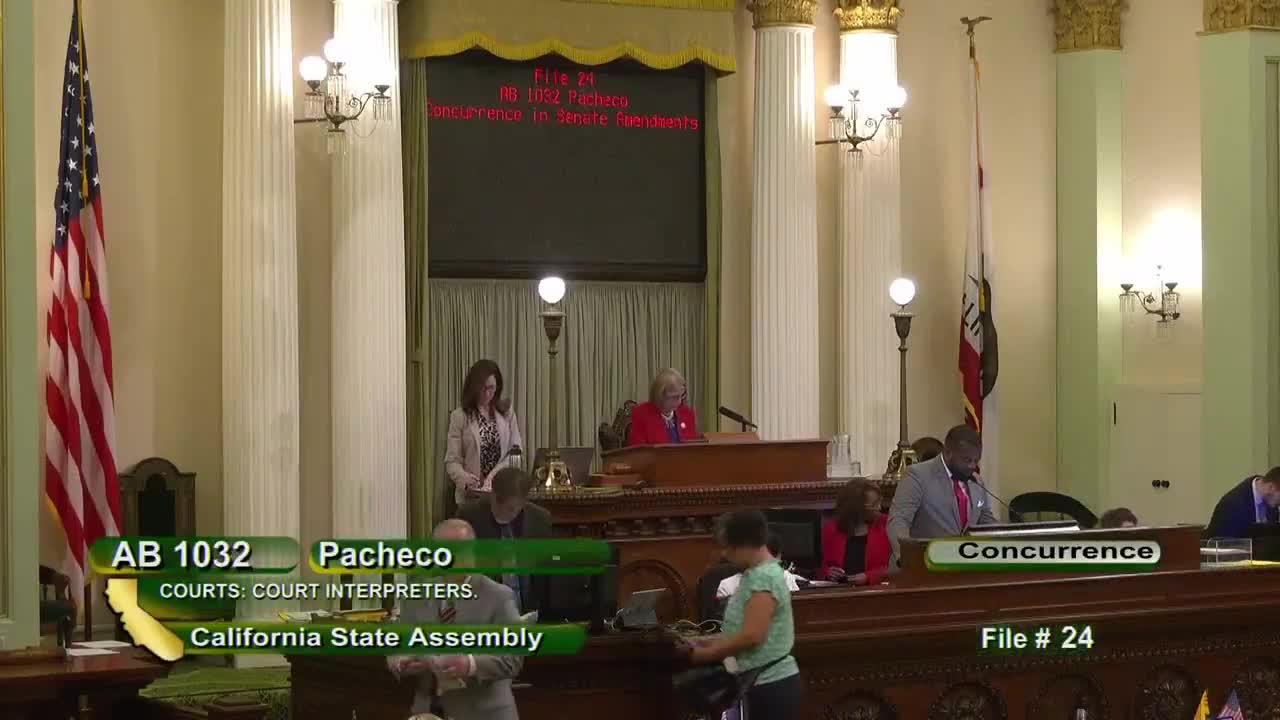
Bill Author

Bill Co-Author(s):