AB 1142: Community colleges: costs for using facilities or grounds.
- Session Year: 2023-2024
- House: Assembly
- Latest Version Date: 2024-09-22
Current Status:
Passed
(2024-09-22: Chaptered by Secretary of State - Chapter 349, Statutes of 2024.)
Introduced
In Committee
First Chamber
In Committee
Second Chamber
Enacted
Existing law authorizes the governing board of a community college district to grant without charge, except as otherwise provided, the use of any college facilities or grounds under its control, when an alternative location is not available, to nonprofit organizations and clubs and associations organized for athletic activities for youth, charitable purposes, educational purposes, or the civic well-being of the community. Existing law authorizes the governing board of a community college district to charge an amount not to exceed its direct costs or not to exceed the fair rental value of college facilities and grounds under its control for activities other than those described above, as specified. Until January 1, 2025, existing law describes direct costs as including (1) the share of the costs of supplies, utilities, janitorial services, services of any other community college district employees, and salaries paid to community college district employees to operate and maintain college facilities or grounds that is proportional to the organizations use of the college facilities and grounds, and (2) the share of the costs for maintenance, repair, restoration, and refurbishment, proportional to the use of the college facilities or grounds by the organization, except for certain programs and organizations. Commencing January 1, 2025, existing law describes direct costs as including the costs of supplies, utilities, janitorial services, services of any other community college district employees, and salaries paid to community college district employees necessitated by the organizations use of the college facilities and grounds.
This bill would extend those dates by 5 years.
Existing law authorizes the governing board of a community college district to grant without charge, except as otherwise provided, the use of any college facilities or grounds under its control, when an alternative location is not available, to nonprofit organizations and clubs and associations organized for athletic activities for youth, charitable purposes, educational purposes, or the civic well-being of the community. Existing law authorizes the governing board of a community college district to charge an amount not to exceed its direct costs or not to exceed the fair rental value of college facilities and grounds under its control for activities other than those described above, as specified. Until January 1, 2025, existing law describes direct costs as including (1) the share of the costs of supplies, utilities, janitorial services, services of any other community college district employees, and salaries paid to community college district employees to operate and maintain college facilities or grounds that is proportional to the organizations use of the college facilities and grounds, and (2) the share of the costs for maintenance, repair, restoration, and refurbishment, proportional to the use of the college facilities or grounds by the organization, except for certain organizations. Commencing January 1, 2025, existing law describes direct costs as including the costs of supplies, utilities, janitorial services, services of any other community college district employees, and salaries paid to community college district employees necessitated by the organizations use of the college facilities and grounds.
This bill would extend those dates by 5 years.
Existing law establishes the University of California, under the administration of the Regents of the University of California, the California State University, under the administration of the Trustees of the California State University, the California Community Colleges, under the administration of the Board of Governors of the California Community Colleges, independent institutions of higher education, and private postsecondary educational institutions as the segments of postsecondary education in this state.Existing law states the intent of the Legislature that budget and policy decisions regarding postsecondary education generally adhere to 3 specified goals and that appropriate metrics be identified, defined, and formally adopted to monitor progress toward the achievement of the goals.Existing law establishes the California Postsecondary Education Commission (CPEC) as the statewide postsecondary education coordinating and planning agency, and provides for its functions and responsibilities. Existing law also provides for the composition of CPECs membership. The annual state Budget Acts from the 201112 fiscal year to the 202223 fiscal year, inclusive, have provided no funding for CPEC.This bill would establish the Coordinating Commission for Postsecondary Education in California as the statewide postsecondary education oversight, coordination, and planning entity. The bill would provide that the commission is an independent state agency, and advisory to the Governor, the Legislature, other appropriate government officials, and institutions of postsecondary education.Existing law establishes the University of California, under the administration of the Regents of the University of California, the California State University, under the administration of the Trustees of the California State University, the California Community Colleges, under the administration of the Board of Governors of the California Community Colleges, independent institutions of higher education, and private postsecondary educational institutions as the segments of postsecondary education in this state.
Existing law states the intent of the Legislature that budget and policy decisions regarding postsecondary education generally adhere to 3 specified goals and that appropriate metrics be identified, defined, and formally adopted to monitor progress toward the achievement of the goals.
Existing law establishes the California Postsecondary Education Commission (CPEC) as the statewide postsecondary education coordinating and planning agency, and provides for its functions and responsibilities. Existing law also provides for the composition of CPECs membership. The annual state Budget Acts from the 201112 fiscal year to the 202122 202223 fiscal year, inclusive, have provided no funding for CPEC.
This bill would establish the Coordinating Commission for Postsecondary Education in California, composed of 5 public members with experience in postsecondary education, appointed as specified, California as the statewide postsecondary education oversight, coordination, and planning entity. The bill would require the commission to develop and publish an independent annual report on the condition of higher education in California, as provided. The bill would establish other functions and responsibilities of the commission, which would include specified advisory duties and exercising the powers, duties, and functions of a statewide postsecondary education oversight, coordination, and planning entity in issues relating to all postsecondary educational institutions. provide that the commission is an independent state agency, and advisory to the Governor, the Legislature, other appropriate government officials, and institutions of postsecondary education.
The bill would authorize the commission to require the governing boards and institutions of public postsecondary education to submit, under certain circumstances, specified information and student data to the commission on policy, plans and programs, costs, selection and retention of students, enrollments, plant capacities, and other matters pertinent to the commissions functions and responsibilities. To the extent that these provisions would impose new duties on community college districts, the bill would constitute a state-mandated local program.The bill would require the Legislative Analysts Office to report to the Legislature on the performance of the commission on or before January 1, 2028.The California Constitution requires the state to reimburse local agencies and school districts for certain costs mandated by the state. Statutory provisions establish procedures for making that reimbursement.This bill would provide that, if the Commission on State Mandates determines that the bill contains costs mandated by the state, reimbursement for those costs shall be made pursuant to the statutory provisions noted above.Existing law establishes the University of California, under the administration of the Regents of the University of California, the California State University, under the administration of the Trustees of the California State University, the California Community Colleges, under the administration of the Board of Governors of the California Community Colleges, independent institutions of higher education, and private postsecondary educational institutions as the segments of postsecondary education in this state.
Existing law states the intent of the Legislature that budget and policy decisions regarding postsecondary education generally adhere to 3 specified goals and that appropriate metrics be identified, defined, and formally adopted to monitor progress toward the achievement of the goals.
Existing law establishes the California Postsecondary Education Commission (CPEC) as the statewide postsecondary education coordinating and planning agency, and provides for its functions and responsibilities. Existing law also provides for the composition of CPECs membership. The annual state Budget Acts from the 201112 fiscal year to the 202122 fiscal year, inclusive, have provided no funding for CPEC.
This bill would establish the Coordinating Commission for Postsecondary Education in California, composed of 5 public members with experience in postsecondary education, appointed as specified, as the statewide postsecondary education oversight, coordination, and planning entity. The bill would require the commission to develop and publish an independent annual report on the condition of higher education in California, as provided. The bill would establish other functions and responsibilities of the commission, which would include specified advisory duties and exercising the powers, duties, and functions of a statewide postsecondary education oversight, coordination, and planning entity in issues relating to all postsecondary educational institutions.
The bill would authorize the commission to require the governing boards and institutions of public postsecondary education to submit, under certain circumstances, specified information and student data to the commission on policy, plans and programs, costs, selection and retention of students, enrollments, plant capacities, and other matters pertinent to the commissions functions and responsibilities. To the extent that these provisions would impose new duties on community college districts, the bill would constitute a state-mandated local program.
The bill would require the Legislative Analysts Office to report to the Legislature on the performance of the commission on or before January 1, 2028.
The California Constitution requires the state to reimburse local agencies and school districts for certain costs mandated by the state. Statutory provisions establish procedures for making that reimbursement.
This bill would provide that, if the Commission on State Mandates determines that the bill contains costs mandated by the state, reimbursement for those costs shall be made pursuant to the statutory provisions noted above.
(a)Except as provided in subdivision (b), the governing board of a community college district may grant without charge the use of any college facilities or grounds under its control, pursuant to the requirements of this article, when an alternative location is not available, to nonprofit organizations and clubs and associations organized for athletic activities for youth, charitable purposes, educational purposes, or the civic well-being of the community.
(b)For purposes of subdivision (a), the governing board of a community college district may charge an amount not to exceed the following:
(1)The cost of opening and closing the facilities, if no community college employees would otherwise be available to perform that function as a part of their normal duties.
(2)The cost of a community college employees presence during the organizations use of the facilities, if the governing board determines that the supervision is needed, and if that employee would not otherwise be present as part of the employees normal duties.
(3)The cost of janitorial services, if the services are necessary, and would not have otherwise been performed as part of the janitors normal duties.
(4)The cost of utilities directly attributable to the organizations use of the facilities.
(c)The governing board of a community college district may charge an amount not to exceed its direct costs or not to exceed the fair rental value of college facilities and grounds under its control, and pursuant to the requirements of this article, for activities other than those specified in subdivision (a). A governing board that decides to levy these charges shall first adopt a policy specifying which activities shall be charged an amount not to exceed direct costs and which activities shall be charged an amount not to exceed fair rental value.
(d)(1)As used in this section, direct costs to the community college district for the use of college facilities or grounds includes all of the following:
(A)The share of the costs of supplies, utilities, janitorial services, services of any other community college district employees, and salaries paid to community college district employees to operate and maintain college facilities or grounds that is proportional to the organizations use of the college facilities and grounds of the community college district pursuant to this section.
(B)The share of the costs for maintenance, repair, restoration, and refurbishment, proportional to the use of the college facilities or grounds by the organization using the college facilities or grounds under this section. For purposes of this subparagraph, college facilities shall be limited to only nonclassroom space, and grounds shall include, but not be limited to, playing fields, athletic fields, track and field venues, tennis courts, and outdoor basketball courts.
(2)The share of the costs for maintenance, repair, restoration, and refurbishment shall not apply to either of the following:
(A)Classroom-based programs that operate after school hours, including, but not limited to, after school programs, tutoring programs, or childcare programs.
(B)Organizations retained by the college or community college district to provide instruction or instructional activities to students during school hours.
(3)Funds collected pursuant to this subdivision shall be deposited into a special fund that shall only be used for purposes of this section.
(e)By December 31, 2015, the Chancellor of the California Community Colleges shall develop, and the Board of Governors of the California Community Colleges shall adopt, regulations to be used by a governing board of a community college district in determining the proportionate share and the specific allowable costs that a community college district may include as direct costs for the use of its college facilities or grounds.
(f)As used in this section, fair rental value means the direct costs to the community college district, plus the amortized costs of the college facilities or grounds used for the duration of the activity authorized.
(g)The governing board of a community college district that authorizes the use of college facilities or grounds for the purpose specified in subdivision (h) shall charge the church or religious denomination an amount at least equal to the fair rental value of the facilities or grounds.
(h)The governing board of a community college district may grant the use of college facilities or grounds to any church or religious organization for the conduct of religious services for temporary periods where the church or organization has no suitable meeting place for the conduct of these services upon the terms and conditions as the governing board deems proper, and subject to the limitations, requirements, and restrictions set forth in this article. The governing board shall charge the church or religious organization using the property for the conduct of religious services a fee as specified in subdivision (g).
(i)For entertainment or a meeting where an admission fee is charged or a contribution is solicited and the net receipts of the admission fees or contributions are not expended for the welfare of the students of the community college district or for charitable purposes, a charge not less than fair rental value shall be levied for the use of the college facilities, property, and grounds, as determined by the governing board of the community college district.
(j)The governing board of a community college district may permit the use, without charge, by organizations, clubs, or associations organized for youth or senior citizens and for cultural activities.
(k)The governing board of a community college district may grant the use of college facilities, grounds, and equipment to public agencies, including the American Red Cross, for mass care and welfare shelters during disasters or other emergencies affecting the public health and welfare, and may cooperate with these agencies in furnishing and maintaining services deemed by the governing board to be necessary to meet the needs of the community.
(l)This section shall remain in effect only until January 1, 2030, and as of that date is repealed, unless a later enacted statute, that is enacted before January 1, 2030, deletes or extends that date.
SEC. 2.Section 82542 of the Education Code, as amended by Section 3 of Chapter 66 of the Statutes of 2023, is amended to read:82542.(a)Except as provided in subdivision (b), the governing board of a community college district may grant without charge the use of any college facilities or grounds under its control, pursuant to the requirements of this article, when an alternative location is not available, to nonprofit organizations and clubs and associations organized for athletic activities for youth, charitable purposes, educational purposes, or the civic well-being of the community.
(b)For purposes of subdivision (a), the governing board of a community college district may charge an amount not to exceed the following:
(1)The cost of opening and closing the facilities, if no community college employees would otherwise be available to perform that function as a part of their normal duties.
(2)The cost of a community college employees presence during the organizations use of the facilities, if the governing board determines that the supervision is needed, and if that employee would not otherwise be present as part of the employees normal duties.
(3)The cost of janitorial services, if the services are necessary, and would not have otherwise been performed as part of the janitors normal duties.
(4)The cost of utilities directly attributable to the organizations use of the facilities.
(c)The governing board of a community college district may charge an amount not to exceed its direct costs or not to exceed the fair rental value of college facilities and grounds under its control, and pursuant to the requirements of this article, for activities other than those specified in subdivision (a). A governing board that decides to levy these charges shall first adopt a policy specifying which activities shall be charged an amount not to exceed direct costs and which activities shall be charged an amount not to exceed fair rental value.
(1)As used in this section, direct costs to the community college district for the use of college facilities or grounds means those costs of supplies, utilities, janitorial services, services of any other community college district employees, and salaries paid community college district employees necessitated by the organizations use of the college facilities and grounds of the community college district.
(2)As used in this section, fair rental value means the direct costs to the community college district, plus the amortized costs of the college facilities or grounds used for the duration of the activity authorized.
(d)The governing board of a community college district that authorizes the use of college facilities or grounds for the purpose specified in subdivision (e) shall charge the church or religious denomination an amount at least equal to the fair rental value of the facilities or grounds.
(e)The governing board of a community college district may grant the use of college facilities or grounds to any church or religious organization for the conduct of religious services for temporary periods where the church or organization has no suitable meeting place for the conduct of these services upon the terms and conditions as the governing board deems proper, and subject to the limitations, requirements, and restrictions set forth in this article. The governing board shall charge the church or religious organization using the property for the conduct of religious services a fee as specified in subdivision (d).
(f)For entertainment or a meeting where an admission fee is charged or a contribution is solicited and the net receipts of the admission fees or contributions are not expended for the welfare of the students of the community college district or for charitable purposes, a charge shall be made for the use of the college facilities, property, and grounds, which charge shall not be less than the fair rental value for the use of the college facilities, property, and grounds, as determined by the governing board of the community college district.
(g)The governing board of a community college district may permit the use, without charge, by organizations, clubs, or associations organized for youth or senior citizens and for cultural activities.
(h)The governing board of a community college district may grant the use of college facilities, grounds, and equipment to public agencies, including the American Red Cross, for mass care and welfare shelters during disasters or other emergencies affecting the public health and welfare, and may cooperate with these agencies in furnishing and maintaining services deemed by the governing board to be necessary to meet the needs of the community.
(i)This section shall be operative on and after January 1, 2030.
(a)Except as provided in subdivision (b), the governing board of a community college district may grant without charge the use of any college facilities or grounds under its control, pursuant to the requirements of this article, when an alternative location is not available, to nonprofit organizations and clubs and associations organized for athletic activities for youth, charitable purposes, educational purposes, or the civic well-being of the community.
(b)For purposes of subdivision (a), the governing board of a community college district may charge an amount not to exceed the following:
(1)The cost of opening and closing the facilities, if no community college employees would otherwise be available to perform that function as a part of their normal duties.
(2)The cost of a community college employees presence during the organizations use of the facilities, if the governing board determines that the supervision is needed, and if that employee would not otherwise be present as part of the employees normal duties.
(3)The cost of janitorial services, if the services are necessary, and would not have otherwise been performed as part of the janitors normal duties.
(4)The cost of utilities directly attributable to the organizations use of the facilities.
(c)The governing board of a community college district may charge an amount not to exceed its direct costs or not to exceed the fair rental value of college facilities and grounds under its control, and pursuant to the requirements of this article, for activities other than those specified in subdivision (a). A governing board that decides to levy these charges shall first adopt a policy specifying which activities shall be charged an amount not to exceed direct costs and which activities shall be charged an amount not to exceed fair rental value.
(d)(1)As used in this section, direct costs to the community college district for the use of college facilities or grounds includes all of the following:
(A)The share of the costs of supplies, utilities, janitorial services, services of any other community college district employees, and salaries paid to community college district employees to operate and maintain college facilities or grounds that is proportional to the organizations use of the college facilities and grounds of the community college district pursuant to this section.
(B)The share of the costs for maintenance, repair, restoration, and refurbishment, proportional to the use of the college facilities or grounds by the organization using the college facilities or grounds under this section. For purposes of this subparagraph, college facilities shall be limited to only nonclassroom space, and grounds shall include, but not be limited to, playing fields, athletic fields, track and field venues, tennis courts, and outdoor basketball courts.
(2)The share of the costs for maintenance, repair, restoration, and refurbishment shall not apply to either of the following:
(A)Classroom-based programs that operate after school hours, including, but not limited to, after school programs, tutoring programs, or childcare programs.
(B)Organizations retained by the college or community college district to provide instruction or instructional activities to students during school hours.
(3)Funds collected pursuant to this subdivision shall be deposited into a special fund that shall only be used for purposes of this section.
(e)By December 31, 2015, the Chancellor of the California Community Colleges shall develop, and the Board of Governors of the California Community Colleges shall adopt, regulations to be used by a governing board of a community college district in determining the proportionate share and the specific allowable costs that a community college district may include as direct costs for the use of its college facilities or grounds.
(f)As used in this section, fair rental value means the direct costs to the community college district, plus the amortized costs of the college facilities or grounds used for the duration of the activity authorized.
(g)The governing board of a community college district that authorizes the use of college facilities or grounds for the purpose specified in subdivision (h) shall charge the church or religious denomination an amount at least equal to the fair rental value of the facilities or grounds.
(h)The governing board of a community college district may grant the use of college facilities or grounds to any church or religious organization for the conduct of religious services for temporary periods where the church or organization has no suitable meeting place for the conduct of these services upon the terms and conditions as the governing board deems proper, and subject to the limitations, requirements, and restrictions set forth in this article. The governing board shall charge the church or religious organization using the property for the conduct of religious services a fee as specified in subdivision (g).
(i)For entertainment or a meeting where an admission fee is charged or a contribution is solicited and the net receipts of the admission fees or contributions are not expended for the welfare of the students of the community college district or for charitable purposes, a charge not less than fair rental value shall be levied for the use of the college facilities, property, and grounds, as determined by the governing board of the community college district.
(j)The governing board of a community college district may permit the use, without charge, by organizations, clubs, or associations organized for youth or senior citizens and for cultural activities.
(k)The governing board of a community college district may grant the use of college facilities, grounds, and equipment to public agencies, including the American Red Cross, for mass care and welfare shelters during disasters or other emergencies affecting the public health and welfare, and may cooperate with these agencies in furnishing and maintaining services deemed by the governing board to be necessary to meet the needs of the community.
(l)This section shall remain in effect only until January 1, 2025, 2030, and as of that date is repealed, unless a later enacted statute, that is enacted before January 1, 2025, 2030, deletes or extends that date.
SEC. 2.Section 82542 of the Education Code, as amended by Section 3 of Chapter 66 of the Statutes of 2023, is amended to read:82542.(a)Except as provided in subdivision (b), the governing board of a community college district may grant without charge the use of any college facilities or grounds under its control, pursuant to the requirements of this article, when an alternative location is not available, to nonprofit organizations and clubs and associations organized for athletic activities for youth, charitable purposes, educational purposes, or the civic well-being of the community.
(b)For purposes of subdivision (a), the governing board of a community college district may charge an amount not to exceed the following:
(1)The cost of opening and closing the facilities, if no community college employees would otherwise be available to perform that function as a part of their normal duties.
(2)The cost of a community college employees presence during the organizations use of the facilities, if the governing board determines that the supervision is needed, and if that employee would not otherwise be present as part of the employees normal duties.
(3)The cost of janitorial services, if the services are necessary, and would not have otherwise been performed as part of the janitors normal duties.
(4)The cost of utilities directly attributable to the organizations use of the facilities.
(c)The governing board of a community college district may charge an amount not to exceed its direct costs or not to exceed the fair rental value of college facilities and grounds under its control, and pursuant to the requirements of this article, for activities other than those specified in subdivision (a). A governing board that decides to levy these charges shall first adopt a policy specifying which activities shall be charged an amount not to exceed direct costs and which activities shall be charged an amount not to exceed fair rental value.
(1)As used in this section, direct costs to the community college district for the use of college facilities or grounds means those costs of supplies, utilities, janitorial services, services of any other community college district employees, and salaries paid community college district employees necessitated by the organizations use of the college facilities and grounds of the community college district.
(2)As used in this section, fair rental value means the direct costs to the community college district, plus the amortized costs of the college facilities or grounds used for the duration of the activity authorized.
(d)The governing board of a community college district that authorizes the use of college facilities or grounds for the purpose specified in subdivision (e) shall charge the church or religious denomination an amount at least equal to the fair rental value of the facilities or grounds.
(e)The governing board of a community college district may grant the use of college facilities or grounds to any church or religious organization for the conduct of religious services for temporary periods where the church or organization has no suitable meeting place for the conduct of these services upon the terms and conditions as the governing board deems proper, and subject to the limitations, requirements, and restrictions set forth in this article. The governing board shall charge the church or religious organization using the property for the conduct of religious services a fee as specified in subdivision (d).
(f)For entertainment or a meeting where an admission fee is charged or a contribution is solicited and the net receipts of the admission fees or contributions are not expended for the welfare of the students of the community college district or for charitable purposes, a charge shall be made for the use of the college facilities, property, and grounds, which charge shall not be less than the fair rental value for the use of the college facilities, property, and grounds, as determined by the governing board of the community college district.
(g)The governing board of a community college district may permit the use, without charge, by organizations, clubs, or associations organized for youth or senior citizens and for cultural activities.
(h)The governing board of a community college district may grant the use of college facilities, grounds, and equipment to public agencies, including the American Red Cross, for mass care and welfare shelters during disasters or other emergencies affecting the public health and welfare, and may cooperate with these agencies in furnishing and maintaining services deemed by the governing board to be necessary to meet the needs of the community.
(i)This section shall be operative on and after January 1, 2025. 2030.
SECTION 1.The Legislature finds and declares all of the following:(a)(1)In 1960, the State Department of Education published the Master Plan for Higher Education in California, which relegated each segment of public postsecondary education to a distinct role in Californias public postsecondary education system.(2)The Master Plan for Higher Education recommended that a coordinating agency be formed to address the demands of the state for rational development and maximum economy in higher education, and called for a Co-ordinating Council for Higher Education, comprising representatives of the three public segments, to serve as the advisory body. California, in its adoption of the Master Plan for Higher Education, established the Coordinating Council for Higher Education.(b)(1)In 1974, the Legislature established the California Postsecondary Education Commission (CPEC), the successor to the Coordinating Council for Higher Education, to ensure the effective utilization of public postsecondary education resources, thereby eliminating waste and unnecessary duplication, and to promote diversity, innovation, and responsiveness to student and societal needs through planning and coordination.(2)CPEC was responsible for conducting long-range planning of state needs for new college or university campuses, providing timely information about student enrollment and educational outcomes, and reviewing proposals from public colleges and universities for new degree programs.(c)The California Postsecondary Education Commission is referenced over 50 times in statute and fulfilled important oversight and coordination duties, including monitoring gifts, bequests, devises, or donations to the California State University trustees; cooperating with the government of the United States regarding federal assistance for higher education and requisitioning funds; identifying ineffective projects enacted under the California Academic Partnership Program for termination; and reviewing annual reports of the three segments of public postsecondary education on transfer patterns.(d)In 2010, the Joint Committee on the Master Plan for Higher Education concluded that it is essential that [California] have some designated agency with the role, responsibility, and capacity for advising the Legislature and Governor, the segments of higher education and the California public with regard to essential coordination and needed efficiency in our delivery of higher education.(e)Both the Coordinating Council for Higher Education and the California Postsecondary Education Commission included representatives of public segments as voting members, which, according to numerous reviews by the Legislative Analysts Office and the Public Policy Institute of California, undermined the bodys ability to provide independent policy leadership.(f)Since the California Postsecondary Education Commission was defunded in 2011, California has been without a statewide postsecondary education coordinating body and remains one of just two states without a coordinating body.(g)The Legislature lacks independent and comprehensive policy guidance on major issues of higher education coordination that have been recently considered, including legislative proposals to offer baccalaureate degrees at California Community Colleges, create doctoral degree programs at California State University campuses, make the completion of an ethnic studies course a graduation requirement, establish an online, competency-based community college district, and conduct studies regarding the feasibility of new campuses in specific regions.(h)(1)The Governor entered into a multiyear funding agreement with the three public postsecondary education segments in California with the overarching goal of achieving 70 percent postsecondary degree and certificate attainment among working-aged Californians by 2030. To meet this demand, California must address disparities in college enrollment and completion by populations historically underrepresented in higher education.(2)The segments of public postsecondary education face challenges in timely completion, coordination and establishment of transfer pathways, and access. In 2019, the California Community Colleges reported 48.9 percent of students had successfully completed a degree or certificate within six years. In 2021, 63 percent of first-time students graduated from the California State University in six years, but only 33 percent graduated in four years. In 2021, 80 percent of transfer students graduated from the California State University in four years, but only 44 percent graduated in two years. The University of California, as of the 202021 academic year, had a graduation rate of 72.6 percent for first-time freshmen within four years and a graduation rate of 62.8 percent for transfer students within two years.(i)In the absence of a coordinating body, California lacks the leadership to set statewide goals and metrics to meet current and future postsecondary or workforce needs. In 2022, the Governor established a five-year compact with the California Community Colleges, the California State University, and the University of California. The understanding between the Governor and the segments was a guarantee of funding for five years in exchange for working toward aligned goals and achieving an increased level of intersegmental coordination. The compacts were established in the budget negotiations and the goals for each segment were established between the Governor and segment leadership. While the compact establishes segmental goals for the three segments for five years, there are ongoing policy ramifications to not having a strong, independent, state-level leadership entity positioned to provide a clear public agenda for higher education that ensures access to postsecondary opportunities for all residents, closes equity gaps, and meets future workforce needs.SEC. 2.Article 2.3 (commencing with Section 66010.8) is added to Chapter 2 of Part 40 of Division 5 of Title 3 of the Education Code, to read:2.3.Coordinating Commission for Postsecondary Education in California Act66010.8.(a)This article shall be known, and may be cited, as the Coordinating Commission for Postsecondary Education in California Act.(b)For purposes of this article, commission means the Coordinating Commission for Postsecondary Education in California.(c)It is the intent of the Legislature that all of the following occur:(1)That the commission promotes integration, planning, oversight, and coordination of postsecondary education in the state, whereby each segment of postsecondary education, in accordance with the missions and functions of the segment, contributes toward achieving a common purpose.(2)That the commission, as the states postsecondary planning and coordinating entity, ensures the effective use of public postsecondary education resources, thereby eliminating unnecessary duplication of these resources, and promotes diversity in postsecondary education, innovation, and responsiveness to student and societal needs.(3)That the commission is responsible for coordinating public, independent, and private postsecondary education in this state and for providing independent policy analyses and recommendations to the Legislature and the Governor on postsecondary education issues.(4)That the commission works collaboratively with relevant state agencies, including, but not limited to, the California Cradle-to-Career Data System and the Bureau for Private Postsecondary Education, to ensure effective oversight of private for-profit postsecondary educational institutions and student and public protections against fraudulent or substandard postsecondary academic programs or degrees.(5)That commission members shall broadly and equitably reflect the diversity of the state, including, but not limited to, the geographic, economic, and racial diversity of California.66010.81.The Coordinating Commission for Postsecondary Education in California is hereby established as the statewide postsecondary education oversight, coordination, and planning agency. The commission is an independent state agency, which shall be advisory to the Governor, the Legislature, other appropriate government officials, and institutions of postsecondary education.The Legislature finds and declares all of the following:
(a)(1)In 1960, the State Department of Education published the Master Plan for Higher Education in California, which relegated each segment of public postsecondary education to a distinct role in Californias public postsecondary education system.
(2)The Master Plan for Higher Education recommended that a coordinating agency be formed to address the demands of the state for rational development and maximum economy in higher education, and called for a Co-ordinating Council for Higher Education, comprising representatives of the three public segments, to serve as the advisory body. California, in its adoption of the Master Plan for Higher Education, established the Coordinating Council for Higher Education.
(b)(1)In 1974, the Legislature established the California Postsecondary Education Commission (CPEC), the successor to the Coordinating Council for Higher Education, to ensure the effective utilization of public postsecondary education resources, thereby eliminating waste and unnecessary duplication, and to promote diversity, innovation, and responsiveness to student and societal needs through planning and coordination.
(2)CPEC was responsible for conducting long-range planning of state needs for new college or university campuses, providing timely information about student enrollment and educational outcomes, and reviewing proposals from public colleges and universities for new degree programs.
(c)The California Postsecondary Education Commission is referenced over 50 times in statute and fulfilled important oversight and coordination duties, including monitoring gifts, bequests, devises, or donations to the California State University trustees; cooperating with the government of the United States regarding federal assistance for higher education and requisitioning funds; identifying ineffective projects enacted under the California Academic Partnership Program for termination; and reviewing annual reports of the three segments of public postsecondary education on transfer patterns.
(d)In 2010, the Joint Committee on the Master Plan for Higher Education concluded that it is essential that [California] have some designated agency with the role, responsibility, and capacity for advising the Legislature and Governor, the segments of higher education and the California public with regard to essential coordination and needed efficiency in our delivery of higher education.
(e)Both the Coordinating Council for Higher Education and the California Postsecondary Education Commission included representatives of public segments as voting members, which, according to numerous reviews by the Legislative Analysts Office and the Public Policy Institute of California, undermined the bodys ability to provide independent policy leadership.
(f)Since the California Postsecondary Education Commission was defunded in 2011, California has been without a statewide postsecondary education coordinating body and remains one of just two states without a coordinating body.
(g)The Legislature lacks independent and comprehensive policy guidance on major issues of higher education coordination that have been recently considered, including legislative proposals to offer baccalaureate degrees at California Community Colleges, create doctoral degree programs at California State University campuses, make the completion of an ethnic studies course a graduation requirement, establish an online, competency-based community college district, and conduct studies regarding the feasibility of new campuses in specific regions.
(h)(1)The Governor entered into a multiyear funding agreement with the three public postsecondary education segments in California with the overarching goal of achieving 70 percent postsecondary degree and certificate attainment among working-aged Californians by 2030. To meet this demand, California must address disparities in college enrollment and completion by populations historically underrepresented in higher education.
(2)The segments of public postsecondary education face challenges in timely completion, coordination and establishment of transfer pathways, and access. In 2019, the California Community Colleges reported 48.9 percent of students had successfully completed a degree or certificate within six years. In 2021, 63 percent of first-time students graduated from the California State University in six years, but only 33 percent graduated in four years. In 2021, 80 percent of transfer students graduated from the California State University in four years, but only 44 percent graduated in two years. The University of California, as of the 202021 academic year, had a graduation rate of 72.6 percent for first-time freshmen within four years and a graduation rate of 62.8 percent for transfer students within two years.
(i)In the absence of a coordinating body, California lacks the leadership to set statewide goals and metrics to meet current and future postsecondary or workforce needs. In 2022, the Governor established a five-year compact with the California Community Colleges, the California State University, and the University of California. The understanding between the Governor and the segments was a guarantee of funding for five years in exchange for working toward aligned goals and achieving an increased level of intersegmental coordination. The compacts were established in the budget negotiations and the goals for each segment were established between the Governor and segment leadership. While the compact establishes segmental goals for the three segments for five years, there are ongoing policy ramifications to not having a strong, independent, state-level leadership entity positioned to provide a clear public agenda for higher education that ensures access to postsecondary opportunities for all residents, closes equity gaps, and meets future workforce needs.
SEC. 2.Article 2.3 (commencing with Section 66010.8) is added to Chapter 2 of Part 40 of Division 5 of Title 3 of the Education Code, to read:2.3.Coordinating Commission for Postsecondary Education in California Act66010.8.(a)This article shall be known, and may be cited, as the Coordinating Commission for Postsecondary Education in California Act.
(b)For purposes of this article, commission means the Coordinating Commission for Postsecondary Education in California.
(c)It is the intent of the Legislature that all of the following occur:
(1)That the commission promotes integration, planning, oversight, and coordination of postsecondary education in the state, whereby each segment of postsecondary education, in accordance with the missions and functions of the segment, contributes toward achieving a common purpose.
(2)That the commission, as the states postsecondary planning and coordinating entity, ensures the effective use of public postsecondary education resources, thereby eliminating unnecessary duplication of these resources, and promotes diversity in postsecondary education, innovation, and responsiveness to student and societal needs.
(3)That the commission is responsible for coordinating public, independent, and private postsecondary education in this state and for providing independent policy analyses and recommendations to the Legislature and the Governor on postsecondary education issues.
(4)That the commission works collaboratively with relevant state agencies, including, but not limited to, the California Cradle-to-Career Data System and the Bureau for Private Postsecondary Education, to ensure effective oversight of private for-profit postsecondary educational institutions and student and public protections against fraudulent or substandard postsecondary academic programs or degrees.
(5)That commission members shall broadly and equitably reflect the diversity of the state, including, but not limited to, the geographic, economic, and racial diversity of California.
66010.81.(a)The Coordinating Commission for Postsecondary Education in California is hereby established as the statewide postsecondary education oversight, coordination, and planning agency. The commission is an independent state agency, which shall be advisory to the Governor, the Legislature, other appropriate government officials, and institutions of postsecondary education.
(b)(1)The commission shall be composed of five members, appointed as follows:(A)One member appointed by the Senate Committee on Rules.(B)One member appointed by the Speaker of the Assembly.(C)Three members appointed by the Governor, subject to confirmation by the Senate.(2)(A)Except as provided in subparagraph (B), members of the commission shall serve four-year terms.(B)The initial members appointed pursuant to subparagraph (C) of paragraph (1) shall serve six-year terms.(C)Members of the commission may be reappointed to serve additional terms on the commission, with a maximum of three consecutive terms.(3)Each member appointed pursuant to paragraph (1) shall be a member of the public with relevant experience in postsecondary education as it pertains to at least one of the following areas:(A)Student support.(B)College and career pathways.(C)Postsecondary education policy, research, or planning, or workforce development.(4)A person who is employed by any public or private postsecondary educational institution shall not serve on the commission.(5)The members of the commission shall select a chairperson from among the membership.(6)Members of the commission shall serve without compensation, but shall receive reimbursement for actual and necessary expenses incurred in connection with the performance of their duties.(c)The commission shall appoint a state higher education executive director, who shall perform all duties, exercise all powers, assume and discharge all responsibilities, and carry out and effect all purposes vested by law in the commission, including contracting for professional or consulting services in connection with the work of the commission. The executive director shall appoint persons to any staff positions the commission may authorize.(d)(1)Commission meetings are subject to the Bagley-Keene Open Meeting Act (Article 9 (commencing with Section 11120) of Chapter 1 of Part 1 of Division 3 of Title 2 of the Government Code). Commission materials shall be posted on the internet.(2)The commission shall meet at least quarterly, and shall appoint one of its members to represent the commission for purposes of communicating with the Legislature.(3)The commission is responsible for issuing an annual review of the performance of the executive director of the commission.(e)(1)The commission shall establish an advisory body to give recommendations on issues before the commission. The advisory body shall be composed of the following 15 members:(A)The Chancellor of the California Community Colleges, or the chancellors designee.(B)The Chancellor of the California State University, or the chancellors designee.(C)The President of the University of California, or the presidents designee.(D)One member from the independent colleges and universities that are formed and operated as nonprofit organizations in the state and are accredited by a regional association that is recognized by the United States Department of Education. This member shall be appointed by the Governor from a list or lists of nominees submitted by an association or associations of independent colleges and universities.(E)Three faculty members, one each from the California Community Colleges, the California State University, and the University of California. A faculty member shall be appointed by the Governor from a list of nominees submitted by the academic senate of the respective segment of public postsecondary education.(F)Three student members, each from a different segment of postsecondary education. For these members, the applicable organization representing students for the respective postsecondary educational institution shall select a student to represent the organization and the students on the advisory body. A student member shall be enrolled at a California postsecondary educational institution at the time of appointment to, and throughout the students term of service on, the advisory body, except that a student member who graduates from a California postsecondary educational institution with no more than six months of the student members term remaining may serve on the advisory body for the remainder of the student members term. A student selected to represent the students of a postsecondary educational institution shall serve a term of two years.(G)The Superintendent of Public Instruction, or the Superintendents designee.(H)The executive director of the California Workforce Development Board, or the executive directors designee.(I)The director of the Student Aid Commission, or the directors designee.(J)The bureau chief of the Bureau for Private Postsecondary Education, or the bureau chiefs designee.(K)The director of the California Cradle-to-Career Data System.(2)A member of the advisory body appointed pursuant to subparagraph (D), (E), or (F) of paragraph (1) shall serve a two-year term and may be reappointed to one or more two-year terms if the member continues to meet the applicable requirements for appointment to the advisory body.(f)The commission shall consult with the higher education segments and stakeholders, as appropriate, in the conduct of its duties and responsibilities. For purposes of this subdivision, higher education segments has the same meaning as segments of postsecondary education, as that term is defined in Section 66010.95. Higher education stakeholders includes, but is not necessarily limited to, postsecondary education faculty and students, elementary and secondary education representatives, and representatives of the business community.66010.82.The Coordinating Commission for Postsecondary Education in California exists for the purpose of advising the Governor, the Legislature, and other appropriate governmental officials and institutions of postsecondary education. The commission has the following functions and responsibilities in its capacity as the statewide postsecondary education oversight, coordination, and planning agency and adviser to the Legislature and the Governor:(a)(1)The commission shall, through its use of information and its analytic capacity, identify and periodically revise state goals and priorities for higher education in a manner that is consistent with the goals outlined in Section 66010.91 and takes into consideration the metrics outlined in Sections 89295 and 92675.(2)In consultation with the advisory body described in Section 66010.81, the commission shall do all of the following:(A)Set performance targets for enrollment and degree and certificate completion statewide and by region. The commission shall update the performance targets every five years. The commission shall set its first performance targets no later than July 1, 2025.(B)Measure and inform the Legislature of the supply of and demand for jobs in fields of study statewide every two years, beginning no later than September 1, 2025.(C)Review both statewide and regional gaps of higher education admission, enrollment, success, and employment by race, ethnicity, gender, socioeconomic status, and additional categories of students, and inform the Legislature of findings by January 1, 2025, and annually thereafter.(D)Partner with the California Cradle-to-Career Data System to provide cross-segmental data aggregation analyses of the segments of public postsecondary education upon the request of the Legislature.(3)In consultation with the advisory body described in Section 66010.81, the commission shall adopt a strategic plan by July 1, 2025, to guide the commission and its staff in achieving the commissions goals. The strategic plan shall be updated in accordance with the performance targets every five years.(b)The commission, beginning on or before December 1, 2024, and annually thereafter until December 1, 2026, shall review and make recommendations, as necessary, regarding the five-year goals for the California Community Colleges, the California State University, and the University of California, as outlined by the Governor in the five-year budget compact with the segments associated with the Budget Act of 2022. (c)The commission shall review and make recommendations, as necessary, regarding cross-segmental and interagency initiatives and programs in areas that may include, but are not necessarily limited to, efficiencies in instructional delivery, financial aid, transfer pathways, degree and certificate completion, adult education, graduation rates, affordability, and workforce coordination.(d)The commission shall advise the Legislature and the Governor regarding the need for, and the location of, new institutions and campuses of public postsecondary education, shall review and evaluate proposals for new institutions and campuses of public higher education, and shall advise the Legislature and the Governor regarding the space needs of each segment of public postsecondary education, including land acquisition needs based on enrollment targets.(e)The commission shall review and evaluate budgetary proposals by the segments of public postsecondary education based on the alignment of the proposals with state goals and priorities identified by the commission and outlined in Section 66010.91, and shall make recommendations regarding those proposals to the Legislature and the Governor before the enactment of the annual Budget Act.(f)(1)The commission shall review and evaluate legislative proposals and proposals by the segments of public postsecondary education for new degrees, majors, and certificate programs.(2)The commission shall make recommendations regarding the proposals described in paragraph (1) to the Legislature and the Governor for the purposes of minimizing duplication of functions and fostering coordination between the segments of public postsecondary education, nearby independent institutions of higher education, as defined in Section 66010, and private postsecondary educational institutions, as defined in Section 94858. The recommendations shall include, but not be limited to, an evaluation of the need for degree, major, or certificate programs with a particular view to their relevance to state goals and priorities for higher education as identified in paragraph (1) of subdivision (a).(3)Each segment of public postsecondary education shall submit proposals for new degrees, majors, and certificate programs at its campuses to the commission for review and evaluation together with supporting materials and documents specified by the commission.(4)Pursuant to subdivision (i) of Section 78042, should the California State University or the University of California file a formal objection to a proposed community college baccalaureate degree program, the commission shall act as a neutral third party and shall evaluate the formal objection and ensure the written agreement, as defined in paragraph (4) of subdivision (i) of Section 78042, between the objecting segment and the Chancellors office formally addresses the concerns listed in the formal objection prior to the programs approval.(g)The commission shall review all proposals for changes in eligibility pools for admission to the segments of public postsecondary education, and shall make recommendations regarding those proposals to the Legislature, the Governor, and the segments of public postsecondary education. In carrying out this subdivision, the commission shall periodically conduct a study of the percentages of California public high school graduates estimated to be eligible for admission to the University of California and the California State University.(h)The commission shall submit reports to the Legislature in compliance with Section 9795 of the Government Code.(i)The commission shall enter into a memorandum of understanding with the California Cradle-to-Career Data System in order to receive access to data managed by the system, pursuant to Chapter 8.5 (commencing with Section 10850) of Part 7 of Division 1 of Title 1, in order to fulfill the purposes of this section.(j)(1)The commission shall develop an independent annual report on the condition of higher education in California. The report shall be transmitted to the chairpersons of the Assembly Committee on Higher Education and the Senate Committee on Education and to the Governor on or before July 1, 2027, and on or before July 1 annually thereafter. The commission shall publish the contents of the report on an online dashboard.(2)The independent annual report on the condition of higher education in California shall include, but is not limited to, all of the following:(A)An update on progress towards achieving the performance targets for enrollment and degree and certificate completion statewide and by region set by the commission pursuant to this section.(B)Information from the prior year on the following data points, disaggregated by region, race, ethnicity, gender, socioeconomic status, type of institution, and additional categories, as determined by the commission:(i)The percent of California high school graduates enrolling in a postsecondary educational institution.(ii)The number of four-year degrees, two-year degrees, certificates, graduate degrees, and professional degrees awarded.(iii)The average and median amount of debt incurred by current students and graduates.(iv)Average degree or certificate time-to-completion, including the number of students who successfully transferred from a community college to a four-year postsecondary educational institution in California.(v)The percent of graduates from the prior academic year employed, unemployed, or underemployed.(vi)The average and median incomes of recent graduates by type of degree.(vii)Enrollment in particular programs of study.(C)Policy or fiscal recommendations for the Legislature and the Governor.(k)It is the intent of the Legislature that the commission exercise the powers, duties, and functions of a statewide postsecondary education coordinating and planning entity in issues relating to all postsecondary educational institutions in the state, including issues pertaining to student athletes, the compensation of student athletes, and federal regulations regarding campus safety and sex discrimination.66010.84.Notwithstanding any other law, and prior to the establishment of the California Cradle-to-Career Data System, or if data is not available through the California Cradle-to-Career Data System, the commission may require the governing boards and the institutions of public postsecondary education to submit data to the commission on policy, plans and programs, costs, selection and retention of students, enrollments, plant capacities, and other matters pertinent to the commissions functions and responsibilities under this article. The commission shall furnish information concerning these matters to the Governor and the Legislature as requested by them.66010.86.On or before January 1, 2028, the Legislative Analysts Office shall review and report to the Legislature regarding the performance of the commission in fulfilling its functions and responsibilities as outlined in Section 66010.82.SEC. 3.If the Commission on State Mandates determines that this act contains costs mandated by the state, reimbursement to local agencies and school districts for those costs shall be made pursuant to Part 7 (commencing with Section 17500) of Division 4 of Title 2 of the Government Code.The Legislature finds and declares all of the following:
(a)(1)In 1960, the State Department of Education published the Master Plan for Higher Education in California, which relegated each segment of public postsecondary education to a distinct role in Californias public postsecondary education system.
(2)The Master Plan for Higher Education recommended that a coordinating agency be formed to address the demands of the state for rational development and maximum economy in higher education, and called for a Co-ordinating Council for Higher Education, comprising representatives of the three public segments, to serve as the advisory body. California, in its adoption of the Master Plan for Higher Education, established the Coordinating Council for Higher Education.
(b)(1)In 1974, the Legislature established the California Postsecondary Education Commission (CPEC), the successor to the Coordinating Council for Higher Education, to ensure the effective utilization of public postsecondary education resources, thereby eliminating waste and unnecessary duplication, and to promote diversity, innovation, and responsiveness to student and societal needs through planning and coordination.
(2)CPEC was responsible for conducting long-range planning of state needs for new college or university campuses, providing timely information about student enrollment and educational outcomes, and reviewing proposals from public colleges and universities for new degree programs.
(c)The California Postsecondary Education Commission is referenced over 50 times in statute and fulfilled important oversight and coordination duties, including monitoring gifts, bequests, devises, or donations to the California State University trustees; cooperating with the government of the United States regarding federal assistance for higher education and requisitioning funds; identifying ineffective projects enacted under the California Academic Partnership Program for termination; and reviewing annual reports of the three segments of public postsecondary education on transfer patterns.
(d)In 2010, the Joint Committee on the Master Plan for Higher Education concluded that it is essential that [California] have some designated agency with the role, responsibility, and capacity for advising the Legislature and Governor, the segments of higher education and the California public with regard to essential coordination and needed efficiency in our delivery of higher education.
(e)Both the Coordinating Council for Higher Education and the California Postsecondary Education Commission included representatives of public segments as voting members, which, according to numerous reviews by the Legislative Analysts Office and the Public Policy Institute of California, undermined the bodys ability to provide independent policy leadership.
(f)Since the California Postsecondary Education Commission was defunded in 2011, California has been without a statewide postsecondary education coordinating body and remains one of just two states without a coordinating body.
(g)The Legislature lacks independent and comprehensive policy guidance on major issues of higher education coordination that have been recently considered, including legislative proposals to offer baccalaureate degrees at California Community Colleges, create doctoral degree programs at California State University campuses, make the completion of an ethnic studies course a graduation requirement, establish an online, competency-based community college district, and conduct studies regarding the feasibility of new campuses in specific regions.
(h)(1)The Governor entered into a multiyear funding agreement with the three public postsecondary education segments in California with the overarching goal of achieving 70 percent postsecondary degree and certificate attainment among working-aged Californians by 2030. To meet this demand, California must address disparities in college enrollment and completion by populations historically underrepresented in higher education.
(2)The segments of public postsecondary education face challenges in timely completion, coordination and establishment of transfer pathways, and access. In 2019, the California Community Colleges reported 48.9 percent of students had successfully completed a degree or certificate within six years. In 2021, 63 percent of first-time students graduated from the California State University in six years, but only 33 percent graduated in four years. In 2021, 80 percent of transfer students graduated from the California State University in four years, but only 44 percent graduated in two years. The University of California, as of the 202021 academic year, had a graduation rate of 72.6 percent for first-time freshmen within four years and a graduation rate of 62.8 percent for transfer students within two years.
(i)In the absence of a coordinating body, California lacks the leadership to set statewide goals and metrics to meet current and future postsecondary or workforce needs. In 2022, the Governor established a five-year compact with the California Community Colleges, the California State University, and the University of California. The understanding between the Governor and the segments was a guarantee of funding for five years in exchange for working toward aligned goals and achieving an increased level of intersegmental coordination. The compacts were established in the budget negotiations and the goals for each segment were established between the Governor and segment leadership. While the compact establishes segmental goals for the three segments for five years, there are ongoing policy ramifications to not having a strong, independent, state-level leadership entity positioned to provide a clear public agenda for higher education that ensures access to postsecondary opportunities for all residents, closes equity gaps, and meets future workforce needs.
SEC. 2.Article 2.3 (commencing with Section 66010.8) is added to Chapter 2 of Part 40 of Division 5 of Title 3 of the Education Code, to read:2.3.Coordinating Commission for Postsecondary Education in California Act66010.8.(a)This article shall be known, and may be cited, as the Coordinating Commission for Postsecondary Education in California Act.
(b)For purposes of this article, commission means the Coordinating Commission for Postsecondary Education in California.
(c)It is the intent of the Legislature that all of the following occur:
(1)That the commission promotes integration, planning, oversight, and coordination of postsecondary education in the state, whereby each segment of postsecondary education, in accordance with the missions and functions of the segment, contributes toward achieving a common purpose.
(2)That the commission, as the states postsecondary planning and coordinating entity, ensures the effective use of public postsecondary education resources, thereby eliminating unnecessary duplication of these resources, and promotes diversity in postsecondary education, innovation, and responsiveness to student and societal needs.
(3)That the commission is responsible for coordinating public, independent, and private postsecondary education in this state and for providing independent policy analyses and recommendations to the Legislature and the Governor on postsecondary education issues.
(4)That the commission works collaboratively with relevant state agencies, including, but not limited to, the California Cradle-to-Career Data System and the Bureau for Private Postsecondary Education, to ensure effective oversight of private for-profit postsecondary educational institutions and student and public protections against fraudulent or substandard postsecondary academic programs or degrees.
(5)That commission members shall broadly and equitably reflect the diversity of the state, including, but not limited to, the geographic, economic, and racial diversity of California.
66010.81.(a)The Coordinating Commission for Postsecondary Education in California is hereby established as the statewide postsecondary education oversight, coordination, and planning agency. The commission is an independent state agency, which shall be advisory to the Governor, the Legislature, other appropriate government officials, and institutions of postsecondary education.
(b)(1)The commission shall be composed of five members, appointed as follows:
(A)One member appointed by the Senate Committee on Rules.
(B)One member appointed by the Speaker of the Assembly.
(C)Three members appointed by the Governor, subject to confirmation by the Senate.
(2)(A)Except as provided in subparagraph (B), members of the commission shall serve four-year terms.
(B)The initial members appointed pursuant to subparagraph (C) of paragraph (1) shall serve six-year terms.
(C)Members of the commission may be reappointed to serve additional terms on the commission, with a maximum of three consecutive terms.
(3)Each member appointed pursuant to paragraph (1) shall be a member of the public with relevant experience in postsecondary education as it pertains to at least one of the following areas:
(A)Student support.
(B)College and career pathways.
(C)Postsecondary education policy, research, or planning, or workforce development.
(4)A person who is employed by any public or private postsecondary educational institution shall not serve on the commission.
(5)The members of the commission shall select a chairperson from among the membership.
(6)Members of the commission shall serve without compensation, but shall receive reimbursement for actual and necessary expenses incurred in connection with the performance of their duties.
(c)The commission shall appoint a state higher education executive director, who shall perform all duties, exercise all powers, assume and discharge all responsibilities, and carry out and effect all purposes vested by law in the commission, including contracting for professional or consulting services in connection with the work of the commission. The executive director shall appoint persons to any staff positions the commission may authorize.
(d)(1)Commission meetings are subject to the Bagley-Keene Open Meeting Act (Article 9 (commencing with Section 11120) of Chapter 1 of Part 1 of Division 3 of Title 2 of the Government Code). Commission materials shall be posted on the internet.
(2)The commission shall meet at least quarterly, and shall appoint one of its members to represent the commission for purposes of communicating with the Legislature.
(3)The commission is responsible for issuing an annual review of the performance of the executive director of the commission.
(e)(1)The commission shall establish an advisory body to give recommendations on issues before the commission. The advisory body shall be composed of the following 15 members:
(A)The Chancellor of the California Community Colleges, or the chancellors designee.
(B)The Chancellor of the California State University, or the chancellors designee.
(C)The President of the University of California, or the presidents designee.
(D)One member from the independent colleges and universities that are formed and operated as nonprofit organizations in the state and are accredited by a regional association that is recognized by the United States Department of Education. This member shall be appointed by the Governor from a list or lists of nominees submitted by an association or associations of independent colleges and universities.
(E)Three faculty members, one each from the California Community Colleges, the California State University, and the University of California. A faculty member shall be appointed by the Governor from a list of nominees submitted by the academic senate of the respective segment of public postsecondary education.
(F)Three student members, each from a different segment of postsecondary education. For these members, the applicable organization representing students for the respective postsecondary educational institution shall select a student to represent the organization and the students on the advisory body. A student member shall be enrolled at a California postsecondary educational institution at the time of appointment to, and throughout the students term of service on, the advisory body, except that a student member who graduates from a California postsecondary educational institution with no more than six months of the student members term remaining may serve on the advisory body for the remainder of the student members term. A student selected to represent the students of a postsecondary educational institution shall serve a term of two years.
(G)The Superintendent of Public Instruction, or the Superintendents designee.
(H)The executive director of the California Workforce Development Board, or the executive directors designee.
(I)The director of the Student Aid Commission, or the directors designee.
(J)The bureau chief of the Bureau for Private Postsecondary Education, or the bureau chiefs designee.
(K)The director of the California Cradle-to-Career Data System.
(2)A member of the advisory body appointed pursuant to subparagraph (D), (E), or (F) of paragraph (1) shall serve a two-year term and may be reappointed to one or more two-year terms if the member continues to meet the applicable requirements for appointment to the advisory body.
(f)The commission shall consult with the higher education segments and stakeholders, as appropriate, in the conduct of its duties and responsibilities. For purposes of this subdivision, higher education segments has the same meaning as segments of postsecondary education, as that term is defined in Section 66010.95. Higher education stakeholders includes, but is not necessarily limited to, postsecondary education faculty and students, elementary and secondary education representatives, and representatives of the business community.
66010.82.The Coordinating Commission for Postsecondary Education in California exists for the purpose of advising the Governor, the Legislature, and other appropriate governmental officials and institutions of postsecondary education. The commission has the following functions and responsibilities in its capacity as the statewide postsecondary education oversight, coordination, and planning agency and adviser to the Legislature and the Governor:
(a)(1)The commission shall, through its use of information and its analytic capacity, identify and periodically revise state goals and priorities for higher education in a manner that is consistent with the goals outlined in Section 66010.91 and takes into consideration the metrics outlined in Sections 89295 and 92675.
(2)In consultation with the advisory body described in Section 66010.81, the commission shall do all of the following:
(A)Set performance targets for enrollment and degree and certificate completion statewide and by region. The commission shall update the performance targets every five years. The commission shall set its first performance targets no later than July 1, 2025.
(B)Measure and inform the Legislature of the supply of and demand for jobs in fields of study statewide every two years, beginning no later than September 1, 2025.
(C)Review both statewide and regional gaps of higher education admission, enrollment, success, and employment by race, ethnicity, gender, socioeconomic status, and additional categories of students, and inform the Legislature of findings by January 1, 2025, and annually thereafter.
(D)Partner with the California Cradle-to-Career Data System to provide cross-segmental data aggregation analyses of the segments of public postsecondary education upon the request of the Legislature.
(3)In consultation with the advisory body described in Section 66010.81, the commission shall adopt a strategic plan by July 1, 2025, to guide the commission and its staff in achieving the commissions goals. The strategic plan shall be updated in accordance with the performance targets every five years.
(b)The commission, beginning on or before December 1, 2024, and annually thereafter until December 1, 2026, shall review and make recommendations, as necessary, regarding the five-year goals for the California Community Colleges, the California State University, and the University of California, as outlined by the Governor in the five-year budget compact with the segments associated with the Budget Act of 2022.
(c)The commission shall review and make recommendations, as necessary, regarding cross-segmental and interagency initiatives and programs in areas that may include, but are not necessarily limited to, efficiencies in instructional delivery, financial aid, transfer pathways, degree and certificate completion, adult education, graduation rates, affordability, and workforce coordination.
(d)The commission shall advise the Legislature and the Governor regarding the need for, and the location of, new institutions and campuses of public postsecondary education, shall review and evaluate proposals for new institutions and campuses of public higher education, and shall advise the Legislature and the Governor regarding the space needs of each segment of public postsecondary education, including land acquisition needs based on enrollment targets.
(e)The commission shall review and evaluate budgetary proposals by the segments of public postsecondary education based on the alignment of the proposals with state goals and priorities identified by the commission and outlined in Section 66010.91, and shall make recommendations regarding those proposals to the Legislature and the Governor before the enactment of the annual Budget Act.
(f)(1)The commission shall review and evaluate legislative proposals and proposals by the segments of public postsecondary education for new degrees, majors, and certificate programs.
(2)The commission shall make recommendations regarding the proposals described in paragraph (1) to the Legislature and the Governor for the purposes of minimizing duplication of functions and fostering coordination between the segments of public postsecondary education, nearby independent institutions of higher education, as defined in Section 66010, and private postsecondary educational institutions, as defined in Section 94858. The recommendations shall include, but not be limited to, an evaluation of the need for degree, major, or certificate programs with a particular view to their relevance to state goals and priorities for higher education as identified in paragraph (1) of subdivision (a).
(3)Each segment of public postsecondary education shall submit proposals for new degrees, majors, and certificate programs at its campuses to the commission for review and evaluation together with supporting materials and documents specified by the commission.
(4)Pursuant to subdivision (i) of Section 78042, should the California State University or the University of California file a formal objection to a proposed community college baccalaureate degree program, the commission shall act as a neutral third party and shall evaluate the formal objection and ensure the written agreement, as defined in paragraph (4) of subdivision (i) of Section 78042, between the objecting segment and the Chancellors office formally addresses the concerns listed in the formal objection prior to the programs approval.
(g)The commission shall review all proposals for changes in eligibility pools for admission to the segments of public postsecondary education, and shall make recommendations regarding those proposals to the Legislature, the Governor, and the segments of public postsecondary education. In carrying out this subdivision, the commission shall periodically conduct a study of the percentages of California public high school graduates estimated to be eligible for admission to the University of California and the California State University.
(h)The commission shall submit reports to the Legislature in compliance with Section 9795 of the Government Code.
(i)The commission shall enter into a memorandum of understanding with the California Cradle-to-Career Data System in order to receive access to data managed by the system, pursuant to Chapter 8.5 (commencing with Section 10850) of Part 7 of Division 1 of Title 1, in order to fulfill the purposes of this section.
(j)(1)The commission shall develop an independent annual report on the condition of higher education in California. The report shall be transmitted to the chairpersons of the Assembly Committee on Higher Education and the Senate Committee on Education and to the Governor on or before July 1, 2027, and on or before July 1 annually thereafter. The commission shall publish the contents of the report on an online dashboard.
(2)The independent annual report on the condition of higher education in California shall include, but is not limited to, all of the following:
(A)An update on progress towards achieving the performance targets for enrollment and degree and certificate completion statewide and by region set by the commission pursuant to this section.
(B)Information from the prior year on the following data points, disaggregated by region, race, ethnicity, gender, socioeconomic status, type of institution, and additional categories, as determined by the commission:
(i)The percent of California high school graduates enrolling in a postsecondary educational institution.
(ii)The number of four-year degrees, two-year degrees, certificates, graduate degrees, and professional degrees awarded.
(iii)The average and median amount of debt incurred by current students and graduates.
(iv)Average degree or certificate time-to-completion, including the number of students who successfully transferred from a community college to a four-year postsecondary educational institution in California.
(v)The percent of graduates from the prior academic year employed, unemployed, or underemployed.
(vi)The average and median incomes of recent graduates by type of degree.
(vii)Enrollment in particular programs of study.
(C)Policy or fiscal recommendations for the Legislature and the Governor.
(k)It is the intent of the Legislature that the commission exercise the powers, duties, and functions of a statewide postsecondary education coordinating and planning entity in issues relating to all postsecondary educational institutions in the state, including issues pertaining to student athletes, the compensation of student athletes, and federal regulations regarding campus safety and sex discrimination.
66010.84.Notwithstanding any other law, and prior to the establishment of the California Cradle-to-Career Data System, or if data is not available through the California Cradle-to-Career Data System, the commission may require the governing boards and the institutions of public postsecondary education to submit data to the commission on policy, plans and programs, costs, selection and retention of students, enrollments, plant capacities, and other matters pertinent to the commissions functions and responsibilities under this article. The commission shall furnish information concerning these matters to the Governor and the Legislature as requested by them.
66010.86.On or before January 1, 2028, the Legislative Analysts Office shall review and report to the Legislature regarding the performance of the commission in fulfilling its functions and responsibilities as outlined in Section 66010.82.
SEC. 3.If the Commission on State Mandates determines that this act contains costs mandated by the state, reimbursement to local agencies and school districts for those costs shall be made pursuant to Part 7 (commencing with Section 17500) of Division 4 of Title 2 of the Government Code.
|
Date
|
Status
|
|---|---|
| Sep 22, 2024 | Chaptered by Secretary of State - Chapter 349, Statutes of 2024. |
| Sep 22, 2024 | Approved by the Governor. |
| Sep 3, 2024 | Enrolled and presented to the Governor at 3:30 p.m. |
| Aug 26, 2024 | Senate amendments concurred in. To Engrossing and Enrolling. (Ayes 77. Noes 0. Page 6496.). |
| Aug 20, 2024 | In Assembly. Concurrence in Senate amendments pending. May be considered on or after August 22 pursuant to Assembly Rule 77. |
| Aug 19, 2024 | Read third time. Passed. Ordered to the Assembly. (Ayes 40. Noes 0. Page 5205.). |
| Aug 5, 2024 | Read second time. Ordered to third reading. |
| Jul 3, 2024 | Withdrawn from committee. |
| Jul 3, 2024 | Ordered to second reading. |
| Jul 3, 2024 | From committee: Do pass and re-refer to Com. on G.O. (Ayes 7. Noes 0.) (July 3). Re-referred to Com. on G.O. |
| Jun 10, 2024 | From committee chair, with author's amendments: Amend, and re-refer to committee. Read second time, amended, and re-referred to Com. on ED. |
| May 1, 2024 | Referred to Coms. on ED. and G.O. |
| Jan 25, 2024 | In Senate. Read first time. To Com. on RLS. for assignment. |
| Jan 25, 2024 | Read third time. Passed. Ordered to the Senate. (Ayes 68. Noes 0. Page 3931.) |
| Jan 22, 2024 | Read second time. Ordered to third reading. |
| Jan 18, 2024 | In committee: Set, first hearing. Referred to APPR. suspense file. |
| Jan 18, 2024 | From committee: Do pass. (Ayes 14. Noes 0.) (January 18). |
| Jan 9, 2024 | From committee: Do pass and re-refer to Com. on APPR. (Ayes 9. Noes 0.) (January 9). Re-referred to Com. on APPR. |
| Jan 4, 2024 | Re-referred to Com. on HIGHER ED. |
| Jan 3, 2024 | From committee chair, with author's amendments: Amend, and re-refer to Com. on HIGHER ED. Read second time and amended. |
| Mar 2, 2023 | Referred to Com. on HIGHER ED. |
| Feb 16, 2023 | From printer. May be heard in committee March 18. |
| Feb 15, 2023 | Read first time. To print. |
|
Date
|
Description
|
Location
|
Votes
|
|
|---|---|---|---|---|
| Aug 26, 2024 | AB 1142 Mike Fong Concurrence in Senate Amendments | Assembly Floor |
Passed |
|
| Aug 19, 2024 | Assembly 3rd Reading AB1142 Mike Fong By Wilk | Senate Floor |
Passed |
|
| Jul 3, 2024 | Do pass, but first be re-referred to the Committee on [Governmental Organization] | Senate Standing Committee on Education |
Passed |
|
| Jan 25, 2024 | AB 1142 Mike Fong Assembly Third Reading | Assembly Floor |
Passed |
|
| Jan 18, 2024 | Do pass. | Assembly Standing Committee on Appropriations |
Passed |
|
| Jan 9, 2024 | Do pass and be re-referred to the Committee on [Appropriations] | Assembly Standing Committee on Higher Education |
Passed |
This list shows positions taken on this bill by organizations on the date displayed, which is linked to the original source.
Positions by individuals are not included.
|
Organization
|
Position
|
Date
|
|---|---|---|
| Association Of Independent California Colleges Universities Aiccu | * Indeterminate | Jan 9, 2024 |
| California Faculty Association | * Support | Jan 9, 2024 |
CONCURRENCE IN SENATE AMENDMENTS
CSA1 Bill Id:AB 1142
Author:(Mike Fong)
As Amended Ver:June 10, 2024
Majority vote
SUMMARY
Extends by five years the authorization for a community college district (CCD) governing board to allow the use of any civic center or other district property by the community and organizations without charge or with charge not to exceed the specified direct costs or fair market rent value depending on the activity as prescribed.
Senate Amendments
Amendments taken in the Senate extend the sunset on the Civic Center Act by five years, extending modifications codified in AB 1151 (McKinnor, Chapter 66, Statutes of 2023) authorizing a CCD governing board to allow the use of any civic center or other district property by the community and organizations without charge.
COMMENTS
Background. The Civic Center Act was enacted in 2014, with a five-year sunset date that was set to expire on January 1, 2020. AB 695 (Medina, Chapter 492, Statutes of 2019) extended the Civic Center Act for an additional five years that will expire January 1, 2025. This bill would extend the sunset until January 1, 2030. Without the sunset extension, the authority granted to CCD governing board to authorize the use of any civic center or other district property by the community and organizations would revert to a more limited definition of direct costs that colleges can charge for facility use. The narrower definition does not include the share of the costs for maintenance, repair, restoration, and refurbishment proportional to the use of the college facilities or grounds by the organization, except for certain organizations. The sunset extension would allow colleges to continue to include these charges as direct costs.
According to the Author
According to the author, "California Community Colleges are currently authorized to offer the use of facilities and grounds to a variety of organizations using a "fair rental value" methodology. This authorization is set to expire on January 1, 2025. Extending the sunset by five years will ensure nonprofit organizations and clubs and associations organized for athletic activities for youth, charitable purposes, or the civic well-being of the community can continue to use any college facilities and grounds at minimal to no cost."
Arguments in Support
None on file, as amended.
Arguments in Opposition
None on file.
FISCAL COMMENTS
AB 1142 (Mike Fong) is keyed non-fiscal.
VOTES:
ASM HIGHER EDUCATION: 9-0-2
YES: Mike Fong, Arambula, Boerner, Chen, Addis, Jackson, Low, Muratsuchi, Quirk-Silva
ABS, ABST OR NV: Ta, Essayli
ASM APPROPRIATIONS: 14-0-2
YES: Holden, Arambula, Wood, Calderon, Connolly, Dixon, Mike Fong, Grayson, Haney, Hart, Lowenthal, Pellerin, Ta, Villapudua
ABS, ABST OR NV: Sanchez, Megan Dahle
ASSEMBLY FLOOR: 68-0-12
YES: Aguiar-Curry, Alanis, Alvarez, Arambula, Bains, Bauer-Kahan, Bennett, Berman, Boerner, Bryan, Calderon, Juan Carrillo, Cervantes, Chen, Connolly, Davies, Dixon, Essayli, Flora, Mike Fong, Vince Fong, Gabriel, Gallagher, Garcia, Gipson, Grayson, Haney, Hart, Hoover, Irwin, Jackson, Kalra, Lackey, Lee, Low, Lowenthal, Maienschein, McCarty, McKinnor, Muratsuchi, Stephanie Nguyen, Ortega, Pacheco, Papan, Joe Patterson, Pellerin, Petrie-Norris, Quirk-Silva, Ramos, Rendon, Reyes, Rodriguez, Blanca Rubio, Santiago, Schiavo, Soria, Ta, Ting, Valencia, Waldron, Wallis, Ward, Weber, Wicks, Wilson, Wood, Zbur, Robert Rivas
ABS, ABST OR NV: Addis, Bonta, Wendy Carrillo, Megan Dahle, Friedman, Holden, Jones-Sawyer, Mathis, Jim Patterson, Luz Rivas, Sanchez, Villapudua
SENATE FLOOR: 40-0-0
YES: Allen, Alvarado-Gil, Archuleta, Ashby, Atkins, Becker, Blakespear, Bradford, Caballero, Cortese, Dahle, Dodd, Durazo, Eggman, Glazer, Gonzalez, Grove, Hurtado, Jones, Laird, Limón, McGuire, Menjivar, Min, Newman, Nguyen, Niello, Ochoa Bogh, Padilla, Portantino, Roth, Rubio, Seyarto, Skinner, Smallwood-Cuevas, Stern, Umberg, Wahab, Wiener, Wilk
UPDATED
VERSION: June 10, 2024
CONSULTANT: Kevin J. Powers / HIGHER ED. / (916) 319-3960 FN: 0004395
SENATE RULES COMMITTEE Office of Senate Floor Analyses (916) 651-1520 Fax: (916) 327-4478 | AB 1142 |
THIRD READING
Bill No: AB 1142
Author: Mike Fong (D)
Amended: 6/10/24 in Senate
Vote: 21
SENATE EDUCATION COMMITTEE: 7-0, 7/3/24
AYES: Newman, Ochoa Bogh, Cortese, Glazer, Gonzalez, Smallwood-Cuevas, Wilk
ASSEMBLY FLOOR: 68-0, 1/25/24 - See last page for vote
SUBJECT: Community colleges: costs for using facilities or grounds
SOURCE: Author
DIGEST:
This bill extends by five years the authorization for a community college district (CCD) governing board to allow the use of any civic center or other district property by the community and organizations without charge or with charge not to exceed the specified direct costs or fair market rent value depending on the activity as prescribed.
ANALYSIS:
Existing law:
- Provides that there is a civic center at each community college within the state and the governing board of a CCD may authorize the use, by organizations, of any civic center or other properties under their control, as provided. (Education Code (EC) § 82537 (a))
- Authorizes the governing board of a CCD to grant without charge, except as otherwise provided, the use of any college facilities or grounds under its control, when an alternative location is not available, to nonprofit organizations and clubs and associations organized for athletic activities for youth, charitable purposes, educational purposes, or the civic well-being of the community.
- Authorizes the governing board of a CCD to charge an amount not to exceed its direct costs or not to exceed the fair rental value of college facilities and grounds under its control for activities other than those described above, as specified.
- Describes, until January 1, 2025, “direct costs” as including (a) the share of the costs of supplies, utilities, janitorial services, services of any other CCD employees, and salaries paid to CCD employees to operate and maintain college facilities or grounds that is proportional to the organization’s use of the college facilities and grounds, and (b) the share of the costs for maintenance, repair, restoration, and refurbishment, proportional to the use of the college facilities or grounds by the organization, except for certain organizations. (EC § 82542)
- Provides that if the governing board of a CCD authorizes the use of any of the CCD’s facilities or grounds, the CCD existing law requires that priority access be given to the use of those facilities or grounds to organizations, clubs, and associations, including athletic associations for youth, that serve people from socioeconomically disadvantaged communities. (EC § 82543)
This bill extends by five years, from January 1, 2025, to 2030, the authorization for a CCD governing board to allow the use of any civic center or other district property by the community and organizations without charge or with charge not to exceed the specified direct costs or fair market rent value depending on the activity as prescribed.
Comments
- Need for the bill. According to the author, “California Community Colleges are currently authorized to offer the use of facilities and grounds to a variety of organizations using a “fair rental value” methodology. This authorization is set to expire on January 1, 2025. Extending the sunset by five years will ensure nonprofit organizations and clubs and associations organized for athletic activities for youth, charitable purposes, or the civic well-being of the community can continue to use any college facilities and grounds at minimal to no cost.”
- Net effect. The Civic Center Act was enacted in 2014, with a five-year sunset date that was set to expire on January 1, 2020. AB 695 (Medina, Chapter 492, Statutes of 2019) extended the Civic Center Act for an additional five years that will expire January 1, 2025. This bill would extend the sunset until January 1, 2030. Without the sunset extension, the authority granted to CCD governing board to authorize the use of any civic center or other district property by the community and organizations would revert to a more limited definition of direct costs that colleges can charge for facility use. The narrower definition does not include the share of the costs for maintenance, repair, restoration, and refurbishment proportional to the use of the college facilities or grounds by the organization, except for certain organizations. The sunset extension would allow colleges to continue to include these charges as direct costs.
Related/Prior Legislation
AB 1151 (McKinnor, Chapter 66, Statutes of 2023) authorized a CCD governing board to allow the use of any civic center or other district property by the community and organizations without charge.
AB 695 (Medina, Chapter 492, Statutes of 2019), extended the Civic Center Act from January 1, 2020 to January 1, 2025.
FISCAL EFFECT: Appropriation: No Fiscal Com.: No Local: No
SUPPORT: (Verified 7/10/24)
None received
OPPOSITION: (Verified 7/10/24)
None received
ASSEMBLY FLOOR: 68-0, 1/25/24
AYES: Aguiar-Curry, Alanis, Alvarez, Arambula, Bains, Bauer-Kahan, Bennett, Berman, Boerner, Bryan, Calderon, Juan Carrillo, Cervantes, Chen, Connolly, Davies, Dixon, Essayli, Flora, Mike Fong, Vince Fong, Gabriel, Gallagher, Garcia, Gipson, Grayson, Haney, Hart, Hoover, Irwin, Jackson, Kalra, Lackey, Lee, Low, Lowenthal, Maienschein, McCarty, McKinnor, Muratsuchi, Stephanie Nguyen, Ortega, Pacheco, Papan, Joe Patterson, Pellerin, Petrie-Norris, Quirk-Silva, Ramos, Rendon, Reyes, Rodriguez, Blanca Rubio, Santiago, Schiavo, Soria, Ta, Ting, Valencia, Waldron, Wallis, Ward, Weber, Wicks, Wilson, Wood, Zbur, Robert Rivas
NO VOTE RECORDED: Addis, Bonta, Wendy Carrillo, Megan Dahle, Friedman, Holden, Jones-Sawyer, Mathis, Jim Patterson, Luz Rivas, Sanchez, Villapudua
Prepared by: Olgalilia Ramirez / ED. / (916) 651-4105
8/19/24 12:48:24
**** END ****
SENATE RULES COMMITTEE Office of Senate Floor Analyses (916) 651-1520 Fax: (916) 327-4478 | AB 1142 |
THIRD READING
Bill No: AB 1142
Author: Mike Fong (D)
Amended: 6/10/24 in Senate
Vote:
SENATE EDUCATION COMMITTEE: 7-0, 7/3/24
AYES: Newman, Ochoa Bogh, Cortese, Glazer, Gonzalez, Smallwood-Cuevas, Wilk
ASSEMBLY FLOOR: 68-0, 1/25/24 - See last page for vote
SUBJECT:
SOURCE: Alliance for Boys and Men of Color
ACLU California Action
Black Organizing Project
Black Parallel School Board
Coleman Advocates for Children and Youth
Disability Rights California
Dolores Huerta Foundation
Public Counsel
Social Justice Learning Institute
DIGEST:
This bill extends by five years the authorization for a community college district (CCD) governing board to allow the use of any civic center or other district property by the community and organizations without charge or with charge not to exceed the specified direct costs or fair market rent value depending on the activity as prescribed.
ANALYSIS:
Existing law:
- Provides that there is a civic center at each community college within the state and the governing board of a CCD may authorize the use, by organizations, of any civic center or other properties under their control, as provided. (Education Code (EC) § 82537 (a))
- Authorizes the governing board of a CCD to grant without charge, except as otherwise provided, the use of any college facilities or grounds under its control, when an alternative location is not available, to nonprofit organizations and clubs and associations organized for athletic activities for youth, charitable purposes, educational purposes, or the civic well-being of the community.
- Authorizes the governing board of a CCD to charge an amount not to exceed its direct costs or not to exceed the fair rental value of college facilities and grounds under its control for activities other than those described above, as specified.
- Describes, until January 1, 2025, “direct costs” as including (a) the share of the costs of supplies, utilities, janitorial services, services of any other CCD employees, and salaries paid to CCD employees to operate and maintain college facilities or grounds that is proportional to the organization’s use of the college facilities and grounds, and (b) the share of the costs for maintenance, repair, restoration, and refurbishment, proportional to the use of the college facilities or grounds by the organization, except for certain organizations. (EC § 82542)
- Provides that if the governing board of a CCD authorizes the use of any of the CCD’s facilities or grounds, the CCD existing law requires that priority access be given to the use of those facilities or grounds to organizations, clubs, and associations, including athletic associations for youth, that serve people from socioeconomically disadvantaged communities. (EC § 82543)
This bill extends by five years, from January 1, 2025, to 2030, the authorization for a CCD governing board to allow the use of any civic center or other district property by the community and organizations without charge or with charge not to exceed the specified direct costs or fair market rent value depending on the activity as prescribed.
Comments
- Need for the bill. According to the author, “California Community Colleges are currently authorized to offer the use of facilities and grounds to a variety of organizations using a “fair rental value” methodology. This authorization is set to expire on January 1, 2025. Extending the sunset by five years will ensure nonprofit organizations and clubs and associations organized for athletic activities for youth, charitable purposes, or the civic well-being of the community can continue to use any college facilities and grounds at minimal to no cost.”
- Net effect. The Civic Center Act was enacted in 2014, with a five-year sunset date that was set to expire on January 1, 2020. AB 695 (Medina, Chapter 492, Statutes of 2019) extended the Civic Center Act for an additional five years that will expire January 1, 2025. This bill would extend the sunset until January 1, 2030. Without the sunset extension, the authority granted to CCD governing board to authorize the use of any civic center or other district property by the community and organizations would revert to a more limited definition of direct costs that colleges can charge for facility use. The narrower definition does not include the share of the costs for maintenance, repair, restoration, and refurbishment proportional to the use of the college facilities or grounds by the organization, except for certain organizations. The sunset extension would allow colleges to continue to include these charges as direct costs.
Related/Prior Legislation
AB 1151 (McKinnor, Chapter 66, Statutes of 2023) authorized a CCD governing board to allow the use of any civic center or other district property by the community and organizations without charge.
AB 695 (Medina, Chapter 492, Statutes of 2019), extended the Civic Center Act from January 1, 2020 to January 1, 2025.
FISCAL EFFECT: Appropriation: Fiscal Com.: Local:
SUPPORT: (Verified 7/10/24)
None received
OPPOSITION: (Verified 7/10/24)
None received
ASSEMBLY FLOOR: 68-0, 1/25/24
AYES: Aguiar-Curry, Alanis, Alvarez, Arambula, Bains, Bauer-Kahan, Bennett, Berman, Boerner, Bryan, Calderon, Juan Carrillo, Cervantes, Chen, Connolly, Davies, Dixon, Essayli, Flora, Mike Fong, Vince Fong, Gabriel, Gallagher, Garcia, Gipson, Grayson, Haney, Hart, Hoover, Irwin, Jackson, Kalra, Lackey, Lee, Low, Lowenthal, Maienschein, McCarty, McKinnor, Muratsuchi, Stephanie Nguyen, Ortega, Pacheco, Papan, Joe Patterson, Pellerin, Petrie-Norris, Quirk-Silva, Ramos, Rendon, Reyes, Rodriguez, Blanca Rubio, Santiago, Schiavo, Soria, Ta, Ting, Valencia, Waldron, Wallis, Ward, Weber, Wicks, Wilson, Wood, Zbur, Robert Rivas
NO VOTE RECORDED: Addis, Bonta, Wendy Carrillo, Megan Dahle, Friedman, Holden, Jones-Sawyer, Mathis, Jim Patterson, Luz Rivas, Sanchez, Villapudua
Prepared by:
7/31/24 15:30:42
**** END ****
SENATE COMMITTEE ON EDUCATION
Senator Josh Newman, Chair
2023 - 2024 Regular
Bill No: Hearing Date: July 3, 2024
Author: | Mike Fong | ||
Version: |
| ||
Urgency: | Fiscal: | ||
Consultant: | |||
Subject: .
NOTE: This bill has been referred to the Committees on Education and Governmental Organization. A “do pass” motion should include referral to the Committee on Governmental Organization.
SUMMARY
This bill extends by five years the authorization for a community college district (CCD) governing board to allow the use of any civic center or other district property by the community and organizations without charge or with charge not to exceed the specified direct costs or fair market rent value depending on the activity as prescribed.
BACKGROUND
Existing law:
- Provides that there is a civic center at each community college within the state and the governing board of a CCD may authorize the use, by organizations, of any civic center or other properties under their control, as provided. (Education Code (EC) § 82537. (a))
- Authorizes the governing board of a CCD to grant without charge, except as otherwise provided, the use of any college facilities or grounds under its control, when an alternative location is not available, to nonprofit organizations and clubs and associations organized for athletic activities for youth, charitable purposes, educational purposes, or the civic well-being of the community.
- Authorizes the governing board of a CCD to charge an amount not to exceed its direct costs or not to exceed the fair rental value of college facilities and grounds under its control for activities other than those described above, as specified.
- Describes, until January 1, 2025, “direct costs” as including (1) the share of the costs of supplies, utilities, janitorial services, services of any other CCD employees, and salaries paid to CCD employees to operate and maintain college facilities or grounds that is proportional to the organization’s use of the college facilities and grounds, and (2) the share of the costs for maintenance, repair, restoration, and refurbishment, proportional to the use of the college facilities or grounds by the organization, except for certain organizations. (EC § 82542)
- Provides that if the governing board of a CCD authorizes the use of any of the CCD’s facilities or grounds, the CCD existing law requires that priority access be given to the use of those facilities or grounds to organizations, clubs, and associations, including athletic associations for youth, that serve people from socioeconomically disadvantaged communities. (EC § 82543)
ANALYSIS
This bill extends by five years, from January 1, 2025, to 2030, the authorization for a CCD (CCD) governing board to allow the use of any civic center or other district property by the community and organizations without charge or with charge not to exceed the specified direct costs or fair market rent value depending on the activity as prescribed.
STAFF COMMENTS
- Need for the bill. According to the author, “California Community Colleges are currently authorized to offer the use of facilities and grounds to a variety of organizations using a “fair rental value” methodology. This authorization is set to expire on January 1, 2025. Extending the sunset by five years will ensure nonprofit organizations and clubs and associations organized for athletic activities for youth, charitable purposes, or the civic well-being of the community can continue to use any college facilities and grounds at minimal to no cost.”
- Net effect. The Civic Center Act was enacted in 2014, with a five-year sunset date that was set to expire on January 1, 2020. AB 695 (Medina, Chapter 492, Statutes of 2019) extended the Civic Center Act for an additional five years that will expire January 1, 2025. This bill would extend the sunset until January 1, 2030. Without the sunset extension, the authority granted to CCD governing board to authorize the use of any civic center or other district property by the community and organizations would revert to a more limited definition of direct costs that colleges can charge for facility use. The narrower definition does not include the share of the costs for maintenance, repair, restoration, and refurbishment proportional to the use of the college facilities or grounds by the organization, except for certain organizations. The sunset extension would allow colleges to continue to include these charges as direct costs.
- Prior legislation.
AB 1151 (McKinnor, Chapter 66, Statutes of 2023) authorizes a CCD governing board to allow the use of any civic center or other district property by the community and organizations without charge.
AB 695 (Medina, Chapter 492, Statutes of 2019), extends the Civic Center Act from January 1, 2020 to January 1, 2025.
SUPPORT
None received
OPPOSITION
None received
-- END --
ASSEMBLY THIRD READING
ATR Bill Id:AB 1142
Author:(Mike Fong and Low)
As Amended Ver:January 3, 2024
Majority vote
SUMMARY
Establishes the Coordinating Commission for Postsecondary Education in California (CCPEC) as the independent statewide postsecondary education oversight, coordination, and planning agency.
Major Provisions
- Creates the CCPEC Act.
- Specifies that the CCPEC is hereby established as the statewide postsecondary education oversight, coordination, and planning agency. The commission is an independent state agency, which shall be advisory to the Governor, the Legislature, other appropriate government officials, and institutions of postsecondary education.
- Defines "commission" to mean the CCPEC, as specified.
- Specifies the intent of the Legislature that all of the following occur:
- That the commission promotes integration, planning, oversight, and coordination of postsecondary education in the state, whereby each segment of postsecondary education, in accordance with the missions and functions of the segment, contributes toward achieving a common purpose;
- That the commission, as the state's postsecondary planning and coordinating entity, ensures the effective use of public postsecondary education resources, thereby eliminating unnecessary duplication of these resources, and promotes diversity in postsecondary education, innovation, and responsiveness to student and societal needs;
- That the commission is responsible for coordinating public, independent, and private postsecondary education in this state and for providing independent policy analyses and recommendations to the Legislature and the Governor on postsecondary education issues;
- That the commission works collaboratively with relevant state agencies, including, but not limited to, the California Cradle-to-Career Data System and the Bureau for Private Postsecondary Education, to ensure effective oversight of private for-profit postsecondary educational institutions and student and public protections against fraudulent or substandard postsecondary academic programs or degrees; and,
- That commission members shall broadly and equitably reflect the diversity of the state, including, but not limited to, the geographic, economic, and racial diversity of California.
- Makes various findings and declarations.
COMMENTS
Background on CPEC. As specified in the "Existing Law" section of this analysis, CPEC was established to coordinate postsecondary education in California and to provide independent policy analyses and recommendations to the Legislature and the Governor on postsecondary education issues. However, CPEC's budget and responsibilities were reduced over time, casting doubt on its effectiveness and triggering calls for its restructuring. In the 2011-12 Budget Act, Governor Brown vetoed funding for CPEC citing the agency's ineffectiveness in higher education oversight. In his veto message, the Governor acknowledged the well-established need for coordinating and guiding state higher education policy and requested that stakeholders explore alternative ways these functions could be fulfilled.
In fall 2011 CPEC shut down, transferring its federal Teacher Quality Improvement grant program to the California Department of Education (CDE) and extensive data resources to the California Community Colleges (CCC) Chancellor's Office. Currently no coordinating entity for higher education in California exists.
Post CPEC. Statewide higher education goals and objectives have been considered by the Legislature for over a decade; in recent years, despite the absence of CPEC, some progress has been made on this front. The 2013-14 Budget Act education trailer bill (AB 94, Chapter 50) required University of California (UC) and California State University (CSU) to report annually on specified performance measures, in order to inform budget and policy decisions and promote effective and efficient use of resources. SB 195 (Liu, Chapter 367, Statutes of 2013), established general statewide goals for higher education, and legislative intent to identify specific metrics for measuring progress toward statewide goals.
The 2014-15 Budget Act (SB 852, Chapter 25) required UC and CSU to approve three-year "sustainability plans" that use funding projections to establish projections of enrollment and the university's goals for the performance measures that are required to be adopted pursuant to AB 94; this requirement was continued in the 2015-16 and 2016-17 Budget Acts. The CCCs were required, pursuant to the 2014-15 Budget higher education trailer bill (SB 860, Chapter 34), to adopt goals and targets for student performance by June 30, 2015, and to establish and report on Student Equity Plans designed to ensure equal educational opportunities and to promote student success for all students.
More recently, the UC and CSU entered into multi-year formal Compacts with the Governor's Office, and the CCC and the Governor's Office multi-year roadmap between the Administration and the CCC system outlines mutually prioritized goals, expectations, and accompanying outcome measures. Each of these agreements include reporting requirements and set goals across a variety areas through the 2026-27 fiscal and academic years.
Need for a statewide higher education coordinating body? According to the March 2019 California Competes report, The Case for a Statewide Higher Education Coordinating Entity, California is one of two states without a central organizing body to guide the unique challenges the postsecondary institutions of higher education face. The report finds that in the absence of coordination, each of the state's public higher education segments (the CCC, CSU, and UC) function in siloes. Further, the report finds that the lack of a statewide coordinating body for higher education has resulted in no authority for statewide goal-setting, no comprehensive strategic planning, no longitudinal education data system, and inadequate mechanisms to assist students' progress as they matriculate through and between systems. Additionally, the report contends that, without a coordinating entity:
- California will continue to lag in degree production;
- Planning for the future will continue to be clumsy and inadequate;
- Higher education data systems will remain fragmented and incomplete; and,
- Students will continue to slip through the cracks.
Finally, the report finds that California needs an independent, statewide coordinating entity to uphold a public agenda for higher education that links the needs of the state's economy to experiences and outcomes of California's students.
According to the March 2019, Public Policy Institute of California (PPIC) report, Coordinating California's Higher Education System, receiving postsecondary education continues to become increasingly important to California's economy and quality of life. The PPIC report suggests that in order to help state leaders determine how to best design a more effective coordinating body (to note, PPIC contends a coordinating body is definitely needed in this state), it is important to understand the struggles CPEC faced. The report finds that effective coordination must reflect the reality of higher education in the state – the governance challenges, campus and segment incentives, and other factors that influence institutional decisions. Further, the report finds that, several factors reduced CPEC's ability to effectively coordinate the state's higher education system, in part:
- A lack of clear state goals for higher education;
- A lack of a clear mission in CPEC's statutory charter; and,
- It was designed for consensus, not leadership.
Further, the report finds that an effective coordinating body needs to be a part of state government, subject to all state rules and procedures regarding transparency and accountability. Finally, the report finds that the best approach to a new higher education coordinating body is to have such a body that operates independently and advises both the Governor and the Legislature; this would strengthen the Legislature's capacity to address important higher education issues and having an independent entity could provide the Legislature an objective view on current issues and assist in developing solutions to resolving the issues.
Recent efforts. The most recent legislation proposing a coordinating commission was AB 130 (Low, 2019), which was vetoed by Governor Newsom. In his veto message, Governor Newsom wrote that "I have long been concerned that our state's higher education systems operate in silos to the detriment of our state's long-term educational and economic health. California must set statewide goals in the areas of access, affordability and success in higher education. To that end, I launched the Governor's Council for Post-Secondary Education to encourage collaboration between systems and to make recommendations to the administration in an advisory capacity. The Council is charged with examining issues relating to future capacity, enrollment, planning, community college transfers, and general education and coordination at the state and regional levels."
Staff notes that, since Governor Newsom's veto, the Governor's Council for Post-Secondary Education has been rebranded as the Governor's Council for Career Education. This change more closely aligns with the Governor's 2023 Master Plan for Career Education Executive Order, which directed state agencies to align and integrate the implementation of programs supported by billions of dollars in recent state funding to prepare students and workers for high-paying careers. It is unknown if this realignment means that the work of the Governor's Council will instead pivot their work towards the specific objectives raised in the Executive Order or retain elements of its original mission, as detailed above.
According to the Author
According to the author, "California's higher education infrastructure serves our 40 million residents in every conceivable way – from job training, to remediation, to certificate and degree attainment, to research, to cutting-edge advancements in science and technology. Our higher education system is complex, and complex systems require planning, coordination, and partnerships. AB 1142 is the vehicle to help us continue the conversation of what an independent coordinating body should look like."
Arguments in Support
The California Faculty Association wrote in support of AB 1142, noting that "we understand and value the importance of effective oversight and coordinated planning in the educational sector. This bill presents a significant step towards strengthening the efficacy and integrity of postsecondary education in California. It will provide an opportunity to gather and analyze comprehensive data on policy, plans, programs, costs, student selection and retention, enrollments, plant capacities, and other pertinent issues. This will inform strategic planning, policy development, and resource allocation."
Arguments in Opposition
None on file.
FISCAL COMMENTS
According to the Assembly Committee on Appropriations:
One-time and ongoing General Fund costs, likely in the hundreds of thousands of dollars to low millions of dollars, for expenses related to establishing the commission, with the bulk of cost going to employ staff to oversee the commission. Costs will depend on several variables, such as the number of commission employees and their compensation. In addition, certain costs, such as leasing office space, will depend on whether commission staff work remotely or in person. One-time costs include overhead for establishing the commission, such as procuring computers and software. Lastly, there will be additional ongoing administrative costs, such as that for commissioner travel.
If the commission hires five employees, with one executive director, three other staff, and one administrative assistant, costs would be about $1 million annually.
VOTES
ASM HIGHER EDUCATION: 9-0-2
YES: Mike Fong, Arambula, Boerner, Chen, Addis, Jackson, Low, Muratsuchi, Quirk-Silva
ABS, ABST OR NV: Ta, Essayli
ASM APPROPRIATIONS: 14-0-2
YES: Holden, Arambula, Wood, Calderon, Connolly, Dixon, Mike Fong, Grayson, Haney, Hart, Lowenthal, Pellerin, Ta, Villapudua
ABS, ABST OR NV: Sanchez, Megan Dahle
UPDATED
VERSION: January 3, 2024
CONSULTANT: Kevin J. Powers / HIGHER ED. / (916) 319-3960 FN: 0002601
Date of Hearing: January 18, 2024
ASSEMBLY COMMITTEE ON APPROPRIATIONS
Chris Holden, Chair
ABPCA Bill Id:AB 1142
Author:(Mike Fong) – As Amended Ver:January 3, 2024
Policy Committee: | Higher Education | Vote: | 9 - 0 | |
|
| |||
|
|
Urgency: No State Mandated Local Program: No Reimbursable: No
SUMMARY:
This bill establishes a commission to provide oversight, coordination, and planning for higher education in the state.
Specifically, the commission is to be established as an independent state agency and serve an advisory role to the Legislature, Governor, institutions of higher education, and others. The commission membership is to reflect the diversity of the state.
FISCAL EFFECT:
One-time and ongoing General Fund costs, likely in the hundreds of thousands of dollars to low millions of dollars, for expenses related to establishing the commission, with the bulk of cost going to employ staff to oversee the commission. Costs will depend on several variables, such as the number of commission employees and their compensation. In addition, certain costs, such as leasing office space, will depend on whether commission staff work remotely or in person. One-time costs include overhead for establishing the commission, such as procuring computers and software. Lastly, there will be additional ongoing administrative costs, such as that for commissioner travel.
If the commission hires five employees, with one executive director, three other staff, and one administrative assistant, costs would be about $1 million annually.
COMMENTS:
- Purpose. According to the author:
California’s higher education infrastructure serves our 40 million residents in every conceivable way – from job training, to remediation, to certificate and degree attainment, to research, to cutting-edge advancements in science and technology. Our higher education system is complex, and complex systems require planning, coordination, and partnerships. AB 1142 is the vehicle to help us continue the conversation of what an independent coordinating body should look like.
- Background. California is one of two states without a central coordinating body to oversee higher education. Historically, California had a central coordinating body, known as California Postsecondary Education Commission (CPEC). However, CPEC was dissolved in 2011 after Governor Brown vetoed its funding, citing its ineffectiveness.
A 2019 California Competes report, “The Case for a Statewide Higher Education Coordinating Entity,” found that the lack of a statewide coordinating body for higher education has resulted in no clear authority for statewide goal-setting and no comprehensive strategic planning, among other consequences. The report recommends California establish an independent, statewide coordinating entity to address these issues.
As detailed below, since the dissolution of CPEC, members of the Legislature have introduced at least ten bills to re-establish a coordinating body, without success.
- Prior Legislation. AB 130 (Low), of the 2019-20 Legislative Session, would have established the Higher Education Performance, Accountability, and Coordination Commission as the state's independent postsecondary education coordination agency. AB 130 was vetoed by the Governor. In his veto message, the Governor stated:
I have long been concerned that our state's higher education systems operate in silos…To that end, I launched the Governor's Council for Post-Secondary Education to encourage collaboration between systems and to make recommendations to the administration in an advisory capacity.
The Assembly Higher Education Committee analysis of AB 1142 notes the governor has since renamed the Governor's Council for Post-Secondary Education as the Governor’s Council for Career Education.
SB 3 (Allen), of the 2019-20 Legislative Session, would have established the Office of Higher Education Coordination, Accountability, and Performance. SB 3 was held on this committee’s suspense file.
In addition, at least eight additional bills over the last decade sought to create a coordinating body. All were either held in committee or vetoed.
Analysis Prepared by: Natasha Collins / APPR. / (916) 319-2081
Date of Hearing: January 9, 2024
ASSEMBLY COMMITTEE ON HIGHER EDUCATION
Mike Fong, Chair
ABPCA Bill Id:AB 1142 (
Author:Mike Fong) – As Amended Ver:January 3, 2024
SUBJECT: Postsecondary education: Coordinating Commission for Postsecondary Education in California
SUMMARY: Establishes the Coordinating Commission for Postsecondary Education in California (CCPEC) as the independent statewide postsecondary education oversight, coordination, and planning agency. Specifically, this bill:
- Creates the CCPEC Act.
- Specifies that the CCPEC is hereby established as the statewide postsecondary education oversight, coordination, and planning agency. The commission is an independent state agency, which shall be advisory to the Governor, the Legislature, other appropriate government officials, and institutions of postsecondary education.
- Defines “commission” to mean the CCPEC, as specified.
- Specifies the intent of the Legislature that all of the following occur:
- That the commission promotes integration, planning, oversight, and coordination of postsecondary education in the state, whereby each segment of postsecondary education, in accordance with the missions and functions of the segment, contributes toward achieving a common purpose;
- That the commission, as the state’s postsecondary planning and coordinating entity, ensures the effective use of public postsecondary education resources, thereby eliminating unnecessary duplication of these resources, and promotes diversity in postsecondary education, innovation, and responsiveness to student and societal needs;
- That the commission is responsible for coordinating public, independent, and private postsecondary education in this state and for providing independent policy analyses and recommendations to the Legislature and the Governor on postsecondary education issues;
- That the commission works collaboratively with relevant state agencies, including, but not limited to, the California Cradle-to-Career Data System and the Bureau for Private Postsecondary Education, to ensure effective oversight of private for-profit postsecondary educational institutions and student and public protections against fraudulent or substandard postsecondary academic programs or degrees; and,
- That commission members shall broadly and equitably reflect the diversity of the state, including, but not limited to, the geographic, economic, and racial diversity of California.
- Makes various findings and declarations.
EXISTING LAW:
Establishes the California Postsecondary Education Commission (CPEC) composed of 17 members representing the higher education segments, the State Board of Education, and nine representatives appointed by the Governor, Senate Rules Committee, and Assembly Speaker to coordinate public, independent, and private postsecondary education in California (Education Code Section 66900, et seq.).
FISCAL EFFECT: Unknown
COMMENTS: Purpose. According to the author, “California’s higher education infrastructure serves our 40 million residents in every conceivable way – from job training, to remediation, to certificate and degree attainment, to research, to cutting-edge advancements in science and technology. Our higher education system is complex, and complex systems require planning, coordination, and partnerships. AB 1142 is the vehicle to help us continue the conversation of what an independent coordinating body should look like.”
Background on CPEC. As specified in the “Existing Law” section of this analysis, CPEC was established to coordinate postsecondary education in California and to provide independent policy analyses and recommendations to the Legislature and the Governor on postsecondary education issues. However, CPEC's budget and responsibilities were reduced over time, casting doubt on its effectiveness and triggering calls for its restructuring. In the 2011-12 Budget Act, Governor Brown vetoed funding for CPEC citing the agency’s ineffectiveness in higher education oversight. In his veto message, the Governor acknowledged the well-established need for coordinating and guiding state higher education policy and requested that stakeholders explore alternative ways these functions could be fulfilled.
In fall 2011 CPEC shut down, transferring its federal Teacher Quality Improvement grant program to the California Department of Education (CDE) and extensive data resources to the California Community Colleges (CCC) Chancellor's Office. Currently no coordinating entity for higher education in California exists.
Post CPEC. Statewide higher education goals and objectives have been considered by the Legislature for over a decade; in recent years, despite the absence of CPEC, some progress has been made on this front. The 2013-14 Budget Act education trailer bill (AB 94, Chapter 50) required University of California (UC) and California State University (CSU) to report annually on specified performance measures, in order to inform budget and policy decisions and promote effective and efficient use of resources. SB 195 (Liu, Chapter 367, Statutes of 2013), established general statewide goals for higher education, and legislative intent to identify specific metrics for measuring progress toward statewide goals.
The 2014-15 Budget Act (SB 852, Chapter 25) required UC and CSU to approve three-year "sustainability plans" that use funding projections to establish projections of enrollment and the university's goals for the performance measures that are required to be adopted pursuant to AB 94; this requirement was continued in the 2015-16 and 2016-17 Budget Acts. The CCCs were required, pursuant to the 2014-15 Budget higher education trailer bill (SB 860, Chapter 34), to adopt goals and targets for student performance by June 30, 2015, and to establish and report on Student Equity Plans designed to ensure equal educational opportunities and to promote student success for all students.
More recently, the UC and CSU entered into multi-year formal Compacts with the Governor’s Office, and the CCC and the Governor’s Office multi-year roadmap between the Administration and the CCC system outlines mutually prioritized goals, expectations, and accompanying outcome measures. Each of these agreements include reporting requirements and set goals across a variety areas through the 2026-27 fiscal and academic years.
Need for a statewide higher education coordinating body? According to the March 2019 California Competes report, The Case for a Statewide Higher Education Coordinating Entity, California is one of two states without a central organizing body to guide the unique challenges the postsecondary institutions of higher education face. The report finds that in the absence of coordination, each of the state’s public higher education segments (the CCC, CSU, and UC) function in siloes. Further, the report finds that the lack of a statewide coordinating body for higher education has resulted in no authority for statewide goal-setting, no comprehensive strategic planning, no longitudinal education data system, and inadequate mechanisms to assist students’ progress as they matriculate through and between systems. Additionally, the report contends that, without a coordinating entity:
- California will continue to lag in degree production;
- Planning for the future will continue to be clumsy and inadequate;
- Higher education data systems will remain fragmented and incomplete; and,
- Students will continue to slip through the cracks.
Finally, the report finds that California needs an independent, statewide coordinating entity to uphold a public agenda for higher education that links the needs of the state’s economy to experiences and outcomes of California’s students.
According to the March 2019, Public Policy Institute of California (PPIC) report, Coordinating California’s Higher Education System, receiving postsecondary education continues to become increasingly important to California’s economy and quality of life. The PPIC report suggests that in order to help state leaders determine how to best design a more effective coordinating body (to note, PPIC contends a coordinating body is definitely needed in this state), it is important to understand the struggles CPEC faced. The report finds that effective coordination must reflect the reality of higher education in the state – the governance challenges, campus and segment incentives, and other factors that influence institutional decisions. Further, the report finds that, several factors reduced CPEC’s ability to effectively coordinate the state’s higher education system, in part:
- A lack of clear state goals for higher education;
- A lack of a clear mission in CPEC’s statutory charter; and,
- It was designed for consensus, not leadership.
Further, the report finds that an effective coordinating body needs to be a part of state government, subject to all state rules and procedures regarding transparency and accountability. Finally, the report finds that the best approach to a new higher education coordinating body is to have such a body that operates independently and advises both the Governor and the Legislature; this would strengthen the Legislature’s capacity to address important higher education issues and having an independent entity could provide the Legislature an objective view on current issues and assist in developing solutions to resolving the issues.
Recent efforts. The most recent legislation proposing a coordinating commission was AB 130 (Low, 2019), which was vetoed by Governor Newsom. In his veto message, Governor Newsom wrote that “I have long been concerned that our state's higher education systems operate in silos to the detriment of our state's long-term educational and economic health. California must set statewide goals in the areas of access, affordability and success in higher education. To that end, I launched the Governor's Council for Post-Secondary Education to encourage collaboration between systems and to make recommendations to the administration in an advisory capacity. The Council is charged with examining issues relating to future capacity, enrollment, planning, community college transfers, and general education and coordination at the state and regional levels.”
Committee Staff notes that, since Governor Newsom’s veto, the Governor’s Council for Post-Secondary Education has been rebranded as the Governor’s Council for Career Education. This change more closely aligns with the Governor’s 2023 Master Plan for Career Education Executive Order, which directed state agencies to align and integrate the implementation of programs supported by billions of dollars in recent state funding to prepare students and workers for high-paying careers. It is unknown if this realignment means that the work of the Governor’s Council will instead pivot their work towards the specific objectives raised in the Executive Order or retain elements of its original mission, as detailed above.
Arguments in support. The California Faculty Association wrote in support of AB 1142, noting that “we understand and value the importance of effective oversight and coordinated planning in the educational sector. This bill presents a significant step towards strengthening the efficacy and integrity of postsecondary education in California. It will provide an opportunity to gather and analyze comprehensive data on policy, plans, programs, costs, student selection and retention, enrollments, plant capacities, and other pertinent issues. This will inform strategic planning, policy development, and resource allocation.”
Prior legislation. AB 130 (Low) of 2019, established the Higher Education Performance, Accountability and Coordination Commission as the state's independent postsecondary education coordination and agency, was vetoed by Governor Newsom.
SB 3 (Allen) of 2019, established the Office of Higher Education Coordination, Accountability and Performance as California’s independent coordination, oversight and planning entity for postsecondary education. It was held on suspense in Assembly Appropriations.
AB 1936 (Low) of 2018, which was held on Suspense in Assembly Appropriations, is similar in nature to AB 130.
AB 217 (Low) of 2017, which was held on Suspense in Assembly Appropriations, was virtually identical to AB 130.
AB 1038 (Bonta) of 2017, which was held on Suspense in Assembly Appropriations, in part, established a Blue Ribbon Commission on Public Postsecondary Education to provide research and recommendations regarding California higher education.
AB 1837 (Low) 2016, which was held on Suspense in Senate Appropriations, was virtually identical to AB 130.
AB 2434 (Bonta) of 2016, which was held on Suspense in Assembly Appropriations, was substantially similar to AB 1038.
SB 42 (Liu) of 2015, which was substantially similar to this measure, was vetoed, with Governor Brown stating, in part, "While there is much work to be done to improve higher education, I am not convinced we need a new office and an advisory board, especially of the kind this bill proposes, to get the job done."
AB 1348 (John A. Pérez) of 2014, which was held on Suspense in Senate Appropriations, established the California Higher Education Authority, its governing board, and its responsibilities.
AB 2190 (John A. Pérez) of 2012, which was held on Suspense in Assembly Appropriations, established a new state oversight and coordinating body for higher education.
REGISTERED SUPPORT / OPPOSITION:
Support
California Faculty Association
Opposition
None on file
Analysis Prepared by: Kevin J. Powers / HIGHER ED. / (916) 319-3960
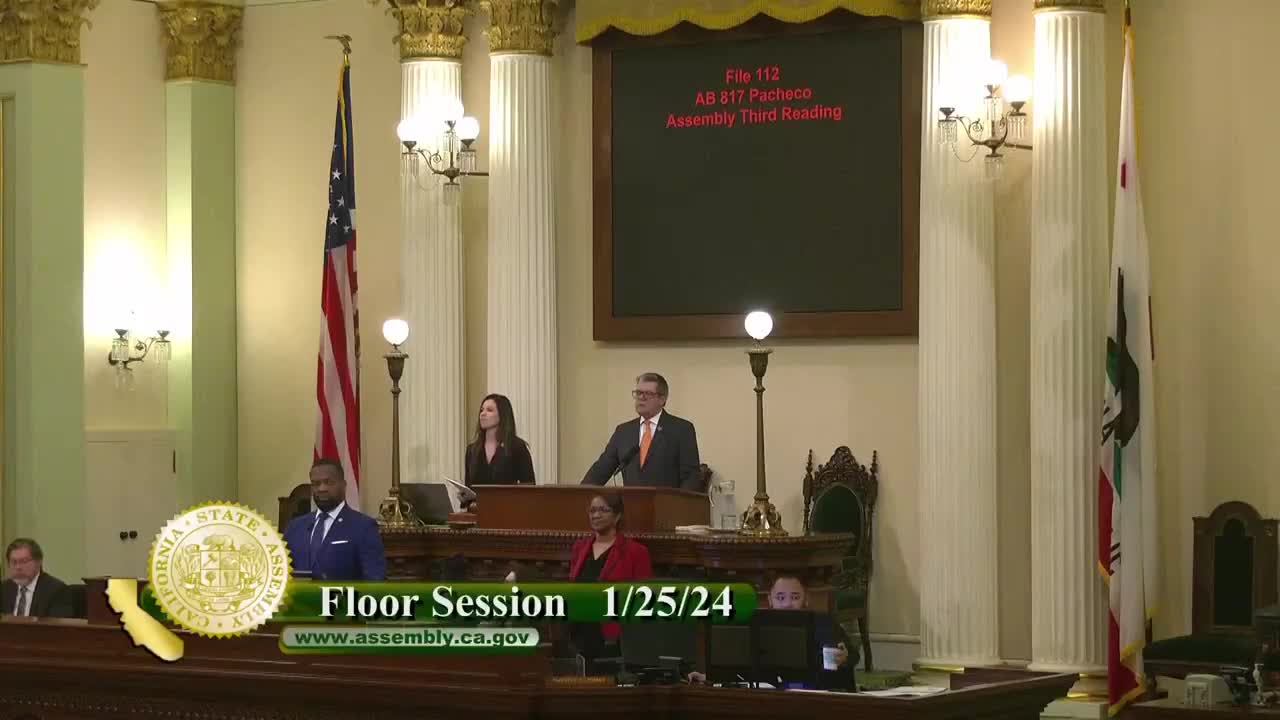


Bill Co-Author(s):
