AB 1178: School nutrition: guardian meal reimbursement.
- Session Year: 2023-2024
- House: Assembly
- Latest Version Date: 2023-07-03
Current Status:
Failed
(2023-09-01: In committee: Held under submission.)
Introduced
In Committee
First Chamber
In Committee
Second Chamber
Enacted
What does this bill do?
If funded by the state and allowed by federal law, the bill lets California pay summer meal program operators for serving one meal to a guardian (parent, grandparent, or caregiver) who brings an eligible child to a federal summer food program. It requires the guardian to be present (unless noncongregate rules apply), limits reimbursement to one guardian per child, requires operators to report meals served, and directs the state to provide guidance and information about the Summer EBT program to families.
The summary is provided by generative AI which can make mistakes. For original language, please view the details in the table below.
Existing law requires school districts, county superintendents of schools, and charter schools maintaining kindergarten or any of grades 1 to 12, inclusive, to provide 2 school meals free of charge during each schoolday to any pupil who requests a meal without consideration of the pupils eligibility for a federally funded free or reduced-price meal, with a maximum of one free meal for each meal service period, as provided. Existing law requires these meals to be nutritiously adequate meals that qualify for federal reimbursement. Existing law conditions these requirements upon an appropriation for these purposes by the Legislature, as specified.
Notwithstanding any other law, existing law requires school districts, county superintendents of schools, and charter schools maintaining kindergarten or any of grades 1 to 12, inclusive, to provide each needy pupil with one nutritionally adequate free or reduced-price meal during each schoolday. Existing law defines schoolday for these purposes to mean any day that pupils in kindergarten or grades 1 to 12, inclusive, are attending school for purposes of classroom instruction, including, but not limited to, pupil attendance on minimum days, state-funded preschool, transitional kindergarten, summer school including incoming kindergarten pupils, extended school year days, and Saturday school sessions.
This bill would, contingent upon an appropriation for its purposes and to the extent authorized by federal law, require the State Department of Education to establish a process for state reimbursement, adjusted annually for inflation, for federal summer meal program operators, as defined, for meals served to guardians, as defined, of eligible pupils receiving a meal pursuant to a summer meal program, as defined. The bill would require the department to develop related guidance, as specified, and, if necessary, to apply for a waiver of federal law to secure federal reimbursement for these meals. The bill would require the department to distribute information about the federal Summer Electronic Benefits Transfer for Children Program to guardians whose children are eligible for specified summer food programs. The bill would require a guardian of an eligible pupil to be present at the summer meal program site in order for the summer meal program operator to receive state-funded reimbursement for that meal, unless noncongregate rules are in place. The bill would require participating summer meal program operators to report to the department the number of meals served to guardians by meal site no later than 30 days after the end of summer meal site operations.
Existing law requires school districts, county superintendents of schools, and charter schools maintaining kindergarten or any of grades 1 to 12, inclusive, to provide 2 school meals free of charge during each schoolday to any pupil who requests a meal without consideration of the pupils eligibility for a federally funded free or reduced-price meal, with a maximum of one free meal for each meal service period, as provided. Existing law requires these meals to be nutritiously adequate meals that qualify for federal reimbursement. Existing law conditions these requirements upon an appropriation for these purposes by the Legislature, as specified.
Notwithstanding any other law, existing law requires school districts, county superintendents of schools, and charter schools maintaining kindergarten or any of grades 1 to 12, inclusive, to provide each needy pupil with one nutritionally adequate free or reduced-price meal during each schoolday. Existing law defines schoolday for these purposes to mean any day that pupils in kindergarten or grades 1 to 12, inclusive, are attending school for purposes of classroom instruction, including, but not limited to, pupil attendance on minimum days, state-funded preschool, transitional kindergarten, summer school including incoming kindergarten pupils, extended school year days, and Saturday school sessions.
This bill would, contingent upon an appropriation for its purposes and to the extent authorized by federal law, require the State Department of Education to establish a process for state reimbursement reimbursement, adjusted annually for inflation, for federal summer meal program operators, as defined, for meals served to guardians, as defined, of eligible pupils receiving a meal pursuant to a summer meal program, as defined. The bill would require the department to develop related guidance, as specified, and, if necessary, to apply for a waiver of federal law to secure federal reimbursement for these meals. The bill would require a guardian of an eligible pupil to be present at the summer meal program site in order for the summer meal program operator to receive state-funded reimbursement for that meal. meal, unless noncongregate rules are in place. The bill would require participating summer meal program operators to report to the department the number of meals served to guardians by meal site no later than 30 days after the end of summer meal site operations.
Existing law requires school districts, county superintendents of schools, and charter schools maintaining kindergarten or any of grades 1 to 12, inclusive, to provide 2 school meals free of charge during each schoolday to any pupil who requests a meal without consideration of the pupils eligibility for a federally funded free or reduced-price meal, with a maximum of one free meal for each meal service period, as provided. Existing law requires these meals to be nutritiously adequate meals that qualify for federal reimbursement. Existing law conditions these requirements upon an appropriation for these purposes by the Legislature, as specified.
Notwithstanding any other law, existing law requires school districts, county superintendents of schools, and charter schools maintaining kindergarten or any of grades 1 to 12, inclusive, to provide each needy pupil with one nutritionally adequate free or reduced-price meal during each schoolday. Existing law defines schoolday for these purposes to mean any day that pupils in kindergarten or grades 1 to 12, inclusive, are attending school for purposes of classroom instruction, including, but not limited to, pupil attendance on minimum days, state-funded preschool, transitional kindergarten, summer school including incoming kindergarten pupils, extended school year days, and Saturday school sessions.
This bill would, contingent upon an appropriation for its purposes and to the extent authorized by federal law, require the State Department of Education to establish a process for state reimbursement for federal summer meal program operators, as defined, for meals served to guardians, as defined, of eligible pupils receiving a meal pursuant to a summer meal program, as defined. The bill would require the department to develop related guidance, as specified, and, if necessary, to apply for a waiver of federal law to secure federal reimbursement for these meals. The bill would require a guardian of an eligible pupil to be present at the summer meal program site in order for the summer meal program operator to receive reimbursement for that meal.
This act shall be known, and may be cited, as the California Summer Caregiver Meal Act of 2023.
SEC. 2.(a)The Legislature finds and declares all of the following:
(1)No child in California should experience hunger.
(2)While child hunger rates were on the decline in California in recent years, the COVID-19 public health crisis and the related economic recession has increased childhood hunger to historic rates.
(3)Data from the United States Census Bureaus Household Pulse Survey shows that by March 2022, food insecurity for households with children in California was at 25.8 percent, with deep disparities for Black and Latino households at 28.7 and 31.2 percent, respectively.
(4)In 2020, California became one of the first states in the country to pass School Meals for All, and starting with the 202223 school year, all children in California regardless of income are receiving free breakfast and lunch.
(5)The Seamless Summer Option (SSO) and Summer Food Service Program (SFSP) ensure that children continue to receive nutritious meals when school is not in session. When school is out, SSO and SFSP provide free meals to any child 18 years of age and younger. SSO and SFSP fight hunger over summer months, closing the gap when school lets out.
(6)When a child is food insecure, their caregivers are likely food insecure too. Yet caregivers who bring their children to summer meal sites cannot join their children in eating a nourishing meal together because of antiquated and burdensome program rules.
(7)Studies have shown that children who eat with their parents or caregivers consume more fruits and vegetables.
(8)Several summer meal program sites in California have piloted providing meals to caregivers, which have been largely successful in addressing food insecurity for the whole family, providing a bonding opportunity while families share a meal, and encouraging children to eat a nourishing and healthy meal.
(b)It is the intent of the Legislature to enable summer meal program sites to offer nourishing meals to caregivers who bring their children to summer meal sites.
SEC. 3.Section 49549 is added to the Education Code, immediately following Section 49548.3, to read:49549.(a)(1)Notwithstanding any other law, and to the extent authorized by federal law, the department shall establish a process for state reimbursement, adjusted annually for inflation, for federal summer meal program operators for meals served to guardians of eligible pupils receiving a meal pursuant to a summer meal program.
(2)A guardian of an eligible pupil shall be present at the summer meal program site in order for the summer meal program operator to receive state -funded reimbursement for the meal served to a guardian pursuant to this section, unless noncongregate rules are in place.
(3)Reimbursement under this section shall be limited to one guardian per eligible pupil.
(4)Reimbursement under this section shall commence no earlier than one year after an appropriation is made for its purposes.
(b)The department shall develop guidance for summer meal program operators participating in the federal Summer Seamless Option or the Summer Food Service Program on how to serve guardians a meal at summer meal program sites. The guidance shall be posted on the departments internet website and shall not be required to be mailed.
(c)The department shall distribute information about the Summer Electronic Benefits Transfer for Children Program established pursuant to Section 1762 of Title 42 of the United States Code to guardians whose children are eligible for the Summer Seamless Option or the Summer Food Service Program.
(c)(d)Participating summer meal program operators shall report to the department the number of meals served to guardians by meal site no later than 30 days after the end of summer meal site operations.
(d)(e)The department shall apply for a waiver of federal law if necessary to secure federal reimbursement for meals served to guardians pursuant to this section.
(e)(f)This section shall not be interpreted as to require any action by summer meal program operators.
(f)(g)For purposes of this section, the following definitions apply:
(1)Eligible pupil means a pupil who meets the criteria for a meal pursuant to a federal summer meal program.
(2)Guardian means a parent, step-parent, grandparent, guardian, or other adult family member or caretaker who is caring for an eligible pupil.
(3)Summer meal program includes, but is not necessarily limited to, the federal Summer Food Service Program and the Seamless Summer Option component of the federal National School Lunch Program.
(4)Summer meal program operators include, but are not necessarily limited to, a school district, county office of education, charter school, government organization, or nonprofit entity participating in a summer meal program.
(g)(h)(1)The implementation of this section is contingent upon an appropriation in the annual Budget Act or another statute for these purposes.
(2)Notwithstanding any other law, for each fiscal year in which an appropriation in the annual Budget Act is made for purposes of this section, that appropriation shall be made from the General Fund and be in addition to funding appropriated for purposes of satisfying the minimum funding requirements pursuant to Section 8 of Article XVI of the California Constitution for that fiscal year.
(3)The amount of an appropriation made for purposes of this subdivision shall be in an amount equal to the estimated number of reimbursable guardian meals provided under this section multiplied by the federal National School Lunch Program or School Breakfast Program meal reimbursement rate for qualified pupil meals under the summer meal program.
This act shall be known, and may be cited, as the California Summer Caregiver Meal Act of 2023.
SEC. 2.(a)The Legislature finds and declares all of the following:
(1)No child in California should experience hunger.
(2)While child hunger rates were on the decline in California in recent years, the COVID-19 public health crisis and the related economic recession has increased childhood hunger to historic rates.
(3)Data from the United States Census Bureaus Household Pulse Survey shows that by March 2022, food insecurity for households with children in California was at 25.8 percent, with deep disparities for Black and Latino households at 28.7 and 31.2 percent, respectively.
(4)In 2020, California became one of the first states in the country to pass School Meals for All, and starting with the 202223 school year, all children in California regardless of income are receiving free breakfast and lunch.
(5)The Seamless Summer Option (SSO) and Summer Food Service Program (SFSP) ensure that children continue to receive nutritious meals when school is not in session. When school is out, SSO and SFSP provide free meals to any child 18 years of age and younger. SSO and SFSP fight hunger over summer months, closing the gap when school lets out.
(6)When a child is food insecure, their caregivers are likely food insecure too. Yet caregivers who bring their children to summer meal sites cannot join their children in eating a nourishing meal together because of antiquated and burdensome program rules.
(7)Studies have shown that children who eat with their parents or caregivers consume more fruits and vegetables.
(8)Several summer meal program sites in California have piloted providing meals to caregivers, which have been largely successful in addressing food insecurity for the whole family, providing a bonding opportunity while families share a meal, and encouraging children to eat a nourishing and healthy meal.
(b)It is the intent of the Legislature to enable summer meal program sites to offer nourishing meals to caregivers who bring their children to summer meal sites.
SEC. 3.Section 49549 is added to the Education Code, immediately following Section 49548.3, to read:49549.(a)(1)Notwithstanding any other law, and to the extent authorized by federal law, the department shall establish a process for state reimbursement reimbursement, adjusted annually for inflation, for federal summer meal program operators for meals served to guardians of eligible pupils receiving a meal pursuant to a summer meal program.
(2)A guardian of an eligible pupil shall be present at the summer meal program site in order for the summer meal program operator to receive state -funded reimbursement for the meal served to a guardian pursuant to this section. section, unless noncongregate rules are in place.
(3)Reimbursement under this section shall be limited to one guardian per eligible pupil.
(4)Reimbursement under this section shall commence no earlier than one year after an appropriation is made for its purposes.
(b)The department shall develop guidance for summer meal program operators participating in the federal Summer Seamless Option or the Summer Food Service Program on how to serve guardians a meal at summer meal program sites. The guidance shall be posted on the departments internet website and shall not be required to be mailed.
(c)Participating summer meal program operators shall report to the department the number of meals served to guardians by meal site no later than 30 days after the end of summer meal site operations.
(c)(d)The department shall apply for a waiver of federal law if necessary to secure federal reimbursement for meals served to guardians pursuant to this section.
(d)The department may accept public or private funds in order to supplement state and federal reimbursement for meals pursuant to this section.(e)This section shall not be interpreted as to require any action by summer meal program operators.
(f)For purposes of this section, the following definitions apply:
(1)Eligible pupil means a pupil who meets the criteria for a meal pursuant to a federal summer meal program.
(2)Guardian means a parent, step-parent, grandparent, guardian, or other adult family member or caretaker who is caring for an eligible pupil.
(3)Summer meal program includes, but is not necessarily limited to, the federal Summer Food Service Program and the Seamless Summer Option component of the federal National School Lunch Program.
(4)Summer meal program operators include, but are not necessarily limited to, a school district, county office of education, charter school, government organization, or nonprofit entity participating in a summer meal program.
(g)(1)The implementation of this section is contingent upon an appropriation in the annual Budget Act or another statute for these purposes.
(2)Notwithstanding any other law, for each fiscal year in which an appropriation in the annual Budget Act is made for purposes of this section, that appropriation shall be made from the General Fund and be in addition to funding appropriated for purposes of satisfying the minimum funding requirements pursuant to Section 8 of Article XVI of the California Constitution for that fiscal year.
(3)The amount of an appropriation made for purposes of this subdivision shall be in an amount equal to the estimated number of reimbursable guardian meals provided under this section multiplied by the federal National School Lunch Program or School Breakfast Program meal reimbursement rate for qualified pupil meals under the summer meal program.
This act shall be known, and may be cited, as the California Summer Caregiver Meal Act of 2023.
SEC. 2.(a)The Legislature finds and declares all of the following:
(1)No child in California should experience hunger.
(2)While child hunger rates were on the decline in California in recent years, the COVID-19 public health crisis and the related economic recession has increased childhood hunger to historic rates.
(3)Data from the United States Census Bureaus Household Pulse Survey shows that by March 2022, food insecurity for households with children in California was at 25.8 percent, with deep disparities for Black and Latino households at 28.7 and 31.2 percent, respectively.
(4)In 2020, California became one of the first states in the country to pass School Meals for All, and starting with the 202223 school year, all children in California regardless of income are receiving free breakfast and lunch.
(5)The Seamless Summer Option (SSO) and Summer Food Service Program (SFSP) ensure that children continue to receive nutritious meals when school is not in session. When school is out, SSO and SFSP provide free meals to any child 18 years of age and younger. SSO and SFSP fight hunger over summer months, closing the gap when school lets out.
(6)When a child is food insecure, their caregivers are likely food insecure too. Yet caregivers who bring their children to summer meal sites cannot join their children in eating a nourishing meal together because of antiquated and burdensome program rules.
(7)Studies have shown that children who eat with their parents or caregivers consume more fruits and vegetables.
(8)Several Summer Meal Program summer meal program sites in California have piloted providing meals to caregivers, which have been largely successful in addressing food insecurity for the whole family, providing a bonding opportunity while families share a meal, and encouraging children to eat a nourishing and healthy meal.
(b)It is the intent of the Legislature to enable summer meal program sites to offer nourishing meals to caregivers who bring their children to summer meal sites.
SEC. 3.Section 49549 is added to the Education Code, immediately following Section 49548.3, to read:49549.(a)(1)Notwithstanding any other law, and to the extent authorized by federal law, the department shall establish a process for state reimbursement for federal summer meal program operators for meals served to guardians of eligible pupils receiving a meal pursuant to a summer meal program.
(2)A guardian of an eligible pupil shall be present at the summer meal program site in order for the summer meal program operator to receive reimbursement for the meal served to a guardian pursuant to this section.
(b)The department shall develop guidance for summer meal program operators participating in the federal Summer Seamless Option or the Summer Food Service Program on how to serve guardians a meal at summer meal program sites. The guidance shall be posted on the departments internet website and shall not be required to be mailed.
(c)The department shall apply for a waiver of federal law if necessary to secure federal reimbursement for meals served to guardians pursuant to this section.
(d)The department may accept public or private funds in order to supplement state and federal reimbursement for meals pursuant to this section.
(e)This section shall not be interpreted as to require any action by summer meal program operators.
(f)For purposes of this section, the following definitions apply:
(1)Eligible pupil means a pupil who meets the criteria for a meal pursuant to a federal summer meal program.
(2)Guardian means a parent, step-parent, grandparent, guardian, or other adult family member or caretaker who is caring for an eligible pupil.
(3)Summer meal program includes, but is not necessarily limited to, the federal Summer Food Service Program and the Seamless Summer Option component of the federal National School Lunch Program.
(4)Summer meal program operators include, but are not necessarily limited to, a school district, county office of education, charter school, government organization, or nonprofit entity participating in a summer meal program.
(g)(1)The implementation of this section is contingent upon an appropriation in the annual Budget Act or another statute for these purposes.
(2)Notwithstanding any other law, for each fiscal year in which an appropriation in the annual Budget Act is made for purposes of this section, that appropriation shall be made from the General Fund and be in addition to funding appropriated for purposes of satisfying the minimum funding requirements pursuant to Section 8 of Article XVI of the California Constitution for that fiscal year.
(3)The amount of an appropriation made for purposes of this subdivision shall be in an amount equal to the estimated number of reimbursable guardian meals provided under this section multiplied by the federal National School Lunch Program or School Breakfast Program meal reimbursement rate for qualified pupil meals under the summer meal program.
This act shall be known, and may be cited, as the California Summer Caregiver Meal Act of 2023.
SEC. 2.(a)The Legislature finds and declares all of the following:
(1)No child in California should experience hunger.
(2)While child hunger rates were on the decline in California in recent years, the COVID-19 public health crisis and the related economic recession has increased childhood hunger to historic rates.
(3)Data from the United States Census Bureaus Household Pulse Survey shows that by March 2022, food insecurity for households with children in California was at 25.8 percent, with deep disparities for Black and Latino households at 28.7 and 31.2 percent, respectively.
(4)In 2020, California became one of the first states in the country to pass School Meals for All, and starting with the 202223 school year, all children in California regardless of income are receiving free breakfast and lunch.
(5)The Seamless Summer Option (SSO) and Summer Food Service Program (SFSP) ensure that children continue to receive nutritious meals when school is not in session. When school is out, SSO and SFSP provide free meals to any child 18 years of age and younger. SSO and SFSP fight hunger over summer months, closing the gap when school lets out.
(6)When a child is food insecure, their caregivers are likely food insecure too. Yet caregivers who bring their children to summer meal sites cannot join their children in eating a nourishing meal together because of antiquated and burdensome program rules.
(7)Studies have shown that children who eat with their parents or caregivers consume more fruits and vegetables.
(8)Several Summer Meal Program sites in California have piloted providing meals to caregivers, which have been largely successful in addressing food insecurity for the whole family, providing a bonding opportunity while families share a meal, and encouraging children to eat a nourishing and healthy meal.
(b)It is the intent of the Legislature to enable summer meal program sites to offer nourishing meals to caregivers who bring their children to summer meal sites.
SEC. 3.Section 49549 is added to the Education Code, immediately following Section 49548.3, to read:49549.(a)(1)Notwithstanding any other law, and to the extent authorized by federal law, the department shall establish a process for state reimbursement for federal summer meal program operators for meals served to guardians of eligible pupils receiving a meal pursuant to a summer meal program.
(2)A guardian of an eligible pupil shall be present at the summer meal program site in order for the summer meal program operator to receive reimbursement for the meal served to a guardian pursuant to this section.
(b)The department shall develop guidance for summer meal program operators participating in the federal Summer Seamless Option or the Summer Food Service Program on how to serve guardians a meal at summer meal program sites. The guidance shall be posted on the departments internet website and shall not be required to be mailed.
(c)The department shall apply for a waiver of federal law if necessary to secure federal reimbursement for meals served to guardians pursuant to this section.
(d)The department may accept public or private funds in order to supplement state and federal reimbursement for meals pursuant to this section.
(e)This section shall not be interpreted as to require any action by summer meal program operators.
(f)For purposes of this section, the following definitions apply:
(1)Eligible pupil means a pupil who meets the criteria for a meal pursuant to a federal summer meal program.
(2)Guardian means a parent, step-parent, grandparent, guardian, or other adult family member or caretaker who is caring for an eligible pupil.
(3)Summer meal program includes, but is not necessarily limited to, the federal Summer Food Service Program and the Seamless Summer Option component of the federal National School Lunch Program.
(4)Summer meal program operators include, but are not necessarily limited to, a school district, county office of education, charter school, government organization, or nonprofit entity participating in a summer meal program.
(g)The implementation of this section is contingent upon an appropriation in the annual Budget Act or another statute for these purposes.
|
Date
|
Status
|
|---|---|
| Sep 1, 2023 | In committee: Held under submission. |
| Jul 10, 2023 | In committee: Referred to APPR. suspense file. |
| Jul 3, 2023 | From committee chair, with author's amendments: Amend, and re-refer to committee. Read second time, amended, and re-referred to Com. on APPR. |
| Jun 28, 2023 | From committee: Do pass and re-refer to Com. on APPR. (Ayes 6. Noes 0.) (June 28). Re-referred to Com. on APPR. |
| Jun 7, 2023 | Referred to Com. on ED. |
| May 31, 2023 | In Senate. Read first time. To Com. on RLS. for assignment. |
| May 30, 2023 | Read third time. Passed. Ordered to the Senate. (Ayes 72. Noes 1. Page 1929.) |
| May 22, 2023 | Read second time. Ordered to third reading. |
| May 18, 2023 | Read second time and amended. Ordered returned to second reading. |
| May 18, 2023 | From committee: Amend, and do pass as amended. (Ayes 11. Noes 1.) (May 18). |
| Apr 26, 2023 | In committee: Set, first hearing. Referred to APPR. suspense file. |
| Apr 3, 2023 | Re-referred to Com. on APPR. |
| Mar 30, 2023 | Read second time and amended. |
| Mar 30, 2023 | From committee: Amend, and do pass as amended and re-refer to Com. on APPR. (Ayes 6. Noes 0.) (March 29). |
| Mar 2, 2023 | Referred to Com. on ED. |
| Feb 17, 2023 | From printer. May be heard in committee March 19. |
| Feb 16, 2023 | Read first time. To print. |
|
Date
|
Description
|
Location
|
Votes
|
|
|---|---|---|---|---|
| Jul 10, 2023 | Placed on suspense file | Senate Standing Committee on Appropriations |
Passed |
|
| Jun 28, 2023 | Do pass, but first be re-referred to the Committee on [Appropriations] | Senate Standing Committee on Education |
Passed |
|
| May 30, 2023 | AB 1178 Luz Rivas Assembly Third Reading | Assembly Floor |
Passed |
|
| May 18, 2023 | Do pass as amended. | Assembly Standing Committee on Appropriations |
Passed |
|
| Mar 29, 2023 | Do pass as amended and be re-referred to the Committee on [Appropriations] | Assembly Standing Committee on Education |
Passed |
This list shows positions taken on this bill by organizations on the date displayed, which is linked to the original source.
Positions by individuals are not included.
|
Organization
|
Position
|
Date
|
|---|---|---|
| California Association Of Food Banks | * Support | Jun 28, 2023 |
| California Food and Farming Network | ** Support | |
| California School Employees Association | ** Support | |
| Center for Ecoliteracy | ** Support | |
| Ceres Community Project | ** Support | |
| Community Action Partnership of Orange County | ** Support | |
| Disability Rights California | * Support | Jun 28, 2023 |
| Food Bank of Contra Costa and Solano | ** Support | |
| Food Bank of Santa Barbara County | ** Support | |
| Food for People, the Food Bank for Humboldt County | ** Support | |
| Food Share | ** Support | |
| Fresno Unified School District | * Support | Jun 28, 2023 |
| Glide | ** Support | |
| GRACE - End Child Poverty in California | ** Support | |
| Hunger Action Los Angeles | ** Support | |
| Jacobs and Cushman San Diego Food Bank | * Support | Jun 28, 2023 |
| Los Angeles Regional Food Bank | * Support | Jun 28, 2023 |
| National Association Of Social Workers, California Chapter | ** Support | |
| Nourish California | ** Support | |
| Redwood Empire Food Bank | ** Support | |
| Sacramento Food Bank & Family Services | ** Support | |
| San Diego Food Bank | ** Support | |
| San Diego Hunger Coalition | * Support | Jun 28, 2023 |
| School Services of California | * Support | Jun 28, 2023 |
| Second Harvest Food Bank of Orange County | ** Support | |
| second harvest food bank of santa cruz county | ** Support | |
| Second Harvest of Silicon Valley | ** Support | |
| Slo Food Bank | ** Support | |
| The Gubbio Project | ** Support | |
| The Office of Kat Taylor | ** Support | |
| Yolo Food Bank | ** Support |
SENATE COMMITTEE ON
Senator Anthony Portantino, Chair
2023 - 2024 Regular Session
AB 1178 (Luz Rivas) - School nutrition: guardian meal reimbursement
Version: | Policy Vote: |
Urgency: | Mandate: |
Hearing Date: | Consultant: |
Bill Summary:
This bill requires the California Department of Education (CDE) to establish a state reimbursement process for federal summer meal program operators to serve a meal to guardians of eligible pupils in a federal summer meal program.
Fiscal Impact:
- While the bill’s provisions would be subject to an appropriation, it could result in significant General Fund cost pressure for the state to provide the meal reimbursements for guardians. The CDE estimates General Fund costs of up to $121 million each year for this purpose. This estimate assumes that each participating student would be accompanied by two guardians to each summer meal service. Additionally, each meal would be reimbursed at the federal reimbursement rate. The costs could be less to the extent that only one guardian accompanies a student or a guardian does not attend at all. Should the federal government grant a waiver to provide federal reimbursements, the General Fund costs would be less.
- The CDE estimates one-time General Fund costs of $1.6 million to develop an IT database, develop guidance, and potentially apply for a waiver of federal law. The majority of these costs are to develop an IT database. Additionally, there could be ongoing General Fund costs of $1.4 million in which $1.2 million is for 7.25 staff to oversee the program and about $200,000 for ongoing maintenance of the IT database.
Background:
Existing law requires a school district or county superintendent of schools maintaining kindergarten or any of grades 1 to 12, inclusive, to provide two school meals free of charge during each schoolday to any pupil who requests a meal without consideration of the pupil’s eligibility for a federally funded free or reduced-price meal, with a maximum of one free meal for each meal service period, except for family daycare homes. The meals provided shall be nutritiously adequate meals that qualify for federal reimbursement.
Existing law specifies that in order to provide pupils in high-poverty schools with optimal nutrition for learning and to ensure that schools receive the maximum federal meal reimbursement, on or before June 30, 2022, a school district or county superintendent of schools that has a high-poverty school in its jurisdiction shall apply to operate a federal universal meal service provision, which may include, but is not limited to, the Community Eligibility Provision (CEP) or Provision 2.
Proposed Law:
This bill requires the CDE, upon appropriation, to establish a process for state reimbursement adjusted for inflation, upon appropriation, for federal summer meal program operators for meals served to guardians of eligible pupils receiving a meal pursuant to a summer meal program. It requires the guardian of an eligible student to be present at the summer meal program site in order for the summer meal program operator to receive state-funded reimbursement for the meal served to a guardian unless noncongregate rules are applied.
This bill requires the CDE to develop and post on its website, for summer meal program operators participating in the federal Summer Seamless Option or the Summer Food Service Program on how to serve guardians a meal at summer meal program sites. Summer meal program operators shall report to the CDE the number of meals served to guardians by meal site no later than 30 days after the end of summer meal site operations.
This bill requires the CDE to apply for a waiver of federal law if necessary to secure federal reimbursement for meals served to guardians. This bill also requires CDE to distribute information about the federal Summer Electronic Benefits Transfer for Children Program to guardians whose children are eligible for specified summer food programs.
This bill specifies that an appropriation to create a state reimbursement process for federal summer meal program operators for meals served to guardians of eligible pupils receiving a meal pursuant to a summer meal program shall come from the General fund and must be equal to the estimated number of reimbursable guardian meals provided under this section multiplied by the federal National School Lunch Program or School Breakfast Program meal reimbursement rate for qualified pupil meals under the summer meal program.
Related Legislation:
AB 95 (Hoover, 2023) clarifies that a school may sell an additional meal to a pupil after that pupil has already received a nutritiously adequate meal that qualifies for federal reimbursement. This bill is on the Senate Floor.
SB 348 (Skinner, 2023) requires the California Department of Education (CDE), in collaboration with the California Department of Social Services (CDSS) to maximize participation in the federal Summer Electronic Benefit Transfer For Children (SEBTC) and requires CDSS, upon an appropriation by the Legislature, to provide to a pupil who qualifies for federal SEBTC an additional eighty dollars ($80) per month in the form of EBT benefits. This bill also requires charter schools to provide two meals, rather than one, beginning the 2024-25 school year and requires the county superintendent of schools, local educational agency (LEA), or charter school to serve breakfast meals on each four-hour schoolday. This bill is pending in the Assembly Health Committee.
Staff Comments:
The Summer Food Service Program is a federally-funded, state-administered program. The program reimburses operators who serve free healthy meals and snacks to children and teens in low-income areas. Schools participating in the National School Lunch Program or School Breakfast Program are eligible to apply for the Seamless Summer Option which allows public schools to combine features of the School Nutrition Programs and the Summer Food Service Program along with reduced paperwork requirements, making it easier for schools to feed children during the traditional summer vacation periods and, for year-round schools, long school vacation periods. It appears that a pupil would have to be eligible in either the SFSP or SSO program in order for a guardian to receive a meal from a summer meal program operator.
-- END --
SENATE COMMITTEE ON EDUCATION
Senator Josh Newman, Chair
2023 - 2024 Regular
Bill No: Hearing Date: June 28, 2023
Author: | Luz Rivas | ||
Version: |
| ||
Urgency: | Fiscal: | ||
Consultant: | |||
Subject: .
SUMMARY
Upon appropriation, this bill requires the California Department of Education (CDE) to establish a state reimbursement process for federal summer meal program operators to serve a meal to guardians of eligible pupils in a federal summer meal program.
BACKGROUND
Existing Law:
Education Code (EC)
- Commencing with the 2022–23 school year, requires a school district or county superintendent of schools maintaining kindergarten or any of grades 1 to 12, inclusive, to provide two school meals free of charge during each schoolday to any pupil who requests a meal without consideration of the pupil’s eligibility for a federally funded free or reduced-price meal, with a maximum of one free meal for each meal service period, except for family daycare homes. The meals provided shall be nutritiously adequate meals that qualify for federal reimbursement. (EC § 49501.5)
- Specifies that in order to provide pupils in high-poverty schools with optimal nutrition for learning and to ensure that schools receive the maximum federal meal reimbursement, on or before June 30, 2022, a school district or county superintendent of schools that has a high-poverty school in its jurisdiction shall apply to operate a federal universal meal service provision, which may include, but is not limited to, the Community Eligibility Provision (CEP) or Provision 2. (EC § 49564.3)
- Defines “Competitive foods” as all food and beverages other than meals reimbursed under programs authorized by the federal Richard B. Russell National School Lunch Act (Public Law 113-79) and the federal Child Nutrition Act of 1966 (42 U.S.C. Sec. 1771 et seq.) available for sale to pupils on the school campus during the schoolday. (EC § 49430(c))
- Authorizes a school district or county office of education to use funds made available through any federal or state program for the provision of meals to a pupil, including the federal School Breakfast Program, the federal National School Lunch Program the federal Summer Food Service Program, the federal Seamless Summer Option, or the state meal program, or do so at its own expense. (EC § 49550)
- Requires every public school to post the school district’s nutrition and physical activity policies, in public view within all school cafeterias or other central eating areas. (EC § 49432)
ANALYSIS
Upon appropriation, this bill requires the CDE to establish a state reimbursement process for federal summer meal program operators to serve a meal to guardians of eligible pupils in a federal summer meal program. Specifically, this bill:
General Provision
- Requires, upon appropriation, the CDE to establish a process for state reimbursement adjusted for inflation, upon appropriation, for federal summer meal program operators for meals served to guardians of eligible pupils receiving a meal pursuant to a summer meal program.
- Requires, upon appropriation, the guardian of an eligible student to be present at the summer meal program site in order for the summer meal program operator to receive state-funded reimbursement for the meal served to a guardian unless noncongregate rules are applied.
- Requires, upon appropriation, the CDE to develop and post on its website, for summer meal program operators participating in the federal Summer Seamless Option or the Summer Food Service Program on how to serve guardians a meal at summer meal program sites.
- Requires, upon appropriation, participating in the summer meal program operators to report to the CDE the number of meals served to guardians by meal site no later than 30 days after the end of summer meal site operations.
- Requires, upon appropriation, the CDE to apply for a waiver of federal law if necessary to secure federal reimbursement for meals served to guardians.
- Specifies that an appropriation to create a state reimbursement process for federal summer meal program operators for meals served to guardians of eligible pupils receiving a meal pursuant to a summer meal program shall come from the General fund and must be equal to the estimated number of reimbursable guardian meals provided under this section multiplied by the federal National School Lunch Program or School Breakfast Program meal reimbursement rate for qualified pupil meals under the summer meal program.
Definitions
- “Eligible pupil” means a pupil who meets the criteria for a meal pursuant to a federal summer meal program.
- “Guardian” means a parent, step-parent, grandparent, guardian, or other adult family member or caretaker who is caring for an eligible pupil.
- “Summer meal program” includes, but is not necessarily limited to, the federal Summer Food Service Program and the Seamless Summer Option component of the federal National School Lunch Program.
- “Summer meal program operators” include, but are not necessarily limited to, a school district, county office of education, charter school, government organization, or nonprofit entity participating in a summer meal program.
Findings and Declarations
- Makes findings and declarations to enable summer meal program sites to offer nourishing meals to caregivers who bring their children to summer meal sites.
STAFF COMMENTS
- Need for the bill. According to the author, “In the 2022-23 school year, California became the first state to implement a statewide Universal Meals Program to provide free nutritiously adequate breakfast and lunch for all students throughout the school year. A recent SacBee article chronicled, Sara Goncalves, a teacher aide at A.M. Winn Elementary, in the Sacramento City Unified School District. Goncalves notes that the universal meal program provides some much-needed financial relief for her since she is on a strict budget. She has two daughters that utilize the universal meal programs where she is able to save $150 in her grocery bill per week. Unfortunately, Gonclaves knows that for many students in food insecure households, these are the only meals they will have.
During the summer months, students become increasingly vulnerable to hunger. When school is not in session, free breakfast and lunch meals are not provided to students. The United States Department of Agriculture (USDA) supplements meals for children through their Summer Food Service Program (SFSP), a voluntary program for schools, libraries, community based organizations, faith based institutions, and government agencies to host and provide free meals to children ages 18 and under.
According to studies from the Institute for Policy and Research, one in four households with children in California are food insecure. California Department of Education estimates that over 269,000 K-12 students experienced homelessness in 2019. If these students are experiencing homelessness or on the brink of homelessness, it is likely that everyone in these households are food insecure and facing hunger.
SFSP mandates that only children and teens ages 18 and younger are eligible to receive free, reimbursable meals. This program does not allow for parents or caregivers to utilize the program and share a meal with their children. AB 1178 seeks to combat hunger during summer so parents or caregivers and children can eat together during the summer meal program.”
- Meals Service Options: United State Department of Agriculture (USDA) Meal Programs. The CDE, Nutrition Services Division administers many of the USDA meal programs at the state level:
- The National School Lunch Program (NSLP). The NSLP is a federally assisted meal program operating in public and nonprofit private schools and residential childcare institutions. It provides nutritionally balanced, low-cost or free lunches to children each school day.
- The School Breakfast Program (SBP). The SBP provides reimbursement to states to operate nonprofit breakfast programs in schools and residential childcare institutions. The Food and Nutrition Service of the USDA administers the SBP at the federal level.
- The Child and Adult Care Food Program (CACFP). The CACFP is a federal program that provides reimbursements for nutritious meals and snacks to eligible children and adults who are enrolled for care at participating childcare centers, daycare homes, and adult daycare centers. The CACFP also provides reimbursements for meals served to children and youth participating in afterschool programs, children residing in emergency shelters, and adults over the age of 60 or living with a disability and enrolled in daycare facilities.
- The Summer Food Service Program (SFSP). The SFSP is a federally-funded, state-administered program. The SFSP reimburses program operators who serve free healthy meals and snacks to children and teens in low-income areas.
- The Seamless Summer Option (SSO). Schools participating in the NSLP or SBP are eligible to apply for the SSO. This option allows public schools to combine features of the School Nutrition Programs and the SFSP along with reduced paperwork requirements, making it easier for schools to feed children during the traditional summer vacation periods and, for year-round schools, long school vacation periods.
In particular, a pupil would have to be eligible in either the SFSP or SSO program in order for a guardian to receive a meal from a summer meal program operator.
- Non-congregate setting under the SFSP and the SSO. On February 28, 2023, the USDA provided guidance and instructions on implementing the SFSP and the SSO non-congregate meal service for the summer of 2023. On April 20, 2023, the USDA issued additional guidance providing additional options about the administration and operation of non-congregate meal service in rural areas during summer. Although the USDA issued further guidance, the CDE’s application process for the non-congregate meal service pilot during the summer 2023 has not changed.
Non-congregate meal service in the summer meal programs is limited to rural areas in which congregate meal services are not available. Sites participating in non-congregate feeding must still meet all other program requirements, including establishing area eligibility.
The USDA has not yet issued regulations regarding non-congregate feeding. As such, non-congregate feeding for summer 2023 is being treated as a pilot program. The USDA anticipates releasing regulations by December 2023 for implementation in summer 2024.
- Summer Electronic Benefits Transfer For Children (SEBTC). The SEBTC program offers an opportunity to reduce summer hunger by providing additional resources to purchase food during the summer months for families whose children are certified to receive free or reduced-price school meals during the school year. SEBTC is a complement to the Summer Nutrition Programs (which support summer meal programs in low-income communities that are frequently combined with educational, enrichment, and recreational activities) and can help reduce food insecurity for low-income families, particularly in rural or other areas with limited access to summer meals.
As part of its efforts to end child hunger, the USDA’s Food and Nutrition Service division (FNS) created the SEBTC demonstration to study the use of SNAP and WIC electronic benefits transfer (EBT) technology in providing food assistance to low-income children during the summer by providing their families with more resources to use at food stores. The small-scale “proof-of-concept” demonstrations of the EBT-based approaches began in the summer of 2011 in two states for the WIC model (Michigan and Texas) and three states for the SNAP model (Connecticut, Missouri, and Oregon), serving 2,500 children in summer 2011. This model has been proven to decrease food insecurity among children through the Summer EBT demonstration projects and has grown significantly in other states since its inception. On Dec. 23, 2022, Congress authorized SEBTC as a permanent, nationwide program. According to the USDA’s FNS website, they are “quickly developing more guidance on SEBTC, and […] look forward to working with our partners in states and local communities as we implement this program.” On Dec. 23, 2022, Congress authorized SEBTC as a permanent nationwide program on June 7th. FNS release a memorandum detailing their new guidance on SEBTC benefits.
The author may wish to consider if information regarding the SEBTC program should be distributed to guardians whose children are eligible for the SFSP or the SSO program.
- Related Legislation
AB 95 (Hoover, 2023) clarifies that a school may sell an additional meal to a pupil after that pupil has already received a nutritiously adequate meal that qualifies for federal reimbursement. This bill is on the Senate Floor.
AB 348 (Skinner, 2023) requires the California Department of Education (CDE), in collaboration with the California Department of Social Services (CDSS) to maximize participation in the federal Summer Electronic Benefit Transfer For Children (SEBTC) and requires CDSS, upon an appropriation by the Legislature, to provide to a pupil who qualifies for federal SEBTC an additional eighty dollars ($80) per month in the form of EBT benefits. This bill also requires charter schools to provide two meals, rather than one, beginning the 2024-25 school year and requires the county superintendent of schools, local educational agency (LEA), or charter school to serve breakfast meals on each four-hour schoolday. This bill is in Assembly Education Committee.
AB 1871 (Bonta) Chapter 480, Statutes of 2018, requires charter schools, commencing with the 2019-20 school year, to provide each low-income pupil with one nutritionally adequate free or reduced-price meal during each schoolday.
SB 138 (McGuire) Chapter 724, Statutes of 2017, requires the CDE, in consultation with the State Department of Health Care Services, to develop and implement a process to use Medi-Cal data to directly certify children whose families meet the income criteria into the school meal program; requires school districts and COEs with high poverty schools and high poverty charter schools currently participating in the breakfast or lunch program to provide breakfast and lunch free of charge to all students at those schools; and, authorized a school district, COE, or charter school to opt-out due to fiscal hardship.
SUPPORT
California Food and Farming Network
California School Employees Association
Center for Ecoliteracy
Community Action Partnership of Orange County
Food Bank of Contra Costa and Solano
Food for People, the Food Bank for Humboldt County
Food Share
Foodbank of Santa Barbara County
Glide
GRACE- End Child Poverty in California
Hunger Action Los Angeles
Los Angeles Regional Food Bank
National Association of Social Workers, California Chapter
Nourish California
Sacramento Food Bank & Family Services
San Diego Food Bank
San Diego Hunger Coalition
Second Harvest Food Bank of Orange County
Second Harvest Food Bank of Santa Cruz County
Second Harvest of Silicon Valley
The Gubbio Project
The Office of Kat Taylor
1 Individual
OPPOSITION
None received
-- END --
ASSEMBLY THIRD READING
ATR Bill Id:AB 1178
Author:(Luz Rivas)
As Amended Ver:May 18, 2023
Majority vote
SUMMARY
This bill requires, contingent on appropriation, the California Department of Education (CDE) to reimburse with state funds federal summer meal program operators for meals served to the guardian of a student receiving a meal from a summer meal program.
Major Provisions
- Requires the guardian of a student to be present at the summer meal program site in order for the summer meal program operator to receive reimbursement for the meal served to the parent or guardian, unless noncongregate rules are in place.
- Requires CDE to develop and post on its website guidance for summer meal program operators on how to serve guardians a meal at summer meal program sites.
- Requires CDE to apply for a waiver of federal law, if necessary, to secure federal reimbursement for meals served to guardians.
- Allows CDE to accept public or private funds in order to supplement state and federal reimbursement for meals served to guardians.
- Specifies funding for the reimbursement for guardian meals is to come from the General Fund, rather than the Proposition 98 General Fund, and is to be reimbursed at the federal reimbursement rate for certain other school meal programs.
COMMENTS
Feeding parents and guardians of students. The Seamless Summer Option (SSO) is a federal and state funded program that encourages school food authorities (SFA) participating in the National School Lunch Program (NSLP) or School Breakfast Program (SBP) to provide meals in low-income areas during the summer. The SSO combines features of the NSLP, SBP, and Summer Food Service Program. Program Operators of the SSO may operate at community or recreational centers, libraries, camps, schools, and other eligible summer meal sites. Participating in the SSO reduces paperwork, administrative burdens, and makes it easier for SFAs to feed children in low-income areas during traditional summer vacation periods and during school vacation periods of longer than ten days for year-round schools. The federal government does not allow for reimbursement of meals provided to the parents/guardians of children served through this program. Likewise, these services to parents/guardians are not authorized for reimbursement under state nutrition funding. This bill establishes a process for state reimbursement for federal summer meal program operators for meals served to one guardian for each eligible pupil receiving a meal during a summer meal program.
According to the Author
"During the summer months, students become increasingly vulnerable to hunger. When school is not in session, free breakfast and lunch meals are not provided to students. The United States Department of Agriculture (USDA) supplements meals for children through their Summer Food Service Program (SFSP), a voluntary program for schools, libraries, community based organizations, faith based institutions, and government agencies to host and provide free meals to children ages 18 and under.
According to studies from the Institute for Policy and Research, one in four households with children in California are food insecure. California Department of Education estimates that over 269,000 K-12 students experienced homelessness in 2019. If these students are experiencing homelessness or are on the brink of homelessness, it is likely that everyone in these households are food insecure and facing hunger.
SFSP mandates that only children and teens ages 18 and younger are eligible to receive free, reimbursable meals. This program does not allow for parents or caregivers to utilize the program and share a meal with their children. AB 1178 seeks to combat hunger during summer so parents or caregivers and children can eat together during the summer meal program.
Arguments in Support
Hunger Action Los Angeles states, "Currently, the Summer Food Service Program mandates that only children and teens ages 18 and younger are eligible to receive free, reimbursable meals. But if children of a food insecure household are hungry, it is likely that the parents or caregivers are also facing hunger. In the summer, households experience an increase in grocery spending. Given the current pace of inflation, summer is a step back from food security for many of our families. AB 1178 will combat food insecurity, promote healthy child development, and provide families with opportunities to bond over a warm meal, by establishing a process for state reimbursement for federal summer meal program operators to provide meals to parents and caregivers of children in the summer meal program. AB 1178 will fight hunger during the summer so parents/caregivers and children can eat together during the summer meal program. It is for these reasons, Hunger Action LA proudly supports this bill, AB 1178."
Arguments in Opposition
None on file
FISCAL COMMENTS
According to the Assembly Appropriations Committee,
- Ongoing General Fund costs as high as $60 million annually for meal reimbursements to serve the guardian of a student receiving a meal from a summer meal program, plus ongoing increases to provide an annual COLA.
This estimate assumes that each participating student would be accompanied by one guardian to each summer meal service. Each meal provided to each guardian would be reimbursed at the federal reimbursement rate. Costs would be less to the extent a guardian accompanied a student to only some meals or a student's guardian did not accompany the student at all. In addition, should the federal government grant a waiver to provide federal reimbursements for guardian meals, costs would be less.
- One-time General Fund costs to CDE of $1.6 million to develop an IT database, develop guidance, and potentially apply for a waiver of federal law. The bulk of these costs are to develop an IT database.
- Ongoing General Fund costs to CDE of $1.4 million. Of this, about $1.2 million is for about 7.25 staff people to oversee the program and about $200,000 is for ongoing maintenance of the IT database. Potential additional costs to CDE to report on the program.
VOTES
ASM EDUCATION: 6-0-1
YES: Muratsuchi, Juan Carrillo, Hoover, Lee, McCarty, Quirk-Silva
ABS, ABST OR NV: Megan Dahle
ASM APPROPRIATIONS: 11-1-4
YES: Holden, Bryan, Calderon, Wendy Carrillo, Mike Fong, Hart, Lowenthal, Papan, Pellerin, Weber, Ortega
NO: Mathis
ABS, ABST OR NV: Megan Dahle, Dixon, Robert Rivas, Sanchez
UPDATED
VERSION: May 18, 2023
CONSULTANT: Chelsea Kelley / ED. / (916) 319-2087 FN: 0000972
Date of Hearing: April 26, 2023
ASSEMBLY COMMITTEE ON APPROPRIATIONS
Chris Holden, Chair
ABPCA Bill Id:AB 1178
Author:(Luz Rivas) – As Amended Ver:March 30, 2023
Policy Committee: | Education | Vote: | 6 - 0 |
|
| ||
|
|
Urgency: No State Mandated Local Program: No Reimbursable: No
SUMMARY:
This bill requires, contingent on appropriation, the California Department of Education (CDE) to reimburse with state funds federal summer meal program operators for meals served to the guardian of a student receiving a meal from a summer meal program.
Specifically, this bill:
- Requires the guardian of a student to be present at the summer meal program site in order for the summer meal program operator to receive reimbursement for the meal served to the parent or guardian.
- Requires CDE to develop and post on its website guidance for summer meal program operators on how to serve guardians a meal at summer meal program sites.
- Requires CDE to apply for a waiver of federal law, if necessary, to secure federal reimbursement for meals served to guardians.
- Allows CDE to accept public or private funds in order to supplement state and federal reimbursement for meals served to guardians.
- Specifies funding for the reimbursement for guardian meals is to come from the General Fund, rather than the Proposition 98 General Fund, and is to be reimbursed at the federal reimbursement rate for certain other school meal programs.
FISCAL EFFECT:
- Ongoing General Fund costs as high as $121 million annually for meal reimbursements to serve the guardian of a student receiving a meal from a summer meal program.
This estimate assumes that each participating student would be accompanied by two guardians to each summer meal service. Each meal provided to each guardian would be reimbursed at the federal reimbursement rate. Costs would be less to the extent only one guardian accompanied a student or a student’s guardian did not accompany the student. In addition, should the federal government grant a waiver to provide federal reimbursements for guardian meals, costs would be less.
- One-time General Fund costs to CDE of $1.6 million to develop an IT database, develop guidance, and potentially apply for a waiver of federal law. The bulk of these costs are to develop an IT database.
- Ongoing General Fund costs to CDE of $1.4 million. Of this, about $1.2 million is for about 7.25 staff people to oversee the program and about $200,000 is for ongoing maintenance of the IT database.
COMMENTS:
- Purpose. According to the author:
During the summer months, students become increasingly vulnerable to hunger. When school is not in session, free breakfast and lunch meals are not provided to students. The United States Department of Agriculture (USDA) supplements meals for children through their Summer Food Service Program (SFSP), a voluntary program for schools, libraries, community based organizations, faith based institutions, and government agencies to host and provide free meals to children ages 18 and under…
SFSP mandates that only children and teens ages 18 and younger are eligible to receive free, reimbursable meals. This program does not allow for parents or caregivers to utilize the program and share a meal with their children. AB 1178 seeks to combat hunger during summer so parents or caregivers and children can eat together during the summer meal program.
- Background. CDE administers various federal meal programs, including the National School Lunch Program and the School Breakfast Program. Both programs provide federal reimbursements to schools to provide nutritionally balanced meals to financially-needy children at a low cost or for free. The federal school lunch reimbursement rates are $4.41 for free lunch and $4.01 for reduced priced lunch. Schools that serve more than 60% low income students receive $0.02 more for both free and reduced priced lunches.
California began providing meal reimbursements to schools using Proposition 98 General Fund to offer two free meals every day to all students, regardless of need, beginning in the 2022 school year.
CDE also administers two federal summer meal programs that provide meals to children when school is not in session: The Seamless Summer Option and the Summer Food Service Program. Both programs provide federal reimbursements to local meal providers for meals served. The Seamless Summer Option is provided through schools, who may provide meals at community or recreational centers, libraries, camps, schools, and other eligible summer meal sites. The Summer Food Service Program is provided through other entities such as libraries, community based organizations, faith based institutions, and government agencies. These entities can provide meals to children under 18 years of age.
The federal government does not allow for reimbursement of meals provided to the guardians of children served through these summer meal programs. This bill would provide state funding to provide such meals to guardians.
Analysis Prepared by: Natasha Collins / APPR. / (916) 319-2081
Date of Hearing: March 29, 2023
ASSEMBLY COMMITTEE ON EDUCATION
Al Muratsuchi, Chair
ABPCA Bill Id:AB 1178 (
Author:Luz Rivas) – As Introduced Ver:February 16, 2023
SUBJECT: School nutrition: guardian meal reimbursement
SUMMARY: Requires, subject to an appropriation, and to the extent authorized by federal law, the California Department of Education (CDE) to establish a process for state reimbursement for federal summer meal program operators for meals served to guardians of eligible pupils receiving a meal pursuant to a summer meal program. Specifically, this bill:
- Requires, notwithstanding any other law, and to the extent authorized by federal law, the CDE to establish a process for state reimbursement for federal summer meal program operators for meals served to guardians of eligible pupils receiving a meal pursuant to a summer meal program.
- Requires a guardian of an eligible pupil to be present at the summer meal program site in order for the summer meal program operator to receive reimbursement for the meal served to a guardian.
- Requires the CDE to develop guidance for summer meal program operators participating in the federal Summer Seamless Option or the Summer Food Service Program on how to serve guardians a meal at summer meal program sites. Requires the guidance to be posted on CDE’s internet website and shall not be required to be mailed.
- Requires the CDE to apply for a waiver of federal law if necessary to secure federal reimbursement for meals served to guardians.
- Authorizes the CDE to accept public or private funds in order to supplement state and federal reimbursement for meals.
- States that the provisions of this bill shall not be interpreted as to require any action by summer meal program operators.
- Defines “Eligible pupil” as a pupil who meets the criteria for a meal pursuant to a federal summer meal program.
- Defines “Guardian” as a parent, step-parent, grandparent, guardian, or other adult family member or caretaker who is caring for an eligible pupil.
- Defines “Summer meal program” as including, but is not necessarily limited to, the federal Summer Food Service Program and the Seamless Summer Option component of the federal National School Lunch Program.
- Defines “Summer meal program operators” as including, but are not necessarily limited to, a school district, county office of education, charter school, government organization, or nonprofit entity participating in a summer meal program.
- States that implementation of this bill is contingent upon an appropriation in the annual Budget Act or another statute for these purposes.
EXISTING LAW:
- Requires, by July 1, 2023, the CDE, in consultation with the State Department of Social Services, to develop guidance for local educational agencies (LEAs) that maintain kindergarten or any of grades 1 to 6, inclusive, on how to serve eligible nonschoolaged children breakfast or a morning snack at a LEA schoolsite. (Education Code (EC) 49495)
- Requires, commencing with the 2022–23 school year all of the following:
- A school district or county superintendent of schools maintaining kindergarten or any of grades 1 to 12, inclusive, to provide two school meals free of charge during each schoolday to any pupil who requests a meal, without consideration of the pupil’s eligibility for a federally funded free or reduced-price meal, with a maximum of one free meal for each meal service period, except when it requires family daycare homes to be reimbursed for 75% of the meals served. Requires the meals provided to be nutritiously adequate meals that qualify for federal reimbursement;
- A charter school to provide two school meals free of charge during each schoolday to any pupil who requests a meal, without consideration of the pupil’s eligibility for a federally funded free or reduced-price meal, with a maximum of one free meal for each meal service period. The meals provided under this paragraph shall be nutritiously adequate meals that qualify for federal reimbursement; and
- An LEA that has a reimbursable school breakfast program to not charge any pupil enrolled in transitional kindergarten, kindergarten, or any of grades 1 to 12, inclusive, any amount for any breakfast served to that pupil through the program, and to provide a breakfast free of charge to any pupil who requests one, without consideration of the pupil’s eligibility for a federally funded free or reduced-price meal. The meals provided free of charge pursuant to this paragraph shall be nutritiously adequate, and shall count toward the total of two school meals required to be provided each schoolday. (EC 49501.5)
- Requires each school district, or county superintendent of schools maintaining any kindergarten or any of grades 1 to 12, inclusive, to provide for each needy pupil one nutritionally adequate free or reduced-price meal during each schoolday. (EC 49550)
- Requires a charter school to provide each needy pupil with one nutritionally adequate free or reduced-price meal during each schoolday. Requires a charter school that offers nonclassroom-based instruction to meet the requirements for any eligible pupil on any schoolday that the pupil is scheduled for educational activities lasting two or more hours at a schoolsite, resource center, meeting space, or other satellite facility operated by the charter school. (EC 47613.5)
- States that a school district or county office of education (COE) may use funds made available through any federal or state program the purpose of which includes the provision of meals to a pupil, including the School Breakfast Program (SBP), the National School Lunch Program (NSLP), the federal Summer Food Service Program, the federal Seamless Summer Option, or the state meal program, or may do so at the expense of the school district or county office of education. (EC 49550)
- Designates that the CDE is the state agency responsible for managing and administering the Summer Food Service Program (SFSP). (42 U.S.C. Sec. 1761) (EC 49547.5)
- Prohibits a public school district or COE from denying a meal to any free or reduced-price eligible pupils, and requires that these pupils receive the same meal as all other pupils. (EC 49550 and 49557)
FISCAL EFFECT: Unknown
COMMENTS:
Need for the bill. According to the author, “In the 2022-23 school year, California became the first state to implement a statewide Universal Meals Program for schoolchildren. California’s Universal Meals Program (Universal Meals) provides free nutritiously adequate breakfast and lunch for all students throughout the school year. A recent SacBee article chronicled, Sara Goncalves, a teacher aide at A.M. Winn Elementary, in the Sacramento City Unified School District. Goncalves notes that the universal meal program provides some much-needed financial relief for her since she is on a strict budget. She has two daughters that utilize the universal meal programs where she is able to save $150 in her grocery bill per week. Unfortunately, Gonclaves knows that for many students in food insecure households, these are the only meals they will have.
During the summer months, students become increasingly vulnerable to hunger. When school is not in session, free breakfast and lunch meals are not provided to students. The United States Department of Agriculture (USDA) supplements meals for children through their Summer Food Service Program (SFSP), a voluntary program for schools, libraries, community based organizations, faith based institutions, and government agencies to host and provide free meals to children ages 18 and under.
According to studies from the Institute for Policy and Research, one in four households with children in California are food insecure. California Department of Education estimates that over 269,000 K-12 students experienced homelessness in 2019. If these students are experiencing homelessness or on the brink of homelessness, it is likely that everyone in these households are food insecure and facing hunger.
SFSP mandates that only children and teens ages 18 and younger are eligible to receive free, reimbursable meals. This program does not allow for parents or caregivers to utilize the program and share a meal with their children. AB 1178 seeks to combat hunger during summer so parents or caregivers and children can eat together during the summer meal program.”
USDA meal programs. The CDE, Nutrition Services Division administers many of the USDA meal programs at the state level, including:
The National School Lunch Program (NSLP). The NSLP is a federally assisted meal program operating in public and nonprofit private schools and residential child care institutions. It provides nutritionally balanced, low-cost or free lunches to children each school day.
The School Breakfast Program (SBP). The SBP provides reimbursement to states to operate nonprofit breakfast programs in schools and residential childcare institutions. The Food and Nutrition Service of the USDA administers the SBP at the federal level.
The Child and Adult Care Food Program (CACFP). The CACFP is a federal program that provides reimbursements for nutritious meals and snacks to eligible children and adults who are enrolled for care at participating child care centers, day care homes, and adult day care centers. The CACFP also provides reimbursements for meals served to children and youth participating in afterschool care programs, children residing in emergency shelters, and adults over the age of 60 or living with a disability and enrolled in day care facilities.
The Summer Food Service Program (SFSP). The SFSP is a federally-funded, state-administered program. The SFSP reimburses program operators who serve free healthy meals and snacks to children and teens in low-income areas.
The Seamless Summer Option (SSO). Schools participating in the NSLP or SBP are eligible to apply for the SSO. This option allows public schools to combine features of the School Nutrition Programs and the SFSP along with reduced paperwork requirements, making it easier for schools to feed children during the traditional summer vacation periods and, for year-round schools, long school vacation periods.
School meal reimbursement rates. School meal reimbursement, by both the federal government and the state, varies each year. In order to receive reimbursement, schools must follow a certain meal pattern determined by the USDA. Depending on the age range of the students served, a full meal consists of a specified amount of fruits, vegetables, grains, meat/meat alternative, and milk. Most schools throughout the state participate in “offer versus serve,” which allows a student to pick three of the aforementioned five components in order for the school to receive full reimbursement for that student’s meal.
The federal school lunch reimbursement rates are $4.41 for free lunch and $4.01 for reduced priced lunch. Schools that serve more than 60% low income students receive $0.02 more for both free and reduced priced lunches, see chart below.
(Source: CDE, 2022-23 school year)
Beginning with the 2022-23 school year, the state requires school districts and charter schools to provide two free meals per day to all students, regardless of free meal eligibility. The state reimburses school districts and charter schools for the cost of the meal, up to the federal free meal reimbursement rates for all students who are not eligible for federal free meals.
Feeding parents and guardians of students. The Seamless Summer Option (SSO) is a federal and state funded program that encourages school food authorities (SFA) participating in the National School Lunch Program (NSLP) or School Breakfast Program (SBP) to provide meals in low-income areas during the summer. The SSO combines features of the NSLP, SBP, and Summer Food Service Program. Program Operators of the SSO may operate at community or recreational centers, libraries, camps, schools, and other eligible summer meal sites. Participating in the SSO reduces paperwork, administrative burdens, and makes it easier for SFAs to feed children in low-income areas during traditional summer vacation periods and during school vacation periods of longer than ten days for year-round schools. The federal government does not allow for reimbursement of meals provided to the parents/guardians of children served through this program. Likewise, these services to parents/guardians are not authorized for reimbursement under state nutrition funding. This bill establishes a process for state reimbursement for federal summer meal program operators for meals served to guardians of eligible pupils receiving a meal during a summer meal program. The committee should consider whether it is appropriate to use Proposition 98 funds to feed adults.
Feeding siblings through either the SBP or CACFP. Current law requires the CDE to issue guidance for how a school district, COE or charter school could voluntarily serve younger siblings a federally reimbursable meal at a school site that their older sibling attends.
Current law does not prohibit serving younger siblings of school-age children a morning snack through the CACFP at the same time and location as school-aged children receive their federally reimbursed SBP. However, because there are specific rules for each program, LEAs that operate both programs have been hesitant to offer this option to younger siblings for fear of becoming ineligible for reimbursement.
Food insecurity research. According to a 2020 article the American Journal of Public Health, Food Insecurity During COVID-19: An Acute Crisis With Long-Term Health Implications, as of March and April 2020, national estimates of food insecurity more than tripled to 38%. Among adults with incomes less than 250% of the 2020 federal poverty level (based on thresholds from the US Census), 44% of all households were food insecure including 48% of Black households, 52% of Hispanic households, and 54% of households with children.
According to a 2021 Centers for Disease Control research brief in Preventing Chronic Disease: Public Health Research, Practice, and Policy, Very Low Food Security Among Low-Income Households With Children in California Before and Shortly After the Economic Downturn From COVID-19, low-income households with children in California were surveyed before and during the pandemic for levels of very low food security (VLFS). From April 27 to July 21, 2020, 14% of mothers reported VLFS versus 19.3% from November 21, 2019, to March 14, 2020, suggesting that existing systems to quickly obtain food assistance benefits in California and new federal benefits available in response to COVID-19 may have reduced VLFS.
Recommended Committee Amendments. Staff recommends the bill be amended to specify that funds appropriated for this purpose shall not come from within the Proposition 98 guarantee.
Related legislation. AB AB 558 (
Author:Nazarian, Kalra, Quirk-Silva and L. Rivas), Chapter 905, Statutes of 2022, requires, by July 1, 2023, the California Department of Education (CDE), in consultation with the State Department of Social Services, to develop guidance for LEAs that maintain kindergarten or any of grades 1 to 6, inclusive, on how to serve eligible nonschoolaged children breakfast or a morning snack at a LEA schoolsite.
AB 996 (Nazarian) of the 2021-22 Session would have required that the CDE develop guidance for LEAs participating in the SBP that maintain kindergarten or any of grades 1 to 6, inclusive, on how to serve eligible nonschoolaged children breakfast or a morning snack at an LEA schoolsite. This bill was held in the Assembly Education Committee.
AB 2527 (Nazarian) of the 2019-20 Session would have required the CDE to develop guidance for LEAs participating in the SBP on how to serve eligible nonschoolaged children breakfast or a morning snack at a schoolsite. This bill was held in the Assembly Education Committee.
REGISTERED SUPPORT / OPPOSITION:
Support
Ceres Community Project
Food Bank of Contra Costa & Solano
Food for People, the Food Bank for Humboldt County
Food Share
Glide
Hunger Action Los Angeles INC
Redwood Empire Food Bank
Sacramento Food Bank & Family Services
San Diego Food Bank
San Diego Hunger Coalition
Second Harvest Food Bank Santa Cruz County
Second Harvest of Silicon Valley
Slo Food Bank
Yolo Food Bank
Opposition
None on file
Analysis Prepared by: Chelsea Kelley / ED. / (916) 319-2087
Discussed in Hearing
 7MIN
Senate Standing Committee on Education
 1MIN
Assembly Floor
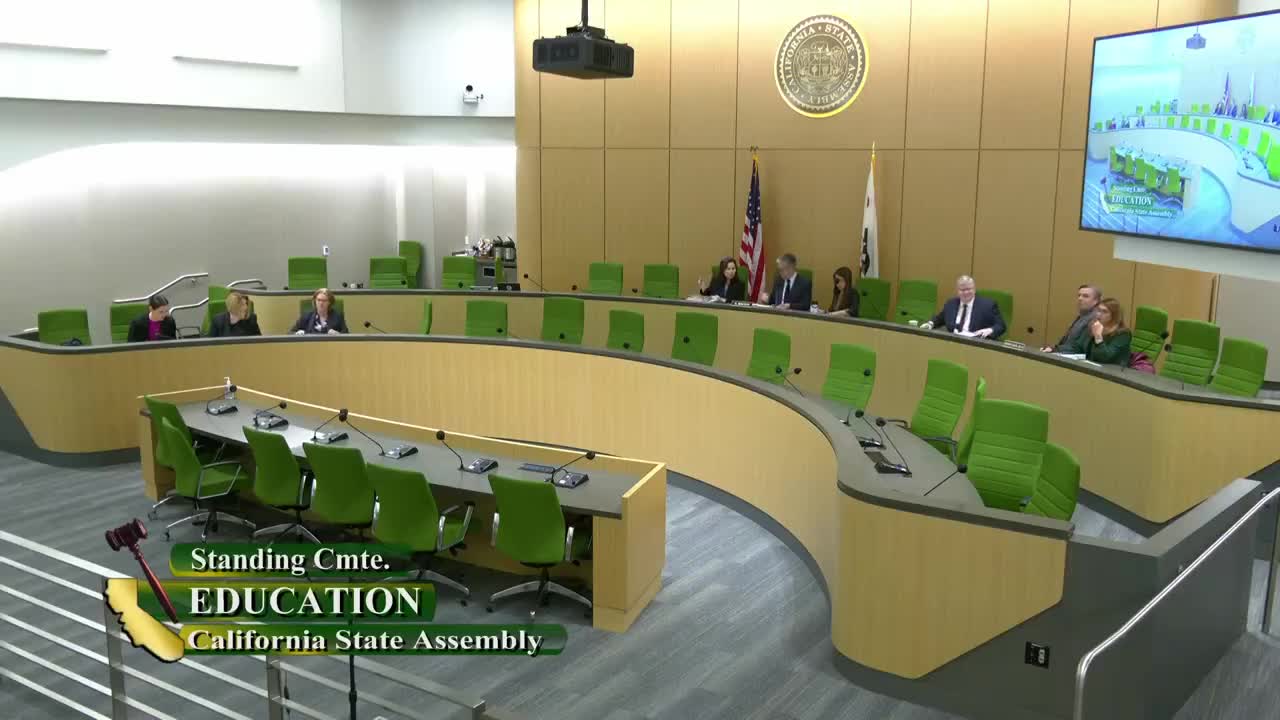 11MIN
Assembly Standing Committee on Education
Bill Author

Bill Co-Author(s):