AB 1187: California Victim Compensation Board: reimbursement for personal or technological safety devices or services.
- Session Year: 2023-2024
- House: Assembly
- Latest Version Date: 2023-10-08
Current Status:
Passed
(2023-10-08: Chaptered by Secretary of State - Chapter 468, Statutes of 2023.)
Introduced
In Committee
First Chamber
In Committee
Second Chamber
Enacted
What does this bill do?
This bill allows the California Victim Compensation Board to pay for counseling provided by Certified Child Life Specialists (those certified by the Association of Child Life Professionals) for crime victims and eligible family members. Those specialists must provide counseling under the supervision of a licensed provider and the board must approve the reimbursement.
The summary is provided by generative AI which can make mistakes. For original language, please view the details in the table below.
Existing law generally provides for the compensation of victims and derivative victims of specified types of crimes by the California Victim Compensation Board from the Restitution Fund, which is continuously appropriated to the board. Existing law authorizes the board to grant for pecuniary loss, when the board determines that it will best aid the person seeking compensation, as specified. Existing law authorizes the board to reimburse the amount of outpatient psychiatric, psychological, or other mental health counseling-related expenses incurred by the victim or derivative victim, including peer counseling services provided by a rape crisis center and family psychiatric, psychological, or mental health counseling for the successful treatment of the victim provided to family members of the victim in the presence of the victim, subject to specified criteria.
This bill would also authorize the board to reimburse the expense of counseling services provided by a Certified Child Life Specialist, certified by the Association of Child Life Professionals, who provides counseling under the supervision of a licensed provider, subject to the boards approval, as specified. By expanding the authorizations for use of moneys in the Restitution Fund, a continuously appropriated fund, this bill would make an appropriation.
Existing law generally provides for the compensation of victims and derivative victims of specified types of crimes by the California Victim Compensation Board from the Restitution Fund, which is continuously appropriated to the board. Existing law authorizes the board to grant for pecuniary loss, when the board determines that it will best aid the person seeking compensation, as specified. Existing law authorizes the board to reimburse the amount of outpatient psychiatric, psychological, or other mental health counseling-related expenses incurred by the victim or derivative victim, including peer counseling services provided by a rape crisis center and family psychiatric, psychological, or mental health counseling for the successful treatment of the victim provided to family members of the victim in the presence of the victim, subject to specified criteria.
This bill would also authorize the board to reimburse the expense of counseling services provided by a Certified Child Life Specialist who is Specialist, certified by the Association of Child Life Professionals. Professionals, who provides counseling under the supervision of a licensed provider, subject to the boards approval, as specified. By expanding the authorizations for use of moneys in the Restitution Fund, a continuously appropriated fund, this bill would make an appropriation.
Existing law generally provides for the compensation of victims and derivative victims of specified types of crimes by the California Victim Compensation Board from the Restitution Fund, which is continuously appropriated to the board. Existing law authorizes the board to grant for pecuniary loss, when the board determines that it will best aid the person seeking compensation, as specified. Existing law authorizes the board to reimburse the amount of outpatient psychiatric, psychological, or other mental health counseling-related expenses incurred by the victim or derivative victim, including peer counseling services provided by a rape crisis center and family psychiatric, psychological, or mental health counseling for the successful treatment of the victim provided to family members of the victim in the presence of the victim, subject to specified criteria.
This bill would also authorize the board to reimburse the expense of counseling services provided by a Certified Child Life Specialist who is certified by the Association of Child Life Professionals. By expanding the authorizations for use of moneys in the Restitution Fund, a continuously appropriated fund, this bill would make an appropriation.
(a)The board may grant for pecuniary loss, when the board determines it will best aid the person seeking compensation, as follows:
(1)Subject to the limitations set forth in Section 13957.2, reimburse the amount of medical or medical-related expenses incurred by the victim for services that were provided by a licensed medical provider, including, but not limited to, eyeglasses, hearing aids, dentures, or any prosthetic device taken, lost, or destroyed during the commission of the crime, or the use of which became necessary as a direct result of the crime.
(2)Subject to the limitations set forth in Section 13957.2, reimburse the amount of outpatient psychiatric, psychological, or other mental health counseling-related expenses incurred by the victim or derivative victim, including peer counseling services provided by a rape crisis center as defined by Section 13837 of the Penal Code, counseling services provided by a Certified Child Life Specialist, certified by the Association of Child Life Professionals, who provides counseling under the supervision of a licensed provider, subject to the boards approval and subject to the limitations and restrictions the board may impose, and including family psychiatric, psychological, or mental health counseling for the successful treatment of the victim provided to family members of the victim in the presence of the victim, whether or not the family member relationship existed at the time of the crime, that became necessary as a direct result of the crime, subject to the following conditions:
(A)The following persons may be reimbursed for the expense of their outpatient mental health counseling in an amount not to exceed ten thousand dollars ($10,000):
(i)A victim.
(ii)A derivative victim who is the surviving parent, grandparent, sibling, child, grandchild, spouse, or fiance of a victim of a crime that directly resulted in the death of the victim.
(iii)A derivative victim, as described in paragraphs (1) to (4), inclusive, of subdivision (c) of Section 13955, who is the primary caretaker of a minor victim whose claim is not denied or reduced pursuant to Section 13956 in a total amount not to exceed ten thousand dollars ($10,000) for not more than two derivative victims.
(B)The following persons may be reimbursed for the expense of their outpatient mental health counseling in an amount not to exceed five thousand dollars ($5,000):
(i)A derivative victim not eligible for reimbursement pursuant to subparagraph (A), provided that mental health counseling of a derivative victim described in paragraph (5) of subdivision (c) of Section 13955, shall be reimbursed only if that counseling is necessary for the treatment of the victim.
(ii)A minor who suffers emotional injury as a direct result of witnessing a violent crime and who is not eligible for reimbursement of the costs of outpatient mental health counseling under any other provision of this chapter. To be eligible for reimbursement under this clause, the minor must have been in close proximity to the victim when the minor witnessed the crime.
(C)The board may reimburse a victim or derivative victim for outpatient mental health counseling in excess of that authorized by subparagraph (A) or (B) or for inpatient psychiatric, psychological, or other mental health counseling if the claim is based on dire or exceptional circumstances that require more extensive treatment, as approved by the board.
(D)Expenses for psychiatric, psychological, or other mental health counseling-related services may be reimbursed only if the services were provided by either of the following individuals:
(i)A person who would have been authorized to provide those services pursuant to former Article 1 (commencing with Section 13959) as it read on January 1, 2002.
(ii)A person who is licensed in the state in which the victim lives to provide those services, or who is properly supervised by a person who is licensed in the state in which the victim lives to provide those services, subject to the boards approval and subject to the limitations and restrictions the board may impose.
(3)Subject to the limitations set forth in Section 13957.5, authorize compensation equal to the loss of income or loss of support, or both, that a victim or derivative victim incurs as a direct result of the victims or derivative victims injury or the victims death. If the qualifying crime is a violation of Section 236.1 of the Penal Code, the board may authorize compensation equal to loss of income or support that a victim incurs as a direct result of the victims deprivation of liberty during the crime, not to exceed the amount set forth in Section 13957.5. If the victim or derivative victim requests that the board give priority to reimbursement of loss of income or support, the board may not pay medical expenses, or mental health counseling expenses, except upon the request of the victim or derivative victim or after determining that payment of these expenses will not decrease the funds available for payment of loss of income or support.
(4)Authorize a cash payment to or on behalf of the victim for job retraining or similar employment-oriented services.
(5)Reimburse the expense of installing or increasing residential security, not to exceed one thousand dollars ($1,000). Installing or increasing residential security may include, but need not be limited to, both of the following:
(A)Home security device or system.
(B)Replacing or increasing the number of locks.
(6)Reimburse the expense of renovating or retrofitting a victims residence, or the expense of modifying or purchasing a vehicle, to make the residence or the vehicle accessible or operational by a victim upon verification that the expense is medically necessary for a victim who is permanently disabled as a direct result of the crime, whether the disability is partial or total.
(7)(A)Authorize a cash payment or reimbursement not to exceed three thousand four hundred and eighteen dollars ($3,418) to a victim for expenses incurred in relocating, if the expenses are determined by law enforcement to be necessary for the personal safety of the victim or by a mental health treatment provider to be necessary for the emotional well-being of the victim. For purposes of this paragraph, expenses incurred in relocating may include the costs of temporary housing for any pets belonging to the victim upon immediate relocation.
(B)The cash payment or reimbursement made under this paragraph shall only be awarded to one claimant per crime giving rise to the relocation. The board may authorize more than one relocation per crime if necessary for the personal safety or emotional well-being of the claimant. However, the total cash payment or reimbursement for all relocations due to the same crime shall not exceed three thousand four hundred and eighteen dollars ($3,418). For purposes of this paragraph, a claimant is the crime victim, or, if the victim is deceased, a person who resided with the deceased at the time of the crime.
(C)The board may, under compelling circumstances, award a second cash payment or reimbursement to a victim for another crime if both of the following conditions are met:
(i)The crime occurs more than three years from the date of the crime giving rise to the initial relocation cash payment or reimbursement.
(ii)The crime does not involve the same offender.
(D)When a relocation payment or reimbursement is provided to a victim of sexual assault or domestic violence and the identity of the offender is known to the victim, the victim shall agree not to inform the offender of the location of the victims new residence and not to allow the offender on the premises at any time, or shall agree to seek a restraining order against the offender. A victim may be required to repay the relocation payment or reimbursement to the board if the victim violates the terms set forth in this paragraph.
(E)Notwithstanding subparagraphs (A) and (B), the board may increase the cash payment or reimbursement for expenses incurred in relocating to an amount greater than three thousand four hundred and eighteen dollars ($3,418) if the board finds this amount is appropriate due to the unusual, dire, or exceptional circumstances of a particular claim.
(F)If a security deposit, pet deposit, or both is required for relocation, the board shall be named as the recipient and receive the funds upon expiration of the victims rental agreement.
(8)When a victim dies as a result of a crime, the board may reimburse any individual who voluntarily, and without anticipation of personal gain, pays or assumes the obligation to pay any of the following expenses:
(A)The medical expenses incurred as a direct result of the crime in an amount not to exceed the rates or limitations established by the board.
(B)The funeral and burial expenses incurred as a direct result of the crime, not to exceed twelve thousand eight hundred and eighteen dollars ($12,818). The board shall not create or comply with a regulation or policy that mandates a lower maximum potential amount of an award pursuant to this subparagraph for less than twelve thousand eight hundred and eighteen dollars ($12,818).
(9)When the crime occurs in a residence or inside a vehicle, the board may reimburse any individual who voluntarily, and without anticipation of personal gain, pays or assumes the obligation to pay the reasonable costs to clean the scene of the crime in an amount not to exceed one thousand seven hundred and nine dollars ($1,709). Services reimbursed pursuant to this subdivision shall be performed by persons registered with the State Department of Public Health as trauma scene waste practitioners in accordance with Chapter 9.5 (commencing with Section 118321) of Part 14 of Division 104 of the Health and Safety Code.
(10)When the crime is a violation of Section 600.2 or 600.5 of the Penal Code, the board may reimburse the expense of veterinary services, replacement costs, or other reasonable expenses, as ordered by the court pursuant to Section 600.2 or 600.5 of the Penal Code, in an amount not to exceed ten thousand dollars ($10,000).
(11)An award of compensation pursuant to paragraph (5) of subdivision (f) of Section 13955 shall be limited to compensation to provide mental health counseling and shall not limit the eligibility of a victim for an award that the victim may be otherwise entitled to receive under this part. A derivative victim shall not be eligible for compensation under this provision.
(b)The total award to or on behalf of each victim or derivative victim may not exceed thirty-five thousand dollars ($35,000), except that this award may be increased to an amount not exceeding seventy thousand dollars ($70,000) if federal funds for that increase are available.
(c)(1)This section shall become inoperative on July 1, 2024, only if General Fund moneys over the multiyear forecasts beginning in the 202425 fiscal year are available to support ongoing augmentations and actions, and if an appropriation is made to backfill the Restitution Fund to support the actions in this section. If those conditions are met, this section is repealed January 1, 2025.
(2)The amendments made by the act adding this subdivision shall become operative on January 1, 2023.
SEC. 2.Section 13957 of the Government Code, as added by Section 5.5 of Chapter 771 of the Statutes of 2022, is amended to read:13957.(a)The board may grant for pecuniary loss, when the board determines it will best aid the person seeking compensation, as follows:
(1)Subject to the limitations set forth in Section 13957.2, reimburse the amount of medical or medical-related expenses incurred by the victim for services that were provided by a licensed medical provider, including, but not limited to, eyeglasses, hearing aids, dentures, or any prosthetic device taken, lost, or destroyed during the commission of the crime, or the use of which became necessary as a direct result of the crime.
(2)Subject to the limitations set forth in Section 13957.2, reimburse the amount of psychiatric, psychological, or other mental health counseling-related expenses incurred by the victim or derivative victim, including peer counseling services provided by a rape crisis center as defined by Section 13837 of the Penal Code, counseling services provided by a Certified Child Life Specialist, certified by the Association of Child Life Professionals, who provides counseling under the supervision of a licensed provider, subject to the boards approval and subject to the limitations and restrictions the board may impose, and including family psychiatric, psychological, or mental health counseling for the successful treatment of the victim provided to family members of the victim in the presence of the victim, whether or not the family member relationship existed at the time of the crime, that became necessary as a direct result of the crime, subject to the following conditions:
(A)The following persons may be reimbursed for the expense of their outpatient mental health counseling:
(i)A victim.
(ii)A derivative victim who is the surviving parent, grandparent, sibling, child, grandchild, spouse, or fiance of a victim of a crime that directly resulted in the death of the victim.
(iii)A derivative victim, as described in paragraphs (1) to (4), inclusive, of subdivision (c) of Section 13955, who is the primary caretaker of a minor victim whose claim is not denied or reduced pursuant to Section 13956 for not more than two derivative victims.
(iv)A derivative victim not eligible for reimbursement pursuant to clause (iii), provided that mental health counseling of a derivative victim described in paragraph (5) of subdivision (c) of Section 13955, shall be reimbursed only if that counseling is necessary for the treatment of the victim.
(v)A minor who suffers emotional injury as a direct result of witnessing a violent crime and who is not eligible for reimbursement of the costs of outpatient mental health counseling under any other provision of this chapter. To be eligible for reimbursement under this clause, the minor must have been in close proximity to the victim when the minor witnessed the crime.
(B)The board may reimburse a victim or derivative victim for inpatient psychiatric, psychological, or other mental health counseling if the claim is based on dire or exceptional circumstances that require more extensive treatment, as approved by the board.
(C)Expenses for psychiatric, psychological, or other mental health counseling-related services may be reimbursed only if the services were provided by either of the following individuals:
(i)A person who would have been authorized to provide those services pursuant to former Article 1 (commencing with Section 13959) as it read on January 1, 2002.
(ii)A person who is licensed in the state in which the victim lives to provide those services, or who is properly supervised by a person who is licensed in the state in which the victim lives to provide those services, subject to the boards approval and subject to the limitations and restrictions the board may impose.
(3)Subject to the limitations set forth in Section 13957.5, authorize compensation equal to the loss of income or loss of support, or both, that a victim or derivative victim incurs as a direct result of the victims or derivative victims injury or the victims death. If the qualifying crime is a violation of Section 236.1 of the Penal Code, the board may authorize compensation equal to loss of income or support that a victim incurs as a direct result of the victims deprivation of liberty during the crime, not to exceed the amount set forth in Section 13957.5. If the victim or derivative victim requests that the board give priority to reimbursement of loss of income or support, the board may not pay medical expenses, or mental health counseling expenses, except upon the request of the victim or derivative victim or after determining that payment of these expenses will not decrease the funds available for payment of loss of income or support.
(4)Authorize a cash payment to or on behalf of the victim for job retraining or similar employment-oriented services.
(5)Reimburse the expense of installing or increasing residential security, not to exceed one thousand dollars ($1,000). Installing or increasing residential security may include, but need not be limited to, both of the following:
(A)Home security device or system.
(B)Replacing or increasing the number of locks.
(6)Reimburse the expense of renovating or retrofitting a victims residence, or the expense of modifying or purchasing a vehicle, to make the residence or the vehicle accessible or operational by a victim upon verification that the expense is medically necessary for a victim who is permanently disabled as a direct result of the crime, whether the disability is partial or total.
(7)(A) Authorize a cash payment or reimbursement not to exceed seven thousand five hundred dollars ($7,500) to a victim for expenses incurred in relocating, if the expenses are determined by law enforcement to be necessary for the personal safety of the victim or by a mental health treatment provider to be necessary for the emotional well-being of the victim. For purposes of this paragraph, expenses incurred in relocating may include the costs of temporary housing for any pets belonging to the victim upon immediate relocation.
(B)The cash payment or reimbursement made under this paragraph shall only be awarded to one claimant per crime giving rise to the relocation. The board may authorize more than one relocation per crime if necessary for the personal safety or emotional well-being of the claimant. However, the total cash payment or reimbursement for all relocations due to the same crime shall not exceed seven thousand five hundred dollars ($7,500). For purposes of this paragraph, a claimant is the crime victim, or, if the victim is deceased, a person who resided with the deceased at the time of the crime.
(C)The board may, under compelling circumstances, award a second cash payment or reimbursement to a victim for another crime if both of the following conditions are met:
(i)The crime occurs more than three years from the date of the crime giving rise to the initial relocation cash payment or reimbursement.
(ii)The crime does not involve the same offender.
(D)When a relocation payment or reimbursement is provided to a victim of sexual assault or domestic violence and the identity of the offender is known to the victim, the victim shall agree not to inform the offender of the location of the victims new residence and not to allow the offender on the premises at any time, or shall agree to seek a restraining order against the offender. A victim may be required to repay the relocation payment or reimbursement to the board if the victim violates the terms set forth in this paragraph.
(E)Notwithstanding subparagraphs (A) and (B), the board may increase the cash payment or reimbursement for expenses incurred in relocating to an amount greater than seven thousand five hundred dollars ($7,500) if the board finds this amount is appropriate due to the unusual, dire, or exceptional circumstances of a particular claim.
(F)If a security deposit, pet deposit, or both is required for relocation, the board shall be named as the recipient and receive the funds upon expiration of the victims rental agreement.
(8)When a victim dies as a result of a crime, the board may reimburse any individual who voluntarily, and without anticipation of personal gain, pays or assumes the obligation to pay any of the following expenses:
(A)The medical expenses incurred as a direct result of the crime in an amount not to exceed the rates or limitations established by the board.
(B)The funeral and burial expenses incurred as a direct result of the crime, not to exceed twenty thousand dollars ($20,000). The board shall not create or comply with a regulation or policy that mandates a lower maximum potential amount of an award pursuant to this subparagraph for less than twenty thousand dollars ($20,000).
(9)When the crime occurs in a residence or inside a vehicle, the board may reimburse any individual who voluntarily, and without anticipation of personal gain, pays or assumes the obligation to pay the reasonable costs to clean the scene of the crime in an amount not to exceed one thousand seven hundred and nine dollars ($1,709). Services reimbursed pursuant to this subdivision shall be performed by persons registered with the State Department of Public Health as trauma scene waste practitioners in accordance with Chapter 9.5 (commencing with Section 118321) of Part 14 of Division 104 of the Health and Safety Code.
(10)When the crime is a violation of Section 600.2 or 600.5 of the Penal Code, the board may reimburse the expense of veterinary services, replacement costs, or other reasonable expenses, as ordered by the court pursuant to Section 600.2 or 600.5 of the Penal Code, in an amount not to exceed ten thousand dollars ($10,000).
(11)An award of compensation pursuant to paragraph (5) of subdivision (f) of Section 13955 shall be limited to compensation to provide mental health counseling and shall not limit the eligibility of a victim for an award that the victim may be otherwise entitled to receive under this part. A derivative victim shall not be eligible for compensation under this provision.
(b)The total award to or on behalf of each victim or derivative victim shall not exceed one hundred thousand dollars ($100,000).
(c)This section shall become operative on July 1, 2024, only if General Fund moneys over the multiyear forecasts beginning in the 202425 fiscal year are available to support ongoing augmentations and actions, and if an appropriation is made to backfill the Restitution Fund to support the actions in this section.
(a)The board may grant for pecuniary loss, when the board determines it will best aid the person seeking compensation, as follows:
(1)Subject to the limitations set forth in Section 13957.2, reimburse the amount of medical or medical-related expenses incurred by the victim for services that were provided by a licensed medical provider, including, but not limited to, eyeglasses, hearing aids, dentures, or any prosthetic device taken, lost, or destroyed during the commission of the crime, or the use of which became necessary as a direct result of the crime.
(2)Subject to the limitations set forth in Section 13957.2, reimburse the amount of outpatient psychiatric, psychological, or other mental health counseling-related expenses incurred by the victim or derivative victim, including peer counseling services provided by a rape crisis center as defined by Section 13837 of the Penal Code, counseling services provided by a Certified Child Life Specialist who is Specialist, certified by the Association of Child Life Professionals, Professionals, who provides counseling under the supervision of a licensed provider, subject to the boards approval and subject to the limitations and restrictions the board may impose, and including family psychiatric, psychological, or mental health counseling for the successful treatment of the victim provided to family members of the victim in the presence of the victim, whether or not the family member relationship existed at the time of the crime, that became necessary as a direct result of the crime, subject to the following conditions:
(A)The following persons may be reimbursed for the expense of their outpatient mental health counseling in an amount not to exceed ten thousand dollars ($10,000):
(i)A victim.
(ii)A derivative victim who is the surviving parent, grandparent, sibling, child, grandchild, spouse, or fiance of a victim of a crime that directly resulted in the death of the victim.
(iii)A derivative victim, as described in paragraphs (1) to (4), inclusive, of subdivision (c) of Section 13955, who is the primary caretaker of a minor victim whose claim is not denied or reduced pursuant to Section 13956 in a total amount not to exceed ten thousand dollars ($10,000) for not more than two derivative victims.
(B)The following persons may be reimbursed for the expense of their outpatient mental health counseling in an amount not to exceed five thousand dollars ($5,000):
(i)A derivative victim not eligible for reimbursement pursuant to subparagraph (A), provided that mental health counseling of a derivative victim described in paragraph (5) of subdivision (c) of Section 13955, shall be reimbursed only if that counseling is necessary for the treatment of the victim.
(ii)A minor who suffers emotional injury as a direct result of witnessing a violent crime and who is not eligible for reimbursement of the costs of outpatient mental health counseling under any other provision of this chapter. To be eligible for reimbursement under this clause, the minor must have been in close proximity to the victim when the minor witnessed the crime.
(C)The board may reimburse a victim or derivative victim for outpatient mental health counseling in excess of that authorized by subparagraph (A) or (B) or for inpatient psychiatric, psychological, or other mental health counseling if the claim is based on dire or exceptional circumstances that require more extensive treatment, as approved by the board.
(D)Expenses for psychiatric, psychological, or other mental health counseling-related services may be reimbursed only if the services were provided by either of the following individuals:
(i)A person who would have been authorized to provide those services pursuant to former Article 1 (commencing with Section 13959) as it read on January 1, 2002.
(ii)A person who is licensed in the state in which the victim lives to provide those services, or who is properly supervised by a person who is licensed in the state in which the victim lives to provide those services, subject to the boards approval and subject to the limitations and restrictions the board may impose.
(3)Subject to the limitations set forth in Section 13957.5, authorize compensation equal to the loss of income or loss of support, or both, that a victim or derivative victim incurs as a direct result of the victims or derivative victims injury or the victims death. If the qualifying crime is a violation of Section 236.1 of the Penal Code, the board may authorize compensation equal to loss of income or support that a victim incurs as a direct result of the victims deprivation of liberty during the crime, not to exceed the amount set forth in Section 13957.5. If the victim or derivative victim requests that the board give priority to reimbursement of loss of income or support, the board may not pay medical expenses, or mental health counseling expenses, except upon the request of the victim or derivative victim or after determining that payment of these expenses will not decrease the funds available for payment of loss of income or support.
(4)Authorize a cash payment to or on behalf of the victim for job retraining or similar employment-oriented services.
(5)Reimburse the expense of installing or increasing residential security, not to exceed one thousand dollars ($1,000). Installing or increasing residential security may include, but need not be limited to, both of the following:
(A)Home security device or system.
(B)Replacing or increasing the number of locks.
(6)Reimburse the expense of renovating or retrofitting a victims residence, or the expense of modifying or purchasing a vehicle, to make the residence or the vehicle accessible or operational by a victim upon verification that the expense is medically necessary for a victim who is permanently disabled as a direct result of the crime, whether the disability is partial or total.
(7)(A)Authorize a cash payment or reimbursement not to exceed three thousand four hundred and eighteen dollars ($3,418) to a victim for expenses incurred in relocating, if the expenses are determined by law enforcement to be necessary for the personal safety of the victim or by a mental health treatment provider to be necessary for the emotional well-being of the victim. For purposes of this paragraph, expenses incurred in relocating may include the costs of temporary housing for any pets belonging to the victim upon immediate relocation.
(B)The cash payment or reimbursement made under this paragraph shall only be awarded to one claimant per crime giving rise to the relocation. The board may authorize more than one relocation per crime if necessary for the personal safety or emotional well-being of the claimant. However, the total cash payment or reimbursement for all relocations due to the same crime shall not exceed three thousand four hundred and eighteen dollars ($3,418). For purposes of this paragraph, a claimant is the crime victim, or, if the victim is deceased, a person who resided with the deceased at the time of the crime.
(C)The board may, under compelling circumstances, award a second cash payment or reimbursement to a victim for another crime if both of the following conditions are met:
(i)The crime occurs more than three years from the date of the crime giving rise to the initial relocation cash payment or reimbursement.
(ii)The crime does not involve the same offender.
(D)When a relocation payment or reimbursement is provided to a victim of sexual assault or domestic violence and the identity of the offender is known to the victim, the victim shall agree not to inform the offender of the location of the victims new residence and not to allow the offender on the premises at any time, or shall agree to seek a restraining order against the offender. A victim may be required to repay the relocation payment or reimbursement to the board if the victim violates the terms set forth in this paragraph.
(E)Notwithstanding subparagraphs (A) and (B), the board may increase the cash payment or reimbursement for expenses incurred in relocating to an amount greater than three thousand four hundred and eighteen dollars ($3,418) if the board finds this amount is appropriate due to the unusual, dire, or exceptional circumstances of a particular claim.
(F)If a security deposit, pet deposit, or both is required for relocation, the board shall be named as the recipient and receive the funds upon expiration of the victims rental agreement.
(8)When a victim dies as a result of a crime, the board may reimburse any individual who voluntarily, and without anticipation of personal gain, pays or assumes the obligation to pay any of the following expenses:
(A)The medical expenses incurred as a direct result of the crime in an amount not to exceed the rates or limitations established by the board.
(B)The funeral and burial expenses incurred as a direct result of the crime, not to exceed twelve thousand eight hundred and eighteen dollars ($12,818). The board shall not create or comply with a regulation or policy that mandates a lower maximum potential amount of an award pursuant to this subparagraph for less than twelve thousand eight hundred and eighteen dollars ($12,818).
(9)When the crime occurs in a residence or inside a vehicle, the board may reimburse any individual who voluntarily, and without anticipation of personal gain, pays or assumes the obligation to pay the reasonable costs to clean the scene of the crime in an amount not to exceed one thousand seven hundred and nine dollars ($1,709). Services reimbursed pursuant to this subdivision shall be performed by persons registered with the State Department of Public Health as trauma scene waste practitioners in accordance with Chapter 9.5 (commencing with Section 118321) of Part 14 of Division 104 of the Health and Safety Code.
(10)When the crime is a violation of Section 600.2 or 600.5 of the Penal Code, the board may reimburse the expense of veterinary services, replacement costs, or other reasonable expenses, as ordered by the court pursuant to Section 600.2 or 600.5 of the Penal Code, in an amount not to exceed ten thousand dollars ($10,000).
(11)An award of compensation pursuant to paragraph (5) of subdivision (f) of Section 13955 shall be limited to compensation to provide mental health counseling and shall not limit the eligibility of a victim for an award that the victim may be otherwise entitled to receive under this part. A derivative victim shall not be eligible for compensation under this provision.
(b)The total award to or on behalf of each victim or derivative victim may not exceed thirty-five thousand dollars ($35,000), except that this award may be increased to an amount not exceeding seventy thousand dollars ($70,000) if federal funds for that increase are available.
(c)(1)This section shall become inoperative on July 1, 2024, only if General Fund moneys over the multiyear forecasts beginning in the 202425 fiscal year are available to support ongoing augmentations and actions, and if an appropriation is made to backfill the Restitution Fund to support the actions in this section. If those conditions are met, this section is repealed January 1, 2025.
(2)The amendments made by the act adding this subdivision shall become operative on January 1, 2023.
SEC. 2.Section 13957 of the Government Code, as added by Sec. Section 5.5 of Chapter 771 of the Statutes of 2022, is amended to read:13957.(a)The board may grant for pecuniary loss, when the board determines it will best aid the person seeking compensation, as follows:
(1)Subject to the limitations set forth in Section 13957.2, reimburse the amount of medical or medical-related expenses incurred by the victim for services that were provided by a licensed medical provider, including, but not limited to, eyeglasses, hearing aids, dentures, or any prosthetic device taken, lost, or destroyed during the commission of the crime, or the use of which became necessary as a direct result of the crime.
(2)Subject to the limitations set forth in Section 13957.2, reimburse the amount of psychiatric, psychological, or other mental health counseling-related expenses incurred by the victim or derivative victim, including peer counseling services provided by a rape crisis center as defined by Section 13837 of the Penal Code, counseling services provided by a Certified Child Life Specialist who is Specialist, certified by the Association of Child Life Professionals, Professionals, who provides counseling under the supervision of a licensed provider, subject to the boards approval and subject to the limitations and restrictions the board may impose, and including family psychiatric, psychological, or mental health counseling for the successful treatment of the victim provided to family members of the victim in the presence of the victim, whether or not the family member relationship existed at the time of the crime, that became necessary as a direct result of the crime, subject to the following conditions:
(A)The following persons may be reimbursed for the expense of their outpatient mental health counseling:
(i)A victim.
(ii)A derivative victim who is the surviving parent, grandparent, sibling, child, grandchild, spouse, or fiance of a victim of a crime that directly resulted in the death of the victim.
(iii)A derivative victim, as described in paragraphs (1) to (4), inclusive, of subdivision (c) of Section 13955, who is the primary caretaker of a minor victim whose claim is not denied or reduced pursuant to Section 13956 for not more than two derivative victims.
(iv)A derivative victim not eligible for reimbursement pursuant to clause (iii), provided that mental health counseling of a derivative victim described in paragraph (5) of subdivision (c) of Section 13955, shall be reimbursed only if that counseling is necessary for the treatment of the victim.
(v)A minor who suffers emotional injury as a direct result of witnessing a violent crime and who is not eligible for reimbursement of the costs of outpatient mental health counseling under any other provision of this chapter. To be eligible for reimbursement under this clause, the minor must have been in close proximity to the victim when the minor witnessed the crime.
(B)The board may reimburse a victim or derivative victim for inpatient psychiatric, psychological, or other mental health counseling if the claim is based on dire or exceptional circumstances that require more extensive treatment, as approved by the board.
(C)Expenses for psychiatric, psychological, or other mental health counseling-related services may be reimbursed only if the services were provided by either of the following individuals:
(i)A person who would have been authorized to provide those services pursuant to former Article 1 (commencing with Section 13959) as it read on January 1, 2002.
(ii)A person who is licensed in the state in which the victim lives to provide those services, or who is properly supervised by a person who is licensed in the state in which the victim lives to provide those services, subject to the boards approval and subject to the limitations and restrictions the board may impose.
(3)Subject to the limitations set forth in Section 13957.5, authorize compensation equal to the loss of income or loss of support, or both, that a victim or derivative victim incurs as a direct result of the victims or derivative victims injury or the victims death. If the qualifying crime is a violation of Section 236.1 of the Penal Code, the board may authorize compensation equal to loss of income or support that a victim incurs as a direct result of the victims deprivation of liberty during the crime, not to exceed the amount set forth in Section 13957.5. If the victim or derivative victim requests that the board give priority to reimbursement of loss of income or support, the board may not pay medical expenses, or mental health counseling expenses, except upon the request of the victim or derivative victim or after determining that payment of these expenses will not decrease the funds available for payment of loss of income or support.
(4)Authorize a cash payment to or on behalf of the victim for job retraining or similar employment-oriented services.
(5)Reimburse the expense of installing or increasing residential security, not to exceed one thousand dollars ($1,000). Installing or increasing residential security may include, but need not be limited to, both of the following:
(A)Home security device or system.
(B)Replacing or increasing the number of locks.
(6)Reimburse the expense of renovating or retrofitting a victims residence, or the expense of modifying or purchasing a vehicle, to make the residence or the vehicle accessible or operational by a victim upon verification that the expense is medically necessary for a victim who is permanently disabled as a direct result of the crime, whether the disability is partial or total.
(7)(A) Authorize a cash payment or reimbursement not to exceed seven thousand five hundred dollars ($7,500) to a victim for expenses incurred in relocating, if the expenses are determined by law enforcement to be necessary for the personal safety of the victim or by a mental health treatment provider to be necessary for the emotional well-being of the victim. For purposes of this paragraph, expenses incurred in relocating may include the costs of temporary housing for any pets belonging to the victim upon immediate relocation.
(B)The cash payment or reimbursement made under this paragraph shall only be awarded to one claimant per crime giving rise to the relocation. The board may authorize more than one relocation per crime if necessary for the personal safety or emotional well-being of the claimant. However, the total cash payment or reimbursement for all relocations due to the same crime shall not exceed seven thousand five hundred dollars ($7,500). For purposes of this paragraph, a claimant is the crime victim, or, if the victim is deceased, a person who resided with the deceased at the time of the crime.
(C)The board may, under compelling circumstances, award a second cash payment or reimbursement to a victim for another crime if both of the following conditions are met:
(i)The crime occurs more than three years from the date of the crime giving rise to the initial relocation cash payment or reimbursement.
(ii)The crime does not involve the same offender.
(D)When a relocation payment or reimbursement is provided to a victim of sexual assault or domestic violence and the identity of the offender is known to the victim, the victim shall agree not to inform the offender of the location of the victims new residence and not to allow the offender on the premises at any time, or shall agree to seek a restraining order against the offender. A victim may be required to repay the relocation payment or reimbursement to the board if the victim violates the terms set forth in this paragraph.
(E)Notwithstanding subparagraphs (A) and (B), the board may increase the cash payment or reimbursement for expenses incurred in relocating to an amount greater than seven thousand five hundred dollars ($7,500) if the board finds this amount is appropriate due to the unusual, dire, or exceptional circumstances of a particular claim.
(F)If a security deposit, pet deposit, or both is required for relocation, the board shall be named as the recipient and receive the funds upon expiration of the victims rental agreement.
(8)When a victim dies as a result of a crime, the board may reimburse any individual who voluntarily, and without anticipation of personal gain, pays or assumes the obligation to pay any of the following expenses:
(A)The medical expenses incurred as a direct result of the crime in an amount not to exceed the rates or limitations established by the board.
(B)The funeral and burial expenses incurred as a direct result of the crime, not to exceed twenty thousand dollars ($20,000). The board shall not create or comply with a regulation or policy that mandates a lower maximum potential amount of an award pursuant to this subparagraph for less than twenty thousand dollars ($20,000).
(9)When the crime occurs in a residence or inside a vehicle, the board may reimburse any individual who voluntarily, and without anticipation of personal gain, pays or assumes the obligation to pay the reasonable costs to clean the scene of the crime in an amount not to exceed one thousand seven hundred and nine dollars ($1,709). Services reimbursed pursuant to this subdivision shall be performed by persons registered with the State Department of Public Health as trauma scene waste practitioners in accordance with Chapter 9.5 (commencing with Section 118321) of Part 14 of Division 104 of the Health and Safety Code.
(10)When the crime is a violation of Section 600.2 or 600.5 of the Penal Code, the board may reimburse the expense of veterinary services, replacement costs, or other reasonable expenses, as ordered by the court pursuant to Section 600.2 or 600.5 of the Penal Code, in an amount not to exceed ten thousand dollars ($10,000).
(11)An award of compensation pursuant to paragraph (5) of subdivision (f) of Section 13955 shall be limited to compensation to provide mental health counseling and shall not limit the eligibility of a victim for an award that the victim may be otherwise entitled to receive under this part. A derivative victim shall not be eligible for compensation under this provision.
(b)The total award to or on behalf of each victim or derivative victim shall not exceed one hundred thousand dollars ($100,000).
(c)This section shall become operative on July 1, 2024, only if General Fund moneys over the multiyear forecasts beginning in the 202425 fiscal year are available to support ongoing augmentations and actions, and if an appropriation is made to backfill the Restitution Fund to support the actions in this section.
(a)The board may grant for pecuniary loss, when the board determines it will best aid the person seeking compensation, as follows:
(1)Subject to the limitations set forth in Section 13957.2, reimburse the amount of medical or medical-related expenses incurred by the victim for services that were provided by a licensed medical provider, including, but not limited to, eyeglasses, hearing aids, dentures, or any prosthetic device taken, lost, or destroyed during the commission of the crime, or the use of which became necessary as a direct result of the crime.
(2)Subject to the limitations set forth in Section 13957.2, reimburse the amount of outpatient psychiatric, psychological, or other mental health counseling-related expenses incurred by the victim or derivative victim, including peer counseling services provided by a rape crisis center as defined by Section 13837 of the Penal Code, counseling services provided by a Certified Child Life Specialist who is certified by the Association of Child Life Professionals, and including family psychiatric, psychological, or mental health counseling for the successful treatment of the victim provided to family members of the victim in the presence of the victim, whether or not the family member relationship existed at the time of the crime, that became necessary as a direct result of the crime, subject to the following conditions:
(A)The following persons may be reimbursed for the expense of their outpatient mental health counseling in an amount not to exceed ten thousand dollars ($10,000):
(i)A victim.
(ii)A derivative victim who is the surviving parent, grandparent, sibling, child, grandchild, spouse, or fiance fiance of a victim of a crime that directly resulted in the death of the victim.
(iii)A derivative victim, as described in paragraphs (1) to (4), inclusive, of subdivision (c) of Section 13955, who is the primary caretaker of a minor victim whose claim is not denied or reduced pursuant to Section 13956 in a total amount not to exceed ten thousand dollars ($10,000) for not more than two derivative victims.
(B)The following persons may be reimbursed for the expense of their outpatient mental health counseling in an amount not to exceed five thousand dollars ($5,000):
(i)A derivative victim not eligible for reimbursement pursuant to subparagraph (A), provided that mental health counseling of a derivative victim described in paragraph (5) of subdivision (c) of Section 13955, shall be reimbursed only if that counseling is necessary for the treatment of the victim.
(ii)A minor who suffers emotional injury as a direct result of witnessing a violent crime and who is not eligible for reimbursement of the costs of outpatient mental health counseling under any other provision of this chapter. To be eligible for reimbursement under this clause, the minor must have been in close proximity to the victim when the minor witnessed the crime.
(C)The board may reimburse a victim or derivative victim for outpatient mental health counseling in excess of that authorized by subparagraph (A) or (B) or for inpatient psychiatric, psychological, or other mental health counseling if the claim is based on dire or exceptional circumstances that require more extensive treatment, as approved by the board.
(D)Expenses for psychiatric, psychological, or other mental health counseling-related services may be reimbursed only if the services were provided by either of the following individuals:
(i)A person who would have been authorized to provide those services pursuant to former Article 1 (commencing with Section 13959) as it read on January 1, 2002.
(ii)A person who is licensed in the state in which the victim lives to provide those services, or who is properly supervised by a person who is licensed in the state in which the victim lives to provide those services, subject to the boards approval and subject to the limitations and restrictions the board may impose.
(3)Subject to the limitations set forth in Section 13957.5, authorize compensation equal to the loss of income or loss of support, or both, that a victim or derivative victim incurs as a direct result of the victims or derivative victims injury or the victims death. If the qualifying crime is a violation of Section 236.1 of the Penal Code, the board may authorize compensation equal to loss of income or support that a victim incurs as a direct result of the victims deprivation of liberty during the crime, not to exceed the amount set forth in Section 13957.5. If the victim or derivative victim requests that the board give priority to reimbursement of loss of income or support, the board may not pay medical expenses, or mental health counseling expenses, except upon the request of the victim or derivative victim or after determining that payment of these expenses will not decrease the funds available for payment of loss of income or support.
(4)Authorize a cash payment to or on behalf of the victim for job retraining or similar employment-oriented services.
(5)Reimburse the expense of installing or increasing residential security, not to exceed one thousand dollars ($1,000). Installing or increasing residential security may include, but need not be limited to, both of the following:
(A)
(A)Home security device or system.
(B)
(B)Replacing or increasing the number of locks.
(6)Reimburse the expense of renovating or retrofitting a victims residence, or the expense of modifying or purchasing a vehicle, to make the residence or the vehicle accessible or operational by a victim upon verification that the expense is medically necessary for a victim who is permanently disabled as a direct result of the crime, whether the disability is partial or total.
(7)(A)Authorize a cash payment or reimbursement not to exceed three thousand four hundred and eighteen dollars ($3,418) to a victim for expenses incurred in relocating, if the expenses are determined by law enforcement to be necessary for the personal safety of the victim or by a mental health treatment provider to be necessary for the emotional well-being of the victim. For purposes of this paragraph, expenses incurred in relocating may include the costs of temporary housing for any pets belonging to the victim upon immediate relocation.
(B)The cash payment or reimbursement made under this paragraph shall only be awarded to one claimant per crime giving rise to the relocation. The board may authorize more than one relocation per crime if necessary for the personal safety or emotional well-being of the claimant. However, the total cash payment or reimbursement for all relocations due to the same crime shall not exceed three thousand four hundred and eighteen dollars ($3,418). For purposes of this paragraph, a claimant is the crime victim, or, if the victim is deceased, a person who resided with the deceased at the time of the crime.
(C)The board may, under compelling circumstances, award a second cash payment or reimbursement to a victim for another crime if both of the following conditions are met:
(i)The crime occurs more than three years from the date of the crime giving rise to the initial relocation cash payment or reimbursement.
(ii)The crime does not involve the same offender.
(D)When a relocation payment or reimbursement is provided to a victim of sexual assault or domestic violence and the identity of the offender is known to the victim, the victim shall agree not to inform the offender of the location of the victims new residence and not to allow the offender on the premises at any time, or shall agree to seek a restraining order against the offender. A victim may be required to repay the relocation payment or reimbursement to the board if the victim violates the terms set forth in this paragraph.
(E)Notwithstanding subparagraphs (A) and (B), the board may increase the cash payment or reimbursement for expenses incurred in relocating to an amount greater than three thousand four hundred and eighteen dollars ($3,418) if the board finds this amount is appropriate due to the unusual, dire, or exceptional circumstances of a particular claim.
(F)If a security deposit, pet deposit, or both is required for relocation, the board shall be named as the recipient and receive the funds upon expiration of the victims rental agreement.
(8)When a victim dies as a result of a crime, the board may reimburse any individual who voluntarily, and without anticipation of personal gain, pays or assumes the obligation to pay any of the following expenses:
(A)The medical expenses incurred as a direct result of the crime in an amount not to exceed the rates or limitations established by the board.
(B)The funeral and burial expenses incurred as a direct result of the crime, not to exceed twelve thousand eight hundred and eighteen dollars ($12,818). The board shall not create or comply with a regulation or policy that mandates a lower maximum potential amount of an award pursuant to this subparagraph for less than twelve thousand eight hundred and eighteen dollars ($12,818).
(9)When the crime occurs in a residence or inside a vehicle, the board may reimburse any individual who voluntarily, and without anticipation of personal gain, pays or assumes the obligation to pay the reasonable costs to clean the scene of the crime in an amount not to exceed one thousand seven hundred and nine dollars ($1,709). Services reimbursed pursuant to this subdivision shall be performed by persons registered with the State Department of Public Health as trauma scene waste practitioners in accordance with Chapter 9.5 (commencing with Section 118321) of Part 14 of Division 104 of the Health and Safety Code.
(10)When the crime is a violation of Section 600.2 or 600.5 of the Penal Code, the board may reimburse the expense of veterinary services, replacement costs, or other reasonable expenses, as ordered by the court pursuant to Section 600.2 or 600.5 of the Penal Code, in an amount not to exceed ten thousand dollars ($10,000).
(11)An award of compensation pursuant to paragraph (5) of subdivision (f) of Section 13955 shall be limited to compensation to provide mental health counseling and shall not limit the eligibility of a victim for an award that the victim may be otherwise entitled to receive under this part. A derivative victim shall not be eligible for compensation under this provision.
(b)The total award to or on behalf of each victim or derivative victim may not exceed thirty-five thousand dollars ($35,000), except that this award may be increased to an amount not exceeding seventy thousand dollars ($70,000) if federal funds for that increase are available.
(c)(1)This section shall become inoperative on July 1, 2024, only if General Fund moneys over the multiyear forecasts beginning in the 202425 fiscal year are available to support ongoing augmentations and actions, and if an appropriation is made to backfill the Restitution Fund to support the actions in this section. If those conditions are met, this section is repealed January 1, 2025.
(2)The amendments made by the act adding this subdivision shall become operative on January 1, 2023.
SEC. 2.Section 13957 of the Government Code, as added by Sec. 5.5 of Chapter 771 of the Statutes of 2022, is amended to read:13957.(a)The board may grant for pecuniary loss, when the board determines it will best aid the person seeking compensation, as follows:
(1)Subject to the limitations set forth in Section 13957.2, reimburse the amount of medical or medical-related expenses incurred by the victim for services that were provided by a licensed medical provider, including, but not limited to, eyeglasses, hearing aids, dentures, or any prosthetic device taken, lost, or destroyed during the commission of the crime, or the use of which became necessary as a direct result of the crime.
(2)Subject to the limitations set forth in Section 13957.2, reimburse the amount of psychiatric, psychological, or other mental health counseling-related expenses incurred by the victim or derivative victim, including peer counseling services provided by a rape crisis center as defined by Section 13837 of the Penal Code, counseling services provided by a Certified Child Life Specialist who is certified by the Association of Child Life Professionals, and including family psychiatric, psychological, or mental health counseling for the successful treatment of the victim provided to family members of the victim in the presence of the victim, whether or not the family member relationship existed at the time of the crime, that became necessary as a direct result of the crime, subject to the following conditions:
(A)The following persons may be reimbursed for the expense of their outpatient mental health counseling:
(i)A victim.
(ii)A derivative victim who is the surviving parent, grandparent, sibling, child, grandchild, spouse, or fiance fiance of a victim of a crime that directly resulted in the death of the victim.
(iii)A derivative victim, as described in paragraphs (1) to (4), inclusive, of subdivision (c) of Section 13955, who is the primary caretaker of a minor victim whose claim is not denied or reduced pursuant to Section 13956 for not more than two derivative victims.
(iv)A derivative victim not eligible for reimbursement pursuant to clause (iii), provided that mental health counseling of a derivative victim described in paragraph (5) of subdivision (c) of Section 13955, shall be reimbursed only if that counseling is necessary for the treatment of the victim.
(v)A minor who suffers emotional injury as a direct result of witnessing a violent crime and who is not eligible for reimbursement of the costs of outpatient mental health counseling under any other provision of this chapter. To be eligible for reimbursement under this clause, the minor must have been in close proximity to the victim when the minor witnessed the crime.
(B)The board may reimburse a victim or derivative victim for inpatient psychiatric, psychological, or other mental health counseling if the claim is based on dire or exceptional circumstances that require more extensive treatment, as approved by the board.
(C)Expenses for psychiatric, psychological, or other mental health counseling-related services may be reimbursed only if the services were provided by either of the following individuals:
(i)A person who would have been authorized to provide those services pursuant to former Article 1 (commencing with Section 13959) as it read on January 1, 2002.
(ii)A person who is licensed in the state in which the victim lives to provide those services, or who is properly supervised by a person who is licensed in the state in which the victim lives to provide those services, subject to the boards approval and subject to the limitations and restrictions the board may impose.
(3)Subject to the limitations set forth in Section 13957.5, authorize compensation equal to the loss of income or loss of support, or both, that a victim or derivative victim incurs as a direct result of the victims or derivative victims injury or the victims death. If the qualifying crime is a violation of Section 236.1 of the Penal Code, the board may authorize compensation equal to loss of income or support that a victim incurs as a direct result of the victims deprivation of liberty during the crime, not to exceed the amount set forth in Section 13957.5. If the victim or derivative victim requests that the board give priority to reimbursement of loss of income or support, the board may not pay medical expenses, or mental health counseling expenses, except upon the request of the victim or derivative victim or after determining that payment of these expenses will not decrease the funds available for payment of loss of income or support.
(4)Authorize a cash payment to or on behalf of the victim for job retraining or similar employment-oriented services.
(5)Reimburse the expense of installing or increasing residential security, not to exceed one thousand dollars ($1,000). Installing or increasing residential security may include, but need not be limited to, both of the following:
(A)
(A)Home security device or system.
(B)
(B)Replacing or increasing the number of locks.
(6)Reimburse the expense of renovating or retrofitting a victims residence, or the expense of modifying or purchasing a vehicle, to make the residence or the vehicle accessible or operational by a victim upon verification that the expense is medically necessary for a victim who is permanently disabled as a direct result of the crime, whether the disability is partial or total.
(7)(A) Authorize a cash payment or reimbursement not to exceed seven thousand five hundred dollars ($7,500) to a victim for expenses incurred in relocating, if the expenses are determined by law enforcement to be necessary for the personal safety of the victim or by a mental health treatment provider to be necessary for the emotional well-being of the victim. For purposes of this paragraph, expenses incurred in relocating may include the costs of temporary housing for any pets belonging to the victim upon immediate relocation.
(B)The cash payment or reimbursement made under this paragraph shall only be awarded to one claimant per crime giving rise to the relocation. The board may authorize more than one relocation per crime if necessary for the personal safety or emotional well-being of the claimant. However, the total cash payment or reimbursement for all relocations due to the same crime shall not exceed seven thousand five hundred dollars ($7,500). For purposes of this paragraph, a claimant is the crime victim, or, if the victim is deceased, a person who resided with the deceased at the time of the crime.
(C)The board may, under compelling circumstances, award a second cash payment or reimbursement to a victim for another crime if both of the following conditions are met:
(i)The crime occurs more than three years from the date of the crime giving rise to the initial relocation cash payment or reimbursement.
(ii)The crime does not involve the same offender.
(D)When a relocation payment or reimbursement is provided to a victim of sexual assault or domestic violence and the identity of the offender is known to the victim, the victim shall agree not to inform the offender of the location of the victims new residence and not to allow the offender on the premises at any time, or shall agree to seek a restraining order against the offender. A victim may be required to repay the relocation payment or reimbursement to the board if the victim violates the terms set forth in this paragraph.
(E)Notwithstanding subparagraphs (A) and (B), the board may increase the cash payment or reimbursement for expenses incurred in relocating to an amount greater than seven thousand five hundred dollars ($7,500) if the board finds this amount is appropriate due to the unusual, dire, or exceptional circumstances of a particular claim.
(F)If a security deposit, pet deposit, or both is required for relocation, the board shall be named as the recipient and receive the funds upon expiration of the victims rental agreement.
(8)When a victim dies as a result of a crime, the board may reimburse any individual who voluntarily, and without anticipation of personal gain, pays or assumes the obligation to pay any of the following expenses:
(A)The medical expenses incurred as a direct result of the crime in an amount not to exceed the rates or limitations established by the board.
(B)The funeral and burial expenses incurred as a direct result of the crime, not to exceed twenty thousand dollars ($20,000). The board shall not create or comply with a regulation or policy that mandates a lower maximum potential amount of an award pursuant to this subparagraph for less than twenty thousand dollars ($20,000).
(9)When the crime occurs in a residence or inside a vehicle, the board may reimburse any individual who voluntarily, and without anticipation of personal gain, pays or assumes the obligation to pay the reasonable costs to clean the scene of the crime in an amount not to exceed one thousand seven hundred and nine dollars ($1,709). Services reimbursed pursuant to this subdivision shall be performed by persons registered with the State Department of Public Health as trauma scene waste practitioners in accordance with Chapter 9.5 (commencing with Section 118321) of Part 14 of Division 104 of the Health and Safety Code.
(10)When the crime is a violation of Section 600.2 or 600.5 of the Penal Code, the board may reimburse the expense of veterinary services, replacement costs, or other reasonable expenses, as ordered by the court pursuant to Section 600.2 or 600.5 of the Penal Code, in an amount not to exceed ten thousand dollars ($10,000).
(11)An award of compensation pursuant to paragraph (5) of subdivision (f) of Section 13955 shall be limited to compensation to provide mental health counseling and shall not limit the eligibility of a victim for an award that the victim may be otherwise entitled to receive under this part. A derivative victim shall not be eligible for compensation under this provision.
(b)The total award to or on behalf of each victim or derivative victim shall not exceed one hundred thousand dollars ($100,000).
(c)This section shall become operative on July 1, 2024, only if General Fund moneys over the multiyear forecasts beginning in the 202425 fiscal year are available to support ongoing augmentations and actions, and if an appropriation is made to backfill the Restitution Fund to support the actions in this section.
|
Date
|
Status
|
|---|---|
| Oct 8, 2023 | Chaptered by Secretary of State - Chapter 468, Statutes of 2023. |
| Oct 8, 2023 | Approved by the Governor. |
| Sep 12, 2023 | Enrolled and presented to the Governor at 2 p.m. |
| Sep 5, 2023 | In Assembly. Ordered to Engrossing and Enrolling. |
| Sep 5, 2023 | Read third time. Passed. Ordered to the Assembly. (Ayes 32. Noes 0. Page 2376.). |
| Jul 5, 2023 | Read second time. Ordered to third reading. |
| Jul 3, 2023 | From committee: Be ordered to second reading pursuant to Senate Rule 28.8. |
| Jun 20, 2023 | From committee: Do pass and re-refer to Com. on APPR. (Ayes 4. Noes 0.) (June 20). Re-referred to Com. on APPR. |
| Jun 7, 2023 | Referred to Com. on PUB S. |
| May 26, 2023 | In Senate. Read first time. To Com. on RLS. for assignment. |
| May 25, 2023 | Read third time. Passed. Ordered to the Senate. (Ayes 65. Noes 0. Page 1739.) |
| May 11, 2023 | Read second time. Ordered to third reading. |
| May 10, 2023 | From committee: Do pass. (Ayes 12. Noes 0.) (May 10). |
| May 3, 2023 | In committee: Hearing postponed by committee. |
| Apr 19, 2023 | From committee: Do pass and re-refer to Com. on APPR. (Ayes 6. Noes 0.) (April 18). Re-referred to Com. on APPR. |
| Apr 11, 2023 | Re-referred to Com. on PUB. S. |
| Apr 10, 2023 | From committee chair, with author's amendments: Amend, and re-refer to Com. on PUB. S. Read second time and amended. |
| Apr 4, 2023 | In committee: Set, second hearing. Hearing canceled at the request of author. |
| Mar 28, 2023 | In committee: Set, first hearing. Hearing canceled at the request of author. |
| Mar 2, 2023 | Referred to Com. on PUB. S. |
| Feb 17, 2023 | From printer. May be heard in committee March 19. |
| Feb 16, 2023 | Read first time. To print. |
|
Date
|
Description
|
Location
|
Votes
|
|
|---|---|---|---|---|
| Sep 5, 2023 | Assembly 3rd Reading AB1187 Quirk-Silva By Menjivar | Senate Floor |
Passed |
|
| Jun 20, 2023 | Do pass, but first be re-referred to the Committee on [Appropriations] | Senate Standing Committee on Public Safety |
Passed |
|
| May 25, 2023 | AB 1187 Quirk-Silva Assembly Third Reading | Assembly Floor |
Passed |
|
| May 10, 2023 | Do pass. | Assembly Standing Committee on Appropriations |
Passed |
|
| Apr 18, 2023 | Do pass and be re-referred to the Committee on [Appropriations] | Assembly Standing Committee on Public Safety |
Passed |
This list shows positions taken on this bill by organizations on the date displayed, which is linked to the original source.
Positions by individuals are not included.
|
Organization
|
Position
|
Date
|
|---|---|---|
| California Catholic Conference | ** Support | |
| Los Angeles County District Attorney | ** Support | |
| Prosecutors Alliance of California | ** Support |
SENATE RULES COMMITTEE Office of Senate Floor Analyses (916) 651-1520 Fax: (916) 327-4478 | AB 1187 |
THIRD READING
Bill No: AB 1187
Author: Quirk-Silva (D)
Amended: 4/10/23 in Assembly
Vote: 27
SENATE PUBLIC SAFETY COMMITTEE: 4-0, 6/20/23
AYES: Wahab, Bradford, Skinner, Wiener
NO VOTE RECORDED: Ochoa Bogh
SENATE APPROPRIATIONS COMMITTEE: Senate Rule 28.8
ASSEMBLY FLOOR: 65-0, 5/25/23 - See last page for vote
SUBJECT: California Victim Compensation Board: reimbursement for personal or technological safety devices or services
SOURCE: Los Angeles County District Attorney
DIGEST:
This bill authorizes the California Victim Compensation Board to reimburse the expense of counseling services provided by a Certified Life Specialist who provides counseling under the supervision of a licensed provider, subject to the board’s approval and limitations set by the board.
ANALYSIS:
Existing law:
- States that the Legislature finds and declares that it is in the public interest to assist residents of the State of California in obtaining compensation for the pecuniary losses they suffer as a direct result of criminal acts. (Gov. Code, § 13950, subd. (a).
- Establishes the California Victims Compensation Claims Board (“the board”) to operate the California Victim Compensation Program. (Gov. Code, §§ 13950 et. seq.)
- Provides than an application for compensation shall be filed with the board in the manner determined by the board. (Gov. Code, § 13952, subd. (a).)
- Requires an application be filed in accordance with the following timelines:
- Within seven years of the date of the crime;
- Seven years after the victim attains 21 years of age; or,
- Seven years of the time the victim or derivative victim knew or in the exercise of ordinary diligence could have discovered than an injury or death had been sustained as a direct result of crime, whichever is later. (Gov. Code, § 13953, subd. (a).)
- Limits the total award to or on behalf of each victim to $35,000, except that this amount may be increased up to $70,000 if federal funds for that increase are available. (Gov. Code, § 13957, subd. (b).)
- Defines “victim” to mean an individual who sustains injury or death as a direct result of a crime as specified, and “derivative victim” to mean an individual who sustains pecuniary loss as a result of injury or death to a victim. (Gov. Code, § 13951, subd. (e).)
- Provides that a person is eligible for compensation, if as a direct result of the crime, they sustained a physical injury or an emotional injury and a threat of physical injury. (Gov. Code, § 13955, subd. (f).)
- Authorizes the board to reimburse for pecuniary loss for the following types of losses:
- Medical or medical-related expenses incurred by the victim for services provided by a licensed medical provider;
- Out-patient psychiatric, psychological or other mental health counseling-related expenses incurred by the victim or derivative victim, including peer counseling services provided by a rape crisis center, not to exceed $10,000;
- Compensation equal to the loss of income or loss of support, or both, that a victim or derivative victim incurs as a direct result of the victim’s injury or the victim’s death;
- Cash payment to, or on behalf of, the victim for job retraining or similar employment-oriented services;
- The expense of installing or increasing residential security, not to exceed $1,000;
- The expense of renovating or retrofitting a victim’s residence or a vehicle to make them accessible or operational, if it is medically necessary;
- Relocation expenses, not to exceed $3,418, if the expenses are determined by law enforcement to be necessary for the victim's personal safety, or by a mental health treatment provider to be necessary for the emotional well-being of the victim;
- Funeral or burial expenses, not to exceed $$12,818;
- Costs to clean the scene of the crime, not to exceed $1,709; and,
- Costs of veterinary services, not to exceed $10,000. (Gov. Code, § 13957, subd. (a).)
- Makes emergency awards available to a person eligible for compensation if the board determines that such an award is necessary to avoid or mitigate substantial hardship that may result from delaying compensation until complete and final consideration of an application. (Gov. Code, § 13952.5, subd. (a).)
This bill authorizes the board to reimburse the amount of counseling expenses incurred by the victim or derivative victim provided by a Certified Child Life Specialist, certified by the Association of Child Life Professionals, who provides counseling under the supervision of a licensed provider, subject to the board’s approval and subject to the limitations and restrictions the board may impose.
Comments
According to the author of this bill:
Children who witness and/or are bereaved by family violence and other violent acts should receive referrals for support and therapeutic grief-focused interventions from highly skilled and trained professionals, which includes Certified Child Life Specialist (CCLS). CCLS are trained professionals who provides care and interventions that are family-centered, evidence-based, trauma-informed, and developmentally-psychologically-appropriate. California has a shortage of a wide range professionals including mental health, behavioral health, counselors, social workers and psychologists. Including services provided by a CCLS under the supervision of a licensed provider, that are reimbursable by the California Victims of Crime Program will increase access to vital services to these children and their families.
FISCAL EFFECT: Appropriation: Yes Fiscal Com.: Yes Local: No
SUPPORT: (Verified 7/3/23)
Los Angeles County District Attorney (source)
California Catholic Conference
Prosecutors Alliance of California
OPPOSITION: (Verified 7/3/23)
None received
ARGUMENTS IN SUPPORT: According to the Los Angeles County District Attorney, the sponsor of this bill:
Most professionals are not specifically trained for the difficult conversations that arise and are necessary when supporting children and family members dealing with trauma and death. Multi-agency professionals who respond to these cases, may find it very difficult, uncomfortable, overwhelming, or at a loss for words or actions in the moment. The education of many professionals is specific to their career choice and does not generally include supporting bereaved, traumatized, and brokenhearted children and family members. When children enter the system, whether it be Child Protective Services, Law Enforcement, Dependency or Criminal Court, the need for grief counseling may be overlooked due to the many other pending challenges and competing priorities at the time.
Unfortunately today the California Victim Compensation Board does not include a CCLS on the list of authorized mental health treatment providers and therefore valuable services provided by a CCLS is not reimbursable from the Victims of Crime Program.
AB 1187 addresses this gap in existing law by authorizing a CCLS certified by the Association of Child Life Professionals who is under the supervision of a licensed mental health provider to seek reimbursement for their services subject to the limits set by the California Victims of Crime Program. Nothing in AB 1187 expands the number of types of victims eligible who qualify for services from the Victims of Crime Program, it merely allows a CCLS to seek reimbursement for services provided to otherwise eligible victims.
A CCLS is required to have a Bachelor’s degree, with many possessing a Master’s degree while meeting specific, rigorous academic requirements, such as coursework and a core foundation in child development, family systems, therapeutic play, grief, loss, and coping. In addition, clinical requirements including a 600-hour internship and the passing of the Child Life Professional Certification exam, establishes a level of comprehension and verifies a master of critical Child Life knowledge (Association of Child Life Professionals, 2021.)
ASSEMBLY FLOOR: 65-0, 5/25/23
AYES: Addis, Alanis, Alvarez, Arambula, Bains, Bauer-Kahan, Bennett, Berman, Boerner, Bonta, Bryan, Calderon, Juan Carrillo, Wendy Carrillo, Cervantes, Connolly, Mike Fong, Friedman, Gabriel, Garcia, Gipson, Grayson, Haney, Hart, Holden, Hoover, Irwin, Jackson, Jones-Sawyer, Kalra, Lee, Low, Lowenthal, Maienschein, McCarty, McKinnor, Muratsuchi, Stephanie Nguyen, Ortega, Pacheco, Papan, Pellerin, Petrie-Norris, Quirk-Silva, Ramos, Reyes, Luz Rivas, Robert Rivas, Rodriguez, Blanca Rubio, Santiago, Schiavo, Soria, Ting, Valencia, Villapudua, Waldron, Wallis, Ward, Weber, Wicks, Wilson, Wood, Zbur, Rendon
NO VOTE RECORDED: Aguiar-Curry, Chen, Megan Dahle, Davies, Dixon, Essayli, Flora, Vince Fong, Gallagher, Lackey, Mathis, Jim Patterson, Joe Patterson, Sanchez, Ta
Prepared by: Stella Choe / PUB. S. /
7/5/23 14:55:57
**** END ****
SENATE COMMITTEE ON PUBLIC SAFETY
Senator Aisha Wahab, Chair
2023 - 2024 Regular
Bill No: AB 1187 Hearing Date: June 20, 2023
Author: | Quirk-Silva | ||
Version: | April 10, 2023 | ||
Urgency: | No | Fiscal: | Yes |
Consultant: | SC | ||
Subject: California Victim Compensation Board: reimbursement for personal or technological safety devices or services
HISTORY
Source: Los Angeles County District Attorney
Prior Legislation: SB 877 (Eggman), Ch. 707, Stats. 2022
AB 1629 (Bonta) Ch. 535, Stats. 2014
AB 2809 (Leno), Ch. 587, Stats. 2008
Support: Prosecutors Alliance of California; California Catholic Conference
Opposition: None known
Assembly Floor Vote: 65 - 0
PURPOSE
The purpose of this bill is to authorize the California Victim Compensation Board to reimburse the expense of counseling services provided by a Certified Life Specialist who provides counseling under the supervision of a licensed provider, subject to the board’s approval and limitations set by the board.
Existing law states that the Legislature finds and declares that it is in the public interest to assist residents of the State of California in obtaining compensation for the pecuniary losses they suffer as a direct result of criminal acts. (Gov. Code, § 13950, subd. (a).)
Existing law establishes the California Victims Compensation Claims Board (“the board”) to operate the California Victim Compensation Program. (Gov. Code, §§ 13950 et. seq.)
Existing law provides than an application for compensation shall be filed with the board in the manner determined by the board. (Gov. Code, § 13952, subd. (a).)
Existing law requires an application be filed in accordance with the following timelines:
- Within seven years of the date of the crime;
- Seven years after the victim attains 21 years of age; or,
- Seven years of the time the victim or derivative victim knew or in the exercise of ordinary diligence could have discovered than an injury or death had been sustained as a direct result of crime, whichever is later. (Gov. Code, § 13953, subd. (a).)
Existing law limits the total award to or on behalf of each victim to $35,000, except that this amount may be increased up to $70,000 if federal funds for that increase are available. (Gov. Code, § 13957, subd. (b).)
Existing law defines “victim” to mean an individual who sustains injury or death as a direct result of a crime as specified. (Gov. Code, § 13951, subd. (e).)
Existing law defines “derivative victim” to mean an individual who sustains pecuniary loss as a result of injury or death to a victim. (Gov. Code, § 13951, subd. (e).)
Existing law makes emergency awards available to a person eligible for compensation if the board determines that such an award is necessary to avoid or mitigate substantial hardship that may result from delaying compensation until complete and final consideration of an application. (Gov. Code, § 13952.5, subd. (a).)
Existing law provides that a person is eligible for compensation, if as a direct result of the crime, they sustained a physical injury or an emotional injury and a threat of physical injury. (Gov. Code, § 13955, subd. (f).)
Existing law makes eligible for compensation a victim or derivative victim who, as a direct result of the crime, sustained any of the following:
- Physical injury, as provided;
- Emotional injury and a threat of physical injury;
- Emotional injury where the crime was a violation of human trafficking, rape child abuse, lewd and lascivious acts with a child, continuous sexual abuse of a minor, cyber harassment, coercing a minor to appear in child pornography, statutory rape, child abduction, and deprivation of child custody;
- Child abandonment or neglect, where the emotional injury was a result of conduct other than failure to pay child support, and criminal charges were filed;
- Statutory rape and criminal charges were filed;
- Child abduction and criminal charges were filed;
- Injury to, or death of, a guide, signal, or service dog; or,
- Emotional injury to a victim who is a minor incurred as a direct result of the nonconsensual distribution of pictures or video of sexual conduct in which the minor appears. (Gov. Code, § 13955, subd. (f).)
Existing law authorizes the board to reimburse for pecuniary loss for the following types of losses:
- Medical or medical-related expenses incurred by the victim for services provided by a licensed medical provider;
- Out-patient psychiatric, psychological or other mental health counseling-related expenses incurred by the victim or derivative victim, including peer counseling services provided by a rape crisis center, not to exceed $10,000;
- Compensation equal to the loss of income or loss of support, or both, that a victim or derivative victim incurs as a direct result of the victim’s injury or the victim’s death;
- Cash payment to, or on behalf of, the victim for job retraining or similar employment-oriented services;
- The expense of installing or increasing residential security, not to exceed $1,000;
- The expense of renovating or retrofitting a victim’s residence or a vehicle to make them accessible or operational, if it is medically necessary;
- Relocation expenses, not to exceed $3,418, if the expenses are determined by law enforcement to be necessary for the victim's personal safety, or by a mental health treatment provider to be necessary for the emotional well-being of the victim;
- Funeral or burial expenses, not to exceed $$12,818;
- Costs to clean the scene of the crime, not to exceed $1,709; and,
- Costs of veterinary services, not to exceed $10,000. (Gov. Code, § 13957, subd. (a).)
This bill authorizes the board to reimburse the amount of counseling expenses incurred by the victim or derivative victim provided by a Certified Child Life Specialist, certified by the Association of Child Life Professionals, who provides counseling under the supervision of a licensed provider, subject to the board’s approval and subject to the limitations and restrictions the board may impose.
COMMENTS
- Need for This Bill
According to the author of this bill:
Children who witness and/or are bereaved by family violence and other violent acts should receive referrals for support and therapeutic grief-focused interventions from highly skilled and trained professionals, which includes Certified Child Life Specialist (CCLS). CCLS are trained professionals who provides care and interventions that are family-centered, evidence-based, trauma-informed, and developmentally-psychologically-appropriate. California has a shortage of a wide range professionals including mental health, behavioral health, counselors, social workers and psychologists. Including services provided by a CCLS under the supervision of a licensed provider, that are reimbursable by the California Victims of Crime Program will increase access to vital services to these children and their families.
- History and Purpose of the California Victims Compensation Program
The victim compensation program was created in 1965, the first such program in the country. The program provides compensation for victims of violent crime. In order to be eligible, the crime must either occur in California or the victim must be a resident of California or a member of the military stationed in California, and the victim sustained physical or emotional injury as a direct result of the crime. The program reimburses eligible victims and derivative victims for many crime-related expenses, such as counseling and medical fees. Funding for the program comes from restitution fines and penalty assessments paid by criminal offenders, as well as federal matching funds. (See the California Victim Compensation Board’s website http://www.vcgcb.ca.gov/board/ [as of June 8, 2023].)
The victim compensation program is the payor of last resort, which means applicants are compensated for covered expenses that have not been and will not be compensated from any other source. The types of expenses that may be reimbursed include:
- Medical, medical-related, dental.
- Outpatient mental health treatment or counseling.
- Funeral and burial.
- Wage or income loss up to five years following the date of the crime due to the victim’s disability resulting from the qualifying crime. If the victim is permanently disabled, wage or income loss may be extended.
- Support loss for legal dependents of a deceased or injured victim.
- Up to 30 days wage loss for the parent or legal guardian of a minor victim who is hospitalized or dies as a direct result of a crime.
- Job retraining.
- Medically necessary renovation or retrofitting of a home or vehicle for a person permanently disabled as a result of the crime.
- Home security installation or improvements
- In-patient psychiatric hospitalization costs.
- Relocation.
- Crime scene clean-up.
- Veterinary fees, or replacement costs for a guide, signal or service dog.
- Roundtrip mileage reimbursement to medical, dental or mental health appointments.
- Minors who suffer emotional injuries from witnessing a violent crime may be eligible for mental health counseling. To qualify, the minor witness must have been in close proximity to the crime.
Reimbursement is limited to the actual amount paid out-of-pocket or bills accrued by the victim. The maximum amount reimburse a victim or derivative victim is $35,000, except this amount may be increased to $70,000 if federal funds are available. Additionally, there are specified limits for certain expenses.
Last year, AB 160 (Committee on Budget), Chapter 771, Statutes of 2022, raised the maximum reimbursable amount, from $70,000 to $100,000, and the individual limits for specified expenses which will go into effect July 1, 2024, contingent on funds being available and appropriated in the 2024-2025 fiscal year.
- Certified Child Life Specialists
The Association of Child Life Professionals administers an examination-based Child Life Certification program for Certified Child Life Specialists (CCLSs). According to its website, the Association of Child Life Professionals is a nonprofit organization founded in 1982. The Association of Child Life Professionals represents trained professionals with expertise in helping infants, children, youth, and families cope with the stress and uncertainty of illness, injury, and treatment. Its members include CCLSs, child life assistants, university educators and students, hospital administrators and staff, teachers, therapeutic recreation specialists, and professionals in related fields. (Association of Child Life Professionals, About ACLP <https://www.childlife.org/about-aclp/mission-values> [as of June 8, 2023].)
According to the Association of Child Life Professionals (ACLPs), the CCLS credential is the “exclusive child life certification and is issued by the Child Life Certification Commission, a subsidiary of the [Association of Child Life Professionals]…The CCLS credentialing program is a rigorous, examination-based professional certification designed to promote the proficiency of child life professionals by identifying a body of knowledge, establishing a level of comprehension, and verifying mastery of critical child life concepts.” (Association of Child Life Professionals, Certification <https://www.childlife.org/certification> [as of June 8, 2023].) To be eligible for certification, a person must have a bachelor’s degree in any field of study, successfully complete 10 college/university courses, including but not limited to a “Child Life course taught by a CCLS”, complete a minimum of 600 hours of a child life clinical internship under the direct supervision of a CCLS, and complete the Association of Child Life Professional’s150 multiple-choice question examination. (Ibid.)
Generally, regulations require that mental health providers must be licensed in California to be eligible to provide services to victim compensation claimants. (Cal. Code Regs., tit. 2 § 649.29) The following mental health providers licensed in California are eligible to provide services to claimants pursuant to Title 2 Regulations: licensed psychiatrists that have medical license and have completed their residency in psychiatry, or are certified in field of psychiatry with the American Board of Medical Specialists; licensed psychologists; licensed clinical social workers; marriage family therapists; psychologists registered with Board of Psychology; licensed professional clinical counselors; associate professional clinical counselors; associate social workers; associate marriage and family therapists; peer counselors, only for rape crisis counseling; psychiatric mental health nurses; and, clinical nurse specialists. (Ibid.)
An exception to the rule is peer counseling provided by rape crisis centers, only in the cases of rape. Peer counselors are required to be a provider of mental health counseling services, to complete a specialized course in rape crisis counseling skills development, participate in continuing education in rape crisis counseling skills development, and provide rape crisis counseling in consultation with a mental health practitioner licensed within the State of California. (Pen. Code, §§ 13837, 13838.)
CCLSs are not licensed by the State of California to provide mental health services. Accordingly, this bill would only allow the Board to reimburse the expense of counseling services provided by a CCLS who is certified by the ACLP and provides counseling under the supervision of a licensed provider, subject to approval by the board and any limitations set by the board.
- Condition of the Restitution Fund
The Restitution Fund, which funds the Victim Compensation Program reimbursements, has been operating under a structural deficiency for a number of years. In 2015, the Legislative Analyst’s Office reported the Restitution Fund was depleting and would eventually face insolvency. Although revenue has remained consistent, expenditures have outpaced revenues since FY 2015-16. The Governor’s 2021-22 budget proposed $33 million dollars in one-time General Fund monies to backfill declining fine and fee revenues in the Restitution Fund, and $39.5 million annually afterwards. This amount will allow the board to continue operating at its current resource level.
Furthermore, the Budget Act allows for additional backfill if a determination is made that revenues are insufficient to support the board. (Department of Finance, California State Budget –2023-24 at 90 <https://ebudget.ca.gov/2023-24/pdf/BudgetSummary/CriminalJustice.pdf> [as of Feb. 8, 2023].) In addition, the 2022 Budget prioritized changes to the victim compensation program and the elimination of the restitution fine, if a determination is made in the spring of 2024 that the General Fund over the multiyear forecast is available to support this ongoing augmentation. (Ibid.)
- Argument in Support
According to the Los Angeles County District Attorney, the sponsor of this bill:
Most professionals are not specifically trained for the difficult conversations that arise and are necessary when supporting children and family members dealing with trauma and death. Multi-agency professionals who respond to these cases, may find it very difficult, uncomfortable, overwhelming, or at a loss for words or actions in the moment. The education of many professionals is specific to their career choice and does not generally include supporting bereaved, traumatized, and brokenhearted children and family members. When children enter the system, whether it be Child Protective Services, Law Enforcement, Dependency or Criminal Court, the need for grief counseling may be overlooked due to the many other pending challenges and competing priorities at the time.
Unfortunately today the California Victim Compensation Board does not include a CCLS on the list of authorized mental health treatment providers and therefore valuable services provided by a CCLS is not reimbursable from the Victims of Crime Program.
AB 1187 addresses this gap in existing law by authorizing a CCLS certified by the Association of Child Life Professionals who is under the supervision of a licensed mental health provider to seek reimbursement for their services subject to the limits set by the California Victims of Crime Program. Nothing in AB 1187 expands the number of types of victims eligible who qualify for services from the Victims of Crime Program, it merely allows a CCLS to seek reimbursement for services provided to otherwise eligible victims.
A CCLS is required to have a Bachelor’s degree, with many possessing a Master’s degree while meeting specific, rigorous academic requirements, such as coursework and a core foundation in child development, family systems, therapeutic play, grief, loss, and coping. In addition, clinical requirements including a 600-hour internship and the passing of the Child Life Professional Certification exam, establishes a level of comprehension and verifies a master of critical Child Life knowledge (Association of Child Life Professionals, 2021.)
-- END –
ASSEMBLY THIRD READING
ATR Bill Id:AB 1187
Author:(Quirk-Silva)
As Amended Ver:April 10, 2023
2/3 vote
SUMMARY
Authorizes the California Victim Compensation Board (the Board) to reimburse the expense of counseling services provided by a Certified Child Life Specialist (CCLS) certified by the Association of Child Life Professionals who provides counseling under the supervision of a licensed provider, subject to the Board's approval and the limitations and restrictions the Board may impose.
Major Provisions
COMMENTS
According to the Author
"Children who witness and/or are bereaved by family violence and other violent acts should receive referrals for support and therapeutic grief-focused interventions from highly skilled and trained professionals, which includes Certified Child Life Specialist (CCLS). CCLS are trained professionals who provides care and interventions that are family-centered, evidence-based, trauma-informed, and developmentally-psychologically-appropriate. California has a shortage of a wide range professionals including mental health, behavioral health, counselors, social workers and psychologists. Including services provided by a CCLS that are reimbursable by the California Victims of Crime Program will increase access to vital services to these children and their families."
Arguments in Support
According to the Los Angeles County District Attorney's Office, "Children who witness and/or are bereaved by family violence and other violent acts should receive referrals for support and therapeutic grief-focused interventions from highly skilled and trained professionals, such as Certified Child Life Specialists (CCLS).
"A CCLS helps infants, children, youth, and families cope with the stress and uncertainty of acute and chronic illness, injury, trauma, disability, loss, and bereavement. A CCLS provides care and interventions that are family-centered, evidence-based, trauma-informed, and developmentally- psychologically-appropriate. CCLS are equipped and experienced to respond to trauma cases, in emergency departments and intensive care units, where death is a common occurrence, and are well-prepared to provide grief and crisis interventions for family members of all ages, in the face of tragedy. CCLS facilitate grief interventions that seek to lessen the trauma of loss, including but not limited to emotional support and companioning, developmentally-appropriate education about death, memory-making and legacy-building activities, identification and rehearsal of coping strategies, and connection to community resources.
"Most professionals are not specifically trained for the difficult conversations that arise and are necessary when supporting children and family members dealing with trauma and death. Multi-agency professionals who respond to these cases, may find it very difficult, uncomfortable, overwhelming, or at a loss for words or actions in the moment. The education of many professionals is specific to their career choice and does not generally include supporting bereaved, traumatized, and brokenhearted children and family members. When children enter the system, whether it be Child Protective Services, Law Enforcement, Dependency or Criminal Court, the need for grief counseling may be overlooked due to the many other pending challenges and competing priorities at the time.
"Unfortunately today the California Victim Compensation Board does not include a CCLS on the list of authorized mental health treatment providers and therefore valuable services provided by a CCLS is not reimbursable from the Victims of Crime Program. […]
"A CCLS is required to have a Bachelor's degree, with many possessing a Master's degree while meeting specific, rigorous academic requirements, such as coursework and a core foundation in child development, family systems, therapeutic play, grief, loss, and coping. In addition, clinical requirements including a 600-hour internship and the passing of the Child Life Professional Certification exam, establishes a level of comprehension and verifies a master of critical Child Life knowledge (Association of Child Life Professionals, 2021)."
Arguments in Opposition
None on file.
FISCAL COMMENTS
According to the Assembly Appropriations Committee, "Minor, potentially absorbable costs (Restitution Fund, General Fund). CalVCB anticipates that any payments made to child life specialists would likely be replacing payments made to other mental health specialists and would not significantly increase the overall amount of payments made by CalVCB. Additionally, CalVCB notes that child life specialists help a relatively narrow set of victims, so related reimbursement claims would be limited. The Restitution Fund is structurally imbalanced and requires annual backfill from the General Fund. The Governor's 2023-24 budget proposes $39.5 million ongoing from the General Fund to backfill declining fine and fee revenues coming in to the Restitution Fund."
VOTES
ASM PUBLIC SAFETY: 6-0-2
YES: Jones-Sawyer, Bonta, Bryan, Ortega, Santiago, Zbur
ABS, ABST OR NV: Alanis, Lackey
ASM APPROPRIATIONS: 12-0-4
YES: Holden, Bryan, Calderon, Wendy Carrillo, Mike Fong, Addis, Lowenthal, Papan, Pellerin, Robert Rivas, Weber, Wilson
ABS, ABST OR NV: Megan Dahle, Dixon, Mathis, Sanchez
UPDATED
VERSION: April 10, 2023
CONSULTANT: Liah Burnley / PUB. S. / (916) 319-3744 FN: 0000352
Date of Hearing: May 10, 2023
ASSEMBLY COMMITTEE ON APPROPRIATIONS
Chris Holden, Chair
ABPCA Bill Id:AB 1187
Author:(Quirk-Silva) – As Amended Ver:April 10, 2023
Policy Committee: | Public Safety | Vote: | 6 - 0 |
|
| ||
|
|
Urgency: No State Mandated Local Program: No Reimbursable: No
SUMMARY:
This bill allows the California Victim Compensation Board (CalVCB) to reimburse the expense of counseling services provided by a child life specialist who is certified by the Association of Child Life Professionals.
FISCAL EFFECT:
Minor, potentially absorbable costs (Restitution Fund, General Fund). CalVCB anticipates that any payments made to child life specialists would likely be replacing payments made to other mental health specialists and would not significantly increase the overall amount of payments made by CalVCB. Additionally, CalVCB notes that child life specialists help a relatively narrow set of victims, so related reimbursement claims would be limited. The Restitution Fund is structurally imbalanced and requires annual backfill from the General Fund. The Governor’s 2023-24 budget proposes $39.5 million ongoing from the General Fund to backfill declining fine and fee revenues coming in to the Restitution Fund.
COMMENTS:
- Author’s Statement. According to the author:
Children who witness and/or are bereaved by family violence and other violent acts should receive referrals for support and therapeutic grief-focused interventions from highly skilled and trained professionals, which includes Certified Child Life Specialist (CCLS). CCLS are trained professionals who provides care and interventions that are family-centered, evidence-based, trauma-informed, and developmentally-psychologically-appropriate. California has a shortage of a wide range professionals including mental health, behavioral health, counselors, social workers and psychologists. Including services provided by a CCLS that are reimbursable by the California Victims of Crime Program will increase access to vital services to these children and their families.
- Background. The California Victim Compensation Fund program provides compensation to victims of violent crime for the losses they suffer as a direct result of criminal acts. CalVCB administers the program and awards compensation to victims with moneys levied from the Restitution Fund, federal grants, and backfill from the General Fund. Compensation is available for a range of qualified expenses, including, but not limited to, medical and dental expenses, outpatient mental health treatment and counseling, in-patient psychiatric costs, funeral and burial costs, support loss for legal dependents, wage or income loss, job retraining, crime scene clean up, relocation expenses, veterinarian fees, mileage reimbursements, and home renovation and security improvements. This bill would allow a qualifying victim to receive reimbursement from CalVCB for counseling services provided by a child life specialist certified by the Association of Child Life Professionals, subject to approval from and any limitations or restrictions imposed by CalVCB. According to its website, the Association of Child Life Professionals represents trained professionals with expertise in helping infants, children, youth, and families cope with the stress and uncertainty of illness, injury, and treatment. Its members include CCLSs, child life assistants, university educators and students, hospital administrators and staff, teachers, and therapeutic recreation specialists.
- Related Legislation. AB 56 (Lackey) expands eligibility for victim compensation to include emotional injuries from felony violations of, among other things, attempted murder, rape and sexual assault, mayhem, and stalking. AB 56 is pending on the Assembly Floor.
AB 1186 (Bonta) requires CalVCB, upon appropriation by the Legislature, to compensate victims for their economic losses resulting from offenses committed by juveniles. AB 1186 is pending on this committee’s suspense file.
AB 1551 (Gipson) increases the cap on derivative victim compensation from CalVCB for child victims of specified driving-while-intoxicated crimes. AB 1551 is pending in this committee.
Analysis Prepared by: Annika Carlson / APPR. / (916) 319-2081
Date of Hearing: April 18, 2023
Counsel: Liah Burnley
ASSEMBLY COMMITTEE ON
Reginald Byron Jones-Sawyer, Sr., Chair
ABPCA Bill Id:
Author:() – As Ver:
SUMMARY:
Authorizes the California Victim Compensation Board (the Board) to reimburse the expense of counseling services provided by a Certified Child Life Specialist (CCLS) certified by the Association of Child Life Professionals who provides counseling under the supervision of a licensed provider, subject to the Board’s approval and the limitations and restrictions the Board may impose.
EXISTING LAW:
- Establishes the Board to operate the California Victim Compensation Program. (Gov. Code, §§ 13950 et seq.)
- Provides than an application for compensation shall be filed with the Board in the manner determined by the Board. (Gov. Code, § 13952, subd. (a).)
- Requires the Board to verify with hospitals, physicians, law enforcement officials, or other interested parties involved, the treatment of the victim or derivative victim, circumstances of the crime, amounts paid or received by or for the victim or derivative victim, and any other pertinent information deemed necessary by the Board. (Gov. Code, § 13954, subd. (a).)
- Defines “crime” for purposes of victim compensation to mean “a crime or public offense, wherever it may take place, that would constitute a misdemeanor or a felony if the crime had been committed in California by a competent adult. (Gov. Code, § 13951, subd. (b)(1).)
- Authorizes the Board to reimburse for the following types of pecuniary losses:
- Medical or medical-related expenses incurred by the victim for services provided by a licensed medical provider;
- Out-patient psychiatric, psychological or other mental health counseling-related expenses incurred by the victim or derivative victim, including peer counseling services provided by a rape crisis center;
- Compensation equal to the loss of income or loss of support, or both, that a victim or derivative victim incurs as a direct result of the victim’s injury or the victim’s death;
- Cash payment to, or on behalf of, the victim for job retraining or similar employment-oriented services;
- The expense of installing or increasing residential security;
- The expense of renovating or retrofitting a victim’s residence or a vehicle to make them accessible or operational, if it is medically necessary;
- Relocation expenses if the expenses are determined by law enforcement to be necessary for the victim's personal safety, or by a mental health treatment provider to be necessary for the emotional well-being of the victim;
- Funeral or burial expenses;
- Costs to clean the scene of the crime; and,
- Costs of veterinary services. (Gov. Code, § 13957, subd. (a).)
- Medical or medical-related expenses incurred by the victim for services provided by a licensed medical provider;
- Authorizes reimbursement for psychiatric, psychological or other mental health counseling-related services if those services are provided by a person who is licensed in California to provide those services, or who is properly supervised by a person who is licensed in California. (Gov. Code, § 13957, subd. (a)(2)(D)(i).)
- Authorizes reimbursement for psychiatric, psychological or other mental health counseling-related services if those services are provided by a person who is licensed in the state in which the victim lives to provide those services, or who is properly supervised by a person who is licensed in the state where the victim lives. (Gov. Code, § 13957, subd. (a)(2)(D)(ii).)
FISCAL EFFECT:
Unknown
COMMENTS:
- Author's Statement: According to the author, “Children who witness and/or are bereaved by family violence and other violent acts should receive referrals for support and therapeutic grief-focused interventions from highly skilled and trained professionals, which includes Certified Child Life Specialist (CCLS). CCLS are trained professionals who provides care and interventions that are family-centered, evidence-based, trauma-informed, and developmentally-psychologically-appropriate. California has a shortage of a wide range professionals including mental health, behavioral health, counselors, social workers and psychologists. Including services provided by a CCLS that are reimbursable by the California Victims of Crime Program will increase access to vital services to these children and their families.”
- CCLSs: The Association of Child Life Professionals administers an examination-based Child Life Certification program for CCLSs. According to its website, the Association of Child Life Professionals is a nonprofit organization founded in 1982. The Association of Child Life Professionals represents trained professionals with expertise in helping infants, children, youth, and families cope with the stress and uncertainty of illness, injury, and treatment. Its members include CCLSs, child life assistants, university educators and students, hospital administrators and staff, teachers, therapeutic recreation specialists, and professionals in related fields. (Association of Child Life Professionals, About ACLP <https://www.childlife.org/about-aclp/mission-values> [as of March 16, 2023].)
According to the Association of Child Life Professionals, the CCLS credential is the “exclusive child life certification and is issued by the Child Life Certification Commission, a subsidiary of the [Association of Child Life Professionals]…The CCLS credentialing program is a rigorous, examination-based professional certification designed to promote the proficiency of child life professionals by identifying a body of knowledge, establishing a level of comprehension, and verifying mastery of critical child life concepts.” (Association of Child Life Professionals, Certification <https://www.childlife.org/certification> [as of March 16, 2023].) To be eligible for certification, a person must have a bachelor’s degree in any field of study, successfully complete 10 college/university courses, including but not limited to a “Child Life course taught by a CCLS”, complete a minimum of 600 hours of a child life clinical internship under the direct supervision of a CCLS, and complete the Association of Child Life Professional’s150 multiple-choice question examination. (Ibid.) - Generally, the Board’s Regulations Require Mental Health Providers to be Licensed by the State of California: The Board assists in bill payment for expenses incurred by victims that are the result of violent crimes including mental health services. Regulations require that mental health providers must be licensed in California to be eligible to provide services to victim compensation claimants. (Cal. Code Regs., tit. 2 § 649.29) The following mental health providers licensed in California are eligible to provide services to claimants pursuant to Title 2 Regulations: licensed psychiatrists that have medical license and have completed their residency in psychiatry, or are certified in field of psychiatry with the American Board of Medical Specialists; licensed psychologists; licensed clinical social workers; marriage family therapists; psychologists registered with Board of Psychology; licensed professional clinical counselors; associate professional clinical counselors; associate social workers; associate marriage and family therapists; peer counselors, only for rape crisis counseling; psychiatric mental health nurses; and, clinical nurse specialists. (Ibid.)
There are a few limited exceptions to the rule that providers be licensed by the State. According to the Board, it can pay for services provided by psychology associates if they are registered, and if a supervising licensed mental health professional bills those services. (The Board, Mental Health Service Providers <https://victims.ca.gov/for-service-providers/mental-health-service providers/#:~:text=2%2C%20%C2%A7%20649.29.,Board%20of%20Medical%20Specialists%20(ABMS)> [as of March 15, 2023].) In addition, “Senate Bill 877, effective Jan. 1, 2023, allows [the Board] to compensate crime victims for mental health treatment outside California, if the provider is licensed in the same state in which the victim lives. (Ibid.) The third exception is peer counseling provided by rape crisis centers, only in the cases of rape. Peer counselors are required to be a provider of mental health counseling services, to complete a specialized course in rape crisis counseling skills development, participate in continuing education in rape crisis counseling skills development, and provide rape crisis counseling in consultation with a mental health practitioner licensed within the State of California. (Pen. Code, §§ 13837, 13838.)
CCLSs are not licensed by the State of California to provide mental health services. Accordingly, this bill would only allow the Board to reimburse the expense of counseling services provided by a CCLS who is certified by the ACLP and provides counseling under the supervision of a licensed provider, subject to approval by the Board and any limitations set by the Board. - Condition of the Restitution Fund: The Restitution Fund, which funds the Victim Compensation Program, has been operating under a structural deficiency for a number of years. In 2015, the Legislative Analyst’s Office (LAO) reported the Restitution Fund was depleting and would eventually face insolvency. (LAO, Improving State Programs for Crime Victims (2015) <https://lao.ca.gov/reports/2015/budget/crime-victims/crime-victims-031815.aspx> [as of Feb. 8, 2023].) Although revenue has remained consistent, expenditures have outpaced revenues since FY 2015-16. The Governor’s 2021-22 budget proposed $33 million dollars in one-time General Fund monies to backfill declining fine and fee revenues in the Restitution Fund, and $39.5 million annually afterwards. This amount will allow the Board to continue operating at its current resource level. The Budget Act allows for additional backfill upon a determination that revenues are insufficient to support the Board. (Department of Finance, California State Budget –2023-24 at p. 90 <https://ebudget.ca.gov/2023-24/pdf/BudgetSummary/CriminalJustice.pdf> [as of Feb. 8, 2023].) In addition, the 2022 Budget prioritized changes to the victim compensation program and the elimination of the restitution fine, if a determination is made in the spring of 2024 that the General Fund over the multiyear forecast is available to support this ongoing augmentation. (Ibid.)
Should the Legislature expand eligibility for victim compensation to CCLS, when the proposed backfill only allows the Board to continue operating at its current level?
- Argument in Support: According to the Los Angeles County District Attorney’s Office, “Children who witness and/or are bereaved by family violence and other violent acts should receive referrals for support and therapeutic grief-focused interventions from highly skilled and trained professionals, such as Certified Child Life Specialists (CCLS).
“A CCLS helps infants, children, youth, and families cope with the stress and uncertainty of acute and chronic illness, injury, trauma, disability, loss, and bereavement. A CCLS provides care and interventions that are family-centered, evidence-based, trauma-informed, and developmentally- psychologically-appropriate. CCLS are equipped and experienced to respond to trauma cases, in emergency departments and intensive care units, where death is a common occurrence, and are well-prepared to provide grief and crisis interventions for family members of all ages, in the face of tragedy. CCLS facilitate grief interventions that seek to lessen the trauma of loss, including but not limited to emotional support and companioning, developmentally-appropriate education about death, memory-making and legacy-building activities, identification and rehearsal of coping strategies, and connection to community resources.
“Most professionals are not specifically trained for the difficult conversations that arise and are necessary when supporting children and family members dealing with trauma and death. Multi-agency professionals who respond to these cases, may find it very difficult, uncomfortable, overwhelming, or at a loss for words or actions in the moment. The education of many professionals is specific to their career choice and does not generally include supporting bereaved, traumatized, and brokenhearted children and family members. When children enter the system, whether it be Child Protective Services, Law Enforcement, Dependency or Criminal Court, the need for grief counseling may be overlooked due to the many other pending challenges and competing priorities at the time.
“Unfortunately today the California Victim Compensation Board does not include a CCLS on the list of authorized mental health treatment providers and therefore valuable services provided by a CCLS is not reimbursable from the Victims of Crime Program. […]
“A CCLS is required to have a Bachelor’s degree, with many possessing a Master’s degree while meeting specific, rigorous academic requirements, such as coursework and a core foundation in child development, family systems, therapeutic play, grief, loss, and coping. In addition, clinical requirements including a 600-hour internship and the passing of the Child Life Professional Certification exam, establishes a level of comprehension and verifies a master of critical Child Life knowledge (Association of Child Life Professionals, 2021).”
- Related Legislation:
- AB 56 (Lackey), would expand eligibility for victim compensation to include emotional injuries from felony violations of, among other things, attempted murder, rape and sexual assault, mayhem, and stalking. AB 56 is pending on the Assembly Floor.
- AB 1186 (Bonta), would require the Board, upon appropriation by the Legislature, to compensate victims for their economic losses resulting from offenses committed by juveniles. AB 1186 is pending in the Assembly Appropriations Committee.
- SB 86 (Seyarto), would require the crime victim resource center to provide information through a website and to the families of crime victims, including but not limited to, information on obtaining restitution from the Board. SB 86 is pending in Senate Appropriations Committee.
- AB 56 (Lackey), would expand eligibility for victim compensation to include emotional injuries from felony violations of, among other things, attempted murder, rape and sexual assault, mayhem, and stalking. AB 56 is pending on the Assembly Floor.
- Prior Legislation:
- SB 877 (Eggman), Chapter 877, Statutes of 2022, authorized the Board to reimburse for psychiatric or mental health counseling provided by a person who is licensed in the state in which the victim lives or who is supervised by a person who is licensed in the state in which the victim lives.
- AB 2100 (Bonta), of the 2017-2018 Legislative Session, would have, in pertinent part, extended the limitation on reimbursement for peer counseling services from 10 weeks of counseling services to 20 weeks of counseling services and establishes a reimbursement rate for the providers of these services. AB 2100 was held in the Assembly Appropriations Committee.
- AB 1061 (Gloria), of the 2017-2018 Legislative Session, would have, in pertinent part, broadened the circumstances under which psychological, and mental health counseling could be reimbursed for derivative victims. AB 1061 was held in the Assembly Appropriations Committee.
- AB 1629 (Bonta) Chapter 535, Statues of 2014, authorized the Board to reimburse a crime victim or a derivative victim for outpatient violence peer counseling expenses incurred.
- AB 2809 (Leno), Chapter 587, Statutes of 2008, allowed a minor who suffers emotional injury as a direct result of witnessing a violent crime to be eligible for reimbursement for the costs of outpatient mental health counseling if the minor was in close proximity to the victim when he or she witnessed the crime.
- SB 877 (Eggman), Chapter 877, Statutes of 2022, authorized the Board to reimburse for psychiatric or mental health counseling provided by a person who is licensed in the state in which the victim lives or who is supervised by a person who is licensed in the state in which the victim lives.
REGISTERED SUPPORT / OPPOSITION:
Support
Los Angeles County District Attorney's Office (Sponsor)
California Catholic Conference
Prosecutors Alliance California
Opposition
None
Analysis Prepared by:
Discussed in Hearing
 3MIN
Senate Floor
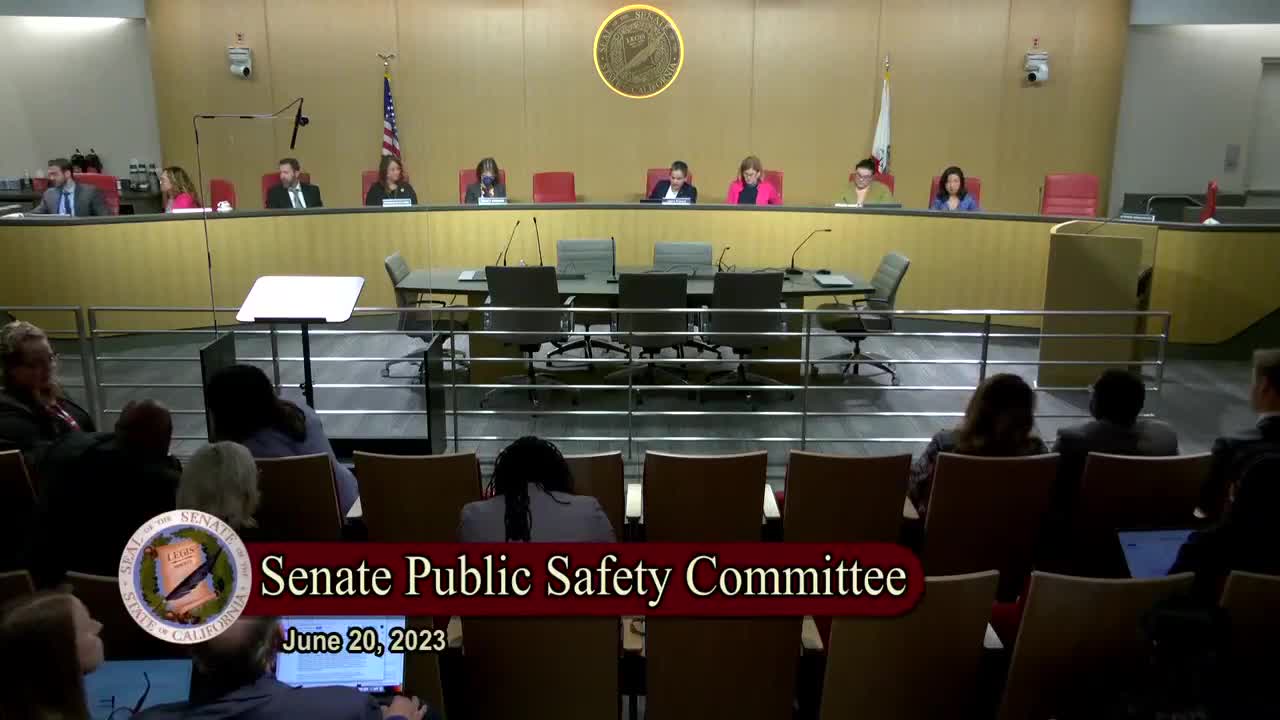 6MIN
Senate Standing Committee on Public Safety
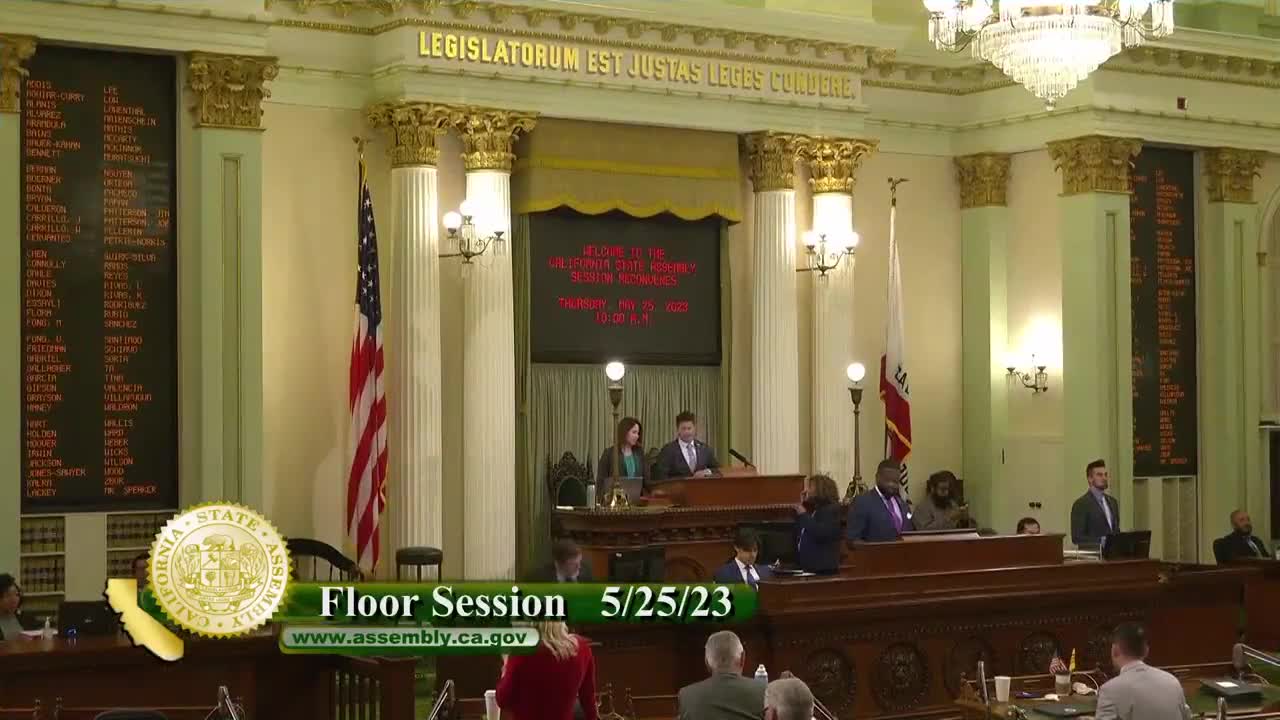 1MIN
Assembly Floor
 12MIN
Assembly Standing Committee on Public Safety
Bill Author

Bill Co-Author(s):