AB 1267: Zero-emission vehicle incentive programs: gasoline superusers.
- Session Year: 2023-2024
- House: Assembly
- Latest Version Date: 2023-03-16
Current Status:
Failed
(2024-02-01: From committee: Filed with the Chief Clerk pursuant to Joint Rule 56.)
Introduced
In Committee
First Chamber
In Committee
Second Chamber
Enacted
What does this bill do?
The bill requires CARB to add a "superuser" extra rebate to zero‑emission vehicle programs for people who use large amounts of gasoline and qualify for a rebate. CARB must set a usage threshold and incentive level to maximize gasoline displacement and cuts in air pollution and greenhouse gases per dollar, require vehicle ID and odometer readings under penalty of perjury to verify eligibility, prioritize low‑ and moderate‑income high‑use drivers with targeted outreach through local groups, and report to the Legislature every two years on emissions reduced, local gasoline use changes, and benefits for low‑ and moderate‑income people.
The summary is provided by generative AI which can make mistakes. For original language, please view the details in the table below.
Existing law generally designates the State Air Resources Board as the state agency with the primary responsibility for the control of vehicular air pollution. Existing law establishes various incentive programs that are administered or funded by the state board to provide financial assistance for the purchase of zero-emission vehicles by individuals, including, among others, the Clean Cars 4 All Program.
This bill would require the state board, upon appropriation by the Legislature, to ensure that beginning January 1, 2025, an additional incentive incentive, to be known as a superuser incentive, is awarded under a zero-emission vehicle incentive program that is administered or funded by the state board to a recipient of an incentive under one of those programs who is a gasoline or diesel superuser, as defined. gasoline superuser, as defined, who otherwise qualifies for an incentive under the zero-emission vehicle incentive program. The bill would require the state board to set the amount of the superuser incentive at a level that maximizes the displacement of gasoline or diesel and the reduction of emissions of criteria pollutants and greenhouse gases per dollar spent. The bill would require specified information to be provided by an applicant for the additional incentive under penalty of perjury. By expanding the crime of perjury, the bill would impose a state-mandated local program.
The bill would require the state board, on or before January 1, 2025, to develop and implement a strategy to, among other things, identify the drivers who use the most gasoline or diesel are gasoline superusers and are low or moderate income and expedite the replacement of the vehicles of those drivers, as specified. The bill would require the state board to submit a report to the Legislature on or before January 1, 2025, and every 2 years thereafter, regarding the zero-emission vehicle incentive programs administered or funded by the state board.
The California Constitution requires the state to reimburse local agencies and school districts for certain costs mandated by the state. Statutory provisions establish procedures for making that reimbursement.
This bill would provide that no reimbursement is required by this act for a specified reason.
Existing law generally designates the State Air Resources Board as the state agency with the primary responsibility for the control of vehicular air pollution. Existing law establishes various incentive programs that are administered or funded by the state board to provide financial assistance for the purchase of zero-emission vehicles by individuals, including, among others, the Clean Cars 4 All Program.
This bill would require the state board, upon appropriation by the Legislature, to ensure that beginning January 1, 2025, an additional incentive is awarded under a zero-emission vehicle incentive program that is administered or funded by the state board to a recipient of an incentive under one of those programs who is a gasoline or diesel superuser, as defined. The bill would require the state board to set the amount of the incentive at a level that maximizes the displacement of gasoline or diesel and the reduction of emissions criteria pollutants per dollar spent. The bill would require specified information to be provided by an applicant for the additional incentive under penalty of perjury. By expanding the crime of perjury, the bill would impose a state-mandated local program.
The bill would require the state board, on or before January 1, 2025, to develop and implement a strategy to, among other things, identify the drivers who use the most gasoline or diesel and expedite the replacement of the vehicles of those drivers, as specified. The bill would require the state board to submit a report to the Legislature on or before January 1, 2025, and every 2 years thereafter, regarding the zero-emission vehicle incentive programs administered or funded by the state board.
The California Constitution requires the state to reimburse local agencies and school districts for certain costs mandated by the state. Statutory provisions establish procedures for making that reimbursement.
This bill would provide that no reimbursement is required by this act for a specified reason.
For purposes of this chapter, the following definitions apply:
(a)Diesel superuser means a person who consumes an amount of diesel in excess of a threshold established by the state board in the operation of an internal combustion engine vehicle registered to that person. The state board shall establish the threshold in a manner that maximizes the displacement of diesel and the reduction of emissions criteria pollutants per dollar spent for an incentive awarded pursuant to Section 43882.(b)(a)Gasoline superuser means a person who consumes an amount of gasoline in excess of a threshold established by the state board in the operation of an internal combustion engine vehicle registered to that person. The state board shall establish the threshold in a manner that maximizes the displacement of gasoline and gasoline, the reduction of emissions of criteria pollutants and greenhouse gases per dollar spent for an incentive spent, and the turnover of older vehicles, resulting from incentives awarded pursuant to Section 43882. The state board shall consider establishing that threshold at an average annual amount of 700 gallons in a calendar year.
(c)(b)Zero-emission vehicle incentive program or ZEV incentive program means a program that provides incentives to an individual for the purchase of a light-duty zero-emission vehicle and that receives funding from, or is administered by, the state board. A ZEV incentive program includes, but is not limited to, all of the following programs:
(1)The Clean Cars 4 All Program established pursuant Section 44124.5.
(2)The Clean Vehicle Rebate Project established as a part of the Air Quality Improvement Program (Article 3 (commencing with Section 44274) of Chapter 8.9).
(3)The Clean Vehicle Assistance Program established as a part of the Air Quality Improvement Program (Article 3 (commencing with Section 44274) of Chapter 8.9).
43881.(a)On or before January 1, 2025, the state board shall develop and implement a strategy for doing all of the following:
(1)Identifying the drivers who use the most gasoline or diesel are gasoline superusers and are low income or moderate income.
(2)Expediting the replacement of gasoline- or diesel-powered gasoline-powered vehicles of drivers identified pursuant to paragraph (1) with zero-emission vehicles.
(3)Identifying barriers that prevent gasoline or diesel superusers from accessing ZEV incentive programs and adopting zero-emission vehicles.
(4) Developing ZEV outreach protocols and metrics to assess to target gasoline superusers and prioritize those superusers who are low income or moderate income and measure the success of outreach to gasoline and diesel superusers across in each district in the state.
(b)In advertising the availability of ZEV incentive programs to gasoline and diesel superusers, the state board shall consider coordinating with districts and local nonprofit and community organizations, prioritizing those organizations that have a strong and ongoing local presence in areas within the applicable district.
43882.(a)The state board shall, upon appropriation by the Legislature, ensure that beginning January 1, 2025, an additional incentive incentive, to be known as the superuser incentive, is awarded under a ZEV incentive program to a recipient of an incentive of one of those programs who is a gasoline or diesel superuser. gasoline superuser who otherwise qualifies for an incentive under the ZEV incentive program.
(b)The state board shall set the amount of the superuser incentive at a level that maximizes the displacement of gasoline or diesel and the reduction of emissions of criteria pollutants and greenhouse gases per dollar spent.
(c)The state board shall require an applicant to provide the vehicle identification number and an number, the odometer reading from the applicants vehicle registration, and the current odometer reading from the applicants vehicle under penalty of perjury to verify whether the applicant qualifies as a diesel or gasoline superuser.
43883.(a)Notwithstanding Section 10231.5 of the Government Code, the state board shall report to the Legislature no later than January 1, 2025, and biennially thereafter, all of the following information:
(1)The actual gasoline or diesel emissions reduced per dollar spent on ZEV incentive programs.
(2)The impacts of ZEV incentive program spending in terms of quantifiable carbon emissions reductions and transportation savings among low- to moderate-income individuals.
(3)The changes in annual gasoline and diesel use at local levels by census tract or ZIP Code.
(b)A report to be submitted to the Legislature pursuant to subdivision (a) shall be submitted in compliance with Section 9795 of the Government Code.
SEC. 2.No reimbursement is required by this act pursuant to Section 6 of Article XIIIB of the California Constitution because the only costs that may be incurred by a local agency or school district will be incurred because this act creates a new crime or infraction, eliminates a crime or infraction, or changes the penalty for a crime or infraction, within the meaning of Section 17556 of the Government Code, or changes the definition of a crime within the meaning of Section 6 of Article XIIIB of the California Constitution.
For purposes of this chapter, the following definitions apply:
(a)Diesel superuser means a person who consumes an amount of diesel in excess of a threshold established by the state board in the operation of an internal combustion engine vehicle registered to that person. The state board shall establish the threshold in a manner that maximizes the displacement of diesel and the reduction of emissions criteria pollutants per dollar spent for an incentive awarded pursuant to Section 43882.
(b)Gasoline superuser means a person who consumes an amount of gasoline in excess of a threshold established by the state board in the operation of an internal combustion engine vehicle registered to that person. The state board shall establish the threshold in a manner that maximizes the displacement of gasoline and the reduction of emissions criteria pollutants per dollar spent for an incentive awarded pursuant to Section 43882. The state board shall consider establishing that threshold at 700 gallons in a calendar year.
(c)Zero-emission vehicle incentive program or ZEV incentive program means a program that provides incentives to an individual for the purchase of a light-duty zero-emission vehicle and that receives funding from, or is administered by, the state board. A ZEV incentive program includes, but is not limited to, all of the following programs:
(1)The Clean Cars 4 All Program established pursuant Section 44124.5.
(2)The Clean Vehicle Rebate Project established as a part of the Air Quality Improvement Program (Article 3 (commencing with Section 44274) of Chapter 8.9).
(3)The Clean Vehicle Assistance Program established as a part of the Air Quality Improvement Program (Article 3 (commencing with Section 44274) of Chapter 8.9).
43881.(a)On or before January 1, 2025, the state board shall develop and implement a strategy for doing all of the following:
(1)Identifying the drivers who use the most gasoline or diesel and are low income or moderate income.
(2)Expediting the replacement of gasoline- or diesel-powered vehicles of drivers identified pursuant to paragraph (1) with zero-emission vehicles.
(3)Identifying barriers that prevent gasoline or diesel superusers from accessing ZEV incentive programs and adopting zero-emission vehicles.
(4) Developing outreach protocols and metrics to assess the success of outreach to gasoline and diesel superusers across each district in the state.
(b)In advertising the availability of ZEV incentive programs to gasoline and diesel superusers, the state board shall consider coordinating with districts and local nonprofit and community organizations, prioritizing those organizations that have a strong and ongoing local presence in areas within the applicable district.
43882.(a)The state board shall, upon appropriation by the Legislature, ensure that beginning January 1, 2025, an additional incentive is awarded under a ZEV incentive program to a recipient of an incentive of one of those programs who is a gasoline or diesel superuser.
(b)The state board shall set the amount of the incentive at a level that maximizes the displacement of gasoline or diesel and the reduction of emissions criteria pollutants per dollar spent.
(c)The state board shall require an applicant to provide the vehicle identification number and an odometer reading under penalty of perjury to verify whether the applicant qualifies as a diesel or gasoline superuser.
43883.(a)Notwithstanding Section 10231.5 of the Government Code, the state board shall report to the Legislature no later than January 1, 2025, and biennially thereafter, all of the following information:
(1)The actual gasoline or diesel emissions reduced per dollar spent on ZEV incentive programs.
(2)The impacts of ZEV incentive program spending in terms of quantifiable emissions reductions and transportation savings among low- to moderate-income individuals.
(3)The changes in annual gasoline and diesel use at local levels by census tract or ZIP Code.
(b)A report to be submitted to the Legislature pursuant to subdivision (a) shall be submitted in compliance with Section 9795 of the Government Code.
SEC. 2.No reimbursement is required by this act pursuant to Section 6 of Article XIIIB of the California Constitution because the only costs that may be incurred by a local agency or school district will be incurred because this act creates a new crime or infraction, eliminates a crime or infraction, or changes the penalty for a crime or infraction, within the meaning of Section 17556 of the Government Code, or changes the definition of a crime within the meaning of Section 6 of Article XIIIB of the California Constitution.
|
Date
|
Status
|
|---|---|
| Feb 1, 2024 | From committee: Filed with the Chief Clerk pursuant to Joint Rule 56. |
| Jan 31, 2024 | Died pursuant to Art. IV, Sec. 10(c) of the Constitution. |
| May 18, 2023 | In committee: Held under submission. |
| May 3, 2023 | In committee: Set, first hearing. Referred to APPR. suspense file. |
| Apr 26, 2023 | In committee: Hearing postponed by committee. |
| Apr 11, 2023 | From committee: Do pass and re-refer to Com. on APPR. (Ayes 11. Noes 0.) (April 10). Re-referred to Com. on APPR. |
| Mar 28, 2023 | From committee: Do pass and re-refer to Com. on NAT. RES. (Ayes 15. Noes 0.) (March 27). Re-referred to Com. on NAT. RES. |
| Mar 20, 2023 | Re-referred to Com. on TRANS. |
| Mar 16, 2023 | From committee chair, with author's amendments: Amend, and re-refer to Com. on TRANS. Read second time and amended. |
| Mar 2, 2023 | Referred to Coms. on TRANS. and NAT. RES. |
| Feb 17, 2023 | From printer. May be heard in committee March 19. |
| Feb 16, 2023 | Read first time. To print. |
|
Date
|
Description
|
Location
|
Votes
|
|
|---|---|---|---|---|
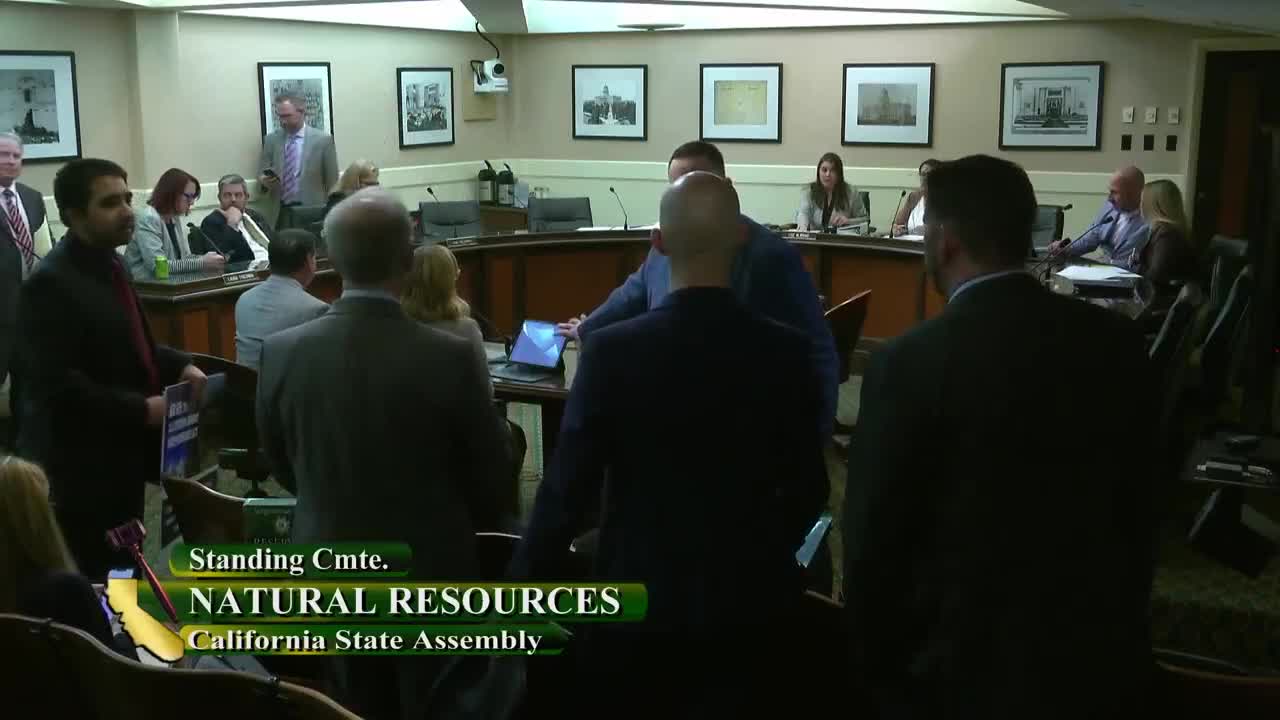
| Apr 10, 2023 | Do pass and be re-referred to the Committee on [Appropriations] | Assembly Standing Committee on Natural Resources |
Passed |
|
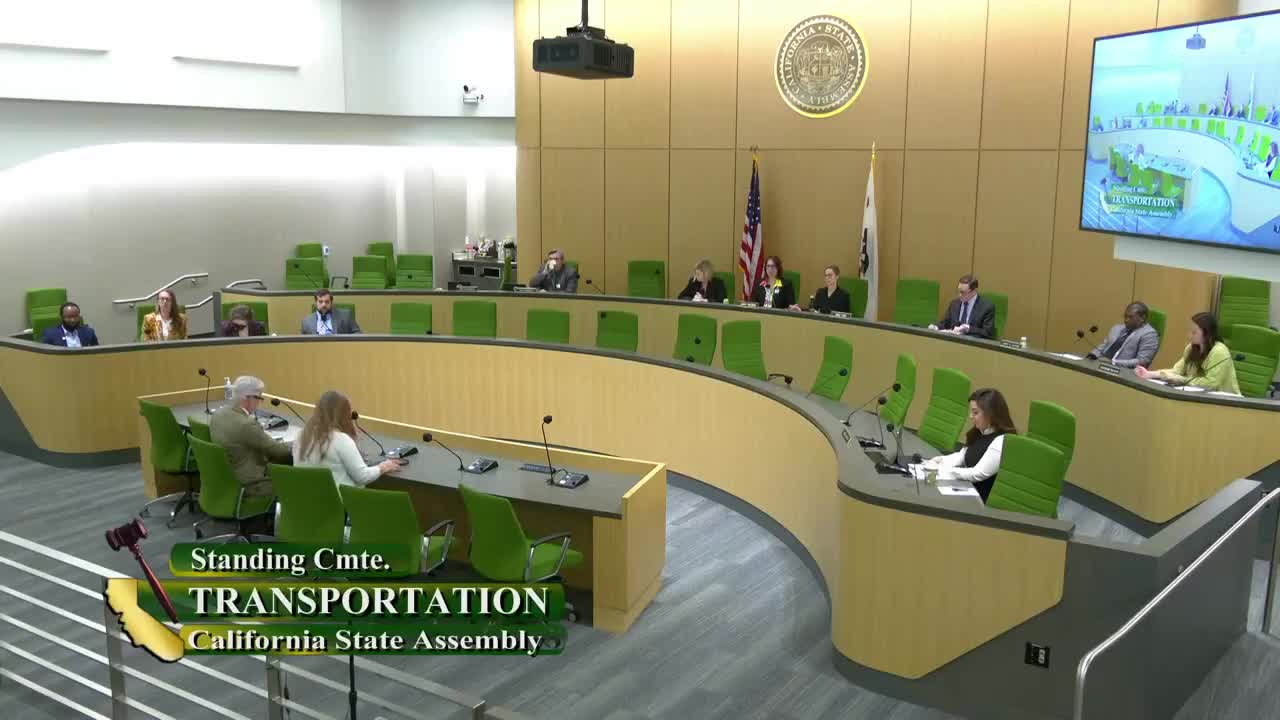
| Mar 27, 2023 | Do pass and be re-referred to the Committee on [Natural Resources] | Assembly Standing Committee on Transportation |
Passed |
This list shows positions taken on this bill by organizations on the date displayed, which is linked to the original source.
Positions by individuals are not included.
|
Organization
|
Position
|
Date
|
|---|---|---|
| 350 Bay Area Action | ** Support | |
| 350 Conejo - San Fernando Valley | ** Support | |
| Acterra | ** Support | |
| Benisol, LLC | ** Support | |
| California Interfaith Power & Light | ** Support | |
| Clean Coalition | ** Support | |
| Coalition For Clean Air | * Support | Apr 10, 2023 |
| Coltura | * Support | Apr 10, 2023 |
| Coltura | ** Support | |
| Cool the Earth | ** Support | |
| Elders Climate Action, Norcal and Socal Chapters | ** Support | |
| Evhybridnoire | ** Support | |
| Fossil Free Mid Peninsula | ** Support | |
| Green Latinos | ** Support | |
| Humboldt Unitarian Universalist Fellowship's Climate Action Campaign | ** Support | |
| Plug In America | ** Support | |
| Project Green Home | ** Support | |
| Rapid Substitution | ** Support | |
| recolte energy | ** Support | |
| Silicon Valley Youth Climate Action | ** Support | |
| Valley CAN | ** Support | |
| Valley Clean Air Now | * Support | Apr 10, 2023 |
| Zev 2030 | ** Support |
Date of Hearing: May 3, 2023
ASSEMBLY COMMITTEE ON APPROPRIATIONS
Chris Holden, Chair
ABPCA Bill Id:AB 1267
Author:(Ting) – As Amended Ver:March 16, 2023
Policy Committee: | Transportation | Vote: | 15 - 0 |
Natural Resources | 11 - 0 | ||
|
|
Urgency: No State Mandated Local Program: Yes Reimbursable: No
SUMMARY:
This bill requires the California Air Resources Board (CARB), beginning January 1, 2025, to award an additional incentive under a zero-emission vehicle (ZEV) incentive program to a recipient who is a gasoline superuser (superuser).
Specifically, this bill:
- Requires CARB, on or before January 1, 2025, to develop and implement a strategy to:
- Identify drivers who are superusers, as defined, and are low or moderate income.
- Expedite the replacement of gasoline-powered vehicles of drivers identified in a) with ZEVs.
- Identify barriers that prevent superusers from accessing ZEV incentive programs and adopting ZEVs.
- Develop ZEV outreach protocols to target superusers and prioritize those superusers who are low or moderate income and measure the success of outreach to superusers in each air district in the state.
- Requires CARB, in advertising the availability of ZEV incentive programs to superusers, to consider coordinating with districts and local nonprofit and community organizations.
- Requires CARB, upon appropriation by the Legislature, to ensure, beginning January 1, 2025, an additional incentive (the “superuser incentive”) is awarded under a specified ZEV incentive program to superusers who otherwise qualify for a ZEV incentive program.
- Requires CARB to set the amount of the superuser incentive at a level that maximizes the displacement of gasoline and the reduction of criteria pollutant emissions and greenhouse gases (GHGs) per dollar spent.
- Requires CARB to require an applicant to provide the vehicle identification number, the odometer reading from the applicant’s vehicle registration, and the current odometer reading under penalty of perjury to verify whether the applicant qualifies as a superuser.
- Requires CARB, no later than January 1, 2025, and biennially thereafter, to report specified information about ZEV incentive programs and gasoline use to the Legislature.
FISCAL EFFECT:
CARB estimates costs of approximately $1.7 million for eight positions and contract funds in fiscal year (FY) 2023-24 and approximately $1.3 million in FY 2024-25 and ongoing, to implement this bill (Greenhouse Gas Reduction Fund (GGRF)). CARB notes it will need these resources in the FY 2023-24 budget to meet the bill’s January 1, 2025, deadline.
COMMENTS:
1) Purpose. According to the author:
California has a variety of incentive programs aimed at getting more drivers into zero emission vehicles (ZEVs), but we are still seeing slow adoption of ZEVs among the biggest gasoline users (superusers). Many gasoline superusers are lower-income consumers who cannot afford to live near their workplaces and must spend much of their income on fuel. To reduce greenhouse gas emissions efficiently and equitably, the state must maximize its investments to reduce gasoline consumption, especially among lower-income consumers. AB 1267 furthers that goal by requiring the California Air Resources Board (CARB) to create an additional ZEV incentive award for gasoline superusers, targeting our top gasoline consumers in the state. It would also require CARB to measure the emissions reductions achieved by our ZEV incentive programs to track our progress in meeting our ambitious climate and transportation goals.
2) Background. According to the California Energy Commission, 18.8% of all new cars sold in the state in 2022 were ZEVs. In 2022, CARB approved a rule requiring 100% of new car sales in the state to be ZEVs by 2035, with interim targets of 35% ZEV sales by 2026 and 68% by 2030. ARB’s 2022 Scoping Plan calls for a 50% reduction in gasoline use by 2030.
The FY 2021-22 and 2022-23 budgets included close to $10 billion in planned investments for ZEV programs across five years. The majority of this funding is from the General Fund (GF), with the remainder from Proposition 98 GF (for school buses), GGRF, federal funds, and other special funds. Most of the funding is for continuing or expanding existing programs, such as rebates for purchasing vehicles and incentive payments for developing charging infrastructure. In response to a multibillion dollar budget shortfall, the Governor’s January budget for FY 2023-24 proposes to reduce GF spending on ZEV programs by $2.5 billion, including $1.5 billion in FY 2023-24. However, the Governor proposes using discretionary GGRF revenues across three years to backfill some of these reductions.
This bill requires CARB to award an additional “superuser incentive” to a superuser who otherwise qualifies for an incentive under one or more of three existing programs:
- Clean Cars 4 All (CC4A) provides up to $9,500 to low-income drivers who scrap their older, high-polluting vehicles and replace them with cleaner options.
- CVRP provides up to $7,500 for income-qualified drivers to buy or lease a ZEV.
- Clean Vehicle Assistance Program (CVAP) provides low-income drivers with special financing and up to $5,000 in down payment assistance.
While the Governor proposes to maintain the full funding amount for CC4A ($656 million), ARB anticipates CVRP will likely run out of money before this bill would go into effect, absent additional funding.
According to Coltura, the sponsor of this bill, the average gasoline superuser uses 1,260 gallons per year compared to 354 gallons for a non-superuser, the majority of superusers are below the median income, and rural areas of the state have twice as many superusers per capita than urban areas. This bill tasks ARB with identifying a threshold for gasoline usage to define “superuser,” and gives ARB the discretion to set the incentive amount at a level that maximizes the displacement of gasoline and the reduction of criteria pollutant emissions per dollar spent. The bill encourages ARB to consider establishing the gasoline usage threshold at an average annual usage of 700 gallons in a calendar year.
ARB will need to contend with program design challenges as it implements this bill. For example, it is unclear how ARB will measure and maximize gasoline displacement resulting from the “superuser incentive” when CVRP and CVAP do not require applicants to retire a more polluting vehicle to be eligible for an incentive. EVs purchased using incentives could be the second or third cars added to a household and not the primary vehicle that is driven the most.
Analysis Prepared by: Nikita Koraddi / APPR. / (916) 319-2081
Date of Hearing: April 10, 2023
ASSEMBLY COMMITTEE ON NATURAL RESOURCES
Luz Rivas, Chair
ABPCA Bill Id:AB 1267 (
Author:Ting) – As Amended Ver:March 16, 2023
SUBJECT: Zero-emission vehicle incentive programs: gasoline superusers.
SUMMARY: Requires the Air Resources Board (ARB) to ensure that beginning January 1, 2025, an additional incentive is awarded under a zero-emission vehicle (ZEV) incentive program to a recipient who is a gasoline superuser, as defined.
EXISTING LAW:
- Requires ARB, pursuant to California Global Warming Solutions Act of 2006 [AB 32 (Núñez), Chapter 488, Statutes of 2006], to adopt a statewide greenhouse gas (GHG) emissions limit equivalent to 1990 levels by 2020 and to reduce GHGs to 40% below 1990 levels by 2030 and to 85% below 1990 levels by 2045. (Health & Safety (HSC) Code 38500 et seq)
- Establishes, pursuant to the Clean Energy and Pollution Reduction Act of 2015 [SB 350, De León, Chapter 547, Statutes of 2015] to increase the renewable electricity procurement goal to 50% by 2030. (Public Utilities Code 399.15 (b)(2)(B))
- Establishes the Charge Ahead California Initiative pursuant to SB 1275 [(de León), Chapter 530, Statutes of 2014], that, among other things, includes the goal of placing at least one million ZEV and near-zero emission vehicles (NZEV) into service by January 1, 2023, and increasing access to these vehicles for disadvantaged, low-income, and moderate income communities and consumers. (HSC 22458)
- Establishes the Air Quality Improvement Program (AQIP), administered by ARB in consultation with local air districts, to fund programs that reduce criteria air pollutants, improve air quality, and provide research for alternative fuels and vehicles, vessels, and equipment technologies. (HSC 44274)
- Establishes the Clean Cars 4 All Program (CC4A) to be administered by ARB to focus on achieving reductions in the emissions of GHG, improvements in air quality, and benefits to low-income state residents through the replacement of high-polluter motor vehicles with cleaner and more efficient motor vehicles or a mobility option. Requires ARB to set specific, measurable goals for the replacement of passenger vehicles and light- and medium-duty trucks that are high polluters. (HSC 44124.5)
- Establishes the Clean Vehicle Rebate Project (CVRP) established as a part of AQIP to expand financing mechanisms, including, but not limited to, a loan or loan-loss reserve credit enhancement program to increase consumer access to zero-emission and near-zero-emission vehicle financing and leasing options that can help lower expenditures on transportation and prequalification or point-of-sale rebates or other methods to increase participation rates among low- and moderate-income consumers. (HSC 44274.9(e)(1)(2))
- Establishes the Clean Vehicle Assistance Program (CVAP) under AQIP to provide grants and other financing opportunities to low-income drivers to offset the cost of electric vehicles and associated charging infrastructure. (HSC 44274)
THIS BILL:
- Defines the following terms for purposes of this bill:
- “Gasoline superuser” means a person who consumes an amount of gasoline in excess of a threshold established by ARB in the operation of an internal combustion engine vehicle registered to that person.
- Requires ARB to establish the threshold in a manner that maximizes the displacement of gasoline, the reduction of emissions of criteria pollutants and GHG per dollar spent, and the turnover of older vehicles resulting from incentives provided. Requires ARB to consider establishing that threshold at an average annual amount of 700 gallons in a calendar year.
- “Zero-emission vehicle incentive program” or “ZEV incentive program” means a program that provides incentives to an individual for the purchase of a light-duty ZEV and that receives funding from, or is administered by, ARB. A ZEV incentive program includes, but is not limited to, all of the following programs: CC4A, CVRP, and CVAP.
- “Gasoline superuser” means a person who consumes an amount of gasoline in excess of a threshold established by ARB in the operation of an internal combustion engine vehicle registered to that person.
- Requires, on or before January 1, 2025, ARB to develop and implement a strategy for doing all of the following:
- Identifying the drivers who are gasoline superusers and are low income or moderate income;
- Expediting the replacement of gasoline-powered vehicles of drivers with ZEVs;
- Identifying barriers that prevent gasoline superusers from accessing ZEV incentive programs and adopting ZEVs; and,
- Developing ZEVoutreach protocols to target gasoline superusers and prioritize those superusers who are low income or moderate income and measure the success of outreach to gasoline superusers in each district in the state.
- Requires ARB, in advertising the availability of ZEV incentive programs to gasoline superusers, to consider coordinating with districts and local nonprofit and community organizations, prioritizing those organizations that have a strong and ongoing local presence in areas within the applicable district.
- Requires ARB, upon appropriation by the Legislature, ensure that beginning January 1, 2025, an additional incentive, to be known as the “superuser incentive,” is awarded under a ZEV incentive program to a gasoline superuser who otherwise qualifies for an incentive under the ZEV incentive program.
- Requires ARB to set the amount of the incentive at a level that maximizes the displacement of gasoline and the reduction of emissions criteria pollutants and GHGs per dollar spent.
- Requires ARB to require an applicant to provide the vehicle identification number, the odometer reading from the applicant’s vehicle registration, and the current odometer reading from the applicant’s vehicle under penalty of perjury to verify whether the applicant qualifies as gasoline superuser.
- Requires ARB to report to the Legislature no later than January 1, 2025, and biennially thereafter, all of the following information:
- The gasoline emissions reduced per dollar spent on ZEV incentive programs;
- The impacts of ZEV incentive program spending in terms of quantifiable carbon emissions reductions and transportation savings among low- to moderate-income individuals; and,
- The changes in annual gasoline use at local levels by census tract or ZIP Code.
- Requires the report to be submitted to the Legislature in compliance with Section 9795 of the Government Code.
- Provides that no reimbursement is required by this act pursuant to the California Constitution.
FISCAL EFFECT: Unknown
COMMENTS:
- Need for the bill. According to the author:
California has a variety of incentive programs aimed at getting more drivers into zero emission vehicles (ZEVs), but we are still seeing slow adoption of ZEVs among the biggest gasoline users (superusers). Many gasoline superusers are lower-income consumers who cannot afford to live near their workplaces and must spend much of their income on fuel. To reduce greenhouse gas emissions efficiently and equitably, the state must maximize its investments to reduce gasoline consumption, especially among lower-income consumers. AB 1267 furthers that goal by requiring the California Air Resources Board (CARB) to create an additional ZEV incentive award for gasoline superusers, targeting our top gasoline consumers in the state. It would also require CARB to measure the emissions reductions achieved by our ZEV incentive programs to track our progress in meeting our ambitious climate and transportation goals.
- Zero Emission Vehicles. ZEV is an umbrella term for hydrogen fuel cell electric vehicles, battery electric vehicles (EVs), and plug-in hybrid electric vehicles (PHEVs). California has some of the most ambitious GHG reduction goals in the nation, which include goals to reduce petroleum use in California up to 50% from 2015 levels by 2030, phase out passenger combustion-engine cars by 2035, and reduce GHG emissions 85% below 1990 levels by 2045. The transportation sector represents about 40% of California's total GHG emissions portfolio, and replacing traditional gas-powered cars with ZEVs is a significant part of California's effort to reduce climate emissions.
Governor Newsom’s ZEV Executive Order N-79-20 set the following ZEV targets for California: 100% of in-state sales of new passenger cars and light-duty trucks will be zero emission by 2035; 100% zero-emission medium and heavy-duty vehicles in the state by 2045, where feasible, and by 2035 for drayage trucks; and, 100% zero-emission off-road vehicles and equipment operations by 2035, where feasible.
- ZEV rebate programs. CC4A is an existing program that focuses on providing incentives up to $9,500 per vehicle through California Climate Investments to help lower-income California drivers scrap their older, high-polluting cars and replace them with zero- or near-zero emission replacements. Eligible applicants must fall below 300% of the Federal Poverty Level ($83,250 for a family of 4). As of February 2021, more than 10,000 scrapped old, dirty cars had been replaced with ZEVs under this program. These incentive funds can be stacked with incentive dollars from the statewide CVRP so that a low-income participant can receive up to $14,000 for a new battery-electric vehicle. The average vehicle retired is about 22 years old with an estimated fuel economy of 21.5 miles per gallon. The average replacement vehicle has a fuel economy of 80 miles per gallon equivalent. According to ARB’s CC4A annual report for FY 2020/2021, “even with the past [years’] global economic and health crisis, demand for all air quality management district car incentives remained strong. This indicates a continued high level of interest and demand for these incentives among the priority populations.”
The CVRP offers rebates up to $7,000 on a first-come, first-served basis to offset the cost of ZEVs. Rebates are available to California residents that meet income requirements and purchase or lease an eligible vehicle. To-date, more than 30,000 low-income consumers have been assisted under CVRP. The income eligibility is higher for this program; eligible applicants can earn up to $135,000 for single filers; $175,000 for head-of-household; and, $200,000 for joint filers.
The CVAP supports lower-income consumers’ access loans to purchase or lease ZEVs, including up to $5,000 down payment assistance, special financing, and free vehicle charger and installation opportunities. Eligible recipients may not exceed $69,680 for max gross income for 2 people. It is important to note that CVAP is a financing assistance program, not an incentive program, like CVRP and CC4A.
Through the support of these programs, as of February 25, 2022, more than one million plug-in electric cars, pickup trucks, sport utility vehicles (SUV), and motorcycles have been sold in California. The data also show that California, with only 10% of the nation’s cars, now accounts for more than 40% of all ZEVs in the country. In fact, a recent study shows that more than 50% of ZEV purchasers would not have purchased a ZEV without a rebate.
ARB’s incentive amounts for these programs are set through an extensive public process that occurs annually through the development of ARB’s funding plan. They are also informed by statute, climate and air quality goals, funding availability, and need projections.
- Gas displacement. Gasoline is the most used transportation fuel in California, with 97% of all gas being consumed by light-duty cars, pickup trucks, and SUVs. In 2021, 13.8 billion gallons of gasoline were sold, according to the California Department of Tax and Fee Administration. ARB’s 2022 Scoping Plan, the roadmap for achieving the state’s GHG reduction goals below 1990 levels, calls for a 50% reduction in gasoline use between 2021 and 2030 to meet the statutorily mandated GHG reduction requirements.
This bill would require ARB to provide an additional incentive, layered on top of the existing ZEV incentive programs, to a gasoline superuser who receives an incentive or rebate under one of the existing programs. ARB would be tasked with identifying a threshold for gas usage to define “superuser,” and would have the discretion to set the amount of the incentive at a level that maximizes the displacement of gasoline and the reduction of emissions criteria pollutants per dollar spent. The bill encourages ARB to consider establishing the gas usage threshold at an average annual usage of 700 gallons in a calendar year.
- Equity. Though the goal of this bill is notably to reduce GHG associated with transportation, and reducing GHGs does benefit low income and disadvantaged communities who are disproportionately impacted by ozone and exhaust pollution, calculating an incentive based on the amount of gas that would be replaced can create concerns around equity.
This bill would require ARB to develop and implement a strategy for identifying gasoline “superusers” who are low income or moderate income, identifying barriers to superusers getting ZEV incentives, and doing outreach to superusers about ZEV incentive programs, but concern remains that a superuser who uses enough gas to exceed the threshold that ARB establishes for incentive eligibility has the financial means to afford the car, and/or afford the gas.
According to Coltura, the sponsor of the bill, the lower fuel economy cars and the cars being driven a lot of miles are the target cars to replace since they will reap greater GHG reductions if removed from the road, which will also provide environmental benefits (cleaner air) to all Californians. Coltura also explains that their research shows that on the whole, wealthier people tend to drive less than lower income drivers. Lower income drivers often have to drive longer distances in older, less efficient vehicles either because they can’t afford to live near where they work, or because they drive for their work. Many lower income drivers are in the top bracket for gasoline consumption, spending 25% or more of their household income on vehicle fuel.
- Funding. The 2022-23 fiscal year budget included $54 billion over five years to support transformative climate investments in transportation, energy, housing, education, wildfire resilience, drought, and health. The Budget included $6.1 billion for new zero-emission transportation investments over four years. Of these investments, $4.2 billion was appropriated to ARB and the California Energy Commission for heavy duty zero-emission technology advancement and to expand investments in passenger vehicle incentives and infrastructure.
This year, the state is facing a $22.5 billion budget deficit and the Governor’s January 10 budget is proposing significant cuts across the board for the state’s climate investments and environmental programs, including $6 billion in cuts to last year’s 5-year climate spending plan. More than half of those proposed cuts – $3.3 billion – come from the state’s clean transportation initiatives. Money for ZEV incentive programs, such as rebates for car buyers, and charging infrastructure would be cut by $2.5 billion. About $1.4 billion of that amount would be shifted to the state’s fund for its cap-and-trade program, a market that is paid into by fossil fuel companies, amongst others. That leaves a net decrease of $1.1 billion.
While the Governor does propose to maintain the full funding amount for the CC4A program ($656 million), CVRP is anticipated to run out of money before this bill would go into effect.
- Double referral. This bill was heard in the Assembly Transportation Committee on March 27 by a vote 15-0.
- Related legislation. AB 2816 (Ting, 2022) would have required ARB to award incentives for passenger ZEVs based on the amount of gasoline or diesel the applicant’s vehicle consumed. This bill was held in the Assembly Appropriations Committee.
REGISTERED SUPPORT / OPPOSITION:
Support
California Interfaith Power & Light
Coltura
Elders Climate Action, Norcal and Socal Chapters
Fossil Free Mid Peninsula
Plug in America
Rapid Substitution
Silicon Valley Youth Climate Action
Zev 2030
Opposition
None on file
Analysis Prepared by: Paige Brokaw / NAT. RES. /
Date of Hearing: March 27, 2023
ASSEMBLY COMMITTEE ON TRANSPORTATION
Laura Friedman, Chair
ABPCA Bill Id:AB 1267 (
Author:Ting) – As Amended Ver:March 16, 2023
SUBJECT: Zero-emission vehicle incentive programs: gasoline superusers
SUMMARY: Requires the California Air Resources Board (CARB) to provide an additional incentive to individuals for the purchase of zero-emission vehicles based on the average annual gallons of gasoline that the applicant’s vehicle consumed. Specifically, this bill:
- Requires CARB, on or before January 1, 2025, to develop and implement a strategy for doing all of the following:
- Identifying drivers who are gasoline superusers and are low income or moderate income;
- Expediting the replacement of gasoline-powered vehicles of low- and moderate-income superusers with zero-emission vehicle (ZEV)s;
- Identifying barriers that prevent gasoline superusers from accessing ZEV incentive programs and adopting ZEVs; and,
- Developing outreach protocols to target superusers and prioritize those superusers who are low income or moderate income and measure the success of outreach to gasoline superusers in each air district in the state.
- Requires CARB, in advertising the availability of ZEV incentive programs to gasoline superusers, to consider coordinating with districts and local nonprofit and community organizations.
- Requires CARB, upon appropriation by the Legislature, to ensure that beginning January 1, 2025, an additional incentive (the “superuser incentive”) is awarded under a ZEV incentive program to superusers who otherwise qualify for an incentive under the ZEV incentive program.
- Requires CARB to set the amount of the superuser incentive at a level that maximizes the displacement of gasoline and the reduction of emissions criteria pollutants and greenhouse gases (GHGs) per dollar spent.
- Requires CARB to require an applicant to provide the vehicle identification number, the odometer reading from the applicant’s vehicle registration, and the current odometer reading under penalty of perjury to verify whether the applicant qualifies as a gasoline superuser.
- Requires CARB to report to the Legislature no later than January 1, 2025, and biennially after, on the following:
- Gasoline emissions reduced per dollar spent on ZEV incentive programs;
- Impacts of ZEV incentive program spending in terms of quantifiable carbon emissions reductions and transportation savings among low- to moderate-income individuals; and,
- Changes in annual gasoline use at local levels by census tract or ZIP Code.
- Defines “gasoline superuser” as a person who consumes an amount of gasoline in excess of a threshold established by CARB in the operation of an internal combustion engine vehicle registered to that person.
- Requires CARB to establish the thresholds in a manner that maximizes the displacement of gasoline, the reduction of emissions of criteria pollutants and greenhouse gases per dollar spent, and the turnover of older vehicles for an incentive awarded. Requires CARB to consider establishing the gasoline threshold at 700 gallons in a calendar year.
- Defines “zero-emission vehicle incentive program” or “ZEV incentive program” as a program that provides incentives to an individual for the purchase of a light-duty zero-emission vehicle and that receives funding from, or is administered by, CARB, including, but not limited to:
- The Clean Cars 4 All Program;
- The Clean Vehicle Rebate Project; and,
- The Clean Vehicle Assistance Program.
EXISTING LAW:
- Establishes the Air Quality Improvement Program, administered by CARB, with the primary purpose of funding, upon appropriation by the Legislature, air quality improvement projects relating to fuel and vehicle technologies that reduce criteria air pollutants and improve air quality. Also, funds research to determine and improve the air quality impacts of alternative transportation fuels and vehicles, vessels, and equipment technologies. (Health and Safety Code (HSC) 44274)
- Establishes the Clean Cars 4 All Program, administered by CARB, to focus on achieving reductions in GHG emissions, improvements in air quality, and benefits to low-income state residents through the replacement of high-polluter motor vehicles with cleaner and more efficient motor vehicles or a mobility option. (HSC 44124.5)
FISCAL EFFECT: Unknown
COMMENTS: The Legislature has set a number of goals to reduce GHG emissions and address climate change. The Global Warming Solutions Act of 2006, AB 32 (Nuñez), Chapter 488, Statutes of 2006 and subsequent companion legislation SB 32 (Pavley), Chapter 249, Statutes of 2016, requires California to reduce statewide GHG emissions to 40% below the 1990 level by 2030. The 1990 level is an aggregated statewide limit, and is not sector- or facility-specific. CARB is responsible for developing a Scoping Plan to detail how the state will achieve its GHG emissions reduction targets mandated by law.
Nearly 40% of California's GHG emissions are generated by the transportation sector, which includes both the light-duty (passenger) and medium- and heavy-duty fleets. Heavy-duty diesel trucks also contribute to unhealthy levels of ozone, inhalable particulate matter, carbon monoxide, NOx, and sulfur dioxide, affecting local air quality. In the transportation sector, measure to reduce GHG emissions include requiring the use of low carbon fuels, cleaner vehicles, and strategies to promote sustainable communities and improved transportation choices that reduce growth in number of vehicle miles traveled.
To further these efforts, at the end of 2020, Governor Newsom issued Executive Order (EO) N-79-20 which requires 100% of in-state sales of new passenger cars and trucks to be zero-emission by 2035. EO N-79-20 charges CARB with developing and proposing passenger vehicle and truck regulations requiring increasing volumes of new ZEVs sold in the State towards that goal.
Various State Programs are Intended to Reduce Emissions and Promote ZEVs. The state administers a wide variety of programs intended to reduce mobile source emissions, including programs that promote zero‑emission vehicles. The Clean Vehicle Rebate Program (CVRP) offers rebates for the purchase or lease of new, eligible ZEVs, including battery-electric, plug-in hybrid electric, and fuel cell electric vehicles. In addition to the goal of reducing emissions from the vehicle sector, the Legislature has directed CARB to ensure vehicle incentive programs provide equitable access to ZEVs via income caps and creating programs and funding set-asides specifically for low-income households. CVRP bases incentive amounts on the type of vehicle technology and also includes additional money for lower-income participants.
In November 2022, CARB approved a plan to phase in changes to CVRP, as directed by the Legislature in SB 129 (Committee on Budget), Chapter 60, Statutes of 2021. The plan outlined two sets of changes to be triggered when the milestones of 1 million and 1.25 million ZEVs were sold in California. The first phase of changes included a decrease in the income cap for standard rebates and a decrease in the manufacturer suggested retail price (MSRP) cap to $45,000 for smaller vehicle classes. A second phase of changes includes a second reduction in the income cap for standard rebate eligibility and reductions in rebate amounts (at a date to be determined), removal of plug in hybrid electric vehicles (PHEV) from CVRP eligibility (by January 1, 2025), and an increase in incentive amounts offered for low- and moderate-income consumers (February 28, 2023)
Clean Cars 4 All is another program that provides incentives to help lower-income consumers replace their old higher-polluting vehicles with newer and cleaner transportation options. Options include the purchase of new or used hybrids, PHEVs, or ZEV replacement vehicles. In lieu of purchasing a replacement vehicle, participants can choose an alternative mobility option such as an electric bike, a voucher for public transit, or a combination of clean transportation options. In addition, buyers of PHEVs and battery electric vehicles are also eligible for home charger incentives or prepaid charge cards if a home charger installation is not an option. Participants must have a household income of less than 400% of the federal poverty limit and live in a ZIP Code containing a disadvantaged community census tract. The Clean Vehicle Assistance Program, an income qualified program administered by the Beneficial State Foundation, provides grants and affordable financing to help with the purchase or lease a new or used hybrid or electric vehicle.
CARB delegates authority for the administration of Clean Cars 4 All to participating air pollution control and air quality management districts (air districts). Currently the Bay Area Air Quality Management District, San Joaquin Air District, Sacramento Air Quality Management District, and South Coast Air Quality Management District have Clean Cars 4 All programs. San Diego plans to join soon, although statewide expansion is also underway.
California designed vehicle rebate programs to attract early adopters and help grow the nascent ZEV market. Despite small changes, the programs have not evolved to keep up with increasing ZEV sales. As such, these programs do not always align incentives with turnover of the highest emitting, “dirtiest” vehicles. In a 2020 report, the California State Auditor noted that CARB has not done enough to measure the GHG emissions reductions its incentive programs achieve. This bill aims to reimagine how the state awards incentive funds in order to maximize GHG emission reductions. In order to track progress, this bill would also require CARB to report on the amount of GHG emissions reduced per dollar spent on ZEV incentives and the impacts of ZEV programs in terms of quantifiable emission reductions for low and moderate income individuals.
According to the author, “California has a variety of incentive programs aimed at getting more drivers into ZEVs, but we are still seeing slow adoption of ZEVs among the biggest gasoline users (superusers). Many gasoline superusers are lower-income consumers who cannot afford to live near their workplaces and must spend much of their income on fuel. To reduce GHG emissions efficiently and equitably, the state must maximize its investments to reduce gasoline consumption, especially among lower-income consumers. [This bill] furthers that goal by requiring CARB to create an additional ZEV incentive award for gasoline superusers, targeting our top gasoline consumers in the state.”
Committee comments: Even with these efforts underway the state is not meeting its targets for reductions from vehicles. In part, this may be because many of the EVs that have been purchased are second or third cars added to a household and not the primary vehicle that is driven the most. In addition, current programs do not target the most polluting cars or the people who drive the most. Structuring incentive programs to target those vehicles is challenging, possibly labor intensive, and could increase fraud.
Some vehicle replacement programs operated by the state and some air districts require the owner of the vehicle to sell or surrender the gasoline or diesel-powered vehicle. For example, Clean Cars 4 All Program requires retirement of the vehicle. Last year AB 2816 (Ting) was heard by this committee and Assembly Natural Resources Committee. The Assembly Natural Resources Committee analysis for AB 2816 states, “to truly replace internal combustion engines, this bill should require the retirement of the cars for which the ZEV incentive is being provided.” The author may want to consider adding such a provision.
Double referral: This bill is double referred to the Assembly Natural Resources Committee and will be heard by that Committee as it relates to issues under its jurisdiction.
Related and previous legislation: AB 2816 (Ting of the 2021-22 Legislative Session) would have required CARB to award incentives for passenger ZEVs based on the amount of gasoline or diesel the applicant’s vehicle consumed. This bill was held on the Assembly Appropriations Committee suspense file.
SB 400 (Umberg), Chapter 271, Statutes of 2019 expands the eligible modes of transportation for which CC4A “mobility option” vouchers may be used to include bike sharing and e-bikes.
AB 630 (Cooper), Chapter 636, Statutes of 2017 establishes CC4A, providing drivers of high polluting vehicles financial incentives and support to switch to lower-emission vehicles or other modes of transportation. Also requires CARB to set specific and measurable goals annually for the Enhanced Fleet Modernization Scrap Only and CC4A Scrap-and-Replace programs.
AB 615 (Cooper), Chapter 631, Statutes of 2017 extended the applicability of CVRP income caps, established in SB 859, to January 1, 2019.
SB 859 (Budget Committee, Public Resources Trailer Bill), Chapter 368, Statutes of 2016 between November 1, 2016, and July 1, 2017, requires CARB to offer CVRP rebates only to applicants who purchase an eligible vehicle and have a specified maximum gross annual income; increase rebate payments by $500 for low-income applicants, as defined; and prioritize rebate payments for low-income applicants.
SB 1275 (de Leon), Chapter 530, Statutes of 2014 required CARB to adopt revisions to the criteria and requirements for CVRP to ensure 1) rebate levels can be phased down in increments based on cumulative sales levels as determined by CARB, 2) eligibility is limited based on income, and 3) consideration of conversion to prequalification and point-of-sale rebates or other methods to increase participation rates.
REGISTERED SUPPORT / OPPOSITION:
Support
Coltura (sponsor)
350 Bay Area Action
350 Conejo / San Fernando Valley
Acterra
Benisol, LLC
California Interfaith Power & Light
Clean Coaliton
Cool the Earth
Elders Climate Action, Norcal and Socal Chapters
Evhybridnoire
Green Latinos
Humboldt Unitarian Universalist Fellowship's Climate Action Campaign
Plug in America
Project Green Home
Rapid Substitution
Recolte Energy
Silicon Valley Youth Climate Action
Valley Can
Zev 2030
Opposition
None on file
Analysis Prepared by: Christine Casey / TRANS. / (916) 319-2093
Discussed in Hearing
 4MIN
Assembly Standing Committee on Natural Resources
 7MIN
Assembly Standing Committee on Transportation
Bill Author

Bill Co-Author(s):