AB 1272: State Water Resources Control Board: drought planning.
- Session Year: 2023-2024
- House: Assembly
- Latest Version Date: 2024-07-03
Current Status:
Failed
(2024-07-18: Vetoed by Governor.)
Introduced
In Committee
First Chamber
In Committee
Second Chamber
Enacted
What does this bill do?
The bill directs the State Water Resources Control Board, with the Department of Fish and Wildlife, to adopt principles and guidelines (rules) for diverting and using water in certain coastal watersheds during shortages to protect fish, public trust uses, public health, and the human right to water. It lets local groups create watershed-level plans and encourages incentives and infrastructure projects to improve drought resilience, and applies to coastal drainages in regional boards 1–3 that are priorities for anadromous fish recovery, with some exceptions. The board could issue cease-and-desist orders and seek civil fines up to $500 per day for violations.
The summary is provided by generative AI which can make mistakes. For original language, please view the details in the table below.
(1)Existing law establishes the State Water Resources Control Board and the California regional water quality control boards. Existing law requires the state board to formulate and adopt state policy for water quality control.
The bill would require the state board, in consultation with the Department of Fish and Wildlife, to adopt principles and guidelines for diversion and use of water in coastal watersheds, as specified, during times of water shortage for drought preparedness and climate resiliency. The bill would require that the principles and guidelines allow for the development of locally generated watershed-level plans to support public trust uses, public health and safety, and the human right to water in times of water shortage, among other things. The bill also would require the state board, prior to adopting those principles and guidelines, to allow for public comment and hearing, as provided. The bill would make the implementation of these provisions contingent upon an appropriation of funds by the Legislature for this purpose.
(2)Existing law authorizes the state board to issue a cease and desist order against a person who is violating, or threatening to violate, certain requirements relating to water use. Existing law authorizes civil liability for a person or entity in violation of a term or condition of a permit, license, certificate, or registration issued by, an order adopted by, or regulations adopted by, the state board in an amount not to exceed $500 for each day that the violation occurs.
This bill would authorize the state board to issue a cease and desist order when a diversion or use violates or threatens to violate an applicable principle or guideline adopted by the state board for the diversion and use of water in specified coastal watersheds during times of water shortage, and would authorize up to a $500-per-day civil liability for a person or entity who violates one of those principles or guidelines.
(1)Existing law establishes the State Water Resources Control Board and the California regional water quality control boards. Existing law requires the state board to formulate and adopt state policy for water quality control.
The bill would require the state board, in consultation with the Department of Fish and Wildlife, to adopt principles and guidelines for diversion and use of water in coastal watersheds, as specified, during times of water shortage for drought preparedness and climate resiliency. The bill would require that the principles and guidelines allow for the development of locally generated watershed-level plans to support public trust uses, public health and safety, and the human right to water in times of water shortage, among other things. The bill also would require the state board, prior to adopting those principles and guidelines, to allow for public comment and hearing, as provided. The bill would make the implementation of these provisions contingent upon an appropriation of funds by the Legislature for this purpose.
(2)Existing law authorizes the state board to issue a cease and desist order against a person who is violating, or threatening to violate, certain requirements relating to water use. Existing law authorizes civil liability for a person or entity in violation of a term or condition of a permit, license, certificate, or registration issued by, an order adopted by, or regulations adopted by, the state board to be held civilly liable for in an amount not to exceed $500 for each day that the violation occurs.
This bill would authorize the state board to issue a cease and desist order when a diversion or use violates or threatens to violate an applicable principle or guideline adopted by the state board for the diversion and use of water in specified coastal watersheds during times of water shortage. The bill would authorize shortage, and would authorize a $500-per-day civil liability for a person who violates a principle or guideline adopted by the state board for the diversion and use of water in specified coastal watersheds during times of water shortage to be held liable in an amount not to exceed the sum of $500 for each day that the violation occurs. one of those principles or guidelines.
(1)Existing law establishes the State Water Resources Control Board and the California regional water quality control boards. Existing law requires the state board to formulate and adopt state policy for water quality control.
The bill would require the state board, in consultation with the Department of Fish and Wildlife, to adopt principles and guidelines for diversion and use of water in coastal watersheds, as specified, during times of water shortage for drought preparedness and climate resiliency. The bill would require that the principles and guidelines allow for the development of locally generated watershed-level plans to support public trust uses, public health and safety, and the human right to water in times of water shortage, among other things. The bill also would require the state board, prior to adopting those principles and guidelines, to allow for public comment and hearing, as provided. The bill would make the implementation of these provisions contingent upon an appropriation of funds by the Legislature for this purpose.
(2)Existing law authorizes the state board to issue a cease and desist order against a person who is violating, or threatening to violate, certain requirements relating to water use. Existing law authorizes a person or entity in violation of a term or condition of a permit, license, certificate, or registration issued by, an order adopted by, or regulations adopted by, the state board to be held civilly liable for an amount not to exceed $500 for each day that the violation occurs.
This bill would authorize the state board to issue a cease and desist order when a diversion or use violates or threatens to violate an applicable limitation or requirement principle or guideline adopted by the state board for the diversion and use of water in specified coastal watersheds during times of water shortage. The bill would authorize a person who violates a principle, guideline, or requirement principle or guideline adopted by the state board for the diversion and use of water in specified coastal watersheds during times of water shortage to be held liable in an amount not to exceed the sum of $500 for each day that the violation occurs.
(1)Existing law establishes within the Natural Resources Agency the State Water Resources Control Board and the California regional water quality control boards. Existing law requires the state board to formulate and adopt state policy for water quality control.
The bill would require the state board to establish a program, board, in consultation with the Department of Fish and Wildlife, to adopt principles and guidelines for diversion and use of water in coastal watersheds, as specified, during times of water shortage for drought preparedness and climate resiliency. The bill would require that the principles and guidelines provide allow for the development of locally generated watershed-level plans to support public trust uses, public health and safety, and the human right to water in times of water shortage, among other things. The bill also would require the state board, prior to adopting those principles and guidelines, to allow for public comment and hearing, as provided. The bill would make the implementation of these provisions contingent upon an appropriation of funds by the Legislature for this purpose.
(2)Existing law authorizes the state board to issue a cease and desist order against a person who is violating, or threatening to violate, certain requirements relating to water use. Existing law authorizes a person or entity in violation of a term or condition of a permit, license, certificate, or registration issued by, an order adopted by, or regulations adopted by, the state board to be held civilly liable for an amount not to exceed $500 for each day that the violation occurs.
This bill would authorize the state board to issue a cease and desist order when a diversion or use violates or threatens to violate an applicable limitation or requirement adopted by the state board for the diversion and use of water in specified coastal watersheds during times of water shortage. The bill would authorize a person who violates a principle, guideline, or requirement adopted by the state board for the diversion and use of water in specified coastal watersheds during times of water shortage to be held liable in an amount not to exceed the sum of $500 for each day that the violation occurs.
(1)Existing law establishes within the Natural Resources Agency the State Water Resources Control Board and the California regional water quality control boards. Existing law requires the state board to formulate and adopt state policy for water quality control.
The bill would require the state board to establish a program, in consultation with the Department of Fish and Wildlife, to adopt principles and guidelines for diversion and use of water in coastal watersheds, as specified, during times of water shortage for drought preparedness and climate resiliency. The bill would require that the principles and guidelines provide for the development of watershed-level plans to support public trust uses, public health and safety, and the human right to water in times of water shortage, among other things. The bill also would require the state board, prior to adopting those principles and guidelines, to allow for public comment and hearing, as provided.
(2)Existing law authorizes the state board to issue a cease and desist order against a person who is violating, or threatening to violate, certain requirements relating to water use. Existing law authorizes a person or entity in violation of a term or condition of a permit, license, certificate, or registration issued by, an order adopted by, or regulations adopted by, the state board to be held civilly liable for an amount not to exceed $500 for each day that the violation occurs.
This bill would authorize the state board to issue a cease and desist order when a diversion or use violates or threatens to violate an applicable limitation or requirement adopted by the state board for the diversion and use of water in specified coastal watersheds during times of water shortage. The bill would authorize a person who violates a principle, guideline, or requirement adopted by the state board for the diversion and use of water in specified coastal watersheds during times of water shortage to be held liable in an amount not to exceed the sum of $500 for each day that the violation occurs.
The Legislature finds and declares all of the following:
(a)Droughts and extreme weather events in California are becoming more frequent and more severe.
(b)The rapidly changing climate threatens the health of Californias rivers and streams that provide water for the states farms and communities, as well as for fish and wildlife.
(c)In 2013, California established a Human Right to Water in Assembly Bill 685 (Chapter 524 of the Statutes of 2012), which declares that every person in the state has a right to clean, safe, affordable, and accessible drinking water.
(d)Californias coastal watersheds are especially susceptible to the extreme, dry conditions that are common under the current climate regime, but are also amenable to certain solutions, since annual rainfall exceeds demand in many of these watersheds.
SEC. 2.Section 1831 of the Water Code is amended to read:1831.(a)When the board determines that any person is violating, or threatening to violate, any requirement described in subdivision (d), the board may issue an order to that person to cease and desist from that violation.
(b)The cease and desist order shall require that person to comply forthwith or in accordance with a time schedule set by the board.
(c)The board may issue a cease and desist order only after notice and an opportunity for hearing pursuant to Section 1834.
(d)The board may issue a cease and desist order in response to a violation or threatened violation of any of the following:
(1)The prohibition set forth in Section 1052 against the unauthorized diversion or use of water subject to this division.
(2)Any term or condition of a permit, license, certification, or registration issued under this division.
(3)Any decision or order of the board issued under this part, Section 275, Chapter 11 (commencing with Section 10735) of Part 2.74 of Division 6, or Article 7 (commencing with Section 13550) of Chapter 7 of Division 7, in which decision or order the person to whom the cease and desist order will be issued, or a predecessor in interest to that person, was named as a party directly affected by the decision or order.
(4)A regulation adopted by the board.
(5)Any extraction restriction, limitation, order, or regulation adopted or issued under Chapter 11 (commencing with Section 10735) of Part 2.74 of Division 6.
(6)Any diversion or use of water for cannabis cultivation, if any of paragraphs (1) to (5), inclusive, or any of the following applies:
(A)A license is required, but has not been obtained, under Chapter 6 (commencing with Section 26060) or Chapter 7 (commencing with Section 26070) of Division 10 of the Business and Professions Code.
(B)The diversion is not in compliance with an applicable limitation or requirement established by the board or the Department of Fish and Wildlife under Section 13149.
(C)The diversion or use is not in compliance with a requirement imposed under paragraphs (1) and (2) of subdivision (b) of Section 26060.1 of, and paragraph (3) of subdivision (a) of Section 26070 of, the Business and Professions Code.
(7)A condition or reporting requirement for the diversion of floodwaters for groundwater recharge under Section 1242.1.
(8)An applicable principle or guideline established by the board pursuant to Section 13150.
(e)This article does not alter the regulatory authority of the board under other provisions of law.
SEC. 3.Section 1846 of the Water Code is amended to read:1846.(a)A person or entity may be liable for a violation of any of the following in an amount not to exceed five hundred dollars ($500) for each day in which the violation occurs:
(1)A term or condition of a permit, license, certificate, or registration issued under this division.
(2)A regulation or order adopted by the board.
(3)A condition or reporting requirement for the diversion of floodwaters for groundwater recharge under Section 1242.1.
(4)A principle or guideline established by the board pursuant to Section 13150.
(b)Civil liability may be imposed by the superior court. The Attorney General, upon the request of the board, shall petition the superior court to impose, assess, and recover those sums.
(c)Civil liability may be imposed administratively by the board pursuant to Section 1055.
SEC. 4.Section 13150 is added to the Water Code, to read:13150.(a)(1)The state board shall, upon the appropriation of funds by the Legislature for purposes of this section, and in consultation with the Department of Fish and Wildlife, adopt principles and guidelines for diversion and use of water in coastal watersheds during times of water shortage, for the purpose of enhancing drought preparedness and climate resiliency. The principles and guidelines shall allow for the development of locally generated watershed-level plans to protect public trust uses, public health and safety, and the human right to water in times of water shortage. The state board and the Department of Fish and Wildlife may participate in the development of the locally generated plans.
(2)(A)The principles and guidelines adopted by the state board pursuant to this section shall apply within coastal watersheds identified by the state board, in consultation with the Department of Fish and Wildlife, that have all the following characteristics:
(i)Drain to the Pacific Ocean.
(ii)Are located wholly within California regional water quality control board region 1, 2, or 3.
(iii)Are identified in any state or federal recovery plan as a priority for the recovery of native anadromous fish species protected under the California Endangered Species Act (Chapter 1.5 (commencing with Section 2050) of Division 3 of the Fish and Game Code) or the federal Endangered Species Act of 1973 (16 U.S.C. Sec. 1531 et seq.).
(B)Notwithstanding subparagraph (A), principles and guidelines adopted pursuant to this section shall not apply to any of the following:
(i)Watersheds for which the state board determines, after consultation with the Department of Fish and Wildlife, that there is low potential for diversions to affect fish survival or human health and safety in times of low streamflow.
(ii)Diversions located on any mainstem river or stream downstream of reservoirs that, as of January 1, 2024, have a storage capacity of greater than 100,000 acre-feet, and that, as of January 1, 2024, are subject to requirements to make scheduled releases from storage to meet minimum instream flow requirements established by a state or federal agency.
(iii)Watersheds that drain into the portion of the San Francisco Bay that is south of Pinole Point.
(b)(1)The state board shall adopt principles and guidelines under this section as part of state policy for water quality control adopted pursuant to this article.
(2)When developing principles and guidelines pursuant to this section, the state board and Department of Fish and Wildlife may identify, prioritize, and create incentives to improve drought resilience. These incentives may include monetary incentives and improved permitting pathways.
(3)Prior to adopting principles and guidelines under this section, the state board shall allow for public comment and hearing, pursuant to Section 13147. The state board shall provide an opportunity for the public to review and comment on the proposal for at least 60 days and shall consider the public comments before adopting the principles and guidelines.
(4)In conjunction with the adoption of principles and guidelines pursuant to this section, the state board and the Department of Fish and Wildlife may identify opportunities for investment in new infrastructure that helps water users transition to more sustainable water management through practices such as conjunctive use, small-scale seasonal offstream storage, groundwater infiltration to reduce stormwater runoff, and for more efficient approval of such infrastructure and practices. In identifying these opportunities, the state board and the Department of Fish and Wildlife may consult with the Department of Water Resources, the Wildlife Conservation Board, and other agencies that administer grants for improving water management infrastructure or enhancing aquatic habitat.
(c)Notwithstanding Section 15300.2 of Title 14 of the California Code of Regulations, an action of the state board or the Department of Fish and Wildlife under this section shall be deemed to be within Section 15308 of Title 14 of the California Code of Regulations, provided that the action does not involve the relaxation of existing streamflow standards.
(d)This section does not alter the regulatory authority of the state board under any other law.
The Legislature finds and declares all of the following:
(a)Droughts and extreme weather events in California are becoming more frequent and more severe.
(b)The rapidly changing climate threatens the health of Californias rivers and streams that provide water for the states farms and communities, as well as for fish and wildlife.
(c)In 2013, California established a Human Right to Water in Assembly Bill 685 (Chapter 524 of the Statutes of 2012), which declares that every person in the state has a right to clean, safe, affordable, and accessible drinking water.
(d)Californias coastal watersheds are especially susceptible to the extreme, dry conditions that are common under the current climate regime, but are also amenable to certain solutions, since annual rainfall exceeds demand in many of these watersheds.
SEC. 2.Section 1831 of the Water Code is amended to read:1831.(a)When the board determines that any person is violating, or threatening to violate, any requirement described in subdivision (d), the board may issue an order to that person to cease and desist from that violation.(b)The cease and desist order shall require that person to comply forthwith or in accordance with a time schedule set by the board.(c)The board may issue a cease and desist order only after notice and an opportunity for hearing pursuant to Section 1834.(d)The board may issue a cease and desist order in response to a violation or threatened violation of any of the following:(1)The prohibition set forth in Section 1052 against the unauthorized diversion or use of water subject to this division.(2)Any term or condition of a permit, license, certification, or registration issued under this division.(3)Any decision or order of the board issued under this part, Section 275, Chapter 11 (commencing with Section 10735) of Part 2.74 of Division 6, or Article 7 (commencing with Section 13550) of Chapter 7 of Division 7, in which decision or order the person to whom the cease and desist order will be issued, or a predecessor in interest to that person, was named as a party directly affected by the decision or order.(4)A regulation adopted under Section 1058.5.(5)Any extraction restriction, limitation, order, or regulation adopted or issued under Chapter 11 (commencing with Section 10735) of Part 2.74 of Division 6.(6)Any diversion or use of water for cannabis cultivation, if any of paragraphs (1) to (5), inclusive, or any of the following applies:(A)A license is required, but has not been obtained, under Chapter 6 (commencing with Section 26060) or Chapter 7 (commencing with Section 26070) of Division 10 of the Business and Professions Code.(B)The diversion is not in compliance with an applicable limitation or requirement established by the board or the Department of Fish and Wildlife under Section 13149.(C)The diversion or use is not in compliance with a requirement imposed under paragraphs (1) and (2) of subdivision (b) of Section 26060.1 of, and paragraph (3) of subdivision (a) of Section 26070 of, the Business and Professions Code.(7)An applicable principle or guideline established by the board pursuant to Section 13150.(e)This article does not alter the regulatory authority of the board under other provisions of law.SEC. 3.Section 1846 of the Water Code is amended to read:1846.(a)A person or entity may be liable for a violation of any of the following in an amount not to exceed five hundred dollars ($500) for each day in which the violation occurs:(1)A term or condition of a permit, license, certificate, or registration issued under this division.(2)A regulation or order adopted by the board.(3)A principle or guideline established by the board pursuant to Section 13150.(b)Civil liability may be imposed by the superior court. The Attorney General, upon the request of the board, shall petition the superior court to impose, assess, and recover those sums.(c)Civil liability may be imposed administratively by the board pursuant to Section 1055.SEC. 2.Section 1831 of the Water Code is amended to read:1831.(a)When the board determines that any person is violating, or threatening to violate, any requirement described in subdivision (d), the board may issue an order to that person to cease and desist from that violation.
(b)The cease and desist order shall require that person to comply forthwith or in accordance with a time schedule set by the board.
(c)The board may issue a cease and desist order only after notice and an opportunity for hearing pursuant to Section 1834.
(d)The board may issue a cease and desist order in response to a violation or threatened violation of any of the following:
(1)The prohibition set forth in Section 1052 against the unauthorized diversion or use of water subject to this division.
(2)Any term or condition of a permit, license, certification, or registration issued under this division.
(3)Any decision or order of the board issued under this part, Section 275, Chapter 11 (commencing with Section 10735) of Part 2.74 of Division 6, or Article 7 (commencing with Section 13550) of Chapter 7 of Division 7, in which decision or order the person to whom the cease and desist order will be issued, or a predecessor in interest to that person, was named as a party directly affected by the decision or order.
(4)A regulation adopted by the board.
(5)Any extraction restriction, limitation, order, or regulation adopted or issued under Chapter 11 (commencing with Section 10735) of Part 2.74 of Division 6.
(6)Any diversion or use of water for cannabis cultivation cultivation, if any of paragraphs (1) to (5), inclusive, or any of the following applies:
(A)A license is required, but has not been obtained, under Chapter 6 (commencing with Section 26060) of, or Chapter 7 (commencing with Section 26070) of, of Division 10 of the Business and Professions Code.
(B)The diversion is not in compliance with an applicable limitation or requirement established by the board or the Department of Fish and Wildlife under Section 13149.
(C)The diversion or use is not in compliance with a requirement imposed under paragraphs (1) and (2) of subdivision (b) of Section 26060.1 of, and paragraph (3) of subdivision (a) of Section 26070 of, the Business and Professions Code.
(7)A condition or reporting requirement for the diversion of floodwaters for groundwater recharge under Section 1242.1.
(8)An applicable principle or guideline established by the board pursuant to Section 13150.
(e)This article does not alter the regulatory authority of the board under other provisions of law.
SEC. 3.Section 1846 of the Water Code is amended to read:1846.(a)A person or entity may be liable for a violation of any of the following in an amount not to exceed five hundred dollars ($500) for each day in which the violation occurs:
(1)A term or condition of a permit, license, certificate, or registration issued under this division.
(2)A regulation or order adopted by the board.
(3)A condition or reporting requirement for the diversion of floodwaters for groundwater recharge under Section 1242.1.
(4)A principle or guideline established by the board pursuant to Section 13150.
(b)Civil liability may be imposed by the superior court. The Attorney General, upon the request of the board, shall petition the superior court to impose, assess, and recover those sums.
(c)Civil liability may be imposed administratively by the board pursuant to Section 1055.
SEC. 4.Section 13150 is added to the Water Code, to read:13150.(a)(1)The state board shall, upon the appropriation of funds by the Legislature for purposes of this section, and in consultation with the Department of Fish and Wildlife, adopt principles and guidelines for diversion and use of water in coastal watersheds during times of water shortage, for the purpose of enhancing drought preparedness and climate resiliency. The principles and guidelines shall allow for the development of locally generated watershed-level plans to protect public trust uses, public health and safety, and the human right to water in times of water shortage. The state board and the Department of Fish and Wildlife may participate in the development of the locally generated plans.
(2)(A)The principles and guidelines adopted by the state board pursuant to this section shall apply within coastal watersheds identified by the state board, in consultation with the Department of Fish and Wildlife, that have all the following characteristics:
(i)Drain to the Pacific Ocean.
(ii)Are located wholly within California regional water quality control board region 1, 2, or 3.
(iii)Are identified in any state or federal recovery plan as a priority for the recovery of native anadromous fish species protected under the California Endangered Species Act (Chapter 1.5 (commencing with Section 2050) of Division 3 of the Fish and Game Code) or the federal Endangered Species Act of 1973 (16 U.S.C. Sec. 1531 et seq.).
(B)Notwithstanding subparagraph (A), principles and guidelines adopted pursuant to this section shall not apply to any of the following:
(i)Watersheds for which the state board determines, after consultation with the Department of Fish and Wildlife, that there is low potential for diversions to affect fish survival or human health and safety in times of low streamflow.
(ii)Diversions located on any mainstem river or stream downstream of reservoirs from which that, as of January 1, 2024, have a storage capacity of greater than 100,000 acre-feet, and that, as of January 1, 2024, are subject to requirements to make scheduled releases from storage are made to meet minimum instream flow requirements established by a state or federal agency.
(iii)Watersheds that drain into the portion of the San Francisco Bay that is south of Pinole Point.
(b)(1)The state board shall adopt principles and guidelines under this section as part of state policy for water quality control adopted pursuant to this article.
(2)When developing principles and guidelines pursuant to this section, the state board and Department of Fish and Wildlife may identify, prioritize, and create incentives to improve drought resilience. These incentives may include monetary incentives and improved permitting pathways.
(3)Prior to adopting principles and guidelines under this section, the state board shall allow for public comment and hearing, pursuant to Section 13147. The state board shall provide an opportunity for the public to review and comment on the proposal for at least 60 days and shall consider the public comments before adopting the principles and guidelines.
(4)In conjunction with the adoption of principles and guidelines pursuant to this section, the state board and the Department of Fish and Wildlife may identify opportunities for investment in new infrastructure that helps water users transition to more sustainable water management through practices such as conjunctive use, small-scale seasonal offstream storage, groundwater infiltration to reduce stormwater runoff, and for more efficient approval of such infrastructure and practices. In identifying these opportunities, the state board and the Department of Fish and Wildlife may consult with the Department of Water Resources, the Wildlife Conservation Board, and other agencies that administer grants for improving water management infrastructure or enhancing aquatic habitat.
(c)Notwithstanding Section 15300.2 of Title 14 of the California Code of Regulations, an action of the state board or the Department of Fish and Wildlife under this section shall be deemed to be within Section 15308 of Title 14 of the California Code of Regulations, provided that the action does not involve the relaxation of existing streamflow standards.
(d)This section does not alter the regulatory authority of the state board under any other law.
The Legislature finds and declares all of the following:
(a)Droughts and extreme weather events in California are becoming more frequent and more severe.
(b)The rapidly changing climate threatens the health of Californias rivers and streams that provide water for the states farms and communities, as well as for fish and wildlife.
(c)In 2013, California established a Human Right to Water in Assembly Bill 685 (Chapter 524 of the Statutes of 2012), which declares that every person in the state has a right to clean, safe, affordable, and accessible drinking water.
(d)Californias coastal watersheds are especially susceptible to the extreme, dry conditions that are common under the current climate regime, but are also amenable to certain solutions, since annual rainfall exceeds demand in many of these watersheds.
SEC. 2.Section 1831 of the Water Code is amended to read:1831.(a)When the board determines that any person is violating, or threatening to violate, any requirement described in subdivision (d), the board may issue an order to that person to cease and desist from that violation.
(b)The cease and desist order shall require that person to comply forthwith or in accordance with a time schedule set by the board.
(c)The board may issue a cease and desist order only after notice and an opportunity for hearing pursuant to Section 1834.
(d)The board may issue a cease and desist order in response to a violation or threatened violation of any of the following:
(1)The prohibition set forth in Section 1052 against the unauthorized diversion or use of water subject to this division.
(2)Any term or condition of a permit, license, certification, or registration issued under this division.
(3)Any decision or order of the board issued under this part, Section 275, Chapter 11 (commencing with Section 10735) of Part 2.74 of Division 6, or Article 7 (commencing with Section 13550) of Chapter 7 of Division 7, in which decision or order the person to whom the cease and desist order will be issued, or a predecessor in interest to that person, was named as a party directly affected by the decision or order.
(4)A regulation adopted under Section 1058.5.
(5)Any extraction restriction, limitation, order, or regulation adopted or issued under Chapter 11 (commencing with Section 10735) of Part 2.74 of Division 6.
(6)Any diversion or use of water for cannabis cultivation, if any of paragraphs (1) to (5), inclusive, or any of the following applies:
(A)A license is required, but has not been obtained, under Chapter 6 (commencing with Section 26060) or Chapter 7 (commencing with Section 26070) of Division 10 of the Business and Professions Code.
(B)The diversion is not in compliance with an applicable limitation or requirement established by the board or the Department of Fish and Wildlife under Section 13149.
(C)The diversion or use is not in compliance with a requirement imposed under paragraphs (1) and (2) of subdivision (b) of Section 26060.1 of, and paragraph (3) of subdivision (a) of Section 26070 of, the Business and Professions Code.
(7)An applicable limitation or requirement principle or guideline established by the board pursuant to Section 13150.
(e)This article does not alter the regulatory authority of the board under other provisions of law.
SEC. 3.Section 1846 of the Water Code is amended to read:1846.(a)A person or entity may be liable for a violation of any of the following in an amount not to exceed five hundred dollars ($500) for each day in which the violation occurs:
(1)A term or condition of a permit, license, certificate, or registration issued under this division.
(2)A regulation or order adopted by the board.
(3)A principle, guideline, or requirement principle or guideline established by the board pursuant to Section 13150.
(b)Civil liability may be imposed by the superior court. The Attorney General, upon the request of the board, shall petition the superior court to impose, assess, and recover those sums.
(c)Civil liability may be imposed administratively by the board pursuant to Section 1055.
SEC. 4.Section 13150 is added to the Water Code, to read:13150.(a)(1)The state board shall, upon the appropriation of funds by the Legislature for purposes of this section, and in consultation with the Department of Fish and Wildlife, adopt principles and guidelines for diversion and use of water in coastal watersheds during times of water shortage, for the purpose of enhancing drought preparedness and climate resiliency. The principles and guidelines shall allow for the development of locally generated watershed-level plans to protect public trust uses, public health and safety, and the human right to water in times of water shortage. The state board and the Department of Fish and Wildlife may participate in the development of the locally generated plans.
(2)(A)The principles and guidelines adopted by the state board pursuant to this section shall apply within coastal watersheds identified by the state board, in consultation with the Department of Fish and Wildlife, that have all the following characteristics:
(i)Drain to the Pacific Ocean.
(ii)Are located wholly within California regional water quality control board region 1, 2, or 3.
(iii)Are identified in any state or federal recovery plan as a priority for the recovery of native anadromous fish species protected under the California Endangered Species Act (Chapter 1.5 (commencing with Section 2050) of Division 3 of the Fish and Game Code) or the federal Endangered Species Act of 1973 (16 U.S.C. Sec. 1531 et seq.).
(B)Notwithstanding subparagraph (A), principles and guidelines adopted pursuant to this section shall not apply to any of the following:
(i)Watersheds for which the state board determines, after consultation with the Department of Fish and Wildlife, that there is low potential for diversions to affect fish survival or human health and safety in times of low streamflow.
(ii)Diversions located on any mainstem river or stream downstream of reservoirs from which scheduled releases from storage are made to meet minimum instream flow requirements established by a state or federal agency.
(iii)Watersheds that drain into the portion of the San Francisco Bay that is south of Pinole Point.
(b)(1)The state board shall adopt principles and guidelines under this section as part of state policy for water quality control adopted pursuant to this article.
(2)When developing principles and guidelines pursuant to this section, the state board and Department of Fish and Wildlife may identify, prioritize, and create incentives to improve drought resilience. These incentives may include monetary incentives and improved permitting pathways.
(3)Prior to adopting principles and guidelines under this section, the state board shall allow for public comment and hearing, pursuant to Section 13147. The state board shall provide an opportunity for the public to review and comment on the proposal for at least 60 days and shall consider the public comments before adopting the principles and guidelines.
(4)In conjunction with the adoption of principles and guidelines pursuant to this section, the state board and the Department of Fish and Wildlife may identify opportunities for investment in new infrastructure that helps water users transition to more sustainable water management through practices such as conjunctive use, small-scale seasonal offstream storage, groundwater infiltration to reduce stormwater runoff, and for more efficient approval of such infrastructure and practices. In identifying these opportunities, the state board and the Department of Fish and Wildlife may consult with the Department of Water Resources, the Wildlife Conservation Board, and other agencies that administer grants for improving water management infrastructure or enhancing aquatic habitat.
(c)Notwithstanding Section 15300.2 of Title 14 of the California Code of Regulations, an action of the state board or the Department of Fish and Wildlife under this section shall be deemed to be within Section 15308 of Title 14 of the California Code of Regulations, provided that the action does not involve the relaxation of existing streamflow standards.
(d)This section does not alter the regulatory authority of the state board under any other law.
The Legislature finds and declares all of the following:
(a)Droughts and extreme weather events in California are becoming more frequent and more severe.
(b)The rapidly changing climate threatens the health of Californias rivers and streams that provide water for the states farms and communities, as well as for fish and wildlife.
(c)In 2013, California established a Human Right to Water in Assembly Bill 685 (Chapter 524 of the Statutes of 2012), which declares that every person in the state has a right to clean, safe, affordable, and accessible drinking water.
(d)Californias coastal watersheds are especially susceptible to the extreme, dry conditions that are common under the current climate regime, but are also amenable to certain solutions, since annual rainfall exceeds demand in many of these watersheds.
SEC. 2.Section 1831 of the Water Code is amended to read:1831.(a)When the board determines that any person is violating, or threatening to violate, any requirement described in subdivision (d), the board may issue an order to that person to cease and desist from that violation.
(b)The cease and desist order shall require that person to comply forthwith or in accordance with a time schedule set by the board.
(c)The board may issue a cease and desist order only after notice and an opportunity for hearing pursuant to Section 1834.
(d)The board may issue a cease and desist order in response to a violation or threatened violation of any of the following:
(1)The prohibition set forth in Section 1052 against the unauthorized diversion or use of water subject to this division.
(2)Any term or condition of a permit, license, certification, or registration issued under this division.
(3)Any decision or order of the board issued under this part, Section 275, Chapter 11 (commencing with Section 10735) of Part 2.74 of Division 6, or Article 7 (commencing with Section 13550) of Chapter 7 of Division 7, in which decision or order the person to whom the cease and desist order will be issued, or a predecessor in interest to that person, was named as a party directly affected by the decision or order.
(4)A regulation adopted under Section 1058.5.
(5)Any extraction restriction, limitation, order, or regulation adopted or issued under Chapter 11 (commencing with Section 10735) of Part 2.74 of Division 6.
(6)Any diversion or use of water for cannabis cultivation cultivation, if any of paragraphs (1) to (5), inclusive, or any of the following applies:
(A)A license is required, but has not been obtained, under Chapter 6 (commencing with Section 26060) or Chapter 7 (commencing with Section 26070) of Division 10 of the Business and Professions Code.
(B)The diversion is not in compliance with an applicable limitation or requirement established by the board or the Department of Fish and Wildlife under Section 13149.
(C)The diversion or use is not in compliance with a requirement imposed under paragraphs (1) and (2) of subdivision (b) of Section 26060.1 of, and paragraph (3) of subdivision (a) of Section 26070 of, the Business and Professions Code.
(7)An applicable limitation or requirement established by the board pursuant to Section 13150.
(e)This article does not alter the regulatory authority of the board under other provisions of law.
SEC. 3.Section 1846 of the Water Code is amended to read:1846.(a)A person or entity may be liable for a violation of any of the following in an amount not to exceed five hundred dollars ($500) for each day in which the violation occurs:
(1)A term or condition of a permit, license, certificate, or registration issued under this division.
(2)A regulation or order adopted by the board.
(3)A principle, guideline, or requirement established by the board pursuant to Section 13150.
(b)Civil liability may be imposed by the superior court. The Attorney General, upon the request of the board, shall petition the superior court to impose, assess, and recover those sums.
(c)Civil liability may be imposed administratively by the board pursuant to Section 1055.
SEC. 4.Section 13150 is added to the Water Code, to read:13150.(a)(1)The state board shall establish a program, shall, upon the appropriation of funds by the Legislature for purposes of this section, and in consultation with the Department of Fish and Wildlife, to adopt principles and guidelines for diversion and use of water in coastal watersheds during times of water shortage, for the purpose of enhancing drought preparedness and climate resiliency. The principles and guidelines shall provide allow for the development of locally generated watershed-level plans to protect public trust uses, public health and safety, and the human right to water in times of water shortage. The state board and the Department of Fish and Wildlife may participate in the development of the locally generated plans.
(2)(A)The principles and guidelines adopted by the state board pursuant to this section shall apply within coastal watersheds identified by the state board, in consultation with the Department of Fish and Wildlife, that have all the following characteristics:
(i)Drain to the Pacific Ocean.
(ii)Are located wholly within California regional water quality control board region 1, 2, or 3.
(iii)Are identified in any state or federal recovery plan as a priority for the recovery of native anadromous fish species protected under the California Endangered Species Act (Chapter 1.5 (commencing with Section 2050) of Division 3 of the Fish and Game Code) or the federal Endangered Species Act of 1973 (16 U.S.C. Sec. 1531 et seq.).
(B)Notwithstanding subparagraph (A), principles and guidelines adopted pursuant to this section shall not apply to any of the following:
(i)Watersheds for which the state board determines, after consultation with the Department of Fish and Wildlife, that there is low potential for diversions to affect fish survival or human health and safety in times of low streamflow.
(ii)Diversions located on any mainstem river or stream downstream of reservoirs from which scheduled releases from storage are made to meet minimum instream flow requirements established by a state or federal agency.
(iii)Watersheds that drain into the portion of the San Francisco Bay that is south of Pinole Point.
(b)(1)The state board shall adopt principles and guidelines under this section as part of state policy for water quality control adopted pursuant to this article.
(2)The When developing principles and guidelines adopted pursuant to this section shall section, the state board and Department of Fish and Wildlife may identify, prioritize, and create incentives to improve drought resilience. These incentives may include monetary incentives and improved permitting pathways.
(3)Prior to adopting principles and guidelines under this section, the state board shall allow for public comment and hearing, pursuant to Section 13147. The state board shall provide an opportunity for the public to review and comment on the proposal for at least 60 days and shall consider the public comments before adopting the principles and guidelines.
(4)In conjunction with the adoption of principles and guidelines pursuant to this section, the state board and the Department of Fish and Wildlife may identify opportunities for investment in new infrastructure that helps water users transition to more sustainable water management through practices such as conjunctive use, small-scale seasonal offstream storage, groundwater infiltration to reduce stormwater runoff, and for more efficient approval of such infrastructure and practices. In identifying these opportunities, the state board and the Department of Fish and Wildlife may consult with the Department of Water Resources, the Department of Fish and Wildlife, the Wildlife Conservation Board, and other agencies that administer grants for improving water management infrastructure or enhancing aquatic habitat.
(c)Notwithstanding Section 15300.2 of Title 14 of the California Code of Regulations, an action of the state board or the Department of Fish and Wildlife under this section shall be deemed to be within Section 15308 of Title 14 of the California Code of Regulations, provided that the action does not involve the relaxation of existing streamflow standards.
(d)This section does not alter the regulatory authority of the state board under any other law.
The Legislature finds and declares all of the following:
(a)Droughts and extreme weather events in California are becoming more frequent and more severe.
(b)The rapidly changing climate threatens the health of Californias rivers and streams that provide water for the states farms and communities, as well as for fish and wildlife.
(c)In 2013, California established a Human Right to Water in Assembly Bill 685 (Chapter 524 of the Statutes of 2012), which declares that every person in the state has a right to clean, safe, affordable, and accessible drinking water.
(d)Californias coastal watersheds are especially susceptible to the extreme, dry conditions that are common under the current climate regime, but are also amenable to certain solutions, since annual rainfall exceeds demand in many of these watersheds.
SEC. 2.Section 1831 of the Water Code is amended to read:1831.(a)When the board determines that any person is violating, or threatening to violate, any requirement described in subdivision (d), the board may issue an order to that person to cease and desist from that violation.
(b)The cease and desist order shall require that person to comply forthwith or in accordance with a time schedule set by the board.
(c)The board may issue a cease and desist order only after notice and an opportunity for hearing pursuant to Section 1834.
(d)The board may issue a cease and desist order in response to a violation or threatened violation of any of the following:
(1)The prohibition set forth in Section 1052 against the unauthorized diversion or use of water subject to this division.
(2)Any term or condition of a permit, license, certification, or registration issued under this division.
(3)Any decision or order of the board issued under this part, Section 275, Chapter 11 (commencing with Section 10735) of Part 2.74 of Division 6, or Article 7 (commencing with Section 13550) of Chapter 7 of Division 7, in which decision or order the person to whom the cease and desist order will be issued, or a predecessor in interest to that person, was named as a party directly affected by the decision or order.
(4)A regulation adopted under Section 1058.5.
(5)Any extraction restriction, limitation, order, or regulation adopted or issued under Chapter 11 (commencing with Section 10735) of Part 2.74 of Division 6.
(6)Any diversion or use of water for cannabis cultivation if any of paragraphs (1) to (5), inclusive, or any of the following applies:
(A)A license is required, but has not been obtained, under Chapter 6 (commencing with Section 26060) or Chapter 7 (commencing with Section 26070) of Division 10 of the Business and Professions Code.
(B)The diversion is not in compliance with an applicable limitation or requirement established by the board or the Department of Fish and Wildlife under Section 13149.
(C)The diversion or use is not in compliance with a requirement imposed under paragraphs (1) and (2) of subdivision (b) of Section 26060.1 of, and paragraph (3) of subdivision (a) of Section 26070 of, the Business and Professions Code.
(7)An applicable limitation or requirement established by the board pursuant to Section 13150.
(e)This article does not alter the regulatory authority of the board under other provisions of law.
SEC. 3.Section 1846 of the Water Code is amended to read:1846.(a)A person or entity may be liable for a violation of any of the following in an amount not to exceed five hundred dollars ($500) for each day in which the violation occurs:
(1)A term or condition of a permit, license, certificate, or registration issued under this division.
(2)A regulation or order adopted by the board.
(3)A principle, guideline, or requirement established by the board pursuant to Section 13150.
(b)Civil liability may be imposed by the superior court. The Attorney General, upon the request of the board, shall petition the superior court to impose, assess, and recover those sums.
(c)Civil liability may be imposed administratively by the board pursuant to Section 1055.
SEC. 4.Section 13150 is added to the Water Code, to read:13150.(a)(1)The state board shall establish a program, in consultation with the Department of Fish and Wildlife, to adopt principles and guidelines for diversion and use of water in coastal watersheds during times of water shortage, for the purpose of enhancing drought preparedness and climate resiliency. The principles and guidelines shall provide for the development of watershed-level plans to protect public trust uses, public health and safety, and the human right to water in times of water shortage.
(2)(A)The principles and guidelines adopted by the state board pursuant to this section shall apply within coastal watersheds identified by the state board, in consultation with the Department of Fish and Wildlife, that have all the following characteristics:
(i)Drain to the Pacific Ocean.
(ii)Are located wholly within California regional water quality control board region 1, 2, or 3.
(iii)Are identified in any state or federal recovery plan as a priority for the recovery of native anadromous fish species protected under the California Endangered Species Act (Chapter 1.5 (commencing with Section 2050) of Division 3 of the Fish and Game Code) or the federal Endangered Species Act of 1973 (16 U.S.C. Sec. 1531 et seq.).
(B)Notwithstanding subparagraph (A), principles and guidelines adopted pursuant to this section shall not apply to any of the following:
(i)Watersheds for which the state board determines, after consultation with the Department of Fish and Wildlife, that there is low potential for diversions to affect fish survival or human health and safety in times of low streamflow.
(ii)Diversions located on any mainstem river or stream downstream of reservoirs from which scheduled releases from storage are made to meet minimum instream flow requirements established by a state or federal agency.
(iii)Watersheds that drain into the portion of the San Francisco Bay that is south of Pinole Point.
(b)(1)The state board shall adopt principles and guidelines under this section as part of state policy for water quality control adopted pursuant to this article.
(2)The principles and guidelines adopted pursuant to this section shall identify, prioritize, and create incentives to improve drought resilience.
(3)Prior to adopting principles and guidelines under this section, the state board shall allow for public comment and hearing, pursuant to Section 13147. The state board shall provide an opportunity for the public to review and comment on the proposal for at least 60 days and shall consider the public comments before adopting the principles and guidelines.
(4)In conjunction with the adoption of principles and guidelines pursuant to this section, the state board may identify opportunities for investment in new infrastructure that helps water users transition to more sustainable water management through practices such as conjunctive use, small-scale seasonal offstream storage, groundwater infiltration to reduce stormwater runoff, and for more efficient approval of such infrastructure and practices. In identifying these opportunities, the state board may consult with the Department of Water Resources, the Department of Fish and Wildlife, the Wildlife Conservation Board, and other agencies that administer grants for improving water management infrastructure or enhancing aquatic habitat.
(c)Notwithstanding Section 15300.2 of Title 14 of the California Code of Regulations, an action of the state board or the Department of Fish and Wildlife under this section shall be deemed to be within Section 15308 of Title 14 of the California Code of Regulations, provided that the action does not involve the relaxation of existing streamflow standards.
(d)This section does not alter the regulatory authority of the state board under any other law.
|
Date
|
Status
|
|---|---|
| Jul 18, 2024 | Vetoed by Governor. |
| Jul 18, 2024 | Enrolled and presented to the Governor at 12:30 p.m. |
| Jul 1, 2024 | In Assembly. Ordered to Engrossing and Enrolling. |
| Jul 1, 2024 | Ordered to the Assembly. |
| Sep 14, 2023 | In Senate. Held at Desk. |
| Sep 14, 2023 | Withdrawn from Engrossing and Enrolling. |
| Sep 14, 2023 | Ordered to the Senate. |
| Sep 12, 2023 | Senate amendments concurred in. To Engrossing and Enrolling. (Ayes 63. Noes 12. Page 3268.). |
| Sep 12, 2023 | Assembly Rule 77 suspended. (Page 3228.) |
| Sep 11, 2023 | In Assembly. Concurrence in Senate amendments pending. May be considered on or after September 13 pursuant to Assembly Rule 77. |
| Sep 11, 2023 | Read third time. Passed. Ordered to the Assembly. (Ayes 29. Noes 9. Page 2560.). |
| Sep 5, 2023 | Read second time. Ordered to third reading. |
| Sep 1, 2023 | Read second time and amended. Ordered returned to second reading. |
| Sep 1, 2023 | From committee: Amend, and do pass as amended. (Ayes 5. Noes 2.) (September 1). |
| Jul 10, 2023 | In committee: Referred to APPR. suspense file. |
| Jun 26, 2023 | Read second time and amended. Re-referred to Com. on APPR. |
| Jun 22, 2023 | From committee: Amend, and do pass as amended and re-refer to Com. on APPR. (Ayes 8. Noes 0.) (June 22). |
| Jun 13, 2023 | From committee chair, with author's amendments: Amend, and re-refer to committee. Read second time, amended, and re-referred to Com. on N.R. & W. |
| Jun 7, 2023 | Referred to Com. on N.R. & W. |
| May 31, 2023 | In Senate. Read first time. To Com. on RLS. for assignment. |
| May 30, 2023 | Read third time. Passed. Ordered to the Senate. (Ayes 64. Noes 12. Page 1903.) |
| May 18, 2023 | Read second time. Ordered to third reading. |
| May 18, 2023 | From committee: Do pass. (Ayes 11. Noes 4.) (May 18). |
| May 3, 2023 | In committee: Set, first hearing. Referred to APPR. suspense file. |
| Apr 26, 2023 | In committee: Hearing postponed by committee. |
| Mar 28, 2023 | From committee: Do pass and re-refer to Com. on APPR. (Ayes 12. Noes 2.) (March 28). Re-referred to Com. on APPR. |
| Mar 2, 2023 | Referred to Com. on W., P., & W. |
| Feb 17, 2023 | From printer. May be heard in committee March 19. |
| Feb 16, 2023 | Read first time. To print. |
|
Date
|
Description
|
Location
|
Votes
|
|
|---|---|---|---|---|
| Sep 12, 2023 | AB 1272 Wood Concurrence in Senate Amendments | Assembly Floor |
Passed |
|
| Sep 11, 2023 | Assembly 3rd Reading AB1272 Wood By Laird | Senate Floor |
Passed |
|
| Sep 1, 2023 | Do pass as amended | Senate Standing Committee on Appropriations |
Passed |
|
| Jul 10, 2023 | Placed on suspense file | Senate Standing Committee on Appropriations |
Passed |
|
| Jun 22, 2023 | Do pass as amended, but first amend, and re-refer to the Committee on [Appropriations] | Senate Standing Committee on Natural Resources and Water |
Passed |
|
| May 30, 2023 | AB 1272 Wood Assembly Third Reading | Assembly Floor |
Passed |
|
| May 18, 2023 | Do pass. | Assembly Standing Committee on Appropriations |
Passed |
|
| Mar 28, 2023 | Do pass and be re-referred to the Committee on [Appropriations] | Assembly Standing Committee on Water, Parks, and Wildlife |
Passed |
This list shows positions taken on this bill by organizations on the date displayed, which is linked to the original source.
Positions by individuals are not included.
|
Organization
|
Position
|
Date
|
|---|---|---|
| California Trout | ** Support | |
| Defenders Of Wildlife | ** Support | |
| Environmental Defense Fund | ** Support | |
| Friends of Harbors, Beaches and Parks | ** Support | |
| Friends of the Eel River | ** Support | |
| Karuk Tribe | ** Support | |
| Pacific Coast Federation Of Fishermen'S Associations | ** Support | |
| Planning And Conservation League | ** Support | |
| The Nature Conservancy | ** Support | |
| Trout Unlimited | ** Support | |
| Wholly H2O | ** Support | |
| Yurok Tribe | ** Support |
GOVERNOR'S VETO
GV Bill Id:AB 1272
Author:(Wood)
As Enrolled Ver:July 3, 2024
2/3 vote
SUMMARY
Requires, upon appropriation, the State Water Resources Control Board (Water Board), in consultation with the Department of Fish and Wildlife (DFW), to adopt principles and guidelines for the diversion and use of water in applicable coastal watersheds during times of water shortage.
- Requires that the principles and guidelines allow for the development of locally generated watershed-level plans to protect public trust uses, public health and safety, and the human right to water and authorizes the Water Board and DFW to participate in the development of locally generated plans.
- Authorizes the Water Board to adopt these principles and guidelines as part of state policy for water quality control.
- Authorizes the Water Board and DFW to identify, prioritize, and create incentives to improve drought resilience, which may include monetary incentives and improved permitting pathways.
- Requires the Water Board to allow for at least 60 days for public comment and hold a hearing before adopting the principles and guidelines.
- Authorizes the Water Board and DFW, to identify opportunities for investment in new infrastructure that helps water uses transition to more sustainable water management and authorizes the Water Board and DFW, in consultation with other agencies, to administer grants for improving water management infrastructure or enhancing aquatic habitat.
- Specifies the characteristics of applicable coastal watershed.
- Specifies watersheds and diversion that are exempt from the provisions of this bill.
- Provides that the Water Board may use its existing authority to issue a cease and desist order or assess civil penalties for violations of the provisions of this bill.
- Deems an action of the Water Board or DFW to implement this bill to be within a categorical exemption from the California Environmental Quality Act provided that the action does not involve the relaxation of existing streamflow standards.
- Makes findings and declarations regarding drought and extreme weather.
Governor's Veto Message
"The bill would require the [Water Board], in consultation with the [DFW], to adopt principles and guidelines for diversion and use of water in certain coastal watersheds during times of water shortage for drought preparedness and climate resiliency.
While I support efforts to protect coastal watersheds from the extreme dry conditions exacerbated by climate change, this bill creates significant, ongoing costs in the millions of dollars that should be considered in the annual budget process.
In partnership with the Legislature, we enacted a budget that closes a $46.8 billion deficit in 2024-25 and a projected deficit of $27.3 billion in 2025-26 through balanced solutions that avoided deep program cuts to vital services and protected investments in education, health care, climate, public safety, housing, and social service programs that millions of Californians rely on. It is important to remain disciplined when considering bills with significant fiscal implications that are not included in the budget, such as this measure.
For this reason, I cannot sign this bill."
COMMENTS
Until the series of atmospheric river-fed storms of January 2023, California was approaching a fourth year of drought with 2021 being the second driest year on record. That drought began less than five years after California experienced its worst drought on record from 2012 through 2016. Climate modeling indicates that droughts will become more severe and frequent going forward. In addition, research published in February 2022 indicates that Southwestern North America is currently experiencing the worst "megadrought" in the last 1200 years. The recent storms and flooding experienced in the beginning of 2023 have also called attention to the ways in which excess water is managed and may be diverted for other beneficial uses to better prepare for future drought.
Which Watersheds? Applicable water sheds include those which drain into the Pacific Ocean, are identified in recovery plans for endangered anadromous fish, and are located wholly within regional water quality control board regions 1, 2, and 3, Regions 1, 2, and 3 cover the north coast, San Francisco Bay, and central coast regions.
Watersheds that meet all the criteria for the principles and guidelines include, for example:
- Navarro, Eel, and Ten Mile Rivers in Mendocino County
- Sonoma Creek in Sonoma County
- San Gregorio and Pescadero Creeks and similar streams in San Mateo County
- Big Sur River in Monterey County
Watersheds with reservoirs that provide instream flows, and therefore would be excluded from the provisions of principles and guidelines, include Trinity River, Klamath River, and Russian River watersheds.
According to the Author
"In 2021, California experience the driest year in over four decades. This is not a one-off event, it is a harbinger of our future with climate change. The state was caught flat-footed in responding to this catastrophically dry year. Responses came too late and were too small to prevent widespread hardship for people and ecosystems. This illustrated once again the major shortcomings of the current way the state's water management system deals with drought. We can't wait until drought conditions have already developed to formulate our responses, because by then it is already too late to respond effectively. The system is broken and needs foundational change."
Arguments in Support
Environmental groups, including The Nature Conservancy, Defenders of Wildlife, Trout Unlimited, and Planning and Conservation League, among others, write in support of this bill pointing out that "California water managers can no longer afford to treat these extreme weather patterns as temporary or 'emergency' events" and rather the state must plan for them. They advocate that a "key component of this planning" is "developing clear standards to guide water use during protracted dry periods" and that coastal watersheds are especially susceptible to the extreme dry conditions that are common under the current climate regime.
Arguments in Opposition
None on file.
FISCAL COMMENTS
According to the Senate Appropriations Committee, this bill has the following fiscal impact:
- The Water Board estimates one-time costs of about $10 million (General Fund, Cannabis Tax Fund, or other special fund) for contracts as well as ongoing costs of roughly $1.1 million annually (Water Rights Fund or General Fund) to create and administer the new regulatory program, including developing the principles and guidelines and then implementing, monitoring, and making future updates to them.
- DFW estimates ongoing costs of approximately $1.3 million in fiscal year 2023-24 and $1.2 million annually thereafter (General Fund or special fund) for five new positions to consult with the Water Board and assist in developing the required principles and guidelines. Tasks would include, but not be limited to, conducting drought instream flow analyses, developing drought flow criteria and requirements for aquatic species, and coordinating the development of watershed-level plans with the Water Board.
VOTES
ASM WATER, PARKS, AND WILDLIFE: 12-2-1
YES: Bauer-Kahan, Alanis, Bennett, Friedman, Hart, Wood, Pellerin, Blanca Rubio, Schiavo, Villapudua, Ward, Weber
NO: Mathis, Megan Dahle
ABS, ABST OR NV: Davies
ASM APPROPRIATIONS: 11-4-1
YES: Holden, Bryan, Calderon, Wendy Carrillo, Mike Fong, Hart, Lowenthal, Papan, Pellerin, Weber, Ortega
NO: Megan Dahle, Dixon, Mathis, Sanchez
ABS, ABST OR NV: Robert Rivas
ASSEMBLY FLOOR: 64-12-4
YES: Addis, Aguiar-Curry, Alanis, Alvarez, Arambula, Bauer-Kahan, Bennett, Berman, Boerner, Bonta, Bryan, Calderon, Juan Carrillo, Wendy Carrillo, Cervantes, Connolly, Mike Fong, Friedman, Gabriel, Garcia, Gipson, Grayson, Haney, Hart, Holden, Irwin, Jackson, Jones-Sawyer, Kalra, Lee, Low, Lowenthal, Maienschein, McCarty, McKinnor, Muratsuchi, Stephanie Nguyen, Ortega, Pacheco, Papan, Pellerin, Petrie-Norris, Quirk-Silva, Ramos, Reyes, Luz Rivas, Robert Rivas, Rodriguez, Blanca Rubio, Santiago, Schiavo, Soria, Ting, Valencia, Villapudua, Waldron, Wallis, Ward, Weber, Wicks, Wilson, Wood, Zbur, Rendon
NO: Chen, Megan Dahle, Dixon, Flora, Vince Fong, Gallagher, Hoover, Mathis, Jim Patterson, Joe Patterson, Sanchez, Ta
ABS, ABST OR NV: Bains, Davies, Essayli, Lackey
SENATE FLOOR: 29-9-2
YES: Allen, Archuleta, Ashby, Atkins, Becker, Blakespear, Bradford, Cortese, Dodd, Durazo, Eggman, Glazer, Gonzalez, Laird, Limón, McGuire, Menjivar, Min, Newman, Padilla, Portantino, Roth, Rubio, Skinner, Smallwood-Cuevas, Stern, Umberg, Wahab, Wiener
NO: Alvarado-Gil, Dahle, Grove, Jones, Nguyen, Niello, Ochoa Bogh, Seyarto, Wilk
ABS, ABST OR NV: Caballero, Hurtado
ASSEMBLY FLOOR: 63-12-5
YES: Addis, Aguiar-Curry, Alanis, Alvarez, Arambula, Bauer-Kahan, Bennett, Berman, Boerner, Bonta, Bryan, Calderon, Juan Carrillo, Wendy Carrillo, Cervantes, Connolly, Mike Fong, Friedman, Gabriel, Garcia, Gipson, Grayson, Haney, Hart, Holden, Irwin, Jackson, Jones-Sawyer, Kalra, Lee, Low, Lowenthal, Maienschein, McCarty, McKinnor, Muratsuchi, Stephanie Nguyen, Ortega, Pacheco, Papan, Pellerin, Petrie-Norris, Quirk-Silva, Ramos, Rendon, Reyes, Luz Rivas, Rodriguez, Blanca Rubio, Santiago, Schiavo, Soria, Ting, Valencia, Villapudua, Wallis, Ward, Weber, Wicks, Wilson, Wood, Zbur, Robert Rivas
NO: Chen, Megan Dahle, Dixon, Flora, Vince Fong, Gallagher, Hoover, Mathis, Jim Patterson, Joe Patterson, Sanchez, Ta
ABS, ABST OR NV: Bains, Davies, Essayli, Lackey, Waldron
UPDATED
VERSION: July 3, 2024
CONSULTANT: Stephanie Mitchell / W., P., & W. / (916) 319-2096 FN: 0003735
GOVERNOR'S VETO
GV Bill Id:AB 1272
Author:(Wood)
As Enrolled Ver:July 3, 2024
2/3 vote
SUMMARY
Requires, upon appropriation, the State Water Resources Control Board (Water Board), in consultation with the Department of Fish and Wildlife (DFW), to adopt principles and guidelines for the diversion and use of water in applicable coastal watersheds during times of water shortage.
- Requires that the principles and guidelines allow for the development of locally generated watershed-level plans to protect public trust uses, public health and safety, and the human right to water and authorizes the Water Board and DFW to participate in the development of locally generated plans.
- Authorizes the Water Board to adopt these principles and guidelines as part of state policy for water quality control.
- Authorizes the Water Board and DFW to identify, prioritize, and create incentives to improve drought resilience, which may include monetary incentives and improved permitting pathways.
- Requires the Water Board to allow for at least 60 days for public comment and hold a hearing before adopting the principles and guidelines.
- Authorizes the Water Board and DFW, to identify opportunities for investment in new infrastructure that helps water uses transition to more sustainable water management and authorizes the Water Board and DFW, in consultation with other agencies, to administer grants for improving water management infrastructure or enhancing aquatic habitat.
- Specifies the characteristics of applicable coastal watershed.
- Specifies watersheds and diversion that are exempt from the provisions of this bill.
- Provides that the Water Board may use its existing authority to issue a cease and desist order or assess civil penalties for violations of the provisions of this bill.
- Deems an action of the Water Board or DFW to implement this bill to be within a categorical exemption from the California Environmental Quality Act provided that the action does not involve the relaxation of existing streamflow standards.
- Makes findings and declarations regarding drought and extreme weather.
Governor's Veto Message
"The bill would require the [Water Board], in consultation with the [DFW], to adopt principles and guidelines for diversion and use of water in certain coastal watersheds during times of water shortage for drought preparedness and climate resiliency.
While I support efforts to protect coastal watersheds from the extreme dry conditions exacerbated by climate change, this bill creates significant, ongoing costs in the millions of dollars that should be considered in the annual budget process.
In partnership with the Legislature, we enacted a budget that closes a $46.8 billion deficit in 2024-25 and a projected deficit of $27.3 billion in 2025-26 through balanced solutions that avoided deep program cuts to vital services and protected investments in education, health care, climate, public safety, housing, and social service programs that millions of Californians rely on. It is important to remain disciplined when considering bills with significant fiscal implications that are not included in the budget, such as this measure.
For this reason, I cannot sign this bill."
COMMENTS
Until the series of atmospheric river-fed storms of January 2023, California was approaching a fourth year of drought with 2021 being the second driest year on record. That drought began less than five years after California experienced its worst drought on record from 2012 through 2016. Climate modeling indicates that droughts will become more severe and frequent going forward. In addition, research published in February 2022 indicates that Southwestern North America is currently experiencing the worst "megadrought" in the last 1200 years. The recent storms and flooding experienced in the beginning of 2023 have also called attention to the ways in which excess water is managed and may be diverted for other beneficial uses to better prepare for future drought.
Which Watersheds? Applicable water sheds include those which drain into the Pacific Ocean, are identified in recovery plans for endangered anadromous fish, and are located wholly within regional water quality control board regions 1, 2, and 3, Regions 1, 2, and 3 cover the north coast, San Francisco Bay, and central coast regions.
Watersheds that meet all the criteria for the principles and guidelines include, for example:
- Navarro, Eel, and Ten Mile Rivers in Mendocino County
- Sonoma Creek in Sonoma County
- San Gregorio and Pescadero Creeks and similar streams in San Mateo County
- Big Sur River in Monterey County
Watersheds with reservoirs that provide instream flows, and therefore would be excluded from the provisions of principles and guidelines, include Trinity River, Klamath River, and Russian River watersheds.
According to the Author
"In 2021, California experience the driest year in over four decades. This is not a one-off event, it is a harbinger of our future with climate change. The state was caught flat-footed in responding to this catastrophically dry year. Responses came too late and were too small to prevent widespread hardship for people and ecosystems. This illustrated once again the major shortcomings of the current way the state's water management system deals with drought. We can't wait until drought conditions have already developed to formulate our responses, because by then it is already too late to respond effectively. The system is broken and needs foundational change."
Arguments in Support
Environmental groups, including The Nature Conservancy, Defenders of Wildlife, Trout Unlimited, and Planning and Conservation League, among others, write in support of this bill pointing out that "California water managers can no longer afford to treat these extreme weather patterns as temporary or 'emergency' events" and rather the state must plan for them. They advocate that a "key component of this planning" is "developing clear standards to guide water use during protracted dry periods" and that coastal watersheds are especially susceptible to the extreme dry conditions that are common under the current climate regime.
Arguments in Opposition
None on file.
FISCAL COMMENTS
According to the Senate Appropriations Committee, this bill has the following fiscal impact:
- The Water Board estimates one-time costs of about $10 million (General Fund, Cannabis Tax Fund, or other special fund) for contracts as well as ongoing costs of roughly $1.1 million annually (Water Rights Fund or General Fund) to create and administer the new regulatory program, including developing the principles and guidelines and then implementing, monitoring, and making future updates to them.
- DFW estimates ongoing costs of approximately $1.3 million in fiscal year 2023-24 and $1.2 million annually thereafter (General Fund or special fund) for five new positions to consult with the Water Board and assist in developing the required principles and guidelines. Tasks would include, but not be limited to, conducting drought instream flow analyses, developing drought flow criteria and requirements for aquatic species, and coordinating the development of watershed-level plans with the Water Board.
VOTES
ASM WATER, PARKS, AND WILDLIFE: 12-2-1
YES: Bauer-Kahan, Alanis, Bennett, Friedman, Hart, Wood, Pellerin, Blanca Rubio, Schiavo, Villapudua, Ward, Weber
NO: Mathis, Megan Dahle
ABS, ABST OR NV: Davies
ASM APPROPRIATIONS: 11-4-1
YES: Holden, Bryan, Calderon, Wendy Carrillo, Mike Fong, Hart, Lowenthal, Papan, Pellerin, Weber, Ortega
NO: Megan Dahle, Dixon, Mathis, Sanchez
ABS, ABST OR NV: Robert Rivas
ASSEMBLY FLOOR: 64-12-4
YES: Addis, Aguiar-Curry, Alanis, Alvarez, Arambula, Bauer-Kahan, Bennett, Berman, Boerner, Bonta, Bryan, Calderon, Juan Carrillo, Wendy Carrillo, Cervantes, Connolly, Mike Fong, Friedman, Gabriel, Garcia, Gipson, Grayson, Haney, Hart, Holden, Irwin, Jackson, Jones-Sawyer, Kalra, Lee, Low, Lowenthal, Maienschein, McCarty, McKinnor, Muratsuchi, Stephanie Nguyen, Ortega, Pacheco, Papan, Pellerin, Petrie-Norris, Quirk-Silva, Ramos, Reyes, Luz Rivas, Robert Rivas, Rodriguez, Blanca Rubio, Santiago, Schiavo, Soria, Ting, Valencia, Villapudua, Waldron, Wallis, Ward, Weber, Wicks, Wilson, Wood, Zbur, Rendon
NO: Chen, Megan Dahle, Dixon, Flora, Vince Fong, Gallagher, Hoover, Mathis, Jim Patterson, Joe Patterson, Sanchez, Ta
ABS, ABST OR NV: Bains, Davies, Essayli, Lackey
SENATE FLOOR: 29-9-2
YES: Allen, Archuleta, Ashby, Atkins, Becker, Blakespear, Bradford, Cortese, Dodd, Durazo, Eggman, Glazer, Gonzalez, Laird, Limón, McGuire, Menjivar, Min, Newman, Padilla, Portantino, Roth, Rubio, Skinner, Smallwood-Cuevas, Stern, Umberg, Wahab, Wiener
NO: Alvarado-Gil, Dahle, Grove, Jones, Nguyen, Niello, Ochoa Bogh, Seyarto, Wilk
ABS, ABST OR NV: Caballero, Hurtado
UPDATED
VERSION: July 3, 2024
CONSULTANT: Stephanie Mitchell / W., P., & W. / (916) 319-2096 FN: 0003735
CONCURRENCE IN SENATE AMENDMENTS
CSA1 Bill Id:AB 1272
Author:(Wood)
As Amended Ver:September 1, 2023
Majority vote
SUMMARY
Establishes a drought program at the State Water Resources Control Board (SWRCB) and requires SWRCB to adopt principles and guidelines that apply to specified coastal watersheds during times of water shortage.
Senate Amendments
- Make the bill contingent upon appropriation of funds by the Legislature.
- Include the Department of Fish and Wildlife (DFW) in the development of the principles and guidelines, locally generated watershed-level plans, and incentives to improve drought resilience.
- Clarify that diversions from rivers or streams that are downstream of reservoirs that have a storage capacity of greater than 100,000 acre-feet are exempt from the adopted principles and guidelines.
- Make technical and clarifying changes, including correcting chaptering conflicts.
COMMENTS
Until the series of atmospheric river-fed storms fell in January 2023, California was approaching a fourth year of drought with 2021 being the second driest year on record. That drought began less than five years after California experienced its worst drought on record from 2012 through 2016. Climate modeling indicates that droughts will become more severe and frequent going forward. In addition, research published in February 2022 indicates that Southwestern North America is currently experiencing the worst "megadrought" in the last 1200 years. The recent storms and flooding experienced in the beginning of 2023 have also called attention to the ways in which excess water is managed and may be diverted for other beneficial uses to better prepare for future drought.
Water Rights Drought Effort Review Report. A February 2021 draft of this report was prepared by the State Water Board and consisted of interviews of more than 20 stakeholders (e.g., individuals, water agencies, irrigation districts, non-governmental organizations, and tribal governments). The goal was to gather input on the Water Rights Division's actions during the 2012–16 drought and to solicit recommendations for actions that might be taken in a future drought. Some recommendations from this report specifically align with this bill, including:
- Communication: provide earlier and more frequent communication on water availability and watershed conditions; provide opportunity for input when protocols and analyses are developed;
- Legal and policy: establish clear drought protocols regarding voluntary or mandatory response actions far in advance of implementation; streamline review and approval of water transfers; integrate surface water and groundwater management; create incentives for permitting; set a goal to manage watersheds like adjudicated systems;
- Data: improve data systems to collect, manage, and share water right and reporting data that will benefit watershed and drought management; develop methods for available water on a watershed basis; and
- Collaboration: work with sister agencies, such as DFW, to begin planning an interagency drought protocol so that all agencies are better prepared for a future drought; include hydrologists and hydrogeologists who understand watersheds and developing water accounting and water balances.
Which watersheds? Regional water quality control board regions 1, 2, and 3 cover the north coast, San Francisco Bay, and central coast regions. Watersheds that meet all the criteria for the principles and guidelines include, for example:
- Navarro, Eel, and Ten Mile Rivers in Mendocino County
- Sonoma Creek in Sonoma County
- San Gregorio and Pescadero Creeks and similar streams in San Mateo County
- Big Sur River in Monterey County
According to the Author
The author asserts that the state must improve drought planning in response to climate change, "In 2021, California experienced the driest year in over four decades. This is not a one-off event, it is a harbinger of our future with climate change. The state was caught flat-footed in responding to this catastrophically dry year. Responses came too late and were too small to prevent widespread hardship for people and ecosystems. This illustrated once again the major shortcomings of the current way the state's water management system deals with drought. We can't wait until drought conditions have already developed to formulate our responses, because by then it is already too late to respond effectively. The system is broken and needs foundational change."
Arguments in Support
Numerous organizations write in support stressing the need to plan for drought and develop clear standards to guide water usage during drought, further adapt to a changing climate, and to move away from "treat[ing] these extreme weather patterns as temporary or 'emergency' events". These organizations assert that this bill will enable "local water users … to develop local plans that anticipate how their business or communities will be impacted, therefore providing an incentive to invest in solutions that increase drought preparedness."
Arguments in Opposition
No opposition on file.
FISCAL COMMENTS
According to the Senate Appropriations, this bill has the following fiscal impact:
- SWRCB estimates one-time costs of about $10 million (General Fund, Cannabis Tax Fund, or other special fund) for contracts as well as ongoing costs of roughly $1.1 million annually (Water Rights Fund or General Fund) to create and administer the new regulatory program, including developing the principles and guidelines and then implementing, monitoring, and making future updates to them.
- DFW estimates ongoing costs of approximately $1.3 million in fiscal year 2023-24 and $1.2 million annually thereafter (General Fund or special fund) for five new positions to consult with SWRCB and assist in developing the required principles and guidelines. Tasks would include, but not be limited to, conducting drought instream flow analyses, developing drought flow criteria and requirements for aquatic species, and coordinating the development of watershed-level plans with SWRCB.
VOTES:
ASM WATER, PARKS, AND WILDLIFE: 12-2-1
YES: Bauer-Kahan, Alanis, Bennett, Friedman, Hart, Wood, Pellerin, Blanca Rubio, Schiavo, Villapudua, Ward, Weber
NO: Mathis, Megan Dahle
ABS, ABST OR NV: Davies
ASM APPROPRIATIONS: 11-4-1
YES: Holden, Bryan, Calderon, Wendy Carrillo, Mike Fong, Hart, Lowenthal, Papan, Pellerin, Weber, Ortega
NO: Megan Dahle, Dixon, Mathis, Sanchez
ABS, ABST OR NV: Robert Rivas
ASSEMBLY FLOOR: 64-12-4
YES: Addis, Aguiar-Curry, Alanis, Alvarez, Arambula, Bauer-Kahan, Bennett, Berman, Boerner, Bonta, Bryan, Calderon, Juan Carrillo, Wendy Carrillo, Cervantes, Connolly, Mike Fong, Friedman, Gabriel, Garcia, Gipson, Grayson, Haney, Hart, Holden, Irwin, Jackson, Jones-Sawyer, Kalra, Lee, Low, Lowenthal, Maienschein, McCarty, McKinnor, Muratsuchi, Stephanie Nguyen, Ortega, Pacheco, Papan, Pellerin, Petrie-Norris, Quirk-Silva, Ramos, Reyes, Luz Rivas, Robert Rivas, Rodriguez, Blanca Rubio, Santiago, Schiavo, Soria, Ting, Valencia, Villapudua, Waldron, Wallis, Ward, Weber, Wicks, Wilson, Wood, Zbur, Rendon
NO: Chen, Megan Dahle, Dixon, Flora, Vince Fong, Gallagher, Hoover, Mathis, Jim Patterson, Joe Patterson, Sanchez, Ta
ABS, ABST OR NV: Bains, Davies, Essayli, Lackey
SENATE FLOOR: 29-9-2
YES: Allen, Archuleta, Ashby, Atkins, Becker, Blakespear, Bradford, Cortese, Dodd, Durazo, Eggman, Glazer, Gonzalez, Laird, Limón, McGuire, Menjivar, Min, Newman, Padilla, Portantino, Roth, Rubio, Skinner, Smallwood-Cuevas, Stern, Umberg, Wahab, Wiener
NO: Alvarado-Gil, Dahle, Grove, Jones, Nguyen, Niello, Ochoa Bogh, Seyarto, Wilk
ABS, ABST OR NV: Caballero, Hurtado
UPDATED
VERSION: September 1, 2023
CONSULTANT: Stephanie Mitchell / W., P., & W. / (916) 319-2096 FN: 0002355
SENATE RULES COMMITTEE Office of Senate Floor Analyses (916) 651-1520 Fax: (916) 327-4478 | AB 1272 |
THIRD READING
Bill No: AB 1272
Author: Wood (D)
Amended: 9/1/23 in Senate
Vote: 21
SENATE NATURAL RES. & WATER COMMITTEE: 8-0, 6/22/23
AYES: Min, Allen, Hurtado, Laird, Limón, McGuire, Padilla, Stern
NO VOTE RECORDED: Seyarto, Dahle, Grove
SENATE APPROPRIATIONS COMMITTEE: 5-2, 9/1/23
AYES: Portantino, Ashby, Bradford, Wahab, Wiener
NOES: Jones, Seyarto
ASSEMBLY FLOOR: 64-12, 5/30/23 - See last page for vote
SUBJECT: State Water Resources Control Board: drought planning
SOURCE: Author
DIGEST:
This bill establishes a drought program at the State Water Resources Control Board (SWRCB) and requires SWRCB to adopt principles and guidelines that apply to specified coastal watersheds during times of water shortage.
ANALYSIS:
Existing law:
- Establishes SWRCB to oversee the water rights, water quality, and safe drinking water functions of state government and provides that it shall consist of five members appointed by the Governor and subject to confirmation by the State Senate (Water Code (Wat. C.§ 175).
- Provides that the work of SWRCB shall be divided into at least two divisions: the Division of Water Rights (WR Division) and the Division of Water Quality. Requires SWRCB to appoint a deputy director for each division to supervise the work of the division and act as a technical advisor to the State Water Board (Wat. C.§ 185).
- Grants SWRCB the authority to issue a cease and desist order to any person for specified violations and outlines the process the State Water Board must adhere to when issuing a cease and desist order (Wat. C.§§ 1831, 1834).
- Grants SWRCB the authority to assess civil penalties for violations of water rights or regulations of the State Water Board. Specifies that the amount of the civil penalty shall not exceed $500 per day that the violation occurs (Wat. C.§ 1846).
This bill:
- Requires SWRCB, upon appropriation, to develop a program in consultation with the California Department of Fish and Wildlife (CDFW), to adopt principles and guidelines for the diversion and use of water in coastal watersheds during times of water shortage. The purpose of the principles and guidelines shall be to enhance drought preparedness and climate resiliency and to allow the development of locally generated watershed-level plans to protect public trust uses, public health and safety, and the human right to water.
- Authorizes SWRCB and CDFW to participate in the development of locally generated plans.
- Authorizes SWRCB to adopt these principles and guidelines as part of state policy for water quality control.
- When developing the principles and guidelines, authorizes SWRCB and CDFW to identify, prioritize, and create incentives to improve drought resilience, which may include monetary incentives and improved permitting pathways.
- Requires SWRCB to allow for public comment and hearing before adopting these principles and guidelines, requiring the opportunity for public comment and review be for at least 60 days.
- Provides that the principles and guidelines shall apply to coastal watersheds that:
- Drain to the Pacific Ocean;
- Are located entirely within the North Coast (region one), San Francisco Bay (region two), or Central Coast (region three) water quality control board regions; and
- Are priorities for the recovery of native anadromous fish protected under the California Endangered Species Act (CESA) or the federal Endangered Species Act (ESA), as identified in any state or federal recovery plan.
- Provides that the principles and guidelines do not apply to any of the following:
- Watersheds for which SWRCB determines there is low potential for diversions to affect fish survival or human health and safety in times of low streamflow.
- Diversions located on any mainstream river or stream downstream of reservoirs that have a storage capacity of greater than 100,000 acre-feet, and that are subject to requirements to make scheduled releases to meet minimum instream flow requirements.
- Watersheds that drain into the San Francisco Bay at a location south of Pinole Point.
- Allows SWRCB and CDFW to identify opportunities for investment in new infrastructure that helps water users transition to more sustainable water management practices. Authorizes SWRCB and CDFW to consult with other agencies, including the Department of Water Resources (DWR) and the Wildlife Conservation Board (WCB), that administer grants for improving water management infrastructure or enhancing aquatic habitat.
- Provides that the SWRCB may use its existing authority to issue a cease and desist order or assess civil penalties for violations of the provisions of this bill.
- Deems an action of SWRCB or CDFW to implement this bill to be within a categorical exemption from the California Environmental Quality Act provided that the action does not involve the relaxation of existing streamflow standards.
- Makes findings and declarations regarding drought and extreme weather.
Comments
- Need for bill. According to the author, “In 2021, California experienced the driest year in over four decades. This is not a one-off event, it is a harbinger of our future with climate change. The state was caught flat-footed in responding to this catastrophically dry year. Responses came too late and were too small to prevent widespread hardship for people and ecosystems. This illustrated once again the major shortcomings of the current way the state’s water management system deals with drought. We can’t wait until drought conditions have already developed to formulate our responses, because by then it is already too late to respond effectively. The system is broken and needs foundational change.”
- Which Watersheds Are We Talking About? The criteria for which watersheds would be covered may be a bit cryptic. Regional water quality control board regions 1, 2, and 3 cover the north coast, San Francisco Bay, and central coast regions.
Watersheds that meet all the criteria for the principles and guidelines include, for example:
- Navarro, Eel, and Ten Mile Rivers in Mendocino County
- Sonoma Creek in Sonoma County
- San Gregorio and Pescadero Creeks and similar streams in San Mateo County
- Big Sur River in Monterey County
Examples of watersheds with reservoirs that provide instream flows, and therefore would be excluded from the provisions of principles and guidelines include:
- Trinity
- Klamath
- Russian
Related/Prior Legislation
AB 2451 (Wood, 2022) would have established a permanent Drought Section within SWRCB for purposes of improving drought planning, drought response, and climate resiliency and would have required SWRCB to adopt principles and guidelines that that apply to specified coastal watersheds during times of drought. AB 2451 was held in the Senate Appropriations Committee.
FISCAL EFFECT: Appropriation: No Fiscal Com.: Yes Local: No
According to the Senate Appropriations Committee:
- SWRCB estimates one-time costs of about $10 million (General Fund, Cannabis Tax Fund, or other special fund) for contracts as well as ongoing costs of roughly $1.1 million annually (Water Rights Fund or General Fund) to create and administer the new regulatory program, including developing the principles and guidelines and then implementing, monitoring, and making future updates to them.
- CDFW estimates ongoing costs of approximately $1.3 million in fiscal year 2023-24 and $1.2 million annually thereafter (General Fund or special fund) for five new positions to consult with SWRCB and assist in developing the required principles and guidelines. Tasks would include, but not be limited to, conducting drought instream flow analyses, developing drought flow criteria and requirements for aquatic species, and coordinating the development of watershed-level plans with SWRCB.
SUPPORT: (Verified 9/1/23)
California Trout
Defenders of Wildlife
Environmental Defense Fund
Friends of Harbors, Beaches and Parks
Friends of the Eel River
Karuk Tribe
Pacific Coast Federation of Fishermen's Associations
Planning and Conservation League
The Nature Conservancy
Trout Unlimited
Wholly H2O
Yurok Tribe
OPPOSITION: (Verified 9/1/23)
None received
ARGUMENTS IN SUPPORT: Environmental groups, including The Nature Conservancy, Defenders of Wildlife, Trout Unlimited, and Planning and Conservation League, among others, write in support of this bill pointing out that “California water managers can no longer afford to treat these extreme weather patterns as temporary or ‘emergency’ events” and rather the state must plan for them. They advocate that a “key component of this planning” is “developing clear standards to guide water use during protracted dry periods” and that coastal watersheds are especially susceptible to the extreme dry conditions that are common under the current climate regime.
ASSEMBLY FLOOR: 64-12, 5/30/23
AYES: Addis, Aguiar-Curry, Alanis, Alvarez, Arambula, Bauer-Kahan, Bennett, Berman, Boerner, Bonta, Bryan, Calderon, Juan Carrillo, Wendy Carrillo, Cervantes, Connolly, Mike Fong, Friedman, Gabriel, Garcia, Gipson, Grayson, Haney, Hart, Holden, Irwin, Jackson, Jones-Sawyer, Kalra, Lee, Low, Lowenthal, Maienschein, McCarty, McKinnor, Muratsuchi, Stephanie Nguyen, Ortega, Pacheco, Papan, Pellerin, Petrie-Norris, Quirk-Silva, Ramos, Reyes, Luz Rivas, Robert Rivas, Rodriguez, Blanca Rubio, Santiago, Schiavo, Soria, Ting, Valencia, Villapudua, Waldron, Wallis, Ward, Weber, Wicks, Wilson, Wood, Zbur, Rendon
NOES: Chen, Megan Dahle, Dixon, Flora, Vince Fong, Gallagher, Hoover, Mathis, Jim Patterson, Joe Patterson, Sanchez, Ta
NO VOTE RECORDED: Bains, Davies, Essayli, Lackey
Prepared by: Genevieve Wong / N.R. & W. / (916) 651-4116
9/4/23 9:28:12
**** END ****
SENATE COMMITTEE ON
Senator Anthony Portantino, Chair
2023 - 2024 Regular Session
AB 1272 (Wood) - State Water Resources Control Board: drought planning
Version: | Policy Vote: |
Urgency: | Mandate: |
Hearing Date: | Consultant: |
Bill Summary:
This bill would establish, upon an appropriation, a drought program at the State Water Resources Control Board (SWRCB) with consultation from Department of Fish and Wildlife (DFW), and it would require that SWRCB adopt principles and guidelines applicable to specified coastal watersheds during times of water shortage.
*********** ANALYSIS ADDENDUM – SUSPENSE FILE ***********
The following information is revised to reflect amendments
adopted by the committee on September 1, 2023
Fiscal Impact:
- SWRCB estimates one-time costs of about $10 million (General Fund, Cannabis Tax Fund, or other special fund) for contracts as well as ongoing costs of roughly $1.1 million annually (Water Rights Fund or General Fund) to create and administer the new regulatory program, including developing the principles and guidelines and then implementing, monitoring, and making future updates to them.
- DFW estimates ongoing costs of approximately $1.3 million in fiscal year 2023-24 and $1.2 million annually thereafter (General Fund or special fund) for five new positions to consult with SWRCB and assist in developing the required principles and guidelines. Tasks would include, but not be limited to, conducting drought instream flow analyses, developing drought flow criteria and requirements for aquatic species, and coordinating the development of watershed-level plans with SWRCB.
Author Amendments:
These amendments would clarify covered river sections and make technical changes.
-- END --
SENATE COMMITTEE ON APPROPRIATIONS
Senator Anthony Portantino, Chair
2023 - 2024 Regular Session
AB 1272 (Wood) - State Water Resources Control Board: drought planning
Version: June 26, 2023 | Policy Vote: N.R. & W. 8 - 0 |
Urgency: No | Mandate: No |
Hearing Date: July 10, 2023 | Consultant: Ashley Ames |
Bill Summary:
This bill would establish, upon an appropriation, a drought program at the State Water Resources Control Board (SWRCB) with consultation from Department of Fish and Wildlife (DFW), and it would require that SWRCB adopt principles and guidelines applicable to specified coastal watersheds during times of water shortage.
Fiscal Impact:
- SWRCB estimates one-time costs of about $10 million (General Fund, Cannabis Tax Fund, or other special fund) for contracts as well as ongoing costs of roughly $1.1 million annually (Water Rights Fund or General Fund) to create and administer the new regulatory program, including developing the principles and guidelines and then implementing, monitoring, and making future updates to them.
- DFW estimates ongoing costs of approximately $1.3 million in fiscal year 2023-24 and $1.2 million annually thereafter (General Fund or special fund) for five new positions to consult with SWRCB and assist in developing the required principles and guidelines. Tasks would include, but not be limited to, conducting drought instream flow analyses, developing drought flow criteria and requirements for aquatic species, and coordinating the development of watershed-level plans with SWRCB.
Background:
Until the recent series of atmospheric river-fed storms hit the state, California was approaching a fourth year of drought with 2021 being the second driest year on record. That drought began less than five years after California experienced its worst drought on record from 2012 through 2016. Climate modeling indicates that droughts will become more severe and frequent in the future. In addition, research published in the journal Nature Climate Change in February 2022 indicates that the American West has been experiencing a “megadrought” over the last 1,200 years and estimates, based on climate models, that human-caused climate change accounts for 42% of this megadrought’s severity. The recent storms and flooding in the state have also called attention to the ways in which excess water is managed and may be diverted for other beneficial uses to better prepare for future drought.
A 2021 report released by the State Water Board’s Office of Public Participation and Division of Water Rights identified data needs, opportunities, and potential approaches for an effective water rights response to climate change. Some of the recommendations in the report align with the requirements in this bill.
Proposed Law:
This bill would establish, upon an appropriation, a drought program at SWRCB with consultation from DFW, as well as require that SWRCB adopt principles and guidelines applicable to specified coastal watersheds during times of water shortage. Specifically, this bill would:
- Require SWRCB, upon appropriation, to develop a program in consultation with DFW, to adopt principles and guidelines for the diversion and use of water in coastal watersheds during times of water shortage. The purpose of the principles and guidelines would be to enhance drought preparedness and climate resiliency and to allow the development of locally generated watershed-level plans to protect public trust uses, public health and safety, and the human right to water.
- Authorize SWRCB and DFW to participate in the development of locally generated plans.
- Authorize SWRCB to adopt these principles and guidelines as part of state policy for water quality control.
- When developing the principles and guidelines, authorize SWRCB and DFW to identify, prioritize, and create incentives to improve drought resilience, which may include monetary incentives and improved permitting pathways.
- Require SWRCB to allow for public comment and hearing before adopting these principles and guidelines, requiring the opportunity for public comment and review be for at least 60 days.
- Provide that the principles and guidelines shall apply to coastal watersheds that:
- Drain to the Pacific Ocean;
- Are located entirely within the North Coast (region one), San Francisco Bay (region two), or Central Coast (region three) water quality control board regions; and
- Are priorities for the recovery of native anadromous fish protected under the California Endangered Species Act (CESA) or the federal Endangered Species Act (ESA), as identified in any state or federal recovery plan.
- Specify that the principles and guidelines do not apply to any of the following:
- Watersheds for which SWRCB determines there is low potential for diversions to affect fish survival or human health and safety in times of low streamflow.
- Diversions located on any mainstream river or stream downstream of reservoirs from which releases are made to meet minimum instream flow requirements.
- Watersheds that drain into the San Francisco Bay at a location south of Pinole Point.
- Allow SWRCB and DFW to identify opportunities for investment in new infrastructure that helps water users transition to more sustainable water management practices. Authorize SWRCB and DFW to consult with other agencies, including the Department of Water Resources and the Wildlife Conservation Board, that administer grants for improving water management infrastructure or enhancing aquatic habitat.
- Provide that the SWRCB may use its existing authority to issue a cease and desist order or assess civil penalties for violations of the provisions of this bill.
- Deem an action of SWRCB or DFW to implement this bill to be within a categorical exemption from the California Environmental Quality Act provided that the action does not involve the relaxation of existing streamflow standards.
- Make findings and declarations regarding drought and extreme weather.
Related Legislation:
AB 2451 (Wood, 2022) was similar to this bill and would have established a Drought Section at SWRCB as well as required SWRCB to adopt principles and guidelines that apply to specified watersheds. AB 2451 was held in this Committee on Suspense.
Staff Comments:
Last year’s AB 2451 is very similar to this bill, with one main difference being that this bill does not create the Drought Section within SWRCB, which would have been responsible for improving drought planning, drought response, and climate resiliency. This Committee held AB 2451 on Suspense.
The Legislature has made significant funding available in recent years to address drought and water supply issues. The 2022-23 budget provided $2.9 billion across three years from the General Fund—including roughly $1 billion through the California Emergency Relief Fund—to respond to that year’s drought conditions, as well as for activities to prepare for future droughts. This included $2.3 billion—$1.9 billion in 2021‑22 and about $400 million in 2022‑23—for activities to improve water conservation, drinking water supplies and projects, grants for repairs to community water systems, and steps to protect fish and wildlife from drought impacts. These funds were in addition to $880 million provided in the same year for grants supporting drought and water‑related activities, consistent with a multiyear agreement that was part of the 2021‑22 budget package.
-- END --
SENATE COMMITTEE ON NATURAL RESOURCES AND WATER
Senator Dave Min, Chair
2023 - 2024 Regular
Bill No: AB Hearing Date: June 22, 2023
Author: | Wood | ||
Version: | June 13, 2023 Amended | ||
Urgency: | No | Fiscal: | Yes |
Consultant: | Genevieve Wong | ||
Subject: State Water Resources Control Board: drought planning
BACKGROUND AND EXISTING LAW
Existing law:
- Establishes the State Water Resources Control Board (SWRCB) to oversee the water rights, water quality, and safe drinking water functions of state government and provides that it shall consist of five members appointed by the Governor and subject to confirmation by the State Senate (Water Code (Wat. C.§ 175).
- Provides that the work of SWRCB shall be divided into at least two divisions: the Division of Water Rights (WR Division) and the Division of Water Quality. Requires SWRCB to appoint a deputy director for each division to supervise the work of the division and act as a technical advisor to the State Water Board (Wat. C.§ 185).
- Grants SWRCB the authority to issue a cease and desist order to any person for specified violations and outlines the process the State Water Board must adhere to when issuing a cease and desist order (Wat. C.§§ 1831, 1834).
- Grants SWRCB the authority to assess civil penalties for violations of water rights or regulations of the State Water Board. Specifies that the amount of the civil penalty shall not exceed $500 per day that the violation occurs (Wat. C.§ 1846).
PROPOSED LAW
Establishes a drought program at SWRCB and requires SWRCB to adopt principles and guidelines that apply to specified coastal watersheds during times of water shortage. Specifically, this bill:
- Requires SWRCB, upon appropriation, to develop a program in consultation with the California Department of Fish and Wildlife (CDFW), to adopt principles and guidelines for the diversion and use of water in coastal watersheds during times of water shortage. The purpose of the principles and guidelines shall be to enhance drought preparedness and climate resiliency and to allow the development of locally generated watershed-level plans to protect public trust uses, public health and safety, and the human right to water.
- Authorizes SWRCB and CDFW to participate in the development of locally generated plans.
- Authorizes SWRCB to adopt these principles and guidelines as part of state policy for water quality control.
- When developing the principles and guidelines, authorizes SWRCB and CDFW to identify, prioritize, and create incentives to improve drought resilience, which may include monetary incentives and improved permitting pathways.
- Requires SWRCB to allow for public comment and hearing before adopting these principles and guidelines, requiring the opportunity for public comment and review be for at least 60 days.
- Provides that the principles and guidelines shall apply to coastal watersheds that:
- Drain to the Pacific Ocean;
- Are located entirely within the North Coast (region one), San Francisco Bay (region two), or Central Coast (region three) water quality control board regions; and
- Are priorities for the recovery of native anadromous fish protected under the California Endangered Species Act (CESA) or the federal Endangered Species Act (ESA), as identified in any state or federal recovery plan.
- The principles and guidelines do not apply to any of the following:
- Watersheds for which SWRCB determines there is low potential for diversions to affect fish survival or human health and safety in times of low streamflow.
- Diversions located on any mainstream river or stream downstream of reservoirs from which releases are made to meet minimum instream flow requirements.
- Watersheds that drain into the San Francisco Bay at a location south of Pinole Point.
- Allows SWRCB and CDFW to identify opportunities for investment in new infrastructure that helps water users transition to more sustainable water management practices. Authorizes SWRCB and CDFW to consult with other agencies, including the Department of Water Resources (DWR) and the Wildlife Conservation Board (WCB), that administer grants for improving water management infrastructure or enhancing aquatic habitat.
- Provides that the SWRCB may use its existing authority to issue a cease and desist order or assess civil penalties for violations of the provisions of this bill.
- Deems an action of SWRCB or CDFW to implement this bill to be within a categorical exemption from the California Environmental Quality Act provided that the action does not involve the relaxation of existing streamflow standards.
- Makes findings and declarations regarding drought and extreme weather.
ARGUMENTS IN SUPPORT
According to the author, “In 2021, California experienced the driest year in over four decades. This is not a one-off event, it is a harbinger of our future with climate change. The state was caught flat-footed in responding to this catastrophically dry year. Responses came too late and were too small to prevent widespread hardship for people and ecosystems. This illustrated once again the major shortcomings of the current way the state’s water management system deals with drought. We can’t wait until drought conditions have already developed to formulate our responses, because by then it is already too late to respond effectively. The system is broken and needs foundational change.”
Environmental groups, including The Nature Conservancy, Defenders of Wildlife, Trout Unlimited, and Planning and Conservation League, among others, write in support of this bill pointing out that “California water managers can no longer afford to treat these extreme weather patterns as temporary or ‘emergency’ events” and rather the state must plan for them. They advocate that a “key component of this planning” is “developing clear standards to guide water use during protracted dry periods” and that coastal watersheds are especially susceptible to the extreme dry conditions that are common under the current climate regime.
ARGUMENTS IN OPPOSITION
None received
COMMENTS
Just Which Watersheds Are We Talking About? The criteria for which watersheds would be covered may be a bit cryptic. Regional water quality control board regions 1, 2, and 3 cover the north coast, San Francisco Bay, and central coast regions.
Watersheds that meet all the criteria for the principles and guidelines include, for example:
- Navarro, Eel, and Ten Mile Rivers in Mendocino County
- Sonoma Creek in Sonoma County
- San Gregorio and Pescadero Creeks and similar streams in San Mateo County
- Big Sur River in Monterey County
Examples of watersheds with reservoirs that provide instream flows, and therefore would be excluded from the provisions of principles and guidelines include:
- Trinity
- Klamath
- Russian
Minor, technical changes. AB 1272 would require SWRCB, in consultation with CDFW, to adopt principles and guidelines for diversion and use of water in coastal watersheds during times for water shortage, as specified. The bill would also permit SWRCB to issue a cease and desist order in response to a violation or threatened violation of any applicable limitation or requirement established by these principles and guidelines and makes a person civilly liable for violation of a principle, guideline, or requirement established by these principles and guidelines. To make the terminology consistent between the various sections, the committee may wish to amend the bill to refer to “principles or guidelines” in these cease and desist and civil liability provisions. (See Amendments 1 & 2).
Take two. Last year the author introduced AB 2451, which is very similar to this bill. The main difference between this bill and AB 2451 is that this bill does not create the Drought Section within SWRCB, which would have been responsible for improving drought planning, drought response, and climate resiliency. AB 2451 was held in the Senate Appropriations Committee.
Related legislation
AB 2451 (Wood, 2022) was similar to this bill and would have established a Drought Section at SWRCB and required SWRCB to adopt principles and guidelines that apply to specified watersheds. AB 2451 died in the Senate Appropriations Committee.
SUGGESTED AMENDMENTS
AMENDMENT 1
Amend Water Code § 1831(d)(7) as follows:
(7) An applicable limitation or requirement principle or guideline established by the board pursuant to Section 13150.
AMENDMENT 2
Amend Water Code § 1846(a)(3) as follows:
(3) A principle, or guideline, or requirement established by the board pursuant to Section 13150.
SUPPORT
California Trout
Defenders of Wildlife
Environmental Defense Fund
Friends of Harbors, Beaches and Parks
Friends of the Eel River
Pacific Coast Federation of Fishermen's Associations
Planning and Conservation League
The Nature Conservancy
Trout Unlimited
Wholly H2O
OPPOSITION
None Received
-- END --
ASSEMBLY THIRD READING
ATR Bill Id:AB 1272
Author:(Wood)
As Introduced Ver:February 16, 2023
Majority vote
SUMMARY
Establishes a permanent drought program at the State Water Resources Control Board (State Water Board) and requires it to adopt principles and guidelines that apply to specified coastal watersheds during times of water shortage.
Major Provisions
- Requires the State Water Board to develop a program in consultation with the Department of Fish and Wildlife (DFW), to adopt principles and guidelines for the diversion and use of water in coastal watersheds during times of water shortage. The purpose of the principles and guidelines shall be to enhance drought preparedness and climate resiliency and foster the development of watershed-level plans to protect public trust uses, public health and safety, and the human right to water.
- Provides that the principles and guidelines shall apply to coastal watersheds, as described.
- Provides that the principles and guidelines shall not apply to specified water diversion.
- Provides that the State Water Board may use its existing regulatory authority to issue a cease and desist order or assess civil penalties for violations of the provisions of this bill.
- Provides that an action of the State Water Board or DFW to implement this bill shall be subject to a categorical exemption from the California Environmental Quality Act so long as said action does not involve the relaxation of existing streamflow standards.
COMMENTS
Until the series of atmospheric river-fed storms fell in January 2023, California was approaching a fourth year of drought with 2021 being the second driest year on record. That drought began less than five years after California experienced its worst drought on record from 2012 through 2016. Climate modeling indicates that droughts will become more severe and frequent going forward. The recent storms and flooding experienced in the beginning of 2023 have also called attention to the ways in which excess water is managed and may be diverted for other beneficial uses to better prepare for future drought.
The State Water Board released a draft of the Water Rights Drought Effort Review in February 2021 that consisted of interviews of more than 20 stakeholders. The goal was to gather input on the Water Rights Division's actions during the 2012–16 drought and to solicit recommendations for actions the Water Rights Division might take in a future drought. Participants in this effort included individuals, water agencies, irrigation districts, non-governmental organizations, and tribal governments. Recommendations varied given the diversity of participants in this effort, but generally fell into four categories: communication; legal and policy; data; and collaboration. Some of these recommendations align with this bill, including:
- Communication: provide earlier and more frequent communication on water availability and watershed conditions; provide opportunity for input when protocols and analyses are developed;
- Legal and policy: establish clear drought protocols regarding voluntary or mandatory response actions far in advance of implementation; streamline review and approval of water transfers; integrate surface water and groundwater management; create incentives for permitting; set a goal to manage watersheds like adjudicated systems;
- Data: improve data systems to collect, manage, and share water right and reporting data will benefit watershed and drought management; develop methods available water on a watershed basis; and
- Collaboration: work with sister agencies, such as DFW, to begin planning an interagency drought protocol so that all agencies are better prepared for a future drought; include hydrologists and hydrogeologists who understand watersheds and developing water accounting and water balances.
In August 2022, Governor Newsom released the California's Water Supply Strategy: Adapting to a Hotter, Drier Future, to address a projected 10% decrease in water supply (6 million to 9 million acre-feet of water per year) by 2040 due to climate change. This report indicated the need for increased diversion infrastructure, preventing unauthorized diversion during dry conditions, and nimble diversion management supported by accurate and timely data, while minimizing harm to the environment.
According to the Author
"In 2021, California experience the driest year in over four decades. This is not a one-off event, it is a harbinger of our future with climate change. The state was caught flat-footed in responding to this catastrophically dry year. Responses came too late and were too small to prevent widespread hardship for people and ecosystems. This illustrated once again the major shortcomings of the current way the state's water management system deals with drought. We can't wait until drought conditions have already developed to formulate our responses, because by then it is already too late to respond effectively. The system is broken and needs foundational change."
Arguments in Support
Several organizations write in support stressing the need to plan for drought and develop clear standards to guide water usage during drought, further adapt to a changing climate, and to move away from "treat[ing] these extreme weather patterns as temporary or 'emergency' events". These organizations assert that this bill will enable "local water users … to develop local plans that anticipate how their business or communities will be impacted, therefore providing an incentive to invest in solutions that increase drought preparedness."
Arguments in Opposition
None on file.
FISCAL COMMENTS
According to the Assembly Appropriations Committee, this bill has the following fiscal impact:
1) The State Water Board estimates $10 million in one-time contracting costs and ongoing annual costs of approximately $4.1 million to create a new regulatory program (General Fund or special fund). The State Water Board notes this bill involves the highly technical task of developing, implementing, monitoring, and making future updates to principles and guidelines for the diversion and use of water for each relevant coastal watershed, although some watersheds may be grouped together if deemed appropriate.
2) DFW estimates costs of approximately $1.3 million in fiscal year (FY) 2023–24 and 1.2 million in FY 2024–25 and ongoing (General Fund) for five new positions to consult with the State Water Board and assist in developing the required principles and guidelines. Tasks include, but are not limited to, conducting drought instream flow analyses, developing drought flow criteria and requirements for aquatic species, and coordinating the development of watershed-level plans with the State Water Board.
VOTES
ASM WATER, PARKS, AND WILDLIFE: 12-2-1
YES: Bauer-Kahan, Alanis, Bennett, Friedman, Hart, Wood, Pellerin, Blanca Rubio, Schiavo, Villapudua, Ward, Weber
NO: Mathis, Megan Dahle
ABS, ABST OR NV: Davies
ASM APPROPRIATIONS: 11-4-1
YES: Holden, Bryan, Calderon, Wendy Carrillo, Mike Fong, Hart, Lowenthal, Papan, Pellerin, Weber, Ortega
NO: Megan Dahle, Dixon, Mathis, Sanchez
ABS, ABST OR NV: Robert Rivas
UPDATED
VERSION: February 16, 2023
CONSULTANT: Stephanie Mitchell / W., P., & W. / (916) 319-2096 FN: 0000491
Date of Hearing: May 3, 2023
ASSEMBLY COMMITTEE ON APPROPRIATIONS
Chris Holden, Chair
ABPCA Bill Id:AB 1272
Author:(Wood) – As Introduced Ver:February 16, 2023
Policy Committee: | Water, Parks and Wildlife | Vote: | 12 - 2 |
|
| ||
|
|
Urgency: No State Mandated Local Program: No Reimbursable: No
SUMMARY:
This bill establishes a permanent drought program at the State Water Resources Control Board (State Water Board).
Specifically, this bill, among other things:
- Requires the State Water Board to develop a program, in consultation with the California Department of Fish and Wildlife (CDFW), to adopt principles and guidelines for the diversion and use of water in coastal watersheds during times of water shortage, for the purpose of enhancing drought preparedness and climate resiliency and for the development of watershed-level plans to protect public trust uses, public health and safety, and the human right to water in times of water shortage.
- Provides that the principles and guidelines shall apply to coastal watersheds identified by the State Water Board, in consultation with CDFW, that drain to the Pacific Ocean, are wholly located within California regional water quality control board (Regional Water Board) region 1, 2, or 3, and are a priority for native anadromous fish recovery, as specified. Provides that the principles and guidelines shall not apply to specified watersheds and diversions and shall identify, prioritize, and create incentives to improve drought resilience.
- Requires the State Water Board to adopt the principles and guidelines as part of state policy for water quality control, as defined, and to allow for public comment and hearing prior to adoption.
- Allows the State Water Board to consult with other agencies, including the Department of Water Resources (DWR), CDFW, and the Wildlife Conservation Board, to identify opportunities for investment in new infrastructure that helps water users transition to more sustainable water management through specified practices.
- Provides that the State Water Board may use its existing regulatory authority to issue a cease and desist order or assess civil penalties for violations of the provisions of this bill.
- Provides that an action of the State Water Board or CDFW to implement this bill shall be subject to a categorical exemption from the California Environmental Quality Act provided the action does not involve the relaxation of existing streamflow standards.
FISCAL EFFECT:
1) The State Water Board estimates $10 million in one-time contracting costs and ongoing annual costs of approximately $4.1 million to create a new regulatory program (General Fund or special fund). The State Water Board notes this bill involves the highly technical task of developing, implementing, monitoring, and making future updates to principles and guidelines for the diversion and use of water for each relevant coastal watershed, although some watersheds may be grouped together if deemed appropriate.
2) CDFW estimates costs of approximately $1.3 million in fiscal year (FY) 2023-24 and 1.2 million in FY 2024-25 and ongoing (General Fund) for five new positions to consult with the State Water Board and assist in developing the required principles and guidelines. Tasks include, but are not limited to, conducting drought instream flow analyses, developing drought flow criteria and requirements for aquatic species, and coordinating the development of watershed-level plans with the State Water Board.
COMMENTS:
1) Purpose. According to the author:
In 2021, California experienced the driest year in over four decades. This is not a one-off event, it is a harbinger of our future with climate change. The state was caught flat-footed in responding to this catastrophically dry year. Responses came too late and were too small to prevent widespread hardship for people and ecosystems. This illustrated once again the major shortcomings of the current way the state’s water management system deals with drought. We can’t wait until drought conditions have already developed to formulate our responses, because by then it is already too late to respond effectively. The system is broken and needs foundational change.
2) Background. Until the recent series of atmospheric river-fed storms hit the state, California was approaching a fourth year of drought with 2021 being the second driest year on record. That drought began less than five years after California experienced its worst drought on record from 2012 through 2016. Climate modeling indicates that droughts will become more severe and frequent in the future. In addition, research published in the journal Nature Climate Change in February 2022 indicates that the American West has been experiencing a “megadrought” over the last 1,200 years and estimates, based on climate models, that human-caused climate change accounts for 42% of this megadrought’s severity. The recent storms and flooding in the state have also called attention to the ways in which excess water is managed and may be diverted for other beneficial uses to better prepare for future drought.
A 2021 report released by the State Water Board’s Office of Public Participation and Division of Water Rights identified data needs, opportunities, and potential approaches for an effective water rights response to climate change. Some of the recommendations in the report align with the requirements in this bill.
3) Support. Writing in support, a coalition of environmental and conservation groups state:
California water managers can no longer afford to treat these extreme weather patterns as temporary or “emergency” events. Rather, we must plan for them. A key component of this planning consists of developing clear standards to guide water use during protracted dry periods, when low precipitation coupled with longer, hotter summers threaten streamflows that sustain native fish and wildlife and provide vital drinking water supplies. With these guidelines local water users will be able to develop local plans that anticipate how their business or communities will be impacted, therefore providing an incentive to invest in solutions that increase drought preparedness.
4) Prior Legislation. AB 2451 (Wood), of the 2021-2022 Legislative Session, was similar to this bill and would have established a Drought Section at the State Water Board and required it to adopt principles and guidelines that apply to specified watersheds. AB 2451 was held on the Senate Appropriations Committee’s suspense file.
Analysis Prepared by: Nikita Koraddi / APPR. / (916) 319-2081
Date of Hearing: March 28, 2023
ASSEMBLY COMMITTEE ON WATER, PARKS, AND WILDLIFE
Rebecca Bauer-Kahan, Chair
ABPCA Bill Id:AB 1272 (
Author:Wood) – As Introduced Ver:February 16, 2023
SUBJECT: State Water Resources Control Board: drought planning
SUMMARY: Establishes a permanent drought program at the State Water Resources Control Board (State Water Board) and requires it to adopt principles and guidelines that apply to specified coastal watersheds during times of water shortage. Specifically, this bill:
- Requires the State Water Board to develop a program in consultation with the Department of Fish and Wildlife (DFW), to adopt principles and guidelines for the diversion and use of water in coastal watersheds during times of water shortage. The purpose of the principles and guidelines shall be to enhance drought preparedness and climate resiliency and foster the development of watershed-level plans to protect public trust uses, public health and safety, and the human right to water.
- Provides that the principles and guidelines shall apply to coastal watersheds that:
- Drain to the Pacific Ocean;
- Are located entirely within the North Coast (region one), San Francisco Bay (region two), or Central Coast (region three) water quality control board regions; and
- Are priorities for native anadromous fish recovery.
- The principles and guidelines shall not apply to:
- Diversions with a low potential to affect fish survival or human health;
- Diversion located on any mainstem river or stream that is downstream of a reservoir where releases are made to mean minimum instream flow requirements; and
- Watersheds that drain into the San Francisco Bay at a location south of Pinole Point.
- Allows the State Water Board to consult with other agencies including the Department of Water Resources (DWR), DFW, and the Wildlife Conservation Board to administer grants for improving water management infrastructure or enhancing aquatic habitat.
- Provides that the State Water Board may use its existing regulatory authority to issue a cease and desist order or assess civil penalties for violations of the provisions of this bill.
- Provides that an action of the State Water Board or DFW to implement this bill shall be subject to a categorical exemption from the California Environmental Quality Act so long as said action does not involve the relaxation of existing streamflow standards.
- Makes findings and declarations regarding drought and extreme weather.
EXISTING LAW:
- Establishes the State Water Board to oversee the water rights, water quality, and safe drinking water functions of state government and provides that it shall consist of five members appointed by the Governor and subject to confirmation by the State Senate (Water Code § 175).
- Provides that the work of the State Water Board shall be divided into at least two divisions: the Division of Water Rights (WR Division) and the Division of Water Quality. Requires the State Water Board to appoint a deputy director for each division to supervise the work of the division and act as a technical advisor to the State Water Board (Water Code § 185).
- Grants the State Water Board the authority to issue a cease and desist order to any person for specified violations and outlines the process the State Water Board must adhere to when issuing a cease and desist order (Water Code § 1831 and 1834).
- Grants the State Water Board the authority to assess civil penalties for violations of water rights or regulations of the State Water Board. Specifies that the amount of the civil penalty shall not exceed $500 per day that the violation occurs (Water Code § 1846).
FISCAL EFFECT: Unknown. This bill is keyed fiscal.
COMMENTS:
- Purpose of this bill. Drought preparedness and climate resiliency are critical for California’s future as drought and extreme weather events becoming more frequent and severe. This bill requires the State Water Board and DFW to adopt principles and guidelines for the diversion and use of water in designated coastal watersheds during times of water shortage. The author asserts that the state must improve drought planning in response to climate change: “In 2021, California experience the driest year in over four decades. This is not a one-off event, it is a harbinger of our future with climate change. The state was caught flat-footed in responding to this catastrophically dry year. Responses came too late and were too small to prevent widespread hardship for people and ecosystems. This illustrated once again the major shortcomings of the current way the state’s water management system deals with drought. We can’t wait until drought conditions have already developed to formulate our responses, because by then it is already too late to respond effectively. The system is broken and needs foundational change.”
- Background. Until the series of atmospheric river-fed storms fell in January 2023, California was approaching a fourth year of drought with 2021 being the second driest year on record. That drought began less than five years after California experienced its worst drought on record from 2012 through 2016. Climate modeling indicates that droughts will become more severe and frequent going forward. In addition, research published in February 2022 indicates that Southwestern North America is currently experiencing the worst “megadrought” in the last 1200 years. This research estimates (based on climate models) that climate change accounts for 42 percent of this megadrought’s severity and that the current megadrought would not be a ‘megadrought’ but for climate change (Williams, Cook, and Smerdon, 2022). The recent storms and flooding experienced in the beginning of 2023 have also called attention to the ways in which excess water is managed and may be diverted for other beneficial uses to better prepare for future drought.
Water Rights Drought Effort Review Report. A draft of this report which was prepared by the State Water Board was completed in February 2021 and consisted of interviews of more than 20 stakeholders. The goal was to gather input on the WR Division’s actions during the 2012-16 drought and to solicit recommendations for actions the WR Division might take in a future drought. Participants in this effort included individuals, water agencies, irrigation districts, non-governmental organizations, and tribal governments. Recommendations varied given the diversity of participants in this effort, but generally fell into four categories: 1) communication; 2) legal and policy; 3) data; and 4) collaboration.
Specifically, some of which align with this bill, including:
- Communication: provide earlier and more frequent communication on water availability and watershed conditions; provide opportunity for input when protocols and analyses are developed;
- Legal and policy: establish clear drought protocols regarding voluntary or mandatory response actions far in advance of implementation; streamline review and approval of water transfers; integrate surface water and groundwater management; create incentives for permitting; set a goal to manage watersheds like adjudicated systems;
- Data: improve data systems to collect, manage, and share water right and reporting data will benefit watershed and drought management; develop methods available water on a watershed basis; and
- Collaboration: work with sister agencies, such as DFW, to begin planning an interagency drought protocol so that all agencies are better prepared for a future drought; include hydrologists and hydrogeologists who understand watersheds and developing water accounting and water balances.
California’s Water Supply Strategy. In August 2022, Governor Newsom released his strategy (Adapting to a Hotter, Drier Future) to address a projected 10 percent decrease in water supply (6 million to 9 million acre-feet of water per year) by 2040 due to climate change. This report indicated the need for increased diversion infrastructure, preventing unauthorized diversion during dry conditions, and nimble diversion management supported by accurate and timely data, while minimizing harm to the environment.
Regulating principles and guidelines. “Principles and guidelines” is the term used in state plans and policy for water quality control (Water Code § 13142). State policy for water quality control shall consist of principles and guidelines for long range resource planning, other principles and guidelines deemed essential, and objectives for water resource development. Statues requiring the North Coast instream Flow Policy (Water Code § 1259.4) and cannabis policy (Water Code § 13149) reference the State Water Board’s adoption of principles and guidelines. “Requirements” within this Article generally refer to other actions like waste discharge requirements or allowing interim requirements pending the adoption of long-term principles and guidelines. Plans and policies within the Porter-Cologne Act (Division 7 of the Water Code), are not subject to the Administrative Procedure Act procedures for adopting regulations as specified (Government Code § 11353).
- Policy consideration. While outside this Committee’s jurisdiction, the State Water Board may need additional resources (staffing and contract funding) to conduct this new program.
- Arguments in support. Several organizations write in support stressing the need to plan for drought and develop clear standards to guide water usage during drought, further adapt to a changing climate, and to move away from “treat[ing] these extreme weather patterns as temporary or ‘emergency’ events”. These organizations assert that this bill will enable “local water users … to develop local plans that anticipate how their business or communities will be impacted, therefore providing an incentive to invest in solutions that increase drought preparedness.”
- Related Legislation. AB 2451 (Wood), 2021–22 Session, was similar to this bill and would have established a Drought Section at the State Water Board and required it to adopt principles and guidelines that apply to specified watersheds. AB 2451 died in the Senate Appropriations Committee.
REGISTERED SUPPORT / OPPOSITION:
Support
California Trout
Environmental Defense Fund
Friends of Harbors, Beaches and Parks
Pacific Coast Federation of Fishermen's Associations
Planning and Conservation League
The Nature Conservancy
Trout Unlimited
Wholly H2O
Opposition
None on file
Analysis Prepared by: Stephanie Mitchell / W., P., & W. / (916) 319-2096
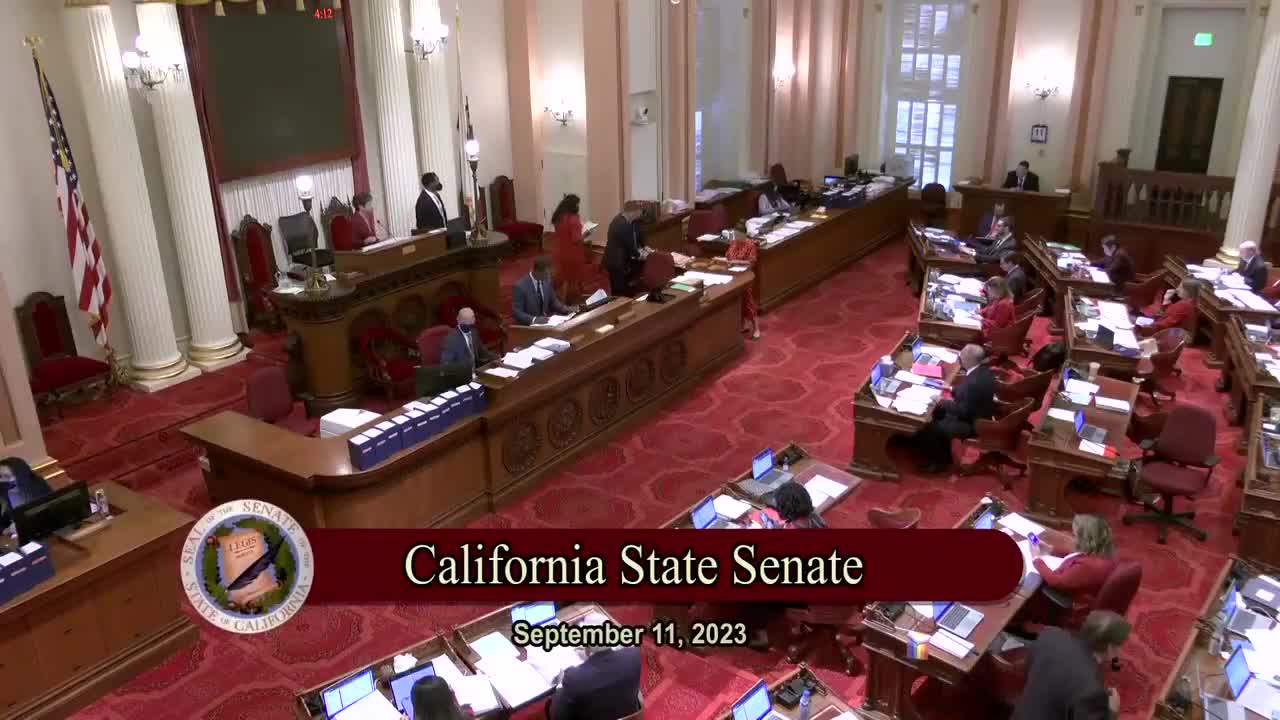
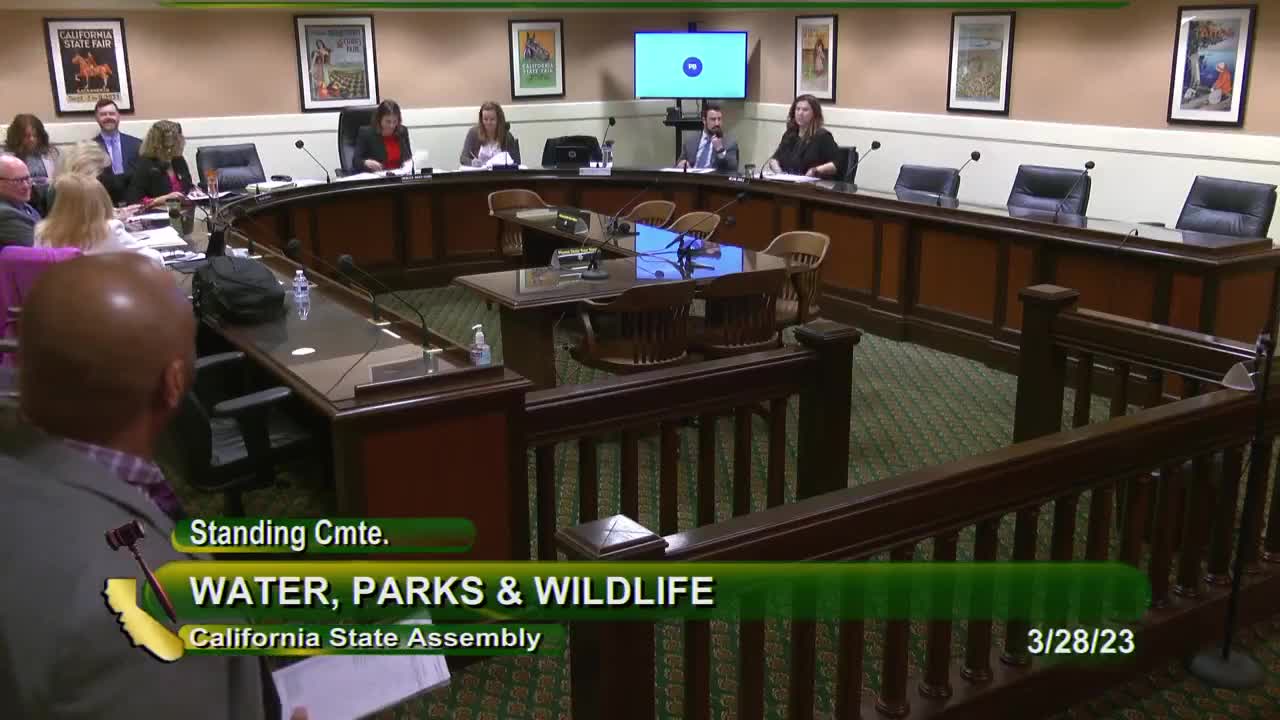
Bill Author

Bill Co-Author(s):