AB 1317: Unbundled parking.
- Session Year: 2023-2024
- House: Assembly
- Latest Version Date: 2023-10-11
Current Status:
Passed
(2023-10-11: Chaptered by Secretary of State - Chapter 757, Statutes of 2023.)
Introduced
In Committee
First Chamber
In Committee
Second Chamber
Enacted
What does this bill do?
The bill requires owners of qualifying buildings — 16+ units approved for occupancy on or after Jan 1, 2025, in Alameda, Fresno, Los Angeles, Riverside, Sacramento, San Bernardino, San Joaquin, Santa Clara, Shasta, and Ventura counties — to unbundle off‑street parking from rent, lease parking separately, and give tenants first refusal on parking built for their unit. Nonpayment of a separately billed parking fee cannot be used to evict a tenant, though an owner may cancel a tenant’s parking right if payment is more than 45 days late; units with individual garages and certain affordable housing projects are exempt.
The summary is provided by generative AI which can make mistakes. For original language, please view the details in the table below.
Existing law prohibits an owner of residential real property from, over the course of any 12-month period, increasing the gross rental rate for a dwelling or a unit more than 5% plus the percentage change in the cost of living, or 10%, whichever is lower, of the lowest gross rental rate charged for that dwelling or unit at any time during the 12 months before the effective date of the increase, as prescribed.
This bill would require the owner of qualifying residential property, as defined, that provides parking with the qualifying residential property to unbundle parking from the price of rent, as specified. The bill would define unbundled parking as the practice of selling or leasing parking spaces separate from the lease of the residential use. The bill would define qualifying residential property as any dwelling or unit that is intended for human habitation that (1) is issued a certificate of occupancy on or after January 1, 2025, (2) consists of 16 or more residential units, and (3) is located within the County of Alameda, Fresno, Los Angeles, Riverside, Sacramento, San Bernardino, San Joaquin, Santa Clara, Shasta, or Ventura. The bill would provide a tenant of a qualifying residential property with a right of first refusal to parking spaces built for their unit, as specified. The bill would prohibit a tenants failure to pay the parking fee of a separately leased parking agreement from forming the basis of any unlawful detainer action against the tenant. The bill would authorize a property owner, if a tenant fails to pay by the 45th day following the date payment is owed for a separately leased parking space, to revoke that tenants right to lease that parking spot. The bill would exempt certain properties from these provisions, including residential properties with individual garages that are functionally a part of the property and housing developments where 100% of the units, exclusive of any managers unit or units, are restricted as affordable housing for persons and families of low or moderate income.
This bill would make legislative findings and declarations as to the necessity of a special statute for the Counties of Alameda, Fresno, Los Angeles, Riverside, Sacramento, San Bernardino, San Joaquin, Santa Clara, Shasta, and Ventura.
Existing law prohibits an owner of residential real property from, over the course of any 12-month period, increasing the gross rental rate for a dwelling or a unit more than 5% plus the percentage change in the cost of living, or 10%, whichever is lower, of the lowest gross rental rate charged for that dwelling or unit at any time during the 12 months before the effective date of the increase, as prescribed.
This bill would require the owner of qualifying residential property, as defined, that provides parking with the qualifying residential property to unbundle parking from the price of rent, as specified. The bill would define unbundled parking as the practice of selling or leasing parking spaces separate from the lease of the residential use. The bill would define qualifying residential property as any dwelling or unit that is intended for human habitation that (1) is issued a certificate of occupancy on or after January 1, 2025, (2) consists of 16 or more residential units, and (3) is located within the County of Alameda, Fresno, Los Angeles, Riverside, Sacramento, San Bernardino, San Joaquin, Santa Clara, Shasta, or Ventura. The bill would provide a tenant of a qualifying residential property with a right of first refusal to parking spaces built for their unit, as specified. The bill would prohibit the breach a tenants failure to pay the parking fee of a separately leased parking agreement from forming the basis of any unlawful detainer action against the tenant. The bill would authorize a property owner, if a tenant fails to pay by the 30th 45th day following the date payment is owed for a separately leased parking space, to revoke that tenants right to lease that parking spot. The bill would exempt qualifying certain properties from these provisions, including residential properties with individual garages that are functionally a part of the property from these provisions. and housing developments where 100% of the units, exclusive of any managers unit or units, are restricted as affordable housing for persons and families of low or moderate income.
This bill would make legislative findings and declarations as to the necessity of a special statute for the Counties of Alameda, Fresno, Los Angeles, Riverside, Sacramento, San Bernardino, San Joaquin, Santa Clara, Shasta, and Ventura.
Existing law prohibits an owner of residential real property from, over the course of any 12-month period, increasing the gross rental rate for a dwelling or a unit more than 5% plus the percentage change in the cost of living, or 10%, whichever is lower, of the lowest gross rental rate charged for that dwelling or unit at any time during the 12 months before the effective date of the increase, as prescribed.
This bill would require the owner of qualifying residential property, as defined, that provides parking with the qualifying residential property to unbundle parking from the price of rent, as specified. The bill would define unbundled parking as the practice of selling or leasing parking spaces separate from the lease of the residential use. The bill would define qualifying residential property as any dwelling or unit that is intended for human habitation that (1) is issued a certificate of occupancy on or after January 1, 2025, (2) consists of 16 or more residential units, and (3) is located within the County of Alameda, Fresno, Los Angeles, Riverside, Sacramento, San Bernardino, San Joaquin, Santa Clara, Shasta, or Ventura. The bill would provide a tenant of a qualifying residential property with a right of first refusal to parking spaces built for their unit, as specified. The bill, for qualifying residential properties where unbundled parking is not possible, as provided, would require the owner of qualifying residential property to provide a tenant with an annual itemization of the market rate cost of parking, as defined, for the parking spaces that are included in their lease. bill would prohibit the breach of a separately leased parking agreement from forming the basis of any unlawful detainer action against the tenant. The bill would authorize a property owner, if a tenant fails to pay by the 30th day following the date payment is owed for a separately leased parking space, to revoke that tenants right to lease that parking spot. The bill would exempt qualifying residential properties with individual garages that are functionally a part of the property from these provisions.
This bill would make legislative findings and declarations as to the necessity of a special statute for the Counties of Alameda, Fresno, Los Angeles, Riverside, Sacramento, San Bernardino, San Joaquin, Santa Clara, Shasta, and Ventura.
Existing law prohibits an owner of residential real property from, over the course of any 12-month period, increasing the gross rental rate for a dwelling or a unit more than 5% plus the percentage change in the cost of living, or 10%, whichever is lower, of the lowest gross rental rate charged for that dwelling or unit at any time during the 12 months before the effective date of the increase, as prescribed.
This bill would require the owner of qualifying residential property property, as defined, that provides parking with a the qualifying residential property to unbundle parking from the price of rent, as specified. The bill would define unbundled parking as the practice of selling or leasing parking spaces separate from the lease of the residential use. The bill would define qualifying residential property as any dwelling or unit that is intended for human habitation that (1) is issued a certificate of occupancy on or after January 1, 2025, (2) consists of 16 or more residential units, and (3) is located within the County of Alameda, Fresno, Los Angeles, Riverside, Sacramento, San Bernardino, San Joaquin, Santa Clara, Shasta, or Ventura. The bill would provide a tenant of a qualifying residential property with a right of first refusal to parking spaces built for their unit, as specified. The bill, for qualifying residential properties where unbundled parking is not possible, as provided, would require an the owner of qualifying residential property to provide a tenant with an annual itemization of the market rate cost of parking, as defined, for the parking spaces that are included in their lease. The bill would exempt qualifying residential properties with individual garages that are functionally a part of the property from these provisions.
This bill, for purposes of the maximum rental rate increase restrictions described above, would require that the gross rental rate for a renewed lease or rental agreement commencing on or after January 1, 2024, be reduced by the amount of the market rate cost of parking before imposing any increase in the rental rate.Beginning January 1, 2025, this bill would require the Department of Housing and Community Development to annually adjust certain amounts of the market rate cost of parking, as specified, for inflation.This bill would specify that these provisions apply only to a lease or rental agreement for residential property that commences or is renewed on or after January 1, 2024.This bill would make legislative findings and declarations as to the necessity of a special statute for the Counties of Alameda, Fresno, Los Angeles, Riverside, Sacramento, San Bernardino, San Joaquin, Santa Clara, Shasta, and Ventura.
Existing law prohibits an owner of residential real property from, over the course of any 12-month period, increasing the gross rental rate for a dwelling or a unit more than 5% plus the percentage change in the cost of living, or 10%, whichever is lower, of the lowest gross rental rate charged for that dwelling or unit at any time during the 12 months before the effective date of the increase, as prescribed.
This bill would require the owner of residential real property that provides parking with a residential unit property to unbundle parking from the price of rent, as specified. The bill would define unbundled parking as the practice of selling or leasing parking spaces separate from the lease of the residential use. The bill would exempt residential units with individual garages that are functionally a part of the unit from these provisions. The bill would provide a tenant of a residential unit property with a right of first refusal to parking spaces built for their unit, as specified. The bill, for residential units properties where unbundled parking is not possible, would require an owner of residential property to annually provide a tenant with an annual itemization of the market rate cost of parking, as defined, for the parking spaces they have leased. that are included in their lease. The bill would exempt residential properties with individual garages that are functionally a part of the property from these provisions.
This bill would require and owner of a residential real property that is subject to these provisions and that does not unbundle parking as of January 1, 2024, to take prescribed action, including lowering the rental rate such that the rent of a parking space added to the rent of a dwelling unit is equal to the current cost of rent. The bill would specify that this requirement does not require an owner of residential real property to accept a lower total amount for the rental of a residential unit under a lease in effect as of January 1, 2024.This bill, for purposes of the maximum rental rate increase restrictions described above, would require that the gross rental rate for a renewed lease or rental agreement commencing on or after January 1, 2024, be reduced by the amount of the market rate cost of parking before imposing any increase in the rental rate.
Beginning January 1, 2025, this bill would require the Department of Housing and Community Development to annually adjust certain amounts of the market rate cost of parking, as specified, for inflation.
This bill would specify that these provisions apply only to a lease or rental agreement for residential property that commences or is renewed on or after January 1, 2024.
Existing law prohibits an owner of residential real property from, over the course of any 12-month period, increasing the gross rental rate for a dwelling or a unit more than 5% plus the percentage change in the cost of living, or 10%, whichever is lower, of the lowest gross rental rate charged for that dwelling or unit at any time during the 12 months before the effective date of the increase, as prescribed.
This bill would require the owner of residential real property that provides parking with a residential unit to unbundle parking from the price of rent, as specified. The bill would define unbundled parking as the practice of selling or leasing parking spaces separate from the lease of the residential use. The bill would exempt residential units with individual garages that are functionally a part of the unit from these provisions. The bill would provide a tenant of a residential unit a right of first refusal to parking spaces built for their unit, as specified. The bill, for residential units where unbundled parking is not possible, would require an owner of residential property to annually provide a tenant with an itemization of the market rate cost of parking, as defined, for the parking spaces they have leased.
This bill would require and owner of a residential real property that is subject to these provisions and that does not unbundle parking as of January 1, 2024, to take prescribed action, including lowering the rental rate such that the rent of a parking space added to the rent of a dwelling unit is equal to the current cost of rent. The bill would specify that this requirement does not require an owner of residential real property to accept a lower total amount for the rental of a residential unit under a lease in effect as of January 1, 2024.
Beginning January 1, 2025, this bill would require the Department of Housing and Community Development to annually adjust certain amounts of the market rate cost of parking, as specified, for inflation.
(a)If an owner of a qualifying residential property provides parking with the qualifying residential property, they shall unbundle parking from the price of rent.
(b)(1)Off-street parking accessory to a qualifying residential property shall not be included in any residential rental agreement and shall be subject to a rental agreement addendum or provided in a separate rental agreement.
(2)All off-street parking spaces shall be unbundled from the qualifying residential property for the life of the property.
(c)(1)A tenant of a qualifying residential property shall have the right of first refusal to parking spaces built for their property. Remaining residential unbundled parking spaces that are not leased to tenants of the residential dwelling may be leased by the owner of the qualifying residential property to other on-site users or to off-site residential users on a month-to-month basis.
(2)If there are unavailable parking spaces on the residential property upon the occupancy of a new tenant, and parking spaces are subsequently built for the residential dwelling or otherwise becomes available on the qualifying residential property, the new tenant shall receive a right of first refusal to an available parking space.
(d)(1)A tenants failure to pay the parking fee pursuant to a separately leased parking agreement shall not form the basis of any unlawful detainer action against the tenant.
(2)If a tenant fails to pay by the 45th day following the date payment is owed for a separately leased parking space, the property owner may revoke that tenants right to lease that parking spot.
(e)For purposes of this section:
(1)Owner of qualifying residential property includes any person, acting as principal or through an agent, having the right to offer qualifying residential property for rent, and includes a predecessor in interest to the owner.
(2)(A)Qualifying residential property means any dwelling or unit that is intended for human habitation that meets all of the following criteria:
(i)The property is issued a certificate of occupancy on or after January 1, 2025.
(ii)The property consists of 16 or more residential units.
(iii)The property is located in one of the following counties:
(I)Alameda.
(II)Fresno.
(III)Los Angeles.
(IV)Riverside.
(V)Sacramento.
(VI)San Bernardino.
(VII)San Joaquin.
(VIII)Santa Clara.
(IX)Shasta.
(X)Ventura.
(B)Qualifying residential property does not include any of the following:
(i)A residential property or unit with an individual garage that is functionally a part of the property or unit, including, but not limited to, townhouses and row houses.
(ii)A housing development of which 100 percent of its units, exclusive of any managers unit or units, are restricted by deed, regulatory restriction contained in an agreement with a governmental agency, or other recorded document as affordable housing for persons and families of low or moderate income, as defined in Section 50093 of the Health and Safety Code.
(iii)A housing development that receives low-income housing tax credits pursuant to Section 42 of the Internal Revenue Code (26 U.S.C. Sec. 42).
(iv)A housing development that is financed with tax-exempt bonds pursuant to a program administered by the California Housing Finance Agency.
(3)Unbundled parking means the practice of selling or leasing parking spaces separate from the lease of the residential property.
SEC. 2.The Legislature finds and declares that a special statute is necessary and that a general statute cannot be made applicable within the meaning of Section 16 of Article IV of the California Constitution because of the need to determine the potential benefits of unbundled parking on a limited basis before expanding the policy statewide.
(a)If an owner of a qualifying residential property provides parking with the qualifying residential property, they shall unbundle parking from the price of rent.
(b)(1)Off-street parking accessory to a qualifying residential property shall not be included in any residential rental agreement and shall be subject to a rental agreement addendum or provided in a separate rental agreement.
(2)All off-street parking spaces shall be unbundled from the qualifying residential property for the life of the property.
(c)(1)A tenant of a qualifying residential property shall have the right of first refusal to parking spaces built for their property. Remaining residential unbundled parking spaces that are not leased to tenants of the residential dwelling may be leased by the owner of the qualifying residential property to other on-site users or to off-site residential users on a month-to-month basis.
(2)If there are unavailable parking spaces on the residential property upon the occupancy of a new tenant, and parking spaces are subsequently built for the residential dwelling or otherwise becomes available on the qualifying residential property, the new tenant shall receive a right of first refusal to an available parking space.
(d)(1)Breach of A tenants failure to pay the parking fee pursuant to a separately leased parking agreement shall not form the basis of any unlawful detainer action against the tenant.
(2)If a tenant fails to pay by the 30th 45th day following the date payment is owed for a separately leased parking space, the property owner may revoke that tenants right to lease that parking spot.
(e)For purposes of this section:
(1)Owner of qualifying residential property includes any person, acting as principal or through an agent, having the right to offer qualifying residential property for rent, and includes a predecessor in interest to the owner.
(2)(A)Qualifying Qualifying residential property means any dwelling or unit that is intended for human habitation that meets all of the following criteria:
(i)The property is issued a certificate of occupancy on or after January 1, 2025.
(ii)The property consists of 16 or more residential units.
(iii)The property is located in one of the following counties:
(I)Alameda.
(II)Fresno.
(III)Los Angeles.
(IV)Riverside.
(V)Sacramento.
(VI)San Bernardino.
(VII)San Joaquin.
(VIII)Santa Clara.
(IX)Shasta.
(X)Ventura.
(B)Qualifying residential property does not include a any of the following:
(i)A residential property or unit with an individual garage that is functionally a part of the property or unit, including, but not limited to, townhouses and row houses.
(ii)A housing development of which 100 percent of its units, exclusive of any managers unit or units, are restricted by deed, regulatory restriction contained in an agreement with a governmental agency, or other recorded document as affordable housing for persons and families of low or moderate income, as defined in Section 50093 of the Health and Safety Code.
(iii)A housing development that receives low-income housing tax credits pursuant to Section 42 of the Internal Revenue Code (26 U.S.C. Sec. 42).
(iv)A housing development that is financed with tax-exempt bonds pursuant to a program administered by the California Housing Finance Agency.
(3)Unbundled parking means the practice of selling or leasing parking spaces separate from the lease of the residential property.
SEC. 2.The Legislature finds and declares that a special statute is necessary and that a general statute cannot be made applicable within the meaning of Section 16 of Article IV of the California Constitution because of the need to determine the potential benefits of unbundled parking on a limited basis before expanding the policy statewide.
(a)If an owner of a qualifying residential property provides parking with the qualifying residential property, they shall unbundle parking from the price of rent.
(b)(1)Off-street parking accessory to a qualifying residential property shall not be included in any residential rental agreement and shall be subject to a rental agreement addendum or provided in a separate rental agreement.
(2)All off-street parking spaces shall be unbundled from the qualifying residential property for the life of the property.
(c)(1)A tenant of a qualifying residential property shall have the right of first refusal to parking spaces built for their property. Remaining residential unbundled parking spaces that are not leased to tenants of the residential dwelling may be leased by the owner of the qualifying residential property to other on-site users or to off-site residential users on a month-to-month basis.
(2)If there is are unavailable parking spaces on the residential property upon the occupancy of a new tenant, and parking spaces are subsequently built for the residential dwelling or otherwise becomes available on the qualifying residential property, the new tenant shall receive a right of first refusal to an available parking space.
(d)For qualifying residential properties where unbundled parking is not possible, as determined by the owner of the qualifying residential property, a tenant shall be provided with an annual itemization of the market rate cost of parking for the parking spaces that are included in their lease. (e)For purposes of this section, all of the following apply with respect to the market rate cost of parking:(1)Market rate cost of parking means an amount that is no less than if the parking were to be obtained by an individual unaffiliated with the property on which parking is provided or by the owner of a qualifying residential property through a transaction with no special rate due to a property lease for the closest publicly available parking within one-quarter mile of the qualifying residential property. The owner of a qualifying residential property shall maintain appropriate evidence of its effort to establish the market rate cost of parking pursuant to this paragraph for at least four years.(2)If the market rate cost of parking cannot be established pursuant to paragraph (1), an amount that is the monthly or daily price for use of a parking space located within one-quarter mile of the qualifying residential property, as evidenced by a public offer, such as a printed or otherwise publicly displayed advertisement, or a listing including price, such as on a publicly accessible parking smartphone application, available for acceptance by a member of the public, for use of that parking space from within the previous six months. If the owner of qualifying residential property calculates the market rate cost of parking pursuant to this paragraph, the owner of qualifying residential property shall maintain appropriate evidence of the offer it relied upon, such as a physical copy or photograph of an advertisement or a screenshot showing availability and price within a parking smartphone application, for at least four years from the time of any cash allowance payment made based upon that offer.(3)If the market rate cost of parking cannot be established pursuant to paragraph (1) or (2), market rate cost of parking means the monthly price of the lowest priced transit serving within one-quarter mile of the site or fifty dollars ($50) per month, whichever is higher.(4)For purposes of this subdivision, free parking shall not be considered when determining the market rate cost of parking.(d)(1)Breach of a separately leased parking agreement shall not form the basis of any unlawful detainer action against the tenant.
(2)If a tenant fails to pay by the 30th day following the date payment is owed for a separately leased parking space, the property owner may revoke that tenants right to lease that parking spot.
(f)(e)For purposes of this section:
(1)Owner of qualifying residential property includes any person, acting as principal or through an agent, having the right to offer qualifying residential property for rent, and includes a predecessor in interest to the owner.
(2)(A)Qualifying residential property means any dwelling or unit that is intended for human habitation that meets all of the following criteria:
(i)The property is issued a certificate of occupancy on or after January 1, 2025.
(ii)The property consists of 16 or more residential units.
(iii)The property is located in one of the following counties:
(I)Alameda.
(II)Fresno.
(III)Los Angeles.
(IV)Riverside.
(V)Sacramento.
(VI)San Bernardino.
(VII)San Joaquin.
(VIII)Santa Clara.
(IX)Shasta.
(X)Ventura.
(B)Qualifying residential property does not include a residential property or unit with an individual garage that is functionally a part of the property or unit, including, but not limited to, townhouses and row houses.
(3)Unbundled parking means the practice of selling or leasing parking spaces separate from the lease of the residential property.
SEC. 2.The Legislature finds and declares that a special statute is necessary and that a general statute cannot be made applicable within the meaning of Section 16 of Article IV of the California Constitution because of the need to determine the potential benefits of unbundled parking on a limited basis before expanding the policy statewide.
(a)(1)If an owner of a qualifying residential property provides parking with the qualifying residential property, they shall unbundle parking from the price of rent.
(2)For purposes of Section 1947.12, the gross rental rate for a renewed lease or rental agreement commencing on or after January 1, 2024, shall be reduced by the amount of the market rate cost of parking before imposing any increase in the rental rate.(b)(1)Off-street parking accessory to leased a qualifying residential property shall not be included in any residential rental agreement and shall be subject to a rental agreement addendum or provided in a separate rental agreement.
(2)All off-street parking spaces shall be unbundled from the qualifying residential property for the life of the property.
(c)(1)A tenant of a qualifying residential property shall have the right of first refusal to parking spaces built for their property. Remaining residential unbundled parking spaces that are not leased to tenants of the residential dwelling may be leased by the owner of the qualifying residential property to other on-site users or to off-site residential users on a month-to-month basis.
(2)If there is unavailable parking spaces on the residential property upon the occupancy of a new tenant, and parking spaces are subsequently built for the residential dwelling or otherwise becomes available on the qualifying residential property, the new tenant shall receive a right of first refusal to an available parking space.
(d)For qualifying residential properties where unbundled parking is not possible, as determined by the owner of the qualifying residential property, a tenant shall be provided with an annual itemization of the market rate cost of parking for the parking spaces that are included in their lease.
(e)This section shall not apply to a residential property or unit with an individual garage that is functionally a part of the property or unit, including, but not limited to, townhouses and row houses. (f)(e)For purposes of this section, all of the following apply with respect to the market rate cost of parking:
(1)Market rate cost of parking means an amount that is no less than if the parking were to be obtained by an individual unaffiliated with the property on which parking is provided or by the owner of a qualifying residential property through a transaction with no special rate due to a property lease for the closest publicly available parking within one-quarter mile of the qualifying residential property. The owner of a qualifying residential property shall maintain appropriate evidence of its effort to establish the market rate cost of parking pursuant to this paragraph for at least four years.
(2)If the market rate cost of parking cannot be established pursuant to paragraph (1), an amount that is the monthly or daily price for use of a parking space located within one-quarter mile of the qualifying residential property, as evidenced by a public offer, such as a printed or otherwise publicly displayed advertisement, or a listing including price, such as on a publicly accessible parking smartphone application, available for acceptance by a member of the public, for use of that parking space from within the previous six months. If the owner of qualifying residential property calculates the market rate cost of parking pursuant to this paragraph, the owner of qualifying residential property shall maintain appropriate evidence of the offer it relied upon, such as a physical copy or photograph of an advertisement or a screenshot showing availability and price within a parking smartphone application, for at least four years from the time of any cash allowance payment made based upon that offer.
(3)(A)If the market rate cost of parking cannot be established pursuant to paragraph (1) or (2), market rate cost of parking means the monthly price of the lowest priced transit serving within one-quarter mile of the site or fifty dollars ($50) per month, whichever is higher.
(B)Beginning January 1, 2025, the Department of Housing and Community Development shall annually adjust the minimum market rate cost of parking established pursuant to subparagraph (A) for inflation based on the changes in the California Consumer Price Index.(4)For purposes of this subdivision, free parking shall not be considered when determining the market rate cost of parking.
(g)(f)For purposes of this section:
(1)Owner of qualifying residential property includes any person, acting as principal or through an agent, having the right to offer qualifying residential property for rent, and includes a predecessor in interest to the owner.
(2)Residential (A)Qualifying residential property means any dwelling or unit that is intended for human habitation. habitation that meets all of the following criteria:
(i)The property is issued a certificate of occupancy on or after January 1, 2025.
(ii)The property consists of 16 or more residential units.
(iii)The property is located in one of the following counties:
(I)Alameda.
(II)Fresno.
(III)Los Angeles.
(IV)Riverside.
(V)Sacramento.
(VI)San Bernardino.
(VII)San Joaquin.
(VIII)Santa Clara.
(IX)Shasta.
(X)Ventura.
(B)Qualifying residential property does not include a residential property or unit with an individual garage that is functionally a part of the property or unit, including, but not limited to, townhouses and row houses.
(3)Unbundled parking means the practice of selling or leasing parking spaces separate from the lease of the residential property.
(h)This section shall only apply to a lease or rental agreement for residential property that commences or is renewed on or after January 1, 2024.SEC. 2.The Legislature finds and declares that a special statute is necessary and that a general statute cannot be made applicable within the meaning of Section 16 of Article IV of the California Constitution because of the need to determine the potential benefits of unbundled parking on a limited basis before expanding the policy statewide.
REVISIONS: HeadingLine 2.(a)(1)If an owner of residential property provides parking with a the residential unit, property, they shall unbundle parking from the price of rent.
(2)For purposes of Section 1947.12, the gross rental rate for a renewed lease or rental agreement commencing on or after January 1, 2024, shall be reduced by the amount of the market rate cost of parking before imposing any increase in the rental rate.
(2)(b)(1)Off-street parking accessory to leased residential units property shall not be included in any residential unit rental agreement and shall be subject to a rental agreement addendum or provided in a separate rental agreement.
(3)Residential units with individual garages that are functionally a part of the unit, including, but not limited to, townhouses and row houses, shall be exempt from this section. (4)(2)All off-street parking spaces shall be unbundled from the residential units property for the life of the dwelling units. property.
(5)(c)(1)A tenant of a residential unit property shall have the right of first refusal to parking spaces built for their unit. property. Remaining residential unbundled parking spaces that are not leased to tenants of the residential dwelling may be leased to other on-site users or to off-site residential users on a month-to-month basis.
(6)(2)If there is unavailable parking spaces on the residential property upon the occupancy of the a new tenant, and parking spaces are subsequently built for the residential dwelling or otherwise becomes available on the residential property, the new tenant shall receive a right of first refusal to any an available parking space.
(b)(d)For residential units properties where unbundled parking is not possible, a tenant shall be provided annually with an annual itemization of the market rate cost of parking for the parking spaces they have leased. that are included in their lease.
(c)(1)An owner of a residential real property that is subject to this section and that does not unbundle parking as of January 1, 2024, shall comply with either of the following:(A)Lower the rental rate such that the rent of a parking space added to the rent of a dwelling unit is equal to the current cost of rent.(B)Calculate the initial gross rental rate pursuant Section 1947.12 of the Civil Code by using the current cost of rent less the market rate cost of parking.(2)This subdivision does not require an owner of residential real property to accept a lower total amount for the rental of a residential unit under a lease in effect as of January 1, 2024.(e)This section shall not apply to a residential property or unit with an individual garage that is functionally a part of the property or unit, including, but not limited to, townhouses and row houses.
(d)(f)For purposes of this section, all of the following apply with respect to the market rate cost of parking:
(1)Market rate cost of parking means an amount that is no less than if the parking were to be obtained by an individual unaffiliated with the property on which parking is provided or by the owner of residential property through a transaction with no special rate due to a property lease for the closest publicly available parking within one-quarter mile of the residential unit. property. The owner of residential property shall maintain appropriate evidence of its effort to establish the market rate cost of parking pursuant to this paragraph for at least four years.
(2)If the amount market rate cost of parking cannot be established pursuant to paragraph (1), an amount that is the monthly or daily price for use of a parking space located within one-quarter mile of the residential unit, property, as evidenced by a public offer, such as a printed or otherwise publicly displayed advertisement, or a listing including price, such as on a publicly accessible parking smartphone application, available for acceptance by a member of the public, for use of that parking space from within the previous six months. If the owner of residential property calculates the market rate cost of parking pursuant to this paragraph, the owner of residential property shall maintain appropriate evidence of the offer it relied upon, such as a physical copy or photograph of an advertisement or a screenshot showing availability and price within a parking smartphone application, for at least four years from the time of any cash allowance payment made based upon that offer.
(3)Notwithstanding paragraphs (1) and (2), market rate cost of parking means either of the following under the specified circumstances:(A)If the amount determined pursuant to paragraph (1) is valued at over three hundred fifty dollars ($350) per month, market rate cost of parking means three hundred fifty dollars ($350) per month.(B)(3)(A)If the amount market rate cost of parking cannot be established pursuant to paragraph (1), paragraph (1) or (2), market rate cost of parking means the monthly price of the lowest priced transit serving within one-quarter mile of the site or fifty dollars ($50) per month, whichever is higher.
(B)Beginning January 1, 2025, the Department of Housing and Community Development shall annually adjust the minimum market rate cost of parking established pursuant to subparagraph (A) for inflation based on the changes in the California Consumer Price Index.
(4)For purposes of this subdivision, free parking shall not be considered when determining the market rate cost of parking.
(e)Beginning January 1, 2025, the Department of Housing and Community Development shall annually adjust the amounts in paragraph (3) of subdivision (d) for inflation based on the changes in the California Consumer Price Index. (f)(g)For purposes of this section, both of the following terms apply: section:
(1)Owner of residential property includes any person, acting as principal or through an agent, having the right to offer residential real property for rent, and includes a predecessor in interest to the owner.
(2)Residential property means any dwelling or unit that is intended for human habitation.
(2)(3)Unbundled parking means the practice of selling or leasing parking spaces separate from the lease of the residential use. property.
(h)This section shall only apply to a lease or rental agreement for residential property that commences or is renewed on or after January 1, 2024.
(a)(1)If an owner of residential property provides parking with a residential unit, they shall unbundle parking from the price of rent.
(2)Off-street parking accessory to leased residential units shall not be included in any residential unit rental agreement and shall be subject to a rental agreement addendum or in a separate rental agreement.
(3)Residential units with individual garages that are functionally a part of the unit, including, but not limited to, townhouses and row houses, shall be exempt from this section.
(4)All off-street parking spaces shall be unbundled from the residential units for the life of the dwelling units.
(5)A tenant of a residential unit shall have the right of first refusal to parking spaces built for their unit. Remaining residential unbundled parking spaces that are not leased to tenants of the residential dwelling may be leased to other on-site users or to off-site residential users on a month-to-month basis.
(6)If there is unavailable parking spaces on the residential property upon the occupancy of the new tenant, and parking spaces are subsequently built for the residential dwelling or otherwise becomes available on the residential property, the new tenant shall receive a right of first refusal to any parking space.
(b)For residential units where unbundled parking is not possible, a tenant shall be provided annually with an itemization of the market rate cost of parking for the parking spaces they have leased.
(c)(1)An owner of a residential real property that is subject to this section and that does not unbundle parking as of January 1, 2024, shall comply with either of the following:
(A)Lower the rental rate such that the rent of a parking space added to the rent of a dwelling unit is equal to the current cost of rent.
(B)Calculate the initial gross rental rate pursuant Section 1947.12 of the Civil Code by using the current cost of rent less the market rate cost of parking.
(2)This subdivision does not require an owner of residential real property to accept a lower total amount for the rental of a residential unit under a lease in effect as of January 1, 2024.
(d)For purposes of this section, all of the following apply with respect to the market rate cost of parking:
(1)Market rate cost of parking means an amount that is no less than if the parking were to be obtained by an individual unaffiliated with the property on which parking is provided or by the owner of residential property through a transaction with no special rate due to a property lease for the closest publicly available parking within one-quarter mile of the residential unit. The owner of residential property shall maintain appropriate evidence of its effort to establish the market rate cost of parking pursuant to this paragraph for at least four years.
(2)If the amount cannot be established pursuant to paragraph (1), an amount that is the monthly or daily price for use of a parking space located within one-quarter mile of the residential unit, as evidenced by a public offer, such as a printed or otherwise publicly displayed advertisement, or a listing including price, such as on a publicly accessible parking smartphone application, available for acceptance by a member of the public, for use of that parking space from within the previous six months. If the owner of residential property calculates the market rate cost of parking pursuant to this paragraph, the owner of residential property shall maintain appropriate evidence of the offer it relied upon, such as a physical copy or photograph of an advertisement or a screenshot showing availability and price within a parking smartphone application, for at least four years from the time of any cash allowance payment made based upon that offer.
(3)Notwithstanding paragraphs (1) and (2), market rate cost of parking means either of the following under the specified circumstances:
(A)If the amount determined pursuant to paragraph (1) is valued at over three hundred fifty dollars ($350) per month, market rate cost of parking means three hundred fifty dollars ($350) per month.
(B)If the amount cannot be established pursuant to paragraph (1), market rate cost of parking means the monthly price of the lowest priced transit serving within one-quarter mile of the site or fifty dollars ($50) per month, whichever is higher.
(4)For purposes of this subdivision, free parking shall not be considered when determining the market rate cost of parking.
(e)Beginning January 1, 2025, the Department of Housing and Community Development shall annually adjust the amounts in paragraph (3) of subdivision (d) for inflation based on the changes in the California Consumer Price Index.
(f)For purposes of this section, both of the following terms apply:
(1)Owner of residential property includes any person, acting as principal or through an agent, having the right to offer residential real property for rent, and includes a predecessor in interest to the owner.
(2)Unbundled parking means the practice of selling or leasing parking spaces separate from the lease of the residential use.
|
Date
|
Status
|
|---|---|
| Oct 11, 2023 | Chaptered by Secretary of State - Chapter 757, Statutes of 2023. |
| Oct 11, 2023 | Approved by the Governor. |
| Sep 22, 2023 | Enrolled and presented to the Governor at 11:30 a.m. |
| Sep 14, 2023 | Senate amendments concurred in. To Engrossing and Enrolling. (Ayes 56. Noes 18. Page 3590.). |
| Sep 14, 2023 | In Assembly. Concurrence in Senate amendments pending. |
| Sep 14, 2023 | Read third time. Passed. Ordered to the Assembly. (Ayes 27. Noes 12. Page 2779.). |
| Sep 11, 2023 | Read second time. Ordered to third reading. |
| Sep 8, 2023 | Read third time and amended. Ordered to second reading. |
| Jul 10, 2023 | Read second time. Ordered to third reading. |
| Jul 6, 2023 | From committee: Do pass. (Ayes 8. Noes 2.) (July 6). |
| Jun 23, 2023 | From committee chair, with author's amendments: Amend, and re-refer to committee. Read second time, amended, and re-referred to Com. on JUD. |
| Jun 14, 2023 | Referred to Com. on JUD. |
| Jun 1, 2023 | In Senate. Read first time. To Com. on RLS. for assignment. |
| May 31, 2023 | Read third time. Passed. Ordered to the Senate. (Ayes 54. Noes 18. Page 1951.) |
| Apr 26, 2023 | Read second time. Ordered to third reading. |
| Apr 25, 2023 | From committee: Do pass. (Ayes 8. Noes 3.) (April 25). |
| Apr 25, 2023 | Coauthors revised. |
| Apr 18, 2023 | Re-referred to Com. on JUD. |
| Apr 17, 2023 | From committee chair, with author's amendments: Amend, and re-refer to Com. on JUD. Read second time and amended. |
| Mar 17, 2023 | In committee: Set, first hearing. Hearing canceled at the request of author. |
| Mar 14, 2023 | Re-referred to Com. on JUD. |
| Mar 13, 2023 | From committee chair, with author's amendments: Amend, and re-refer to Com. on JUD. Read second time and amended. |
| Mar 2, 2023 | Referred to Com. on JUD. |
| Feb 17, 2023 | From printer. May be heard in committee March 19. |
| Feb 16, 2023 | Read first time. To print. |
|
Date
|
Description
|
Location
|
Votes
|
|
|---|---|---|---|---|
| Sep 14, 2023 | AB 1317 Wendy Carrillo Concurrence in Senate Amendments | Assembly Floor |
Passed |
|
| Sep 14, 2023 | Assembly 3rd Reading AB1317 Wendy Carrillo et al By Durazo | Senate Floor |
Passed |
|
| Jul 6, 2023 | Do pass | Senate Standing Committee on Judiciary |
Passed |
|
| May 31, 2023 | AB 1317 Wendy Carrillo Assembly Third Reading | Assembly Floor |
Passed |
|
| Apr 25, 2023 | Do pass. | Assembly Standing Committee on Judiciary |
Passed |
This list shows positions taken on this bill by organizations on the date displayed, which is linked to the original source.
Positions by individuals are not included.
|
Organization
|
Position
|
Date
|
|---|---|---|
| Abundant Housing LA | ** Support | |
| Active San Gabriel Valley | ** Support | |
| Affordable Housing Management Association-Pacific Southwest | ** Against | |
| Apartment Association of Greater Los Angeles | ** Against | |
| Apartment Association Of Orange County | ** Against | |
| Berkeley Property Owners Association | ** Against | |
| CalBike | ** Support | |
| California Apartment Association | * Against Unless Amend | Apr 25, 2023 |
| California Association Of Realtors | * Support | Apr 25, 2023 |
| California community builders | ** Support | |
| California Rental Housing Association | ** Against | |
| California YIMBY | ** Support | |
| Circulate San Diego | ** Support | |
| City of Alameda | ** Support | |
| City Of Los Angeles | ** Support | |
| City of Santa Monica | ** Support | |
| Climate Resolve | ** Support | |
| Coalition For Clean Air | ** Support | |
| Costa Mesa Alliance for Better Streets | ** Support | |
| Council Member Zach Hilton, City of Gilroy | ** Support | |
| Culver City Democratic Club | ** Support | |
| East Bay for Everyone | ** Support | |
| East Bay Rental Housing Association | ** Against | |
| East Bay YIMBY | ** Support | |
| Greenbelt Alliance | ** Support | |
| Grow the Richmond | ** Support | |
| Happy City Coalition | ** Support | |
| How to ADU | ** Support | |
| Lisc San Diego | ** Support | |
| Livable California | ** Against | |
| Marin County Bicycle Coalition | ** Support | |
| Mission Street Neighbors | ** Against | |
| Mountain View YIMBY | ** Support | |
| Move Santa Barbara County | ** Support | |
| Napa-Solano for Everyone | ** Support | |
| Nor Cal Rental Property Association | ** Against | |
| North Valley Property Owners Association | ** Against | |
| Northern Neighbors | ** Support | |
| Norwalk Unidas | ** Support | |
| Peninsula for Everyone | ** Support | |
| peninsula interfaith climate action | ** Support | |
| People For Housing Orange County | ** Support | |
| Place Initiative | ** Support | |
| Progress Noe Valley | ** Support | |
| San Diego County Bicycle Coalition | ** Support | |
| San Francisco Yimby | ** Support | |
| Santa Ana Active Streets | ** Support | |
| Santa Barbara Rental Property Association | ** Against | |
| Santa Cruz Yimby | ** Support | |
| Santa Rosa Yimby | ** Support | |
| Seamless Bay Area | ** Support | |
| Silicon Valley Bicycle Coalition | ** Support | |
| SLO County YIMBY | ** Support | |
| Small Property Owners of San Francisco | ** Against | |
| South Bay Yimby | ** Support | |
| Southern California Rental Housing Association | ** Against | |
| Southside Forward | ** Support | |
| SPUR | ** Support | |
| Streets Are For Everyone | ** Support | |
| Streets for All | ** Support | |
| Streets for People | ** Support | |
| Telegraph for People | ** Support | |
| Transform | ** Support | |
| Urban Environmentalists | ** Support | |
| Ventura County YIMBY | ** Support | |
| Yimby Action | ** Support |
CONCURRENCE IN SENATE AMENDMENTS
CSA1 Bill Id:AB 1317
Author:(Wendy Carrillo)
As Amended Ver:September 8, 2023
Majority vote
SUMMARY
Adopts a pilot program that requires property owners of new multi-family residential properties in certain counties to unbundle the cost of parking from the cost of the housing unit.
Major Provisions
- Requires an owner of a residential property that provides parking with the property to unbundle the cost of parking from the price of rent, if the property meets the following requirements:
- The property is issued a certificate of occupancy on or after January 1, 2025.
- The property consists of 16 or more residential units.
- The property is located in one of the following counties:
- Alameda
- Fresno
- Los Angeles
- Riverside
- Sacramento
- San Bernardino
- San Joaquin
- Santa Clara
- Shasta
- Ventura
- Prohibits an agreement to rent out a parking space in a property described in 1), above, from being included as a term of the housing rental agreement, and requires that it be provided as a rental housing agreement addendum or a separate rental agreement.
- Establishes that a parking space that is unbundled from a property described in 1), above, is to remain unbundled for the life of the property.
- Establishes that a tenant in a property described in 1), above, has a right of first refusal to parking spaces built for their property.
- Establishes that any remaining residential unbundled parking spaces that are not leased to tenants of the residential dwelling may be leased by the owner of the property to other on- or offsite users on a month-to-month basis.
- Establishes that if there is unavailable parking spaces upon the occupancy of a new tenant, that tenant receives a right of first refusal to any parking spaces that may later become available.
- Provides that a tenant's failure to pay the parking fee pursuant to 1), above, does not form the basis of any unlawful detainer action against the tenant.
- Provides that if the tenant fails to pay the parking fee by the 45th day following the date payment is owed for a separately leased parking space, the property owner may revoke that tenant's right to lease that parking spot.
- Establishes that a residential property that would otherwise be subject to 1), above, does not include the following types of properties:
- A residential property or unit with an individual garage that is functionally a part of the property or unit, including, but not limited to, townhouses.
- A housing development of which 100 percent of its units, exclusive of any manager's unit or units, are restricted by deed, regulatory restriction contained in an agreement with a governmental agency, or other recorded document as affordable housing for persons and families of low or moderate income, as defined.
- A housing development that receives low-income housing tax credits, as specified.
- A housing development that is financed with tax-exempt bonds pursuant to a program administered by the California Housing Finance Agency.
- Declares that a special statute, adopting the provisions in ten counties, is necessary because of the need to determine the potential benefits of unbundled parking on a limited basis before expanding the policy statewide.
Senate Amendments
Clarify procedures following a violation and establish that violation of the parking agreement cannot form the basis of an unlawful detainer action. Provide for certain exempted properties.
COMMENTS
Unbundled parking separates housing costs from parking costs, and allows residents to choose the number of parking spaces they wish to use and pay accordingly. Additionally, if residents decide to forego car ownership, or reduce their personal vehicle ownership, they can also save money by giving up their parking spaces. This incentivizes households to live car-free, or give up their second vehicle. It also ensures that those who choose not to own a personal vehicle, or cannot afford one, are not being charged for a parking spot that they do not use.
This bill would "unbundle" the cost of parking from rent in certain situations. This bill seeks to introduce the invisible hand of the market to the world of residential parking. By unbundling parking from housing, the market assigns the parking space its proper value. A tenant maintains a right of first refusal to the parking spot on their property, but if they choose not to exercise it, they do not have to pay for it (thereby reducing their total rent) and the space is made available to the open market. This model is a significant shift from the current model for residential parking – bundled parking included with the price of the rental.
This bill requires property owners of multi-family properties of 16 or more units to unbundle the cost of the parking space from the cost of the renting the housing unit. This requirement is imposed only on properties where on-site parking is available. While this bill could potentially increase the total amount paid in rent and parking for tenants with private vehicles who need on-site parking spots, it would not increase – and likely lower – the actual price paid by tenants who do not use on-site parking.
The geographically-diverse pilot program conceived by the bill will help determine whether a statewide model is appropriate. This bill is intended to be a pilot program to collect valuable data and insights into the effectiveness of unbundling parking in different areas of California. The pilot counties were chosen because of their geographic diversity. Originally conceived as a statewide program, this bill is now designed as a geographically diverse pilot program with counties spanning the state, and encompassing both urban and rural counties. Data collected from the program could be used to inform future policy decisions and potentially lead to statewide implementation of unbundling parking as a common practice. The Committee is unaware of any California county that requires unbundled residential parking, but notes that both the City of San Francisco and the City of Santa Monica have adopted unbundling parking requirements in their local ordinances.
Opposition arguments have been largely addressed by the current bill in print. The vast majority of the concerns raised by the opposition appear to have been addressed by recent amendments that are incorporated into this bill in print. This bill does not impose any mandates on existing properties – only properties with certificates of occupancy dated after January 1, 2025, will need to comply with this unbundling mandate. This obviates concerns about the mandate's interplay with rent control requirements on existing properties and potential adverse consequences of imposing such requirements where tenants have an expectation that "free" parking is provided as an amenity. This bill is narrowly tailored to properties that have 16 or more units. By limiting its reach to larger properties, the bill obviates concerns regarding small property owners' ability to comply.
According to the Author
When parking is 'free,' people bear the cost regardless of whether they use the parking. Between the high construction costs, the annual maintenance required, and the property taxes levied, the true cost of 'free parking' is hidden from tenants. By requiring landlords to price and offer detached off-street parking separate from the rental unit, this bill would reveal the true costs to tenants and help them make informed decisions. This measure would allow tenants in qualifying residential properties to purchase parking only when needed, increasing housing affordability while reducing traffic congestion, car dependency, and carbon emissions.
Arguments in Support
A coalition of housing and public transportation advocacy organizations, including Streets for All, this bill's sponsor, support this bill, writing as follows in a joint letter:
AB 1317 would require off-street parking spaces to be leased separately from the price of housing in 10 counties across the state and in residential properties with 16 or more units on or after 2025. This measure would allow tenants living in qualifying residential properties to purchase parking only when needed, reducing car dependence and lowering carbon emissions.
The mayor of Santa Monica, a city that has adopted an unbundled parking program, writes in support:
In California, 6.8% of households have no vehicle and 30.6% have only one vehicle. In addition, bundled parking can increase the monthly costs of rent by about 17%. The prevalence of bundled parking requires that housing-insecure tenants pay for the oversupply of existing parking. AB 1317 would require landlords to separate the cost of parking from the cost of rent. This would allow tenants without a car to save money on rent while maintaining the option of parking for those tenants who may want it. The City of Santa Monica is dedicated to reducing traffic, improving air quality, and promoting sustainable travel in the City while ensuring that housing remains affordable for the many tenants in our City.
Arguments in Opposition
A coalition of statewide and regional housing associations are opposed to this bill, stating that it would place onerous burdens on already burdened rental property providers:
Unfortunately, this would create a complicated and unnecessary administrative burden on rental property providers in the state. There are many properties, especially the smaller buildings, that would lose money if tenants stop paying for the parking spot associated with their unit. These smaller property owners have been especially burdened over the past several years and additional financial strain is only going to further harm them. The provisions in the bill requiring that owners provide a tenant with a right of first refusal to parking spaces and also requiring an owner of residential property to annually provide a tenant with an "annual itemization of the market rate cost of parking" are overly burdensome and would create unnecessary, complicated administrative tasks, particularly on smaller owners. In addition, renters who opt-out of paying for parking will inevitably park on streets, which in some jurisdictions have parking restrictions that prohibit overnight or restrict daytime parking, and have limited parking availability within close proximity of the rental property.
FISCAL COMMENTS
None
VOTES:
ASM JUDICIARY: 8-3-0
YES: Maienschein, Connolly, Haney, Kalra, Pacheco, Papan, Reyes, Robert Rivas
NO: Essayli, Dixon, Sanchez
ASSEMBLY FLOOR: 54-18-8
YES: Addis, Aguiar-Curry, Alvarez, Arambula, Bains, Bauer-Kahan, Bennett, Berman, Bonta, Bryan, Calderon, Juan Carrillo, Wendy Carrillo, Cervantes, Connolly, Mike Fong, Friedman, Gabriel, Garcia, Gipson, Grayson, Haney, Hart, Holden, Jackson, Jones-Sawyer, Kalra, Lee, Low, Lowenthal, McCarty, McKinnor, Muratsuchi, Stephanie Nguyen, Ortega, Pacheco, Papan, Pellerin, Petrie-Norris, Reyes, Luz Rivas, Robert Rivas, Rodriguez, Santiago, Schiavo, Ting, Villapudua, Ward, Weber, Wicks, Wilson, Wood, Zbur, Rendon
NO: Alanis, Chen, Megan Dahle, Davies, Dixon, Essayli, Flora, Vince Fong, Gallagher, Hoover, Lackey, Mathis, Jim Patterson, Joe Patterson, Sanchez, Ta, Waldron, Wallis
ABS, ABST OR NV: Boerner, Irwin, Maienschein, Quirk-Silva, Ramos, Blanca Rubio, Soria, Valencia
UPDATED
VERSION: September 8, 2023
CONSULTANT: Shiran Zohar / JUD. / (916) 319-2334 FN: 0000241 FN:
SENATE RULES COMMITTEE Office of Senate Floor Analyses (916) 651-1520 Fax: (916) 327-4478 | AB 1317 |
THIRD READING
Bill No: AB 1317
Author: Wendy Carrillo (D), et al.
Amended: 9/8/23 in Senate
Vote: 21
SENATE JUDICIARY COMMITTEE: 8-2, 7/6/23
AYES: Umberg, Allen, Ashby, Durazo, Laird, Min, Stern, Wiener
NOES: Wilk, Niello
NO VOTE RECORDED: Caballero
ASSEMBLY FLOOR: 54-18, 5/31/23 - See last page for vote
SUBJECT: Unbundled parking
SOURCE: SPUR
Streets for All
DIGEST:
This bill requires property owners of “qualifying residential properties,” new multi-family properties in 10 specified counties, to unbundle the cost of parking from the cost of the rent.
Senate Floor Amendments of 9/8/23 detail the legal remedies for a tenant’s failure to pay the parking fee and exempt specified affordable housing properties.
ANALYSIS:
Existing law:
- Requires a multifamily residential project certified for streamlining pursuant to the California Environmental Quality Act on an infill site to provide unbundled parking, such that private vehicle parking spaces are priced and rented or purchased separately from dwelling units. (Pub. Res. Code § 21184.5.)
- Prohibits a public agency from imposing or enforcing any minimum parking requirement on a residential, commercial, or other development project if the project is located within one-half mile of public transit. (Gov. Code § 65863.2.)
This bill:
- Requires an owner of a qualifying residential property, if the owner provides parking with the property, to unbundle parking from the price of rent.
- Requires all off-street parking spaces be unbundled from the qualifying residential property for the life of the property.
- Defines ”qualifying residential property” as any dwelling or unit that is intended for human habitation that meets all of the following criteria:
- the property is issued a certificate of occupancy on or after January 1, 2025;
- the property consists of 16 or more residential units; and
- the property is located in one of the following counties:
- Alameda
- Fresno
- Los Angeles
- Riverside
- Sacramento
- San Bernardino
- San Joaquin
- Santa Clara
- Shasta
- Ventura
- Excludes a residential property or unit with an individual garage that is functionally a part of the property or unit, including townhouses and row houses; specified low-income housing developments; and developments financed with tax-exempt bonds pursuant to programs administered by the California Housing Finance Agency.
- Defines “owner of qualifying residential property” as any person, acting as principal or through an agent, having the right to offer qualifying residential property for rent, and includes a predecessor in interest to the owner. “Unbundled parking” means the practice of selling or leasing parking spaces separate from the lease of the residential property.
- Prohibits off-street parking accessory to a qualifying residential property from being included in any residential rental agreement and requires it to be subject to a rental agreement addendum or provided in a separate rental agreement.
- Provides a tenant of a qualifying residential property the right of first refusal to parking spaces built for their property. Authorizes remaining residential unbundled parking spaces to be leased by the owner to other on-site users or to off-site residential users on a month-to-month basis. Spaces built subsequent to move in shall first be offered to tenants.
- Prohibits a tenant’s failure to pay the parking fee pursuant to a separately leased parking agreement from forming the basis of any unlawful detainer action against the tenant. If a tenant fails to pay by the 45th day following the date payment is owed for a separately leased parking space, the property owner may revoke that tenant’s right to lease that parking spot.
Background
Parking spaces included in residential properties’ rent hide the true cost of parking and create other economic and environmental impacts. Concerns have arisen that on-site parking takes up valuable land that could otherwise be used for more housing, results in overreliance on motor vehicles, and creates an inflation in housing costs that represents a barrier to housing for low-income tenants.
This bill seeks to address these issues by requiring “unbundled parking.” Property owners of multi-family properties with 16 units or more that are issued a certificate of occupancy on or after January 1, 2025, in 10 specified counties across the state, are required to unbundle the cost of parking from the rent of the residential unit. This bill requires that tenants be given the right of first refusal to any parking spaces available.
This bill is sponsored by SPUR and Streets for All and is supported by numerous public transportation and housing advocates, including California YIMBY. It is opposed by Livable California.
Comments
According to the author:
Property owners often provide ‘free parking’ as part of a lease. However, when parking is ‘free,’ people bear the cost regardless of whether they use the parking. Furthermore, ‘free parking’ disincentives public transit use and promotes automobile reliance. According to UCLA, households with bundled parking drive 3,800 miles more, spend $580 more on gasoline, and emit an additional metric ton of carbon dioxide annually. AB 1317 would allow tenants in qualifying residential properties to purchase parking as an optional expense, increasing housing affordability while reducing traffic congestion, car dependency, and carbon emissions. This bill is a well-tailored and cost-effective approach to alleviating the State’s dual housing and climate crisis, all while giving tenants greater flexibility and promoting equity.
The author points to a series of studies that support the conclusion that bundled parking comes at a cost to both housing affordability and environmental impacts.
An article in the Journal of the American Planning Association discussed the quantitative evidence, which suggests a price effect of unbundled parking:
Converted back into dollars, the statistically significant coefficients suggest that bundled parking is associated with a $22 per square foot increase in the asking price of a unit, other variables held constant. An apartment with bundled parking is associated with $200 more in asking rent, and bundled parking with a condo is associated with a $43,000 increase in asking price.[1]
Another study explores the hidden costs of bundled parking in major cities across the country; it explains its methodology and conclusion:
The relationship between parking and housing prices, however, remains poorly understood. We use national American Housing Survey data and hedonic regression techniques to investigate this relationship. We find that the cost of garage parking to renter households is approximately $1,700 per year, or an additional 17% of a housing unit’s rent. In addition to the magnitude of this transport cost burden being effectively hidden in housing prices, the lack of rental housing without bundled parking imposes a steep cost on carless renters— commonly the lowest income households—who may be paying for parking that they do not need or want. We estimate the direct deadweight loss for carless renters to be $440 million annually. We conclude by suggesting cities reduce or eliminate minimum parking requirements, and allow and encourage landlords to unbundle parking costs from housing costs.[2]
This bill addresses these issues by decoupling rents for specified units from any associated parking spaces. This bill prohibits an owner from a “qualifying residential property” from bundling parking with the price of rent. However, it also ensures that any available spaces are first provided to tenants of the property. If spaces are subsequently made available, tenants are required to be provided the right of first refusal.
The definition of “qualifying residential property” substantially limits the impact of this bill on landlords. First, this bill only applies to larger properties with at least 16 units. This prevents any hardships on smaller property owners.
Second, qualifying properties are only new buildings with certificates of occupancy issued January 1, 2025 or later. This prevents any compliance issues for existing rental properties and provides ample runway for owners to prepare for the unbundling. It also excludes specified affordable housing developments.
Finally, this bill only applies to such properties located in the following 10 counties:
- Alameda
- Fresno
- Los Angeles
- Riverside
- Sacramento
- San Bernardino
- San Joaquin
- Santa Clara
- Shasta
- Ventura
This will allow the Legislature to assess whether this approach is appropriate elsewhere in the state.
FISCAL EFFECT: Appropriation: No Fiscal Com.: No Local: No
SUPPORT: (Verified 9/8/23)
SPUR (co-source)
Streets For All (co-source)
Abundant Housing LA
Active San Gabriel Valley
CalBike
California Community Builders
California YIMBY
Circulate San Diego
City of Alameda
City of Los Angeles
City of Santa Monica
Climate Resolve
Coalition for Clean Air
Costa Mesa Alliance for Better Streets
Councilmember Zach Hilton, City of Gilroy
Culver City Democratic Club
East Bay for Everyone
East Bay YIMBY
Greenbelt Alliance
Grow the Richmond
Happy City Coalition
How to ADU
LISC San Diego
Marin County Bicycle Coalition
Mountain View YIMBY
MOVE Santa Barbara County
Napa-Solano for Everyone
Northern Neighbors
Norwalk Unidas
Peninsula for Everyone
Peninsula Interfaith Climate Action
People for Housing Orange County
PLACE Initiative
Progress Noe Valley
San Diego County Bicycle Coalition
San Francisco YIMBY
Santa Ana Active Streets
Santa Cruz YIMBY
Santa Rosa YIMBY
Seamless Bay Area
Silicon Valley Bicycle Coalition
SLO County YIMBY
South Bay YIMBY
Southside Forward
Streets Are For Everyone
Streets for People
Telegraph for People
TransForm
Urban Environmentalists
Ventura County YIMBY
YIMBY Action
OPPOSITION: (Verified 9/8/23)
Livable California
ARGUMENTS IN SUPPORT: California YIMBY argues:
In recent years, California has prioritized parking reform policies. In 2017 the legislature passed SB 35, which exempts select projects streamlined from parking requirements. Last year, we were proud to sponsor AB 2097 (Friedman, 2022), which prohibited local governments from imposing minimum parking requirements near transit. Despite these efforts, the prevalence of bundled parking requires that housing-insecure tenants pay for the oversupply of existing parking.
Between the high construction costs, the annual maintenance required, and the property taxes levied, the true cost of “free parking” is hidden from tenants. By requiring landlords to price and offer detached off-street parking separate from the rental unit, this bill would reveal the true costs to tenants and help them make informed decisions.
ARGUMENTS IN OPPOSITION: Livable California writes:
This bill provides that any owner of specified new residential properties must unbundle parking from the price of rent and create separate leases or addendums for the parking. Unbundled parking may be leased to non-tenants. Tenants of a residential unit will have the right of first refusal when parking becomes available.
Communities across the state are very different regarding parking needs. It is totally inappropriate to mandate a one-size-fits-all requirement, even on a “pilot” basis.
While presented as a “pilot”, the bill contains no requirement to accumulate data during the “pilot”, no criteria for judging the “pilot”, and no end date for the “pilot”.
Whether parking should be bundled or unbundled should be determined by developers in conjunction with the city and based on local conditions, not one-size-fits-all.
ASSEMBLY FLOOR: 54-18, 5/31/23
AYES: Addis, Aguiar-Curry, Alvarez, Arambula, Bains, Bauer-Kahan, Bennett, Berman, Bonta, Bryan, Calderon, Juan Carrillo, Wendy Carrillo, Cervantes, Connolly, Mike Fong, Friedman, Gabriel, Garcia, Gipson, Grayson, Haney, Hart, Holden, Jackson, Jones-Sawyer, Kalra, Lee, Low, Lowenthal, McCarty, McKinnor, Muratsuchi, Stephanie Nguyen, Ortega, Pacheco, Papan, Pellerin, Petrie-Norris, Reyes, Luz Rivas, Robert Rivas, Rodriguez, Santiago, Schiavo, Ting, Villapudua, Ward, Weber, Wicks, Wilson, Wood, Zbur, Rendon
NOES: Alanis, Chen, Megan Dahle, Davies, Dixon, Essayli, Flora, Vince Fong, Gallagher, Hoover, Lackey, Mathis, Jim Patterson, Joe Patterson, Sanchez, Ta, Waldron, Wallis
NO VOTE RECORDED: Boerner, Irwin, Maienschein, Quirk-Silva, Ramos, Blanca Rubio, Soria, Valencia
Prepared by: Christian Kurpiewski / JUD. / (916) 651-4113
9/11/23 18:15:29
Michael Manville, Parking Requirements and Housing Development (2013) Journal of the American Planning Association, Winter 2013, Vol. 79, No. 1. ↑
C. J. Gabbe & Gregory Pierce, Hidden Costs and Deadweight Losses: Bundled Parking and
Residential Rents in the Metropolitan United States (2017) Housing Policy Debate, Vol. 27:2, 217-229. ↑
SENATE RULES COMMITTEE Office of Senate Floor Analyses (916) 651-1520 Fax: (916) 327-4478 | AB 1317 |
THIRD READING
Bill No: AB 1317
Author: Wendy Carrillo (D), et al.
Amended: 6/23/23 in Senate
Vote: 21
SENATE JUDICIARY COMMITTEE: 8-2, 7/6/23
AYES: Umberg, Allen, Ashby, Durazo, Laird, Min, Stern, Wiener
NOES: Wilk, Niello
NO VOTE RECORDED: Caballero
ASSEMBLY FLOOR: 54-18, 5/31/23 - See last page for vote
SUBJECT: Unbundled parking
SOURCE: SPUR
Streets for All
DIGEST:
This bill requires property owners of “qualifying residential properties,” new multi-family properties in 10 specified counties, to unbundle the cost of parking from the cost of the rent.
ANALYSIS:
Existing law:
- Requires a multifamily residential project certified for streamlining pursuant to the California Environmental Quality Act on an infill site to provide unbundled parking, such that private vehicle parking spaces are priced and rented or purchased separately from dwelling units. (Pub. Res. Code § 21184.5.)
- Prohibits a public agency from imposing or enforcing any minimum parking requirement on a residential, commercial, or other development project if the project is located within one-half mile of public transit. (Gov. Code § 65863.2.)
This bill:
- Requires an owner of a qualifying residential property, if the owner provides parking with the property, to unbundle parking from the price of rent.
- Requires all off-street parking spaces be unbundled from the qualifying residential property for the life of the property.
- Defines ”qualifying residential property” as any dwelling or unit that is intended for human habitation that meets all of the following criteria:
- the property is issued a certificate of occupancy on or after January 1, 2025;
- the property consists of 16 or more residential units; and
- the property is located in one of the following counties:
- Alameda
- Fresno
- Los Angeles
- Riverside
- Sacramento
- San Bernardino
- San Joaquin
- Santa Clara
- Shasta
- Ventura
- Excludes a residential property or unit with an individual garage that is functionally a part of the property or unit, including townhouses and row houses.
- Defines “owner of qualifying residential property” as any person, acting as principal or through an agent, having the right to offer qualifying residential property for rent, and includes a predecessor in interest to the owner. “Unbundled parking” means the practice of selling or leasing parking spaces separate from the lease of the residential property.
- Prohibits off-street parking accessory to a qualifying residential property from being included in any residential rental agreement and requires it to be subject to a rental agreement addendum or provided in a separate rental agreement.
- Provides a tenant of a qualifying residential property the right of first refusal to parking spaces built for their property. Authorizes remaining residential unbundled parking spaces to be leased by the owner to other on-site users or to off-site residential users on a month-to-month basis. Spaces built subsequent to move in shall first be offered to tenants.
- Prohibits a breach of a separately leased parking agreement from forming the basis of any unlawful detainer action against the tenant. If a tenant fails to pay by the 30th day following the date payment is owed for a separately leased parking space, the property owner may revoke that tenant’s right to lease that parking spot.
Background
Parking spaces included in residential properties’ rent hide the true cost of parking and create other economic and environmental impacts. Concerns have arisen that on-site parking takes up valuable land that could otherwise be used for more housing, results in overreliance on motor vehicles, and creates an inflation in housing costs that represents a barrier to housing for low-income tenants.
This bill seeks to address these issues by requiring “unbundled parking.” Property owners of multi-family properties with 16 units or more that are issued a certificate of occupancy on or after January 1, 2025, in 10 specified counties across the state, are required to unbundle the cost of parking from the rent of the residential unit. The bill requires that tenants be given the right of first refusal to any parking spaces available.
This bill is sponsored by SPUR and Streets for All and is supported by numerous public transportation and housing advocates, including California YIMBY. It is opposed by Livable California.
Comments
According to the author:
Property owners often provide ‘free parking’ as part of a lease. However, when parking is ‘free,’ people bear the cost regardless of whether they use the parking. Furthermore, ‘free parking’ disincentives public transit use and promotes automobile reliance. According to UCLA, households with bundled parking drive 3,800 miles more, spend $580 more on gasoline, and emit an additional metric ton of carbon dioxide annually. AB 1317 would allow tenants in qualifying residential properties to purchase parking as an optional expense, increasing housing affordability while reducing traffic congestion, car dependency, and carbon emissions. This bill is a well-tailored and cost-effective approach to alleviating the State’s dual housing and climate crisis, all while giving tenants greater flexibility and promoting equity.
The cost of free parking
The author points to a series of studies that support the conclusion that bundled parking comes at a cost to both housing affordability and environmental impacts.
An article in the Journal of the American Planning Association discussed the quantitative evidence, which suggests a price effect of unbundled parking:
Converted back into dollars, the statistically significant coefficients suggest that bundled parking is associated with a $22 per square foot increase in the asking price of a unit, other variables held constant. An apartment with bundled parking is associated with $200 more in asking rent, and bundled parking with a condo is associated with a $43,000 increase in asking price.[1]
Another study explores the hidden costs of bundled parking in major cities across the country; it explains its methodology and conclusion:
The relationship between parking and housing prices, however, remains poorly understood. We use national American Housing Survey data and hedonic regression techniques to investigate this relationship. We find that the cost of garage parking to renter households is approximately $1,700 per year, or an additional 17% of a housing unit’s rent. In addition to the magnitude of this transport cost burden being effectively hidden in housing prices, the lack of rental housing without bundled parking imposes a steep cost on carless renters— commonly the lowest income households—who may be paying for parking that they do not need or want. We estimate the direct deadweight loss for carless renters to be $440 million annually. We conclude by suggesting cities reduce or eliminate minimum parking requirements, and allow and encourage landlords to unbundle parking costs from housing costs.[2]
This bill addresses these issues by decoupling rents for specified units from any associated parking spaces. This bill prohibits an owner from a “qualifying residential property” from bundling parking with the price of rent. However, it also ensures that any available spaces are first provided to tenants of the property. If spaces are subsequently made available, tenants are required to be provided the right of first refusal.
The definition of “qualifying residential property” substantially limits the impact of this bill on landlords. First, this bill only applies to larger properties with at least 16 units. This prevents any hardships on smaller property owners.
Second, qualifying properties are only new buildings with certificates of occupancy issued January 1, 2025 or later. This prevents any compliance issues for existing rental properties and provides ample runway for owners to prepare for the unbundling.
Finally, this bill only applies to such properties located in the following 10 counties:
- Alameda
- Fresno
- Los Angeles
- Riverside
- Sacramento
- San Bernardino
- San Joaquin
- Santa Clara
- Shasta
- Ventura
This will allow the Legislature to assess whether this approach is appropriate elsewhere in the state. Furthermore, the bill makes clear that breach of an unbundled parking lease cannot form the basis of an unlawful detainer action against the tenant. However, the bill does allow for a property owner to revoke the tenant’s right to lease the spot after failing to pay by the 30th day following the payment due date. The author may wish to consider whether some process should be afforded tenants before they lose access to a parking space connected with their housing after missing only one month’s payment.
Recent amendments removed itemization requirements that drew concerns from the housing industry.
FISCAL EFFECT: Appropriation: No Fiscal Com.: No Local: No
SUPPORT: (Verified 7/10/23)
Streets For All (co-source)
SPUR (co-source)
Abundant Housing LA
Active San Gabriel Valley
CalBike
California Community Builders
California YIMBY
City of Alameda
City of Gilroy Councilmember Zach Hilton
City of Los Angeles
City of Santa Monica
Climate Resolve
Coalition for Clean Air
Costa Mesa Alliance For Better Streets
Culver City Democratic Club
East Bay for Everyone
East Bay YIMBY
Greenbelt Alliance
Grow the Richmond
Happy City Coalition
How to ADU
LISC San Diego
Marin County Bicycle Coalition
Mountain View YIMBY
MOVE Santa Barbara County
Napa-Solano for Everyone
Northern Neighbors
Norwalk Unidas
Peninsula for Everyone
Peninsula Interfaith Climate Action
People for Housing Orange County
PLACE Initiative
Progress Noe Valley
San Diego County Bicycle Coalition
San Francisco YIMBY
Santa Ana Active Streets
Santa Cruz YIMBY
Santa Rosa YIMBY
Seamless Bay Area
Silicon Valley Bicycle Coalition
SLO County YIMBY
South Bay YIMBY
Southside Forward
Streets Are For Everyone
Streets for People
Telegraph for People
TransForm
Urban Environmentalists
Ventura County YIMBY
YIMBY Action
OPPOSITION: (Verified 7/10/23)
Livable California
ARGUMENTS IN SUPPORT: California YIMBY argues:
In recent years, California has prioritized parking reform policies. In 2017 the legislature passed SB 35, which exempts select projects streamlined from parking requirements. Last year, we were proud to sponsor AB 2097 (Friedman, 2022), which prohibited local governments from imposing minimum parking requirements near transit. Despite these efforts, the prevalence of bundled parking requires that housing-insecure tenants pay for the oversupply of existing parking.
Between the high construction costs, the annual maintenance required, and the property taxes levied, the true cost of “free parking” is hidden from tenants. By requiring landlords to price and offer detached off-street parking separate from the rental unit, this bill would reveal the true costs to tenants and help them make informed decisions.
ARGUMENTS IN OPPOSITION: Livable California writes:
This bill provides that any owner of specified new residential properties must unbundle parking from the price of rent and create separate leases or addendums for the parking. Unbundled parking may be leased to non-tenants. Tenants of a residential unit will have the right of first refusal when parking becomes available.
Communities across the state are very different regarding parking needs. It is totally inappropriate to mandate a one-size-fits-all requirement, even on a “pilot” basis.
While presented as a “pilot”, the bill contains no requirement to accumulate data during the “pilot”, no criteria for judging the “pilot”, and no end date for the “pilot”.
Whether parking should be bundled or unbundled should be determined by developers in conjunction with the city and based on local conditions, not one-size-fits-all.
ASSEMBLY FLOOR: 54-18, 5/31/23
AYES: Addis, Aguiar-Curry, Alvarez, Arambula, Bains, Bauer-Kahan, Bennett, Berman, Bonta, Bryan, Calderon, Juan Carrillo, Wendy Carrillo, Cervantes, Connolly, Mike Fong, Friedman, Gabriel, Garcia, Gipson, Grayson, Haney, Hart, Holden, Jackson, Jones-Sawyer, Kalra, Lee, Low, Lowenthal, McCarty, McKinnor, Muratsuchi, Stephanie Nguyen, Ortega, Pacheco, Papan, Pellerin, Petrie-Norris, Reyes, Luz Rivas, Robert Rivas, Rodriguez, Santiago, Schiavo, Ting, Villapudua, Ward, Weber, Wicks, Wilson, Wood, Zbur, Rendon
NOES: Alanis, Chen, Megan Dahle, Davies, Dixon, Essayli, Flora, Vince Fong, Gallagher, Hoover, Lackey, Mathis, Jim Patterson, Joe Patterson, Sanchez, Ta, Waldron, Wallis
NO VOTE RECORDED: Boerner, Irwin, Maienschein, Quirk-Silva, Ramos, Blanca Rubio, Soria, Valencia
Prepared by: Christian Kurpiewski / JUD. / (916) 651-4113
7/13/23 11:16:05
Michael Manville, Parking Requirements and Housing Development (2013) Journal of the American Planning Association, Winter 2013, Vol. 79, No. 1. ↑
C. J. Gabbe & Gregory Pierce, Hidden Costs and Deadweight Losses: Bundled Parking and
Residential Rents in the Metropolitan United States (2017) Housing Policy Debate, Vol. 27:2, 217-229. ↑
Senator Thomas Umberg, Chair
2023-2024 Regular Session
Bill No: AB 1317 (Author:Wendy Carrillo)
Version: June 23, 2023
Hearing Date: July 6, 2023
Fiscal: No
Urgency: No
Consultant: CK
SUBJECT
Unbundled parking
DIGEST
This bill requires property owners of “qualifying residential properties,” new multi-family properties in 10 specified counties, to unbundle the cost of parking from the cost of the rent.
EXECUTIVE SUMMARY
Parking spaces included in residential properties’ rent hide the true cost of parking and create other economic and environmental impacts. Concerns have arisen that on-site parking takes up valuable land that could otherwise be used for more housing, results in overreliance on motor vehicles, and creates an inflation in housing costs that represents a barrier to housing for low-income tenants.
This bill seeks to address these issues by requiring “unbundled parking.” Property owners of multi-family properties with 16 units or more that are issued a certificate of occupancy on or after January 1, 2025, in 10 specified counties across the state, are required to unbundle the cost of parking from the rent of the residential unit. The bill requires that tenants be given the right of first refusal to any parking spaces available.
This bill is sponsored by SPUR and Streets for All and is supported by numerous public transportation and housing advocates, including California YIMBY. There is no known opposition.
PROPOSED CHANGES TO THE LAW
Existing law:
- Requires a multifamily residential project certified for streamlining pursuant to the California Environmental Quality Act on an infill site to provide unbundled parking, such that private vehicle parking spaces are priced and rented or purchased separately from dwelling units. (Pub. Res. Code § 21184.5.)
- Prohibits a public agency from imposing or enforcing any minimum parking requirement on a residential, commercial, or other development project if the project is located within one-half mile of public transit. (Gov. Code § 65863.2.)
This bill:
- Requires an owner of a qualifying residential property, if the owner provides parking with the property, to unbundle parking from the price of rent.
- Requires all off-street parking spaces be unbundled from the qualifying residential property for the life of the property.
- Defines ”qualifying residential property” as any dwelling or unit that is intended for human habitation that meets all of the following criteria:
- the property is issued a certificate of occupancy on or after January 1, 2025;
- the property consists of 16 or more residential units; and
- the property is located in one of the following counties:
- Alameda
- Fresno
- Los Angeles
- Riverside
- Sacramento
- San Bernardino
- San Joaquin
- Santa Clara
- Shasta
- Ventura
- Excludes a residential property or unit with an individual garage that is functionally a part of the property or unit, including townhouses and row houses.
- Defines “owner of qualifying residential property” as any person, acting as principal or through an agent, having the right to offer qualifying residential property for rent, and includes a predecessor in interest to the owner. “Unbundled parking” means the practice of selling or leasing parking spaces separate from the lease of the residential property.
- Prohibits off-street parking accessory to a qualifying residential property from being included in any residential rental agreement and requires it to be subject to a rental agreement addendum or provided in a separate rental agreement.
- Provides a tenant of a qualifying residential property the right of first refusal to parking spaces built for their property. Authorizes remaining residential unbundled parking spaces to be leased by the owner to other on-site users or to off-site residential users on a month-to-month basis. Spaces built subsequent to move in shall first be offered to tenants.
- Prohibits a breach of a separately leased parking agreement from forming the basis of any unlawful detainer action against the tenant. If a tenant fails to pay by the 30th day following the date payment is owed for a separately leased parking space, the property owner may revoke that tenant’s right to lease that parking spot.
COMMENTS
- Stated intent of the bill
According to the author:
Property owners often provide ‘free parking’ as part of a lease. However, when parking is ‘free,’ people bear the cost regardless of whether they use the parking. Furthermore, ‘free parking’ disincentives public transit use and promotes automobile reliance. According to UCLA, households with bundled parking drive 3,800 miles more, spend $580 more on gasoline, and emit an additional metric ton of carbon dioxide annually. AB 1317 would allow tenants in qualifying residential properties to purchase parking as an optional expense, increasing housing affordability while reducing traffic congestion, car dependency, and carbon emissions. This bill is a well-tailored and cost-effective approach to alleviating the State’s dual housing and climate crisis, all while giving tenants greater flexibility and promoting equity.
- The cost of free parking
The author points to a series of studies that support the conclusion that bundled parking comes at a cost to both housing affordability and environmental impacts.
An article in the Journal of the American Planning Association discussed the quantitative evidence, which suggests a price effect of unbundled parking:
Converted back into dollars, the statistically significant coefficients suggest that bundled parking is associated with a $22 per square foot increase in the asking price of a unit, other variables held constant. An apartment with bundled parking is associated with $200 more in asking rent, and bundled parking with a condo is associated with a $43,000 increase in asking price.[1]
Another study explores the hidden costs of bundled parking in major cities across the country; it explains its methodology and conclusion:
The relationship between parking and housing prices, however, remains poorly understood. We use national American Housing Survey data and hedonic regression techniques to investigate this relationship. We find that the cost of garage parking to renter households is approximately $1,700 per year, or an additional 17% of a housing unit’s rent. In addition to the magnitude of this transport cost burden being effectively hidden in housing prices, the lack of rental housing without bundled parking imposes a steep cost on carless renters— commonly the lowest income households—who may be paying for parking that they do not need or want. We estimate the direct deadweight loss for carless renters to be $440 million annually. We conclude by suggesting cities reduce or eliminate minimum parking requirements, and allow and encourage landlords to unbundle parking costs from housing costs.[2]
This bill addresses these issues by decoupling rents for specified units from any associated parking spaces. The bill prohibits an owner from a “qualifying residential property” from bundling parking with the price of rent. However, it also ensures that any available spaces are first provided to tenants of the property. If spaces are subsequently made available, tenants are required to be provided the right of first refusal.
The definition of “qualifying residential property” substantially limits the impact of this bill on landlords. First, the bill only applies to larger properties with at least 16 units. This prevents any hardships on smaller property owners.
Second, qualifying properties are only new buildings with certificates of occupancy issued January 1, 2025 or later. This prevents any compliance issues for existing rental properties and provides ample runway for owners to prepare for the unbundling.
Finally, the bill only applies to such properties located in the following 10 counties:
- Alameda
- Fresno
- Los Angeles
- Riverside
- Sacramento
- San Bernardino
- San Joaquin
- Santa Clara
- Shasta
- Ventura
This will allow the Legislature to assess whether this approach is appropriate elsewhere in the state. Furthermore, the bill makes clear that breach of an unbundled parking lease cannot form the basis of an unlawful detainer action against the tenant. However, the bill does allow for a property owner to revoke the tenant’s right to lease the spot after failing to pay by the 30th day following the payment due date. The author may wish to consider whether some process should be afforded tenants before they lose access to a parking space connected with their housing after missing only one month’s payment.
Recent amendments removed itemization requirements that drew concerns from the housing industry.
- Stakeholder positions
SPUR, a co-sponsor of the bill, writes:
Research finds that free parking at home is a powerful incentive to promote private car ownership and use. For example, a household that has the cost of parking built into its rent is 60% to 80% less likely to be car-free than a household that pays separately for parking. Bundled parking, therefore, leads to more cars on neighborhood streets, more cars competing for parking in the local commercial districts, and fewer patrons supporting local businesses that are accessible by foot, transit, or bicycle.
In addition to exacerbating congestion and parking problems, bundled parking is also inequitable. Where housing is rented together with parking, tenants are forced to pay for a parking space they may not need, while others go without a parking space they do need.
Unbundling residential parking reduces rental costs for those who do not have a vehicle and creates more parking options for others without building expensive new parking spaces.
Writing in support, California YIMBY argues:
In recent years, California has prioritized parking reform policies. In 2017 the legislature passed SB 35, which exempts select projects streamlined from parking requirements. Last year, we were proud to sponsor AB 2097 (Friedman, 2022), which prohibited local governments from imposing minimum parking requirements near transit. Despite these efforts, the prevalence of bundled parking requires that housing-insecure tenants pay for the oversupply of existing parking.
Between the high construction costs, the annual maintenance required, and the property taxes levied, the true cost of “free parking” is hidden from tenants. By requiring landlords to price and offer detached off-street parking separate from the rental unit, this bill would reveal the true costs to tenants and help them make informed decisions.
SUPPORT
Streets For All (co-sponsor)
SPUR (co-sponsor)
Abundant Housing LA
Active San Gabriel Valley
CalBike
California Community Builders
California YIMBY
City of Gilroy Councilmember Zach Hilton
City of Santa Monica
Climate Resolve
Coalition for Clean Air
Costa Mesa Alliance For Better Streets
Culver City Democratic Club
East Bay for Everyone
East Bay YIMBY
Greenbelt Alliance
Grow the Richmond
Happy City Coalition
How to ADU
LISC San Diego
Marin County Bicycle Coalition
Mountain View YIMBY
MOVE Santa Barbara County
Napa-Solano for Everyone
Northern Neighbors
Norwalk Unidas
Peninsula for Everyone
Peninsula Interfaith Climate Action
People for Housing Orange County
PLACE Initiative
Progress Noe Valley
San Diego County Bicycle Coalition
San Francisco YIMBY
Santa Ana Active Streets
Santa Cruz YIMBY
Santa Rosa YIMBY
Seamless Bay Area
Silicon Valley Bicycle Coalition
SLO County YIMBY
South Bay YIMBY
Southside Forward
Streets Are For Everyone
Streets for People
Telegraph for People
TransForm
Urban Environmentalists
Ventura County YIMBY
YIMBY Action
OPPOSITION
None known
RELATED LEGISLATION
Pending Legislation:
SB 611 (Menjivar, 2023) requires certain disclosures in the advertised rates for rental properties and prohibits certain fees from being charged by landlords. SB 611 is currently in the Assembly Judiciary Committee.
AB 12 (Haney, 2023) limits the maximum amount a landlord can demand for a security deposit at one month’s rent. AB 12 is currently on the Senate Floor.
Prior Legislation: None known.
PRIOR VOTES:
Assembly Floor (Ayes 54, Noes 18)
Assembly Judiciary Committee (Ayes 8, Noes 3)
**************
Michael Manville, Parking Requirements and Housing Development (2013) Journal of the American Planning Association, Winter 2013, Vol. 79, No. 1. ↑
C. J. Gabbe & Gregory Pierce, Hidden Costs and Deadweight Losses: Bundled Parking and
Residential Rents in the Metropolitan United States (2017) Housing Policy Debate, Vol. 27:2, 217-229. ↑
ASSEMBLY THIRD READING
ATR Bill Id:AB 1317
Author:(Wendy Carrillo)
As Amended Ver:April 17, 2023
Majority vote
SUMMARY
Adopts a pilot program that requires property owners of new multi-family residential properties in certain counties to unbundle the cost of parking from the cost of the housing unit.
Major Provisions
- Requires an owner of a residential property that provides parking with the property to unbundle the cost of parking from the price of rent, if the property meets the following requirements:
- The property is issued a certificate of occupancy on or after January 1, 2025.
- The property consists of 16 or more residential units.
- The property is located in one of the following counties:
- Alameda
- Fresno
- Los Angeles
- Riverside
- Sacramento
- San Bernardino
- San Joaquin
- Santa Clara
- Shasta
- Ventura
- Prohibits an agreement to rent out a parking space in a property described in 1), above, from being included as a term of the housing rental agreement, and requires that it be provided as a rental housing agreement addendum or a separate rental agreement.
- Establishes that a parking space that is unbundled from a property described in 1), above, is to remain unbundled for the life of the property.
- Establishes that a tenant in a property described in 1), above, has a right of first refusal to parking spaces built for their property.
- Establishes that any remaining residential unbundled parking spaces that are not leased to tenants of the residential dwelling may be leased by the owner of the property to other on- or offsite users on a month-to-month basis.
- Establishes that if there is unavailable parking spaces upon the occupancy of a new tenant, that tenant receives a right of first refusal to any parking spaces that may later become available.
- Provides that, if an owner of property described in 1), above, determines that unbundled parking is not possible, they are required to provide their tenants with an annual itemization of the market rate cost for parking for the parking spaces that are included in their lease.
- Defines "market rate cost of parking" as an amount that is no less than if the parking space were to be available to an individual unaffiliated with the property on which parking is provided or by the owner of a property described in 1), above, through a transaction with no special rate due to a property lease for the closest publicly available parking within one-quarter mile of the qualifying residential property.
- Requires the owner to maintain appropriate evidence of its effort to establish the market rate described in 8) for at least four years.
- Establishes that if market rate cannot be determined pursuant to 8), above, then the market rate should be calculated by relying on the monthly or daily price for use of a parking space located within one-quarter mile of the property described in 1), above.
- Requires an owner who attempts to establish a market price based on 10), above, to rely on evidence such as a publicly-displayed advertisement or listing in print or online, from the preceding six months.
- Requires an owner who attempts to establish a market price based on 10), above, to maintain physical evidence relied upon, such as a copy or screenshot of the applicable advertisement or listing, for at least four years.
- Establishes that if the market cost of parking cannot be determined based on 8), above, or 10), above, "market rate cost of parking" means the monthly price of the lowest priced transit serving within one-quarter mile of the site or fifty dollar per month, whichever is higher.
- Provides that free parking should not be considered when determining the market rate cost of parking.
- Establishes that properties described in 1), above, do not include a residential property or unit with an individual garage that is functionally a part of the property or unit, including, but not limited to, townhouses and row houses.
- Declares that a special statute, adopting the provisions in ten counties, is necessary because of the need to determine the potential benefits of unbundled parking on a limited basis before expanding the policy statewide.
COMMENTS
Unbundled parking separates housing costs from parking costs, and allows residents to choose the number of parking spaces they wish to use and pay accordingly. Additionally, if residents decide to forego car ownership, or reduce their personal vehicle ownership, they can also save money by giving up their parking spaces. This incentivizes households to live car-free, or give up their second vehicle. It also ensures that those who choose not to own a personal vehicle, or cannot afford one, are not being charged for a parking spot that they do not use.
This bill would "unbundle" the cost of parking from rent in certain situations. This bill seeks to introduce the invisible hand of the market to the world of residential parking. By unbundling parking from housing, the market assigns the parking space its proper value. A tenant maintains a right of first refusal to the parking spot on their property, but if they choose not to exercise it, they do not have to pay for it (thereby reducing their total rent) and the space is made available to the open market. This model is a significant shift from the current model for residential parking – bundled parking included with the price of the rental.
This bill requires property owners of multi-family properties of 16 or more units to unbundle the cost of the parking space from the cost of the renting the housing unit. This requirement is imposed only on properties where on-site parking is available. While this bill could potentially increase the total amount paid in rent and parking for tenants with private vehicles who need on-site parking spots, it would not increase – and likely lower – the actual price paid by tenants who do not use on-site parking.
The geographically-diverse pilot program conceived by the bill will help determine whether a statewide model is appropriate. This bill is intended to be a pilot program to collect valuable data and insights into the effectiveness of unbundling parking in different areas of California. The pilot counties were chosen because of their geographic diversity. Originally conceived as a statewide program, this bill is now designed as a geographically diverse pilot program with counties spanning the state, and encompassing both urban and rural counties. Data collected from the program could be used to inform future policy decisions and potentially lead to statewide implementation of unbundling parking as a common practice. The Committee is unaware of any California county that requires unbundled residential parking, but notes that both the City of San Francisco and the City of Santa Monica have adopted unbundling parking requirements in their local ordinances.
Opposition arguments have been largely addressed by the current bill in print. The vast majority of the concerns raised by the opposition appear to have been addressed by recent amendments that are incorporated into the bill in print. The bill does not impose any mandates on existing properties—only properties with certificates of occupancy dated after January 1, 2025, will need to comply with this unbundling mandate. This obviates concerns about the mandate's interplay with rent control requirements on existing properties and potential adverse consequences of imposing such requirements where tenants have an expectation that "free" parking is provided as an amenity. This bill is narrowly tailored to properties that have 16 or more units. By limiting its reach to larger properties, the bill obviates concerns regarding small property owners' ability to comply.
According to the Author
When parking is 'free,' people bear the cost regardless of whether they use the parking. Between the high construction costs, the annual maintenance required, and the property taxes levied, the true cost of 'free parking' is hidden from tenants. By requiring landlords to price and offer detached off-street parking separate from the rental unit, this bill would reveal the true costs to tenants and help them make informed decisions. This measure would allow tenants in qualifying residential properties to purchase parking only when needed, increasing housing affordability while reducing traffic congestion, car dependency, and carbon emissions.
Arguments in Support
A coalition of housing and public transportation advocacy organizations, including Streets for All, this bill's sponsor, support this bill, writing as follows in a joint letter:
AB 1317 would require off-street parking spaces to be leased separately from the price of housing in 10 counties across the state and in residential properties with 16 or more units on or after 2025. This measure would allow tenants living in qualifying residential properties to purchase parking only when needed, reducing car dependence and lowering carbon emissions.
The mayor of Santa Monica, a city that has adopted an unbundled parking program, writes in support:
In California, 6.8% of households have no vehicle and 30.6% have only one vehicle. In addition, bundled parking can increase the monthly costs of rent by about 17%. The prevalence of bundled parking requires that housing-insecure tenants pay for the oversupply of existing parking. AB 1317 would require landlords to separate the cost of parking from the cost of rent. This would allow tenants without a car to save money on rent while maintaining the option of parking for those tenants who may want it. The City of Santa Monica is dedicated to reducing traffic, improving air quality, and promoting sustainable travel in the City while ensuring that housing remains affordable for the many tenants in our City.
Arguments in Opposition
A coalition of statewide and regional housing associations are opposed to this bill, stating that it would place onerous burdens on already burdened rental property providers:
Unfortunately, this would create a complicated and unnecessary administrative burden on rental property providers in the state. There are many properties, especially the smaller buildings, that would lose money if tenants stop paying for the parking spot associated with their unit. These smaller property owners have been especially burdened over the past several years and additional financial strain is only going to further harm them. The provisions in the bill requiring that owners provide a tenant with a right of first refusal to parking spaces and also requiring an owner of residential property to annually provide a tenant with an "annual itemization of the market rate cost of parking" are overly burdensome and would create unnecessary, complicated administrative tasks, particularly on smaller owners. In addition, renters who opt-out of paying for parking will inevitably park on streets, which in some jurisdictions have parking restrictions that prohibit overnight or restrict daytime parking, and have limited parking availability within close proximity of the rental property.
FISCAL COMMENTS
None
VOTES
ASM JUDICIARY: 8-3-0
YES: Maienschein, Connolly, Haney, Kalra, Pacheco, Papan, Reyes, Robert Rivas
NO: Essayli, Dixon, Sanchez
UPDATED
VERSION: April 17, 2023
CONSULTANT: Shiran Zohar / JUD. / (916) 319-2334 FN: 0000241
Date of Hearing: April 25, 2023
ASSEMBLY COMMITTEE ON JUDICIARY
Brian Maienschein, Chair
ABPCA Bill Id:AB 1317
Author:(Wendy Carrillo) – As Amended Ver:April 17, 2023
SUBJECT: Unbundled parking
KEY ISSUE: should property owners of newly constructed, multi-family housing be required to unbundle the cost of onsite parking from the cost of rent?
SYNOPSIS
“Free” on-site residential parking is often perceived as an amenity. But in reality, including it in the cost of housing hides the cost of parking and therefore arguably imposes a very high economic and environmental price. On-site parking not only takes up valuable land space (that can otherwise be used for additional housing), but it can also encourage car use, which contributes to traffic congestion, air pollution, and carbon emissions. Additionally, free on-site residential parking can drive up the cost of rent for those who do not use the “free” parking space amenity.
This bill requires property owners of new multi-family properties in certain counties to unbundle the cost of parking from the cost of the residential unit. Unbundled parking separates housing costs from parking costs, allowing residents to choose the number of parking spaces they wish to use and pay for accordingly. Additionally, if residents decide to forego car ownership, or reduce their personal vehicle ownership, they can also save money by giving up their parking space. This incentivizes households to live car-free, or give up their first or second vehicle. It also ensures that those who chose not to own a personal vehicle, or cannot afford one, are not being charged for a parking spot that they do not use. This bill is sponsored by Streets for All, and is supported by numerous public transportation and housing advocates. Numerous regional and statewide apartment associations originally opposed the bill, but the author and sponsor have been working with the opposition to resolve remaining concerns.
SUMMARY: Adopts a pilot program that requires property owners of new multi-family residential properties in certain counties to unbundle the cost of parking from the cost of the housing unit. Specifically, this bill:
- Requires an owner of a residential property that provides parking with the property to unbundle the cost of parking from the price of rent, if the property meets the following requirements:
- The property is issued a certificate of occupancy on or after January 1, 2025.
- The property consists of 16 or more residential units.
- The property is located in one of the following counties:
- Alameda
- Fresno
- Los Angeles
- Riverside
- Sacramento
- San Bernardino
- San Joaquin
- Santa Clara
- Shasta
- Ventura
- Defines “unbundled parking” as the practice of selling or leasing parking spaces separate from the lease of the residential property.
- Prohibits an agreement to rent out a parking space in a property described in 1) from being included as a term of the housing rental agreement, and requires that it be provided as a rental housing agreement addendum or a separate rental agreement.
- Establishes that a parking space that is unbundled from a property described in 1) is to remain unbundled for the life of the property.
- Establishes that a tenant in a property described in 1) has a right of first refusal to parking spaces built for their property.
- Establishes that any remaining residential unbundled parking spaces that are not leased to tenants of the residential dwelling may be leased by the owner of the property to other on- or offsite users on a month-to-month basis.
- Establishes that if there is unavailable parking spaces upon the occupancy of a new tenant, that tenant receives a right of first refusal to any parking spaces that may later become available.
- Provides that, if an owner of property described in 1), determines that unbundled parking is not possible, they are required to provide their tenants with an annual itemization of the market rate cost for parking for the parking spaces that are included in their lease.
- Defines “market rate cost of parking” as an amount that is no less than if the parking space were to be available to an individual unaffiliated with the property on which parking is provided or by the owner of a property described in 1) through a transaction with no special rate due to a property lease for the closest publicly available parking within one-quarter mile of the qualifying residential property.
- Requires the owner to maintain appropriate evidence of its effort to establish the market rate described in 9) for at least four years.
- Establishes that if market rate cannot be determined pursuant to 9), then the market rate should be calculated by relying on the monthly or daily price for use of a parking space located within one-quarter mile of the property described in 1).
- Requires an owner who attempts to establish a market price based on 11) to rely on evidence such as a publicly-displayed advertisement or listing in print or online, from the preceding six months.
- Requires an owner who attempts to establish a market price based on 11) to maintain physical evidence relied upon, such as a copy or screenshot of the applicable advertisement or listing, for at least four years.
- Establishes that if the market cost of parking cannot be determined based on 9) or 11), “market rate cost of parking” means the monthly price of the lowest priced transit serving within one-quarter mile of the site or fifty dollar per month, whichever is higher.
- Provides that free parking should not be considered when determining the market rate cost of parking.
- Establishes that properties described in 1) do not include a residential property or unit with an individual garage that is functionally a part of the property or unit, including, but not limited to, townhouses and row houses.
- Declares that a special statute, adopting the provisions in ten counties, is necessary because of the need to determine the potential benefits of unbundled parking on a limited basis before expanding the policy statewide.
EXISTING LAW:
- Requires a multifamily residential project certified for streamlining pursuant to the California Environmental Quality Act on an infill site to provide unbundled parking, such that private vehicle parking spaces are priced and rented or purchased separately from dwelling units. (Public Resources Code Section 21184.5.)
- Prohibits a public agency from imposing or enforcing any minimum parking requirement on a residential, commercial, or other development project if the project is located within one-half mile of public transit. (Government Code Section 65863.2.)
- Establishes, under the California Green Building Code, multifamily developments must designate at least 10 percent of the total number of parking spaces provided as electric vehicle parking spaces. (California Code of Regulations, Title 24, Section 4.106.4.2.)
FISCAL EFFECT: As currently in print this bill is keyed non-fiscal.
COMMENTS: Unbundled parking separates housing costs from parking costs, and allows residents to choose the number of parking spaces they wish to use and pay accordingly. Additionally, if residents decide to forego car ownership, or reduce their personal vehicle ownership, they can also save money by giving up their parking spaces. This incentivizes households to live car-free, or give up their second vehicle. It also ensures that those who choose not to own a personal vehicle, or cannot afford one, are not being charged for a parking spot that they do not use. According to the author:
AB 1317 will ensure that carless tenants can secure housing at an affordable price by requiring off-street parking spaces to be leased separately from the cost of housing. Building owners often provide ‘free parking’ as part of a lease.
When parking is ‘free,’ people bear the cost regardless of whether they use the parking. Between the high construction costs, the annual maintenance required, and the property taxes levied, the true cost of ‘free parking’ is hidden from tenants. By requiring landlords to price and offer detached off-street parking separate from the rental unit, this bill would reveal the true costs to tenants and help them make informed decisions. This measure would allow tenants in qualifying residential properties to purchase parking only when needed, increasing housing affordability while reducing traffic congestion, car dependency, and carbon emissions.
The problem with “free” parking. “Free” on-site residential parking is often perceived as an amenity. But in reality, “free” parking obscures the actual cost of parking. Including it in the cost of housing therefore imposes a very high economic and environmental price. On-site parking not only takes up valuable land space (that can otherwise be used for additional housing), but it can also encourage car use, which contributes to traffic congestion, air pollution, and carbon emissions. Additionally, free on-site residential parking can drive up the cost of rent for those who do not use the “free” parking space amenity. In this context, the problem of free on-site residential parking is not just about the availability of a desirable service, but also about the broader social and environmental consequences that it can have on our cities and communities.
Much academic research in the area of land use, urban planning, and parking policy suggests that parking that is included in the cost of housing is associated with increased auto ownership and use. (Manville, Bundled parking and Vehicle Ownership, Journal of Transport and Land Use 2017.) The extent to which bundled parking affects whether individuals own a personal vehicle is not entirely clear, because of limited data on the topic. Furthermore, there are multiple factors that may influence reduction in vehicle ownership and driving, including individual socio-economic factors and the built environment, such as a household’s proximity to transit and other destinations. There is no dispute, however, that individual vehicle use increases pollution and degrades air quality and the environment as a whole. California’s transportation sector accounts for about 50 percent of the state’s greenhouse gas emissions, nearly 80 percent of nitrogen oxide pollution, and 90 percent of diesel particulate matter pollution. (https://www.energy.ca.gov/about/core-responsibility-fact-sheets/transforming-transportation.)
Bundling parking costs increases rental prices for those who do not want/use the parking spot. It is axiomatic that home rental affordability is an area of major concern in the state. The majority of California renters, more than 3,000,000 households, pay more than 30 percent of their income toward rent and nearly one-third, more than 1,500,000 households, pay more than 50 percent of their income toward rent. (Government Code Section 65589.5 (a)(2)(G).) Residential properties often offer “free” parking as an amenity, which is encompassed within the cost of a rental unit. The cost of that parking spot is then passed on to the tenant—regardless of whether they use or want it. Bundled parking thus obscures the true cost of vehicle ownership in the cost of housing; choosing to forgo owning a vehicle will not reduce the amount a household spends on residential parking. In other words, the total cost of owning a vehicle is partially subsidized by non-vehicle owners in the housing unit, who must pay for the construction of parking spots they do not use.
Less housing development. Bundling parking in multi-family residences can result in fewer units being built for several reasons. First, providing parking spaces in multi-family residences can be costly and requires a significant amount of space, which can limit the number of units that can be built on a given plot of land. By reducing the number of parking spaces, developers can increase the number of housing units. The minimum parking space dimensions requirement varies by local jurisdiction, but the average parking space tends to be around 7.5 to 9 feet in width and about 10 to 20 feet in length, totaling between 75 and 180 square feet. (https://www.propark.com/2020/10/27/how-wide-is-a-parking-space/.) The average size of a California apartment in 2018 was 858 square feet. (https://www.rentcafe.com/blog/rental-market/us-average-apartment-size-trends-downward/.) Re-allocating parking spaces as housing spaces can go a long way in increasing the number of units available. Recently, the Legislature has acknowledged that more residential parking means less residential housing. AB 2097 (Friedman) Chap.459, Stats. 2022, eliminated parking minimums for residential properties in high-transit areas, giving property owners the flexibility to decide on their own how much on-site parking to provide, instead of requiring them to comply with a one-size-fits-all mandate.
This bill would “unbundle” the cost of parking from rent in certain situations. This bill seeks to introduce the invisible hand of the market to the world of residential parking. By unbundling parking from housing, the market assigns the parking space its proper value. A tenant maintains a right of first refusal to the parking spot on their property, but if they choose not to exercise it, they do not have to pay for it (thereby reducing their total rent) and the space is made available to the open market. This model is a significant shift from the current model for residential parking – bundled parking included with the price of the rental.
This bill requires property owners of multi-family properties of 16 or more units to unbundle the cost of the parking space from the cost of the renting the housing unit. This requirement is imposed only on properties where on-site parking is available. While this bill could potentially increase the total amount paid in rent and parking for tenants with private vehicles who need on-site parking spots, it would not increase—and likely lower—the actual price paid by tenants who do not use on-site parking.
The geographically-diverse pilot program conceived by the bill will help determine whether a statewide model is appropriate. This bill is intended to be a pilot program to collect valuable data and insights into the effectiveness of unbundling parking in different areas of California. The pilot counties were chosen because of their geographic diversity. Originally conceived as a statewide program, this bill is now designed as a geographically diverse pilot program with counties spanning the state, and encompassing both urban and rural counties. Data collected from the program could be used to inform future policy decisions and potentially lead to statewide implementation of unbundling parking as a common practice. The Committee is unaware of any California county that requires unbundled residential parking, but notes that both the City of San Francisco and the City of Santa Monica have adopted unbundling parking requirements in their local ordinances.
Opposition arguments have been largely addressed by the current bill in print. The vast majority of the concerns raised by the opposition appear to have been addressed by recent amendments that are incorporated into the bill in print. The bill does not impose any mandates on existing properties—only properties with certificates of occupancy dated after January 1, 2025 will need to comply with this unbundling mandate. This obviates concerns about the mandate’s interplay with rent control requirements on existing properties and potential adverse consequences of imposing such requirements where tenants have an expectation that “free” parking is provided as an amenity. This bill is narrowly tailored to properties that have 16 or more units. By limiting its reach to larger properties, the bill obviates concerns regarding small property owners’ ability to comply.
Additional considerations. The Committee notes that some concerns raised by the opposition still remain. Opposition argues that in order to provide sufficient notice to developers, who are currently developing properties that have not yet come on the market, the unbundling mandate should only go into effect in 2026. This, they argue, would provide developers sufficient time to determine whether and how much parking to include in new multi-family properties coming on the market. The author may wish to consider amending the definition of qualifying residential property to those properties issued a certificate of occupancy on or after January 1, 2026. Although it slightly delays the imposition of this requirement, it might advance their overall goal of diminished onsite parking in favor of additional housing.
The bill requires property owners to unbundle the cost of parking from the cost of the rental property, but does not mandate how or at what price parking should be set. Similar to setting the price of a newly constructed rental unit, the property owner will be able to set the rate for this unbundled parking space. The author may wish to consider a requirement that tenants who do not use parking spaces must be provided with a discount on their rent.
The opposition takes issue with the bill’s itemization requirement. The requirement applies only to property owners of qualifying properties (i.e., those in the 10 pilot counties, newly constructed, and having 16 or more units), who have determined that they are unable to comply with the unbundling mandate. Only in that circumstance would the property owner need to calculate market rate cost of parking, provide a detailed itemization, and maintain documentary evidence of their market rate analysis. This requirement is onerous and might be entirely superfluous—by cabining the bill’s mandate to larger properties and expressly excluding properties such as townhouses and row houses where an individual garage is functionally a part of the unit, it is hard to envision a scenario where unbundling parking is impossible. The author may consider removing this itemization requirement, as it imposes a significant burden on property owners without an obvious offsetting benefit.
The bill requires that property owners and tenants who elect to rent a parking space enter into an agreement separate from the rental agreement that governs their rights and obligations pursuant to the housing lease. The author may wish to clarify that a property owner may impose a separate security deposit anchored to the price of the parking space, and that failure to pay may result in loss of use of the parking space, for example. The author may also wish to include an express statement that the failure to pay for the parking space cannot form the basis of an unlawful detainer action.
ARGUMENTS IN SUPPORT: A coalition of housing and public transportation advocacy organizations, including Streets for All, this bill’s sponsor, support this bill, writing as follows in a joint letter:
AB 1317 would require off-street parking spaces to be leased separately from the price of housing in 10 counties across the state and in residential properties with 16 or more units on or after 2025. This measure would allow tenants living in qualifying residential properties to purchase parking only when needed, reducing car dependence and lowering carbon emissions.
…
The costs of “free” parking are hidden from people, from the high construction costs to the annual maintenance required to the property taxes levied. By requiring unbundled parking, we can reveal the costs to tenants and to society that parking imposes to help them make informed decisions for themselves. And, when unbundled parking is not possible at certain units, the costs will instead be itemized for them so that tenants can see what the costs would have been should unbundled parking have been implemented.
The mayor of Santa Monica, a city that has adopted an unbundled parking program, writes in support:
On behalf of the City of Santa Monica, I write to inform you of the City’s support for your AB 1317, which will require off-street parking spaces to be leased or sold separately from housing units. This measure would allow tenants to purchase parking only when needed, reducing traffic congestion and parking demands in our neighborhoods while increasing housing affordability, reducing car dependence, and lowering carbon emissions. In recent years, the state has moved to eliminate or reduce parking mandates particularly when it comes to housing. Unfortunately, the prevalence of bundled parking requires that tenants pay for parking that they may not need. In California, 6.8% of households have no vehicle and 30.6% have only one vehicle. In addition, bundled parking can increase the monthly costs of rent by about 17%. The prevalence of bundled parking requires that housing-insecure tenants pay for the oversupply of existing parking. AB 1317 would require landlords to separate the cost of parking from the cost of rent. This would allow tenants without a car to save money on rent while maintaining the option of parking for those tenants who may want it. The City of Santa Monica is dedicated to reducing traffic, improving air quality, and promoting sustainable travel in the City while ensuring that housing remains affordable for the many tenants in our City.
ARGUMENTS IN OPPOSITION: A coalition of statewide and regional housing associations are opposed to this bill, stating that it would place onerous burdens on already burdened rental property providers:
The associations listed above must respectfully oppose AB 1317 (Carrillo), which would require the owner of residential real property that provides parking with a residential unit to unbundle parking from the price of rent or list it separately and allow tenants to opt out of paying for parking. Unfortunately, this would create a complicated and unnecessary administrative burden on rental property providers in the state. There are many properties, especially the smaller buildings, that would lose money if tenants stop paying for the parking spot associated with their unit. These smaller property owners have been especially burdened over the past several years and additional financial strain is only going to further harm them. The provisions in the bill requiring that owners provide a tenant with a right of first refusal to parking spaces and also requiring an owner of residential property to annually provide a tenant with an “annual itemization of the market rate cost of parking” are overly burdensome and would create unnecessary, complicated administrative tasks, particularly on smaller owners. In addition, renters who opt-out of paying for parking will inevitably park on streets, which in some jurisdictions have parking restrictions that prohibit overnight or restrict daytime parking, and have limited parking availability within close proximity of the rental property.
REGISTERED SUPPORT / OPPOSITION:
Support
Abundant Housing LA
Active San Gabriel Valley
Calbike
California Community Builders
California Yimby
City of Gilroy Council Member Zach Hilton
City of Santa Monica
Climate Resolve
Coalition for Clean Air
Costa Mesa Alliance for Better Streets
East Bay for Everyone
East Bay Yimby
Greenbelt Alliance
Grow the Richmond
Happy City Coalition
How to ADU
LISC San Diego
Marin County Bicycle Coalition
Mountain View Yimby
Move Santa Barbara County
Napa-Solano for Everyone
Northern Neighbors
Norwalk Unides
Peninsula for Everyone
Peninsula Interfaith Climate Action
People for Housing Orange County
Place Initiative
Progress Noe Valley
San Diego County Bicycle Coalition
San Francisco Yimby
San Luis Obispo Yimby
Santa Ana Active Streets
Santa Cruz Yimby
Santa Rosa Yimby
Seamless Bay Area
Silicon Valley Bicycle Coalition
South Bay Yimby
Southside Forward
Spur
Streets are For Everyone
Streets for All
Streets for People
Telegraph for People
The Happy City Coalition
TransForm
Urban Environmentalists
Ventura County Yimby
Yimby Action
Opposition
Apartment Association of Greater Los Angeles
Berkeley Property Owner's Association
California Apartment Association
California Rental Housing Association
Mission Street Neighbors
New Livable California Dba Livable California
Nor Cal Rental Property Association
North Valley Property Owners Association
Santa Barbara Rental Property Association
Small Property Owners of San Francisco
Southern California Rental Housing Association
Opposition Unless Amended
Affordable Housing Management Association -Pacific Southwest
Apartment Association of Orange County
East Bay Rental Housing Association
Analysis Prepared by: Shiran Zohar / JUD. / (916) 319-2334
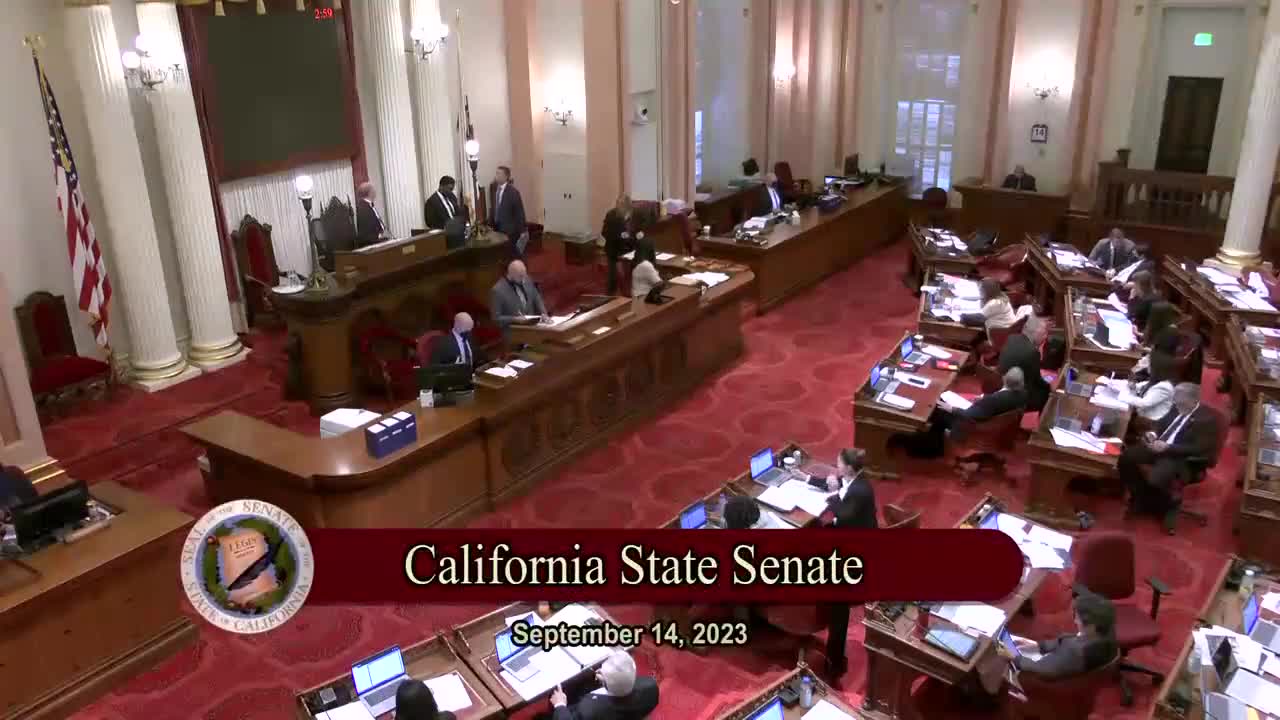
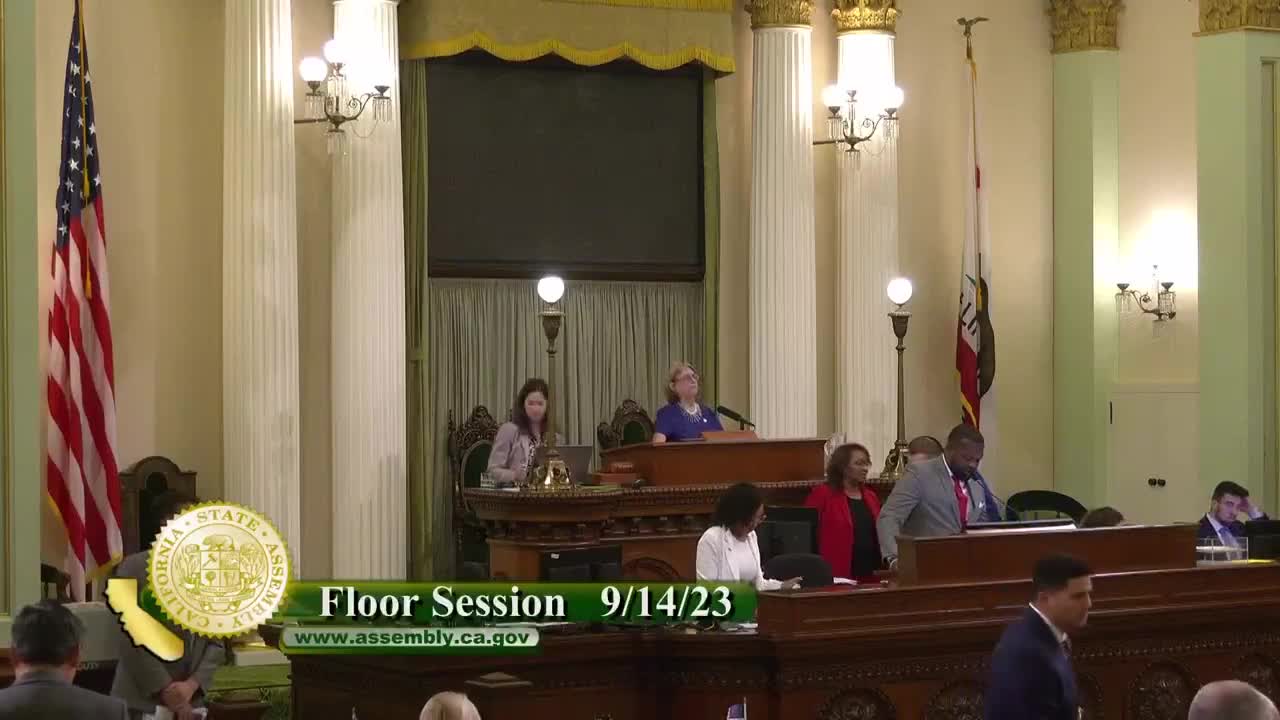
Bill Author


