AB 1318: California Environmental Quality Act: exemption: residential projects.
- Session Year: 2023-2024
- House: Assembly
- Latest Version Date: 2023-02-16
Current Status:
Failed
(2024-06-13: In committee: Hearing postponed by committee.)
Introduced
In Committee
First Chamber
In Committee
Second Chamber
Enacted
The California Environmental Quality Act (CEQA) requires a lead agency, as defined, to prepare, or cause to be prepared, and certify the completion of an environmental impact report on a project that it proposes to carry out or approve that may have a significant effect on the environment or to adopt a negative declaration if it finds that the project will not have that effect. CEQA also requires a lead agency to prepare a mitigated negative declaration for a project that may have a significant effect on the environment if revisions in the project would avoid or mitigate that effect and there is no substantial evidence that the project, as revised, would have a significant effect on the environment.
CEQA exempts from its requirements a residential project on an urbanized infill site that meets certain requirements, including that the site of the project is not more than 4 acres in total area.
This bill would expand the exemption by increasing the size of a residential project that would qualify for the exemption to include a project of not more than 5 acres in total area. The bill would require a lead agency approving an exempt residential project on an urbanized infill site to file a notice of exemption with the Office of Planning and Research, as specified.
Because the bill would increase the number of residential projects that would qualify for the exemption and would require lead agencies to file notices of exemption with the Office of Planning and Research, thereby increasing the duties of a local agency, it would impose a state-mandated local program.
The California Constitution requires the state to reimburse local agencies and school districts for certain costs mandated by the state. Statutory provisions establish procedures for making that reimbursement.
This bill would provide that no reimbursement is required by this act for a specified reason.
(a)Except as provided in subdivision (b), this division does not apply to a project if all of the following criteria are met:
(1)The project is a residential project on an infill site.
(2)The project is located within an urbanized area.
(3)The project satisfies the criteria of Section 21159.21.
(4)Within five years of the date that the application for the project is deemed complete pursuant to Section 65943 of the Government Code, community-level environmental review was certified or adopted.
(5)The site of the project is not more than four five acres in total area.
(6)The project does not contain more than 100 residential units.
(7)Either of the following criteria are met:
(A)(i)At least 10 percent of the housing is sold to families of moderate income, or not less than 10 percent of the housing is rented to families of low income, or not less than 5 percent of the housing is rented to families of very low income.
(ii)The project developer provides sufficient legal commitments to the appropriate local agency to ensure the continued availability and use of the housing units for very low, low-, low income, low-income, and moderate-income households at monthly housing costs determined pursuant to paragraph (3) of subdivision (h) of Section 65589.5 of the Government Code.
(B)The project developer has paid or will pay in-lieu fees pursuant to a local ordinance in an amount sufficient to result in the development of an equivalent number of units that would otherwise be required pursuant to subparagraph (A).
(8)The project is within one-half mile of a major transit stop.
(9)The project does not include any single level building that exceeds 100,000 square feet.
(10)The project promotes higher density infill housing. A project with a density of at least 20 units per acre shall be conclusively presumed to promote higher density infill housing. A project with a density of at least 10 units per acre and a density greater than the average density of the residential properties within 1,500 feet shall be presumed to promote higher density housing unless the preponderance of the evidence demonstrates otherwise.
(b)Notwithstanding subdivision (a), this division shall apply to a development project that meets the criteria described in subdivision (a), if any of the following occur:
(1)There is a reasonable possibility that the project will have a project-specific, significant effect on the environment due to unusual circumstances.
(2)Substantial changes with respect to the circumstances under which the project is being undertaken that are related to the project have occurred since the community-level environmental review was certified or adopted.
(3)New information becomes available regarding the circumstances under which the project is being undertaken and that is related to the project, that was not known, and could not have been known, at the time that the community-level environmental review was certified or adopted.
(c)If a project satisfies the criteria described in subdivision (a), but is not exempt from this division as a result of satisfying the criteria described in subdivision (b), the analysis of the environmental effects of the project in the environmental impact report or the negative declaration shall be limited to an analysis of the project-specific effect of the projects and any effects identified pursuant to paragraph (2) or (3) of subdivision (b).
(d)A lead agency approving a project that is exempt from this division under this section shall file a notice of exemption with the Office of Planning and Research in the manner specified in subdivision (b) of Section 21152.
(d)(e)For the purposes of this section, residential means a use consisting of either of the following:
(1)Residential units only.
(2)Residential units and primarily neighborhood-serving goods, services, or retail uses that do not exceed 25 percent of the total building square footage of the project.
SEC. 2.No reimbursement is required by this act pursuant to Section 6 of Article XIIIB of the California Constitution because a local agency or school district has the authority to levy service charges, fees, or assessments sufficient to pay for the program or level of service mandated by this act, within the meaning of Section 17556 of the Government Code.
|
Date
|
Status
|
|---|---|
| Jun 13, 2024 | In committee: Hearing postponed by committee. |
| Jun 7, 2023 | In committee: Set, first hearing. Hearing canceled at the request of author. |
| May 31, 2023 | Referred to Coms. on E.Q. and HOUSING. |
| May 18, 2023 | In Senate. Read first time. To Com. on RLS. for assignment. |
| May 18, 2023 | Read third time. Passed. Ordered to the Senate. (Ayes 74. Noes 0. Page 1596.) |
| May 11, 2023 | Read second time. Ordered to Consent Calendar. |
| May 10, 2023 | From committee: Do pass. To Consent Calendar. (Ayes 14. Noes 0.) (May 10). |
| Apr 27, 2023 | From committee: Do pass and re-refer to Com. on APPR. with recommendation: To Consent Calendar. (Ayes 8. Noes 0.) (April 26). Re-referred to Com. on APPR. |
| Apr 18, 2023 | From committee: Do pass and re-refer to Com. on L. GOV. (Ayes 11. Noes 0.) (April 17). Re-referred to Com. on L. GOV. |
| Mar 2, 2023 | Referred to Coms. on NAT. RES. and L. GOV. |
| Feb 17, 2023 | From printer. May be heard in committee March 19. |
| Feb 16, 2023 | Read first time. To print. |
|
Date
|
Description
|
Location
|
Votes
|
|
|---|---|---|---|---|
| May 18, 2023 | AB 1318 Luz Rivas Consent Calendar Second Day Regular Session | Assembly Floor |
Passed |
|
| May 10, 2023 | Do pass. To Consent Calendar. | Assembly Standing Committee on Appropriations |
Passed |
|
| Apr 26, 2023 | Do pass and be re-referred to the Committee on [Appropriations] with recommendation: To Consent Calendar | Assembly Standing Committee on Local Government |
Passed |
|
| Apr 17, 2023 | Do pass and be re-referred to the Committee on [Local Government] | Assembly Standing Committee on Natural Resources |
Passed |
This list shows positions taken on this bill by organizations on the date displayed, which is linked to the original source.
Positions by individuals are not included.
|
Organization
|
Position
|
Date
|
|---|---|---|
| The California Apartment Association | ** Support |
Date of Hearing: May 10, 2023
ASSEMBLY COMMITTEE ON APPROPRIATIONS
Chris Holden, Chair
ABPCA Bill Id:AB 1318
Author:(Luz Rivas) – As Introduced Ver:February 16, 2023
Policy Committee: | Natural Resources | Vote: | 11 - 0 |
Local Government | 8 - 0 | ||
|
|
Urgency: No State Mandated Local Program: Yes Reimbursable: No
SUMMARY:
This bill increases the site limit, from four acres to five acres, for purposes of an existing California Environmental Quality Act (CEQA) exemption for certain urban infill housing projects and requires the lead agency to file a notice of exemption (NOE) with the Office of Planning and Research (OPR).
FISCAL EFFECT:
Negligible state costs.
COMMENTS:
1) Purpose. According to the author, “AB 1318 provides a modest increase in the scope of an existing CEQA exemption for infill housing projects, making the acreage limit for this exemption the same as other existing CEQA exemptions for affordable and farmworker housing.”
2) Background. CEQA provides a process for evaluating the environmental effects of applicable projects undertaken or approved by public agencies. If a project is not exempt from CEQA, the lead agency prepares an initial study to determine whether the project may have a significant effect on the environment. If the initial study shows the project would not have a significant effect on the environment, the lead agency must prepare a negative declaration. If the initial study shows the project may have a significant effect, the lead agency must prepare an Environmental Impact Report (EIR).
Generally, an EIR must accurately describe the proposed project, identify and analyze each significant environmental impact expected to result from the proposed project, identify mitigation measures to reduce those impacts to the extent feasible, and evaluate a range of reasonable alternatives to the proposed project. Prior to approving any project that has received environmental review, an agency must make certain findings. If mitigation measures are required or incorporated into a project, the agency must adopt a reporting or monitoring program to ensure compliance with those measures.
SB 1925 (Sher), Chapter 1039, Statutes of 2002, exempts from CEQA certain residential projects providing affordable urban or agricultural housing, or located on an infill site within an urbanized area, and meeting specified unit and acreage criteria. The stated intent of the Legislature in enacting those provisions included “creating a streamlined procedure for agricultural employee housing, affordable housing, and urban infill housing projects that do not have an adverse effect on the environment.”
The change made by this bill has been recommended by the American Planning Association and other CEQA practitioners to make the site limit for the urban infill exemption consistent with the five-acre limits that apply to the other SB 1925 exemptions for affordable and farmworker housing.
Analysis Prepared by: Nikita Koraddi / APPR. / (916) 319-2081
Date of Hearing: April 26, 2023
ASSEMBLY COMMITTEE ON LOCAL GOVERNMENT
Cecilia Aguiar-Curry, Chair
ABPCA Bill Id:AB 1318 (
Author:Luz Rivas) – As Introduced Ver:February 16, 2023
SUBJECT: California Environmental Quality Act: exemption: residential projects.
SUMMARY: Increases the site limit from four acres to five acres for purposes of an existing California Environmental Quality Act (CEQA) exemption for urban infill housing projects meeting specified criteria. Requires the lead agency to file a notice of exemption (NOE) with the Office of Planning and Research (OPR).
EXISTING LAW:
- Requires, pursuant to CEQA, lead agencies with the principal responsibility for carrying out or approving a proposed project to prepare a negative declaration, mitigated negative declaration, or environmental impact report (EIR) for this action, unless the project is exempt from CEQA (Public Resources Code (PRC) §21000, et seq.).
- Exempts from CEQA specified residential housing projects which meet detailed criteria established to ensure the project does not have a significant effect on the environment, including:
- Affordable agricultural housing projects of not more than 45 units within a city, or 20 units within an agricultural zone, on a site not more than five acres in size.
- Urban affordable housing projects of not more than 100 units on a site not more than five acres in size.
- Urban infill housing projects of not more than 100 units on a site not more than four acres in size which is within one-half mile of a major transit stop (PRC §21159.20-21159.24).
- Affordable agricultural housing projects of not more than 45 units within a city, or 20 units within an agricultural zone, on a site not more than five acres in size.
FISCAL EFFECT: This bill is keyed fiscal and contains a state-mandated local program.
COMMENTS:
- Background. CEQA provides a process for evaluating the environmental effects of applicable projects undertaken or approved by public agencies. If a project is not exempt from CEQA, an initial study is prepared to determine whether the project may have a significant effect on the environment. If the initial study shows that there would not be a significant effect on the environment, the lead agency must prepare a negative declaration. If the initial study shows that the project may have a significant effect on the environment, the lead agency must prepare an EIR.
Generally, an EIR must accurately describe the proposed project, identify and analyze each significant environmental impact expected to result from the proposed project, identify mitigation measures to reduce those impacts to the extent feasible, and evaluate a range of reasonable alternatives to the proposed project. Prior to approving any project that has received environmental review, an agency must make certain findings. If mitigation measures are required or incorporated into a project, the agency must adopt a reporting or monitoring program to ensure compliance with those measures.
- Environmental Review of Housing Development Projects. CEQA includes various statutory exemptions, as well as categorical exemptions in the CEQA Guidelines adopted by the OPR for housing projects. A CEQA exemption provides a tremendous benefit to property owners, developers, local governments and other parties involved in the approval of a project as it allows for the project to be completed in an expedited fashion and can insulate the project from CEQA lawsuits. In light of the state’s ongoing housing crisis, the Legislature has created several exemptions to CEQA that are designed to increase the production of housing. The protection of resources afforded by CEQA is not exempted lightly. The Legislature balances the risk of allowing projects to proceed without a full environmental review by limiting exemptions to projects that comply with scores of objective standards and criteria. These standards and criteria are an expression of the state’s values and ensure that exempt projects do not result in harm to public health and safety and the environment.
- Bill Summary and Author’s Statement. According to the author, “AB 1318 provides a modest increase in the scope of an existing CEQA exemption for infill housing projects, making the acreage limit for this exemption the same as other existing CEQA exemptions for affordable and farmworker housing.”
This bill increases the size limit for the urban infill exemption from four acres to five acres and requires the lead agency for one of these projects to file an NOE with OPR.
This bill is sponsored by the author.
- Previous Legislation. SB 1925 (Sher), Chapter 1039, Statutes of 2002, exempts from CEQA certain residential projects providing affordable urban or agricultural housing, or located on an infill site within an urbanized area, and meeting specified unit and acreage criteria.
- Arguments in Support. The California Apartment Association writes in support, “AB 1318 provides a modest increase in the scope of an existing CEQA exemption for infill housing projects, making the acreage limit for this exemption the same as other existing CEQA exemptions for affordable and farmworker housing.”
- Arguments in Opposition. None on file.
- Double-Referral. This bill was double-referred to the Natural Resources Committee, where it passed on a 11-0 vote on April 17, 2023.
REGISTERED SUPPORT / OPPOSITION:
Support
The California Apartment Association
Opposition
None on file
Analysis Prepared by: Hank Brady / L. GOV. / (916) 319-3958
Date of Hearing: April 17, 2023
ASSEMBLY COMMITTEE ON NATURAL RESOURCES
Luz Rivas, Chair
ABPCA Bill Id:AB 1318 (
Author:Luz Rivas) – As Introduced Ver:February 16, 2023
SUBJECT: California Environmental Quality Act: exemption: residential projects
SUMMARY: Increases the site limit from four acres to five acres for purposes of an existing California Environmental Quality Act (CEQA) exemption for urban infill housing projects meeting specified criteria. Requires the lead agency to file a notice of exemption (NOE) with the Office of Planning and Research (OPR).
EXISTING LAW:
- CEQA requires lead agencies with the principal responsibility for carrying out or approving a proposed project to prepare a negative declaration, mitigated negative declaration, or environmental impact report (EIR) for this action, unless the project is exempt from CEQA. (Public Resources Code (PRC) 21000, et seq.)
- Exempts from CEQA specified residential housing projects which meet detailed criteria established to ensure the project does not have a significant effect on the environment, including:
- Affordable agricultural housing projects not more than 45 units within a city, or 20 units within an agricultural zone, on a site not more than five acres in size;
- Urban affordable housing projects not more than 100 units on a site not more than five acres in size; and,
- Urban infill housing projects not more than 100 units on a site not more than four acres in size which is within one-half mile of a major transit stop.
- Affordable agricultural housing projects not more than 45 units within a city, or 20 units within an agricultural zone, on a site not more than five acres in size;
(PRC 21159.20-21159.24)
THIS BILL increases the site limit for the urban infill exemption from four acres to five acres and requires the lead agency to file a notice of exemption with OPR.
FISCAL EFFECT: Unknown
COMMENTS:
- Background. CEQA provides a process for evaluating the environmental effects of applicable projects undertaken or approved by public agencies. If a project is not exempt from CEQA, an initial study is prepared to determine whether the project may have a significant effect on the environment. If the initial study shows that there would not be a significant effect on the environment, the lead agency must prepare a negative declaration. If the initial study shows that the project may have a significant effect on the environment, the lead agency must prepare an EIR.
Generally, an EIR must accurately describe the proposed project, identify and analyze each significant environmental impact expected to result from the proposed project, identify mitigation measures to reduce those impacts to the extent feasible, and evaluate a range of reasonable alternatives to the proposed project. Prior to approving any project that has received environmental review, an agency must make certain findings. If mitigation measures are required or incorporated into a project, the agency must adopt a reporting or monitoring program to ensure compliance with those measures.
SB 1925 (Sher), Chapter 1039, Statutes of 2002, exempts from CEQA certain residential projects providing affordable urban or agricultural housing, or located on an infill site within an urbanized area, and meeting specified unit and acreage criteria. The stated intent of the Legislature in enacting those provisions included “creating a streamlined procedure for agricultural employee housing, affordable housing, and urban infill housing projects that do not have an adverse effect on the environment.”
The change made by this bill has been previously recommended by the American Planning Association and other CEQA practitioners to make the site limit for the urban infill exemption consistent with the five-acre limits that apply to the other SB 1925 exemptions. The same provision was included in a larger bill, AB 2323 (Friedman), which passed this committee in 2020.
- Author’s statement:
AB 1318 provides a modest increase in the scope of an existing CEQA exemption for infill housing projects, making the acreage limit for this exemption the same as other existing CEQA exemptions for affordable and farmworker housing.
- Double referral. This bill has been double-referred to the Assembly Local Government Committee.
REGISTERED SUPPORT / OPPOSITION:
Support
None on file
Opposition
None on file
Analysis Prepared by: Lawrence Lingbloom / NAT. RES. /
Discussed in Hearing
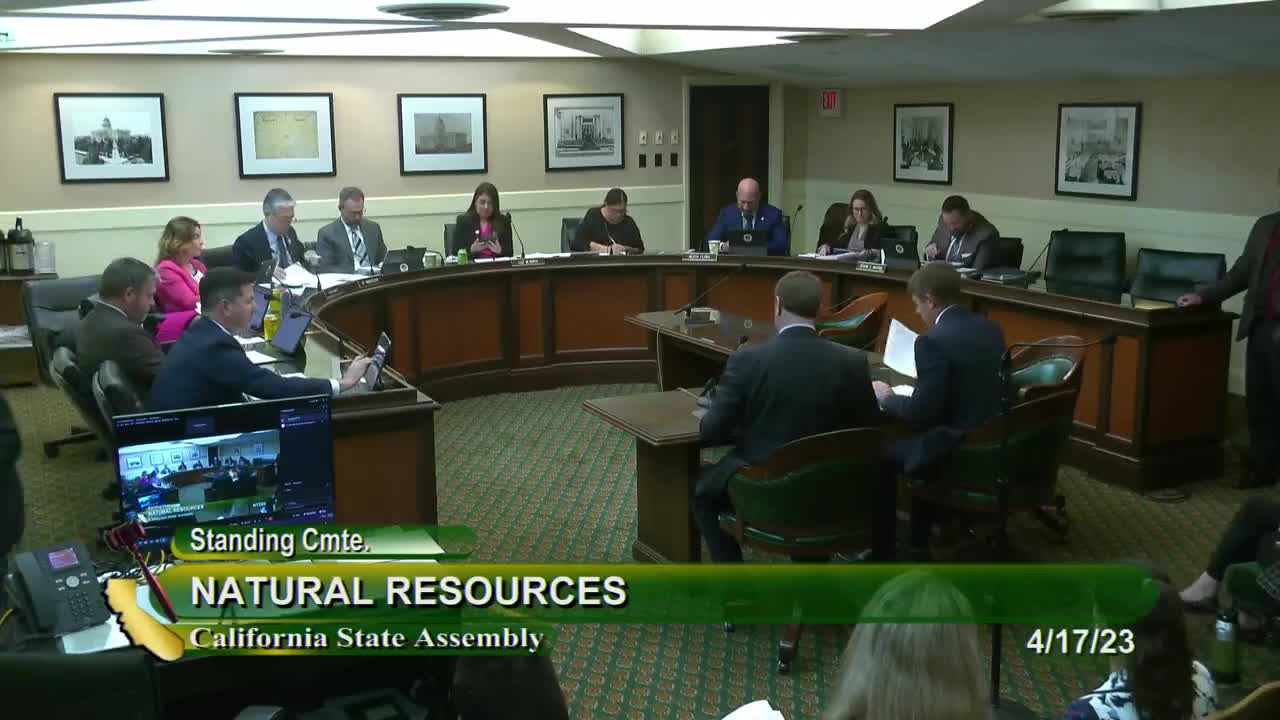 3MIN
Assembly Standing Committee on Natural Resources
Bill Author

Bill Co-Author(s):