AB 1335: Local government: transportation planning and land use: sustainable communities strategy.
- Session Year: 2023-2024
- House: Assembly
- Latest Version Date: 2023-06-22
Current Status:
Failed
(2023-07-12: From committee: Do pass and re-refer to Com. on APPR. (Ayes 11. Noes 2.) (July 11). Re-referred to Com. on APPR.)
Introduced
In Committee
First Chamber
In Committee
Second Chamber
Enacted
(1)Existing law requires specified designated transportation planning agencies to prepare and adopt a regional transportation plan directed at achieving a coordinated and balanced regional transportation system, as described. Existing law requires the plan to include specified information, including a sustainable communities strategy prepared by each metropolitan planning organization, and requires each transportation planning agency to adopt and submit, every 4 years, an updated plan to the California Transportation Commission and the Department of Transportation. Existing law requires the sustainable communities strategy to include specified information, including an identification of areas within the region sufficient to house all the population of the region over the course of the planning period of the regional transportation plan, as specified, and an identification of areas within the region sufficient to house an 8-year projection of the regional housing need for the region, as specified.
This bill would additionally require each metropolitan planning organization to include in the sustainable communities strategy the total number of new housing units necessary to house all the population of the region over the course of the planning period of the regional transportation plan, as specified, and the total number of new housing units necessary to house the above-described 8-year projection, as specified. By imposing additional duties on metropolitan planning organizations, the bill would impose a state-mandated local program.
(2)Existing law requires the planning agency of a city or county to provide an annual report to HCD by April 1 of each year that includes, among other information, the citys or countys progress in meeting its share of regional housing needs, as described.
This bill would require the annual report to also include specified information with respect to areas identified for residential or mixed-use developments in the applicable sustainable communities strategies or alternative planning strategies. By imposing additional duties on cities and counties, the bill would impose a state-mandated local program.
(3)The California Constitution requires the state to reimburse local agencies and school districts for certain costs mandated by the state. Statutory provisions establish procedures for making that reimbursement.
This bill would provide that, with regard to certain mandates, no reimbursement is required by this act for a specified reason.
With regard to any other mandates, this bill would provide that, if the Commission on State Mandates determines that the bill contains costs so mandated by the state, reimbursement for those costs shall be made pursuant to the statutory provisions noted above.
(1)Existing law requires specified designated transportation planning agencies to prepare and adopt a regional transportation plan directed at achieving a coordinated and balanced regional transportation system, as described. Existing law requires the plan to include specified information, including a sustainable communities strategy prepared by each metropolitan planning organization, and requires each transportation planning agency to adopt and submit, every 4 years, an updated plan to the California Transportation Commission and the Department of Transportation. Existing law requires the sustainable communities strategy to include specified information, including an identification of areas within the region sufficient to house all the population of the region over the course of the planning period of the regional transportation plan, as specified, and an identification of areas within the region sufficient to house an 8-year projection of the regional housing need for the region, as specified.
This bill would additionally require each metropolitan planning organization to include in the sustainable communities strategy the total number of new housing units necessary to house all the population of the region over the course of the planning period of the regional transportation plan, calculated as specified and except as provided, and the total number of new housing units necessary to house the above-described 8-year projection, as specified. By imposing additional duties on metropolitan planning organizations, the bill would impose a state-mandated local program.
(2)Existing law requires the planning agency of a city or county to provide an annual report to HCD by April 1 of each year that includes, among other information, the citys or countys progress in meeting its share of regional housing needs, as described.
This bill would require the annual report to also include specified information with respect to areas identified for residential or mixed-use developments in the applicable sustainable communities strategies or alternative planning strategies. By imposing additional duties on cities and counties, the bill would impose a state-mandated local program.
(3)The California Constitution requires the state to reimburse local agencies and school districts for certain costs mandated by the state. Statutory provisions establish procedures for making that reimbursement.
This bill would provide that, with regard to certain mandates, no reimbursement is required by this act for a specified reason.
With regard to any other mandates, this bill would provide that, if the Commission on State Mandates determines that the bill contains costs so mandated by the state, reimbursement for those costs shall be made pursuant to the statutory provisions noted above.
(1)Existing law requires specified designated transportation planning agencies to prepare and adopt a regional transportation plan directed at achieving a coordinated and balanced regional transportation system, as described. Existing law requires the plan to include specified information, including a sustainable communities strategy prepared by each metropolitan planning organization, and requires each transportation planning agency to adopt and submit, every 4 years, an updated plan to the California Transportation Commission and the Department of Transportation. Existing law requires the sustainable communities strategy to include specified information, including an identification of areas within the region sufficient to house all the population of the region over the course of the planning period of the regional transportation plan, as specified, and an identification of areas within the region sufficient to house an 8-year projection of the regional housing need for the region, as specified.
Existing law, the Planning and Zoning Law, requires a city or county to adopt a general plan for land use development within its boundaries that includes, among other things, a housing element. Existing law requires the housing element to consist of an identification and analysis of existing and projected housing needs, among other things. Existing law requires the Department of Housing and Community Development (HCD) to determine, for the 4th and subsequent revisions of the housing element, the existing and projected need for housing for each region. Existing law, as part of that process, requires HCD, in consultation with each council of governments, to determine that need based upon population projections produced by the Department of Finance and regional population forecasts used in preparing regional transportation plans, as described. Existing law describes how to reconcile differences in regional population forecasts from the council of governments and the Department of Finance.This bill, commencing January 1, 2024, would require each transportation planning agency to follow certain population projection procedures when updating the regional transportation plan. The bill would require the sustainable communities strategy to be based on population projections produced by the Department of Finance and regional population forecasts used in determining applicable city and county regional housing needs, in consultation with each council of governments. The bill would impose similar reconciliation procedures, as described above, when there are differences in the population forecast provided by the council of governments and the Department of Finance. By imposing additional duties on transportation planning agencies, the bill would impose a state-mandated local program.This bill would additionally require each metropolitan planning organization to include in the sustainable communities strategy the total number of new housing units necessary to house all the population of the region over the course of the planning period of the regional transportation plan, calculated as specified and except as provided, and the total number of new housing units necessary to house the above-described 8-year projection, as specified. By imposing additional duties on metropolitan planning organizations, the bill would impose a state-mandated local program.
(2)Existing law requires the planning agency of a city or county to provide an annual report to HCD by April 1 of each year that includes, among other information, the citys or countys progress in meeting its share of regional housing needs, as described.
This bill would require the annual report to also include the progress of the city or county towards the recommended alignment of land use regulations with specified information with respect to areas identified for residential or mixed-use developments in the applicable sustainable communities strategies or alternative planning strategies. By imposing additional duties on cities and counties, the bill would impose a state-mandated local program.
(3)The California Constitution requires the state to reimburse local agencies and school districts for certain costs mandated by the state. Statutory provisions establish procedures for making that reimbursement.
This bill would provide that, with regard to certain mandates, no reimbursement is required by this act for a specified reason.
With regard to any other mandates, this bill would provide that, if the Commission on State Mandates determines that the bill contains costs so mandated by the state, reimbursement for those costs shall be made pursuant to the statutory provisions noted above.
(1)Existing law requires specified designated transportation planning agencies to prepare and adopt a regional transportation plan directed at achieving a coordinated and balanced regional transportation system, as described. Existing law requires the plan to include specified information, including a sustainable communities strategy prepared by each metropolitan planning organization, and requires each transportation planning agency to adopt and submit, every 4 years, an updated plan to the California Transportation Commission and the Department of Transportation.
Existing law, the Planning and Zoning Law, requires a city or county to adopt a general plan for land use development within its boundaries that includes, among other things, a housing element. Existing law requires the housing element to consist of an identification and analysis of existing and projected housing needs, among other things. Existing law requires the Department of Housing and Community Development (HCD) to determine, for the 4th and subsequent revisions of the housing element, the existing and projected need for housing for each region. Existing law, as part of that process, requires HCD, in consultation with each council of governments, to determine that need based upon population projections produced by the Department of Finance and regional population forecasts used in preparing regional transportation plans, as described. Existing law describes how to reconcile differences in regional population forecasts from the council of governments and the Department of Finance.
This bill, commencing January 1, 2024, would require each transportation planning agency to follow certain population projection procedures when updating the regional transportation plan. The bill would require the sustainable communities strategy to be based on population projections produced by the Department of Finance and regional population forecasts used in determining applicable city and county regional housing needs, in consultation with each council of governments. The bill would impose similar reconciliation procedures, as described above, when there are differences in the population forecast provided by the council of governments and the Department of Finance. By imposing additional duties on transportation planning agencies, the bill would impose a state-mandated local program.
(2)Existing law requires the planning agency of a city or county to provide an annual report to HCD by April 1 of each year that includes, among other information, the citys or countys progress in meeting its share of regional housing needs, as described.
This bill would require the annual report to also include the progress of the city or county towards the recommended alignment of land use regulations with applicable sustainable communities strategies or alternative planning strategies. By imposing additional duties on cities and counties, the bill would impose a state-mandated local program.
(3)The California Constitution requires the state to reimburse local agencies and school districts for certain costs mandated by the state. Statutory provisions establish procedures for making that reimbursement.
This bill would provide that, with regard to certain mandates, no reimbursement is required by this act for a specified reason.
With regard to any other mandates, this bill would provide that, if the Commission on State Mandates determines that the bill contains costs so mandated by the state, reimbursement for those costs shall be made pursuant to the statutory provisions noted above.
(a)Each transportation planning agency designated under Section 29532 or 29532.1 shall prepare and adopt a regional transportation plan directed at achieving a coordinated and balanced regional transportation system, including, but not limited to, mass transportation, highway, railroad, maritime, bicycle, pedestrian, goods movement, and aviation facilities and services. The plan shall be action-oriented and pragmatic, considering both the short-term and long-term future, and shall present clear, concise policy guidance to local and state officials. The regional transportation plan shall consider factors specified in Section 134 of Title 23 of the United States Code. Each transportation planning agency shall consider and incorporate, as appropriate, the transportation plans of cities, counties, districts, private organizations, and state and federal agencies.
(b)The regional transportation plan shall be an internally consistent document and shall include all of the following:
(1)A policy element that describes the transportation issues in the region, identifies and quantifies regional needs, and describes the desired short-range and long-range transportation goals, and pragmatic objective and policy statements. The objective and policy statements shall be consistent with the funding estimates of the financial element. The policy element of transportation planning agencies with populations that exceed 200,000 persons may quantify a set of indicators, including, but not limited to, all of the following:
(A)Measures of mobility and traffic congestion, including, but not limited to, daily vehicle hours of delay per capita and vehicle miles traveled per capita.
(B)Measures of road and bridge maintenance and rehabilitation needs, including, but not limited to, roadway pavement and bridge conditions.
(C)Measures of means of travel, including, but not limited to, percentage share of all trips (work and nonwork) made by all of the following:
(i)Single-occupant vehicle.
(ii)Multiple-occupant vehicle or carpool.
(iii)Public transit including commuter rail and intercity rail.
(iv)Walking.
(v)Bicycling.
(D)Measures of safety and security, including, but not limited to, total injuries and fatalities assigned to each of the modes set forth in subparagraph (C).
(E)Measures of equity and accessibility, including, but not limited to, percentage of the population served by frequent and reliable public transit, with a breakdown by income bracket, and percentage of all jobs accessible by frequent and reliable public transit service, with a breakdown by income bracket.
(F)The requirements of this section may be met using existing sources of information. No additional traffic counts, household surveys, or other sources of data shall be required.
(2)A sustainable communities strategy prepared by each metropolitan planning organization as follows:
(A)No later than September 30, 2010, the State Air Resources Board shall provide each affected region with greenhouse gas emission reduction targets for the automobile and light truck sector for 2020 and 2035, respectively.
(i)No later than January 31, 2009, the state board shall appoint a Regional Targets Advisory Committee to recommend factors to be considered and methodologies to be used for setting greenhouse gas emission reduction targets for the affected regions. The committee shall be composed of representatives of the metropolitan planning organizations, affected air districts, the League of California Cities, the California State Association of Counties, local transportation agencies, and members of the public, including homebuilders, environmental organizations, planning organizations, environmental justice organizations, affordable housing organizations, and others. The advisory committee shall transmit a report with its recommendations to the state board no later than September 30, 2009. In recommending factors to be considered and methodologies to be used, the advisory committee may consider any relevant issues, including, but not limited to, data needs, modeling techniques, growth forecasts, the impacts of regional jobs-housing balance on interregional travel and greenhouse gas emissions, economic and demographic trends, the magnitude of greenhouse gas reduction benefits from a variety of land use and transportation strategies, and appropriate methods to describe regional targets and to monitor performance in attaining those targets. The state board shall consider the report before setting the targets.
(ii)Before setting the targets for a region, the state board shall exchange technical information with the metropolitan planning organization and the affected air district. The metropolitan planning organization may recommend a target for the region. The metropolitan planning organization shall hold at least one public workshop within the region after receipt of the report from the advisory committee. The state board shall release draft targets for each region no later than June 30, 2010.
(iii)In establishing these targets, the state board shall take into account greenhouse gas emission reductions that will be achieved by improved vehicle emission standards, changes in fuel composition, and other measures it has approved that will reduce greenhouse gas emissions in the affected regions, and prospective measures the state board plans to adopt to reduce greenhouse gas emissions from other greenhouse gas emission sources as that term is defined in subdivision (i) of Section 38505 of the Health and Safety Code and consistent with the regulations promulgated pursuant to the California Global Warming Solutions Act of 2006 (Division 25.5 (commencing with Section 38500) of the Health and Safety Code), including Section 38566 of the Health and Safety Code.
(iv)The state board shall update the regional greenhouse gas emission reduction targets every eight years consistent with each metropolitan planning organizations timeframe for updating its regional transportation plan under federal law until 2050. The state board may revise the targets every four years based on changes in the factors considered under clause (iii). The state board shall exchange technical information with the Department of Transportation, metropolitan planning organizations, local governments, and affected air districts and engage in a consultative process with public and private stakeholders, before updating these targets.
(v)The greenhouse gas emission reduction targets may be expressed in gross tons, tons per capita, tons per household, or in any other metric deemed appropriate by the state board.
(B)Each metropolitan planning organization shall prepare a sustainable communities strategy, subject to the requirements of Part 450 of Title 23 of, and Part 93 of Title 40 of, the Code of Federal Regulations, including the requirement to use the most recent planning assumptions considering local general plans and other factors. The sustainable communities strategy shall do all of the following:
(i)Identify the general location of uses, residential densities, and building intensities within the region.
(ii)(I)Identify areas within the region sufficient to house all the population of the region, including all economic segments of the population, over the course of the planning period of the regional transportation plan taking into account net migration into the region, population growth, household formation and employment growth.
(II)Set forth the total number of new housing units necessary to house all the population of the region over the course of the planning period of the regional transportation plan within the areas identified in subclause (I).
(iii)(I)Identify areas within the region sufficient to house an eight-year projection of the regional housing need for the region pursuant to Section 65584.
(II)Set forth the total number of new housing units necessary to house the eight-year projection described in subclause (I).
(III)The total number of new housing units identified to house this projection, as described in subclause (II), shall not be less than the total number of housing units that represent the final regional housing needs determination for the region, as determined by the Department of Housing and Community Development. This subclause is declaratory of existing law. Development, and shall, at minimum, reflect the number of housing units planned for during the most recent eight-year planning period that is covered by the regional housing needs determination.
(iv)Identify a transportation network to service the transportation needs of the region.
(v)Gather and consider the best practically available scientific information regarding resource areas and farmland in the region as defined in subdivisions (a) and (b) of Section 65080.01.
(vi)Consider the state housing goals specified in Sections 65580 and 65581.
(vii)Set forth a forecasted development pattern for the region, which, when integrated with the transportation network, and other transportation measures and policies, will reduce the greenhouse gas emissions from automobiles and light trucks to achieve, if there is a feasible way to do so, the greenhouse gas emission reduction targets approved by the state board.
(viii)Allow the regional transportation plan to comply with Section 176 of the federal Clean Air Act (42 U.S.C. Sec. 7506).
(C)(i) Within the jurisdiction of the Metropolitan Transportation Commission, as defined by Section 66502, the Association of Bay Area Governments shall be responsible for clauses (i), (ii), (iii), (v), and (vi) of subparagraph (B); the Metropolitan Transportation Commission shall be responsible for clauses (iv) and (viii) of subparagraph (B); and the Association of Bay Area Governments and the Metropolitan Transportation Commission shall jointly be responsible for clause (vii) of subparagraph (B).
(ii)Within the jurisdiction of the Tahoe Regional Planning Agency, as defined in Sections 66800 and 66801, the Tahoe Metropolitan Planning Organization shall use the Regional Plan for the Lake Tahoe Region as the sustainable communities strategy, provided that it complies with clauses (vii) and (viii) of subparagraph (B).
(D)In the region served by the Southern California Association of Governments, a subregional council of governments and the county transportation commission may work together to propose the sustainable communities strategy and an alternative planning strategy, if one is prepared pursuant to subparagraph (I), for that subregional area. The metropolitan planning organization may adopt a framework for a subregional sustainable communities strategy or a subregional alternative planning strategy to address the intraregional land use, transportation, economic, air quality, and climate policy relationships. The metropolitan planning organization shall include the subregional sustainable communities strategy for that subregion in the regional sustainable communities strategy to the extent consistent with this section and federal law and approve the subregional alternative planning strategy, if one is prepared pursuant to subparagraph (I), for that subregional area to the extent consistent with this section. The metropolitan planning organization shall develop overall guidelines, create a public participation plan pursuant to subparagraph (F), ensure coordination, resolve conflicts, make sure that the overall plan complies with applicable legal requirements, and adopt the plan for the region.
(E)The metropolitan planning organization shall conduct at least two informational meetings in each county within the region for members of the board of supervisors and city councils on the sustainable communities strategy and alternative planning strategy, if any. The metropolitan planning organization may conduct only one informational meeting if it is attended by representatives of the county board of supervisors and city council members representing a majority of the cities representing a majority of the population in the incorporated areas of that county. Notice of the meeting or meetings shall be sent to the clerk of the board of supervisors and to each city clerk. The purpose of the meeting or meetings shall be to discuss the sustainable communities strategy and the alternative planning strategy, if any, including the key land use and planning assumptions with the members of the board of supervisors and the city council members in that county and to solicit and consider their input and recommendations.
(F)Each metropolitan planning organization shall adopt a public participation plan, for development of the sustainable communities strategy and an alternative planning strategy, if any, that includes all of the following:
(i)Outreach efforts to encourage the active participation of a broad range of stakeholder groups in the planning process, consistent with the agencys adopted Federal Public Participation Plan, including, but not limited to, affordable housing advocates, transportation advocates, neighborhood and community groups, environmental advocates, homebuilder representatives, broad-based business organizations, landowners, commercial property interests, and homeowner associations.
(ii)Consultation with congestion management agencies, transportation agencies, and transportation commissions.
(iii)Workshops throughout the region to provide the public with the information and tools necessary to provide a clear understanding of the issues and policy choices. At least one workshop shall be held in each county in the region. For counties with a population greater than 500,000, at least three workshops shall be held. Each workshop, to the extent practicable, shall include urban simulation computer modeling to create visual representations of the sustainable communities strategy and the alternative planning strategy.
(iv)Preparation and circulation of a draft sustainable communities strategy and an alternative planning strategy, if one is prepared, not less than 55 days before adoption of a final regional transportation plan.
(v)At least three public hearings on the draft sustainable communities strategy in the regional transportation plan and alternative planning strategy, if one is prepared. If the metropolitan transportation organization consists of a single county, at least two public hearings shall be held. To the maximum extent feasible, the hearings shall be in different parts of the region to maximize the opportunity for participation by members of the public throughout the region.
(vi)A process for enabling members of the public to provide a single request to receive notices, information, and updates.
(G)In preparing a sustainable communities strategy, the metropolitan planning organization shall consider spheres of influence that have been adopted by the local agency formation commissions within its region.
(H)Before adopting a sustainable communities strategy, the metropolitan planning organization shall quantify the reduction in greenhouse gas emissions projected to be achieved by the sustainable communities strategy and set forth the difference, if any, between the amount of that reduction and the target for the region established by the state board.
(I)If the sustainable communities strategy, prepared in compliance with subparagraph (B) or (D), is unable to reduce greenhouse gas emissions to achieve the greenhouse gas emission reduction targets established by the state board, the metropolitan planning organization shall prepare an alternative planning strategy to the sustainable communities strategy showing how those greenhouse gas emission targets would be achieved through alternative development patterns, infrastructure, or additional transportation measures or policies. The alternative planning strategy shall be a separate document from the regional transportation plan, but it may be adopted concurrently with the regional transportation plan. In preparing the alternative planning strategy, the metropolitan planning organization:
(i)Shall identify the principal impediments to achieving the targets within the sustainable communities strategy.
(ii)May include an alternative development pattern for the region pursuant to subparagraphs (B) to (G), inclusive.
(iii)Shall describe how the greenhouse gas emission reduction targets would be achieved by the alternative planning strategy, and why the development pattern, measures, and policies in the alternative planning strategy are the most practicable choices for achievement of the greenhouse gas emission reduction targets.
(iv)An alternative development pattern set forth in the alternative planning strategy shall comply with Part 450 of Title 23 of, and Part 93 of Title 40 of, the Code of Federal Regulations, except to the extent that compliance will prevent achievement of the greenhouse gas emission reduction targets approved by the state board.
(v)For purposes of the California Environmental Quality Act (Division 13 (commencing with Section 21000) of the Public Resources Code), an alternative planning strategy shall not constitute a land use plan, policy, or regulation, and the inconsistency of a project with an alternative planning strategy shall not be a consideration in determining whether a project may have an environmental effect.
(J)(i) Before starting the public participation process adopted pursuant to subparagraph (F), the metropolitan planning organization shall submit a description to the state board of the technical methodology it intends to use to estimate the greenhouse gas emissions from its sustainable communities strategy and, if appropriate, its alternative planning strategy. The state board shall respond to the metropolitan planning organization in a timely manner with written comments about the technical methodology, including specifically describing any aspects of that methodology it concludes will not yield accurate estimates of greenhouse gas emissions, and suggested remedies. The metropolitan planning organization is encouraged to work with the state board until the state board concludes that the technical methodology operates accurately.
(ii)After adoption, a metropolitan planning organization shall submit a sustainable communities strategy or an alternative planning strategy, if one has been adopted, to the state board for review, including the quantification of the greenhouse gas emission reductions the strategy would achieve and a description of the technical methodology used to obtain that result. Review by the state board shall be limited to acceptance or rejection of the metropolitan planning organizations determination that the strategy submitted would, if implemented, achieve the greenhouse gas emission reduction targets established by the state board. The state board shall complete its review within 60 days.
(iii)If the state board determines that the strategy submitted would not, if implemented, achieve the greenhouse gas emission reduction targets, the metropolitan planning organization shall revise its strategy or adopt an alternative planning strategy, if not previously adopted, and submit the strategy for review pursuant to clause (ii). At a minimum, the metropolitan planning organization must obtain state board acceptance that an alternative planning strategy would, if implemented, achieve the greenhouse gas emission reduction targets established for that region by the state board.
(iv)On or before September 1, 2018, and every four years thereafter, to align with target setting, notwithstanding Section 10231.5, the state board shall prepare a report that assesses progress made by each metropolitan planning organization in meeting the regional greenhouse gas emission reduction targets set by the state board. The report shall include changes to greenhouse gas emissions in each region and data-supported metrics for the strategies used to meet the targets. The report shall also include a discussion of best practices and the challenges faced by the metropolitan planning organizations in meeting the targets, including the effect of state policies and funding. The report shall be developed in consultation with the metropolitan planning organizations and affected stakeholders. The report shall be submitted to the Assembly Committee on Transportation and the Assembly Committee on Natural Resources, and to the Senate Committee on Transportation, the Senate Committee on Housing, and the Senate Committee on Environmental Quality.
(K)Neither a sustainable communities strategy nor an alternative planning strategy regulates the use of land, nor, except as provided by subparagraph (J), shall either one be subject to any state approval. Nothing in a sustainable communities strategy shall be interpreted as superseding the exercise of the land use authority of cities and counties within the region. Nothing in this section shall be interpreted to limit the state boards authority under any other law. Nothing in this section shall be interpreted to authorize the abrogation of any vested right whether created by statute or by common law. Nothing in this section shall require a citys or countys land use policies and regulations, including its general plan, to be consistent with the regional transportation plan or an alternative planning strategy. Nothing in this section requires a metropolitan planning organization to approve a sustainable communities strategy that would be inconsistent with Part 450 of Title 23 of, or Part 93 of Title 40 of, the Code of Federal Regulations and any administrative guidance under those regulations. Nothing in this section relieves a public or private entity or any person from compliance with any other local, state, or federal law.
(L)Nothing in this section requires projects programmed for funding on or before December 31, 2011, to be subject to the provisions of this paragraph if they (i) are contained in the 2007 or 2009 Federal Statewide Transportation Improvement Program, (ii) are funded pursuant to the Highway Safety, Traffic Reduction, Air Quality, and Port Security Bond Act of 2006 (Chapter 12.49 (commencing with Section 8879.20) of Division 1 of Title 2), or (iii) were specifically listed in a ballot measure before December 31, 2008, approving a sales tax increase for transportation projects. Nothing in this section shall require a transportation sales tax authority to change the funding allocations approved by the voters for categories of transportation projects in a sales tax measure adopted before December 31, 2010. For purposes of this subparagraph, a transportation sales tax authority is a district, as defined in Section 7252 of the Revenue and Taxation Code, that is authorized to impose a sales tax for transportation purposes.
(M)A metropolitan planning organization, or a regional transportation planning agency not within a metropolitan planning organization, that is required to adopt a regional transportation plan not less than every five years, may elect to adopt the plan not less than every four years. This election shall be made by the board of directors of the metropolitan planning organization or regional transportation planning agency no later than June 1, 2009, or thereafter 54 months before the statutory deadline for the adoption of housing elements for the local jurisdictions within the region, after a public hearing at which comments are accepted from members of the public and representatives of cities and counties within the region covered by the metropolitan planning organization or regional transportation planning agency. Notice of the public hearing shall be given to the general public and by mail to cities and counties within the region no later than 30 days before the date of the public hearing. Notice of election shall be promptly given to the Department of Housing and Community Development. The metropolitan planning organization or the regional transportation planning agency shall complete its next regional transportation plan within three years of the notice of election.
(N)Two or more of the metropolitan planning organizations for Fresno County, Kern County, Kings County, Madera County, Merced County, San Joaquin County, Stanislaus County, and Tulare County may work together to develop and adopt multiregional goals and policies that may address interregional land use, transportation, economic, air quality, and climate relationships. The participating metropolitan planning organizations may also develop a multiregional sustainable communities strategy, to the extent consistent with federal law, or an alternative planning strategy for adoption by the metropolitan planning organizations. Each participating metropolitan planning organization shall consider any adopted multiregional goals and policies in the development of a sustainable communities strategy and, if applicable, an alternative planning strategy for its region.
(3)An action element that describes the programs and actions necessary to implement the plan and assigns implementation responsibilities. The action element may describe all transportation projects proposed for development during the 20-year or greater life of the plan. The action element shall consider congestion management programming activities carried out within the region.
(4)(A) A financial element that summarizes the cost of plan implementation constrained by a realistic projection of available revenues. The financial element shall also contain recommendations for allocation of funds. A county transportation commission created pursuant to the County Transportation Commissions Act (Division 12 (commencing with Section 130000) of the Public Utilities Code) shall be responsible for recommending projects to be funded with regional improvement funds, if the project is consistent with the regional transportation plan. The first five years of the financial element shall be based on the five-year estimate of funds developed pursuant to Section 14524. The financial element may recommend the development of specified new sources of revenue, consistent with the policy element and action element.
(B)The financial element of transportation planning agencies with populations that exceed 200,000 persons may include a project cost breakdown for all projects proposed for development during the 20-year life of the plan that includes total expenditures and related percentages of total expenditures for all of the following:
(i)State highway expansion.
(ii)State highway rehabilitation, maintenance, and operations.
(iii)Local road and street expansion.
(iv)Local road and street rehabilitation, maintenance, and operation.
(v)Mass transit, commuter rail, and intercity rail expansion.
(vi)Mass transit, commuter rail, and intercity rail rehabilitation, maintenance, and operations.
(vii)Pedestrian and bicycle facilities.
(viii)Environmental enhancements and mitigation.
(ix)Research and planning.
(x)Other categories.
(C)The metropolitan planning organization or county transportation agency, whichever entity is appropriate, shall consider financial incentives for cities and counties that have resource areas or farmland, as defined in Section 65080.01, for the purposes of, for example, transportation investments for the preservation and safety of the city street or county road system and farm-to-market and interconnectivity transportation needs. The metropolitan planning organization or county transportation agency, whichever entity is appropriate, shall also consider financial assistance for counties to address countywide service responsibilities in counties that contribute toward the greenhouse gas emission reduction targets by implementing policies for growth to occur within their cities.
(c)Each transportation planning agency may also include other factors of local significance as an element of the regional transportation plan, including, but not limited to, issues of mobility for specific sectors of the community, including, but not limited to, senior citizens.
(d)(1) Except as otherwise provided in this subdivision, each transportation planning agency shall adopt and submit, every four years, an updated regional transportation plan to the California Transportation Commission and the Department of Transportation. A transportation planning agency located in a federally designated air quality attainment area or that does not contain an urbanized area may at its option adopt and submit a regional transportation plan every five years. When applicable, the plan shall be consistent with federal planning and programming requirements and shall conform to the regional transportation plan guidelines adopted by the California Transportation Commission. Before adoption of the regional transportation plan, a public hearing shall be held after the giving of notice of the hearing by publication in the affected county or counties pursuant to Section 6061.
(2)(A) Notwithstanding subdivisions (b) and (c), and paragraph (1), inclusive, the regional transportation plan, sustainable communities strategy, and environmental impact report adopted by the San Diego Association of Governments on October 9, 2015, shall remain in effect for all purposes, including for purposes of consistency determinations and funding eligibility for the San Diego Association of Governments and all other agencies relying on those documents, until the San Diego Association of Governments adopts its next update to its regional transportation plan.
(B)The San Diego Association of Governments shall adopt and submit its update to the 2015 regional transportation plan on or before December 31, 2021.
(C)After the update described in subparagraph (B), the time period for San Diego Association of Governments updates to its regional transportation plan shall be reset and shall be adopted and submitted every four years.
(D)Notwithstanding clause (iv) of subparagraph (A) of paragraph (2) of subdivision (b), the State Air Resources Board shall not update the greenhouse gas emission reduction targets for the region within the jurisdiction of the San Diego Association of Governments before the adoption of the update to the regional transportation plan pursuant to subparagraph (B).
(E)The update to the regional transportation plan adopted by the San Diego Association of Governments on October 9, 2015, which will be prepared and submitted to federal agencies for purposes of compliance with federal laws applicable to regional transportation plans and air quality conformity and which is due in October 2019, shall not be considered a regional transportation plan pursuant to this section and shall not constitute a project for purposes of the California Environmental Quality Act (Division 13 (commencing with Section 21000) of the Public Resources Code).
(F)In addition to meeting the other requirements to nominate a project for funding through the Solutions for Congested Corridors Program (Chapter 8.5 (commencing with Section 2390) of Division 3 of the Streets and Highways Code), the San Diego Association of Governments, until December 31, 2021, shall only nominate projects for funding through the Solutions for Congested Corridors Program that are consistent with the eligibility requirements for projects under any of the following programs:
(i)The Transit and Intercity Rail Capital Program (Part 2 (commencing with Section 75220) of Division 44 of the Public Resources Code).
(ii)The Low Carbon Transit Operations Program (Part 3 (commencing with Section 75230) of Division 44 of the Public Resources Code).
(iii)The Active Transportation Program (Chapter 8 (commencing with Section 2380) of Division 3 of the Streets and Highways Code).
(G)Commencing January 1, 2020, and every two years thereafter, the San Diego Association of Governments shall begin developing an implementation report that tracks the implementation of its most recently adopted sustainable communities strategy. The report shall discuss the status of the implementation of the strategy at the regional and local level, and any successes and barriers that have occurred since the last report. The San Diego Association of Governments shall submit the implementation report to the state board by including it in its sustainable communities strategy implementation review pursuant to clause (ii) of subparagraph (J) of paragraph (2) of subdivision (b).
(e)This section shall become operative on January 1, 2023.
SEC. 2.Section 65400 of the Government Code is amended to read:65400.(a)After the legislative body has adopted all or part of a general plan, the planning agency shall do both of the following:
(1)Investigate and make recommendations to the legislative body regarding reasonable and practical means for implementing the general plan or element of the general plan so that it will serve as an effective guide for orderly growth and development, preservation and conservation of open-space land and natural resources, and the efficient expenditure of public funds relating to the subjects addressed in the general plan.
(2)Provide by April 1 of each year an annual report to the legislative body, the Office of Planning and Research, and the Department of Housing and Community Development that includes all of the following:
(A)The status of the plan and progress in its implementation.
(B)(i)The progress in meeting its share of regional housing needs determined pursuant to Section 65584, including the need for extremely low income households, as determined pursuant to paragraph (1) of subdivision (a) of Section 65583, and local efforts to remove governmental constraints to the maintenance, improvement, and development of housing pursuant to paragraph (3) of subdivision (c) of Section 65583.
(ii)The housing element portion of the annual report, as required by this paragraph, shall be prepared through the use of standards, forms, and definitions adopted by the Department of Housing and Community Development. The department may review, adopt, amend, and repeal the standards, forms, or definitions to implement this article. Any standards, forms, or definitions adopted to implement this article shall not be subject to Chapter 3.5 (commencing with Section 11340) of Part 1 of Division 3 of Title 2. Before and after adoption of the forms, the housing element portion of the annual report shall include a section that describes the actions taken by the local government towards completion of the programs and status of the local governments compliance with the deadlines in its housing element. The report shall be considered at an annual public meeting before the legislative body where members of the public shall be allowed to provide oral testimony and written comments.
(iii)The report may include the number of units that have been completed pursuant to subdivision (c) of Section 65583.1. For purposes of this paragraph, committed assistance may be executed throughout the planning period, and the program under paragraph (1) of subdivision (c) of Section 65583.1 shall not be required. The report shall document how the units meet the standards set forth in that subdivision.
(iv)The planning agency shall include the number of units in a student housing development for lower income students for which the developer of the student housing development was granted a density bonus pursuant to subparagraph (F) of paragraph (1) of subdivision (b) of Section 65915.
(C)The number of housing development applications received in the prior year, including whether each housing development application is subject to a ministerial or discretionary approval process.
(D)The number of units included in all development applications in the prior year.
(E)The number of units approved and disapproved in the prior year.
(F)The degree to which its approved general plan complies with the guidelines developed and adopted pursuant to Section 65040.2 and the date of the last revision to the general plan.
(G)A listing of sites rezoned to accommodate that portion of the citys or countys share of the regional housing need for each income level that could not be accommodated on sites identified in the inventory required by paragraph (1) of subdivision (c) of Section 65583 and Section 65584.09. The listing of sites shall also include any additional sites that may have been required to be identified by Section 65863.
(H)(i)The number of units of housing demolished and new units of housing, including both rental housing and for-sale housing and any units that the County of Napa or the City of Napa may report pursuant to an agreement entered into pursuant to Section 65584.08, that have been issued a completed entitlement, a building permit, or a certificate of occupancy, thus far in the housing element cycle, and the income category, by area median income category, that each unit of housing satisfies. That production report shall do the following:
(I)For each income category described in this subparagraph, distinguish between the number of rental housing units and the number of for-sale units that satisfy each income category.
(II)For each entitlement, building permit, or certificate of occupancy, include a unique site identifier that must include the assessors parcel number, but may also include street address, or other identifiers.
(ii)For the County of Napa and the City of Napa, the production report may report units identified in the agreement entered into pursuant to Section 65584.08.
(I)The number of applications submitted pursuant to subdivision (a) of Section 65913.4, the location and the total number of developments approved pursuant to subdivision (c) of Section 65913.4, the total number of building permits issued pursuant to subdivision (c) of Section 65913.4, the total number of units including both rental housing and for-sale housing by area median income category constructed using the process provided for in subdivision (c) of Section 65913.4.
(J)If the city or county has received funding pursuant to the Local Government Planning Support Grants Program (Chapter 3.1 (commencing with Section 50515) of Part 2 of Division 31 of the Health and Safety Code), the information required pursuant to subdivision (a) of Section 50515.04 of the Health and Safety Code.
(K)The progress of the city or county in adopting or amending its general plan or local open-space element in compliance with its obligations to consult with California Native American tribes, and to identify and protect, preserve, and mitigate impacts to places, features, and objects described in Sections 5097.9 and 5097.993 of the Public Resources Code, pursuant to Chapter 905 of the Statutes of 2004.
(L)The following information with respect to density bonuses granted in accordance with Section 65915:
(i)The number of density bonus applications received by the city or county.
(ii)The number of density bonus applications approved by the city or county.
(iii)Data from all projects approved to receive a density bonus from the city or county, including, but not limited to, the percentage of density bonus received, the percentage of affordable units in the project, the number of other incentives or concessions granted to the project, and any waiver or reduction of parking standards for the project.
(M)The following information with respect to each application submitted pursuant to Chapter 4.1 (commencing with Section 65912.100):
(i)The location of the project.
(ii)The status of the project, including whether it has been entitled, whether a building permit has been issued, and whether or not it has been completed.
(iii)The number of units in the project.
(iv)The number of units in the project that are rental housing.
(v)The number of units in the project that are for-sale housing.
(vi)The household income category of the units, as determined pursuant to subdivision (f) of Section 65584.
(N)(i)The following information with respect to areas identified for residential or mixed-use developments in the applicable sustainable communities strategies or alternative planning strategies:
(i)(I)The number of housing units that have commenced, but have not completed, construction.
(ii)(II)The number and affordability levels of housing units approved.
(iii)(III)The number of residential or mixed-use projects proposed and the number of housing units included in each application for the project.
(iv)(IV)Whether the residential or mixed-use project proposed involved a general plan amendment, an adoption or amendment of a specific plan, a rezoning, or other approval by the city or countys legislative body.
(ii)This subparagraph is not intended, and shall not be construed, to affect the land use authority of local governments, as described in subparagraph (K) of paragraph (2) of subdivision (b) of Section 65080. This subparagraph does not modify the authority of the metropolitan planning organization with respect to the adoption of a sustainable communities strategy pursuant to subparagraph (B) of paragraph (2) of subdivision (b) of Section 65080 or implementation of the regional housing needs allocation in local housing elements.
(b)(1)(A)The department may request corrections to the housing element portion of an annual report submitted pursuant to paragraph (2) of subdivision (a) within 90 days of receipt. A planning agency shall make the requested corrections within 30 days after which the department may reject the report if the report is not in substantial compliance with the requirements of that paragraph.
(B)If the department rejects the housing element portion of an annual report as authorized by subparagraph (A), the department shall provide the reasons the report is inconsistent with paragraph (2) of subdivision (a) to the planning agency in writing.
(2)If a court finds, upon a motion to that effect, that a city, county, or city and county failed to submit, within 60 days of the deadline established in this section, the housing element portion of the report required pursuant to subparagraph (B) of paragraph (2) of subdivision (a) that substantially complies with the requirements of this section, the court shall issue an order or judgment compelling compliance with this section within 60 days. If the city, county, or city and county fails to comply with the courts order within 60 days, the plaintiff or petitioner may move for sanctions, and the court may, upon that motion, grant appropriate sanctions. The court shall retain jurisdiction to ensure that its order or judgment is carried out. If the court determines that its order or judgment is not carried out within 60 days, the court may issue further orders as provided by law to ensure that the purposes and policies of this section are fulfilled. This subdivision applies to proceedings initiated on or after the first day of October following the adoption of forms and definitions by the Department of Housing and Community Development pursuant to paragraph (2) of subdivision (a), but no sooner than six months following that adoption.
(c)The Department of Housing and Community Development shall post a report submitted pursuant to this section on its internet website within a reasonable time of receiving the report.
SEC. 3.No reimbursement is required by this act pursuant to Section 6 of Article XIIIB of the California Constitution because a local agency or school district has the authority to levy service charges, fees, or assessments sufficient to pay for the program or level of service mandated by this act, within the meaning of Section 17556 of the Government Code.
However, if the Commission on State Mandates determines that this act contains other costs mandated by the state, reimbursement to local agencies and school districts for those costs shall be made pursuant to Part 7 (commencing with Section 17500) of Division 4 of Title 2 of the Government Code.
(a)Each transportation planning agency designated under Section 29532 or 29532.1 shall prepare and adopt a regional transportation plan directed at achieving a coordinated and balanced regional transportation system, including, but not limited to, mass transportation, highway, railroad, maritime, bicycle, pedestrian, goods movement, and aviation facilities and services. The plan shall be action-oriented and pragmatic, considering both the short-term and long-term future, and shall present clear, concise policy guidance to local and state officials. The regional transportation plan shall consider factors specified in Section 134 of Title 23 of the United States Code. Each transportation planning agency shall consider and incorporate, as appropriate, the transportation plans of cities, counties, districts, private organizations, and state and federal agencies.
(b)The regional transportation plan shall be an internally consistent document and shall include all of the following:
(1)A policy element that describes the transportation issues in the region, identifies and quantifies regional needs, and describes the desired short-range and long-range transportation goals, and pragmatic objective and policy statements. The objective and policy statements shall be consistent with the funding estimates of the financial element. The policy element of transportation planning agencies with populations that exceed 200,000 persons may quantify a set of indicators, including, but not limited to, all of the following:
(A)Measures of mobility and traffic congestion, including, but not limited to, daily vehicle hours of delay per capita and vehicle miles traveled per capita.
(B)Measures of road and bridge maintenance and rehabilitation needs, including, but not limited to, roadway pavement and bridge conditions.
(C)Measures of means of travel, including, but not limited to, percentage share of all trips (work and nonwork) made by all of the following:
(i)Single-occupant vehicle.
(ii)Multiple-occupant vehicle or carpool.
(iii)Public transit including commuter rail and intercity rail.
(iv)Walking.
(v)Bicycling.
(D)Measures of safety and security, including, but not limited to, total injuries and fatalities assigned to each of the modes set forth in subparagraph (C).
(E)Measures of equity and accessibility, including, but not limited to, percentage of the population served by frequent and reliable public transit, with a breakdown by income bracket, and percentage of all jobs accessible by frequent and reliable public transit service, with a breakdown by income bracket.
(F)The requirements of this section may be met using existing sources of information. No additional traffic counts, household surveys, or other sources of data shall be required.
(2)A sustainable communities strategy prepared by each metropolitan planning organization as follows:
(A)No later than September 30, 2010, the State Air Resources Board shall provide each affected region with greenhouse gas emission reduction targets for the automobile and light truck sector for 2020 and 2035, respectively.
(i)No later than January 31, 2009, the state board shall appoint a Regional Targets Advisory Committee to recommend factors to be considered and methodologies to be used for setting greenhouse gas emission reduction targets for the affected regions. The committee shall be composed of representatives of the metropolitan planning organizations, affected air districts, the League of California Cities, the California State Association of Counties, local transportation agencies, and members of the public, including homebuilders, environmental organizations, planning organizations, environmental justice organizations, affordable housing organizations, and others. The advisory committee shall transmit a report with its recommendations to the state board no later than September 30, 2009. In recommending factors to be considered and methodologies to be used, the advisory committee may consider any relevant issues, including, but not limited to, data needs, modeling techniques, growth forecasts, the impacts of regional jobs-housing balance on interregional travel and greenhouse gas emissions, economic and demographic trends, the magnitude of greenhouse gas reduction benefits from a variety of land use and transportation strategies, and appropriate methods to describe regional targets and to monitor performance in attaining those targets. The state board shall consider the report before setting the targets.
(ii)Before setting the targets for a region, the state board shall exchange technical information with the metropolitan planning organization and the affected air district. The metropolitan planning organization may recommend a target for the region. The metropolitan planning organization shall hold at least one public workshop within the region after receipt of the report from the advisory committee. The state board shall release draft targets for each region no later than June 30, 2010.
(iii)In establishing these targets, the state board shall take into account greenhouse gas emission reductions that will be achieved by improved vehicle emission standards, changes in fuel composition, and other measures it has approved that will reduce greenhouse gas emissions in the affected regions, and prospective measures the state board plans to adopt to reduce greenhouse gas emissions from other greenhouse gas emission sources as that term is defined in subdivision (i) of Section 38505 of the Health and Safety Code and consistent with the regulations promulgated pursuant to the California Global Warming Solutions Act of 2006 (Division 25.5 (commencing with Section 38500) of the Health and Safety Code), including Section 38566 of the Health and Safety Code.
(iv)The state board shall update the regional greenhouse gas emission reduction targets every eight years consistent with each metropolitan planning organizations timeframe for updating its regional transportation plan under federal law until 2050. The state board may revise the targets every four years based on changes in the factors considered under clause (iii). The state board shall exchange technical information with the Department of Transportation, metropolitan planning organizations, local governments, and affected air districts and engage in a consultative process with public and private stakeholders, before updating these targets.
(v)The greenhouse gas emission reduction targets may be expressed in gross tons, tons per capita, tons per household, or in any other metric deemed appropriate by the state board.
(B)Each metropolitan planning organization shall prepare a sustainable communities strategy, subject to the requirements of Part 450 of Title 23 of, and Part 93 of Title 40 of, the Code of Federal Regulations, including the requirement to use the most recent planning assumptions considering local general plans and other factors. The sustainable communities strategy shall do all of the following:
(i)Identify the general location of uses, residential densities, and building intensities within the region.
(ii)(I)Identify areas within the region sufficient to house all the population of the region, including all economic segments of the population, over the course of the planning period of the regional transportation plan taking into account net migration into the region, population growth, household formation and employment growth.
(II)Set forth the total number of new housing units necessary to house all the population of the region over the course of the planning period of the regional transportation plan within the areas identified in subclause (I). The total number of new housing units set forth pursuant to this subclause shall not be less than the total number of housing units set forth in subclause (II) of clause (iii), divided by eight, and then multiplied by the number of years in the planning period of the regional transportation plan. However, this subclause shall not apply if the federal agencies responsible for determining conformity of the regional transportation plan pursuant to Part 450 of Title 23 of, and Part 93 of Title 40 of, the Code of Federal Regulations determine during the conformity consultation process that compliance with this subclause would cause the regional transportation plan to be out of conformity with the requirements under Part 450 of Title 23 of, and Part 93 of Title 40 of, the Code of Federal Regulations.(iii)(I)Identify areas within the region sufficient to house an eight-year projection of the regional housing need for the region pursuant to Section 65584.
(II)Set forth the total number of new housing units necessary to house the eight-year projection described in subclause (I).
(III)The total number of new housing units identified to house this projection, as described in subclause (II), shall not be less than the total number of housing units that represent the existing and projected housing need for the region, final regional housing needs determination for the region, as determined by the Department of Housing and Community Development. This subclause is declaratory of existing law.
(iv)Identify a transportation network to service the transportation needs of the region.
(v)Gather and consider the best practically available scientific information regarding resource areas and farmland in the region as defined in subdivisions (a) and (b) of Section 65080.01.
(vi)Consider the state housing goals specified in Sections 65580 and 65581.
(vii)Set forth a forecasted development pattern for the region, which, when integrated with the transportation network, and other transportation measures and policies, will reduce the greenhouse gas emissions from automobiles and light trucks to achieve, if there is a feasible way to do so, the greenhouse gas emission reduction targets approved by the state board.
(viii)Allow the regional transportation plan to comply with Section 176 of the federal Clean Air Act (42 U.S.C. Sec. 7506).
(C)(i) Within the jurisdiction of the Metropolitan Transportation Commission, as defined by Section 66502, the Association of Bay Area Governments shall be responsible for clauses (i), (ii), (iii), (v), and (vi) of subparagraph (B); the Metropolitan Transportation Commission shall be responsible for clauses (iv) and (viii) of subparagraph (B); and the Association of Bay Area Governments and the Metropolitan Transportation Commission shall jointly be responsible for clause (vii) of subparagraph (B).
(ii)Within the jurisdiction of the Tahoe Regional Planning Agency, as defined in Sections 66800 and 66801, the Tahoe Metropolitan Planning Organization shall use the Regional Plan for the Lake Tahoe Region as the sustainable communities strategy, provided that it complies with clauses (vii) and (viii) of subparagraph (B).
(D)In the region served by the Southern California Association of Governments, a subregional council of governments and the county transportation commission may work together to propose the sustainable communities strategy and an alternative planning strategy, if one is prepared pursuant to subparagraph (I), for that subregional area. The metropolitan planning organization may adopt a framework for a subregional sustainable communities strategy or a subregional alternative planning strategy to address the intraregional land use, transportation, economic, air quality, and climate policy relationships. The metropolitan planning organization shall include the subregional sustainable communities strategy for that subregion in the regional sustainable communities strategy to the extent consistent with this section and federal law and approve the subregional alternative planning strategy, if one is prepared pursuant to subparagraph (I), for that subregional area to the extent consistent with this section. The metropolitan planning organization shall develop overall guidelines, create a public participation plan pursuant to subparagraph (F), ensure coordination, resolve conflicts, make sure that the overall plan complies with applicable legal requirements, and adopt the plan for the region.
(E)The metropolitan planning organization shall conduct at least two informational meetings in each county within the region for members of the board of supervisors and city councils on the sustainable communities strategy and alternative planning strategy, if any. The metropolitan planning organization may conduct only one informational meeting if it is attended by representatives of the county board of supervisors and city council members representing a majority of the cities representing a majority of the population in the incorporated areas of that county. Notice of the meeting or meetings shall be sent to the clerk of the board of supervisors and to each city clerk. The purpose of the meeting or meetings shall be to discuss the sustainable communities strategy and the alternative planning strategy, if any, including the key land use and planning assumptions with the members of the board of supervisors and the city council members in that county and to solicit and consider their input and recommendations.
(F)Each metropolitan planning organization shall adopt a public participation plan, for development of the sustainable communities strategy and an alternative planning strategy, if any, that includes all of the following:
(i)Outreach efforts to encourage the active participation of a broad range of stakeholder groups in the planning process, consistent with the agencys adopted Federal Public Participation Plan, including, but not limited to, affordable housing advocates, transportation advocates, neighborhood and community groups, environmental advocates, homebuilder representatives, broad-based business organizations, landowners, commercial property interests, and homeowner associations.
(ii)Consultation with congestion management agencies, transportation agencies, and transportation commissions.
(iii)Workshops throughout the region to provide the public with the information and tools necessary to provide a clear understanding of the issues and policy choices. At least one workshop shall be held in each county in the region. For counties with a population greater than 500,000, at least three workshops shall be held. Each workshop, to the extent practicable, shall include urban simulation computer modeling to create visual representations of the sustainable communities strategy and the alternative planning strategy.
(iv)Preparation and circulation of a draft sustainable communities strategy and an alternative planning strategy, if one is prepared, not less than 55 days before adoption of a final regional transportation plan.
(v)At least three public hearings on the draft sustainable communities strategy in the regional transportation plan and alternative planning strategy, if one is prepared. If the metropolitan transportation organization consists of a single county, at least two public hearings shall be held. To the maximum extent feasible, the hearings shall be in different parts of the region to maximize the opportunity for participation by members of the public throughout the region.
(vi)A process for enabling members of the public to provide a single request to receive notices, information, and updates.
(G)In preparing a sustainable communities strategy, the metropolitan planning organization shall consider spheres of influence that have been adopted by the local agency formation commissions within its region.
(H)Before adopting a sustainable communities strategy, the metropolitan planning organization shall quantify the reduction in greenhouse gas emissions projected to be achieved by the sustainable communities strategy and set forth the difference, if any, between the amount of that reduction and the target for the region established by the state board.
(I)If the sustainable communities strategy, prepared in compliance with subparagraph (B) or (D), is unable to reduce greenhouse gas emissions to achieve the greenhouse gas emission reduction targets established by the state board, the metropolitan planning organization shall prepare an alternative planning strategy to the sustainable communities strategy showing how those greenhouse gas emission targets would be achieved through alternative development patterns, infrastructure, or additional transportation measures or policies. The alternative planning strategy shall be a separate document from the regional transportation plan, but it may be adopted concurrently with the regional transportation plan. In preparing the alternative planning strategy, the metropolitan planning organization:
(i)Shall identify the principal impediments to achieving the targets within the sustainable communities strategy.
(ii)May include an alternative development pattern for the region pursuant to subparagraphs (B) to (G), inclusive.
(iii)Shall describe how the greenhouse gas emission reduction targets would be achieved by the alternative planning strategy, and why the development pattern, measures, and policies in the alternative planning strategy are the most practicable choices for achievement of the greenhouse gas emission reduction targets.
(iv)An alternative development pattern set forth in the alternative planning strategy shall comply with Part 450 of Title 23 of, and Part 93 of Title 40 of, the Code of Federal Regulations, except to the extent that compliance will prevent achievement of the greenhouse gas emission reduction targets approved by the state board.
(v)For purposes of the California Environmental Quality Act (Division 13 (commencing with Section 21000) of the Public Resources Code), an alternative planning strategy shall not constitute a land use plan, policy, or regulation, and the inconsistency of a project with an alternative planning strategy shall not be a consideration in determining whether a project may have an environmental effect.
(J)(i) Before starting the public participation process adopted pursuant to subparagraph (F), the metropolitan planning organization shall submit a description to the state board of the technical methodology it intends to use to estimate the greenhouse gas emissions from its sustainable communities strategy and, if appropriate, its alternative planning strategy. The state board shall respond to the metropolitan planning organization in a timely manner with written comments about the technical methodology, including specifically describing any aspects of that methodology it concludes will not yield accurate estimates of greenhouse gas emissions, and suggested remedies. The metropolitan planning organization is encouraged to work with the state board until the state board concludes that the technical methodology operates accurately.
(ii)After adoption, a metropolitan planning organization shall submit a sustainable communities strategy or an alternative planning strategy, if one has been adopted, to the state board for review, including the quantification of the greenhouse gas emission reductions the strategy would achieve and a description of the technical methodology used to obtain that result. Review by the state board shall be limited to acceptance or rejection of the metropolitan planning organizations determination that the strategy submitted would, if implemented, achieve the greenhouse gas emission reduction targets established by the state board. The state board shall complete its review within 60 days.
(iii)If the state board determines that the strategy submitted would not, if implemented, achieve the greenhouse gas emission reduction targets, the metropolitan planning organization shall revise its strategy or adopt an alternative planning strategy, if not previously adopted, and submit the strategy for review pursuant to clause (ii). At a minimum, the metropolitan planning organization must obtain state board acceptance that an alternative planning strategy would, if implemented, achieve the greenhouse gas emission reduction targets established for that region by the state board.
(iv)On or before September 1, 2018, and every four years thereafter, to align with target setting, notwithstanding Section 10231.5, the state board shall prepare a report that assesses progress made by each metropolitan planning organization in meeting the regional greenhouse gas emission reduction targets set by the state board. The report shall include changes to greenhouse gas emissions in each region and data-supported metrics for the strategies used to meet the targets. The report shall also include a discussion of best practices and the challenges faced by the metropolitan planning organizations in meeting the targets, including the effect of state policies and funding. The report shall be developed in consultation with the metropolitan planning organizations and affected stakeholders. The report shall be submitted to the Assembly Committee on Transportation and the Assembly Committee on Natural Resources, and to the Senate Committee on Transportation, the Senate Committee on Housing, and the Senate Committee on Environmental Quality.
(K)Neither a sustainable communities strategy nor an alternative planning strategy regulates the use of land, nor, except as provided by subparagraph (J), shall either one be subject to any state approval. Nothing in a sustainable communities strategy shall be interpreted as superseding the exercise of the land use authority of cities and counties within the region. Nothing in this section shall be interpreted to limit the state boards authority under any other law. Nothing in this section shall be interpreted to authorize the abrogation of any vested right whether created by statute or by common law. Nothing in this section shall require a citys or countys land use policies and regulations, including its general plan, to be consistent with the regional transportation plan or an alternative planning strategy. Nothing in this section requires a metropolitan planning organization to approve a sustainable communities strategy that would be inconsistent with Part 450 of Title 23 of, or Part 93 of Title 40 of, the Code of Federal Regulations and any administrative guidance under those regulations. Nothing in this section relieves a public or private entity or any person from compliance with any other local, state, or federal law.
(L)Nothing in this section requires projects programmed for funding on or before December 31, 2011, to be subject to the provisions of this paragraph if they (i) are contained in the 2007 or 2009 Federal Statewide Transportation Improvement Program, (ii) are funded pursuant to the Highway Safety, Traffic Reduction, Air Quality, and Port Security Bond Act of 2006 (Chapter 12.49 (commencing with Section 8879.20) of Division 1 of Title 2), or (iii) were specifically listed in a ballot measure before December 31, 2008, approving a sales tax increase for transportation projects. Nothing in this section shall require a transportation sales tax authority to change the funding allocations approved by the voters for categories of transportation projects in a sales tax measure adopted before December 31, 2010. For purposes of this subparagraph, a transportation sales tax authority is a district, as defined in Section 7252 of the Revenue and Taxation Code, that is authorized to impose a sales tax for transportation purposes.
(M)A metropolitan planning organization, or a regional transportation planning agency not within a metropolitan planning organization, that is required to adopt a regional transportation plan not less than every five years, may elect to adopt the plan not less than every four years. This election shall be made by the board of directors of the metropolitan planning organization or regional transportation planning agency no later than June 1, 2009, or thereafter 54 months before the statutory deadline for the adoption of housing elements for the local jurisdictions within the region, after a public hearing at which comments are accepted from members of the public and representatives of cities and counties within the region covered by the metropolitan planning organization or regional transportation planning agency. Notice of the public hearing shall be given to the general public and by mail to cities and counties within the region no later than 30 days before the date of the public hearing. Notice of election shall be promptly given to the Department of Housing and Community Development. The metropolitan planning organization or the regional transportation planning agency shall complete its next regional transportation plan within three years of the notice of election.
(N)Two or more of the metropolitan planning organizations for Fresno County, Kern County, Kings County, Madera County, Merced County, San Joaquin County, Stanislaus County, and Tulare County may work together to develop and adopt multiregional goals and policies that may address interregional land use, transportation, economic, air quality, and climate relationships. The participating metropolitan planning organizations may also develop a multiregional sustainable communities strategy, to the extent consistent with federal law, or an alternative planning strategy for adoption by the metropolitan planning organizations. Each participating metropolitan planning organization shall consider any adopted multiregional goals and policies in the development of a sustainable communities strategy and, if applicable, an alternative planning strategy for its region.
(3)An action element that describes the programs and actions necessary to implement the plan and assigns implementation responsibilities. The action element may describe all transportation projects proposed for development during the 20-year or greater life of the plan. The action element shall consider congestion management programming activities carried out within the region.
(4)(A) A financial element that summarizes the cost of plan implementation constrained by a realistic projection of available revenues. The financial element shall also contain recommendations for allocation of funds. A county transportation commission created pursuant to the County Transportation Commissions Act (Division 12 (commencing with Section 130000) of the Public Utilities Code) shall be responsible for recommending projects to be funded with regional improvement funds, if the project is consistent with the regional transportation plan. The first five years of the financial element shall be based on the five-year estimate of funds developed pursuant to Section 14524. The financial element may recommend the development of specified new sources of revenue, consistent with the policy element and action element.
(B)The financial element of transportation planning agencies with populations that exceed 200,000 persons may include a project cost breakdown for all projects proposed for development during the 20-year life of the plan that includes total expenditures and related percentages of total expenditures for all of the following:
(i)State highway expansion.
(ii)State highway rehabilitation, maintenance, and operations.
(iii)Local road and street expansion.
(iv)Local road and street rehabilitation, maintenance, and operation.
(v)Mass transit, commuter rail, and intercity rail expansion.
(vi)Mass transit, commuter rail, and intercity rail rehabilitation, maintenance, and operations.
(vii)Pedestrian and bicycle facilities.
(viii)Environmental enhancements and mitigation.
(ix)Research and planning.
(x)Other categories.
(C)The metropolitan planning organization or county transportation agency, whichever entity is appropriate, shall consider financial incentives for cities and counties that have resource areas or farmland, as defined in Section 65080.01, for the purposes of, for example, transportation investments for the preservation and safety of the city street or county road system and farm-to-market and interconnectivity transportation needs. The metropolitan planning organization or county transportation agency, whichever entity is appropriate, shall also consider financial assistance for counties to address countywide service responsibilities in counties that contribute toward the greenhouse gas emission reduction targets by implementing policies for growth to occur within their cities.
(c)Each transportation planning agency may also include other factors of local significance as an element of the regional transportation plan, including, but not limited to, issues of mobility for specific sectors of the community, including, but not limited to, senior citizens.
(d)(1) Except as otherwise provided in this subdivision, each transportation planning agency shall adopt and submit, every four years, an updated regional transportation plan to the California Transportation Commission and the Department of Transportation. A transportation planning agency located in a federally designated air quality attainment area or that does not contain an urbanized area may at its option adopt and submit a regional transportation plan every five years. When applicable, the plan shall be consistent with federal planning and programming requirements and shall conform to the regional transportation plan guidelines adopted by the California Transportation Commission. Before adoption of the regional transportation plan, a public hearing shall be held after the giving of notice of the hearing by publication in the affected county or counties pursuant to Section 6061.
(2)(A) Notwithstanding subdivisions (b) and (c), and paragraph (1), inclusive, the regional transportation plan, sustainable communities strategy, and environmental impact report adopted by the San Diego Association of Governments on October 9, 2015, shall remain in effect for all purposes, including for purposes of consistency determinations and funding eligibility for the San Diego Association of Governments and all other agencies relying on those documents, until the San Diego Association of Governments adopts its next update to its regional transportation plan.
(B)The San Diego Association of Governments shall adopt and submit its update to the 2015 regional transportation plan on or before December 31, 2021.
(C)After the update described in subparagraph (B), the time period for San Diego Association of Governments updates to its regional transportation plan shall be reset and shall be adopted and submitted every four years.
(D)Notwithstanding clause (iv) of subparagraph (A) of paragraph (2) of subdivision (b), the State Air Resources Board shall not update the greenhouse gas emission reduction targets for the region within the jurisdiction of the San Diego Association of Governments before the adoption of the update to the regional transportation plan pursuant to subparagraph (B).
(E)The update to the regional transportation plan adopted by the San Diego Association of Governments on October 9, 2015, which will be prepared and submitted to federal agencies for purposes of compliance with federal laws applicable to regional transportation plans and air quality conformity and which is due in October 2019, shall not be considered a regional transportation plan pursuant to this section and shall not constitute a project for purposes of the California Environmental Quality Act (Division 13 (commencing with Section 21000) of the Public Resources Code).
(F)In addition to meeting the other requirements to nominate a project for funding through the Solutions for Congested Corridors Program (Chapter 8.5 (commencing with Section 2390) of Division 3 of the Streets and Highways Code), the San Diego Association of Governments, until December 31, 2021, shall only nominate projects for funding through the Solutions for Congested Corridors Program that are consistent with the eligibility requirements for projects under any of the following programs:
(i)The Transit and Intercity Rail Capital Program (Part 2 (commencing with Section 75220) of Division 44 of the Public Resources Code).
(ii)The Low Carbon Transit Operations Program (Part 3 (commencing with Section 75230) of Division 44 of the Public Resources Code).
(iii)The Active Transportation Program (Chapter 8 (commencing with Section 2380) of Division 3 of the Streets and Highways Code).
(G)Commencing January 1, 2020, and every two years thereafter, the San Diego Association of Governments shall begin developing an implementation report that tracks the implementation of its most recently adopted sustainable communities strategy. The report shall discuss the status of the implementation of the strategy at the regional and local level, and any successes and barriers that have occurred since the last report. The San Diego Association of Governments shall submit the implementation report to the state board by including it in its sustainable communities strategy implementation review pursuant to clause (ii) of subparagraph (J) of paragraph (2) of subdivision (b).
(e)This section shall become operative on January 1, 2023.
SEC. 2.Section 65400 of the Government Code is amended to read:65400.(a)After the legislative body has adopted all or part of a general plan, the planning agency shall do both of the following:
(1)Investigate and make recommendations to the legislative body regarding reasonable and practical means for implementing the general plan or element of the general plan so that it will serve as an effective guide for orderly growth and development, preservation and conservation of open-space land and natural resources, and the efficient expenditure of public funds relating to the subjects addressed in the general plan.
(2)Provide by April 1 of each year an annual report to the legislative body, the Office of Planning and Research, and the Department of Housing and Community Development that includes all of the following:
(A)The status of the plan and progress in its implementation.
(B)(i)The progress in meeting its share of regional housing needs determined pursuant to Section 65584, including the need for extremely low income households, as determined pursuant to paragraph (1) of subdivision (a) of Section 65583, and local efforts to remove governmental constraints to the maintenance, improvement, and development of housing pursuant to paragraph (3) of subdivision (c) of Section 65583.
(ii)The housing element portion of the annual report, as required by this paragraph, shall be prepared through the use of standards, forms, and definitions adopted by the Department of Housing and Community Development. The department may review, adopt, amend, and repeal the standards, forms, or definitions to implement this article. Any standards, forms, or definitions adopted to implement this article shall not be subject to Chapter 3.5 (commencing with Section 11340) of Part 1 of Division 3 of Title 2. Before and after adoption of the forms, the housing element portion of the annual report shall include a section that describes the actions taken by the local government towards completion of the programs and status of the local governments compliance with the deadlines in its housing element. The report shall be considered at an annual public meeting before the legislative body where members of the public shall be allowed to provide oral testimony and written comments.
(iii)The report may include the number of units that have been completed pursuant to subdivision (c) of Section 65583.1. For purposes of this paragraph, committed assistance may be executed throughout the planning period, and the program under paragraph (1) of subdivision (c) of Section 65583.1 shall not be required. The report shall document how the units meet the standards set forth in that subdivision.
(iv)The planning agency shall include the number of units in a student housing development for lower income students for which the developer of the student housing development was granted a density bonus pursuant to subparagraph (F) of paragraph (1) of subdivision (b) of Section 65915.
(C)The number of housing development applications received in the prior year, including whether each housing development application is subject to a ministerial or discretionary approval process.
(D)The number of units included in all development applications in the prior year.
(E)The number of units approved and disapproved in the prior year.
(F)The degree to which its approved general plan complies with the guidelines developed and adopted pursuant to Section 65040.2 and the date of the last revision to the general plan.
(G)A listing of sites rezoned to accommodate that portion of the citys or countys share of the regional housing need for each income level that could not be accommodated on sites identified in the inventory required by paragraph (1) of subdivision (c) of Section 65583 and Section 65584.09. The listing of sites shall also include any additional sites that may have been required to be identified by Section 65863.
(H)(i)The number of units of housing demolished and new units of housing, including both rental housing and for-sale housing and any units that the County of Napa or the City of Napa may report pursuant to an agreement entered into pursuant to Section 65584.08, that have been issued a completed entitlement, a building permit, or a certificate of occupancy, thus far in the housing element cycle, and the income category, by area median income category, that each unit of housing satisfies. That production report shall do the following:
(I)For each income category described in this subparagraph, distinguish between the number of rental housing units and the number of for-sale units that satisfy each income category.
(II)For each entitlement, building permit, or certificate of occupancy, include a unique site identifier that must include the assessors parcel number, but may also include street address, or other identifiers.
(ii)For the County of Napa and the City of Napa, the production report may report units identified in the agreement entered into pursuant to Section 65584.08.
(I)The number of applications submitted pursuant to subdivision (a) of Section 65913.4, the location and the total number of developments approved pursuant to subdivision (c) of Section 65913.4, the total number of building permits issued pursuant to subdivision (c) of Section 65913.4, the total number of units including both rental housing and for-sale housing by area median income category constructed using the process provided for in subdivision (c) of Section 65913.4.
(J)If the city or county has received funding pursuant to the Local Government Planning Support Grants Program (Chapter 3.1 (commencing with Section 50515) of Part 2 of Division 31 of the Health and Safety Code), the information required pursuant to subdivision (a) of Section 50515.04 of the Health and Safety Code.
(K)The progress of the city or county in adopting or amending its general plan or local open-space element in compliance with its obligations to consult with California Native American tribes, and to identify and protect, preserve, and mitigate impacts to places, features, and objects described in Sections 5097.9 and 5097.993 of the Public Resources Code, pursuant to Chapter 905 of the Statutes of 2004.
(L)The following information with respect to density bonuses granted in accordance with Section 65915:
(i)The number of density bonus applications received by the city or county.
(ii)The number of density bonus applications approved by the city or county.
(iii)Data from all projects approved to receive a density bonus from the city or county, including, but not limited to, the percentage of density bonus received, the percentage of affordable units in the project, the number of other incentives or concessions granted to the project, and any waiver or reduction of parking standards for the project.
(M)The following information with respect to each application submitted pursuant to Chapter 4.1 (commencing with Section 65912.100):
(i)The location of the project.
(ii)The status of the project, including whether it has been entitled, whether a building permit has been issued, and whether or not it has been completed.
(iii)The number of units in the project.
(iv)The number of units in the project that are rental housing.
(v)The number of units in the project that are for-sale housing.
(vi)The household income category of the units, as determined pursuant to subdivision (f) of Section 65584.
(N)The following information with respect to areas identified for residential or mixed-use developments in the applicable sustainable communities strategies or alternative planning strategies:
(i)The number of housing units that have commenced, but have not completed, construction.
(ii)The number and affordability levels of housing units approved.
(iii)The number of residential or mixed-use projects proposed and the number of housing units included in each application for the project.
(iv)Whether the residential or mixed-use project proposed involved a general plan amendment, an adoption or amendment of a specific plan, a rezoning, or other approval by the city or countys legislative body.
(b)(1)(A)The department may request corrections to the housing element portion of an annual report submitted pursuant to paragraph (2) of subdivision (a) within 90 days of receipt. A planning agency shall make the requested corrections within 30 days after which the department may reject the report if the report is not in substantial compliance with the requirements of that paragraph.
(B)If the department rejects the housing element portion of an annual report as authorized by subparagraph (A), the department shall provide the reasons the report is inconsistent with paragraph (2) of subdivision (a) to the planning agency in writing.
(2)If a court finds, upon a motion to that effect, that a city, county, or city and county failed to submit, within 60 days of the deadline established in this section, the housing element portion of the report required pursuant to subparagraph (B) of paragraph (2) of subdivision (a) that substantially complies with the requirements of this section, the court shall issue an order or judgment compelling compliance with this section within 60 days. If the city, county, or city and county fails to comply with the courts order within 60 days, the plaintiff or petitioner may move for sanctions, and the court may, upon that motion, grant appropriate sanctions. The court shall retain jurisdiction to ensure that its order or judgment is carried out. If the court determines that its order or judgment is not carried out within 60 days, the court may issue further orders as provided by law to ensure that the purposes and policies of this section are fulfilled. This subdivision applies to proceedings initiated on or after the first day of October following the adoption of forms and definitions by the Department of Housing and Community Development pursuant to paragraph (2) of subdivision (a), but no sooner than six months following that adoption.
(c)The Department of Housing and Community Development shall post a report submitted pursuant to this section on its internet website within a reasonable time of receiving the report.
SEC. 3.No reimbursement is required by this act pursuant to Section 6 of Article XIIIB of the California Constitution because a local agency or school district has the authority to levy service charges, fees, or assessments sufficient to pay for the program or level of service mandated by this act, within the meaning of Section 17556 of the Government Code.
However, if the Commission on State Mandates determines that this act contains other costs mandated by the state, reimbursement to local agencies and school districts for those costs shall be made pursuant to Part 7 (commencing with Section 17500) of Division 4 of Title 2 of the Government Code.
(a)Each transportation planning agency designated under Section 29532 or 29532.1 shall prepare and adopt a regional transportation plan directed at achieving a coordinated and balanced regional transportation system, including, but not limited to, mass transportation, highway, railroad, maritime, bicycle, pedestrian, goods movement, and aviation facilities and services. The plan shall be action-oriented and pragmatic, considering both the short-term and long-term future, and shall present clear, concise policy guidance to local and state officials. The regional transportation plan shall consider factors specified in Section 134 of Title 23 of the United States Code. Each transportation planning agency shall consider and incorporate, as appropriate, the transportation plans of cities, counties, districts, private organizations, and state and federal agencies.
(b)The regional transportation plan shall be an internally consistent document and shall include all of the following:
(1)A policy element that describes the transportation issues in the region, identifies and quantifies regional needs, and describes the desired short-range and long-range transportation goals, and pragmatic objective and policy statements. The objective and policy statements shall be consistent with the funding estimates of the financial element. The policy element of transportation planning agencies with populations that exceed 200,000 persons may quantify a set of indicators indicators, including, but not limited to, all of the following:
(A)Measures of mobility and traffic congestion, including, but not limited to, daily vehicle hours of delay per capita and vehicle miles traveled per capita.
(B)Measures of road and bridge maintenance and rehabilitation needs, including, but not limited to, roadway pavement and bridge conditions.
(C)Measures of means of travel, including, but not limited to, percentage share of all trips (work and nonwork) made by all of the following:
(i)Single occupant Single-occupant vehicle.
(ii)Multiple occupant Multiple-occupant vehicle or carpool.
(iii)Public transit including commuter rail and intercity rail.
(iv)Walking.
(v)Bicycling.
(D)Measures of safety and security, including, but not limited to, total injuries and fatalities assigned to each of the modes set forth in subparagraph (C).
(E)Measures of equity and accessibility, including, but not limited to, percentage of the population served by frequent and reliable public transit, with a breakdown by income bracket, and percentage of all jobs accessible by frequent and reliable public transit service, with a breakdown by income bracket.
(F)The requirements of this section may be met using existing sources of information. No additional traffic counts, household surveys, or other sources of data shall be required.
(2)A sustainable communities strategy prepared by each metropolitan planning organization as follows:
(A)No later than September 30, 2010, the State Air Resources Board shall provide each affected region with greenhouse gas emission reduction targets for the automobile and light truck sector for 2020 and 2035, respectively.
(i)No later than January 31, 2009, the state board shall appoint a Regional Targets Advisory Committee to recommend factors to be considered and methodologies to be used for setting greenhouse gas emission reduction targets for the affected regions. The committee shall be composed of representatives of the metropolitan planning organizations, affected air districts, the League of California Cities, the California State Association of Counties, local transportation agencies, and members of the public, including homebuilders, environmental organizations, planning organizations, environmental justice organizations, affordable housing organizations, and others. The advisory committee shall transmit a report with its recommendations to the state board no later than September 30, 2009. In recommending factors to be considered and methodologies to be used, the advisory committee may consider any relevant issues, including, but not limited to, data needs, modeling techniques, growth forecasts, the impacts of regional jobs-housing balance on interregional travel and greenhouse gas emissions, economic and demographic trends, the magnitude of greenhouse gas reduction benefits from a variety of land use and transportation strategies, and appropriate methods to describe regional targets and to monitor performance in attaining those targets. The state board shall consider the report before setting the targets.
(ii)Before setting the targets for a region, the state board shall exchange technical information with the metropolitan planning organization and the affected air district. The metropolitan planning organization may recommend a target for the region. The metropolitan planning organization shall hold at least one public workshop within the region after receipt of the report from the advisory committee. The state board shall release draft targets for each region no later than June 30, 2010.
(iii)In establishing these targets, the state board shall take into account greenhouse gas emission reductions that will be achieved by improved vehicle emission standards, changes in fuel composition, and other measures it has approved that will reduce greenhouse gas emissions in the affected regions, and prospective measures the state board plans to adopt to reduce greenhouse gas emissions from other greenhouse gas emission sources as that term is defined in subdivision (i) of Section 38505 of the Health and Safety Code and consistent with the regulations promulgated pursuant to the California Global Warming Solutions Act of 2006 (Division 25.5 (commencing with Section 38500) of the Health and Safety Code), including Section 38566 of the Health and Safety Code.
(iv)The state board shall update the regional greenhouse gas emission reduction targets every eight years consistent with each metropolitan planning organizations timeframe for updating its regional transportation plan under federal law until 2050. The state board may revise the targets every four years based on changes in the factors considered under clause (iii). The state board shall exchange technical information with the Department of Transportation, metropolitan planning organizations, local governments, and affected air districts and engage in a consultative process with public and private stakeholders, before updating these targets.
(v)The greenhouse gas emission reduction targets may be expressed in gross tons, tons per capita, tons per household, or in any other metric deemed appropriate by the state board.
(B)Each metropolitan planning organization shall prepare a sustainable communities strategy, subject to the requirements of Part 450 of Title 23 of, and Part 93 of Title 40 of, the Code of Federal Regulations, including the requirement to use the most recent planning assumptions considering local general plans and other factors. The sustainable communities strategy shall (i) identify do all of the following:
(i)Identify the general location of uses, residential densities, and building intensities within the region, (ii) identify region.
(ii)(I)Identify areas within the region sufficient to house all the population of the region, including all economic segments of the population, over the course of the planning period of the regional transportation plan taking into account net migration into the region, population growth, household formation and employment growth, (iii) identify growth.
(II)Set forth the total number of new housing units necessary to house all the population of the region over the course of the planning period of the regional transportation plan within the areas identified in subclause (I). The total number of new housing units set forth pursuant to this subclause shall not be less than the total number of housing units set forth in subclause (II) of clause (iii), divided by eight, and then multiplied by the number of years in the planning period of the regional transportation plan. However, this subclause shall not apply if the federal agencies responsible for determining conformity of the regional transportation plan pursuant to Part 450 of Title 23 of, and Part 93 of Title 40 of, the Code of Federal Regulations determine during the conformity consultation process that compliance with this subclause would cause the regional transportation plan to be out of conformity with the requirements under Part 450 of Title 23 of, and Part 93 of Title 40 of, the Code of Federal Regulations.
(iii)(I)Identify areas within the region sufficient to house an eight-year projection of the regional housing need for the region pursuant to Section 65584, (iv) identify 65584.
(II)Set forth the total number of new housing units necessary to house the eight-year projection described in subclause (I).
(III)The total number of new housing units identified to house this projection, as described in subclause (II), shall not be less than the total number of housing units that represent the existing and projected housing need for the region, as determined by the Department of Housing and Community Development. This subclause is declaratory of existing law.
(iv)Identify a transportation network to service the transportation needs of the region, (v) gather region.
(v)Gather and consider the best practically available scientific information regarding resource areas and farmland in the region as defined in subdivisions (a) and (b) of Section 65080.01, (vi) consider 65080.01.
(vi)Consider the state housing goals specified in Sections 65580 and 65581, (vii) set 65581.
(vii)Set forth a forecasted development pattern for the region, which, when integrated with the transportation network, and other transportation measures and policies, will reduce the greenhouse gas emissions from automobiles and light trucks to achieve, if there is a feasible way to do so, the greenhouse gas emission reduction targets approved by the state board, and (viii) allow board.
(viii)Allow the regional transportation plan to comply with Section 176 of the federal Clean Air Act (42 U.S.C. Sec. 7506).
(C)(i) Within the jurisdiction of the Metropolitan Transportation Commission, as defined by Section 66502, the Association of Bay Area Governments shall be responsible for clauses (i), (ii), (iii), (v), and (vi) of subparagraph (B); the Metropolitan Transportation Commission shall be responsible for clauses (iv) and (viii) of subparagraph (B); and the Association of Bay Area Governments and the Metropolitan Transportation Commission shall jointly be responsible for clause (vii) of subparagraph (B).
(ii)Within the jurisdiction of the Tahoe Regional Planning Agency, as defined in Sections 66800 and 66801, the Tahoe Metropolitan Planning Organization shall use the Regional Plan for the Lake Tahoe Region as the sustainable communities strategy, provided that it complies with clauses (vii) and (viii) of subparagraph (B).
(D)In the region served by the Southern California Association of Governments, a subregional council of governments and the county transportation commission may work together to propose the sustainable communities strategy and an alternative planning strategy, if one is prepared pursuant to subparagraph (I), for that subregional area. The metropolitan planning organization may adopt a framework for a subregional sustainable communities strategy or a subregional alternative planning strategy to address the intraregional land use, transportation, economic, air quality, and climate policy relationships. The metropolitan planning organization shall include the subregional sustainable communities strategy for that subregion in the regional sustainable communities strategy to the extent consistent with this section and federal law and approve the subregional alternative planning strategy, if one is prepared pursuant to subparagraph (I), for that subregional area to the extent consistent with this section. The metropolitan planning organization shall develop overall guidelines, create a public participation plan pursuant to subparagraph (F), ensure coordination, resolve conflicts, make sure that the overall plan complies with applicable legal requirements, and adopt the plan for the region.
(E)The metropolitan planning organization shall conduct at least two informational meetings in each county within the region for members of the board of supervisors and city councils on the sustainable communities strategy and alternative planning strategy, if any. The metropolitan planning organization may conduct only one informational meeting if it is attended by representatives of the county board of supervisors and city council members representing a majority of the cities representing a majority of the population in the incorporated areas of that county. Notice of the meeting or meetings shall be sent to the clerk of the board of supervisors and to each city clerk. The purpose of the meeting or meetings shall be to discuss the sustainable communities strategy and the alternative planning strategy, if any, including the key land use and planning assumptions with the members of the board of supervisors and the city council members in that county and to solicit and consider their input and recommendations.
(F)Each metropolitan planning organization shall adopt a public participation plan, for development of the sustainable communities strategy and an alternative planning strategy, if any, that includes all of the following:
(i)Outreach efforts to encourage the active participation of a broad range of stakeholder groups in the planning process, consistent with the agencys adopted Federal Public Participation Plan, including, but not limited to, affordable housing advocates, transportation advocates, neighborhood and community groups, environmental advocates, home builder homebuilder representatives, broad-based business organizations, landowners, commercial property interests, and homeowner associations.
(ii)Consultation with congestion management agencies, transportation agencies, and transportation commissions.
(iii)Workshops throughout the region to provide the public with the information and tools necessary to provide a clear understanding of the issues and policy choices. At least one workshop shall be held in each county in the region. For counties with a population greater than 500,000, at least three workshops shall be held. Each workshop, to the extent practicable, shall include urban simulation computer modeling to create visual representations of the sustainable communities strategy and the alternative planning strategy.
(iv)Preparation and circulation of a draft sustainable communities strategy and an alternative planning strategy, if one is prepared, not less than 55 days before adoption of a final regional transportation plan.
(v)At least three public hearings on the draft sustainable communities strategy in the regional transportation plan and alternative planning strategy, if one is prepared. If the metropolitan transportation organization consists of a single county, at least two public hearings shall be held. To the maximum extent feasible, the hearings shall be in different parts of the region to maximize the opportunity for participation by members of the public throughout the region.
(vi)A process for enabling members of the public to provide a single request to receive notices, information, and updates.
(G)In preparing a sustainable communities strategy, the metropolitan planning organization shall consider spheres of influence that have been adopted by the local agency formation commissions within its region.
(H)Before adopting a sustainable communities strategy, the metropolitan planning organization shall quantify the reduction in greenhouse gas emissions projected to be achieved by the sustainable communities strategy and set forth the difference, if any, between the amount of that reduction and the target for the region established by the state board.
(I)If the sustainable communities strategy, prepared in compliance with subparagraph (B) or (D), is unable to reduce greenhouse gas emissions to achieve the greenhouse gas emission reduction targets established by the state board, the metropolitan planning organization shall prepare an alternative planning strategy to the sustainable communities strategy showing how those greenhouse gas emission targets would be achieved through alternative development patterns, infrastructure, or additional transportation measures or policies. The alternative planning strategy shall be a separate document from the regional transportation plan, but it may be adopted concurrently with the regional transportation plan. In preparing the alternative planning strategy, the metropolitan planning organization:
(i)Shall identify the principal impediments to achieving the targets within the sustainable communities strategy.
(ii)May include an alternative development pattern for the region pursuant to subparagraphs (B) to (G), inclusive.
(iii)Shall describe how the greenhouse gas emission reduction targets would be achieved by the alternative planning strategy, and why the development pattern, measures, and policies in the alternative planning strategy are the most practicable choices for achievement of the greenhouse gas emission reduction targets.
(iv)An alternative development pattern set forth in the alternative planning strategy shall comply with Part 450 of Title 23 of, and Part 93 of Title 40 of, the Code of Federal Regulations, except to the extent that compliance will prevent achievement of the greenhouse gas emission reduction targets approved by the state board.
(v)For purposes of the California Environmental Quality Act (Division 13 (commencing with Section 21000) of the Public Resources Code), an alternative planning strategy shall not constitute a land use plan, policy, or regulation, and the inconsistency of a project with an alternative planning strategy shall not be a consideration in determining whether a project may have an environmental effect.
(J)(i) Before starting the public participation process adopted pursuant to subparagraph (F), the metropolitan planning organization shall submit a description to the state board of the technical methodology it intends to use to estimate the greenhouse gas emissions from its sustainable communities strategy and, if appropriate, its alternative planning strategy. The state board shall respond to the metropolitan planning organization in a timely manner with written comments about the technical methodology, including specifically describing any aspects of that methodology it concludes will not yield accurate estimates of greenhouse gas emissions, and suggested remedies. The metropolitan planning organization is encouraged to work with the state board until the state board concludes that the technical methodology operates accurately.
(ii)After adoption, a metropolitan planning organization shall submit a sustainable communities strategy or an alternative planning strategy, if one has been adopted, to the state board for review, including the quantification of the greenhouse gas emission reductions the strategy would achieve and a description of the technical methodology used to obtain that result. Review by the state board shall be limited to acceptance or rejection of the metropolitan planning organizations determination that the strategy submitted would, if implemented, achieve the greenhouse gas emission reduction targets established by the state board. The state board shall complete its review within 60 days.
(iii)If the state board determines that the strategy submitted would not, if implemented, achieve the greenhouse gas emission reduction targets, the metropolitan planning organization shall revise its strategy or adopt an alternative planning strategy, if not previously adopted, and submit the strategy for review pursuant to clause (ii). At a minimum, the metropolitan planning organization must obtain state board acceptance that an alternative planning strategy would, if implemented, achieve the greenhouse gas emission reduction targets established for that region by the state board.
(iv)On or before September 1, 2018, and every four years thereafter thereafter, to align with target setting, notwithstanding Section 10231.5, the state board shall prepare a report that assesses progress made by each metropolitan planning organization in meeting the regional greenhouse gas emission reduction targets set by the state board. The report shall include changes to greenhouse gas emissions in each region and data-supported metrics for the strategies used to meet the targets. The report shall also include a discussion of best practices and the challenges faced by the metropolitan planning organizations in meeting the targets, including the effect of state policies and funding. The report shall be developed in consultation with the metropolitan planning organizations and affected stakeholders. The report shall be submitted to the Assembly Committee on Transportation and the Assembly Committee on Natural Resources, and to the Senate Committee on Transportation, the Senate Committee on Housing, and the Senate Committee on Environmental Quality.
(K)Neither a sustainable communities strategy nor an alternative planning strategy regulates the use of land, nor, except as provided by subparagraph (J), shall either one be subject to any state approval. Nothing in a sustainable communities strategy shall be interpreted as superseding the exercise of the land use authority of cities and counties within the region. Nothing in this section shall be interpreted to limit the state boards authority under any other law. Nothing in this section shall be interpreted to authorize the abrogation of any vested right whether created by statute or by common law. Nothing in this section shall require a citys or countys land use policies and regulations, including its general plan, to be consistent with the regional transportation plan or an alternative planning strategy. Nothing in this section requires a metropolitan planning organization to approve a sustainable communities strategy that would be inconsistent with Part 450 of Title 23 of, or Part 93 of Title 40 of, the Code of Federal Regulations and any administrative guidance under those regulations. Nothing in this section relieves a public or private entity or any person from compliance with any other local, state, or federal law.
(L)Nothing in this section requires projects programmed for funding on or before December 31, 2011, to be subject to the provisions of this paragraph if they (i) are contained in the 2007 or 2009 Federal Statewide Transportation Improvement Program, (ii) are funded pursuant to the Highway Safety, Traffic Reduction, Air Quality, and Port Security Bond Act of 2006 (Chapter 12.49 (commencing with Section 8879.20) of Division 1 of Title 2), or (iii) were specifically listed in a ballot measure before December 31, 2008, approving a sales tax increase for transportation projects. Nothing in this section shall require a transportation sales tax authority to change the funding allocations approved by the voters for categories of transportation projects in a sales tax measure adopted before December 31, 2010. For purposes of this subparagraph, a transportation sales tax authority is a district, as defined in Section 7252 of the Revenue and Taxation Code, that is authorized to impose a sales tax for transportation purposes.
(M)A metropolitan planning organization, or a regional transportation planning agency not within a metropolitan planning organization, that is required to adopt a regional transportation plan not less than every five years, may elect to adopt the plan not less than every four years. This election shall be made by the board of directors of the metropolitan planning organization or regional transportation planning agency no later than June 1, 2009, or thereafter 54 months before the statutory deadline for the adoption of housing elements for the local jurisdictions within the region, after a public hearing at which comments are accepted from members of the public and representatives of cities and counties within the region covered by the metropolitan planning organization or regional transportation planning agency. Notice of the public hearing shall be given to the general public and by mail to cities and counties within the region no later than 30 days before the date of the public hearing. Notice of election shall be promptly given to the Department of Housing and Community Development. The metropolitan planning organization or the regional transportation planning agency shall complete its next regional transportation plan within three years of the notice of election.
(N)Two or more of the metropolitan planning organizations for Fresno County, Kern County, Kings County, Madera County, Merced County, San Joaquin County, Stanislaus County, and Tulare County may work together to develop and adopt multiregional goals and policies that may address interregional land use, transportation, economic, air quality, and climate relationships. The participating metropolitan planning organizations may also develop a multiregional sustainable communities strategy, to the extent consistent with federal law, or an alternative planning strategy for adoption by the metropolitan planning organizations. Each participating metropolitan planning organization shall consider any adopted multiregional goals and policies in the development of a sustainable communities strategy and, if applicable, an alternative planning strategy for its region.
(3)An action element that describes the programs and actions necessary to implement the plan and assigns implementation responsibilities. The action element may describe all transportation projects proposed for development during the 20-year or greater life of the plan. The action element shall consider congestion management programming activities carried out within the region.
(4)(A) A financial element that summarizes the cost of plan implementation constrained by a realistic projection of available revenues. The financial element shall also contain recommendations for allocation of funds. A county transportation commission created pursuant to the County Transportation Commissions Act (Division 12 (commencing with Section 130000) of the Public Utilities Code) shall be responsible for recommending projects to be funded with regional improvement funds, if the project is consistent with the regional transportation plan. The first five years of the financial element shall be based on the five-year estimate of funds developed pursuant to Section 14524. The financial element may recommend the development of specified new sources of revenue, consistent with the policy element and action element.
(B)The financial element of transportation planning agencies with populations that exceed 200,000 persons may include a project cost breakdown for all projects proposed for development during the 20-year life of the plan that includes total expenditures and related percentages of total expenditures for all of the following:
(i)State highway expansion.
(ii)State highway rehabilitation, maintenance, and operations.
(iii)Local road and street expansion.
(iv)Local road and street rehabilitation, maintenance, and operation.
(v)Mass transit, commuter rail, and intercity rail expansion.
(vi)Mass transit, commuter rail, and intercity rail rehabilitation, maintenance, and operations.
(vii)Pedestrian and bicycle facilities.
(viii)Environmental enhancements and mitigation.
(ix)Research and planning.
(x)Other categories.
(C)The metropolitan planning organization or county transportation agency, whichever entity is appropriate, shall consider financial incentives for cities and counties that have resource areas or farmland, as defined in Section 65080.01, for the purposes of, for example, transportation investments for the preservation and safety of the city street or county road system and farm-to-market and interconnectivity transportation needs. The metropolitan planning organization or county transportation agency, whichever entity is appropriate, shall also consider financial assistance for counties to address countywide service responsibilities in counties that contribute toward the greenhouse gas emission reduction targets by implementing policies for growth to occur within their cities.
(c)Each transportation planning agency may also include other factors of local significance as an element of the regional transportation plan, including, but not limited to, issues of mobility for specific sectors of the community, including, but not limited to, senior citizens.
(d)(1) Except as otherwise provided in this subdivision, each transportation planning agency shall adopt and submit, every four years, an updated regional transportation plan to the California Transportation Commission and the Department of Transportation. A transportation planning agency located in a federally designated air quality attainment area or that does not contain an urbanized area may at its option adopt and submit a regional transportation plan every five years. When applicable, the plan shall be consistent with federal planning and programming requirements and shall conform to the regional transportation plan guidelines adopted by the California Transportation Commission. Before adoption of the regional transportation plan, a public hearing shall be held after the giving of notice of the hearing by publication in the affected county or counties pursuant to Section 6061.
(2)(A) Notwithstanding subdivisions (b) and (c), and paragraph (1), inclusive, the regional transportation plan, sustainable communities strategy, and environmental impact report adopted by the San Diego Association of Governments on October 9, 2015, shall remain in effect for all purposes, including for purposes of consistency determinations and funding eligibility for the San Diego Association of Governments and all other agencies relying on those documents, until the San Diego Association of Governments adopts its next update to its regional transportation plan.
(B)The San Diego Association of Governments shall adopt and submit its update to the 2015 regional transportation plan on or before December 31, 2021.
(C)After the update described in subparagraph (B), the time period for San Diego Association of Governments updates to its regional transportation plan shall be reset and shall be adopted and submitted every four years.
(D)Notwithstanding clause (iv) of subparagraph (A) of paragraph (2) of subdivision (b), the State Air Resources Board shall not update the greenhouse gas emission reduction targets for the region within the jurisdiction of the San Diego Association of Governments before the adoption of the update to the regional transportation plan pursuant to subparagraph (B).
(E)The update to the regional transportation plan adopted by the San Diego Association of Governments on October 9, 2015, which will be prepared and submitted to federal agencies for purposes of compliance with federal laws applicable to regional transportation plans and air quality conformity and which is due in October 2019, shall not be considered a regional transportation plan pursuant to this section and shall not constitute a project for purposes of the California Environmental Quality Act (Division 13 (commencing with Section 21000) of the Public Resources Code).
(F)In addition to meeting the other requirements to nominate a project for funding through the Solutions for Congested Corridors Program (Chapter 8.5 (commencing with Section 2390) of Division 3 of the Streets and Highways Code), the San Diego Association of Governments, until December 31, 2021, shall only nominate projects for funding through the Solutions for Congested Corridors Program that are consistent with the eligibility requirements for projects under any of the following programs:
(i)The Transit and Intercity Rail Capital Program (Part 2 (commencing with Section 75220) of Division 44 of the Public Resources Code).
(ii)The Low Carbon Transit Operations Program (Part 3 (commencing with Section 75230) of Division 44 of the Public Resources Code).
(iii)The Active Transportation Program (Chapter 8 (commencing with Section 2380) of Division 3 of the Streets and Highways Code).
(G)Commencing January 1, 2020, and every two years thereafter, the San Diego Association of Governments shall begin developing an implementation report that tracks the implementation of its most recently adopted sustainable communities strategy. The report shall discuss the status of the implementation of the strategy at the regional and local level, and any successes and barriers that have occurred since the last report. The San Diego Association of Governments shall submit the implementation report to the state board by including it in its sustainable communities strategy implementation review pursuant to clause (ii) of subparagraph (J) of paragraph (2) of subdivision (b).
(3)Commencing January 1, 2024, each transportation planning agency shall follow all of the following procedures when updating the regional transportation plan:(A)The sustainable communities strategy portion of the regional transportation plan shall be based on population projections produced by the Department of Finance and regional population forecasts used in determining applicable city and county regional housing needs, in consultation with each council of governments.(B)If the total regional population forecast for the projection year, developed by the council of governments and used for the preparation of applicable city and county regional housing needs, is within a range of 1.5 percent of the total regional population forecast for the projection year by the Department of Finance, then the population forecast developed by the council of governments shall be the basis from which the transportation planning agency or metropolitan planning organization, as appropriate, updates the sustainable communities strategy.(C)If the difference between the total population projected by the council of governments and the total population projected for the region by the Department of Finance is greater than 1.5 percent, then the transportation planning agency or metropolitan planning organization, as appropriate, and the council of governments shall meet to discuss variances in methodology used for population projections and seek agreement on a population projection for the region to be used as a basis for updating its sustainable communities strategy. If an agreement is not reached, then the population projection for the region shall be the population projection for the region prepared by the Department of Finance as may be modified by the transportation planning agency or metropolitan planning organization, as appropriate, as a result of discussions with the council of governments.(e)This section shall become operative on January 1, 2023.
SEC. 2.Section 65400 of the Government Code is amended to read:65400.(a)After the legislative body has adopted all or part of a general plan, the planning agency shall do both of the following:
(1)Investigate and make recommendations to the legislative body regarding reasonable and practical means for implementing the general plan or element of the general plan so that it will serve as an effective guide for orderly growth and development, preservation and conservation of open-space land and natural resources, and the efficient expenditure of public funds relating to the subjects addressed in the general plan.
(2)Provide by April 1 of each year an annual report to the legislative body, the Office of Planning and Research, and the Department of Housing and Community Development that includes all of the following:
(A)The status of the plan and progress in its implementation.
(B)(i)The progress in meeting its share of regional housing needs determined pursuant to Section 65584, including the need for extremely low income households, as determined pursuant to paragraph (1) of subdivision (a) of Section 65583, and local efforts to remove governmental constraints to the maintenance, improvement, and development of housing pursuant to paragraph (3) of subdivision (c) of Section 65583.
(ii)The housing element portion of the annual report, as required by this paragraph, shall be prepared through the use of standards, forms, and definitions adopted by the Department of Housing and Community Development. The department may review, adopt, amend, and repeal the standards, forms, or definitions to implement this article. Any standards, forms, or definitions adopted to implement this article shall not be subject to Chapter 3.5 (commencing with Section 11340) of Part 1 of Division 3 of Title 2. Before and after adoption of the forms, the housing element portion of the annual report shall include a section that describes the actions taken by the local government towards completion of the programs and status of the local governments compliance with the deadlines in its housing element. The report shall be considered at an annual public meeting before the legislative body where members of the public shall be allowed to provide oral testimony and written comments.
(iii)The report may include the number of units that have been completed pursuant to subdivision (c) of Section 65583.1. For purposes of this paragraph, committed assistance may be executed throughout the planning period, and the program under paragraph (1) of subdivision (c) of Section 65583.1 shall not be required. The report shall document how the units meet the standards set forth in that subdivision.
(iv)The planning agency shall include the number of units in a student housing development for lower income students for which the developer of the student housing development was granted a density bonus pursuant to subparagraph (F) of paragraph (1) of subdivision (b) of Section 65915.
(C)The number of housing development applications received in the prior year, including whether each housing development application is subject to a ministerial or discretionary approval process.
(D)The number of units included in all development applications in the prior year.
(E)The number of units approved and disapproved in the prior year.
(F)The degree to which its approved general plan complies with the guidelines developed and adopted pursuant to Section 65040.2 and the date of the last revision to the general plan.
(G)A listing of sites rezoned to accommodate that portion of the citys or countys share of the regional housing need for each income level that could not be accommodated on sites identified in the inventory required by paragraph (1) of subdivision (c) of Section 65583 and Section 65584.09. The listing of sites shall also include any additional sites that may have been required to be identified by Section 65863.
(H)(i)The number of units of housing demolished and new units of housing, including both rental housing and for-sale housing and any units that the County of Napa or the City of Napa may report pursuant to an agreement entered into pursuant to Section 65584.08, that have been issued a completed entitlement, a building permit, or a certificate of occupancy, thus far in the housing element cycle, and the income category, by area median income category, that each unit of housing satisfies. That production report shall do the following:
(I)For each income category described in this subparagraph, distinguish between the number of rental housing units and the number of for-sale units that satisfy each income category.
(II)For each entitlement, building permit, or certificate of occupancy, include a unique site identifier that must include the assessors parcel number, but may also include street address, or other identifiers.
(ii)For the County of Napa and the City of Napa, the production report may report units identified in the agreement entered into pursuant to Section 65584.08.
(I)The number of applications submitted pursuant to subdivision (a) of Section 65913.4, the location and the total number of developments approved pursuant to subdivision (c) of Section 65913.4, the total number of building permits issued pursuant to subdivision (c) of Section 65913.4, the total number of units including both rental housing and for-sale housing by area median income category constructed using the process provided for in subdivision (c) of Section 65913.4.
(J)If the city or county has received funding pursuant to the Local Government Planning Support Grants Program (Chapter 3.1 (commencing with Section 50515) of Part 2 of Division 31 of the Health and Safety Code), the information required pursuant to subdivision (a) of Section 50515.04 of the Health and Safety Code.
(K)The progress of the city or county in adopting or amending its general plan or local open-space element in compliance with its obligations to consult with California Native American tribes, and to identify and protect, preserve, and mitigate impacts to places, features, and objects described in Sections 5097.9 and 5097.993 of the Public Resources Code, pursuant to Chapter 905 of the Statutes of 2004.
(L)The following information with respect to density bonuses granted in accordance with Section 65915:
(i)The number of density bonus applications received by the city or county.
(ii)The number of density bonus applications approved by the city or county.
(iii)Data from all projects approved to receive a density bonus from the city or county, including, but not limited to, the percentage of density bonus received, the percentage of affordable units in the project, the number of other incentives or concessions granted to the project, and any waiver or reduction of parking standards for the project.
(M)The following information with respect to each application submitted pursuant to Chapter 4.1 (commencing with Section 65912.100):
(i)The location of the project.
(ii)The status of the project, including whether it has been entitled, whether a building permit has been issued, and whether or not it has been completed.
(iii)The number of units in the project.
(iv)The number of units in the project that are rental housing.
(v)The number of units in the project that are for-sale housing.
(vi)The household income category of the units, as determined pursuant to subdivision (f) of Section 65584.
(N)The progress of the city or county towards the recommended alignment of land use regulations with following information with respect to areas identified for residential or mixed-use developments in the applicable sustainable communities strategies or alternative planning strategies. strategies:
(i)The number of housing units that have commenced, but have not completed, construction.
(ii)The number and affordability levels of housing units approved.
(iii)The number of residential or mixed-use projects proposed and the number of housing units included in each application for the project.
(iv)Whether the residential or mixed-use project proposed involved a general plan amendment, an adoption or amendment of a specific plan, a rezoning, or other approval by the city or countys legislative body.
(b)(1)(A)The department may request corrections to the housing element portion of an annual report submitted pursuant to paragraph (2) of subdivision (a) within 90 days of receipt. A planning agency shall make the requested corrections within 30 days after which the department may reject the report if the report is not in substantial compliance with the requirements of that paragraph.
(B)If the department rejects the housing element portion of an annual report as authorized by subparagraph (A), the department shall provide the reasons the report is inconsistent with paragraph (2) of subdivision (a) to the planning agency in writing.
(2)If a court finds, upon a motion to that effect, that a city, county, or city and county failed to submit, within 60 days of the deadline established in this section, the housing element portion of the report required pursuant to subparagraph (B) of paragraph (2) of subdivision (a) that substantially complies with the requirements of this section, the court shall issue an order or judgment compelling compliance with this section within 60 days. If the city, county, or city and county fails to comply with the courts order within 60 days, the plaintiff or petitioner may move for sanctions, and the court may, upon that motion, grant appropriate sanctions. The court shall retain jurisdiction to ensure that its order or judgment is carried out. If the court determines that its order or judgment is not carried out within 60 days, the court may issue further orders as provided by law to ensure that the purposes and policies of this section are fulfilled. This subdivision applies to proceedings initiated on or after the first day of October following the adoption of forms and definitions by the Department of Housing and Community Development pursuant to paragraph (2) of subdivision (a), but no sooner than six months following that adoption.
(c)The Department of Housing and Community Development shall post a report submitted pursuant to this section on its internet website within a reasonable time of receiving the report.
SEC. 3.No reimbursement is required by this act pursuant to Section 6 of Article XIIIB of the California Constitution because a local agency or school district has the authority to levy service charges, fees, or assessments sufficient to pay for the program or level of service mandated by this act, within the meaning of Section 17556 of the Government Code.
However, if the Commission on State Mandates determines that this act contains other costs mandated by the state, reimbursement to local agencies and school districts for those costs shall be made pursuant to Part 7 (commencing with Section 17500) of Division 4 of Title 2 of the Government Code.
(a)Each transportation planning agency designated under Section 29532 or 29532.1 shall prepare and adopt a regional transportation plan directed at achieving a coordinated and balanced regional transportation system, including, but not limited to, mass transportation, highway, railroad, maritime, bicycle, pedestrian, goods movement, and aviation facilities and services. The plan shall be action-oriented and pragmatic, considering both the short-term and long-term future, and shall present clear, concise policy guidance to local and state officials. The regional transportation plan shall consider factors specified in Section 134 of Title 23 of the United States Code. Each transportation planning agency shall consider and incorporate, as appropriate, the transportation plans of cities, counties, districts, private organizations, and state and federal agencies.
(b)The regional transportation plan shall be an internally consistent document and shall include all of the following:
(1)A policy element that describes the transportation issues in the region, identifies and quantifies regional needs, and describes the desired short-range and long-range transportation goals, and pragmatic objective and policy statements. The objective and policy statements shall be consistent with the funding estimates of the financial element. The policy element of transportation planning agencies with populations that exceed 200,000 persons may quantify a set of indicators including, but not limited to, all of the following:
(A)Measures of mobility and traffic congestion, including, but not limited to, daily vehicle hours of delay per capita and vehicle miles traveled per capita.
(B)Measures of road and bridge maintenance and rehabilitation needs, including, but not limited to, roadway pavement and bridge conditions.
(C)Measures of means of travel, including, but not limited to, percentage share of all trips (work and nonwork) made by all of the following:
(i)Single occupant vehicle.
(ii)Multiple occupant vehicle or carpool.
(iii)Public transit including commuter rail and intercity rail.
(iv)Walking.
(v)Bicycling.
(D)Measures of safety and security, including, but not limited to, total injuries and fatalities assigned to each of the modes set forth in subparagraph (C).
(E)Measures of equity and accessibility, including, but not limited to, percentage of the population served by frequent and reliable public transit, with a breakdown by income bracket, and percentage of all jobs accessible by frequent and reliable public transit service, with a breakdown by income bracket.
(F)The requirements of this section may be met using existing sources of information. No additional traffic counts, household surveys, or other sources of data shall be required.
(2)A sustainable communities strategy prepared by each metropolitan planning organization as follows:
(A)No later than September 30, 2010, the State Air Resources Board shall provide each affected region with greenhouse gas emission reduction targets for the automobile and light truck sector for 2020 and 2035, respectively.
(i)No later than January 31, 2009, the state board shall appoint a Regional Targets Advisory Committee to recommend factors to be considered and methodologies to be used for setting greenhouse gas emission reduction targets for the affected regions. The committee shall be composed of representatives of the metropolitan planning organizations, affected air districts, the League of California Cities, the California State Association of Counties, local transportation agencies, and members of the public, including homebuilders, environmental organizations, planning organizations, environmental justice organizations, affordable housing organizations, and others. The advisory committee shall transmit a report with its recommendations to the state board no later than September 30, 2009. In recommending factors to be considered and methodologies to be used, the advisory committee may consider any relevant issues, including, but not limited to, data needs, modeling techniques, growth forecasts, the impacts of regional jobs-housing balance on interregional travel and greenhouse gas emissions, economic and demographic trends, the magnitude of greenhouse gas reduction benefits from a variety of land use and transportation strategies, and appropriate methods to describe regional targets and to monitor performance in attaining those targets. The state board shall consider the report before setting the targets.
(ii)Before setting the targets for a region, the state board shall exchange technical information with the metropolitan planning organization and the affected air district. The metropolitan planning organization may recommend a target for the region. The metropolitan planning organization shall hold at least one public workshop within the region after receipt of the report from the advisory committee. The state board shall release draft targets for each region no later than June 30, 2010.
(iii)In establishing these targets, the state board shall take into account greenhouse gas emission reductions that will be achieved by improved vehicle emission standards, changes in fuel composition, and other measures it has approved that will reduce greenhouse gas emissions in the affected regions, and prospective measures the state board plans to adopt to reduce greenhouse gas emissions from other greenhouse gas emission sources as that term is defined in subdivision (i) of Section 38505 of the Health and Safety Code and consistent with the regulations promulgated pursuant to the California Global Warming Solutions Act of 2006 (Division 25.5 (commencing with Section 38500) of the Health and Safety Code), including Section 38566 of the Health and Safety Code.
(iv)The state board shall update the regional greenhouse gas emission reduction targets every eight years consistent with each metropolitan planning organizations timeframe for updating its regional transportation plan under federal law until 2050. The state board may revise the targets every four years based on changes in the factors considered under clause (iii). The state board shall exchange technical information with the Department of Transportation, metropolitan planning organizations, local governments, and affected air districts and engage in a consultative process with public and private stakeholders, before updating these targets.
(v)The greenhouse gas emission reduction targets may be expressed in gross tons, tons per capita, tons per household, or in any other metric deemed appropriate by the state board.
(B)Each metropolitan planning organization shall prepare a sustainable communities strategy, subject to the requirements of Part 450 of Title 23 of, and Part 93 of Title 40 of, the Code of Federal Regulations, including the requirement to use the most recent planning assumptions considering local general plans and other factors. The sustainable communities strategy shall (i) identify the general location of uses, residential densities, and building intensities within the region, (ii) identify areas within the region sufficient to house all the population of the region, including all economic segments of the population, over the course of the planning period of the regional transportation plan taking into account net migration into the region, population growth, household formation and employment growth, (iii) identify areas within the region sufficient to house an eight-year projection of the regional housing need for the region pursuant to Section 65584, (iv) identify a transportation network to service the transportation needs of the region, (v) gather and consider the best practically available scientific information regarding resource areas and farmland in the region as defined in subdivisions (a) and (b) of Section 65080.01, (vi) consider the state housing goals specified in Sections 65580 and 65581, (vii) set forth a forecasted development pattern for the region, which, when integrated with the transportation network, and other transportation measures and policies, will reduce the greenhouse gas emissions from automobiles and light trucks to achieve, if there is a feasible way to do so, the greenhouse gas emission reduction targets approved by the state board, and (viii) allow the regional transportation plan to comply with Section 176 of the federal Clean Air Act (42 U.S.C. Sec. 7506).
(C)(i) Within the jurisdiction of the Metropolitan Transportation Commission, as defined by Section 66502, the Association of Bay Area Governments shall be responsible for clauses (i), (ii), (iii), (v), and (vi) of subparagraph (B); the Metropolitan Transportation Commission shall be responsible for clauses (iv) and (viii) of subparagraph (B); and the Association of Bay Area Governments and the Metropolitan Transportation Commission shall jointly be responsible for clause (vii) of subparagraph (B).
(ii)Within the jurisdiction of the Tahoe Regional Planning Agency, as defined in Sections 66800 and 66801, the Tahoe Metropolitan Planning Organization shall use the Regional Plan for the Lake Tahoe Region as the sustainable communities strategy, provided that it complies with clauses (vii) and (viii) of subparagraph (B).
(D)In the region served by the Southern California Association of Governments, a subregional council of governments and the county transportation commission may work together to propose the sustainable communities strategy and an alternative planning strategy, if one is prepared pursuant to subparagraph (I), for that subregional area. The metropolitan planning organization may adopt a framework for a subregional sustainable communities strategy or a subregional alternative planning strategy to address the intraregional land use, transportation, economic, air quality, and climate policy relationships. The metropolitan planning organization shall include the subregional sustainable communities strategy for that subregion in the regional sustainable communities strategy to the extent consistent with this section and federal law and approve the subregional alternative planning strategy, if one is prepared pursuant to subparagraph (I), for that subregional area to the extent consistent with this section. The metropolitan planning organization shall develop overall guidelines, create a public participation plan pursuant to subparagraph (F), ensure coordination, resolve conflicts, make sure that the overall plan complies with applicable legal requirements, and adopt the plan for the region.
(E)The metropolitan planning organization shall conduct at least two informational meetings in each county within the region for members of the board of supervisors and city councils on the sustainable communities strategy and alternative planning strategy, if any. The metropolitan planning organization may conduct only one informational meeting if it is attended by representatives of the county board of supervisors and city council members representing a majority of the cities representing a majority of the population in the incorporated areas of that county. Notice of the meeting or meetings shall be sent to the clerk of the board of supervisors and to each city clerk. The purpose of the meeting or meetings shall be to discuss the sustainable communities strategy and the alternative planning strategy, if any, including the key land use and planning assumptions with the members of the board of supervisors and the city council members in that county and to solicit and consider their input and recommendations.
(F)Each metropolitan planning organization shall adopt a public participation plan, for development of the sustainable communities strategy and an alternative planning strategy, if any, that includes all of the following:
(i)Outreach efforts to encourage the active participation of a broad range of stakeholder groups in the planning process, consistent with the agencys adopted Federal Public Participation Plan, including, but not limited to, affordable housing advocates, transportation advocates, neighborhood and community groups, environmental advocates, home builder representatives, broad-based business organizations, landowners, commercial property interests, and homeowner associations.
(ii)Consultation with congestion management agencies, transportation agencies, and transportation commissions.
(iii)Workshops throughout the region to provide the public with the information and tools necessary to provide a clear understanding of the issues and policy choices. At least one workshop shall be held in each county in the region. For counties with a population greater than 500,000, at least three workshops shall be held. Each workshop, to the extent practicable, shall include urban simulation computer modeling to create visual representations of the sustainable communities strategy and the alternative planning strategy.
(iv)Preparation and circulation of a draft sustainable communities strategy and an alternative planning strategy, if one is prepared, not less than 55 days before adoption of a final regional transportation plan.
(v)At least three public hearings on the draft sustainable communities strategy in the regional transportation plan and alternative planning strategy, if one is prepared. If the metropolitan transportation organization consists of a single county, at least two public hearings shall be held. To the maximum extent feasible, the hearings shall be in different parts of the region to maximize the opportunity for participation by members of the public throughout the region.
(vi)A process for enabling members of the public to provide a single request to receive notices, information, and updates.
(G)In preparing a sustainable communities strategy, the metropolitan planning organization shall consider spheres of influence that have been adopted by the local agency formation commissions within its region.
(H)Before adopting a sustainable communities strategy, the metropolitan planning organization shall quantify the reduction in greenhouse gas emissions projected to be achieved by the sustainable communities strategy and set forth the difference, if any, between the amount of that reduction and the target for the region established by the state board.
(I)If the sustainable communities strategy, prepared in compliance with subparagraph (B) or (D), is unable to reduce greenhouse gas emissions to achieve the greenhouse gas emission reduction targets established by the state board, the metropolitan planning organization shall prepare an alternative planning strategy to the sustainable communities strategy showing how those greenhouse gas emission targets would be achieved through alternative development patterns, infrastructure, or additional transportation measures or policies. The alternative planning strategy shall be a separate document from the regional transportation plan, but it may be adopted concurrently with the regional transportation plan. In preparing the alternative planning strategy, the metropolitan planning organization:
(i)Shall identify the principal impediments to achieving the targets within the sustainable communities strategy.
(ii)May include an alternative development pattern for the region pursuant to subparagraphs (B) to (G), inclusive.
(iii)Shall describe how the greenhouse gas emission reduction targets would be achieved by the alternative planning strategy, and why the development pattern, measures, and policies in the alternative planning strategy are the most practicable choices for achievement of the greenhouse gas emission reduction targets.
(iv)An alternative development pattern set forth in the alternative planning strategy shall comply with Part 450 of Title 23 of, and Part 93 of Title 40 of, the Code of Federal Regulations, except to the extent that compliance will prevent achievement of the greenhouse gas emission reduction targets approved by the state board.
(v)For purposes of the California Environmental Quality Act (Division 13 (commencing with Section 21000) of the Public Resources Code), an alternative planning strategy shall not constitute a land use plan, policy, or regulation, and the inconsistency of a project with an alternative planning strategy shall not be a consideration in determining whether a project may have an environmental effect.
(J)(i) Before starting the public participation process adopted pursuant to subparagraph (F), the metropolitan planning organization shall submit a description to the state board of the technical methodology it intends to use to estimate the greenhouse gas emissions from its sustainable communities strategy and, if appropriate, its alternative planning strategy. The state board shall respond to the metropolitan planning organization in a timely manner with written comments about the technical methodology, including specifically describing any aspects of that methodology it concludes will not yield accurate estimates of greenhouse gas emissions, and suggested remedies. The metropolitan planning organization is encouraged to work with the state board until the state board concludes that the technical methodology operates accurately.
(ii)After adoption, a metropolitan planning organization shall submit a sustainable communities strategy or an alternative planning strategy, if one has been adopted, to the state board for review, including the quantification of the greenhouse gas emission reductions the strategy would achieve and a description of the technical methodology used to obtain that result. Review by the state board shall be limited to acceptance or rejection of the metropolitan planning organizations determination that the strategy submitted would, if implemented, achieve the greenhouse gas emission reduction targets established by the state board. The state board shall complete its review within 60 days.
(iii)If the state board determines that the strategy submitted would not, if implemented, achieve the greenhouse gas emission reduction targets, the metropolitan planning organization shall revise its strategy or adopt an alternative planning strategy, if not previously adopted, and submit the strategy for review pursuant to clause (ii). At a minimum, the metropolitan planning organization must obtain state board acceptance that an alternative planning strategy would, if implemented, achieve the greenhouse gas emission reduction targets established for that region by the state board.
(iv)On or before September 1, 2018, and every four years thereafter to align with target setting, notwithstanding Section 10231.5, the state board shall prepare a report that assesses progress made by each metropolitan planning organization in meeting the regional greenhouse gas emission reduction targets set by the state board. The report shall include changes to greenhouse gas emissions in each region and data-supported metrics for the strategies used to meet the targets. The report shall also include a discussion of best practices and the challenges faced by the metropolitan planning organizations in meeting the targets, including the effect of state policies and funding. The report shall be developed in consultation with the metropolitan planning organizations and affected stakeholders. The report shall be submitted to the Assembly Committee on Transportation and the Assembly Committee on Natural Resources, and to the Senate Committee on Transportation, the Senate Committee on Housing, and the Senate Committee on Environmental Quality.
(K)Neither a sustainable communities strategy nor an alternative planning strategy regulates the use of land, nor, except as provided by subparagraph (J), shall either one be subject to any state approval. Nothing in a sustainable communities strategy shall be interpreted as superseding the exercise of the land use authority of cities and counties within the region. Nothing in this section shall be interpreted to limit the state boards authority under any other law. Nothing in this section shall be interpreted to authorize the abrogation of any vested right whether created by statute or by common law. Nothing in this section shall require a citys or countys land use policies and regulations, including its general plan, to be consistent with the regional transportation plan or an alternative planning strategy. Nothing in this section requires a metropolitan planning organization to approve a sustainable communities strategy that would be inconsistent with Part 450 of Title 23 of, or Part 93 of Title 40 of, the Code of Federal Regulations and any administrative guidance under those regulations. Nothing in this section relieves a public or private entity or any person from compliance with any other local, state, or federal law.
(L)Nothing in this section requires projects programmed for funding on or before December 31, 2011, to be subject to the provisions of this paragraph if they (i) are contained in the 2007 or 2009 Federal Statewide Transportation Improvement Program, (ii) are funded pursuant to the Highway Safety, Traffic Reduction, Air Quality, and Port Security Bond Act of 2006 (Chapter 12.49 (commencing with Section 8879.20) of Division 1 of Title 2), or (iii) were specifically listed in a ballot measure before December 31, 2008, approving a sales tax increase for transportation projects. Nothing in this section shall require a transportation sales tax authority to change the funding allocations approved by the voters for categories of transportation projects in a sales tax measure adopted before December 31, 2010. For purposes of this subparagraph, a transportation sales tax authority is a district, as defined in Section 7252 of the Revenue and Taxation Code, that is authorized to impose a sales tax for transportation purposes.
(M)A metropolitan planning organization, or a regional transportation planning agency not within a metropolitan planning organization, that is required to adopt a regional transportation plan not less than every five years, may elect to adopt the plan not less than every four years. This election shall be made by the board of directors of the metropolitan planning organization or regional transportation planning agency no later than June 1, 2009, or thereafter 54 months before the statutory deadline for the adoption of housing elements for the local jurisdictions within the region, after a public hearing at which comments are accepted from members of the public and representatives of cities and counties within the region covered by the metropolitan planning organization or regional transportation planning agency. Notice of the public hearing shall be given to the general public and by mail to cities and counties within the region no later than 30 days before the date of the public hearing. Notice of election shall be promptly given to the Department of Housing and Community Development. The metropolitan planning organization or the regional transportation planning agency shall complete its next regional transportation plan within three years of the notice of election.
(N)Two or more of the metropolitan planning organizations for Fresno County, Kern County, Kings County, Madera County, Merced County, San Joaquin County, Stanislaus County, and Tulare County may work together to develop and adopt multiregional goals and policies that may address interregional land use, transportation, economic, air quality, and climate relationships. The participating metropolitan planning organizations may also develop a multiregional sustainable communities strategy, to the extent consistent with federal law, or an alternative planning strategy for adoption by the metropolitan planning organizations. Each participating metropolitan planning organization shall consider any adopted multiregional goals and policies in the development of a sustainable communities strategy and, if applicable, an alternative planning strategy for its region.
(3)An action element that describes the programs and actions necessary to implement the plan and assigns implementation responsibilities. The action element may describe all transportation projects proposed for development during the 20-year or greater life of the plan. The action element shall consider congestion management programming activities carried out within the region.
(4)(A) A financial element that summarizes the cost of plan implementation constrained by a realistic projection of available revenues. The financial element shall also contain recommendations for allocation of funds. A county transportation commission created pursuant to the County Transportation Commissions Act (Division 12 (commencing with Section 130000) of the Public Utilities Code) shall be responsible for recommending projects to be funded with regional improvement funds, if the project is consistent with the regional transportation plan. The first five years of the financial element shall be based on the five-year estimate of funds developed pursuant to Section 14524. The financial element may recommend the development of specified new sources of revenue, consistent with the policy element and action element.
(B)The financial element of transportation planning agencies with populations that exceed 200,000 persons may include a project cost breakdown for all projects proposed for development during the 20-year life of the plan that includes total expenditures and related percentages of total expenditures for all of the following:
(i)State highway expansion.
(ii)State highway rehabilitation, maintenance, and operations.
(iii)Local road and street expansion.
(iv)Local road and street rehabilitation, maintenance, and operation.
(v)Mass transit, commuter rail, and intercity rail expansion.
(vi)Mass transit, commuter rail, and intercity rail rehabilitation, maintenance, and operations.
(vii)Pedestrian and bicycle facilities.
(viii)Environmental enhancements and mitigation.
(ix)Research and planning.
(x)Other categories.
(C)The metropolitan planning organization or county transportation agency, whichever entity is appropriate, shall consider financial incentives for cities and counties that have resource areas or farmland, as defined in Section 65080.01, for the purposes of, for example, transportation investments for the preservation and safety of the city street or county road system and farm-to-market and interconnectivity transportation needs. The metropolitan planning organization or county transportation agency, whichever entity is appropriate, shall also consider financial assistance for counties to address countywide service responsibilities in counties that contribute toward the greenhouse gas emission reduction targets by implementing policies for growth to occur within their cities.
(c)Each transportation planning agency may also include other factors of local significance as an element of the regional transportation plan, including, but not limited to, issues of mobility for specific sectors of the community, including, but not limited to, senior citizens.
(d)(1) Except as otherwise provided in this subdivision, each transportation planning agency shall adopt and submit, every four years, an updated regional transportation plan to the California Transportation Commission and the Department of Transportation. A transportation planning agency located in a federally designated air quality attainment area or that does not contain an urbanized area may at its option adopt and submit a regional transportation plan every five years. When applicable, the plan shall be consistent with federal planning and programming requirements and shall conform to the regional transportation plan guidelines adopted by the California Transportation Commission. Before adoption of the regional transportation plan, a public hearing shall be held after the giving of notice of the hearing by publication in the affected county or counties pursuant to Section 6061.
(2)(A) Notwithstanding subdivisions (b) and (c), and paragraph (1), inclusive, the regional transportation plan, sustainable communities strategy, and environmental impact report adopted by the San Diego Association of Governments on October 9, 2015, shall remain in effect for all purposes, including for purposes of consistency determinations and funding eligibility for the San Diego Association of Governments and all other agencies relying on those documents, until the San Diego Association of Governments adopts its next update to its regional transportation plan.
(B)The San Diego Association of Governments shall adopt and submit its update to the 2015 regional transportation plan on or before December 31, 2021.
(C)After the update described in subparagraph (B), the time period for San Diego Association of Governments updates to its regional transportation plan shall be reset and shall be adopted and submitted every four years.
(D)Notwithstanding clause (iv) of subparagraph (A) of paragraph (2) of subdivision (b), the State Air Resources Board shall not update the greenhouse gas emission reduction targets for the region within the jurisdiction of the San Diego Association of Governments before the adoption of the update to the regional transportation plan pursuant to subparagraph (B).
(E)The update to the regional transportation plan adopted by the San Diego Association of Governments on October 9, 2015, which will be prepared and submitted to federal agencies for purposes of compliance with federal laws applicable to regional transportation plans and air quality conformity and which is due in October 2019, shall not be considered a regional transportation plan pursuant to this section and shall not constitute a project for purposes of the California Environmental Quality Act (Division 13 (commencing with Section 21000) of the Public Resources Code).
(F)In addition to meeting the other requirements to nominate a project for funding through the Solutions for Congested Corridors Program (Chapter 8.5 (commencing with Section 2390) of Division 3 of the Streets and Highways Code), the San Diego Association of Governments, until December 31, 2021, shall only nominate projects for funding through the Solutions for Congested Corridors Program that are consistent with the eligibility requirements for projects under any of the following programs:
(i)The Transit and Intercity Rail Capital Program (Part 2 (commencing with Section 75220) of Division 44 of the Public Resources Code).
(ii)The Low Carbon Transit Operations Program (Part 3 (commencing with Section 75230) of Division 44 of the Public Resources Code).
(iii)The Active Transportation Program (Chapter 8 (commencing with Section 2380) of Division 3 of the Streets and Highways Code).
(G)Commencing January 1, 2020, and every two years thereafter, the San Diego Association of Governments shall begin developing an implementation report that tracks the implementation of its most recently adopted sustainable communities strategy. The report shall discuss the status of the implementation of the strategy at the regional and local level, and any successes and barriers that have occurred since the last report. The San Diego Association of Governments shall submit the implementation report to the state board by including it in its sustainable communities strategy implementation review pursuant to clause (ii) of subparagraph (J) of paragraph (2) of subdivision (b).
(3)Commencing January 1, 2024, each transportation planning agency shall follow all of the following procedures when updating the regional transportation plan:
(A)The sustainable communities strategy portion of the regional transportation plan shall be based on population projections produced by the Department of Finance and regional population forecasts used in determining applicable city and county regional housing needs, in consultation with each council of governments.
(B)If the total regional population forecast for the projection year, developed by the council of governments and used for the preparation of applicable city and county regional housing needs, is within a range of 1.5 percent of the total regional population forecast for the projection year by the Department of Finance, then the population forecast developed by the council of governments shall be the basis from which the transportation planning agency or metropolitan planning organization, as appropriate, updates the sustainable communities strategy.
(C)If the difference between the total population projected by the council of governments and the total population projected for the region by the Department of Finance is greater than 1.5 percent, then the transportation planning agency or metropolitan planning organization, as appropriate, and the council of governments shall meet to discuss variances in methodology used for population projections and seek agreement on a population projection for the region to be used as a basis for updating its sustainable communities strategy. If an agreement is not reached, then the population projection for the region shall be the population projection for the region prepared by the Department of Finance as may be modified by the transportation planning agency or metropolitan planning organization, as appropriate, as a result of discussions with the council of governments.
(e)This section shall become operative on January 1, 2023.
SEC. 2.Section 65400 of the Government Code is amended to read:65400.(a)After the legislative body has adopted all or part of a general plan, the planning agency shall do both of the following:
(1)Investigate and make recommendations to the legislative body regarding reasonable and practical means for implementing the general plan or element of the general plan so that it will serve as an effective guide for orderly growth and development, preservation and conservation of open-space land and natural resources, and the efficient expenditure of public funds relating to the subjects addressed in the general plan.
(2)Provide by April 1 of each year an annual report to the legislative body, the Office of Planning and Research, and the Department of Housing and Community Development that includes all of the following:
(A)The status of the plan and progress in its implementation.
(B)(i)The progress in meeting its share of regional housing needs determined pursuant to Section 65584, including the need for extremely low income households, as determined pursuant to paragraph (1) of subdivision (a) of Section 65583, and local efforts to remove governmental constraints to the maintenance, improvement, and development of housing pursuant to paragraph (3) of subdivision (c) of Section 65583.
(ii)The housing element portion of the annual report, as required by this paragraph, shall be prepared through the use of standards, forms, and definitions adopted by the Department of Housing and Community Development. The department may review, adopt, amend, and repeal the standards, forms, or definitions to implement this article. Any standards, forms, or definitions adopted to implement this article shall not be subject to Chapter 3.5 (commencing with Section 11340) of Part 1 of Division 3 of Title 2. Before and after adoption of the forms, the housing element portion of the annual report shall include a section that describes the actions taken by the local government towards completion of the programs and status of the local governments compliance with the deadlines in its housing element. The report shall be considered at an annual public meeting before the legislative body where members of the public shall be allowed to provide oral testimony and written comments.
(iii)The report may include the number of units that have been completed pursuant to subdivision (c) of Section 65583.1. For purposes of this paragraph, committed assistance may be executed throughout the planning period, and the program under paragraph (1) of subdivision (c) of Section 65583.1 shall not be required. The report shall document how the units meet the standards set forth in that subdivision.
(iv)The planning agency shall include the number of units in a student housing development for lower income students for which the developer of the student housing development was granted a density bonus pursuant to subparagraph (F) of paragraph (1) of subdivision (b) of Section 65915.
(C)The number of housing development applications received in the prior year, including whether each housing development application is subject to a ministerial or discretionary approval process.
(D)The number of units included in all development applications in the prior year.
(E)The number of units approved and disapproved in the prior year.
(F)The degree to which its approved general plan complies with the guidelines developed and adopted pursuant to Section 65040.2 and the date of the last revision to the general plan.
(G)A listing of sites rezoned to accommodate that portion of the citys or countys share of the regional housing need for each income level that could not be accommodated on sites identified in the inventory required by paragraph (1) of subdivision (c) of Section 65583 and Section 65584.09. The listing of sites shall also include any additional sites that may have been required to be identified by Section 65863.
(H)(i)The number of units of housing demolished and new units of housing, including both rental housing and for-sale housing and any units that the County of Napa or the City of Napa may report pursuant to an agreement entered into pursuant to Section 65584.08, that have been issued a completed entitlement, a building permit, or a certificate of occupancy, thus far in the housing element cycle, and the income category, by area median income category, that each unit of housing satisfies. That production report shall do the following:
(I)For each income category described in this subparagraph, distinguish between the number of rental housing units and the number of for-sale units that satisfy each income category.
(II)For each entitlement, building permit, or certificate of occupancy, include a unique site identifier that must include the assessors parcel number, but may also include street address, or other identifiers.
(ii)For the County of Napa and the City of Napa, the production report may report units identified in the agreement entered into pursuant to Section 65584.08.
(I)The number of applications submitted pursuant to subdivision (a) of Section 65913.4, the location and the total number of developments approved pursuant to subdivision (c) of Section 65913.4, the total number of building permits issued pursuant to subdivision (c) of Section 65913.4, the total number of units including both rental housing and for-sale housing by area median income category constructed using the process provided for in subdivision (c) of Section 65913.4.
(J)If the city or county has received funding pursuant to the Local Government Planning Support Grants Program (Chapter 3.1 (commencing with Section 50515) of Part 2 of Division 31 of the Health and Safety Code), the information required pursuant to subdivision (a) of Section 50515.04 of the Health and Safety Code.
(K)The progress of the city or county in adopting or amending its general plan or local open-space element in compliance with its obligations to consult with California Native American tribes, and to identify and protect, preserve, and mitigate impacts to places, features, and objects described in Sections 5097.9 and 5097.993 of the Public Resources Code, pursuant to Chapter 905 of the Statutes of 2004.
(L)The following information with respect to density bonuses granted in accordance with Section 65915:
(i)The number of density bonus applications received by the city or county.
(ii)The number of density bonus applications approved by the city or county.
(iii)Data from all projects approved to receive a density bonus from the city or county, including, but not limited to, the percentage of density bonus received, the percentage of affordable units in the project, the number of other incentives or concessions granted to the project, and any waiver or reduction of parking standards for the project.
(M)The following information with respect to each application submitted pursuant to Chapter 4.1 (commencing with Section 65912.100):
(i)The location of the project.
(ii)The status of the project, including whether it has been entitled, whether a building permit has been issued, and whether or not it has been completed.
(iii)The number of units in the project.
(iv)The number of units in the project that are rental housing.
(v)The number of units in the project that are for-sale housing.
(vi)The household income category of the units, as determined pursuant to subdivision (f) of Section 65584.
(N)The progress of the city or county towards the recommended alignment of land use regulations with applicable sustainable communities strategies or alternative planning strategies.
(b)(1)(A)The department may request corrections to the housing element portion of an annual report submitted pursuant to paragraph (2) of subdivision (a) within 90 days of receipt. A planning agency shall make the requested corrections within 30 days after which the department may reject the report if the report is not in substantial compliance with the requirements of that paragraph.
(B)If the department rejects the housing element portion of an annual report as authorized by subparagraph (A), the department shall provide the reasons the report is inconsistent with paragraph (2) of subdivision (a) to the planning agency in writing.
(2)If a court finds, upon a motion to that effect, that a city, county, or city and county failed to submit, within 60 days of the deadline established in this section, the housing element portion of the report required pursuant to subparagraph (B) of paragraph (2) of subdivision (a) that substantially complies with the requirements of this section, the court shall issue an order or judgment compelling compliance with this section within 60 days. If the city, county, or city and county fails to comply with the courts order within 60 days, the plaintiff or petitioner may move for sanctions, and the court may, upon that motion, grant appropriate sanctions. The court shall retain jurisdiction to ensure that its order or judgment is carried out. If the court determines that its order or judgment is not carried out within 60 days, the court may issue further orders as provided by law to ensure that the purposes and policies of this section are fulfilled. This subdivision applies to proceedings initiated on or after the first day of October following the adoption of forms and definitions by the Department of Housing and Community Development pursuant to paragraph (2) of subdivision (a), but no sooner than six months following that adoption.
(c)The Department of Housing and Community Development shall post a report submitted pursuant to this section on its internet website within a reasonable time of receiving the report.
SEC. 3.No reimbursement is required by this act pursuant to Section 6 of Article XIIIB of the California Constitution because a local agency or school district has the authority to levy service charges, fees, or assessments sufficient to pay for the program or level of service mandated by this act, within the meaning of Section 17556 of the Government Code.
However, if the Commission on State Mandates determines that this act contains other costs mandated by the state, reimbursement to local agencies and school districts for those costs shall be made pursuant to Part 7 (commencing with Section 17500) of Division 4 of Title 2 of the Government Code.
|
Date
|
Status
|
|---|---|
| Jul 12, 2023 | From committee: Do pass and re-refer to Com. on APPR. (Ayes 11. Noes 2.) (July 11). Re-referred to Com. on APPR. |
| Jun 22, 2023 | Read second time and amended. Re-referred to Com. on TRANS. |
| Jun 21, 2023 | From committee: Amend, and do pass as amended and re-refer to Com. on TRANS. (Ayes 8. Noes 2.) (June 20). |
| Jun 13, 2023 | From committee chair, with author's amendments: Amend, and re-refer to committee. Read second time, amended, and re-referred to Com. on HOUSING. |
| May 31, 2023 | Referred to Coms. on HOUSING and TRANS. |
| May 18, 2023 | In Senate. Read first time. To Com. on RLS. for assignment. |
| May 18, 2023 | Read third time. Passed. Ordered to the Senate. (Ayes 60. Noes 10. Page 1588.) |
| May 11, 2023 | Read third time and amended. Ordered to third reading. (Page 1521.) |
| Apr 20, 2023 | Read second time. Ordered to third reading. |
| Apr 19, 2023 | From committee: Do pass. (Ayes 11. Noes 4.) (April 19). |
| Mar 28, 2023 | From committee: Do pass and re-refer to Com. on APPR. (Ayes 11. Noes 3.) (March 27). Re-referred to Com. on APPR. |
| Mar 14, 2023 | In committee: Set, first hearing. Hearing canceled at the request of author. |
| Mar 2, 2023 | Referred to Com. on TRANS. |
| Feb 17, 2023 | From printer. May be heard in committee March 20. |
| Feb 16, 2023 | Read first time. To print. |
|
Date
|
Description
|
Location
|
Votes
|
|
|---|---|---|---|---|
| Jul 11, 2023 | Do pass, but first be re-referred to the Committee on [Appropriations] | Senate Standing Committee on Transportation |
Passed |
|
| Jun 20, 2023 | Do pass as amended, but first amend, and re-refer to the Committee on [Transportation] | Senate Standing Committee on Housing |
Passed |
|
| May 18, 2023 | AB 1335 Zbur Assembly Third Reading | Assembly Floor |
Passed |
|
| Apr 19, 2023 | Do pass. | Assembly Standing Committee on Appropriations |
Passed |
|
| Mar 27, 2023 | Do pass and be re-referred to the Committee on [Appropriations] | Assembly Standing Committee on Transportation |
Passed |
This list shows positions taken on this bill by organizations on the date displayed, which is linked to the original source.
Positions by individuals are not included.
|
Organization
|
Position
|
Date
|
|---|---|---|
| Abundant Housing LA | * Support | Jul 11, 2023 |
| Active San Gabriel Valley | ** Support | |
| Activesgv | ** Support | |
| Ascencia | ** Support | |
| Association Of Bay Area Governments | ** Against | |
| Bay Area Council | * Support | Jul 11, 2023 |
| Buildcasa | ** Support | |
| California Association Of Councils Of Governments | * Against | Jul 11, 2023 |
| California Association Of Realtors | ** Support | |
| California Building Industries Association | * Support | Jul 11, 2023 |
| California Building Industry Alliance | ** Against | |
| California community builders | ** Support | |
| California Environmental Voters | * Support | Jul 11, 2023 |
| California YIMBY | ** Support | |
| Central City Association Of Los Angeles | ** Support | |
| Civic Well | * Support | Jul 11, 2023 |
| Climate Action Campaign | ** Support | |
| Community Corporation of Santa Monica | ** Support | |
| Council of Infill Builders | ** Support | |
| East Bay YIMBY | ** Support | |
| Fieldstead And Company, Inc. | ** Support | |
| Greenbelt Alliance | ** Support | |
| Grow the Richmond | ** Support | |
| Housing Action Coalition | ** Support | |
| How to ADU | ** Support | |
| Inner City Law Center | ** Support | |
| Lighthouse Public Affairs | * Support | Jun 20, 2023 |
| Livable Communities Initiative | ** Support | |
| Metropolitan Transportation Commission | ** Against | |
| MidPen Housing | ** Support | |
| Mountain View YIMBY | ** Support | |
| Napa-Solano for Everyone | ** Support | |
| National Association Of Hispanic Real Estate Professionals | ** Support | |
| Northern Neighbors | ** Support | |
| Northern Neighbors Sf | ** Support | |
| Our Future Los Angeles | ** Support | |
| Path | ** Support | |
| Peninsula for Everyone | ** Support | |
| People For Housing Orange County | ** Support | |
| Progress Noe Valley | ** Support | |
| San Francisco Yimby | ** Support | |
| San Luis Obispo Yimby | ** Support | |
| Sand Hill Property Company | ** Support | |
| Santa Cruz Yimby | ** Support | |
| Santa Rosa Yimby | ** Support | |
| Silicon Valley At Home | ** Support | |
| Silicon Valley Leadership Group | * Support | Jul 11, 2023 |
| SLO County YIMBY | ** Support | |
| South Bay Yimby | ** Support | |
| Southern California Association Of Governments | * Against | Jul 11, 2023 |
| Southside Forward | ** Support | |
| SPUR | ** Support | |
| Streets for All | ** Support | |
| Streets for People Bay Area | ** Support | |
| The Santa Monica Democratic Club | ** Support | |
| Transportation California | * Indeterminate | Jul 11, 2023 |
| United Way Of Greater Los Angeles | * Support | Jul 11, 2023 |
| Urban Environmentalists | ** Support | |
| VALLEY INDUSTRY AND COMMERCE ASSOCIATION | ** Support | |
| Venice Community Housing Corporation | ** Support | |
| Ventura County YIMBY | ** Support | |
| Yimby Action | ** Support |
SENATE COMMITTEE ON TRANSPORTATION
Senator Lena Gonzalez, Chair
2023 - 2024 Regular
Bill No: Hearing Date: 7/11/2023
Author: | Zbur | ||
Version: | 6/22/2023 Amended | ||
Urgency: | No | Fiscal: | Yes |
Consultant: | Melissa White | ||
SUBJECT:
DIGEST: This bill makes changes to the housing projections included in regional transportation plan/sustainable communities strategies (RTP/SCS)s and adds additional reporting requirements for local governments.
ANALYSIS:
Existing federal law:
- Requires any urbanized area with a population greater than 50,000 to establish a metropolitan planning organization (MPO) that, among other things, is responsible to ensure that regional transportation planning is cohesive across local jurisdictions.
Existing law:
- Requires every city and county to prepare and adopt a general plan, including a housing element, to guide the future growth of a community. The housing element must identify and analyze existing and projected housing needs, identify adequate sites with appropriate zoning to meet the housing needs of all income segments of the community, and ensure that regulatory systems provide opportunities for, and do not unduly constrain, housing development.
- Provides that each community’s fair share of housing be determined through the regional housing needs allocation (RHNA) process, which is composed of three main stages:
- The Department of Finance (DOF) and Department of Housing and Community Development (HCD) develop regional housing needs estimates;
- Councils of government (COGs) allocate housing within each region based on these estimates (where a COG does not exist, HCD makes the determinations); and
- Cities and counties incorporate their allocations into their housing elements.
- Establishes the California Air Resources Board (ARB) as the air pollution control agency in California and requires ARB, among other things, to control emissions from a wide array of mobile sources and coordinate, encourage, and review the efforts of all levels of government as they affect air quality.
- Requires ARB to determine the 1990 statewide greenhouse gas (GHG) emissions level, and achieve that same level by 2020 (AB 32), and achieve a 40% reduction from that level by 2030 (SB 32).
- Requires MPOs to prepare and adopt regional plans that, with specifications, achieve a coordinated and balanced regional transportation system.
- Requires, and establishes a process, for ARB to provide MPOs with GHG emissions reductions targets, and update those targets every eight years.
- Requires, as a part of the Regional Transportation Plan (RTP) a Sustainable Communities Strategy (SCS), as specified, to be prepared by each MPO, to identify transportation, housing, and land use measures and policies that will reduce GHG emissions.
- Allows, if the SCS is unable to reduce GHG emissions to achieve the GHG emission reduction targets established by ARB, the MPO to instead prepare an Alternative Planning Strategy (APS) to the SCS showing how those GHG emission reduction targets would be achieved through alternative development patterns, infrastructure, or additional measures or policies.
- Declares that neither a SCS nor APS regulates the use of land, and that nothing in a SCS shall be interpreted as superseding the exercise of the land use authority of cities and counties within the region.
- Requires the SCS, among other things, to do all of the following:
- Identify the general location of uses, residential densities, and building intensities within the region;
- Identify areas within the region sufficient to house all the population of the region, including all economic segments of the population, over the course of the planning period of the RTP taking into account net migration into the region, population growth, household formation and employment growth;
- Identify areas within the region sufficient to house an eight-year projection of the regional housing need for the region, as specified;
- Identify a transportation network to service the transportation needs of the region;
- Consider the state housing goals, as specified;
- Set forth a forecasted development pattern for the region, which, when integrated with the transportation network, and other transportation measures and policies, will reduce GHG emissions from automobiles and light trucks to achieve, if there is a feasible way to do so, GHG reduction targets approved by ARB; and,
- Allow the RTP to comply with the federal clean air act.
- Requires the population forecast developed by the COG to be the basis from which HCD determines the existing and projected need for housing in the region, if the total regional population forecast for the projection year, developed by the COG and used for the preparation of the RTP, is within a range of 1.5% of the total regional population forecast for the projection year by DOF.
- Requires HCD and the COG to meet to discuss variances in methodology used for population projections and seek agreement on a population projection for the region to be used as a basis for determining the existing and projected housing need for the region, if the difference between the total population projected by the COG and the total population projected for the region by DOF is greater than 1.5%.
- Requires the population projection for the region to be the one prepared by DOF as may be modified by HCD as a result of discussions with the COG, in the case of a discrepancy greater than 1.5%, where an agreement cannot not reached.
- Requires each jurisdiction responsible to developing a general plan to prepare an annual progress report (APR) by April 1st of each year on the jurisdiction’s status and progress in implementing its housing element using forms and definitions adopted by HCD for the previous calendar year to be submitted to the Governor’s Office of Planning and Research (OPR) and HCD.
This bill:
- Requires the SCS to additionally set forth the total number of new housing units necessary to house all the population of the region over the course of the planning period of the RTP within the areas identified in the SCS.
- Requires the SCS to additionally set forth the total number of new housing units necessary to house the eight-year projection pursuant to the RHNA process.
- Requires that the total number of new housing units identified to house this projection to not be less than the total number of housing units that represent the final regional housing needs determination for the region, as determined by the HCD, and shall, at minimum, reflect the number of housing units planned for during the most recent eight-year planning period that is covered by the RHNA.
- Requires the following information be submitted as part of a jurisdiction’s APR with respect to areas identified for residential or mixed-use developments in the applicable SCS or APS:
- The number of housing units that have commenced, but have not completed, construction.
- The number and affordability levels of housing units approved.
- The number of residential or mixed-use projects proposed and the number of housing units included in each application for the project.
- Whether the residential or mixed-use project proposed involved a general plan amendment, an adoption or amendment of a specific plan, a rezoning, or other approval by the local government’s legislative body.
- Declares that this requirement for the APR is not intended, and shall not be construed, to affect the land use authority of local governments, as specified; nor does it not modify the authority of the MPOs with respect to the adoption of a SCS or implementation of the RHNA in local housing elements.
COMMENTS:
- Purpose of the bill. According to the author, “Complementary housing and transportation planning are important to our ability to address the linked crises of housing affordability and climate change. The Sustainable Communities Strategy (SCS) program encourages sustainable land use planning that reduces the vehicle miles traveled and increases housing that is accessible to public transportation. AB 1335 requires local governments to report annually on what actions, if any, they are taking to align their land use regulations with the SCS and makes clarifying changes to the SCS so that there is better consistency between the ways that the SCS and Regional Housing Needs Allocation (RHNA) processes are prepared.”
- Regional Transportation Plans (RTP)s. All of California’s MPOs and RTPAs are required by federal and state law to conduct long range planning to set forth a clearly identified defined vision and goals for transportation in the region and to ensure effective decision making to further the vision and goals. California currently has 18 federally-designated MPOs and 26 state-created RTPAs. The long range plan, known as the RTP, is an important policy document that is based on the unique needs and characteristics of a region and communicates the regional vision to the state and federal government. The RTP considers a minimum 20-year horizon and should be integrated with local jurisdiction’s land use plans. MPOs and RTPAs are required to update the RTP every four or five years, depending on a region’s clean air attainment.
The RTP should represent a coordinated and balanced regional transportation system including, but not limited to, mass transportation, highway, railroad, maritime, bicycle, pedestrian, goods movement and aviation. The CTC develops guidelines that govern the content and requirements for the RTP so that it conforms with both federal and state law. The most recent RTP Guidelines 2017 include updates such as following state climate change mitigation/adaptation guidance, considering environmental justice issues, and updating travel demand models. RTPs are financially constrained policy guidance frameworks.
- Transportation and climate change. Emissions from the transportation sector, the state’s largest source of GHGs, are still on the rise despite statewide GHG emission reduction efforts and increasingly ambitious targets. According to ARB’s GHG emission inventory, the transportation sector emissions have grown to 41% of California’s total emissions as of 2017. A 2018 Legislative Analyst’s Office report found that roughly 90% of the transportation sector’s emissions were from on-road sources – 69% passenger vehicles and 22% heavy-duty vehicles. Within the transportation sector, measures to reduce GHG emissions include requiring the use of low carbon fuels, cleaner vehicles, and strategies to promote sustainable communities and improved transportation choices that reduce growth in the number of VMT. ARB’s 2022 Scoping Plan scenario for achieving 85% GHG emission reductions by 2045 calls for a 25% reduction in VMT by 2030 and a 30% reduction in VMT by 2045.
The California Transportation Plan (CTP) 2050 is the state’s statutorily fiscally unconstrained long-range transportation roadmap for policy change. CTP 2050 is designed to provide a unifying and foundational policy framework for making effective, transparent, and transformational transportation decisions in California and identify a timeline, roles, and responsibilities for each plan recommendation. The CTP does not contain specific projects, but rather policies and strategies to close the gap between what RTPs aim to achieve and how much more is required to meet 2050 goals. For the reduction of VMT, the CTP notes that one the top strategies, more than implementing the state’s rail plan or increasing transit ridership, is land use change.
- Sustainable Communities Strategies (SCS)s. As a part of the strategy to meet the state’s climate goals and focus on the transportation sector, the Legislature passed and Governor Schwarzenegger signed into law, SB 375 (Steinberg, Chapter 728, Statutes of 2008). SB 375 aligns transportation planning, land use and housing to reshape development in communities. SB 375 authorizes ARB to set GHG emissions reduction targets for each of the state’s 18 MPO regions. The MPOs work with ARB, exchanging technical data, to set the targets, including recommending a target for their region.
MPOs are required to adopt an SCS as part of their RTP to demonstrate how their region will meet the target. The SCS sets forth a vision for growth in the region taking into account its transportation, housing, environmental, and economic needs. The SCS should set a development pattern for the region, which when integrated with the transportation network, will reduce GHG emissions from automobiles and light trucks to achieve the targets. If an MPO, through the development of an SCS, determines they will not be able to reach the target, the MPO may develop an alternative planning strategy (APS) that identifies the principal impediments to meeting the targets. MPOs do not have authority to directly regulate land use.
Extensive public outreach for the development and approval of an RTP/SCS is required, with workshops, public hearings and meetings with affected city and county officials. MPOs must also complete an environmental impact report (EIR) for the RTP/SCS, as required by the California Environmental Quality Act (CEQA).
The intent of SB 375 was to empower regions to develop innovative strategies as part of their SCS to meet their target. While there are requirements for information the SCS must contain including identifying areas for future development and housing, information on resources and farmland, and integrating development with the transportation network, it does not currently prescribe any one strategy for achieving the targets.
- Regional housing needs. California requires that all local governments (cities and counties) adequately plan to meet the housing needs of everyone in the community. This process starts with the state determining how much housing at a variety of affordability levels is needed for each region in the state, and then regional governments develop a methodology to allocate that housing need to local governments. California’s local governments then adopt housing plans (called housing elements) as part of their “general plan” (also required by the state) to show how the jurisdiction will meet local housing needs.
HCD is responsible for determining the regional housing need allocation (RHNA) for each region’s COG with input from DOF. HCD and the COG consult and compare data related to demographic trends and housing conditions in the region, including consistency with the SCS-identified development pattern. After this consultation, HCD issues the final RHNA number for the region, which is broken out by income categories (very low-, low-, moderate-, and above moderate-income). The final housing need determination must be issued at least two years before the next Housing Element due date. The determination accounts for both the existing and projected housing need in each region and must further the five statutory objectives of RHNA. Each local government must then update the Housing Element of its general plan to show the locations where housing can be built and the policies and strategies necessary to meet the community's housing needs.
- Relationship and discrepancies between RHNA and SCSs. An RTP/SCS must plan a development blueprint for the region which will reduce greenhouse gas emissions. But, it must also take into account the state housing goals contained in the Housing Element Law and identify areas sufficient to house all economic segments of the population over the 20- to 30-year term of an RTP, including areas sufficient to accommodate an eight-year RHNA. As discussed, if the MPO determines that the draft SCS is unable to reduce GHG emissions to target levels established by CARB, it must prepare an APS. Neither the SCS nor the APS regulates or supersedes the land use authority of local government. It also does not require consistency with local land use laws or policies, including the general plan, and the RTP, including the SCS, or the APS.
RHNA allocations must also be consistent with SCS-identified development patterns and use. However, only if a COG’s household projection is within 1.5% of DOF’s estimate is HCD legally required to use the COG’s household growth projection to estimate the region’s future housing need. A difference of greater than 1.5% results in HCD utilizing DOF’s estimates. Planning timelines, under current law, require an SCS development pattern to be finalized before RHNA so that the identified development patterns can inform the housing needs allocation process.
Despite these connections between SCS and RHNA, significant divergences occur between the relative projections, especially for some of the most populous areas in the state. According to the sponsors, SCS housing projections consistently anticipate less growth than the RHNA estimated need; if the RTP/SCS anticipates less population growth than RHNA, mixed-income housing developments may not meet the criteria that make them eligible for CEQA streamlining or state-funded grant programs that are tied to SCS alignment. It is unclear if this was an anomaly of changes to the 6th cycle RHNA process or whether these differences will persist through future RHNA cycles.
City | SCS Projected Increase in Households (2016-2045) | RHNA (housing units) (2021-2029) | RHNA Exceeds SCS Estimates |
Los Angeles | 426,000 | 456,643 | Yes |
Anaheim | 21,600 | 17,453 | Yes |
Riverside | 20,600 | 18,458 | Yes |
San Bernardino | 9,100 | 8,123 | Yes |
Ventura | 5,600 | 5,312 | Yes |
Sources: “Demographics and Growth Forecast,” pages 33 & 35 Connect SoCal 2020 RTP/SCS. Southern California Association of Governments 6th Cycle Final RHNA Allocation Plan.
While both SCS projections and RHNA are statutorily intertwined, there are limited checkpoints to review and establish alignment between the two by the state. It is currently unclear the extent to which alignment between SCS population projections and RHNA is required across the varying planning timelines (8 years for RHNA and 20-30 years for SCS).
- Why are the numbers so different? The state uses different projections for population and growth for planning and other purposes. DOF develops population projections relaying on factors such as births, deaths, and migration to inform the distribution of funds from various state programs. These projections serve as the starting point for the HCD’s development of the RHNA. To develop the RHNA determination, DOF coverts the projected population to projected households. HCD then must incorporate state objective’s and adjust the number to include an increase for average housing unit replacement, unhealthy vacancy rate (below 5%), jobs housing imbalance, cost burden, and overcrowding factors. Finally, after subtracting an amount for occupied units, HCD arrives at a RHNA determination.
COGs, while working with HCD as discussed, develop growth forecasts for use in the RTP/SCS that, according to the Southern California Association of Governments (SCAG), look at likely outcomes that balance many policy goals, such as air quality conformity, congestion reduction, equity, housing, and GHG emissions reduction.
- AB 1335 tries to better align RHNA and SCSs. AB 1335 tries to better align RHNA and SCSs by establishing a region’s RHNA determination as the minimum housing projection for the first 8 years of the long term SCS planning period. It also adds additional housing related requirements to the development of the SCS. Specifically, the bill requires the SCS to set forth the total number of new housing units necessary to house all of the population of the region over the course of the planning period of the RTP in the areas already required to be identified by the SCS, and the SCS must set forth the total number of new housing units necessary to house the eight-year projection in the areas identified in the SCS.
Abundant Housing LA, the sponsors of AB 1335 explain, “The purpose of the SCS is to show how land use and transportation policies can be coordinated to achieve reductions in greenhouse gas (GHG) emissions from cars and light trucks in alignment with the California’s Climate Change Scoping Plan. For example, by adjusting zoning regulations to allow more housing in job centers and near major transit stops, a local government can support the goals of the SCS and reduce GHG emissions. Projects that align with the SCS, known as Transit Priority Projects, are eligible for incentives under existing law, including exemptions or streamlined review under the California Environmental Quality Act (CEQA) and grant funding opportunities from the Affordable Housing and Sustainable Communities (AHSC) program. However, alignment of local land use regulations with the SCS is voluntary and it can be difficult to obtain information on what, if anything, local governments are doing to allow more housing in climate-smart areas. Furthermore, the SCS is one of two processes that attempt to plan for housing at the regional level, the other being RHNA. In the past, lack of clarity around alignment between the two planning processes has created substantial divergence in housing targets in some regions. This creates a risk of the two plans being uncoordinated and transit priority projects losing access to the existing incentives, CEQA streamlining, and grant funding. This situation contributes to California’s continued struggles with housing affordability and reducing greenhouse gas emissions quickly enough to avoid the worst effects of climate change.
“The second part of this proposal is ensuring that RHND and SCS do not diverge in their housing targets. Without proper alignment between RHND and the SCS, opportunities to use CEQA streamlining and obtain grant funds through the AHSC program for affordable infill housing may be at risk. AB 1335 would require that 8-year SCS housing targets are no less than the most recent RHND.”
- Working group in progress. AB 101 (2019) directs HCD to engage stakeholders and collaborate with OPR to develop recommendations related to the Regional Housing Needs Allocation (RHNA) process and methodology. Upon completion of this stakeholder engagement process, HCD will compile its findings and recommendations, and will submit a report to the Legislature by December 31, 2023. Since the process includes a review of housing and transportation planning alignment, this bill may be premature.
- Trying to better understand how locals are doing. Current law requires every city and county to prepare a housing element as part of its general plan. The housing element must contain an inventory of land suitable for residential development, which is used to identify sites that can be developed for housing within the planning period and are sufficient to provide for the locality’s share of the regional housing need for all income levels. Each jurisdiction must submit an APR to HCD by April 1st of each year that documents its progress toward meeting its RHNA allocation and the plans outlined in its housing element. AB 1335 intends to address the difficulty in obtaining information about what local governments are doing to align local land use regulations with the SCS or APS by requiring local governments report progress they are making as part of the currently required APR. Specifically, the bill calls for additional information to be included in the APR, such as the number of housing units that have commenced, but not completed construction; and the number of affordability units approved, the number of residential or mixed-use projects proposed and the number of housing units included in each application for the project. Also whether the projects proposed required a general plan amendment, a rezoning, or other local approvals.
- MPOs/COGs raise concerns. As noted, this bill would require the SCS development pattern be rooted in the eight-year RHNA. The current timeline is structured so that the SCS development pattern, whose primary goal is reducing passenger vehicle-related greenhouse gas emissions, informs the RHNA. Overall, the COGs note that federal law requires the RTP to be updated every four years, which affords them the ability to take a fresh look at the region, revisit planning assumptions and the growth forecast used in the SCS.
Specifically, the COGs have strong concerns about how the bill could impact current SB 375 implementation timelines and possible inconsistency with federal clean air conformity. First, after laying out the statutory timeline that governs the adoption of the RTP/SCS, the California Association of Councils of Governments (CALCOG) notes that, “AB 1335 would require the MPO to recalculate its growth forecast halfway through the CEQA review period and restart its travel model analysis. Developing the RTP/SCS often requires the full 48 months from one adoption to the next to complete the process. Substituting a new statutorily created number six months prior to adoption undermines three years of staff time and cost.
“Moreover, the new RHNA calculation would likely require the MPO to amend and recirculate its project description, thereby delaying the approval of the RTP/SCS. This bill would make it impossible for most (if not all) of our members to adopt the RTP 18 months prior to the housing element due date.”
Additionally, the COGs raise the issue that the bill could create inconsistency with federal conformity determinations and risk billions of dollars in federal transportation funding. CALCOG explains, “Federal regulations require that the RTP/SCS be based on realistic planning assumptions, including growth (economic and populations), the development of infrastructure, and even the availability of public funding. If a planning assumption is unrealistic, the RTP will not be approved. Failure to get a plan approved in a timely way can lead to a lapse, which requires the region to halt and cease new and in-progress transportation projects. As a result, the baselines in the RTP/SCS are carefully balanced to account for multiple factors.”
Writing in opposition, SCAG details, “Along with considering housing development, SCAG’s RTP/SCS must demonstrate that the total emissions from on‐road travel in the Southern California region’s transportation system are less than or equal to emissions “budgets” established by California’s State Implementation Plan (SIP). A SIP is the state’s air quality plan for meeting the National Ambient Air Quality Standards, a compilation of legally enforceable rules and regulations prepared by CARB and submitted to the federal Environmental Protection Agency (EPA) for approval.
“Regional emissions are estimated according to projected travel on existing and planned highway and public transportation facilities. This must be based on the latest available information and the latest EPA‐approved emissions model. For transportation conformity, projected emissions from highway and public transportation use must “conform” to the allowable budget. In other words, the emissions budget acts as a ceiling on emissions from the transportation sector.
“The purpose of the RTP/SCS is not a single‐objective housing planning document, but a multi‐objective plan that links transportation planning with growth and development. To the extent that AB 1335 requires certain assumptions on the development of housing, those assumptions may not be supported by facts on the ground used to inform the rest of the emissions model. For example, if the RTP/SCS assumes a certain level of development that is not supported by housing development permits, housing construction, the availability of labor and capital, available transportation options, or planned infrastructure improvements, federal air quality conformity will not be achieved.
“If a region fails to achieve federal air quality conformity, federal transportation funds, including those from the recently passed and historic Infrastructure Investment and Jobs Act (IIJA) or the climate‐protecting Inflation Reduction Act (IRA), which are funding numerous projects in the SCAG region, will be threatened. If a conformity determination is not made, a 12‐month grace period may be applied and, during this time, the use of Federal transportation funds is severely restricted.”
- Discussions continue. Disruption of the revisions and approvals of the regions RTP/SCSs and any possibility of federal conformity lapse are critical issues that need to be resolved. At the time of the analysis, the author and sponsors of AB 1335 continue to have discussions with the COGs regarding the concerns raised.
- Double referral. This bill was double referred to the Senate Housing Committee and was approved on June 20, 2023, by a vote of 8 to 2.
Related/PREVIOUS Legislation:
SB 1217 (Allen-Cortese, 2022) – Would have created the State-Regional Collaborative for Climate, Equity, and Resilience, with the purpose of making recommendations to the ARB on how to update the SCS guidelines in order to improve the SCS plan approval process, transparency in local and regional government decision making, and alignment with other state climate and equity goals.
AB 1147 (Friedman, 2021) — would have, among other things, required local governments to report on the actions they have taken to implement the SCS and barriers to doing so. This bill was vetoed by Governor Newsom.
SB 261 (Allen, 2021) — Would have tasked ARB with devising new GHG emission reduction targets for the automobile and light truck sector, as well as adding VMT reduction targets, to the requirements for SCS plans. SB 261 was held in the Senate Transportation Committee.
SB 475 (Cortese, 2021) — Would have made numerous changes to the provisions of SB 375. including but not limited to: requiring ARB to update SCS guidelines in coordination with specified agencies; tasking ARB with appointing a State-Regional Collaborative for Climate, Equity, and Resilience, with membership as specified; requiring ARB to update short- and long-term GHG emissions reduction goals, as specified; requiring the California Energy Commission (CEC) to set regional building decarbonization targets; and eliminating the APS compliance option. SB 475 was held in the Senate Transportation Committee.
SB 1363 (Allen, 2020) — Would have required ARB to provide each affected region with GHG emission reduction targets for the passenger vehicle sector for 2045 and 2050, and with VMT traveled reduction targets for 2035, 2045, and 2050, and to release, no later than September 30, 2022, a draft of those targets, as specified. SB 1363 was held in the Senate Environmental Quality Committee during a Legislative session that saw bill limitations due to COVID-19.
SB 526 (Allen, 2019) — Would have required ARB to adopt a regulation that requires MPOs to provide any data that ARB determines is necessary to fulfill the requirements of the SB 150 Progress Report, and to determine if the MPO is on track to meet its 2035 GHG emissions reduction target. SB 526 would have also established an interagency working group, to be administered by the SGC and comprised of specified membership, to develop and implement a State Mobility Action Plan for Health Communities. SB 526 was held in the Senate Appropriations Committee.
AB 101 (Committee on Budget, Chapter 159, Statutes of 2019) — Directed HCD to engage stakeholders and collaborate with the Office of Planning and Research (OPR) to develop recommendations related to the Regional Housing Needs Allocation (RHNA) process and methodology.
FISCAL EFFECT: Appropriation: Fiscal Com.: Local:
POSITIONS: (Communicated to the committee before noon on Wednesday,
July 5, 2023.)
SUPPORT:
Abundant Housing LA (sponsor)
Active San Gabriel Valley
Activesgv
Ascencia
Bay Area Council
Buildcasa
California Association of Realtors
California Building Industry Association
California Community Builders
California Environmental Voters
California Yimby
Central City Association of Los Angeles
Civicwell
Climate Action Campaign
Community Corporation of Santa Monica
Council of Infill Builders
East Bay Yimby
Fieldstead and Company, INC.
Greenbelt Alliance
Grow the Richmond
Housing Action Coalition
How to ADU
Inner City Law Center
Livable Communities Initiative
Midpen Housing
Mountain View Yimby
Napa-Solano for Everyone
National Association of Hispanic Real Estate Professionals (NAHREP)
Northern Neighbors
Northern Neighbors Sf
Our Future Los Angeles
Path
Peninsula for Everyone
People for Housing - Orange County
People for Housing Orange County
Progress Noe Valley
San Francisco Yimby
San Luis Obispo Yimby
Sand Hill Property Company
Santa Cruz Yimby
Santa Rosa Yimby
Silicon Valley At Home (SV@HOME)
Silicon Valley Leadership Group
Slo County Yimby
South Bay Yimby
Southside Forward
SPUR
Streets for All
Streets for People Bay Area
The Santa Monica Democratic Club
The United Way of Greater Los Angeles
United Way of Greater Los Angeles
Urban Environmentalists
Valley Industry and Commerce Association (VICA)
Venice Community Housing Corporation
Ventura County Yimby
Yimby Action
OPPOSITION:
Association of Bay Area Governments
California Association of Councils of Governments
Metropolitan Transportation Commission
Southern California Association of Governments
CONCERNS:
Transportation California
-- END --
SENATE COMMITTEE ON HOUSING
Senator Scott Wiener, Chair
2023 - 2024 Regular
Bill No: AB 1335 Hearing Date: 6/20/2023
Author: | Zbur | ||
Version: | 6/13/2023 Amended | ||
Urgency: | No | Fiscal: | Yes |
Consultant: | Aiyana Cortez | ||
SUBJECT: Local government: transportation planning and land use: sustainable communities strategy
DIGEST: This bill makes changes to the housing projections included in sustainable communities strategies (SCSs) and adds additional reporting requirements.
ANALYSIS:
Existing law:
- Requires every city and county to prepare and adopt a general plan, including a housing element, to guide the future growth of a community. The housing element must identify and analyze existing and projected housing needs, identify adequate sites with appropriate zoning to meet the housing needs of all income segments of the community, and ensure that regulatory systems provide opportunities for, and do not unduly constrain, housing development.
- Provides that each community’s fair share of housing be determined through the regional housing needs allocation (RHNA) process, which is composed of three main stages:
- The Department of Finance and Department of Housing and Community Development (HCD) develop regional housing needs estimates;
- Councils of government (COGs) allocate housing within each region based on these estimates (where a COG does not exist, HCD makes the determinations); and
- Cities and counties incorporate their allocations into their housing elements.
- Requires the population forecast developed by the COG to be the basis from which HCD determines the existing and projected need for housing in the region, if the total regional population forecast for the projection year, developed by the COG and used for the preparation of the RTP, is within a range of 1.5% of the total regional population forecast for the projection year by DOF.
- Requires HCD and the COG to meet to discuss variances in methodology used for population projections and seek agreement on a population projection for the region to be used as a basis for determining the existing and projected housing need for the region, if the difference between the total population projected by the COG and the total population projected for the region by DOF is greater than 1.5%.
- Requires the population projection for the region to be the one prepared by DOF as may be modified by HCD as a result of discussions with the COG, in the case of a discrepancy greater than 1.5%, where an agreement cannot not reached.
- Establishes the California Air Resources Board (CARB) as the air pollution control agency in California and requires CARB, among other things, to control emissions, including greenhouse gases (GHG), from a wide array of mobile sources and coordinate, encourage, and review the efforts of all levels of government as they affect air quality.
- Requires and establishes a process for CARB to provide Metropolitan Planning Organizations (MPOs) with GHG emissions reductions targets, and update those targets every eight years.
- Requires, as a part of the Regional Transportation Plan (RTP) an SCS, as specified, to be prepared by each MPO, to identify transportation, housing, and land use measures and policies that will reduce GHG emissions and allow the region to meet CARB’s regional greenhouse gas (GHG) emission reduction targets.
- Allows, if the SCS is unable to reduce GHG emissions to achieve the GHG emission reduction targets established by ARB, the MPO to instead prepare an Alternative Planning Strategy (APS) to the SCS showing how those GHG emission reduction targets would be achieved through alternative development patterns, infrastructure, or additional measures or policies.
- Requires the SCS, among other things, to do all of the following:
- Identify the general location of uses, residential densities, and building intensities within the region;
- Identify areas within the region sufficient to house all the population of the region, including all economic segments of the population, over the course of the planning period of the RTP taking into account net migration into the region, population growth, household formation and employment growth;
- Identify areas within the region sufficient to house an eight-year projection of the regional housing need for the region, as specified;
- Identify a transportation network to service the transportation needs of the region;
- Consider the state housing goals, as specified;
- Set forth a forecasted development pattern for the region, which, when integrated with the transportation network, and other transportation measures and policies, will reduce GHG emissions from automobiles and light trucks to achieve, if there is a feasible way to do so, GHG reduction targets approved by CARB; and,
- Requires each jurisdiction to prepare an annual progress report (APR) by April 1st of each year on the jurisdiction’s status and progress in implementing its housing element using forms and definitions adopted by HCD for the previous calendar year to be submitted to the Governor’s Office of Planning and Research (OPR) and HCD.
This bill:
- Requires the SCS to additionally set forth the total number of new housing units necessary to house the eight-year projection pursuant to the RHNA process.
- Requires that the total number of new housing units identified to house this projection, shall not be less than the total number of housing units that represent the final regional housing needs determination for the region, as determined by the HCD.
- States that (2) above is declaratory of existing law.
- Requires the following information be submitted as part of a jurisdictions APR with respect to areas identified for residential or mixed-use developments in the applicable SCS or APS:
- The number of housing units that have commenced, but have not completed, construction.
- The number and affordability levels of housing units approved.
- The number of residential or mixed-use projects proposed and the number of housing units included in each application for the project.
- Whether the residential or mixed-use project proposed involved a general plan amendment, an adoption or amendment of a specific plan, a rezoning, or other approval by the local government’s legislative body.
COMMENTS:
- Author’s statement. “Complementary housing and transportation planning are important to our ability to address the linked crises of housing affordability and climate change. The Sustainable Communities Strategy (SCS) program encourages sustainable land use planning that reduces the vehicle miles traveled and increases housing that is accessible to public transportation. AB 1335 requires local governments to report annually on what actions, if any, they are taking to align their land use regulations with the SCS and makes clarifying changes to the SCS so that there is better consistency between the ways that the SCS and Regional Housing Needs Allocation (RHNA) processes are prepared.”
- Regional transportation planning. Federal and state requirements for the development of RTPs have been in law since the 1970’s, with additional requirements added over the years. MPOs must prepare a key planning document called the RTP. The RTP has a long-term horizon of at least 20 years and identifies existing and future transportation needs in the region. It includes rough cost estimates for transportation projects and is fiscally constrained (i.e., the total anticipated cost of the proposals is limited to the total reasonably anticipated revenues for the term of the plan). However, specific fund sources are usually not identified for the individual transportation proposals. The RTP must also conform to federal air quality requirements in nonattainment or maintenance areas. Federal law requires MPOs/ RTPAs submit an RTP at least every four years.
- Emissions reductions through land use planning. In 2008, the Legislature passed SB 375 (Steinberg), a first-of-its-kind law to recognize the critical role of integrated transportation, land use, and housing decisions to meet state climate goals. The law requires each of California’s 18 regional MPOs to include a new element in their RTPs – an SCS. The key guiding metric in a SCS is a GHG emission reduction target, which is decided by ARB upon consideration of a district’s specific challenges and capabilities. This target is supposed to guide long-term planning and local decision making on new transit, housing, and roadway projects. Ultimately, while these targets are intended to guide planning discussions, they are not enforceable. The question of how MPOs fund projects that advance their SCS remains open, and MPOs do not have the authority to directly regulate land use.
As required by SB 150 (Allen, 2017), CARB prepared a report describing the MPOs’ progress towards achieving the GHG emission reductions contained in their SCS documents. That report found that California is not on track to meet the GHG reductions expected under SB 375 for 2020, with emissions from statewide passenger vehicle travel per capita actually increasing. It is unlikely that any MPO achieved their 2020 GHG emission reduction goals. Without substantial changes, it will be unlikely they will achieve the currently set 2035 goals either. CARB concluded, “Structural changes and additional work by all levels of government are still necessary to achieve state climate goals and other expected benefits”. This aligns with the 2017 Scoping Plan update, which states additional vehicle-miles traveled (VMT) reduction beyond that included in the SB 375 targets are necessary to achieve SB 32 goals.
Although reducing transportation emissions means decreasing both the number of vehicles on the road and cleaning up the vehicles that are there, emission reduction progress has primarily come from the latter. While transit improvements, active transportation policy, and transit-oriented development can help reduce VMT, SB 375 is unique in its explicit recognition of the interconnectedness of transportation, housing, and land use decisions for GHG emission reductions.
- Regional housing needs. California requires that all local governments (cities and counties) adequately plan to meet the housing needs of everyone in the community. This process starts with the state determining how much housing at a variety of affordability levels is needed for each region in the state, and then regional governments develop a methodology to allocate that housing need to local governments. California’s local governments then adopt housing plans (called housing elements) as part of their “general plan” (also required by the state) to show how the jurisdiction will meet local housing needs.
HCD is responsible for determining the regional housing need allocation (RHNA) for each region’s COG with input from DOF. HCD and the COG consult and compare data related to demographic trends and housing conditions in the region, including consistency with the SCS-identified development pattern. After this consultation, HCD issues the final RHNA number for the region, which is broken out by income categories (very low-, low-, moderate-, and above moderate-income). The final housing need determination must be issued at least two years before the next Housing Element due date. The determination accounts for both the existing and projected housing need in each region and must further the five statutory objectives of RHNA. Each local government must then update the Housing Element of its general plan to show the locations where housing can be built and the policies and strategies necessary to meet the community's housing needs.
- Working group in progress. AB 101 (2019) directs HCD to engage stakeholders and collaborate with the Office of Planning and Research (OPR) to develop recommendations related to the Regional Housing Needs Allocation (RHNA) process and methodology. Upon completion of this stakeholder engagement process, HCD will compile its findings and recommendations, and will submit a report to the Legislature by December 31, 2023. Since this process includes a review of housing and transportation planning alignment, this bill may be premature.
- Housing elements and annual reporting. Existing law requires every city and county to prepare a housing element as part of its general plan. The housing element must contain an inventory of land suitable for residential development, which is used to identify sites that can be developed for housing within the planning period and are sufficient to provide for the locality’s share of the regional housing need for all income levels. Each jurisdiction must submit an APR to HCD by April 1st of each year that documents its progress toward meeting its RHNA allocation and the plans outlined in its housing element. This bill intends to address the difficulty in obtaining information about what local governments are doing to align local land use regulations with the SCS or APS by requiring local governments report progress they are making as part of the currently required APR, as specified. Due to time constraints and to address opposition concerns about the uses of this data, the committee will be accepting clarifying author’s amendments related to the additional reporting requirements.
- Relationship and discrepancies between RHNA and SCSs. An SCS must establish a reduced development blueprint for the region which will reduce greenhouse gas emissions. But, it must also take into account the state housing goals contained in the Housing Element Law and identify areas sufficient to house all economic segments of the population over the 20- to 30-year term of an RTP, including areas sufficient to accommodate an eight-year RHNA. If the MTO determines that the draft SCS is unable to reduce greenhouse gases to target levels established by CARB, it must prepare an APS. Neither the SCS nor the APS regulates or supersedes the land use authority of local government. It also does not require consistency with local land use laws or policies, including the general plan, and the RTP, including the SCS, or the APS.
RHNA allocations must also be consistent with SCS-identified development patterns and use. However, only if a COG’s household projection is within 1.5% of DOF’s estimate is HCD is legally required to use the COG’s household growth projection to estimate the region’s future housing need. A difference of greater than 1.5% results in HCD utilizing DOF’s estimates. Planning timelines, under current law, require an SCS development pattern to be finalized before RHNA so that the identified development patterns can inform the housing needs allocation process.
Despite these connections between SCS and RHNA, significant divergences occur between the relative projections, especially for some of the most populous areas in the state. According to the sponsors, SCS housing projections consistently anticipate less growth than the RHNA estimated need; if the RTP/SCS anticipates less population growth than RHNA, mixed-income housing developments may not meet the criteria that make them eligible for CEQA streamlining or state-funded grant programs that are tied to SCS alignment. It is unclear if this was an anomaly of changes to the 6th cycle RHNA process or whether these differences will persist through future RHNA cycles.
City | SCS Projected Increase in Households (2016-2045) | RHNA (housing units) (2021-2029) | RHNA Exceeds SCS Estimates |
Los Angeles | 426,000 | 456,643 | Yes |
Anaheim | 21,600 | 17,453 | Yes |
Riverside | 20,600 | 18,458 | Yes |
San Bernardino | 9,100 | 8,123 | Yes |
Ventura | 5,600 | 5,312 | Yes |
Sources: “Demographics and Growth Forecast,” pages 33 & 35 Connect SoCal 2020 RTP/SCS. Southern California Association of Governments 6th Cycle Final RHNA Allocation Plan.
While both SCS projections and RHNA are statutorily intertwined, there are limited checkpoints to review and establish alignment between the two by the state. It is currently unclear the extent to which alignment between SCS population projections and RHNA is required across the varying planning timelines (8 years for RHNA and 20-30 years for SCS). The author of this bill intends to strengthen this alignment by setting the RHNA allocation as the minimum housing projection for the first 8 years of the long term SCS planning period. Due to time constraints and to address ambiguities in the current bill, the committee will be accepting clarifying author’s amendments to align the planning process to achieve the author’s goals.
- Technically speaking. The author will accept a technical amendment removing the statement that specified language in this bill is declaratory of existing law.
- Opposition. This bill would require the SCS development pattern be rooted in the eight-year RHNA. The current timeline is structured so that the SCS development pattern, whose primary goal is reducing passenger vehicle-related greenhouse gas emissions, informs the RHNA. The opposition argues that if the Legislature wants to reverse this process to instead require that the RHNA inform the SCS development pattern, conforming changes would be needed to revise the sequencing of SCS and RHNA timelines. They also argue that revising the methodology for population and development for forecasts is not a meaningful way to address the state’s housing shortages is too prescriptive and would impact their planning.
- Double referral. This bill has also been referred to the Senate Transportation Committee.
Related Legislation:
AB 2237 (Friedman, 2022) — would have required consistency between the policies and programs in the Regional Transportation Plan and the SCS. This bill died in the Senate Transportation Committee.
AB 1147 (Friedman, 2021) — would have required local governments to report on the actions they have taken to implement the SCS and barriers to doing so. This bill was vetoed by the Governor.
Although the bill seeks to improve transparency to the Sustainable Community Strategies process, it does not require or incentivize regional and local governments to make land use decisions that change development and transportation patterns.
While I share the author's goal to align policies and promote the use of active transportation modes such as walking and biking, the bill is not necessary because state agencies are already collaborating on these policies and updating local requirements.
I proposed $7.6 billion to make key investments in a wide variety of critically necessary projects including high speed rail, transit connectivity projects in advance of the 2028 Los Angeles Olympics, active transportation, and a variety of other rail system improvements. Not only will these projects improve safety and access for bicyclists and pedestrians, they will significantly reduce greenhouse gas emissions and are key to meeting our state's climate objectives. I look forward to re-engaging with the Legislature to finalize and pass a comprehensive transportation package early next year.
AB 101 (Committee on Budget, Chapter 159, Statutes of 2019) — directs HCD to engage stakeholders and collaborate with the Office of Planning and Research (OPR) to develop recommendations related to the Regional Housing Needs Allocation (RHNA) process and methodology.
SB 375 (Steinberg, Chapter 728, Statutes of 2008) — established the SCS program.
SB 146 (Beall, Chapter 177, Statutes of 2020) — characterized workshops and informational hearings held as part of the SCS procedures as public engagement gatherings.
FISCAL EFFECT: Appropriation: No Fiscal Com.: Yes Local: Yes
POSITIONS: (Communicated to the committee before noon on Wednesday,
June 14, 2023.)
SUPPORT:
Abundant Housing LA (Sponsor)
Activesgv
Ascencia
Bay Area Council
BuildCasa
California Association of Realtors
California Community Builders
California Environmental Voters
California YIMBY
Central City Association of Los Angeles
CivicWell
Climate Action Campaign
Community Corporation of Santa Monica
East Bay YIMBY
Fieldstead and Company, INC.
Greenbelt Alliance
How to ADU
Inner City Law Center
Livable Communities Initiative
Midpen Housing
Mountain View YIMBY
National Association of Hispanic Real Estate Professionals (NAHREP)
Northern Neighbors
Our Future Los Angeles
PATH (People Assisting the Homeless)
Peninsula for Everyone
People for Housing Orange County
Progress Noe Valley
San Francisco YIMBY
Sand Hill Property Company
Silicon Valley At Home (SV@HOME)
Silicon Valley Leadership Group
Slo County YIMBY
South Bay YIMBY
Southside Forward
Streets for All
The Santa Monica Democratic Club
United Way of Greater Los Angeles
Urban Environmentalists
Venice Community Housing Corporation
YIMBY Action
OPPOSITION:
Association of Bay Area Governments (ABAG)
Metropolitan Transportation Commission
-- END --
ASSEMBLY THIRD READING
ATR Bill Id:AB 1335
Author:(Zbur)
As Amended Ver:May 11, 2023
Majority vote
SUMMARY
Requires each Metropolitan Planning Organization to include in its Sustainable Communities Strategy (SCS) the number of new housing units necessary to house all the population of the region over the course of the 4 year planning period of the regional transportation plan (RTP). Also requires the SCS to include the total number of new housing units necessary to house the 8 year projection of the regional housing need for the region, in areas previously identified by the SCS.
Major Provisions
- Requires the SCS to set forth the total number of new housing units necessary to house the eight-year projection of the regional housing need.
- Prohibits, for purposes of the SCS, the total number of new housing units necessary to house the above projection from being less than the total number of housing units representing the existing and projected housing need for the region determined by the Department of Housing and Community Development (HCD). State that this provision is declaratory of existing law.
- Requires the SCS to set forth the total number of new housing units necessary to house all the population of the region over the course of the planning period of the RTP within areas identified by the SCS.
- Prohibits, for purposes of the SCS, the total number of new housing units set forth from being less than the total number of housing units set forth in the 8 year projection, divided by eight, and then multiplied by the number of years in the planning period of the RTP.
- States that the above prohibition does not apply if the federal agencies responsible for determining RTP conformity determine that compliance would cause the RTP to be out of federal conformity.
- Adds to the April 1 annual report that local planning agencies submit, after adoption of its general plan, to the Legislature, the Office of Planning and Research, and HCD, as follows:
- Information with respect to sites identified for residential or mixed use developments in the applicable sustainable communities strategies or alternative planning strategies:
- The number of housing units that have commenced, but have not completed, construction:
- The number and affordability levels of housing units approved;
- The number of residential or mixed-use projects proposed and the number of housing units included in each application for the project; and,
- Whether the residential or mixed-use project proposed involved a general plan amendment, an adoption or amendment of a specific plan, a rezoning, or other city or county legislative approval.
- Information with respect to sites identified for residential or mixed use developments in the applicable sustainable communities strategies or alternative planning strategies:
COMMENTS
Since 1969, California has required that all local governments (cities and counties) adequately plan to meet the housing needs of everyone in the community. This process starts with the state determining how much housing at a variety of affordability levels is needed for each region in the state, and then regional governments develop a methodology to allocate that housing need to local governments. California's local governments then adopt housing plans (called housing elements) as part of their "general plan" (also required by the state) to show how the jurisdiction will meet local housing needs.
HCD is responsible for determining the regional housing need allocation (RHNA) for each region's Council of Governments (COG), with input from DOF. HCD and the COG consult and compare data related to demographic trends and housing conditions in the region. After this consultation, HCD issues the final RHNA number for the region, which is broken out by income categories. The final housing need determination must be issued at least two years before the next Housing Element due date. The determination accounts for both the existing and projected housing need in each region.
In California, regional transportation planning is primarily conducted by 18 Metropolitan MPOs in urban areas and 26 RTPAs in rural areas. MPOs must prepare a key planning document called the RTP. The RTP has a long-term horizon of at least 20 years and identifies existing and future transportation needs in the region. It includes rough cost estimates for transportation projects and is fiscally constrained (i.e., the total anticipated cost of the proposals is limited to the total reasonably anticipated revenues for the term of the plan), however, specific fund sources are usually not identified for the individual transportation proposals. The RTP must also conform with federal air quality requirements in nonattainment or maintenance areas. Federal law requires MPOs/ RTPAs submit an RTP at least every four years.
The Sustainable Communities and Climate Protection Act, SB 375 (Steinberg), Chapter 728, Statutes of 2008, adds a new element to regional planning and requires MPOs to develop SCS, or long-range plans, which align transportation, housing, and land use decisions toward achieving greenhouse gas emission reduction targets set by the California Air Resources Board. Existing law requires the SCS be consistent with the RHNA, but the SCS and RHNA are not always aligned. For some of the most populous areas of the state, the SCS projected increase in the number of households is less than the RNHA estimated need for housing units. According to the sponsors of the bill, if the SCS anticipates less population growth than the RHNA, mixed-income housing developments may not meet the criteria that make them eligible for California Environmental Quality Act (CEQA) streamlining or state-funded grant programs that are tied to SCS alignment.
The author intends this bill to resolve inconsistencies between RHNA and SCS projections. This bill requires the SCS to use population projections produced by DOF that are also used by the RHNA process; if there are differences between those forecasts and regional projections, this bill outlines a process to resolve the differences. This bill also addresses the difficulty in obtaining information about what local governments are doing to align local land use regulations with the SCS by requiring local governments to report progress, as part of the currently required General Plan Annual Progress Report. The sponsors contend the progress report update would provide the state with information it can use to evaluate the effectiveness of the SCS process.
According to the Author
"Complementary housing and transportation planning are important to our ability to address the linked crises of housing affordability and climate change. The SCS program encourages sustainable land use planning that reduces the vehicle miles traveled and increases housing that is accessible to public transportation. [This bill] requires local governments to report annually on what actions, if any, they are taking to align their land use regulations with the SCS and makes clarifying changes to the SCS so that there is better consistency between the ways that the SCS and RHNA processes are prepared."
Arguments in Support
The sponsor Abundant Housing LA writes, "SB 375 (Steinberg) Chapter 728, Statutes of 2008 creates a requirement for regional COGs, also known as MPOs, to include an SCS as part of their RTP. The purpose of the SCS is to show how land use and transportation policies can be coordinated to achieve reductions in GHG emissions from cars and light trucks in alignment with the California's Climate Change Scoping Plan. For example, by adjusting zoning regulations to allow more housing in job centers and near major transit stops, a local government can support the goals of the SCS and reduce GHG emissions by creating more opportunities for people to live in locations where they will tend to be less reliant on cars for transportation. Projects that align with the SCS, known as Transit Priority Projects, are eligible for incentives under existing law, including exemptions or streamlined review under the California Environmental Quality Act (CEQA) and grant funding opportunities from the Affordable Housing and Sustainable Communities (AHSC) program. However, alignment of local land use regulations with the SCS is voluntary, and it can be difficult to obtain information on what, if anything, local governments are doing to allow more housing in climate-smart areas. Furthermore, the SCS is one of two processes that attempt to plan for housing at the regional level, the other being RHNA. While state law lays out a clear process for forecasting population growth in the RHNA process, population change estimates can diverge in the RTP/SCS. This creates a risk of the two plans being uncoordinated and transit priority projects losing access to the existing incentives, CEQA streamlining, and grant funding. This situation contributes to California's continued struggles with housing affordability and reducing greenhouse gas emissions quickly enough to avoid the worst effects of climate change."
Arguments in Opposition
The Southern California Association of Governments (SCAG) writes, "SCAG has grave concerns related to [this bill]'s consultation procedures and the staffing costs the requirement will necessitate. Currently, SCAG conducts exhaustive consultation with the California Air Resources Board (CARB) concerning the 20 greenhouse gas reduction strategies contained in our adopted 2020‐2045 RTP/SCS. Because of the magnitude of the collaboration, this consultation is very extensive and nearly on‐going, requiring the participation of multiple Full Time Equivalent staff persons on an annual basis for both SCAG and CARB."
FISCAL COMMENTS
According to the Assembly Appropriations Committee, this bill would result in negligible state costs.
VOTES
ASM TRANSPORTATION: 11-3-1
YES: Friedman, Berman, Juan Carrillo, Gipson, Hart, Jackson, Kalra, Lowenthal, Stephanie Nguyen, Ward, Wicks
NO: Davies, Sanchez, Wallis
ABS, ABST OR NV: Vince Fong
ASM APPROPRIATIONS: 11-4-1
YES: Holden, Calderon, Wendy Carrillo, Mike Fong, Hart, Lowenthal, Papan, Pellerin, Robert Rivas, Weber, Wilson
NO: Megan Dahle, Dixon, Mathis, Sanchez
ABS, ABST OR NV: Bryan
UPDATED
VERSION: May 11, 2023
CONSULTANT: Christine Casey / TRANS. / (916) 319-2093 FN: 0000332
ASSEMBLY THIRD READING
ATR Bill Id:AB 1335
Author:(Zbur)
As Introduced Ver:February 16, 2023
Majority vote
SUMMARY
Specifies the population forecasts regional transportation planning agencies (RTPA) must use when updating regional transportation plans (RTP).
Major Provisions
- Requires each RTPA, beginning January 1, 2024, to follow all of the following procedures when updating the RTP:
- Requires the Sustainable Communities Strategies (SCS) portion of the RTP to be based on population projections produced by the Department of Finance (DOF) and regional population forecasts used in determining applicable city and county regional housing needs, in consultation with each council of governments (COG);
- Requires the population forecast developed by the COG to be the basis from which the transportation planning agency or metropolitan planning organization updates the SCS, if the total regional population forecast for the projection year, developed by the COG and used for the preparation of applicable city and county regional housing needs is within a range of 1.5% of the total regional population forecast for the projection year by DOF;
- Requires the transportation planning agency (RTPA), or Metropolitan Planning Organization (MPO), and the COG to meet to discuss variances in methodology used for population projections and seek agreement on a population projection for the region to be used as a basis for updating its SCS, if the difference between the total population projected by the COG and the total population projected for the region by DOF is greater than 1.5%; and,
- Requires the population projection for the region to be the one prepared by DOF as may be modified by the RTPA or MPO as a result of discussions with the COG, in the case of a discrepancy greater than 1.5%, where an agreement cannot be reached.
- Requires the local planning agency to provide in its annual report to the Legislature, the Office of Planning and Research (OPR), and the Department of Housing and Community Development (HCD) the progress of the city or county towards the recommended alignment of land use regulations with applicable SCS or alternative planning strategies (APS).
COMMENTS
Since 1969, California has required that all local governments (cities and counties) adequately plan to meet the housing needs of everyone in the community. This process starts with the state determining how much housing at a variety of affordability levels is needed for each region in the state, and then regional governments develop a methodology to allocate that housing need to local governments. California's local governments then adopt housing plans (called housing elements) as part of their "general plan" (also required by the state) to show how the jurisdiction will meet local housing needs.
HCD is responsible for determining the regional housing need allocation (RHNA) for each region's Council of Governments (COG), with input from DOF. HCD and the COG consult and compare data related to demographic trends and housing conditions in the region. After this consultation, HCD issues the final RHNA number for the region, which is broken out by income categories. The final housing need determination must be issued at least two years before the next Housing Element due date. The determination accounts for both the existing and projected housing need in each region.
In California, regional transportation planning is primarily conducted by 18 Metropolitan MPOs in urban areas and 26 RTPAs in rural areas. MPOs must prepare a key planning document called the RTP. The RTP has a long-term horizon of at least 20 years and identifies existing and future transportation needs in the region. It includes rough cost estimates for transportation projects and is fiscally constrained (i.e., the total anticipated cost of the proposals is limited to the total reasonably anticipated revenues for the term of the plan), however, specific fund sources are usually not identified for the individual transportation proposals. The RTP must also conform with federal air quality requirements in nonattainment or maintenance areas. Federal law requires MPOs/ RTPAs submit an RTP at least every four years.
The Sustainable Communities and Climate Protection Act, SB 375 (Steinberg), Chapter 728, Statutes of 2008, adds a new element to regional planning and requires MPOs to develop SCS, or long-range plans, which align transportation, housing, and land use decisions toward achieving greenhouse gas emission reduction targets set by the California Air Resources Board. Existing law requires the SCS be consistent with the RHNA, but the SCS and RHNA are not always aligned. For some of the most populous areas of the state, the SCS projected increase in the number of households is less than the RNHA estimated need for housing units. According to the sponsors of the bill, if the SCS anticipates less population growth than the RHNA, mixed-income housing developments may not meet the criteria that make them eligible for California Environmental Quality Act (CEQA) streamlining or state-funded grant programs that are tied to SCS alignment.
The author intends this bill to resolve inconsistencies between RHNA and SCS projections. This bill requires the SCS to use population projections produced by DOF that are also used by the RHNA process; if there are differences between those forecasts and regional projections, this bill outlines a process to resolve the differences. This bill also addresses the difficulty in obtaining information about what local governments are doing to align local land use regulations with the SCS by requiring local governments to report progress, as part of the currently required General Plan Annual Progress Report. The sponsors contend the progress report update would provide the state with information it can use to evaluate the effectiveness of the SCS process.
According to the Author
"Complementary housing and transportation planning are important to our ability to address the linked crises of housing affordability and climate change. The SCS program encourages sustainable land use planning that reduces the vehicle miles traveled and increases housing that is accessible to public transportation. [This bill] requires local governments to report annually on what actions, if any, they are taking to align their land use regulations with the SCS and makes clarifying changes to the SCS so that there is better consistency between the ways that the SCS and RHNA processes are prepared."
Arguments in Support
In support, the sponsor Abundant Housing LA writes, "SB 375 (Steinberg), Chapter 728, Statutes of 2008 creates a requirement for regional COGs, also known as MPOs, to include an SCS as part of their RTP. The purpose of the SCS is to show how land use and transportation policies can be coordinated to achieve reductions in GHG emissions from cars and light trucks in alignment with the California's Climate Change Scoping Plan. For example, by adjusting zoning regulations to allow more housing in job centers and near major transit stops, a local government can support the goals of the SCS and reduce GHG emissions by creating more opportunities for people to live in locations where they will tend to be less reliant on cars for transportation. Projects that align with the SCS, known as Transit Priority Projects, are eligible for incentives under existing law, including exemptions or streamlined review under the California Environmental Quality Act (CEQA) and grant funding opportunities from the Affordable Housing and Sustainable Communities (AHSC) program. However, alignment of local land use regulations with the SCS is voluntary, and it can be difficult to obtain information on what, if anything, local governments are doing to allow more housing in climate-smart areas. Furthermore, the SCS is one of two processes that attempt to plan for housing at the regional level, the other being RHNA. While state law lays out a clear process for forecasting population growth in the RHNA process, population change estimates can diverge in the RTP/SCS. This creates a risk of the two plans being uncoordinated and transit priority projects losing access to the existing incentives, CEQA streamlining, and grant funding. This situation contributes to California's continued struggles with housing affordability and reducing greenhouse gas emissions quickly enough to avoid the worst effects of climate change."
Arguments in Opposition
In opposition the California Building Industry Alliance writes, "We are concerned that the bill's reliance on DOF population projections – which are effectively anti-economic growth and anti-housing when used in this planning context – will result in less housing need being forecasted. There are no land use regulations that require "alignment” in SCS. This vague and undefined terminology could be read to suggest that some policy strategies identified in some SCS (such as inclusionary zoning) are mandated to be following by local governments."
FISCAL COMMENTS
According to the Assembly Appropriations Committee, this bill would result in negligible state costs.
VOTES
ASM TRANSPORTATION: 11-3-1
YES: Friedman, Berman, Juan Carrillo, Gipson, Hart, Jackson, Kalra, Lowenthal, Stephanie Nguyen, Ward, Wicks
NO: Davies, Sanchez, Wallis
ABS, ABST OR NV: Vince Fong
ASM APPROPRIATIONS: 11-4-1
YES: Holden, Calderon, Wendy Carrillo, Mike Fong, Hart, Lowenthal, Papan, Pellerin, Robert Rivas, Weber, Wilson
NO: Megan Dahle, Dixon, Mathis, Sanchez
ABS, ABST OR NV: Bryan
UPDATED
VERSION: February 16, 2023
CONSULTANT: Christine Casey / TRANS. / (916) 319-2093 FN: 0000217
Date of Hearing: April 19, 2023
ASSEMBLY COMMITTEE ON APPROPRIATIONS
Chris Holden, Chair
ABPCA Bill Id:AB 1335
Author:(Zbur) – As Introduced Ver:February 16, 2023
Policy Committee: | Transportation | Vote: | 11 - 3 |
|
| ||
|
|
Urgency: No State Mandated Local Program: Yes Reimbursable: Yes
SUMMARY:
This bill specifies the population forecasts regional transportation planning agencies (RTPA) must use when updating regional transportation plans (RTP).
Specifically, this bill:
- Requires each RTPA, beginning January 1, 2024, to use the following procedures when updating the RTP:
- Base the Sustainable Communities Strategies (SCS) portion of the RTP on population projections produced by the Department of Finance (DOF) and regional population forecasts used in determining applicable city and county regional housing needs, in consultation with each council of governments (COG).
- Use the population forecast developed by the COG as the basis from which the RTPA or metropolitan planning organization (MPO), as appropriate, updates the SCS, if the total regional population forecast for the projection year, developed by the COG and used for the preparation of applicable city and county regional housing needs, is within a range of 1.5% of the total regional population forecast for the projection year by DOF.
- Requires the RTPA or MPO, as appropriate, and the COG, to meet to discuss variances in methodology used for population projections and seek agreement on a population projection for the region to be used as a basis for updating its SCS, if the difference between the COG’s total population projection for the region and DOF’s total population projection for the region is greater than 1.5%.
- Requires the population projection for the region to be the one prepared by DOF as may be modified by the RTPA or MPO as a result of discussions with the COG, if an agreement is not reached pursuant to c).
- Requires the local planning agency to provide in its annual report to the Legislature, the Office of Planning and Research (OPR), and the Department of Housing and Community Development (HCD) the progress of the city or county towards the recommended alignment of land use regulations with applicable SCS or alternative planning strategies (APS).
FISCAL EFFECT:
Negligible state costs.
COMMENTS:
1) Purpose. According to the author:
Complementary housing and transportation planning are important to our ability to address the linked crises of housing affordability and climate change. The SCS program encourages sustainable land use planning that reduces the vehicle miles traveled and increases housing that is accessible to public transportation. [This bill] requires local governments to report annually on what actions, if any, they are taking to align their land use regulations with the SCS and makes clarifying changes to the SCS so that there is better consistency between the ways that the SCS and RHNA processes are prepared.
2) Background. Since 1969, California has required that cities and counties adequately plan to meet the housing needs of everyone in the community. This process starts with the state determining how much housing at a variety of affordability levels is needed for each region in the state, and then regional governments develop a methodology to allocate that housing need to local governments. California’s local governments each then adopt a housing plan (called a “housing element”) as part of its “general plan” (also required by the state) to show how the jurisdiction will meet local housing needs.
HCD is responsible for determining the regional housing need allocation (RHNA) for each region’s COG, with input from DOF. HCD and the COG consult and compare data related to demographic trends and housing conditions in the region. After this consultation, HCD issues the final RHNA number for the region, which is broken out by income categories. The final housing need determination must be issued at least two years before the next housing element due date. The determination accounts for both the existing and projected housing need in each region.
In California, regional transportation planning is primarily conducted by 18 MPOs in urban areas and 26 RTPAs in rural areas. MPOs must prepare a key planning document called the RTP. The RTP has a long-term horizon of at least 20 years and identifies existing and future transportation needs in the region. Federal law requires MPOs and RTPAs to each submit an RTP at least every four years.
The Sustainable Communities and Climate Protection Act, SB 375 (Steinberg), Chapter 728, Statutes of 2008, adds a new element to regional planning and requires MPOs to develop SCS, or long-range plans, which align transportation, housing, and land use decisions toward achieving greenhouse gas emission reduction targets set by the California Air Resources Board. Existing law requires the SCS be consistent with the RHNA, but the SCS and RHNA are not always aligned. For some of the most populous areas of the state, the SCS projected increase in the number of households is less than the RNHA estimated need for housing units. According to the sponsors of the bill, if the SCS anticipates less population growth than the RHNA, mixed-income housing developments may not meet the criteria that make them eligible for California Environmental Quality Act (CEQA) streamlining or state-funded grant programs that are tied to SCS alignment.
The author intends this bill to resolve inconsistencies between RHNA and SCS projections. This bill requires the SCS to use population projections produced by DOF that are also used by the RHNA process; if there are differences between those forecasts and regional projections, this bill outlines a process to resolve the differences. This bill also addresses the difficulty in obtaining information about what local governments are doing to align local land use regulations with the SCS by requiring local governments to report progress, as part of the currently required General Plan Annual Progress Report. The sponsors contend the progress report update would provide the state with information it can use to evaluate the effectiveness of the SCS process.
3) Support and Opposition. Abundant Housing LA, the sponsor of this bill, writes:
Projects that align with the SCS, known as Transit Priority Projects, are eligible for incentives under existing law, including exemptions or streamlined review under the California Environmental Quality Act (CEQA) and grant funding opportunities from the Affordable Housing and Sustainable Communities (AHSC) program. However, alignment of local land use regulations with the SCS is voluntary, and it can be difficult to obtain information on what, if anything, local governments are doing to allow more housing in climate-smart areas. Furthermore, the SCS is one of two processes that attempt to plan for housing at the regional level, the other being RHNA. While state law lays out a clear process for forecasting population growth in the RHNA process, population change estimates can diverge in the RTP/SCS. This creates a risk of the two plans being uncoordinated and transit priority projects losing access to the existing incentives, CEQA streamlining, and grant funding. This situation contributes to California’s continued struggles with housing affordability and reducing greenhouse gas emissions quickly enough to avoid the worst effects of climate change.
Writing in opposition, the California Building Industry Association states:
We are concerned that the bill’s reliance on DOF population projections – which are effectively anti-economic growth and anti-housing when used in this planning context – will result in less housing need being forecasted. There are no land use regulations that require “alignment” in SCS. This vague and undefined terminology could be read to suggest that some policy strategies identified in some SCS (such as inclusionary zoning) are mandated to be following by local governments.
Analysis Prepared by: Nikita Koraddi / APPR. / (916) 319-2081
Date of Hearing: March 27, 2023
ASSEMBLY COMMITTEE ON TRANSPORTATION
Laura Friedman, Chair
ABPCA Bill Id:AB 1335 (
Author:Zbur) – As Introduced Ver:February 16, 2023
SUBJECT: Local government: transportation planning and land use: sustainable communities strategy
SUMMARY: Specifies the population forecasts regional transportation planning agencies (RTPA) must use when updating regional transportation plans (RTP). Specifically, this bill:
- Requires each RTPA, beginning January 1, 2024, to follow all of the following procedures when updating the RTP:
- Requires the Sustainable Communities Strategies (SCS) portion of the RTP to be based on population projections produced by the Department of Finance (DOF) and regional population forecasts used in determining applicable city and county regional housing needs, in consultation with each council of governments (COG);
- Requires the population forecast developed by the COG to be the basis from which the transportation planning agency or metropolitan planning organization updates the SCS, if the total regional population forecast for the projection year, developed by the COG and used for the preparation of applicable city and county regional housing needs is within a range of 1.5% of the total regional population forecast for the projection year by DOF;
- Requires the transportation planning agency (RTPA), or Metropolitan Planning Organization (MPO), and the COG to meet to discuss variances in methodology used for population projections and seek agreement on a population projection for the region to be used as a basis for updating its SCS, if the difference between the total population projected by the COG and the total population projected for the region by DOF is greater than 1.5%; and,
- Requires the population projection for the region to be the one prepared by DOF as may be modified by the RTPA or MPO as a result of discussions with the COG, in the case of a discrepancy greater than 1.5%, where an agreement cannot be reached.
- Requires the local planning agency to provide in its annual report to the Legislature, the Office of Planning and Research (OPR), and the Department of Housing and Community Development (HCD) the progress of the city or county towards the recommended alignment of land use regulations with applicable SCS or alternative planning strategies (APS).
EXISTING LAW:
- Establishes in each city and county a planning agency with the powers necessary to carry out local planning. (Government Code (GOV) 65100)
- Requires the legislative body of each city and county to assign the functions of the planning agency to a planning department, one or more planning commissions, administrative bodies or hearing officers, the legislative body itself, or any combination thereof. (GOV 65100)
- Requires each planning agency to prepare and the legislative body of each county and city to adopt a comprehensive, long-term general plan for the physical development of the county or city, and of any land outside its boundaries which in the planning agency’s judgment bears relation to its planning. (GOV 65300)
- Requires each planning agency to periodically review, and revise, as necessary, the general plan and to implement the general plan through administration of specific plans and zoning and subdivision ordinances. (GOV 65103). Requires the general plan to consist of a statement of development polies and include a diagram or diagrams and text setting objectives, principles, standards, and plan proposals. Requires the plan to include the following elements:
- A land use element;
- A circulation element;
- A housing element;
- A conservation element;
- An open space element;
- A noise element;
- A safety element; and,
- An environmental justice element. (GOV 65302)
- Requires, housing element revisions, HCD, in consultation with each COG, to determine the existing and projected need for housing for each region. (GOV 65584.01)
- Requires HCD’s determination to be based upon population projections produced by DOF and regional population forecasts used in preparing RTPs, in consultation with each COG.
- Requires the population forecast developed by the COG to be the basis from which HCD determines the existing and projected need for housing in the region, if the total regional population forecast for the projection year, developed by the COG and used for the preparation of the RTP, is within a range of 1.5% of the total regional population forecast for the projection year by DOF. (GOV 65584.01 (a))
- Requires HCD and the COG to meet to discuss variances in methodology used for population projections and seek agreement on a population projection for the region to be used as a basis for determining the existing and projected housing need for the region, if the difference between the total population projected by the COG and the total population projected for the region by DOF is greater than 1.5%.
- Requires the population projection for the region to be the one prepared by DOF as may be modified by HCD as a result of discussions with the COG, in the case of a discrepancy greater than 1.5%, where an agreement cannot not reached.
- Requires each RTPA to prepare and adopt an RTP directed at achieving a coordinated and balanced regional transportation system. (GOV 65080)
- Requires the RTP to include an SCS prepared by each MPO, as specified, containing land use, housing, and transportation strategies that, if implemented, would allow the region to meet CARB’s regional greenhouse gas (GHG) emission reduction targets.
- Requires the SCS to do all of the following:
- Identify the general location of uses, residential densities, and building intensities within the region;
- Identify areas within the region sufficient to house all the population of the region, including all economic segments of the population, over the course of the planning period of the RTP taking into account net migration into the region, population growth, household formation and employment growth;
- Identify areas within the region sufficient to house an eight-year projection of the regional housing need for the region pursuant to Section 65584;
- Identify a transportation network to service the transportation needs of the region;
- Gather and consider the best practically available scientific information regarding resource areas and farmland in the region as defined in subdivisions (a) and (b) of Section 65080.01;
- Consider the state housing goals specified in Sections 65580 and 65581;
- Set forth a forecasted development pattern for the region, which, when integrated with the transportation network, and other transportation measures and policies, will reduce GHG emissions from automobiles and light trucks to achieve, if there is a feasible way to do so, GHG reduction targets approved by CARB; and,
- Allow the regional transportation plan to comply with Section 176 of the federal Clean Air Act (42 U.S.C. Sec. 7506).
FISCAL EFFECT: Unknown
COMMENTS: Since 1969, California has required that all local governments (cities and counties) adequately plan to meet the housing needs of everyone in the community. This process starts with the state determining how much housing at a variety of affordability levels is needed for each region in the state, and then regional governments develop a methodology to allocate that housing need to local governments. California’s local governments then adopt housing plans (called housing elements) as part of their “general plan” (also required by the state) to show how the jurisdiction will meet local housing needs.
HCD is responsible for determining the regional housing need allocation (RHNA) for each region’s Council of Governments (COG), with input from DOF. HCD and the COG consult and compare data related to demographic trends and housing conditions in the region. After this consultation, HCD issues the final RHNA number for the region, which is broken out by income categories. The final housing need determination must be issued at least two years before the next Housing Element due date. The determination accounts for both the existing and projected housing need in each region.
In California, regional transportation planning is primarily conducted by 18 Metropolitan MPOs in urban areas and 26 RTPAs in rural areas. MPOs must prepare a key planning document called the RTP. The RTP has a long-term horizon of at least 20 years and identifies existing and future transportation needs in the region. It includes rough cost estimates for transportation projects and is fiscally constrained (i.e., the total anticipated cost of the proposals is limited to the total reasonably anticipated revenues for the term of the plan), however, specific fund sources are usually not identified for the individual transportation proposals. The RTP must also conform with federal air quality requirements in nonattainment or maintenance areas. Federal law requires MPOs/ RTPAs submit an RTP at least every four years.
The Sustainable Communities and Climate Protection Act, SB 375 (Steinberg), Chapter 728, Statutes of 2008 adds a new element to regional planning and requires MPOs to develop SCS, or long-range plans, which align transportation, housing, and land use decisions toward achieving GHG emissions reduction targets set by CARB. As part of the SB 375 process, CARB establishes regional GHG emissions reduction targets for each jurisdiction. MPOs must produce a SCS that (i) identifies the general location of uses, residential densities, and building intensities within the region; (ii) identifies areas within the region sufficient to house all the population of the region, including all economic segments of the population, over the course of the planning period of the RTP taking into account net migration into the region, population growth, household formation and employment growth; (iii) identifies areas within the region sufficient to house an eight-year projection of the regional housing need for the region; (iv) identifies a transportation network to service the transportation needs of the region; (v) gathers and considers the best practically available scientific information regarding resource areas and farmland in the region; (vi) considers the state housing goals, as specified; (vii) sets forth a forecasted development pattern for the region, which, when integrated with the transportation network, and other transportation measures and policies, will reduce GHG emissions from automobiles and light trucks to achieve the GHG emission reduction targets approved by CARB.
Existing law requires the RTP/SCS be consistent with the RHNA, but these two are not always aligned. For some of the most populous areas of the state, the SCS projected increase in the number of households is less than the RNHA estimated need for housing units as shown below. According to the sponsors, if the RTP/SCS anticipates less population growth than RHNA, mixed-income housing developments may not meet the criteria that make them eligible for CEQA streamlining or state-funded grant programs that are tied to SCS alignment.
City | SCS Projected Increase in Households (2016-2045) | RHNA (housing units) (2021-2029) | RHNA Exceeds SCS Estimates |
Los Angeles | 426,000 | 456,643 | Yes |
Anaheim | 21,600 | 17,453 | Yes |
Riverside | 20,600 | 18,458 | Yes |
San Bernardino | 9,100 | 8,123 | Yes |
Ventura | 5,600 | 5,312 | Yes |
Sources: “Demographics and Growth Forecast,” pages 33 & 35 Connect SoCal 2020 RTP/SCS. Southern California Association of Governments 6th Cycle Final RHNA Allocation Plan.
This bill intends to resolve inconsistencies between RHNA and SCS projections. This bill requires the SCS to use population projections produced by DOF that are also used by the RHNA process and if there are differences between those forecasts and regional projections it outlines, a process to resolve the differences.
Land use planning aims to ensure the land and its resources are efficiently used for the area’s specific purposes. With nearly 40% of California's GHG emissions generated by the transportation sector, the state’s climate goals require urgently addressing how regions plan sustainable communities and promote improved transportation choices that reduce growth in number of vehicle miles traveled (VMT). CARB’s 2022 Scoping Plan scenario for achieving 85% GHG emission reductions by 2045 calls for 25% reduction in VMT by 2030 and a 30% reduction in VMT by 2045. By contrast, CARB assumes continuing with current policies would lead to only a 4% reduction in VMT by 2045.
The most recent SCS progress report, required under SB 150 (Allen), Chapter 646, Statutes of 2017, also demonstrates the urgent need for land use planning improvements. “Unfortunately, since the first report, most trends demonstrate limited progress in meeting the [GHG emission reduction] targets through 2019. While some limited progress on VMT reduction has been observed within the largest MPO regions where most Californians live, it has not been enough. There is an urgent need to build on the good work that has produced some positive change in these regions in light of the overall trajectory. Many trends moved in the wrong direction, away from advancing climate goals and showing worsening inequality.”
Also, this bill intends to address the difficulty in obtaining information about what local governments are doing to align local land use regulations with the SCS or APS by requiring local governments report progress they are making as part of the currently required General Plan Annual Progress Report. The sponsors contend that the progress report update would provide the state with information it can use to evaluate the effectiveness of the SCS process. If local governments are not aligning their land use regulations with the SCS, this could indicate that further policy reforms are necessary, but without more data, it is difficult to make this case. The author may wish to consider adding clarity and specificity to ensure that the information included in the progress report is beneficial to the state for these purposes.
According to the author, “Complementary housing and transportation planning are important to our ability to address the linked crises of housing affordability and climate change. The SCS program encourages sustainable land use planning that reduces the vehicle miles traveled and increases housing that is accessible to public transportation. [This bill] requires local governments to report annually on what actions, if any, they are taking to align their land use regulations with the SCS and makes clarifying changes to the SCS so that there is better consistency between the ways that the SCS and RHNA processes are prepared.”
In support, the sponsor Abundant Housing LA writes, “SB 375 (Steinberg) Chapter 728, Statutes of 2008 creates a requirement for regional COGs, also known as MPOs, to include an SCS as part of their RTP. The purpose of the SCS is to show how land use and transportation policies can be coordinated to achieve reductions in GHG emissions from cars and light trucks in alignment with the California’s Climate Change Scoping Plan. For example, by adjusting zoning regulations to allow more housing in job centers and near major transit stops, a local government can support the goals of the SCS and reduce GHG emissions by creating more opportunities for people to live in locations where they will tend to be less reliant on cars for transportation. Projects that align with the SCS, known as Transit Priority Projects, are eligible for incentives under existing law, including exemptions or streamlined review under the California Environmental Quality Act (CEQA) and grant funding opportunities from the Affordable Housing and Sustainable Communities (AHSC) program. However, alignment of local land use regulations with the SCS is voluntary, and it can be difficult to obtain information on what, if anything, local governments are doing to allow more housing in climate-smart areas. Furthermore, the SCS is one of two processes that attempt to plan for housing at the regional level, the other being RHNA. While state law lays out a clear process for forecasting population growth in the RHNA process, population change estimates can diverge in the RTP/SCS. This creates a risk of the two plans being uncoordinated and transit priority projects losing access to the existing incentives, CEQA streamlining, and grant funding. This situation contributes to California’s continued struggles with housing affordability and reducing greenhouse gas emissions quickly enough to avoid the worst effects of climate change.”
In opposition the California Building Industry Alliance writes, “We are concerned that the bill’s reliance on DOF population projections – which are effectively anti-economic growth and anti-housing when used in this planning context – will result in less housing need being forecasted. There are no land use regulations that require “alignment” in SCS. This vague and undefined terminology could be read to suggest that some policy strategies identified in some SCS (such as inclusionary zoning) are mandated to be following by local governments.”
Previous legislation: AB 2237 (Friedman of the 2021-22 Legislative Session) would have required consistency between the policies and programs in the Regional Transportation Plan and the SCS. This bill died in the Senate Transportation Committee.
AB 1147 (Friedman of the 2021-22 Legislative Session) would have required local governments to report on the actions they have taken to implement the SCS and barriers to doing so. This bill was vetoed by the Governor.
SB 375 (Steinberg), Chapter 728, Statutes of 2008 establishes the SCS program.
SB 146 (Beall), Chapter 177, Statutes of 2020 characterizes workshops and informational hearings held as part of the SCS procedures as public engagement gatherings.
REGISTERED SUPPORT / OPPOSITION:
Support
Abundant Housing LA (sponsor)
Bay Area Council
Buildcasa
California Community Builders
California Yimby
Civicwell
Community Corporation of Santa Monica
Council of Infill Builders
East Bay Yimby
Fieldstead and Company
Greenbelt Alliance
Grow the Richmond
Housing Action Coalition
How to Adu
Midpen Housing
Mountain View Yimby
Napa-Solano for Everyone
National Association of Hispanic Real Estate Professionals
Northern Neighbors SF
Peninsula for Everyone
People for Housing - Orange County
Progress Noe Valley
San Francisco Yimby
San Luis Obispo Yimby
Sand Hill Property Company
Santa Cruz Yimby
Santa Rosa Yimby
Silicon Valley At Home
Silicon Valley Leadership Group
South Bay Yimby
Southside Forward
Spur
Streets for All
Streets for People Bay Area
Urban Environmentalists
Ventura County Yimby
Yimby Action
Opposition
California Building Industry Alliance
Analysis Prepared by: Christine Casey / TRANS. / (916) 319-2093

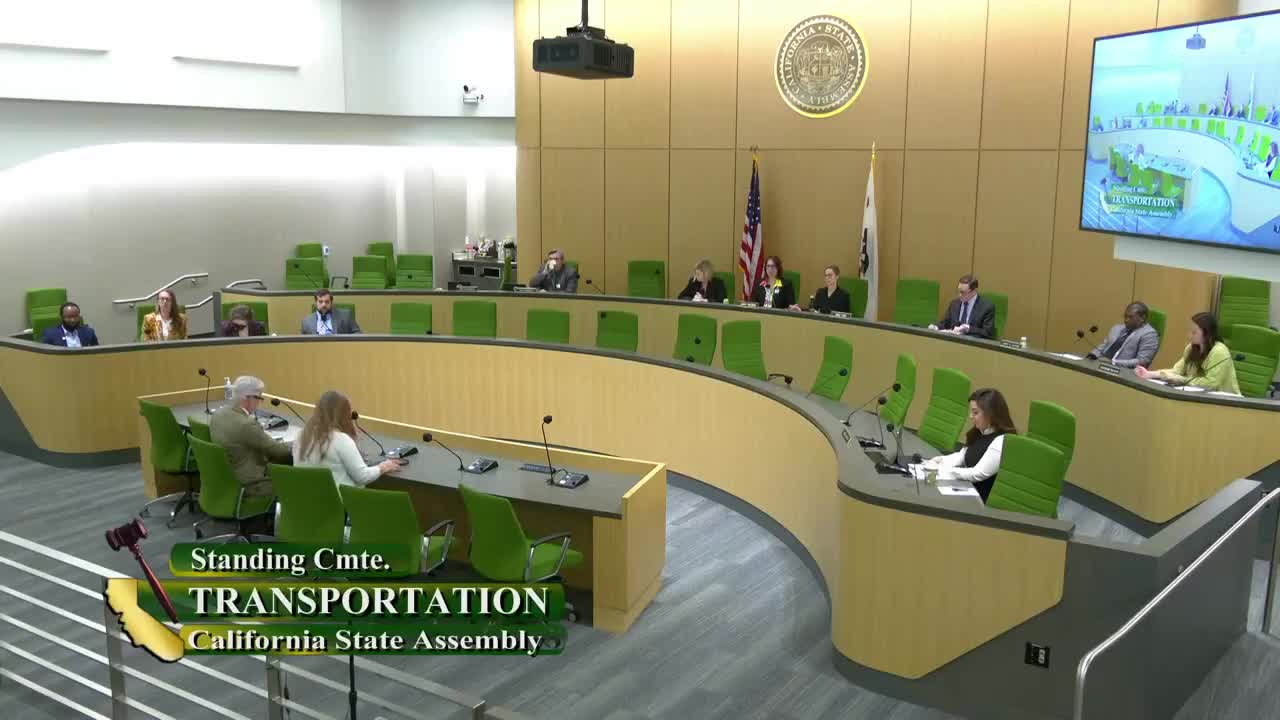
Bill Author

Bill Co-Author(s):