AB 1358: Renewable energy generation: transmission planning: report.
- Session Year: 2023-2024
- House: Assembly
- Latest Version Date: 2023-04-06
Current Status:
Failed
(2024-02-01: From committee: Filed with the Chief Clerk pursuant to Joint Rule 56.)
Introduced
In Committee
First Chamber
In Committee
Second Chamber
Enacted
Existing law establishes the California Renewables Portfolio Standard Program to attain a target of generating 20% of total retail sales of electricity in California from eligible renewable energy resources, as defined, by December 31, 2013, 33% by December 31, 2020, 50% by December 31, 2026, and 60% by December 31, 2030. Existing law requires the Public Utilities Commission (PUC), as part of that program, to establish the quantity of electricity products from eligible renewable energy resources to be procured by each retail seller for each compliance period, and requires those quantities to reflect reasonable progress in each of the intervening years sufficient to ensure that the procurement of electricity products from eligible renewable energy resources achieves 25% of retail sales by December 31, 2016, 33% by December 31, 2020, 44% by December 31, 2024, 52% by December 31, 2027, and 60% by December 31, 2030. Existing law requires each local publicly owned electric utility to adopt and implement a renewable energy resources procurement plan to achieve those same specified targets applicable to each retail seller.
Existing law establishes a policy of the state that eligible renewable energy resources and zero-carbon resources supply 90% of all retail sales of electricity to California end-use customers by December 31, 2035, 95% of all retail sales of electricity to California end-use customers by December 31, 2040, 100% of all retail sales of electricity to California end-use customers by December 31, 2045, and 100% of electricity procured to serve all state agencies by December 31, 2035. Existing law requires the PUC, State Energy Resources Conservation and Development Commission, and State Air Resources Board to issue a joint report to the Legislature by January 1, 2021, and at least every 4 years thereafter, that includes, among other things, a review of this policy and the barriers to, and benefits of, achieving the policy.
This bill would require the State Energy Resources Conservation and Development Commission, on or before December 31, 2024, and in consultation with the PUC and Independent System Operator, to conduct a study on how to expedite the interconnection of renewable energy generation in order to achieve the goals described above.This bill would require those entities to also include in the joint report a statewide transmission plan to facilitate the timely attainment of the policy and the targets of the California Renewables Portfolio Standard Program, as specified.
Existing law establishes the California Renewables Portfolio Standard Program to attain a target of generating 20% of total retail sales of electricity in California from eligible renewable energy resources, as defined, by December 31, 2013, 33% by December 31, 2020, 50% by December 31, 2026, and 60% by December 31, 2030. Existing law requires the Public Utilities Commission (PUC), as part of that program, to establish the quantity of electricity products from eligible renewable energy resources to be procured by each retail seller for each compliance period, and requires those quantities to reflect reasonable progress in each of the intervening years sufficient to ensure that the procurement of electricity products from eligible renewable energy resources achieves 25% of retail sales by December 31, 2016, 33% by December 31, 2020, 44% by December 31, 2024, 52% by December 31, 2027, and 60% by December 31, 2030. Existing law requires each local publicly owned electric utility to adopt and implement a renewable energy resources procurement plan to achieve those same specified targets applicable to each retail seller.
Existing law establishes a policy of the state that eligible renewable energy resources and zero-carbon resources supply 90% of all retail sales of electricity to California end-use customers by December 31, 2035, 95% of all retail sales of electricity to California end-use customers by December 31, 2040, 100% of all retail sales of electricity to California end-use customers by December 31, 2045, and 100% of electricity procured to serve all state agencies by December 31, 2035.
This bill would establish, until January 1, 2029, the Tracking Energy Development Taskforce, which would comprise representatives from the PUC, State Energy Resources Conservation and Development Commission, Independent System Operator, and Governors Office of Business and Economic Development. The bill would require the taskforce to develop policy recommendations to achieve the goals described above and submit those recommendations to the Legislature on or before July 1, 2025.This bill would require the State Energy Resources Conservation and Development Commission, on or before December 31, 2024, and in consultation with the PUC and Independent System Operator, to conduct a study on how to expedite the interconnection of renewable energy generation in order to achieve the goals described above.
Existing law establishes the California Renewables Portfolio Standard Program to attain a target of generating 20% of total retail sales of electricity in California from eligible renewable energy resources, as defined, by December 31, 2013, 33% by December 31, 2020, 50% by December 31, 2026, and 60% by December 31, 2030. Existing law requires the Public Utilities Commission (PUC), as part of that program, to establish the quantity of electricity products from eligible renewable energy resources to be procured by each retail seller for each compliance period, and requires those quantities to reflect reasonable progress in each of the intervening years sufficient to ensure that the procurement of electricity products from eligible renewable energy resources achieves 25% of retail sales by December 31, 2016, 33% by December 31, 2020, 44% by December 31, 2024, 52% by December 31, 2027, and 60% by December 31, 2030. Existing law requires each local publicly owned electric utility to adopt and implement a renewable energy resources procurement plan to achieve those same specified targets applicable to each retail seller.
Existing law establishes a policy of the state that eligible renewable energy resources and zero-carbon resources supply 90% of all retail sales of electricity to California end-use customers by December 31, 2035, 95% of all retail sales of electricity to California end-use customers by December 31, 2040, 100% of all retail sales of electricity to California end-use customers by December 31, 2045, and 100% of electricity procured to serve all state agencies by December 31, 2035.
This bill would establish, until January 1, 2029, the Tracking Energy Development Taskforce, which would comprise representatives from the PUC, State Energy Resources Conservation and Development Commission, Independent System Operator, and Governors Office of Business and Economic Development. The bill would require the taskforce to develop policy recommendations to achieve the goals described above and submit those recommendations to the Legislature on or before July 1, 2025.
It is the intent of the Legislature in enacting this bill to require planning for any new transmission that is needed to meet Californias renewable energy and clean energy goals.
SEC. 2.Section 454.53 of the Public Utilities Code is amended to read:454.53.(a)It is the policy of the state that eligible renewable energy resources and zero-carbon resources supply 90 percent of all retail sales of electricity to California end-use customers by December 31, 2035, 95 percent of all retail sales of electricity to California end-use customers by December 31, 2040, 100 percent of all retail sales of electricity to California end-use customers by December 31, 2045, and 100 percent of electricity procured to serve all state agencies by December 31, 2035. The achievement of this policy for California shall not increase carbon emissions elsewhere in the western grid and shall not allow resource shuffling. The commission and Energy Commission, in consultation with the State Air Resources Board, shall take steps to ensure that a transition to a zero-carbon electric system for the State of California does not cause or contribute to greenhouse gas emissions increases elsewhere in the western grid, and is undertaken in a manner consistent with clause 3 of Section 8 of Article I of the United States Constitution. The commission, the Energy Commission, the State Air Resources Board, and all other state agencies shall incorporate this policy into all relevant planning.
(b)The commission, Energy Commission, State Air Resources Board, and all other state agencies shall ensure that actions taken in furtherance of subdivision (a) do all of the following:
(1)Maintain and protect the safety, reliable operation, and balancing of the electric system.
(2)Prevent unreasonable impacts to electricity, gas, and water customer rates and bills resulting from implementation of this section, taking into full consideration the economic and environmental costs and benefits of renewable energy and zero-carbon resources.
(3)To the extent feasible and authorized under law, lead to the adoption of policies and taking of actions in other sectors to obtain greenhouse gas emission reductions that ensure equity between other sectors and the electricity sector.
(4)Not affect in any manner the rules and requirements for the oversight of, and enforcement against, retail sellers and local publicly owned electric utilities pursuant to the California Renewables Portfolio Standard Program (Article 16 (commencing with Section 399.11) of Chapter 2.3) and Sections 454.51, 454.52, 9621, and 9622.
(c)Nothing in this section shall affect a retail sellers obligation to comply with the federal Public Utility Regulatory Policies Act of 1978 (16 U.S.C. Sec. 2601 et seq.).
(d)The commission, Energy Commission, and State Air Resources Board shall do all of the following:
(1)Use programs authorized under existing statutes to achieve the policy described in subdivision (a).
(2)In consultation with all California balancing authorities, as defined in subdivision (d) of Section 399.12, as part of a public process, issue a joint report to the Legislature by January 1, 2021, and at least every four years thereafter. The joint report shall include all of the following:
(A)A review of the policy described in subdivision (a) focused on technologies, forecasts, then-existing transmission, and maintaining safety, environmental and public safety protection, affordability, and system and local reliability.
(B)An evaluation identifying the potential benefits and impacts on system and local reliability associated with achieving the policy described in subdivision (a).
(C)An evaluation identifying the nature of any anticipated financial costs and benefits to electric, gas, and water utilities, including customer rate impacts and benefits.
(D)The barriers to, and benefits of, achieving the policy described in subdivision (a).
(E)Alternative scenarios in which the policy described in subdivision (a) can be achieved and the estimated costs and benefits of each scenario.
(F)A statewide transmission plan to facilitate the timely attainment of the policy described in subdivision (a) and the targets of the California Renewables Portfolio Standard Program (Article 16 (commencing with Section 399.11) of Chapter 2.3). The plan shall include, but is not limited to, all of the following:
(i)A comparison of existing transmission infrastructure with the transmission infrastructure that will be required to achieve both the policy described in subdivision (a) and the targets of the California Renewables Portfolio Standard Program.
(ii)A description of the approximate amount and location of new transmission infrastructure in California that will be required in order to achieve both the policy described in subdivision (a) and the targets of the California Renewables Portfolio Standard Program.
(iii)A description of any barriers to, and benefits of, deployment of the new transmission infrastructure described in clause (ii).
(3)On or before December 1, 2023, and annually thereafter, in consultation with California balancing authorities, as defined in subdivision (d) of Section 399.12, and as part of, or an interim addendum to, the quadrennial joint report required by paragraph (2), as applicable, issue a joint reliability progress report that reviews system and local reliability within the context of the policy described in subdivision (a), with a particular focus on summer reliability. The joint reliability progress report shall identify challenges and gaps, if any, to achieving system and local reliability and identify the amount and cause of any delays to achieving compliance with all energy and capacity procurement requirements set by the commission.
(e)Nothing in this section authorizes the commission to establish any requirements on a nonmobile self-cogeneration or cogeneration facility that served onsite load, or that served load pursuant to an over-the-fence arrangement if that arrangement existed on or before December 20, 1995.
(f)This section does not limit any entity, including local governments, from accelerating their achievement of the states electric sector decarbonization targets.
SECTION 1.Section 25234 is added to the Public Resources Code, to read:25234.On or before December 31, 2024, the commission, in consultation with the Public Utilities Commission and Independent System Operator, shall conduct a study on how to expedite the interconnection of renewable energy generation in order to achieve the goals set forth in the following provisions:(a)Subdivision (a) of Section 399.11 of the Public Utilities Code.(b)Subparagraph (B) of paragraph (2) of subdivision (b) of section 399.15 of the Public Utilities Code.(c)Paragraph (2) of subdivision (c) of Section 399.30 of the Public Utilities Code.(d)Subdivision (a) of Section 454.53 of the Public Utilities Code.On or before December 31, 2024, the commission, in consultation with the Public Utilities Commission and Independent System Operator, shall conduct a study on how to expedite the interconnection of renewable energy generation in order to achieve the goals set forth in the following provisions:
(a)Subdivision (a) of Section 399.11 of the Public Utilities Code.
(b)Subparagraph (B) of paragraph (2) of subdivision (b) of section 399.15 of the Public Utilities Code.
(c)Paragraph (2) of subdivision (c) of Section 399.30 of the Public Utilities Code.
(d)Subdivision (a) of Section 454.53 of the Public Utilities Code.
SECTION 1.Section 360.3 is added to the Public Utilities Code, to read:360.3.(a)There is hereby established the Tracking Energy Development Taskforce.(b)The Tracking Energy Development Taskforce shall comprise representatives from the commission, Energy Commission, Independent System Operator, and Governors Office of Business and Economic Development.(c)The Tracking Energy Development Taskforce shall develop policy recommendations to achieve the goals set forth in the following provisions:(1)Subdivision (a) of Section 399.11.(2)Subparagraph (B) of paragraph (2) of subdivision (b) of Section 399.15.(3)Paragraph (2) of subdivision (c) of Section 399.30.(4)Subdivision (a) of Section 454.53.(d)The Tracking Energy Development Taskforce shall submit the policy recommendations developed pursuant to subdivision (c) to the Legislature on or before July 1, 2025.(e)(1)Policy recommendations to be submitted pursuant to subdivision (d) shall be submitted in compliance with Section 9795 of the Government Code.(2)Pursuant to Section 10231.5 of the Government Code, this section is repealed on January 1, 2029.(a)There is hereby established the Tracking Energy Development Taskforce.
(b)The Tracking Energy Development Taskforce shall comprise representatives from the commission, Energy Commission, Independent System Operator, and Governors Office of Business and Economic Development.
(c)The Tracking Energy Development Taskforce shall develop policy recommendations to achieve the goals set forth in the following provisions:
(1)Subdivision (a) of Section 399.11.
(2)Subparagraph (B) of paragraph (2) of subdivision (b) of Section 399.15.
(3)Paragraph (2) of subdivision (c) of Section 399.30.
(4)Subdivision (a) of Section 454.53.
(d)The Tracking Energy Development Taskforce shall submit the policy recommendations developed pursuant to subdivision (c) to the Legislature on or before July 1, 2025.
(e)(1)Policy recommendations to be submitted pursuant to subdivision (d) shall be submitted in compliance with Section 9795 of the Government Code.
(2)Pursuant to Section 10231.5 of the Government Code, this section is repealed on January 1, 2029.
|
Date
|
Status
|
|---|---|
| Feb 1, 2024 | From committee: Filed with the Chief Clerk pursuant to Joint Rule 56. |
| Jan 31, 2024 | Died pursuant to Art. IV, Sec. 10(c) of the Constitution. |
| May 18, 2023 | In committee: Held under submission. |
| May 18, 2023 | Joint Rule 62(a), file notice suspended. (Page 1580.) |
| May 17, 2023 | In committee: Set, first hearing. Referred to APPR. suspense file. |
| May 10, 2023 | In committee: Hearing postponed by committee. |
| Apr 27, 2023 | From committee: Do pass and re-refer to Com. on APPR. (Ayes 13. Noes 0.) (April 26). Re-referred to Com. on APPR. |
| Apr 7, 2023 | Re-referred to Com. on U. & E. |
| Apr 6, 2023 | From committee chair, with author's amendments: Amend, and re-refer to Com. on U. & E. Read second time and amended. |
| Apr 5, 2023 | In committee: Set, first hearing. Hearing canceled at the request of author. |
| Apr 3, 2023 | Re-referred to Com. on U. & E. |
| Mar 30, 2023 | From committee chair, with author's amendments: Amend, and re-refer to Com. on U. & E. Read second time and amended. |
| Mar 9, 2023 | Referred to Coms. on U. & E. and NAT. RES. |
| Feb 18, 2023 | From printer. May be heard in committee March 20. |
| Feb 17, 2023 | Read first time. To print. |
|
Date
|
Description
|
Location
|
Votes
|
|
|---|---|---|---|---|
| Apr 26, 2023 | Do pass and be re-referred to the Committee on [Appropriations] | Assembly Standing Committee on Utilities and Energy |
Passed |
This list shows positions taken on this bill by organizations on the date displayed, which is linked to the original source.
Positions by individuals are not included.
|
Organization
|
Position
|
Date
|
|---|---|---|
| City of Culver City | ** Support | |
| Clean Power Campaign | ** Support | |
| Sempra Energy And Its Affiliates: San Diego Gas & Electric Company And Southern California Gas Company | ** Against |
Date of Hearing: May 17, 2023
ASSEMBLY COMMITTEE ON APPROPRIATIONS
Chris Holden, Chair
ABPCA Bill Id:AB 1358
Author:(Muratsuchi) – As Amended Ver:April 6, 2023
Policy Committee: | Utilities and Energy | Vote: | 13 - 0 |
|
| ||
|
|
Urgency: No State Mandated Local Program: No Reimbursable: No
SUMMARY:
This bill directs the joint agencies—the California Energy Commission (CEC), the California Public Utilities Commission (CPUC) and the Air Resources Board (ARB)—to include in the periodic report they produce with California balancing authorities on achieving the state’s clean and renewable energy goals a statewide transmission plan to facilitate the timely attainment of those goals.
FISCAL EFFECT:
The CPUC anticipates one regulatory position, at a cost of $171,000 annually, to work with CEC and ARB to produce a statewide transmission plan, as required by this bill. The CPUC contends this work largely will be duplicative of the work the agency does as part of the California Independent System Operator’s (CAISO) transmission planning process (TPP).
Costs to CEC and ARB should be minor and absorbable.
COMMENTS:
- Purpose. The author contends California must undertake the work required by this bill to enable it to achieve its clean energy goals.
- Background. The state has ambitious clean energy goals. To achieve those goals, the state will need significant expansion of its electrical transmission system.
Planning for transmission involves several entities and several interrelated processes. CAISO—a nonprofit public benefit corporation established by state law and operating under federal regulation—directs the operations of transmission facilities and is responsible for the reliability of such facilities, and ensures electric reliability across much of California and a small part of Nevada by balancing electricity supply and demand at every moment. The electrical transmission system under CAISO’s direction is often referred to as “the grid.” Each year, CAISO conducts a TPP to identify inadequacies of the grid and upgrades needed to ensure reliability and meet state policy goals, such as renewable energy procurement.
The CPUC, as directed by statute, regularly develops integrated resource plans (IRPs) to “identify a diverse and balanced portfolio of resources needed to ensure a reliable electricity supply that provides optimal integration of renewable energy in a cost-effective manner.” The CPUC’s IRPs are an input into CAISO’s TPP.
Foundational to the work of both the CAISO and the CPUC is the CEC’s forecast of demand for electricity and natural gas, both for California as a whole, but also for regions and subregions. Traditionally, the CEC’s demand forecast has looked out ten years but the CEC’s demand forecast published in January 2022 looked out 15 years.
Building off of, but distinct from these processes, CAISO, in collaboration with the CPUC and the CEC, published its “CAISO 20-year Transmission Outlook.” CAISO describes its purpose in creating the 20-year outlook as follows:
CAISO has found that a longer-term blueprint is essential to chart the transmission planning horizon beyond the conventional 10-year timeframe that has been used in the past…The CAISO embarked on creating this 20-Year Transmission Outlook for the grid in collaboration with the California Public Utilities Commission (CPUC) and the California Energy Commission (CEC) with the goal of exploring the longer-term grid requirements and options for meeting the State’s greenhouse gas reduction and renewable energy objectives reliably and cost-effectively…We also intend for this expanded planning horizon to provide valuable input for resource planning processes conducted by the CPUC and CEC, and to provide a longer-term context and framing of pertinent issues in the CAISO’s ongoing annual 10-Year Transmission Plan.
Recently, the CPUC, CEC, CAISO and the Governor’s Office of Business and Economic Development instituted the “Tracking Energy Development (TED) Taskforce.” The taskforce is to track new energy projects under development to provide energy resource project development support and identify barriers and mitigation strategies to accelerate energy project development. The work of the taskforce led to the Transmission Development Forum, a CAISO-led initiative, which began in 2022, to provide timely updates to generators, developers, load-serving entities and interested stakeholders about the status of specific transmission upgrades.
Analysis Prepared by: Jay Dickenson / APPR. / (916) 319-2081
Date of Hearing: April 26, 2023
ASSEMBLY COMMITTEE ON UTILITIES AND ENERGY
Eduardo Garcia, Chair
ABPCA Bill Id:AB 1358 (
Author:Muratsuchi) – As Amended Ver:April 6, 2023
SUBJECT: Renewable energy generation: transmission planning: report
SUMMARY: Requires the state energy agencies, as part of their joint report reviewing and evaluating the statewide 100% clean energy policy (SB 100, De León, Chapter 312, Statutes of 2018), to develop a statewide transmission plan to facilitate the timely attainment of the SB 100 Policy and the California Renewables Portfolio Standard (RPS) program targets. Requires the plan include a comparison of existing transmission with the transmission needed to achieve these policies; a description of the approximate amount and location of new transmission needed to achieve these policies; and any barriers to new transmission.
EXISTING LAW:
- Establishes as the policy of the state that eligible renewable energy resources and zero-carbon resources supply 100% of all retail sales of electricity to California end-use customers by December 31, 2045 and 100% of electricity procured to serve all state agencies by December 31, 2035 (SB 100 policy). Requires the California Public Utilities Commission (CPUC), in consultation with the California Energy Commission (CEC), the California Air Resources Board (CARB), and all California balancing authorities (BAs), to issue a joint report to the Legislature by January 1, 2021, and every four years after, reviewing and evaluating the 100% clean energy policy. (Public Utilities Code § 454.53)
- Requires retail sellers and publicly owned utilities to increase purchases of renewable energy such that at least 60% of retail sales are procured from eligible renewable energy resources by December 31, 2030. This is known as the RPS. (Public Utilities Code § 399.11 et seq.)
- Requires the CEC and CPUC to submit quarterly reports including information on existing and expected resources, including updates on interconnection status for renewable projects and delays. (Public Resources Code § 25233 (a)(5))
- Requires the CEC, in consultation with the CPUC, California Independent System Operator (CAISO), transmission owners, users, and consumers, to adopt a strategic plan for the state’s electrical transmission grid to ensure reliability, relieve congestion, and meet future growth in load and generation. (Public Resources Code § 25324)
- Requires every investor-owned utility that owns transmission to annually identify and report to the CPUC any electrical transmission facility, upgrade, or enhancement that is reasonably necessary to achieve its Renewables Portfolio Standard (RPS) requirements looking out five years. (Public Utilities Code § 399.13 (a)(2)(A))
- Requires the CPUC to consider the role of existing renewable generation, grid operational efficiencies, energy storage, and distributed energy resources in helping to ensure load-serving entities (LSEs) meet energy and reliability needs during peak demand, while reducing the need for new electricity generation resources and new transmission resources in achieving the state’s energy goals at the least cost to ratepayers. (Public Utilities Code § 454.52 (a)(2)(B)(3))
- Establishes the CAISO as a nonprofit public benefit corporation and requires the CAISO to ensure efficient use and reliable operation of the electrical transmission grid consistent with achieving planning and operating reserve criteria. (Public Utilities Code § 345.5)
FISCAL EFFECT: Unknown. This bill is keyed fiscal and will be referred to the Committee on Appropriations for its review.
BACKGROUND:
The Integrated Resource Plan (IRP) (mid- to long-term procurement) – Since 2015, with the passage of SB 350 (De León, Chapter 547, Statutes of 2015), California regulators have worked to identify a diverse mix of resources to achieve our RPS goals. SB 350 requires the CPUC to adopt a process for each LSE to file an IRP starting in 2017 and for each publicly-owned utility (POU) to file an IRP by January 1, 2019. The goal of the IRP is to reduce the cost of achieving greenhouse gas (GHG) emission reductions by looking broadly at system needs, rather than at individual LSEs or resource types, in order to identify generation that reduces GHGs, improves reliability, and reduces overall cost. Compliance with the RPS program occurs separately, but in concert with, the resource mixes selected by LSEs’ IRP filings.
The IRP operates on a 2-year planning cycle, and forecasts system needs 10 years into the future. The most recent IRP analysis identified almost 86 gigawatts (GW) of new resources needed by 2035,[1] arising from a mix of geothermal, land-based wind, offshore wind, solar, battery storage, pumped storage, and demand response.[2] This portfolio represents a more than doubling within 12 years of the current nameplate capacity on the system; an enormous goal.
SB 100 Report (long-term procurement planning) – While the IRP focuses on what energy mix is best suited to meet our GHG and reliability goals 10 years into the future, the Joint Agency SB 100 Report looks at a planning horizon 22 years out, to determine how best to implement the 100%-clean-electricity-by-2045 policy enacted under SB 100 (De León, Chapter 312, Statutes of 2018).[3] The first SB 100 report was finalized in March 2021, and included analyses of many pathways to achieve the state’s 2045 clean energy goal.[4] The SB 100 Report will be updated every four years, with future work focused on system reliability,[5] among other considerations.
Transmission Planning Process (TPP) – Each year, the CAISO conducts its TPP to identify potential system limitations as well as transmission projects in need of upgrades or new infrastructure in need of construction to improve reliability and efficiency.[6] The TPP fulfills the CAISO’s core responsibility to identify and develop solutions to meet the future needs of the electricity grid. The TPP relies on the CPUC’s IRP process[7] to identify the optimal mix of system-wide resources capable of meeting greenhouse gas planning targets for the electric sector.[8] CAISO receives the IRP results as inputs into its TPP. In February 2022, the CPUC transferred the electric resource portfolios to the CAISO to begin the CAISO’s 2022-2023 TPP.[9] The CAISO also receives the CEC’s demand forecast of electricity and natural gas sales, consumption, and peak and hourly electricity demand.
The development of the TPP entails an annual public stakeholder process that is conducted pursuant to the CAISO’s FERC-approved tariff. It includes a three-phase process that leads to annual CAISO Board of Governors’ approval of a transmission plan and associated transmission projects. There are three main categories of CAISO approved transmission projects:
- Reliability projects to meet federal standards;
- Policy projects to meet state policy goals (i.e., RPS-needed projects);
- Economic projects that reduce congestion, production costs, transmission losses, capacity requirements or other electric supply costs.
Following the CAISO Board’s approval of a TPP, new projects that are identified as necessary go through a competitive solicitation process. Transmission developers – which may be public or investor-owned utilities or private, for-profit entities – apply for the project solicitation and those applications are evaluated on a number of qualifying criteria, including cost. The CAISO recently issued its draft 2022-2023 TPP on April 3, 2023,[10] and identified 46 projects – at an estimated $9.3 billion – needed for reliability and to meet state policy goals; four of these projects are eligible for competitive solicitation.[11] The draft plan is currently under stakeholder review, and requires CAISO board approval before any transmission is authorized.
CAISO’s 20-Year Outlook – In early 2022, the CAISO published a study outside their normal TPP cycle to explore the longer-term grid requirements and options for meeting the State’s GHG reduction and RPS objectives reliably and cost-effectively.[12] The CAISO embarked on this study to evaluate what transmission needs would be necessary to meet new resource development as required under SB 100 and the increase in demand from electrification of transportation and other industries. The CAISO noted the projected “transmission needs will range from high-voltage lines that traverse significant distances to access out-of-state resources, as well as major generation pockets, including offshore wind and geothermal resources located inside the state. Given the lead times needed for these facilities primarily due to right-of-way acquisition and environmental permitting requirements, the CAISO has found that the longer-term blueprint is essential to chart the transmission planning horizon beyond the conventional 10-year timeframe,”[13] as used in the TPPs. The CAISO collaborated with the CEC and CPUC on the analysis. The resulting plan estimated over $30 billion in cost would be needed to meet our 2045 clean energy goals; $10.7 billion for upgrades to existing infrastructure, $8.1 billion for offshore wind integration, and $11.6 billion for out-of-state wind integration.[14] The CAISO noted the 20-Year Outlook would provide a baseline to guide long-term planning, but cautioned that resource planning and procurement will likely differ over the years relative to the assumptions made in the report.
Tracking Energy Development (TED) Task Force – The TED Taskforce is a recent joint effort of the CPUC, CEC, CAISO, and Office of Business and Economic Development (GO-Biz) to track new energy projects under development. According to the CPUC, the objective is to build on the success of ad hoc 2021 efforts to provide energy resource project development support, as appropriate, and identify barriers and mitigation strategies to accelerate energy project development. These include project tracking, interconnection tracking and support, and status updates on transmission development. Currently, the TED Taskforce is focused on near-term projects, with roughly 200 contracted projects needed for summer reliability in 2022 and 2024.
As part of the work of the TED Taskforce, the Transmission Development Forum, a CAISO-led initiative, began in 2022 to provide timely updates to generator developers, LSEs, and interested stakeholders about the status of specific transmission upgrades. As part of the Forum, the CAISO and CPUC host quarterly calls to increase understanding of transmission projects in the pipeline and likely in-service dates.
COMMENTS:
- Author’s Statement. According to the author, “As California moves towards a renewable energy future, we must dramatically increase transmission buildout in the state. Some estimates have found that California will need to triple its transmission capacity by 2040 – a goal that is unattainable through the current transmission facility approval process. Many Californians have already begun to feel the effects of a strained grid through recent Public Safety Power Shutoffs and, in 2020, the first rolling blackouts in nearly 20 years. AB 1358 is an important step in understanding the actions that must be taken to achieve our renewable energy goals in a timely manner.”
- A New Plan. This bill calls for the CPUC, CEC, and CARB to develop a statewide transmission plan to facilitate the timely attainment of the SB 100 Policy and the California Renewables Portfolio Standard (RPS) program targets. The plan would be submitted as part of the four-year SB 100 Report, which will next be delivered in 2025. Transmission development, as noted in the CAISO 20-Year Outlook and the work of the TED Taskforce, is a key element in ensuring our statewide clean energy goals are met. The plan called for under this bill seems to align with these objectives.
Even the 2021 SB 100 report acknowledged the need, by noting future SB 100 reports would incorporate findings and outcomes from transmission planning and development efforts.[15] However it is unclear why this bill calls for the transmission planning development to occur outside of CAISO, especially when CAISO has already begun the efforts with its 20-Year Outlook. Statute requires the SB 100 Report to be developed “in consultation with all California balancing authorities (BAs)” which would be inclusive of CAISO, as well as other California BAs like Los Angeles Department of Water and Power and the Balancing Authority of Northern California. Perhaps collaboration is sufficient; or perhaps the author might consider modifying this bill to make explicit the state agencies can fully rely on the transmission planning expertise at CAISO and other BAs to develop any future transmission plans.
- Related Legislation.
SB 319 (McGuire) would require the CEC, CPUC, and CAISO to jointly develop and recommend an expedited permitting roadmap that describes timeframes and milestones for a coordinated, comprehensive, and efficient permitting process for electrical transmission infrastructure. Status: pending hearing in the Senate Committee on Energy, Utilities and Communications.
- Prior Legislation.
AB 2696 (Garcia, 2022) would have required the CEC, in consultation with other agencies, to conduct a study to review potential lower cost ownership and alternative financing mechanisms for new transmission facilities. Status: Died – Senate Committee on Appropriations.
SB 529 (Hertzberg) requires the CPUC to update its rules to allow each electric IOU to use an accelerated process for approval to construct an extension, expansion, upgrade or other modification to its existing electric transmission facilities. Status: Chapter 357, Statutes of 2022.
SB 100 (De León) established the 100 Percent Clean Energy Act of 2018 which increases the RPS requirement from 50% by 2030 to 60%, and created the policy of planning to meet all of the state's retail electricity supply with a mix of RPS-eligible and zero-carbon resources by December 31, 2045, for a total of 100% clean energy. Status: Chapter 312, Statutes of 2018.
REGISTERED SUPPORT / OPPOSITION:
Support
City of Culver City
Clean Power Campaign
Oppose
Sempra Energy and Its Affiliates: San Diego Gas & Electric Company and Southern California Gas Company
Analysis Prepared by: Laura Shybut / U. & E. / (916) 319-2083
Pg. 47; 30 MMT scenario resource stack; CPUC, Decision Ordering Supplemental Mid-term Reliability Procurement (2026-2027) and Transmitting Electric Resource Portfolios to CAIS for 2023-2024 TPP; D. 23-02-040; February 23, 2023. https://docs.cpuc.ca.gov/SearchRes.aspx?DocFormat=ALL&DocID=502956567 ↑
Pg. 48; CPUC, D. 23-02-040; Ibid. ↑
CEC, CPUC, & CARB; 2021 SB 100 Joint Agency Report: Achieving 100 Percent Clean Electricity in California: An Initial Assessment;” March 2021. ↑
Pg. 12, 2021 SB 100 Report. ↑
Pg. 1, 2021 SB 100 Report. ↑
There are other transmission planning efforts, including local capacity requirements, special studies, interregional transmission project, and others that are not mentioned here for sake of clarity. ↑
Called for under SB 350 (De León, Chapter 547, Statutes of 2015) ↑
Via the Reference System Plan (RSP) and Preferred System Plan (PSP). The CPUC creates the Reference System Plan (RSP) to meet the electric sector target informed by the California Air Resources Board Climate Change Scoping Plan. The CPUC uses this RSP to establish filing requirements for the load-serving entities. The second year considers the procurement each load-serving entity proposes to meet these GHG targets. As each load-serving entity has its own local constraints to consider, each files its own plan. The CPUC reviews, modifies, and aggregates these individual load-serving entities’ plans into a preferred system plan (PSP). Based on the approved PSP, the CPUC considers authorizing load-serving entities to procure resources within the next 1-3 years to meet GHG planning targets. ↑
D. 22-02-004 Decision Adopting 2021 Preferred System Plan; R. 20-05-003; issued February 15, 2022; https://docs.cpuc.ca.gov/PublishedDocs/Published/G000/M451/K412/451412947.PDF. ↑
CAISO 2022-2023 Draft Transmission Plan. ↑
Pg. 7 CAISO 2022-2023 Draft Transmission Plan. ↑
CAISO 20-Year Transmission Outlook, January 31, 2022; http://www.caiso.com/InitiativeDocuments/Draft20-YearTransmissionOutlook.pdf ↑
Pg. 1, Ibid. ↑
Pg. 3, Ibid. ↑
Pg. 21 2021 SB 100 Report. ↑
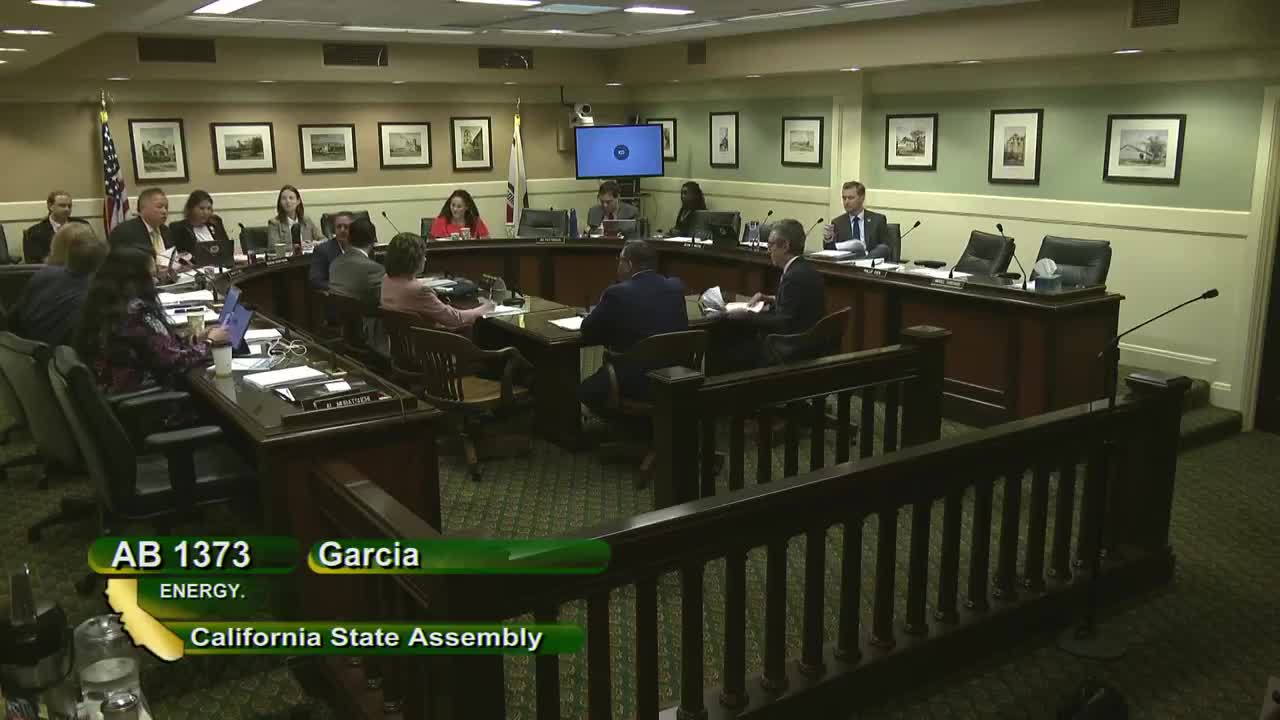
Discussed in Hearing
 2MIN
Assembly Standing Committee on Utilities and Energy
Bill Author

Bill Co-Author(s):