AB 1377: Homeless Housing, Assistance, and Prevention Program.
- Session Year: 2023-2024
- House: Assembly
- Latest Version Date: 2023-10-10
Current Status:
Passed
(2023-10-10: Chaptered by Secretary of State - Chapter 728, Statutes of 2023.)
Introduced
In Committee
First Chamber
In Committee
Second Chamber
Enacted
What does this bill do?
The bill requires applicants for additional state homelessness funding to include data and a brief narrative showing specific, measurable steps they have taken to improve housing and services for people experiencing or at risk of homelessness on transit facilities (for example, buses, trains, and stations). It clarifies that “transit agency” includes public transit operators and agencies that run state-supported intercity or commuter rail.
The summary is provided by generative AI which can make mistakes. For original language, please view the details in the table below.
Existing law establishes, among various other programs intended to address homelessness in this state, the Homeless Housing, Assistance, and Prevention program for the purpose of providing jurisdictions with one-time grant funds to support regional coordination and expand or develop local capacity to address their immediate homelessness challenges informed by a best-practices framework focused on moving homeless individuals and families into permanent housing and supporting the efforts of those individuals and families to maintain their permanent housing. Existing law provides for the allocation of funding under the program among continuums of care, cities, counties, and tribes in 4 rounds, which are to be administered by the Interagency Council on Homelessness.
This bill would require applications or planning materials for additional state funding appropriated on or after July 1, 2024, as specified, to include data and a narrative summary of specific and quantifiable steps that the applicant has taken to improve the delivery of housing and services to people experiencing homelessness or at risk of homelessness on transit facilities owned and operated by a transit agency, as defined.
Existing law establishes, among various other programs intended to address homelessness in this state, the Homeless Housing, Assistance, and Prevention program for the purpose of providing jurisdictions with one-time grant funds to support regional coordination and expand or develop local capacity to address their immediate homelessness challenges informed by a best-practices framework focused on moving homeless individuals and families into permanent housing and supporting the efforts of those individuals and families to maintain their permanent housing. Existing law provides for the allocation of funding under the program among continuums of care, cities, counties, and tribes in 4 rounds, which are to be administered by the Interagency Council on Homelessness.
Existing law, beginning with round 3 of the program, requires applicants to provide specified information for all rounds of program allocations through a data collection, reporting, performance monitoring, and accountability framework, as established by the council. This includes data on the applicants progress towards meeting their outcome goals, to be submitted annually, for each year of the program, and other information if the applicant has not made significant progress towards those goals.This bill would also require data and a narrative summary of specific and quantifiable steps that the applicant has taken to improve the delivery of housing and services to people experiencing homelessness or at risk of homelessness, on transit facilities owned and operated by a transit agency, as defined.This bill would require applications or planning materials for additional state funding appropriated on or after July 1, 2024, as specified, to include data and a narrative summary of specific and quantifiable steps that the applicant has taken to improve the delivery of housing and services to people experiencing homelessness or at risk of homelessness on transit facilities owned and operated by a transit agency, as defined.
Existing law establishes, among various other programs intended to address homelessness in this state, the Homeless Housing, Assistance, and Prevention program for the purpose of providing jurisdictions with one-time grant funds to support regional coordination and expand or develop local capacity to address their immediate homelessness challenges informed by a best-practices framework focused on moving homeless individuals and families into permanent housing and supporting the efforts of those individuals and families to maintain their permanent housing. Existing law provides for the allocation of funding under the program among continuums of care, cities, counties, and tribes in 4 rounds, which are to be administered by the Interagency Council on Homelessness.
Existing law, beginning with round 3 of the program, requires applicants to provide specified information for all rounds of program allocations through a data collection, reporting, performance monitoring, and accountability framework, as established by the council. This includes data on the applicants progress towards meeting their outcome goals, to be submitted annually, for each year of the program, and other information if the applicant has not made significant progress towards those goals.
This bill would also require data and a narrative summary of specific and quantifiable steps that the applicant has taken to improve the delivery of housing and services to people experiencing homelessness or at risk of homelessness, on transit facilities owned and operated by a transit district, agency, as defined, in their jurisdiction. defined.
Existing law establishes, among various other programs intended to address homelessness in this state, the Homeless Housing, Assistance, and Prevention program for the purpose of providing jurisdictions with one-time grant funds to support regional coordination and expand or develop local capacity to address their immediate homelessness challenges informed by a best-practices framework focused on moving homeless individuals and families into permanent housing and supporting the efforts of those individuals and families to maintain their permanent housing. Existing law provides for the allocation of funding under the program among continuums of care, cities, counties, and tribes in 4 rounds, which are to be administered by the Interagency Council on Homelessness.
Existing law, beginning with round 3 of the program, requires applicants to provide specified information for all rounds of program allocations through a data collection, reporting, performance monitoring, and accountability framework, as established by the council. This includes data on the applicants progress towards meeting their outcome goals, to be submitted annually, for each year of the program, and other information if the applicant has not made significant progress towards those goals.
This bill would also require data and a narrative summary of specific and quantifiable steps that the applicant has taken to improve the delivery of housing and services to people experiencing homelessness or at risk of homelessness, on transit properties that operate facilities owned and operated by a transit district, as defined, in their juridiction. jurisdiction.
Existing law establishes, among various other programs intended to address homelessness in this state, the Homeless Housing, Assistance, and Prevention program for the purpose of providing jurisdictions with one-time grant funds to support regional coordination and expand or develop local capacity to address their immediate homelessness challenges informed by a best-practices framework focused on moving homeless individuals and families into permanent housing and supporting the efforts of those individuals and families to maintain their permanent housing. Existing law provides for the allocation of funding under the program among continuums of care, cities, counties, and tribes in 4 rounds, which are to be administered by the Interagency Council on Homelessness.
Existing law, beginning with round 3 of the program, requires applicants to provide specified information for all rounds of program allocations through a data collection, reporting, performance monitoring, and accountability framework, as established by the council. This includes data on the applicants progress towards meeting their outcome goals, to be submitted annually, for each year of the program, and other information if the applicant has not made significant progress towards those goals.
This bill would also require data and a narrative summary of specific and quantifiable steps that the applicant has taken to improve the delivery of housing and services to people experiencing homelessness or at risk of homelessness, on transit properties that operate in their juridiction.
Existing law requires the Governor to establish the Interagency Council on Homelessness, and requires the council to, among other things, identify mainstream resources, benefits, and services that can be accessed to prevent and end homelessness in California, and promote systems integration to increase efficiency and effectiveness while focusing on designing systems to address the needs of people experiencing homelessness. Existing law requires the council to regularly seek guidance from and, at least twice a year, meet with an advisory committee.Existing law sets forth the composition of the advisory committee, which includes, among others, representatives of local agencies or organizations that participate in the United States Department of Housing and Urban Developments Continuum of Care Program, stakeholders with expertise in solutions to homelessness and best practices from other states, and representatives of committees on African Americans, youth, and survivors of gender-based violence.This bill would add representatives of California transit agencies whose operations are impacted by homeless persons to the advisory committee.Existing law requires the Governor to establish the Interagency Council on Homelessness, and requires the council to, among other things, identify mainstream resources, benefits, and services that can be accessed to prevent and end homelessness in California, and promote systems integration to increase efficiency and effectiveness while focusing on designing systems to address the needs of people experiencing homelessness. Existing law requires the council to regularly seek guidance from and, at least twice a year, meet with an advisory committee.
Existing law sets forth the composition of the advisory committee, which includes, among others, representatives of local agencies or organizations that participate in the United States Department of Housing and Urban Developments Continuum of Care Program, stakeholders with expertise in solutions to homelessness and best practices from other states, and representatives of committees on African Americans, youth, and survivors of gender-based violence.
This bill would add representatives of California transit agencies whose operations are impacted by homeless persons to the advisory committee.
(a)(1)With respect to the moneys made available pursuant to this section, it is the intent of the Legislature that:
(A)These moneys build on regional coordination developed through previous rounds of funding of the Homeless Emergency Aid Program (Chapter 5 (commencing with Section 50210)), the program established under this chapter, and COVID-19 funding to reduce homelessness.
(B)These moneys continue to build regional collaboration between continuums of care, counties, and cities in a given region, regardless of population, and ultimately be used to develop a unified regional response to homelessness.
(C)These moneys be paired strategically with other local, state, and federal funds provided to address homelessness in order to achieve maximum impact.
(D)These moneys be deployed with the goal of reducing the number of homeless individuals in a given region through investing in long-term solutions, such as permanent housing, and that the state be an integral partner through the provision of technical assistance, sharing of best practices, and implementing an accountability framework to guide the structure of current and future state investments.
(2)(A)It is the intent of the Legislature that additional state funds for homelessness, if provided in future budget years, increase permanent housing exits, further evidence-based solutions for individuals and families experiencing homelessness, consider outcomes from prior funding awards in making future allocations, and include strong accountability measures.
(B)(i)Pursuant to this paragraph, applications or planning materials for additional state funding appropriated on or after July 1, 2024, shall include, to the extent practicable, data and a narrative summary of specific and quantifiable steps that the applicant has taken to improve the delivery of housing and services to people experiencing homelessness or at risk of homelessness on transit facilities owned and operated by a transit agency.
(ii)For purposes of this subparagraph, transit agency means either of the following:
(I)An STA-eligible operator, as defined in Section 99312.2 of the Public Utilities Code.
(II)The public agencies, including joint powers agencies, responsible for state-supported intercity rail or commuter rail services and eligible for funding under Section 99312.3 of the Public Utilities Code.
(iii)Funding made available pursuant to Sections 50237 and 50238 shall not be subject to the requirements of this subparagraph.
(b)Upon appropriation by the Legislature, three hundred million dollars ($300,000,000) of the funds administered pursuant to this chapter shall be available for implementing round 2 of the program, as follows:
(1)Ninety million dollars ($90,000,000) of the funding available pursuant to this section shall be available for continuums of care. The council shall calculate these allocations to a continuum of care based on each continuum of cares proportionate share of the states total homeless population, based on the 2019 homeless point-in-time count. The council shall award no more than 40 percent of the allocation made pursuant to this section and no less than two hundred fifty thousand dollars ($250,000) to an applicant that is a continuum of care.
(2)One hundred thirty millions dollars ($130,000,000) of the funding available pursuant to this section shall be available to each city, or city that is also a county, that has a population of 300,000 or more, as of January 1, 2020, according to data published on the Department of Finances internet website. The council shall calculate the allocation to a city based on the citys proportionate share of the total homeless population of the region served by the continuum of care within which the city is located, based on the 2019 homeless point-in-time count. The agency shall not award more than 45 percent of the program allocation to a city. If more than one recipient within the continuum of care meets the requirements of this paragraph, the proportionate share of funds shall be equally allocated to those jurisdictions.
(3)Eighty million dollars ($80,000,000) of the funding available pursuant to this section shall be available to each county. The council shall calculate the allocation to a county based on the countys proportionate share of the total homeless population of the region served by the continuum of care within which the county is located, based on the 2019 homeless point-in-time count. The agency shall not award more than 40 percent of the allocation made pursuant to this section to a county.
(4)A city, city and county, single continuum of care, or county may apply jointly with a counterpart entity or entities.
(c)Program applicants applying for round 2 grant funds pursuant to this section shall comply with the requirements set forth in Section 50220.5.
(d)Of the amount made available pursuant to subdivision (b), 5 percent shall be set aside for the program administration, including state operations expenditures and technical assistance.
(e)A program recipient shall not use funding from the program allocated under this section to supplant existing local funds for homeless housing, assistance, or prevention.
(f)A program recipient shall use at least 8 percent of the funds allocated under this section for services for homeless youth populations.
(g)Moneys allocated pursuant to this section shall be expended in compliance with Housing First.
(a)Beginning with round 3 of the program, in addition to the data required under Sections 50221 and 50222, applicants shall provide the following information for all rounds of program allocations through a data collection, reporting, performance monitoring, and accountability framework, as established by the council:
(1)(A)Data on the applicants progress towards meeting their outcome goals, which shall be submitted annually on December 31 of each year through the duration of the program.
(B)If the applicant has not made significant progress toward their outcome goals, the applicant shall submit a description of barriers and possible solutions to those barriers.
(C)Applicants that do not demonstrate significant progress towards meeting outcome goals shall accept technical assistance from the council and may also be required to limit the allowable uses of these program funds, as determined by the council.
(D)(i)Data and a narrative summary of specific and quantifiable steps that the applicant has taken to improve the delivery of housing and services to people experiencing homelessness or at risk of homelessness, on transit facilities owned and operated by a transit district, as defined by Section 99213 of the Public Utilities Code, in their jurisdiction. agency.
(ii)For purposes of this subparagraph, transit agency means an STA-eligible operator, as defined in Section 99312.2 of the Public Utilities Code, or the public agencies, including joint powers agencies, responsible for state-supported intercity rail or commuter rail services and eligible for funding under Section 99312.3 of the Public Utilities Code.
(2)(A)A quarterly fiscal report of program funds expended and obligated in each allowable budget category approved in their application for program funds.
(B)If the applicant has not made significant progress toward their outcome goals, then the applicant shall report on their outcome goals in their quarterly report.
(3)The council shall compile and post a statewide report that aggregates each applicants outcome goals into a single statewide set of metrics.
(b)No later than October 1, 2026, each recipient that receives a round 3 program allocation shall submit to the council a final report in a format provided by the council, as well as detailed uses of all program funds.
(c)No later than October 1, 2027, each recipient that receives a round 4 program allocation shall submit to the council a final report in a format provided by the council, as well as detailed uses of all program funds.
(a)Beginning with round 3 of the program, in addition to the data required under Sections 50221 and 50222, applicants shall provide the following information for all rounds of program allocations through a data collection, reporting, performance monitoring, and accountability framework, as established by the council:
(1)(A)Data on the applicants progress towards meeting their outcome goals, which shall be submitted annually on December 31 of each year through the duration of the program.
(B)If the applicant has not made significant progress toward their outcome goals, the applicant shall submit a description of barriers and possible solutions to those barriers.
(C)Applicants that do not demonstrate significant progress towards meeting outcome goals shall accept technical assistance from the council and may also be required to limit the allowable uses of these program funds, as determined by the council.
(D)Data and a narrative summary of specific and quantifiable steps that the applicant has taken to improve the delivery of housing and services to people experiencing homelessness or at risk of homelessness, on transit properties that operate facilities owned and operated by a transit district, as defined by Section 99213 of the Public Utilities Code, in their jurisdiction.
(2)(A)A quarterly fiscal report of program funds expended and obligated in each allowable budget category approved in their application for program funds.
(B)If the applicant has not made significant progress toward their outcome goals, then the applicant shall report on their outcome goals in their quarterly report.
(3)The council shall compile and post a statewide report that aggregates each applicants outcome goals into a single statewide set of metrics.
(b)No later than October 1, 2026, each recipient that receives a round 3 program allocation shall submit to the council a final report in a format provided by the council, as well as detailed uses of all program funds.
(c)No later than October 1, 2027, each recipient that receives a round 4 program allocation shall submit to the council a final report in a format provided by the council, as well as detailed uses of all program funds.
(a)Beginning with round 3 of the program, in addition to the data required under Sections 50221 and 50222, applicants shall provide the following information for all rounds of program allocations through a data collection, reporting, performance monitoring, and accountability framework, as established by the council:
(1)(A)Data on the applicants progress towards meeting their outcome goals, which shall be submitted annually on December 31 of each year through the duration of the program.
(B)If the applicant has not made significant progress toward their outcome goals, the applicant shall submit a description of barriers and possible solutions to those barriers.
(C)Applicants that do not demonstrate significant progress towards meeting outcome goals shall accept technical assistance from the council and may also be required to limit the allowable uses of these program funds, as determined by the council.
(D)Data and a narrative summary of specific and quantifiable steps that the applicant has taken to improve the delivery of housing and services to people experiencing homelessness or at risk of homelessness, on transit properties that operate in their jurisdiction.
(2)(A)A quarterly fiscal report of program funds expended and obligated in each allowable budget category approved in their application for program funds.
(B)If the applicant has not made significant progress toward their outcome goals, then the applicant shall report on their outcome goals in their quarterly report.
(3)The council shall compile and post a statewide report that aggregates each applicants outcome goals into a single statewide set of metrics.
(b)No later than October 1, 2026, each recipient that receives a round 3 program allocation shall submit to the council a final report in a format provided by the council, as well as detailed uses of all program funds.
(c)No later than October 1, 2027, each recipient that receives a round 4 program allocation shall submit to the council a final report in a format provided by the council, as well as detailed uses of all program funds.
SECTION 1.Section 8257 of the Welfare and Institutions Code, as amended by Chapter 671 of the Statutes of 2022, is amended to read:8257.(a)The Governor shall create an Interagency Council on Homelessness.(b)The council shall have all of the following goals:(1)To oversee implementation of this chapter.(2)To identify mainstream resources, benefits, and services that can be accessed to prevent and end homelessness in California.(3)To create partnerships among state agencies and departments, local government agencies, participants in the United States Department of Housing and Urban Developments Continuum of Care Program, federal agencies, the United States Interagency Council on Homelessness, nonprofit entities working to end homelessness, homeless services providers, and the private sector, for the purpose of arriving at specific strategies to end homelessness.(4)To promote systems integration to increase efficiency and effectiveness while focusing on designing systems to address the needs of people experiencing homelessness, including unaccompanied youth under 25 years of age.(5)To coordinate existing funding and applications for competitive funding. Any action taken pursuant to this paragraph shall not restructure or change any existing allocations or allocation formulas.(6)To make policy and procedural recommendations to legislators and other governmental entities.(7)To identify and seek funding opportunities for state entities that have programs to end homelessness, including, but not limited to, federal and philanthropic funding opportunities, and to facilitate and coordinate those state entities efforts to obtain that funding.(8)To broker agreements between state agencies and departments and between state agencies and departments and local jurisdictions to align and coordinate resources, reduce administrative burdens of accessing existing resources, and foster common applications for services, operating, and capital funding.(9)To serve as a statewide facilitator, coordinator, and policy development resource on ending homelessness in California.(10)To report to the Governor, federal Cabinet members, and the Legislature on homelessness and work to reduce homelessness.(11)To ensure accountability and results in meeting the strategies and goals of the council.(12)To identify and implement strategies to fight homelessness in small communities and rural areas.(13)To create a statewide data system or warehouse, which shall be known as the Homeless Data Integration System, that collects local data through Homeless Management Information Systems, with the ultimate goal of matching data on homelessness to programs impacting homeless recipients of state programs, such as the Medi-Cal program (Chapter 7 (commencing with Section 14000) of Part 3 of Division 9) and CalWORKs (Chapter 2 (commencing with Section 11200) of Part 3 of Division 9). Upon creation of the Homeless Data Integration System, all continuums of care, as defined in Section 578.3 of Title 24 of the Code of Federal Regulations, that are operating in California shall provide collected data elements, including, but not limited to, health information, in a manner consistent with federal law, to the Homeless Data Integration System.(A)Council staff shall specify the form and substance of the required data elements.(B)Council staff may, as required by operational necessity, and in accordance with paragraph (8) of subdivision (d) of Section 8256, amend or modify data elements, disclosure formats, or disclosure frequency.(C)To further the efforts to improve the public health, safety, and welfare of people experiencing homelessness in the state, council staff may collect data from the continuums of care as provided in this paragraph.(D)Any health information or personal identifying information provided to, or maintained within, the Homeless Data Integration System shall not be subject to public inspection or disclosure under the California Public Records Act (Chapter 3.5 (commencing with Section 6250) of Division 7 of Title 1 of the Government Code).(E)For purposes of this paragraph, health information includes protected health information, as defined in Part 160.103 of Title 45 of the Code of Federal Regulations, and medical information, as defined in subdivision (j) of Section 56.05 of the Civil Code.(14)To set goals to prevent and end homelessness among Californias youth.(15)To improve the safety, health, and welfare of young people experiencing homelessness in the state.(16)To increase system integration and coordinating efforts to prevent homelessness among youth who are currently or formerly involved in the child welfare system or the juvenile justice system.(17)To lead efforts to coordinate a spectrum of funding, policy, and practice efforts related to young people experiencing homelessness.(18)To identify best practices to ensure homeless minors who may have experienced maltreatment, as described in Section 300, are appropriately referred to, or have the ability to self-refer to, the child welfare system.(19)To collect, compile, and make available to the public financial data provided to the council from all state-funded homelessness programs.(c)(1)The council shall consist of the following members:(A)The Secretary of Business, Consumer Services, and Housing and the Secretary of California Health and Human Services Agency, who both shall serve as cochairs of the council.(B)The Director of Transportation.(C)The Director of Housing and Community Development.(D)The Director of Social Services.(E)The Director of the California Housing Finance Agency.(F)The Director or the State Medicaid Director of Health Care Services.(G)The Secretary of Veterans Affairs.(H)The Secretary of the Department of Corrections and Rehabilitation.(I)The Executive Director of the California Tax Credit Allocation Committee in the Treasurers office.(J)The State Public Health Officer.(K)The Director of the California Department of Aging.(L)The Director of Rehabilitation.(M)The Director of State Hospitals.(N)The executive director of the California Workforce Development Board.(O)The Director of the Office of Emergency Services.(P)A representative from the State Department of Education, who shall be appointed by the Superintendent of Public Instruction.(Q)A representative of the state public higher education system who shall be from one of the following:(i)The California Community Colleges.(ii)The University of California.(iii)The California State University.(2)The Senate Committee on Rules and the Speaker of the Assembly shall each appoint one member to the council from two different stakeholder organizations.(3)The council may, at its discretion, invite stakeholders, individuals who have experienced homelessness, members of philanthropic communities, and experts to participate in meetings or provide information to the council.(4)The council shall hold public meetings at least once every quarter.(d)(1)The council shall regularly seek guidance from and, at least twice a year, meet with an advisory committee. The cochairs of the council shall appoint members to this advisory committee that reflects racial and gender diversity, and shall include the following:(A)A survivor of gender-based violence who formerly experienced homelessness.(B)Representatives of local agencies or organizations that participate in the United States Department of Housing and Urban Developments Continuum of Care Program.(C)Stakeholders with expertise in solutions to homelessness and best practices from other states.(D)Representatives of committees on African Americans, youth, and survivors of gender-based violence.(E)A current or formerly homeless person who lives in California.(F)A current or formerly homeless youth who lives in California.(G)A current or formerly homeless person with a developmental disability.(H)Representatives of California transit agencies whose operations are impacted by homeless persons.(2)This advisory committee shall designate one of the above-described members to participate in every quarterly council meeting to provide a report to the council on advisory committee activities.(e)Within existing funding, the council may establish working groups, task forces, or other structures from within its membership or with outside members to assist it in its work. Working groups, task forces, or other structures established by the council shall determine their own meeting schedules.(f)Upon request of the council, a state agency or department that administers one or more state homelessness programs, including, but not limited to, an agency or department represented on the council pursuant to subdivision (c), the agency or department shall be required to do both of the following:(1)Participate in council workgroups, task forces, or other similar administrative structures.(2)Provide to the council any relevant information regarding those state homelessness programs.(g)The members of the council shall serve without compensation, except that members of the council who are, or have been, homeless may receive reimbursement for travel, per diem, or other expenses. The members of the advisory committee and any council working group shall receive a per diem of one hundred dollars ($100) for each day spent in attendance at advisory committee meetings, and shall also be reimbursed for traveling and other expenses necessarily incurred in the performance of official duties.(h)The appointed members of the council or committees, as described in this section, shall serve at the pleasure of their appointing authority.(i)The Business, Consumer Services, and Housing Agency shall provide staff for the council.(j)The members of the council may enter into memoranda of understanding with other members of the council to achieve the goals set forth in this chapter, as necessary, in order to facilitate communication and cooperation between the entities the members of the council represent.(k)There shall be an executive officer of the council under the direction of the Secretary of Business, Consumer Services, and Housing.(l)The council shall be under the direction of the executive officer and staffed by employees of the Business, Consumer Services, and Housing Agency.(a)The Governor shall create an Interagency Council on Homelessness.
(b)The council shall have all of the following goals:
(1)To oversee implementation of this chapter.
(2)To identify mainstream resources, benefits, and services that can be accessed to prevent and end homelessness in California.
(3)To create partnerships among state agencies and departments, local government agencies, participants in the United States Department of Housing and Urban Developments Continuum of Care Program, federal agencies, the United States Interagency Council on Homelessness, nonprofit entities working to end homelessness, homeless services providers, and the private sector, for the purpose of arriving at specific strategies to end homelessness.
(4)To promote systems integration to increase efficiency and effectiveness while focusing on designing systems to address the needs of people experiencing homelessness, including unaccompanied youth under 25 years of age.
(5)To coordinate existing funding and applications for competitive funding. Any action taken pursuant to this paragraph shall not restructure or change any existing allocations or allocation formulas.
(6)To make policy and procedural recommendations to legislators and other governmental entities.
(7)To identify and seek funding opportunities for state entities that have programs to end homelessness, including, but not limited to, federal and philanthropic funding opportunities, and to facilitate and coordinate those state entities efforts to obtain that funding.
(8)To broker agreements between state agencies and departments and between state agencies and departments and local jurisdictions to align and coordinate resources, reduce administrative burdens of accessing existing resources, and foster common applications for services, operating, and capital funding.
(9)To serve as a statewide facilitator, coordinator, and policy development resource on ending homelessness in California.
(10)To report to the Governor, federal Cabinet members, and the Legislature on homelessness and work to reduce homelessness.
(11)To ensure accountability and results in meeting the strategies and goals of the council.
(12)To identify and implement strategies to fight homelessness in small communities and rural areas.
(13)To create a statewide data system or warehouse, which shall be known as the Homeless Data Integration System, that collects local data through Homeless Management Information Systems, with the ultimate goal of matching data on homelessness to programs impacting homeless recipients of state programs, such as the Medi-Cal program (Chapter 7 (commencing with Section 14000) of Part 3 of Division 9) and CalWORKs (Chapter 2 (commencing with Section 11200) of Part 3 of Division 9). Upon creation of the Homeless Data Integration System, all continuums of care, as defined in Section 578.3 of Title 24 of the Code of Federal Regulations, that are operating in California shall provide collected data elements, including, but not limited to, health information, in a manner consistent with federal law, to the Homeless Data Integration System.
(A)Council staff shall specify the form and substance of the required data elements.
(B)Council staff may, as required by operational necessity, and in accordance with paragraph (8) of subdivision (d) of Section 8256, amend or modify data elements, disclosure formats, or disclosure frequency.
(C)To further the efforts to improve the public health, safety, and welfare of people experiencing homelessness in the state, council staff may collect data from the continuums of care as provided in this paragraph.
(D)Any health information or personal identifying information provided to, or maintained within, the Homeless Data Integration System shall not be subject to public inspection or disclosure under the California Public Records Act (Chapter 3.5 (commencing with Section 6250) of Division 7 of Title 1 of the Government Code).
(E)For purposes of this paragraph, health information includes protected health information, as defined in Part 160.103 of Title 45 of the Code of Federal Regulations, and medical information, as defined in subdivision (j) of Section 56.05 of the Civil Code.
(14)To set goals to prevent and end homelessness among Californias youth.
(15)To improve the safety, health, and welfare of young people experiencing homelessness in the state.
(16)To increase system integration and coordinating efforts to prevent homelessness among youth who are currently or formerly involved in the child welfare system or the juvenile justice system.
(17)To lead efforts to coordinate a spectrum of funding, policy, and practice efforts related to young people experiencing homelessness.
(18)To identify best practices to ensure homeless minors who may have experienced maltreatment, as described in Section 300, are appropriately referred to, or have the ability to self-refer to, the child welfare system.
(19)To collect, compile, and make available to the public financial data provided to the council from all state-funded homelessness programs.
(c)(1)The council shall consist of the following members:
(A)The Secretary of Business, Consumer Services, and Housing and the Secretary of California Health and Human Services Agency, who both shall serve as cochairs of the council.
(B)The Director of Transportation.
(C)The Director of Housing and Community Development.
(D)The Director of Social Services.
(E)The Director of the California Housing Finance Agency.
(F)The Director or the State Medicaid Director of Health Care Services.
(G)The Secretary of Veterans Affairs.
(H)The Secretary of the Department of Corrections and Rehabilitation.
(I)The Executive Director of the California Tax Credit Allocation Committee in the Treasurers office.
(J)The State Public Health Officer.
(K)The Director of the California Department of Aging.
(L)The Director of Rehabilitation.
(M)The Director of State Hospitals.
(N)The executive director of the California Workforce Development Board.
(O)The Director of the Office of Emergency Services.
(P)A representative from the State Department of Education, who shall be appointed by the Superintendent of Public Instruction.
(Q)A representative of the state public higher education system who shall be from one of the following:
(i)The California Community Colleges.
(ii)The University of California.
(iii)The California State University.
(2)The Senate Committee on Rules and the Speaker of the Assembly shall each appoint one member to the council from two different stakeholder organizations.
(3)The council may, at its discretion, invite stakeholders, individuals who have experienced homelessness, members of philanthropic communities, and experts to participate in meetings or provide information to the council.
(4)The council shall hold public meetings at least once every quarter.
(d)(1)The council shall regularly seek guidance from and, at least twice a year, meet with an advisory committee. The cochairs of the council shall appoint members to this advisory committee that reflects racial and gender diversity, and shall include the following:
(1)(A)A survivor of gender-based violence who formerly experienced homelessness.
(2)(B)Representatives of local agencies or organizations that participate in the United States Department of Housing and Urban Developments Continuum of Care Program.
(3)(C)Stakeholders with expertise in solutions to homelessness and best practices from other states.
(4)(D)Representatives of committees on African Americans, youth, and survivors of gender-based violence.
(5)(E)A current or formerly homeless person who lives in California.
(6)(F)A current or formerly homeless youth who lives in California.
(7)(G)A current or formerly homeless person with a developmental disability.
(H)Representatives of California transit agencies whose operations are impacted by homeless persons.
(8)(2)This advisory committee shall designate one of the above-described members to participate in every quarterly council meeting to provide a report to the council on advisory committee activities.
(e)Within existing funding, the council may establish working groups, task forces, or other structures from within its membership or with outside members to assist it in its work. Working groups, task forces, or other structures established by the council shall determine their own meeting schedules.
(f)Upon request of the council, a state agency or department that administers one or more state homelessness programs, including, but not limited to, an agency or department represented on the council pursuant to subdivision (c), the agency or department shall be required to do both of the following:
(1)Participate in council workgroups, task forces, or other similar administrative structures.
(2)Provide to the council any relevant information regarding those state homelessness programs.
(g)The members of the council shall serve without compensation, except that members of the council who are, or have been, homeless may receive reimbursement for travel, per diem, or other expenses. The members of the advisory committee and any council working group shall receive a per diem of one hundred dollars ($100) for each day spent in attendance at advisory committee meetings, and shall also be reimbursed for traveling and other expenses necessarily incurred in the performance of official duties.
(h)The appointed members of the council or committees, as described in this section, shall serve at the pleasure of their appointing authority.
(i)The Business, Consumer Services, and Housing Agency shall provide staff for the council.
(j)The members of the council may enter into memoranda of understanding with other members of the council to achieve the goals set forth in this chapter, as necessary, in order to facilitate communication and cooperation between the entities the members of the council represent.
(k)There shall be an executive officer of the council under the direction of the Secretary of Business, Consumer Services, and Housing.
(l)The council shall be under the direction of the executive officer and staffed by employees of the Business, Consumer Services, and Housing Agency.
|
Date
|
Status
|
|---|---|
| Oct 10, 2023 | Chaptered by Secretary of State - Chapter 728, Statutes of 2023. |
| Oct 10, 2023 | Approved by the Governor. |
| Sep 19, 2023 | Enrolled and presented to the Governor at 4 p.m. |
| Sep 12, 2023 | Senate amendments concurred in. To Engrossing and Enrolling. (Ayes 80. Noes 0. Page 3239.). |
| Sep 12, 2023 | Assembly Rule 77 suspended. (Page 3228.) |
| Sep 11, 2023 | In Assembly. Concurrence in Senate amendments pending. May be considered on or after September 13 pursuant to Assembly Rule 77. |
| Sep 11, 2023 | Read third time. Passed. Ordered to the Assembly. (Ayes 39. Noes 0. Page 2551.). |
| Sep 1, 2023 | Read second time. Ordered to third reading. |
| Aug 31, 2023 | Read third time and amended. Ordered to second reading. |
| Aug 15, 2023 | Read second time. Ordered to third reading. |
| Aug 14, 2023 | From committee: Be ordered to second reading pursuant to Senate Rule 28.8. |
| Jul 11, 2023 | From committee: Do pass and re-refer to Com. on APPR. (Ayes 11. Noes 0.) (July 10). Re-referred to Com. on APPR. |
| Jun 20, 2023 | From committee: Do pass and re-refer to Com. on HOUSING. (Ayes 5. Noes 0.) (June 19). Re-referred to Com. on HOUSING. |
| Jun 12, 2023 | From committee chair, with author's amendments: Amend, and re-refer to committee. Read second time, amended, and re-referred to Com. on HUMAN S. |
| May 31, 2023 | Referred to Coms. on HUMAN S. and HOUSING. |
| May 18, 2023 | In Senate. Read first time. To Com. on RLS. for assignment. |
| May 18, 2023 | Read third time. Passed. Ordered to the Senate. (Ayes 74. Noes 0. Page 1597.) |
| May 11, 2023 | Read second time. Ordered to Consent Calendar. |
| May 10, 2023 | From committee: Do pass. To Consent Calendar. (Ayes 14. Noes 0.) (May 10). |
| May 3, 2023 | In committee: Hearing postponed by committee. |
| Apr 26, 2023 | In committee: Hearing postponed by committee. |
| Apr 17, 2023 | Re-referred to Com. on APPR. |
| Apr 13, 2023 | Read second time and amended. |
| Apr 12, 2023 | From committee: Amend, and do pass as amended and re-refer to Com. on APPR. (Ayes 8. Noes 0.) (April 12). |
| Mar 13, 2023 | Re-referred to Com. on H. & C.D. |
| Mar 9, 2023 | Referred to Com. on H. & C.D. |
| Mar 9, 2023 | From committee chair, with author's amendments: Amend, and re-refer to Com. on H. & C.D. Read second time and amended. |
| Feb 18, 2023 | From printer. May be heard in committee March 20. |
| Feb 17, 2023 | Read first time. To print. |
|
Date
|
Description
|
Location
|
Votes
|
|
|---|---|---|---|---|
| Sep 12, 2023 | AB 1377 Friedman Concurrence in Senate Amendments | Assembly Floor |
Passed |
|
| Sep 11, 2023 | Assembly 3rd Reading AB1377 Friedman et al. By Smallwood-Cuevas | Senate Floor |
Passed |
|
| Jul 10, 2023 | Do pass, but first be re-referred to the Committee on [Appropriations] | Senate Standing Committee on Housing |
Passed |
|
| Jun 19, 2023 | Do pass, but first be re-referred to the Committee on [Housing] | Senate Standing Committee on Human Services |
Passed |
|
| May 18, 2023 | AB 1377 Friedman Consent Calendar Second Day Regular Session | Assembly Floor |
Passed |
|
| May 10, 2023 | Do pass. To Consent Calendar. | Assembly Standing Committee on Appropriations |
Passed |
|
| Apr 12, 2023 | Do pass as amended and be re-referred to the Committee on [Appropriations] | Assembly Standing Committee on Housing and Community Development |
Passed |
This list shows positions taken on this bill by organizations on the date displayed, which is linked to the original source.
Positions by individuals are not included.
|
Organization
|
Position
|
Date
|
|---|---|---|
| California Contract Cities Association | ** Against | |
| California Transit Association | ** Support | |
| CalTrain | * Support | Jul 10, 2023 |
| Central City Association | ** Support | |
| County of Los Angeles Board of Supervisors | ** Support | |
| Foothill Transit | ** Support | |
| Los Angeles County | ** Support | |
| Los Angeles County Metropolitan Transportation Agency | * Support | Jul 10, 2023 |
| Los Angeles County Metropolitan Transportation Authority | ** Support | |
| Metropolitan Transportation Commission | ** Support | |
| Peninsula Corridor Joint Powers Board | ** Support | |
| San Francisco Bay Area Rapid Transit District | ** Support | |
| San Mateo County Transit District | ** Support |
CONCURRENCE IN SENATE AMENDMENTS
CSA1 Bill Id:AB 1377
Author:(Friedman)
As Amended Ver:August 31, 2023
Majority vote
SUMMARY
Requires applications or planning materials for state funding through the Homeless Housing, Assistance, and Prevention (HHAP) program appropriated on or after July 1, 2024, to include data and a narrative summary quantifiable steps that the applicant has taken to improve the delivery of housing and services to people experiencing homelessness or at risk of homelessness on transit facilities owned and operated by a transit agency.
Senate Amendments
Applies the provisions of this bill prospectively beginning July 1, 2024, and contingent on future funding for HHAP. Defines a transit agency for purpose of this bill.
COMMENTS
HHAP: The HHAP Program was created to provide jurisdictions with one-time grant funds to support regional coordination and expand or develop local capacity to address their immediate homelessness challenges informed by a best-practices framework focused on moving homeless individuals and families into permanent housing and supporting the efforts of those individuals and families to maintain their permanent housing. Large cities (with a population of 300,000 or more), counties, continuums of care (CoCs), and tribes can apply for HHAP funding. HHAP has received $2.95 billion in funding from 2019-23. Round 4 of the HHAP Program included robust accountability provisions, including the requirement that applicants develop a Local Action Plan and performance goals.
Local Action Plans required HHAP recipients to set outcome goals that prevent and reduce homelessness over a three-year period, informed by the findings from a local landscape analysis and the jurisdiction's base system performance measure from 2020 calendar year data in the Homeless Data Integration System. The outcome goals included definite metrics, based on the United States Department of Housing and Urban Development's system performance measures, to do the following:
- Requires that each applicant determine its outcome goals in consultation with CA-ICH, and shall not submit its final outcome goals before consulting with CA-ICH.
- Requires CA-ICH to assess outcome goals and determine whether the outcome goals adequately further the objectives of reducing and preventing homelessness.
- Requires that initial outcome goals be met no later than June 30, 2024, and requires outcome goals to be updated regularly, as funding continues.
Applicants are in the process of submitting applications for the Round 4 funding of HHAP. There is funding for a Round 5 of HHAP. Applications for Round 5 will be due sometime next year.
This bill would require applicants for HHAP – CoCs, big cities, and counties – to include data and a narrative summary of specific and quantifiable steps that the applicant has taken to improve the delivery of housing and services to people experiencing homelessness or at risk of homelessness, on transit properties that operate in their jurisdiction. There is no indication that CoCs, cities or counties are not providing services and outreach to people who are living in and around transit properties. The Senate amendments apply the provisions of the bill to any funding made available for HHAP after July 1, 2024.
Caltrans Encampment Coordinators: The 2021-22 state budget included $2.7 million one-time General Fund for Caltrans Encampment Coordinators to mitigate safety risks at encampments on
state property and to coordinate with the HCFC and local partners to connect these individuals to services and housing. These resources were also used by Caltrans to coordinate with the cleaning of trash and debris from encampment sites and inspection of encampment sites for potential damage to Caltrans infrastructure. According to the Governor’s website as a result of the funding an average of 100 encampments per month with a total of 1,262 cleared sites, removing 1,213 tons of trash – enough to fill 22 Olympic-size swimming pools. It is unclear if the program collected data on how many people were moved into shelters or placed in permanent housing once the encampments were cleared.
According to the Author
"The pandemic has impacted transit usage and ridership has not quite returned to normal levels. Transit agencies are struggling to address the needs of riders, providing safe, clean and reliable service to the over 800,000 people who choose public transportation for their daily commutes. I have heard from transit agencies that the impacts of homelessness in the communities they serve are also permeating into transit public spaces. Transit agencies like the Los Angeles Metro have invested heavily in homeless outreach, interim housing and services for people experiencing homelessness in the last 5 years to fill a service gap that exists today.
With the state continuing to invest heavily in housing and resources for homelessness – it is important that these investments are also directed to the public transit spaces that continue to serve as refuge for unhoused people, much like our local parks and libraries. In order to bring transit ridership back – Metro is partnering with local jurisdictions to share data regarding the number of people who need access to services and housing. This measure would additionally require reporting that shows how people who are experiencing homelessness in public transit spaces are benefiting from the supportive housing and services."
Arguments in Support
According to the Central City Association of Los Angeles, "Locally funded city and county funded outreach teams often do not include transit public spaces, like courtyards and stations, in their planning and delivery of resources, to areas were people experiencing homelessness are known to congregate."
Arguments in Opposition
The California Contract Cities Association are opposed to this bill because they argue it would duplicate existing requirements HHAP and add complexity and additional reporting to the program.
FISCAL COMMENTS
According to the Assembly Committee Appropriations, minor and absorbable General Fund costs to the Interagency Council on Homelessness (CA-ICH).
VOTES:
ASM HOUSING AND COMMUNITY DEVELOPMENT: 8-0-0
YES: Wicks, Joe Patterson, Wendy Carrillo, Gabriel, Kalra, Quirk-Silva, Sanchez, Ward
ASM APPROPRIATIONS: 14-0-2
YES: Holden, Megan Dahle, Calderon, Wendy Carrillo, Dixon, Mike Fong, Addis, Lowenthal, Papan, Pellerin, Robert Rivas, Sanchez, Weber, Wilson
ABS, ABST OR NV: Bryan, Mathis
ASSEMBLY FLOOR: 74-0-6
YES: Addis, Aguiar-Curry, Alanis, Alvarez, Arambula, Bains, Bauer-Kahan, Bennett, Berman, Boerner, Bonta, Bryan, Calderon, Juan Carrillo, Wendy Carrillo, Chen, Connolly, Megan Dahle, Davies, Dixon, Essayli, Flora, Mike Fong, Gabriel, Gallagher, Garcia, Gipson, Grayson, Haney, Hart, Holden, Hoover, Irwin, Jackson, Jones-Sawyer, Kalra, Lackey, Lee, Low, Lowenthal, Maienschein, Mathis, McCarty, McKinnor, Muratsuchi, Stephanie Nguyen, Ortega, Pacheco, Papan, Jim Patterson, Joe Patterson, Pellerin, Petrie-Norris, Quirk-Silva, Ramos, Reyes, Luz Rivas, Robert Rivas, Rodriguez, Blanca Rubio, Sanchez, Santiago, Schiavo, Soria, Ta, Ting, Valencia, Wallis, Ward, Weber, Wicks, Wood, Zbur, Rendon
ABS, ABST OR NV: Cervantes, Vince Fong, Friedman, Villapudua, Waldron, Wilson
SENATE FLOOR: 39-0-1
YES: Allen, Alvarado-Gil, Archuleta, Ashby, Atkins, Becker, Blakespear, Bradford, Cortese, Dahle, Dodd, Durazo, Eggman, Glazer, Gonzalez, Grove, Hurtado, Jones, Laird, Limón, McGuire, Menjivar, Min, Newman, Nguyen, Niello, Ochoa Bogh, Padilla, Portantino, Roth, Rubio, Seyarto, Skinner, Smallwood-Cuevas, Stern, Umberg, Wahab, Wiener, Wilk
ABS, ABST OR NV: Caballero
UPDATED
VERSION: August 31, 2023
CONSULTANT: Lisa Engel / H. & C.D. / (916) 319-2085 FN: 0002330
SENATE RULES COMMITTEE Office of Senate Floor Analyses (916) 651-1520 Fax: (916) 327-4478 | AB 1377 |
THIRD READING
Bill No: AB 1377
Author: Friedman (D), et al.
Amended: 8/31/23 in Senate
Vote: 21
SENATE HUMAN SERVICES COMMITTEE: 5-0, 6/19/23
AYES: Alvarado-Gil, Ochoa Bogh, Hurtado, Menjivar, Wahab
SENATE HOUSING COMMITTEE: 11-0, 7/10/23
AYES: Wiener, Ochoa Bogh, Blakespear, Caballero, Cortese, McGuire, Padilla, Seyarto, Skinner, Umberg, Wahab
SENATE APPROPRIATIONS COMMITTEE: Senate Rule 28.8
ASSEMBLY FLOOR: 74-0, 5/18/23 (Consent) - See last page for vote
SUBJECT: Homeless Housing, Assistance, and Prevention Program
SOURCE: Los Angeles County Metropolitan Transportation Authority
DIGEST:
This bill requires applications or planning materials for state funding through the Homeless Housing, Assistance, and Prevention (HHAP) program appropriated on or after July 1, 2024, to include data and a narrative summary quantifiable steps that the applicant has taken to improve the delivery of housing and services to people experiencing homelessness or at risk of homelessness on transit facilities owned and operated by a transit agency.
Senate Floor Amendments of 8/31/23 require fewer reporting requirements of HHAP applicants than previous versions of this bill, specifies appropriations made on or after July 1, 2024 shall be subject to new reporting requirements, and exempts specified appropriations from additional reporting.
ANALYSIS:
Existing law:
- Defines “homeless” for the purpose of housing assistance, to mean an individual or family who lacks a fixed, regular, and adequate nighttime residence, such as:
- A primary nighttime residence that is a public or private place not designed for or ordinarily used as a regular sleeping accommodation for human beings, including a car, park, abandoned building, bus or train station, airport, or camping ground;
- A supervised publicly or privately operated shelter designated to provide temporary living arrangements; or,
- Exiting an institution where they resided for 90 days or less, after residing in an emergency shelter or place not meant for human habitation immediately before entering that institution. (42 Code of Federal Regulations 91.5)
- Establishes the California Interagency on Homelessness (Cal ICH) to oversee and coordinate the implementation of Housing First guidelines and regulations in California, and to identify resources and services that can be accessed to prevent and end homelessness in California. Requires Cal ICH to set and measure progress toward goals to prevent and end homelessness among youth in California by setting specific, measurable goals aimed at preventing and ending homelessness among youth in the state, defining outcome measures, and gathering data related to those goals. (Welfare and Institutions Code (WIC) § 8255 et seq.)
- Sets goals for the Cal ICH, including identification of resources and services to prevent and end homelessness; creating partnerships among local, state, federal entities to arrive at strategies to end homeless; coordinating existing homelessness funding; making policy and procedural recommendations to the Legislature; and, creating a Homeless Data Integration System (HDIS). (WIC § 8257(b))
- Requires programs receiving state homeless funding to collect and share relevant data from the Homeless Management Information System (HMIS) among state and county agencies and service providers, and with the Cal ICH for programs related to youth homelessness and prevention, as specified, and in accordance with state and federal privacy and confidentiality laws and regulations. (WIC § 8256(d)(1))
- Defines HMIS as the information system designated by a Continuum of Care (CoC) to comply with federal reporting requirements, as defined in current federal law. (Health and Safety Code (HSC) § 50216(i))
- Defines HDIS as the statewide data system that collects local data through HMIS with the ultimate goal of matching data on homelessness to programs impacting homeless recipients of state programs, as provided and in compliance with federal law. (WIC § 8257(b)(13))
- Establishes the HHAP Program within Cal ICH to provide jurisdictions with one-time grant funds to support regional coordination and expand or develop local capacity to address their immediate homelessness challenges informed by a best-practices framework focused on moving homeless individuals and families into permanent housing and supporting the efforts of those individuals and families to maintain their permanent housing. (Government Code (GC) § 50216)
- Requires a HHAP Program recipient to submit reports, including a final report, to Cal ICH and requires Cal ICH to post the information contained in these reports on their internet website within 30 days of receipt. Further requires these reports include an ongoing tracking of the specific uses and expenditures of any program funds; the number of homeless individuals and populations served yearly by the program funds; the types of housing assistance provided; outcome data for individuals served through program funds. (HSC § 50221 et seq.)
- Requires, for a CoC to receive HHAP funding, the CoC to provide the Cal ICH data on the demographics and characteristics of the homeless populations in the jurisdiction and on current programs providing housing and homeless services, as reported to the federal government through HMIS and point-in-time counts. (HSC § 50219(a)(7))
- Requires an applicant for HHAP to agree to participate in the statewide HDIS once it is available. (HSC § 50219(a)(10))
This bill requires applications or planning materials for state funding through HHAP appropriated on or after July 1, 2024, to include data and a narrative summary quantifiable steps that the applicant has taken to improve the delivery of housing and services to people experiencing homelessness or at risk of homelessness on transit facilities owned and operated by a transit agency. This bill also exempts certain funding types from the additional reporting requirement.
Background
- Purpose of this bill. According to the author, “The pandemic has impacted transit usage and ridership has not quite returned to normal levels. Transit agencies are struggling to address the needs of riders, providing safe, clean and reliable service to the over 800,000 people who choose public transportation for their daily commutes. I have heard from transit agencies that the impacts of homelessness in the communities they serve are also permeating into transit public spaces. Transit agencies like the Los Angeles Metro have invested heavily in homeless outreach, interim housing and services for people experiencing homelessness in the last 5 years to fill a service gap that exists today. With the state continuing to invest heavily in housing and resources for homelessness – it is important that these investments are also directed to the public transit spaces that continue to serve as refuge for unhoused people, much like our local parks and libraries. In order to bring transit ridership back – Metro is partnering with local jurisdictions to share data regarding the number of people who need access to services and housing. This measure would additionally require reporting that shows how people who are experiencing homelessness in public transit spaces are benefiting from the supportive housing and services.”
- Homelessness in California. Since 2016, homelessness in America has been growing at an increasing rate. Homelessness has been correlated with a number of negative effects, including high rates of chronic disease and acute illness, a broad range of mental health and substance use issues, greater exposure to violence, malnutrition, extreme weather, and criminal charges. The health, personal, and economic challenges that chronically homeless individuals and families face and the lack of effective, coordinated services to address these problems often lead to a cycle of housing instability and health deterioration. Persistent homelessness impedes access to needed health and employment services. Additionally, the conditions of homelessness often make it more difficult to exit homelessness by creating barriers to the resources necessary to obtain income through training, education, and employment.
During the 2020 point-in-time count, California accounted for 51 percent of all people experiencing unsheltered homelessness in the nation (113,660 people), nearly nine times the number of unsheltered people in the state with the next highest number, Texas (13,212).
- Homeless Data Integration System (HDIS) and Homeless Management Information System (HMIS). There are currently 44 CoCs across California. CoCs are often led by a county or non-profit organization and comprise a number of representative organizations that serve individuals facing homelessness. These can include non-profit homeless providers, governments, victim service providers, hospitals, mental health agencies, affordable housing developers, and law enforcement. The U.S. Department of Housing and Urban Development (HUD) requires CoCs to collect client-level data and data on the provision of housing and services to homeless individuals and families and persons at risk of homelessness and enter it into a database. This is accomplished by using HMIS, a local information technology system. HMIS in California is composed of each CoC’s database, and CoCs are required to enter data from both the annual point-in-time count and the annual Housing Inventory Count, among other things.
The state built its own homelessness database called HDIS, which launched in April 2021. HDIS is currently tasked with collecting state homelessness data from the HMIS that is already required by HUD. This information is currently shared publicly on Cal ICH’s website. According to Cal ICH, the “first half of 2022 [Cal ICH] will be working to establish system-wide performance measures that will help the state and local jurisdictions better assess their progress toward preventing, reducing, and ending homelessness in California. Once finalized, [Cal ICH] will be updating the HDIS website to focus more on the outcomes of people accessing services through the California homelessness response system”.
- California Interagency Council on Homelessness (Cal ICH). Cal ICH coordinates the state’s response to homelessness, creating partnerships among state agencies and departments, local government agencies, non-profits, and federal agencies. Cal ICH is also responsible for administering and distributing funding associated with the HHAP Program, through which millions of dollars allocated through the state budget process are provided to local governments and CoCs to address immediate homelessness challenges.
In February 2021, the California State Auditor released an audit of the Cal ICH (named the Homeless Coordinating and Financing Council at that time) and CoCs that found: the state’s approach to addressing homelessness was disjointed; Cal ICH had not taken necessary steps to accomplish its 18 statutory goals; and the CoCs they reviewed did not consistently apply best practices for planning and providing services. The California State Auditor made a variety of recommendations to the Legislature, including requiring Cal ICH to collect and track funding data on all federal- and state-funded homeless programs and requiring all state entities that administer state funding for homelessness to ensure that recipient service providers enter relevant data into HMIS as a condition of state funding, among other things.
In response to the need to enhance the homeless data collected in the state, the Legislature passed AB 977 (Gabriel, Chapter 397, Statutes of 2021), which required recipients of state homeless funding to enter data on the individuals and families they serve into their local HMIS beginning on January 1, 2023. It also required all of the CoCs within California to provide collected data elements, including health information, to HDIS consistent with federal guidelines and laws.
- Homeless Housing, Assistance, and Prevention Program (HHAP): Local Homelessness Action Plans. Created by AB 101 (Committee on Budget, Chapter 159, Statutes of 2019), the HHAP Program is a state funded block grant program designed to provide jurisdictions with funding to support regional coordination and expand or develop local capacity to address their immediate homelessness challenges. To date, the state has awarded three rounds of funding throughout the state to cities, counties, and CoCs to address the homeless crisis.
Under the third round of HHAP funding, in order to receive the grant, applicants must submit a Local Homeless Action Plan (LHAP) to Cal ICH by June 30, 2022. The LHAP must demonstrate how HHAP funds and all local dollars for homelessness can reduce the number of people experiencing homelessness.
This bill requires a HHAP applicant, beginning with Round 3 of the program, to submit data and a narrative summary of specific and quantifiable steps that the applicant has taken to improve the delivery of housing and services to people experiencing homelessness or at risk of homelessness on transit facilities owned and operated by a transit district, as defined, in their jurisdiction.
Related/Prior Legislation
SB 1353 (Wilk, 2022) would have required local government entities to provide specified homelessness information for their jurisdiction to Cal ICH by January 1, 2025, and required Cal ICH to develop and maintain a publicly available homelessness dashboard to post this data and to provide a report to the Legislature on the data gathered by January 1, 2026. SB 1353 was held in the Senate Appropriations Committee.
AB 977 (Gabriel, Chapter 397, Statutes of 2021) required a grantee of or an entity operating specified state homeless programs to enter data on the individuals and families it serves into its local HMIS beginning on January 1, 2023. The bill also required all CoCs to provide collected data elements, as specified.
FISCAL EFFECT: Appropriation: No Fiscal Com.: Yes Local: No
SUPPORT: (Verified 9/1/23)
Los Angeles County Metropolitan Transportation Authority (source)
California Transit Association
Central City Association
County of Los Angeles Board of Supervisors
Foothill Transit
Los Angeles County
Metropolitan Transportation Commission
Peninsula Corridor Joint Powers Board
San Francisco Bay Area Rapid Transit District
San Mateo County Transit District
OPPOSITION: (Verified 9/1/23)
California Contract Cities Association
ARGUMENTS IN SUPPORT: According to the Peninsula Corridor Joint Powers Board and the San Mateo County Transit District, “Many transit agencies have witnessed a notable rise in the number of individuals experiencing homelessness seeking shelter on their facilities. Many of these agencies are ineligible to apply for state grants, leading them to rely on external service providers, who might not possess a deep understanding of the unique difficulties transit agencies are facing. Implementing this additional reporting mandate would provide important insights to the State regarding the effectiveness of its funding initiatives in serving this specific segment of the unhoused population. Concurrently, it would help ensure that homeless support providers actively coordinate with their respective local transit agencies.”
ARGUMENTS IN OPPOSITION: According to the California Contract Cities Association (CCCA), “The application and reporting processes for HHAP funding are already extensive, and require grantees to submit data that showcases progress towards meeting their outcome goals. Considering this, CCCA is concerned that the new requirements outlined in AB 1377 are duplicative, as the bill specifically requires applicants to produce more data, and a narrative summary, that highlights similar information about the steps an applicant has taken to achieve their housing and homelessness prevention goals. As a result, AB 1377 would convolute an already complex process, unnecessarily adding new layers of reporting and specificity that could deter strong candidates that are in need of state financial support from applying for the grants.”
ASSEMBLY FLOOR: 74-0, 5/18/23
AYES: Addis, Aguiar-Curry, Alanis, Alvarez, Arambula, Bains, Bauer-Kahan, Bennett, Berman, Boerner, Bonta, Bryan, Calderon, Juan Carrillo, Wendy Carrillo, Chen, Connolly, Megan Dahle, Davies, Dixon, Essayli, Flora, Mike Fong, Gabriel, Gallagher, Garcia, Gipson, Grayson, Haney, Hart, Holden, Hoover, Irwin, Jackson, Jones-Sawyer, Kalra, Lackey, Lee, Low, Lowenthal, Maienschein, Mathis, McCarty, McKinnor, Muratsuchi, Stephanie Nguyen, Ortega, Pacheco, Papan, Jim Patterson, Joe Patterson, Pellerin, Petrie-Norris, Quirk-Silva, Ramos, Reyes, Luz Rivas, Robert Rivas, Rodriguez, Blanca Rubio, Sanchez, Santiago, Schiavo, Soria, Ta, Ting, Valencia, Wallis, Ward, Weber, Wicks, Wood, Zbur, Rendon
NO VOTE RECORDED: Cervantes, Vince Fong, Friedman, Villapudua, Waldron, Wilson
Prepared by: Diana Dominguez / HUMAN S. / (916) 651-1524
9/2/23 8:20:24
**** END ****
SENATE RULES COMMITTEE Office of Senate Floor Analyses (916) 651-1520 Fax: (916) 327-4478 | AB 1377 |
THIRD READING
Bill No: AB 1377
Author: Friedman (D), et al.
Amended: 6/12/23 in Senate
Vote: 21
SENATE HUMAN SERVICES COMMITTEE: 5-0, 6/19/23
AYES: Alvarado-Gil, Ochoa Bogh, Hurtado, Menjivar, Wahab
SENATE HOUSING COMMITTEE: 11-0, 7/10/23
AYES: Wiener, Ochoa Bogh, Blakespear, Caballero, Cortese, McGuire, Padilla, Seyarto, Skinner, Umberg, Wahab
SENATE APPROPRIATIONS COMMITTEE: Senate Rule 28.8
ASSEMBLY FLOOR: 74-0, 5/18/23 (Consent) - See last page for vote
SUBJECT: Homeless Housing, Assistance, and Prevention Program: Round 3
SOURCE: Los Angeles County Metropolitan Transportation Authority
DIGEST:
This bill requires an applicant to the Homeless Housing, Assistance, and Prevention (HHAP) program to submit data and a narrative summary of specific and quantifiable steps that the applicant has taken to improve the delivery of services to people experiencing homelessness or at risk of homelessness on transit properties that operate in their jurisdiction.
ANALYSIS:
Existing law:
- Defines “homeless” for the purpose of housing assistance, to mean an individual or family who lacks a fixed, regular, and adequate nighttime residence, such as:
- A primary nighttime residence that is a public or private place not designed for or ordinarily used as a regular sleeping accommodation for human beings, including a car, park, abandoned building, bus or train station, airport, or camping ground;
- A supervised publicly or privately operated shelter designated to provide temporary living arrangements; or,
- Exiting an institution where they resided for 90 days or less, after residing in an emergency shelter or place not meant for human habitation immediately before entering that institution. (42 Code of Federal Regulations 91.5)
- Establishes the California Interagency on Homelessness (Cal ICH) to oversee and coordinate the implementation of Housing First guidelines and regulations in California, and to identify resources and services that can be accessed to prevent and end homelessness in California. Requires Cal ICH to set and measure progress toward goals to prevent and end homelessness among youth in California by setting specific, measurable goals aimed at preventing and ending homelessness among youth in the state, defining outcome measures, and gathering data related to those goals. (Welfare and Institutions Code (WIC) § 8255 et seq.)
- Sets goals for the Cal ICH, including identification of resources and services to prevent and end homelessness; creating partnerships among local, state, federal entities to arrive at strategies to end homeless; coordinating existing homelessness funding; making policy and procedural recommendations to the Legislature; and, creating a Homeless Data Integration System (HDIS). (WIC § 8257(b))
- Requires programs receiving state homeless funding to collect and share relevant data from the Homeless Management Information System (HMIS) among state and county agencies and service providers, and with the Cal ICH for programs related to youth homelessness and prevention, as specified, and in accordance with state and federal privacy and confidentiality laws and regulations. (WIC § 8256(d)(1))
- Defines HMIS as the information system designated by a Continuum of Care (CoC) to comply with federal reporting requirements, as defined in current federal law. (Health and Safety Code (HSC) § 50216(i))
- Defines HDIS as the statewide data system that collects local data through HMIS with the ultimate goal of matching data on homelessness to programs impacting homeless recipients of state programs, as provided and in compliance with federal law. (WIC § 8257(b)(13))
- Establishes the HHAP Program within Cal ICH to provide jurisdictions with one-time grant funds to support regional coordination and expand or develop local capacity to address their immediate homelessness challenges informed by a best-practices framework focused on moving homeless individuals and families into permanent housing and supporting the efforts of those individuals and families to maintain their permanent housing. (Government Code (GC) § 50216)
- Requires a HHAP Program recipient to submit reports, including a final report, to Cal ICH and requires Cal ICH to post the information contained in these reports on their internet website within 30 days of receipt. Further requires these reports include an ongoing tracking of the specific uses and expenditures of any program funds; the number of homeless individuals and populations served yearly by the program funds; the types of housing assistance provided; outcome data for individuals served through program funds. (HSC § 50221 et seq.)
- Requires, for a CoC to receive HHAP funding, the CoC to provide the Cal ICH data on the demographics and characteristics of the homeless populations in the jurisdiction and on current programs providing housing and homeless services, as reported to the federal government through HMIS and point-in-time counts. (HSC § 50219(a)(7))
- Requires an applicant for HHAP to agree to participate in the statewide HDIS once it is available. (HSC § 50219(a)(10))
This bill requires an applicant for HHAP to provide data and a narrative summary of specific and quantifiable steps the applicant has taken to improve the delivery of housing and services to people experiencing homelessness or at risk of homelessness, on transit facilities owned and operated by a transit district in their jurisdiction.
Background
- Purpose of this bill. According to the author, “The pandemic has impacted transit usage and ridership has not quite returned to normal levels. Transit agencies are struggling to address the needs of riders, providing safe, clean and reliable service to the over 800,000 people who choose public transportation for their daily commutes. I have heard from transit agencies that the impacts of homelessness in the communities they serve are also permeating into transit public spaces. Transit agencies like the Los Angeles Metro have invested heavily in homeless outreach, interim housing and services for people experiencing homelessness in the last 5 years to fill a service gap that exists today. With the state continuing to invest heavily in housing and resources for homelessness – it is important that these investments are also directed to the public transit spaces that continue to serve as refuge for unhoused people, much like our local parks and libraries. In order to bring transit ridership back – Metro is partnering with local jurisdictions to share data regarding the number of people who need access to services and housing. This measure would additionally require reporting that shows how people who are experiencing homelessness in public transit spaces are benefiting from the supportive housing and services.”
- Homelessness in California. Since 2016, homelessness in America has been growing at an increasing rate. Homelessness has been correlated with a number of negative effects, including high rates of chronic disease and acute illness, a broad range of mental health and substance use issues, greater exposure to violence, malnutrition, extreme weather, and criminal charges. The health, personal, and economic challenges that chronically homeless individuals and families face and the lack of effective, coordinated services to address these problems often lead to a cycle of housing instability and health deterioration. Persistent homelessness impedes access to needed health and employment services. Additionally, the conditions of homelessness often make it more difficult to exit homelessness by creating barriers to the resources necessary to obtain income through training, education, and employment.
During the 2020 point-in-time count, California accounted for 51 percent of all people experiencing unsheltered homelessness in the nation (113,660 people), nearly nine times the number of unsheltered people in the state with the next highest number, Texas (13,212).
- Homeless Data Integration System (HDIS) and Homeless Management Information System (HMIS). There are currently 44 CoCs across California. CoCs are often led by a county or non-profit organization and comprise a number of representative organizations that serve individuals facing homelessness. These can include non-profit homeless providers, governments, victim service providers, hospitals, mental health agencies, affordable housing developers, and law enforcement. The U.S. Department of Housing and Urban Development (HUD) requires CoCs to collect client-level data and data on the provision of housing and services to homeless individuals and families and persons at risk of homelessness and enter it into a database. This is accomplished by using HMIS, a local information technology system. HMIS in California is composed of each CoC’s database, and CoCs are required to enter data from both the annual point-in-time count and the annual Housing Inventory Count, among other things.
The state built its own homelessness database called HDIS, which launched in April 2021. HDIS is currently tasked with collecting state homelessness data from the HMIS that is already required by HUD. This information is currently shared publicly on Cal ICH’s website. According to Cal ICH, the “first half of 2022 [Cal ICH] will be working to establish system-wide performance measures that will help the state and local jurisdictions better assess their progress toward preventing, reducing, and ending homelessness in California. Once finalized, [Cal ICH] will be updating the HDIS website to focus more on the outcomes of people accessing services through the California homelessness response system”.
- California Interagency Council on Homelessness (Cal ICH). Cal ICH coordinates the state’s response to homelessness, creating partnerships among state agencies and departments, local government agencies, non-profits, and federal agencies. Cal ICH is also responsible for administering and distributing funding associated with the HHAP Program, through which millions of dollars allocated through the state budget process are provided to local governments and CoCs to address immediate homelessness challenges.
In February 2021, the California State Auditor released an audit of the Cal ICH (named the Homeless Coordinating and Financing Council at that time) and CoCs that found: the state’s approach to addressing homelessness was disjointed; Cal ICH had not taken necessary steps to accomplish its 18 statutory goals; and the CoCs they reviewed did not consistently apply best practices for planning and providing services. The California State Auditor made a variety of recommendations to the Legislature, including requiring Cal ICH to collect and track funding data on all federal- and state-funded homeless programs and requiring all state entities that administer state funding for homelessness to ensure that recipient service providers enter relevant data into HMIS as a condition of state funding, among other things.
In response to the need to enhance the homeless data collected in the state, the Legislature passed AB 977 (Gabriel, Chapter 397, Statutes of 2021), which required recipients of state homeless funding to enter data on the individuals and families they serve into their local HMIS beginning on January 1, 2023. It also required all of the CoCs within California to provide collected data elements, including health information, to HDIS consistent with federal guidelines and laws.
- Homeless Housing, Assistance, and Prevention Program (HHAP): Local Homelessness Action Plans. Created by AB 101 (Committee on Budget, Chapter 159, Statutes of 2019), the HHAP Program is a state funded block grant program designed to provide jurisdictions with funding to support regional coordination and expand or develop local capacity to address their immediate homelessness challenges. To date, the state has awarded three rounds of funding throughout the state to cities, counties, and CoCs to address the homeless crisis.
Under the third round of HHAP funding, in order to receive the grant, applicants must submit a Local Homeless Action Plan (LHAP) to Cal ICH by June 30, 2022. The LHAP must demonstrate how HHAP funds and all local dollars for homelessness can reduce the number of people experiencing homelessness.
This bill requires a HHAP applicant, beginning with Round 3 of the program, to submit data and a narrative summary of specific and quantifiable steps that the applicant has taken to improve the delivery of housing and services to people experiencing homelessness or at risk of homelessness on transit facilities owned and operated by a transit district, as defined, in their jurisdiction.
Related/Prior Legislation
SB 1353 (Wilk, 2022) would have required local government entities to provide specified homelessness information for their jurisdiction to Cal ICH by January 1, 2025, and required Cal ICH to develop and maintain a publicly available homelessness dashboard to post this data and to provide a report to the Legislature on the data gathered by January 1, 2026. SB 1353 was held in the Senate Appropriations Committee.
AB 977 (Gabriel, Chapter 397, Statutes of 2021) required a grantee of or an entity operating specified state homeless programs to enter data on the individuals and families it serves into its local HMIS beginning on January 1, 2023. The bill also required all CoCs to provide collected data elements, as specified.
FISCAL EFFECT: Appropriation: No Fiscal Com.: Yes Local: No
SUPPORT: (Verified 8/16/23)
Los Angeles County Metropolitan Transportation Authority (source)
California Transit Association
County of Los Angeles Board of Supervisors
Foothill Transit
Metropolitan Transportation Commission
Peninsula Corridor Joint Powers Board
San Francisco Bay Area Rapid Transit District
San Mateo County Transit District
OPPOSITION: (Verified 8/16/23)
California Contract Cities Association
ARGUMENTS IN SUPPORT: According to the Peninsula Corridor Joint Powers Board and the San Mateo County Transit District, “Many transit agencies have witnessed a notable rise in the number of individuals experiencing homelessness seeking shelter on their facilities. Many of these agencies are ineligible to apply for state grants, leading them to rely on external service providers, who might not possess a deep understanding of the unique difficulties transit agencies are facing. Implementing this additional reporting mandate would provide important insights to the State regarding the effectiveness of its funding initiatives in serving this specific segment of the unhoused population. Concurrently, it would help ensure that homeless support providers actively coordinate with their respective local transit agencies.”
ARGUMENTS IN OPPOSITION: According to the California Contract Cities Association (CCCA), “The application and reporting processes for HHAP funding are already extensive, and require grantees to submit data that showcases progress towards meeting their outcome goals. Considering this, CCCA is concerned that the new requirements outlined in AB 1377 are duplicative, as the bill specifically requires applicants to produce more data, and a narrative summary, that highlights similar information about the steps an applicant has taken to achieve their housing and homelessness prevention goals. As a result, AB 1377 would convolute an already complex process, unnecessarily adding new layers of reporting and specificity that could deter strong candidates that are in need of state financial support from applying for the grants.”
ASSEMBLY FLOOR: 74-0, 5/18/23
AYES: Addis, Aguiar-Curry, Alanis, Alvarez, Arambula, Bains, Bauer-Kahan, Bennett, Berman, Boerner, Bonta, Bryan, Calderon, Juan Carrillo, Wendy Carrillo, Chen, Connolly, Megan Dahle, Davies, Dixon, Essayli, Flora, Mike Fong, Gabriel, Gallagher, Garcia, Gipson, Grayson, Haney, Hart, Holden, Hoover, Irwin, Jackson, Jones-Sawyer, Kalra, Lackey, Lee, Low, Lowenthal, Maienschein, Mathis, McCarty, McKinnor, Muratsuchi, Stephanie Nguyen, Ortega, Pacheco, Papan, Jim Patterson, Joe Patterson, Pellerin, Petrie-Norris, Quirk-Silva, Ramos, Reyes, Luz Rivas, Robert Rivas, Rodriguez, Blanca Rubio, Sanchez, Santiago, Schiavo, Soria, Ta, Ting, Valencia, Wallis, Ward, Weber, Wicks, Wood, Zbur, Rendon
NO VOTE RECORDED: Cervantes, Vince Fong, Friedman, Villapudua, Waldron, Wilson
Prepared by: Diana Dominguez / HUMAN S. / (916) 651-1524
8/16/23 15:08:21
**** END ****
SENATE COMMITTEE ON HOUSING
Senator Scott Wiener, Chair
2023 - 2024 Regular
Bill No: AB 1377 Hearing Date: 7/10/2023
Author: | Friedman | ||
Version: | 6/12/2023 | ||
Urgency: | No | Fiscal: | Yes |
Consultant: | Aiyana Cortez | ||
SUBJECT: Homeless Housing, Assistance, and Prevention Program: Round 3
DIGEST: This bill requires an applicant to the Homeless Housing, Assistance, and Prevention (HHAP) program to submit data and a narrative summary of steps taken to improve the delivery of services to people experiencing or at risk of homelessness on transit properties, as specified.
ANALYSIS:
Existing law:
- Establishes the California Interagency on Homelessness (Cal ICH) to oversee and coordinate the implementation of Housing First guidelines and regulations in California, and to identify resources and services that can be accessed to prevent and end homelessness in California. Further, requires Cal ICH to set and measure progress toward goals to prevent and end homelessness among youth in California by setting specific, measurable goals aimed at preventing and ending homelessness among youth in the state, defining outcome measures, and gathering data related to those goals.
- Requires programs receiving state homeless funding to collect and share relevant data from the Homeless Management Information System (HMIS) among state and county agencies and service providers, and with the Cal ICH for programs related to youth homelessness and prevention, as specified, and in accordance with state and federal privacy and confidentiality laws and regulations.
- Establishes the HHAP Program within Cal ICH to provide jurisdictions with one-time grant funds to support regional coordination and expand or develop local capacity to address their immediate homelessness challenges informed by a best-practices framework focused on moving homeless individuals and families into permanent housing and supporting the efforts of those individuals and families to maintain their permanent housing.
- Requires a HHAP Program recipient to submit reports, including a final report, to Cal ICH and requires Cal ICH to post the information contained in these reports on their internet website within 30 days of receipt, as provided. Further requires these reports include, but not be limited to: an ongoing tracking of the specific uses and expenditures of any program funds; the number of homeless individuals and populations served yearly by the program funds; the types of housing assistance provided; and outcome data for individuals served through program funds, as specified.
- Requires, for a CoC to receive HHAP funding, the CoC to provide the Cal ICH data on the demographics and characteristics of the homeless populations in the jurisdiction and on current programs providing housing and homeless services, as reported to the federal government through HMIS and point-in-time counts.
- Requires an applicant for HHAP to agree to participate in the statewide HDIS once it is available.
This bill:
- Requires an applicant for HHAP to provide data and a narrative summary of specific and quantifiable steps the applicant has taken to improve the delivery of housing and services to people experiencing homelessness or at risk of homelessness, on transit facilities owned and operated by a transit district in their jurisdiction.
COMMENTS:
- Author’s statement. “The pandemic has impacted transit usage and ridership has not quite returned to normal levels. Transit agencies are struggling to address the needs of riders, providing safe, clean and reliable service to the over 800,000 people who choose public transportation for their daily commutes. I have heard from transit agencies that the impacts of homelessness in the communities they serve are also permeating into transit public spaces. Transit agencies like the Los Angeles Metro have invested heavily in homeless outreach, interim housing and services for people experiencing homelessness in the last 5 years to fill a service gap that exists today. With the state continuing to invest heavily in housing and resources for homelessness – it is important that these investments are also directed to the public transit spaces that continue to serve as refuge for unhoused people, much like our local parks and libraries. In order to bring transit ridership back – Metro is partnering with local jurisdictions to share data regarding the number of people who need access to services and housing. This measure would additionally require reporting that shows how people who are experiencing homelessness in public transit spaces are benefiting from the supportive housing and services.”
- Homelessness crisis in California. According to the most recent point in time (PIT) count, 171,521 people were experiencing homelessness in California—representing 30% of the nation’s homeless population. Two-thirds of the homeless population in California is unsheltered. Over half (51%) of all unsheltered people in the US were in California. California has the largest concentration of severely unaffordable housing markets in the nation and the statewide average home value reached a new record in June 2022 at $793,300. Over three quarters (78%) of extremely low-income households in California are paying more than half of their income on housing costs compared to just 6% of moderate-income households.
A lack of affordable housing is the biggest contributor to homelessness. As housing costs continue to rise, rent becomes less affordable for lower-income households, who are forced to live beyond their means (paying more than 30% of income on housing costs) or are pushed out of their homes, leading to rapid increases in homelessness. Variation in rates of homelessness cannot be explained by variation in rates of individual factors such as poverty or mental illness, however, cities with higher rents and lower rental vacancy rates (i.e., tighter housing markets) are directly linked to higher per capita rates of homelessness. Additionally, the data show that many people experiencing homelessness are employed; the problem is that their income alone often isn’t enough to maintain stable housing. This can result in financial insecurity, which is both a main cause and a prolonging factor of homelessness.
- Homelessness data collection and reporting. There are currently 44 CoCs across California’s 58 counties. CoCs are often led by a county or non-profit organization, though in some cases, they are led by a city, and comprise a number of representative organizations that serve individuals facing homelessness. These can include non-profit homeless providers, governments, victim service providers, hospitals, mental health agencies, affordable housing developers, and law enforcement, among others. HUD requires CoCs to collect client-level data and data on the provision of housing and services to homeless individuals and families and persons at risk of homelessness and enter it into a database. This is accomplished by using HMIS, a local information technology system. Each CoC is responsible for selecting an HMIS software solution that complies with HUD’s data collection, management, and reporting standards. HMIS in California is composed of each CoC’s database and CoCs are required to enter data from both the annual PIT county and the annual Housing Inventory Count, among other things.
The state built their own homelessness database called HDIS, which launched in April 2021. HDIS is currently tasked with collecting state homelessness data from the HMIS that is already required by HUD. This information is currently shared publicly on Cal ICH’s website. In February 2021, the California State Auditor released an audit of the Cal ICH (named the Homeless Coordinating and Financing Council at that time) and CoCs that found: 1) the state’s approach to addressing homelessness is disjointed; 2) Cal ICH had not taken necessary steps to accomplish its 18 statutory goals; and 3) the CoCs they reviewed did not consistently apply best practices for planning and providing services. The California State Auditor made a variety of recommendations to help address these findings. The report made a series of recommendations to the Legislature, including requiring Cal ICH to collect and track funding data on all federal- and state-funded homeless programs and requiring all state entities that administer state funding for homelessness to ensure that recipient service providers enter relevant data into HMIS as a condition of state funding, among other things.
In response to the need to enhance the homeless data collected in the state, the Legislature passed AB 977 (Gabriel, Chapter 397, Statutes of 2021), which require recipients of state homeless funding to enter data on the individuals and families they serve into their local HMIS beginning on January 1, 2023. It also requires all of the CoCs within California to provide collected data elements, including health information, to HDIS consistent with federal guidelines and laws.
- HHAP Program. Created by AB 101 (Committee on Budget, Chapter 159, Statutes of 2019), the HHAP Program is a state funded, block grant program designed to provide jurisdictions with funding to support regional coordination and expand or develop local capacity to address their immediate homelessness challenges. The HHAP Program’s flexible funding is informed by a “best-practices framework focused on moving homeless individuals and families into permanent housing and supporting the efforts of those individuals and families to maintain their permanent housing.” To date, the state has awarded three rounds of funding throughout the state to cities, counties, and CoCs to address the homeless crisis.
Beginning with the third round of HHAP funding, in order to receive the grant, applicants must submit a Local Homeless Action Plan (LHAP) to Cal ICH by June 30, 2022. The LHAP must demonstrate how HHAP funds and all local dollars for homelessness can reduce the number of people experiencing homelessness. An LHAP is required to include: an analysis that assesses the current number of people experiencing homelessness and existing programs and funding which address homelessness within the jurisdiction; identification of the number of individuals and families served, including demographic information and intervention types provided, and subpopulations that are underserved relative to their proportion amongst those experiencing homelessness in the jurisdiction; and identification of all funds, including state, federal and local funds, currently being used, and budgeted to be used, to provide housing and homelessness-related services to persons experiencing homelessness or at imminent risk of homelessness, how this funding serves subpopulations, and what intervention types are funded through these resources.
This bill would require a HHAP applicant, beginning with round three of the program, to submit data and a narrative summary of specific and quantifiable steps that the applicant has taken to improve the delivery of housing and services to people experiencing homelessness or at risk of homelessness on transit facilities owned and operated by a transit district, as defined, in their jurisdiction.
- Retroactive. It is unclear if there would be data available to report on by applicants for purposes of this act, as reporting requirements are normally finalized before the opening of the request for application process begins. In addition, the HHAP program is in round four for FY 22-23. By requiring applicants to provide documentation of efforts to coordinate with transit agencies starting with round four, this bill would retroactively apply to applicants that received funds over the past two fiscal years.
- Opposition. According to the California Contract Cities Association, this bill adds “new layers of reporting and specificity that could deter strong candidates that are in need of state financial support from applying for the grants.”
- Double-referral. This bill was passed out of the Senate Human Services committee on June 19 with a vote of 5-0.
Related Legislation:
AB 129 (Committee on Budget, 2023) — would establish and allocation funds for round five of HHAP to include additional reporting requirements and other changes. This bill is currently on the Assembly Floor.
AB 140 (Committee on Budget, Chapter 111, Statutes of 2021) — among other things, required Cal ICH to conduct a statewide assessment to identify state programs that provide housing or services to persons experiencing or at risk of homelessness, and to collect and analyze data from those programs necessary to provide a comprehensive view of the homelessness response system, as provided.
AB 1220 (Luz Rivas, Chapter 398, Statutes of 2021) — renamed HCFC to Cal ICH, named the Secretary of the California Health and Human Services Agency (CalHHS) as co-chair, reconstituted the Cal ICH membership, and required Cal ICH to meet at least twice yearly with an advisory committee, among other things, and as provided.
AB 977 (Gabriel, Chapter 397, Statutes of 2021) — required a grantee of or an entity operating specified state homeless programs to enter data on the individuals and families it serves into its local HMIS beginning on January 1, 2023.
AB 101 (Committee on Budget, Chapter 159, Statutes of 2019) — among other things, established and provided $650 million in funding for the HHAP Program.
SB 1380 (Mitchell, Chapter 847, Statutes of 2016) — created the HCFC to coordinate the state’s response to homelessness and required California to adopt the Housing First model, as provided.
FISCAL EFFECT: Appropriation: Fiscal Com.: Local:
POSITIONS: (Communicated to the committee before noon on Wednesday,
July 5, 2023.)
SUPPORT:
Los Angeles County Metropolitan Transportation Authority (Sponsor)
California Transit Association
County of Los Angeles
Foothill Transit
Metropolitan Transportation Commission
San Francisco Bay Area Rapid Transit District (BART)
San Mateo County Transit District (SAMTRANS)
OPPOSITION:
California Contract Cities Association
-- END --
SENATE COMMITTEE ON HUMAN SERVICES
Senator Alvarado-Gil, Chair
2023 - 2024 Regular
Bill No: | AB 1377 | ||
Author: | Friedman | ||
Version: | June 12, 2023 | Hearing Date: | June 19, 2023 |
Urgency: | No | Fiscal: | Yes |
Consultant: | Diana Dominguez | ||
Subject: Homeless Housing, Assistance, and Prevention Program: Round 3
SUMMARY
This bill requires an applicant to the Homeless Housing, Assistance, and Prevention (HHAP) program to submit data and a narrative summary of specific and quantifiable steps that the applicant has taken to improve the delivery of services to people experiencing homelessness or at risk of homelessness on transit properties that operate in their jurisdiction.
ABSTRACT
Existing law:
- Defines, in federal statute, the word “homeless” for the purpose of housing assistance, to mean an individual or family who lacks a fixed, regular, and adequate nighttime residence, such as:
- A primary nighttime residence that is a public or private place not designed for or ordinarily used as a regular sleeping accommodation for human beings, including a car, park, abandoned building, bus or train station, airport, or camping ground;
- A supervised publicly or privately operated shelter designated to provide temporary living arrangements (including congregate shelters, transitional housing, and hotels and motels paid for by charitable organizations or by federal, state, or local government programs for low-income individuals); or,
- Exiting an institution where they resided for 90 days or less, after residing in an emergency shelter or place not meant for human habitation immediately before entering that institution (42 Code of Federal Regulations 91.5)
- Establishes the California Interagency on Homelessness (Cal ICH) to oversee and coordinate the implementation of Housing First guidelines and regulations in California, and to identify resources and services that can be accessed to prevent and end homelessness in California. Further, requires Cal ICH to set and measure progress toward goals to prevent and end homelessness among youth in California by setting specific, measurable goals aimed at preventing and ending homelessness among youth in the state, defining outcome measures, and gathering data related to those goals. (WIC 8255 et seq.)
- Sets goals for the Cal ICH, including, but not limited to, identification of resources and services to prevent and end homelessness; creating partnerships among local, state, federal entities to arrive at strategies to end homeless; coordinating existing homelessness funding; making policy and procedural recommendations to the Legislature; and, creating a Homeless Data Integration System (HDIS), as provided. (WIC 8257(b))
- Requires programs receiving state homeless funding to collect and share relevant data from the Homeless Management Information System (HMIS) among state and county agencies and service providers, and with the Cal ICH for programs related to youth homelessness and prevention, as specified, and in accordance with state and federal privacy and confidentiality laws and regulations. (WIC 8256(d)(1))
- Defines HMIS as the information system designated by a Continuum of Care (CoC) to comply with federal reporting requirements, as defined in current federal law. (HSC 50216(i))
- Defines Homeless Data Integration System (HDIS) as the statewide data system or warehouse that collects local data through HMIS, with the ultimate goal of matching data on homelessness to programs impacting homeless recipients of state programs, as provided and in compliance with federal law. (WIC 8257(b)(13))
- Establishes the HHAP Program within Cal ICH to provide jurisdictions with one-time grant funds to support regional coordination and expand or develop local capacity to address their immediate homelessness challenges informed by a best-practices framework focused on moving homeless individuals and families into permanent housing and supporting the efforts of those individuals and families to maintain their permanent housing. (GC 50216)
- Requires a HHAP Program recipient to submit reports, including a final report, to Cal ICH and requires Cal ICH to post the information contained in these reports on their internet website within 30 days of receipt, as provided. Further requires these reports include, but not be limited to: an ongoing tracking of the specific uses and expenditures of any program funds; the number of homeless individuals and populations served yearly by the program funds; the types of housing assistance provided; outcome data for individuals served through program funds, as specified. (HSC 50221 et seq.)
- Requires, for a CoC to receive HHAP funding, the CoC to provide the Cal ICH data on the demographics and characteristics of the homeless populations in the jurisdiction and on current programs providing housing and homeless services, as reported to the federal government through HMIS and point-in-time counts. (HSC 50219(a)(7))
- Requires an applicant for HHAP to agree to participate in the statewide HDIS once it is available. (HSC 50219(a)(10)
This bill:
- Requires an applicant for HHAP to provide data and a narrative summary of specific and quantifiable steps the applicant has taken to improve the delivery of housing and services to people experiencing homelessness or at risk of homelessness, on transit facilities owned and operated by a transit district in their jurisdiction.
FISCAL IMPACT
According to the Assembly Appropriations Committee, this bill has minor and absorbable General Fund costs to Cal ICH.
BACKGROUND AND DISCUSSION
Purpose of the bill:
According to the author, “The pandemic has impacted transit usage and ridership has not quite returned to normal levels. Transit agencies are struggling to address the needs of riders, providing safe, clean and reliable service to the over 800,000 people who choose public transportation for their daily commutes. I have heard from transit agencies that the impacts of homelessness in the communities they serve are also permeating into transit public spaces. Transit agencies like the Los Angeles Metro have invested heavily in homeless outreach, interim housing and services for people experiencing homelessness in the last 5 years to fill a service gap that exists today.”
The author goes on to state, “With the state continuing to invest heavily in housing and resources for homelessness – it is important that these investments are also directed to the public transit spaces that continue to serve as refuge for unhoused people, much like our local parks and libraries. In order to bring transit ridership back – Metro is partnering with local jurisdictions to share data regarding the number of people who need access to services and housing. This measure would additionally require reporting that shows how people who are experiencing homelessness in public transit spaces are benefiting from the supportive housing and services.”
Homelessness in California
Since 2016, homelessness in America has been growing at an increasing rate. Homelessness has been correlated with a number of negative effects, including high rates of chronic disease and acute illness, a broad range of mental health and substance use issues, greater exposure to violence, malnutrition, extreme weather, and criminal charges. The health, personal, and economic challenges that chronically homeless individuals and families face and the lack of effective, coordinated services to address these problems often lead to a cycle of housing instability and health deterioration. Persistent homelessness impedes access to needed health and employment services. Additionally, the conditions of homelessness often make it more difficult to exit homelessness by creating barriers to the resources necessary to obtain income through training, education, and employment.
Annually, the U.S. Department of Housing and Urban Development (HUD) has local community Continuums of Care (CoCs) conduct a Point in Time (PIT) count of people experiencing homelessness in January, and includes people experiencing homelessness who are “sheltered” – living in temporary shelters – and those who are “unsheltered,” or living out in the open or in places not designated for, or ordinarily used as, a regular sleeping accommodation for people (i.e., the streets, vehicles, or parks). The PIT count is required by HUD as a condition of receiving federal funding. In 2020, California accounted for 51 percent of all people experiencing unsheltered homelessness in the nation (113,660 people), nearly nine times the number of unsheltered people in the state with the next highest number, Texas (13,212).
Due to the COVID-19 pandemic’s disruptions, the January 2021 PIT count efforts were refocused to survey people experiencing sheltered homelessness and a report was released in February 2022.[1] California’s 2021 PIT count of total sheltered individuals experiencing homelessness was 57,468. HUD has cautioned that the 2021 data may not fully represent the number of people experiencing sheltered homelessness due to the COVID-19 pandemic limitations.
Stakeholders typically feel the annual PIT count is limited, because while these numbers provide a snapshot of the state’s homeless population during a single night, they likely underestimate the scope of the crisis because: (1) the HUD PIT count only measures the homeless population on one day of the year, and (2) it does not capture everyone experiencing homelessness, as some do not wish to be counted, while others cannot be counted because their location is not known to the counters.
Homeless Data Integration System and Homeless Management Information System
There are currently 44 CoCs across California’s 58 counties. CoCs are often led by a county or non-profit organization, though in some cases, they are led by a city, and comprise a number of representative organizations that serve individuals facing homelessness. These can include non-profit homeless providers, governments, victim service providers, hospitals, mental health agencies, affordable housing developers, and law enforcement, among others. HUD requires CoCs to collect client-level data and data on the provision of housing and services to homeless individuals and families and persons at risk of homelessness and enter it into a database. This is accomplished by using HMIS, a local information technology system. Each CoC is responsible for selecting an HMIS software solution that complies with HUD’s data collection, management, and reporting standards. HMIS in California is composed of each CoC’s database and CoCs are required to enter data from both the annual PIT county and the annual Housing Inventory Count, among other things.
The state, under the Business Consumer Services and Housing Agency’s oversight, built their own homelessness database called HDIS, which launched in April 2021. HDIS is currently tasked with collecting state homelessness data from the HMIS that is already required by HUD. This information is currently shared publicly on Cal ICH’s website. However, according to Cal ICH, the “first half of 2022 [Cal ICH] will be working to establish system-wide performance measures that will help the state and local jurisdictions better assess their progress toward preventing, reducing, and ending homelessness in California. Once finalized, [Cal ICH] will be updating the HDIS website to focus more on the outcomes of people accessing services through the California homelessness response system”.
California Interagency Council on Homelessness (Cal ICH)
Cal ICH coordinates the state’s response to homelessness, creating partnerships among state agencies and departments, local government agencies, non-profits, and federal agencies, among others. Cal ICH is also responsible for administering and distributing funding associated with the HHAP Program, through which millions of dollars allocated through the state budget process are provided to local governments and CoCs to address immediate homelessness challenges.
In February 2021, the California State Auditor released an audit of the Cal ICH (named the Homeless Coordinating and Financing Council at that time) and CoCs that found: 1) the state’s approach to addressing homelessness is disjointed; 2) Cal ICH had not taken necessary steps to accomplish its 18 statutory goals; and 3) the CoCs they reviewed did not consistently apply best practices for planning and providing services. The California State Auditor made a variety of recommendations to help address these findings. The report made a series of recommendations to the Legislature, including requiring Cal ICH to collect and track funding data on all federal- and state-funded homeless programs and requiring all state entities that administer state funding for homelessness to ensure that recipient service providers enter relevant data into HMIS as a condition of state funding, among other things.
The audit also analyzed how California compares with other states. It found that a number of other states have a single agency that collects homelessness data and tracks expenditures centrally. The audit highlighted the state of Washington, which “…tracks all funding and expenditures for every homelessness project in the state from every funding source. In fiscal year 2019–20, it tracked more than 2,300 different projects overseen by more than 500 different entities, such as state departments, local governments, and non-profit organizations. Washington shared that it is able to compare the costs of these projects to their performance to identify successful projects on which it will focus greater efforts.”[2]
In response to the need to enhance the homeless data collected in the state, the Legislature passed AB 977 (Gabriel, Chapter 397, Statutes of 2021), which require recipients of state homeless funding to enter data on the individuals and families they serve into their local HMIS beginning on January 1, 2023. It also requires all of the CoCs within California to provide collected data elements, including health information, to HDIS consistent with federal guidelines and laws.
Homeless Housing, Assistance, and Prevention Program’s Local Homelessness Action Plans
Created by AB 101 (Committee on Budget, Chapter 159, Statutes of 2019), the HHAP Program is a state funded, block grant program designed to provide jurisdictions with funding to support regional coordination and expand or develop local capacity to address their immediate homelessness challenges. The HHAP Program’s flexible funding is informed by a “best-practices framework focused on moving homeless individuals and families into permanent housing and supporting the efforts of those individuals and families to maintain their permanent housing.” To date, the state has awarded three rounds of funding throughout the state to cities, counties, and CoCs to address the homeless crisis.
Under the third round of HHAP funding, in order to receive the grant, applicants must submit a Local Homeless Action Plan (LHAP) to Cal ICH by June 30, 2022. The LHAP must demonstrate how HHAP funds and all local dollars for homelessness can reduce the number of people experiencing homelessness. An LHAP is required to include: an analysis that assesses the current number of people experiencing homelessness and existing programs and funding which address homelessness within the jurisdiction; identification of the number of individuals and families served, including demographic information and intervention types provided, and subpopulations that are underserved relative to their proportion amongst those experiencing homelessness in the jurisdiction; and identification of all funds, including state, federal and local funds, currently being used, and budgeted to be used, to provide housing and homelessness-related services to persons experiencing homelessness or at imminent risk of homelessness, how this funding serves subpopulations, and what intervention types are funded through these resources.
This bill would require a HHAP applicant, beginning with round 3 of the program, to submit data and a narrative summary of specific and quantifiable steps that the applicant has taken to improve the delivery of housing and services to people experiencing homelessness or at risk of homelessness on transit facilities owned and operated by a transit district, as defined, in their jurisdiction.
SUPPORT/OPPOSITION
Arguments in support
According to the Peninsula Corridor Joint Powers Board (Caltrain) and San Mateo County Transit District (SamTrans), “Many transit agencies have witnessed a notable rise in the number of individuals experiencing homelessness seeking shelter on their facilities. Many of these agencies are ineligible to apply for state grants, leading them to rely on external service providers, who might not possess a deep understanding of the unique difficulties transit agencies are facing. Implementing this additional reporting mandate would provide important insights to the State regarding the effectiveness of its funding initiatives in serving this specific segment of the unhoused population. Concurrently, it would help ensure that homeless support providers actively coordinate with their respective local transit agencies.”
Arguments in opposition
According to the California Contract Cities Association (CCCA), “The application and reporting processes for HHAP funding are already extensive, and require grantees to submit data that showcases progress towards meeting their outcome goals. Considering this, CCCA is concerned that the new requirements outlined in AB 1377 are duplicative, as the bill specifically requires applicants to produce more data, and a narrative summary, that highlights similar information about the steps an applicant has taken to achieve their housing and homelessness prevention goals. As a result, AB 1377 would convolute an already complex process, unnecessarily adding new layers of reporting and specificity that could deter strong candidates that are in need of state financial support from applying for the grants.”
Related legislation:
SB 1353 (Wilk, 2022) would have required local government entities to provide specified homelessness information for their jurisdiction to Cal ICH by January 1, 2025, and required Cal ICH to develop and maintain a publicly available homelessness dashboard to post this data and to provide a report to the Legislature on the data gathered by January 1, 2026, as specified. SB 1353 was held in the Senate Appropriations Committee.
AB 140 (Committee on Budget, Chapter 111, Statutes of 2021) among other things, required Cal ICH to conduct a statewide assessment to identify state programs that provide housing or services to persons experiencing or at risk of homelessness, and to collect and analyze data from those programs necessary to provide a comprehensive view of the homelessness response system, as provided.
AB 1220 (Luz Rivas, Chapter 398, Statutes of 2021) renamed HCFC to Cal ICH, named the Secretary of the California Health and Human Services Agency (CalHHS) as co-chair, reconstituted the Cal ICH membership, and required Cal ICH to meet at least twice yearly with an advisory committee, among other things, and as provided.
AB 977 (Gabriel, Chapter 397, Statutes of 2021) required a grantee of or an entity operating specified state homeless programs to enter data on the individuals and families it serves into its local HMIS beginning on January 1, 2023. SB 977 also requires all CoCs to provide collected data elements, as specified.
AB 1845 (Luz Rivas, 2020) would have created the Governor’s Office to End Homelessness under the Direction of the Secretary of Homelessness and would have moved the HCFC from the Business Consumer Services and Housing Agency into the Governor’s Office to End Homelessness. AB 1845 was vetoed by the Governor.
AB 101 (Committee on Budget, Chapter 159, Statutes of 2019) among other things, established and provided $650 million in funding for the HHAP Program.
SB 850 (Senate Committee on Budget and Fiscal Review, Chapter 48, Statues of 2018) provided funding for homelessness initiatives, and required that the Governor appoint up to 17 members to HCFC, including the BCSH Secretary, or designee, to serve as chair, a representative from the Department of Transportation and a formerly homeless youth, as provided.
SB 1380 (Mitchell, Chapter 847, Statutes of 2016) created the HCFC to coordinate the state’s response to homelessness and required California to adopt the Housing First model, as provided.
COMMENTS
This bill seeks to increase coordination of homelessness service outreach and delivery with transit agencies by requiring HHAP applicants to provide specific data and documentation of efforts to improve service delivery on transit facilities. People experiencing homelessness and people at risk of homelessness may take refuge in public spaces, such as public transit. A report by the UCLA Institute of Transportation studies found “transit serves as shelter for a high, though quite variable, share of unsheltered individuals, who are more likely than their unhoused peers elsewhere to be chronically unhoused and structurally disadvantaged.”[3]
Supporters of this bill assert that transit agencies do not receive funding to address homelessness, and local government outreach often excludes transit from their efforts. Furthermore, supporters assert that AB 1377 would create accountability to ensure local government efforts are coordinating with transit operators.
Opponents of this bill assert that HHAP reporting is already too burdensome, and suggests that imposing additional reporting requirements would deter potential applicants from applying for HHAP grant funding.
It is unclear if there would be data available to report on by applicants for purposes of this act, as reporting requirements are normally finalized before the opening of the request for application process begins. In addition, according to a “side-by-side comparison” of rounds[4], the HHAP program is in round 4 for FY 22-23. By requiring applicants to provide documentation of efforts to coordinate with transit agencies starting with round 3, this bill would retroactively apply to applicants that received funds over the past two fiscal years. If it is not the author’s intent for this to be retroactive, they may wish to consider clarifying language as the bill moves forward.
PRIOR VOTES
| |
Assembly Floor: | 74 - 0 |
Assembly Appropriations Committee: | 14 - 0 |
Assembly Housing and Community Development Committee: | 8 - 0 |
POSITIONS
Support:
Los Angeles County Metropolitan Transportation Authority (Sponsor)
County of Los Angeles Board of Supervisors
Foothill Transit
Peninsula Corridor Joint Powers Board
San Mateo County Transit District
Oppose:
California Contract Cities Association
-- END --
Date of Hearing: May 10, 2023
ASSEMBLY COMMITTEE ON APPROPRIATIONS
Chris Holden, Chair
ABPCA Bill Id:AB 1377
Author:(Friedman) – As Amended Ver:April 13, 2023
Policy Committee: | Housing and Community Development | Vote: | 8 - 0 |
|
| ||
|
|
Urgency: No State Mandated Local Program: No Reimbursable: No
SUMMARY:
This bill requires an applicant for the Homeless Housing, Assistance and Prevention Program (HHAP) to provide data and a narrative summary of specific and quantifiable steps that the applicant has taken to improve the delivery of housing and services to people experiencing homelessness or at risk of homelessness on transit facilities owned and operated by a transit district in their jurisdiction.
FISCAL EFFECT:
Minor and absorbable General Fund costs to the Interagency Council on Homelessness (CA-ICH).
COMMENTS:
- Purpose. According to the author:
With the state continuing to invest heavily in housing and resources for homelessness – it is important that these investments are also directed to the public transit spaces that continue to serve as refuge for unhoused people, much like our local parks and libraries. In order to bring transit ridership back – Metro is partnering with local jurisdictions to share data regarding the number of people who need access to services and housing. This measure would additionally require reporting that shows how people who are experiencing homelessness in public transit spaces are benefiting from the supportive housing and services.
- Background. Over 173,000 individuals in California experience homelessness on any given night, based on the most recent annual point-in-time (PIT) count conducted in January 2022. Of those individuals, over 115,000 are unsheltered, representing half of the country’s unsheltered population. California accounted for 30% of the country’s homeless population in 2022, despite our state making up less than 12% of the nation’s total population.
The HHAP Program, administered by Cal-ICH was created to provide jurisdictions with one-time grant funds to support regional coordination and expand or develop local capacity to address immediate homelessness challenges. Large cities (with a population of 300,000 or more), counties, continuums of care (CoCs), and tribes can apply for HHAP funding. HHAP has received $2.95 billion in funding from 2019 to 2023.
Beginning with Round 3 of the program, applicants are required to provide specified information for all rounds of program allocations through a data collection, reporting, performance monitoring, and accountability framework, as established by the CA-ICH. Round 4 of the program included robust accountability provisions, including the requirement that applicants develop a Local Action Plan and performance goals. Applicants are in the process of submitting applications for the Round 4 funding of HHAP.
According to the Central City Association of Los Angeles, “Locally funded city and county funded outreach teams often do not include transit public spaces, like courtyards and stations, in their planning and delivery of resources, to areas were people experiencing homelessness are known to congregate.”
This bill requires applicants for HHAP – CoCs, big cities, and counties – to include data and a narrative summary of specific and quantifiable steps the applicant has taken to improve the delivery of housing and services to people experiencing homelessness or at risk of homelessness, on transit facilities owned and operated by a transit district in their jurisdiction.
Analysis Prepared by: Jennifer Swenson / APPR. / (916) 319-2081
Date of Hearing: April 12, 2023
ASSEMBLY COMMITTEE ON HOUSING AND COMMUNITY DEVELOPMENT
Buffy Wicks, Chair
ABPCA Bill Id:AB 1377 (
Author:Friedman) – As Amended Ver:March 9, 2023
SUBJECT: Homeless Housing, Assistance, and Prevention Program: Round 3
SUMMARY: Requires an applicant for the Homeless Housing, Assistance and Prevention Program (HHAP) to provide data and a narrative summary of specific and quantifiable steps that the applicant has taken to improve the delivery of housing and services to people experiencing homelessness or at risk of homelessness on transit properties that operate in their jurisdiction.
EXISTING LAW:
- Established HHAP to provide jurisdictions with one-time grant funds to support regional coordination and expand or develop local capacity to address their immediate homelessness challenges informed by a best-practices framework focused on moving homeless individuals and families into permanent housing and supporting the efforts of those individuals and families to maintain their permanent housing. Directs the California Interagency Council on Homelessness (CA-ICH) to administer HHAP. (Government Code (GC) Section 50216)
- Requires HHAP to be used for evidence-based solutions that address and prevent homelessness among eligible populations, including any of the following:
- Rapid rehousing, including rental subsidies and incentives to landlords, such as security deposits and holding fees.
- Operating subsidies in new and existing affordable or supportive housing units, emergency shelters, and navigation centers. Operating subsidies may include operating reserves.
- Street outreach to assist persons experiencing homelessness to access permanent housing and services.
- Services coordination, which may include access to workforce, education, and training programs, or other services needed to promote housing stability in supportive housing.
- Systems support for activities necessary to create regional partnerships and maintain a homeless services and housing delivery system, particularly for vulnerable populations, including families and homeless youth.
- Delivery of permanent housing and innovative housing solutions, such as hotel and motel conversions.
- Prevention and shelter diversion to permanent housing, including rental subsidies.
- Interim sheltering, limited to newly developed clinically enhanced congregate shelters, new or existing noncongregate shelters, and operations of existing navigation centers and shelters based on demonstrated need. Demonstrated need for purposes of this paragraph shall be based on the following:
- The number of available shelter beds in the city, county, or region served by a continuum of care;
- The number of people experiencing unsheltered homelessness in the homeless point-in-time count;
- Shelter vacancy rate in the summer and winter months;
- Percentage of exits from emergency shelters to permanent housing solutions; and
- A plan to connect residents to permanent housing. (GC Section 50220.7)
- Requires, beginning with the third round of HHAP, applicants provide the following information for all rounds of program allocations through a data collection, reporting, performance monitoring, and accountability framework, as established by CA-ICH:
- Data on the applicant’s progress towards meeting their outcome goals, which must be submitted annually on December 31 of each year through the duration of the program;
- If the applicant has not made significant progress toward their outcome goals, the applicant shall submit a description of barriers and possible solutions to those barriers;
- Applicants that do not demonstrate significant progress towards meeting outcome goals shall accept technical assistance from the council and may also be required to limit the allowable uses of these program funds, as determined by the council;
- A quarterly fiscal report of program funds expended and obligated in each allowable budget category approved in their application for program funds; and
- If the applicant has not made significant progress toward their outcome goals, then the applicant shall report on their outcome goals in their quarterly report. (GC Section 50220.7)
- Requires CA-ICH to post a statewide report that aggregates each applicant’s outcome goals into a single statewide set of metrics. (GC Section 50220.7)
- Require each recipient that receives a round 3 program allocation to submit to CA-ICH a final report, as well as detailed uses of all program funds, no later than October 1, 2026. (GC Section 50220.7)
- Requires each recipient that receives a round 4 program allocation to submit to CA-ICH a final report, as well as detailed uses of all program funds, no later than October 1, 2027. (GC Section 50220.7)
FISCAL EFFECT: Unknown.
COMMENTS:
Author’s Statement: According to the author, “The pandemic has impacted transit usage and ridership has not quite returned to normal levels. Transit agencies are struggling to address the needs of riders, providing safe, clean and reliable service to the over 800,000 people who choose public transportation for their daily commutes. I have heard from transit agencies that the impacts of homelessness in the communities they serve are also permeating into transit public spaces. Transit agencies like the Los Angeles Metro have invested heavily in homeless outreach, interim housing and services for people experiencing homelessness in the last 5 years to fill a service gap that exists today.
With the state continuing to invest heavily in housing and resources for homelessness – it is important that these investments are also directed to the public transit spaces that continue to serve as refuge for unhoused people, much like our local parks and libraries. In order to bring transit ridership back – Metro is partnering with local jurisdictions to share data regarding the number of people who need access to services and housing. This measure would additionally require reporting that shows how people who are experiencing homelessness in public transit spaces are benefiting from the supportive housing and services.”
HHAP: The HHAP Program was created to provide jurisdictions with one-time grant funds to support regional coordination and expand or develop local capacity to address their immediate homelessness challenges informed by a best-practices framework focused on moving homeless individuals and families into permanent housing and supporting the efforts of those individuals and families to maintain their permanent housing. Large cities (with a population of 300,000 or more), counties, continuums of care (CoCs), and tribes can apply for HHAP funding. HHAP has received $2.95 billion in funding from 2019-23. Round 4 of the HHAP Program included robust accountability provisions, including the requirement that applicants develop a Local Action Plan and performance goals.
Local Action Plans required HHAP recipients to set outcome goals that prevent and reduce homelessness over a three-year period, informed by the findings from a local landscape analysis and the jurisdiction's base system performance measure from 2020 calendar year data in the Homeless Data Integration System. The outcome goals included definite metrics, based on the United States Department of Housing and Urban Development's system performance measures, to do the following:
- Requires that each applicant determine its outcome goals in consultation with CA-ICH, and shall not submit its final outcome goals before consulting with CA-ICH.
- Requires CA-ICH to assess outcome goals and determine whether the outcome goals adequately further the objectives of reducing and preventing homelessness.
- Requires that initial outcome goals be met no later than June 30, 2024, and requires outcome goals to be updated regularly, as funding continues.
Applicants are in the process of submitting applications for the Round 4 funding of HHAP. There is funding for a Round 5 of HHAP. Applications for Round 5 will be due sometime next year.
This bill would require applicants for HHAP – CoCs, big cities, and counties – to include data and a narrative summary of specific and quantifiable steps that the applicant has taken to improve the delivery of housing and services to people experiencing homelessness or at risk of homelessness, on transit properties that operate in their jurisdiction. There is no indication that CoCs, cities or counties are not providing services and outreach to people who are living in and around transit properties. A significant challenge facing people experiencing homelessness is the lack of affordable housing in the state.
Homelessness in California: Over 173,000 individuals in California experience homelessness on any given night, based on the most recent annual Point in Time (PIT) Count conducted in January 2022. Of those individuals, over 115,000 are unsheltered, meaning they live on the streets, sleep in cars, camp in parks, or are otherwise staying in places not meant for human habitation. California accounted for 30 percent of the country’s homeless population in 2022, despite our state making up less than 12 percent of the nation’s total population. In addition, California is home to half of the country’s unsheltered people, and significant racial disproportionality exists among those experiencing homelessness, as 30 percent of people experiencing homelessness identify as Black/African American, while only comprising 6 percent of the state’s overall population.
The crisis is driven in large part by the lack of affordable rental housing for lower income people. According to the California Housing Partnership Corporation’s (CHPC)’s Housing Need Dashboard, in the current market, nearly 2 million extremely low-income and very low-income renter households are competing for roughly 683,000 available and affordable rental units in the state. Over three-quarters of the state’s extremely low-income households and over half of the state’s very low-income households are severely rent burdened, paying more than 50 percent of their income toward rent each month. CHPC estimates that the state needs an additional 1.2 million housing units affordable to very low-income Californians to eliminate the shortfall.
Caltrans Encampment Coordinators: The 2021-22 state budget included $2.7 million one-time General Fund for Caltrans Encampment Coordinators to mitigate safety risks at encampments on
state property and to coordinate with the HCFC and local partners to connect these individuals to services and housing. These resources were also used by Caltrans to coordinate with the cleaning of trash and debris from encampment sites and inspection of encampment sites for potential damage to Caltrans infrastructure. According to the Governor’s website as a result of the funding an average of 100 encampments per month with a total of 1,262 cleared sites, removing 1,213 tons of trash – enough to fill 22 Olympic-size swimming pools. It is unclear if the program collected data on how many people were moved into shelters or placed in permanent housing once the encampments were cleared.
Arguments in Support: According to the Central City Association of Los Angeles, “Locally funded city and county funded outreach teams often do not include transit public spaces, like courtyards and stations, in their planning and delivery of resources, to areas were people experiencing homelessness are known to congregate.”
Arguments in Opposition: None on file.
Committee Amendments:
Add a definition of transit properties:
(D) Data and a narrative summary of specific and quantifiable steps that the applicant has taken to improve the delivery of housing and services to people experiencing homelessness or at risk of homelessness, on transit properties facilities owned and operated by a transit district as defined by Public Utilities Code 99213 that operate in their jurisdiction.
REGISTERED SUPPORT / OPPOSITION:
Support
Los Angeles County Metropolitan Transportation Authority (Sponsor)
Central City Association
Opposition
None on file.
Analysis Prepared by:
Discussed in Hearing
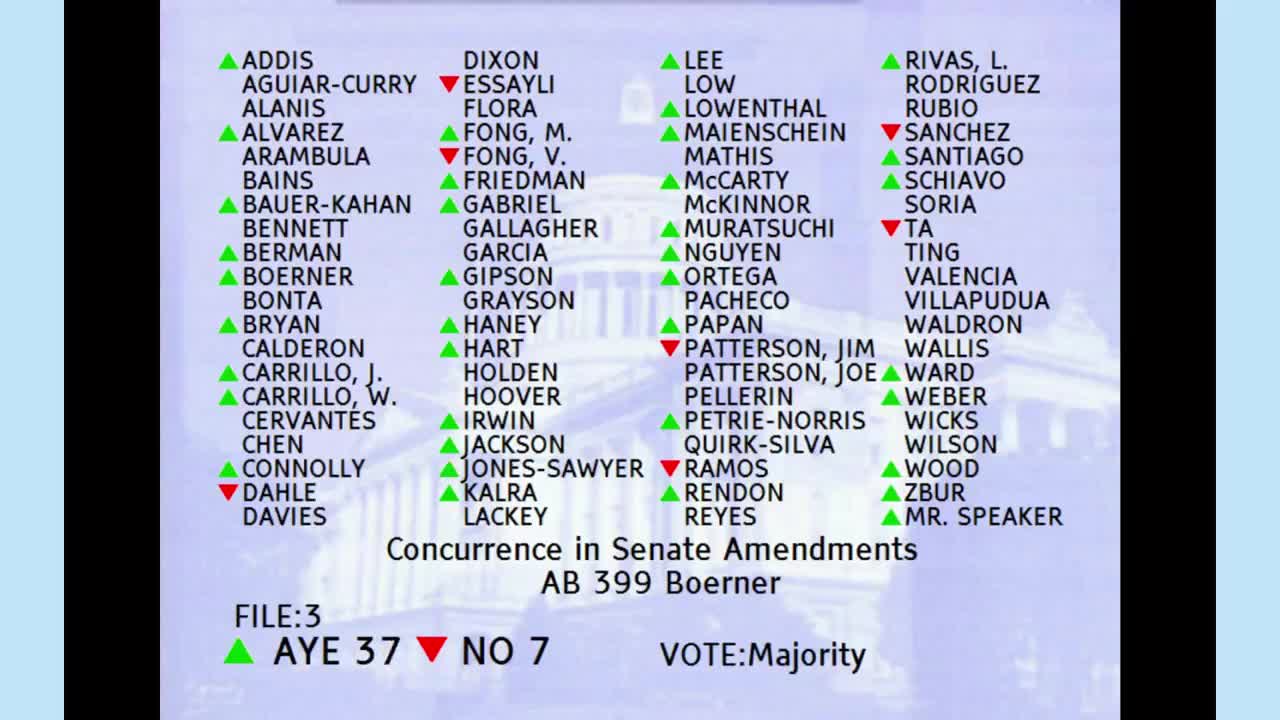 51SEC
Assembly Floor
 1MIN
Senate Floor
 7MIN
Senate Standing Committee on Housing
 6MIN
Senate Standing Committee on Human Services
 10MIN
Assembly Standing Committee on Housing and Community Development
Bill Author


