AB 1385: Riverside County Transportation Commission: transaction and use tax.
- Session Year: 2023-2024
- House: Assembly
- Latest Version Date: 2023-10-08
Current Status:
Passed
(2023-10-08: Chaptered by Secretary of State - Chapter 578, Statutes of 2023.)
Introduced
In Committee
First Chamber
In Committee
Second Chamber
Enacted
Existing law creates the Riverside County Transportation Commission with specified powers and duties relative to transportation planning and programming in the County of Riverside. Existing law authorizes the commission to impose a transactions and use tax for transportation purposes subject to approval of the voters, which, pursuant to the California Constitution, requires approval of 2/3 of the voters. Existing law limits the commission to a 1% maximum tax rate, and requires the commissions tax or taxes to be levied at a rate divisible by 1/4%, unless a different rate is specifically authorized by statute.
This bill would raise the maximum tax rate the commission may impose from 1% to 1.5%.
This bill would make legislative findings and declarations as to the necessity of a special statute for the County of Riverside.
Existing law creates the Riverside County Transportation Commission with specified powers and duties relative to transportation planning and programming in the County of Riverside. Existing law authorizes the commission to impose a transactions and use tax for transportation purposes subject to approval of the voters, which, pursuant to the California Constitution, requires approval of 2/3 of the voters. Existing law limits the commission to a 1% maximum tax rate, and requires the commissions tax or taxes to be levied at a rate divisible by 1/4%, unless a different rate is specifically authorized by statute.
This bill would raise the maximum tax rate the commission may impose from 1% to 1.5%.
This bill would make legislative findings and declarations as to the necessity of a special statute for the County of Riverside.
Existing law creates the Riverside County Transportation Commission with specified powers and duties relative to transportation planning and programming in the County of Riverside. Existing law authorizes the commission to impose a transactions and use tax for transportation purposes subject to approval of the voters, which, pursuant to the California Constitution, requires approval of 2/3 of the voters. Existing law limits the commission to a 1% maximum tax rate, and requires the commissions tax or taxes to be levied at a rate divisible by 1/4%, unless a different rate is specifically authorized by statute.
This bill would raise the maximum tax rate the commission may impose from 1% to 1.5%.
This bill would make legislative findings and declarations as to the necessity of a special statute for the County of Riverside.
Existing law provides various sources of funding to public transit operators. Under the Mills-Alquist-Deddeh Act, also known as the Transportation Development Act, revenues from a 1/4% sales tax in each county are available, among other things, for allocation by the transportation planning agency to transit operators, subject to certain financial requirements for an operator to meet in order to be eligible to receive funds. Existing law sets forth alternative ways an operator may qualify for funding, including a standard under which the allocated funds do not exceed 50% of the operators total operating costs, as specified, or the maintenance by the operator of a specified farebox ratio of fare revenues to operating costs. Existing law establishes the required farebox ratio as 20% in urbanized areas and 10% in nonurbanized areas. This bill would make a nonsubstantive change to the provision relating to operator eligibility in urbanized areas based on the farebox ratio.Existing law provides various sources of funding to public transit operators. Under the Mills-Alquist-Deddeh Act, also known as the Transportation Development Act, revenues from a 1/4% sales tax in each county are available, among other things, for allocation by the transportation planning agency to transit operators, subject to certain financial requirements for an operator to meet in order to be eligible to receive funds. Existing law sets forth alternative ways an operator may qualify for funding, including a standard under which the allocated funds do not exceed 50% of the operators total operating costs, as specified, or the maintenance by the operator of a specified farebox ratio of fare revenues to operating costs. Existing law establishes the required farebox ratio as 20% in urbanized areas and 10% in nonurbanized areas.
This bill would make a nonsubstantive change to the provision relating to operator eligibility in urbanized areas based on the farebox ratio.
(a)The commission, subject to the approval of the voters, may impose a maximum tax rate of 1.5 percent under this division and the Transactions and Use Tax Law (Part 1.6 (commencing with Section 7251) of Division 2 of the Revenue and Taxation Code). The commission shall only levy a tax or multiple taxes at a rate that is a multiple of 0.25 percent, unless a different rate is specifically authorized by statute. Neither this division nor the ordinance shall affect any tax otherwise authorized.
(b)Notwithstanding Section 7251.1 of the Revenue and Taxation Code, the tax rate authorized pursuant to this section shall not be considered for purposes of the combined rate limit established by that section.
(c)The tax rate adopted pursuant to this chapter, unless otherwise prohibited, may be increased by the commission by ordinance adopted in the manner and by the vote stated in Section 240301 and approved by two-thirds of the electors voting on the measure at an election called for that purpose by the commission.
SEC. 2.The Legislature finds and declares that a special statute is necessary and that a general statute cannot be made applicable within the meaning of Section 16 of Article IV of the California Constitution because of the need to provide a local funding option to meet the transportation needs of the County of Riverside.
(a)The commission, subject to the approval of the voters, may impose a maximum tax rate of 1.5 percent under this division and the Transactions and Use Tax Law (Part 1.6 (commencing with Section 7251) of Division 2 of the Revenue and Taxation Code). The commission shall only levy a tax or multiple taxes at a rate that is a multiple of 0.25 percent, unless a different rate is specifically authorized by statute. Neither this division nor the ordinance shall affect any tax otherwise authorized.
(b)Notwithstanding Section 7251.1 of the Revenue and Taxation Code, the tax rate authorized pursuant to this section shall not be considered for purposes of the combined rate limit established by that section.
(c)The tax rate adopted pursuant to this chapter, unless otherwise prohibited, may be increased by the commission by ordinance adopted in the manner and by the vote stated in Section 240301 and approved by two-thirds of the electors voting on the measure at an election called for that purpose by the commission.
SEC. 2.The Legislature finds and declares that a special statute is necessary and that a general statute cannot be made applicable within the meaning of Section 16 of Article IV of the California Constitution because of the need to provide a local funding option to meet the transportation needs of the County of Riverside.
(a)The commission, subject to the approval of the voters, may impose a maximum tax rate of 1 1.5 percent under this division and the Transactions and Use Tax Law (Part 1.6 (commencing with Section 7251) of Division 2 of the Revenue and Taxation Code). The commission shall not only levy a tax or multiple taxes at a rate other than 1 percent, or three-quarters, one-half, or one-quarter of 1 that is a multiple of 0.25 percent, unless a different rate is specifically authorized by statute. Neither this division nor the ordinance shall affect any tax otherwise authorized.
(b)Notwithstanding Section 7251.1 of the Revenue and Taxation Code, the tax rate authorized pursuant to this section shall not be considered for purposes of the combined rate limit established by that section.
(c)The tax rate adopted pursuant to this chapter, unless otherwise prohibited, may be increased by the commission by ordinance adopted in the manner and by the vote stated in Section 240301 and approved by two-thirds of the electors voting on the measure at an election called for that purpose by the commission.
SEC. 2.The Legislature finds and declares that a special statute is necessary and that a general statute cannot be made applicable within the meaning of Section 16 of Article IV of the California Constitution because of the need to provide a local funding option to meet the transportation needs of the County of Riverside.
SECTION 1.Section 99268.3 of the Public Utilities Code is amended to read:99268.3.(a)In the case of an operator that is serving an urbanized area, and that was eligible for funds under this article during the 197879 fiscal year even though not required to be in compliance with Section 99268 or that commenced operation after that fiscal year, the operator shall be eligible for those funds in any fiscal year, commencing with claims for the 198081 fiscal year, if it maintains, for the fiscal year, a ratio of fare revenues to operating cost, as defined by subdivision (a) of Section 99247, at least equal to one-fifth.(b)In the case of an operator that is serving an urbanized area, and that was in operation during the 197879 fiscal year even though not then eligible for funds under this article, but that has since become eligible for those funds, the operator shall be eligible for the funds in any fiscal year, commencing with the 198081 fiscal year, if it complies with either of the following requirements:(1)The requirements of Section 99268.(2)The requirements of subdivision (a).(a)In the case of an operator that is serving an urbanized area, and that was eligible for funds under this article during the 197879 fiscal year even though not required to be in compliance with Section 99268 or that commenced operation after that fiscal year, the operator shall be eligible for those funds in any fiscal year, commencing with claims for the 198081 fiscal year, if it maintains, for the fiscal year, a ratio of fare revenues to operating cost, as defined by subdivision (a) of Section 99247, at least equal to one-fifth.
(b)In the case of an operator that is serving an urbanized area, and that was in operation during the 197879 fiscal year even though not then eligible for funds under this article, but that has since become eligible for those funds, the operator shall be eligible for the funds in any fiscal year, commencing with the 198081 fiscal year, if it complies with either of the following: following requirements:
(1)The requirements of Section 99268.
(2)The requirements of subdivision (a).
|
Date
|
Status
|
|---|---|
| Oct 8, 2023 | Chaptered by Secretary of State - Chapter 578, Statutes of 2023. |
| Oct 8, 2023 | Approved by the Governor. |
| Sep 13, 2023 | Enrolled and presented to the Governor at 3 p.m. |
| Sep 6, 2023 | In Assembly. Ordered to Engrossing and Enrolling. |
| Sep 6, 2023 | Read third time. Passed. Ordered to the Assembly. (Ayes 32. Noes 6. Page 2427.). |
| Jul 10, 2023 | Read second time. Ordered to third reading. |
| Jul 6, 2023 | From committee: Do pass. (Ayes 6. Noes 2.) (July 5). |
| Jun 28, 2023 | From committee: Do pass and re-refer to Com. on GOV. & F. (Ayes 14. Noes 1.) (June 27). Re-referred to Com. on GOV. & F. |
| May 31, 2023 | Referred to Coms. on TRANS. and GOV. & F. |
| May 18, 2023 | In Senate. Read first time. To Com. on RLS. for assignment. |
| May 18, 2023 | Read third time. Passed. Ordered to the Senate. (Ayes 54. Noes 10. Page 1605.) |
| May 4, 2023 | Read second time. Ordered to third reading. |
| May 3, 2023 | From committee: Do pass. (Ayes 5. Noes 2.) (May 3). |
| Mar 27, 2023 | Re-referred to Com. on L. GOV. |
| Mar 23, 2023 | Referred to Com. on L. GOV. |
| Mar 23, 2023 | From committee chair, with author's amendments: Amend, and re-refer to Com. on L. GOV. Read second time and amended. |
| Feb 18, 2023 | From printer. May be heard in committee March 20. |
| Feb 17, 2023 | Read first time. To print. |
|
Date
|
Description
|
Location
|
Votes
|
|
|---|---|---|---|---|
| Sep 6, 2023 | Assembly 3rd Reading AB1385 Garcia By Padilla | Senate Floor |
Passed |
|
| Jul 5, 2023 | Do pass | Senate Standing Committee on Governance and Finance |
Passed |
|
| Jun 27, 2023 | Do pass, but first be re-referred to the Committee on [Governance and Finance] | Senate Standing Committee on Transportation |
Passed |
|
| May 18, 2023 | AB 1385 Garcia Assembly Third Reading | Assembly Floor |
Passed |
|
| May 3, 2023 | Do pass. | Assembly Standing Committee on Local Government |
Passed |
This list shows positions taken on this bill by organizations on the date displayed, which is linked to the original source.
Positions by individuals are not included.
|
Organization
|
Position
|
Date
|
|---|---|---|
| american council of engineering companies | ** Support | |
| Associated General Contractors Of California | ** Support | |
| California Alliance for Jobs | ** Support | |
| California Asphalt Pavement Association | ** Support | |
| CALIFORNIA CONSTRUCTION & INDUSTRIAL MATERIALS ASSOCIATION | ** Support | |
| California State Council Of Laborers | ** Support | |
| California Taxpayers Association | ** Against | |
| Coachella Valley Association of Governments | ** Support | |
| County Of Riverside Supervisor V. Manuel Perez | ** Support | |
| District Council Of Iron Workers Of The State Of California And Vicinity | ** Support | |
| International Union of Operating Engineers | ** Support | |
| RCTC | ** Support | |
| Rebuild Socal Partnership | ** Support | |
| Riverside County Supervisor, Fourth District, V. Manuel Perez | ** Support | |
| Riverside County Transportation Commission | ** Support | |
| Self-Help Counties Coalition | ** Support | |
| Southern California Contractors Association | ** Support | |
| Transportation California | ** Support | |
| Transportation California Coalition of the Construction Industry and Allied Labor | * Support | May 3, 2023 |
| United Contractors | ** Support | |
| Western Regional Association for Pavement Preservation | ** Support |
SENATE RULES COMMITTEE Office of Senate Floor Analyses (916) 651-1520 Fax: (916) 327-4478 | AB 1385 |
THIRD READING
Bill No: AB 1385
Author: Garcia (D)
Amended: 3/23/23 in Assembly
Vote: 21
SENATE TRANSPORTATION COMMITTEE: 14-1, 6/27/23
AYES: Gonzalez, Niello, Allen, Archuleta, Becker, Blakespear, Cortese, Dahle, Dodd, Limón, McGuire, Newman, Umberg, Wahab
NOES: Nguyen
NO VOTE RECORDED: Seyarto
SENATE GOVERNANCE & FIN. COMMITTEE: 6-2, 7/5/23
AYES: Caballero, Blakespear, Durazo, Glazer, Skinner, Wiener
NOES: Seyarto, Dahle
ASSEMBLY FLOOR: 54-10, 5/18/23 - See last page for vote
SUBJECT: Riverside County Transportation Commission: transaction and use tax
SOURCE: Author
DIGEST:
This bill authorizes the Riverside County Transportation Commission (RCTC) to impose a maximum transportation and use tax (TUT) of 1.5%, subject to a vote.
ANALYSIS:
Existing law:
- Authorizes RCTC to levy a retail TUT, as specified. Provides that the ordinance shall become effective if adopted by a 2/3 vote of RCTC and subsequently approved by 2/3 of the electors voting on the measure at a special election called for this purpose by the board of supervisors or at any regular election. RCTC shall specify in the ordinance that no more than 1% of the annual net amount of revenues raised by the tax may be used to fund the salaries and benefits of the staff of RCTC in administering the programs funded from that tax. (Public Utilities Code (PUC) § 240301)
- Requires RCTC, in the ordinance, to state the nature of the tax to be imposed, the tax rate or the maximum tax rate, and the purposes for which the revenue derived from the tax will be used, and to set a term during which the tax will be imposed. The purposes for which the tax revenues may be used include, but are not limited to, the construction, capital acquisition, maintenance, and operation of streets, roads, highways (including state highways), and public transit systems. The ordinance shall contain an expenditure plan, as specified. (PUC § 240302)
- Authorizes RCTC, subject to the approval of the voters, to impose a maximum TUT rate of 1%, as specified. RCTC shall not levy a tax or multiple taxes at a rate other than 1%, or 3/4, 1/2, or 1/4 of 1%, unless specifically authorized by statute. Provides that the tax rate shall not be considered for the purposes of the combined 2% rate limit established in existing law. (PUC § 240306)
This bill allows RCTC, subject to a 2/3 vote of Riverside County’s voters, to impose a maximum TUT tax rate of 1.5%, instead of 1%.
Comments
- Author’s Statement. According to the author, Riverside County is California’s fastest growing and most diverse county. As the population and economy grow, so does the need for other transportation measures. This bill gives the RCTC options should Riverside County's voters choose to implement a new sales tax measure to fund future transportation needs.
- For What? RCTC indicates that projects they would consider funding with an increased TUT include:
- Coachella Valley Rail Project
- Mid County Parkway
- CV Sync Phase II (safety/transit)
- Extending Metrolink service from Perris to Hemet and San Jacinto
- Santa Ana River Trail
- I-10 Bypass
- Smart Freeways
- Grade Separations
- Rapid/Commuter Bus Service Expansion
- Zero-Emission Bus Fleet Replacement
- Funding Needed. California is chronically short of transportation funding. All parts of our transportation system, from local road repair, transit operations and capital, Active Transportation Programs, freeway widening and High Speed Rail, need substantial additional funding. It will take a combination of multiple sources to meet the need. This bill authorizes RCTC to try to earn approval of 2/3 of its voters to increase its Transportation and Use Tax up to 1.5%. The current limit is 1%.
- Cap Does Not Apply. Unlike many other counties, the combined TUT rate in Riverside County is not subject to the 2% TUT tax limit. This bill authorizes a 0.50% tax cap increase for RCTC which gives it the capacity to increase its TUT from its current level of 0.50% up to 1.50%. Various TUT cap waivers have been granted by the Legislature in recent years.
FISCAL EFFECT: Appropriation: No Fiscal Com.: No Local: No
SUPPORT: (Verified 7/6/23)
American Council of Engineering Companies
Associated General Contractors of California
California Alliance for Jobs
California Asphalt Pavement Association
California Construction & Industrial Materials Association
California State Council of Laborers
Coachella Valley Association of Governments
County of Riverside Supervisor V. Manuel Perez
District Council of Iron Workers of the State of California and Vicinity
Engineering & Utility Contractors Association Dba United Contractors
International Union of Operating Engineers
Rebuild SoCal Partnership
Riverside County Transportation Commission
Self-Help Counties Coalition
Southern California Contractors Association
Transportation California
United Contractors
Western Regional Association for Pavement Preservation
OPPOSITION: (Verified 7/6/23)
California Taxpayers Association
ASSEMBLY FLOOR: 54-10, 5/18/23
AYES: Addis, Aguiar-Curry, Alvarez, Arambula, Bains, Bennett, Berman, Bonta, Bryan, Calderon, Juan Carrillo, Wendy Carrillo, Connolly, Mike Fong, Gabriel, Garcia, Gipson, Grayson, Haney, Hart, Holden, Irwin, Jackson, Jones-Sawyer, Kalra, Lee, Low, Lowenthal, Maienschein, McCarty, McKinnor, Muratsuchi, Stephanie Nguyen, Ortega, Pacheco, Papan, Pellerin, Ramos, Reyes, Luz Rivas, Robert Rivas, Rodriguez, Blanca Rubio, Santiago, Soria, Ting, Valencia, Villapudua, Ward, Weber, Wicks, Wood, Zbur, Rendon
NOES: Alanis, Megan Dahle, Davies, Dixon, Gallagher, Hoover, Lackey, Joe Patterson, Sanchez, Ta
NO VOTE RECORDED: Bauer-Kahan, Boerner, Cervantes, Chen, Essayli, Flora, Vince Fong, Friedman, Mathis, Jim Patterson, Petrie-Norris, Quirk-Silva, Schiavo, Waldron, Wallis, Wilson
Prepared by: Randy Chinn / TRANS. / (916) 651-4121
7/12/23 16:03:30
**** END ****
SENATE COMMITTEE ON GOVERNANCE AND FINANCE
Senator Anna M. Caballero, Chair
2023 - 2024 Regular
Bill No: | AB 1385 | Hearing Date: | 7/5/23 |
Author: | Garcia | Tax Levy: | No |
Version: | 3/23/23 | Fiscal: | No |
Consultant: | Grinnell | ||
Riverside County Transportation Commission: transaction and use tax
Increases from 1% to 1.5% the maximum district tax that can be imposed by the Riverside County Transportation Commission.
Background
Sales and Use Taxes. State law imposes the sales tax on every retailer “engaged in business in this state” that sells tangible personal property, and requires them to register with the California Department of Tax and Fee Administration (CDTFA), and remit tax to CDFTA. Sales tax applies whenever a retail sale occurs, which is generally any sale other than one for resale in the regular course of business. The current rate is 7.25% as shown in the table below.
Rate | Jurisdiction | Purpose/Authority | |
|---|---|---|---|
3.9375% | State (General Fund) | State general purposes | |
1.0625% |
| Local governments to fund local public safety services | |
0.50% | State (1991 Realignment) | Local governments to fund health and welfare programs | |
0.50% | State (Proposition 172 - 1993) | Local governments to fund public safety services | |
1.25% | Local (City/County) 1.00% City and County | City and county general operations Dedicated to county transportation purposes | |
7.25% | Total Statewide Rate |
Unless the purchaser pays the sales tax to the retailer, he or she is liable for the use tax, which the law imposes on any person consuming tangible personal property in the state. The use tax is the same rate as the sales tax, and like the sales tax, must be remitted on or before the last day of the month following the quarterly period in which the person made the purchase.
District Taxes. The California Constitution states that taxes levied by local governments are either general taxes, subject to majority approval of its voters, or special taxes, subject to 2/3 vote (Article XIII C). Proposition 13 (1978) required a 2/3 vote of each house of the Legislature for state tax increases, and 2/3 vote for local special taxes. Proposition 62 (1986) prohibited local agencies from imposing general taxes without majority approval of local voters, and a 2/3 vote for special taxes. Proposition 218 (1996) extended those vote thresholds to charter cities, and limited local agencies’ powers to levy new assessments, fees, and taxes. Local agencies generally propose to increase taxes by adopting an ordinance or a resolution at a public hearing.
State law allows cities, counties, and specified special districts to increase the sales and use tax applicable in their jurisdiction, also known as district or transactions and use taxes. Generally, local agencies impose these taxes throughout the entire area of a single county, the entire unincorporated area within a single county, or a single incorporated city, except for those imposed by the Bay Area Rapid Transit (BART) District (which covers Alameda, Contra Costa, and the City and County of San Francisco) and the Sonoma-Marin Rail Transit District (which includes Sonoma and Marin counties). As of April 1, 2023, local agencies impose 411 district taxes for general or special purposes – 67 are imposed countywide, 4 are imposed in unincorporated county areas, and 340 are imposed citywide.
State law caps the total rate for any county at 2%. The cap applies countywide, so if one agency imposes a district tax, it limits the ability of another agency that shares the jurisdiction to do so to the remaining room under 2%. For example, if a city imposes a 1% tax, the county in which the city is located or a special district serving that city could not impose one above 1%.
Riverside County. The Riverside County Transportation Sales Tax Act allows the Riverside County Transportation Commission to impose a district tax in the unincorporated area of Riverside County for transportation purposes at a maximum rate of 0.5% (AB 1637, Eaves, 1987). The Commission can spend tax proceeds on the construction, capital acquisition, maintenance, and operation of streets, roads, highways, including state highways, and public transit systems. The Commission must first enact an ordinance to do so by 2/3 vote of its board, which the voters must subsequently approve. In 1988, Riverside County voters approved Measure A, a 0.5% sales tax measure, which was subsequently reauthorized by the voters in 2002 until June 2039.
In 2017, the Legislature amended the Act to increase the maximum rate of district tax that can be imposed by the Riverside County Transportation Commission from .5% to 1%. (AB 1189, E. Garcia). AB 1189 provided that any district tax imposed by the Commission wasn’t subject to the 2% cap. While the Commission considered placing the measure on the ballot in 2020, it ultimately did not.
The California Department of Finance projects that Riverside County’s population will increase 20% by 2048 to 3 million. As a result, RCTC wants additional authority to impose district taxes to fund needed transportation infrastructure improvements.
Proposed Law
Assembly Bill 1385 increases from 1% to 1.5% the maximum district tax rate that can be imposed by the Riverside County Transportation Commission. The measure also makes a technical change, and includes a legislative finding justifying the need for special legislation.
State Revenue Impact
No estimate.
Comments
1. Purpose of the bill. “Riverside County is California’s fastest-growing and most diverse county. As the population and economy grow so does the need for other transportation measures. This bill would give the Riverside County Transportation Commission (RCTC) options should Riverside County's voters choose to implement a new sales tax measure to fund future transportation needs.”
2. Necessary? As noted above, the Legislature has already granted RCTC the authority to impose a district tax of up to 0.5%. While RCTC argues population growth and an infrastructure backlog justify authority to impose up to a 1% tax, the Committee may wish to consider whether RCTC should first use its existing authority before asking for more.
3. Too high? California’s sales and use tax rate is high compared to other states, especially when incorporating locally imposed district taxes. Tax experts generally agree that sales and use taxes are regressive, meaning the tax incidence falls more on low-income individuals than high-income individuals because those of lesser means generally spend a greater percentage of their income on taxable sales, even if California’s exempts many necessities such as food and prescription medication. When combining RCTC’s current 0.5% tax, a 1% tax imposed by several cities in Riverside County, AB 1385 could lead to a rate of 9.75% if RCTC imposes the maximum tax rate allowed under the bill. While local voters must approve any tax, the Committee may wish to consider whether AB 1385 allows for rates that are too high.
4. Upland. On August 28, 2017, the California Supreme Court entered a decision in California Cannabis Coalition v. City of Upland, 3 Cal. 5th 924, which held that Article XIIIC, Section Two, subdivision (b)’s requirement that general taxes be submitted to the electorate at a regularly scheduled general election where members of the local governing board are subject to election did not apply to taxes proposed by voter initiative. As discussed in the Committee’s March 7, 2018, joint oversight hearing, “Uproar over Upland? Assessing the California Supreme Court’s Decision,” groups seeking to impose special taxes by majority vote by initiative soon argued if the Court held the general election requirement in subdivision (b) did not apply to initiatives, then neither did the 2/3 vote requirement for special taxes in subdivision (d). At least seven such taxes imposed by voters in various local agencies across the state have been approved, and no court thus far has invalidated them. With that said, AB 1385 grants authority solely to the RCTC board, so would not apply to an initiative seeking to impose a special tax by majority vote.
5. Related legislation. There are currently four proposals under consideration in the Legislature regarding district tax authority.
- AB 1256 (Wood) authorizes the Humboldt County Board of Supervisors to impose a district tax for general or transportation purposes that exceeds the 2% countywide cap. The Committee approved the measure on June 7th, and is currently pending on the Senate Floor.
- AB 1679 (Santiago) allows Los Angeles County impose a district tax up to 0.5% that exceeds the 2% cap, including by citizen’s initiative, if it replaces Measure H’s current 0.25% tax that funds homelessness programs in Los Angeles County. The Committee will hear the measure at its July 12th hearing.
- SB 335 (Cortese) allows Santa Clara County to impose a district tax for general or specific purposes to support countywide programs at a rate of no more than .625% that exceeds the 2% cap. This version of SB 335 was not heard in the Senate, and is currently pending in the Assembly Revenue and Taxation Committee.
- SB 862 (Laird) specifies that a district tax of up to 1% imposed by the Santa Cruz Metropolitan Transit District does not count towards the 2% combined rate limit. This version of SB 862 was not heard in the Senate, and is currently pending on the Assembly Floor.
6. Incoming! On June 13th, the Senate Transportation Committee approved AB 1385 by a vote of 14 to 1. The Senate Governance and Finance Committee is hearing the measure as the Committee of second reference.
Assembly Actions
Assembly Local Government Committee: 5-2
Assembly Floor: 54-10
Support and Opposition
(6/30/23)
Support: American Council of Engineering Companies
Associated General Contractors of California
California Alliance for Jobs
California Asphalt Pavement Association
California Construction & Industrial Materials Association
California State Council of Laborers
Coachella Valley Association of Governments
County of Riverside Supervisor V. Manuel Perez
District Council of Iron Workers of The State of California and Vicinity
Engineering & Utility Contractors Association Dba United Contractors
International Union of Operating Engineers
Rebuild Socal Partnership
Riverside County Transportation Commission (RCTC)
Self-help Counties Coalition
Southern California Contractors Association
Transportation California
United Contractors (UCON)
Western Regional Association for Pavement Preservation
Opposition: None received.
-- END --
SENATE COMMITTEE ON TRANSPORTATION
Senator Lena Gonzalez, Chair
2023 - 2024 Regular
Bill No: AB 1385 Hearing Date: 6/27/2023
Author: | Garcia | ||
Version: | 3/23/2023 amended | ||
Urgency: | No | Fiscal: | No |
Consultant: | Randy Chinn | ||
SUBJECT: Riverside County Transportation Commission: transaction and use tax
DIGEST: This bill authorizes the Riverside County Transportation Commission (RCTC) to impose a maximum transportation and use tax (TUT) of 1.5%, subject to a vote.
ANALYSIS:
Existing law:
- Authorizes RCTC to levy a retail TUT, as specified. Provides that the ordinance shall become effective if adopted by a two-thirds vote of RCTC and subsequently approved by two-thirds of the electors voting on the measure at a special election called for the purpose by the board of supervisors or at any regular election. RCTC shall specify in the ordinance that no more than 1% of the annual net amount of revenues raised by the tax may be used to fund the salaries and benefits of the staff of RCTC in administering the programs funded from that tax. [Public Utilities Code (PUC) § 240301]
- Requires RCTC, in the ordinance, to state the nature of the tax to be imposed, the tax rate or the maximum tax rate, the purposes for which the revenue derived from the tax will be used, and to set a term during which the tax will be imposed. The purposes for which the tax revenues may be used include, but are not limited to, the construction, capital acquisition, maintenance, and operation of streets, roads, highways, including state highways, and public transit systems. The ordinance shall contain an expenditure plan, as specified. (PUC § 240302)
- Authorizes RCTC, subject to the approval of the voters, to impose a maximum TUT rate of 1%, as specified. RCTC shall not levy a tax or multiple taxes at a rate other than 1%, or three-quarters, one-half, or one-quarter of 1%, unless specifically authorized by statute. Provides that the tax rate shall not be considered for the purposes of the combined 2% rate limit established in existing law. (PUC § 240306)
This bill
- Allows RCTC, subject to a 2/3 vote of the voters, to impose a maximum TUT tax rate of 1.5%, instead of 1%.
COMMENTS:
- Author’s Statement. Riverside County is California’s fastest-growing and most diverse county. As the population and economy grow so does the need for other transportation measures. This bill would give the Riverside County Transportation Commission (RCTC) options should Riverside County's voters choose to implement a new sales tax measure to fund future transportation needs.
- For What? RCTC indicates that projects they would consider funding with an increased TUT include:
Coachella Valley Rail Project
Mid County Parkway
CV Sync Phase II (safety/transit)
Extending Metrolink service from Perris to Hemet and San Jacinto
Santa Ana River Trail
I-10 Bypass
Smart Freeways
Grade Separations
Rapid/Commuter Bus Service Expansion
Zero-Emission Bus Fleet Replacement
- Funding Needed. California is chronically short of transportation funding. All parts of our transportation system, from local road repair, transit operations and capital, Active Transportation Programs to freeway widening and High Speed Rail, need substantial additional funding. It will take a combination of multiple sources to meet the need. This bill authorizes RCTC to see if they can earn approval of 2/3 of its voters to increase its Transportation and Use Tax up to 1.5%. The current limit is 1%.
- Cap Does Not Apply. Unlike many other counties, the combined TUT rate in Riverside County is not subject to the 2.00% TUT tax limit. This bill authorizes a 0.50% tax cap increase for RCTC which gives it the capacity to increase its TUT from its current level of 0.50% up to 1.50%. Various TUT cap waivers have been granted by the Legislature in recent years. (See prior legislation section.)
- Double Referral. This bill has been double-referred to the Governance and Finance Committee.
Related Legislation:
AB 2453 (Bennett), Chapter 286, Statutes of 2022, authorized the Ventura County Transportation Commission to impose a TUT of no more than 0.5% that does not count against the cap in Ventura County.
SB 1349 (Glazer), Chapter 369, Statutes of 2020, permitted Contra Costa County, and cities within Contra Costa County, additional legal flexibility to impose local TUTs.
AB 618 (Stone) of 2019 would have permitted the Cities of Emeryville (Alameda County) and Scotts Valley (Santa Cruz County) to impose a tax of up to 0.25% that exceeds the 2% cap. This bill was vetoed.
AB 723 (Quirk), Chapter 747, Statutes of 2019, provided that neither the tax imposed by Bay Area Rapid Transit District nor the tax imposed by the Alameda County Transportation Commission counts against the 2% cap, and made a similar change in Santa Cruz County.
AB 1189 (Garcia), Chapter 642, Statutes of 2017, increased the maximum TUT rate, from 0.5% to 1%, which RCTC may impose, subject to voter approval. This bill also specified that the TUT shall not be considered for purposes of the combined 2% cap established by existing law.
AB 1637 (Eaves), Chapter 270, Statutes of 1987, enacted the Riverside County Transportation Sales Tax Act and authorized RCTC to impose a district tax for transportation purposes at a maximum rate of 0.5%.
FISCAL EFFECT: Appropriation: Fiscal Com.: Local:
Non-fiscal
POSITIONS: (Communicated to the committee before noon on Wednesday,
June 21, 2023.)
SUPPORT:
American Council of Engineering Companies
Associated General Contractors of California
California Alliance for Jobs
California Asphalt Pavement Association
California Construction & Industrial Materials Association
California State Council of Laborers
Coachella Valley Association of Governments
District Council of Iron Workers of The State of California and Vicinity
International Union of Operating Engineers
Rebuild Socal Partnership
Riverside County Transportation Commission (RCTC)
Self-help Counties Coalition
Southern California Contractors Association
Transportation California
United Contractors (UCON)
Western Regional Association for Pavement Preservation
OPPOSITION:
California Taxpayers Association
-- END --
ASSEMBLY THIRD READING
ATR Bill Id:AB 1385
Author:(Garcia)
As Amended Ver:March 23, 2023
Majority vote
SUMMARY
Authorizes the Riverside County Transportation Commission (RCTC) to impose a maximum transportation and use tax (TUT) of 1.5%.
Major Provisions
- Allows RCTC, subject to the approval of the voters, to impose a maximum tax rate of 1.5%, instead of 1%.
- Makes other technical changes.
- Finds and declares that a special statute is necessary and that a general statute cannot be made applicable because of the need to provide a local funding option to meet the transportation needs of the County of Riverside.
COMMENTS
- Sales and Use Taxes. State law imposes the sales tax on every retailer "engaged in business in this state" that sells tangible personal property, and requires them to register with the California Department of Tax and Fee Administration (CDTFA), as well as collect the appropriate tax at purchase and remit the amount to CDFTA. Sales tax applies whenever a retail sale occurs, which is generally any sale other than one for resale in the regular course of business. The current rate is 7.25% as shown in the table below.
Rate | Jurisdiction | Purpose/Authority | |
|---|---|---|---|
3.9375% | State (General Fund) | State general purposes | |
1.0625% |
| Local governments to fund local public safety services | |
0.50% | State (1991 Realignment) | Local governments to fund health and welfare programs | |
0.50% | State (Proposition 172 - 1993) | Local governments to fund public safety services | |
1.25% | Local (City/County) 1.00% City and County 0.25% County | City and county general operations | |
7.25% | Total Statewide Rate |
Unless the purchaser pays the sales tax to the retailer, he or she is liable for the use tax, which the law imposes on any person consuming tangible personal property in the state. The use tax is the same rate as the sales tax, and also like the sales tax, must be remitted on or before the last day of the month following the quarterly period in which the person made the purchase.
- Transactions and Use Taxes. The California Constitution states that taxes levied by local governments are either general taxes, subject to majority approval of its voters, or special taxes, subject to 2/3 vote (Article XIII C). Proposition 13 (1978) required a 2/3 vote of each house of the Legislature for state tax increases, and 2/3 vote for local special taxes. Proposition 62 (1986) prohibited local agencies from imposing general taxes without majority approval of local voters, and a 2/3 vote for special taxes. Proposition 218 (1996) extended those vote thresholds to charter cities, and limited local agencies' powers to levy new assessments, fees, and taxes. Local agencies generally propose to increase taxes by adopting an ordinance or a resolution at a public hearing.
State law allows cities, counties, and specified special districts to increase the sales and use tax applicable in their jurisdiction, also known as district taxes or TUTs. Prior to 2003, cities lacked the ability to place TUTs before their voters without first obtaining approval by the Legislature to bring an ordinance before the city council, and, if approved at the council level, to the voters. This was remedied by SB 566 (Scott), Chapter 709, Statutes of 2003. SB 566 also contained provisions to increase a county's TUT cap because of the possibility that certain counties were going to run out of room under their caps, if cities within those counties approved TUTs.
Generally, the combined TUT tax rate imposed within a local jurisdiction cannot exceed 2%. To determine whether a county has reached this rate limitation, all countywide taxes and the highest combined rate imposed by a city within the county are counted towards the county's rate limit. For example, if a county imposes three 0.5% countywide taxes and two cities within the county each impose a 0.5% tax, the combined rate in those two cities would be 2%. In such a circumstance, the two cities could not impose another TUT, and the county could not impose another countywide TUT, absent special authority to exceed the rate limitation.
As of April 1, 2023, local jurisdictions impose a combined 411 TUTs for general or special purposes. Generally, TUTs are levied throughout the entire area of a single county, the entire unincorporated area within a single county, or a single incorporated city, except for those imposed by the Bay Area Rapid Transit (BART) District (Alameda, Contra Costa, and San Francisco counties) and the Sonoma-Marin Rail Transit District (Sonoma and Marin counties). Of the 411 TUTs, 67 are imposed countywide, four are imposed in unincorporated county areas, and 340 are imposed citywide. In 1988, Riverside County voters approved Measure A, a 0.5% district tax for transportation purposes, which became operative on July 1, 1989, and was scheduled to sunset 20 years later. In 2002, Riverside County voters approved an extension of Measure A until 2039.
- Riverside County. Riverside County has 17 TUTs levied within its borders: one countywide tax levied by the RCTC at 0.50%, and 16 citywide taxes. Since Palm Springs imposes the highest city rate in the county at 1.50%, the combined rate of taxes imposed by Riverside County is 2.00%. However, since the 0.50% tax levied by RCTC is not subject to the 2.00% combined rate limitation, an additional 0.50% is available for either the county, or any city within the county, to impose a general or specific purpose district tax without exceeding the 2.00% combined rate limitation.
According to the Author
According to the author, "Riverside County is California's fastest-growing and most diverse county. As the population and economy grow so does the need for other transportation measures. This bill would give the Riverside County Transportation Commission options should Riverside County's voters choose to implement a new sales tax measure to fund future transportation needs."
Arguments in Support
According to RCTC, "As the administrator of Measure A, the Commission kept its promises to Riverside County voters for nearly 35 years by using the residents' tax dollars efficiently and effectively to build the projects voters said they wanted. Measure A generated thousands of jobs and provided more than $4.1 billion in local sales tax funding for transportation projects across Riverside County that support its nearly 2.5 million residents, with public transit; commuter and motorist assistance; state highways; local streets and roads; and habitat conservation for 146 protected or endangered species.
"While California's overall population decreased during the last few years, Riverside County is the fastest-growing county in the state and the fifth fastest-growing county in the nation. The California Department of Finance projects that by 2048, Riverside County will have 3 million people, up 20 percent from 2022. People are moving here because of housing affordability, economic opportunity, and open space.
"The increase in the county's population necessitates evaluating how to fund much-needed improvements to our transportation infrastructure. Unfortunately, there is a significant backlog of critically needed transportation projects in Riverside County that existing fund sources cannot meet. AB 1385 provides options should Riverside County's voters choose to implement a new sales tax measure to fund future transportation needs. AB 1385 does not raise taxes. The bill increases RCTC's sales tax authority from one cent to one and a half cents per dollar and does not alter Measure A's half-cent sales tax rate. Any changes to Measure A requires approval from Riverside County's voters."
Arguments in Opposition
According to the California Taxpayers Association, "California has the country's highest state-level sales and use tax rate, and some cities have combined rates among the highest overall in the nation. The sales and use tax is a regressive tax that has the largest impact on lower-income residents because it takes a larger percentage of their household income. Increasing the tax makes it more expensive to purchase everyday necessities. Inflation has increased the cost of everyday goods, which in turn increases the sales tax that is imposed as a percentage of the retail price. Adding to the cost of living with a sales tax rate increase would harm Californians and disproportionately impact the state's most vulnerable residents."
"Additionally, raising the transactions and use tax rate that the Riverside County Transportation Commission is authorized to levy would restrict the ability of other local government entities in the area to raise revenue. California law restricts the combined transactions and use tax in any part of a county from exceeding 2 percent. If the Riverside Transportation Commission were to impose a 1.5 percent tax, it would limit the tax rate that cities would be authorized to impose and would jeopardize the legality of transactions and use tax collections in several cities within the county – including Riverside, Palm Springs, Temecula, Coachella, Corona, and others."
FISCAL COMMENTS
None.
VOTES
ASM LOCAL GOVERNMENT: 5-2-1
YES: Aguiar-Curry, Pacheco, Ramos, Robert Rivas, Wilson
NO: Dixon, Waldron
ABS, ABST OR NV: Boerner
UPDATED
VERSION: March 23, 2023
CONSULTANT: Jimmy MacDonald / L. GOV. / (916) 319-3958 FN: 0000309
Date of Hearing: May 3, 2023
ASSEMBLY COMMITTEE ON LOCAL GOVERNMENT
Cecilia Aguiar-Curry, Chair
ABPCA Bill Id:AB 1385 (
Author:Garcia) – As Amended Ver:March 23, 2023
SUBJECT: Riverside County Transportation Commission: transaction and use tax.
SUMMARY: Authorizes the Riverside County Transportation Commission (RCTC) to impose a maximum transportation and use tax (TUT) of 1.5%. Specifically, this bill:
- Allows RCTC, subject to the approval of the voters, to impose a maximum tax rate of 1.5%, instead of 1%.
- Makes other technical changes.
- Finds and declares that a special statute is necessary and that a general statute cannot be made applicable because of the need to provide a local funding option to meet the transportation needs of the County of Riverside.
EXISTING LAW:
- Authorizes RCTC to levy a retail TUT, as specified. Provides that the ordinance shall become effective if adopted by a two-thirds vote of RCTC and subsequently approved by two-thirds of the electors voting on the measure at a special election called for the purpose by the board of supervisors or at any regular election. RCTC shall specify in the ordinance that no more than 1% of the annual net amount of revenues raised by the tax may be used to fund the salaries and benefits of the staff of RCTC in administering the programs funded from that tax. [Public Utilities Code (PUC) § 240301]
- Requires RCTC, in the ordinance, to state the nature of the tax to be imposed, the tax rate or the maximum tax rate, the purposes for which the revenue derived from the tax will be used, and to set a term during which the tax will be imposed. The purposes for which the tax revenues may be used include, but are not limited to, the construction, capital acquisition, maintenance, and operation of streets, roads, highways, including state highways, and public transit systems. The ordinance shall contain an expenditure plan, as specified. (PUC § 240302)
- Authorizes RCTC, subject to the approval of the voters, to impose a maximum TUT rate of 1%, as specified. RCTC shall not levy a tax or multiple taxes at a rate other than 1%, or three-quarters, one-half, or one-quarter of 1%, unless specifically authorized by statute. Provides that the tax rate shall not be considered for the purposes of the combined rate limit established in existing law. (PUC § 240306)
FISCAL EFFECT: None.
COMMENTS:
- Sales and Use Taxes. State law imposes the sales tax on every retailer “engaged in business in this state” that sells tangible personal property, and requires them to register with the California Department of Tax and Fee Administration (CDTFA), as well as collect the appropriate tax at purchase and remit the amount to CDFTA. Sales tax applies whenever a retail sale occurs, which is generally any sale other than one for resale in the regular course of business. The current rate is 7.25% as shown in the table below.
Rate | Jurisdiction | Purpose/Authority | |
|---|---|---|---|
3.9375% | State (General Fund) | State general purposes | |
1.0625% |
| Local governments to fund local public safety services | |
0.50% | State (1991 Realignment) | Local governments to fund health and welfare programs | |
0.50% | State (Proposition 172 - 1993) | Local governments to fund public safety services | |
1.25% | Local (City/County) |
| |
7.25% | Total Statewide Rate |
Unless the purchaser pays the sales tax to the retailer, he or she is liable for the use tax, which the law imposes on any person consuming tangible personal property in the state. The use tax is the same rate as the sales tax, and also like the sales tax, must be remitted on or before the last day of the month following the quarterly period in which the person made the purchase.
- Transactions and Use Taxes. The California Constitution states that taxes levied by local governments are either general taxes, subject to majority approval of its voters, or special taxes, subject to 2/3 vote (Article XIII C). Proposition 13 (1978) required a 2/3 vote of each house of the Legislature for state tax increases, and 2/3 vote for local special taxes. Proposition 62 (1986) prohibited local agencies from imposing general taxes without majority approval of local voters, and a 2/3 vote for special taxes. Proposition 218 (1996) extended those vote thresholds to charter cities, and limited local agencies’ powers to levy new assessments, fees, and taxes. Local agencies generally propose to increase taxes by adopting an ordinance or a resolution at a public hearing.
State law allows cities, counties, and specified special districts to increase the sales and use tax applicable in their jurisdiction, also known as district taxes or TUTs. Prior to 2003, cities lacked the ability to place TUTs before their voters without first obtaining approval by the Legislature to bring an ordinance before the city council, and, if approved at the council level, to the voters. This was remedied by SB 566 (Scott), Chapter 709, Statutes of 2003. SB 566 also contained provisions to increase a county's TUT cap because of the possibility that certain counties were going to run out of room under their caps, if cities within those counties approved TUTs.
Generally, the combined TUT tax rate imposed within a local jurisdiction cannot exceed 2%. To determine whether a county has reached this rate limitation, all countywide taxes and the highest combined rate imposed by a city within the county are counted towards the county's rate limit. For example, if a county imposes three 0.5% countywide taxes and two cities within the county each impose a 0.5% tax, the combined rate in those two cities would be 2%. In such a circumstance, the two cities could not impose another TUT, and the county could not impose another countywide TUT, absent special authority to exceed the rate limitation.
As of April 1, 2023, local jurisdictions impose a combined 411 TUTs for general or special purposes. Generally, TUTs are levied throughout the entire area of a single county, the entire unincorporated area within a single county, or a single incorporated city, except for those imposed by the Bay Area Rapid Transit (BART) District (Alameda, Contra Costa, and San Francisco counties) and the Sonoma-Marin Rail Transit District (Sonoma and Marin counties). Of the 411 TUTs, 67 are imposed countywide, four are imposed in unincorporated county areas, and 340 are imposed citywide. In 1988, Riverside County voters approved Measure A, a 0.5% district tax for transportation purposes, which became operative on July 1, 1989, and was scheduled to sunset 20 years later. In 2002, Riverside County voters approved an extension of Measure A until 2039.
- Bill Summary and Author’s Statement. This bill raises the maximum TUT that RCTC may impose, from 1% to 1.5%. RCTC is the sponsor of this bill.
According to the author, “Riverside County is California’s fastest-growing and most diverse county. As the population and economy grow so does the need for other transportation measures. This bill would give the Riverside County Transportation Commission options should Riverside County's voters choose to implement a new sales tax measure to fund future transportation needs.”
- Riverside County. Riverside County has 17 TUTs levied within its borders: one countywide tax levied by the RCTC at 0.50%, and 16 citywide taxes. Since Palm Springs imposes the highest city rate in the county at 1.50%, the combined rate of taxes imposed by Riverside County is 2.00%. However, since the 0.50% tax levied by RCTC is not subject to the 2.00% combined rate limitation, an additional 0.50% is available for either the county, or any city within the county, to impose a general or specific purpose district tax without exceeding the 2.00% combined rate limitation.
- Policy Consideration. California’s sales tax rate is currently at 7.25%, which is high compared to other states, especially when incorporating locally imposed TUTs. Some tax experts argue that sales and use taxes are regressive, meaning that the tax incidence falls more on low-income individuals than high-income individuals because those of lesser means generally spend a greater percentage of their income on taxable sales, instead of intangible products or services which are not taxed. With this bill, the sales tax rate could grow higher than 10.00% within Riverside County. While any increase would have to be approved by the voters, the Committee may wish to consider whether AB 1385 allows for rates that are too high.
- Previous Legislation. AB 1637 (Eaves), Chapter 270, Statutes of 1987, enacted the Riverside County Transportation Sales Tax Act and authorized RCTC to impose a district tax for transportation purposes at a maximum rate of 0.5%.
AB 1189 (Garcia), Chapter 642, Statutes of 2017, increased the maximum TUT rate, from 0.5% to 1%, which RCTC may impose, subject to voter approval. This bill also specified that the TUT shall not be considered for purposes of the combined 2% cap established by existing law.
AB 618 (Stone) of 2019 would have permitted the Cities of Emeryville (Alameda County) and Scotts Valley (Santa Cruz County) to impose a tax of up to 0.25% that exceeds the 2% cap. AB 618 was vetoed with a message that stated, “The Cities of Emeryville and Scotts Valley have not yet reached the statewide cap of 2 percent, making it unclear why additional tax authority is needed.”
AB 723 (Quirk), Chapter 747, Statutes of 2019, provided that neither the tax imposed by Bay Area Rapid Transit District nor the tax imposed by the Alameda County Transportation Commission counts against the 2% cap, and made a similar change in Santa Cruz County.
SB 1349 (Glazer), Chapter 369, Statutes of 2020, permitted Contra Costa County, and cities within Contra Costa County, additional legal flexibility to impose local TUTs.
AB 2453 (Bennett), Chapter 286, Statutes of 2022, authorized the Ventura County Transportation Commission to impose a TUT of no more than 0.5% that does not count against the cap in Ventura County.
- Related Legislation. AB 1256 (Wood) authorizes Humboldt County to impose a TUT that exceeds the 2% statutory limitation. This bill passed this Committee on April 19 with a 5-2 vote.
- Arguments in Support. According to RCTC, “As the administrator of Measure A, the Commission kept its promises to Riverside County voters for nearly 35 years by using the residents' tax dollars efficiently and effectively to build the projects voters said they wanted. Measure A generated thousands of jobs and provided more than $4.1 billion in local sales tax funding for transportation projects across Riverside County that support its nearly 2.5 million residents, with public transit; commuter and motorist assistance; state highways; local streets and roads; and habitat conservation for 146 protected or endangered species.
“While California’s overall population decreased during the last few years, Riverside County is the fastest-growing county in the state and the fifth fastest-growing county in the nation. The California Department of Finance projects that by 2048, Riverside County will have 3 million people, up 20 percent from 2022. People are moving here because of housing affordability, economic opportunity, and open space.
“The increase in the county's population necessitates evaluating how to fund much-needed improvements to our transportation infrastructure. Unfortunately, there is a significant backlog of critically needed transportation projects in Riverside County that existing fund sources cannot meet. AB 1385 provides options should Riverside County's voters choose to implement a new sales tax measure to fund future transportation needs. AB 1385 does not raise taxes. The bill increases RCTC’s sales tax authority from one cent to one and a half cents per dollar and does not alter Measure A’s half-cent sales tax rate. Any changes to Measure A requires approval from Riverside County’s voters.”
- Arguments in Opposition. None on file.
REGISTERED SUPPORT / OPPOSITION:
Support
RCTC [SPONSOR]
American Council of Engineering Companies
Associated General Contractors of California
Coachella Valley Association of Governments
California Alliance for Jobs
California Asphalt Pavement Association
California Construction and Industrial Materials Association
California State Council of Laborers
District Council of Iron Workers of the State of California and Vicinity
Engineering and Utility Contractors Association DBA United Contractors
International Union of Operating Engineers
Rebuild Social Partnership
Riverside County Supervisor, Fourth District, V. Manuel Perez
Self-Help Counties Coalition
Southern California Contractors Association
Transportation California
Western Regional Association for Pavement Preservation
Opposition
None on file
Analysis Prepared by: Jimmy MacDonald / L. GOV. / (916) 319-3958
Discussed in Hearing
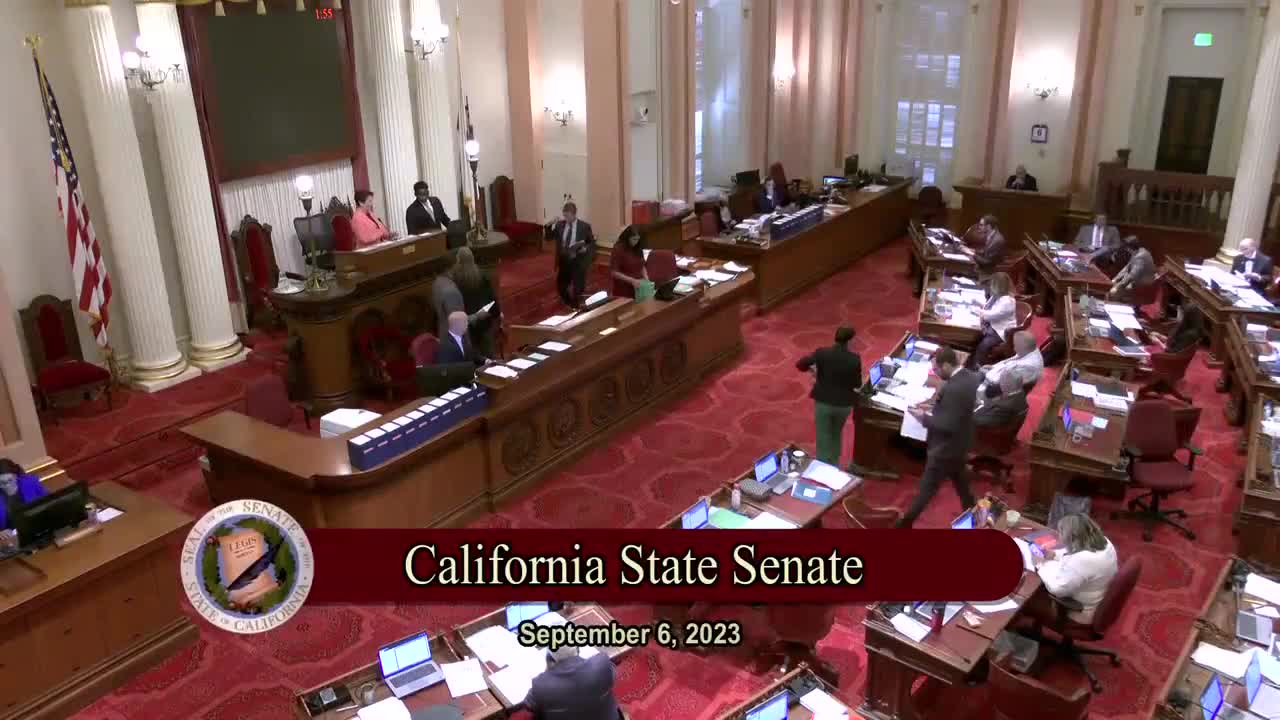 3MIN
Senate Floor
 3MIN
Senate Standing Committee on Governance and Finance
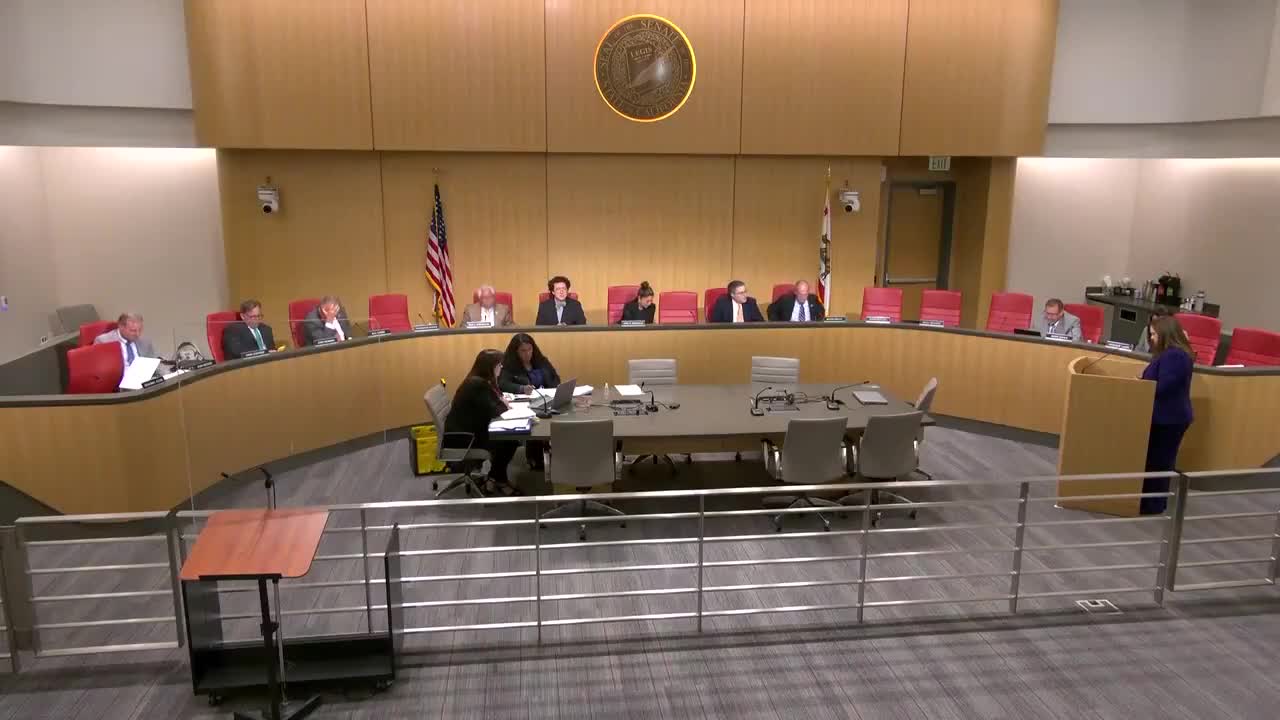 7MIN
Senate Standing Committee on Transportation
 9MIN
Assembly Standing Committee on Local Government
Bill Author

Bill Co-Author(s):