AB 1389: Notice of levy.
- Session Year: 2023-2024
- House: Assembly
- Latest Version Date: 2023-10-13
Current Status:
Passed
(2023-10-13: Chaptered by Secretary of State - Chapter 839, Statutes of 2023.)
Introduced
In Committee
First Chamber
In Committee
Second Chamber
Enacted
Existing law requires the Employment Development Department to implement and administer the unemployment insurance program in this state, and provides for the payment of unemployment compensation benefits to eligible individuals who are unemployed through no fault of their own. Existing law provides for penalties and interest if any person or employing unit is delinquent in the payment of any contributions for unemployment insurance, and authorizes the Director of Employment Development to enforce any state tax liens against a delinquent account receivable or account held by a financial institution if proper notice is given. Existing law requires the person receiving a notice of levy, if the levy is made on an account receivable, to remit any credits or personal property owing to the delinquent person or employing unit to the department within 5 days of receipt of the notice of levy. Existing law also requires a person that comes into possession of credits or property owing to a delinquent person or employing unit within one year of receipt of the notice of an accounts receivable levy to remit the credits or property to the department within 5 days of coming into possession of the credits or property. Existing law requires a financial institution receiving a notice of levy to remit the property to the department within 5 days of receiving the notice of levy, but does not require the financial institution to remit property that is not in their possession at the time the notice of levy is served.
This bill would instead require the person in possession of credits or property owing to the delinquent person or employing unit to remit the credits or property to the department after 10 but no later than 14 business days after service of the levy. The bill would also require a person coming into possession of credits or property owing to the delinquent person or employing unit within one year of receipt of the notice of levy to remit the credits or property to the department after 10 but no later than 14 days after coming into possession of the credits or property. The bill would also make clarifying changes to these provisions.
Existing law requires the Employment Development Department to implement and administer the unemployment insurance program in this state, and provides for the payment of unemployment compensation benefits to eligible individuals who are unemployed through no fault of their own. Existing law provides for penalties and interest if any person or employing unit is delinquent in the payment of any contributions for unemployment insurance, and authorizes the Director of Employment Development to enforce any state tax liens against a delinquent account receivable or account held by a financial institution if proper notice is given. Existing law requires the person receiving a notice of levy, if the levy is made on an account receivable, to remit any credits or personal property owing to the delinquent person or employing unit to the department within 5 days of receipt of the notice of levy. Existing law also requires a person that comes into possession of credits or property owing to a delinquent person or employing unit within one year of receipt of the notice of an accounts receivable levy to remit the credits or property to the department within 5 days of coming into possession of the credits or property. Existing law requires a financial institution receiving a notice of levy to remit the property to the department within 5 days of receiving the notice of levy, but does not require the financial institution to remit property that is not in their possession at the time the notice of levy is served.
This bill would instead require the person in possession of credits or property owing to the delinquent person or employing unit to remit the credits or property to the department after 10 but no later than 14 business days after service of the levy. The bill would also require a person coming into possession of credits or property owing to the delinquent person or employing unit within one year of receipt of the notice of levy to remit the credits or property to the department after 10 but no later than 14 days after coming into possession of the credits or property. The bill would also make clarifying changes to these provisions.
Existing law requires the Employment Development Department to implement and administer the unemployment insurance program in this state, and provides for the payment of unemployment compensation benefits to eligible individuals who are unemployed through no fault of their own. Existing law provides for penalties and interest if any person or employing unit is delinquent in the payment of any contributions for unemployment insurance, and authorizes the Director of Employment Development to enforce any state tax liens against a delinquent account receivable or account held by a financial institution if proper notice is given. Existing law requires the person receiving a notice of levy, if the levy is made on an account receivable, to remit any credits or personal property owing to the delinquent person or employing unit to the department within 5 days of receipt of the notice of levy. Existing law also requires a person that comes into possession of credits or property owing to a delinquent person or employing unit within one year of receipt of the notice of an accounts receivable levy to remit the credits or property to the department within 5 days of coming into possession of the credits or property. Existing law requires a financial institution receiving a notice of levy to remit the property to the department within 5 days of receiving the notice of levy, but does not require the financial institution to remit property that is not in their possession at the time the notice of levy is served.
This bill would instead require the person in possession of credits or property owing to the delinquent person or employing unit to remit the credits or property to the department after 10 but no later than 14 business days after service of the levy. The bill would also require a person coming into possession of credits or property owing to the delinquent person or employing unit within one year of receipt of the notice of levy to remit the credits or property to the department after 10 but no later than 14 days after coming into possession of the credits or property. The bill would also make clarifying changes to these provisions.
Existing law requires the Employment Development Department to implement and administer the unemployment insurance program in this state, and provides for the payment of unemployment compensation benefits to eligible individuals who are unemployed through no fault of their own. Existing law provides for penalties and interest if any person or employing unit is delinquent in the payment of any contributions for unemployment insurance, and authorizes the Director of Employment Development to enforce any state tax liens against a delinquent account receivable or account held by a financial institution if proper notice is given. Existing law requires the person receiving a notice of levy, if the levy is made on an account receivable, to remit any credits or personal property owing to the delinquent person or employing unit to the department within 5 days of receipt of the notice of levy. Existing law also requires a person that comes into possession of credits or property owing to a delinquent person or employing unit within one year of receipt of the notice of an accounts receivable levy to remit the credits or property to the department within 5 days of coming into possession of the credits or property. Existing law requires a financial institution receiving a notice of levy to remit the property to the department within 5 days of receiving the notice of levy, but does not require the financial institution to remit property that is not in their possession at the time the notice of levy is served.
This bill would instead require the person in possession of credits or property owing to the delinquent person or employing unit to remit the credits or property to the department after 10 but no later than 14 business days after service of the levy. The bill would also require a person coming into possession of credits or property owing to the delinquent person or employing unit within one year of receipt of the notice of levy to remit the credits or property to the department after 10 but no later than 14 days after coming into possession of the credits or property. The bill would also make clarifying changes to these provisions.
(a)If any person or employing unit is delinquent in the payment of any contributions, penalties, or interest provided for in this division, the director may, not later than three years after the payment became delinquent or within 10 years after the last entry of a judgment under Article 5 (commencing with Section 1815) or within 10 years after the last recording or filing of a notice of state tax lien under Section 7171 of the Government Code, collect the delinquency or enforce any liens by levy served either personally or by first-class mail, to any person having in their possession or under their control any credits or personal property belonging to the delinquent person or employing unit, or owing any debts to the person or employing unit at the time of the receipt of the notice of levy.
(b)Any person other than a financial institution upon whom a notice of accounts receivable levy has been served having in their possession or under their control any credits or personal property belonging to the delinquent person or employing unit or owing any debts to the person or employing unit at the time of the receipt of the levy or coming into their possession or under their control for the period of one year from the time of receipt of the notice of accounts receivable levy, shall hold and remit the credits or personal property to the director or pay to the director the amount of any debt owing the delinquent employer after 10 but no later than 14 business days after service of the levy, and shall hold and remit the credits or personal property, or the amount of any debt owing to the delinquent employer coming into their possession or under their control within one year of receipt of the notice of accounts receivable levy after 10 but no later than 14 business days after the date of coming into possession or control of the credits or personal property, or the amount of any debt owing to the delinquent employer is incurred. Any person in possession of any credits or personal property or owing any debts to the delinquent person or employing unit who surrenders the credits or personal property or pays the debts owing the delinquent person or employing unit shall be discharged from any obligation or liability to the delinquent person or employing unit with respect to the credits or personal property surrendered or debts paid to the director.
(c)If the levy is made on a deposit or credits or personal property in the possession or under the control of a financial institution, the notice of levy shall be served on that financial institution at the same location as legal process is required to be served pursuant to Section 684.115 of the Code of Civil Procedure, and the levy will apply to all credits or personal property in the deposit account only at the time that notice of levy is received by the financial institution. The levy of a financial institution is treated as a single event and requires the financial institution to hold and remit funds after 10 but no later than 14 business days after receipt of the notice of levy.
(d)For purposes of this section:
(1)Business day means any day other than a Saturday, Sunday, legal holiday as recognized by the Internal Revenue Service, statewide legal holiday as recognized by the State of California pursuant to Section 6700 of the Government Code, or a day in which the department is closed pursuant to Section 12b of the Code of Civil Procedure.
(2)Deposit account has the same meaning as in paragraph (29) of subdivision (a) of Section 9102 of the Commercial Code.
(3)Financial institution has the same meaning as in Section 481.113 of the Code of Civil Procedure.
(4)Legal process has the same meaning as in Section 482.070 of the Code of Civil Procedure.
(a)If any person or employing unit is delinquent in the payment of any contributions, penalties, or interest provided for in this division, the director may, not later than three years after the payment became delinquent or within 10 years after the last entry of a judgment under Article 5 (commencing with Section 1815) or within 10 years after the last recording or filing of a notice of state tax lien under Section 7171 of the Government Code, collect the delinquency or enforce any liens by levy served either personally or by first-class mail, to any person having in their possession or under their control any credits or personal property belonging to the delinquent person or employing unit, or owing any debts to the person or employing unit at the time of the receipt of the notice of levy.
(b)Any person other than a financial institution upon whom a notice of accounts receivable levy has been served having in their possession or under their control any credits or personal property belonging to the delinquent person or employing unit or owing any debts to the person or employing unit at the time of the receipt of the levy or coming into their possession or under their control for the period of one year from the time of receipt of the notice of accounts receivable levy, shall hold and remit the credits or personal property to the director or pay to the director the amount of any debt owing the delinquent employer after 10 but no later than 14 business days after service of the levy, and shall hold and remit the credits or personal property, or the amount of any debt owing to the delinquent employer coming into their possession or under their control within one year of receipt of the notice of accounts receivable levy after 10 but no later than 14 business days after the date of coming into possession or control of the credits or personal property, or the amount of any debt owing to the delinquent employer is incurred. Any person in possession of any credits or personal property or owing any debts to the delinquent person or employing unit who surrenders the credits or personal property or pays the debts owing the delinquent person or employing unit shall be discharged from any obligation or liability to the delinquent person or employing unit with respect to the credits or personal property surrendered or debts paid to the director.
(c)If the levy is made on a deposit or credits or personal property in the possession or under the control of a financial institution, the notice of levy shall be served on that financial institution at the same location as legal process is required to be served pursuant to Section 684.115 of the Code of Civil Procedure, and the levy will apply to all credits or personal property in the deposit account only at the time that notice of levy is received by the financial institution. The levy of a financial institution is treated as a single event and requires the financial institution to hold and remit funds after 10 but no later than 14 business days after receipt of the notice of levy.
(d)For purposes of this section:
(1)Business day means any day other than a Saturday, Sunday, legal holiday as recognized by the Internal Revenue Service, statewide legal holiday as recognized by the State of California pursuant to Section 6700 of the Government Code, or a day in which the department is closed pursuant to Section 12b of the Code of Civil Procedure.
(2)Deposit account has the same meaning as in paragraph (29) of subdivision (a) of Section 9102 of the Commercial Code.
(3)Financial institution has the same meaning as in Section 481.113 of the Code of Civil Procedure.
(4)Legal process has the same meaning as in Section 482.070 of the Code of Civil Procedure.
(a)If any person or employing unit is delinquent in the payment of any contributions, penalties, or interest provided for in this division, the director may, not later than three years after the payment became delinquent or within 10 years after the last entry of a judgment under Article 5 (commencing with Section 1815) or within 10 years after the last recording or filing of a notice of state tax lien under Section 7171 of the Government Code, collect the delinquency or enforce any liens by levy served either personally or by first-class mail, to any person having in their possession or under their control any credits or personal property belonging to the delinquent person or employing unit, or owing any debts to the person or employing unit at the time of the receipt of the notice of levy.
(b)Any person other than a financial institution upon whom a notice of accounts receivable levy has been served having in their possession or under their control any credits or personal property belonging to the delinquent person or employing unit or owing any debts to the person or employing unit at the time of the receipt of the levy or coming into their possession or under their control for the period of one year from the time of receipt of the notice of accounts receivable levy, shall hold and remit the credits or personal property to the director or pay to the director the amount of any debt owing the delinquent employer after 10 but no later than 14 business days after service of the levy, and shall hold and remit the credits or personal property, or the amount of any debt owing to the delinquent employer coming into their possession or under their control within one year of receipt of the notice of accounts receivable levy after 10 but no later than 14 business days after the date of coming into possession or control of the credits or personal property, or the amount of any debt owing to the delinquent employer is incurred. Any person in possession of any credits or personal property or owing any debts to the delinquent person or employing unit who surrenders the credits or personal property or pays the debts owing the delinquent person or employing unit shall be discharged from any obligation or liability to the delinquent person or employing unit with respect to the credits or personal property surrendered or debts paid to the director.
(c)If the levy is made on a deposit or credits or personal property in the possession or under the control of a financial institution, the notice of levy shall be served on that financial institution either personally or by first class mail at the same location as legal process is required to be served pursuant to Section 684.115 of the Code of Civil Procedure, and the levy will apply to all credits or personal property in the deposit account only at the time that notice of levy is received by the financial institution. The levy of a financial institution is treated as a single event and requires the financial institution to hold and remit funds after 10 but no later than 14 business days after receipt of the notice of levy.
(d)For purposes of this section:
(1)Business day means any day other than a Saturday, Sunday, legal holiday as recognized by the Internal Revenue Service, statewide legal holiday as recognized by the State of California pursuant to Section 6700 of the Government Code, or a day in which the department is closed pursuant to Section 12b of the Code of Civil Procedure.
(2)Deposit account has the same meaning as in paragraph (29) of subdivision (a) of Section 9102 of the Commercial Code.
(3)Financial institution has the same meaning as in Section 481.113 of the Code of Civil Procedure.
(4)Legal process has the same meaning as in Section 482.070 of the Code of Civil Procedure.
(a)If any person or employing unit is delinquent in the payment of any contributions, penalties, or interest provided for in this division, the director may, not later than three years after the payment became delinquent or within 10 years after the last entry of a judgment under Article 5 (commencing with Section 1815) or within 10 years after the last recording or filing of a notice of state tax lien under Section 7171 of the Government Code, collect the delinquency or enforce any liens by levy served either personally or by first-class mail, to all persons any person having in their possession or under their control any credits or personal property belonging to the delinquent person or employing unit, or owing any debts to the person or employing unit at the time of the receipt of the notice of levy or coming into their possession or under their control for the period of one year from the time of receipt of the notice of levy. Any levy.
(b)Any person upon whom a other than a financial institution upon whom a notice of accounts receivable levy has been served having in his or her possession or under his or her their possession or under their control any credits or personal property belonging to the delinquent person or employing unit or owing any debts to the person or employing unit at the time of the receipt of the levy or coming into his or her possession or under his or her their possession or under their control for the period of one year from the time of receipt of the notice of levy, shall surrender accounts receivable levy, shall hold and remit the credits or personal property to the director or pay to the director the amount of any debt owing the delinquent employer within five days of after 10 but no later than 14 business days after service of the levy, and shall surrender hold and remit the credits or personal property, or the amount of any debt owing to the delinquent employer coming into his or her possession or under his or her their possession or under their control within one year of receipt of the notice of levy within five days of accounts receivable levy after 10 but no later than 14 business days after the date of coming into possession or control of the credits or personal property, or the amount of any debt owing to the delinquent employer is incurred. Any person in possession of any credits or personal property or owing any debts to the delinquent person or employing unit who surrenders the credits or personal property or pays the debts owing the delinquent person or employing unit shall be discharged from any obligation or liability to the delinquent person or employing unit with respect to the credits or personal property surrendered or debts paid to the director.
(b)(1)(c)If the levy is made on a deposit or credits or personal property in the possession or under the control of a financial institution, the notice of levy shall be served on that financial institution either personally or by first class mail at the same location as legal process is required to be served pursuant to Section 684.115 of the Code of Civil Procedure, and the levy will apply to all credits or personal property in the deposit account only at the time that notice of levy is received by the financial institution. The levy of a financial institution is treated as a single event and requires the financial institution to hold and remit funds after 10 but no later than 14 business days after receipt of the notice of levy.
(2)(d)For purposes of this section:
(1)Business day means any day other than a Saturday, Sunday, legal holiday as recognized by the Internal Revenue Service, statewide legal holiday as recognized by the State of California pursuant to Section 6700 of the Government Code, or a day in which the department is closed pursuant to Section 12b of the Code of Civil Procedure.
(A)(2)Deposit account has the same meaning as in paragraph (29) of subdivision (a) of Section 9102 of the Commercial Code.
(B)(3)Financial institution has the same meaning as in Section 481.113 of the Code of Civil Procedure.
(C)(4)Legal process has the same meaning as in Section 482.070 of the Code of Civil Procedure.
|
Date
|
Status
|
|---|---|
| Oct 13, 2023 | Chaptered by Secretary of State - Chapter 839, Statutes of 2023. |
| Oct 13, 2023 | Approved by the Governor. |
| Sep 13, 2023 | Enrolled and presented to the Governor at 3 p.m. |
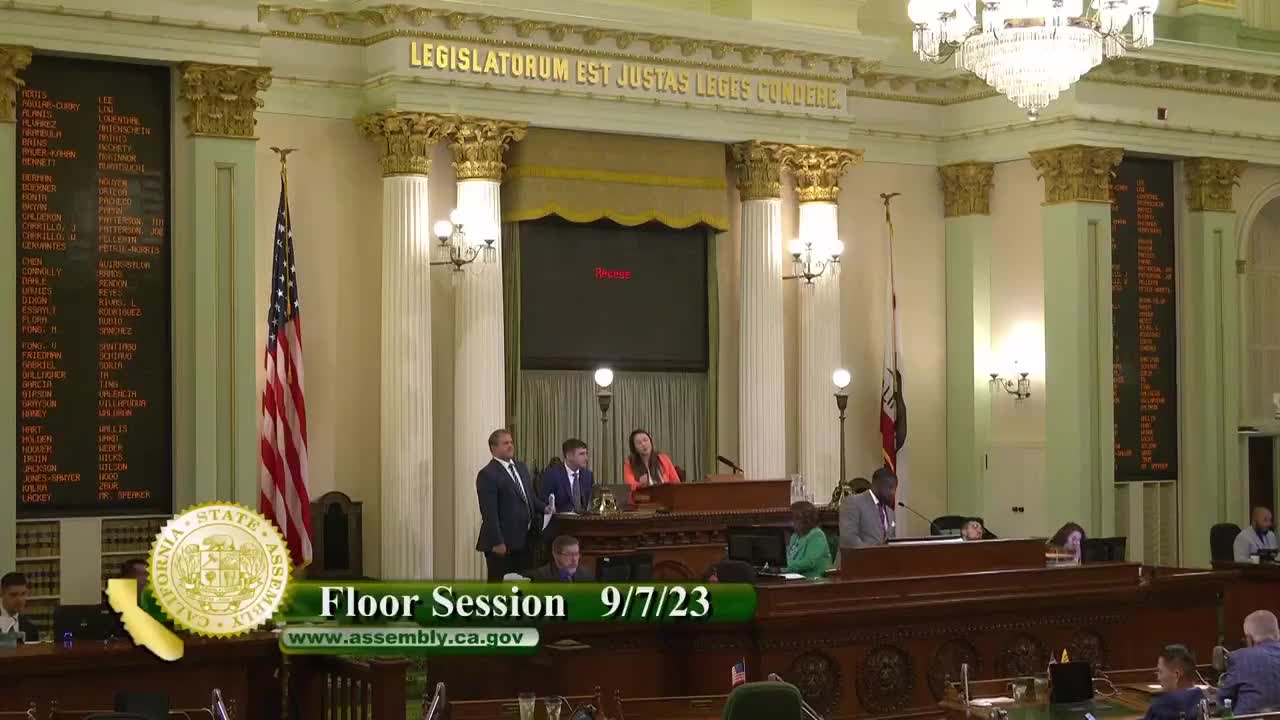
| Sep 7, 2023 | Senate amendments concurred in. To Engrossing and Enrolling. (Ayes 79. Noes 0. Page 3020.). |
| Jun 29, 2023 | In Assembly. Concurrence in Senate amendments pending. May be considered on or after July 1 pursuant to Assembly Rule 77. |
| Jun 29, 2023 | Read third time. Passed. Ordered to the Assembly. (Ayes 39. Noes 0. Page 1829.). |
| Jun 27, 2023 | Read second time. Ordered to Consent Calendar. |
| Jun 26, 2023 | From committee: Be ordered to second reading file pursuant to Senate Rule 28.8 and ordered to Consent Calendar. |
| Jun 14, 2023 | From committee: Do pass and re-refer to Com. on APPR with recommendation: To Consent Calendar. (Ayes 5. Noes 0.) (June 14). Re-referred to Com. on APPR. |
| Jun 5, 2023 | From committee chair, with author's amendments: Amend, and re-refer to committee. Read second time, amended, and re-referred to Com. on L., P.E. & R. |
| May 10, 2023 | Referred to Com. on L., P.E. & R. |
| Apr 27, 2023 | In Senate. Read first time. To Com. on RLS. for assignment. |
| Apr 27, 2023 | Read third time. Passed. Ordered to the Senate. (Ayes 79. Noes 0. Page 1366.) |
| Apr 20, 2023 | Read second time. Ordered to Consent Calendar. |
| Apr 19, 2023 | From committee: Do pass. To Consent Calendar. (Ayes 14. Noes 0.) (April 19). |
| Mar 22, 2023 | From committee: Do pass and re-refer to Com. on APPR. with recommendation: To Consent Calendar. (Ayes 12. Noes 0.) (March 22). Re-referred to Com. on APPR. |
| Mar 9, 2023 | Referred to Com. on INS. |
| Feb 18, 2023 | From printer. May be heard in committee March 20. |
| Feb 17, 2023 | Read first time. To print. |
|
Date
|
Description
|
Location
|
Votes
|
|
|---|---|---|---|---|
| Sep 7, 2023 | AB 1389 Wendy Carrillo Concurrence in Senate Amendments | Assembly Floor |
Passed |
|
| Jun 29, 2023 | Consent Calendar AB1389 Wendy Carrillo | Senate Floor |
Passed |
|
| Jun 14, 2023 | Do pass, but first be re-referred to the Committee on [Appropriations] with the recommendation: To Consent Calendar | Senate Standing Committee on Labor, Public Employment and Retirement |
Passed |
|
| Apr 27, 2023 | AB 1389 Wendy Carrillo Consent Calendar Second Day Regular Session | Assembly Floor |
Passed |
|
| Apr 19, 2023 | Do pass. To Consent Calendar. | Assembly Standing Committee on Appropriations |
Passed |
|
| Mar 22, 2023 | Do pass and be re-referred to the Committee on [Appropriations] with recommendation: To Consent Calendar | Assembly Standing Committee on Insurance |
Passed |
This list shows positions taken on this bill by organizations on the date displayed, which is linked to the original source.
Positions by individuals are not included.
|
Organization
|
Position
|
Date
|
|---|---|---|
| CA Society of Enrolled Agents | ** Support |
CONCURRENCE IN SENATE AMENDMENTS
CSA1 Bill Id:AB 1389
Author:(Wendy Carrillo)
As Amended Ver:June 5, 2023
Majority vote
SUMMARY
Extends the levy remittance time limit from five days to after ten, but no later than 14 business days after service of the levy.
- Defines "business day" as any day other than a Saturday, Sunday, legal holiday as recognized by the Internal Revenue Service, statewide legal holiday as recognized by the State of California, or a day in which the Employment Development Department (EDD) is closed.
- Makes other technical and non-substantive changes.
Senate Amendments
Delete provision that the notice of levy be served to the financial institution, personally, or by first class mail.
COMMENTS
California UI Code Section 1755 governs bank levies by EDD. Existing law explains the levy process, applicable statutory periods, and identifies a response time of "within five days of service of the levy." This means that once a levy is served upon a financial institution, the institution must remit the levied funds to the EDD "within five days of service of the levy" to avoid being deemed liable for the tax.
Other areas of the law including, California Revenue & Taxation Code and 26 United States Code provide significant guidance regarding how and when banks must surrender deposits that are subject to levy from other taxing agencies. Pursuant to the Revenue & Taxation Code, the bank remits the levied funds "not less than 10 business days from receipt" of the levy notice. Pursuant to the California Department of Tax and Fee Administration Collection (CDTFA) Publication 54, the bank must hold the funds subject to levy for 10 days prior to releasing the levied funds to the CDTFA. Finally, 26 U.S.C. Session 6332(c), provides that the financial institution must turn over levied funds "only after 21 days after service of the levy." Ultimately, the other taxing agencies demonstrate at least a 10 day minimum holding period after receipt of a levy before remitting the designated funds, which is very different from the language found in UI Code Section 1755, which requires funds to be remitted to the EDD "within five days."
The limited response time – "within five days" – required under existing law does not provide the taxpayer a sufficient opportunity to determine the validity of the levy, whether funds are exempt from levy, or whether the proposed levy would create undue financial hardship. Modifying the statute could reduce financial hardship to taxpayers and, administrative costs for EDD.
According to the Author
"EDD is responsible for collecting and administering California's payroll taxes which include employer contributions for Unemployment Insurance and Employment Training Tax purposes, as well as employee withholdings for Disability Insurance and California Personal Income Tax. The collection of these payroll taxes ensure that workers receive benefits that they deserve. This bill would improve customer service for taxpayers and claimants by providing them with more time to resolve their outstanding tax liabilities or fraudulent overpayments before a levy is remitted to EDD."
Arguments in Support
None on file.
Arguments in Opposition
None on file.
FISCAL COMMENTS
According to the Assembly Appropriations Committee, minor and absorbable costs to EDD to update forms, publications, and EDD's Accounting and Compliance Enterprise System to reflect the change in remittance time.
VOTES:
ASM INSURANCE: 12-0-2
YES: Calderon, Essayli, Berman, Chen, Dixon, Gipson, Jones-Sawyer, Ortega, Rodriguez, Soria, Valencia, Wood
ABS, ABST OR NV: Cervantes, Grayson
ASM APPROPRIATIONS: 14-0-2
YES: Holden, Megan Dahle, Calderon, Wendy Carrillo, Dixon, Mike Fong, Hart, Lowenthal, Mathis, Papan, Robert Rivas, Sanchez, Weber, Wilson
ABS, ABST OR NV: Bryan, Pellerin
ASSEMBLY FLOOR: 79-0-1
YES: Addis, Aguiar-Curry, Alanis, Alvarez, Arambula, Bains, Bauer-Kahan, Bennett, Berman, Boerner, Bonta, Bryan, Calderon, Juan Carrillo, Wendy Carrillo, Cervantes, Chen, Connolly, Megan Dahle, Davies, Dixon, Essayli, Flora, Mike Fong, Vince Fong, Friedman, Gabriel, Gallagher, Garcia, Gipson, Grayson, Haney, Hart, Holden, Hoover, Irwin, Jackson, Jones- Sawyer, Kalra, Lackey, Lee, Low, Lowenthal, Maienschein, Mathis, McCarty, McKinnor, Muratsuchi, Stephanie Nguyen, Ortega, Pacheco, Papan, Joe Patterson, Pellerin, Petrie-Norris, Quirk-Silva, Ramos, Reyes, Luz Rivas, Robert Rivas, Rodriguez, Blanca Rubio, Sanchez, Santiago, Schiavo, Soria, Ta, Ting, Valencia, Villapudua, Waldron, Wallis, Ward, Weber, Wicks, Wilson, Wood, Zbur, Rendon
ABS, ABST OR NV: Jim Patterson
SENATE FLOOR: 39-0-1
YES: Allen, Archuleta, Ashby, Atkins, Becker, Blakespear, Bradford, Caballero, Cortese, Dahle, Dodd, Durazo, Eggman, Glazer, Gonzalez, Grove, Hurtado, Jones, Laird, Limón, McGuire, Menjivar, Min, Newman, Nguyen, Niello, Ochoa Bogh, Padilla, Portantino, Roth, Rubio, Seyarto, Skinner, Smallwood-Cuevas, Stern, Umberg, Wahab, Wiener, Wilk
ABS, ABST OR NV: Alvarado-Gil
UPDATED
VERSION: June 5, 2023
CONSULTANT: Kathleen O'Malley / INS. / (916) 319-2086 FN: 0001178
SENATE RULES COMMITTEE Office of Senate Floor Analyses (916) 651-1520 Fax: (916) 327-4478 | AB 1389 |
THIRD READING
Bill No: AB 1389
Author: Wendy Carrillo (D)
Amended: 6/5/23 in Senate
Vote: 21
SENATE LABOR, PUB. EMP. & RET. COMMITTEE: 5-0, 6/14/23
AYES: Cortese, Wilk, Durazo, Laird, Smallwood-Cuevas
SENATE APPROPRIATIONS COMMITTEE: Senate Rule 28.8
ASSEMBLY FLOOR: 79-0, 4/27/23 (Consent) - See last page for vote
SUBJECT: Notice of levy
SOURCE: Author
DIGEST:
This bill extends the current timeframe to remit levied property/funds to the Employment Development Department from 5 days to between 10, but not more than 14 business days, to give all parties involved sufficient time to review and remit owed funds.
ANALYSIS:
Existing law:
- Establishes the Employment Development Department (EDD) within the Labor and Workforce Development Agency. EDD is responsible for, among other duties, the administration of the Unemployment Insurance and Disability Insurance programs. (Unemployment Insurance Code §301)
- Establishes the Unemployment Insurance (UI) Program as a joint state/federal program, administered by the Employment Development Department that provides weekly unemployment insurance payments for workers who lose their job through no fault of their own. Eligibility for benefits requires that the claimant be able to work, available for work, be seeking work, and be willing to accept a suitable job. (Unemployment Insurance Code §100-144 & §301-456)
- Provides UI weekly benefits that range from $40-$450 based on the employee’s prior earnings and are available for a maximum of 26 weeks, as specified. (Unemployment Insurance Code §1275-1282)
- Requires employers to pay for the UI program. Tax-rated employers pay a percentage on the first $7,000 in wages paid to each employee in a calendar year. The UI rate schedule and amount of taxable wages are determined annually. New employers pay 3.4 percent (.034) for a period of two to three years. The maximum tax is $434 per employee per year (calculated at the highest UI tax rate of 6.2 percent x $7,000.) (Unemployment Insurance Code §901-1243)
- Provides for penalties and interest if any person or employing unit is delinquent in the payment of any contributions for unemployment insurance, and authorizes the Director of Employment Development to collect the delinquency or enforce any state tax liens by levy against a delinquent account receivable or account held by a financial institution if proper notice is given. (Unemployment Insurance Code §1755)
- Requires the person receiving a notice of levy, if the levy is made on an account receivable, to remit any credits or personal property owing to the delinquent person or employing unit to EDD within 5 days of receipt of the notice of levy. (Unemployment Insurance Code §1755)
- Requires a person that comes into possession of credits or property owing to a delinquent person or employing unit within one year of receipt of the notice of an accounts receivable levy to remit the credits or property to the department within 5 days of coming into possession of the credits or property. (Unemployment Insurance Code §1755)
- Provides that if the levy is made on a deposit or credits or personal property in the possession or control of a financial institution, the notice of levy shall be served on that financial institution and the institution must remit the property to EDD within 5 days of receiving the notice of levy, but does not require the financial institution to remit property that is not in their possession at the time the notice of levy is served. (Unemployment Insurance Code §1755)
This bill:
- Extends the levy remittance time limit in the above mentioned provisions from five days to ten, but no later than 14 business days after service of a levy.
- Defines “business day” as any day other than a Saturday, Sunday, legal holiday as recognized by the Internal Revenue Service, statewide legal holiday as recognized by the State of California, or a day in which the Employment Development Department (EDD) is closed.
- Makes other technical and non-substantive changes.
Background
As noted above, the EDD is responsible for, among other duties, the administration of the Unemployment Insurance and Disability Insurance programs. EDD is also responsible for the collection and administration of California’s payroll taxes, which include employer contributions for Unemployment Insurance and Employment Training Tax, as well as employee withholdings for State Disability Insurance and California Personal Income Tax. The collection of these payroll taxes ensure that workers receive benefits that they are entitled to, and that all employers comply with the payroll reporting and tax payment requirements under California’s Unemployment Insurance Code.
Existing law authorizes EDD, if any person or employing unit is delinquent in the payment of any contributions, penalties or interest, to pursue voluntary and involuntary collection measures, including levies, as appropriate. Any person or financial institution (if the financial institution is in possession of a deposit or credit or personal property for which a levy is made) having been served a levy must remit the funds owed to EDD within five days. This means that once a levy is served upon a financial institution, the institution must remit the levied funds to the EDD “within five days of service of the levy” to avoid being deemed liable for the tax.
As noted in the Assembly Insurance Committee analysis of this bill, “Other areas of the law including, California Revenue & Taxation Code and 26 United States Code provide significant guidance regarding how and when banks must surrender deposits that are subject to levy from other taxing agencies. Pursuant to the Revenue & Taxation Code, the bank remits the levied funds “not less than 10 business days from receipt” of the levy notice. Pursuant to the California Department of Tax and Fee Administration Collection (CDTFA) Publication 54, the bank must hold the funds subject to levy for 10 days prior to releasing the levied funds to the CDTFA. Finally, 26 U.S.C. § 6332(c), provides that the financial institution must turn over levied funds “only after 21 days after service of the levy.” Ultimately, the other taxing agencies demonstrate at least a 10 day minimum holding period after receipt of a levy before remitting the designated funds, which is very different from the language found in UI Code Section 1755, which requires funds to be remitted to the EDD “within five days.”
The limited response time – “within five days” – required under existing law does not provide the taxpayer a sufficient opportunity to determine the validity of the levy, whether funds are exempt from levy, or whether the proposed levy would create undue financial hardship. Modifying the statute could reduce financial hardship to taxpayers and, administrative costs for EDD.”
Need for this bill? According to the author, “The Employment Development Department (EDD) is responsible for collecting and administering California’s payroll taxes which include employer contributions for Unemployment Insurance and Employment Training Tax purposes, as well as employee withholdings for Disability Insurance and California Personal Income Tax. The collection of these payroll taxes ensure that workers receive benefits that they deserve. This bill would improve customer service for taxpayers and claimants by providing them with more time to resolve their outstanding tax liabilities or fraudulent overpayments before a levy is remitted to EDD.”
FISCAL EFFECT: Appropriation: No Fiscal Com.: Yes Local: No
SUPPORT: (Verified 6/27/23)
CA Society of Enrolled Agents
OPPOSITION: (Verified 6/27/23)
None received
ARGUMENTS IN SUPPORT: The CA Society of Enrolled Agents is in support and writes, “banks that receive levies are required to notify the account holder that a levy has been served, the amount of funds being held, and any fees assessed relative to this action. However, banks usually give this notification via regular postal service. If the response time to the levy is 5 days (calendar) and the bank receives the levy on a Friday, mails the notice on that same day, the taxpayer is likely to receive it on Monday or Tuesday. Tuesday is day five, leaving little to no time to contact the EDD before the bank releases the funds.
In practice, the taxpayer usually finds out about the levy when the funds are withdrawn from the account. When this happens, the taxpayer is effectively denied due process rights to challenge the levy, or find an alternate resolution, before funds are remitted to the EDD. The EDD is reluctant to return levied funds unless the levy is proved erroneous, but this is after any financial damage is already done.
Timing is critical. The EDD can serve a levy by fax or electronic means to a financial institution, reducing the time it takes to acknowledge the levy. The taxpayer is not afforded the same prompt notice from EDD, but instead waits for notification by regular mail. This creates another time disadvantage to the taxpayer. Practitioners who represent taxpayers in matters involving EDD bank levies know that time is the main hurdle in trying to resolve such levies. Banks are incentivized to remit funds as soon as possible as the penalty for failing to do so makes them culpable for the entire amount owed to the EDD.”
In conclusion, they argue that, “This bill would provide a realistic time‐period for taxpayers to receive bank notification and take steps to resolve the EDD matter before financial harm or hardship due to the levy.”
ASSEMBLY FLOOR: 79-0, 4/27/23
AYES: Addis, Aguiar-Curry, Alanis, Alvarez, Arambula, Bains, Bauer-Kahan, Bennett, Berman, Boerner, Bonta, Bryan, Calderon, Juan Carrillo, Wendy Carrillo, Cervantes, Chen, Connolly, Megan Dahle, Davies, Dixon, Essayli, Flora, Mike Fong, Vince Fong, Friedman, Gabriel, Gallagher, Garcia, Gipson, Grayson, Haney, Hart, Holden, Hoover, Irwin, Jackson, Jones-Sawyer, Kalra, Lackey, Lee, Low, Lowenthal, Maienschein, Mathis, McCarty, McKinnor, Muratsuchi, Stephanie Nguyen, Ortega, Pacheco, Papan, Joe Patterson, Pellerin, Petrie-Norris, Quirk-Silva, Ramos, Reyes, Luz Rivas, Robert Rivas, Rodriguez, Blanca Rubio, Sanchez, Santiago, Schiavo, Soria, Ta, Ting, Valencia, Villapudua, Waldron, Wallis, Ward, Weber, Wicks, Wilson, Wood, Zbur, Rendon
NO VOTE RECORDED: Jim Patterson
Prepared by: Alma Perez-Schwab / L., P.E. & R. / (916) 651-1556
6/28/23 11:08:37
SENATE COMMITTEE ON LABOR, PUBLIC EMPLOYMENT AND RETIREMENT
Senator Dave Cortese, Chair
2023 - 2024 Regular
Bill No: AB 1389 Hearing Date: June 14, 2023
Author: | Wendy Carrillo | ||
Version: | June 5, 2023 | ||
Urgency: | No | Fiscal: | Yes |
Consultant: | Alma Perez-Schwab | ||
SUBJECT: Notice of levy
KEY ISSUE
Should the Legislature extend the current timeframe to remit levied property/funds to the Employment Development Department from 5 days to between 10, but not more than 14 business days, to give all parties involved sufficient time to review and remit owed funds?
ANALYSIS
Existing law:
- Establishes the Employment Development Department (EDD) within the Labor and Workforce Development Agency. EDD is responsible for, among other duties, the administration of the Unemployment Insurance and Disability Insurance programs. (Unemployment Insurance Code §301)
- Establishes the Unemployment Insurance (UI) Program as a joint state/federal program, administered by the Employment Development Department that provides weekly unemployment insurance payments for workers who lose their job through no fault of their own. Eligibility for benefits requires that the claimant be able to work, available for work, be seeking work, and be willing to accept a suitable job. (Unemployment Insurance Code §100-144 & §301-456)
- Provides UI weekly benefits that range from $40-$450 based on the employee’s prior earnings and are available for a maximum of 26 weeks, as specified. (Unemployment Insurance Code §1275-1282)
- Requires employers to pay for the UI program. Tax-rated employers pay a percentage on the first $7,000 in wages paid to each employee in a calendar year. The UI rate schedule and amount of taxable wages are determined annually. New employers pay 3.4 percent (.034) for a period of two to three years. The maximum tax is $434 per employee per year (calculated at the highest UI tax rate of 6.2 percent x $7,000.) (Unemployment Insurance Code §901-1243)
- Provides for penalties and interest if any person or employing unit is delinquent in the payment of any contributions for unemployment insurance, and authorizes the Director of Employment Development to collect the delinquency or enforce any state tax liens by levy against a delinquent account receivable or account held by a financial institution if proper notice is given. (Unemployment Insurance Code §1755)
- Requires the person receiving a notice of levy, if the levy is made on an account receivable, to remit any credits or personal property owing to the delinquent person or employing unit to EDD within 5 days of receipt of the notice of levy. (Unemployment Insurance Code §1755)
- Requires a person that comes into possession of credits or property owing to a delinquent person or employing unit within one year of receipt of the notice of an accounts receivable levy to remit the credits or property to the department within 5 days of coming into possession of the credits or property. (Unemployment Insurance Code §1755)
- Provides that if the levy is made on a deposit or credits or personal property in the possession or control of a financial institution, the notice of levy shall be served on that financial institution and the institution must remit the property to EDD within 5 days of receiving the notice of levy, but does not require the financial institution to remit property that is not in their possession at the time the notice of levy is served. (Unemployment Insurance Code §1755)
This bill:
- Extends the levy remittance time limit in the above mentioned provisions from five days to ten, but no later than 14 business days after service of a levy.
- Defines “business day” as any day other than a Saturday, Sunday, legal holiday as recognized by the Internal Revenue Service, statewide legal holiday as recognized by the State of California, or a day in which the Employment Development Department (EDD) is closed.
- Makes other technical and non-substantive changes.
COMMENTS
1. Background:
As noted above, the Employment Development Department (EDD) is responsible for, among other duties, the administration of the Unemployment Insurance and Disability Insurance programs. EDD is also responsible for the collection and administration of California’s payroll taxes, which include employer contributions for Unemployment Insurance and Employment Training Tax, as well as employee withholdings for State Disability Insurance and California Personal Income Tax. The collection of these payroll taxes ensure that workers receive benefits that they are entitled to, and that all employers comply with the payroll reporting and tax payment requirements under California’s Unemployment Insurance Code.
Existing law authorizes EDD, if any person or employing unit is delinquent in the payment of any contributions, penalties or interest, to pursue voluntary and involuntary collection measures, including levies, as appropriate. Any person or financial institution (if the financial institution is in possession of a deposit or credit or personal property for which a levy is made) having been served a levy must remit the funds owed to EDD within five days. This means that once a levy is served upon a financial institution, the institution must remit the levied funds to the EDD “within five days of service of the levy” to avoid being deemed liable for the tax.
As noted in the Assembly Insurance Committee analysis of this bill, “Other areas of the law including, California Revenue & Taxation Code and 26 United States Code provide significant guidance regarding how and when banks must surrender deposits that are subject to levy from other taxing agencies. Pursuant to the Revenue & Taxation Code, the bank remits the levied funds “not less than 10 business days from receipt” of the levy notice. Pursuant to the California Department of Tax and Fee Administration Collection (CDTFA) Publication 54, the bank must hold the funds subject to levy for 10 days prior to releasing the levied funds to the CDTFA. Finally, 26 U.S.C. § 6332(c), provides that the financial institution must turn over levied funds “only after 21 days after service of the levy.” Ultimately, the other taxing agencies demonstrate at least a 10 day minimum holding period after receipt of a levy before remitting the designated funds, which is very different from the language found in UI Code Section 1755, which requires funds to be remitted to the EDD “within five days.”
The limited response time – “within five days” – required under existing law does not provide the taxpayer a sufficient opportunity to determine the validity of the levy, whether funds are exempt from levy, or whether the proposed levy would create undue financial hardship. Modifying the statute could reduce financial hardship to taxpayers and, administrative costs for EDD.”
2. Need for this bill?
According to the author, “The Employment Development Department (EDD) is responsible for collecting and administering California’s payroll taxes which include employer contributions for Unemployment Insurance and Employment Training Tax purposes, as well as employee withholdings for Disability Insurance and California Personal Income Tax. The collection of these payroll taxes ensure that workers receive benefits that they deserve. This bill would improve customer service for taxpayers and claimants by providing them with more time to resolve their outstanding tax liabilities or fraudulent overpayments before a levy is remitted to EDD.”
3. Proponent Arguments:
The CA Society of Enrolled Agents is in support and writes, “banks that receive levies are required to notify the account holder that a levy has been served, the amount of funds being held, and any fees assessed relative to this action. However, banks usually give this notification via regular postal service. If the response time to the levy is 5 days (calendar) and the bank receives the levy on a Friday, mails the notice on that same day, the taxpayer is likely to receive it on Monday or Tuesday. Tuesday is day five, leaving little to no time to contact the EDD before the bank releases the funds.
In practice, the taxpayer usually finds out about the levy when the funds are withdrawn
from the account. When this happens, the taxpayer is effectively denied due process rights
to challenge the levy, or find an alternate resolution, before funds are remitted to the EDD.
The EDD is reluctant to return levied funds unless the levy is proved erroneous, but this is
after any financial damage is already done.
Timing is critical. The EDD can serve a levy by fax or electronic means to a financial
institution, reducing the time it takes to acknowledge the levy. The taxpayer is not afforded
the same prompt notice from EDD, but instead waits for notification by regular mail. This
creates another time disadvantage to the taxpayer. Practitioners who represent taxpayers
in matters involving EDD bank levies know that time is the main hurdle in trying to resolve
such levies. Banks are incentivized to remit funds as soon as possible as the penalty for
failing to do so makes them culpable for the entire amount owed to the EDD.”
In conclusion, they argue that, “This bill would provide a realistic time‐period for taxpayers
to receive bank notification and take steps to resolve the EDD matter before financial harm
or hardship due to the levy.”
4. Opponent Arguments:
None received.
SUPPORT
CA Society of Enrolled Agents
OPPOSITION
None received
-- END --
Date of Hearing: April 19, 2023
ASSEMBLY COMMITTEE ON APPROPRIATIONS
Chris Holden, Chair
ABPCA Bill Id:AB 1389
Author:(Wendy Carrillo) – As Introduced Ver:February 17, 2023
Policy Committee: | Insurance | Vote: | 12 - 0 |
|
| ||
|
|
Urgency: No State Mandated Local Program: No Reimbursable: No
SUMMARY:
This bill requires a person in possession of credits or property owed to another person or employing unit that is delinquent in making payments to the Employment Development Department (EDD) to remit the credits or property to EDD between 11 to 14 business days, instead of within five days, after the notice of levy.
FISCAL EFFECT:
Minor and absorbable costs to EDD to update forms, publications, and EDD’s Accounting and Compliance Enterprise System to reflect the change in remittance time.
COMMENTS:
- Purpose. According to the author, “This bill would improve customer service for taxpayers and claimants by providing them with more time to resolve their outstanding tax liabilities or fraudulent overpayments before a levy is remitted to EDD.”
- Notices of Levy. California’s unemployment insurance (UI) system is administered by EDD and funded through two employer taxes. Existing law allows EDD to collect by levy the delinquent payment of any UI contributions, penalties, or interest from a person or employing unit. The levy can be served to any person, including a financial institution, having in their possession or control any credit or personal property belonging to the delinquent person or employing unit. After service of the levy, the person must remit the delinquent’s credit or personal property in their possession to EDD within five days. The Committee on Insurance’s analysis of this bill notes other provisions of law require a financial institution to wait at least 10 days before remitting levied funds to a taxing agency, providing more time to determine the validity of the levy. This bill extends the period in which a remittance must be made to EDD to after 10, but no later than 14, business days.
Analysis Prepared by: Irene Ho / APPR. / (916) 319-2081
Date of Hearing: March 22, 2023
ASSEMBLY COMMITTEE ON INSURANCE
Lisa Calderon, Chair
ABPCA Bill Id:AB 1389 (
Author:Wendy Carrillo) – As Introduced Ver:February 17, 2023
SUBJECT: Notice of levy
SUMMARY: Extends the levy remittance time limit from five days to after ten, but no later than 14 business days after service of the levy. Specifically, this bill:
- Defines “business day” as any day other than a Saturday, Sunday, legal holiday as recognized by the Internal Revenue Service, statewide legal holiday as recognized by the State of California, or a day in which the Employment Development Department (EDD) is closed.
- Makes other technical and non-substantive changes.
EXISTING LAW:
- Requires the person receiving a notice of levy, if the levy is made on an account receivable, to remit any credits or personal property owing to the delinquent person or employing unit to EDD within 5 days of receipt of the notice of levy. (Unemployment Insurance (UI) Code, Section 1755)
FISCAL EFFECT: Unknown.
COMMENTS:
- Purpose: According to the Author, “EDD is responsible for collecting and administering California’s payroll taxes which include employer contributions for Unemployment Insurance and Employment Training Tax purposes, as well as employee withholdings for Disability Insurance and California Personal Income Tax. The collection of these payroll taxes ensure that workers receive benefits that they deserve. This bill would improve customer service for taxpayers and claimants by providing them with more time to resolve their outstanding tax liabilities or fraudulent overpayments before a levy is remitted to EDD.”
- Background: California UI Code Section 1755 governs bank levies by EDD. Existing law explains the levy process, applicable statutory periods, and identifies a response time of “within five days of service of the levy.” This means that once a levy is served upon a financial institution, the institution must remit the levied funds to the EDD “within five days of service of the levy” to avoid being deemed liable for the tax.
Other areas of the law including, California Revenue & Taxation Code and 26 United States Code provide significant guidance regarding how and when banks must surrender deposits that are subject to levy from other taxing agencies. Pursuant to the Revenue & Taxation Code, the bank remits the levied funds “not less than 10 business days from receipt” of the levy notice. Pursuant to the California Department of Tax and Fee Administration Collection (CDTFA) Publication 54, the bank must hold the funds subject to levy for 10 days prior to releasing the levied funds to the CDTFA. Finally, 26 U.S.C. § 6332(c), provides that the financial institution must turn over levied funds “only after 21 days after service of the levy.” Ultimately, the other taxing agencies demonstrate at least a 10 day minimum holding period after receipt of a levy before remitting the designated funds, which is very different from the language found in UI Code Section 1755, which requires funds to be remitted to the EDD “within five days.”
The limited response time – “within five days” – required under existing law does not provide the taxpayer a sufficient opportunity to determine the validity of the levy, whether funds are exempt from levy, or whether the proposed levy would create undue financial hardship. Modifying the statute could reduce financial hardship to taxpayers and, administrative costs for EDD.
REGISTERED SUPPORT / OPPOSITION:
Support
None on file.
Opposition
None on file.
Analysis Prepared by: Kathleen O'Malley / INS. / (916) 319-2086
Bill Author

Bill Co-Author(s):