AB 1406: Firearms: waiting periods.
- Session Year: 2023-2024
- House: Assembly
- Latest Version Date: 2023-09-26
Current Status:
Passed
(2023-09-26: Chaptered by Secretary of State - Chapter 244, Statutes of 2023.)
Introduced
In Committee
First Chamber
In Committee
Second Chamber
Enacted
What does this bill do?
The bill lets the California Department of Justice ask firearms dealers to delay delivering a gun while the department does extra research to confirm a buyer’s eligibility, and during a declared emergency it can delay delivery up to 30 days. If a firearm matches the state’s stolen‑gun registry, the department must reject the sale, tell the dealer and the reporting law enforcement agency, and the dealer must hold the gun until the agency retrieves it. The bill also requires DOJ to verify hunting licenses for buyers under 21 and updates how buyers are notified when background checks are delayed or rejected and how they can get their records.
The summary is provided by generative AI which can make mistakes. For original language, please view the details in the table below.
Existing law requires every sale or transfer of a firearm to be processed through a licensed dealer. Existing law requires the dealer to obtain specified information about the purchaser and forward that information to the Department of Justice, as specified. Existing law prohibits a dealer from delivering a firearm within 10 days after the application to purchase, as specified.
Existing law requires the department, upon receiving the information about a firearm purchaser, to examine specified records and notify the dealer if the person is prohibited from possessing a firearm or, if specified records are incomplete, to request that the dealer delay delivery of the firearm until that information can be verified.
This bill would authorize the department to request a delay of the delivery of a firearm if additional research is required to determine a persons eligibility, as specified.
This bill would additionally authorize the department to request a delay of the delivery of a firearm for up to 30 days if an emergency, as defined, has caused the department to be unable to review records to determine a purchasers eligibility to purchase, receive, own, or possess a firearm prior to the conclusion of the waiting period.
This bill would, if a firearm being sold or transferred is reported as lost or stolen, require the department to reject the transaction and notify the law enforcement agency that reported the firearm as lost or stolen. The bill would require the dealer to hold the firearm and require that law enforcement agency to retrieve the firearm from the dealer, as specified. By requiring the law enforcement agency to retrieve the firearm, this bill would impose a state-mandated local program.
This bill would also make changes to the notification procedures to purchasers regarding rejected or delayed background checks, as specified.
The California Constitution requires the state to reimburse local agencies and school districts for certain costs mandated by the state. Statutory provisions establish procedures for making that reimbursement.
This bill would provide that, if the Commission on State Mandates determines that the bill contains costs mandated by the state, reimbursement for those costs shall be made pursuant to the statutory provisions noted above.
Existing law requires every sale or transfer of a firearm to be processed through a licensed dealer. Existing law requires the dealer to obtain specified information about the purchaser and forward that information to the Department of Justice, as specified. Existing law prohibits a dealer from delivering a firearm within 10 days after the application to purchase, as specified.
Existing law requires the department, upon receiving the information about a firearm purchaser, to examine specified records and notify the dealer if the person is prohibited from possessing a firearm or, if specified records are incomplete, to request that the dealer delay delivery of the firearm until that information can be verified.
This bill would authorize the department to request a delay of the delivery of a firearm if additional research is required to determine a persons eligibility, as specified.
This bill would additionally authorize the department to request a delay of the delivery of a firearm for up to 30 days if an extraordinary event or incident, beyond the control of the department, emergency, as defined, has caused the department to be unable to review records to determine a purchasers eligibility to purchase, receive, own, or possess a firearm prior to the conclusion of the waiting period.
Existing law requires every sale or transfer of a firearm to be processed through a licensed dealer. Existing law requires the dealer to obtain specified information about the purchaser and forward that information to the Department of Justice, as specified. Existing law prohibits a dealer from delivering a firearm within 10 days after the application to purchase, as specified.
Existing law requires the department, upon receiving the information about a firearm purchaser, to examine specified records and notify the dealer if the person is prohibited from possessing a firearm or, if specified records are incomplete, to request that the dealer delay delivery of the firearm until that information can be verified.
This bill would authorize the department to request a delay of the delivery of a firearm if additional research is required to determine a persons eligibility, as specified.
This bill would additionally authorize the department to request a delay of the delivery of a firearm for up to 30 days if an extraordinary event or incident, beyond the control of the department, has caused the department to be unable to review records to determine a purchasers eligibility to purchase, receive, own, or possess a firearm prior to the conclusion of the waiting period.
Existing law allows the Attorney General to assign an investigator upon request of a district attorney, sheriff, or chief of police, in any crime of statewide importance.This bill would make technical, nonsubstantive changes to these provisions.Existing law allows the Attorney General to assign an investigator upon request of a district attorney, sheriff, or chief of police, in any crime of statewide importance.
This bill would make technical, nonsubstantive changes to these provisions.
(a)(1)Upon submission of firearm purchaser information, the Department of Justice shall examine its records, as well as those records that it is authorized to request from the State Department of State Hospitals pursuant to Section 8104 of the Welfare and Institutions Code, in order to determine if the purchaser is a person described in subdivision (a) of Section 27535, or is prohibited by state or federal law from possessing, receiving, owning, or purchasing a firearm.
(2)Commencing July 1, 2025, for the sale or transfer of a firearm to a person under 21 years of age pursuant to subdivision (b) of Section 27510, the Department of Justice shall verify the validity of the purchasers hunting license with the Department of Fish and Wildlife.
(b)The Department of Justice shall participate in the National Instant Criminal Background Check System (NICS), as described in subsection (t) of Section 922 of Title 18 of the United States Code, and shall notify the dealer and the chief of the police department of the city or city and county in which the sale was made, or if the sale was made in a district in which there is no municipal police department, the sheriff of the county in which the sale was made, that the purchaser is a person prohibited from acquiring a firearm under federal law.
(c)If the department determines that the purchaser is prohibited by state or federal law from possessing, receiving, owning, or purchasing a firearm or is a person described in subdivision (a) of Section 27535, it shall do both of the following:
(1)Immediately notify the dealer and the chief of the police department of the city or city and county in which the sale was made, or if the sale was made in a district in which there is no municipal police department, the sheriff of the county in which the sale was made, of that fact.
(2)Notify the purchaser and explain the process by which the purchaser may obtain a copy of the criminal or mental health record the department has on file for the purchaser. Upon receipt of that criminal or mental health record, the purchaser may report any inaccuracies or incompleteness to the department on an approved form.
(d)If the firearm matches an entry in the registry described in Section 11106 indicating the firearm is stolen, the department shall immediately do all of the following:
(1)Reject the purchase.
(2)Notify the dealer that the firearm matches an entry in the registry described in Section 11106 indicating the firearm is stolen and that the dealer shall retain the firearm until a law enforcement agency is able to retrieve the firearm.
(3)Notify the law enforcement agency that made the stolen entry that the firearm has been located. The reporting agency shall retrieve the firearm from the dealer and report the firearms recovery pursuant to Sections 11108.2, 11108.3, and 11108.5. A reporting agency may comply with this section by arranging to have another state or local law enforcement agency retrieve the firearm on their behalf.
(e)If the department determines that the copies of the register submitted to it pursuant to subdivision (d) of Section 28210 contain any blank spaces or inaccurate, illegible, or incomplete information, preventing identification of the purchaser or the handgun or other firearm to be purchased, or if any fee required pursuant to Section 28225 is not submitted by the dealer in conjunction with submission of copies of the register, the department may notify the dealer of that fact. Upon notification by the department, the dealer shall submit corrected copies of the register to the department, or shall submit any fee required pursuant to Section 28225, or both, as appropriate and, if notification by the department is received by the dealer at any time prior to delivery of the firearm to be purchased, the dealer shall withhold delivery until the conclusion of the waiting period described in Sections 26815 and 27540.
(f)If the department determines that the information transmitted to it pursuant to Section 28215 contains inaccurate or incomplete information preventing identification of the purchaser or the handgun or other firearm to be purchased, or if the fee required pursuant to Section 28225 is not transmitted by the dealer in conjunction with transmission of the electronic or telephonic record, the department may notify the dealer of that fact. Upon notification by the department, the dealer shall transmit corrections to the record of electronic or telephonic transfer to the department, or shall transmit any fee required pursuant to Section 28225, or both, as appropriate, and if notification by the department is received by the dealer at any time prior to delivery of the firearm to be purchased, the dealer shall withhold delivery until the conclusion of the waiting period described in Sections 26815 and 27540.
(g)(1)The department shall immediately notify the dealer to delay the transfer of the firearm to the purchaser if the records of the department, or the records available to the department in the National Instant Criminal Background Check System, indicate one of the following:
(A)The purchaser has been taken into custody and placed in a facility for mental health treatment or evaluation and may be a person described in Section 8100 or 8103 of the Welfare and Institutions Code and the department is unable to ascertain whether the purchaser is a person who is prohibited from possessing, receiving, owning, or purchasing a firearm, pursuant to Section 8100 or 8103 of the Welfare and Institutions Code, prior to the conclusion of the waiting period described in Sections 26815 and 27540.
(B)The purchaser has been arrested for, or charged with, a crime that would make the purchaser, if convicted, a person who is prohibited by state or federal law from possessing, receiving, owning, or purchasing a firearm, and the department is unable to ascertain whether the purchaser was convicted of that offense prior to the conclusion of the waiting period described in Sections 26815 and 27540.
(C)The purchaser may be a person described in subdivision (a) of Section 27535, and the department is unable to ascertain whether the purchaser, in fact, is a person described in subdivision (a) of Section 27535, prior to the conclusion of the waiting period described in Sections 26815 and 27540.
(D)The purchaser may be prohibited from possessing, receiving, owning or purchasing a firearm, and the purchasers eligibility to possess, receive, own, or purchase a firearm cannot be ascertained without further research regarding the effect of past criminal convictions or mental health confinements on the purchasers eligibility, or without obtaining additional records that could not be obtained prior to the conclusion of the waiting period described in Sections 26815 and 27540.
(2)The department shall notify the purchaser by mail or by other means as determined by the department regarding the delay. This paragraph does not apply to any delivery that has been delayed pursuant to paragraph (6).
(3)If the department is able to ascertain the purchasers eligibility to possess, receive, own, or purchase a firearm, for any of the reasons described in paragraph (1), after the waiting period described in Sections 26815 and 27540, but within 30 days of the dealers original submission of the purchaser information to the department pursuant to this section, the department shall do the following:
(A)If the purchaser is not a person described in subdivision (a) of Section 27535, and is not prohibited by state or federal law, including, but not limited to, Section 8100 or 8103 of the Welfare and Institutions Code, from possessing, receiving, owning, or purchasing a firearm, the department shall immediately notify the dealer of that fact and the dealer may then immediately transfer the firearm to the purchaser, upon the dealers recording on the register or record of electronic transfer the date that the firearm is transferred, the dealer signing the register or record of electronic transfer indicating delivery of the firearm to that purchaser, and the purchaser signing the register or record of electronic transfer acknowledging the receipt of the firearm on the date that the firearm is delivered to the purchaser.
(B)If the purchaser is a person described in subdivision (a) of Section 27535, or is prohibited by state or federal law, including, but not limited to, Section 8100 or 8103 of the Welfare and Institutions Code, from possessing, receiving, owning, or purchasing a firearm, the department shall immediately notify the dealer and the chief of the police department in the city or city and county in which the sale was made, or if the sale was made in a district in which there is no municipal police department, the sheriff of the county in which the sale was made, of that fact in compliance with subdivision (c).
(4)If the department is unable to ascertain the purchasers eligibility to possess, receive, own, or purchase a firearm for any of the reasons described in paragraph (1), within 30 days of the dealers original submission of purchaser information to the department pursuant to this section, the department shall immediately do both of the following:
(A)Notify the dealer and the dealer may then immediately transfer the firearm to the purchaser, upon the dealers recording on the register or record of electronic transfer the date that the firearm is transferred, the dealer signing the register or record of electronic transfer indicating delivery of the firearm to that purchaser, and the purchaser signing the register or record of electronic transfer acknowledging the receipt of the firearm on the date that the firearm is delivered to the purchaser.
(B)Notify the purchaser of the departments inability to ascertain the purchasers eligibility to possess, receive, own, or purchase a firearm and explain the process by which the purchaser may obtain a copy of the criminal or mental health record the department has on file for the purchaser. Upon receipt of that criminal or mental health record, the purchaser may report any inaccuracies or incompleteness to the department on an approved form.
(5)Commencing July 1, 2025, if the department is unable to ascertain the validity of a hunting license required pursuant to Section 27510, the department shall immediately notify the dealer to cancel the sale of the firearm. The department shall notify the purchaser by mail or by other means as determined by the department, that the hunting license was not valid and unexpired or the Department of Fish and Wildlife was unable to verify the license based upon the information provided.
(6)If, as determined by order of the Attorney General, an emergency of the type described in Section 8558 of the Government Code has caused the department to be unable to obtain or review records to determine a purchasers eligibility to purchase, receive, own, or possess a firearm prior to the conclusion of the waiting period described in Sections 26815 and 27540, the department may notify the dealer to delay the transfer of the firearm to the purchaser up to 30 days after the dealers original submission of purchaser information to the department.
(h)(1)Upon receipt of information demonstrating that a person is prohibited from possessing a firearm pursuant to federal or state law, the department shall submit the name, date of birth, and physical description of the person to the National Instant Criminal Background Check System Index, Denied Persons Files. The information provided shall remain privileged and confidential, and shall not be disclosed, except for the purpose of enforcing federal or state firearms laws.
(2)This subdivision does not prohibit the department from sharing information pertaining to a person that is prohibited from possessing a firearm if the department is otherwise expressly authorized or required by state law to share that information with the recipient party.
SEC. 2.If the Commission on State Mandates determines that this act contains costs mandated by the state, reimbursement to local agencies and school districts for those costs shall be made pursuant to Part 7 (commencing with Section 17500) of Division 4 of Title 2 of the Government Code.
(a)(1)Upon submission of firearm purchaser information, the Department of Justice shall examine its records, as well as those records that it is authorized to request from the State Department of State Hospitals pursuant to Section 8104 of the Welfare and Institutions Code, in order to determine if the purchaser is a person described in subdivision (a) of Section 27535, or is prohibited by state or federal law from possessing, receiving, owning, or purchasing a firearm.
(2)Commencing July 1, 2025, for the sale or transfer of a firearm to a person under 21 years of age pursuant to subdivision (b) of Section 27510, the Department of Justice shall verify the validity of the purchasers hunting license with the Department of Fish and Wildlife.
(b)The Department of Justice shall participate in the National Instant Criminal Background Check System (NICS), as described in subsection (t) of Section 922 of Title 18 of the United States Code, and shall notify the dealer and the chief of the police department of the city or city and county in which the sale was made, or if the sale was made in a district in which there is no municipal police department, the sheriff of the county in which the sale was made, that the purchaser is a person prohibited from acquiring a firearm under federal law.
(c)If the department determines that the purchaser is prohibited by state or federal law from possessing, receiving, owning, or purchasing a firearm or is a person described in subdivision (a) of Section 27535, it shall do both of the following:
(1)Immediately notify the dealer and the chief of the police department of the city or city and county in which the sale was made, or if the sale was made in a district in which there is no municipal police department, the sheriff of the county in which the sale was made, of that fact.
(2)Notify the purchaser and explain the process by which the purchaser may obtain a copy of the criminal or mental health record the department has on file for the purchaser. Upon receipt of that criminal or mental health record, the purchaser may report any inaccuracies or incompleteness to the department on an approved form.
(d)If the firearm matches an entry in the registry described in Section 11106 indicating the firearm is stolen, the department shall immediately do all of the following:
(1)Reject the purchase.
(2)Notify the dealer that the firearm matches an entry in the registry described in Section 11106 indicating the firearm is stolen and that the dealer shall retain the firearm until a law enforcement agency may is able to retrieve the firearm.
(3)Notify the law enforcement agency that made the stolen entry that the firearm has been located. The reporting agency shall retrieve the firearm from the dealer and report the firearms recovery pursuant to Sections 11108.2, 11108.3, and 11108.5. A reporting agency may comply with this section by arranging to have another state or local law enforcement agency retrieve the firearm on their behalf.
(e)If the department determines that the copies of the register submitted to it pursuant to subdivision (d) of Section 28210 contain any blank spaces or inaccurate, illegible, or incomplete information, preventing identification of the purchaser or the handgun or other firearm to be purchased, or if any fee required pursuant to Section 28225 is not submitted by the dealer in conjunction with submission of copies of the register, the department may notify the dealer of that fact. Upon notification by the department, the dealer shall submit corrected copies of the register to the department, or shall submit any fee required pursuant to Section 28225, or both, as appropriate and, if notification by the department is received by the dealer at any time prior to delivery of the firearm to be purchased, the dealer shall withhold delivery until the conclusion of the waiting period described in Sections 26815 and 27540.
(f)If the department determines that the information transmitted to it pursuant to Section 28215 contains inaccurate or incomplete information preventing identification of the purchaser or the handgun or other firearm to be purchased, or if the fee required pursuant to Section 28225 is not transmitted by the dealer in conjunction with transmission of the electronic or telephonic record, the department may notify the dealer of that fact. Upon notification by the department, the dealer shall transmit corrections to the record of electronic or telephonic transfer to the department, or shall transmit any fee required pursuant to Section 28225, or both, as appropriate, and if notification by the department is received by the dealer at any time prior to delivery of the firearm to be purchased, the dealer shall withhold delivery until the conclusion of the waiting period described in Sections 26815 and 27540.
(g)(1)The department shall immediately notify the dealer to delay the transfer of the firearm to the purchaser if the records of the department, or the records available to the department in the National Instant Criminal Background Check System, indicate one of the following:
(A)The purchaser has been taken into custody and placed in a facility for mental health treatment or evaluation and may be a person described in Section 8100 or 8103 of the Welfare and Institutions Code and the department is unable to ascertain whether the purchaser is a person who is prohibited from possessing, receiving, owning, or purchasing a firearm, pursuant to Section 8100 or 8103 of the Welfare and Institutions Code, prior to the conclusion of the waiting period described in Sections 26815 and 27540.
(B)The purchaser has been arrested for, or charged with, a crime that would make the purchaser, if convicted, a person who is prohibited by state or federal law from possessing, receiving, owning, or purchasing a firearm, and the department is unable to ascertain whether the purchaser was convicted of that offense prior to the conclusion of the waiting period described in Sections 26815 and 27540.
(C)The purchaser may be a person described in subdivision (a) of Section 27535, and the department is unable to ascertain whether the purchaser, in fact, is a person described in subdivision (a) of Section 27535, prior to the conclusion of the waiting period described in Sections 26815 and 27540.
(D)The purchaser may be prohibited from possessing, receiving, owning or purchasing a firearm, and the purchasers eligibility to possess, receive, own, or purchase a firearm cannot be ascertained without further research regarding the effect of past criminal convictions or mental health confinements on the purchasers eligibility, or without obtaining additional records that could not be obtained prior to the conclusion of the waiting period described in Sections 26815 and 27540.
(2)The department shall notify the purchaser by mail or by other means as determined by the department regarding the delay. This paragraph does not apply to any delivery that has been delayed pursuant to paragraph (6).
(3)If the department is able to ascertain the purchasers eligibility to possess, receive, own, or purchase a firearm, for any of the reasons described in paragraph (1), after the waiting period described in Sections 26815 and 27540, but within 30 days of the dealers original submission of the purchaser information to the department pursuant to this section, the department shall do the following:
(A)If the purchaser is not a person described in subdivision (a) of Section 27535, and is not prohibited by state or federal law, including, but not limited to, Section 8100 or 8103 of the Welfare and Institutions Code, from possessing, receiving, owning, or purchasing a firearm, the department shall immediately notify the dealer of that fact and the dealer may then immediately transfer the firearm to the purchaser, upon the dealers recording on the register or record of electronic transfer the date that the firearm is transferred, the dealer signing the register or record of electronic transfer indicating delivery of the firearm to that purchaser, and the purchaser signing the register or record of electronic transfer acknowledging the receipt of the firearm on the date that the firearm is delivered to the purchaser.
(B)If the purchaser is a person described in subdivision (a) of Section 27535, or is prohibited by state or federal law, including, but not limited to, Section 8100 or 8103 of the Welfare and Institutions Code, from possessing, receiving, owning, or purchasing a firearm, the department shall immediately notify the dealer and the chief of the police department in the city or city and county in which the sale was made, or if the sale was made in a district in which there is no municipal police department, the sheriff of the county in which the sale was made, of that fact in compliance with subdivision (c).
(4)If the department is unable to ascertain the purchasers eligibility to possess, receive, own, or purchase a firearm for any of the reasons described in paragraph (1), within 30 days of the dealers original submission of purchaser information to the department pursuant to this section, the department shall immediately do both of the following:
(A)Notify the dealer and the dealer may then immediately transfer the firearm to the purchaser, upon the dealers recording on the register or record of electronic transfer the date that the firearm is transferred, the dealer signing the register or record of electronic transfer indicating delivery of the firearm to that purchaser, and the purchaser signing the register or record of electronic transfer acknowledging the receipt of the firearm on the date that the firearm is delivered to the purchaser.
(B)Notify the purchaser of the departments inability to ascertain the purchasers eligibility to possess, receive, own, or purchase a firearm and explain the process by which the purchaser may obtain a copy of the criminal or mental health record the department has on file for the purchaser. Upon receipt of that criminal or mental health record, the purchaser may report any inaccuracies or incompleteness to the department on an approved form.
(5)Commencing July 1, 2025, if the department is unable to ascertain the validity of a hunting license required pursuant to Section 27510, the department shall immediately notify the dealer to cancel the sale of the firearm. The department shall notify the purchaser by mail or by other means as determined by the department, that the hunting license was not valid and unexpired or the Department of Fish and Wildlife was unable to verify the license based upon the information provided.
(6)If, as determined by order of the Attorney General, an emergency of the type described in Section 8558 of the Government Code has caused the department to be unable to obtain or review records to determine a purchasers eligibility to purchase, receive, own, or possess a firearm prior to the conclusion of the waiting period described in Sections 26815 and 27540, the department may notify the dealer to delay the transfer of the firearm to the purchaser up to 30 days after the dealers original submission of purchaser information to the department.
(h)(1)Upon receipt of information demonstrating that a person is prohibited from possessing a firearm pursuant to federal or state law, the department shall submit the name, date of birth, and physical description of the person to the National Instant Criminal Background Check System Index, Denied Persons Files. The information provided shall remain privileged and confidential, and shall not be disclosed, except for the purpose of enforcing federal or state firearms laws.
(2)This subdivision does not prohibit the department from sharing information pertaining to a person that is prohibited from possessing a firearm if the department is otherwise expressly authorized or required by state law to share that information with the recipient party.
SEC. 2.If the Commission on State Mandates determines that this act contains costs mandated by the state, reimbursement to local agencies and school districts for those costs shall be made pursuant to Part 7 (commencing with Section 17500) of Division 4 of Title 2 of the Government Code.
(a)(1)Upon submission of firearm purchaser information, the Department of Justice shall examine its records, as well as those records that it is authorized to request from the State Department of State Hospitals pursuant to Section 8104 of the Welfare and Institutions Code, in order to determine if the purchaser is a person described in subdivision (a) of Section 27535, or is prohibited by state or federal law from possessing, receiving, owning, or purchasing a firearm.
(2)Commencing July 1, 2025, for the sale or transfer of a firearm to a person under 21 years of age pursuant to subdivision (b) of Section 27510, the Department of Justice shall verify the validity of the purchasers hunting license with the Department of Fish and Wildlife.
(b)The Department of Justice shall participate in the National Instant Criminal Background Check System (NICS), as described in subsection (t) of Section 922 of Title 18 of the United States Code, and shall notify the dealer and the chief of the police department of the city or city and county in which the sale was made, or if the sale was made in a district in which there is no municipal police department, the sheriff of the county in which the sale was made, that the purchaser is a person prohibited from acquiring a firearm under federal law.
(c)If the department determines that the purchaser is prohibited by state or federal law from possessing, receiving, owning, or purchasing a firearm or is a person described in subdivision (a) of Section 27535, it shall immediately do both of the following:
(1)Immediately notify the dealer and the chief of the police department of the city or city and county in which the sale was made, or if the sale was made in a district in which there is no municipal police department, the sheriff of the county in which the sale was made, of that fact.
(2)Notify the purchaser and explain the process by which the purchaser may obtain a copy of the criminal or mental health record the department has on file for the purchaser. Upon receipt of that criminal or mental health record, the purchaser may report any inaccuracies or incompleteness to the department on an approved form.
(d)If the firearm matches an entry in the registry described in Section 11106 indicating the firearm is stolen, the department shall immediately do all of the following:
(1)Reject the purchase.
(2)Notify the dealer that the firearm matches an entry in the registry described in Section 11106 indicating the firearm is stolen and that the dealer shall retain the firearm until a law enforcement agency may retrieve the firearm.
(3)Notify the law enforcement agency that made the stolen entry that the firearm has been located. The reporting agency shall retrieve the firearm from the dealer and report the firearms recovery pursuant to Sections 11108.2, 11108.3, and 11108.5. A reporting agency may comply with this section by arranging to have another law enforcement agency retrieve the firearm on their behalf.
(d)(e)If the department determines that the copies of the register submitted to it pursuant to subdivision (d) of Section 28210 contain any blank spaces or inaccurate, illegible, or incomplete information, preventing identification of the purchaser or the handgun or other firearm to be purchased, or if any fee required pursuant to Section 28225 is not submitted by the dealer in conjunction with submission of copies of the register, the department may notify the dealer of that fact. Upon notification by the department, the dealer shall submit corrected copies of the register to the department, or shall submit any fee required pursuant to Section 28225, or both, as appropriate and, if notification by the department is received by the dealer at any time prior to delivery of the firearm to be purchased, the dealer shall withhold delivery until the conclusion of the waiting period described in Sections 26815 and 27540.
(e)(f)If the department determines that the information transmitted to it pursuant to Section 28215 contains inaccurate or incomplete information preventing identification of the purchaser or the handgun or other firearm to be purchased, or if the fee required pursuant to Section 28225 is not transmitted by the dealer in conjunction with transmission of the electronic or telephonic record, the department may notify the dealer of that fact. Upon notification by the department, the dealer shall transmit corrections to the record of electronic or telephonic transfer to the department, or shall transmit any fee required pursuant to Section 28225, or both, as appropriate, and if notification by the department is received by the dealer at any time prior to delivery of the firearm to be purchased, the dealer shall withhold delivery until the conclusion of the waiting period described in Sections 26815 and 27540.
(f)(g)(1)(A)The department shall immediately notify the dealer to delay the transfer of the firearm to the purchaser if the records of the department, or the records available to the department in the National Instant Criminal Background Check System, indicate one of the following:
(i)(A)The purchaser has been taken into custody and placed in a facility for mental health treatment or evaluation and may be a person described in Section 8100 or 8103 of the Welfare and Institutions Code and the department is unable to ascertain whether the purchaser is a person who is prohibited from possessing, receiving, owning, or purchasing a firearm, pursuant to Section 8100 or 8103 of the Welfare and Institutions Code, prior to the conclusion of the waiting period described in Sections 26815 and 27540.
(ii)(B)The purchaser has been arrested for, or charged with, a crime that would make the purchaser, if convicted, a person who is prohibited by state or federal law from possessing, receiving, owning, or purchasing a firearm, and the department is unable to ascertain whether the purchaser was convicted of that offense prior to the conclusion of the waiting period described in Sections 26815 and 27540.
(iii)(C)The purchaser may be a person described in subdivision (a) of Section 27535, and the department is unable to ascertain whether the purchaser, in fact, is a person described in subdivision (a) of Section 27535, prior to the conclusion of the waiting period described in Sections 26815 and 27540.
(iv)The purchaser may be a person described in Section 27500, and the department is unable to ascertain the effect of past criminal convictions or mental health confinements on the purchasers eligibility without further research or without obtaining further records that could not be completed or obtained prior to the conclusion of the waiting period described in Sections 26815 and 27540.(B)The dealer shall provide the purchaser with information about the manner in which the purchaser may contact the department regarding the delay described in subparagraph (A).(D)The purchaser may be prohibited from possessing, receiving, owning or purchasing a firearm, and the purchasers eligibility to possess, receive, own, or purchase a firearm cannot be ascertained without further research regarding the effect of past criminal convictions or mental health confinements on the purchasers eligibility, or without obtaining additional records that could not be obtained prior to the conclusion of the waiting period described in Sections 26815 and 27540.
(2)The department shall notify the purchaser by mail or by other means as determined by the department regarding the delay and explain the process by which the purchaser may obtain a copy of the criminal or mental health record the department has on file for the purchaser. Upon receipt of that criminal or mental health record, the purchaser shall report any inaccuracies or incompleteness to the department on an approved form. delay. This paragraph does not apply to any delivery that has been delayed pursuant to paragraph (6).
(3)If the department ascertains the final disposition of the arrest or criminal charge, or the outcome of the mental health treatment or evaluation, or is able to ascertain the purchasers eligibility to possess, receive, own, or purchase a firearm, as for any of the reasons described in paragraph (1), after the waiting period described in Sections 26815 and 27540, but within 30 days of the dealers original submission of the purchaser information to the department pursuant to this section, the department shall do the following:
(A)If the purchaser is not a person described in subdivision (a) of Section 27535, and is not prohibited by state or federal law, including, but not limited to, Section 8100 or 8103 of the Welfare and Institutions Code, from possessing, receiving, owning, or purchasing a firearm, the department shall immediately notify the dealer of that fact and the dealer may then immediately transfer the firearm to the purchaser, upon the dealers recording on the register or record of electronic transfer the date that the firearm is transferred, the dealer signing the register or record of electronic transfer indicating delivery of the firearm to that purchaser, and the purchaser signing the register or record of electronic transfer acknowledging the receipt of the firearm on the date that the firearm is delivered to the purchaser.
(B)If the purchaser is a person described in subdivision (a) of Section 27535, or is prohibited by state or federal law, including, but not limited to, Section 8100 or 8103 of the Welfare and Institutions Code, from possessing, receiving, owning, or purchasing a firearm, the department shall immediately notify the dealer and the chief of the police department in the city or city and county in which the sale was made, or if the sale was made in a district in which there is no municipal police department, the sheriff of the county in which the sale was made, of that fact in compliance with subdivision (c).
(4)If the department is unable to ascertain the purchasers eligibility to possess, receive, own, or purchase a firearm for any of the reasons described in subparagraph (A) of paragraph (1), within 30 days of the dealers original submission of purchaser information to the department pursuant to this section, the department shall immediately notify do both of the following:
(A)Notify the dealer and the dealer may then immediately transfer the firearm to the purchaser, upon the dealers recording on the register or record of electronic transfer the date that the firearm is transferred, the dealer signing the register or record of electronic transfer indicating delivery of the firearm to that purchaser, and the purchaser signing the register or record of electronic transfer acknowledging the receipt of the firearm on the date that the firearm is delivered to the purchaser.
(B)Notify the purchaser of the departments inability to ascertain the purchasers eligibility to possess, receive, own, or purchase a firearm and explain the process by which the purchaser may obtain a copy of the criminal or mental health record the department has on file for the purchaser. Upon receipt of that criminal or mental health record, the purchaser may report any inaccuracies or incompleteness to the department on an approved form.
(5)Commencing July 1, 2025, if the department is unable to ascertain the validity of a hunting license required pursuant to Section 27510, the department shall immediately notify the dealer to cancel the sale of the firearm. The department shall notify the purchaser by mail or by other means as determined by the department, that the hunting license was not valid and unexpired or the Department of Fish and Wildlife was unable to verify the license based upon the information provided.
(6)If If, as determined by order of the Attorney General, an emergency, as emergency of the type described in Section 8558 of the Government Code, Code has caused the department to be unable to obtain or review records to determine a purchasers eligibility to purchase, receive, own, or possess a firearm prior to the conclusion of the waiting period described in Sections 26815 and 27540, the department may notify the dealer to delay the transfer of the firearm to the purchaser up to 30 days after the dealers original submission of purchaser information to the department.
(g)(h)(1)Upon receipt of information demonstrating that a person is prohibited from possessing a firearm pursuant to federal or state law, the department shall submit the name, date of birth, and physical description of the person to the National Instant Criminal Background Check System Index, Denied Persons Files. The information provided shall remain privileged and confidential, and shall not be disclosed, except for the purpose of enforcing federal or state firearms laws.
(2)This subdivision does not prohibit the department from sharing information pertaining to a person that is prohibited from possessing a firearm if the department is otherwise expressly authorized or required by state law to share that information with the recipient party.
SEC. 2.If the Commission on State Mandates determines that this act contains costs mandated by the state, reimbursement to local agencies and school districts for those costs shall be made pursuant to Part 7 (commencing with Section 17500) of Division 4 of Title 2 of the Government Code.
(a)(1)Upon submission of firearm purchaser information, the Department of Justice shall examine its records, as well as those records that it is authorized to request from the State Department of State Hospitals pursuant to Section 8104 of the Welfare and Institutions Code, in order to determine if the purchaser is a person described in subdivision (a) of Section 27535, or is prohibited by state or federal law from possessing, receiving, owning, or purchasing a firearm.
(2)Commencing July 1, 2025, for the sale or transfer of a firearm to a person under 21 years of age pursuant to subdivision (b) of Section 27510, the Department of Justice shall verify the validity of the purchasers hunting license with the Department of Fish and Wildlife.
(b)The Department of Justice shall participate in the National Instant Criminal Background Check System (NICS), as described in subsection (t) of Section 922 of Title 18 of the United States Code, and shall notify the dealer and the chief of the police department of the city or city and county in which the sale was made, or if the sale was made in a district in which there is no municipal police department, the sheriff of the county in which the sale was made, that the purchaser is a person prohibited from acquiring a firearm under federal law.
(c)If the department determines that the purchaser is prohibited by state or federal law from possessing, receiving, owning, or purchasing a firearm or is a person described in subdivision (a) of Section 27535, it shall immediately notify the dealer and the chief of the police department of the city or city and county in which the sale was made, or if the sale was made in a district in which there is no municipal police department, the sheriff of the county in which the sale was made, of that fact.
(d)If the department determines that the copies of the register submitted to it pursuant to subdivision (d) of Section 28210 contain any blank spaces or inaccurate, illegible, or incomplete information, preventing identification of the purchaser or the handgun or other firearm to be purchased, or if any fee required pursuant to Section 28225 is not submitted by the dealer in conjunction with submission of copies of the register, the department may notify the dealer of that fact. Upon notification by the department, the dealer shall submit corrected copies of the register to the department, or shall submit any fee required pursuant to Section 28225, or both, as appropriate and, if notification by the department is received by the dealer at any time prior to delivery of the firearm to be purchased, the dealer shall withhold delivery until the conclusion of the waiting period described in Sections 26815 and 27540.
(e)If the department determines that the information transmitted to it pursuant to Section 28215 contains inaccurate or incomplete information preventing identification of the purchaser or the handgun or other firearm to be purchased, or if the fee required pursuant to Section 28225 is not transmitted by the dealer in conjunction with transmission of the electronic or telephonic record, the department may notify the dealer of that fact. Upon notification by the department, the dealer shall transmit corrections to the record of electronic or telephonic transfer to the department, or shall transmit any fee required pursuant to Section 28225, or both, as appropriate, and if notification by the department is received by the dealer at any time prior to delivery of the firearm to be purchased, the dealer shall withhold delivery until the conclusion of the waiting period described in Sections 26815 and 27540.
(f)(1)(A)The department shall immediately notify the dealer to delay the transfer of the firearm to the purchaser if the records of the department, or the records available to the department in the National Instant Criminal Background Check System, indicate one of the following:
(i)The purchaser has been taken into custody and placed in a facility for mental health treatment or evaluation and may be a person described in Section 8100 or 8103 of the Welfare and Institutions Code and the department is unable to ascertain whether the purchaser is a person who is prohibited from possessing, receiving, owning, or purchasing a firearm, pursuant to Section 8100 or 8103 of the Welfare and Institutions Code, prior to the conclusion of the waiting period described in Sections 26815 and 27540.
(ii)The purchaser has been arrested for, or charged with, a crime that would make the purchaser, if convicted, a person who is prohibited by state or federal law from possessing, receiving, owning, or purchasing a firearm, and the department is unable to ascertain whether the purchaser was convicted of that offense prior to the conclusion of the waiting period described in Sections 26815 and 27540.
(iii)The purchaser may be a person described in subdivision (a) of Section 27535, and the department is unable to ascertain whether the purchaser, in fact, is a person described in subdivision (a) of Section 27535, prior to the conclusion of the waiting period described in Sections 26815 and 27540.
(iv)The purchaser may be a person described in Section 27500, and the department is unable to ascertain the effect of past criminal convictions or mental health confinements on the purchasers eligibility without further research or without obtaining further records that could not be completed or obtained prior to the conclusion of the waiting period described in Sections 26815 and 27540.
(B)The dealer shall provide the purchaser with information about the manner in which the purchaser may contact the department regarding the delay described in subparagraph (A).
(2)The department shall notify the purchaser by mail or by other means as determined by the department regarding the delay and explain the process by which the purchaser may obtain a copy of the criminal or mental health record the department has on file for the purchaser. Upon receipt of that criminal or mental health record, the purchaser shall report any inaccuracies or incompleteness to the department on an approved form. This paragraph does not apply to any delivery that has been delayed pursuant to paragraph (6).
(3)If the department ascertains the final disposition of the arrest or criminal charge, or the outcome of the mental health treatment or evaluation, or the purchasers eligibility to purchase a firearm, as described in paragraph (1), after the waiting period described in Sections 26815 and 27540, but within 30 days of the dealers original submission of the purchaser information to the department pursuant to this section, the department shall do the following:
(A)If the purchaser is not a person described in subdivision (a) of Section 27535, and is not prohibited by state or federal law, including, but not limited to, Section 8100 or 8103 of the Welfare and Institutions Code, from possessing, receiving, owning, or purchasing a firearm, the department shall immediately notify the dealer of that fact and the dealer may then immediately transfer the firearm to the purchaser, upon the dealers recording on the register or record of electronic transfer the date that the firearm is transferred, the dealer signing the register or record of electronic transfer indicating delivery of the firearm to that purchaser, and the purchaser signing the register or record of electronic transfer acknowledging the receipt of the firearm on the date that the firearm is delivered to the purchaser.
(B)If the purchaser is a person described in subdivision (a) of Section 27535, or is prohibited by state or federal law, including, but not limited to, Section 8100 or 8103 of the Welfare and Institutions Code, from possessing, receiving, owning, or purchasing a firearm, the department shall immediately notify the dealer and the chief of the police department in the city or city and county in which the sale was made, or if the sale was made in a district in which there is no municipal police department, the sheriff of the county in which the sale was made, of that fact in compliance with subdivision (c) of Section 28220. (c).
(4)If the department is unable to ascertain the purchasers eligibility to possess, receive, own, or purchase a firearm for any of the reasons described in subdivision subparagraph (A) of paragraph (1), within 30 days of the dealers original submission of purchaser information to the department pursuant to this section, the department shall immediately notify the dealer and the dealer may then immediately transfer the firearm to the purchaser, upon the dealers recording on the register or record of electronic transfer the date that the firearm is transferred, the dealer signing the register or record of electronic transfer indicating delivery of the firearm to that purchaser, and the purchaser signing the register or record of electronic transfer acknowledging the receipt of the firearm on the date that the firearm is delivered to the purchaser.
(5)Commencing July 1, 2025, if the department is unable to ascertain the validity of a hunting license required pursuant to Section 27510, the department shall immediately notify the dealer to cancel the sale of the firearm. The department shall notify the purchaser by mail or by other means as determined by the department, that the hunting license was not valid and unexpired or the Department of Fish and Wildlife was unable to verify the license based upon the information provided.
(6)If an extraordinary event or incident, reasonably beyond the control of the department, including, without limitation, an event an emergency, as described in Section 8558 of the Government Code, has caused the department to be unable to obtain or review records to determine a purchasers eligibility to purchase, receive, own, or possess a firearm prior to the conclusion of the waiting period described in Sections 26815 and 27540, the department may notify the dealer to delay the transfer of the firearm to the purchaser up to 30 days after the dealers original submission of purchaser information to the department.
(g)(1)Upon receipt of information demonstrating that a person is prohibited from possessing a firearm pursuant to federal or state law, the department shall submit the name, date of birth, and physical description of the person to the National Instant Criminal Background Check System Index, Denied Persons Files. The information provided shall remain privileged and confidential, and shall not be disclosed, except for the purpose of enforcing federal or state firearms laws.
(2)This subdivision does not prohibit the department from sharing information pertaining to a person that is prohibited from possessing a firearm if the department is otherwise expressly authorized or required by state law to share that information with the recipient party.
(a)(1)Upon submission of firearm purchaser information, the Department of Justice shall examine its records, as well as those records that it is authorized to request from the State Department of State Hospitals pursuant to Section 8104 of the Welfare and Institutions Code, in order to determine if the purchaser is a person described in subdivision (a) of Section 27535, or is prohibited by state or federal law from possessing, receiving, owning, or purchasing a firearm.
(2)Commencing July 1, 2025, for the sale or transfer of a firearm to a person under 21 years of age pursuant to subdivision (b) of Section 27510, the Department of Justice shall verify the validity of the purchasers hunting license with the Department of Fish and Wildlife.
(b)The Department of Justice shall participate in the National Instant Criminal Background Check System (NICS), as described in subsection (t) of Section 922 of Title 18 of the United States Code, and shall notify the dealer and the chief of the police department of the city or city and county in which the sale was made, or if the sale was made in a district in which there is no municipal police department, the sheriff of the county in which the sale was made, that the purchaser is a person prohibited from acquiring a firearm under federal law.
(c)If the department determines that the purchaser is prohibited by state or federal law from possessing, receiving, owning, or purchasing a firearm or is a person described in subdivision (a) of Section 27535, it shall immediately notify the dealer and the chief of the police department of the city or city and county in which the sale was made, or if the sale was made in a district in which there is no municipal police department, the sheriff of the county in which the sale was made, of that fact.
(d)If the department determines that the copies of the register submitted to it pursuant to subdivision (d) of Section 28210 contain any blank spaces or inaccurate, illegible, or incomplete information, preventing identification of the purchaser or the handgun or other firearm to be purchased, or if any fee required pursuant to Section 28225 is not submitted by the dealer in conjunction with submission of copies of the register, the department may notify the dealer of that fact. Upon notification by the department, the dealer shall submit corrected copies of the register to the department, or shall submit any fee required pursuant to Section 28225, or both, as appropriate and, if notification by the department is received by the dealer at any time prior to delivery of the firearm to be purchased, the dealer shall withhold delivery until the conclusion of the waiting period described in Sections 26815 and 27540.
(e)If the department determines that the information transmitted to it pursuant to Section 28215 contains inaccurate or incomplete information preventing identification of the purchaser or the handgun or other firearm to be purchased, or if the fee required pursuant to Section 28225 is not transmitted by the dealer in conjunction with transmission of the electronic or telephonic record, the department may notify the dealer of that fact. Upon notification by the department, the dealer shall transmit corrections to the record of electronic or telephonic transfer to the department, or shall transmit any fee required pursuant to Section 28225, or both, as appropriate, and if notification by the department is received by the dealer at any time prior to delivery of the firearm to be purchased, the dealer shall withhold delivery until the conclusion of the waiting period described in Sections 26815 and 27540.
(f)(1)(A)The department shall immediately notify the dealer to delay the transfer of the firearm to the purchaser if the records of the department, or the records available to the department in the National Instant Criminal Background Check System, indicate one of the following:
(i)The purchaser has been taken into custody and placed in a facility for mental health treatment or evaluation and may be a person described in Section 8100 or 8103 of the Welfare and Institutions Code and the department is unable to ascertain whether the purchaser is a person who is prohibited from possessing, receiving, owning, or purchasing a firearm, pursuant to Section 8100 or 8103 of the Welfare and Institutions Code, prior to the conclusion of the waiting period described in Sections 26815 and 27540.
(ii)The purchaser has been arrested for, or charged with, a crime that would make the purchaser, if convicted, a person who is prohibited by state or federal law from possessing, receiving, owning, or purchasing a firearm, and the department is unable to ascertain whether the purchaser was convicted of that offense prior to the conclusion of the waiting period described in Sections 26815 and 27540.
(iii)The purchaser may be a person described in subdivision (a) of Section 27535, and the department is unable to ascertain whether the purchaser, in fact, is a person described in subdivision (a) of Section 27535, prior to the conclusion of the waiting period described in Sections 26815 and 27540.
(iv)The purchaser may be a person described in Section 27500, and the department is unable to ascertain the effect of past criminal convictions or mental health confinements on the purchasers eligibility without further research or without obtaining further records that could not be completed or obtained prior to the conclusion of the waiting period described in Sections 26815 and 27540.
(B)The dealer shall provide the purchaser with information about the manner in which the purchaser may contact the department regarding the delay described in subparagraph (A).
(2)The department shall notify the purchaser by mail or by other means as determined by the department regarding the delay and explain the process by which the purchaser may obtain a copy of the criminal or mental health record the department has on file for the purchaser. Upon receipt of that criminal or mental health record, the purchaser shall report any inaccuracies or incompleteness to the department on an approved form. This paragraph does not apply to any delivery that has been delayed pursuant to paragraph (6).
(3)If the department ascertains the final disposition of the arrest or criminal charge, or the outcome of the mental health treatment or evaluation, or the purchasers eligibility to purchase a firearm, as described in paragraph (1), after the waiting period described in Sections 26815 and 27540, but within 30 days of the dealers original submission of the purchaser information to the department pursuant to this section, the department shall do the following:
(A)If the purchaser is not a person described in subdivision (a) of Section 27535, and is not prohibited by state or federal law, including, but not limited to, Section 8100 or 8103 of the Welfare and Institutions Code, from possessing, receiving, owning, or purchasing a firearm, the department shall immediately notify the dealer of that fact and the dealer may then immediately transfer the firearm to the purchaser, upon the dealers recording on the register or record of electronic transfer the date that the firearm is transferred, the dealer signing the register or record of electronic transfer indicating delivery of the firearm to that purchaser, and the purchaser signing the register or record of electronic transfer acknowledging the receipt of the firearm on the date that the firearm is delivered to the purchaser.
(B)If the purchaser is a person described in subdivision (a) of Section 27535, or is prohibited by state or federal law, including, but not limited to, Section 8100 or 8103 of the Welfare and Institutions Code, from possessing, receiving, owning, or purchasing a firearm, the department shall immediately notify the dealer and the chief of the police department in the city or city and county in which the sale was made, or if the sale was made in a district in which there is no municipal police department, the sheriff of the county in which the sale was made, of that fact in compliance with subdivision (c) of Section 28220.
(4)If the department is unable to ascertain the final disposition of the arrest or criminal charge, or the outcome of the mental health treatment or evaluation, or the purchasers eligibility to possess, receive, own, or purchase a firearm, as firearm for any of the reasons described in subdivision (A) of paragraph (1), within 30 days of the dealers original submission of purchaser information to the department pursuant to this section, the department shall immediately notify the dealer and the dealer may then immediately transfer the firearm to the purchaser, upon the dealers recording on the register or record of electronic transfer the date that the firearm is transferred, the dealer signing the register or record of electronic transfer indicating delivery of the firearm to that purchaser, and the purchaser signing the register or record of electronic transfer acknowledging the receipt of the firearm on the date that the firearm is delivered to the purchaser.
(5)Commencing July 1, 2025, if the department is unable to ascertain the validity of a hunting license required pursuant to Section 27510, the department shall immediately notify the dealer to cancel the sale of the firearm. The department shall notify the purchaser by mail or by other means as determined by the department, that the hunting license was not valid and unexpired or the Department of Fish and Wildlife was unable to verify the license based upon the information provided.
(6)If an extraordinary event or incident, reasonably beyond the control of the department, including, without limitation, an event described in Section 8558 of the Government Code, has caused the department to be unable to obtain or review records to determine a purchasers eligibility to purchase, receive, own, or possess a firearm prior to the conclusion of the waiting period described in Sections 26815 and 27540, the department may notify the dealer to delay the transfer of the firearm to the purchaser up to 30 days after the dealers original submission of purchaser information to the department.
(g)(1)Commencing July 1, 2017, upon Upon receipt of information demonstrating that a person is prohibited from possessing a firearm pursuant to federal or state law, the department shall submit the name, date of birth, and physical description of the person to the National Instant Criminal Background Check System Index, Denied Persons Files. The information provided shall remain privileged and confidential, and shall not be disclosed, except for the purpose of enforcing federal or state firearms laws.
(2)This subdivision does not prohibit the department from sharing information pertaining to a person that is prohibited from possessing a firearm if the department is otherwise expressly authorized or required by state law to share that information with the recipient party.
SECTION 1.Section 11050 of the Penal Code is amended to read:11050.In any crime of statewide importance, the Attorney General may, upon the request of a district attorney, sheriff, or chief of police, assign to the requesting officer, an investigator or investigators for the investigation or detection of crimes, and the apprehension or prosecution of criminals.In any crime of statewide importance, the Attorney General may, upon the request of any a district attorney, sheriff sheriff, or chief of police, assign to such officer so requesting, the requesting officer, an investigator or investigators for the investigation or detection of crimes, and the apprehension or prosecution of criminals.
|
Date
|
Status
|
|---|---|
| Sep 26, 2023 | Chaptered by Secretary of State - Chapter 244, Statutes of 2023. |
| Sep 26, 2023 | Approved by the Governor. |
| Sep 15, 2023 | Enrolled and presented to the Governor at 4 p.m. |
| Sep 11, 2023 | Senate amendments concurred in. To Engrossing and Enrolling. (Ayes 67. Noes 9. Page 3194.). |
| Sep 7, 2023 | In Assembly. Concurrence in Senate amendments pending. May be considered on or after September 9 pursuant to Assembly Rule 77. |
| Sep 7, 2023 | Read third time. Passed. Ordered to the Assembly. (Ayes 29. Noes 8. Page 2462.). |
| Sep 5, 2023 | Read second time. Ordered to third reading. |
| Sep 1, 2023 | From committee: Do pass. (Ayes 5. Noes 2.) (September 1). |
| Aug 21, 2023 | In committee: Referred to APPR suspense file. |
| Aug 2, 2023 | In committee: Hearing postponed by committee. |
| Jun 22, 2023 | Read second time and amended. Re-referred to Com. on APPR. |
| Jun 21, 2023 | From committee: Amend, and do pass as amended and re-refer to Com. on APPR. (Ayes 4. Noes 0.) (June 20). |
| Jun 19, 2023 | From committee chair, with author's amendments: Amend, and re-refer to committee. Read second time, amended, and re-referred to Com. on PUB S. |
| Jun 7, 2023 | Referred to Com. on PUB S. |
| May 26, 2023 | In Senate. Read first time. To Com. on RLS. for assignment. |
| May 25, 2023 | Read third time. Passed. Ordered to the Senate. (Ayes 65. Noes 2. Page 1776.) |
| May 18, 2023 | Read second time. Ordered to third reading. |
| May 18, 2023 | From committee: Do pass. (Ayes 12. Noes 1.) (May 18). |
| May 3, 2023 | In committee: Set, first hearing. Referred to APPR. suspense file. |
| Apr 24, 2023 | Re-referred to Com. on APPR. |
| Apr 20, 2023 | Read second time and amended. |
| Apr 19, 2023 | From committee: Amend, and do pass as amended and re-refer to Com. on APPR. (Ayes 7. Noes 0.) (April 18). |
| Mar 20, 2023 | Re-referred to Com. on PUB. S. |
| Mar 16, 2023 | Referred to Com. on PUB. S. |
| Mar 16, 2023 | From committee chair, with author's amendments: Amend, and re-refer to Com. on PUB. S. Read second time and amended. |
| Feb 18, 2023 | From printer. May be heard in committee March 20. |
| Feb 17, 2023 | Read first time. To print. |
|
Date
|
Description
|
Location
|
Votes
|
|
|---|---|---|---|---|
| Sep 11, 2023 | AB 1406 McCarty Concurrence in Senate Amendments | Assembly Floor |
Passed |
|
| Sep 7, 2023 | Assembly 3rd Reading AB1406 McCarty et al. By Portantino | Senate Floor |
Passed |
|
| Sep 1, 2023 | Do pass | Senate Standing Committee on Appropriations |
Passed |
|
| Aug 21, 2023 | Placed on suspense file | Senate Standing Committee on Appropriations |
Passed |
|
| Jun 20, 2023 | Do pass as amended, but first amend, and re-refer to the Committee on [Appropriations] | Senate Standing Committee on Public Safety |
Passed |
|
| May 25, 2023 | AB 1406 McCarty Assembly Third Reading | Assembly Floor |
Passed |
|
| May 18, 2023 | Do pass. | Assembly Standing Committee on Appropriations |
Passed |
|
| Apr 18, 2023 | Do pass as amended and be re-referred to the Committee on [Appropriations] | Assembly Standing Committee on Public Safety |
Passed |
This list shows positions taken on this bill by organizations on the date displayed, which is linked to the original source.
Positions by individuals are not included.
|
Organization
|
Position
|
Date
|
|---|---|---|
| California Department of Justice | ** Support | |
| cleanearth4kids.org | ** Support | |
| Defendingconstitutionalrights.com | ** Against | |
| Ella Baker Center For Human Rights | * Support | Jun 20, 2023 |
| Families Advocating for Chemical and Toxic Safety | * Support | Aug 21, 2023 |
| Gun Owners of California | ** Against | |
| Los Angeles County District AttorneyS Office | ** Support |
CONCURRENCE IN SENATE AMENDMENTS
CSA1 Bill Id:AB 1406
Author:(McCarty)
As Amended Ver:June 22, 2023
Majority vote
SUMMARY
Authorizes the Department of Justice (DOJ) to delay a firearms background check up to 30 days if they are unable to determine a purchaser's eligibility due to certain convictions or mental health confinements, and allows the DOJ to delay a firearm background check period up to 30 days if the Attorney General believes a state of war or emergency type situation prevents the DOJ from completing such background checks.
Senate Amendments
- Require the DOJ, when examining its records while processing a firearms transfer and determining the firearm is has been reported stolen, to do the following:
- Reject the purchase;
- Notify the reporting law enforcement agency, which must retrieve the firearm, as specified; and,
- Notify the dealer that the firearm is stolen and instruct the dealer to retain the firearm until law enforcement retrieves it. A law enforcement agency may arrange to have another local or state law enforcement agency retrieve the firearm on their behalf.
- Require the DOJ to notify the dealer to delay a firearms transfer if the purchaser may be prohibited from possessing or purchasing a firearm for any reason, and the DOJ could not make a final determination within a specified timeline.
- Authorize the Attorney General to determine whether a state of emergency or war has caused the DOJ to be unable to process firearm background checks and to notify the dealer to delay a transfer up to 30 days.
COMMENTS
As Passed by the Assembly: Authorized the Department of Justice (DOJ) to delay a firearms background check up to 30 days if they are unable to determine a purchaser's eligibility due to certain convictions or mental health confinements and allows the DOJ to delay a firearm background check period up to 30 days if there is a state of war or emergency.
Major Provisions
- Allowed the DOJ, if there is a state of war or emergency preventing the DOJ from determining a firearm purchaser's eligibility, to delay a firearm transaction up to 30 days after the dealer's original submission of the purchaser's information.
- Authorized the DOJ to notify a firearms dealer to delay a firearms transaction up to 30 days after receiving the transaction application if the purchaser is possibly ineligible to possess a firearm for specified criminal convictions or mental health confinements and the DOJ cannot determine the disposition of the convictions or confinements.
- Authorized the DOJ to notify a firearms purchaser of a delay by mail or through other means determined by the DOJ, and exempts the DOJ from such notification requirement if a specified emergency occurs.
- Authorized the DOJ to notify a minor seeking to purchase a firearm pursuant to a hunting license of a delay by mail or through other means determined by the DOJ.
- Made technical non-substantive changes.
According to the Author
"AB 1406 simply grants the DOJ extra time to determine if a firearm should be transferred to a buyer during a state of emergency. We should be 100% certain that California buyers be eligible to own a gun before handing a weapon over."
Arguments in Support
According to the Department of Justice, "During the COVID-19 pandemic in 2020, firearms sales nearly doubled. At the same time, the DOJ was facing unprecedented complications in processing those background checks within the 10-day limit caused by court and government office shutdowns and staffing shortages due to the Governor's proclamation of state of emergency. This meant that some background checks were completed after the 10-day waiting period.
"Recently, a trial court held that the DOJ violated Penal Code section 28220 by delaying firearm transfers beyond 10 days during the pandemic. The court opined that the statute only allowed for a delay in three very specific circumstances, none of which included statewide emergencies. Without legislative action, the DOJ could be required to allow firearms to be transferred after 10 days without a background check—even if there was another global level emergency justifying the delay in the process.
"Making certain that guns do not fall into the wrong hands is a goal we all share. Proper vetting of all purchasers is a critical part of that process. AB 1406 provides commonsense flexibility when emergency circumstances warrant a delay in processing background checks, while preserving the rights of potential firearm owners to take possession of their guns within a reasonable amount of time."
Arguments in Opposition
According to the Gun Owners of California Inc., "Gun Owners of California is writing to express our continued opposition to your AB 1406, which would authorize the Department of Justice to request a delay of the delivery of a firearm if additional research is required to determine a person's eligibility. The bill also would permit DOJ to request a delay of up to 30 days if an "extraordinary event" caused the Department to be unable to review records.
"Given DOJ's time-consuming record on approving eligibility, this legislation appears as if it would give them yet another opportunity to deny responsible citizens from securing a firearm and to deflect criticism of not being able to do their job in a timely manner. Unfortunately, such delays are a regular occurrence. Oftentimes, both gun and ammunition purchasers are notified of a "hold" and upon the immediate submission of a second background check – for which they must pay again - they pass.
"AB 1406 will not yield the intended results of solving the problem of firearm misuse. Rather, this provides unnecessary cover for a Department that seems intent on providing obstacles to lawful, responsible citizens who simply yearn to protect their families and homes. The safety of Californians is at the very foundation of our mission, and it has been our consistent goal to work toward common sense solutions regarding the issue of crime and firearm ownership; this can be done, however, without sacrificing our Constitutional rights and the ability of the law abiding to protect their families."
FISCAL COMMENTS
According to the Assembly Appropriations Committee, "Costs to DOJ (General Fund) in the hundreds of thousands of dollars annually for four years after the implementation of this bill. DOJ anticipates litigation due to potential legal challenges to the provisions of this bill, requiring one additional deputy attorney general and the legal complement of one legal secretary. DOJ projects costs of $221,000 in FY 2023-24, $389,000 in FY 2024-26, and $208,000 in FY 2026-27."
VOTES:
ASM PUBLIC SAFETY: 7-0-1
YES: Jones-Sawyer, Alanis, Bryan, Lackey, Ortega, Santiago, Zbur
ABS, ABST OR NV: Bonta
ASM APPROPRIATIONS: 12-1-3
YES: Holden, Bryan, Calderon, Wendy Carrillo, Mike Fong, Hart, Lowenthal, Mathis, Papan, Pellerin, Weber, Ortega
NO: Megan Dahle
ABS, ABST OR NV: Dixon, Robert Rivas, Sanchez
ASSEMBLY FLOOR: 65-2-13
YES: Addis, Alanis, Alvarez, Arambula, Bains, Bauer-Kahan, Bennett, Berman, Boerner, Bonta, Bryan, Calderon, Juan Carrillo, Wendy Carrillo, Cervantes, Connolly, Davies, Mike Fong, Friedman, Gabriel, Garcia, Gipson, Grayson, Haney, Hart, Holden, Irwin, Jackson, Jones-Sawyer, Kalra, Lackey, Lee, Low, Lowenthal, Maienschein, McCarty, McKinnor, Muratsuchi, Stephanie Nguyen, Ortega, Pacheco, Pellerin, Petrie-Norris, Quirk-Silva, Ramos, Reyes, Luz Rivas, Robert Rivas, Rodriguez, Blanca Rubio, Santiago, Schiavo, Soria, Ting, Valencia, Villapudua, Waldron, Wallis, Ward, Weber, Wicks, Wilson, Wood, Zbur, Rendon
NO: Megan Dahle, Joe Patterson
ABS, ABST OR NV: Aguiar-Curry, Chen, Dixon, Essayli, Flora, Vince Fong, Gallagher, Hoover, Mathis, Papan, Jim Patterson, Sanchez, Ta
SENATE FLOOR: 29-8-3
YES: Allen, Archuleta, Ashby, Atkins, Becker, Blakespear, Bradford, Caballero, Cortese, Dodd, Durazo, Eggman, Glazer, Gonzalez, Hurtado, Laird, Limón, McGuire, Menjivar, Min, Newman, Padilla, Portantino, Roth, Skinner, Stern, Umberg, Wahab, Wiener
NO: Dahle, Grove, Jones, Nguyen, Niello, Ochoa Bogh, Seyarto, Wilk
ABS, ABST OR NV: Alvarado-Gil, Rubio, Smallwood-Cuevas
UPDATED
VERSION: June 22, 2023
CONSULTANT: Mureed Rasool / PUB. S. / (916) 319-3744 FN: 0002124
SENATE RULES COMMITTEE Office of Senate Floor Analyses (916) 651-1520 Fax: (916) 327-4478 | AB 1406 |
THIRD READING
Bill No: AB 1406
Author: McCarty (D), et al.
Amended: 6/22/23 in Senate
Vote: 21
SENATE PUBLIC SAFETY COMMITTEE: 4-0, 6/20/23
AYES: Wahab, Bradford, Skinner, Wiener
NO VOTE RECORDED: Ochoa Bogh
SENATE APPROPRIATIONS COMMITTEE: 5-2, 9/1/23
AYES: Portantino, Ashby, Bradford, Wahab, Wiener
NOES: Jones, Seyarto
ASSEMBLY FLOOR: 65-2, 5/25/23 - See last page for vote
SUBJECT: Firearms: waiting periods
SOURCE: California Department of Justice
DIGEST:
This bill authorize the Department of Justice (DOJ) to delay the delivery of a firearm if additional research is required to determine the recipient’s eligibility, and authorizes the DOJ to delay the delivery of a firearm for up to 30 days if an emergency, as defined, has prevented the department from determining a purchaser’s eligibility.
ANALYSIS:
Existing law:
- Prohibits, generally, the sale, lease or transfer of firearms unless the person has been issued a license by the California Department of Justice, and establishes various exceptions to this prohibition. (Penal Code §§26500 – 26625)
- Provides that a license to sell firearms is subject to forfeiture for any violation of a number of specified prohibitions and requirements, with limited exceptions. (Penal Code §26800(a).)
- Restricts delivery of a firearm within 10 days of the application to purchase, within 10 days of a submission to the DOJ of any correction to the application, or within 10 days of the submission to the DOJ of any requisite fee. (Pen. Code, §§ 26815, subd. (a) & 27540, subd. (a).)
- Prohibits persons under 21 years of age from being sold a firearm unless an exception applies. Exempts persons over 18 from this prohibition if they possess a valid hunting license, as specified. (Pen. Code, § 27510.)
- Prohibits an individual from making an application to purchase one handgun or semiautomatic centerfire rifle within any 30-day period, subject to various exceptions. (Penal Code §27535.)
- Requires every licensed dealer to keep a register or record of electronic or telephonic transfer in which specified information regarding firearm purchases must be recorded. (Pen. Code §§ 28100, 28160)
- Generally requires a firearms dealer to record and forward certain firearm transaction information, including firearm purchaser information, to the DOJ before completing a sale, lease, or transfer of a firearm. (Pen. Code, §§ 28200 et seq.)
- Provides that on the date of the application to purchase a firearm, two copies of the original sheet of the register shall be placed in the mail and addressed to the Department of Justice. (Pen. Code §28210, subd. (d).)
- Requires the DOJ, upon receiving the firearm purchaser information, to examine records in order to determine if the firearm purchaser is prohibited by law from owning or possessing a firearm. (Pen. Code, § 28220, subd. (a).)
- Provides that if the DOJ determines that the purchaser is prohibited by state or federal law from possessing, receiving, owning, or purchasing a firearm or is attempting to purchase more than one handgun or semiautomatic centerfire rifle in a 30-day period, it shall immediately notify the dealer and the chief of the police department or county sheriff of the city, county or city and county in which the sale was made. (Pen. Code, § 28220, subd. (c).)
- Provides that the DOJ must immediately notify the dealer to delay the firearms transaction beyond 10 days if the purchaser’s records indicate any of the following circumstances:
- The purchaser has been taken into custody due to specified mental health treatments and the DOJ cannot determine whether the purchaser is prohibited due to such custody;
- The purchaser has been arrested or charged for a crime that, if convicted, would render the purchaser prohibited from possessing a firearm; or,
- The purchaser previously bought a firearm within the past 30 days. (Pen. Code, § 28220, subd. (f)(1)(A)(i)-(iii).)
- Provides that the DOJ must notify the purchaser by mail regarding the delay and explain the process to resolve any inaccuracies or incompleteness. (Pen. Code, § 28220, subd. (f)(2).)
- Sets forth the procedure to be followed by the DOJ, after the 10-day waiting period but within 30 days of the dealer’s original submission of purchaser information, if it is able to ascertain the final disposition of an arrest or criminal charge, the outcome of mental health treatment, or the purchaser’s eligibility to purchase a firearm. (Pen. Code, § 28220, subd. (f)(3).)
- Provides that if the DOJ is unable to ascertain the information above within 30 days of the original submission of purchaser information, it shall immediately notify the dealer, and the dealer then may transfer the firearm to the purchaser. (Pen. Code, § 28220, subd. (f)(4).)
- Provides that, commencing July 1, 2025, for firearms purchasers over 18 but under 21 years of age, if the DOJ is unable to verify the validity of their hunting license, the DOJ must immediately notify the dealer to cancel the sale and notify the purchaser of such by mail. (Pen. Code, § 28220, subd. (f)(5).)
- Sets forth definitions for the terms “state of war emergency,” “state of emergency” and “local emergency.” (Gov. Code § 8558.)
This bill:
- Authorizes the DOJ to delay a firearm transaction for up to 30 days after the dealer’s original submission of the purchaser information if there is a state of war or emergency preventing DOJ from determining a firearm purchaser’s eligibility.
- Provides that if the DOJ determines that a firearm purchaser is prohibited by state or federal law from possessing, receiving, owning or purchasing a firearm or is attempting to purchase more than one specified firearm in a 30-day period, it shall:
- Notify the dealer and appropriate chief of police or county sheriff immediately.
- Notify the purchaser and explain the process by which the purchaser may obtain a copy of the criminal or mental health record the department has on file for the purchaser. Upon receipt of that criminal or mental health record, the purchaser may report any inaccuracies or incompleteness to the department on an approved form.
- Provides that if the firearm being purchased matches an entry in a specified registry indicating the firearm is stolen, the DOJ shall immediately:
- Reject the purchase
- Notify the dealer that the firearm matches an entry in the registry and that the dealer shall retain the firearm until law enforcement can retrieve it.
- Notify the law enforcement that made the stolen entry that the firearm has been located, at which time the agency shall retrieve the firearm, as specified.
- Provides that the DOJ shall immediately notify the dealer to delay the transfer of a firearm being purchased if the records of the department or available to the department indicate that the purchaser may be prohibited from possessing, receiving, owning or purchasing a firearm, and the purchaser’s eligibility to possess, receive, own, or purchase a firearm cannot be ascertained without further research regarding the effect of past criminal convictions or mental health confinements on the purchaser’s eligibility, or without obtaining additional records that could not be obtained prior to the conclusion of the waiting period.
- Provides that in the case of a delay of transfer a purchased firearm, the DOJ shall notify the purchaser by mail or by other means as determined by the department regarding the delay, except in instances where a delivery has been delayed pursuant to the provision of this bill regarding declared emergencies.
- Provides that if the DOJ is unable to ascertain the purchaser’s eligibility to possess, receive, own, or purchase a firearm for any several specified reasons, within 30 days of the dealer’s original submission of purchaser information to the department pursuant to this section, the department shall immediately notify the purchaser of the department’s inability to ascertain the purchaser’s eligibility to possess, receive, own, or purchase a firearm and explain the process by which the purchaser may obtain a copy of the criminal or mental health record the department has on file for the purchaser.
- Authorizes the DOJ to delay a firearm transaction for up to 30 days after the dealer’s original submission of the purchaser information if there is a state of war or emergency preventing DOJ from determining a firearm purchaser’s eligibility.
Comments
According to the author, “AB 1406 simply grants the DOJ extra time to determine if a firearm should be transferred to a buyer during a state of emergency. We should be 100% certain that California buyers be eligible to own a gun before handing a weapon over.”
When the COVID-19 pandemic began in 2020, the DOJ began facing significant complication in completing background checks within the prescribed 10-day period, and quickly fell behind in processing background checks associated with firearm purchase applications. Consequently, the department was sued by a group of plaintiffs alleging that it had violated the law by taking more than 10 days to process the background checks, and that the background checks should have been approved after 10 days notwithstanding the DOJ’s inability to conduct the checks. The trial court ruled in favor of the plaintiffs, concluding that the relevant statute – Penal Code §28220 – only allowed for a delay in three very specific circumstances, none of which included statewide emergencies: where a purchaser may be prohibited from possessing a firearm based on their mental health record, criminal record, or is ineligible because they purchased a handgun or semiautomatic centerfire rifle within the previous 30 days. The DOJ appealed the ruling, and the case is now on appeal in the Fourth District Court of Appeal.
According to the Department of Justice, which is sponsoring this bill, “without legislative action, the DOJ could be required to allow firearms to be transferred after 10 days without a background check—even if there was another global level emergency justifying the delay in the process.” This bill authorizes the DOJ to delay the transfer of a firearm to a purchaser for up to 30 days if a declared emergency renders the department unable to determine a purchaser’s eligibility by the conclusion of the 10-day waiting period. Additionally, the bill requires the DOJ to delay a firearm transaction for up to 30 days if the department is unable to determine the effect of past criminal convictions or mental health confinements on a firearm purchaser’s eligibility. However, if, by the end of the 30 days, the DOJ is still unable to ascertain the effect of those prior convictions or confinements, the DOJ must approve the transfer of the firearm to the purchaser, as is the case under existing law with regard to the evaluation of current arrests, charges, or mental health confinements. The bill also gives DOJ the authority to reject a purchase if the firearm being purchased matches an entry in the registry of stolen firearms maintained by the department.
FISCAL EFFECT: Appropriation: No Fiscal Com.: Yes Local: Yes
According to the Senate Appropriations Committee, the DOJ reports one-time and ongoing costs totaling $323,000 in 2023-24, $389,000 in 2024-25 and 2025-26, and $208,000 in 2026-27 for additional staff to respond to legal challenges resulting from delayed delivery of firearms, and to make IT enhancements to the Dealers’ Record of Sale System (DROS fund, General Fund). See Staff Comments for additional detail.
SUPPORT: (Verified 9/1/23)
California Department of Justice (source)
Cleanearth4kids.org
Los Angeles County District Attorneys Office
OPPOSITION: (Verified 9/1/23)
Gun Owners of California
Defendingconstitutionalrights.com
ASSEMBLY FLOOR: 65-2, 5/25/23
AYES: Addis, Alanis, Alvarez, Arambula, Bains, Bauer-Kahan, Bennett, Berman, Boerner, Bonta, Bryan, Calderon, Juan Carrillo, Wendy Carrillo, Cervantes, Connolly, Davies, Mike Fong, Friedman, Gabriel, Garcia, Gipson, Grayson, Haney, Hart, Holden, Irwin, Jackson, Jones-Sawyer, Kalra, Lackey, Lee, Low, Lowenthal, Maienschein, McCarty, McKinnor, Muratsuchi, Stephanie Nguyen, Ortega, Pacheco, Pellerin, Petrie-Norris, Quirk-Silva, Ramos, Reyes, Luz Rivas, Robert Rivas, Rodriguez, Blanca Rubio, Santiago, Schiavo, Soria, Ting, Valencia, Villapudua, Waldron, Wallis, Ward, Weber, Wicks, Wilson, Wood, Zbur, Rendon
NOES: Megan Dahle, Joe Patterson
NO VOTE RECORDED: Aguiar-Curry, Chen, Dixon, Essayli, Flora, Vince Fong, Gallagher, Hoover, Mathis, Papan, Jim Patterson, Sanchez, Ta
Prepared by: Alex Barnett / PUB. S. /
9/2/23 12:11:15
SENATE COMMITTEE ON APPROPRIATIONS
Senator Anthony Portantino, Chair
2023 - 2024 Regular Session
AB 1406 (McCarty) - Firearms: waiting periods
Version: June 22, 2023 | Policy Vote: PUB. S. 4 - 0 |
Urgency: No | Mandate: Yes |
Hearing Date: August 21, 2023 | Consultant: Matthew Fleming |
Bill Summary:
AB 1406 would authorize the Department of Justice (DOJ) to delay the delivery of a firearm if additional research is required to determine the recipient’s eligibility or if an emergency has prevented the department from determining a purchaser’s eligibility, as specified.
Fiscal Impact:
The DOJ reports one-time and ongoing costs totaling $323,000 in 2023-24, $389,000 in 2024-25 and 2025-26, and $208,000 in 2026-27 for additional staff to respond to legal challenges resulting from delayed delivery of firearms, and to make IT enhancements to the Dealers’ Record of Sale System (DROS fund, General Fund). See Staff Comments for additional detail.
Background:
Background checks are a central component of firearm sales and transfers in California. Under federal law, federally licensed firearms dealers (or “FFLs”) are required to initiate a background check on purchasers prior to a sale. Federal law also provides states with the option of serving as a “point of contact” and conducting their own background checks or having checks performed by the FBI. California’s Proposition 63, effective July 1, 2017, required the DOJ to serve as the point of contact for firearm purchaser background checks. Thus, dealers must initiate the background check required by federal law by contacting the DOJ, and must furnish the DOJ with various information about the purchaser. The DOJ then checks the purchaser information against federal and state databases to ensure that the prospective purchaser is authorized to purchase and possess a firearm.
Existing law also includes a 10-day waiting period that restricts a licensed dealer from delivering or transferring a firearm to a person within 10 days of the application to purchase the firearm, the submission of any correction to the application, or the submission of any fee required, after notice from DOJ that the required fee has not been transmitted. Even though the required background checks can usually be completed within a few days, licensed dealers must wait the full 10 days before transferring possession of the firearm to the purchaser. This 10-day period is referred to as a “cooling off” period, and in large part are intended to prevent acts of violence or suicide attempts.
When the COVID-19 pandemic began in 2020, the DOJ began facing significant complication in completing background checks within the prescribed 10-day period, and quickly fell behind in processing background checks associated with firearm purchase applications. The DOJ was sued by a group of plaintiffs alleging that it had violated the law by taking more than 10 days to process the background checks, and that the background checks should have been approved after 10 days notwithstanding the DOJ’s inability to conduct the checks. The trial court ruled in favor of the plaintiffs, concluding that the relevant statute only allowed for a delay in three very specific circumstances, none of which included statewide emergencies. The DOJ appealed the ruling, and the case is now on appeal.
Proposed Law:
- Authorizes the DOJ to delay a firearm transaction for up to 30 days after the dealer’s original submission of the purchaser information if there is a state of war or emergency preventing DOJ from determining a firearm purchaser’s eligibility.
- Authorizes the DOJ to notify a firearms dealer to delay a firearms transaction up to 30 days after receiving the transaction application if the purchaser is possibly ineligible to possess a firearm for specified criminal convictions or mental health confinements and the DOJ cannot determine the disposition of the convictions or confinements.
- Authorizes the DOJ to notify a firearms purchaser of a delay by mail or through other means determined by the DOJ, and exempts the DOJ from such notification requirement if a specified emergency occurs.
- Authorizes the DOJ to notify a minor seeking to purchase a firearm pursuant to a hunting license of a delay by mail or by other means determined by DOJ.
Staff Comments:
If AB 1406 were implemented, the Civil Law Division within DOJ anticipates an increase in litigation due to potential legal challenges. To address the additional workload, DOJ reports that it will require additional resources consisting of 1.0 Deputy Attorney General and the legal complement of 1.0 Legal Secretary, beginning on January 1, 2024 and concluding December 31, 2026. Although litigation costs are often speculative, California’s firearms laws are routinely challenged in state and federal court. The DOJ is currently defending California’s firearms laws in approximately 25 different active lawsuits across multiple jurisdictions.
-- END --
SENATE COMMITTEE ON PUBLIC SAFETY
Senator Aisha Wahab, Chair
2023 - 2024 Regular
Bill No: AB 1406 Hearing Date: June 20, 2023
Author: | McCarty | ||
Version: | April 20, 2023 | ||
Urgency: | No | Fiscal: | Yes |
Consultant: | AB | ||
Subject: Firearms: waiting periods
HISTORY
Source: California Department of Justice
Prior Legislation: SB 715 (Portantino, Ch. 250, Stats. of 2021)
AB 500 (Ammiano, Ch. 737, Stats. of 2013)
Support: Unknown
Opposition: Gun Owners of California
Assembly Floor Vote: 65 - 2
PURPOSE
The purpose of this bill is to authorize the Department of Justice (DOJ) to delay the delivery of a firearm if additional research is required to determine the recipient’s eligibility, and to authorize the DOJ to delay the delivery of a firearm for up to 30 days if an emergency, as defined, has prevented the department from determining a purchaser’s eligibility.
Existing law generally prohibits the sale, lease or transfer of firearms unless the person has been issued a license by the California Department of Justice, and establishes various exceptions to this prohibition. (Penal Code §§26500 – 26625)
Existing law provides that a license to sell firearms is subject to forfeiture for any violation of a number of specified prohibitions and requirements, with limited exceptions. (Penal Code §26800(a).)
Existing law restricts delivery of a firearm within 10 days of the application to purchase, within 10 days of a submission to the DOJ of any correction to the application, or within 10 days of the submission to the DOJ of any requisite fee. (Pen. Code, §§ 26815, subd. (a) & 27540, subd. (a).)
Existing law prohibits persons under 21 years of age from being sold a firearm unless an exception applies. Exempts persons over 18 from this prohibition if they possess a valid hunting license, as specified. (Pen. Code, § 27510.)
Existing law prohibits an individual from making an application to purchase one handgun or semiautomatic centerfire rifle within any 30-day period, subject to various exceptions. (Penal Code §27535.)
Existing law requires every licensed dealer to keep a register or record of electronic or telephonic transfer in which specified information regarding firearm purchases must be recorded. (Pen. Code §§ 28100, 28160)
Existing law generally requires a firearms dealer to record and forward certain firearm transaction information, including firearm purchaser information, to the DOJ before completing a sale, lease, or transfer of a firearm. (Pen. Code, §§ 28200 et seq.)
Existing law provides that on the date of the application to purchase a firearm, two copies of the original sheet of the register shall be placed in the mail and addressed to the Department of Justice. (Pen. Code §28210, subd. (d).)
Existing law requires the DOJ, upon receiving the firearm purchaser information, to examine records in order to determine if the firearm purchaser is prohibited by law from owning or possessing a firearm. (Pen. Code, § 28220, subd. (a).)
Existing law provides that if the DOJ determines that the purchaser is prohibited by state or federal law from possessing, receiving, owning, or purchasing a firearm or is attempting to purchase more than one handgun or semiautomatic centerfire rifle in a 30-day period, it shall immediately notify the dealer and the chief of the police department or county sheriff of the city, county or city and county in which the sale was made. (Pen. Code, § 28220, subd. (c).)
Existing law provides that the DOJ must immediately notify the dealer to delay the firearms transaction beyond 10 days if the purchaser’s records indicate any of the following circumstances:
- The purchaser has been taken into custody due to specified mental health treatments and the DOJ cannot determine whether the purchaser is prohibited due to such custody;
- The purchaser has been arrested or charged for a crime that, if convicted, would render the purchaser prohibited from possessing a firearm; or,
- The purchaser previously bought a firearm within the past 30 days. (Pen. Code, § 28220, subd. (f)(1)(A)(i)-(iii).)
Existing law provides that the DOJ must notify the purchaser by mail regarding the delay and explain the process to resolve any inaccuracies or incompleteness. (Pen. Code, § 28220, subd. (f)(2).)
Existing law sets forth the procedure to be followed by the DOJ, after the 10-day waiting period but within 30 days of the dealer’s original submission of purchaser information, if it is able to ascertain the final disposition of an arrest or criminal charge, the outcome of mental health treatment, or the purchaser’s eligibility to purchase a firearm. (Pen. Code, § 28220, subd. (f)(3).)
Existing law provides that if the DOJ is unable to ascertain the information above within 30 days of the original submission of purchaser information, it shall immediately notify the dealer, and the dealer then may transfer the firearm to the purchaser. (Pen. Code, § 28220, subd. (f)(4).)
Existing law provides that, commencing July 1, 2025, for firearms purchasers over 18 but under 21 years of age, if the DOJ is unable to verify the validity of their hunting license, the DOJ must immediately notify the dealer to cancel the sale and notify the purchaser of such by mail. (Pen. Code, § 28220, subd. (f)(5).)
Existing law sets forth definitions for the terms “state of war emergency,” “state of emergency” and “local emergency.” (Gov. Code § 8558.)
This bill authorizes the DOJ to delay a firearm transaction for up to 30 days after the dealer’s original submission of the purchaser information if there is a state of war or emergency preventing DOJ from determining a firearm purchaser’s eligibility.
This bill authorizes the DOJ to notify a firearms dealer to delay a firearms transaction up to 30 days after receiving the transaction application if the purchaser is possibly ineligible to possess a firearm for specified criminal convictions or mental health confinements and the DOJ cannot determine the disposition of the convictions or confinements.
This bill authorizes the DOJ to notify a firearms purchaser of a delay by mail or through other means determined by the DOJ, and exempts the DOJ from such notification requirement if a specified emergency occurs.
This bill authorizes the DOJ to notify a minor seeking to purchase a firearm pursuant to a hunting license of a delay by mail or by other means determined by DOJ.
COMMENTS
- Need for This Bill
According to the Author:
AB 1406 simply grants the DOJ extra time to determine if a firearm should be transferred to a buyer during a state of emergency. We should be 100% certain that California buyers be eligible to own a gun before handing a weapon over.
- Firearm Purchases: Waiting Periods and Background Checks
Background checks are a central component of firearm sales and transfers in California. Under federal law, federally licensed firearms dealers (or “FFLs”) are required to initiate a background check on purchasers prior to a sale. Federal law also provides states with the option of serving as a “point of contact” and conducting their own background checks or having checks performed by the FBI. California’s Proposition 63, effective July 1, 2017, required the DOJ to serve as the point of contact for firearm purchaser background checks. Thus, dealers must initiate the background check required by federal law by contacting the DOJ, and must furnish the DOJ with various information about the purchaser.[1] The DOJ then checks the purchaser information against federal and state databases to ensure that the prospective purchaser is authorized to purchase and possess a firearm.
Existing law also includes a 10-day waiting period that restricts a licensed dealer from delivering or transferring a firearm to a person within 10 days of the application to purchase the firearm, the submission of any correction to the application, or the submission of any fee required, after notice from DOJ that the required fee has not been transmitted.[2] Even though the required background checks can usually be completed within a few days, licensed dealers must wait the full 10 days before transferring possession of the firearm to the purchaser. This 10-day period is referred to as a “cooling off” period, and in large part are intended to prevent acts of violence or suicide attempts. In 2016, the Ninth Circuit Court of Appeals upheld the constitutionality of California’s 10-day waiting period, holding that the waiting period did not violate plaintiffs’ Second Amendment rights, and constituted a “reasonable precaution for the purchase of a second or third weapon, as well as for a first purchase.”[3]
Existing law contains several different procedures that DOJ must follow depending on the outcome of the background check during the 10-day waiting period. If the DOJ determines that the person is prohibited by state or federal law from purchases, possessing or owning a firearm, it must immediately notify law enforcement.[4] If records show that the purchaser is 1) undergoing mental health treatment or evaluation, as specified 2) is arrested or charged with a crime that may render them a prohibited person or 3) may be attempting to purchase more than one handgun or semiautomatic centerfire rifle in one month, and the DOJ is unable to ascertain whether the person is in fact prohibited by the end of the waiting period, the department is required to notify the dealer to delay the transaction. However, the transaction may only be delayed for up to 30 days.[5]
- Campos v. Becerra and Effect of This Bill
When the COVID-19 pandemic began in 2020, the DOJ began facing significant complication in completing background checks within the prescribed 10-day period, and quickly fell behind in processing background checks associated with firearm purchase applications. Consequently, the department was sued by a group of plaintiffs alleging that it had violated the law by taking more than 10 days to process the background checks, and that the background checks should have been approved after 10 days notwithstanding the DOJ’s inability to conduct the checks.[6] The trial court ruled in favor of the plaintiffs, concluding that the relevant statute – Penal Code §28220 – only allowed for a delay in three very specific circumstances, none of which included statewide emergencies: where a purchaser may be prohibited from possessing a firearm based on their mental health record, criminal record, or is ineligible because they purchased a handgun or semiautomatic centerfire rifle within the previous 30 days.[7] The DOJ appealed the ruling, and the case is now on appeal in the Fourth District Court of Appeal.[8]
According to the Department of Justice, which is sponsoring this bill, “without legislative action, the DOJ could be required to allow firearms to be transferred after 10 days without a background check—even if there was another global level emergency justifying the delay in the process.” This bill authorizes the DOJ to delay the transfer of a firearm to a purchaser for up to 30 days if a declared emergency renders the department unable to determine a purchaser’s eligibility by the conclusion of the 10-day waiting period. Additionally, the bill requires the DOJ to delay a firearm transaction for up to 30 days if the department is unable to determine the effect of past criminal convictions or mental health confinements on a firearm purchaser’s eligibility. However, if, by the end of the 30 days, the DOJ is still unable to ascertain the effect of those prior convictions or confinements, the DOJ must approve the transfer of the firearm to the purchaser, as is the case under existing law with regard to the evaluation of current arrests, charges, or mental health confinements.
- Committee Amendments
The Author has agreed to take several amendments clarifying the process to be followed by DOJ when a prohibited person attempts to purchase a firearm, when there is an attempted sale of a stolen firearm, and when it cannot obtain the purchasers eligibility by the end of the prescribed waiting period. Specifically, the author plans to take the following amendments in committee:
- Require the DOJ, when it has determined that a purchaser is a prohibited person and after it has notified the dealer and law enforcement, to notify the purchaser and explain the process by which the purchaser may obtain specified records and report inaccuracies on those records.
- Require the DOJ, if the firearm at issue is confirmed to be a stolen firearm, to reject the purchase, notify the dealer that the firearm is stolen, and notify law enforcement that it must retrieve the firearm, as specified.
- Require that the DOJ, if it is unable to ascertain the purchaser’s eligibility to possess a firearm as specified, and after notifying the dealer of that fact, to notify the purchaser of the its inability to ascertain the purchaser’s eligibility and explain the process by which the purchaser may obtain specified records and report inaccuracies on those records.
- Make other technical and clarifying changes.
- Argument in Support
According to the Department of Justice, the bill’s sponsor:
Attorney General Bonta is pleased to support Assembly Bill 1406, which will ensure that firearms are only released to safe and law-abiding persons. AB 1406 would allow the Department of Justice (“DOJ”) to notify a dealer to delay a firearm transfer to a purchaser for up to 30 days in the event of a state of emergency that prevents the DOJ from completing a background check during the 10-day waiting period. An active state of emergency would be limited to extraordinary events, which are beyond the control of the DOJ, including pandemics, natural disasters, and acts of war or terrorism.
During the COVID-19 pandemic in 2020, firearms sales nearly doubled. At the same time, the DOJ was facing unprecedented complications in processing those background checks within the 10-day limit caused by court and government office shutdowns and staffing shortages due to the Governor’s proclamation of state of emergency. This meant that some background checks were completed after the 10-day waiting period. […]
Making certain that guns do not fall into the wrong hands is a goal we all share. Proper vetting of all purchasers is a critical part of that process. AB 1406 provides commonsense flexibility when emergency circumstances warrant a delay in processing background checks, while preserving the rights of potential firearm owners to take possession of their guns within a reasonable amount of time.
- Argument in Opposition
According to Gun Owners of California, Inc.:
Given DOJ's time-consuming record on approving eligibility, this legislation appears as if it would give them yet another opportunity to deny responsible citizens from securing a firearm and to deflect criticism of not being able to do their job in a timely manner. Unfortunately, such delays are a regular occurrence. Oftentimes, both gun and ammunition purchasers are notified of a “hold” and upon the immediate submission of a second background check – for which they must pay again - they pass.
AB 1406 will not yield the intended results of solving the problem of firearm misuse. Rather, this provides unnecessary cover for a Department that seems intent on providing obstacles to lawful, responsible citizens who simply yearn to protect their families and homes. The safety of Californians is at the very foundation of our mission, and it has been our consistent goal to work toward common sense solutions regarding the issue of crime and firearm ownership; this can be done, however, without sacrificing our Constitutional rights and the ability of the law abiding to protect their families.
-- END –
Penal Code §§28160, 28205 ↑
Penal Code §§ 26815, 27540, 28220 ↑
Silvester v. Harris (2016), 843 F.3d 816 ↑
Penal Code §28220(c) ↑
Penal Code §28220(f)(1),(3),(4). ↑
Campos v. Becerra (2022) San Diego Superior Court, Case No. 37-2020-00030178. ↑
Id. at 3. ↑
See the DOJ’s opening brief here: Campos_v_Bonta_Appellant's_Opening_Brief.pdf (nationbuilder.com) ↑
ASSEMBLY THIRD READING
ATR Bill Id:AB 1406
Author:(McCarty)
As Amended Ver:April 20, 2023
Majority vote
SUMMARY
Authorizes the Department of Justice (DOJ) to delay a firearms background check up to 30 days if they are unable to determine a purchaser's eligibility due to certain convictions or mental health confinements and allows the DOJ to delay a firearm background check period up to 30 days if there is a state of war or emergency.
Major Provisions
- Allows the DOJ, if there is a state of war or emergency preventing the DOJ from determining a firearm purchaser's eligibility, to delay a firearm transaction up to 30 days after the dealer's original submission of the purchaser's information.
- Authorizes the DOJ to notify a firearms dealer to delay a firearms transaction up to 30 days after receiving the transaction application if the purchaser is possibly ineligible to possess a firearm for specified criminal convictions or mental health confinements and the DOJ cannot determine the disposition of the convictions or confinements.
- Authorizes the DOJ to notify a firearms purchaser of a delay by mail or through other means determined by the DOJ, and exempts the DOJ from such notification requirement if a specified emergency occurs.
- Authorizes the DOJ to notify a minor seeking to purchase a firearm pursuant to a hunting license of a delay by mail or through other means determined by the DOJ.
- Makes technical non-substantive changes.
COMMENTS
According to the Author
"AB 1406 simply grants the DOJ extra time to determine if a firearm should be transferred to a buyer during a state of emergency. We should be 100% certain that California buyers be eligible to own a gun before handing a weapon over."
Arguments in Support
According to the Department of Justice, "During the COVID-19 pandemic in 2020, firearms sales nearly doubled. At the same time, the DOJ was facing unprecedented complications in processing those background checks within the 10-day limit caused by court and government office shutdowns and staffing shortages due to the Governor's proclamation of state of emergency. This meant that some background checks were completed after the 10-day waiting period.
"Recently, a trial court held that the DOJ violated Penal Code section 28220 by delaying firearm transfers beyond 10 days during the pandemic. The court opined that the statute only allowed for a delay in three very specific circumstances, none of which included statewide emergencies. Without legislative action, the DOJ could be required to allow firearms to be transferred after 10 days without a background check—even if there was another global level emergency justifying the delay in the process.
"Making certain that guns do not fall into the wrong hands is a goal we all share. Proper vetting of all purchasers is a critical part of that process. AB 1406 provides commonsense flexibility when emergency circumstances warrant a delay in processing background checks, while preserving the rights of potential firearm owners to take possession of their guns within a reasonable amount of time."
Arguments in Opposition
None received.
FISCAL COMMENTS
According to the Assembly Appropriations Committee, "Costs to DOJ (General Fund) in the hundreds of thousands of dollars annually for four years after the implementation of this bill. DOJ anticipates litigation due to potential legal challenges to the provisions of this bill, requiring one additional deputy attorney general and the legal complement of one legal secretary. DOJ projects costs of $221,000 in FY 2023-24, $389,000 in FY 2024-26, and $208,000 in FY 2026-27."
VOTES
ASM PUBLIC SAFETY: 7-0-1
YES: Jones-Sawyer, Alanis, Bryan, Lackey, Ortega, Santiago, Zbur
ABS, ABST OR NV: Bonta
ASM APPROPRIATIONS: 12-1-3
YES: Holden, Bryan, Calderon, Wendy Carrillo, Mike Fong, Hart, Lowenthal, Mathis, Papan, Pellerin, Weber, Ortega
NO: Megan Dahle
ABS, ABST OR NV: Dixon, Robert Rivas, Sanchez
UPDATED
VERSION: April 20, 2023
CONSULTANT: Mureed Rasool / PUB. S. / (916) 319-3744 FN: 0000648
Date of Hearing: May 3, 2023
ASSEMBLY COMMITTEE ON APPROPRIATIONS
Chris Holden, Chair
ABPCA Bill Id:AB 1406
Author:(McCarty) – As Amended Ver:April 20, 2023
Policy Committee: | Public Safety | Vote: | 7 - 0 |
|
| ||
|
|
Urgency: No State Mandated Local Program: No Reimbursable: No
SUMMARY:
This bill authorizes the Department of Justice (DOJ) to delay a firearms background check up to 30 days if DOJ is unable to determine a purchaser’s eligibility due to certain convictions or mental health confinements, or if there is an emergency, as defined.
FISCAL EFFECT:
Costs to DOJ (General Fund) in the hundreds of thousands of dollars annually for four years after the implementation of this bill. DOJ anticipates litigation due to potential legal challenges to the provisions of this bill, requiring one additional deputy attorney general and the legal complement of one legal secretary. DOJ projects costs of $221,000 in FY 2023-24, $389,000 in FY 2024-26, and $208,000 in FY 2026-27.
COMMENTS:
- Author’s Statement. According to the author:
AB 1406 simply grants the DOJ extra time to determine if a firearm should be transferred to a buyer during a state of emergency. We should be 100% certain that California buyers be eligible to own a gun before handing a weapon over.
- Background. Existing law requires a prospective firearm purchaser to wait 10 days before the firearm they are purchasing may be delivered to them. During that waiting period, DOJ must conduct a firearms background check to determine whether the purchaser is prohibited from owning or possessing a firearm. During the COVID-19 pandemic, DOJ was unable to complete the required background checks within the required 10-day period and was sued by purchasers whose firearms transactions were delayed. The court found that existing law allows DOJ to extend the 10-day waiting period only in three specific situations outlined in statute: when the purchaser is prohibited from purchasing a firearm because of their criminal history records, because of their mental health record, or because they purchased another firearm too close in time to the current transaction.
This bill would authorize additional circumstances in which DOJ may extend the standard 10-day waiting period. It would allow DOJ to delay a firearms transaction for up to 30 days if an emergency, as defined, prevents DOJ from obtaining or reviewing the records it needs to make a determination about a purchaser’s eligibility to possess a firearm. The bill would also allow DOJ to delay a firearms transaction if it needs to conduct additional research or obtain additional records to determine whether a purchaser’s criminal record or past mental health confinements prohibit the purchaser from possessing a firearm.
Analysis Prepared by: Annika Carlson / APPR. / (916) 319-2081
Date of Hearing: April 18, 2023
Counsel: Mureed Rasool
ASSEMBLY COMMITTEE ON
Reginald Byron Jones-Sawyer, Sr., Chair
ABPCA Bill Id:
Author:() – As Ver:
As Proposed to be Amended in Committee
SUMMARY:
Authorizes the Department of Justice (DOJ) to delay a firearms background check up to 30 days if they are unable to determine a purchaser’s eligibility due to certain convictions or mental health confinements and allows the DOJ to delay a firearm background check period up to 30 days if there is a state of war or emergency. Specifically, this bill:
- Allows the DOJ, if there is a state of war or emergency preventing the DOJ from determining a firearm purchaser’s eligibility, to delay a firearm transaction up to 30 days after the dealer’s original submission of the purchaser’s information.
- Authorizes the DOJ to notify a firearms dealer to delay a firearms transaction up to 30 days after receiving the transaction application if the purchaser is possibly ineligible to possess a firearm for specified criminal convictions or mental health confinements and the DOJ cannot determine the disposition of the convictions or confinements.
- Authorizes the DOJ to notify a firearms purchaser of a delay by mail or through other means determined by the DOJ, and exempts the DOJ from such notification requirement if a specified emergency occurs.
- Authorizes the DOJ to notify a minor seeking to purchase a firearm pursuant to a hunting license of a delay by mail or through other means determined by the DOJ.
- Makes technical non-substantive changes.
EXISTING LAW:
- Requires a firearms dealer to record and forward certain firearm transaction information, including firearm purchaser information, to the DOJ before completing a sale, lease, or transfer of a firearm. (Pen. Code, §§ 28200 et seq.)
- Restricts delivery of a firearm within 10 days of the application to purchase, within 10 days of a submission to the DOJ of any correction to the application, or within 10 days of the submission to the DOJ of any requisite fee. (Pen. Code, §§ 26815, subd. (a)& 27540, subd. (a).)
- Requires the DOJ, upon receiving firearm purchaser information, to examine records in order to determine if the firearm purchaser is prohibited by law from owning or possessing a firearm. (Pen. Code, § 28220, subd. (a).)
- Provides that the DOJ must immediately notify the dealer to delay the firearms transaction beyond 10 days if the purchaser’s records indicate any of the following circumstances:
- The purchaser has been taken into custody due to specified mental health treatments and the DOJ cannot determine whether the purchaser is prohibited due to such custody;
- The purchaser has been arrested or charged for a crime that, if convicted, would render the purchaser prohibited from possessing a firearm; or,
- The purchaser previously bought a firearm within the past 30 days. (Pen. Code, § 28220, subd. (f)(1)(A)(i)-(iii).)
- States that the DOJ must notify the purchaser by mail regarding the delay and explain the process to resolve any inaccuracies or incompleteness. (Pen. Code, § 28220, subd. (f)(2).)
- Prohibits persons under 21 years of age from being sold a firearm unless an exception applies. Exempts persons over 18 from this prohibition if they possess a valid hunting license, as specified. (Pen. Code, § 27510.)
- States that, commencing July 1, 2025, for firearms purchasers over 18 but under 21 years of age, if the DOJ is unable to verify the validity of their hunting license, the DOJ must immediately notify the dealer to cancel the sale and notify the purchaser of such by mail. (Pen. Code, § 28220, subd. (f)(5).)
- Provides that if, within 30 days of being notified, the DOJ ascertains a purchaser’s eligibility to possess a firearm, the DOJ must inform the dealer of whether or not the purchaser is eligible. (Pen. Code, § 28220, subd. (f)(3).)
- States that if, within 30 days of being notified, the DOJ is unable to ascertain a purchaser’s eligibility, the DOJ must notify the dealer that it is unable to make a determination, and must let the dealer know that they can complete the firearm transaction. (Pen. Code, § 28220, subd. (f)(4).)
FISCAL EFFECT:
Unknown
COMMENTS:
- Author's Statement: According to the author, “AB 1406 simply grants the DOJ extra time to determine if a firearm should be transferred to a buyer during a state of emergency. We should be 100% certain that California buyers be eligible to own a gun before handing a weapon over.”
- Background Checks and COVID-19: In California, a prospective firearm purchaser must undergo a 10-day waiting period before their firearm can be delivered to them. (Pen. Code, §§ 26815, subd. (a) & 27540, subd. (a).) During this time, the DOJ must conduct a background check to ensure the firearm purchaser is not prohibited from possessing a firearm. (Pen. Code, § 28220.)
When the pandemic began in 2020, the DOJ began facing complications in conducting background checks within the usual 10-day period, fell behind in processing their background check applications, and were subsequently sued. (Campos v. Becerra (2022) LEXIS 50277.) The court found that statute only provided the DOJ with the authority to extend the 10-day background check period for up to 30 days in three circumstances. (Id. at 3-4.) Those circumstances were when a purchaser may be prohibited from possessing a firearm based on their mental health record, criminal record, or based on the fact they previously purchased a handgun within the previous 30 days. (Id. at 3, citing Pen. Code, § 28220, subd. (f)(1)(A).) The DOJ argued that such a strict interpretation of the statute in question was incorrect and would contradict the purpose of the statute; however, the court found that a plain reading of the statute’s text confined the DOJ to only those three circumstances. (Id. at 3-4.)
The DOJ also argued that case law recognizes an implied exception to every statute when compliance is impossible. (Id. at 4-5.) However, it appears the DOJ was not able to properly demonstrate they were faced with an impossible task given the circumstances. (Id. at 5-6.) After having rejected all of the DOJ’s arguments, the court intimated that the DOJ could have sought an emergency order from the Governor under the Emergency Services Act to extend their background checks beyond 10 days due to the pandemic. (Id. at 6.)
The Emergency Services Act authorizes the Governor, during times of war or states of emergencies, to issue rules and regulations that suspend, alter, and replace statutes. (Gov. Code, § 8550 et seq.; Newsom v. Superior Court (2021) 63 Cal.App.5th 1099, 1112-1113.) In part, the Act defines a state of emergency as a proclaimed existence of conditions of disaster or extreme peril to the safety of persons and property caused by air pollution, fire, flood, epidemic, cyberterrorism, disease, and other enumerated calamities. (Gov. Code, § 8558, subd. (b).)
This bill, as amended, will allow the DOJ to extend background checks up to 30 days if there is such an event and that event has caused the DOJ to be unable to obtain or review firearm purchaser records. Although it does beg the question of why the DOJ should not be required to get the Governor’s authorization, this type of language is similar to the statute that allows the Chairperson of the Judicial Council to extend arraignment, preliminary hearing, and trial deadlines. (Gov. Code, § 68115.)
Furthermore, this bill would also require the DOJ to delay a firearm transaction if they are unable to determine the disposition of a purchaser’s specified conviction or mental health confinement. Existing law requires the DOJ to delay a firearm transaction if they are unable to determine whether a purchaser has been taken into custody pursuant to a specific mental health treatment, or arrested or charged with a crime that would render them ineligible. This bill would therefore add in situations where a purchaser’s previous convictions or past confinements would result in a delay of a transactions, rather than a current arrest, charge, or custodial status.
- Argument in Support: According to the Department of Justice, “During the COVID-19 pandemic in 2020, firearms sales nearly doubled. At the same time, the DOJ was facing unprecedented complications in processing those background checks within the 10-day limit caused by court and government office shutdowns and staffing shortages due to the Governor’s proclamation of state of emergency. This meant that some background checks were completed after the 10-day waiting period.
“Recently, a trial court held that the DOJ violated Penal Code section 28220 by delaying firearm transfers beyond 10 days during the pandemic. The court opined that the statute only allowed for a delay in three very specific circumstances, none of which included statewide emergencies. Without legislative action, the DOJ could be required to allow firearms to be transferred after 10 days without a background check—even if there was another global level emergency justifying the delay in the process.
“Making certain that guns do not fall into the wrong hands is a goal we all share. Proper vetting of all purchasers is a critical part of that process. AB 1406 provides commonsense flexibility when emergency circumstances warrant a delay in processing background checks, while preserving the rights of potential firearm owners to take possession of their guns within a reasonable amount of time.” - Argument in Opposition: None received.
- Prior Legislation:
- AB 500 (Ammiano), Chapter 737, Statutes of 2013, among other things, outlined the procedure for the DOJ to notify the dealer of the purchaser’s status and established the timeline provisions for which to do so.
- SB 715 (Portantino), Chapter 250, Statutes of 2021, among other things, required the DOJ to verify the validity of a firearm purchaser’s hunter’s license and to cancel the transaction upon failure to verify the license.
- AB 500 (Ammiano), Chapter 737, Statutes of 2013, among other things, outlined the procedure for the DOJ to notify the dealer of the purchaser’s status and established the timeline provisions for which to do so.
REGISTERED SUPPORT / OPPOSITION:
Support
California Department of Justice
Opposition
None received.
Analysis Prepared by:
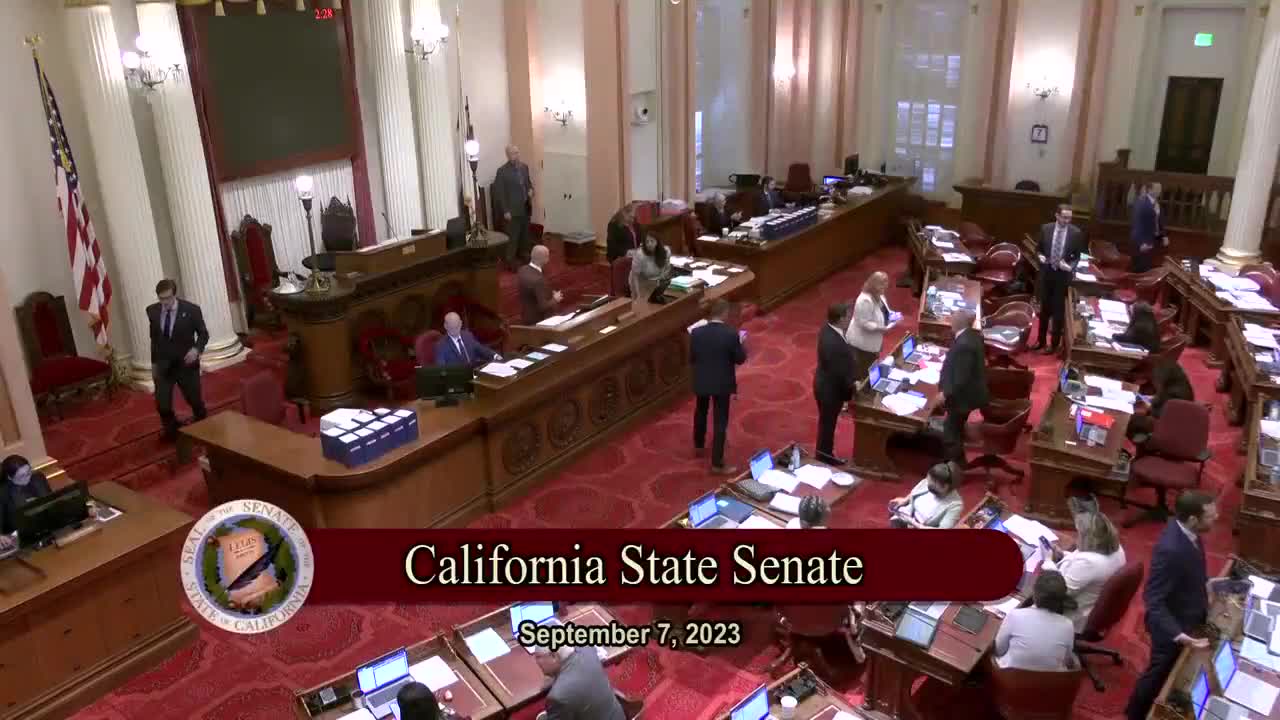
Bill Author

Bill Co-Author(s):
