AB 1408: Intradistrict and interdistrict transfers: low-performing pupils.
- Session Year: 2023-2024
- House: Assembly
- Latest Version Date: 2024-01-12
Current Status:
Failed
(2024-02-01: From committee: Filed with the Chief Clerk pursuant to Joint Rule 56.)
Introduced
In Committee
First Chamber
In Committee
Second Chamber
Enacted
What does this bill do?
The bill requires a student’s home district to approve intradistrict transfer requests for low-performing pupils—those scoring at the lowest levels on California tests—when their school is identified for comprehensive support and improvement or labeled low performing under federal law; if no in-district option exists, those pupils may apply to transfer to another district and the home district cannot block the move if the receiving district approves. It also bars receiving districts from approving transfers into schools that are themselves identified for comprehensive support or low performing and requires districts to offer transportation help to eligible transferred pupils, while keeping existing rules for bullying victims and children of active-duty military.
The summary is provided by generative AI which can make mistakes. For original language, please view the details in the table below.
Existing law authorizes the governing boards of 2 or more school districts to enter into an agreement, for a term not to exceed 5 school years, for the interdistrict attendance of pupils who are residents of the school districts. Existing law requires a school district of residence to approve an intradistrict transfer request for a victim of an act of bullying, as provided. If there is no available school for an intradistrict transfer, existing law authorizes a victim of an act of bullying to apply for an interdistrict transfer and prohibits a school district of residence from prohibiting that transfer if the school district of proposed enrollment approves the application for transfer.
This bill would expand that authorization to allow a victim of an act of bullying to apply for an interdistrict transfer regardless of whether there is an available school for an intradistrict transfer, and would continue to prohibit a school district of residence from prohibiting that transfer if the school district of proposed enrollment approves the application for transfer.This bill would require a school district of residence to also approve an intradistrict transfer request for a low-performing pupil, as defined, of that school district if the school of attendance has been identified for comprehensive support and improvement or identified as low performing pursuant to specified federal laws, as provided. If there is no available school for an intradistrict transfer, the bill would authorize a low-performing pupil of a school district, if the school of attendance has been identified for comprehensive support and improvement or identified as low performing pursuant to specified federal laws, to apply for an interdistrict transfer and would prohibit the school district of residence from prohibiting that transfer if the school district of proposed enrollment approves the application for transfer. The bill would prohibit a school district of proposed enrollment from approving those transfer requests if the requested school has been identified for comprehensive support and improvement or identified as low performing pursuant to specified federal laws. By requiring school districts to approve intradistrict transfers for certain pupils, the bill would impose a state-mandated local program.
The California Constitution requires the state to reimburse local agencies and school districts for certain costs mandated by the state. Statutory provisions establish procedures for making that reimbursement.
This bill would provide that, if the Commission on State Mandates determines that the bill contains costs mandated by the state, reimbursement for those costs shall be made pursuant to the statutory provisions noted above.
Existing law authorizes the governing boards of 2 or more school districts to enter into an agreement, for a term not to exceed 5 school years, for the interdistrict attendance of pupils who are residents of the school districts. Existing law requires a school district of residence to approve an intradistrict transfer request for a victim of an act of bullying, as provided. If there is no available school for an intradistrict transfer, existing law authorizes a victim of an act of bullying to apply for an interdistrict transfer and prohibits a school district of residence from prohibiting that transfer if the school district of proposed enrollment approves the application for transfer.
This bill would expand that authorization to allow a victim of an act of bullying to apply for an interdistrict transfer regardless of whether there is an available school for an intradistrict transfer, and would continue to prohibit a school district of residence from prohibiting that transfer if the school district of proposed enrollment approves the application for transfer.
(a)(1)The governing boards of two or more school districts may enter into an agreement, for a term not to exceed five school years, for the interdistrict attendance of pupils who are residents of the school districts. The agreement may provide for the admission to a school district other than the school district of residence of a pupil who requests a permit to attend a school district of proposed enrollment that is a party to the agreement and that maintains schools and classes in transitional kindergarten, kindergarten, or any of grades 1 to 12, inclusive, to which the pupil requests admission. Once a pupil in transitional kindergarten, kindergarten, or any of grades 1 to 12, inclusive, is enrolled in a school pursuant to this chapter, the pupil shall not have to reapply for an interdistrict transfer, and the governing board of the school district of enrollment shall allow the pupil to continue to attend the school in which the pupil is enrolled, except as specified in paragraphs (2) and (4).
(2)The agreement shall stipulate the terms and conditions under which interdistrict attendance shall be permitted or denied. The agreement may contain standards for reapplication agreed to by the school district of residence and the school district of enrollment that differ from the requirements prescribed by paragraph (1). The agreement may stipulate terms and conditions established by the school district of residence and the school district of enrollment under which the permit may be revoked.
(3)The designee of the superintendent of the school district of residence shall issue an individual permit verifying the school districts approval, pursuant to policies of the governing board of the school district and terms of the agreement for the transfer. A permit shall be valid upon concurring endorsement by the designee of the governing board of the school district of proposed enrollment. The stipulation of the terms and conditions under which the permit may be revoked is the responsibility of the school district of enrollment.
(4)Notwithstanding paragraph (2), a school district of residence or school district of enrollment shall not rescind existing transfer permits for pupils after June 30 following the completion of grade 10, or for pupils in grade 11 or 12.
(b)A pupil who has been determined by personnel of either the school district of residence or the school district of proposed enrollment to have been the victim of an act of bullying, as defined in subdivision (r) of Section 48900, committed by a pupil of the school district of residence shall, at the request of the parent, be given priority for interdistrict attendance.
(c)In addition to the requirements of subdivision (e) of Section 48915.1, and regardless of whether an agreement exists or a permit is issued pursuant to this section, any school district may admit a pupil expelled from another school district in which the pupil continues to reside.
(d)(1)Notwithstanding any other law, and regardless of whether an agreement exists or a permit is issued pursuant to this section, a school district of residence shall not prohibit the transfer of a pupil who is a child of an active duty military duty parent to a school district of proposed enrollment if the school district of proposed enrollment approves the application for transfer.
(2)A school district of residence shall approve an intradistrict transfer request for a victim of an act of bullying unless the requested school is at maximum capacity, in which case the school district shall accept an intradistrict transfer request for a different school in the school district. Notwithstanding any other law, and regardless of whether an agreement exists or a permit is issued pursuant to this section, if the school district of residence has only one school offering the grade level of the victim of an act of bullying and therefore there is no option for an intradistrict transfer, the victim of an act of bullying may apply for an interdistrict transfer and the school district of residence shall not prohibit the transfer if the school district of proposed enrollment approves the application for transfer.
(3)(A)A school district of residence shall approve an intradistrict transfer request for a low-performing pupil of that school district if the school of attendance has been identified for comprehensive support and improvement pursuant to the federal Every Student Succeeds Act (Public Law 114-95) or identified as low performing under the federal Elementary and Secondary Education Act of 1965 (Public Law 89-10), or any subsequent amendments to that act, unless the requested school is at maximum capacity, in which case the school district shall accept an intradistrict transfer request for a different school in the school district. Notwithstanding any other law, and regardless of whether an agreement exists or a permit is issued pursuant to this section, a low-performing pupil of a school district, if the school of attendance has been identified for comprehensive support and improvement pursuant to the federal Every Student Succeeds Act (Public Law 114-95) or identified as low performing under the federal Elementary and Secondary Education Act of 1965 (Public Law 89-10), or any subsequent amendments to that act, may apply for an interdistrict transfer and the school district of residence shall not prohibit the transfer if the school district of proposed enrollment approves the application for transfer.
(B)A school district of proposed enrollment shall not approve a transfer request pursuant to subparagraph (A) if the requested school has been identified for comprehensive support and improvement pursuant to the federal Every Student Succeeds Act (Public Law 114-95) or identified as low performing under the federal Elementary and Secondary Education Act of 1965 (Public Law 89-10), or any subsequent amendments to that act.
(3)(4)A school district of proposed enrollment that elects to accept an interdistrict transfer pursuant to this subdivision shall accept all pupils who apply to transfer under this subdivision until the school district is at maximum capacity. A school district of proposed enrollment shall ensure that pupils admitted under this subdivision are selected through an unbiased process that prohibits an inquiry into or evaluation or consideration of whether or not a pupil should be enrolled based on academic or athletic performance, physical condition, proficiency in English, family income, or any of the individual characteristics set forth in Section 220, including, but not limited to, race or ethnicity, gender, gender identity, gender expression, and immigration status.
(4)(A)For purposes of this subdivision, active(5)For purposes of this subdivision, the following definitions apply:
(A)Active military duty parent means a parent with full-time military duty status in the active uniformed service of the United States, including members of the National Guard and the State Guard on active duty orders pursuant to Chapter 1209 (commencing with Section 12301) and Chapter 1211 (commencing with Section 12401) of Part II of Subtitle E of Title 10 of the United States Code.
(B)Low-performing pupil means a pupil that does not meet academic achievement standards based on the most recently available results of the California Assessment of Student Performance and Progress, established by Article 4 (commencing with Section 60640) of Chapter 5 of Part 33, in any of the following ways:
(i)The pupil does not meet the achievement standard, also referred to as level 1, in both English language arts and mathematics.
(ii)The pupil does not meet the achievement standard, also referred to as level 1, in either English language arts or mathematics, and nearly meets the achievement standard, also referred to as level 2, in the other subject.
(iii)The pupil does not meet the achievement standard, also referred to as level 1, in either English language arts or mathematics, and does not have a valid score for the other subject.
(B)For purposes of this subdivision, a victim(C)Victim of an act of bullying means a pupil that has been determined to have been a victim of bullying by an investigation pursuant to the complaint process described in Section 234.1 and the bullying was committed by any pupil in the school district of residence, and the parent of the pupil has filed a written complaint regarding the bullying with the school, school district personnel, or a local law enforcement agency.
(5)(6)(A)Upon request of the parent or guardian on behalf of a pupil eligible for transfer pursuant to this subdivision, a school district of enrollment shall provide transportation assistance to a pupil who is eligible for free or reduced-price meals.
(B)A school district of enrollment may provide transportation assistance to any pupil admitted under this subdivision.
(C)It is the intent of the Legislature that the amount of transportation assistance provided to a pupil pursuant to subparagraph (A) or (B) not exceed the supplemental grant received, if any, for the pupil pursuant to subdivision (e) of Section 42238.02.
SEC. 2.If the Commission on State Mandates determines that this act contains costs mandated by the state, reimbursement to local agencies and school districts for those costs shall be made pursuant to Part 7 (commencing with Section 17500) of Division 4 of Title 2 of the Government Code.
SECTION 1.Section 46600 of the Education Code is amended to read:46600.(a)(1)The governing boards of two or more school districts may enter into an agreement, for a term not to exceed five school years, for the interdistrict attendance of pupils who are residents of the school districts. The agreement may provide for the admission to a school district other than the school district of residence of a pupil who requests a permit to attend a school district of proposed enrollment that is a party to the agreement and that maintains schools and classes in transitional kindergarten, kindergarten, or any of grades 1 to 12, inclusive, to which the pupil requests admission. Once a pupil in transitional kindergarten, kindergarten, or any of grades 1 to 12, inclusive, is enrolled in a school pursuant to this chapter, the pupil shall not have to reapply for an interdistrict transfer, and the governing board of the school district of enrollment shall allow the pupil to continue to attend the school in which the pupil is enrolled, except as specified in paragraphs (2) and (4).(2)The agreement shall stipulate the terms and conditions under which interdistrict attendance shall be permitted or denied. The agreement may contain standards for reapplication agreed to by the school district of residence and the school district of enrollment that differ from the requirements prescribed by paragraph (1). The agreement may stipulate terms and conditions established by the school district of residence and the school district of enrollment under which the permit may be revoked.(3)The designee of the superintendent of the school district of residence shall issue an individual permit verifying the school districts approval, pursuant to policies of the governing board of the school district and terms of the agreement for the transfer. A permit shall be valid upon concurring endorsement by the designee of the governing board of the school district of proposed enrollment. The stipulation of the terms and conditions under which the permit may be revoked is the responsibility of the school district of enrollment.(4)Notwithstanding paragraph (2), a school district of residence or school district of enrollment shall not rescind existing transfer permits for pupils after June 30 following the completion of grade 10, or for pupils in grade 11 or 12.(b)A pupil who has been determined by personnel of either the school district of residence or the school district of proposed enrollment to have been the victim of an act of bullying, as defined in subdivision (r) of Section 48900, committed by a pupil of the school district of residence shall, at the request of the parent, be given priority for interdistrict attendance.(c)In addition to the requirements of subdivision (e) of Section 48915.1, and regardless of whether an agreement exists or a permit is issued pursuant to this section, any school district may admit a pupil expelled from another school district in which the pupil continues to reside.(d)(1)Notwithstanding any other law, and regardless of whether an agreement exists or a permit is issued pursuant to this section, a school district of residence shall not prohibit the transfer of a pupil who is a child of an active military duty parent to a school district of proposed enrollment if the school district of proposed enrollment approves the application for transfer.(2)A school district of residence shall approve an intradistrict transfer request for a victim of an act of bullying unless the requested school is at maximum capacity, in which case the school district shall accept an intradistrict transfer request for a different school in the school district. Notwithstanding any other law, and regardless of whether an agreement exists or a permit is issued pursuant to this section, the victim of an act of bullying may apply for an interdistrict transfer and the school district of residence shall not prohibit the transfer if the school district of proposed enrollment approves the application for transfer.(3)A school district of proposed enrollment that elects to accept an interdistrict transfer pursuant to this subdivision shall accept all pupils who apply to transfer under this subdivision until the school district is at maximum capacity. A school district of proposed enrollment shall ensure that pupils admitted under this subdivision are selected through an unbiased process that prohibits an inquiry into or evaluation or consideration of whether or not a pupil should be enrolled based on academic or athletic performance, physical condition, proficiency in English, family income, or any of the individual characteristics set forth in Section 220, including, but not limited to, race or ethnicity, gender, gender identity, gender expression, and immigration status.(4)(A)For purposes of this subdivision, active military duty parent means a parent with full-time military duty status in the active uniformed service of the United States, including members of the National Guard and the State Guard on active duty orders pursuant to Chapter 1209 (commencing with Section 12301) and Chapter 1211 (commencing with Section 12401) of Part II of Subtitle E of Title 10 of the United States Code.(B)For purposes of this subdivision, a victim of an act of bullying means a pupil that has been determined to have been a victim of bullying by an investigation pursuant to the complaint process described in Section 234.1 and the bullying was committed by any pupil in the school district of residence, and the parent of the pupil has filed a written complaint regarding the bullying with the school, school district personnel, or a local law enforcement agency.(5)(A)Upon request of the parent or guardian on behalf of a pupil eligible for transfer pursuant to this subdivision, a school district of enrollment shall provide transportation assistance to a pupil who is eligible for free or reduced-price meals.(B)A school district of enrollment may provide transportation assistance to any pupil admitted under this subdivision.(C)It is the intent of the Legislature that the amount of transportation assistance provided to a pupil pursuant to subparagraph (A) or (B) not exceed the supplemental grant received, if any, for the pupil pursuant to subdivision (e) of Section 42238.02.(a)(1)The governing boards of two or more school districts may enter into an agreement, for a term not to exceed five school years, for the interdistrict attendance of pupils who are residents of the school districts. The agreement may provide for the admission to a school district other than the school district of residence of a pupil who requests a permit to attend a school district of proposed enrollment that is a party to the agreement and that maintains schools and classes in transitional kindergarten, kindergarten, or any of grades 1 to 12, inclusive, to which the pupil requests admission. Once a pupil in transitional kindergarten, kindergarten, or any of grades 1 to 12, inclusive, is enrolled in a school pursuant to this chapter, the pupil shall not have to reapply for an interdistrict transfer, and the governing board of the school district of enrollment shall allow the pupil to continue to attend the school in which the pupil is enrolled, except as specified in paragraphs (2) and (4).
(2)The agreement shall stipulate the terms and conditions under which interdistrict attendance shall be permitted or denied. The agreement may contain standards for reapplication agreed to by the school district of residence and the school district of enrollment that differ from the requirements prescribed by paragraph (1). The agreement may stipulate terms and conditions established by the school district of residence and the school district of enrollment under which the permit may be revoked.
(3)The designee of the superintendent of the school district of residence shall issue an individual permit verifying the school districts approval, pursuant to policies of the governing board of the school district and terms of the agreement for the transfer. A permit shall be valid upon concurring endorsement by the designee of the governing board of the school district of proposed enrollment. The stipulation of the terms and conditions under which the permit may be revoked is the responsibility of the school district of enrollment.
(4)Notwithstanding paragraph (2), a school district of residence or school district of enrollment shall not rescind existing transfer permits for pupils after June 30 following the completion of grade 10, or for pupils in grade 11 or 12.
(b)A pupil who has been determined by personnel of either the school district of residence or the school district of proposed enrollment to have been the victim of an act of bullying, as defined in subdivision (r) of Section 48900, committed by a pupil of the school district of residence shall, at the request of the parent, be given priority for interdistrict attendance.
(c)In addition to the requirements of subdivision (e) of Section 48915.1, and regardless of whether an agreement exists or a permit is issued pursuant to this section, any school district may admit a pupil expelled from another school district in which the pupil continues to reside.
(d)(1)Notwithstanding any other law, and regardless of whether an agreement exists or a permit is issued pursuant to this section, a school district of residence shall not prohibit the transfer of a pupil who is a child of an active duty military duty parent to a school district of proposed enrollment if the school district of proposed enrollment approves the application for transfer.
(2)A school district of residence shall approve an intradistrict transfer request for a victim of an act of bullying unless the requested school is at maximum capacity, in which case the school district shall accept an intradistrict transfer request for a different school in the school district. Notwithstanding any other law, and regardless of whether an agreement exists or a permit is issued pursuant to this section, if the school district of residence has only one school offering the grade level of the victim of an act of bullying and therefore there is no option for an intradistrict transfer, the victim of an act of bullying may apply for an interdistrict transfer and the school district of residence shall not prohibit the transfer if the school district of proposed enrollment approves the application for transfer.
(3)A school district of proposed enrollment that elects to accept an interdistrict transfer pursuant to this subdivision shall accept all pupils who apply to transfer under this subdivision until the school district is at maximum capacity. A school district of proposed enrollment shall ensure that pupils admitted under this subdivision are selected through an unbiased process that prohibits an inquiry into or evaluation or consideration of whether or not a pupil should be enrolled based on academic or athletic performance, physical condition, proficiency in English, family income, or any of the individual characteristics set forth in Section 220, including, but not limited to, race or ethnicity, gender, gender identity, gender expression, and immigration status.
(4)(A)For purposes of this subdivision, active military duty parent means a parent with full-time military duty status in the active uniformed service of the United States, including members of the National Guard and the State Guard on active duty orders pursuant to Chapter 1209 (commencing with Section 12301) and Chapter 1211 (commencing with Section 12401) of Part II of Subtitle E of Title 10 of the United States Code.
(B)For purposes of this subdivision, a victim of an act of bullying means a pupil that has been determined to have been a victim of bullying by an investigation pursuant to the complaint process described in Section 234.1 and the bullying was committed by any pupil in the school district of residence, and the parent of the pupil has filed a written complaint regarding the bullying with the school, school district personnel, or a local law enforcement agency.
(5)(A)Upon request of the parent or guardian on behalf of a pupil eligible for transfer pursuant to this subdivision, a school district of enrollment shall provide transportation assistance to a pupil who is eligible for free or reduced-price meals.
(B)A school district of enrollment may provide transportation assistance to any pupil admitted under this subdivision.
(C)It is the intent of the Legislature that the amount of transportation assistance provided to a pupil pursuant to subparagraph (A) or (B) not exceed the supplemental grant received, if any, for the pupil pursuant to subdivision (e) of Section 42238.02.
|
Date
|
Status
|
|---|---|
| Feb 1, 2024 | From committee: Filed with the Chief Clerk pursuant to Joint Rule 56. |
| Jan 31, 2024 | Died pursuant to Art. IV, Sec. 10(c) of the Constitution. |
| Jan 18, 2024 | In committee: Held under submission. |
| Jan 18, 2024 | In committee: Set, first hearing. Referred to APPR. suspense file. |
| Jan 16, 2024 | Re-referred to Com. on APPR. |
| Jan 12, 2024 | Read second time and amended. |
| Jan 11, 2024 | From committee: Amend, and do pass as amended and re-refer to Com. on APPR. (Ayes 5. Noes 0.) (January 10). |
| Mar 9, 2023 | Referred to Com. on ED. |
| Feb 18, 2023 | From printer. May be heard in committee March 20. |
| Feb 17, 2023 | Read first time. To print. |
|
Date
|
Description
|
Location
|
Votes
|
|
|---|---|---|---|---|
| Jan 10, 2024 | Do pass as amended and be re-referred to the Committee on [Appropriations] | Assembly Standing Committee on Education |
Passed |
This list shows positions taken on this bill by organizations on the date displayed, which is linked to the original source.
Positions by individuals are not included.
|
Organization
|
Position
|
Date
|
|---|---|---|
| California School Employees Association | * Against | Jan 10, 2024 |
| California Teachers Association | * Against | Jan 10, 2024 |
| CFT Union of Educators and Classified Professionals | * Against | Jan 10, 2024 |
Date of Hearing: January 18, 2024
ASSEMBLY COMMITTEE ON APPROPRIATIONS
Chris Holden, Chair
ABPCA Bill Id:AB 1408
Author:(Wallis) – As Amended Ver:January 12, 2024
Policy Committee: | Education | Vote: | 5 – 0 |
|
| ||
|
|
Urgency: No State Mandated Local Program: Yes Reimbursable: Yes
SUMMARY:
This bill requires a local educational agency (LEA) to allow a low-performing student at a low-performing school to transfer to a higher-performing school either within their home LEA or in another LEA, if the LEA with the higher-performing school agrees to accept transfer students.
Specifically, this bill prohibits an LEA from denying a transfer request to another school in the LEA for a low-performing student of that LEA if the student’s school of attendance has been identified as low performing based on federal standards. If no school is available for transfer within the student’s LEA, this bill prohibits the student’s home LEA from denying a transfer request to another school outside of their home LEA, if the LEA of proposed enrollment approves the application for transfer. The bill prohibits an LEA of proposed enrollment from approving transfer requests if the requested school has been identified as low performing based on federal standards. The bill also requires an LEA, if the LEA accepts transfers, to accept all eligible students until they reach maximum enrollment and provide transportation for students who qualify for the free and reduced price meal program, upon request.
FISCAL EFFECT:
Ongoing Proposition 98 General Fund shifts, potentially in the tens of millions of dollars annually, from a transferring student’s home LEA to another LEA. Costs would depend on the number of low-performing students who transfer to another LEA as a result of this bill and the number of LEAs that agree to accept transfer students as a result of this bill.
According to CDE data, about 69,000 students at schools identified as low-performing by federal standards were low performing academically, as defined by their standardized test scores in grades three through eight and grade 11. Applying the same portion of low-performing students at low-performing schools to other grades that do not administer standardized tests (grades nine, 10, and 12), the total number of low-performing students at low-performing schools is about 90,000, or about 1.5% of the total student population of about six million students. Assuming 25% of the eligible student population transfers and an average per-student funding rate for these students of $12,500, cost shifts would total $28 million. Costs could be lower to the extent LEAs do not agree to accept transfers.
If the Commission on State Mandates determines the bill’s requirements to be a reimbursable state mandate, the state would need to reimburse these costs to LEAs or provide funding through the K-12 Mandate Block Grant.
COMMENTS:
- Background. The vast majority of funding for students in California is awarded to LEAs through the Local Control Funding Formula (LCFF). The LCFF provides each LEA with an annual allotment based on the number of students the LEA serves and those students’ characteristics. LCFF per-student funding follows a student based on the LEA the student enrolls in. Per-student LCFF is about $12,500 on average. Total LCFF funding for the 2022-23 school year was about $75 billion.
Federal standards identify a school as low performing if it (a) is in the lowest-performing 5% of Title I schools, or (b) has a graduation rate of 67% or lower averaged over two years. In the 2022-23 school year, 663 schools, not including charter schools, were identified for comprehensive support and improvement. The state has about 10,000 schools total, excluding charter schools.
Students in grades three through eight and grade 11 are required to take the California Assessment of Student Performance and Progress (CASPP) tests. Students can either demonstrate they have exceeded the standards, met the standards, nearly met the standards, or not met the standards. This bill defines a low-performing student as one who, for the last year the student took the CASPP, has either, (a) not met the standards in English language arts and mathematics, (b) not met the standard in either English language arts or mathematics, and nearly met the standard in the other, or (c) not met the standard in either English language arts or mathematics, and does not have a valid score for the other subject. Because a student does not take the CASPP until grade three, this bill would not be applicable to students in transitional kindergarten through grade three.
- Prior Legislation. AB 1127 (L. Rivas), Chapter 781, Statutes of 2019, requires an LEA of residence to approve a student’s transfer request to another school within the LEA for a student who is a victim of bullying. The law also states that if an LEA has only one school, the student’s LEA of residence must not prohibit the student’s transfer outside of the LEA.
This bill is nearly identical to AB 237 (Wallis), of the 2023-24 Legislative Session. AB 237 was held in this committee.
Analysis Prepared by: Natasha Collins / APPR. / (916) 319-2081
Date of Hearing: January 10, 2024
ASSEMBLY COMMITTEE ON EDUCATION
Al Muratsuchi, Chair
ABPCA Bill Id:AB 1408 (
Author:Wallis) – As Introduced Ver:February 17, 2023
SUBJECT: Interdistrict attendance: prohibition on transfers by a school district of residence
SUMMARY: Prohibits a school district of residence from denying an interdistrict transfer request of a student who is a victim of an act of bullying if the school district of enrollment approves the transfer.
EXISTING LAW:
Residency requirements
- Requires each person between the ages of 6 and 18 years to attend public school for the full length of the schoolday as designated by the governing board of the school district in which the residency of either the parent or legal guardian is located. (Education Code (EC) 48200)
- Requires a parent or guardian of a minor between the ages of 6 and 16 years who removes the minor from a school district before the completion of the current school term to enroll the minor in a public full-time school of the school district to which the minor is moved. (EC 48201)
- Provides that a student complies with the residency requirements for school attendance in a school district if he or she is any of the following:
- A student placed within the boundaries of that school district in a regularly established licensed children’s institution, a licensed foster home, or a foster family home;
- A student who is a foster child who remains in his or her school of origin;
- A student for whom interdistrict attendance has been approved;
- An emancipated student whose residence is located within the boundaries of that school district;
- A student who lives in the home of a caregiving adult that is located within the boundaries of that school district;
- A student residing in a state hospital located within the boundaries of that school district. Provides that a student with a temporary disability residing in a hospital or other residential health facility, excluding a state hospital, which is located outside of the school district in which the parent or guardian resides is deemed to have complied with the residency requirements for school attendance in the school district in which the hospital is located; and (EC 48204 & 48207)
- A student whose parent or legal guardian resides outside of the boundaries of that school district but is employed and lives with the student at the place of his or her employment within the boundaries of the school district for a minimum of three days during the school week. (EC 48204)
- Authorizes a school district to deem a student to have complied with the residency requirements for school attendance if at least one parent or the legal guardian is physically employed within the boundaries of that school district for a minimum of 10 hours during the school week. (EC 48204)
- Provides that a student complies with the residency requirements for school attendance in a school district if he or she is a student whose parent is transferred or is pending transfer to a military installation within the state while on active military duty pursuant to an official military order. Existing law requires a school district to accept applications by electronic means for enrollment, including enrollment in a specific school or program within the school district, and course registration. (EC 48204.3)
Interdistrict transfer
- Authorizes two or more school districts to enter into an agreement, for a term not to exceed five school years, for the interdistrict attendance of students to a school district other than the school district of residence. Requires the agreement to stipulate the terms and conditions under which interdistrict attendance shall be permitted or denied. (EC 46600)
- Requires that a student who has been determined by personnel of either the school district of residence or the receiving school district to have been the victim of an act of bullying committed by a student of the school district of residence to be given priority for interdistrict attendance under any existing interdistrict attendance agreement or, in the absence of an agreement, be given additional consideration for the creation of an interdistrict attendance agreement. (EC 46600)
- Prohibits a school district of residence from denying the transfer of a child of an active military family or a victim of an act of bullying if the school district of proposed enrollment approves the application for transfer, as follows:
- States that if the school district of residence has only one school offering the grade level of the victim of an act of bullying and therefore there is no option for an intradistrict transfer, the victim of an act of bullying may apply for an interdistrict transfer and the school district of residence shall not prohibit the transfer;
- Requires a school district of proposed enrollment that elects to accept an interdistrict transfer, for a child of an active military family or a victim of an act of bullying, to accept all pupils who apply to transfer until the school district is at maximum capacity;
- Requires a school district of proposed enrollment to ensure that pupils admitted are selected through an unbiased process that prohibits an inquiry into or evaluation or consideration of whether or not a pupil should be enrolled based on academic or athletic performance, physical condition, proficiency in English, family income, or any of the individual characteristics set forth in EC 220, including, but not limited to, race or ethnicity, gender, gender identity, gender expression, and immigration status; and
- Requires a school district of proposed enrollment to provide transportation for a pupil who has transferred and is eligible for free or reduced-price meals, at the request of the parent. (EC 46600)
- Requires each school district of residence and school district of enrollment to post on its website the procedures and timelines regarding a request for an interdistrict transfer permit. (EC 46600.2)
- Provides for a process to appeal the denial of a request for an interdistrict transfer. (EC Section 46601)
- Authorizes a unified school district, whose boundaries are coterminous with the boundaries of a county and is contiguous to an adjoining state, to provide for the education of all or any number of the high school students who reside in the district by the attendance of these students at the schools of an adjoining state by agreement. (EC 46609)
- Authorizes the school district of residence or the receiving school district to prohibit transfer if the school district determines that the transfer would negatively impact the court-ordered or voluntary desegregation plan of the school district. (EC 48204)
- Authorizes the receiving school district to prohibit a transfer if the school district determines that the additional cost of educating the student would exceed the amount of additional state aid received as a result of the transfer. (EC 48204)
Intradistrict transfer
- Requires the governing board of each school district, as a condition for the receipt of school apportionments from the state school fund, to adopt rules and regulations establishing a policy of open enrollment within the district for residents of the district. This requirement does not apply to a school district that has only one school or a school district with schools that do not serve any of the same grade levels. The policy must provide that a pupil who currently resides in the attendance area of a school shall not be displaced by pupils transferring from outside the attendance area. (EC 35160.5)
- Requires a school district of residence to approve an intradistrict transfer request for a victim of an act of bullying unless the requested school is at maximum capacity, in which case the school district shall accept an intradistrict transfer request for a different school in the school district. (EC 46600)
- Authorizes a parent to appeal a school district’s decision regarding a request for interdistrict transfer, within 30 calendar days of the date of the school district’s final denial, to the county board of education (CBE). States that the failure by the parent to appeal within the required time is good cause for rejection of an appeal. Requires an appeal to be accepted only upon verification by the CBEs designee that appeals within the school district have been exhausted within the timelines provided. States that if new evidence or grounds for the request are introduced, the CBE may remand the matter for further consideration by the school district or districts. In all other cases, the appeal shall be granted or denied on its merits. (EC 46601)
Federal law
- Permits a local educational agency (LEA) to provide all students enrolled in schools identified for comprehensive support and improvement (CSI) with the option to transfer to another public school served by the LEA, unless such an option is prohibited by state law. (Every Student Succeeds Act, Section 1111(d)(1)(D)(i))
- Requires LEAs serving homeless youth, according to the youth’s best interest, to continue the youth’s education in the school of origin for the duration of homelessness, or enroll the youth in any public school that non-homeless students who live in the attendance area in which the child or youth is actually living are eligible to attend.
FISCAL EFFECT: Unknown
COMMENTS:
Need for the bill. According to the author, “When children feel unsafe in their school, they should have every opportunity to move to an environment where they can learn. Some studies indicate that up to 40% of students feel they have been bullied in their school. California does have robust processes in place to address bullying. If the results of the hearing are that a bullied student should be allowed to move to a new school, the primary option is an intradistrict transfer. An interdistrict transfer is only allowed in instances which there is only one classroom of the victim’s grade level. This means that only victims of bullying in the smallest districts have this option to pursue. This bill will level the playing field.”
What does this bill do? Existing law requires schools to give priority for interdistrict attendance to a student who has been the victim of bullying. Existing law prohibits schools from denying intradistrict transfer request for a victim of an act of bullying. Current law states that if the school district of residence has only one school offering the grade level of the victim of an act of bullying and therefore there is no option for an intradistrict transfer, the school district is prohibited from denying an interdistrict transfer. Further, existing law requires that if a school district accepts these transfers, the school district must have an unbiased selection process, accept all pupils until they reach maximum enrollment, and provide transportation for children with accepted transfer requests who qualify for the free and reduced price meal program.
This bill would expand the transfer options and allow students who are victims of bullying to request an interdistrict transfer to a different school district, even when another school within their current school district may be a viable intradistrict transfer option. The Committee may wish to consider whether it is necessary to have a statewide authorization for students who are victims of bullying to be granted interdistrict transfers, when an intradistrict transfer to another school within the district provides protection for that student under current law.
Interdistrict transfer appeals to the County Board of Education. Existing law authorizes a parent to appeal a school district’s decision regarding a request for interdistrict transfer, within 30 calendar days, to the CBE. The appeal is granted or denied based on its merits. A parent or guardian is eligible to submit an appeal to the CBE after all appeals within the school district of residence have been exhausted.
State law protects students who are victims of bullying by prohibiting their school district from denying a transfer to another school within the school district. Further, if the district only has one school, that district is prohibited from denying that student’s transfer to another school district. If a student who is the victim of bullying is not satisfied with the transfer options within the school district of residence, and the school district of residence denies their interdistrict transfer request, the student and parent or guardian may appeal that decision to the CBE, and it will be heard and decided based on its merits. Evidence has not been presented that the appeal process to the CBE is not sufficient, therefore, it is unclear this bill is necessary.
Existing school choice options. This bill relates to interdistrict transfers. Existing law provides the following public school options:
- Charter Schools. There are over 1,300 public charter schools in the state that provide instruction in any combination of grades transitional kindergarten through grade 12. Parents, teachers, or community members may initiate a charter petition, which includes the specific goals and operating procedures for the charter school. While most charter schools offer traditional, classroom-based instruction, about 20% offer nonclassroom based instruction through independent study, such as home study.
- Magnet Schools. Magnet schools are designed by local school districts to attract parents, guardians, and students who are free to choose the school in which they enroll. These programs and schools are established by district governing boards that can make a wide range of choices depending upon their local needs and resources. Magnet schools and programs include those that provide unique instruction in the arts, in various sciences, and in career education. Others reflect a district strategy to achieve racial and ethnic balance. When magnet schools are established, students from across the district may select the magnet subject to available space.
- District of Choice (DOC) Program. This program allows a student to transfer to any district that has deemed itself a DOC and agreed to accept a specified number of transfers. DOCs may not use a selective admissions process. Transfer students do not need the consent of their home districts.
- Interdistrict Permits. These allow a student to transfer from one district to another district provided both districts consent to the transfer and the student meets any locally determined conditions. Districts receiving these transfer students may require students to meet certain attendance and/or academic standards.
- Parental employment transfers. These allow a student to transfer into a district if at least one parent is employed within the boundaries of that district and that district has chosen to accept parental employment transfers. Transfer students generally do not need the consent of their home districts.
- The Open Enrollment Act. This option is based on the former accountability system, the Academic Performance Index (API), and allows a student attending a school with low performance on state tests to transfer to another school inside or outside the district that has a higher level of performance and space available. Transfer students do not need the consent of their home districts. As of the adoption of the new state accountability system in 2017 based on the California School Dashboard, this program is no longer in operation.
Beyond the public school options, California students may enroll in private schools.
Interdistrict transfers compared to Districts of Choice. Existing law authorizes school districts to enter into interdistrict attendance agreements whereby a pupil may enroll in a district other than his or her district of residence. Such agreements must stipulate the terms and conditions under which interdistrict attendance shall be permitted or denied.
Existing law prohibits a district of residence from denying an interdistrict transfer request in specific instances including a child of an active duty military parent, homeless youth, migratory children, foster youth, and victims of bullying for which an intradistrict transfer is not an option. In these instances, a school district of enrollment that elects to accept interdistrict transfer students must accept all pupils until they reach maximum capacity. The district must ensure that pupils are selected through an unbiased process and is required to provide transportation for a pupil who has transferred and is eligible for free or reduced price meals, at the request of the parent.
Absent an interdistrict attendance agreement, and the specific instances listed above, a district of residence can deny a request to transfer to another district, unless the district of proposed attendance is a DOC. If a district declares itself to be a DOC, then the district of residence cannot deny a transfer request. A district that elects to operate as a district of choice must register as such with the Superintendent of Public Instruction and accept all pupils who apply to transfer until it is at maximum capacity. If the number of transfer requests exceeds the district's capacity, then the transfers must be selected through a random drawing. Districts of choice are specifically prohibited from accepting transfers on the basis of academic performance, athletic performance, physical condition, or English proficiency.
Existing law also governs the manner in which a DOC can market itself to neighboring districts. Specifically, all communications must be factual and cannot target individual parents or neighborhoods on the basis of students' actual or perceived academic or athletic ability or other personal characteristics. To prevent discrimination against students receiving special education services, DOCs are prohibited from denying a transfer based on a determination that the cost of servicing a student would exceed the funding received for that student.
Recommended Committee Amendments. Staff recommends that the bill be amended to replace the current contents of the bill with the language from AB 237 (Wallis/Hoover) from the 2023-24 Session as follows:
1) Prohibit a school district from denying an interdistrict or intradistrict transfer request for a low performing pupil who attends a school identified for comprehensive support and improvement.
2) Require, if a school district of enrollment accepts transfers, the school district have an unbiased selection process, accept all pupils until they reach maximum enrollment, and provide transportation for pupils who qualify for the free and reduced price meal program.
3) Require that the pupil transfer to a school that has not been identified for comprehensive support and improvement.
Related legislation. AB 237 (Wallis & Hoover) of the 2023-24 Session would have prohibited a school district from denying an interdistrict or intradistrict transfer request for a low performing pupil who attends a school identified for comprehensive support and improvement; required a pupil to transfer to a school that has not been identified for comprehensive support and improvement; and, required that if a school district of enrollment accepts transfers, the school district have an unbiased selection process, accept all pupils until they reach maximum enrollment, and provide transportation for pupils who qualify for the free and reduced price meal program. This bill was held in the Assembly Appropriations Committee.
AB 1127 (Luz Rivas), Chapter 781, Statutes of 2019, requires a school district of residence to approve an intradistrict transfer request for a victim of bullying. States that if a school district only has one school, the student’s school district of residence must not prohibit the student’s interdistrict transfer. Requires, upon request of a parent or guardian on behalf of the student, the school district of enrollment to provide transportation assistance if the student is considered low-income. States the intent of the Legislature that the costs of transportation not exceed the amount of supplemental funding school districts already receive to serve low-income students.
AB 1319 (Arambula), Chapter 458, Statutes of 2019, requires LEAs to allow migrant students to continue their education in their school of origin, regardless of any change of residence during that school year, and requires that a migrant student be immediately enrolled in a new school.
AB 3086 (Kiley) of the 2017-18 Session would have extended interdistrict, open enrollment to pupils who are either homeless, in foster care, migrant, or victims of bullying. This bill was vetoed by the Governor with the following message:
It is unclear what problem this bill is trying to solve and whether there is a statewide issue requiring a solution. There are already many other existing school choice options available to parents. This bill will only further complicate an already complicated array of statutes without evidence that parents need or will utilize this option.
AB 1482 (Kiley) of the 2017-18 Session would have prohibited a school district of residence from denying the transfer of a student who is an English learner, eligible for a free or reduced-price meal, or a foster youth to a district of proposed enrollment if the school district of proposed enrollment approved the application for transfer. This bill was held in the Assembly Education Committee.
AB 2826 (Friedman), Chapter 550, Statutes of 2018, requires each school district of residence and school district of proposed enrollment to post on its website the procedures and timelines regarding a request for an interdistrict transfer permit. Further requires a school district that denies a request for an interdistrict transfer to advise the parent, in writing, of the right to appeal to the CBE within 30 calendar days from the date of the final denial.
SB 455 (Newman), Chapter 239, Statutes of 2017, provides that a pupil complies with the residency requirements if the pupil’s parent is transferred or is pending transfer to a military installation within the state while on active military duty pursuant to an official military order, and requires a parent to provide proof of residence in the school district within 10 days after the published arrival date provided on official documentation.
AB 99 (Committee on Budget), Chapter 15, Statutes of 2017, significantly changed the requirements for districts that elected to participate in the school DOC program. Under these provisions, the DOC determines the number of transfer students it is willing to accept and must ensure that students admitted are selected through a random, unbiased process. The admission process prohibits an evaluation of whether or not the student should be enrolled based on his or her academic or athletic performance, physical condition, or proficiency in English.
AB 1156 (Eng), Chapter 742, Statutes of 2011, requires training in the prevention of bullying, requires priority for interdistrict transfers to victims of bullying, and revises the definition of bullying, beginning on July 1, 2012.
REGISTERED SUPPORT / OPPOSITION:
Support
None on file
Opposition
None on file
Analysis Prepared by: Chelsea Kelley / ED. / (916) 319-2087
Discussed in Hearing
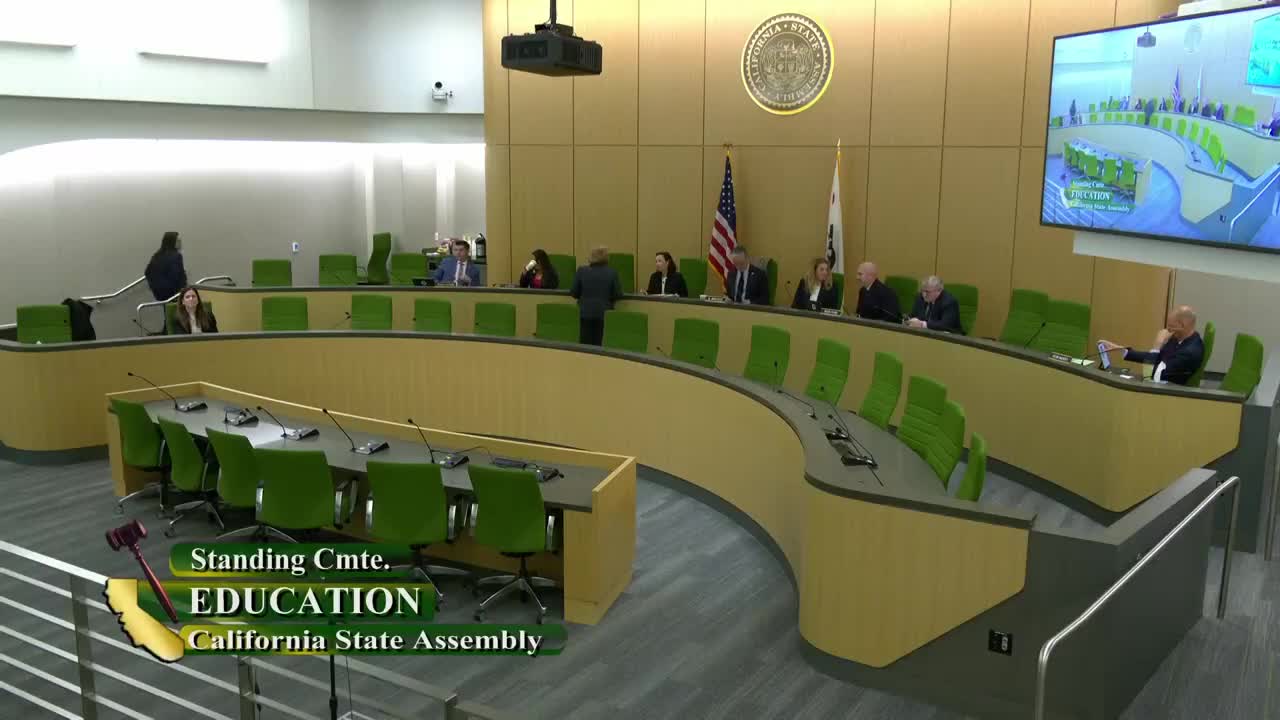 20MIN
Assembly Standing Committee on Education


Bill Co-Author(s):