AB 1418: Tenancy: local regulations: contact with law enforcement or criminal convictions.
- Session Year: 2023-2024
- House: Assembly
- Latest Version Date: 2023-10-08
Current Status:
Passed
(2023-10-08: Chaptered by Secretary of State - Chapter 476, Statutes of 2023.)
Introduced
In Committee
First Chamber
In Committee
Second Chamber
Enacted
Existing law prohibits a local agency from authorizing or requiring the imposition of a penalty against a resident, owner, tenant, landlord, or other person as a consequence of law enforcement or emergency assistance being summoned by certain individuals, including a victim of abuse or crime, as specified.
This bill would prohibit a local government from, among other things, imposing a penalty against a resident, owner, tenant, landlord, or other person as a consequence of contact with a law enforcement agency, as specified. The bill similarly would prohibit a local government from requiring or encouraging a landlord to evict or penalize a tenant because of the tenants association with another tenant or household member who has had contact with a law enforcement agency or has a criminal conviction or to perform a criminal background check of a tenant or a prospective tenant. The bill would preempt inconsistent local ordinances, rules, policies, programs, or regulations and prescribe remedies for violations.
The bill would include findings that changes proposed by this bill address a matter of statewide concern rather than a municipal affair and, therefore, apply to all cities, including charter cities.
Existing law prohibits a local agency from authorizing or requiring the imposition of a penalty against a resident, owner, tenant, landlord, or other person as a consequence of law enforcement or emergency assistance being summoned by certain individuals, including a victim of abuse or crime, as specified.
This bill would prohibit a local government from, among other things, imposing a penalty against a resident, owner, tenant, landlord, or other person as a consequence of contact with a law enforcement agency on or near the property, agency, as specified. The bill similarly would prohibit a local government from requiring or encouraging a landlord to evict or penalize a tenant because of the tenants association with another tenant or household member who has had contact with a law enforcement agency or has a criminal conviction or to perform a criminal background check of a tenant or a prospective tenant. The bill would preempt inconsistent local ordinances, rules, policies, programs, or regulations and prescribe remedies for violations. The bill would require a local government to repeal, or bring into compliance, an inconsistent local ordinance, rule, policy, program, or regulation within one year of the effective date of the provisions. By imposing new duties on local governments, this bill would impose a state-mandated local program.
The bill would include findings that changes proposed by this bill address a matter of statewide concern rather than a municipal affair and, therefore, apply to all cities, including charter cities.
The California Constitution requires the state to reimburse local agencies and school districts for certain costs mandated by the state. Statutory provisions establish procedures for making that reimbursement.This bill would provide that, if the Commission on State Mandates determines that the bill contains costs mandated by the state, reimbursement for those costs shall be made pursuant to the statutory provisions noted above.Existing law prohibits a local agency from authorizing or requiring the imposition of a penalty against a resident, owner, tenant, landlord, or other person as a consequence of law enforcement or emergency assistance being summoned by certain individuals, including a victim of abuse or crime, as specified.
This bill would prohibit a local government from, among other things, imposing a penalty against a resident, owner, tenant, landlord, or other person as a consequence of contact with a law enforcement agency, agency on or near the property, as specified. The bill similarly would prohibit a local government from requiring or encouraging a landlord to evict or penalize a tenant because of the tenants association with another tenant or household member who has had contact with a law enforcement agency or has a criminal conviction or to perform a criminal background check of a tenant or a prospective tenant, or to evict or penalize a tenant because of the tenants association with another tenant or household member who has had contact with a law enforcement agency or has a criminal conviction. tenant. The bill would preempt inconsistent local rules and regulations ordinances, rules, policies, programs, or regulations and prescribe remedies for violations. The bill would require a local government to repeal, or bring into compliance, an inconsistent local ordinance, rule, policy, program, or regulation within one year of the effective date of the provisions. By imposing new duties on local governments, this bill would impose a state-mandated local program.
The bill would include findings that changes proposed by this bill address a matter of statewide concern rather than a municipal affair and, therefore, apply to all cities, including charter cities.
The California Constitution requires the state to reimburse local agencies and school districts for certain costs mandated by the state. Statutory provisions establish procedures for making that reimbursement.
This bill would provide that, if the Commission on State Mandates determines that the bill contains costs mandated by the state, reimbursement for those costs shall be made pursuant to the statutory provisions noted above.
Existing law prohibits a local agency from authorizing or requiring the imposition of a penalty against a resident, owner, tenant, landlord, or other person as a consequence of law enforcement or emergency assistance being summoned by certain individuals, including a victim of abuse or crime, as specified.
This bill would prohibit a local government from, among other things, imposing a penalty against a resident, owner, tenant, landlord, or other person as a consequence of contact with a law enforcement agency, as specified. The bill similarly would prohibit a local government from requiring or encouraging a landlord to perform a criminal background check of a tenant or a prospective tenant, or to evict or penalize a tenant because of the tenants association with another tenant or household member who has had contact with a law enforcement agency or has a criminal conviction. The bill would preempt inconsistent local rules and regulations and prescribe remedies for violations. The bill would require a local government to repeal, or bring into compliance, an inconsistent local ordinance, rule, policy, or regulation within one year of the effective date of the provisions. By imposing new duties on local governments, this bill would impose a state-mandated local program.
The bill would include findings that changes proposed by this bill address a matter of statewide concern rather than a municipal affair and, therefore, apply to all cities, including charter cities.
The California Constitution requires the state to reimburse local agencies and school districts for certain costs mandated by the state. Statutory provisions establish procedures for making that reimbursement.
This bill would provide that, if the Commission on State Mandates determines that the bill contains costs mandated by the state, reimbursement for those costs shall be made pursuant to the statutory provisions noted above.
(a)For the purposes of this section:
(1)Law enforcement agency means a department or agency of the United States, state, local government, or other political subdivision thereof, authorized by law or regulation to engage in or supervise the prevention, detection, investigation, or prosecution of a violation of criminal or civil law, including, but not limited to, the United States Immigration and Customs Enforcement and the State Department of Social Services.
(2)Local government has the same definition as that term is defined in Section 82041.
(3)Penalty means the following:
(A)An actual or threatened assessment of fees, fines, or penalties.
(B)An actual or threatened eviction, termination of a tenancy, or the actual or threatened failure to renew a tenancy.
(C)An actual or threatened denial of a housing subsidy.
(D)An actual or threatened revocation, suspension, or nonrenewal of a certificate of occupancy or a rental certificate, license, or permit.
(E)A designation or threatened closure of a property or designation as a nuisance property or as a perpetrator of criminal activity under local law, or imposition or threatened imposition of a similar designation.
(F)An actual or threatened nuisance action.
(4)Program means a voluntary or mandatory initiative operated or endorsed by a local government or a law enforcement agency.
(5)Tenancy has the same meaning as in paragraph (3) of subdivision (i) of Section 1946.2 of the Civil Code.
(b)A local government shall not promulgate, enforce, or implement an ordinance, rule, policy, program, or regulation effecting a tenancy that does any of the following:
(1)Imposes or threatens to impose a penalty against a resident, owner, tenant, landlord, or other person solely as a consequence of contact with a law enforcement agency.
(2)Requires or encourages a landlord to do, or imposes a penalty on a landlord for the failure to do, any of the following:
(A)Evict or penalize a tenant because of the tenants association with another tenant or household member who has had contact with a law enforcement agency or has a criminal conviction.
(B)Evict or penalize a tenant because of the tenants alleged unlawful conduct or arrest.
(C)Include a provision in a lease or rental agreement that provides a ground for eviction not provided by, or that is in conflict with, state or federal law.
(D)Perform a criminal background check of a tenant or a prospective tenant.
(3)Defines as a nuisance, contact with a law enforcement agency, request for emergency assistance, or an act or omission that does not constitute a nuisance pursuant to Part 3 (commencing with Section 3479) of Division 4 of the Civil Code.
(4)Requires a tenant to obtain a certificate of occupancy as a condition of tenancy.
(5)Establishes, maintains, or promotes a registry of tenants for the purposes of discouraging a landlord from renting to a tenant on the registry or excluding a tenant on the registry from rental housing within the local governments jurisdiction.
(c)(1)This section preempts a local ordinance, rule, policy, program, or regulation, or any provision thereof, that is inconsistent with this section, irrespective of the effective date of the ordinance, rule, policy, program, or regulation. A local ordinance, rule, policy, program, or regulation that is inconsistent with this section is void as a matter of public policy and shall not serve as a basis of eviction.
(2)This section does not prohibit a local government from promulgating, enforcing, or implementing an ordinance, rule, policy, program, or regulation that is otherwise consistent with state law.
(d)If a local government violates this section, the following shall apply:
(1)A resident, tenant, owner, landlord, or other person may obtain any of the following:
(A)A court order requiring the local government to cease and desist the unlawful practice.
(B)A court order finding that an ordinance, rule, policy, program, or regulation, or any portion thereof, that violates this section is void and unenforceable.
(C)Other equitable relief as the court may deem appropriate.
(2)A nonprofit organization exempt from federal income taxation under Section 501(c)(3) of the Internal Revenue Code, as amended, may bring an action for injunctive relief to require the local government to cease and desist the unlawful practice. The organization shall be considered a party for purposes of this paragraph.
(e)A court may award court costs and reasonable attorneys fees to the plaintiff in an action brought pursuant to subdivision (d) where it is found that a local government has violated this section.
(f)The remedies provided in this section are cumulative and not exclusive of any other remedies provided by law.
SEC. 3.The Legislature finds and declares that the need to protect the parties referenced in Section 2 of this bill is a matter of statewide concern and is not a municipal affair as that term is used in Section 5 of Article XI of the California Constitution. Therefore, Section 2 of this act adding Section 53165.1 to the Government Code applies to all cities, including charter cities.
(a)For the purposes of this section:
(1)Law enforcement agency means a department or agency of the United States, state, local government, or other political subdivision thereof, authorized by law or regulation to engage in or supervise the prevention, detection, investigation, or prosecution of a violation of criminal or civil law, including, but not limited to, the United States Immigration and Customs Enforcement and the State Department of Social Services.
(2)Local government has the same definition as that term is defined in Section 82041.
(3)Penalty means the following:
(A)An actual or threatened assessment of fees, fines, or penalties.
(B)An actual or threatened eviction, termination of a tenancy, or the actual or threatened failure to renew a tenancy.
(C)An actual or threatened denial of a housing subsidy.
(D)An actual or threatened revocation, suspension, or nonrenewal of a certificate of occupancy or a rental certificate, license, or permit.
(E)A designation or threatened closure of a property or designation as a nuisance property or as a perpetrator of criminal activity under local law, or imposition or threatened imposition of a similar designation.
(F)An actual or threatened nuisance action.
(4)Program means a voluntary or mandatory initiative operated or endorsed by a local government or a law enforcement agency.
(5)Tenancy has the same meaning as in paragraph (3) of subdivision (i) of Section 1946.2 of the Civil Code.
(b)A local government shall not promulgate, enforce, or implement an ordinance, rule, policy, program, or regulation, regulation effecting a tenancy that does any of the following:
(1)Imposes or threatens to impose a penalty against a resident, owner, tenant, landlord, or other person solely as a consequence of contact with a law enforcement agency.
(2)Requires or encourages a landlord to do, or imposes a penalty on a landlord for the failure to do, any of the following:
(A)Evict or penalize a tenant because of the tenants association with another tenant or household member who has had contact with a law enforcement agency or has a criminal conviction.
(B)Evict or penalize a tenant because of the tenants alleged unlawful conduct or arrest.
(C)Include a provision in a lease or rental agreement that provides a ground for eviction not provided by, or that is in conflict with, state or federal law.
(D)Perform a criminal background check of a tenant or a prospective tenant.
(3)Defines as a nuisance, contact with a law enforcement agency, request for emergency assistance, or an act or omission that does not constitute a nuisance pursuant to Part 3 (commencing with Section 3479) of Division 4 of the Civil Code.
(4)Requires a tenant to obtain a certificate of occupancy as a condition of tenancy.
(5)Establishes, maintains, or promotes a registry of tenants for the purposes of discouraging a landlord from renting to a tenant on the registry or excluding a tenant on the registry from rental housing within the local governments jurisdiction.
(c)(1)This section preempts a local ordinance, rule, policy, program, or regulation, or any provision thereof, that is inconsistent with this section, irrespective of the effective date of the ordinance, rule, policy, program, or regulation. A local ordinance, rule, policy, program, or regulation that is inconsistent with this section is void as a matter of public policy and shall not serve as a basis of eviction.
(2)This section does not prohibit a local government from promulgating, enforcing, or implementing an ordinance, rule, policy, program, or regulation that is otherwise consistent with state law.
(d)If a local government violates this section, the following shall apply:
(1)A resident, tenant, owner, landlord, or other person may obtain any of the following:
(A)A court order requiring the local government to cease and desist the unlawful practice.
(B)A court order finding that an ordinance, rule, policy, program, or regulation, or any portion thereof, that violates this section is void and unenforceable.
(C)Other equitable relief as the court may deem appropriate.
(2)A nonprofit organization exempt from federal income taxation under Section 501(c)(3) of the Internal Revenue Code, as amended, may bring an action for injunctive relief to require the local government to cease and desist the unlawful practice. The organization shall be considered a party for purposes of this paragraph.
(e)A court may award court costs and reasonable attorneys fees to the plaintiff in an action brought pursuant to subdivision (d) where it is found that a local government has violated this section.
(f)The remedies provided in this section are cumulative and not exclusive of any other remedies provided by law.
SEC. 3.The Legislature finds and declares that the need to protect the parties referenced in Section 2 of this bill is a matter of statewide concern and is not a municipal affair as that term is used in Section 5 of Article XI of the California Constitution. Therefore, Section 2 of this act adding Section 53165.1 to the Government Code applies to all cities, including charter cities.
(a)For the purposes of this section:
(1)Law enforcement agency means a department or agency of the United States, state, local government, or other political subdivision thereof, authorized by law or regulation to engage in or supervise the prevention, detection, investigation, or prosecution of a violation of criminal or civil law, including, but not limited to, the United States Immigration and Customs Enforcement and the State Department of Social Services.
(2)Local government has the same definition as that term is defined in Section 82041.
(3)Penalty means the following:
(A)An actual or threatened assessment of fees, fines, or penalties.
(B)An actual or threatened eviction, termination of a tenancy, or the actual or threatened failure to renew a tenancy.
(C)An actual or threatened denial of a housing subsidy.
(D)An actual or threatened revocation, suspension, or nonrenewal of a certificate of occupancy or a rental certificate, license, or permit.
(E)A designation or threatened closure of a property or designation as a nuisance property or as a perpetrator of criminal activity under local law, or imposition or threatened imposition of a similar designation.
(F)An actual or threatened nuisance action.
(4)Program means a voluntary or mandatory initiative operated or endorsed by a local government or a law enforcement agency.
(b)A local government shall not promulgate, enforce, or implement an ordinance, rule, policy, program, or regulation, that does any of the following:
(1)Imposes or threatens to impose a penalty against a resident, owner, tenant, landlord, or other person as a consequence of contact with a law enforcement agency on or near the property. agency.
(2)Requires or encourages a landlord to do, or imposes a penalty on a landlord for the failure to do, any of the following:
(A)Evict or penalize a tenant because of the tenants association with another tenant or household member who has had contact with a law enforcement agency or has a criminal conviction.
(B)Evict or penalize a tenant because of the tenants alleged unlawful conduct or arrest on or near the property. arrest.
(C)Include a provision in a lease or rental agreement that provides a ground for eviction not provided by, or that is in conflict with, state or federal law.
(D)Perform a criminal background check of a tenant or a prospective tenant.
(3)Defines as a nuisance, contact with a law enforcement agency, request for emergency assistance, or an act or omission that does not constitute a nuisance pursuant to Part 3 (commencing with Section 3479) of Division 4 of the Civil Code.
(4)Requires a tenant to obtain a certificate of occupancy as a condition of tenancy.
(5)Establishes, maintains, or promotes a registry of tenants for the purposes of discouraging a landlord from renting to a tenant on the registry or excluding a tenant on the registry from rental housing within the local governments jurisdiction.
(c)(1)This section preempts a local ordinance, rule, policy, program, or regulation, or any provision thereof, which that is inconsistent with this section, irrespective of the effective date of the ordinance, rule, policy, program, or regulation. A local ordinance, rule, policy, program, or regulation that is inconsistent with this section is void as a matter of public policy and shall not serve as a basis of eviction.
(2)This section does not prohibit a local government from promulgating, enforcing, or implementing an ordinance, rule, policy, program, or regulation that is otherwise consistent with state law.
(d)If a local government violates this section, the following shall apply:
(1)A resident, tenant, owner, landlord, or other person may obtain any of the following:
(A)A court order requiring the local government to cease and desist the unlawful practice.
(B)A court order finding that an ordinance, rule, policy, program, or regulation, or any portion thereof, which that violates this section is void and unenforceable.
(C)Other equitable relief as the court may deem appropriate.
(2)A nonprofit organization exempt from federal income taxation under Section 501(c)(3) of the Internal Revenue Code, as amended, may bring an action for injunctive relief to require the local government to cease and desist the unlawful practice. The organization shall be considered a party for purposes of this paragraph.
(e)A court may award court costs and reasonable attorneys fees to the plaintiff in an action brought pursuant to subdivision (d) where it is found that a local government has violated this section.
(f)The remedies provided in this section are cumulative and not exclusive of any other remedies provided by law.
(g)Within one year of the effective date of this section, a local government shall repeal, or bring into compliance with this section, any local ordinance, rule, policy, program, or regulation that is inconsistent with this section.SEC. 3.The Legislature finds and declares that the need to protect the parties referenced in Section 2 of this bill is a matter of statewide concern and is not a municipal affair as that term is used in Section 5 of Article XI of the California Constitution. Therefore, Section 2 of this act adding Section 53165.1 to the Government Code applies to all cities, including charter cities.
SEC. 4.If the Commission on State Mandates determines that this act contains costs mandated by the state, reimbursement to local agencies and school districts for those costs shall be made pursuant to Part 7 (commencing with Section 17500) of Division 4 of Title 2 of the Government Code.(a)For the purposes of this section:
(1)Law enforcement agency means a department or agency of the United States, state, local government, or other political subdivision thereof, authorized by law or regulation to engage in or supervise the prevention, detection, investigation, or prosecution of a violation of criminal or civil law, including, but not limited to, the United States Immigration and Customs Enforcement and the State Department of Social Services.
(2)Local government has the same definition as that term is defined in Section 82041.
(3)Penalty means the following:
(A)An actual or threatened assessment of fees, fines, or penalties.
(B)An actual or threatened eviction, termination of a tenancy, or the actual or threatened failure to renew a tenancy.
(C)An actual or threatened denial of a housing subsidy.
(D)An actual or threatened revocation, suspension, or nonrenewal of a certificate of occupancy or a rental certificate, license, or permit.
(E)A designation or threatened closure of a property or designation as a nuisance property or as a perpetrator of criminal activity under local law, or imposition or threatened imposition of a similar designation.
(F)An actual or threatened nuisance action.
(4)Program means a voluntary or mandatory initiative operated or endorsed by a local government or a law enforcement agency.
(b)Subject to subdivision (f), a A local government shall not promulgate, enforce, or implement an ordinance, rule, policy, program, or regulation, that does any of the following:
(1)Imposes or threatens to impose a penalty against a resident, owner, tenant, landlord, or other person as a consequence of any of the following: contact with a law enforcement agency on or near the property.
(A)Contact with a law enforcement agency.(B)Conduct or arrest that occurs at a property and does not result in a felony conviction based on an adult tenants use of the property in compliance with the lease or rental agreement.(2)Requires or encourages a landlord to do, or imposes a penalty on a landlord for the failure to do, any of the following:
(A)Evict or penalize a tenant because of the tenants association with another tenant or household member who has had contact with a law enforcement agency or has a criminal conviction.
(B)Evict or penalize a tenant because of the tenants alleged unlawful conduct or arrest on or near the property.
(B)(C)Include a provision in a lease or rental agreement that provides a ground for eviction not provided by, or that is in conflict with, state or federal law.
(C)(D)Perform a criminal background check of a tenant or a prospective tenant.
(3)Includes Defines as a nuisance, contact with a law enforcement agency, request for emergency assistance, or an act or omission that does not constitute a nuisance pursuant to Part 3 (commencing with Section 3479) of Division 4 of the Civil Code.
(4)Requires a tenant to obtain a certificate of occupancy as a condition of tenancy.
(5)Establishes, maintains, or promotes a registry of tenants for the purposes of discouraging a landlord from renting to a tenant on the registry or excluding a tenant on the registry from rental housing within the local governments jurisdiction.
(c)(1)This section preempts a local ordinance, rule, policy, program, or regulation insofar as it is regulation, or any provision thereof, which is inconsistent with this section, irrespective of the effective date of the ordinance, rule, policy, program, or regulation. A local ordinance, rule, policy, program, or regulation that is inconsistent with this section is void as a matter of public policy and shall not serve as a basis of eviction.
(2)This section does not prohibit a local government from promulgating, enforcing, or implementing an ordinance, rule, policy, program, or regulation that is otherwise consistent with state law.
(d)If a local government violates this section, a resident, tenant, owner, landlord, or other person may obtain any of the following: the following shall apply:
(1)A resident, tenant, owner, landlord, or other person may obtain any of the following:
(1)(A)A court order requiring the local government to cease and desist the unlawful practice.
(2)(B)A court order rendering null and void a finding an ordinance, rule, policy, program, or regulation that regulation, or any portion thereof, which violates this section. section is void and unenforceable.
(3)(C)Other equitable relief as the court may deem appropriate.
(2)A nonprofit organization exempt from federal income taxation under Section 501(c)(3) of the Internal Revenue Code, as amended, may bring an action for injunctive relief to require the local government to cease and desist the unlawful practice. The organization shall be considered a party for purposes of this paragraph.
(e)A court may award court costs and reasonable attorneys fees to the plaintiff in an action brought pursuant to subdivision (d) where it is found that a local government has violated this section.
(f)The remedies provided in this section are cumulative and not exclusive of any other remedies provided by law.
(g)(1)Within one year of the effective date of this section, a local government shall repeal, or bring into compliance with this section, any local ordinance, rule, policy, program, or regulation that is inconsistent with this section.
(2)A local ordinance, rule, policy, or regulation that is inconsistent with this section shall be unenforceable within the one-year period, described in paragraph (1), and subject to any remedies provided in this section.SEC. 3.The Legislature finds and declares that the need to protect the parties referenced in Section 1 2 of this bill is a matter of statewide concern and is not a municipal affair as that term is used in Section 5 of Article XI of the California Constitution. Therefore, Section 1 2 of this act adding Section 53164 of 53165.1 to the Government Code applies to all cities, including charter cities.
SEC. 4.If the Commission on State Mandates determines that this act contains costs mandated by the state, reimbursement to local agencies and school districts for those costs shall be made pursuant to Part 7 (commencing with Section 17500) of Division 4 of Title 2 of the Government Code.
(a)For the purposes of this section:
(1)Law enforcement agency means a department or agency of the United States, state, local government, or other political subdivision thereof, authorized by law or regulation to engage in or supervise the prevention, detection, investigation, or prosecution of a violation of criminal or civil law, including, but not limited to, the United States Immigration and Customs Enforcement and the State Department of Social Services.
(2)Local government has the same definition as that term is defined in Section 82041.
(3)Penalty means the following:
(A)An actual or threatened assessment of fees, fines, or penalties.
(B)An actual or threatened eviction, termination of a tenancy, or the actual or threatened failure to renew a tenancy.
(C)An actual or threatened denial of a housing subsidy.
(D)An actual or threatened revocation, suspension, or nonrenewal of a certificate of occupancy or a rental certificate, license, or permit.
(E)A designation or threatened closure of a property or designation as a nuisance property or as a perpetrator of criminal activity under local law, or imposition or threatened imposition of a similar designation.
(F)An actual or threatened nuisance action.
(4)Program means a voluntary or mandatory initiative operated or endorsed by a local government or a law enforcement agency.
(b)Subject to subdivision (f), a local government shall not promulgate, enforce, or implement an ordinance, rule, policy, or regulation, that does any of the following:
(1)Imposes or threatens to impose a penalty against a resident, owner, tenant, landlord, or other person as a consequence of any of the following:
(A)Contact with a law enforcement agency.
(B)Conduct or arrest that occurs at a property and does not result in a felony conviction based on an adult tenants use of the property in compliance with the lease or rental agreement.
(2)Requires or encourages a landlord to do, or imposes a penalty on a landlord for the failure to do, any of the following:
(A)Evict or penalize a tenant because of the tenants association with another tenant or household member who has had contact with a law enforcement agency or has a criminal conviction.
(B)Include a provision in a lease or rental agreement that provides a ground for eviction not provided by, or that is in conflict with, state or federal law.
(C)Perform a criminal background check of a tenant or a prospective tenant.
(3)Includes as a nuisance, contact with a law enforcement agency, request for emergency assistance, or an act or omission that does not constitute a nuisance pursuant to Part 3 (commencing with Section 3479) of Division 4 of the Civil Code.
(4)Requires a tenant to obtain a certificate of occupancy as a condition of tenancy.
(5)Establishes, maintains, or promotes a registry of tenants for the purposes of discouraging a landlord from renting to a tenant on the registry or excluding a tenant on the registry from rental housing within the local governments jurisdiction.
(c)This section preempts a local ordinance, rule, policy, or regulation insofar as it is inconsistent with this section, irrespective of the effective date of the ordinance, rule, policy, or regulation. A local ordinance, rule, policy, or regulation that is inconsistent with this section shall not serve as a basis of eviction.
(d)If a local government violates this section, a resident, tenant, owner, landlord, or other person may obtain any of the following:
(1)A court order requiring the local government to cease and desist the unlawful practice.
(2)A court order rendering null and void a ordinance, rule, policy, or regulation that violates this section.
(3)Other equitable relief as the court may deem appropriate.
(e)A court may award court costs and reasonable attorneys fees to the plaintiff in an action brought pursuant to subdivision (d) where it is found that a local government has violated this section.
(f)The remedies provided in this section are cumulative and not exclusive of any other remedies provided by law.
(g)(1)Within one year of the effective date of this section, a local government shall repeal, or bring into compliance with this section, any local ordinance, rule, policy, or regulation that is inconsistent with this section.
(2)A local ordinance, rule, policy, or regulation that is inconsistent with this section shall be unenforceable within the one-year period, described in paragraph (1), and subject to any remedies provided in this section.
SEC. 3.The Legislature finds and declares that the need to protect the parties referenced in Section 1 of this bill is a matter of statewide concern and is not a municipal affair as that term is used in Section 5 of Article XI of the California Constitution. Therefore, Section 1 of this act adding Section 53164 of the Government Code applies to all cities, including charter cities.
SEC. 4.If the Commission on State Mandates determines that this act contains costs mandated by the state, reimbursement to local agencies and school districts for those costs shall be made pursuant to Part 7 (commencing with Section 17500) of Division 4 of Title 2 of the Government Code.
|
Date
|
Status
|
|---|---|
| Oct 8, 2023 | Chaptered by Secretary of State - Chapter 476, Statutes of 2023. |
| Oct 8, 2023 | Approved by the Governor. |
| Sep 21, 2023 | Enrolled and presented to the Governor at 3:30 p.m. |
| Sep 13, 2023 | Senate amendments concurred in. To Engrossing and Enrolling. (Ayes 75. Noes 0. Page 3477.). |
| Sep 13, 2023 | In Assembly. Concurrence in Senate amendments pending. |
| Sep 13, 2023 | Read third time. Passed. Ordered to the Assembly. (Ayes 39. Noes 0. Page 2707.). |
| Sep 11, 2023 | Read second time. Ordered to third reading. |
| Sep 8, 2023 | Read third time and amended. Ordered to second reading. |
| Sep 5, 2023 | Read second time. Ordered to third reading. |
| Sep 1, 2023 | Read second time and amended. Ordered returned to second reading. |
| Sep 1, 2023 | From committee: Amend, and do pass as amended. (Ayes 7. Noes 0.) (September 1). |
| Aug 28, 2023 | In committee: Referred to APPR suspense file. |
| Aug 2, 2023 | In committee: Hearing postponed by committee. |
| Jul 6, 2023 | From committee: Do pass and re-refer to Com. on APPR. (Ayes 10. Noes 0.) (July 6). Re-referred to Com. on APPR. |
| Jun 7, 2023 | Referred to Com. on JUD. |
| May 26, 2023 | In Senate. Read first time. To Com. on RLS. for assignment. |
| May 25, 2023 | Read third time. Passed. Ordered to the Senate. (Ayes 72. Noes 0. Page 1778.) |
| May 18, 2023 | Read second time. Ordered to third reading. |
| May 18, 2023 | From committee: Do pass. (Ayes 14. Noes 0.) (May 18). |
| May 3, 2023 | In committee: Set, first hearing. Referred to APPR. suspense file. |
| Apr 26, 2023 | In committee: Hearing postponed by committee. |
| Apr 17, 2023 | Re-referred to Com. on APPR. |
| Apr 12, 2023 | Read second time and amended. |
| Apr 11, 2023 | From committee: Amend, and do pass as amended and re-refer to Com. on APPR. (Ayes 10. Noes 0.) (April 11). |
| Mar 9, 2023 | Referred to Com. on JUD. |
| Feb 18, 2023 | From printer. May be heard in committee March 20. |
| Feb 17, 2023 | Read first time. To print. |
|
Date
|
Description
|
Location
|
Votes
|
|
|---|---|---|---|---|
| Sep 13, 2023 | AB 1418 McKinnor Concurrence in Senate Amendments | Assembly Floor |
Passed |
|
| Sep 13, 2023 | Assembly 3rd Reading AB1418 McKinnor et al. By Laird | Senate Floor |
Passed |
|
| Sep 1, 2023 | Do pass as amended | Senate Standing Committee on Appropriations |
Passed |
|
| Aug 28, 2023 | Placed on suspense file | Senate Standing Committee on Appropriations |
Passed |
|
| Jul 6, 2023 | Do pass, but first be re-referred to the Committee on [Appropriations] | Senate Standing Committee on Judiciary |
Passed |
|
| May 25, 2023 | AB 1418 McKinnor Assembly Third Reading | Assembly Floor |
Passed |
|
| May 18, 2023 | Do pass. | Assembly Standing Committee on Appropriations |
Passed |
|
| Apr 11, 2023 | Do pass as amended and be re-referred to the Committee on [Appropriations] | Assembly Standing Committee on Judiciary |
Passed |
This list shows positions taken on this bill by organizations on the date displayed, which is linked to the original source.
Positions by individuals are not included.
|
Organization
|
Position
|
Date
|
|---|---|---|
| #TimeDone | * Support | Apr 11, 2023 |
| Aaron Read and Associates | * Support | Apr 11, 2023 |
| Aids Healthcare Foundation | ** Support | |
| American Civil Liberties Union California Action | ** Support | |
| Bay Area Legal Aid | ** Support | |
| Bet Tzedek Legal Services | * Support | Apr 11, 2023 |
| California Apartment Association | ** Support | |
| California Calls | ** Support | |
| California Democratic Party | ** Support | |
| California Housing Partnership | ** Support | |
| California Partnership To End Domestic Violence | ** Support | |
| California Rural Legal Assistance Foundation | ** Support | |
| Centro Legal de la Raza | * Support | Apr 11, 2023 |
| Coalition for Economic Survival | * Support | Apr 11, 2023 |
| Communities United for Restorative Youth Justice | ** Support | |
| Community Access Center | ** Support | |
| Community Legal Services in East Palo Alto | ** Support | |
| Disability Rights California | ** Support | |
| Disability Rights Education and Defense Fund | ** Support | |
| East Bay YIMBY | ** Support | |
| Fair Housing Advocates of Northern California | * Support | Apr 11, 2023 |
| Family Violence Appellate Project | ** Support | |
| Grow the Richmond | ** Support | |
| Housing California | ** Support | |
| Housing Now! CA | ** Support | |
| Inner City Law Center | * Support | Apr 11, 2023 |
| Legal Aid of Marin | * Support | Apr 11, 2023 |
| Legal Aid of Sonoma County | * Support | Apr 11, 2023 |
| Legal Aid Society of San Diego | ** Support | |
| Legal Services for Prisoners with Children | * Support | Apr 11, 2023 |
| los angeles homeless services authority | ** Support | |
| Michelson Center For Public Policy | ** Support | |
| Mountain View YIMBY | ** Support | |
| Napa-Solano for Everyone | ** Support | |
| National Association of Social Workers-California Chapter | ** Support | |
| National Housing Law Project | ** Support | |
| Northern Neighbors | ** Support | |
| Oakland Privacy | ** Support | |
| Peninsula for Everyone | ** Support | |
| People For Housing Orange County | ** Support | |
| Placer Independent Resource Services | ** Support | |
| Policy Link | * Support | Apr 11, 2023 |
| Progress Noe Valley | ** Support | |
| Project Sentinel | * Support | Apr 11, 2023 |
| Public Counsel | ** Support | |
| Public Interest Law Project | ** Support | |
| Public Law Center | ** Support | |
| Root & Rebound | ** Support | |
| San Francisco Yimby | ** Support | |
| Santa Cruz Yimby | ** Support | |
| Santa Rosa Yimby | ** Support | |
| Secure Justice | ** Support | |
| SLOCo YIMBY | ** Support | |
| South Bay Yimby | ** Support | |
| Southern California Rental Housing Association | * Support | Apr 11, 2023 |
| Southside Forward | ** Support | |
| The Children's Partnership | * Support | Aug 28, 2023 |
| VALLEY INDUSTRY AND COMMERCE ASSOCIATION | ** Support | |
| Ventura County YIMBY | ** Support | |
| Victor Valley Resource Center | * Support | Jul 6, 2023 |
| western center on law & poverty | ** Support | |
| Yimby Action | ** Support |
CONCURRENCE IN SENATE AMENDMENTS
CSA1 Bill Id:AB 1418
Author:(McKinnor)
As Amended Ver:September 8, 2023
Majority vote
SUMMARY
Limits the ability of local governments to adopt local ordinances, rules, policies, programs, or regulations to penalize a tenant's contact with law enforcement, or require landlords to adopt policies or procedures that do so.
Major Provisions
- Defines "law enforcement agency" as a department or agency of the United States, state, local government, or other political subdivision thereof, authorized by law or regulation to engage in or supervise the prevention, detection, investigation, or prosecution of a violation of criminal or civil law, including, but not limited to, the United States Immigration and Customs Enforcement and the State Department of Social Services.
- Defines "local government" as a county, city or district of any kind including school district, or any other local or regional political subdivision, or any department, division, bureau, office, board, commission or other agency of the foregoing.
- Defines "penalty" to mean any of the following:
- An actual or threatened assessment of fees, fines, or penalties.
- An actual or threatened eviction, termination of a tenancy, or the actual or threatened failure to renew a tenancy.
- An actual or threatened denial of a housing subsidy.
- An actual or threatened revocation, suspension, or nonrenewal of a certificate of occupancy or a rental certificate, license, or permit.
- A designation or threatened closure of a property or designation as a nuisance property or as a perpetrator of criminal activity under local law, or imposition or threatened imposition of a similar designation.
- An actual or threatened nuisance action.
- Defines "program" to mean a voluntary or mandatory initiative operated or endorsed by a local government or a law enforcement agency.
- Defines "tenancy" as the lawful occupation of residential real property and includes a lease or sublease.
- Prohibits a local government from promulgating, enforcing or implementing an ordinance, rule, policy, program, or regulation affecting tenancy, that does any of the following:
- Imposes or threatens to impose a penalty against a resident, owner, tenant, landlord, or other person solely as a consequence of contact with a law enforcement agency.
- Requires or encourages a landlord to do, or imposes a penalty on a landlord for the failure to do, the following:
- Evict or penalize a tenant because of the tenant's association with another tenant or household member who has had contact with a law enforcement agency or has a criminal conviction.
- Evict or penalize a tenant because of the tenant's alleged unlawful conduct or arrest.
- Include a provision in a lease or rental agreement that provides a ground for eviction not provided by, or that is in conflict with, state or federal law.
- Perform a criminal background check of a tenant or a prospective tenant.
- Defines as a nuisance, contact with a law enforcement agency, request for emergency assistance, or an act or omission that does not constitute a nuisance under California law.
- Requires a tenant to obtain a certificate of occupancy as a condition of tenancy.
- Establishes, maintains, or promotes a registry of tenants for the purposes of discouraging a landlord from renting to a tenant on the registry or excluding a tenant on the registry from rental housing within the local government's jurisdiction.
- Preempts any local ordinance, rule, policy, program, or regulation, or any provision thereof, which is inconsistent with this bill, regardless of the effective date of such other policy or rule. Establishes that a local ordinance, rule, policy, program, or regulation inconsistent with this bill is void as a matter of public policy and cannot serve as a basis of eviction.
- Clarifies that this bill does not prohibit a local government from promulgating, enforcing, or implementing an ordinance, rule, policy, program, or regulation that is consistent with state law.
- Provides that in the event a local government violates this section, a resident, tenant, owner, landlord, or other person can obtain the following relief:
- A court order requiring the local government to cease and desist the unlawful practice.
- A court order finding that an ordinance, rule, policy, program, or regulation, or any portion thereof, which violates this section is void and unenforceable.
- Other equitable relief as the court may deem appropriate.
- Establishes that a court may award court costs and reasonable attorney's fees to the plaintiff in an action where it is found that a local government has violated this section.
- Establishes that the remedies provided in this section are cumulative and not exclusive of any other remedies provided by law.
- Allows an action for injunctive relief to enforce this bill to be brought by a nonprofit organization exempt from federal income taxation under Internal Revenue Code Section 501(c)(3), as amended. That organization shall be considered a party for purposes of this section.
- Finds and declares, on behalf of the Legislature that the need to protect the parties referenced in Section 1 of this bill is a matter of statewide concern and is not a municipal affair as that term is used in California Constitution Article XI, Section 5.
Senate Amendments
Clarify that this bill applies to tenant's contact with law enforcement or alleged unlawful conduct anywhere, add a definition, and remove superfluous language.
COMMENTS
Crime-free ordinances have roots in the law enforcement community. Historically, they are police-sponsored programs that seek to create closer collaboration between police departments and landlords. Under the authority of crime-free housing ordinances, landlords are instructed or encouraged to refuse to rent to prospective tenants with a criminal history, including a history of arrests without conviction, regardless of whether that record suggests a present risk to the rental property or the safety of other tenants. While seeking to maintain the safety of rental properties is a laudable goal, the widespread adoption of crime-free housing ordinances raises a host of public policy and civil rights concerns. Those concerns include the ways in which crime-free housing ordinances advance racial segregation, import harmful policing practices into the private housing market, expand the already destructive effects of the broad and over-inclusive definition of criminal activity, and promote destructive narratives around people with criminal legal system contacts.
Existing law prohibits a local agency from promulgating, enforcing, or implementing any ordinance, rule, policy, or regulation, that authorizes, or requires the imposition, or threatened imposition, of a penalty against a resident, owner, tenant, landlord, or other person as a consequence of law enforcement assistance or emergency assistance being summoned by, or on behalf of, a victim of abuse, a victim of crime, or an individual in an emergency. (Government Code Section 53165(b).) This bill enacts a new section in the Government Code that would modestly expand upon Section 53165(b)'s prohibition on local government action relating to tenants and their involvement with law enforcement. Like Section 53165(b), this bill prohibits a local government from adopting a local ordinance, rule, policy, program, or regulation dealing with a tenant's contact with law enforcement.
According to the Author
So-called "crime-free" rental housing policies are pitched by local government officials as a crime-fighting tool. However, there is no evidence that these policies do anything to reduce crime. Indeed, a closer look at these policies reveals they are generally motivated by racial animus and a desire to reverse demographic change in a given jurisdiction.
A Los Angeles Times analysis found that in most cases, California jurisdictions adopted crime-free housing programs following an increase in the Black or Latinx population in the community with little or no evidence of rising crime rates. The racial motivation behind these policies is further evidenced by the fact that they are disproportionately enforced against Black and Latinx renters, impacting their housing stability and increasing their risk of homelessness. The disproportionate effect on Black residents was highlighted by the California Task Force to Study and Develop Reparation Proposals for African Americans, which listed these polices as a contributing factor in housing segregation and calling for their repeal. These policies additionally harm survivors of domestic violence and persons with disabilities, who may have disproportionate contact with the police. They also make obtaining housing even harder for people with criminal histories.
Arguments in Support
In a joint letter of support, co-sponsors The California Rural Legal Assistance Foundation, Disability Rights California, the National Housing Law Project, Root & Rebound, and the Western Center on Law & Poverty write about the harm caused by crime-free housing ordinances and the way that this bill will address those harms:
The harmful impact of crime-free housing policies on Black and Latinx communities and other protected classes runs afoul of existing state and federal laws, including civil rights laws. The federal Department of Justice recently announced a settlement with the City of Hesperia to end the city's discriminatory crime-free rental housing program. These policies also tend to deny tenants the ability to directly challenge enforcement actions and commonly use overly broad or vague language that makes it hard for tenants to know what behavior may lead to their eviction, raising due process concerns.
The Solution: This bill would prohibit cities and counties from enacting local policies that:
- Require landlords to use criminal background checks. Make alleged criminal behavior without a felony conviction a basis to evict a tenant.
- Require landlords to evict an entire household when a household member is convicted of a felony.
- Define nuisance behavior to include police contact, police service calls, or anything else outside the scope of the existing state definition of a nuisance.
- Require landlords to include lease provisions that provide a basis for eviction beyond those in existing state law.
For these reasons, our coalition is proud to sponsor this bill.
Arguments in Opposition
No opposition on file.
FISCAL COMMENTS
Senate Appropriations Committee writes that there are no state costs identified.
VOTES:
ASM JUDICIARY: 10-0-1
YES: Maienschein, Connolly, Dixon, Haney, Kalra, Pacheco, Papan, Reyes, Robert Rivas, Sanchez
ABS, ABST OR NV: Essayli
ASM APPROPRIATIONS: 14-0-2
YES: Holden, Bryan, Calderon, Wendy Carrillo, Dixon, Mike Fong, Hart, Lowenthal, Mathis, Papan, Pellerin, Sanchez, Weber, Ortega
ABS, ABST OR NV: Megan Dahle, Robert Rivas
ASSEMBLY FLOOR: 72-0-8
YES: Addis, Alanis, Alvarez, Arambula, Bains, Bauer-Kahan, Bennett, Berman, Boerner, Bonta, Bryan, Calderon, Juan Carrillo, Wendy Carrillo, Cervantes, Chen, Connolly, Davies, Dixon, Flora, Mike Fong, Vince Fong, Friedman, Gabriel, Garcia, Gipson, Grayson, Haney, Hart, Holden, Hoover, Irwin, Jackson, Jones-Sawyer, Kalra, Lackey, Lee, Low, Lowenthal, Maienschein, McCarty, McKinnor, Muratsuchi, Stephanie Nguyen, Ortega, Pacheco, Jim Patterson, Joe Patterson, Pellerin, Petrie-Norris, Quirk-Silva, Ramos, Reyes, Luz Rivas, Robert Rivas, Rodriguez, Blanca Rubio, Santiago, Schiavo, Ta, Ting, Valencia, Villapudua, Waldron, Wallis, Ward, Weber, Wicks, Wilson, Wood, Zbur, Rendon
ABS, ABST OR NV: Aguiar-Curry, Megan Dahle, Essayli, Gallagher, Mathis, Papan, Sanchez, Soria
UPDATED
VERSION: September 8, 2023
CONSULTANT: Shiran Zohar / JUD. / (916) 319-2334 FN: 0002226
SENATE RULES COMMITTEE Office of Senate Floor Analyses (916) 651-1520 Fax: (916) 327-4478 | AB 1418 |
THIRD READING
Bill No: AB 1418
Author: McKinnor (D), et al.
Amended: 9/8/23 in Senate
Vote: 21
SENATE JUDICIARY COMMITTEE: 10-0, 7/6/23
AYES: Umberg, Allen, Ashby, Caballero, Durazo, Laird, Min, Niello, Stern, Wiener
NO VOTE RECORDED: Wilk
SENATE APPROPRIATIONS COMMITTEE: 7-0, 9/1/23
AYES: Portantino, Jones, Ashby, Bradford, Seyarto, Wahab, Wiener
ASSEMBLY FLOOR: 72-0, 5/25/23 - See last page for vote
SUBJECT: Tenancy: local regulations: contact with law enforcement or criminal convictions
SOURCE: California Rural Legal Assistance Foundation
Disability Rights California
National Housing Law Project
Root & Rebound
Western Center on Law & Poverty
DIGEST:
This bill prohibits local governments from enacting so called “crime-free” housing policies that include provisions such as requiring landlords to evict tenants for alleged criminal activity or for calling law enforcement.
Senate Floor Amendments of 9/8/23 clarify that “tenancy” has the same meaning as in Civil Code section 1946.2 (i)(3); and that the provision whereby a local government shall not promulgate, enforce, or implement an ordinance, rule, policy, program, or regulation applies to those that effect a tenancy.
ANALYSIS:
Existing law:
- Prohibits discrimination in the sale, rental or financing of dwellings and in other housing-related activities on the basis of race, color, religion, sex, disability, familial status, or national origin. (42 USC §§ 3601-19.)
- Prohibits termination of a lease without just cause, which includes maintaining, committing, or permitting the maintenance or commission of a nuisance, criminal activity by the tenant on the premises, including any common areas, or any criminal threat, as defined, directed at any owner or agent of the owner of the premises, and breach of a material term of the lease. (Civ. Code § 1946.2.)
- Prohibits a local agency from promulgating, enforcing, or implementing any ordinance, rule, policy, or regulation, that authorizes, or requires the imposition, or threatened imposition, of a penalty against a resident, owner, tenant, landlord, or other person as a consequence of law enforcement assistance or emergency assistance being summoned by, or on behalf of, a victim of abuse, a victim of crime, or an individual in an emergency. (Gov. Code § 53165 (b).)
- Defines “tenant” as a tenant, subtenant, lessee, or sublessee. (Gov. Code § 53165 (a)(6).)
- Defines “local agency” as a county, city, whether general law or chartered, city and county, town, housing authority, municipal corporation, district, political subdivision, or any board, commission, or agency thereof, or other local public agency. (Gov. Code § 53165 (a)(2).)
- Defines “penalty” to mean any of the following:
- the actual or threatened assessment of fees, fines, or penalties;
- the actual or threatened termination of a tenancy or the actual or threatened failure to renew a tenancy;
- the actual or threatened revocation, suspension, or nonrenewal of a rental certificate, license, or permit;
- the designation or threatened designation as a nuisance property or as a perpetrator of criminal activity under local law, or imposition or threatened imposition of a similar designation; or
- subjecting a tenant to inferior terms, privileges, and conditions of tenancy in comparison to tenants who have not sought law enforcement assistance or emergency assistance. (Gov. Code § 53165 (a)(4).)
- Prohibits a landlord from terminating or failing to renew a tenancy due to acts against a tenant or a tenant’s household member that constitute domestic violence; sexual assault; stalking; human trafficking; or abuse of an elder or a dependent adult if both of the following conditions are met: the act or acts have been documented in specified forms, including a temporary restraining order, protective order, a written report made by a peace officer, or documentation from a qualified third party; and the perpetrator of the abuse or violence is not a tenant of the same dwelling unit as the tenant or household member. (Civ. Proc. Code § 1161.3 (a).)
- Authorizes a landlord to proceed to terminate or decline to renew a tenancy after a tenant has invoked the protections in 7) if both the following conditions are met:
- the tenant allows the perpetrator to visit the property or the landlord reasonably believes that the presence of the perpetrator poses a physical threat to other tenants, guests, invitees, or licensees, or to a tenant’s right to quiet possession; and
- the landlord gave at least three days’ notice to the tenant to correct a violation of a). (Civ. Proc. Code § 1161.3 (b).)
- Provides that a provision in a rental or lease agreement that prohibits or limits, or threatens to prohibit or limit, a tenant’s, resident’s, or other person’s right to summon law enforcement assistance or emergency assistance as, or on behalf of, a victim of abuse, a victim of crime, or an individual in an emergency, if the tenant, resident, or other person believes that the law enforcement assistance or emergency assistance is necessary to prevent or address the perpetration, escalation, or exacerbation of the abuse, crime, or emergency, is void as contrary to public policy. (Civ. Code § 1946.8 (b).)
- Prohibits a landlord from imposing or threatening to impose, penalties on a tenant or resident who exercises the tenant’s or resident’s right to summon law enforcement assistance or emergency assistance as, or on behalf of, a victim of abuse, a victim of crime, or an individual in an emergency, based on the person’s belief that the assistance is necessary. (Civ. Code § 1946.8 (c).)
This bill:
- Prohibits a local government from promulgating, enforcing, or implementing an ordinance, rule, policy, program, or regulation effecting a tenancy that does any of the following:
- imposes or threatens to impose a penalty against a resident, owner, tenant, landlord, or other person solely as a consequence of contact with a law enforcement agency;
- defines as a nuisance, contact with a law enforcement agency, request for emergency assistance, or an act or omission that does not constitute a nuisance pursuant to Part 3 (commencing with Section 3479) of Division 4 of the Civil Code;
- requires a tenant to obtain a certificate of occupancy as a condition of tenancy;
- establishes, maintains, or promotes a registry of tenants for the purposes of discouraging a landlord from renting to a tenant on the registry or excluding a tenant on the registry from rental housing within the local government’s jurisdiction; or
- requires or encourages a landlord to do, or imposes a penalty on a landlord for the failure to do, any of the following: (a) evict or penalize a tenant because of the tenant’s association with another tenant or household member who has had contact with a law enforcement agency or has a criminal conviction; (b) evict or penalize a tenant because of the tenant’s alleged unlawful conduct or arrest; (c) include a provision in a lease or rental agreement that provides a ground for eviction not provided by, or that is in conflict with, state or federal law; or (d) perform a criminal background check of a tenant or a prospective tenant.
- Provides that this bill preempts a local ordinance, rule, policy, program, or regulation, or a provision that is inconsistent with this section, irrespective of the effective date of the ordinance, rule, policy, program, or regulation.
- Provides that a local ordinance, rule, policy, program, or regulation that is inconsistent with this bill is void as a matter of public policy and shall not serve as a basis of eviction.
- Specifies that this section does not prohibit a local government from promulgating, enforcing, or implementing an ordinance, rule, policy, program, or regulation that is otherwise consistent with state law.
- Provides that if a local government violates the provisions of this bill, then a nonprofit organization exempt from federal income taxation under Section 501(c)(3) of the Internal Revenue Code, as amended, may bring an action for injunctive relief to require the local government to cease and desist the unlawful practice. Provides that the organization shall be considered a party for purposes of this enforcement mechanism.
- Provides that if a local government violates the provisions of this bill, then a resident, tenant, owner, landlord, or other person may obtain any of the following: (a) a court order requiring the local government to cease and desist the unlawful practice; (b) a court order finding that an ordinance, rule, policy, program, or regulation, or any portion thereof, that violates this section is void and unenforceable; and (c) other equitable relief the court deems appropriate.
- Specifies that a court may award court costs and reasonable attorney’s fees to the plaintiff in an action brought pursuant to 5) and 6) above where it is found that a local government has violated this section.
- Provides that the above remedies are cumulative and not exclusive of any other remedies provided by law.
- Defines: “law enforcement agency” as specified; “local government” as having the same definition as that term is defined in Government Code section 82041; “tenancy” as having the same meaning as in Civil Code section 1946.2(3)(i); “program” as a voluntary or mandatory initiative operated or endorsed by a local government or a law enforcement agency; and “penalty” as any of the following: (a) an actual or threatened assessment of fees, fines, or penalties; (b) an actual or threatened eviction, termination of a tenancy, or the actual or threatened failure to renew a tenancy; (c) an actual or threatened denial of a housing subsidy; (d) an actual or threatened revocation, suspension, or nonrenewal of a certificate of occupancy or a rental certificate, license, or permit; (e) a designation or threatened closure of a property or designation as a nuisance property or as a perpetrator of criminal activity under local law, or imposition or threatened imposition of a similar designation; or (f) an actual or threatened nuisance action.
Comments
According to the author:
These policies generally take two forms: “crime-free” ordinances, which impose mandatory requirements, and ostensibly voluntary “crime-free” programs. Though programs are generally characterized as voluntary, local governments effectively coerce rental housing owners into participating. For example, one city publicly lists participating properties on their website and designates them as “crime-free properties,” clearly implying that nonparticipating properties are not crime-free or safe. Logically, owners are forced to participate in such programs to prevent reputational harm and maintain property marketability. This bill covers both ordinances and programs.
“Crime-free” policies accomplish their discriminatory purpose by imposing broad requirements and prohibitions that go well beyond addressing actual crime or nuisance behavior, thus facilitating the displacement of the targeted population. For example, these policies label a broad array of conduct as “nuisance” or “criminal” behavior, often including calling 911 or other emergency services; they penalize tenants (including requiring their eviction) for merely alleged or suspected criminal behavior; and they often require the eviction of an entire household for the alleged violation of only one member.
In support of the bill, the California Apartment Association writes:
[ . . . ] CAA has objected to local ordinances that have attempted to require rental property owners to evict tenants as outlined in AB 1418 as well as local laws that have mandated owners serve as quasi-immigration agents and to report tenants. This is an inappropriate and objectionable mandate on the part of local governments.
While there is no evidence that “crime free” rental ordinances reduce crime, there is evidence that “crime-free” rental ordinances are racially motivated and disproportionately enforced against people of color. A Los Angeles Times analysis highlighted how California jurisdictions adopted “crime-free” housing programs following increases in the Black and Latine population in the jurisdictions.[1] The policies are disproportionately enforced against Black and Latine renters leading to housing instability. A study that examined the origin of these policies concluded that “crime-free” policies are primarily used as a tool of racial exclusion and represent the evolution of laws designed to exclude people of color from communities.[2]
FISCAL EFFECT: Appropriation: No Fiscal Com.: No Local: No
SUPPORT: (Verified 9/8/23)
California Rural Legal Assistance Foundation (co-source)
Disability Rights California (co-source)
National Housing Law Project (co-source)
Root & Rebound (co-source)
Western Center on Law & Poverty (co-source)
AIDS Healthcare Foundation
American Civil Liberties Union California Action
Bay Area Legal Aid
California Apartment Association
California Calls
California Democratic Party
California Housing Partnership
Communities United for Restorative Youth Justice
Community Access Center
Community Legal Services in East Palo Alto
Disability Rights Education and Defense Fund
East Bay YIMBY
Family Violence Appellate Project
Grow The Richmond
Housing California
Housing Now CA
Los Angeles Homeless Services Authority
Michelson Center for Public Policy
Mountain View YIMBY
Napa-Solano for Everyone
National Association of Social Workers-California Chapter
Northern Neighbors
Oakland Privacy
Peninsula for Everyone
People for Housing Orange County
Placer Independent Resource Services
Progress Noe Valley
Public Counsel
Public Interest Law Project
Public Law Center
San Francisco YIMBY
Santa Cruz YIMBY
Santa Rosa YIMBY
Secure Justice
SLOCo YIMBY
South Bay YIMBY
South Side Forward
Valley Industry and Commerce Association
Ventura County YIMBY
YIMBY Action
OPPOSITION: (Verified 9/8/23)
None received
ASSEMBLY FLOOR: 72-0, 5/25/23
AYES: Addis, Alanis, Alvarez, Arambula, Bains, Bauer-Kahan, Bennett, Berman, Boerner, Bonta, Bryan, Calderon, Juan Carrillo, Wendy Carrillo, Cervantes, Chen, Connolly, Davies, Dixon, Flora, Mike Fong, Vince Fong, Friedman, Gabriel, Garcia, Gipson, Grayson, Haney, Hart, Holden, Hoover, Irwin, Jackson, Jones-Sawyer, Kalra, Lackey, Lee, Low, Lowenthal, Maienschein, McCarty, McKinnor, Muratsuchi, Stephanie Nguyen, Ortega, Pacheco, Jim Patterson, Joe Patterson, Pellerin, Petrie-Norris, Quirk-Silva, Ramos, Reyes, Luz Rivas, Robert Rivas, Rodriguez, Blanca Rubio, Santiago, Schiavo, Ta, Ting, Valencia, Villapudua, Waldron, Wallis, Ward, Weber, Wicks, Wilson, Wood, Zbur, Rendon
NO VOTE RECORDED: Aguiar-Curry, Megan Dahle, Essayli, Gallagher, Mathis, Papan, Sanchez, Soria
Prepared by: Margie Estrada / JUD. / (916) 651-4113
9/11/23 12:24:39
Liam Dillon, Ben Poston, Julia Barajas, Black and Latino renters face eviction, exclusion amid police crackdowns in California, Los Angeles Times, November 19, 2020, available at https://www.latimes.com/homeless-housing/story/2020-11-19/california-housing-policies-hurt-black-latino-renters. ↑
Deborah N. Archer, American Constitution Society, You Can’t Go Home Again: Racial Exclusion Through Crime-Free Housing Ordinances (November 2019) at 3, available at https://www.acslaw.org/wp-content/uploads/2019/11/Racial-Exclusion-Through-Crime-Free-Housing-Ordinances.pdf. ↑
SENATE COMMITTEE ON APPROPRIATIONS
Senator Anthony Portantino, Chair
2023 - 2024 Regular Session
AB 1418 (McKinnor) - Tenancy: local regulations: contact with law enforcement or criminal convictions
Version: April 12, 2023 | Policy Vote: JUD. 10 - 0 |
Urgency: No | Mandate: Yes |
Hearing Date: September 1, 2023 | Consultant: Matthew Fleming |
Bill Summary:
:
AB 1418 would prohibit local governments from enacting “crime-free” housing policies that include provisions such as requiring landlords to evict or penalize tenants for contact with law enforcement or for calling law enforcement.
*********** ANALYSIS ADDENDUM – SUSPENSE FILE ***********
The following information is revised to reflect amendments
adopted by the committee on September 1, 2023
Fiscal Impact:
No state costs identified.
Author Amendments:
Eliminate the mandate that would have required local governments to repeal or amend existing policies, as specified.
-- END --
SENATE COMMITTEE ON APPROPRIATIONS
Senator Anthony Portantino, Chair
2023 - 2024 Regular Session
AB 1418 (McKinnor) - Tenancy: local regulations: contact with law enforcement or criminal convictions
Version: April 12, 2023 | Policy Vote: JUD. 10 - 0 |
Urgency: No | Mandate: Yes |
Hearing Date: August 28, 2023 | Consultant: Matthew Fleming |
Bill Summary:
AB 1418 would prohibit local governments from enacting “crime-free” housing policies that include provisions such as requiring landlords to evict or penalize tenants for contact with law enforcement or for calling law enforcement.
Fiscal Impact:
Unknown, potentially reimbursable costs to the approximately 150 local governments that have existing ordinances that conflict with the prohibition of AB 1418 (local Funds, General Fund). AB 1418 would require local governments to repeal or otherwise bring such ordinances into compliance within one year from this bill’s enactment. Costs will likely vary by jurisdiction, and depend on the cost to repeal the ordinance or take other appropriate, remedial action. General Fund costs will depend on whether this bill constitutes a reimbursable state mandate, as determined by the Commission on State Mandates.
Background:
Existing law authorizes cities and counties to adopt local “crime-free” ordinances. So-called “crime-free” housing ordinances require or encourage a landlord to evict a current tenant or refuse to rent to a prospective tenant based on the tenant’s criminal history. Under these ordinances, landlords are often permitted or required to penalize a tenant regardless of whether the tenant currently poses a risk to the property or other tenants – for example, a landlord could evict a tenant based on historical convictions or a prior arrest, even if the arrest did not result in a conviction. Model “crime-free” ordinances were developed in coordination with law enforcement agencies and proliferated across the country. Like some other facially-neutral housing ordinances, “crime-free” housing ordinances have an outsized impact on people of color, who come into contact with law enforcement agencies at a disproportionate rate. In some cases, local governments that adopt these ordinances are more transparent about their purpose – for example, a city council member in Hesperia said the goal of that city’s “crime-free” rental housing program was “to correct a demographical problem with people that are committing crimes in this community.” (Dillon, Liam, Poston, Ben, & Barajas, Julia. “Black and Latino renters face eviction, exclusion amid police crackdowns in California. Los Angeles Times, Nov. 19, 2020.) In 2022, the U.S. Department of Justice settled a national origin discrimination lawsuit against Hesperia over the city’s rental housing program, requiring the city to pay into a settlement fund to compensate people who were harmed by the program.
Earlier this year, Attorney General Bonta (AG) announced statewide guidance to address Crime-Free Housing policies, stating that such policies disproportionally discriminate against people of color, survivors of domestic violence, people with disabilities, and justice-involved individuals. According to the AG, Crime-Free Housing policies can compound the impact of racial and ethnic disparities in the criminal justice system by replicating those inequalities in the housing system. Hundreds of cities and counties within California have adopted Crime-Free Housing ordinances or programs in the past few decades. These policies may induce property owners to use tenant screening tactics that are prohibited by California law. In particular, landlords may evict tenants based on their calls seeking law enforcement assistance—for example, in response to domestic violence—or based on mere allegations of criminal activity, rather than convictions.
The AG’s statewide guidance concluded as follows:
I am prepared to exercise my authority under the [Fair Employment and Housing Act] FEHA and California law generally to protect the rights of the State’s residents to obtain housing free of discrimination. I urge jurisdictions with Crime-Free Housing Policies to promptly review their Policies in consultation with their attorneys and consistent with the guidance provided in this letter. In addition, and in line with their duty to affirmatively further fair housing,36 local jurisdictions are encouraged to make this review process inclusive by ensuring the participation of a broad cross-section of their local communities. Local jurisdictions also may choose to adopt policies that are more protective of tenants’ rights than provided under California law.
Proposed Law:
- Prohibits a local government from promulgating, enforcing, or implementing an ordinance, rule, policy, program, or regulation, that does any of the following:
- Imposes or threatens to impose a penalty against a resident, owner, tenant, landlord, or other person as a consequence of contact with a law enforcement agency on or near the property;
- Defines as a nuisance, contact with a law enforcement agency, request for emergency assistance, or an act or omission that does not constitute a nuisance as specified by state law;
- requires a tenant to obtain a certificate of occupancy as a condition of tenancy;
- establishes, maintains, or promotes a registry of tenants for the purposes of discouraging a landlord from renting to a tenant on the registry or excluding a tenant on the registry from rental housing within the local government’s jurisdiction; or
- requires or encourages a landlord to do, or imposes a penalty on a landlord for the failure to do, any of the following: (a) evict or penalize a tenant because of the tenant’s association with another tenant or household member who has had contact with a law enforcement agency or has a criminal conviction; (b) evict or penalize a tenant because of the tenant’s alleged unlawful conduct or arrest on or near the property; (c) include a provision in a lease or rental agreement that provides a ground for eviction not provided by, or that is in conflict with, state or federal law; or (d) perform a criminal background check of a tenant or a prospective tenant.
- Provides that this bill preempts a local ordinance, rule, policy, program, or regulation, or any provision thereof, which is inconsistent with this section, irrespective of the effective date of the ordinance, rule, policy, program, or regulation.
- Provides that a local ordinance, rule, policy, program, or regulation that is inconsistent with this bill is void as a matter of public policy and shall not serve as a basis of eviction.
- Specifies that this section does not prohibit a local government from promulgating, enforcing, or implementing an ordinance, rule, policy, program, or regulation that is otherwise consistent with state law.
- Provides that if a local government violates the provisions of this bill, then a nonprofit organization exempt from federal income taxation under Section 501(c)(3) of the Internal Revenue Code, as amended, may bring an action for injunctive relief to require the local government to cease and desist the unlawful practice. Provides that the organization shall be considered a party for purposes of this enforcement mechanism.
- Provides that if a local government violates the provisions of this bill, then a resident, tenant, owner, landlord, or other person may obtain any of the following: (a) a court order requiring the local government to cease and desist the unlawful practice; (b) a court order finding an ordinance, rule, policy, program, or regulation, or any portion thereof, which violates this section is void and unenforceable; and (c) other equitable relief as the court may deem appropriate.
- Specifies that a court may award court costs and reasonable attorney’s fees to the plaintiff in an action described above where it is found that a local government has violated this section.
- Requires that, within one year of the effective date of the provisions of this bill, a local government shall repeal, or bring into compliance with this section, any local ordinance, rule, policy, program, or regulation that is inconsistent with provisions of this bill.
Related Legislation:
AB 319 (Campos), Ch. 138, Stats. 2014, prohibited a city or county from adopting a policy that requires a landlord to evict a tenant based on acts of domestic violence, sexual assault, stalking, human trafficking, or elder abuse against a tenant or a tenant’s household member or requiring a landlord to evict a victim of domestic violence and other crimes based on exceeding a specified number of calls to 911.
-- END --
Senator Thomas Umberg, Chair
2023-2024 Regular Session
Bill No: AB 1418 (Author:McKinnor)
Version: April 12, 2023
Hearing Date: July 6, 2023
Fiscal: Yes
Urgency: No
Consultant: ME
SUBJECT
Tenancy: local regulations: contact with law enforcement or criminal convictions
DIGEST
This bill prohibits local governments from enacting so called “crime-free” housing policies that include provisions such as requiring landlords to evict tenants for alleged criminal activity or for calling law enforcement.
EXECUTIVE SUMMARY
So called “Crime-free” housing ordinances impose broad requirements and prohibitions on landlords and tenants that go beyond addressing actual crime or nuisance behavior. There is no evidence that “crime-free” rental ordinances reduce crime. However there is evidence that the programs are implemented for discriminatory purposes. For example, the federal Department of Justice reached a settlement with the City of Hesperia to end the city’s “crime-free” rental housing program. The law suit was prompted by a Housing and Urban Development Department investigation that found that Black renters were almost four times more likely, and Latine[1] renters were 29% more likely than white renters to be evicted under the program. The rental ordinance contained provisions requiring rental property owners to evict tenants upon notice by the sheriff’s department that the tenants had engaged in any alleged criminal activity even when allegations do not result in an arrest. The “crime-free” ordinance also encouraged housing providers to evict entire families when only one household member engaged in alleged criminal activity. Hesperia’s ordinance also required landlords to screen potential tenants through the sheriff’s department, which would then notify landlords whether the applicant had violated the rules of the program.
In order to combat these practices that exacerbate housing insecurity, this bill prohibits a local government from enacting policies that: require landlords to use criminal background checks; make alleged criminal behavior without a felony conviction a basis to evict a tenant; require landlords to evict an entire household when a household member is convicted of a felony; define nuisance behavior to include police contact, police service calls, or anything else outside the scope of the existing state definition of a nuisance; or require landlords to include lease provisions that provide a basis for eviction beyond those in existing state law.
This bill is sponsored by the California Rural Legal Assistance Foundation, Disability Rights California, the National Housing Law Project, Root and Rebound, and the Western Center on Law and Poverty. The bill is supported by the California Apartment Association and civil rights and housing rights organizations. There is no known opposition to the bill.
PROPOSED CHANGES TO THE LAW
Existing law:
- Prohibits discrimination in the sale, rental or financing of dwellings and in other housing-related activities on the basis of race, color, religion, sex, disability, familial status, or national origin. (42 USC §§ 3601-19.)
- Prohibits termination of a lease without just cause, which includes maintaining, committing, or permitting the maintenance or commission of a nuisance, criminal activity by the tenant on the premises, including any common areas, or any criminal threat, as defined, directed at any owner or agent of the owner of the premises, and breach of a material term of the lease. (Civ. Code § 1946.2.)
- Prohibits a local agency from promulgating, enforcing, or implementing any ordinance, rule, policy, or regulation, that authorizes, or requires the imposition, or threatened imposition, of a penalty against a resident, owner, tenant, landlord, or other person as a consequence of law enforcement assistance or emergency assistance being summoned by, or on behalf of, a victim of abuse, a victim of crime, or an individual in an emergency. (Gov. Code § 53165 (b).)
- Defines “tenant” as a tenant, subtenant, lessee, or sublessee. (Gov. Code § 53165 (a)(6).)
- Defines “local agency” as a county, city, whether general law or chartered, city and county, town, housing authority, municipal corporation, district, political subdivision, or any board, commission, or agency thereof, or other local public agency. (Gov. Code § 53165 (a)(2).)
- Defines “penalty” to mean any of the following:
- the actual or threatened assessment of fees, fines, or penalties;
- the actual or threatened termination of a tenancy or the actual or threatened failure to renew a tenancy;
- the actual or threatened revocation, suspension, or nonrenewal of a rental certificate, license, or permit;
- the designation or threatened designation as a nuisance property or as a perpetrator of criminal activity under local law, or imposition or threatened imposition of a similar designation; or
- subjecting a tenant to inferior terms, privileges, and conditions of tenancy in comparison to tenants who have not sought law enforcement assistance or emergency assistance. (Gov. Code § 53165 (a)(4).)
- Prohibits a landlord from terminating or failing to renew a tenancy due to acts against a tenant or a tenant’s household member that constitute domestic violence; sexual assault; stalking; human trafficking; or abuse of an elder or a dependent adult if both of the following conditions are met:
- the act or acts have been documented in specified forms, including a temporary restraining order, protective order, a written report made by a peace officer, or documentation from a qualified third party; and
- the perpetrator of the abuse or violence is not a tenant of the same dwelling unit as the tenant or household member. (Civ. Proc. Code § 1161.3 (a).)
- Authorizes a landlord to proceed to terminate or decline to renew a tenancy after a tenant has invoked the protections in 7) if both the following conditions are met:
- the tenant allows the perpetrator to visit the property or the landlord reasonably believes that the presence of the perpetrator poses a physical threat to other tenants, guests, invitees, or licensees, or to a tenant’s right to quiet possession; and
- the landlord gave at least three days’ notice to the tenant to correct a violation of a). (Civ. Proc. Code § 1161.3 (b).)
- Provides that a provision in a rental or lease agreement that prohibits or limits, or threatens to prohibit or limit, a tenant’s, resident’s, or other person’s right to summon law enforcement assistance or emergency assistance as, or on behalf of, a victim of abuse, a victim of crime, or an individual in an emergency, if the tenant, resident, or other person believes that the law enforcement assistance or emergency assistance is necessary to prevent or address the perpetration, escalation, or exacerbation of the abuse, crime, or emergency, is void as contrary to public policy. (Civ. Code § 1946.8 (b).)
- Prohibits a landlord from imposing or threatening to impose, penalties on a tenant or resident who exercises the tenant’s or resident’s right to summon law enforcement assistance or emergency assistance as, or on behalf of, a victim of abuse, a victim of crime, or an individual in an emergency, based on the person’s belief that the assistance is necessary. (Civ. Code § 1946.8 (c).)
This bill:
- Prohibits a local government from promulgating, enforcing, or implementing an ordinance, rule, policy, program, or regulation, that does any of the following:
- imposes or threatens to impose a penalty against a resident, owner, tenant, landlord, or other person as a consequence of contact with a law enforcement agency on or near the property;
- defines as a nuisance, contact with a law enforcement agency, request for emergency assistance, or an act or omission that does not constitute a nuisance pursuant to Part 3 (commencing with Section 3479) of Division 4 of the Civil Code;
- requires a tenant to obtain a certificate of occupancy as a condition of tenancy;
- establishes, maintains, or promotes a registry of tenants for the purposes of discouraging a landlord from renting to a tenant on the registry or excluding a tenant on the registry from rental housing within the local government’s jurisdiction; or
- requires or encourages a landlord to do, or imposes a penalty on a landlord for the failure to do, any of the following: (a) evict or penalize a tenant because of the tenant’s association with another tenant or household member who has had contact with a law enforcement agency or has a criminal conviction; (b) evict or penalize a tenant because of the tenant’s alleged unlawful conduct or arrest on or near the property; (c) include a provision in a lease or rental agreement that provides a ground for eviction not provided by, or that is in conflict with, state or federal law; or (d) perform a criminal background check of a tenant or a prospective tenant.
- Provides that this bill preempts a local ordinance, rule, policy, program, or regulation, or any provision thereof, which is inconsistent with this section, irrespective of the effective date of the ordinance, rule, policy, program, or regulation.
- Provides that a local ordinance, rule, policy, program, or regulation that is inconsistent with this bill is void as a matter of public policy and shall not serve as a basis of eviction.
- Specifies that this section does not prohibit a local government from promulgating, enforcing, or implementing an ordinance, rule, policy, program, or regulation that is otherwise consistent with state law.
- Provides that if a local government violates the provisions of this bill, then a nonprofit organization exempt from federal income taxation under Section 501(c)(3) of the Internal Revenue Code, as amended, may bring an action for injunctive relief to require the local government to cease and desist the unlawful practice. Provides that the organization shall be considered a party for purposes of this enforcement mechanism.
- Provides that if a local government violates the provisions of this bill, then a resident, tenant, owner, landlord, or other person may obtain any of the following: (a) a court order requiring the local government to cease and desist the unlawful practice; (b) a court order finding an ordinance, rule, policy, program, or regulation, or any portion thereof, which violates this section is void and unenforceable; and (c) other equitable relief as the court may deem appropriate.
- Specifies that a court may award court costs and reasonable attorney’s fees to the plaintiff in an action brought pursuant to 5) and 6) above where it is found that a local government has violated this section.
- Provides that the above remedies are cumulative and not exclusive of any other remedies provided by law.
- Requires that, within one year of the effective date of the provisions of this bill, a local government shall repeal, or bring into compliance with this section, any local ordinance, rule, policy, program, or regulation that is inconsistent with provisions of this bill.
- Defines “law enforcement agency” as a department or agency of the United States, state, local government, or other political subdivision thereof, authorized by law or regulation to engage in or supervise the prevention, detection, investigation, or prosecution of a violation of criminal or civil law, including, but not limited to, the United States Immigration and Customs Enforcement and the State Department of Social Services.
- Defines “local government” as having the same definition as that term is defined in Government Code section 82041.
- Defines “program” as a voluntary or mandatory initiative operated or endorsed by a local government or a law enforcement agency.
- Defines “penalty” as any of the following: (a) an actual or threatened assessment of fees, fines, or penalties; (b) an actual or threatened eviction, termination of a tenancy, or the actual or threatened failure to renew a tenancy; (c) an actual or threatened denial of a housing subsidy; (d) an actual or threatened revocation, suspension, or nonrenewal of a certificate of occupancy or a rental certificate, license, or permit; (e) a designation or threatened closure of a property or designation as a nuisance property or as a perpetrator of criminal activity under local law, or imposition or threatened imposition of a similar designation; or (f) an actual or threatened nuisance action.
COMMENTS
- Stated need for the bill
According to the Family Violence Appellate Project, writing in support:
AB 1418 will prohibit cities and counties from enacting “crime-free housing” programs and policies that include provisions such as requiring landlords to evict tenants for alleged criminal activity or contact with law enforcement. These harmful policies disproportionately affect Black and Latinx renters and conflict with a variety of state and federal laws, including civil rights law. They also tend to deny tenants the ability to directly challenge enforcement actions and use overly vague language that make it unclear to the tenant what behavior may lead to their eviction, raising due process concerns.
“Crime-free housing” policies and programs also harm survivors of domestic violence, victims of sexual exploitation, and people with disabilities. These populations interact more frequently with police who are responding to domestic disputes, trafficking, or mental health crises, for example. They additionally serve as a barrier to re-entry for our formerly incarcerated population. By creating impediments to housing stability for vulnerable renters, these policies contribute to the state’s homelessness crisis.
The California Task Force to Study and Develop Reparation Proposals for African Americans listed “crime-free housing” ordinances as a contributing factor in housing segregation and called for their repeal. We join with the members of the task force in calling for an end to these harmful policies.
According to the author:
These policies generally take two forms: “crime-free” ordinances, which impose mandatory requirements, and ostensibly voluntary “crime-free” programs. Though programs are generally characterized as voluntary, local governments effectively coerce rental housing owners into participating. For example, one city publicly lists participating properties on their website and designates them as “crime-free properties,” clearly implying that nonparticipating properties are not crime-free or safe. Logically, owners are forced to participate in such programs to prevent reputational harm and maintain property marketability. This bill covers both ordinances and programs.
“Crime-free” policies accomplish their discriminatory purpose by imposing broad requirements and prohibitions that go well beyond addressing actual crime or nuisance behavior, thus facilitating the displacement of the targeted population. For example, these policies label a broad array of conduct as “nuisance” or “criminal” behavior, often including calling 911 or other emergency services; they penalize tenants (including requiring their eviction) for merely alleged or suspected criminal behavior; and they often require the eviction of an entire household for the alleged violation of only one member.
This bill prohibits the most common “crime-free” policy provisions that lend themselves the most to arbitrary displacement.
In support of the bill, the California Apartment Association writes:
On behalf of the members of the California Apartment Association (CAA), I extend to you CAA’s continued support for AB 1418, your bill that would prohibit a local government from, among other things, imposing a penalty against a resident, owner, tenant, landlord, or other person who has contact with a law enforcement agency, as specified. The bill would also prohibit a local government from requiring or encouraging a rental property owner to perform a criminal background check of a tenant or a prospective tenant, or to evict or penalize a tenant because of the tenant’s association with another tenant or household member who has had contact with a law enforcement agency or has a criminal conviction.
CAA has objected to local ordinances that have attempted to require rental property owners to evict tenants as outlined in AB 1418 as well as local laws that have mandated owners serve as quasi-immigration agents and to report tenants. This is an inappropriate and objectionable mandate on the part of local governments.
2. While there is no evidence that “crime free” rental ordinances reduce crime, there is evidence that “crime-free” rental ordinances are racially motivated and disproportionately enforced against people of color
There is no evidence that “crime-free” rental ordinances reduce crime. A Los Angeles Times analysis highlighted how California jurisdictions adopted “crime-free” housing programs following increases in the Black and Latine population in the jurisdictions.[2] The policies are disproportionately enforced against Black and Latine renters leading to housing instability. A study that examined the origin of these policies concluded that “crime-free” policies are primarily used as a tool of racial exclusion and represent the evolution of laws designed to exclude people of color from communities.[3]
As explained by the author, these “policies accomplish their discriminatory purpose by imposing broad requirements and prohibitions that go well beyond addressing actual crime or nuisance behavior with the goal of facilitating the displacement of the targeted population. For example, these policies label a broad array of conduct as ‘nuisance’ or ‘criminal’ behavior, often including calling 911 or other emergency services; they penalize tenants (including requiring their eviction) for merely alleged or suspected criminal behavior; and they often require the eviction of an entire household for the alleged violation of only one member. AB 1418 would prohibit common ‘crime-free’ policy provisions that lend themselves the most to arbitrary displacement.”
The city of Hesperia had a “crime-free” rental ordinance. However, the City of Hesperia revoked their “crime-free” ordinance after they were sued by the United States Justice Department in 2019 and subsequently entered into a settlement agreement. The law suit was prompted by a Housing and Urban Development Department (HUD) investigation that found, among other things, that Black renters were almost four times more likely, and Latine renters were 29% more likely than white renters to be evicted under the program. The “crime free” rental ordinance contained provisions requiring rental property owners to evict tenants upon notice by the sheriff’s department that the tenants had engaged in any alleged “criminal activity” on or near property even if allegations did not result in an arrest, charge, or conviction. The “crime-free” ordinance also encouraged housing providers to evict entire families when only one household member engaged in alleged criminal activity. Hesperia’s ordinance also required landlords to screen potential tenants through the sheriff’s department, which would then notify landlords whether the applicant had “violated” the rules of the program.
In order to end similar programs, this bill prohibits a local government from enacting policies that, among other things: require landlords to use criminal background checks; make alleged criminal behavior without a felony conviction a basis to evict a tenant; require landlords to evict an entire household when a household member is convicted of a felony; define nuisance behavior to include police contact, police service calls, or anything else outside the scope of the existing state definition of a nuisance; or require landlords to include a provision in a lease or rental agreement that provides a ground for eviction not provided by, or that is in conflict with, state or federal law. The bill also voids as a matter of public policy a local ordinance, rule, policy, program, or regulation that is inconsistent with these provisions and provides that they shall not serve as a basis of eviction.
According to the sponsors:
[ . . . ] Often touted as crime-fighting tools, these policies represent a new phase in the evolution of segregationist housing laws designed to exclude people of color from communities.
[ . . . ]
The harmful impact of crime-free housing policies on Black and Latinx communities and other protected classes runs afoul of existing state and federal laws, including civil rights laws. The federal Department of Justice recently announced a settlement with the City of Hesperia to end the city’s discriminatory crime-free rental housing program. These policies also tend to deny tenants the ability to directly challenge enforcement actions and commonly use overly broad or vague language that makes it hard for tenants to know what behavior may lead to their eviction, raising due process concerns.
SUPPORT
California Rural Legal Assistance Foundation (sponsor)
Disability Rights California (sponsor)
National Housing Law Project (sponsor)
Root & Rebound (sponsor)
Western Center on Law & Poverty (sponsor)
AIDS Healthcare Foundation
American Civil Liberties Union California Action
California Apartment Association
California Housing Partnership
Community Access Center
Communities United for Restorative Youth Justice
Community Legal Services in East Palo Alto
Disability Rights Education and Defense Fund
East Bay YIMBY
Family Violence Appellate Project
Grow The Richmond
Housing California
Housing Now CA
Los Angeles Homeless Services Authority
Michelson Center for Public Policy
Mountain View YIMBY
Napa-Solano for Everyone
National Association of Social Workers-California Chapter
Northern Neighbors
Oakland Privacy
Peninsula for Everyone
People for Housing Orange County
Placer Independent Resource Services
Progress Noe Valley
Public Counsel
Public Interest Law Project
Public Law Center
San Francisco YIMBY
Santa Cruz YIMBY
Santa Rosa YIMBY
Secure Justice
SLOCo YIMBY
South Bay YIMBY
South Side Forward
Ventura County YIMBY
YIMBY Action
OPPOSITION
None known
RELATED LEGISLATION
Pending Legislation: None known.
Prior Legislation: AB 319 (Campos, Ch. 138, Stats. 2014) prohibited a city or county from adopting a policy that requires a landlord to evict a tenant based on acts of domestic violence, sexual assault, stalking, human trafficking, or elder abuse against a tenant or a tenant’s household member or requiring a landlord to evict a victim of domestic violence and other crimes based on exceeding a specified number of calls to 911.
PRIOR VOTES:
Assembly Floor (Ayes 72, Noes 0)
Assembly Appropriations Committee (Ayes 14, Noes 0)
Assembly Judiciary Committee (Ayes 10, Noes 0)
**************
Staff is using the gender and language inclusive term “Latine” instead of Latino. Staff notes that Latine people are not homogenous ethnically. In most cases we are of mixed ethnicities, including African and Indigenous. The term Latino/Latine/Latinx centers Europe instead of the people of color components of our heritage. Since there is no term that staff is aware of that is inclusive of our true ethnic heritage, I use the term Latine in this analysis and apologize to my Indigenous and Black ancestors. See them, 8 LGBTQ+ People on Whether They Prefer “Latinx,” “Latine,” or Neither (Oct. 10, 2022) by Quispe López. https://www.them.us/story/latinx-latine-difference-definition [all links in this analysis are current as of June 30, 2023]. ↑
Liam Dillon, Ben Poston, Julia Barajas, Black and Latino renters face eviction, exclusion amid police crackdowns in California, Los Angeles Times, November 19, 2020, available at https://www.latimes.com/homeless-housing/story/2020-11-19/california-housing-policies-hurt-black-latino-renters. ↑
Deborah N. Archer, American Constitution Society, You Can’t Go Home Again: Racial Exclusion Through Crime-Free Housing Ordinances (November 2019) at 3, available at https://www.acslaw.org/wp-content/uploads/2019/11/Racial-Exclusion-Through-Crime-Free-Housing-Ordinances.pdf. ↑
ASSEMBLY THIRD READING
ATR Bill Id:AB 1418
Author:(McKinnor)
As Amended Ver:April 12, 2023
Majority vote
SUMMARY
Limits the ability of local governments to adopt local ordinances, rules, policies, programs, or regulations to penalize a tenant's contact with law enforcement, or require landlords to adopt policies or procedures that do so.
Major Provisions
- Defines "law enforcement agency" as a department or agency of the United States, state, local government, or other political subdivision thereof, authorized by law or regulation to engage in or supervise the prevention, detection, investigation, or prosecution of a violation of criminal or civil law, including, but not limited to, the United States Immigration and Customs Enforcement and the State Department of Social Services.
- Defines "local government" as a county, city or district of any kind including school district, or any other local or regional political subdivision, or any department, division, bureau, office, board, commission or other agency of the foregoing.
- Defines "penalty" to mean any of the following:
- An actual or threatened assessment of fees, fines, or penalties.
- An actual or threatened eviction, termination of a tenancy, or the actual or threatened failure to renew a tenancy.
- An actual or threatened denial of a housing subsidy.
- An actual or threatened revocation, suspension, or nonrenewal of a certificate of occupancy or a rental certificate, license, or permit.
- A designation or threatened closure of a property or designation as a nuisance property or as a perpetrator of criminal activity under local law, or imposition or threatened imposition of a similar designation.
- An actual or threatened nuisance action.
- Defines "program" to mean a voluntary or mandatory initiative operated or endorsed by a local government or a law enforcement agency.
- Prohibits a local government from promulgating, enforcing or implementing an ordinance, rule, policy, program, or regulation, that does any of the following:
- Imposes or threatens to impose a penalty against a resident, owner, tenant, landlord, or other person as a consequence of contact with a law enforcement agency on or near the property.
- Requires or encourages a landlord to do, or imposes a penalty on a landlord for the failure to do, the following:
- Evict or penalize a tenant because of the tenant's association with another tenant or household member who has had contact with a law enforcement agency or has a criminal conviction.
- Evict or penalize a tenant because of the tenant's alleged unlawful conduct or arrest on or near the property
- Include a provision in a lease or rental agreement that provides a ground for eviction not provided by, or that is in conflict with, state or federal law.
- Perform a criminal background check of a tenant or a prospective tenant.
- Defines as a nuisance, contact with a law enforcement agency, request for emergency assistance, or an act or omission that does not constitute a nuisance under California law.
- Requires a tenant to obtain a certificate of occupancy as a condition of tenancy.
- Establishes, maintains, or promotes a registry of tenants for the purposes of discouraging a landlord from renting to a tenant on the registry or excluding a tenant on the registry from rental housing within the local government's jurisdiction.
- Preempts any local ordinance, rule, policy, program, or regulation, or any provision thereof, which is inconsistent with the bill, regardless of the effective date of such other policy or rule. Establishes that a local ordinance, rule, policy, program, or regulation inconsistent with the bill is void as a matter of public policy and cannot serve as a basis of eviction.
- Clarifies that the bill does not prohibit a local government from promulgating, enforcing, or implementing an ordinance, rule, policy, program, or regulation, that is consistent with state law.
- Provides that in the event a local government violates this section, a resident, tenant, owner, landlord, or other person can obtain the following relief:
- A court order requiring the local government to cease and desist the unlawful practice.
- A court order finding that an ordinance, rule, policy, program, or regulation, or any portion thereof, which violates this section is void and unenforceable.
- Other equitable relief as the court may deem appropriate.
- Establishes that a court may award court costs and reasonable attorney's fees to the plaintiff in an action where it is found that a local government has violated this section.
- Establishes that the remedies provided in this section are cumulative and not exclusive of any other remedies provided by law.
- Requires, within one year of the effective date of the bill, a local government to repeal or bring into compliance with this section, any local ordinance, rule, policy, program or regulation that is inconsistent with this section.
- Allows an action for injunctive relief to enforce the bill to be brought by a nonprofit organization exempt from federal income taxation under Section 501(c)(3) of the Internal Revenue Code, as amended. That organization shall be considered a party for purposes of this section.
- Finds and declares, on behalf of the Legislature that the need to protect the parties referenced in Section 1 of this bill is a matter of statewide concern and is not a municipal affair as that term is used in Section 5 of Article XI of the California Constitution.
- Finds that if the Commission on State Mandates determines that this act contains costs mandated by the state, reimbursement to local agencies and school districts for those costs shall be made pursuant to Part 7 (commencing with Section 17500) of Division 4 of Title 2 of the Government Code.
COMMENTS
Crime-free ordinances have roots in the law enforcement community. Historically, they are police-sponsored programs that seek to create closer collaboration between police departments and landlords. Under the authority of crime-free housing ordinances, landlords are instructed or encouraged to refuse to rent to prospective tenants with a criminal history, including a history of arrests without conviction, regardless of whether that record suggests a present risk to the rental property or the safety of other tenants. While seeking to maintain the safety of rental properties is a laudable goal, the widespread adoption of crime-free housing ordinances raises a host of public policy and civil rights concerns. Those concerns include the ways in which crime-free housing ordinances advance racial segregation, import harmful policing practices into the private housing market, expand the already destructive effects of the broad and over-inclusive definition of criminal activity, and promote destructive narratives around people with criminal legal system contacts.
Existing law prohibits a local agency from promulgating, enforcing, or implementing any ordinance, rule, policy, or regulation, that authorizes, or requires the imposition, or threatened imposition, of a penalty against a resident, owner, tenant, landlord, or other person as a consequence of law enforcement assistance or emergency assistance being summoned by, or on behalf of, a victim of abuse, a victim of crime, or an individual in an emergency. (Government Code Section 53165(b).) This bill enacts a new section in the Government Code that would modestly expand upon Section 53165(b)'s prohibition on local government action relating to tenants and their involvement with law enforcement. Like Section 53165(b), the bill prohibits a local government from adopting a local ordinance, rule, policy, program, or regulation dealing with a tenant's contact with law enforcement.
According to the Author
So-called "crime-free" rental housing policies are pitched by local government officials as a crime-fighting tool. However, there is no evidence that these policies do anything to reduce crime. Indeed, a closer look at these policies reveals they are generally motivated by racial animus and a desire to reverse demographic change in a given jurisdiction.
A Los Angeles Times analysis found that in most cases, California jurisdictions adopted crime-free housing programs following an increase in the Black or Latinx population in the community with little or no evidence of rising crime rates. The racial motivation behind these policies is further evidenced by the fact that they are disproportionately enforced against Black and Latinx renters, impacting their housing stability and increasing their risk of homelessness. The disproportionate effect on Black residents was highlighted by the California Task Force to Study and Develop Reparation Proposals for African Americans, which listed these polices as a contributing factor in housing segregation and calling for their repeal. These policies additionally harm survivors of domestic violence and persons with disabilities, who may have disproportionate contact with the police. They also make obtaining housing even harder for people with criminal histories.
Arguments in Support
In a joint letter of support, co-sponsors The California Rural Legal Assistance Foundation, Disability Rights California, the National Housing Law Project, Root & Rebound, and the Western Center on Law & Poverty write about the harm caused by crime-free housing ordinances and the way that the bill will address those harms:
The harmful impact of crime-free housing policies on Black and Latinx communities and other protected classes runs afoul of existing state and federal laws, including civil rights laws. The federal Department of Justice recently announced a settlement with the City of Hesperia to end the city's discriminatory crime-free rental housing program. These policies also tend to deny tenants the ability to directly challenge enforcement actions and commonly use overly broad or vague language that makes it hard for tenants to know what behavior may lead to their eviction, raising due process concerns.
The Solution: This bill would prohibit cities and counties from enacting local policies that:
- Require landlords to use criminal background checks. • Make alleged criminal behavior without a felony conviction a basis to evict a tenant.
- Require landlords to evict an entire household when a household member is convicted of a felony.
- Define nuisance behavior to include police contact, police service calls, or anything else outside the scope of the existing state definition of a nuisance.
- Require landlords to include lease provisions that provide a basis for eviction beyond those in existing state law.
For these reasons, our coalition is proud to sponsor this bill.
Arguments in Opposition
No opposition on file.
FISCAL COMMENTS
According to the Assembly Appropriations Committee, costs to local governments (local funds, General Fund) of an unknown but potentially significant amount to repeal or bring existing ordinances into compliance as required by this bill. In 2020, the Los Angeles Times identified 147 cities and counties in California that have existing ordinances implicated by this bill. If each of those local governments spend $3,000 in staffing costs or legal fees to repeal or bring their ordinances into compliance with this bill, the total resulting cost would be $441,000. General Fund costs will depend on whether the duties imposed by this bill constitute a reimbursable state mandate, as determined by the Commission on State Mandates.
Cost pressures (Trial Court Trust Fund, General Fund) to the court of an unknown but potentially significant amount. This bill creates a private right of action that allows an individual to sue a local government if the government violates the bill's prohibitions. Increased litigation resulting from this bill would increase the workload of the courts. Although courts are not funded on the basis of workload, increased pressure on the Trial Court Trust Fund may create a need for increased funding for courts from the General Fund. If funding is not provided for the new workload created by this bill, it may result in delays and prioritization of court cases.
VOTES
ASM JUDICIARY: 10-0-1
YES: Maienschein, Connolly, Dixon, Haney, Kalra, Pacheco, Papan, Reyes, Robert Rivas, Sanchez
ABS, ABST OR NV: Essayli
ASM APPROPRIATIONS: 14-0-2
YES: Holden, Bryan, Calderon, Wendy Carrillo, Dixon, Mike Fong, Hart, Lowenthal, Mathis, Papan, Pellerin, Sanchez, Weber, Ortega
ABS, ABST OR NV: Megan Dahle, Robert Rivas
UPDATED
VERSION: April 12, 2023
CONSULTANT: Shiran Zohar / JUD. / (916) 319-2334 FN: 0000451
Date of Hearing: May 3, 2023
ASSEMBLY COMMITTEE ON APPROPRIATIONS
Chris Holden, Chair
ABPCA Bill Id:AB 1418
Author:(McKinnor) – As Amended Ver:April 12, 2023
Policy Committee: | Judiciary | Vote: | 10 - 0 |
|
| ||
|
|
Urgency: No State Mandated Local Program: Yes Reimbursable: Yes
SUMMARY:
This bill prohibits a local government from promulgating, enforcing, or implementing an ordinance, rule, policy, program, or regulation that requires or encourages a landlord to evict or penalize a tenant due to the tenant’s contact with a law enforcement agency, and it requires a local government with an existing ordinance of this nature to repeal or bring the ordinance into compliance with state law within one year. The bill also creates a private right of action that allows an individual citizen or a nonprofit to sue a local government to enforce a violation.
FISCAL EFFECT:
Costs to local governments (local funds, General Fund) of an unknown but potentially significant amount to repeal or bring existing ordinances into compliance as required by this bill. In 2020, the Los Angeles Times identified 147 cities and counties in California that have existing ordinances implicated by this bill. If each of those local governments spend $3,000 in staffing costs or legal fees to repeal or bring their ordinances into compliance with this bill, the total resulting cost would be $441,000. General Fund costs will depend on whether the duties imposed by this bill constitute a reimbursable state mandate, as determined by the Commission on State Mandates.
Cost pressures (Trial Court Trust Fund, General Fund) to the court of an unknown but potentially significant amount. This bill creates a private right of action that allows an individual to sue a local government if the government violates the bill’s prohibitions. Increased litigation resulting from this bill would increase the workload of the courts. Although courts are not funded on the basis of workload, increased pressure on the Trial Court Trust Fund may create a need for increased funding for courts from the General Fund. If funding is not provided for the new workload created by this bill, it may result in delays and prioritization of court cases.
COMMENTS:
- Author’s Statement. According to the author:
So-called “crime-free” rental housing policies are pitched by local government officials as a crime-fighting tool. However, there is no evidence that these policies do anything to reduce crime. Indeed, a closer look at these policies reveals they are generally motivated by racial animus and a desire to reverse demographic change in a given jurisdiction.
A Los Angeles Times analysis found that in most cases, California jurisdictions adopted crime-free housing programs following an increase in the Black or Latinx population in the community with little or no evidence of rising crime rates. The racial motivation behind these policies is further evidenced by the fact that they are disproportionately enforced against Black and Latinx renters, impacting their housing stability and increasing their risk of homelessness. The disproportionate effect on Black residents was highlighted by the California Task Force to Study and Develop Reparation Proposals for African Americans, which listed these polices as a contributing factor in housing segregation and calling for their repeal. These policies additionally harm survivors of domestic violence and persons with disabilities, who may have disproportionate contact with the police. They also make obtaining housing even harder for people with criminal histories.
- Background. So-called “crime-free” housing ordinances require or encourage a landlord to evict a current tenant or refuse to rent to a prospective tenant based on the tenant’s criminal history. Under these ordinances, landlords are often permitted or required to penalize a tenant regardless of whether the tenant currently poses a risk to the property or other tenants – for example, a landlord could evict a tenant based on historical convictions or a prior arrest, even if the arrest did not result in a conviction. Model “crime-free” ordinances were developed in coordination with law enforcement agencies and proliferated across the country. Like some other facially-neutral housing ordinances, “crime-free” housing ordinances have an outsized impact on people of color, who come into contact with law enforcement agencies at a disproportionate rate. In some cases, local governments that adopt these ordinances are more transparent about their purpose – for example, a city council member in Hesperia said the goal of that city’s “crime-free” rental housing program was “to correct a demographical problem with people that are committing crimes in this community.” (Dillon, Liam, Poston, Ben, & Barajas, Julia. “Black and Latino renters face eviction, exclusion amid police crackdowns in California. Los Angeles Times, Nov. 19, 2020.) In 2022, the U.S. Department of Justice settled a national origin discrimination lawsuit against Hesperia over the city’s rental housing program, requiring the city to pay into a settlement fund to compensate people who were harmed by the program.
Existing law prohibits discrimination against renters based on protected characteristics like race and national origin. Existing law also prohibits a local government from passing or enforcing an ordinance or policy that authorizes or requires a landlord to penalize a tenant in other situations involving law enforcement, like if a tenant calls the police because they are the victim of domestic abuse or having an emergency. This bill would similarly prohibit a local government from adopting or enforcing a “crime-free” rental ordinance. If a local government already has a “crime-free” ordinance in place, this bill requires the government repeal the ordinance or bring it into compliance with state law within one year. Finally, this bill creates a private right of action, allowing individual citizens or nonprofits to sue a local government who violates this provision.
Analysis Prepared by: Annika Carlson / APPR. / (916) 319-2081
Date of Hearing: April 11, 2023
ASSEMBLY COMMITTEE ON JUDICIARY
Brian Maienschein, Chair
ABPCA Bill Id:AB 1418
Author:(McKinnor) – As Introduced Ver:February 17, 2023
As Proposed to be Amended
SUBJECT: Tenancy: local regulations: contact with law enforcement or criminal convictions
KEY ISSUE: SHOULD LOCAL GOVERNMENTS BE PROHIBITED FROM ADOPTING ordinances, policies, programs, and RULES THAT require landlords to, among other things, IMPOSE PENALTIES ON a TENANT because of CONTACT WITH LAW ENFORCEMENt or their past CRIMINAL CONVICTIONS; or that REQUIRE LANDLORDs TO PERFORM CRIMINAL BACKGROUND CHECKs ON RENTAL APPLICANTs?
SYNOPSIS
Crime-free ordinances have roots in the law enforcement community. Historically, they are police-sponsored programs that seek to create closer collaboration between police departments and landlords. Under the authority of crime-free housing ordinances, landlords are instructed or encouraged to refuse to rent to prospective tenants with a criminal history, including a history of arrests without conviction, regardless of whether that record suggests a present risk to the rental property or the safety of other tenants. While seeking to maintain the safety of rental properties is a laudable goal, the widespread adoption of crime-free housing ordinances raises a host of public policy and civil rights concerns. Those concerns include the ways in which crime-free housing ordinances advance racial segregation, import harmful policing practices into the private housing market, expand the already destructive effects of the broad and over-inclusive definition of criminal activity, and promote destructive narratives around people with criminal legal system contacts.
Existing law prohibits a local agency from promulgating, enforcing, or implementing any ordinance, rule, policy, or regulation, that authorizes, or requires the imposition, or threatened imposition, of a penalty against a resident, owner, tenant, landlord, or other person as a consequence of law enforcement assistance or emergency assistance being summoned by, or on behalf of, a victim of abuse, a victim of crime, or an individual in an emergency. (Government Code Section 53165 (b).) This bill would enact a new section in the Government Code that would modestly expand upon Section 53165 (b)’s prohibition on local government action relating to tenants and their involvement with law enforcement. Like Section 53165 (b), it prohibits a local government from adopting a local ordinance, rule, policy, or regulation dealing with a tenant’s contact with law enforcement. But, as proposed to be amended, it also would prohibit the adoption of any program addressing the subject matter described below. The bill defines “program” to mean, “a voluntary or mandatory initiative operated or endorsed by a local government or a law enforcement agency.” The author proposes a number of amendments to clarify the bill’s meaning. The proposed amendments are incorporated into the Summary of the bill, below, and explained in the analysis.
Co-sponsored by National Housing Law Project; Root and Rebound; Western Center on Law and Poverty; Disability Rights California; and California Rural Legal Assistance Foundation, the bill is also supported by the Aids Healthcare Foundation, California Apartment Association, California Partnership to End Domestic Violence, and a large number of civil rights organizations. It has no opposition on file.
SUMMARY: Limits the ability of local governments to adopt local ordinances, rules, policies, programs, or regulations to penalize a tenant’s contact with law enforcement, or require landlords to adopt policies or procedures that do so. Specifically, this bill:
- Defines “law enforcement agency” as a department or agency of the United States, state, local government, or other political subdivision thereof, authorized by law or regulation to engage in or supervise the prevention, detection, investigation, or prosecution of a violation of criminal or civil law, including, but not limited to, the United States Immigration and Customs Enforcement and the State Department of Social Services.
- Defines “local government” as a county, city or district of any kind including school district, or any other local or regional political subdivision, or any department, division, bureau, office, board, commission or other agency of the foregoing.
- Defines “penalty” to mean any of the following:
- An actual or threatened assessment of fees, fines, or penalties.
- An actual or threatened eviction, termination of a tenancy, or the actual or threatened failure to renew a tenancy.
- An actual or threatened denial of a housing subsidy.
- An actual or threatened revocation, suspension, or nonrenewal of a certificate of occupancy or a rental certificate, license, or permit.
- A designation or threatened closure of a property or designation as a nuisance property or as a perpetrator of criminal activity under local law, or imposition or threatened imposition of a similar designation.
- An actual or threatened nuisance action.
- Defines “program” to mean a voluntary or mandatory initiative operated or endorsed by a local government or a law enforcement agency.
- Prohibits a local government from promulgating, enforcing or implementing an ordinance, rule, policy, program, or regulation, that does any of the following:
- Imposes or threatens to impose a penalty against a resident, owner, tenant, landlord, or other person as a consequence of contact with a law enforcement agency on or near the property.
- Requires or encourages a landlord to do, or imposes a penalty on a landlord for the failure to do, the following:
- Evict or penalize a tenant because of the tenant’s association with another tenant or household member who has had contact with a law enforcement agency or has a criminal conviction.
- Evict or penalize a tenant because of the tenant’s alleged unlawful conduct or arrest on or near the property
- Include a provision in a lease or rental agreement that provides a ground for eviction not provided by, or that is in conflict with, state or federal law.
- Perform a criminal background check of a tenant or a prospective tenant.
- Defines as a nuisance, contact with a law enforcement agency, request for emergency assistance, or an act or omission that does not constitute a nuisance under California law.
- Requires a tenant to obtain a certificate of occupancy as a condition of tenancy.
- Establishes, maintains, or promotes a registry of tenants for the purposes of discouraging a landlord from renting to a tenant on the registry or excluding a tenant on the registry from rental housing within the local government’s jurisdiction.
- Preempts any local ordinance, rule, policy, program, or regulation, or any provision thereof, which is inconsistent with the bill, regardless of the effective date of such other policy or rule. Establishes that a local ordinance, rule, policy, program, or regulation inconsistent with the bill is void as a matter of public policy and cannot serve as a basis of eviction.
- Clarifies that the bill does not prohibit a local government from promulgating, enforcing, or implementing an ordinance, rule, policy, program, or regulation, that is consistent with state law.
- Provides that in the event a local government violates this section, a resident, tenant, owner, landlord, or other person can obtain the following relief:
- A court order requiring the local government to cease and desist the unlawful practice.
- A court order finding that an ordinance, rule, policy, program, or regulation, or any portion thereof, which violates this section is void and unenforceable.
- Other equitable relief as the court may deem appropriate.
- Establishes that a court may award court costs and reasonable attorney’s fees to the plaintiff in an action where it is found that a local government has violated this section.
- Establishes that the remedies provided in this section are cumulative and not exclusive of any other remedies provided by law.
- Requires, within one year of the effective date of the bill, a local government to repeal or bring into compliance with this section, any local ordinance, rule, policy, program or regulation that is inconsistent with this section.
- Allows an action for injunctive relief to enforce the bill to be brought by a nonprofit organization exempt from federal income taxation under Section 501(c)(3) of the Internal Revenue Code, as amended. That organization shall be considered a party for purposes of this section.
- Finds and declares, on behalf of the Legislature that the need to protect the parties referenced in Section 1 of this bill is a matter of statewide concern and is not a municipal affair as that term is used in Section 5 of Article XI of the California Constitution.
- Finds that if the Commission on State Mandates determines that this act contains costs mandated by the state, reimbursement to local agencies and school districts for those costs shall be made pursuant to Part 7 (commencing with Section 17500) of Division 4 of Title 2 of the Government Code.
EXISTING LAW:
- Prohibits discrimination in the sale, rental or financing of dwellings and in other housing-related activities on the basis of race, color, religion, sex, disability, familial status, or national origin. (42 United States Code Sections 3601-19.)
- Prohibits termination of lease without just cause, which includes maintaining, committing, or permitting the maintenance or commission of a nuisance, criminal activity by the tenant on the premises, including any common areas, or any criminal threat, as defined, directed at any owner or agent of the owner of the premises, and breach of a material term of the lease. (Civil Code Section 1946.2.)
- Prohibits a local agency from promulgating, enforcing, or implementing any ordinance, rule, policy, or regulation, that authorizes, or requires the imposition, or threatened imposition, of a penalty against a resident, owner, tenant, landlord, or other person as a consequence of law enforcement assistance or emergency assistance being summoned by, or on behalf of, a victim of abuse, a victim of crime, or an individual in an emergency. (Government Code Section 53165 (b).)
- Defines “tenant” as a tenant, subtenant, lessee, or sublessee. (Id. at (a)(6).)
- Defines “local agency” as a county, city, whether general law or chartered, city and county, town, housing authority, municipal corporation, district, political subdivision, or any board, commission, or agency thereof, or other local public agency. (Id. at (a)(2).)
- Defines “penalty” to mean any of the following:
- The actual or threatened assessment of fees, fines, or penalties.
- The actual or threatened termination of a tenancy or the actual or threatened failure to renew a tenancy.
- The actual or threatened revocation, suspension, or nonrenewal of a rental certificate, license, or permit.
- The designation or threatened designation as a nuisance property or as a perpetrator of criminal activity under local law, or imposition or threatened imposition of a similar designation.
- Subjecting a tenant to inferior terms, privileges, and conditions of tenancy in comparison to tenants who have not sought law enforcement assistance or emergency assistance. (Id. at (a)(4).)
- Prohibits a landlord from terminating or failing to renew a tenancy due to acts against a tenant or a tenant’s household member that constitute a) domestic violence; b) sexual assault; c) stalking; d) human trafficking; or e) abuse of an elder or a dependent adult if both of the following conditions are met:
- The act or acts have been documented in specified forms, including a temporary restraining order, protective order, a written report made by a peace officer, or documentation from a qualified third party.
- The perpetrator of the abuse or violence is not a tenant of the same dwelling unit as the tenant or household member. (Code of Civil Procedure Section 1161.3 (a).)
- Authorizes a landlord to proceed to terminate or decline to renew a tenancy after a tenant has invoked the protections in 7) if both the following conditions are met:
- The tenant allows the perpetrator to visit the property or the landlord reasonably believes that the presence of the perpetrator poses a physical threat to other tenants, guests, invitees, or licensees, or to a tenant’s right to quiet possession.
- The landlord gave at least three days’ notice to the tenant to correct a violation of a). (Id. at (b).)
- Provides that a provision in a rental or lease agreement that prohibits or limits, or threatens to prohibit or limit, a tenant’s, resident’s, or other person’s right to summon law enforcement assistance or emergency assistance as, or on behalf of, a victim of abuse, a victim of crime, or an individual in an emergency, if the tenant, resident, or other person believes that the law enforcement assistance or emergency assistance is necessary to prevent or address the perpetration, escalation, or exacerbation of the abuse, crime, or emergency, is void as contrary to public policy. (Civil Code Section 1946.8 (b).)
- Prohibits a landlord from imposing or threatening to impose, penalties on a tenant or resident who exercises the tenant’s or resident’s right to summon law enforcement assistance or emergency assistance as, or on behalf of, a victim of abuse, a victim of crime, or an individual in an emergency, based on the person’s belief that the assistance is necessary. (Id. at (c).)
FISCAL EFFECT: As currently in print this bill is keyed fiscal.
COMMENTS: This bill, co-sponsored by National Housing Law Project; Root and Rebound; Western Center on Law and Poverty; Disability Rights California; and California Rural Legal Assistance Foundation, would further limit the ability of local governments to adopt several types of local ordinances, rules, policies, programs, or regulations that penalize a tenant’s contact with law enforcement. According to the author:
So-called “crime-free” rental housing policies are pitched by local government officials as a crime-fighting tool. However, there is no evidence that these policies do anything to reduce crime. Indeed, a closer look at these policies reveals they are generally motivated by racial animus and a desire to reverse demographic change in a given jurisdiction.
A Los Angeles Times analysis found that in most cases, California jurisdictions adopted crime-free housing programs following an increase in the Black or Latinx population in the community with little or no evidence of rising crime rates. The racial motivation behind these policies is further evidenced by the fact that they are disproportionately enforced against Black and Latinx renters, impacting their housing stability and increasing their risk of homelessness. The disproportionate effect on Black residents was highlighted by the California Task Force to Study and Develop Reparation Proposals for African Americans, which listed these polices as a contributing factor in housing segregation and calling for their repeal. These policies additionally harm survivors of domestic violence and persons with disabilities, who may have disproportionate contact with the police. They also make obtaining housing even harder for people with criminal histories.
Crime-free ordinances. Crime-free housing ordinances have roots in the law enforcement community. Historically, these are police-sponsored programs that seek to create closer collaboration between police departments and landlords. The first ordinances were created by the International Crime Free Association (ICFA), an organization founded in 1992 by a member of the Mesa Police Department in Mesa, Arizona. The stated goal of the ICFA is to use “law enforcement based crime prevention” to keep illegal activity, and the tenants believed to bring it, off of rental property. According to ICFA, the ordinances have spread to roughly 2,000 cities in 48 states. In California, more than a quarter of all local governments have enacted a crime-free housing law or advertise related training for landlords, the Los Angeles Times reported in Nov. 2020.
Under the authority of crime-free housing ordinances, landlords are instructed or encouraged to refuse to rent to prospective tenants with a criminal history, including a history of arrests without conviction, regardless of whether that record suggests a present risk to the rental property or the safety of other tenants. The core components of crime-free housing ordinances are lease addendums that allow or require landlords to evict tenants who they believe have engaged in or facilitated criminal behavior. Under the ICFA model addendum, a tenant risks eviction if he or she has engaged in or facilitated any criminal activity. The model lease addendum does not define what constitutes criminal activity for purposes of the agreement. Significantly, a resident usually does not have to be convicted in order to be evicted.
This creates the possibility that a mere arrest—or even a stop that results in neither arrest nor conviction—might be sufficient to evict someone from their home. When a tenant violates the crime-free lease addendum, many of these ordinances either give the landlord the authority to evict for these activities, including those committed by guests or other members of the household, or mandate the tenant’s eviction.
The relationship between crime-free ordinances and race. Local nuisance or “crime-free housing” ordinances and policies typically single out properties where alleged “nuisance” activity—such as calls for emergency services or noise disturbances—occur. Such ordinances and policies aim to hold a tenant and/or owner responsible for this conduct through fines, evictions, or other penalties.
While seeking to maintain the safety of rental properties is a laudable goal, the widespread adoption of crime-free housing ordinances raises a host of public policy and civil rights concerns. Those concerns include the ways in which crime-free housing ordinances advance racial segregation, import harmful policing practices into the private housing market, expand the already destructive effects of the broad and over-inclusive definition of criminal activity, and promote destructive narratives around people with criminal legal system contacts.
By using contact with the criminal legal system as a tool for exclusion, documented racial biases in policing and the criminal legal system are imported into the private housing market. Through crime-free ordinances, the criminal legal system becomes wrapped around the entire housing process, forcing individuals with criminal legal system contacts—disproportionately Black people—to find housing elsewhere. An analysis of the 20 California cities that experienced the largest influx of Black and Latino residents since 1990 found that the overwhelming majority enacted “crime-free” housing policies. About 85% of cities that saw a large increase in their share of Black residents enacted the policies, as did 75% of those with the largest increases in Latino residents, the Los Angeles Times reported in November 2020.
U.S. Department of Justice civil rights lawsuit against Hesperia, California’s “crime-free” ordinance. The United States Department of Justice filed a lawsuit in 2019, following an investigation by the Housing and Urban Development Department (HUD). The city of Hesperia had a rental ordinance in effect from January 1, 2016, to July 18, 2017, requiring all rental property owners to evict tenants upon notice by the sheriff’s department that the tenants had engaged in any alleged “criminal activity” on or near property – regardless of whether those allegations resulted in an arrest, charge, or conviction. In addition, the program encouraged housing providers to evict entire families when only one household member engaged in purported criminal activity; and notified landlords to evict survivors of domestic violence. Hesperia’s ordinance also required landlords to screen potential tenants through the sheriff’s department, which would then notify landlords whether the applicant had “violated” the rules of the program. The department’s complaint relied, in part, on analysis by HUD, finding that Black renters were almost four times more likely, and Latinx renters were 29% more likely than white renters to be evicted under the program. HUD’s analysis also showed that over 96% of individuals and households evicted under the “crime-free” ordinance lived in majority-minority Census blocks, even though only 79% of rental households in Hesperia live in such blocks. Thus, as demonstrated by the HUD analysis, “crime-free” ordinances are often used as a pretext to evict tenants.
The author highlights the disparate and discriminatory impact of crime free policies on communities of color:
The harmful impact of “crime-free” housing policies, often also called nuisance policies, on Black and Latinx communities and other protected classes runs afoul of a variety of state and federal laws, including civil rights laws. The federal Department of Justice recently announced a settlement with the City of Hesperia to end the city’s discriminatory crime-free rental housing program, which they alleged violated the federal Fair Housing Act. These policies also commonly deny tenants the ability to directly challenge enforcement actions and commonly use overly broad or vague language that makes it hard for tenants to know what behavior may lead to their eviction, raising due process and other constitutional concerns.
Some local governments have recognized the harmful impact of such policies. For example, in December 2022, Alameda County became the first county in the nation to prohibit landlords from performing criminal background checks on prospective tenants. However, after a significant change in the membership of the Alameda County Board of Supervisors, the ordinance was tabled. (Vanessa Rancaño, Alameda County Bans Criminal Background Checks on Tenants in Move to Fight Homelessness (Dec. 23, 2022, updated March 20, 2023), available at https://www.kqed.org/news/11936245/alameda-county-bans-criminal-background-checks-on-tenants-in-move-to-fight-homelessness.)
Existing law prohibits local governments from requiring landlords to penalize tenants for seeking law enforcement assistance. Existing law limits the power of local governments to impose certain “crime-free” ordinances. For example, Government Code Section 53165(b) prohibits a local agency from promulgating, enforcing, or implementing any rule that authorizes or requires the imposition or threatened imposition of a penalty against anyone as a consequence of law enforcement being summoned.
At the same time, the Legislature has enacted numerous statutes meant to protect tenants who are survivors of violence, allowing them to terminate their leases without penalty and preventing landlords from evicting them because of their association—albeit as survivors of violence--with criminal activity.
- Civil Code Section 1946.7 gives survivor tenants the ability to terminate their tenancies with minimal financial repercussions. To do so, they must appropriately and timely document that they, their household members, or their immediate family members were victims of specified acts of abuse or violence.
- Code of Civil Procedure Section 1161.3 prohibits landlords from evicting survivor tenants, or refusing to renew their rental agreements or leases when they or household members were victims of specified acts of abuse or violence.
- Code of Civil Procedure Section 1174.26 authorizes courts to order a partial eviction in response to an unlawful detainer action: evicting the perpetrator, while allowing other residents to retain their tenancies.
As a corollary to these provisions, existing law allows a landlord to terminate a tenancy or fail to renew a tenancy under limited circumstances: when a tenant (1) allows a perpetrator of violence, who previously was evicted from the property, back onto the property; (2) the perpetrator’s conduct threatens the physical safety of other tenants, guests, invitees, or licensees; and (3) the tenant, after expiration of a three-day notice requiring the tenant not to voluntarily permit or consent to the presence of the perpetrator of abuse or violence on the premises, continues to do so. (Civil Code Section 1161.3 (b)(2).)
This bill expands on existing law and prohibits local governments from requiring landlords to penalize tenants for any contact with law enforcement. As mentioned in the summary of EXISTING LAW above, existing law prohibits a local agency from promulgating, enforcing, or implementing any ordinance, rule, policy, or regulation, that authorizes, or requires the imposition, or threatened imposition, of a penalty against a resident, owner, tenant, landlord, or other person as a consequence of law enforcement assistance or emergency assistance being summoned by, or on behalf of, a victim of abuse, a victim of crime, or an individual in an emergency. (Government Code Section 53165 (b).)
This bill would enact a new section in the Government Code that would modestly expand upon Section 53165 (b)’s prohibition on local government action relating to tenants and their involvement with law enforcement. Like Section 53165 (b), it prohibit a local government from adopting a local ordinance, rule, policy, or regulation dealing with a tenant’s contact with law enforcement. But, as proposed to be amended, it also would prohibit the adoption of any program addressing the subject matter described below. The bill defines “program” to mean “a voluntary or mandatory initiative operated or endorsed by a local government or a law enforcement agency.”
In terms of the subject matter covered by a local measure, the bill is more general. Whereas Section 53165 (b) addresses a local measure that imposes or threatens to impose a penalty against a tenant or resident “as a consequence of law enforcement assistance or emergency assistance being summoned by, or on behalf of, a victim of abuse, a victim of crime, or an individual in an emergency,” the bill would address situations where a local measure imposes or threatens to impose a penalty against tenant or resident (or “other person”) as a consequence of their “contact with a law enforcement agency” or criminal conviction. The bill would prohibit local governments from requiring landlords to perform criminal background checks on prospective tenants, or requiring them to evict tenants for alleged criminal behavior. It is important to note that the bill would not prevent landlords from screening for criminal histories on their own, or from including provisions regarding tenant conduct within a lease or rental agreement providing grounds for eviction that is not in conflict with state or federal law.
Like Section 53165, the bill preempts local measures that is inconsistent with its provisions. The bill, as proposed to be amended (see below) appropriately clarifies that the local ordinance is therefore void and unenforceable, even without a court order declaring it to be so.
Author’s amendments. The author proposes a number of amendments to clarify the bill’s meaning. The proposed amendments would do the following:
- Incorporate “program” into the bill’s list of local measures that are prohibited. Although the bill in print defines the term “program,” it does not otherwise use it. The proposed amendments would therefore apply to any “ordinance, rule, policy, program, or regulation” dealing with the subject matter specified by the bill.
- Clarify the prohibition on a local measure that imposes a penalty because of contact with law enforcement and nuisance ordinances that are inconsistent with existing law.
(1) Imposes or threatens to impose a penalty against a resident, owner, tenant, landlord, or other person as a consequence of any of the following of contact with a law enforcement agency on or near the property.
(A) Contact with a law enforcement agency.
(B) Conduct or arrest that occurs at a property and does not result in a felony conviction based on an adult tenant’s use of the property in compliance with the lease or rental agreement.
(2) Requires or encourages a landlord to do, or imposes a penalty on a landlord for the failure to do, any of the following:
(A) Evict or penalize a tenant because of the tenant’s association with another tenant or household member who has had contact with a law enforcement agency or has a criminal conviction.
(B) Evict or penalize a tenant because of the tenant’s alleged unlawful conduct or arrest on or near the property.
(C) Include a provision in a lease or rental agreement that provides a ground for eviction not provided by, or that is in conflict with, state or federal law.
(D) Perform a criminal background check of a tenant or a prospective tenant.
(3) Includes Defines as a nuisance, contact with a law enforcement agency, request for emergency assistance, or an act or omission that does not constitute a nuisance pursuant to Part 3 (commencing with Section 3479) of Division 4 of the Civil Code.
(4) Requires a tenant to obtain a certificate of occupancy as a condition of tenancy.
(5) Establishes, maintains, or promotes a registry of tenants for the purposes of discouraging a landlord from renting to a tenant on the registry or excluding a tenant on the registry from rental housing within the local government’s jurisdiction.
- Clarify the effect of a preempted local measure, and the fact that a local measure regarding criminal conduct on or near property could be adopted if it complied with state law.
(c) (1) This section preempts a local ordinance, rule, policy, program, or regulation, or any provision thereof, which insofar as it is inconsistent with this section, irrespective of the effective date of the ordinance, rule, policy, or regulation. A local ordinance, rule, policy, program, or regulation that is inconsistent with this section is void as a matter of public policy and shall not serve as a basis of eviction.
(2) This section does not prohibit a local government from promulgating, enforcing, or implementing an ordinance, rule, policy, program, or regulation, that is consistent with state law.
- Clarify that a plaintiff impacted by a local measure that violates the provisions of the bill may (but is not required to) obtain a court order declaring that the measure is void.
(d) If a local government violates this section, a resident, tenant, owner, landlord, or other person may obtain any of the following:
(1) A court order requiring the local government to cease and desist the unlawful practice.
(2) A court order rendering null and void finding that an ordinance, rule, policy, program, or regulation, or any portion thereof, which that violates this section is void and unenforceable.
- Clarify that a local government must repeal a local measure that violates the bill, but that the unlawful measure would not remain in effect until the measure is repealed.
(g) (1) Within one year of the effective date of this section, a local government shall repeal, or bring into compliance with this section, any local ordinance, rule, policy, or regulation that is inconsistent with this section.
(2) A local ordinance, rule, policy, or regulation that is inconsistent with this section shall be unenforceable within the one-year period, described in paragraph (1), and subject to any remedies provided in this section.
- Allow a non-profit organization to bring an action for injunctive relief to enforce the bill. This provision is identical to Civil Code Section 1940.35 (h), which makes it unlawful for a landlord to disclose to any immigration authority, law enforcement agency, or local, state, or federal agency information regarding or relating to the immigration or citizenship status of any tenant, and allows a nonprofit organization to bring an action for injunctive relief. Subdivision (d) of the bill’s new Section 53165.1 would be amended to add a new paragraph (2) that reads as follows:
(2) A nonprofit organization exempt from federal income taxation under Section 501(c)(3) of the Internal Revenue Code, as amended, may bring an action for injunctive relief to require the local government to cease and desist the unlawful practice. The organization shall be considered a party for purposes of this paragraph.
ARGUMENTS IN SUPPORT: In a joint letter of support, co-sponsors The California Rural Legal Assistance Foundation, Disability Rights California, the National Housing Law Project, Root & Rebound, and the Western Center on Law & Poverty write about the harm caused by crime-free housing ordinances and the way that the bill will address those harms:
The harmful impact of crime-free housing policies on Black and Latinx communities and other protected classes runs afoul of existing state and federal laws, including civil rights laws. The federal Department of Justice recently announced a settlement with the City of Hesperia to end the city’s discriminatory crime-free rental housing program. These policies also tend to deny tenants the ability to directly challenge enforcement actions and commonly use overly broad or vague language that makes it hard for tenants to know what behavior may lead to their eviction, raising due process concerns.
The Solution: This bill would prohibit cities and counties from enacting local policies that:
• Require landlords to use criminal background checks. • Make alleged criminal behavior without a felony conviction a basis to evict a tenant.
• Require landlords to evict an entire household when a household member is convicted of a felony.
• Define nuisance behavior to include police contact, police service calls, or anything else outside the scope of the existing state definition of a nuisance.
• Require landlords to include lease provisions that provide a basis for eviction beyond those in existing state law.
For these reasons, our coalition is proud to sponsor this bill.
Secure Justice writes in support of the provision prohibiting a local government from requiring a landlord to perform a criminal background check on a rental applicant:
I am writing in strong support of AB 1418 (McKinnor), which if enacted would lessen the barriers to re-entry that many formerly incarcerated suffer from – background checks when seeking housing…A stable housing environment is paramount for the success of those seeking to be reintroduced into civil society. Like “ban the box” campaigns with regard to employment applications, California should enact a ban the box approach to housing applications.
REGISTERED SUPPORT / OPPOSITION:
Support
ACLU California Action
Aids Healthcare Foundation
California Apartment Association
California Partnership to End Domestic Violence
California Rural Legal Assistance Foundation (CRLA Foundation)
Centro Legal De LA Raza
Communities United for Restorative Youth Justice (CURYJ)
Disability Rights California
East Bay Yimby
Grow the Richmond
Inner City Law Center
Legal Aid Society of San Diego
Michelson Center for Public Policy
Mountain View Yimby
Napa-Solano for Everyone
National Association of Social Workers, California Chapter
National Housing Law Project
Northern Neighbors
Oakland Privacy
Peninsula for Everyone
People for Housing Orange County
Progress Noe Valley
Public Counsel
Root & Rebound
San Francisco Yimby
San Luis Obispo Yimby
Santa Cruz Yimby
Santa Rosa Yimby
Secure Justice
South Bay Yimby
Southside Forward
Ventura County Yimby
Western Center on Law & Poverty, INC.
Yimby Action
Opposition
None on file
Analysis Prepared by: Shiran Zohar and Alison Merrilees / JUD. / (916) 319-2334
Discussed in Hearing
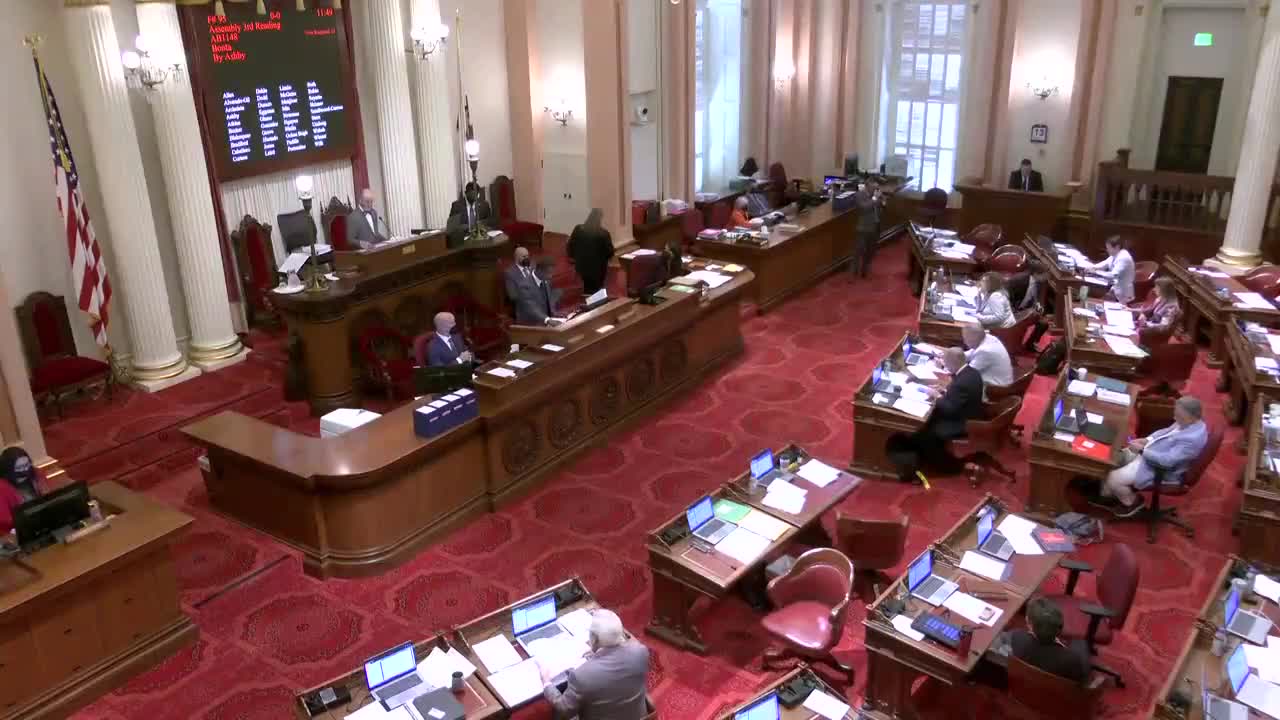 48SEC
Senate Floor
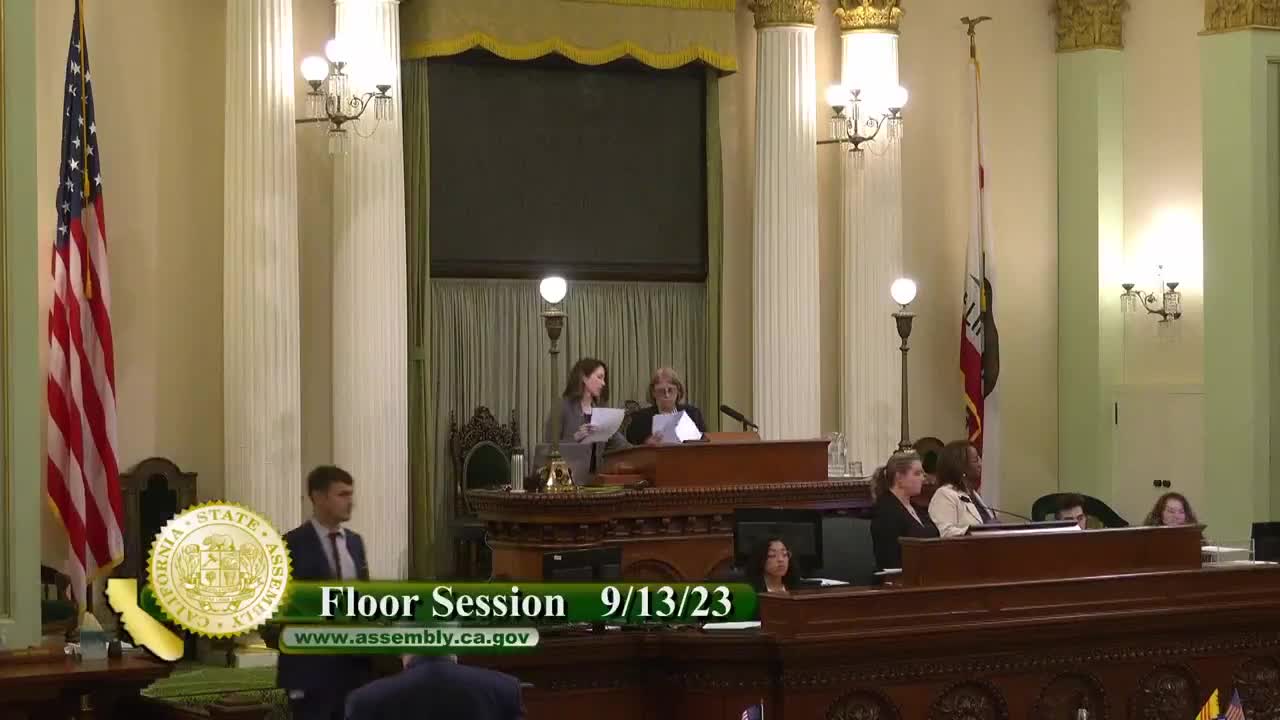 1MIN
Assembly Floor
 2MIN
Senate Standing Committee on Appropriations
 7MIN
Senate Standing Committee on Judiciary
 1MIN
Assembly Floor
 9MIN
Assembly Standing Committee on Judiciary
Bill Author


