AB 1449: Affordable housing: California Environmental Quality Act: exemption.
- Session Year: 2023-2024
- House: Assembly
- Latest Version Date: 2023-10-11
Current Status:
Passed
(2023-10-11: Chaptered by Secretary of State - Chapter 761, Statutes of 2023.)
Introduced
In Committee
First Chamber
In Committee
Second Chamber
Enacted
The California Environmental Quality Act (CEQA) requires a lead agency, as defined, to prepare, or cause to be prepared, and certify the completion of an environmental impact report on a project that it proposes to carry out or approve that may have a significant effect on the environment or to adopt a negative declaration if it finds that the project will not have that effect. CEQA also requires a lead agency to prepare a mitigated negative declaration for a project that may have a significant effect on the environment if revisions in the project would avoid or mitigate that effect and there is no substantial evidence that the project, as revised, would have a significant effect on the environment. CEQA authorizes the lead agency, if the lead agency determines that a project is exempt from CEQA, to file a notice of exemption with the Office of Planning and Research or the county clerk of each county in which the project is located.
This bill would, until January 1, 2033, exempt from CEQA certain actions taken by a public agency related to affordable housing projects, as defined, if certain requirements are met. The bill would require the lead agency, if the lead agency determines an action related to an affordable housing project is exempt from CEQA under this provision and approves or carries out the project, to file a notice of exemption with the Office of Planning and Research and the county clerk of each county in which the project is located. By increasing the duties of a lead agency, this bill would impose a state-mandated local program.
The California Constitution requires the state to reimburse local agencies and school districts for certain costs mandated by the state. Statutory provisions establish procedures for making that reimbursement.
This bill would provide that no reimbursement is required by this act for a specified reason.
The California Environmental Quality Act (CEQA) requires a lead agency, as defined, to prepare, or cause to be prepared, and certify the completion of an environmental impact report on a project that it proposes to carry out or approve that may have a significant effect on the environment or to adopt a negative declaration if it finds that the project will not have that effect. CEQA also requires a lead agency to prepare a mitigated negative declaration for a project that may have a significant effect on the environment if revisions in the project would avoid or mitigate that effect and there is no substantial evidence that the project, as revised, would have a significant effect on the environment. CEQA authorizes the lead agency, if the lead agency determines that a project is exempt from CEQA, to file a notice of exemption with the Office of Planning and Research or the county clerk of each county in which the project is located.
This bill would would, until January 1, 2033, exempt from CEQA certain actions taken by a public agency related to affordable housing projects, as defined, if certain requirements are met. The bill would require the lead agency, if the lead agency determines an action related to an affordable housing project is exempt from CEQA under this provision and approves or carries out the project, to file a notice of exemption with the Office of Planning and Research and the county clerk of each county in which the project is located. By increasing the duties of a lead agency, this bill would impose a state-mandated local program.
The California Constitution requires the state to reimburse local agencies and school districts for certain costs mandated by the state. Statutory provisions establish procedures for making that reimbursement.
This bill would provide that no reimbursement is required by this act for a specified reason.
The California Environmental Quality Act (CEQA) requires a lead agency, as defined, to prepare, or cause to be prepared, and certify the completion of an environmental impact report on a project that it proposes to carry out or approve that may have a significant effect on the environment or to adopt a negative declaration if it finds that the project will not have that effect. CEQA also requires a lead agency to prepare a mitigated negative declaration for a project that may have a significant effect on the environment if revisions in the project would avoid or mitigate that effect and there is no substantial evidence that the project, as revised, would have a significant effect on the environment. CEQA authorizes the lead agency, if the lead agency determines that a project is exempt from CEQA, to file a notice of exemption with the Office of Planning and Research or the county clerk of each county in which the project is located.
This bill would exempt from CEQA certain actions taken by a public agency related to affordable housing projects, as defined, if certain requirements are met. The bill would require the lead agency, if the lead agency determines an action related to an affordable housing project is exempt from CEQA under this provision and approves or carries out the project, to file a notice of exemption with the Office of Planning and Research and the county clerk of each county in which the project is located. By increasing the duties of a lead agency, this bill would impose a state-mandated local program.
The California Constitution requires the state to reimburse local agencies and school districts for certain costs mandated by the state. Statutory provisions establish procedures for making that reimbursement.
This bill would provide that no reimbursement is required by this act for a specified reason.
Existing law sets forth the general responsibilities and roles of the Business, Consumer Services, and Housing Agency, the Department of Housing and Community Development, and the California Housing Finance Agency in carrying out state housing policies and programs.This bill would make nonsubstantive changes to those provisions.Existing law sets forth the general responsibilities and roles of the Business, Consumer Services, and Housing Agency, the Department of Housing and Community Development, and the California Housing Finance Agency in carrying out state housing policies and programs.
This bill would make nonsubstantive changes to those provisions.
(a)For purposes of this section, the following definitions apply:
(1)Affordable housing project means a project consisting of multifamily residential uses only or a mix of multifamily residential and nonresidential uses, with at least two-thirds of the square footage of the project designated for residential use, and that satisfies all of the following requirements:
(A)All of the residential units within the project, excluding managers units, are dedicated to lower income households, as defined by Section 50079.5 of the Health and Safety Code.
(B)(i)The project meets the labor standards set forth in Section 65912.130 of the Government Code.
(ii)In addition to clause (i), for a project with 50 or more residential units, the project meets the labor standards set forth in Section 65912.131 of the Government Code.
(C)The project is located on a legal parcel or parcels in any of the following locations:
(i)In a city where the city boundaries include some portion of either an urbanized area or urban cluster, as designated by the United States Census Bureau, or in an unincorporated area, and the legal parcel or parcels are wholly within the boundaries of an urbanized area or urban cluster, as designated by the United States Census Bureau.
(ii)Within one-half mile walking distance to either a high-quality transit corridor or a major transit stop.
(iii)In a very low vehicle travel area.
(iv)Proximal to six or more amenities pursuant to paragraph (3) as of the date of submission of the application for the project.
(D)Parcels that are developed with urban uses adjoin at least 75 percent of the perimeter of the project site or at least three sides of a foursided project site. For purposes of this paragraph, parcels that are only separated by a street or highway shall be considered to be adjoined.
(2)High-quality transit corridor has the same meaning as set forth in subdivision (b) of Section 21155.
(3)Proximal to an amenity means either of the following:
(A)Within one-half mile of any of the following amenities:
(i)A bus station.
(ii)A ferry terminal.
(B)Within one mile, or for a parcel in a rural area, as defined in Section 50199.21 of the Health and Safety Code, within two miles, of any of the following amenities:
(i)A supermarket or grocery store.
(ii)A public park.
(iii)A community center.
(iv)A pharmacy or drugstore.
(v)A medical clinic or hospital.
(vi)A public library.
(vii)A school that maintains a kindergarten or any of grades 1 to 12, inclusive.
(4)Vacant site means a site without any houses, offices, buildings, or other significant improvements on it.
(5)(A)Very low vehicle travel area means an urbanized area, as designated by the United States Census Bureau, where the existing residential development generates vehicle miles traveled per capita that is below 85 percent of either regional vehicle miles traveled per capita or city vehicle miles traveled per capita.
(B)For purposes of subparagraph (A), area may include a travel analysis zone, hexagon, or grid.
(C)For the purposes of determining regional vehicle miles traveled per capita pursuant to subparagraph (A), a region is the entirety of incorporated and unincorporated areas governed by a multicounty or single-county metropolitan planning organization, or the entirety of the incorporated and unincorporated areas of an individual county that is not part of a metropolitan planning organization.
(b)Subject to subdivision (c), this division does not apply to any of the following:
(1)The issuance of an entitlement by a public agency for an affordable housing project.
(2)An action to lease, convey, or encumber land owned by a public agency for an affordable housing project.
(3)An action to facilitate the lease, conveyance, or encumbrance of land owned or to be purchased by a public agency for an affordable housing project.
(4)Rezoning, specific plan amendments, or general plan amendments required specifically and exclusively to allow the construction of an affordable housing project.
(5)An action to provide financial assistance in furtherance of implementing an affordable housing project.
(c)Subdivision (b) applies if the action described in subdivision (b) requires the affordable housing project to meet all of the following requirements:
(1)The affordable housing project will be subject to a recorded California Tax Credit Allocation Committee regulatory agreement.
(2)The affordable housing project site can be adequately served by existing utilities or extensions.
(3)A public agency confirms all of the following:
(A)The project site satisfies the requirements specified in subparagraphs (B) to (K), inclusive, of paragraph (6) of subdivision (a) of Section 65913.4 of the Government Code.
(B)For a vacant site, the project site does not contain tribal cultural resources that could be affected by the development that were found pursuant to a consultation described in Section 21080.3.1 and the effects of which cannot be mitigated pursuant to the process described in Section 21080.3.2.
(C)(i)The development proponent has completed a phase I environmental assessment, as defined in Section 25319.1 of the Health and Safety Code. If a recognized environmental condition is found, the development proponent shall undertake a preliminary endangerment assessment, as defined in Section 25319.5 of the Health and Safety Code, prepared by an environmental assessor to determine the existence of any release of a hazardous substance on the site and to determine the potential for exposure of future occupants to significant health hazards from any nearby property or activity.
(ii)If a release of a hazardous substance is found to exist on the site, the release shall be removed, or any significant effects of the release shall be mitigated to a level of insignificance in compliance with current state and federal requirements.
(iii)If a potential for exposure to significant hazards from surrounding properties or activities is found to exist, the effects of the potential exposure shall be mitigated to a level of insignificance in compliance with current state and federal requirements.
(D)For a project site where multifamily housing is not a permitted use, all of the following are met:
(i)None of the housing is located within 500 feet of a freeway, as defined in Section 332 of the Vehicle Code.
(ii)None of the housing is located within 3,200 feet of a facility that actively extracts or refines oil or natural gas.
(iii)The project site is not within a very high fire hazard severity zone, as indicated on maps adopted by the Department of Forestry and Fire Protection pursuant to Section 4202 or as designated pursuant to subdivisions (a) and (b) of Section 51179 of the Government Code.
(d)If a lead agency determines that an activity is not subject to this division pursuant to this section and determines to approve or carry out the activity, the lead agency shall file a notice of exemption with the Office of Planning and Research and the county clerk of the county in which the activity will occur in the manner specified in subdivisions (b) and (c) of Section 21108 or subdivisions (b) and (c) of Section 21152.
(e)This section shall remain in effect only until January 1, 2033, and as of that date is repealed.
SEC. 2.No reimbursement is required by this act pursuant to Section 6 of Article XIIIB of the California Constitution because a local agency or school district has the authority to levy service charges, fees, or assessments sufficient to pay for the program or level of service mandated by this act, within the meaning of Section 17556 of the Government Code.
(a)For purposes of this section, the following definitions apply:
(1)Affordable housing project means a project consisting of multifamily residential uses only or a mix of multifamily residential and nonresidential uses, with at least two-thirds of the square footage of the project designated for residential use, and that satisfies all of the following requirements:
(A)All of the residential units within the project, excluding managers units, are dedicated to lower income households, as defined by Section 50079.5 of the Health and Safety Code.
(B)(i)The project meets the labor standards set forth in Section 65912.130 of the Government Code.
(ii)In addition to clause (i), for a project with 50 or more residential units, the project meets the labor standards set forth in Section 65912.131 of the Government Code.
(C)The project is located on a legal parcel or parcels in any of the following: following locations:
(i)A In a city where the city boundaries include some portion of either an urbanized area or urban cluster, as designated by the United States Census Bureau, or in an unincorporated area, and the legal parcel or parcels are wholly within the boundaries of an urbanized area or urban cluster, as designated by the United States Census Bureau.
(ii)A site within Within one-half mile walking distance to either a high-quality transit corridor or a major transit stop.
(iii)A site located in In a very low vehicle travel area.
(iv)A site located within one mile, or, for parcels in a rural area, as defined in Section 50199.21 of the Health and Safety Code, within two miles, from a cluster of six or more of the following:(I)Restaurants.(II)Bars.(III)Coffee shops.(IV)Supermarkets or grocery stores.(V)Hardware stores.(VI)Public parks or community centers.(VII)Pharmacies or drugstores.(VIII)Medical clinics or hospitals.(IX)Public libraries.(X)K12 schools.(iv)Proximal to six or more amenities pursuant to paragraph (3) as of the date of submission of the application for the project.
(D)At least 75 percent of the perimeter of the project site adjoins parcels Parcels that are developed with urban uses. uses adjoin at least 75 percent of the perimeter of the project site or at least three sides of a foursided project site. For purposes of this paragraph, parcels that are only separated by a street or highway shall be considered to be adjoined.
(2)High-quality transit corridor has the same meaning as set forth in subdivision (b) of Section 21155.
(3)Proximal to an amenity means either of the following:
(A)Within one-half mile of any of the following amenities:
(i)A bus station.
(ii)A ferry terminal.
(B)Within one mile, or for a parcel in a rural area, as defined in Section 50199.21 of the Health and Safety Code, within two miles, of any of the following amenities:
(i)A supermarket or grocery store.
(ii)A public park.
(iii)A community center.
(iv)A pharmacy or drugstore.
(v)A medical clinic or hospital.
(vi)A public library.
(vii)A school that maintains a kindergarten or any of grades 1 to 12, inclusive.
(3)(4)Vacant site means a site without any houses, offices, buildings, or other significant improvements on it.
(4)(5)(A)Very low vehicle travel area means an urbanized area, as designated by the United States Census Bureau, where the existing residential development generates vehicle miles traveled per capita that is below 85 percent of either regional vehicle miles traveled per capita or city vehicle miles traveled per capita.
(B)For purposes of subparagraph (A), area may include a travel analysis zone, hexagon, or grid.
(C)For the purposes of determining regional vehicle miles traveled per capita pursuant to subparagraph (A), a region is the entirety of incorporated and unincorporated areas governed by a multicounty or single-county metropolitan planning organization, or the entirety of the incorporated and unincorporated areas of an individual county that is not part of a metropolitan planning organization.
(b)Subject to subdivision (c), this division does not apply to any of the following:
(1)The issuance of an entitlement by a public agency for an affordable housing project.
(2)An action to lease, convey, or encumber land owned by a public agency for an affordable housing project.
(3)An action to facilitate the lease, conveyance, or encumbrance of land owned or to be purchased by a public agency for an affordable housing project.
(4)Rezoning, specific plan amendments, or general plan amendments required specifically and exclusively to allow the construction of an affordable housing project.
(5)An action to provide financial assistance in furtherance of implementing an affordable housing project.
(c)Subdivision (b) applies if the action described in subdivision (b) requires the affordable housing project to meet all of the following requirements:
(1)The affordable housing project will be subject to a recorded California Tax Credit Allocation Committee regulatory agreement for at least 55 years upon completion of construction. agreement.
(2)The affordable housing project site can be adequately served by existing utilities or extensions.
(3)A public agency confirms all of the following:
(A)The project site satisfies the requirements specified in subparagraphs (B) to (K), inclusive, of paragraph (6) of subdivision (a) of Section 65913.4 of the Government Code.
(B)For a vacant site, the project site does not contain tribal cultural resources that could be affected by the development that were found pursuant to a consultation described in Section 21080.3.1 and the effects of which cannot be mitigated pursuant to the process described in Section 21080.3.2.
(C)(i)The development proponent has completed a phase I environmental assessment, as defined in Section 25319.1 of the Health and Safety Code. If a recognized environmental condition is found, the development proponent shall undertake a preliminary endangerment assessment, as defined in Section 25319.5 of the Health and Safety Code, prepared by an environmental assessor to determine the existence of any release of a hazardous substance on the site and to determine the potential for exposure of future occupants to significant health hazards from any nearby property or activity.
(ii)If a release of a hazardous substance is found to exist on the site, the release shall be removed, or any significant effects of the release shall be mitigated to a level of insignificance in compliance with current state and federal requirements.
(iii)If a potential for exposure to significant hazards from surrounding properties or activities is found to exist, the effects of the potential exposure shall be mitigated to a level of insignificance in compliance with current state and federal requirements.
(D)For a project site where multifamily housing is not a permitted use, all of the following are met:
(i)None of the housing is located within 500 feet of a freeway, as defined in Section 332 of the Vehicle Code.
(ii)None of the housing is located within 3,200 feet of a facility that actively extracts or refines oil or natural gas.
(iii)The project site is not within a very high fire hazard severity zone, as indicated on maps adopted by the Department of Forestry and Fire Protection pursuant to Section 4202 or as designated pursuant to subdivisions (a) and (b) of Section 51179 of the Government Code.
(d)If a lead agency determines that an activity is not subject to this division pursuant to this section and determines to approve or carry out the activity, the lead agency shall file a notice of exemption with the Office of Planning and Research and the county clerk of the county in which the activity will occur in the manner specified in subdivisions (b) and (c) of Section 21108 or subdivisions (b) and (c) of Section 21152.
(e)This section shall remain in effect only until January 1, 2033, and as of that date is repealed.
SEC. 2.No reimbursement is required by this act pursuant to Section 6 of Article XIIIB of the California Constitution because a local agency or school district has the authority to levy service charges, fees, or assessments sufficient to pay for the program or level of service mandated by this act, within the meaning of Section 17556 of the Government Code.
(a)For purposes of this section, affordable the following definitions apply:
(1)Affordable housing project means a project consisting of multifamily residential uses only or a mix of multifamily residential and nonresidential uses, with at least two-thirds of the square footage of the project designated for residential use, and that satisfies both all of the following requirements:
(1)(A)All of the residential units within the project, excluding managers units, are dedicated to lower income households, as defined by Section 50079.5 of the Health and Safety Code.
(2)(A)(B)(i)The project meets the labor standards set forth in Section 65912.130 of the Government Code.
(B)(ii)In addition to subparagraph (A), clause (i), for a project with 50 or more residential units, the project meets the labor standards set forth in Section 65912.131 of the Government Code.
(C)The project is located on a legal parcel or parcels in any of the following:
(i)A city where the city boundaries include some portion of either an urbanized area or urban cluster, as designated by the United States Census Bureau, or in an unincorporated area, and the legal parcel or parcels are wholly within the boundaries of an urbanized area or urban cluster, as designated by the United States Census Bureau.
(ii)A site within one-half mile walking distance to either a high-quality transit corridor or a major transit stop.
(iii)A site located in a very low vehicle travel area.
(iv)A site located within one mile, or, for parcels in a rural area, as defined in Section 50199.21 of the Health and Safety Code, within two miles, from a cluster of six or more of the following:
(I)Restaurants.
(II)Bars.
(III)Coffee shops.
(IV)Supermarkets or grocery stores.
(V)Hardware stores.
(VI)Public parks or community centers.
(VII)Pharmacies or drugstores.
(VIII)Medical clinics or hospitals.
(IX)Public libraries.
(X)K12 schools.
(D)At least 75 percent of the perimeter of the project site adjoins parcels that are developed with urban uses. For purposes of this paragraph, parcels that are only separated by a street or highway shall be considered to be adjoined.
(2)High-quality transit corridor has the same meaning as set forth in subdivision (b) of Section 21155.
(3)Vacant site means a site without any houses, offices, buildings, or other significant improvements on it.
(4)(A)Very low vehicle travel area means an urbanized area, as designated by the United States Census Bureau, where the existing residential development generates vehicle miles traveled per capita that is below 85 percent of either regional vehicle miles traveled per capita or city vehicle miles traveled per capita.
(B)For purposes of subparagraph (A), area may include a travel analysis zone, hexagon, or grid.
(C)For the purposes of determining regional vehicle miles traveled per capita pursuant to subparagraph (A), a region is the entirety of incorporated and unincorporated areas governed by a multicounty or single-county metropolitan planning organization, or the entirety of the incorporated and unincorporated areas of an individual county that is not part of a metropolitan planning organization.
(b)Subject to subdivision (c), this division does not apply to any of the following:
(1)The issuance of an entitlement by a public agency for an affordable housing project.
(2)An action to lease, convey, or encumber land owned by a public agency for an affordable housing project.
(3)An action to facilitate the lease, conveyance, or encumbrance of land owned or to be purchased by a public agency for an affordable housing project.
(4)Rezoning, specific plan amendments, or general plan amendments required specifically and exclusively to allow the construction of an affordable housing project.
(5)An action to provide financial assistance in furtherance of implementing an affordable housing project.
(c)Subdivision (b) applies if the action described in subdivision (b) requires the affordable housing project to meet all of the following requirements:
(1)The affordable housing project is will be subject to a recorded California Tax Credit Allocation Committee regulatory agreement for at least 55 years upon completion of construction.
(2)The affordable housing project site is consistent with Chapter 1 (commencing with Section 10300) of Division 17 of Title 4 of the California Code of Regulations.(3)(2)The affordable housing project site can be adequately served by existing utilities or extensions.
(4)(3)A public agency confirms both all of the following:
(A)The affordable housing project site does not have any value as a wildlife habitat, species protected by the Federal Endangered Species Act of 1973 (16 U.S.C. Sec. 1531 et seq.) or by the Native Plant Protection Act (Chapter 10 (commencing with Section 1900) of Division 2 of the Fish and Game Code) or the California Endangered Species Act (Chapter 1.5 (commencing with Section 2050) of Division 3 of the Fish and Game Code) are not known to be present at the site, and the project does not cause the destruction or removal of any species protected by a local ordinance in effect at the time the application for the project was deemed complete. For the purposes of this subparagraph, wildlife habitat means the ecological communities upon which wild animals, birds, plants, fish, amphibians, and invertebrates depend for their conservation and protection.(B)The affordable housing project site is not within a very high fire hazard severity zone, as determined by the Department of Forestry and Fire Protection pursuant to Section 51178 of the Government Code, or within a high or very high fire hazard severity zone as indicated on maps adopted by the Department of Forestry and Fire Protection pursuant to Section 4202. This subparagraph does not apply to sites excluded from the specified hazard zones by a local agency, pursuant to subdivision (b) of Section 51179 of the Government Code, or sites that have adopted fire hazard mitigation measures pursuant to existing building standards or state fire mitigation measures applicable to the development.(5)The affordable housing project site is not subject to a landslide hazard, flood plain, floodway, or tsunami restriction zone, unless the applicable general plan, specific plan, or zoning ordinance contains provisions to mitigate the risk of a landslide or flood.(6)The affordable housing project site is subject to a preliminary phase I environmental assessment to determine the existence of any release of a hazardous substance on the site and to determine the potential for exposure of future occupants to significant health hazards from any nearby property or activity. If a release of a hazardous substance is found to exist on the site, the release shall be removed, or any significant effects of the release shall be mitigated in compliance with the California environmental screening criteria before the issuance of building permits.(7)The affordable housing project is funded, in whole or in part, by the California Tax Credit Allocation Committee.(A)The project site satisfies the requirements specified in subparagraphs (B) to (K), inclusive, of paragraph (6) of subdivision (a) of Section 65913.4 of the Government Code.
(B)For a vacant site, the project site does not contain tribal cultural resources that could be affected by the development that were found pursuant to a consultation described in Section 21080.3.1 and the effects of which cannot be mitigated pursuant to the process described in Section 21080.3.2.
(C)(i)The development proponent has completed a phase I environmental assessment, as defined in Section 25319.1 of the Health and Safety Code. If a recognized environmental condition is found, the development proponent shall undertake a preliminary endangerment assessment, as defined in Section 25319.5 of the Health and Safety Code, prepared by an environmental assessor to determine the existence of any release of a hazardous substance on the site and to determine the potential for exposure of future occupants to significant health hazards from any nearby property or activity.
(ii)If a release of a hazardous substance is found to exist on the site, the release shall be removed, or any significant effects of the release shall be mitigated to a level of insignificance in compliance with current state and federal requirements.
(iii)If a potential for exposure to significant hazards from surrounding properties or activities is found to exist, the effects of the potential exposure shall be mitigated to a level of insignificance in compliance with current state and federal requirements.
(D)For a project site where multifamily housing is not a permitted use, all of the following are met:
(i)None of the housing is located within 500 feet of a freeway, as defined in Section 332 of the Vehicle Code.
(ii)None of the housing is located within 3,200 feet of a facility that actively extracts or refines oil or natural gas.
(iii)The project site is not within a very high fire hazard severity zone, as indicated on maps adopted by the Department of Forestry and Fire Protection pursuant to Section 4202 or as designated pursuant to subdivisions (a) and (b) of Section 51179 of the Government Code.
(d)If a lead agency determines that an activity is not subject to this division pursuant to this section and determines to approve or carry out the activity, the lead agency shall file a notice of exemption with the Office of Planning and Research and the county clerk of the county in which the activity will occur in the manner specified in subdivisions (b) and (c) of Section 21108 or subdivisions (b) and (c) of Section 21152.
(e)This section shall remain in effect only until January 1, 2033, and as of that date is repealed.
SEC. 2.No reimbursement is required by this act pursuant to Section 6 of Article XIIIB of the California Constitution because a local agency or school district has the authority to levy service charges, fees, or assessments sufficient to pay for the program or level of service mandated by this act, within the meaning of Section 17556 of the Government Code.
(a)For purposes of this section, affordable housing project means a project consisting of multifamily residential uses only or a mix of multifamily residential and nonresidential uses, with at least two-thirds of the square footage of the project designated for residential use, and that satisfies both of the following requirements:
(1)All of the residential units within the project, excluding managers units, are dedicated to lower income households, as defined by Section 50079.5 of the Health and Safety Code.
(2)(A)The project meets the labor standards set forth in Section 65912.130 of the Government Code.
(B)In addition to subparagraph (A), for a project with 50 or more residential units, the project meets the labor standards set forth in Section 65912.131 of the Government Code.
(b)Subject to subdivision (c), this division does not apply to any of the following:
(1)The issuance of an entitlement by a public agency for an affordable housing project.
(2)An action to lease, convey, or encumber land owned by a public agency for an affordable housing project.
(3)An action to facilitate the lease, conveyance, or encumbrance of land owned or to be purchased by a public agency for an affordable housing project.
(4)Rezoning, specific plan amendments, or general plan amendments required specifically to allow the construction of an affordable housing project.
(5)An action to provide financial assistance in furtherance of implementing an affordable housing project.
(c)Subdivision (b) applies if the action described in subdivision (b) requires the affordable housing project to meet all of the following requirements:
(1)The affordable housing project is subject to a recorded California Tax Credit Allocation Committee regulatory agreement for at least 55 years upon completion of construction.
(2)The affordable housing project site is consistent with Chapter 1 (commencing with Section 10300) of Division 17 of Title 4 of the California Code of Regulations.
(3)The affordable housing project site can be adequately served by existing utilities or extensions.
(4)A public agency confirms both of the following:
(A)The affordable housing project site does not have any value as a wildlife habitat, species protected by the Federal Endangered Species Act of 1973 (16 U.S.C. Sec. 1531 et seq.) or by the Native Plant Protection Act (Chapter 10 (commencing with Section 1900) of Division 2 of the Fish and Game Code) or the California Endangered Species Act (Chapter 1.5 (commencing with Section 2050) of Division 3 of the Fish and Game Code) are not known to be present at the site, and the project does not cause the destruction or removal of any species protected by a local ordinance in effect at the time the application for the project was deemed complete. For the purposes of this subparagraph, wildlife habitat means the ecological communities upon which wild animals, birds, plants, fish, amphibians, and invertebrates depend for their conservation and protection.
(B)The affordable housing project site is not within a very high fire hazard severity zone, as determined by the Department of Forestry and Fire Protection pursuant to Section 51178 of the Government Code, or within a high or very high fire hazard severity zone as indicated on maps adopted by the Department of Forestry and Fire Protection pursuant to Section 4202. This subparagraph does not apply to sites excluded from the specified hazard zones by a local agency, pursuant to subdivision (b) of Section 51179 of the Government Code, or sites that have adopted fire hazard mitigation measures pursuant to existing building standards or state fire mitigation measures applicable to the development.
(5)The affordable housing project site is not subject to a landslide hazard, flood plain, floodway, or tsunami restriction zone, unless the applicable general plan, specific plan, or zoning ordinance contains provisions to mitigate the risk of a landslide or flood.
(6)The affordable housing project site is subject to a preliminary phase I environmental assessment to determine the existence of any release of a hazardous substance on the site and to determine the potential for exposure of future occupants to significant health hazards from any nearby property or activity. If a release of a hazardous substance is found to exist on the site, the release shall be removed, or any significant effects of the release shall be mitigated in compliance with the California environmental screening criteria before the issuance of building permits.
(7)The affordable housing project is funded, in whole or in part, by the California Tax Credit Allocation Committee.
(d)If a lead agency determines that an activity is not subject to this division pursuant to this section and determines to approve or carry out the activity, the lead agency shall file a notice of exemption with the Office of Planning and Research and the county clerk of the county in which the activity will occur in the manner specified in subdivisions (b) and (c) of Section 21108 or subdivisions (b) and (c) of Section 21152.
SEC. 2.No reimbursement is required by this act pursuant to Section 6 of Article XIIIB of the California Constitution because a local agency or school district has the authority to levy service charges, fees, or assessments sufficient to pay for the program or level of service mandated by this act, within the meaning of Section 17556 of the Government Code.
SECTION 1.Section 50150 of the Health and Safety Code is amended to read:50150.This chapter sets forth the general responsibilities and roles of the Business, Consumer Services, and Housing Agency, the Department of Housing and Community Development, and the California Housing Finance Agency in carrying out state housing policies and programs. This chapter is declaratory of existing law as to those roles and responsibilities, and shall not be construed as creating additional responsibilities.This chapter sets forth the general responsibilities and roles of the Business, Consumer Services Services, and Housing Agency, the Department of Housing and Community Development, and the California Housing Finance Agency in carrying out state housing policies and programs. It This chapter is declaratory of existing law as to those roles and responsibilities, and shall not be construed as creating additional responsibilities.
|
Date
|
Status
|
|---|---|
| Oct 11, 2023 | Chaptered by Secretary of State - Chapter 761, Statutes of 2023. |
| Oct 11, 2023 | Approved by the Governor. |
| Sep 13, 2023 | Enrolled and presented to the Governor at 3 p.m. |
| Sep 7, 2023 | In Assembly. Ordered to Engrossing and Enrolling. |
| Sep 7, 2023 | Read third time. Passed. Ordered to the Assembly. (Ayes 32. Noes 2. Page 2462.). |
| Aug 15, 2023 | Read second time. Ordered to third reading. |
| Aug 14, 2023 | From committee: Be ordered to second reading pursuant to Senate Rule 28.8. |
| Jul 11, 2023 | From committee: Do pass and re-refer to Com. on APPR. (Ayes 9. Noes 0.) (July 10). Re-referred to Com. on APPR. |
| Jun 21, 2023 | From committee: Do pass and re-refer to Com. on HOUSING. (Ayes 6. Noes 0.) (June 21). Re-referred to Com. on HOUSING. |
| May 31, 2023 | Referred to Coms. on E.Q. and HOUSING. |
| May 18, 2023 | In Senate. Read first time. To Com. on RLS. for assignment. |
| May 18, 2023 | Read third time. Passed. Ordered to the Senate. (Ayes 54. Noes 13. Page 1592.) |
| May 11, 2023 | Read second time. Ordered to third reading. |
| May 10, 2023 | From committee: Do pass. (Ayes 12. Noes 3.) (May 10). |
| May 2, 2023 | Re-referred to Com. on APPR. |
| May 1, 2023 | Read second time and amended. |
| Apr 27, 2023 | From committee: Amend, and do pass as amended and re-refer to Com. on APPR. (Ayes 7. Noes 1.) (April 26). |
| Apr 20, 2023 | Re-referred to Com. on H. & C.D. |
| Apr 19, 2023 | Read second time and amended. |
| Apr 18, 2023 | From committee: Amend, and do pass as amended and re-refer to Com. on H. & C.D. (Ayes 8. Noes 1.) (April 17). |
| Apr 11, 2023 | In committee: Hearing postponed by committee. |
| Mar 27, 2023 | Re-referred to Com. on NAT. RES. |
| Mar 23, 2023 | Referred to Coms. on NAT. RES. and H. & C.D. |
| Mar 23, 2023 | From committee chair, with author's amendments: Amend, and re-refer to Com. on NAT. RES. Read second time and amended. |
| Feb 18, 2023 | From printer. May be heard in committee March 20. |
| Feb 17, 2023 | Read first time. To print. |
|
Date
|
Description
|
Location
|
Votes
|
|
|---|---|---|---|---|
| Sep 7, 2023 | Assembly 3rd Reading AB1449 Alvarez et al. By Wiener | Senate Floor |
Passed |
|
| Jul 10, 2023 | Do pass, but first be re-referred to the Committee on [Appropriations] | Senate Standing Committee on Housing |
Passed |
|
| Jun 21, 2023 | Do pass, but first be re-referred to the Committee on [Housing] | Senate Standing Committee on Environmental Quality |
Passed |
|
| May 18, 2023 | AB 1449 Alvarez Assembly Third Reading | Assembly Floor |
Passed |
|
| May 10, 2023 | Do pass. | Assembly Standing Committee on Appropriations |
Passed |
|
| Apr 26, 2023 | Do pass as amended and be re-referred to the Committee on [Appropriations] | Assembly Standing Committee on Housing and Community Development |
Passed |
|
| Apr 17, 2023 | Do pass as amended and be re-referred to the Committee on [Housing and Community Development] | Assembly Standing Committee on Natural Resources |
Passed |
This list shows positions taken on this bill by organizations on the date displayed, which is linked to the original source.
Positions by individuals are not included.
|
Organization
|
Position
|
Date
|
|---|---|---|
| AMCAL | ** Support | |
| American Planning Association, California Chapter | ** Support | |
| AMG & ASSOCIATES | ** Support | |
| Beverly Hills | * Against | Jul 10, 2023 |
| Brownstein Hyatt Farber Schreck | * Support | Apr 17, 2023 |
| California Association Of Local Housing Finance Agencies | * Support | Apr 26, 2023 |
| California Conference of Carpenters | * Support | Apr 17, 2023 |
| California Housing Consortium | ** Support | |
| California Housing Partnership | ** Support | |
| California Realtors Association | * Against | Apr 26, 2023 |
| City of San Jose | ** Support | |
| Corporation For Supportive Housing | * Support | Jul 10, 2023 |
| CRP Affordable Housing and Community Development | ** Support | |
| Earthjustice | * Against | Apr 17, 2023 |
| East Bay for Everyone | ** Support | |
| East Bay YIMBY | ** Support | |
| Eden Housing | ** Support | |
| Grow the Richmond | ** Support | |
| Housing California | ** Support | |
| How to ADU | ** Support | |
| Lighthouse Public Affairs | * Support | Apr 17, 2023 |
| LINC Housing | ** Support | |
| Livable California | ** Against | |
| MidPen Housing Corporation | ** Support | |
| Mountain View YIMBY | ** Support | |
| Napa-Solano for Everyone | ** Support | |
| Northern Neighbors | ** Support | |
| Peninsula for Everyone | ** Support | |
| People For Housing Orange County | ** Support | |
| Planning And Conservation League | ** Support | |
| Progress Noe Valley | ** Support | |
| Resources for Community Development | ** Support | |
| San Diego Housing Commission | ** Support | |
| San Francisco Bay Area Planning and Urban Research Association | ** Support | |
| San Francisco Yimby | ** Support | |
| Santa Cruz Yimby | ** Support | |
| Santa Rosa Yimby | ** Support | |
| SLO County YIMBY | ** Support | |
| South Bay Yimby | ** Support | |
| Southern California Association of Nonprofit Housing | ** Support | |
| Southside Forward | ** Support | |
| State Building and Construction Trades Council of California | ** Against | |
| Supportive Housing Alliance | ** Support | |
| The John Stewart Company | ** Support | |
| The Pacific Companies | ** Support | |
| United Way Of Greater Los Angeles | * Support | Jul 10, 2023 |
| Urban Environmentalists | ** Support | |
| Ventura County YIMBY | ** Support | |
| Yimby Action | ** Support |
SENATE RULES COMMITTEE Office of Senate Floor Analyses (916) 651-1520 Fax: (916) 327-4478 | AB 1449 |
THIRD READING
Bill No: AB 1449
Author: Alvarez (D) and Wicks (D)
Amended: 5/1/23 in Assembly
Vote: 21
SENATE ENVIRONMENTAL QUALITY COMMITTEE: 6-0, 6/21/23
AYES: Allen, Dahle, Gonzalez, Hurtado, Menjivar, Skinner
NO VOTE RECORDED: Nguyen
SENATE HOUSING COMMITTEE: 9-0, 7/10/23
AYES: Wiener, Ochoa Bogh, Blakespear, Caballero, McGuire, Padilla, Skinner, Umberg, Wahab
NO VOTE RECORDED: Cortese, Seyarto
SENATE APPROPRIATIONS COMMITTEE: Senate Rule 28.8
ASSEMBLY FLOOR: 54-13, 5/18/23 - See last page for vote
SUBJECT: Affordable housing: California Environmental Quality Act: exemption
SOURCE: California Housing Consortium
California Housing Partnership
Housing California
DIGEST:
This bill exempts certain housing affordable housing projects from the California Environmental Quality Act (CEQA), as specified.
ANALYSIS:
Existing law:
- Provides that under CEQA, a lead agency determines whether a project is exempt from CEQA, or if it must do an initial study to determine if a project will have significant effects on the environment. If a project has no effect on the environment or effects that can be mitigated, the lead agency prepares a negative declaration (ND) or mitigated ND (MND). If the project will have significant impacts, the lead agency prepares an environmental impact report (EIR) to evaluate and propose mitigation measures for any effects on the environment, including impacts or likely impacts to land, air, water, minerals, flora, fauna, ambient noise, and historic or aesthetic significance. (Public Resources Code (PRC) §§21000 et seq.)
- Creates numerous exemptions for residential projects, including:
- Small residential housing projects with low environmental impact and that are for affordable agriculture, urban, or urban infill housing projects. (PRC § 21159.20-21159.24)
- Mixed-use, and "employment center" projects located within "transit priority areas," if the project is consistent an adopted specific plan or other planning documents that align transportation and housing elements to reduce greenhouse gas emissions. (PRC § 21155.4)
- Multi-family residential and mixed-use housing projects on infill sites within cities and unincorporated areas that are within urbanized areas or urban clusters. (PRC § 21159.25)
- Creates an exemption in CEQA for infill development projects that are consistent with a general plan and zoning, are substantially surrounded by urban uses and do not impinge on habitat or result in any significant effects relating to traffic, noise, air quality, or water quality; and can be adequately served by utilities and public services. (CEQA Guidelines §15332)
- Establishes a ministerial approval process (i.e., not subject to CEQA) for certain multifamily affordable housing projects in local jurisdictions that have not met regional housing needs. Eligibility is contingent on labor standards and site specifics. (GC § 65913.4)
- Establishes a ministerial approval process for affordable housing projects in commercial zones. Requires eligible projects to pay prevailing wage to construction workers and requires projects of 50 units or more to participate in an apprenticeship program and make specified healthcare contributions for construction workers. (GC § 65912.100 et seq., added by AB 2011 (Wicks), Chapter 647, Statutes of 2022)
- Creates a statutory CEQA exemption for emergency shelters and supportive housing projects approved or carried out within the City of Los Angeles by City of Los Angeles and by other local eligible public agencies, which sunsets Jan 1, 2025. (PRC § 21080.27)
- Requires a local jurisdiction to give public notice of a hearing whenever a person applies for a zoning variance, special use permit, conditional use permit, zoning ordinance amendment, or general or specific plan amendment.
- Requires the board of zoning adjustment or zoning administrator to hear and decide applications for conditional uses or other permits when the zoning ordinance provides therefor and establishes criteria for determining those matters, and applications for variances from the terms of the zoning ordinance.
This bill:
- Exempts from CEQA a public agency’s entitlement, lease, conveyance, purchase, financial assistance or encumbrance for an affordable housing project. It further exempts any action to facilitate those actions and exempts rezoning, specific plan amendments, or general plan amendments required for constructing of an affordable housing project. This exemption sunsets January 1, 2033.
- Defines “affordable housing project” as a project with 100% lower income households that meets the labor requirements in “AB 2011.”
- Requires the affordable housing project to meet certain criteria, including:
- At least 75% of the perimeter of the project site adjoins parcels that are developed with urban uses;
- The project is located on parcels that meet any of the following:
- In a city where the city boundaries include some portion of either an urbanized area or urban cluster;
- In an unincorporated area, and the legal parcel or parcels are wholly within the boundaries of an urbanized area or urban cluster;
- Within one-half mile walking distance to either a high-quality transit corridor or a major transit stop;
- In a very low vehicle travel area, as defined; or v) Within two miles for rural areas, and one mile for all other areas, of six or more specified amenities.
- The affordable housing project is subject to a recorded California Tax Credit Allocation Committee (TCAC) regulatory agreement for at least 55 years upon completion of construction, is consistent with TCAC regulations, and is funded in whole or in part by TCAC;
- The affordable housing project site can be adequately served by existing utilities or extensions; and
- A public agency confirms that the site does not have value as wildlife habitat, does not impact protected species, is not within a high or very high fire hazard severity zone as specified, and is not in a flood, landslide, or tsunami risk zone or hazardous substance zone.
- Requires the lead agency to file a notice of exemption with the Office of Planning and Research and the relevant county clerk.
Background
- The A, B, C’s of CEQA. CEQA is designed to (a) make government agencies and the public aware of the environmental impacts of a proposed project, (b) ensure the public can take part in the review process, and (c) identify and implement measures to mitigate or eliminate any negative impact the project may have on the environment. CEQA is enforced by civil lawsuits that can challenge any project’s environmental review. Nonprofits, private individuals, public agencies, advocacy groups, and other organizations can all file lawsuits under CEQA.
- CEQA exemptions. A project is exempt from CEQA if it is ministerial (i.e., it does not involve discretionary decisions), or if there is a specific statutory or categorical exemption that applies to the project. Statutory exemptions are created by the Legislature and apply even if a project has the potential to significantly affect the environment. In contrast, categorical exemptions, which are listed in the CEQA guidelines, generally do not apply if there are significant environmental impacts associated with the project.
- Numerous CEQA Exemptions Apply to Affordable Housing. Recent legislation (SB 35, Wiener, Chapter 366, Statutes of 2017, and AB 2011 Wicks, Chapter 647, Statutes of 2022) has established a ministerial approval processes for affordable housing projects, in which CEQA review is waived for housing projects that meet high labor requirements and are located outside of specified sensitive sites.
In addition to ministerial processes, there are over a dozen CEQA exemptions for housing projects, including:
- Affordable housing projects;
- Residential projects;
- Urban resident or mixed-use housing projects in unincorporated counties;
- transit-priority and residential projects; and
- Residential, movement center, or mixed-use development project in a transit priority area.
Affordable housing, as a subset of housing, could be eligible for any of these exemptions so long as the project meets the specific criteria for a given exemption. There are also categorical and statutory exemptions specifically for affordable housing. These exemptions come with their own eligibility criteria, including that projects meet certain urban density and size requirements, avoid impacts on sensitive habitat, wildlife, and the environment, and are not on sensitive sites.
- What is infill? There are a number of CEQA exemptions for various infill development projects. The current definition of infill site is one that has been previously developed for qualified urban uses or one where at least 75 percent of the perimeter of the site adjoins parcels that are developed with qualified urban uses and that was not created within the past 10 years. However, numerous CEQA exemptions use criteria that differ in specifics from this definition to get at urban density and infill. Generally, the eligibility criteria for applicable urban density CEQA exemptions include requirements that the project be substantially surrounded by urban uses and be within an urban cluster.
Comments
- Purpose of Bill. According to the author, “Although the CEQA process was established with good intentions and serves an important function in mitigating the environmental impact of government-led projects, it often hinders development and growth in the state, especially as it relates to housing. Although the silver bullet does not exist to resolve CEQA-related issues, AB 1449 is an important step to curb some of the excesses of CEQA while increasing affordable housing development. It also strikes a balance that streamlines affordable housing projects without sacrificing labor and environmental qualities. If we grant CEQA exemptions for billionaires building stadiums, we should be able to give the same exemption for affordable housing projects in underserved communities.”
- A New Exemption That Includes the Process. According to information provided by the author, the decisions that lead up to planning the project, including exemptions for amending general plans, leasing the project, or financing projects, are discretionary decisions. They have only recently been brought under CEQA review with any frequency. Adding CEQA review to many of the decisions that lead up to the decision to actually build the project may significantly slow down the review process, even if the project itself is exempt from CEQA.
- Redefining Infill Criteria for Affordable Housing. AB 1449 creates a new and broader definition of urban infill for CEQA exemptions. The current statutory exemption for affordable housing projects requires that the projects be on parcels that are 75 percent adjacent to urban areas. The new exemption that will be established by AB 1449 will require that three sides of a parcel be surrounded by urban use. This criteria is (slightly) more permissive than 75 percent—consider a case where a parcel of land is a rectangle, and only one long side of the rectangle is adjacent to urban areas: this parcel would meet the infill criteria in AB 1449, but not the 75 percent criteria existing law.
At the same time as it creates a broader definition of infill by perimeter, AB 1449 also creates a new definition related to infill that appears to encapsulate low-vehicle miles traveled (VMT) urbanized areas. To be eligible for the new affordable housing CEQA exemption, a project would need to be located on a parcel in urban clusters, within walking distance to either a high-quality transit corridor or a major transit stop or be in a very low vehicle travel area, among others. These criteria could make it easier to identify which geographic areas are eligible for this exemption based on VMT or other easily discernable criteria. Currently, the Office of Planning and Research (OPR) maintains a “site check” mapping tool that identifies, among other variables, areas of the state that meet the very-low VMT threshold.
Related/Prior Legislation
AB 785 (Santiago, 2023) creates a CEQA exemption for transitional and affordable housing projects carried out by the City of Los Angeles, County of Los Angeles, or specified eligible public agencies in the City of Los Angeles until 2033.
AB 2011 (Wicks, Chapter 647, Statutes of 2022) established a ministerial approval process, not subject to CEQA, for multifamily affordable housing projects in commercial zones, as long as those projects meet specified objective environmental, affordability and labor standards. The labor standards in AB 2011 are the same as that are in this bill.
AB 1907 (Santiago, 2020) would have created a CEQA exemption for emergency shelters, supportive housing, or affordable housing. Died in the Assembly Natural Resources Committee.
FISCAL EFFECT: Appropriation: No Fiscal Com.: Yes Local: Yes
SUPPORT: (Verified 8/15/23)
California Housing Consortium (co-source)
California Housing Partnership (co-source)
Housing California (co-source)
American Planning Association, California Chapter
City of San Jose
East Bay for Everyone
East Bay YIMBY
Eden Housing
Grow the Richmond
How to ADU
Mountain View YIMBY
Napa-Solano for Everyone
Northern Neighbors
Peninsula for Everyone
People for Housing Orange County
Planning and Conservation League
Progress Noe Valley
Resources for Community Development
San Diego Housing Commission
San Francisco YIMBY
Santa Cruz YIMBY
Santa Rosa YIMBY
Slo County YIMBY
South Bay YIMBY
Southern California Association of Nonprofit Housing
Southside Forward
Supportive Housing Alliance
The Pacific Companies
Urban Environmentalists
Ventura County YIMBY
YIMBY Action
OPPOSITION: (Verified 8/15/23)
State Building and Construction Trades Council of California
ARGUMENTS IN SUPPORT: According to the California Housing Consortium, “Despite the well-established need, affordable and supportive housing projects face vocal opposition across the state, making these projects more difficult to site, more time-consuming to approve, and more costly to build. Current law provides numerous protections for proposed affordable and supportive housing developments seeking local approval, including many by right approvals or CEQA exemptions for certain affordable housing projects.
“Unfortunately, the existing tools have many limitations and prevent access to CEQA streamlining for many 100% affordable housing developments. AB 1449 would exempt from CEQA 100% affordable housing projects that meet rigorous labor standards and comply with specified environmental requirements. This bill balances the need of California’s two most pressing issues in housing and homelessness with the environmental and labor concerns to ensure more affordable homes are built quickly for those most in need.”
ARGUMENTS IN OPPOSITION: According to the State Building and Construction Trades Council of California, “With any streamlining bill, we believe that worker protection and training standards must include both prevailing wage coverage and skilled and trained workforce requirements to adequately protect the workforce and the public. While we acknowledge the inclusion of wage theft protections and prevailing wage coverage in the bill (under Government Code Sections 65912.130 and 65912.13 cited in the bill), this section of law unfortunately also contains provisions that are problematic. AB 1449 relies on labor and safety protections for workers in the residential sector that are unproven and likely run afoul of federal law, the Employee Retirement Income Security Act of 1974 (ERISA). This “labor” language was first used in AB 2011 (Wicks – 2022), and while that bill was signed into law, does not go into effect until July 2023.”
ASSEMBLY FLOOR: 54-13, 5/18/23
AYES: Aguiar-Curry, Alvarez, Arambula, Bennett, Berman, Bonta, Bryan, Calderon, Juan Carrillo, Wendy Carrillo, Flora, Mike Fong, Gabriel, Garcia, Gipson, Haney, Hart, Holden, Hoover, Jackson, Jones-Sawyer, Kalra, Lee, Low, Lowenthal, Maienschein, McCarty, McKinnor, Stephanie Nguyen, Ortega, Pacheco, Papan, Joe Patterson, Pellerin, Petrie-Norris, Quirk-Silva, Ramos, Reyes, Luz Rivas, Robert Rivas, Rodriguez, Blanca Rubio, Santiago, Schiavo, Soria, Ting, Valencia, Villapudua, Ward, Weber, Wicks, Wood, Zbur, Rendon
NOES: Bauer-Kahan, Boerner, Chen, Connolly, Megan Dahle, Dixon, Essayli, Lackey, Mathis, Muratsuchi, Jim Patterson, Sanchez, Ta
NO VOTE RECORDED: Addis, Alanis, Bains, Cervantes, Davies, Vince Fong, Friedman, Gallagher, Grayson, Irwin, Waldron, Wallis, Wilson
Prepared by: Brynn Cook / E.Q. / (916) 651-4108
8/16/23 10:25:01
**** END ****
SENATE COMMITTEE ON HOUSING
Senator Scott Wiener, Chair
2023 - 2024 Regular
Bill No: AB 1449 Hearing Date: 7/10/2023
Author: | Alvarez | ||
Version: | 5/1/2023 | ||
Urgency: | No | Fiscal: | Yes |
Consultant: | Alison Hughes | ||
SUBJECT: Affordable housing: California Environmental Quality Act: exemption
DIGEST: This bill exempts certain housing affordable housing projects from the California Environmental Quality Act (CEQA), as specified.
ANALYSIS:
Existing law:
- Requires a local jurisdiction to give public notice of a hearing whenever a person applies for a zoning variance, special use permit, conditional use permit, zoning ordinance amendment, or general or specific plan amendment.
- Requires the board of zoning adjustment or zoning administrator to hear and decide applications for conditional uses or other permits when the zoning ordinance provides therefor and establishes criteria for determining those matters, and applications for variances from the terms of the zoning ordinance.
- Establishes the CEQA, which generally requires state and local government agencies to inform decision makers and the public about the potential environmental impacts of proposed projects, and to reduce those impacts to the extent feasible. CEQA applies when a development project requires discretionary approval from a local government. (See “Comments” below for more information.)
- Provides for the following CEQA exemptions or housing streamlining:
- CEQA exemption for interim motel conversions. SB 450 (Umberg, Chapter 344, Statutes of 2020) exempted interim motel conversion projects from CEQA, until January 1, 2025, provided the project does not result in an expansion of more than 10% of the floor area of any individual living unit in the structure or does not result in any significant effects relating to traffic, noise, air quality, or water quality. “Interim motel housing project” is defined as conversion of a motel, hotel, residential hotel, or hostel into supportive or transitional housing.
- CEQA exemption for Project Homekey projects. AB 83 (Committee on Budget, Chapter 15, Statutes of 2020) included, among other provisions, an exemption from CEQA requirements, until July 1, 2021, for Project Homekey projects if certain requirements are met. Project Homekey is an initiative to purchase and rehabilitate housing, including hotels, motels, vacant apartment buildings, and other types of innovating housing, and convert them into permanent, long-term housing for people experiencing or at risk of homelessness.
- Streamlining for homeless shelters. AB 101 (Committee on Budget, Chapter 159, Statutes of 2019), among other provisions, defined low-barrier navigation centers as high-quality, low-barrier service-enriched shelters focused on moving people into permanent housing while connecting them with services. AB 101 required, until January 1, 2027, low-barrier navigation centers to be a use by right in areas zoned for mixed uses and non-residential zones permitting multifamily uses if the development meets certain requirements.
- Streamlining for permanent supportive housing. AB 2162 (Chiu, Chapter 753, Statutes of 2018) streamlined affordable housing projects that include supportive housing and onsite supportive services, by providing that supportive housing shall be a use by right in all zones where multifamily and mixed uses are allowed.
- Streamlined ministerial approval for certain housing projects. SB 35 (Wiener, Chapter 366, Statutes of 2017) established a ministerial approval process, not subject to CEQA, for certain multifamily affordable housing projects proposed in local jurisdictions that have not met their RHNA allocation.
This bill:
- Exempts from CEQA an affordable housing project that satisfies all of the following requirements:
- At least two-thirds of the square footage of the project is designated for residential use;
- All residential units are dedicated to lower income households, as defined;
- The project meets specified labor standards, including that all construction workers are paid the prevailing wage, and the labor standards can be enforced by the Labor Commissioner, an underpaid worker, or a joint labor-management committee;
- At least 75% of the perimeter of the project site adjoins parcels that are developed with urban uses; and
- The project is located on parcels that meet any of the following:
- In a city where the city boundaries include some portion of either an urbanized area or urban cluster;
- In an unincorporated area, and the legal parcel or parcels are wholly within the boundaries of an urbanized area or urban cluster;
- Within one-half mile walking distance to either a high-quality transit corridor or a major transit stop;
- In a very low vehicle travel area, as defined; or
- Within two miles for rural areas, and one mile for all other areas, of six or more specified amenities.
- Requires the affordable housing project to meet all of the following requirements:
- The affordable housing project is subject to a recorded California Tax Credit Allocation Committee (TCAC) regulatory agreement for at least 55 years upon completion of construction;
- The affordable housing project site can be adequately served by existing utilities or extensions; and
- A public agency confirms all of the following:
- The project is not built on environmentally sensitive or hazardous land, as specified;
- For a vacant site, the project site does not contain tribal cultural resources that could be affected by the development which cannot be mitigated, as specified;
- The site has tested for hazardous substances, and any hazardous substances must be remediated, as specified; and
- For a project site where multifamily housing is not a permitted use, all of the following are met:
- None of the housing is located within 500 feet of a freeway;
- None of the housing is located within 3,200 feet of a facility that actively extracts or refines oil or natural gas; and
- The project site is not within a very high fire hazard severity zone.
- Requires the lead agency to file a notice of exemption with the Office of Planning and Research and the relevant county clerk.
- Sunsets January 1, 2033.
COMMENTS:
- Author’s statement. “California is in the midst of a housing crisis. Consider a recent report from McKinsey on the California housing crisis, which found that California is ranked 49th for housing units per capita, 2.5 million units short of demand (which will jump to 3.5 million by 2025), and losing $140 billion annually in economic output because of our lack of housing. Despite its good intentions, CEQA has played a significant role in preventing necessary housing from being built. The Pacific Research Institute produced a report on CEQA arguing that housing projects subject to CEQA take years longer to get started and add hundreds of thousands of dollars in costs when they go through the CEQA process and face litigation.
These costs might be acceptable if they weren’t being abused. The Center for Jobs and the Economy with the California Business Roundtable found that 50% of all housing projects were challenged under CEQA. Meanwhile, Holland & Knight found that between 1997-2012, 62% involved infill development projects, and 67% were in part brought by a neighborhood group, homeowner association, or an entity established for the purpose of bringing a CEQA lawsuit. A CEQA exemption for clearly and narrowly defined affordable housing projects, which includes location, labor, and environmental requirements, is critical to resolving our housing crisis.”
- CEQA, exemptions, and ministerial approvals. CEQA applies when a development project requires discretionary approval from a local government agency. When a local agency has the discretion to approve a project, its CEQA evaluation begins with deciding whether an activity qualifies as a project subject to CEQA review. If an activity is deemed a “project,” the agency decides whether it is exempt from compliance with CEQA under either a statutory or a categorical exemption. Statutory exemptions are activities the Legislature has excluded from CEQA despite potential environmental impacts. If a project is statutorily exempt, it can be implemented without a CEQA evaluation.
In addition to statutory exemptions, the Legislature specifically directed the Secretary of the California Natural Resources Agency to designate categorical exemptions from CEQA. Categorical exemptions include projects that the Secretary deems do not have a significant impact on the environment. The CEQA Guidelines, found in Title 14 of the California Code of Regulations, set forth more than two dozen categorical exemptions covering a wide range of projects, from minor alterations of existing facilities to construction of certain types of buildings. As with statutory exemptions, if the project is categorically exempt, no formal evaluation is required, and the project can be implemented without a CEQA evaluation.
In recognition of this issue, the state has created multiple statutory and regulatory exemptions from CEQA for residential projects, including ones specific for affordable housing. However, housing developers report that many of these exemptions include subjective provisions that make them easy to challenge, and thus difficult to utilize. Because of these difficulties, affordable housing projects are increasingly utilizing ministerial approval processes – which bypass CEQA – provided by SB 35 (Wiener, Chapter 366, Statutes of 2017) and AB 2162 (Chiu, Chapter 753, Statutes of 2018).
- A new exemption. This bill would create a new statutory CEQA exemption for affordable housing projects. To qualify, the affordable housing projects would need to meet objective standards, cannot be located on environmentally sensitive sites, and be located on an infill site. Eligible projects must be near a major transit stop, a very low vehicle travel area, or approximate to at least six specified amenities. To ensure that the workers building the housing are well compensated, the project must meet the labor standards enacted by AB 2011 (Wicks, Chapter 647, Statutes of 2022). These standards include that all construction workers are paid the prevailing wage, and the labor standards can be enforced by the Labor Commissioner, an underpaid worker, or a joint labor-management committee. Such labor standards are unprecedented for a CEQA exemption.
The CEQA exemption afforded by this bill would apply to a range of actions taken by a public agency to facilitate the creation of eligible affordable housing projects, including:
- The issuance of the entitlement by the local agency;
- Planning for the land via rezoning, specific plan amendments, or general plan amendments required specifically and exclusively to allow the construction of an affordable housing project;
- Providing the land via lease, conveyance, or encumbrance, or facilitating those actions; and
- Providing financial assistance to the project.
- Here, there, and everywhere. This bill was heard in the Senate Environmental Quality Committee on June 21 and received a vote of 6-0.
FISCAL EFFECT: Appropriation: No Fiscal Com.: Yes Local: Yes
POSITIONS: (Communicated to the committee before noon on Wednesday,
July 5, 2023.)
SUPPORT:
California Housing Consortium (Co-Sponsor)
California Housing Partnership (Co-Sponsor)
Housing California (Co-Sponsor)
American Planning Association, California Chapter
East Bay for Everyone
East Bay YIMBY
Eden Housing
Grow the Richmond
How to ADU
Midpen Housing Corporation
Mountain View YIMBY
Napa-Solano for Everyone
Northern Neighbors
Peninsula for Everyone
People for Housing Orange County
Planning and Conservation League
Progress Noe Valley
Resources for Community Development
San Diego Housing Commission
San Francisco YIMBY
Santa Cruz YIMBY
Santa Rosa YIMBY
Slo County YIMBY
South Bay YIMBY
Southern California Association of Non-profit Housing (SCANPH)
Southside Forward
Supportive Housing Alliance
The Pacific Companies
Urban Environmentalists
Ventura County YIMBY
YIMBY Action
OPPOSITION:
None received.
-- END --
SENATE COMMITTEE ON ENVIRONMENTAL QUALITY
Senator Allen, Chair
2023 - 2024 Regular
Bill No: AB 1449
Author: | Alvarez | ||
Version: | 5/1/2023 | Hearing Date: | 6/21/2023 |
Urgency: | No | Fiscal: | Yes |
Consultant: | Brynn Cook | ||
SUBJECT: Affordable housing: California Environmental Quality Act: exemption
DIGEST: Exempts from the California Environmental Quality Act (CEQA), until 2033, the planning, funding, and development of affordable housing projects, as defined, that meet specified location and labor requirements established in AB 2011.
ANALYSIS:
Existing law:
- Under CEQA, a lead agency determines whether a project is exempt from CEQA, or if it must do an initial study to determine if a project will have significant effects on the environment. If a project has no effect on the environment or effects that can be mitigated, the lead agency prepares a negative declaration (ND) or mitigated ND (MND). If the project will have significant impacts, the lead agency prepares an environmental impact report (EIR) to evaluate and propose mitigation measures for any effects on the environment, including impacts or likely impacts to land, air, water, minerals, flora, fauna, ambient noise, and historic or aesthetic significance. (Public Resources Code (PRC) §§21000 et seq.)
- Creates numerous exemptions for residential projects, including:
a) Small residential housing projects with low environmental impact and that are for affordable agriculture, urban, or urban infill housing projects. (PRC § 21159.20-21159.24)
b) Mixed-use, and "employment center" projects located within "transit priority areas," if the project is consistent an adopted specific plan or other planning documents that align transportation and housing elements to reduce greenhouse gas emissions. (PRC § 21155.4)
c) Multi-family residential and mixed-use housing projects on infill sites within cities and unincorporated areas that are within urbanized areas or urban clusters. (PRC § 21159.25)
- Creates an exemption in CEQA for infill development projects that are
consistent with a general plan and zoning, are substantially surrounded by urban uses and do not impinge on habitat or result in any significant effects relating to traffic, noise, air quality, or water quality; and can be adequately served by utilities and public services. (CEQA Guidelines §15332)
- Establishes a ministerial approval process (i.e., not subject to CEQA) for certain multifamily affordable housing projects in local jurisdictions that have not met regional housing needs. Eligibility is contingent on labor standards and site specifics. (GC § 65913.4)
- Establishes a ministerial approval process for affordable housing projects in commercial zones. Requires eligible projects to pay prevailing wage to construction workers and requires projects of 50 units or more to participate in an apprenticeship program and make specified healthcare contributions for construction workers. (GC § 65912.100 et seq., added by AB 2011 (Wicks), Chapter 647, Statutes of 2022)
- Creates a statutory CEQA exemption for emergency shelters and supportive housing projects approved or carried out within the City of Los Angeles by City of Los Angeles and by other local eligible public agencies, which sunsets Jan 1, 2025. (PRC § 21080.27)
This bill:
- Exempts from CEQA a public agency’s entitlement, lease, conveyance, purchase, financial assistance or encumbrance for an affordable housing project. It further exempts any action to facilitate those actions and exempts rezoning, specific plan amendments, or general plan amendments required for constructing of an affordable housing project. This exemption sunsets Jan 1, 2033.
- Defines “affordable housing project” as a project with 100% lower income households that meets the labor requirements in “AB 2011.”
- Requires the affordable housing project to meet all of the following requirements:
- The affordable housing project is subject to a recorded California Tax Credit Allocation Committee (TCAC) regulatory agreement for at least 55 years upon completion of construction, is consistent with TCAC regulations, and is funded in whole or in part by TCAC;
- The affordable housing project site can be adequately served by existing utilities or extensions;
- A public agency confirms that the site does not have value as wildlife habitat, does not impact protected species, is not within a high or very high fire hazard severity zone as specified, and is not in a flood, landslide, or tsunami risk zone or hazardous substance zone.
- Requires the lead agency to file a notice of exemption with the Office of Planning and Research and the relevant county clerk.
Background
- The A, B, C’s of CEQA. CEQA is designed to (a) make government agencies and the public aware of the environmental impacts of a proposed project, (b) ensure the public can take part in the review process, and (c) identify and implement measures to mitigate or eliminate any negative impact the project may have on the environment. CEQA is enforced by civil lawsuits that can challenge any project’s environmental review. Nonprofits, private individuals, public agencies, advocacy groups, and other organizations can all file lawsuits under CEQA.
- CEQA exemptions. A project is exempt from CEQA if it is ministerial (i.e., it does not involve discretionary decisions), or if there is a specific statutory or categorical exemption that applies to the project. Statutory exemptions are created by the Legislature and apply even if a project has the potential to significantly affect the environment. In contrast, categorical exemptions, which are listed in the CEQA guidelines, generally do not apply if there are significant environmental impacts associated with the project.
- Numerous CEQA Exemptions Apply to Affordable Housing. Recent legislation (SB 35, Wiener, 2017 and AB 2011 Wicks, 2022) has established a ministerial approval processes for affordable housing projects, in which CEQA review is waived for housing projects that meet high labor requirements and are located outside of specified sensitive sites.
In addition to ministerial processes, there are over a dozen CEQA exemptions for housing projects, including:
- Affordable housing projects;
- Residential projects;
- Urban resident or mixed-use housing projects in unincorporated counties;
- transit-priority and residential projects; and
- Residential, movement center, or mixed-use development project in a transit priority area.
Affordable housing, as a subset of housing, could be eligible for any of these exemptions so long as the project meets the specific criteria for a given exemption. There are also categorical and statutory exemptions specifically for affordable housing. These exemptions come with their own eligibility criteria, including that projects meet certain urban density and size requirements, avoid impacts on sensitive habitat, wildlife, and the environment, and are not on sensitive sites.
- What is infill? There are a number of CEQA exemptions for various infill development projects. The current definition of infill site is one that has been previously developed for qualified urban uses or one where at least 75 percent of the perimeter of the site adjoins parcels that are developed with qualified urban uses and that was not created within the past 10 years. However, numerous CEQA exemptions use criteria that differ in specifics from this definition to get at urban density and infill. Generally, the eligibility criteria for applicable urban density CEQA exemptions include requirements that the project be substantially surrounded by urban uses and be within an urban cluster.
Comments
- Purpose of Bill. According to the author, “Although the CEQA process was established with good intentions and serves an important function in mitigating the environmental impact of government-led projects, it often hinders development and growth in the state, especially as it relates to housing. Although the silver bullet does not exist to resolve CEQA-related issues, AB 1449 is an important step to curb some of the excesses of CEQA while increasing affordable housing development. It also strikes a balance that streamlines affordable housing projects without sacrificing labor and environmental qualities. If we grant CEQA exemptions for billionaires building stadiums, we should be able to give the same exemption for affordable housing projects in underserved communities.”
- Process Over Project. Unlike the numerous CEQA exemptions for affordable housing projects discussed in the background section, the CEQA exemption in AB 1449 only applies to the decisions that lead up to planning the project, not the project itself. This includes exemptions for amending general plans, leasing the project, or financing projects. According to information provided by the author, while these decisions are discretionary, they have only recently been brought under CEQA review with any frequency. Because a project itself is still subject to CEQA review, adding CEQA review to many of the decisions that lead up to the decision to actually build the project may slow down the review process without having as significant additional environmental benefits. Given the housing crisis in California, it may be reasonable to limit CEQA review for decisions that lead up to the project planning, especially if certain environmental criteria are baked into the exemption, as they are in AB 785.
- Redefining Infill Criteria for Affordable Housing. AB 1449 creates a new and broader definition of urban infill for CEQA exemptions. The current statutory exemption for affordable housing projects requires that the projects be on parcels that are 75 percent adjacent to urban areas. The new exemption that would be established by AB 1449 would require that three sides of a parcel be surrounded by urban use. This criteria is (slightly) more permissive than 75 percent—consider a case where a parcel of land is a rectangle, and only one long side of the rectangle is adjacent to urban areas: this parcel would meet the infill criteria in AB 1449, but not the 75 percent criteria existing law.
At the same time as it creates a broader definition of infill by perimeter, AB 1449 also adds some other parameters to its urban density requirement, specifying that the project must be in urban clusters, within walking distance to either a high-quality transit corridor or a major transit stop and be in a very low vehicle travel area, among others. These criteria serve a dual purpose: they add important guardrails to ensure that the more permissive definition of urban infill does not result in increased Vehicle Miles Traveled (VMTs) and makes it easier to identify which geographic areas are eligible for this exemption. This last piece is possible because the Office of Planning and Research (OPR) maintains a “site check” mapping tool that identifies, among other variables, areas of the state that meet the very-low VMT threshold.
DOUBLE REFERRAL:
If this measure is approved by the Senate Environmental Quality Committee, the do pass motion must include the action to re-refer the bill to the Senate Housing Committee.
Related/Prior Legislation
AB 785 (Santiago, 2023) creates a CEQA exemption for transitional and affordable housing projects carried out by the City of Los Angeles, County of Los Angeles, or specified eligible public agencies in the City of Los Angeles until 2033.
AB 2011 (Wicks, Chapter 647, Statutes of 2022) establishes a ministerial approval process, not subject to CEQA, for multifamily affordable housing projects in commercial zones, as long as those projects meet specified objective environmental, affordability and labor standards. The labor standards in AB 2011 are the same as that are in this bill.
AB 1907 (Santiago, 2020) would have created a CEQA exemption for emergency shelters, supportive housing, or affordable housing. Died in the Assembly Committee on Natural Resources
SOURCE:
California Housing Consortium
California Housing Partnership
Housing California
SUPPORT:
American Planning Association, California Chapter
California Housing Consortium
California Housing Partnership
East Bay Yimby
Eden Housing
Grow the Richmond
Housing California
How to Adu
Mountain View Yimby
Napa-solano for Everyone
Northern Neighbors
Peninsula for Everyone
People for Housing Orange County
Planning and Conservation League
Progress Noe Valley
Resources for Community Development
San Francisco Yimby
San Jose; City of
Santa Cruz Yimby
Santa Rosa Yimby
Slo County Yimby
South Bay Yimby
Southside Forward
Supportive Housing Alliance
The Pacific Companies
Urban Environmentalists
Ventura County Yimby
Yimby Action
OPPOSITION:
State Building and Construction Trades Council of CA
ARGUMENTS IN SUPPORT:
According to the California Housing Consortium: “Despite the well-established need, affordable and supportive housing projects face vocal opposition across the state, making these projects more difficult to site, more time-consuming to approve, and more costly to build. Current law provides numerous protections for proposed affordable and supportive housing developments seeking local approval, including many by right approvals or CEQA exemptions for certain affordable housing projects.
Unfortunately, the existing tools have many limitations and prevent access to CEQA streamlining for many 100% affordable housing developments. AB 1449 would exempt from CEQA 100% affordable housing projects that meet rigorous labor standards and comply with specified environmental requirements. This bill balances the need of California’s two most pressing issues in housing and homelessness with the environmental and labor concerns to ensure more affordable homes are built quickly for those most in need.”
ARGUMENTS IN OPPOSITION:
According to the State Building and Construction Trades Council of CA: “With any streamlining bill, we believe that worker protection and training standards must include both prevailing wage coverage and skilled and trained workforce requirements to adequately protect the workforce and the public. While we acknowledge the inclusion of wage theft protections and prevailing wage coverage in the bill (under Government Code Sections 65912.130 and 65912.13 cited in the bill), this section of law unfortunately also contains provisions that are problematic. AB 1449 relies on labor and safety protections for workers in the residential sector that are unproven and likely run afoul of federal law, the Employee Retirement Income Security Act of 1974 (ERISA). This “labor” language was first used in AB 2011 (Wicks – 2022), and while that bill was signed into law, does not go into effect until July 2023.
-- END --
ASSEMBLY THIRD READING
ATR Bill Id:AB 1449
Author:(Alvarez and Wicks)
As Amended Ver:May 1, 2023
Majority vote
SUMMARY
Exempts from the California Environmental Quality Act (CEQA), until 2033, the planning, funding, and development of affordable housing projects that meet specified location and labor requirements.
Major Provisions
- Exempts from CEQA an affordable housing project that satisfies all of the following requirements:
- At least two-thirds of the square footage of the project is designated for residential use;
- All residential units are dedicated to lower income households, as defined;
- The project meets specified labor standards, including that all construction workers are paid the prevailing wage, and the labor standards can be enforced by the Labor Commissioner, an underpaid worker, or a joint labor-management committee;
- At least 75% of the perimeter of the project site adjoins parcels that are developed with urban uses; and
- The project is located on parcels that meet any of the following:
- In a city where the city boundaries include some portion of either an urbanized area or urban cluster;
- In an unincorporated area, and the legal parcel or parcels are wholly within the boundaries of an urbanized area or urban cluster;
- Within one-half mile walking distance to either a high-quality transit corridor or a major transit stop;
- In a very low vehicle travel area, as defined; or
- Within two miles for rural areas, and one mile for all other areas, of six or more specified amenities.
- Requires the affordable housing project to meet all of the following requirements:
- The affordable housing project is subject to a recorded California Tax Credit Allocation Committee (TCAC) regulatory agreement for at least 55 years upon completion of construction;
- The affordable housing project site can be adequately served by existing utilities or extensions; and
- A public agency confirms all of the following:
- The project is not built on environmentally sensitive or hazardous land, as specified;
- For a vacant site, the project site does not contain tribal cultural resources that could be affected by the development which cannot be mitigated, as specified;
- The site has tested for hazardous substances, and any hazardous substances must be remediated, as specified; and
- For a project site where multifamily housing is not a permitted use, all of the following are met:
- None of the housing is located within 500 feet of a freeway;
- None of the housing is located within 3,200 feet of a facility that actively extracts or refines oil or natural gas; and
- The project site is not within a very high fire hazard severity zone.
- Requires the lead agency to file a notice of exemption with the Office of Planning and Research and the relevant county clerk.
- Sunsets January 1, 2033.
COMMENTS
CEQA includes various statutory exemptions, as well as categorical exemptions in the CEQA Guidelines, for a wide range of residential projects. Since 1978, CEQA has included statutory exemptions for housing. There are now at least 14 distinct CEQA exemptions for housing projects. The majority of residential projects are approved via exemption or negative declaration under CEQA, or through ministerial permits where CEQA does not apply.
A few existing CEQA exemptions are specific to projects with an affordable housing fraction, the rest are available to affordable and market-rate projects alike. Each exemption includes a range of conditions, including requirements for prior planning-level review, as well as limitations on the location and characteristics of the site. These conditions are intended to guard against the approval of projects with significant environmental impacts that go undisclosed and unmitigated – endangering workers, residents and the greater environment. More recently, bills such as SB 35 (Wiener), Chapter 366, Statutes of 2017, and AB 2011 (Wicks), Chapter 647, Statutes of 2022, have established ministerial approval for housing projects, where local discretionary review, including CEQA, is replaced with construction labor requirements and exclusion of specified sensitive sites.
According to the Author
Although the CEQA process was established with good intentions and serves an important function in mitigating the environmental impact of government-led projects, it often hinders development and growth in the state, especially as it relates to housing. Although the silver bullet does not exist to resolve CEQA-related issues, AB 1449 is an important step to curb some of the excesses of CEQA while increasing affordable housing development. It also strikes a balance that streamlines affordable housing projects without sacrificing labor and environmental qualities. If we grant CEQA exemptions for billionaires building stadiums, we should be able to give the same exemption for affordable housing projects in underserved communities.
Arguments in Support
According to Housing California and the bills other co-sponsors:
Despite the well-established need, affordable and supportive housing projects face vocal opposition across the state, making these projects more difficult to site, more time-consuming to approve, and more costly to build. Supporters also note that this bill will expedite the production of much-needed affordable housing without sacrificing environmental protection or the needs of construction workers. AB 1449 would exempt from CEQA 100% affordable housing projects that meet rigorous labor standards and comply with specified environmental requirements. This bill balances the need of California's two most pressing issues in housing and homelessness with the environmental and labor concerns to ensure more affordable homes are built quickly for those most in need.
Arguments in Opposition
According to the State Building and Construction Trades Council:
With any streamlining bill, we believe that worker protection and training standards must include both prevailing wage coverage and skilled and trained workforce requirements to adequately protect the workforce and the public…AB 1449 relies on labor and safety protections for workers in the residential sector that are unproven and likely run afoul of federal law, the Employee Retirement Income Security Act of 1974 (ERISA). This "labor" language was first used in AB 2011, and, while that bill was signed into law, it does not go into effect until July 2023. Of particular concern is the healthcare coverage requirements of those code sections. These are the sections of law that will likely be ruled as preempted by ERISA and, in fact, the author of AB 2011 explicitly added a severability clause to the healthcare requirements of AB 2011 if that occurs…It gives the illusion of a health care requirement, but the requirement will not be enforceable. What that will mean is that affordable housing developers will get the streamlining they want in AB 1449 with no requirements to provide healthcare to the construction workers they employ. The lack of healthcare coverage is already prevalent in the underground economy-driven residential construction sector.
According to the California Association of Realtors:
The (Realtors) will oppose AB 1449 unless it is amended to expand the proposed CEQA exemption to entry level market rate housing development intended for owner occupancy by our state low- and moderate-income families, and to place guardrails around the deed restriction provisions established within the bill.
FISCAL COMMENTS
According to the Assembly Appropriations Committee, negligible state costs.
VOTES
ASM NATURAL RESOURCES: 8-1-2
YES: Luz Rivas, Addis, Friedman, Hoover, Pellerin, Ward, Wood, Zbur
NO: Muratsuchi
ABS, ABST OR NV: Flora, Mathis
ASM HOUSING AND COMMUNITY DEVELOPMENT: 7-1-0
YES: Wicks, Joe Patterson, Wendy Carrillo, Gabriel, Kalra, Quirk-Silva, Ward
NO: Sanchez
ASM APPROPRIATIONS: 12-3-1
YES: Holden, Bryan, Calderon, Wendy Carrillo, Mike Fong, Addis, Lowenthal, Papan, Pellerin, Robert Rivas, Weber, Wilson
NO: Megan Dahle, Dixon, Sanchez
ABS, ABST OR NV: Mathis
UPDATED
VERSION: May 1, 2023
CONSULTANT: Lawrence Lingbloom / NAT. RES. / FN: 0000367
Date of Hearing: May 10, 2023
ASSEMBLY COMMITTEE ON APPROPRIATIONS
Chris Holden, Chair
ABPCA Bill Id:AB 1449
Author:(Alvarez) – As Amended Ver:May 1, 2023
Policy Committee: | Natural Resources | Vote: | 8 - 1 |
Housing and Community Development | 7 - 1 | ||
|
|
Urgency: No State Mandated Local Program: Yes Reimbursable: No
SUMMARY:
This bill exempts from the California Environmental Quality Act (CEQA), until January 1, 2033, the planning, funding, and development of affordable housing projects that meet specified location, labor, and environmental requirements and requires the lead agency to file a notice of exemption with the Office of Planning and Research and the relevant county clerk.
For a detailed description of the requirements affordable housing projects must meet to qualify for the CEQA exemption, please see the Assembly Housing and Community Development Committee analysis of this bill.
FISCAL EFFECT:
Negligible state costs.
COMMENTS:
1) Purpose. According to the author:
Although the CEQA process was established with good intentions and serves an important function in mitigating the environmental impact of government-led projects, it often hinders development and growth in the state, especially as it relates to housing. Although the silver bullet does not exist to resolve CEQA-related issues, AB 1449 is an important step to curb some of the excesses of CEQA while increasing affordable housing development. It also strikes a balance that streamlines affordable housing projects without sacrificing labor and environmental qualities. If we grant CEQA exemptions for billionaires building stadiums, we should be able to give the same exemption for affordable housing projects in underserved communities.
2) Background. CEQA provides a process for evaluating the environmental effects of applicable projects undertaken or approved by public agencies. If a project is not exempt from CEQA, the lead agency prepares an initial study to determine whether the project may have a significant effect on the environment. If the initial study shows the project would not have a significant effect on the environment, the lead agency must prepare a negative declaration. If the initial study shows the project may have a significant effect, the lead agency must prepare an Environmental Impact Report (EIR).
Generally, an EIR must accurately describe the proposed project, identify and analyze each significant environmental impact expected to result from the proposed project, identify mitigation measures to reduce those impacts to the extent feasible, and evaluate a range of reasonable alternatives to the proposed project. Prior to approving any project that has received environmental review, an agency must make certain findings. If mitigation measures are required or incorporated into a project, the agency must adopt a reporting or monitoring program to ensure compliance with those measures.
California is in the midst of a housing crisis. Only 17% of households can afford to purchase the median priced single-family home – less than half of the national average, and also less than half of the rate at the start of the pandemic. Over half of renters – and 80% of low-income renters – are “rent burdened,” meaning they pay more than 30% of their income toward housing. A major cause of the housing crisis is the mismatch between the supply of housing and the need for housing.
There are at least 14 distinct CEQA exemptions for housing projects. The majority of residential projects are approved via exemption or negative declaration under CEQA, or through ministerial permits where local discretionary review, including CEQA, is replaced with construction labor requirements and exclusion of specified sensitive sites. A few CEQA exemptions are specific to projects with an affordable housing fraction, the rest are available to affordable and market-rate projects alike. However, housing developers report that many of these exemptions include subjective provisions that make them easy to challenge, and thus difficult to utilize.
This bill creates a new statutory CEQA exemption for affordable housing projects. To qualify, the affordable housing projects would need to meet specified standards, including, but not limited to, be located is in an area that is infill, near major transit, a very low vehicle travel area, or proximal to six specified amenities; not be located within a very high hazard severity zone; and meet certain labor standards that can be enforced by the Labor Commissioner, an underpaid worker, or a joint labor-management committee.
Analysis Prepared by: Nikita Koraddi / APPR. / (916) 319-2081
Date of Hearing: April 26, 2023
ASSEMBLY COMMITTEE ON HOUSING AND COMMUNITY DEVELOPMENT
Buffy Wicks, Chair
ABPCA Bill Id:AB 1449 (
Author:Alvarez) – As Amended Ver:April 19, 2023
SUBJECT: Affordable housing: California Environmental Quality Act: exemption
SUMMARY: Exempts from the California Environmental Quality Act (CEQA), until 2033, the planning, funding, and development of affordable housing projects that meet specified location and labor provisions. Specifically, this bill:
- Defines “affordable housing project” as a project that satisfies all of the following requirements:
- At least two-thirds of the square footage of the project is designated for residential use;
- All residential units are dedicated to lower income households, as defined;
- The project meets specified labor standards, including that all construction workers are paid the prevailing wage, and the labor standards can be enforced by the Labor Commissioner, an underpaid worker, or a joint labor-management committee;
- At least 75 percent of the perimeter of the project site adjoins parcels that are developed with urban uses; and
- The project is located on parcels that meet any of the following:
- In a city where the city boundaries include some portion of either an urbanized area or urban cluster;
- In an unincorporated area, and the legal parcel or parcels are wholly within the boundaries of an urbanized area or urban cluster;
- Within one-half mile walking distance to either a high-quality transit corridor or a major transit stop;
- In a very low vehicle travel area; or
- Within two miles for rural areas, and one mile for all other areas, of six or more of the following uses: restaurants, bars, coffee shops, supermarkets or grocery stores, hardware stores, public parks or community centers, pharmacies or drugstores, medical clinics or hospitals, public libraries, and K–12 schools.
- Requires the affordable housing project to meet all of the following requirements:
- The affordable housing project is subject to a recorded California Tax Credit Allocation Committee (TCAC) regulatory agreement for at least 55 years upon completion of construction;
- The affordable housing project site can be adequately served by existing utilities or extensions; and
- A public agency confirms all of the following:
- The project is not built on environmentally sensitive or hazardous land, as specified;
- For a vacant site, the project site does not contain tribal cultural resources that could be affected by the development which cannot be mitigated, as specified;
- The site has tested for hazardous substances, and any hazardous substances must be remediated, as specified; and,
- For a project site where multifamily housing is not a permitted use, all of the following are met:
- None of the housing is located within 500 feet of a freeway;
- None of the housing is located within 3,200 feet of a facility that actively extracts or refines oil or natural gas; and
- The project site is not within a very high fire hazard severity zone.
- For affordable development projects that meet the criteria in 1) and 2), exempts from CEQA the following actions:
- The issuance of an entitlement by a public agency for an affordable housing project;
- An action to lease, convey, or encumber land owned by a public agency for an affordable housing project;
- An action to facilitate the lease, conveyance, or encumbrance of land owned or to be purchased by a public agency for an affordable housing project;
- Rezoning, specific plan amendments, or general plan amendments required specifically and exclusively to allow the construction of an affordable housing project; and
- An action to provide financial assistance in furtherance of implementing an affordable housing project.
- Requires the lead agency to file a notice of exemption with the Office of Planning and Research and the relevant county clerk.
- Provides that this law would only be in effect until January 1, 2033.
EXISTING LAW:
- Establishes CEQA, which requires lead agencies with the principal responsibility for carrying out or approving an action to prepare a negative declaration, mitigated negative declaration, or environmental impact report (EIR) for this action, unless the project is exempt from CEQA. (Public Resources Code (PRC) 21000, et seq.)
- Provides statutory exemptions from CEQA, including:
- Residential development projects that are consistent with a specific plan for which an EIR has been certified, as specified. (Government Code (GC) 65457)
- Affordable agricultural housing projects, urban affordable housing projects, and urban infill projects near transit, as specified. (PRC 21159.20-21159.24)
- Residential, mixed-use, and employment center projects, as defined, located within transit priority areas, as defined, if the project is consistent with an adopted specific plan and specified elements of a region’s Sustainable Communities Strategy. (PRC 21155.4)
- Multi-family residential and mixed-use housing projects on infill sites within cities and unincorporated areas that are within the boundaries of an urbanized area or urban cluster. (PRC 21159.25)
- Emergency shelters and supportive housing projects approved or carried out within the City of Los Angeles by the City of Los Angeles and specified public agencies.
- Provides regulatory exemptions from CEQA for infill development projects, as follows:
- The project is consistent with the applicable general plan designation and all applicable general plan policies as well as with applicable zoning designation and regulations;
- The proposed development occurs within city limits on a project site of no more than five acres substantially surrounded by urban uses;
- The project site has no value as habitat for endangered, rare, or threatened species;
- Approval of the project would not result in any significant effects relating to traffic, noise, air quality, or water quality; and
- The site can be adequately served by all required utilities and public services. (CEQA Guidelines 15332)
- Establishes a ministerial approval process, not subject to CEQA, for zoning-compliant multifamily housing projects that are proposed in local jurisdictions that have not met regional housing needs, as long as those projects meet specified objective environmental, affordability and labor standards. (GC 65913.4)
- Establishes a ministerial approval process, not subject to CEQA, for multifamily affordable housing projects in commercial zones, as long as those projects meet specified objective environmental, affordability and labor standards. (GC 65912.100 et seq.)
FISCAL EFFECT: Unknown.
COMMENTS:
Author’s Statement: According to the author, “Although the CEQA process was established with good intentions and serves an important function in mitigating the environmental impact of government-led projects, it often hinders development and growth in the state, especially as it relates to housing. Although the silver bullet does not exist to resolve CEQA-related issues, AB 1449 is an important step to curb some of the excesses of CEQA while increasing affordable housing development. It also strikes a balance that streamlines affordable housing projects without sacrificing labor and environmental qualities. If we grant CEQA exemptions for billionaires building stadiums, we should be able to give the same exemption for affordable housing projects in underserved communities.”
California’s Housing Crisis: California is in the midst of a housing crisis. Only 17 percent of households can afford to purchase the median priced single-family home – less than half of the national average, and also less than half of the rate at the start of the pandemic.[1] Over half of renters – and 80 percent of low-income renters – are “rent burdened,” in households paying more than 30 percent of their income toward housing, which means they have less to pay for other essentials such as food, transportation, and health care.[2] In 2022, over 170,000 Californians experienced homelessness on a given night.[3] Californians rank housing affordability and homelessness as the two most important issues for the state to address.[4]
A major cause of our housing crisis is the mismatch between the supply of housing and the need for housing. The Statewide Housing Plan adopted by HCD earlier this year found that California needs approximately 2.5 million units of housing, including one million units affordable to lower income households, in order to address this mismatch over the next eight years.[5] That would require production of over 300,000 units a year, including over 120,000 units a year of housing affordable to lower income households. By contrast, housing production in the past decade has been under 100,000 units per year – including less than 10,000 units of affordable housing per year.[6]
CEQA and Housing: CEQA requires state and local government agencies to inform decision makers and the public about the potential environmental impacts of proposed changes to the physical environment, and to reduce those environmental impacts to the extent feasible. If a development project would make significant negative changes to the physical environment, and those impacts could not be mitigated, CEQA requires that the governmental entity approving the project to make findings that justify why the change is merited despite its environmental impact. CEQA provides multiple opportunities for public involvement, and enables members of the public to sue a governmental entity that they believe has not properly followed the process.
Over its 50-plus year history, CEQA has been California’s premier environmental law. However, CEQA has a complicated relationship with housing. CEQA is predicated on the notion that new development, including housing, is bad for the environment, even if the housing would be located in infill locations. It calls for careful deliberation of every environmental impact, and requires exhaustive analysis if there is a fair argument that a project might have a significant impact. It presumes that local governments and its citizens act in good faith, giving them procedural deference to deny or delay projects. The result is that opponents of housing projects are able to utilize the CEQA process to delay and potentially block these projects, or to utilize their leverage into receiving concessions from the developer.
In recognition of this issue, the state has created multiple statutory and regulatory exemptions from CEQA for residential projects, including ones specific for affordable housing. However, housing developers report that many of these exemptions include subjective provisions that make them easy to challenge, and thus difficult to utilize. Because of these difficulties, affordable housing projects are increasingly utilizing the ministerial approval process – not subject to CEQA – provided by SB 35 (Wiener), Chapter 366, Statutes of 2017.
This bill would create a new statutory CEQA exemption for affordable housing projects. To qualify, the affordable housing projects would need to meet objective standards, as follows:
- To ensure that the CEQA exemption is not utilized by a larger commercial project with an affordable housing component, at least two-thirds of the project must be residential;
- To ensure the long-term affordability of these units, all the units must be dedicated to lower income households for at least 55 years;
- To ensure that the development does not facilitate sprawl, it must be able to be adequately served by existing utilities or extensions. It must also be located is in an area that is infill, near major transit, a very low vehicle travel area, or approximate to at least six specified amenities;
- To protect the natural environment and ensure that new residents are not at risk, the site must not be an environmentally sensitive site or contain hazards, as specified; and
- To ensure that the workers building the housing are well compensated, the project must meet the labor standards enacted by AB 2011 (Wicks), Chapter 647, Statutes of 2022. These standards include that all construction workers are paid the prevailing wage, and the labor standards can be enforced by the Labor Commissioner, an underpaid worker, or a joint labor-management committee. Such labor standards are unprecedented for a CEQA exemption.
Unlike other CEQA exemptions, which are focused on the project entitlement itself, the CEQA exemption afforded by this bill would apply to a range of actions taken by a public agency to facilitate the creation of eligible affordable housing projects, including:
- Planning for the land via rezoning, specific plan amendments, or general plan amendments required specifically and exclusively to allow the construction of an affordable housing project;
- Providing the land via lease, conveyance, or encumbrance, or facilitating those actions;
- Providing financial assistance to the project; and
- Entitling the project to be built.
Arguments in Support: Supporters of the bill argue that that this bill is necessary because of the challenges historically faced by affordable housing projects. According to Housing California and the bills other co-sponsors, “Despite the well-established need, affordable and supportive housing projects face vocal opposition across the state, making these projects more difficult to site, more time-consuming to approve, and more costly to build.” Supporters also note that this bill will expedite the production of much-needed affordable housing without sacrificing environmental protection or the needs of construction workers. According to the co-sponsors, “AB 1449 would exempt from CEQA 100% affordable housing projects that meet rigorous labor standards and comply with specified environmental requirements. This bill balances the need of California’s two most pressing issues in housing and homelessness with the environmental and labor concerns to ensure more affordable homes are built quickly for those most in need.”
Arguments in Opposition: Opponents of the bill argue that CEQA is not the primary impediment to the construction of housing, citing data showing that CEQA lawsuits make up only one to three percent of all judicial cases in California. The State Construction and Building Trades quip, “it is clear to us that CEQA streamlining bills do not lead to housing projects being built.” They also express concern that the list of environmental protections built into the bill is insufficient. The Building Trades also argue that the health care provisions in the labor standards are likely unconstitutional, and the apprenticeship provisions lack clarity. According to Livable California, the bill’s “list of exclusions is a far cry from the ‘hard look’ at a project’s potential environmental impacts that CEQA requires.” The California Association of Realtors (CAR) opposes the bill “unless it is amended to expand the proposed CEQA exemption to entry level market rate housing development intended for owner occupancy by our state low- and moderate-income families.” CAR also expresses concerns that the deed restrictions imposed by the bill could last in perpetuity.
Committee Amendments: As stated above, to be eligible, the affordable housing project must be located in an area that is infill, near major transit, a low vehicle travel area, or approximate to at least six specified amenities. The proximity test is based on TCAC’s regulations implementing the federal and state Low Income Housing Tax Credit laws. These regulations prioritize the allocation of tax credits based on the proximity of an affordable housing project to specified amenities.[7] To more closely align this bill’s proximity test to TCAC’s regulations, the Committee may wish to amend the bill to:
- Specify that projects can receive credit for being close to transit;
- Remove the ability for projects to receive credit for being approximate to amenities that are not included in the TCAC regulations: restaurants, bars, coffee shops, and hardware stores.
This bill also requires that, to be exempt from CEQA, at least 75 percent of the perimeter of the project site must adjoin parcels that are developed with urban uses, including residential, commercial, public, and institutional uses. This standard is found in other CEQA exemptions and streamlining bills. However, housing developers have noted that the 75 percent criteria cannot be met when the side of a property that is not developed with urban uses is the long side of a rectangular property. To enable this bill to apply in such limited circumstances, the Committee may wish to allow a parcel to qualify if it is surrounded by urban uses on three sides of a four-sided parcel.
As noted above, the affordable housing project must be subject to a recorded TCAC regulatory agreement for at least 55 years upon completion of construction. TCAC’s regulatory agreements are for exactly 55 years. To remove the discrepancy between the bill and the TCAC regulations, and to address concerns that the deed restrictions could last in perpetuity, the Committee may wish to strike the language specifying that the TCAC regulatory agreement be for at least 55 years upon completion of construction.
Related Legislation:
AB 785 (Santiago) of the current legislative session would provide that CEQA does not apply to any activity approved by or carried out by the City of Los Angeles, County of Los Angeles, or specified eligible public agencies in the City of Los Angeles or the unincorporated areas of the County of Los Angeles for the furtherance of providing emergency shelters, supportive housing, or affordable housing, as defined. That bill passed out the Assembly Committee on Natural Resources by a vote of 9-0, and is pending in this Committee.
AB 2011 (Wicks), Chapter 647, Statutes of 2022: Establishes a ministerial approval process, not subject to CEQA, for multifamily affordable housing projects in commercial zones, as long as those projects meet specified objective environmental, affordability and labor standards. The labor standards in AB 2011 are the same as that are in this bill.
AB 1907 (Santiago) of 2020 would have provided that CEQA does not apply to any activity approved by or carried out by a public agency in furtherance of providing emergency shelters, supportive housing, or affordable housing, as defined. That bill died in the Assembly Committee on Natural Resources
Double Referred: This bill is double referred. It was heard in the Assembly Committee on Natural Resources and passed on a vote of 8-1.
REGISTERED SUPPORT / OPPOSITION:
Support
California Housing Consortium (Sponsor)
California Housing Partnership (Sponsor)
Housing California (Sponsor)
AMCAL
American Planning Association, California Chapter
AMG & Associates
California Association of Local Housing Finance Agencies
Corporation for Supportive Housing
CRP Affordable Housing and Community Development
East Bay YIMBY
Grow the Richmond
How to ADU
Linc Housing
MidPen Housing Corporation
Mountain View YIMBY
Napa-Solano for Everyone
Northern Neighbors SF
Peninsula for Everyone
People for Housing - Orange County
Progress Noe Valley
Resources for Community Development
San Francisco Bay Area Planning and Urban Research Association
San Francisco YIMBY
San Luis Obispo YIMBY
Santa Cruz YIMBY
Santa Rosa YIMBY
South Bay YIMBY
Southside Forward
The John Stewart Company
The Pacific Companies
Urban Environmentalists
Ventura County YIMBY
YIMBY Action
Opposition
Livable California
Oppose Unless Amended
California Association of Realtors
State Building and Construction Trades Council of CA
Analysis Prepared by: Steve Wertheim / H. & C.D. / (916) 319-2085
California Association of Realtors Housing Affordability Index. Data for the 4th quarter of 2022. https://www.car.org/marketdata/data/haitraditional ↑
HCD, California Statewide Housing Plan, February 2018, Table 1.2 ↑
US Department of Housing and Urban Development, “The 2022 Annual Homelessness Assessment Report (AHAR) to Congress”: https://www.huduser.gov/portal/sites/default/files/pdf/2022-AHAR-Part-1.pdf ↑
UC Berkeley’s Institute of Governmental Studies, April 2022: https://escholarship.org/uc/item/7sn293xs ↑
HCD, March 2022, “California Statewide Housing Plan: A Home for Every Californian”: https://storymaps.arcgis.com/stories/94729ab1648d43b1811c1698a748c136 ↑
https://www.hcd.ca.gov/policy-research/housing-challenges.shtml ↑
See pages 40-43: https://www.treasurer.ca.gov/ctcac/programreg/2022/20220720/2022-Regulations.pdf ↑
Date of Hearing: April 17, 2023
ASSEMBLY COMMITTEE ON NATURAL RESOURCES
Luz Rivas, Chair
ABPCA Bill Id:AB 1449 (
Author:Alvarez) – As Amended Ver:March 23, 2023
SUBJECT: Affordable housing: California Environmental Quality Act: exemption
SUMMARY: Exempts from the California Environmental Quality Act (CEQA) specified actions related to approval of an affordable housing project that meets specified conditions, including construction labor standards established by AB 2011 (Wicks), Chapter 647, Statutes of 2022.
EXISTING LAW:
- CEQA requires lead agencies with the principal responsibility for carrying out or approving a proposed project to prepare a negative declaration, mitigated negative declaration, or environmental impact report (EIR) for this action, unless the project is exempt from CEQA. (Public Resources Code (PRC) 21000, et seq.)
- Exempts from CEQA any residential development project, including any subdivision, or any zoning change that is undertaken to implement and is consistent with a specific plan for which an EIR has been certified after January 1, 1980, unless substantial changes or new information require the preparation of a supplemental EIR for the specific plan, in which case the exemption applies once the supplemental EIR is certified. (Government Code (GC) 65457)
- Exempts from CEQA specified residential housing projects which meet detailed criteria established to ensure the project does not have a significant effect on the environment, including:
- Affordable agricultural housing projects not more than 45 units within a city, or 20 units within an agricultural zone, on a site not more than five acres in size;
- Urban affordable housing projects not more than 100 units on a site not more than five acres in size; and,
- Urban infill housing projects not more than 100 units on a site not more than four acres in size which is within one-half mile of a major transit stop.
- Affordable agricultural housing projects not more than 45 units within a city, or 20 units within an agricultural zone, on a site not more than five acres in size;
(PRC 21159.20-21159.24)
- Requires metropolitan planning organizations (MPOs) to include a sustainable communities strategy (SCS), as defined, in their regional transportation plans, or an alternative planning strategy (APS), for the purpose of reducing greenhouse gas (GHG) emissions, aligns planning for transportation and housing, and creates specified incentives for the implementation of the strategies, including CEQA exemption or abbreviated review for residential or mixed-use residential "transit priority projects" if the project is consistent with the use designation, density, building intensity, and applicable policies specified for the project area in either an approved SCS or APS. (PRC 21155.1)
- Exempts from CEQA residential, mixed-use, and "employment center" projects, as defined, located within "transit priority areas," as defined, if the project is consistent with an adopted specific plan and specified elements of an SCS or APS. (PRC 21155.4)
- Exempts from CEQA multi-family residential and mixed-use housing projects on infill sites within cities and unincorporated areas that are within the boundaries of an urbanized area or urban cluster. (PRC 21159.25)
- The CEQA Guidelines include a categorical exemption for infill development projects, as follows:
- The project is consistent with the applicable general plan designation and all applicable general plan policies as well as with applicable zoning designation and regulations;
- The proposed development occurs within city limits on a project site of no more than five acres substantially surrounded by urban uses;
- The project site has no value as habitat for endangered, rare, or threatened species;
- Approval of the project would not result in any significant effects relating to traffic, noise, air quality, or water quality; and,
- The site can be adequately served by all required utilities and public services.
(CEQA Guidelines 15332)
- Establishes a ministerial approval process (i.e., not subject to CEQA) for certain multifamily affordable housing projects that are proposed in local jurisdictions that have not met regional housing needs. Requires eligible projects to meet specified standards, including paying prevailing wage to construction workers and use of a skilled and trained workforce. (GC 65913.4, added by SB 35 (Wiener), Chapter 366, Statutes of 2017)
- Establishes a ministerial approval process for affordable housing projects in commercial zones. Requires eligible projects to pay prevailing wage to construction workers and requires projects of 50 units or more to participate in an apprenticeship program and make specified healthcare contributions for construction workers. (GC 65912.100 et seq., added by AB 2011)
THIS BILL:
- Defines “affordable housing project” as a project consisting of multifamily residential uses only or a mix of multifamily residential and nonresidential uses, with at least two-thirds of the square footage of the project designated for residential use, where all residential units are dedicated to lower income households, as defined, and the projects meets the “AB 2011” standards for construction labor, requiring payment of prevailing wage, and for projects with 50 or more units, participation in apprenticeship programs and healthcare contributions.
- Exempts from CEQA the following actions:
- The issuance of an entitlement by a public agency for an affordable housing project;
- An action to lease, convey, or encumber land owned by a public agency for an affordable housing project;
- An action to facilitate the lease, conveyance, or encumbrance of land owned or to be purchased by a public agency for an affordable housing project;
- Rezoning, specific plan amendments, or general plan amendments required specifically to allow the construction of an affordable housing project; and,
- An action to provide financial assistance in furtherance of implementing an affordable housing project.
- Requires the affordable housing project to meet all of the following requirements:
- The affordable housing project is subject to a recorded California Tax Credit Allocation Committee (TCAC) regulatory agreement for at least 55 years upon completion of construction;
- The affordable housing project site is consistent with specified TCAC regulations;
- The affordable housing project site can be adequately served by existing utilities or extensions;
- A public agency confirms both of the following:
- The affordable housing project site does not have any value as a wildlife habitat, protected species are not known to be present at the site, and the project does not cause the destruction or removal of any species protected by a local ordinance.
- The affordable housing project site is not within a high or very high fire hazard severity zone as specified, except for sites excluded by a local agency or sites that have adopted fire hazard mitigation measures as specified.
- The affordable housing project site is not subject to a landslide hazard, flood plain, floodway, or tsunami restriction zone, unless the applicable general plan, specific plan, or zoning ordinance contains provisions to mitigate the risk of a landslide or flood;
- The affordable housing project site is subject to a preliminary phase I environmental assessment to determine the existence of any release of a hazardous substance on the site and to determine the potential for exposure of future occupants to significant health hazards from any nearby property or activity. If a release of a hazardous substance is found to exist on the site, the release shall be removed, or any significant effects of the release shall be mitigated in compliance with the California environmental screening criteria before the issuance of building permits; and,
- The affordable housing project is funded, in whole or in part, by TCAC.
- Requires the lead agency to file a notice of exemption with the Office of Planning and Research and the relevant county clerk.
FISCAL EFFECT: Unknown
COMMENTS:
- Author’s statement:
Although the CEQA process was established with good intentions and serves an important function in mitigating the environmental impact of government-led projects, it often hinders development and growth in the state, especially as it relates to housing. Although the silver bullet does not exist to resolve CEQA-related issues, AB 1449 is an important step to curb some of the excesses of CEQA while increasing affordable housing development. It also strikes a balance that streamlines affordable housing projects without sacrificing labor and environmental qualities. If we grant CEQA exemptions for billionaires building stadiums, we should be able to give the same exemption for affordable housing projects in underserved communities.
- CEQA exemptions for housing. CEQA includes various statutory exemptions, as well as categorical exemptions in the CEQA Guidelines, for a wide range of residential projects. Since 1978, CEQA has included statutory exemptions for housing. There are now at least 14 distinct CEQA exemptions for housing projects. The majority of residential projects are approved via exemption or negative declaration under CEQA, or through ministerial permits where CEQA does not apply.
A few existing CEQA exemptions are specific to projects with an affordable housing fraction, the rest are available to affordable and market-rate projects alike. Each exemption includes a range of conditions, including requirements for prior planning-level review, as well as limitations on the location and characteristics of the site. These conditions are intended to guard against the approval of projects with significant environmental impacts that go undisclosed and unmitigated – endangering workers, residents and the greater environment. More recently, bills such as SB 35 and AB 2011 have established ministerial approval for housing projects, where local discretionary review, including CEQA, is replaced with construction labor requirements and exclusion of specified sensitive sites.
- This bill lacks many of AB 2011’s conditions, and would apply to many more sites throughout the state. While AB 2011 doesn’t go into effect until July 1, 2023, this bill relies on AB 2011’s construction labor requirements as a condition for exempting affordable housing projects in residential zones. However, the bill lacks many of the conditions included in AB 2011 and would apply to a significantly larger area. For example, this bill includes:
- No requirement that the project be in an urbanized area;
- No requirement that the project be on an infill site or anywhere near existing development, public transit, jobs, or essential services;
- Less stringent exclusions regarding use of the exemption in high wildfire hazard zones;
- No consideration or protection of tribal cultural resources;
- No required setbacks from freeways or oil and gas wells;
- No exclusion of prime farmland, wetlands, or listed hazardous waste sites;
- No effective limit to sites currently zoned for residential, as the bill includes an exemption for rezoning; and,
- No sunset.
The author and the committee may wish to consider amending the bill to include the relevant conditions from AB 2011.
- Opposition concerns. Opposition to this bill comes from two poles – the Building and Construction Trades on the basis that the bill’s labor requirements are not strong and/or durable enough to justify the CEQA exemption, and the Realtors on the basis that the exemption should be broader and apply to market-rate housing projects.
According to the Building Trades:
With any streamlining bill, we believe that worker protection and training standards must include both prevailing wage coverage and skilled and trained workforce requirements to adequately protect the workforce and the public…AB 1449 relies on labor and safety protections for workers in the residential sector that are unproven and likely run afoul of federal law, the Employee Retirement Income Security Act of 1974 (ERISA). This “labor” language was first used in AB 2011, and, while that bill was signed into law, it does not go into effect until July 2023. Of particular concern is the healthcare coverage requirements of those code sections. These are the sections of law that will likely be ruled as preempted by ERISA and, in fact, the author of AB 2011 explicitly added a severability clause to the healthcare requirements of AB 2011 if that occurs…It gives the illusion of a health care requirement, but the requirement will not be enforceable. What that will mean is that affordable housing developers will get the streamlining they want in AB 1449 with no requirements to provide healthcare to the construction workers they employ. The lack of healthcare coverage is already prevalent in the underground economy-driven residential construction sector.
According to the Realtors:
The (Realtors) will OPPOSE AB 1449 unless it is amended to expand the proposed CEQA exemption to entry level market rate housing development intended for owner occupancy by our state low- and moderate-income families, and to place guardrails around the deed restriction provisions established within the bill.
- Double referral. This bill has been double-referred to the Assembly Housing and Community Development Committee.
REGISTERED SUPPORT / OPPOSITION:
Support
AMG & Associates
California Housing Consortium
California Housing Partnership
CRP Affordable Housing and Community Development
East Bay YIMBY
Grow the Richmond
Housing California
How to ADU
Linc Housing
MidPen Housing Corporation
Mountain View YIMBY
Napa-Solano for Everyone
Northern Neighbors SF
Peninsula for Everyone
People for Housing - Orange County
Progress Noe Valley
Resources for Community Development
San Francisco Bay Area Planning and Urban Research Association (SPUR)
San Francisco YIMBY
San Luis Obispo YIMBY
Santa Cruz YIMBY
Santa Rosa YIMBY
South Bay YIMBY
Southside Forward
The Pacific Companies
Urban Environmentalists
Ventura County YIMBY
YIMBY Action
Opposition
California Association of Realtors (unless amended)
Livable California
State Building and Construction Trades Council of California (unless amended)
Analysis Prepared by: Lawrence Lingbloom / NAT. RES. /
Date of Hearing: April 10, 2023
ASSEMBLY COMMITTEE ON NATURAL RESOURCES
Luz Rivas, Chair
ABPCA Bill Id:AB 1449 (
Author:Alvarez) – As Amended Ver:March 23, 2023
SUBJECT: Affordable housing: California Environmental Quality Act: exemption
SUMMARY: Exempts from the California Environmental Quality Act (CEQA) specified actions related to approval of an affordable housing project that meets specified conditions, including construction labor standards established by AB 2011 (Wicks), Chapter 647, Statutes of 2022.
EXISTING LAW:
- CEQA requires lead agencies with the principal responsibility for carrying out or approving a proposed project to prepare a negative declaration, mitigated negative declaration, or environmental impact report (EIR) for this action, unless the project is exempt from CEQA. (Public Resources Code (PRC) 21000, et seq.)
- Exempts from CEQA any residential development project, including any subdivision, or any zoning change that is undertaken to implement and is consistent with a specific plan for which an EIR has been certified after January 1, 1980, unless substantial changes or new information require the preparation of a supplemental EIR for the specific plan, in which case the exemption applies once the supplemental EIR is certified. (Government Code (GC) 65457)
- Exempts from CEQA specified residential housing projects which meet detailed criteria established to ensure the project does not have a significant effect on the environment, including:
- Affordable agricultural housing projects not more than 45 units within a city, or 20 units within an agricultural zone, on a site not more than five acres in size;
- Urban affordable housing projects not more than 100 units on a site not more than five acres in size; and,
- Urban infill housing projects not more than 100 units on a site not more than four acres in size which is within one-half mile of a major transit stop.
- Affordable agricultural housing projects not more than 45 units within a city, or 20 units within an agricultural zone, on a site not more than five acres in size;
(PRC 21159.20-21159.24)
- Requires metropolitan planning organizations (MPOs) to include a sustainable communities strategy (SCS), as defined, in their regional transportation plans, or an alternative planning strategy (APS), for the purpose of reducing greenhouse gas (GHG) emissions, aligns planning for transportation and housing, and creates specified incentives for the implementation of the strategies, including CEQA exemption or abbreviated review for residential or mixed-use residential "transit priority projects" if the project is consistent with the use designation, density, building intensity, and applicable policies specified for the project area in either an approved SCS or APS. (PRC 21155.1)
- Exempts from CEQA residential, mixed-use, and "employment center" projects, as defined, located within "transit priority areas," as defined, if the project is consistent with an adopted specific plan and specified elements of an SCS or APS. (PRC 21155.4)
- Exempts from CEQA multi-family residential and mixed-use housing projects on infill sites within cities and unincorporated areas that are within the boundaries of an urbanized area or urban cluster. (PRC 21159.25)
- The CEQA Guidelines include a categorical exemption for infill development projects, as follows:
- The project is consistent with the applicable general plan designation and all applicable general plan policies as well as with applicable zoning designation and regulations;
- The proposed development occurs within city limits on a project site of no more than five acres substantially surrounded by urban uses;
- The project site has no value as habitat for endangered, rare, or threatened species;
- Approval of the project would not result in any significant effects relating to traffic, noise, air quality, or water quality; and,
- The site can be adequately served by all required utilities and public services.
(CEQA Guidelines 15332)
- Establishes a ministerial approval process (i.e., not subject to CEQA) for certain multifamily affordable housing projects that are proposed in local jurisdictions that have not met regional housing needs. Requires eligible projects to meet specified standards, including paying prevailing wage to construction workers and use of a skilled and trained workforce. (GC 65913.4, added by SB 35 (Wiener), Chapter 366, Statutes of 2017)
- Establishes a ministerial approval process for affordable housing projects in commercial zones. Requires eligible projects to pay prevailing wage to construction workers and requires projects of 50 units or more to participate in an apprenticeship program and make specified healthcare contributions for construction workers. (GC 65912.100 et seq., added by AB 2011)
THIS BILL:
- Defines “affordable housing project” as a project consisting of multifamily residential uses only or a mix of multifamily residential and nonresidential uses, with at least two-thirds of the square footage of the project designated for residential use, where all residential units are dedicated to lower income households, as defined, and the projects meets the “AB 2011” standards for construction labor, requiring payment of prevailing wage, and for projects with 50 or more units, participation in apprenticeship programs and healthcare contributions.
- Exempts from CEQA the following actions:
- The issuance of an entitlement by a public agency for an affordable housing project;
- An action to lease, convey, or encumber land owned by a public agency for an affordable housing project;
- An action to facilitate the lease, conveyance, or encumbrance of land owned or to be purchased by a public agency for an affordable housing project;
- Rezoning, specific plan amendments, or general plan amendments required specifically to allow the construction of an affordable housing project; and,
- An action to provide financial assistance in furtherance of implementing an affordable housing project.
- Requires the affordable housing project to meet all of the following requirements:
- The affordable housing project is subject to a recorded California Tax Credit Allocation Committee (TCAC) regulatory agreement for at least 55 years upon completion of construction;
- The affordable housing project site is consistent with specified TCAC regulations;
- The affordable housing project site can be adequately served by existing utilities or extensions;
- A public agency confirms both of the following:
- The affordable housing project site does not have any value as a wildlife habitat, protected species are not known to be present at the site, and the project does not cause the destruction or removal of any species protected by a local ordinance.
- The affordable housing project site is not within a high or very high fire hazard severity zone as specified, except for sites excluded by a local agency or sites that have adopted fire hazard mitigation measures as specified.
- The affordable housing project site is not subject to a landslide hazard, flood plain, floodway, or tsunami restriction zone, unless the applicable general plan, specific plan, or zoning ordinance contains provisions to mitigate the risk of a landslide or flood;
- The affordable housing project site is subject to a preliminary phase I environmental assessment to determine the existence of any release of a hazardous substance on the site and to determine the potential for exposure of future occupants to significant health hazards from any nearby property or activity. If a release of a hazardous substance is found to exist on the site, the release shall be removed, or any significant effects of the release shall be mitigated in compliance with the California environmental screening criteria before the issuance of building permits; and,
- The affordable housing project is funded, in whole or in part, by TCAC.
- Requires the lead agency to file a notice of exemption with the Office of Planning and Research and the relevant county clerk.
FISCAL EFFECT: Unknown
COMMENTS:
- Author’s statement:
Although the CEQA process was established with good intentions and serves an important function in mitigating the environmental impact of government-led projects, it often hinders development and growth in the state, especially as it relates to housing. Although the silver bullet does not exist to resolve CEQA-related issues, AB 1449 is an important step to curb some of the excesses of CEQA while increasing affordable housing development. It also strikes a balance that streamlines affordable housing projects without sacrificing labor and environmental qualities. If we grant CEQA exemptions for billionaires building stadiums, we should be able to give the same exemption for affordable housing projects in underserved communities.
- CEQA exemptions for housing. CEQA includes various statutory exemptions, as well as categorical exemptions in the CEQA Guidelines, for a wide range of residential projects. Since 1978, CEQA has included statutory exemptions for housing. There are now at least 14 distinct CEQA exemptions for housing projects. The majority of residential projects are approved via exemption or negative declaration under CEQA, or through ministerial permits where CEQA does not apply.
A few existing CEQA exemptions are specific to projects with an affordable housing fraction, the rest are available to affordable and market-rate projects alike. Each exemption includes a range of conditions, including requirements for prior planning-level review, as well as limitations on the location and characteristics of the site. These conditions are intended to guard against the approval of projects with significant environmental impacts that go undisclosed and unmitigated – endangering workers, residents and the greater environment. More recently, bills such as SB 35 and AB 2011 have established ministerial approval for housing projects, where local discretionary review, including CEQA, is replaced with construction labor requirements and exclusion of specified sensitive sites.
- This bill lacks many of AB 2011’s conditions, and would apply to many more sites throughout the state. While AB 2011 doesn’t go into effect until July 1, 2023, this bill relies on AB 2011’s construction labor requirements as a condition for exempting affordable housing projects in residential zones. However, the bill lacks many of the conditions included in AB 2011 and would apply to a significantly larger area. For example, this bill includes:
- No requirement that the project be in an urbanized area;
- No requirement that the project be on an infill site or anywhere near existing development, public transit, jobs, or essential services;
- Less stringent exclusions regarding use of the exemption in high wildfire hazard zones;
- No consideration or protection of tribal cultural resources;
- No required setbacks from freeways or oil and gas wells;
- No exclusion of prime farmland, wetlands, or listed hazardous waste sites;
- No effective limit to sites currently zoned for residential, as the bill includes an exemption for rezoning; and,
- No sunset.
The author and the committee may wish to consider amending the bill to include the relevant conditions from AB 2011.
- Opposition concerns. Opposition to this bill comes from two poles – the Building and Construction Trades on the basis that the bill’s labor requirements are not strong and/or durable enough to justify the CEQA exemption, and the Realtors on the basis that the exemption should be broader and apply to market-rate housing projects.
According to the Building Trades:
With any streamlining bill, we believe that worker protection and training standards must include both prevailing wage coverage and skilled and trained workforce requirements to adequately protect the workforce and the public…AB 1449 relies on labor and safety protections for workers in the residential sector that are unproven and likely run afoul of federal law, the Employee Retirement Income Security Act of 1974 (ERISA). This “labor” language was first used in AB 2011, and, while that bill was signed into law, it does not go into effect until July 2023. Of particular concern is the healthcare coverage requirements of those code sections. These are the sections of law that will likely be ruled as preempted by ERISA and, in fact, the author of AB 2011 explicitly added a severability clause to the healthcare requirements of AB 2011 if that occurs…It gives the illusion of a health care requirement, but the requirement will not be enforceable. What that will mean is that affordable housing developers will get the streamlining they want in AB 1449 with no requirements to provide healthcare to the construction workers they employ. The lack of healthcare coverage is already prevalent in the underground economy-driven residential construction sector.
According to the Realtors:
The (Realtors) will OPPOSE AB 1449 unless it is amended to expand the proposed CEQA exemption to entry level market rate housing development intended for owner occupancy by our state low- and moderate-income families, and to place guardrails around the deed restriction provisions established within the bill.
- Double referral. This bill has been double referred to the Assembly Housing and Community Development Committee.
REGISTERED SUPPORT / OPPOSITION:
Support
AMG & Associates
California Housing Consortium
California Housing Partnership
CRP Affordable Housing and Community Development
East Bay YIMBY
Grow the Richmond
Housing California
How to ADU
Linc Housing
MidPen Housing Corporation
Mountain View YIMBY
Napa-Solano for Everyone
Northern Neighbors SF
Peninsula for Everyone
People for Housing - Orange County
Progress Noe Valley
Resources for Community Development
San Francisco Bay Area Planning and Urban Research Association (SPUR)
San Francisco YIMBY
San Luis Obispo YIMBY
Santa Cruz YIMBY
Santa Rosa YIMBY
South Bay YIMBY
Southside Forward
The Pacific Companies
Urban Environmentalists
Ventura County YIMBY
YIMBY Action
Opposition
California Association of Realtors (unless amended)
Livable California
State Building and Construction Trades Council of California (unless amended)
Analysis Prepared by: Lawrence Lingbloom / NAT. RES. /
Discussed in Hearing
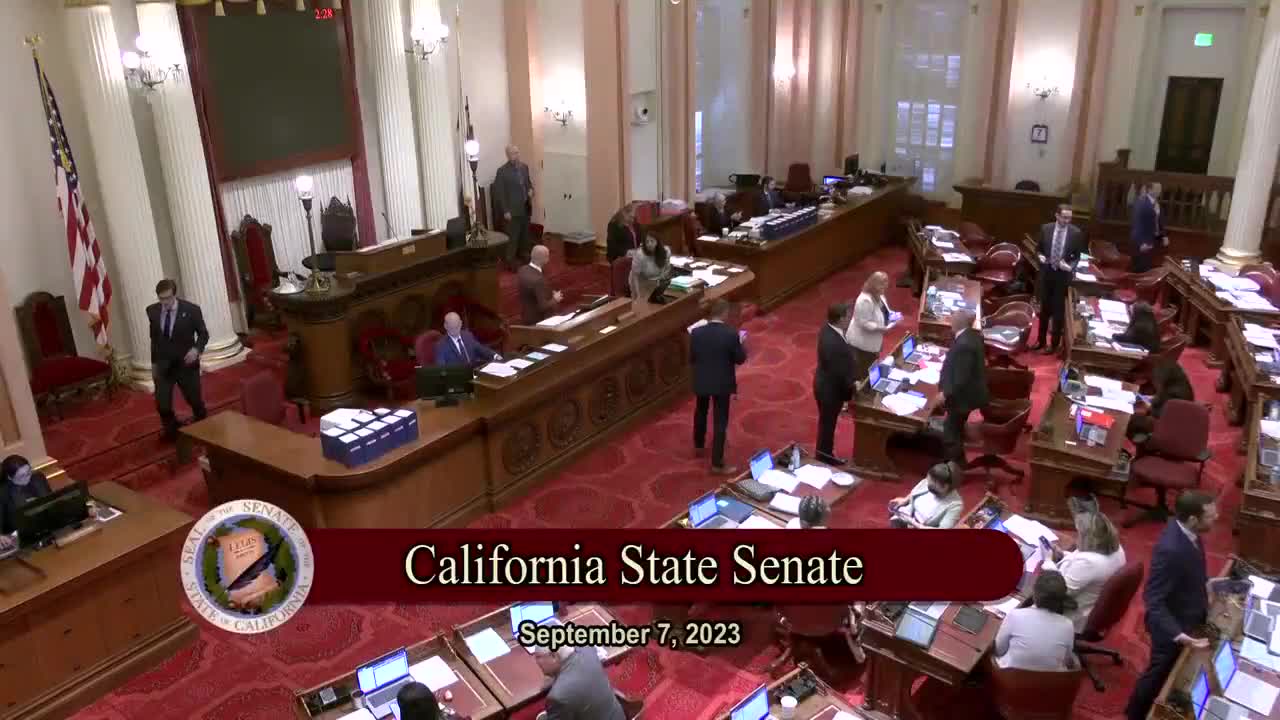 3MIN
Senate Floor
 7MIN
Senate Standing Committee on Housing
 10MIN
Senate Standing Committee on Environmental Quality
 2MIN
Assembly Floor
 2MIN
Assembly Standing Committee on Appropriations
 13MIN
Assembly Standing Committee on Housing and Community Development
 11MIN
Assembly Standing Committee on Natural Resources


Bill Co-Author(s):