AB 1471: Hospitals: seismic compliance: O’Connor Hospital and Santa Clara Valley Medical Center.
- Session Year: 2023-2024
- House: Assembly
- Latest Version Date: 2023-10-04
Current Status:
Passed
(2023-10-04: Chaptered by Secretary of State - Chapter 304, Statutes of 2023.)
Introduced
In Committee
First Chamber
In Committee
Second Chamber
Enacted
Existing law, the Alfred E. Alquist Hospital Facilities Seismic Safety Act of 1983, establishes a program of seismic safety building standards for certain hospitals. Existing law requires hospitals that are seeking an extension for their buildings to submit an application to the Department of Health Care Access and Information by April 1, 2019, subject to certain exceptions. Existing law requires that final seismic compliance be achieved by July 1, 2022, if the compliance is based on a replacement or retrofit plan, or by January 1, 2025, if the compliance is based on a rebuild plan. Notwithstanding the above provisions, existing law authorizes the department to waive the requirements of the act for the OConnor Hospital and Santa Clara Valley Medical Center in the City of San Jose if the hospital or medical center submits, on or before January 15, 2022, a plan for compliance, and the department accepts the plan based on it being feasible to complete and promoting public safety. Existing law requires, if the department accepts the plan, the hospital or medical center to report to the department on its progress to timely complete the plan by specified dates.
This bill would extend the deadline for the hospitals or medical centers plan for compliance, and would add additional dates for the hospital or medical center to report to the department on its progress. The bill would apply these provisions retroactively to avoid any period of noncompliance.
This bill would impose penalties to a hospital that fails to meet its deadline, and would require the county to pay these penalties to the department. The bill would require the department to collect interest and the costs associated with recovery of any arrears, to withhold any building permits, except as specified, and to collect the full amount due under specified authorities if the county fails to make a payment to the department within 30, 60, and 90 days, respectively, of the initial notice of penalties.
This bill would declare that it is to take effect immediately as an urgency statute.
This bill would make legislative findings and declarations as to the necessity of a special statute for County of Santa Clara.
Existing law, the Alfred E. Alquist Hospital Facilities Seismic Safety Act of 1983, establishes a program of seismic safety building standards for certain hospitals. Existing law requires hospitals that are seeking an extension for their buildings to submit an application to the Department of Health Care Access and Information by April 1, 2019, subject to certain exceptions. Existing law requires that final seismic compliance be achieved by July 1, 2022, if the compliance is based on a replacement or retrofit plan, or by January 1, 2025, if the compliance is based on a rebuild plan. Notwithstanding the above provisions, existing law authorizes the department to waive the requirements of the act for the OConnor Hospital and Santa Clara Valley Medical Center in the City of San Jose if the hospital or medical center submits, on or before January 15, 2022, a plan for compliance, and the department accepts the plan based on it being feasible to complete and promoting public safety. Existing law requires, if the department accepts the plan, the hospital or medical center to report to the department on its progress to timely complete the plan by specified dates.
This bill would extend the deadline for the hospitals or medical centers plan for compliance, and would add additional dates for the hospital or medical center to report to the department on its progress. The bill would apply these provisions retroactively to avoid any period of noncompliance.
This bill would declare that it is to take effect immediately as an urgency statute.
This bill would make legislative findings and declarations as to the necessity of a special statute for County of Santa Clara.
Existing law, the Alfred E. Alquist Hospital Facilities Seismic Safety Act of 1983, establishes a program of seismic safety building standards for certain hospitals. Existing law requires hospitals that are seeking an extension for their buildings to submit an application to the Department of Health Care Access and Information by April 1, 2019, subject to certain exceptions. Existing law requires that final seismic compliance be achieved by July 1, 2022, if the compliance is based on a replacement or retrofit plan, or by January 1, 2025, if the compliance is based on a rebuild plan. Notwithstanding the above provisions, existing law authorizes the department to waive the requirements of the act for the OConnor Hospital and Santa Clara Valley Medical Center in the City of San Jose if the hospital or medical center submits, on or before January 15, 2022, a plan for compliance, and the department accepts the plan based on it being feasible to complete and promoting public safety. Existing law requires, if the department accepts the plan, the hospital or medical center to report to the department on its progress to timely complete the plan by specified dates.
This bill would extend the deadline for the hospitals or medical centers plan for compliance, and would add additional dates for the hospital or medical center to report to the department on its progress.
This bill would declare that it is to take effect immediately as an urgency statute.
This bill would make legislative findings and declarations as to the necessity of a special statute for County of Santa Clara.
(a)Notwithstanding any other law, including, but not limited to, Sections 130060 and 130061, the department may waive the requirements of this chapter, in whole or in part, for OConnor Hospital and Santa Clara Valley Medical Center in the City of San Jose if both of the following occur:
(1)(A)The hospital or medical center submits to the department, within 30 days following the effective date of this statute, a plan for compliance with the applicable seismic safety standards of this chapter, and the regulations promulgated pursuant to this chapter.
(B)For the OConnor Hospital seismic update, the plan shall provide for compliance on or before July 1, 2023.
(C)For the Santa Clara Valley Medical Building F (Services Building) Seismic Upgrade, the plan shall provide for compliance on or before July 1, 2025.
(D)For the Santa Clara Valley Medical Center Building N (RSC) Tier 2 Upgrades, the plan shall provide for compliance on or before December 31, 2025.
(E)For the Santa Clara Valley Medical Center Old Main Demolition and Rebuild project, the plan shall provide for compliance on or before July 1, 2026.
(2)The department accepts the plan submitted by the hospital or medical center based on it being feasible to complete and promoting public safety. The department shall not unreasonably reject the plan, unreasonably impose conditions on the acceptance of the plan, or unreasonably withhold or delay acceptance or rejection of the plan.
(b)If the department accepts the hospitals or medical centers plan pursuant to subdivision (a), the hospital or medical center shall report to the department, in the manner required by the department, on its progress to timely complete its plan, on or before all of the following dates:
(1)April 1, 2023.
(2)July 1, 2023.
(3)October 1, 2023.
(4)January 1, 2024.
(5)April 1, 2024.
(6)July 1, 2024.
(7)October 1, 2024.
(8)January 1, 2025.
(9)April 1, 2025.
(10)July 1, 2025.
(11)October 1, 2025.
(12)January 1, 2026.
(13)April 1, 2026.
(14)July 1, 2026.
(c)The department may revoke its waiver of the requirements of this chapter, in whole or in part, if OConnor Hospital or Santa Clara Valley Medical Center fails to timely report progress that the department reasonably deems is sufficient to complete their respective plans if both of the following are true:
(1)The lack of timely reporting, lack of reasonable progress, or both, is not due to unforeseen circumstances outside the control of the County of Santa Clara.
(2)If the office intends to revoke the waiver, or any part of the waiver, the department provides at least 90 days written notice to the County of Santa Clara prior to the effective date of the revocation and, during the notice period, the department provides the County of Santa Clara a reasonable opportunity to cure the noncompliance that forms the basis of the intended revocation.
(d)(1)(A)A hospital with a waiver approved under this section shall be subject to penalties for failure to meet milestones expressed in its compliance plan or any requirement of this section.
(B)The county shall bear the responsibility of paying any penalties.
(2)If the county fails to pay the assessed penalty amount within 30 days of the initial notice of penalties from the department, the department shall collect legal interest of 10 percent and the costs associated with recovery of any arrears.
(3)Upon a failure by the county to make a payment to the department within 60 days of notice of penalties, the department shall apply Section 1.4.5.1.2.1 of the California Administrative Code and withhold any building permits except maintenance and emergency repairs.
(4)Upon a failure by the county to make a payment 90 days after the notice of penalties, the department shall collect the full amount due, including costs and interest, either under the authority of Chapter 4.3 (commencing with Section 16580) of Part 2 of Division 4 of Title 2 of the Government Code or by withholding the amount from any general fund appropriations.
(e)The provisions of this section shall be retroactively applied so that there is no period of noncompliance if the passage of the act that added this section overlaps with the reporting requirements set forth elsewhere in this article.
SEC. 2.The Legislature finds and declares that a special statute is necessary and that a general statute cannot be made applicable within the meaning of Section 16 of Article IV of the California Constitution because of the need to use the OConnor Hospital and the Santa Clara Valley Medical Center to provide medical care to underserved and vulnerable populations during the COVID-19 pandemic and the unique financial and project delivery challenges assumed by the County of Santa Clara with the 2019 acquisition of OConnor Hospital.
SEC. 3.This act is an urgency statute necessary for the immediate preservation of the public peace, health, or safety within the meaning of Article IV of the California Constitution and shall go into immediate effect. The facts constituting the necessity are:
Due to the inability of the County of Santa Clara to meet the statutory deadlines for hospital seismic upgrades at two of the countys owned and operated public hospitals due to unforeseen circumstances outside the countys control, and to avoid the imposition of statutory fines that would have a significant fiscal impact on the county, this measure needs to become effective at the earliest possible date.
(a)Notwithstanding any other law, including, but not limited to, Sections 130060 and 130061, the department may waive the requirements of this chapter, in whole or in part, for OConnor Hospital and Santa Clara Valley Medical Center in the City of San Jose if both of the following occur:
(1)(A)The hospital or medical center submits to the department, within 30 days following the effective date of this statute, a plan for compliance with the applicable seismic safety standards of this chapter, and the regulations promulgated pursuant to this chapter.
(B)For the OConnor Hospital seismic update, the plan shall provide for compliance on or before July 1, 2023.
(C)For the Santa Clara Valley Medical Building F (Services Building) Seismic Upgrade, the plan shall provide for compliance on or before July 1, 2025.
(D)For the Santa Clara Valley Medical Center Building N (RSC) Tier 2 Upgrades, the plan shall provide for compliance on or before December 31, 2025.
(E)For the Santa Clara Valley Medical Center Old Main Demolition and Rebuild project, the plan shall provide for compliance on or before July 1, 2026.
(2)The department accepts the plan submitted by the hospital or medical center based on it being feasible to complete and promoting public safety. The department shall not unreasonably reject the plan, unreasonably impose conditions on the acceptance of the plan, or unreasonably withhold or delay acceptance or rejection of the plan.
(b)If the department accepts the hospitals or medical centers plan pursuant to subdivision (a), the hospital or medical center shall report to the department, in the manner required by the department, on its progress to timely complete its plan, on or before all of the following dates:
(1)April 1, 2023.
(2)July 1, 2023.
(3)October 1, 2023.
(4)January 1, 2024.
(5)April 1, 2024.
(6)July 1, 2024.
(7)October 1, 2024.
(8)January 1, 2025.
(9)April 1, 2025.
(10)July 1, 2025.
(11)October 1, 2025.
(12)January 1, 2026.
(13)April 1, 2026.
(14)July 1, 2026.
(c)The department may revoke its waiver of the requirements of this chapter, in whole or in part, if OConnor Hospital or Santa Clara Valley Medical Center fails to timely report progress that the department reasonably deems is sufficient to complete their respective plans if both of the following are true:
(1)The lack of timely reporting, lack of reasonable progress, or both, is not due to unforeseen circumstances outside the control of the County of Santa Clara.
(2)If the office intends to revoke the waiver, or any part of the waiver, the department provides at least 90 days written notice to the County of Santa Clara prior to the effective date of the revocation and, during the notice period, the department provides the County of Santa Clara a reasonable opportunity to cure the noncompliance that forms the basis of the intended revocation.
(d)(1)(A)A hospital with a waiver approved under this section shall be subject to penalties for failure to meet milestones expressed in its compliance plan or any requirement of this section.
(B)The county shall bear the responsibility of paying any penalties.
(2)If the county fails to pay the assessed penalty amount within 30 days of the initial notice of penalties from the department, the department shall collect legal interest of 10 percent and the costs associated with recovery of any arrears.
(3)Upon a failure by the county to make a payment to the department within 60 days of notice of penalties, the department shall apply Section 1.4.5.1.2.1 of the California Administrative Code and withhold any building permits except maintenance and emergency repairs.
(4)Upon a failure by the county to make a payment 90 days after the notice of penalties, the department shall collect the full amount due, including costs and interest, either under the authority of Chapter 4.3 (commencing with Section 16580) of Part 2 of Division 4 of Title 2 of the Government Code or by withholding the amount from any general fund appropriations.
(d)(e)The provisions of this section shall be retroactively applied so that there is no period of noncompliance if the passage of the act that added this section overlaps with the reporting requirements set forth elsewhere in this article.
SEC. 2.The Legislature finds and declares that a special statute is necessary and that a general statute cannot be made applicable within the meaning of Section 16 of Article IV of the California Constitution because of the need to use the OConnor Hospital and the Santa Clara Valley Medical Center to provide medical care to underserved and vulnerable populations during the COVID-19 pandemic and the unique financial and project delivery challenges assumed by the County of Santa Clara with the 2019 acquisition of OConnor Hospital.
SEC. 3.This act is an urgency statute necessary for the immediate preservation of the public peace, health, or safety within the meaning of Article IV of the California Constitution and shall go into immediate effect. The facts constituting the necessity are:
Due to the inability of the County of Santa Clara to meet the statutory deadlines for hospital seismic upgrades at two of the countys owned and operated public hospitals due to unforeseen circumstances outside the countys control, and to avoid the imposition of statutory fines that would have a significant fiscal impact on the county, this measure needs to become effective at the earliest possible date.
(a)Notwithstanding any other law, including, but not limited to, Sections 130060 and 130061, the department may waive the requirements of this chapter, in whole or in part, for OConnor Hospital and Santa Clara Valley Medical Center in the City of San Jose if both of the following occur:
(1)(A)The hospital or medical center submits to the department, within 30 days following the effective date of this statute, a plan for compliance with the applicable seismic safety standards of this chapter, and the regulations promulgated pursuant to this chapter.
(B)For the OConnor Hospital seismic update, the plan shall provide for compliance on or before July 1, 2023.
(C)For the Santa Clara Valley Medical Building F (Services Building) Seismic Upgrade, the plan shall provide for compliance on or before July 1, 2025.
(D)For the Santa Clara Valley Medical Center Building N (RSC) Tier 2 Upgrades, the plan shall provide for compliance on or before December 31, 2025.
(E)For the Santa Clara Valley Medical Center Old Main Demolition and Rebuild project, the plan shall provide for compliance on or before July 1, 2026.
(2)The department accepts the plan submitted by the hospital or medical center based on it being feasible to complete and promoting public safety. The department shall not unreasonably reject the plan, unreasonably impose conditions on the acceptance of the plan, or unreasonably withhold or delay acceptance or rejection of the plan.
(b)If the department accepts the hospitals or medical centers plan pursuant to subdivision (a), the hospital or medical center shall report to the department, in the manner required by the department, on its progress to timely complete its plan, on or before all of the following dates:
(1)April 1, 2023.
(2)July 1, 2023.
(3)October 1, 2023.
(4)January 1, 2024.
(5)April 1, 2024.
(6)July 1, 2024.
(7)October 1, 2024.
(8)January 1, 2025.
(9)April 1, 2025.
(10)July 1, 2025.
(11)October 1, 2025.
(12)January 1, 2026.
(13)April 1, 2026.
(14)July 1, 2026.
(c)The department may revoke its waiver of the requirements of this chapter, in whole or in part, if OConnor Hospital or Santa Clara Valley Medical Center fails to timely report progress that the department reasonably deems is sufficient to complete their respective plans if both of the following are true:
(1)The lack of timely reporting, lack of reasonable progress, or both, is not due to unforeseen circumstances outside the control of the County of Santa Clara.
(2)If the office intends to revoke the waiver, or any part of the waiver, the department provides at least 90 days written notice to the County of Santa Clara prior to the effective date of the revocation and, during the notice period, the department provides the County of Santa Clara a reasonable opportunity to cure the noncompliance that forms the basis of the intended revocation.
(d)The provisions of this section shall be retroactively applied so that there is no period of noncompliance if the passage of the act that added this section overlaps with the reporting requirements set forth elsewhere in this article.
SEC. 2.The Legislature finds and declares that a special statute is necessary and that a general statute cannot be made applicable within the meaning of Section 16 of Article IV of the California Constitution because of the need to use the OConnor Hospital and the Santa Clara Valley Medical Center to provide medical care to underserved and vulnerable populations during the COVID-19 pandemic and the unique financial and project delivery challenges assumed by the County of Santa Clara with the 2019 acquisition of OConnor Hospital.
SEC. 3.This act is an urgency statute necessary for the immediate preservation of the public peace, health, or safety within the meaning of Article IV of the California Constitution and shall go into immediate effect. The facts constituting the necessity are:
Due to the inability of the County of Santa Clara to meet the statutory deadlines for hospital seismic upgrades at two of the countys owned and operated public hospitals due to unforeseen circumstances outside the countys control, and to avoid the imposition of statutory fines that would have a significant fiscal impact on the county, this measure needs to become effective at the earliest possible date.
(a)Notwithstanding any other law, including, but not limited to, Sections 130060 and 130061, the department may waive the requirements of this chapter, in whole or in part, for OConnor Hospital and Santa Clara Valley Medical Center in the City of San Jose if both of the following occur:
(1)(A)The hospital or medical center submits to the department, on or before January 15, 2022, within 30 days following the effective date of this statute, a plan for compliance with the applicable seismic safety standards of this chapter, and the regulations promulgated pursuant to this chapter. For
(B)For the OConnor Hospital and the Hospital seismic update, the plan shall provide for compliance on or before July 1, 2023.
(C)For the Santa Clara Valley Medical Building F (Services Building) Seismic Upgrade, the plan shall provide for compliance on or before July 1, 2023, and for July 1, 2025.
(D)For the Santa Clara Valley Medical Center Building N (RSC) Tier 2 Upgrades Upgrades, the plan shall provide for compliance on or before December 31, 2024. 2025.
(E)For the Santa Clara Valley Medical Center Old Main Demolition and Rebuild project, the plan shall provide for compliance on or before July 1, 2026.
(2)The department accepts the plan submitted by the hospital or medical center based on it being feasible to complete and promoting public safety. The department shall not unreasonably reject the plan, unreasonably impose conditions on the acceptance of the plan, or unreasonably withhold or delay acceptance or rejection of the plan.
(b)If the department accepts the hospitals or medical centers plan pursuant to subdivision (a), the hospital or medical center shall report to the department, in the manner required by the department, on its progress to timely complete its plan, on or before all of the following dates:
(1)April 1, 2022. 2023.
(2)July 1, 2022. 2023.
(3)October 1, 2022. 2023.
(4)January 1, 2023. 2024.
(5)April 1, 2023. 2024.
(6)July 1, 2023. 2024.
(7)October 1, 2023. 2024.
(8)January 1, 2024. 2025.
(9)April 1, 2024. 2025.
(10)July 1, 2024. 2025.
(11)October 1, 2024. 2025.
(12)January 1, 2026.
(13)April 1, 2026.
(14)July 1, 2026.
(c)The department may revoke its waiver of the requirements of this chapter, in whole or in part, if OConnor Hospital or Santa Clara Valley Medical Center fails to timely report progress that the department reasonably deems is sufficient to complete their respective plans if both of the following are true:
(1)The lack of timely reporting, lack of reasonable progress, or both, is not due to unforeseen circumstances outside the control of the County of Santa Clara.
(2)If the office intends to revoke the waiver, or any part of the waiver, the department provides at least 90 days written notice to the County of Santa Clara prior to the effective date of the revocation and, during the notice period, the department provides the County of Santa Clara a reasonable opportunity to cure the noncompliance that forms the basis of the intended revocation.
SEC. 2.The Legislature finds and declares that a special statute is necessary and that a general statute cannot be made applicable within the meaning of Section 16 of Article IV of the California Constitution because of the need to use the OConnor Hospital and the Santa Clara Valley Medical Center to provide medical care to underserved and vulnerable populations during the COVID-19 pandemic and the unique financial and project delivery challenges assumed by the County of Santa Clara with the 2019 acquisition of OConnor Hospital.
SEC. 3.This act is an urgency statute necessary for the immediate preservation of the public peace, health, or safety within the meaning of Article IV of the California Constitution and shall go into immediate effect. The facts constituting the necessity are:
Due to the inability of the County of Santa Clara to meet the statutory deadlines for hospital seismic upgrades at two of the countys owned and operated public hospitals due to unforeseen circumstances outside the countys control, and to avoid the imposition of statutory fines that would have a significant fiscal impact on the county, this measure needs to become effective at the earliest possible date.
|
Date
|
Status
|
|---|---|
| Oct 4, 2023 | Chaptered by Secretary of State - Chapter 304, Statutes of 2023. |
| Oct 4, 2023 | Approved by the Governor. |
| Sep 21, 2023 | Enrolled and presented to the Governor at 3:30 p.m. |
| Sep 13, 2023 | Urgency clause adopted. Senate amendments concurred in. To Engrossing and Enrolling. (Ayes 79. Noes 0. Page 3449.). |
| Sep 12, 2023 | In Assembly. Concurrence in Senate amendments pending. |
| Sep 12, 2023 | Read third time. Urgency clause adopted. Passed. Ordered to the Assembly. (Ayes 39. Noes 0. Page 2689.). |
| Sep 8, 2023 | Ordered to special consent calendar. |
| Sep 5, 2023 | Read second time. Ordered to third reading. |
| Sep 1, 2023 | From committee: Do pass. (Ayes 7. Noes 0.) (September 1). |
| Aug 14, 2023 | In committee: Referred to APPR suspense file. |
| Jul 6, 2023 | From committee: Do pass and re-refer to Com. on APPR with recommendation: To Consent Calendar. (Ayes 12. Noes 0.) (July 5). Re-referred to Com. on APPR. |
| Jun 27, 2023 | From committee chair, with author's amendments: Amend, and re-refer to committee. Read second time, amended, and re-referred to Com. on HEALTH. |
| Jun 7, 2023 | Referred to Com. on HEALTH. |
| May 26, 2023 | In Senate. Read first time. To Com. on RLS. for assignment. |
| May 25, 2023 | Read third time. Urgency clause adopted. Passed. Ordered to the Senate. (Ayes 76. Noes 0. Page 1783.). |
| May 18, 2023 | Read second time. Ordered to third reading. |
| May 18, 2023 | From committee: Do pass. (Ayes 15. Noes 0.) (May 18). |
| May 10, 2023 | In committee: Set, first hearing. Referred to APPR. suspense file. |
| Apr 24, 2023 | Re-referred to Com. on APPR. |
| Apr 20, 2023 | Read second time and amended. |
| Apr 19, 2023 | From committee: Amend, and do pass as amended and re-refer to Com. on APPR. (Ayes 14. Noes 0.) (April 18). |
| Mar 9, 2023 | Referred to Com. on HEALTH. |
| Feb 18, 2023 | From printer. May be heard in committee March 20. |
| Feb 17, 2023 | Read first time. To print. |
|
Date
|
Description
|
Location
|
Votes
|
|
|---|---|---|---|---|
| Sep 13, 2023 | AB 1471 Pellerin Concurrence in Senate Amendments | Assembly Floor |
Passed |
|
| Sep 12, 2023 | Special Consent AB1471 Pellerin By Cortese Urgency Clause | Senate Floor |
Passed |
|
| Sep 1, 2023 | Do pass | Senate Standing Committee on Appropriations |
Passed |
|
| Aug 14, 2023 | Placed on suspense file | Senate Standing Committee on Appropriations |
Passed |
|
| Jul 5, 2023 | Do pass, but first be re-referred to the Committee on [Appropriations] with the recommendation: To Consent Calendar | Senate Standing Committee on Health |
Passed |
|
| May 25, 2023 | AB 1471 Pellerin Third Reading Urgency | Assembly Floor |
Passed |
|
| May 18, 2023 | Do pass. | Assembly Standing Committee on Appropriations |
Passed |
|
| Apr 18, 2023 | Do pass as amended and be re-referred to the Committee on [Appropriations] | Assembly Standing Committee on Health |
Passed |
This list shows positions taken on this bill by organizations on the date displayed, which is linked to the original source.
Positions by individuals are not included.
|
Organization
|
Position
|
Date
|
|---|---|---|
| California Hospital Association | ** Support | |
| Capital Programs | * Support | Apr 18, 2023 |
| County of Santa Clara | ** Support | |
| Department Of Finance | ** Against | |
| Santa Clara Valley Medical Center | * Support | Apr 18, 2023 |
| SCIU | * Support | Apr 18, 2023 |
CONCURRENCE IN SENATE AMENDMENTS
CSA1 Bill Id:AB 1471
Author:(Pellerin)
As Amended Ver:June 27, 2023
2/3 vote. Urgency
SUMMARY
Extends the deadline for O'Connor Hospital (the hospital) or Santa Clara Valley Medical Center's (SCVMC) current plan for 2020 seismic compliance, and extends the dates for the hospital or SCVMC to report to the Department of Health Care Access and Information (HCAI) on their progress. Declares that this bill is to take effect immediately as an urgency statute.
Senate Amendments
Subject a hospital with a waiver approved under this bill to penalties for failure to meet milestones expressed in its compliance plan.
COMMENTS
Following the 1971 San Fernando Valley earthquake, California enacted the Alquist Act, which mandated that all new hospital construction meet stringent seismic safety standards. In 1994, after the Northridge earthquake, SB 1953 (Alquist), Chapter 740, Statutes of 1994, required HCAI to establish earthquake performance categories for hospitals, and established a January 1, 2008, deadline by which general acute care hospitals must be retrofitted or replaced so that they do not pose a risk of collapse in the event of an earthquake, and a January 1, 2030, deadline by which they must be capable of remaining operational following an earthquake. Subsequent legislation allowed most hospitals to qualify for an extension of the January 1, 2008 deadline to January 1, 2013.
- Structural Performance Categories (SPCs). HCAI categorizes hospitals into five SPCs. SPC-1 is the category of buildings at most risk of collapse in an earthquake, and it is these hospitals that were originally required to be taken out of service or retrofitted by January 1, 2008, which has since been extended multiple times. Buildings in SPC-2, 3, 4, and 5 are generally categorized based on when they were built and the building code regulations in effect at that time. Hospital buildings in any of these categories may be used up until January 1, 2030, at which time hospitals must either meet SPC-5 requirements, or under recently adopted regulations, the new category of SPC-4D. SPC-5 generally requires new construction for any building constructed before 1989, while SPC-4D allows for some more recently constructed buildings to be retrofitted and still be compliant with January 1, 2030 standards.
In addition to the original five-year extension to January 1, 2013, the Legislature has passed additional bills allowing hospitals to extend the deadlines for retrofitting SPC 1 buildings beyond the 2013 deadline. SB 306 (Ducheny), Chapter 642, Statutes of 2007, permitted a hospital owner to comply with seismic safety deadlines and requirements in current law by replacing all of its buildings subject to seismic retrofit by January 1, 2020, rather than retrofitting by 2013 and replacing them by 2030, if the hospital meets several conditions and HCAI certifies that the hospital owner lacks the financial capacity to meet seismic standards, as defined. SB 90 (Steinberg), Chapter 19, Statutes of 2011, allowed a hospital to seek an extension for seismic compliance for its SPC-1 buildings of up to seven years (no later than January 1, 2020) based on the following elements: the structural integrity of the building, the loss of essential hospital services to the community if the hospital closed, and financial hardship.
- Seismic deadline extensions passed in 2018 were intended to allow last stragglers to comply. In 2018, the Legislature passed AB 2190 (Reyes), Chapter 673, Statutes of 2018, which was intended to allow the last remaining hospitals that had not yet met the SPC 2 standard, to meet the mandate without fear of closure should they have a construction or financing delay. AB 2190 provided two paths: a 30 month extension (to July 1, 2022) for hospitals that submitted a retrofit plan or a "replacement plan" (relocating acute care services or beds from nonconforming buildings into a conforming building); or alternatively, a five year extension (to January 1, 2025) for hospitals that submitted a rebuild plan to construct a new building that would meet the 2030 standard. This bill only applies to extensions to July 1, 2022 granted under retrofit or replacement plans.
In order to receive the extension to July 1, 2022, for a retrofit or replacement plan, the hospital and HCAI were required to identify at least two major milestones relating to the compliance plan to be used as a basis for determining whether the hospital is making adequate progress toward meeting the new seismic compliance deadline. The hospital needed to start construction by April 1, 2020, and meet any agreed upon milestone, or be subject to a $5,000 fine per calendar day until the requirements or milestones are met. Similarly, hospitals seeking an extension to January 1, 2025, for a rebuild plan had to work with HCAI to identify major milestones, begin construction by January 1, 2022, and are also subject to the daily $5,000 fine for failure to meet requirements or agreed upon milestones. AB 2190 permitted HCAI to grant adjustments to the deadlines to meet milestones or other requirements as necessary to deal with specified delays, but HCAI was prohibited from extending the final seismic compliance dates of July 1, 2022 for replacement or retrofit plans, and January 1, 2025 for rebuild plans. Hospitals granted extensions under AB 2190 are required to provide a quarterly status report to HCAI until seismic compliance is achieved.
- SCVMC and its seismic compliance status. SCVMC is a long-time county hospital, and the cornerstone of the County of Santa Clara Health System, the second-largest county-owned health and hospital system in California. SCVMC is a tertiary level hospital with 731 licensed beds, a regional high risk Neonatal Intensive Care Unit, a certified Burn Trauma Center, a Primary Stroke Center, and an accredited Rehabilitation Center, among other specialized services. According to HCAI, SCVMC is comprised of 22 buildings related to acute care services and subject to seismic requirements. Five of these buildings are under AB 2190 extensions, but two of the five have extensions to January 1, 2025 under a rebuild plan that is not affected by this bill.
SCVMC has already been granted an extension for seismic safety compliance. SB 564 (Cortese), Chapter 388, Statutes of 2021, extended the deadline for compliance with the seismic safety requirement that hospitals be capable of withstanding an earthquake for two hospitals owned by the Country, from July 1, 2022 to December 31, 2024. This bill will provide an additional delay to July 1, 2026.
The County has three public hospital seismic compliance projects underway on its SCVMC campus. One project must be in compliance by July 1, 2023, a second by December 31, 2024, and a third by January 1, 2025. According to the County these projects will not be completed by their deadlines due to a number of unavoidable circumstances. The COVID-19 pandemic adversely impacted the schedules of the SCVMC projects as hospital space was needed for patients, making contractors unable to access the work areas. Contractors were also less efficient as they had to comply with the requirements of State and County public health orders and some of their employees contracted or had been exposed to COVID-19 and were unable to work due to isolation or quarantine requirements. More recently, the County has had difficulty in soliciting construction bids resulting in the need to re-bid various project components, there is a shortage of qualified construction workers, and supply chain delays for equipment and supplies continue to occur. The projects also require a series of occupancy relocations that necessitate time for the move in and move out of staff, furniture, and supplies. Moves could not occur until plans were approved by HCAI and in some instances, the work had to be performed and then the new area(s) licensed by the Department of Public Health (DPH). One occupancy relocation that was delayed was the hospital kitchen, which required approval by HCAI and licensure by DPH. There was a manufacturing issue with kitchen hardware, necessitating re-manufacturing components that added delay. The kitchen was scheduled to be relocated by July 2020 but did not occur until February 2023. Further, the hospital kitchen now operates in one of the buildings that will not meet its seismic compliance deadline and the County does not have another food supply channel for patients and cannot afford losing its usage. Additionally, some project buildings were originally constructed in the 1930s and 1950s and as construction occurs, all existing non-compliant conditions must be brought up to code per HCAI requirements. This adds time and cost to the work underway.
- Current status of SPC 1 seismic compliance in California. According to HCAI, there are a total of 3,146 buildings at 419 licensed hospital facilities that are subject to the seismic safety standards. All have achieved at least the SPC 2 standard that allows them to remain in service until 2030 except for 123 buildings spread across 51 hospital facilities. In some cases, there are no plans to retrofit or rebuild, and the hospital has either already taken them out of service but it is not reflected in the data yet, or there are plans to take them out of service prior to the July 1, 2022 deadline. It is unclear at this time how many of the remaining out of compliance buildings are expected to remain in service but are in jeopardy of missing the July 1, 2022 deadline for retrofit or replacement projects, or the January 1, 2025, for rebuild projects.
According to the Author
SCVMC is the community's health care safety net in more ways than one. County residents with no medical coverage or ability to pay can get needed care, but SCVMC is also the "safety net" for every resident of the community because of the high-quality, specialized services provided. Treatment for emergency medical care, trauma, burns, and rehabilitation are just a few of the specialized treatments provided, in some cases, the only such treatment in the region. In fiscal year 2022, SCVMC served 227,755 patients, the majority of whom are people of color: 50% are Latino, 21% are Asian/Pacific Islander, and 4% are African American. The author states that the County has vigorously endeavored to meet the hospital seismic deadlines established in statute but due to a variety of circumstances beyond its control, mostly notably the COVID-19 pandemic and its impact on the hospital's operations and resulting delays on construction work, will not achieve compliance in time to avoid significant financial penalties.
Arguments in Support
The County supports this bill, which will provide an extension of time for three public hospital projects on the SCVMC campus to comply with statutory seismic requirements. SCVMC is the largest of the County's three public hospitals that are the core component of the health care safety net in the community. County residents who do not have medical coverage, the ability to pay, or in need of high-quality, specialized services can receive needed care at the hospital. Treatment for emergency medical care, trauma, burns, and rehabilitation are just a few of the specialized treatments provided – in some cases the only such treatment in the region.
Arguments in Opposition
The Department of Finance is opposed to this bill because seismic compliance for all health facilities is important to verify the safety of the public and employees particularly during a disaster. Finance notes concern that providing exceptions may encourage others to follow and thereby undermine the overall program objective of protecting all Californians. Lastly, this bill would create additional costs on the Hospital Building Fund, which are not included in the 2023-24 spending plan.
FISCAL COMMENTS
According to the Senate Appropriations Committee, HCAI estimates costs of $185,000 in 2024-25 and $185,000 in 2025-26 for state administration (Hospital Building Fund). HCAI indicates costs would result due to the continued need to oversee O’Connor Hospital and SCVMC compliance with seismic safety requirements for another extension period.
VOTES:
ASM HEALTH: 14-0-1
YES: Wood, Waldron, Aguiar-Curry, Arambula, Boerner Horvath, Wendy Carrillo, Flora, Vince Fong, Maienschein, McCarty, Joe Patterson, Santiago, Villapudua, Weber
ABS, ABST OR NV: Rodriguez
ASM APPROPRIATIONS: 15-0-1
YES: Holden, Megan Dahle, Bryan, Calderon, Wendy Carrillo, Dixon, Mike Fong, Hart, Lowenthal, Mathis, Papan, Pellerin, Sanchez, Weber, Ortega
ABS, ABST OR NV: Robert Rivas
ASSEMBLY FLOOR: 76-0-4
YES: Addis, Alanis, Alvarez, Arambula, Bains, Bauer-Kahan, Bennett, Berman, Boerner, Bonta, Bryan, Calderon, Juan Carrillo, Wendy Carrillo, Cervantes, Chen, Connolly, Megan Dahle, Davies, Dixon, Essayli, Flora, Mike Fong, Vince Fong, Friedman, Gabriel, Gallagher, Garcia, Gipson, Grayson, Haney, Hart, Holden, Hoover, Irwin, Jackson, Jones-Sawyer, Kalra, Lackey, Lee, Low, Lowenthal, Maienschein, McCarty, McKinnor, Muratsuchi, Stephanie Nguyen, Ortega, Pacheco, Jim Patterson, Joe Patterson, Pellerin, Petrie-Norris, Quirk-Silva, Ramos, Reyes, Luz Rivas, Robert Rivas, Blanca Rubio, Sanchez, Santiago, Schiavo, Soria, Ta, Ting, Valencia, Villapudua, Waldron, Wallis, Ward, Weber, Wicks, Wilson, Wood, Zbur, Rendon
ABS, ABST OR NV: Aguiar-Curry, Mathis, Papan, Rodriguez
UPDATED
VERSION: June 27, 2023
CONSULTANT: Lara Flynn / HEALTH / (916) 319-2097 FN: 0001697
SENATE RULES COMMITTEE Office of Senate Floor Analyses (916) 651-1520 Fax: (916) 327-4478 | AB 1471 |
THIRD READING
Bill No: AB 1471
Author: Pellerin (D)
Amended: 6/27/23 in Senate
Vote: 27 - Urgency
SENATE HEALTH COMMITTEE: 12-0, 7/5/23
AYES: Eggman, Nguyen, Glazer, Gonzalez, Grove, Hurtado, Limón, Menjivar, Roth, Rubio, Wahab, Wiener
SENATE APPROPRIATIONS COMMITTEE: 7-0, 9/1/23
AYES: Portantino, Jones, Ashby, Bradford, Seyarto, Wahab, Wiener
ASSEMBLY FLOOR: 76-0, 5/25/23 - See last page for vote
SUBJECT: Hospitals: seismic compliance: O’Connor Hospital and Santa Clara Valley Medical Center
SOURCE: County of Santa Clara
DIGEST:
This bill extends the dates for compliance with seismic safety requirements for three buildings on the campus of Santa Clara Valley Medical Center, with the latest deadline being July 1, 2026.
ANALYSIS:
Existing law:
- Licenses and regulates health facilities, including general acute care hospitals, by the California Department of Public Health (CDPH). [HSC §1250, et seq.]
- Establishes the Alfred E. Alquist Hospital Facilities Seismic Safety Act of 1983 (Alquist Act), to ensure that hospital buildings are designed and constructed to resist the forces generated by earthquakes and requires the Department of Health Care Access and Information (HCAI) to propose building standards for earthquake resistance and to provide independent review of the design and construction of hospital buildings. [HSC §129675, et seq.]
- Establishes timelines for hospital compliance with seismic safety standards, including a requirement that buildings posing a significant risk of collapse and a danger to the public (referred to as SPC -1 buildings) be rebuilt or retrofitted to be capable of withstanding an earthquake, or removed from acute care service, by January 1, 2008 (which has since been extended for various hospitals to various dates), and a requirement that hospital must also be capable of continued operation by January 1, 2030. [HSC §130060, §130065]
- Permits HCAI to grant an extension of up to five years to the 2008 deadline, which would be January 1, 2013, for hospitals for which compliance will result in a loss of health care capacity, as defined. Allows HCAI to grant various further extensions beyond this, including up to seven years to January 1, 2020, in part based on the loss of essential hospital services to the community if the hospital closed, and financial hardship. [HSC §130060, §130061.5]
- Permits HCAI, under legislation enacted in 2018, to provide for an extension of the January 1, 2020 deadline in 3) above, for up to 30 months (until July 1, 2022) for hospitals that plan to replace or retrofit a building to meet the 2020 standard, and up to five years (January 1, 2025) for hospitals that plan to rebuild to a standard that meets the 2030 requirement. [HSC §130062]
- Provides for penalties of $5,000 per calendar day for failure to comply, or failure to meet any agreed upon milestone toward complying, with the provisions in 5) above. [HSC §130062(d)(3) and (e)(3)]
- Requires the owner of an acute care inpatient hospital whose building does not substantially comply with the January 1, 2030 seismic safety requirement described in 3) above, to submit to HCAI, by January 1, 2020, an attestation that the board of directors of that hospital is aware that the hospital building is required to meet this requirement. [HSC §130066]
This bill:
- Extends the dates by which three buildings on the campus of Santa Clara Valley Medical Center (SCVMC) are required to comply with seismic safety standards, as follows:
- For Building F (services building), requires compliance by July 1, 2025;
- For Building N (receiving center), requires compliance by December 31, 2025; and,
- For Old Main Demolition and Rebuild project, requires compliance by July 1, 2026.
- Revises the dates on a series of required reports that SCVMC is required to make to HCAI on its progress toward completion of the seismic projects by extending each of the progress report dates by one year, and by adding three new reporting dates for 2026.
- Requires SCVMC to be subject to penalties for failure to meet milestones expressed in its compliance plan, and requires Santa Clara County (County) to bear the responsibility of paying any penalties.
- Requires HCAI to collect legal interest of 10% and the costs associated with recovery of any arrears in the event that the County fails to pay the assessed penalty amount within 30 days of the initial notice of penalties from HCAI.
- Requires HCAI to withhold any building permits except maintenance and emergency repairs, pursuant to an existing provision of regulations, in the event the County fails to make a payment to HCAI within 60 days of notice of penalties.
- Requires HCAI, in the event the County fails to make a payment 90 days after the notice of penalties, to collect the full amount due, including costs and interest, either under a provision of law that permits government agencies to establish an accounts receivable and contract with a private debt collector, or by withholding the amount from any general fund appropriations.
- Permits the provisions of this bill to be retroactively applied so that there is no period of noncompliance if the passage of this bill overlaps with other reporting requirements.
- Contains an urgency clause that will make this bill effective upon enactment.
Comments
- Author’s statement. According to the author, SCVMC is the County’s safety net hospital and clinic system providing high quality accessible healthcare to all persons in Santa Clara County and beyond, regardless of their social-economic status and ability to pay. SCVMC is the County’s flagship hospital and a full-service tertiary care hospital with 699 licensed beds. SCVMC provides a range of inpatient, outpatient and specialized services, including critical regional services through its regional Burn Trauma Center, spinal cord and brain injury Rehabilitation Center, and regional Level 3 NICU. The County has vigorously endeavored to meet the hospital seismic deadlines established in statute but due to a variety of circumstances beyond its control, mostly notably the COVID-19 pandemic, will not be able to fully achieve compliance in time to avoid significant financial penalties and its impact on the hospital’s operations and resulting delays on construction work. If penalties are imposed, funds that would be used for construction costs or to support the operational expenses of the County’s public hospital and community safety net would be diverted to pay the penalties.
- Background on hospital seismic requirements. Following the 1971 San Fernando Valley earthquake, California enacted the Alquist Act, which mandated that all new hospital construction meet stringent seismic safety standards. In 1994, after the Northridge earthquake, SB 1953 (Alquist, Chapter 740, Statutes of 1994) required HCAI to establish earthquake performance categories for hospitals, and established a January 1, 2008 deadline by which general acute care hospitals must be retrofitted or replaced so that they do not pose a risk of collapse in the event of an earthquake, and a January 1, 2030 deadline by which they must be capable of remaining operational following an earthquake. Subsequent legislation allowed most hospitals to qualify for an extension of the January 1, 2008 deadline to January 1, 2013.
HCAI categorizes hospitals into five Structural Performance Categories (SPCs). SPC-1 is the category of buildings at most risk of collapse in an earthquake, and it is these hospitals that were originally required to be taken out of service or retrofitted by January 1, 2008, which has since been extended multiple times. Buildings in SPC-2, 3, 4, and 5 are generally categorized based on when they were built and the building code regulations in effect at that time. Hospital buildings in any of these categories may be used up until January 1, 2030, at which time hospitals must either meet SPC-5 requirements, or under more recently adopted regulations, the new category of SPC-4D. SPC-5 generally requires new construction for any building constructed before 1989, while SPC-4D allows for some more recently constructed buildings to be retrofitted and still be compliant with January 1, 2030 standards.
In addition to the original five-year extension to January 1, 2013, the Legislature has passed additional bills allowing hospitals to extend the deadlines for retrofitting SPC 1 buildings beyond the 2013 deadline. SB 306 (Ducheny, Chapter 642, Statutes of 2007) permitted a hospital owner to comply with seismic safety deadlines and requirements in current law by replacing all of its buildings subject to seismic retrofit by January 1, 2020, rather than retrofitting by 2013 and replacing them by 2030, if the hospital meets several conditions and HCAI certifies that the hospital owner lacks the financial capacity to meet seismic standards, as defined. SB 90 (Steinberg, Chapter 19, Statutes of 2011) allowed a hospital to seek an extension for seismic compliance for its SPC-1 buildings of up to seven years (no later than January 1, 2020) based on the following elements: the structural integrity of the building, the loss of essential hospital services to the community if the hospital closed, and financial hardship.
- Seismic deadline extensions passed in 2018 were intended to allow last stragglers to comply. In 2018, the Legislature passed AB 2190 (Reyes, Chapter 673, Statutes of 2018) which was intended to allow the last remaining hospitals that had not yet met the SPC 2 standard, to meet the mandate without fear of closure should they have a construction or financing delay. AB 2190 provided two paths: a 30-month extension (to July 1, 2022) for hospitals that submitted a retrofit plan or a “replacement plan” (relocating acute care services or beds from nonconforming buildings into a conforming building); or alternatively, a five year extension (to January 1, 2025) for hospitals that submitted a rebuild plan to construct a new building that would meet the 2030 standard.
In order to receive the extension to July 1, 2022 for a retrofit or replacement plan, the hospital and HCAI were required to identify at least two major milestones relating to the compliance plan to be used as a basis for determining whether the hospital is making adequate progress toward meeting the new seismic compliance deadline. The hospital needed to start construction by April 1, 2020, and meet any agreed upon milestone, or be subject to a $5,000 fine per calendar day until the requirements or milestones are met. Similarly, hospitals seeking an extension to January 1, 2025, for a rebuild plan had to work with HCAI to identify major milestones, begin construction by January 1, 2022, and are also subject to the daily $5,000 fine for failure to meet requirements or agreed upon milestones. AB 2190 permitted HCAI to grant adjustments to the deadlines to meet milestones or other requirements as necessary to deal with specified delays, but HCAI was prohibited from extending the final seismic compliance dates of July 1, 2022, for replacement or retrofit plans, and January 1, 2025, for rebuild plans. Hospitals granted extensions under AB 2190 are required to provide a quarterly status report to HCAI until seismic compliance is achieved. However, since that time, there has been legislation granting additional extensions for specific hospitals.
- Status of hospital seismic safety compliance. According to HCAI, as of the beginning of April of this year, there are a total of 3,283 buildings at 415 licensed hospital facilities that are subject to the seismic safety standards. All have achieved at least the SPC-2 standard that allows them to remain in service until 2030 except for 47 buildings spread across 23 hospital facilities. In some cases, there are no plans to retrofit or rebuild, and the hospital has either already taken them out of service but it is not reflected in the data yet, or there are plans to take them out of service prior to the January 1, 2025 deadline. It is unclear how many of the remaining out-of-compliance buildings are expected to remain in service, but are in jeopardy of missing the January 1, 2025 deadline for retrofit or replacement projects.
Regarding the 2030 deadline for buildings to achieve SPC-3, 4, 4D or 5, there are still 674 buildings, spread across 251 licensed hospitals, that have an SPC-2 rating and will need to either be retrofitted to SPC-4D, replaced with an SPC-5 building, or removed from acute care service. Four of the 47 remaining SPC-1 buildings are being brought up to SPC-2, and eight of the 47 are being brought up to SPC-4D. There are currently 11 SPC-4D rated buildings. Of the 674 SPC-2 buildings, 151 have SPC-4D upgrade projects submitted. It is unclear how many of these 151 SPC 2 building upgrade projects will be in construction. SPC 4D option has only been available since 2017; it is not known whether that will be utilized for the remaining buildings, or whether hospitals choose to construct new replacement buildings.
- Background on SCVMC and its seismic compliance status. In 2021, two hospital buildings at SCVMC, along with another hospital owned by the County (O’Connor Hospital), were granted seismic safety extensions pursuant to SB 564 (Cortese, Chapter 388, Statutes of 2021). Of the three buildings affected by this bill, two are the same buildings granted extensions in SB 564: Building F (services building), which had been subject to a July 1, 2022 deadline but was extended to July 1, 2023; and Building N (receiving center), which had also been subject to a July 1, 2022 deadline but was extended to December 31, 2024. Under this bill, Building F will now have a July 1, 2025 deadline (an additional two years on top of the one year granted under SB 564), and Building N will now have a December 31, 2025 deadline (an additional one year on top of the 2.5 years granted under SB 564). The third building that is affected by this bill was not part of SB 564: the Old Main Demolition and Rebuild project, because it is a complete demolition and rebuild, is subject to a January 1, 2025 deadline under the provisions of AB 2190 (Reyes, Chapter 673, Statutes of 2018). This bill is granting this building an additional year and a half, to July 1, 2026.
According to HCAI, SCVMC is comprised of 22 buildings related to acute care services and subject to seismic requirements. Five of these buildings are under AB 2190 extensions, three of which have extensions to July 1, 2023, for seismic retrofit and two of the five with extensions to January 1, 2025, under a demolition and rebuild plan. Progress of work for the three buildings subject to partial demolition and retrofit was delayed as the hospital’s kitchen was forced to remain in operation for a year longer than anticipated. A replacement kitchen was built, but without HCAI involvement in the reviewing or permitting. A survey of the new kitchen by HCAI and CDPH performed at the request of the facility exposed multiple deficiencies that must be addressed in three successive scopes of work (“Tiers”) with Tier 3 due to complete by January 1, 2030. The replacement building will be compliant with 2030 building standards. According to HCAI, the other two non-conforming buildings will be demolished to allow new construction on the same site. Demolition was delayed due to reported supply-chain issues; the buildings are due to be vacated by the end of 2023. Construction of a new connecting link building was necessary to maintain campus operations has been approved and permitted, due to be completed while demolition of the existing buildings proceeds.
According to information supplied by the County, it has been facing downstream impacts of the pandemic and additional issues and delays beyond the County’s control. The County has had difficulty in soliciting construction bids resulting in the need to re-bid various project components. There is a shortage of qualified construction workers, and supply chain delays for equipment and supplies continue to occur. The projects also require a series of occupancy relocations that necessitate time for the move in and move out of staff, furniture, and supplies.
FISCAL EFFECT: Appropriation: No Fiscal Com.: Yes Local: No
According to the Senate Appropriations Committee, HCAI estimates costs of $185,000 in 2024-25 and $185,000 in 2025-26 for state administration (Hospital Building Fund). HCAI indicates costs would result due to the continued need to oversee O’Connor Hospital and SCVMC compliance with seismic safety requirements for another extension period.
SUPPORT: (Verified 8/23/23)
County of Santa Clara (source)
California Hospital Association
OPPOSITION: (Verified 8/23/23)
Department of Finance
ARGUMENTS IN SUPPORT: This bill is sponsored by the County of Santa Clara, which states that SCVMC is the largest of the County’s three public hospitals that are the core component of the health care safety net in their community. Three hospital seismic compliance projects are underway on the SCVMC campus, but due to a number of unavoidable circumstances, these projects will not be completed by their deadlines. The County states that the COVID-19 pandemic adversely impacted the schedules of each project, when space was needed to address patient needs during the pandemic, and making those spaces inaccessible to contractors. Contractors were also less efficient during the duration of the pandemic as they had to comply with the requirements of public health orders, and because employees would contract or become exposed to the virus and require quarantine periods. Additionally, supply chains were disrupted, and the delivery of materials was slow or unavailable. More recently, the County states that it has been difficult to solicit construction bids, as there is a shortage of qualified construction workers. The County states that if the compliance deadlines are not extended, SCVMC will not be able to use 150 hospital inpatient beds and would be without a licensed kitchen on campus, thus requiring extraordinary measures to meet the dietary needs of the patients in the remaining licensed beds. An additional concern is the assessment of penalties by HCAI.
ARGUMENTS IN OPPOSITION: The Department of Finance (DOF) states it is opposed to this bill because seismic compliance for all health facilities is important to verify the safety of the public and employees particularly during a disaster. DOF states that providing exceptions may encourage others to follow and thereby undermine the overall program objective of protecting all Californians.
ASSEMBLY FLOOR: 76-0, 5/25/23
AYES: Addis, Alanis, Alvarez, Arambula, Bains, Bauer-Kahan, Bennett, Berman, Boerner, Bonta, Bryan, Calderon, Juan Carrillo, Wendy Carrillo, Cervantes, Chen, Connolly, Megan Dahle, Davies, Dixon, Essayli, Flora, Mike Fong, Vince Fong, Friedman, Gabriel, Gallagher, Garcia, Gipson, Grayson, Haney, Hart, Holden, Hoover, Irwin, Jackson, Jones-Sawyer, Kalra, Lackey, Lee, Low, Lowenthal, Maienschein, McCarty, McKinnor, Muratsuchi, Stephanie Nguyen, Ortega, Pacheco, Jim Patterson, Joe Patterson, Pellerin, Petrie-Norris, Quirk-Silva, Ramos, Reyes, Luz Rivas, Robert Rivas, Blanca Rubio, Sanchez, Santiago, Schiavo, Soria, Ta, Ting, Valencia, Villapudua, Waldron, Wallis, Ward, Weber, Wicks, Wilson, Wood, Zbur, Rendon
NO VOTE RECORDED: Aguiar-Curry, Mathis, Papan, Rodriguez
Prepared by: Vincent D. Marchand / HEALTH / (916) 651-4111
9/2/23 16:58:28
**** END ****
SENATE COMMITTEE ON
Senator Anthony Portantino, Chair
2023 - 2024 Regular Session
AB 1471 (Pellerin) - Hospitals: seismic compliance: O’Connor Hospital and Santa Clara Valley Medical Center
Version: | Policy Vote: |
Urgency: | Mandate: |
Hearing Date: August 14, 2023 | Consultant: |
Bill Summary:
AB 1471, an urgency measure, would extend the dates for compliance with seismic safety requirements for three buildings on the campus of Santa Clara Valley Medical Center (SCVMC), as specified.
Fiscal Impact:
The Department of Health Care Access and Information (HCAI) estimates costs of $185,000 in 2024-25 and $185,000 in 2025-26 for state administration (Hospital Building Fund). HCAI indicates costs would result due to the continued need to oversee O’Connor Hospital and SCVMC compliance with seismic safety requirements for another extension period.
Background:
State law establishes timelines for hospital compliance with seismic safety standards, including a requirement that buildings posing a significant risk of collapse and a danger to the public be rebuilt or retrofitted to be capable of withstanding an earthquake, or removed from acute care service. The timelines have been extended for various hospitals to various dates through legislation. The HCAI is responsible for providing building standards for earthquake resistance and providing independent review of the design and construction of hospital buildings.
O’Connor Hospital and SCVMC are owned by the County of Santa Clara. SB 564 (Cortese, Chapter 388, Statutes of 2021) authorized HCAI to grant an extension for O’Connor Hospital and SCVMC of the seismic safety requirement that hospitals be capable of remaining standing following a major earthquake. Specifically, O’Connor Hospital, which had been subject to a July 1, 2022 deadline was extended to July 1, 2023. For SCVMC, Building F (services building), which had been subject to a July 1, 2022 deadline was extended to July 1, 2023; and Building N (receiving center), which had been subject to a July 1, 2022 deadline was extended to December 31, 2024.
Proposed Law:
Specific provisions of the bill would:
- Extend the dates by which three buildings on the campus of SCVMC are required to comply with specified seismic safety standards, as follows:
- For Building F (services building), requires compliance by July 1, 2025;
- For Building N (receiving center), requires compliance by December 31, 2025; and,
- For Old Main Demolition and Rebuild project, requires compliance by July 1, 2026.
- Revise the dates on a series of required reports that O’Connor Hospital and SCVMC are required to make to HCAI, as specified.
- Require O’Connor Hospital and SCVMC to be subject to penalties for failure to meet milestones expressed in its compliance plan, and would require Santa Clara County to bear the responsibility of paying any penalties.
- Require HCAI to enforce penalties, as specified.
- Contain an urgency clause.
-- END --
SENATE COMMITTEE ON HEALTH
Senator Dr. Susan Talamantes Eggman, Chair
BILL NO: AB 1471
AUTHOR: | Pellerin | ||
VERSION: | June 27, 2023 | ||
HEARING DATE: | July 5, 2023 | ||
CONSULTANT: | Vincent D. Marchand | ||
SUBJECT: Hospitals: seismic compliance: Santa Clara Valley Medical Center
SUMMARY:
Extends the dates for compliance with seismic safety requirements for three buildings on the campus of Santa Clara Valley Medical Center, with the latest deadline being July 1, 2026.
Existing law:
- Licenses and regulates health facilities, including general acute care hospitals, by the California Department of Public Health (CDPH). [HSC §1250, et seq.]
- Establishes the Alfred E. Alquist Hospital Facilities Seismic Safety Act of 1983 (Alquist Act), to ensure that hospital buildings are designed and constructed to resist the forces generated by earthquakes and requires the Department of Health Care Access and Information (HCAI) to propose building standards for earthquake resistance and to provide independent review of the design and construction of hospital buildings. [HSC §129675, et seq.]
- Establishes timelines for hospital compliance with seismic safety standards, including a requirement that buildings posing a significant risk of collapse and a danger to the public (referred to as SPC -1 buildings) be rebuilt or retrofitted to be capable of withstanding an earthquake, or removed from acute care service, by January 1, 2008 (which has since been extended for various hospitals to various dates), and a requirement that hospital must also be capable of continued operation by January 1, 2030. [HSC §130060, §130065]
- Permits HCAI to grant an extension of up to five years to the 2008 deadline, which would be January 1, 2013, for hospitals for which compliance will result in a loss of health care capacity, as defined. Allows HCAI to grant various further extensions beyond this, including up to seven years to January 1, 2020, in part based on the loss of essential hospital services to the community if the hospital closed, and financial hardship. [HSC §130060, §130061.5]
- Permits HCAI, under legislation enacted in 2018, to provide for an extension of the January 1, 2020 deadline in 3) above, for up to 30 months (until July 1, 2022) for hospitals that plan to replace or retrofit a building to meet the 2020 standard, and up to five years (January 1, 2025) for hospitals that plan to rebuild to a standard that meets the 2030 requirement. [HSC §130062]
- Provides for penalties of $5,000 per calendar day for failure to comply, or failure to meet any agreed upon milestone toward complying, with the provisions in 5) above. [HSC §130062(d)(3) and (e)(3)]
- Requires the owner of an acute care inpatient hospital whose building does not substantially comply with the January 1, 2030 seismic safety requirement described in 3) above, to submit to HCAI, by January 1, 2020, an attestation that the board of directors of that hospital is aware that the hospital building is required to meet this requirement. [HSC §130066]
This bill:
- Extends the dates by which three buildings on the campus of Santa Clara Valley Medical Center (SCVMC) are required to comply with seismic safety standards, as follows:
- For Building F (services building), requires compliance by July 1, 2025;
- For Building N (receiving center), requires compliance by December 31, 2025; and,
- For Old Main Demolition and Rebuild project, requires compliance by July 1, 2026.
- Revises the dates on a series of required reports that SCVMC is required to make to HCAI on its progress toward completion of the seismic projects by extending each of the progress report dates by one year, and by adding three new reporting dates for 2026.
- Requires SCVMC to be subject to penalties for failure to meet milestones expressed in its compliance plan, and requires Santa Clara County (County) to bear the responsibility of paying any penalties.
- Requires HCAI to collect legal interest of 10% and the costs associated with recovery of any arrears in the event that the County fails to pay the assessed penalty amount within 30 days of the initial notice of penalties from HCAI.
- Requires HCAI to withhold any building permits except maintenance and emergency repairs, pursuant to an existing provision of regulations, in the event the County fails to make a payment to HCAI within 60 days of notice of penalties.
- Requires HCAI, in the event the County fails to make a payment 90 days after the notice of penalties, to collect the full amount due, including costs and interest, either under a provision of law that permits government agencies to establish an accounts receivable and contract with a private debt collector, or by withholding the amount from any general fund appropriations.
- Permits the provisions of this bill to be retroactively applied so that there is no period of noncompliance if the passage of this bill overlaps with other reporting requirements.
- Contains an urgency clause that will make this bill effective upon enactment.
FISCAL EFFECT:
According to the Assembly Appropriations Committee, HCAI estimates costs of $185,000 per year in fiscal year (FY) 2024-25 and FY 2025-26 (Hospital Building Fund). This estimate includes the technical expertise of multiple disciplines, including a supervisor, an architect, engineers (structural, mechanical, electrical), a compliance officer, fire/life safety officer, and regional compliance field staff. The Seismic Compliance Unit and the field staff team must continue to monitor compliance with 2020 seismic safety requirements to ensure these facilities transition from SPC-1 (significant risk of collapse and danger to the public) to SPC-2 (does not significantly jeopardize life but may not be repairable or functional following a major earthquake) for the extension period, as required by statute. HCAI notes these costs may continue into FY 2026-27, depending on when the last compliance deadline of July 1, 2026, is met and when HCAI can confirm compliance.
PRIOR VOTES:
Assembly Floor: | 76 - 0 |
Assembly Appropriations Committee: | 15 - 0 |
Assembly Health Committee: | 14 - 0 |
COMMENTS:
- Author’s statement. According to the author, SCVMC is the County’s safety net hospital and clinic system providing high quality accessible healthcare to all persons in Santa Clara County and beyond, regardless of their social-economic status and ability to pay. SCVMC is the County’s flagship hospital and a full-service tertiary care hospital with 699 licensed beds. SCVMC provides a range of inpatient, outpatient and specialized services, including critical regional services through its regional Burn Trauma Center, spinal cord and brain injury Rehabilitation Center, and regional Level 3 NICU. The County has vigorously endeavored to meet the hospital seismic deadlines established in statute but due to a variety of circumstances beyond its control, mostly notably the COVID-19 pandemic, will not be able to fully achieve compliance in time to avoid significant financial penalties and its impact on the hospital’s operations and resulting delays on construction work. If penalties are imposed, funds that would be used for construction costs or to support the operational expenses of the County’s public hospital and community safety net would be diverted to pay the penalties.
- Background on hospital seismic requirements. Following the 1971 San Fernando Valley earthquake, California enacted the Alquist Act, which mandated that all new hospital construction meet stringent seismic safety standards. In 1994, after the Northridge earthquake, SB 1953 (Alquist, Chapter 740, Statutes of 1994) required HCAI to establish earthquake performance categories for hospitals, and established a January 1, 2008, deadline by which general acute care hospitals must be retrofitted or replaced so that they do not pose a risk of collapse in the event of an earthquake, and a January 1, 2030, deadline by which they must be capable of remaining operational following an earthquake. Subsequent legislation allowed most hospitals to qualify for an extension of the January 1, 2008 deadline to January 1, 2013.
HCAI categorizes hospitals into five Structural Performance Categories (SPCs). SPC-1 is the category of buildings at most risk of collapse in an earthquake, and it is these hospitals that were originally required to be taken out of service or retrofitted by January 1, 2008, which has since been extended multiple times. Buildings in SPC-2, 3, 4, and 5 are generally categorized based on when they were built and the building code regulations in effect at that time. Hospital buildings in any of these categories may be used up until January 1, 2030, at which time hospitals must either meet SPC-5 requirements, or under more recently adopted regulations, the new category of SPC-4D. SPC-5 generally requires new construction for any building constructed before 1989, while SPC-4D allows for some more recently constructed buildings to be retrofitted and still be compliant with January 1, 2030 standards.
In addition to the original five-year extension to January 1, 2013, the Legislature has passed additional bills allowing hospitals to extend the deadlines for retrofitting SPC 1 buildings beyond the 2013 deadline. SB 306 (Ducheny, Chapter 642, Statutes of 2007) permitted a hospital owner to comply with seismic safety deadlines and requirements in current law by replacing all of its buildings subject to seismic retrofit by January 1, 2020, rather than retrofitting by 2013 and replacing them by 2030, if the hospital meets several conditions and HCAI certifies that the hospital owner lacks the financial capacity to meet seismic standards, as defined. SB 90 (Steinberg, Chapter 19, Statutes of 2011) allowed a hospital to seek an extension for seismic compliance for its SPC-1 buildings of up to seven years (no later than January 1, 2020) based on the following elements: the structural integrity of the building, the loss of essential hospital services to the community if the hospital closed, and financial hardship. - Seismic deadline extensions passed in 2018 were intended to allow last stragglers to comply. In 2018, the Legislature passed AB 2190 (Reyes, Chapter 673, Statutes of 2018) which was intended to allow the last remaining hospitals that had not yet met the SPC 2 standard, to meet the mandate without fear of closure should they have a construction or financing delay. AB 2190 provided two paths: a 30 month extension (to July 1, 2022) for hospitals that submitted a retrofit plan or a “replacement plan” (relocating acute care services or beds from nonconforming buildings into a conforming building); or alternatively, a five year extension (to January 1, 2025) for hospitals that submitted a rebuild plan to construct a new building that would meet the 2030 standard.
In order to receive the extension to July 1, 2022 for a retrofit or replacement plan, the hospital and HCAI were required to identify at least two major milestones relating to the compliance plan to be used as a basis for determining whether the hospital is making adequate progress toward meeting the new seismic compliance deadline. The hospital needed to start construction by April 1, 2020, and meet any agreed upon milestone, or be subject to a $5,000 fine per calendar day until the requirements or milestones are met. Similarly, hospitals seeking an extension to January 1, 2025 for a rebuild plan had to work with HCAI to identify major milestones, begin construction by January 1, 2022, and are also subject to the daily $5,000 fine for failure to meet requirements or agreed upon milestones. AB 2190 permitted HCAI to grant adjustments to the deadlines to meet milestones or other requirements as necessary to deal with specified delays, but HCAI was prohibited from extending the final seismic compliance dates of July 1, 2022 for replacement or retrofit plans, and January 1, 2025 for rebuild plans. Hospitals granted extensions under AB 2190 are required to provide a quarterly status report to HCAI until seismic compliance is achieved. However, since that time, there has been legislation granting additional extensions for specific hospitals. - Status of hospital seismic safety compliance. According to HCAI, as of the beginning of April of this year, there are a total of 3,283 buildings at 415 licensed hospital facilities that are subject to the seismic safety standards. All have achieved at least the SPC-2 standard that allows them to remain in service until 2030 except for 47 buildings spread across 23 hospital facilities. In some cases, there are no plans to retrofit or rebuild, and the hospital has either already taken them out of service but it is not reflected in the data yet, or there are plans to take them out of service prior to the January 1, 2025 deadline. It is unclear how many of the remaining out-of-compliance buildings are expected to remain in service, but are in jeopardy of missing the January 1, 2025 deadline for retrofit or replacement projects.
Regarding the 2030 deadline for buildings to achieve SPC-3, 4, 4D or 5, there are still 674 buildings, spread across 251 licensed hospitals, that have an SPC-2 rating and will need to either be retrofitted to SPC-4D, replaced with an SPC-5 building, or removed from acute care service. Four of the 47 remaining SPC-1 buildings are being brought up to SPC-2, and eight of the 47 are being brought up to SPC-4D. There are currently 11 SPC-4D rated buildings. Of the 674 SPC-2 buildings, 151 have SPC-4D upgrade projects submitted. It is unclear how many of these 151 SPC 2 building upgrade projects will be in construction. SPC 4D option has only been available since 2017; it is not known whether that will be utilized for the remaining buildings, or whether hospitals choose to construct new replacement buildings. - Background on SCVMC and its seismic compliance status. In 2021, two hospital buildings at SCVMC, along with another hospital owned by the County (O’Connor Hospital), were granted seismic safety extensions pursuant to SB 564 (Cortese, Chapter 388, Statutes of 2021). Of the three buildings affected by this bill, two are the same buildings granted extensions in SB 564: Building F (services building), which had been subject to a July 1, 2022 deadline but was extended to July 1, 2023; and Building N (receiving center), which had also been subject to a July 1, 2022 deadline but was extended to December 31, 2024. Under this bill, Building F will now have a July 1, 2025 deadline (an additional two years on top of the one year granted under SB 564), and Building N will now have a December 31, 2025 deadline (an additional one year on top of the 2.5 years granted under SB 564). The third building that is affected by this bill was not part of SB 564: the Old Main Demolition and Rebuild project, because it is a complete demolition and rebuild, is subject to a January 1, 2025 deadline under the provisions of AB 2190 (Reyes, Chapter 673, Statutes of 2018). This bill is granting this building an additional year and a half, to July 1, 2026.
According to HCAI, SCVMC is comprised of 22 buildings related to acute care services and subject to seismic requirements. Five of these buildings are under AB 2190 extensions, three of which have extensions to July 1, 2023 for seismic retrofit and two of the five with extensions to January 1, 2025 under a demolition and rebuild plan. Progress of work for the three buildings subject to partial demolition and retrofit was delayed as the hospital’s kitchen was forced to remain in operation for a year longer than anticipated. A replacement kitchen was built, but without HCAI involvement in the reviewing or permitting. A survey of the new kitchen by HCAI and CDPH performed at the request of the facility exposed multiple deficiencies that must be addressed in three successive scopes of work (“Tiers”) with Tier 3 due to complete by January 1, 2030. The replacement building will be compliant with 2030 building standards. According to HCAI, the other two non-conforming buildings will be demolished to allow new construction on the same site. Demolition was delayed due to reported supply-chain issues; the buildings are due to be vacated by the end of 2023. Construction of a new connecting link building was necessary to maintain campus operations has been approved and permitted, due to be completed while demolition of the existing buildings proceeds.
According to information supplied by the County, it has been facing downstream impacts of the pandemic and additional issues and delays beyond the County’s control. The County has had difficulty in soliciting construction bids resulting in the need to re-bid various project components. There is a shortage of qualified construction workers, and supply chain delays for equipment and supplies continue to occur. The projects also require a series of occupancy relocations that necessitate time for the move in and move out of staff, furniture, and supplies. - Related legislation. SB 759 (Grove) extends the seismic safety deadline for hospitals to be capable of continued operations following an earthquake by ten years, to January 1, 2040. SB 759 is pending in Senate Rules Committee.
AB 869 (Wood) creates a grant program for small and rural hospitals to fund assessments for complying with 2030 seismic safety requirements, including estimating the costs of compliance. Additionally permits qualifying small and rural, as well as financially distressed district hospitals, as defined, to apply for grants for complying with the 2030 seismic safety deadline. AB 869 extends the January 1, 2030 deadline for seismic compliance to January 1, 2035, for hospitals that apply, and qualify for, seismic compliance grants under this bill. AB 869 exempts eligible small and rural and financially distressed district hospitals from the January 1, 2030 seismic safety requirements if the estimated cost of compliance is more than $1 million or 2% of the hospital’s revenue, whichever is greater, if HCAI determines that the cost of compliance results in a financial hardship for the hospital, and state or grant funding is not available to assist with the cost of compliance. AB 869 is set for hearing on July 12, 2023 in this Committee. - Prior legislation. AB 1882 (Robert Rivas, Chapter 584, Statutes of 2022) requires owners of general acute care hospital buildings that are not compliant with the January 1, 2030 seismic safety requirement to remain operational following a major earthquake, to submit annual status updates to various entities, including the county board of supervisors, any labor union that represents workers in a building that is not January 1, 2030 compliant, the local office of emergency services, and the medical health operational area coordinator; and, requires hospitals to post in any lobby or waiting area of a hospital building that is not compliant with the January 1, 2030 seismic requirement a notice that the hospital is not in compliance.
AB 2404 (Luz Rivas, Chapter 592, Statutes of 2022), permits HCAI to waive the requirements of the Seismic Safety Act for Pacifica Hospital of the Valley in Los Angeles County if the hospital submits a plan that proposes compliance by January 1, 2025, HCAI accepts the plan based on it being feasible, and the hospital reports to HCAI on a quarterly basis on its progress to timely complete the plan.
AB 2904 (Bonta of 2022) would have extended the January 1, 2030 seismic safety requirement for Alameda Hospital until January 1, 2032. AB 2904 was vetoed by the Governor, who stated that any consideration of an extension must be contemplated across all communities and across all types of facilities in a holistic manner.
SB 564 (Cortese, Chapter 388, Statutes of 2021) permits HCAI to grant an extension of the seismic safety requirement that hospitals be capable of remaining standing following a major earthquake, until a maximum of December 31, 2024, for two hospitals owned by the County of Santa Clara.
AB 1527 (Ting, Chapter 1527, Statutes of 2021) permits HCAI to extend the seismic requirements for Seton Medical Center in Daly City until July 1, 2023.
SB 758 (Portantino of 2020), among other provisions, would have extended the 2030 hospital seismic compliance deadline to January 1, 2037. SB 758 was amended in the Assembly Appropriations Committee when it came off of the Suspense File to reduce the extension to January 1, 2032. SB 758 was not taken up on the Assembly Floor.
AB 2190 (Reyes, Chapter 673, Statutes of 2018) provided for an extension of the January 1, 2020, hospital seismic safety deadline of up to 30 months (until July 1, 2022) for hospitals that plan to replace or retrofit a building to at least the 2020 standard of SPC-2, and up to five years (January 1, 2025) for hospitals that plan to rebuild to SPC-4D or SPC-5 standards that meet 2030 standards.
AB 2190 (Reyes, Chapter 673, Statutes of 2018) provides for an extension of the January 1, 2020 hospital seismic safety deadline of up to 30 months (until July 1, 2022) for hospitals that plan to replace or retrofit a building to at least the 2020 standard of SPC-2, and up to five years (January 1, 2025) for hospitals that plan to rebuild to SPC-4D or SPC-5 standards that meet 2030 standards. Additionally, AB 219 required HCAI to provide the Legislature with an inventory of the SPC category of each hospital building before June 1, 2019, and required hospitals that do not comply with the January 1, 2030 deadline to submit an attestation to HCAI that it is aware of the deadline.
AB 908 (Dababneh, Chapter 350, Statutes of 2017) permitted Providence Tarzana Medical Center in Los Angeles to request an additional extension, until October 1, 2022, of the seismic safety requirement that hospital buildings be rebuilt or retrofitted in order to be capable of withstanding an earthquake.
AB 81 (Wood, Chapter 63, Statutes of 2015) permitted a hospital in the City of Willits to request an eight-month deadline extension of a seismic safety requirement that hospitals be rebuilt or retrofitted to be capable of withstanding an earthquake, which it is currently required to meet by January 1, 2015, so that this hospital could have until September 1, 2015, to meet this seismic safety requirement.
AB 2557 (Pan, Chapter 821, Statutes of 2014) permitted a hospital located in the Counties of Sacramento, San Mateo, or Santa Barbara or the City of San Jose, that had received an additional extension of the January 1, 2008, seismic safety requirements under specified provisions of existing law to January 1, 2015, to request an additional extension until September 1, 2015, in order to obtain either a certificate of occupancy or a construction final from the HCAI.
SB 90 (Steinberg, Chapter 19, Statutes of 2011) allowed a hospital to seek an extension for seismic compliance for its SPC-1 buildings of up to seven years based on the following elements: the structural integrity of the building, the loss of essential hospital services to the community if the hospital closed, and financial hardship.
SB 499 (Ducheny, Chapter 601, Statutes of 2009) required all general acute care hospitals that have SPC-1 buildings to report to HCAI by November 1, 2010, and annually thereafter, on the status of their compliance with the seismic safety deadlines.
SB 306 (Ducheny, Chapter 642, Statutes of 2007) amended the Alquist Act to permit hospitals to delay compliance with the July 1, 2008 seismic retrofit deadline, and the 2013 extension, to the year 2020, by filing a declaration with HCAI that the owner lacks financial capacity to comply with the law.
SB 1661 (Cox, Chapter 679, Statutes of 2006) authorized an extension of up to an additional two years for hospitals that had already received extensions of the January 1, 2008 seismic safety compliance deadline if specified criteria were met, and required specified hospital reports to be posted on the HCAI website.
- Support. This bill is sponsored by the County of Santa Clara, which states that SCVMC is the largest of the County’s three public hospitals that are the core component of the health care safety net in their community. Three hospital seismic compliance projects are underway on the SCVMC campus, but due to a number of unavoidable circumstances, these projects will not be completed by their deadlines. The County states that the COVID-19 pandemic adversely impacted the schedules of each project, when space was needed to address patient needs during the pandemic, and making those spaces inaccessible to contractors. Contractors were also less efficient during the duration of the pandemic as they had to comply with the requirements of public health orders, and because employees would contract or become exposed to the virus and require quarantine periods. Additionally, supply chains were disrupted, and the delivery of materials was slow or unavailable. More recently, the County states that it has been difficult to solicit construction bids, as there is a shortage of qualified construction workers. The County states that if the compliance deadlines are not extended, SCVMC will not be able to use 150 hospital inpatient beds and would be without a licensed kitchen on campus, thus requiring extraordinary measures to meet the dietary needs of the patients in the remaining licensed beds. An additional concern is the assessment of penalties by HCAI.
SUPPORT AND OPPOSITION:
Support: County of Santa Clara (sponsor)
California Hospital Association
Oppose: None received
-- END --
ASSEMBLY THIRD READING
ATR Bill Id:AB 1471
Author:(Pellerin)
As Amended Ver:April 20, 2023
2/3 vote. Urgency
SUMMARY
Extends the deadline for O'Connor Hospital (the hospital) or Santa Clara Valley Medical Center's (SCVMC) current plan for 2020 seismic compliance, and extends the dates for the hospital or SCVMC to report to the Department of Health Care Access and Information (HCAI) on their progress. Declares that this bill is to take effect immediately as an urgency statute.
Major Provisions
COMMENTS
Following the 1971 San Fernando Valley earthquake, California enacted the Alquist Act, which mandated that all new hospital construction meet stringent seismic safety standards. In 1994, after the Northridge earthquake, SB 1953 (Alquist), Chapter 740, Statutes of 1994, required HCAI to establish earthquake performance categories for hospitals, and established a January 1, 2008, deadline by which general acute care hospitals must be retrofitted or replaced so that they do not pose a risk of collapse in the event of an earthquake, and a January 1, 2030, deadline by which they must be capable of remaining operational following an earthquake. Subsequent legislation allowed most hospitals to qualify for an extension of the January 1, 2008 deadline to January 1, 2013.
- Structural Performance Categories (SPCs). HCAI categorizes hospitals into five SPCs. SPC-1 is the category of buildings at most risk of collapse in an earthquake, and it is these hospitals that were originally required to be taken out of service or retrofitted by January 1, 2008, which has since been extended multiple times. Buildings in SPC-2, 3, 4, and 5 are generally categorized based on when they were built and the building code regulations in effect at that time. Hospital buildings in any of these categories may be used up until January 1, 2030, at which time hospitals must either meet SPC-5 requirements, or under recently adopted regulations, the new category of SPC-4D. SPC-5 generally requires new construction for any building constructed before 1989, while SPC-4D allows for some more recently constructed buildings to be retrofitted and still be compliant with January 1, 2030 standards.
In addition to the original five-year extension to January 1, 2013, the Legislature has passed additional bills allowing hospitals to extend the deadlines for retrofitting SPC 1 buildings beyond the 2013 deadline. SB 306 (Ducheny), Chapter 642, Statutes of 2007, permitted a hospital owner to comply with seismic safety deadlines and requirements in current law by replacing all of its buildings subject to seismic retrofit by January 1, 2020, rather than retrofitting by 2013 and replacing them by 2030, if the hospital meets several conditions and HCAI certifies that the hospital owner lacks the financial capacity to meet seismic standards, as defined. SB 90 (Steinberg), Chapter 19, Statutes of 2011, allowed a hospital to seek an extension for seismic compliance for its SPC-1 buildings of up to seven years (no later than January 1, 2020) based on the following elements: the structural integrity of the building, the loss of essential hospital services to the community if the hospital closed, and financial hardship.
- Seismic deadline extensions passed in 2018 were intended to allow last stragglers to comply. In 2018, the Legislature passed AB 2190 (Reyes), Chapter 673, Statutes of 2018, which was intended to allow the last remaining hospitals that had not yet met the SPC 2 standard, to meet the mandate without fear of closure should they have a construction or financing delay. AB 2190 provided two paths: a 30 month extension (to July 1, 2022) for hospitals that submitted a retrofit plan or a "replacement plan" (relocating acute care services or beds from nonconforming buildings into a conforming building); or alternatively, a five year extension (to January 1, 2025) for hospitals that submitted a rebuild plan to construct a new building that would meet the 2030 standard. This bill only applies to extensions to July 1, 2022 granted under retrofit or replacement plans.
In order to receive the extension to July 1, 2022 for a retrofit or replacement plan, the hospital and HCAI were required to identify at least two major milestones relating to the compliance plan to be used as a basis for determining whether the hospital is making adequate progress toward meeting the new seismic compliance deadline. The hospital needed to start construction by April 1, 2020, and meet any agreed upon milestone, or be subject to a $5,000 fine per calendar day until the requirements or milestones are met. Similarly, hospitals seeking an extension to January 1, 2025 for a rebuild plan had to work with HCAI to identify major milestones, begin construction by January 1, 2022, and are also subject to the daily $5,000 fine for failure to meet requirements or agreed upon milestones. AB 2190 permitted HCAI to grant adjustments to the deadlines to meet milestones or other requirements as necessary to deal with specified delays, but HCAI was prohibited from extending the final seismic compliance dates of July 1, 2022 for replacement or retrofit plans, and January 1, 2025 for rebuild plans. Hospitals granted extensions under AB 2190 are required to provide a quarterly status report to HCAI until seismic compliance is achieved.
- SCVMC and its seismic compliance status. SCVMC is a long-time county hospital, and the cornerstone of the County of Santa Clara Health System, the second-largest county-owned health and hospital system in California. SCVMC is a tertiary level hospital with 731 licensed beds, a regional high risk Neonatal Intensive Care Unit, a certified Burn Trauma Center, a Primary Stroke Center, and an accredited Rehabilitation Center, among other specialized services. According to HCAI, SCVMC is comprised of 22 buildings related to acute care services and subject to seismic requirements. Five of these buildings are under AB 2190 extensions, but two of the five have extensions to January 1, 2025 under a rebuild plan that is not affected by this bill.
SCVMC has already been granted an extension for seismic safety compliance. SB 564 (Cortese), Chapter 388, Statutes of 2021, extended the deadline for compliance with the seismic safety requirement that hospitals be capable of withstanding an earthquake for two hospitals owned by the Country, from July 1, 2022 to December 31, 2024. This bill will provide an additional delay to July 1, 2026.
The County has three public hospital seismic compliance projects underway on its SCVMC campus. One project must be in compliance by July 1, 2023, a second by December 31, 2024, and a third by January 1, 2025. According to the County these projects will not be completed by their deadlines due to a number of unavoidable circumstances. The COVID-19 pandemic adversely impacted the schedules of the SCVMC projects as hospital space was needed for patients, making contractors unable to access the work areas. Contractors were also less efficient as they had to comply with the requirements of State and County public health orders and some of their employees contracted or had been exposed to COVID-19 and were unable to work due to isolation or quarantine requirements. More recently, the County has had difficulty in soliciting construction bids resulting in the need to re-bid various project components, there is a shortage of qualified construction workers, and supply chain delays for equipment and supplies continue to occur. The projects also require a series of occupancy relocations that necessitate time for the move in and move out of staff, furniture, and supplies. Moves could not occur until plans were approved by HCAI and in some instances, the work had to be performed and then the new area(s) licensed by the Department of Public Health (DPH). One occupancy relocation that was delayed was the hospital kitchen, which required approval by HCAI and licensure by DPH. There was a manufacturing issue with kitchen hardware, necessitating re-manufacturing components that added delay. The kitchen was scheduled to be relocated by July 2020 but did not occur until February 2023. Further, the hospital kitchen now operates in one of the buildings that will not meet its seismic compliance deadline and the County does not have another food supply channel for patients and cannot afford losing its usage. Additionally, some project buildings were originally constructed in the 1930s and 1950s and as construction occurs, all existing non-compliant conditions must be brought up to code per HCAI requirements. This adds time and cost to the work underway.
- Current status of SPC 1 seismic compliance in California. According to HCAI, there are a total of 3,146 buildings at 419 licensed hospital facilities that are subject to the seismic safety standards. All have achieved at least the SPC 2 standard that allows them to remain in service until 2030 except for 123 buildings spread across 51 hospital facilities. In some cases, there are no plans to retrofit or rebuild, and the hospital has either already taken them out of service but it is not reflected in the data yet, or there are plans to take them out of service prior to the July 1, 2022 deadline. It is unclear at this time how many of the remaining out of compliance buildings are expected to remain in service but are in jeopardy of missing the July 1, 2022 deadline for retrofit or replacement projects, or the January 1, 2025 for rebuild projects.
According to the Author
SCVMC is the community's health care safety net in more ways than one. County residents with no medical coverage or ability to pay can get needed care, but SCVMC is also the "safety net" for every resident of the community because of the high-quality, specialized services provided. Treatment for emergency medical care, trauma, burns, and rehabilitation are just a few of the specialized treatments provided, in some cases, the only such treatment in the region. In fiscal year 2022, SCVMC served 227,755 patients, the majority of whom are people of color: 50% are Latino, 21% are Asian/Pacific Islander, and 4% are African American. The author states that the County has vigorously endeavored to meet the hospital seismic deadlines established in statute but due to a variety of circumstances beyond its control, mostly notably the COVID-19 pandemic and its impact on the hospital's operations and resulting delays on construction work, will not achieve compliance in time to avoid significant financial penalties. The author concludes, if imposed, funds that would be used for construction costs or to support the operational expenses of the County's public hospital and community safety net would be diverted to pay the penalties.
Arguments in Support
The County supports this bill, which will provide an extension of time for three public hospital projects on the SCVMC campus to comply with statutory seismic requirements. SCVMC is the largest of the County's three public hospitals that are the core component of the health care safety net in the community. County residents who do not have medical coverage, the ability to pay, or in need of high-quality, specialized services can receive needed care at the hospital. Treatment for emergency medical care, trauma, burns, and rehabilitation are just a few of the specialized treatments provided – in some cases the only such treatment in the region.
Arguments in Opposition
There is no known opposition to this bill.
FISCAL COMMENTS
According to the Assembly Appropriations Committee, HCAI estimates costs of $185,000 per year in fiscal year (FY) 2024-25 and FY 2025-26 (Hospital Building Fund). This estimate includes the technical expertise of multiple disciplines, including a supervisor, an architect, engineers (structural, mechanical, electrical), a compliance officer, fire/life safety officer, and regional compliance field staff. The Seismic Compliance Unit and the field staff team must continue to monitor compliance with 2020 seismic safety requirements to ensure these facilities transition from SPC-1 (significant risk of collapse and danger to the public) to SPC-2 (does not significantly jeopardize life but may not be repairable or functional following a major earthquake) for the extension period, as required by statute. HCAI notes these costs may continue into FY 2026-27, depending on when the last compliance deadline of July 1, 2026, is met and when HCAI can confirm compliance.
VOTES
ASM HEALTH: 14-0-1
YES: Wood, Waldron, Aguiar-Curry, Arambula, Boerner Horvath, Wendy Carrillo, Flora, Vince Fong, Maienschein, McCarty, Joe Patterson, Santiago, Villapudua, Weber
ABS, ABST OR NV: Rodriguez
ASM APPROPRIATIONS: 15-0-1
YES: Holden, Megan Dahle, Bryan, Calderon, Wendy Carrillo, Dixon, Mike Fong, Hart, Lowenthal, Mathis, Papan, Pellerin, Sanchez, Weber, Ortega
ABS, ABST OR NV: Robert Rivas
UPDATED
VERSION: April 20, 2023
CONSULTANT: Lara Flynn / HEALTH / (916) 319-2097 FN: 0000810
Date of Hearing: May 10, 2023
ASSEMBLY COMMITTEE ON APPROPRIATIONS
Chris Holden, Chair
ABPCA Bill Id:AB 1471
Author:(Pellerin) – As Amended Ver:April 20, 2023
Policy Committee: | Health | Vote: | 14 - 0 |
|
| ||
|
|
Urgency: Yes State Mandated Local Program: No Reimbursable: No
SUMMARY:
This bill retroactively extends the deadlines for O’Connor Hospital and Santa Clara Valley Medical Center (SCVMC) to meet 2020 seismic standards. This bill is an urgency measure.
FISCAL EFFECT:
The Department of Health Care Access and Information (HCAI) estimates costs of $185,000 per year in fiscal year (FY) 2024-25 and FY 2025-26 (Hospital Building Fund). This estimate includes the technical expertise of multiple disciplines, including a supervisor, an architect, engineers (structural, mechanical, electrical), a compliance officer, fire/life safety officer, and regional compliance field staff. The Seismic Compliance Unit and the field staff team must continue to monitor compliance with 2020 seismic safety requirements to ensure these facilities transition from SPC-1 (significant risk of collapse and danger to the public) to SPC-2 (does not significantly jeopardize life but may not be repairable or functional following a major earthquake) for the extension period, as required by statute. HCAI notes these costs may continue into FY 2026-27, depending on when the last compliance deadline of July 1, 2026, is met and when HCAI can confirm compliance.
COMMENTS:
Purpose. According to the author:
[SCVMC] is the community’s health care safety net – in more ways than one. County residents with no medical coverage or ability to pay can get needed care, but SCVMC is also the “safety net” for every resident of the community because of the high-quality, specialized services provided. Treatment for emergency medical care, trauma, burns, and rehabilitation are just a few of the specialized treatments provided – in some cases the only such treatment in the region. In fiscal year 2022, SCVMC served 227,755 patients, the majority of whom are people of color: 50% are Latino, 21% are Asian/Pacific Islander, and 4% are African American.
The County has vigorously endeavored to meet the hospital seismic deadlines established in statute but due to a variety of circumstances beyond its control, mostly notably the COVID-19 pandemic and its impact on the hospital’s operations and resulting delays on construction work, will not achieve compliance in time to avoid significant financial penalties. If imposed, funds that would be used for construction costs or to support the operational expenses of the County’s public hospital and community safety net would be diverted to pay the penalties.
SCVMC and Seismic Compliance. SCVMC is the cornerstone of the County of Santa Clara Health System, the second-largest county-owned health and hospital system in California. SCVMC is a tertiary level hospital with 731 licensed beds, a regional high risk neonatal intensive care unit, a certified burn trauma center, a primary stroke center, and an accredited rehabilitation center, among other specialized services. According to HCAI, SCVMC has 22 buildings related to acute care services and subject to seismic requirements. Five of these buildings are under extensions for seismic compliance, but two of the five have extensions to January 1, 2025, under a rebuild plan that is not affected by this bill.
SCVMC already has an extension for seismic safety compliance. SB 564 (Cortese), Chapter 388, Statutes of 2021, extended the deadline for compliance with the seismic safety requirement that hospitals be capable of withstanding an earthquake for two hospitals owned by the county, from July 1, 2022 to December 31, 2024. This bill provides an additional extension, to July 1, 2026.
The county cites many reasons for delays in the past several years. For example, during the COVID-19 pandemic, hospital space was needed for patients, making contractors unable to access work areas and causing the SCVMC projects to fall behind schedule. Contractors had to comply with the requirements of state and county public health orders, and employees contracted or were exposed to COVID-19 and were unable to work. Recently, the county has had difficulty soliciting construction bids, resulting in the need to re-bid various project components. There is a shortage of qualified construction workers, and supply chain delays for equipment and supplies continue to occur. The projects also require a series of occupancy relocations that necessitate time for relocating staff, furniture, and supplies.
Analysis Prepared by: Allegra Kim / APPR. / (916) 319-2081
Date of Hearing: April 18, 2023
ASSEMBLY COMMITTEE ON HEALTH
Jim Wood, Chair
ABPCA Bill Id:AB 1471
Author:(Pellerin) – As Introduced Ver:February 17, 2023
SUBJECT: Hospitals: seismic compliance: O’Connor Hospital and Santa Clara Valley Medical Center.
SUMMARY: Extends the deadline for O’Connor Hospital (the hospital) or Santa Clara Valley Medical Center’s (SCVMC) current plan for 2020 seismic compliance, and extends the dates for the hospital or SCVMC to report to HCAI on its progress. Declares that this bill is to take effect immediately as an urgency statute. Specifically, this bill:
- Authorizes HCAI to waive specified seismic safety compliance requirements for the hospital and SCVMC in the City of San Jose if both of the following occur:
- The hospital or SCVMC submits to the Department of Health Care Access and Information (HCAI), within 30 days following the effective date of this bill, a plan for compliance with the applicable seismic safety standards, and the regulations promulgated pursuant to existing law:
- For the hospital seismic update, requires the plan to provide for compliance on or before July 1, 2023;
- For the SCVMC Building F (Services Building) Seismic Upgrade, the plan to provide for compliance on or before July 1, 2025;
- For the SCVMC Building N (RSC) Tier 2 Upgrades, the plan to provide for compliance on or before December 31, 2025;
- For the SCVMC Old Main Demolition and Rebuild project, the plan to provide for compliance on or before July 1, 2026; and,
- HCAI accepts the plan submitted by the hospital or SCVMC based on it being feasible to complete and promoting public safety. Prohibits HCAI from unreasonably rejecting the plan, unreasonably imposing conditions on the acceptance of the plan, or unreasonably withholding or delaying acceptance or rejection of the plan.
- The hospital or SCVMC submits to the Department of Health Care Access and Information (HCAI), within 30 days following the effective date of this bill, a plan for compliance with the applicable seismic safety standards, and the regulations promulgated pursuant to existing law:
- Requires, if HCAI accepts the hospital’s or SCVMC’s plan pursuant to 1) above, the hospital or SCVMC to report to HCAI on its progress to timely complete its plan, on or before all of the following dates:
- April 1, 2023;
- July 1, 2023;
- October 1, 2023;
- January 1, 2024;
- April 1, 2024;
- July 1, 2024;
- October 1, 2024;
- January 1, 2025;
- April 1, 2025;
- July 1, 2025;
- October 1, 2025;
- January 1, 2026;
- April 1, 2026; and,
- July 1, 2026.
- Authorizes HCAI to revoke its waiver, in whole or in part, if the hospital or SCVMC fails to timely report progress that HCAI reasonably deems is sufficient to complete their respective plans if both of the following are true:
- The lack of timely reporting, lack of reasonable progress, or both, is not due to unforeseen circumstances outside the control of the County of Santa Clara (County); and,
- If HCAI intends to revoke the waiver, or any part of the waiver, HCAI provides at least 90 days’ written notice to the County prior to the effective date of the revocation and, during the notice period, HCAI provides the County of Santa Clara a reasonable opportunity to cure the noncompliance that forms the basis of the intended revocation.
EXISTING LAW:
- Establishes the Alfred E. Alquist Hospital Facilities Seismic Safety Act of 1983 (Alquist Act), to ensure that hospital buildings are designed and constructed to resist the forces generated by earthquakes and requires the Office of Statewide Health Planning and Development (OSHPD, now HCAI) to propose building standards for earthquake resistance and to provide independent review of the design and construction of hospital buildings. [Health and Safety Code (HSC) § 129675, et seq.]
- Establishes timelines for hospital compliance with seismic safety standards, including a requirement that buildings posing a significant risk of collapse and a danger to the public (referred to as Structural Performance Category (SPC)-1 buildings) be rebuilt or retrofitted to be capable of withstanding an earthquake, or removed from acute care service, by January 1, 2008 (which has since been extended for various hospitals to various dates), and a requirement that hospital must also be capable of continued operation by January 1, 2030. [HSC §130060, §130065]
- Permits HCAI to grant an extension of up to five years to the 2008 deadline, which would be January 1, 2013, for hospitals for which compliance will result in a loss of health care capacity, as defined. Allows HCAI to grant various further extensions beyond this, including up to seven years to January 1, 2020, in part based on the loss of essential hospital services to the community if the hospital closed, and financial hardship. [HSC § 130060, § 130061.5]
- Permits HCAI, under legislation enacted in 2018, to provide for an extension of the January 1, 2020 deadline in 3) above, for up to 30 months (until July 1, 2022) for hospitals that plan to replace or retrofit a building to meet the 2020 standard, and up to five years (January 1, 2025) for hospitals that plan to rebuild to a standard that meets the 2030 requirement. [HSC § 130062]
- Authorizes HCAI to waive specified seismic safety compliance standards, in whole or in part, for the hospital and SCVMC in the City of San Jose if both of the following occur:
- The hospital or SCVMC submits to HCAI, on or before January 15, 2022, a plan for compliance with the applicable seismic safety standards. Requires, for the hospital and the SCVMC Building F (Services Building) Seismic Upgrade, the plan to provide for compliance on or before July 1, 2023, and for the SCVMC Building N (RSC) Tier 2 Upgrades the plan to provide for compliance on or before December 31, 2024; and,
- HCAI accepts the plan submitted by the hospital or SCVMC based on it being feasible to complete and promoting public safety. Prohibits HCAI from unreasonably rejecting the plan, unreasonably imposing conditions on the acceptance of the plan, or unreasonably withholding or delaying acceptance or rejection of the plan. [HSC § 130068]
- Requires, if HCAI accepts the hospital’s or medical center’s plan pursuant to 5) above, the hospital or medical center to report to HCAI on its progress to timely complete its plan, on or before all of the following dates:
- April 1, 2022;
- July 1, 2022;
- October 1, 2022;
- January 1, 2023;
- April 1, 2023;
- July 1, 2023;
- October 1, 2023;
- January 1, 2024;
- April 1, 2024;
- July 1, 2024; and,
- October 1, 2024. [Id.]
- Authorizes HCAI to revoke its waiver, in whole or in part, if the hospital or SCVMC fails to timely report progress that HCAI reasonably deems is sufficient to complete their respective plans if both of the following are true:
- The lack of timely reporting, lack of reasonable progress, or both, is not due to unforeseen circumstances outside the control of the County of Santa Clara; and,
- If HCAI intends to revoke the waiver, or any part of the waiver, HCAI provides at least 90 days’ written notice to the County of Santa Clara prior to the effective date of the revocation and, during the notice period, HCAI provides the County of Santa Clara a reasonable opportunity to cure the noncompliance that forms the basis of the intended revocation.
FISCAL EFFECT: Unknown. This bill has not yet been analyzed by a fiscal committee.
COMMENTS:
- PURPOSE OF THIS BILL. According to the author, SCVMC is the community’s health care safety net in more ways than one. County residents with no medical coverage or ability to pay can get needed care, but SCVMC is also the “safety net” for every resident of the community because of the high-quality, specialized services provided. Treatment for emergency medical care, trauma, burns, and rehabilitation are just a few of the specialized treatments provided, in some cases, the only such treatment in the region. In fiscal year 2022, SCVMC served 227,755 patients, the majority of whom are people of color: 50% are Latino, 21% are Asian/Pacific Islander, and 4% are African American. The author states that the County has vigorously endeavored to meet the hospital seismic deadlines established in statute but due to a variety of circumstances beyond its control, mostly notably the COVID-19 pandemic and its impact on the hospital’s operations and resulting delays on construction work, will not achieve compliance in time to avoid significant financial penalties. The author concludes, if imposed, funds that would be used for construction costs or to support the operational expenses of the County’s public hospital and community safety net would be diverted to pay the penalties.
- BACKGROUND. Following the 1971 San Fernando Valley earthquake, California enacted the Alquist Act, which mandated that all new hospital construction meet stringent seismic safety standards. In 1994, after the Northridge earthquake, SB 1953 (Alquist), Chapter 740, Statutes of 1994, required OSHPD to establish earthquake performance categories for hospitals, and established a January 1, 2008, deadline by which general acute care hospitals must be retrofitted or replaced so that they do not pose a risk of collapse in the event of an earthquake, and a January 1, 2030, deadline by which they must be capable of remaining operational following an earthquake. Subsequent legislation allowed most hospitals to qualify for an extension of the January 1, 2008 deadline to January 1, 2013.
- SPCs. HCAI categorizes hospitals into five SPCs. SPC-1 is the category of buildings at most risk of collapse in an earthquake, and it is these hospitals that were originally required to be taken out of service or retrofitted by January 1, 2008, which has since been extended multiple times. Buildings in SPC-2, 3, 4, and 5 are generally categorized based on when they were built and the building code regulations in effect at that time. Hospital buildings in any of these categories may be used up until January 1, 2030, at which time hospitals must either meet SPC-5 requirements, or under recently adopted regulations, the new category of SPC-4D. SPC-5 generally requires new construction for any building constructed before 1989, while SPC-4D allows for some more recently constructed buildings to be retrofitted and still be compliant with January 1, 2030 standards.
In addition to the original five-year extension to January 1, 2013, the Legislature has passed additional bills allowing hospitals to extend the deadlines for retrofitting SPC 1 buildings beyond the 2013 deadline. SB 306 (Ducheny), Chapter 642, Statutes of 2007, permitted a hospital owner to comply with seismic safety deadlines and requirements in current law by replacing all of its buildings subject to seismic retrofit by January 1, 2020, rather than retrofitting by 2013 and replacing them by 2030, if the hospital meets several conditions and HCAI certifies that the hospital owner lacks the financial capacity to meet seismic standards, as defined. SB 90 (Steinberg), Chapter 19, Statutes of 2011, allowed a hospital to seek an extension for seismic compliance for its SPC-1 buildings of up to seven years (no later than January 1, 2020) based on the following elements: the structural integrity of the building, the loss of essential hospital services to the community if the hospital closed, and financial hardship. - Seismic deadline extensions passed in 2018 were intended to allow last stragglers to comply. In 2018, the Legislature passed AB 2190 (Reyes), Chapter 673, Statutes of 2018, which was intended to allow the last remaining hospitals that had not yet met the SPC 2 standard, to meet the mandate without fear of closure should they have a construction or financing delay. AB 2190 provided two paths: a 30 month extension (to July 1, 2022) for hospitals that submitted a retrofit plan or a “replacement plan” (relocating acute care services or beds from nonconforming buildings into a conforming building); or alternatively, a five year extension (to January 1, 2025) for hospitals that submitted a rebuild plan to construct a new building that would meet the 2030 standard. This bill only applies to extensions to July 1, 2022 granted under retrofit or replacement plans.
In order to receive the extension to July 1, 2022 for a retrofit or replacement plan, the hospital and HCAI were required to identify at least two major milestones relating to the compliance plan to be used as a basis for determining whether the hospital is making adequate progress toward meeting the new seismic compliance deadline. The hospital needed to start construction by April 1, 2020, and meet any agreed upon milestone, or be subject to a $5,000 fine per calendar day until the requirements or milestones are met. Similarly, hospitals seeking an extension to January 1, 2025 for a rebuild plan had to work with HCAI to identify major milestones, begin construction by January 1, 2022, and are also subject to the daily $5,000 fine for failure to meet requirements or agreed upon milestones. AB 2190 permitted HCAI to grant adjustments to the deadlines to meet milestones or other requirements as necessary to deal with specified delays, but HCAI was prohibited from extending the final seismic compliance dates of July 1, 2022 for replacement or retrofit plans, and January 1, 2025 for rebuild plans. Hospitals granted extensions under AB 2190 are required to provide a quarterly status report to HCAI until seismic compliance is achieved. - SCVMC and its seismic compliance status. SCVMC is a long-time county hospital, and the cornerstone of the County of Santa Clara Health System, the second-largest county-owned health and hospital system in California. SCVMC is a tertiary level hospital with 731 licensed beds, a regional high risk Neonatal Intensive Care Unit, a certified Burn Trauma Center, a Primary Stroke Center, and an accredited Rehabilitation Center, among other specialized services. According to HCAI, SCVMC is comprised of 22 buildings related to acute care services and subject to seismic requirements. Five of these buildings are under AB 2190 extensions, but two of the five have extensions to January 1, 2025 under a rebuild plan that is not affected by this bill.
SCVMC has already been granted an extension for seismic safety compliance. SB 564 (Cortese), Chapter 388, Statutes of 2021, extended the deadline for compliance with the seismic safety requirement that hospitals be capable of withstanding an earthquake for two hospitals owned by the Country, from July 1, 2022 to December 31, 2024. This bill will provide an additional delay to July 1, 2026.
The County has three public hospital seismic compliance projects underway on its SCVMC campus. One project must be in compliance by July 1, 2023, a second by December 31, 2024, and a third by January 1, 2025. According to the County these projects will not be completed by their deadlines due to a number of unavoidable circumstances. The COVID-19 pandemic adversely impacted the schedules of the SCVMC projects as hospital space was needed for patients, making contractors unable to access the work areas. Contractors were also less efficient as they had to comply with the requirements of State and County public health orders and some of their employees contracted or had been exposed to COVID-19 and were unable to work due to isolation or quarantine requirements. More recently, the County has had difficulty in soliciting construction bids resulting in the need to re-bid various project components, there is a shortage of qualified construction workers, and supply chain delays for equipment and supplies continue to occur. The projects also require a series of occupancy relocations that necessitate time for the move in and move out of staff, furniture, and supplies. Moves could not occur until plans were approved by HCAI and in some instances, the work had to be performed and then the new area(s) licensed by the Department of Public Health (DPH). One occupancy relocation that was delayed was the hospital kitchen, which required approval by HCAI and licensure by DPH. There was a manufacturing issue with kitchen hardware, necessitating re-manufacturing components that added delay. The kitchen was scheduled to be relocated by July 2020 but did not occur until February 2023. Further, the hospital kitchen now operates in one of the buildings that will not meet its seismic compliance deadline and the County does not have another food supply channel for patients and cannot afford losing its usage. Additionally, some project buildings were originally constructed in the 1930s and 1950s and as construction occurs, all existing non-compliant conditions must be brought up to code per HCAI requirements. This adds time and cost to the work underway. - Current status of SPC 1 seismic compliance in California. According to HCAI, there are a total of 3,146 buildings at 419 licensed hospital facilities that are subject to the seismic safety standards. All have achieved at least the SPC 2 standard that allows them to remain in service until 2030 except for 123 buildings spread across 51 hospital facilities. In some cases, there are no plans to retrofit or rebuild, and the hospital has either already taken them out of service but it is not reflected in the data yet, or there are plans to take them out of service prior to the July 1, 2022 deadline. It is unclear at this time how many of the remaining out of compliance buildings are expected to remain in service but are in jeopardy of missing the July 1, 2022 deadline for retrofit or replacement projects, or the January 1, 2025 for rebuild projects.
- SPCs. HCAI categorizes hospitals into five SPCs. SPC-1 is the category of buildings at most risk of collapse in an earthquake, and it is these hospitals that were originally required to be taken out of service or retrofitted by January 1, 2008, which has since been extended multiple times. Buildings in SPC-2, 3, 4, and 5 are generally categorized based on when they were built and the building code regulations in effect at that time. Hospital buildings in any of these categories may be used up until January 1, 2030, at which time hospitals must either meet SPC-5 requirements, or under recently adopted regulations, the new category of SPC-4D. SPC-5 generally requires new construction for any building constructed before 1989, while SPC-4D allows for some more recently constructed buildings to be retrofitted and still be compliant with January 1, 2030 standards.
- SUPPORT. The County supports this bill, which will provide an extension of time for three public hospital projects on the SCVMC campus to comply with statutory seismic requirements. SCVMC is the largest of the County’s three public hospitals that are the core component of the health care safety net in the community. County residents who do not have medical coverage, the ability to pay, or in need of high-quality, specialized services can receive needed care at the hospital. Treatment for emergency medical care, trauma, burns, and rehabilitation are just a few of the specialized treatments provided – in some cases the only such treatment in the region.
- RELATED LEGISLATION.
- AB 869 (Wood) requires the Small and Rural Hospital Relief Program within HCAI to give first priority for planning grants to single- and two-story general acute care hospitals that meet specified criteria. Creates an additional grant program for rural hospitals with a seismic safety compliance assessment to apply for grants to come into compliance with 2030 seismic safety requirements. Establishes a similar grant program for financially distressed health care district hospitals. AB 869 is pending in the Assembly Appropriations Committee.
- AB 1131 (Garcia) would establish the Hospitals First Revolving Fund, administered by the HCAI, to offer grants and low-cost loans to hospitals in rural and medically underserved communities to prevent the closure of a hospital or facilitate the reopening of a closed hospital. AB 1131 is currently pending in the Assembly Health Committee.
- SB 759 (Grove) would extend the requirement for owners of all acute care inpatient hospitals to either seismically retrofit all acute care inpatient hospitals, or demolish, replace, or change to nonacute care use all hospital buildings not in substantial compliance by January 1, 2030 to January 1, 2040, and would make conforming changes related to the deadline extension. SB 759 is currently pending in the Senate Health Committee.
- AB 869 (Wood) requires the Small and Rural Hospital Relief Program within HCAI to give first priority for planning grants to single- and two-story general acute care hospitals that meet specified criteria. Creates an additional grant program for rural hospitals with a seismic safety compliance assessment to apply for grants to come into compliance with 2030 seismic safety requirements. Establishes a similar grant program for financially distressed health care district hospitals. AB 869 is pending in the Assembly Appropriations Committee.
- PREVIOUS LEGISLATION.
- SB 564 extends the deadline for compliance with the seismic safety requirement that hospitals be capable of withstanding an earthquake for two hospitals owned by the County, from July 1, 2022 to December 31, 2024.
- AB 2404 (Luz Rivas), Chapter 592, Statutes of 2022, authorizes HCAI to waive specified seismic safety requirements for Pacifica Hospital of the Valley in the County of Los Angeles, under certain conditions.
- SB 1388 (Umberg) of 2022 would have authorized HCAI to waive, in whole or in part, any requirement of the Alquist Act, for Southern California Hospital at Culver City, if HCAI accepts a plan, submitted on or before April 1, 2022, for Southern California Hospital at Culver City to comply with applicable seismic safety standards on or before January 1, 2024. SB 1338 was not heard in the Senate Health Committee.
- AB 1527 (Ting), Chapter 65, Statutes of 2021, authorizes HCAI to waive requirements for the Seaton Medical Center in Daly City to comply with seismic safety requirements.
- AB 2190 provides for an extension of the January 1, 2020 hospital seismic safety deadline of up to 30 months (until July 1, 2022) for hospitals that plan to replace or retrofit a building to at least the 2020 standard of SPC-2, and up to five years (January 1, 2025) for hospitals that plan to rebuild to SPC-4D or SPC-5 standards that meet 2030 standards.
- AB 908 (Dababneh), Chapter 350, Statutes of 2017, authorizes Providence Tarzana Medical Center in Los Angeles to request an additional extension, until October 1, 2022, of the seismic safety requirement that hospital buildings must be rebuilt or retrofitted in order to be capable of withstanding an earthquake.
- AB 81 (Wood), Chapter 63, Statutes of 2015, permits a hospital in the City of Willits to request an eight-month deadline extension of a seismic safety requirement that hospitals be rebuilt or retrofitted to be capable of withstanding an earthquake, which it is currently required to meet by January 1, 2015, so that this hospital could have until September 1, 2015, to meet this seismic safety requirement.
- AB 2557 (Pan), Chapter 821, Statutes of 2014, permits a hospital located in the Counties of Sacramento, San Mateo, or Santa Barbara or the City of San Jose, that had received an additional extension of the January 1, 2008, seismic safety requirements under specified provisions of existing law to January 1, 2015, to request an additional extension until September 1, 2015, in order to obtain either a certificate of occupancy or a construction final HCAI (then OSHPD).
- SB 90 allows a hospital to seek an extension for seismic compliance for its SPC-1 buildings of up to seven years based on the following elements: the structural integrity of the building, the loss of essential hospital services to the community if the hospital closed, and financial hardship.
- SB 499 (Ducheny), Chapter 601, Statutes of 2009, requires all general acute care hospitals that have SPC-1 buildings to report to HCAI by November 1, 2010, and annually thereafter, on the status of their compliance with the seismic safety deadlines.
- SB 306 amends the Alquist Act to permit hospitals to delay compliance with the July 1, 2008 seismic retro deadline, and the 2013 extension, to the year 2020, by filing a declaration with HCAI that the owner lacks financial capacity to comply with the law.
- SB 1661 (Cox), Chapter 679, Statutes of 2006, authorizes an extension of up to an additional two years for hospitals that had already received extensions of the January 1, 2008 seismic safety compliance deadline if specified criteria were met, and required specified hospital reports to be posted on the HCAI website.
- SUGGESTED AMENDMENT. To achieve the Author and sponsors goal of preventing the hospital and SCVMC from being fined for noncompliance with HCAI’s timeline requirements; the Committee may wish to amend this bill to clarify that it will be retroactively applied, so there is no period of noncompliance if the reporting provisions of this bill overlap with the reporting requirements set forth in existing law.
REGISTERED SUPPORT / OPPOSITION:
Support
County of Santa Clara (sponsor)
California Hospital Association
Opposition
None on file.
Analysis Prepared by: Lara Flynn / HEALTH / (916) 319-2097
Discussed in Hearing
 1MIN
Assembly Floor
 1MIN
Senate Standing Committee on Appropriations
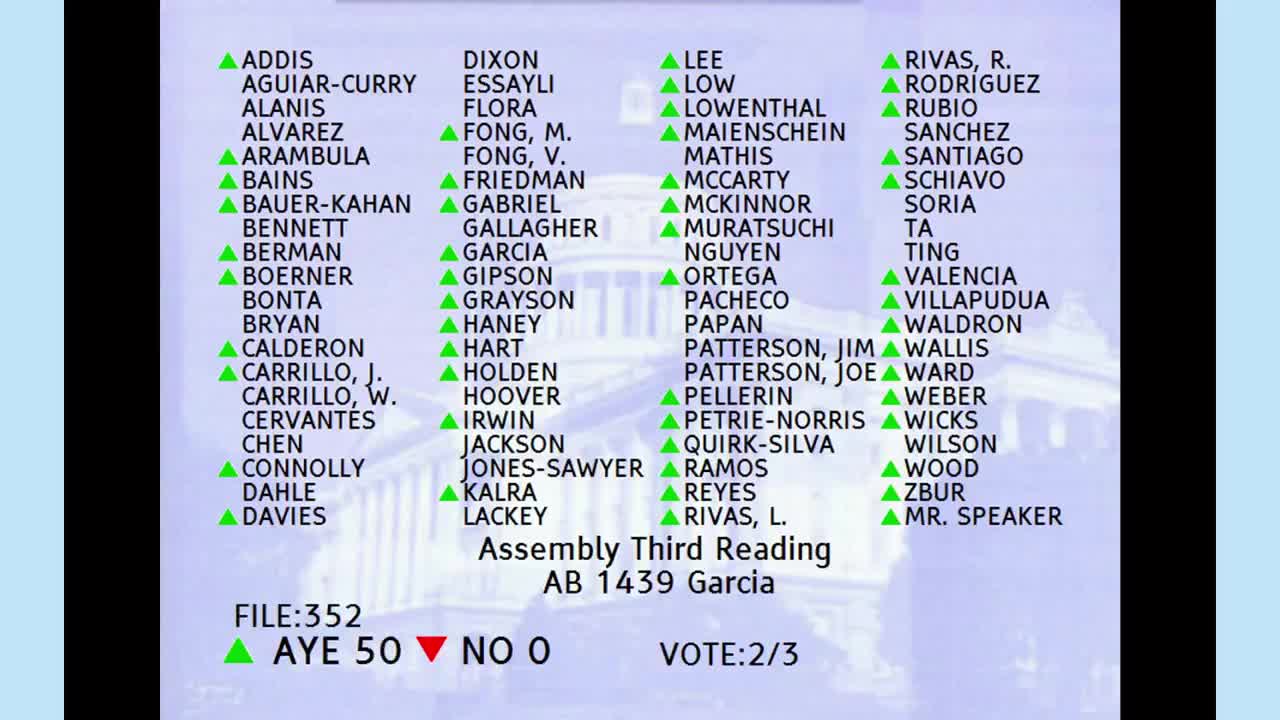 1MIN
Assembly Floor
 8MIN
Assembly Standing Committee on Health
Bill Author

Bill Co-Author(s):