AB 1479: Pupil health: social-emotional, behavioral, and mental health supports.
- Session Year: 2023-2024
- House: Assembly
- Latest Version Date: 2023-09-18
Current Status:
Failed
(2024-01-25: Consideration of Governor's veto stricken from file.)
Introduced
In Committee
First Chamber
In Committee
Second Chamber
Enacted
What does this bill do?
The bill creates a state-run Pupil Social-Emotional, Behavioral, and Mental Health Program to give money to school districts, county offices of education, and qualifying charter schools. Funds must be used for evidence-based Tier 1 supports for students and families, such as prevention programs, short-term crisis help, parent workshops, staff training, screening, and referrals. All local agencies can apply, with priority for those serving 55% or more unduplicated pupils (students who are low-income, foster youth, or English learners), and the program only proceeds if the Legislature provides funding.
The summary is provided by generative AI which can make mistakes. For original language, please view the details in the table below.
Existing law requires the governing board of a school district to give diligent care to the health and physical development of pupils and authorizes the governing board of a school district to employ properly certified persons for the work, including school psychologists and counselors.
This bill would establish the Pupil Social-Emotional, Behavioral, and Mental Health Program, to be administered by the State Department of Education, to provide eligible local educational agencies with an allocation of moneys to provide Model Tier 1 Support, as defined, accessible to pupils and families. The bill would require all schools within a school district or county office of education, and charter schools that meet certain criteria and have a plan approved by the department to provide evidence-based, Tier 1 social-emotional, behavioral, and mental health support accessible to pupils and families, to be eligible for an apportionment of state funds under the program for those purposes, as provided. The bill would condition the implementation of these provisions upon an appropriation by the Legislature.
Existing law requires the governing board of a school district to give diligent care to the health and physical development of pupils and authorizes the governing board of a school district to employ properly certified persons for the work, including school psychologists and counselors.
This bill would establish the Pupil Social-Emotional, Behavioral, and Mental Health Program, to be administered by the State Department of Education, to provide eligible local educational agencies with an allocation of moneys to provide Model Tier 1 Support, as defined, accessible to pupils and families. Commencing with the 202425 school year, the The bill would require all schools within a school district or county office of education, and charter schools that meet certain criteria and have a plan approved by the department to provide evidence-based, Tier 1 social-emotional, behavioral, and mental health support accessible to pupils and families, to be eligible for an apportionment of state funds under the program for those purposes, as provided. The bill would condition the implementation of these provisions upon an appropriation by the Legislature.
Existing law requires the governing board of a school district to give diligent care to the health and physical development of pupils and authorizes the governing board of a school district to employ properly certified persons for the work, including school psychologists and counselors.
This bill would establish the Pupil Social-Emotional, Behavioral, and Mental Health Program, to be administered by the State Department of Education, to provide eligible local educational agencies with an allocation of moneys to provide Model Tier 1 Support, as defined, accessible to pupils and families. Commencing with the 202425 school year, the bill would require all schools within a school district or county office of education, and charter schools that meet certain criteria and have a plan approved by the department to provide evidence-based, Tier 1 social-emotional, behavioral, and mental health support accessible to pupils and families, to be eligible for an apportionment of state funds for those purposes, as provided. The bill would condition the implementation of these provisions upon an appropriation by the Legislature.
Existing law, contingent on an appropriation made for these purposes, requires the State Department of Education, on or before January 1, 2023, to recommend best practices and identify training programs for use by local educational agencies to address youth behavioral health, including, but not necessarily limited to, staff and pupil training, as specified. Existing law requires the department to ensure that each identified training program, among other requirements, provides instruction on how school staff can best provide referrals to youth behavioral health services or other support to individuals in the early stages of developing a youth behavioral health disorder. Existing law authorizes a minor who is 12 years of age or older to consent to outpatient mental health treatment or counseling services, notwithstanding any provision of law to the contrary, if, in the opinion of the attending professional person, the minor is mature enough to participate intelligently in those services. This bill would make technical, nonsubstantive changes to these provisions.Existing law, contingent on an appropriation made for these purposes, requires the State Department of Education, on or before January 1, 2023, to recommend best practices and identify training programs for use by local educational agencies to address youth behavioral health, including, but not necessarily limited to, staff and pupil training, as specified. Existing law requires the department to ensure that each identified training program, among other requirements, provides instruction on how school staff can best provide referrals to youth behavioral health services or other support to individuals in the early stages of developing a youth behavioral health disorder.
Existing law authorizes a minor who is 12 years of age or older to consent to outpatient mental health treatment or counseling services, notwithstanding any provision of law to the contrary, if, in the opinion of the attending professional person, the minor is mature enough to participate intelligently in those services.
This bill would make technical, nonsubstantive changes to these provisions.
The Legislature finds and declares all of the following:
(a)Children struggling with mental health issues have difficulty learning and attending school consistently, and educators have reported increases in troubling pupil behavior. The trends are alarming:
(1)One-third of California adolescents 12 to 17 years of age experienced serious psychological distress between 2019 and 2021, including a 20-percent increase in adolescent suicides.
(2)Rates of anxiety and depression among Californias children shot up by 70 percent from 2016 to 2020.
(3)A study by the federal Centers for Disease Control and Prevention (CDC) reported that one in three teenage girls seriously considered suicide, up nearly 60 percent from one decade ago.
(4)The COVID-19 pandemic has exacerbated economic and psychological trauma that already existed in communities of color and underresourced communities.
(b)Californias mental health systems have been exhausted, leading to dangerously long wait times for therapy sessions for those who seek them.
(c)California is experiencing a significant workforce shortage among mental health counselors, psychologists, and social workers.
(d)Schools are a hub for mental health support for pupils and their families, especially in underresourced communities that do not have equitable access to mental health services.
(e)A coordinated and holistic model that leverages Tier 1 evidence-based social-emotional, mental, and behavioral health supports for all pupils, including pupils with a history of trauma and who have multiple adverse childhood experiences (ACEs), is essential to creating safe schools where pupils can focus on learning.
(f)Schools are physically safer when pupils feel like they belong and receive the comprehensive support they need.
(g)Research shows that incorporating families in the model of care creates positive childhood experiences (PCEs).
(h)Research also shows that pupils are more likely to seek counseling when services are available in schools.
(i)Culturally responsive school mental health services can reduce the stigma associated with receiving mental health services by making it part of the fabric of the school system.
SEC. 2.Article 15 (commencing with Section 49591) is added to Chapter 9 of Part 27 of Division 4 of Title 2 of the Education Code, to read:15.The Pupil Social-Emotional, Behavioral, and Mental Health Program49591.For purposes of this article, the following definitions apply:
(a)Evidence-based means using research that is available and has been tested for efficacy and effectiveness intended to best fit the population served.
(b)Evidence-based, Tier 1 social-emotional, behavioral, and mental health supports include, but are not limited to, all of the following:
(1)Providing support to pupils and families to address social-emotional and mental health concerns.
(2)Workshops and seminars for parents and families to provide social-emotional preventive interventions, including positive parenting tools.
(3)Facilitating collaboration and coordination between school and community-based providers to support pupils and families to obtain access to behavioral and mental health supports in school.
(4)Providing families with referrals to clinical care in order to support pupils mental health needs within the community, as needed.
(5)Facilitating behavioral training programs for school staff, including, but not limited to, behavior management strategies, mental health support training, trauma-informed practices, and professional self-care such as Mindfulness-Based Stress Reduction (MBSR), Community Approach to Learning Mindfully (CALM), and Cultivating Awareness and Resilience in Education (CARE).
(c)Local educational agency means a county office of education, school district, or charter school.
(d)Model Tier 1 Support means a coordinated and holistic approach that leverages evidence-based, Tier 1 social-emotional, behavioral, and mental health supports for all pupils, including pupils with a history of trauma.
(e)Tier 1 means supports that include, but are not limited to, activities that promote good mental health and help prevent mental health concerns, prevention and early intervention services for pupils that are higher risk for mental health concerns, short-term care, positive behaviors and relationships, social-emotional learning, coping skills for stress and anxiety, peer support, success coaching for pupils, short-term crisis intervention and deescalation, screening, and initiating and facilitating referrals to community-based services for more intensive clinical treatment as required.
49591.1.(a)The Pupil Social-Emotional, Behavioral, and Mental Health Program is hereby established, to be administered by the department, to provide eligible local educational agencies with an allocation of moneys to provide Model Tier 1 Support accessible to pupils and families.
(b)(1)All schools within a local educational agency who meet the eligibility criteria described in subdivision (a) of Section 49591.2 and who have a plan approved by the department to provide Model Tier 1 Support accessible to pupils and families shall be eligible under this section for an allocation of moneys to support the mental health needs of their pupils.
(2)Within 90 days of receipt of funding for the program, the department shall publish a streamlined application form and identify criteria for the evaluation of applicants and the awarding of grants for eligible local educational agencies who submit a plan to provide Model Tier 1 Support to pupils for three consecutive school years consistent with this article.
(3)(A)Applications for the program shall be due within 90 days from the publishing of the streamlined application and shall be approved, denied, or returned by the department to local educational agencies with a request for information by no later than 30 days from receipt.
(B)Before awarding a grant to an applicant, the department shall require the applicant to certify in its plan that it has consulted with relevant providers in program planning and service delivery to pupils and families, including, but not limited to, the local county mental health department and community-based organizations.
(c)Upon the conclusion of the initial three consecutive school year term specified pursuant to paragraph (2) of subdivision (b), the department shall establish dates for publication, submission, and determination of applications from local educational agencies for each fiscal year thereafter to provide Model Tier 1 Support in order to ensure that the department approves or denies applications on or before December 31 of the preceding calendar year.
49591.2.All of the following apply to the delivery of Model Tier 1 Support pursuant to this article:
(a)All local educational agencies shall be eligible, but priority status shall be contingent on local educational agency needs, as determined by official reporting of an unduplicated percentage of 55 percent or higher, as calculated pursuant to Section 2574 or 42238.02, as applicable.
(b)They may be delivered by employees of a school with an approved plan or by community-based organizations with experienced paraprofessionals. Paraprofessionals shall be required to furnish to the local educational agency a full set of fingerprints and pass a criminal record background check before such delivery.
(c)Local educational agencies with approved plans are encouraged to contract with community-based organizations for delivery of supports to families at schoolsites.
49591.3.The implementation of this article is contingent upon an appropriation by the Legislature in the annual Budget Act or another statute for these purposes.
SEC. 3.The Legislature finds and declares that this act is consistent with, and furthers the intent of, the Children and Youth Behavioral Health Initiative Act (Chapter 2 (commencing with Section 5961) of Part 7 of Division 5 of the Welfare and Institutions Code).
The Legislature finds and declares all of the following:
(a)Children struggling with mental health issues have difficulty learning and attending school consistently, and educators have reported increases in troubling pupil behavior. The trends are alarming:
(1)One-third of California adolescents 12 to 17 years of age experienced serious psychological distress between 2019 and 2021, including a 20-percent increase in adolescent suicides.
(2)Rates of anxiety and depression among Californias children shot up by 70 percent from 2016 to 2020.
(3)A study by the federal Centers for Disease Control and Prevention (CDC) reported that one in three teenage girls seriously considered suicide, up nearly 60 percent from one decade ago.
(4)The COVID-19 pandemic has exacerbated economic and psychological trauma that already existed in communities of color and underresourced communities.
(b)Californias mental health systems have been exhausted, leading to dangerously long wait times for therapy sessions for those who seek them.
(c)California is experiencing a significant workforce shortage among mental health counselors, psychologists, and social workers.
(d)Schools are a hub for mental health support for pupils and their families, especially in underresourced communities that do not have equitable access to mental health services.
(e)A coordinated and holistic model that leverages Tier 1 evidence-based social-emotional, mental, and behavioral health supports for all pupils, including pupils with a history of trauma and who have multiple adverse childhood experiences (ACEs), is essential to creating safe schools where pupils can focus on learning.
(f)Schools are physically safer when pupils feel like they belong and receive the comprehensive support they need.
(g)Research shows that incorporating families in the model of care creates positive childhood experiences (PCEs).
(h)Research also shows that pupils are more likely to seek counseling when services are available in schools.
(i)Culturally responsive school mental health services can reduce the stigma associated with receiving mental health services by making it part of the fabric of the school system.
SEC. 2.Article 15 (commencing with Section 49591) is added to Chapter 9 of Part 27 of Division 4 of Title 2 of the Education Code, to read:15.The Pupil Social-Emotional, Behavioral, and Mental Health Program49591.For purposes of this article, the following definitions apply:
(a)Evidence-based means using research that is available and has been tested for efficacy and effectiveness intended to best fit the population served.
(b)Evidence-based, Tier 1 social-emotional, behavioral, and mental health supports include, but are not limited to, all of the following:
(1)Providing support to pupils and families to address social-emotional and mental health concerns.
(2)Workshops and seminars for parents and families to provide social-emotional preventive interventions, including positive parenting tools.
(3)Facilitating collaboration and coordination between school and community-based providers to support pupils and families to obtain access to behavioral and mental health supports in school.
(4)Providing families with referrals to clinical care in order to support pupils mental health needs within the community, as needed.
(5)Facilitating behavioral training programs for school staff, including, but not limited to, behavior management strategies, mental health support training, trauma-informed practices, and professional self-care such as Mindfulness-Based Stress Reduction (MBSR), Community Approach to Learning Mindfully (CALM), and Cultivating Awareness and Resilience in Education (CARE).
(c)Local educational agency means a county office of education, school district, or charter school.
(d)Model Tier 1 Support means a coordinated and holistic approach that leverages evidence-based, Tier 1 social-emotional, behavioral, and mental health supports for all pupils, including pupils with a history of trauma.
(e)Tier 1 means supports that include, but are not limited to, activities that promote good mental health and help prevent mental health concerns, prevention and early intervention services for pupils that are higher risk for mental health concerns, short term short-term care, positive behaviors and relationships, social-emotional learning, coping skills for stress and anxiety, peer support, success coaching for pupils, short-term crisis intervention and deescalation, screening, and initiating and facilitating referrals to community-based services for more intensive clinical treatment as required.
49591.1.(a)The Pupil Social-Emotional, Behavioral, and Mental Health Program is hereby established, to be administered by the department, to provide eligible local educational agencies with an allocation of moneys to provide Model Tier 1 Support accessible to pupils and families.
(b)(1)All schools within a local educational agency who meet the eligibility criteria described in subdivision (a) of Section 49591.2 and who have a plan approved by the department to provide Model Tier 1 Support accessible to pupils and families shall be eligible under this section for an allocation of moneys to support the mental health needs of their pupils.
(2)Within 90 days of receipt of funding for the program, the department shall publish a streamlined application form and identify criteria for the evaluation of applicants and the awarding of grants for eligible local educational agencies to who submit a plan to provide Model Tier 1 Support to pupils for three consecutive school years consistent with this section. article.
(3)(A)Applications for the program shall be due within 30 90 days from the publishing of the streamlined application and shall be approved, denied, or returned by the department to local educational agencies with a request for information by no later than 30 days from receipt.
(B)Before awarding a grant to an applicant, the department shall require the applicant to certify in its plan that it has consulted with relevant providers in program planning and service delivery to pupils and families, including, but not limited to, the local county mental health department and community-based organizations.
(c)Upon the conclusion of the initial three consecutive school year term specified pursuant to paragraph (2) of subdivision (b), the department shall establish dates for publication, submission, and determination of applications from local educational agencies for each fiscal year thereafter to provide Model Tier 1 Support in order to ensure that the department approves or denies applications on or before December 31 of the preceding calendar year.
49591.2.All of the following apply to the delivery of Model Tier 1 Support pursuant to this article:
(a)All local educational agencies shall be eligible, but priority status shall be contingent on local educational agency needs, as determined by official reporting of an unduplicated percentage of 55 percent or higher, as calculated pursuant to Section 2574 or 42238.02, as applicable.
(b)They may be delivered by employees of a school with an approved plan or by community-based organizations with experienced paraprofessionals. Paraprofessionals shall be required to furnish to the local educational agency a full set of fingerprints and pass a criminal record background check before such delivery.
(c)Local educational agencies with approved plans are encouraged to contract with community-based organizations for delivery of supports to families at schoolsites.
49591.3.The implementation of this article is contingent upon an appropriation by the Legislature in the annual Budget Act or another statute for these purposes.
SEC. 3.The Legislature finds and declares that this act is consistent with, and furthers the intent of, the Children and Youth Behavioral Health Initiative Act (Chapter 2 (commencing with Section 5961) of Part 7 of Division 5 of the Welfare and Institutions Code).
The Legislature finds and declares all of the following:
(a)Children struggling with mental health issues have difficulty learning and attending school consistently, and educators have reported increases in troubling pupil behavior. The trends are alarming:
(1)One-third of California adolescents 12 to 17 years of age experienced serious psychological distress between 2019 and 2021, including a 20-percent increase in adolescent suicides.
(2)Rates of anxiety and depression among Californias children shot up by 70 percent from 2016 to 2020.
(3)A study by the federal Centers for Disease Control and Prevention (CDC) reported that 1 in 3 teen one in three teenage girls seriously considered suicide, up nearly 60 percent from a one decade ago.
(4)The COVID-19 pandemic has exacerbated economic and psychological trauma that already existed in communities of color and underresourced communities.
(b)Californias mental health systems have been exhausted, leading to dangerously long wait times for therapy sessions for those who seek them.
(c)California is experiencing a significant workforce shortage among mental health counselors, psychologists, and social workers.
(d)Schools are a hub for mental health support for pupils and their families, especially in underresourced communities that do not have equitable access to mental health services.
(e)A coordinated and holistic model that leverages Tier 1 evidence-based social-emotional, mental, and behavioral health supports for all pupils, including pupils with a history of trauma and who have multiple adverse childhood experiences (ACEs), is essential to creating safe schools where pupils can focus on learning.
(f)Schools are physically safer when pupils feel like they belong and receive the comprehensive support they need.
(g)Research shows that incorporating families in the model of care creates positive childhood experiences (PCEs).
(h)Research also shows that pupils are more likely to seek counseling when services are available in schools.
(i)Culturally responsive school mental health services can reduce the stigma associated with receiving mental health services by making it part of the fabric of the school system.
SEC. 2.Article 15 (commencing with Section 49591) is added to Chapter 9 of Part 27 of Division 4 of Title 2 of the Education Code, to read:15.The Pupil Social-Emotional, Behavioral, and Mental Health Program49591.For purposes of this article, the following definitions apply:
(a)Evidence-based means using research that is available and has been tested for efficacy and effectiveness intended to best fit the population served.
(b)Evidence-based, Tier 1 social-emotional, behavioral, and mental health supports include, but are not limited to, all of the following:
(1)Providing support to pupils and families to address social-emotional and mental health concerns.
(2)Workshops and seminars for parents and families to provide social-emotional preventive interventions, including positive parenting tools.
(3)Facilitating collaboration and coordination between school and community-based providers to support pupils and families to obtain access to behavioral and mental health supports in school.
(4)Providing families with referrals to clinical care in order to support pupils mental health needs within the community, as needed.
(5)Facilitating behavioral training programs for school staff, including, but not limited to, behavior management strategies, mental health support training, trauma-informed practices, and professional self-care such as Mindfulness-Based Stress Reduction (MBSR), Community Approach to Learning Mindfully (CALM), and Cultivating Awareness and Resilience in Education (CARE).
(c)Local educational agency means a county office of education, school district, or charter school.
(d)Model Tier 1 Support means a coordinated and holistic approach that leverages evidence-based, Tier 1 social-emotional, behavioral, and mental health supports for all pupils, including pupils with a history of trauma.
(e)Tier 1 means supports that include, but are not limited to, activities that promote good mental health and help prevent mental health concerns, prevention and early intervention services for pupils that are higher risk for mental health concerns, short term care, positive behaviors and relationships, social-emotional learning, coping skills for stress and anxiety, peer support, success coaching for pupils, short-term crisis intervention and deescalation, screening, and initiating and facilitating referrals to community-based services for more intensive clinical treatment as required.
(f)Unduplicated percentage means the unduplicated percentage of enrolled pupils at a school who are classified as one or more of the following:(1)Eligible for free or reduced-price meals, as defined in Section 42238.01, including through a direct certification match.(2)Foster youth or tribal foster youth.(3)Migrant pupils.(4)English learners.49591.1.(a)The Pupil Social-Emotional, Behavioral, and Mental Health Program is hereby established, to be administered by the department, to provide eligible local educational agencies with an allocation of moneys to provide Model Tier 1 Support accessible to pupils and families.
(b)(1)For the 202425 to 202627 school years, inclusive, all All schools within a local educational agency who meet the eligibility criteria described in subdivision (a) of Section 49591.2 and who have a plan approved by the department to provide Model Tier 1 Support accessible to pupils and families shall be eligible under this section for an allocation of moneys to support the mental health needs of their pupils.
(2)On or before March 15, 2024, Within 90 days of receipt of funding for the program, the department shall publish a streamlined application form for eligible local educational agencies to submit a plan to provide Model Tier 1 Support to pupils for three consecutive school years consistent with this section.
(3)Applications for the 202425 to 202627 school years, inclusive, program shall be due by April 15, 2024, within 30 days from the publishing of the streamlined application and shall be approved, denied, or returned by the department to local educational agencies with a request for information by on or before May 15, 2024. no later than 30 days from receipt.
(c)Beginning with the 202728 school year, and for each school year thereafter, Upon the conclusion of the initial three consecutive school year term specified pursuant to paragraph (2) of subdivision (b), the department shall establish dates for publication, submission, and determination of applications from local educational agencies for each fiscal year thereafter to provide Model Tier 1 Support in order to ensure that the department approves or denies applications on or before December 31 of the preceding calendar year.
49591.2.All of the following apply to the delivery of Model Tier 1 Support pursuant to this article:
(a)Eligibility All local educational agencies shall be eligible, but priority status shall be contingent on local educational agency needs, as determined by official reporting of an unduplicated percentage of 55 percent or higher. higher, as calculated pursuant to Section 2574 or 42238.02, as applicable.
(b)They may be delivered by employees of a school with an approved plan or by community-based organizations with experienced paraprofessionals. Paraprofessionals shall be required to furnish to the local educational agency a full set of fingerprints and pass a criminal record background check before such delivery.
(c)Local educational agencies with approved plans are encouraged to contract with community-based organizations for delivery of supports to families at schoolsites.
49591.3.The implementation of this article is contingent upon an appropriation by the Legislature in the annual Budget Act or another statute for these purposes.
SEC. 3.The Legislature finds and declares that this act is consistent with, and furthers the intent of, the Children and Youth Behavioral Health Initiative Act (Chapter 2 (commencing with Section 5961) of Part 7 of Division 5 of the Welfare and Institutions Code).
The Legislature finds and declares all of the following:
(a)Children struggling with mental health issues have difficulty learning and attending school consistently, and educators have reported increases in troubling pupil behavior. The trends are alarming:
(1)One-third of California adolescents 12 to 17 years of age experienced serious psychological distress between 2019 and 2021, including a 20-percent increase in adolescent suicides.
(2)Rates of anxiety and depression among Californias children shot up by 70 percent from 2016 to 2020.
(3)A study by the federal Centers for Disease Control and Prevention (CDC) reported that 1 in 3 teen girls seriously considered suicide, up nearly 60 percent from a decade ago.
(4)The COVID-19 pandemic has exacerbated economic and psychological trauma that already existed in communities of color and underresourced communities.
(b)Californias mental health systems have been exhausted, leading to dangerously long wait times for therapy sessions for those who seek them.
(c)California is experiencing a significant workforce shortage among mental health counselors, psychologists, and social workers.
(d)Schools are a hub for mental health support for pupils and their families, especially in underresourced communities that do not have equitable access to mental health services.
(e)A coordinated and holistic model that leverages Tier 1 evidence-based social-emotional, mental, and behavioral health supports for all pupils, including pupils with a history of trauma and who have multiple adverse childhood experiences (ACEs), is essential to creating safe schools where pupils can focus on learning.
(f)Schools are physically safer when pupils feel like they belong and receive the comprehensive support they need.
(g)Research shows that incorporating families in the model of care creates positive childhood experiences (PCEs).
(h)Research also shows that pupils are more likely to seek counseling when services are available in schools.
(i)Culturally responsive school mental health services can reduce the stigma associated with receiving mental health services by making it part of the fabric of the school system.
SEC. 2.Article 15 (commencing with Section 49591) is added to Chapter 9 of Part 27 of Division 4 of Title 2 of the Education Code, to read:15.The Pupil Social-Emotional, Behavioral, and Mental Health Program49591.For purposes of this article, the following definitions apply:
(a)Evidence-based means using research that is available and has been tested for efficacy and effectiveness intended to best fit the population served.
(b)Evidence-based, Tier 1 social-emotional, behavioral, and mental health supports include, but are not limited to, all of the following:
(1)Providing support to pupils and families to address social-emotional and mental health concerns.
(2)Workshops and seminars for parents and families to provide social-emotional preventive interventions, including positive parenting tools.
(3)Facilitating collaboration and coordination between school and community-based providers to support pupils and families to obtain access to behavioral and mental health supports in school.
(4)Providing families with referrals to clinical care in order to support pupils mental health needs within the community, as needed.
(5)Facilitating behavioral training programs for school staff, including, but not limited to, behavior management strategies, mental health support training, trauma-informed practices, and professional self-care such as Mindfulness-Based Stress Reduction (MBSR), Community Approach to Learning Mindfully (CALM), and Cultivating Awareness and Resilience in Education (CARE).
(c)Local educational agency means a county office of education, school district, or charter school.
(d)Model Tier 1 Support means a coordinated and holistic approach that leverages evidence-based, Tier 1 social-emotional, behavioral, and mental health supports for all pupils, including pupils with a history of trauma.
(e)Tier 1 means supports that include, but are not limited to, activities that promote good mental health and help prevent mental health concerns, prevention and early intervention services for pupils that are higher risk for mental health concerns, short term care, positive behaviors and relationships, social-emotional learning, coping skills for stress and anxiety, peer support, success coaching for pupils, short-term crisis intervention and deescalation, screening, and initiating and facilitating referrals to community-based services for more intensive clinical treatment as required.
(f)Unduplicated percentage means the unduplicated percentage of enrolled pupils at a school who are classified as one or more of the following:
(1)Eligible for free or reduced-price meals, as defined in Section 42238.01, including through a direct certification match.
(2)Foster youth or tribal foster youth.
(3)Migrant pupils.
(4)English learners.
49591.1.(a)The Pupil Social-Emotional, Behavioral, and Mental Health Program is hereby established, to be administered by the department, to provide eligible local educational agencies with an allocation of moneys to provide Model Tier 1 Support accessible to pupils and families.
(b)(1)For the 202425 to 202627 school years, inclusive, all schools within a local educational agency who meet the eligibility criteria described in subdivision (a) of Section 49591.2 and who have a plan approved by the department to provide Model Tier 1 Support accessible to pupils and families shall be eligible under this section for an allocation of moneys to support the mental health needs of their pupils.
(2)On or before March 15, 2024, the department shall publish a streamlined application form for eligible local educational agencies to submit a plan to provide Model Tier 1 Support to pupils for three consecutive school years consistent with this section.
(3)Applications for the 202425 to 202627 school years, inclusive, shall be due by April 15, 2024, and shall be approved, denied, or returned with a request for information by on or before May 15, 2024.
(c)Beginning with the 202728 school year, and for each school year thereafter, the department shall establish dates for publication, submission, and determination of applications from local educational agencies to provide Model Tier 1 Support in order to ensure that the department approves or denies applications on or before December 31 of the preceding calendar year.
49591.2.All of the following apply to the delivery of Model Tier 1 Support pursuant to this article:
(a)Eligibility shall be contingent on local educational agency needs, as determined by official reporting of an unduplicated percentage of 55 percent or higher.
(b)They may be delivered by employees of a school with an approved plan or by community-based organizations with experienced paraprofessionals. Paraprofessionals shall be required to furnish to the local educational agency a full set of fingerprints and pass a criminal record background check before such delivery.
(c)Local educational agencies with approved plans are encouraged to contract with community-based organizations for delivery of supports to families at schoolsites.
49591.3.The implementation of this article is contingent upon an appropriation by the Legislature in the annual Budget Act or another statute for these purposes.
SEC. 3.The Legislature finds and declares that this act is consistent with, and furthers the intent of, the Children and Youth Behavioral Health Initiative Act (Chapter 2 (commencing with Section 5961) of Part 7 of Division 5 of the Welfare and Institutions Code).
SECTION 1.Section 49428.15 of the Education Code is amended to read:49428.15.(a)For purposes of this section, the following definitions apply:(1)Evidence-based means peer-reviewed, scientific research evidence, including studies based on research methodologies that control threats to both the internal and the external validity of the research findings.(2)Evidence-informed means using research that is already available and has been tested for efficacy and effectiveness. This evidence is then combined with the experiences and expertise of the training program developers to best fit the population intended to be served.(3)Local educational agency means a county office of education, school district, state special school, or charter school that serves pupils in any of grades 7 to 12, inclusive.(4)Youth behavioral health disorders means pupil mental health and substance use disorders.(5)Youth behavioral health training means training addressing the signs and symptoms of a pupil mental health or substance use disorder.(b)The department shall, on or before January 1, 2023, recommend best practices and identify evidence-based and evidence-informed training programs for schools to address youth behavioral health, including, but not necessarily limited to, staff and pupil training.(c)In identifying one or more evidence-based or evidence-informed youth behavioral health training programs for use by local educational agencies to train school staff or pupils pursuant to subdivision (b), the department shall ensure that each training program meets all of the following requirements:(1)Provides instruction on recognizing the signs and symptoms of youth behavioral health disorders, including common psychiatric conditions and substance use disorders such as opioid and alcohol abuse.(2)Provides instruction on how school staff can best provide referrals to youth behavioral health services or other support to individuals in the early stages of developing a youth behavioral health disorder.(3)Provides instruction on how to maintain pupil privacy and confidentiality in a manner consistent with federal and state privacy laws.(4)Provides instruction on the safe deescalation of crisis situations involving individuals with a youth behavioral health disorder.(5)Is capable of assessing trainee knowledge before and after training is provided in order to measure training outcomes.(6)Is administered by a nationally recognized training authority in youth behavioral health disorders or by a local educational agency.(7)(A)Includes in-person and virtual training with certified instructors who can recommend resources available in the community for individuals with a youth behavioral health disorder.(B)For purposes of this paragraph, certified instructors means individuals who obtain or have obtained a certification to provide the selected youth behavioral health training.(d)This section shall be implemented only to the extent that an appropriation is made in the annual Budget Act or another statute for these purposes.SEC. 2.Section 124260 of the Health and Safety Code is amended to read:124260.(a)As used in this section:(1)Mental health treatment or counseling services means the provision of outpatient mental health treatment or counseling by a professional person, as defined in paragraph (2).(2)Professional person means any of the following:(A)A person designated as a mental health professional in Sections 622 to 626, inclusive, of Title 9 of the California Code of Regulations.(B)A marriage and family therapist, as defined in Chapter 13 (commencing with Section 4980) of Division 2 of the Business and Professions Code.(C)A licensed educational psychologist, as defined in Chapter 13.5 (commencing with Section 4989.10) of Division 2 of the Business and Professions Code.(D)A credentialed school psychologist, as described in Section 49424 of the Education Code.(E)A clinical psychologist licensed under Chapter 6.6 (commencing with Section 2900) of Division 2 of the Business and Professions Code.(F)Any of the following persons, while working under the supervision of a licensed professional specified in Section 2902 of the Business and Professions Code:(i)A registered psychologist, as defined in Section 2909.5 of the Business and Professions Code.(ii)A registered psychological assistant, as defined in Section 2913 of the Business and Professions Code.(iii)A psychology trainee, as defined in Section 1387 of Title 16 of the California Code of Regulations.(G)A licensed clinical social worker, as defined in Chapter 14 (commencing with Section 4991) of Division 2 of the Business and Professions Code.(H)An associate clinical social worker, or a social work intern, as defined in Chapter 14 (commencing with Section 4991) of Division 2 of the Business and Professions Code, while working under the supervision of a licensed professional specified in Section 4996.20 of the Business and Professions Code.(I)A person registered as an associate marriage and family therapist or a marriage and family therapist trainee, as defined in Chapter 13 (commencing with Section 4980) of Division 2 of the Business and Professions Code, while working under the supervision of a licensed professional specified in subdivision (g) of Section 4980.03 of the Business and Professions Code.(J)A board certified, or board eligible, psychiatrist.(K)A licensed professional clinical counselor, as defined in Chapter 16 (commencing with Section 4999.10) of Division 2 of the Business and Professions Code.(L)A person registered as an associate professional clinical counselor or a clinical counselor trainee, as defined in Chapter 16 (commencing with Section 4999.10) of Division 2 of the Business and Professions Code, while working under the supervision of a licensed professional specified in subdivision (h) of Section 4999.12 of the Business and Professions Code.(b)(1)Notwithstanding any provision of law to the contrary, a minor who is 12 years of age or older may consent to mental health treatment or counseling services if, in the opinion of the attending professional person, the minor is mature enough to participate intelligently in the mental health treatment or counseling services.(2)A marriage and family therapist trainee, a clinical counselor trainee, a psychology trainee, or a social work intern, as specified in paragraph (2) of subdivision (a), shall notify their supervisor or, if the supervisor is unavailable, an on-call supervisor at the site where the trainee or intern volunteers or is employed within 24 hours of treating or counseling a minor pursuant to paragraph (1). If upon the initial assessment of the minor the trainee or intern believes that the minor is a danger to self or to others, the trainee or intern shall notify the supervisor or, if the supervisor is unavailable, the on-call supervisor immediately after the treatment or counseling session.(3)Nothing in paragraph (2) is intended to supplant, alter, expand, or remove any other reporting responsibilities required of trainees or interns under law.(c)Notwithstanding any provision of law to the contrary, the mental health treatment or counseling of a minor authorized by this section shall include involvement of the minors parent or guardian, unless the professional person who is treating or counseling the minor, after consulting with the minor, determines that the involvement would be inappropriate. The professional person who is treating or counseling the minor shall state in the client record whether and when the person attempted to contact the minors parent or guardian, and whether the attempt to contact was successful or unsuccessful, or the reason why, in the professional persons opinion, it would be inappropriate to contact the minors parent or guardian.(d)The minors parent or guardian is not liable for payment for mental health treatment or counseling services provided pursuant to this section unless the parent or guardian participates in the mental health treatment or counseling, and then only for services rendered with the participation of the parent or guardian.(e)This section does not authorize a minor to receive convulsive treatment or psychosurgery, as defined in subdivisions (f) and (g) of Section 5325 of the Welfare and Institutions Code, or psychotropic drugs without the consent of the minors parent or guardian.(a)For purposes of this section, the following definitions apply:
(1)Evidence-based means peer-reviewed, scientific research evidence, including studies based on research methodologies that control threats to both the internal and the external validity of the research findings.
(2)Evidence-informed means using research that is already available and has been tested for efficacy and effectiveness. This evidence is then combined with the experiences and expertise of the training program developers to best fit the population intended to be served.
(3)Local educational agency means a county office of education, school district, state special school, or charter school that serves pupils in any of grades 7 to 12, inclusive.
(4)Youth behavioral health disorders means pupil mental health and substance use disorders.
(5)Youth behavioral health training means training addressing the signs and symptoms of a pupil mental health or substance use disorder.
(b)The department shall, on or before January 1, 2023, recommend best practices, practices and identify evidence-based and evidence-informed training programs for schools to address youth behavioral health, including, but not necessarily limited to, staff and pupil training.
(c)In identifying one or more evidence-based or evidence-informed youth behavioral health training programs for use by local educational agencies to train school staff or pupils pursuant to subdivision (b), the department shall ensure that each training program meets all of the following requirements:
(1)Provides instruction on recognizing the signs and symptoms of youth behavioral health disorders, including common psychiatric conditions and substance use disorders such as opioid and alcohol abuse.
(2)Provides instruction on how school staff can best provide referrals to youth behavioral health services or other support to individuals in the early stages of developing a youth behavioral health disorder.
(3)Provides instruction on how to maintain pupil privacy and confidentiality in a manner consistent with federal and state privacy laws.
(4)Provides instruction on the safe deescalation of crisis situations involving individuals with a youth behavioral health disorder.
(5)Is capable of assessing trainee knowledge before and after training is provided in order to measure training outcomes.
(6)Is administered by a nationally recognized training authority in youth behavioral health disorders or by a local educational agency.
(7)(A)Includes in-person and virtual training with certified instructors who can recommend resources available in the community for individuals with a youth behavioral health disorder.
(B)For purposes of this paragraph, certified instructors means individuals who obtain or have obtained a certification to provide the selected youth behavioral health training.
(d)This section shall be implemented only to the extent that an appropriation is made in the annual Budget Act or another statute for these purposes.
SEC. 2.Section 124260 of the Health and Safety Code is amended to read:124260.(a)As used in this section:
(1)Mental health treatment or counseling services means the provision of outpatient mental health treatment or counseling by a professional person, as defined in paragraph (2).
(2)Professional person means any of the following:
(A)A person designated as a mental health professional in Sections 622 to 626, inclusive, of Title 9 of the California Code of Regulations.
(B)A marriage and family therapist, as defined in Chapter 13 (commencing with Section 4980) of Division 2 of the Business and Professions Code.
(C)A licensed educational psychologist, as defined in Chapter 13.5 (commencing with Section 4989.10) of Division 2 of the Business and Professions Code.
(D)A credentialed school psychologist, as described in Section 49424 of the Education Code.
(E)A clinical psychologist licensed under Chapter 6.6 (commencing with Section 2900) of Division 2 of the Business and Professions Code.
(F)Any of the following persons, while working under the supervision of a licensed professional specified in Section 2902 of the Business and Professions Code:
(i)A registered psychologist, as defined in Section 2909.5 of the Business and Professions Code.
(ii)A registered psychological assistant, as defined in Section 2913 of the Business and Professions Code.
(iii)A psychology trainee, as defined in Section 1387 of Title 16 of the California Code of Regulations.
(G)A licensed clinical social worker, as defined in Chapter 14 (commencing with Section 4991) of Division 2 of the Business and Professions Code.
(H)An associate clinical social worker, or a social work intern, as defined in Chapter 14 (commencing with Section 4991) of Division 2 of the Business and Professions Code, while working under the supervision of a licensed professional specified in Section 4996.20 of the Business and Professions Code.
(I)A person registered as an associate marriage and family therapist or a marriage and family therapist trainee, as defined in Chapter 13 (commencing with Section 4980) of Division 2 of the Business and Professions Code, while working under the supervision of a licensed professional specified in subdivision (g) of Section 4980.03 of the Business and Professions Code.
(J)A board certified, or board eligible, psychiatrist.
(K)A licensed professional clinical counselor, as defined in Chapter 16 (commencing with Section 4999.10) of Division 2 of the Business and Professions Code.
(L)A person registered as an associate professional clinical counselor or a clinical counselor trainee, as defined in Chapter 16 (commencing with Section 4999.10) of Division 2 of the Business and Professions Code, while working under the supervision of a licensed professional specified in subdivision (h) of Section 4999.12 of the Business and Professions Code.
(b)(1)Notwithstanding any provision of law to the contrary, a minor who is 12 years of age or older may consent to mental health treatment or counseling services if, in the opinion of the attending professional person, the minor is mature enough to participate intelligently in the mental health treatment or counseling services.
(2)A marriage and family therapist trainee, a clinical counselor trainee, a psychology trainee, or a social work intern, as specified in paragraph (2) of subdivision (a), shall notify his or her their supervisor or, if the supervisor is unavailable, an on-call supervisor at the site where the trainee or intern volunteers or is employed within 24 hours of treating or counseling a minor pursuant to paragraph (1). If upon the initial assessment of the minor the trainee or intern believes that the minor is a danger to self or to others, the trainee or intern shall notify the supervisor or, if the supervisor is unavailable, the on-call supervisor immediately after the treatment or counseling session.
(3)Nothing in paragraph (2) is intended to supplant, alter, expand, or remove any other reporting responsibilities required of trainees or interns under law.
(c)Notwithstanding any provision of law to the contrary, the mental health treatment or counseling of a minor authorized by this section shall include involvement of the minors parent or guardian, unless the professional person who is treating or counseling the minor, after consulting with the minor, determines that the involvement would be inappropriate. The professional person who is treating or counseling the minor shall state in the client record whether and when the person attempted to contact the minors parent or guardian, and whether the attempt to contact was successful or unsuccessful, or the reason why, in the professional persons opinion, it would be inappropriate to contact the minors parent or guardian.
(d)The minors parent or guardian is not liable for payment for mental health treatment or counseling services provided pursuant to this section unless the parent or guardian participates in the mental health treatment or counseling, and then only for services rendered with the participation of the parent or guardian.
(e)This section does not authorize a minor to receive convulsive treatment or psychosurgery, as defined in subdivisions (f) and (g) of Section 5325 of the Welfare and Institutions Code, or psychotropic drugs without the consent of the minors parent or guardian.
|
Date
|
Status
|
|---|---|
| Jan 25, 2024 | Consideration of Governor's veto stricken from file. |
| Jan 3, 2024 | Consideration of Governor's veto pending. |
| Oct 8, 2023 | Vetoed by Governor. |
| Sep 21, 2023 | Enrolled and presented to the Governor at 3:30 p.m. |
| Sep 13, 2023 | Senate amendments concurred in. To Engrossing and Enrolling. (Ayes 80. Noes 0. Page 3450.). |
| Sep 12, 2023 | In Assembly. Concurrence in Senate amendments pending. |
| Sep 12, 2023 | Read third time. Passed. Ordered to the Assembly. (Ayes 39. Noes 0. Page 2690.). |
| Sep 8, 2023 | Ordered to special consent calendar. |
| Sep 5, 2023 | Read second time. Ordered to third reading. |
| Sep 1, 2023 | From committee: Do pass. (Ayes 7. Noes 0.) (September 1). |
| Aug 14, 2023 | In committee: Referred to APPR suspense file. |
| Jun 29, 2023 | Read second time and amended. Re-referred to Com. on APPR. |
| Jun 28, 2023 | From committee: Amend, and do pass as amended and re-refer to Com. on APPR with recommendation: To Consent Calendar. (Ayes 7. Noes 0.) (June 28). |
| Jun 7, 2023 | Referred to Com. on ED. |
| May 26, 2023 | In Senate. Read first time. To Com. on RLS. for assignment. |
| May 25, 2023 | Read third time. Passed. Ordered to the Senate. (Ayes 77. Noes 0. Page 1784.) |
| May 18, 2023 | Read second time. Ordered to third reading. |
| May 18, 2023 | From committee: Do pass. (Ayes 15. Noes 0.) (May 18). |
| May 10, 2023 | In committee: Set, first hearing. Referred to APPR. suspense file. |
| Apr 27, 2023 | From committee: Do pass and re-refer to Com. on APPR. with recommendation: To Consent Calendar. (Ayes 7. Noes 0.) (April 26). Re-referred to Com. on APPR. |
| Apr 18, 2023 | Re-referred to Com. on ED. |
| Apr 17, 2023 | From committee chair, with author's amendments: Amend, and re-refer to Com. on ED. Read second time and amended. |
| Mar 27, 2023 | Re-referred to Com. on ED. |
| Mar 23, 2023 | Referred to Com. on ED. |
| Mar 23, 2023 | From committee chair, with author's amendments: Amend, and re-refer to Com. on ED. Read second time and amended. |
| Feb 18, 2023 | From printer. May be heard in committee March 20. |
| Feb 17, 2023 | Read first time. To print. |
|
Date
|
Description
|
Location
|
Votes
|
|
|---|---|---|---|---|
| Sep 13, 2023 | AB 1479 Garcia Concurrence in Senate Amendments | Assembly Floor |
Passed |
|
| Sep 12, 2023 | Special Consent AB1479 Garcia By Eggman | Senate Floor |
Passed |
|
| Sep 1, 2023 | Do pass | Senate Standing Committee on Appropriations |
Passed |
|
| Aug 14, 2023 | Placed on suspense file | Senate Standing Committee on Appropriations |
Passed |
|
| Jun 28, 2023 | Do pass as amended, but first amend, and re-refer to the Committee on [Appropriations] with the recommendation: To Consent Calendar | Senate Standing Committee on Education |
Passed |
|
| May 25, 2023 | AB 1479 Garcia Assembly Third Reading | Assembly Floor |
Passed |
|
| May 18, 2023 | Do pass. | Assembly Standing Committee on Appropriations |
Passed |
|
| Apr 26, 2023 | Do pass and be re-referred to the Committee on [Appropriations] with recommendation: To Consent Calendar | Assembly Standing Committee on Education |
Passed |
This list shows positions taken on this bill by organizations on the date displayed, which is linked to the original source.
Positions by individuals are not included.
|
Organization
|
Position
|
Date
|
|---|---|---|
| Alliance College-Ready Public Schools | ** Support | |
| Aspire Public Schools | ** Support | |
| Brawley Elementary School District | ** Support | |
| Brawley Union High School district | ** Support | |
| California Charter Schools Association | ** Support | |
| cleanearth4kids.org | ** Support | |
| Comite Civico Del Valle | ** Support | |
| Go Public Schools | ** Support | |
| Heber Elementary School District | ** Support | |
| KIPP Bay Area Public Schools | ** Support | |
| Kipp Socal Public Schools | ** Support | |
| Lighthouse Community Public Schools | ** Support | |
| Los Amigos de la Comunidad | ** Support | |
| Meadows Union Elementary School District | ** Support | |
| Office of the Riverside County Superintendent of Schools | ** Support | |
| Palm Springs Unified School District | ** Support | |
| Palo Verde Unified School District | ** Support | |
| Seneca Family of Agencies | ** Support | |
| Steinberg Institute | ** Support |
GOVERNOR'S VETO
GV Bill Id:AB 1479
Author:(Garcia)
As Enrolled Ver:September 18, 2023
2/3 vote
SUMMARY
Establishes the Pupil Social-Emotional, Behavioral, and Mental Health Program, to be administered by the California Department of Education (CDE), to make available grants to local educational agencies (LEAs) to provide Tier 1 mental health supports to pupils and families, subject to an appropriation for this purpose.
Senate Amendments
- Require the CDE to identify criteria for the evaluation of applicants and the awarding of grants for eligible LEAs.
- Extend the deadline for LEA applications to be submitted from 30 days to 90 days from the publication of the application by the CDE.
- Require the CDE, before awarding a grant to an applicant, to require the applicant to certify in its plan that it has consulted with relevant providers in program planning and service delivery to pupils and families, including the local county mental health department and community-based organizations.
Governor's Veto Message
The bill, contingent upon an appropriation, establishes the Pupil Social-Emotional, Behavioral, and Mental Health Program to be administered by the Department of Education. The Program seeks to provide grants to eligible local educational agencies to deliver evidence-based social-emotional, behavioral, and mental health supports to students and families.
Unfortunately, this specific proposal creates additional significant ongoing Proposition 98 General Fund cost pressures up to tens of millions of dollars that are not accounted for in the state budget plan and may be duplicative of other investments made in prior budgets. The 2021 Budget Act provided $50 million to support the Scale Up Multi-Tiered System of Support (MTSS) Statewide Initiative, which provides grants to support schools in implementing services or practices aligned to the MTSS framework. Additionally, the Children and Youth Behavioral
Health Initiative is a $4.7 billion investment towards ensuring that every Californian aged 0-25 has increased access to behavioral health supports.
In partnership with the Legislature, we enacted a budget that closed a shortfall of more than $30 billion through balanced solutions that avoided deep program cuts and protected education, health care, climate, public safety, and social service programs that are relied on by millions of Californians. This year, however, the Legislature sent me bills outside of this budget process that, if all enacted, would add nearly $19 billion of unaccounted costs in the budget, of which $11 billion would be ongoing.
With our state facing continuing economic risk and revenue uncertainty, it is important to remain disciplined when considering bills with significant fiscal implications, such as this measure.
COMMENTS
Schools providing mental health services. Across the country, school systems are increasingly joining forces with community health, mental health, and social service agencies to promote student well-being and to prevent and treat mental health disorders. Utilizing the school environment – where children spend a significant part of their day – for early intervention brings public health efforts to the students, meeting children where they are and therefore providing more accessible services to those in need. It also provides immediate and continuing resources to students without requiring families to search for already limited sources of care.
According to the Author
"Our children are in crisis – we need a directed and streamlined process so that LEAs may be able to provide Tier 1 preventative social-emotional, behavioral, and mental supports today. AB 1479 aims to fill gaps in existing efforts/initiatives by increasing on-site access to preventative services, creating a streamlined and targeted grant process for LEAs, allowing paraprofessionals to provide such preventative services to address the increasing mental health clinician workforce shortages."
Arguments in Support
Aspire Public Schools, sponsor of the measure, writes "Given the current shortage of licensed mental health practitioners, we should encourage LEAs to contract with well-trained, paraprofessionals and existing school-based teammates to our teams who can build relationships and immediately respond to students' needs, while identifying resources for longer-term support. We must also increase resources for training school staff on crisis intervention, trauma-informed practices, social-emotional learning, and stress reduction. When schools have the resources to properly address students' mental health needs, students will learn more, be more connected to their school community, and feel safer and more supported.
There is much that can be done before a student is in crisis and needs the support of a mental health clinician. Universal Tier 1 programming, such as a school wide SEL curriculum and parent workshops, can help students and their families develop knowledge and skills to increase their well-being. Providing Tier 1 services to students and families at school sites supports an evidence-based holistic model which will help mitigate the mental health epidemic in our state. Ensuring that LEAs have the flexibility and the opportunity for streamlined application grants will help LEAs obtain resources for urgent and direct action."
Arguments in Opposition
None on file
FISCAL COMMENTS
According to the Senate Appropriations Committee: "While the bill's provisions would be subject to an appropriation, this bill could result in ongoing Proposition 98 General cost pressures in the low millions to low tens of millions for the state to provide grant funding for the program. This estimate assumes a grant amount of anywhere from $100,000 to $500,000 for up to 50 recipients each year. A precise estimate would depend on the number of grants and the award amounts which are not specified in the bill. Additionally, the CDE estimates General Fund costs of approximately $524,000 and 3.2 positions to administer the program."
VOTES
ASM EDUCATION: 7-0-0
YES: Muratsuchi, Megan Dahle, Juan Carrillo, Hoover, Lee, McCarty, Quirk-Silva
ASM APPROPRIATIONS: 15-0-1
YES: Holden, Megan Dahle, Bryan, Calderon, Wendy Carrillo, Dixon, Mike Fong, Hart, Lowenthal, Mathis, Papan, Pellerin, Sanchez, Weber, Ortega
ABS, ABST OR NV: Robert Rivas
ASSEMBLY FLOOR: 77-0-3
YES: Addis, Alanis, Alvarez, Arambula, Bains, Bauer-Kahan, Bennett, Berman, Boerner, Bonta, Bryan, Calderon, Juan Carrillo, Wendy Carrillo, Cervantes, Chen, Connolly, Megan Dahle, Davies, Dixon, Essayli, Flora, Mike Fong, Vince Fong, Friedman, Gabriel, Gallagher, Garcia, Gipson, Grayson, Haney, Hart, Holden, Hoover, Irwin, Jackson, Jones‑Sawyer, Kalra, Lackey, Lee, Low, Lowenthal, Maienschein, McCarty, McKinnor, Muratsuchi, Stephanie Nguyen, Ortega, Pacheco, Jim Patterson, Joe Patterson, Pellerin, Petrie‑Norris, Quirk-Silva, Ramos, Reyes, Luz Rivas, Robert Rivas, Rodriguez, Blanca Rubio, Sanchez, Santiago, Schiavo, Soria, Ta, Ting, Valencia, Villapudua, Waldron, Wallis, Ward, Weber, Wicks, Wilson, Wood, Zbur, Rendon
ABS, ABST OR NV: Aguiar-Curry, Mathis, Papan
SENATE FLOOR: 39-0-1
YES: Allen, Alvarado-Gil, Archuleta, Ashby, Atkins, Becker, Blakespear, Bradford, Cortese, Dahle, Dodd, Durazo, Eggman, Glazer, Gonzalez, Grove, Hurtado, Jones, Laird, Limón, McGuire, Menjivar, Min, Newman, Nguyen, Niello, Ochoa Bogh, Padilla, Portantino, Roth, Rubio, Seyarto, Skinner, Smallwood-Cuevas, Stern, Umberg, Wahab, Wiener, Wilk
ABS, ABST OR NV: Caballero
ASSEMBLY FLOOR: 80-0-0
YES: Addis, Aguiar-Curry, Alanis, Alvarez, Arambula, Bains, Bauer-Kahan, Bennett, Berman, Boerner, Bonta, Bryan, Calderon, Juan Carrillo, Wendy Carrillo, Cervantes, Chen, Connolly, Megan Dahle, Davies, Dixon, Essayli, Flora, Mike Fong, Vince Fong, Friedman, Gabriel, Gallagher, Garcia, Gipson, Grayson, Haney, Hart, Holden, Hoover, Irwin, Jackson, Jones‑Sawyer, Kalra, Lackey, Lee, Low, Lowenthal, Maienschein, Mathis, McCarty, McKinnor, Muratsuchi, Stephanie Nguyen, Ortega, Pacheco, Papan, Jim Patterson, Joe Patterson, Pellerin, Petrie-Norris, Quirk-Silva, Ramos, Rendon, Reyes, Luz Rivas, Rodriguez, Blanca Rubio, Sanchez, Santiago, Schiavo, Soria, Ta, Ting, Valencia, Villapudua, Waldron, Wallis, Ward, Weber, Wicks, Wilson, Wood, Zbur, Robert Rivas
UPDATED
VERSION: September 18, 2023
CONSULTANT: Debbie Look / ED. / (916) 319-2087 FN: 0002546
CONCURRENCE IN SENATE AMENDMENTS
CSA1 Bill Id:AB 1479
Author:(Garcia)
As Amended Ver:June 29, 2023
Majority vote
SUMMARY
Establishes the Pupil Social-Emotional, Behavioral, and Mental Health Program, to be administered by the California Department of Education (CDE), to make available grants to local educational agencies (LEAs) to provide Tier 1 mental health supports to pupils and families, subject to an appropriation for this purpose.
Senate Amendments
- Require the CDE to identify criteria for the evaluation of applicants and the awarding of grants for eligible LEAs.
- Extend the deadline for LEA applications to be submitted from 30 days to 90 days from the publication of the application by the CDE.
- Require the CDE, before awarding a grant to an applicant, to require the applicant to certify in its plan that it has consulted with relevant providers in program planning and service delivery to pupils and families, including the local county mental health department and community-based organizations.
COMMENTS
Schools providing mental health services. Across the country, school systems are increasingly joining forces with community health, mental health, and social service agencies to promote student well-being and to prevent and treat mental health disorders. Utilizing the school environment – where children spend a significant part of their day – for early intervention brings public health efforts to the students, meeting children where they are and therefore providing more accessible services to those in need. It also provides immediate and continuing resources to students without requiring families to search for already limited sources of care.
According to the Author
"Our children are in crisis – we need a directed and streamlined process so that LEAs may be able to provide Tier 1 preventative social-emotional, behavioral, and mental supports today. AB 1479 aims to fill gaps in existing efforts/initiatives by increasing on-site access to preventative services, creating a streamlined and targeted grant process for LEAs, allowing paraprofessionals to provide such preventative services to address the increasing mental health clinician workforce shortages."
Arguments in Support
Aspire Public Schools, sponsor of the measure, writes "Given the current shortage of licensed mental health practitioners, we should encourage LEAs to contract with well-trained, paraprofessionals and existing school-based teammates to our teams who can build relationships and immediately respond to students' needs, while identifying resources for longer-term support. We must also increase resources for training school staff on crisis intervention, trauma-informed practices, social-emotional learning, and stress reduction. When schools have the resources to properly address students' mental health needs, students will learn more, be more connected to their school community, and feel safer and more supported.
There is much that can be done before a student is in crisis and needs the support of a mental health clinician. Universal Tier 1 programming, such as a school wide SEL curriculum and parent workshops, can help students and their families develop knowledge and skills to increase their well-being. Providing Tier 1 services to students and families at school sites supports an evidence-based holistic model which will help mitigate the mental health epidemic in our state. Ensuring that LEAs have the flexibility and the opportunity for streamlined application grants will help LEAs obtain resources for urgent and direct action."
Arguments in Opposition
None on file
FISCAL COMMENTS
According to the Senate Appropriations Committee: "While the bill's provisions would be subject to an appropriation, this bill could result in ongoing Proposition 98 General cost pressures in the low millions to low tens of millions for the state to provide grant funding for the program. This estimate assumes a grant amount of anywhere from $100,000 to $500,000 for up to 50 recipients each year. A precise estimate would depend on the number of grants and the award amounts which are not specified in the bill. Additionally, the CDE estimates General Fund costs of approximately $524,000 and 3.2 positions to administer the program."
VOTES:
ASM EDUCATION: 7-0-0
YES: Muratsuchi, Megan Dahle, Juan Carrillo, Hoover, Lee, McCarty, Quirk-Silva
ASM APPROPRIATIONS: 15-0-1
YES: Holden, Megan Dahle, Bryan, Calderon, Wendy Carrillo, Dixon, Mike Fong, Hart, Lowenthal, Mathis, Papan, Pellerin, Sanchez, Weber, Ortega
ABS, ABST OR NV: Robert Rivas
ASSEMBLY FLOOR: 77-0-3
YES: Addis, Alanis, Alvarez, Arambula, Bains, Bauer-Kahan, Bennett, Berman, Boerner, Bonta, Bryan, Calderon, Juan Carrillo, Wendy Carrillo, Cervantes, Chen, Connolly, Megan Dahle, Davies, Dixon, Essayli, Flora, Mike Fong, Vince Fong, Friedman, Gabriel, Gallagher, Garcia, Gipson, Grayson, Haney, Hart, Holden, Hoover, Irwin, Jackson, Jones- Sawyer, Kalra, Lackey, Lee, Low, Lowenthal, Maienschein, McCarty, McKinnor, Muratsuchi, Stephanie Nguyen, Ortega, Pacheco, Jim Patterson, Joe Patterson, Pellerin, Petrie- Norris, Quirk-Silva, Ramos, Reyes, Luz Rivas, Robert Rivas, Rodriguez, Blanca Rubio, Sanchez, Santiago, Schiavo, Soria, Ta, Ting, Valencia, Villapudua, Waldron, Wallis, Ward, Weber, Wicks, Wilson, Wood, Zbur, Rendon
ABS, ABST OR NV: Aguiar-Curry, Mathis, Papan
UPDATED
VERSION: June 29, 2023
CONSULTANT: Debbie Look / ED. / (916) 319-2087 FN: 0001880
SENATE COMMITTEE ON APPROPRIATIONS
Senator Anthony Portantino, Chair
2023 - 2024 Regular Session
AB 1479 (Garcia) - Pupil health: social-emotional, behavioral, and mental health supports
Version: June 29, 2023 | Policy Vote: ED. 7 - 0 |
Urgency: No | Mandate: No |
Hearing Date: August 14, 2023 | Consultant: Lenin Del Castillo |
Bill Summary:
This bill establishes the Pupil Social-Emotional, Behavioral, and Mental Health Program for the California Department of Education (CDE) to grants for Tier 1 mental health supports to pupils and families.
Fiscal Impact:
While the bill’s provisions would be subject to an appropriation, this bill could result in ongoing Proposition 98 General cost pressures in the low millions to low tens of millions for the state to provide grant funding for the program. This estimate assumes a grant amount of anywhere from $100,000 to $500,000 for up to 50 recipients each year. A precise estimate would depend on the number of grants and the award amounts which are not specified in the bill. Additionally, the CDE estimates General Fund costs of approximately $524,000 and 3.2 positions to administer the program.
Background:
Existing law requires schools to notify students and parents at least twice during the school year on how to access student mental health services on campus or in the community, and authorizes schools to apply to their respective county for a grant from the county’s allocation of Mental Health Services Act funds to provide these services.
Existing law requires the CDE to develop model referral protocols for addressing student mental health concerns, in consultation with specified agencies and stakeholders, and authorizes these protocols to be used on a voluntary basis by schools.
Existing law requires the CDE, by January 1, 2023, to recommend best practices, and identify evidence-based and evidence-informed training programs for schools to address youth behavioral health, including staff and student training, contingent upon an appropriation for this purpose.
Existing law requires county offices of education (COEs), in consultation with the CDE and other relevant state and local agencies, to coordinate agreements between school districts and charter schools within the county in order to develop a system through which qualified mental health professionals and other key school personnel employed by individual school districts and charter schools throughout the county could be rapidly deployed on a short- or long-term basis to an area of the county that has experienced a natural disaster or other traumatic event, in order to provide support to students and staff. (EC 49429.5)
Existing law establishes the Children and Youth Behavioral Health Initiative Act, to be administered by the California Health and Human Services Agency, to transform California’s behavioral health system in which all children and youth 25 years of age and younger, regardless of payer, are screened, supported, and served for emerging and existing behavioral health needs.
Proposed Law:
This bill requires the CDE, upon appropriation, to provide eligible local educational agencies with an allocation of moneys to provide Model Tier 1 Support accessible to pupils and families. The bill specifies that all LEAs are deemed eligible, but reserves priority for LEAs with a 55% or more unduplicated English Learners (EL), foster youth, and free-and-reduced, and who have a plan approved by the department to provide Model Tier 1 Support accessible to pupils.
This bill requires the CDE, within 90 days of receipt of funding for the program, to publish a streamlined application form for eligible LEAs to submit a plan to provide Model Tier 1 Support to pupils for three consecutive school years. This bill also requires CDE to identify criteria for evaluating applicants and awarding grants within 90 days of receiving funding for the program. Eligible LEAs shall submit applications within 30 days of the streamlined application publishing and to be approved, denied, or returned by the CDE to LEA with a request for information within 30 days from receipt of the application.
This bill specifies that services may be developed by school employees with an approved plan or by community-based organizations with experienced paraprofessionals after furnishing to the LEA a full set of fingerprints and passing a criminal record background check.
This bill encourages LEAs with an approved plan to contract with community-based organizations to deliver support to families at schoolsites.
This bill expresses that the program is consistent with, and furthers the intent of, the Children and Youth Behavioral Health Initiative Act.
This bill defines “evidence-based, Tier 1 social-emotional, behavioral, and mental health supports” under this program, as including the following:
- Providing support to students and families to address social-emotional and mental health concerns;
- Workshops and seminars for parents and families to provide social-emotional preventive interventions, including positive parenting tools;
- Facilitating collaboration and coordination between school and community-based providers to support students and families to obtain access to behavioral and mental health supports in school;
- Providing families with referrals to clinical care in order to support students’ mental health needs within the community, as needed; and
- Facilitating behavioral training programs for school staff, including, but not limited to, behavior management strategies, mental health support training, trauma-informed practices, and professional self-care such as Mindfulness-Based Stress Reduction, Community Approach to Learning Mindfully, and Cultivating Awareness and Resilience in Education.
Related Legislation:
AB 2124 (C. Garcia, 2022) would have required the Superintendent of Public Instruction to develop, administer, and award the Pupil Peer Support Training Program grant competitively for LEAs serving pupils in grades 9 to 12 to establish a peer support training program. Governor Newsom vetoed this bill with the following message:
Peer support programs are valuable, which is why the 2022 Budget Act funded a similar program. AB 178 allocated $10 million for the School-Based Peer Mental Health Demonstration Project. This grant program will provide competitive grants to high schools to develop peer-to-peer support programs. With our state facing lower-than-expected revenues over the first few months of this fiscal year, it is important to remain disciplined when it comes to spending, particularly spending that is ongoing. We must prioritize existing obligations and priorities, including education, health care, public safety and safety-net programs.
AB 2221 (C. Garcia, 2020) would have required school districts to establish a peer support training program at each high school. This bill was held in the Assembly Education Committee.
-- END --
ASSEMBLY THIRD READING
ATR Bill Id:AB 1479
Author:(Garcia)
As Amended Ver:April 17, 2023
Majority vote
SUMMARY
Establishes the Pupil Social-Emotional, Behavioral, and Mental Health Program to provide eligible local educational agencies (LEAs) with funding to deliver model Tier 1 supports to students and families, contingent upon an appropriation for this purpose; requires the California Department of Education (CDE) to administer the program; and encourages schools to contract with community-based organizations to provide services at schoolsites.
Major Provisions
- Establishes the Pupil Social-Emotional, Behavioral, and Mental Health Program to provide eligible LEAs with funding to deliver model Tier 1 supports to students and families over a three-year period, contingent upon an appropriation for this purpose.
- Defines "evidence-based, Tier 1 social-emotional, behavioral, and mental health supports" under this program, as including the following:
- Providing support to students and families to address social-emotional and mental health concerns;
- Workshops and seminars for parents and families to provide social-emotional preventative interventions, including positive parenting tools;
- Facilitating collaboration and coordination between school and community-based providers to support students and families to obtain access to behavioral and mental health supports in school;
- Providing families with referrals to clinical care in order to support students' mental health needs within the community, as needed; and
- Facilitating behavioral training programs for school staff, including, but not limited to, behavior management strategies, mental health support training, trauma-informed practices, and professional self-care such as Mindfulness-Based Stress Reduction (MBSR), Community Approach to Learning Mindfully (CALM), and Cultivating Awareness and Resilience in Education (CARE).
- Requires the CDE to administer the program and, within 90 days of receipt of funding for this purpose, to publish a streamlined application for LEAs to use to apply for three years of funding to provide Model Tier 1 supports to students.
- Requires that LEA applications for funding be submitted within 30 days from the publication of the streamlined application, and requires the CDE to approve, deny, or request more information, within 30 days.
- Requires that all LEAs be eligible to receive funding under this program, and requires priority to be given to LEAs with an unduplicated pupil percentage of 55% or higher.
- Authorizes services provided under this program to be delivered by school employees, or by community-based organizations with experienced paraprofessionals, provided that these individuals have a clear criminal background check, and encourages LEAs with approved plans to contract with community-based organizations for delivery of supports to families at schoolsites.
COMMENTS
Incidence of mental health and behavioral health issues for children and youth. A 2014 UCLA Policy Brief notes that nearly half of all Americans will need mental health treatment some time during their lifetimes, with initial symptoms frequently occurring in childhood or adolescence. According to a report by the American Institutes for Research (AIR), Mental Health Needs of Children and Youth, up to 20% of children in the United States experience a mental, emotional, or behavioral health disorder each year.
Youth mental health crisis intensifying because of the COVID-19 pandemic. The trauma, grief, isolation, and stress experienced during the COVID-19 pandemic further strained California's children, youth, and families, resulting in decreased social connectedness, poorer educational outcomes, increased depression and anxiety, and increased loss of young life. Recent data illustrates the poor behavioral outcomes for children and youth in California
- Mental health is the #1 reason children ages 0-17 are hospitalized;
- Suicide is the #2 cause of death for youth ages 10-24;
- 1 in 5 children live with a mental health diagnosis; and
- 58% of adolescents with family incomes below the poverty line reported moderate to serious psychological distress (Breaking Barriers, 2023).
Disparities in incidences of mental health issues. Structural inequities and racism, exacerbated by the inequitable delivery of behavioral health services, lead to worse mental and behavioral health outcomes for youth and families in underserved communities. Those in marginalized and minority populations are disproportionately affected, including those who identify as Black and Brown, Native American, Asian American and Pacific Islander; girls and women; those who are LGBTQIA+, and those with disabilities (Breaking Barriers, 2023).
According to the Author
"Our children are in crisis – we need a directed and streamlined process so that LEAs may be able to provide Tier 1 preventative social-emotional, behavioral, and mental supports today. AB 1479 aims to fill gaps in existing efforts/initiatives by increasing on-site access to preventative services, creating a streamlined and targeted grant process for LEAs, allowing paraprofessionals to provide such preventative services to address the increasing mental health clinician workforce shortages."
Arguments in Support
Aspire Public Schools, sponsor of the measure, writes "Given the current shortage of licensed mental health practitioners, we should encourage LEAs to contract with well-trained, paraprofessionals and existing school-based teammates to our teams who can build relationships and immediately respond to students' needs, while identifying resources for longer-term support. We must also increase resources for training school staff on crisis intervention, trauma-informed practices, social-emotional learning, and stress reduction. When schools have the resources to properly address students' mental health needs, students will learn more, be more connected to their school community, and feel safer and more supported.
There is much that can be done before a student is in crisis and needs the support of a mental health clinician. Universal Tier 1 programming, such as a school wide SEL curriculum and parent workshops, can help students and their families develop knowledge and skills to increase their well-being. Providing Tier 1 services to students and families at school sites supports an evidence-based holistic model which will help mitigate the mental health epidemic in our state. Ensuring that LEAs have the flexibility and the opportunity for streamlined application grants will help LEAs obtain resources for urgent and direct action."
Arguments in Opposition
None on file
FISCAL COMMENTS
According to the Assembly Appropriations Committee:
- Ongoing Proposition 98 General Fund of an undefined amount to support grants. Costs could be in the millions of dollars.
- Ongoing General Fund costs to CDE of about $254,000 annually for 1.7 positions and one-time General Fund costs of $50,000 for CDE's contracting needs.
VOTES
ASM EDUCATION: 7-0-0
YES: Muratsuchi, Megan Dahle, Juan Carrillo, Hoover, Lee, McCarty, Quirk-Silva
ASM APPROPRIATIONS: 15-0-1
YES: Holden, Megan Dahle, Bryan, Calderon, Wendy Carrillo, Dixon, Mike Fong, Hart, Lowenthal, Mathis, Papan, Pellerin, Sanchez, Weber, Ortega
ABS, ABST OR NV: Robert Rivas
UPDATED
VERSION: April 17, 2023
CONSULTANT: Debbie Look / ED. / (916) 319-2087 FN: 0000849
Date of Hearing: May 10, 2023
ASSEMBLY COMMITTEE ON APPROPRIATIONS
Chris Holden, Chair
ABPCA Bill Id:AB 1479
Author:(Garcia) – As Amended Ver:April 17, 2023
Policy Committee: | Education | Vote: | 7 - 0 |
|
| ||
|
|
Urgency: No State Mandated Local Program: No Reimbursable: No
SUMMARY:
This bill establishes, contingent upon appropriation, a grant program at the California Department of Education (CDE) to provide competitive grant funding to local educational agencies (LEAs) to provide certain mental health supports to students and their families over the course of a three-year period. The funding is to be prioritized for schools with high portions of economically disadvantaged students.
Specifically, the grant funds are to provide “Tier 1” supports to students and families. Tier 1 supports are defined as including workshops and seminars focused on preventative interventions, such as parenting tools; facilitation of coordination between LEAs and community based providers to support students and families; providing of referrals to clinical care; and providing behavioral training to school staff, such as trauma-informed practices.
The bill also expresses that this program is consistent with, and furthers the intent of, the Children and Youth Behavioral Health Initiative Act (CYBHI).
FISCAL EFFECT:
- Ongoing Proposition 98 General Fund of an undefined amount to support grants. Costs could be in the millions of dollars.
- Ongoing General Fund costs to CDE of about $254,000 annually for 1.7 positions and one-time General Fund costs of $50,000 for CDE’s contracting needs
COMMENTS:
- Purpose. According to the author:
Our children are in crisis—we need a directed and streamlined process so that LEAs may be able to provide Tier 1 preventative social-emotional, behavioral, and mental supports today. AB 1479 aims to fill gaps in existing efforts/initiatives by increasing on-site access to preventative services, creating a streamlined and targeted grant process for LEAs, allowing paraprofessionals to provide such preventative services to address the increasing mental health clinician workforce shortages.
- Background. AB 133, (Committee on Budget), Chapter 143, Statutes of 2021, created the CYBHI to be administered by the California Health and Human Services Agency. According to the Legislative Analyst’s Office, the 2021 Budget Act included $4.5 billion over the 2021-22 through 2026-27 fiscal years for the CYBHI. Of this, $974 million is for behavioral health virtual services and an e-consult platform for children and youth up to age 25; $800 million is for workforce programs to increase the behavioral health workforce, including targeted funding for children and youth; $664 million is for a model of case services which provide integrated physical and behavioral health screening and services to children and youth and their families; $500 million is for grants to educational, governmental, and health care entities to better coordinate school behavioral health services; $429 million is for grants to support evidence-based behavioral health interventions to children and youth; and $282 million is for grants to encourage county-school partnerships and increase student access to mental health series through activities such as school-based mental health services, suicide prevention services, dropout prevention serves, and outreach to vulnerable youth.
This bill states that it is consistent with, and furthers the intent of, the CYBHI.
Analysis Prepared by: Natasha Collins / APPR. / (916) 319-2081
Date of Hearing: April 26, 2023
ASSEMBLY COMMITTEE ON EDUCATION
Al Muratsuchi, Chair
ABPCA Bill Id:AB 1479 (
Author:Garcia) – As Amended Ver:April 17, 2023
SUBJECT: Pupil health: social-emotional, behavioral, and mental health supports
SUMMARY: Establishes the Pupil Social-Emotional, Behavioral, and Mental Health Program to provide eligible local educational agencies (LEAs) with funding to deliver model Tier 1 supports to students and families, contingent upon an appropriation for this purpose; requires the California Department of Education (CDE) to administer the program; and encourages schools to contract with community-based organizations to provide services at schoolsites. Specifically, this bill:
- Establishes the Pupil Social-Emotional, Behavioral, and Mental Health Program to provide eligible LEAs with funding to deliver model Tier 1 supports to students and families over a three-year period, contingent upon an appropriation for this purpose.
- Defines “evidence-based, Tier 1 social-emotional, behavioral, and mental health supports” under this program, as including the following:
- Providing support to students and families to address social-emotional and mental health concerns;
- Workshops and seminars for parents and families to provide social-emotional preventive interventions, including positive parenting tools;
- Facilitating collaboration and coordination between school and community-based providers to support students and families to obtain access to behavioral and mental health supports in school;
- Providing families with referrals to clinical care in order to support students’ mental health needs within the community, as needed; and
- Facilitating behavioral training programs for school staff, including, but not limited to, behavior management strategies, mental health support training, trauma-informed practices, and professional self-care such as Mindfulness-Based Stress Reduction (MBSR), Community Approach to Learning Mindfully (CALM), and Cultivating Awareness and Resilience in Education (CARE).
- Requires the CDE to administer the program and, within 90 days of receipt of funding for this purpose, to publish a streamlined application for LEAs to use to apply for three years of funding to provide Model Tier 1 supports to students.
- Requires that LEA applications for funding be submitted within 30 days from the publication of the streamlined application, and requires the CDE to approve, deny, or request more information, within 30 days.
- Requires the CDE, upon the conclusion of the first three year funding cycle, and for each fiscal year thereafter, to establish dates for publication, submission, and determination of applications from LEAs, to ensure that applications are approved or denied by December 31 of the preceding calendar year.
- Requires that all LEAs be eligible to receive funding under this program, and requires priority to be given to LEAs with an unduplicated pupil percentage of 55% or higher.
- Authorizes services provided under this program to be delivered by school employees, or by community-based organizations with experienced paraprofessionals, provided that these individuals have a clear criminal background check.
- Encourages LEAs with approved plans to contract with community-based organizations for delivery of supports to families at schoolsites.
- Defines the following terms, for the purpose of this program:
- “Evidence-based” as using research that is available and has been tested for efficacy and effectiveness intended to best fit the population served;
- “Local educational agency” as a county office of education (COE), school district, or charter school;
- “Model Tier 1 Support” as a coordinated and holistic approach that leverages evidence-based, Tier 1 social-emotional, behavioral, and mental health supports for all students, including students with a history of trauma;
- “Tier 1” means supports that include, but are not limited to, activities that promote good mental health and help prevent mental health concerns, prevention and early intervention services for students that are higher risk for mental health concerns, short term care, positive behaviors and relationships, social-emotional learning, coping skills for stress and anxiety, peer support, success coaching for students, short-term crisis intervention and deescalation, screening, and initiating and facilitating referrals to community-based services for more intensive clinical treatment as required;
- Expresses legislative findings and declarations that this program is consistent with, and furthers the intent, of the Children and Youth Behavioral Health Initiative Act (CYBHI), as specified.
EXISTING LAW:
- Expresses the intent of the Legislature that the governing board of each school district and each county superintendent of schools maintain fundamental school health services at a level that is adequate to accomplish all of the following: preserve students’ ability to learn, fulfill existing state requirements and policies regarding students’ health, and contain health care costs through preventive programs and education. (Education Code (EC) 49427).
- Requires schools to notify students and parents at least twice during the school year on how to access student mental health services on campus or in the community, and authorizes schools to apply to their respective county for a grant from the county’s allocation of Mental Health Services Act funds to provide these services. (EC 49428)
- Requires the CDE to develop model referral protocols for addressing student mental health concerns, in consultation with specified agencies and stakeholders, and authorizes these protocols to be used on a voluntary basis by schools. (EC 49428.1)
- Requires the CDE, by January 1, 2023, to recommend best practices, and identify evidence-based and evidence-informed training programs for schools to address youth behavioral health, including staff and student training, contingent upon an appropriation for this purpose. (EC 49428.15)
- Requires COEs, in consultation with the CDE and other relevant state and local agencies, to coordinate agreements between school districts and charter schools within the county in order to develop a system through which qualified mental health professionals and other key school personnel employed by individual school districts and charter schools throughout the county could be rapidly deployed on a short- or long-term basis to an area of the county that has experienced a natural disaster or other traumatic event, in order to provide support to students and staff. (EC 49429.5)
- Establishes the CYBHI to be administered by the California Health and Human Services Agency (CHHSA), to transform California’s behavioral health system in which all children and youth 25 years of age and younger, regardless of payer, are screened, supported, and served for emerging and existing behavioral health needs. (Welfare and Institutions Code (WIC) 5961)
- Requires the Department of Health Care Services (DHCS) to award competitive grants for school-linked behavioral health partnership grants to eligible entities, including counties, city mental health, tribal entities, LEAs, higher education institutions, publicly funded early childhood education providers, health care service plans, community-based organizations, and behavioral health providers. (WIC 5961.2)
- Requires the DHCS to make incentive payments to qualifying Medi-Cal managed care plans to increase access to behavioral health services in publicly funded childcare and K-12 schools. (WIC 5961.3)
- Requires the DHCS to develop a statewide fee schedule for school-linked outpatient mental health and substance use disorder treatments provided at a schoolsite. (WIC 5961.4)
- Requires the DHCS to develop and select evidence-based interventions and community-defined promising practices to improve outcomes for children and youth with or at high risk for behavioral health conditions. Requires the DHCS or a contracted vendor to provide competitive grants to entities deemed qualified to support implementation of evidence-based interventions/promising practices. (WIC 5961.5)
- Establishes the Mental Health Student Services Act (MHSSA) as a grant program for the purpose of establishing mental health partnerships between a county’s mental health or behavioral health departments and school districts, charter schools, and the COE within a county. Requires the Mental Health Services Oversight and Accountability Commission (MHSOAC) to award grants to fund partnerships, subject to an appropriation being made for this purpose. (WIC 5886)
FISCAL EFFECT: Unknown
COMMENTS:
Need for the bill. According to the author, “Our children are in crisis—we need a directed and streamlined process so that LEAs may be able to provide Tier 1 preventative social-emotional, behavioral, and mental supports today. AB 1479 aims to fill gaps in existing efforts/initiatives by increasing on-site access to preventative services, creating a streamlined and targeted grant process for LEAs, allowing paraprofessionals to provide such preventative services to address the increasing mental health clinician workforce shortages.”
Incidence of mental health and behavioral health issues for children and youth. A 2014 UCLA Policy Brief notes that nearly half of all Americans will need mental health treatment some time during their lifetimes, with initial symptoms frequently occurring in childhood or adolescence. According to a report by the American Institutes for Research (AIR), Mental Health Needs of Children and Youth, up to 20% of children in the United States experience a mental, emotional, or behavioral health disorder each year.
Youth mental health crisis intensifying because of the COVID-19 pandemic. The trauma, grief, isolation, and stress experienced during the COVID-19 pandemic further strained California’s children, youth, and families, resulting in decreased social connectedness, poorer educational outcomes, increased depression and anxiety, and increased loss of young life. Recent data illustrates the poor behavioral outcomes for children and youth in California:
- Mental health is the #1 reason children ages 0-17 are hospitalized;
- Suicide is the #2 cause of death for youth ages 10-24;
- 1 in 5 children live with a mental health diagnosis; and
- 58% of adolescents with family incomes below the poverty line reported moderate to serious psychological distress. (Breaking Barriers, 2023)
Disparities in incidences of mental health issues. Structural inequities and racism, exacerbated by the inequitable delivery of behavioral health services, lead to worse mental and behavioral health outcomes for youth and families in underserved communities. Those in marginalized and minority populations are disproportionately affected, including those who identify as Black and Brown, Native American, Asian American and Pacific Islander; girls and women; those who are LGBTQIA+, and those with disabilities. (Breaking Barriers, 2023)
National data from the Centers for Disease Control and Prevention (CDC)’s Youth Risk Behavior Survey 2011-2021 illustrates these disparities:
- In 2021, 42% of high school students felt so sad or hopeless almost every day for at least two weeks in a row that they stopped doing their usual activities. Female students were more likely than male students to experience persistent feelings of sadness or hopelessness. Hispanic and multiracial students were more likely than Asian, Black, and White students to experience persistent feelings of sadness or hopelessness. LGBTQ+ students and students who had any same-sex partners were more likely than their peers to experience persistent feelings of sadness or hopelessness.
- In 2021, 29% of high school students experienced poor mental health during the past 30 days. Female students were more likely than male students to experience poor mental health. Asian and Black students were less likely than Hispanic and multiracial students to experience poor mental health. Asian students were also less likely than White students to experience poor mental health. LGBTQ+ students and students who had any same-sex partners were more likely than their peers to experience poor mental health.
- In 2021, 22% of high school students seriously considered attempting suicide during the past year. Female students were more likely than male students to seriously consider attempting suicide. Asian students were less likely than students from most other racial and ethnic groups to seriously consider attempting suicide. LGBTQ+ students and students who had any same-sex partners were more likely than their peers to seriously consider attempting suicide.
- In 2021, 10% of high school students attempted suicide one or more times during the past year. Female students were more likely than male students to attempt suicide. Black students were more likely than Asian, Hispanic, and White students to attempt suicide. LGBTQ+ students and students who had any same-sex partners were more likely than their peers to attempt suicide.
Importance of prevention and early intervention. Several decades of research have shown that the promise and potential lifetime benefits of preventing mental, emotional, and behavioral disorders is greatest when focusing on young people, and that early interventions can be effective in delaying or preventing the onset of such disorders. Mental health problems that are not addressed early in life can result in severe consequences including serious difficulties at home, with peers, and in school; a higher risk for dropping out of school; and increased risk of engaging in substance use, criminal behavior, and other risk-taking behaviors.
Research suggests that nearly half of all children with emotional or behavioral health difficulties receive no mental health services. Among the relatively few children and youth who do receive mental health services, most do so at school, with schools serving as the de facto mental health system for children in the U.S.
Schools providing mental health services. Across the country, school systems are increasingly joining forces with community health, mental health, and social service agencies to promote student well-being and to prevent and treat mental health disorders. Utilizing the school environment—where children spend a significant part of their day—for early intervention brings public health efforts to the students, meeting children where they are and therefore providing more accessible services to those in need. It also provides immediate and continuing resources to students without requiring families to search for already limited sources of care.
Mental health services that are provided in schools may include counseling, brief interventions to address behavior problems, assessments and referrals to other systems. Providing mental health services in a school-based setting helps address barriers to learning and provides supports so that all students can achieve in school and ultimately in life. Schools are also places where prevention and early intervention activities can occur in a non-stigmatizing environment.
According to the Orange County Department of Education, “California's Multi-Tiered System of Support (MTSS) is a comprehensive framework that aligns academic, behavioral, and social-emotional learning in a fully integrated system of support for the benefit of all students. The evidence-based domains and features of the California MTSS framework provide opportunities for LEAs to strengthen school, family, and community partnerships while developing the whole child in the most inclusive, equitable learning environment thus closing the equity gaps for all students.” Comprehensive school mental health programs offer three tiers of support within an MTSS approach:
- Tier 1: Universal mental health promotion activities for all students;
- Tier 2: Selective prevention services for students identified as at risk for a mental health problem; and
- Tier 3: Indicated services for students who already show signs of a mental health problem.
California lags in providing critical mental health support to students. Recent research on access to comprehensive school-based mental health services in California (Romer, 2022) includes the following key findings:
- Students in California had significant mental health and related support needs prior to the pandemic that have only further increased;
- Despite growing student mental health needs, critical school and community behavioral and mental health staffing shortages persist;
- School-based mental health referral pathways are not always aligned and coherent, and approaches to service delivery vary greatly across the state;
- Limited funding flexibility and varied understanding of how to navigate, maximize, and plan for sustainability of available funding sources constitute a key barrier to expanding access to mental health services for students; and
- A limited understanding of complex privacy laws and regulations by educational leaders and community partners can be a barrier to providing school-based mental health services.
Schools offering mental health services may provide services with credentialed school staff trained to address student mental health needs, and/or may rely on partnerships with community systems, such as county behavioral health agencies, community mental health providers or centers, hospitals, and universities. Credentialed school counselors, psychologists, social workers, and nurses provide critical health and mental health services to students. The distribution of support personnel in schools differs significantly from one school district to another throughout the state, but it is clear from the CDE data below that, as a state, California lacks sufficient numbers of trained personnel in our schools to meet the mental health needs of over six million students. The recommended ratios are those of the relevant national organizations.
School health professional | Number of professionals in California schools in 2018/19* | 2018/19 ratio of students/professional | Recommended ratios by relevant professional associations |
School counselors | 10,416 | 576:1 | 250:1 |
School psychologists | 6,329 | 948:1 | 500-700:1 |
School social workers | 865 | 6,936:1 | 250:1 |
School nurses | 2,720 | 2,205:1 | 750:1 |
A 2022 report by the California Future Health Workforce Commission notes that California has a severe workforce shortage, with too few of the right types of health workers in the right places to meet the needs of the population. Millions of Californians struggle to access the care they need, and the COVID-19 pandemic has made it clear that under-resourced communities and communities of color are hit hardest by an inadequate workforce. The aging of a generation of baby boomers will exacerbate the shortages in primary care, behavioral health care, and among workers who care for older adults.
This shortage holds true for the public education system in California as well. Schools are facing a severe workforce shortage across multiple job classifications, including the Pupil Personnel Service (PPS) credentialed professionals identified in the table above.
One-time investments in school mental health. In recognition of the crisis in youth mental health due in part to the COVID-19 pandemic, coupled with the state’s unprecedented budget surplus in recent years, the State funded, one-time investments in counties, districts, schools, and health plans that are eligible to receive dollars to implement various student mental health projects. The table below outlines some of the more than $5 billion in one-time investments made available since 2020 for California students to address mental health staffing, service delivery, and interagency linkages.
Initiative | Overview | Funding available |
|---|---|---|
Mental Health Student Services Partnership Grant Program (MHSSA) | Funds support services including: services provided on school campuses; suicide prevention services; drop-out prevention services; and outreach to high-risk youth and young adults, including foster youth, youth who identify as LGBTQ+, and youth who have been expelled or suspended from school. | $255 million |
School-Linked Partnership and Capacity Grants* | Grants to support behavioral health services to students (age 0 -25) provided by schools, behavioral health providers at or near a school site, school affiliated community-based organizations, or school-based health centers. | $550 million ($400 million for K-12 and $150 million for higher education) |
Student Behavioral Health Incentive Program (SBHIP)* | Incentive payment funding for MediCal Managed Care Plans to build infrastructure, partnerships, and capacity statewide for school behavioral health services. | $389 million |
Behavioral Health Coach Workforce* | Expands behavioral health workforce to serve youth through the creation of the new Wellness Coach role. | $360 million |
*Component of the Children & Youth Behavioral Health Initiative (CYBHI)
Source: One-Time Investments for School Mental Health, Children Now, January 2023
Challenges in accessing funding. According to a recent study (Romer, 2022) some school districts do not have a full understanding of existing funding systems or have capacity to leverage available funds. In small school districts where staffing is limited, it can be difficult to meet reporting, documentation, and billing requirements that have been laid out for allowable uses of funds to support school-based mental health services. Major funding streams such as Medi-Cal remain heavily restricted or carry cumbersome reporting requirements while COVID-19 recovery funds are nonrecurring and have a limited window of time in which they can be obligated. These constraints have created a dynamic in which practitioners feel they cannot use federal and state dollars to support augmenting the resource they need most—staff.
The primary issue raised with one-time funds is that they cannot be used to fund ongoing liabilities, such as full-time staff positions with benefits, because once the funding is spent or has expired, school districts will not have the resources to retain their workforce. This lack of sustainability creates a hesitancy within school districts to take action and ultimately constrains them from providing much more than stipends, temporary programs, and other inputs that do not require multiyear commitments.
Significant efforts are underway to support schools in accessing funding for health and mental health services at schoolsites, through the existing Local Educational Agency Billing Option Program (LEA BOP) as well as through the statewide fee schedule for behavioral health services provided at schoolsites, that is currently under development. The Committee may wish to consider whether it is necessary to establish a new grant program to provide mental health services given the multitude of efforts underway as part of the CYBHI.
Arguments in support. Aspire Public Schools, sponsor of the measure, writes “Given the current shortage of licensed mental health practitioners, we should encourage LEAs to contract with well-trained, paraprofessionals and existing school-based teammates to our teams who can build relationships and immediately respond to students’ needs, while identifying resources for longer-term support. We must also increase resources for training school staff on crisis intervention, trauma-informed practices, social-emotional learning, and stress reduction. When schools have the resources to properly address students’ mental health needs, students will learn more, be more connected to their school community, and feel safer and more supported.
There is much that can be done before a student is in crisis and needs the support of a mental health clinician. Universal Tier 1 programming, such as a school wide SEL curriculum and parent workshops, can help students and their families develop knowledge and skills to increase their well-being. Providing Tier 1 services to students and families at school sites supports an evidence-based holistic model which will help mitigate the mental health epidemic in our state. Ensuring that LEAs have the flexibility and the opportunity for streamlined application grants will help LEAs obtain resources for urgent and direct action.”
Related legislation. AB 1120 (Gabriel) of the 2023-24 Session would require LEAs serving grades 6 to 12 to adopt a policy on universal mental health screening for youth behavioral disorders in all students in grades 6 to 12.
AB 748 (Carrillo) Chapter 431, Statutes of 2022, requires public schools serving students in grades 6 to 12 to create a poster that identifies approaches and shares resources regarding student mental health. Also requires the CDE to develop a model poster.
AB 2072 (Gabriel) Chapter 909, Statutes of 2022, requires, by November 1, 2024, COEs, in consultation with the CDE and other relevant state and local agencies, to coordinate agreements between school districts and charter schools within the county to develop a system for rapidly deploying qualified mental health professionals and other key school personnel employed by individual school districts and charter schools throughout the county to areas of the county that experienced a natural disaster or other traumatic event.
AB 2124 (C. Garcia) of the 2021-22 Session would have required the Superintendent of Public Instruction (SPI) to develop, administer, and award the Student Peer Support Training Program grant on a competitive basis for LEAs serving students in grades 9 to 12 to establish a peer support training program. This bill was vetoed by the Governor with the following message:
Peer support programs are valuable, which is why the 2022 Budget Act funded a substantially similar program. AB 178 allocated $10 million for the School-Based Peer Mental Health Demonstration project. This grant program will provide competitive grants to high schools to develop peer-to-peer support programs. With our state facing lower-than-expected revenues over the first few months of this fiscal year, it is important to remain disciplined when it comes to spending, particularly spending that is ongoing. We must prioritize existing obligations and priorities, including education, health care, public safety and safety-net programs.
AB 309 (Gabriel) Chapter 662, Statutes of 2021, requires the CDE to develop model student mental health referral protocols, in consultation with relevant stakeholders, subject to the availability of funding for this purpose.
SB 14 (Portantino) Chapter 672, Statutes of 2021, adds “for the benefit of the behavioral health of the student” to the list of categories of excused absences for purposes of school attendance; and requires the CDE to identify an evidence-based training program for LEAs to use to train classified and certificated school employees having direct contact with students in youth behavioral health; and an evidence-based behavioral health training program with a curriculum tailored for students in grades 10 to 12.
SB 224 (Portantino) Chapter 675, Statutes of 2021, requires schools that offer one or more courses in health education to students in middle school or high school to include in those courses instruction in mental health.
AB 552 (Quirk-Silva) of the 2021-22 Session would have authorized LEAs and county behavioral health agencies to enter into an Integrated School-Based Behavioral Health Partnership Program to provide school-based behavioral health and substance abuse disorder services on school sites, and authorizes the billing of private insurance providers for these services under specified conditions. This bill was vetoed by the Governor with the following message:
While I share the author's goal of addressing the mental health needs of children and youth, the partnership programs proposed under this bill would duplicate requirements for school-based behavioral health services being developed pursuant to the Children and Youth's Behavioral Health Initiative (CYBHI), which take effect in 2024. Implementation of the CYBHI's statewide all-payer fee schedule will provide a solution to the issue that this bill attempts to address. Additionally, I am concerned that this bill could create significant one-time and ongoing costs in the millions of dollars for the departments that would play a role in implementing these programs.
AB 2022 (Chu) Chapter 484, Statutes of 2018, requires each school of a school district or COE, and each charter school, to notify students and parents or guardians of students, at least twice per school year, about how to initiate access to available student mental health services on campus or in the community.
REGISTERED SUPPORT / OPPOSITION:
Support
Aspire Public Schools
Brawley Union High School District
California Charter Schools Association
Go Public Schools
Heber Elementary School District
Kipp Bay Area Public Schools
Lighthouse Community Public Schools
Meadows Union Elementary School District
Seneca Family of Agencies
Opposition
None on file
Analysis Prepared by: Debbie Look / ED. / (916) 319-2087
Discussed in Hearing
 30SEC
Assembly Floor
 1MIN
Senate Standing Committee on Appropriations
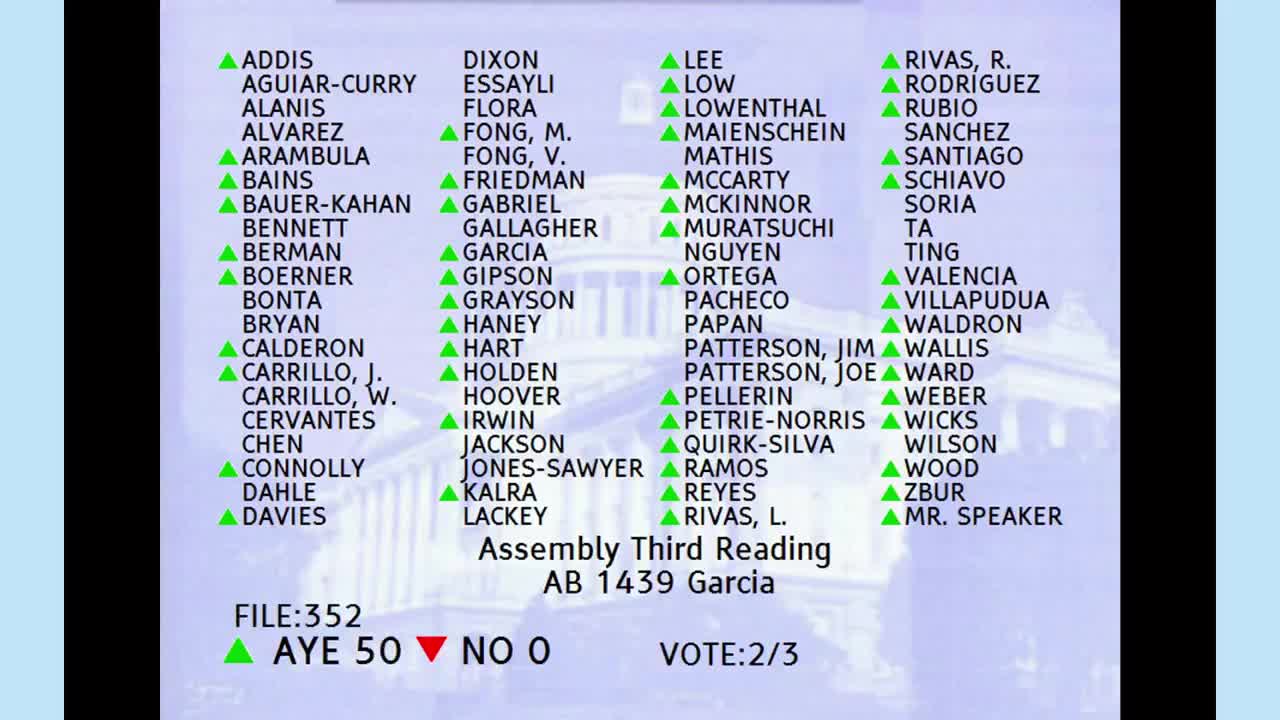 1MIN
Assembly Floor
Bill Author

Bill Co-Author(s):