AB 1520: Pupil instruction: State Seal of Civic Engagement Resource Lead.
- Session Year: 2023-2024
- House: Assembly
- Latest Version Date: 2023-04-18
Current Status:
Failed
(2024-02-01: From committee: Filed with the Chief Clerk pursuant to Joint Rule 56.)
Introduced
In Committee
First Chamber
In Committee
Second Chamber
Enacted
Existing law requires, on or before January 1, 2020, the Superintendent of Public Instruction to recommend to the State Board of Education criteria for awarding a State Seal of Civic Engagement to pupils who have demonstrated excellence in civics education and participation and have demonstrated an understanding of the United States Constitution, the California Constitution, and the democratic system of government.
This bill would establish the State Seal of Civic Engagement Resource Lead for the purpose of providing support and technical assistance to local educational agencies to improve equitable statewide access to the State Seal of Civic Engagement. The bill would, on or before July 1, 2024, require the Superintendent, in consultation with the executive director of the state board, to select a partnership, consisting of an applicant county office of education and a community organization, to administer the State Seal of Civic Engagement Resource Lead, as provided. The bill would require the State Seal of Civic Engagement Resource Lead to, among other duties, coordinate support, provide technical assistance, and deliver professional learning to improve equitable statewide access to the State Seal of Civic Engagement, research and publish best practices in the civic engagement of underserved pupil populations, as provided, and sponsor and promote civic engagement practicums to expand the breadth of support from local educational agencies and community partners for pupils pursuing the State Seal of Civic Engagement, as provided. The bill would require the State Seal of Civic Engagement Resource Lead to submit a report to the State Department of Education by January 1, 2027, that makes findings and recommendations related to evidence-based strategies to provide equitable pupil access to the State Seal of Civic Engagement throughout a local educational agency. The bill would require the department to submit this report to the appropriate fiscal and policy committees of the Legislature, as provided. The bill would make the implementation of these provisions contingent upon an appropriation by the Legislature for these purposes.
Existing law requires the adopted course of study for grades 7 to 12, inclusive, to offer courses in, among other things, social studies, drawing upon the disciplines of anthropology, economics, geography, history, political science, psychology, and sociology, designed to fit the maturity of the pupils. Existing law requires this instruction to, among other things, provide a foundation for understanding the history, resources, development, and government of California and the United States of America.This bill would require school districts, county offices of education, and charter schools to work with registered community organizations, as defined, to voluntarily integrate pupils into civic engagement practicums, as defined, that address community needs and social and individual development. The bill would, among other things, require civic engagement practicums to include activities, training, and training materials that meet specified requirements, including, among others, that they be appropriate for pupils of all races, religions, nationalities, genders, sexual orientations, and diverse ethnic and cultural backgrounds, pupils with disabilities, and English learners. The bill would require the written consent of a pupils parent, legal guardian, or educational rights holder to participate in a civic engagement practicum, and would authorize a pupil to opt out at any time. The bill would require a participating registered community organization to be responsible for any costs associated with a pupils integration into a civic engagement practicum. By imposing additional duties on local educational agencies, the bill would impose a state-mandated local program.The California Constitution requires the state to reimburse local agencies and school districts for certain costs mandated by the state. Statutory provisions establish procedures for making that reimbursement.This bill would provide that, if the Commission on State Mandates determines that the bill contains costs mandated by the state, reimbursement for those costs shall be made pursuant to the statutory provisions noted above.Existing law requires the adopted course of study for grades 7 to 12, inclusive, to offer courses in, among other things, social studies, drawing upon the disciplines of anthropology, economics, geography, history, political science, psychology, and sociology, designed to fit the maturity of the pupils. Existing law requires this instruction to, among other things, provide a foundation for understanding the history, resources, development, and government of California and the United States of America.
This bill would state the intent of the Legislature to enact future legislation relating to civics education, as provided.This bill would require school districts, county offices of education, and charter schools to work with registered community organizations, as defined, to voluntarily integrate pupils into civic engagement practicums, as defined, that address community needs and social and individual development. The bill would, among other things, require civic engagement practicums to include activities, training, and training materials that meet specified requirements, including, among others, that they be appropriate for pupils of all races, religions, nationalities, genders, sexual orientations, and diverse ethnic and cultural backgrounds, pupils with disabilities, and English learners. The bill would require the written consent of a pupils parent, legal guardian, or educational rights holder to participate in a civic engagement practicum, and would authorize a pupil to opt out at any time. The bill would require a participating registered community organization to be responsible for any costs associated with a pupils integration into a civic engagement practicum. By imposing additional duties on local educational agencies, the bill would impose a state-mandated local program.
The California Constitution requires the state to reimburse local agencies and school districts for certain costs mandated by the state. Statutory provisions establish procedures for making that reimbursement.
This bill would provide that, if the Commission on State Mandates determines that the bill contains costs mandated by the state, reimbursement for those costs shall be made pursuant to the statutory provisions noted above.
Existing law requires the adopted course of study for grades 7 to 12, inclusive, to offer courses in, among other things, social studies, drawing upon the disciplines of anthropology, economics, geography, history, political science, psychology, and sociology, designed to fit the maturity of the pupils. Existing law requires this instruction to, among other things, provide a foundation for understanding the history, resources, development, and government of California and the United States of America.
This bill would state the intent of the Legislature to enact future legislation relating to civics education, as provided.
(a)The State Seal of Civic Engagement Resource Lead is hereby established for the purpose of providing support and technical assistance to local educational agencies to improve equitable statewide access to the State Seal of Civic Engagement.
(b)(1)On or before July 1, 2024, the Superintendent, in consultation with the executive director of the state board, shall select a partnership, consisting of a county office of education and a community organization, to administer the State Seal of Civic Engagement Resource Lead.
(2)The Superintendent shall allocate moneys appropriated for purposes of this section to the county office of education selected pursuant to paragraph (1).
(c)The Superintendent shall require that applicants to become the State Seal of Civic Engagement Resource Lead demonstrate both of the following:
(1)The partnerships capacity to provide support and technical assistance to local educational agencies to improve equitable statewide access to the State Seal of Civic Engagement.
(2)The members of the partnerships expertise in fostering local educational agency change management, commitment to racial equity, and experience effectively supporting local educational agencies in providing equitable pupil access to the State Seal of Civic Engagement.
(d)The State Seal of Civic Engagement Resource Lead shall do all of the following:
(1)Coordinate support, provide technical assistance, and deliver professional learning to improve equitable statewide access to the State Seal of Civic Engagement.
(2)Allow for the sharing of problems of practice, promising practices, lessons learned, and relevant resources for different local educational agency settings and stakeholder types, with specific emphasis on establishing partnerships between local educational agencies and community organizations to support equitable pupil access to the State Seal of Civic Engagement.
(3)Establish and standardize, where possible, high-quality civics learning resources and model metrics to inform the continuous improvement of State Seal of Civic Engagement criteria, guidance, and support for relevant, rigorous, and engaging pupil learning and authentic assessments.
(4)Build statewide capacity to further support partnerships between local educational agencies and community organizations to support high-quality civic engagement practicums and projects and expand pupil access to the State Seal of Civic Engagement, especially for underserved pupils and those from marginalized communities.
(5)Identify methodologies to expand access to the State Seal of Civic Engagement for underserved pupils and those from marginalized communities, including rural and tribal communities.
(6)Research and publish best practices in the civic engagement of underserved pupil populations. The best practices shall be posted to the State Seal of Civic Engagements internet website maintained by the department and shared with CaliforniaVolunteers.
(7)Sponsor and promote civic engagement practicums to expand the breadth of support from local educational agencies and community partners for pupils pursuing the State Seal of Civic Engagement.
(8)Ensure that pupils throughout the state, particularly those in communities with high populations of underserved pupils, have equal access to the State Seal of Civic Engagement.
(9)Work directly with local educational agencies to build capacity to engage community organizations in collaborating with schools and teachers to increase awareness of, and support equitable pupil access to and participation in, the State Seal of Civic Engagement.
(10)Align its efforts with the State Seal of Civic Engagement Implementation Roadmap.
(11)By January 1, 2027, submit a report to the department that details the activities carried out in compliance with this section, and that makes findings and recommendations related to evidence-based strategies to provide equitable pupil access to the State Seal of Civic Engagement throughout a local educational agency.
(e)No later than 30 days after receipt of the report described in paragraph (11) of subdivision (d), the department shall submit the report to the appropriate fiscal and policy committees of the Legislature, in compliance with Section 9795 of the Government Code.
(f)For purposes of this section, the following definitions apply:
(1)CaliforniaVolunteers means CaliforniaVolunteers, as established by Executive Order No. S-24-06.
(2)Local educational agency means a school district, county office of education, or charter school.
(g)(1)The implementation of this section shall be contingent upon an appropriation of funds for these purposes in the annual Budget Act or another statute.
(2)It is the intent of the Legislature that any appropriation made pursuant to paragraph (1) shall be applied toward the minimum funding requirements for school districts and community college districts imposed by Section 8 of Article XVI of the California Constitution.
SECTION 1.The Legislature finds and declares all of the following:(a)Civics education includes both learning and doing.(b)In the classroom, civic education teaches the theory of democracy, the forms and structures of our federal, state, and local governments, and the elements of both the Constitution of the United States and the California Constitution.(c)In the community, civics education guides pupils to engage in a practicum for their individual or group involvement in nonpartisan community development, which further prepares them to work with others in a fair and equitable manner based on listening, questioning, respectful dialogue, cooperation, and compromise.(d)A civic engagement practicum educates for democracy and will help protect and promote democracy for future generations, and increase understanding of the power of democracy for all children.(e)A practicum based on equitable civic engagement develops conduct that permits the growth of ethics and values. Direct civic involvement teaches the attributes of public service and fosters an informed citizenry, a strong democracy, and the development of our nations future leaders.(f)Pupils participating in civic engagement practicums learn basic skills for personal, academic, and career success, including practicing consideration of different perspectives, logical reasoning with supportive evidence, engagement in civil discourse, and understanding of the connections between federal, state, and local policies, including those that may impact the pupils school or community.SEC. 2.Article 7.6 (commencing with Section 51785) is added to Chapter 5 of Part 28 of Division 4 of Title 2 of the Education Code, to read:7.6.Civic Engagement Practicums51785.(a)School districts, county offices of education, and charter schools shall work with registered community organizations to voluntarily integrate pupils into civic engagement practicums that address community needs and social and individual development.(b)A civic engagement practicum for purposes of subdivision (a) shall include activities, training, and training materials that meet all of the following requirements:(1)Are appropriate for pupils of all races, religions, nationalities, genders, sexual orientations, and diverse ethnic and cultural backgrounds, pupils with disabilities, and English learners.(2)Do not reflect or promote, directly or indirectly, any bias, bigotry, or discrimination against any person or group of persons.(3)Do not promote or practice religious doctrine.(4)Are nonpartisan in nature.(c)A participating registered community organization shall comply with any applicable legal requirements, including, but not limited to, any requirements relating to liability, insurance, background checks, and the management and supervision of all persons, employees, or volunteers, who interact with pupils, including those specified in Section 45125.1.(d)(1)Participation in a civic engagement practicum shall require the written consent of a pupils parent, legal guardian, or educational rights holder.(2)A pupil may opt out of a civic engagement practicum at any time.(e)A participating registered community organization shall be responsible for any costs associated with a pupils integration into a civic engagement practicum.(f)For purposes of this article, the following definitions apply:(1)Civic engagement practicum means a practical activity and training that develops civic-mindedness through organizing and mobilizing human and material resources for efforts to revitalize and develop the quality of life, including, but not limited to, organizing community cleanups, public health campaigns, and promoting and educating the community about public resources, such as events sponsored by public parks, libraries, and fire and police departments.(2)Registered community organization means a legal entity with community stakeholder or community partnership capacity, registered with the Secretary of State, that is nonpartisan in nature, and which may include, but is not limited to, a nonprofit public benefit corporation that is formed pursuant to the Nonprofit Corporation Law (Division 2 (commencing with Section 5000) of Title 1 of the Corporations Code), qualified to do business in California, and qualified under Section 501(c)(3) of the Internal Revenue Code.SEC. 3.If the Commission on State Mandates determines that this act contains costs mandated by the state, reimbursement to local agencies and school districts for those costs shall be made pursuant to Part 7 (commencing with Section 17500) of Division 4 of Title 2 of the Government Code.The Legislature finds and declares all of the following:
(a)Civics education includes both learning and doing.
(b)In the classroom, civic education teaches the theory of democracy, the forms and structures of our federal, state, and local governments, and the elements of both the Constitution of the United States and the California Constitution.
(c)In the community, civics education guides pupils to engage in a practicum for their individual or group involvement in nonpartisan community development, which further prepares them to work with others in a fair and equitable manner based on listening, questioning, respectful dialogue, cooperation, and compromise.
(d)A civic engagement practicum educates for democracy and will help protect and promote democracy for future generations, and increase understanding of the power of democracy for all children.
(e)A practicum based on equitable civic engagement develops conduct that permits the growth of ethics and values. Direct civic involvement teaches the attributes of public service and fosters an informed citizenry, a strong democracy, and the development of our nations future leaders.
(f)Pupils participating in civic engagement practicums learn basic skills for personal, academic, and career success, including practicing consideration of different perspectives, logical reasoning with supportive evidence, engagement in civil discourse, and understanding of the connections between federal, state, and local policies, including those that may impact the pupils school or community.
SEC. 2.Article 7.6 (commencing with Section 51785) is added to Chapter 5 of Part 28 of Division 4 of Title 2 of the Education Code, to read:7.6.Civic Engagement Practicums51785.(a)School districts, county offices of education, and charter schools shall work with registered community organizations to voluntarily integrate pupils into civic engagement practicums that address community needs and social and individual development.
(b)A civic engagement practicum for purposes of subdivision (a) shall include activities, training, and training materials that meet all of the following requirements:
(1)Are appropriate for pupils of all races, religions, nationalities, genders, sexual orientations, and diverse ethnic and cultural backgrounds, pupils with disabilities, and English learners.
(2)Do not reflect or promote, directly or indirectly, any bias, bigotry, or discrimination against any person or group of persons.
(3)Do not promote or practice religious doctrine.
(4)Are nonpartisan in nature.
(c)A participating registered community organization shall comply with any applicable legal requirements, including, but not limited to, any requirements relating to liability, insurance, background checks, and the management and supervision of all persons, employees, or volunteers, who interact with pupils, including those specified in Section 45125.1.
(d)(1)Participation in a civic engagement practicum shall require the written consent of a pupils parent, legal guardian, or educational rights holder.
(2)A pupil may opt out of a civic engagement practicum at any time.
(e)A participating registered community organization shall be responsible for any costs associated with a pupils integration into a civic engagement practicum.
(f)For purposes of this article, the following definitions apply:
(1)Civic engagement practicum means a practical activity and training that develops civic-mindedness through organizing and mobilizing human and material resources for efforts to revitalize and develop the quality of life, including, but not limited to, organizing community cleanups, public health campaigns, and promoting and educating the community about public resources, such as events sponsored by public parks, libraries, and fire and police departments.
(2)Registered community organization means a legal entity with community stakeholder or community partnership capacity, registered with the Secretary of State, that is nonpartisan in nature, and which may include, but is not limited to, a nonprofit public benefit corporation that is formed pursuant to the Nonprofit Corporation Law (Division 2 (commencing with Section 5000) of Title 1 of the Corporations Code), qualified to do business in California, and qualified under Section 501(c)(3) of the Internal Revenue Code.
SEC. 3.If the Commission on State Mandates determines that this act contains costs mandated by the state, reimbursement to local agencies and school districts for those costs shall be made pursuant to Part 7 (commencing with Section 17500) of Division 4 of Title 2 of the Government Code.
SECTION 1.It is the intent of the Legislature to enact future legislation to do both of the following:(a)Establish a community civic learning project for civics learning training to ensure that teachers and other certificated employees of schools operated by a school district or county office of education and charter schools have the tools and training necessary to meet the needs for equitable study and practice of all pupils in the ethics inherent in participating in democracy.(b)Ensure that California schools are safe and supportive of equitable participation in civics education.It is the intent of the Legislature to enact future legislation to do both of the following:
(a)Establish a community civic learning project for civics learning training to ensure that teachers and other certificated employees of schools operated by a school district or county office of education and charter schools have the tools and training necessary to meet the needs for equitable study and practice of all pupils in the ethics inherent in participating in democracy.
(b)Ensure that California schools are safe and supportive of equitable participation in civics education.
|
Date
|
Status
|
|---|---|
| Feb 1, 2024 | From committee: Filed with the Chief Clerk pursuant to Joint Rule 56. |
| Jan 31, 2024 | Died pursuant to Art. IV, Sec. 10(c) of the Constitution. |
| May 18, 2023 | In committee: Held under submission. |
| May 3, 2023 | In committee: Set, first hearing. Referred to APPR. suspense file. |
| Apr 19, 2023 | Re-referred to Com. on APPR. |
| Apr 18, 2023 | Read second time and amended. |
| Apr 17, 2023 | From committee: Amend, and do pass as amended and re-refer to Com. on APPR. (Ayes 7. Noes 0.) (April 12). |
| Mar 27, 2023 | Re-referred to Com. on ED. |
| Mar 23, 2023 | From committee chair, with author's amendments: Amend, and re-refer to Com. on ED. Read second time and amended. |
| Mar 23, 2023 | Referred to Com. on ED. |
| Feb 18, 2023 | From printer. May be heard in committee March 20. |
| Feb 17, 2023 | Read first time. To print. |
|
Date
|
Description
|
Location
|
Votes
|
|
|---|---|---|---|---|
| Apr 12, 2023 | Do pass as amended and be re-referred to the Committee on [Appropriations] | Assembly Standing Committee on Education |
Passed |
This list shows positions taken on this bill by organizations on the date displayed, which is linked to the original source.
Positions by individuals are not included.
|
Organization
|
Position
|
Date
|
|---|---|---|
| Alameda High School | * Support | Apr 12, 2023 |
| Alameda Science and Technology Institute | * Support | Apr 12, 2023 |
| Asian Pacific Islanders American Public Affairs | * Support | Apr 12, 2023 |
| Authentic Preparation Today | * Support | Apr 12, 2023 |
| Authentic Preparation Today | ** Support | |
| Bishop O'Dowd High School | * Support | Apr 12, 2023 |
| California Resident | * Support | Apr 12, 2023 |
| California-Hawaii State Conference Of The Naacp | ** Support | |
| Californians Advancing Civic Education | ** Support | |
| Children Now | * Support | Apr 12, 2023 |
| City Of Oakland | * Support | Apr 12, 2023 |
| College of Alameda Running Start Program | * Support | Apr 12, 2023 |
| Communities United for Restorative Youth Justice | ** Support | |
| Encinal Junior Senior High School | * Support | Apr 12, 2023 |
| Grace Episcopal Church Martinez | ** Support | |
| Hiram Johnson High School | * Support | Apr 12, 2023 |
| League of Women Voters, Oakland | ** Support | |
| Life Academy | * Support | Apr 12, 2023 |
| Martin Luther King Jr Freedom Center | * Support | Apr 12, 2023 |
| Martin Luther King Jr. Rally Committee | ** Support | |
| Merritt College | * Support | Apr 12, 2023 |
| Metwest High School | * Support | Apr 12, 2023 |
| Milpitas Unified School District | ** Support | |
| Oakland Technical High School | * Support | Apr 12, 2023 |
| Oakland Technical High School | * Support | Apr 12, 2023 |
| University of California Davis | * Support | Apr 12, 2023 |
| West Sacramento | * Support | Apr 12, 2023 |
Date of Hearing: May 3, 2023
ASSEMBLY COMMITTEE ON APPROPRIATIONS
Chris Holden, Chair
ABPCA Bill Id:AB 1520
Author:(Bonta) – As Amended Ver:April 18, 2023
Policy Committee: | Education | Vote: | 7 - 0 |
|
| ||
|
|
Urgency: No State Mandated Local Program: No Reimbursable: No
SUMMARY:
This bill, subject to appropriation, requires the Superintendent of Public Instruction, by July 1, 2024, to select a partnership consisting of a county office of education (COE) and a community organization to serve as the State Seal of Civic Engagement Resource Lead. Specifically, the State Seal of Civic Engagement Resource Lead is to engage in a wide range of duties, including the coordination of support, provision of technical assistance, and delivery of professional learning to improve equitable access for students, especially those in marginalized communities to the State Seal of Civic Engagement.
In addition, the bill requires the State Seal of Civic Engagement Resource Lead to submit a report to the California Department of Education (CDE) by January 1, 2027, detailing its activities, and making findings and recommendations related to equitable access to the State Seal of Civic Engagement. CDE is then to submit the report to the Legislation within 30 days of receipt.
FISCAL EFFECT:
- Ongoing Proposition 98 General Fund costs of an undefined amount, but likely in the hundreds of thousands of dollars annually, to CDE to provide to a State Seal of Civic Engagement Resource Lead housed at a COE.
- One-time General Fund costs of about $150,000 for CDE to select the State Seal of Civic Engagement Resource Lead oversee the Lead.
COMMENTS:
- Purpose. The author intends this bill to provide support to LEAs and charter schools so that they may provide equitable student access to the State Seal of Civic Engagement.
- Background. Diploma seals are badges that are affixed to the diplomas of qualifying high school graduates to indicate excellence in certain areas. CDE sends out the seals to participating California schools to affix.
AB 24 (Eggman), Chapter 604, Statutes of 2017, established the State Seal of Civic Engagement, to be affixed to the diploma of qualifying high school graduates, based on a demonstration of excellence in civics education and participation. The bill required the State Board of Education (SBE) to establish five criteria for the awarding of the State Seal of Civic Engagement. In 2020, SBE established the criteria with the intent of providing LEAs with guidelines that would allow them to make their own judgement of student qualifications for the seal based on their local contexts. The criteria are: (a) be engaged in academic work in a productive way; (b) demonstrate a competent understanding of United States and California constitutions, functions and governance of local governments, tribal government structures and organizations, the role of the citizen in a constitutional democracy, and democratic principles, concepts, and processes; (c) participate in one or more informed civic engagement project(s) that address real-world problems and require students to identify and inquire into civic needs or problems, consider varied responses, take action, and reflect on efforts; (d) demonstrate civic knowledge, skills, and dispositions through self-reflection; and (e) exhibit character traits that reflect civic-mindedness and a commitment to positively impact the classroom, school, community and/or society.
According to the CDE, in the 2020-21 school year, 103 schools participated in the State Seal of Civic Engagement program in 28 school districts, and 5,359 Seals were issued. In the 2021-22 school year 181 schools participated in 65 school districts, and 10,104 Seals were issued.
- Related Legislation. AB 370 (Addis) of this legislative session adds several new ways for a student to demonstrate that they have met the criteria to earn the State Seal of Biliteracy on their high school diploma. The bill is pending on the floor.
AB 535 (Irwin) of this legislative session would require, on or before July 1, 2024, the SPI to select a COE to serve as a Statewide School Library Lead. The bill is pending on this committee’s suspense file.
- Prior Legislation. AB 815 (Brownley), Chapter 618, Statutes of 2011, established the State Seal of Biliteracy to recognize high school graduates who have attained a high level of proficiency in speaking, reading, and writing in one or more languages in addition to English. In the 2020-21 school year, over 70,000 students earned the seal.
Analysis Prepared by: Natasha Collins / APPR. / (916) 319-2081
Date of Hearing: April 12, 2023
ASSEMBLY COMMITTEE ON EDUCATION
Al Muratsuchi, Chair
ABPCA Bill Id:AB 1520 (
Author:Bonta) – As Amended Ver:March 23, 2023
AS PROPOSED TO BE AMENDED
SUBJECT: Student instruction: civic engagement practicums
SUMMARY: Establishes the State Seal of Civic Engagement Resource Lead, composed of a partnership between a county office of education (COE) and a community organization, for the purpose of providing support and technical assistance to local educational agencies (LEAs) and charter schools to improve equitable statewide access to the State Seal of Civic Engagement. Specifically, this bill:
- Establishes the State Seal of Civic Engagement Resource Lead for the purposes of providing support and technical assistance to LEAs and charter schools to improve equitable statewide access to the State Seal of Civic Engagement.
- Requires the SPI, by July 1, 2024, in consultation with the executive director of the State Board of Education (SBE) to select a partnership consisting of a COE and a community organization with demonstrated capacity to serve as the State Seal of Civic Engagement Resource Lead.
- Requires the SPI to require that applicants do both of the following:
- Demonstrate the partnership’s capacity to provide support and technical assistance to LEAs to improve equitable statewide access to the State Seal of Civic Engagement; and
- Demonstrates that the members of the partnership have expertise in fostering LEA change management, a commitment to racial equity, and experience effectively supporting LEAs in providing equitable student access to the State Seal of Civic Engagement.
- Requires the State Seal of Civic Engagement Resource Lead to do all of the following:
- Coordinate support, provide technical assistance, and deliver professional learning to improve equitable statewide access to the State Seal of Civic Engagement;
- Allow for the sharing of problems of practice, promising practices, lessons learned, and relevant resources for different LEA settings and stakeholder types, with specific emphasis on establishing partnerships between LEAs and community organizations to support equitable student access to the State Seal of Civic Engagement;
- Establish and standardize, where possible, high-quality civic learning resources and model metrics to inform the continuous improvement of State Seal of Civic Engagement criteria, guidance and support for relevant, rigorous, and engaging student learning and authentic assessments;
- Build statewide capacity to further support partnerships between LEAs and community organizations to support high-quality civic engagement practicums and projects and expand student access to the State Seal of Civic Engagement, especially for underserved students and those from marginalized communities;
- Identify methodologies to expand the State Seal of Civic Engagement to underserved students and those from marginalized communities, including rural and tribal communities;
- Research and publish best practices in the civic engagement of underserved student populations. Requires the best practices to be posted to the State Seal of Civic Engagement’s website maintained by the California Department of Education (CDE) and shared with California Volunteers;
- Sponsor and promote civic engagement practicums to expand the breadth of support from LEAs and community partners for students pursuing the State Seal of Civic Engagement;
- Ensure that students throughout the state, particularly those in communities with high populations of underserved students, have equal access to the State Seal of Civic Engagement;
- Work directly with LEAs to build capacity to engage community organizations in collaborating with schools and teachers to increase awareness of, and support equitable student access to and participation in, the State Seal of Civic Engagement;
- Align the State Seal of Civic Engagement Network efforts with the State Seal of Civic Engagement Implementation Roadmap; and
- By January 1, 2027, submit a report to the CDE which details the activities carried out in compliance with this section, and which makes findings and recommendations related to evidence-based strategies to provide equitable student access to the State Seal of Engagement throughout an LEA. Requires that, no later than 30 days after receipt of this report, the CDE submit this report to the appropriate fiscal and policy committees of the Legislature.
- Establishes the following definitions for purposes of the measure:
- California Volunteers” means California Volunteers, as established by Executive Order No. S-24-06.
- “Local educational agency” means a school district, county office of education, or charter school.
- The implementation of this section shall be contingent upon an appropriation for these purposes in the annual Budget Act or another statute.
- State that Proposition 98 funds designated for this purpose can only be appropriated to a COE.
EXISTING LAW:
- States the intent of the Legislature to create a State Seal of Civic Engagement to encourage, and create pathways for, students in elementary and secondary schools to become civically engaged in democratic governmental institutions at the local, state, and national levels. (Education Code (EC) 51470)
- Requires the SPI, on or before January 1, 2020, to recommend to the State Board of Education (SBE) criteria for awarding a State Seal of Civic Engagement to students who have demonstrated excellence in civics education and participation and have demonstrated an understanding of the United States Constitution, the California Constitution, and the democratic system of government.
- Requires the SPI, in developing criteria for the State Seal of Civic Engagement, to incorporate the Six Proven Practices for Effective Civic Learning, and to consult with a diverse group of credentialed, current, classroom teachers who teach the subject of history-social science, including government, in secondary schools. Requires the SPI to also consider including criteria based on each of the following:
- Successful completion of history, government, and civics courses, including courses that incorporate character education;
- Voluntary participation in community service or extracurricular activities; and
- Any other related requirements as it deems appropriate.
- Requires the SPI to ensure, to the greatest extent feasible, that the criteria:
- Provide all students with an opportunity to earn the State Seal of Civic Engagement;
- Recognize student excellence or outstanding achievement;
- Are not based primarily on student achievement that is already recognized through grades or other standard measures of student achievement; and
- To the extent possible, result in a seal that confers some benefit to students beyond secondary school.
- Requires, on or before January 31, 2021, the SBE to adopt, reject, or modify the criteria.
- States that school district participation in this program is voluntary. (EC 51471)
- Requires the SPI to do both of the following:
- Prepare and deliver to participating school districts an appropriate insignia to be affixed to the diploma or transcript of the student indicating that the student has been awarded a State Seal of Civic Engagement by the SPI; and
- Provide other information he or she deems necessary for school districts to successfully participate in the program. (EC 51472)
- Requires a participating school district to:
- Maintain appropriate records in order to identify students who have earned a State Seal of Civic Engagement; and
- Affix the appropriate insignia to the diploma or transcript of each student who earns a State Seal of Civic Engagement. (EC 51473)
- Prohibits a student from being charged to receive a State Seal of Civic Engagement. (EC 51474)
- Establishes the State Seal of Biliteracy (SSB), which certifies attainment of a high level of proficiency by a graduating high school student in one or more languages, in addition to English. (EC 51461)
FISCAL EFFECT: Unknown
COMMENTS:
Need for the bill. According to the author, “Civic learning is critical in helping young people develop the knowledge, skills, and commitments to interact effectively with fellow community members to address shared problems and become civically engaged. While civic engagement is a necessary component of effective governance, many students are not receiving the civic education necessary to support informed and active participation in civic and political life. Research shows that low-income students of color are impacted disproportionately by a lack of equitable access to civic learning opportunities.
AB 1520 creates the State Seal of Civic Engagement Network to facilitate statewide collaborations between community-based organizations and local education agencies to develop and advance high-quality civic learning practices and resources and expand equitable student access to the State Seal of Civic Engagement.”
State Seal of Civic Engagement. This bill is intended to provide support to LEAs and charter schools so that they may provide equitable student access to the State Seal of Civic Engagement.
AB 24 (Eggman), Chapter 604, Statutes of 2017, required the SBE to establish five criteria for the awarding of the State Seal of Civic Engagement. The SBE established these five criteria in 2020.
The five criteria are meant to provide LEAs with a Framework for making determinations of student qualifications required to earn the State Seal of Civic Engagement, based on their own local contexts. The criteria were written to ensure that no student is excluded from an opportunity to earn the State Seal of Civic Engagement based on academic ability, alternative school settings, or unique or unconventional expressions of civic engagement. The student must:
- Be engaged in academic work in a productive way;
- Demonstrate a competent understanding of United States and California constitutions; functions and governance of local governments; tribal government structures and organizations; the role of the citizen in a constitutional democracy; and democratic principles, concepts, and processes;
- Participate in one or more informed civic engagement project(s) that address real-world problems and require students to identify and inquire into civic needs or problems, consider varied responses, take action, and reflect on efforts;
- Demonstrate civic knowledge, skills, and dispositions through self-reflection; and
- Exhibit character traits that reflect civic-mindedness and a commitment to positively impact the classroom, school, community and/or society.
State Seal of Civic Engagement data. Participation in this program has been small but growing. According to the CDE, in the 2020-21 school year 103 schools participated in 28 school districts, and 5,359 Seals were issued. In the 2021-22 school year 181 schools participated in 65 school districts, and 10,104 Seals were issued. This includes a very small number which were added to Certificates of Completion for students with disabilities and to GED certificates.
Seal of Civic Engagement Implementation Roadmap. This bill requires that the State Seal of Civic Engagement Resource Lead to align its efforts with the State Seal of Civic Engagement Implementation Roadmap. This Roadmap emphasizes the instructional shifts needed to facilitate student civic engagement, involving a cycle of inquiry, investigation, civil dialogue, and informed action. The Roadmap emphasizes four guiding principles in the development of these programs: ensuring equitable and universal access, valuing and honoring students and their community as positive assets, promoting student-centered learning to support the whole child to effect positive change, and providing enabling conditions and structures of support. The Committee may wish to consider that, unlike the State Seal of Biliteracy, schools often need to establish new programs and community partnerships to create the conditions for their students to qualify for the State Seal of Civic Engagement.
Six Proven Practices for Effective Civic Learning. Existing law required the SBE, in establishing criteria for the State Seal of Civic Engagement to incorporate the Six Proven Practices for Effective Civic Learning, developed by the Education Commission of the States. These Six Practices are:
- Provide instruction in government, history, law, and democracy;
- Incorporate discussion of current local, national, and international issues and events in the classroom, particularly those that young people view as important to their lives;
- Design and implement programs that provide students with opportunities to apply what they learn through performing community service that is linked to the formal curriculum and classroom instruction;
- Offer extracurricular activities that provide opportunities for young people to get involved in their schools or communities;
- Encourage student participation in school governance; and
- Encourage students’ participation in simulations of democratic processes and procedures.
Lead agencies in the Statewide System of Support (SOS). This bill proposes to establish the State Seal of Civic Engagement Resource Lead.
California's SOS is a key aspect of California's accountability and continuous improvement system. The goal of the system of support is to help LEAs and their schools meet the needs of the students they serve.
The Local Control Funding Formula (LCFF) identifies both Lead Agencies and State Agencies and tasks them with advancing the goal and purposes of the SOS. The Lead Agencies are tasked with building capacity and developing and providing supports to particular entities or groups within California’s education system, while the State Agencies are tasked with facilitating and coordinating the work of the Lead Agencies.
The support provided by these agencies ensures that there is: 1) a clear point of contact for a school district or COE to seek support responsive to a locally identified need, 2) a clear process and responsibility for agencies within the system of support to work together to connect the school district or COE with relevant resources or avenues for assistance, and 3) improved visibility of the resources, expertise, and services available across the state through various agencies and state-funded initiatives to support student success. The Committee may wish to consider the numerous “lead” projects that have been recently established as the SOS has grown. They include:
- Geographic Lead Agencies’
- Multi-Tiered Systems of Support;
- Expert Lead in Literacy;
- Special Education Resource Leads;
- Community Engagement Initiative Lead Agencies;
- Title III COE Regional English Learner Specialists;
- Educator Workforce Investment Program;
- 21st Century California School Leadership Academy;
- California Dyslexia Initiative;
- Statewide SOS for Expanded Learning;
- Early Math Initiative; and
- Homeless Education Technical Assistance Centers
Civic education in History-Social Science Curriculum Framework. California’s history-social science Framework, adopted by the SBE in July, 2016, addresses civic engagement throughout the document.
According to the CDE, the Framework includes more than thirty detailed classroom examples from a wide range of grade levels that show teachers how they can tailor instruction to address not only the history–social science standards, but also the English Language Arts (ELA)/English Language Development (ELD) standards. The classroom examples include a number with a civic focus, such as:
- Kindergarten: Being a Good Citizen
- Grade Three: Classroom Constitution
- Grade Five: The Preamble
- Grade Eight: The Civic Purpose of Public Education
- Grade Twelve: Judicial Review
In addition to the classroom examples, the CDE reports that there are many places in the Framework’s course descriptions where there are suggestions for activities that engage students in civic learning. Some examples include:
- Studying key American symbols and heroes through grade-appropriate literature, songs, and images in kindergarten through 3rd grade;
- Simulations of government activities (e.g., a Congressional hearing debating the bill of rights in 5th grade, planning and participating in a mock election in 8th grade, or conducting mock trials of landmark Supreme Court cases in 11th grade);
- Suggestions for engaging in service-learning projects such as voter education and registration activities;
- Suggestions for inquiry-based projects that include student interviews of legislators and other public officials, civil rights activists, or members of the military; and
- Suggestions for ways that students can get involved in campaigns to address local issues at the school or community level (e.g., recycling, campus safety).
The 12th grade curriculum “Principles of American Democracy” section includes a focus on the questions, “What does it mean to be a citizen?” and “How can citizens improve democracy?” The course description states: “Students learn that democracies depend upon an actively engaged citizenry – individuals who fully participate in the responsibilities of citizenship (such as voting, serving in the military, or regular public service) – for their long-term survival.”
This 12th grade course description also suggests the use of structured group discussion techniques, simulations, classroom debates, and civics-based serving learning activities, designed to provide students with concrete answers to the question. Other suggested activities include participating in classroom mock trials, visiting court rooms, serving as poll workers, participating in voter registration, simulating or visit city council meetings, conducting projects to identify, analyze and address a community problem, competing in civic-writing activities, and participate in service-learning.
The Framework also includes two appendices devoted to civic engagement and service-learning:
- Appendix D: Educating for Democracy: Civic Education in the History–Social Science Curriculum, which includes the Six Proven Practices for Effective Civic Learning; and
- Appendix H: Practicing Civic Engagement: Service Learning in the History-Social Science Framework, which provides definitions, examples, and reasons for encouraging service-learning in the curriculum.
Arguments in support. Communities United for Restorative Youth Justice writes, “One of the fundamental purposes of public education is to prepare young people for active, engaged participation in civic life. Equipping young people with the resources and skills required to assess community needs, ascertain possible solutions, reflect, and work with governmental and civic structures to effect solutions is the essence of meaningful civic participation. Yet, opportunities to engage in constructive community problem solving are not widely nor equitably accessible across the counties and school districts of our state. AB 1520 closes persistent gaps in civic engagement equity and access by creating a Civic Engagement Access and Equity Network to co-facilitate statewide collaborations between community-based organizations and local education agencies (county offices of education and school districts).”
Related legislation. AB 24 (Eggman), Chapter 604, Statutes of 2017, establishes the State Seal of Civic Engagement, to be affixed to the diploma of qualifying high school graduates, based on a demonstration of excellence in civics education and participation.
AB 535 (Irwin) of the 2023-24 Session would require, on or before July 1, 2024, the SPI to select a COE to serve as a Statewide School Library Lead (SSLL) to work collaboratively with the California Collaborative for Educational Excellence (CCEE) for the purpose of establishing library and literacy services that support the SOS.
AB 1142 (Medina), Chapter 208, Statutes of 2017, updates the English language arts and English language development assessments used to determine recipients of the SSB.
AB 2072 (Chang) of the 2015-16 Session would have established the State Seal of STEM to recognize high school graduates who have attained proficiency in STEM content. This bill was held in the Senate Appropriations Committee.
AB 815 (Brownley), Chapter 618, Statutes of 2011, established the SSB to recognize high school graduates who have attained a high level of proficiency in speaking, reading, and writing in one or more languages in addition to English.
REGISTERED SUPPORT / OPPOSITION:
Support
Authentic Preparation Today
Bishop O’Dowd High School
California-Hawaii State Conference of the NAACP
Californians Advancing Civic Education
Communities United for Restorative Youth Justice
Grace Episcopal Church Martinez
League of Women Voters, Oakland
Martin Luther King Jr. Rally Committee
Martin Luther King Jr. Freedom Center
Milpitas Unified School District
56 individuals
Opposition
None on file
Analysis Prepared by: Tanya Lieberman / ED. / (916) 319-2087
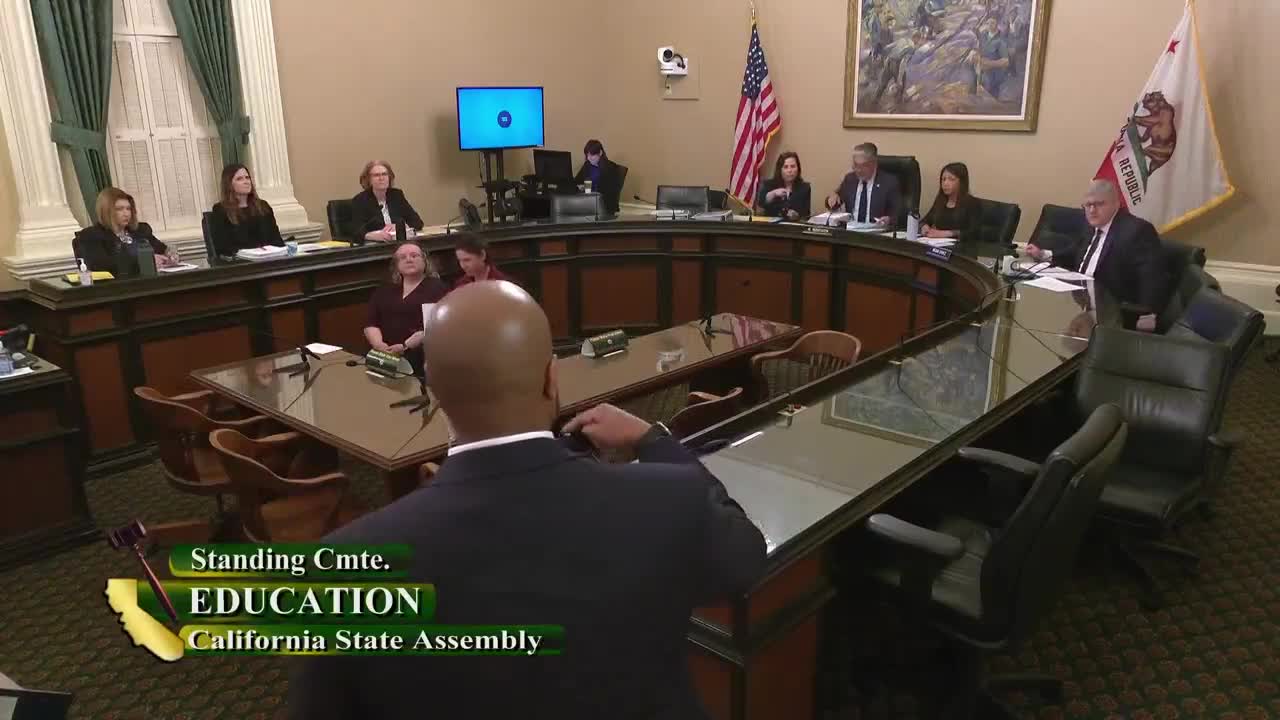
Discussed in Hearing
 16MIN
Assembly Standing Committee on Education
Bill Author
Bill Co-Author(s):