AB 1529: Electric vehicle charging stations.
- Session Year: 2023-2024
- House: Assembly
- Latest Version Date: 2023-04-17
Current Status:
Failed
(2024-02-01: From committee: Filed with the Chief Clerk pursuant to Joint Rule 56.)
Introduced
In Committee
First Chamber
In Committee
Second Chamber
Enacted
What does this bill do?
Requires the California Energy Commission to submit to the Legislature by July 1, 2025 a report assessing whether gasoline stations can be converted into electric vehicle charging stations and identifying potential financial incentives and regulatory barriers for station owners.
The summary is provided by generative AI which can make mistakes. For original language, please view the details in the table below.
Existing law requires the State Energy Resources Conservation and Development Commission, working with specified state entities, to prepare a statewide assessment of the electric vehicle charging infrastructure needed to support the levels of electric vehicle adoption required to meet the goals of putting at least 5,000,000 zero-emission vehicles in service by 2030 and of reducing emissions of greenhouse gases to 40% below 1990 levels by 2030.
This bill would require the commission to identify submit to the Legislature, no later than July 1, 2025, a report assessing the suitability of gasoline stations for conversion into electric vehicle charging stations and identifying potential financial incentives and regulatory incentives barriers for gasoline stations to convert to electric vehicle charging stations.
Existing law requires the State Energy Resources Conservation and Development Commission, working with specified state entities, to prepare a statewide assessment of the electric vehicle charging infrastructure needed to support the levels of electric vehicle adoption required to meet the goals of putting at least 5,000,000 zero-emission vehicles in service by 2030 and of reducing emissions of greenhouse gases to 40% below 1990 levels by 2030.
This bill would state the intent of the Legislature to enact subsequent legislation to provide financial and regulatory incentives to convert gasoline stations to electric vehicle charging stations.This bill would require the commission to identify potential financial and regulatory incentives for gasoline stations to convert to electric vehicle charging stations.
Existing law requires the State Energy Resources Conservation and Development Commission, working with specified state entities, to prepare a statewide assessment of the electric vehicle charging infrastructure needed to support the levels of electric vehicle adoption required to meet the goals of putting at least 5,000,000 zero-emission vehicles in service by 2030 and of reducing emissions of greenhouse gases to 40% below 1990 levels by 2030.
This bill would state the intent of the Legislature to enact subsequent legislation to provide financial and regulatory incentives to convert gasoline stations to electric vehicle charging stations.
(a)The State Energy Resources Conservation and Development Commission shall identify submit to the Legislature no later than July 1, 2025, in compliance with Section 9795 of the Government Code, a report assessing the suitability of gasoline stations for conversion into electric vehicle charging stations and identifying potential financial incentives and regulatory incentives barriers for gasoline stations to convert to electric vehicle charging stations.
(b)Pursuant to Section 10231.5 of the Government Code, this section is repealed on January 1, 2029.
The State Energy Resources Conservation and Development Commission shall identify potential financial and regulatory incentives for gasoline stations to convert to electric vehicle charging stations.
SECTION 1.It is the intent of the Legislature to enact subsequent legislation to provide financial and regulatory incentives to convert gasoline stations to electric vehicle charging stations.It is the intent of the Legislature to enact subsequent legislation to provide financial and regulatory incentives to convert gasoline stations to electric vehicle charging stations.
|
Date
|
Status
|
|---|---|
| Feb 1, 2024 | From committee: Filed with the Chief Clerk pursuant to Joint Rule 56. |
| Jan 31, 2024 | Died pursuant to Art. IV, Sec. 10(c) of the Constitution. |
| Apr 18, 2023 | Re-referred to Com. on TRANS. |
| Apr 17, 2023 | Read second time and amended. |
| Apr 13, 2023 | From committee: Amend, and do pass as amended and re-refer to Com. on TRANS. (Ayes 13. Noes 0.) (April 12). |
| Mar 20, 2023 | Re-referred to Com. on U. & E. |
| Mar 16, 2023 | From committee chair, with author's amendments: Amend, and re-refer to Com. on U. & E. Read second time and amended. |
| Mar 16, 2023 | Referred to Coms. on U. & E. and TRANS. |
| Feb 18, 2023 | From printer. May be heard in committee March 20. |
| Feb 17, 2023 | Read first time. To print. |
|
Date
|
Description
|
Location
|
Votes
|
|
|---|---|---|---|---|
| Apr 12, 2023 | Do pass as amended and be re-referred to the Committee on [Transportation] | Assembly Standing Committee on Utilities and Energy |
Passed |
This list shows positions taken on this bill by organizations on the date displayed, which is linked to the original source.
Positions by individuals are not included.
|
Organization
|
Position
|
Date
|
|---|---|---|
| Climate Reality Project, Los Angeles Chapter | ** Support | |
| Climate Reality Project, San Fernando Valley | ** Support |
Date of Hearing: April 12, 2023
ASSEMBLY COMMITTEE ON UTILITIES AND ENERGY
Eduardo Garcia, Chair
ABPCA Bill Id:AB 1529 (
Author:Gabriel) – As Amended Ver:March 16, 2023
SUBJECT: Electric vehicle charging stations
SUMMARY: Requires the California Energy Commission (CEC) to identify potential financial and regulatory incentives for gasoline stations to convert to electric vehicle (EV) charging stations.
EXISTING LAW:
- Creates the Clean Transportation Program (CTP), administered by the CEC, to provide competitive grants, loans, or other funding to various entities to develop and deploy technologies that transform California’s fuel and vehicle types to help attain the state’s climate change policies. (Health and Safety Code § 44272)
- Requires the CEC, working with the California Air Resources Board (CARB) and the California Public Utilities Commission (CPUC), to prepare a statewide assessment of the EV charging infrastructure needed to support the levels of EV adoption required for the state to meet its goals of putting at least five million zero-emission vehicles (ZEVs) on California roads by 2030, and of reducing emissions of greenhouse gases (GHG) to 40% below 1990 levels by 2030. (Public Resources Code § 25229)
- Requires the CEC, in consultation with CARB, to assess whether charging station infrastructure is disproportionately deployed by population density, geographical area, or population income level. (Public Resources Code § 25231)
- Creates the Alternative and Renewable Fuel and Vehicle Technology Fund to be administered by the CEC to implement the CTP. Requires the CEC to include in the biennial integrated energy policy report (IEPR) a list of projects funded, the expected benefits in terms of specified characteristics, the overall contribution of the funded projects toward specified goals, key obstacles and challenges to meeting the goals, and recommendations for future actions. (Public Resources Code § 44273)
FISCAL EFFECT: Unknown. This bill is keyed fiscal and will be referred to the Committee on Appropriations for its review.
BACKGROUND:
ZEVerything, ZEVerywhere, All At Once? – California’s transportation sector is currently the largest source of GHG emissions in the state and, in the interest of meeting the state’s emissions reduction targets, California has set a goal that 100% of new passenger vehicles sales will be ZEVs by 2035.[1] Meeting the state’s ZEV goals will require a significant increase in the number of light-, medium-, and heavy-duty ZEVs on the road and a drastic increase in the infrastructure to support these vehicles. Cumulative sales of ZEVs, which include EVs, in California reached 1.1 million in the first quarter of 2022, with ZEVs accounting for 16% of new car sales.
To support the rapidly deployment of ZEVs, in 2018, the governor set a goal of having 250,000 chargers, including 10,000 direct current fast chargers, operating in California by 2025.[2] The CEC projects over 700,000 public and shared private chargers will be needed to support the charging needs of 5 million ZEVs, and nearly 1.2 million chargers would be required to support 8 million ZEVs, in 2030. An additional 157,000 chargers are needed to support 180,000 medium- and heavy-duty vehicles anticipated for 2030. As of January 2021, California has installed more than 70,000 public and shared chargers, including nearly 6,000 direct current fast chargers (DCFC). The CEC found that an additional 123,000 are planned, approximately 3,600 of which are fast chargers, which leaves a gap of about 57,000 installations, from the goal of 250,000 chargers.[3]
Public Funding For EV Charging Stations – Statewide, the CTP receives $100 million per year through revenue from various fees. The 2021-22 Budget approved $500 million for the CTP to fund charging and hydrogen refueling infrastructure for ZEVs, while the Governor’s proposed budget for 2023-24 includes about $2.1 billion for programs that expand affordable and convenient ZEV infrastructure access in low-income communities.[4] On the Federal level, the $5 billion National Electric Vehicle Infrastructure (NEVI) Formula Program is part of the federal bipartisan Infrastructure Investment and Jobs Act (IIJA). This funding aims to provide a network of 500,000 ultra-fast EV charging stations along the nation's travel corridors to help make cross-country electric travel more accessible.[5] The five-year NEVI formula funding for California totals $384 million,[6] but as mentioned above, our 2030 statewide charger need greatly exceeds the national targets established by NEVI.
Predictable Pumping – California drivers have become accustomed to a generally predictable and convenient experience purchasing transportation fuel at gasoline stations. The greater the disruption to this expected customer experience, the more lengthy, difficult, and costly the potential transition. Charging speed will be a critical factor for customer convenience during the transition to EV charging. The longer the charging speeds, the more unlike the current transportation fueling experience the customer will be accustomed to, leading to greater potential frustration. As a result, public charging that combines errands, such as charging located at grocery stores or movie theaters, or longer-term parking, such as charging at the workplace or home, has risen in popularity. The integration of EV chargers into the existing gasoline station infrastructure proves more challenging. Unless gas stations offer ultrafast charging technologies, customers may be required to spend an hour or more charging at the station. Charging duration may slow or limit the expansion of charging stations into the footprint of a business predicated on convenience. Installing ultrafast charging technology can be challenging, labor-intensive, and expensive, and existing infrastructure at most current gasoline station locations will require major electrical overhauls to support ultrahigh-speed EV charging.[7] Unless gas stations are along a major freeway corridor, they may have limited access to the high-powered electrical lines necessary to offer ultrafast charging and require extensive, costly infrastructure investments to connect. Companies are currently developing technologies that may smooth the conversion from gasoline stations to charging hubs, including battery-buffered charger technologies to facilitate ultrafast chargers, but viability of widespread implementation remains unclear.[8]
One of the greatest challenges to widespread gas station to EV charging station conversion is the existence of, and consumer preference for, alternative charging methods. Gas stations were the hubs for conventional transportation fuel retail, but EV drivers can charge their vehicles at work, at shopping malls, or in any parking lot with chargers installed, providing a range of alternative charging opportunities that has no comparison in contemporary gasoline distribution system.[9]
This in in addition to the option of charging at home, which 92% of EV drivers prefer to other charging methods. EV drivers may be apprehensive about using public EV chargers, with 34% of drivers who used DC fast charging expressing concerns about charging locations being too far apart or that chargers were frequently broken or insufficiently maintained, highlighting distribution and reliability issues in the current EV charging infrastructure.[10] However, home charging is only convenient if the EVs stay in relative proximity to the home. The state should also be contemplating EV charging applications for transit corridors to accommodate freight and longer distance driving, such as road trips. In such instances, developing EV charging hubs at existing gas stations may be practical.
Chicken or the Egg – EV infrastructure deployment incentives are generally aligned to EV ownership. However, the lack of EV infrastructure in communities can influence those communities’ decisions to buy and use EVs. While lower rates of EV adoption can discourage companies from deploying charging infrastructure, the lack of charging infrastructure contributes to “range anxiety,” which leads drivers to avoid using and buying EVs due to a fear of not having a reliable charging location. Range anxiety is particularly concerning for drivers who regularly drive longer-than-average distances, including those with long commutes, rideshare drivers, and Californians living in rural areas. These drivers’ lack of reliable EV infrastructure can limit EV adoption, which subsequently disincentivizes further EV infrastructure deployment and limits potential emissions reduction benefits from transitioning drivers with higher vehicle miles from petroleum to electric-fueled cars.
COMMENTS:
- Author’s Statement. According to the author, “Charging an EV should be as easy as filling up your tank at a gas station. AB 1529 will help make this a reality by finding financial and regulatory incentives for gas stations to convert to electric vehicle charging stations. This is essential not only for increasing driver confidence in our state’s charging network but also for reducing carbon emissions and meeting California’s ambitious climate goals.”
- Is this the best route? The bill requires the CEC to study potential incentives to coax gas stations into converting to EV charging station in a way that may presuppose that converting gasoline fueling infrastructure can be effectively and efficiently converted to charge EVs. Given the challenges of gas station to EV charger conversion and alternative approaches to EV charging, including at-home charging and the centralized transportation-corridor framework proposed under the NEVI Development Plan, adding a rigorous evaluation of the efficacy of converting gasoline stations to EV charging stations relative to other methods to EV charging infrastructure buildout in the report is prudent. As such, the author and committee may wish to consider expanding the language to require the CEC to evaluate the suitability of gasoline stations for conversion into EV charging stations, in addition to investigating potential incentives to facilitate that conversion process.
- Whether report? The bill instructs the CEC to identify potential incentives for gasoline stations to convert to EV charging stations, but does not include any specific prescriptions about what form the product of that investigation should take, when it should be finalized and presented, or who the final product should be delivered to. As such, the author and committee may wish to consider adding language to clarify that the final product should be a report delivered to the Legislature on July 1, 2025.
- Related Legislation.
AB 1482 (Gabriel) mandates, for publicly owned electric utilities (POUs), an average service energization time for EV charging infrastructure of 125 business days, requires POUs to annually report on the service energization time for EV charging infrastructure projects to the CEC, and requires the CEC to give preference in providing financial assistance to projects that receive permits from a locality that has established expedited EV charging permitting processes. Status: pending hearing in this committee on April 26th, 2023.
AB 1614 (Gabriel) requires CARB to conduct a study on how to phase out the existence of gasoline fueling stations by a specified date and the potential incentives that may be required in order to transition those stations into electric vehicle charging stations. Status: In Committee Process – Assembly Transportation Committee
SB 507 (Gonzalez) expands the scope of information the California Energy Commission (CEC) must consider when assessing the state’s need for electric vehicle (EV) charging infrastructure. Status: In Committee Process – Senate Transportation Committee
SB 493 (Min) requires the CEC to assess the energy resources needed to meet state goals to transition medium- and heavy-duty vehicles to ZEVs, and it requires CARB to use the CEC’s assessment to create a strategic plan to achieve this transition. Status: In Committee Process – Senate Environmental Quality Committee.
- Prior Legislation.
AB 2700 (McCarty) requires the CEC, in collaboration with CARB and the CPUC, to annually gather from state agencies specified entities’ fleet data on medium- and heavy-duty vehicles and share that data with electrical corporations and POUs to help inform electrical grid planning efforts to support the state’s anticipated demand for electric vehicle charging. Status: Chapter 354, Statutes of 2022.
SB 589 (Hueso) incorporated workforce needs into the CEC’s regular assessment of ZEV resources needed to meet state goals. The bill also expanded the types of projects eligible for funding from the CEC’s CTP. Status: Chapter 732, Statutes of 2021.
SB 1000 (Lara) among several provisions, required the CEC to assess whether EV chargers, including DC fast chargers, are disproportionately deployed by population density, geographical area, or population income level, including low, middle, and high income levels. Status: Chapter 368, Statutes of 2018.
AB 2127 (Ting) required the CEC to assess the amount of EV infrastructure—including chargers, make-ready electrical equipment, and supporting hardware and software—needed to meet the goals of putting at least five million ZEVs on the road and reducing GHG emissions 40% below 1990 levels by 2030, to be updated at least once every two years. Status: Chapter 365, Statutes of 2018.
SB 32 (Pavley) requires CARB to ensure that statewide GHG emissions are reduced to 40% below the 1990 levels by 2030. Status: Chapter 249, Statutes of 2016.
REGISTERED SUPPORT / OPPOSITION:
Support
Climate Reality Project, Los Angeles Chapter
Climate Reality Project, San Fernando Valley
Opposition
None on file
Analysis Prepared by: Samuel Mahanes / U. & E. / (916) 319-2083
Executive Order N-79-20 ↑
Executive Order B-48-18 ↑
CEC; “Electric Vehicle Charging Infrastructure Assessment - AB 2127”; July 2021 ↑
Mobile Source Air Pollution Reduction Review Committee (MSRC); “Clean Transportation Funding Reduced in Proposed 2023-24 State Budget”; March 2023; http://www.cleantransportationfunding.org/news/2023/clean-transportation-funding-reduced-proposed-2023-24-state-budget ↑
The White House; “Biden-Harris Administration Announces New Standards and Major Progress for a Made-in-America National Network of Electric Vehicle Chargers”; February 2023; https://www.whitehouse.gov/briefing-room/statements-releases/2023/02/15/fact-sheet-biden-harris-administration-announces-new-standards-and-major-progress-for-a-made-in-america-national-network-of-electric-vehicle-chargers/ ↑
CEC; “National Electric Vehicle Infrastructure Program (NEVI)”; https://www.energy.ca.gov/programs-and-topics/programs/national-electric-vehicle-infrastructure-program-nevi ↑
Vox; “The death of the gas station”; April 2022; https://www.vox.com/recode/23023671/ev-charging-network-gas-station-fast-charger ↑
Electrek; “Here’s how gas stations can be transformed into superfast EV charging stations”; August 2022; https://electrek.co/2022/08/04/gas-stations-ev-charging/ ↑
McKinsey & Company; “Fuel retail in the age of new mobility”; April 2021; mckinsey.com/industries/oil-and-gas/our-insights/fuel-retail-in-the-age-of-new-mobility ↑
Plug In America; “2022 survey report”; https://pluginamerica.org/survey/ ↑
Discussed in Hearing
 3MIN
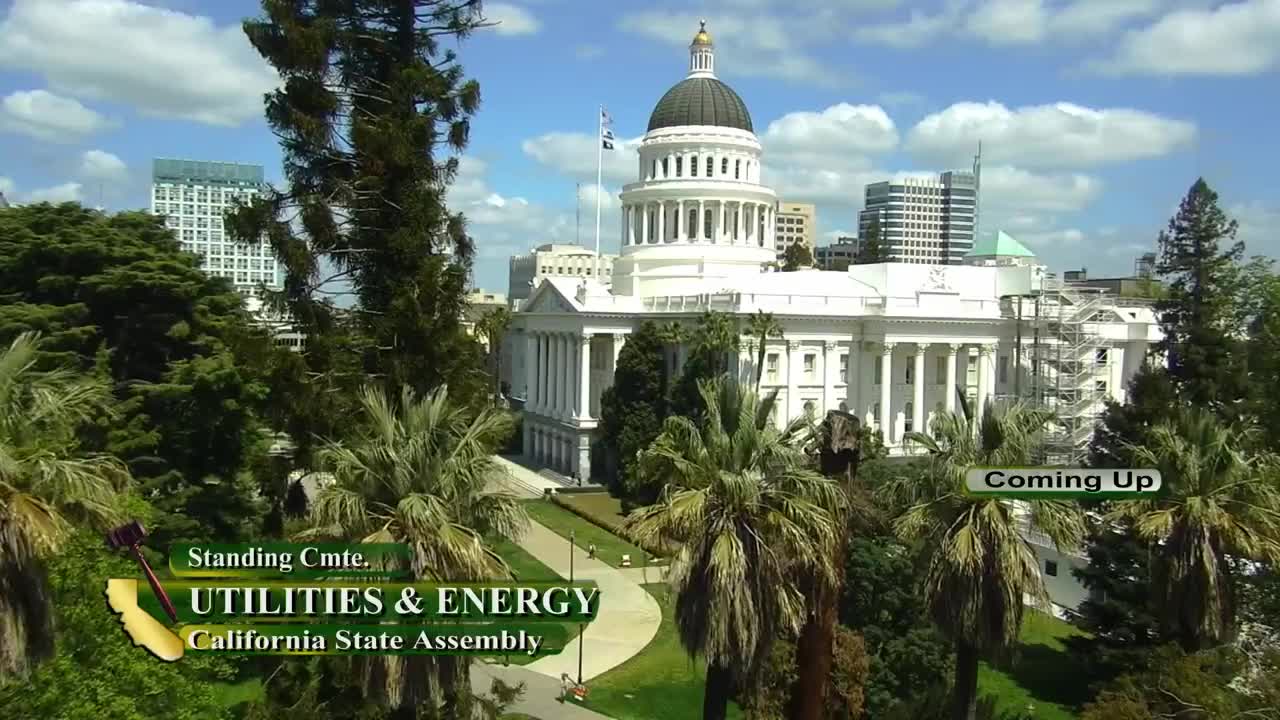
Assembly Standing Committee on Utilities and Energy
Bill Author

Bill Co-Author(s):
