AB 1538: Clean Energy Reliability Program.
- Session Year: 2023-2024
- House: Assembly
- Latest Version Date: 2023-04-17
Current Status:
Failed
(2024-02-01: From committee: Filed with the Chief Clerk pursuant to Joint Rule 56.)
Introduced
In Committee
First Chamber
In Committee
Second Chamber
Enacted
What does this bill do?
The bill creates the Clean Energy Reliability Program at the California Public Utilities Commission to pay state‑funded incentives to utilities and other electricity providers (called load‑serving entities) that exceed commission targets for clean energy procurement. Eligible resources include renewables, energy storage, green hydrogen, and zero‑emission demand or hybrid technologies but exclude fossil fuels even with carbon capture; payments must be returned to customers as bill credits or used to lower ratepayer costs. Providers must show projects are online, disclose contract information, and meet project labor or prevailing‑wage rules for new projects.
The summary is provided by generative AI which can make mistakes. For original language, please view the details in the table below.
Existing law vests the Public Utilities Commission with regulatory authority over load-serving entities, which include electrical corporations, electric service providers, and community choice aggregators. Existing law requires the commission, in consultation with the Independent System Operator, to establish resource adequacy requirements for all load-serving entities. Existing law requires the commission, in establishing those resource adequacy requirements, to ensure the reliability of electrical service in California while advancing, to the extent possible, the states goals for clean energy, reducing air pollution, and reducing emissions of greenhouse gases.
This bill would establish the Clean Energy Reliability Program, to be administered by the commission, upon appropriation, to provide incentive payments to qualifying load-serving entities that use eligible resources, as defined, to exceed their clean energy capacity requirements or targets, within or at the end of a given compliance period, as those requirements and compliance periods are determined through a specified commission rulemaking or its successor. exceed procurement targets for eligible resources established by the commission, as specified. The bill would require a load-serving entity to remit incentive payments to its customers as a bill credit or use the payment in a manner determined by the commission to reduce ratepayer costs arising from the additional procurement of eligible resources. The bill would require a load-serving entity to meet specified conditions to be eligible for an incentive payment.
Under existing law, a violation of the Public Utilities Act or any order, decision, rule, direction, demand, or requirement of the commission is a crime.
Because its provisions would be part of the act and a violation of a commission action implementing its requirements would therefore be a crime, the bill would impose a state-mandated local program.
The California Constitution requires the state to reimburse local agencies and school districts for certain costs mandated by the state. Statutory provisions establish procedures for making that reimbursement.
This bill would provide that no reimbursement is required by this act for a specified reason.
Existing law vests the Public Utilities Commission with regulatory authority over load-serving entities, which include electrical corporations, electric service providers, and community choice aggregators. Existing law requires the commission, in consultation with the Independent System Operator, to establish resource adequacy requirements for all load-serving entities. Existing law requires the commission, in establishing those resource adequacy requirements, to ensure the reliability of electrical service in California while advancing, to the extent possible, the states goals for clean energy, reducing air pollution, and reducing emissions of greenhouse gases.
This bill would establish the Clean Energy Reliability Program, to be administered by the commission, upon appropriation, to provide incentive payments to qualifying load-serving entities that use eligible resources, as defined, to exceed their clean energy capacity requirements or targets, within or at the end of a given compliance period, as those requirements and compliance periods are determined through a specified commission rulemaking or its successor.
Under existing law, a violation of the Public Utilities Act or any order, decision, rule, direction, demand, or requirement of the commission is a crime.
Because its provisions would be part of the act and a violation of a commission action implementing its requirements would therefore be a crime, the bill would impose a state-mandated local program.
The California Constitution requires the state to reimburse local agencies and school districts for certain costs mandated by the state. Statutory provisions establish procedures for making that reimbursement.
This bill would provide that no reimbursement is required by this act for a specified reason.
This act shall be known, and may be cited, as the Clean Energy Reliability Program.
SEC. 2.Section 380.7 is added to the Public Utilities Code, to read:380.7.(a)For purposes of this section, the following definitions apply:(1)(A)Eligible resources include all of the following:(i)Eligible renewable energy resources, as defined in Section 399.12.(ii)Energy storage resources.(iii)Green hydrogen.(iv)Zero-emission hybrid battery storage technologies.(v)Zero-emission demand-side resources.SEC. 2.Section 380.8 is added to the Public Utilities Code, to read:380.8.(a)(1)On or before July 1, 2024, the commission shall determine a definition of eligible resources for purposes of the Clean Energy Reliability Program established pursuant to this section.
(B)(2)Eligible resources do shall not include fossil fuel resources, even if emissions of greenhouse gases arising from the use of the resource are offset by carbon capture or storage technologies.
(2)Load-serving entity has the same meaning as defined in Section 380.(3)Program means the Clean Energy Reliability Program.(b)(1)The Clean Energy Reliability Program is hereby established, to be administered by the commission, upon appropriation by the Legislature, to provide incentive payments to qualifying load-serving entities that use eligible resources to exceed their clean energy capacity requirements or targets, within or at the end of a given compliance period, as those requirements and compliance periods are determined through Rulemaking 20-05-003 or its successor. exceed procurement targets for eligible resources established by the commission in Rulemaking 20-05-003 or its successor.
(2)Funds for incentive payments made to load-serving entities pursuant to paragraph (1) shall be available only upon an appropriation by the Legislature for this purpose. Ratepayer funds shall not be used to provide incentives pursuant to this section.
(3)An incentive payment received by a load-serving entity shall be remitted to the customers of the load-serving entity as a bill credit or used in a manner determined by the commission to reduce ratepayer costs arising from the additional procurement of eligible resources.
(c)For purposes of the program, the commission shall do both of the following:
(1)Count eligible resources using applicable commission counting rules.
(2)Calculate incentive payments using the resource adequacy market price benchmark for the year of the payment for each megawatt of electricity generated from an eligible resource in excess of the load-serving entitys clean energy capacity requirements or targets.(2)Calculate an appropriate value for the incentive payments on or before July 1, 2024, that shall be adjusted annually based on the market value of energy capacity.
(d)In order to receive an incentive payment pursuant to the program, a load-serving entitys eligible resources shall be entity shall do all of the following:
(1)Demonstrate that its eligible resources are online and participating in the Independent System Operators market.
(2)Disclose all contract information for the eligible resource to the commission, subject to confidential treatment as allowed by commission rules and applicable laws.
(e)(1)In order to receive an incentive payment pursuant to the program, a load-serving entity shall include(3)Include a project labor agreement if both of the following conditions are satisfied:
(A)The load-serving entity enters into a contract for the eligible resource on or after January 1, 2024, and the eligible resource comes online on or after January 1, 2024.
(B)The eligible resource has a capacity of 5 megawatts or more.
(2)In order to receive an incentive payment pursuant to the program, a load-serving entity shall include(4)Include a prevailing wage requirement if both of the following conditions are satisfied:
(A)The load-serving entity enters into a contract for the eligible resource on or after January 1, 2024, and the eligible resource comes online on or after January 1, 2024.
(B)The eligible resource has a capacity of less than 5 megawatts.
(f)(e)If a load-serving entity receives an incentive payment during a multiyear compliance period, but does not exceed its clean energy capacity requirements or targets in a subsequent year of the compliance period, the commission shall not provide incentive payments to the load-serving entity for any year that it failed to exceed its clean energy capacity requirements or targets.
(f)In administering the Clean Energy Reliability Program pursuant to this section, the commission shall evaluate how the incentive payments and potential additional procurement made by some load-serving entities pursuant to this section should be appropriately balanced with rules regarding fines for noncompliance with procurement orders and associated backstop procurement obligations on the large electrical corporations for deficient procurement by other load-serving entities. The commission may adjust program rules to encourage resource development in the market, while ensuring state funding for purposes of this section does not inadvertently support load-serving entities that are deficient in the procurement required by the commission through Rulemaking 20-05-003 or its successor. In conducting the evaluation, the commission shall consider the Legislatures intent to ensure reliability and new resource development while minimizing ratepayer costs.
SEC. 3.No reimbursement is required by this act pursuant to Section 6 of Article XIIIB of the California Constitution because the only costs that may be incurred by a local agency or school district will be incurred because this act creates a new crime or infraction, eliminates a crime or infraction, or changes the penalty for a crime or infraction, within the meaning of Section 17556 of the Government Code, or changes the definition of a crime within the meaning of Section 6 of Article XIIIB of the California Constitution.
This act shall be known, and may be cited, as the Clean Energy Reliability Program.
SEC. 2.Section 380.7 is added to the Public Utilities Code, to read:380.7.(a)For purposes of this section, the following definitions apply:
(1)(A)Eligible resources means zero-emission resources that include, but are not limited to, include all of the following:
(A)(i)Eligible renewable energy resources, as defined in Section 399.12.
(B)(ii)Energy storage resources.
(C)Combustion or fuel cell technologies that use biogas.(D)(iii)Green hydrogen.
(E)Hybrid(iv)Zero-emission hybrid battery storage technologies.
(F)Demand-side(v)Zero-emission demand-side resources.
(B)Eligible resources do not include fossil fuel resources, even if emissions of greenhouse gases arising from the use of the resource are offset by carbon capture or storage technologies.
(2)Load-serving entity has the same meaning as defined in Section 380.
(3)Program means the Clean Energy Reliability Program.
(b)The Clean Energy Reliability Program is hereby established, to be administered by the commission, upon appropriation by the Legislature, to provide incentive payments to qualifying load-serving entities that use eligible resources to exceed their clean energy capacity requirements or targets, within or at the end of a given compliance period, as those requirements and compliance periods are determined through Rulemaking 20-05-003 or its successor.
(c)For purposes of the program, the commission shall do all both of the following:
(1)Count eligible resources using applicable commission counting rules.
(2)Calculate incentive payments using the resource adequacy market price benchmark for the year of the payment for each megawatt of electricity generated from an eligible resource. resource in excess of the load-serving entitys clean energy capacity requirements or targets.
(d)In order to receive an incentive payment pursuant to the program, a load-serving entitys eligible resources shall be online and participating in the Independent System Operators market.
(e)(1)In order to receive an incentive payment pursuant to the program, a load-serving entity shall include a project labor agreement if both of the following conditions are satisfied:
(A)The load-serving entity enters into a contract for the eligible resource on or after January 1, 2024, and the eligible resource comes online on or after January 1, 2024.
(B)The eligible resource has a capacity of 5 megawatts or more.
(2)In order to receive an incentive payment pursuant to the program, a load-serving entity shall include a prevailing wage requirement if both of the following conditions are satisfied:
(A)The load-serving entity enters into a contract for the eligible resource on or after January 1, 2024, and the eligible resource comes online on or after January 1, 2024.
(B)The eligible resource has a capacity of less than 5 megawatts.
(e)(f)If a load-serving entity receives an incentive payment during a multiyear compliance period, but does not exceed its clean energy capacity requirements or targets in a subsequent year of the compliance period, the commission shall not provide incentive payments to the load-serving entity for any year that it failed to exceed its clean energy capacity requirements or targets.
SEC. 3.No reimbursement is required by this act pursuant to Section 6 of Article XIIIB of the California Constitution because the only costs that may be incurred by a local agency or school district will be incurred because this act creates a new crime or infraction, eliminates a crime or infraction, or changes the penalty for a crime or infraction, within the meaning of Section 17556 of the Government Code, or changes the definition of a crime within the meaning of Section 6 of Article XIIIB of the California Constitution.
This act shall be known, and may be cited, as the Clean Energy Reliability Program.
SEC. 2.Section 380.7 is added to the Public Utilities Code, to read:380.7.(a)For purposes of this section, the following definitions apply:
(1)Eligible resources means zero-emission resources that include, but are not limited to, all of the following:
(A)Eligible renewable energy resources, as defined in Section 399.12.
(B)Energy storage resources.
(C)Combustion or fuel cell technologies that use biogas.
(D)Green hydrogen.
(E)Hybrid battery storage technologies.
(F)Demand-side resources.
(2)Load-serving entity has the same meaning as defined in Section 380.
(3)Program means the Clean Energy Reliability Program.
(b)The Clean Energy Reliability Program is hereby established, to be administered by the commission, upon appropriation by the Legislature, to provide incentive payments to qualifying load-serving entities that use eligible resources to exceed their clean energy capacity requirements or targets, within or at the end of a given compliance period, as those requirements and compliance periods are determined through Rulemaking 20-05-003 or its successor.
(c)For purposes of the program, the commission shall do all of the following:
(1)Count eligible resources using applicable commission counting rules.
(2)Calculate incentive payments using the resource adequacy market price benchmark for the year of the payment for each megawatt of electricity generated from an eligible resource.
(d)In order to receive an incentive payment pursuant to the program, a load-serving entitys eligible resources shall be online and participating in the Independent System Operators market.
(e)If a load-serving entity receives an incentive payment during a multiyear compliance period, but does not exceed its clean capacity requirements or targets in a subsequent year of the compliance period, the commission shall not provide incentive payments to the load-serving entity for any year that it failed to exceed its clean capacity requirements or targets.
SEC. 3.No reimbursement is required by this act pursuant to Section 6 of Article XIIIB of the California Constitution because the only costs that may be incurred by a local agency or school district will be incurred because this act creates a new crime or infraction, eliminates a crime or infraction, or changes the penalty for a crime or infraction, within the meaning of Section 17556 of the Government Code, or changes the definition of a crime within the meaning of Section 6 of Article XIIIB of the California Constitution.
|
Date
|
Status
|
|---|---|
| Feb 1, 2024 | From committee: Filed with the Chief Clerk pursuant to Joint Rule 56. |
| Jan 31, 2024 | Died pursuant to Art. IV, Sec. 10(c) of the Constitution. |
| May 18, 2023 | In committee: Held under submission. |
| May 10, 2023 | In committee: Set, first hearing. Referred to APPR. suspense file. |
| May 3, 2023 | In committee: Hearing postponed by committee. |
| Apr 26, 2023 | In committee: Hearing postponed by committee. |
| Apr 17, 2023 | Re-referred to Com. on APPR. pursuant to Assembly Rule 96. |
| Apr 17, 2023 | Read second time and amended. |
| Apr 13, 2023 | From committee: Amend, and do pass as amended and re-refer to Com. on NAT. RES. (Ayes 12. Noes 2.) (April 12). |
| Apr 3, 2023 | Re-referred to Com. on U. & E. |
| Mar 30, 2023 | From committee chair, with author's amendments: Amend, and re-refer to Com. on U. & E. Read second time and amended. |
| Mar 9, 2023 | Referred to Coms. on U. & E. and NAT. RES. |
| Feb 18, 2023 | From printer. May be heard in committee March 20. |
| Feb 17, 2023 | Read first time. To print. |
|
Date
|
Description
|
Location
|
Votes
|
|
|---|---|---|---|---|
| Apr 12, 2023 | Do pass as amended and be re-referred to the Committee on [Natural Resources] | Assembly Standing Committee on Utilities and Energy |
Passed |
This list shows positions taken on this bill by organizations on the date displayed, which is linked to the original source.
Positions by individuals are not included.
|
Organization
|
Position
|
Date
|
|---|---|---|
| California Energy Storage Alliance | ** Support | |
| City of Agoura Hills | ** Support | |
| City of Alhambra | ** Support | |
| City of Camarillo | ** Support | |
| City of Culver City | ** Support | |
| City of Rolling Hills Estates | ** Support | |
| City of Simi Valley | ** Against | |
| City of Thousand Oaks | ** Support | |
| City of West Hollywood | ** Support | |
| Clean Power Alliance | * Support | Apr 12, 2023 |
| Clean Power Alliance – sponsor | ** Support | |
| County of Los Angeles Board of Supervisors | ** Support | |
| Edison International And Affiliates, Including Southern California Edison | ** Support | |
| Elders Climate Action, Norcal and Socal Chapters | ** Support | |
| Los Angeles County | ** Support |
Date of Hearing: May 10, 2023
ASSEMBLY COMMITTEE ON APPROPRIATIONS
Chris Holden, Chair
ABPCA Bill Id:AB 1538
Author:(Muratsuchi) – As Amended Ver:April 17, 2023
Policy Committee: | Utilities and Energy | Vote: | 12 - 2 |
|
| ||
|
|
Urgency: No State Mandated Local Program: Yes Reimbursable: No
SUMMARY:
This bill creates the Clean Energy Reliability Program (CERP)—an incentive payment program to encourage procurement of energy capacity that exceeds mandatory targets.
Specifically, among other things, this bill establishes the CERP, to be administered by the California Public Utilities Commission (CPUC), upon appropriation, to provide incentive payments to qualifying load-serving entities (LSEs) that exceed energy capacity procurement targets for “eligible resources” as those targets are established by CPUC pursuant to existing law. The bill:
- Directs the CPUC, on or before July 1, 2024,
- To determine a definition of eligible resources for purposes of the CERP and excludes fossil fuel resources from the definition, even if emissions of greenhouse gases arising from the use of the resource are offset by carbon capture or storage technologies.
- Calculate an appropriate value for incentive payments, which the CPUC is to adjust annually based on the market value of energy capacity.
- Prohibits ratepayer funds from being used to provide CERP incentive payments to LSEs.
- Requires an LSE to do the following to be eligible to receive a CERP incentive payment: (a) demonstrate its eligible resources are online and participating in the California Independent System Operator (CAISO) market; (b) disclose all contract information for eligible resources to the CPUC, subject to applicable confidentiality requirements; and (c) include a project labor agreement for a project with a capacity of five megawatts (MW) or more and include a prevailing wage agreement if the project has capacity of less than five MW.
- Requires an LSE that receives a CERP incentive payment to remit the payment to the customers of the LSE as a bill credit.
- Provides conditions under which the CPUC may not make CERP incentive payments to an LSE that does not exceed clean energy capacity targets.
FISCAL EFFECT:
- Costs of a significant amount to CPUC to administer the CERP (Public Utilities Reimbursement Account or other special fund).
The CPUC estimates costs of $1.3 million annually ongoing and startup costs of $380,000 for each of three years and one-time IT costs of $500,000. The CPUC describes these costs as for five permanent positions—an administrative law judge, three analysts, and an accounting position—and two IT specialists each working a three-year limited term.
- Cost pressure in the millions of dollars to fund CERP incentive payments (likely special fund).
COMMENTS:
- Purpose. The author intends this bill to encourage and accelerate the development and deployment of clean energy projects. According to the author:
As climate change gets worse, extreme heat events are pushing the state’s electric grid to its limit. To meet this demand, without adding to greenhouse gas emissions, we need to do everything we can to bring green electricity online as quickly as possible. This bill promotes green energy projects by establishing the Clean Energy Reliability Program. This program will provide incentive payments to Load Serving Entities (LSEs)—which include investor owned utilities, energy service providers, and community choice aggregators—who go above and beyond their required CPUC clean capacity requirements. LSEs who procure electricity from green sources such as battery storage or green hydrogen will receive incentive payments for each megawatt of electricity above their CPUC clean capacity requirement. The increase in green electricity as a result of this bill will result in greater electric grid reliability and affordability as the state transitions towards 100% renewable electricity by 2045.
- Background. LSEs is a catchall term to describe the entities, other than municipal utilities, that, in the context of this bill, procure electricity on behalf of end-use customers. To ensure the state has an adequate supply of electricity when customers of the state’s LSEs demand it, the state requires each LSE to procure commitments for electric capacity in amounts sufficient to meet expected demand.
The CPUC relies on a process, known as the integrated resource plan (IRP), to plan for this procurement in a way that achieves the state’s clean energy goals at the least possible cost. Based on the IRP, the CPUC assigns electricity capacity procurement obligations to each LSE. Any LSE that fails to procure electricity capacity in keeping with the procurement obligation assigned to it by the CPUC is subject to sanction.
In August of 2020, California sweltered under an unusually intense and protracted heatwave that extended across the Western United States. In response, the state’s electric grid operator—the California Independent System Operator, or CAISO—instituted, for the first time in 20 years, “rolling blackouts,” meaning planned, sequenced and limited reductions of electrical supply to prevent widespread collapse of the electrical grid. In early September of 2022, California’s electrical grid struggled to meet demand caused by another grueling heatwave, though CAISO was able to avoid instituting rolling blackouts.
In response to this apparent new normal of regularly occurring intense, widespread and prolonged heatwaves, and in recognition of the state’s push to electrify ever more sectors of the economy, the CPUC has ordered LSEs to procure additional electrical capacity to meet clean energy and reliability requirements. Specifically, in November 2019 the CPUC ordered LSEs to procure 3,300 megawatts of capacity by 2023. Then, in June of 2021, the CPUC ordered LSEs to procure 11,500 megawatts of electric capacity, all from clean energy resources, to come online between the years 2023 and 2026. The CPUC describes this as the largest single capacity procurement it has ever ordered. Not long after, in February of 2023, the CPUC ordered LSEs to procure an additional 4,000 megawatts of clean electrical capacity, to come online between the years 2026 and 2027, bringing the total procurement ordered by CPUC to 18,800 megawatts. The CPUC has recommended an electric resource portfolio with more than 85,000 megawatts of new resources by 2035. These new resource additions include 54,000 megawatts of renewable resources, including 2,000 megawatts of geothermal and 4,700 megawatts of offshore wind.
LSEs have had trouble satisfying the CPUC’s electric recent capacity procurement orders. Those that have done so have paid very high prices for the electric capacity in what seems to be a seller’s market. The proponents of this bill see the state-funded incentive program this bill creates as a “catalyst” to getting clean, zero-carbon capacity resources online in order to increase grid reliability and decrease electricity rates. It seems possible that incentivizing procurement in a seller’s market will, in the near term at least, drive up prices for electrical capacity. If the bill proponents are right, in the long term, the increased demand for electrical capacity, and higher prices it creates, might attract new electrical capacity, ultimately lowering prices as the supply of electrical capacity expands. However, the CPUC’s procurement orders and recommended electric resource portfolio—18,800 megawatts by 2027 and 85,000 megawatts of new resources by 2035, respectively—seem like strong market signals that demand for additional electrical capacity in California exists.
The Clean Power Alliance—the state’s largest CCA—explains the rationale for this bill this way:
Over the last several years, California has been at increasing and ongoing risk of not having enough capacity on the grid to meet demand. A combination of key resources going offline, regulatory changes, and other issues have reduced system capacity to critical levels. At the same time, demand continues to increase due to climate change, and will increase even further as the state pushes towards increasing vehicle and building electrification…For the [electrical capacity] market structure to work as intended, there needs to be enough supply available to create competition between generators to sell RA at competitive prices. But a tight market over the past few years has meant that this competition has ceased to exist, causing the price of RA to skyrocket…the Clean Energy Reliability Program…would provide incentive payments to LSEs that bring clean energy resources online, above their compliance requirements. The incentive payments will be equal to the current year RA market price benchmark for each eligible megawatt. This will also help bring increased competition to the RA market. Together, the incentive payments paired with the reduced RA prices will help relieve near-term upward pressure on electricity rates.
Analysis Prepared by: Jay Dickenson / APPR. / (916) 319-2081
Date of Hearing: April 12, 2023
ASSEMBLY COMMITTEE ON UTILITIES AND ENERGY
Eduardo Garcia, Chair
ABPCA Bill Id:AB 1538 (
Author:Muratsuchi) – As Amended Ver:March 30, 2023
SUBJECT: Clean Energy Reliability Program
SUMMARY: Establishes an incentive program, the Clean Energy Reliability Program, to pay load-serving entities (LSEs) a specified amount for the procurement of eligible resources, as defined, that exceed the LSEs’ procurement targets as set by the California Public Utilities Commission (CPUC). Specifically, this bill:
- Specifies the resource types that would be eligible for incentive payments as: Renewables Portfolio Standard (RPS)-eligible resources, energy storage resources, green hydrogen (undefined), zero-emission hybrid battery storage technologies, and zero-emission demand-side resources. Prohibits fossil fuel resources from eligibility.
- Specifies the funding for the incentive payments shall be upon appropriation by the Legislature.
- Requires the CPUC to count eligible resources using applicable counting rules, and to calculate the incentive payments using the resource adequacy (RA) market price benchmark.
- Requires eligible resources to be online and participating in the California Independent System Operator’s (CAISO) market in order for LSEs to receive incentive payments for their procurement.
- Requires project labor agreements for resources of 5 megawatts (MWs) or more, and prevailing wage requirements for resources less than 5 MWs, in order for LSEs to receive incentive payments for their procurement.
- Requires that incentive payments are not guaranteed in perpetuity, but shall be based on exceeding clean energy capacity requirements during each year of a compliance period.
EXISTING LAW:
- Establishes the policy that all of the state's retail electricity be supplied with a mix of RPS-eligible and zero-carbon resources by December 31, 2045, for a total of 100% clean energy. Requires the CPUC, in consultation with the CEC, CARB, and all California balancing authorities, to issue a joint report to the Legislature by January 1, 2021, reviewing and evaluating the 100% clean energy policy. (Public Utilities Code § 454.53)
- Requires the CPUC and CEC, in consultation with CARB, to take steps to ensure that a transition to a zero-carbon electric system for the state does not cause or contribute to GHG emissions increases elsewhere in the western grid. Requires the CPUC, CEC, and CARB, and all other state agencies to incorporate that policy into all relevant planning. Requires the CPUC, CEC, and CARB to use programs authorized under existing statutes to achieve that policy. (Public Utilities Code § 454.53)
- Defines “eligible renewable energy resource” as an electrical generating facility that uses biomass, solar thermal, photovoltaic, wind, geothermal, fuel cells using renewable fuels, small hydroelectric generation of 30 megawatts (MW) or less, digester gas, municipal solid waste conversion, landfill gas, ocean wave, ocean thermal, or tidal current, subject to multiple conditions. (Public Utilities Code § 399.12)
- Defines “load-serving entities” as investor-owned utilities (IOUs), electric service providers (ESPs), and community choice aggregators (CCAs). (Public Utilities Code § 380 (k))
- Requires the CPUC to adopt a process for each LSE serving end-use customers in the state, to file an IRP and schedule periodic updates to the plan to ensure that LSEs accomplish specified objectives. Requires each LSE to prepare and file an IRP consistent with those objectives on a time schedule directed by the CPUC and subject to CPUC review. (Public Utilities Code § 454.52)
- Requires that the IRP of each LSE contribute to a diverse and balanced portfolio of resources needed to ensure a reliable electricity supply that provides optimal integration of renewable energy resources in a cost-effective manner, meets the emissions reduction targets for GHG emissions established by CARB for the electricity sector, and prevents cost-shifting among LSEs. (Public Utilities Code § 454.54)
- Requires retail sellers and publicly owned utilities to increase purchases of renewable energy such that at least 60% of retail sales are procured from eligible renewable energy resources by December 31, 2030. This is known as the Renewables Portfolio Standard (RPS). (Public Utilities Code § 399.11 et seq.)
- Requires CARB to create a Climate Change Scoping Plan to achieve the maximum technologically feasible and cost-effective reductions in GHG emissions by 2020. CARB must update this Scoping Plan at least once every five years. (California Health and Safety Code § 38561)
- Requires the CEC to adopt the Integrated Energy Policy Report (IEPR) every two years, which must contain an overview of major energy trends and issues facing the state, including, but not limited to, supply, demand, pricing, reliability, efficiency, and impacts on public health and safety, the economy, resources, and the environment. (Public Resources Code §§ 25300-25327)
- Requires the CPUC to work with CAISO to establish RA requirements for LSEs. Existing law specifies the criteria the CPUC must consider when establishing RA requirements and specifies that an electrical corporation’s reasonable costs for meeting RA are recoverable from customers through non-bypassable charges. (Public Utilities Code § 380)
FISCAL EFFECT: Unknown. This bill is keyed fiscal and will be referred to the Assembly Committee on Appropriations for its review.
BACKGROUND:
Planning for the Future: the IRP, SB 100, IEPR, and RA – California has a complicated but robust electric planning and procurement regime spread across the CPUC, CEC, and CAISO. This regime guides the current procurement the LSEs conduct, and informs short-, mid-, and long-term procurement strategies. The regime is complementary, where one resource may count toward meeting many facets of an LSE’s procurement requirements and planning goals. The main pieces of the regime are the IRP, the related SB 100 Report, and RA.
The IRP (mid- to long-term procurement) – Since 2015, with the passage of SB 350 (De León, Chapter 547, Statutes of 2015), California regulators have worked to identify a diverse mix of resources to achieve our clean energy goals. SB 350 requires the CPUC to adopt a process for each LSE to file an IRP starting in 2017 and for each publicly-owned utility (POU) to file an IRP by January 1, 2019. The goal of the IRP is to reduce the cost of achieving GHG emission reductions by looking broadly at system needs, rather than at individual LSEs or resource types, in order to identify generation that reduces GHGs, improves reliability, and reduces overall cost. Compliance with the RPS program occurs separately, but in concert with, the resource mixes selected by LSEs’ IRP filings.
The IRP operates on a 2-year planning cycle, and forecasts system need 10 years into the future. The most recent IRP analysis identified almost 86 gigawatts (GW) of new resources needed by 2035,[1] arising from a mix of geothermal, land-based wind, offshore wind, solar, battery storage, pumped storage, and demand response.[2] This portfolio represents a more than doubling within 12 years of the current nameplate capacity on the system; an enormous goal.
SB 100 Report (long-term procurement planning) – While the IRP focuses on what energy mix is best suited to meet our GHG and reliability goals 10 years into the future, the Joint Agency SB 100 Report looks at a planning horizon 22 years out, to determine how best to implement the 100%-clean-electricity-by-2045 policy enacted under SB 100 (De León, Chapter 312, Statutes of 2018).[3] The first SB 100 report was finalized in March 2021, and included analyses of many pathways to achieve the state’s 2045 clean energy goal.[4] The SB 100 Report will be updated every four years, with future work focused on system reliability,[5] among other considerations.
The IEPR (demand forecast) – Alongside the IRP and SB 100 Report, which focus on potential mid- and long-term procurement needs for the electricity system, the CEC conducts an IEPR to forecast all aspects of energy industry supply, production, transportation, delivery, distribution, demand, and pricing. The CEC is then required to use these assessments and forecasts to develop energy policies that conserve resources, protect the environment, ensure energy reliability, enhance the state's economy, and protect public health and safety. The CEC adopts an IEPR every two years with updates every other year. The information generated from the IEPR’s demand forecast informs the IRP and RA processes at the CPUC.
RA (short-term procurement) – Running concurrently with these planning streams is the RA process at the CPUC and CAISO. While the IRP and SB 100 Report focus on potential future needs, RA is designed to identify resources needed to ensure reliability today. Following the California energy crisis of 2000-01, the California Legislature enacted AB 380 (Nunez, Chapter 367, Statutes of 2005) to prevent future incidents of widespread blackouts and rolling brownouts due to lack of electricity. This statute established the RA program at the CPUC, which must work in consultation with the CAISO to establish RA requirements for all LSEs. The current RA program consists of system, local, and flexible requirements for each month of a compliance year. System requirements are determined for each LSE based on the CEC’s IEPR electricity forecast plus a 15% planning reserve margin.[6] Local requirements are determined based on an annual CAISO study using a 1-10 (once in ten years) weather year and an N-1-1 contingency.[7] Flexible requirements are based on an annual CAISO study that currently looks at the largest three-hour ramp for each month needed to run the system reliably. In October, LSEs must demonstrate that they have procured 90% of their system RA obligations for the five summer months (May-September) of the following year, as well as 100% of their local requirements, and 90% of their flexible requirements for each month of the coming compliance year. There is an additional monthly reporting requirement for RA, where LSEs must demonstrate they have procured 100% of their monthly system and flexible RA obligation.
The RA market has experienced significant constraint recently, largely driven by resource retirements across the western U.S. as well as extreme weather events causing California energy agencies to increase RA obligations for LSEs, such as the PRM adjusting from 15% to an “effective” 20-22.5% for the three large IOUs for summers 2022 and 2023.[8] These changes have led to a market rush, practically at any cost, to buy resources needed to meet RA obligations for the next few summers. Energy sellers have seemingly taken note. As shown in Figures 1 and 2 below, both system and local RA prices have been increasing significantly over the last few years, and are projected to be even higher for the coming summers.
Figure 1: Weighted Average Price of Figure 2: Weighted Average Prices for
System RA ($/kW-month)[9] Local RA ($/kW-month)[10]
Breaking the Cycle: IRP Procurement Orders – The regulatory framework of the IEPR, IRP (or long-term procurement planning, as it was previously known), and RA has been in place since the early 2000s, operating with relative stability. However, since that time, market fundamentals have changed to the point that it may be prudent for the energy agencies to re-evaluate the planning regime governing the market. Some of these trends include:
- Increased role of CCAs – Procurement decisions are now being made by more than 40 CCAs and ESPs, as well as the six IOUs; with the role of the IOUs in procurement shrinking substantially since the early 2000s. Prior to the expansion of CCAs into procurement, the CPUC relied heavily on the IOUs’ bundled procurement plans to establish and enforce obligations for contracting for existing resources beyond the RA program (i.e. mid- or long-term resources). Via the bundled procurement plans, the CPUC requires the IOUs to contract for a certain amount of forward energy and capacity to minimize financial risk to bundled customers. The CCAs are not similarly obligated to maintain forward contract positions (though many of them do), or share them with the CPUC, for energy and capacity.[11]
- Increased capacity (RA) market tightness – over the last 20 years, over 20 GWs of aging natural gas plants have retired in the state.[12] This statewide trend has been mirrored throughout the west, where aging, inefficient powerplants have been retired due to market and regulatory pressure, leading to capacity tightness across the western U.S. This market tightness has led to increased potential for high energy prices during scarcity conditions, as utilities are no longer adequately hedged, and the potential for energy suppliers to exert market power over buyers desperate for any megawatt to meet RA compliance and ensure reliability. This committee has been made aware of circumstances in the 2023 RA showings where utility buyers offered astronomical prices for resources, and still received no bids from suppliers.
- Increasing GHG reduction goals – California’s utilities will need to contract for significant amounts of new clean energy resources to meet our 2045 100% clean energy policy. Ensuring reliability while these new resources come online, some with potentially significant delays, will be paramount, and will take enormous effort from the energy agencies to ensure a smooth transition.
In light of these trends, and as updates to IEPR demand forecasting and IRP modeling assumptions evolved, the CPUC utilized the IRP proceeding to order new near- and mid-term resources, requiring all LSEs to bear some responsibility for their costs. Beginning in 2019, these procurement orders were issued outside the IRP cadence due to the urgent nature of the procurement need, and resulted in the CPUC calling for 3.3 GWs to incrementally come online from 2021-2023[13] and 11.5 GWs to come online from 2023-2026.[14] Recently the CPUC called for an additional 4 GW to come online from 2026-2027.[15] These orders call for the new resources to be net qualifying capacity (NQC), so the IRP procurement will ensure RA eligibility for these new resource additions. Importantly, the 2021 mid-term order for 11.5 GWs specified certain resource attributes that must be procured, specifically calling for 1 GW of long-duration storage and 1 GW of firm resources.[16] In its 2023 IRP decision, the CPUC extended the delivery timeline for these long-lead time resources to 2028, citing potential delays for these projects.[17]
While these decisions mark an unprecedented level of procurement ordered by the CPUC, at 18.8 GWs over six years, they represent little more than half of the additional resources needed by 2030 to meet the adopted IRP system portfolio, which calls for approximately 35 GWs by the end of the decade.[18] Procurement is needed, urgently. But the procurement orders have raised concerns that the just-in-time, order-by-order approach leads to uncertainty for the LSEs, and presents the potential for the broader market to constrain further or increase costs, as LSEs rush to procure anything and everything to meet the targets. It appears as if the resources called for the meet the 2021-2022 requirements are coming online; while the projects required for 2023 are contracted but their online dates are uncertain.[19] While this progress is positive and demonstrates a level of urgency for procurement not seen in decades, from both the CPUC and LSEs, these procurement orders also suggest that the historic planning efforts of the energy agencies may be inadequate to meet our current needs, and must also urgently evolve to ensure reliability at least-costs while transitioning the electricity sector to meet our clean energy goals.
COMMENTS:
- Author’s Statement. According to the author, “As climate change gets worse, extreme heat events are pushing the state’s electric grid to its limit. To meet this demand, without adding to greenhouse gas emissions, we need to do everything we can to bring green electricity online as quickly as possible. This bill promotes green energy projects by establishing the Clean Energy Reliability Program. This program will provide incentive payments to Load Serving Entities (LSEs)—which include investor owned utilities, energy service providers, and community choice aggregators—who go above and beyond their required CPUC clean capacity requirements. LSEs who procure electricity from green sources such as battery storage or green hydrogen will receive incentive payments for each megawatt of electricity above their CPUC clean capacity requirement. The increase in green electricity as a result of this bill will result in greater electric grid reliability and affordability as the state transitions towards 100% renewable electricity by 2045.”
- A System of Carrots and Sticks. This measure seeks a creative approach to address the constraints occurring throughout the western energy market, largely driven by RA market contraction, as noted above. This RA contraction has led energy agencies to accelerate near- and mid-term resource development, such as through the CPUC procurement orders, or to maintain soon-to-retire resources, such as the authorized extension of the Diablo Canyon Nuclear Powerplant.[20]
RA compliance to date has been enforced through CPUC-issued citations or actions when LSEs do not fully comply with RA program rules, such as RA deficiencies. For 2021, the most recent reporting period, 21 RA citations were issued totaling approximately $13.5 million.[21] The CPUC also initiated a central procurement mechanism, whereby either Pacific Gas & Electric (PG&E) or Southern California Edison (SCE) may procure local RA beginning in 2023 to address potential deficiencies.[22]
The IRP procurement orders contemplate compliance filings from all LSEs, and if a deficiency is found, backstop procurement by the IOUs may be initiated by the CPUC.[23] The CPUC has noted their intention that any initiation of the backstop mechanism will be measured against the deficient LSE’s procurement history and continued efforts, so as not to overly punish LSEs whose procurement is slightly delayed.[24] The CPUC has yet to order backstop for IRP procurement deficiencies, as most LSEs have met their 2021-2022 obligations.
If the RA citation approach represents a “stick,” and the IRP backstop approach a “nudge,” then this measure might be categorized as a procurement “carrot.” The idea is to encourage LSEs, via financial incentives, to over-procure on their mid-term IRP obligations in order to flood the market with new resources. The sponsors of this measure argue that reliance on citations for RA compliance does little to change market behavior, and instead punishes LSEs who may be doing everything in their control to buy RA resources as expeditiously as possible. Rather, they note the market needs to shift from a seller’s market (energy developers) to a buyer’s market (utilities); and the only way to do that is to build new resources as quickly as possible. The idea is similar to discussions within the housing sector, where it is theorized that the best solution to affordable housing is just building more housing, of any type. In other words, if demand is likely to only increase, the only option to drive down costs is to increase supply.
This proposal seeks to increase supply by using general fund dollars to essentially buy—or at least buy down—new resources, while still holding LSEs to their existing IRP procurement obligations. An alternative approach is one proposed recently by the Newsom Administration to have the Department of Water Resources exercise a central procurement function for new resources that LSEs are otherwise unable to purchase.[25] Both proposals, in theory, would lead to new resource development. But it remains unclear, and a point of concern, how energy sellers might respond to state dollars saturating the market. Would energy contract prices increase due to sellers’ awareness that LSEs now have additional negotiating headroom via the incentive payments? Could this inadvertently raise prices for all resources, not just those considered in “excess” of IRP procurement obligations? The CPUC must act carefully, should this bill be chaptered, to ensure incentive payments do not lead to further market distortions, or at least to provide a mechanism to reevaluate payments should market behavior go awry.
- Legislative Appropriation. This bill specifies that any incentive payments would be upon appropriation by the Legislature, though the language is silent as to the specific funding source or amount needed to implement such a program. The author has indicated in background material provided to the Committee that approximately $100 million per year could create 1 GW of “extra” capacity, representing 2% of total annual capacity on the market. They also note the Clean Energy Reliability Investment Plan (CERIP), as authorized by SB 846 (Dodd, Chapter 239, Statutes of 2022) and representative of a potential $1 billion appropriation over the next 4 years, might be an appropriate source for funding the payments proposed.[26] While the specifics of which source of funding, and the timing of authorizing such funding, is a subject squarely for the Committee on Budget’s consideration, the statutory directive for the CERIP investments is to support “programs and projects that would accelerate the deployment of clean energy resources…,” seemingly in line with the intent of this bill. Interestingly, the administration’s DWR-central procurement proposal is also proposed to be funded through CERIP.
While the specific authorization of funding is not within this committee’s purview, ensuring ratepayer protections is. As written, this bill does not provide any assurance that state dollars received by LSEs will actually be used to pay off or reduce the ratepayer costs of the additional procurement. As such, the author and committee may wish to consider an amendment explicitly stating that any program funding will be upon legislative appropriation and no ratepayer funds shall be used to provide incentives. Moreover, the author and committee may wish to consider an amendment requiring that any incentive payment received by an LSE results in a reduction in ratepayer costs.
- What resources deserve to be incentivized? This bill lists a number of resources whose procurement would make an LSE eligible for an incentive payment, including known (such as RPS-eligible resources) and unknown (such as “green hydrogen,” undefined) resources. The sponsors of this measure have noted the desire is to encourage construction of any resource that is non-fossil fuel, as incentives for fossil resources are explicitly prohibited under this bill. They promote that any and all resource development (excluding fossil) would aid in increasing supply and drive market competition, ideally with the consequence of lowering costs. However it is unclear, with potentially limited funding for incentives per year, the benefits of such a universal approach. As shown in the CPUC’s recent IRP procurement decision, long-lead time resources, such as long-duration storage and geothermal, are struggling to be procured.[27] It may be prudent for the CPUC to consider tailoring incentive payments proposed under this program to specific resources, or resource attributes, that have more difficulty being procured in the current market. The CPUC must balance such consideration with the potential for such specificity in incentive eligibility to drive up prices for those already difficult to procure or expensive resources. Given these factors, the author and committee may wish to strike the list of eligible resources in the bill, and rather direct the CPUC to define resource eligibility when implementing the program.
- Consequences on existing backstop procurement requirements. Currently under the IRP procurement orders, if an LSE is deficient in meeting their obligations the CPUC may authorize one of the IOUs to procure additional resources on behalf of that LSE. The cost of those resources would be borne by the deficient LSE’s ratepayers. Such backstop has yet to be exercised, but acts as a protection to ensure enough resources come online to meet the identified need. This proposal seeks to encourage LSEs to procure resources in excess of what their obligations require. However it is unclear how such excess procurement would impact the backstop procurement function of the IOUs. If the objective is to just meet the baseline IRP procurement ordered, then any resource procured in excess by one LSE may be “counted” in favor of resource deficiencies by other LSEs. However, such equalizing is not only counter to the intent of the bill (which seeks excess procurement over-and-above the baseline procurement ordered), but could inadvertently lead to state dollars from the incentive payments being used to balance out the procurement deficiencies of other LSEs. Yet it is also unclear, in such a constrained marketplace, how excess procurement by one LSE may result in a game of musical chairs with other LSEs who cannot procure limited resources fast enough to meet their own obligations. While this bill is focused on contracts for new resources rather than on existing resources (i.e., the more constrained, RA market), supply chain issues, excessive CAISO queuing, construction delays, and other factors likewise impact new resources coming online. It may be prudent for the CPUC to evaluate how any incentive payment program would interface with existing protections, such as the IOU backstop tool, in the IRP procurement orders. As such, the author and committee may wish to consider an amendment requiring the CPUC to evaluate the compliance tools of the IRP procurement orders more broadly should the incentive payment program proposed by this bill become law.
- Prior Legislation.
SB 846 (Dodd), among its many provisions, directed the CEC to develop a $1 billion investment plan for clean energy resources, subject to subsequent budget appropriations. Status: Chapter 239, Statutes of 2022.
- Double Referral. This bill is double-referred; upon passage in this Committee, this bill will be referred to the Assembly Committee on Natural Resources.
REGISTERED SUPPORT / OPPOSITION:
Support
California Energy Storage Alliance
City of Agoura Hills
City of Alhambra
City of Camarillo
City of Culver City
City of Rolling Hills Estates
City of Thousand Oaks
City of West Hollywood
Clean Power Alliance – sponsor
County of Los Angeles Board of Supervisors
Edison International and Affiliates, Including Southern California Edison
Elders Climate Action, NorCal and SoCal Chapters
Los Angeles County
Oppose
City of Simi Valley
Analysis Prepared by: Laura Shybut / U. & E. / (916) 319-2083
Pg. 47; 30 MMT scenario resource stack; CPUC, Decision Ordering Supplemental Mid-term Reliability Procurement (2026-2027) and Transmitting Electric Resource Portfolios to CAIS for 2023-2024 TPP; D. 23-02-040; February 23, 2023. https://docs.cpuc.ca.gov/SearchRes.aspx?DocFormat=ALL&DocID=502956567 ↑
Pg. 48; CPUC, D. 23-02-040; Ibid. ↑
CEC, CPUC, & CARB; 2021 SB 100 Joint Agency Report: Achieving 100 Percent Clean Electricity in California: An Initial Assessment;” March 2021. ↑
Pg. 12, 2021 SB 100 Report. ↑
Pg. 1, 2021 SB 100 Report. ↑
The CPUC has recently adopted changes to RA, including increasing the planning reserve margin from 15% to 17.5% and in some cases to 21%. ↑
N-1-1 Contingency: A sequence of events consisting of the initial loss of a single generator or transmission component (Primary Contingency), followed by system adjustments, followed by another loss of a single generator, or transmission component (Secondary Contingency). ↑
D. 21-12-015, CPUC, Phase 2 Decision Directing PG&E, SCE, and SDG&E to Take Actions to Prepare for Potential Extreme Weather in the Summers of 2022 and 2023, R. 20-11-003, December 2, 2021. ↑
Figure 4, pg. 29, CPUC, 2021 Resource Adequacy Report, April 2023; https://www.cpuc.ca.gov/-/media/cpuc-website/divisions/energy-division/documents/resource-adequacy-homepage/2021_ra_report_040523.pdf ↑
Figure 5, pg. 31, 2021 Resource Adequacy Report, Ibid. ↑
Pg. 5; McGarry, J.; Ortego, J.; and Raffan, N., CPUC Energy Division Staff Options Paper, “Reliable and Clean Power Procurement Program,” Attachment A to D.23-02-040, R.20-05-003; January 2023. ↑
Pg. 5; McGarry, 2023; Ibid ↑
D. 19-11-016, CPUC, Decision Requiring Electric System Reliability Procurement for 2021-2023, R. 16-02-007, November 7, 2019. ↑
D. 21-06-035, CPUC, Decision Requiring Procurement to Address Mid-term Reliability (2023-2026), R. 20-05-003, June 24, 2021. ↑
D. 23-02-040, CPUC, Decision Ordering Supplemental Mid-term Reliability Procurement (2026-2027) and Transmitting Electric Resource Portfolios to California Independent System Operator for 2023-2024 Transmission Planning Process, R. 20-05-003, February 23, 2023. ↑
Not defined as such, but rather resources that must have no on-site emissions (or are RPS eligible), have at least an 80% capacity factor, and be available continuously during the evening peak and all weathers. ↑
D. 23-02-040, Ibid. ↑
Pg. 8, D. 23-02-040, Ibid. ↑
Pg. 9, D. 23-02-040, Ibid. ↑
Authorized via the state; still pending federal approval; SB 846 (Dodd, Chapter 239, Statutes of 2022) ↑
Pg. 4, 2021 Resource Adequacy Report, Ibid. ↑
D. 20-06-002, CPUC, Decision on Central Procurement of the RA Program, R. 17-09-020, June 11, 2020. ↑
D. 20-12-044, CPUC, Decision Establishing Process for Backstop Procurement Required by Decision 19-11-016, R. 20-05-003, December 17, 2020. ↑
Pg. 8-9, D. 23-02-040, Ibid. ↑
“Energy” trailer bill, updated February 10, 2023; https://esd.dof.ca.gov/trailer-bill/public/trailerBill/pdf/846 ↑
CEC, Final Draft Clean Energy Reliability Investment Plan, March 2023; CEC-200-2023-003. ↑
D. 23-02-040, Ibid. ↑
Discussed in Hearing
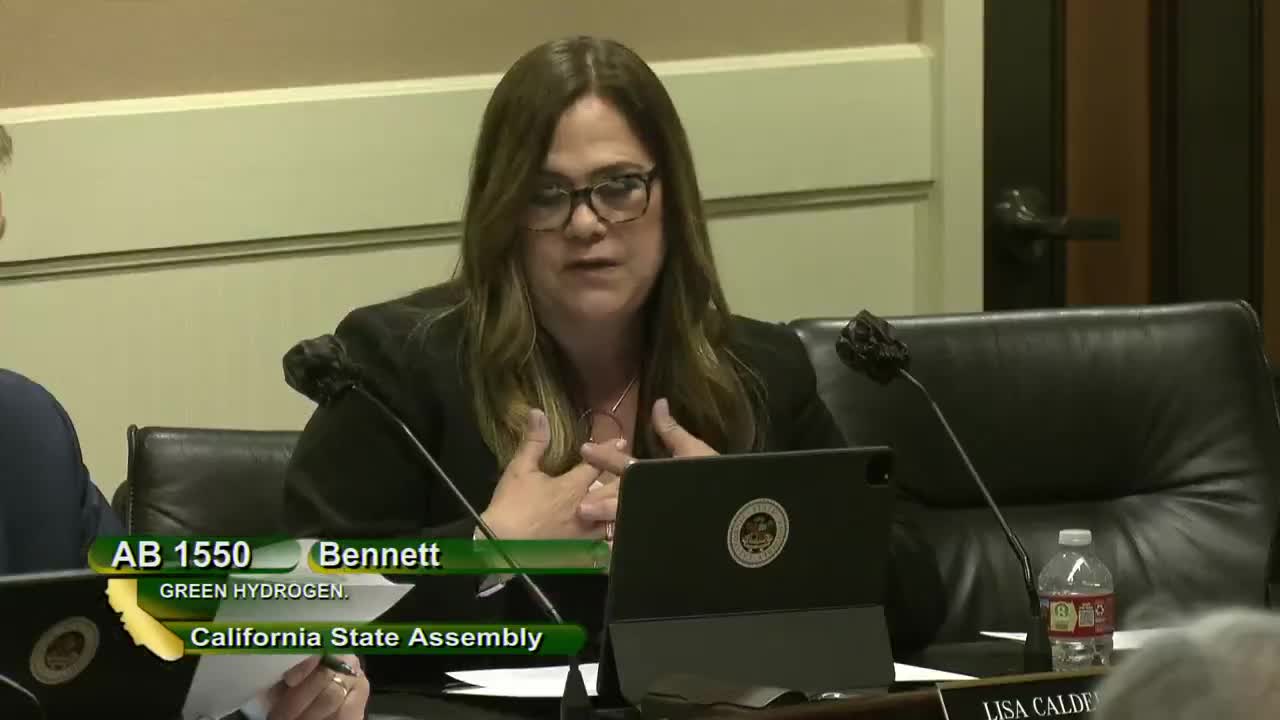 6MIN
Assembly Standing Committee on Utilities and Energy
Bill Author

Bill Co-Author(s):