AB 1579: Vehicles: batteries.
- Session Year: 2023-2024
- House: Assembly
- Latest Version Date: 2023-04-25
Current Status:
Failed
(2024-02-01: From committee: Filed with the Chief Clerk pursuant to Joint Rule 56.)
Introduced
In Committee
First Chamber
In Committee
Second Chamber
Enacted
Existing law establishes several programs pertaining to vehicles and reducing pollution, such as the Clean Transportation Program, and various zero-emission vehicle programs administered by the State Air Resources Board, including the Medium- and Heavy-Duty Zero-Emission Vehicle Fleet Purchasing Assistance Program.
Existing law sets forth requirements for the acquisition of goods and services by state agencies and sets forth the various responsibilities of the Department of General Services and other state agencies in overseeing and implementing state contracting procedures and policies. Existing law authorizes the state, in establishing bid specifications for the acquisition of motor vehicles and in determining the lowest responsible bidder, to consider the probable resale value of the vehicles, as specified.This bill would require the state, beginning on January 1, 2035, in establishing bid specifications for the acquisition of motor vehicles and determining the lowest responsible bidder, to consider whether the vehicles are equipped with lithium-ion batteries that contain lithium produced with the least environmental impact. The bill would make related legislative findings and declarations.With regard to zero-emission vehicles or plug-in hybrid electric vehicles, existing law requires the Department of General Services to develop prescribed criteria to evaluate bidders when awarding contracts for commercial rental car services.
By January 1, 2025, this bill would require the Department of General Services to report to the Legislature on a specified study regarding the supply chain for lithium batteries in electric vehicles, and recommendations for any legislation or policy related to this supply chain to advance state environmental and economic development goals.
Existing law establishes several programs pertaining to vehicles and reducing pollution, including such as the Clean Transportation Program, the Medium- and Heavy-Duty Zero-Emission Vehicle Fleet Purchasing Assistance Program, and the Zero-Emission Vehicle program. and various zero-emission vehicle programs administered by the State Air Resources Board, including the Medium- and Heavy-Duty Zero-Emission Vehicle Fleet Purchasing Assistance Program.
This bill would state the intent of the Legislature to enact legislation that would require, beginning in 2035, electric vehicles used for state purposes to be equipped with lithium-ion batteries that are sourced from operations with near-zero carbon footprints. The bill would make related findings and declarations.Existing law sets forth requirements for the acquisition of goods and services by state agencies and sets forth the various responsibilities of the Department of General Services and other state agencies in overseeing and implementing state contracting procedures and policies. Existing law authorizes the state, in establishing bid specifications for the acquisition of motor vehicles and in determining the lowest responsible bidder, to consider the probable resale value of the vehicles, as specified.
This bill would require the state, beginning on January 1, 2035, in establishing bid specifications for the acquisition of motor vehicles and determining the lowest responsible bidder, to consider whether the vehicles are equipped with lithium-ion batteries that contain lithium produced with the least environmental impact. The bill would make related legislative findings and declarations.
Existing law establishes several programs pertaining to vehicles and reducing pollution, including the Clean Transportation Program, the Medium- and Heavy-Duty Zero-Emission Vehicle Fleet Purchasing Assistance Program, and the Zero-Emission Vehicle program.
This bill would state the intent of the Legislature to enact legislation that would require, beginning in 2035, electric vehicles used for state purposes to be equipped with lithium-ion batteries that are sourced from operations with near-zero carbon footprints. The bill would make related findings and declarations.
By January 1, 2025, the Department of General Services shall report to the Legislature on both of the following:
(a)The results of a study of the supply chain for lithium batteries in electric vehicles purchased by the state to meet the goals of Executive Order No. N-79-20.
(b)Recommendations for any legislation or policy related to this supply chain to advance state environmental and economic development goals.
SECTION 1.This act shall be known, and may be cited, as the California Lithium Economy Act.SEC. 2.(a)The Legislature finds and declares all of the following:(1)The transportation sector is responsible for more than one-half of Californias carbon pollution, 80 percent of Californias smog-forming pollution, and 95 percent of Californias toxic diesel emissions, all while communities in the Los Angeles Basin and central valley experience some of the dirtiest and most toxic air in the country.(2)Passenger rail, transit, bicycle, and pedestrian infrastructure and micromobility options are critical components to the state achieving carbon neutrality and connecting communities, requiring coordination of investments and work with all levels of government, including rail and transit agencies, to support these mobility options.(3)Executive Order No. N-79-20 (2020) set goals for 100 percent of in-state sales of new passenger cars and trucks to be zero emission by 2035, and for 100 percent of medium- and heavy-duty vehicles in the state to be zero emission by 2045 for all operations where feasible, and, by 2035, for drayage trucks.(4)As California transitions to a clean transportation economy, its heavy reliance on importing lithium from foreign countries robs the state of the opportunity to pair its transportation goals with the creation of high-quality, green jobs.(5)The Salton Sea Known Geothermal Resource Area is home to the largest deposits of lithium in North America.(6)Accelerating lithium development at the Salton Sea Known Geothermal Resource Area could anchor a domestic battery supply chain that will not only create thousands of middle-class-sustaining union jobs, but would also inject billions of dollars into a high-need community while also moving the United States and California closer to its climate, energy, and transportation goals.(7)Developing lithium from the Salton Sea Known Geothermal Resource Area could also enable the creation of numerous revenue streams from Californias enormous purchasing power, part of which could be used to offset the states legal obligation to restore the Salton Sea.(b)It is the intent of the Legislature to accelerate its greenhouse gas and energy goals, protect the public health and the environment, and build a sustainable domestic battery supply chain.(c)It is the intent of the Legislature that this act, the California Lithium Economy Act, would support, beginning in 2035, the Legislatures effort to ensure that the states zero emission vehicle fleet includes lithium-ion batteries that contain lithium produced with the least environmental impact.SEC. 3.Section 10326 of the Public Contract Code is amended to read:10326.(a)In establishing bid specifications for the acquisition of motor vehicles and in determining the lowest responsible bidder, consideration may be given by the state to the probable resale value of the vehicles as determined by recognized published used car marketing guides and other established historical evidence of future used motor vehicle value or, in lieu thereof, by contractual guarantee of the apparent low bidder that the resale value of the vehicle will be no less in proportion to bid price than any other comparable vehicle complying with specifications for which a bid was received.(b)On and after January 1, 2035, in establishing bid specifications for the acquisition of motor vehicles and determining the lowest responsible bidder, consideration shall be given by the state to whether the vehicles are equipped with lithium-ion batteries that contain lithium produced with the least environmental impact.This act shall be known, and may be cited, as the California Lithium Economy Act.
SECTION 1. SEC. 2.(a)The Legislature finds and declares both all of the following:
(1)The transportation sector is responsible for more than one-half of Californias carbon pollution, 80 percent of Californias smog-forming pollution, and 90 95 percent of Californias toxic diesel emissions, all while communities in the Los Angeles Basin and central valley experience some of the dirtiest and most toxic air in the country.
(2)Passenger rail, transit, bicycle, and pedestrian infrastructure and micromobility options are critical components to the state achieving carbon neutrality and connecting communities, requiring coordination of investments and work with all levels of government, including rail and transit agencies, to support these mobility options.
(3)Executive Order No. N-79-20 (2020) set goals for 100 percent of in-state sales of new passenger cars and trucks to be zero emission by 2035, and for 100 percent of medium- and heavy-duty vehicles in the state to be zero emission by 2045 for all operations where feasible, and, by 2035, for drayage trucks.
(2)(4)As California transitions to a clean transportation economy, its heavy reliance on importing lithium from foreign countries robs the state of the opportunity to pair its transportation goals with the creation of high-quality high-quality, green jobs.
(b)It is the intent of the Legislature to enact legislation that would require, beginning in 2035, electric vehicles used for state purposes to be equipped with lithium-ion batteries that are sourced from operations with near-zero carbon footprints.(5)The Salton Sea Known Geothermal Resource Area is home to the largest deposits of lithium in North America.
(6)Accelerating lithium development at the Salton Sea Known Geothermal Resource Area could anchor a domestic battery supply chain that will not only create thousands of middle-class-sustaining union jobs, but would also inject billions of dollars into a high-need community while also moving the United States and California closer to its climate, energy, and transportation goals.
(7)Developing lithium from the Salton Sea Known Geothermal Resource Area could also enable the creation of numerous revenue streams from Californias enormous purchasing power, part of which could be used to offset the states legal obligation to restore the Salton Sea.
(b)It is the intent of the Legislature to accelerate its greenhouse gas and energy goals, protect the public health and the environment, and build a sustainable domestic battery supply chain.
(c)It is the intent of the Legislature that this act, the California Lithium Economy Act, would support, beginning in 2035, the Legislatures effort to ensure that the states zero emission vehicle fleet includes lithium-ion batteries that contain lithium produced with the least environmental impact.
SEC. 3.Section 10326 of the Public Contract Code is amended to read:10326.(a)In establishing bid specifications for the acquisition of motor vehicles and in determining the lowest responsible bidder, consideration may be given by the state to the probable resale value of the vehicles as determined by recognized published used car marketing guides and other established historical evidence of future used motor vehicle value or, in lieu thereof, by contractual guarantee of the apparent low bidder that the resale value of the vehicle will be no less in proportion to bid price than any other comparable vehicle complying with specifications for which a bid was received.
(b)On and after January 1, 2035, in establishing bid specifications for the acquisition of motor vehicles and determining the lowest responsible bidder, consideration shall be given by the state to whether the vehicles are equipped with lithium-ion batteries that contain lithium produced with the least environmental impact.
(a)The Legislature finds and declares both of the following:
(1)The transportation sector is responsible for more than one-half of Californias carbon pollution, 80 percent of Californias smog-forming pollution, and 90 percent of Californias toxic diesel emissions, all while communities in the Los Angeles Basin and central valley experience some of the dirtiest and most toxic air in the country.
(2)As California transitions to a clean transportation economy, its heavy reliance on importing lithium from foreign countries robs the state of the opportunity to pair its transportation goals with the creation of high-quality green jobs.
(b)It is the intent of the Legislature to enact legislation that would require, beginning in 2035, electric vehicles used for state purposes to be equipped with lithium-ion batteries that are sourced from operations with near-zero carbon footprints.
|
Date
|
Status
|
|---|---|
| Feb 1, 2024 | From committee: Filed with the Chief Clerk pursuant to Joint Rule 56. |
| Jan 31, 2024 | Died pursuant to Art. IV, Sec. 10(c) of the Constitution. |
| May 18, 2023 | In committee: Held under submission. |
| May 3, 2023 | In committee: Set, first hearing. Referred to APPR. suspense file. |
| Apr 26, 2023 | Re-referred to Com. on APPR. |
| Apr 25, 2023 | Read second time and amended. |
| Apr 24, 2023 | From committee: Amend, and do pass as amended and re-refer to Com. on APPR. (Ayes 6. Noes 0.) (April 19). |
| Mar 27, 2023 | Re-referred to Com. on A. & A.R. |
| Mar 23, 2023 | From committee chair, with author's amendments: Amend, and re-refer to Com. on A. & A.R. Read second time and amended. |
| Mar 23, 2023 | Referred to Com. on A. & A.R. |
| Feb 18, 2023 | From printer. May be heard in committee March 20. |
| Feb 17, 2023 | Read first time. To print. |
|
Date
|
Description
|
Location
|
Votes
|
|
|---|---|---|---|---|
| Apr 19, 2023 | Do pass as amended and be re-referred to the Committee on [Appropriations] | Assembly Standing Committee on Accountability and Administrative Review |
Passed |
This list shows positions taken on this bill by organizations on the date displayed, which is linked to the original source.
Positions by individuals are not included.
Date of Hearing: May 3, 2023
ASSEMBLY COMMITTEE ON APPROPRIATIONS
Chris Holden, Chair
ABPCA Bill Id:AB 1579
Author:(Garcia) – As Amended Ver:April 25, 2023
Policy Committee: | Accountability and Administrative Review | Vote: | 6 - 0 |
|
| ||
|
|
Urgency: No State Mandated Local Program: No Reimbursable: No
SUMMARY:
This bill requires, by January 1, 2025, the Department of General Services (DGS) to report to the Legislature the results of a study on the supply chain for lithium batteries in electric vehicles purchased by the state to meet specified zero-emission vehicle (ZEV) goals.
The study must also include recommendations for any legislation related to this supply chain to advance state environmental and economic development goals.
FISCAL EFFECT:
Costs of an unknown, but potentially significant, amount to DGS to study the lithium battery supply chain. In addition, since the primary purpose of this bill is to require DGS to study an issue and create a report, this bill is eligible for this committee’s suspense file.
COMMENTS:
- Purpose. According to the author:
As California transitions to a clean energy economy, its heavy reliance on importing lithium from foreign countries robs the state of the opportunity to pair its transportation goals with the creation of high-quality, green jobs. AB 1579 will be instrumental in generating thousands of good paying jobs and billions in revenue to Imperial County – a region that chronically suffers from one of the highest polluted and unemployment rates in our state.
- Background.
California’s Greenhouse Gas (GHG) Reduction Goals. Nearly 40% of California’s GHG emissions are generated by the transportation sector, which includes both light-duty (passenger) and medium- and heavy-duty fleets. Transportation-related measures to reduce GHG emissions include requiring the use of low carbon fuels and cleaner vehicles. In June 2020, CARB finalized the Advanced Clean Truck regulation, requiring manufacturers to sell zero-emission trucks as an increasing percentage of their annual California sales from 2024 to 2035. On September 23, 2020, Governor Newsom issued Executive Order (EO) N-79-20, declaring the “goal of the State that 100 percent of medium- and heavy-duty vehicles in the State be zero-emission by 2045 for all operations where feasible and by 2035 for drayage trucks.” CARB is in the process of finalizing implementation of the Advanced Clean Fleet regulation.
State Vehicle Fleet. DGS considers any vehicle with a gross vehicle weight (GVW) over 14,001 pounds to be heavy-duty and between 8,501 and 14,000 pounds to be medium-duty. Existing law requires, beginning December 31, 2025, at least 15% of newly purchased vehicles with a GVW over 19,000 pounds for the state vehicle fleet be ZEVs, increasing to 30% by December 31, 2030. Additionally, beginning FY 2024-25, DGS must ensure at least 50% of light-duty vehicles purchased for the state vehicle fleet are ZEVs. However, these ZEV thresholds for both classes of vehicles become inoperative if DGS determines the needs of the state cannot be met while fulfilling such requirements.
Lithium Valley. The Salton Sea region may contain enough lithium in geothermal brines to supply a third of the world’s current lithium demand. Thus, commercial interests hope to transform the otherwise economically disadvantaged region into a lithium production hotspot, branded as “Lithium Valley.” The 2022-23 state budget contained significant investments in Lithium Valley, including enactment of a lithium extraction tax with 20% of revenues appropriated to the Salton Sea Restoration Fund to support local restoration and community projects and an additional $45 million of sales and use tax exclusions over three years for projects that manufacture, refine, extract, process, or recover lithium. The state budget also provided $80 million one-time GF to expand the San Diego State University, Brawley Center in the Imperial Valley to support a local workforce pipeline to aid the state’s goals for Lithium Valley development. This bill requires DGS to study the supply chain for lithium batteries in electric vehicles purchased by the state to meet the goals of EO N-79-20.
Recent Amendments. Prior to amendments adopted by the Assembly Committee on Accountability and Administrative Review, this bill required DGS to consider which lithium-ion batteries had the least the environmental impact when establishing bid specifications for the acquisition of motor vehicles. This bill now requires a report on the supply chain for lithium batteries in electric vehicles purchased by the state, but does not specify or prioritize aspects of the supply chain for study.
- Related Legislation. AB 1569 (Garcia) establishes the Lithium Valley Office of Development within the Energy Commission to coordinate activities in the Salton Sea geothermal resource area. AB 1569 is pending on this committee’s suspense file.
AB 1593 (Garcia) establishes the Equitable Access Program administered by the California Workforce Development Board to prioritize employment opportunities in construction, manufacturing, technical, maintenance, operations, or reclamation activities for local residents of the Salton Sea geothermal resources area. AB 1593 is pending on this committee’s suspense file.
Analysis Prepared by: Irene Ho / APPR. / (916) 319-2081
Date of Hearing: April 19, 2023
ASSEMBLY COMMITTEE ON ACCOUNTABILITY AND ADMINISTRATIVE REVIEW
Cottie Petrie-Norris, Chair
ABPCA Bill Id:AB 1579 (
Author:Garcia) – As Amended Ver:March 23, 2023
SUBJECT: Vehicles: batteries
SUMMARY: This bill would require that all lithium batteries for state vehicles be sourced from regions producing lithium with a minimal carbon footprint. Specifically, this bill:
- Makes the following legislative findings and declarations:
- The transportation sector is responsible for more than one-half of California’s carbon pollution, 80 percent of California’s smog-forming pollution, and 95 percent of California’s toxic diesel emissions, all while communities in the Los Angeles Basin and central valley experience some of the dirtiest and most toxic air in the country.
- Passenger rail, transit, bicycle, and pedestrian infrastructure and micromobility options are critical components to the state achieving carbon neutrality and connecting communities, requiring coordination of investments and work with all levels of government, including rail and transit agencies, to support these mobility options.
- Executive Order No. N-79-20 (2020) set goals for 100 percent of in-state sales of new passenger cars and trucks to be zero emission by 2035, and for 100 percent of medium- and heavy-duty vehicles in the state to be zero emission by 2045 for all operations where feasible, and, by 2035, for drayage trucks.
- As California transitions to a clean transportation economy, its heavy reliance on importing lithium from foreign countries robs the state of the opportunity to pair its transportation goals with the creation of high-quality, green jobs.
- The Salton Sea Known Geothermal Resource Area is home to the largest deposits of lithium in North America.
- Accelerating lithium development at the Salton Sea Known Geothermal Resource Area could anchor a domestic battery supply chain that will not only create thousands of middle-class-sustaining union jobs, but would also inject billions of dollars into a high-need community while also moving the United States and California closer to its climate, energy, and transportation goals.
- Developing lithium from the Salton Sea Known Geothermal Resource Area could also enable the creation of numerous revenue streams from California’s enormous purchasing power, part of which could be used to offset the state’s legal obligation to restore the Salton Sea.
- It is the intent of the Legislature to accelerate its greenhouse gas and energy goals, protect the public health and the environment, and build a sustainable domestic battery supply chain.
- It is the intent of the Legislature that this act, the California Lithium Economy Act, would support, beginning in 2035, the Legislature’s effort to ensure that the state’s zero emission vehicle fleet includes lithium-ion batteries that contain lithium produced with the least environmental impact.
- This bill would require on and after January 1, 2035, that the bid specifications for the acquisition of motor vehicles and for determining the lowest responsible bidder, consider whether the vehicles are equipped with lithium-ion batteries that contain lithium produced with the least environmental impact.
EXISTING LAW:
Authorizes the state, in establishing bid specifications for the acquisition of motor vehicles and in determining the lowest bidder, to consider the probable resale value of the vehicles. (Public Contract Code Section 10326)
Notwithstanding any other provision of law, contracts awarded by the state for construction, professional services, materials, supplies, equipment, alteration, repair, or improvement shall have statewide participation goals of not less than 15 percent for minority business enterprises, not less than 5 percent for women business enterprises and 3 percent for disabled veteran business enterprises. (Public Contract Code Section 10115.1)
In awarding contracts to the lowest responsible bidder, the awarding department shall consider the efforts of a bidder to meet minority business enterprise, women business enterprise, and disabled veteran business enterprise goals set forth in this article. The awarding department shall award the contract to the lowest responsible bidder meeting these goals. (Public Contract Code 10115.2)
FISCAL EFFECT: Unknown. This bill has not been analyzed by a fiscal committee.
COMMENTS:
Author’s Stated Purpose and Intent.
“As California transitions to a clean energy economy, its heavy reliance on importing lithium from foreign countries robs the state of the opportunity to pair its transportation goals with the creation of high-quality, green jobs. AB 1579 will be instrumental in generating thousands of good paying jobs and billions in revenue to Imperial County – a region that chronically suffers from one of the highest polluted and unemployment rates in in our state.”
Executive Order N-29020.
In September 2020, California Governor Gavin Newsom announced a goal of the state that 100 percent of in-state sales of new passenger cars and trucks will be zero-emission by 2035. And it will be a goal of the state that 100 percent of the medium and heavy-duty vehicles in the state to be zero-emission by 2045 for all operations where feasible and by 2035 for drayage trucks. And finally, it will be a state goal to transition to 100 percent zero-emission of-road vehicles and equipment by 2035.
President Announces $2.8 Billion to Boost EV Battery Manufacturing.
In October 2022, President Joe Biden announced the Department of Energy awarded $2.8 billion in grants from the Bipartisan Infrastructure Law to 20 manufacturing and processing companies for projects to help produce electric vehicle (EV) batteries across 12 states.
The President also announced the American Battery Materials Initiative which is an effort to “mobilize the entire government in securing a reliable and sustainable supply of critical minerals used for power, electricity, and electric vehicles. The President’s goal is to make half of all new vehicles sold in the country electric vehicles by 2030.
The President noted that the actions taken will make America more competitive, ensure that we maintain our supply chain, and create jobs for American workers. “China currently controls much of the critical mineral supply chain and the lack of mining, processing, and recycling capacity in the U.S. could hinder electric vehicle development and adoption, leaving the U.S. dependent on unreliable foreign supply chains.”
Fast Evolving EV Lithium Battery Market.
At the core of California government contracting is competition, awarding contracts to the lowest responsible bidder meeting all the specifications of the bid proposal. Even with the state’s goal for minority, women and disabled veterans contract participation goals, the contract is still awarded to the lowest responsible bidder.
This proposal would provide a bid preference for vehicles based on the environmental impact in the processing of the vehicle’s lithium battery. In 2015, Governor Newsom vetoed a legislative proposal (AB 429, Dahle) that would have granted a bid preference for state contracts for lumber and other solid wood products harvested in California.
Although this proposal does not specifically provide a preference for EV batteries produced from lithium from the Salton Sea, this analysis only notes that part of the Governor’s rationale for his veto was that he was supportive of a competitive market and he had already taken actions to help make the California forest industry become more competitive.
PREVIOUS LEGISLATION.
AB 1397 (E. Garcia), died in Assembly Accountability and Administrative Review Committee, 2022, would have required 35% of lithium used in the manufacture of state electric vehicles come from regions with minimal carbon footprint.
AB 429 (Dahle), vetoed by Governor, 2015, would have required state agencies to provide a bid preference for California products when contracting for lumber and solid wood products.
REGISTERED SUPPORT / OPPOSITION:
Support
None on file.
Opposition
None on file.
Analysis Prepared by: Bernie Orozco / A. & A.R. / (916) 319-3600
Discussed in Hearing
 5MIN
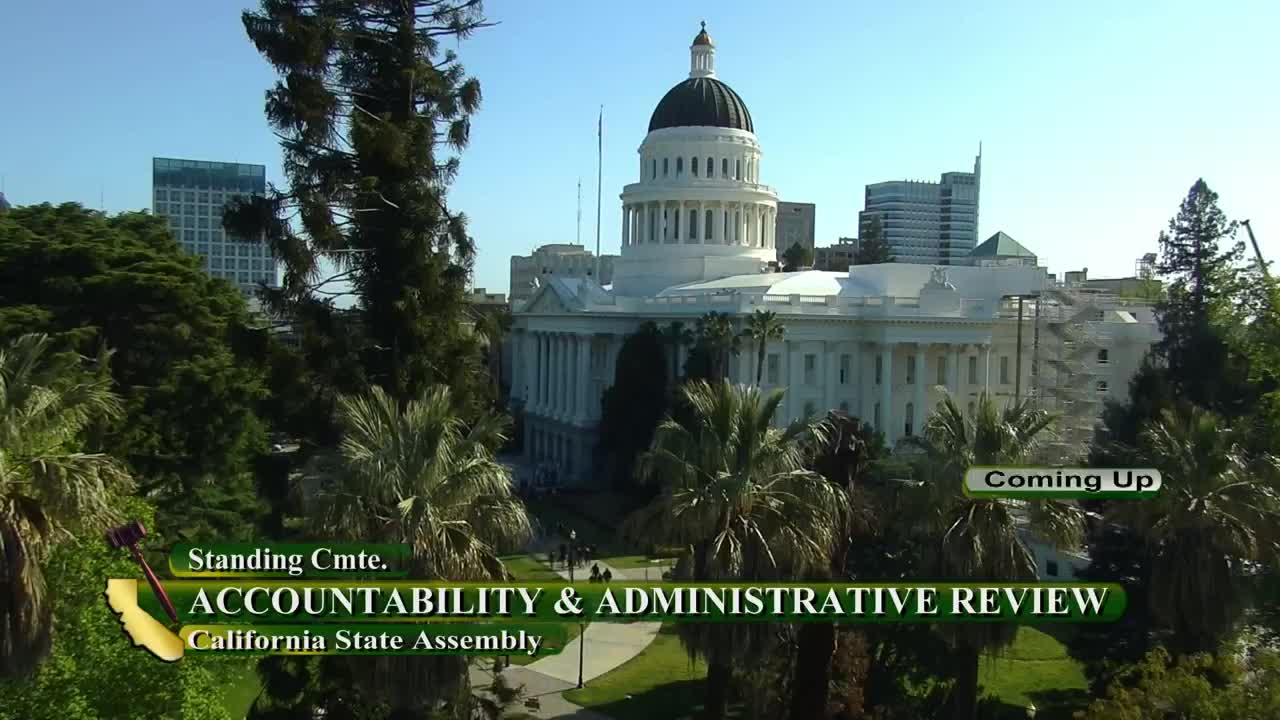
Assembly Standing Committee on Accountability and Administrative Review
Bill Author

Bill Co-Author(s):