AB 1593: California Workforce Development Board: Salton Sea geothermal resources area: Equitable Access Program.
- Session Year: 2023-2024
- House: Assembly
- Latest Version Date: 2023-09-12
Current Status:
Failed
(2024-01-25: Consideration of Governor's veto stricken from file.)
Introduced
In Committee
First Chamber
In Committee
Second Chamber
Enacted
What does this bill do?
This bill creates an Equitable Access Program run by the California Workforce Development Board to prioritize jobs for people who live in the Salton Sea geothermal resources area in construction, manufacturing, technical, maintenance, operations, reclamation, and battery or lithium-related projects. The board must provide technical help and a framework for pre-apprenticeship and registered apprenticeship (formal on-the-job training) using high-road training models, track local hiring and employment on geothermal and lithium projects, and help build infrastructure and workplace standards so residents share the economic benefits.
The summary is provided by generative AI which can make mistakes. For original language, please view the details in the table below.
Existing law establishes the California Workforce Development Board as the body responsible for assisting the Governor in the development, oversight, and continuous improvement of Californias workforce investment system and the alignment of the education and workforce investment systems to the needs of the 21st century economy and workforce. Existing law requires the board to assist the Governor with specified tasks, including developing and continuously improving the statewide workforce investment system.
This bill would establish the Equitable Access Program to be administered by the board to prioritize employment opportunities in construction, manufacturing, technical, maintenance, operations, or reclamation activities for local residents in the Salton Sea geothermal resources area. The bill would, among other things, require the board, in administering the program, to provide technical assistance to, and establish a framework for, preapprenticeship, registered apprenticeship, and other training programs using the high road construction careers model or high road training partnerships model, and to monitor and track the rate residents of the Salton Sea geothermal resources area are hired on construction projects in the Salton Sea geothermal resources area that involve battery manufacturing and lithium-based technology.
This bill would make legislative findings and declarations as to the necessity of a special statute for local residents in the Salton Sea.
The Legislature finds and declares all of the following:
(a)Lithium is becoming an increasingly critical resource as the state, and the world, moves toward a clean energy future to tackle the climate crisis. This metal is a crucial component of batteries needed to power electric vehicles, enable a 100-percent clean electrical grid, and move the states homes and industries away from fossil fuels.
(b)California has abundant untapped lithium reserves, including in geothermal brine more than a mile underground near the Salton Sea. The state is poised to become a global leader in the deployment of new, environmentally sound technologies that can coproduce lithium with renewable electricity from geothermal power plants in the Imperial Valley. Experts estimate the region could satisfy more than one-third of todays global lithium demand. Building out a world-class battery manufacturing ecosystem in tandem with lithium production and processing would also increase economic opportunities in the Salton Sea region, delivering quality jobs and community benefits to the region.
(c)There is a need to drive investments and job growth in the Salton Sea region that, for decades, has suffered from one of the highest unemployment rates in the state.
SEC. 2.Section 14016 is added to the Unemployment Insurance Code, to read:14016.(a)The Equitable Access Program is hereby established and shall be administered by the board. The board shall develop and administer the program to prioritize employment opportunities for local residents in construction, manufacturing, technical, maintenance, operations, or reclamation activities located in the Salton Sea geothermal resources area, including, but not limited to, projects that improve the accessibility of employment opportunities by providing language translation, interpretation, and assistance services.
(b)The program shall do all of the following:
(1)Provide technical assistance to, and establish a framework for, preapprenticeship, registered apprenticeship, and other training programs using the high road construction careers model or high road training partnerships model, as defined in Section 14005.
(2)Monitor and track the rate residents of the Salton Sea geothermal resources area are hired on construction projects involving battery manufacturing and lithium-based technology in the Salton Sea geothermal resources area.
(3)Monitor and track the rate residents of the Salton Sea geothermal resources area are employed in the operations and maintenance of geothermal power plant and lithium recovery facilities in the Salton Sea geothermal resources area.
(4)Provide technical assistance to, and establish a framework for, the creation of infrastructure that will provide residents of the Salton Sea geothermal resources area a share of the benefit from the programs projects.
(5)Provide technical assistance to, and establish a framework for, the creation of infrastructure that will develop labor standards that deliver community benefits, economic development, and labor opportunities.
SEC. 3.The Legislature finds and declares that a special statute is necessary and that a general statute cannot be made applicable within the meaning of Section 16 of Article IV of the California Constitution because of the unique need to prioritize employment opportunities for residents that live in proximity to the Salton Sea geothermal resources area and because of the high unemployment rate in the area.
|
Date
|
Status
|
|---|---|
| Jan 25, 2024 | Consideration of Governor's veto stricken from file. |
| Jan 3, 2024 | Consideration of Governor's veto pending. |
| Oct 8, 2023 | Vetoed by Governor. |
| Sep 15, 2023 | Enrolled and presented to the Governor at 4 p.m. |
| Sep 11, 2023 | In Assembly. Ordered to Engrossing and Enrolling. |
| Sep 11, 2023 | Read third time. Passed. Ordered to the Assembly. (Ayes 32. Noes 4. Page 2556.). |
| Sep 5, 2023 | Read second time. Ordered to third reading. |
| Sep 1, 2023 | From committee: Do pass. (Ayes 5. Noes 2.) (September 1). |
| Aug 14, 2023 | In committee: Referred to APPR suspense file. |
| Jul 12, 2023 | From committee: Do pass and re-refer to Com. on APPR. (Ayes 4. Noes 1.) (July 12). Re-referred to Com. on APPR. |
| Jun 14, 2023 | Referred to Com. on L., P.E. & R. |
| Jun 1, 2023 | In Senate. Read first time. To Com. on RLS. for assignment. |
| May 31, 2023 | Read third time. Passed. Ordered to the Senate. (Ayes 79. Noes 0. Page 2033.) |
| May 18, 2023 | Read second time. Ordered to third reading. |
| May 18, 2023 | From committee: Do pass. (Ayes 15. Noes 0.) (May 18). |
| Apr 26, 2023 | In committee: Set, first hearing. Referred to APPR. suspense file. |
| Apr 13, 2023 | From committee: Do pass and re-refer to Com. on APPR. (Ayes 7. Noes 0.) (April 12). Re-referred to Com. on APPR. |
| Mar 9, 2023 | Referred to Com. on L. & E. |
| Feb 18, 2023 | From printer. May be heard in committee March 20. |
| Feb 17, 2023 | Read first time. To print. |
|
Date
|
Description
|
Location
|
Votes
|
|
|---|---|---|---|---|
| Sep 11, 2023 | Assembly 3rd Reading AB1593 Garcia et al. By Padilla | Senate Floor |
Passed |
|
| Sep 1, 2023 | Do pass | Senate Standing Committee on Appropriations |
Passed |
|
| Aug 14, 2023 | Placed on suspense file | Senate Standing Committee on Appropriations |
Passed |
|
| Jul 12, 2023 | Do pass, but first be re-referred to the Committee on [Appropriations] | Senate Standing Committee on Labor, Public Employment and Retirement |
Passed |
|
| May 31, 2023 | AB 1593 Garcia Assembly Third Reading | Assembly Floor |
Passed |
|
| May 18, 2023 | Do pass. | Assembly Standing Committee on Appropriations |
Passed |
|
| Apr 12, 2023 | Do pass and be re-referred to the Committee on [Appropriations] | Assembly Standing Committee on Labor and Employment |
Passed |
This list shows positions taken on this bill by organizations on the date displayed, which is linked to the original source.
Positions by individuals are not included.
|
Organization
|
Position
|
Date
|
|---|---|---|
| Alianza Coachella Valley | ** Support | |
| California Coalition of Utility Employees | * Support | Apr 12, 2023 |
| California Rural Legal Assistance Foundation | * Support | Apr 12, 2023 |
| California State Association Of Electrical Workers | * Support | Apr 12, 2023 |
| California State Pipe Trades Council | * Support | Apr 12, 2023 |
| California Workforce Association | ** Support | |
| City Of El Centro | ** Support | |
| City of Imperial | ** Support | |
| City of Indio | ** Support | |
| Clean Power Campaign | ** Support | |
| Comite Civico del Valle, Inc. | ** Support | |
| County of Imperial | ** Support | |
| County Of Riverside Supervisor V. Manuel Perez | ** Support | |
| Los Amigos de la Comunidad, Imperial Valley | ** Support | |
| State Building And Construction Trades Council Of Ca | ** Support | |
| UAW Region 6 | ** Support | |
| Western States Council Of Sheet Metal Workers | * Support | Apr 12, 2023 |
GOVERNOR'S VETO
GV Bill Id:AB 1593
Author:(Garcia)
As Enrolled Ver:September 12, 2023
2/3 vote
SUMMARY
Establishes the Equitable Access Program (EAP) to be administered and developed by the California Workforce Development Board (CWDB) to prioritize employment opportunities in construction, manufacturing, technical, maintenance, operations, and reclamation activities for local residents in the Salton Sea geothermal resources area.
Major Provisions
- Finds and declares, among other things, that the state is poised to become a global leader in the deployment of new, environmentally sound technologies that can coproduce lithium with renewable electricity from geothermal power plants in the Imperial Valley.
- Requires the EAP to do all of the following:
- Provide technical assistance to, and establish a framework for, preapprenticeship, registered apprenticeship, and other training programs using the high road construction careers model or high road training partnerships model, as specified.
- Monitor and track the rate residents of the Salton Sea geothermal resources area are hired on construction projects involving battery manufacturing and lithium-based technology.
- Monitor and track the rate residents of the Salton Sea geothermal resources area are employed in operations and maintenance of geothermal power plant and lithium recovery facilities.
- Provide technical assistance to, and establish a framework for, the creation of infrastructure that will provide residents of the Salton Sea geothermal resources area a share of the benefit from the program's projects.
- Provide technical assistance to, and establish a framework for, the creation of infrastructure that will develop labor standards that deliver community benefits, economic development, and labor opportunities.
- Finds and declares that a special statute is necessary and that a general statute cannot be made applicable within the meaning of Section 16 of Article IV of the California Constitution because of the unique need to prioritize employment opportunities for residents that live in proximity to the Salton Sea geothermal resources area and because of the high unemployment rate in the area.
Governor's Veto Message
This bill would establish the Equitable Access Program, which would prioritize employment opportunities for local residents in the Salton Sea geothermal resources area in construction, manufacturing, technical, maintenance, operations, or reclamation activities.
I strongly support efforts to enhance employment opportunities in communities with high unemployment and historic underinvestment. My administration has already awarded $750,000 in grants to the Lithium Valley High Road Partnership and the Imperial Valley Lithium Stakeholder Working Group to support the creation of good, high paying jobs for underserved Californians. These partnerships were created and are led by local stakeholders and are focused on economic development and job creation related to Lithium Valley. Provisions of this bill are duplicative of work already underway and, until this foundational work is complete, additional monitoring and tracking requirements are premature.
COMMENTS
The Bureau of Labor Statistic (BLS) reported that in December 2020, the city of El Centro, located in the Imperial Valley, had the highest unemployment rate in the country at 17.7%.[1] Additionally, Imperial Valley suffers from some of the worst air pollution in the state and has been labeled a non-attainment area under the federal Clean Air Act in 2014.[2]
The Imperial Valley lies in the California counties of Imperial and Riverside in southeastern Southern California and encompasses the Salton Sea. The Salton Sea region is unique in that some researchers estimate it "contains enough lithium in the geothermal brines that it could supply a third of the world's current lithium demand."[3] Many researchers, energy startups, and others are hoping to transform this economically disadvantaged region into a lithium production hotspot, and reestablish it as "Lithium Valley." According to a report by New Energy Nexus, "The full vision of [the] Lithium Valley expands beyond lithium recovery to the co-location of battery and EV manufacturing as well. Importantly, a domestic supply chain also offers the benefit of reduced carbon emissions; lithium can be recovered and transformed into batteries for electric cars domestically, thereby reducing the overall carbon footprint of transportation between continents. What's more, Lithium Valley, uniquely, can produce lithium as a by-product of geothermal energy. Lithium Valley enables simultaneous generation of carbon free decarbonized baseload power production and lithium recovery serving to electrify transportation as well as enable the SB 100 vision of a 100% clean energy future. The establishment of a Lithium Valley anchored 'Clean Energy Hub' focused on attracting battery component, battery cell and electric vehicle manufacturers to Imperial County could supercharge the state's financial recovery while also promoting the sustainable wellbeing of a county with the highest unemployment rate in the state."[4]
Governor's 2022-23 Budget
This bill compliments the clean energy proposals laid out in Governor Newsom's proposed 2022-23 budget. In an effort to tackle the climate change crisis and the state's goal of moving to a 100% clean electrical grid, Governor Newsom has outlined specific proposals to further develop Lithium Valley and has pledged to work with the Legislature, the Lithium Valley Commission, and county and community partners to develop a model for revenue sharing and a fund that benefits Californians.[5]
According to the Author
"The world demand for Lithium is expected to grow as much as ten-fold in the next decade, but virtually none is produced in the United States; instead, almost all of the global supply today is mined in Argentina, Chile, China and Australia. The existing Salton Sea geothermal plants are well positioned to become a competitive source of Lithium supply that could possibly satisfy more than one-third of today's worldwide lithium demand. The opportunity for Lithium production in California also has the potential to unleash billions of dollars of new economic infrastructure development and high-quality green jobs in our state. [This bill] complements the Governor's critical efforts in building out a world-class battery manufacturing ecosystem that would create economic opportunities to a region that has suffered from chronic unemployment for decades."
In addition, the author points out that this bill will promote equity solutions and maximize benefits for underserved and marginalized communities because "This bill would ensure that the development of Lithium Valley would also bring good paying jobs to the Imperial Valley, the Coachella Valley, and Palo Verde Valleys. [These are] regions where individuals have suffered from chronic unemployment, disproportionally high poverty rates, and lack of proper education for decades."
Arguments in Support
The State Building and Construction Trades Council, in support, states, "The Equitable Access Program will focus on employment in construction, manufacturing, technical, maintenance, operations, and reclamation activities for local Salton Sea residents. The board will provide technical assistance and establish a framework for training programs using high-road training partnerships. The board will also track the rate residents of the Salton Sea are hired on construction projects involving battery manufacturing and lithium-based technologies, as well as the rate residents of the Salton Sea area are employed in the operation and maintenance of geothermal power plants and lithium recovery facilities.
The unemployment rate (14%) in Imperial County is the highest in California and three times higher than the state average. It is incumbent upon the state to improve the employment opportunities for Salton Sea area residents. The extraction of lithium and battery manufacturing using that lithium will provide such an opportunity."
Arguments in Opposition
None on file.
FISCAL COMMENTS
According to the Assembly Appropriations Committee, annual General Fund (GF) costs of approximately $285,000 to CWDB to establish the EAP, as specified.
VOTES
ASM LABOR AND EMPLOYMENT: 7-0-0
YES: Kalra, Flora, Chen, Haney, Ortega, Reyes, Ward
ASM APPROPRIATIONS: 15-0-1
YES: Holden, Megan Dahle, Bryan, Calderon, Wendy Carrillo, Dixon, Mike Fong, Hart, Lowenthal, Mathis, Papan, Pellerin, Sanchez, Weber, Ortega
ABS, ABST OR NV: Robert Rivas
ASSEMBLY FLOOR: 79-0-1
YES: Addis, Aguiar-Curry, Alanis, Alvarez, Arambula, Bains, Bauer-Kahan, Bennett, Berman, Boerner, Bonta, Bryan, Calderon, Juan Carrillo, Wendy Carrillo, Cervantes, Chen, Connolly, Megan Dahle, Davies, Dixon, Flora, Mike Fong, Vince Fong, Friedman, Gabriel, Gallagher, Garcia, Gipson, Grayson, Haney, Hart, Holden, Hoover, Irwin, Jackson, Jones-Sawyer, Kalra, Lackey, Lee, Low, Lowenthal, Maienschein, Mathis, McCarty, McKinnor, Muratsuchi, Stephanie Nguyen, Ortega, Pacheco, Papan, Jim Patterson, Joe Patterson, Pellerin, Petrie-Norris, Quirk-Silva, Ramos, Reyes, Luz Rivas, Robert Rivas, Rodriguez, Blanca Rubio, Sanchez, Santiago, Schiavo, Soria, Ta, Ting, Valencia, Villapudua, Waldron, Wallis, Ward, Weber, Wicks, Wilson, Wood, Zbur, Rendon
ABS, ABST OR NV: Essayli
SENATE FLOOR: 32-4-4
YES: Allen, Alvarado-Gil, Archuleta, Ashby, Atkins, Becker, Blakespear, Bradford, Cortese, Dodd, Durazo, Eggman, Glazer, Gonzalez, Hurtado, Laird, Limón, McGuire, Menjivar, Min, Newman, Padilla, Portantino, Roth, Rubio, Skinner, Smallwood-Cuevas, Stern, Umberg, Wahab, Wiener, Wilk
NO: Dahle, Jones, Niello, Seyarto
ABS, ABST OR NV: Caballero, Grove, Nguyen, Ochoa Bogh
UPDATED
VERSION: September 12, 2023
CONSULTANT: Martin Vindiola / L. & E. / (916)319-2091 FN: 0002470
Bureau of Labor Statistics, U.S. Department of Labor. El Centro, California, had the highest unemployment rate in December 2020, February 2021. ↑
Aguilera, Elizabeth. What keeps families in one of the most polluted places in California? CalMatters, January 2019. ↑
Fehrenbacher, Katie. A plan for 'Lithium Valley' begins to take shape. GreenBiz, October 2020. ↑
New Nexus Energy. Building Lithium Valley: Opportunities and Challenges Ahead for Developing California's Battery Manufacturing Ecosystem, September 2020. ↑
State of California. 2022-23 Governor's Budget. Proposed January 10, 2021. ↑
SENATE RULES COMMITTEE Office of Senate Floor Analyses (916) 651-1520 Fax: (916) 327-4478 | AB 1593 |
THIRD READING
Bill No: AB 1593
Author: Garcia (D), et al.
Introduced: 2/17/23
Vote: 21
SENATE LABOR, PUB. EMP. & RET. COMMITTEE: 4-1, 7/12/23
AYES: Cortese, Durazo, Laird, Smallwood-Cuevas
NOES: Wilk
SENATE APPROPRIATIONS COMMITTEE: 5-2, 9/1/23
AYES: Portantino, Ashby, Bradford, Wahab, Wiener
NOES: Jones, Seyarto
ASSEMBLY FLOOR: 79-0, 5/31/23 - See last page for vote
SUBJECT: California Workforce Development Board: Salton Sea geothermal resources area: Equitable Access Program
SOURCE: Author
DIGEST:
This bill requires the California Workforce Development Board (CWDB) to develop and administer the Equitable Access Program (Program) to prioritize employment opportunities for local residents in construction, manufacturing, technical, maintenance, operations, or reclamation activities located in the Salton Sea geothermal resources area
ANALYSIS:
Existing law:
- Creates the CWDB within the Labor and Workforce Development Agency (LWDA) to provide oversight and continuous improvement of the workforce investment system in California through policy development, workforce support and innovation, and performance assessment, measurement, and reporting.
- Requires CWDB to report to the Legislature on, among other things, the need for increased education, career technical education, job training, and workforce development resources, including community workforce agreements, to help industry, workers, and communities transition to economic and labor market changes related to statewide greenhouse gas emissions reduction goals.
- Requires the California Energy Commission (CEC), on or before March 1, 2021, to establish and convene the Blue Ribbon Commission on Lithium Extraction in California to, among other things, review, investigate, and analyze issues relating to lithium extraction and use in California.
- Creates the California Workforce Innovation and Opportunity Act, which encourages CWDB to collaborate with other public and private institutions, including businesses, unions, nonprofit organizations, kindergarten through 12th grades, career technical education programs, adult career technical education and basic skills programs, apprenticeships, community college career technical education and basic skills programs, entrepreneurship training programs where appropriate, the California Community Colleges Economic and Workforce Development Program, the Employment Training Panel, and county-based social and employment services, to better align resources across workforce, training, education, and social service delivery systems and to build a well articulated workforce investment system.
- Defines “high road” as a set of economic and workforce development strategies to achieve economic growth, economic equity, shared prosperity, and a clean environment. Strategies include but are not limited to, interventions that:
- Improve job quality and job access, including for women and people from underserved and underrepresented populations;
- Meet the skill and profitability needs of employers; and
- Meet the economic, social, and environmental needs of the community.
- Defines “high road construction careers” as high road training partnerships that invest in regional training partnerships comprised of local building trades councils, workforce, community, and education interests that connect to state approved apprenticeship programs, that utilize specified preapprenticeship training curriculum, and provide a range of supportive services and career placement assistance to women and people from underserved and underrepresented populations.
This bill:
- Establishes the Equitable Access Program (Program), to be administered by CWDB, and requires CWDB to develop and administer the program to prioritize employment opportunities for local residents in construction, manufacturing, technical, maintenance, operations, or reclamation activities located in the Salton Sea geothermal resources area, including, but not limited to, projects that improve the accessibility of employment opportunities by providing language translation, interpretation, and assistance services.
- Requires the Program to:
- Provide technical assistance to, and establish a framework for, preapprenticeship, registered apprenticeship, and other training programs using the high road construction careers model or high road training partnerships model;
- Monitor and track the rate residents of the Salton Sea geothermal resources area are hired on construction projects involving battery manufacturing and lithium-based technology in the Salton Sea geothermal resources area;
- Monitor and track the rate residents of the Salton Sea geothermal resources area are employed in the operations and maintenance of geothermal power plant and lithium recovery facilities in the Salton Sea geothermal resources area;
- Provide technical assistance to, and establish a framework for, the creation of infrastructure that will provide residents of the Salton Sea geothermal resources area a share of the benefit from the program’s projects; and
- Provide technical assistance to, and establish a framework for, the creation of infrastructure that will develop labor standards that deliver community benefits, economic development, and labor opportunities.
- Makes various legislative findings and declarations.
Background
Salton Sea Known Geothermal Resource Area. According to some February 2023 figures, the global demand for lithium batteries is expected to grow more than five-fold by 2030 as more consumers move to electric vehicles and energy storage. Available demand projections vary widely and are subject to which types of batteries will more rapidly penetrate the market. According to the International Energy Agency, lithium demand may be 13 times higher if vanadium redox flow batteries are popularized or 51 times higher if all-solid-state batteries commercialize faster. The United States (U.S.) demand is anticipated to grow more than six times, which would amount to a $55 billion per year industry; however, a Li-Bridge report estimates that the U.S. will continue to depend on an imported supply and the nation’s businesses and their employees will represent only 30 percent of the value sold domestically.
California’s Salton Sea Known Geothermal Resource Area, approximately 95 miles east of San Diego in the Eastern Coachella and Imperial Valleys, is well positioned to become a competitive source of lithium supply that could potentially satisfy more than one-third of today’s global lithium demand. This area, the largest geothermal development in the state, currently includes 10 square miles of power plants, production wells, injection wells, and working lands. The concentration of lithium is at the southern end of the Salton Sea over half a mile below the sea floor. This opportunity for lithium production in California could unleash billions of dollars of new economic infrastructure development and high quality green jobs, which would advantageously create economic opportunities for this underserved region.
Blue Ribbon Commission on Lithium Extraction in California. Assembly Bill 1657 (E. Garcia - Chapter 271, Statutes of 2020) required the California Energy Commission to establish the Blue Ribbon Commission on Lithium Extraction in California (Commission), which was tasked with exploring opportunities and challenges in developing the lithium industry. The Commission’s report was submitted to the Legislature on December 2022, and identified the Salton Sea Known Geothermal Resource Area, also known as “Lithium Valley,” as a key element of California’s clean energy future centered on the recovery of lithium from geothermal brine. The Commission found that it is imperative that new geothermal lithium recovery and related projects prioritize the development and hiring of a local workforce, provide resources to support the development of necessary training and educational opportunities, and commit to requirements for strong workforce and labor standards that produce high quality jobs and careers.
Comments
Purpose of the bill. The author states “The world demand for Lithium is expected to grow as much as ten-fold in the next decade. The existing Salton Sea geothermal area is well positioned to become a competitive source of Lithium supply that could possibly satisfy more than one-third of today’s worldwide lithium demand. The opportunity for Lithium production in California also has the potential to unleash billions of dollars of new economic infrastructure development and high-quality green jobs in our state. AB1593 would create economic opportunities for a historically underserved region that has suffered from chronic unemployment for decades.”
Related/Prior Legislation
SB 150 (Durazo, Chapter 61, Statutes of 2023) among other things, required the California Department of Transportation (Caltrans) to work in partnership with WDB to support California’s high road construction careers program and requires Caltrans to reserve a minimum total of $50 million of federal funds from the federal Infrastructure Investment and Jobs Act of 2022 to be allocated over four years to support high road construction careers programs that provide a range of supportive services and career placement assistance to underserved and underrepresented populations.
AB 2095 (Kalra, 2022) would have established a program at LWDA for the disclosure of worker-related metrics and among other things, develop criteria and a scoring methodology to qualify an employer as a certified high road employer. This bill was held on the Senate Committee on Appropriations Suspense File.
FISCAL EFFECT: Appropriation: No Fiscal Com.: Yes Local: No
According to the Senate Committee on Appropriations, “CWDB indicates that it would incur annual General Fund costs of $237,000 to implement the provisions of the bill.”
SUPPORT: (Verified 9/1/23)
Alianza Coachella Valley
California Workforce Association
City of El Centro
City of Imperial
City of Indio
Clean Power Campaign
Comite Civico Del Valle, INC
County of Imperial
County of Riverside Supervisor V. Manuel Perez
Los Amigos De LA Comunidad, Imperial Valley
State Building and Construction Trades Council of Ca
UAW Region 6
OPPOSITION: (Verified 9/1/23)
None received
ARGUMENTS IN SUPPORT: According to the State Building and Construction Trades Council of California, “The Equitable Access Program will focus on employment in construction, manufacturing, technical, maintenance, operations, and reclamation activities for local Salton Sea residents. The board will provide technical assistance and establish a framework for training programs using high-road training partnerships. The board will also track the rate residents of the Salton Sea are hired on construction projects involving battery manufacturing and lithium-based technologies, as well as the rate residents of the Salton Sea area are employed in the operation and maintenance of geothermal power plants and lithium recovery facilities. The unemployment rate (14%) in Imperial County is the highest in California and three times higher than the state average. It is incumbent upon the state to improve the employment opportunities for Salton Sea area residents. The extraction of lithium and battery manufacturing using that lithium will provide such an opportunity.”
The California Workforce Association states “The Equitable Access Program would monitor and track the rate residents of the Salton Sea geothermal resources area are hired on construction projects involving battery manufacturing and lithium-based technology, as well as employment rates in maintenance and operations in geothermal power plant and lithium recovery facilities. Additionally, it would provide technical assistance and establish a framework for preapprenticeship, registered apprenticeship, and other training programs. Besides providing community benefits, economic development, and labor opportunities this bill supports the State’s plan to a sustainable future. This bill presents an opportunity to strengthen California’s position as a leader in clean energy and reduce its carbon footprint.
By building a world-class battery manufacturing ecosystem, the State will generate billions from economic infrastructure development and green jobs in a region that has experienced chronic unemployment for decades. Imperial County suffers from high unemployment rates, home of El Centro, the city with the highest unemployment rate in the country. A lithium production hotspot would require a skilled workforce, providing employment opportunities in construction, manufacturing, technical field, maintenance, operations and more. The Equitable Access Program aims to break the cycle of generational unemployment and lack of opportunities in underserved and marginalized communities, providing a change for individuals and families to build a better future.”
ASSEMBLY FLOOR: 79-0, 5/31/23
AYES: Addis, Aguiar-Curry, Alanis, Alvarez, Arambula, Bains, Bauer-Kahan, Bennett, Berman, Boerner, Bonta, Bryan, Calderon, Juan Carrillo, Wendy Carrillo, Cervantes, Chen, Connolly, Megan Dahle, Davies, Dixon, Flora, Mike Fong, Vince Fong, Friedman, Gabriel, Gallagher, Garcia, Gipson, Grayson, Haney, Hart, Holden, Hoover, Irwin, Jackson, Jones-Sawyer, Kalra, Lackey, Lee, Low, Lowenthal, Maienschein, Mathis, McCarty, McKinnor, Muratsuchi, Stephanie Nguyen, Ortega, Pacheco, Papan, Jim Patterson, Joe Patterson, Pellerin, Petrie-Norris, Quirk-Silva, Ramos, Reyes, Luz Rivas, Robert Rivas, Rodriguez, Blanca Rubio, Sanchez, Santiago, Schiavo, Soria, Ta, Ting, Valencia, Villapudua, Waldron, Wallis, Ward, Weber, Wicks, Wilson, Wood, Zbur, Rendon
NO VOTE RECORDED: Essayli
Prepared by: Dawn Clover / L., P.E. & R. / (916) 651-1556
9/2/23 12:11:11
**** END ****
SENATE COMMITTEE ON APPROPRIATIONS
Senator Anthony Portantino, Chair
2023 - 2024 Regular Session
AB 1593 (Garcia) - California Workforce Development Board: Salton Sea geothermal resources area: Equitable Access Program
Version: February 17, 2023 | Policy Vote: L., P.E. & R. 4 - 1 |
Urgency: No | Mandate: No |
Hearing Date: August 14, 2023 | Consultant: Robert Ingenito |
Bill Summary:
AB 1593 would require the California Workforce Development Board (CWDB) to develop and administer a program to prioritize employment opportunities for local residents in construction, manufacturing, technical, maintenance, operations, or reclamation activities located in the Salton Sea geothermal resources area.
Fiscal Impact:
CWDB indicates that it would incur annual General Fund costs of $237,000 to implement the provisions of the bill.
Background:
Available data suggest that the global demand for lithium batteries could grow more than five-fold by 2030 as more consumers move to electric vehicles and energy storage. Projections of demand vary widely and are subject to which types of batteries will more rapidly penetrate the market.
California’s Salton Sea Known Geothermal Resource Area, approximately 95 miles east of San Diego in the Eastern Coachella and Imperial Valleys, is well positioned to become a competitive source of lithium supply that could potentially satisfy more than one-third of today’s global lithium demand. This area, the largest geothermal development in the State, currently includes 10 square miles of power plants, production wells, injection wells, and working lands. The concentration of lithium is at the southern end of the Salton Sea over half a mile below the sea floor. This opportunity for lithium production in California could result in billions of dollars of new economic infrastructure development and high quality green jobs, which would advantageously create economic opportunities for the underserved region.
Assembly Bill 1657 (E. Garcia, 2020) required the California Energy Commission to establish the Blue Ribbon Commission on Lithium Extraction in California (Commission), which was tasked with exploring opportunities and challenges in developing the lithium industry. The Commission’s report was submitted to the Legislature in December 2022, and identified the Salton Sea Known Geothermal Resource Area, also known as “Lithium Valley,” as a key element of California’s clean energy future centered on the recovery of lithium from geothermal brine. The Commission found that it is imperative that new geothermal lithium recovery and related projects prioritize the development and hiring of a local workforce, provide resources to support the development of necessary training and educational opportunities, and commit to requirements for strong workforce and labor standards that produce high quality jobs and careers.
Proposed Law:
This bill would, among other things, do the following:
- Establish the Equitable Access Program EAP, to be administered by CWDB, and requires the Board to develop and administer the program to prioritize employment opportunities for local residents in construction, manufacturing, technical, maintenance, operations, or reclamation activities located in the Salton Sea geothermal resources area, including, but not limited to, projects that improve the accessibility of employment opportunities by providing language translation, interpretation, and assistance services.
- Require EAP to (1) provide technical assistance to, and establish a framework for, preapprenticeship, registered apprenticeship, and other training programs using the high road construction careers model or high road training partnerships model, (2) monitor and track the rate residents of the Salton Sea geothermal resources area are hired on construction projects involving battery manufacturing and lithium-based technology in the Salton Sea geothermal resources area, (3) monitor and track the rate residents of the Salton Sea geothermal resources area are employed in the operations and maintenance of geothermal power plant and lithium recovery facilities in the Salton Sea geothermal resources area, (4) provide technical assistance to, and establish a framework for, the creation of infrastructure that will provide residents of the Salton Sea geothermal resources area a share of the benefit from the program’s projects, and (5) provide technical assistance to, and establish a framework for, the creation of infrastructure that will develop labor standards that deliver community benefits, economic development, and labor opportunities.
Related Legislation:
- SB 150 (Durazo, Chapter 61, Statutes of 2023) among other things, requires the California Department of Transportation (Caltrans) to work in partnership with WDB to support California’s high road construction careers program and requires Caltrans to reserve a minimum total of $50 million of federal funds from the federal Infrastructure Investment and Jobs Act of 2022 to be allocated over four years to support high road construction careers programs that provide a range of supportive services and career placement assistance to underserved and underrepresented populations.
- SB 822 (Durazo) would create the California Workforce Innovation and Opportunity Act to assist state agencies in advancing high-quality jobs with investments in the energy, resources, and transportation sectors and expand access to those jobs through education and training and require state agencies receiving climate investments to enter into a memorandum of understanding (MOU) with WDB to coordinate economic and workforce development planning, analysis, and implementation activities. This bill is currently pending in the Assembly Appropriations Committee.
- AB 2095 (Kalra, 2022) would have established a program at LWDA for the disclosure of worker-related metrics and among other things, develop criteria and a scoring methodology to qualify an employer as a certified high road employer. The bill was held under submission on the Suspense File of this Committee.
- SB 154 (Committee on Budget and Fiscal Review, Chapter 43, Statutes of 2022) required Labor Agency to submit a report to the Legislature documenting all relevant programs and initiatives under the Employment Development Department, WDB, and Department of Industrial Relations regarding the high road standard.
- SB 674 (Durazo, Chapter 875, Statutes of 2022) applied a high road jobs framework on California Department of Transportation and the Department of General Services (DGS) contracts for zero-emission transit vehicles and charging stations.
- SB 700 (Durazo, 2022) established the High Road Employment Program within the LWDA, which requires each bidder for a contract with the state to submit a High Road Employment Plan to DGS to be eligible for a contract. The bill was held under submission on the Suspense File of the Assembly Appropriations Committee.
- AB 680 (Burke, Chapter 746, Statutes of 2021) enacted the California Just Transition Act, which required LWDA to update, by July 1, 2023, the funding guidelines for administering agencies to ensure that all applicants to grant programs funded by the Greenhouse Gas Reduction Fund meet fair and responsible employer standards and provide inclusive procurement policies.
Staff Comments:
The 2022-23 state budget contained several investments in Lithium Valley. SB 125 (Committee on Budget and Fiscal Review) enacted a tax on lithium extraction in lieu of all county, municipal, or district taxes on lithium extraction or storage, with 80 percent of revenues appropriated to the county of extraction and 20 percent to the Salton Sea Restoration Fund to support local restoration and community projects. SB 125 also included a $5 million appropriation to Imperial County for a county programmatic environmental impact report and health impact assessment, as well as community outreach related to lithium development.
AB 209 (Committee on Budget) authorized, for the 2022 – 2024 calendar years, the California Alternative Energy and Advanced Transportation Financing Authority to provide an additional $15 million of sales and use tax exclusions for projects that manufacture, refine, extract, process, or recover lithium.
Finally, the state budget provided $80 million from the General Fund in one-time funding to expand the San Diego State University, Brawley Center in the Imperial Valley to support a local workforce pipeline to aid the state’s goals for Lithium Valley development.
-- END --
SENATE COMMITTEE ON LABOR, PUBLIC EMPLOYMENT AND RETIREMENT
Senator Dave Cortese, Chair
2023 - 2024 Regular
Bill No: AB 1593 Hearing Date: July 12, 2023
Author: | Garcia | ||
Version: | February 17, 2023 | ||
Urgency: | No | Fiscal: | Yes |
Consultant: | Dawn Clover | ||
SUBJECT: California Workforce Development Board: Salton Sea geothermal resources area: Equitable Access Program
KEY ISSUE
Should the Legislature require the California Workforce Development Board (WDB) to develop and administer the program to prioritize employment opportunities for local residents in construction, manufacturing, technical, maintenance, operations, or reclamation activities located in the Salton Sea geothermal resources area?
ANALYSIS
Existing law:
- Creates the WDB within the Labor and Workforce Development Agency (LWDA) to provide oversight and continuous improvement of the workforce investment system in California through policy development, workforce support and innovation, and performance assessment, measurement, and reporting. (Unemployment Insurance Code §§14010)
- Requires WDB to report to the Legislature on, among other things, the need for increased education, career technical education, job training, and workforce development resources, including community workforce agreements, to help industry, workers, and communities transition to economic and labor market changes related to statewide greenhouse gas emissions reduction goals. (Health & Safety Code §38591.3)
- Requires the California Energy Commission (CEC), on or before March 1, 2021, to establish and convene the Blue Ribbon Commission on Lithium Extraction in California to, among other things, review, investigate, and analyze issues relating to lithium extraction and use in California. (Public Resources Code § 25232)
- Creates the California Workforce Innovation and Opportunity Act, which encourages WDB to collaborate with other public and private institutions, including businesses, unions, nonprofit organizations, kindergarten through 12th grades, career technical education programs, adult career technical education and basic skills programs, apprenticeships, community college career technical education and basic skills programs, entrepreneurship training programs where appropriate, the California Community Colleges Economic and Workforce Development Program, the Employment Training Panel, and county-based social and employment services, to better align resources across workforce, training, education, and social service delivery systems and to build a well-articulated workforce investment system. (Unemployment Insurance Code §§14000)
- Defines “high road” as a set of economic and workforce development strategies to achieve economic growth, economic equity, shared prosperity, and a clean environment. Strategies include but are not limited to, interventions that: a) Improve job quality and job access, including for women and people from underserved and underrepresented populations; b) Meet the skill and profitability needs of employers, and; c) Meet the economic, social, and environmental needs of the community. (Unemployment Insurance Code §14005)
- Defines “high road construction careers” as high road training partnerships that invest in regional training partnerships comprised of local building trades councils, workforce, community, and education interests that connect to state-approved apprenticeship programs, that utilize specified preapprenticeship training curriculum, and provide a range of supportive services and career placement assistance to women and people from underserved and underrepresented populations. (Unemployment Insurance Code § 14005)
- Provides that all laws of a general nature have uniform operation and a local or special statute is invalid in any case if a general statute can be made applicable (California Constitution Article IV §16)
This bill:
- Establishes the Equitable Access Program (Program), to be administered by WDB, and requires WDB to develop and administer the program to prioritize employment opportunities for local residents in construction, manufacturing, technical, maintenance, operations, or reclamation activities located in the Salton Sea geothermal resources area, including, but not limited to, projects that improve the accessibility of employment opportunities by providing language translation, interpretation, and assistance services.
- Requires the Program to:
- Provide technical assistance to, and establish a framework for, preapprenticeship, registered apprenticeship, and other training programs using the high road construction careers model or high road training partnerships model;
- Monitor and track the rate residents of the Salton Sea geothermal resources area are hired on construction projects involving battery manufacturing and lithium-based technology in the Salton Sea geothermal resources area;
- Monitor and track the rate residents of the Salton Sea geothermal resources area are employed in the operations and maintenance of geothermal power plant and lithium recovery facilities in the Salton Sea geothermal resources area;
- Provide technical assistance to, and establish a framework for, the creation of infrastructure that will provide residents of the Salton Sea geothermal resources area a share of the benefit from the program’s projects; and
- Provide technical assistance to, and establish a framework for, the creation of infrastructure that will develop labor standards that deliver community benefits, economic development, and labor opportunities.
- Provide technical assistance to, and establish a framework for, preapprenticeship, registered apprenticeship, and other training programs using the high road construction careers model or high road training partnerships model;
- Finds and declares that a special statute is necessary and that a general statute cannot be made applicable within the meaning of Section 16 of Article IV of the California Constitution because of the unique need to prioritize employment opportunities for residents that live in proximity to the Salton Sea geothermal resources area and because of the high unemployment rate in the area.
- Finds and declares that lithium is becoming an increasingly critical resource as the state, and the world, moves toward a clean energy future to tackle the climate crisis and that this metal is a crucial component of batteries needed to power electric vehicles, enable a 100 percent clean electrical grid, and move the state’s homes and industries away from fossil fuels.
- Finds and declares that California has abundant untapped lithium reserves, including in geothermal brine more than a mile underground near the Salton Sea. Further, the state is poised to become a global leader in the deployment of new, environmentally sound technologies that can coproduce lithium with renewable electricity from geothermal power plants in the Imperial Valley. Experts estimate the region could satisfy more than one-third of today’s global lithium demand. Building out a world-class battery manufacturing ecosystem in tandem with lithium production and processing would also increase economic opportunities in the Salton Sea region, delivering quality jobs and community benefits to the region.
- Finds and declares that there is a need to drive investments and job growth in the Salton Sea region that, for decades, has suffered from one of the highest unemployment rates in the state.
COMMENTS
1. Background
Salton Sea Known Geothermal Resource Area
According to some February 2023 figures, the global demand for lithium batteries is expected to grow more than five-fold by 2030 as more consumers move to electric vehicles and energy storage. Available demand projections vary widely and are subject to which types of batteries will more rapidly penetrate the market. According to the International Energy Agency, lithium demand may be 13 times higher if vanadium redox flow batteries[1] are popularized or 51 times higher if all-solid-state batteries[2] commercialize faster. The United States (U.S.), demand is anticipated to grow more than six times, which would amount to a $55 billion per year industry; however, a report estimates that the U.S. will continue to depend on an imported supply and the nation’s businesses and their employees will represent only 30 percent of the value sold domestically.[3]
California’s Salton Sea Known Geothermal Resource Area, approximately 95 miles east of San Diego in the Eastern Coachella and Imperial Valleys, is well positioned to become a competitive source of lithium supply that could potentially satisfy more than one-third of today’s global lithium demand.[4] This area, the largest geothermal development in the state, currently includes 10 square miles of power plants, production wells, injection wells, and working lands. The concentration of lithium is at the southern end of the Salton Sea over half a mile below the sea floor. This opportunity for lithium production in California could unleash billions of dollars of new economic infrastructure development and high quality green jobs, which would advantageously create economic opportunities for the underserved region.
Blue Ribbon Commission on Lithium Extraction in California
Assembly Bill 1657 (E. Garcia - Chapter 271, Statutes of 2020) required the California Energy Commission to establish the Blue Ribbon Commission on Lithium Extraction in California (Commission), which was tasked with exploring opportunities and challenges in developing the lithium industry. The Commission’s report was submitted to the Legislature on December 2022, and identified the Salton Sea Known Geothermal Resource Area, also known as “Lithium Valley,” as a key element of California’s clean energy future centered on the recovery of lithium from geothermal brine. The Commission found that it is imperative that new geothermal lithium recovery and related projects prioritize the development and hiring of a local workforce, provide resources to support the development of necessary training and educational opportunities, and commit to requirements for strong workforce and labor standards that produce high quality jobs and careers.
2. Need for this bill
The author states “The world demand for Lithium is expected to grow as much as ten-fold in the next decade. The existing Salton Sea geothermal area is well positioned to become a competitive source of Lithium supply that could possibly satisfy more than one-third of today’s worldwide lithium demand. The opportunity for Lithium production in California also has the potential to unleash billions of dollars of new economic infrastructure development and high-quality green jobs in our state. AB1593 would create economic opportunities for a historically underserved region that has suffered from chronic unemployment for decades.”
3. Proponent Arguments
According to the State Building and Construction Trades Council of California, “The Equitable Access Program will focus on employment in construction, manufacturing, technical, maintenance, operations, and reclamation activities for local Salton Sea residents. The board will provide technical assistance and establish a framework for training programs using high-road training partnerships. The board will also track the rate residents of the Salton Sea are hired on construction projects involving battery manufacturing and lithium-based technologies, as well as the rate residents of the Salton Sea area are employed in the operation and maintenance of geothermal power plants and lithium recovery facilities. The unemployment rate (14%) in Imperial County is the highest in California and three times higher than the state average. It is incumbent upon the state to improve the employment opportunities for Salton Sea area residents. The extraction of lithium and battery manufacturing using that lithium will provide such an opportunity.”
The California Workforce Association states “The Equitable Access Program would monitor and track the rate residents of the Salton Sea geothermal resources area are hired on construction projects involving battery manufacturing and lithium-based technology, as well as employment rates in maintenance and operations in geothermal power plant and lithium recovery facilities. Additionally, it would provide technical assistance and establish a framework for preapprenticeship, registered apprenticeship, and other training programs. Besides providing community benefits, economic development, and labor opportunities this bill supports the State’s plan to a sustainable future. This bill presents an opportunity to strengthen California’s position as a leader in clean energy and reduce its carbon footprint.
By building a world-class battery manufacturing ecosystem, the State will generate billions from economic infrastructure development and green jobs in a region that has experienced chronic unemployment for decades. Imperial County suffers from high unemployment rates, home of El Centro, the city with the highest unemployment rate in the country. A lithium production hotspot would require a skilled workforce, providing employment opportunities in construction, manufacturing, technical field, maintenance, operations and more. The Equitable Access Program aims to break the cycle of generational unemployment and lack of opportunities in underserved and marginalized communities, providing a change for individuals and families to build a better future.”
4. Opponent Arguments
None received
5. Related/Prior Legislation
SB 150 (Durazo et al., 2023) among other things, requires the California Department of Transportation (Caltrans) to work in partnership with WDB to support California’s high road construction careers program and requires Caltrans to reserve a minimum total of $50 million of federal funds from the federal Infrastructure Investment and Jobs Act of 2022 to be allocated over four years to support high road construction careers programs that provide a range of supportive services and career placement assistance to underserved and underrepresented populations. This bill was enrolled on July 5, 2023.
SB 822 (Ducheny, 2023) would create the California Workforce Innovation and Opportunity Act to assist state agencies in advancing high-quality jobs with investments in the energy, resources, and transportation sectors and expand access to those jobs through education and training and require state agencies receiving climate investments to enter into a memorandum of understanding (MOU) with WDB to coordinate economic and workforce development planning, analysis, and implementation activities. This bill was referred to the Assembly Committee on Jobs, Economic Development, and the Economy on June 29, 2023.
AB 2095 (Kalra, 2022) would have established a program at LWDA for the disclosure of worker-related metrics and among other things, develop criteria and a scoring methodology to qualify an employer as a certified high road employer. The bill was held on the Senate Appropriations Committee Suspense File.
SB 154 (Committee on Budget and Fiscal Review - Chapter 43, Statutes of 2022) required Labor Agency to submit a report to the Legislature documenting all relevant programs and initiatives under the Employment Development Department, WDB, and Department of Industrial Relations regarding the high road standard.
SB 674 (Durazo - Chapter 875, Statutes of 2022) applied a high road jobs framework on California Department of Transportation and the Department of General Services (DGS) contracts for zero-emission transit vehicles and charging stations.
SB 700 (Durazo, 2022) established the High Road Employment Program within the LWDA, which requires each bidder for a contract with the state to submit a High Road Employment Plan to DGS to be eligible for a contract. The bill was held on the Assembly Appropriations Committee Suspense File.
AB 680 (Burke - Chapter 746, Statutes of 2021) enacted the California Just Transition Act, which required LWDA to update, by July 1, 2023, the funding guidelines for administering agencies to ensure that all applicants to grant programs funded by the Greenhouse Gas Reduction Fund meet fair and responsible employer standards and provide inclusive procurement policies.
AB 983 (E. Garcia, 2021) would have authorized a public entity to use, enter into, or require contractors to enter into, a community workforce agreement for construction projects related to battery manufacturing and lithium-based technology. The contents of this bill were removed and replaced with unrelated language.
AB 1657 (E. Garcia - Chapter 271, Statutes of 2020) required CEC to establish and convene the Commission, with 14 members appointed by a combination of the CEC, other state agencies, the Assembly Speaker, and the Senate Committee on Rules. The bill’s provisions are due to sunset in October of 2023.
SUPPORT
Alianza Coachella Valley
California Workforce Association
City of El Centro
City of Imperial
City of Indio
Clean Power Campaign
Comite Civico Del Valle, INC
County of Imperial
County of Riverside Supervisor V. Manuel Perez
Los Amigos De LA Comunidad, Imperial Valley
State Building and Construction Trades Council of California
OPPOSITION
None received
-- END --
https://www.sciencedirect.com/science/article/abs/pii/S2352152X19302798 ↑
https://www.economist.com/the-economist-explains/2017/10/16/will-solid-state-batteries-power-us-all?utm_medium=cpc.adword.pd&utm_source=google&ppccampaignID=17210591673&ppcadID=&utm_campaign=a.22brand_pmax&utm_content=conversion.direct-response.anonymous&gclid=Cj0KCQjw1_SkBhDwARIsANbGpFsdHUbGz3lxmoR-AimvdKHHL8QKA2bTMgVQC-4XgA8864Fp5ckpXSUaAnQzEALw_wcB&gclsrc=aw.ds ↑
https://www.reuters.com/markets/commodities/global-demand-lithium-batteries-leap-five-fold-by-2030-li-bridge-2023-02-15/ ↑
State of California. 2022-23 Governor's Budget. Proposed January 10, 2021 ↑
ASSEMBLY THIRD READING
ATR Bill Id:AB 1593
Author:(Garcia)
As Introduced Ver:February 17, 2023
Majority vote
SUMMARY
Establishes the Equitable Access Program (EAP) to be administered and developed by the California Workforce Development Board (CWDB) to prioritize employment opportunities in construction, manufacturing, technical, maintenance, operations, and reclamation activities for local residents in the Salton Sea geothermal resources area.
Major Provisions
- Finds and declares, among other things, that the state is poised to become a global leader in the deployment of new, environmentally sound technologies that can coproduce lithium with renewable electricity from geothermal power plants in the Imperial Valley.
- Requires the EAP to do all of the following:
- Provide technical assistance to, and establish a framework for, preapprenticeship, registered apprenticeship, and other training programs using the high road construction careers model or high road training partnerships model, as specified.
- Monitor and track the rate residents of the Salton Sea geothermal resources area are hired on construction projects involving battery manufacturing and lithium-based technology.
- Monitor and track the rate residents of the Salton Sea geothermal resources area are employed in operations and maintenance of geothermal power plant and lithium recovery facilities.
- Provide technical assistance to, and establish a framework for, the creation of infrastructure that will provide residents of the Salton Sea geothermal resources area a share of the benefit from the program's projects.
- Provide technical assistance to, and establish a framework for, the creation of infrastructure that will develop labor standards that deliver community benefits, economic development, and labor opportunities.
- Finds and declares that a special statute is necessary and that a general statute cannot be made applicable within the meaning of Section 16 of Article IV of the California Constitution because of the unique need to prioritize employment opportunities for residents that live in proximity to the Salton Sea geothermal resources area and because of the high unemployment rate in the area.
COMMENTS
The Bureau of Labor Statistic (BLS) reported that in December 2020, the city of El Centro, located in the Imperial Valley, had the highest unemployment rate in the country at 17.7 percent.[1] Additionally, Imperial Valley suffers from some of the worst air pollution in the state and has been labeled a non-attainment area under the federal Clean Air Act in 2014.[2]
The Imperial Valley lies in the California counties of Imperial and Riverside in southeastern Southern California and encompasses the Salton Sea. The Salton Sea region is unique in that some researchers estimate it "contains enough lithium in the geothermal brines that it could supply a third of the world's current lithium demand."[3] Many researchers, energy startups, and others are hoping to transform this economically disadvantaged region into a lithium production hotspot, and reestablish it as "Lithium Valley." According to a report by New Energy Nexus, "The full vision of [the] Lithium Valley expands beyond lithium recovery to the co-location of battery and EV manufacturing as well. Importantly, a domestic supply chain also offers the benefit of reduced carbon emissions; lithium can be recovered and transformed into batteries for electric cars domestically, thereby reducing the overall carbon footprint of transportation between continents. What's more, Lithium Valley, uniquely, can produce lithium as a by-product of geothermal energy. Lithium Valley enables simultaneous generation of carbon free decarbonized baseload power production and lithium recovery serving to electrify transportation as well as enable the SB 100 vision of a 100% clean energy future. The establishment of a Lithium Valley anchored 'Clean Energy Hub' focused on attracting battery component, battery cell and electric vehicle manufacturers to Imperial County could supercharge the state's financial recovery while also promoting the sustainable wellbeing of a county with the highest unemployment rate in the state."[4]
Governor's 2022-23 Budget
This bill compliments the clean energy proposals laid out in Governor Newsom's proposed 2022-23 budget. In an effort to tackle the climate change crisis and the state's goal of moving to a 100% clean electrical grid, Governor Newsom has outlined specific proposals to further develop Lithium Valley and has pledged to work with the Legislature, the Lithium Valley Commission, and county and community partners to develop a model for revenue sharing and a fund that benefits Californians.[5]
According to the Author
"The world demand for Lithium is expected to grow as much as ten-fold in the next decade, but virtually none is produced in the United States; instead, almost all of the global supply today is mined in Argentina, Chile, China and Australia. The existing Salton Sea geothermal plants are well positioned to become a competitive source of Lithium supply that could possibly satisfy more than one-third of today's worldwide lithium demand. The opportunity for Lithium production in California also has the potential to unleash billions of dollars of new economic infrastructure development and high-quality green jobs in our state. [This bill] complements the Governor's critical efforts in building out a world-class battery manufacturing ecosystem that would create economic opportunities to a region that has suffered from chronic unemployment for decades."
In addition, the author points out that this bill will promote equity solutions and maximize benefits for underserved and marginalized communities because "This bill would ensure that the development of Lithium Valley would also bring good paying jobs to the Imperial Valley, the Coachella Valley, and Palo Verde Valleys. [These are] regions where individuals have suffered from chronic unemployment, disproportionally high poverty rates, and lack of proper education for decades."
Arguments in Support
The State Building and Construction Trades Council, in support, states, "The Equitable Access Program will focus on employment in construction, manufacturing, technical, maintenance, operations, and reclamation activities for local Salton Sea residents. The board will provide technical assistance and establish a framework for training programs using high-road training partnerships. The board will also track the rate residents of the Salton Sea are hired on construction projects involving battery manufacturing and lithium-based technologies, as well as the rate residents of the Salton Sea area are employed in the operation and maintenance of geothermal power plants and lithium recovery facilities.
The unemployment rate (14%) in Imperial County is the highest in California and three times higher than the state average. It is incumbent upon the state to improve the employment opportunities for Salton Sea area residents. The extraction of lithium and battery manufacturing using that lithium will provide such an opportunity."
Arguments in Opposition
None on file.
FISCAL COMMENTS
According to the Assembly Appropriations Committee, annual General Fund (GF) costs of approximately $285,000 to CWDB to establish the EAP, as specified.
VOTES
ASM LABOR AND EMPLOYMENT: 7-0-0
YES: Kalra, Flora, Chen, Haney, Ortega, Reyes, Ward
ASM APPROPRIATIONS: 15-0-1
YES: Holden, Megan Dahle, Bryan, Calderon, Wendy Carrillo, Dixon, Mike Fong, Hart, Lowenthal, Mathis, Papan, Pellerin, Sanchez, Weber, Ortega
ABS, ABST OR NV: Robert Rivas
UPDATED
VERSION: February 17, 2023
CONSULTANT: Martin Vindiola / L. & E. / (916) 391-2091 FN: 0000543
Bureau of Labor Statistics, U.S. Department of Labor. El Centro, California, had the highest unemployment rate in December 2020, February 2021. ↑
Aguilera, Elizabeth. What keeps families in one of the most polluted places in California? CalMatters, January 2019. ↑
Fehrenbacher, Katie. A plan for 'Lithium Valley' begins to take shape. GreenBiz, October 2020. ↑
New Nexus Energy. Building Lithium Valley: Opportunities and Challenges Ahead for Developing California's Battery Manufacturing Ecosystem, September 2020. ↑
State of California. 2022-23 Governor's Budget. Proposed January 10, 2021. ↑
Date of Hearing: April 26, 2023
ASSEMBLY COMMITTEE ON APPROPRIATIONS
Chris Holden, Chair
ABPCA Bill Id:AB 1593
Author:(Garcia) – As Introduced Ver:February 17, 2023
Policy Committee: | Labor and Employment | Vote: | 7 - 0 |
|
| ||
|
|
Urgency: No State Mandated Local Program: No Reimbursable: No
SUMMARY:
This bill establishes the Equitable Access Program (EAP) administered by the California Workforce Development Board (CWDB) to prioritize employment opportunities in construction, manufacturing, technical, maintenance, operations, or reclamation activities for local residents of the Salton Sea geothermal resources area.
Specifically, this bill:
- Requires the EAP to include efforts that improve the accessibility of employment opportunities by providing language translation and interpretation services.
- Requires the EAP to provide technical assistance and establish a framework for: (a) pre-apprenticeship, registered apprenticeship, and other training programs using high-road models; (b) creation of infrastructure to provide Salton Sea residents a share of project benefits; and (c) creation of infrastructure that will develop labor standards delivering community benefits, economic development, and labor opportunities.
- Requires the EAP to track the rate at which Salton Sea residents are hired on battery manufacturing and lithium-based technology construction projects, as well as employed in the operations and maintenance of geothermal power plant and lithium recovery facilities.
FISCAL EFFECT:
Annual General Fund (GF) costs of approximately $285,000 to CWDB to establish the EAP, as specified.
COMMENTS:
- Purpose. According to the author:
The opportunity for Lithium production in California also has the potential to unleash billions of dollars of new economic infrastructure development and high-quality green jobs in our state. [This bill] complements the Governor’s critical efforts in building out a world-class battery manufacturing ecosystem that would create economic opportunities to a region that has suffered from chronic unemployment for decades.
This bill is supported by the State Building and Construction Trades Council of California, as well as local governments and community organizations in the region
- Salton Sea. The Salton Sea region may contain enough lithium in geothermal brines to supply a third of the world’s current lithium demand. Thus, commercial interests hope to transform the otherwise economically disadvantaged region into a lithium production hotspot, branded as “Lithium Valley.”
The 2022-23 state budget contained significant investments in Lithium Valley. SB 125 (Committee on Budget and Fiscal Review), Chapter 63, Statutes of 2022, enacted a tax on lithium extraction in lieu of all county, municipal, or district taxes on lithium extraction or storage, with 80% of revenues appropriated to the county of extraction and 20% to the Salton Sea Restoration Fund to support local restoration and community projects. SB 125 also appropriated $5 million GF to the County of Imperial for a county programmatic environmental impact report and health impact assessment, as well as community outreach related to lithium development. AB 209 (Committee on Budget), Chapter 251, Statutes of 2022, authorized, for the 2022, 2023, and 2024 calendar years, the California Alternative Energy and Advanced Transportation Financing Authority to provide an additional $15 million of sales and use tax exclusions for projects that manufacture, refine, extract, process, or recover lithium. Lastly, the state budget provided $80 million one-time GF to expand the San Diego State University, Brawley Center in the Imperial Valley to support a local workforce pipeline to aid the state’s goals for Lithium Valley development.
This bill creates the EAP to support high-road construction careers or training partnerships for residents of the Salton Sea geothermal resources area involving battery manufacturing and lithium-based technology.
- High-Road Training Partnerships (HRTP) Initiative. CWDB has developed a number of HRTP initiatives in sectors ranging from hospitality, healthcare, distribution and logistics, and more. The industry-based, worker-focused training partnerships build skills for California’s “high-road” employers – firms that compete based on quality of product and service achieved through investment in human capital where workers have agency and voice. High-road construction careers are HRTPs investing in training partnerships comprised of local building trade councils and workforce, community, and education interests that: (a) connect to state-approved apprenticeship programs; (b) utilize a pre-apprenticeship training curriculum; and (c) provide a range of supportive services and career placement assistance to women and people from underserved and underrepresented populations.
- Related Legislation. AB 1569 (Garcia) establishes the Lithium Valley Office of Development within the Energy Commission to coordinate activities in the Salton Sea geothermal resource area. AB 1569 is pending hearing in this committee.
SB 797 (Padilla) creates the Lithium Extraction Tax Citizens Oversight Committee within the Department of Tax and Fee Administration. SB 797 is pending on the Senate Committee on Appropriations’ suspense file.
- Prior Legislation. AB 2903 (Garcia), of the 2021-22 Legislative Session, was substantively identical to this bill. AB 2903 was held on this committee’s suspense file.
Analysis Prepared by: Irene Ho / APPR. / (916) 319-2081
Date of Hearing: April 12, 2023
ASSEMBLY COMMITTEE ON LABOR AND EMPLOYMENT
Ash Kalra, Chair
ABPCA Bill Id:AB 1593 (
Author:Garcia) – As Introduced Ver:February 17, 2023
SUBJECT: California Workforce Development Board: Salton Sea geothermal resources area: Equitable Access Program
SUMMARY: Establishes the Equitable Access Program (EAP) to be administered and developed by the California Workforce Development Board (CWDB) to prioritize employment opportunities in construction, manufacturing, technical, maintenance, operations, and reclamation activities for local residents in the Salton Sea geothermal resources area. Specifically, this bill:
- Finds and declares, among other things, that the state is poised to become a global leader in the deployment of new, environmentally sound technologies that can coproduce lithium with renewable electricity from geothermal power plants in the Imperial Valley.
- Requires the EAP to do all of the following:
- Provide technical assistance to, and establish a framework for, preapprenticeship, registered apprenticeship, and other training programs using the high road construction careers model or high road training partnerships model, as specified.
- Monitor and track the rate residents of the Salton Sea geothermal resources area are hired on construction projects involving battery manufacturing and lithium-based technology.
- Monitor and track the rate residents of the Salton Sea geothermal resources area are employed in operations and maintenance of geothermal power plant and lithium recovery facilities.
- Provide technical assistance to, and establish a framework for, the creation of infrastructure that will provide residents of the Salton Sea geothermal resources area a share of the benefit from the program’s projects.
- Provide technical assistance to, and establish a framework for, the creation of infrastructure that will develop labor standards that deliver community benefits, economic development, and labor opportunities.
- Finds and declares that a special statute is necessary and that a general statute cannot be made applicable within the meaning of Section 16 of Article IV of the California Constitution because of the unique need to prioritize employment opportunities for residents that live in proximity to the Salton Sea geothermal resources area and because of the high unemployment rate in the area.
EXISTING LAW:
- Establishes CWDB as the body responsible for assisting the Governor in the development, oversight, and continuous improvement of California’s workforce investment system and the alignment of the education and workforce investment systems to the needs of the 21st century economy and workforce. (Unemp. Ins. Code, § 14010 et seq.)
- Requires CWDB to report to the Legislature on, among other things, the need for increased education, career technical education, job training, and workforce development resources, including community workforce agreements (CWAs), to help industry, workers, and communities transition to economic and labor-market changes related to statewide greenhouse gas (GHG) emissions reduction goals. (Health & Saf. Code, § 38591.3.)
- Requires the California Energy Commission (CEC), on or before March 1, 2021, to establish and convene the Blue Ribbon Commission on Lithium Extraction in California to, among other things, review, investigate, and analyze issues relating to lithium extraction and use in California. (Pub. Res. Code, § 25232.)
- Defines “high road” as a set of economic workforce development strategies to achieve economic growth, economic equity, shared prosperity and a clean environment. (Unemp. Ins. Code, § 14005 (r).)
- Defines “high road training partnership” as an initiative or project that models strategies for developing industry-based, worker-focused training partnerships, including labor-management partnerships. (Unemp. Ins. Code, § 14005 (s).)
- Defines “high road construction careers” as high road training partnerships that invest in regional training partnerships comprised of local building trades councils, workforce, community, and education interests that connect to state-approved apprenticeship programs, that utilize the standard Multi-Craft Core preapprenticeship training curriculum and provide a range of supportive services and career placement assistance to women and people from underserved and underrepresented populations. (Unemp. Ins. Code, § 14005 (t).)
- States that all laws of a general nature have uniform operation, and that a local or special statute is invalid in any case if a general statute can be made applicable. (Cal. Constitution, Article IV, Section 16.)
FISCAL EFFECT: Unknown
COMMENTS: The Bureau of Labor Statistic (BLS) reported that in December 2020, the city of El Centro, located in the Imperial Valley, had the highest unemployment rate in the country at 17.7 percent.[1] Additionally, Imperial Valley suffers from some of the worst air pollution in the state and has been labeled a non-attainment area under the federal Clean Air Act in 2014.[2]
The Imperial Valley lies in the California counties of Imperial and Riverside in southeastern Southern California and encompasses the Salton Sea. The Salton Sea region is unique in that some researchers estimate it “contains enough lithium in the geothermal brines that it could supply a third of the world's current lithium demand.”[3] Many researchers, energy startups, and others are hoping to transform this economically disadvantaged region into a lithium production hotspot, and reestablish it as “Lithium Valley.” According to a report by New Energy Nexus, “The full vision of [the] Lithium Valley expands beyond lithium recovery to the co-location of battery and EV manufacturing as well. Importantly, a domestic supply chain also offers the benefit of reduced carbon emissions; lithium can be recovered and transformed into batteries for electric cars domestically, thereby reducing the overall carbon footprint of transportation between continents. What’s more, Lithium Valley, uniquely, can produce lithium as a by-product of geothermal energy. Lithium Valley enables simultaneous generation of carbon free decarbonized baseload power production and lithium recovery serving to electrify transportation as well as enable the SB 100 vision of a 100% clean energy future. The establishment of a Lithium Valley anchored ‘Clean Energy Hub’ focused on attracting battery component, battery cell and electric vehicle manufacturers to Imperial County could supercharge the state’s financial recovery while also promoting the sustainable wellbeing of a county with the highest unemployment rate in the state.”[4]
According to the author, “The world demand for Lithium is expected to grow as much as ten-fold in the next decade, but virtually none is produced in the United States; instead, almost all of the global supply today is mined in Argentina, Chile, China and Australia. The existing Salton Sea geothermal plants are well positioned to become a competitive source of Lithium supply that could possibly satisfy more than one-third of today’s worldwide lithium demand. The opportunity for Lithium production in California also has the potential to unleash billions of dollars of new economic infrastructure development and high-quality green jobs in our state. [This bill] complements the Governor’s critical efforts in building out a world-class battery manufacturing ecosystem that would create economic opportunities to a region that has suffered from chronic unemployment for decades.”
In addition, the author points out that this bill will promote equity solutions and maximize benefits for underserved and marginalized communities because “This bill would ensure that the development of Lithium Valley would also bring good paying jobs to the Imperial Valley, the Coachella Valley, and Palo Verde Valleys. [These are] regions where individuals have suffered from chronic unemployment, disproportionally high poverty rates, and lack of proper education for decades.”
Governor’s 2022-23 Budget
This bill compliments the clean energy proposals laid out in Governor Newsom’s proposed 2022-23 budget. In an effort to tackle the climate change crisis and the state’s goal of moving to a 100% clean electrical grid, Governor Newsom has outlined specific proposals to further develop Lithium Valley and has pledged to work with the Legislature, the Lithium Valley Commission, and county and community partners to develop a model for revenue sharing and a fund that benefits Californians.[5]
Arguments in Support
The State Building and Construction Trades Council, in support, states, “The Equitable Access Program will focus on employment in construction, manufacturing, technical, maintenance, operations, and reclamation activities for local Salton Sea residents. The board will provide technical assistance and establish a framework for training programs using high-road training partnerships. The board will also track the rate residents of the Salton Sea are hired on construction projects involving battery manufacturing and lithium-based technologies, as well as the rate residents of the Salton Sea area are employed in the operation and maintenance of geothermal power plants and lithium recovery facilities.
The unemployment rate (14%) in Imperial County is the highest in California and three times higher than the state average. It is incumbent upon the state to improve the employment opportunities for Salton Sea area residents. The extraction of lithium and battery manufacturing using that lithium will provide such an opportunity.”
Committee Comments
Committee staff notes that the “Salton Sea geothermal resources area” is referred to throughout the bill text and that this measure provides for certain reporting requirements relative to the “Salton Sea geothermal resources area.” The author may wish to define the term “Salton Sea geothermal resources area” within this bill to allow for additional clarity and more accurate compliance with the reporting requirements of this measure.
Related Prior Legislation
AB 1569 (E. Garcia) of 2023 would establish the Lithium Valley Office of Development within the Natural Resources Agency and would require the office to coordinate activities related to funding, economic development, construction, manufacturing, technical development, and reclamation of lithium located in the Salton Sea geothermal resource area. This bill is currently pending a hearing in the Assembly Utilities and Energy Committee.
SB 797 (Padilla) of 2023 would create the Lithium Extraction Tax Citizens Oversight Committee within the Department of Tax and Fee Administration for the purposes of ensuring that revenues from the lithium extraction excise tax are appropriately allocate, as specified, and charges the Committee with making recommendations on how to improve community engagement and maximize community benefits from the revenues. This bill is currently pending a hearing in the Senate Appropriations Committee.
SB 125 (Committee on Budget & Fiscal Review) Chapter 63, Statutes of 2022 requires any person who extracts lithium from geothermal fluid, spodumene ore, rock, minerals, clay, or any other naturally occurring substance in California to pay a lithium extraction excise tax upon each metric ton of extracted lithium carbonate equivalent, as specified.
AB 2204 (Boerner Horvath) Chapter 348, Statutes of 2022 establishes, upon appropriation by the Legislature, the position of Deputy Secretary for Climate within the Labor and Workforce Development Agency (LWDA) to assist in the oversight of California's workforce transition to a sustainable and equitable carbon neutral economy.
AB 2903 (E. Garcia) of 2022 would have established the EAP to be administered and developed CWDB to prioritize employment opportunities in construction, manufacturing, technical, maintenance, operations, and reclamation activities for local residents in the Salton Sea geothermal resources area. This bill was held under submission in the Assembly Appropriations Committee.
AB 680 (Burke) Chapter 746, Statutes of 2021 enacted the California Just Transition Act (CJTA) which requires LWDA to update, by July 1, 2023, the funding guidelines for administering agencies to ensure that all applicants to grant programs funded by the GGRF meet fair and responsible employer standards and provide inclusive procurement policies.
AB 983 (E. Garcia) of 2021 would have authorized a public entity to use, enter into, or require contractors to enter into, a community workforce agreement (CWA) for construction projects related to battery manufacturing and lithium-based technology. The labor provisions were subsequently deleted from this bill.
AB 1657 (E. Garcia) Chapter 271, Statutes of 2020 required, on or before March 1, 2021, the California Energy Commission (CEC) to establish and convene the Blue Ribbon Commission on Lithium Extraction in California, with 14 members appointed by a combination of the CEC, other state agencies, the Assembly Speaker, and the Senate Committee on Rules.
REGISTERED SUPPORT / OPPOSITION:
Support
City of El Centro
City of Imperial
City of Indio
County of Imperial
County of Riverside Supervisor V. Manuel Perez
State Building and Construction Trades Council of CA
Opposition
None on file.
Analysis Prepared by: Martin Vindiola / L. & E. /
Bureau of Labor Statistics, U.S. Department of Labor. El Centro, California, had the highest unemployment rate in December 2020, February 2021. ↑
Aguilera, Elizabeth. What keeps families in one of the most polluted places in California? CalMatters, January 2019. ↑
Fehrenbacher, Katie. A plan for 'Lithium Valley' begins to take shape. GreenBiz, October 2020. ↑
New Nexus Energy. Building Lithium Valley: Opportunities and Challenges Ahead for Developing California’s Battery Manufacturing Ecosystem, September 2020. ↑
State of California. 2022-23 Governor's Budget. Proposed January 10, 2021. ↑
Discussed in Hearing
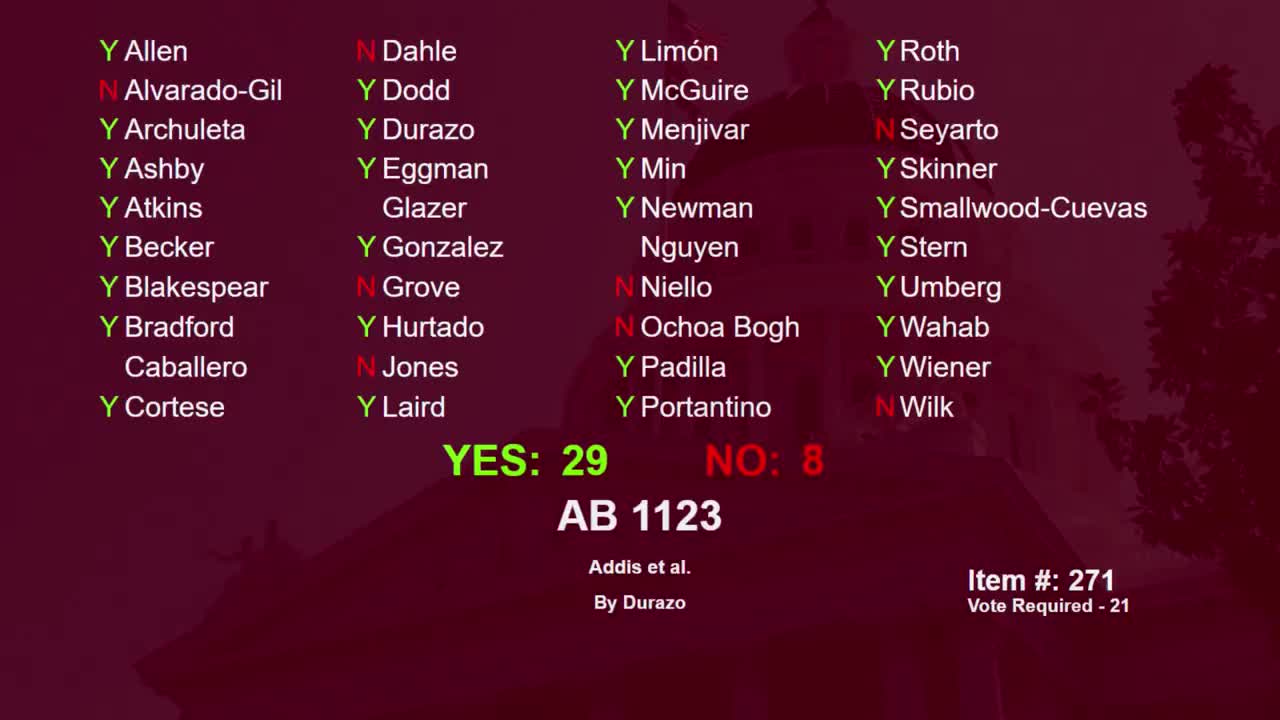 2MIN
Senate Floor
 1MIN
Senate Standing Committee on Appropriations
 4MIN
Senate Standing Committee on Labor, Public Employment and Retirement
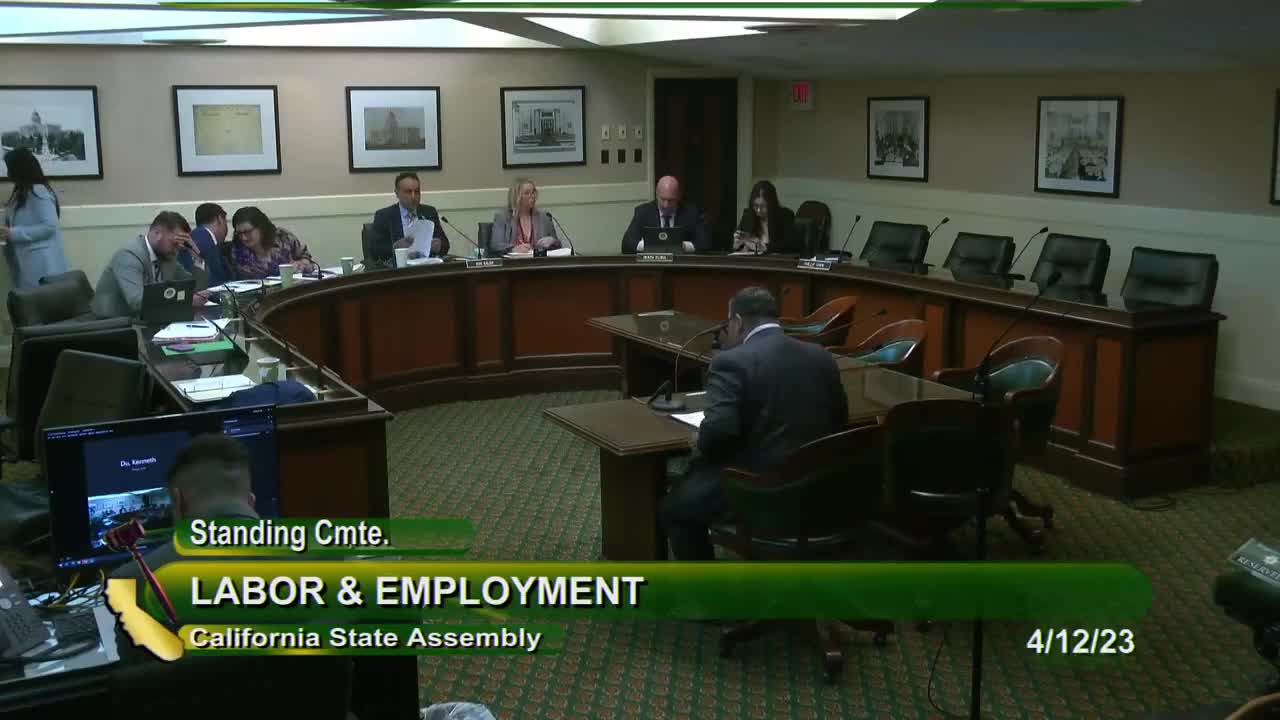 3MIN
Assembly Standing Committee on Labor and Employment
Bill Author

Bill Co-Author(s):