AB 1638: Local government: emergency response services: use of languages other than English.
- Session Year: 2023-2024
- House: Assembly
- Latest Version Date: 2023-10-08
Current Status:
Passed
(2023-10-08: Chaptered by Secretary of State - Chapter 587, Statutes of 2023.)
Introduced
In Committee
First Chamber
In Committee
Second Chamber
Enacted
What does this bill do?
The bill requires cities, counties, and their departments that provide police, fire, or emergency medical services and that serve areas where at least 5% of residents say they speak English less than very well to provide emergency information in English and in each language jointly spoken by that 5%. Agencies must use American Community Survey data to identify and reassess those languages every five years, ensure non‑English messages are as timely and useful as English ones, try to use native‑speaking community members, and the Office of Planning and Research will sample agencies every three years to report on compliance.
The summary is provided by generative AI which can make mistakes. For original language, please view the details in the table below.
Existing law requires every local public agency that serves a substantial number of non-English-speaking people to employ a sufficient number of qualified bilingual persons in public contact positions or as interpreters to ensure provision of information and services in the language of the non-English-speaking person. Existing law requires that any materials explaining services available to the public shall be translated into any non-English language spoken by a substantial number of the public served by the agency.
This bill would require, commencing January 1, 2025, in the event of an emergency within the jurisdiction of a local agency, as defined, that provides emergency response services and that serves a population within which 5% or more of the people speak English less than very well according to American Community Survey data and jointly speak a language other than English, that the local agency provide information related to the emergency in English and in all languages spoken jointly by the 5% or more of the population that speaks English less than very well. The bill would require local agencies to use data by January 1, 2025, as specified, to determine which languages are spoken jointly by 5% or more of the population in its jurisdiction and to reassess that data every 5 years. The bill would impose various requirements on the manner in which information is provided in languages other than English. The bill would also require the Office of Planning and Research to survey a sample of local agencies every 3 years to determine compliance with these requirements and to report its findings to the Legislature. Because the bill would require local agencies to provide a higher level of service, the bill would impose a state-mandated local program.
The California Constitution requires the state to reimburse local agencies and school districts for certain costs mandated by the state. Statutory provisions establish procedures for making that reimbursement.
This bill would provide that, if the Commission on State Mandates determines that the bill contains costs mandated by the state, reimbursement for those costs shall be made pursuant to the statutory provisions noted above.
Existing law requires every local public agency that serves a substantial number of non-English-speaking people to employ a sufficient number of qualified bilingual persons in public contact positions or as interpreters to ensure provision of information and services in the language of the non-English-speaking person. Existing law requires that any materials explaining services available to the public shall be translated into any non-English language spoken by a substantial number of the public served by the agency.
This bill would require, commencing January 1, 2025, in the event of an emergency within the jurisdiction of a local public agency agency, as defined, that provides emergency response services and that serves a population within which 5% or more of the people primarily and jointly speak in common speak English less than very well according to American Community Survey data and jointly speak a language other than English, that the local public agency provide information related to the emergency in English and in all languages spoken jointly and in common by the 5% or more of the population that does not primarily speak English. speaks English less than very well. The bill would require local agencies to conduct an initial assessment use data by January 1, 2025, as specified, to determine which languages are spoken jointly and in common by 5% or more of the resident population in its jurisdiction and to update that assessment reassess that data every 5 years. The bill would impose various requirements on the manner in which information is provided in languages other than English. The bill would also require the Office of Planning and Research to survey a sample of local agencies every 3 years to determine compliance with these requirements and to report its findings to the Legislature. Because the bill would require local public agencies to provide a higher level of service, the bill would impose a state-mandated local program.
The California Constitution requires the state to reimburse local agencies and school districts for certain costs mandated by the state. Statutory provisions establish procedures for making that reimbursement.
This bill would provide that, if the Commission on State Mandates determines that the bill contains costs mandated by the state, reimbursement for those costs shall be made pursuant to the statutory provisions noted above.
Existing law requires every local public agency that serves a substantial number of non-English-speaking people to employ a sufficient number of qualified bilingual persons in public contact positions or as interpreters to ensure provision of information and services in the language of the non-English-speaking person. Existing law requires that any materials explaining services available to the public shall be translated into any non-English language spoken by a substantial number of the public served by the agency.
This bill would require, commencing January 1, 2025, in the event of an emergency within the jurisdiction of a local public agency that provides emergency response services and that serves a population within which 5% or more of the people primarily and jointly speak in common a language other than English, that the local public agency provide information related to the emergency in English and in all languages spoken jointly and in common by 5% or more of the population that does not primarily speak English. The bill would require local agencies to conduct an initial assessment by January 1, 2025, as specified, to determine which languages are spoken jointly and in common by 5% or more of the resident population in its jurisdiction. jurisdiction and to update that assessment every 5 years. The bill would impose various requirements on the manner in which information is provided in languages other than English. The bill would also require the Office of Planning and Research to survey a sample of local agencies every 3 years to determine compliance with these requirements and to report its findings to the Legislature. Because the bill would require local public agencies to provide a higher level of service, the bill would impose a state-mandated local program.
The California Constitution requires the state to reimburse local agencies and school districts for certain costs mandated by the state. Statutory provisions establish procedures for making that reimbursement.
This bill would provide that, if the Commission on State Mandates determines that the bill contains costs mandated by the state, reimbursement for those costs shall be made pursuant to the statutory provisions noted above.
Existing law requires every local public agency that serves a substantial number of non-English-speaking people to employ a sufficient number of qualified bilingual persons in public contact positions or as interpreters to ensure provision of information and services in the language of the non-English-speaking person. Existing law requires that any materials explaining services available to the public shall be translated into any non-English language spoken by a substantial number of the public served by the agency.
This bill would require, commencing January 1, 2025, in the event of an emergency within the jurisdiction of a local public agency that provides emergency response services and that serves a population within which 10% 5% or more of the people primarily and jointly speak in common a language other than English, that the local public agency provide information related to the emergency in English and in the language spoken by the 10% all languages spoken jointly and in common by 5% or more of the population that does not primarily speak English. The bill would require local agencies to conduct an initial assessment by January 1, 2025, as specified, to determine which languages are spoken jointly and in common by 5% or more of the resident population in its jurisdiction. The bill would impose various requirements on the manner in which information is provided in languages other than English. The bill would also require the Office of Planning and Research to survey a sample of local agencies every 3 years to determine compliance with these requirements and to report its findings to the Legislature. Because the bill would require local public agencies to provide a higher level of service, the bill would impose a state-mandated local program.
The California Constitution requires the state to reimburse local agencies and school districts for certain costs mandated by the state. Statutory provisions establish procedures for making that reimbursement.
This bill would provide that, if the Commission on State Mandates determines that the bill contains costs mandated by the state, reimbursement for those costs shall be made pursuant to the statutory provisions noted above.
Existing law requires every local public agency that serves a substantial number of non-English-speaking people to employ a sufficient number of qualified bilingual persons in public contact positions or as interpreters to ensure provision of information and services in the language of the non-English-speaking person. Existing law requires that any materials explaining services available to the public shall be translated into any non-English language spoken by a substantial number of the public served by the agency.
This bill would require, in the event of an emergency within the jurisdiction of a local public agency that serves a population within which 10% or more of the people primarily speak a language other than English, that the local public agency provide information related to the emergency in English and in the language spoken by the 10% or more of the population that does not primarily speak English. Because the bill would require local public agencies to provide a higher level of service, the bill would impose a state-mandated local program.
The California Constitution requires the state to reimburse local agencies and school districts for certain costs mandated by the state. Statutory provisions establish procedures for making that reimbursement.
This bill would provide that, if the Commission on State Mandates determines that the bill contains costs mandated by the state, reimbursement for those costs shall be made pursuant to the statutory provisions noted above.
Existing law established the California Workforce Investment Board, which was renamed the California Workforce Development Board on January 1, 2016. Existing law, the California Green Collar Jobs Act of 2008, requires the board to establish a committee known as the Green Collar Jobs Council (GCJC), composed of specified members, and requires the GCJC to perform certain functions and duties, including the development of a strategic initiative, relating to the training and development of a skilled workforce to meet the needs of Californias emerging green economy.This bill would express the intent of the Legislature to enact subsequent legislation that would establish a workforce development program to prepare California workers for evolving workforce demands in response to climate change.Existing law established the California Workforce Investment Board, which was renamed the California Workforce Development Board on January 1, 2016. Existing law, the California Green Collar Jobs Act of 2008, requires the board to establish a committee known as the Green Collar Jobs Council (GCJC), composed of specified members, and requires the GCJC to perform certain functions and duties, including the development of a strategic initiative, relating to the training and development of a skilled workforce to meet the needs of Californias emerging green economy.
This bill would express the intent of the Legislature to enact subsequent legislation that would establish a workforce development program to prepare California workers for evolving workforce demands in response to climate change.
(a)Notwithstanding any other provision of this chapter, and commencing January 1, 2025, in the event of an emergency within the jurisdiction of a local agency that provides emergency response services and that serves a population within which 5 percent or more of the people speak English less than very well according to data from the American Community Survey and jointly speak a language other than English, the local agency shall provide information related to the emergency in English and in all languages spoken jointly by the 5 percent or more of the population that speaks English less than very well.
(b)(1)By January 1, 2025, each local agency shall use data from the American Community Survey or data from an equally reliable source to determine which languages meet the requirements of subdivision (a) in the local agencys jurisdiction.
(2)Each local agency shall reassess the data every five years to ensure that the language or languages in which the local agency provides information are consistent with the requirements of subdivision (a).
(c)A local agency providing information pursuant to this section shall do both of the following:
(1)Ensure that the quality of information translated and provided to individuals that speak English less than very well is as comprehensive, actionable, and timely as the information provided to English-speaking persons.
(2)Endeavor to utilize community members with the cultural competencies and language skills necessary to effectively communicate with those that speak English less than very well using, whenever feasible, native speakers of the relevant languages who also speak English fluently.
(d)Commencing January 1, 2027, the Office of Planning and Research shall survey a sample of local agencies every three years to determine the extent to which local agencies are complying with the requirements of this section and shall report the findings to the Legislature pursuant to Section 9795.
(e)For purposes of this section, the following definitions apply:
(1)Emergency means a situation that calls for immediate action to respond to the threat of serious harm or mass casualties, including conditions of natural disaster or conditions posing extreme peril to the safety of persons and property in the territorial limits of the local agency.
(2)Emergency response services means police, fire, or emergency medical services.
(3)Local agency means a city, county, city and county, or a department of a city or county.
(f)This section does not relieve a local agency of its responsibilities under the California Emergency Services Act (Chapter 7 (commencing with Section 8550) of Division 1 of Title 2).
SEC. 2.If the Commission on State Mandates determines that this act contains costs mandated by the state, reimbursement to local agencies and school districts for those costs shall be made pursuant to Part 7 (commencing with Section 17500) of Division 4 of Title 2 of the Government Code.
(a)Notwithstanding any other provision of this chapter, and commencing January 1, 2025, in the event of an emergency within the jurisdiction of a local public agency that provides emergency response services and that serves a population within which 5 percent or more of the people primarily and jointly speak in common speak English less than very well according to data from the American Community Survey and jointly speak a language other than English, the local public agency shall provide information related to the emergency in English and in all languages spoken jointly and in common by the 5 percent or more of the population that does not primarily speak English. speaks English less than very well.
(b)(1)By January 1, 2025, each local agency shall conduct an initial data-driven, evidence-based needs assessment use data from the American Community Survey or data from an equally reliable source to determine which languages are spoken jointly and in common by 5 percent or more of the resident population meet the requirements of subdivision (a) in the local agencys jurisdiction using American Community Survey data or data from an equally reliable source. jurisdiction.
(2)Each local agency shall update its needs assessment reassess the data every five years to ensure that the language or languages in which the local agency provides information are consistent with the requirements of subdivision (a).
(c)A local agency providing information pursuant to this section shall do both of the following:
(1)Ensure that the quality of information translated and provided to individuals primarily speaking a language other than English that speak English less than very well is as comprehensive, actionable, and timely as the information provided to English-speaking persons.
(2)Endeavor to utilize community members with the cultural competencies and language skills necessary to effectively communicate with those that primarily and jointly speak in common a language other than English speak English less than very well using, whenever feasible, native speakers of the relevant languages who also speak English fluently.
(d)Commencing January 1, 2027, the Office of Planning and Research shall survey a sample of local agencies every three years to determine the extent to which local agencies are complying with the requirements of this section and shall report the findings to the Legislature pursuant to Section 9795.
(e)For purposes of this section, emergency means the following definitions apply:
(1)Emergency means a situation that calls for immediate action to respond to the threat of serious harm or mass casualties, including conditions of natural disaster or conditions posing extreme peril to the safety of persons and property in the territorial limits of the local agency.
(2)Emergency response services means police, fire, or emergency medical services.
(3)Local agency means a city, county, city and county, or a department of a city or county.
(f)This section does not relieve a local agency of its responsibilities under the California Emergency Services Act (Chapter 7 (commencing with Section 8550) of Division 1 of Title 2).
SEC. 2.If the Commission on State Mandates determines that this act contains costs mandated by the state, reimbursement to local agencies and school districts for those costs shall be made pursuant to Part 7 (commencing with Section 17500) of Division 4 of Title 2 of the Government Code.
(a)Notwithstanding any other provision of this chapter, and commencing January 1, 2025, in the event of an emergency within the jurisdiction of a local public agency that provides emergency response services and that serves a population within which 5 percent or more of the people primarily and jointly speak in common a language other than English, the local public agency shall provide information related to the emergency in English and in all languages spoken jointly and in common by 5 percent or more of the population that does not primarily speak English.
(b)(1)By January 1, 2025, each local agency shall conduct an initial data-driven, evidence-based needs assessment to determine which languages are spoken jointly and in common by 5 percent or more of the resident population in the local agencys jurisdiction using American Community Survey data or data from an equally reliable source.
(2)Each local agency shall update its needs assessment every five years to ensure that the language or languages in which the local agency provides information are consistent with the requirements of subdivision (a).
(c)A local agency providing information pursuant to this section shall do both of the following:
(1)Ensure that the quality of information translated and provided to individuals primarily speaking a language other than English is as comprehensive, actionable, and timely as the information provided to English-speaking persons.
(2)Endeavor to utilize community members with the cultural competencies and language skills necessary to effectively communicate with those that primarily and jointly speak in common a language other than English using, whenever feasible, native speakers of the relevant languages who also speak English fluently.
(d)Commencing January 1, 2027, the Office of Planning and Research shall survey a sample of local agencies every three years to determine the extent to which local agencies are complying with the requirements of this section and shall report the findings to the Legislature pursuant to Section 9795.
(e)For purposes of this section, emergency means a situation that calls for immediate action to respond to the threat of serious harm or mass casualties, including conditions of natural disaster or conditions posing extreme peril to the safety of persons and property in the territorial limits of the local agency.
(f)This section does not relieve a local agency of its responsibilities under the California Emergency Services Act (Chapter 7 (commencing with Section 8550) of Division 1 of Title 2).
SEC. 2.If the Commission on State Mandates determines that this act contains costs mandated by the state, reimbursement to local agencies and school districts for those costs shall be made pursuant to Part 7 (commencing with Section 17500) of Division 4 of Title 2 of the Government Code.
(a)Notwithstanding any other provision of this chapter, and commencing January 1, 2025, in the event of an emergency, as defined in Section 11342.545, emergency within the jurisdiction of a local public agency that provides emergency response services and that serves a population within which 10 5 percent or more of the people primarily and jointly speak in common a language other than English, the local public agency shall provide information related to the emergency in English and in the language spoken by the 10 all languages spoken jointly and in common by 5 percent or more of the population that does not primarily speak English.
(b)By January 1, 2025, each local agency shall conduct an initial data-driven, evidence-based needs assessment to determine which languages are spoken jointly and in common by 5 percent or more of the resident population in the local agencys jurisdiction using American Community Survey data or data from an equally reliable source.
(c)A local agency providing information pursuant to this section shall do both of the following:
(1)Ensure that the quality of information translated and provided to individuals primarily speaking a language other than English is as comprehensive, actionable, and timely as the information provided to English-speaking persons.
(2)Endeavor to utilize community members with the cultural competencies and language skills necessary to effectively communicate with those that primarily and jointly speak in common a language other than English using, whenever feasible, native speakers of the relevant languages who also speak English fluently.
(d)Commencing January 1, 2027, the Office of Planning and Research shall survey a sample of local agencies every three years to determine the extent to which local agencies are complying with the requirements of this section and shall report the findings to the Legislature pursuant to Section 9795.
(e)For purposes of this section, emergency means a situation that calls for immediate action to respond to the threat of serious harm or mass casualties, including conditions of natural disaster or conditions posing extreme peril to the safety of persons and property in the territorial limits of the local agency.
(f)This section does not relieve a local agency of its responsibilities under the California Emergency Services Act (Chapter 7 (commencing with Section 8550) of Division 1 of Title 2).
SEC. 2.If the Commission on State Mandates determines that this act contains costs mandated by the state, reimbursement to local agencies and school districts for those costs shall be made pursuant to Part 7 (commencing with Section 17500) of Division 4 of Title 2 of the Government Code.
Notwithstanding any other provision of this chapter, in the event of an emergency, as defined in Section 11342.545, within the jurisdiction of a local public agency that serves a population within which 10 percent or more of the people primarily speak a language other than English, the local public agency shall provide information related to the emergency in English and in the language spoken by the 10 percent or more of the population that does not primarily speak English.
SEC. 2.If the Commission on State Mandates determines that this act contains costs mandated by the state, reimbursement to local agencies and school districts for those costs shall be made pursuant to Part 7 (commencing with Section 17500) of Division 4 of Title 2 of the Government Code.
SECTION 1.It is the intent of the Legislature to enact subsequent legislation that would establish a workforce development program to prepare California workers for evolving workforce demands in response to climate change.It is the intent of the Legislature to enact subsequent legislation that would establish a workforce development program to prepare California workers for evolving workforce demands in response to climate change.
|
Date
|
Status
|
|---|---|
| Oct 8, 2023 | Chaptered by Secretary of State - Chapter 587, Statutes of 2023. |
| Oct 8, 2023 | Approved by the Governor. |
| Sep 13, 2023 | Enrolled and presented to the Governor at 3 p.m. |
| Sep 7, 2023 | Senate amendments concurred in. To Engrossing and Enrolling. (Ayes 76. Noes 0. Page 3070.). |
| Sep 7, 2023 | Assembly Rule 77 suspended. (Page 3011.) |
| Sep 6, 2023 | In Assembly. Concurrence in Senate amendments pending. May be considered on or after September 8 pursuant to Assembly Rule 77. |
| Sep 6, 2023 | Read third time. Passed. Ordered to the Assembly. (Ayes 40. Noes 0. Page 2413.). |
| Sep 5, 2023 | Read second time. Ordered to third reading. |
| Sep 1, 2023 | Read second time and amended. Ordered returned to second reading. |
| Sep 1, 2023 | From committee: Amend, and do pass as amended. (Ayes 7. Noes 0.) (September 1). |
| Aug 14, 2023 | In committee: Referred to APPR suspense file. |
| Jul 13, 2023 | Read second time and amended. Re-referred to Com. on APPR. |
| Jul 13, 2023 | From committee: Amend, and do pass as amended and re-refer to Com. on APPR. (Ayes 8. Noes 0.) (July 12). |
| Jul 6, 2023 | From committee chair, with author's amendments: Amend, and re-refer to committee. Read second time, amended, and re-referred to Com. on GOV. & F. |
| Jun 21, 2023 | In committee: Hearing postponed by committee. |
| Jun 14, 2023 | Referred to Com. on GOV. & F. |
| Jun 1, 2023 | In Senate. Read first time. To Com. on RLS. for assignment. |
| May 31, 2023 | Read third time. Passed. Ordered to the Senate. (Ayes 80. Noes 0. Page 2038.) |
| May 18, 2023 | Read second time. Ordered to third reading. |
| May 18, 2023 | From committee: Do pass. (Ayes 15. Noes 0.) (May 18). |
| May 3, 2023 | In committee: Set, first hearing. Referred to APPR. suspense file. |
| Apr 18, 2023 | From committee: Do pass and re-refer to Com. on APPR. with recommendation: To Consent Calendar. (Ayes 7. Noes 0.) (April 17). Re-referred to Com. on APPR. |
| Mar 27, 2023 | Re-referred to Com. on E.M. |
| Mar 23, 2023 | Referred to Com. on E.M. |
| Mar 23, 2023 | From committee chair, with author's amendments: Amend, and re-refer to Com. on E.M. Read second time and amended. |
| Feb 18, 2023 | From printer. May be heard in committee March 20. |
| Feb 17, 2023 | Read first time. To print. |
|
Date
|
Description
|
Location
|
Votes
|
|
|---|---|---|---|---|
| Sep 7, 2023 | AB 1638 Mike Fong Concurrence in Senate Amendments | Assembly Floor |
Passed |
|
| Sep 6, 2023 | Assembly 3rd Reading AB1638 Mike Fong | Senate Floor |
Passed |
|
| Sep 1, 2023 | Do pass as amended | Senate Standing Committee on Appropriations |
Passed |
|
| Aug 14, 2023 | Placed on suspense file | Senate Standing Committee on Appropriations |
Passed |
|
| Jul 12, 2023 | Do pass as amended, but first amend, and re-refer to the Committee on [Appropriations] | Senate Standing Committee on Governance and Finance |
Passed |
|
| May 31, 2023 | AB 1638 Mike Fong Assembly Third Reading | Assembly Floor |
Passed |
|
| May 18, 2023 | Do pass. | Assembly Standing Committee on Appropriations |
Passed |
|
| Apr 17, 2023 | Do pass and be re-referred to the Committee on [Appropriations] with recommendation: To Consent Calendar | Assembly Standing Committee on Emergency Management |
Passed |
This list shows positions taken on this bill by organizations on the date displayed, which is linked to the original source.
Positions by individuals are not included.
|
Organization
|
Position
|
Date
|
|---|---|---|
| City of Alhambra | ** Support | |
| cleanearth4kids.org | ** Support | |
| Los Angeles County | ** Support | |
| Los Angeles County District AttorneyS Office | ** Support | |
| Prosecutors Alliance California | ** Support | |
| San Joaquin County Board of Supervisors | ** Against |
CONCURRENCE IN SENATE AMENDMENTS
CSA1 Bill Id:AB 1638
Author:(Mike Fong)
As Amended Ver:September 1, 2023
Majority vote
SUMMARY
Requires, commencing January 1, 2025, local agencies, in the event of an emergency in the jurisdiction of the agency, to provide information related to the emergency in all languages spoken jointly by five percent or more of the population whenever those same people also speak English less than very well, as specified.
Senate Amendments
- Reduced the threshold of individuals speaking in a common language other than English, as specified, from 10% to 5%.
- Requires local agencies to use data by January 1, 2025, as specified, to determine which languages are spoken jointly by 5% or more of the population in its jurisdiction and to reassess that data every five years.
- Requires the Office of Planning and Research to oversee compliance with the requirements by surveying local agencies every three years and reporting their findings to the Legislature.
COMMENTS
The Dymally-Alatorre Bilingual Services Act (Act) became law in 1973 and later amended by AB 2253 (Ting), Chapter 469, Statutes of 2014. This Act ensures all Californians, including limited-English-proficient (LEP) people, can access public services regardless of language barriers. The Act mandates that state and local agencies must provide information in English and, if the agency serves a "substantial number" of non-English speakers, any other relevant languages based on their jurisdiction. Agencies must conduct surveys every other year to assess their contact with the LEP population and determine which languages they will publish. Additionally, the Act mandates that every state and local agency have bilingual staff and translated written materials so that they and the LEP population can effectively communicate. Furthermore, each agency must post how to submit complaints of alleged Act violations, in all relevant languages, on their website’s homepage. Cal HR must issue orders deemed appropriate to implement the Act if a state agency has yet to make reasonable progress toward reaching compliance.
Recent Disasters with Large Populations of Non-English Speakers: In March 2023, a broken levee in Monterey County flooded the entire town of Pajaro and forced more than 2,000 people to evacuate. Pajaro is predominately a town of farmworkers where a large portion of the community only speaks Mixteco. Various news articles identify the failures of local agencies communicating with these individuals as well as the detrimental impacts on safety and access to recovery information.
Other recent emergencies include the recent mass shootings in Monterey Park and Half Moon Bay. These communities are predominately Asian or Asian and Latino, respectively, and have a significant number of community members that speak languages other than English. In these instances, law enforcement did not immediately apprehend the perpetrator. Law enforcement shared safety information with the public, but the author's office is concerned about whether these communities received adequate updates in their primary languages.
According to the Author
Access to information is critical during emergency situations, like the tragic mass shooting in Monterey Park in my district. AB 1638 will require a local public agency that serves a jurisdiction in which 5% or more of the population primarily speaks a language other than English to provide any information related to the emergency in that language. Each individual language must meet the 5% threshold in order to trigger the translation requirement. This will expand access to important information about emergency situations in communities with significant populations of non-English-speaking residents.
Arguments in Support
The County of Los Angeles writes in support, "Given a state and county as large and diverse as California and Los Angeles, it is absolutely necessary for leaders and first responders to be culturally competent and linguistically inclusive for the constituents and residents it represents and serves, especially when delivery and receipt of information can be lifesaving.
Arguments in Opposition
The County of San Joaquin writes in opposition, "On behalf of the San Joaquin County Board of Supervisors, I regretfully write in opposition to AB 1638, regarding emergency response services. This bill requires local agencies to provide emergency messaging in languages that
5% of its population speak. The bill also requires that a language assessment be conducted every five years that updates language usage percentages to reflect shifting demographics. While the County understands the intentions of this bill, emergency response services would encounter real-time technology limitations and compliance consequences should the legislation be enacted."
FISCAL COMMENTS
According to the Senate Appropriations Committee, "Unknown, potentially significant local costs for local agencies that provide emergency response services to assess specified data to determine which languages are spoken by at least 5% of the population in their jurisdictions, reassess that data every five years, and provide information related to specified emergencies in English and those languages spoken by at least 5% of their populations. These costs are likely state-reimbursable, subject to a determination by the Commission on State Mandates. Office of Planning and Research (OPR) estimates costs of approximately $625,000 in 2027-28 and every three years thereafter to survey a sample of local agencies to determine compliance with the bill’s requirements and report findings to the Legislature. This cost includes any outside contracting that may be necessary to conduct the survey."
VOTES:
ASM EMERGENCY MANAGEMENT: 7-0-0
YES: Rodriguez, Waldron, Aguiar-Curry, Alvarez, Calderon, Megan Dahle, Schiavo
ASM APPROPRIATIONS: 15-0-1
YES: Holden, Megan Dahle, Bryan, Calderon, Wendy Carrillo, Dixon, Mike Fong, Hart, Lowenthal, Mathis, Papan, Pellerin, Sanchez, Weber, Ortega
ABS, ABST OR NV: Robert Rivas
ASSEMBLY FLOOR: 80-0-0
YES: Addis, Aguiar-Curry, Alanis, Alvarez, Arambula, Bains, Bauer-Kahan, Bennett, Berman, Boerner, Bonta, Bryan, Calderon, Juan Carrillo, Wendy Carrillo, Cervantes, Chen, Connolly, Megan Dahle, Davies, Dixon, Essayli, Flora, Mike Fong, Vince Fong, Friedman, Gabriel, Gallagher, Garcia, Gipson, Grayson, Haney, Hart, Holden, Hoover, Irwin, Jackson, Jones- Sawyer, Kalra, Lackey, Lee, Low, Lowenthal, Maienschein, Mathis, McCarty, McKinnor, Muratsuchi, Stephanie Nguyen, Ortega, Pacheco, Papan, Jim Patterson, Joe Patterson, Pellerin, Petrie-Norris, Quirk-Silva, Ramos, Reyes, Luz Rivas, Robert Rivas, Rodriguez, Blanca Rubio, Sanchez, Santiago, Schiavo, Soria, Ta, Ting, Valencia, Villapudua, Waldron, Wallis, Ward, Weber, Wicks, Wilson, Wood, Zbur, Rendon
SENATE FLOOR: 40-0-0
YES: Allen, Alvarado-Gil, Archuleta, Ashby, Atkins, Becker, Blakespear, Bradford, Caballero, Cortese, Dahle, Dodd, Durazo, Eggman, Glazer, Gonzalez, Grove, Hurtado, Jones, Laird, Limón, McGuire, Menjivar, Min, Newman, Nguyen, Niello, Ochoa Bogh, Padilla, Portantino, Roth, Rubio, Seyarto, Skinner, Smallwood-Cuevas, Stern, Umberg, Wahab, Wiener, Wilk
UPDATED
VERSION: September 1, 2023
CONSULTANT: Ryan Fleming / E.M. / (916) 319-3802 FN: 0001669
SENATE RULES COMMITTEE Office of Senate Floor Analyses (916) 651-1520 Fax: (916) 327-4478 | AB 1638 |
THIRD READING
Bill No: AB 1638
Author: Mike Fong (D)
Amended: 9/1/23 in Senate
Vote: 21
SENATE GOVERNANCE & FIN. COMMITTEE: 8-0, 7/12/23
AYES: Caballero, Seyarto, Blakespear, Dahle, Durazo, Glazer, Skinner, Wiener
SENATE APPROPRIATIONS COMMITTEE: 7-0, 9/1/23
AYES: Portantino, Jones, Ashby, Bradford, Seyarto, Wahab, Wiener
ASSEMBLY FLOOR: 80-0, 5/31/23 - See last page for vote
SUBJECT: Local government: emergency response services: use of languages other than English
SOURCE: Author
DIGEST:
This bill requires, commencing January 1, 2025, local agencies, in the event of an emergency in the jurisdiction of the agency, to provide information related to the emergency in all languages spoken jointly by five percent or more of the population whenever those same people also speak English less than very well. This bill requires local agencies to use data to determine which languages trigger the translation requirements and to update their data analysis every five years. This bill also requires the Office of Planning and Research to oversee compliance with the requirements by surveying local agencies every three years and reporting their findings to the Legislature. This bill imposes a state mandated local program.
ANALYSIS:
Existing law:
- Requires, under the Dymally-Alatorre Bilingual Services Act, that both state and local government provide oral and written translation services whenever they serve “a substantial number of non-English speaking people.”
- Provides enormous discretion to local government entities to determine how to define what constitutes a “substantial number of non-English-speaking people.”
- Mandates that state agencies provide translation services whenever 5 percent or more of those served statewide, or by a local office, or facility of an agency speak a common language but either do not speak English or are unable to communicate effectively in English.
- Allows state agencies, depending on circumstances, to meet this translation requirement in the following ways:
- Through direct hiring of “public contact” classified merit staff who speak the specific language in question.
- By hiring interpreters in other merit job classifications who also speak the language.
- By contracting for relevant telephonic interpretive services for the language.
- Mandates that state agencies must make a determination of the need for translation services by conducting periodic assessments using a survey assessment tool to determine which languages they need to translate in order to effectively provide services.
- Mandates that the California Department of Human Resources (CalHR) oversee compliance with the Dymally-Alatorre Act’s requirements for state agencies and makes CalHR responsible for informing state agencies of their responsibilities under the Act.
- Charges the Office of Emergency Services (OES), under the Emergency Services Act (ESA), with coordinating statewide emergency preparedness; post emergency recovery and mitigation efforts; and the development, review, approval, and integration of local emergency plans.
- Requires counties, under the ESA, to update emergency plans to reflect how counties will use translators and interpreters for purposes of emergency communication.
- Requires counties to integrate cultural competency considerations into its emergency planning efforts and requires that counties provide a forum for engaging with culturally diverse communities.
- Declares, under the ESA, that translation of emergency notifications into the most commonly spoken languages other than English is critically important and further requires OES to create a library of translated emergency notifications that may be used by local authorities in the event of an emergency.
- Requires the Department of Health Care Services (DHCS), under the Welfare and Institutions Code, to implement requirements for language group concentration standards for purposes of providing translation services.
- Requires DHCS update threshold language data, as specified, at least once every three fiscal years.
This bill:
- Requires, commencing January 1, 2025, a local agency that provides emergency response services, in the event of an emergency in its jurisdiction, to provide information related to the emergency in English and in all languages spoken jointly by 5 percent or more of the population if those people speak English “less than very well” as determined by the American Community Survey.
- Requires, by January 1, 2025, that each local agency use data from the American Community Survey or data from an equally reliable source to determine which languages require translation services.
- Requires local agencies to reassess the data every five years to ensure that the languages in which the local agency provides translated information are up-to-date with the intent of the bill.
- Requires local agencies providing translated information do the following:
- Ensure that the quality of information translated and provided to individuals that speak English “less than very well” is as comprehensive, actionable, and timely as the information provided to English-speaking persons.
- Endeavor to utilize community members with the cultural competencies and language skills necessary to effectively communicate with those that speak English “less than very well” using, whenever feasible, native speakers of the relevant languages who also speak English fluently.
- Requires, commencing January 1, 2027, that the Office of Planning and Research survey a sample of local agencies every three years to determine the extent to which local agencies are complying with the requirements of this section and report the findings to the Legislature.
- Defines “emergency” to mean a situation that calls for immediate action to respond to the threat of serious harm or mass casualties, including conditions of natural disaster or conditions posing extreme peril to the safety of persons and property in the territorial limits of the local agency.
- Defines “emergency response services” to mean police, fire or emergency medical services.
- Defines local agency to mean a city, county, city and county, or a department of a city or county.
- Establishes that a local agency must still exercise its responsibilities under the California Emergency Services Act.
- Requires the state to reimburse local agencies if the Commission on State Mandates determines that the bill imposes a reimbursable mandate.
Comments
- Purpose of the bill. According to the author, “Access to information is critical during emergency situations, like the tragic mass shooting in Monterey Park in my district. AB 1638 will require a local public agency that serves a jurisdiction in which 5% or more of the population primarily speaks a language other than English to provide any information related to the emergency in that language. Each individual language must meet the 5% threshold in order to trigger the translation requirement. This will expand access to important information about emergency situations in communities with significant populations of non-English-speaking residents.”
- Necessary? Counties are already required to integrate translation services and cultural competency considerations into their emergency plans under the Emergency Services Act.
- Implementation and Oversight. Under the Dymally-Alatorre Bilingual Services Act, Cal-HR provides oversight and compliance measurement to ensure state agencies are meeting their obligations. AB 1638 places oversight and compliance reporting requirements responsibility at the Office of Planning and Research. OES might be a more appropriate state agency to provide oversight.
Related/Prior Legislation
AB 2253 (Ting, Chapter 469, Statutes of 2014) added language to the Dymally-Alatorre Bilingual Services Act requiring CalHR to exercise greater oversight authority over departments not in compliance in the Act while also requiring state agencies to make translations services and materials available in all offices that perform statewide functions. AB 2253 also required state agencies to make complaint forms available on homepages, and provide CalHR with information pertaining to complaints about state agency non-compliance with the Act.
AB 1062 (Jones-Sawyer, Chapter 427, Statutes of 2013) added language to the Dymally-Alatorre Bilingual Services Act to require that state agencies provide a detailed description in their needs assessment surveys and implementation plans of the agency’s procedures for identifying written materials that need to be translated, a detailed description of the procedures used for identifying language needs at local offices and a detailed description of the procedures used for assigning bilingual staff.
SB 1309 (Negrete McLeod, Chapter 360, Statutes of 2012) transferred oversight responsibility for the Dymally-Alatorre Bilingual Services Act from SPB to CalHR.
AB 67 (Dymally, Chapter 259, Statutes of 2007) added language to the Dymally-Alatorre Bilingual Services Act clarifying that bilingual information and services included all the following: public safety, protection and prevention, access to state benefits and public programs, resources and facilities, and any other state program or activity in which a public good is served.
AB 3000 (Assembly Budget, Chapter 1124, Statutes of 2002) required state agency documentation of assessment procedures as well as the development of agency implementation plans to comply with the Dymally-Alatorre Bilingual Services Act. AB 3000 also gave the State Personnel Board (SPB) greater responsibilities with respect to oversight and added reporting requirements on implementation challenges to the Legislature every two years.
FISCAL EFFECT: Appropriation: No Fiscal Com.: Yes Local: Yes
According to the Senate Appropriations Committee, unknown, potentially significant local costs for local agencies that provide emergency response services to assess specified data to determine which languages are spoken by at least 5% of the population in their jurisdictions, reassess that data every five years, and provide information related to specified emergencies in English and those languages spoken by at least 5% of their populations. These costs are likely state-reimbursable, subject to a determination by the Commission on State Mandates. (General Fund)
Office of Planning and Research (OPR) estimates costs of approximately $625,000 in 2027-28 and every three years thereafter to survey a sample of local agencies to determine compliance with the bill’s requirements and report findings to the Legislature. This cost includes any outside contracting that may be necessary to conduct the survey (General Fund)
SUPPORT: (Verified 9/1/23)
CleanEarth4Kids.org
Los Angeles County
City of Alhambra
Los Angeles County District Attorney’s Office
Prosecutors Alliance California
OPPOSITION: (Verified 9/1/23)
San Joaquin County Board of Supervisors
ARGUMENTS IN SUPPORT: According to the author, “Access to information is critical during emergency situations, like the tragic mass shooting in Monterey Park in my district. AB 1638 will require a local public agency that serves a jurisdiction in which 5% or more of the population primarily speaks a language other than English to provide any information related to the emergency in that language. Each individual language must meet the 5% threshold in order to trigger the translation requirement. This will expand access to important information about emergency situations in communities with significant populations of non-English-speaking residents.”
ASSEMBLY FLOOR: 80-0, 5/31/23
AYES: Addis, Aguiar-Curry, Alanis, Alvarez, Arambula, Bains, Bauer-Kahan, Bennett, Berman, Boerner, Bonta, Bryan, Calderon, Juan Carrillo, Wendy Carrillo, Cervantes, Chen, Connolly, Megan Dahle, Davies, Dixon, Essayli, Flora, Mike Fong, Vince Fong, Friedman, Gabriel, Gallagher, Garcia, Gipson, Grayson, Haney, Hart, Holden, Hoover, Irwin, Jackson, Jones-Sawyer, Kalra, Lackey, Lee, Low, Lowenthal, Maienschein, Mathis, McCarty, McKinnor, Muratsuchi, Stephanie Nguyen, Ortega, Pacheco, Papan, Jim Patterson, Joe Patterson, Pellerin, Petrie-Norris, Quirk-Silva, Ramos, Reyes, Luz Rivas, Robert Rivas, Rodriguez, Blanca Rubio, Sanchez, Santiago, Schiavo, Soria, Ta, Ting, Valencia, Villapudua, Waldron, Wallis, Ward, Weber, Wicks, Wilson, Wood, Zbur, Rendon
Prepared by: Daniel Rounds / GOV. & F. / (916) 651-4119
9/2/23 14:07:47
**** END ****
SENATE COMMITTEE ON APPROPRIATIONS
Senator Anthony Portantino, Chair
2023 - 2024 Regular Session
AB 1638 (Mike Fong) - Local government: use of a foreign language
Version: July 13, 2023 | Policy Vote: GOV. & F. 8 - 0 |
Urgency: No | Mandate: Yes |
Hearing Date: September 1, 2023 | Consultant: Mark McKenzie |
Bill Summary:
AB 1638 would require certain local agencies to conduct an assessment to determine which non-English languages are spoken jointly and in common by five percent or more of the population in their respective jurisdictions, and to provide information related to specified emergencies in English and all languages that meet that requirement, beginning January 1, 2025.
*********** ANALYSIS ADDENDUM – SUSPENSE FILE ***********
The following information is revised to reflect amendments
adopted by the committee on September 1, 2023
Fiscal Impact:
- Unknown, potentially significant local costs for local agencies that provide emergency response services to assess specified data to determine which languages are spoken by at least 5% of the population in their jurisdictions, reassess that data every five years, and provide information related to specified emergencies in English and those languages spoken by at least 5% of their populations. These costs are likely state-reimbursable, subject to a determination by the Commission on State Mandates. (General Fund)
- Office of Planning and Research (OPR) estimates costs of approximately $625,000 in 2027-28 and every three years thereafter to survey a sample of local agencies to determine compliance with the bill’s requirements and report findings to the Legislature. This cost includes any outside contracting that may be necessary to conduct the survey (General Fund)
Author Amendments:
- Delete requirements for local agencies to conduct a specified needs assessment to determine which languages other than English are spoken jointly and in common by 5% or more of the resident population, and instead require local agencies to use data from the American Community Survey or data from an equally reliable source to determine which languages are spoken jointly by the 5% or more of the population that speaks English less than “very well.”
- Require local public agencies to provide information related to specified emergencies in English and in languages spoken jointly by the 5% or more of the population that speaks English less than “very well.”
- Define “emergency response services” as police, fire, or emergency medical services.
- Make clarifying and conforming changes.
-- END --
SENATE COMMITTEE ON
Senator Anthony Portantino, Chair
2023 - 2024 Regular Session
AB 1638 (Mike Fong) - Local government: use of a foreign language
Version: | Policy Vote: |
Urgency: | Mandate: |
Hearing Date: | Consultant: |
Bill Summary:
AB 1638 would require certain local agencies to conduct an assessment to determine which non-English languages are spoken jointly and in common by five percent or more of the population in their respective jurisdictions, and to provide information related to specified emergencies in English and all languages that meet that requirement, beginning January 1, 2025.
Fiscal Impact:
- Unknown, potentially signficant local costs for local agencies that provide emergency response services to conduct a needs assessment every five years to determine which languages are spoken by at least 5% of the population in their jurisdictions, and to provide information related to specified emergencies in English and those languages spoken by at least 5% of their populations. These costs are likely state-reimbursable, subject to a determination by the Commission on State Mandates. (General Fund)
- Office of Planning and Research (OPR) estimates costs of approximately $625,000 in 2027-28 and every three years thereafter to survey a sample of local agencies to determine compliance with the bill’s requirements and report findings to the Legislature. This cost includes any outside contracting that may be necessary to conduct the survey (General Fund)
Background:
Existing law, the Dymally-Alatorre Bilingual Services Act, requires state agencies and local public agencies that serve a substantial number of non-English-speaking people, excluding schools and other local education agencies, to employ a sufficient number of qualified bilingual persons in public contact positions to ensure the provision of information and services in the language of non-English-speaking individuals, as specified. For purposes of the Act’s requirements for state agencies, existing law defines “a substantial number of non-English-speaking people” as members of a group who either do not speak English, or who are unable to effectively communicate in English because it is not their native tongue, and who comprise 5% or more of the people served by the statewide or any local office or facility of a state agency. In contrast, existing law provides local agencies with discretion to determine what constitutes a “substantial number of non-English-speaking people” and a “sufficient number of bilingual persons” for purposes of the Act’s requirements.
Proposed Law:
AB 1638 would do the following:
- Require a local public agency that provides emergency response services, commencing January 1, 2025, to provide information related to specified emergencies in English and in all languages spoken jointly and in common by 5% or more of the population within its jurisdiction that does not primarily speak English.
- Define “emergency” for purposes of the bill as a situation that calls for immediate action to respond to the threat of serious harm or mass casualties, including conditions of natural disaster or those posing extreme peril to the safety of persons and property in the territorial limits of the local agency.
- Require each local agency to conduct a needs assessment by January 1, 2025 and every five years thereafter, to determine which languages are spoken jointly and in common by at least 5% of the resident population in its jurisdiction using American Community Survey data, or data from an equally reliable source.
- Require a local agency providing emergency-related information to do the following:
- Ensure that the translated information provided in non-English languages to be as comprehensive, actionable, and timely as the information provided in English.
- Endeavor to utilize community members with cultural competencies and language skills necessary to effectively communicate with specified non-English speaking populations using, whenever feasible, native speakers of the relevant language who are also fluent in English.
- Require OPR to survey a sample of local agencies, commencing January 1, 2027 and every three years thereafter, to determine local agency compliance with the bill’s requirements, and report the findings to the Legislature.
Staff Comments:
This bill would impose a state-mandated local program by requiring local agencies that provide emergency response services to provide a higher level of service relative to current law, which provides broad discretion to local public agencies when providing translation services and information to non-English-speaking populations. Specifically, AB 1638 would require those local agencies to conduct an initial data-driven, evidence-based needs assessment to determine which specific languages are spoken jointly and in common by 5% or more of the resident population in their respective jurisdictions and to update that assessment every five years. The bill would also require affected local agencies to identify bilingual community members with cultural competencies and language skills to be able to effectively communicate with non-English speakers and provide emergency-related information to those threshold populations that is equally comprehensive, actionable, and timely as information provided in English. Local costs to conduct the periodic needs assessments and to provide timely and comprehensive emergency-related information in all languages spoken by at least 5% of local populations would likely be reimbursable from the General Fund, should a local agency file a successful claim with the Commission on State Mandates.
-- END --
SENATE COMMITTEE ON GOVERNANCE AND FINANCE
Senator Anna M. Caballero, Chair
2023 - 2024 Regular
Bill No: | AB 1638 | Hearing Date: | 7/12/23 |
Author: | Mike Fong | Tax Levy: | No |
Version: | 7/6/23 Amended | Fiscal: | Yes |
Consultant: | Rounds | ||
Local government: use of a foreign language
Requires local agencies to provide information related to an emergency in all languages spoken jointly and in common by 5 percent or more of the population.
Background
California’s linguistic diversity. According to the Los Angeles Times, over 200 languages are spoken in California and over 40 percent of California’s residents speak a language other than English in their home. According to 2021 data from the American Community Survey analyzed by the California Research Bureau and provided by the author’s office, twenty-seven California cities have resident populations where a third or more of the people speak English “less than very well.” While Spanish is the primary language in many of these communities, a variety of other languages are also spoken. Data compiled and reported by the California Department of Human Resources suggest a substantial number of state recipients of public services speak Vietnamese, Mandarin, Cantonese, Korean, Punjabi, Arabic, Armenian, Hindi, Farsi, Portuguese, Russian, or communicate using American Sign Language.
Dymally-Alatorre Bilingual Services Act. The Legislature enacted the Dymally-Alatorre Bilingual Services Act in 1973 , which requires both state and local government to provide oral and written translation services whenever they serve “a substantial number of non-English speaking people.” Though the Act mandates translation services, it also provides enormous discretion to local government entities to determine how to define what constitutes a “substantial number of non-English-speaking people.” The Act also largely delegates decision-making to local government to determine when translated materials are necessary.
In contrast, the Act’s requirements are far more prescriptive with respect to mandates on state agencies. Essentially whenever 5 percent or more of those served statewide, or by a local office, or facility of an agency speak a common language but either do not speak English or are unable to communicate effectively in English, that agency is required to provide translation services in that language. (Due to “rounding” language in the Act, the actual percentage that triggers the need to provide translation services is 4.5 percent. See Government Code section 7299.4). Depending on circumstances, state agencies can meet this translation requirement by a variety of means, including through direct hiring of “public contact” classified merit staff who speak the specific language in question, by hiring interpreters in other merit job classifications who also speak the language, or by contracting for relevant telephonic interpretive services for that language. State agencies must make a determination of the need for translation services by conducting periodic assessments using a survey assessment tool to determine which languages they need to translate in order to effectively provide services. Under certain conditions, state agencies may be exempted from conducting this assessment but only for a limited time. The Act also requires the same level of service delivery for relevant non-English speaking populations as is provided to English-speaking service recipients.
California Department of Human Resources. The California Department of Human Resources (CalHR) oversees compliance with the Act’s requirements for state agencies and is responsible for informing state agencies of their responsibilities under the Act. CalHR also provides state agencies with technical assistance to comply with the Act and reports to the Governor and the Legislature every two years on problems, deficiencies, and proposed solutions.
Challenges in Implementation. In 1999, the State Auditor found deficiencies in the implementation of the Act at both the state and local level. The Auditor’s findings suggested that at the time many state agencies were not aware of their responsibilities under the Act and were not translating materials as required. Additionally, the State Auditor found that most agencies surveyed were not regularly conducting needs assessment for translation services and were instead relying on outdated data to inform their decision-making. With respect to local agencies, the State Auditor found a wide variety of practices across jurisdictions, noting that many cities and counties were providing translation services through different means including staff, interpreters, and translated written materials. Nevertheless the State Auditor also noted that local government’s assessment of needs was not regularly based on a systematic data-driven assessment, often relying on anecdote, and for many of the languages for which there was an assessed need, translation services were not being provided. The Auditor recommended that local agencies conduct a more formal need assessment to make translated materials available.
California Emergency Services Act (ESA). The Legislature enacted the ESA in 1970, and established what is now known as OES within the Governor’s Office. Under the ESA, OES is charged with coordinating statewide emergency preparedness; post emergency recovery and mitigation efforts; and the development, review, approval, and integration of local emergency plans.
Office of Access and Functional Needs. In 2008, OES established the Office of Access and Functional Needs (AFN). The office identifies the needs of persons with AFN, defined as those with developmental, intellectual, or physical disabilities; chronic conditions or injuries; limited English proficiency or non-English speaking; older adults; children, or pregnant women; those living in institutional settings; who are low-income; homeless; and from diverse cultures. OES offers AFN-related training, guidance, and technical assistance to emergency managers, disability advocates, and other service providers. If requested, OES will review each county’s emergency plans, in consultation with individuals with various AFNs, to determine whether the plans are consistent with best practices and guidance FEMA issues.
Translations and Cultural Competency In Times of Emergency. The Emergency Services Act contains several provisions pertaining to the need for translation services in times of emergency. Government Code 8593.3 requires counties to update emergency plans to reflect how counties will use translators and interpreters for purposes of emergency communication. Government Code Section 8593.5 requires counties to integrate cultural competency considerations into its emergency planning efforts and requires that counties provide a forum for engaging with culturally diverse communities. Government Code 8594.16 declares that translation of emergency notifications into the most commonly spoken languages other than English is critically important and further requires OES to create a library of translated emergency notifications that may be used by local authorities in the event of an emergency.
Medi-Cal Threshold Standard Languages. State law requires the Department of Health Care Services (DHCS) to implement requirements for language group concentration standards for purposes of providing translation services. Additionally, DHCS must update threshold language data at least once every three fiscal years. Threshold languages are determined by two different calculations as required by law: a population group of mandatory eligible beneficiaries residing in a service area who indicate their primary language as other than English, and that meet a numeric threshold of 3,000 or five percent of the eligible beneficiary population, whichever is lower; and, a population group of mandatory eligible beneficiaries residing in a service area who indicate their primary language as other than English and who meet the concentration standards of 1,000 in a single ZIP Code or 1,500 in two contiguous ZIP Codes.
The author wants to require local agencies to provide information related to an emergency in all languages spoken jointly and in common by 5 percent or more of the population.
Proposed Law
Assembly Bill 1638 provides that, beginning January 1, 2025, in the event of an emergency, a local public agency that provides emergency response services must provide information related to the emergency in English and in all languages spoken jointly and in common by 5 percent or more of the population that does not primarily speak English.
The bill says that, by January 1, 2025, each local agency must conduct an initial data-driven, evidence-based needs assessment to determine which languages are spoken jointly and in common by 5 percent or more of the resident population in the local agency’s jurisdiction using American Community Survey data or data from an equally reliable source.
AB 1638 requires that the quality of information translated and provided to individuals primarily speaking a language other than English is as comprehensive, actionable, and timely as the information provided to English-speaking persons.
AB 1638 says that local agencies must endeavor to utilize community members with the cultural competencies and language skills necessary to effectively communicate with those that primarily and jointly speak in common a language other than English using, whenever feasible, native speakers of the relevant languages who also speak English fluently.
The bill requires, beginning on January 1, 2027, the Office of Planning and Research to survey a sample of local agencies every three years to determine the extent to which local agencies are complying with the requirements of AB 1638.
AB 1648 defines an “emergency” to mean “a situation that calls for immediate action to respond to the threat of serious harm or mass casualties, including conditions of natural disaster or conditions posing extreme peril to the safety of persons and property in the territorial limits of the local agency.
The bill does not relieve a local agency of its responsibilities under the California Emergency Services Act.
State Revenue Impact
No estimate.
Comments
1. Purpose of the bill. According to the author, “Access to information is critical during emergency situations, like the tragic mass shooting in Monterey Park in my district. AB 1638 will require a local public agency that serves a jurisdiction in which 5% or more of the population primarily speaks a language other than English to provide any information related to the emergency in that language. Each individual language must meet the 5% threshold in order to trigger the translation requirement. This will expand access to important information about emergency situations in communities with significant populations of non-English-speaking residents.”
2. Necessary? Counties are already required to integrate translation services and cultural competency considerations into their emergency plans under the Emergency Services Act. Members of the committee may want to consider whether the requirements of this bill are duplicative of existing efforts and therefore unnecessary.
3. Needs Assessment. While the Dymally-Alatorre Bilingual Services Act sets goals for state and local agencies to provide services in a language that they understand, it has often fallen short, due to insufficient implementation procedures, to realize the objectives of the statute. The law had to be repeatedly amended for state agencies to realize its objectives. One persistent issue in implementation was determining which languages needed to be translated. This bill requires local agencies to conduct a needs assessment to make a determination, using reliable data sources, as to what languages emergency communications will need to be translated into. However, the bill does not contain provisions requiring periodic reassessment of needs. The Committee may want to consider whether the bill should require periodic reassessment of needs to ensure that translation services are keeping pace with demographic change.
4. Implementation and Oversight. Under the Dymally-Alatorre Bilinguals Services Act, Cal-HR provides oversight and compliance measurement to ensure state agencies are meeting their obligations. AB 1638 places oversight and compliance reporting requirements responsibility at the Office of Planning and Research. OES might be a more appropriate state agency to provide oversight.
5. Mandate. Because the bill would require local public agencies to provide a higher level of service, Legislative Counsel says the bill would impose a state-mandated local program. The California Constitution requires the state to reimburse local governments for the costs of new or expanded state mandated local programs. The bill requires the state to reimburse local agencies if the Commission on State Mandates determines that the bill imposes a reimbursable mandate
Assembly Actions
Assembly Emergency Management Committee 7-0
Assembly Appropriations 15-0
Assembly Floor 80-0
Support and Opposition
(7/7/23)
Support: City of Alhambra
County of Los Angeles
Los Angeles County District Attorney's Office
Opposition: None received.
-- END --
ASSEMBLY THIRD READING
ATR Bill Id:AB 1638
Author:(Mike Fong)
As Amended Ver:March 23, 2023
Majority vote
SUMMARY
This bill requires local public agencies to provide information related to an emergency in English and any language used by 10% or more of the population in their jurisdiction.
Major Provisions
Requires a local public agency, which serves a population within which 10% or more of the people primarily speak a language other than English, to provide information related to the emergency in English and in the language spoken by the 10% or more of the population that does not primarily speak English, in the event of an emergency.
COMMENTS
Equity Impact: According to the author's staff, "AB 1638 is targeted to assist communities that primarily speak a language other than English. It will ensure that these communities can receive important information from local agencies due to language barriers. This will create greater parity in how different demographic groups are served by their local government during emergencies, keeping families who primarily speak a language other than English safer from harm during dangerous situations."
Background: The Dymally-Alatorre Bilingual Services Act (Act) became law in 1973 and later amended by AB 2253 (Ting), Chapter 469, Statutes of 2014. This Act ensures all Californians, including limited-English-proficient (LEP) people, can access public services regardless of language barriers. The Act mandates that state and local agencies must provide information in English and, if the agency serves a "substantial number" of non-English speakers, any other relevant languages based on their jurisdiction. Agencies must conduct surveys every other year to assess their contact with the LEP population and determine which languages they will publish. Additionally, the Act mandates that every state and local agency have bilingual staff and translated written materials so that they and the LEP population can effectively communicate. Furthermore, each agency must post how to submit complaints of alleged Act violations, in all relevant languages, on their website's homepage.
Cal HR must issue orders deemed appropriate to implement the Act if a state agency has yet to make reasonable progress toward reaching compliance.
Recent Disasters with Large Populations of Non-English Speakers: In March 2023, a broken levee in Monterey County flooded the entire town of Pajaro and forced more than 2,000 people to evacuate. Pajaro is predominately a town of farmworkers where a large portion of the community only speaks Mixteco. Various news articles identify the failures of local agencies communicating with these individuals as well as the detrimental impacts on safety and access to recovery information.
Other recent emergencies include the recent mass shootings in Monterey Park and Half Moon Bay. These communities are predominately Asian or Asian and Latino, respectively, and have a significant number of community members that speak languages other than English. In these instances, law enforcement did not immediately apprehend the perpetrator. Law enforcement shared safety information with the public, but the author's office is concerned about whether these communities received adequate updates in their primary languages.
According to the Author
"During emergency situations, like the recent mass shootings in Monterey Park and Half Moon Bay where the perpetrator was not immediately apprehended, or natural disasters that require evacuation of homes and businesses, access to information is critical. Our laws should be updated to ensure that all Californians have access to the information they need to keep themselves safe."
The author continues, "AB 1638 will require a local public agency serving a jurisdiction where 10% or more of the population primarily speaks a language other than English to provide any information related to emergencies in that language. This will ensure that timely emergency information is accessible to people of all backgrounds."
Arguments in Support
According to the Los Angeles County District Attorney's Office, "During emergency situations, like the recent mass shootings in Monterey Park and Half Moon Bay where the perpetrator was not immediately apprehended, or natural disasters that require evacuation of homes and businesses, access to information is critical."
They continue, "Getting information out to members of the public in an emergency situation is critically important. However, if the notification is made in a language or manner that significant numbers of the community cannot comprehend, the emergency notification will be ineffectual. Existing law should be updated to ensure that all Californians have access to critical information needed to keep themselves safe during emergency situations."
Arguments in Opposition
None on file.
FISCAL COMMENTS
According to the Assembly Appropriations Committee, "Likely reimbursable costs (General Fund) of an unknown, but likely significant, amount in excess of $150,000. By requiring a local public agency to provide emergency-related information in translated languages, this bill likely creates a state-mandated local program. If the Commission on State Mandates determines the provisions of this bill create a new program or impose a higher level of service for which the state must reimburse local costs, local agencies could claim reimbursement from the state."
VOTES
ASM EMERGENCY MANAGEMENT: 7-0-0
YES: Rodriguez, Waldron, Aguiar-Curry, Alvarez, Calderon, Megan Dahle, Schiavo
ASM APPROPRIATIONS: 15-0-1
YES: Holden, Megan Dahle, Bryan, Calderon, Wendy Carrillo, Dixon, Mike Fong, Hart, Lowenthal, Mathis, Papan, Pellerin, Sanchez, Weber, Ortega
ABS, ABST OR NV: Robert Rivas
UPDATED
VERSION: March 23, 2023
CONSULTANT: Ryan Fleming / E.M. / (916) 319-3802 FN: 0000590
Date of Hearing: May 3, 2023
ASSEMBLY COMMITTEE ON APPROPRIATIONS
Chris Holden, Chair
ABPCA Bill Id:AB 1638
Author:(Mike Fong) – As Amended Ver:March 23, 2023
Policy Committee: | Emergency Management | Vote: | 7 - 0 |
|
| ||
|
|
Urgency: No State Mandated Local Program: Yes Reimbursable: Yes
SUMMARY:
This bill requires a local public agency to provide information during an emergency in English and, if applicable, a non-English language primarily spoken by 10% of the population within the agency’s jurisdiction.
This bill defines an “emergency” as a situation that calls for immediate action to avoid serious harm to the public peace, health, safety, or general welfare.
FISCAL EFFECT:
Likely reimbursable costs (General Fund) of an unknown, but likely significant, amount in excess of $150,000. By requiring a local public agency to provide emergency-related information in translated languages, this bill likely creates a state-mandated local program. If the Commission on State Mandates determines the provisions of this bill create a new program or impose a higher level of service for which the state must reimburse local costs, local agencies could claim reimbursement from the state.
COMMENTS:
- Purpose. According to the author:
During emergency situations, like the recent mass shootings in Monterey Park and Half Moon Bay where the perpetrator was not immediately apprehended, or natural disasters that require evacuation of homes and businesses, access to information is critical. Our laws should be updated to ensure that all Californians have access to the information they need to keep themselves safe.
This bill is supported by the Los Angeles County District Attorney’s Office and Prosecutors Alliance California.
- Dymally-Alatorre Bilingual Services Act (Act). The Act was established in 1973 to ensure all Californians, including limited-English-proficient (LEP) individuals, can access public services regardless of language barriers. The Act mandates state and local agencies provide bilingual staff and translation of documents in the language spoken by a “substantial number of non-English speaking people” served. For state agencies, that threshold means 5% or more of the people served by any local office or facility of the state agency. In contrast, the Act authorizes local agencies to define what constitutes that threshold when determining in which languages to provide assistance. The Act also does not apply to school districts and other local education agencies. This bill requires, in the event of an emergency, a local public agency to provide information in English and any non-English language primarily spoken by 10% of the population within the agency’s jurisdiction. Thus, this bill’s provisions go beyond the scope of the Act in that this bill might require more local public agencies to translate more materials, and in more languages, than otherwise required.
Analysis Prepared by: Irene Ho / APPR. / (916) 319-2081
Date of Hearing: April 17, 2023
ASSEMBLY COMMITTEE ON EMERGENCY MANAGEMENT
Freddie Rodriguez, Chair
ABPCA Bill Id:AB 1638 (
Author:Mike Fong) – As Amended Ver:March 23, 2023
SUBJECT: Local government: use of a foreign language
SUMMARY: This bill requires local public agencies to provide information related to an emergency in English and any language used by 10% or more of the population in their jurisdiction. Specifically, this bill:
- In the event of an emergency, a local public agency, which serves a population within which 10 percent or more of the people primarily speak a language other than English, must provide information related to the emergency in English and in the language spoken by the 10 percent or more of the population that does not primarily speak English.
EXISTING LAW:
- Provides that translating emergency notifications into the most commonly spoken language other than English is a critically important governmental activity. (Government (Gov.) Code 8594.16)
- Requires the Office of Emergency Services (Cal OES) to create a library of translated emergency notifications that may be used by designated alerting authorities when issuing emergency notifications, and consider the two most commonly spoken languages other than English in the state when creating the library. (Gov. Code 8594.16)
- Requires Cal OES to create a translation style guide that includes a glossary of translated standard abbreviations used in emergency notifications. (Gov. Code 8594.16)
- Finds and declares that the effective maintenance and development of a free and democratic society depends on the right and ability of its citizens and residents to communicate with their government and the right and ability of the government to communicate with them (Gov. Code 7291)
- Requires every state and local agency, as specified, that serves and interacts with a substantial number of non-English-speaking people, employ a sufficient number of qualified bilingual persons in public contact positions in the language of the non-English-speaking person (Gov. Code 7292 and 7293)
- Requires any materials explaining services available to the public shall be translated into any non-English language spoken by a substantial number of the public served by the agency, as specified (Gov. Code 7295).
- Requires a state agency distribute the applicable written materials, as specified, in the appropriate non-English language through all its offices to non-English-speaking persons, or, as an alternative, furnish translation aids, translation guides, or provide assistance in completing and understanding English forms or questionnaires (Gov. Code 7295.4)
- Defines a “substantial number of non-English-speaking people” as members of a group who either do not speak English, or who are unable to effectively communicate in English because it is not their native language, and who comprise 5 percent or more of the people served by the statewide or any local office or facility of a state agency (Gov. Code 7296.2)
- Requires the Department of Human Resources (Cal HR) to be responsible for informing state agencies of their responsibilities related to the use of foreign languages in public services and providing state agencies with technical assistance (Gov. Code 7299.2)
- Requires a state agency, as specified, to translate and post, on the homepage of its Internet Web site, forms and processes for submitting complaints of alleged violations (Gov. Code 7299.3)
- Requires each state agency to conduct a language survey of each of its statewide and local offices every two years, as specified (Gov. Code 7299.4), to be reviewed by Cal HR and reported to the legislature (Gov. Code 7299.6)
FISCAL EFFECT: Unknown. A fiscal committee has not analyzed this bill.
COMMENTS:
According to the author: “During emergency situations, like the recent mass shootings in Monterey Park and Half Moon Bay where the perpetrator was not immediately apprehended, or natural disasters that require evacuation of homes and businesses, access to information is critical. Our laws should be updated to ensure that all Californians have access to the information they need to keep themselves safe.”
The author continues, “AB 1638 will require a local public agency serving a jurisdiction where 10% or more of the population primarily speaks a language other than English to provide any information related to emergencies in that language. This will ensure that timely emergency information is accessible to people of all backgrounds.”
Equity Impact: According to the author’s staff, “AB 1638 is targeted to assist communities that primarily speak a language other than English. It will ensure that these communities can receive important information from local agencies due to language barriers. This will create greater parity in how different demographic groups are served by their local government during emergencies, keeping families who primarily speak a language other than English safer from harm during dangerous situations.”
Background: The Dymally-Alatorre Bilingual Services Act (Act) became law in 1973 and later amended by AB 2253 (Ting), Chapter 469, Statutes of 2014. This Act ensures all Californians, including limited-English-proficient (LEP) people, can access public services regardless of language barriers. The Act mandates that state and local agencies must provide information in English and, if the agency serves a “substantial number” of non-English speakers, any other relevant languages based on their jurisdiction. Agencies must conduct surveys every other year to assess their contact with the LEP population and determine which languages they will publish. Additionally, the Act mandates that every state and local agency have bilingual staff and translated written materials so that they and the LEP population can effectively communicate. Furthermore, each agency must post how to submit complaints of alleged Act violations, in all relevant languages, on their website’s homepage.
Cal HR must issue orders deemed appropriate to implement the Act if a state agency has yet to make reasonable progress toward reaching compliance.
Recent Disasters with Large Populations of Non-English Speakers: In March 2023, a broken levee in Monterey County flooded the entire town of Pajaro and forced more than 2,000 people to evacuate. Pajaro is predominately a town of farmworkers where a large portion of the community only speaks Mixteco. Various news articles identify the failures of local agencies communicating with these individuals as well as the detrimental impacts on safety and access to recovery information.
Other recent emergencies include the recent mass shootings in Monterey Park and Half Moon Bay. These communities are predominately Asian or Asian and Latino, respectively, and have a significant number of community members that speak languages other than English. In these instances, law enforcement did not immediately apprehend the perpetrator. Law enforcement shared safety information with the public, but the author’s office is concerned about whether these communities received adequate updates in their primary languages.
Prior and Related Legislation: AB 2253 (Ting), Chapter 469, Statutes of 2014. This bill requires state agencies that serve a substantial number of non-English speakers, as defined, under the Dymally-Alatorre Bilingual Services Act (Dymally-Alatorre), to provide translated forms and processes for submitting complaints about language access.
AB 67 (Dymally), Chapter 259, Statutes of 2007. This bill standardizes and defines language in the Dymally-Alatorre Bilingual Services Act, clarifies the State Personnel Board’s responsibility to establish bilingual fluency standards, and expands the SPB’s ability to grant exemptions to the language survey and implementation plan.
REGISTERED SUPPORT / OPPOSITION:
Support
None on file.
Opposition
None on file.
Analysis Prepared by: Ryan Fleming / E.M. / (916) 319-3802
Discussed in Hearing
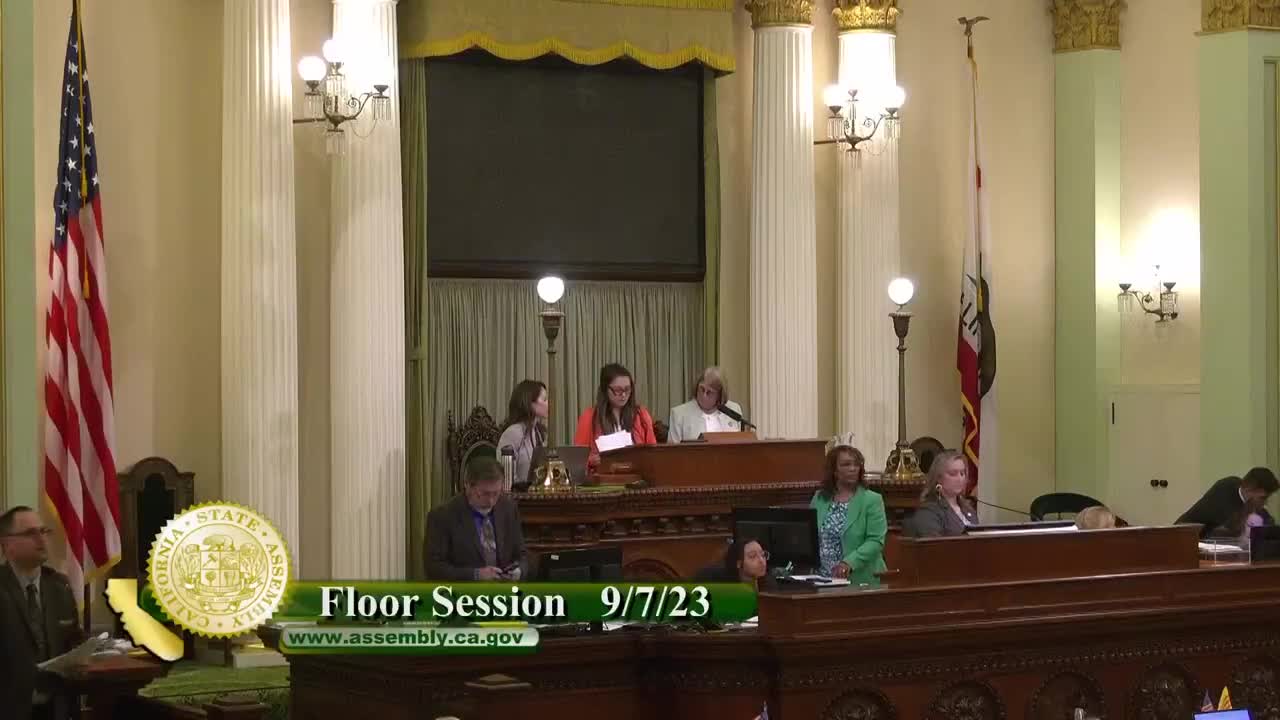 44SEC
Assembly Floor
 3MIN
Senate Floor
 1MIN
Senate Standing Committee on Appropriations
 5MIN
Senate Standing Committee on Governance and Finance
Bill Author

Bill Co-Author(s):