AB 1664: Energy: self-generation incentive program: block grant.
- Session Year: 2023-2024
- House: Assembly
- Latest Version Date: 2023-03-15
Current Status:
Failed
(2024-02-01: From committee: Filed with the Chief Clerk pursuant to Joint Rule 56.)
Introduced
In Committee
First Chamber
In Committee
Second Chamber
Enacted
What does this bill do?
This bill requires the California Public Utilities Commission to create a block grant program so eligible organizations can apply for funds on behalf of residential households to provide clean backup power or on-site energy management that increases household resiliency. The commission must prioritize projects that improve grid reliability and demand flexibility, cut reliance on portable fossil‑fuel generators, advance building decarbonization and vehicle electrification, and deliver benefits to disadvantaged or vulnerable communities; eligible applicants include local publicly owned electric utilities and California Indian tribes.
The summary is provided by generative AI which can make mistakes. For original language, please view the details in the table below.
Existing law requires the Public Utilities Commission to require the administration, until January 1, 2026, of a self-generation incentive program to increase the deployment of distributed generation resources and energy storage systems. Existing law requires the commission, in administering the program, to use funds that are appropriated by the Legislature, as provided, for the purposes of providing incentives to eligible residential customers who install behind-the-meter energy storage systems or solar photovoltaic systems paired with energy storage systems.
This bill would require, as part of administering the funds used to provide incentives to eligible residential customers, the commission to establish a block grant structure for eligible entities, as defined, to apply for grants on behalf of residential households to increase the resiliency of residential households, as specified. The bill would require the commission, in determining the block grant funding criteria, to consider and prioritize one or more specified requirements.
Under existing law, a violation of the Public Utilities Act or any order, decision, rule, direction, demand, or requirement of the commission is a crime.
Because the above provision would be a part of the act and a violation of a commission action implementing this bills requirements would be a crime, the bill would impose a state-mandated local program.
The California Constitution requires the state to reimburse local agencies and school districts for certain costs mandated by the state. Statutory provisions establish procedures for making that reimbursement.
This bill would provide that no reimbursement is required by this act for a specified reason.
Existing law vests the Public Utilities Commission with regulatory authority over public utilities, including electrical corporations. Existing law requires each electrical corporation to submit to the commission a distribution resources plan proposal to identify optimal locations for the deployment of distributed resources, as defined. Existing law requires that each proposal, among other things, propose or identify mechanisms for the deployment of cost-effective distributed resources that satisfy distribution planning objectives and propose cost-effective methods of effectively coordinating existing commission-approved programs, incentives, and tariffs, as specified.
This bill would change the phrase distributed resources to distributed energy resources in the described-above provisions. The bill would require that each distribution resources plan proposal, among other things, propose or identify mechanisms for the deployment of cost-effective distributed energy resources that also satisfy resiliency objectives and propose cost-effective methods of effectively coordinating existing state-funded and ratepayer-funded, rather than commission-approved, programs, incentives, and tariffs, as specified.
Under existing law, a violation of the Public Utilities Act or any order, decision, rule, direction, demand, or requirement of the commission is a crime.
Because the above provision would be a part of the act and a violation of a commission action implementing this bills requirements would be a crime, the bill would impose a state-mandated local program.
The California Constitution requires the state to reimburse local agencies and school districts for certain costs mandated by the state. Statutory provisions establish procedures for making that reimbursement.
This bill would provide that no reimbursement is required by this act for a specified reason.
(a)The Legislature finds and declares all of the following:
(1)Extreme weather events, natural disasters, and global fuel commodity price volatility will require new approaches to increase electrical grid resiliency and energy affordability by using onsite renewable generation, energy storage, and innovative load management tools to support individual customers in managing their environmental footprint and energy costs.
(2)Diversifying customer choice in clean distributed energy resources empowers each customer to make decarbonization investments based on the customers needs and circumstances to achieve equitable access for all customers.
(3)The self-generation incentive program, funded through a ratepayer fee collected from ratepayers of electrical corporations, as implemented by the Public Utilities Commission, has supported the adoption of onsite distributed energy resources among customers of the electrical corporations.
(4)Existing self-generation incentive program implementation, however, has not provided equitable funding support to low-income residential customer households, which constitute only about 1 percent of program participants under current program administration.
(5)Customers of local publicly owned electric utilities have lacked an avenue to access support from the self-generation incentive program funds because the existing program administrative structure is designed to support only customers of the three largest electrical corporations.
(b)It is the intent of the Legislature that the existing program administration structure of the self-generation incentive program should not be relied on to achieve equitable statewide access for low-income California residents and customers of local publicly owned electric utilities.
(c)It is the further intent of the Legislature that General Fund moneys appropriated for the self-generation incentive program to support low-income households and customers of local publicly owned electric utilities should require a new programmatic design to achieve broad decarbonization and climate equity benefits.
SEC. 2.Section 379.11 is added to the Public Utilities Code, to read:379.11.(a)As part of administering the funds pursuant to Section 379.10, the commission shall create a block grant structure for eligible entities to apply for grants on behalf of residential households to increase the resiliency of residential households with the ability to provide clean backup electricity or onsite energy management to help customers manage their household energy use. In determining the block grant funding criteria, the commission shall consider and prioritize one or more the following:
(1)Supporting electrical grid reliability through onsite load management and enabling demand flexibility.
(2)Achieving clean resiliency to electrical system interruptions and reducing reliance on portable fossil fuel-based generators.
(3)Facilitating decarbonization of buildings and transportation electrification.
(4)Reducing environmental pollution in disadvantaged communities or providing clean resiliency benefits to vulnerable communities, including the access and functional needs population, as defined in Section 8593.3 of the Government Code, and residential households currently lacking adequate electric infrastructure access.
(b)Eligible entities under subdivision (a) shall include local publicly owned electric utilities, as defined in Section 224.3, and California Indian tribes, as defined in subdivision (c) of Section 8012 of the Health and Safety Code.
SEC. 2.SEC. 3.No reimbursement is required by this act pursuant to Section 6 of Article XIIIB of the California Constitution because the only costs that may be incurred by a local agency or school district will be incurred because this act creates a new crime or infraction, eliminates a crime or infraction, or changes the penalty for a crime or infraction, within the meaning of Section 17556 of the Government Code, or changes the definition of a crime within the meaning of Section 6 of Article XIIIB of the California Constitution.
REVISIONS: HeadingLines 1 and 2.(a)For purposes of this section, distributed energy resources means distributed renewable generation resources, energy efficiency, energy storage, electric vehicles, and demand response technologies.
(b)Not later than July 1, 2015, each Each electrical corporation shall submit to the commission a distribution resources plan proposal to identify optimal locations for the deployment of distributed energy resources. Each proposal shall do all of the following:
(1)Evaluate locational benefits and costs of distributed energy resources located on the distribution system. This evaluation shall be based on reductions or increases in local generation capacity needs, avoided or increased investments in distribution infrastructure, safety benefits, reliability benefits, and any other savings the distributed energy resources provide to the electrical grid or costs to ratepayers of the electrical corporation.
(2)Propose or identify standard tariffs, contracts, or other mechanisms for the deployment of cost-effective distributed energy resources that satisfy distribution planning and resiliency objectives.
(3)Propose cost-effective methods of effectively coordinating existing commission-approved state-funded and ratepayer-funded programs, incentives, and tariffs to maximize the locational benefits and minimize the incremental costs of distributed energy resources.
(4)Identify any additional utility spending necessary to integrate cost-effective distributed energy resources into distribution planning consistent with the goal of yielding net benefits to ratepayers.
(5)Identify barriers to the deployment of distributed energy resources, including, but not limited to, safety standards related to technology or operation of the distribution circuit in a manner that ensures reliable service.
(c)The commission shall review each distribution resources plan proposal submitted by an electrical corporation and approve, or modify and approve, a distribution resources plan for the corporation. The commission may modify any plan as appropriate to minimize overall system costs and maximize ratepayer benefit from investments in distributed energy resources.
(d)Any electrical corporation spending on distribution infrastructure necessary to accomplish the distribution resources plan shall be proposed and considered as part of the next general rate case for the corporation. The commission may approve proposed spending if it concludes that ratepayers would realize net benefits and the associated costs are just and reasonable. The commission may also adopt criteria, benchmarks, and accountability mechanisms to evaluate the success of any investment authorized pursuant to a distribution resources plan.
SEC. 2.No reimbursement is required by this act pursuant to Section 6 of Article XIIIB of the California Constitution because the only costs that may be incurred by a local agency or school district will be incurred because this act creates a new crime or infraction, eliminates a crime or infraction, or changes the penalty for a crime or infraction, within the meaning of Section 17556 of the Government Code, or changes the definition of a crime within the meaning of Section 6 of Article XIIIB of the California Constitution.
|
Date
|
Status
|
|---|---|
| Feb 1, 2024 | From committee: Filed with the Chief Clerk pursuant to Joint Rule 56. |
| Jan 31, 2024 | Died pursuant to Art. IV, Sec. 10(c) of the Constitution. |
| May 18, 2023 | In committee: Held under submission. |
| May 3, 2023 | In committee: Set, first hearing. Referred to APPR. suspense file. |
| Apr 26, 2023 | In committee: Hearing postponed by committee. |
| Apr 13, 2023 | Coauthors revised. |
| Apr 13, 2023 | From committee: Do pass and re-refer to Com. on APPR. (Ayes 15. Noes 0.) (April 12). Re-referred to Com. on APPR. |
| Mar 16, 2023 | Re-referred to Com. on U. & E. |
| Mar 15, 2023 | From committee chair, with author's amendments: Amend, and re-refer to Com. on U. & E. Read second time and amended. |
| Mar 9, 2023 | Referred to Com. on U. & E. |
| Feb 18, 2023 | From printer. May be heard in committee March 20. |
| Feb 17, 2023 | Read first time. To print. |
|
Date
|
Description
|
Location
|
Votes
|
|
|---|---|---|---|---|
| Apr 12, 2023 | Do pass and be re-referred to the Committee on [Appropriations] | Assembly Standing Committee on Utilities and Energy |
Passed |
This list shows positions taken on this bill by organizations on the date displayed, which is linked to the original source.
Positions by individuals are not included.
|
Organization
|
Position
|
Date
|
|---|---|---|
| California Municipal Utilities Association | * Support | Apr 12, 2023 |
| Northern California Power Agency | * Support | Apr 12, 2023 |
| Nrg Energy | * Support | Apr 12, 2023 |
| Southern California Public Power Authority | * Support | Apr 12, 2023 |
Date of Hearing: May 3, 2023
ASSEMBLY COMMITTEE ON APPROPRIATIONS
Chris Holden, Chair
ABPCA Bill Id:AB 1664
Author:(Friedman) – As Amended Ver:March 15, 2023
Policy Committee: | Utilities and Energy | Vote: | 15 - 0 |
|
| ||
|
|
Urgency: No State Mandated Local Program: Yes Reimbursable: No
SUMMARY:
This bill directs the California Public Utilities Commission (CPUC) to create a “block grant structure” for administering a portion of self-generation incentive program (SGIP) funds.
Specifically, this bill:
- Requires the CPUC, in administering SGIP funds appropriated to SGIP by the Legislature, to create a block-grant structure for “eligible entities”—meaning ratepayers of publicly owned energy utilities (POUs), investor-owned energy utilities (IOUs) and California Indian tribes—for grants on behalf of residential households to increase the resiliency of residential households with the ability to provide clean backup electricity or onsite energy management to help customers manage their household energy use.
- Directs the CPUC, in determining the block grant funding criteria, to consider and prioritize at least one of the following:
- Supporting electrical grid reliability through onsite load management and enabling demand flexibility.
- Achieving clean resiliency to electrical system interruptions and reducing reliance on portable fossil fuel-based generators.
- Facilitating decarbonization of buildings and transportation electrification.
- Reducing environmental pollution in disadvantaged communities or providing clean resiliency benefits to vulnerable communities, including the “access and functional needs population”—as existing law defines that term—and residential households currently lacking adequate electric infrastructure access.
FISCAL EFFECT:
This bill would entail significant new workload of the CPUC, most of it one-time costs, likely in the millions of dollars.
The CPUC describes this work as (1) developing block grant funding criteria; (2) issuing request for grant applications; (3) reviewing and scoring applications; (4) communicating with grant recipients; and (5) oversight, administration, accounting and reporting for the block grants. CPUC estimates one-time costs of $364,000 for two limited-term positions to support IT system implementation, $2.2 million to obtain an implementation vendor, cloud subscription and software licensing and $17 million for a third-party contract to manage and administer the block grant program.
In addition, CPUC estimates $703,000 annually for personnel costs (four positions) and $1 million annually for third-party contracts for maintenance and operations costs to support cloud subscriptions and software licensing for the block grant management system.
To substantiate these cost estimates, CPUC notes historical costs to administer SGIP ranging from 7.5% to 10% of program funds.
COMMENTS:
Background. The state has a program to subsidize the cost of distributed energy resources (DERs). Since 2001, SGIP has subsidized the cost to ratepayers of the state’s IOUs of a variety of DERs—such as renewable energy technologies and combined heat and power (CHP). More recently, the CPUC’s program rules have focused SGIP on energy storage resources and greenhouse gas (GHG) emissions reductions.
The program’s annual budget is $166 million, collected from ratepayers of the state’s IOUs. SGIP is administered by the IOUs and the Center for Sustainable Energy. Authorized incentive collections through the end of 2024 total $813.4 million, divided among the program administrators. Ratepayers of the state’s POUs are not eligible for SGIP incentives that use monies that come from IOU ratepayers.
In 2022, the Legislature augmented SGIP money by appropriating $900 million from the General Fund to SGIP for expenditure in fiscal year 2023-24 to support residential solar and storage systems, with 70% ($630 million) being allocated to low-income residents. The funding also specifies that 30% ($270 million) of the funding must be directed towards incentives for residential customers who install new behind-the-meter energy storage systems. Unlike other SGIP monies, these SGIP General Fund monies are available to ratepayers of both IOUs and POUs.
The 2023-24 Governor’s Budget proposes reduce the $900 million SGIP appropriation to retain only the $630 million in SGIP General Fund monies allocated to low-income residents. The actual amount of SGIP General Fund money will depend on the details of the Budget Act of 2023, which is a work in progress. In the meantime, the CPUC is continuing to establish the program structure that will govern administration of the SGIP General Fund monies.
In October of 2022, the CPUC issued a ruling that asked parties to comment on SGIP General Fund monies administration. Key among the CPUC’s question was how stakeholders proposed the CPUC best serve POU and tribal customers. The CPUC asked specifically for comments on the following question: should SGIP program rules be the same for IOU customers and for POU customers?
In response, the California Municipal Utilities Association (CMUA) submitted comments on the CPUC ruling. CMUA asserted a single set of SGIP rules would be most efficient and least confusing to customers. Nonetheless, CMUA noted that CPUC had developed existing SGIP rules to serve IOU ratepayers, as only they could receive SGIP incentives. Therefore, CMUA noted, rules governing SGIP General Fund monies may need to differ from the existing SGIP rules. Regarding SGIP General Fund monies allocated to low-income ratepayers, CMUA recommended program rules be specific to the diversity of ratepayers served by the POUs and, generally, decided by each POU. CMUA asserted establishing program rules in this way would, among other things, “enable the utilities to tailor their own outreach and programs to maximize the benefit to their customers, and increase the participation and efficacy.” More specifically, CMUA recommended, among other things, that (a) CPUC distribute SGIP General Fund monies based on the relative share of customer load served by POUs, collectively (about 25% of statewide load) and (b) program design not be “mired down by unnecessary administration.”
This bill aligns with, and seems largely inspired by, CMUA’s comments on the CPUC SGIP General Fund ruling. The bill requires CPUC, in administering SGIP General Fund monies, to create a block grant structure for eligible entities, meaning the IOUs, POUs and tribal governments that will administer SGIP monies, directly or indirectly. The bill does not define “block grant structure,” though this analysis takes it to mean awards of funding with few administrative conditions placed on recipients.
CMUA’s comments on CPUC’s SGIP General Fund ruling makes no mention of block grants. Nonetheless, CMUA confirms that it is generally supportive of the proposal and supports the bill overall.
Analysis Prepared by: Jay Dickenson / APPR. / (916) 319-2081
Date of Hearing: April 12, 2023
ASSEMBLY COMMITTEE ON UTILITIES AND ENERGY
Eduardo Garcia, Chair
ABPCA Bill Id:AB 1664 (
Author:Friedman) – As Amended Ver:March 15, 2023
SUBJECT: Energy: self-generation incentive program: block grant
SUMMARY: Requires the California Public Utilities Commission (CPUC) to establish a block grant structure for administering a portion of the Self-Generation Incentive Program (SGIP) funded by the General Fund to allow investments for eligible residential customers, including those of Publicly Owned Utilities (POUs) and California Indian tribes.
Specifically, this bill:
Requires the CPUC in administering SGIP’s block grant to prioritize one or more of the following categories:
- Supporting electrical grid reliability through onsite load management and enabling demand flexibility.
- Achieving clean resiliency to electrical system interruptions and reducing reliance on portable fossil fuel-based generators.
- Facilitating building and transportation electrification.
- Reducing environmental pollution in disadvantaged communities or providing clean energy resiliency benefits to vulnerable communities.
EXISTING LAW:
- Establishes SGIP at the CPUC, and allows the CPUC to direct investor-owned utilities (IOUs) to collect monies annually from ratepayers through December 31, 2024, to be used to provide SGIP incentives for distributed energy resources (DERs). The CPUC must administer SGIP incentives until January 1, 2026, and provide repayment of all unallocated SGIP funds to reduce ratepayer costs. (Public Utilities Code § 379.6)(a)(1)
Requires the CPUC, on or before July 1, 2015, to update the factor for avoided greenhouse gases (GHGs) for Distributed Energy Resources (DERs) based on the most recent data available to CARB for GHGs from electricity sales in the SGIP administrators’ service areas as well as current estimates of GHGs over the useful life of the distributed energy resource (DER). Public Utilities Code § 379.6 (b) (2)
- Creates statutory guidance for the CPUC to implement SGIP via general fund dollars including funding energy storage and solar systems in publicly owned utility territories. (Public Utilities Code § 379.10)
FISCAL EFFECT: Unknown. This bill is keyed fiscal and will be referred to the Committee on Appropriations for its review.
BACKGROUND:
SGIP – California’s SGIP was created in 2001 under legislative authority[1] following the energy crisis to provide incentives for DERs to reduce peak energy demand. Since 2001, the Legislature has refined and extended SGIP several times as climate change has moved to the forefront of statewide public policy. SGIP provides rebates for qualifying DERs installed on the customer's side of the utility meter that the CPUC, in consultation with CARB, determines to achieve reductions in GHG emissions. Qualifying technologies include wind turbines, waste heat to power technologies, pressure reduction turbines, internal combustion engines, microturbines, gas turbines, fuel cells, and advanced energy storage systems. Currently, SGIP allocates 85% of the funds to energy storage technologies.[2]
The program has several goals:
• Environment – reduce GHGs, integrate renewables and reduce criteria air pollutants;
• Grid support– reduce or shift peak demand, reduce grid costs, provide ancillary services;
• Market transformation – support technologies that have the potential to thrive in future years without rebates; and
• Maximize ratepayer value and ensure equitable distribution of costs and benefits.
During 2014 and 2015, the CPUC acted to extend SGIP funding through 2019 and updated program eligibility criteria related to GHG emissions.[3] In 2016, the CPUC made program refinements and budget changes leading to significant program participation. Stand-alone storage was the predominant technology but new budget categories with differing incentive levels allowed newer technologies from multiple sectors access to SGIP.[4] Also in 2016, the Legislature gave the CPUC the authority to double collections for SGIP from $83 million annually to $166 million.[5] In 2018, the Legislature extended the sunset date until 2024 and made other programmatic changes.[6]
Also in 2018, the CPUC established an “Equity Budget” for SGIP to ensure that a portion of SGIP monies is reserved for projects that are located in disadvantaged and low-income communities.[7] The objective of the investments is to: 1) bring positive economic and workforce development opportunities to the state’s most disadvantaged communities; 2) help reduce or avoid the need to operate conventional gas facilities in these communities, which are exposed to some of the poorest air quality in the state; and 3) ensure that low-income customers, and non-profit or public sector organizations in disadvantaged or low-income communities, have access to energy storage resources.[8] Because SGIP funding is collected from a charge on the IOU ratepayers, the program has historically been limited to only customers in those IOU territories.
SGIP Oversubscribed – As shown in Table 1, by 2020 most of the Equity Budget SGIP programs were oversubscribed, with millions of projects waitlisted, demonstrating its high demand.
TABLE 1 – CPUC SGIP Equity Budget Programs
Program | Budget | % Adoption as of 2020 |
SGIP - Equity Residential Category | 2019-2025 - $31 million | >100% - $20 million in projects waitlisted {as of July 2020; See findings in D. 20-10-017} |
SGIP - Equity Non-Residential Category | 2019-2025 - $52.8 million | >100% - $306.5 million in projects waitlisted {as of July 2020; See findings of in D. 20-10-017} |
SGIP - Equity Resiliency Category | 2019-2025 - $612 million | >100% - $39 million in projects waitlisted |
SGIP - San Joaquin Pilots Category | $10 million, one-time | < 20% - $1.7 million utilized |
In 2019, the Legislature allocated 10% of SGIP funds for the installation of energy storage and other DERs at facilities that provide critical infrastructure to communities in High Fire Threat Districts to support community resiliency.[9] From 2020 and beyond, the SGIP program has focused on equity and customer resiliency as wildfire threats have compelled utilities to exercise their authority to carry out public safety power shutoffs (PSPS).[10]
In 2022, the Legislature expanded SGIP by authorizing $900 million through general fund monies for FY 2023/2024 to support residential solar and storage systems, with seventy percent ($630 million) being allocated to low-income residents.[11] The funding also specifies that thirty percent ($270 million) of the funding must be directed towards incentives for residential customers who install new behind-the-meter energy storage systems. This new state funding, would allow eligible customers in POUs to also participate in the program.[12] While the funding for the SGIP would be made available on July 1, 2023, the CPUC started scoping the expansion into their ongoing SGIP proceeding to prepare for the potential funding in October 2022.[13]
In his January budget for FY 2023-2024, Governor Newsom proposes to eliminate the market-rate portion of the proposed funding, maintaining $630 million of the set-aside for low-income households.[14] The future of SGIP’s state funding is pending current budget discussions.
COMMENTS:
- Author’s Statement. According to the author, “Old programmatic approaches that successfully encouraged early adoptors to embrace on-site clean energy technologies have also led to significant program barriers for low-income Californians to access past program funding. We cannot solve this inequity problem by using the same approach used to create it. New program structure, guidelines, criteria, based on today’s needs and circumstances of working class households, are necessary to ensure that any appropriated new funds can achieve equitable access to decarbonization and clean resiliency tools.”
- Policy Guidance. There are multiple unknowns with the proposed SGIP funding from the general fund including the actual amount of funds that will be appropriated for the program, and lack of administrative structure for non-IOU service customers. This bill provides guidance on the appropriation of these monies by requiring the CPUC to create a block grant structure for administering a portion of the new SGIP funding to allow investments for eligible residential customers, including those of POUs and California Indian tribes.
- SGIP Administrative Structure. SGIP is funded by California ratepayers and administered by PG&E, SCE, SoCalGas, and the Center for Sustainable Energy on behalf of SDG&E who all represent California’s major IOUs. Currently, POU customers participate in SGIP to the extent that they receive gas or electric service from the four participating IOUs.[15] The CPUC has recognized challenges with POU customers applying for SGIP. Similarly, the CPUC has found that despite their focus on tribal communities, their participation continues to be limited. In October 2022, the CPUC initiated a ruling to seek comments to improve the SGIP equity outcomes including improving outcomes for low-income customers. The Commission will then consider changes to be made no later than July 1, 2023. For clarity, the new general fund portion of SGIP is not exclusive to POU customers. It’s statewide funding that applies to all IOUs, POUs and CCAs. This bill seeks to create a block grant structure as part of the proposed general fund monies that will be exclusively for POUs and California Indian tribes. However, it does not define what a block structure means for the purposes of the CPUC authorizing SGIP grants for POUs and tribal communities. Typically, a block grant structure provides set amounts of funds to entities. Block grants are usually thought to provide receiving entities more discretion in allocating funds and as the bill proposes, may give POUs and California tribes more discretion as compared to IOUs that are subject to CPUC’s guidelines, eligibility and oversight.
- Related Legislation.
SB 851 (Stern, 2023) requires CPUC to establish a block grant structure and associated guidelines within the SGIP for California Indian tribes, community-based service providers, local publicly owned electric utilities, and community choice aggregators to apply for grants on behalf of eligible low-income residential households. Status: pending hearing in the Senate Committee on Energy, Utilities and Commerce.
- Previous Legislation.
AB 2667 (Friedman,) would have established a program at the California Energy Commission (CEC) to provide incentives for commercially available distributed energy resources, specifically behind-the-meter energy storage systems or self-generation systems paired with energy storage systems. Would have established the Integrated Distributed Energy Resources Fund as a special fund in the State Treasury, the moneys in which would be available to CEC, upon appropriation by the Legislature, for purposes of the bill. The bill would have required CEC to administer the fund in consultation with the California Public Utilities Commission and CARB to provide incentives for eligible resources to support statewide customer adoption of clean distributed energy resources. The bill would have required CEC to establish a system to equitably award incentives. Failed passage on the Senate Floor in 2021.
AB 1144 (Friedman) requires the CPUC to allocate at least 10% ($16.6 million) of the 2020 funds from SGIP for the installation of energy storage and other DERs at facilities that provide critical infrastructure to communities in High Fire Threat Districts to support community resiliency. Status: Chapter 394, Statutes of 2019.
SB 700 (Wiener) extends the sunset date for SGIP by five years, requires the CPUC to adopt requirements for storage systems to ensure that they reduce GHG emissions, and prohibits generation technologies using non-renewable fuels from obtaining SGIP incentives as of January 1, 2020. Status: Chapter 839, Statutes of 2018.
AB 1637 (Low) Doubled the annual funding authorization for the SGIP and extended and revised the net energy metering program for fuel cells for five years. Status: Chapter 658, Statutes of 2016.
SB 861 (Committee on Budget and Fiscal Review) extended SGIP annual collections of $83 million per year through December 31, 2019. Status: Chapter 35, Statutes of 2014.
AB 1478 (Committee on Budget, Chapter 664, Statutes of 2014) modifies eligibility requirements for incentives under SGIP to clarify eligibility for technologies that shift electricity load off peak and make technical changes that clarify performance measures under the program.
AB 970 (Ducheny, Chapter 329, Statutes of 2000) established the SGIP program in response to the energy crisis.
REGISTERED SUPPORT / OPPOSITION:
Support
California Municipal Utilities Association
Opposition
None on file.
Analysis Prepared by: Lina V. Malova / U. & E. / (916) 319-2083
.
AB 970 (Ducheny, Chapter 329, Statutes of 2000) ↑
CPUC; “Self-Generation Incentive Program (SGIP),” https://www.cpuc.ca.gov/industries-and-topics/electrical-energy/demand-side-management/self-generation-incentive-program ↑
SB 861 (Committee on Budget and Fiscal Review, Chapter 35, Statutes of 2014) ↑
D.20-05-012 at 2 ↑
AB 1637 (Low, Chapter 658, Statutes of 2016) ↑
SB 700 (Wiener, Chapter 839, Statutes of 2018) ↑
D.17-10-004 at 5 ↑
D.17-10-004, Finding of Fact, 1, 2 and 3 ↑
AB 1144 (Friedman, Chapter 394, Statutes of 2019) ↑
R.20-05-012 at 2 ↑
Committee on Budget, AB 209, Chapter 251, Statutes of 2021 ↑
2022 SGIP Handbook, Section 4.1.1., at 34. ↑
Ruling of Commissioner Rechtschaffen, R. 20-05-012, October 26, 2022. ↑
Pg. 46, DOF; 2023-2024 Governor’s Budget Summary,” January 2023. ↑
Ruling of Commissioner Rechtschaffen, R. 20-05-012, October 26, 2022. ↑
Discussed in Hearing
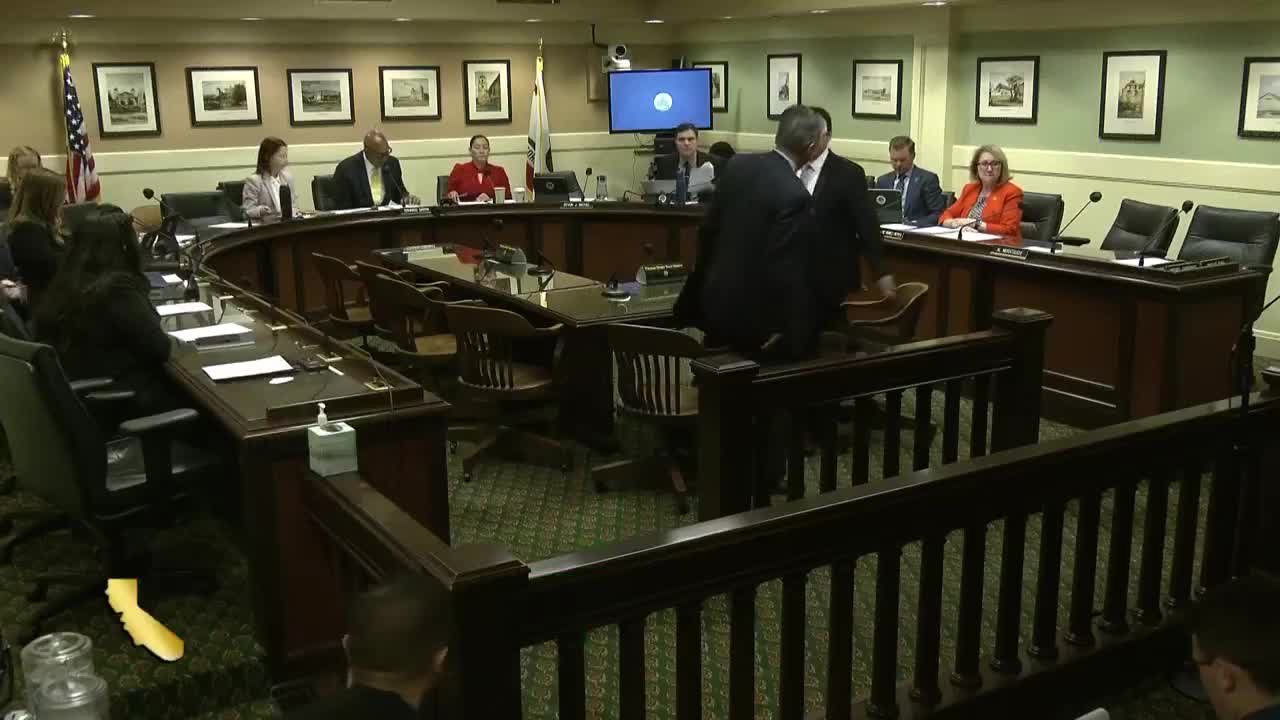 6MIN
Assembly Standing Committee on Utilities and Energy


Bill Co-Author(s):
