AB 1696: Sober Living Accountability Act.
- Session Year: 2023-2024
- House: Assembly
- Latest Version Date: 2023-06-30
Current Status:
Failed
(2023-09-11: Consideration of Governor's veto stricken from file.)
Introduced
In Committee
First Chamber
In Committee
Second Chamber
Enacted
Existing law requires the State Department of Health Care Services to license and regulate facilities that provide residential nonmedical services to adults who are recovering from problems related to alcohol, drug, or alcohol and drug misuse or abuse, and who need alcohol, drug, or alcohol and drug recovery treatment or detoxification services. Existing law also requires the department to implement a voluntary certification procedure for alcohol and other drug treatment recovery services. Existing law also defines a recovery residence as a residential dwelling that provides primary housing for individuals who seek a cooperative living arrangement that supports personal recovery from a substance use disorder and that does not require licensure pursuant to those provisions or does not provide licensable services.
This bill would require any government entity, as defined, that enters into a contract with a privately owned recovery residence to require that recovery residence to submit specified documents, including, among other things, written permission from the property owner to operate on the property, as specified, and the policies and procedures used by the recovery resident to address a residents right to access prescription and nonprescription drugs. The bill would apply these requirements to any contracts entered into, renewed, or amended on or after January 1, 2024.
Existing law requires the State Department of Health Care Services to license and regulate facilities that provide residential nonmedical services to adults who are recovering from problems related to alcohol, drug, or alcohol and drug misuse or abuse, and who need alcohol, drug, or alcohol and drug recovery treatment or detoxification services. Existing law also requires the department to implement a voluntary certification procedure for alcohol and other drug treatment recovery services. Existing law also defines a recovery residence as a residential dwelling that provides primary housing for individuals who seek a cooperative living arrangement that supports personal recovery from a substance use disorder and that does not require licensure pursuant to those provisions or does not provide licensable services.
This bill would require a treatment provider, as defined, that is operated, funded, or licensed by the state to only provide referrals to certified recovery residences, which the bill would define to mean a recovery residence that has been certified by a nonprofit entity approved by the department to certify those residences.This bill would require any government entity, as defined, that enters into a contract with a privately owned recovery residence to require that recovery residence to submit specified documents, including, among other things, written permission from the property owner to operate on the property, as specified, and the policies and procedures used by the recovery resident to address a residents right to access prescription and nonprescription drugs. The bill would apply these requirements to any contracts entered into, renewed, or amended on or after January 1, 2024.
Existing law requires the State Department of Health Care Services to license and regulate facilities that provide residential nonmedical services to adults who are recovering from problems related to alcohol, drug, or alcohol and drug misuse or abuse, and who need alcohol, drug, or alcohol and drug recovery treatment or detoxification services. Existing law also requires the department to implement a voluntary certification procedure for alcohol and other drug treatment recovery services. Existing law also defines a recovery residence as a residential dwelling that provides primary housing for individuals who seek a cooperative living arrangement that supports personal recovery from a substance use disorder and that does not require licensure pursuant to those provisions or does not provide licensable services.
This bill would require a treatment provider, as defined, that is operated, funded, or licensed by the state to only provide referrals to certified recovery residences, which the bill would define to mean a recovery residence that has been certified by a nonprofit entity approved by the department to certify those residences.
(a)Any government entity that enters into a contract with a privately owned recovery residence for the provision of recovery services shall require the contracting recovery residence to submit all of the following:
(1)Written permission from the property owner of record to operate the recovery residence on the property, unless the property owner is the recovery residence.
(2)Documentation that the recovery residence uses a code of ethics that is aligned with the National Alliance for Recovery Residences or a similar code of ethics approved by the department.
(3)The written policies and procedures used by the recovery residence to address a residents right to access prescription and nonprescription medication, including medication-assisted treatment consistent with state law.
(4)Documentation of both the availability and the ability to properly dispense naloxone at the recovery residence by a trained and knowledgeable individual.
(b)For purposes of this section, the following definitions shall apply:
(1)Government entity means the state, a county, or a city.
(2)Recovery residence has the same meaning as in Section 11833.05.
(c)This section shall apply to contracts entered into, renewed, or amended on or after January 1, 2024.
(a)Any government entity that enters into a contract with a privately owned recovery residence for the provision of recovery services shall require the contracting recovery residence to submit all of the following:
(1)Written permission from the property owner of record to operate the recovery residence on the property, unless the property owner is the recovery residence.
(2)Documentation that the recovery residence uses a code of ethics that is aligned with the National Alliance for Recovery Residences or a similar code of ethics approved by the department.
(3)The written policies and procedures used by the recovery residence to address a residents right to access prescription and nonprescription medication, including medication-assisted treatment consistent with state law.
(4)Documentation of both the availability and the ability to properly dispense naloxone at the recovery residence by a trained and knowledgeable individual.
(b)For purposes of this section, the following definitions shall apply:
(1)Government entity means the state, a county, or a city.
(2)Recovery residence has the same meaning as in Section 11833.05.
(c)This section shall apply to contracts entered into, renewed, or amended on or after January 1, 2024.
SECTION 1.Section 11831.66 is added to the Health and Safety Code, to read:11831.66.(a) This section shall be known, and may be cited, as the Sober Living Accountability Act.(b)(1)A treatment provider that is operated, funded, or licensed by the state shall only provide referrals to certified recovery residences.(2) The following definitions apply for purposes of this section: (A)Certified recovery residence means a recovery residence, as defined in subdivision (f) of Section 11833.05, that is certified by a nonprofit entity approved by the department to certify recovery residences.(B)Treatment provider means a licensed treatment facility or a certified treatment program.(a) This section shall be known, and may be cited, as the Sober Living Accountability Act.
(b)(1)A treatment provider that is operated, funded, or licensed by the state shall only provide referrals to certified recovery residences.
(2) The following definitions apply for purposes of this section:
(A)Certified recovery residence means a recovery residence, as defined in subdivision (f) of Section 11833.05, that is certified by a nonprofit entity approved by the department to certify recovery residences.
(B)Treatment provider means a licensed treatment facility or a certified treatment program.
|
Date
|
Status
|
|---|---|
| Sep 11, 2023 | Consideration of Governor's veto stricken from file. |
| Aug 14, 2023 | Consideration of Governor's veto pending. |
| Jul 21, 2023 | Vetoed by Governor. |
| Jul 11, 2023 | Enrolled and presented to the Governor at 3 p.m. |
| Jun 29, 2023 | In Assembly. Ordered to Engrossing and Enrolling. |
| Jun 29, 2023 | Read third time. Passed. Ordered to the Assembly. (Ayes 39. Noes 0. Page 1830.). |
| Jun 27, 2023 | Read second time. Ordered to Consent Calendar. |
| Jun 26, 2023 | From committee: Be ordered to second reading file pursuant to Senate Rule 28.8 and ordered to Consent Calendar. |
| Jun 14, 2023 | From committee: Do pass and re-refer to Com. on APPR with recommendation: To Consent Calendar. (Ayes 12. Noes 0.) (June 14). Re-referred to Com. on APPR. |
| May 17, 2023 | Referred to Com. on HEALTH. |
| May 4, 2023 | In Senate. Read first time. To Com. on RLS. for assignment. |
| May 4, 2023 | Read third time. Passed. Ordered to the Senate. (Ayes 75. Noes 0. Page 1464.) |
| Apr 27, 2023 | Read second time. Ordered to Consent Calendar. |
| Apr 26, 2023 | From committee: Do pass. To Consent Calendar. (Ayes 16. Noes 0.) (April 26). |
| Mar 29, 2023 | From committee: Do pass and re-refer to Com. on APPR. (Ayes 14. Noes 0.) (March 28). Re-referred to Com. on APPR. |
| Mar 23, 2023 | Re-referred to Com. on HEALTH. |
| Mar 22, 2023 | From committee chair, with author's amendments: Amend, and re-refer to Com. on HEALTH. Read second time and amended. |
| Mar 14, 2023 | In committee: Set, first hearing. Hearing canceled at the request of author. |
| Mar 9, 2023 | Referred to Com. on HEALTH. |
| Feb 18, 2023 | From printer. May be heard in committee March 20. |
| Feb 17, 2023 | Read first time. To print. |
|
Date
|
Description
|
Location
|
Votes
|
|
|---|---|---|---|---|
| Jun 29, 2023 | Consent Calendar AB1696 Sanchez | Senate Floor |
Passed |
|
| Jun 14, 2023 | Do pass, but first be re-referred to the Committee on [Appropriations] with the recommendation: To Consent Calendar | Senate Standing Committee on Health |
Passed |
|
| May 4, 2023 | AB 1696 Sanchez Consent Calendar Second Day Regular Session | Assembly Floor |
Passed |
|
| Apr 26, 2023 | Do pass. To Consent Calendar. | Assembly Standing Committee on Appropriations |
Passed |
|
| Mar 28, 2023 | Do pass and be re-referred to the Committee on [Appropriations] | Assembly Standing Committee on Health |
Passed |
This list shows positions taken on this bill by organizations on the date displayed, which is linked to the original source.
Positions by individuals are not included.
|
Organization
|
Position
|
Date
|
|---|---|---|
| California Consortium of Addiction Programs and Professionals | ** Support |
GOVERNOR'S VETO
GV Bill Id:AB 1696
Author:(Sanchez)
As Enrolled Ver:June 30, 2023
2/3 vote
SUMMARY
Requires any government entity that contracts with a privately owned recovery residence (RR) to provide recovery services to require the RR to comply with specified requirements. Specifically, this bill:
- Requires any government entity that contracts with a privately owned RR to provide recovery services to require the RR comply with all of the following:
- Provide written permission from the property owner of record to operate the RR on the property, unless the property owner is the RR;
- Document that the RR uses a Code of Ethics that is aligned with the National Association for Recovery Residences (NARR) or similar Code of Ethics approved by the Department of Health Care Services (DHCS);
- Document that the RR has written policies and procedures that address residents' rights to access prescription and non-prescription medications, including medication assisted treatment, consistent with state law; and,
- Document that naloxone hydrochloride will be accessible at the RR, and that appropriate individuals will be knowledgeable and trained in its use.
- Defines a government entity to mean the state, a county, or a city.
- Defines a RR as a residential dwelling that provides primary housing for individuals who seek a cooperative living arrangement that supports personal recovery from a substance use disorder (SUD) and that does not require licensure by DHCS or does not provide licensable services.
- Applies to contracts entered into, renewed, or amended on or after January 1, 2024.
Governor's Veto Message
I am returning Assembly Bill 1696 without my signature.
This bill would require any privately-owned recovery residence that contracts with a government entity to provide documented policies and procedures related to its operations, code of ethics, and patient access to medications.
Privately-owned recovery residences, as defined by this bill, are not subject to state licensure or certification. Therefore, AB 1696 would conflate requirements in existing law for licensed and certified programs providing substance use disorder recovery services with new requirements for privately-owned recovery residences, which the California Department of Health Care Services does not oversee or enforce. This may create confusion among people seeking recovery services from licensed or certified programs or treatment facilities.
For these reasons, I cannot sign this bill.
COMMENTS
- Alcohol and Drug Treatment Facility Licensing and Certification. DHCS has sole authority to license facilities that provide 24-hour residential nonmedical services to eligible adults who are recovering from problems related to alcohol or other drug misuse or abuse. Licensure is required when at least one of the following services is provided: detoxification; group sessions; individual sessions; educational sessions; or, alcoholism or other drug abuse recovery or treatment planning. Additionally, facilities may be subject to other types of permits, clearances, business taxes, or local fees that may be required by the cities or counties in which the facilities are located. Many facilities licensed by DHCS are also certified by DHCS, however certification is not mandatory. Certification by DHCS identifies those facilities which exceed minimum levels of service quality and are in substantial compliance with State program standards, specifically the Alcohol and Other Drug (AOD) Certification Standards.
Other non-residential, AOD outpatient programs may also be certified by DHCS; but certification is not mandatory. Certification by DHCS identifies those facilities that exceed minimum levels of service quality and are in substantial compliance with State program standards, specifically the AOD Certification Standards.
- RRs. RRs, also known as a sober living home, a sober living environment, or an unlicensed alcohol and drug free residence, is a residence for people in recovery from substance abuse. It may serve as a crucial, or even indispensable, support for individuals undergoing treatment but it does not provide treatment or care, whether medical or personal (as in an assisted living facility). The state laws and licensing requirements that govern treatment and care facilities do not currently include RRs. The California Research Bureau estimates that there are at least 12,000 RR beds in the state to serve an eligible population of between 25,000 and 35,000 individuals. Unfortunately, it is difficult to estimate the total number of RRs because there is no existing requirement for RRs to identify themselves as such in any official capacity, unless they are participating in programs beyond the minimum legal requirements for such a home to exist. About 750 homes are members of one of the two major associations that organize and promote sober living in California: the Sober Living Network and the California Consortium of Addiction Programs and Professionals, however, these organizations do not capture every RR in the state.
- NARR. This bill would require a RR to use a code of ethics aligned with NARR. NARR is a 501(c) 3 nonprofit organization dedicated to expanding the availability of well-operated, ethical, and supportive recovery housing. NARR has developed the most widely referenced national standard for the operation of RRs. They work with and support 30 state affiliate organizations. NARR and these organizations collectively support over 25,000 persons in addiction recovery who are living in over 2,500 certified RRs throughout the United States. NARR was founded in 2011 by a group of organizations and individuals with deep recovery housing expertise, with a goal of developing and promoting best practices in the operation of RRs. NARR works with federal government agencies, national addiction and recovery organizations, with state-level recovery housing organizations, and with state addiction services agencies in pursuit of better and more accessible recovery housing opportunities. In 2011, NARR established a national standard for recovery residences. This standard defines the spectrum of recovery oriented housing and services and distinguishes four different types which are known as "levels" or Levels of Support. The standard was developed through a strength-based and collaborative approach that solicited input from all major regional and national recovery housing organizations. Guidance for the standard was also received from RR providers from across the nation representing all four levels of support. Based on this national standard, that includes a Code of Ethics certified RRs must adhere to, NARR developed a certification program that it licenses to its affiliates. In turn, affiliate organizations are responsible for certifying RRs that meet the national standard.
- The federal Americans with Disabilities Act (ADA), the federal Fair Housing Act (FHA), and the Fair Employment and Housing Act (FEHA). The FHA makes it illegal to engage in various discriminatory practices relating to the sale and rental of housing based on race, color, religion, sex, marital status, national origin, ancestry, familial status, or disability. FEHA also prohibits land use regulations, zoning ordinances, and restrictive covenants from discriminating in housing on the basis of the aforementioned categories. FEHA also states that groups of people with disabilities living together in a single dwelling unit are considered a family.
In addition, the ADA gives civil rights protection to individuals with disabilities, similar to the protections provided to individuals on the basis of race, sex, national origin, and religion. Under the ADA, an individual with a "disability" is someone who has a current "physical or mental impairment" that "substantially limits" one or more of that person's "major life activities," such as caring for one's self, working, etc., or has a record of such a substantially limiting impairment, or is regarded as having such an impairment. The protections of the ADA apply to those who have successfully completed a drug rehabilitation program, or who are currently enrolled in such programs.
RRs that serve six or fewer individuals and do not provide any of the services that would classify them as an Alcohol and Drug Residential Treatment Facilities (RTF) requiring licensure or an AOD, are considered a residential property and a "family" for purposes of the FEHA and ADA affording them certain protections from local government control as referenced above.
- Substance Use Issues Worsening. According to a Kaiser Family Foundation report (Kaiser Report), published in August 2021, entitled, "Substance Use Issues are Worsening Alongside Access to Care," substance use issues were a concern even before the pandemic, yet many of those in need of care, particularly people of color, were not receiving treatment. In 2019, over 20 million people over the age of 12 reported having a SUD in the past year. However, only 10% of these individuals reported receiving care. For those individuals with a SUD in the past year and an unmet need for treatment, 24% reported not knowing where to seek services and 21% reported not having health insurance and being unable to afford the cost. Data from 2018 found that among those who began substance use treatment, the treatment completion rate was less than half (42%). These access to care issues and low utilization rates were more pronounced among people of color.
The Kaiser Report stated there is some reporting and evidence indicating that access and utilization of substance use services has further worsened during the pandemic. Early on in the pandemic, there were reports of some state and local programs decreasing funding for substance use services, though these funds may be restored as state budgets bounce back. Other media reports have highlighted treatment centers limiting their patient capacity or facing difficulty with patient retention, while some treatment centers and RRs have closed. A recent analysis found that in 2020 there was a significant drop in initiation of addiction treatment in California.
RRs serve as a critical component of the SUD treatment continuum providing a recovery housing environment that, if executed appropriately, strengthens an individuals likelihood of a full and ongoing recovery. The increase in drug use during and following the pandemic has created an even greater need for quality, ethical programs, including RRs. As an unregulated industry, there is opportunity for abusive practices that prey on individuals in recovery.
- Cracking down on unscrupulous activities in California. In November 2016, the California Department of Insurance (CDI) issued a press release about an investigation that resulted in the arrest of the operators of some Southern California sober living homes, operated as Community Recovery of Los Angeles (CRLA). The operators were arrested on several felony counts of grand theft and identity theft for allegedly conspiring to defraud clients and insurers out of more than $176 million. Affected insurers paid nearly $44 million before discovering the suspected fraud and stopping payments to CRLA, which was accused of luring people with treatment marketing schemes and stealing patient identities to buy health insurance policies for people without their knowledge, as well as committing acts such as submitting claims for services not provided, falsely representing CRLA as a licensed RTF while not being licensed as such, and filing fraudulent health insurance policy applications. A document posted on DHCS's website indicated at the time that CRLA operated both RRs, which were claiming to be licensed, and DHCS-certified AOD programs. In March 2018, the Orange County Register subsequently reported that one of the operators of CRLA plead guilty to 46 felony counts involving the insurance billing scheme and received 11 years in state prison following a plea to 28 counts of money laundering, seven counts of grand theft, six counts of identity theft, and five counts of insurance fraud.
In January 2020, CDI, through a joint effort with the Orange County District Attorney's Office, shut down an alleged $3.2 million health care fraud ring which preyed on those with SUDs in order to defraud insurance companies out of millions. Several individuals were charged with multiple felony counts including insurance fraud and money laundering in connection with the scheme. The Insurance Commissioner stated that the suspects are accused of finding patients across the country who were seeking help for their SUDs, and flying them to California to enter treatment at Casa Bella International Inc., which was owned and operated by one of the suspects. In order to obtain payment from the insurance company for these clients, the suspects are accused of directing employees to fill out policies for the patients using false information. The suspect who owned the facility is alleged to have paid the co-conspirators upwards of $10,000 for each patient who stayed enrolled in treatment for more than 30 days.
Most recently, in June 2020, CDI issued another press release announcing the arrests of five more suspects who are alleged to have been conspiring with the suspects arrested earlier in the year. The new defendants face up to 21 years in prison for their alleged involvement in a scheme that resulted in $60 million in fraudulent billing and $11.7 million in insurance losses. Authorities allege that all the defendants used mass media marketing campaigns to identify addicted clients from across the country who were seeking treatment. According to CDI, the conspirators and their employees then falsified clients' health care insurance applications to circumvent California residency requirements and closed enrollment periods; employed a money-laundering scheme they devised to conceal their involvement in paying clients' insurance premiums; and, trafficked their clients into Southern California treatment facilities.
According to the Author
RRs are an important source of support for individuals undergoing treatment for substance abuse. However, the unregulated nature of the RR industry provides opportunities for unscrupulous actors to abuse unsuspecting individuals and their families. This bill seeks to ensure that state and federal funding does not indirectly incentivize more bad actors from entering the space, provide support to good actors, and ensure that vulnerable residents who are at a turning point in their lives, are not taken advantage of with taxpayer resources. With additional state funding being directed towards the support of substance abuse patients, it is vital that California's government provide basic consumer protections. We cannot permit bad actors to make a quick buck by taking advantage of vulnerable individuals who should have every reason to expect fair and safe accommodations. The author concludes that this bill will ensure that RRs contracting with government entities maintain a standard of practice that keeps their residents and neighborhoods safe.
Arguments in Support
The California Consortium of Addiction Programs and Professionals (CCAPP), sponsor of the bill, states that California has not adopted quality standards for RR housing. This deficiency has resulted in a myriad of competing and confusing local government and state contracting provisions. In the absence of quality standards, consumers and neighborhoods are often plagued by residences that are unsafe, predatory, and ruinous to communities. Poorly run residences create negative community perceptions of all such housing, which limits its placement and thus access to it for people in the early stages of recovery. CCAPP further states that California received $40 million form the Coronavirus Response and Relief Supplemental Appropriations Act (CRRSAA) for RR housing, $38,505,609 for statewide recovery services projects, $51,486,764 in discretionary funding from the American Rescue Plan Act (ARPA) of which many counties have indicated will also be used for recovery housing needs, and has slated over $900 million for recovery bridge housing which includes RR housing. California will also be receiving augmented State Opioid Response funding, settlements from national opioid lawsuits, and increases in Proposition 64 revenue, all of which can potentially be used for increasing recovery housing availability. CCAPP concludes by stating that without guidelines such as those proposed in this bill for this type of housing, an infusion of funding has the potential to draw poor operators and unscrupulous actors into the sector.
Arguments in Opposition
There is no known opposition.
FISCAL COMMENTS
According to the Senate Appropriations Committee, pursuant to Senate Rule 28.8, negligible state costs.
VOTES
ASM HEALTH: 14-0-1
YES: Wood, Waldron, Aguiar-Curry, Arambula, Boerner Horvath, Flora, Vince Fong, Maienschein, McCarty, Joe Patterson, Rodriguez, Santiago, Villapudua, Weber
ABS, ABST OR NV: Wendy Carrillo
ASM APPROPRIATIONS: 16-0-0
YES: Holden, Megan Dahle, Bryan, Calderon, Wendy Carrillo, Dixon, Mike Fong, Hart, Lowenthal, Mathis, Papan, Pellerin, Robert Rivas, Sanchez, Weber, Wilson
ASSEMBLY FLOOR: 75-0-5
YES: Addis, Aguiar-Curry, Alanis, Alvarez, Arambula, Bains, Bauer-Kahan, Bennett, Berman, Boerner, Bonta, Bryan, Calderon, Juan Carrillo, Wendy Carrillo, Cervantes, Chen, Connolly, Megan Dahle, Davies, Dixon, Essayli, Mike Fong, Vince Fong, Friedman, Gabriel, Gallagher, Garcia, Gipson, Grayson, Haney, Hart, Holden, Hoover, Irwin, Jackson, Jones-Sawyer, Kalra, Lackey, Lee, Low, Lowenthal, Maienschein, Mathis, McCarty, Stephanie Nguyen, Ortega, Pacheco, Papan, Jim Patterson, Joe Patterson, Pellerin, Petrie-Norris, Quirk-Silva, Ramos, Reyes, Luz Rivas, Robert Rivas, Rodriguez, Blanca Rubio, Sanchez, Santiago, Schiavo, Soria, Ta, Ting, Valencia, Villapudua, Waldron, Ward, Weber, Wilson, Wood, Zbur, Rendon
ABS, ABST OR NV: Flora, McKinnor, Muratsuchi, Wallis, Wicks
SENATE FLOOR: 39-0-1
YES: Allen, Archuleta, Ashby, Atkins, Becker, Blakespear, Bradford, Caballero, Cortese, Dahle, Dodd, Durazo, Eggman, Glazer, Gonzalez, Grove, Hurtado, Jones, Laird, Limón, McGuire, Menjivar, Min, Newman, Nguyen, Niello, Ochoa Bogh, Padilla, Portantino, Roth, Rubio, Seyarto, Skinner, Smallwood-Cuevas, Stern, Umberg, Wahab, Wiener, Wilk
ABS, ABST OR NV: Alvarado-Gil
UPDATED
VERSION: June 30, 2023
CONSULTANT: Judy Babcock / HEALTH / (916) 319-2097 FN: 0001235
SENATE RULES COMMITTEE Office of Senate Floor Analyses (916) 651-1520 Fax: (916) 327-4478 | AB 1696 |
CONSENT
Bill No: AB 1696
Author: Sanchez (R)
Amended: 3/22/23 in Assembly
Vote: 21
SENATE HEALTH COMMITTEE: 12-0, 6/14/23
AYES: Eggman, Nguyen, Glazer, Gonzalez, Grove, Hurtado, Limón, Menjivar, Roth, Rubio, Wahab, Wiener
SENATE APPROPRIATIONS COMMITTEE: Senate Rule 28.8
ASSEMBLY FLOOR: 75-0, 5/4/23 (Consent) - See last page for vote
SUBJECT: Sober Living Accountability Act
SOURCE: California Consortium of Addiction Programs and Professionals
DIGEST:
This bill requires any government entity that enters into, renews, or amends a contract, beginning January 1, 2024, with a privately owned recovery residence (RR) to require the contracting RR to submit specified information.
ANALYSIS:
Existing law:
- Grants the Department of Health Care Services (DHCS) the sole authority in state government to administer, license, certify, and regulate all substance use disorder (SUD) functions and programs. [HSC §11750, et seq.]
- Requires DHCS to license alcoholism or drug abuse recovery or treatment facilities (RTFs) that provide residential nonmedical services to adults who are recovering from problems related to alcohol, drug, or alcohol and drug misuse or abuse, and who need alcohol, drug, or alcohol and drug recovery, treatment, or detoxification services. [HSC §11834.01, et seq.]
- Requires RTF licensees to provide at least one of the following nonmedical services: recovery; treatment; or, detoxification services. Requires DHCS to adopt regulations requiring records and procedures appropriate for the type of service provided. [HSC §11834.26]
- Defines a RR as a residential dwelling that provides primary housing for individuals who seek a cooperative living arrangement that supports personal recovery from an SUD and that does not require licensure by DHCS or does not provide licensable services, as specified, including residential dwellings commonly referred to as “sober living homes,” “sober living environments,” or “unlicensed alcohol and drug free residences.” [HSC §11833.05]
This bill:
- Requires any “government entity,” as defined, that enters into, renews, or amends a contract, beginning January 1, 2024, with a privately owned RR to require the contracting RR to submit the following information:
- Written permission from the property owner of record to operate the RR on the property, unless the property owner is the RR;
- Documentation that the RR uses a code of ethics that is aligned with the National Alliance for Recovery Residences (NARR) or a similar code of ethics approved by DHCS;
- The written policies and procedures used by the RR to address a resident’s right to access prescription and nonprescription medication, including medication-assisted treatment consistent with state law; and,
- Documentation of both the availability and the ability to properly dispense naloxone at the RR by a trained and knowledgeable individual.
- Defines “government entity” as the state, a county, or a city.
Comments
- Author’s statement. According to the author, with additional funding being directed towards the support of substance abuse patients, it is vital that California’s government provide basic consumer protections. We cannot permit bad actors to make a quick buck by taking advantage of vulnerable individuals who should have every reason to expect fair and safe accommodations. This bill will ensure that RRs that contract with government entities maintain a standard of practice that keeps their residents and neighborhoods safe.
- RTFs. DHCS has sole authority to license facilities that provide 24-hour residential nonmedical services to eligible adults who are recovering from problems related to alcohol or other drug misuse or abuse. Licensure is required when at least one of the following services is provided: detoxification; group sessions; individual sessions; educational sessions; or, alcoholism or other drug abuse recovery or treatment planning. Additionally, facilities may be subject to other types of permits, clearances, business taxes, or local fees that may be required by the cities or counties in which the facilities are located. Many DHCS-licensed facilities are also certified by DHCS, however certification is not mandatory. Certification by DHCS identifies those facilities which exceed minimum levels of service quality and are in substantial compliance with State program standards, specifically the AOD Certification Standards. Other non-residential, AOD outpatient programs may also be certified by DHCS; but certification is not mandatory. Certification by DHCS identifies those facilities that exceed minimum levels of service quality and are in substantial compliance with State program standards, specifically the AOD Certification Standards.
- RRs/sober living homes (SLHs). A 2010 report on the National Institutes of Health (NIH) website, “Sober Living Houses for Alcohol and Drug Dependence: 18-month Outcomes,” states that SLHs are not formal treatment programs and are not obligated to comply with state or local regulations applicable to treatment. However, NIH does not provide a formal definition of an SLH. The report also mentions that it is difficult to determine how many SLHs there are in California because they are outside of the purview of state licensing authorities. The NIH report cites the protection that the federal Fair Housing Act affords SLHs to be located in residentially zoned areas, personal privacy under the Fourth Amendment, and the right of people with disabilities to live together for a shared purpose, such as mutually assisted recovery and maintenance of an abstinent lifestyle. According to DHCS’s website, some types of residences do not provide SUD recovery or treatment services and therefore do not require licensure by DHCS, including cooperative living arrangements with a commitment or requirement to be free from alcohol and other drugs, sometimes referred to as RRs, SLHs, transitional housing, or alcohol- and drug-free housing. DHCS states that while SLHs are not required to be licensed by DHCS, they may be subject to other types of permits, clearances, business taxes, or local fees, which may be required by the cities or counties in which they are located. If an SLH is providing licensable services to adults then it must obtain a valid RTF license from DHCS. Licensable services can include, but are not limited to, detoxification services, group sessions, individual sessions, one-on-one counseling, educational sessions, or recovery, treatment, or discharge planning. If an SLH is providing just one of the mentioned services, then it should be classified as an RTF and must obtain a valid license from DHCS. DHCS’s Drug Medi-Cal Organized Delivery System waiver allows counties to use RRs in their continuum of services if they adhere to the following guidelines: they do not provide SUD services that would require licensure by DHCS; all residents of a RR are actively engaged in medically necessary recovery support services to be provided off-site; and each county develops guidelines for contracted RR providers and provide monitoring and oversight.
- NARR. According to its website, NARR is a nonprofit organization dedicated to expanding the availability of well-operated, ethical, and supportive recovery housing. NARR has developed the most widely referenced national standard for the operation of RRs. They work with and support 30 state affiliate organizations. NARR and these organizations collectively support over 25,000 persons in addiction recovery who are living in over 2,500 certified RRs throughout the United States. NARR was founded in 2011 by a group of organizations and individuals with deep recovery housing expertise, with a goal of developing and promoting best practices in the operation of RRs. NARR works with federal government agencies, national addiction and recovery organizations, state-level recovery housing organizations, and state addiction services agencies in pursuit of better and more accessible recovery housing opportunities. In 2011, NARR established a national standard for RRs, which defines the spectrum of recovery oriented housing and services and distinguishes four different levels. The standard was developed through a strength-based and collaborative approach that solicited input from all major regional and national recovery housing organizations. Guidance for the standard was also received from RR providers from across the nation representing all four levels of support. Based on this national standard, which includes a code of ethics certified RRs must adhere to, NARR developed a certification program. Affiliate organizations are responsible for certifying RRs that meet the national standard.
FISCAL EFFECT: Appropriation: No Fiscal Com.: Yes Local: No
SUPPORT: (Verified 6/26/23)
California Consortium of Addiction Programs and Professionals (source)
OPPOSITION: (Verified 6/26/23)
None received
ARGUMENTS IN SUPPORT: The California Consortium of Addiction Programs and Professionals (CCAPP) argues that California has no adopted quality standards for RR housing, resulting in a myriad of competing and confusing local government and state contracting provisions. In the absence of quality standards, consumers and neighborhoods are often plagued by residences that are unsafe, predatory, and ruinous to communities. CCAPP states that poorly run RRs create negative community perceptions of all such housing, which limits its placement and thus access to it for people in the early stages of recovery. California received $40 million form the Coronavirus Response and Relief Supplemental Appropriations Act for RR housing; $38,505,609 for statewide recovery services projects; $51,486,764 in discretionary funding from the American Rescue Plan Act, of which many counties have indicated will also be used for recovery housing needs; and has slated over $900 million for recovery bridge housing, which includes RR housing. California will also be receiving augmented State Opioid Response settlement funds from national opioid lawsuits, and increases in other revenue, all of which can potentially be used for increasing RR housing availability. CCAPP argues that without guidelines for this type of housing, an infusion of funding has the potential to draw poor operators and unscrupulous actors into the RR sector. The Department of Housing and Community Development is actively pursuing the repeal of local ordinances that currently give local government control over regulating this type of housing. This rollback of local control, combined with large increases in funding, could aggravate neighborhood/housing tensions. CCAPP states that tying state and federal funding, passed through to counties and providers, to established standards recognized by state and national certifying entities has been proven to be an effective and non-discriminatory way to reward good RR operators and deter poor operators from entering the recovery housing market.
ASSEMBLY FLOOR: 75-0, 5/4/23
AYES: Addis, Aguiar-Curry, Alanis, Alvarez, Arambula, Bains, Bauer-Kahan, Bennett, Berman, Boerner, Bonta, Bryan, Calderon, Juan Carrillo, Wendy Carrillo, Cervantes, Chen, Connolly, Megan Dahle, Davies, Dixon, Essayli, Mike Fong, Vince Fong, Friedman, Gabriel, Gallagher, Garcia, Gipson, Grayson, Haney, Hart, Holden, Hoover, Irwin, Jackson, Jones-Sawyer, Kalra, Lackey, Lee, Low, Lowenthal, Maienschein, Mathis, McCarty, Stephanie Nguyen, Ortega, Pacheco, Papan, Jim Patterson, Joe Patterson, Pellerin, Petrie-Norris, Quirk-Silva, Ramos, Reyes, Luz Rivas, Robert Rivas, Rodriguez, Blanca Rubio, Sanchez, Santiago, Schiavo, Soria, Ta, Ting, Valencia, Villapudua, Waldron, Ward, Weber, Wilson, Wood, Zbur, Rendon
NO VOTE RECORDED: Flora, McKinnor, Muratsuchi, Wallis, Wicks
Prepared by: Reyes Diaz / HEALTH / (916) 651-4111
6/28/23 11:07:38
**** END ****
SENATE COMMITTEE ON HEALTH
Senator Dr. Susan Talamantes Eggman, Chair
BILL NO: AB 1696
AUTHOR: | Sanchez | ||
VERSION: | March 22, 2023 | ||
HEARING DATE: | June 14, 2023 | ||
CONSULTANT: | Reyes Diaz | ||
SUBJECT: Sober Living Accountability Act
SUMMARY:
Requires any government entity that enters into, renews, or amends a contract, beginning January 1, 2024, with a privately owned recovery residence (RR) to require the contracting RR to submit specified information.
Existing law:
- Grants the Department of Health Care Services (DHCS) the sole authority in state government to administer, license, certify, and regulate all substance use disorder (SUD) functions and programs. [HSC §11750, et seq.]
- Requires DHCS to license alcoholism or drug abuse recovery or treatment facilities (RTFs) that provide residential nonmedical services to adults who are recovering from problems related to alcohol, drug, or alcohol and drug misuse or abuse, and who need alcohol, drug, or alcohol and drug recovery, treatment, or detoxification services. [HSC §11834.01, et seq.]
- Requires RTF licensees to provide at least one of the following nonmedical services: recovery; treatment; or, detoxification services. Requires DHCS to adopt regulations requiring records and procedures appropriate for the type of service provided. [HSC §11834.26]
- Defines a RR as a residential dwelling that provides primary housing for individuals who seek a cooperative living arrangement that supports personal recovery from an SUD and that does not require licensure by DHCS or does not provide licensable services, as specified, including residential dwellings commonly referred to as “sober living homes,” “sober living environments,” or “unlicensed alcohol and drug free residences.” [HSC §11833.05]
This bill:
- Requires any “government entity,” as defined, that enters into, renews, or amends a contract, beginning January 1, 2024, with a privately owned RR to require the contracting RR to submit the following information:
- Written permission from the property owner of record to operate the RR on the property, unless the property owner is the RR;
- Documentation that the RR uses a code of ethics that is aligned with the National Alliance for Recovery Residences (NARR) or a similar code of ethics approved by DHCS;
- The written policies and procedures used by the RR to address a resident’s right to access prescription and nonprescription medication, including medication-assisted treatment consistent with state law; and,
- Documentation of both the availability and the ability to properly dispense naloxone at the RR by a trained and knowledgeable individual.
- Defines “government entity” as the state, a county, or a city.
FISCAL EFFECT:
According to the Assembly Appropriations Committee, this bill has no costs to DHCS. If local governments incur costs to implement the provisions of this bill, and seek reimbursement, those costs, subject to a determination by the Commission on State Mandates, may be reimbursable by the state (General Fund).
PRIOR VOTES:
Assembly Floor: | 75 - 0 |
Assembly Appropriations Committee: | 16 - 0 |
Assembly Health Committee: | 14 - 0 |
COMMENTS:
- Author’s statement. According to the author, with additional funding being directed towards the support of substance abuse patients, it is vital that California’s government provide basic consumer protections. We cannot permit bad actors to make a quick buck by taking advantage of vulnerable individuals who should have every reason to expect fair and safe accommodations. This bill will ensure that RRs that contract with government entities maintain a standard of practice that keeps their residents and neighborhoods safe.
- RTFs. DHCS has sole authority to license facilities that provide 24-hour residential nonmedical services to eligible adults who are recovering from problems related to alcohol or other drug misuse or abuse. Licensure is required when at least one of the following services is provided: detoxification; group sessions; individual sessions; educational sessions; or, alcoholism or other drug abuse recovery or treatment planning. Additionally, facilities may be subject to other types of permits, clearances, business taxes, or local fees that may be required by the cities or counties in which the facilities are located. Many DHCS-licensed facilities are also certified by DHCS, however certification is not mandatory. Certification by DHCS identifies those facilities which exceed minimum levels of service quality and are in substantial compliance with State program standards, specifically the AOD Certification Standards. Other non-residential, AOD outpatient programs may also be certified by DHCS; but certification is not mandatory. Certification by DHCS identifies those facilities that exceed minimum levels of service quality and are in substantial compliance with State program standards, specifically the AOD Certification Standards.
- RRs/sober living homes (SLHs). A 2010 report on the National Institutes of Health (NIH) website, “Sober Living Houses for Alcohol and Drug Dependence: 18-month Outcomes,” states that SLHs are not formal treatment programs and are not obligated to comply with state or local regulations applicable to treatment. However, NIH does not provide a formal definition of an SLH. The report also mentions that it is difficult to determine how many SLHs there are in California because they are outside of the purview of state licensing authorities. The NIH report cites the protection that the federal Fair Housing Act affords SLHs to be located in residentially zoned areas, personal privacy under the Fourth Amendment, and the right of people with disabilities to live together for a shared purpose, such as mutually assisted recovery and maintenance of an abstinent lifestyle. According to DHCS’s website, some types of residences do not provide SUD recovery or treatment services and therefore do not require licensure by DHCS, including cooperative living arrangements with a commitment or requirement to be free from alcohol and other drugs, sometimes referred to as RRs, SLHs, transitional housing, or alcohol- and drug-free housing. DHCS states that while SLHs are not required to be licensed by DHCS, they may be subject to other types of permits, clearances, business taxes, or local fees, which may be required by the cities or counties in which they are located. If an SLH is providing licensable services to adults then it must obtain a valid RTF license from DHCS. Licensable services can include, but are not limited to, detoxification services, group sessions, individual sessions, one-on-one counseling, educational sessions, or recovery, treatment, or discharge planning. If an SLH is providing just one of the mentioned services, then it should be classified as an RTF and must obtain a valid license from DHCS. DHCS’s Drug Medi-Cal Organized Delivery System waiver allows counties to use RRs in their continuum of services if they adhere to the following guidelines: they do not provide SUD services that would require licensure by DHCS; all residents of a RR are actively engaged in medically necessary recovery support services to be provided off-site; and each county develops guidelines for contracted RR providers and provide monitoring and oversight.
- NARR. According to its website, NARR is a nonprofit organization dedicated to expanding the availability of well-operated, ethical, and supportive recovery housing. NARR has developed the most widely referenced national standard for the operation of RRs. They work with and support 30 state affiliate organizations. NARR and these organizations collectively support over 25,000 persons in addiction recovery who are living in over 2,500 certified RRs throughout the United States. NARR was founded in 2011 by a group of organizations and individuals with deep recovery housing expertise, with a goal of developing and promoting best practices in the operation of RRs. NARR works with federal government agencies, national addiction and recovery organizations, state-level recovery housing organizations, and state addiction services agencies in pursuit of better and more accessible recovery housing opportunities. In 2011, NARR established a national standard for RRs, which defines the spectrum of recovery oriented housing and services and distinguishes four different levels. The standard was developed through a strength-based and collaborative approach that solicited input from all major regional and national recovery housing organizations. Guidance for the standard was also received from RR providers from across the nation representing all four levels of support. Based on this national standard, which includes a code of ethics certified RRs must adhere to, NARR developed a certification program. Affiliate organizations are responsible for certifying RRs that meet the national standard.
- Prior legislation. AB 1158 (Petrie-Norris, Chapter 443, Statutes of 2021) requires, among other things, any government entity that contracts with privately owned RRs serving more than six residents to require the contractors to, at all times, maintain specific insurance coverage.
AB 1779 (Daly of 2019) would have required DHCS to adopt NARR or similar standards for RRs that receive state funding. AB 1779 would have permitted specified entities to report suspected activity about RRs to DHCS and for DHCS to take specified action. AB 1779 was held on the Senate Appropriations Committee suspense file.
- Support. The California Consortium of Addiction Programs and Professionals (CCAPP) argues that California has no adopted quality standards for RR housing, resulting in a myriad of competing and confusing local government and state contracting provisions. In the absence of quality standards, consumers and neighborhoods are often plagued by residences that are unsafe, predatory, and ruinous to communities. CCAPP states that poorly run RRs create negative community perceptions of all such housing, which limits its placement and thus access to it for people in the early stages of recovery. California received $40 million form the Coronavirus Response and Relief Supplemental Appropriations Act for RR housing; $38,505,609 for statewide recovery services projects; $51,486,764 in discretionary funding from the American Rescue Plan Act, of which many counties have indicated will also be used for recovery housing needs; and has slated over $900 million for recovery bridge housing, which includes RR housing. California will also be receiving augmented State Opioid Response settlement funds from national opioid lawsuits, and increases in other revenue, all of which can potentially be used for increasing RR housing availability. CCAPP argues that without guidelines for this type of housing, an infusion of funding has the potential to draw poor operators and unscrupulous actors into the RR sector. The Department of Housing and Community Development is actively pursuing the repeal of local ordinances that currently give local government control over regulating this type of housing. This rollback of local control, combined with large increases in funding, could aggravate neighborhood/housing tensions. CCAPP states that tying state and federal funding, passed through to counties and providers, to established standards recognized by state and national certifying entities has been proven to be an effective and non-discriminatory way to reward good RR operators and deter poor operators from entering the recovery housing market.
SUPPORT AND OPPOSITION:
Support: California Consortium of Addiction Programs and Professionals (sponsor)
Oppose: None received
-- END --
Date of Hearing: April 26, 2023
ASSEMBLY COMMITTEE ON APPROPRIATIONS
Chris Holden, Chair
ABPCA Bill Id:AB 1696
Author:(Sanchez) – As Amended Ver:March 22, 2023
Policy Committee: | Health | Vote: | 14 - 0 |
|
| ||
|
|
Urgency: No State Mandated Local Program: Yes Reimbursable: Yes
SUMMARY:
This bill requires any government entity that contracts with a privately owned recovery residence (RR) to provide recovery services to require the RR to comply with specified requirements, including: (1) permission from the property owner to operate the RR; (2) use of a code of ethics, as specified; (3) written policies and procedures addressing residents’ rights to access certain medications; and (4) accessibility of naloxone hydrochloride, along with individuals trained in its use.
FISCAL EFFECT:
No costs to the Department of Health Care Services.
If local governments incur costs to implement the provisions of this bill, and seek reimbursement, those costs, subject to a determination by the Commission on State Mandates, may be reimbursable by the state (General Fund).
COMMENTS:
- Purpose. The California Consortium of Addiction Programs and Professionals (CCAPP), sponsor of the bill, states:
California has no adopted quality standards for recovery residence housing. This deficiency has resulted in a myriad of competing and confusing local government and state contracting provisions. In the absence of quality standards, consumers and neighborhoods are often plagued by [RRs] that are unsafe, predatory, and ruinous to communities.
California received $40 million from the Coronavirus Response and Relief Supplemental Appropriations Act for [RR] housing, $38,505,609 for statewide recovery services projects, $51,486,764 in discretionary funding from the American Rescue Plan Act, of which many counties have indicated will also be used for recovery housing needs, and has slated over $900 million for recovery bridge housing which includes [RR] housing. California will also be receiving augmented State Opioid Response funding, settlements from national opioid lawsuits, and increases in Proposition 64 revenue, all of which can potentially be used for increasing recovery housing availability.
Tying state and federal funding, passed through to counties and providers, to established standards recognized by state and national certifying entities has been proven to be an effective and non-discriminatory way to reward good operators and deter poor operators from entering the recovery housing market.
- RRs. RRs, also known as sober living homes, sober living environments, or unlicensed alcohol and drug free residences, are residences for people recovering from substance abuse. An RR may serve as a crucial support for individuals undergoing treatment, but does not provide treatment or care, whether medical or personal. RRs are not licensed or regulated by the state. The California Research Bureau estimates that there are at least 12,000 RR beds in the state, serving an eligible population of between 25,000 and 35,000 individuals. Unfortunately, it is difficult to estimate the total number of RRs because there is no requirement for an RR to identify as such in any official capacity, unless it participates in programs beyond the minimum legal requirements. About 750 homes are members of one of the two major associations that organize and promote sober living in California, the Sober Living Network and CCAPP.
- Prior Legislation. SB 589 (Bates), of the 2019-20 Legislative Session, would have prohibited an operator of a residential treatment facility, substance abuse treatment program, RR, or a third party from engaging in specified misleading marketing activities. AB 589 was vetoed by the Governor, who stated, in part:
While it is important to protect vulnerable patients and their families from unethical marketing practices, I am concerned that as crafted, this measure creates a false promise. DHCS has no jurisdiction or licensing oversight over RRs or third parties. As such, it cannot take enforcement against those entities for violations of advertisement requirements.
Analysis Prepared by: Allegra Kim / APPR. / (916) 319-2081
Date of Hearing: March 28, 2023
ASSEMBLY COMMITTEE ON HEALTH
Jim Wood, Chair
ABPCA Bill Id:AB 1696
Author:(Sanchez) – As Amended Ver:March 22, 2023
SUBJECT: Sober Living Accountability Act.
SUMMARY: Requires any government entity that contracts with a privately owned recovery residence (RR) to provide recovery services to require the RR to comply with specified requirements.
- Requires any government entity that contracts with a privately owned RR to provide recovery services to require the RR comply with all of the following:
- Provide written permission from the property owner of record to operate the RR on the property, unless the property owner is the RR;
- Document that the RR uses a Code of Ethics that is aligned with the National Association for Recovery Residences (NARR) or similar Code of Ethics approved by the Department of Health Care Services (DHCS);
- Document that the RR has written policies and procedures that address residents’ rights to access prescription and non-prescription medications, including medication assisted treatment, consistent with state law; and,
- Document that naloxone hydrochloride will be accessible at the RR, and that appropriate individuals will be knowledgeable and trained in its use.
- Defines a government entity to mean the state, a county, or a city.
- Defines a RR as a residential dwelling that provides primary housing for individuals who seek a cooperative living arrangement that supports personal recovery from a substance use disorder (SUD) and that does not require licensure by DHCS or does not provide licensable services.
- Applies to contracts entered into, renewed, or amended on or after January 1, 2024.
EXISTING LAW:
- Grants DHCS the sole authority in state government to administer, license, certify, and regulate all SUD functions and programs. [Health and Safety Code (HSC) §11750, et seq.]
- Requires DHCS to license Alcohol and Drug Residential Treatment Facilities (RTFs) that provide 24-hour residential non-medical services to adults who are recovering from problems related to alcohol, drug, or alcohol and drug misuse or abuse, and who need alcohol, drug, or alcohol and drug recovery, treatment, or detoxification services. [HSC §11834.01, et seq.]
- Defines “alcoholism or drug abuse RTF” as any, place or building that provides 24-hour residential nonmedical services to adults who are recovering from problems related to alcohol, drug, or alcohol and drug misuse or abuse, and who need alcohol, drug, or alcohol and drug recovery treatment or detoxification services. [HSC §11834.02]
- Requires RTF licensees to provide at least one of the following nonmedical services: recovery; treatment; or, detoxification services. Requires DHCS to adopt regulations requiring records and procedures appropriate for the type of service provided. [HSC §11834.26]
- Grants DHCS the authority to implement program certification procedures for alcohol and other drug treatment (AOD) recovery services including the minimal level of service quality required to qualify for and obtain state certification. [HSC §11830.1]
- Defines a RR as a residential dwelling that provides primary housing for individuals who seek a cooperative living arrangement that supports personal recovery from an SUD and that does not require licensure by DHCS or does not provide licensable services, as specified, including residential dwellings commonly referred to as “sober living homes,” “sober living environments,” or “unlicensed alcohol and drug free residences.” [HSC §11833.05(f)]
- Requires an RTF that serves six or fewer persons, for purposes of local regulation, to be considered a residential use of property. Prohibits the application of any term to an RTF that implies the treatment home is a business run for profit or differs in any other way from a single-family residence. [HSC §11834.23]
- Requires any government entity that contracts with a privately owned RR to provide recovery services, or RTF to provide treatment services for more than six residents, to require the contractor, at all times, to maintain specified insurance coverages, that includes the government entity as an additional insured. [HSC §11853.5]
- Requires any government entity that contracts with an RTF to provide treatment services for six or fewer residents, to require the contractor, at all times, to maintain general liability insurance coverages, that includes the government entity as an additional insured. [HSC §11853.5(b)]
FISCAL EFFECT: Unknown. This bill has not yet been analyzed by a fiscal committee.
COMMENTS:
- PURPOSE OF THIS BILL. According to the author, RRs are an important source of support for individuals undergoing treatment for substance abuse. However, the unregulated nature of the RR industry provides opportunities for unscrupulous actors to abuse unsuspecting individuals and their families. This bill seeks to ensure that state and federal funding does not indirectly incentivize more bad actors from entering the space, provide support to good actors, and ensure that vulnerable residents who are at a turning point in their lives, are not taken advantage of with taxpayer resources. With additional state funding being directed towards the support of substance abuse patients, it is vital that California’s government provide basic consumer protections. We cannot permit bad actors to make a quick buck by taking advantage of vulnerable individuals who should have every reason to expect fair and safe accommodations. The author concludes that this bill will ensure that RRs contracting with government entities maintain a standard of practice that keeps their residents and neighborhoods safe.
- BACKGROUND.
- Alcohol and Drug Treatment Facility Licensing and Certification. DHCS has sole authority to license facilities that provide 24-hour residential nonmedical services to eligible adults who are recovering from problems related to alcohol or other drug misuse or abuse. Licensure is required when at least one of the following services is provided: detoxification; group sessions; individual sessions; educational sessions; or, alcoholism or other drug abuse recovery or treatment planning. Additionally, facilities may be subject to other types of permits, clearances, business taxes, or local fees that may be required by the cities or counties in which the facilities are located. Many facilities licensed by DHCS are also certified by DHCS, however certification is not mandatory. Certification by DHCS identifies those facilities which exceed minimum levels of service quality and are in substantial compliance with State program standards, specifically the AOD Certification Standards.
Other non-residential, AOD outpatient programs may also be certified by DHCS; but certification is not mandatory. Certification by DHCS identifies those facilities that exceed minimum levels of service quality and are in substantial compliance with State program standards, specifically the AOD Certification Standards.
- RRs. RRs, also known as a sober living home, a sober living environment, or an unlicensed alcohol and drug free residence, is a residence for people in recovery from substance abuse. It may serve as a crucial, or even indispensable, support for individuals undergoing treatment but it does not provide treatment or care, whether medical or personal (as in an assisted living facility). The state laws and licensing requirements that govern treatment and care facilities do not currently include RRs. The California Research Bureau estimates that there are at least 12,000 RR beds in the state to serve an eligible population of between 25,000 and 35,000 individuals. Unfortunately, it is difficult to estimate the total number of RRs because there is no existing requirement for RRs to identify themselves as such in any official capacity, unless they are participating in programs beyond the minimum legal requirements for such a home to exist. About 750 homes are members of one of the two major associations that organize and promote sober living in California: the Sober Living Network and the California Consortium of Addiction Programs and Professionals, however, these organizations do not capture every RR in the state.
- NARR. This bill would require a RR to use a code of ethics aligned with NARR. NARR is a 501(c) 3 nonprofit organization dedicated to expanding the availability of well-operated, ethical, and supportive recovery housing. NARR has developed the most widely referenced national standard for the operation of RRs. They work with and support 30 state affiliate organizations. NARR and these organizations collectively support over 25,000 persons in addiction recovery who are living in over 2,500 certified RRs throughout the United States. NARR was founded in 2011 by a group of organizations and individuals with deep recovery housing expertise, with a goal of developing and promoting best practices in the operation of RRs. NARR works with federal government agencies, national addiction and recovery organizations, with state-level recovery housing organizations, and with state addiction services agencies in pursuit of better and more accessible recovery housing opportunities. In 2011, NARR established a national standard for recovery residences. This standard defines the spectrum of recovery oriented housing and services and distinguishes four different types which are known as “levels” or Levels of Support.” The standard was developed through a strength-based and collaborative approach that solicited input from all major regional and national recovery housing organizations. Guidance for the standard was also received from RR providers from across the nation representing all four levels of support. Based on this national standard, that includes a Code of Ethics certified RRs must adhere to, NARR developed a certification program that it licenses to its affiliates. In turn, affiliate organizations are responsible for certifying RRs that meet the national standard.
- The federal Americans with Disabilities Act (ADA), the federal Fair Housing Act (FHA), and the Fair Employment and Housing Act (FEHA). The FHA makes it illegal to engage in various discriminatory practices relating to the sale and rental of housing based on race, color, religion, sex, marital status, national origin, ancestry, familial status, or disability. FEHA also prohibits land use regulations, zoning ordinances, and restrictive covenants from discriminating in housing on the basis of the aforementioned categories. FEHA also states that groups of people with disabilities living together in a single dwelling unit are considered a family.
In addition, the ADA gives civil rights protection to individuals with disabilities, similar to the protections provided to individuals on the basis of race, sex, national origin, and religion. Under the ADA, an individual with a “disability” is someone who has a current “physical or mental impairment” that “substantially limits” one or more of that person’s “major life activities,” such as caring for one’s self, working, etc., or has a record of such a substantially limiting impairment, or is regarded as having such an impairment. The protections of the ADA apply to those who have successfully completed a drug rehabilitation program, or who are currently enrolled in such programs.
RRs that serve six or fewer individuals and do not provide any of the services that would classify them as a RTF requiring licensure or an AOD, are considered a residential property and a “family” for purposes of the FEHA and ADA affording them certain protections from local government control as referenced above.
- Substance Use Issues Worsening. According to a Kaiser Family Foundation report (Kaiser Report), published in August 2021, entitled, “Substance Use Issues are Worsening Alongside Access to Care,” substance use issues were a concern even before the pandemic, yet many of those in need of care, particularly people of color, were not receiving treatment. In 2019, over 20 million people over the age of 12 reported having a SUD in the past year. However, only 10% of these individuals reported receiving care. For those individuals with a SUD in the past year and an unmet need for treatment, 24% reported not knowing where to seek services and 21% reported not having health insurance and being unable to afford the cost. Data from 2018 found that among those who began substance use treatment, the treatment completion rate was less than half (42%). These access to care issues and low utilization rates were more pronounced among people of color.
The Kaiser Report stated there is some reporting and evidence indicating that access and utilization of substance use services has further worsened during the pandemic. Early on in the pandemic, there were reports of some state and local programs decreasing funding for substance use services, though these funds may be restored as state budgets bounce back. Other media reports have highlighted treatment centers limiting their patient capacity or facing difficulty with patient retention, while some treatment centers and RRs have closed. A recent analysis found that in 2020 there was a significant drop in initiation of addiction treatment in California.
RRs serve as a critical component of the SUD treatment continuum providing a recovery housing environment that, if executed appropriately, strengthens an individuals likelihood of a full and ongoing recovery. The increase in drug use during and following the pandemic has created an even greater need for quality, ethical programs, including RRs. As an unregulated industry, there is opportunity for abusive practices that prey on individuals in recovery. - Cracking down on unscrupulous activities in California. In November 2016, the California Department of Insurance (CDI) issued a press release about an investigation that resulted in the arrest of the operators of some Southern California sober living homes, operated as Community Recovery of Los Angeles (CRLA). The operators were arrested on several felony counts of grand theft and identity theft for allegedly conspiring to defraud clients and insurers out of more than $176 million. Affected insurers paid nearly $44 million before discovering the suspected fraud and stopping payments to CRLA, which was accused of luring people with treatment marketing schemes and stealing patient identities to buy health insurance policies for people without their knowledge, as well as committing acts such as submitting claims for services not provided, falsely representing CRLA as a licensed RTF while not being licensed as such, and filing fraudulent health insurance policy applications. A document posted on DHCS’s website indicated at the time that CRLA operated both RRs, which were claiming to be licensed, and DHCS-certified AOD programs. In March 2018, the Orange County Register subsequently reported that one of the operators of CRLA plead guilty to 46 felony counts involving the insurance billing scheme and received 11 years in state prison following a plea to 28 counts of money laundering, seven counts of grand theft, six counts of identity theft, and five counts of insurance fraud.
- Substance Use Issues Worsening. According to a Kaiser Family Foundation report (Kaiser Report), published in August 2021, entitled, “Substance Use Issues are Worsening Alongside Access to Care,” substance use issues were a concern even before the pandemic, yet many of those in need of care, particularly people of color, were not receiving treatment. In 2019, over 20 million people over the age of 12 reported having a SUD in the past year. However, only 10% of these individuals reported receiving care. For those individuals with a SUD in the past year and an unmet need for treatment, 24% reported not knowing where to seek services and 21% reported not having health insurance and being unable to afford the cost. Data from 2018 found that among those who began substance use treatment, the treatment completion rate was less than half (42%). These access to care issues and low utilization rates were more pronounced among people of color.
In January 2020, CDI, through a joint effort with the Orange County District Attorney’s Office, shut down an alleged $3.2 million health care fraud ring which preyed on those with SUDs in order to defraud insurance companies out of millions. Several individuals were charged with multiple felony counts including insurance fraud and money laundering in connection with the scheme. The Insurance Commissioner stated that the suspects are accused of finding patients across the country who were seeking help for their SUDs, and flying them to California to enter treatment at Casa Bella International Inc., which was owned and operated by one of the suspects. In order to obtain payment from the insurance company for these clients, the suspects are accused of directing employees to fill out policies for the patients using false information. The suspect who owned the facility is alleged to have paid the co-conspirators upwards of $10,000 for each patient who stayed enrolled in treatment for more than 30 days.
Most recently, in June 2020, CDI issued another press release announcing the arrests of five more suspects who are alleged to have been conspiring with the suspects arrested earlier in the year. The new defendants face up to 21 years in prison for their alleged involvement in a scheme that resulted in $60 million in fraudulent billing and $11.7 million in insurance losses. Authorities allege that all the defendants used mass media marketing campaigns to identify addicted clients from across the country who were seeking treatment. According to CDI, the conspirators and their employees then falsified clients’ health care insurance applications to circumvent California residency requirements and closed enrollment periods; employed a money-laundering scheme they devised to conceal their involvement in paying clients’ insurance premiums; and, trafficked their clients into Southern California treatment facilities.
- SUPPORT. The California Consortium of Addiction Programs and Professionals (CCAPP), sponsor of the bill, states that California has not adopted quality standards for RR housing. This deficiency has resulted in a myriad of competing and confusing local government and state contracting provisions. In the absence of quality standards, consumers and neighborhoods are often plagued by residences that are unsafe, predatory, and ruinous to communities. Poorly run residences create negative community perceptions of all such housing, which limits its placement and thus access to it for people in the early stages of recovery. CCAPP further states that California received $40 million form the Coronavirus Response and Relief Supplemental Appropriations Act (CRRSAA) for RR housing, $38,505,609 for statewide recovery services projects, $51,486,764 in discretionary funding from the American Rescue Plan Act (ARPA) of which many counties have indicated will also be used for recovery housing needs, and has slated over $900 million for recovery bridge housing which includes RR housing. California will also be receiving augmented State Opioid Response funding, settlements from national opioid lawsuits, and increases in Proposition 64 revenue, all of which can potentially be used for increasing recovery housing availability. CCAPP concludes by stating that without guidelines such as those proposed in this bill for this type of housing, an infusion of funding has the potential to draw poor operators and unscrupulous actors into the sector.
- RELATED LEGISLATION.
- AB 1055 (Bains) creates, upon appropriation by the Legislature, the Allied Behavioral Health Board (Board) within the Department of Consumer Affairs. Requires the Board to establish regulations and standards for the licensure of alcohol and drug counselors, as specified. Requires an applicant for licensure to satisfy certain requirements, including, among other requirements, possession of a master’s degree in alcohol and drug counseling or a related counseling master’s degree. AB 1055 is pending in the Assembly Business and Professions Committee.
- AB 1477 (Quirk-Silva) establishes a moratorium on fee increases for the licensing of RTFs and certifying of AOD treatment programs that provide addiction treatment services to the rate last published in 2022. AB 1477 is pending in the Assembly Appropriations Committee.
- PREVIOUS LEGISLATION.
- AB 1158 (Petrie Norris), Chapter 443, Statutes of 2021, requires an RFT licensed by DHCS serving more than six residents to maintain specified insurance coverages, including commercial general liability insurance and employer’s liability insurance. Requires a licensee serving six or fewer residents to maintain general liability insurance coverage. Requires any government entity that contracts with privately owned RRs or RTFs serving more than six residents to require the contractors to, at all times, maintain specific insurance coverage.
- SB 349 (Umberg), Chapter 15, Statutes of 2022, creates the California Ethical Treatment for Persons with Addiction Act to provide protection for SUD treatment clients and their families. Imposes requirements and proscribes unlawful acts relating to marketing and advertising with respect to treatment providers. Requires treatment providers to: adopt a client bill of rights for persons seeking treatment for SUD; make the bill of rights available to all
- AB 919 (Petrie-Norris), Chapter 811, Statutes of 2019, expands the prohibitions on specified entities from giving or receiving remuneration or anything of value for the referral of a person who is seeking SUD recovery or treatment services in order to prevent those specified entities from inducing an individual to receive recovery or treatment services by providing free housing, transportation, and other related services. Requires the establishment of an enforcement program for purposes of unlawful referrals.
- SB 589 (Bates) of 2020 would have prohibited an operator of a RTF, an AOD program, a RR, or a third party from engaging in specified marketing activities including make a false or misleading statements or providing false or misleading information about the entity’s products, goods, services, or geographical locations in its marketing, advertising materials, or media, or on its internet website or on a third-party internet AB 589 was vetoed by the Governor who stated:
“This bill would establish several prohibitions related to the advertisement of SUD services by the operator of a RTF, an AOD, a RR, or a third party that provides any advertising or marketing services or directory listings to any of those entities.
While it is important to protect vulnerable patients and their families from unethical marketing practices, I am concerned that as crafted, this measure creates a false promise. DHCS has no jurisdiction or licensing oversight over RRs or third parties. As such, it cannot take enforcement against those entities for violations of advertisement requirements.”
REGISTERED SUPPORT / OPPOSITION:
Support
California Consortium of Addiction Programs and Professionals (sponsor)
Opposition
None on file.
Analysis Prepared by: Judith Babcock / HEALTH / (916) 319-2097
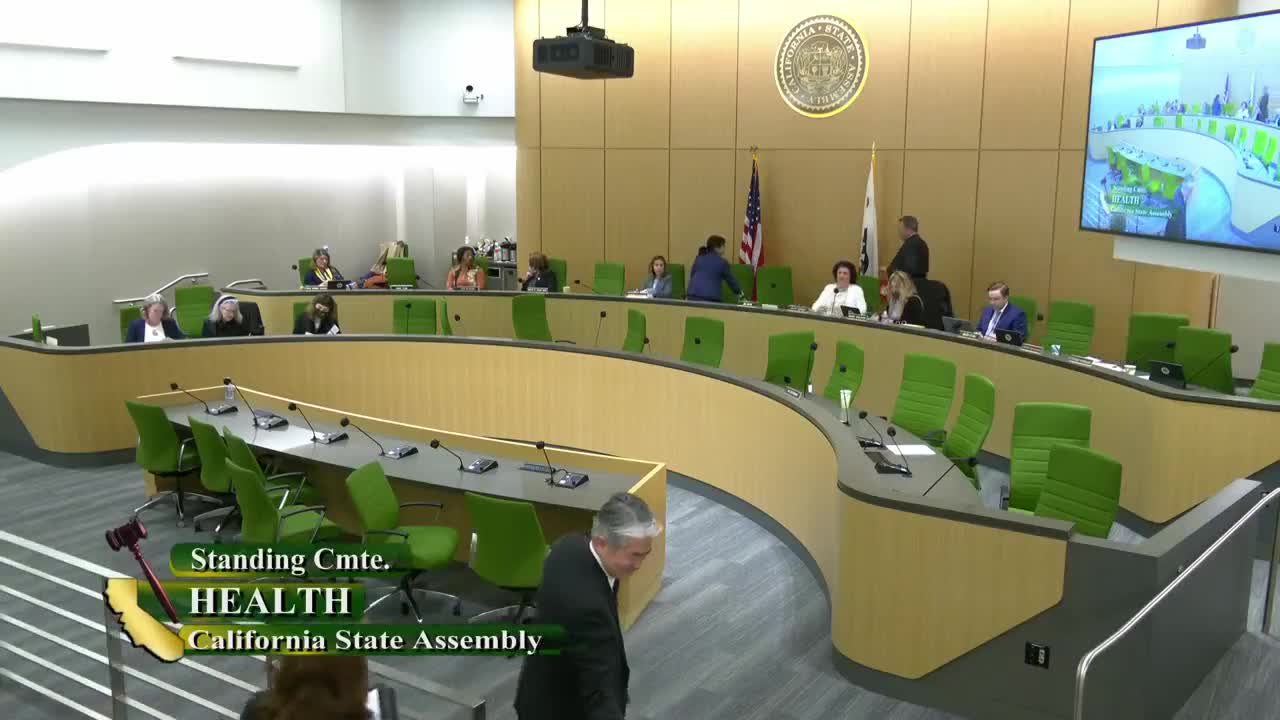
Bill Author

Bill Co-Author(s):