AB 1853: San Joaquin Regional Transit District: meetings: surplus money investments.
- Session Year: 2023-2024
- House: Assembly
- Latest Version Date: 2024-09-12
Current Status:
Passed
(2024-09-12: Chaptered by Secretary of State - Chapter 216, Statutes of 2024.)
Introduced
In Committee
First Chamber
In Committee
Second Chamber
Enacted
What does this bill do?
The bill raises pay for San Joaquin Regional Transit District board members to $100 for each board and committee meeting attended, up to $500 per calendar month. It also lets the district invest extra money, including sinking funds (money set aside to pay debt), in the San Joaquin County Treasury Investment Pool and in any investments or deposits local agencies may use under state law, in addition to its own bonds, while following applicable state investment rules.
The summary is provided by generative AI which can make mistakes. For original language, please view the details in the table below.
The San Joaquin Regional Transit District Act authorizes the creation of the San Joaquin Regional Transit District, and if created, specifies the districts powers and responsibilities. The act requires the district to be governed by a board of directors, requires the board to adopt rules for its proceedings, and authorizes the board to provide, by ordinance or resolution, that each board member receive $50 for each board meeting attended, not to exceed $100 in a calendar month.
This bill instead would authorize the board to provide, by ordinance or resolution, that each board member receive $100 for each board meeting and committee meeting attended, not to exceed $500 in a calendar month.
The act authorizes the district to invest surplus money in its treasury, including money in a sinking fund, in certain investments, including its own bonds and treasury notes or bonds of the state.
This bill would authorize the district to also invest surplus money, including money in a sinking fund, in the San Joaquin County Treasury Investment Pool and in any investment or deposit that a local agency may place funds pursuant to state law. The bill would also make conforming changes.
The San Joaquin Regional Transit District Act authorizes the creation of the San Joaquin Regional Transit District, and if created, specifies the districts powers and responsibilities. The act requires the district to be governed by a board of directors, requires the board to adopt rules for its proceedings, and authorizes the board to provide, by ordinance or resolution, that each board member receive $50 for each board meeting attended, not to exceed $100 in a calendar month.
This bill instead would authorize the board to provide, by ordinance or resolution, that each board member receive $100 for each board meeting and committee meeting attended, not to exceed $500 in a calendar month.
The act authorizes the district to invest surplus money in its treasury, including money in a sinking fund, in certain investments, including its own bonds and treasury notes or bonds of the state.
This bill would authorize the district to also invest surplus money, including money in a sinking fund, in the San Joaquin County Treasury Investment Pool and in any investment or deposit that a city, county, or local public local agency may place funds pursuant to state law. The bill would also make conforming changes.
The San Joaquin Regional Transit District Act authorizes the creation of the San Joaquin Regional Transit District, and if created, specifies the districts powers and responsibilities. The act requires the district to be governed by a board of directors, requires the board to adopt rules for its proceedings, and authorizes the board to provide, by ordinance or resolution, that each board member receive $50 for each board meeting attended, not to exceed $100 in a calendar month.
This bill instead would authorize the board to provide, by ordinance or resolution, that each board member receive $100 for each board meeting and committee meeting attended, not to exceed $500 in a calendar month.
The act authorizes the district to invest surplus money in its treasury, including money in a sinking fund, in certain investments, including its own bonds and treasury notes or bonds of the state.
This bill would authorize the district to also invest surplus money, including money in a sinking fund, in any investment or deposit that a city, county, or local public agency may place funds pursuant to state law.
The board shall adopt rules for its proceedings and may provide, by ordinance or resolution, that each member shall receive for each attendance at the meetings of the board and committees the sum of one hundred dollars ($100), but not to exceed five hundred dollars ($500) in a calendar month, and shall be allowed such necessary traveling and personal expenses incurred in the performance of duties authorized by the board.
SEC. 2.Section 50205 of the Public Utilities Code is amended to read:50205.(a)The district may invest surplus money in its treasury, including money in a sinking fund, in any of the following investments:
(1)Its own bonds, notes, or obligations.
(2)In any investment or deposit that a local agency may place funds pursuant to the laws of the state.
(3)The San Joaquin County Treasury Investment Pool.
(b)If the district invests surplus money pursuant to paragraph (2) of subdivision (a), those investments shall be in accordance with Article 1 (commencing with Section 53600) and Article 2 (commencing with Section 53630) of Chapter 4 of Part 1 of Division 2 of Title 5 of the Government Code.
SEC. 3.Section 50206 of the Public Utilities Code is amended to read:50206.The investment of surplus money may be made by direct purchase of investments at the original sale or by the subsequent investments in the secondary market.
SEC. 4.Section 50207 of the Public Utilities Code is amended to read:50207.Any investments purchased and held by the district may from time to time be sold and the proceeds reinvested in investments as provided in this article.
SEC. 5.Section 50208 of the Public Utilities Code is amended to read:50208.Sales of any investments purchased and held by the district shall from time to time be made in season so that the proceeds may be applied to the purposes for which the money with which the investments were originally purchased was placed in the treasury of the district.
The board shall adopt rules for its proceedings and may provide, by ordinance or resolution, that each member shall receive for each attendance at the meetings of the board and committees the sum of one hundred dollars ($100), but not to exceed five hundred dollars ($500) in a calendar month, and shall be allowed such necessary traveling and personal expenses incurred in the performance of duties authorized by the board.
SEC. 2.Section 50205 of the Public Utilities Code is amended to read:50205.(a)The district may invest surplus money in its treasury, including money in a sinking fund, in any of the following: following investments:
(a)Its own bonds.(b)Treasury notes, certificates of indebtedness, bills, bonds of the United States, or any other evidence of indebtedness secured by the full faith and credit of the United States.(c)Obligations issued pursuant to the Federal Home Loan Bank Act or the National Housing Act.(d)Treasury notes or bonds of the state, or of any public corporation, municipal corporation, public district, or political subdivision within the state that are legal as security for the deposit of public funds.(1)Its own bonds, notes, or obligations.
(e)(2)In any investment or deposit that a city, county, or local public local agency may place funds pursuant to the laws of the state. The districts investment of any surplus money in its treasury, including money in a sinking fund, shall be in accordance with Article 1 (commencing with Section 53600) of Chapter 4 of Part 1 of Division 2 of Title 5 of the Government Code.
(3)The San Joaquin County Treasury Investment Pool.
(b)If the district invests surplus money pursuant to paragraph (2) of subdivision (a), those investments shall be in accordance with Article 1 (commencing with Section 53600) and Article 2 (commencing with Section 53630) of Chapter 4 of Part 1 of Division 2 of Title 5 of the Government Code.
SEC. 3.Section 50206 of the Public Utilities Code is amended to read:50206.Such investment The investment of surplus money may be made by direct purchase of any issue of such bonds, treasury notes, or obligations, or part thereof, investments at the original sale or by the subsequent purchase of the bonds, treasury notes, or obligations. investments in the secondary market.
SEC. 4.Section 50207 of the Public Utilities Code is amended to read:50207.Any bonds, treasury notes, or obligations investments purchased and held as investments by the district may from time to time be sold and the proceeds reinvested in bonds, treasury notes, or obligations investments as provided in this article.
SEC. 5.Section 50208 of the Public Utilities Code is amended to read:50208.Sales of any bonds, treasury notes, or obligations investments purchased and held by the district shall from time to time be made in season so that the proceeds may be applied to the purposes for which the money with which the bonds, treasury notes, or obligations investments were originally purchased was placed in the treasury of the district.
The board shall adopt rules for its proceedings and may provide, by ordinance or resolution, that each member shall receive for each attendance at the meetings of the board and committees the sum of one hundred dollars ($100), but not to exceed five hundred dollars ($500) in a calendar month, and shall be allowed such necessary traveling and personal expenses incurred in the performance of duties authorized by the board.
SEC. 2.Section 50205 of the Public Utilities Code is amended to read:50205.The district may invest surplus money in its treasury, including money in a sinking fund, in any of the following:
(a)Its own bonds.
(b)Treasury notes, certificates of indebtedness, bills, bonds of the United States, or any other evidence of indebtedness secured by the full faith and credit of the United States.
(c)Obligations issued pursuant to the Federal Home Loan Bank Act or the National Housing Act.
(d)Treasury notes or bonds of the state, or of any public corporation, municipal corporation, public district, or political subdivision within the state that are legal as security for the deposit of public funds.
(e)In any investment or deposit that a city, county, or local public agency may place funds pursuant to the laws of the state. The districts investment of any surplus money in its treasury, including money in a sinking fund, shall be in accordance with Article 1 (commencing with Section 53600) of Chapter 4 of Part 1 of Division 2 of Title 5 of the Government Code.
REVISIONS: HeadingLine 2.The board shall adopt rules for its proceedings and may provide, by ordinance or resolution, that each member shall receive for each attendance at the meetings of the board and committees the sum of fifty dollars ($50), one hundred dollars ($100), but not to exceed one hundred dollars ($100) in any five hundred dollars ($500) in a calendar month, and shall be allowed such necessary traveling and personal expenses incurred in the performance of his or her duties as authorized by the board.
SEC. 2.Section 50205 of the Public Utilities Code is amended to read:50205.The district may invest any surplus money in its treasury, including money in any a sinking fund, in any of the following:
(a)Its own bonds.
(b)Treasury notes, certificates of indebtedness, bills, bonds of the United States, or any other evidence of indebtedness secured by the full faith and credit of the United States.
(c)Obligations issued pursuant to the Federal Home Loan Bank Act or the National Housing Act.
(d)Treasury notes or bonds of this State, the state, or of any public corporation, municipal corporation, public district, or political subdivision within this State which the state that are legal as security for the deposit of public funds.
(e)In any investment or deposit that a city, county, or local public agency may place funds pursuant to the laws of the state.
|
Date
|
Status
|
|---|---|
| Sep 12, 2024 | Chaptered by Secretary of State - Chapter 216, Statutes of 2024. |
| Sep 12, 2024 | Approved by the Governor. |
| Aug 28, 2024 | Enrolled and presented to the Governor at 4 p.m. |
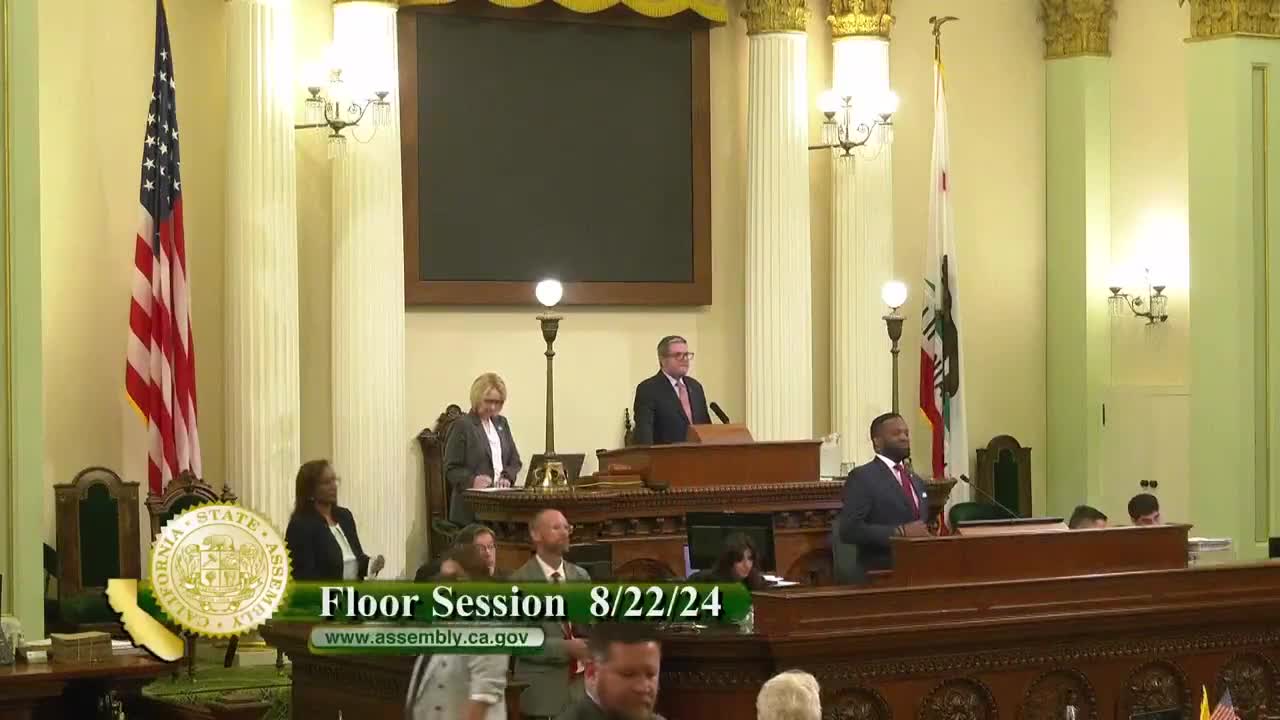
| Aug 22, 2024 | Senate amendments concurred in. To Engrossing and Enrolling. (Ayes 62. Noes 0. Page 6426.). |
| Aug 20, 2024 | In Assembly. Concurrence in Senate amendments pending. May be considered on or after August 22 pursuant to Assembly Rule 77. |
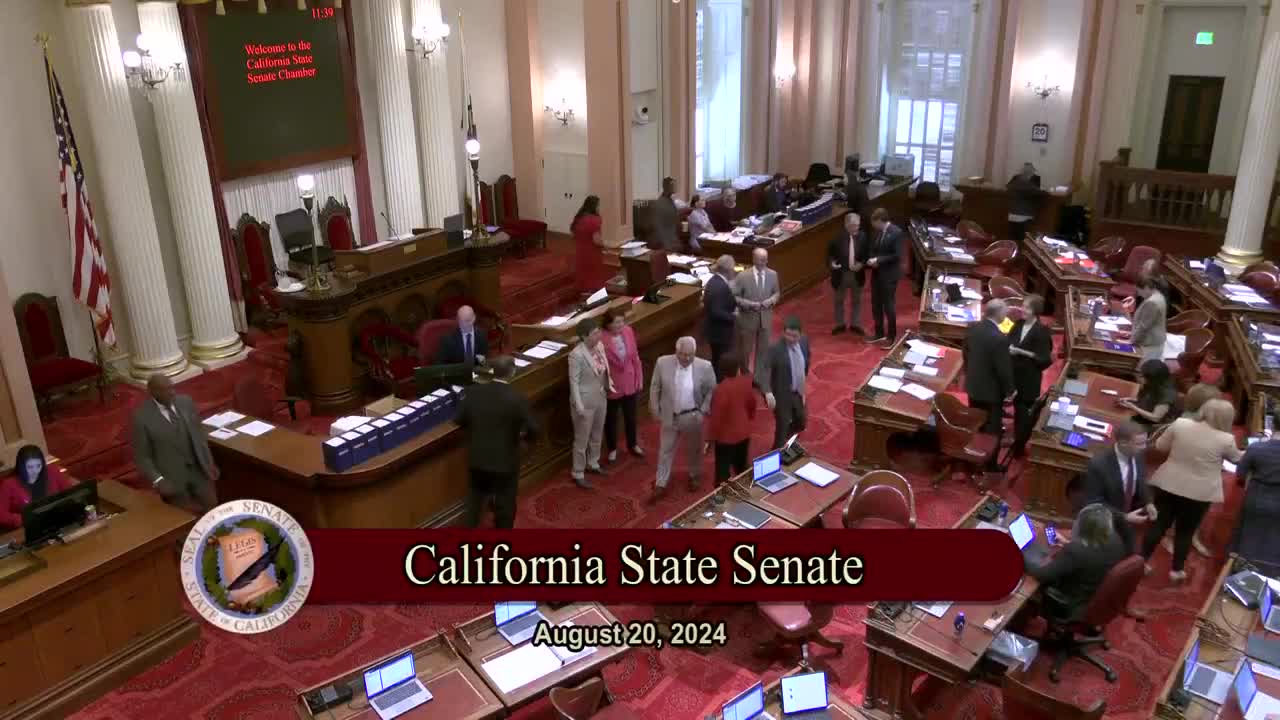
| Aug 20, 2024 | Read third time. Passed. Ordered to the Assembly. (Ayes 39. Noes 0. Page 5225.). |
| Jun 13, 2024 | Read second time. Ordered to third reading. |
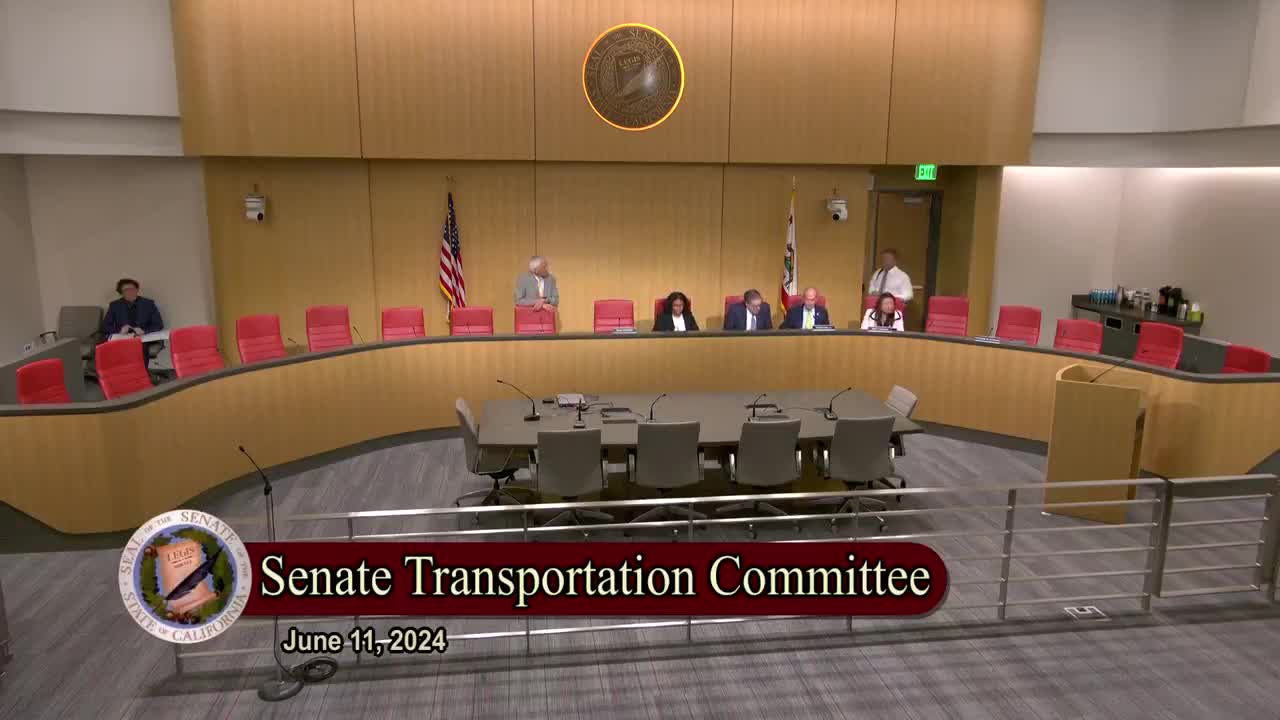
| Jun 12, 2024 | From committee: Do pass. (Ayes 15. Noes 0.) (June 11). |
| Jun 3, 2024 | From committee chair, with author's amendments: Amend, and re-refer to committee. Read second time, amended, and re-referred to Com. on TRANS. |
| May 22, 2024 | In committee: Hearing postponed by committee. |
| May 8, 2024 | Referred to Com. on TRANS. |
| Apr 25, 2024 | In Senate. Read first time. To Com. on RLS. for assignment. |
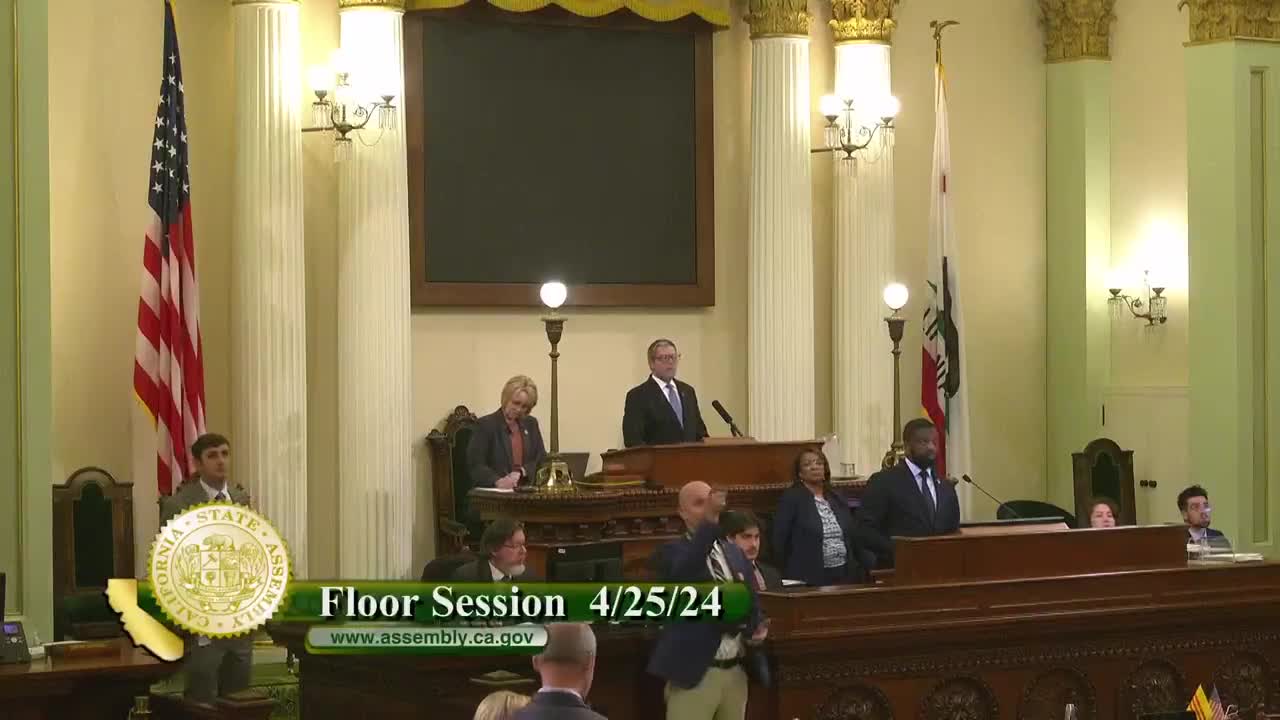
| Apr 25, 2024 | Read third time. Passed. Ordered to the Senate. (Ayes 75. Noes 0. Page 4988.) |
| Mar 21, 2024 | Read second time. Ordered to third reading. |
| Mar 20, 2024 | From committee: Do pass. (Ayes 8. Noes 0.) (March 20). |
| Mar 20, 2024 | Coauthors revised. |
| Mar 12, 2024 | Re-referred to Com. on L. GOV. |
| Mar 11, 2024 | From committee chair, with author's amendments: Amend, and re-refer to Com. on L. GOV. Read second time and amended. |
| Jan 29, 2024 | Referred to Com. on L. GOV. |
| Jan 18, 2024 | From printer. May be heard in committee February 17. |
| Jan 17, 2024 | Read first time. To print. |
|
Date
|
Description
|
Location
|
Votes
|
|
|---|---|---|---|---|
| Aug 22, 2024 | AB 1853 Villapudua Concurrence in Senate Amendments | Assembly Floor |
Passed |
|
| Aug 20, 2024 | Assembly 3rd Reading AB1853 Villapudua et al. By Wilk | Senate Floor |
Passed |
|
| Jun 11, 2024 | Do pass | Senate Standing Committee on Transportation |
Passed |
|
| Apr 25, 2024 | AB 1853 Villapudua Assembly Third Reading | Assembly Floor |
Passed |
|
| Mar 20, 2024 | Do pass. | Assembly Standing Committee on Local Government |
Passed |
This list shows positions taken on this bill by organizations on the date displayed, which is linked to the original source.
Positions by individuals are not included.
|
Organization
|
Position
|
Date
|
|---|---|---|
| San Joaquin Regional Transit District | * Support | Jun 11, 2024 |
CONCURRENCE IN SENATE AMENDMENTS
CSA1 Bill Id:AB 1853
Author:(Villapudua)
As Amended Ver:June 3, 2024
Majority vote
SUMMARY
Makes changes to the San Joaquin Regional Transit District (RTD) board member compensation limits and RTD's authority to invest surplus money.
Senate Amendments
Clarify the investments in which RTD may invest surplus funds and the requirements it must follow when investing surplus funds.
COMMENTS
San Joaquin Regional Transit District. RTD is the regional transit provider for San Joaquin County. Established in 1963 as the Stockton Metropolitan Transit District (SMTD), SMTD began providing service in 1965. In 1994, with the expansion of its service area to the entire county, SMTD became RTD. RTD is governed by a five-member board: two appointed by the Board of Supervisors of San Joaquin County, two appointed by the City Council of the City of Stockton, and one appointed jointly between the City of Stockton and San Joaquin County. The RTD board must adopt rules for its proceedings and may provide, by ordinance or resolution, that each board member receive $50 per meeting, but no more than $100 in any calendar month. These amounts were last increased in 1991 [SB 791 (Committee on Transportation), Chapter 995, Statutes of 1991].
RTD operates 26 local fixed bus routes in the Stockton Metropolitan Area, 5 Bus Rapid Transit routes, 12 Metro Hopper deviated fixed routes throughout the county, and 3 commuter routes. RTD's Van Go! service provides service options for county residents with seamless connections within the county. RTD also provides paratransit service for persons who are unable to use fixed-route service. In fiscal year 2022, RTD provided approximately 1.8 million passenger trips, and, as of the 2010 census, serves a population of 755,000.
Surplus Investments. Since 1913, state law has authorized local officials to invest a portion of local agencies' temporarily idle funds in a variety of financial instruments. Originally, state law limited the instruments to government bonds, but over time the laws governing local agency investments have been amended to keep pace with changing investment opportunities and current market offerings.
California law allows local officials to deposit money in state or national banks, savings associations, federal associations, credit unions, or federally insured industrial loan companies in the State of California. When investing, reinvesting, purchasing, acquiring, exchanging, selling, or managing public funds, state law outlines local agencies' investment objectives, also known as the prudent investor standard. The primary objective is to safeguard the principal of the funds under the local agency's control. The secondary objective is to meet the liquidity needs of the depositor. The final objective is to achieve a return on the funds under its control.
State law limits the percentage that local agencies can invest in many types of investments. This encourages local agencies to diversify their investment portfolios, which limits the risk to the local agency if any investment does not have the expected return. Local agencies make investments with different maturity dates, which refer to the date when the borrower must make the final payment due on an investment.
According to the Author
According to the author, "This bill would make minor changes to the enabling statutes of the San Joaquin Regional Transit District (RTD), which provides transit bus service throughout San Joaquin County. These changes would improve the ongoing management of RTD and ensure RTD's statutory authorities are consistent with that of other similarly sized transit agencies."
Arguments in Support
According to RTD, the sponsors, "This bill would make a series of minor changes to RTD's enabling statutes. Specifically, this bill would increase the sum that each member of the RTD board may receive for attendance at each meeting of the board and for committee meetings from $50 to $100 and increase the monthly cap for this sum from $100 to $500. These changes would allow RTD board members to receive a per meeting and total monthly sum that is generally aligned with those received by board members of similarly sized transit district boards. It would also clarify the investments or deposits in which RTD may invest its reserves."
Arguments in Opposition
None on file.
FISCAL COMMENTS
None.
VOTES:
ASM LOCAL GOVERNMENT: 8-0-1
YES: Juan Carrillo, Waldron, Haney, Kalra, Pacheco, Ramos, Ward, Wilson
ABS, ABST OR NV: Essayli
ASSEMBLY FLOOR: 75-0-5
YES: Addis, Aguiar-Curry, Alanis, Alvarez, Arambula, Bains, Bauer-Kahan, Bennett, Berman, Boerner, Bonta, Bryan, Calderon, Juan Carrillo, Wendy Carrillo, Cervantes, Chen, Connolly, Davies, Dixon, Essayli, Flora, Mike Fong, Vince Fong, Friedman, Gabriel, Garcia, Gipson, Grayson, Haney, Hoover, Irwin, Jackson, Jones-Sawyer, Kalra, Lackey, Lee, Low, Lowenthal, Maienschein, McCarty, McKinnor, Muratsuchi, Stephanie Nguyen, Ortega, Pacheco, Papan, Jim Patterson, Joe Patterson, Pellerin, Petrie-Norris, Quirk-Silva, Ramos, Rendon, Reyes, Luz Rivas, Rodriguez, Blanca Rubio, Sanchez, Santiago, Schiavo, Soria, Ta, Ting, Valencia, Villapudua, Waldron, Wallis, Ward, Weber, Wicks, Wilson, Wood, Zbur, Robert Rivas
ABS, ABST OR NV: Megan Dahle, Gallagher, Hart, Holden, Mathis
UPDATED
VERSION: June 3, 2024
CONSULTANT: Jimmy MacDonald / L. GOV. / (916) 319-3958 FN: 0004250
SENATE RULES COMMITTEE Office of Senate Floor Analyses (916) 651-1520 Fax: (916) 327-4478 | AB 1853 |
THIRD READING
Bill No: AB 1853
Author: Villapudua (D), et al.
Amended: 6/3/24 in Senate
Vote: 21
SENATE TRANSPORTATION COMMITTEE: 15-0, 6/11/24
AYES: Cortese, Niello, Allen, Archuleta, Becker, Blakespear, Dahle, Dodd, Gonzalez, Limón, Newman, Nguyen, Portantino, Seyarto, Umberg
ASSEMBLY FLOOR: 75-0, 4/25/24 - See last page for vote
SUBJECT: San Joaquin Regional Transit District: meetings: surplus money investments
SOURCE: San Joaquin Regional Transit District
DIGEST:
This bill increases the compensation for San Joaquin Regional Transit District (SJRTD) board members and broadens the categories of assets in which the district can invest its surplus cash.
ANALYSIS:
Existing law:
- Specifies that the SJRTD board shall adopt rules for its proceedings and may provide, by ordinance or resolution, that each member shall receive for each attendance at the meetings of the board the sum of $50, but not to exceed $100 in any calendar month, and shall be allowed such necessary traveling and personal expenses incurred in the performance of his or her duties as authorized by the board [Public Utilities Code (PUC) § 50087].
- Authorizes SJRTD to invest any surplus money in its treasury, including money in any sinking fund, in any of the following (PUC § 20205):
- Its own bonds.
- Treasury notes, certificates of indebtedness, bills, bonds of the United States, or any other evidence of indebtedness secured by the full faith and credit of the United States.
- Obligations issued pursuant to the Federal Home Loan Bank Act or the National Housing Act.
- Treasury notes or bonds of this State or of any public corporation, municipal corporation, public district, or political subdivision within this State, which are legal as security for the deposit of public funds.
This bill:
- Increases the compensation of SJRTD board members to $100 per meeting not to exceed $500 in any calendar month.
- Revises the investments in which the district can invest surplus funds to include its own debt obligations, the San Joaquin County Treasury Investment Pool, and any investment that a local agency can place funds pursuant to California law. If the SJRTD uses this last option, the surplus funds must be invested pursuant to prudent investment standard and other restrictions contained in specified provisions of the Government Code.
Comments
Author’s Statement. According to the author, “This bill would make minor changes to the enabling statutes of the San Joaquin Regional Transit District (RTD), which provides transit bus service throughout San Joaquin County. These changes would improve the ongoing management of RTD and ensure RTD's statutory authorities are consistent with that of other similarly sized transit agencies.”
Background
- The SJRTD is the regional transit provider for San Joaquin County providing intercity, interregional and rural transit services. It is governed by a five member board with two members appointed by the Stockton City Council, two members appointed by the San Joaquin County Board of Supervisors, and one member jointly appointed by the Council and Board. It operates a fleet of about 150 busses and has 275 employees.
In 2023 SJRTD had an operating loss of $52 million, a $10 million increase from the prior year, which was largely offset by state, federal and local subsidies. Current assets, primarily cash and equivalents, were $86 million, an increase of 25% from the prior year.
- More Choices, More Risk. This bill authorizes SJRTD to invest their surplus cash in a broader array of financial instruments, similar to the flexibility allowed the Alameda and Contra Costa Transit Districts. Allowing local jurisdictions more flexibility in how they invest is tempting because of the promise of higher returns. However, the 1994 Orange County bankruptcy was a sharp reminder that higher returns are often accompanied by higher risk with taxpayers bearing the consequences. The result was the enactment of more safeguards on fund investment. State law describes local agencies’ investment objectives, known as the prudent investor standard. These objectives are, in the order of priority:
- First, safeguard the principal.
- Second, meet the liquidity needs of the depositor.
- Third, achieve a return.
This bill subjects SJRTD’s investments to those same standards unless it is investing in its own debt instruments or the San Joaquin County Treasury Investment Pool.
- Getting a Raise. This bill increases the compensation of SJRTD board members to $100 per meeting with a $500 monthly maximum.
FISCAL EFFECT: Appropriation: No Fiscal Com.: No Local: No
SUPPORT: (Verified 6/11/24)
San Joaquin Regional Transit District (source)
OPPOSITION: (Verified 6/11/24)
None received
ASSEMBLY FLOOR: 75-0, 4/25/24
AYES: Addis, Aguiar-Curry, Alanis, Alvarez, Arambula, Bains, Bauer-Kahan, Bennett, Berman, Boerner, Bonta, Bryan, Calderon, Juan Carrillo, Wendy Carrillo, Cervantes, Chen, Connolly, Davies, Dixon, Essayli, Flora, Mike Fong, Vince Fong, Friedman, Gabriel, Garcia, Gipson, Grayson, Haney, Hoover, Irwin, Jackson, Jones-Sawyer, Kalra, Lackey, Lee, Low, Lowenthal, Maienschein, McCarty, McKinnor, Muratsuchi, Stephanie Nguyen, Ortega, Pacheco, Papan, Jim Patterson, Joe Patterson, Pellerin, Petrie-Norris, Quirk-Silva, Ramos, Rendon, Reyes, Luz Rivas, Rodriguez, Blanca Rubio, Sanchez, Santiago, Schiavo, Soria, Ta, Ting, Valencia, Villapudua, Waldron, Wallis, Ward, Weber, Wicks, Wilson, Wood, Zbur, Robert Rivas
NO VOTE RECORDED: Megan Dahle, Gallagher, Hart, Holden, Mathis
Prepared by: Randy Chinn / TRANS. / (916) 651-4121
6/12/24 10:39:19
**** END ****
SENATE COMMITTEE ON TRANSPORTATION
Senator Dave Cortese, Chair
2023 - 2024 Regular
Bill No: Hearing Date: 6/11/2024
Author: | Villapudua | ||
Version: | 6/3/2024 Amended | ||
Urgency: | No | Fiscal: | No |
Consultant: | Randy Chinn | ||
SUBJECT:
DIGEST: This bill increases the compensation for San Joaquin Regional Transit District board members and broadens the categories of assets in which the district can invest its surplus cash.
ANALYSIS:
Existing law:
- Specifies that the San Joaquin Regional Transit District (SJRTD) board shall adopt rules for its proceedings and may provide, by ordinance or resolution, that each member shall receive for each attendance at the meetings of the board the sum of $50, but not to exceed $100 in any calendar month, and shall be allowed such necessary traveling and personal expenses incurred in the performance of his or her duties as authorized by the board [Public Utilities Code (PUC) § 50087].
- Authorizes SJRTD to invest any surplus money in its treasury, including money in any sinking fund, in any of the following (PUC § 20205):
- Its own bonds.
- Treasury notes, certificates of indebtedness, bills, bonds of the United States, or any other evidence of indebtedness secured by the full faith and credit of the United States.
- Obligations issued pursuant to the Federal Home Loan Bank Act or the National Housing Act.
- Treasury notes or bonds of this State or of any public corporation, municipal corporation, public district, or political subdivision within this State, which are legal as security for the deposit of public funds.
This bill:
- Increases the compensation of SJRTD board members to $100 per meeting not to exceed $500 in any calendar month.
- Revises the investments in which the district can invest surplus funds to include its own debt obligations, the San Joaquin County Treasury Investment Pool, and any investment that a local agency can place funds pursuant to California law. If the SJRTD uses this last option, the surplus funds must be invested pursuant to prudent investment standard and other restrictions contained in specified provisions of the Government Code.
COMMENTS:
- Author’s Statement. “This bill would make minor changes to the enabling statutes of the San Joaquin Regional Transit District (RTD), which provides transit bus service throughout San Joaquin County. These changes would improve the ongoing management of RTD and ensure RTD's statutory authorities are consistent with that of other similarly sized transit agencies.”
- Background. The San Joaquin Regional Transit District (SJRTD) is the regional transit provider for San Joaquin County providing intercity, interregional and rural transit services. It is governed by a five member board with two members appointed by the Stockton City Council, two members appointed by the San Joaquin County Board of Supervisors, and one member jointly appointed by the Council and Board. It operates a fleet of about 150 busses and has 275 employees.
In 2023 SJRTD had an operating loss of $52 million, a $10 million increase from the prior year, which was largely offset by state, federal and local subsidies. Current assets, primarily cash and equivalents, were $86 million, an increase of 25% from the prior year.
- More Choices, More Risk. This bill authorizes SJRTD to invest their surplus cash in a broader array of financial instruments, similar to the flexibility allowed the Alameda and Contra Costa Transit Districts. Allowing local jurisdictions more flexibility in how they invest is tempting because of the promise of higher returns. However, the 1994 Orange County bankruptcy was a sharp reminder that higher returns are often accompanied by higher risk with taxpayers bearing the consequences. The result was the enactment of more safeguards on fund investment. State law describes local agencies’ investment objectives, known as the prudent investor standard. These objectives are, in the order of priority:
- First, safeguard the principal
- Second, meet the liquidity needs of the depositor
- Third, achieve a return
This bill subjects SJRTD’s investments to those same standards unless it is investing in its own debt instruments or the San Joaquin County Treasury Investment Pool.
- Getting a Raise. This bill increases the compensation of SJRTD board members to $100 per meeting with a $500 monthly maximum.
Related Legislation:
None
FISCAL EFFECT: Appropriation: Fiscal Com.: No Local: No
None.
POSITIONS: (Communicated to the committee before noon on Wednesday,
June 5, 2024.)
SUPPORT:
San Joaquin Regional Transit District (sponsor)
OPPOSITION:
None Received
-- END --
ASSEMBLY THIRD READING
ATR Bill Id:AB 1853
Author:(Villapudua)
As Amended Ver:March 11, 2024
Majority vote
SUMMARY
Makes changes to the San Joaquin Regional Transit District (RTD) board member compensation limits and RTD's authority to invest surplus money in its treasury.
Major Provisions
- Authorizes the RTD board to provide, by ordinance or resolution, that each member shall receive for each attendance at the meetings of the board the sum of $100 instead of $50, but not to exceed $500 instead of $100 in a calendar month.
- Authorizes the board to be compensated for attendance at committee meetings subject to the limits in 1) above.
- Specifies that RTD may invest surplus money in its treasury, including money in a sinking fund, in any investment or deposit that a city, county, or local public agency may place funds pursuant to the laws of the state. RTD's investment of any surplus money in its treasury, including money in a sinking fund, shall be in accordance with existing law that generally dictates local agency investments.
COMMENTS
- San Joaquin Regional Transit District. RTD is the regional transit provider for San Joaquin County. Established in 1963 as the Stockton Metropolitan Transit District (SMTD), SMTD began providing service in 1965. In 1994, with the expansion of its service area to the entire county, SMTD became RTD. RTD is governed by a 5-member board: two appointed by the Board of Supervisors of San Joaquin County, two appointed by the City Council of the City of Stockton, and one appointed jointly between the City of Stockton and San Joaquin County. The RTD board must adopt rules for its proceedings and may provide, by ordinance or resolution, that each board member receive $50 per meeting, but no more than $100 in any calendar month. These amounts were last increased in 1991 [SB 791 (Committee on Transportation), Chapter 995, Statutes of 1991].
RTD operates 26 local fixed bus routes in the Stockton Metropolitan Area, 5 Bus Rapid Transit routes, 12 Metro Hopper deviated fixed routes throughout the county, and 3 commuter routes. RTD's Van Go! service provides service options for county residents with seamless connections within the county. RTD also provides paratransit service for persons who are unable to use fixed-route service. In fiscal year 2022, RTD provided approximately 1.8 million passenger trips, and, as of the 2010 census, serves a population of 755,000.
- Surplus Investments. Since 1913, state law has authorized local officials to invest a portion of local agencies' temporarily idle funds in a variety of financial instruments. Originally, state law limited the instruments to government bonds, but over time the laws governing local agency investments have been amended to keep pace with changing investment opportunities and current market offerings.
California law allows local officials to deposit money in state or national banks, savings associations, federal associations, credit unions, or federally insured industrial loan companies in the State of California. When investing, reinvesting, purchasing, acquiring, exchanging, selling, or managing public funds, state law outlines local agencies' investment objectives, also known as the prudent investor standard. The primary objective is to safeguard the principal of the funds under the local agency's control. The secondary objective is to meet the liquidity needs of the depositor. The final objective is to achieve a return on the funds under its control.
State law limits the percentage that local agencies can invest in many types of investments. This encourages local agencies to diversify their investment portfolios, which limits the risk to the local agency if any investment does not have the expected return. Local agencies make investments with different maturity dates, which refer to the date when the borrower must make the final payment due on an investment.
According to the Author
According to the author, "This bill would make minor changes to the enabling statutes of the San Joaquin Regional Transit District, which provides transit bus service through San Joaquin County. These changes would improve the ongoing management of RTD and ensure RTD's statutory authorities are consistent with that of other similarly sized transit agencies."
Arguments in Support
According to the sponsors, "This bill would make a series of minor changes to RTD's enabling statutes. Specifically, this bill would increase the sum that each member of the RTD board may receive for attendance at each meeting of the board and for committee meetings from $50 to $100 and increase the monthly sum from $100 to $500. It would also expand the investments or deposits in which RTD may invest its reserves. These changes would allow RTD board members to receive a per meeting and total monthly sum that is generally aligned with those received by board members of similarly sized transit district boards. This bill would also afford RTD the opportunity to invest its reserves in any investment or deposit in which a city, county, or local public agency, including several transit districts, may place its funds. In doing so, this proposal would ensure that RTD can prudently invest its reserves to maximize return without compromising the safety of RTD's principal."
Arguments in Opposition
None on file.
FISCAL COMMENTS
None
VOTES
ASM LOCAL GOVERNMENT: 8-0-1
YES: Juan Carrillo, Waldron, Haney, Kalra, Pacheco, Ramos, Ward, Wilson
ABS, ABST OR NV: Essayli
UPDATED
VERSION: March 11, 2024
CONSULTANT: Jimmy MacDonald / L. GOV. / (916) 319-3958 FN: 0002676
Date of Hearing: March 20, 2024
ASSEMBLY COMMITTEE ON LOCAL GOVERNMENT
Juan Carrillo, Chair
ABPCA Bill Id:AB 1853 (
Author:Villapudua) – As Amended Ver:March 11, 2024
SUBJECT: San Joaquin Regional Transit District: meetings: surplus money investments.
SUMMARY: Makes changes to the San Joaquin Regional Transit District (RTD) board member compensation limits and RTD’s authority to invest surplus money in its treasury. Specifically, this bill:
- Authorizes the RTD board to provide, by ordinance or resolution, that each member shall receive for each attendance at the meetings of the board the sum of $100 instead of $50, but not to exceed $500 instead of $100 in a calendar month.
- Authorizes the board to be compensated for attendance at committee meetings subject to the limits in 1) above.
- Specifies that RTD may invest surplus money in its treasury, including money in a sinking fund, in any investment or deposit that a city, county, or local public agency may place funds pursuant to the laws of the state. RTD’s investment of any surplus money in its treasury, including money in a sinking fund, shall be in accordance with existing law that generally dictates local agency investments.
- Makes other technical and clarifying changes.
EXISTING LAW:
- Specifies that the RTD board shall adopt rules for its proceedings and may provide, by ordinance or resolution, that each member shall receive for each attendance at the meetings of the board the sum of $50, but not to exceed $100 in any calendar month, and shall be allowed such necessary traveling and personal expenses incurred in the performance of his or her duties as authorized by the board [Public Utilities Code (PUC) § 50087].
- Specifies that when compensation is otherwise authorized by statute, a local agency may pay compensation to member of the legislative body for attendance at the following occurrences [Government Code (GC) 53232.1]:
- A meeting of the legislative body.
- A meeting of an advisory body.
- A conference or organized educational activity, as specified.
- Provides that a local agency may pay compensation for attendance at occurrences not specified in 2) above, only if the governing body has adopted, in a public meeting, a written policy specifying other types of occasions that constitute the performance of official duties for which a member of the legislative body may receive payment (GC 53232.1).
- Authorizes RTD to invest any surplus money in its treasury, including money in any sinking fund, in any of the following (PUC § 20205):
- Its own bonds.
- Treasury notes, certificates of indebtedness, bills, bonds of the United States, or any other evidence of indebtedness secured by the full faith and credit of the United States.
- Obligations issued pursuant to the Federal Home Loan Bank Act or the National Housing Act.
- Treasury notes or bonds of this State, or of any public corporation, municipal corporation, public district, or political subdivision within this State which are legal as security for the deposit of public funds.
- Its own bonds.
FISCAL EFFECT: None.
COMMENTS:
- San Joaquin Regional Transit District. RTD is the regional transit provider for San Joaquin County. Established in 1963 as the Stockton Metropolitan Transit District (SMTD), SMTD began providing service in 1965. In 1994, with the expansion of its service area to the entire county, SMTD became RTD. RTD is governed by a 5-member board: two appointed by the Board of Supervisors of San Joaquin County, two appointed by the City Council of the City of Stockton, and one appointed jointly between the City of Stockton and San Joaquin County. The RTD board must adopt rules for its proceedings and may provide, by ordinance or resolution, that each board member receive $50 per meeting, but no more than $100 in any calendar month. These amounts were last increased in 1991 [SB 791 (Committee on Transportation), Chapter 995, Statutes of 1991].
RTD operates 26 local fixed bus routes in the Stockton Metropolitan Area, 5 Bus Rapid Transit routes, 12 Metro Hopper deviated fixed routes throughout the county, and 3 commuter routes. RTD’s Van Go! service provides service options for county residents with seamless connections within the county. RTD also provides paratransit service for persons who are unable to use fixed-route service. In fiscal year 2022, RTD provided approximately 1.8 million passenger trips, and, as of the 2010 census, serves a population of 755,000.
- Surplus Investments. Since 1913, state law has authorized local officials to invest a portion of local agencies’ temporarily idle funds in a variety of financial instruments. Originally, state law limited the instruments to government bonds, but over time the laws governing local agency investments have been amended to keep pace with changing investment opportunities and current market offerings.
California law allows local officials to deposit money in state or national banks, savings associations, federal associations, credit unions, or federally insured industrial loan companies in the State of California. When investing, reinvesting, purchasing, acquiring, exchanging, selling, or managing public funds, state law outlines local agencies’ investment objectives, also known as the prudent investor standard. The primary objective is to safeguard the principal of the funds under the local agency’s control. The secondary objective is to meet the liquidity needs of the depositor. The final objective is to achieve a return on the funds under its control.
State law limits the percentage that local agencies can invest in many types of investments. This encourages local agencies to diversify their investment portfolios, which limits the risk to the local agency if any investment does not have the expected return. Local agencies make investments with different maturity dates, which refer to the date when the borrower must make the final payment due on an investment.
- Bill Summary and Author’s Statement. This bill authorizes RTD to increase, by ordinance or resolution, the amount board members receive for each attendance at the meetings of the board and committees to the sum of $100, but not to exceed $500 in a calendar month. Additionally, this bill specifies that RTD may invest surplus money in its treasury, including money in a sinking fund, in any investment or deposit that a city, county, or local public agency may place funds pursuant to the laws of the state and must do so in accordance with existing law that generally dictates investments for local agencies. RTD is the sponsor of this bill.
According to the author, “This bill would make minor changes to the enabling statutes of the San Joaquin Regional Transit District, which provides transit bus service through San Joaquin County. These changes would improve the ongoing management of RTD and ensure RTD's statutory authorities are consistent with that of other similarly sized transit agencies.”
- Arguments in Support. According to the sponsors, “This bill would make a series of minor changes to RTD’s enabling statutes. Specifically, this bill would increase the sum that each member of the RTD board may receive for attendance at each meeting of the board and for committee meetings from $50 to $100 and increase the monthly sum from $100 to $500. It would also expand the investments or deposits in which RTD may invest its reserves. These changes would allow RTD board members to receive a per meeting and total monthly sum that is generally aligned with those received by board members of similarly sized transit district boards. This bill would also afford RTD the opportunity to invest its reserves in any investment or deposit in which a city, county, or local public agency, including several transit districts, may place its funds. In doing so, this proposal would ensure that RTD can prudently invest its reserves to maximize return without compromising the safety of RTD’s principal.”
- Arguments in Opposition. None on file.
REGISTERED SUPPORT / OPPOSITION:
Support
San Joaquin Regional Transit District [SPONSOR]
Opposition
None on file
Analysis Prepared by: Jimmy MacDonald / L. GOV. / (916) 319-3958

Bill Author

Bill Co-Author(s):
