AB 1917: Local educational agencies: governance training.
- Session Year: 2023-2024
- House: Assembly
- Latest Version Date: 2024-08-23
Current Status:
Failed
(2024-08-28: Ordered to inactive file at the request of Senator Allen.)
Introduced
In Committee
First Chamber
In Committee
Second Chamber
Enacted
What does this bill do?
The bill requires members of school district boards, county boards of education, and charter school governing bodies to complete training on laws that govern K–12 schools, including open‑meeting rules, school finance, employee/personnel rules, and student accountability. Current officials must finish the training by January 1, 2027 and new officials must finish within one year of starting, and local education agencies may offer or arrange courses, must provide proof of completion, and must keep training records and the provider name for at least five years.
The summary is provided by generative AI which can make mistakes. For original language, please view the details in the table below.
(1)Existing law requires all local agency officials to receive training in ethics, at specified intervals, if the local agency provides certain monetary payments to a member of a legislative body, as provided. Existing law requires a local agency to provide information on available ethics training to its officials and authorizes a local agency or an association of local agencies to offer the ethics training, as provided. Existing law requires a local agency to maintain specified records related to the ethics training of its officials. Existing law defines local agency to include, among others, a school district, county office of education, and charter school, and defines local agency official to include, among others, a member of the governing board of a school district, a county board of education, or the governing body of a charter school, for these purposes.
This bill would require all local educational agency officials, as defined to include any member of a governing board of a school district, a county board of education, or the governing body of a charter school, to receive training in K12 public education governance laws, as defined, and would prescribe the timelines within which the training is required to be completed. The bill would authorize a local educational agency or an association of local educational agencies to offer these training courses or to arrange for its officials to receive these training courses from a different entity, as specified. The bill would require local educational agencies to maintain specified records related to this training.
By imposing new duties on school districts, county offices of education, and charter schools, the bill would constitute a state-mandated local program.
(2)The California Constitution requires the state to reimburse local agencies and school districts for certain costs mandated by the state. Statutory provisions establish procedures for making that reimbursement.
This bill would provide that, if the Commission on State Mandates determines that the bill contains costs mandated by the state, reimbursement for those costs shall be made pursuant to the statutory provisions noted above.
(1)Existing law requires all local agency officials to receive training in ethics, at specified intervals, if the local agency provides certain monetary payments to a member of a legislative body, as provided. Existing law requires a local agency to provide information on available ethics training to its officials and authorizes a local agency or an association of local agencies to offer the ethics training, as provided. Existing law requires a local agency to maintain specified records related to the ethics training of its officials. Existing law defines local agency to include, among others, a school district, county office of education, and charter school, and defines local agency official to include, among others, a member of the governing board of a school district, a county board of education, or the governing body of a charter school, for these purposes.
This bill would require all local educational agency officials, as defined to include any member of a governing board of a school district, a county board of education, or the governing body of a charter school, to receive training in K12 public education governance laws, as defined. defined, and would prescribe the timelines within which the training is required to be completed. The bill would authorize a local educational agency or an association of local educational agencies to offer these training courses or to arrange for its officials to receive these training courses from a different entity, as specified. The bill would require local educational agencies to maintain specified records related to this training.
By imposing new duties on school districts, county offices of education, and charter schools, the bill would constitute a state-mandated local program.
(2)The California Constitution requires the state to reimburse local agencies and school districts for certain costs mandated by the state. Statutory provisions establish procedures for making that reimbursement.
This bill would provide that, if the Commission on State Mandates determines that the bill contains costs mandated by the state, reimbursement for those costs shall be made pursuant to the statutory provisions noted above.
Existing
(1)Existing law requires all local agency officials to receive training in ethics, at specified intervals, if the local agency provides certain monetary payments to a member of a legislative body, as provided. Existing law requires a local agency to provide information on available ethics training to its officials and authorizes a local agency or an association of local agencies to offer the ethics training, as provided. Existing law requires a local agency to maintain specified records related to the ethics training of its officials. Existing law defines local agency to include, among others, a school district, county office of education, and charter school, and defines local agency official to include, among others, a member of the governing board of a school district, a county board of education, or the governing body of a charter school, for these purposes.
This bill would require all local educational agency officials, as defined to include any member of a governing board of a school district, a county board of education, or the governing body of a charter school, to receive training in K12 public education governance laws, as defined. The bill would authorize a local educational agency or an association of local educational agencies to offer these training courses or to arrange for its officials to receive these training courses from a different entity, as specified. The bill would require local educational agencies to maintain specified records related to this training.
By imposing new duties on school districts, county offices of education, and charter schools, the bill would constitute a state-mandated local program.
(2)The California Constitution requires the state to reimburse local agencies and school districts for certain costs mandated by the state. Statutory provisions establish procedures for making that reimbursement.
This bill would provide that, if the Commission on State Mandates determines that the bill contains costs mandated by the state, reimbursement for those costs shall be made pursuant to the statutory provisions noted above.
Existing law requires all local agency officials to receive training in ethics, at specified intervals, if the local agency provides certain monetary payments to a member of a legislative body, as provided. Existing law requires a local agency to provide information on available ethics training to its officials and authorizes a local agency or an association of local agencies to offer the ethics training, as provided. Existing law requires a local agency to maintain specified records related to the ethics training of its officials. Existing law defines local agency to include, among others, a school district, county office of education, and charter school, and defines local agency official to include, among others, a member of the governing board of a school district, a county board of education, or the governing body of a charter school, for these purposes.
This bill would require all local educational agency officials, as defined to include any member of a governing board of a school district, a county board of education, or the governing body of a charter school, to receive training in K12 public education governance laws, as defined, at least once every 4 years. defined. The bill would authorize a local educational agency or an association of local educational agencies to offer these training courses or to arrange for its officials to receive these training courses from a different entity, as specified. The bill would require local educational agencies to maintain specified records related to this training.
By imposing new duties on school districts, county offices of education, and charter schools, the bill would constitute a state-mandated local program.
(2)The California Constitution requires the state to reimburse local agencies and school districts for certain costs mandated by the state. Statutory provisions establish procedures for making that reimbursement.
This bill would provide that, if the Commission on State Mandates determines that the bill contains costs mandated by the state, reimbursement for those costs shall be made pursuant to the statutory provisions noted above.
Existing law requires all local agency officials to receive training in ethics, at specified intervals, if the local agency provides certain monetary payments to a member of a legislative body, as provided. Existing law requires a local agency to provide information on available ethics training to its officials and authorizes a local agency or an association of local agencies to offer the ethics training, as provided. Existing law requires a local agency to maintain specified records related to the ethics training of its officials. Existing law defines local agency to include, among others, a school district, county office of education, and charter school, and defines local agency official to include, among others, a member of the governing board of a school district, a county board of education, or the governing body of a charter school, for these purposes.
This bill would require all local educational agency officials, as defined to include any member of a governing board of a school district, a county board of education, or the governing body of a charter school, to receive training in K12 public education governance laws, as defined, at least once every 4 years. The bill would authorize a local educational agency or an association of local educational agencies to offer these training courses or to arrange for its officials to receive these training courses from a different entity, as specified. The bill would require local educational agencies to maintain specified records related to this training.
By imposing new duties on school districts, county offices of education, and charter schools, the bill would constitute a state-mandated local program.
(2)The California Constitution requires the state to reimburse local agencies and school districts for certain costs mandated by the state. Statutory provisions establish procedures for making that reimbursement.
This bill would provide that, if the Commission on State Mandates determines that the bill contains costs mandated by the state, reimbursement for those costs shall be made pursuant to the statutory provisions noted above.
For purposes of this article, the following terms have the following meanings:
(a)K12 public education governance laws include, but are not necessarily limited to, include all of the following:
(1)Open meeting laws, including the Ralph M. Brown Act (Chapter 9 (commencing with Section 54950) of Part 1 of Division 2 of Title 5 of the Government Code).
(2)Public education school finance laws, including, but not necessarily limited to, laws related to the creation and approval of a local educational agency budget.
(3)For school districts and county offices of education, laws related to personnel and employees, including, but not necessarily limited to, Part 25 (commencing with Section 44000). For charter schools, laws related to charter school personnel and employees, including, but not necessarily limited to, Sections 47605 and 47605.4 of this code and Chapter 10.7 (commencing with Section 3540) of Division 4 of Title 1 of the Government Code.
(4)For school districts and county offices of education, public school accountability laws related to pupil learning and achievement, including, but not necessarily limited to, Chapter 6.1 (commencing with Section 52050) of Part 28 of Division 4. For charter schools, public school accountability laws, including, but not necessarily limited to, Sections 47606.5 to 47608, inclusive.
(b)Local educational agency means a school district, county office of education, or charter school.
(c)Local educational agency official means either of the following:
(1)Any member of the governing board of a school district or of a county board of education.
(2)Any member of the governing body of a charter school.
35221.(a)Each local educational agency official shall receive training in K12 public education governance laws pursuant to this article.
(b)(1)If an entity develops a curriculum to satisfy the requirements of this section, the department shall be consulted regarding the sufficiency and accuracy of any proposed course content. When reviewing any proposed course content, the department shall allow an entity to also include local ethics policies in the curriculum.
(2)An entity conducting a training course developed to satisfy the requirements of this section shall be considered to have consulted with the department in satisfaction of paragraph (1) if both of the following conditions are met:
(A)The entity has reviewed the K12 public education governance laws fewer than 61 days before the date on which the training course is conducted.
(B)The training course provided by the entity to satisfy the requirements of this section sufficiently and accurately reflects the K12 public education governance laws, including, but not limited to, the laws described in paragraphs (1) to (4), inclusive, of subdivision (a) of Section 35220.
(c)A local educational agency or an association of local educational agencies may offer one or more training courses, arrange for its officials to receive one or more training courses from a different entity, or offer sets of self-study materials with tests, to meet the requirements of this section. These courses may be taken at home, in person, or online.
(d)A provider of a training course that meets the requirements of this article shall provide participants with proof of participation to comply with Section 35222.
(e)A local educational agency shall provide information to its officials at least annually on training available to meet the requirements of this article.
35222.(a)A local educational agency shall maintain records showing both of the following:
(1)The dates on which each local educational agency official satisfied the requirements of this article.
(2)The entity that provided the training to the local educational agency official.
(b)Notwithstanding any other law, a local educational agency shall maintain the records required by this section for at least five years after a local educational agency official receives the training. These records are public records subject to disclosure under the California Public Records Act (Division 10 (commencing with Section 7920.000) of Title 1 of the Government Code).
35223.(a)Each local educational agency official in local educational agency service as of January 1, 2026, except for officials whose term of office ends before January 1, 2027, shall receive the training required by subdivision (a) of Section 35221 before January 1, 2027. Thereafter, each local educational agency official described in this subdivision shall receive the training required by subdivision (a) of Section 35221 at least once during their tenure serving as the local educational agency official.
(b)Each local educational agency official who commences service with a local educational agency on or after January 1, 2026, shall receive the training required by subdivision (a) of Section 35221 no later than one year from the first day of service with the local educational agency. Each local educational agency official described in this subdivision is encouraged to begin the training required by subdivision (a) of Section 35221 before the first meeting of the governing board or body that occurs after the election or appointment of the official.
SEC. 2.If the Commission on State Mandates determines that this act contains costs mandated by the state, reimbursement to local agencies and school districts for those costs shall be made pursuant to Part 7 (commencing with Section 17500) of Division 4 of Title 2 of the Government Code.
For purposes of this article, the following terms have the following meanings:
(a)K12 public education governance laws include, but are not necessarily limited to, all of the following:
(1)Open meeting laws, including the Ralph M. Brown Act (Chapter 9 (commencing with Section 54950) of Part 1 of Division 2 of Title 5 of the Government Code).
(2)Public education school finance laws, including, but not necessarily limited to, laws related to the creation and approval of a local educational agency budget.
(3)For school districts and county offices of education, laws related to personnel and employees, including, but not necessarily limited to, Part 25 (commencing with Section 44000). For charter schools, laws related to charter school personnel and employees, including, but not necessarily limited to, Sections 47605 and 47605.4 of this code and Chapter 10.7 (commencing with Section 3540) of Division 4 of Title 1 of the Government Code.
(4)For school districts and county offices of education, public school accountability laws related to pupil learning and achievement, including, but not necessarily limited to, Chapter 6.1 (commencing with Section 52050) of Part 28 of Division 4. For charter schools, public school accountability laws, including, but not necessarily limited to, Sections 47606.5 to 47608, inclusive.
(b)Local educational agency means a school district, county office of education, or charter school.
(c)Local educational agency official means either of the following:
(1)Any member of the governing board of a school district or of a county board of education.
(2)Any member of the governing body of a charter school.
35221.(a)Each local educational agency official shall receive training in K12 public education governance laws pursuant to this article.
(b)If an entity develops a curriculum to satisfy the requirements of this section, the department shall be consulted regarding the sufficiency and accuracy of any proposed course content. When reviewing any proposed course content, the department shall allow an entity to also include local ethics policies in the curriculum.
(c)A local educational agency or an association of local educational agencies may offer one or more training courses, arrange for its officials to receive one or more training courses from a different entity, or offer sets of self-study materials with tests, to meet the requirements of this section. These courses may be taken at home, in person, or online.
(d)A provider of a training course that meets the requirements of this article shall provide participants with proof of participation to comply with Section 35222.
(e)A local educational agency shall provide information to its officials at least annually on training available to meet the requirements of this article.
35222.(a)A local educational agency shall maintain records showing both of the following:
(1)The dates on which each local educational agency official satisfied the requirements of this article.
(2)The entity that provided the training to the local educational agency official.
(b)Notwithstanding any other law, a local educational agency shall maintain the records required by this section for at least five years after a local educational agency official receives the training. These records are public records subject to disclosure under the California Public Records Act (Division 10 (commencing with Section 7920.000) of Title 1 of the Government Code).
35223.(a)Each local educational agency official in local educational agency service as of January 1, 2026, except for officials whose term of office ends before January 1, 2027, shall receive the training required by subdivision (a) of Section 35221 before January 1, 2027. Thereafter, each local educational agency official described in this subdivision shall receive the training required by subdivision (a) of Section 35221 at least once during their tenure serving as the local educational agency official.
(b)Each local educational agency official who commences service with a local educational agency on or after January 1, 2026, shall receive the training required by subdivision (a) of Section 35221 no later than one year from the first day of service with the local educational agency. Each local educational agency official described in this subdivision is encouraged to begin the training required by subdivision (a) of Section 35221 before the first meeting of the governing board or body that occurs after the election or appointment of the official.
SEC. 2.If the Commission on State Mandates determines that this act contains costs mandated by the state, reimbursement to local agencies and school districts for those costs shall be made pursuant to Part 7 (commencing with Section 17500) of Division 4 of Title 2 of the Government Code.
For purposes of this article, the following terms have the following meanings:
(a)K12 public education governance laws include, but are not necessarily limited to, all of the following:
(1)Open meeting laws, including the Ralph M. Brown Act (Chapter 9 (commencing with Section 54950) of Part 1 of Division 2 of Title 5 of the Government Code).
(2)Public education school finance laws, including, but not necessarily limited to, laws related to the creation and approval of a local educational agency budget.
(3)Laws For school districts and county offices of education, laws related to personnel and employees, including, but not necessarily limited to, Part 25 (commencing with Section 44000). For charter schools, laws related to charter school personnel and employees, including, but not necessarily limited to, Sections 47605 and 47605.4 of this code and Chapter 10.7 (commencing with Section 3540) of Division 4 of Title 1 of the Government Code.
(4)Public For school districts and county offices of education, public school accountability laws related to pupil learning and achievement, including, but not necessarily limited to, Section 47606.5 and Chapter 6.1 (commencing with Section 52050) of Part 28 of Division 4. For charter schools, public school accountability laws, including, but not necessarily limited to, Sections 47606.5 to 47608, inclusive.
(b)Local educational agency means a school district, county office of education, or charter school.
(c)Local educational agency official means either of the following:
(1)Any member of the governing board of a school district or of a county board of education.
(2)Any member of the governing body of a charter school.
35221.(a)Each local educational agency official shall receive training in K12 public education governance laws pursuant to this article.
(b)If an entity develops a curriculum to satisfy the requirements of this section, the department shall be consulted regarding the sufficiency and accuracy of any proposed course content. When reviewing any proposed course content, the department shall allow an entity to also include local ethics policies in the curriculum.
(c)A local educational agency or an association of local educational agencies may offer one or more training courses, arrange for its officials to receive one or more training courses from a different entity, or offer sets of self-study materials with tests, to meet the requirements of this section. These courses may be taken at home, in person, or online.
(d)A provider of a training course that meets the requirements of this article shall provide participants with proof of participation to comply with Section 35222.
(e)A local educational agency shall provide information to its officials at least annually on training available to meet the requirements of this article.
35222.(a)A local educational agency shall maintain records showing both of the following:
(1)The dates on which each local educational agency official satisfied the requirements of this article.
(2)The entity that provided the training to the local educational agency official.
(b)Notwithstanding any other law, a local educational agency shall maintain the records required by this section for at least five years after a local educational agency official receives the training. These records are public records subject to disclosure under the California Public Records Act (Division 10 (commencing with Section 7920.000) of Title 1 of the Government Code).
35223.(a)Each local educational agency official in local educational agency service as of January 1, 2026, except for officials whose term of office ends before January 1, 2027, shall receive the training required by subdivision (a) of Section 35221 before January 1, 2027. Thereafter, each local educational agency official shall receive the training required by subdivision (a) of Section 35221 at least once during their tenure serving as the local educational agency official.
(b)Each local educational agency official who commences service with a local educational agency on or after January 1, 2026, shall receive the training required by subdivision (a) of Section 35221 no later than one year from the first day of service with the local educational agency.
SEC. 2.If the Commission on State Mandates determines that this act contains costs mandated by the state, reimbursement to local agencies and school districts for those costs shall be made pursuant to Part 7 (commencing with Section 17500) of Division 4 of Title 2 of the Government Code.
For purposes of this article, the following terms have the following meanings:
(a)K12 public education governance laws include, but are not necessarily limited to, all of the following:
(1)Open meeting laws, including the Ralph M. Brown Act (Chapter 9 (commencing with Section 54950) of Part 1 of Division 2 of Title 5 of the Government Code).
(2)Public education school finance laws, including, but not necessarily limited to, laws related to the creation and approval of a local educational agency budget.
(3)Laws related to personnel and employees, including, but not necessarily limited to, Part 25 (commencing with Section 44000).
(4)Public school accountability laws related to pupil learning and achievement, including, but not necessarily limited to, Section 47606.5 and Chapter 6.1 (commencing with Section 52050) of Part 28 of Division 4.
(b)Local educational agency means a school district, county office of education, or charter school.
(c)Local educational agency official means either of the following:
(1)Any member of the governing board of a school district or of a county board of education.
(2)Any member of the governing body of a charter school.
35221.(a)Each local educational agency official shall receive training in K12 public education governance laws pursuant to this article.
(b)If an entity develops a curriculum to satisfy the requirements of this section, the Superintendent department shall be consulted regarding the sufficiency and accuracy of any proposed course content. When reviewing any proposed course content, the Superintendent department shall allow an entity to also include local ethics policies in the curriculum.
(c)A local educational agency or an association of local educational agencies may offer one or more training courses, arrange for its officials to receive one or more training courses from a different entity, or offer sets of self-study materials with tests, to meet the requirements of this section. These courses may be taken at home, in person, or online.
(d)A provider of a training course that meets the requirements of this article shall provide participants with proof of participation to comply with Section 35222.
(e)A local educational agency shall provide information to its officials at least annually on training available to meet the requirements of this article.
35222.(a)A local educational agency shall maintain records showing both of the following:
(1)The dates on which each local educational agency official satisfied the requirements of this article.
(2)The entity that provided the training to the local educational agency official.
(b)Notwithstanding any other law, a local educational agency shall maintain the records required by this section for at least five years after a local educational agency official receives the training. These records are public records subject to disclosure under the California Public Records Act (Division 10 (commencing with Section 7920.000) of Title 1 of the Government Code).
35223.(a)Each local educational agency official in local educational agency service as of January 1, 2026, except for officials whose term of office ends before January 1, 2027, shall receive the training required by subdivision (a) of Section 35221 before January 1, 2027. Thereafter, each local educational agency official shall receive the training required by subdivision (a) of Section 35221 at least once every four years. during their tenure serving as the local educational agency official.
(b)Each local educational agency official who commences service with a local educational agency on or after January 1, 2026, shall receive the training required by subdivision (a) of Section 35221 no later than one year from the first day of service with the local educational agency. Thereafter, each local educational agency official shall receive the training required by subdivision (a) of Section 35221 at least once every four years.
SEC. 2.If the Commission on State Mandates determines that this act contains costs mandated by the state, reimbursement to local agencies and school districts for those costs shall be made pursuant to Part 7 (commencing with Section 17500) of Division 4 of Title 2 of the Government Code.
For purposes of this article, the following terms have the following meanings:
(a)K12 public education governance laws include, but are not necessarily limited to, all of the following:
(1)Open meeting laws, including the Ralph M. Brown Act (Chapter 9 (commencing with Section 54950) of Part 1 of Division 2 of Title 5 of the Government Code).
(2)Public education school finance laws, including, but not necessarily limited to, laws related to the creation and approval of a local educational agency budget.
(3)Laws related to personnel and employees, including, but not necessarily limited to, Part 25 (commencing with Section 44000).
(4)Public school accountability laws related to pupil learning and achievement, including, but not necessarily limited to, Chapter 6.1 (commencing with Section 52050) of Part 28 of Division 4.
(b)Local educational agency means a school district, county office of education, or charter school.
(c)Local educational agency official means either of the following:
(1)Any member of the governing board of a school district or of a county board of education.
(2)Any member of the governing body of a charter school.
35221.(a)Each local educational agency official shall receive training in K12 public education governance laws pursuant to this article.
(b)If an entity develops a curriculum to satisfy the requirements of this section, the Superintendent shall be consulted regarding the sufficiency and accuracy of any proposed course content. When reviewing any proposed course content, the Superintendent shall allow an entity to also include local ethics policies in the curriculum.
(c)A local educational agency or an association of local educational agencies may offer one or more training courses, arrange for its officials to receive one or more training courses from a different entity, or offer sets of self-study materials with tests, to meet the requirements of this section. These courses may be taken at home, in person, or online.
(d)A provider of a training course that meets the requirements of this article shall provide participants with proof of participation to comply with Section 35222.
(e)A local educational agency shall provide information to its officials at least annually on training available to meet the requirements of this article.
35222.(a)A local educational agency shall maintain records showing both of the following:
(1)The dates on which each local educational agency official satisfied the requirements of this article.
(2)The entity that provided the training to the local educational agency official.
(b)Notwithstanding any other law, a local educational agency shall maintain the records required by this section for at least five years after a local educational agency official receives the training. These records are public records subject to disclosure under the California Public Records Act (Division 10 (commencing with Section 7920.000) of Title 1 of the Government Code).
35223.(a)Each local educational agency official in local educational agency service as of January 1, 2026, except for officials whose term of office ends before January 1, 2027, shall receive the training required by subdivision (a) of Section 35221 before January 1, 2027. Thereafter, each local educational agency official shall receive the training required by subdivision (a) of Section 35221 at least once every four years.
(b)Each local educational agency official who commences service with a local educational agency on or after January 1, 2026, shall receive the training required by subdivision (a) of Section 35221 no later than one year from the first day of service with the local educational agency. Thereafter, each local educational agency official shall receive the training required by subdivision (a) of Section 35221 at least once every four years.
SEC. 2.If the Commission on State Mandates determines that this act contains costs mandated by the state, reimbursement to local agencies and school districts for those costs shall be made pursuant to Part 7 (commencing with Section 17500) of Division 4 of Title 2 of the Government Code.
|
Date
|
Status
|
|---|---|
| Aug 28, 2024 | Ordered to inactive file at the request of Senator Allen. |
| Aug 26, 2024 | Read second time. Ordered to third reading. |
| Aug 23, 2024 | Read third time and amended. Ordered to second reading. |
| Aug 19, 2024 | Read second time. Ordered to third reading. |
| Aug 15, 2024 | Read second time and amended. Ordered returned to second reading. |
| Aug 15, 2024 | From committee: Amend, and do pass as amended. (Ayes 7. Noes 0.) (August 15). |
| Aug 5, 2024 | In committee: Referred to APPR suspense file. |
| Jul 1, 2024 | From committee chair, with author's amendments: Amend, and re-refer to committee. Read second time, amended, and re-referred to Com. on APPR. |
| Jun 26, 2024 | From committee: Do pass and re-refer to Com. on APPR. (Ayes 7. Noes 0.) (June 26). Re-referred to Com. on APPR. |
| Jun 17, 2024 | From committee chair, with author's amendments: Amend, and re-refer to committee. Read second time, amended, and re-referred to Com. on ED. |
| Jun 5, 2024 | Referred to Com. on ED. |
| May 24, 2024 | In Senate. Read first time. To Com. on RLS. for assignment. |
| May 23, 2024 | Read third time. Passed. Ordered to the Senate. (Ayes 72. Noes 0. Page 5598.) |
| May 20, 2024 | Read second time. Ordered to third reading. |
| May 16, 2024 | Read second time and amended. Ordered returned to second reading. |
| May 16, 2024 | From committee: Amend, and do pass as amended. (Ayes 11. Noes 0.) (May 16). |
| May 16, 2024 | Assembly Rule 63 suspended. |
| Apr 10, 2024 | In committee: Set, first hearing. Referred to APPR. suspense file. |
| Mar 21, 2024 | From committee: Do pass and re-refer to Com. on APPR. (Ayes 6. Noes 0.) (March 20). Re-referred to Com. on APPR. |
| Feb 5, 2024 | Referred to Com. on ED. |
| Jan 25, 2024 | From printer. May be heard in committee February 24. |
| Jan 24, 2024 | Read first time. To print. |
|
Date
|
Description
|
Location
|
Votes
|
|
|---|---|---|---|---|
| Aug 15, 2024 | Do pass as amended | Senate Standing Committee on Appropriations |
Passed |
|
| Aug 5, 2024 | Placed on suspense file | Senate Standing Committee on Appropriations |
Passed |
|
| Jun 26, 2024 | Do pass, but first be re-referred to the Committee on [Appropriations] | Senate Standing Committee on Education |
Passed |
|
| May 23, 2024 | AB 1917 Muratsuchi Assembly Third Reading | Assembly Floor |
Passed |
|
| May 16, 2024 | Do pass as amended. | Assembly Standing Committee on Appropriations |
Passed |
|
| Mar 20, 2024 | Do pass and be re-referred to the Committee on [Appropriations] | Assembly Standing Committee on Education |
Passed |
This list shows positions taken on this bill by organizations on the date displayed, which is linked to the original source.
Positions by individuals are not included.
|
Organization
|
Position
|
Date
|
|---|---|---|
| Association Of California School Administrators | ** Support | |
| California County Superintendents | ** Support | |
| California School Board Association | * Against Unless Amend | Jun 26, 2024 |
| Fresno Unified School District | * Support | Mar 20, 2024 |
| Humboldt County Office Of Education | * Support | Mar 20, 2024 |
| Los Angeles County Office Of Education | ** Support | |
| Placer County Superintendent of Schools | * Support | Jun 26, 2024 |
SENATE RULES COMMITTEE Office of Senate Floor Analyses (916) 651-1520 Fax: (916) 327-4478 | AB 1917 |
THIRD READING
Bill No: AB 1917
Author: Muratsuchi (D)
Amended: 8/23/24 in Senate
Vote: 21
SENATE EDUCATION COMMITTEE: 7-0, 6/26/24
AYES: Newman, Ochoa Bogh, Cortese, Glazer, Gonzalez, Smallwood-Cuevas, Wilk
SENATE APPROPRIATIONS COMMITTEE: 7-0, 8/15/24
AYES: Caballero, Jones, Ashby, Becker, Bradford, Seyarto, Wahab
ASSEMBLY FLOOR: 72-0, 5/23/24 - See last page for vote
SUBJECT: Local educational agencies: governance training
SOURCE: Author
DIGEST:
This bill requires school board members to be trained on K-12 public education governance laws by January 1, 2027, and at least once during their tenure serving as a local educational agency (LEA) official.
Senate Floor Amendments of 8/23/24 limit what is included in “K–12 public education governance laws.”
ANALYSIS:
Existing law:
- Requires each local agency official who, as of January 1, 2025, is a member of the governing board of a school district, a county board of education, or the governing body of a charter school, to receive ethics training before January 1, 2026, and at least once every two years thereafter. (Government Code (GOV) § 53235.1)
- Requires all local agency officials who are members of the governing board of a school district, a county board of education, or the governing body of a charter school to receive training in ethics, whether or not any member receives any type of compensation, salary, or stipend or reimbursement for actual and necessary expenses incurred in the performance of official duties. (GOV § 53235)
- Requires each local agency official to receive at least two hours of training in general ethics principles and ethics laws relevant to the official’s public service every two years. (GOV § 53235)
- Requires the Fair Political Practices Commission and the Attorney General to be consulted, if an entity develops curricula to satisfy the requirements of this bill, regarding the sufficiency and accuracy of the proposed course content. (GOV § 53235)
- Defines “ethics laws” to include, but not be limited to, the following:
- Laws relating to personal financial gain by public servants, including, but not limited to, laws prohibiting bribery and conflict-of-interest laws.
- Laws relating to claiming perquisites of office, including, but not limited to, gift and travel restrictions, prohibitions against the use of public resources for personal or political purposes, prohibitions against gifts of public funds, mass mailing restrictions, and prohibitions against acceptance of free or discounted transportation by transportation companies.
- Government transparency laws, including, but not limited to, financial interest disclosure requirements and open government laws.
- Laws relating to fair processes, including, but not limited to, common law bias prohibitions, due process requirements, incompatible offices, competitive bidding requirements for public contracts, and disqualification from participating in decisions affecting family members. (GOV § 53234)
- Laws relating to personal financial gain by public servants, including, but not limited to, laws prohibiting bribery and conflict-of-interest laws.
This bill requires school board members to be trained on K-12 public education governance laws by January 1, 2027, and at least once during their tenure serving as a LEA official. Specifically, this bill:
- Requires each LEA official who is in service as of January 1, 2026, except for officials whose term of office ends before January 1, 2027, to receive training in K–12 public education governance laws by January 1, 2027.
- Requires each LEA official described in 1) above, after initially receiving the training, to also receive the training at least once during their tenure serving as the LEA official.
- Requires LEA officials who begin service on or after January 1, 2026, to receive the training no later than one year from the first day of service with the LEA.
- Encourages each LEA official described in 3) above to begin the training before the first meeting of the governing board or body that occurs after the election or appointment of the official.
- Authorizes a LEA or an association of LEAs to offer one or more training courses, arrange for its officials to receive one or more training courses from a different entity, or offer sets of self-study materials with tests. This bill allows these courses to be taken at home, in person, or online.
- Requires LEAs to provide information to its officials at least annually on available training.
Training curriculum
- Requires the California Department of Education (CDE) to be consulted regarding the sufficiency and accuracy of any proposed course content, if an entity develops a curriculum. Requires CDE, when reviewing any proposed course content, to allow an entity to also include local ethics policies in the curriculum.
- Provides that an entity conducting a training course developed to satisfy the requirements of this bill is to be considered to have consulted with the CDE in satisfaction of 7) above, if both of the following conditions are met:
- The entity has reviewed the K-12 public education governance laws fewer than 61 days before the date on which the training course is conducted.
- The training course provided by the entity to satisfy the requirements of this bill sufficiently and accurately reflects the K-12 public education governance laws, including, but not limited to, the laws described in 12) below.
- The entity has reviewed the K-12 public education governance laws fewer than 61 days before the date on which the training course is conducted.
Records
- Requires a provider of a training course to provide participants with proof of participation.
- Requires LEAs to keep records showing both of the following:
- The dates on which each LEA official satisfied the requirements of this bill.
- The entity that provided the training to the LEA official.
- The dates on which each LEA official satisfied the requirements of this bill.
- Requires LEAs to maintain the records for at least five years after a LEA official receives the training, and provides that these records are public records subject to disclosure under the California Public Records Act.
Definitions
- Defines the following:
- “K–12 public education governance laws” include all of the following:
- Open meeting laws, including the Ralph M. Brown Act.
- Public education school finance laws, including, but not necessarily limited to, laws related to the creation and approval of a LEA budget.
- For school districts and county offices of education, laws related to personnel and employees.
- For charter schools, laws related to charter school personnel and employees.
- For school districts and county offices of education, public school accountability laws related to pupil learning and achievement, as specified.
- For charter schools, public school accountability laws, as specified.
- Open meeting laws, including the Ralph M. Brown Act.
- “Local educational agency” means a school district, county office of education, or charter school.
- “Local educational agency official” means either of the following:
- Any member of the governing board of a school district or of a county board of education.
- Any member of the governing body of a charter school.
- Any member of the governing board of a school district or of a county board of education.
- “K–12 public education governance laws” include all of the following:
Comments
- Need for the bill. According to the author, “AB 1917 is a simple and long overdue measure that requires governing board and body members of school districts, county offices of education, and charter schools to receive training in public education governance laws at least once every four years. Current law requires these school officials to receive training in ethics, but no training requirements exist for other school governance topics. Since these governing board and body members are charged with guiding the academic and socioemotional wellbeing of our students, as well as are stewards of billions of dollars in public funds, receiving training on the public education governance laws they are required to follow is imperative.”
- Training. Existing law requires school governing board members to receive ethics training before January 1, 2026, and at least once every two years thereafter. School board members are required to receive at least two hours of training in general ethics principles and ethics laws relevant to the official’s public service. This bill requires additional training relative to specified K-12 public education governance laws.
- Trainers and curriculum. This bill is silent as to who is to provide the training (other than mentioning that LEAs may offer or arrange for the training to be provided). However, this bill does require the CDE to be consulted regarding the sufficiency and accuracy of any proposed course content, if an entity develops a curriculum. As noted in the Assembly Education Committee analysis; the requirement to consult with CDE mimics ethics training for local officials, which requires that the Fair Political Practices Commission and the Attorney General be consulted regarding the sufficiency and accuracy of any proposed course content and curricula developed to satisfy the training requirements.
FISCAL EFFECT: Appropriation: No Fiscal Com.: Yes Local: Yes
According to the Senate Appropriations Committee, this bill could result in additional Proposition 98 General Fund costs, likely in the hundreds of thousands of dollars each year, for LEAs to provide training to their governing board members once in their tenure. However, a precise amount would depend on the number of board members that receive the training each year and how LEAs elect to provide the training. The bill’s costs could be less to the extent that governing board members have longer tenures, resulting in less frequent training, and if the training is offered online which would be less expensive.
SUPPORT: (Verified 8/26/24)
Association of California School Administrators
California County Superintendents
Los Angeles County Office of Education
OPPOSITION: (Verified 8/26/24)
None received
ASSEMBLY FLOOR: 72-0, 5/23/24
AYES: Addis, Aguiar-Curry, Alanis, Alvarez, Arambula, Bains, Bauer-Kahan, Bennett, Berman, Boerner, Bonta, Bryan, Calderon, Juan Carrillo, Wendy Carrillo, Chen, Connolly, Davies, Dixon, Flora, Mike Fong, Vince Fong, Friedman, Gabriel, Gallagher, Garcia, Gipson, Grayson, Haney, Hart, Hoover, Irwin, Jackson, Jones-Sawyer, Lackey, Lee, Low, Lowenthal, Maienschein, McCarty, McKinnor, Muratsuchi, Stephanie Nguyen, Ortega, Pacheco, Papan, Jim Patterson, Joe Patterson, Pellerin, Petrie-Norris, Quirk-Silva, Ramos, Rendon, Reyes, Rodriguez, Sanchez, Santiago, Schiavo, Soria, Ta, Ting, Valencia, Villapudua, Waldron, Wallis, Ward, Weber, Wicks, Wilson, Wood, Zbur, Robert Rivas
NO VOTE RECORDED: Cervantes, Megan Dahle, Essayli, Holden, Kalra, Mathis, Luz Rivas, Blanca Rubio
Prepared by: Lynn Lorber / ED. / (916) 651-4105
8/26/24 17:00:52
**** END ****
SENATE RULES COMMITTEE Office of Senate Floor Analyses (916) 651-1520 Fax: (916) 327-4478 | AB 1917 |
THIRD READING
Bill No: AB 1917
Author: Muratsuchi (D)
Amended: 8/15/24 in Senate
Vote: 21
SENATE EDUCATION COMMITTEE: 7-0, 6/26/24
AYES: Newman, Ochoa Bogh, Cortese, Glazer, Gonzalez, Smallwood-Cuevas, Wilk
SENATE APPROPRIATIONS COMMITTEE: 7-0, 8/15/24
AYES: Caballero, Jones, Ashby, Becker, Bradford, Seyarto, Wahab
ASSEMBLY FLOOR: 72-0, 5/23/24 - See last page for vote
SUBJECT: Local educational agencies: governance training
SOURCE: Author
DIGEST:
This bill requires school board members to be trained on K-12 public education governance laws by January 1, 2027, and at least once during their tenure serving as a local educational agency (LEA) official.
ANALYSIS:
Existing law:
- Requires each local agency official who, as of January 1, 2025, is a member of the governing board of a school district, a county board of education, or the governing body of a charter school, to receive ethics training before January 1, 2026, and at least once every two years thereafter. (Government Code (GOV) § 53235.1)
- Requires all local agency officials who are members of the governing board of a school district, a county board of education, or the governing body of a charter school to receive training in ethics, whether or not any member receives any type of compensation, salary, or stipend or reimbursement for actual and necessary expenses incurred in the performance of official duties. (GOV § 53235)
- Requires each local agency official to receive at least two hours of training in general ethics principles and ethics laws relevant to the official’s public service every two years. (GOV § 53235)
- Requires the Fair Political Practices Commission and the Attorney General to be consulted, if an entity develops curricula to satisfy the requirements of this bill, regarding the sufficiency and accuracy of the proposed course content. (GOV § 53235)
- Defines “ethics laws” to include, but not be limited to, the following:
- Laws relating to personal financial gain by public servants, including, but not limited to, laws prohibiting bribery and conflict-of-interest laws.
- Laws relating to claiming perquisites of office, including, but not limited to, gift and travel restrictions, prohibitions against the use of public resources for personal or political purposes, prohibitions against gifts of public funds, mass mailing restrictions, and prohibitions against acceptance of free or discounted transportation by transportation companies.
- Government transparency laws, including, but not limited to, financial interest disclosure requirements and open government laws.
- Laws relating to fair processes, including, but not limited to, common law bias prohibitions, due process requirements, incompatible offices, competitive bidding requirements for public contracts, and disqualification from participating in decisions affecting family members. (GOV § 53234)
- Laws relating to personal financial gain by public servants, including, but not limited to, laws prohibiting bribery and conflict-of-interest laws.
This bill requires school board members to be trained on K-12 public education governance laws by January 1, 2027, and at least once during their tenure serving as a LEA official. Specifically, this bill:
- Requires each LEA official who is in service as of January 1, 2026, except for officials whose term of office ends before January 1, 2027, to receive training in K–12 public education governance laws by January 1, 2027.
- Requires each LEA official described in 1) above, after initially receiving the training, to also receive the training at least once during their tenure serving as the LEA official.
- Requires LEA officials who begin service on or after January 1, 2026, to receive the training no later than one year from the first day of service with the LEA.
- Encourages each LEA official described in 3) above to begin the training before the first meeting of the governing board or body that occurs after the election or appointment of the official.
- Authorizes a LEA or an association of LEAs to offer one or more training courses, arrange for its officials to receive one or more training courses from a different entity, or offer sets of self-study materials with tests. This bill allows these courses to be taken at home, in person, or online.
- Requires LEAs to provide information to its officials at least annually on available training.
Training curriculum
- Requires the California Department of Education (CDE) to be consulted regarding the sufficiency and accuracy of any proposed course content, if an entity develops a curriculum. Requires CDE, when reviewing any proposed course content, to allow an entity to also include local ethics policies in the curriculum.
- Provides that an entity conducting a training course developed to satisfy the requirements of this bill is to be considered to have consulted with the CDE in satisfaction of 7) above, if both of the following conditions are met:
- The entity has reviewed the K-12 public education governance laws fewer than 61 days before the date on which the training course is conducted.
- The training course provided by the entity to satisfy the requirements of this bill sufficiently and accurately reflects the K-12 public education governance laws, including, but not limited to, the laws described in 12) below.
- The entity has reviewed the K-12 public education governance laws fewer than 61 days before the date on which the training course is conducted.
Records
- Requires a provider of a training course to provide participants with proof of participation.
- Requires LEAs to keep records showing both of the following:
- The dates on which each LEA official satisfied the requirements of this bill.
- The entity that provided the training to the LEA official.
- The dates on which each LEA official satisfied the requirements of this bill.
- Requires LEAs to maintain the records for at least five years after a LEA official receives the training, and provides that these records are public records subject to disclosure under the California Public Records Act.
Definitions
- Defines the following:
- “K–12 public education governance laws” include, but are not necessarily limited to, all of the following:
- Open meeting laws, including the Ralph M. Brown Act.
- Public education school finance laws, including, but not necessarily limited to, laws related to the creation and approval of a LEA budget.
- For school districts and county offices of education, laws related to personnel and employees.
- For charter schools, laws related to charter school personnel and employees.
- For school districts and county offices of education, public school accountability laws related to pupil learning and achievement, as specified.
- For charter schools, public school accountability laws, as specified.
- Open meeting laws, including the Ralph M. Brown Act.
- “Local educational agency” means a school district, county office of education, or charter school.
- “Local educational agency official” means either of the following:
- Any member of the governing board of a school district or of a county board of education.
- Any member of the governing body of a charter school.
- Any member of the governing board of a school district or of a county board of education.
- “K–12 public education governance laws” include, but are not necessarily limited to, all of the following:
Comments
- Need for the bill. According to the author, “AB 1917 is a simple and long overdue measure that requires governing board and body members of school districts, county offices of education, and charter schools to receive training in public education governance laws at least once every four years. Current law requires these school officials to receive training in ethics, but no training requirements exist for other school governance topics. Since these governing board and body members are charged with guiding the academic and socioemotional wellbeing of our students, as well as are stewards of billions of dollars in public funds, receiving training on the public education governance laws they are required to follow is imperative.”
- Training. Existing law requires school governing board members to receive ethics training before January 1, 2026, and at least once every two years thereafter. School board members are required to receive at least two hours of training in general ethics principles and ethics laws relevant to the official’s public service. This bill requires additional training relative to specified K-12 public education governance laws.
- Trainers and curriculum. This bill is silent as to who is to provide the training (other than mentioning that LEAs may offer or arrange for the training to be provided). However, this bill does require the CDE to be consulted regarding the sufficiency and accuracy of any proposed course content, if an entity develops a curriculum. As noted in the Assembly Education Committee analysis; the requirement to consult with CDE mimics ethics training for local officials, which requires that the Fair Political Practices Commission and the Attorney General be consulted regarding the sufficiency and accuracy of any proposed course content and curricula developed to satisfy the training requirements.
FISCAL EFFECT: Appropriation: No Fiscal Com.: Yes Local: Yes
According to the Senate Appropriations Committee, this bill could result in additional Proposition 98 General Fund costs, likely in the hundreds of thousands of dollars each year, for LEAs to provide training to their governing board members once in their tenure. However, a precise amount would depend on the number of board members that receive the training each year and how LEAs elect to provide the training. The bill’s costs could be less to the extent that governing board members have longer tenures, resulting in less frequent training, and if the training is offered online which would be less expensive.
SUPPORT: (Verified 8/19/24)
Association of California School Administrators
California County Superintendents
Los Angeles County Office of Education
OPPOSITION: (Verified 8/19/24)
None received
ASSEMBLY FLOOR: 72-0, 5/23/24
AYES: Addis, Aguiar-Curry, Alanis, Alvarez, Arambula, Bains, Bauer-Kahan, Bennett, Berman, Boerner, Bonta, Bryan, Calderon, Juan Carrillo, Wendy Carrillo, Chen, Connolly, Davies, Dixon, Flora, Mike Fong, Vince Fong, Friedman, Gabriel, Gallagher, Garcia, Gipson, Grayson, Haney, Hart, Hoover, Irwin, Jackson, Jones-Sawyer, Lackey, Lee, Low, Lowenthal, Maienschein, McCarty, McKinnor, Muratsuchi, Stephanie Nguyen, Ortega, Pacheco, Papan, Jim Patterson, Joe Patterson, Pellerin, Petrie-Norris, Quirk-Silva, Ramos, Rendon, Reyes, Rodriguez, Sanchez, Santiago, Schiavo, Soria, Ta, Ting, Valencia, Villapudua, Waldron, Wallis, Ward, Weber, Wicks, Wilson, Wood, Zbur, Robert Rivas
NO VOTE RECORDED: Cervantes, Megan Dahle, Essayli, Holden, Kalra, Mathis, Luz Rivas, Blanca Rubio
Prepared by: Lynn Lorber / ED. / (916) 651-4105
8/19/24 12:35:48
**** END ****
SENATE COMMITTEE ON
Senator Anna Caballero, Chair
2023 - 2024 Regular Session
AB 1917 (Muratsuchi) - Local educational agencies: governance training
Version: | Policy Vote: |
Urgency: | Mandate: |
Hearing Date: | Consultant: |
Bill Summary:
This bill requires school board members to be trained on K-12 public education governance laws by January 1, 2027, and at least once during their tenure serving as a local educational agency (LEA) official.
*********** ANALYSIS ADDENDUM – SUSPENSE FILE ***********
The following information is revised to reflect amendments
adopted by the committee on August 15, 2024
Fiscal Impact:
This bill could result in additional Proposition 98 General Fund costs, likely in the hundreds of thousands of dollars each year, for LEAs to provide training to their governing board members once in their tenure. However, a precise amount would depend on the number of board members that receive the training each year and how LEAs elect to provide the training. The bill’s costs could be less to the extent that governing board members have longer tenures, resulting in less frequent training, and if the training is offered online which would be less expensive.
Author Amendments:
Specify how LEAs can satisfy the consultation requirement for the training.
-- END --
SENATE COMMITTEE ON APPROPRIATIONS
Senator Anna Caballero, Chair
2023 - 2024 Regular Session
AB 1917 (Muratsuchi) - Local educational agencies: governance training
Version: July 1, 2024 | Policy Vote: ED. 7 - 0 |
Urgency: No | Mandate: Yes |
Hearing Date: August 5, 2024 | Consultant: Lenin Del Castillo |
Bill Summary:
This bill requires school board members to be trained on K-12 public education governance laws by January 1, 2027, and at least once during their tenure serving as a local educational agency (LEA) official.
Fiscal Impact:
- This bill could result in additional Proposition 98 General Fund costs, likely in the hundreds of thousands of dollars each year, for LEAs to provide training to their governing board members once in their tenure. However, a precise amount would depend on the number of board members that receive the training each year and how LEAs elect to provide the training. The bill’s costs could be less to the extent that governing board members have longer tenures, resulting in less frequent training, and if the training is offered online which would be less expensive.
- The California Department of Education indicates that to the extent it were to support the bill’s consultation requirement regarding the sufficiency and accuracy of any proposed course content, there would be General Fund costs of $115,000 each year for 0.5 of an attorney position to review the proposed training curriculum
Background:
Existing law requires each local agency official who, as of January 1, 2025, is a member of the governing board of a school district, a county board of education, or the governing body of a charter school, to receive ethics training before January 1, 2026, and at least once every two years thereafter.
Existing law requires each local agency official who commences service with a local agency on or after January 1, 2006, to receive ethics training no later than one year from the first day of service with the local agency. Thereafter, each local agency official is required to receive the training at least once every two years.
Existing law authorizes a local agency official who serves more than one local agency to satisfy the ethics training requirements once every two years without regard to the number of local agencies with which he or she serves.
Existing law requires a local agency that requires its local agency officials to complete ethics training to maintain records indicating the dates that local officials satisfied the ethics training, and the entity that provided the training.
Proposed Law:
This bill requires each LEA official who is in service as of January 1, 2026, except for officials whose term of office ends before January 1, 2027, to receive training in K–12 public education governance laws by January 1, 2027. It also requires each LEA official, after initially receiving the training, to receive the training at least once during their tenure serving as the LEA official. LEA officials who begin service on or after January 1, 2026, shall receive the training no later than one year from the first day of service with the LEA.
This bill authorizes a LEA or an association of LEAs to offer one or more training courses, arrange for its officials to receive one or more training courses from a different entity, or offer sets of self-study materials with tests. The courses can be taken at home, in person, or online. It also requires LEAs to provide information to its officials at least annually on available training.
This bill requires the California Department of Education (CDE) to be consulted regarding the sufficiency and accuracy of any proposed course content, if an entity develops a curriculum. It also requires CDE, when reviewing any proposed course content, to allow an entity to also include local ethics policies in the curriculum.
This bill requires a provider of a training course to provide participants with proof of participation.
This bill requires LEAs to keep records showing the dates on which each LEA official satisfied the requirements of this bill and the entity that provided the training to the LEA official. It requires LEAs to maintain the records for at least five years after a LEA official receives the training, and provides that these records are public records subject to disclosure under the California Public Records Act.
Related Legislation: AB 2158 (Mike Fong, Chapter 279, Statutes of 2022) requires each member of a governing board of a school district, county board of education, or the governing board of a charter school, to receive ethics training before January 1, 2026, and at least once every two years thereafter.
Staff Comments:
Existing law requires school governing board members to receive ethics training before January 1, 2026, and at least once every two years thereafter. School board members are required to receive at least two hours of training in general ethics principles and ethics laws relevant to the official’s public service. This bill requires additional training relative to specified K-12 public education governance laws.
-- END --
SENATE COMMITTEE ON EDUCATION
Senator Josh Newman, Chair
2023 - 2024 Regular
Bill No: Hearing Date: June 26, 2024
Author: | Muratsuchi | ||
Version: |
| ||
Urgency: | Fiscal: | ||
Consultant: | |||
Subject: .
SUMMARY
This bill requires school board members to be trained on K-12 public education governance laws by January 1, 2027, and at least once during their tenure serving as a local educational agency (LEA) official.
BACKGROUND
Existing law:
- Requires each local agency official who, as of January 1, 2025, is a member of the governing board of a school district, a county board of education, or the governing body of a charter school, to receive ethics training before January 1, 2026, and at least once every two years thereafter. (Government Code (GOV) § 53235.1)
- Requires all local agency officials who are members of the governing board of a school district, a county board of education, or the governing body of a charter school to receive training in ethics, whether or not any member receives any type of compensation, salary, or stipend or reimbursement for actual and necessary expenses incurred in the performance of official duties. (GOV § 53235)
- Requires each local agency official to receive at least two hours of training in general ethics principles and ethics laws relevant to the official’s public service every two years. (GOV § 53235)
- Requires the Fair Political Practices Commission and the Attorney General to be consulted, if an entity develops curricula to satisfy the requirements of this bill, regarding the sufficiency and accuracy of the proposed course content. (GOV § 53235)
- Defines “ethics laws” to include, but not be limited to, the following:
- Laws relating to personal financial gain by public servants, including, but not limited to, laws prohibiting bribery and conflict-of-interest laws.
- Laws relating to claiming perquisites of office, including, but not limited to, gift and travel restrictions, prohibitions against the use of public resources for personal or political purposes, prohibitions against gifts of public funds, mass mailing restrictions, and prohibitions against acceptance of free or discounted transportation by transportation companies.
- Government transparency laws, including, but not limited to, financial interest disclosure requirements and open government laws.
- Laws relating to fair processes, including, but not limited to, common law bias prohibitions, due process requirements, incompatible offices, competitive bidding requirements for public contracts, and disqualification from participating in decisions affecting family members. (GOV § 53234)
- Laws relating to personal financial gain by public servants, including, but not limited to, laws prohibiting bribery and conflict-of-interest laws.
ANALYSIS
This bill requires school board members to be trained on K-12 public education governance laws by January 1, 2027, and at least once during their tenure serving as a LEA official. Specifically, this bill:
- Requires each LEA official who is in service as of January 1, 2026, except for officials whose term of office ends before January 1, 2027, to receive training in K–12 public education governance laws by January 1, 2027.
- Requires each LEA official, after initially receiving the training, to also receive the training at least once during their tenure serving as the LEA official.
- Requires LEA officials who begin service on or after January 1, 2026, to receive the training no later than one year from the first day of service with the LEA.
- Authorizes a LEA or an association of LEAs to offer one or more training courses, arrange for its officials to receive one or more training courses from a different entity, or offer sets of self-study materials with tests. This bill allows these courses to be taken at home, in person, or online.
- Requires LEAs to provide information to its officials at least annually on available training.
Training curriculum
- Requires the California Department of Education (CDE) to be consulted regarding the sufficiency and accuracy of any proposed course content, if an entity develops a curriculum. Requires CDE, when reviewing any proposed course content, to allow an entity to also include local ethics policies in the curriculum.
Records
- Requires a provider of a training course to provide participants with proof of participation.
- Requires LEAs to keep records showing both of the following:
- The dates on which each LEA official satisfied the requirements of this bill.
- The entity that provided the training to the LEA official.
- The dates on which each LEA official satisfied the requirements of this bill.
- Requires LEAs to maintain the records for at least five years after a LEA official receives the training, and provides that these records are public records subject to disclosure under the California Public Records Act.
Definitions
- Defines the following:
- “K–12 public education governance laws” include, but are not necessarily limited to, all of the following:
- Open meeting laws, including the Ralph M. Brown Act.
- Public education school finance laws, including, but not necessarily limited to, laws related to the creation and approval of a LEA budget.
- For school districts and county offices of education, laws related to personnel and employees.
- For charter schools, laws related to charter school personnel and employees.
- For school districts and county offices of education, public school accountability laws related to pupil learning and achievement, as specified.
- For charter schools, public school accountability laws, as specified.
- Open meeting laws, including the Ralph M. Brown Act.
- “Local educational agency” means a school district, county office of education, or charter school.
- “Local educational agency official” means either of the following:
- Any member of the governing board of a school district or of a county board of education.
- Any member of the governing body of a charter school.
- Any member of the governing board of a school district or of a county board of education.
- “K–12 public education governance laws” include, but are not necessarily limited to, all of the following:
STAFF COMMENTS
- Need for the bill. According to the author, “AB 1917 is a simple and long overdue measure that requires governing board and body members of school districts, county offices of education, and charter schools to receive training in public education governance laws at least once every four years. Current law requires these school officials to receive training in ethics, but no training requirements exist for other school governance topics. Since these governing board and body members are charged with guiding the academic and socioemotional wellbeing of our students, as well as are stewards of billions of dollars in public funds, receiving training on the public education governance laws they are required to follow is imperative.”
- Training. Existing law requires school governing board members to receive ethics training before January 1, 2026, and at least once every two years thereafter. School board members are required to receive at least two hours of training in general ethics principles and ethics laws relevant to the official’s public service. This bill requires additional training relative to specified K-12 public education governance laws.
Should this bill be amended to encourage training to begin before newly elected board members attend the first meeting of the board that occurs after their election? - Trainers and curriculum. This bill is silent as to who is to provide the training (other than mentioning that LEAs may offer or arrange for the training to be provided). However, this bill does require the CDE to be consulted regarding the sufficiency and accuracy of any proposed course content, if an entity develops a curriculum. As noted in the Assembly Education Committee analysis, the requirement to consult with CDE mimics ethics training for local officials, which requires that the Fair Political Practices Commission and the Attorney General be consulted regarding the sufficiency and accuracy of any proposed course content and curricula developed to satisfy the training requirements. The depth of this consultation is unclear.
- Fiscal impact. According to the Assembly Appropriations Committee, this bill would impose the following costs:
- Minor and absorbable General Fund costs to CDE.
- Ongoing Proposition 98 General Fund costs, likely in the low million dollars on the onset and in the tens to hundreds of thousands of dollars annually, to LEAs to provide training to LEA governing board members once in their tenure. Costs would be higher on the onset of this bill to provide training to a larger group of governing board members. Longer-term costs would depend on the tenure of a governing board member, with longer tenures resulting in less required training and, therefore, less local costs.
- The state has over 2,000 LEAs, including charter schools. Assuming between 6,000 and 7,000 governing board members receive governance training as a result of this bill and training costs between $300 and $500 per member, costs would be between $1.8 million and $3.5 million for the first training cycle. If 25 percent of the members turned over every four years, and new members required the training, costs would be between $120,000 and $200,000 annually. The cost ultimately would depend on the number of board members receiving training in a given year and the type of training they receive. For example, online training likely would be less expensive to LEAs than in-person training.
- Minor and absorbable General Fund costs to CDE.
- Prior legislation.
AB 2396 (O’Donnell, 2020) would have required local agency officials who serve a school district, county office of education, or charter school to receive the ethics training and training in K–12 public education governance laws. AB 2396 was never heard due to the shortened legislative timelines related to the pandemic.
SUPPORT
Association of California School Administrators
California County Superintendents
Los Angeles County Office of Education
OPPOSITION
None received
-- END --
ASSEMBLY THIRD READING
ATR Bill Id:AB 1917
Author:(Muratsuchi)
As Amended Ver:May 16, 2024
Majority vote
SUMMARY
Requires each member of the governing board of a school district, county board of education, and member of the governing body of a charter school to receive training in K-12 public education governance laws at least once during their tenure.
Major Provisions
- Requires each local educational agency (LEA) official to receive training in K–12 public education governance laws.
- Open meeting laws, including the Ralph M. Brown Act;
- Public education school finance laws, including, but not necessarily limited to, laws related to the creation and approval of a local educational agency budget;
- Laws related to personnel and employees; and
- Public school accountability laws related to pupil learning and achievement.
- Requires, if an entity develops a curriculum to satisfy these training requirements, the California Department of Education (CDE) to be consulted regarding the sufficiency and accuracy of any proposed course content. Requires, when reviewing any proposed course content, the CDE to allow an entity to also include local ethics policies in the curriculum.
- Requires each LEA official in LEA service as of January 1, 2026, except for officials whose term of office ends before January 1, 2027, to receive the training before January 1, 2027. Requires each LEA official who commences service with an LEA on or after January 1, 2026, to receive the training no later than one year from the first day of service with the LEA.
- Requires a provider of a training course that meets these requirements to provide participants with proof of participation.
- Defines the following terms:
- "Local educational agency" to mean a school district, county office of education (COE), or charter school.
- "Local educational agency official" to mean either any member of the governing board of a school district or of a county board of education; or any member of the governing body of a charter school.
COMMENTS
Key provisions of the bill. This bill requires each member of the governing board of a school district, county board of education, and member of the governing body of a charter school in LEA service as of January 1, 2026, except for officials whose term of office ends before January 1, 2027, to receive the training before January 1, 2027. The K–12 public education governance laws training is required to include, but not necessarily limited to, all of the following: open meeting laws, including the Ralph M. Brown Act; public education school finance laws, including, but not necessarily limited to, laws related to the creation and approval of a local educational agency budget; laws related to personnel and employees; and public school accountability laws related to pupil learning and achievement. The proposal does not name a specific training provider, but does require, if an entity develops a curriculum to satisfy the training requirements, the CDE to be consulted regarding the sufficiency and accuracy of any proposed course content.
Public agency officials are required to receive ethics training. In 2005, AB 1234 (Salinas), Chapter 700, Statutes of 2005, established new provisions for ethics training for local government officials and designated employees. The measure requires all local agency officials (primarily county supervisors and city councilmembers) to receive ethics training if a local agency provides any type of compensation, salary, or stipend to a member of a legislative body, or provides reimbursement for actual and necessary expenses incurred by a member of a legislative body in the performance of official duties. Each local agency official is required to receive at least two hours of training in general ethics principles and ethics laws relevant to his or her public service every two years. AB 2158 (Mike Fong), Chapter 279, Statutes of 2022, extended the ethics training requirement to each member of a governing board of a school district, a county board of education, or the governing body of a charter school to receive ethics training before January 1, 2026.
LEA officials. Governing board members of school districts, COEs, and charter schools are stewards of public funds, and therefore have tremendous responsibilities related to the governance of their LEA. All governing boards or bodies must contemplate and vote upon actions related to student academic achievement, well-being, personnel, the use of public funds, and supporting the community at large.
As was well stated in the Senate Local Government Committee analysis of AB 1234 when it was before their Committee in June 2006, "Good government requires the support of the governed. Government leaders earn their constituents' trust by acting in the public interest and behaving with integrity. But the public's trust in representative democracy is fragile; even small ethical lapses can swiftly undermine confidence in public institutions. Like Caesar's wife Calpurnia, public officials must be seen to be above reproach. Responding to legislators' concerns about local governance, AB 1234 boosts public confidence by instituting ethics training, documenting reimbursement, and clarifying when compensation is appropriate."
Given the role and responsibilities that a governing board member of a school district or COE, and a governing body member of a charter school undertake when serving as a school official, completing a training in public school governance laws related to their office is reasonable in order to ensure appropriate conduct and build the trust of the public they serve.
In order to ensure the quality of the training, this bill requires the CDE to be consulted regarding the sufficiency and accuracy of any proposed course content for those entities that develop a curriculum to satisfy these training requirements. This requirement mimics ethics training for local officials, which requires that the Fair Political Practices Commission and the Attorney General be consulted regarding the sufficiency and accuracy of any proposed course content and curricula developed to satisfy the training requirements.
According to the Author
"AB 1917 is a simple and long overdue measure that requires governing board and body members of school districts, county offices of education, and charter schools to receive training in public education governance laws at least once every four years. Current law requires these school officials to receive training in ethics, but no training requirements exist for other school governance topics. Since these governing board and body members are charged with guiding the academic and socioemotional wellbeing of our students, as well as are stewards of billions of dollars in public funds, receiving training on the public education governance laws they are required to follow is imperative."
Arguments in Support
The California County Superintendents state, "Educational leaders and elected governing board members act as a collaborative governance team on behalf of their students. AB 1917's proposed professional learning will ensure there is a baseline level of knowledge that participants will bring back to their respective roles. Highly functional and effective governance teams, for example, understand their respective statutory roles and responsibilities within the system. They focus on building healthy relationships among the adults so that students can thrive. They have a strong background in the laws affecting their work. They understand the important accountability measures and financial resources that will support improved outcomes and opportunities for their students."
Arguments in Opposition
The California School Boards Association states, "An LEA may arrange for the training to be provided by a different entity, which would leave the door open to trainers who may have a bias or little to no experience with K-12 public education governance laws. The bill also requires the curriculum developed for the training to be sufficient and accurate, but by leaving that task to the State Superintendent for Public Instruction the measure for sufficiency and accuracy could vary with changes to the SPI. For these reasons, we must oppose AB 1917 unless it is amended to include a criterion for the entities that provide the training required under the bill."
FISCAL COMMENTS
According to the Assembly Appropriations Committee:
- Minor and absorbable General Fund costs to CDE.
- Ongoing Proposition 98 General Fund costs, likely in the low million dollars on the onset and in the tens to hundreds of thousands of dollars annually, to LEAs to provide training to LEA governing board members once in their tenure. Costs would be higher on the onset of this bill to provide training to a larger group of governing board members. Longer-term costs would depend on the tenure of a governing board member, with longer tenures resulting in less required training and, therefore, less local costs.
- The state has over 2,000 LEAs, including charter schools. Assuming between 6,000 and 7,000 governing board members receive governance training as a result of this bill and training costs between $300 and $500 per member, costs would be between $1.8 million and $3.5 million for the first training cycle. If 25% of the members every four years turned over, and new members required the training, costs would be between $120,000 and $200,000 annually. The cost ultimately would depend on the number of board members receiving training in a given year and the type of training they receive. For example, online training likely would be less expensive to LEAs than in-person training.
VOTES
ASM EDUCATION: 6-0-1
YES: Muratsuchi, Addis, Bonta, Flora, Hoover, McCarty
ABS, ABST OR NV: Alvarez
ASM APPROPRIATIONS: 11-0-4
YES: Wicks, Arambula, Bryan, Calderon, Wendy Carrillo, Mike Fong, Grayson, Haney, Hart, Pellerin, Villapudua
ABS, ABST OR NV: Sanchez, Dixon, Jim Patterson, Ta
UPDATED
VERSION: May 16, 2024
CONSULTANT: Marguerite Ries / ED. / (916) 319-2087 FN: 0003304
Date of Hearing: April 10, 2024
ASSEMBLY COMMITTEE ON APPROPRIATIONS
Buffy Wicks, Chair
ABPCA Bill Id:AB 1917
Author:(Muratsuchi) – As Introduced Ver:January 24, 2024
Policy Committee: | Education | Vote: | 6 - 0 |
|
| ||
|
|
Urgency: No State Mandated Local Program: Yes Reimbursable: Yes
SUMMARY:
This bill requires, by January 1, 2027, each member of the governing board of a school district or a county board of education, and each member of the governing body of a charter school, to receive training in K-12 public education governance laws at least once every four years.
Specifically, this bill:
- Requires training to include information about (a) open meeting laws, (b) public education school finance laws, (c) laws related to personnel and employees, and (d) public school accountability laws related to pupil learning and achievement.
- Requires, if an entity develops a curriculum to satisfy these training requirements, the Superintendent of Public Instruction (SPI) be consulted regarding the sufficiency and accuracy of any proposed course content. Requires, when reviewing any proposed course content, the SPI to allow an entity to also include local ethics policies in the curriculum.
- Requires a local educational agency (LEA) or an association of LEAs to offer training courses to its officials, arrange for its officials to receive training courses from a different entity, or offer self-study materials with tests to meet these requirements. Authorizes these courses to be taken at home, in person, or online.
- Requires an LEA to provide information to its officials at least annually on training available to meet the training requirements.
FISCAL EFFECT:
- Minor and absorbable General Fund costs to CDE.
- Ongoing Proposition 98 General Fund costs, likely in the low million dollars every four years, to LEAs to provide training to LEA governing board members.
The state has over 2,000 LEAs, including charter schools. Assuming between 6,000 and 7,000 governing board members receive governance training as a result of this bill and training costs between $300 and $500 per member, costs would be between $1.8 million and $3.5 million for each training cycle. The cost ultimately would depend on the number of board members receiving training in a given year and the type of training they receive. For example, online training likely would be less expensive to LEAs than in-person training.
If the Commission on State Mandates determines the bill’s requirements to be a reimbursable state mandate, the state would need to reimburse these costs to LEAs or provide funding through the K-12 Mandate Block Grant.
According to the Legislative Analyst’s Office, the General Fund faces a structural deficit in the tens of billions of dollars over the next several fiscal years.
COMMENTS:
- Purpose. The author states:
Governing board and body members are charged with guiding the academic and socioemotional wellbeing of our students, as well as are stewards of billions of dollars in public funds, receiving training on the public education governance laws they are required to follow is imperative.
- Background. LEA governing boards typically consist of elected members representing different areas of an LEA’s service area. Boards meet regularly to discuss and vote on actions related to the use of public dollars, student academic achievement, well-being, and personnel, among other topics related to LEA governance. While some organizations, such as California School Boards Association (CSBA), offer courses to LEA governing board members on topics such as governance, state law does not require it. (For example, CSBA currently offers an orientation course on various basic topics for new board members that costs $375 per member.)
This bill requires periodic training for LEA governing board members on LEA governance.
- Support and Opposition. The California County Superintendents (CCS) and others support this bill. CCS states the bill “will ensure there is a baseline level of knowledge that participants will bring back to their respective roles” in school governance.
CSBA opposes this bill, stating the bill “would leave the door open to trainers who may have a bias or little to no experience with K-12 public education governance laws.” CSBA asks the bill be amended to include a criterion for entities to provide the training required by the bill.
- Prior Legislation. AB 2158 (Mike Fong), Chapter 279, Statutes of 2022, requires each member of a governing board of a school district, a county board of education, or the governing body of a charter school, in service as of January 1, 2025, to receive ethics training before January 1, 2026, and at least once every two years thereafter.
Analysis Prepared by: Natasha Collins / APPR. / (916) 319-2081
Date of Hearing: March 20, 2024
ASSEMBLY COMMITTEE ON EDUCATION
Al Muratsuchi, Chair
ABPCA Bill Id:AB 1917 (
Author:Muratsuchi) – As Introduced Ver:January 24, 2024
SUBJECT: Local educational agencies: governance training
SUMMARY: Requires each member of the governing board of a school district, county board of education, and member of the governing body of a charter school to receive training in K-12 public education governance laws at least once every four years. Specifically, this bill:
- Requires each local educational agency (LEA) official to receive training in K–12 public education governance laws.
- Requires, if an entity develops a curriculum to satisfy these training requirements, the Superintendent of Public Instruction (SPI) to be consulted regarding the sufficiency and accuracy of any proposed course content. Requires, when reviewing any proposed course content, the SPI to allow an entity to also include local ethics policies in the curriculum.
- Requires each LEA official in LEA service as of January 1, 2026, except for officials whose term of office ends before January 1, 2027, to receive the training before January 1, 2027. Thereafter, requires each LEA official to receive the training at least once every four years.
- Requires each LEA official who commences service with an LEA on or after January 1, 2026, to receive the training no later than one year from the first day of service with the LEA. Thereafter, requires each LEA official to receive the training at least once every four years.
- Requires an LEA or an association of LEAs to offer one or more training courses, arrange for its officials to receive one or more training courses from a different entity, or offer sets of self-study materials with tests, to meet these requirements. Authorizes these courses to be taken at home, in person, or online.
- Requires a provider of a training course that meets these requirements to provide participants with proof of participation.
- Requires an LEA to provide information to its officials at least annually on training available to meet the training requirements.
- Defines the following terms:
- “K–12 public education governance laws” to include, but not necessarily limited to, all of the following:
- Open meeting laws, including the Ralph M. Brown Act;
- Public education school finance laws, including, but not necessarily limited to, laws related to the creation and approval of a local educational agency budget;
- Laws related to personnel and employees; and
- Public school accountability laws related to pupil learning and achievement.
- “Local educational agency” to mean a school district, county office of education (COE), or charter school.
- “Local educational agency official” to mean either of the following:
- Any member of the governing board of a school district or of a county board of education; or
- Any member of the governing body of a charter school.
- “K–12 public education governance laws” to include, but not necessarily limited to, all of the following:
- Requires an LEA to maintain records showing both of the following:
- The dates on which each LEA official satisfied these requirements; and
- The entity that provided the training to the LEA official.
- Requires, notwithstanding any other law, an LEA to maintain the records for at least five years after an LEA official receives the training, and requires that these records are public records subject to disclosure under the California Public Records Act.
EXISTING LAW:
- Requires each local agency official who, as of January 1, 2025, is a member of the governing board of a school district, a county board of education, or the governing body of a charter school, except for officials whose term of office ends before January 1, 2026, to receive ethics training before January 1, 2026. Thereafter, each local agency official who is a member of the governing board of a school district, a county board of education, or the governing body of a charter school is required to receive ethics training at least once every two years. (Government Code (GC) 53235.1)
- Requires all local agency officials to receive training in ethics if a local agency provides any type of compensation, salary, or stipend to a member of a legislative body, or provides reimbursement for actual and necessary expenses incurred by a member of a legislative body in the performance of official duties.
- Requires each local agency official to receive at least two hours of training in general ethics principles and ethics laws relevant to his or her public service every two years.
- Defines the following terms:
- “Legislative body” includes, in part, the governing body of a local agency or any other local body created by state or federal statute, a commission, committee, board, or other body of a local agency, a board, commission, committee, or other multimember body that governs a private corporation, or limited liability company, as specified.
- “Local agency” means a city, county, city and county, charter city, charter county, charter city and county, school district, county office of education, charter school, or special district.
- “Local agency official” means the following:
- Any member of a local agency legislative body or any elected local agency official who receives any type of compensation, salary, stipend, or reimbursement for actual and necessary expenses incurred in the performance of official duties.
- Any employee designated by a local agency governing body to receive the training.
- A member of the governing board of a school district, a county board of education, or the governing body of a charter school, whether or not that member receives any type of compensation, salary, or stipend or reimbursement for actual and necessary expenses incurred in the performance of official duties. (GC 53234)
- “Ethics laws” include, but are not limited to, the following:
- Laws relating to personal financial gain by public servants, including, but not limited to, laws prohibiting bribery and conflict-of-interest laws;
- Laws relating to claiming perquisites of office, including, but not limited to, gift and travel restrictions, prohibitions against the use of public resources for personal or political purposes, prohibitions against gifts of public funds, mass mailing restrictions, and prohibitions against acceptance of free or discounted transportation by transportation companies;
- Government transparency laws, including, but not limited to, financial interest disclosure requirements and open government laws; and
- Laws relating to fair processes, including, but not limited to, common law bias prohibitions, due process requirements, incompatible offices, competitive bidding requirements for public contracts, and disqualification from participating in decisions affecting family members. (GC) 53234)
- Requires that the Fair Political Practices Commission (FPPC) and the Attorney General (AG) be consulted regarding the sufficiency and accuracy of any proposed course content and curricula developed to satisfy the training requirements. Prohibits the FPPC and the AG, when reviewing any proposed course content, from precluding an entity from also including local ethics policies in the curricula.
- Authorizes a local agency or an association of local agencies to offer one or more training courses, or sets of self-study materials with tests, to meet the specified. Authorizes the courses to be taken at home, in-person, or online.
- Requires all providers of training courses, as specified, to provide participants with proof of participation to meet the ethics training requirement.
- Requires local agencies to provide information on training available to meet these requirements to its local officials at least once annually. (GC 53245)
- Requires a local agency that requires its local agency officials to complete ethics training to maintain records indicating the dates that local officials satisfied the ethics training, and the entity that provided the training.
- Requires a local agency to maintain these records for at least five years after local officials receive the training. Requires that these records are public records subject to disclosure under the California Public Records Act. (GC 53235.2)
FISCAL EFFECT: Unknown
COMMENTS:
Key provisions of the bill. This bill requires each member of the governing board of a school district, county board of education, and member of the governing body of a charter school in LEA service as of January 1, 2026, except for officials whose term of office ends before January 1, 2027, to receive the training before January 1, 2027. Thereafter, requires each LEA official to receive the training at least once every four years. The K–12 public education governance laws training is required to include, but not necessarily limit to, all of the following:
- Open meeting laws, including the Ralph M. Brown Act;
- Public education school finance laws, including, but not necessarily limited to, laws related to the creation and approval of a local educational agency budget;
- Laws related to personnel and employees; and
- Public school accountability laws related to pupil learning and achievement.
The proposal does not name a specific training provider, but does require, if an entity develops a curriculum to satisfy the training requirements, the SPI to be consulted regarding the sufficiency and accuracy of any proposed course content.
Need for the bill. The author states, “AB 1917 is a simple and long overdue measure that requires governing board and body members of school districts, county offices of education, and charter schools to receive training in public education governance laws at least once every four years. Current law requires these school officials to receive training in ethics, but no training requirements exist for other school governance topics. Since these governing board and body members are charged with guiding the academic and socioemotional wellbeing of our students, as well as are stewards of billions of dollars in public funds, receiving training on the public education governance laws they are required to follow is imperative.”
Public agency officials are required to receive ethics training. In 2005, AB 1234 (Salinas), Chapter 700, Statutes of 2005, established new provisions for ethics training for local government officials and designated employees. The measure requires all local agency officials (primarily county supervisors and city councilmembers) to receive ethics training if a local agency provides any type of compensation, salary, or stipend to a member of a legislative body, or provides reimbursement for actual and necessary expenses incurred by a member of a legislative body in the performance of official duties. Each local agency official is required to receive at least two hours of training in general ethics principles and ethics laws relevant to his or her public service every two years. AB 2158 (Mike Fong), Chapter 279, Statutes of 2022, extended the ethics training requirement to each member of a governing board of a school district, a county board of education, or the governing body of a charter school to receive ethics training before January 1, 2026.
LEA officials. Governing board members of school districts, COEs, and charter schools are stewards of public funds, and therefore have tremendous responsibilities related to the governance of their LEA. All governing boards or bodies must contemplate and vote upon actions related to student academic achievement, well-being, personnel, the use of public funds, and supporting the community at large.
As was well stated in the Senate Local Government Committee analysis of AB 1234 when it was before their Committee in June 2006, “Good government requires the support of the governed. Government leaders earn their constituents’ trust by acting in the public interest and behaving with integrity. But the public's trust in representative democracy is fragile; even small ethical lapses can swiftly undermine confidence in public institutions. Like Caesar’s wife Calpurnia, public officials must be seen to be above reproach. Responding to legislators’ concerns about local governance, AB 1234 boosts public confidence by instituting ethics training, documenting reimbursement, and clarifying when compensation is appropriate.”
Given the role and responsibilities that a governing board member of a school district or COE, and a governing body member of a charter school undertake when serving as a school official, completing a training in public school governance laws related to their office is reasonable in order to ensure appropriate conduct and build the trust of the public they serve.
In order to ensure the quality of the training, this bill requires the SPI to be consulted regarding the sufficiency and accuracy of any proposed course content for those entities that develop a curriculum to satisfy these training requirements. This requirement mimics ethics training for local officials, which requires that the FPPC and the AG be consulted regarding the sufficiency and accuracy of any proposed course content and curricula developed to satisfy the training requirements.
Code of ethics for school board members. The National School Boards Association Board of Directors endorses the following voluntary code for local school board members:
As a member of my local board of education, I will strive to improve public education, and to that end, I will:
- Attend all regularly scheduled board meetings insofar as possible, and become informed concerning the issues to be considered at those meetings;
- Recognize that I should endeavor to make policy decisions only after full discussion at publicly held board meetings;
- Render all decisions based on the available facts and my independent judgment, and refuse to surrender that judgment to individuals or special interest groups;
- Encourage the free expression of opinion by all board members, and seek systematic communications between the board and students, staff, and all elements of the community;
- Work with other board members to establish effective board policies and to delegate authority for the administration of the schools to the superintendent;
- Communicate to other board members and the superintendent expression of public reaction to board policies and school programs;
- Inform myself about current educational issues by individual study and through participation in programs providing needed information, such as those sponsored by my state and national school boards association;
- Support the employment of those persons best qualified to serve as school staff, and insist on a regular and impartial evaluation of all staff;
- Avoid being placed in a position of conflict of interest;
- Take no private action that will compromise the board or administration, and respect the confidentiality of information that is privileged under applicable law; and
- Remember always that my first and greatest concern must be the educational welfare of the students attending the public schools.
Other state statutory requirements for school board member training. According to the Education Commission of the States, 12 states require some type of school board member training.
- Arkansas requires a local school district board member to obtain no less than six hours of training and instruction each calendar year. Members elected for an initial or non-continuous term are required to meet additional training opportunities during their tenure.
- Georgia requires the state board of education in the department of education to craft and oversee local school board member training. Training themes reflect local education priorities and maintain student achievement including: governance structure, strategic planning, board and community relations, policy development, board meetings, personnel, financial governance, and ethics. Additional requirements were added in 2020 related to financial management, including: guidance on the local school system's most recent audit findings and the local school system's risk status as determined by the department of audits and accounts or the department of education, and an overview of the local superintendent's role concerning financial management and financial governance of a local school system. If the state designates a high-risk school within the local board of education's purview, the members must complete additional training.
- Illinois requires that each voting member of a school board must complete four hours of professional development training within the first year of their first term. Topics of the training must include financial oversight and accountability, labor law, and fiduciary responsibilities of a school board member.
- Louisiana requires each local public school board member to receive a minimum of 16 hours of training and instruction during the first year of service on the board to receive the "Distinguished School Board Member" designation. Each member must receive a minimum of six hours of training and instruction annually beyond the first-year requirements. If a school district is deemed “academically unacceptable or in need of academic assistance” by the state board, at least two hours must focus on school improvement. The training topics currently include state school laws, governing the powers, duties, and responsibilities and educational trends, research and policy. The Louisiana School Board Association provides the training programs.
- Mississippi statute states that “Each school board member shall be required to file annually in the office of the school board a certificate of completion of a course of continuing education conducted by the Mississippi School Boards Association.”
- Nevada requires, in the first and third year of a member’s term, school board members complete a minimum of six hours of instruction in public records laws, open meeting laws, local government relations, the K-12 education system, ethics, violence and sexual violence prevention, financial management, fiduciary duties and employment and contract laws.
- New Jersey requires first-year school board members to complete a training program that includes instructional program, personnel, fiscal management, operations and governance. In subsequent years, board members must complete a school district governance training on school law and other information to enable the board member to serve more effectively. The New Jersey School Board Association is charged with providing school board member training, and outlines the training schedules based on four topic areas including new member orientation, school finance, student achievement, and state legal updates.
- North Carolina requires all local boards of education members to receive a minimum of twelve hours of training every two years. The training must include public school finance in addition to public school law and the duties and responsibilities of local boards of education.
- Oklahoma requires all elected school board members to undergo training, and the training hours depend on the length of term served by the board member. Training requirements include: one hour each of finance training, open records/meetings training, and ethics training. New members must complete nine hours of continuing education (three for incumbent members). Instruction is provided by the Oklahoma School Boards Association or the Oklahoma Department of State.
- Pennsylvania enacted an omnibus education bill in 2017 requiring the department of education to provide a training program for new school directors (board members). The training is required to consist of a minimum of four hours of training that addresses instruction and academic programs, personnel, fiscal management, operations, governance, ethics and open meetings. Additional training requirements for reelected or reappointed school directors, as well as charter school trustees are also included.
- South Carolina requires all elected or appointed members of a school district board of trustees to complete an orientation program covering the powers and duties of a board member within one year of taking office. The orientation, which must be approved by the state board of education, must include training on “policy development, personnel, superintendent and board relations, instructional programs, district finance, school law, ethics and community relations.”
- Texas requires continuing education for independent school board trustees on a number of topics, described in the table below.
Texas Required | First Year | Subsequent Years | Eligible Provider(s) |
Local District Orientation | Three hours within the first 120 days in office | N/A | Local District |
Orientation to the Texas | Three hours within the first 120 days in office | N/A | Education Service Centers |
Update to the Texas | Following each legislative session and of | Registered Providers, | |
Team-building | Three hours | Three hours every year | Registered Providers, |
Additional Education based on Framework for School Board Development | Ten hours | Five hours every year | Registered Providers, |
Evaluating and Improving Student Outcomes | Three hours within the first 120 days in office | Three hours every two years | |
Sexual Abuse, Human | One hour within the first 120 days in office | One hour every two years | Registered Providers, |
Open Meetings Act (OMA) | One hour within the first 90 days in office | N/A | |
Public Information Act (PIA) | One hour within the first 90 days in office | N/A | |
Cybersecurity | Varies by provider | Every year | |
School Safety | Two hours within the first 120 days in office | Every two years | |
- Virginia requires its state board of education and local boards of education to participate in professional development. The state board must participate in professional development on “personnel, curriculum and current issues in education.” For local boards of education, members must participate annually in professional development at the state, local or national levels of governance, including “personnel policies and practices; the evaluation of personnel, curriculum, and instruction; use of data in planning and decision making; and current issues in education as part of their service on the local board.”
Related legislation. AB 2158 (Mike Fong), Chapter 279, Statutes of 2022, requires each member of a governing board of a school district, a county board of education, or the governing body of a charter school, in service as of January 1, 2025, to receive ethics training before January 1, 2026, and at least once every two years thereafter.
AB 2396 (O’Donnell) of the 2019-20 Session would have required local agency officials who serve a school district, COE, or charter school as of January 1, 2022, to receive the ethics training required by specified law before January 1, 2023, and at least every two years thereafter. This bill would have also required training in K–12 public education governance laws, as defined, at least once every 4 years. The Assembly Education Committee did not hear this bill due to the onset of the COVID-19 pandemic. This bill was the Assembly Education Committee.
SB 126 (Leyva), Chapter 3, Statutes of 2019, requires a charter school and an entity managing a charter school to comply with the same conflict of interest requirements as school districts.
AB 1234 (Salinas) of the 2005-06 Session established provisions for ethics training for local government officials and designated employees.
Arguments in support. The California County Superintendents state, “Educational leaders and elected governing board members act as a collaborative governance team on behalf of their students. AB 1917’s proposed professional learning will ensure there is a baseline level of knowledge that participants will bring back to their respective roles. Highly functional and effective governance teams, for example, understand their respective statutory roles and responsibilities within the system. They focus on building healthy relationships among the adults so that students can thrive. They have a strong background in the laws affecting their work. They understand the important accountability measures and financial resources that will support improved outcomes and opportunities for their students.”
Arguments in opposition. The California School Boards Association states, “An LEA may arrange for the training to be provided by a different entity, which would leave the door open to trainers who may have a bias or little to no experience with K-12 public education governance laws. The bill also requires the curriculum developed for the training to be sufficient and accurate, but by leaving that task to the State Superintendent for Public Instruction the measure for sufficiency and accuracy could vary with changes to the SPI. For these reasons, we must oppose AB 1917 unless it is amended to include a criterion for the entities that provide the training required under the bill.”
REGISTERED SUPPORT / OPPOSITION:
Support
California County Superintendents
California State Parent Teacher Association
Charter Schools Development Center
Oppose
California School Boards Association
Analysis Prepared by: Marguerite Ries / ED. / (916) 319-2087
Discussed in Hearing
 2MIN
Senate Standing Committee on Appropriations
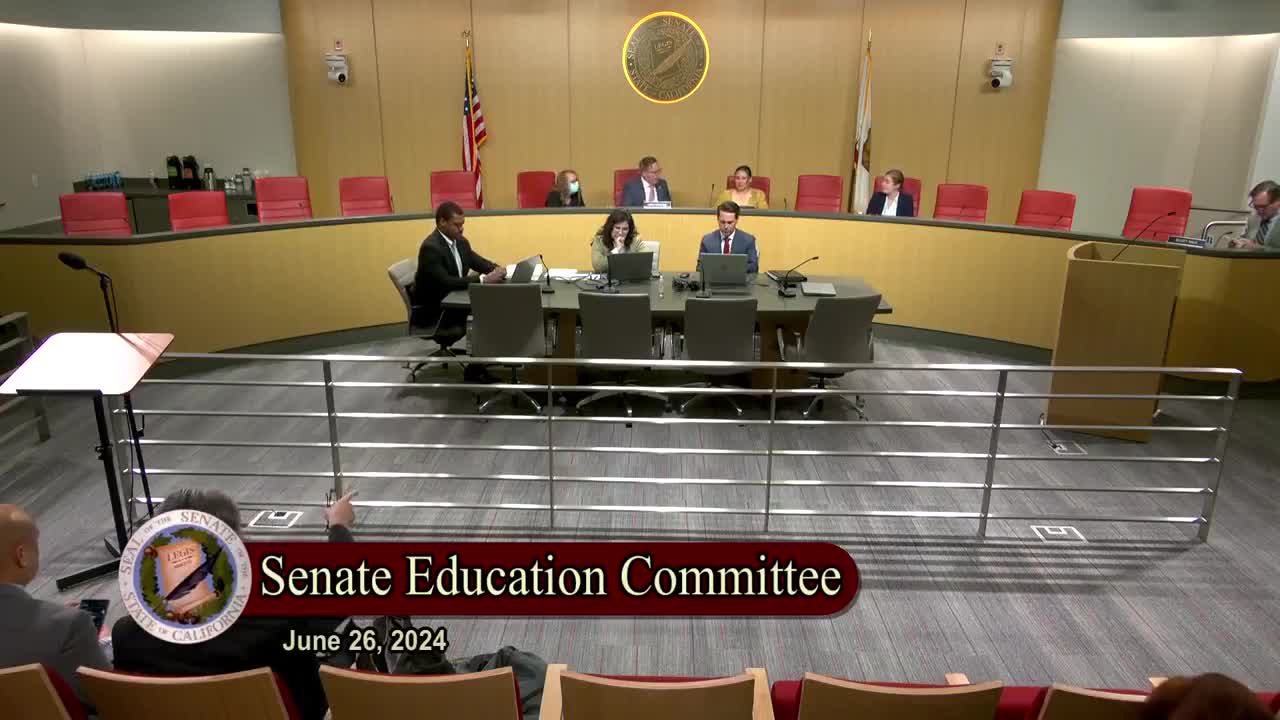 15MIN
Senate Standing Committee on Education
 1MIN
Assembly Floor
 11MIN
Assembly Standing Committee on Education
Bill Author

Bill Co-Author(s):