AB 1941: Local public employee organizations.
- Session Year: 2023-2024
- House: Assembly
- Latest Version Date: 2024-07-02
Current Status:
Passed
(2024-07-02: Chaptered by Secretary of State - Chapter 57, Statutes of 2024.)
Introduced
In Committee
First Chamber
In Committee
Second Chamber
Enacted
What does this bill do?
The bill lets recognized employee organizations (unions) charge public safety officers covered by the Public Safety Officers Procedural Bill of Rights Act for the reasonable cost of individual representation. That charge can be made when an officer refuses union membership or has a religious or conscience-based objection and asks the union to represent them in a discipline, grievance, arbitration, or administrative hearing, and only in proceedings the union does not exclusively control.
The summary is provided by generative AI which can make mistakes. For original language, please view the details in the table below.
Existing law, the Public Safety Officers Procedural Bill of Rights Act, grants certain employment rights to public safety officers, as defined. Existing law, the Meyers-Milias-Brown Act, contains various provisions that govern collective bargaining of local represented employees, and delegates jurisdiction to the Public Employment Relations Board to resolve disputes and enforce the statutory duties and rights of local public agency employers and employees.
Existing law gives public employees the right to refuse to join or participate in the activities of employee organizations, and provides that employees who are members of a bona fide religion, body, or sect that has historically held conscientious objections to joining or financially supporting public employee organizations are not required to join or financially support a public employee organization as a condition of employment, as specified.
Existing law authorizes a recognized employee organization to charge an employee covered by the Firefighters Procedural Bill of Rights Act for the reasonable cost of representation when the employee holds a conscientious objection, as described above, or declines membership in the organization and requests individual representation in a discipline, grievance, arbitration, or administrative hearing from the organization. Existing law applies this authorization only to proceedings for which the recognized employee organization does not exclusively control the process.
This bill would additionally authorize a recognized employee organization to charge an employee covered by the Public Safety Officers Procedural Bill of Rights Act for the reasonable cost of representation when the employee holds a conscientious objection or declines membership in the organization and requests individual representation in a discipline, grievance, arbitration, or administrative hearing from the organization. The bill would apply this authorization only to proceedings for which the recognized employee organization does not exclusively control the process.
If an employee covered by Chapter 9.7 (commencing with Section 3300) holds a conscientious objection described in subdivision (c) of Section 3502.5 or declines membership in the recognized employee organization and requests individual representation in a discipline, grievance, arbitration, or administrative hearing from the recognized employee organization, the recognized employee organization may charge the employee for the reasonable cost of the representation. This section applies only to the above proceedings where the recognized employee organization does not exclusively control the process.
If an employee covered by Chapter 9.7 (commencing with Section 3300) holds a conscientious objection described in subdivision (c) of Section 3502.5 or declines membership in the recognized employee organization and requests individual representation in a discipline, grievance, arbitration, or administrative hearing from the recognized employee organization, the recognized employee organization may charge the employee for the reasonable cost of the representation. This section applies only to the above proceedings where the recognized employee organization does not exclusively control the process.
If an employee covered by Chapter 9.7 (commencing with Section 3300) holds a conscientious objection described in subdivision (c) of Section 3502.5 or declines membership in the recognized employee organization and requests individual representation in a discipline, grievance, arbitration, or administrative hearing from the recognized employee organization, the recognized employee organization may charge the employee for the reasonable cost of the representation. This section applies only to the above proceedings where the recognized employee organization does not exclusively control the process.
|
Date
|
Status
|
|---|---|
| Jul 2, 2024 | Chaptered by Secretary of State - Chapter 57, Statutes of 2024. |
| Jul 2, 2024 | Approved by the Governor. |
| Jun 25, 2024 | Enrolled and presented to the Governor at 4 p.m. |
| Jun 13, 2024 | In Assembly. Ordered to Engrossing and Enrolling. |
| Jun 13, 2024 | Read third time. Passed. Ordered to the Assembly. (Ayes 37. Noes 0. Page 4489.). |
| Jun 6, 2024 | Read second time. Ordered to Consent Calendar. |
| Jun 5, 2024 | From committee: Do pass. To Consent Calendar. (Ayes 5. Noes 0.) (June 5). |
| May 1, 2024 | Referred to Com. on L., P.E. & R. |
| Apr 15, 2024 | In Senate. Read first time. To Com. on RLS. for assignment. |
| Apr 15, 2024 | Read third time. Passed. Ordered to the Senate. (Ayes 75. Noes 0. Page 4778.) |
| Apr 11, 2024 | From Consent Calendar by request of Assembly Member Essayli. To Third Reading. |
| Apr 4, 2024 | Read second time. Ordered to Consent Calendar. |
| Apr 3, 2024 | From committee: Do pass. To Consent Calendar. (Ayes 7. Noes 0.) (April 3). |
| Feb 12, 2024 | Referred to Com. on P.E. & R. |
| Jan 30, 2024 | From printer. May be heard in committee February 29. |
| Jan 29, 2024 | Read first time. To print. |
|
Date
|
Description
|
Location
|
Votes
|
|
|---|---|---|---|---|
| Jun 13, 2024 | Consent Calendar 2nd AB1941 Quirk-Silva | Senate Floor |
Passed |
|
| Jun 5, 2024 | Do pass and be ordered to the Consent Calendar | Senate Standing Committee on Labor, Public Employment and Retirement |
Passed |
|
| Apr 15, 2024 | AB 1941 Quirk-Silva Assembly Third Reading | Assembly Floor |
Passed |
|
| Apr 3, 2024 | Do pass. To Consent Calendar. | Assembly Standing Committee on Public Employment and Retirement |
Passed |
This list shows positions taken on this bill by organizations on the date displayed, which is linked to the original source.
Positions by individuals are not included.
|
Organization
|
Position
|
Date
|
|---|---|---|
| Arcadia Police Officers' Association | ** Support | |
| Association Of Orange County Deputy Sheriffs | ** Support | |
| Burbank Police Officers' Association | ** Support | |
| California Coalition of School Safety Professionals | ** Support | |
| California Fraternal Order of Police | ** Support | |
| California Statewide Law Enforcement Association | ** Support | |
| CLAREMONT POLICE OFFICERS ASSOCIATION | ** Support | |
| Corona Police Officers Association | ** Support | |
| Culver City Police Officers' Association | ** Support | |
| Deputy Sheriffs Association of Monterey County | ** Support | |
| Fullerton Police Officers' Association | ** Support | |
| Long Beach Police Officers Association | ** Support | |
| Los Angeles School Police Management Association | ** Support | |
| los angeles school police officers association | ** Support | |
| Murrieta Police Officers' Association | ** Support | |
| Newport Beach Police Association | ** Support | |
| Novato Police Officers Association | ** Support | |
| Palos Verdes Police Officers Association | ** Support | |
| PLACER COUNTY DEPUTY SHERIFFS ASSOCIATION | ** Support | |
| Pomona Police Officers' Association | ** Support | |
| RIVERSIDE POLICE OFFICERS ASSOCIATION | ** Support | |
| Riverside Sheriffs' Association | ** Support | |
| Sacramento County Deputy Sheriffs' Association | ** Support | |
| san bernardino county sheriff's employees' benefit association | ** Support | |
| Santa Ana Police Officers Association | ** Support | |
| Upland Police Officers Association | ** Support |
SENATE RULES COMMITTEE Office of Senate Floor Analyses (916) 651-1520 Fax: (916) 327-4478 | AB 1941 |
CONSENT
Bill No: AB 1941
Author: Quirk-Silva (D)
Introduced: 1/29/24
Vote: 21
SENATE LABOR, PUB. EMP. & RET. COMMITTEE: 5-0, 6/5/24
AYES: Smallwood-Cuevas, Wilk, Cortese, Durazo, Laird
ASSEMBLY FLOOR: 75-0, 4/15/24 - See last page for vote
SUBJECT: Local public employee organizations
SOURCE: California Fraternal Order of Police
DIGEST:
This bill authorizes peace officer unions to charge a non-union member peace officer, as specified, for the reasonable costs of the union’s representation in a discipline, grievance, arbitration, or administration hearing.
ANALYSIS:
Existing law:
- Governs collective bargaining in the private sector under the federal National Relations Labor Relations Act (NLRA) but leaves it to the states to regulate collective bargaining in their respective public sectors. While the NLRA and the decisions of its National Labor Relations Board often provide persuasive precedent in interpreting state collective bargaining law, public employees have no collective bargaining rights absent specific statutory authority establishing those rights. (Title 29 United States Code § 151 et seq.)
- Provides several statutory frameworks under California law to provide public employees collective bargaining rights, govern public employer-employee relations, and limit labor strife and economic disruption in the public sector through a reasonable method of resolving disputes regarding wages, hours, and other terms and conditions of employment between public employers and recognized public employee organizations or their exclusive representatives. These include the Meyers-Milias-Brown Act (MMBA), which governs the employer-employee relationship between local public agencies and their employees. (Government Code (GC) § 3500 et seq.)
- Provides a timeframe of not earlier than 15 days in which a local public agency employer may implement its Last Best Final Offer (LBFO), after all mediation and factfinding procedures have been exhausted, but excludes charter cities and counties from the factfinding process when binding interest arbitration applies. (GC § 3505.7)
- Establishes the Public Employment Relations Board (PERB), a quasi-judicial administrative agency charged with resolving disputes and enforcing the statutory duties and rights of public agency employers and employee organizations, but provides the City and County of Los Angeles a local alternative to PERB oversight. (GC § 3541)
- Prohibits anyone from requiring an employee who is a member of a bona fide religion, body, or sect that has historically held conscientious objections to joining or financially supporting public employee organizations from joining or financially supporting a public employee organization as a condition of employment. (GC § 3502.5 (c))
- Establishes the Public Safety Officers Procedural Bill of Rights Act (PSOPBRA), which provides public safety officers special procedural protections from public agency disciplinary actions, as specified. (GC § 3300)
- Defines “public safety officer” as all peace officers specified in Sections 830.1, 830.2, 830.3, 830.31, 830.32, 830.33, except subdivision (e), 830.34, 830.35, except subdivision (c), 830.36, 830.37, 830.38, 830.4, and 830.5 of the Penal Code. (GC § 3301)
This bill:
- Authorizes a recognized employee organization to charge an employee covered by the Public Safety Officers Procedural Bill of Rights Act (PSOPBRA) for the reasonable costs of representation, if the employee holds a conscientious objection or declines membership in the organization and requests individual representation in a discipline, grievance, arbitration, or administration hearing from the employee organization.
- Applies this authorization only to proceedings in which the recognized employee organization does not exclusively control the process.
Comments
Need for this bill? According to the California State Fraternal Order of the Police, “Currently, if a peace officer requests union representation, but is not themselves a member of the union, the union is required to cover the costs of this peace officer’s representation, regardless of the peace officer’s lack of monetary contribution to the union in the form of dues. This requirement forces union members, who pay monetary dues, to subsidize those who do not contribute to the union’s funds.
“In 2022, AB 2556 (O’Donnell) was passed, which addressed a similar issue existing within the Firefighters Procedural Bill of Rights Act. AB 2556 amended the Act, allowing the union to charge a local public employee firefighter reasonable representation costs, if that firefighter was not a member of the union, but requested union representation. AB 1941 (Quirk-Silva) would provide a solution which is necessary to close a similar gap in the reimbursement of expenses incurred by unions who represent employees covered by the Public Safety Officers Procedural Bill of Rights Act.
“The solution presented by AB 1941 (Quirk-Silva) will align the Public Safety Officers Procedural Bill of Rights Act with the Firefighters Procedural Bill of Rights Act and allow for the recovery of costs incurred by unions in representing peace officers who are not themselves members of the union, thus taking the burden of covering such costs off of paying union members.”
Related/Prior Legislation
AB 2556 (O’Donnell, Chapter 412, Statutes of 2022) authorized a recognized employee organization to charge a public agency firefighter covered under the Firefighters Procedural Bill of Rights Act who holds a conscientious objection, as specified, or who declines membership in the recognized employee organization, for the reasonable cost of representation if the firefighter requests individual representation from the recognized employee organization in a discipline, grievance, arbitration, or administrative hearing.
FISCAL EFFECT: Appropriation: No Fiscal Com.: No Local: No
SUPPORT: (Verified 6/5/24)
California Fraternal Order of Police (source)
Arcadia Police Officers' Association
Association of Orange County Deputy Sheriffs
Burbank Police Officers' Association
California Coalition of School Safety Professionals
California Statewide Law Enforcement Association
Claremont Police Officers Association
Corona Police Officers Association
Culver City Police Officers' Association
Deputy Sheriffs' Association of Monterey County
Fraternal Order of Police
Fullerton Police Officers' Association
Long Beach Police Officers Association
Los Angeles School Police Management Association
Los Angeles School Police Officers Association
Murrieta Police Officers' Association
Newport Beach Police Association
Novato Police Officers Association
Palos Verdes Police Officers Association
Placer County Deputy Sheriffs' Association
Pomona Police Officers' Association
Riverside Police Officers Association
Riverside Sheriffs' Association
Sacramento County Deputy Sheriffs' Association
San Bernardino County Sheriff's Employees' Benefit Association
Santa Ana Police Officers Association
Upland Police Officers Association
OPPOSITION: (Verified 6/5/24)
None received
ARGUMENTS IN SUPPORT:
According to a coalition of peace officer employee organizations, including the Riverside Sheriffs’ Association, “Current union members pay monetary dues to their union, and they should not be obligated to subsidize those who do not contribute towards the representation provided by the union. AB 1941 aligns the Public Safety Officers Bill of Rights Act with the Firefighters Bill of Rights Act, authorizing a union to charge conscientious objectors reasonable representation costs upon request for union representation by the public safety officer in question.”
ASSEMBLY FLOOR: 75-0, 4/15/24
AYES: Addis, Aguiar-Curry, Alanis, Alvarez, Arambula, Bains, Bauer-Kahan, Bennett, Berman, Boerner, Bonta, Bryan, Calderon, Juan Carrillo, Cervantes, Chen, Connolly, Davies, Dixon, Flora, Mike Fong, Vince Fong, Friedman, Gabriel, Gallagher, Garcia, Gipson, Grayson, Haney, Hart, Holden, Hoover, Irwin, Jackson, Jones-Sawyer, Kalra, Lackey, Lee, Lowenthal, Maienschein, McCarty, McKinnor, Muratsuchi, Stephanie Nguyen, Ortega, Pacheco, Papan, Jim Patterson, Joe Patterson, Pellerin, Petrie-Norris, Quirk-Silva, Ramos, Rendon, Reyes, Luz Rivas, Rodriguez, Blanca Rubio, Sanchez, Santiago, Schiavo, Soria, Ta, Ting, Valencia, Villapudua, Waldron, Wallis, Ward, Weber, Wicks, Wilson, Wood, Zbur, Robert Rivas
NO VOTE RECORDED: Wendy Carrillo, Megan Dahle, Essayli, Low, Mathis
Prepared by: Glenn Miles / L., P.E. & R. / (916) 651-1556
6/6/24 10:45:59
**** END ****
SENATE COMMITTEE ON LABOR, PUBLIC EMPLOYMENT AND RETIREMENT
Senator Lola Smallwood-Cuevas, Chair
2023 - 2024 Regular
Bill No: AB 1941 Hearing Date: June 5, 2024
Author: | Quirk-Silva | ||
Version: | January 29, 2024 | ||
Urgency: | No | Fiscal: | No |
Consultant: | Glenn Miles | ||
SUBJECT: Local public employee organizations
KEY ISSUE
This bill authorizes peace officer unions to charge a non-union member peace officer, as specified, for the reasonable costs of the union’s representation in a discipline, grievance, arbitration, or administration hearing.
ANALYSIS
Existing law:
- Governs collective bargaining in the private sector under the federal National Relations Labor Relations Act (NLRA) but leaves it to the states to regulate collective bargaining in their respective public sectors. (29 United State Code § 151 et seq.)
While the NLRA and the decisions of its National Labor Relations Board often provide persuasive precedent in interpreting state collective bargaining law, public employees have no collective bargaining rights absent specific statutory authority establishing those rights.
- Provides several statutory frameworks under California law to provide public employees collective bargaining rights, govern public employer-employee relations, and limit labor strife and economic disruption in the public sector through a reasonable method of resolving disputes regarding wages, hours, and other terms and conditions of employment between public employers and recognized public employee organizations or their exclusive representatives. These include the Meyers-Milias-Brown Act (MMBA) which governs the employer-employee relationship between local public agencies and their employees. (Government Code (GC) § 3500 et seq.)
- Provides a timeframe of not earlier than 15 days in which a local public agency employer may implement its Last Best Final Offer (LBFO), after all mediation and factfinding procedures have been exhausted, but excludes charter cities and counties from the factfinding process when binding interest arbitration applies. (GC § 3505.7)
- Establishes the Public Employment Relations Board (PERB), a quasi-judicial administrative agency charged with resolving disputes and enforcing the statutory duties and rights of public agency employers and employee organizations, but provides the City and County of Los Angeles a local alternative to PERB oversight. (GC § 3541)
- Prohibits anyone from requiring an employee who is a member of a bona fide religion, body, or sect that has historically held conscientious objections to joining or financially supporting public employee organizations from joining or financially supporting a public employee organization as a condition of employment. (GC § 3502.5 (c))
- Establishes the Public Safety Officers Procedural Bill of Rights Act (PSOPBRA), which provides public safety officers special procedural protections from public agency disciplinary actions, as specified. (GC § 3300)
- Defines “public safety officer” as all peace officers specified in Sections 830.1, 830.2, 830.3, 830.31, 830.32, 830.33, except subdivision (e), 830.34, 830.35, except subdivision (c), 830.36, 830.37, 830.38, 830.4, and 830.5 of the Penal Code. (GC § 3301)
This bill:
- Authorizes a recognized employee organization to charge an employee covered by the Public Safety Officers Procedural Bill of Rights Act (PSOPBRA) for the reasonable costs of representation, if the employee holds a conscientious objection or declines membership in the organization and requests individual representation in a discipline, grievance, arbitration, or administration hearing from the employee organization.
- Applies this authorization only to proceedings in which the recognized employee organization does not exclusively control the process.
COMMENTS
1. Need for this bill?
According to the California State Fraternal Order of the Police:
“Currently, if a peace officer requests union representation, but is not themselves a member of the union, the union is required to cover the costs of this peace officer’s representation, regardless of the peace officer’s lack of monetary contribution to the union in the form of dues. This requirement forces union members, who pay monetary dues, to subsidize those who do not contribute to the union’s funds.
In 2022, AB 2556 (O’Donnell) was passed, which addressed a similar issue existing within the Firefighters Procedural Bill of Rights Act. AB 2556 amended the Act, allowing the union to charge a local public employee firefighter reasonable representation costs, if that firefighter was not a member of the union, but requested union representation. AB 1941 (Quirk-Silva) would provide a solution which is necessary to close a similar gap in the reimbursement of expenses incurred by unions who represent employees covered by the Public Safety Officers Procedural Bill of Rights Act.
The solution presented by AB 1941 (Quirk-Silva) will align the Public Safety Officers Procedural Bill of Rights Act with the Firefighters Procedural Bill of Rights Act and allow for the recovery of costs incurred by unions in representing peace officers who are not themselves members of the union, thus taking the burden of covering such costs off of paying union members.”
2. Proponent Arguments
According to a coalition of peace officer employee organizations, including the Riverside Sheriffs’ Association:
“Current union members pay monetary dues to their union, and they should not be obligated to subsidize those who do not contribute towards the representation provided by the union. AB 1941 aligns the Public Safety Officers Bill of Rights Act with the Firefighters Bill of Rights Act, authorizing a union to charge conscientious objectors reasonable representation costs upon request for union representation by the public safety officer in question.”
3. Opponent Arguments:
None received.
4. Prior Legislation:
AB 2556 (O’Donnell, Chapter 412, Statutes of 2022) authorized a recognized employee organization to charge a public agency firefighter covered under the Firefighters Procedural Bill of Rights Act (FPBRA) who holds a conscientious objection, as specified, or who declines membership in the recognized employee organization, for the reasonable cost of representation if the firefighter requests individual representation from the recognized employee organization in a discipline, grievance, arbitration, or administrative hearing.
SUPPORT
California Fraternal Order of Police (Sponsor)
Arcadia Police Officers' Association
Association of Orange County Deputy Sheriffs
Burbank Police Officers' Association
California Coalition of School Safety Professionals
California Statewide Law Enforcement Association
Claremont Police Officers Association
Corona Police Officers Association
Culver City Police Officers' Association
Deputy Sheriffs' Association of Monterey County
Fullerton Police Officers' Association
Long Beach Police Officers Association
Los Angeles School Police Management Association
Los Angeles School Police Officers Association
Murrieta Police Officers' Association
Newport Beach Police Association
Novato Police Officers Association
Palos Verdes Police Officers Association
Placer County Deputy Sheriffs' Association
Pomona Police Officers' Association
Riverside Police Officers Association
Riverside Sheriffs' Association
Sacramento County Deputy Sheriffs' Association
San Bernardino County Sheriff's Employees' Benefit Association
Santa Ana Police Officers Association
Upland Police Officers Association
OPPOSITION
None received.
-- END --
ASSEMBLY THIRD READING
ATR Bill Id:AB 1941
Author:(Quirk-Silva)
As Introduced Ver:January 29, 2024
Majority vote
SUMMARY
Makes changes to existing law relating to local public employee organizations and conscientious objectors.
Major Provisions
- Authorizes a recognized employee organization to charge an employee covered by the Public Safety Officers Procedural Bill of Rights Act (PSOPBRA) for the reasonable costs of representation, if the employee holds a conscientious objection or declines membership in the organization and requests individual representation in a discipline, grievance, arbitration, or administration hearing from the organization.
- Applies this authorization only to proceedings in which the recognized employee organization does not exclusively control the process.
COMMENTS
Background Regarding the PSOPBRA
As previously stated under "Existing Law," the PSOPBRA affords certain public safety officers employment and procedural rights when they are subject to investigation or discipline. Public Safety Officers covered by the act include highway patrol officers, county deputy sheriffs, city police officers, and nearly every sworn public safety officer classification in the state.
In some respects, the act conflicts with local procedures and is deficient in clarity in others. This is evidenced by numerous and various state and federal judicial decisions resulting from such deficiencies. Notwithstanding these characteristics, the PSOPBRA rests among other constitutional, state, and local provisions relating to the working conditions of public safety officers.
What is a Conscientious Objector?
A conscientious objector is someone who objects on moral grounds to participating in some type of required behavior, usually (but not always) of a military or political nature, especially a person who, for moral or religious reasons, is opposed to participating in such activities. The objection is a personal disapproval of participating in some specific conduct and generally requires something more than mere intellectual persuasion, amounting to a compulsive and complete aversion to particular behavior. The objection may or may not be based on religion, and courts have long held with consistency that the belief must be sincerely held.
The most notable judicial decision in which its underlying subject is similar to a conscientious objection was the United States Supreme Court case in Janus v. American Federation of State, County and Municipal Employees, Council 3131 (2018) 585 U.S.____, No. 16-1466. Here, the court held that public employees are not required to pay fees (or dues) to a labor organization as a condition of employment.
Differences Among Existing Conscientious Objector Laws Within the MMBA
There are conscientious objector provisions within the Meyers-Milias-Brown Act. One provision broadly applies to local public employees covered by that act which is specific to association with a public employee organization; whereas, the other provision specifically applies to Firefighters Procedural Bill of Rights Act (FPBORA)-covered firefighters.
This Bill
As proposed, this bill is identical to existing law applicable to FPBORA-covered firefighters, but would apply to PSOPBRA-covered public safety officers to afford them another option for representation during certain employment-related matters.
Please see the policy committee analysis for a full discussion of this bill.
According to the Author
"Just like their firefighting first responder brothers and sisters, police officers have a dynamic and tough job serving the public. While these two professions serve the public in different and important ways, they both share a recognized procedural bill of rights. Currently, firefighters who choose not to join an employee union have the option to pay reasonable costs to the union for legal representation. However, police officers do not have this same option outlined in their bill of rights. [This bill would] establish parity for both professions and ensure that dues-paying union members are not compelled to subsidize those who do not contribute towards the representation provided by the employee union."
Arguments in Support
Generally, supporters make statements similar to those of the author.
Arguments in Opposition
None.
FISCAL COMMENTS
None.
VOTES
ASM PUBLIC EMPLOYMENT AND RETIREMENT: 7-0-0
YES: McKinnor, Lackey, Boerner, Vince Fong, Hart, Stephanie Nguyen, Luz Rivas
UPDATED
VERSION: January 29, 2024
CONSULTANT: Michael Bolden / P. E. & R. / (916) 319-3957 FN: 0002718
Date of Hearing: April 3, 2024
ASSEMBLY COMMITTEE ON PUBLIC EMPLOYMENT AND RETIREMENT
Tina S. McKinnor, Chair
ABPCA Bill Id:AB 1941 (
Author:Quirk-Silva) – As Introduced Ver:January 29, 2024
SUBJECT: Local public employee organizations
SUMMARY: Makes changes to existing law relating to local public employee organizations and conscientious objectors. Specifically, this bill:
- Authorizes a recognized employee organization to charge an employee covered by the Public Safety Officers Procedural Bill of Rights Act (PSOPBRA) for the reasonable costs of representation, if the employee holds a conscientious objection or declines membership in the organization and requests individual representation in a discipline, grievance, arbitration, or administration hearing from the organization.
- Applies this authorization only to proceedings in which the recognized employee organization does not exclusively control the process.
EXISTING LAW:
- Establishes the PSOPBRA that, among other things, affords certain employment and procedural rights to specified public safety officers when they are subject to investigation or discipline.[1]
- Governs collective bargaining in the private sector under the federal National Labor Relations Act (NLRA) but leaves it to the states to regulate collective bargaining in their respective public sectors.[2]
While the NLRA and the decisions of its National Labor Relations Board often provide persuasive precedent in interpreting state collective bargaining law, public employees have no collective bargaining rights absent specific statutory authority establishing those rights.
- Provides several statutory frameworks under California law to provide public employees collective bargaining rights, govern public employer-employee relations, and limit labor strife and economic disruption in the public sector through a reasonable method of resolving disputes regarding wages, hours, and other terms and conditions of employment between public employers and recognized public employee organizations or their exclusive representatives. These include the Meyers-Milias-Brown Act (MMBA) which provides for local government public employer-employee relations.[3]
- Establishes the Public Employment Relations Board (PERB), a quasi-judicial administrative agency charged with administering certain statutory frameworks governing employer-employee relations, resolving disputes, and enforcing the statutory duties and rights of public agency employers and employee organizations, but provides the City and County of Los Angeles a local alternative to PERB oversight.[4]
- Prohibits an employee who is a member of a bona fide religion, body, or sect that has historically held conscientious objections to joining or financially supporting public employee organizations from being required to do so as a condition of employment.[5]
- Authorizes a recognized employee organization to charge an employee covered by the Firefighters Procedural Bill of Rights Act (FPBORA) the reasonable cost of representation, if the employee holds a conscientious objection as described in item 4) above, or declines membership in the recognized employee organization and requests individual representation from the recognized employee organization in a discipline, grievance, arbitration, or administration hearing. However, this only applies to the aforementioned proceedings where the recognized employee organization does not exclusively control the process.[6]
It is noted that, if the firefighter may be subject to punitive action, at their request, they have the right to be represented by a person of their choice, but that person must not also be subject to the same investigation.[7] The employee’s representative may be a lawyer, lay person, sometimes an association or union official or designee, who must use their best efforts to assist an accused employee in explaining the employee’s actions or mitigating the harm of the employee’s conduct.
FISCAL EFFECT: None. This bill is keyed nonfiscal by Legislative Counsel.
COMMENTS:
- Background Regarding the PSOPBRA
As previously stated under “Existing Law,” the PSOPBRA affords certain public safety officers employment and procedural rights when they are subject to investigation or discipline. Public Safety Officers covered by the act include highway patrol officers, county deputy sheriffs, city police officers, and nearly every sworn public safety officer classification in the state.
In some respects, the act conflicts with local procedures and is deficient in clarity in others. This is evidenced by numerous and various state and federal judicial decisions resulting from such deficiencies. Notwithstanding these characteristics, the PSOPBRA rests among other constitutional, state, and local provisions relating to the working conditions of public safety officers.
- What is a Conscientious Objector?
A conscientious objector is someone who objects on moral grounds to participating in some type of required behavior, usually (but not always) of a military or political nature, especially a person who, for moral or religious reasons, is opposed to participating in such activities. The objection is a personal disapproval of participating in some specific conduct and generally requires something more than mere intellectual persuasion, amounting to a compulsive and complete aversion to particular behavior. The objection may or may not be based on religion, and courts have long held with consistency that the belief must be sincerely held. (Emphasis added.)
The most notable judicial decision in which its underlying subject is similar to a conscientious objection was the United States Supreme Court in Janus v. American Federation of State, County and Municipal Employees, Council 31.[8] Here, the court held that public employees are not required to pay fees (or dues) to a labor organization as a condition of employment.
- Differences Among Existing Conscientious Objector Laws Within the MMBA
As previously discussed and footnoted under “Existing Law,” there are conscientious objector provisions within the MMBA. One provision broadly applies to local public employees covered by that act which is specific to association with a public employee organization; whereas, the other provision specifically applies to FPBORA-covered firefighters.[9]
- This Bill
As proposed, this bill is identical to existing law applicable to FPBORA-covered firefighters, but would apply to PSOPBRA-covered public safety officers to afford them another option for representation during certain employment-related matters.
- Statement by the Author
“Just like their firefighting first responder brothers and sisters, police officers have a dynamic and tough job serving the public. While these two professions serve the public in different and important ways, they both share a recognized procedural bill of rights. Currently, firefighters who choose not to join an employee union have the option to pay reasonable costs to the union for legal representation. However, police officers do not have this same option outlined in their bill of rights. [This bill would] establish parity for both professions and ensure that dues-paying union members are not compelled to subsidize those who do not contribute towards the representation provided by the employee union.”
- Comments by Supporters
Generally, supporters make statements similar to those of the author.
- Comments by Opponents
None one file.
- Prior or Related Legislation
Chapter 412, Statutes of 2022 (Assembly Bill 2556, O’Donnell) established the conscientious objector statute relating FPBORA-covered firefighters.
REGISTERED SUPPORT / OPPOSITION:
Support
California Fraternal Order of Police (Sponsor)
Arcadia Police Officers' Association
Association of Orange County Deputy Sheriffs
Burbank Police Officers' Association
California Coalition of School Safety Professionals
California Statewide Law Enforcement Association
Claremont Police Officers Association
Corona Police Officers Association
Culver City Police Officers' Association
Deputy Sheriffs' Association of Monterey County
Fullerton Police Officers' Association
Long Beach Police Officers Association
Los Angeles School Police Management Association
Los Angeles School Police Officers Association
Murrieta Police Officers' Association
Newport Beach Police Association
Novato Police Officers Association
Palos Verdes Police Officers Association
Placer County Deputy Sheriffs' Association
Pomona Police Officers' Association
Riverside Police Officers Association
Riverside Sheriffs' Association
Sacramento County Deputy Sheriffs' Association
San Bernardino County Sheriff's Employees' Benefit Association
Santa Ana Police Officers Association
Upland Police Officers Association
Opposition
None on file.
Analysis Prepared by: Michael Bolden / P. E. & R. / (916) 319-3957
Sections 3300 et seq. of the Government (Gov.) Code. ↑
Sections 151 et seq., Title 29, United States Code. ↑
Sections 3500 et seq. of the Gov. Code. ↑
Sections 3541 et seq., ibid. ↑
Section 3502.5 (c) of the Gov. Code within the MMBA. ↑
Section 3503.1 of the Gov. Code. Although this section is within in the MMBA, it applies to FPBORA-covered employees. ↑
Section 3253 (i) of the Gov. Code within the FPBORA. ↑
Janus v. American Fed’n. of State, County and Municipal Employees, Council 31 (2018) 585 U.S.____, No. 16-1466. ↑
See items 5) and 6) under Existing Law, and footnotes 5 and 6. ↑
Discussed in Hearing
 1MIN
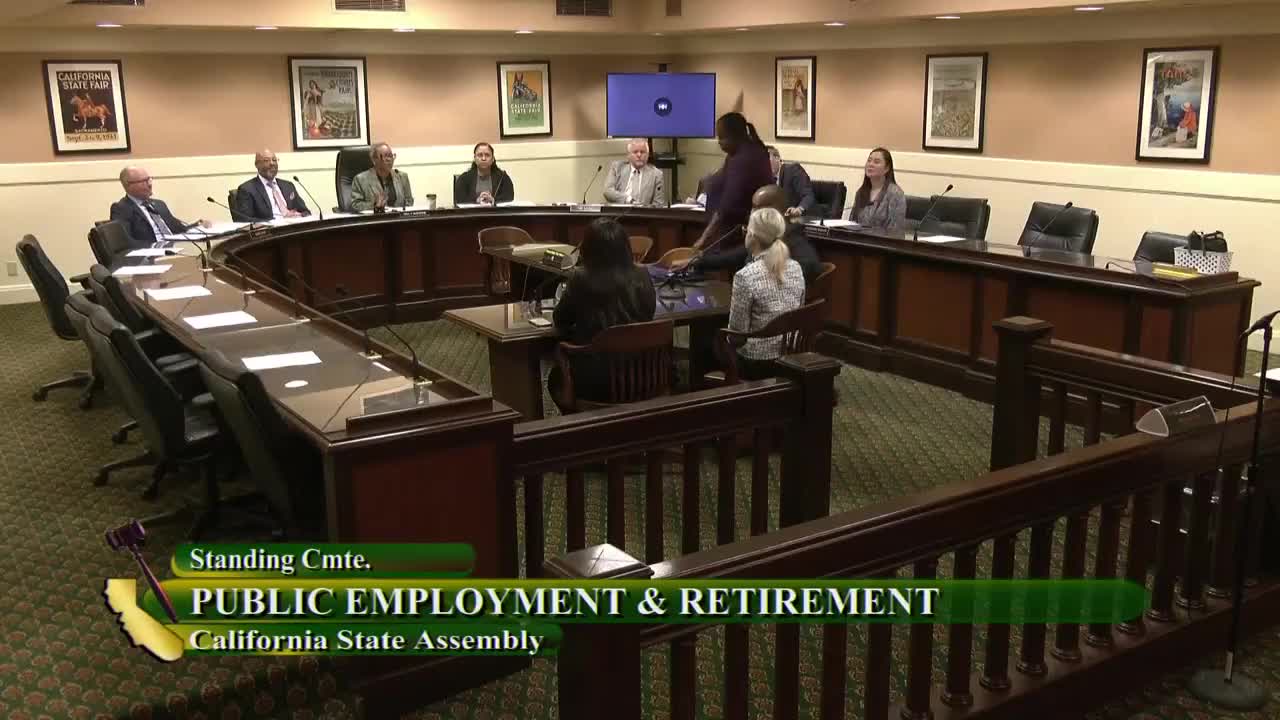
Assembly Standing Committee on Public Employment and Retirement
Bill Author

Bill Co-Author(s):