AB 1976: Occupational safety and health standards: first aid materials: opioid antagonists.
- Session Year: 2023-2024
- House: Assembly
- Latest Version Date: 2024-09-27
Current Status:
Passed
(2024-09-27: Chaptered by Secretary of State - Chapter 689, Statutes of 2024.)
Introduced
In Committee
First Chamber
In Committee
Second Chamber
Enacted
What does this bill do?
This bill would require workplaces to include naloxone (or another FDA‑approved opioid antidote) and simple instructions in their first‑aid supplies and give employers guidance on how to store it. It says people who give naloxone during a suspected opioid overdose cannot be sued for civil damages under existing law. It also clarifies that local emergency medical services–licensed workers may administer nasal naloxone without separate certification and are protected from liability unless they were working as paid first responders.
The summary is provided by generative AI which can make mistakes. For original language, please view the details in the table below.
Existing law grants the Division of Occupational Safety and Health, which is within the Department of Industrial Relations, jurisdiction over all employment and places of employment, and the power necessary to enforce and administer all occupational health and safety laws and standards. The Occupational Safety and Health Standards Board, an independent entity within the department, has the exclusive authority to adopt occupational safety and health standards within the state. Existing law, the California Occupational Safety and Health Act of 1973 (OSHA), requires employers to comply with certain safety and health standards, as specified, and charges the division with enforcement of the act.
Existing law requires the division, before December 1, 2025, to submit to the standards board a rulemaking proposal to consider revising certain standards relating to the prevention of heat illness, protection from wildfire smoke, and toilet facilities on construction jobsites. Existing law also requires the standards board to review the proposed changes and consider adopting revised standards on or before December 31, 2025.
This bill would require the division, before December 1, 2027, to submit a draft rulemaking proposal to revise specified regulations on first aid materials and emergency medical services to require first aid materials in a workplace to include naloxone hydrochloride or another opioid antagonist approved by the United States Food and Drug Administration to reverse opioid overdose and instructions for using the opioid antagonist. The bill would also require the division, in drafting the rulemaking proposal, to consider, and provide guidance to employers on, proper storage of the opioid antagonist in accordance with the manufacturers instructions. The bill would require the standards board to consider for adoption revised standards for the standards described above on or before December 1, 2028.
Under existing law, a person who, in good faith and not for compensation, renders emergency treatment at the scene of an opioid overdose or suspected opioid overdose by administering an opioid antagonist is not liable for civil damages resulting from an act or omission related to the rendering of the emergency treatment, except if the act or omission constitutes gross negligence or willful or wanton misconduct.
This bill would expressly provide that an individual who administers naloxone hydrochloride or another opioid antagonist approved by the United States Food and Drug Administration to reverse opioid overdose in a suspected opioid overdose emergency shall not be liable for civil damages, as provided by, and subject to, the above-described provisions. The bill would also provide that an individual who is licensed as part of a local emergency medical services agency shall not be held responsible for administering nasal naloxone hydrochloride or another opioid antagonist approved by the United States Food and Drug Administration to reverse opioid overdose, regardless of whether the individual was certified for that activity, unless the individual was acting as a paid first responder at the time of the action.
Existing law grants the Division of Occupational Safety and Health, which is within the Department of Industrial Relations, jurisdiction over all employment and places of employment, and the power necessary to enforce and administer all occupational health and safety laws and standards. The Occupational Safety and Health Standards Board, an independent entity within the department, has the exclusive authority to adopt occupational safety and health standards within the state. Existing law, the California Occupational Safety and Health Act of 1973 (OSHA), requires employers to comply with certain safety and health standards, as specified, and charges the division with enforcement of the act.
Existing law requires the division, before December 1, 2025, to submit to the standards board a rulemaking proposal to consider revising certain standards relating to the prevention of heat illness, protection from wildfire smoke, and toilet facilities on construction jobsites. Existing law also requires the standards board to review the proposed changes and consider adopting revised standards on or before December 31, 2025.
This bill would require the division, before December 1, 2027, to submit a draft rulemaking proposal to revise specified regulations on first aid materials and emergency medical services to require first aid materials in a workplace to include naloxone hydrochloride or another opioid antagonist approved by the United States Food and Drug Administration to reverse opioid overdose and instructions for using the opioid antagonist. The bill would also require the division, in drafting the rulemaking proposal, to consider, and provide guidance to employers on, proper storage of the opioid antagonist. antagonist in accordance with the manufacturers instructions. The bill would require the standards board to consider for adoption revised standards for the standards described above on or before December 1, 2028.
Existing law makes it a misdemeanor for an employer, officer, management official, or supervisor, as specified, to knowingly or negligently violate any standard, order, or special order of the standards board or division, or any provision of the act, the violation of which is deemed to be a serious violation, as specified.This bill would require an employer to ensure that an opioid antagonist is stored in accordance with the manufacturers instructions. By creating a new crime, the bill would impose a state-mandated local program.Under existing law, a person who, in good faith and not for compensation, renders emergency treatment at the scene of an opioid overdose or suspected opioid overdose by administering an opioid antagonist is not liable for civil damages resulting from an act or omission related to the rendering of the emergency treatment, except if the act or omission constitutes gross negligence or willful or wanton misconduct.
This bill would expressly provide that an individual who administers naloxone hydrochloride or another opioid antagonist approved by the United States Food and Drug Administration to reverse opioid overdose in a suspected opioid overdose emergency shall not be liable for civil damages, as provided by, and subject to, the above-described provisions. The bill would also provide that an individual who is licensed as part of a local emergency medical services agency shall not be held responsible for administering nasal naloxone hydrochloride or another opioid antagonist approved by the United States Food and Drug Administration to reverse opioid overdose, regardless of whether the individual was certified for that activity, unless the individual was acting as a paid first responder at the time of the action.
The California Constitution requires the state to reimburse local agencies and school districts for certain costs mandated by the state. Statutory provisions establish procedures for making that reimbursement.This bill would provide that no reimbursement is required by this act for a specified reason.Existing law grants the Division of Occupational Safety and Health, which is within the Department of Industrial Relations, jurisdiction over all employment and places of employment, and the power necessary to enforce and administer all occupational health and safety laws and standards. The Occupational Safety and Health Standards Board, an independent entity within the department, has the exclusive authority to adopt occupational safety and health standards within the state. Existing law, the California Occupational Safety and Health Act of 1973 (OSHA), requires employers to comply with certain safety and health standards, as specified, and charges the division with enforcement of the act.
Existing law requires the division, before December 1, 2025, to submit to the standards board a rulemaking proposal to consider revising certain standards relating to the prevention of heat illness, protection from wildfire smoke, and toilet facilities on construction jobsites. Existing law also requires the standards board to review the proposed changes and consider adopting revised standards on or before December 31, 2025.
This bill would require the standards board, division, before December 1, 2026, 2027, to submit a draft a rulemaking proposal to revise a regulation specified regulations on first aid materials and emergency medical services to require first aid materials in a workplace to include naloxone hydrochloride or another opioid antagonist approved by the United States Food and Drug Administration to reverse opioid overdose and instructions for using the opioid antagonist. The bill would also require the standards board, division, in drafting the rulemaking proposal, to consider, and provide guidance to employers on, proper storage of the opioid antagonist. The bill would require the standards board to adopt consider for adoption revised standards for the standards described above on or before July 1, 2027. December 1, 2028.
Existing law makes it a misdemeanor for an employer, officer, management official, or supervisor, as specified, to knowingly or negligently violate any standard, order, or special order of the standards board or division, or any provision of the act, the violation of which is deemed to be a serious violation, as specified.
This bill would require an employer to ensure that an opioid antagonist is stored in accordance with the manufacturers instructions. By creating a new crime, the bill would impose a state-mandated local program.
Under existing law, a person who, in good faith and not for compensation, renders emergency treatment at the scene of an opioid overdose or suspected opioid overdose by administering an opioid antagonist is not liable for civil damages resulting from an act or omission related to the rendering of the emergency treatment, except if the act or omission constitutes gross negligence or willful or wanton misconduct.
This bill would expressly provide that an individual who administers naloxone hydrochloride or another opioid antagonist approved by the United States Food and Drug Administration to reverse opioid overdose in a suspected opioid overdose emergency shall not be liable for civil damages, as provided by, and subject to, the above-described provisions. The bill would also provide that an individual who is licensed as part of a local emergency medical services agency shall not be held responsible for administering nasal naloxone hydrochloride or another opioid antagonist approved by the United States Food and Drug Administration to reverse opioid overdose, regardless of whether the individual was certified for that activity, unless the individual was acting as a paid first responder at the time of the action.
The California Constitution requires the state to reimburse local agencies and school districts for certain costs mandated by the state. Statutory provisions establish procedures for making that reimbursement.
This bill would provide that no reimbursement is required by this act for a specified reason.
Existing law grants the Division of Occupational Safety and Health, which is within the Department of Industrial Relations, jurisdiction over all employment and places of employment, and the power necessary to enforce and administer all occupational health and safety laws and standards. The Occupational Safety and Health Standards Board, an independent entity within the department, has the exclusive authority to adopt occupational safety and health standards within the state. Existing law, the California Occupational Safety and Health Act of 1973 (OSHA), requires employers to comply with certain safety and health standards, as specified, and charges the division with enforcement of the act.
Existing law requires the division, before December 1, 2025, to submit to the standards board a rulemaking proposal to consider revising certain standards relating to the prevention of heat illness, protection from wildfire smoke, and toilet facilities on construction jobsites. Existing law also requires the standards board to review the proposed changes and consider adopting revised standards on or before December 31, 2025.
This bill would require the standards board, before December 1, 2026, to draft a rulemaking proposal to revise a regulation on first aid materials to require first aid materials in a workplace to include naloxone hydrochloride or another opioid antagonist approved by the United States Food and Drug Administration to reverse opioid overdose and instructions for using the opioid antagonist. The bill would also require the standards board, in drafting the rulemaking proposal, to consider, and provide guidance to employers on, proper storage of the opioid antagonist. The bill would require the standards board to adopt revised standards for the standards described above on or before July 1, 2027.
Existing law grants the Division of Occupational Safety and Health, which is within the Department of Industrial Relations, jurisdiction over all employment and places of employment, and the power necessary to enforce and administer all occupational health and safety laws and standards. The Occupational Safety and Health Standards Board, an independent entity within the department, has the exclusive authority to adopt occupational safety and health standards within the state. Existing law, the California Occupational Safety and Health Act of 1973 (OSHA), requires employers to comply with certain safety and health standards, as specified, and charges the division with enforcement of the act.
Existing law requires the division, before December 1, 2025, to submit to the standards board a rulemaking proposal to consider revising certain standards relating to the prevention of heat illness, protection from wildfire smoke, and toilet facilities on construction jobsites. Existing law also requires the standards board to review the proposed changes and consider adopting revised standards on or before December 31, 2025.
This bill would require the standards board, before December 1, 2026, to draft a rulemaking proposal to revise a regulation on first aid materials to require all first aid kits materials in a workplace to include nasal spray naloxone hydrochloride. naloxone hydrochloride or another opioid antagonist approved by the United States Food and Drug Administration to reverse opioid overdose and instructions for using the opioid antagonist. The bill would require the standards board to adopt revised standards for the standards described above on or before December 31, 2026. July 1, 2027.
Existing law grants the Division of Occupational Safety and Health, which is within the Department of Industrial Relations, jurisdiction over all employment and places of employment, and the power necessary to enforce and administer all occupational health and safety laws and standards. The Occupational Safety and Health Standards Board, an independent entity within the department, has the exclusive authority to adopt occupational safety and health standards within the state. Existing law, the California Occupational Safety and Health Act of 1973 (OSHA), requires employers to comply with certain safety and health standards, as specified, and charges the division with enforcement of the act.
Existing law requires the division, before December 1, 2025, to submit to the standards board a rulemaking proposal to consider revising certain standards relating to the prevention of heat illness, protection from wildfire smoke, and toilet facilities on construction jobsites. Existing law also requires the standards board to review the proposed changes and consider adopting revised standards on or before December 31, 2025.
This bill would require the standards board, before December 1, 2026, to draft a rulemaking proposal to revise a regulation on first aid materials to require all first aid kits in a workplace to include nasal spray naloxone hydrochloride. The bill would require the standards board to adopt revised standards for the standards described above on or before December 31, 2026.
(a)The division, before December 1, 2027, shall submit a draft rulemaking proposal to revise Sections 1512 and 3400 of Title 8 of the California Code of Regulations to require first aid materials in a workplace to include naloxone hydrochloride or another opioid antagonist approved by the United States Food and Drug Administration to reverse opioid overdose and instructions for using the opioid antagonist.
(b)The division, in drafting the rulemaking proposal, shall consider, and provide guidance to employers on, proper storage of the opioid antagonist in accordance with the manufacturers instructions.
(c)The standards board shall consider for adoption revised standards for the standards described in this section on or before December 1, 2028.
(d)(1)An individual who administers naloxone hydrochloride or another opioid antagonist approved by the United States Food and Drug Administration to reverse opioid overdose in a suspected opioid overdose emergency shall not be liable for civil damages as provided in Section 1799.113 of the Health and Safety Code if the conditions in that section are met.
(2)In accordance with paragraph (1), an individual who is licensed as part of a local emergency medical services agency shall not be held responsible for administering nasal naloxone hydrochloride or another opioid antagonist approved by the United States Food and Drug Administration to reverse opioid overdose, regardless of whether the individual was certified for that activity, unless the individual was acting as a paid first responder at the time of the action.
(a)The division, before December 1, 2027, shall submit a draft rulemaking proposal to revise Sections 1512 and 3400 of Title 8 of the California Code of Regulations to require first aid materials in a workplace to include naloxone hydrochloride or another opioid antagonist approved by the United States Food and Drug Administration to reverse opioid overdose and instructions for using the opioid antagonist.
(b)The division, in drafting the rulemaking proposal, shall consider, and provide guidance to employers on, proper storage of the opioid antagonist. antagonist in accordance with the manufacturers instructions.
(c)The standards board shall consider for adoption revised standards for the standards described in this section on or before December 1, 2028.
(d)An employer shall ensure that an opioid antagonist is stored in accordance with the manufacturers instructions.(e)Following adoption of any standard pursuant to this section, the division shall issue guidance on how to follow the manufacturers storage instructions, including any temperature guidelines, in the workplace.(f)(d)(1)An individual who administers naloxone hydrochloride or another opioid antagonist approved by the United States Food and Drug Administration to reverse opioid overdose in a suspected opioid overdose emergency shall not be liable for civil damages as provided in Section 1799.113 of the Health and Safety Code if the conditions in that section are met.
(2)In accordance with paragraph (1), an individual who is licensed as part of a local emergency medical services agency shall not be held responsible for administering nasal naloxone hydrochloride or another opioid antagonist approved by the United States Food and Drug Administration to reverse opioid overdose, regardless of whether the individual was certified for that activity, unless the individual was acting as a paid first responder at the time of the action.
SEC. 2.No reimbursement is required by this act pursuant to Section 6 of Article XIIIB of the California Constitution because the only costs that may be incurred by a local agency or school district will be incurred because this act creates a new crime or infraction, eliminates a crime or infraction, or changes the penalty for a crime or infraction, within the meaning of Section 17556 of the Government Code, or changes the definition of a crime within the meaning of Section 6 of Article XIIIB of the California Constitution.(a)The standards board, division, before December 1, 2026, 2027, shall submit a draft a rulemaking proposal to revise Section Sections 1512 and 3400 of Title 8 of the California Code of Regulations to require first aid materials in a workplace to include naloxone hydrochloride or another opioid antagonist approved by the United States Food and Drug Administration to reverse opioid overdose and instructions for using the opioid antagonist.
(b)The standards board, division, in drafting the rulemaking proposal, shall consider, and provide guidance to employers on, proper storage of the opioid antagonist.
(c)The standards board shall adopt consider for adoption revised standards for the standards described in this section on or before July 1, 2027. December 1, 2028.
(d)An employer shall ensure that an opioid antagonist is stored in accordance with the manufacturers instructions.
(e)Following adoption of any standard pursuant to this section, the division shall issue guidance on how to follow the manufacturers storage instructions, including any temperature guidelines, in the workplace.
(f)(1)An individual who administers naloxone hydrochloride or another opioid antagonist approved by the United States Food and Drug Administration to reverse opioid overdose in a suspected opioid overdose emergency shall not be liable for civil damages as provided in Section 1799.113 of the Health and Safety Code if the conditions in that section are met.
(2)In accordance with paragraph (1), an individual who is licensed as part of a local emergency medical services agency shall not be held responsible for administering nasal naloxone hydrochloride or another opioid antagonist approved by the United States Food and Drug Administration to reverse opioid overdose, regardless of whether the individual was certified for that activity, unless the individual was acting as a paid first responder at the time of the action.
SEC. 2.No reimbursement is required by this act pursuant to Section 6 of Article XIIIB of the California Constitution because the only costs that may be incurred by a local agency or school district will be incurred because this act creates a new crime or infraction, eliminates a crime or infraction, or changes the penalty for a crime or infraction, within the meaning of Section 17556 of the Government Code, or changes the definition of a crime within the meaning of Section 6 of Article XIIIB of the California Constitution.
(a)The standards board, before December 1, 2026, shall draft a rulemaking proposal to revise Section 3400 of Title 8 of the California Code of Regulations to require first aid materials in a workplace to include naloxone hydrochloride or another opioid antagonist approved by the United States Food and Drug Administration to reverse opioid overdose and instructions for using the opioid antagonist.
(b)The standards board, in drafting the rulemaking proposal, shall consider, and provide guidance to employers on, proper storage of the opioid antagonist.
(b)(c)The standards board shall adopt revised standards for the standards described in this section on or before July 1, 2027.
(a)The standards board, before December 1, 2026, shall draft a rulemaking proposal to revise Section 3400 of Title 8 of the California Code of Regulations to require all first aid kits materials in a workplace to include nasal spray naloxone hydrochloride. naloxone hydrochloride or another opioid antagonist approved by the United States Food and Drug Administration to reverse opioid overdose and instructions for using the opioid antagonist.
(b)The standards board shall adopt revised standards for the standards described in this section on or before December 31, 2026. July 1, 2027.
(a)The standards board, before December 1, 2026, shall draft a rulemaking proposal to revise Section 3400 of Title 8 of the California Code of Regulations to require all first aid kits in a workplace to include nasal spray naloxone hydrochloride.
(b)The standards board shall adopt revised standards for the standards described in this section on or before December 31, 2026.
|
Date
|
Status
|
|---|---|
| Sep 27, 2024 | Chaptered by Secretary of State - Chapter 689, Statutes of 2024. |
| Sep 27, 2024 | Approved by the Governor. |
| Sep 10, 2024 | Enrolled and presented to the Governor at 4:30 p.m. |
| Aug 28, 2024 | Senate amendments concurred in. To Engrossing and Enrolling. (Ayes 76. Noes 0.). |
| Aug 28, 2024 | In Assembly. Concurrence in Senate amendments pending. May be considered on or after August 30 pursuant to Assembly Rule 77. |
| Aug 28, 2024 | Assembly Rule 77 suspended. |
| Aug 27, 2024 | Read third time. Passed. Ordered to the Assembly. (Ayes 40. Noes 0.). |
| Aug 26, 2024 | Read second time. Ordered to third reading. |
| Aug 23, 2024 | Read third time and amended. Ordered to second reading. |
| Aug 19, 2024 | Read second time. Ordered to third reading. |
| Aug 15, 2024 | Read second time and amended. Ordered returned to second reading. |
| Aug 15, 2024 | From committee: Amend, and do pass as amended. (Ayes 7. Noes 0.) (August 15). |
| Jun 24, 2024 | In committee: Referred to suspense file. |
| Jun 13, 2024 | Read second time and amended. Re-referred to Com. on APPR. |
| Jun 12, 2024 | From committee: Amend, and do pass as amended and re-refer to Com. on APPR. (Ayes 5. Noes 0.) (June 12). |
| Jun 5, 2024 | Referred to Com. on L., P.E. & R. |
| May 23, 2024 | In Senate. Read first time. To Com. on RLS. for assignment. |
| May 22, 2024 | Read third time. Passed. Ordered to the Senate. (Ayes 69. Noes 0. Page 5538.) |
| May 21, 2024 | Read second time. Ordered to third reading. |
| May 20, 2024 | Read second time and amended. Ordered returned to second reading. |
| May 20, 2024 | From committee: Amend, and do pass as amended. (Ayes 11. Noes 0.) (May 16). |
| Apr 17, 2024 | In committee: Set, first hearing. Referred to APPR. suspense file. |
| Apr 4, 2024 | From committee: Do pass and re-refer to Com. on APPR. (Ayes 6. Noes 0.) (April 3). Re-referred to Com. on APPR. |
| Mar 13, 2024 | In committee: Set, first hearing. Hearing canceled at the request of author. |
| Feb 12, 2024 | Referred to Com. on L. & E. |
| Jan 31, 2024 | From printer. May be heard in committee March 1. |
| Jan 30, 2024 | Read first time. To print. |
|
Date
|
Description
|
Location
|
Votes
|
|
|---|---|---|---|---|
| Aug 28, 2024 | AB 1976 Haney Concurrence in Senate Amendments | Assembly Floor |
Passed |
|
| Aug 27, 2024 | Assembly 3rd Reading AB1976 Haney By Roth | Senate Floor |
Passed |
|
| Aug 15, 2024 | Do pass as amended | Senate Standing Committee on Appropriations |
Passed |
|
| Jun 24, 2024 | Placed on suspense file | Senate Standing Committee on Appropriations |
Passed |
|
| Jun 12, 2024 | Do pass as amended, but first amend, and re-refer to the Committee on [Appropriations] | Senate Standing Committee on Labor, Public Employment and Retirement |
Passed |
|
| May 22, 2024 | AB 1976 Haney Assembly Third Reading | Assembly Floor |
Passed |
|
| May 16, 2024 | Do pass as amended. | Assembly Standing Committee on Appropriations |
Passed |
|
| Apr 3, 2024 | Do pass and be re-referred to the Committee on [Appropriations] | Assembly Standing Committee on Labor and Employment |
Passed |
This list shows positions taken on this bill by organizations on the date displayed, which is linked to the original source.
Positions by individuals are not included.
|
Organization
|
Position
|
Date
|
|---|---|---|
| Air Conditioning Sheet Metal Association | ** Against | |
| American Federation of State, County, and Municipal Employees | ** Support | |
| American Nurses Association/California | ** Support | |
| American Subcontractors Association Of California | ** Against | |
| Arcadia Police Officers' Association | ** Support | |
| Burbank Police Officers' Association | ** Support | |
| CA ASSOCIATION SHEET METAL & AIR CONDITIONING CONTRACTORS NATIONAL ASSOCIATION | ** Against | |
| California Academy Of Family Physicians | ** Support | |
| California Alliance Of Child And Family Services | ** Support | |
| California Association of Alcohol and Drug Program Executives | ** Support | |
| California Coalition of School Safety Professionals | ** Support | |
| California Emergency Nurses Association | ** Support | |
| California Federation Of Teachers | ** Support | |
| California Fire Chiefs Association | ** Support | |
| California Narcotic Officers' Association | ** Support | |
| California Nurses Association | * Support | Apr 3, 2024 |
| California Public Defenders Association | ** Support | |
| California Reserve Peace Officers Association | ** Support | |
| California State Association of Psychiatrists | * Support | Jun 12, 2024 |
| CLAREMONT POLICE OFFICERS ASSOCIATION | ** Support | |
| Construction Employers' Association | ** Against | |
| Corona Police Officers Association | ** Support | |
| Culver City Police Officers' Association | ** Support | |
| Deputy Sheriffs Association of Monterey County | ** Support | |
| Everyday Responder Project | ** Support | |
| Finishing Contractors Association Of Southern California | ** Against | |
| Fire Districts Association Of California | ** Support | |
| Fullerton Police Officers' Association | ** Support | |
| Los Angeles School Police Management Association | ** Support | |
| los angeles school police officers association | ** Support | |
| Murrieta Police Officers' Association | ** Support | |
| National Electrical Contractors Association | ** Against | |
| National Safety Council | ** Support | |
| Newport Beach Police Association | ** Support | |
| Northern California Allied Trades | ** Against | |
| Northern California Floor Covering Association | ** Against | |
| Novato Police Officers Association | ** Support | |
| Palos Verdes Police Officers Association | ** Support | |
| PLACER COUNTY DEPUTY SHERIFFS ASSOCIATION | ** Support | |
| Pomona Police Officers' Association | ** Support | |
| RIVERSIDE POLICE OFFICERS ASSOCIATION | ** Support | |
| Riverside Sheriffs' Association | ** Support | |
| Santa Ana Police Officers Association | ** Support | |
| Southern California Contractors Association | ** Against | |
| Southern California Glass Management Association | ** Against | |
| The Stud Bar | * Support | Apr 3, 2024 |
| United Contractors | ** Against | |
| Upland Police Officers Association | ** Support | |
| Wall and Ceiling Alliance | ** Against | |
| Western Electrical Contractors Association | ** Against | |
| Western Line Constructors Chapter | ** Against | |
| Western Line Constructors Chapter, Inc., Neca, Inc. | ** Against | |
| Western Painting and Coating Contractors Association | ** Against | |
| Western Wall And Ceiling Contractors Association | ** Against |
CONCURRENCE IN SENATE AMENDMENTS
CSA1 Bill Id:AB 1976
Author:(Haney)
As Amended Ver:August 23, 2024
Majority vote
SUMMARY
Requires the Division of Occupational Safety and Health (Cal/OSHA), before December 1, 2027, to submit a draft rulemaking proposal to revise standards to require first aid materials in a workplace to include naloxone hydrochloride or another opioid antagonist, as specified, to reverse opioid overdose and instructions for using the opioid antagonist. The Occupational Safety and Health Standards Board (board) shall consider for adoption these revised standards on or before December 1, 2028.
Senate Amendments
- Move the effective date for Cal/OSHA to submit a draft rulemaking proposal to the board from December 1, 2026 to December 1, 2027.
- Move the effective date for the board to consider for adoption revised standards from July 1, 2027, to December 1, 2028.
- Add that the draft rulemaking proposal shall also revise Section 1512 of Title 8 of the California Code of Regulations pertaining to emergency medical services on construction sites.
- Require Cal/OSHA, in drafting the rulemaking proposal, to consider and provide guidance to employers on proper storage of the opioid antagonist in accordance with the manufacturer’s instructions.
- Add language specifying which individuals are not liable for administering naloxone hydrochloride or another opioid antagonist, as specified.
COMMENTS
Opioid overdose deaths have a high correlation to sustaining an injury at work. A study in the state of Utah from 2008-2009 found that 57% of opioid-related overdose deaths occurred after a work injury, with 13% of overdose deaths preceded by a work injury within the past three years.[1] Studies have also highlighted that deaths from opioid overdose are higher in jobs with the greatest physical work demands. For example, a CDC analysis of 47,810 drug overdose deaths recorded in the National Occupational Mortality Surveillance system from 2007 to 2012 showed higher mortality rates for six occupational groupings: construction, extraction, food preparation and serving, health care practitioners and technicians, health care support, and personal care and service. [2] Researchers further posit that workers in precarious job arrangements with high demands but little control over their own work are susceptible to opioid use.[3]
According to the Author
"If fentanyl continues to be more accessible than naloxone, we're going to keep seeing an increase in overdose deaths in our communities. Until we can cut-off the supply of fentanyl to our state, we have a responsibility to make sure that we're saving as many lives as possible. I've heard from hundreds of family members whose loved ones would still be alive if naloxone had been on site. Naloxone is a miracle drug in many ways – but it can't perform miracles if it's not there when you need it."
The author continues, "Since underserved areas on average have longer wait times for an emergency medical service unit to arrive this bill would allow laypeople to administer naloxone to reduce patient morbidity and mortality. This enhances a community's capacity to manage health emergencies in emergency overdose conditions especially in low-resource settings."
Arguments in Support
A coalition of law enforcement organizations, including the Riverside Sheriffs' Association, is in support and states, "Combatting the opioid overdose crisis in California requires that the most effective medication to stop opioid overdose deaths is available in as many places as possible. More than half of the fentanyl- laced prescription pills being trafficked in communities across the country now contain a potentially deadly dose of fentanyl. While current State efforts aim to provide naloxone to opioid users, individuals who are in the midst of an overdose cannot self-administer naloxone once they become unconscious.
Increasing accessibility of naloxone in first aid kits ensures that bystanders and first responders possess the ability to rapidly reverse the devastating effects of an overdose. By requiring it to be carried in all workplaces, people will know where they can find it in overdose emergencies."
The California Association of Alcohol and Drug Program Executives is in a support if amended position and states, "We believe that expanding access to naloxone, a life-saving medication used to reverse opioid overdoses, is crucial in preventing tragic outcomes and unnecessary loss of life. By requiring all first aid kits in workplaces to include nasal spray naloxone hydrochloride, AB 1976 takes a proactive step toward addressing opioid overdoses. Including instructions for use alongside naloxone in first aid kits will ensure that employees are equipped with the knowledge and tools necessary to effectively administer this medication in emergency situations.”
Arguments in Opposition
[Note: Opposition arguments may not reflect recent amendments to the bill]
A coalition of construction contractors associations, including the Construction Employers' Association, is opposed unless amended and seeks to be exempt from the bill. The coalition states, "As you may be aware, the Standards Board is currently considering Petition 602 by the National Safety Council, which would require opioid overdose reversal medication stocked at job sites and training for workers to administer it. We believe that the Standards Board is the appropriate place to determine if a mandate is warranted, and if so, how that mandate would work. Your measure simply requires the Standards Board to adopt the mandate, even if the Standards Board were to determine that a mandate may not be appropriate in all circumstances."
FISCAL COMMENTS
According to the Senate Appropriations Committee:
- The Department of Industrial Relations (DIR) indicates that it would incur a total cost of $367,000 to implement the provisions of the bill (Labor Enforcement and Compliance Fund).
- Specifically, DIR estimates that its Division of Occupational Safety and Health (DOSH) and OSHSB would need combined staffing resources of $99,000 per year for three years to revise and adopt new first aid standards. Additionally, the bill would result in a one-time cost of $70,000 for a contractor to perform the requisite economic analysis to draft the standardized regulatory impact analysis (SRIA), to complete the rulemaking.
VOTES:
ASM LABOR AND EMPLOYMENT: 6-0-1
YES: Ortega, Flora, Alanis, Wendy Carrillo, Kalra, Zbur
ABS, ABST OR NV: Ward
ASM APPROPRIATIONS: 11-0-4
YES: Wicks, Arambula, Bryan, Calderon, Wendy Carrillo, Mike Fong, Grayson, Haney, Hart, Pellerin, Villapudua
ABS, ABST OR NV: Sanchez, Dixon, Jim Patterson, Ta
ASSEMBLY FLOOR: 69-0-11
YES: Addis, Aguiar-Curry, Alanis, Alvarez, Arambula, Bains, Bauer-Kahan, Bennett, Berman, Boerner, Bonta, Bryan, Juan Carrillo, Wendy Carrillo, Chen, Connolly, Davies, Dixon, Flora, Mike Fong, Vince Fong, Gabriel, Garcia, Gipson, Grayson, Haney, Hart, Hoover, Irwin, Jackson, Jones-Sawyer, Kalra, Lackey, Lee, Low, Lowenthal, Maienschein, McCarty, McKinnor, Muratsuchi, Stephanie Nguyen, Ortega, Pacheco, Papan, Jim Patterson, Pellerin, Petrie-Norris, Quirk-Silva, Ramos, Rendon, Reyes, Rodriguez, Blanca Rubio, Sanchez, Santiago, Schiavo, Soria, Ta, Ting, Valencia, Villapudua, Waldron, Wallis, Weber, Wicks, Wilson, Wood, Zbur, Robert Rivas
ABS, ABST OR NV: Calderon, Cervantes, Megan Dahle, Essayli, Friedman, Gallagher, Holden, Mathis, Joe Patterson, Luz Rivas, Ward
SENATE FLOOR: 40-0-0
YES: Allen, Alvarado-Gil, Archuleta, Ashby, Atkins, Becker, Blakespear, Bradford, Caballero, Cortese, Dahle, Dodd, Durazo, Eggman, Glazer, Gonzalez, Grove, Hurtado, Jones, Laird, Limón, McGuire, Menjivar, Min, Newman, Nguyen, Niello, Ochoa Bogh, Padilla, Portantino, Roth, Rubio, Seyarto, Skinner, Smallwood-Cuevas, Stern, Umberg, Wahab, Wiener, Wilk
UPDATED
VERSION: August 23, 2024
CONSULTANT: Megan Lane / L. & E. / (916) 319-2091 FN: 0004666
Melissa Cheng, Brian Sauer, and Erin Johnson, et al., "Comparison of opioid-related deaths by work-related injury," American Journal of Industrial Medicine, 2013 Mar; 56(3):308-16
Harduar Morano L, Steege, AL, Luckhaupt, SE. Occupational patterns in unintentional and undetermined drug-involved and opioid-involved overdose deaths—United States, 2007–2012. MMWR Morb Mortal Wkly Rep. 2018;67(33):925–930. ↑
William S. Shaw, PhD, Cora Roelofs, and Laura Punnett, "Work Environment Factors and Prevention of Opioid-Related Deaths," American Journal of Public Health, 2020 August; 110(8): 1235–1241.
SENATE RULES COMMITTEE Office of Senate Floor Analyses (916) 651-1520 Fax: (916) 327-4478 | AB 1976 |
THIRD READING
Bill No: AB 1976
Author: Haney (D)
Amended: 8/23/24 in Senate
Vote: 21
SENATE LABOR, PUB. EMP. & RET. COMMITTEE: 5-0, 6/12/24
AYES: Cortese, Wilk, Durazo, Gonzalez, Laird
SENATE APPROPRIATIONS COMMITTEE: 7-0, 8/15/24
AYES: Caballero, Jones, Ashby, Becker, Bradford, Seyarto, Wahab
ASSEMBLY FLOOR: 69-0, 5/22/24 - See last page for vote
SUBJECT: Occupational safety and health standards: first aid materials: opioid antagonists
SOURCE: California Emergency Nurses Association
DIGEST:
This bill requires the Division of Occupational Safety and Health (Cal/OSHA), on or before December 1, 2027, to submit a draft rulemaking proposal to revise existing standards on first aid materials to require all workplace first aid kits to include nasal spray naloxone hydrochloride or another approved opioid antagonist to reverse opioid overdose and include instructions for its use. This bill also requires the Standards Board to consider adopting the revised standards on or before December 1, 2028.
Senate Floor Amendments of 8/23/24 clarify that Cal/OSHA, in drafting the standard as required, will include guidance for employers on proper opioid antagonist storage in accordance with the manufacturer’s instructions.
ANALYSIS:
Existing law:
- Under the California Occupational Safety and Health Act, protects workers on the job by authorizing the enforcement of effective standards in addition to requiring employers to:
- Furnish employment and a place of employment that is safe and healthful for its employees.
- Furnish and use safety devices and safeguards, and to adopt and use practices, means, methods, operations, and processes, which are reasonably adequate to render employment and the place of employment safe and healthful.
- Do everything reasonably necessary to protect the life, safety, and health of employees. (Labor Code §6300)
- Establishes the Division of Occupational Safety and Health (Cal/OSHA) within the Department of Industrial Relations (DIR) to, among other things, propose, administer, and enforce occupational safety and health standards. (Labor Code §6300 et seq.)
- Establishes the Occupational Safety and Health Standards Board, within DIR, to promote, adopt, and maintain reasonable and enforceable standards that will ensure a safe and healthful workplace for workers. (Labor Code §140-147.6)
- Requires the Standards Board, before December 1, 2025, to draft a rulemaking proposal to consider revising standards relating to toilet facilities on construction jobsites to require at least one single-user toilet facility on all construction jobsites, designed for employees who self-identify as female or nonbinary. (Labor Code §6722)
- Requires each stadium, concert venue, and amusement park to maintain unexpired doses of naloxone hydrochloride or any other opioid antagonist on its premises, at all times, and ensure that at least two employees are aware of the location of the naloxone hydrochloride or other opioid antagonist. (Health and Safety Code §11871)
This bill:
- Requires Cal/OSHA, before December 1, 2027, to submit a draft rulemaking proposal revising the existing medical services and first aid standards to require first aid materials in a workplace to include naloxone hydrochloride or another opioid antagonist approved by the United States Food and Drug Administration to reverse opioid overdose and include instructions for using the opioid antagonist.
- Requires Cal/OSHA, in drafting the rulemaking proposal, to consider and provide guidance to employers on proper storage of the opioid antagonist in accordance with the manufacturer’s instructions.
- Requires the Standards Board to consider for adoption the revised standards on or before December 1, 2028.
- Provides that an individual who administers naloxone hydrochloride or another opioid antagonist, as specified, in a suspected opioid overdose emergency shall not be liable for civil damages as provided in Section 1799.113 of the Health and Safety Code if the conditions in that section are met.
- Provides that an individual who is licensed as part of a local emergency medical services agency shall not be held responsible for administering nasal naloxone hydrochloride or another opioid antagonist, as specified, regardless of whether the individual was certified for that activity, unless the individual was acting as a paid first responder at the time of the action.
Background
Many people take prescription opioids, medications like oxycodone or fentanyl, to treat medical conditions, while others may use these opioids recreationally. Some opioid medications are especially potent which increases the likelihood of an unintentional overdose. Fentanyl, for example, is 50 to 100 times more potent than morphine.
According to the Cal/OSHA’s Opioid Hazard Alert, “fatalities due to unintentional overdoses have increased in the last several years; more than 100,000 people died of an overdose in the U.S. in 2022. Workplace overdoses are also on the rise. According to the US Department of Labor, Bureau of Labor Statistics, over 100 workplace deaths in California alone were due to unintentional overdose, accounting for 22% of all workplace fatalities occurring in California in 2022.”[1]
Opioid overdoses are especially high among industries or occupations where there are elevated rates of injuries and those with access to opioids, such as law enforcement, emergency response, and healthcare. A Centers for Disease Control and Prevention analysis of 47,810 drug overdose deaths recorded in the National Occupational Mortality Surveillance system from 2007 to 2012 showed higher mortality rates for 6 occupational groupings: construction, extraction, food preparation and serving, health care practitioners and technicians, health care support, and personal care and service.[2]
Opioid overdose medications, such as naloxone (also known as Narcan), are available to immediately reverse the effects of an overdose, but only if they are administered in time. Naloxone is not harmful if it is given to a person who is not experiencing an opioid overdose. The Food and Drug Administration (FDA) has approved two forms of naloxone: a nasal spray and an injection. The nasal spray is available over-the-counter and does not require a prescription.
Petition Pending before the Occupational Safety and Health Standards Board:
In December 2023, the National Safety Council submitted a petition to the Standards Board to require opioid overdose reversal medication stocked at job sites.
“Petition File No. 602: To amend Title 8, General Industry Safety Orders (GISO), section 3400, Medical Services and First Aid, and Construction Safety Orders (CSO) section 1512, Emergency Medical Services. The Petitioner requests to include a requirement to have opioid overdose reversal medication stocked at job sites and worker administration training as part of these regulations. The Petitioner notes that with the number of workplace overdose deaths on the rise, opioid overdose reversal medication is now an essential component of an adequate first-aid kit and that no industry or occupation is immune to this crisis”
The petition is still pending consideration at the Standards Board. This bill would require the Standards Board to draft a rulemaking proposal requiring employers to carry opioid antagonists.
Comments
According to the author:
“In facing today’s massive opioid crisis and the abuse of fentanyl, California is reaching an unacceptable number of overdoses. While current State efforts aim to provide naloxone to opioid users, individuals who are in the midst of an overdose cannot self-administer naloxone once they become unconscious. As of 2024, the State has not reached enough naloxone saturation in order to substantially impact the overdose epidemic. AB 1976 ensures widespread access to naloxone in California by requiring it to be in all locations that are required to have a first aid kit. Specifically, all workplace first aid kits will need to contain naloxone nasal spray in order to provide more access to this lifesaving medication and to prevent opioid overdoses.”
Related/Prior Legislation
SB 234 (Portantino, Chapter 596, Statutes of 2023) required stadiums, concert
venues, and amusement parks to maintain unexpired doses of an opioid antagonist
on its premises and ensure that at least two employees are aware of the location
and provides indemnification, as specified.
SB 472 (Hurtado, 2023) would have required each public school to maintain at least two doses of naloxone hydrochloride on its campus. The bill was held under submission in the Senate Appropriations Committee.
AB 19 (Jim Patterson, 2023) would have required each school that has elected to make a school nurse or trained personnel available to maintain at least two doses units of naloxone hydrochloride or another opioid antagonist on its campus. The bill was held under submission in the Senate Appropriations Committee.
AB 24 (Haney, 2023), among other things, would have required a bar, gas station, public library, or residential hotel that receives an opioid antagonist kit from the California Department of Public Health to place the kit in an area of the facility that is readily accessible only by employees. Additionally, the bill would have provided immunity from civil liability to a person or facility for providing, or not providing, aid with the kit. The bill would have also prohibited an employer from requiring or prohibiting its employees to render aid with a kit. The bill was held under submission in the Assembly Appropriations Committee.
FISCAL EFFECT: Appropriation: No Fiscal Com.: Yes Local: No
According to the Senate Appropriations Committee:
The Department of Industrial Relations (DIR) indicates that it would incur a total cost of $367,000 to implement the provisions of the bill (Labor Enforcement and Compliance Fund).
Specifically, DIR estimates that its Division of Occupational Safety and Health (DOSH) and OSHSB would need combined staffing resources of $99,000 per year for three years to revise and adopt new first aid standards. Additionally, the bill would result in a one-time cost of $70,000 for a contractor to perform the requisite economic analysis to draft the standardized regulatory impact analysis (SRIA), to complete the rulemaking.
SUPPORT: (Verified 8/23/24)
California Emergency Nurses Association (Source)
American Federation of State, County, and Municipal Employees
American Nurses Association/California
Arcadia Police Officers' Association
Burbank Police Officers' Association
California Academy of Family Physicians
California Alliance of Child and Family Services
California Association of Alcohol and Drug Program Executives
California Coalition of School Safety Professionals
California Federation of Teachers
California Fire Chiefs Association
California Narcotic Officers' Association
California Public Defenders Association
California Reserve Peace Officers Association
Claremont Police Officers Association
Corona Police Officers Association
Culver City Police Officers' Association
Deputy Sheriffs' Association of Monterey County
Everyday Responder Project
Fire Districts Association of California
Fullerton Police Officers' Association
Los Angeles School Police Management Association
Los Angeles School Police Officers Association
Murrieta Police Officers' Association
National Safety Council
Newport Beach Police Association
Novato Police Officers Association
Palos Verdes Police Officers Association
Placer County Deputy Sheriffs' Association
Pomona Police Officers' Association
Riverside Police Officers Association
Riverside Sheriffs' Association
Santa Ana Police Officers Association
Upland Police Officers Association
OPPOSITION: (Verified 8/23/24)
Air Conditioning Sheet Metal Association
American Subcontractors Association of California
CA Association of Sheet Metal & Air Conditioning Contractors National Association
Construction Employers' Association
Finishing Contractors Association of Southern California
National Electrical Contractors Association
Northern California Allied Trades
Southern California Contractors Association
Southern California Glass Management Association
United Contractors
Wall and Ceiling Alliance
Western Electrical Contractors Association
Western Line Constructors Chapter
Western Painting and Coating Contractors Association
Western Wall and Ceiling Contractors Association
ARGUMENTS IN SUPPORT: According to the sponsors, the California Emergency Nurses Association, “…for the first time in California, drug overdoses are deadlier than car accidents and homicides combined. In 2022, over 7,300 deaths have been caused by an opioid overdose with a growing number of those deaths being youth. One out of every 5 youth deaths are caused by an opioid overdose.”
Proponents from law enforcement organizations, including from the California Narcotic Officers’ Association, argue that: “Combatting the opioid overdose crisis in California requires that the most effective medication to stop opioid overdose deaths is available in as many places as possible. More than half of the fentanyl-laced prescription pills being trafficked in communities across the country now contain a potentially deadly dose of fentanyl. While current State efforts aim to provide naloxone to opioid users, individuals who are in the midst of an overdose cannot self-administer naloxone once they become unconscious. Increasing accessibility of naloxone in first aid kits ensures that bystanders and first responders possess the ability to rapidly reverse the devastating effects of an overdose. By requiring it to be carried in all workplaces, people will know where they can find it in overdose emergencies.”
ARGUMENTS IN OPPOSITION: Opponents of the measure, including the National Electrical Contractors Association, argue that the Standards Board is the appropriate place to determine if a mandate is warranted, and if so, how that mandate would work. They argue that this measure simply requires the Standards Board to adopt the mandate, even if the Standards Board were to determine that a mandate may not be appropriate in all circumstances.
They argue, “Among the items that the Standards Board will likely consider is whether naloxone hydrochloride can be safely stored on job sites that are not temperature controlled, such as construction sites. Current guidelines provide that naloxone hydrochloride shall be stored in temperatures between 68 and 77 Fahrenheit to maintain proper efficacy. This may not be feasible on most construction sites. Further, construction sites are unique because they are a multi-employer environment. In fact, there may be dozens of employers on a building site at any given time, each of whom has their own employees. Pursuant to your measure, each employer would be obligated to include naloxone hydrochloride in their first aid kit, which presumably would need to be maintained in a temperature-controlled environment. To the extent that the kit was necessary, who would administer it, the actual employer or any employer? Again, this is something that the Standards Board should determine, not the Legislature.”
ASSEMBLY FLOOR: 69-0, 5/22/24
AYES: Addis, Aguiar-Curry, Alanis, Alvarez, Arambula, Bains, Bauer-Kahan, Bennett, Berman, Boerner, Bonta, Bryan, Juan Carrillo, Wendy Carrillo, Chen, Connolly, Davies, Dixon, Flora, Mike Fong, Vince Fong, Gabriel, Garcia, Gipson, Grayson, Haney, Hart, Hoover, Irwin, Jackson, Jones-Sawyer, Kalra, Lackey, Lee, Low, Lowenthal, Maienschein, McCarty, McKinnor, Muratsuchi, Stephanie Nguyen, Ortega, Pacheco, Papan, Jim Patterson, Pellerin, Petrie-Norris, Quirk-Silva, Ramos, Rendon, Reyes, Rodriguez, Blanca Rubio, Sanchez, Santiago, Schiavo, Soria, Ta, Ting, Valencia, Villapudua, Waldron, Wallis, Weber, Wicks, Wilson, Wood, Zbur, Robert Rivas
NO VOTE RECORDED: Calderon, Cervantes, Megan Dahle, Essayli, Friedman, Gallagher, Holden, Mathis, Joe Patterson, Luz Rivas, Ward
Prepared by: Alma Perez-Schwab / L., P.E. & R. / (916) 651-1556
8/25/24 12:49:31
**** END ****
SENATE RULES COMMITTEE Office of Senate Floor Analyses (916) 651-1520 Fax: (916) 327-4478 | AB 1976 |
THIRD READING
Bill No: AB 1976
Author: Haney (D)
Amended: 8/15/24 in Senate
Vote: 21
SENATE LABOR, PUB. EMP. & RET. COMMITTEE: 5-0, 6/12/24
AYES: Cortese, Wilk, Durazo, Gonzalez, Laird
SENATE APPROPRIATIONS COMMITTEE: 7-0, 8/15/24
AYES: Caballero, Jones, Ashby, Becker, Bradford, Seyarto, Wahab
ASSEMBLY FLOOR: 69-0, 5/22/24 - See last page for vote
SUBJECT: Occupational safety and health standards: first aid materials: opioid antagonists
SOURCE: California Emergency Nurses Association
DIGEST:
This bill requires the Division of Occupational Safety and Health, on or before December 1, 2027, to submit a draft rulemaking proposal to revise existing standards on first aid materials to require all workplace first aid kits to include nasal spray naloxone hydrochloride or another approved opioid antagonist to reverse opioid overdose and include instructions for its use. This bill also requires the Standards Board to consider adopting the revised standards on or before December 1, 2028.
ANALYSIS:
Existing law:
- Under the California Occupational Safety and Health Act, protects workers on the job by authorizing the enforcement of effective standards in addition to requiring employers to:
- Furnish employment and a place of employment that is safe and healthful for its employees.
- Furnish and use safety devices and safeguards, and to adopt and use practices, means, methods, operations, and processes, which are reasonably adequate to render employment and the place of employment safe and healthful.
- Do everything reasonably necessary to protect the life, safety, and health of employees. (Labor Code §6300)
- Establishes the Division of Occupational Safety and Health (Cal/OSHA) within the Department of Industrial Relations (DIR) to, among other things, propose, administer, and enforce occupational safety and health standards. (Labor Code §6300 et seq.)
- Establishes the Occupational Safety and Health Standards Board, within DIR, to promote, adopt, and maintain reasonable and enforceable standards that will ensure a safe and healthful workplace for workers. (Labor Code §140-147.6)
- Requires the Standards Board, before December 1, 2025, to draft a rulemaking proposal to consider revising standards relating to toilet facilities on construction jobsites to require at least one single-user toilet facility on all construction jobsites, designed for employees who self-identify as female or nonbinary. (Labor Code §6722)
- Requires each stadium, concert venue, and amusement park to maintain unexpired doses of naloxone hydrochloride or any other opioid antagonist on its premises, at all times, and ensure that at least two employees are aware of the location of the naloxone hydrochloride or other opioid antagonist. (Health and Safety Code §11871)
This bill:
- Requires Cal/OSHA, before December 1, 2027, to submit a draft rulemaking proposal revising the existing medical services and first aid standards to require first aid materials in a workplace to include naloxone hydrochloride or another opioid antagonist approved by the United States Food and Drug Administration to reverse opioid overdose and include instructions for using the opioid antagonist.
- Requires Cal/OSHA, in drafting the rulemaking proposal, to consider and provide guidance to employers on proper storage of the opioid antagonist.
- Requires the Standards Board to consider for adoption the revised standards on or before December 1, 2028.
- Requires employers to ensure that an opioid antagonist is stored in accordance with the manufacturer’s instructions.
- Requires Cal/OSHA, following adoption of any standard pursuant to these provisions, to issue guidance on how to follow the manufacturer’s storage instructions, including any temperature guidelines, in the workplace.
- Provides that an individual who administers naloxone hydrochloride or another opioid antagonist, as specified, in a suspected opioid overdose emergency shall not be liable for civil damages as provided in Section 1799.113 of the Health and Safety Code if the conditions in that section are met.
- Provides that an individual who is licensed as part of a local emergency medical services agency shall not be held responsible for administering nasal naloxone hydrochloride or another opioid antagonist, as specified, regardless of whether the individual was certified for that activity, unless the individual was acting as a paid first responder at the time of the action.
Background
Many people take prescription opioids, medications like oxycodone or fentanyl, to treat medical conditions, while others may use these opioids recreationally. Some opioid medications are especially potent which increases the likelihood of an unintentional overdose. Fentanyl, for example, is 50 to 100 times more potent than morphine.
According to the Cal/OSHA’s Opioid Hazard Alert, “fatalities due to unintentional overdoses have increased in the last several years; more than 100,000 people died of an overdose in the U.S. in 2022. Workplace overdoses are also on the rise. According to the US Department of Labor, Bureau of Labor Statistics, over 100 workplace deaths in California alone were due to unintentional overdose, accounting for 22% of all workplace fatalities occurring in California in 2022.”[1]
Opioid overdoses are especially high among industries or occupations where there are elevated rates of injuries and those with access to opioids, such as law enforcement, emergency response, and healthcare. A Centers for Disease Control and Prevention analysis of 47,810 drug overdose deaths recorded in the National Occupational Mortality Surveillance system from 2007 to 2012 showed higher mortality rates for 6 occupational groupings: construction, extraction, food preparation and serving, health care practitioners and technicians, health care support, and personal care and service.[2]
Opioid overdose medications, such as naloxone (also known as Narcan), are available to immediately reverse the effects of an overdose, but only if they are administered in time. Naloxone is not harmful if it is given to a person who is not experiencing an opioid overdose. The Food and Drug Administration (FDA) has approved two forms of naloxone: a nasal spray and an injection. The nasal spray is available over-the-counter and does not require a prescription.
Petition Pending before the Occupational Safety and Health Standards Board: In In December 2023, the National Safety Council submitted a petition to the Standards Board to require opioid overdose reversal medication stocked at job sites.
“Petition File No. 602: To amend Title 8, General Industry Safety Orders (GISO), section 3400, Medical Services and First Aid, and Construction Safety Orders (CSO) section 1512, Emergency Medical Services. The Petitioner requests to include a requirement to have opioid overdose reversal medication stocked at job sites and worker administration training as part of these regulations. The Petitioner notes that with the number of workplace overdose deaths on the rise, opioid overdose reversal medication is now an essential component of an adequate first-aid kit and that no industry or occupation is immune to this crisis”
The petition is still pending consideration at the Standards Board. This bill would require the Standards Board to draft a rulemaking proposal requiring employers to carry opioid antagonists.
Need for this bill? According to the author: “In facing today’s massive opioid crisis and the abuse of fentanyl, California is reaching an unacceptable number of overdoses. While current State efforts aim to provide naloxone to opioid users, individuals who are in the midst of an overdose cannot self-administer naloxone once they become unconscious. As of 2024, the State has not reached enough naloxone saturation in order to substantially impact the overdose epidemic. AB 1976 ensures widespread access to naloxone in California by requiring it to be in all locations that are required to have a first aid kit. Specifically, all workplace first aid kits will need to contain naloxone nasal spray in order to provide more access to this lifesaving medication and to prevent opioid overdoses.”
Related/Prior Legislation
SB 234 (Portantino, Chapter 596, Statutes of 2023) required stadiums, concert
venues, and amusement parks to maintain unexpired doses of an opioid antagonist
on its premises and ensure that at least two employees are aware of the location
and provides indemnification, as specified.
SB 472 (Hurtado, 2023) would have required each public school to maintain at least two doses of naloxone hydrochloride on its campus. SB 472 was held under submission in Senate Appropriations Committee.
AB 19 (Jim Patterson, 2023) would have required each school that has elected to make a school nurse or trained personnel available to maintain at least two doses units of naloxone hydrochloride or another opioid antagonist on its campus. AB 19 was held under submission in Senate Appropriations Committee.
AB 24 (Haney, 2023), among other things, would have required a bar, gas station, public library, or residential hotel that receives an opioid antagonist kit from the California Department of Public Health to place the kit in an area of the facility that is readily accessible only by employees. Additionally, the bill would have provided immunity from civil liability to a person or facility for providing, or not providing, aid with the kit. The bill would have also prohibited an employer from requiring or prohibiting its employees to render aid with a kit. AB 24 was held under submission in Assembly Appropriations Committee.
FISCAL EFFECT: Appropriation: No Fiscal Com.: Yes Local: Yes
According to the Senate Appropriations Committee:
The Department of Industrial Relations (DIR) indicates that it would incur a total cost of $367,000 to implement the provisions of the bill (Labor Enforcement and Compliance Fund).
Specifically, DIR estimates that its Division of Occupational Safety and Health (DOSH) and OSHSB would need combined staffing resources of $99,000 per year for three years to revise and adopt new first aid standards. Additionally, the bill would result in a one-time cost of $70,000 for a contractor to perform the requisite economic analysis to draft the standardized regulatory impact analysis (SRIA), to complete the rulemaking.
SUPPORT: (Verified 8/15/24)
California Emergency Nurses Association (source)
American Federation of State, County, and Municipal Employees (AFSCME)
American Nurses Association/California
Arcadia Police Officers' Association
Burbank Police Officers' Association
California Academy of Family Physicians
California Alliance of Child and Family Services
California Association of Alcohol and Drug Program Executives
California Coalition of School Safety Professionals
California Federation of Teachers
California Fire Chiefs Association
California Narcotic Officers' Association
California Public Defenders Association
California Reserve Peace Officers Association
Claremont Police Officers Association
Corona Police Officers Association
Culver City Police Officers' Association
Deputy Sheriffs' Association of Monterey County
Everyday Responder Project
Fire Districts Association of California
Fullerton Police Officers' Association
Los Angeles School Police Management Association
Los Angeles School Police Officers Association
Murrieta Police Officers' Association
National Safety Council
Newport Beach Police Association
Novato Police Officers Association
Palos Verdes Police Officers Association
Placer County Deputy Sheriffs' Association
Pomona Police Officers' Association
Riverside Police Officers Association
Riverside Sheriffs' Association
Santa Ana Police Officers Association
Upland Police Officers Association
OPPOSITION: (Verified 8/15/24)
Air Conditioning Sheet Metal Association
American Subcontractors Association of California
CA Association of Sheet Metal & Air Conditioning Contractors National Association
Construction Employers' Association
Finishing Contractors Association of Southern California
National Electrical Contractors Association
Northern California Allied Trades
Southern California Contractors Association
Southern California Glass Management Association
United Contractors
Wall and Ceiling Alliance
Western Electrical Contractors Association
Western Line Constructors Chapter
Western Painting and Coating Contractors Association
Western Wall and Ceiling Contractors Association
ARGUMENTS IN SUPPORT:
According to the sponsors, the California Emergency Nurses Association, “…for the first time in California, drug overdoses are deadlier than car accidents and homicides combined. In 2022, over 7,300 deaths have been caused by an opioid overdose with a growing number of those deaths being youth. One out of every 5 youth deaths are caused by an opioid overdose.”
Proponents from law enforcement organizations, including from the California Narcotic Officers’ Association, argue that: “Combatting the opioid overdose crisis in California requires that the most effective medication to stop opioid overdose deaths is available in as many places as possible. More than half of the fentanyl-laced prescription pills being trafficked in communities across the country now contain a potentially deadly dose of fentanyl. While current State efforts aim to provide naloxone to opioid users, individuals who are in the midst of an overdose cannot self-administer naloxone once they become unconscious. Increasing accessibility of naloxone in first aid kits ensures that bystanders and first responders possess the ability to rapidly reverse the devastating effects of an overdose. By requiring it to be carried in all workplaces, people will know where they can find it in overdose emergencies.”
ARGUMENTS IN OPPOSITION:
Opponents of the measure, including the National Electrical Contractors Association, argue that the Standards Board is the appropriate place to determine if a mandate is warranted, and if so, how that mandate would work. They argue that this measure simply requires the Standards Board to adopt the mandate, even if the Standards Board were to determine that a mandate may not be appropriate in all circumstances.
They argue, “Among the items that the Standards Board will likely consider is whether naloxone hydrochloride can be safely stored on job sites that are not temperature controlled, such as construction sites. Current guidelines provide that naloxone hydrochloride shall be stored in temperatures between 68 and 77 Fahrenheit to maintain proper efficacy. This may not be feasible on most construction sites. Further, construction sites are unique because they are a multi-employer environment. In fact, there may be dozens of employers on a building site at any given time, each of whom has their own employees. Pursuant to your measure, each employer would be obligated to include naloxone hydrochloride in their first aid kit, which presumably would need to be maintained in a temperature-controlled environment. To the extent that the kit was necessary, who would administer it, the actual employer or any employer? Again, this is something that the Standards Board should determine, not the Legislature.”
ASSEMBLY FLOOR: 69-0, 5/22/24
AYES: Addis, Aguiar-Curry, Alanis, Alvarez, Arambula, Bains, Bauer-Kahan, Bennett, Berman, Boerner, Bonta, Bryan, Juan Carrillo, Wendy Carrillo, Chen, Connolly, Davies, Dixon, Flora, Mike Fong, Vince Fong, Gabriel, Garcia, Gipson, Grayson, Haney, Hart, Hoover, Irwin, Jackson, Jones-Sawyer, Kalra, Lackey, Lee, Low, Lowenthal, Maienschein, McCarty, McKinnor, Muratsuchi, Stephanie Nguyen, Ortega, Pacheco, Papan, Jim Patterson, Pellerin, Petrie-Norris, Quirk-Silva, Ramos, Rendon, Reyes, Rodriguez, Blanca Rubio, Sanchez, Santiago, Schiavo, Soria, Ta, Ting, Valencia, Villapudua, Waldron, Wallis, Weber, Wicks, Wilson, Wood, Zbur, Robert Rivas
NO VOTE RECORDED: Calderon, Cervantes, Megan Dahle, Essayli, Friedman, Gallagher, Holden, Mathis, Joe Patterson, Luz Rivas, Ward
Prepared by: Alma Perez-Schwab / L., P.E. & R. / (916) 651-1556
8/18/24 17:49:56
**** END ****
SENATE COMMITTEE ON APPROPRIATIONS
Senator Anna Caballero, Chair
2023 - 2024 Regular Session
AB 1976 (Haney) - Occupational safety and health standards: first aid materials: opioid antagonists
Version: June 13, 2024 | Policy Vote: L., P.E. & R. 5 - 0 |
Urgency: No | Mandate: No |
Hearing Date: August 15, 2024 | Consultant: Robert Ingenito |
Bill Summary:
AB 1976 would require the Occupational Safety and Health Standards Board (OSHSB) to draft and adopt a rulemaking proposal to revise existing standards on first aid materials to require all workplace first aid kits to include nasal spray naloxone hydrochloride.
*********** ANALYSIS ADDENDUM – SUSPENSE FILE ***********
The following information is revised to reflect amendments
adopted by the committee on August 15, 2024
Fiscal Impact:
The Department of Industrial Relations (DIR) indicates that it would incur a total cost of $367,000 to implement the provisions of the bill (Labor Enforcement and Compliance Fund).
Specifically, DIR estimates that its Division of Occupational Safety and Health (DOSH) and OSHSB would need combined staffing resources of $99,000 per year for three years to revise and adopt new first aid standards. Additionally, the bill would result in a one-time cost of $70,000 for a contractor to perform the requisite economic analysis to draft the standardized regulatory impact analysis (SRIA), to complete the rulemaking.
Author Amendments:
Delay the implementation date, clarify that individuals that administer naloxone are not held liable even if they are not certified to do such an activity, and make technical changes.
-- END --
SENATE COMMITTEE ON
Senator Anna Caballero, Chair
2023 - 2024 Regular Session
AB 1976 (Haney) - Occupational safety and health standards: first aid materials: opioid antagonists
Version: | Policy Vote: |
Urgency: | Mandate: |
Hearing Date: | Consultant: |
Bill Summary:
AB 1976 would require the Occupational Safety and Health Standards Board (OSHSB) to draft and adopt a rulemaking proposal to revise existing standards on first aid materials to require all workplace first aid kits to include nasal spray naloxone hydrochloride.
Fiscal Impact:
The Department of Industrial Relations (DIR) indicates that it would incur a total cost of $367,000 to implement the provisions of the bill (Labor Enforcement and Compliance Fund).
Specifically, DIR estimates that its Division of Occupational Safety and Health (DOSH) and OSHSB would need combined staffing resources of $99,000 per year for three years to revise and adopt new first aid standards. Additionally, the bill would result in a one-time cost of $70,000 for a contractor to perform the requisite economic analysis to draft the standardized regulatory impact analysis (SRIA), to complete the rulemaking.
Background:
Cal/OSHA’s Opioid Hazard Alert notes that “fatalities due to unintentional overdoses have increased in the last several years; more than 100,000 people died of an overdose in the United States in 2022. Data from the Bureau of Labor Statistics indicates that over 100 workplace deaths in California alone were due to unintentional overdose, accounting for nearly a quarter of all workplace fatalities occurring in the State in 2022.
Opioid overdoses are especially high among industries or occupations where there are elevated rates of injuries and those with access to opioids, such as law enforcement, emergency response, and healthcare. A Centers for Disease Control and Prevention analysis of 47,810 drug overdose deaths recorded in the National Occupational Mortality Surveillance system from 2007 to 2012 showed higher mortality rates for 6 occupational groupings: construction, extraction, food preparation and serving, health care practitioners and technicians, health care support, and personal care and service.
Opioid overdose medications, such as naloxone (also known as Narcan), are available to immediately reverse the effects of an overdose, but only if they are administered in time. Naloxone is not harmful if it is given to a person who is not experiencing an opioid overdose. The Food and Drug Administration (FDA) has approved two forms of naloxone: a nasal spray and an injection. The nasal spray is available over-the-counter and does not require a prescription.
Proposed Law:
This bill would do the following:
- Require OSHSB, before December 1, 2026, to draft a rulemaking proposal revising the existing medical services and first aid standards to require first aid materials in a workplace to include naloxone hydrochloride or another opioid antagonist approved by the United States Food and Drug Administration to reverse opioid overdose and include instructions for using the opioid antagonist.
- Require OSHSB, in drafting the rulemaking proposal, to consider and provide guidance to employers on proper storage of the opioid antagonist.
- Require OSHSB to adopt the revised standards on or before July 1, 2027.
Related Legislation:
- SB 234 (Portantino, Chapter 596, Statutes of 2023) requires stadiums, concert venues, and amusement parks to maintain unexpired doses of an opioid antagonist on its premises and ensure that at least two employees are aware of the location and provides indemnification, as specified.
- SB 472 (Hurtado, 2023) would have required each public school to maintain at least two doses of naloxone hydrochloride on its campus. The bill was held under submission on the Suspense File of this Committee.
- AB 19 (Jim Patterson, 2023) would have required each school that has elected to make a school nurse or trained personnel available to maintain at least two doses units of naloxone hydrochloride or another opioid antagonist on its campus. The bill was held under submission on the Suspense File of this Committee.
- AB 24 (Haney, 2023), among other things, would have required a bar, gas station, public library, or residential hotel that receives an opioid antagonist kit from the California Department of Public Health to place the kit in an area of the facility that is readily accessible only by employees. Additionally, the bill would have provided immunity from civil liability to a person or facility for providing, or not providing, aid with the kit. The bill would have also prohibited an employer from requiring or prohibiting its employees to render aid with a kit. The bill was held under submission on the Suspense File of the Assembly Appropriations Committee.
Staff Comments:
Existing law requires a state agency to prepare a SRIA for any “major” regulation, defined as having estimated costs or benefits over $50 million, the agency is proposing to adopt, amend, or repeal. As noted earlier, DIR would incur a one-time cost of $70,000 to prepare the SRIA as part of the rulemaking process.
-- END --
SENATE COMMITTEE ON LABOR, PUBLIC EMPLOYMENT AND RETIREMENT
Senator Lola Smallwood-Cuevas, Chair
2023 - 2024 Regular
Bill No: AB 1976 Hearing Date: June 12, 2024
Author: | Haney | ||
Version: | May 20, 2024 | ||
Urgency: | No | Fiscal: | Yes |
Consultant: | Alma Perez-Schwab | ||
SUBJECT: Occupational safety and health standards: first aid materials: opioid antagonists
KEY ISSUE
This bill requires, on or before December 31, 2026, the Occupational Safety and Health Standards Board (Standards Board) to draft and adopt a rulemaking proposal to revise existing standards on first aid materials to require all workplace first aid kits to include nasal spray naloxone hydrochloride.
ANALYSIS
Existing law:
- Under the California Occupational Safety and Health Act, protects workers on the job by authorizing the enforcement of effective standards in addition to requiring employers to:
- Furnish employment and a place of employment that is safe and healthful for its employees.
- Furnish and use safety devices and safeguards, and to adopt and use practices, means, methods, operations, and processes, which are reasonably adequate to render employment and the place of employment safe and healthful.
- Do everything reasonably necessary to protect the life, safety, and health of employees. (Labor Code §6300)
- Establishes the Division of Occupational Safety and Health (Cal/OSHA) within the Department of Industrial Relations (DIR) to, among other things, propose, administer, and enforce occupational safety and health standards. (Labor Code §6300 et seq.)
- Establishes the Occupational Safety and Health Standards Board, within DIR, to promote, adopt, and maintain reasonable and enforceable standards that will ensure a safe and healthful workplace for workers. (Labor Code §140-147.6)
- Requires the Standards Board, before December 1, 2025, to draft a rulemaking proposal to consider revising standards relating to toilet facilities on construction jobsites to require at least one single-user toilet facility on all construction jobsites, designed for employees who self-identify as female or nonbinary. (Labor Code §6722)
- Requires each stadium, concert venue, and amusement park to maintain unexpired doses of naloxone hydrochloride or any other opioid antagonist on its premises, at all times, and ensure that at least two employees are aware of the location of the naloxone hydrochloride or other opioid antagonist. (Health and Safety Code §11871)
This bill:
- Requires the Standards Board, before December 1, 2026, to draft a rulemaking proposal revising the existing medical services and first aid standards to require first aid materials in a workplace to include naloxone hydrochloride or another opioid antagonist approved by the United States Food and Drug Administration to reverse opioid overdose and include instructions for using the opioid antagonist.
- Requires the Standards Board to adopt the revised standards on or before July 1, 2027.
COMMENTS
1. Background:
Many people take prescription opioids, medications like oxycodone or fentanyl, to treat medical conditions, while others may use these opioids recreationally. Some opioid medications are especially potent which increases the likelihood of an unintentional overdose. Fentanyl, for example, is 50 to 100 times more potent than morphine.
According to the Cal/OSHA’s Opioid Hazard Alert, “fatalities due to unintentional overdoses have increased in the last several years; more than 100,000 people died of an overdose in the U.S. in 2022. Workplace overdoses are also on the rise. According to the US Department of Labor, Bureau of Labor Statistics, over 100 workplace deaths in California alone were due to unintentional overdose, accounting for 22% of all workplace fatalities occurring in California in 2022.”[1]
Opioid overdoses are especially high among industries or occupations where there are elevated rates of injuries and those with access to opioids, such as law enforcement, emergency response, and healthcare. A Centers for Disease Control and Prevention analysis of 47,810 drug overdose deaths recorded in the National Occupational Mortality Surveillance system from 2007 to 2012 showed higher mortality rates for 6 occupational groupings: construction, extraction, food preparation and serving, health care practitioners and technicians, health care support, and personal care and service.[2]
Opioid overdose medications, such as naloxone (also known as Narcan), are available to immediately reverse the effects of an overdose, but only if they are administered in time. Naloxone is not harmful if it is given to a person who is not experiencing an opioid overdose. The Food and Drug Administration (FDA) has approved two forms of naloxone: a nasal spray and an injection. The nasal spray is available over-the-counter and does not require a prescription.
2. Petition Pending before the Occupational Safety and Health Standards Board:
In December 2023, the National Safety Council submitted a petition to the Standards Board to require opioid overdose reversal medication stocked at job sites.
“Petition File No. 602: To amend Title 8, General Industry Safety Orders (GISO), section 3400, Medical Services and First Aid, and Construction Safety Orders (CSO) section 1512, Emergency Medical Services. The Petitioner requests to include a requirement to have opioid overdose reversal medication stocked at job sites and worker administration training as part of these regulations. The Petitioner notes that with the number of workplace overdose deaths on the rise, opioid overdose reversal medication is now an essential component of an adequate first-aid kit and that no industry or occupation is immune to this crisis
Petitioner states that workplace overdose deaths have increased 536 percent since 2011, that nationally, overdoses now account for nearly 1 in 11 worker deaths on the job, but, in California, over 18 percent of workplace fatalities in 2021 were due to an unintentional overdose. Including these medications at worksites – either in a first aid kit or elsewhere – and training employees to use it is a critical component of emergency response to help save a life and would help California combat the opioid crisis by ensuring worksites are appropriately equipped to respond to such an emergency.”
The petition is still pending consideration at the Standards Board. This bill would require the Standards Board to draft a rulemaking proposal requiring employers to carry opioid antagonists.
3. Need for this bill?
According to the author:
“In facing today’s massive opioid crisis and the abuse of fentanyl, California is reaching an unacceptable number of overdoses. While current State efforts aim to provide naloxone to opioid users, individuals who are in the midst of an overdose cannot self-administer naloxone once they become unconscious. As of 2024, the State has not reached enough naloxone saturation in order to substantially impact the overdose epidemic. AB 1976 ensures widespread access to naloxone in California by requiring it to be in all locations that are required to have a first aid kit. Specifically, all workplace first aid kits will need to contain naloxone nasal spray in order to provide more access to this lifesaving medication and to prevent opioid overdoses.”
4. Proponent Arguments:
According to the sponsors, the California Emergency Nurses Association, “…for the first time in California, drug overdoses are deadlier than car accidents and homicides combined. In 2022, over 7,300 deaths have been caused by an opioid overdose with a growing number of those deaths being youth. One out of every 5 youth deaths are caused by an opioid overdose.”
Proponents from law enforcement organizations, including from the California Narcotic Officers’ Association, argue that:
“Combatting the opioid overdose crisis in California requires that the most effective medication to stop opioid overdose deaths is available in as many places as possible. More than half of the fentanyl-laced prescription pills being trafficked in communities across the country now contain a potentially deadly dose of fentanyl. While current State efforts aim to provide naloxone to opioid users, individuals who are in the midst of an overdose cannot self-administer naloxone once they become unconscious. Increasing accessibility of naloxone in first aid kits ensures that bystanders and first responders possess the ability to rapidly reverse the devastating effects of an overdose. By requiring it to be carried in all workplaces, people will know where they can find it in overdose emergencies.”
5. Opponent Arguments:
Opponents of the measure, including the National Electrical Contractors Association, argue that the Standards Board is the appropriate place to determine if a mandate is warranted, and if so, how that mandate would work. They argue that this measure simply requires the Standards Board to adopt the mandate, even if the Standards Board were to determine that a mandate may not be appropriate in all circumstances. They argue,
“Among the items that the Standards Board will likely consider is whether naloxone hydrochloride can be safely stored on job sites that are not temperature controlled, such as construction sites. Current guidelines provide that naloxone hydrochloride shall be stored in temperatures between 68 and 77 Fahrenheit to maintain proper efficacy. This may not be feasible on most construction sites. Further, construction sites are unique because they are a multi-employer environment. In fact, there may be dozens of employers on a building site at any given time, each of whom has their own employees. Pursuant to your measure, each employer would be obligated to include naloxone hydrochloride in their first aid kit, which presumably would need to be maintained in a temperature-controlled environment. To the extent that the kit was necessary, who would administer it, the actual employer or any employer? Again, this is something that the Standards Board should determine, not the Legislature.”
6. Suggested Amendment:
As noted by the opposition, there are specific storage guidelines for the opioid antagonist medications that need to be considered as part of the mandate. Particularly, storage needs and limitations of the nature of work for various industries. In order to address the need for direction and guidance on proper storage of the medication, author may wish to consider amending the bill to additionally require the Standards Board to provide this guidance.
Suggested Amendment:
6723. (a) The standards board, before December 1, 2026, shall draft a rulemaking proposal to revise Section 3400 of Title 8 of the California Code of Regulations to require first aid materials in a workplace to include naloxone hydrochloride or another opioid antagonist approved by the United States Food and Drug Administration to reverse opioid overdose and instructions for using the opioid antagonist.
(b) The standards board, in drafting the rulemaking proposal, shall consider, and provide guidance to employers, on proper storage of the opioid antagonist.
(b) (c) The standards board shall adopt revised standards for the standards described in this section on or before July 1, 2027.
7. Prior/Related Legislation:
SB 234 (Portantino, Chapter 596, Statutes of 2023) requires stadiums, concert venues, and amusement parks to maintain unexpired doses of an opioid antagonist on its premises and ensure that at least two employees are aware of the location and provides indemnification, as specified.
SB 472 (Hurtado, 2023) would have required each public school to maintain at least two doses of naloxone hydrochloride on its campus. SB 472 was held under submission in Senate Appropriations Committee.
AB 19 (Jim Patterson, 2023) would have required each school that has elected to make a school nurse or trained personnel available to maintain at least two doses units of naloxone hydrochloride or another opioid antagonist on its campus. AB 19 was held under submission in Senate Appropriations Committee.
AB 24 (Haney, 2023), among other things, would have required a bar, gas station, public library, or residential hotel that receives an opioid antagonist kit from the California Department of Public Health to place the kit in an area of the facility that is readily accessible only by employees. Additionally, the bill would have provided immunity from civil liability to a person or facility for providing, or not providing, aid with the kit. The bill would have also prohibited an employer from requiring or prohibiting its employees to render aid with a kit. AB 24 was held under submission in Assembly Appropriations Committee.
SUPPORT
California Emergency Nurses Association (Sponsor)
American Federation of State, County, and Municipal Employees (AFSCME)
American Nurses Association/California
Arcadia Police Officers' Association
Burbank Police Officers' Association
California Alliance of Child and Family Services
California Coalition of School Safety Professionals
California Federation of Teachers
California Narcotic Officers' Association
California Public Defenders Association
California Reserve Peace Officers Association
Claremont Police Officers Association
Corona Police Officers Association
Culver City Police Officers' Association
Deputy Sheriffs' Association of Monterey County
Everyday Responder Project
Fullerton Police Officers' Association
Los Angeles School Police Management Association
Los Angeles School Police Officers Association
Murrieta Police Officers' Association
National Safety Council
Newport Beach Police Association
Novato Police Officers Association
Palos Verdes Police Officers Association
Placer County Deputy Sheriffs' Association
Pomona Police Officers' Association
Riverside Police Officers Association
Riverside Sheriffs' Association
Santa Ana Police Officers Association
Upland Police Officers Association
OPPOSITION
Air Conditioning Sheet Metal Association
American Subcontractors Association of California
California Association of Sheet Metal & Air Conditioning Contractors National Association
Construction Employers' Association
Finishing Contractors Association of Southern California
National Electrical Contractors Association
Northern California Allied Trades
Southern California Contractors Association
Southern California Glass Management Association
United Contractors
Wall and Ceiling Alliance
Western Electrical Contractors Association
Western Line Constructors Chapter
Western Painting and Coating Contractors Association
Western Wall and Ceiling Contractors Association
-- END --
ASSEMBLY THIRD READING
ATR Bill Id:AB 1976
Author:(Haney)
As Amended Ver:May 20, 2024
Majority vote
SUMMARY
Requires, on or before July 1, 2027, the Occupational Safety and Health Standards Board ("Board") to draft and adopt a rulemaking proposal to revise a standard on first aid materials to require all workplace first aid materials to include naloxone hydrochloride or another opioid antagonist, as specified, to reverse opioid overdose with instructions for using the opioid antagonist.
Major Provisions
See Summary.
COMMENTS
Opioid overdose deaths have a high correlation to sustaining an injury at work. A study in the state of Utah from 2008-2009 found that 57% of opioid-related overdose deaths occurred after a work injury, with 13% of overdose deaths preceded by a work injury within the past three years.[1] Studies have also highlighted that deaths from opioid overdose are higher in jobs with the greatest physical work demands. For example, a CDC analysis of 47,810 drug overdose deaths recorded in the National Occupational Mortality Surveillance system from 2007 to 2012 showed higher mortality rates for six occupational groupings: construction, extraction, food preparation and serving, health care practitioners and technicians, health care support, and personal care and service. [2] Researchers further posit that workers in precarious job arrangements with high demands but little control over their own work are susceptible to opioid use.[3]
According to the Author
"If fentanyl continues to be more accessible than naloxone, we're going to keep seeing an increase in overdose deaths in our communities. Until we can cut-off the supply of fentanyl to our state, we have a responsibility to make sure that we're saving as many lives as possible. I've heard from hundreds of family members whose loved ones would still be alive if naloxone had been on site. Naloxone is a miracle drug in many ways – but it can't perform miracles if it's not there when you need it."
The author continues, "Since underserved areas on average have longer wait times for an emergency medical service unit to arrive this bill would allow laypeople to administer naloxone to reduce patient morbidity and mortality. This enhances a community's capacity to manage health emergencies in emergency overdose conditions especially in low-resource settings."
Arguments in Support
A coalition of law enforcement organizations, including the Riverside Sheriffs' Association, is in support and states, "Combatting the opioid overdose crisis in California requires that the most effective medication to stop opioid overdose deaths is available in as many places as possible. More than half of the fentanyl- laced prescription pills being trafficked in communities across the country now contain a potentially deadly dose of fentanyl. While current State efforts aim to provide naloxone to opioid users, individuals who are in the midst of an overdose cannot self-administer naloxone once they become unconscious.
Increasing accessibility of naloxone in first aid kits ensures that bystanders and first responders possess the ability to rapidly reverse the devastating effects of an overdose. By requiring it to be carried in all workplaces, people will know where they can find it in overdose emergencies."
The California Association of Alcohol and Drug Program Executives is in a support if amended position and states, "We believe that expanding access to naloxone, a life-saving medication used to reverse opioid overdoses, is crucial in preventing tragic outcomes and unnecessary loss of life. By requiring all first aid kits in workplaces to include nasal spray naloxone hydrochloride, AB 1976 takes a proactive step toward addressing opioid overdoses. Including instructions for use alongside naloxone in first aid kits will ensure that employees are equipped with the knowledge and tools necessary to effectively administer this medication in emergency situations."
Arguments in Opposition
A coalition of construction contractors associations, including the Construction Employers' Association, is opposed unless amended and seeks to be exempt from the bill. The coalition states, "As you may be aware, the Standards Board is currently considering Petition 602 by the National Safety Council, which would require opioid overdose reversal medication stocked at job sites and training for workers to administer it. We believe that the Standards Board is the appropriate place to determine if a mandate is warranted, and if so, how that mandate would work. Your measure simply requires the Standards Board to adopt the mandate, even if the Standards Board were to determine that a mandate may not be appropriate in all circumstances.
Among the items that the Standards Board will likely consider is whether naloxone hydrochloride can be safely stored on job sites that are not temperature controlled, such as construction sites. Current guidelines provide that naloxone hydrochloride shall be stored in temperatures between 68 and 77 Fahrenheit to maintain proper efficacy. This may not be feasible on most construction sites. Further, construction sites are unique because they are a multi-employer environment. In fact, there may be dozens of employers on a building site at any given time, each of whom has their own employees. Pursuant to your measure, each employer would be obligated to include naloxone hydrochloride in their first aid kit, which presumably would need to be maintained in a temperature-controlled environment. To the extent that the kit was necessary, who would administer it, the actual employer or any employer? Again, this is something that the Standards Board should determine, not the Legislature."
FISCAL COMMENTS
According to the Assembly Appropriations Committee:
Total costs of approximately $367,000 to the Division of Occupational Safety and Health (Cal/OSHA) and OSHSB, as follows (Occupational Safety and Health Fund):
- Costs of approximately $297,000 over three years ($99,000 each year) for additional staff resources to revise and adopt new first aid standards.
- One-time costs of approximately $70,000 for a contractor to perform economic analysis and help draft the standardized regulatory impact analysis (SRIA). Existing law requires a state agency to prepare a SRIA for any "major" regulation, defined as having estimated costs or benefits over $50 million, the agency is proposing to adopt, amend, or repeal.
VOTES
ASM LABOR AND EMPLOYMENT: 6-0-1
YES: Ortega, Flora, Alanis, Wendy Carrillo, Kalra, Zbur
ABS, ABST OR NV: Ward
ASM APPROPRIATIONS: 11-0-4
YES: Wicks, Arambula, Bryan, Calderon, Wendy Carrillo, Mike Fong, Grayson, Haney, Hart, Pellerin, Villapudua
ABS, ABST OR NV: Sanchez, Dixon, Jim Patterson, Ta
UPDATED
VERSION: May 20, 2024
CONSULTANT: Megan Lane / L. & E. / (916) 319-2091 FN: 0003298
Melissa Cheng, Brian Sauer, and Erin Johnson, et al., "Comparison of opioid-related deaths by work-related injury," American Journal of Industrial Medicine, 2013 Mar; 56(3):308-16
Harduar Morano L, Steege, AL, Luckhaupt, SE. Occupational patterns in unintentional and undetermined drug-involved and opioid-involved overdose deaths—United States, 2007–2012. MMWR Morb Mortal Wkly Rep. 2018;67(33):925–930. ↑
William S. Shaw, PhD, Cora Roelofs, and Laura Punnett, "Work Environment Factors and Prevention of Opioid-Related Deaths," American Journal of Public Health, 2020 August; 110(8): 1235–1241.
Date of Hearing: April 17, 2024
ASSEMBLY COMMITTEE ON APPROPRIATIONS
Buffy Wicks, Chair
ABPCA Bill Id:AB 1976
Author:(Haney) – As Introduced Ver:January 30, 2024
Policy Committee: | Labor and Employment | Vote: | 6 - 0 |
|
| ||
|
|
Urgency: No State Mandated Local Program: No Reimbursable: No
SUMMARY:
This bill requires, before December 1, 2026, the Occupational Safety and Health Standards Board (OSHSB) to draft a rulemaking proposal to revise the Medical Services and First Aid regulation to require first aid kits in a workplace to include nasal spray naloxone hydrochloride, with adoption of the revised standards by December 31, 2026.
FISCAL EFFECT:
Total costs of approximately $367,000 to the Division of Occupational Safety and Health (Cal/OSHA) and OSHSB, as follows (Occupational Safety and Health Fund):
- Costs of approximately $297,000 over three years ($99,000 each year) for additional staff resources to revise and adopt new first aid standards.
- One-time costs of approximately $70,000 for a contractor to perform economic analysis and help draft the standardized regulatory impact analysis (SRIA). Existing law requires a state agency to prepare a SRIA for any “major” regulation, defined as having estimated costs or benefits over $50 million, the agency is proposing to adopt, amend, or repeal.
COMMENTS:
- Purpose. According to the author:
I’ve heard from hundreds of family members whose loved ones would still be alive if naloxone had been on site. Naloxone is a miracle drug in many ways – but it can’t perform miracles if it’s not there when you need it.
- Support and Opposition. This bill is supported by numerous law enforcement associations and labor organizations, as well as the California Emergency Nurses Association, which argues this bill “will ensure widespread access to naloxone in California by requiring it to be in all locations that are required to have a first aid kit.”
This bill is opposed by a coalition of construction associations, led by United Contractors, which argues OSHSB “is the appropriate place to determine if a mandate is warranted, and if so, how that mandate would work.” The coalition notes it may not be feasible to safely store naloxone “on job sites that are not temperature controlled, such as construction sites” and suggests amendments “to not include first aid kits located at construction worksites.”
- First Aid Materials. OSHSB’s mission is to promote, adopt, and maintain reasonable and enforceable standards that will ensure a safe and healthful workplace for California workers. Existing regulations require adequate first aid materials be readily available for employees on every job. The materials must be kept in a sanitary and usable condition, frequently inspected, and replenished as necessary. This bill requires OSHSB to revise the existing regulation to require first aid kits in a workplace to include nasal spray naloxone. As noted in the Assembly Labor Committee’s analysis of this bill, the term “first aid kits” is not used in the existing standard and “the author may wish to move out the adoption date for the revised standard, as the bill potentially gives [OSHSB] only 30 days from drafting the revised standard to adopting it.”
- Prior Legislation. AB 521 (Bauer-Kahan), Chapter 529, Statutes of 2023, required OSHSB to draft a rulemaking proposal to consider revising the regulation on construction jobsite toilet facilities to require at least one single-user toilet facility designated for employees who self-identify as female or non-binary.
AB 2243 (Garcia), Chapter 778, Statutes of 2022, required Cal/OSHA to submit rulemaking proposals to OSHSB revising the heat illness standard and wildfire smoke standard.
Analysis Prepared by: Irene Ho / APPR. / (916) 319-2081
Date of Hearing: April 3, 2024
ASSEMBLY COMMITTEE ON LABOR AND EMPLOYMENT
Liz Ortega, Chair
ABPCA Bill Id:AB 1976 (
Author:Haney) – As Introduced Ver:January 30, 2024
SUBJECT: Occupational safety and health standards: first aid kits: naloxone hydrochloride
SUMMARY: Requires, on or before December 31, 2026, the Occupational Safety and Health Standards Board (“Board”) to draft and adopt a rulemaking proposal to revise a standard on first aid materials to require all workplace first aid kits to include nasal spray naloxone hydrochloride.
EXISTING LAW:
- Establishes the Division of Occupational Safety and Health (Cal/OSHA) within the Department of Industrial Relations (DIR) to, among other things, propose, administer, and enforce occupational safety and health standards. Labor Code §6300 et seq.
- Requires, under the California Occupational Safety and Health Act, an employer to:
- Furnish employment and a place of employment that is safe and healthful for its employees.
- Furnish and use safety devices and safeguards, and to adopt and use practices, means, methods, operations, and processes, which are reasonably adequate to render employment and the place of employment safe and healthful.
- Do everything reasonably necessary to protect the life, safety, and health of employees. Lab. Code, § 6300 et seq.
- Establishes the Board within DIR, to promote, adopt, and maintain reasonable and enforceable standards that will ensure a safe and healthful workplace for workers.
Labor Code, § 140 et seq. - Requires Cal/OSHA, before December 1, 2025, to submit to the board a rulemaking proposal to consider revising certain standards relating to toilet facilities on construction jobsites. Labor Code § 6722.
FISCAL EFFECT: Unknown
COMMENTS: Opioid overdose deaths have a high correlation to sustaining an injury at work. A study in the state of Utah from 2008-2009 found that 57% of opioid-related overdose deaths occurred after a work injury, with 13% of overdose deaths preceded by a work injury within the past 3 years.[1] Studies have also highlighted that deaths from opioid overdose are higher in jobs with the greatest physical work demands. For example, a CDC analysis of 47,810 drug overdose deaths recorded in the National Occupational Mortality Surveillance system from 2007 to 2012 showed higher mortality rates for 6 occupational groupings: construction, extraction, food preparation and serving, health care practitioners and technicians, health care support, and personal care and service. [2] Researchers further posit that workers in precarious job arrangements with high demands but little control over their own work are susceptible to opioid use.[3]
According to the author, “If fentanyl continues to be more accessible than naloxone, we’re going to keep seeing an increase in overdose deaths in our communities. Until we can cut-off the supply of fentanyl to our state, we have a responsibility to make sure that we’re saving as many lives as possible. I’ve heard from hundreds of family members whose loved ones would still be alive if naloxone had been on site. Naloxone is a miracle drug in many ways – but it can’t perform miracles if it’s not there when you need it.”
The author continues, “Since underserved areas on average have longer wait times for an emergency medical service unit to arrive this bill would allow laypeople to administer naloxone to reduce patient morbidity and mortality. This enhances a community’s capacity to manage health emergencies in emergency overdose conditions especially in low-resource settings.”
Committee Comments
Committee staff recommends the author consider revising a few components of this bill in the future. First, the author may wish to move out the adoption date for the revised standard, as the bill potentially gives the Board only 30 days from drafting the revised standard to adopting it. In addition, the bill references “first aid kits” in proposed Labor Code §6723(a) but that term is not used in the existing standard. The term used in the standard is “first-aid materials.” Finally, as suggested by the California Association of Alcohol and Drug Program Executives, who are in a support if amended position, the author may want to additionally require instructions or training on how to use naloxone when revising the standard.
Arguments in Support
A coalition of law enforcement organizations, including the Riverside Sheriffs’ Association, is in support and states, “Combatting the opioid overdose crisis in California requires that the most effective medication to stop opioid overdose deaths is available in as many places as possible. More than half of the fentanyl- laced prescription pills being trafficked in communities across the country now contain a potentially deadly dose of fentanyl. While current State efforts aim to provide naloxone to opioid users, individuals who are in the midst of an overdose cannot self-administer naloxone once they become unconscious.
Increasing accessibility of naloxone in first aid kits ensures that bystanders and first responders possess the ability to rapidly reverse the devastating effects of an overdose. By requiring it to be carried in all workplaces, people will know where they can find it in overdose emergencies.”
The California Association of Alcohol and Drug Program Executives is in a support if amended position and states, “We believe that expanding access to naloxone, a life-saving medication used to reverse opioid overdoses, is crucial in preventing tragic outcomes and unnecessary loss of life. By requiring all first aid kits in workplaces to include nasal spray naloxone hydrochloride, AB 1976 takes a proactive step toward addressing opioid overdoses. Including instructions for use alongside naloxone in first aid kits will ensure that employees are equipped with the knowledge and tools necessary to effectively administer this medication in emergency situations.”
Arguments in Opposition
A coalition of construction contractors associations, including the Construction Employers’ Association, is opposed unless amended and seeks to be exempt from the bill. The coalition states, “As you may be aware, the Standards Board is currently considering Petition 602 by the National Safety Council, which would require opioid overdose reversal medication stocked at job sites and training for workers to administer it. We believe that the Standards Board is the appropriate place to determine if a mandate is warranted, and if so, how that mandate would work. Your measure simply requires the Standards Board to adopt the mandate, even if the Standards Board were to determine that a mandate may not be appropriate in all circumstances.
Among the items that the Standards Board will likely consider is whether naloxone hydrochloride can be safely stored on job sites that are not temperature controlled, such as construction sites. Current guidelines provide that naloxone hydrochloride shall be stored in temperatures between 68 and 77 Fahrenheit to maintain proper efficacy. This may not be feasible on most construction sites. Further, construction sites are unique because they are a multi-employer environment. In fact, there may be dozens of employers on a building site at any given time, each of whom has their own employees. Pursuant to your measure, each employer would be obligated to include naloxone hydrochloride in their first aid kit, which presumably would need to be maintained in a temperature-controlled environment. To the extent that the kit was necessary, who would administer it, the actual employer or any employer? Again, this is something that the Standards Board should determine, not the Legislature.”
Prior Legislation
AB 19 (Jim Patterson) of 2023 requires each school that has elected to make a school nurse or trained personnel available to maintain at least two doses units of naloxone hydrochloride or another opioid antagonist on its campus. Died in Senate Appropriations Committee.
AB 24 (Haney) of 2023 requires a bar, gas station, public library, or residential hotel (collectively, “facility”) that receives an opioid antagonist kit (kit) from the California Department of Public Health to place the kit in an area of the facility that is readily accessible only by employees. The bill prohibits an employer from requiring or prohibiting its employees to render aid with a kit, among other things. Died in Assembly Appropriations Committee.
SB 234 (Portantino) Chapter 596, Statues of 2023 requires stadiums, concert venues, and amusement parks to maintain unexpired doses of an opioid antagonist on its premises and ensure that at least two employees are aware of the location and provides indemnification, as specified.
REGISTERED SUPPORT / OPPOSITION:
Support
AFSCME
American Nurses Association/California
Arcadia Police Officers' Association
Burbank Police Officers' Association
California Alliance of Child and Family Services
California Coalition of School Safety Professionals
California Emergency Nurses Association
California Federation of Teachers
California Narcotic Officers' Association
California Public Defenders Association
California Reserve Peace Officers Association
Claremont Police Officers Association
Corona Police Officers Association
Culver City Police Officers' Association
Deputy Sheriffs' Association of Monterey County
Everyday Responder Project
Fullerton Police Officers' Association
Los Angeles School Police Management Association
Los Angeles School Police Officers Association
Murrieta Police Officers' Association
National Safety Council
Newport Beach Police Association
Novato Police Officers Association
Palos Verdes Police Officers Association
Placer County Deputy Sheriffs' Association
Pomona Police Officers' Association
Riverside Police Officers Association
Riverside Sheriffs' Association
Santa Ana Police Officers Association
Upland Police Officers Association
Support If Amended
California Association of Alcohol and Drug Program Executives, Inc.
Oppose Unless Amended
Air Conditioning Sheet Metal Association
California Association of Sheet Metal & Air Conditioning Contractors National Association
Construction Employers' Association
Finishing Contractors Association of Southern California
National Electrical Contractors Association
Northern California Allied Trades
Northern California Floor Covering Association
Southern California Contractors Association
Southern California Glass Management Association
United Contractors
Western Line Constructors Chapter, Inc., Neca, Inc.
Western Painting and Coating Contractors Association
Western Wall and Ceiling Contractors Association
Analysis Prepared by: Megan Lane / L. & E. /
Melissa Cheng, Brian Sauer, and Erin Johnson, et al., “Comparison of opioid-related deaths by work-related injury,” American Journal of Industrial Medicine, 2013 Mar; 56(3):308-16.
Harduar Morano L, Steege, AL, Luckhaupt, SE. Occupational patterns in unintentional and undetermined drug-involved and opioid-involved overdose deaths—United States, 2007–2012. MMWR Morb Mortal Wkly Rep. 2018;67(33):925–930. ↑
William S. Shaw, PhD, Cora Roelofs, and Laura Punnett, “Work Environment Factors and Prevention of Opioid-Related Deaths,” American Journal of Public Health, 2020 August; 110(8): 1235–1241.
Discussed in Hearing
 1MIN
Assembly Floor
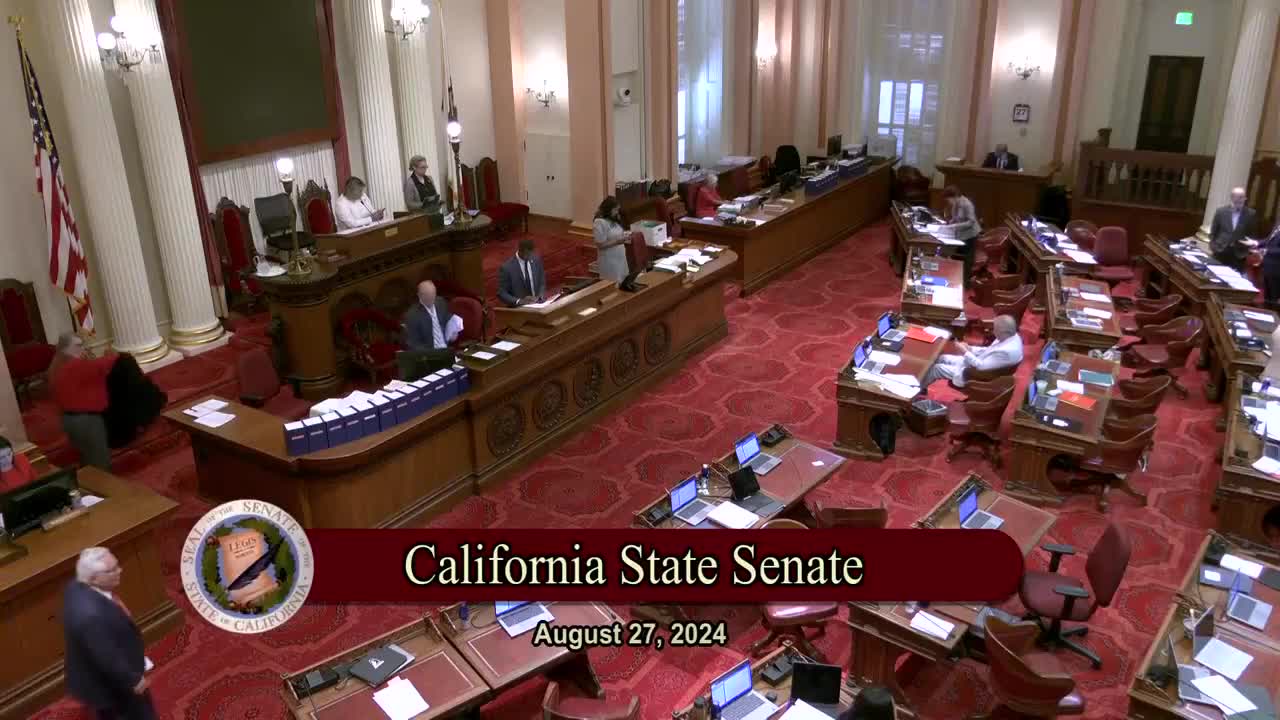 1MIN
Senate Floor
 12MIN
Senate Standing Committee on Labor, Public Employment and Retirement
 1MIN
Assembly Floor
 9MIN
Assembly Standing Committee on Labor and Employment
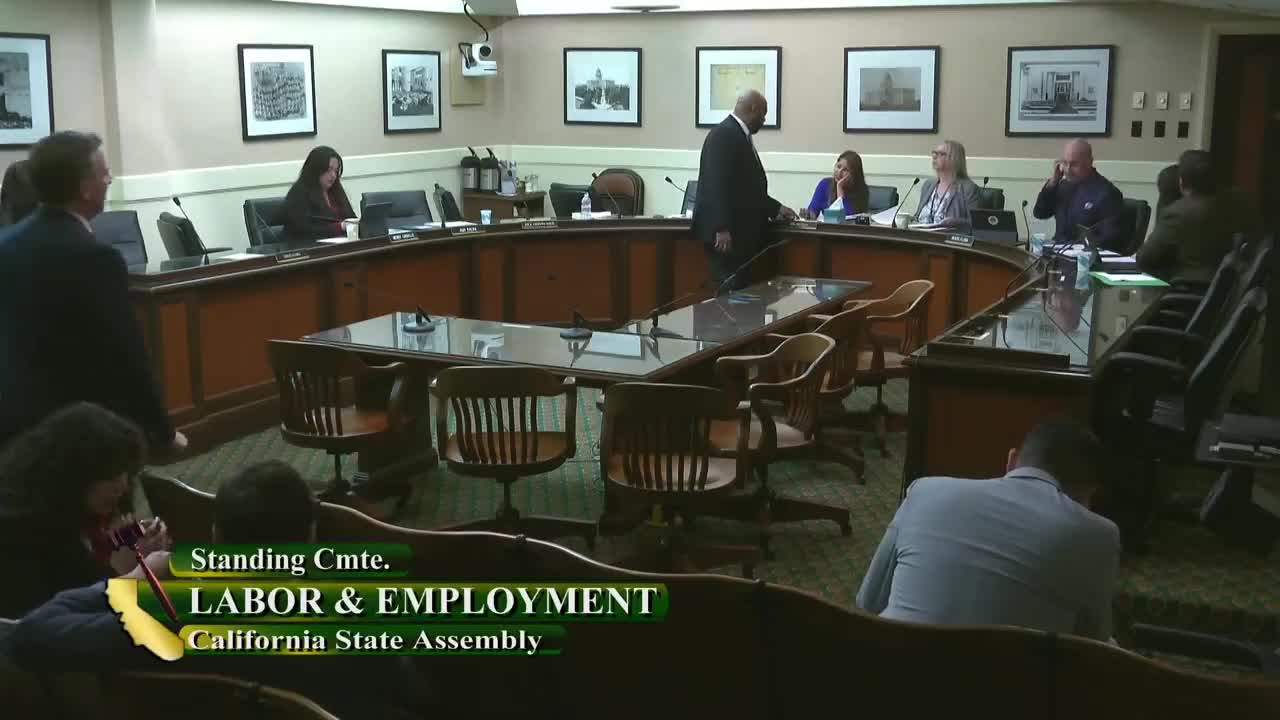 2MIN
Assembly Standing Committee on Labor and Employment
Bill Author

Bill Co-Author(s):