AB 2027: Student financial aid: College Access Tax Credit Fund: community college student transfers: partnered Historically Black Colleges and Universities.
- Session Year: 2023-2024
- House: Assembly
- Latest Version Date: 2024-04-16
Current Status:
Failed
(2024-05-16: In committee: Held under submission.)
Introduced
In Committee
First Chamber
In Committee
Second Chamber
Enacted
Existing law governing the taxation of insurers, the Personal Income Tax Law and the Corporation Tax Law, allow various credits against the taxes imposed by those laws, including a credit, for taxable years beginning on or after January 1, 2017, and before January 1, 2028, equal to 50% of a contribution to the College Access Tax Credit Fund, as provided. Existing law provides that moneys in the College Access Tax Credit Fund shall be allocated first to the General Fund, then, upon appropriation, to specified agencies for administrative costs related to this credit, and lastly continuously appropriated to the commission for awarding postsecondary costs, as defined, of qualifying community college student transfers to regionally accredited certain Historically Black Colleges and Universities that Universities (HBCUs). Existing law requires those HBCUs to be partnered HBCUs, defined as regionally accredited HBCUs that satisfy certain cohort default rate and graduation rate requirements and that have associate degree for transfer memoranda of understanding on file with the office of the Chancellor of the California Community Colleges.
This bill would require additionally authorize the use of the College Access Tax Credit Fund moneys continuously appropriated to the commission to also be used for awards for qualifying community college student transfers to certain Historically Black Graduate Professional Schools that are physically located in California and offer undergraduate studies. partnered nonprofit colleges and universities in California that were listed as Black-serving in a specified report and that offer 4-year baccalaureate degree programs that are primarily focused on health sciences education. The bill would make an appropriation by expanding the purposes for which moneys are used in a continuously appropriated fund. The bill would limit postsecondary costs for purposes of these awards to undergraduate education costs.
Existing law governing the taxation of insurers, the Personal Income Tax Law and the Corporation Tax Law, allow various credits against the taxes imposed by those laws, including a credit, for taxable years beginning on or after January 1, 2017, and before January 1, 2028, equal to 50% of a contribution to the College Access Tax Credit Fund, as provided. Existing law provides that moneys in the College Access Tax Credit Fund shall be allocated first to the General Fund, then, upon appropriation, to specified agencies for administrative costs related to this credit, and lastly continuously appropriated to the commission for awarding qualifying community college student transfers to regionally accredited Historically Black Colleges and Universities that have associate degree for transfer memoranda of understanding on file with the office of the Chancellor of the California Community Colleges.
This bill would require the College Access Tax Credit Fund moneys continuously appropriated to the commission to also be used for awards for qualifying community college student transfers to certain Historically Black Graduate Professional Schools that are physically located in California and offer undergraduate studies. The bill would make an appropriation by expanding the purposes for which moneys are used in a continuously appropriated fund.
(a)As used in this section, the following definitions apply:
(1)Chancellors office means the office of the Chancellor of the California Community Colleges.
(2)Fund means the College Access Tax Credit Fund established pursuant to Section 17053.87 of the Revenue and Taxation Code.
(3)HBCUs means the colleges and universities that are either of the following:
(A)Listed as Historically Black Colleges and Universities by the National Center for Education Statistics.
(B)Historically Black Graduate Professional Schools identified under the federal Higher Education Act of 1965 (20 U.S.C. Sec. 1063b) that are physically located in California and offer undergraduate studies.(B)Colleges and universities that were listed as Black-serving in the National Center for Education Statistics November 2007 Postsecondary Education Descriptive Analysis Report entitled Characteristics of Minority-Serving Institutions and Minority Undergraduates Enrolled in These Institutions (National Center for Education Statistics 2008-156), and satisfy all of the following:
(i)Are nonprofit institutions.
(ii)Offer four-year baccalaureate degree programs that are primarily focused on health sciences education.
(iii)Are physically located in California.
(4)Participating students means students who have completed the associate degree for transfer pathway, are enrolled at a partnered HBCU, and qualify to receive an award pursuant to this section.
(5)Partnered HBCUs means HBCUs that satisfy all of the following:
(A)Have associate degree for transfer memoranda of understanding on file with the chancellors office.
(B)Satisfy subparagraphs (C) and (F) of paragraph (3) of subdivision (l) of Section 69432.7.
(C)Are regionally accredited by an agency recognized by the United States Department of Education.
(6)Postsecondary costs means any undergraduate education costs of attendance of participating students at partnered HBCUs.
(b)The moneys allocated to the commission pursuant to Section 17053.87 of the Revenue and Taxation Code shall be available for the purpose of making awards for participating students pursuant to this section.
(c)(1)Commencing with the 202425 award year, the commission may make disbursements of awards from the moneys allocated to the commission directly to partnered HBCUs for postsecondary costs of their participating students.
(2)A participating student may only receive one award pursuant to this section in an amount that does not exceed five thousand dollars ($5,000), as determined by the commission based on the availability of moneys allocated to the commission and the financial need of the student.
(3)In making awards pursuant to this section, the commission shall give priority to students with the greatest unmet financial need, as defined in subdivision (b) of Section 69432.9, who do not exceed the maximum household income and asset level for an applicant for a Cal Grant B award, as set forth in Section 69432.7.
(4)An award under this section is payable only to the extent that moneys are available from the fund. The commission shall inform each recipient of an award under this section that the award is a one-time grant.
(5)A participating student shall file a statement of intent form stating that the student will enroll at a partnered HBCU and return to, or remain in, California after graduation from a partnered HBCU.
(d)The commission may make disbursements in any fiscal year in which it determines there are sufficient funds. If the commission determines it would be in the best interest of the program, the commission may roll over moneys allocated to the commission for disbursement in future fiscal years.
(e)If, after making awards pursuant to subdivision (c), moneys remain in the fund, those moneys shall remain in the fund for allocation in future fiscal years.
(f)The commission may adopt regulations for purposes of implementing and administering this section.
(a)As used in this section, the following definitions apply:
(1)Chancellors office means the office of the Chancellor of the California Community Colleges.
(2)Fund means the College Access Tax Credit Fund established pursuant to Section 17053.87 of the Revenue and Taxation Code.
(3)HBCUs means the colleges and universities listed that are either of the following:
(A)Listed as Historically Black Colleges and Universities by the National Center for Education Statistics.
(B)Historically Black Graduate Professional Schools identified under the federal Higher Education Act of 1965 (20 U.S.C. Sec. 1063b) that are physically located in California and offer undergraduate studies.
(4)Participating students means students who have completed the associate degree for transfer pathway, are enrolled at a partnered HBCU, and qualify to receive an award pursuant to this section.
(5)Partnered HBCUs means HBCUs that satisfy all of the following:
(A)Have associate degree for transfer memoranda of understanding on file with the chancellors office.
(B)Satisfy subparagraphs (C) and (F) of paragraph (3) of subdivision (l) of Section 69432.7.
(C)Are regionally accredited by an agency recognized by the United States Department of Education.
(6)Postsecondary costs means any costs of attendance of participating students at partnered HBCUs.
(b)The moneys allocated to the commission pursuant to Section 17053.87 of the Revenue and Taxation Code shall be available for the purpose of making awards for participating students pursuant to this section.
(c)(1)Commencing with the 202425 award year, the commission may make disbursements of awards from the moneys allocated to the commission directly to partnered HBCUs for postsecondary costs of their participating students.
(2)A participating student may only receive one award pursuant to this section in an amount that does not exceed five thousand dollars ($5,000), as determined by the commission based on the availability of moneys allocated to the commission and the financial need of the student.
(3)In making awards pursuant to this section, the commission shall give priority to students with the greatest unmet financial need, as defined in subdivision (b) of Section 69432.9, who do not exceed the maximum household income and asset level for an applicant for a Cal Grant B award, as set forth in Section 69432.7.
(4)An award under this section is payable only to the extent that moneys are available from the fund. The commission shall inform each recipient of an award under this section that the award is a one-time grant.
(5)A participating student shall file a statement of intent form stating that the student will enroll at a partnered HBCU and return to to, or remain in, California after graduation from a partnered HBCU.
(d)The commission may make disbursements in any fiscal year in which it determines there are sufficient funds. If the commission determines it would be in the best interest of the program, the commission may roll over moneys allocated to the commission for disbursement in future fiscal years.
(e)If, after making awards pursuant to subdivision (c), moneys remain in the fund, those moneys shall remain in the fund for allocation in future fiscal years.
(f)The commission may adopt regulations for purposes of implementing and administering this section.
|
Date
|
Status
|
|---|---|
| May 16, 2024 | In committee: Held under submission. |
| May 8, 2024 | In committee: Set, first hearing. Referred to APPR. suspense file. |
| Apr 24, 2024 | From committee: Do pass and re-refer to Com. on APPR. (Ayes 10. Noes 0.) (April 23). Re-referred to Com. on APPR. |
| Apr 17, 2024 | Re-referred to Com. on HIGHER ED. |
| Apr 16, 2024 | From committee chair, with author's amendments: Amend, and re-refer to Com. on HIGHER ED. Read second time and amended. |
| Mar 12, 2024 | In committee: Hearing postponed by committee. |
| Feb 12, 2024 | Referred to Com. on HIGHER ED. |
| Feb 2, 2024 | From printer. May be heard in committee March 3. |
| Feb 1, 2024 | Read first time. To print. |
|
Date
|
Description
|
Location
|
Votes
|
|
|---|---|---|---|---|
| Apr 23, 2024 | Do pass and be re-referred to the Committee on [Appropriations] | Assembly Standing Committee on Higher Education |
Passed |
This list shows positions taken on this bill by organizations on the date displayed, which is linked to the original source.
Positions by individuals are not included.
|
Organization
|
Position
|
Date
|
|---|---|---|
| Association Of Independent California Colleges & Universities (Aiccu) | * Support | Apr 23, 2024 |
| California Black Health Network | ** Support | |
| California Black Women's Collective | ** Support | |
| California Faculty Association | * Support | Apr 23, 2024 |
| Charles R Drew University Of Medicine And Science | * Support | Apr 23, 2024 |
| East Side Riders Bike Club | ** Support |
Date of Hearing: May 8, 2024
ASSEMBLY COMMITTEE ON APPROPRIATIONS
Buffy Wicks, Chair
ABPCA Bill Id:AB 2027
Author:(Gipson) – As Amended Ver:April 16, 2024
Policy Committee: | Higher Education | Vote: | 10 - 0 |
|
| ||
|
|
Urgency: No State Mandated Local Program: No Reimbursable: No
SUMMARY:
This bill authorizes, beginning in the 2024-25 award year, California Community College (CCC) transfer students attending certain “Black-serving” colleges and universities to access a grant from the College Access Tax Credit Fund.
Specifically, this bill expands eligibility for grants of up to $5,000 to CCC students who transfer to nonprofit colleges and universities in California that are listed as “Black-serving” in a National Center for Education Statistics publication and are primarily focused on health sciences education.
FISCAL EFFECT:
- Potential special fund shifts of an unknown amount to expand eligibility for the College Access Tax Credit Fund grant to additional students. The fund’s revenue is about $500,000 annually.
- Minor and absorbable costs to California Student Aid Commission (CSAC) to add additional colleges and universities to the list of eligible institutions a student may attend and receive a grant.
COMMENTS:
- Background. The College Access Tax Credit allows taxpayers to make charitable contributions to provide financial aid to postsecondary students receiving a Cal Grant “B” award from CSAC. The tax credit’s revenue is about $500,000 annually. The Treasurer’s Office transfers the funds to CSAC.
AB 1400 (Bryan), Chapter 278, Statutes of 2023, was sponsored by CSAC and authorizes CSAC, beginning in the 2024-25 award year, to repurpose College Access Tax Credit funds to award one-time grants of up to $5,000 to students who complete a transfer pathway and transfer from a CCC to an eligible Historically Black College or University (HBCU). An eligible HBCU is to meet the following criteria: (a) be listed as an HBCU by the National Center for Education Statistics, (b) have a transfer memoranda of understanding with the CCC Chancellor’s Office, (c) be regionally accredited by a U.S. Department of Education recognized agency, and (d) have a three-year cohort default rate of less than 15.5% and a graduation rate greater than 30%. In addition, recipients of the grant funds are to return to California upon graduation from an HBCU. Current law authorizes CSAC to determine the final award amount based on College Access Tax Credit fund availability and student financial need. As of last year, 39 HBCUs had a transfer agreement with a CCC.
This bill additionally authorizes the College Access Tax Credit Fund be used to provide grants to students attending certain Black-serving colleges and universities in California.
- Letter of Concern. CSAC has submitted a letter of concern that this bill’s proposed expansion reduces the amount of funding available to CCC students attending HBCUs that would otherwise not receive any state financial aid. In addition to other concerns, CSAC notes that the current program authorized by AB 1400 allows it to provide a grant of $5,000 to each student who transfers from a CCC to an HBCU, approximately 75-100 students annually.
Analysis Prepared by: Natasha Collins / APPR. / (916) 319-2081
Date of Hearing: April 23, 2024
ASSEMBLY COMMITTEE ON HIGHER EDUCATION
Mike Fong, Chair
ABPCA Bill Id:AB 2027 (
Author:Gipson) – As Amended Ver:April 16, 2024
SUBJECT: Student financial aid: College Access Tax Credit Fund: community college student transfers: partnered Historically Black Colleges and Universities.
SUMMARY: Expands grant eligibility for California Community College (CCC) students who transfer to Historically Black Colleges and Universities (HBCUs) to include students attending a college or university listed as "black serving" which is located in California, as defined. Utilizes the existing College Access Tax Credit (CATC), which gives California donors a 50% tax credit for any donation made to the fund, to award students a one-time grant of up to $5,000. Adds Charles R. Drew University of Medicine and Science to the list of institutions where students may qualify for the grant. Specifically, this bill:
- Adds students attending a "Black-serving" bachelor's degree program at a nonprofit California-based College or University that specializes in the health sciences, as specified, to the list of eligible schools to qualify for grants using available money in the CATC Fund.
- Clarifies the student must file a statement of intent form stating that the student will remain in California upon graduation.
EXISTING LAW:
Federal law.
- Defines the term “HBCU” (specifying it as part B institutions) as a school of higher learning that was accredited and established before 1964, whose principal mission was, and is, the education of Black Americans, and that is accredited by a nationally recognized accrediting agency or association determined by the Secretary of Education to be a reliable authority as to the quality of training offered or is, according to such an agency or association, making reasonable progress toward accreditation, except that any branch campus of a southern institution of higher education that prior to September 30, 1986, received a grant as an institution with special needs, as specified, and was formally recognized by the National Center for Education Statistics (NCES) as a Historically Black College or University, but was determined not to be a part B institution on or after October 17, 1986, shall, from July 18, 1988, be considered a part B institution (Section 322(a) of the Higher Education Act of 1965, as amended (HEA); 20 U.S.C., Section 1061).
- Authorizes the HBCUs program and the Historically Black Graduate Institutions (HBGI) program, both of which award grants to eligible institutions to assist them in strengthening their academic, administrative, and fiscal capabilities. These programs are typically funded through annual discretionary appropriations (HEA, Title III-B).
- Stipulates that in order to be eligible to participate in either the HBCU or HBGI program, per (2) above, entities must meet the following requirements:
- Be legally authorized by the State in which it is located;
- Be at least a junior or community college;
- Provide an educational program for which it awards a bachelor's degree; and,
- Be accredited or preaccredited by a nationally recognized accrediting agency or association (Title 34, Subtitle B, Chapter VI, Part 608, Subpart A, Section 608.2(a), Code of Federal Regulations (CFR)).
- Lists the specific institutions of higher education that have been deemed a HBCU, per (1) above (Title 34, Subtitle B, Chapter VI, Part 608, Subpart A, Section 608.2(b), CFR).
State law.
- Establishes the CSAC for the purpose of administering specified student financial aid programs (Education Code (EC) Section 69510, et seq.)
- Establishes the Cal Grant program, administered by the CSAC, to provide grants to financially needy students to attend a college or university. The Cal Grant programs include both the entitlement and the competitive Cal Grant awards. The program consists of the Cal Grant A, Cal Grant B, and Cal Grant C programs, and eligibility is based upon financial need, grade point average (GPA), California residency, and other criteria. Maximum award amounts for CSU and UC are established in the annual Budget Act and have traditionally covered all systemwide tuition and fees. Supplemental Cal Grant awards programs are available to students with dependent child(ren) and former and current foster youth attending CSU, UC, or a CCC to assist with non-tuition costs such as living expenses (EC Sections 69430 - 69433 and Sections 69465 - 69470).
- Allows, for taxable years beginning on or after January 1, 2017, and before January 1, 2028, a CATC against the “net tax,” as specified, in an amount equal to 50% of the amount contributed by a taxpayer to the CATC Fund, as allocated and certified by the California Educational Facilities Authority (CEFA). Limits the maximum aggregate amount of credit that may be allocated and certified by CEFA to $500 million. Provides that any unused credits may be carried forward for up to six years; and,
Creates the CATC Fund as a special fund in the State Treasury, and allocates revenues as follows:
- First to the General Fund in an amount equal to the aggregate amount of credits allowed, as specified;
- Second, upon appropriation, to the Department of Insurance, Franchise Tax Board (FTB), CEFA, State Controller, and CSAC for reimbursement of all administrative costs incurred in connection with the CATC and CATC Fund;
- Third, upon appropriation, to CEFA for outreach purpose to inform taxpayers about the CATC Fund and the credits allowed; and,
- Fourth, continuous appropriation of remaining revenue to CSAC for purposes of awarding Cal Grants, as specified (Revenue and Taxation Code Section 17053.87).
- Authorizes the CATC Fund moneys that are continuously appropriated to the CSAC to be used for awards for qualifying CCC student transfers to HBCUs that have an associate degree for transfer (ADT) memorandum of understanding (MOU) with the CCC Chancellor’s Office, as specified. Stipulates that a participating student must file a statement of intent form stating that the student will enroll at a partnered HBCU and return to California after graduation from a partnered HBCU (EC Section 69840).
FISCAL EFFECT: Unknown
COMMENTS: Purpose of the measure. According to the author, “we should continue to focus on advancing equity and opportunity in higher education. AB 2027 is a crucial step towards ensuring that all students that attend HBCUs or HBGIs have access to the resources they need to succeed.”
The author contends that, “the current definition of Historically Black Colleges and Universities (HBCUs) under the College Access Tax Credit Fund excludes Historically Black Graduate Institutions (HBGIs), creating a significant barrier for students who attend these institutions. AB 2027 seeks to expand the definition of HBCUs within the College Access Tax Credit to include HBGIs like Charles R. Drew University of Medicine and Science, located in my district.”
Further, the author states that, “by doing so, this bill ensures that students who transfer from community colleges to HBGIs have access to funding from the CATC Fund, which in turn, addresses a critical financial barrier to higher education. This is not just about providing financial support; it is about creating a more inclusive and equitable higher education system that empowers all students to reach their full potential.”
Lastly, according to the author, “AB 2027 aligns with the principles of equity and social justice by eliminating inequities experienced by underrepresented individuals in higher education. By enabling more underrepresented students to receive funding from the CATC Fund, we can expand access to higher education and promote greater diversity and inclusion on college campuses.”
The CATC. Established by SB 798 (De León), Chapter 367, Statutes of 2014, the CATC is designed to encourage taxpayers to make charitable contributions to the Cal Grant program, which provides financial aid to low-income California students pursuing postsecondary education.
The structure of the credit is based on a 2013 publication by Phillip Blackman, then Associate Director of Development at the Penn State Dickinson School of Law, and Kirk Stark, Professor and then Vice Dean at the UCLA School of Law, which detailed a means for states to leverage federal funds at a minimal cost by creating a state tax credit for cash contributions to a state entity. The publication, titled, Capturing Federal Dollars with State Charitable Tax Credits, was based on the Internal Revenue Service’s (IRS) position that charitable contributions to non-profits, state governments, or local governments are eligible to be federally deducted as a charitable contribution. While a contribution would not be made with a charitable intent if the contributor expects a direct or indirect benefit, a federal or charitable contribution deduction is not regarded as a return benefit that negates charitable intent.
The original CATC provided a 60% credit, 55% credit, and 50% credit in the 2014, 2015, and 2016 taxable years, respectively, to offset state tax obligations under the Personal Income Tax (PIT) Law, and Corporation Tax (CT) Law. For instance, a taxpayer making a $100 contribution in 2014 would receive a $60 credit from the state to reduce state tax liability. The taxpayer could then deduct the full $100 amount as a charitable contribution on their federal return, which could be worth as much as $28 depending on the taxpayer's federal tax rate. Thus, the $100 contribution would only cost the taxpayer $12, while the remaining $40 from the contribution could then, upon appropriation, reimburse relevant state agencies for their costs resulting from administration of CATC and CATC Fund, with the remaining revenue allocated to the Commission for awarding Cal Grants.
SB 81 (Committee on Budget and Fiscal Review), Chapter 22, Statutes 2015, recast certain provisions of the CATC and extended its operation to taxable years beginning on or after January 1, 2017, and before January 1, 2018. Changes to the CATC included expansion to the Insurance Tax (IT) Law, so insurers could apply the credit to their annual tax on gross premiums and continuous appropriation of funds from the CATC Fund to the CSAC for purposes of awarding Cal Grants, rather than upon appropriation. Additionally, for taxable year 2017, SB 81 fixed the CATC at 50% of the amount contributed by a taxpayer, and limited the annual maximum aggregate amount of credit that could be allocated and certified by California Education Facilities Authority (CEFA) to $500 million, rather than rolling over amounts of unallocated and uncertified credits from the previous year.
The CATC was extended again by AB 490 (Quirk-Silva), Chapter 527, Statutes of 2017, which amended the sunset date of the CATC from taxable years beginning before January 1, 2018, to taxable years beginning before January 1, 2023.
Further, AB 2880 (Mia Bonta), Chapter 976, Statutes of 2022, in part, extended the operation of the CATC to taxable years beginning before January 1, 2028.
Historically Black Colleges and Universities. According to NCES, HBCUs are institutions that were established prior to 1964 with the principal mission of educating Black individuals. These institutions were founded and developed in an environment of legal segregation and, by providing access to higher education, they have contributed substantially to the progress Black Americans made in improving their status.
The institutions that comprise HBCUs have a proud history and legacy of achievement. HBCUs vary in size and academic focus and serve a range of diverse students and communities in urban rural, and suburban settings. HBCU alumni are leaders in every field and include barrier-breaking public servants, scientists, physicians, artists, attorneys, judges, engineers, educators, and business owners.
Per the NCES, as of 2022, there are over 100 HBCUs located in 19 states, the District of Columbia, and the U.S. Virgin Islands. Of the over 100 HBCUs, at least 50 are public institutions and at least 49 are private nonprofit institutions. According to the NCES, the number of HBCU students increased by 47% (from 223,000 to 327,000 students) between 1976 and 2010, then decreased by 15% (to 279,000 students) between 2010 and 2020. In comparison, the number of students in all degree-granting institutions increased 91% (from 11 million to 21 million students) between 1976 and 2010, then decreased 10% (to 19 million students) between 2010 and 2020.
Although HBCUs were originally founded to educate Black students, they enroll students of other races as well. The composition of HBCUs has changed over time. In 2020, non-Black students made up 24% of enrollment at HBCUs, compared with 15% in 1976.
While Black student enrollment at HBCUs increased by 11% between 1976 and 2020, the total number of Black students enrolled in all degree-granting postsecondary institutions more than doubled during this period. As a result, the percentage of Black students enrolled at HBCUs fell from 18% in 1976 to 8% in 2014 and then increased to 9% in 2020.
Historic Investments in HBCUs. Despite the record success of HBCUs and disparities in resources and opportunities for HBCUs, their students persist to obtain degrees. The COVID-19 pandemic highlighted continuing and new challenges for HBCUs. With that in mind, the Biden-Harris Administration prioritized and delivered historic levels of investment in support for HBCUs. Said actions include, in part, the following:
- American Rescue Plan – which provided nearly $3.7 billion in relief funding to HBCUs; and,
- Fiscal Year (FY) 21 Grant Funding – which, in FY 2021, the U. S. Department of Education awarded a total of $1 billion to build the capacity of institutions that serve large numbers of students of color and low-income students.
Additionally, the Administration signed an Executive Order (EO) to re-establish the White House Initiative on Advancing Educational Equity, Excellence, and Economic Opportunity through HBCUs and issued a proclamation recognizing National HBCU Week. The EO also recognizes the historic underfunding of HBCUs and other institutions that serve large numbers of students of color, with a plan to invest $20 billion in upgrading research infrastructure for HBCUs. Further, the EO proposes creating a new national lab focused on climate that would be affiliated with an HBCU.
State higher education partnerships with HBCUs. In November of 2013, the El Camino Community College District was awarded a continuation of a one-award grant. The grant was initially labeled as a pilot with a short duration of 14 months and minimal funding of $40,000. The primary objective of the pilot was to explore the possibility of formalizing transfer pathway agreements between HBCU institutions and the CCC system, using ADTs as the framework to support the agreements. The pilot represented the CCC system’s first attempt beyond the CSU system to forge new partnerships using ADTs as articulation at the degree-level, and representative of lower-division transfer preparation fulfillment in both general education and major preparation.
Before ADTs, the CCC system’s relationship with HBCUs comprised of individual college efforts using traditional course-to-course articulation methods. According to the CCC Chancellor’s Office (CCCCO), the objective, then and now, is to leverage ADTs, versus traditional course-to-course articulation, to simplify the articulation process while also establishing an equitable transfer pathway statewide for all community college students with a specific focus on Black students.
The pilot has grown over the span of several years; the name has changed to the California Community Colleges Transfer Guarantee to HBCUs Program.
The CCC Transfer Guarantee to HBCUs Program. The objective of the CCC Transfer Guarantee to HBCUs Program is the development of transfer pathways that will facilitate a smooth transition for students from all of the CCC to partnered HBCUs. These pathways will simplify the transfer process and reduce students’ need to take unnecessary courses, thereby shortening the time to degree completion and saving student costs.
According to the CCCCO, while data for academic year 2023-24 is still being collected, 39 HBCUs have MOUs in place with the CCC.
Concerns from CSAC. While CSAC does not have a formal position on this measure, CSAC expressed several policy concerns with this measure, stating that, “as the administering agency for the grants toward transfer students enrolling at HBCUs, we are concerned that AB 2027:
- Amends existing law to allow students to receive these grants at institutions that do not reflect the original intent of the law. AB 1400 [see Prior legislation section of this analysis] targeted the use of funds generated by the CATC to help students access the unique experience provided at an HBCU as there are none based in California. According to the author, AB 2027 seeks to ensure that students enrolling at Charles Drew University (CDU) could receive grants funded by the CATC. However, CDU is not an HBCU, does not currently participate in a MOU with the CCC Chancellor’s Office around use of the ADT, and already receives state funds through the Cal Grant Program and other state aid programs. AB 2027 makes CDU the only institution to be eligible for its students to receive both a Cal Grant and a grant financed by the CATC.
- Undermines the fiscal sustainability of the grants established by AB 1400 by potentially overextending the use of funds generated by the CATC. The California Treasurer’s Office transfers less than $500,000 annually from the revenue generated by the CATC to support the grants established by AB 1400. The dramatic reduction in revenue generated by the Tax Credit was a significant factor in prompting reassessment of how those funds could be best utilized. The HBCUs that participate in the MOU to accept transfer students with ADTs typically enroll 75-100 students annually, while the statute established by AB 1400 allows CSAC to provide grants of up to $5,000 (one-time) to each student. CSAC Staff estimate that funds required to provide these grants could range from $357,000 to $500,000, before considering administrative costs. AB 2027 could jeopardize the ability for CSAC and the CCC to provide clear, transparent information about the availability of these grants if sufficient funds are not generated by the CATC as more students are made eligible beyond those envisioned by AB 1400.
- Expands the scope of the emerging grant program prematurely. CSAC is still in the process of developing the grant program established by AB 1400, as well as the means to partner with community colleges and HBCUs toward implementation. CSAC has yet to even announce the availability of an application, work with HBCUs to develop payment mechanisms, or even share the name for the program. At this time, the CSAC lacks any data on the potential usage of this grant program and student interest. Changes to this statute should only be considered after implementation has commenced and there is data available to inform deliberation.”
Committee comments. This measure enables CCC transfer students to apply for a grant of up to $5,000 to attend CDU. Committee Staff notes that CDU, while an HBGI is not an HBCU and currently does not have a MOU in place with the CCCCO. Further, nothing currently prevents eligible students who attend Drew University from using their Cal Grant awards at CDU.
Moving forward, the author may wish to work directly with the CCC Chancellor’s Office in order to establish a MOU for CDU to be able to participate.
Additionally, pursuant to the concerns outlined above by CSAC, the author may wish to work with CSAC in order to address the policy concerns.
Arguments in support. According to CDU, “Charles R. Drew University of Medicine and Science meets all of the criteria to qualify as an HBCU, except that it was established two years after the deadline established by the Higher Education Act of 1965. This bill builds on AB 1400 (D-Bryan) by allowing students to receive funds that cover the costs of college if they decide to transfer to an HBCU or an HBGI in the State of California.”
Prior legislation. AB 1400 (Bryan), Chapter 278, Statutes of 2023, authorizes the CATC Fund moneys that are continuously appropriated to the CSAC to be used for awards for qualifying CCC student transfers to HBCUs that have an ADT MOU with the CCCCO.
AB 2880 (Mia Bonta), Chapter 976, Statutes of 2022, in part, extended the operation of the CATC to taxable years beginning before January 1, 2028.
REGISTERED SUPPORT / OPPOSITION:
Support
California Black Health Network
California Black Women's Collective
Charles R. Drew University of Medicine and Science
East Side Riders Bike Club
Opposition
None on file.
Analysis Prepared by: Jeanice Warden / HIGHER ED. / (916) 319-3960
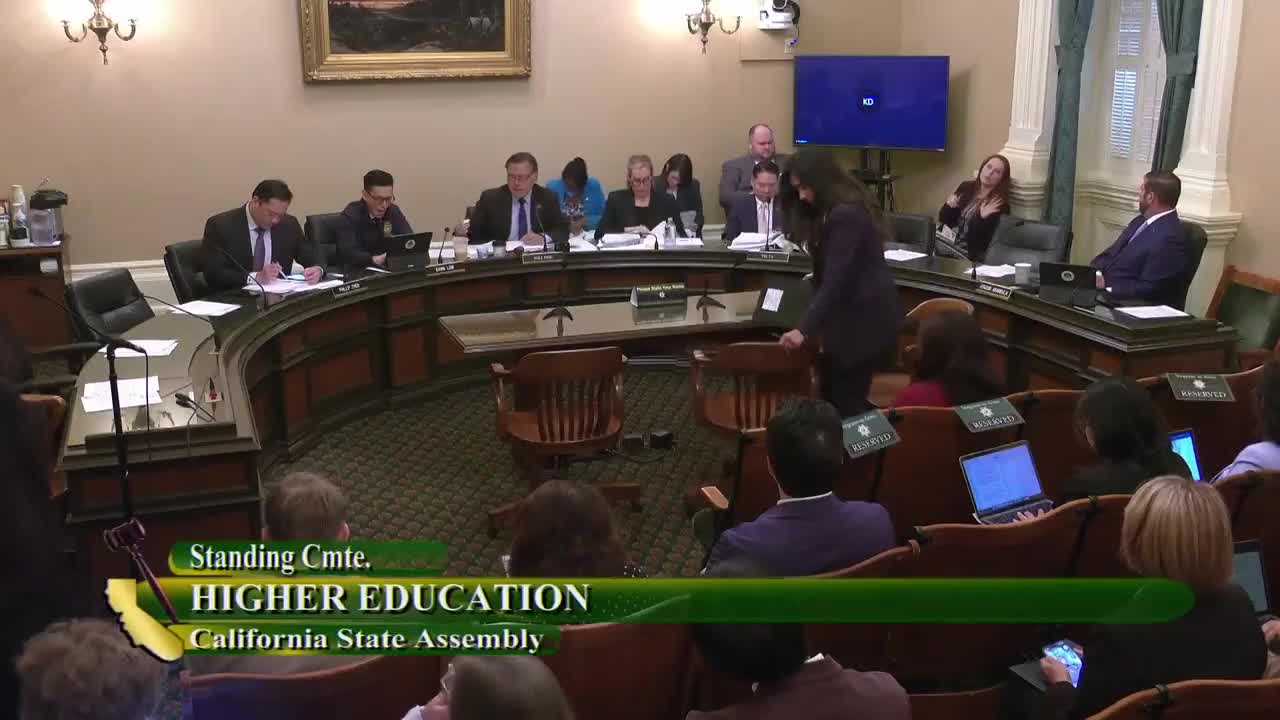
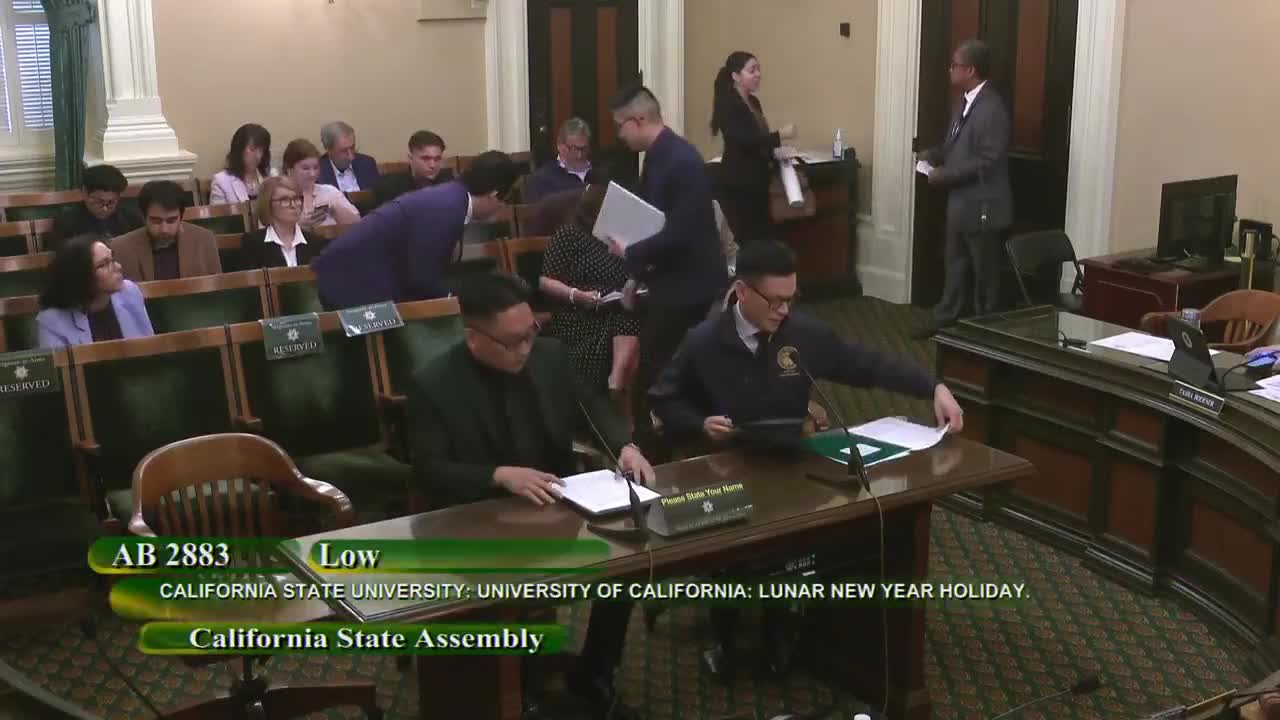
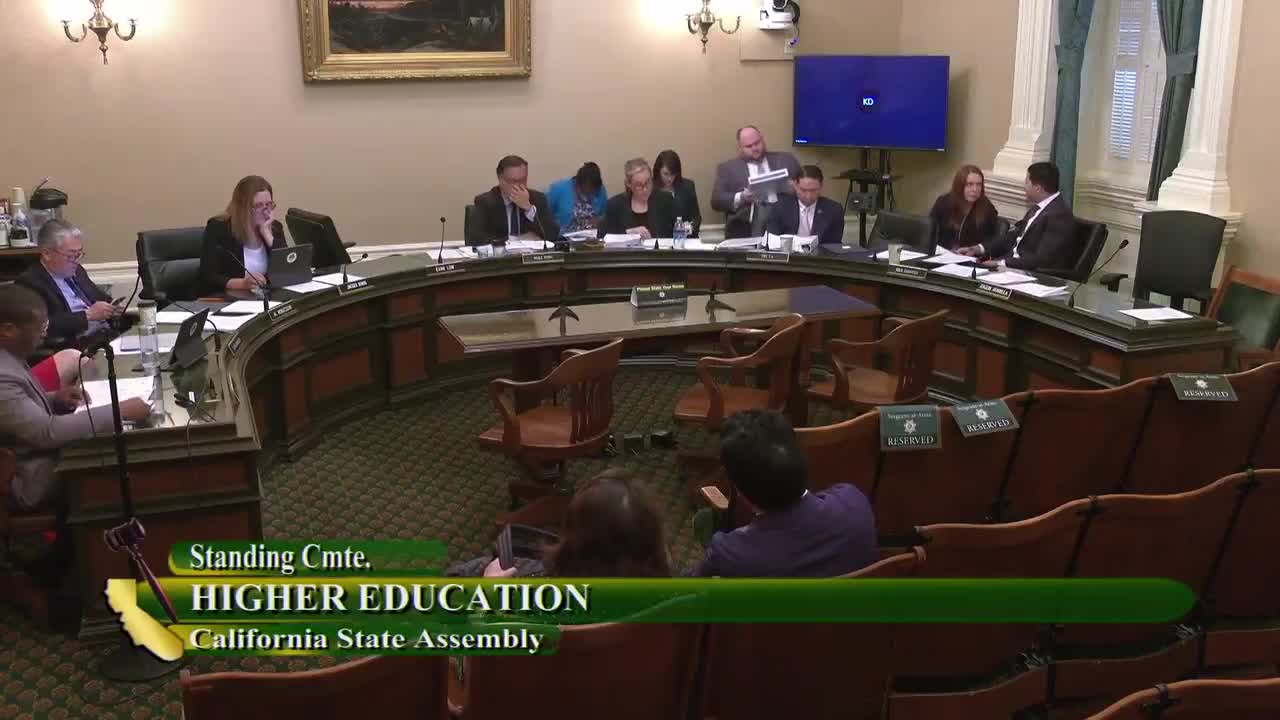
Discussed in Hearing
 8MIN
Assembly Standing Committee on Higher Education
52SEC
Assembly Standing Committee on Higher Education
 23SEC
Assembly Standing Committee on Higher Education
 16SEC
Assembly Standing Committee on Higher Education
Bill Author
Bill Co-Author(s):