AB 2090: Office of Farm to Fork: food deserts: transportation.
- Session Year: 2023-2024
- House: Assembly
- Latest Version Date: 2024-04-03
Current Status:
Failed
(2024-05-16: In committee: Held under submission.)
Introduced
In Committee
First Chamber
In Committee
Second Chamber
Enacted
What does this bill do?
The bill expands the Office of Farm to Fork’s role to include working with transportation agencies and to prioritize efforts in food deserts and places hardest hit by food insecurity, to increase farm products available to underserved communities and schools. It also directs the office to help coordinate transit and other travel options to connect people to grocery stores, farmers markets, food banks and similar sources, and to assess access to school breakfast and lunch during breaks and closures.
The summary is provided by generative AI which can make mistakes. For original language, please view the details in the table below.
Existing law creates the Office of Farm to Fork within the Department of Food and Agriculture, and requires the office, to the extent that resources are available, to work with various entities to increase the amount of agricultural products available to underserved communities and schools in the state. Existing law requires the office, among other things, to identify distribution barriers that affect limited food access and work to overcome those barriers through various actions and to coordinate with school districts and representatives to, among other things, increase the nutritional profile of foods provided in schools.
This bill would require the office to also work with transportation agencies to increase the amount of agricultural products available to underserved communities and schools in the state, and to prioritize the departments efforts in food deserts, as defined, throughout the state, especially cities and counties that are most impacted by food insecurity, as defined. The bill would require the office to work to overcome those identified distribution barriers by also facilitating partnerships between statewide, regional, and local transportation agencies to address inadequate public transportation lines in urban and rural communities, with the aim of connecting all communities to adequate and nutritional food access, as provided. The bill would require the office to coordinate with school districts and representatives to assess access to school breakfast and lunch programs during scheduled academic calendar breaks and school closures.
Existing law creates the Office of Farm to Fork within the Department of Food and Agriculture, and requires the office, to the extent that resources are available, to work with various entities, as prescribed, entities to increase the amount of agricultural products available to underserved communities and schools in the state. Existing law requires the office, among other things, to identify distribution barriers that affect limited food access and work to overcome those barriers through various actions and to coordinate with school districts and representatives to, among other things, increase the nutritional profile of foods provided in schools.
This bill would also require the office to also work with transportation agencies to increase the amount of agricultural products available to underserved communities and schools in the state, and to prioritize the departments efforts in food deserts, as defined, throughout the state, especially cities and counties that are most impacted by food insecurity, as defined. The bill would require the office to identify distribution barriers that affect limited food access and work to overcome those identified distribution barriers by also facilitating partnerships between statewide, regional, and local transportation agencies to address inadequate public transportation lines in urban and rural communities, with the aim of connecting all communities to adequate and nutritional food access, as provided. The bill would require the office to coordinate with school districts and representatives to assess access to school breakfast and lunch programs during scheduled academic calendar breaks and school closures.
Existing law creates the Office of Farm to Fork within the Department of Food and Agriculture, and requires the office, to the extent that resources are available, to work with various entities, as prescribed, to increase the amount of agricultural products available to underserved communities and schools in the state. Existing law requires the office, among other things, to identify distribution barriers that affect limited food access and work to overcome those barriers through various actions and to coordinate with school districts and representatives to, among other things, increase the nutritional profile of foods provided in schools.
This bill would also require the office to work with transportation agencies and to prioritize the departments efforts in food deserts, as defined, throughout the state, especially counties that are most impacted by food insecurity, as defined. The bill would require the office to identify distribution barriers that affect limited food access and work to overcome those barriers by facilitating partnerships between statewide, regional, and local transportation agencies to address inadequate public transportation lines in urban and rural communities, with the aim of connecting all communities to adequate and nutritional food access, as provided. The bill would require the office to coordinate with school districts and representatives to assess access to school breakfast and lunch programs during scheduled academic calendar breaks and school closures.
There is hereby created in the department the Office of Farm to Fork. To the extent that resources are available, this office shall work with the agricultural industry, direct marketing organizations, food policy councils, public health groups, nonprofit and philanthropic organizations, academic institutions, transportation agencies, district agricultural associations, county, state, and federal agencies, and other organizations involved in promoting food access to increase the amount of agricultural products available to underserved communities and schools in this state. The office, under the auspices of the department, shall do all of the following:
(a)Work with regional and statewide stakeholders to identify urban and rural communities that lack access to healthy food, taking into consideration factors including, but not limited to, distance, income, transportation, food variety, pricing, population density, and demographics, determine current barriers to food access, and share information to encourage best practices.
(b)Prioritize the departments efforts in food deserts throughout the state, especially cities and counties that are most impacted by food insecurity.
(c)Coordinate with other local, state, and federal agencies to promote and increase awareness of programs that promote greater food access.
(d)Promote greater retail sale of healthy food in underserved communities, including promoting the acceptance of California Special Supplemental Nutritional Program for Women, Infants, and Children (WIC) and CalFresh benefits at certified farmers markets and for e-commerce food delivery services, markets, encouraging the development and sustainability of local policies that support urban agriculture, increasing the number and quality of food retail outlets in inner city and rural communities, and maximizing resources in the interest of increasing food access.
(e)Foster partnerships between community partners, including farmers, businesses, and nonprofit and philanthropic organizations.
(f)Identify distribution barriers that affect limited food access, including, but not limited to, shortage of food retail outlets, limited store capacity, high distribution costs, transportation to grocery stores, and lack of capital funding opportunities, and work to overcome those barriers through the following:
(1)Encouraging food hubs or other aggregation systems.
(2)Coordinating institutional food procurement and buying practices.
(3)Increasing access to information, technical assistance, and resources.
(4)Facilitating partnerships between statewide, regional, and local transportation agencies to address inadequate public transportation lines in urban and rural communities, with the aim of connecting all communities to adequate and nutritional food access, including, but not limited to, grocery stores, restaurants, e-commerce food delivery services, community-supported agriculture, farmers markets, food hubs, and food banks, by doing both the following:
(A)Exploring the feasibility of public transportation, private industry rideshares, food delivery systems, e-scooters, e-bicycles, protected sidewalks, and protected bicycle lanes to food networks in local communities.
(B)Collaborating with local governments to identify barriers to food access and assisting in the development of community-driven policy solutions.
(g)Identify opportunities and provide technical assistance for collaboration between farmers, regional and local food banks, partner agencies, and nonprofit charitable organizations in the gleaning, collection, and distribution of agricultural products in cities and counties affected by food deserts for the purposes of reducing hunger and increasing access to healthy foods.
(h)Identify informational resources and organizations to provide technical assistance on small scale and backyard farming, community gardens, and other agricultural products for residents of underserved communities.
(i)Identify opportunities for collaboration with community organizations, social services, and partner agencies to provide cooking and nutrition education classes to residents of food deserts and underserved communities.
(j)Coordinate with school districts and representatives to do the following:
(1)Provide tools to facilitate relationships between local producers and school food procurement personnel, and encourage opportunities to incorporate best purchasing practices such as Good Agricultural Practices (GAP) certification and insurance.
(2)Increase the nutritional profile of foods provided in schools.
(3)Increase access to nutrition education programs and information in schools.
(4)Assess access to school breakfast and lunch programs during scheduled academic calendar breaks and school closures.
(k)For purposes of this section, the following definitions apply:
(1)Food desert means an area with limited access to affordable and nutritious food, particularly an area composed of predominantly lower income neighborhoods and communities.
(2)Food insecurity means the occasional or constant lack of access to the food one needs to live a healthy life and the uncertainty of being able to acquire enough food to meet the needs of an individual or household due to insufficient money or other resources.
There is hereby created in the department the Office of Farm to Fork. To the extent that resources are available, this office shall work with the agricultural industry, direct marketing organizations, food policy councils, public health groups, nonprofit and philanthropic organizations, academic institutions, transportation agencies, district agricultural associations, county, state, and federal agencies, and other organizations involved in promoting food access to increase the amount of agricultural products available to underserved communities and schools in this state. The office, under the auspices of the department, shall do all of the following:
(a)Work with regional and statewide stakeholders to identify urban and rural communities that lack access to healthy food, taking into consideration factors including, but not limited to, distance, income, transportation, food variety, pricing, population density, and demographics, determine current barriers to food access, and share information to encourage best practices.
(b)Prioritize the departments efforts in food deserts throughout the state, especially cities and counties that are most impacted by food insecurity.
(c)Coordinate with other local, state, and federal agencies to promote and increase awareness of programs that promote greater food access.
(d)Promote greater retail sale of healthy food in underserved communities, including promoting the acceptance of California Special Supplemental Nutritional Program for Women, Infants, and Children (WIC) and CalFresh benefits at certified farmers markets and for e-commerce food delivery services, encouraging the development and sustainability of local policies that support urban agriculture, increasing the number and quality of food retail outlets in inner city and rural communities, and maximizing resources in the interest of increasing food access.
(e)Foster partnerships between community partners, including farmers, businesses, and nonprofit and philanthropic organizations.
(f)Identify distribution barriers that affect limited food access, including, but not limited to, shortage of food retail outlets, limited store capacity, high distribution costs, transportation to grocery stores, and lack of capital funding opportunities, and work to overcome those barriers through the following:
(1)Encouraging food hubs or other aggregation systems.
(2)Coordinating institutional food procurement and buying practices.
(3)Increasing access to information, technical assistance, and resources.
(4)Facilitating partnerships between statewide, regional, and local transportation agencies to address inadequate public transportation lines in urban and rural communities, with the aim of connecting all communities to adequate and nutritional food access, including, but not limited to, grocery stores, restaurants, e-commerce food delivery services, community-supported agriculture, farmers markets, food hubs, and food banks, by doing both the following:
(A)Exploring the feasibility of public transportation, private industry rideshares, food delivery systems, e-scooters, e-bicycles, protected sidewalks, and protected bicycle lanes to food networks in local communities.
(B)Collaborating with local governments to identify barriers to food access and assisting in the development of community-driven policy solutions.
(g)Identify opportunities and provide technical assistance for collaboration between farmers, regional and local food banks, partner agencies, and nonprofit charitable organizations in the gleaning, collection, and distribution of agricultural products in cities and counties affected by food deserts for the purposes of reducing hunger and increasing access to healthy foods.
(h)Identify informational resources and organizations to provide technical assistance on small scale and backyard farming, community gardens, and other agricultural products for residents of underserved communities.
(i)Identify opportunities for collaboration with community organizations, social services, and partner agencies to provide cooking and nutrition education classes to residents of food deserts and underserved communities.
(j)Coordinate with school districts and representatives to do the following:
(1)Provide tools to facilitate relationships between local producers and school food procurement personnel, and encourage opportunities to incorporate best purchasing practices such as Good Agricultural Practices (GAP) certification and insurance.
(2)Increase the nutritional profile of foods provided in schools.
(3)Increase access to nutrition education programs and information in schools.
(4)Assess access to school breakfast and lunch programs during scheduled academic calendar breaks and school closures.
(k)For purposes of this section, the following definitions apply:
(1)Food desert means an area with limited access to affordable and nutritious food, particularly an area composed of predominantly lower income neighborhoods and communities.
(2)Food insecurity means the occasional or constant lack of access to the food one needs to live a healthy life and the uncertainty of being able to acquire enough food to meet the needs of an individual or household due to insufficient money or other resources.
There is hereby created in the department the Office of Farm to Fork. To the extent that resources are available, this office shall work with the agricultural industry, direct marketing organizations, food policy councils, public health groups, nonprofit and philanthropic organizations, academic institutions, transportation agencies, district agricultural associations, county, state, and federal agencies, and other organizations involved in promoting food access to increase the amount of agricultural products available to underserved communities and schools in this state. The office, under the auspices of the department, shall do all of the following:
(a)Work with regional and statewide stakeholders to identify urban and rural communities that lack access to healthy food, taking into consideration factors including, but not limited to, distance, income, transportation, food variety, pricing, population density, and demographics, determine current barriers to food access, and share information to encourage best practices.
(b)Prioritize the departments efforts in food deserts throughout the state, especially counties that are most impacted by food insecurity.
(b)(c)Coordinate with other local, state, and federal agencies to promote and increase awareness of programs that promote greater food access.
(c)(d)Promote greater retail sale of healthy food in underserved communities, including promoting the acceptance of California Special Supplemental Nutritional Program for Women, Infants, and Children (WIC) and CalFresh benefits at certified farmers markets, markets and for e-commerce food delivery services, encouraging the development and sustainability of local policies that support urban agriculture, increasing the number and quality of food retail outlets in inner city and rural communities, and maximizing resources in the interest of increasing food access.
(d)(e)Foster partnerships between community partners, including farmers, businesses, and nonprofit and philanthropic organizations.
(e)(f)Identify distribution barriers that affect limited food access, including, but not limited to, shortage of food retail outlets, limited store capacity, high distribution costs, transportation to grocery stores, and lack of capital funding opportunities, and work to overcome those barriers through the following:
(1)Encouraging food hubs or other aggregation systems.
(2)Coordinating institutional food procurement and buying practices.
(3)Increasing access to information, technical assistance, and resources, including developing opportunities through the California Healthy Food Financing Initiative (Article 3 (commencing with Section 104660) of Chapter 2 of Part 3 of Division 103 of the Health and Safety Code) in the office of the Treasurer. resources.
(4)Facilitating partnerships between statewide, regional, and local transportation agencies to address inadequate public transportation lines in urban and rural communities, with the aim of connecting all communities to adequate and nutritional food access, including, but not limited to, grocery stores, restaurants, e-commerce food delivery services, community-supported agriculture, farmers markets, food hubs, and food banks, by doing both the following:
(A)Exploring the feasibility of public transportation, private industry rideshares, food delivery systems, e-scooters, e-bicycles, protected sidewalks, and protected bicycle lanes to food networks in local communities.
(B)Collaborating with local governments to identify barriers to food access and assisting in the development of community-driven policy solutions.
(f)(g)Identify opportunities and provide technical assistance for collaboration between farmers, regional and local food banks, partner agencies, and nonprofit charitable organizations in the gleaning, collection, and distribution of agricultural products in counties affected by food deserts for the purposes of reducing hunger and increasing access to healthy foods.
(g)(h)Identify informational resources and organizations to provide technical assistance on small scale and backyard farming, community gardens, and other agricultural products for residents of underserved communities.
(h)(i)Identify opportunities for collaboration with community organizations, social services, and partner agencies to provide cooking and nutrition education classes to residents of food deserts and underserved communities.
(i)(j)Coordinate with school districts and representatives to do the following:
(1)Provide tools to facilitate relationships between local producers and school food procurement personnel, and encourage opportunities to incorporate best purchasing practices such as Good Agricultural Practices (GAP) certification and insurance.
(2)Increase the nutritional profile of foods provided in schools.
(3)Increase access to nutrition education programs and information in schools.
(4)Assess access to school breakfast and lunch programs during scheduled academic calendar breaks and school closures.
(k)For purposes of this section, the following definitions apply:
(1)Food desert means an area with limited access to affordable and nutritious food, particularly an area composed of predominantly lower income neighborhoods and communities.
(2)Food insecurity means the occasional or constant lack of access to the food one needs to live a healthy life and the uncertainty of being able to acquire enough food to meet the needs of an individual or household due to insufficient money or other resources.
|
Date
|
Status
|
|---|---|
| May 16, 2024 | In committee: Held under submission. |
| Apr 24, 2024 | In committee: Set, first hearing. Referred to APPR. suspense file. |
| Apr 11, 2024 | From committee: Do pass and re-refer to Com. on APPR. (Ayes 10. Noes 0.) (April 10). Re-referred to Com. on APPR. |
| Apr 4, 2024 | Re-referred to Com. on AGRI. |
| Apr 3, 2024 | From committee chair, with author's amendments: Amend, and re-refer to Com. on AGRI. Read second time and amended. |
| Mar 12, 2024 | Re-referred to Com. on AGRI. |
| Mar 11, 2024 | From committee chair, with author's amendments: Amend, and re-refer to Com. on AGRI. Read second time and amended. |
| Feb 20, 2024 | Referred to Com. on AGRI. |
| Feb 6, 2024 | From printer. May be heard in committee March 7. |
| Feb 5, 2024 | Read first time. To print. |
|
Date
|
Description
|
Location
|
Votes
|
|
|---|---|---|---|---|
| Apr 10, 2024 | Do pass and be re-referred to the Committee on [Appropriations] | Assembly Standing Committee on Agriculture |
Passed |
This list shows positions taken on this bill by organizations on the date displayed, which is linked to the original source.
Positions by individuals are not included.
|
Organization
|
Position
|
Date
|
|---|---|---|
| A Voice for Choice Advocacy | ** Support | |
| Almond Alliance | ** Support | |
| California Grocers Association | * Support | Apr 10, 2024 |
| California Pear Growers | * Support | Apr 10, 2024 |
| Lutheran Office Of Public Policy California | * Support | Apr 10, 2024 |
Date of Hearing: April 24, 2024
ASSEMBLY COMMITTEE ON APPROPRIATIONS
Buffy Wicks, Chair
ABPCA Bill Id:AB 2090
Author:(Irwin) – As Amended Ver:April 3, 2024
Policy Committee: | Agriculture | Vote: | 10 - 0 |
|
| ||
|
|
Urgency: No State Mandated Local Program: No Reimbursable: No
SUMMARY:
This bill requires the California Department of Food and Agriculture’s (CDFA) Office of Farm to Fork (Office) to work with transportation agencies to increase the amount of agricultural products available to underserved communities and schools in the state, and to prioritize the department’s efforts in food deserts throughout the state.
In addition, this bill, among other things:
1) Requires the Office to take into consideration the following additional factors when identifying urban and rural communities that lack access to healthy food: distance, income, transportation, food variety, pricing, population density, and demographics.
2) Requires the Office, when identifying and working to overcome distribution barriers that affect limited food access, to also consider transportation to grocery stores.
3) Requires the Office, in working to overcome barriers that affect limited food access, to facilitate partnerships between statewide, regional, and local transportation agencies to address inadequate public transportation lines in urban and rural communities, with the aim of connecting all communities to adequate and nutritional food access, by doing both the following:
- Exploring the feasibility of public transportation, food delivery systems, e-scooters, e-bicycles, protected sidewalks, and protected bicycle lanes to food networks in local communities.
- Collaborating with local governments to identify barriers to food access and assisting in the development of community-driven policy solutions.
4) Requires the Office, in coordinating with school districts and representatives, to assess access to school breakfast and lunch programs during scheduled academic calendar breaks and school closures.
FISCAL EFFECT:
Costs of approximately $193,000 in the first year followed by ongoing annual costs of approximately $189,000 (General Fund) for one new staff member to facilitate partnerships and work with statewide, regional, and local transportation agencies to explore transportation solutions to food deserts, such as new public transportation lines, as well as e-commerce food delivery services as a possible avenue to increase the sale of healthy foods in underserved communities. This staff would also coordinate with school districts to assess access to school breakfast and lunch programs during school breaks.
According to the Legislative Analyst’s Office, the General Fund faces a structural deficit in the tens of billions of dollars over the next several fiscal years.
COMMENTS:
1) Purpose. According to the author:
Prioritizing healthy food access has long been a priority for our state. As part of these efforts, the Legislature created the Office of Farm to Fork within the Department of Farm and Agriculture. AB 2090 builds on this by authorizing the Office of Farm to Fork to work with transportation agencies to promote food access within California’s food deserts and underserved communities. It would also enable partnerships between the Office of Farm to Fork and statewide, regional, and local transportation agencies, with the overall goal of connecting communities together to increase adequate, nutritional food access.
2) Background. The Office is charged with increasing access to healthy foods for underserved communities and schools in the state. The Office houses the following programs:
- The Healthy Refrigeration Grant Program funds energy efficient refrigeration units in corner stores, small businesses, and food donation programs in low-income or low-access areas throughout the state to stock California-grown fresh produce, nuts, dairy, meat, eggs, minimally processed, and culturally appropriate foods. The Governor’s proposed budget for fiscal year (FY) 2024-25 proposes to cut $9 million (of a $20 million allocation) from this program.
- The California Nutrition Incentive Program provides monetary incentives for the purchase of California-grown fruits and vegetables at certified farmers’ markets and small businesses. The Governor’s proposed budget for FY 2024-25 proposes to cut $33 million (of a $35 million allocation) from this program.
- The Farm to School Program aims to improve the health and well-being of California schoolchildren through integrated food-based education and healthy food access. Of the $90 million provided to the program over the last several years, CDFA is yet to award $50 million but has indicated that it plans to do so this year.
- The Farm to Community Food Hubs Program funds pilot projects for food aggregation and distribution infrastructure needed to increase purchasing of local, environmentally sustainable, climate smart, and equitably produced food by schools and other institutions. The Governor’s proposed budget for FY 2024-25 proposes to cut $14 million (of a $15 million allocation) from this program.
- Urban Agriculture Grant Program funds programs and projects that enhance the viability of urban agriculture in urban areas across the state of CA.
While CDFA generally takes transportation barriers into account in its programs and already focuses its efforts on underserved communities, including food deserts and areas with high rates of food insecurity, the department notes it does not have expertise in transportation issues. The requirements of this bill expand the scope of the Office and its programs.
Analysis Prepared by: Nikita Koraddi / APPR. / (916) 319-2081
Date of Hearing: April 10, 2024
ASSEMBLY COMMITTEE ON AGRICULTURE
Esmeralda Soria, Chair
ABPCA Bill Id:AB 2090
Author:(Irwin) – As Amended Ver:April 3, 2024
SUBJECT: Office of Farm to Fork: food deserts: transportation
SUMMARY: This bill would require the California Department of Food and Agriculture’s (CDFA) Office of Farm to Fork (OF2F) to work with transportation agencies to increase the amount of agricultural products available to underserved communities and schools in the state, and to prioritize the department’s efforts in food deserts, as defined, throughout the state, as specified. Specifically, this bill:
- Would require the California Department of Food and Agriculture’s (CDFA) Office of Farm to Fork (OF2F) to work with transportation agencies to increase the amount of agricultural products available to underserved communities and schools in the state, and to prioritize the department’s efforts in food deserts, as defined, throughout the state, as specified.
- Adds transportation agencies to the list of federal, state, local and private organizations that OF2F works with to promote food access to increase the amount of agricultural products available to underserved communities and schools.
- Requires OF2F to add the following consideration factors including, but not limited to, distance, income, transportation, food variety, pricing, population density, and demographics, when determining current barriers to food access.
- Requires OF2F to prioritize efforts in food deserts throughout the state, especially cities and counties that are most impacted by food insecurity.
- Adds the following to identify distribution barriers that affect limited food access work to overcome those barriers:
- Facilitating partnerships between transportation agencies to address inadequate public transportation lines in urban and rural communities, with the aim of connecting all communities to adequate and nutritional food access, as specified, by doing both the following:
- Exploring the feasibility of public transportation, food delivery systems, e-scooters, e-bicycles, protected sidewalks, and protected bicycle lanes to food networks in local communities.
- Collaborating with local governments to identify barriers to food access and assisting in the development of community-driven policy solutions.
- Assess access to school breakfast and lunch programs during scheduled academic calendar breaks and school closures, when coordinating with school districts.
- Defines the following:
- “Food desert” means an area with limited access to affordable and nutritious food, particularly an area composed of predominantly lower income neighborhoods and communities.
- “Food insecurity” means the occasional or constant lack of access to the food one needs to live a healthy life and the uncertainty of being able to acquire enough food to meet the needs of an individual or household due to insufficient money or other resources.
EXISTING LAW:
- Creates OF2F within CDFA, and requires OF2F, to the extent that resources are available, to work with various entities to increase the amount of agricultural products available to underserved communities and schools in the state. (Food and Agriculture code (FAC) 49001)
- Requires OF2F, among other things, to identify distribution barriers that affect limited food access and work to overcome those barriers through various actions and to coordinate with school districts and representatives to, among other things, increase the nutritional profile of foods provided in schools. (FAC 49001)
FISCAL EFFECT: Unknown.
COMMENTS: OF2F is tasked with helping all Californians access healthy and nutritious California-grown food. OF2F connects school districts and community members directly with California's farmers and ranchers, and provides information and other resources. AB 2413 (Pérez), Chapter 583, Statutes of 2014, created OF2F to coordinate with state and federal agencies, along with private and public organizations, to help streamline farm to fork(F2F) efforts. CDFA is uniquely situated to administer OF2F due to CDFA's knowledge of the agricultural industry, and CDFA's ability to bring farmers together with a variety of public and private organizations to increase the supply of healthy food. OF2F administers the following food access programs: The Healthy Refrigeration Grant Program, the California Nutrition Incentive Program, the California Farm to School Incubator Grant Program, the Farm to Community Food Hubs Program (on hold due to budget) and the Urban Agriculture Grant Program.
USDA’s Economic Research Service previously identified approximately 6,500 food desert tracts in the United States based on 2000 Census and 2006 data on locations of supermarkets, supercenters, and large grocery stores. Food deserts are defined as areas where people have limited access to a variety of healthy and affordable food. As policymakers consider interventions to increase food access, it is important to understand the characteristics associated with these areas. Factors typically associated with food deserts include income, vehicle availability, and access to public transportation. This report examined the socioeconomic and demographic characteristics of these census tracts and which of these characteristics distinguish food desert tracts from other low-income census tracts.
CDFA’s 2012 report Improving Food Access in California, stated access to healthy food means having a variety of affordable, good quality, healthy food within one’s community. For the purposes of this report, healthy food will primarily refer to fresh fruits and vegetables, with frozen, dried, and canned vegetables as viable alternatives. Sufficient food access requires all of the following components:
Proximity: The distance residents have to travel to reach outlets that sell healthy foods can impact the amount of healthy food they purchase. Travel costs (including both the time spent traveling and the cost of driving a private vehicle or taking public transportation) can increase the real cost of healthy food and keep people from purchasing it.
Variety: Access to a variety of healthy food choices is another important part of food access. Variety ensures sufficient choice – beyond a single option or two – and supports a healthy diet.
Quality: Accessible, healthy food should also be of good quality.
Affordability: Accessible food needs to be affordable. This includes both an affordable sticker price as well as the ability to use nutrition program benefits (e.g. CalFresh or WIC) in addition to cash.
According to the author, transportation plays a critical role in how Californians access– or are unable to access– healthy and nutritious foods. The United States Department of Agriculture defines food deserts as areas, both rural and urban, where people have limited access to a variety of healthy and affordable food. Nearly one million Californians, 45% of whom are low-income, live without access to nearby supermarkets or large grocery stores in communities known as food deserts.
Supporters’ state OF2F operative statute language does not mention the word transportation despite it being a critical element in solving food deserts as recognized by state and federal agencies. Income, mobility, and proximity are all factors that are determinative to food access. Furthermore, each local jurisdiction is unique so a top-down solution may not be the best solution when evaluating transportation barriers. A solution must be done in tandem with local governments and transportation agencies to combat food deserts where they exist.
The bill seeks to streamline the existing funding sources within OF2F to identify, prioritize, and target food deserts as areas of need for technical support and resources, particularly for the integration of bringing people to food on existing or modified transit lines.
REGISTERED SUPPORT / OPPOSITION:
Support
A Voice for Choice Advocacy
Almond Alliance
California Grocers Association
Opposition
None on file.
Analysis Prepared by: Victor Francovich / AGRI. / (916) 319-2084
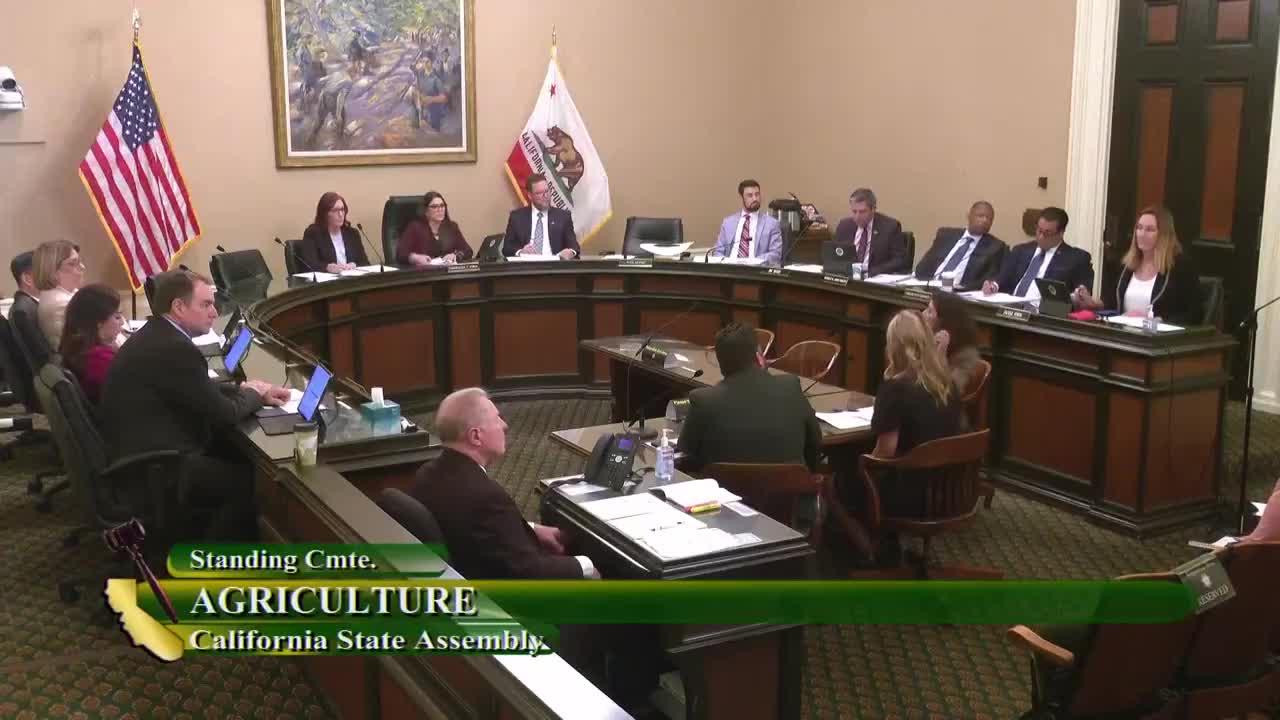
Discussed in Hearing
 3MIN
Assembly Standing Committee on Agriculture
Bill Author

Bill Co-Author(s):